Hong Kong is a vertical city squeezed between steep green mountains and one of the busiest harbours in the world. Seven and a half million people live on a sliver of flat land and on slopes that would be left to forest anywhere else, and the result is a skyline that looks less built than grown: residential towers fifty storeys high stacked up the hillsides, a bank designed as a prism of glass, another hung from steel masts, and a 484-metre tower rising from land that was sea a generation ago. Yet the best ways to see it are old ones. A funicular has hauled passengers up Victoria Peak since 1888, green-and-white ferries have crossed the harbour since the same year, and double-deck trams have rattled along the north shore of the island since 1904, for a few Hong Kong dollars a ride. Few cities change as fast, and few keep their old machines running so faithfully.

Hong Kong — Heung Gong, the “fragrant harbour” — was a scatter of fishing villages, incense-wood traders and pirate anchorages when Britain took the island of Hong Kong in the First Opium War. The Treaty of Nanking ceded it in 1842; the tip of the Kowloon peninsula followed in 1860, and in 1898 the much larger New Territories were leased for 99 years. On that lease the whole colony was built: a free port, a naval station, a refuge for wave after wave of people fleeing war and revolution on the mainland, and from the 1950s a manufacturing and then financial powerhouse. The Japanese occupation, from Christmas Day 1941 to 1945, was its darkest chapter. When the lease ran out, Britain handed the entire territory back to China at midnight on 30 June 1997, in the new wing of the convention centre on the Wan Chai waterfront, and Hong Kong became a Special Administrative Region under the formula of “one country, two systems”.
The territory is far larger than the skyline suggests. Hong Kong Island, Kowloon and the New Territories, with Lantau and more than two hundred smaller islands, are mostly hills, country parks and coast, and that is precisely why the city is so dense: building land is scarce, so it is reclaimed from the sea or stacked into the air. About 7.52 million people live here — 7,518,300 at mid-2026 — most of them in towers. The waterfront has moved repeatedly; Queen’s Road Central, now several blocks inland, was the shoreline in the 1840s, and the harbour has kept shrinking ever since.
How to approach Hong Kong
The sections below follow the classic first visit: up Victoria Peak on the Peak Tram for the view that has made the city famous, then down through the towers, banks and colonial survivors of Central and Admiralty; across Victoria Harbour on the Star Ferry to Tsim Sha Tsui, the Avenue of Stars and the new museums of West Kowloon; along the tram lines to Causeway Bay, the wet markets and the food, and over the hills to the beaches of the south side; and finally the practicalities of getting around and choosing the season. The Peak features among the world’s finest observation decks, and the MTR among the world’s most advanced metro systems; what follows puts them in their place in the city.
Mountain and Harbour in 3D
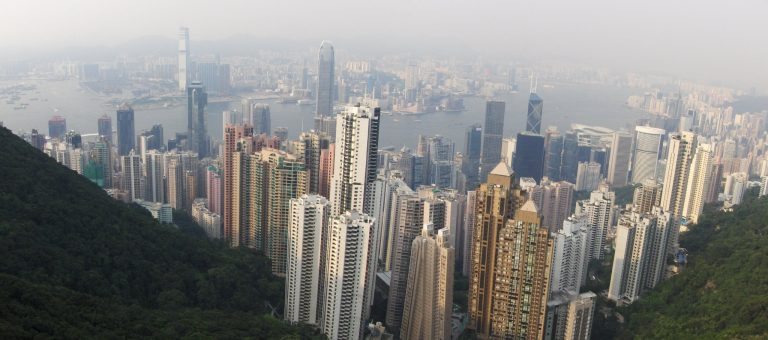
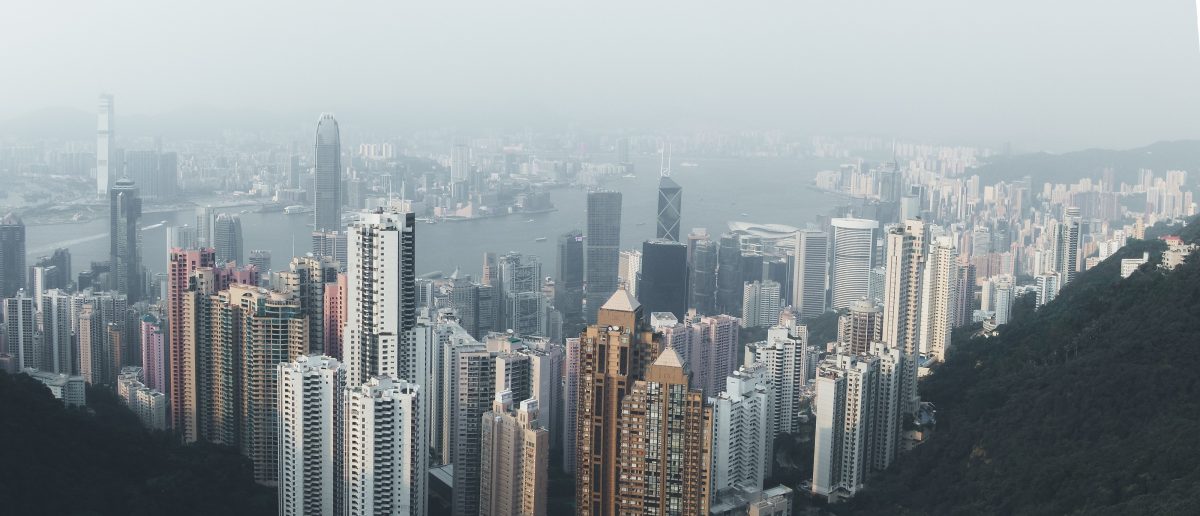
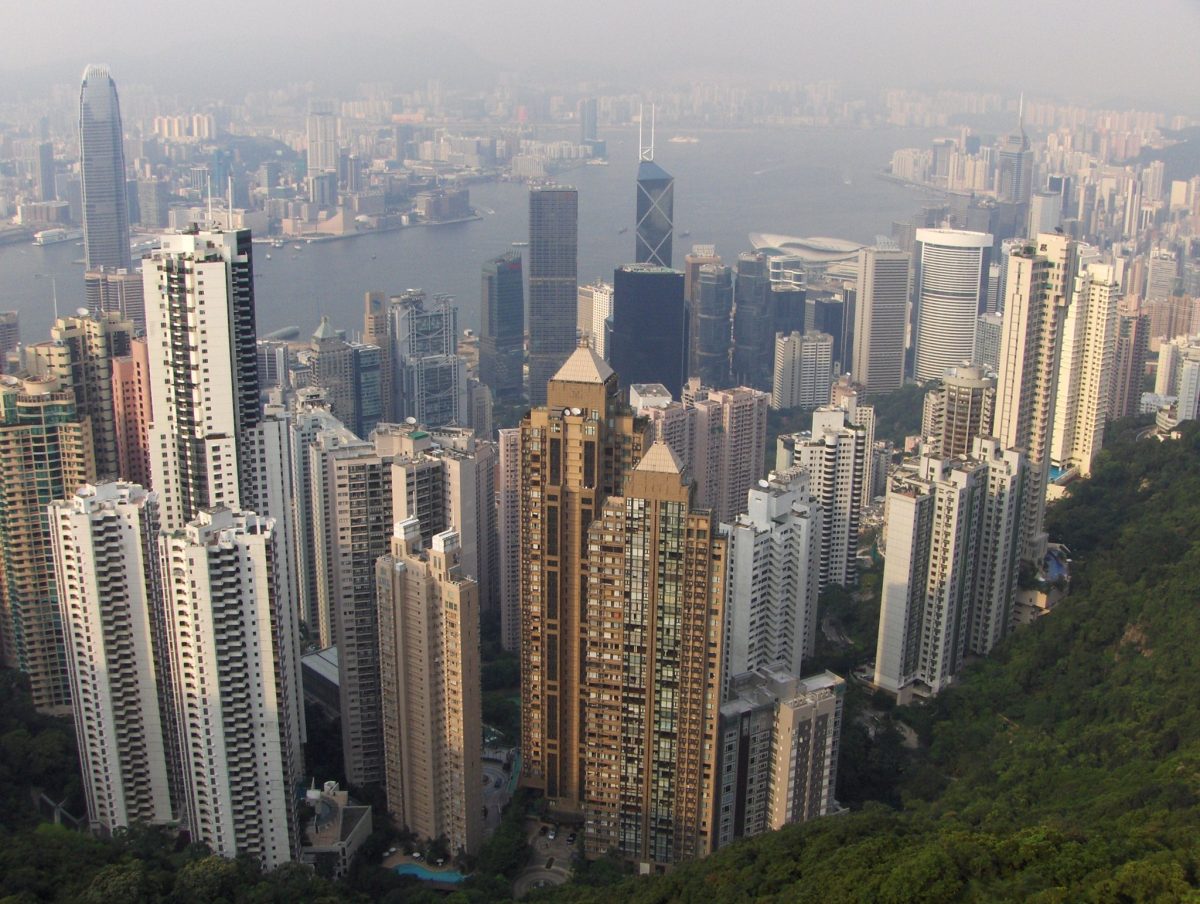
Hong Kong Island rises from Victoria Harbour to Victoria Peak, 552 metres high, and about 7.52 million people live in the territory, most of them in towers on scarce flat land and steep slopes. This frame runs from the Peak across Central, Admiralty and Wan Chai to Tsim Sha Tsui and West Kowloon, where the 484-metre International Commerce Centre stands about 3.5 kilometres north of the summit. The panorama from the Peak dates from 2009, when the ICC was still under construction and the West Kowloon reclamation in front of it was bare ground.
Victoria Harbour and Kowloon from Victoria Peak, photographed in 2009: the International Commerce Centre is still under construction across the harbour, the West Kowloon reclamation in front of it is still bare, and Two IFC rises on the Central waterfront
Banks as Monuments
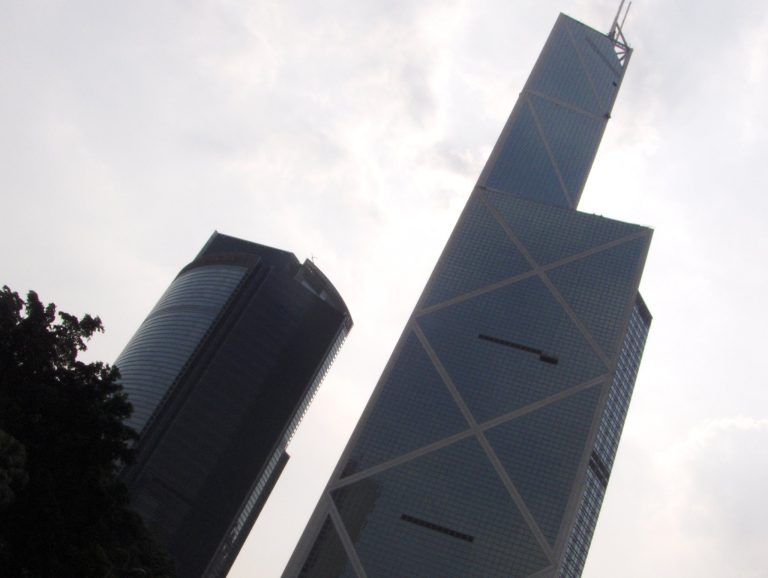
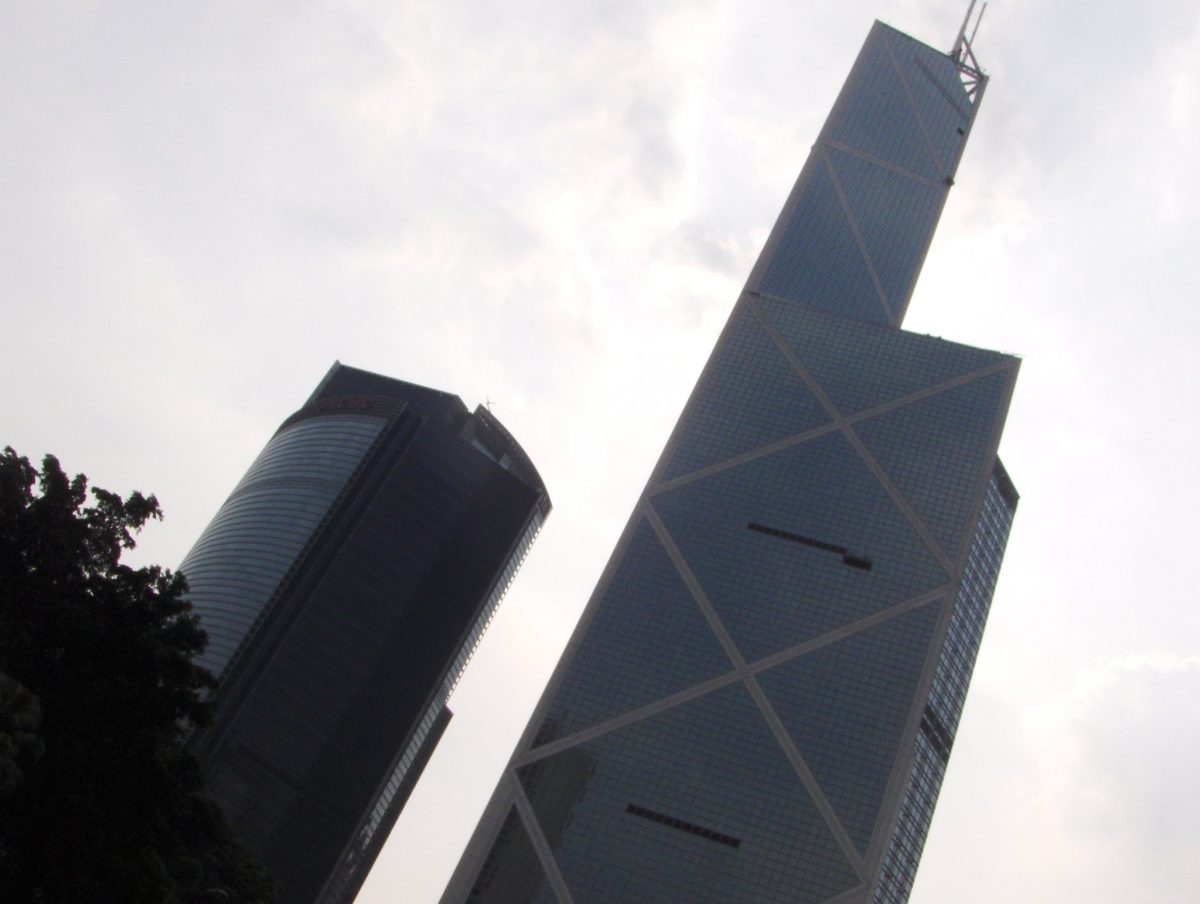
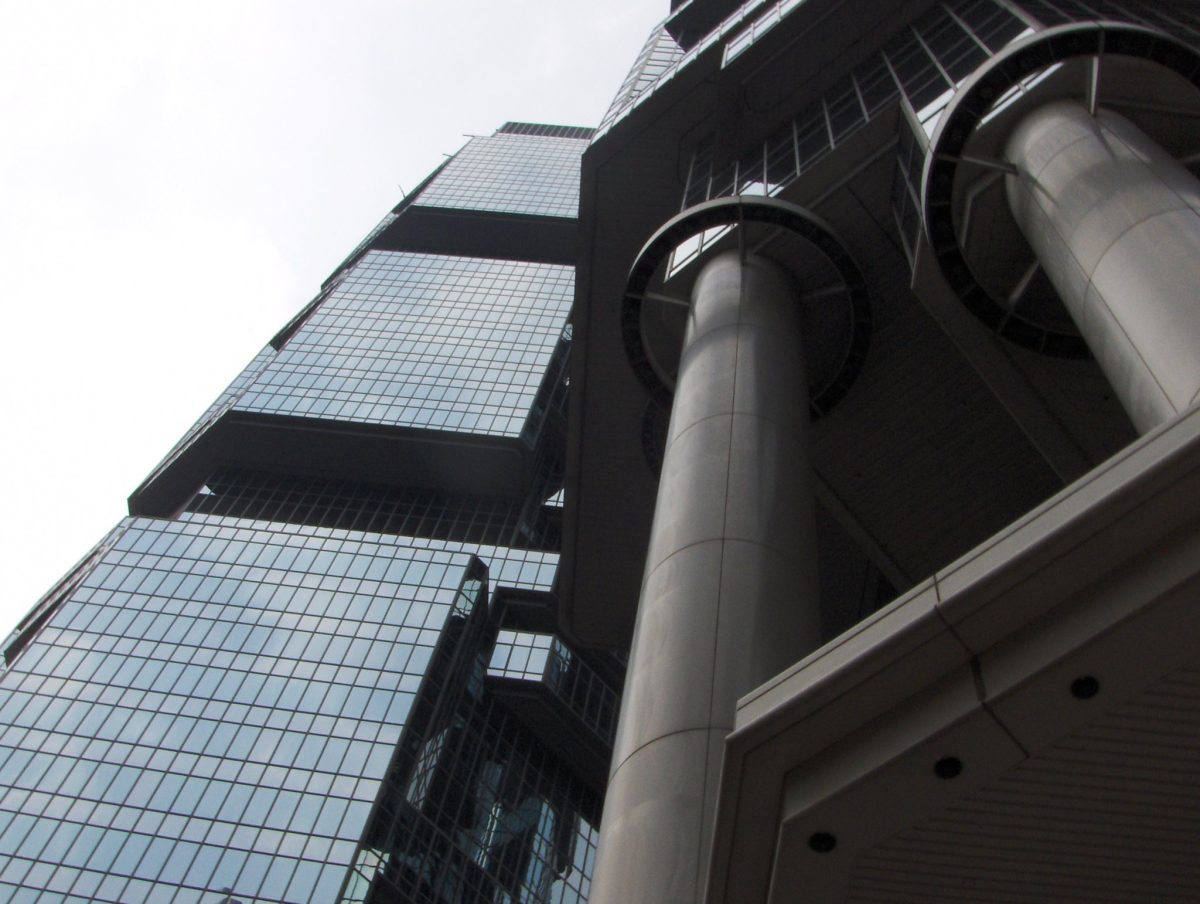
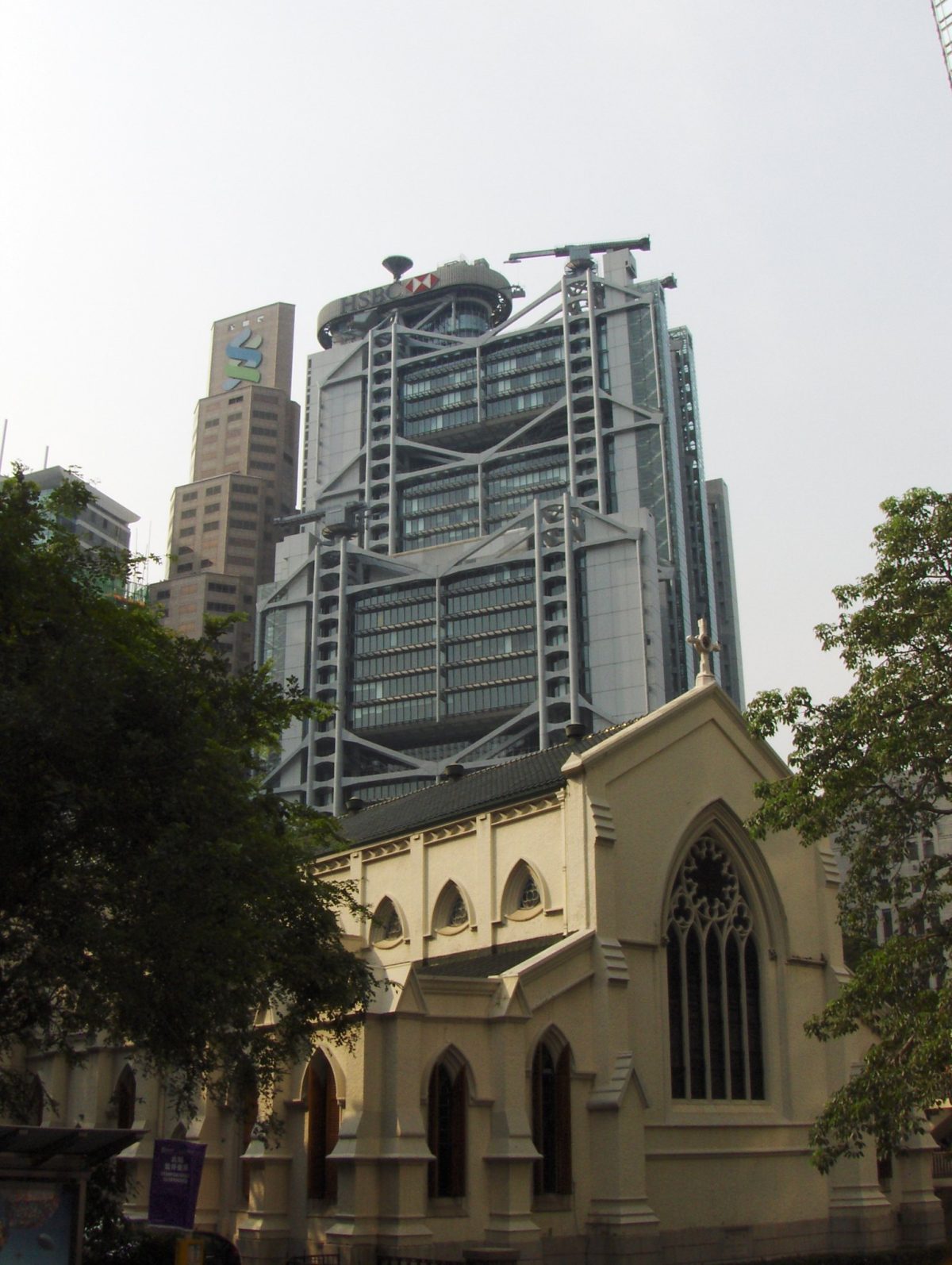
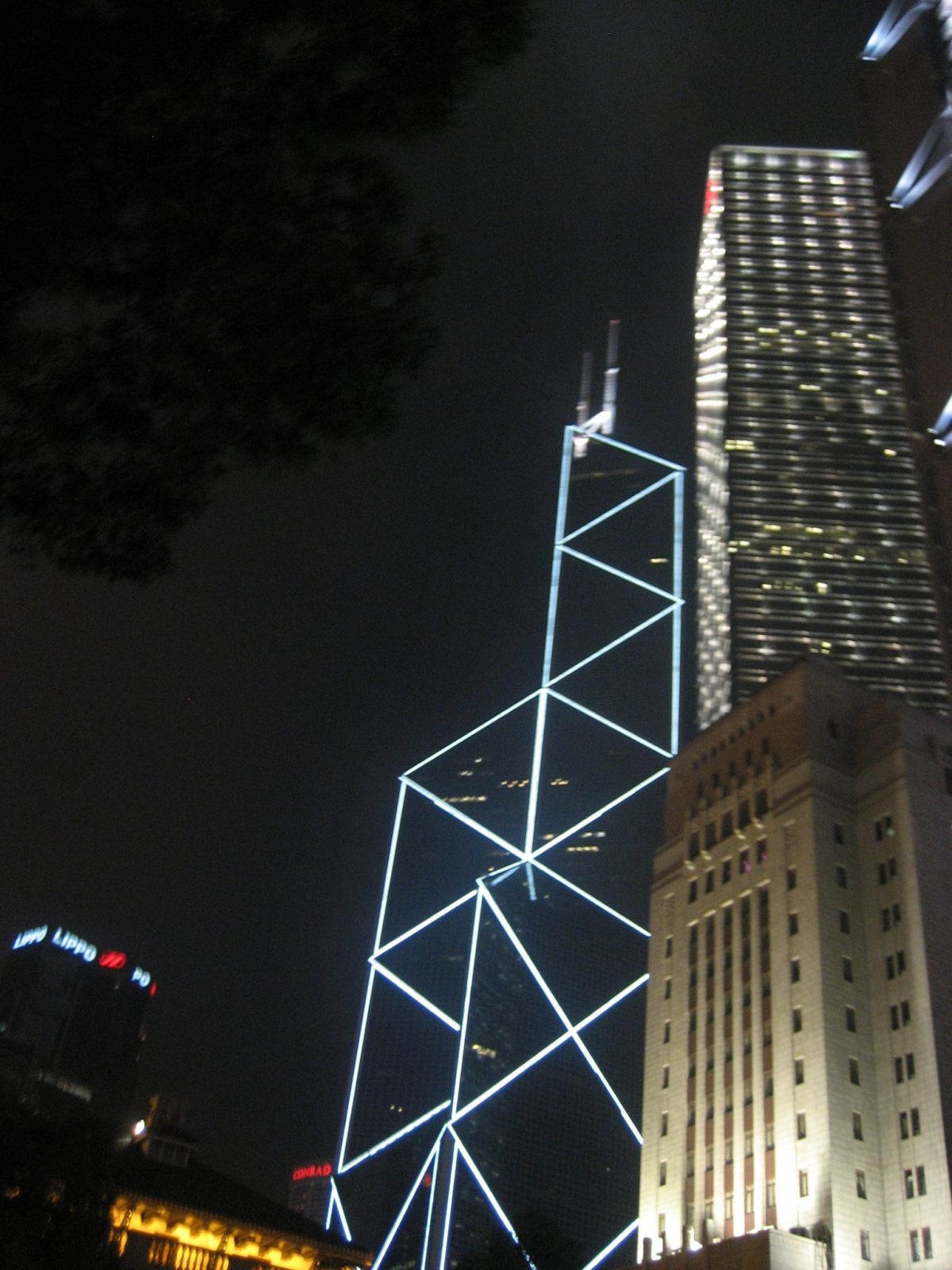
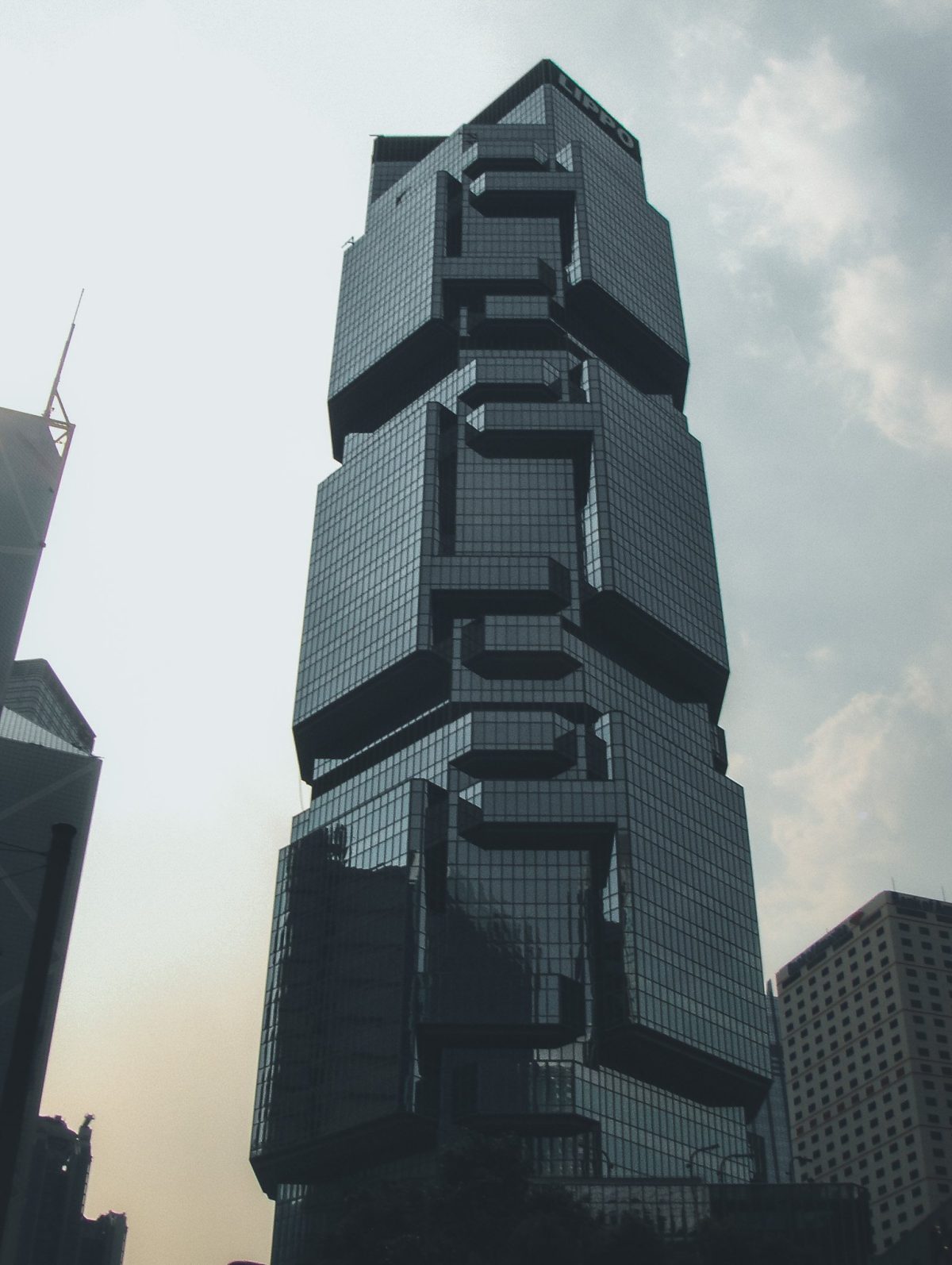
I. M. Pei's Bank of China Tower, completed in 1990, rises in triangular glass facets to 367.4 metres with its masts and was the tallest building in Asia until 1992. Norman Foster's HSBC Main Building of 1985, 178.8 metres high, hangs its floors from steel masts and cost about HK$5.2 billion, then the most expensive building in the world; a few steps east on Queensway, Paul Rudolph's Lippo Centre of 1988 has twin towers of 186 and 172 metres. Uphill on Garden Road, beside the lower terminus of the Peak Tram, St John's Cathedral, which held its first service in 1849, stands on the only freehold land in Hong Kong.
The Bank of China Tower by I. M. Pei, completed in 1990, with its triangular glass facets and cross-braced frame, beside a neighbouring office tower in Central
The Peak Tram and the Peak Tower
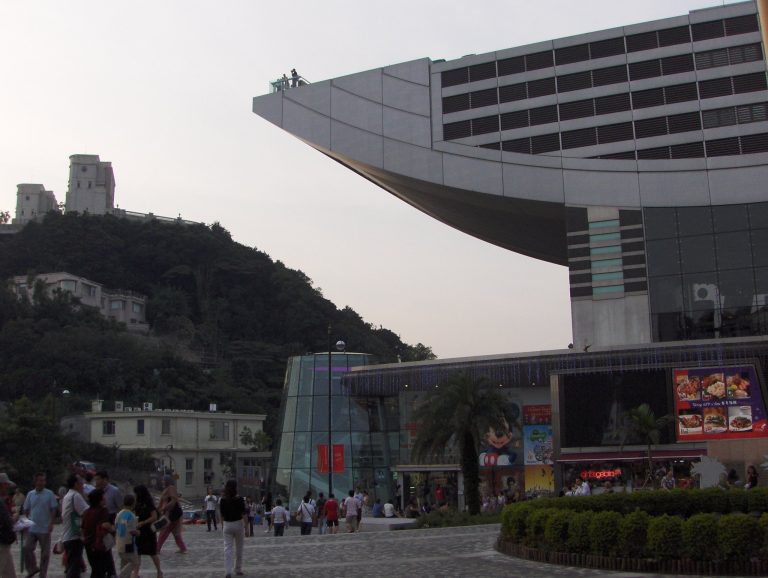
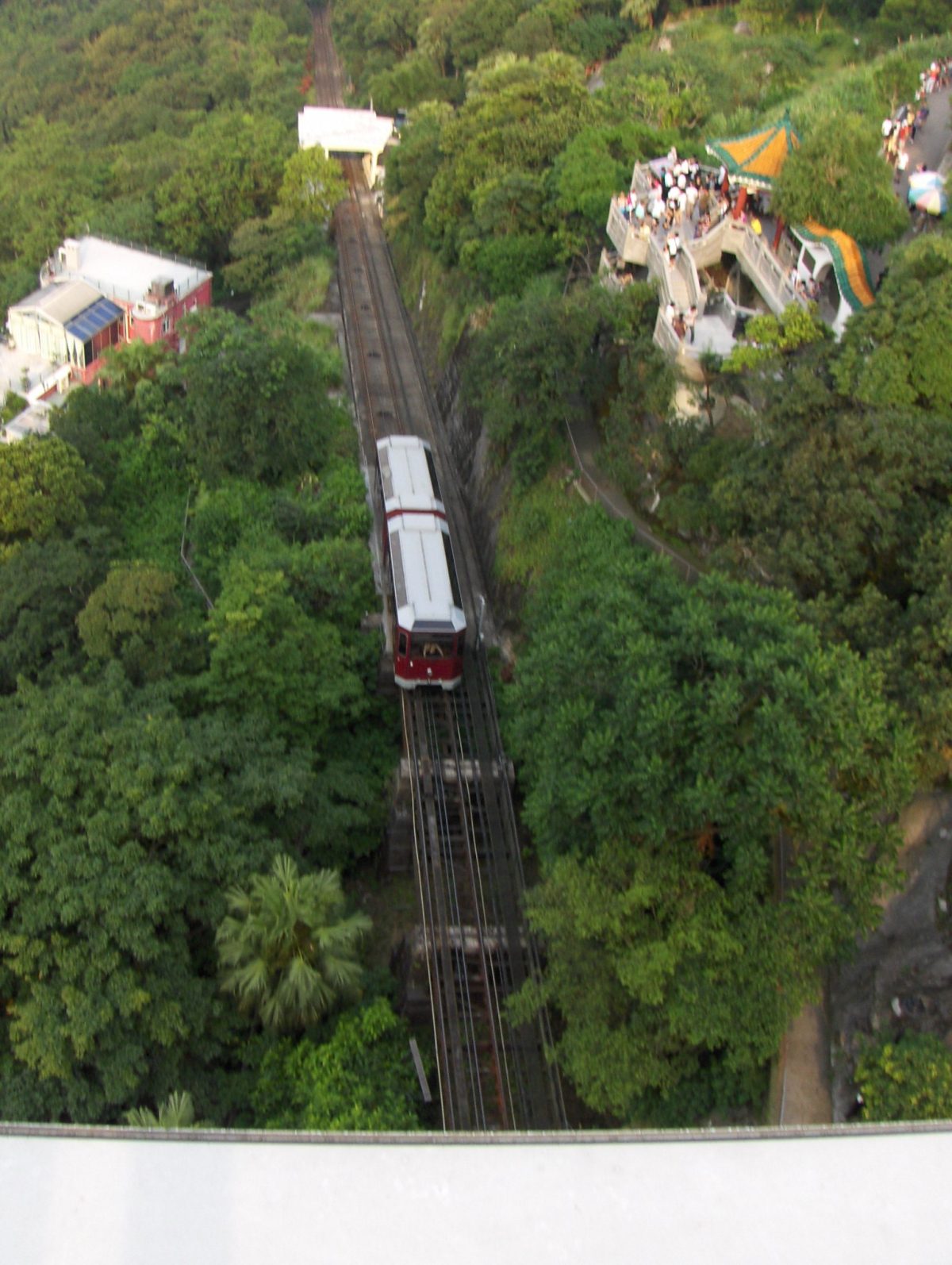
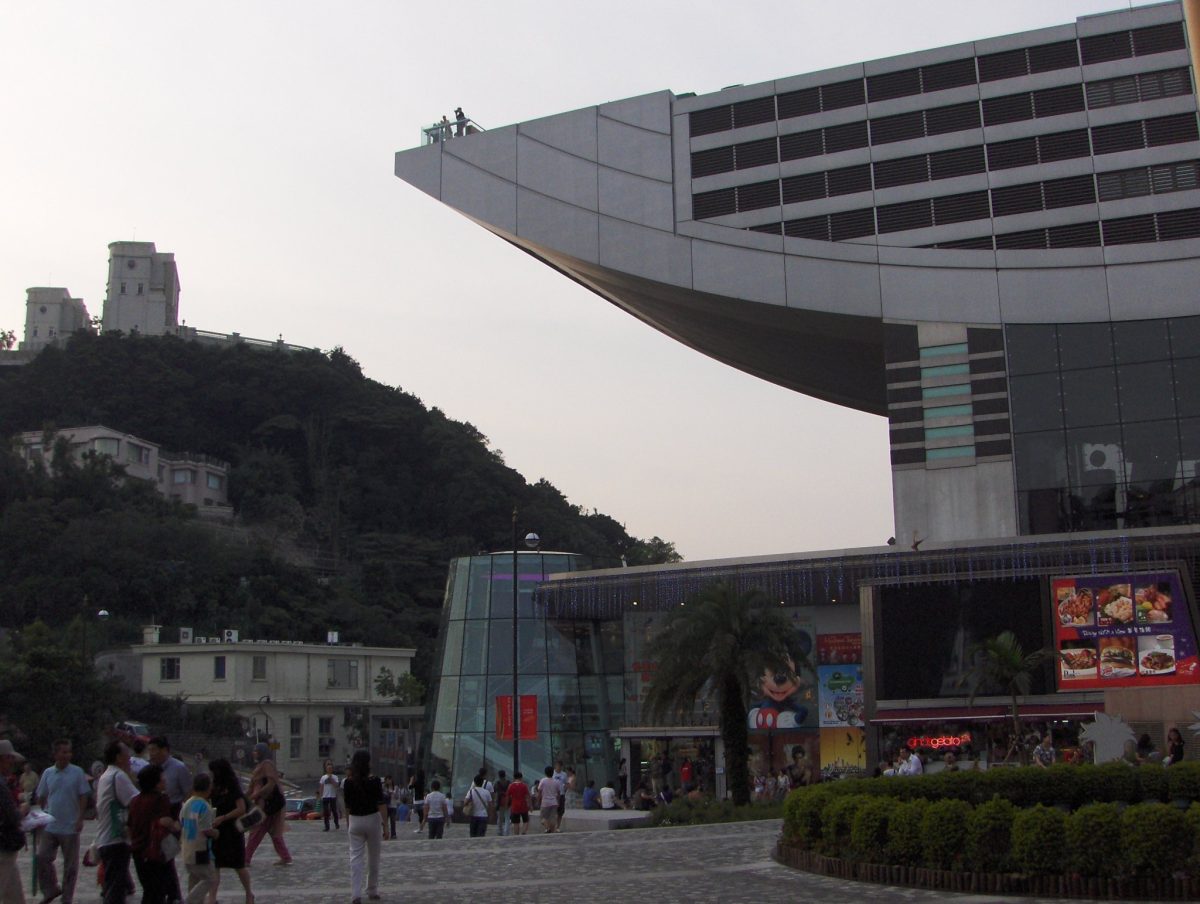
The Peak Tram has climbed from Garden Road to the Peak since May 1888, a funicular about 1.4 kilometres long that rises from 27 to 396 metres above the sea at gradients of up to 48 per cent. Its upper terminus is inside Terry Farrell's Peak Tower of 1997, capped at 428 metres above sea level, which gives the Sky Terrace 428 on its roof its name; the summit of Victoria Peak, at 552 metres, is occupied by radio installations. The red-and-cream cars of 1989 seen in 2009 were replaced on 27 August 2022 by a sixth generation of trains for 210 passengers.
The Peak Tower by Terry Farrell, opened in 1997, with its upturned bowl-shaped roof; the upper terminus of the Peak Tram is inside the building and the Sky Terrace 428 on top
Across Victoria Harbour
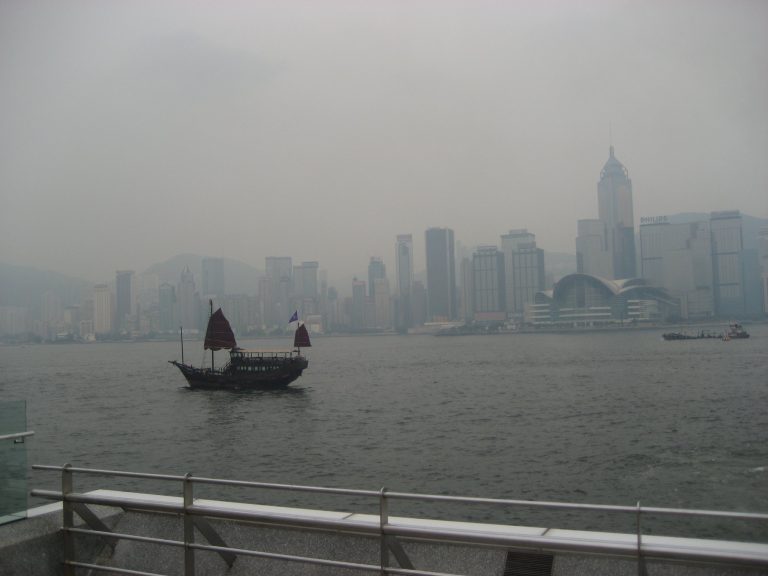
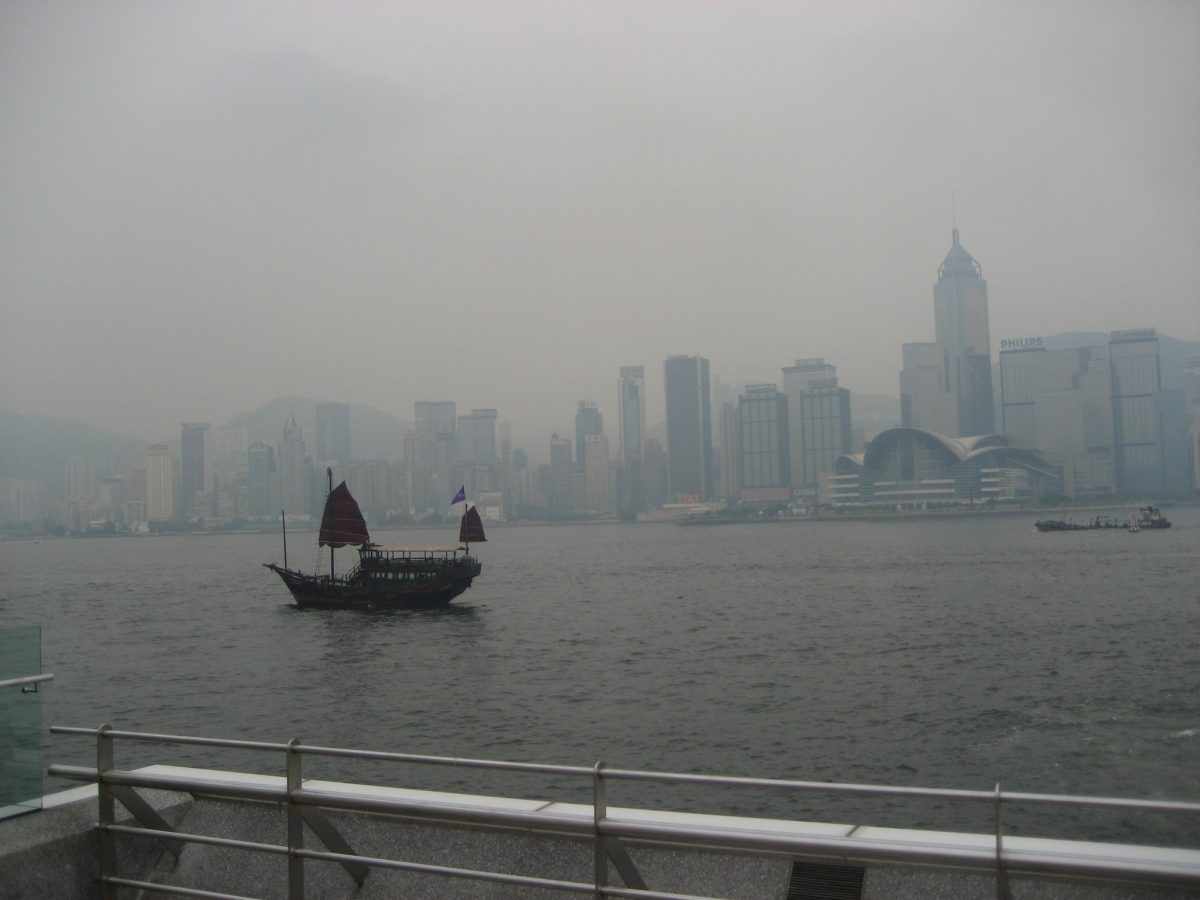
The green-and-white boats of the Star Ferry have crossed Victoria Harbour since 1888, and the crossing from Central Pier 7 to Tsim Sha Tsui, about a kilometre, takes less than ten minutes. An adult upper-deck crossing costs HK$5 on weekdays and HK$6.50 at weekends, with higher fares from 25 January 2027. The harbour has narrowed around the ferry: Queen's Road Central was the shoreline in the 1840s, and reclamation has since pushed the Central waterfront several blocks further out.
A junk with red sails on Victoria Harbour off Tsim Sha Tsui, with Central Plaza and the Hong Kong Convention and Exhibition Centre on the Wan Chai waterfront behind
The Kowloon Waterfront
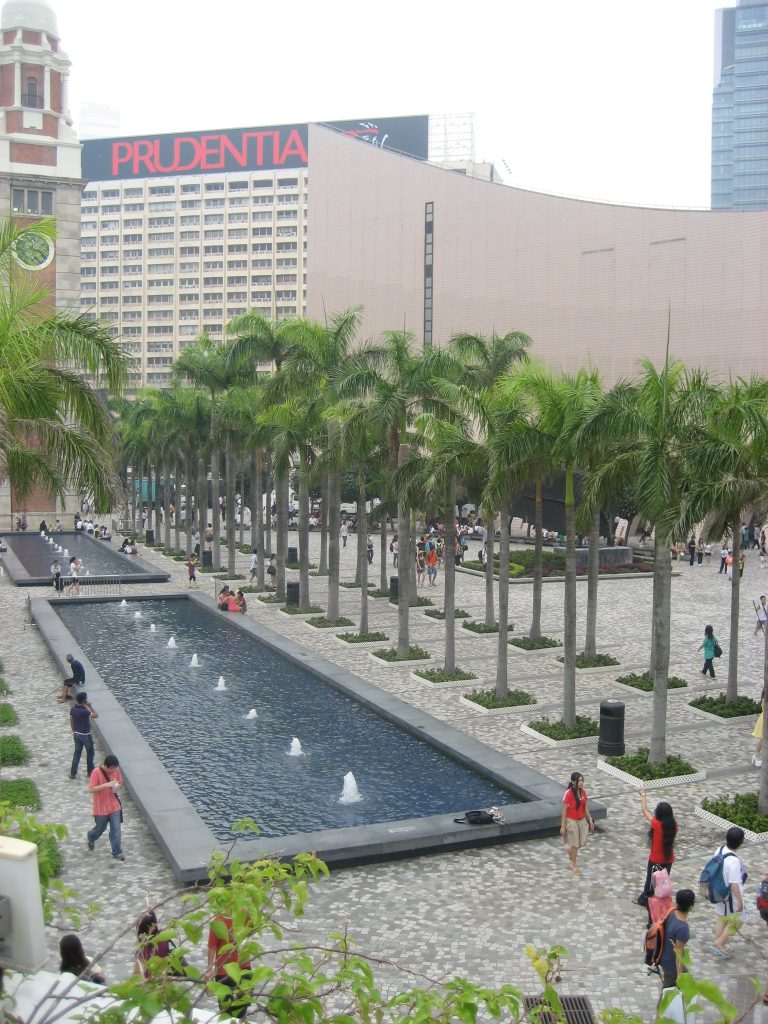
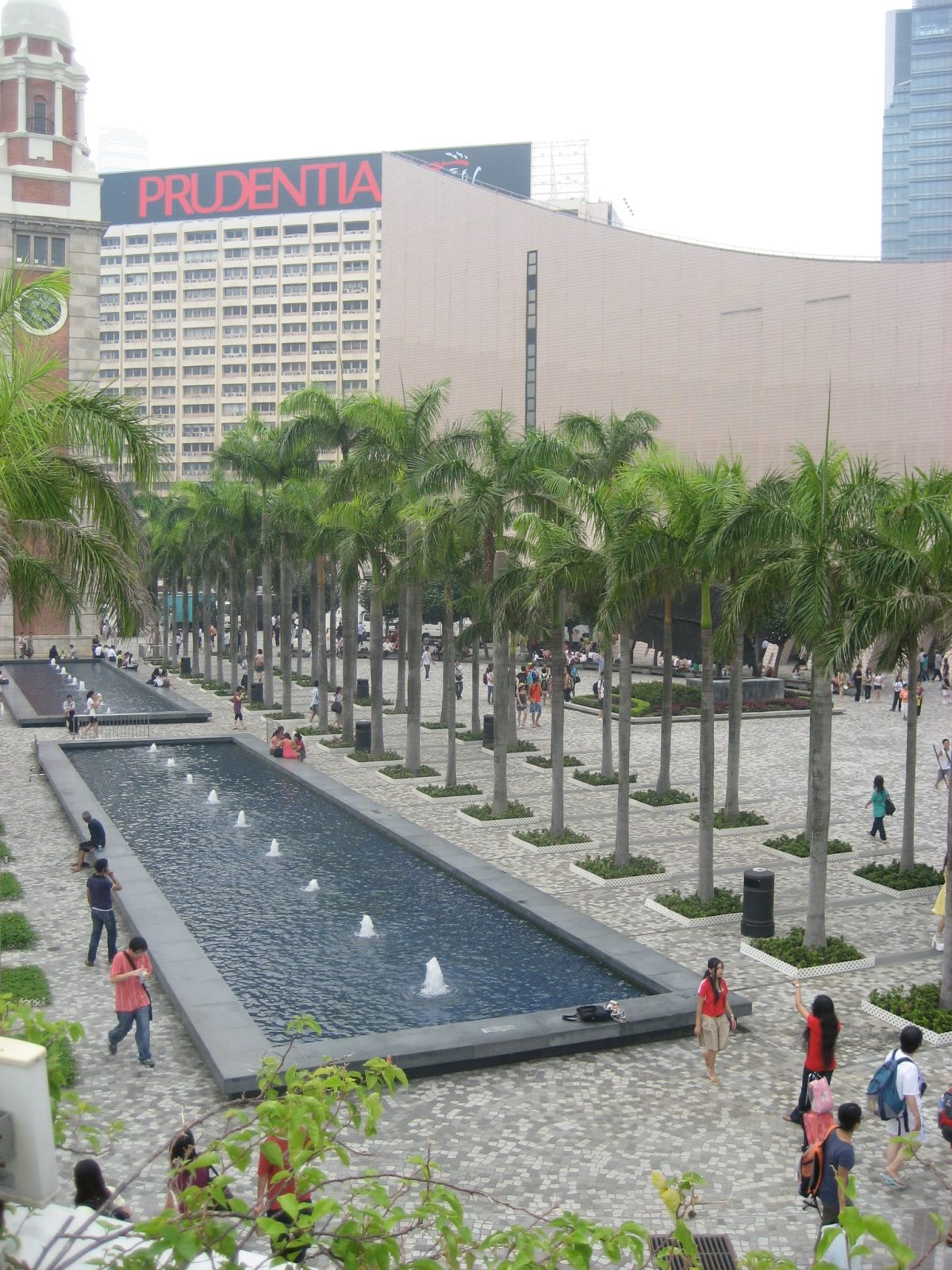
The ferry lands beside the red-brick Clock Tower, completed in 1915 for the terminus of the Kowloon–Canton Railway; the station was demolished in 1977, but the 44-metre tower was kept. East of the Hong Kong Cultural Centre, the 440-metre Avenue of Stars opened in 2004 as a tribute to Hong Kong cinema; with Salisbury Garden it closed from 2015 and reopened on 31 January 2019 to a design by James Corner Field Operations, so the waterfront in the 2009 photograph has since been rebuilt. Every evening at 20:00 A Symphony of Lights plays lights and lasers across the towers on both sides of the harbour.
Palm-lined pools in front of the Hong Kong Cultural Centre in Tsim Sha Tsui, photographed in 2009 before the waterfront and the Avenue of Stars were redesigned; the Clock Tower of 1915 stands at the left edge
The Convention Centre and Causeway Bay
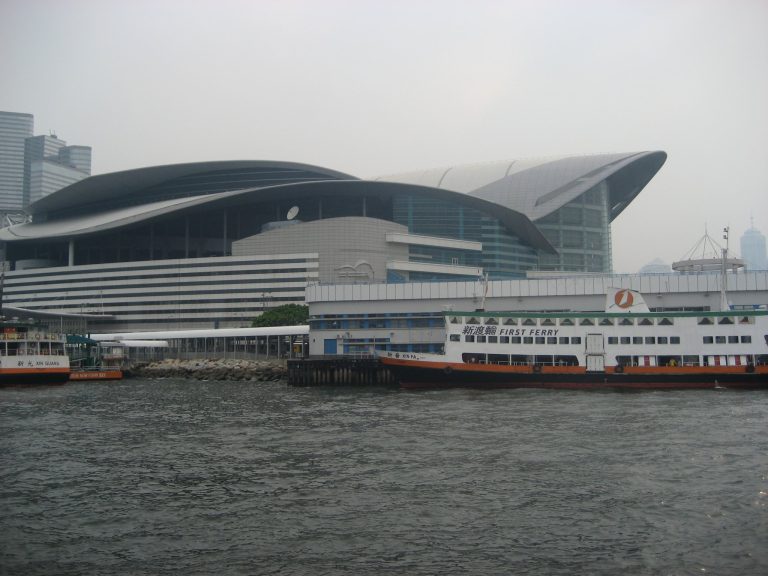
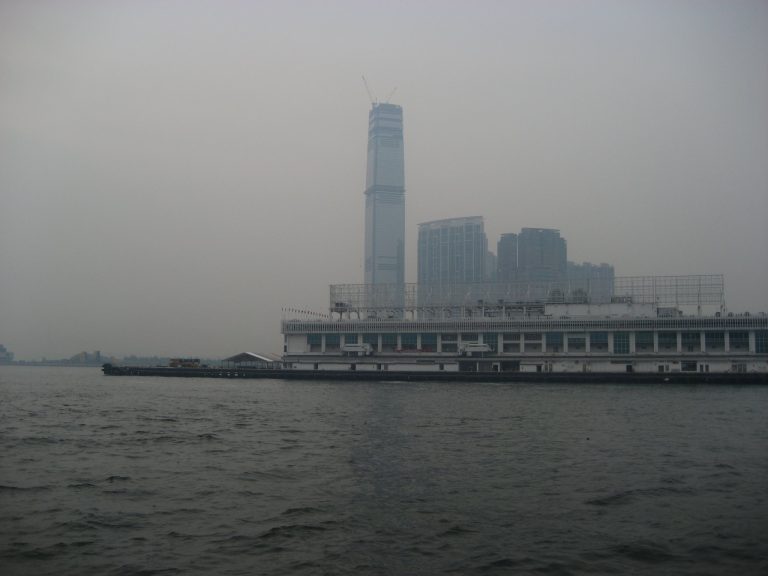
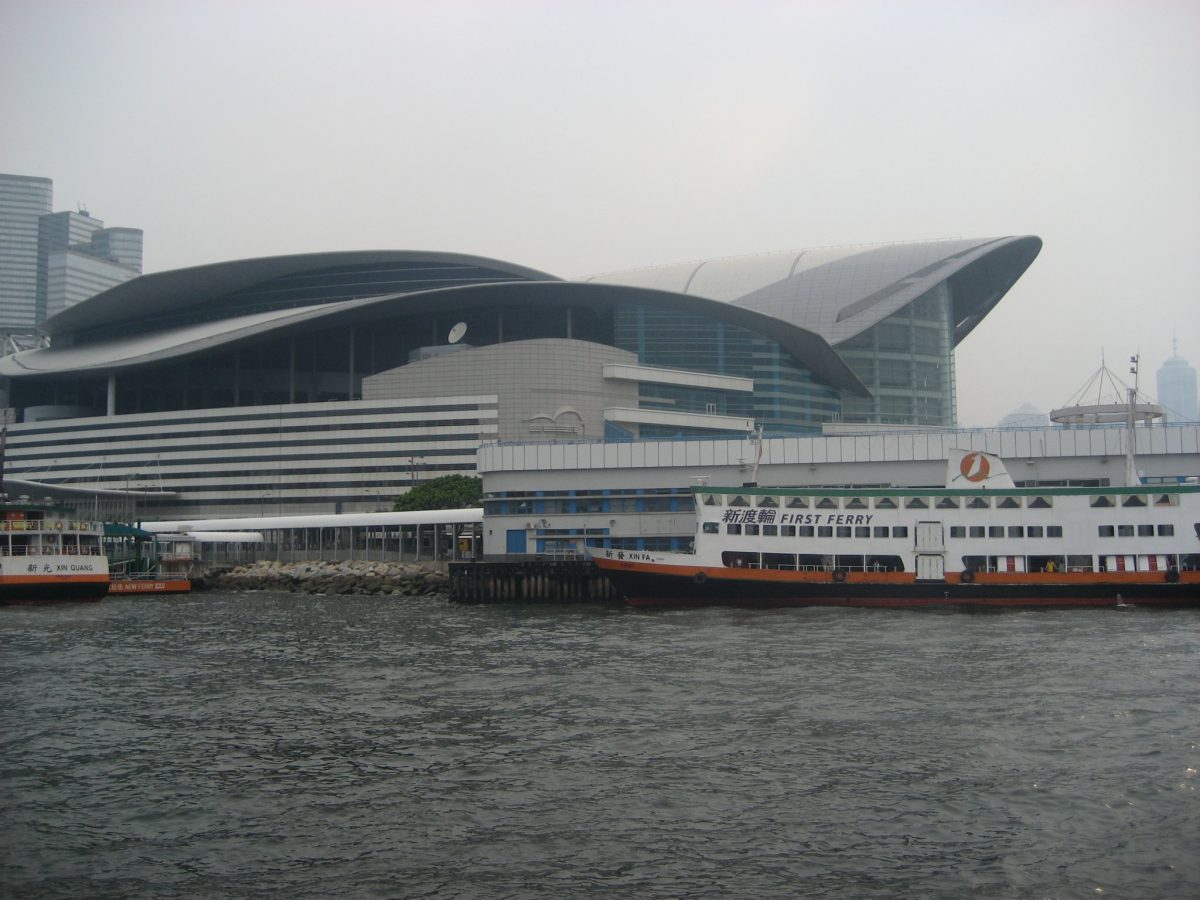
The Hong Kong Convention and Exhibition Centre opened in 1988, and its new wing, built from 1994 to 1997 on an artificial island under a wing-like roof, hosted the handover ceremony at midnight on 30 June 1997. Behind it, Central Plaza, completed in 1992, reaches 374 metres with its mast; the old Wan Chai ferry pier of 1968, photographed in 2009, closed on 29 August 2014 and was replaced further out. Trams have run along this shore since 30 July 1904, and in Causeway Bay Times Square opened in 1994 on the site of the old Sharp Street tram depot.
The old Wan Chai Ferry Pier in front of the Hong Kong Convention and Exhibition Centre, photographed from the water in 2009; the pier was replaced by a new one further north in 2014
ICC and the Cultural District
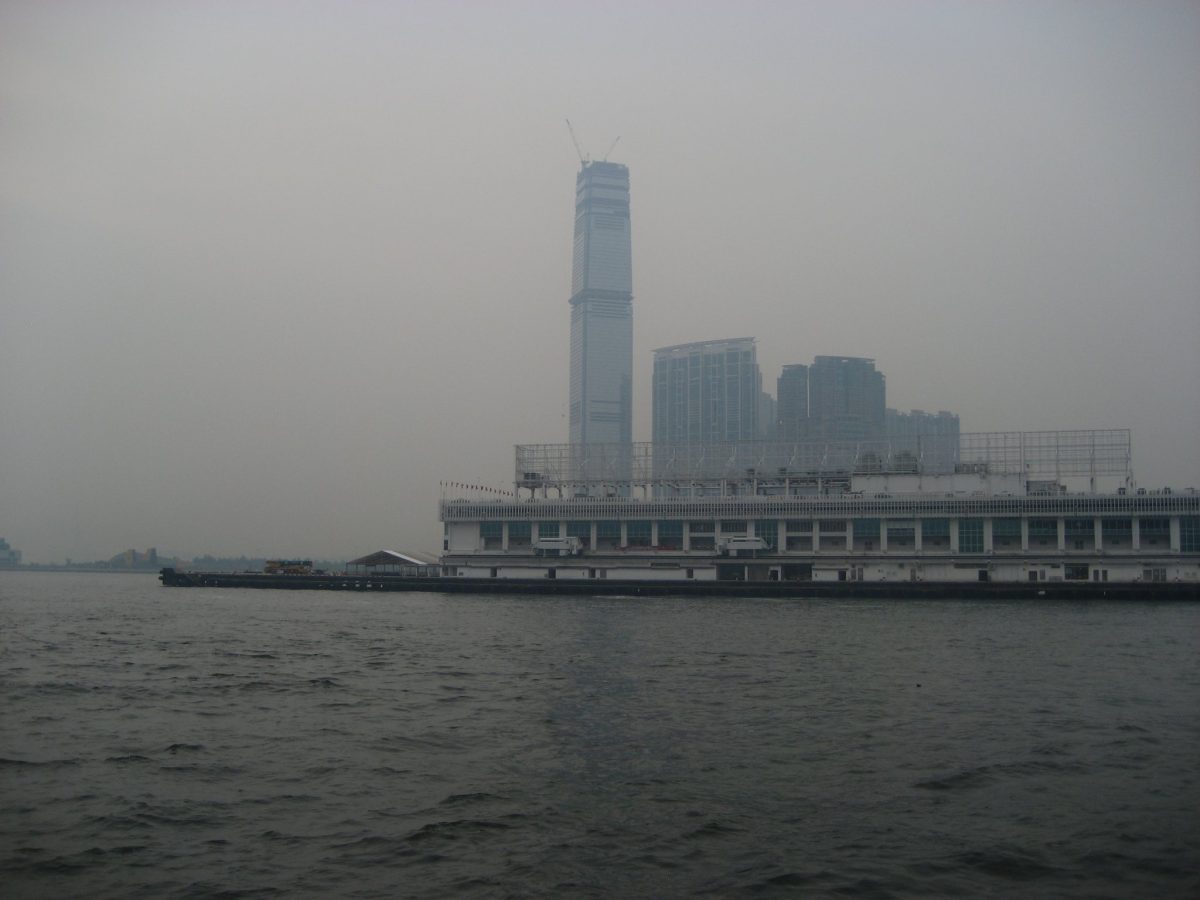
The International Commerce Centre, completed in 2010 above Kowloon Station on the Airport Express, is the tallest building in Hong Kong at 484 metres, with the sky100 observation deck on its 100th floor at 393 metres. In the summer of 2009 it was still a shell with cranes on top, and the 40 hectares of reclaimed land at its foot were bare. The West Kowloon Cultural District now holds the Xiqu Centre for Cantonese opera (2019), the M+ museum of visual culture (November 2021) and the Hong Kong Palace Museum (July 2022).
Ocean Terminal in Tsim Sha Tsui from Victoria Harbour in 2009, with the International Commerce Centre still under construction behind, cranes on its top; the tower was completed in 2010
The Harbour After Dark
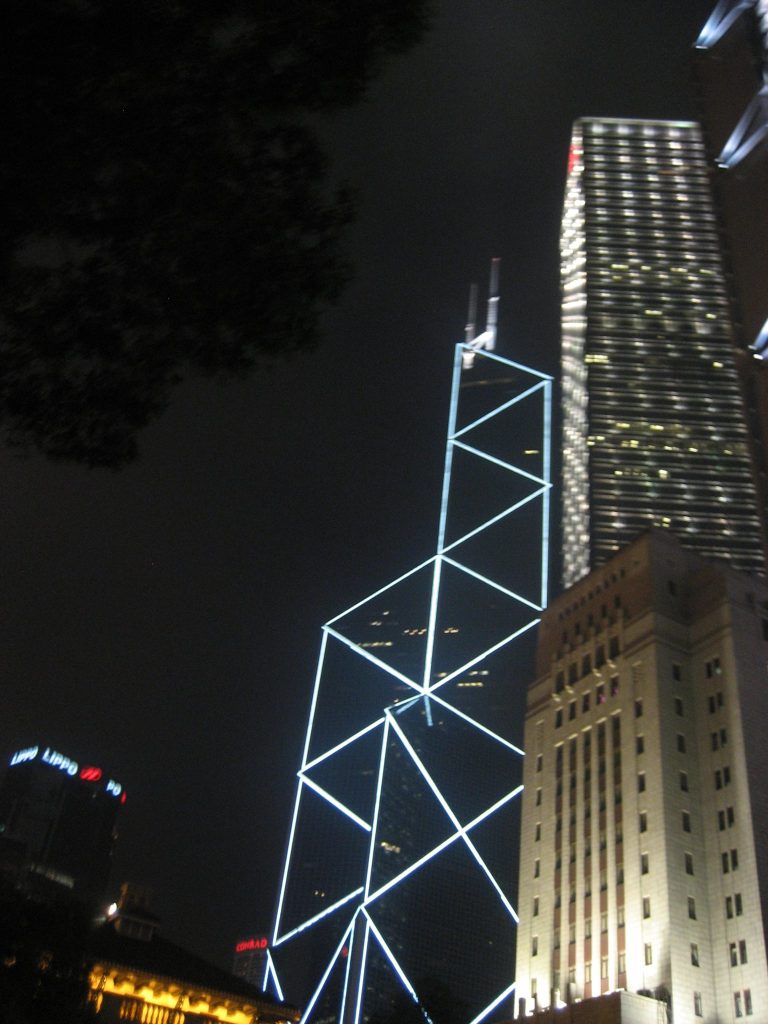
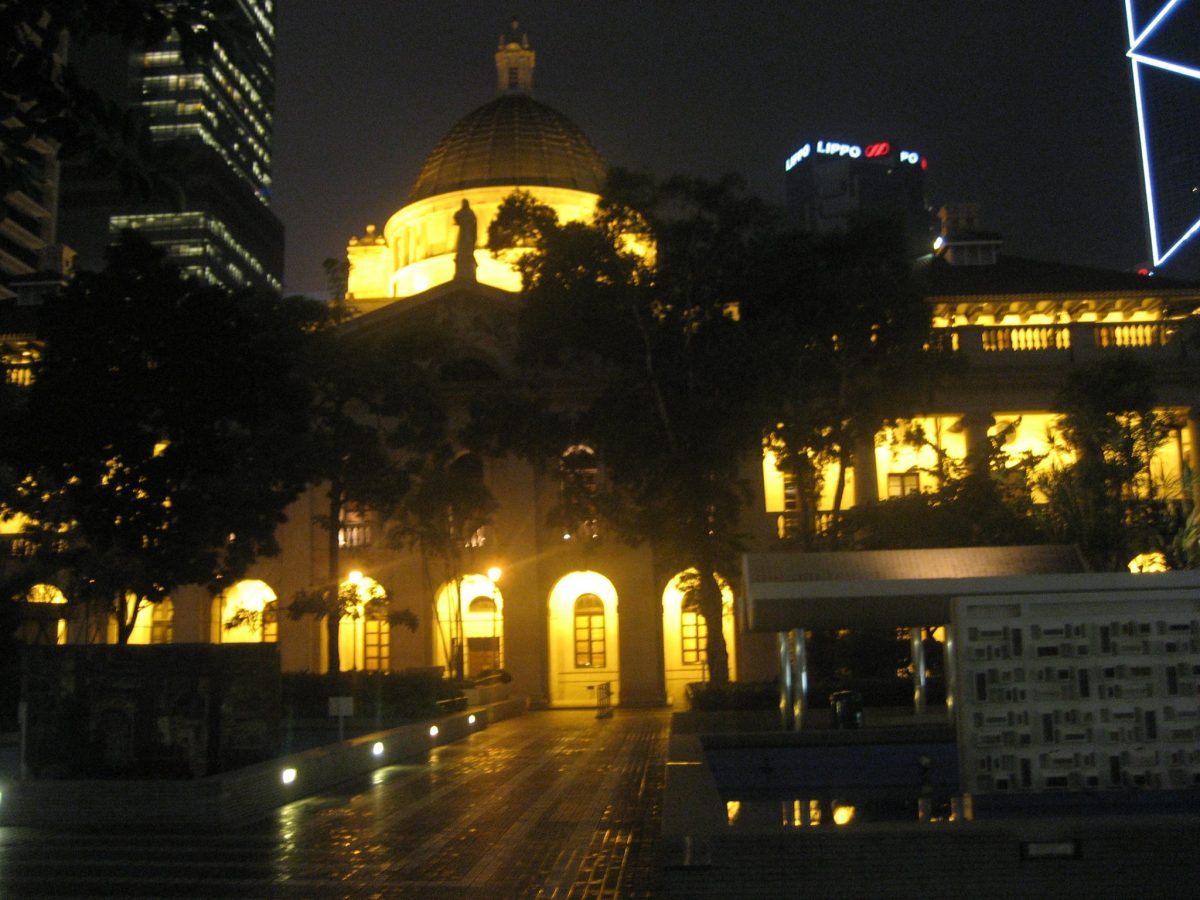
At night the towers of Central and Wan Chai light up between the dark mass of the Peak and the water, with Two IFC, at 412 metres the second-tallest building in Hong Kong, at the western end and the Bank of China Tower outlined in white light. On Statue Square the domed former Supreme Court of 1912, home of the Legislative Council when it was photographed in 2009 and of the Court of Final Appeal since September 2015, is floodlit below the banks. From the Tsim Sha Tsui promenade the whole island skyline lies across about a kilometre of harbour.
The Bank of China Tower outlined in white light at night, photographed in 2009, with the floodlit former Bank of China Building and neighbouring towers of Central
3D model © 2026 madseriksson.no · Photographs © madseriksson.no. Buildings and heights: © OpenStreetMap contributors (ODbL), via OpenMapTiles. Ground imagery: Sentinel-2 cloudless 2023 by EOX IT Services GmbH (contains modified Copernicus Sentinel data 2023; CC BY 4.0). Heights are approximate where OpenStreetMap has no measured value; sun positions are approximate.
Victoria Peak and the Peak Tram — The View That Made a City Famous
A funicular in service since 1888, a tower shaped like a bowl, and the most photographed skyline in Asia laid out below
In the nineteenth century the Peak was where the colony’s elite escaped the heat and fevers of the harbour, carried up the hill in sedan chairs. In 1881 a Scottish railwayman, Alexander Findlay Smith, proposed a cable railway, and in May 1888 the Peak Tram opened: a funicular running 1.4 kilometres from Garden Road, beside St John’s Cathedral, to a station 396 metres above the sea. It climbs at up to 48 per cent, steep enough that the tower blocks of the Mid-Levels seem to lean back as the car passes them, and the ride takes about six minutes. Sit on the right-hand side going up for the harbour.
The line has been rebuilt several times. In 1989 it received the red-and-cream two-car trains for 120 passengers that served it for more than three decades. In June 2021 the tram closed for a modernisation of more than a year, and since 27 August 2022 it has run with a new, sixth generation of larger trains for 210 passengers and a rebuilt lower terminus with a covered waiting area — a welcome change, because the queue on Garden Road in the heat of a summer afternoon was long a rite of passage. The tram runs daily from 7:30 to 23:00. Since 29 December 2025 an adult single costs HK$82 and a return HK$116, and the Sky Pass, combining the return trip with the Sky Terrace 428, costs HK$182 (checked November 2026).
The tram climbs at up to 48 per cent. Seen from its windows, the tower blocks of the Mid-Levels seem to lean backwards down the mountain.
At the top the tram runs into the Peak Tower, Terry Farrell’s building of 1997, whose upturned roof resembles a bowl or a wok held up on pillars. It replaced a first Peak Tower of 1972, and the architects capped it at exactly 428 metres above sea level, which gives the rooftop Sky Terrace 428 its name (from about HK$80 on its own, checked November 2026). Inside are shops, restaurants and Madame Tussauds; across the road the Peak Galleria has another viewing deck. The summit of Victoria Peak itself, at about 552 metres, is occupied by radio installations and is not open to the public.
The view needs no exaggeration. From the edge of the Peak the residential towers of the Mid-Levels drop away down the slope, the banks and offices of Central and Admiralty crowd the shoreline, and beyond the narrow strip of Victoria Harbour the whole of Kowloon spreads to the hills of the New Territories. On a summer day the scene is often softened by haze; the clearest days usually come in autumn and winter, after a cold front or rain has cleaned the air. The free alternative to the paid terraces is Lugard Road, a level footpath that leaves from beside the Peak Tower and contours around the hill on a narrow ledge, partly on stilts, with the same panorama through the trees; with Harlech Road it makes a circuit of about an hour. Go up in the late afternoon, walk the loop, and stay for the lights of the city coming on below.
Central and Admiralty — Banks as Monuments, and the Colony Between Them
I. M. Pei’s prism, Norman Foster’s hanging bank, Paul Rudolph’s koalas, and a cathedral on the only freehold land in Hong Kong
Central is where Hong Kong keeps its money, and since the 1980s its banks have competed in architecture as much as in finance. The sharpest of them is the Bank of China Tower on Garden Road, designed by I. M. Pei and completed in 1990. It rises in stages as a shaft of glass cut into triangles by a cross-braced frame that carries the loads to the four corners, with two masts lifting it to 367.4 metres. It was the tallest building in Asia from 1990 until 1992 and the first outside the United States to pass 305 metres. Its sharp edges were controversial among practitioners of feng shui, and the site has its own story: it was occupied by Murray House, an officers’ quarters of 1846, which was dismantled stone by stone in 1982 and eventually rebuilt at Stanley on the south side of the island. The small public viewing floor on the 43rd storey is now closed, so the tower is best admired from the street and from the little garden with rocks and waterfalls on its flank.
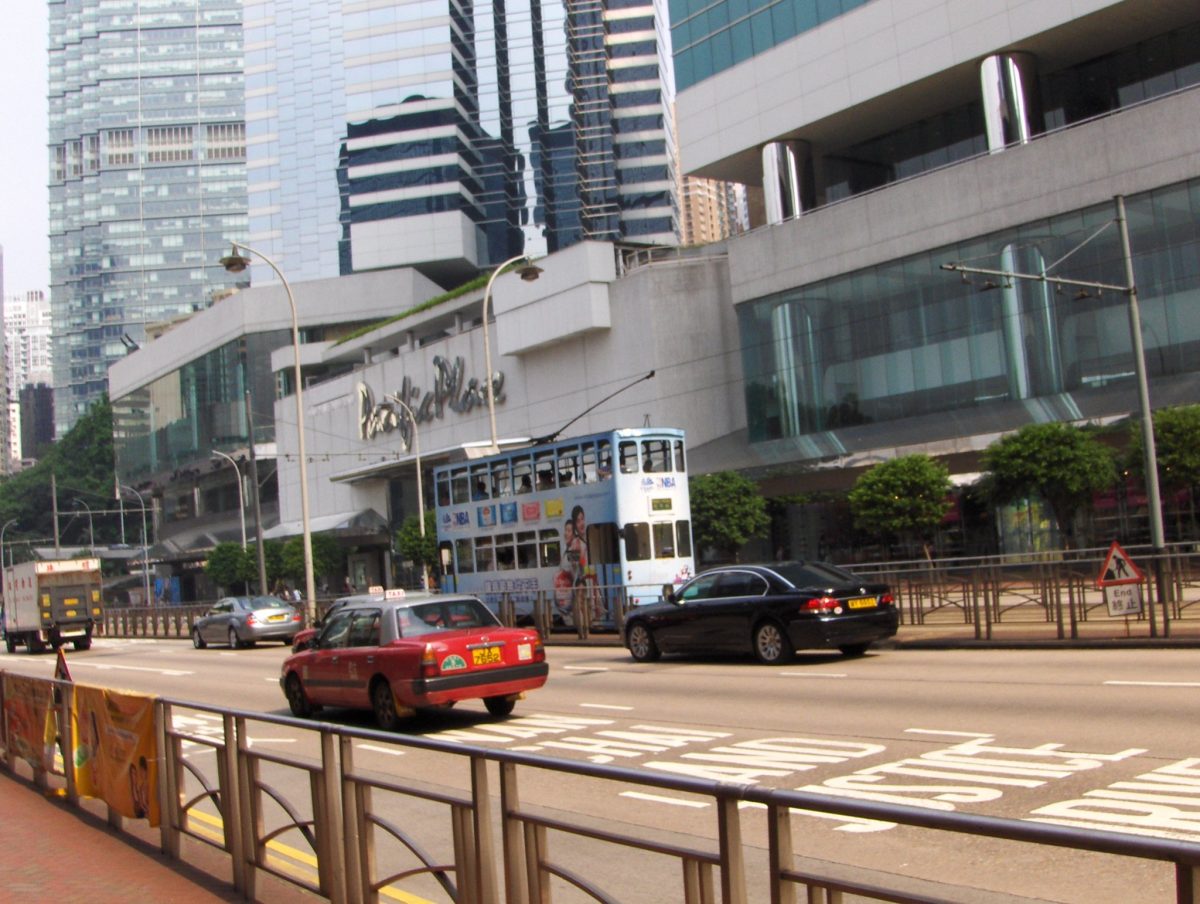
A few steps east, on Queensway in Admiralty, stand the twin towers of the Lippo Centre, completed in 1988 to a design by the American architect Paul Rudolph. They were built as the Bond Centre for the Australian businessman Alan Bond, and their faceted glass boxes, stacked out from the shafts on massive columns, are so oddly animal that Hong Kong long ago decided they look like koalas clinging to a tree. The towers are 186 and 172 metres high. Beyond them, Pacific Place and the government offices at Tamar mark the edge of Admiralty, with trams running past on Queensway below.
Hong Kong decided long ago that the glass boxes on the Lippo Centre look like koalas clinging to a tree. Once seen, they cannot be unseen.
The HSBC Main Building, completed in 1985 and opened in April 1986, turned the office tower inside out. Norman Foster hung its floors from eight steel masts and coat-hanger trusses, so that the ground level could be left open as a public plaza; on Sundays it fills with domestic workers on their day off, picnicking on cardboard. At about HK$5.2 billion it was then the most expensive building in the world. The two bronze lions guarding it, Stephen and Stitt, were cast for the bank’s Shanghai office in 1923; one still bears shrapnel scars from the Battle of Hong Kong. North of the bank lies Statue Square, and on its east side the domed former Supreme Court Building, opened in 1912 and designed by Aston Webb and Ingress Bell, the architects of the east front of Buckingham Palace. A blindfolded figure of Justice stands on its pediment. In 2009 it still housed the Legislative Council, which met there from 1985 until 2011; since September 2015 it has been home to the Court of Final Appeal.
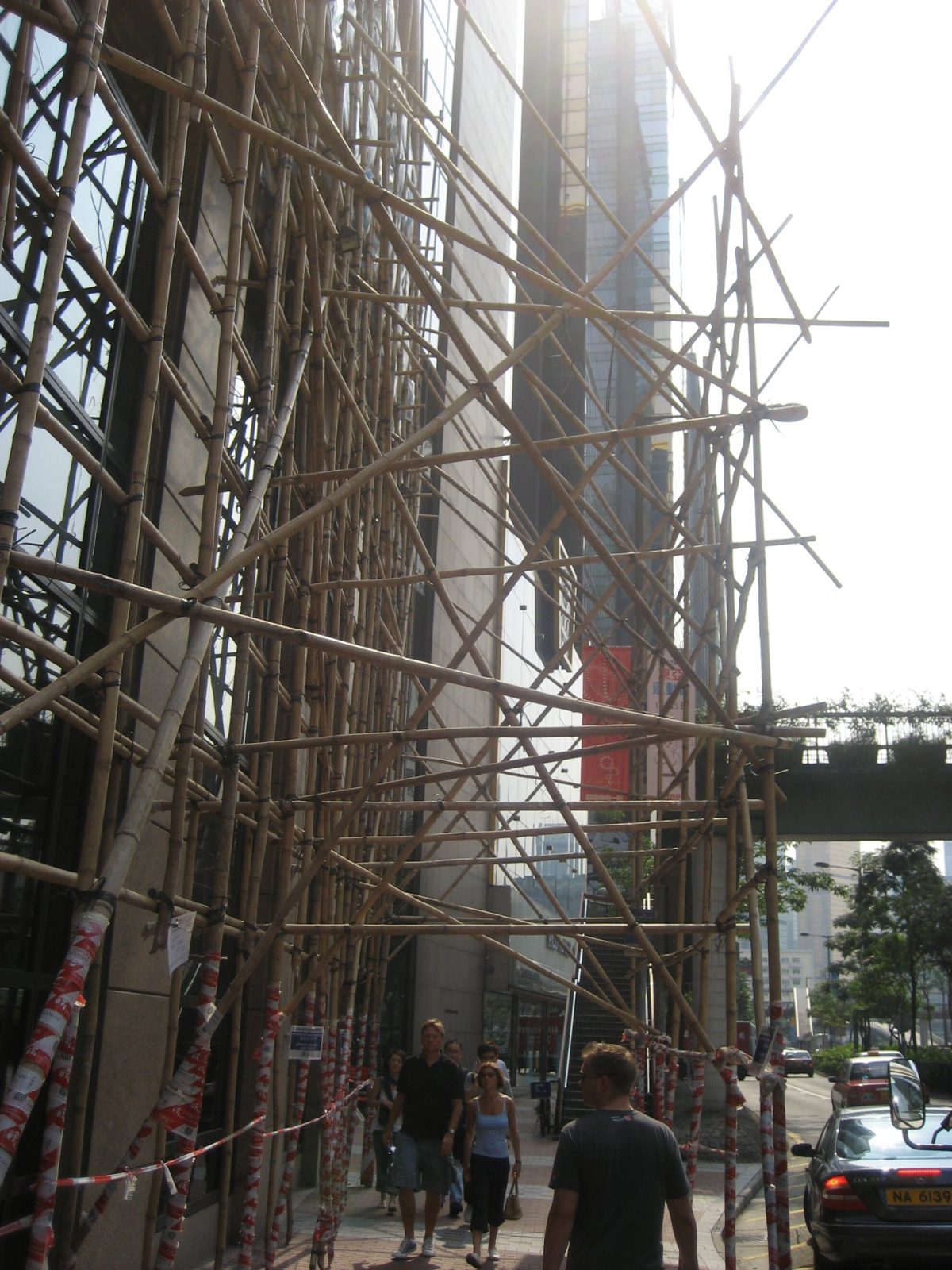
Uphill on Garden Road, among the trees, stands St John’s Cathedral, where the first service was held in March 1849. It is the oldest surviving Western church building in Hong Kong and stands on the only freehold land in the territory. Down on the waterfront, Two IFC, completed in 2003, rises 412 metres above the Airport Express terminus; it is the second-tallest building in the city. West of Central the slope steepens at once into the Mid-Levels, and the Central–Mid-Levels escalator climbs it: about 800 metres of covered escalators and walkways rising some 135 metres from Queen’s Road, running downhill for commuters from 6:00 to 10:00 and uphill from 10:00 until midnight. It passes through SoHo and above Hollywood Road, the street of antique shops that leads to the Man Mo Temple, and Lan Kwai Fong, the bar district, is a few minutes away. Look out too for the bamboo scaffolding that still wraps buildings under repair: poles lashed together with nylon ties, put up by hand to remarkable heights against glass and steel.
Victoria Harbour and the Star Ferry — Ten Minutes Across the Most Beautiful Crossing in Asia
Green-and-white ferries since 1888, the convention centre where the colony ended, and a waterfront that has never stopped moving
For the price of a coffee-shop tip, the Star Ferry gives the finest short journey in Hong Kong. Its green-and-white, double-ended boats, each with a name ending in “Star”, have crossed Victoria Harbour since 1888, and the routes from Central and from Wan Chai to Tsim Sha Tsui take less than ten minutes. Sailings from Central run from 6:30 to 23:30, every six to twelve minutes. An adult crossing between Central and Tsim Sha Tsui costs HK$5 on the upper deck on weekdays and HK$6.50 at weekends; the Wan Chai route costs the same, and a four-day pass is HK$50. Fares rise on 25 January 2027, to a maximum of HK$6 on weekdays and HK$8.30 at weekends (checked November 2026). Take the upper deck, sit on the side facing the island, and watch the towers grow out of the water.
The ferry is also the best way to understand how far the waterfront has moved. In Central the Star Ferry has used Pier 7, on reclaimed land, since 2006, and the reclamation in front of the old shore now carries a promenade, the harbourfront event space and, since December 2014, a 60-metre observation wheel. In Wan Chai the ferry pier that had served since 1968 closed on 29 August 2014 when its site disappeared under the land fill for the Central–Wan Chai Bypass; its replacement stands further out. Behind it lies the Hong Kong Convention and Exhibition Centre, opened in 1988 and extended between 1994 and 1997 onto an artificial island with the sweeping, wing-like roof that dominates the Wan Chai waterfront. The new wing was finished just in time for the handover ceremony on the night of 30 June 1997; on the waterfront outside, Golden Bauhinia Square commemorates the occasion.
The Star Ferry crosses the same harbour it crossed in 1888. It is the harbour that has shrunk around it.
On the Kowloon side, the ferry lands at Tsim Sha Tsui beside the red-brick Clock Tower, completed in 1915 as part of the terminus of the Kowloon–Canton Railway; the station was demolished in 1977, but the 44-metre tower was kept and is a declared monument. Beside it the windowless, curving tiled walls of the Hong Kong Cultural Centre face the harbour, and a palm-lined garden leads east to the Avenue of Stars, Hong Kong’s tribute to its film industry, opened in 2004. The promenade and the neighbouring Salisbury Garden were closed and rebuilt from 2015 and reopened in January 2019, redesigned by James Corner Field Operations; the bronze statue of Bruce Lee is still there. Every evening at 20:00 the waterfront fills for A Symphony of Lights, a show of about ten minutes in which lights, lasers and music play across the towers on both sides of the harbour. A ride on a red-sailed junk, still offered as a harbour cruise, is the old-fashioned way to watch it.
West of Tsim Sha Tsui, beyond Ocean Terminal and the malls of Harbour City, the skyline of Kowloon now ends in the International Commerce Centre. In the summer of 2009 it was still a shell with cranes on its top; it was completed in 2010 at 484 metres, the tallest building in Hong Kong, and the sky100 deck on its 100th floor, 393 metres up, looks back at the Peak. At its foot lies the West Kowloon Cultural District, 40 hectares of land reclaimed in the 1990s that was still bare ground in 2009. It now holds the Xiqu Centre for Cantonese opera, opened in 2019, the M+ museum of visual culture, opened in November 2021, and the Hong Kong Palace Museum, opened in July 2022 with treasures lent from the Palace Museum in Beijing, all set along a waterfront park with some of the best free views of Hong Kong Island.
Trams, Markets and the South Side — The City at Street Level
The double-deck “ding ding”, the crowds of Causeway Bay, fish on ice and dim sum at dawn, and beaches on the far side of the mountain
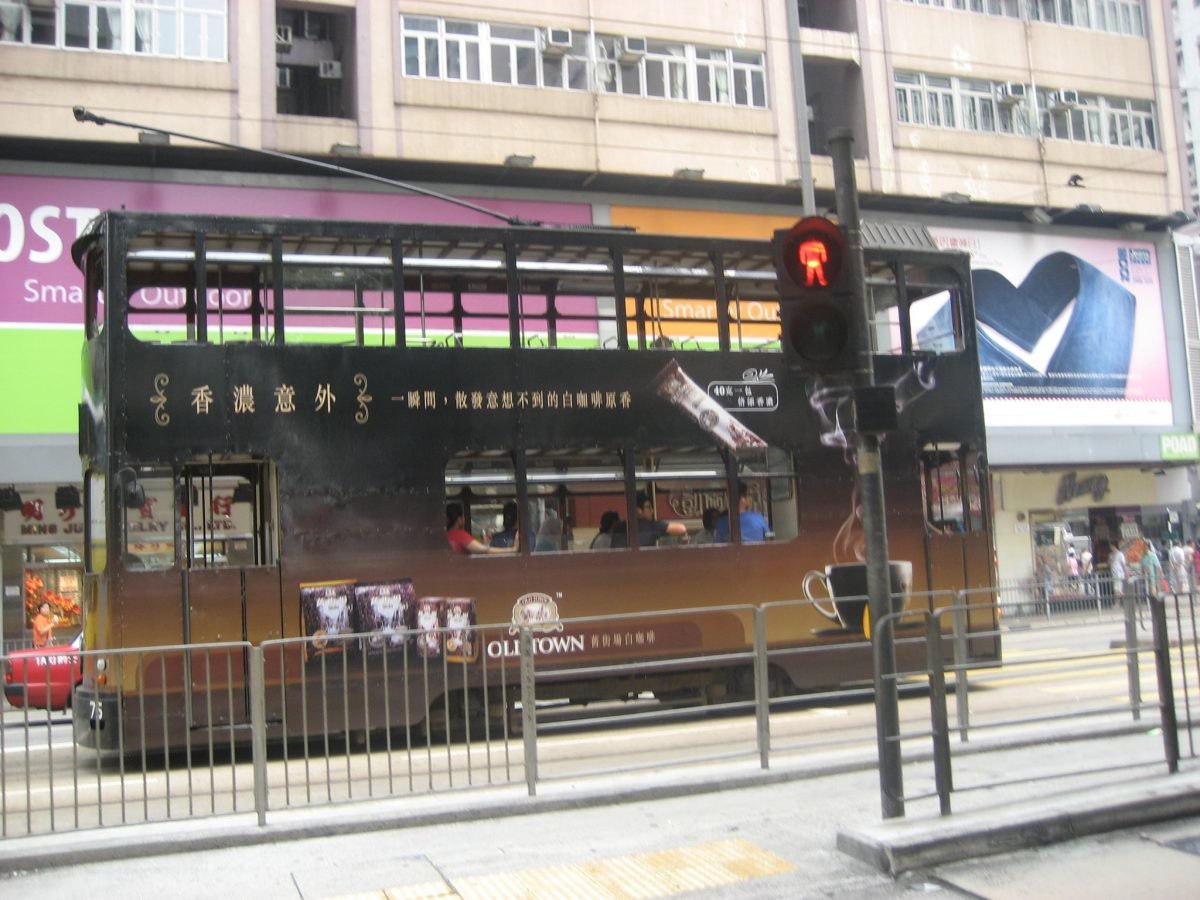
The trams of Hong Kong Island are the cheapest sightseeing tour in Asia. Narrow, double-deck and painted in advertising liveries from end to end, they have run since 30 July 1904 along a 13.3-kilometre line between Kennedy Town and Shau Kei Wan, close to what was once the shoreline, with a loop around the racecourse at Happy Valley. Locals call them the “ding ding” after the double bell they ring at pedestrians. The fleet of about 165 trams is the largest double-deck tram fleet in service. Board at the back, take the front seat on the upper deck, and pay HK$3.30 — whatever the distance — with an Octopus card or coins as you leave at the front. A slow ride from Western Market to North Point passes through Central, Admiralty, Wan Chai and Causeway Bay at the height of the shop signs.
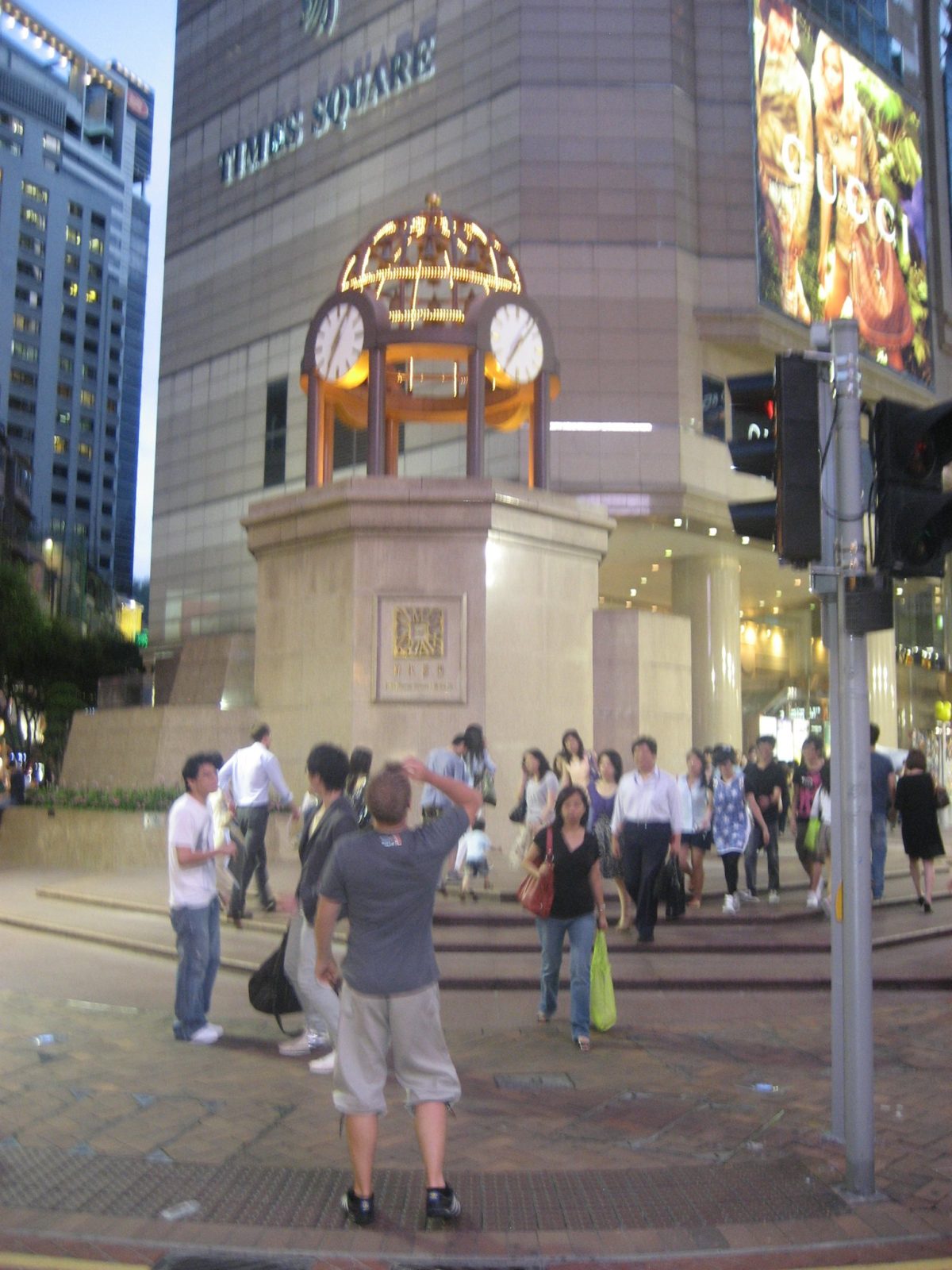
Causeway Bay is the busiest shopping district in the city, a grid of department stores, malls and street stalls at its most crowded on weekend evenings. Its landmark is Times Square, opened in 1994 on the site of the old Sharp Street tram depot, with a clock on a pedestal at its entrance plaza that has become a favourite meeting point, and an atrium of shopping floors stacked one above another. Next door, the trams of Happy Valley turn around the racecourse, where races are held on Wednesday evenings in the season; to the east, the Noonday Gun is still fired at midday from a small garden on the waterfront.
For a flat fare of HK$3.30, a tram ride along the north shore of the island passes more of Hong Kong at the height of its shop signs than any guided tour.
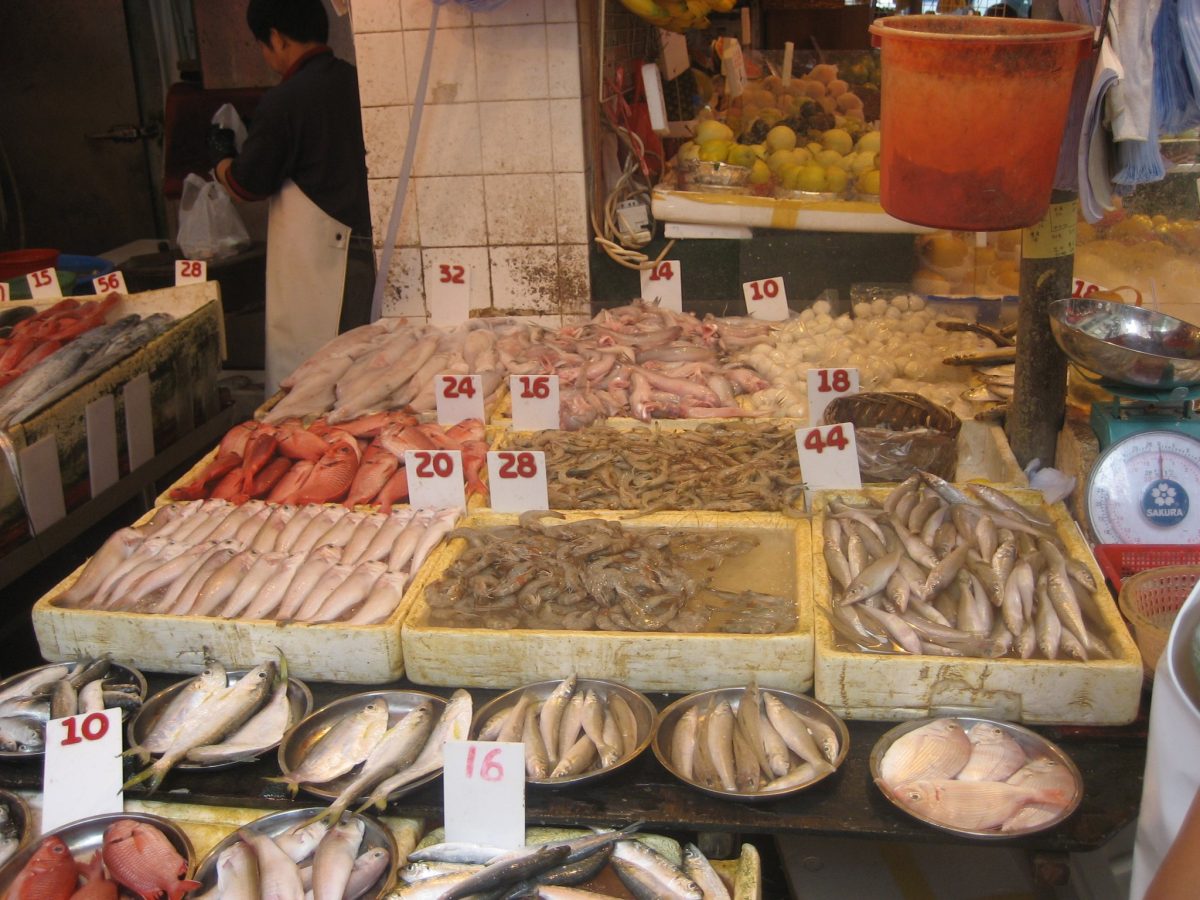
Behind the main roads of Wan Chai, Causeway Bay and Sheung Wan are the wet markets, streets of stalls under red awnings where fish are sold live or on ice, priced on hand-written cards, alongside roast meats, dried seafood and mountains of fruit. They are the best introduction to how Hong Kong eats. Cantonese cooking is at its finest here: dim sum in the morning and at lunch, from steamed prawn dumplings to char siu buns; roast goose and barbecued pork over rice; wonton noodles in clear broth; and in the cha chaan teng, the local coffee shops, milk tea strained through a cloth, pineapple buns and egg tarts. Dai pai dong, the open-air street stalls, survive in a few lanes of Central and Sham Shui Po, and the night market on Temple Street in Yau Ma Tei is the classic evening outing on the Kowloon side.
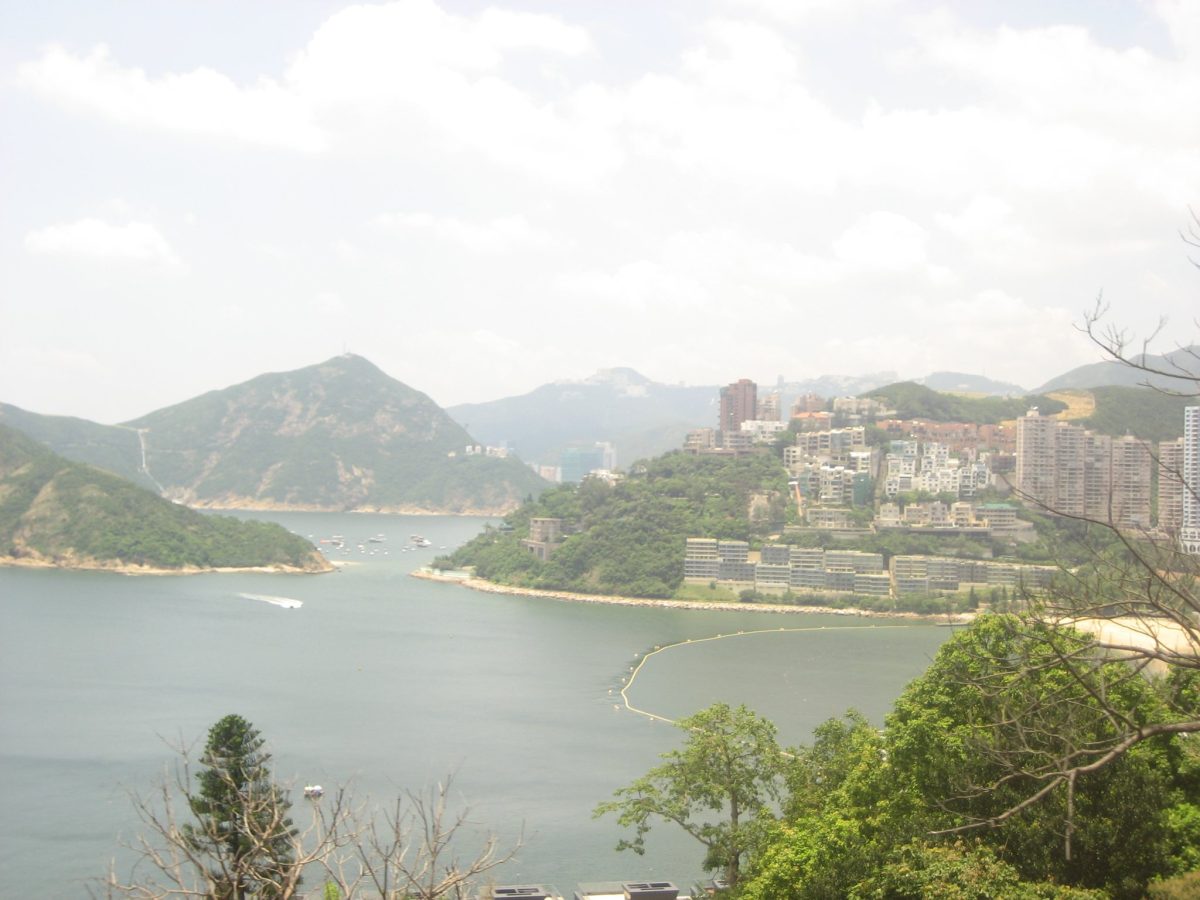
Over the mountain, the south side of Hong Kong Island feels like another country. Buses from Central pass through the Aberdeen Tunnel and follow the coast road past Deep Water Bay to Repulse Bay, the best known of the island’s beaches, with a long curve of sand under apartment towers and the hills, and on to Stanley, a former fishing village with a covered market, waterfront restaurants and Murray House — the colonial building that once stood where the Bank of China Tower rises today, reopened here in 2002. The beaches have shark nets and lifeguards in the swimming season, and on a weekday the water, the wooded headlands and the islands offshore are a startling contrast to the towers half an hour away.
Getting Around and When to Go — A City That Runs on Time
One card for every train, tram and ferry, an airport train every ten minutes, and a climate that rewards the autumn visitor
Hong Kong is one of the easiest large cities in the world to move around. The MTR, among the most advanced metro systems in the world, reaches almost every district, and the Octopus card, a stored-value card introduced in 1997 and also available on mobile phones, pays for the MTR, buses, trams, the Star Ferry and most of the outlying-island ferries, as well as convenience stores and many cafes. Distances on the island are short, but the city is built in three dimensions: footbridges and covered walkways link the towers of Central and Admiralty above the traffic, and escalators and lifts climb the slopes. Red taxis serve Hong Kong Island and Kowloon, green taxis the New Territories and blue ones Lantau. Traffic drives on the left, a legacy of British rule, and the plugs are of the British three-pin type.
Hong Kong International Airport at Chek Lap Kok, built on a levelled island off Lantau, opened on 6 July 1998 and replaced the old Kai Tak, where aircraft famously banked low over the rooftops of Kowloon. It now has three runways, and Terminal 2 reopened in May 2026. The Airport Express reaches Hong Kong Station, beneath Two IFC in Central, in about 24 minutes, with departures every ten minutes; the journey crosses the Tsing Ma Bridge and runs along the container terminals of Kwai Chung, a fine first view of the working port. From the mainland, high-speed trains arrive at West Kowloon station.
The climate is subtropical. The best months are October to December, when the air is drier and clearer, the temperatures are pleasant and the views from the Peak are at their sharpest; January to March can be cool and grey. From spring the humidity rises, and June to September is hot, humid and wet, the season of heavy rainstorms and of typhoons. When a tropical cyclone approaches, the Hong Kong Observatory raises numbered warning signals; at signal No. 8 offices close, the ferries stop and the city waits indoors. Summer haze often softens the skyline, while the air-conditioning inside is so strong that a light jumper is useful in any season. Chinese New Year and Golden Week bring large crowds and higher hotel prices.
«Hong Kong rebuilds itself faster than almost any city on earth. The harbour of 2009, with its bare reclamation in West Kowloon and a tower still crowned with cranes, has already become a different harbour, with museums where there was empty ground and a waterfront pushed further out once more. What holds the city together is what it has chosen not to replace: the funicular grinding up the mountain, the ferry nosing into the pier on the far side, the tram ringing its bell at a crossing, the fish on ice under a red awning. Ride them in an afternoon, from the Peak down to the water and across it, and the skyline turns from a postcard into a place.»