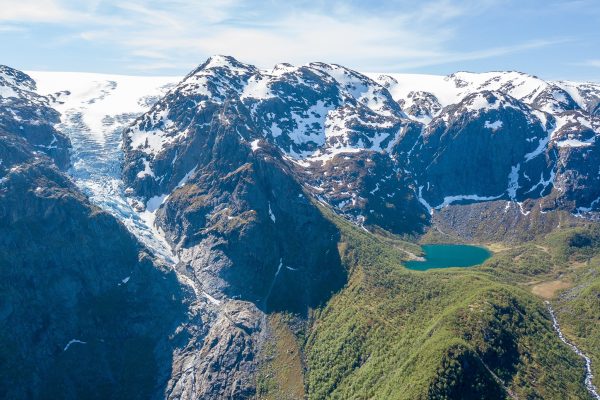
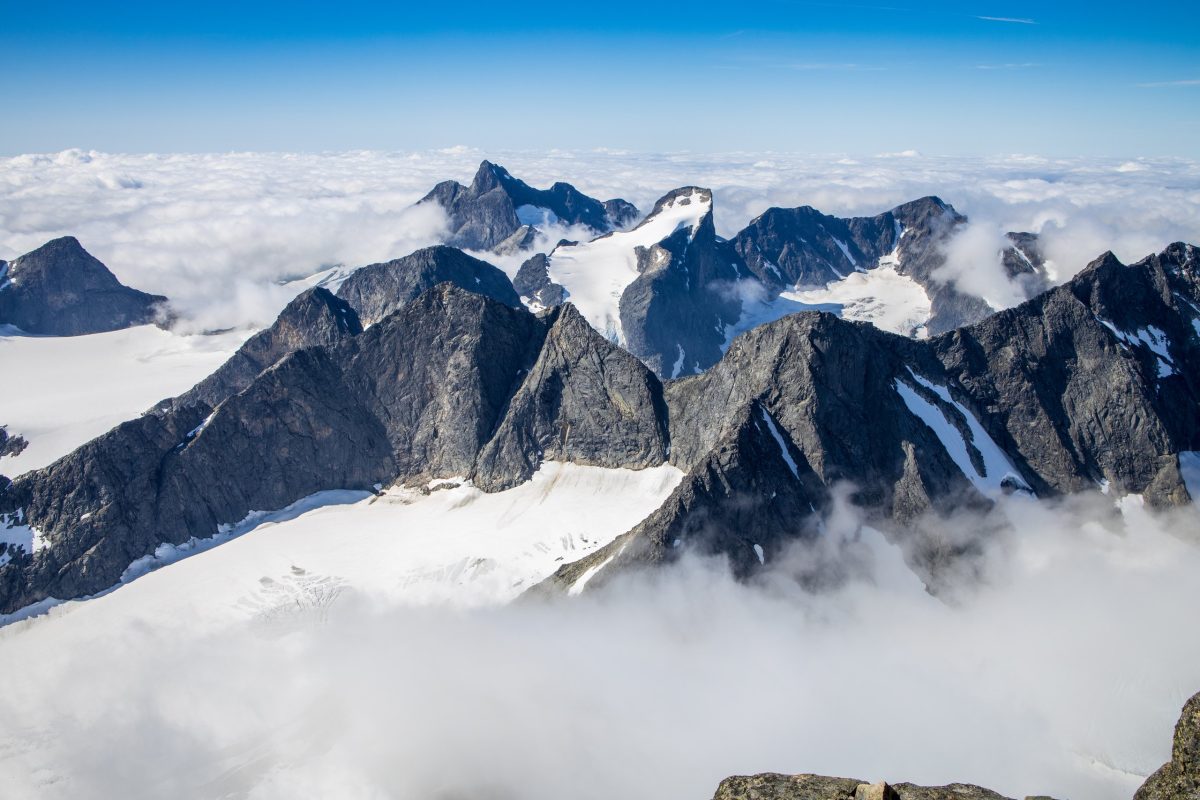
Hurrungane is where Norway stops looking like Norway and starts looking like the Alps. In the far western corner of Jotunheimen, a compact massif of dark gabbro rises into nineteen summits over 2,000 metres, linked by knife-edge ridges and hung with small, broken glaciers. Most of the peaks cannot be reached without climbing. The highest of them, Store Skagastølstind, is the third-highest mountain in the country, and it was here, in 1876, that Norwegian mountaineering began. For anyone drawn to ridges, exposure and long days on rock, there is nowhere else in Scandinavia quite like it.

The massif lies in Luster and Årdal municipalities in Vestland county, inside Jotunheimen National Park, and is almost a world of its own. The deep, narrow trench of Utladalen cuts it off from the rest of Jotunheimen to the east, and the mountain road between Turtagrø and Årdal runs along its western side. Valleys such as Skagastølsdalen, Maradalen and Gravdalen bite deep into it, and between them stand ridge after ridge of sharp peaks. The rock is hard gabbro, darker and rougher than the grey gneiss of much of Jotunheimen, carved by ice into narrow arêtes, steep gullies and broad, dark walls. Even the name sounds like the place: Hurrungane probably comes from an old verb meaning to rumble or thunder — a fitting name for mountains where rockfall and avalanches are part of everyday life.
Marked trails are almost absent. The paths that exist mostly lead to the foot of a peak or the edge of a glacier, and from there the ground belongs to climbers and experienced scramblers. Only a handful of summits — Fannaråken above all — can be reached on foot by ordinary hikers. Everything starts and ends at Turtagrø, the historic mountain hotel on the Sognefjell road, which has been the base for climbing in the massif since it opened in 1888. With its long summer evenings, reliable rock in dry weather and a history that runs back to the very beginning of the sport in Norway, Hurrungane is the country’s classic alpine playground.
How to approach Hurrungane
This guide covers the massif in four parts: the peaks themselves, group by group, from the high Skagastøl and Styggedal summits in the north-east to the Austanbott and Soleibotn peaks in the south-west; the history of climbing here, from Slingsby’s solo ascent of Storen in 1876 to the great ridge traverses; the classic climbs and ridges and what each demands; and the routes that need no rope, along with the practical side — season, guides, huts and how to get to Turtagrø.
Hurrungane
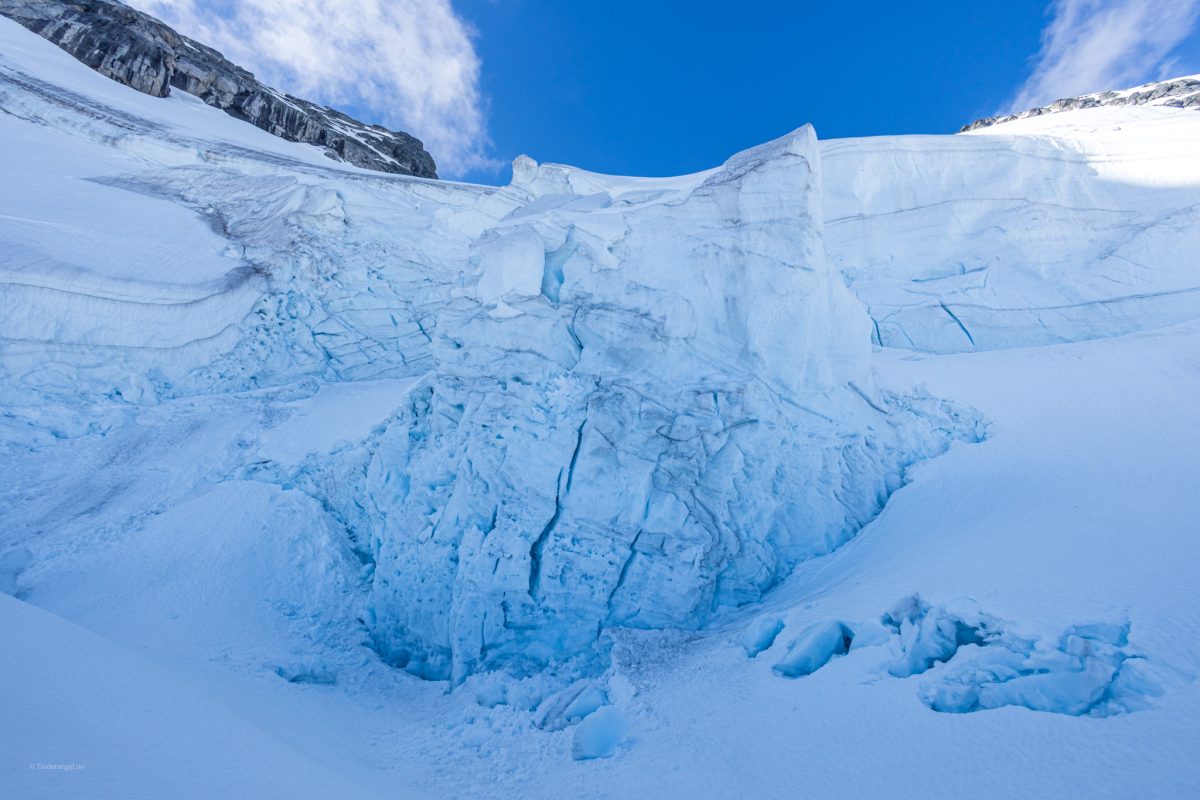
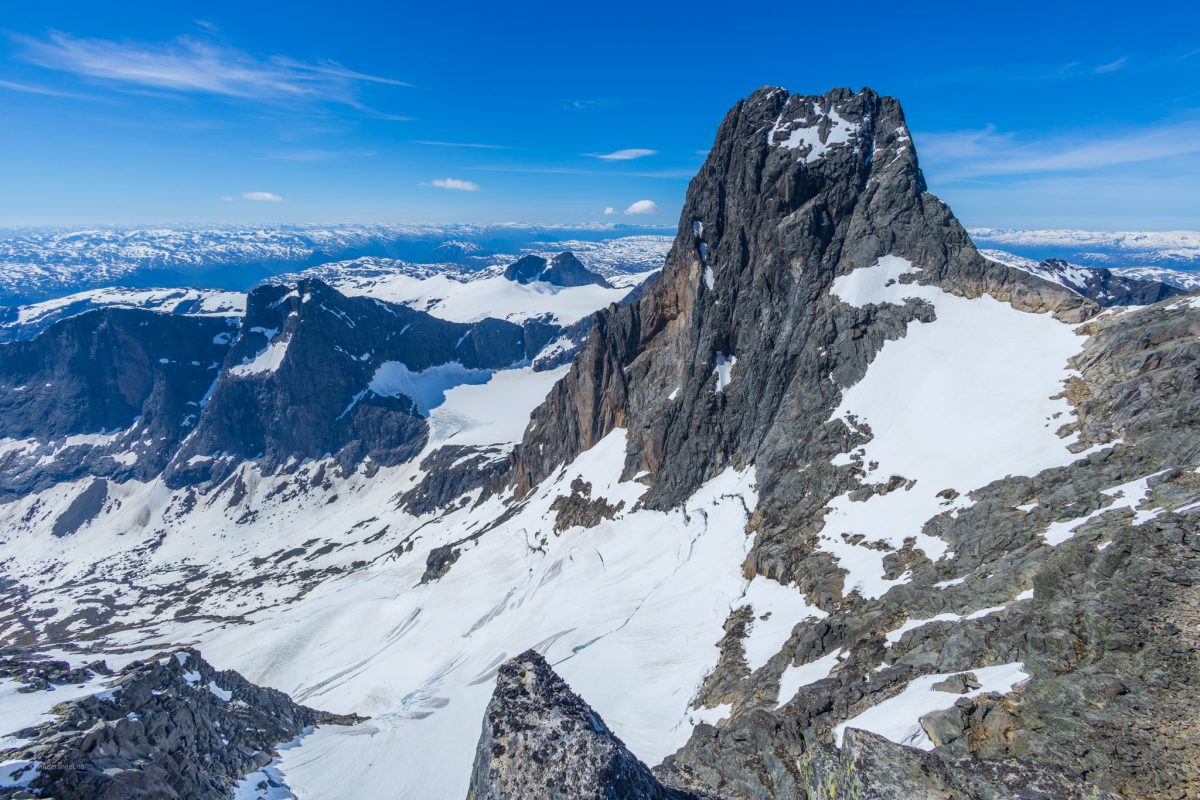
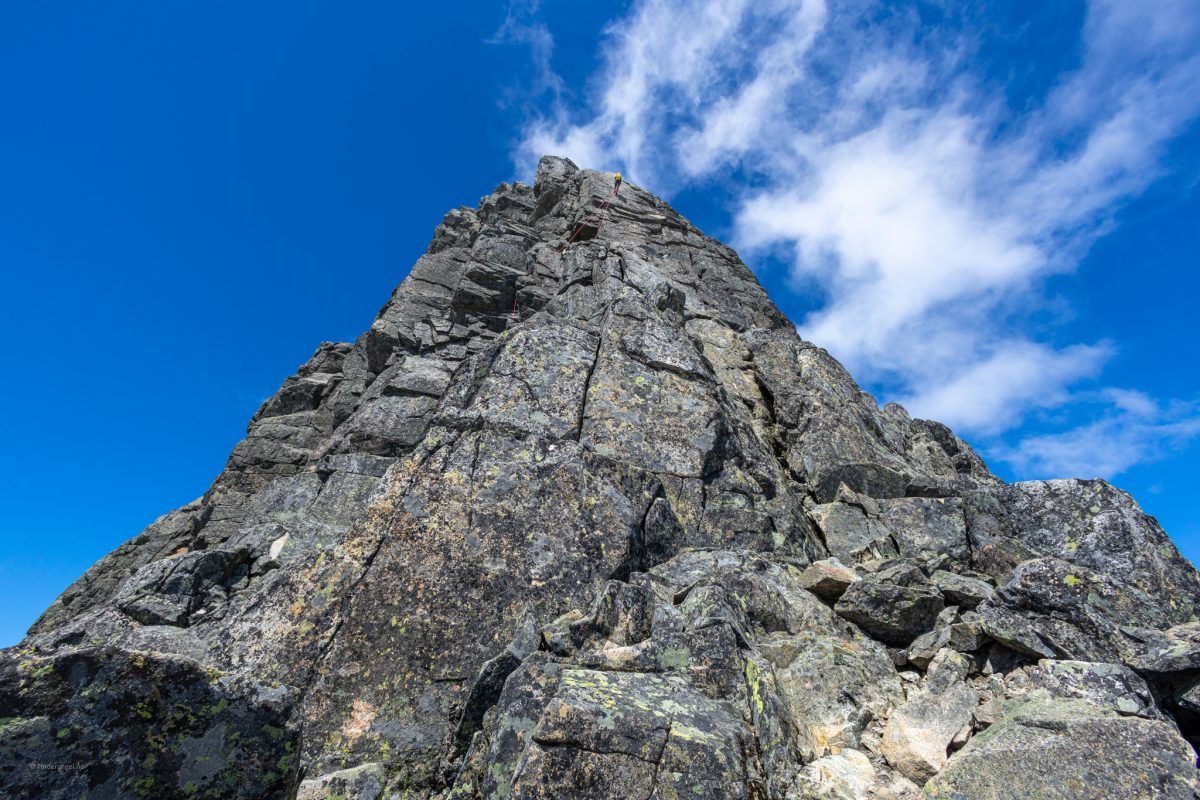
Hurrungane is Norway’s most alpine massif. It has 19 summits over 2,000 metres, and most of them require climbing. Dark gabbro, narrow ridges and icefalls on every side set the massif apart from the rest of Jotunheimen.
Store Skagastølstind
Storen is the highest point in the massif. Slingsby climbed alone to the summit on 21 July 1876. The normal route runs through Skagastølsdalen and across the glacier to Bandet, then on at grade 3 to the top. A competent party should expect a round trip of around 12 hours.
Read more: Climbing Storen
Skagastølsryggen
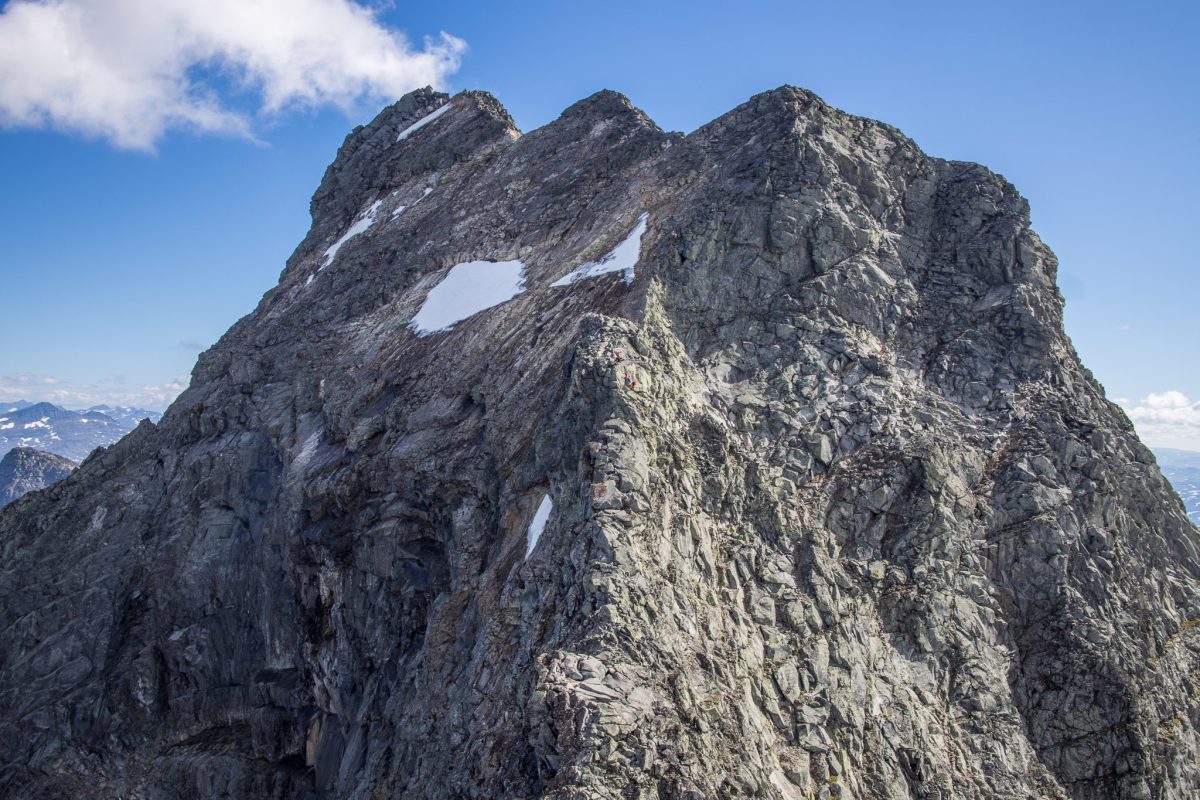
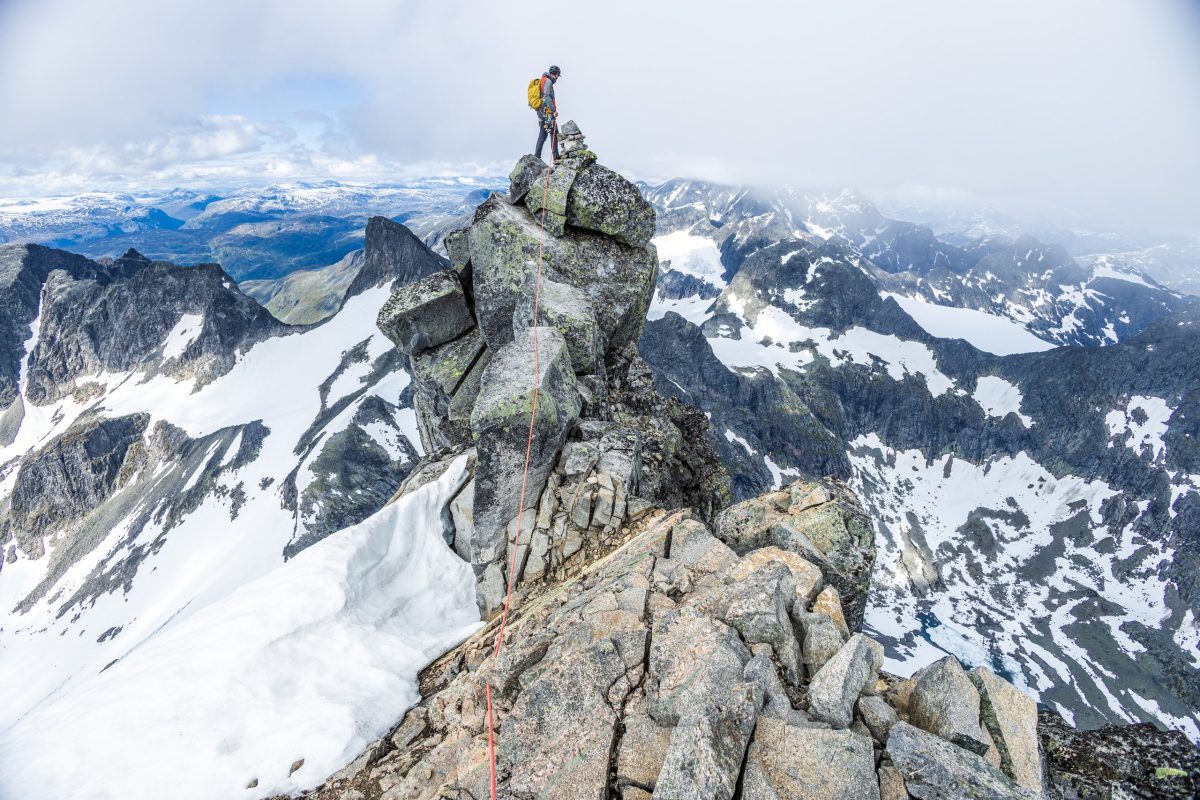
Many rank it as Norway’s finest ridge traverse, running from Nordre over Midtre and Vetle Skagastølstind to Storen. V-skaret and Halls hammer are the key passages. The ridge is narrow and exposed all the way, with few places to break off.
Styggedalsryggen
From Gjertvasstind the traverse crosses Store Styggedalstind, Norway’s fourth-highest peak, and continues over Sentraltind and Vetle Skagastølstind. It usually finishes on Storen, or carries on north along Skagastølsryggen.
Read more: Climbing Storen
Maradalsryggen
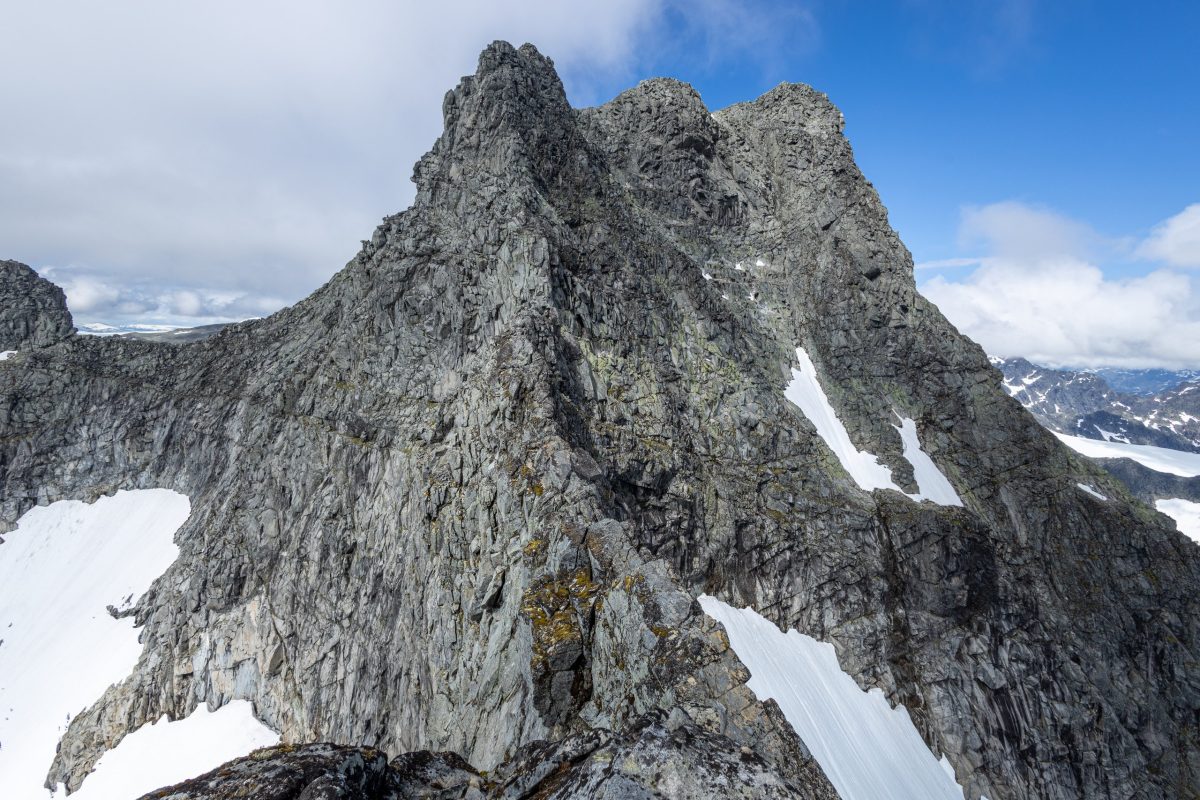
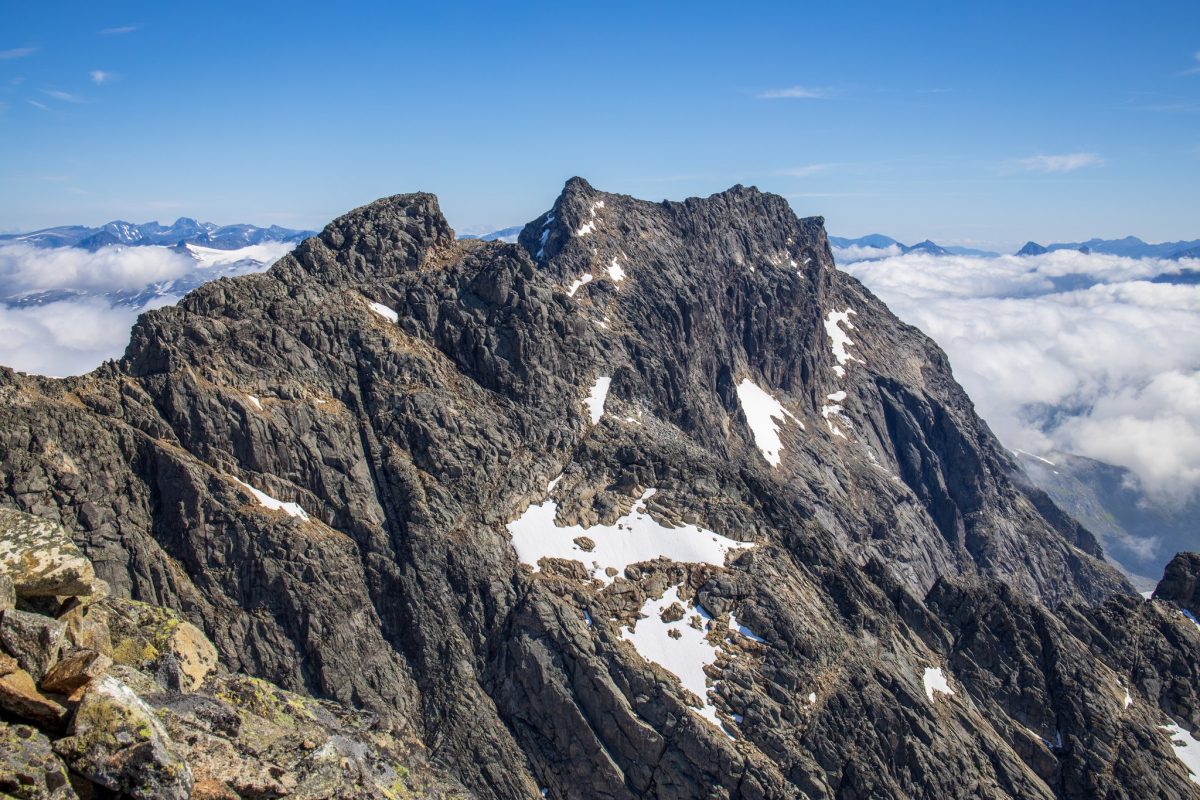
From Sentraltind the ridge runs south-east along Maradalen and Midtmaradalen, over Mannen, Kjerringa, Jernskardtindane and Maradalstindane. It has a lot of loose rock and plenty of climbing, and is considered perhaps the most demanding ridge traverse in Hurrungane.
Midtmaradalsryggen
The line of peaks between Midtmaradalen and Stølsmaradalen has a long approach, often from the farm at Vetti. From Store Midtmaradalstind the view is especially fine towards the south side of Storen, Slingsbybreen and Sentraltind.
Dyrhaugsryggen
The traverse usually starts at the hut on Bandet. Søre Dyrhaugstind has to be climbed, and from there a long stretch of steep, airy scrambling leads to Store Dyrhaugstind. In winter the ridge is a fine ski tour from Turtagrø to Nordre Dyrhaugstind.
Store Ringstind
In spring the ski tour climbs Ringsdalen and crosses Ringsbreen to the pointed summit. Those wanting more can continue east over Ringstindane, a traverse that calls for glacier experience.
The Soleibotntind traverse
The ridge runs from Lauvnostinden over Nørdre Soleibotntind to Store Soleibotntind, and the full traverse continues to Søre Soleibotntind. It is mostly scrambling with a little climbing, and a good first ridge traverse in Hurrungane.
Store Austanbottstind
The traverse normally climbs the south ridge to Søre Austanbottstind, where a pinnacle and a slab section have to be climbed. Easy climbing then leads to Store Austanbottstind, and the descent follows the normal route down the west ridge.
Fannaråken
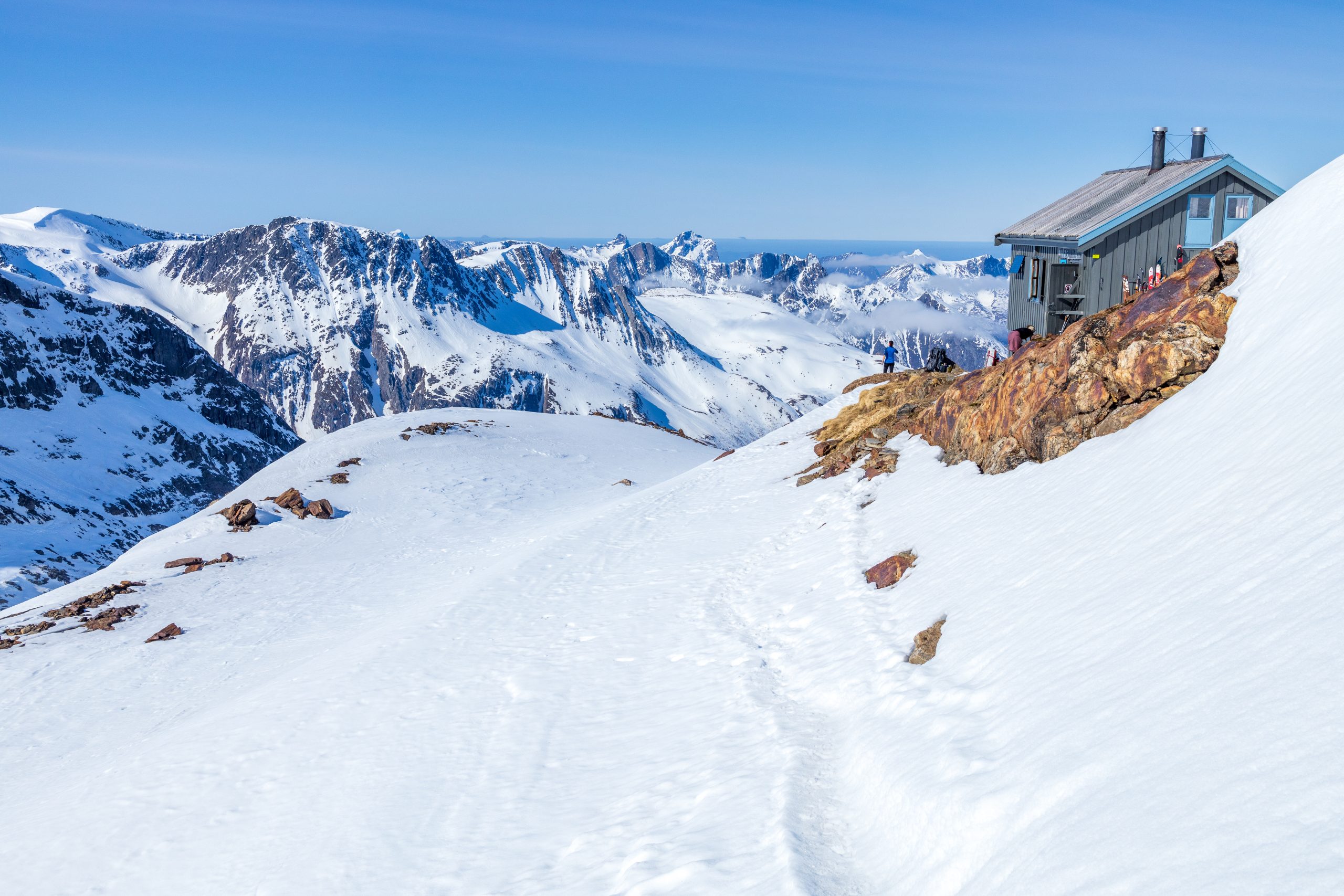
Fannaråken is the easiest summit in Hurrungane, with marked paths from the Sognefjell road. On the top stands Fannaråkhytta, Norway’s highest tourist lodge, looking straight into Styggedalstindane and Skagastølstindane.
Turtagrø
Turtagrø Hotel opened in 1888 and is the natural starting point for climbs in Hurrungane. From here paths lead up Skagastølsdalen and Ringsdalen towards the peaks.
3D graphic © 2026 madseriksson.no. Terrain and map: © Kartverket (CC BY 4.0).
The Peaks — Nineteen Summits Over 2,000 Metres in One Compact Massif
From the high north-eastern crest around Storen to the gentler south-western groups, each cluster of peaks has its own character
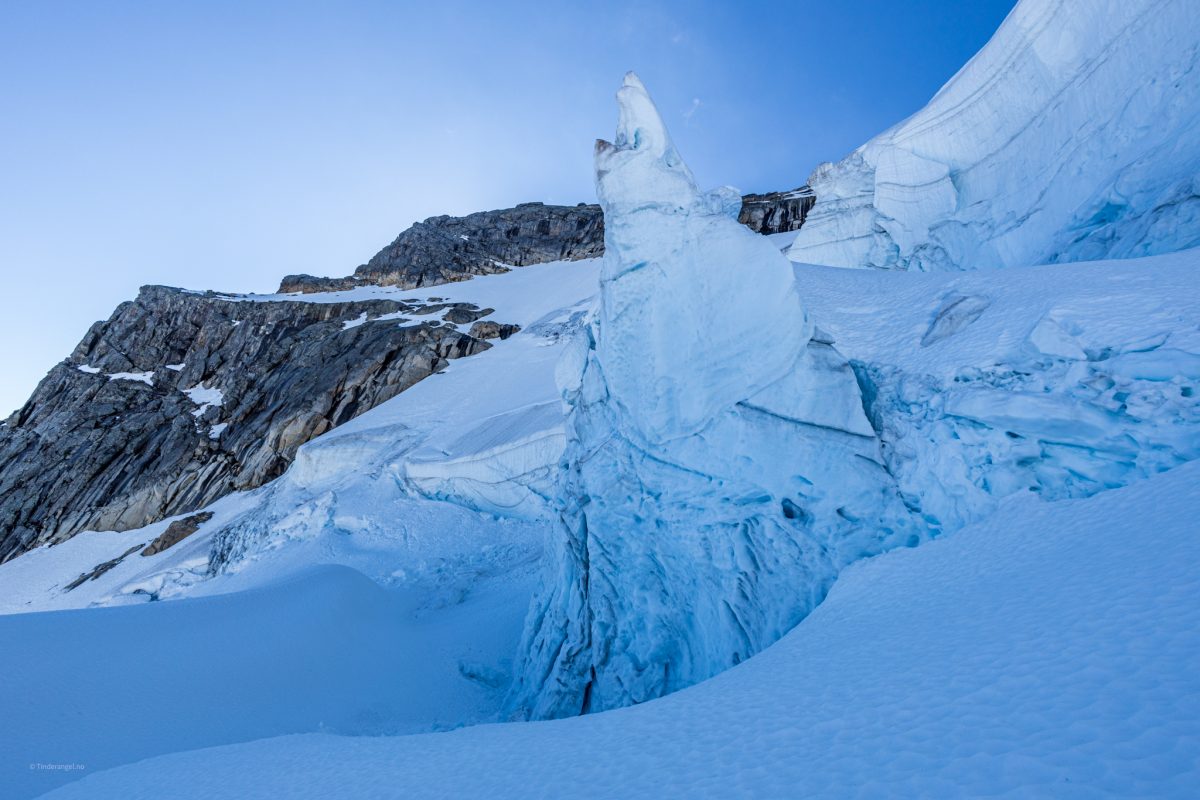
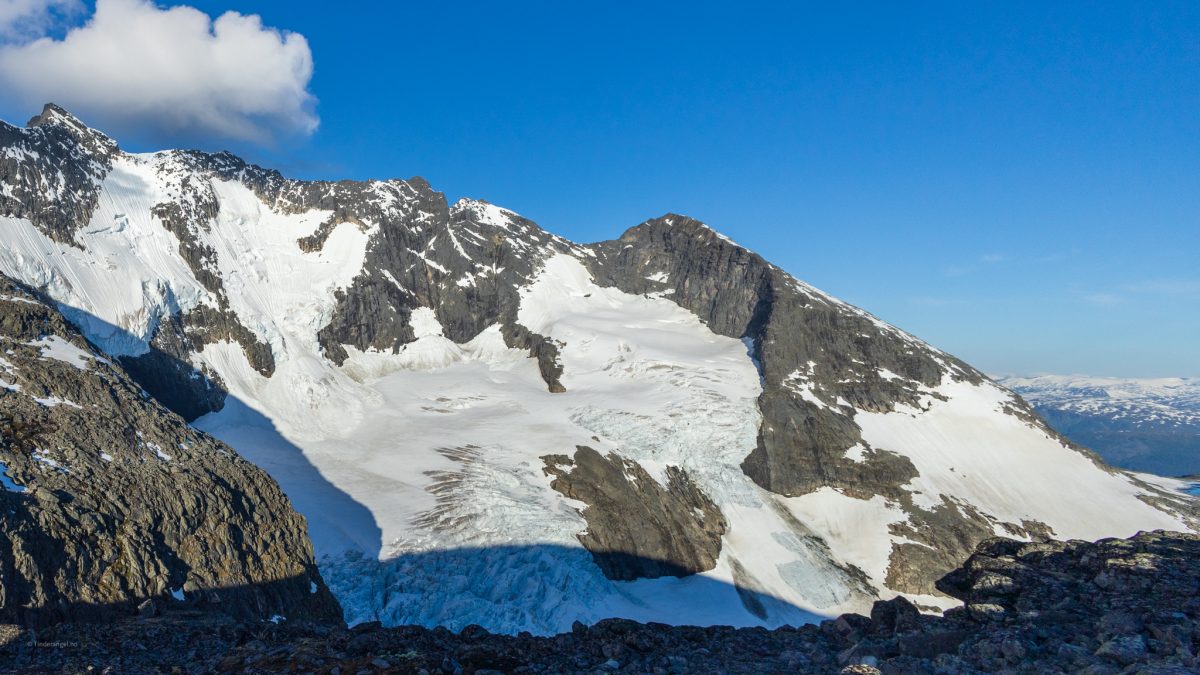
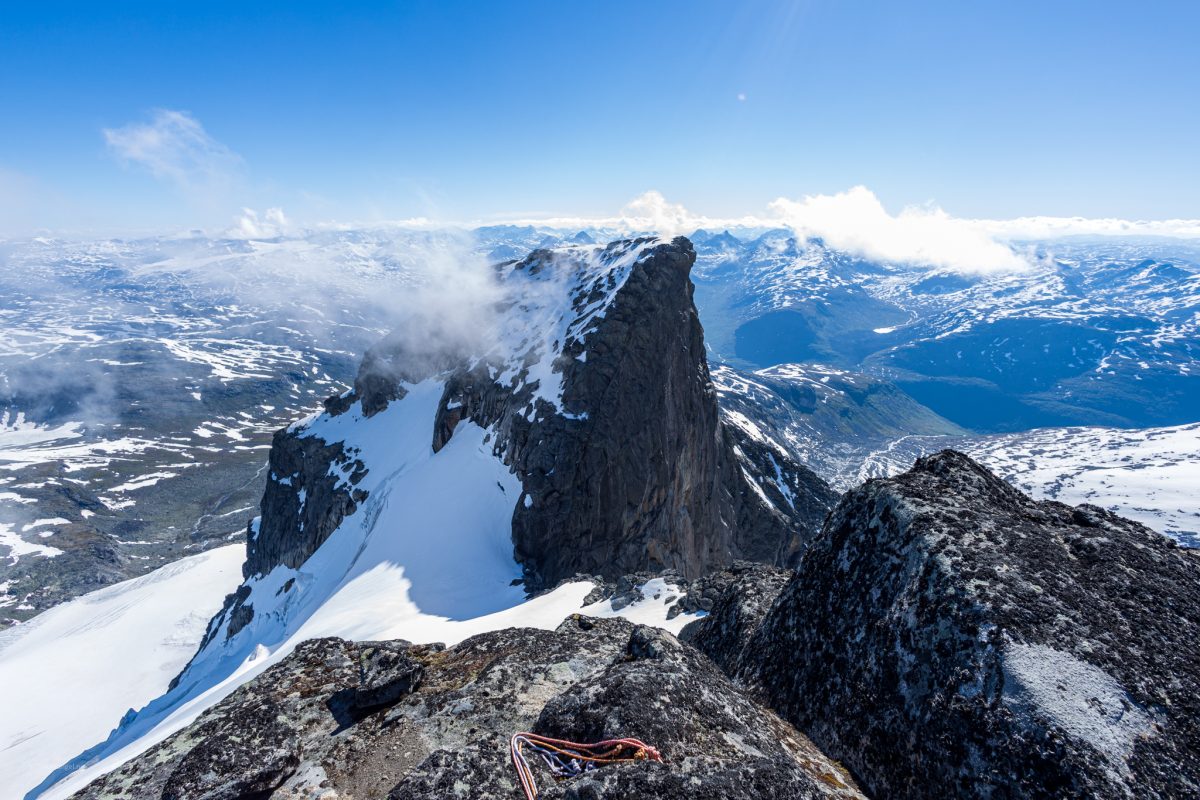
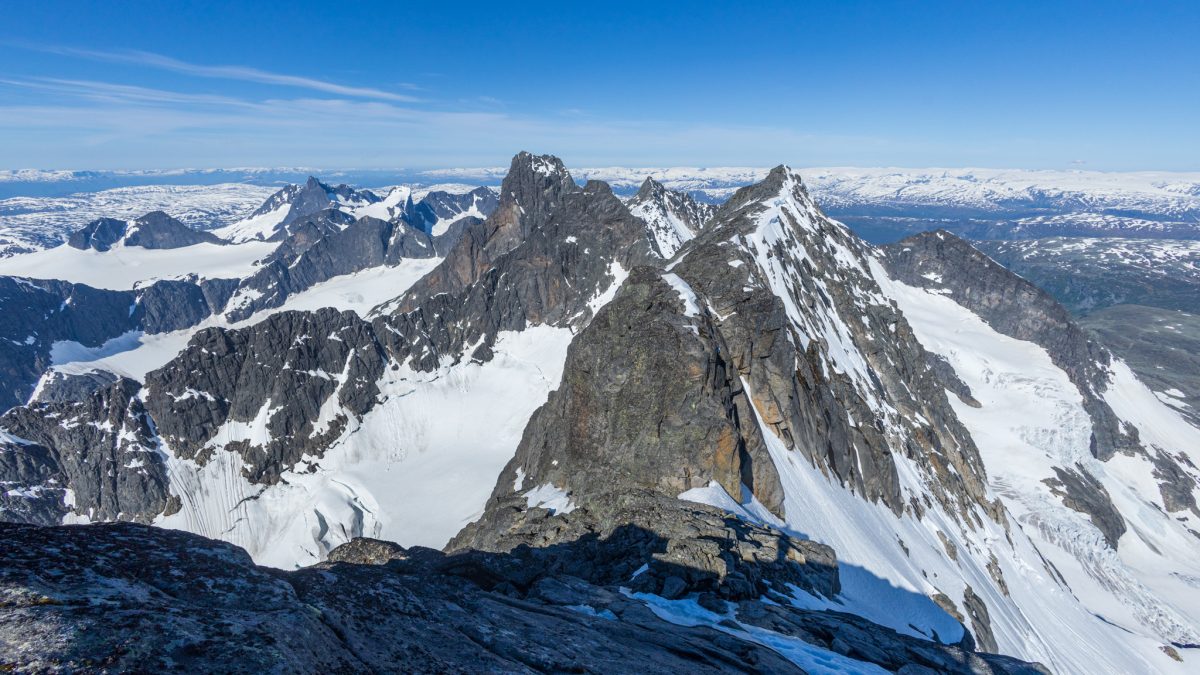
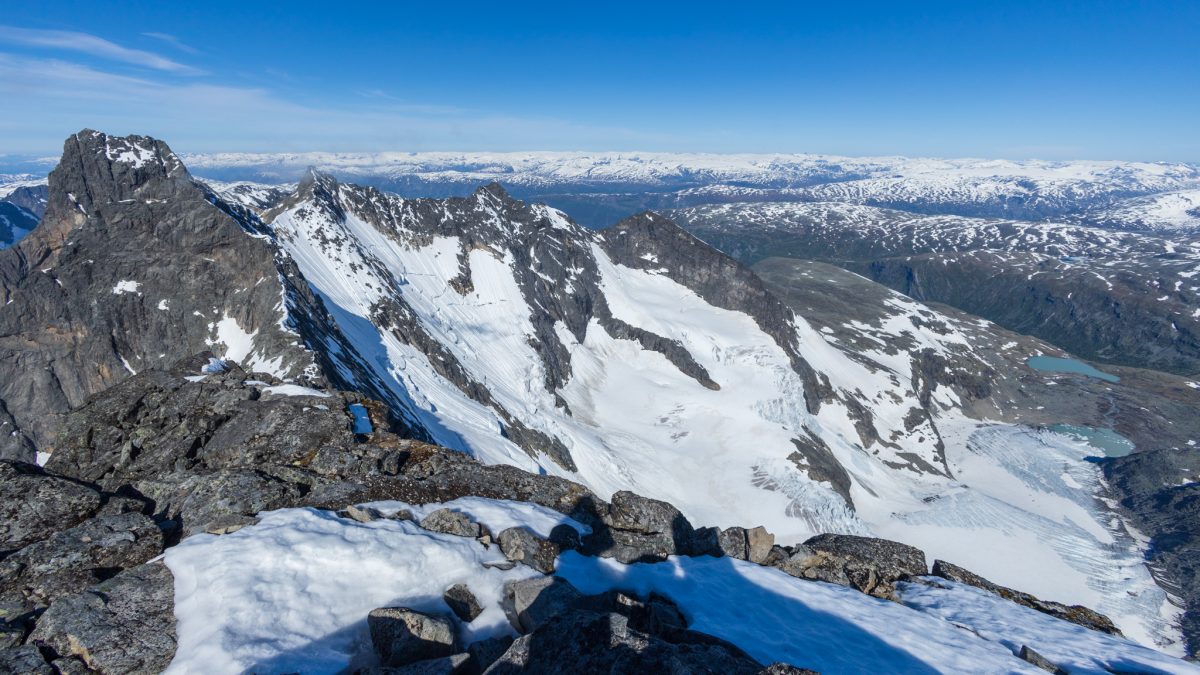
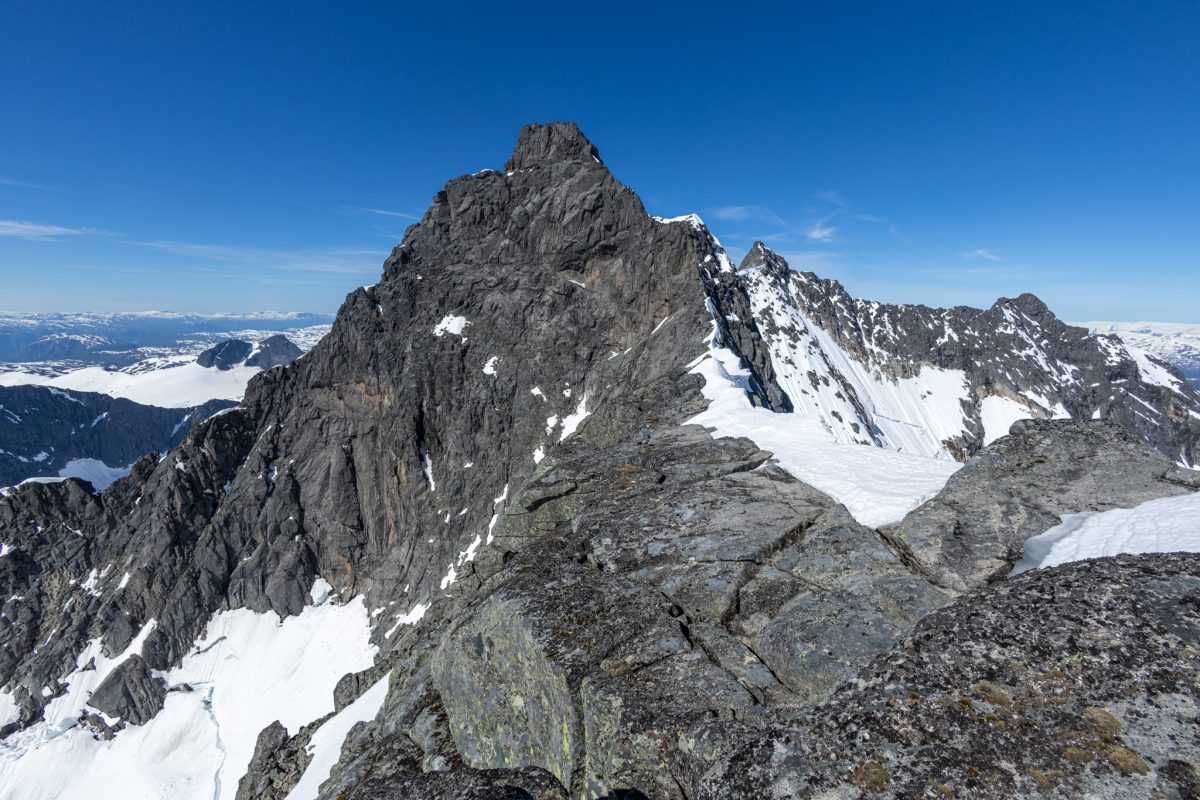
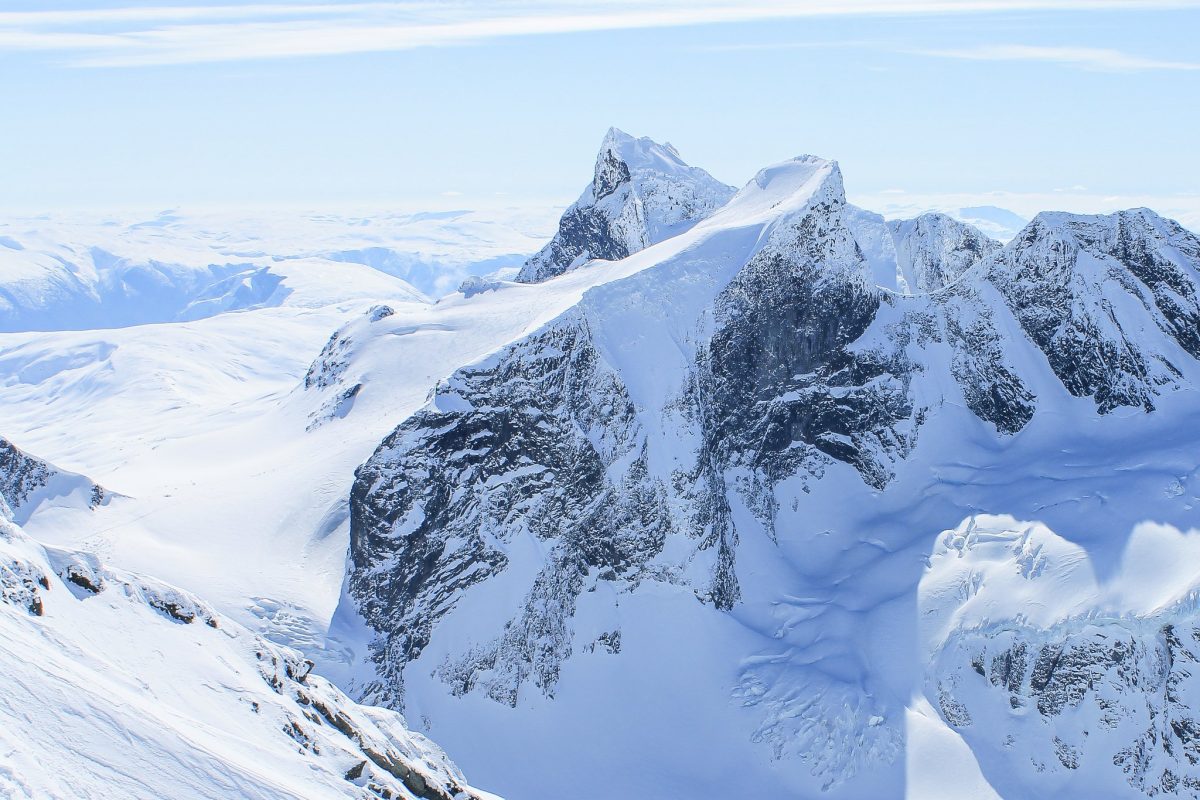
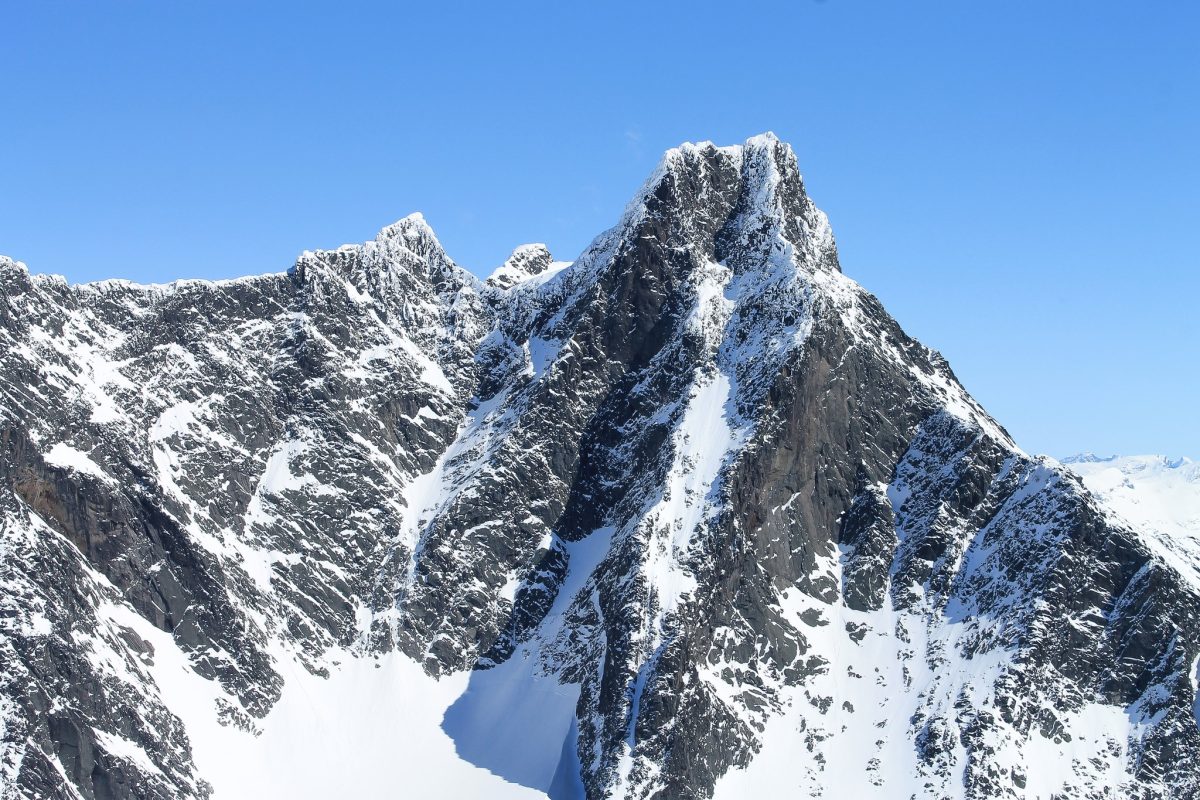
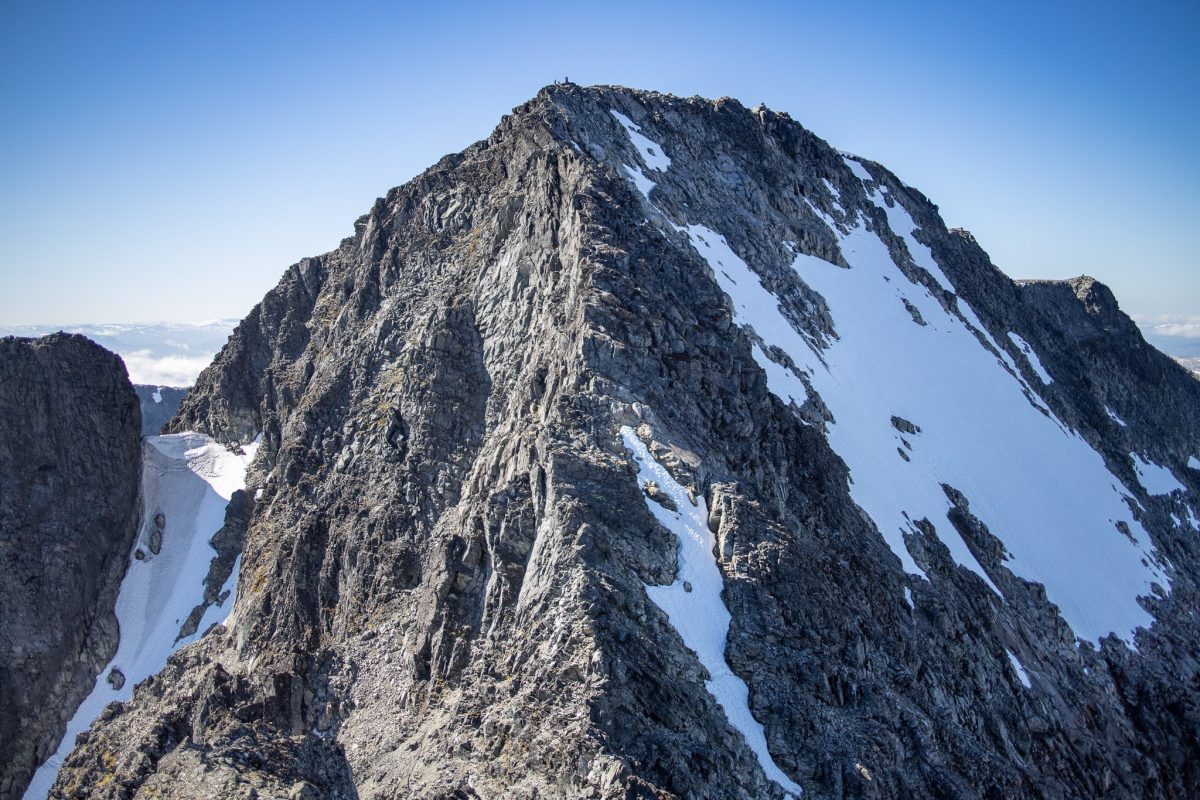
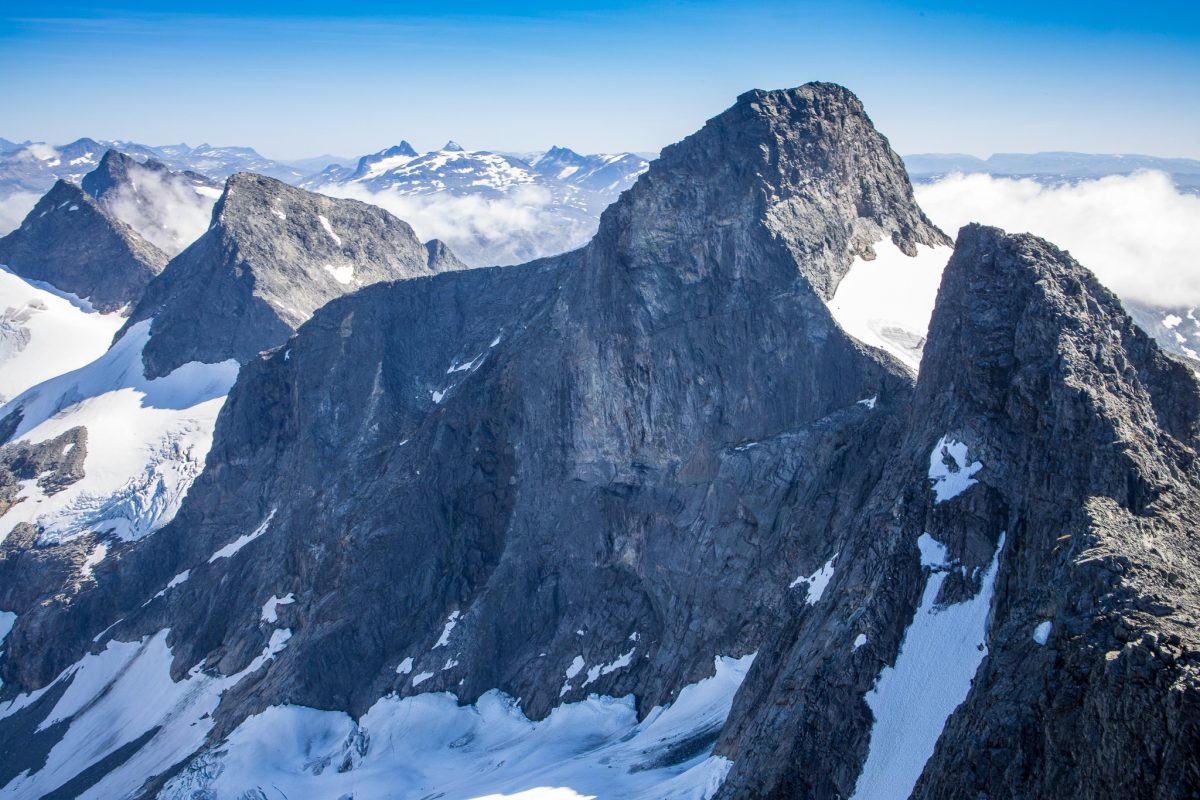
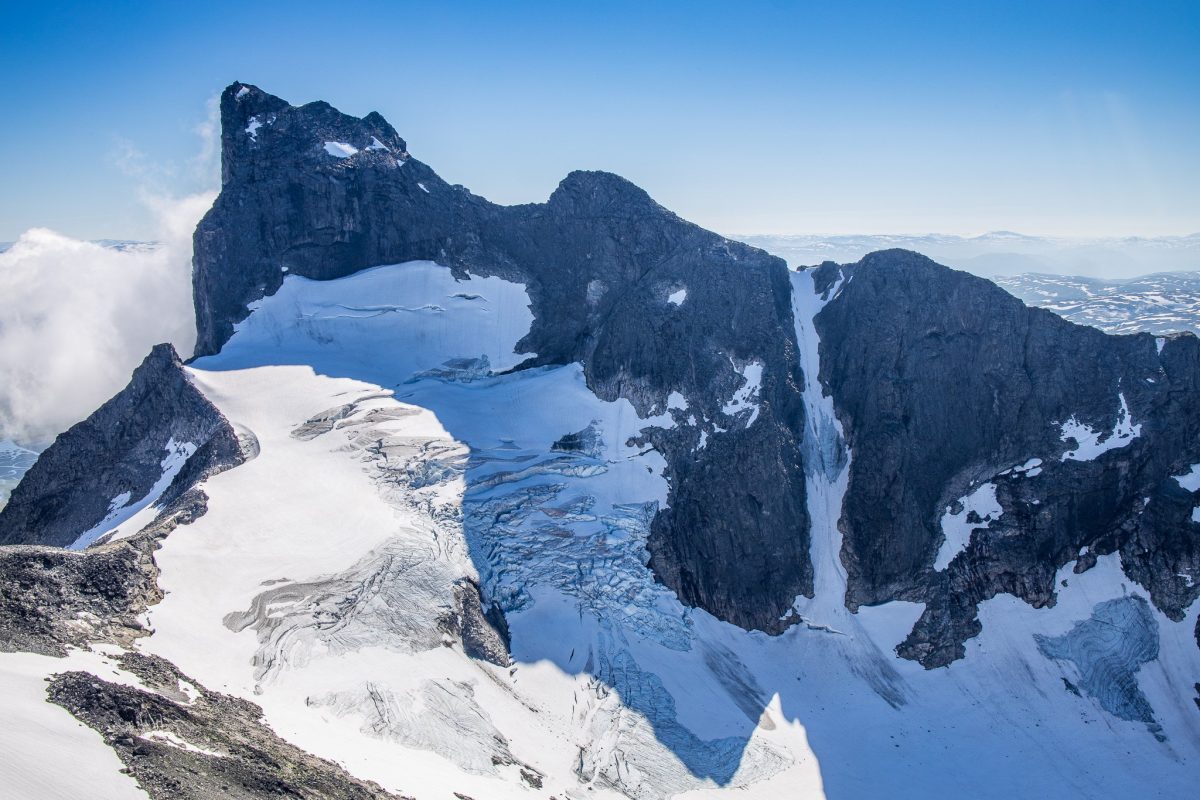
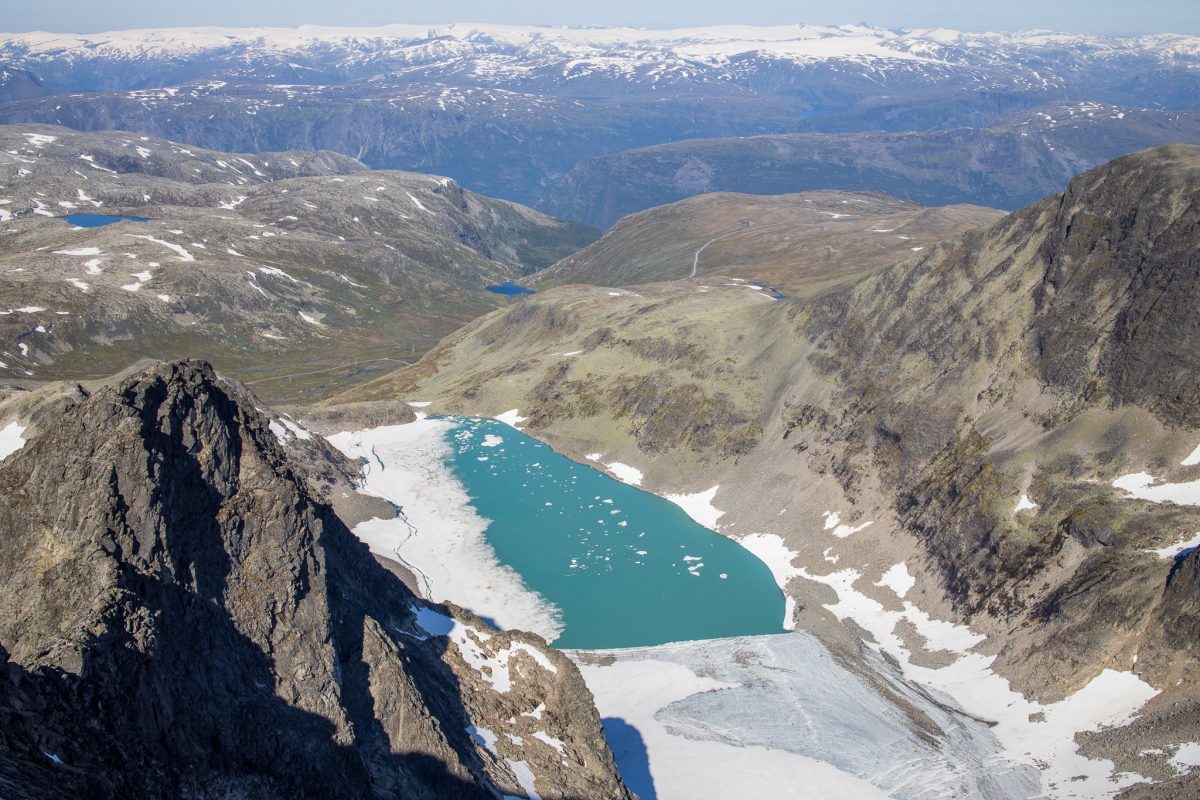
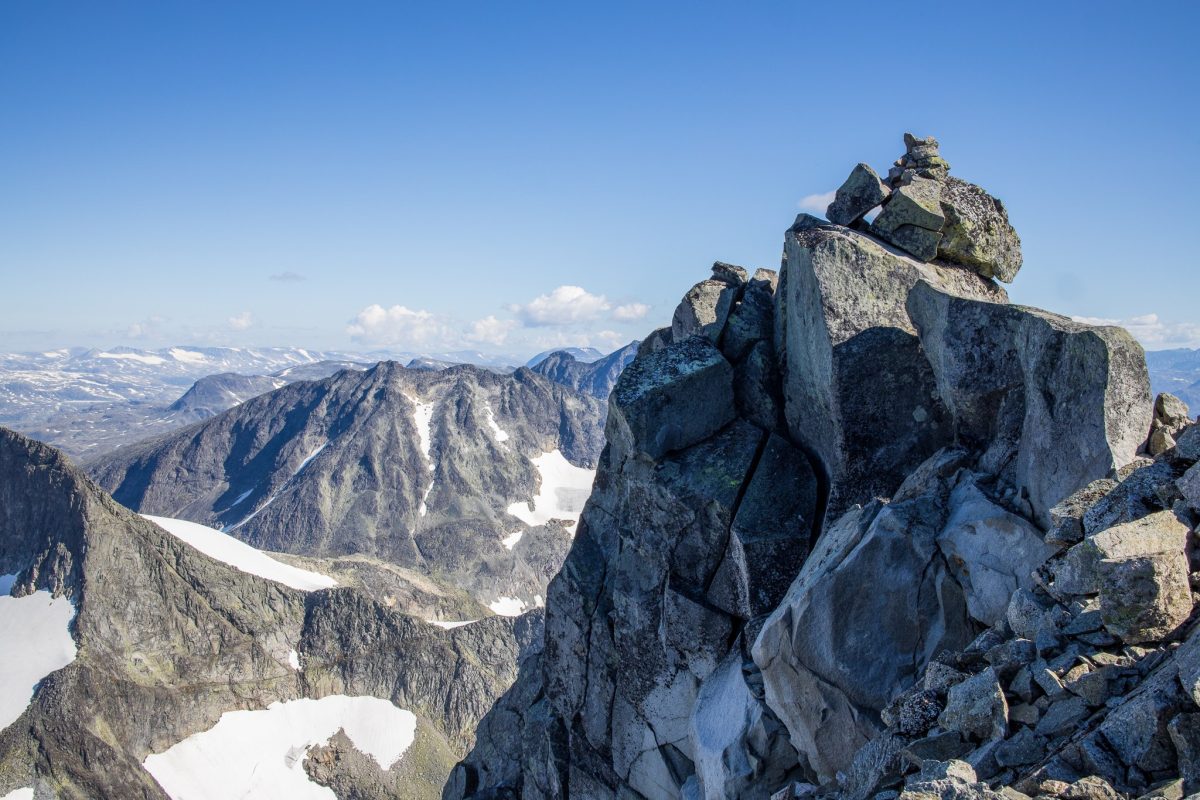
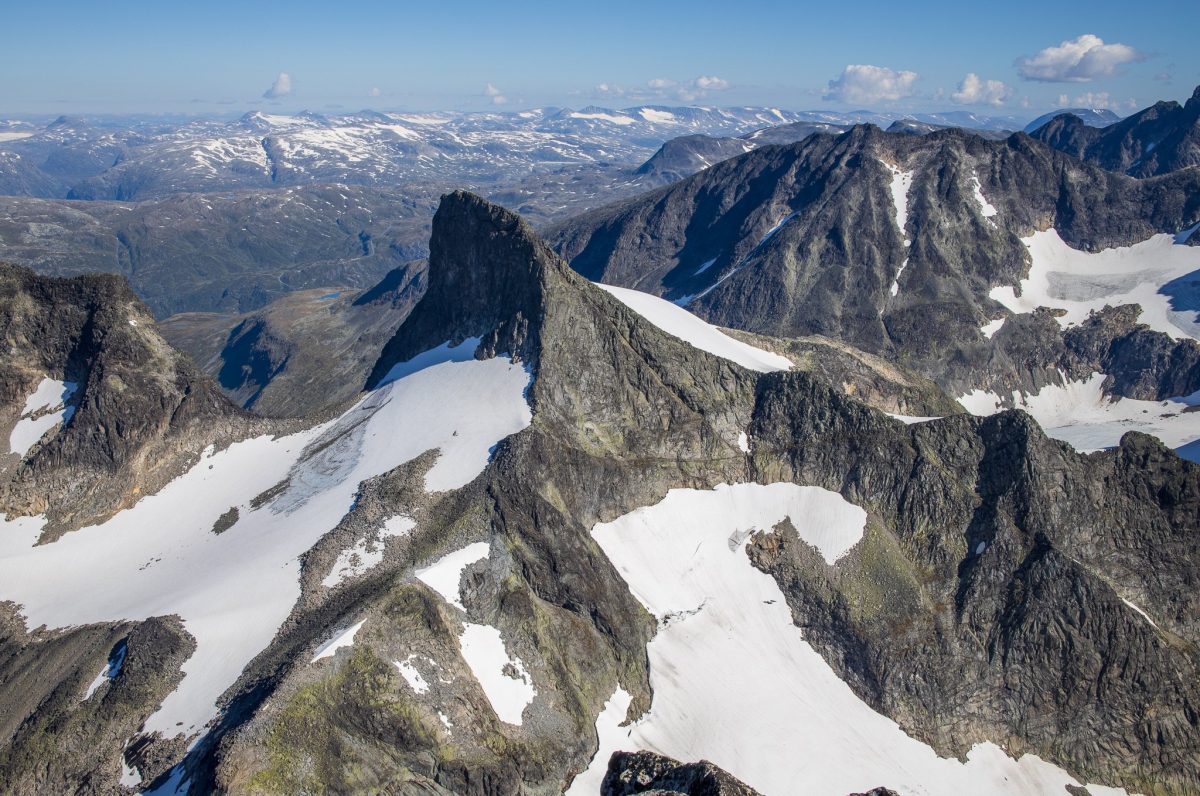
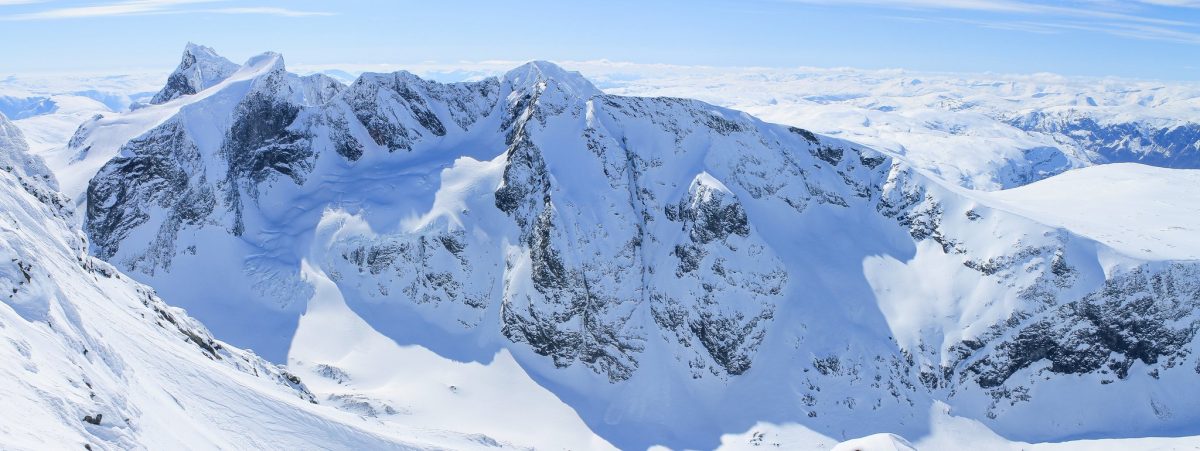
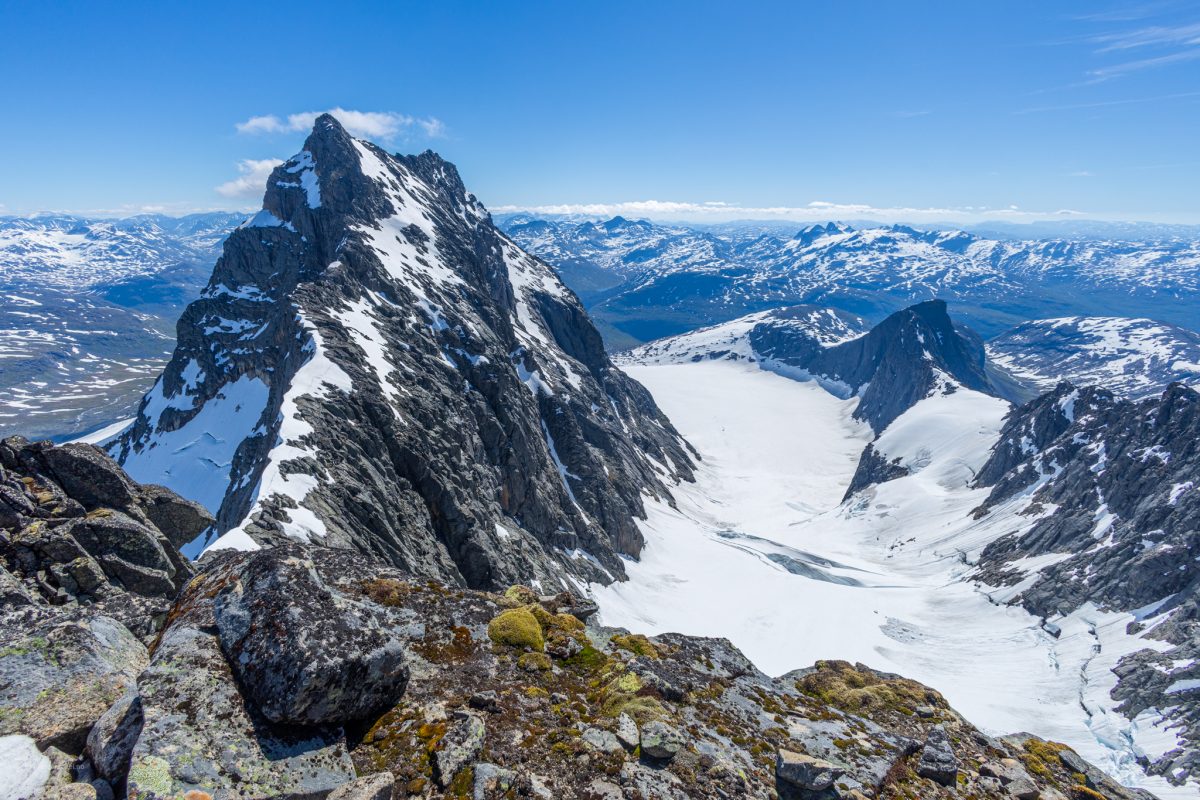
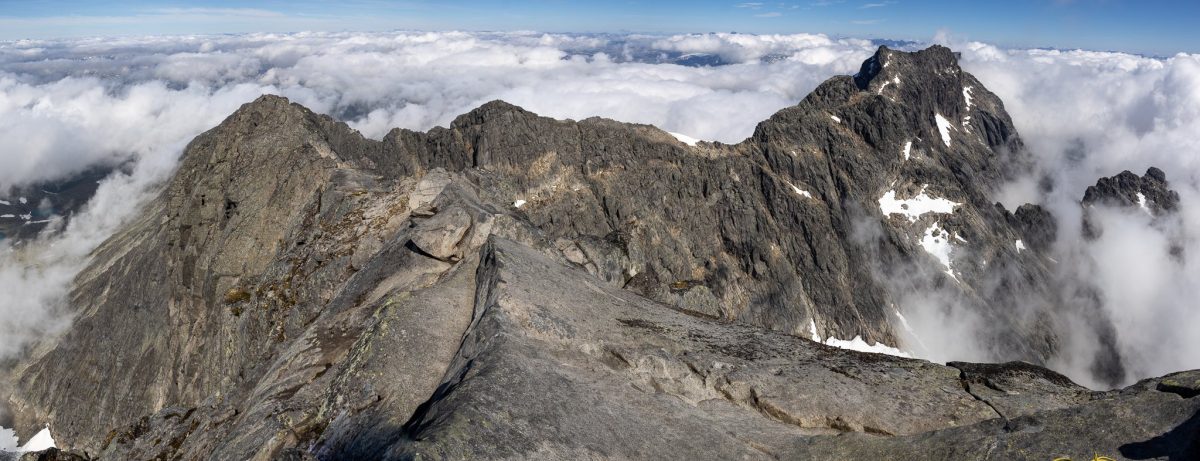
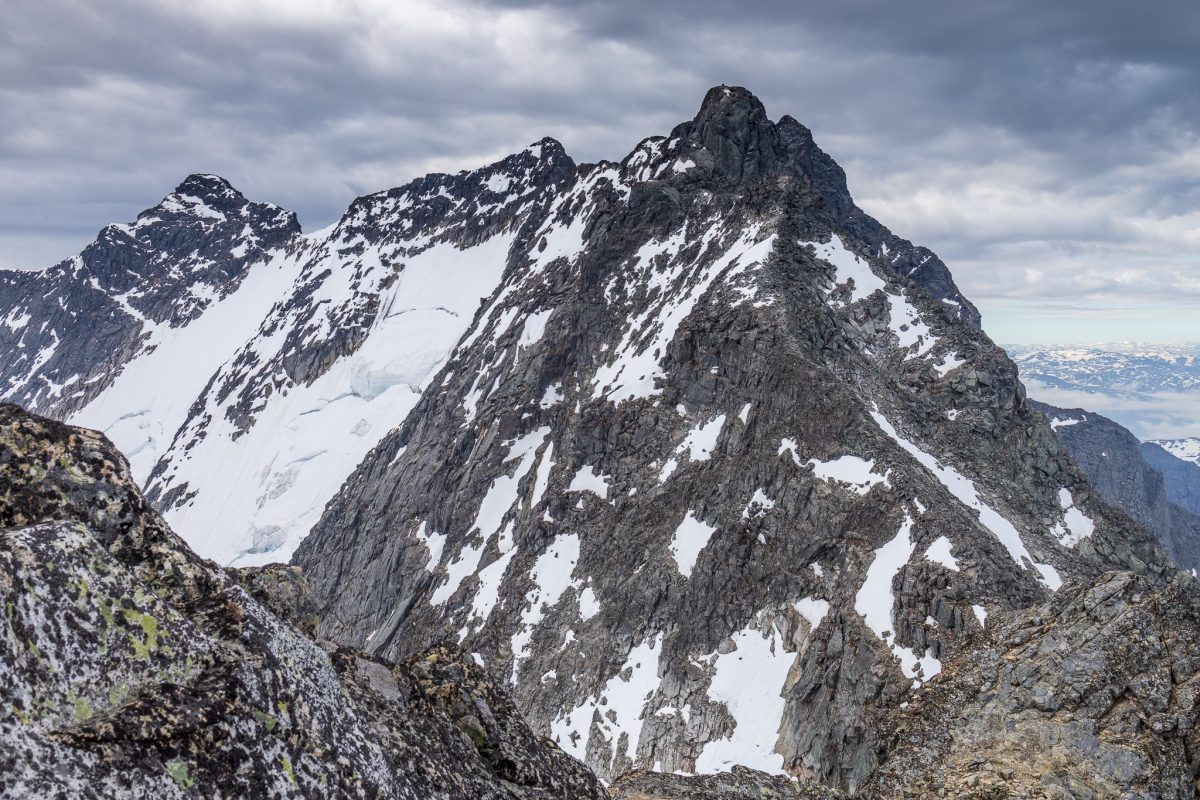
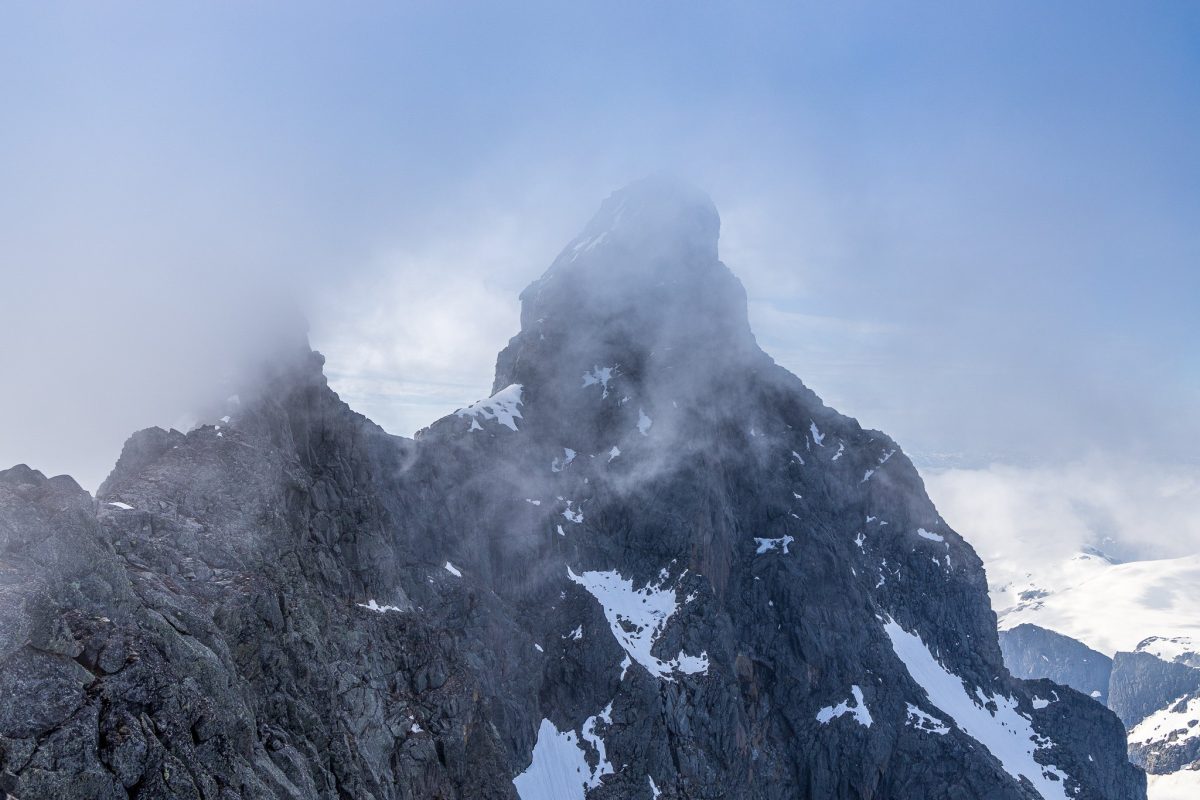
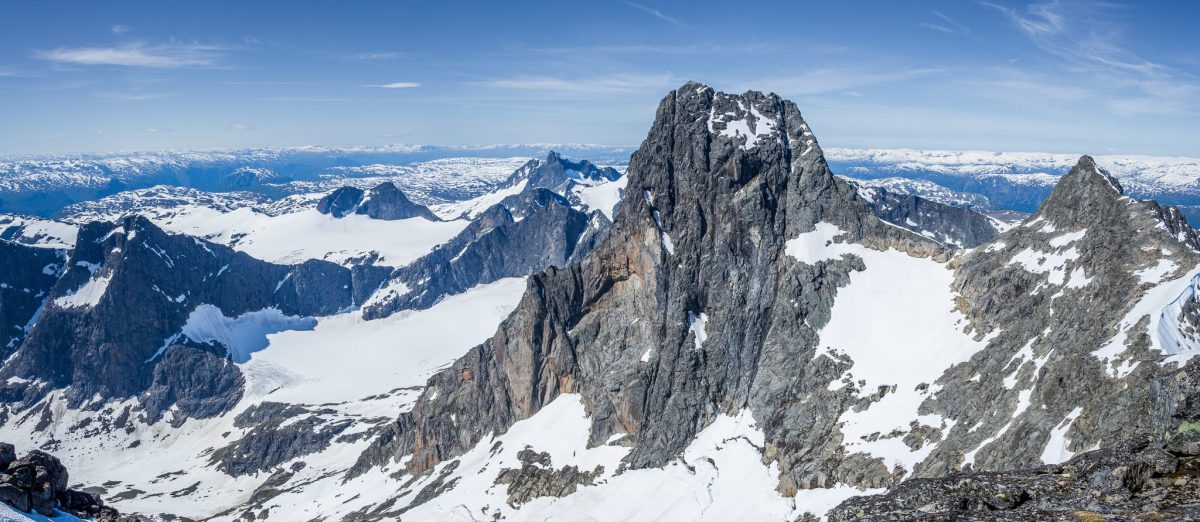
The heart of Hurrungane is the high crest in the north-east, where the Skagastøl peaks and the Styggedal peaks meet. Store Skagastølstind — Storen — is the highest at 2,405 metres: Norway’s third-highest mountain and the highest that can only be reached by climbing. North of it a serrated ridge runs over Vetle (2,340 m), Midtre (2,284 m) and Nordre Skagastølstind, and east of it the crest continues over Sentraltind (2,348 m) and Store Styggedalstind (2,387 m), Norway’s fourth-highest peak, to Gjertvasstind (2,351 m). Four of the highest summits in the country stand within a couple of kilometres of one another here, and none of them can be reached by walking. Small glaciers — Slingsbybreen, Styggedalsbreen, Skagastølsbreen — cling to their flanks.
West of Skagastølsdalen, the Dyrhaug peaks form a long ridge running south from Turtagrø, with Store Dyrhaugstind (2,147 m) as its highest point; seen from the hotel, the ridge looks like a mighty mountain in its own right, though from the top of Storen it appears surprisingly low. Further south lie the Ring peaks, whose highest summit, Store Ringstind, is a sharp, characteristic point and one of the great ski-mountaineering classics of western Norway in spring. In the south-west of the massif stand the Austanbott peaks, topped by Store Austanbottstind (2,202 m), and the Soleibotn peaks around Store Soleibotntind (2,083 m), closer to the road between Turtagrø and Årdal. Between Midtmaradalen and Stølsmaradalen, a line of peaks gives some of the best views of Storen’s steep southern side.
Nowhere else in Norway can a climber stand among four of the country’s highest summits at once — and know that every one of them demands a rope.
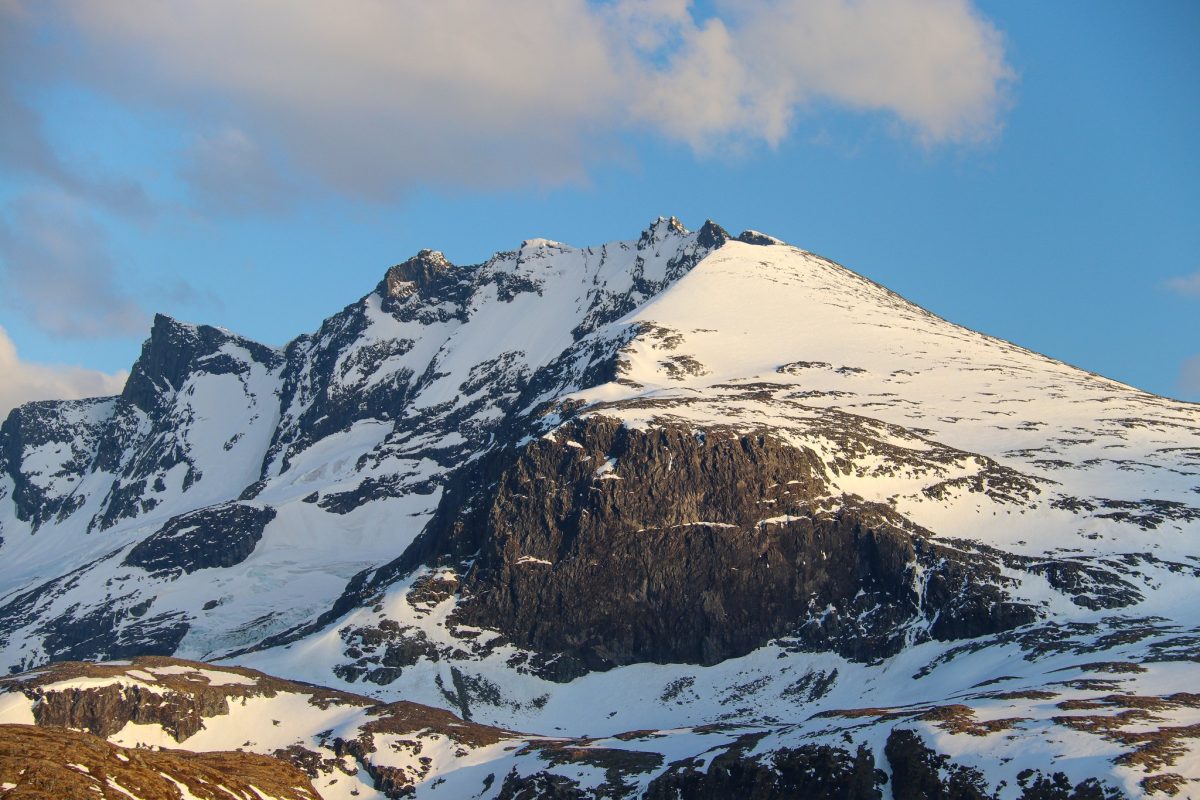
On the north-western edge, Fannaråken (2,068 m) is the exception that proves the rule. A broad, rounded mountain with marked paths, it is the one major summit in Hurrungane that any fit hiker can reach, and the Norwegian Trekking Association’s Fannaråkhytta on its summit is the highest tourist lodge in Norway. From its terrace the view runs straight into the Styggedal and Skagastøl peaks across the glacier — perhaps the best way to understand the massif before trying to climb in it. Store Soleibotntind can also be reached without a rope by experienced mountain walkers in dry conditions. Almost everything else involves climbing, glacier travel or both.
Where Norwegian Climbing Was Born
A lone Englishman on Storen, a mountain guide’s hotel at Turtagrø and the generation of climbers who followed them onto every ridge in the massif
Until the 1870s nobody climbed Norway’s mountains for their own sake, and Storen, with steep walls on almost every side, was believed to be unclimbable. On 21 July 1876 the young Yorkshireman William Cecil Slingsby set out for it with the Norwegian Emanuel Mohn and the local man Knut Lykken. At the notch below the final ridge — now called Mohns skar — his companions stopped, and Slingsby climbed on alone to the summit. The ascent made him famous in Norway and set off a wave of climbing: in 1878 the painter Harald Petersen repeated the route, again solo, and in 1880 Johannes Heftye found the gully on the south side, Heftyes renne, that is still the most popular way to the top. Slingsby himself came back to Norway 21 times, made around 45 first ascents across the country and is remembered as the father of Norwegian mountaineering.
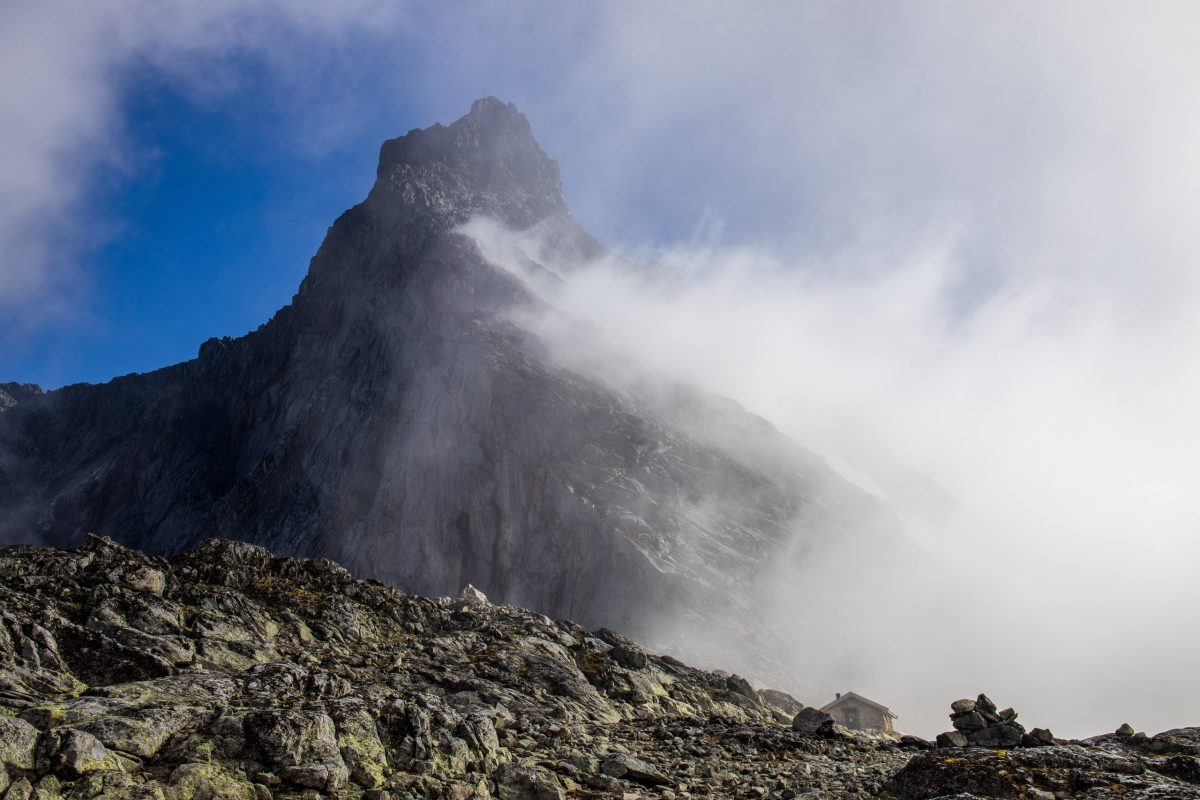
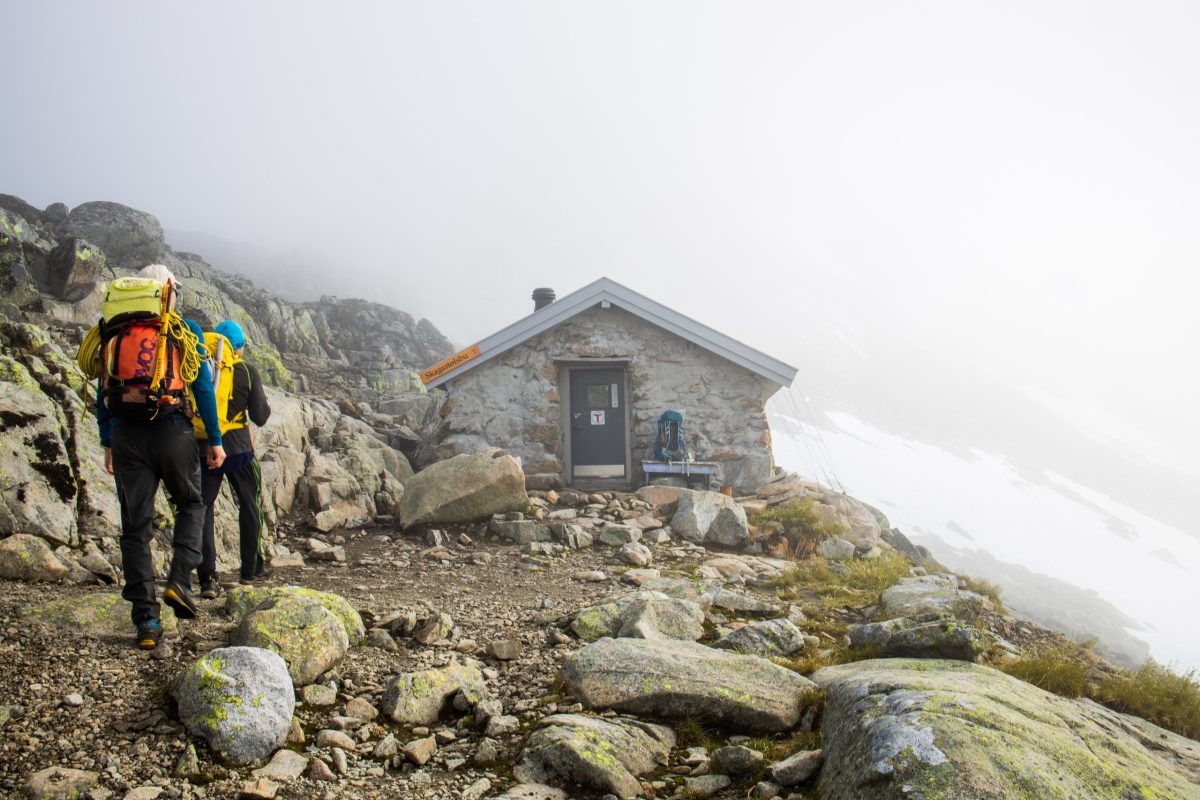
The climbers needed a base, and in 1888 the mountain guide Ola Berge built a hotel at Turtagrø, at the foot of the massif on the old route over Sognefjellet. A second hotel went up nearby the same year, and the two were merged in 1911. Turtagrø soon became the meeting place for British and Norwegian climbers, and the Norwegian Trekking Association built a small stone hut on Bandet, the saddle below Storen, in 1890. Route after route followed: Midtre Skagastølstind was first climbed in 1884 by Carl Christian Hall and Mathias Soggemoen, Vigdals sva on Storen in 1890, and in 1894 Therese Bertheau became the first woman to stand on Storen’s summit — at a time when climbing was considered no place for a woman at all.
A lone Englishman on Storen in 1876, a mountain guide’s hotel at the foot of the massif in 1888 — within a generation, Hurrungane had become the cradle of a whole Norwegian sport.
The great ridge traverses came next. On 5 August 1902, George Wegner Paus, Harold Raeburn, Kristian Lous and Kristian Tandberg made the first traverse of Skagastølsryggen, the ridge from Nordre Skagastølstind over Midtre and Vetle to Storen, still regarded as one of the finest ridge climbs in Norway. Harder lines followed through the 20th century: Andrews renne on Storen in 1899, the south face in 1927, long regarded as the hardest climb in the country, and the west face in 1976. In 1938 the climbing club Norsk Tindeklub built its own hut, Skagadalshytta, high in Skagastølsdalen. Today Turtagrø is a rebuilt modern hotel, but the old traditions — early starts, gear drying on the racks, routes discussed late into the evening — are very much alive.
The Classic Climbs — Storen and the Great Ridge Traverses
Technically moderate, seriously committing: the routes that draw climbers to Turtagrø and what each of them asks for
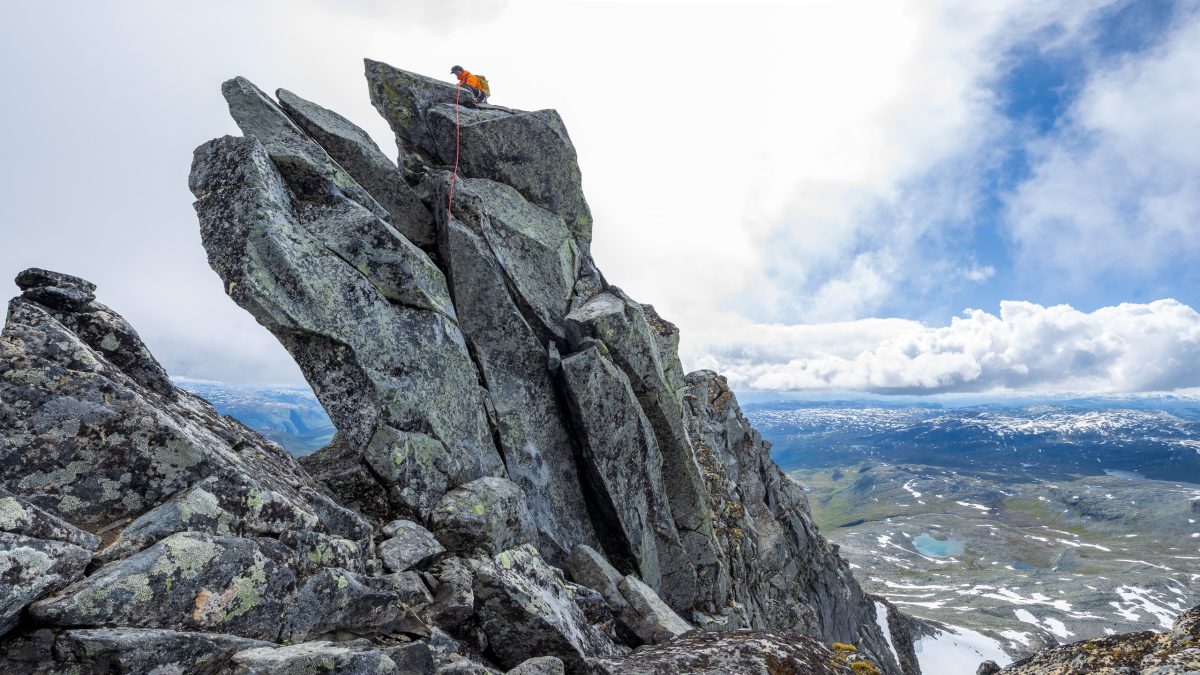
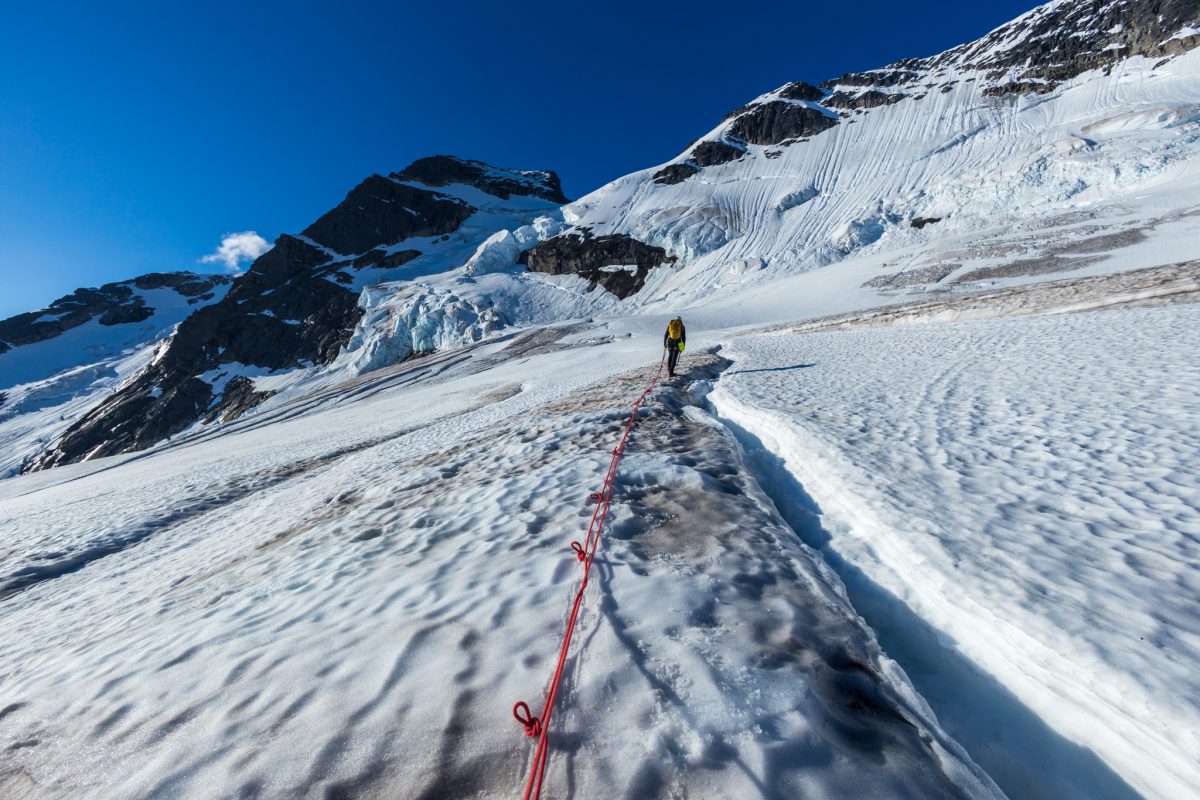
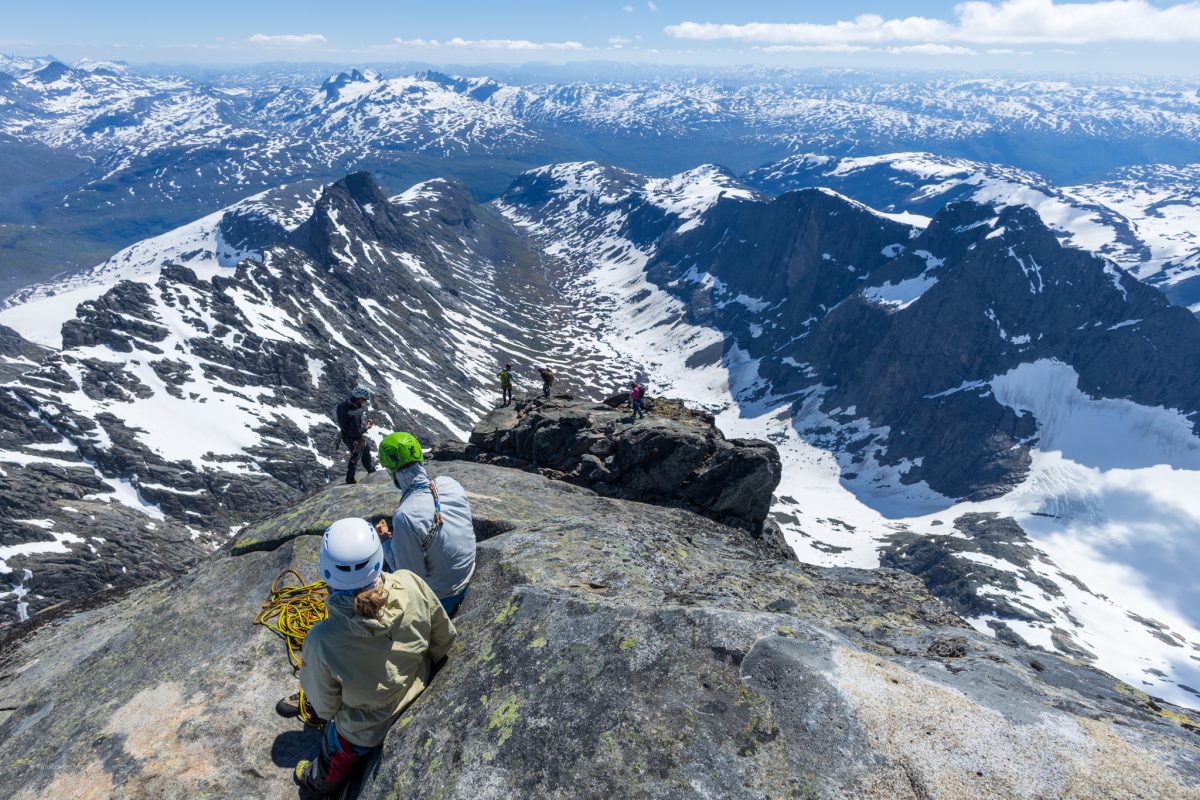
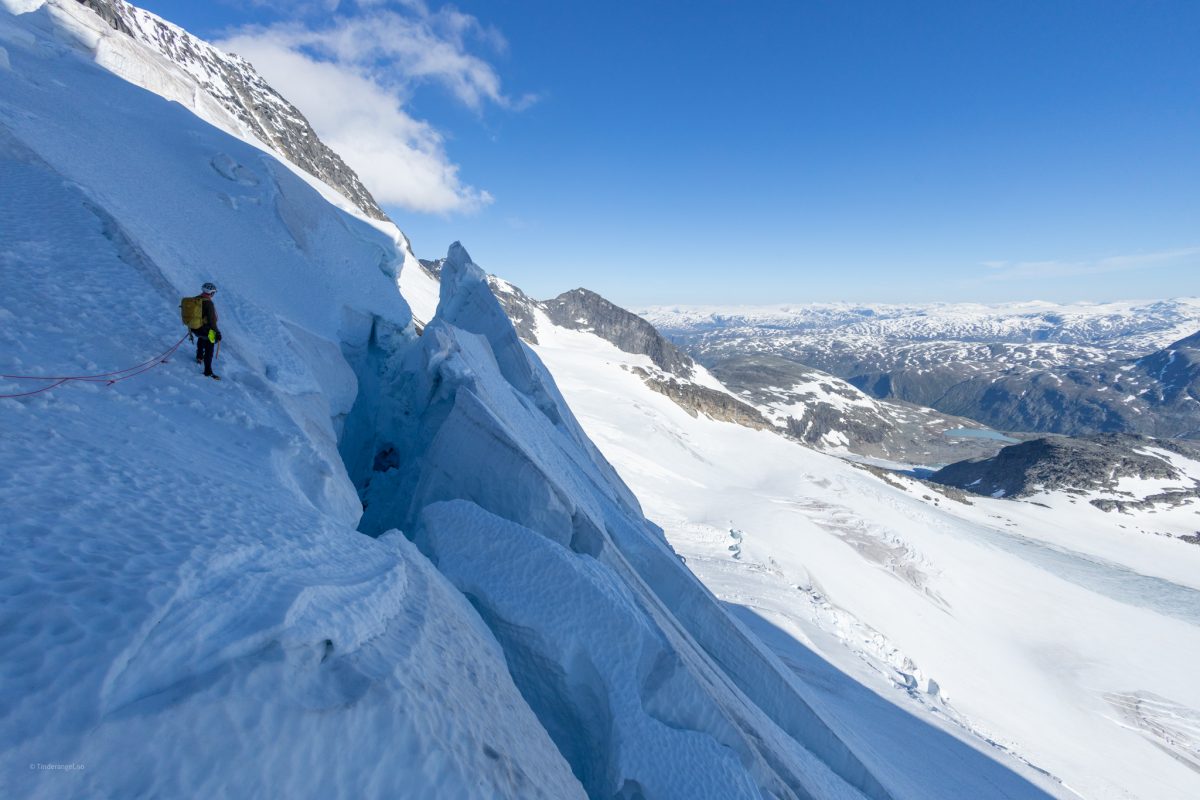
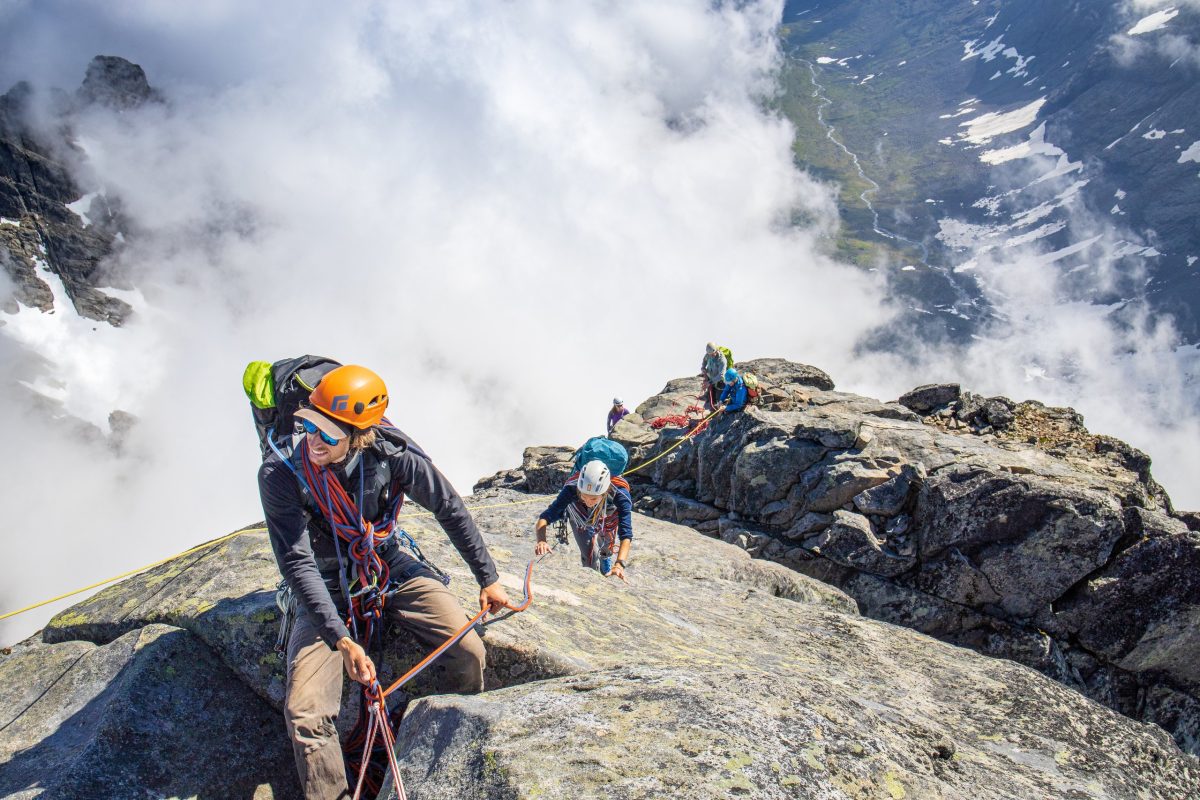
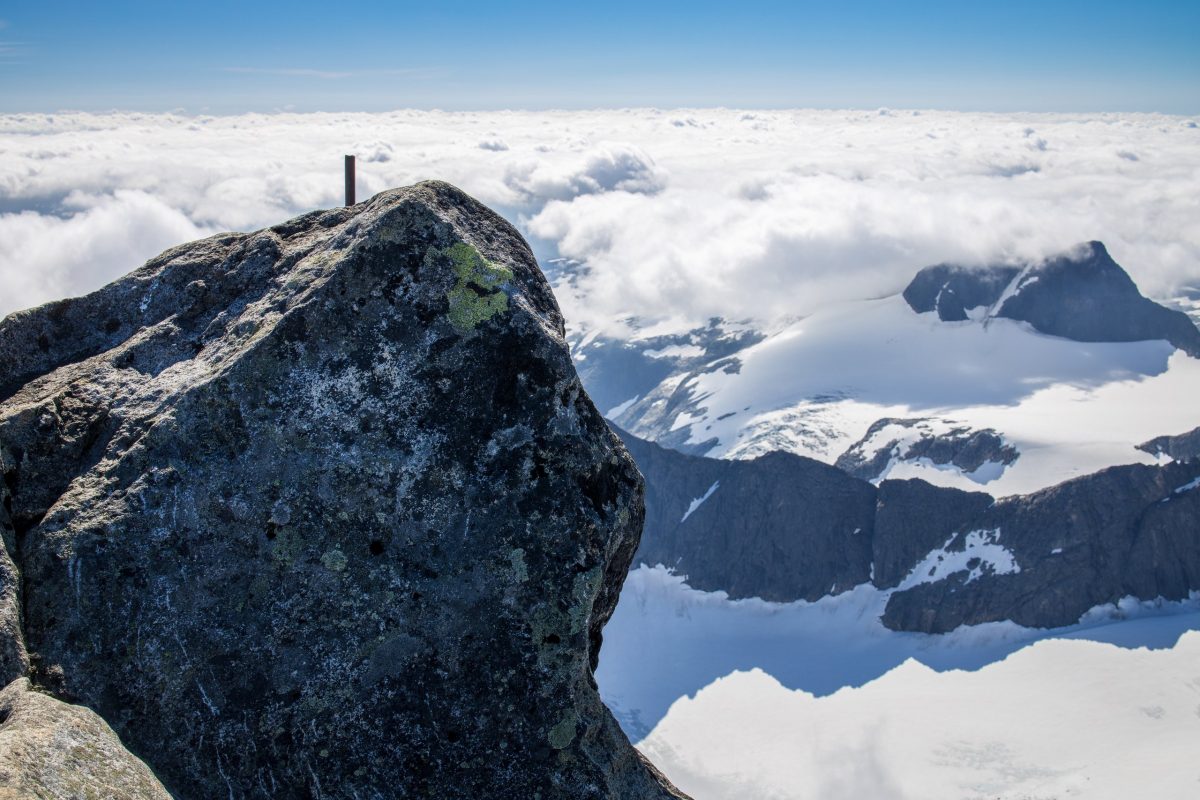
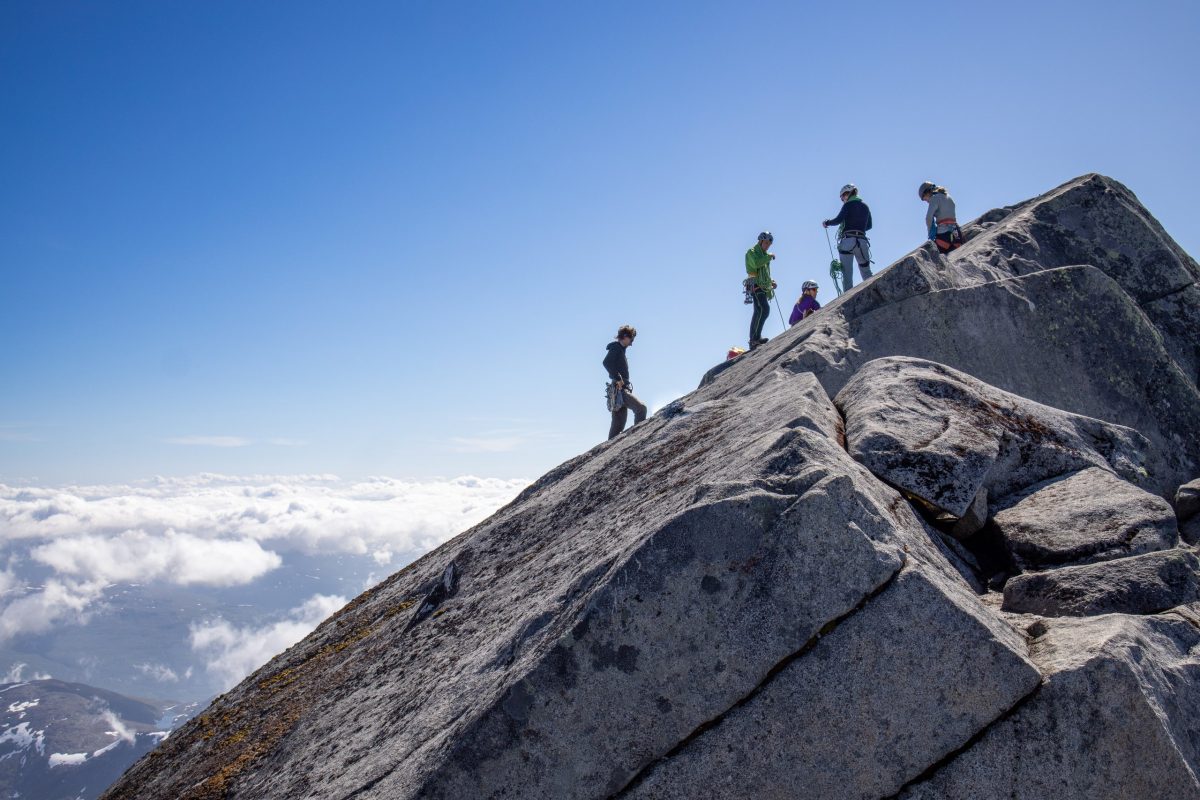
For most visitors, the goal is Store Skagastølstind. The normal route from Turtagrø climbs Skagastølsdalen and crosses the small Skagastølsbreen glacier to the hut on Bandet, then follows slabs and exposed ledges to one of four routes up the final block: Heftyes renne, Vigdals sva, Tandbergs renne or Andrews renne. None of the climbing is technically extreme — mostly grade 3–4 on the Norwegian scale, with a single harder move — but it comes at the end of a long approach, high above a glacier, often in mountain boots with a pack. On a GPS track the round trip measures around 16.5 kilometres with roughly 1,520 metres of ascent, and a competent party should expect a day of around 12 hours, including a long abseil on the descent. Grade 3 in boots at 2,300 metres in a cold wind is a different thing from grade 3 on a sunny valley crag; that context is what makes Hurrungane serious.
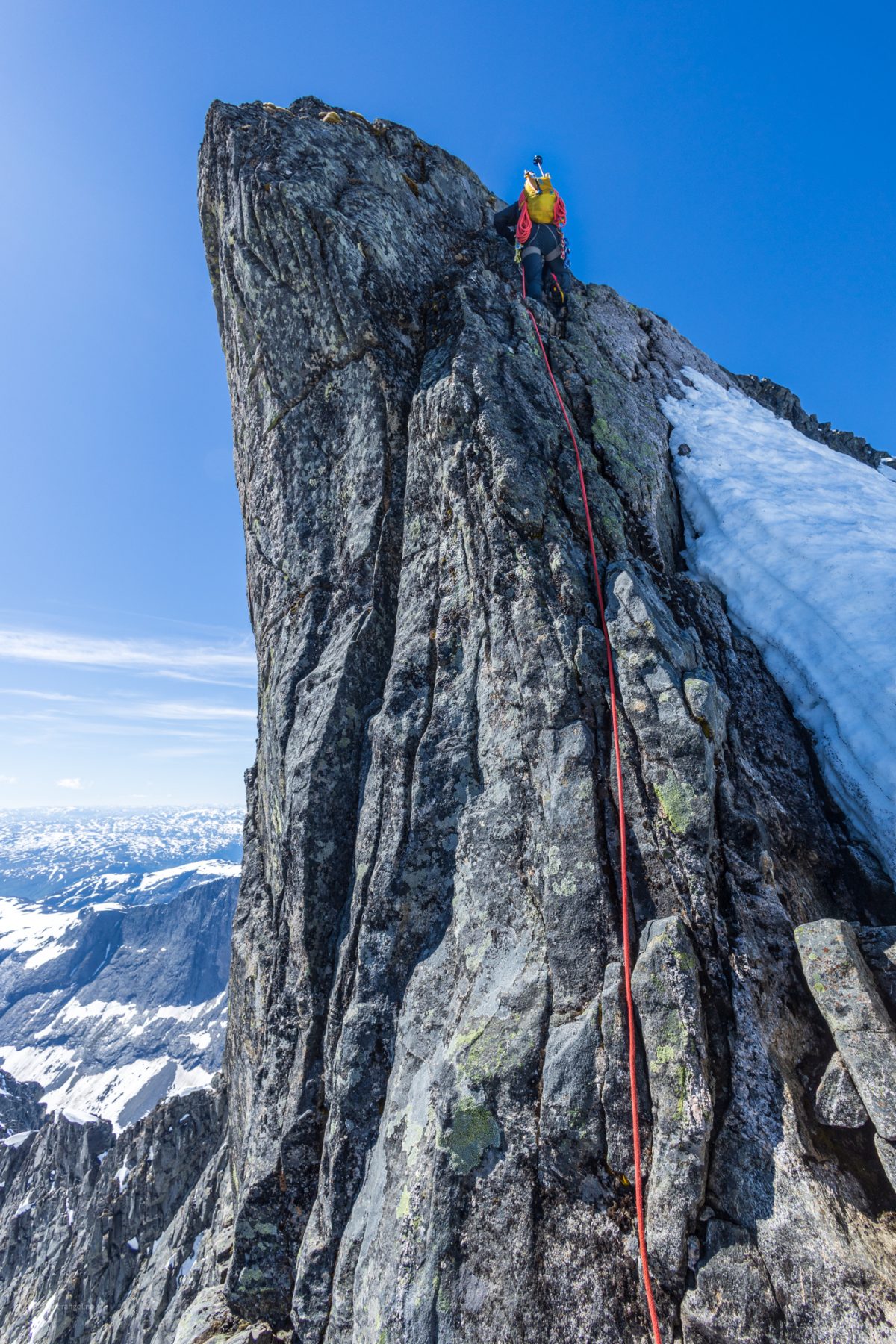
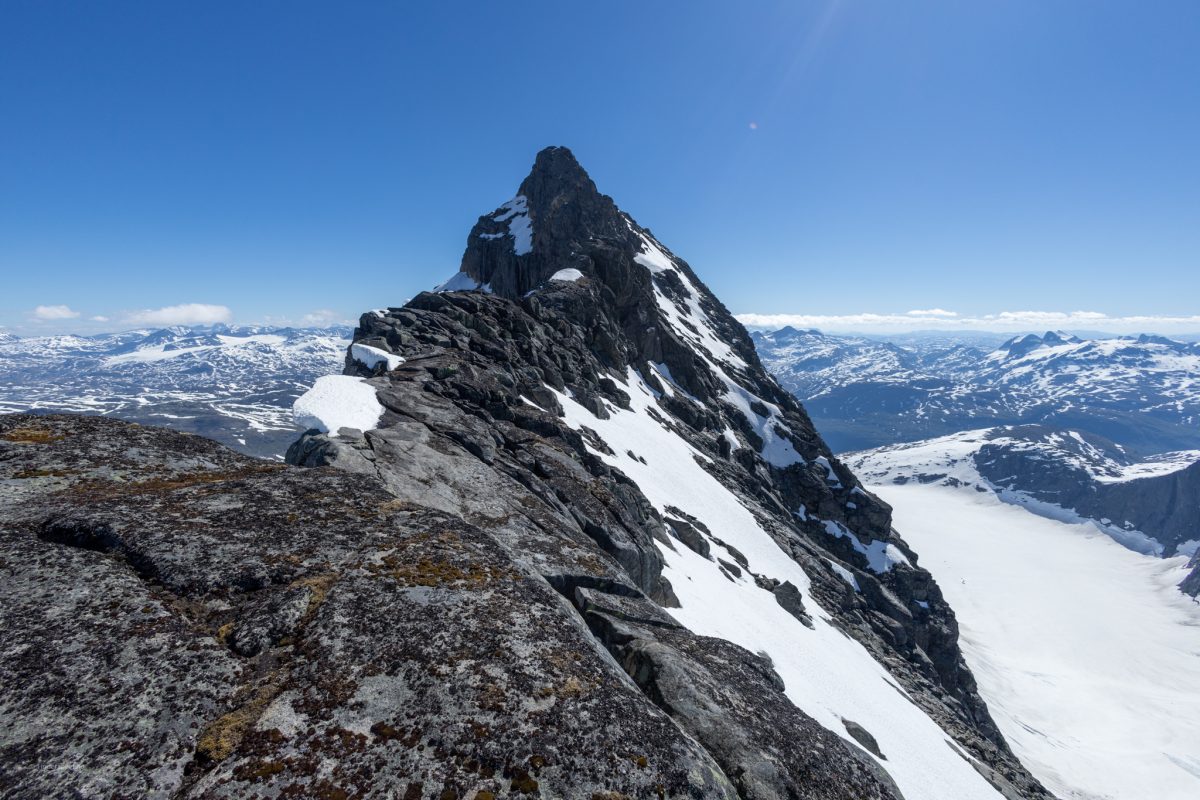
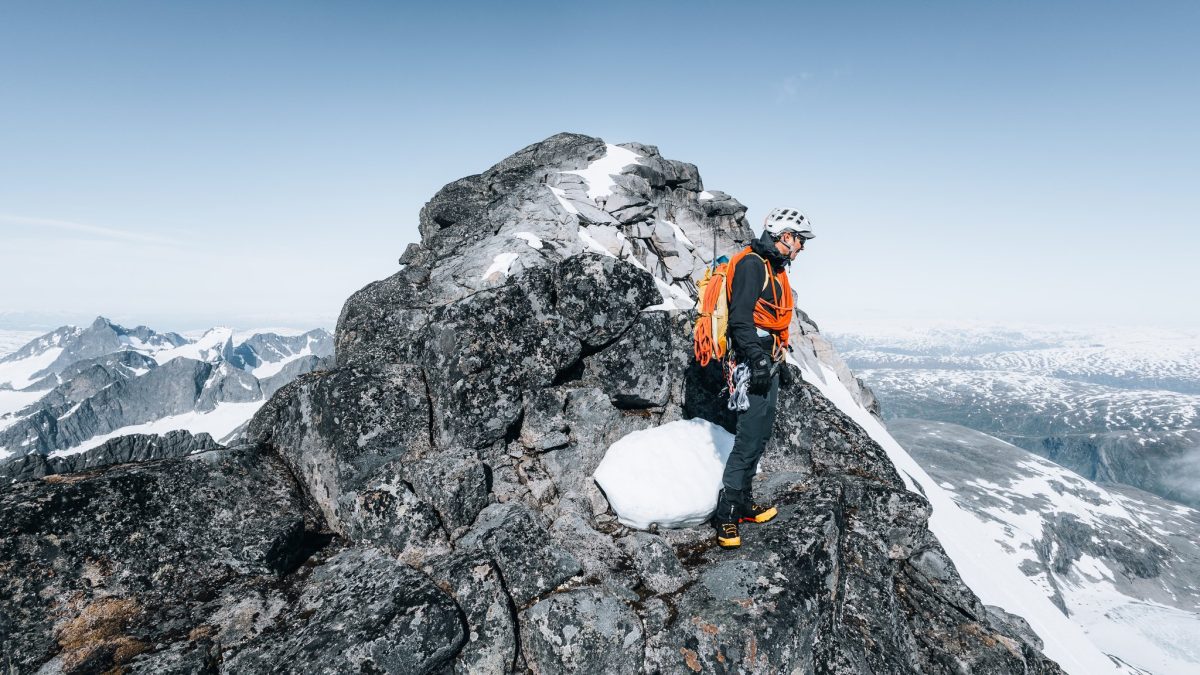
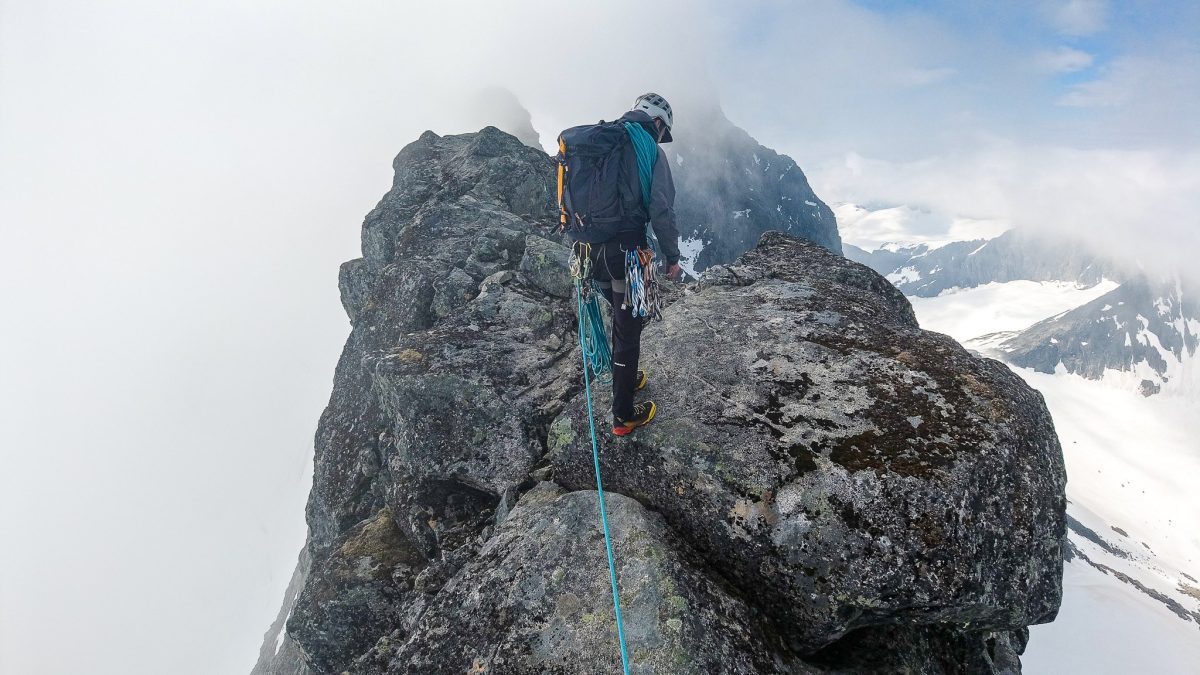
Skagastølsryggen is the one many climbers rank as the finest ridge traverse in Norway. Climbed from north to south, it starts with a long boulder slog up Nordre Skagastølstind and then follows the narrow crest over Midtre and Vetle Skagastølstind to finish on top of Storen — the most natural direction, since it ends on the highest summit. The key passages are the climb out of the deep notch of V-skaret and the rock tower of Halls hammer, usually bypassed on slabs to the north; individual pitches reach grade 4, and the descent from Vetle into Mohns skar is harder still. The climbing is never extreme, but the ridge is narrow and exposed for its whole length and offers few ways off. Most parties need 11 to 14 hours. Styggedalsryggen approaches Storen from the east, from Gjertvasstind over Store Styggedalstind and Sentraltind, while Maradalsryggen, running south-east from Sentraltind, is often considered the most demanding traverse in the massif, with plenty of loose rock and sustained climbing.
The climbing is never desperate. What makes the ridges of Hurrungane serious is everything around it: the length of the day, the exposure, the loose rock, and how few ways there are to get off once committed.
Below that level there is plenty to choose from. Dyrhaugsryggen, usually started from Bandet, begins with a short climb on Søre Dyrhaugstind and continues as a long, airy scramble over the Dyrhaug summits towards Turtagrø, with superb views across to the Skagastøl peaks; in winter its northern end is a fine ski tour. The Soleibotntind traverse, from Lauvnostinden over Nordre and Store Soleibotntind, is mainly scrambling with a little climbing and is one of the gentler introductions to ridge climbing here. Store Austanbottstind is usually climbed by its south ridge, with a pinnacle and a slab section to be climbed before easier ground to the top and a descent by the west ridge. Whatever the route, dry rock is essential: gabbro gives superb friction when dry, but becomes treacherous when wet or iced, and the weather in western Norway can turn quickly.
Planning a Visit — Hikes Without a Rope, Season and Guides
How to see Hurrungane without climbing, when the rock is in condition, and why a guide is the norm rather than the exception for first-time visitors
Hurrungane is not only for climbers. The walk from Turtagrø to the summit of Fannaråken takes four to six hours on marked paths and ends at Fannaråkhytta, the highest staffed lodge in Norway, where it is possible to stay the night and watch the light change over the Skagastøl peaks. The lodge has only around 30 beds and they must be booked in advance; after a dry winter, guests may also be asked to bring their own drinking water, as the lodge relies on snowmelt and rain. For experienced mountain walkers with a good head for heights, Store Soleibotntind and parts of Dyrhaugsryggen can be done without a rope in dry weather — but “without a rope” here does not mean without risk. The terrain is exposed, the drops are long, and wet gabbro changes the picture completely.
The climbing season is short. In most years the rock and ridges are in condition from July to early September, with August often the most reliable month; earlier in summer, snow lingers in the gullies and on the ledges, and later the days shorten and early snow can make the ridges dangerous without winter equipment. Weather from the Atlantic can arrive quickly, so an early start and a plan B for a bad day are part of every trip. In spring the massif is a ski-mountaineering destination instead, with Store Ringstind and the Dyrhaug ridge among the classic tours. Rockfall and avalanches are a constant feature of these steep mountains, and helmets are standard on every climb.
A guide on Storen is not only for those who cannot climb. It is for anyone who wants an extra margin in terrain where the margins are what count.
For visitors without solid experience of alpine rock, glacier travel and abseiling, hiring a certified mountain guide is the norm rather than an optional extra. Guiding is arranged from Turtagrø, where local guiding companies work closely with the hotel; climbing trips are usually limited to three clients per guide, with technical equipment included, and summer weekends in July and August book up early. Turtagrø Hotel itself remains the obvious base; it was open for overnight stays until 14 September in 2026, and camping is possible in the surrounding terrain. Buy the 1:25,000 Hurrungane map at the hotel reception, check the forecast every evening, and remember that turning back is always the right call when the weather or the rock is not right.
«Hurrungane is not for everyone, and it was never meant to be. It is a massif that rewards preparation and punishes carelessness — but for those who arrive ready, in the right weather and with the right company, there is nothing in Norway closer to classic alpine terrain. Start with the view from Fannaråken. Look across at Storen and the ridges. Then decide which of them comes next, and give it the time it takes to be ready.»

More in the same area
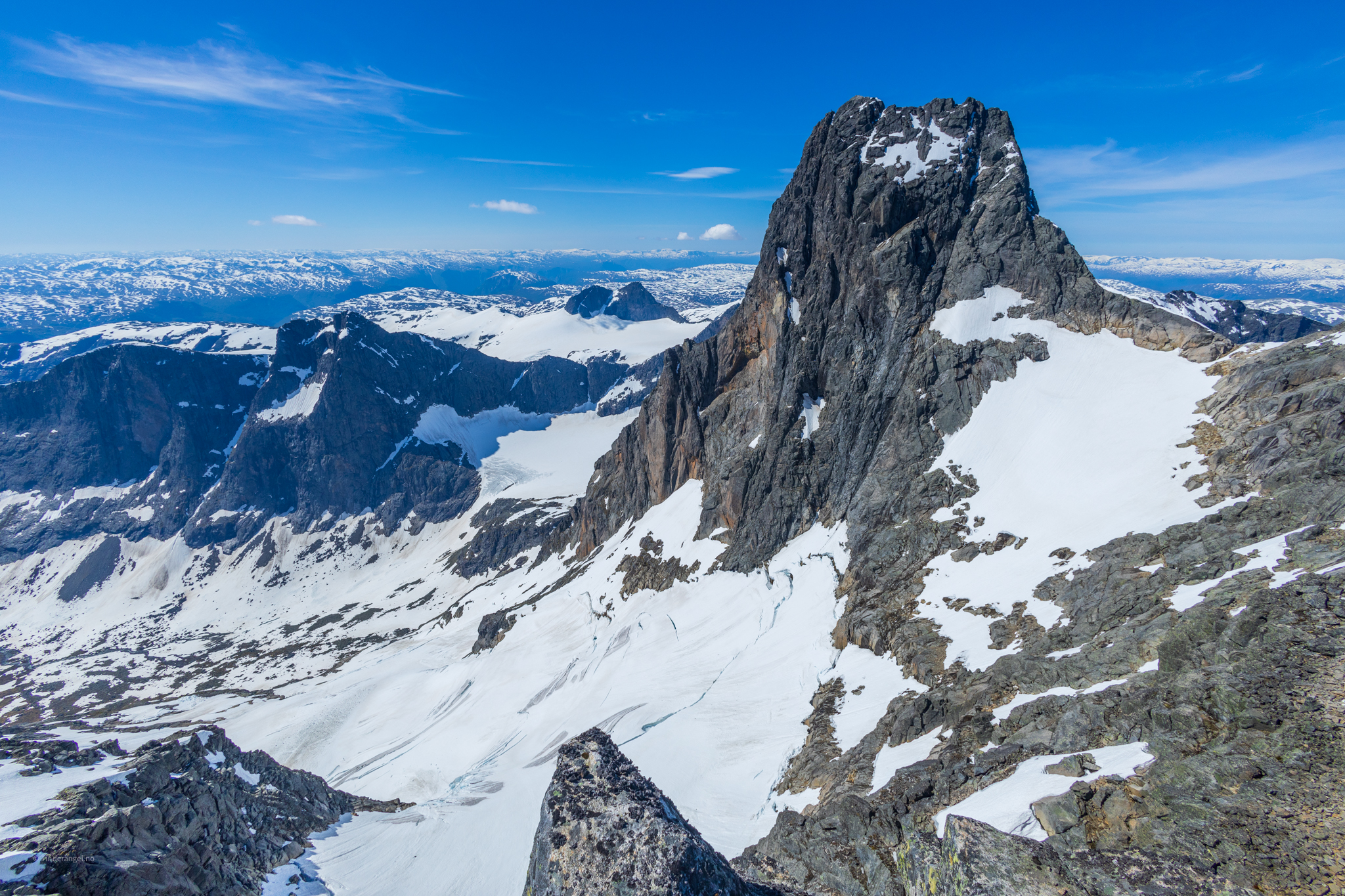 ActivitiesStore Skagastølstind: Climbing Storen, Norway’s Highest Climbing Peak
 ActivitiesJostedalsbreen on Skis: Crossing Mainland Europe’s Largest Glacier
 HikingSkåla: the stone tower 1,843 metres above the Nordfjord
 HikingNorway’s 15 Greatest Day Hikes
 GlaciersEurope’s 10 Greatest Glaciers — And How to Experience Them
 Train travelThe World’s 10 Great Railway Journeys