Zaragoza sits on the Ebro almost exactly halfway between Madrid and Barcelona, and most travellers see it only through the window of a high-speed train. That is a mistake. Spain’s fourth-largest city has been, in turn, the Roman colony of Caesaraugusta, the capital of a Muslim kingdom whose palace still stands, the seat of the Crown of Aragon, and the city that held out against Napoleon through two sieges and some 50,000 dead. Today it is home to around 700,000 people and to one of the great Marian shrines of Spain, the Basilica of the Virgin of the Pillar — whose domes Francisco Goya, born a few hours’ ride away, helped to paint.

The city’s layers are unusually easy to read. The Romans laid out Caesaraugusta on the south bank of the Ebro around 14 BC, on the site of an Iberian town called Salduie, and their forum, river port, baths and theatre lie beneath the old centre. The Muslim city of Saraqusta became the capital of an independent taifa kingdom in the 11th century, whose rulers built the Aljafería palace. Alfonso I of Aragon took the city in 1118, and for four centuries Christian, Muslim and Jewish craftsmen together created the brick-and-tile Mudéjar style that UNESCO now protects. The Baroque Pilar basilica, the scars of the Peninsular War and the glass pavilions of Expo 2008 complete the sequence.
Zaragoza is a big, practical, lived-in city rather than a museum piece, and that is part of its appeal. It is flat and walkable, its old town is compact, and its tapas quarter is one of the liveliest in Spain. It is also windy: the cierzo, a cold, dry north-westerly, can blow hard down the Ebro valley in winter. Summers are hot. The best time to arrive is spring or autumn — and above all in mid-October, when the whole city turns out for the Fiestas del Pilar.
How to approach Zaragoza
This guide covers Zaragoza in four parts: the Basilica of the Pillar and the long Plaza del Pilar, with Goya’s frescoes and the cathedral of La Seo; the Roman city of Caesaraugusta and the Islamic palace of the Aljafería; Goya and the city’s museums, from the Mudéjar tower of San Pablo to the Expo 2008 site; and the city at table and in festival, from the tapas bars of El Tubo to the flower offering of 12 October.
Zaragoza in 3D
Zaragoza lies on the Ebro roughly halfway between Madrid and Barcelona, and with around 700,000 people it is the fourth-largest city in Spain. The Romans founded Caesaraugusta here around 14 BC, and the city later became the capital of a Muslim taifa kingdom and of the Crown of Aragon. This frame runs from the Expo 2008 site in the north-west to the old town and the basilica on the river.
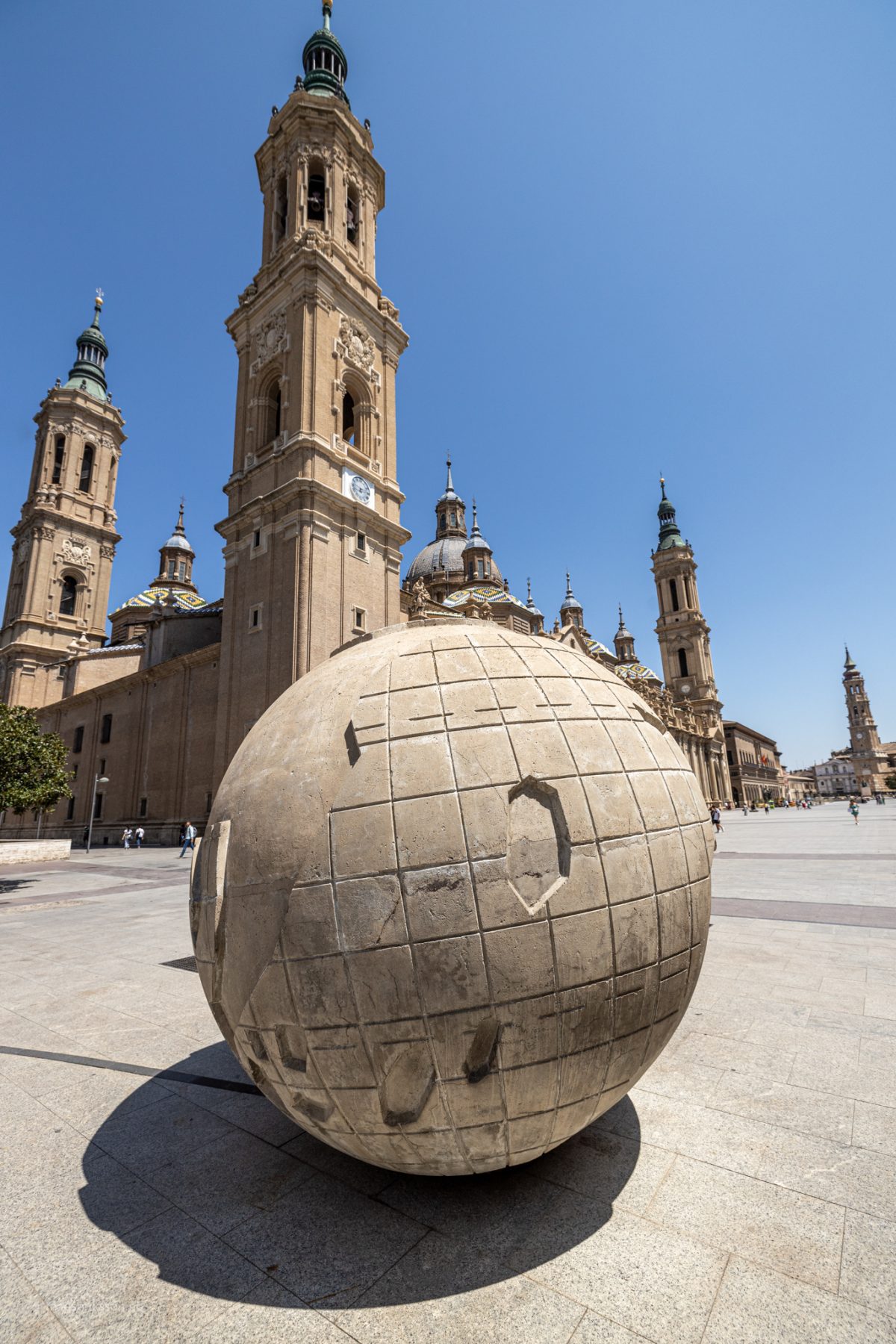
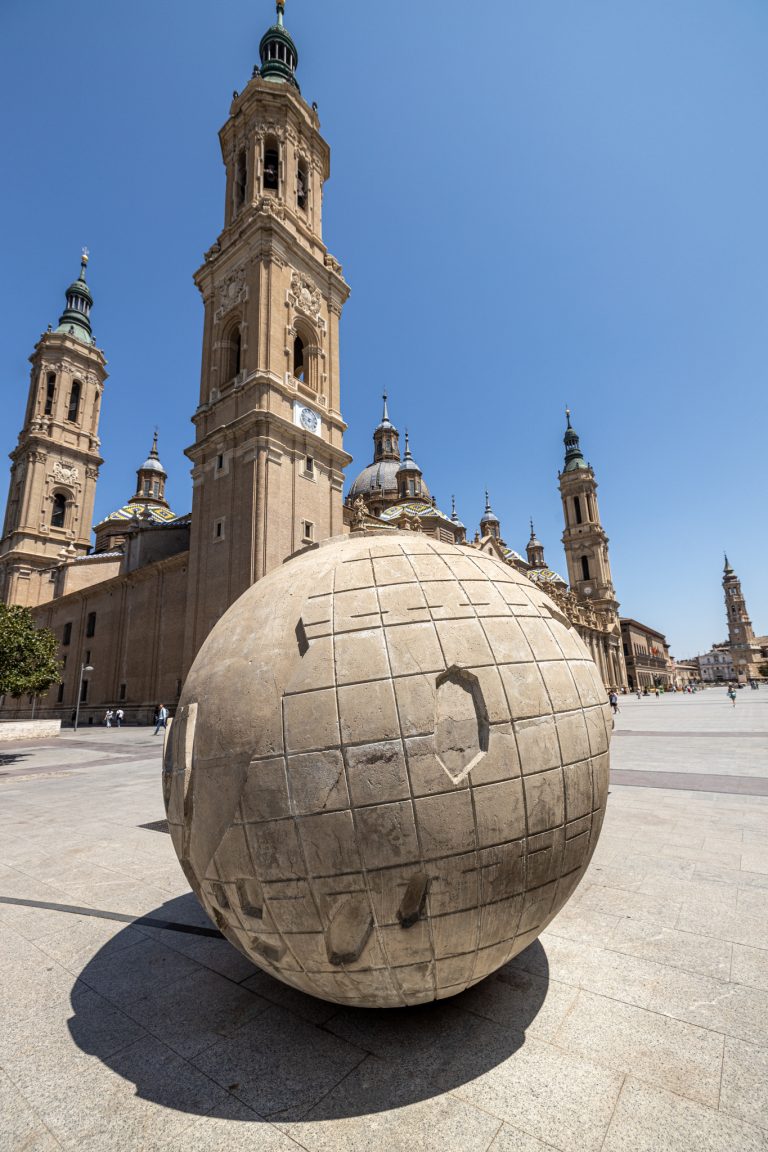
The Basilica of the Pillar
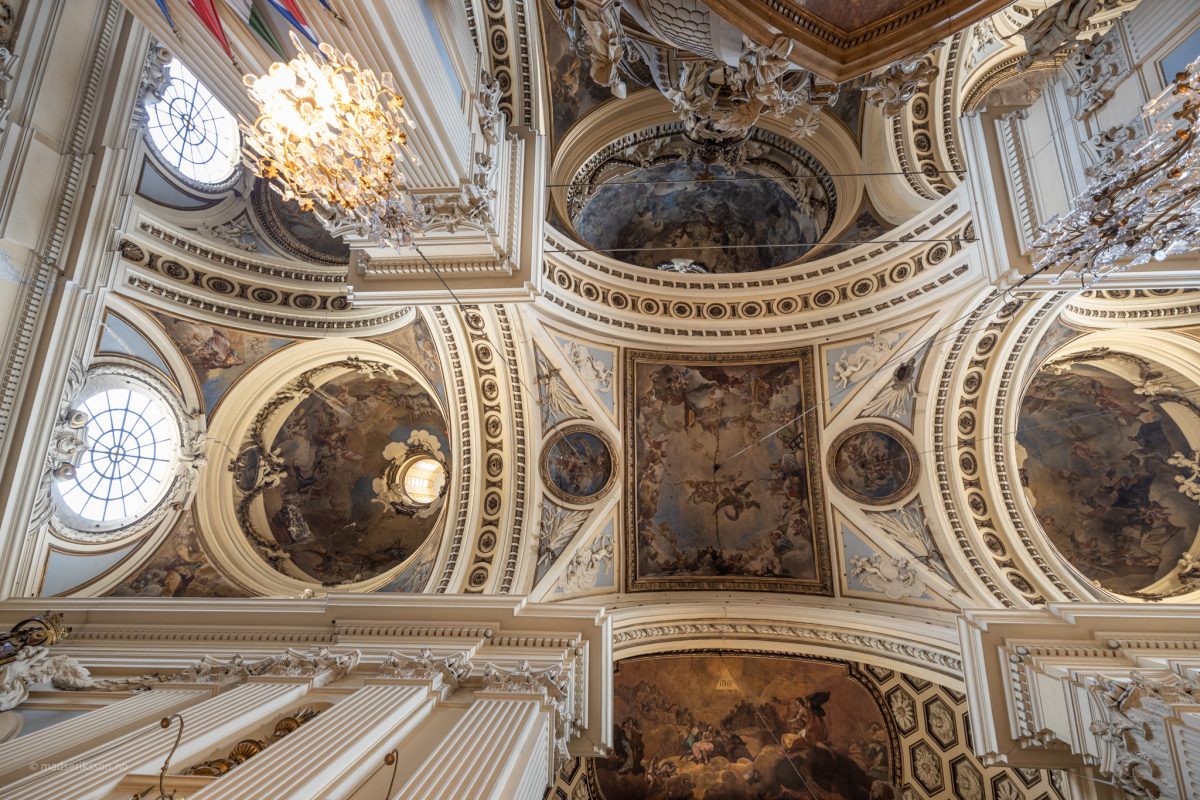
The Basilica of Our Lady of the Pillar is about 130 m long and 67 m wide, with eleven tiled domes and four corner towers on the south bank of the Ebro. The present Baroque church was begun in 1681 and given its final dimensions from 1725 by Ventura Rodríguez; the last vaults were finished in 1872. A lift in one tower climbs to a viewpoint about 80 m above the square.
The Cathedral-Basilica of Our Lady of the Pillar in Zaragoza.
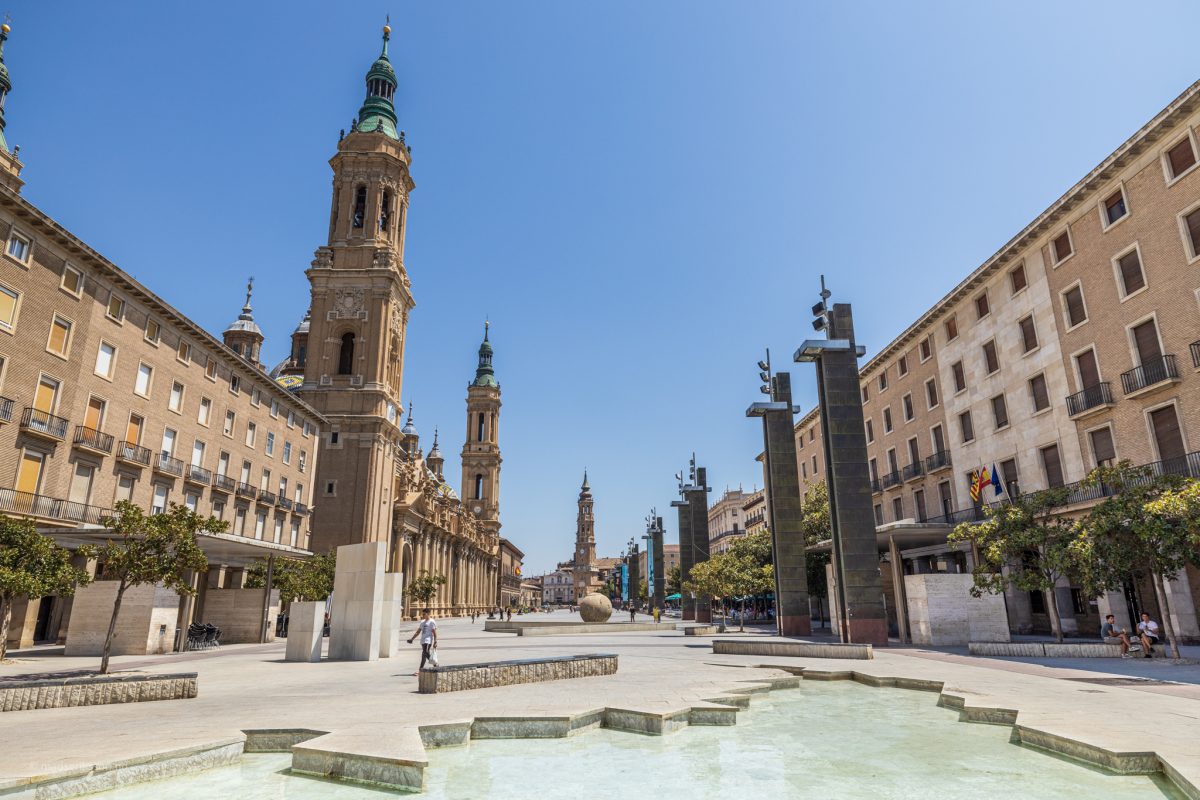
Plaza del Pilar
The Plaza del Pilar runs for several hundred metres along the river, from the basilica past the town hall and the Lonja to the cathedral of La Seo, and is one of the largest pedestrian squares in Spain. Every 12 October, during the Fiestas del Pilar, it fills for the flower offering to the Virgin. Inside the basilica, the young Francisco Goya painted the vault above the choir after returning to Zaragoza in 1771.
Plaza del Pilar in Zaragoza, Spain.
La Seo and the Stone Bridge
La Seo, the Cathedral of the Saviour, stands on the Roman forum and on the Great Mosque, consecrated as a church in 1121, three years after Alfonso I took the city. Its Baroque bell tower was completed in 1704, and the brick and glazed-tile wall of the Parroquieta chapel, built around 1360, is part of the UNESCO Mudéjar listing. The Puente de Piedra, built between 1401 and 1440, crosses the Ebro just beyond it.
Roman Caesaraugusta and El Tubo
Caesaraugusta was laid out as a Roman grid on the south bank of the Ebro, and its forum, river port, baths and theatre are now four small museums beneath the old town. The theatre, completed around AD 50, held some 6,000 spectators. Next to it lie the Museo Goya and El Tubo, the narrow lanes of the oldest tapas quarter in the city.
The Aljafería palace
King al-Muqtadir built the Aljafería between 1065 and 1081 as a fortified palace on the plain west of the walls, and it is the most important surviving Islamic building of its period in Spain. After 1118 it became a palace of the kings of Aragon and was later an Inquisition seat, a prison and a barracks. Since the 1980s it has housed the Cortes, the regional parliament of Aragon.
The Expo 2008 site
Zaragoza hosted the world's fair of 2008 on a meander of the Ebro north-west of the centre, on the theme of water and sustainable development, and drew 5.65 million visitors. The 76 m Water Tower by Enrique de Teresa and Zaha Hadid's Bridge Pavilion over the river remain its landmarks. The Delicias station, opened in 2003 for the high-speed line, puts Madrid about 75 minutes away.
Read more: Madrid — The Capital That Was Chosen by Calculation and Became Something Else
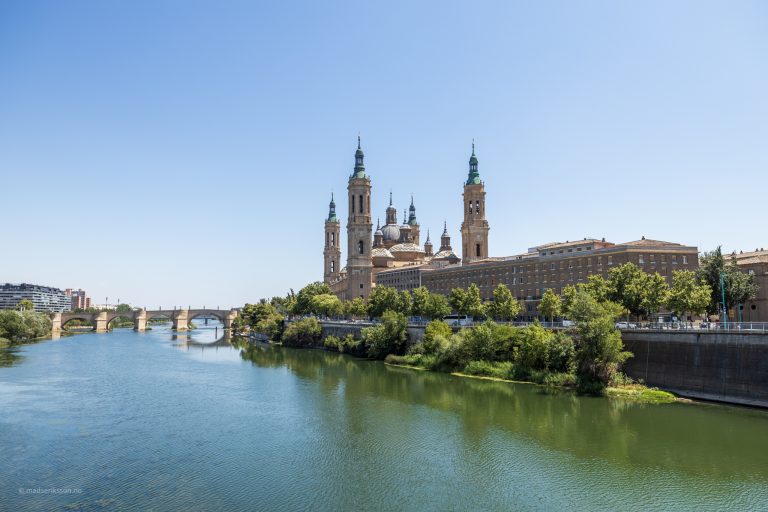
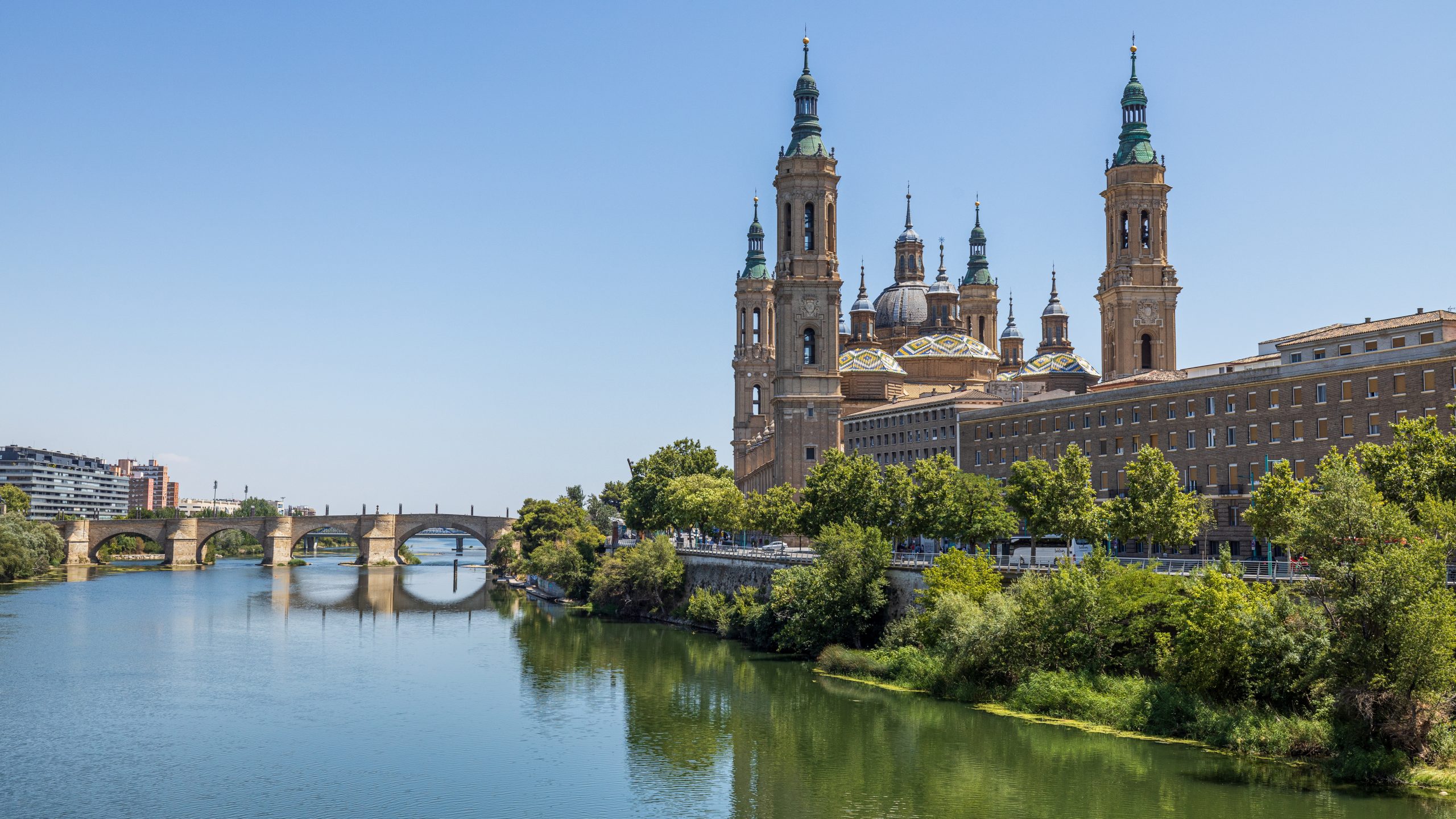
The Pilar at dusk
From the Puente de Piedra and the north bank, the domes and towers of the Pilar are reflected in the Ebro at dusk. The bridge's four bronze lions by Francisco Rallo Lahoz have stood at its ends since 1991.
Zaragoza, Spain
The old town at night
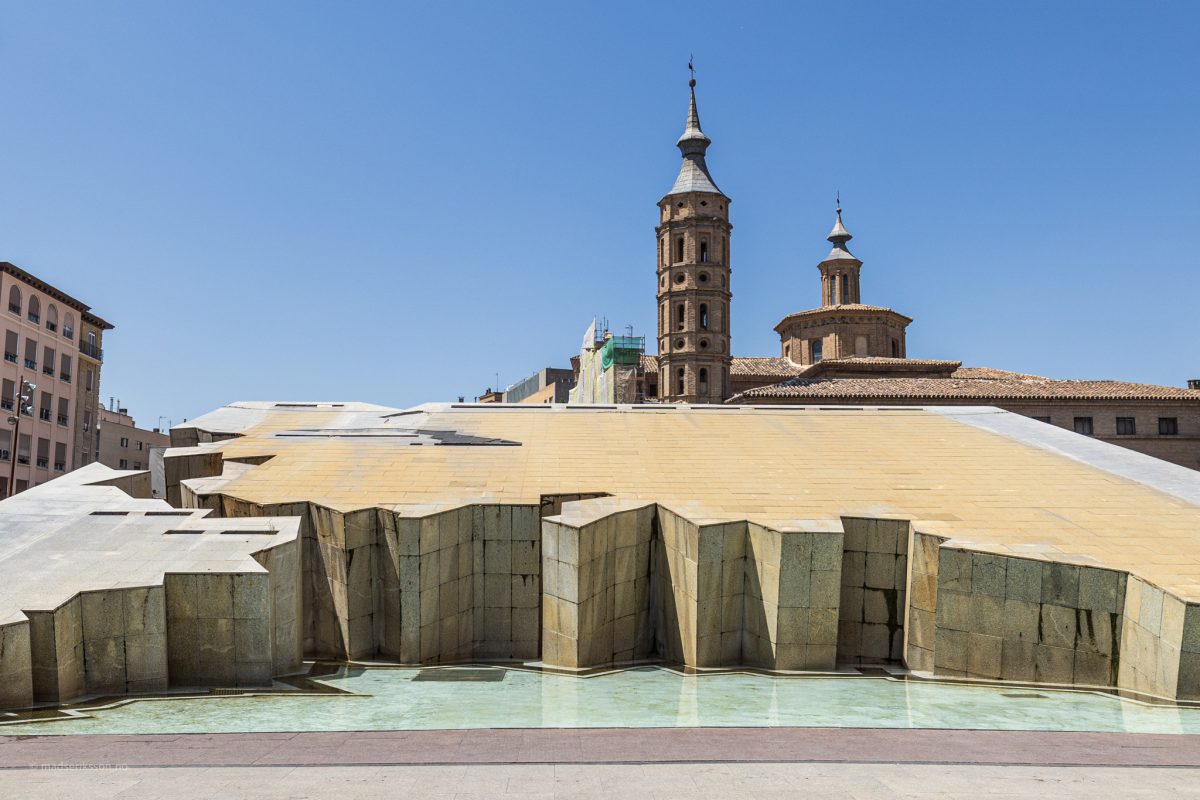
West of the Plaza del Pilar, the octagonal brick tower of San Pablo, decorated with glazed ceramic, is another part of the Mudéjar World Heritage Site, extended to Zaragoza in 2001. In the evening, the tapas bars of El Tubo and the streets around the Plaza de España are the busiest part of the city.
3D model © 2026 madseriksson.no · Photographs © madseriksson.no. Buildings and heights: © OpenStreetMap contributors (ODbL), via OpenMapTiles. Ground imagery: Sentinel-2 cloudless 2023 by EOX IT Services GmbH (contains modified Copernicus Sentinel data 2023; CC BY 4.0). Heights are approximate where OpenStreetMap has no measured value; sun positions are approximate.
The Pillar and La Seo — Two Cathedrals on One Square
A Baroque shrine to a vision on the banks of the Ebro, Goya’s early frescoes, and the older cathedral built over the Great Mosque
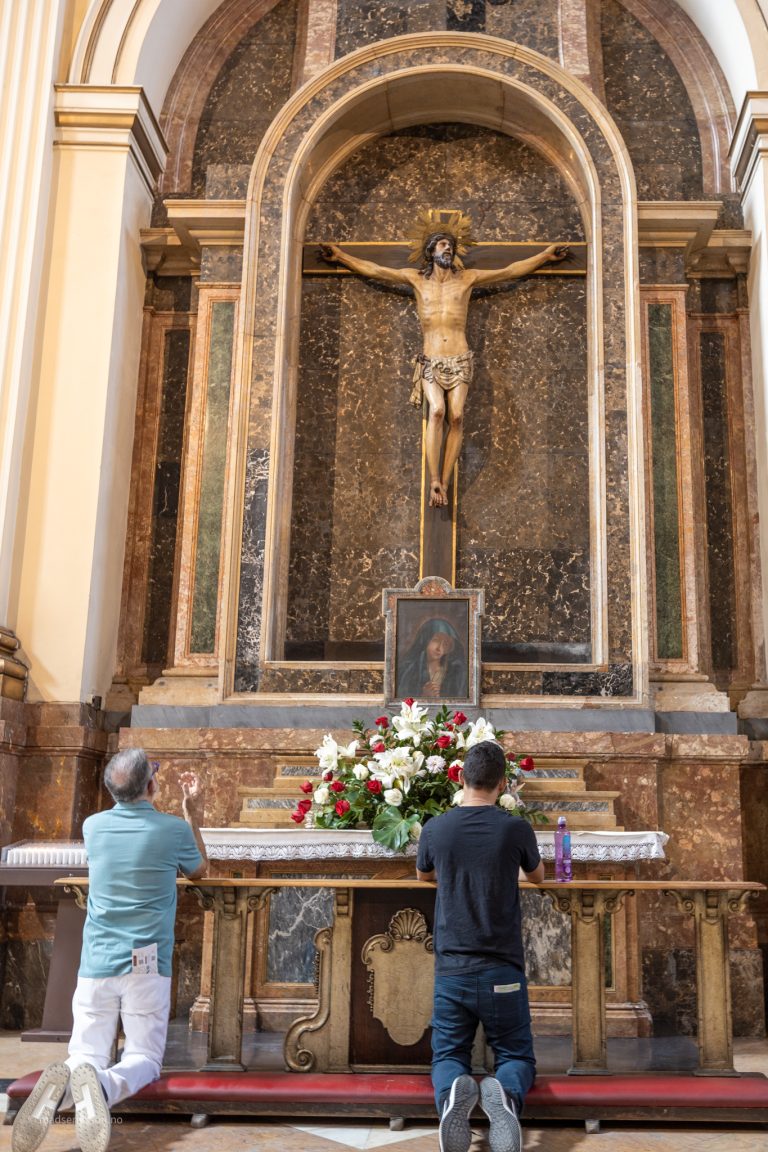
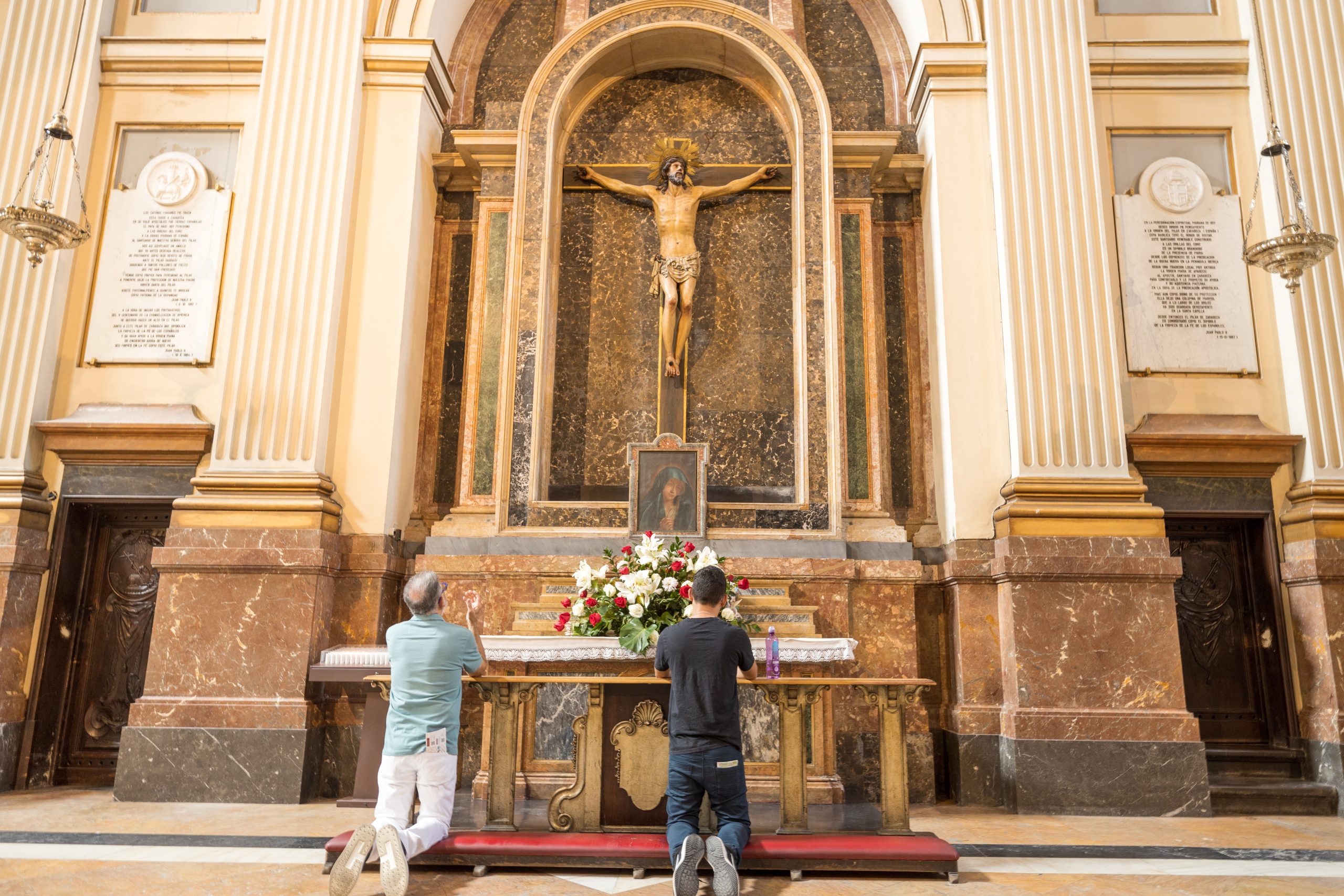
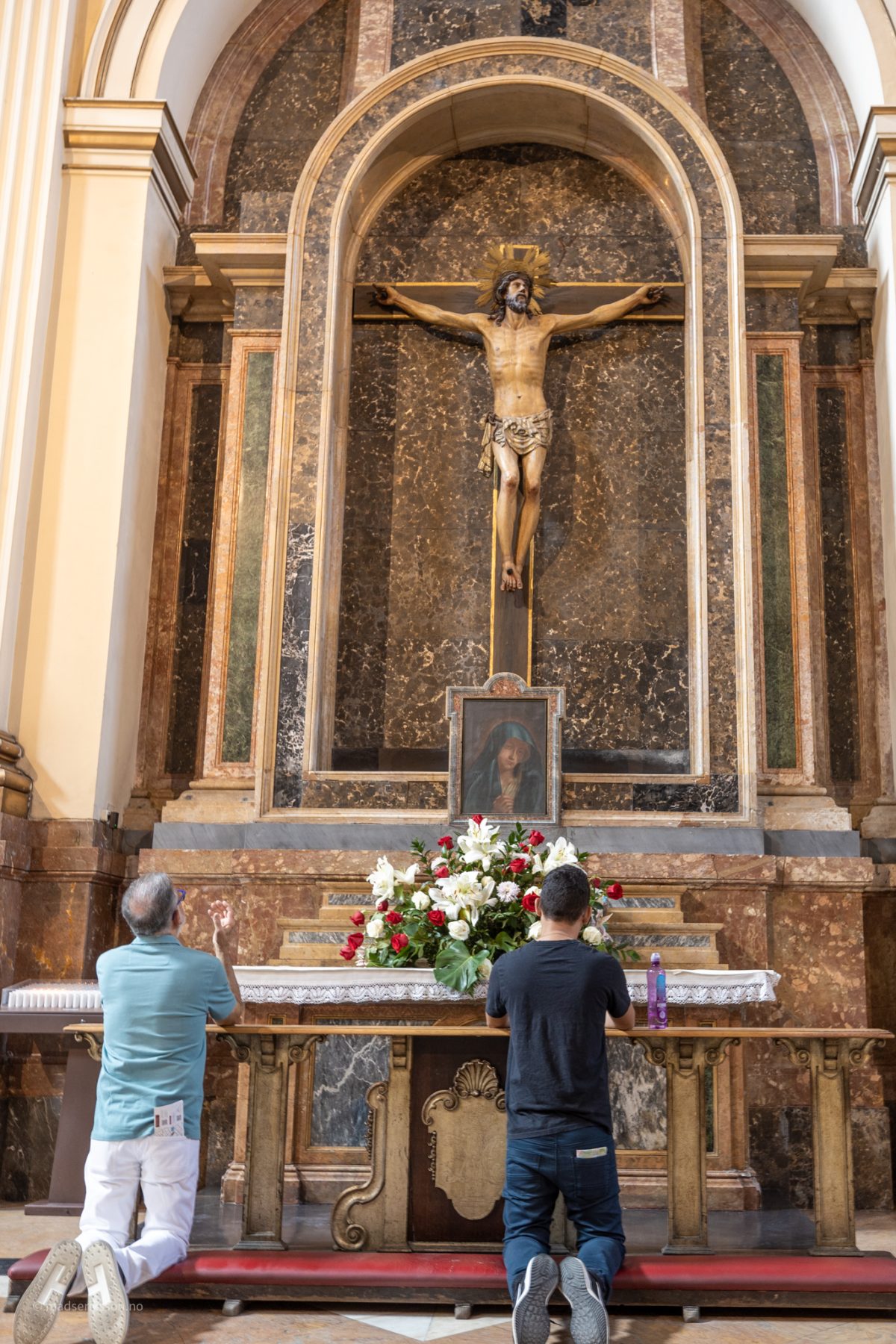
Tradition holds that on 2 January in the year 40 the Virgin Mary appeared to the apostle James by the Ebro, standing on a pillar of jasper, and asked him to build a church on the spot. The pillar is still the centre of devotion: it stands in the Holy Chapel at the heart of the basilica, under a small statue of the Virgin. The church built around it is the third or fourth on the site. Begun in 1681 under Charles II and given its present dimensions from 1725 onwards by Ventura Rodríguez, it was finished in stages until the final vaults in 1872. Its eleven domes, covered in coloured glazed tiles, and its four corner towers make it the defining sight of the riverfront, best seen from the far bank of the Ebro.
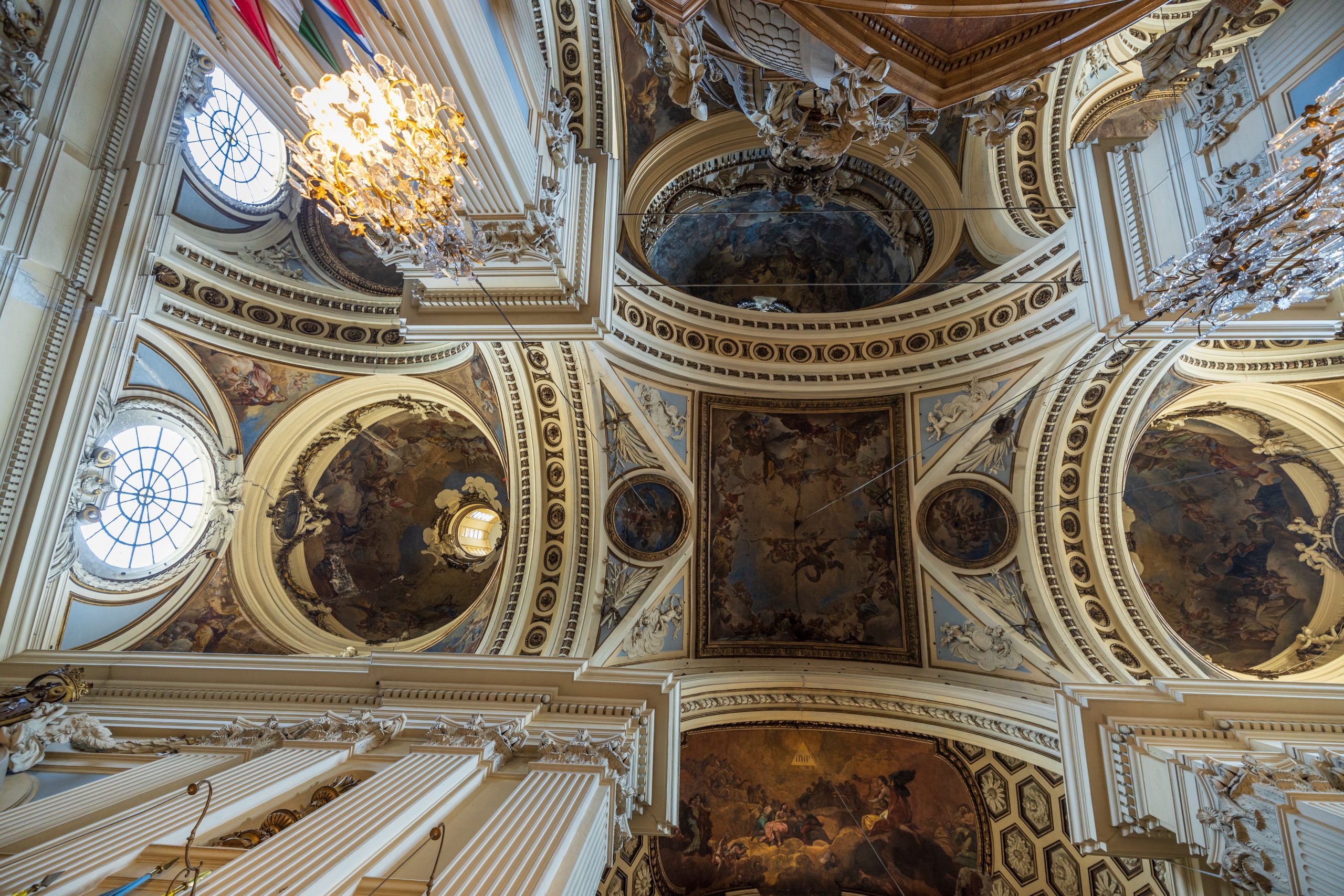
Inside, the basilica is vast and full of light. Above the high altar stands a Gothic alabaster altarpiece by Damián Forment, one of the few survivors of the older church. The domes and vaults around the Holy Chapel were painted by the leading Aragonese artists of the 18th century, and among them was the young Francisco Goya: after returning to Zaragoza in 1771 he painted the Adoration of the Name of God in the small vault above the choir, and later the dome of the Queen of Martyrs. Near the Holy Chapel, two bombs that fell on the church during the Civil War and did not explode hang on a pillar — regarded by the faithful as a miracle.
The Plaza del Pilar runs for several hundred metres along the river, from the basilica past the town hall to the cathedral of La Seo — one of the largest pedestrian squares in Spain, and the stage for the city’s great festival every October.
At the eastern end of the square, La Seo — the Cathedral of the Saviour — is older and stranger than the Pilar. It stands on the site of the Roman forum and of the Great Mosque of Muslim Saraqusta, which was consecrated as a church in 1121, three years after the Christian conquest; parts of the minaret survive inside the Baroque bell tower, designed by Juan Bautista Contini and completed in 1704. The building is a catalogue of styles: a Romanesque apse, Gothic naves, a Neoclassical main façade. Its greatest treasure is on the outside. The north-east wall of the Parroquieta chapel, built around 1360, is covered in a geometric pattern of brick and green and white glazed ceramic, one of the finest examples of Mudéjar work in Aragon and part of the UNESCO World Heritage Site. Inside, the cathedral’s tapestry museum holds one of the largest collections of Flemish tapestries of the 15th to 17th centuries in the world.
Roman Colony and Islamic Palace — The City Before the Pillar
Four underground museums on the Roman route, and the most important Islamic building from the 11th century in Spain
Caesaraugusta was founded around 14 BC as a colony for veterans, and was laid out as a classic Roman grid on the south bank of the Ebro. Much of it survives a few metres below the old town, and the city has turned four sites into small museums, often visited together as the Caesaraugusta route. The forum lies under the Plaza de la Seo, with the remains of its commercial and administrative buildings. The river port, by the Ebro, was the key to the colony’s wealth as the trading hub of the Ebro valley. The public baths preserve the swimming pool of a bath complex from the early empire. And the theatre, built from the reign of Tiberius and completed around AD 50 under Claudius, was about 106 metres across and held some 6,000 spectators — modelled on the Theatre of Marcellus in Rome. A stretch of about 80 metres of the city’s 3rd-century wall also survives above ground.
After the Muslim conquest the city became Saraqusta, and in 1018 the capital of an independent taifa kingdom, ruled from 1039 by the Banu Hud dynasty. Between 1065 and 1081 King al-Muqtadir built the Aljafería, a fortified pleasure palace on the plain west of the walls, and it is the most important surviving building of its period in Spain. The core is the taifa palace: a courtyard with pools and orange trees, porticoes of interlaced, multi-lobed arches in carved plaster, the Golden Hall where the king received visitors, and a tiny private mosque with a mihrab.
When Alfonso I of Aragon took Zaragoza on 18 December 1118, the Aljafería became a palace of the Christian kings of Aragon, and it has been rebuilt by almost every regime since — royal residence, prison, barracks and, today, parliament.
The Catholic Monarchs added a palace on the upper floor between 1488 and 1495, whose throne room has one of the finest coffered ceilings in Spain, carved with gilded pine cones and their emblems of yoke and arrows and the motto Tanto monta. From 1486 the building was the seat of the Inquisition in Aragon, and the oldest part of the complex, the five-storey Torre del Trovador, was used as its prison. The tower predates the palace — it is usually dated to the late 9th or the 10th century — and owes its name to Antonio García Gutiérrez’s play El trovador of 1836, which Verdi turned into Il trovatore. Since the 1980s the Aljafería has housed the Cortes of Aragon, so visits are combined with a working parliament and can be restricted on sitting days. Its surviving Mudéjar elements are part of the UNESCO World Heritage Site of the Mudéjar Architecture of Aragon, extended to Zaragoza in 2001.
Goya’s City — Prints, Brick Towers and Expo Pavilions
Where Goya trained and painted his first great commissions, the Mudéjar tower of San Pablo, and the riverside left by the 2008 world’s fair
Francisco Goya was born on 30 March 1746 in Fuendetodos, a small village south of Zaragoza, and grew up and trained in the city. His early career was made here: the frescoes in the Pilar, the paintings for the Carthusian monastery of Aula Dei on the edge of the city, and commissions for local palaces. Here too he befriended the painter Francisco Bayeu, whose sister Josefa he married in 1773 and who helped launch his career at court in Madrid. The best place to see Goya in Zaragoza is the Museo Goya – Colección Ibercaja – Museo Camón Aznar, in the Renaissance Palacio de los Pardo near the Plaza del Pilar. Its collection of around 500 works runs from the 15th to the 20th century and includes paintings by Goya, but its treasure is the graphic work: the museum holds all four of Goya’s great print series — the Caprichos, the Disasters of War, the Tauromaquia and the Disparates — complete.
The old town’s other great Mudéjar monument is the church of San Pablo, west of the Plaza del Pilar, whose octagonal brick tower, decorated with glazed ceramic, is part of the UNESCO listing. Between the Pilar and the old town on the north bank, the Puente de Piedra, the stone bridge built between 1401 and 1440, has crossed the Ebro for almost six centuries; since 1991 four bronze lions by Francisco Rallo Lahoz have stood at its ends, and it is the classic place to see the Pilar’s domes reflected in the river at dusk.
Zaragoza hosted the world’s fair of 2008 on a meander of the Ebro north-west of the centre. Its theme was water and sustainable development, and between 14 June and 14 September it drew more than five and a half million visitors.
The site remains a landmark of contemporary architecture. The 76-metre Water Tower by Enrique de Teresa and Zaha Hadid’s Bridge Pavilion, a long, gill-like enclosed bridge over the river, are its signature buildings, and the freshwater aquarium, the largest in Europe, is still open. The walk along the Ebro from the old town to the Expo site is the easiest way to see how much the city has changed in the 21st century. In the opposite direction, the Delicias railway station, opened in 2003 for the high-speed line, puts Madrid about 75 minutes away and Barcelona about 90.
Tapas and Fiestas — El Tubo and the Week of the Pillar
The narrow lanes of the old tapas quarter, the roast lamb of Aragon, and the October week when half a million people bring flowers to the Virgin
El Tubo is the oldest and best-known tapas quarter in Zaragoza: a cluster of narrow lanes between the Coso, the Calle Alfonso I and the Plaza de España. Strictly, the name belongs only to the Calle Estébanes, a single tube-like alley, but the whole area of the Calle Libertad, the Calle Mártires, the Calle Cinegio and the little Plaza Sas is known by it. It is crowded, noisy and cheerful, especially from early evening, with each bar known for one or two specialities — the custom is to move from bar to bar, one small plate and one drink at a time. Nearby, Casa Lac, which dates from 1825, claims to be one of the oldest restaurants in Spain, and in the Calle Mártires a fragment of the Roman Cinegia gate survives among the bars.
The emblematic dish of Aragon is ternasco: young lamb from the region’s native breeds, slaughtered at under about three months and usually roasted simply with potatoes. Since 1999 Ternasco de Aragón has been a protected geographical indication. The region’s wines, from Cariñena just south of the city and Somontano in the foothills of the Pyrenees, are found on every list.
The Fiestas del Pilar fill the week around 12 October, the feast of the Virgin of the Pillar — also Spain’s national day. Concerts, parades and the daily dances of the giants and big-heads take over the whole city.
The great event is the Ofrenda de Flores on 12 October. From early morning until late at night, groups in traditional Aragonese dress process through the centre to the Plaza del Pilar, where volunteers build their bouquets into a huge pyramid-shaped mantle of flowers around a statue of the Virgin; the record, in 2009, was some 450,000 participants. On the 13th comes the Offering of Fruits, with produce from across Aragon, and at sunset the Rosario de Cristal, a procession dating from 1889 of 29 illuminated glass floats. Every day of the fiesta, the gigantes — tall figures of historical kings and queens, designed in 1849 — and the ten cabezudos, big-headed local characters who chase children through the streets, parade from the old town. Book accommodation well in advance for fiesta week.
«Zaragoza is a city that rewards anyone who gets off the train. In two days it moves from a Roman forum beneath a cathedral square to an 11th-century palace of carved plaster arches, from the brick and tile of La Seo’s Mudéjar wall to the domes Goya painted as a young man, and from the stone bridge over the Ebro to the pavilions of 2008. Walk the Plaza del Pilar at dusk, cross to the far bank to see the eleven domes reflected in the river, and then go back into El Tubo, where the city ends every evening one small plate at a time.»

More in the same area
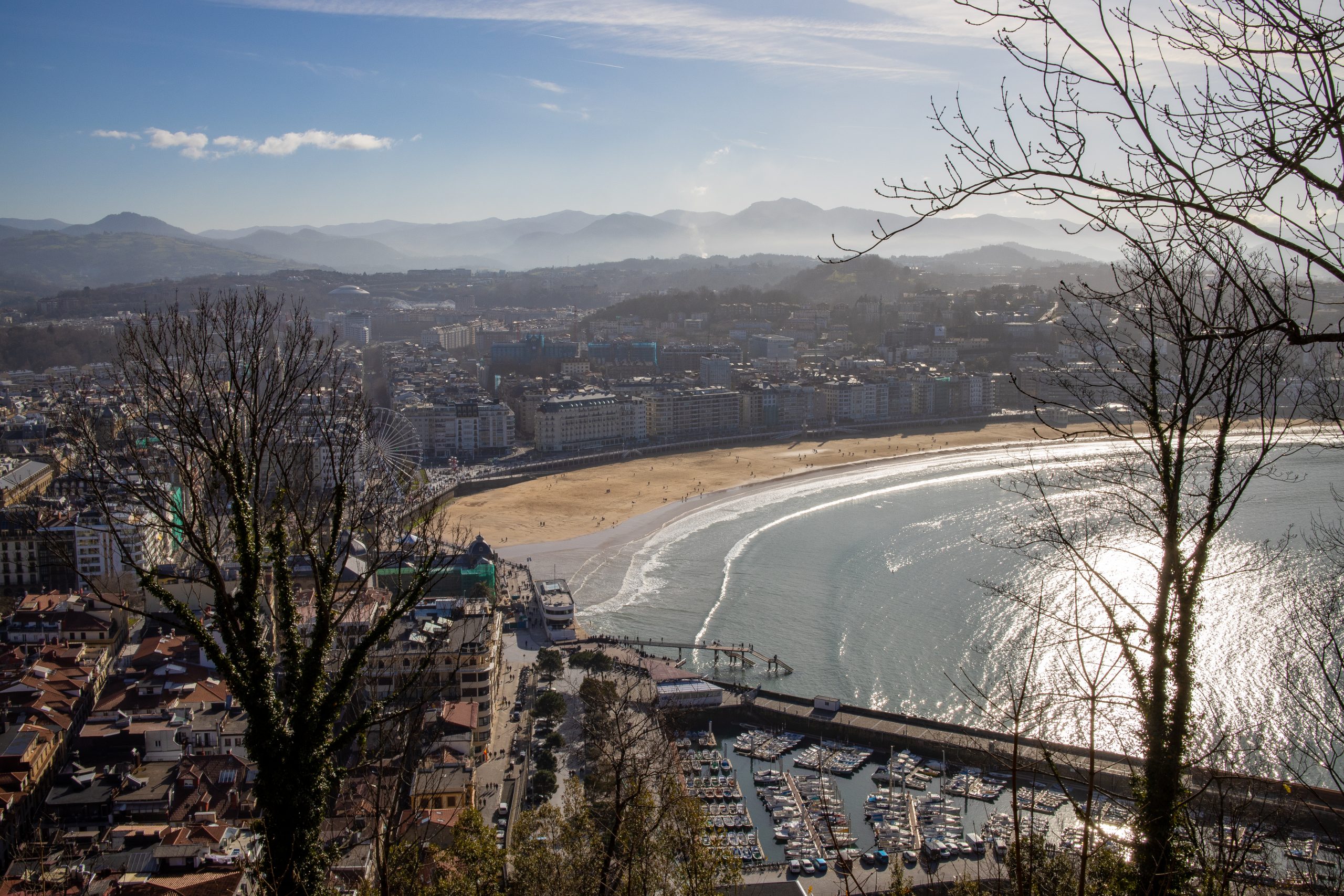 CitiesSan Sebastián — More Michelin Stars Per Person Than Anywhere on Earth
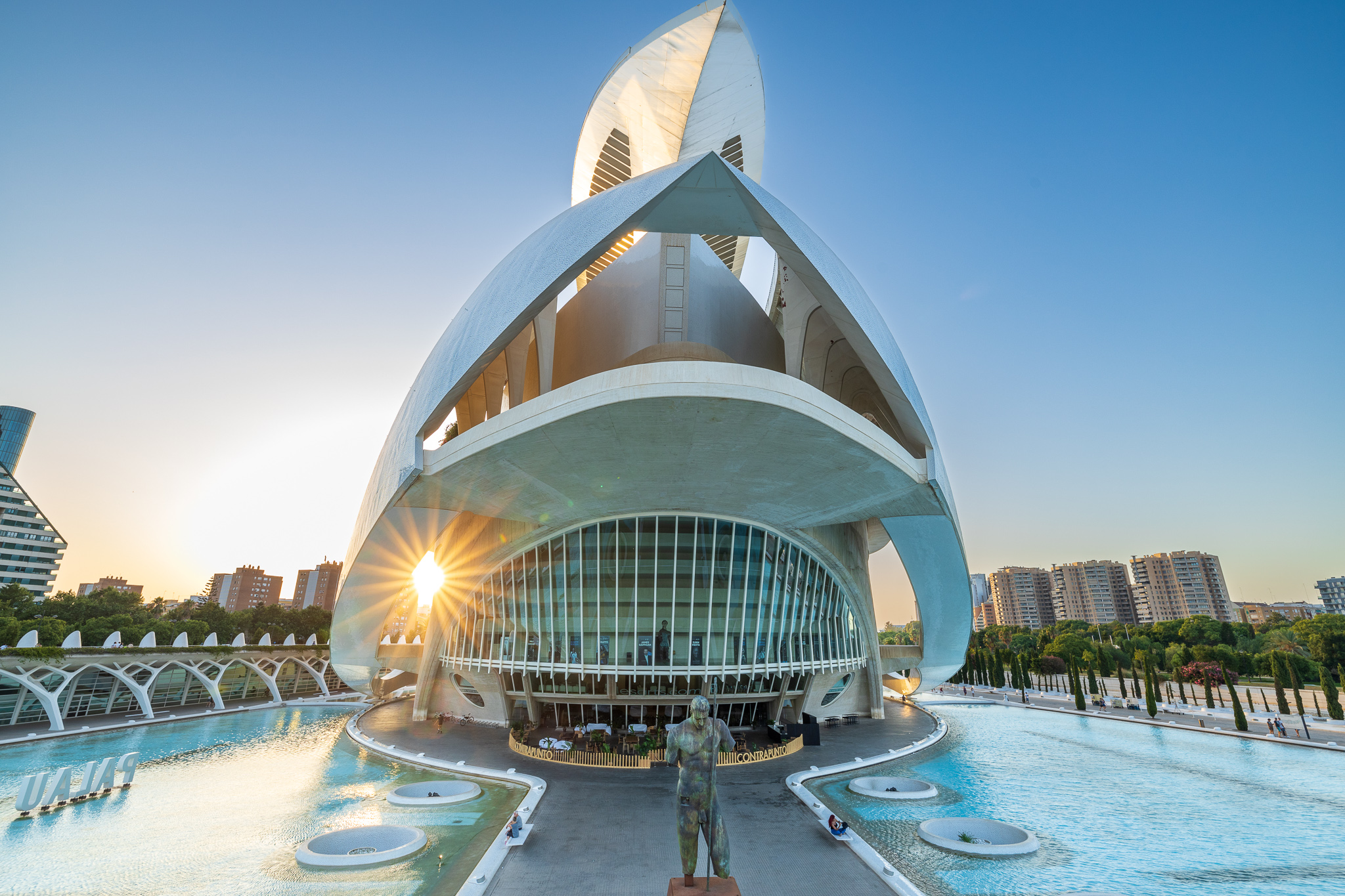 ArchitectureValencia’s City of Arts and Sciences — The Eye, the Skeleton and the €400 Million Opera House
 CitiesAlicante — Castillo, Explanada and the Festival That Burns at Midnight
 CitiesMadrid — The Capital That Was Chosen by Calculation and Became Something Else
 ArchitectureGuggenheim Museum, Bilbao
 CitiesThe World’s 10 Great Food Markets
City Frames · scroll-driven 3D
More cities in three dimensions
54 city guides open with a model built from open map data. Scroll, and the camera moves from landmark to landmark.
Departures · City Frames
Where to next?
| Time | Destination | Country | Status |
|---|
Live · position of the sun
Golden hour, right now
The low, warm light just after sunrise and just before sunset. These are the cities on the site where it is happening at this moment.