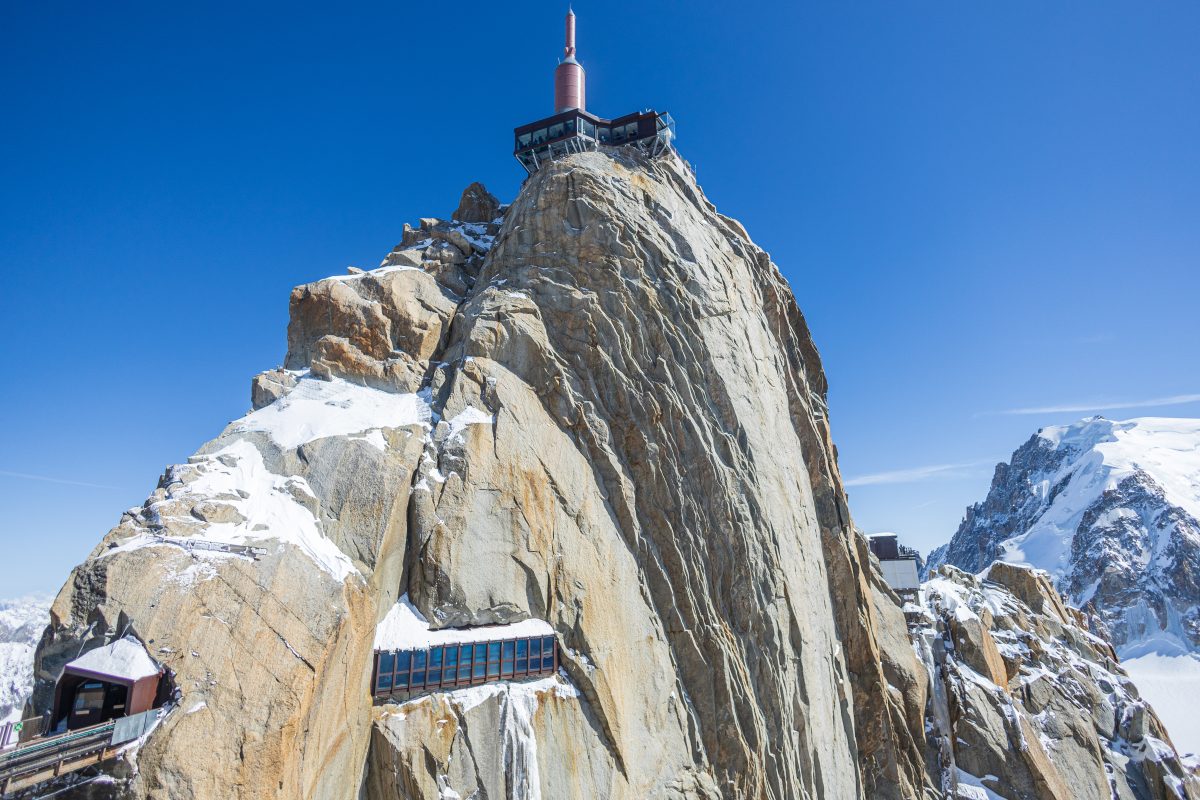
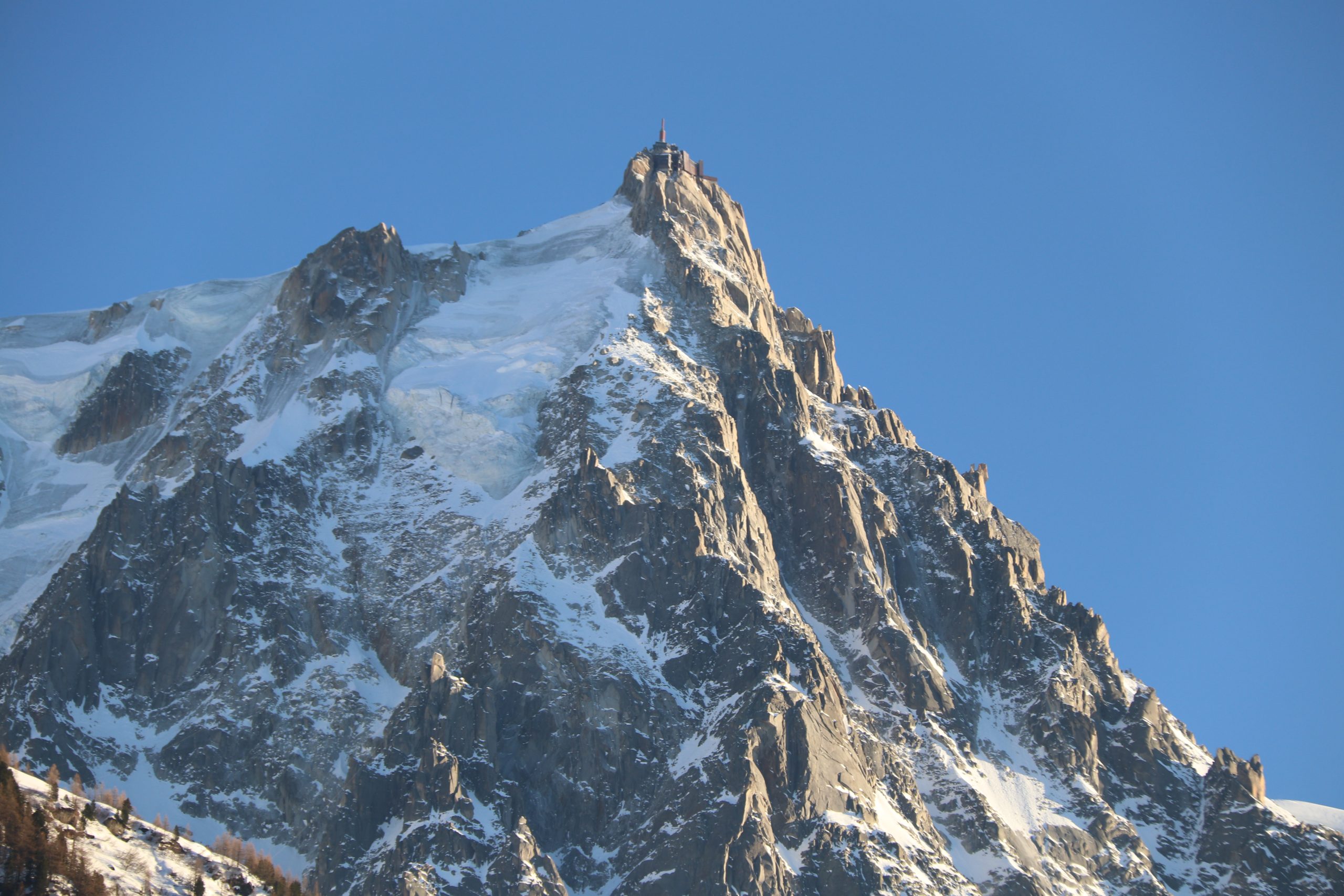
The cable car from Chamonix to the Aiguille du Midi climbs 2,807 vertical metres in about twenty minutes, which remains the largest vertical ascent of any cable car in the world seventy years after it opened. The second stage crosses a single unsupported span of nearly 2,900 metres with no intermediate pylon at all — a record when it was built in 1955 and still an unnerving thing to look up at from the cabin floor. At the top, a lift drives through the rock of the summit pinnacle to a terrace at 3,842 metres, where Mont Blanc stands four kilometres away across a glacier basin and the drop off the north face is measured in kilometres rather than metres. Most of the two-thirds of a million people who make this journey each year came for that view, and it is worth the journey on its own terms. But the Aiguille du Midi is not primarily a viewing platform. It is the most important access point in the Western Alps: the door onto the Vallée Blanche, the start of the Trois Monts route to the summit of Mont Blanc, and the finish of the Cosmiques Arête, where climbers pull over the last ladder onto the terrace while tourists photograph them from above.

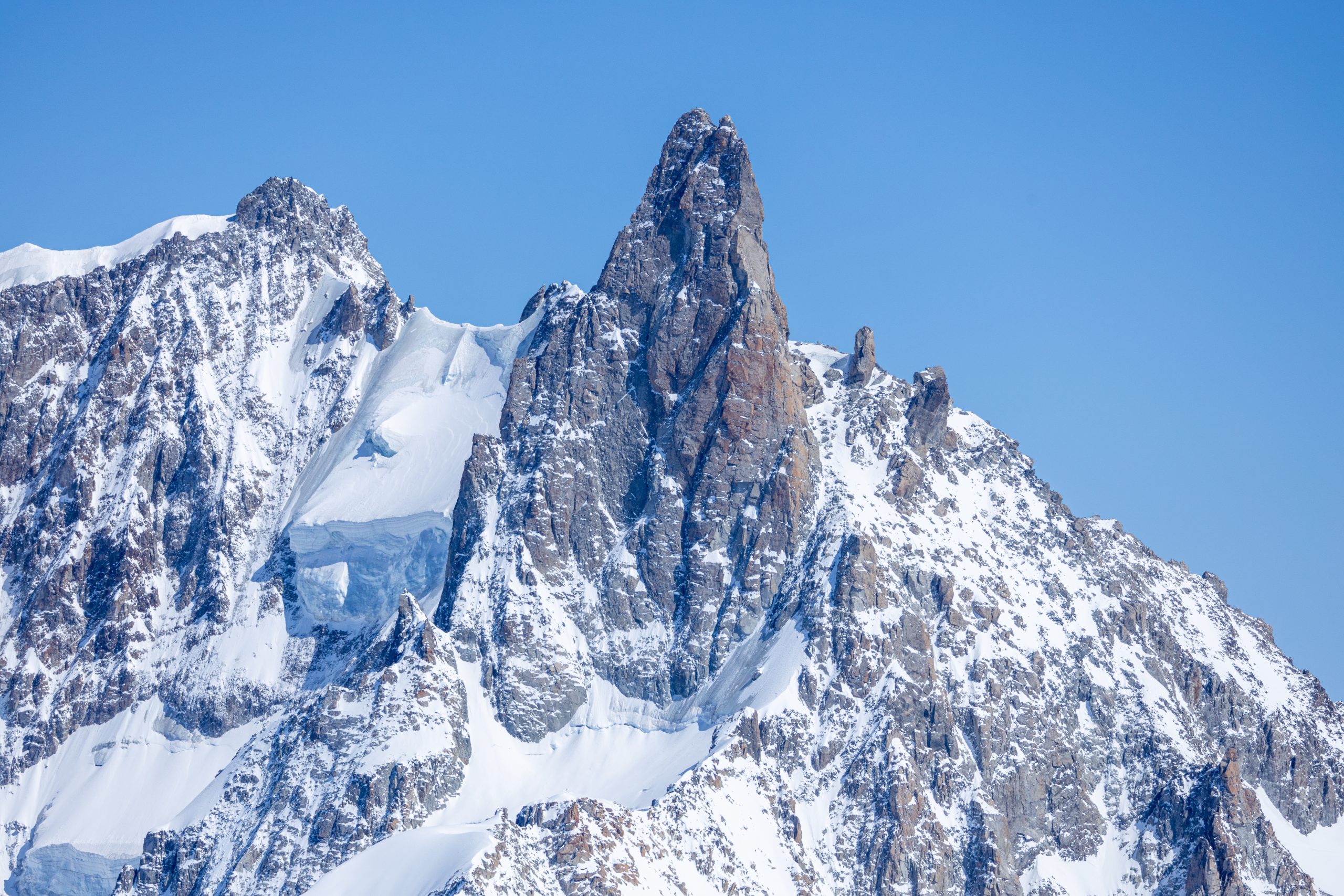
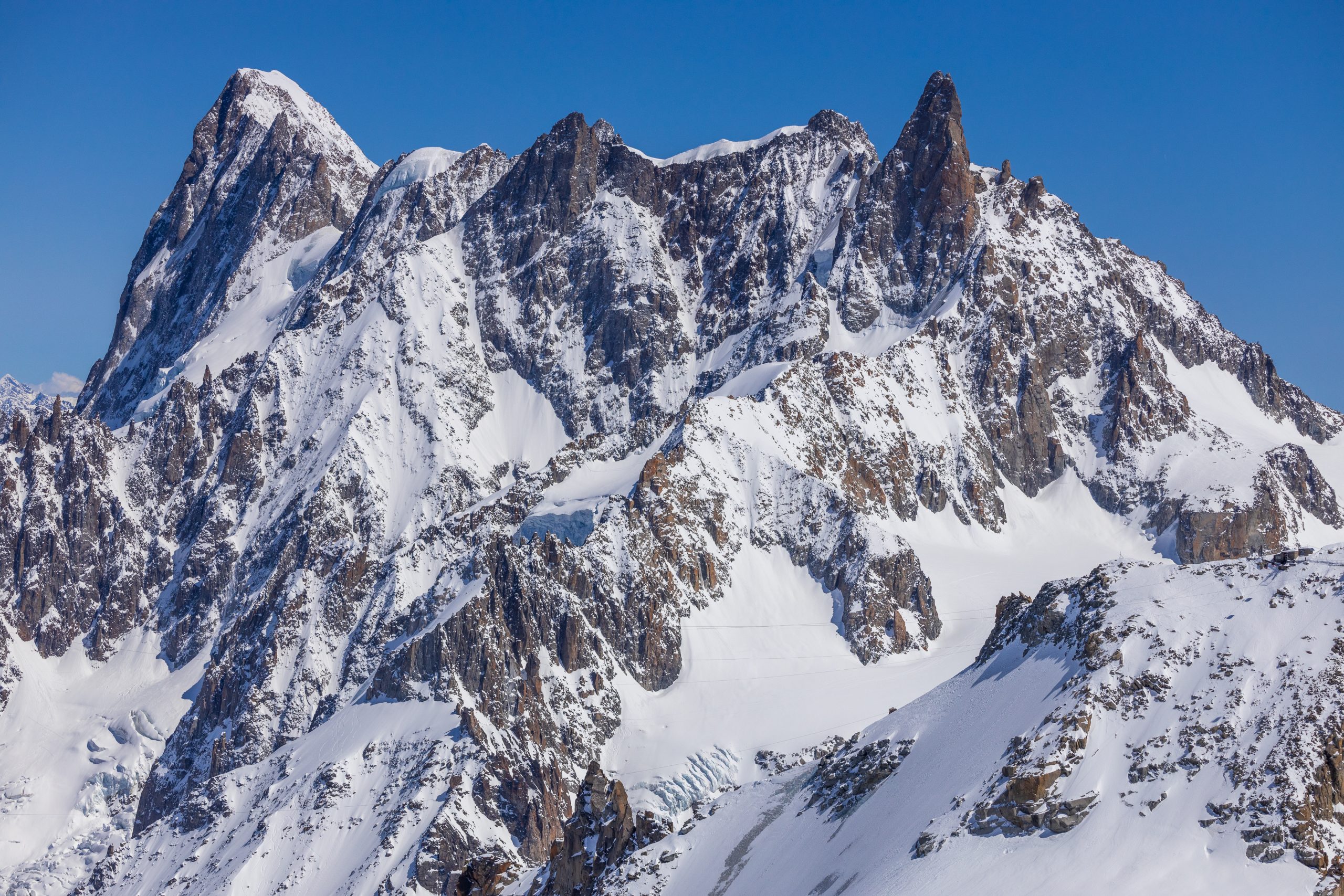
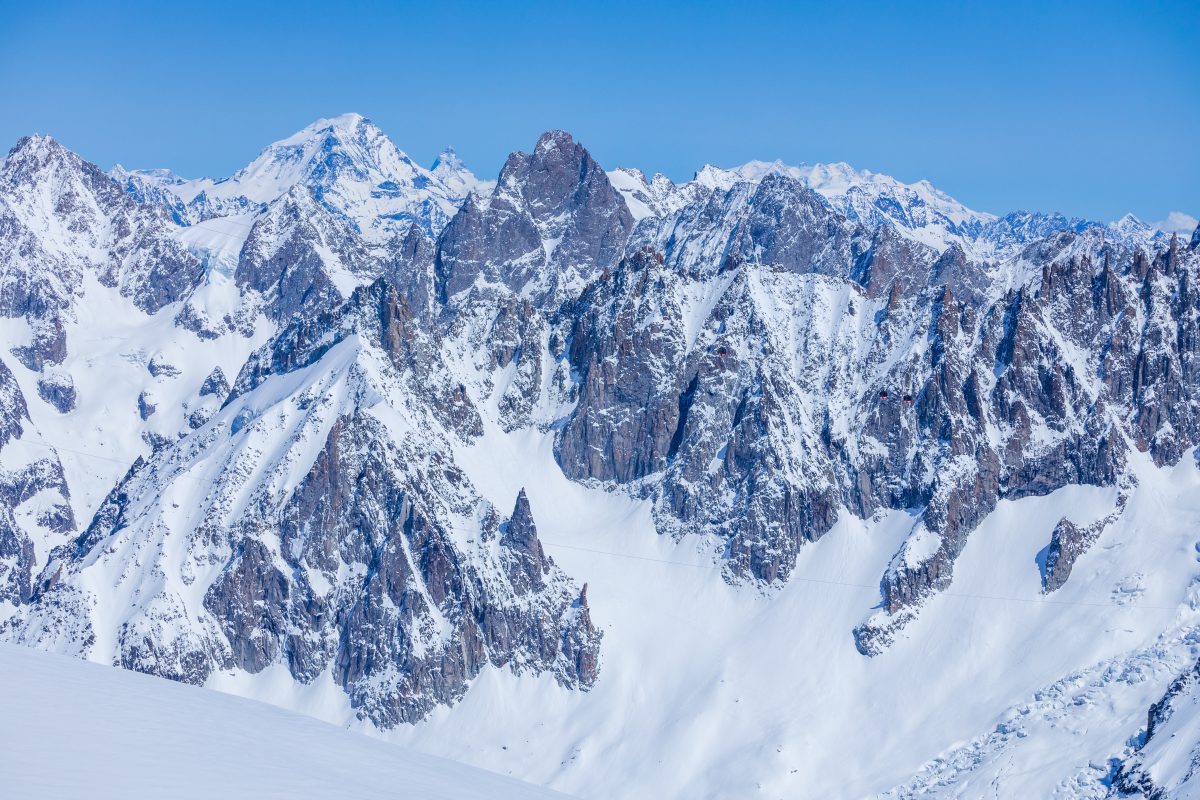
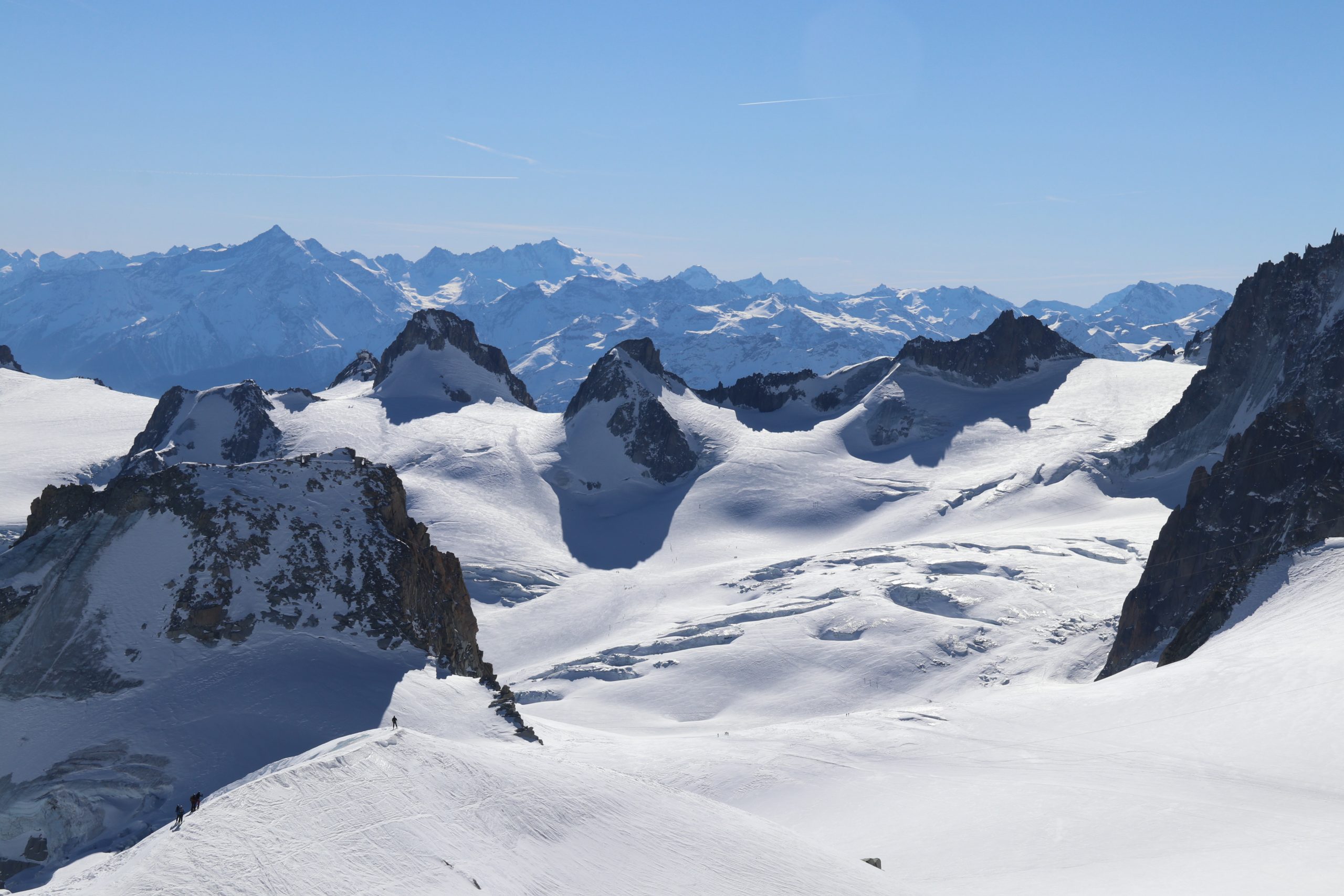
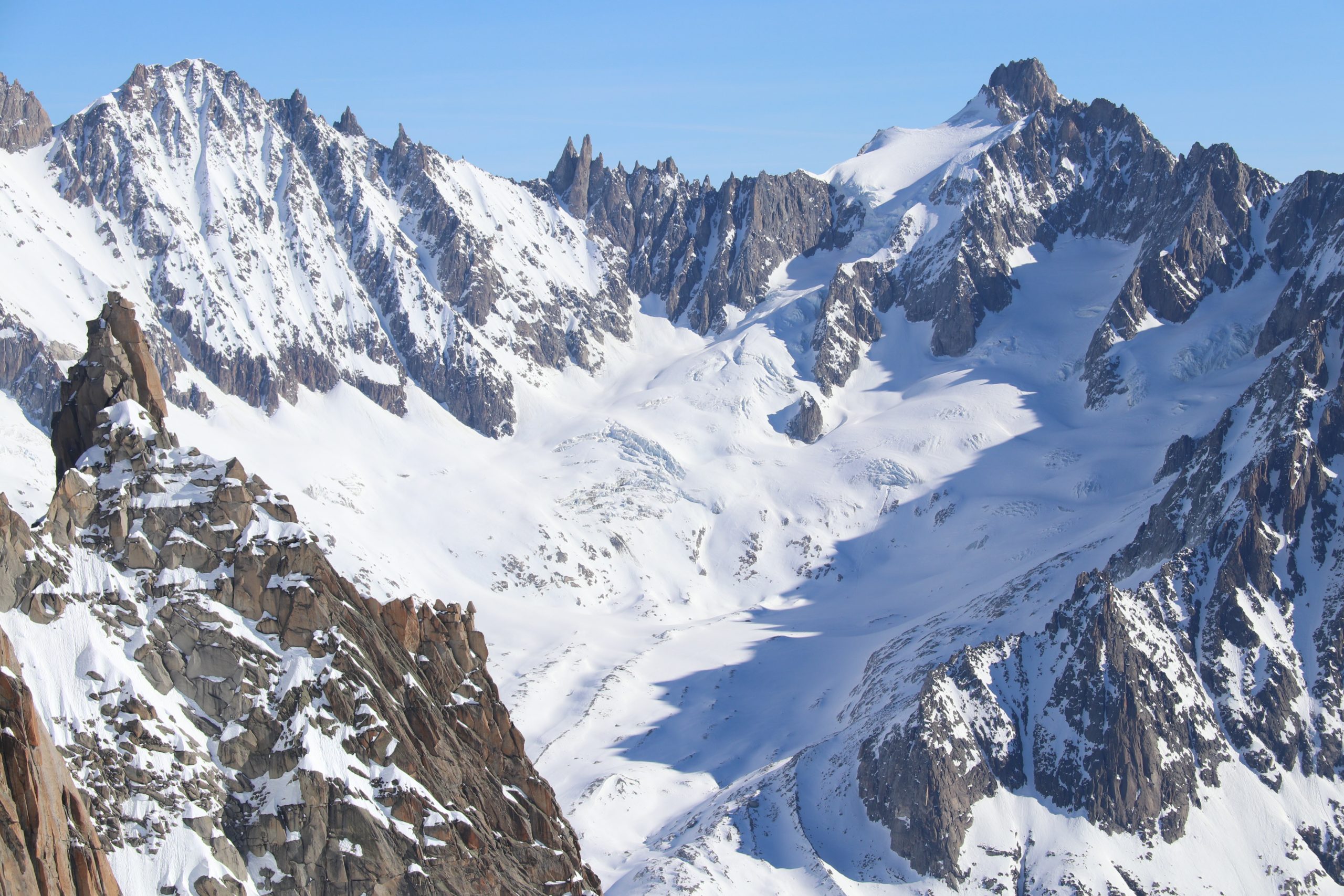
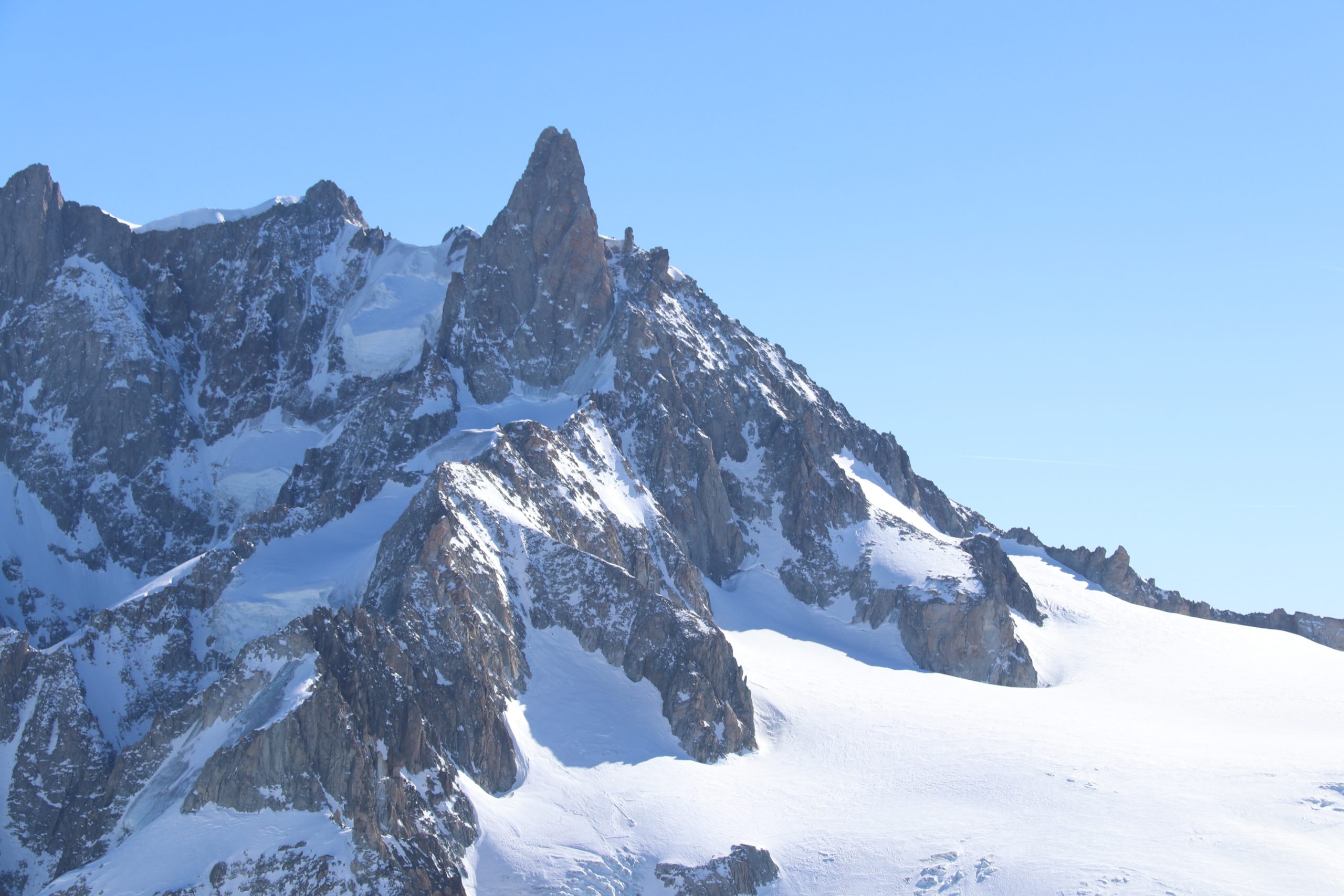
The Aiguille du Midi is a granite pinnacle on the north side of the Mont Blanc massif, rising to 3,842 metres directly above Chamonix in the Haute-Savoie. It is not a major summit by alpine standards — Mont Blanc itself is 4,808 metres and stands a short distance to the south — and it would be a relatively obscure objective were it not for its position. The Aiguille sits at the northern edge of the high glacier basin that feeds the Vallée Blanche and the Mer de Glace, with the whole eastern flank of the Mont Blanc massif arranged around it: Mont Blanc du Tacul, Mont Maudit and Mont Blanc to the south; the Grandes Jorasses and the Dent du Géant to the east; the Aiguilles de Chamonix along the ridge to the north. From the summit terrace all of this is visible at once, and from the col below the station it is all accessible on foot. That combination — a lift arriving at the exact point where the high mountains begin — is what makes the Aiguille du Midi the most consequential piece of mountain infrastructure in Western Europe.
The consequence cuts both ways. Routes that would once have required two days and a night in a hut are now half-day objectives; the Vallée Blanche, a 20-kilometre glacier descent, became accessible to competent recreational skiers rather than expeditions; the north side of Mont Blanc opened to alpinists who could sleep in Chamonix. It also delivers several thousand people a day, in ordinary clothing and without acclimatisation, to an altitude where the air holds around 60 per cent of the oxygen available at sea level, twenty minutes after they were drinking coffee in a valley town. Both of those facts define what the Aiguille du Midi is. The station manages the second with oxygen on hand and clear signage; the first is managed by the visitor’s own judgement, which is where most of the trouble on this mountain begins.
Two entirely different visits
It is worth being clear from the outset that there are two distinct experiences here and they share only a cable car. The first is a lift ride to terraces, viewing galleries, a glass box and a café at 3,842 metres, requiring no equipment, no skill and no companion — a genuinely spectacular half-day for anyone. The second begins at the mouth of the ice tunnel, where the ground stops being a building and starts being a mountain, and requires rope, crampons, an ice axe, glacier travel competence and, for the great majority of visitors, a qualified guide. This article covers both, and keeps the distinction sharp, because the distance between them is about four metres of tunnel floor and considerably more in consequence.
Refuge des Cosmiques
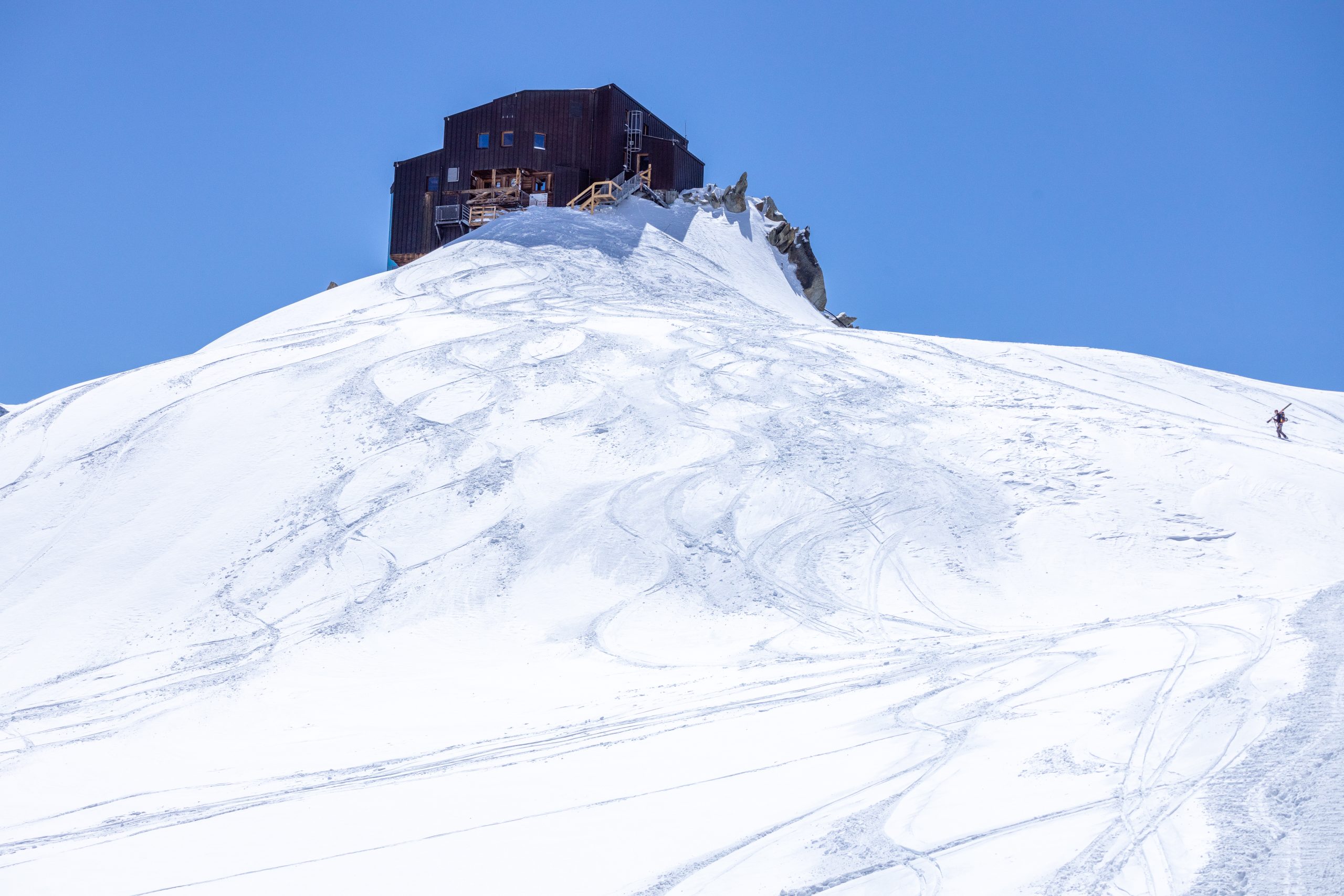
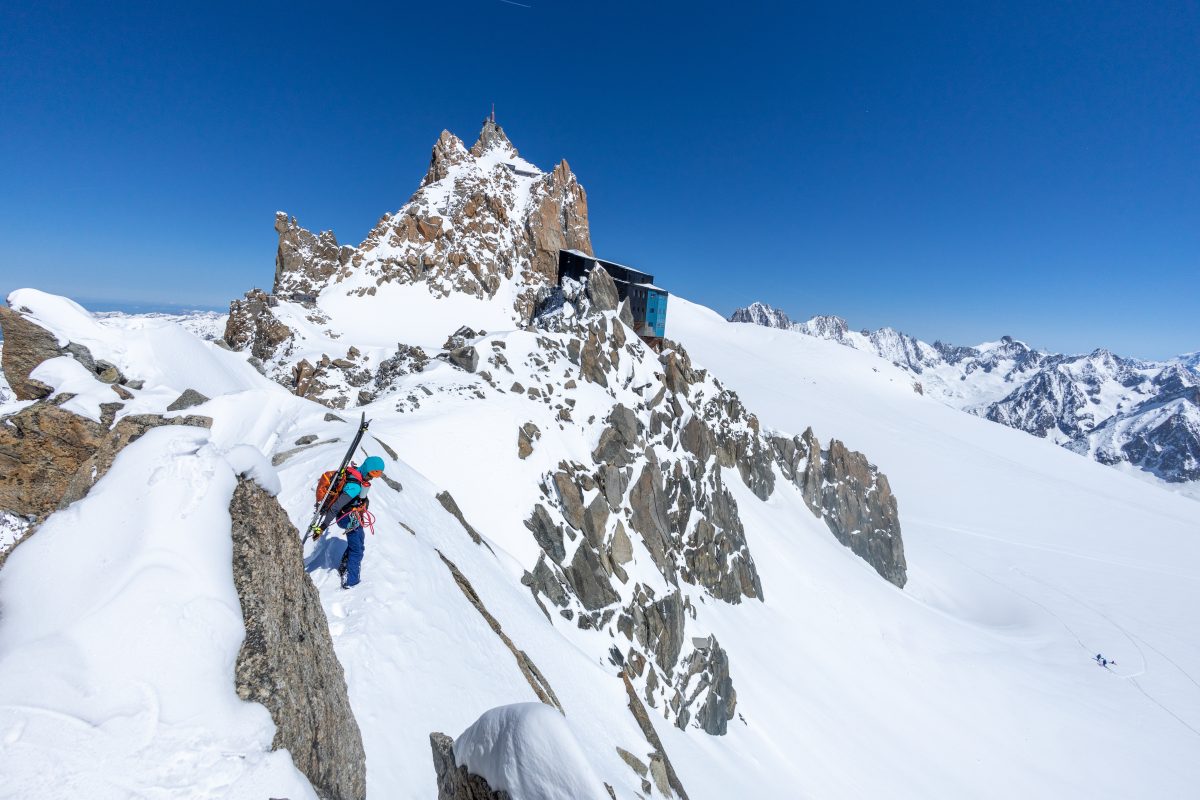
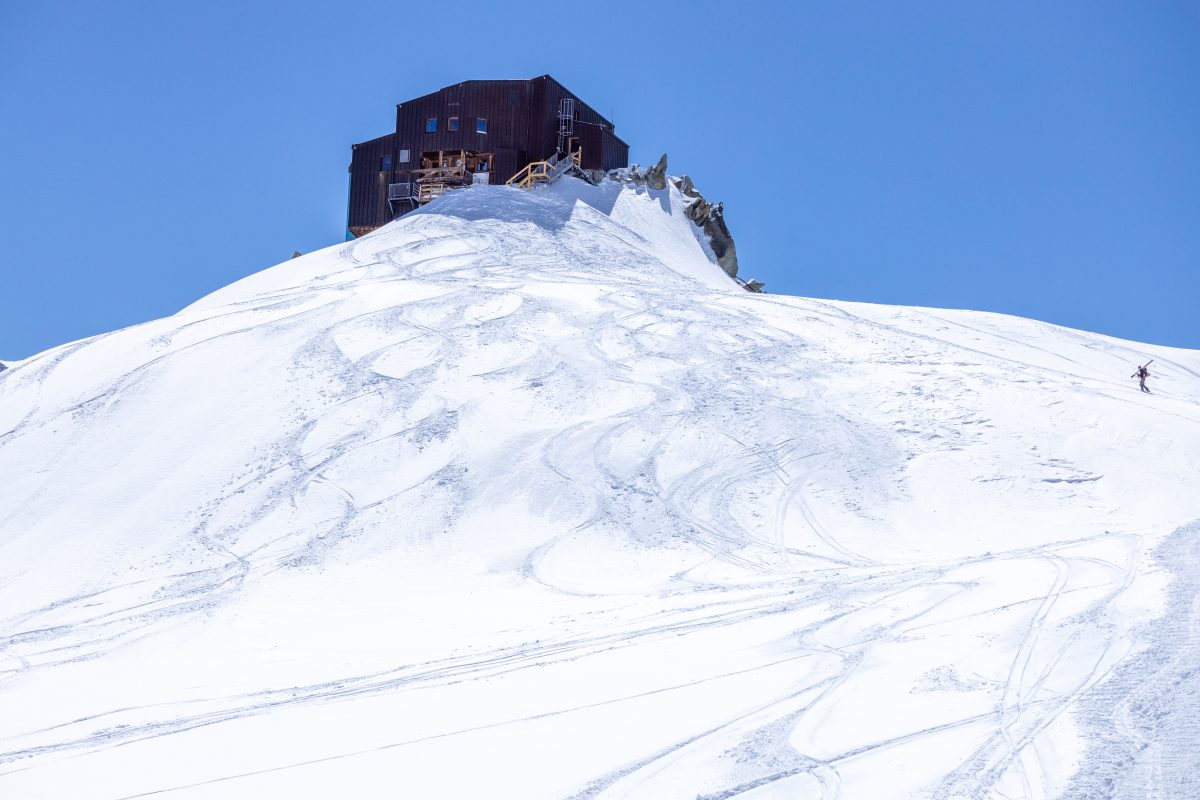
The Refuge des Cosmiques stands at 3,613 metres on the Col du Midi, directly below the Aiguille du Midi. It is the second-highest staffed mountain hut in France and the base for Mont Blanc du Tacul, the Trois Monts traverse to Mont Blanc and the Vallée Blanche.
From laboratory to base camp
The site began as a research station for cosmic rays in the 1930s, which gave the hut its name. The original building burned down in 1984, and the present hut was completed in 1991. The Compagnie des Guides de Chamonix runs it, with 148 beds, from mid-February to the end of September.
From the Aiguille du Midi
The cable car from Chamonix runs to the Aiguille du Midi at 3,842 metres. From there the route descends the narrow, exposed arête from the summit station and crosses the glacier to the hut, around 1.4 km and about 30 minutes. Crampons and an ice axe are required all season.
Arête des Cosmiques
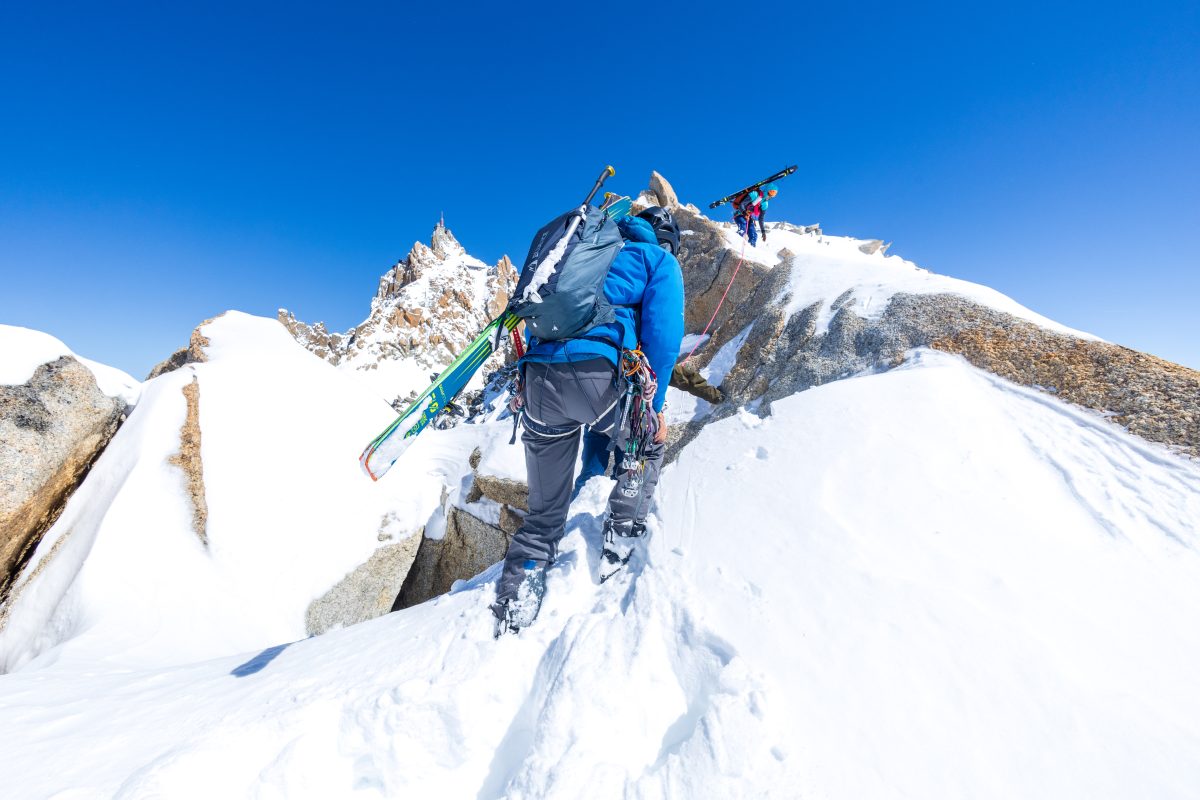
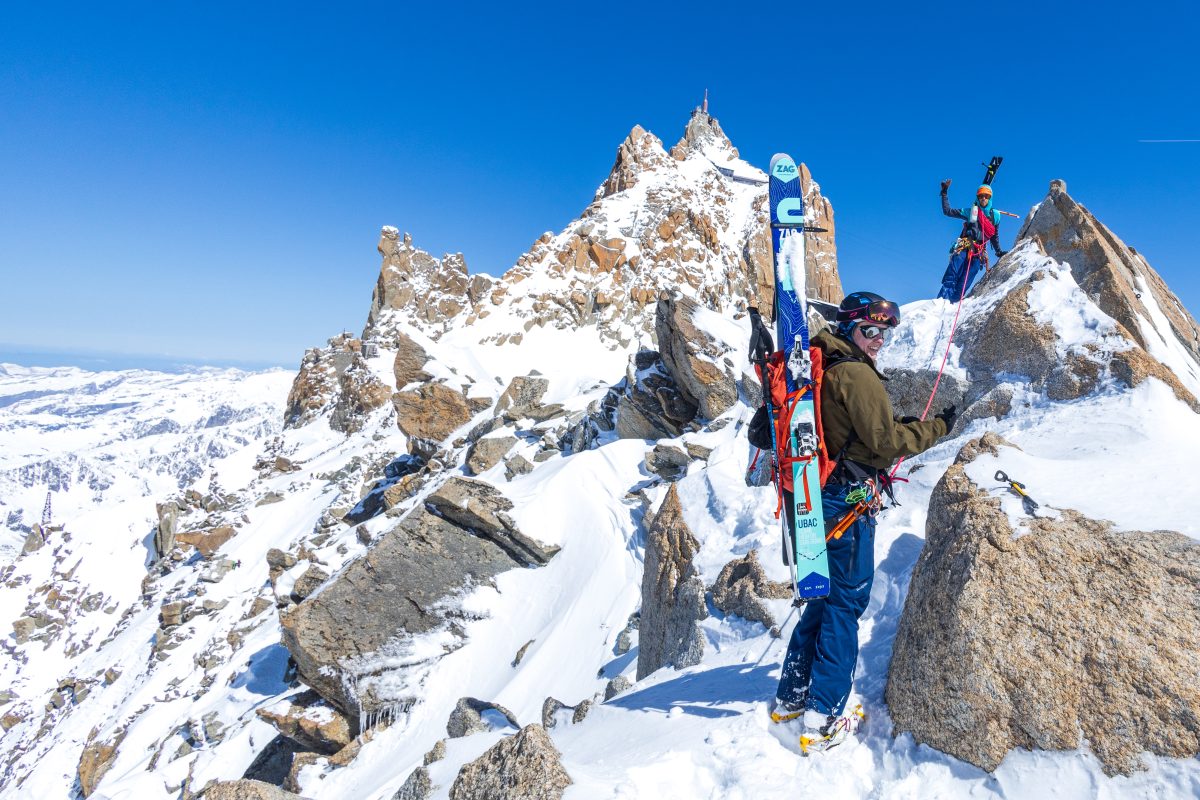
The Arête des Cosmiques climbs from the hut to the Aiguille du Midi, 3,842 metres, on a mix of snow, ice and granite, finishing up a ladder onto the terrace. The route is graded AD and takes two to three hours. A guide is strongly recommended.
Mont Blanc du Tacul
Mont Blanc du Tacul is the natural first 4,000-metre peak from the hut, by the north-west flank on snow and ice up to 40 degrees. The round trip takes 4–6 hours. There is serac and avalanche danger, and parties set off long before sunrise.
Trois Monts to Mont Blanc
The Traverse des Trois Monts crosses Mont Blanc du Tacul and Mont Maudit to Mont Blanc, around 18 km and 10–13 hours there and back. The crux at the Col Maudit is 80 metres at 50 degrees and can be ice. The day demands good acclimatisation and stable conditions.
Vallée Blanche
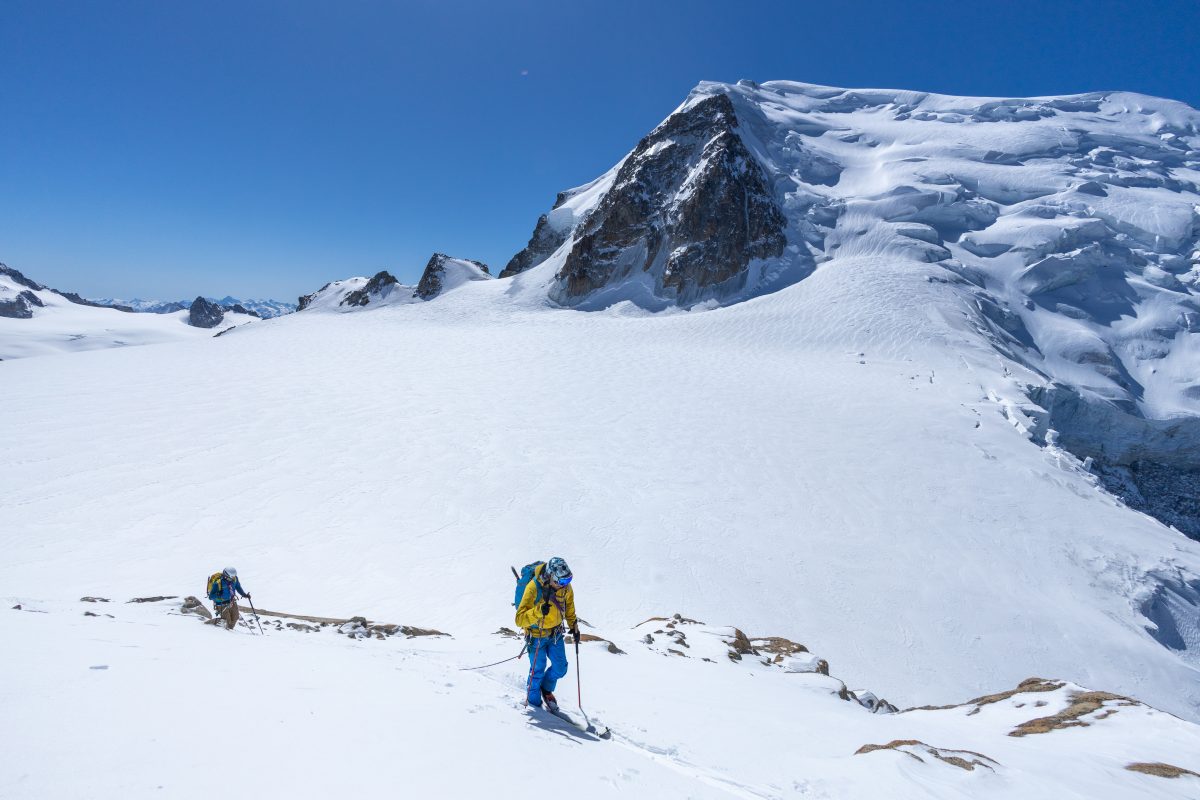
The Vallée Blanche runs from the Aiguille du Midi over the Glacier du Géant and down the Mer de Glace to Chamonix: 16.8 km and 2,720 metres of descent. From the hut it is possible to set off before the cable car opens and have the glacier almost to oneself. The season normally runs from mid-January to April.
Read more: Skiing the Vallée Blanche
Towards Rifugio Torino
There is no marked path from the hut to the neighbouring huts. Rifugio Torino on the Italian side is reached across the Glacier du Géant, around 6 km and 3–4 hours on the glacier. The Refuge du Requin lies further down, by the Mer de Glace.
3D graphic © 2026 madseriksson.no. Terrain: Copernicus DEM GLO-30 (© DLR e.V. 2010–2014 and © Airbus Defence and Space GmbH 2014–2018, provided under the Copernicus programme by the EU and ESA). Glaciers and snow: Sentinel-2 cloudless 2016 by EOX IT Services GmbH (contains modified Copernicus Sentinel data 2016, CC BY 4.0). Trails: © OpenStreetMap contributors (ODbL).
The Cable Car — Still the Greatest Vertical Ascent in the World, Seventy Years On
Two stages from Chamonix at 1,035 metres to an arrival station at 3,777 — 2,807 vertical metres in about twenty minutes, with the upper section crossing nearly 2,900 metres of open air on a single span without an intermediate pylon. It was the highest cable car in the world when it opened in 1955 and it has never lost the vertical record
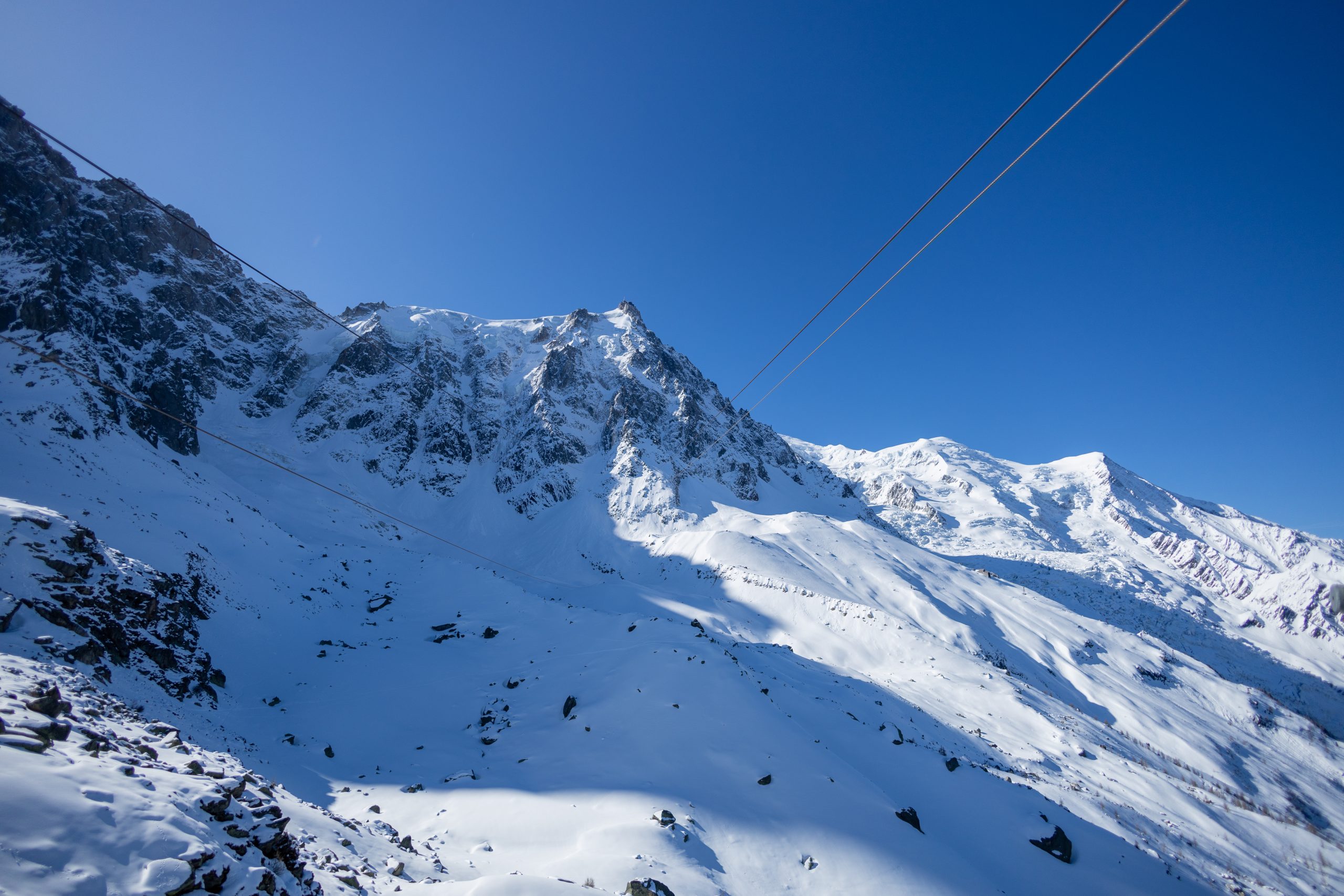
The line was driven through by Dino Lora Totino, an Italian industrialist and lift builder who had already constructed the cableway on the Italian side of the massif and who pursued the Chamonix project through the 1940s and early 1950s against considerable engineering scepticism. The problem was the upper section. From the intermediate station at Plan de l’Aiguille, at 2,317 metres, the terrain between the mid-mountain and the summit pinnacle offers nowhere to place a pylon: the ground falls away into glacier and rises again as vertical granite, and anything built on it would be exposed to rockfall, avalanche and ice. The solution was to eliminate the intermediate supports entirely and cross the gap in one span of close to 2,900 metres, which was a world record when it was completed and which produces the defining sensation of the ride — several minutes in which the cabin hangs on a cable with nothing beneath it but air and the glacier basin far below. The system opened in 1955, immediately became the highest cable car in the world, and its 2,807-metre vertical gain has not been exceeded by any cable car built anywhere in the seven decades since.
The two stages are operationally separate and both must be taken; passengers change cabins at Plan de l’Aiguille. The lower stage climbs the forested and then rocky flank above Chamonix in a few minutes and delivers you to a mid-station that is a worthwhile destination in itself: Plan de l’Aiguille sits at the treeline with a refuge, a network of walking paths, and the start of the Grand Balcon Nord traverse to Montenvers and the Mer de Glace — one of the finest and most straightforward high-level walks in the Chamonix valley, requiring no technical equipment and offering the whole massif in profile for three hours. Many visitors buy a ticket to the top and a return only as far as Plan de l’Aiguille, walking down or across from there. The upper stage is the one people remember: the cabin lifts away from the station, the ground drops out from under it, and it swings up the last 1,460 metres toward a pinnacle of granite that appears, from below, to have no plausible place to put a building.
Stand at the downhill end of the cabin on the second stage, facing back toward Chamonix, rather than crowding the uphill window with everyone else. The view forward is a rock face getting closer. The view backward is the entire Chamonix valley falling away beneath you at a rate that makes the 2,807-metre figure stop being an abstraction. Twenty minutes earlier you were in a town. It is the most efficient conversion of altitude into perspective available anywhere in Europe.
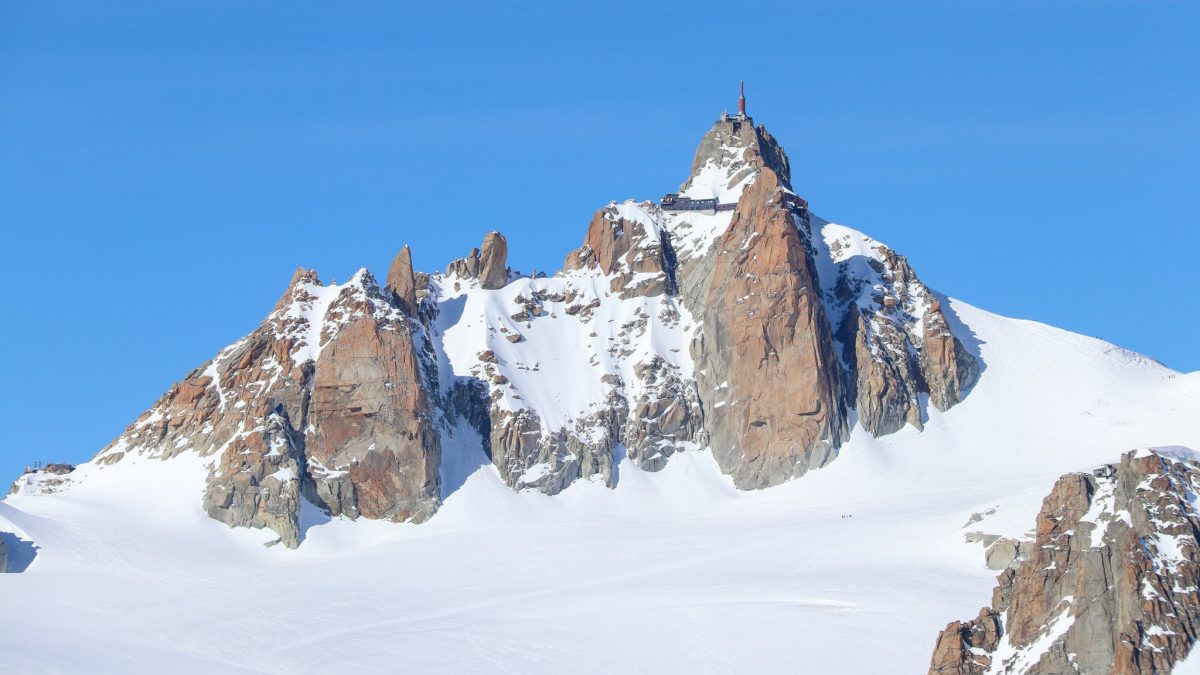
The Summit Station — A Glass Box Over a Kilometre of Air, and a Gondola to Italy
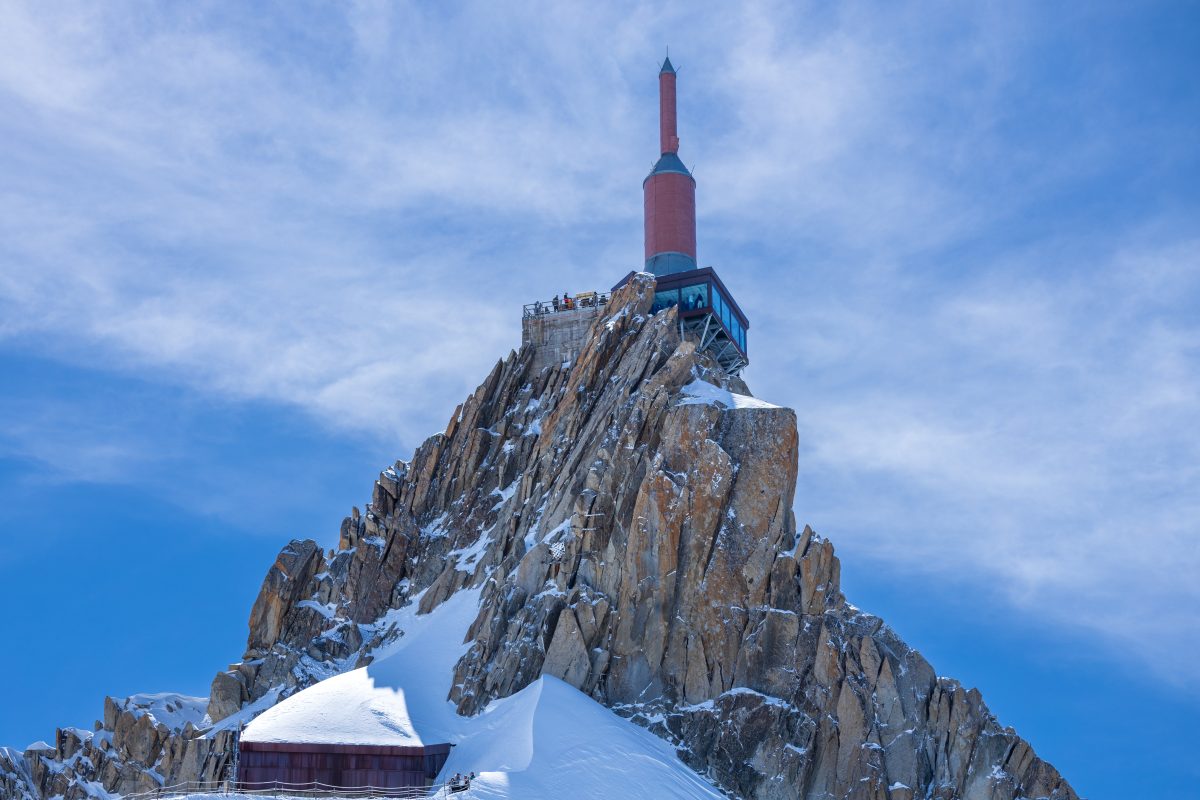
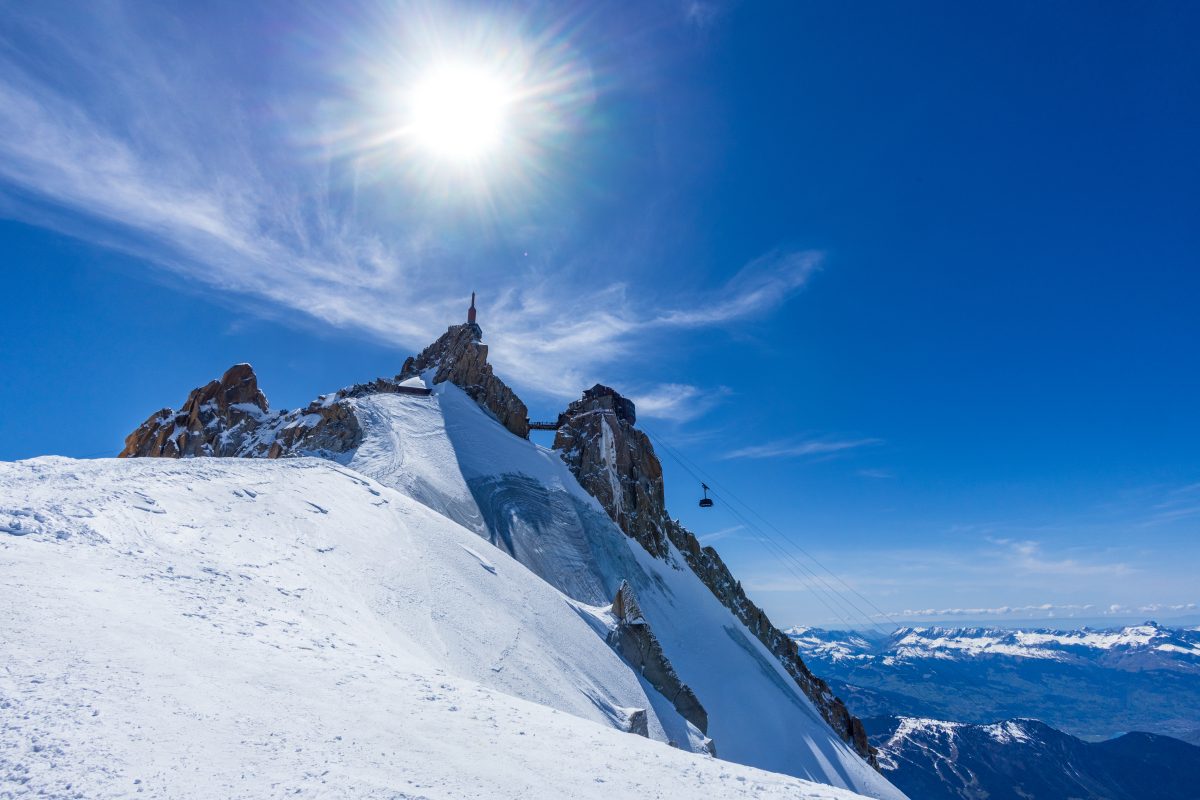
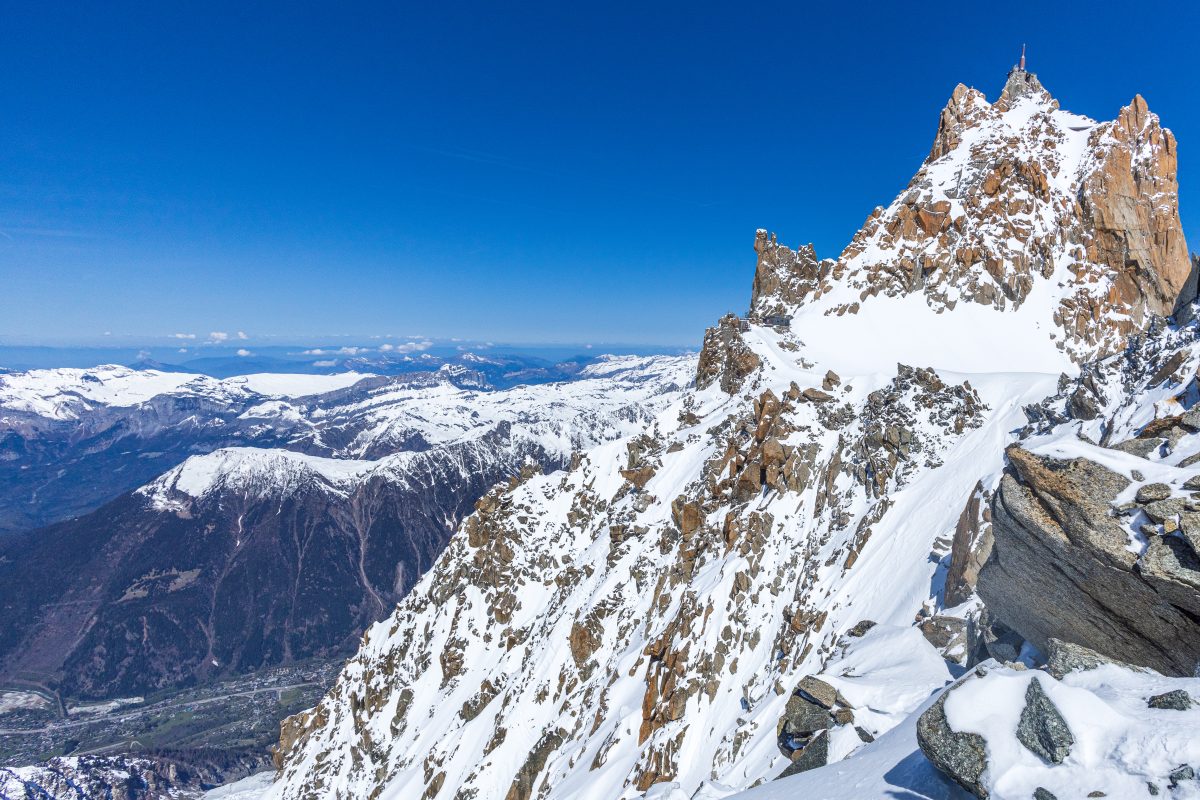
A lift driven through the granite of the pinnacle delivers you to terraces at 3,842 metres with Mont Blanc four kilometres away, a glass box cantilevered over a thousand-metre drop, and in summer a gondola that crosses the Vallée Blanche glacier basin into Italy — all at an altitude your body has had twenty minutes to prepare for
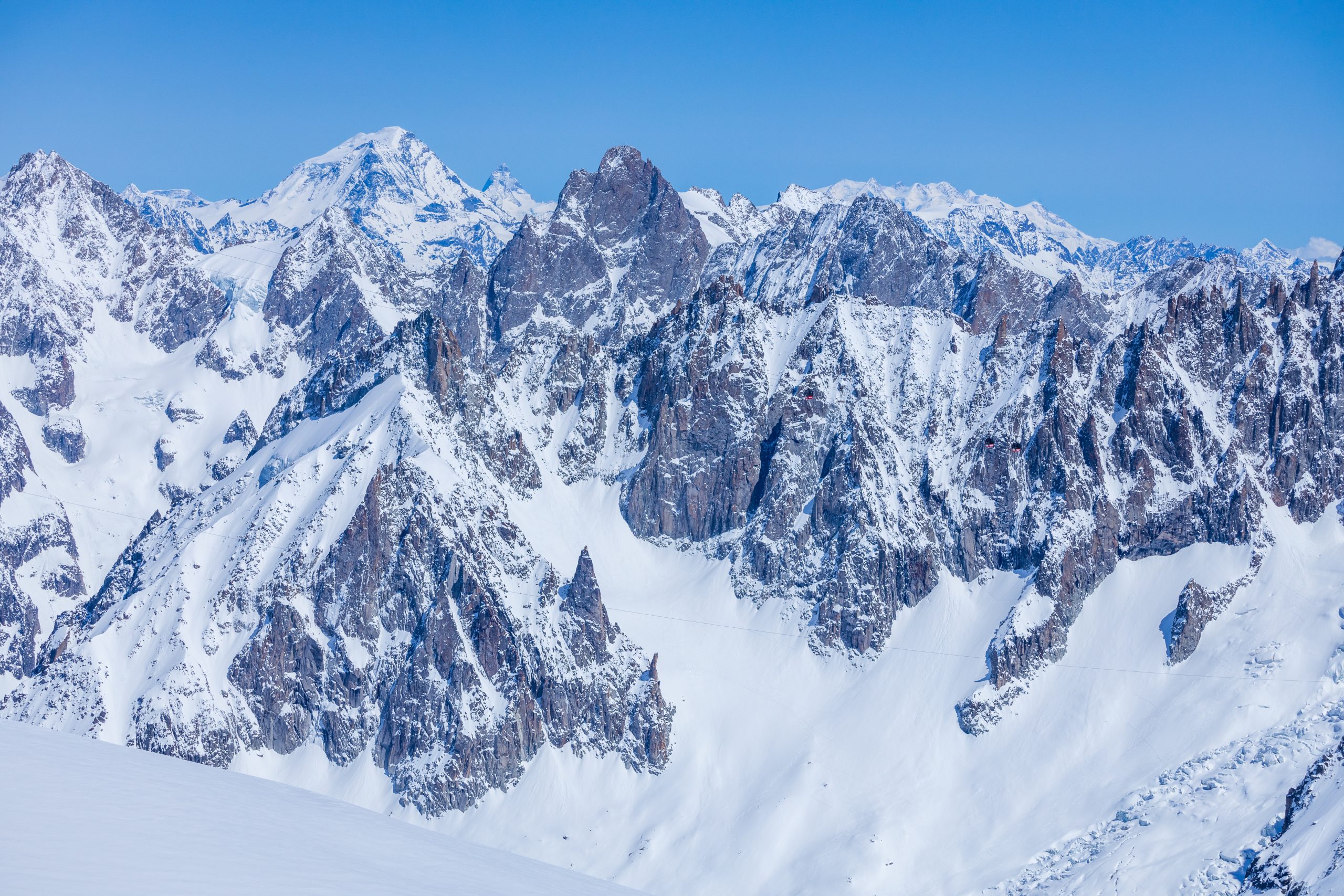
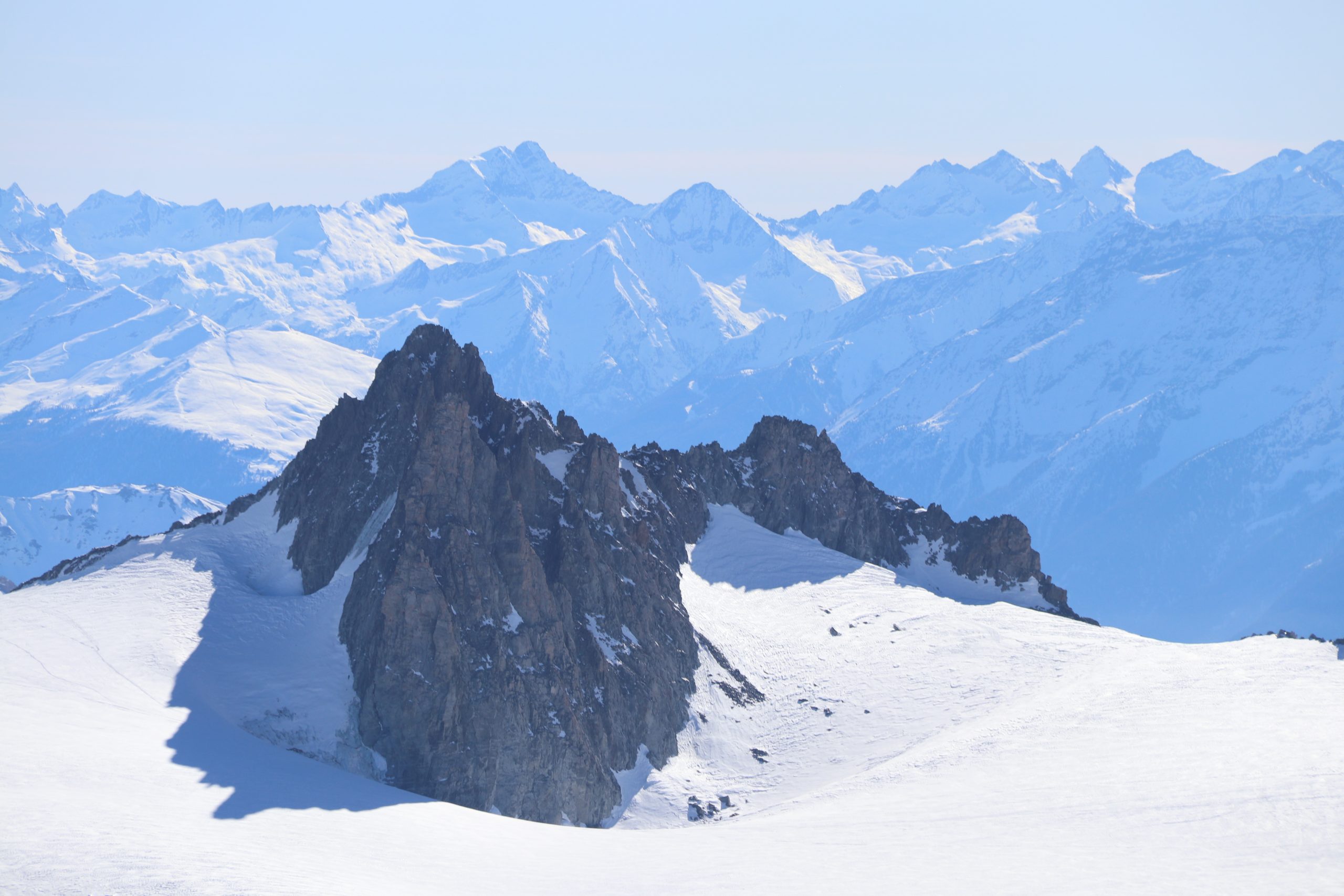
The arrival station at 3,777 metres is built into the shoulder of the mountain and connected to the central pinnacle by a footbridge; from there a lift runs vertically through the granite to the summit terrace at 3,842 metres. The terraces face in every direction and the panorama is the reason the entire installation exists: Mont Blanc four kilometres to the south with Mont Blanc du Tacul and Mont Maudit stepping up toward it, the Vallée Blanche and the Glacier du Géant filling the basin to the east below the Dent du Géant and the Grandes Jorasses, the Aiguilles de Chamonix running north along the ridge, and in clear conditions the Matterhorn and Monte Rosa visible far to the east across the intervening ranges. The Pas dans le Vide, installed in 2013, is a glass cube cantilevered off the terrace on the Chamonix side, floor and walls and ceiling all glass, with something in the order of a thousand metres of nothing directly beneath. Visitors are given felt overshoes and admitted a small group at a time; the queue is usually substantial and it moves reasonably fast. There is also a permanent exhibition space inside the rock, a café and a restaurant, and a good deal more shelter than first-time visitors expect — which is fortunate, because it is often around −10°C on the terraces in August with wind on top of that.
In summer the Panoramic Mont-Blanc gondola runs east from the Aiguille du Midi across the glacier basin to Pointe Helbronner at 3,466 metres on the Italian frontier: roughly five kilometres and thirty minutes in small cabins holding a handful of people, suspended directly above the Vallée Blanche with crevasse fields, seracs and roped parties visible below. It is, by a distance, the most extraordinary lift journey in the Alps and it is frequently overlooked by visitors who go up, look at Mont Blanc and come straight back down. From Helbronner the Skyway Monte Bianco descends to Courmayeur on the Italian side, making a complete lift traverse of the Mont Blanc massif possible in a day. The altitude, meanwhile, is a genuine and frequently underestimated issue. Going from 1,035 metres to 3,842 in twenty minutes gives the body no opportunity to adapt, and headache, nausea, breathlessness, dizziness and unusual fatigue are common and normal. Move slowly, do not run up the stairs to the terrace, and if symptoms are more than mild, get in the cable car and descend — altitude sickness resolves on descent and does not resolve any other way.
The single most useful piece of advice about the Aiguille du Midi is to move at half your normal speed from the moment the cable car doors open. Almost everyone arrives, feels fine, walks briskly across the footbridge, takes the lift, climbs the last flight of steps to the terrace at their usual pace — and arrives at the top breathing hard with a headache starting behind the eyes. The mountain is at 3,842 metres whether you hurry or not. Your body is the only variable you control.
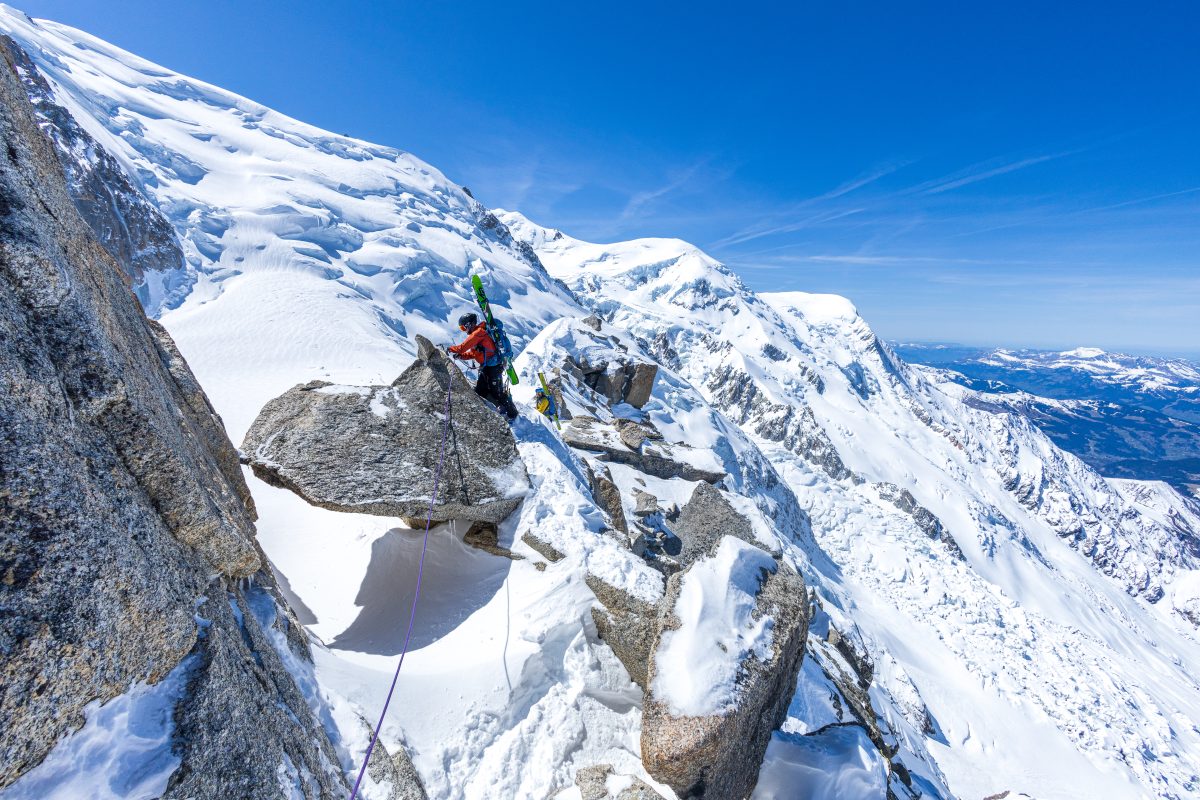
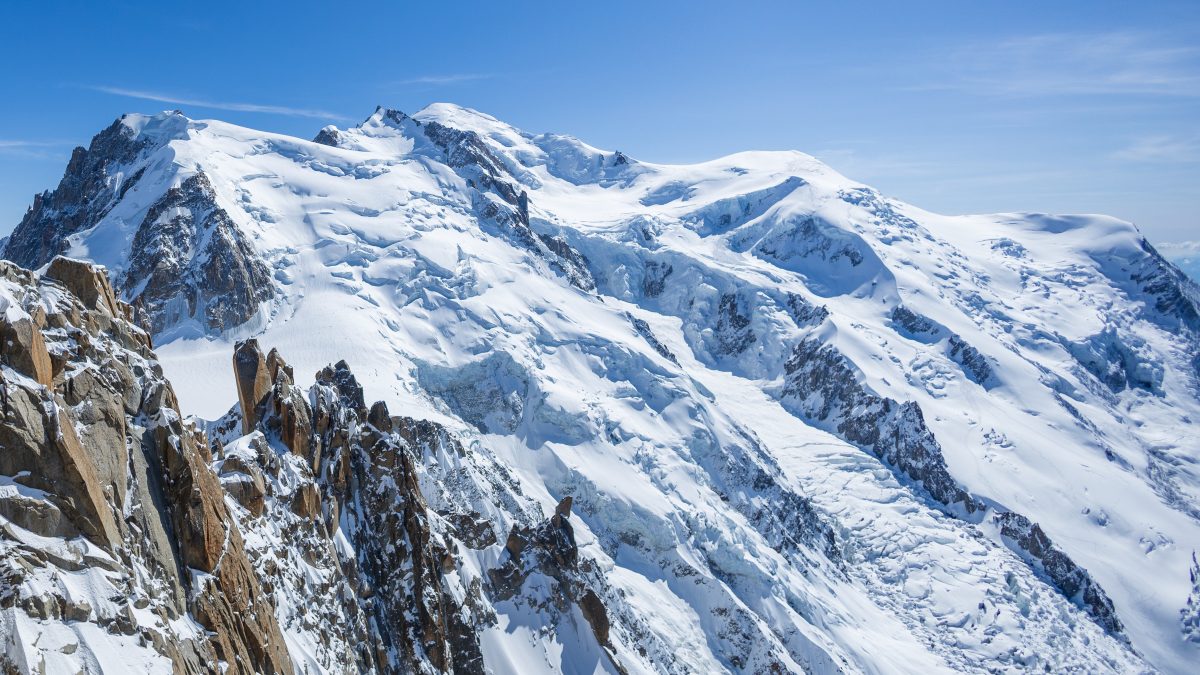
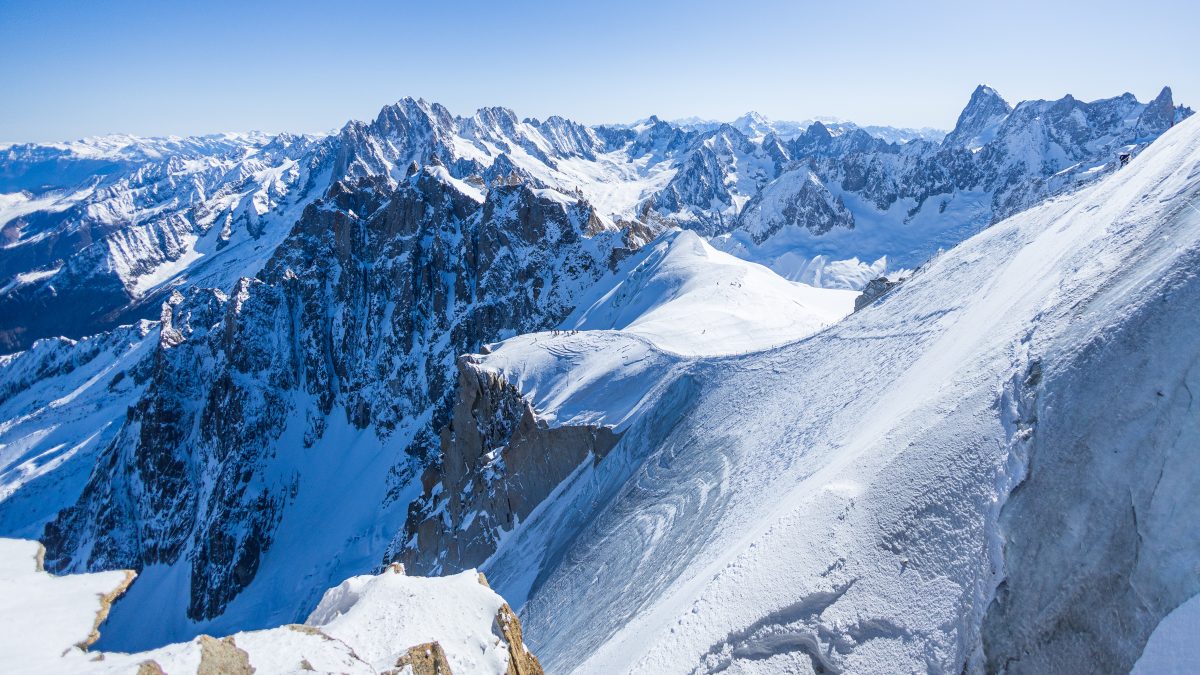
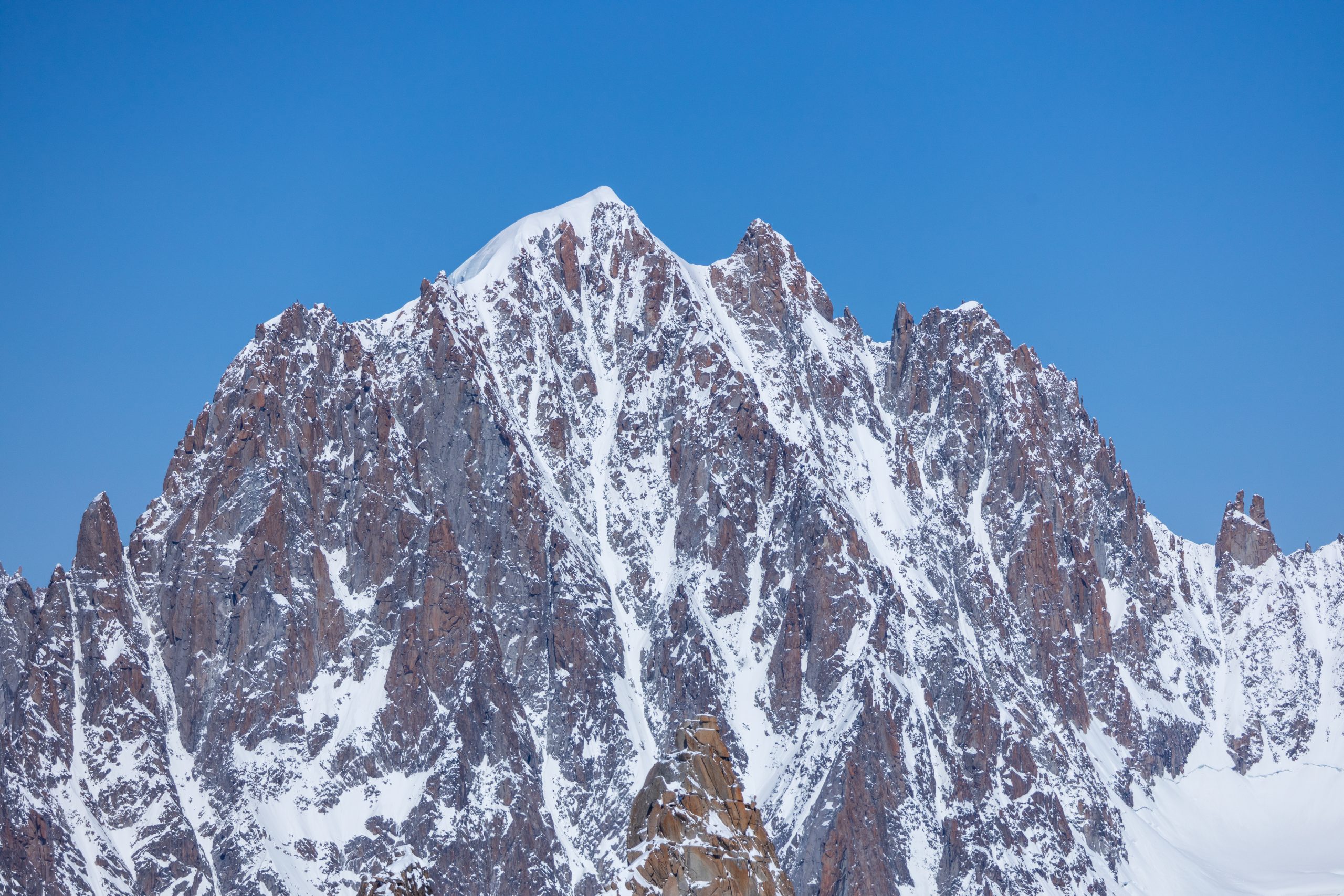
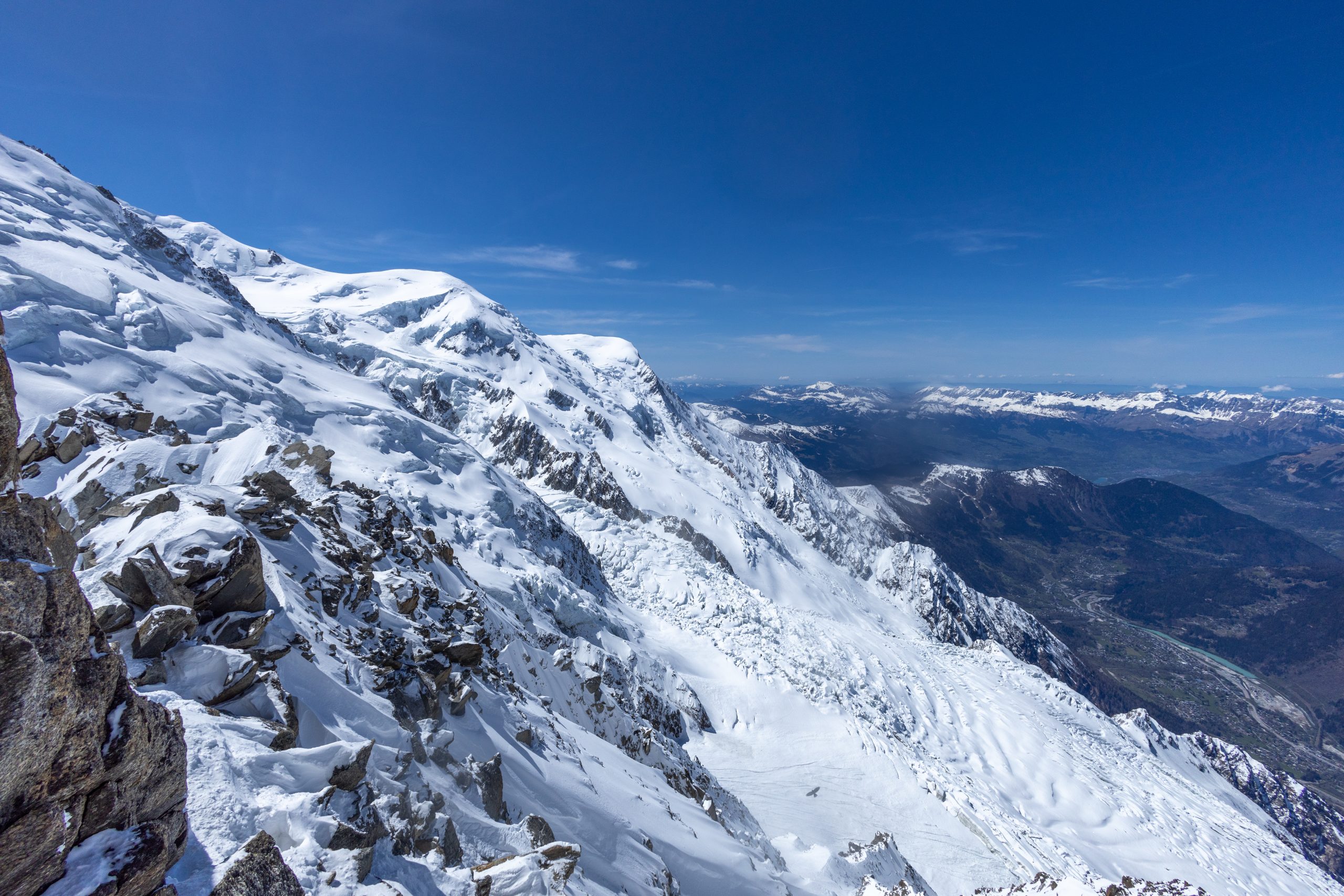
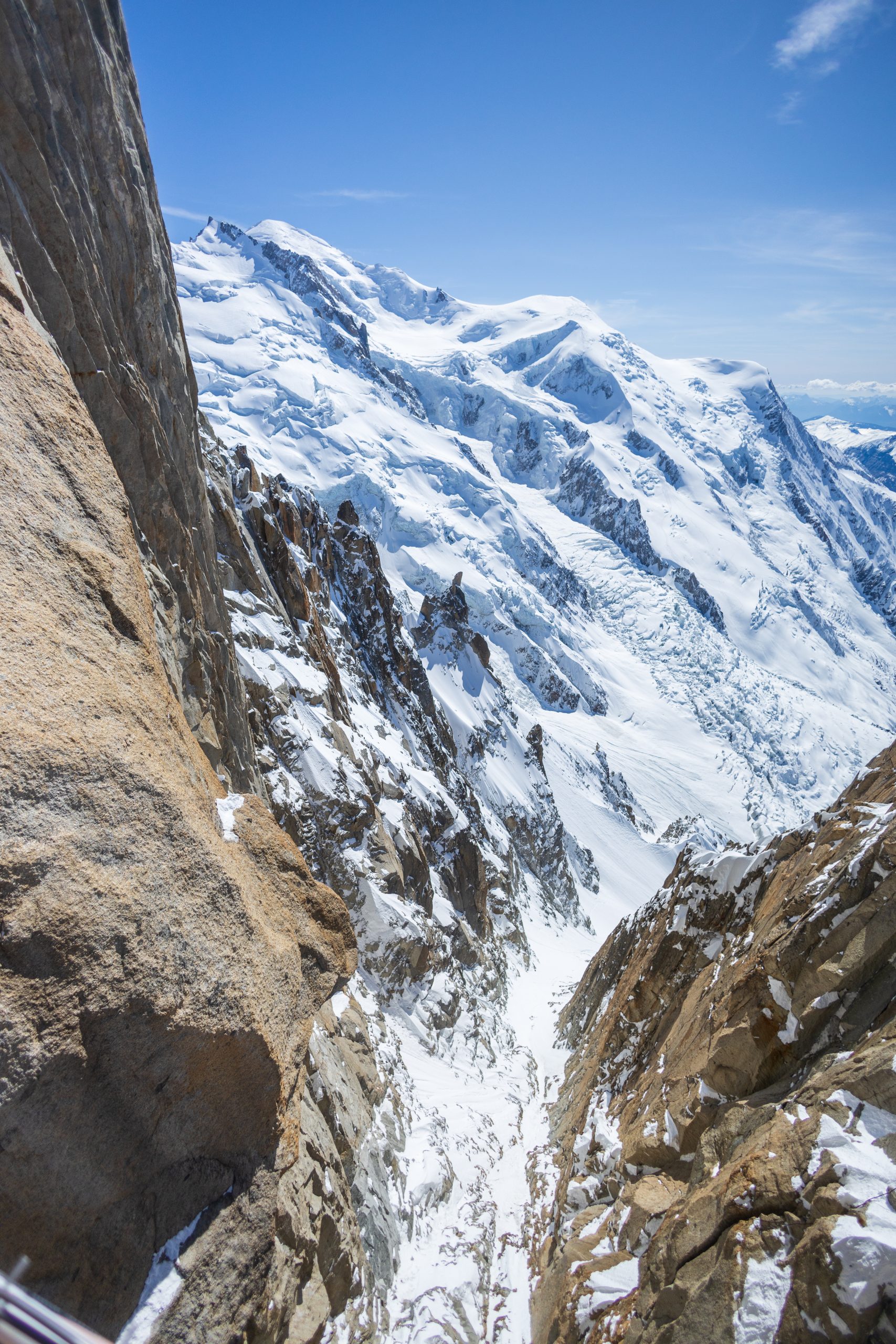
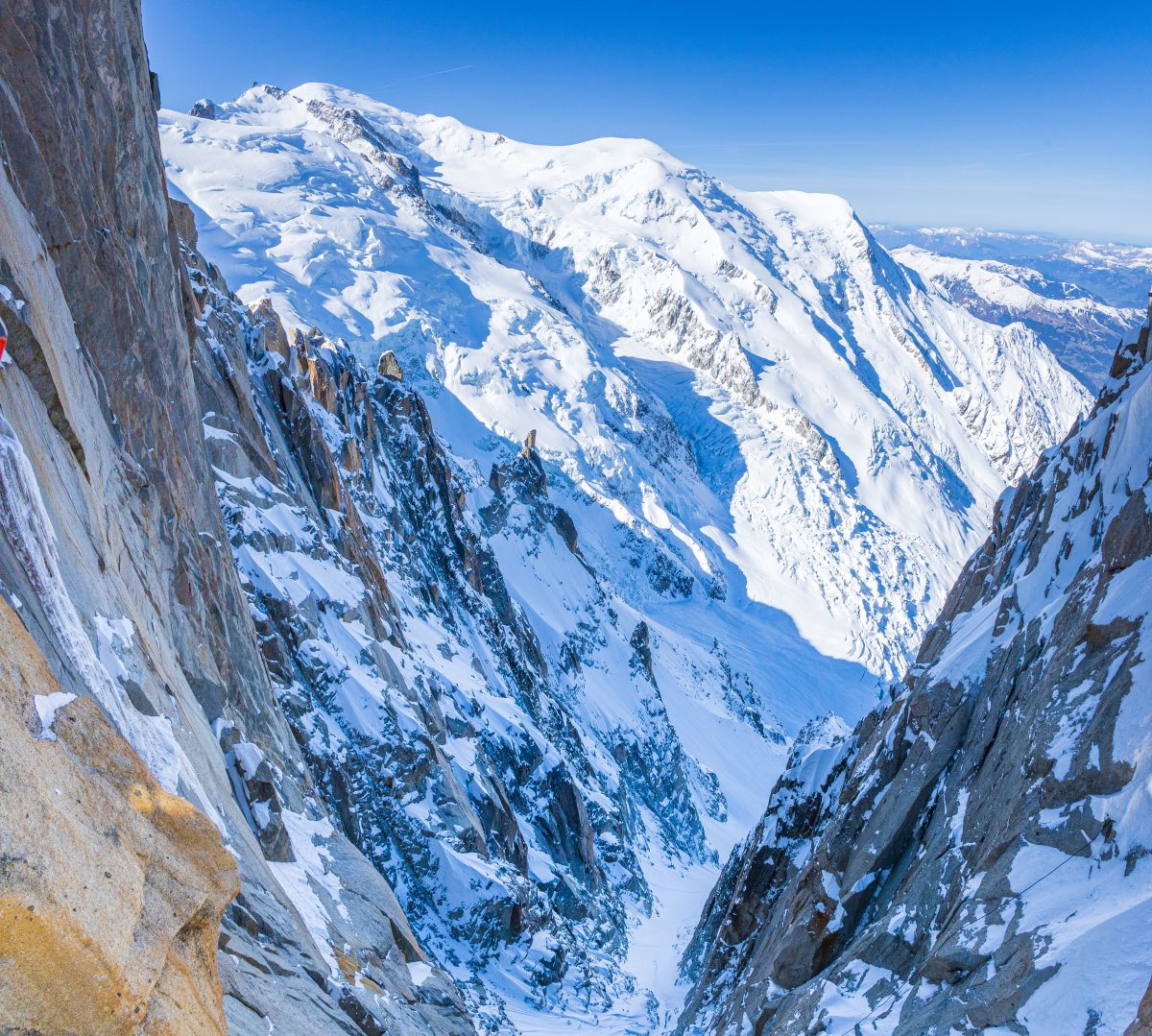
The Arête — Where the Building Stops and the Mountain Starts
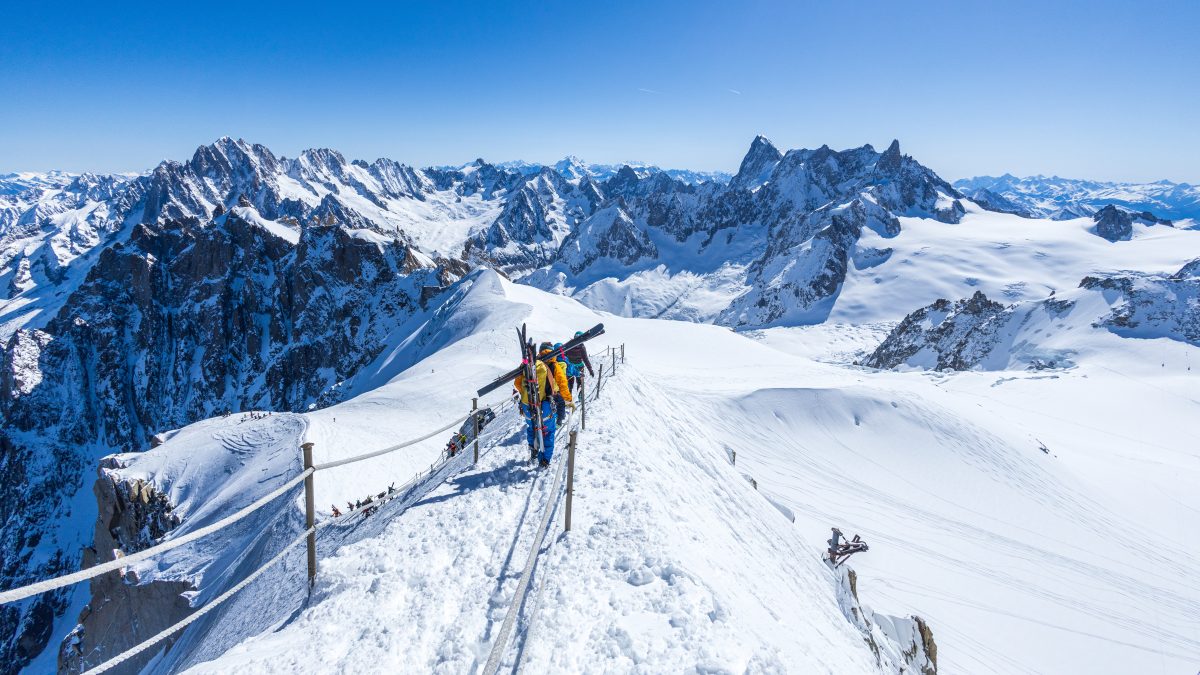
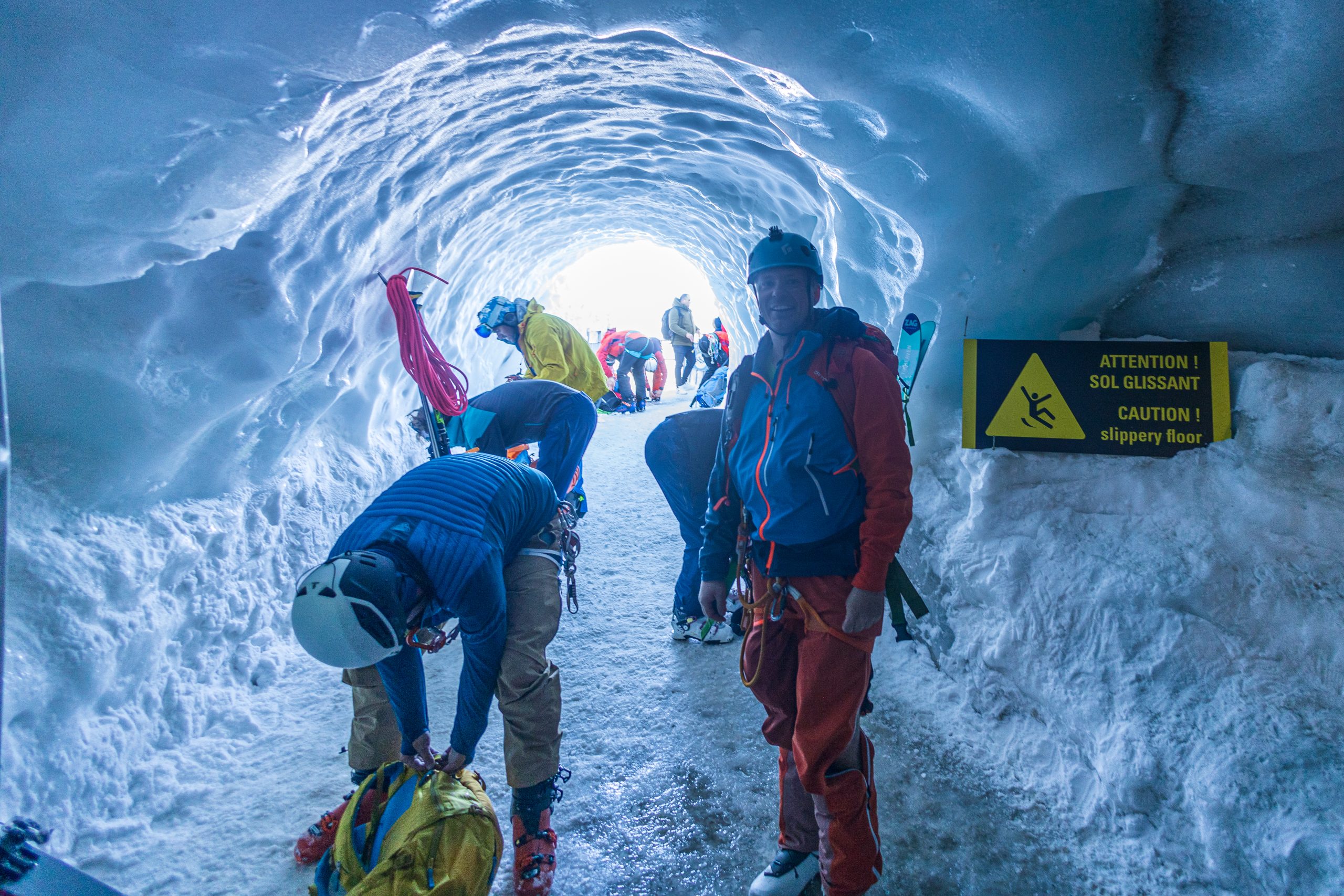
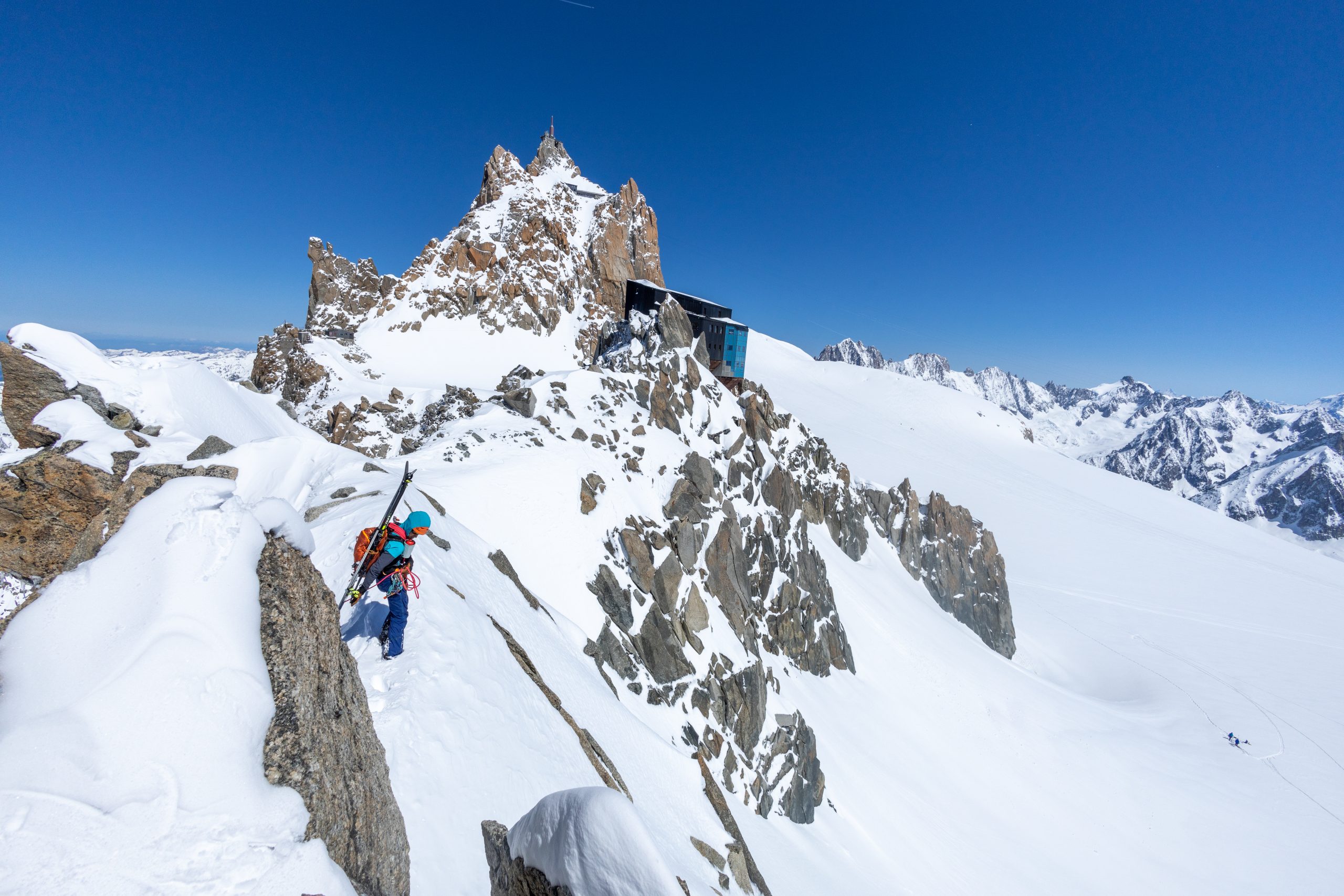
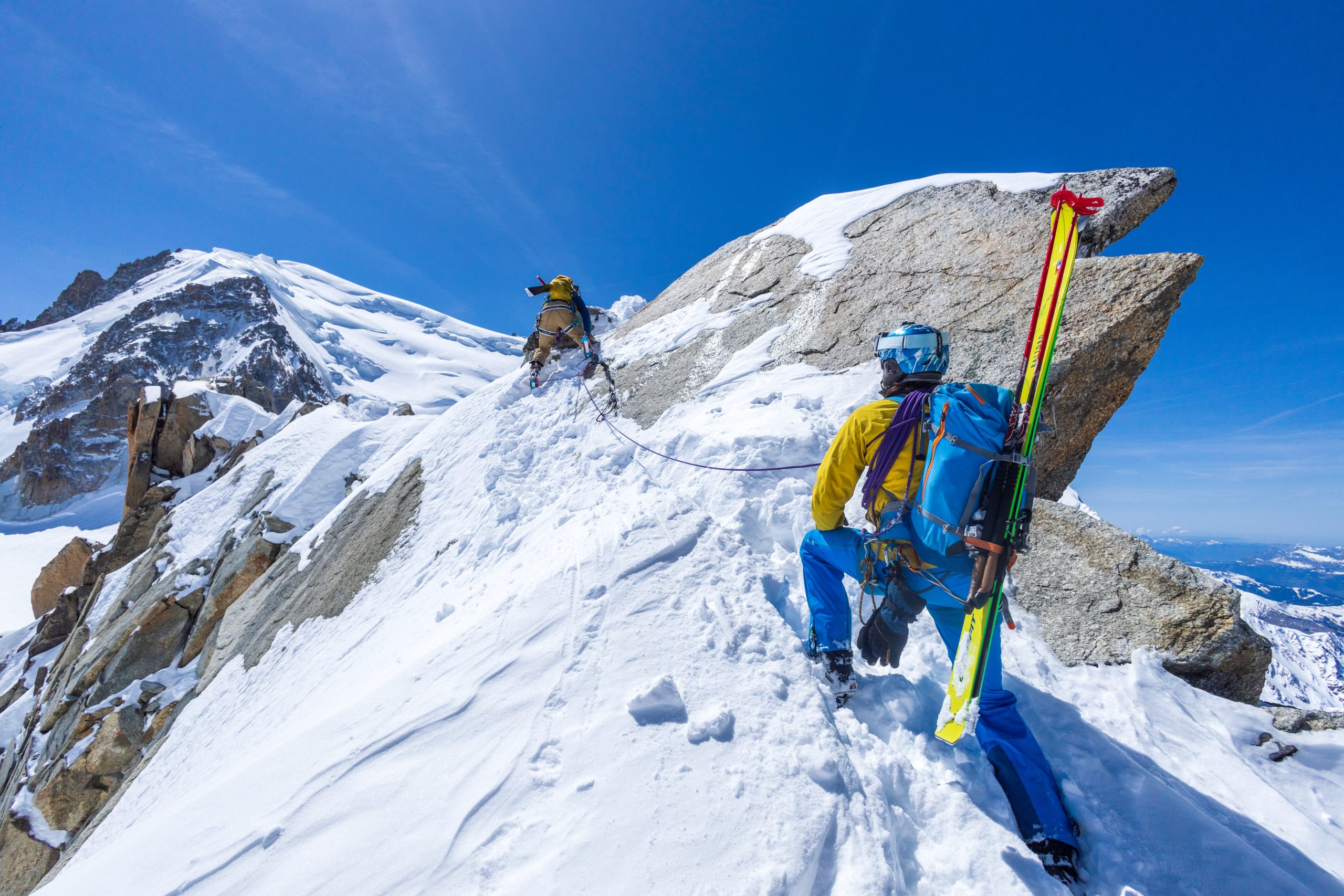
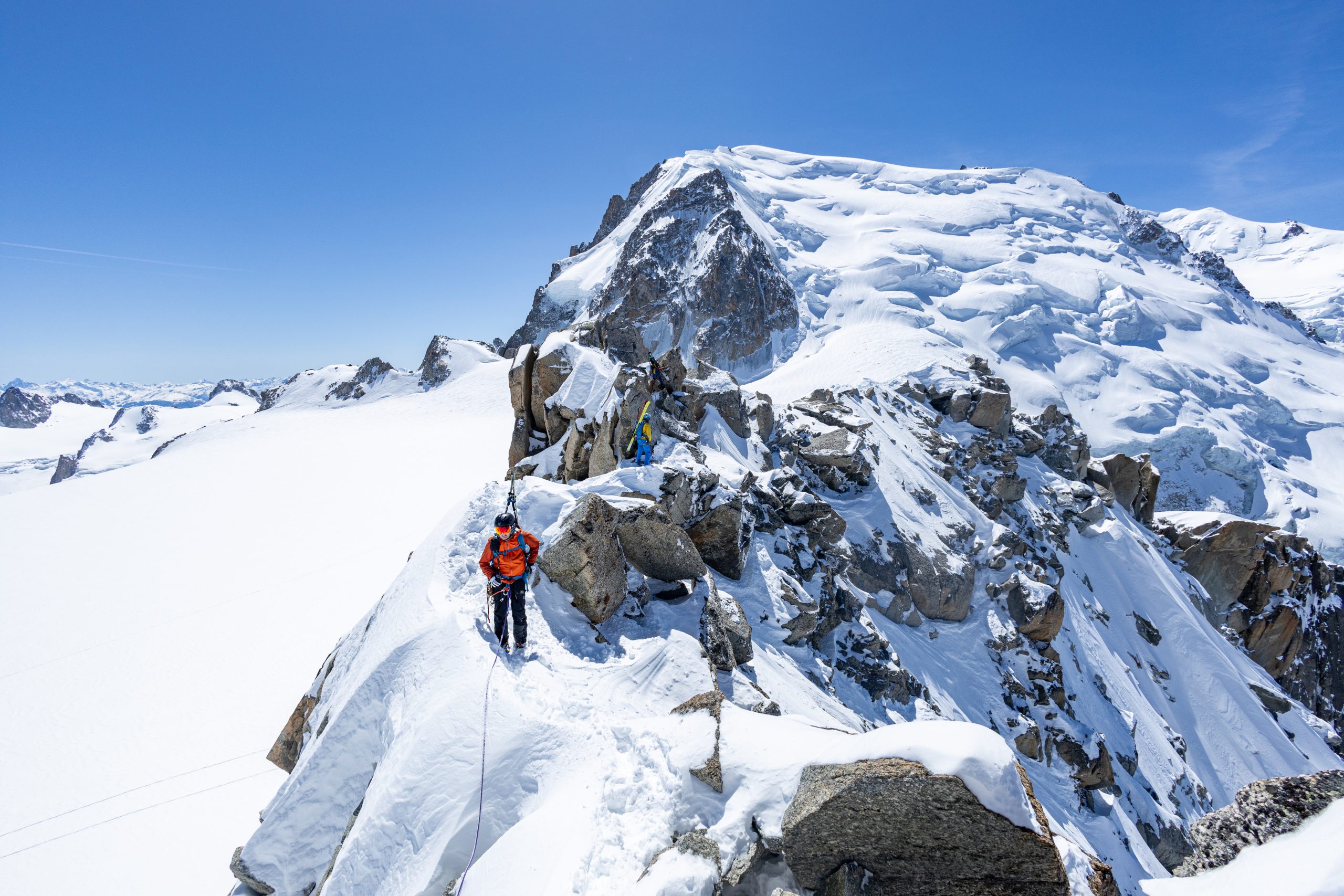
A tunnel cut through the ice opens onto a knife-edge snow ridge dropping to the Col du Midi, and everything serious in this part of the Alps begins there: the Cosmiques Arête finishing up a ladder onto the tourist terrace, the Trois Monts route over Tacul and Maudit to the summit of Mont Blanc, the Refuge des Cosmiques at 3,613 metres, and twenty kilometres of glacier running east down the Vallée Blanche
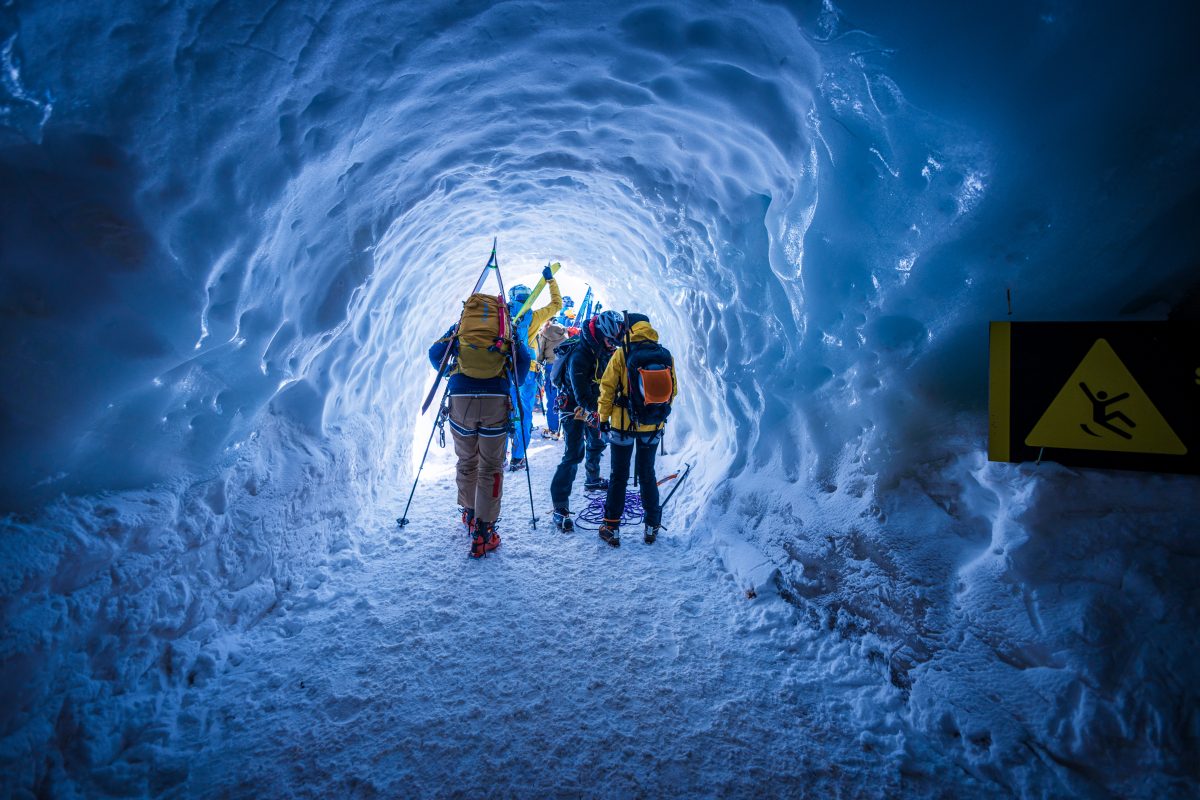
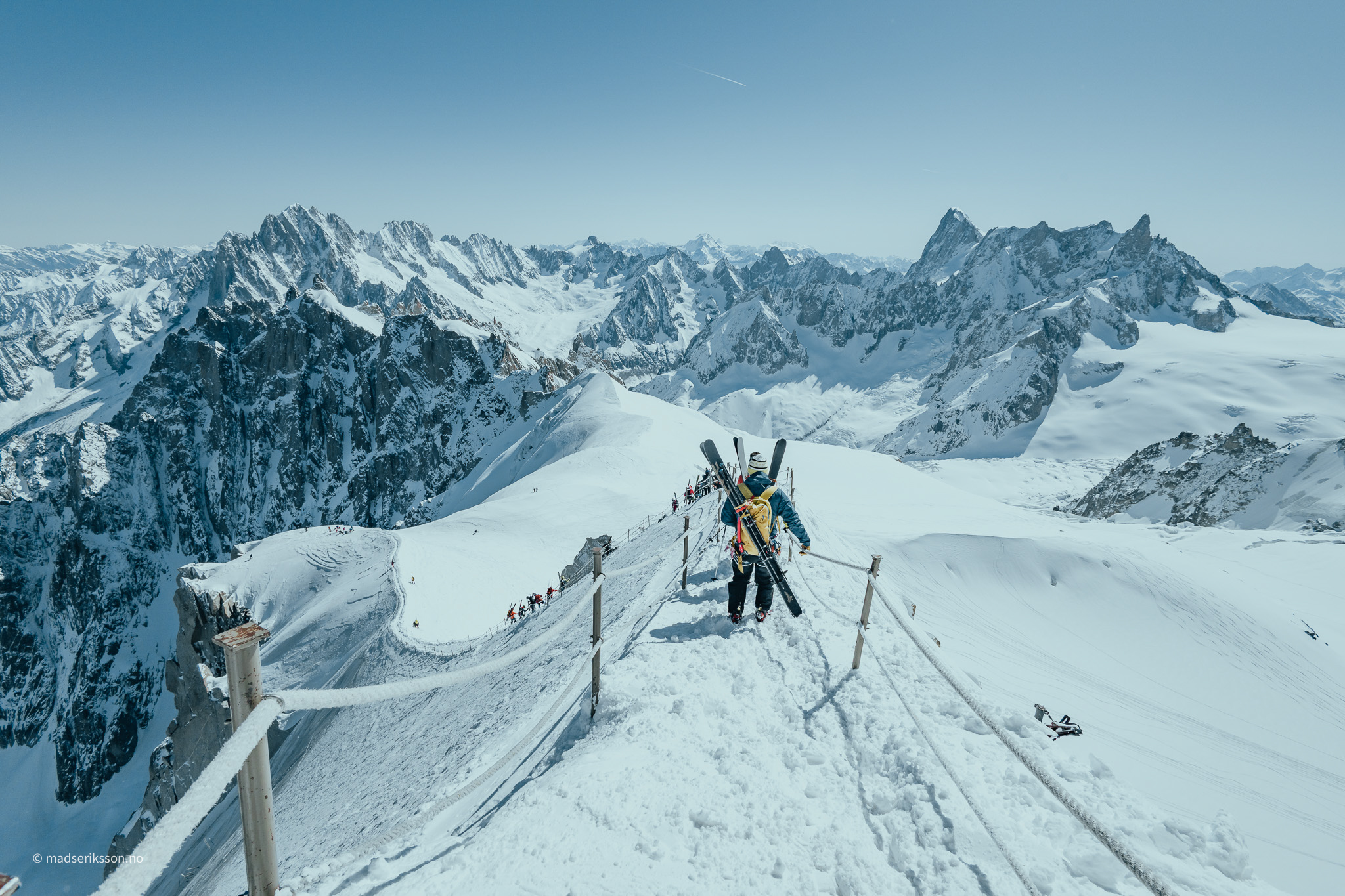
From the arrival station a tunnel is cut through the ice and rock to a doorway on the south side, and beyond that doorway the ground is a mountain. The arête — a narrow snow crest, exposed on both sides, dropping several hundred metres of length toward the Col du Midi — is the access route for everything in the basin, and on a good summer morning there is a more or less continuous procession of roped parties moving down it in crampons before the sun softens the snow. It is also, in poor conditions, genuinely serious: hard ice under a dusting of powder, wind, and a fall line on the Vallée Blanche side that runs a very long way. A fixed rope is often in place along the upper section. None of this is optional equipment territory. Every year visitors in trainers step out of the tunnel to take a photograph a few metres onto the ridge, and it is the single most consistently dangerous thing that happens at the Aiguille du Midi. The viewing gallery inside gives the same picture from behind glass.
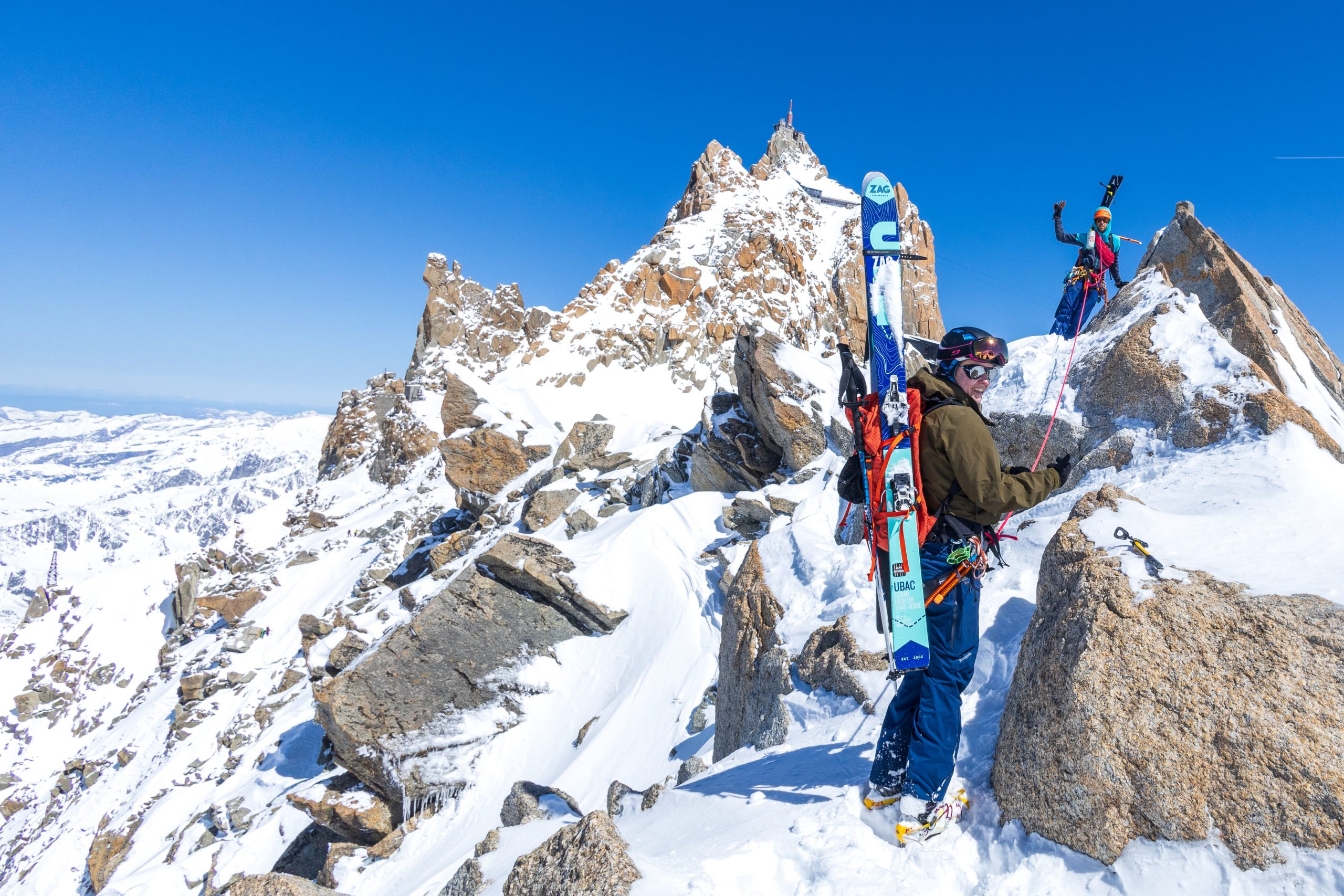
What the arête opens is exceptional. The Cosmiques Arête (AD) traverses the rock and mixed ridge running back toward the station from the Col du Midi and is one of the most popular classic routes in the Alps — two to three hours of enjoyable, well-protected climbing at a reasonable grade, in a position that is spectacular from the first move, finishing by climbing a metal ladder directly onto the summit terrace in front of a crowd of tourists. It is frequently busy and the queues on the crux sections in August are a genuine planning consideration. The Refuge des Cosmiques, twenty minutes across the glacier from the foot of the arête at 3,613 metres, is the base for the Trois Monts route to Mont Blanc — over Mont Blanc du Tacul and Mont Maudit to the summit, a more direct and more committing line than the Goûter route from the other side, with serac exposure on the Tacul slopes that has killed a significant number of climbers and which is the reason parties leave the hut around one in the morning and cross that ground while it is frozen. Eastward, the Vallée Blanche runs twenty kilometres down the Glacier du Géant and the Mer de Glace to the valley: not a piste, unmarked, unpatrolled, crevassed, and one of the great ski descents in the world. Glacier retreat has changed its lower sections substantially in recent decades, and the finish now frequently involves walking or taking the Montenvers railway rather than skiing to Chamonix.
The Cosmiques Arête finishes up a ladder onto the terrace of the Aiguille du Midi, which means the last twenty metres of an alpine route are climbed in front of two hundred people holding phones. Some climbers find this excruciating and some enjoy it enormously. Either way it is a fair summary of what this mountain has become: a place where a cable car built for tourists in 1955 delivers alpinists to the start of serious ground, and delivers them back onto the same terrace three hours later, still roped, in front of an audience eating lunch.
Planning It — Book Ahead, Go Early, Dress for Winter in August
Timed tickets sell out in high season, the first cabins of the morning give the clearest air and the shortest queues, the summit is regularly at −10°C in July, and the whole thing shuts without warning when the wind gets up. The Aiguille du Midi rewards planning more than almost any other single attraction in the Alps
Tickets are sold online for timed departure slots and the popular morning slots in July and August routinely sell out days in advance; buying in the queue on the morning you want to go is a reliable way not to get up the mountain. Go on the first cabins of the day if you possibly can. The reasons compound: the air is clearest before the valley haze and afternoon convective cloud develop, the summit terraces are least crowded, the Pas dans le Vide queue is shortest, and cloud building over the massif in the afternoon frequently obscures the entire view by two o’clock on days that began perfectly clear. Check the webcams and the mountain forecast before travelling — the lift closes entirely in high winds, and it can be a clear warm morning in Chamonix while the summit is in cloud and shut. Allow half a day as a minimum for the summit alone; a full day if you intend to add the Panoramic Mont-Blanc to Pointe Helbronner, and be aware that the Italian gondola operates in summer only and has its own seasonal dates.
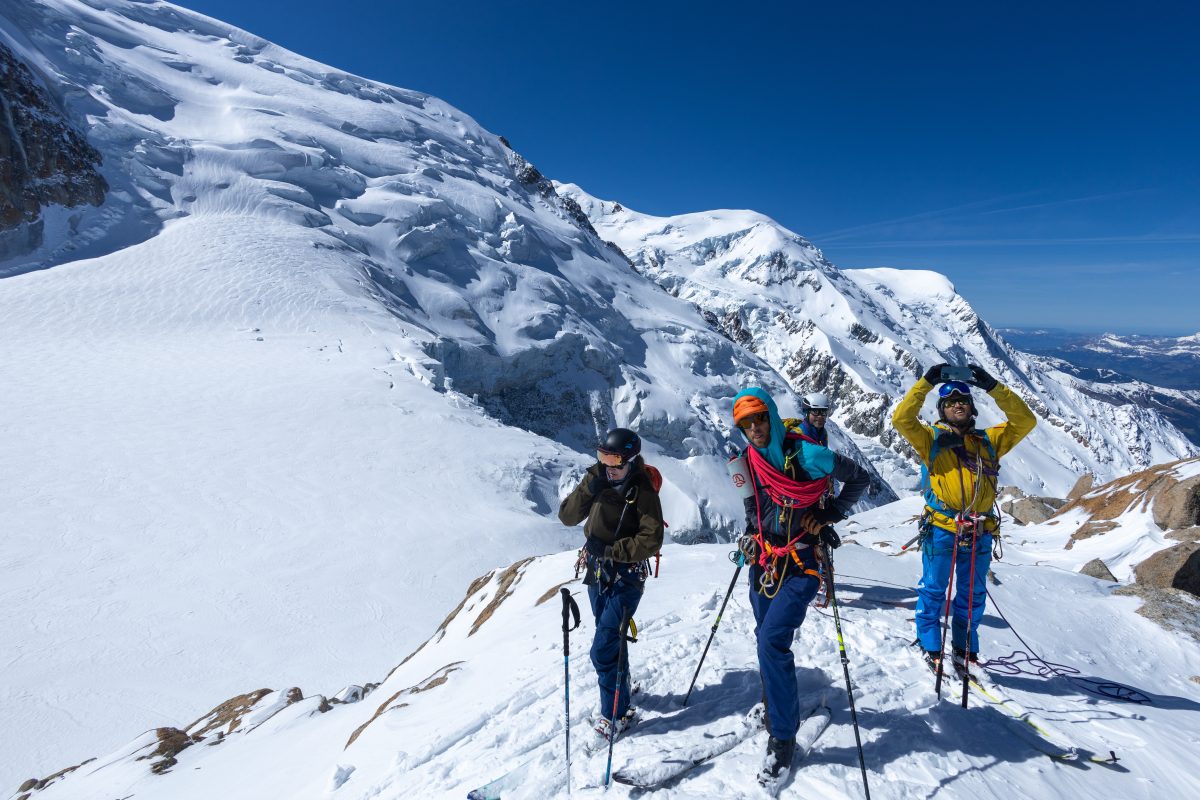
On clothing: visitors consistently underdress. Chamonix in August can be 28°C; the summit terrace on the same afternoon is commonly around −10°C before wind chill, and the wind at 3,842 metres is rarely nothing. A proper insulated jacket, hat, gloves and closed shoes with grip are the minimum, and the metal terraces get genuinely icy. Sunglasses are not optional — UV at this altitude reflecting off snow is severe — and sunscreen is worth applying before you leave the valley. Anything beyond the terraces changes the equation completely: the arête and everything past it requires rope, harness, crampons, ice axe and the competence to use them on exposed glacier terrain, and for the overwhelming majority of visitors that means hiring a guide through one of the Chamonix bureaus — the Compagnie des Guides de Chamonix, founded in 1821, is the oldest mountain guiding organisation in the world and remains the obvious starting point. For the Vallée Blanche in winter, a guide is effectively mandatory for anyone without substantial glacier experience, and guided groups book out for the season well in advance. The mid-station at Plan de l’Aiguille, finally, is worth a ticket of its own: the Grand Balcon Nord walk from there to Montenvers and the Mer de Glace is a straightforward high path with the finest views in the valley and a fraction of the crowds.
The commonest planning error is treating the Aiguille du Midi as flexible. It is not: it depends on wind, on cloud, on a timed ticket bought days earlier, and on being at the base station early enough to beat both the queue and the afternoon build-up. Give it the first clear morning of your trip rather than a slot near the end. If the weather is right and you are already holding a ticket, go that day and rearrange everything else around it.
«The Aiguille du Midi is two things that happen to share a cable car, and the distance between them is a doorway. On one side of it: terraces, a glass box, a café and one of the great panoramas on earth, available to anyone who buys a ticket and dresses warmly. On the other: a snow ridge dropping toward the Col du Midi, and past it the Cosmiques Arête, the Refuge, the Trois Monts route to the summit of Mont Blanc and twenty kilometres of glacier running east. The lift was built in 1955 for the first group and has spent seventy years quietly transforming what is possible for the second — collapsing routes that once took days into half-day objectives and putting the north side of the massif within reach of anyone sleeping in Chamonix. That is an extraordinary thing for a piece of tourist infrastructure to have done. It also means that the most consequential decision anyone makes at 3,842 metres is whether to walk through that doorway, and the mountain is entirely indifferent to how confident you feel when you do.»
More in the same area
 GlaciersSkiing Vallée Blanche: The Ultimate Alpine Experience
 GlaciersChamonix Ski Touring: Argentière to Albert 1er and the Vallée Blanche
 GlaciersRefuge Albert 1er: The Glacier-Edge Hut Above Le Tour, Chamonix
 MountaineeringMarmolada: The West Ridge Via Ferrata to the Top of the Dolomites
 MountaineeringBreithorn and Pollux: Two 4,000-Metre Peaks on Skis from Cervinia
 GlaciersEurope’s 10 Greatest Glaciers — And How to Experience Them