Corleone is a hill town of around ten thousand people in the interior of western Sicily, set in a basin of farmland about an hour’s drive south of Palermo. Its name is known around the world because Mario Puzo borrowed it for Vito Corleone — yet none of The Godfather was filmed here. The real town has a longer and stranger story: an Arab stronghold, a medieval “brave city” that marched on the Angevins in 1282, the cradle of a peasant movement, the home of the most violent Mafia clan in Sicilian history — and, since 2000, the seat of a museum dedicated to the people who fought it.

The town sits between rocky outcrops on the edge of a wide agricultural basin, with the twin rocks of the Castello Soprano and the Castello Sottano rising above its rooftops and the long limestone wall of Rocca Busambra on the skyline to the north-east. It has been inhabited since prehistory, but its documented history begins with the Arab conquest of 840, when it became a strategic stop on the inland road between Palermo and Sciacca. Under the Normans and Swabians it was resettled by colonists from Lombardy; in the late Middle Ages it was a royal town proud enough to be granted the title Animosa Civitas, the brave city, by Alfonso the Magnanimous in 1434.
For most of the 20th century, however, Corleone was famous for something else. The local Mafia family produced Luciano Leggio, Totò Riina and Bernardo Provenzano — the Corleonesi who took over Cosa Nostra in the 1980s and waged war on the Italian state. The town has spent the decades since trying to separate its name from theirs, through an anti-Mafia documentation centre, cooperatives working land confiscated from Mafia bosses, and a steady effort to show visitors the churches, waterfall, castles and forest that were always here. It is not a polished tourist town, which is part of its interest: it is a working Sicilian agricultural centre with a heavy history, and it repays an unhurried half day or more.
How to approach Corleone
This guide covers the town in three parts: its long history, from the Arab fortress and the Sicilian Vespers to the medieval churches of the historic centre; its twentieth century, from the peasant leagues and the Mafia to the anti-Mafia museum that tells the story today; and the landscape around it, from the Due Rocche waterfall at the edge of town to the royal hunting lodge and forest of Ficuzza beneath Rocca Busambra.
Corleone in 3D
Corleone is a hill town of about 10,000 people at around 540 m in the interior of western Sicily, on the old inland route between Palermo and Sciacca. It stands between eroded rock outcrops on the edge of a wide farming basin, with the limestone ridge of Rocca Busambra, at 1,613 m the highest summit in western Sicily, on the skyline to the north-east. Despite the name, none of The Godfather was filmed here; its Corleone scenes were shot at Savoca and Forza d'Agrò near Taormina.
The lower castle
The Castello Sottano, the lower castle, stands on its own rock at the southern edge of the old town and is now the hermitage of San Bernardo. Corleone was an Arab stronghold before the Norman conquest, and in 1237 it was resettled by Lombard colonists led by Oddone de Camerana. Nearby stands the church of San Leoluca, dedicated to the town's patron saint, celebrated on 1 March.
Chiesa Madre di San Martino
The Chiesa Madre of San Martino, the town's main church, was begun in the 14th century and owes most of its present appearance to the 18th; Carmelo Salpietra frescoed its dome in 1783. In the Sicilian Vespers of 1282, Bonifacio de Camerana led about 3,000 men from Corleone to join Palermo's revolt against the Angevins, and the town later took the title Animosa Civitas, the brave city.
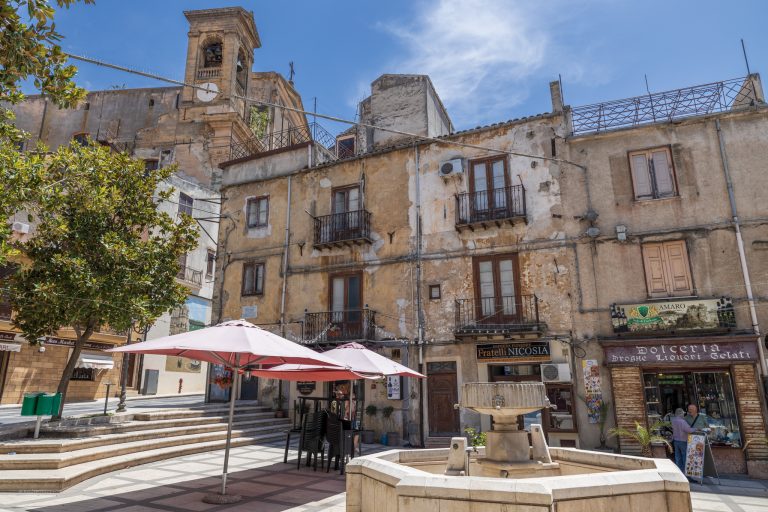
Piazza Nascè in Corleone.
The anti-Mafia museum
CIDMA, the International Documentation Centre on the Mafia and the Anti-Mafia Movement, opened in December 2000 just off Piazza Garibaldi and holds case files from the Maxi Trial in Palermo. The peasant leader Bernardino Verro, who founded the local league in 1893, was murdered by the Mafia in 1915 while mayor; the trade unionist Placido Rizzotto was killed in 1948 and given a state funeral here in 2012. The civic museum next door holds a Roman milestone dated to 252 BC.
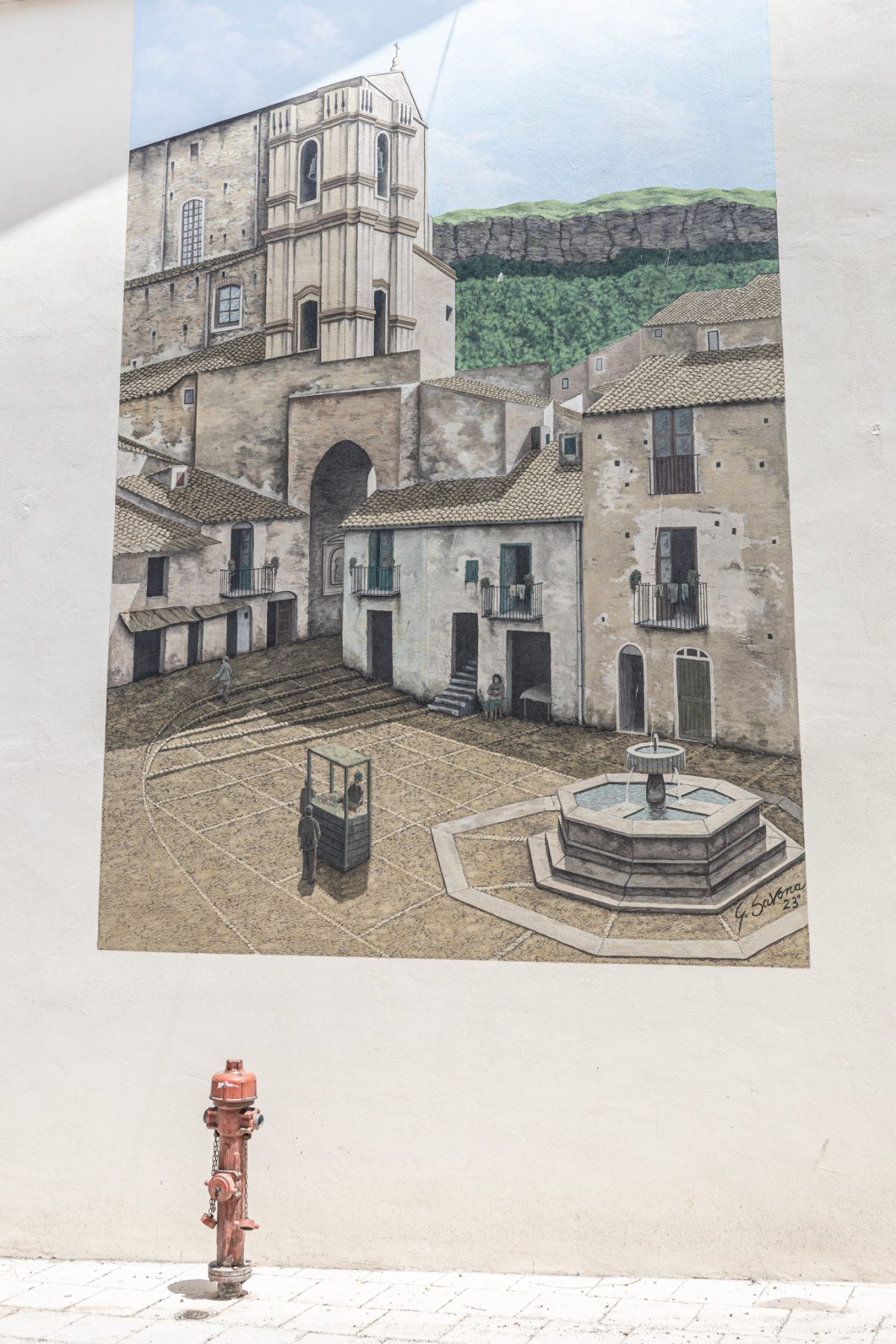
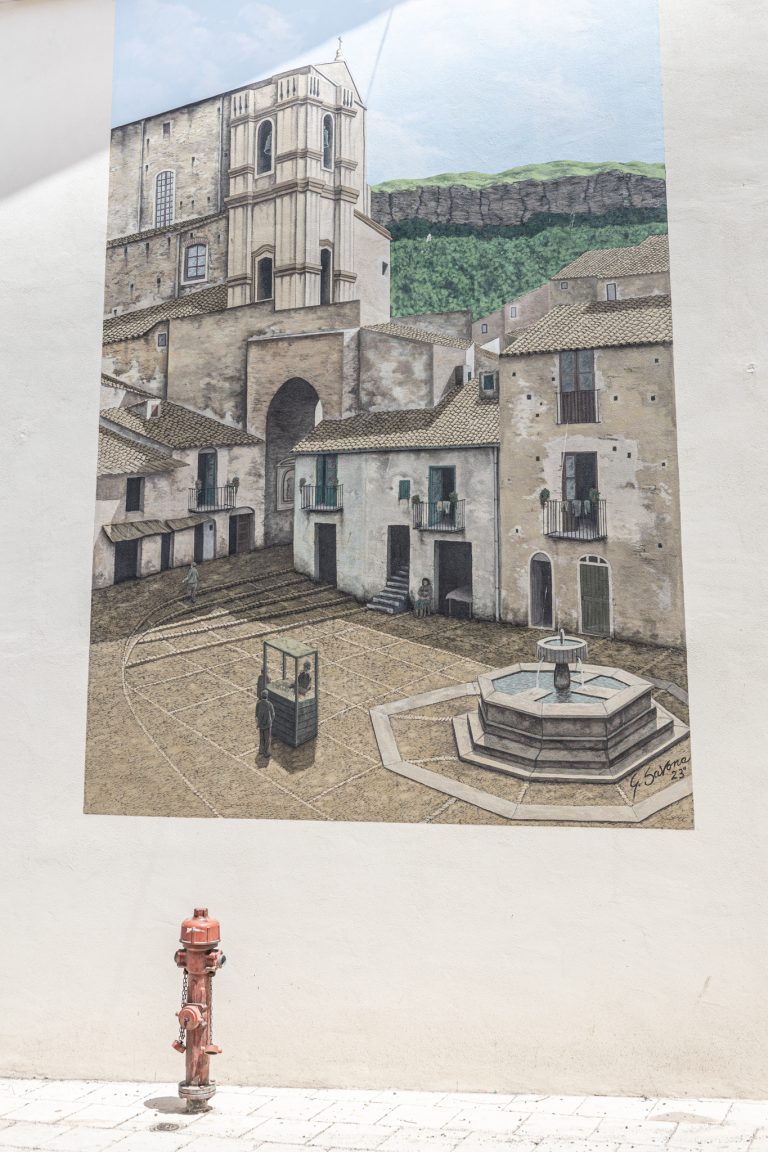
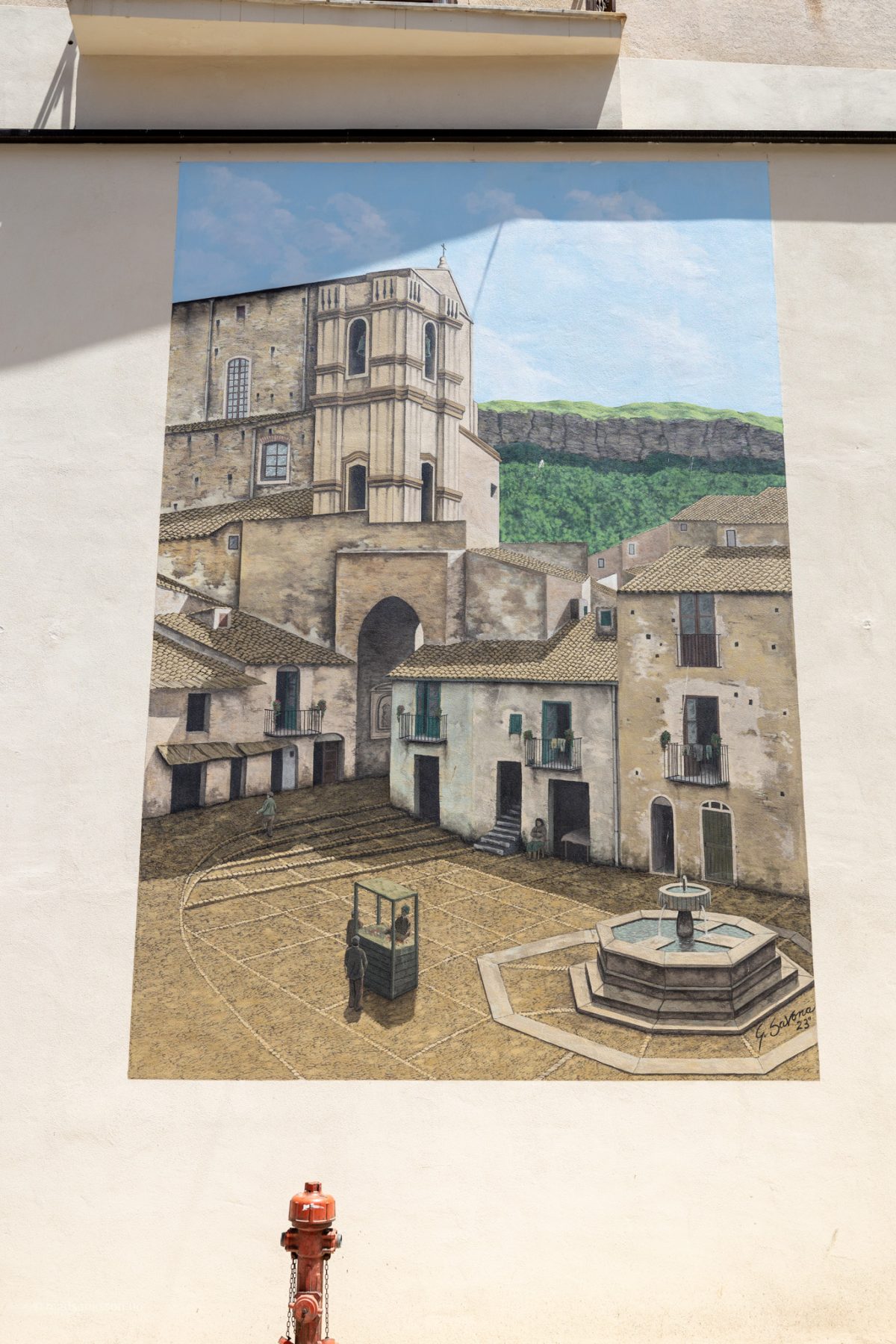
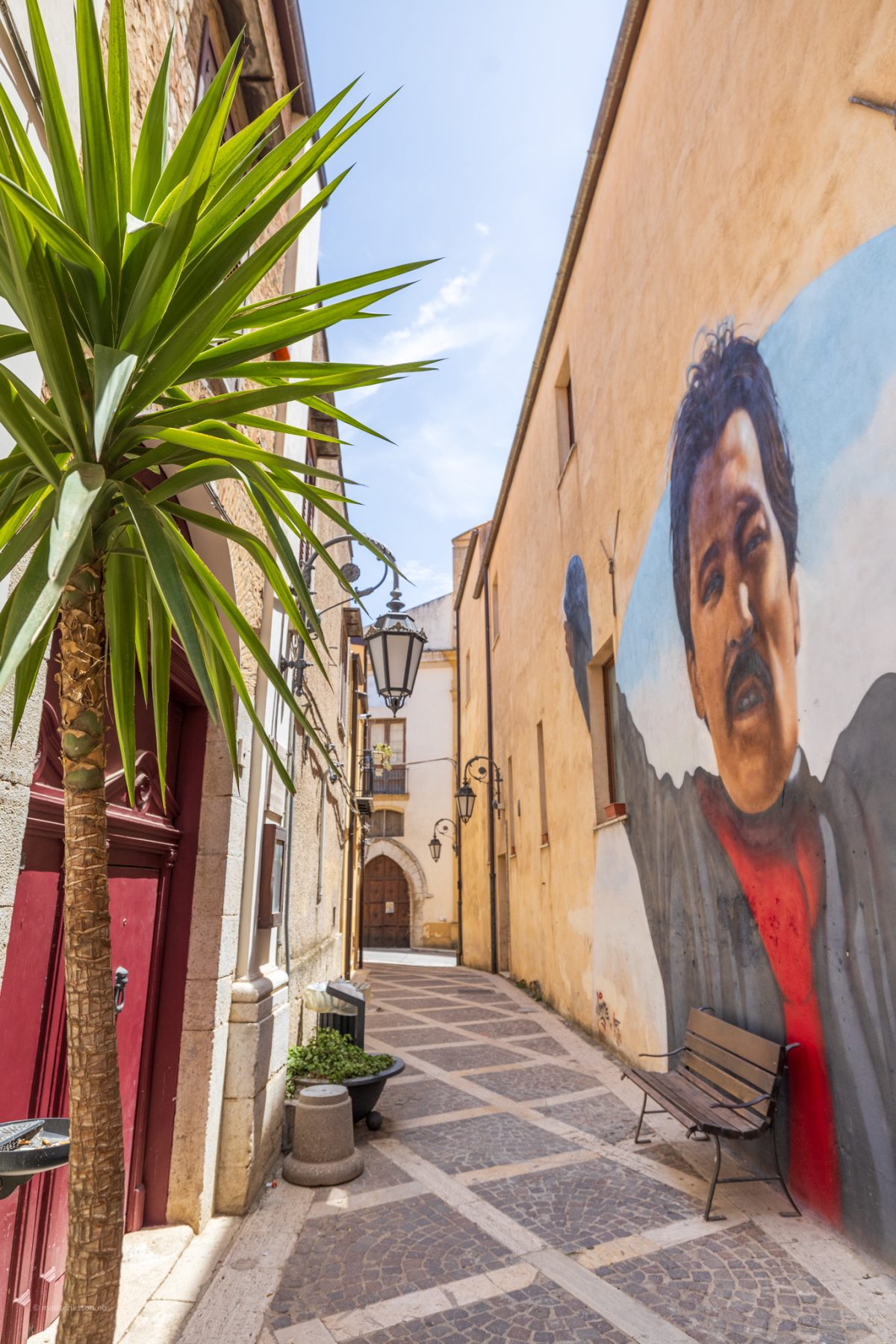
Piazza Nascè street art in Corleone.
Sant'Agostino and the Addolorata
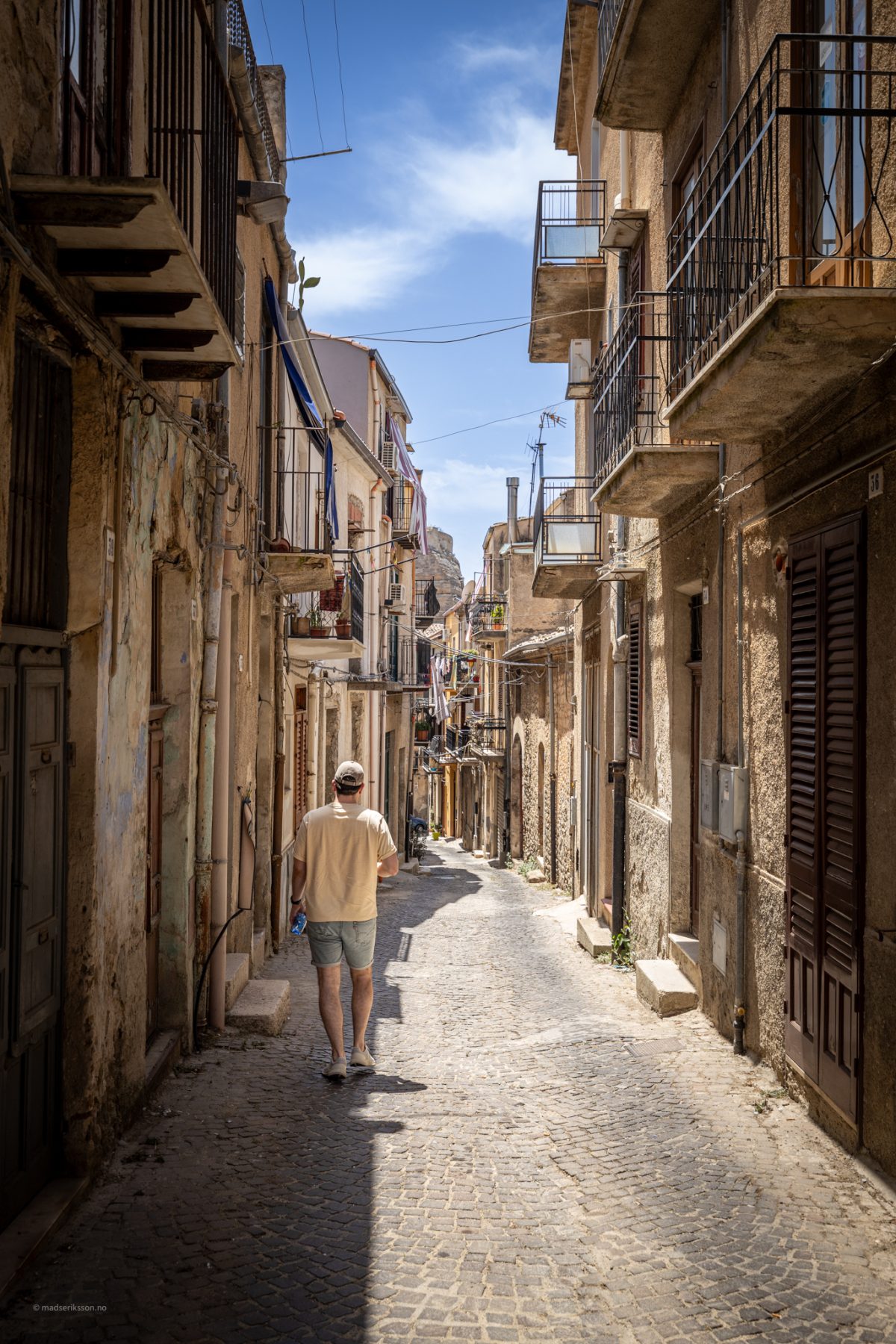
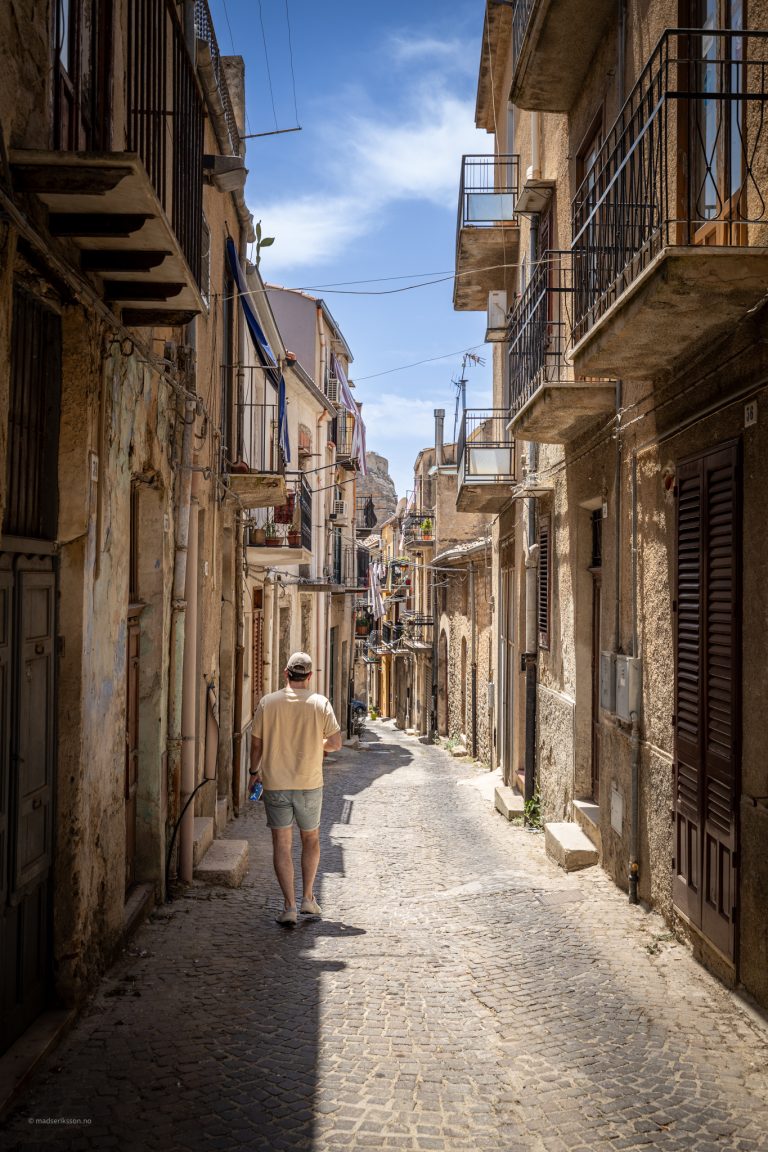
The old centre climbs between the rocks in stepped lanes, with so many churches, chapels and convents that Corleone is sometimes called the city of a hundred churches. Sant'Agostino keeps the Madonna della Mazza, and the 18th-century sanctuary of the Addolorata stands at the southern edge of the centre.
Street in old town of Corleone.
The waterfall and the upper castle
On the eastern edge of the historic centre, a stream has cut a narrow gorge in the limestone and drops into a pool at the Cascata delle Due Rocche, reached by a path past the chapel of the Madonna delle Rocche. Above it, on the second of the two rocks, a round tower known as the Saracen tower is almost all that remains of the Castello Soprano, the upper castle.
Annunziata and San Leonardo
North of the centre, the churches of San Leonardo, Santa Maria di Gesù and the Santissima Annunziata mark the streets that run out towards the farmland of the basin. Corleone remains an agricultural town, known for livestock, dairy, wine, cereals and its own variety of tomato.
The brave city at night
For much of the 20th century the town's name was tied to the Corleonesi, the faction of Luciano Leggio, Totò Riina and Bernardo Provenzano that took control of Cosa Nostra in the 1980s. Since then cooperatives farming land confiscated from Mafia bosses, the anti-Mafia museum and murals in the old streets have set out to tell the town's story from the side of the victims.
3D model © 2026 madseriksson.no · Photographs © madseriksson.no. Buildings and heights: © OpenStreetMap contributors (ODbL), via OpenMapTiles. Ground imagery: Sentinel-2 cloudless 2023 by EOX IT Services GmbH (contains modified Copernicus Sentinel data 2023; CC BY 4.0). Heights are approximate where OpenStreetMap has no measured value; sun positions are approximate.
The Brave City — From Arab Stronghold to Medieval Town
How a fortified stop on the road across Sicily became a Lombard colony, a rebel town in the Vespers and a place of a great many churches
Corleone owes its position to geography. It sits on the old inland route between Palermo and Sciacca on the south coast, in a fertile, well-watered basin ringed by eroded rock towers — a place that was easy to defend and worth holding. The Aghlabids took it in 840, and under Arab rule it became a town of real economic and military importance, with its own mosque. The Normans conquered it around 1080, and in 1095 it was granted to the Church in Palermo; but it stayed overwhelmingly Muslim for another century, and a Muslim rising briefly retook the town in 1208. Emperor Frederick II, whose Sicilian kingdom spent decades suppressing the island’s Muslim communities, encouraged its resettlement by colonists from Lombardy, led by Oddone of Camerana.
The descendants of those Lombards made Corleone a town with a mind of its own. In the Sicilian Vespers of 1282, when Palermo rose against the French Angevin rulers of the island, Boniface of Camerana marched some 3,000 men from Corleone to join the revolt, and Palermo’s senate is said to have called the town its sister in gratitude. Over the following centuries Corleone passed back and forth between the Crown and feudal lords, was sold and bought back more than once, and earned its title of Animosa Civitas in 1434. In the 19th century it was again a place of revolt: Francesco Bentivegna, who led uprisings against the Bourbons, was shot in 1856, and on 27 May 1860 Garibaldi’s volunteers fought Bourbon troops in the area.
Corleone has been a fortress, a colony and a rebel town. Its old centre, climbing between the rocks, has so many churches, chapels and convents that it is sometimes called the city of a hundred churches.
The finest of them is the Chiesa Madre of San Martino. It was begun in 1382, probably over an older church, and was enlarged and reworked for four centuries: the dome dates from 1663, and most of what is seen today is 18th-century, including the frescoes inside the dome. The interior is the town’s best collection of art in one place — canvases by the Capuchin painter Fra Felice da Sambuca, among them a San Leoluca for the town’s patron saint; a 16th-century statue of San Biagio and a 17th-century wooden San Filippo d’Agira; a marble relief of the Baptism of Christ; a 16th-century wooden choir; and, in the sacristy, a dark 14th-century wooden crucifix. Entry is free outside service times. Nearby, the church of Sant’Agostino keeps the much-loved Madonna della Mazza, traditionally believed to protect newborn children, and the 18th-century church of the Addolorata, built in 1753 on a central plan, is dedicated to San Leoluca. The town’s fragile ground is part of its history too: in 1418 a landslide in the upper town swept away the church of San Giuliano entirely.
The Peasant Capital — And the Long Fight Against the Mafia
Trade unionists, a teenage shepherd, the bosses who ran Cosa Nostra from the countryside, and a small museum that keeps the evidence
At the end of the 19th century Corleone was one of the centres of the Fasci Siciliani, the movement of peasants and workers that demanded fair contracts on the great inland estates. Bernardino Verro founded the Corleone league in 1893, and the town became known as the peasant capital of Sicily. The estates were the territory of the Mafia, which acted as enforcer for the landowners, and the local family under its first boss, Angelo Gagliano, ordered Verro’s killing in 1915 — by then he was mayor, and he was the first mayor to be murdered by the Mafia. The pattern repeated after the Second World War. On 10 March 1948 Placido Rizzotto, the socialist trade unionist who was helping farm labourers occupy uncultivated estate land, was kidnapped and killed by Luciano Leggio. A twelve-year-old shepherd boy, Giuseppe Letizia, who had seen the murder, died the next day.
Leggio was acquitted twice in the 1960s, took over the Corleone family, and with his lieutenants Totò Riina and Bernardo Provenzano built the faction known as the Corleonesi. In the 1980s they seized control of Cosa Nostra through a war that killed hundreds of rivals, and then turned on the state: judges, police officers, politicians and journalists. The response — the Maxi Trial in Palermo, in which hundreds of Mafiosi were convicted on the evidence assembled by Giovanni Falcone and Paolo Borsellino — and the bombings that killed both men in 1992 belong to Palermo’s history more than Corleone’s. But the town lived with the name. Riina and Provenzano, both born here, spent decades as fugitives; as late as 2016 the town council was dissolved by the national government over suspected Mafia influence.
Rizzotto’s remains were found in a crevice on Rocca Busambra in 2009 and identified by DNA in March 2012. On 24 May 2012 he was given a state funeral in Corleone, attended by the President of the Republic, Giorgio Napolitano.
The Centro Internazionale di Documentazione sulla Mafia e del Movimento Antimafia — CIDMA — opened in December 2000 in a building on Via G. Valenti, a cobbled lane just off Piazza Garibaldi. It is small and visited only on guided tours, which are offered in English and several other languages and should be booked in advance on the museum’s website. The rooms hold the case files of the Maxi Trial, the black-and-white photographs that Letizia Battaglia took of Mafia killings in Palermo in the 1970s and 1980s, portraits of the bosses, judges and campaigners, a room of photographs of grief, and a room dedicated to General Carlo Alberto Dalla Chiesa, murdered in Palermo in 1982. It is a sober, affecting visit, and it does what the town most wants: it tells the story from the side of the victims. Around the centre, murals on the walls of the old town, a property confiscated from Provenzano now used for education on legality, and the NOMA space with video portraits of victims of organised crime extend the same idea into the streets.
Beyond the Town — A Waterfall, Two Castles and a Royal Forest
A short walk to a waterfall in a limestone gorge, the Saracen tower above it, and the hunting lodge of a Bourbon king under the highest mountain in western Sicily
The Cascata delle Due Rocche, the waterfall of the two rocks, is Corleone’s surprise. A stream that flows through the town has cut a narrow canyon in the limestone on the edge of the historic centre, and drops about four metres into a small green pool, hidden behind the little church of the Madonna delle Rocche. It is about 700 metres on foot from the centre, along a narrow lane, and takes half an hour to visit. It is at its best in spring, when the water is high; after heavy rain access to the pool can be restricted. Above it stands the Castello Soprano, the upper castle, of which little survives but a round lookout tower known as the Saracen tower — the medieval castrum superius, already a ruin by the 18th century, open at all times and free, with a wide view over the town and basin.
Across the town, the Castello Sottano, the lower castle, stands on its own rock. It served as a prison until the middle of the 20th century and since 1974 has been home to a community of Franciscan friars, so it is seen from outside only. The town’s civic museum, the Museo Civico Pippo Rizzo, named after the Futurist painter Pippo Rizzo, holds finds from the excavations on the Montagna Vecchia and the surrounding countryside, from prehistoric tools to Hellenistic pottery, and its prize exhibit: a Roman milestone naming the consul Aurelius Cotta, from the First Punic War, the only milestone of its kind found in Sicily.
North of Corleone, the Bourbon king Ferdinand IV began a hunting lodge at Ficuzza in 1802, while in exile from Naples. Designed in its later stages by the Neoclassical architect Giuseppe Venanzio Marvuglia, the Real Casina di Caccia faces a long lawn at the edge of the forest.
The Bosco della Ficuzza is a protected nature reserve of oak, holm oak, cork oak, ash and maple, with wild boar, birds of prey and a network of forest roads and trails. Above it rises the pale wall of Rocca Busambra, at 1,613 metres the highest summit in western Sicily. Two marked routes reach the top — from the Piano della Tramontana on the east side and from the Ciacca di Bifarera on the west — through woodland and then open limestone, and on clear days the view runs to the Madonie, the Tyrrhenian coast and sometimes Etna; golden eagles and Bonelli’s eagles hunt over the cliffs. Back in town, Corleone’s own calendar is agricultural and religious: dairy products from the surrounding farms, local wine from Nero d’Avola and Catarratto grapes, and the feast of the patron saint San Leoluca on 1 March, with a procession and bonfires.
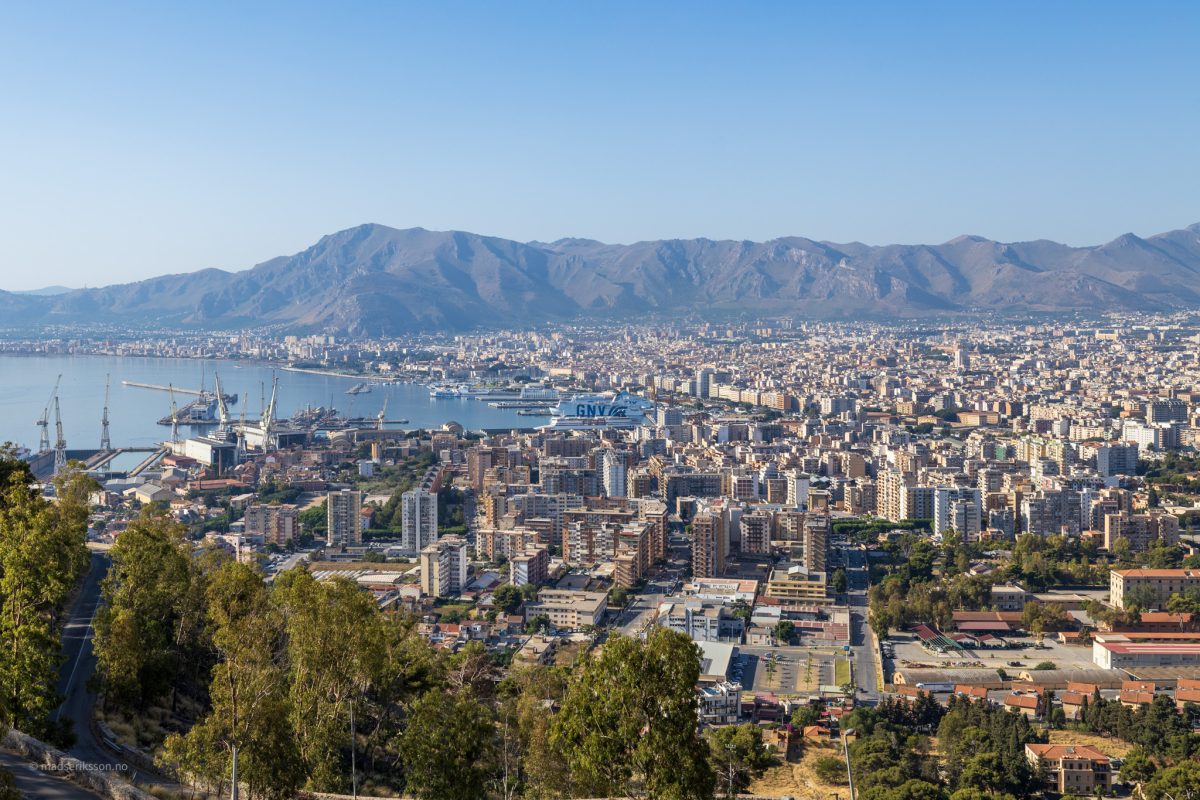
«Corleone is a town that has been defined by a surname it did not choose and a family it could not escape. Come for the name if that is what brings you, but stay for the rest: the Chiesa Madre with its dark crucifix, the waterfall in its limestone gorge on the edge of town, the Saracen tower on the rock above it, the Bourbon hunting lodge at Ficuzza and the long wall of Rocca Busambra. Above all, book a tour at CIDMA — the small museum where the town tells its own story, from the side of Verro, Rizzotto and the people who stood up to the Mafia.»

More in the same area
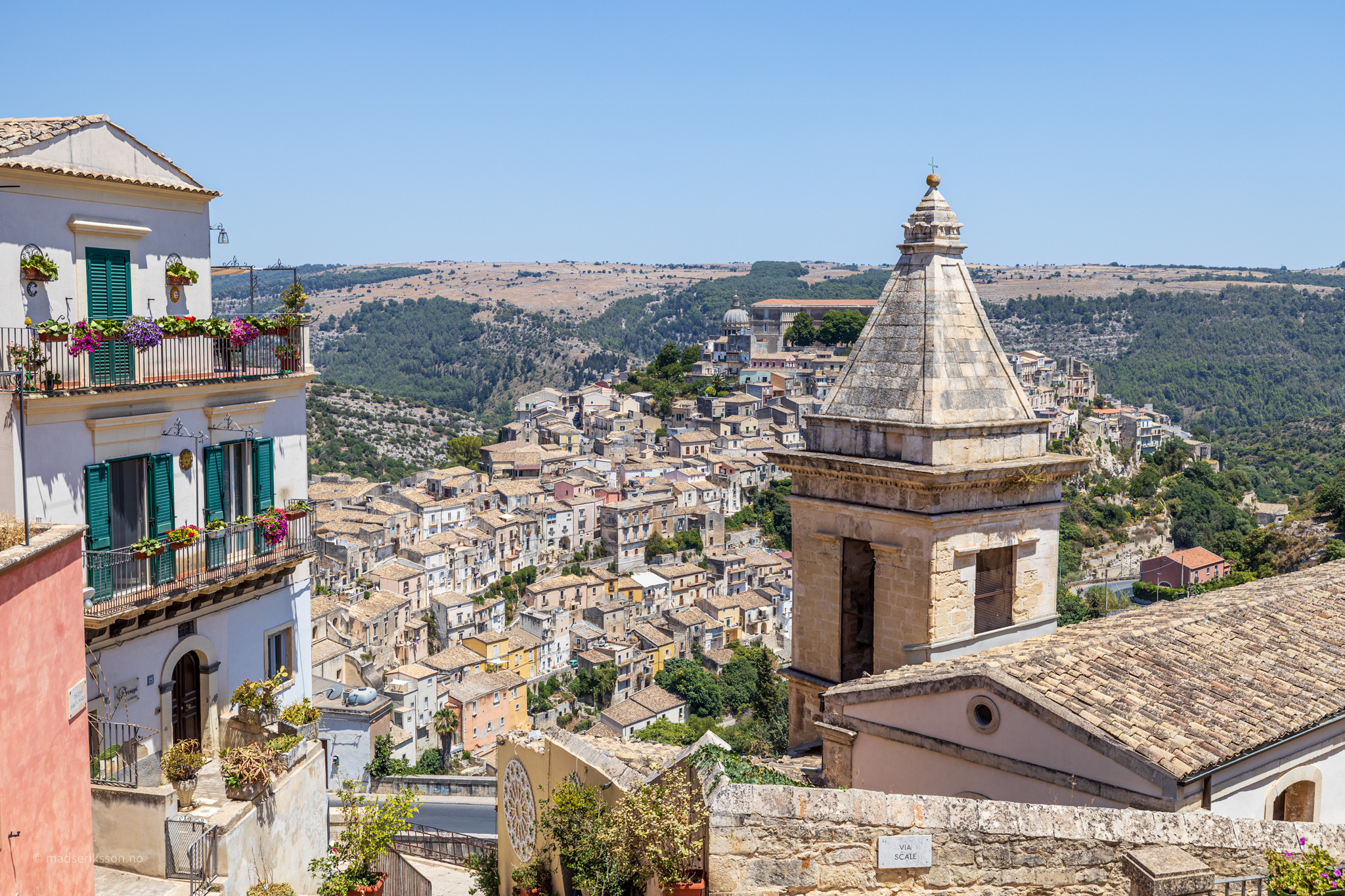 CitiesRagusa: The Baroque Town That Was Rebuilt Twice
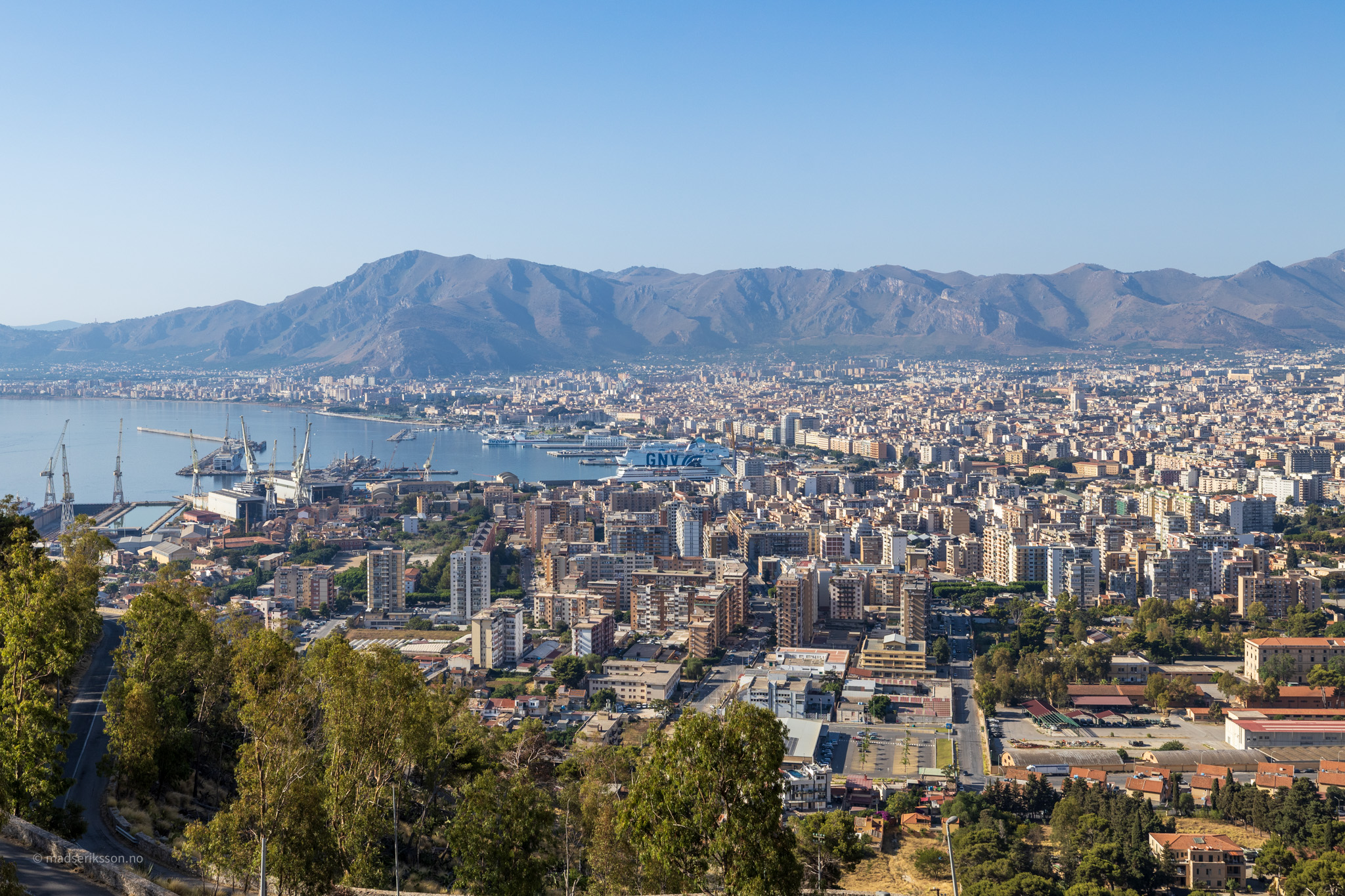 CitiesPalermo, exploring the Capital City of Sicily
 ArchitecturePisa — The Leaning Tower, the Square of Miracles and the City on the Arno
 CitiesExploring the Enchanting City of Venice
 CitiesMilan: A Fashionable and Cultural Hub in Italy
 CitiesSan Marino — The Republic on the Rock, Its Towers and Its Captains Regent
City Frames · scroll-driven 3D
More cities in three dimensions
54 city guides open with a model built from open map data. Scroll, and the camera moves from landmark to landmark.
Departures · City Frames
Where to next?
| Time | Destination | Country | Status |
|---|
Live · position of the sun
Golden hour, right now
The low, warm light just after sunrise and just before sunset. These are the cities on the site where it is happening at this moment.