Paris is a low city with a few tall things in it, and that is what makes it photograph so well from a height. From the second level of the Eiffel Tower the Seine bends away to the south-west under a line of bridges, the Arc de Triomphe sits in its wheel of avenues, and Sacré-Cœur floats on its hill to the north. From the 56th floor of the Tour Montparnasse the view turns the other way, with the tower itself rising out of the Champ de Mars and the glass of La Défense on the horizon. At street level the city changes again after dark: the Louvre pyramid glows in an empty courtyard, traffic draws light around the Arc de Triomphe, and the Grande Arche stands hollow and white at the end of the axis. These frames were taken over a few October days, with one later night view added, and they move between the famous view and the quieter corners of modern Paris.

The River from the Tower
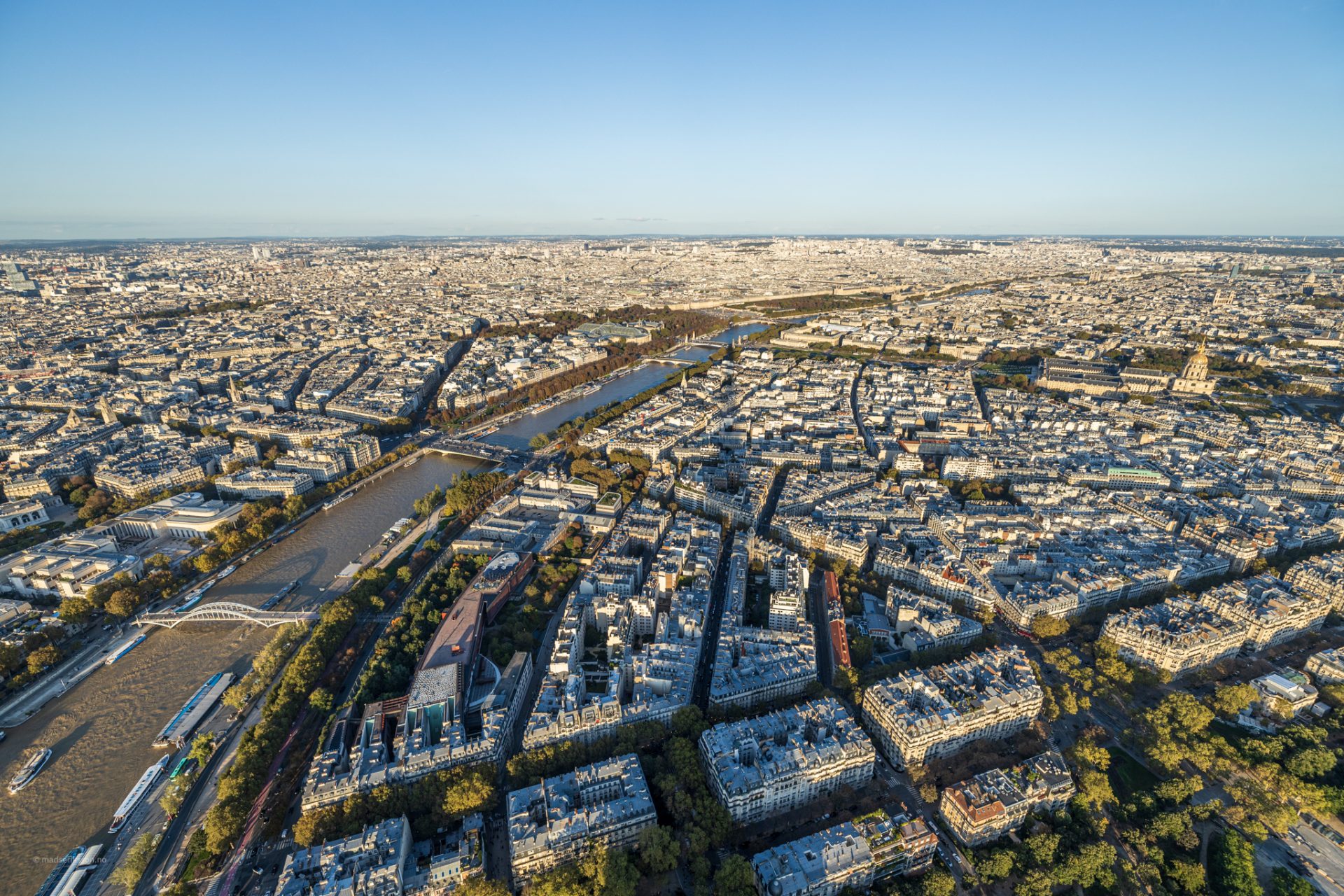
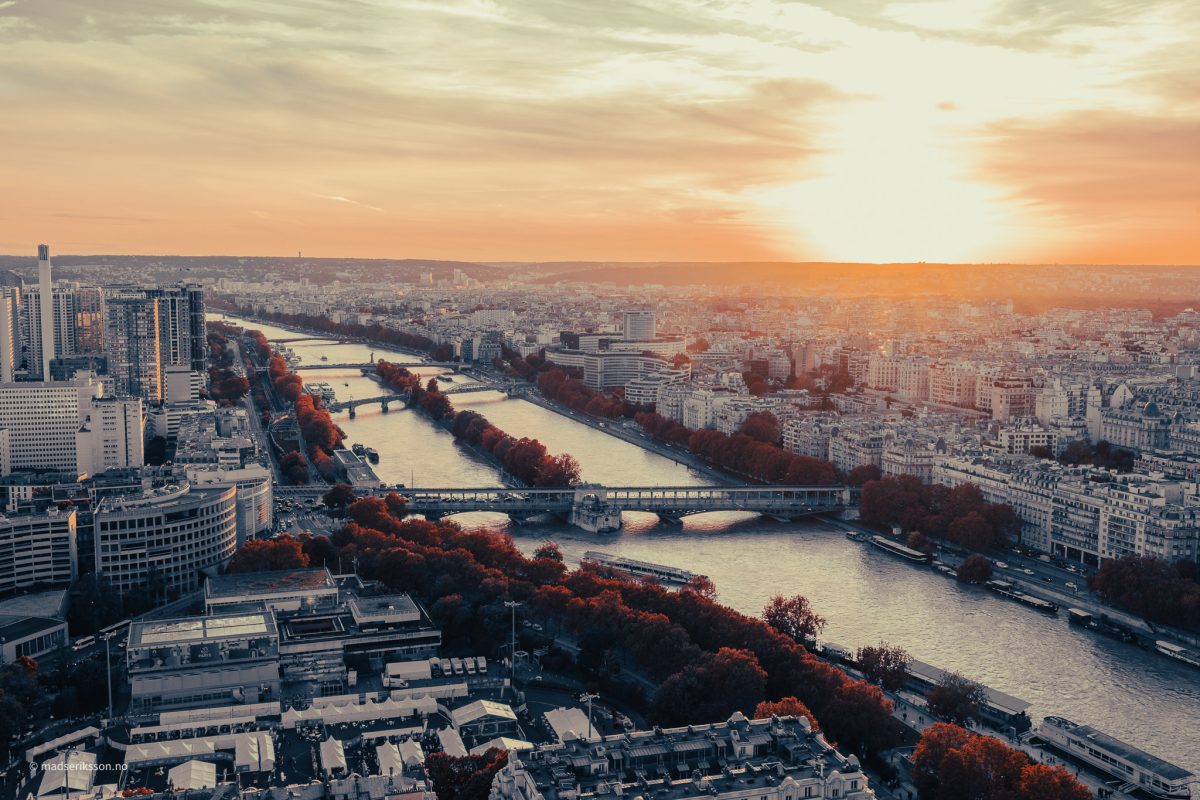
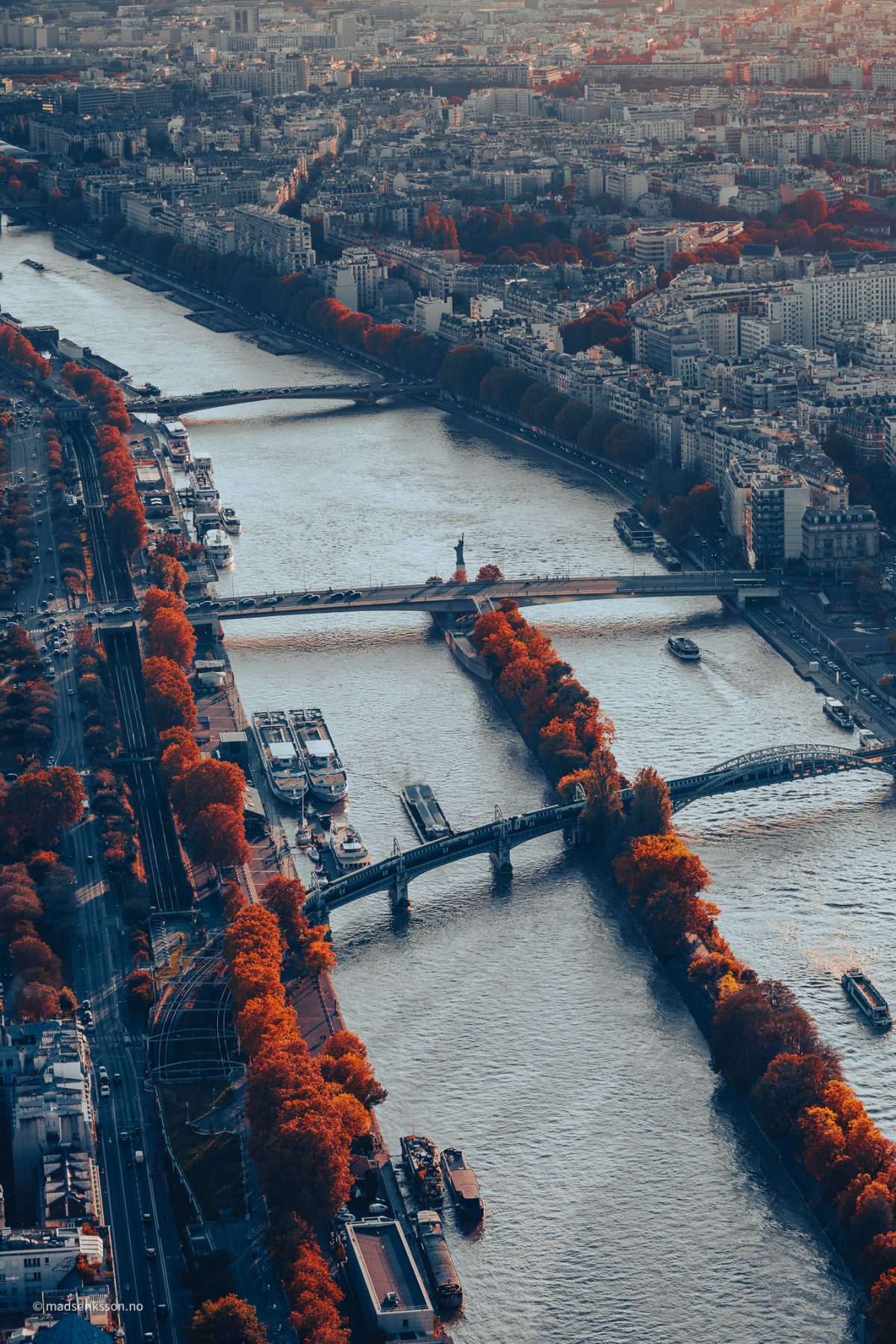
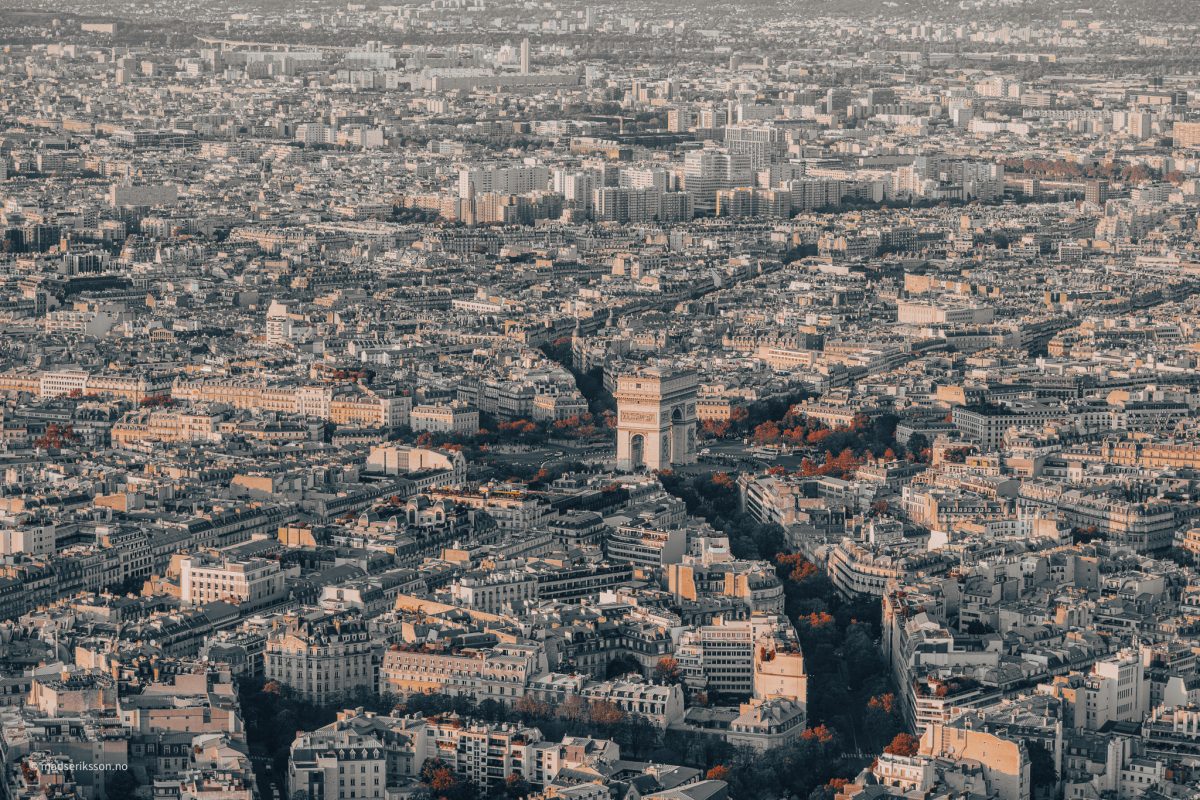
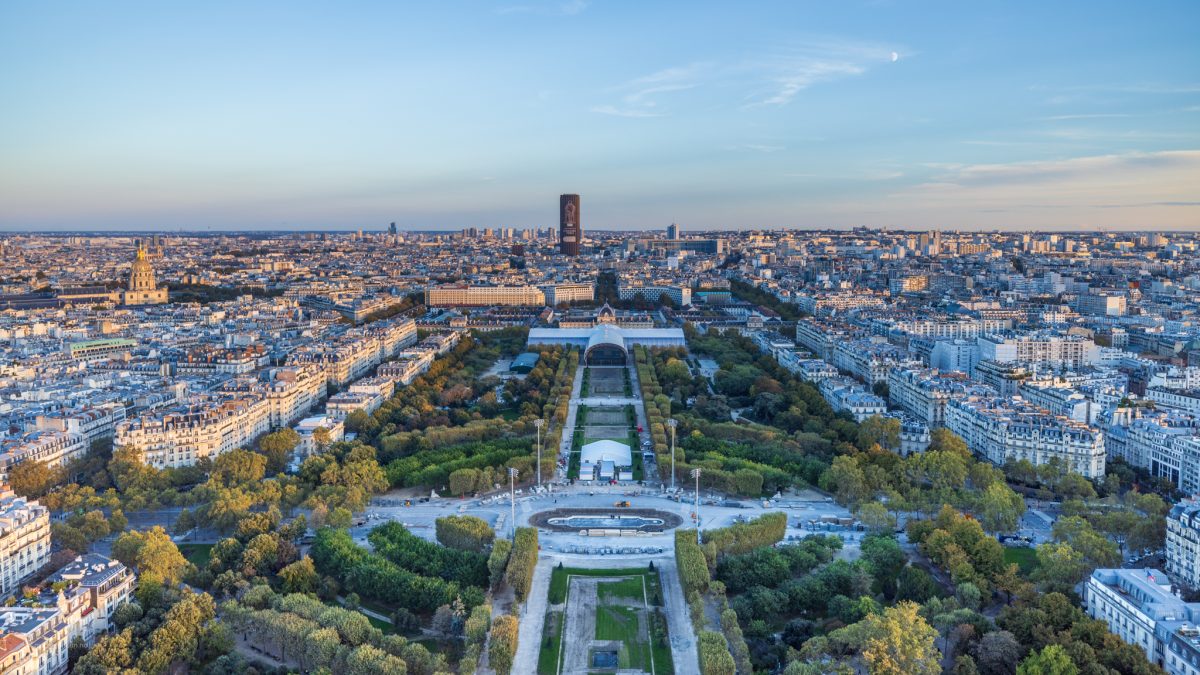
Seven frames from the Eiffel Tower as the sun goes down over the Seine
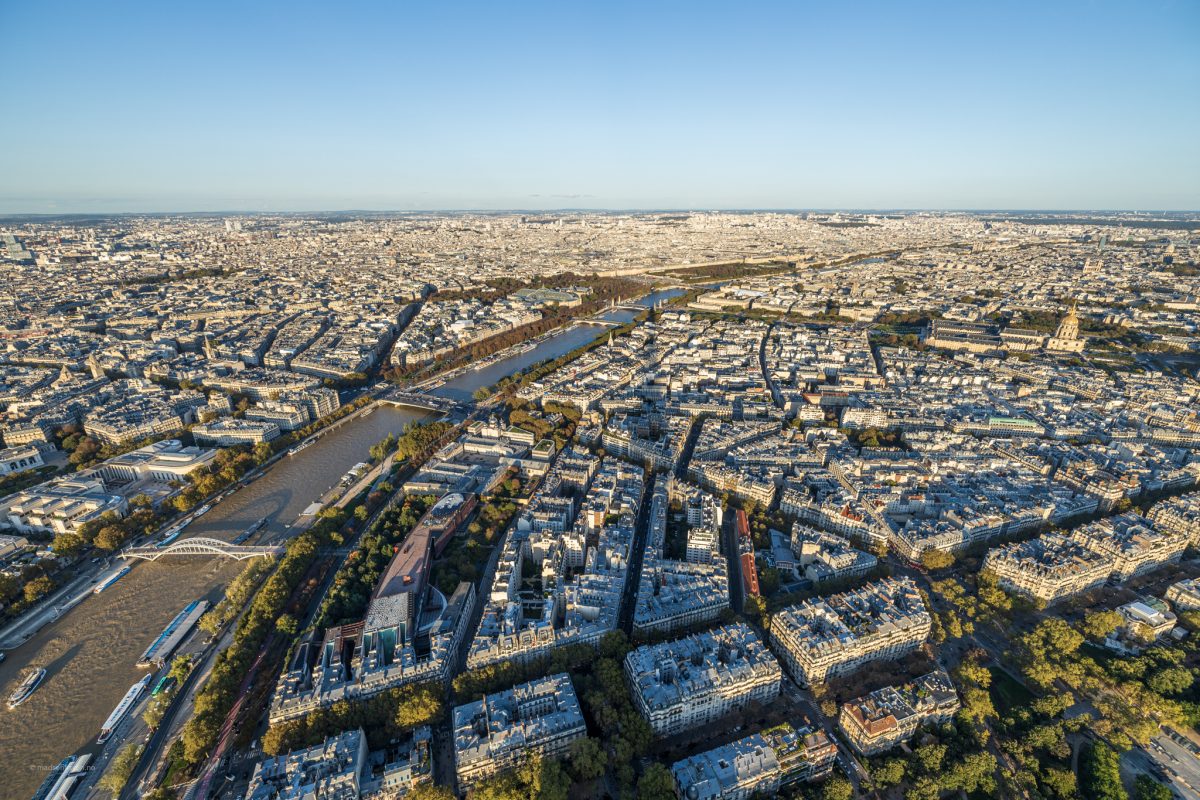
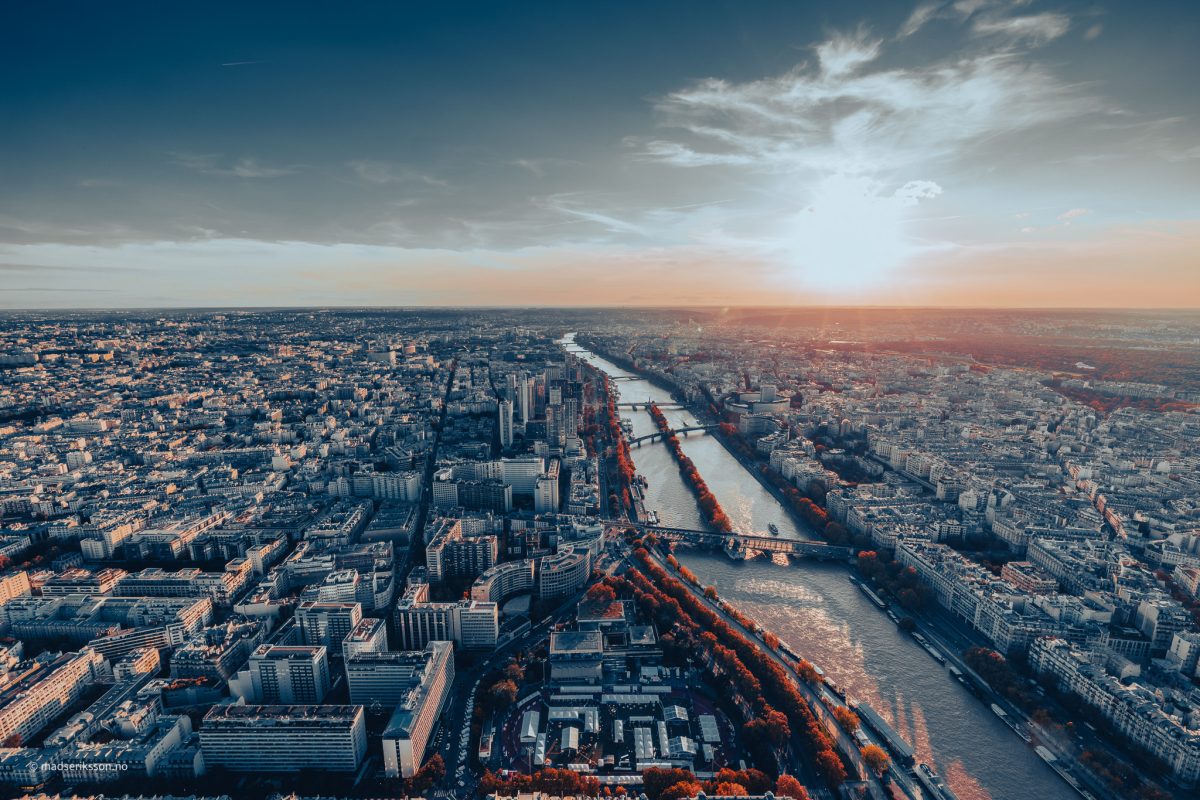
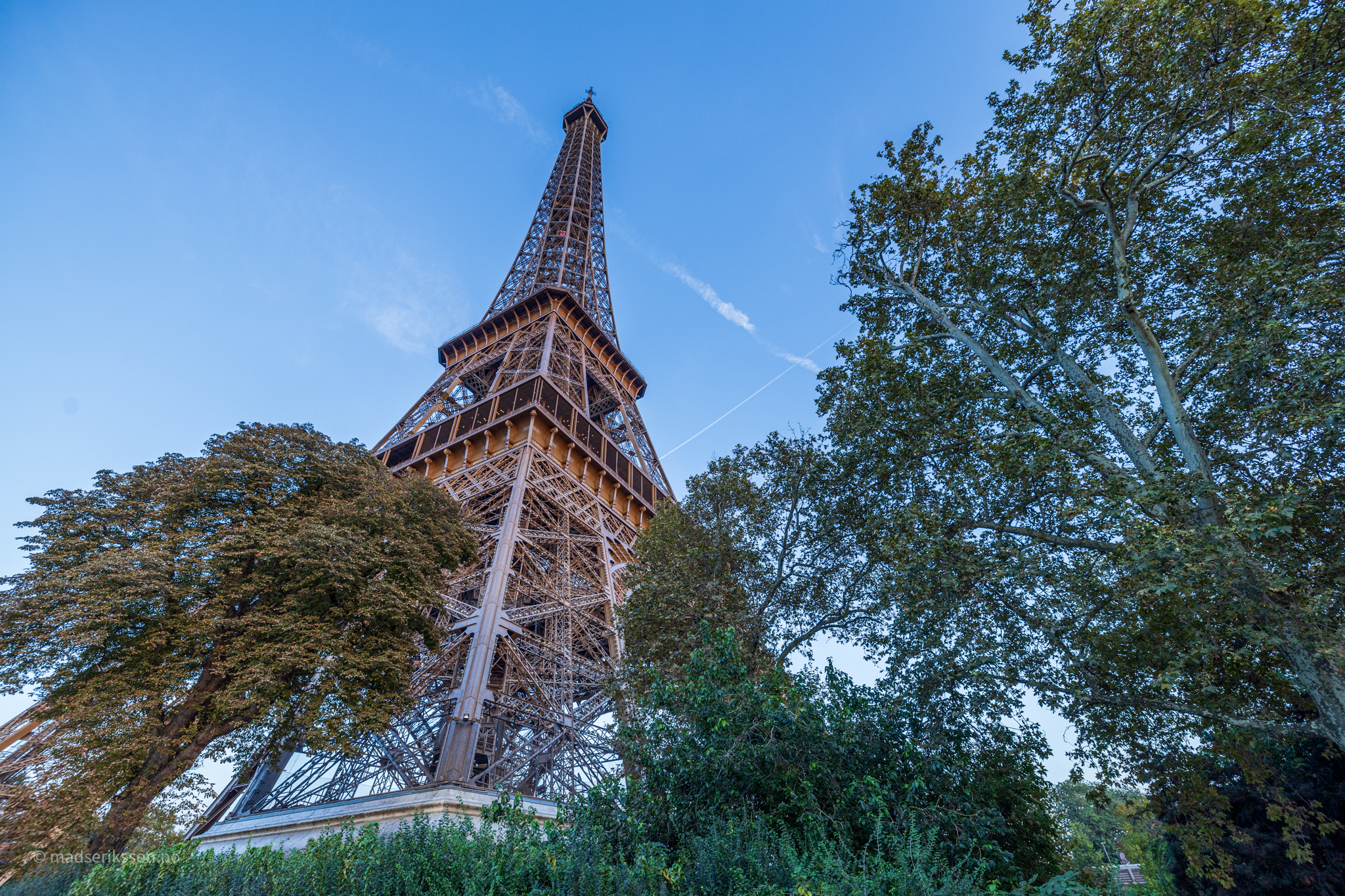
The Eiffel Tower has been the obvious place to look at Paris from since 1889, and the reason is clear from the platform. Downstream, the Seine curves to the south-west past the Île aux Cygnes, crossed first by the two-level Pont de Bir-Hakeim and then by a succession of road and rail bridges that catch the low light. In October the plane trees along the quays turn red, and the long shadows of the embankment blocks reach across the water.
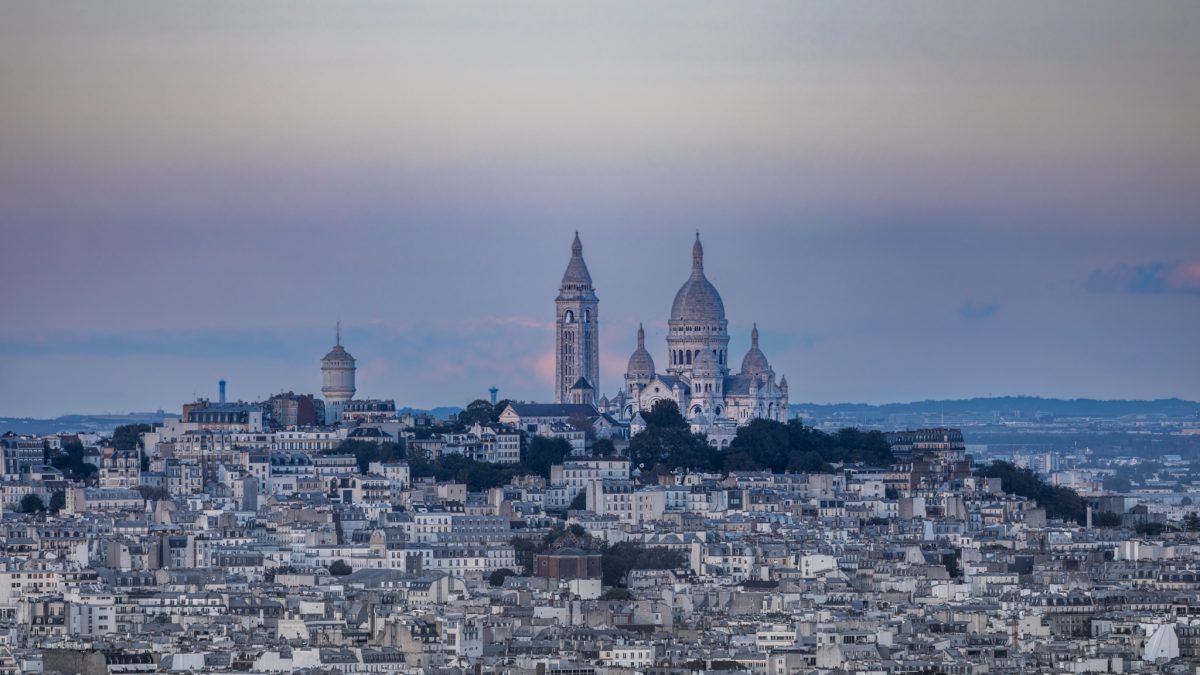
Turning round, the Champ de Mars runs straight to the École Militaire, with the dark slab of the Tour Montparnasse behind it. To the north-east the Arc de Triomphe sits at the hub of its twelve avenues, visibly smaller than its reputation from 300 m up, and far beyond it the white domes of Sacré-Cœur stand on the 130 m hill of Montmartre, picked out by a long lens as the sky turns pink.
Rooftops, Tracks and Towers
The Eiffel Tower seen from the other high point in the city, by day and by night
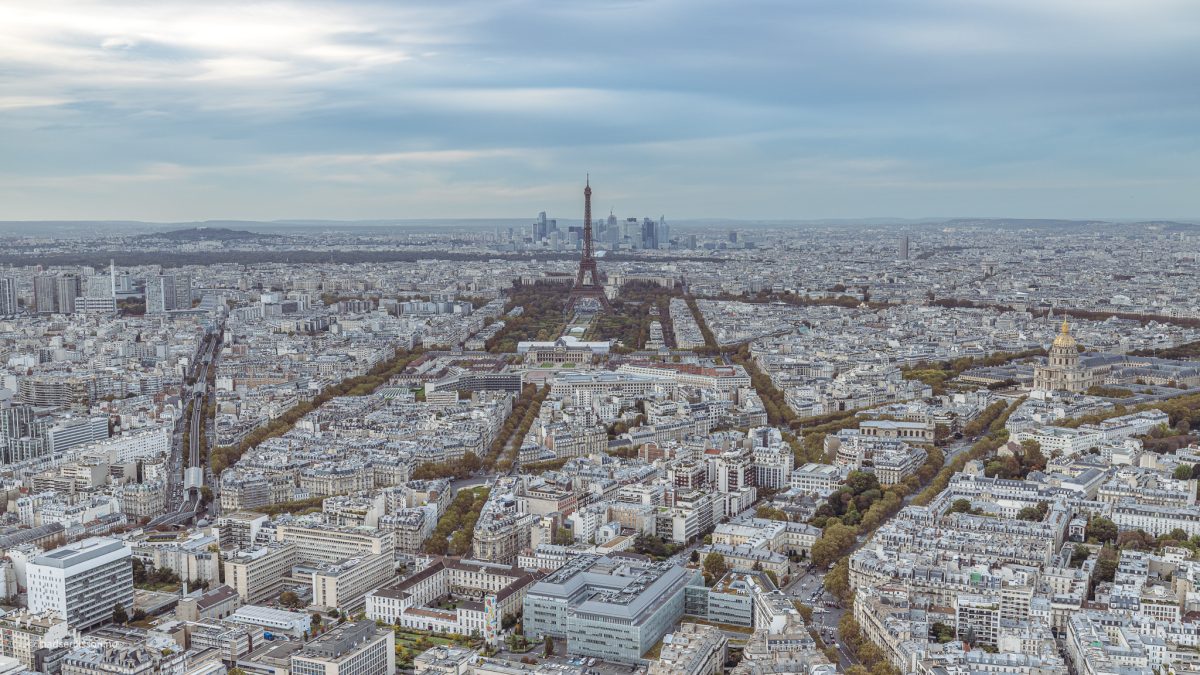
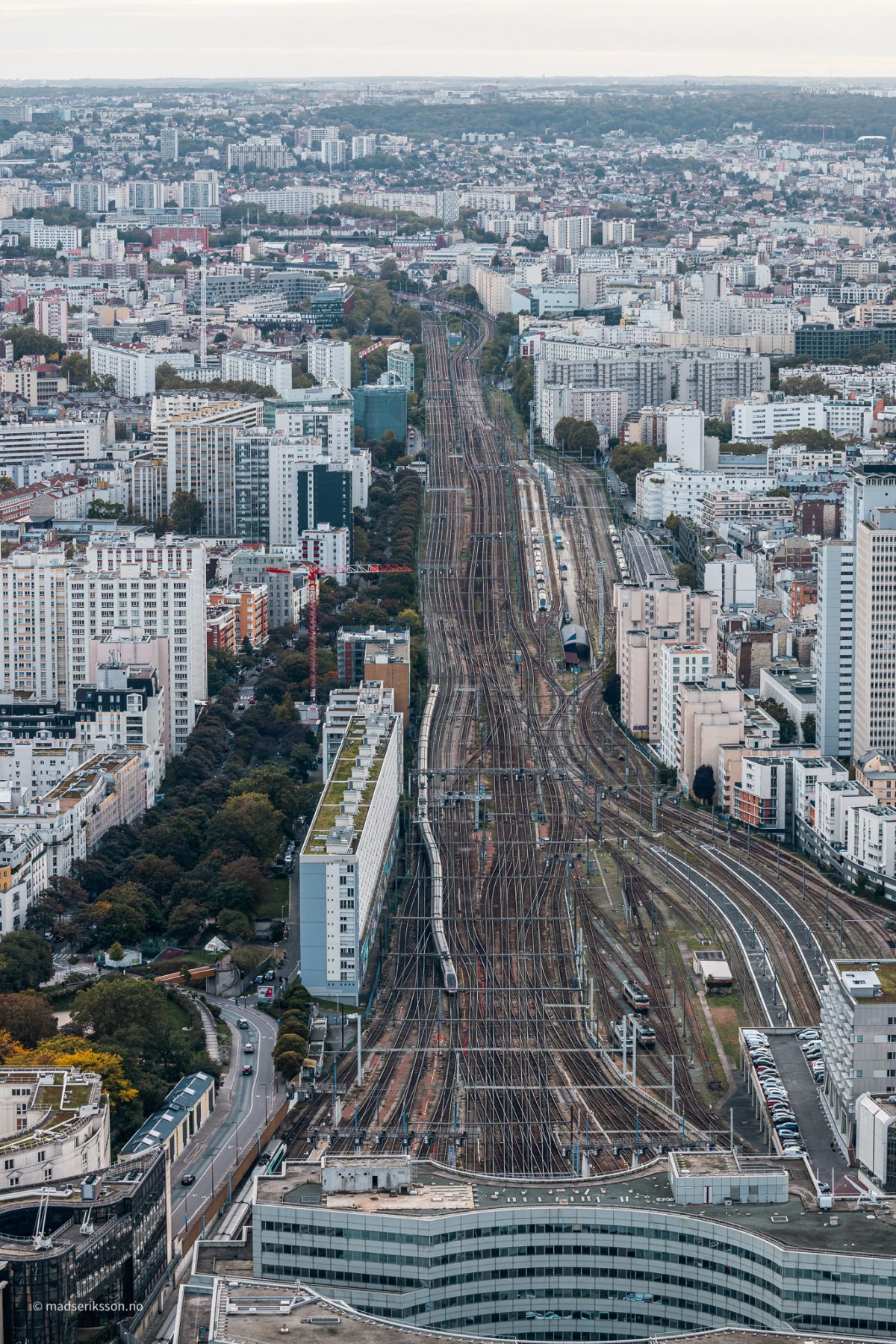
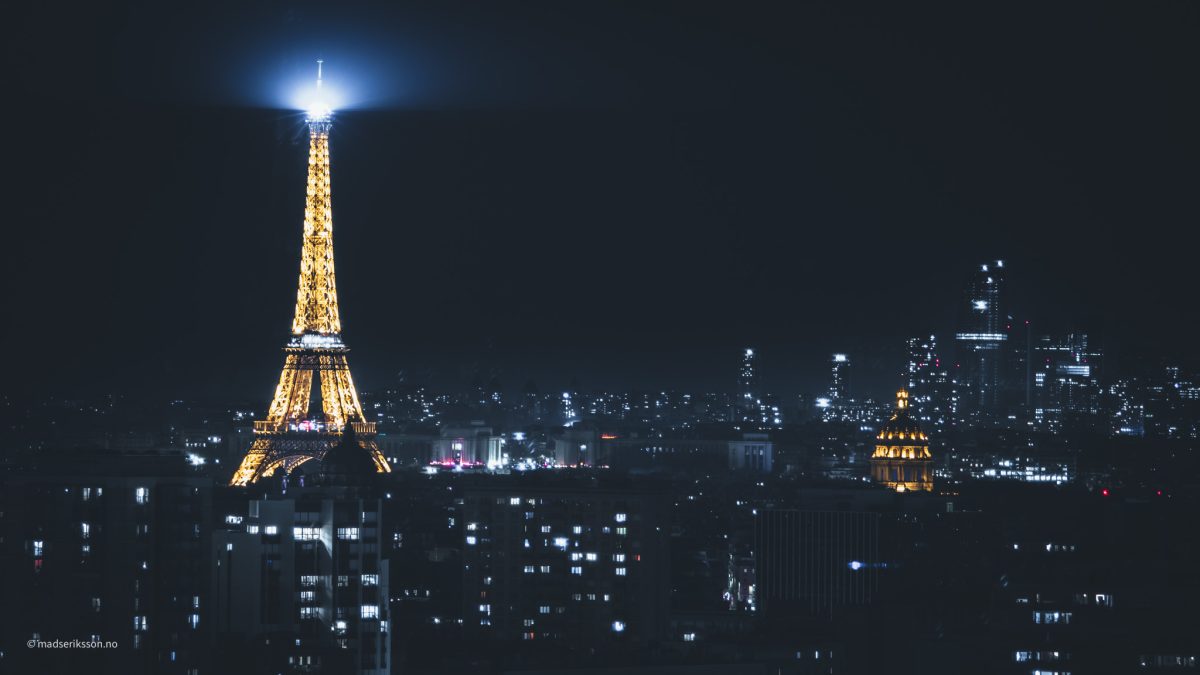
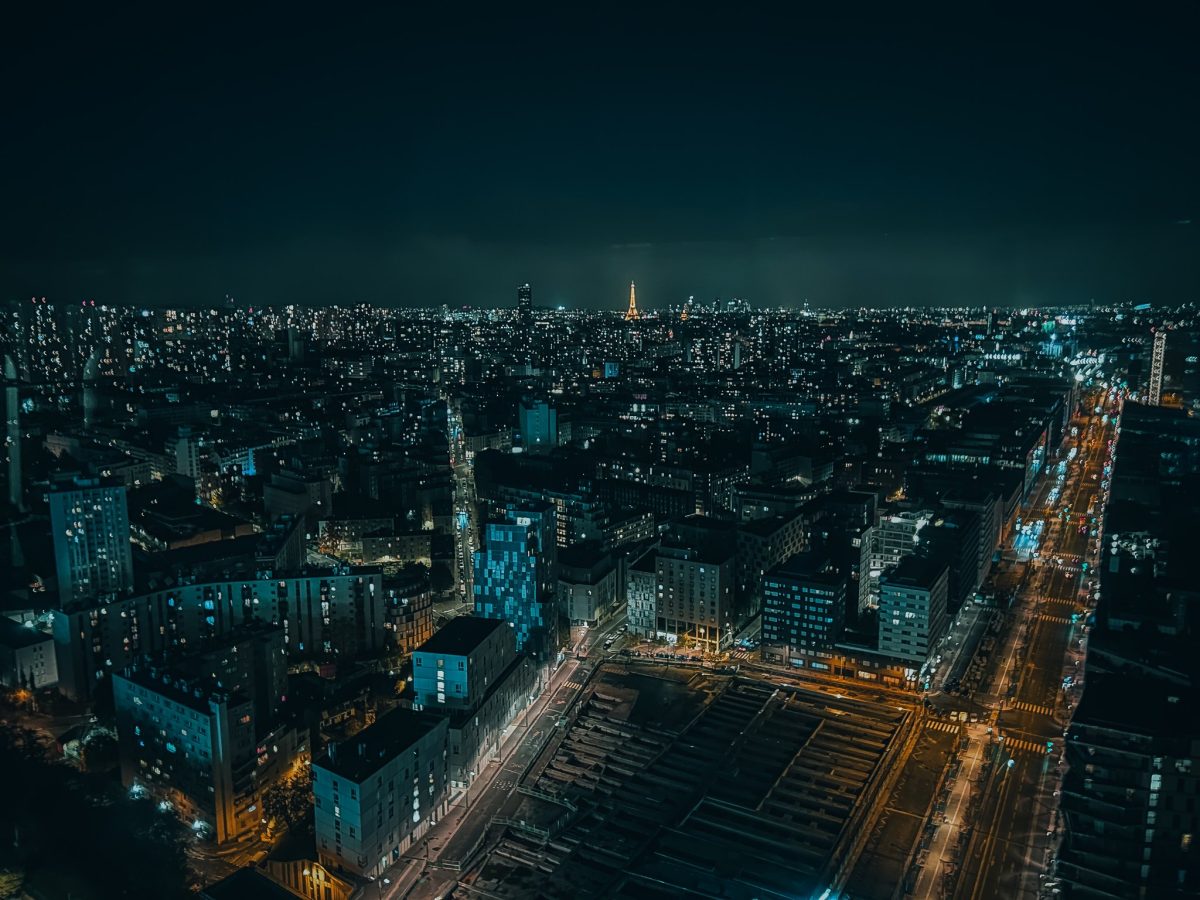
The 56th-floor deck of the Tour Montparnasse is about 200 m above the street, and from here the geometry of Paris is laid out like a plan. The Eiffel Tower rises out of the green rectangle of the Champ de Mars, the gilded dome of Les Invalides sits to its right, and the cluster of La Défense stands on the horizon behind both. Directly below, the tracks of the Gare Montparnasse fan out towards the south-west between the tower blocks of the 14th and 15th arrondissements.
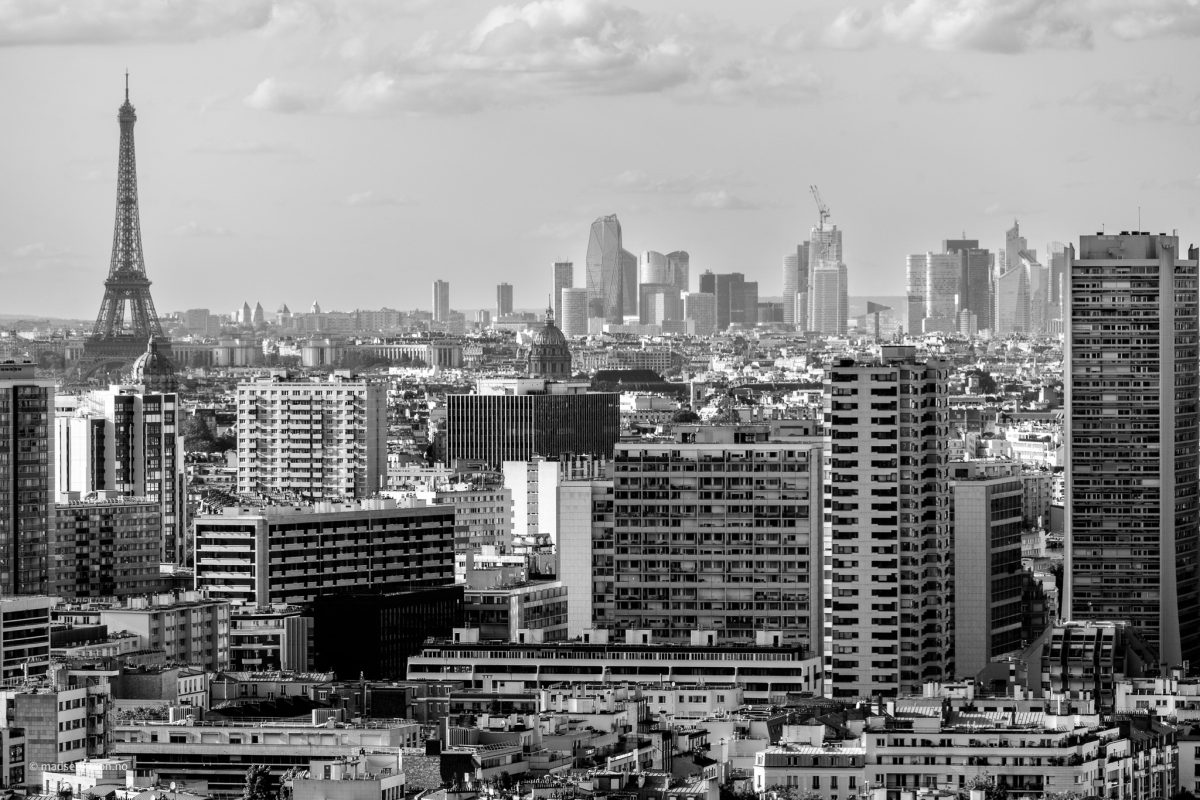
The black-and-white frame and the night frame are taken from a lower vantage point to the south, where the 1960s and 1970s high-rises of the 13th and 15th stack up in front of the tower. After dark the tower is lit in gold and its beacon sweeps the sky, and the dome of Les Invalides catches the same light on the right.
The Tower at Dusk
The classic view across the river, and the river itself in autumn
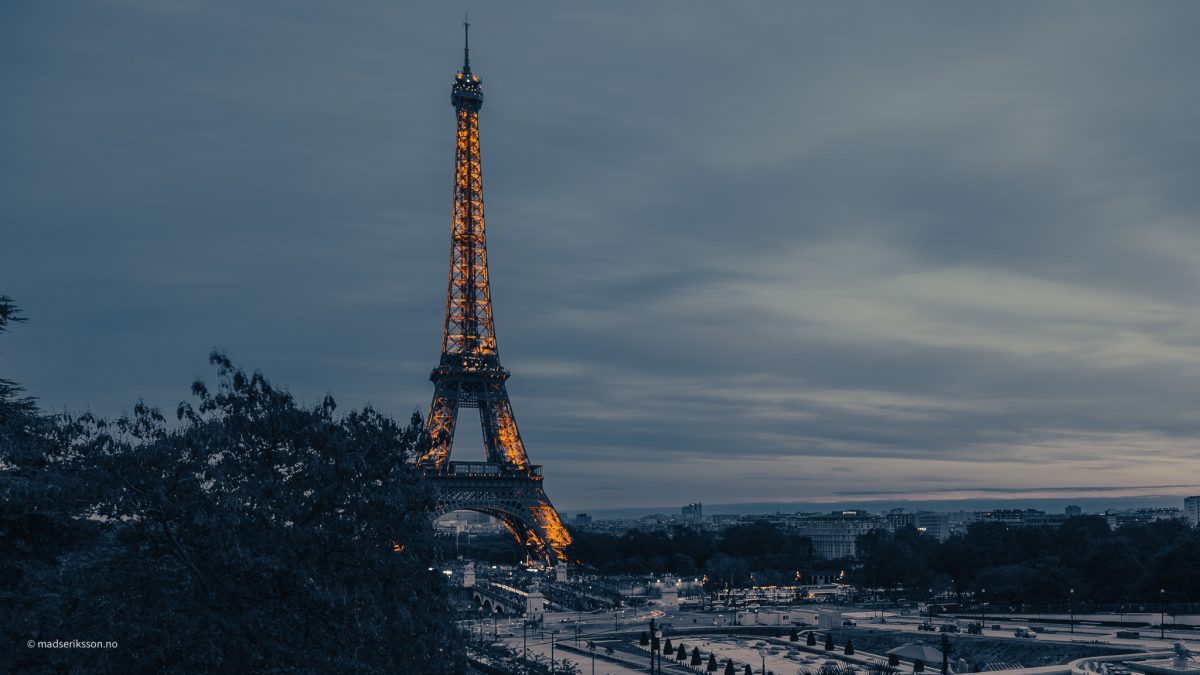
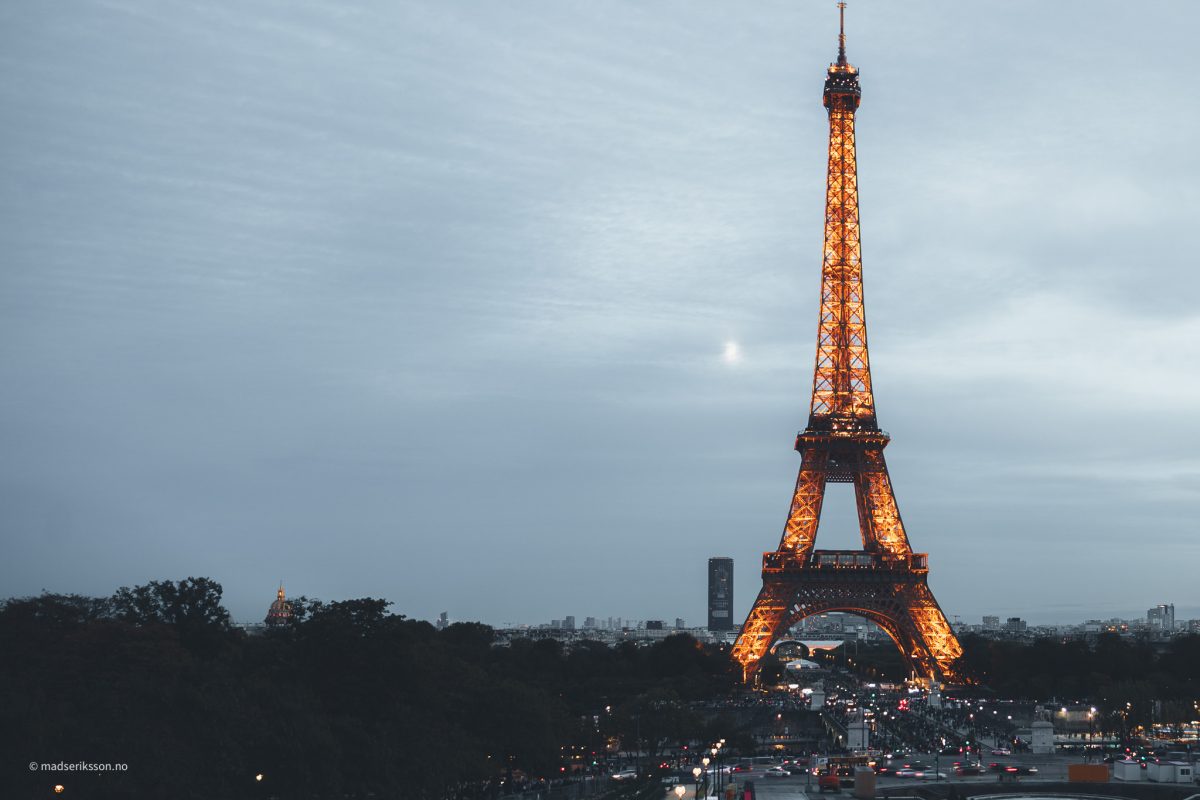
The terrace of the Palais de Chaillot at Trocadéro, built for the 1937 exhibition, faces the Eiffel Tower across the Seine and the Jardins du Trocadéro, and it is the place to watch the tower’s lights come on. In these frames the sky is grey and heavy, the trees of the gardens have gone dark, and the golden lattice of the tower stands out against the cloud with the dome of Les Invalides and the Tour Montparnasse behind it.
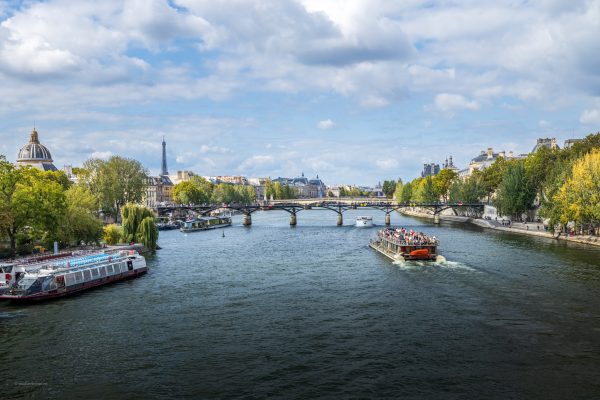
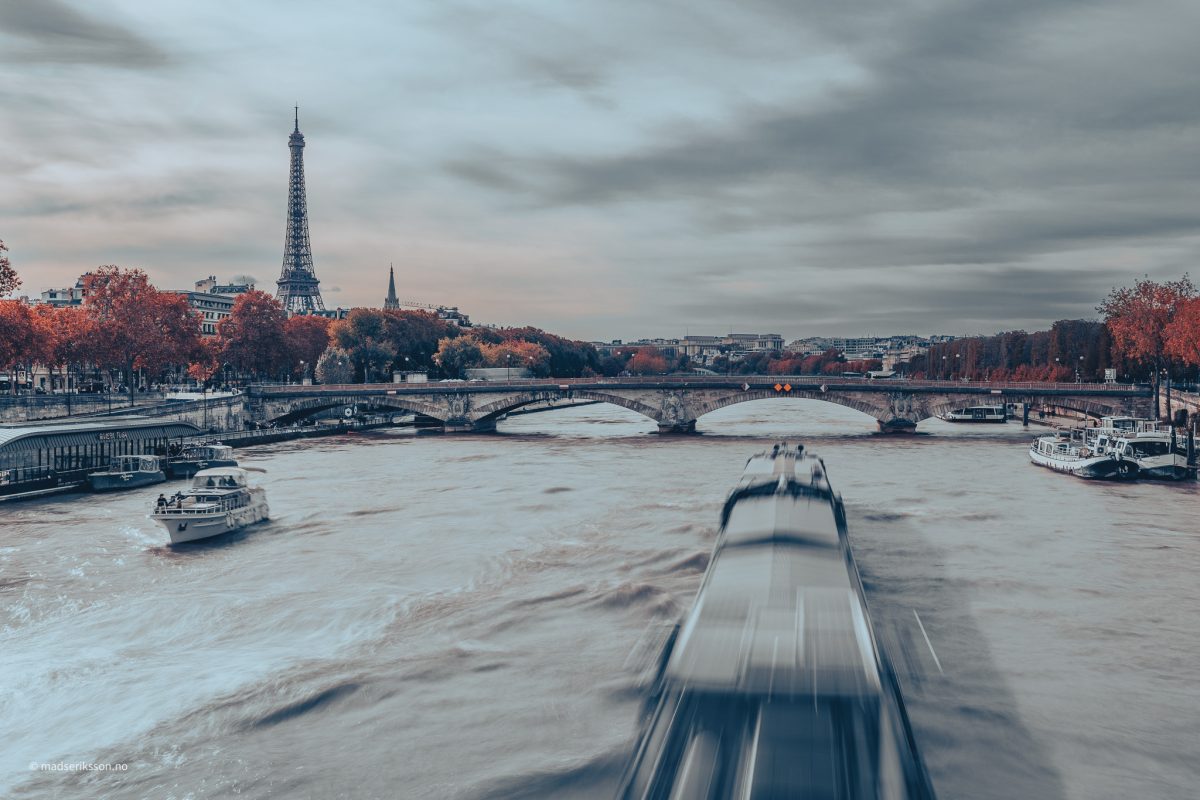
The third frame is taken from a bridge further downstream with the tower on the left, as a tour boat passes underneath on the brown autumn water and the next stone bridge closes the view. The Seine is the real axis of the city, and the 37 bridges that cross it within Paris are where most of its views begin.
The Arch at the Hub
Napoleon’s monument by day, by night and from directly beneath
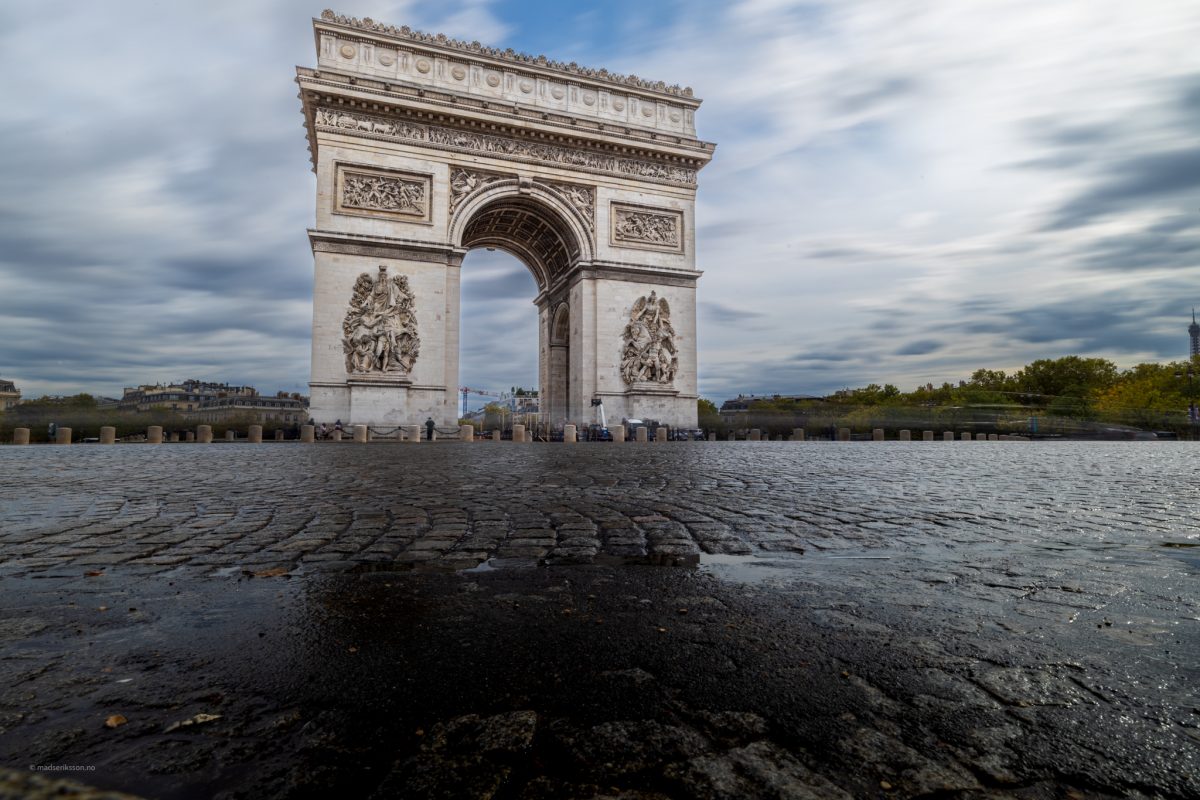
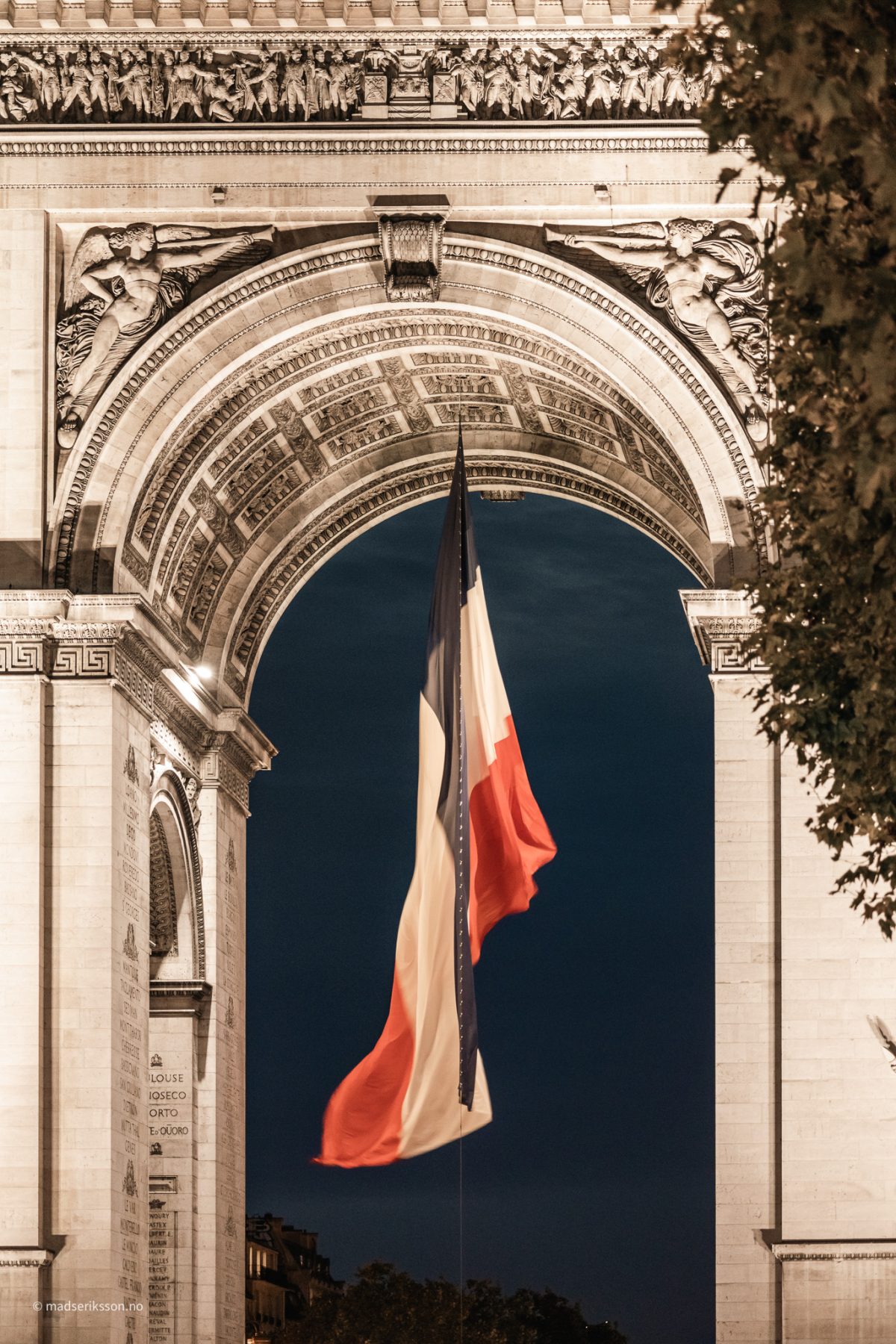
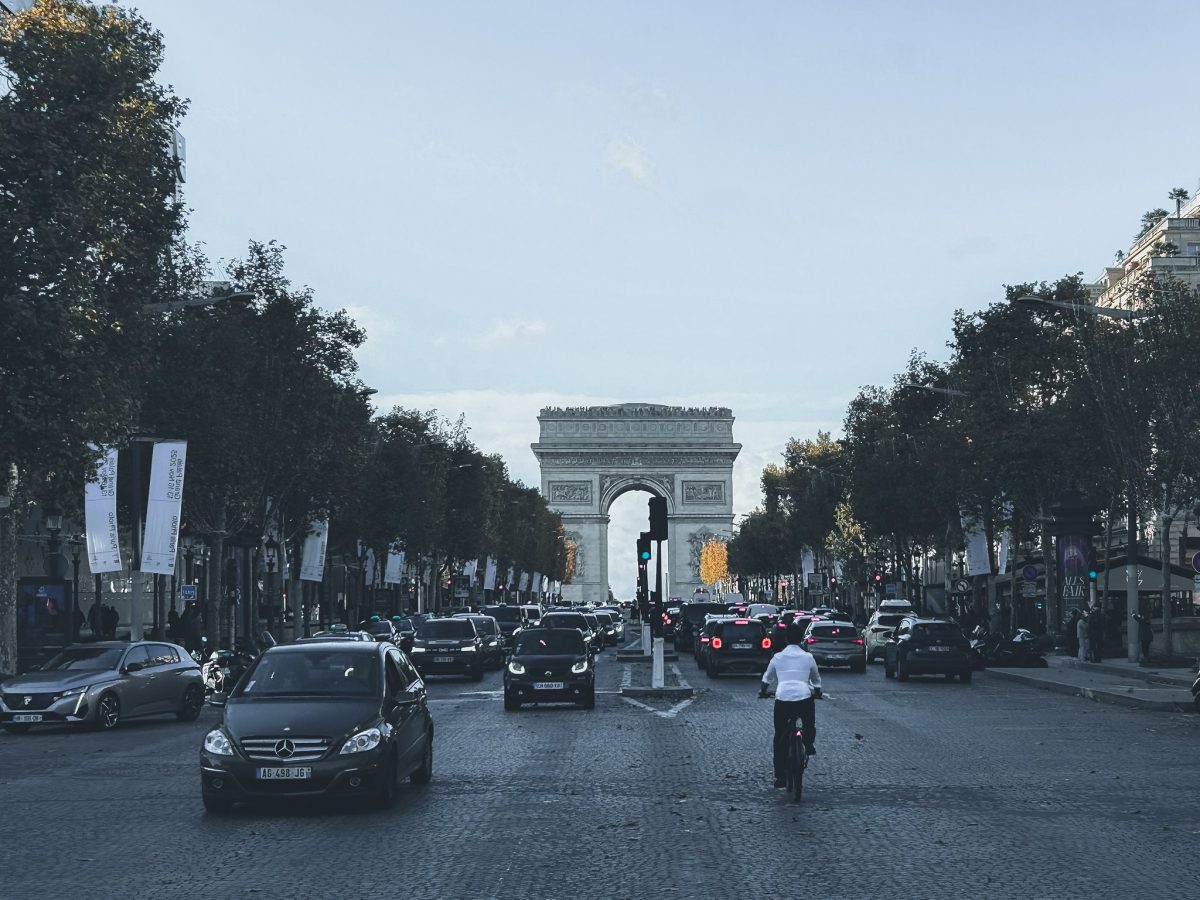
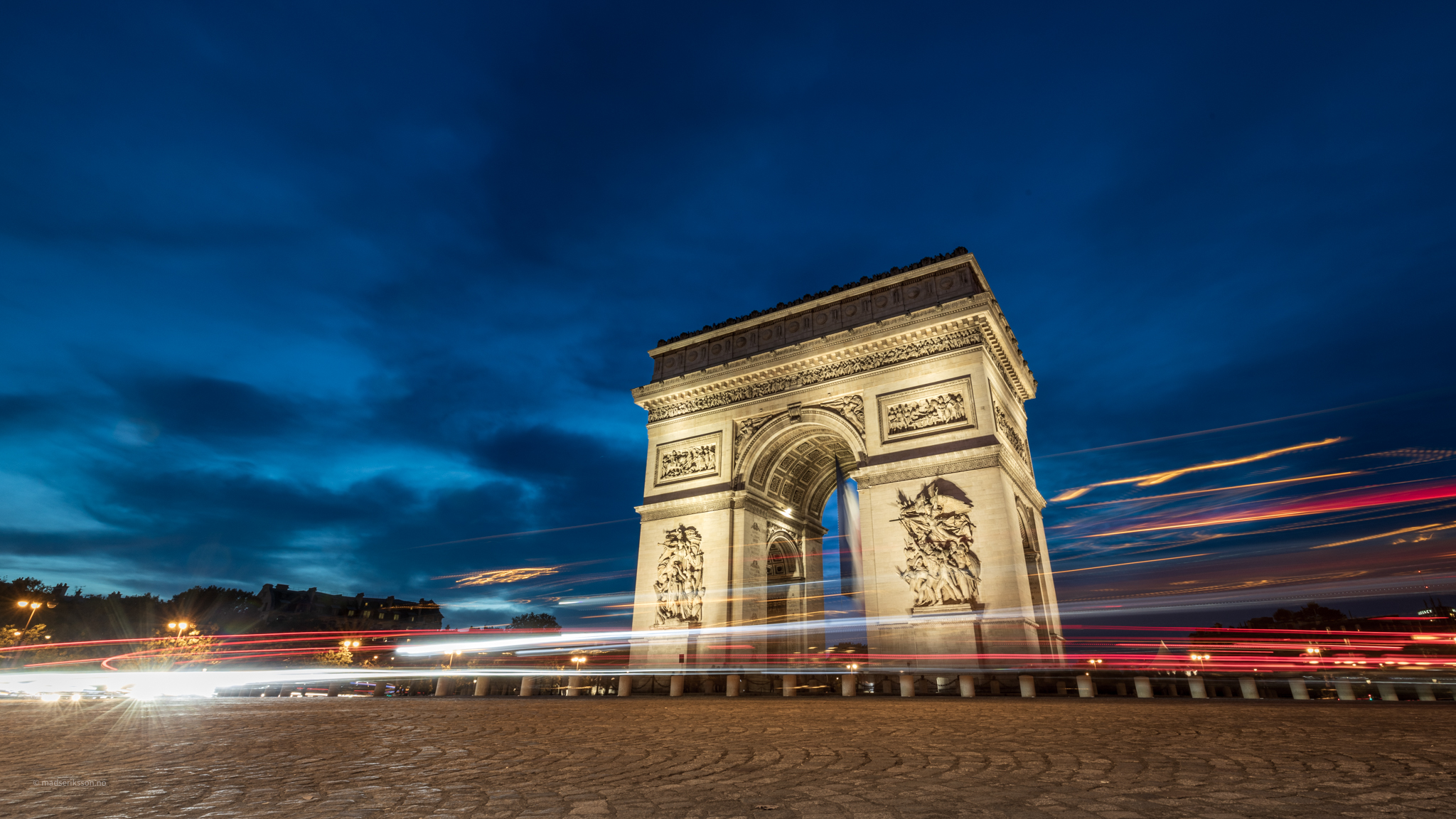
The Arc de Triomphe was commissioned by Napoleon in 1806 and only inaugurated in 1836, long after his fall. It is 50 m high and 45 m wide, and it stands at the centre of the Place Charles de Gaulle, where twelve avenues meet. By day the wet cobbles of the roundabout reflect the sculpted groups on its piers, and the long exposure smears the cloud above it.
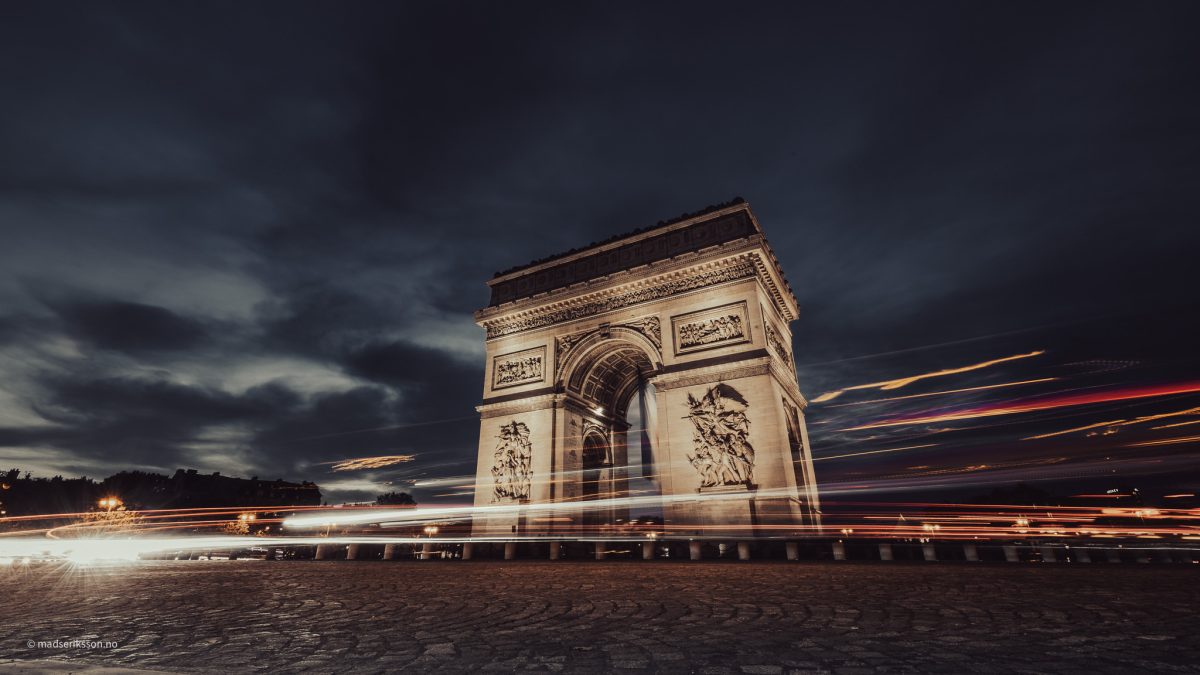
At night the traffic on the roundabout turns into continuous streaks of light around the base, while the arch itself is floodlit from below. The last frame looks straight up into the vault, where the French flag hangs from the top of the arch above the Tomb of the Unknown Soldier, in place since 1921.
The Pyramid after Closing
The glass pyramid and the empty courtyard of the Louvre at night
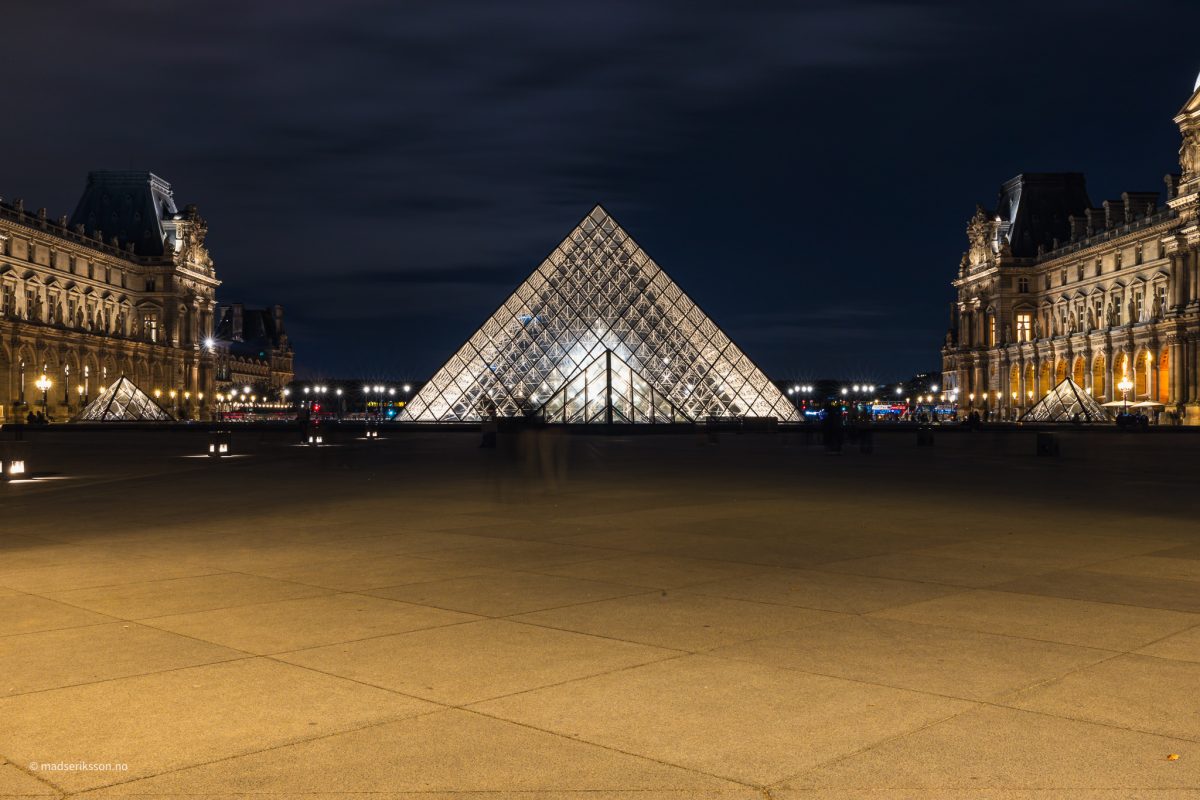
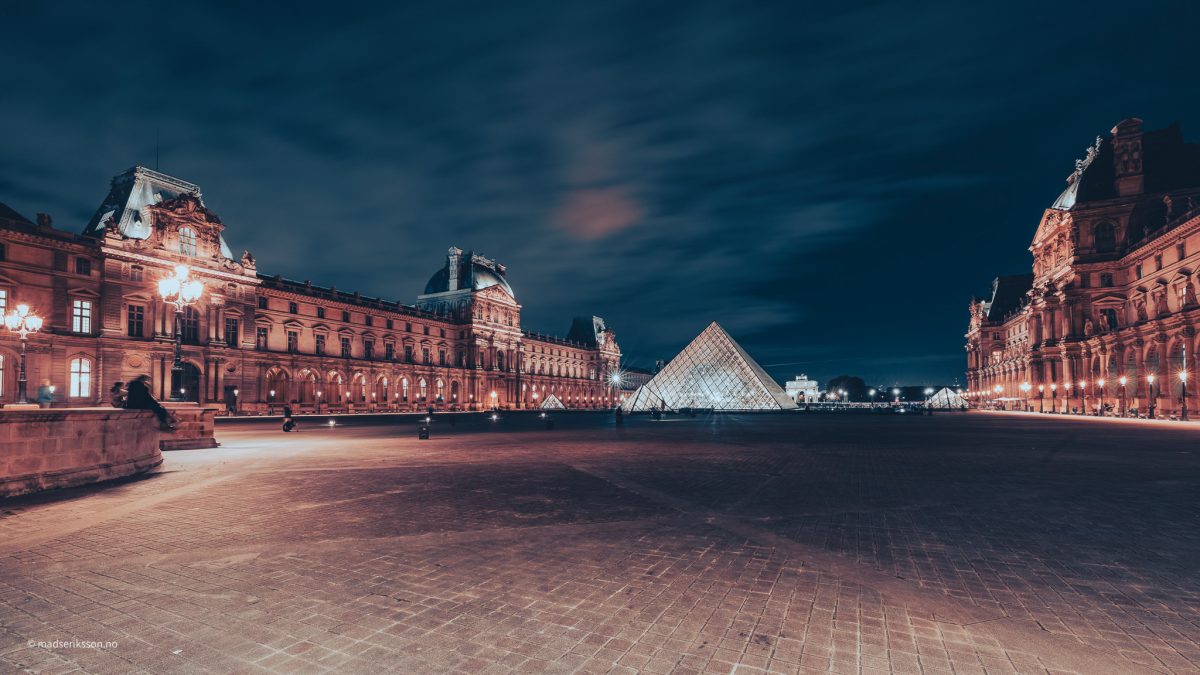
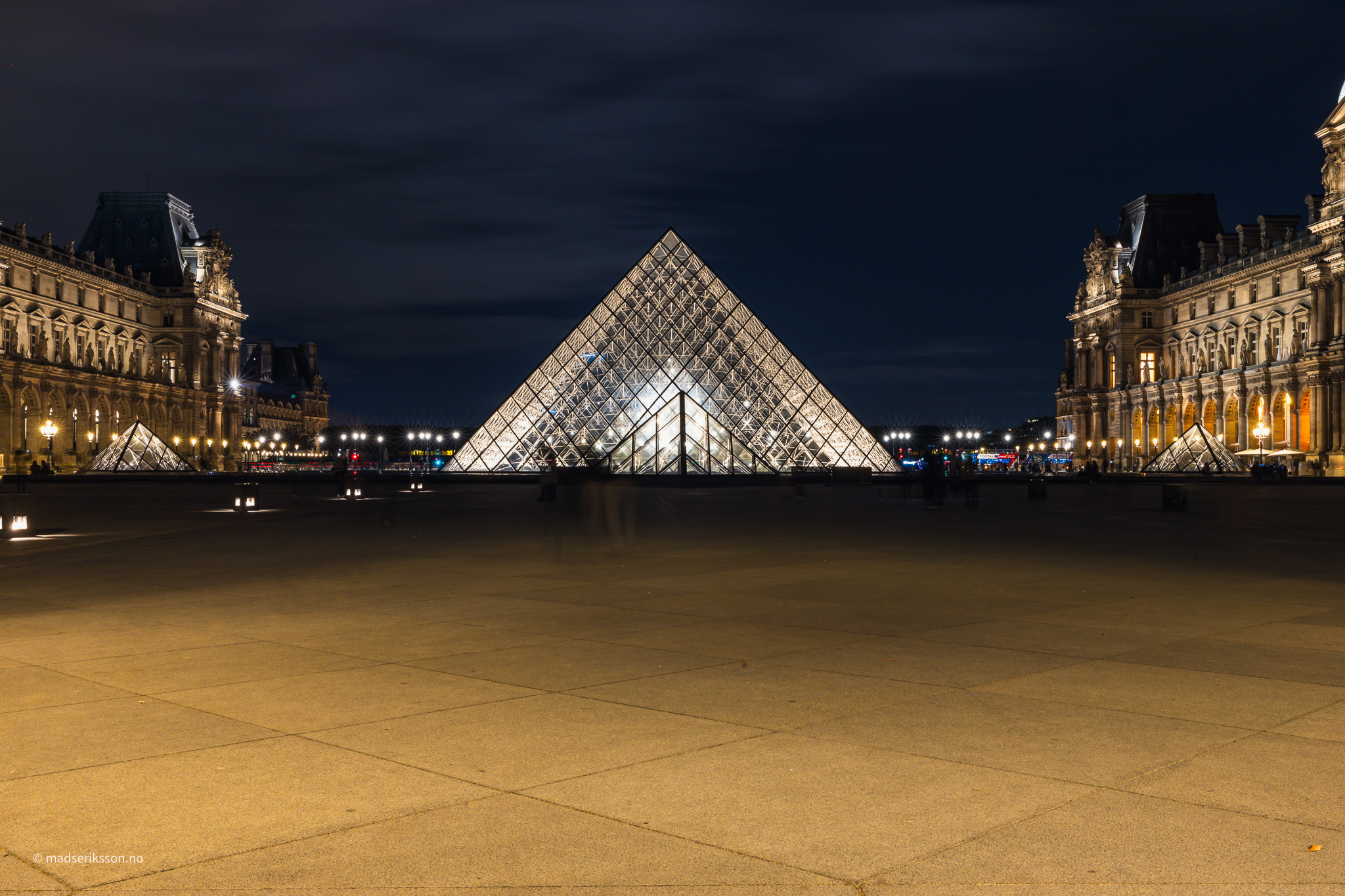
After the museum closes the Cour Napoléon empties out, and the pyramid is left alone between the lit façades of the Richelieu and Denon wings. I. M. Pei’s structure, opened in 1989, is 21.6 m high on a base of 34 m a side and is made of 673 panes of glass; at night it reads as a lantern, with the smaller pyramids on either side repeating its shape at ground level.
The wider frame shows the whole courtyard with the Arc de Triomphe du Carrousel beyond, and the third frame uses the old gas-style lamp standards of the square as a frame for the glass. The contrast between the Second Empire stone and the steel-and-glass pyramid was the whole argument about the project in the 1980s; from here it looks settled.
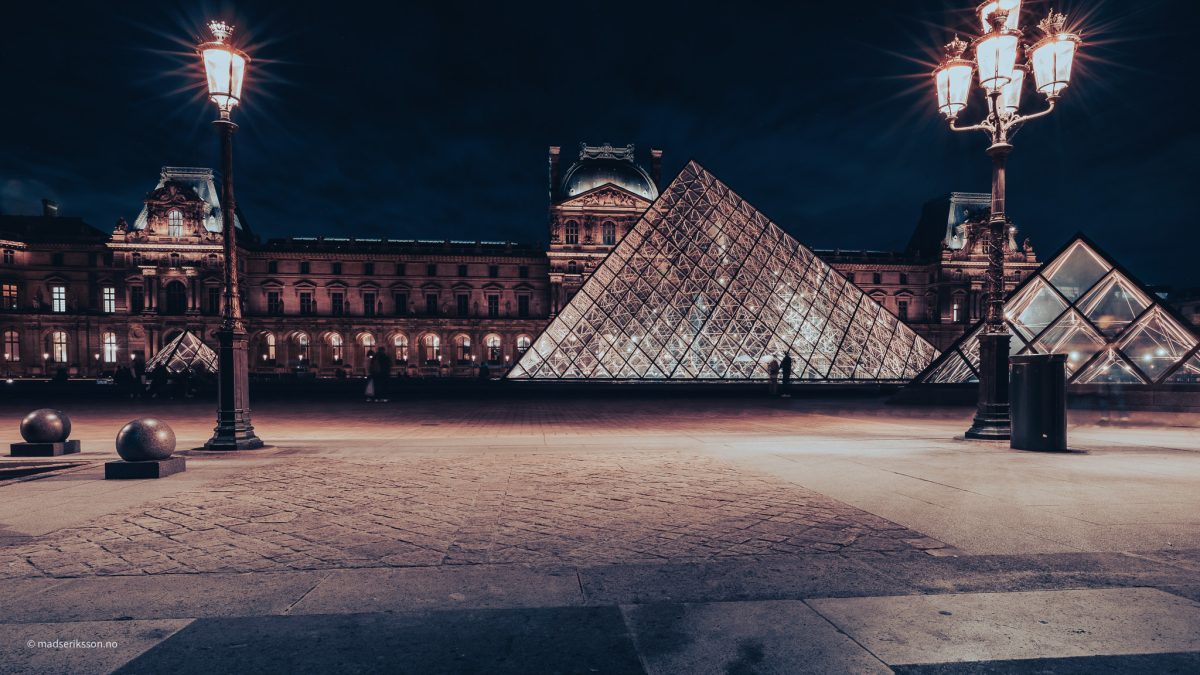
The New Monuments
Grands projets of the 1980s and 1990s at the edges of the centre
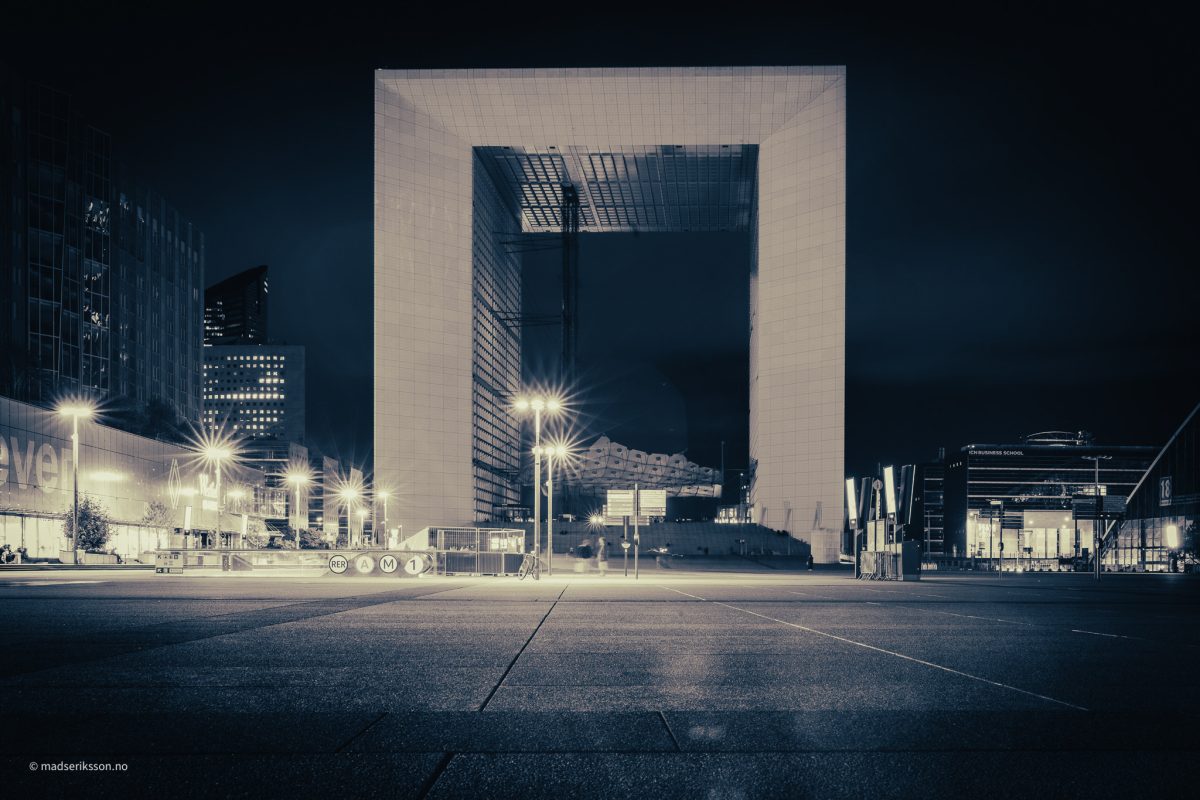
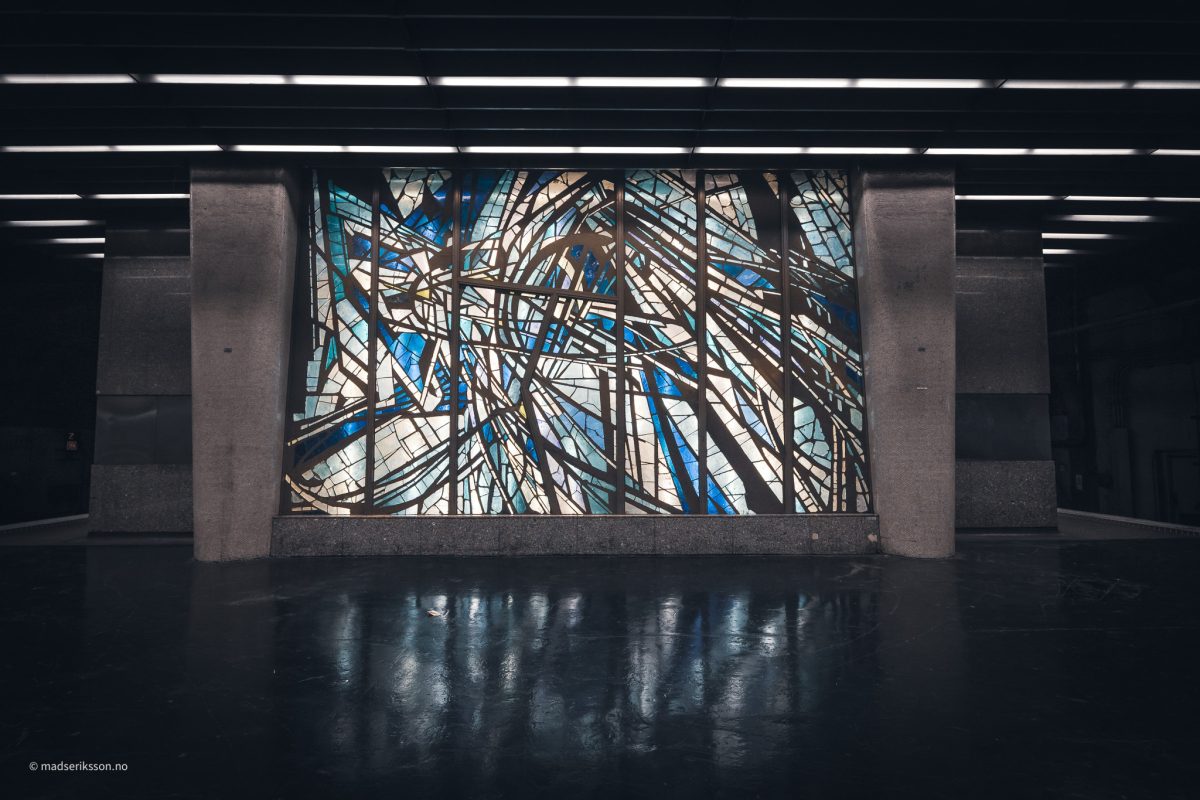
The last group gathers the modern Paris that sits just outside the postcard. The Grande Arche at La Défense, inaugurated in 1989, is a hollow cube 110 m on each side, set at the far end of the axis that runs from the Louvre through the Arc de Triomphe. At night its white marble faces stand almost empty of people above the lamps of the esplanade. A stained-glass panel in an underground station nearby belongs to the same world of lit public space.
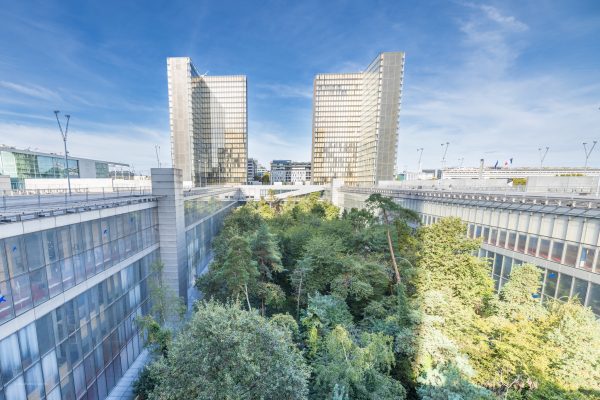
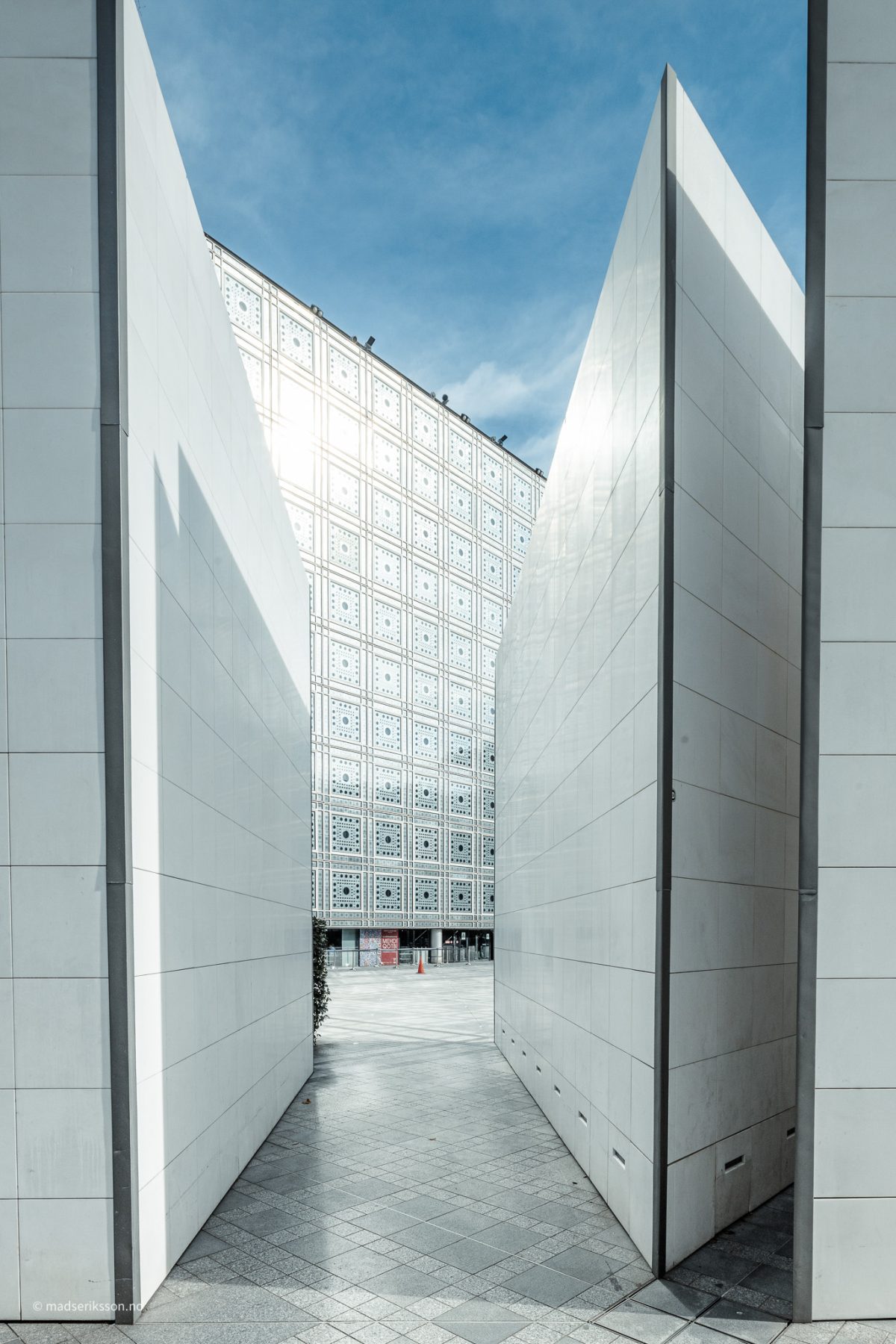
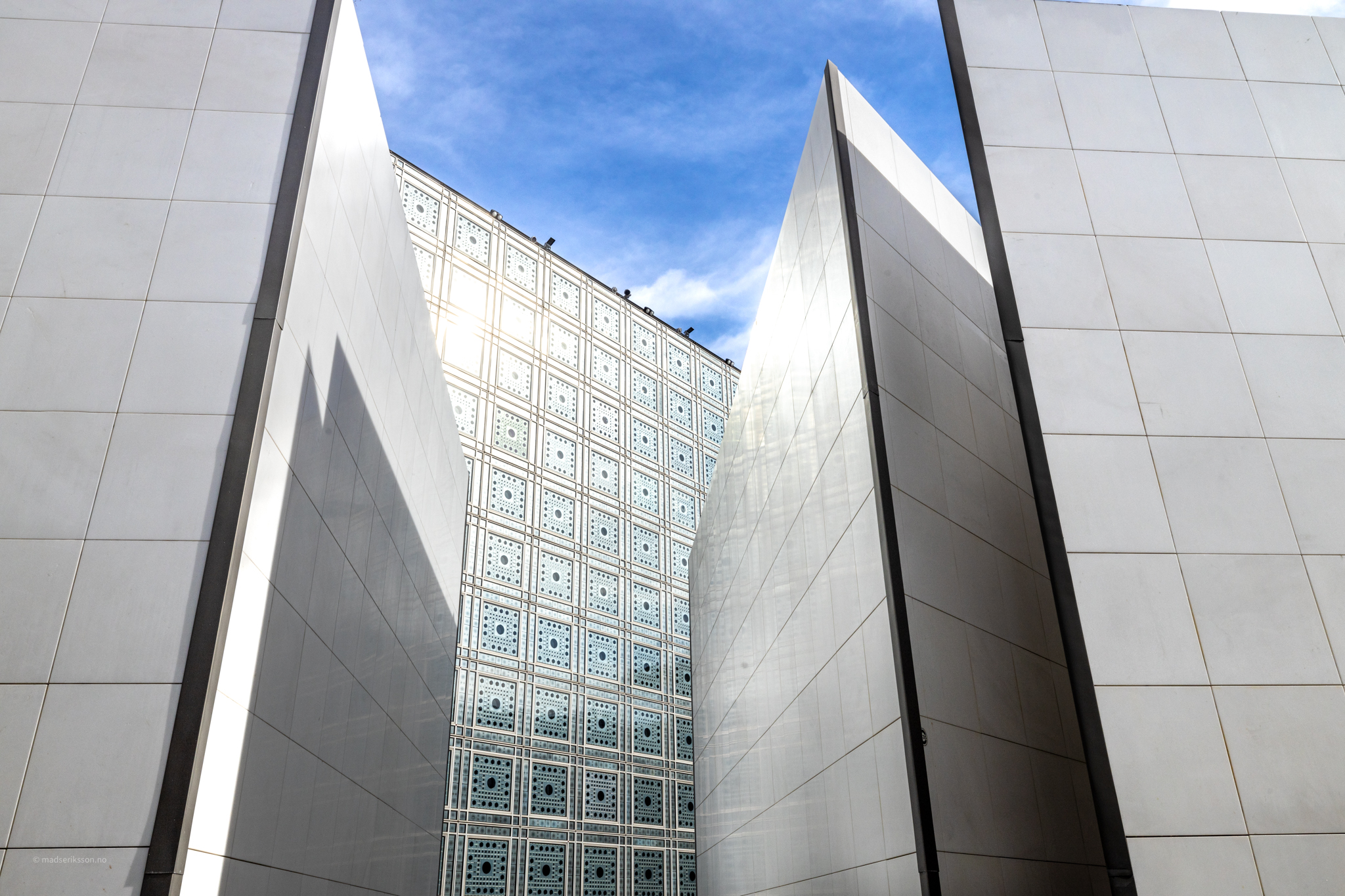
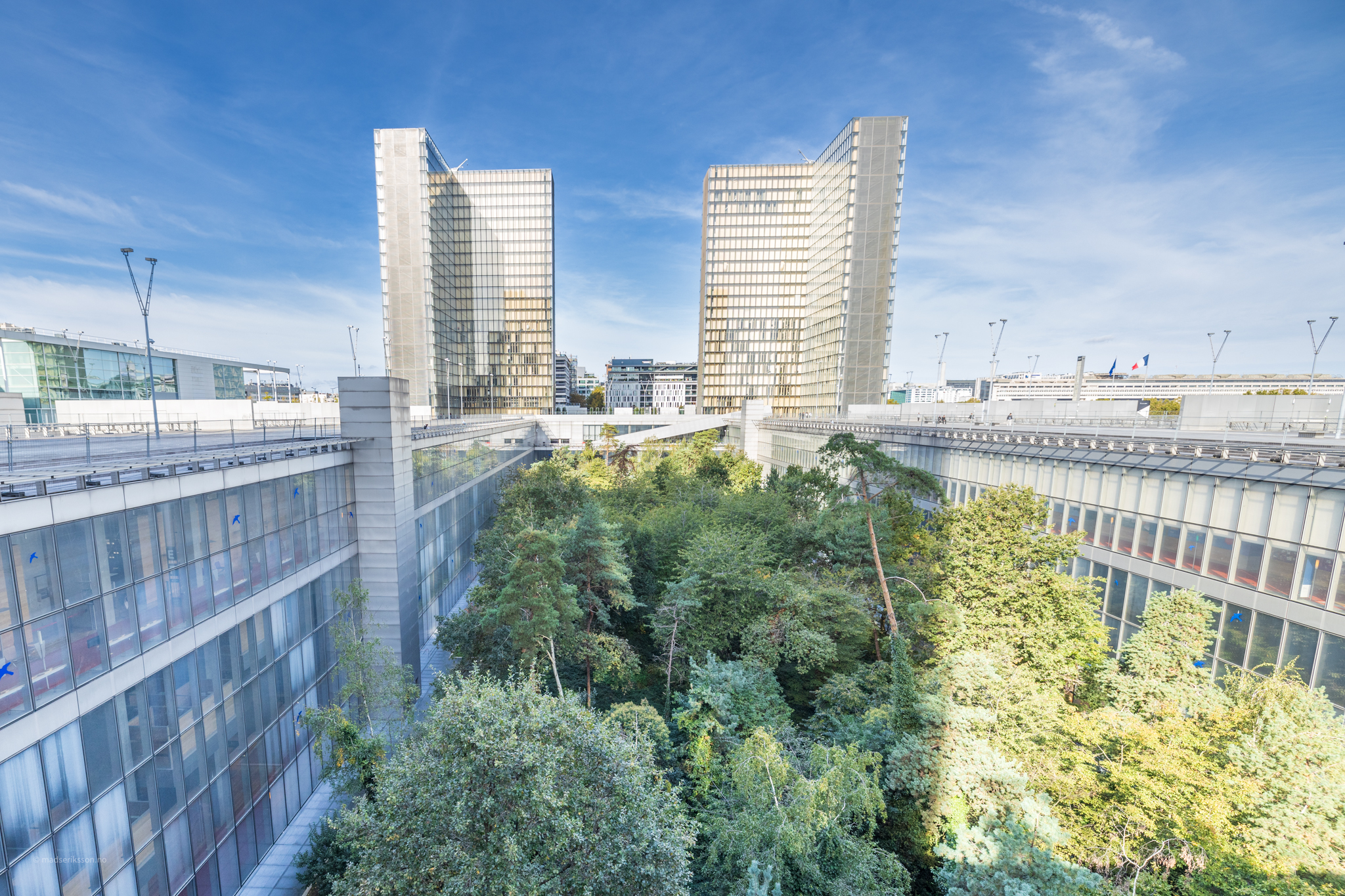
On the Left Bank, Jean Nouvel’s Institut du Monde Arabe of 1987 is reached through a narrow slot between white walls, its south façade covered in the 240 motor-driven apertures that open and close with the light. Further east, Dominique Perrault’s Bibliothèque nationale de France of 1996 raises four 79 m glass towers shaped like open books around a sunken garden, with steel canopies shading the wooden esplanade and visitors reflected in the glass.
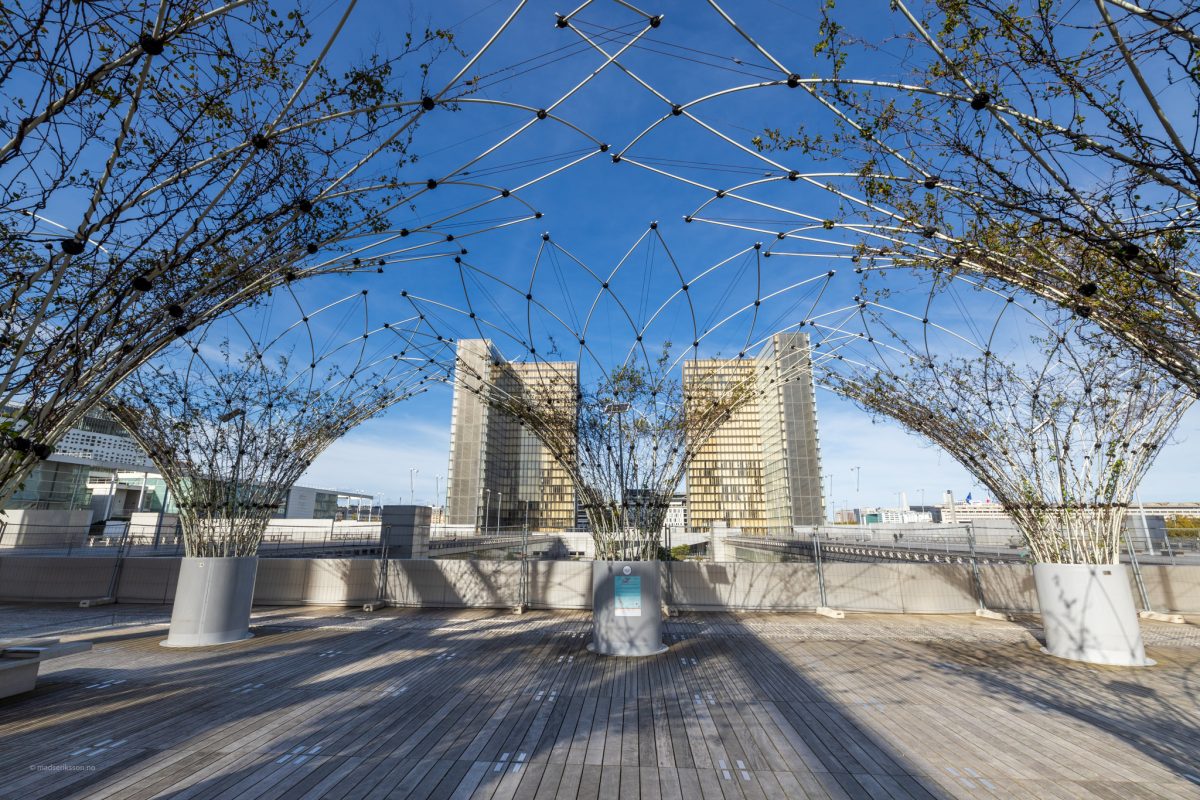
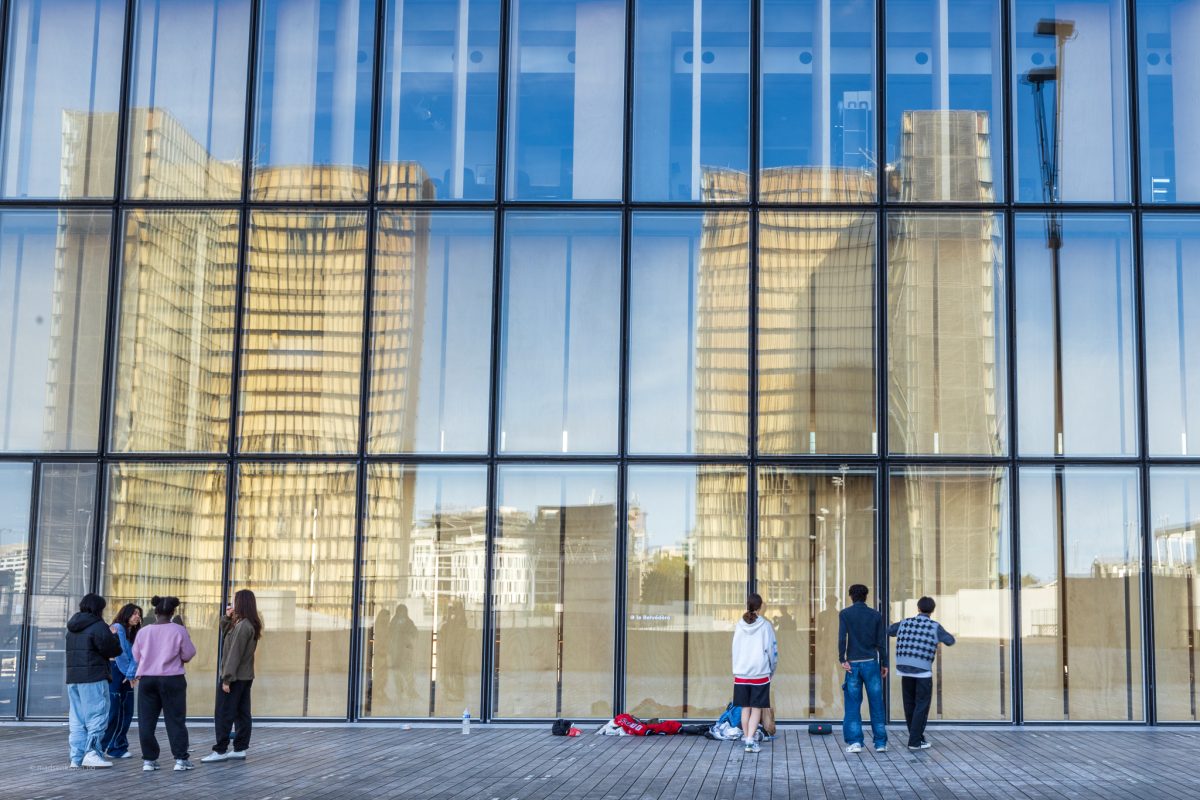
«Paris rewards height. Seen from the Eiffel Tower or the Tour Montparnasse, the city resolves into a plan of grey roofs, green axes and a brown river, with its monuments placed on the lines where the avenues meet. Seen from the pavement after dark, it becomes a series of lit objects in empty space: a glass pyramid, a stone arch, a white cube. Both views are true, and the frames here move between them.»
More in the same area
 CitiesParis: The City of Lights
 ArchitectureThe Eiffel Tower: Built for a Fair, Saved by the Radio
 ArchitectureInstitut du Monde Arabe, Paris: Jean Nouvel’s Light-Sensitive Landmark on the Seine
 LibrariesBibliothèque nationale de France: Six Centuries of Books, Two Sites in Paris
 ArchitectureLe Monde Headquarters, Paris: Snøhetta’s Glass Bridge Over the Austerlitz Tracks
 ArchitectureArc de Triomphe: Napoleon’s Arch, the Unknown Soldier and the View Down Twelve Avenues