Copenhagen grew from a fishing harbour that Bishop Absalon fortified in 1167, and it still makes most sense from the water. A canal dug by soldiers and Swedish prisoners in the 1670s is now Nyhavn, the most photographed street in Denmark. A pleasure garden that opened outside the city walls in 1843 is still running as Tivoli, with a wooden roller coaster from 1914. The palace on Slotsholmen houses parliament, the Supreme Court and the Prime Minister’s Office under one roof, and its tower, at 106 metres the highest in the city, is free to climb. Add a small bronze mermaid, a self-governing hippie enclave and 21 Michelin-starred restaurants, and the Danish capital packs a remarkable amount into a city centre that can be crossed on foot in under an hour.

The city’s name says what it was: København, the merchants’ harbour. Bishop Absalon built a castle on a small island in the harbour in 1167, on the spot where Christiansborg stands today, and the town that grew up around it became the royal capital of a kingdom that for centuries also ruled Norway. Much of what visitors come to see was built by kings with large ambitions — Christian IV, who gave the city the Round Tower and the district of Christianshavn in the first half of the 17th century, Christian V, who had Nyhavn dug, and Frederik V, under whom the four rococo palaces of Amalienborg went up in the 1750s. Fires in the 18th century destroyed much of the medieval town, which is why the old centre today looks more 18th-century than medieval.
The modern city is defined just as much by what it has done with its water. The harbour that once served warships and warehouses is clean enough to swim in — the first harbour bath opened at Islands Brygge in 2002 — and the quaysides on both sides are lined with promenades, libraries, theatres and housing. Copenhagen is flat, compact and built for bicycles, so the main sights are close together: from Tivoli by the Central Station to the Little Mermaid at Langelinie is about three kilometres, and almost everything in this guide lies between those two points.
How to approach Copenhagen
This guide covers the city in four parts: the harbour front from Nyhavn past Amalienborg to the Little Mermaid; Tivoli, the 19th-century pleasure garden that still sets the rhythm of the city’s year; Slotsholmen and the old town, with Christiansborg, its free tower and the Round Tower; and Christianshavn, home to the Freetown of Christiania, together with the food scene that made Copenhagen one of the most talked-about dining cities in the world.
Copenhagen in 3D
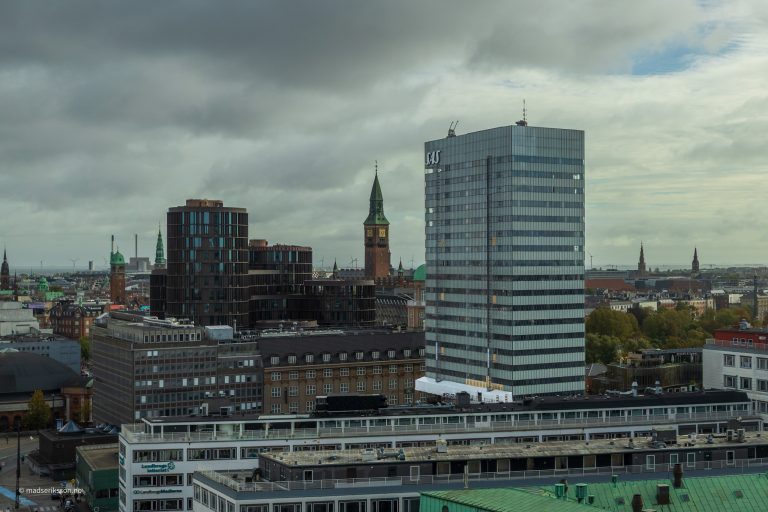
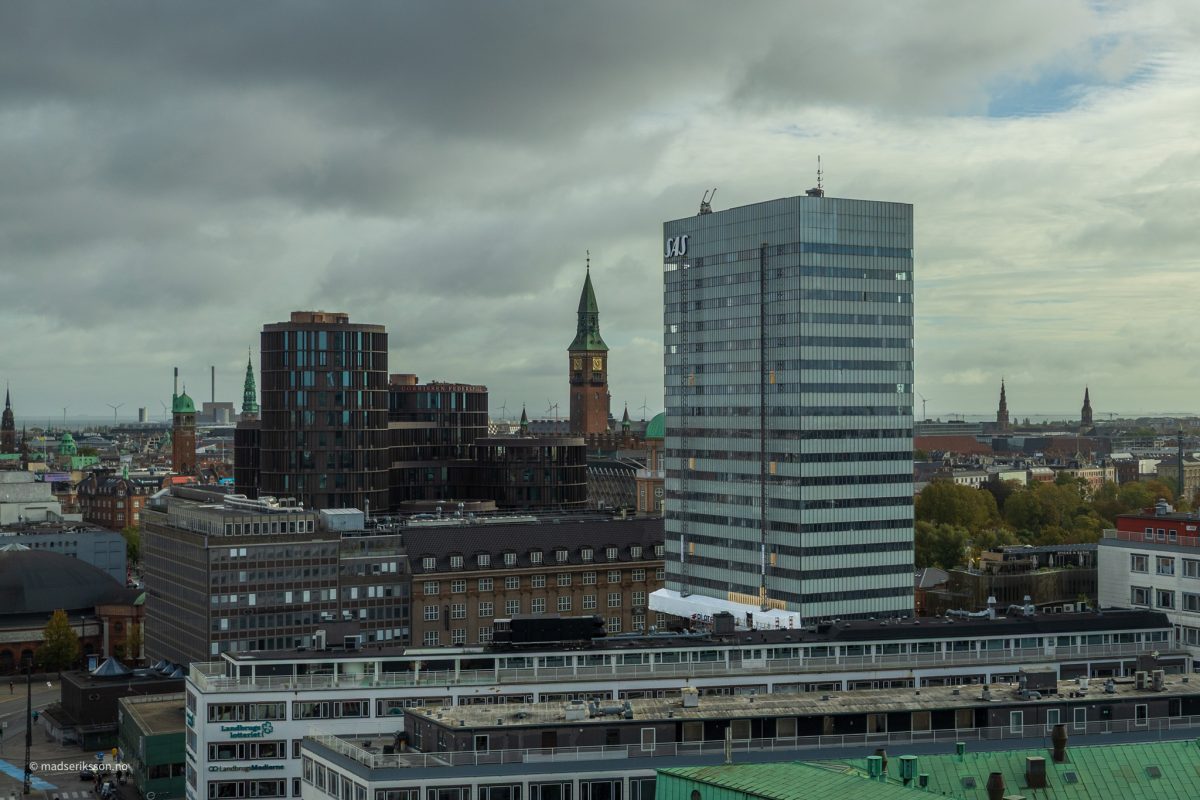
Copenhagen grew from a harbour that Bishop Absalon fortified in 1167, and its Danish name, København, means the merchants' harbour. This frame covers the old centre from Tivoli and City Hall in the south-west to Kastellet and the Little Mermaid in the north, with Christianshavn across the inner harbour. From Tivoli to the Little Mermaid is about three kilometres, and almost every major sight lies between the two.
City view of Copenhagen with the old SAS hotel building.
Kastellet and the Little Mermaid
Kastellet is a 17th-century citadel laid out as a pentagon with five bastions; its ramparts are now a public park, with a windmill from 1847 among the barracks. On the shore below sits the Little Mermaid, a 1.25-metre bronze by Edvard Eriksen, commissioned by the brewer Carl Jacobsen and unveiled on 23 August 1913. Her head was sawn off in 1964 and never recovered, and the one on the statue today is a replacement.
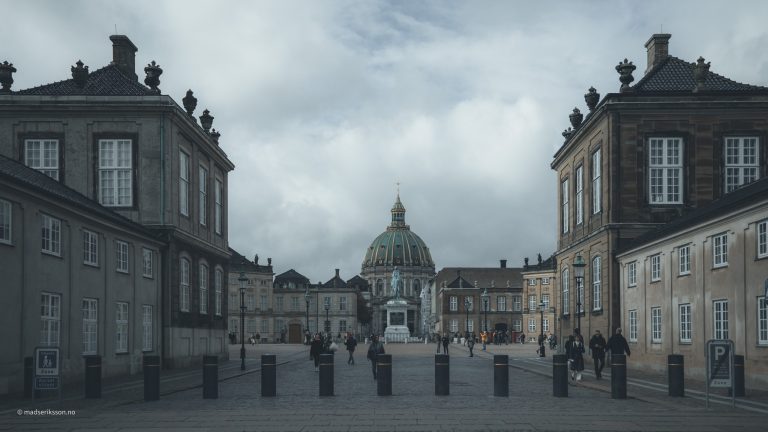
Amalienborg and the Marble Church
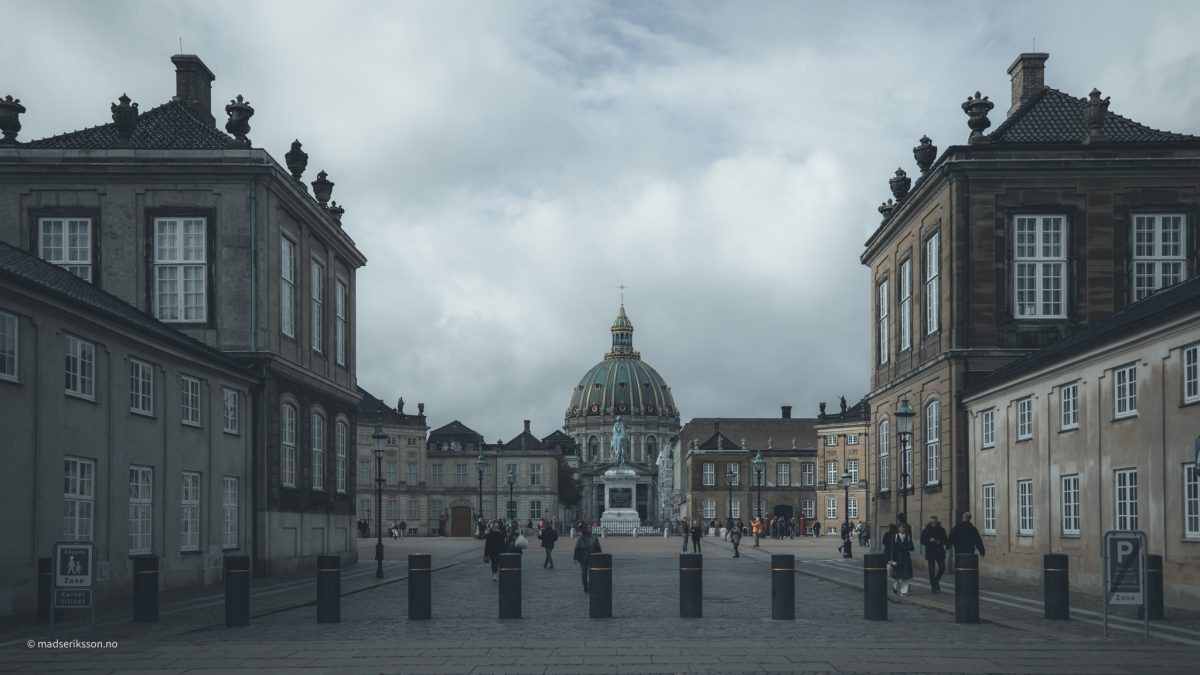
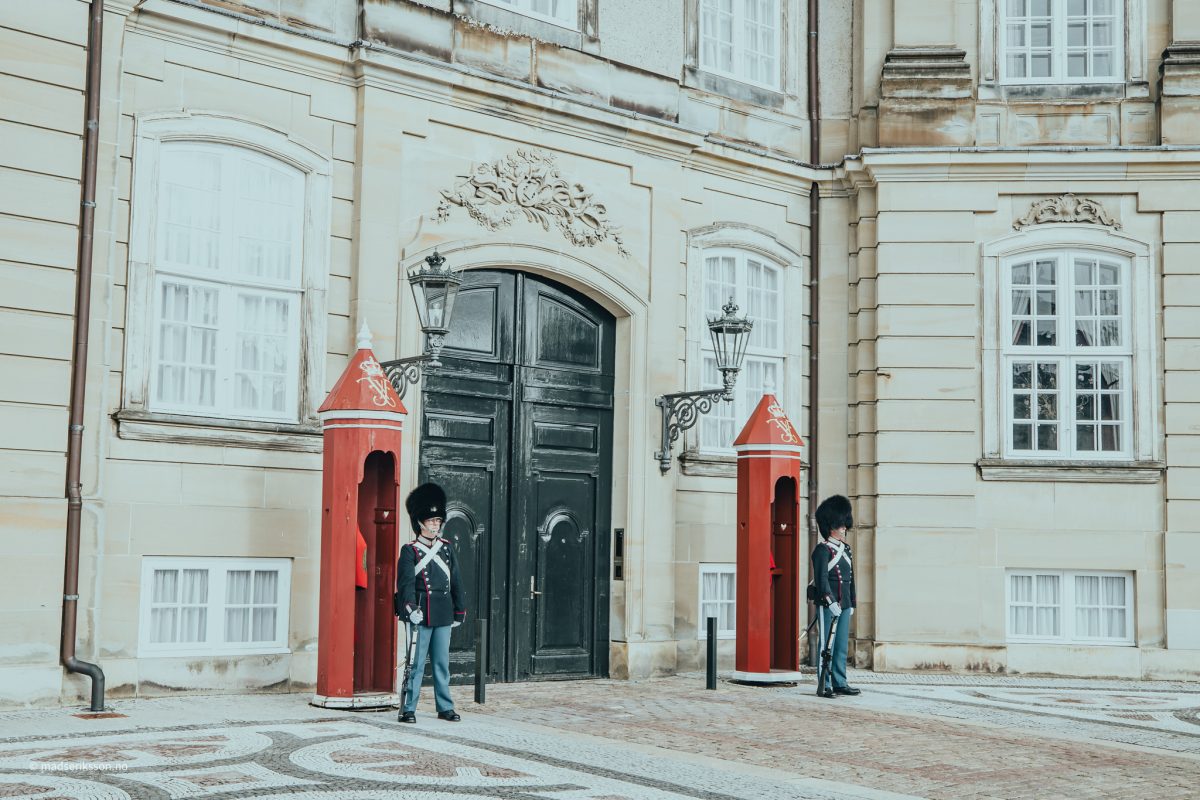
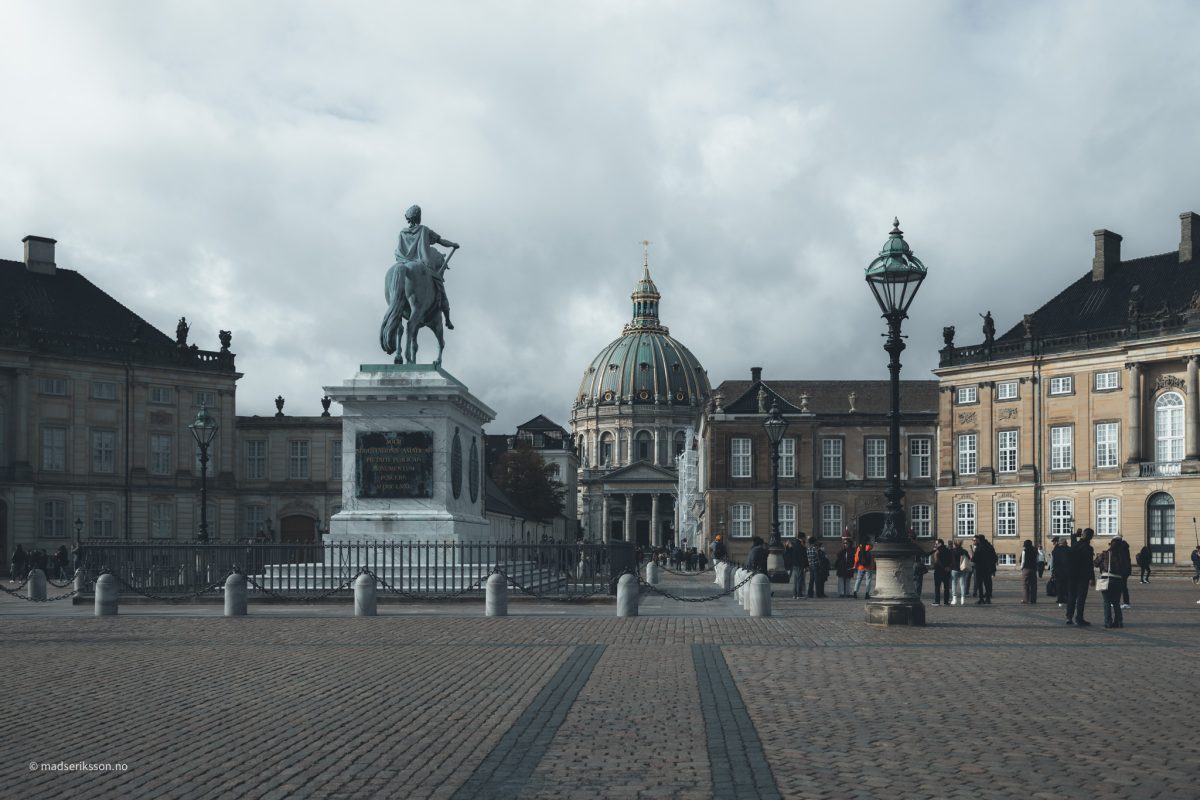
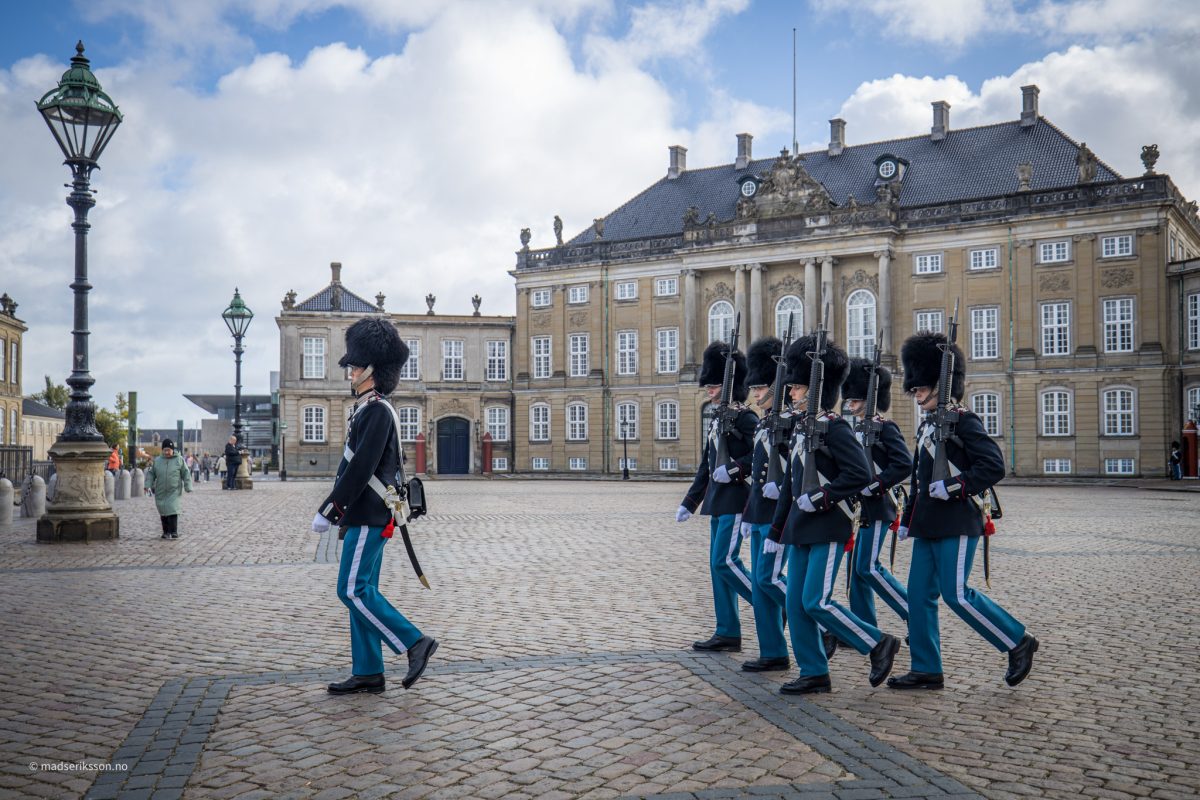
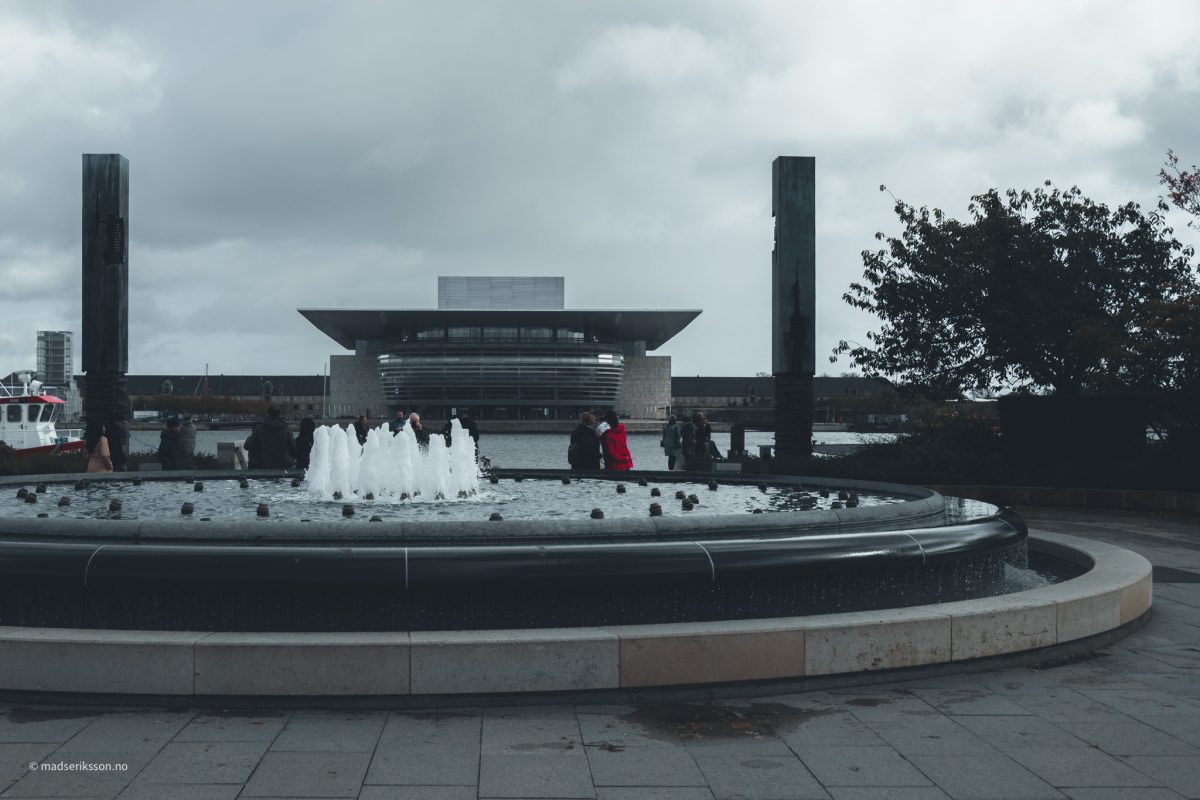
The four rococo palaces of Amalienborg, built between 1750 and 1760 to designs by Nicolai Eigtved, face an octagonal square with Jacques Saly's equestrian statue of Frederik V at its centre. The Royal Life Guards change the watch there every day at noon after marching from Rosenborg Castle. The axis through the square runs from the 31-metre dome of Frederik's Church, the Marble Church, across the harbour to the Opera House, opened in 2005.
Amalienborg Castle, Copenhagen
Christiansborg Palace
Slotsholmen is where Copenhagen began: Absalon built his castle here in 1167, and the island has held a castle or palace ever since. The present Christiansborg, the third of that name, was built between 1907 and 1928 to designs by Thorvald Jørgensen and houses the Folketing, the Prime Minister's Office and the Supreme Court. Its tower, at 106 m the tallest in the city, has had a free viewing platform since 2014.
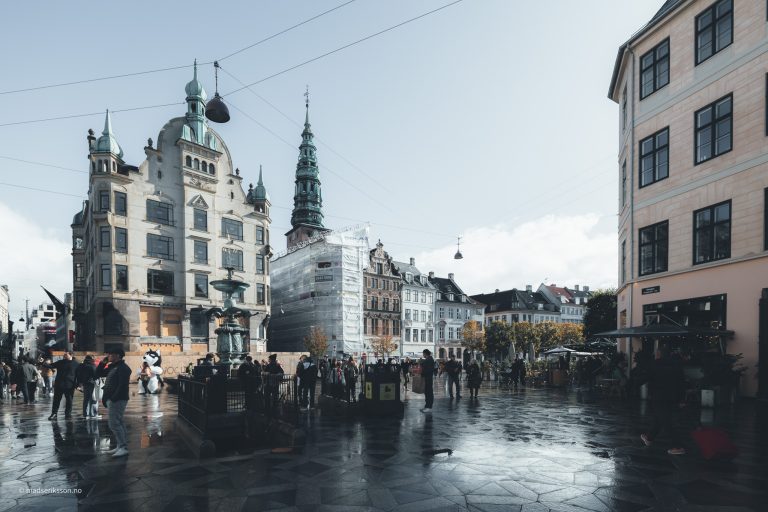
The Round Tower and Strøget
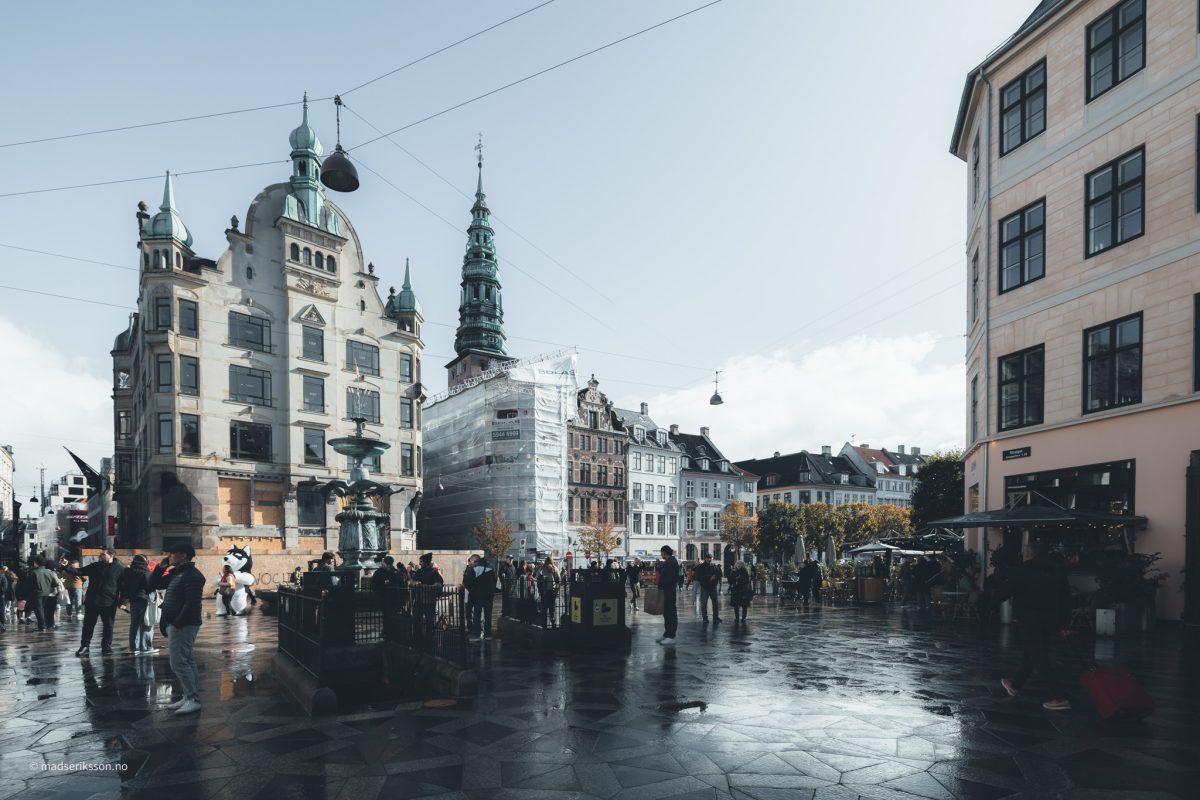
The Round Tower was built for Christian IV between 1637 and 1642 as an astronomical observatory for the university, and a broad spiral ramp instead of stairs leads to its platform 34.8 m above the street. Tsar Peter the Great is said to have ridden a horse up the ramp in 1716. A few minutes south, the pedestrian street Strøget crosses Amagertorv and its Stork Fountain.
The shopping area Strøget in Copenhagen.
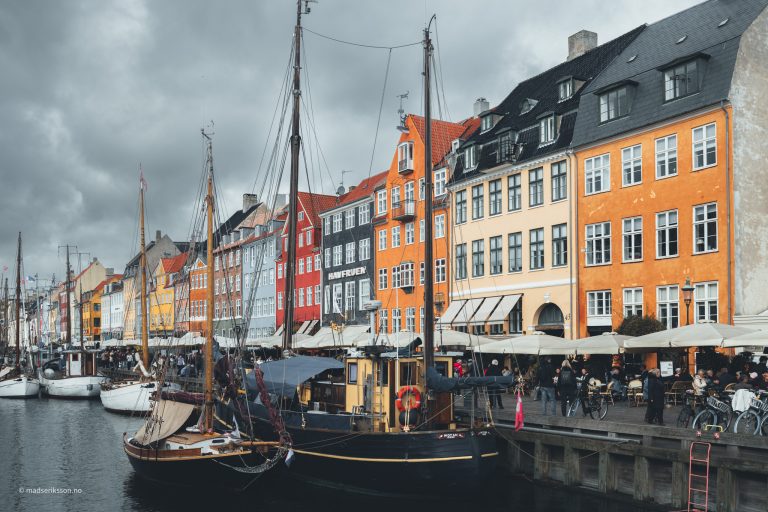
Nyhavn
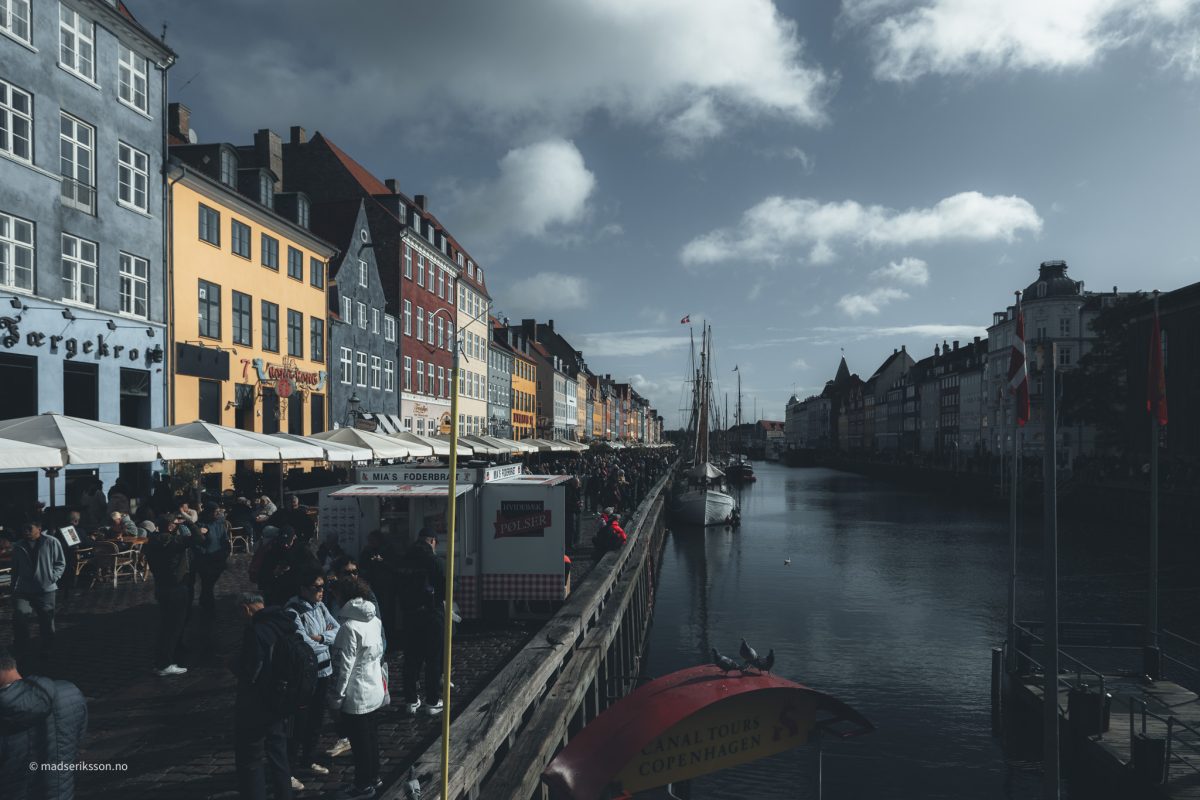
Nyhavn was dug between 1670 and 1675 on the orders of Christian V by Danish soldiers and Swedish prisoners of war, giving ships a route from the harbour to Kongens Nytorv. The oldest of the painted townhouses on its sunny northern side, number 9, dates from 1681, and Hans Christian Andersen lived at numbers 67 and 18. The quay was closed to cars in 1980.
The harbor Nyhavn with cafes and restaurants in Copenhagen.
Christianshavn and Christiania
Christianshavn was laid out under Christian IV in the early 17th century, with canals and ramparts on Dutch lines. The corkscrew spire of the Church of Our Saviour, completed in 1752, rises 90 m, and the last 150 of its 400 steps wind around the outside. On the old ramparts to the east, squatters took over a disused army barracks on 26 September 1971 and declared Freetown Christiania.
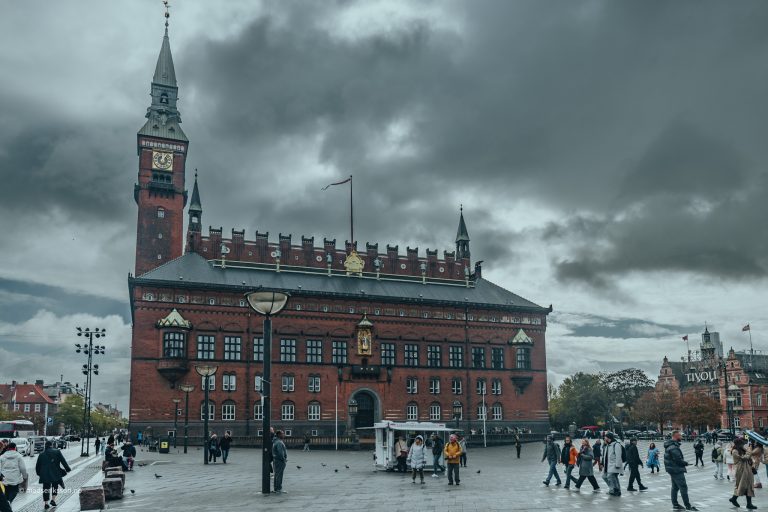
Tivoli and City Hall
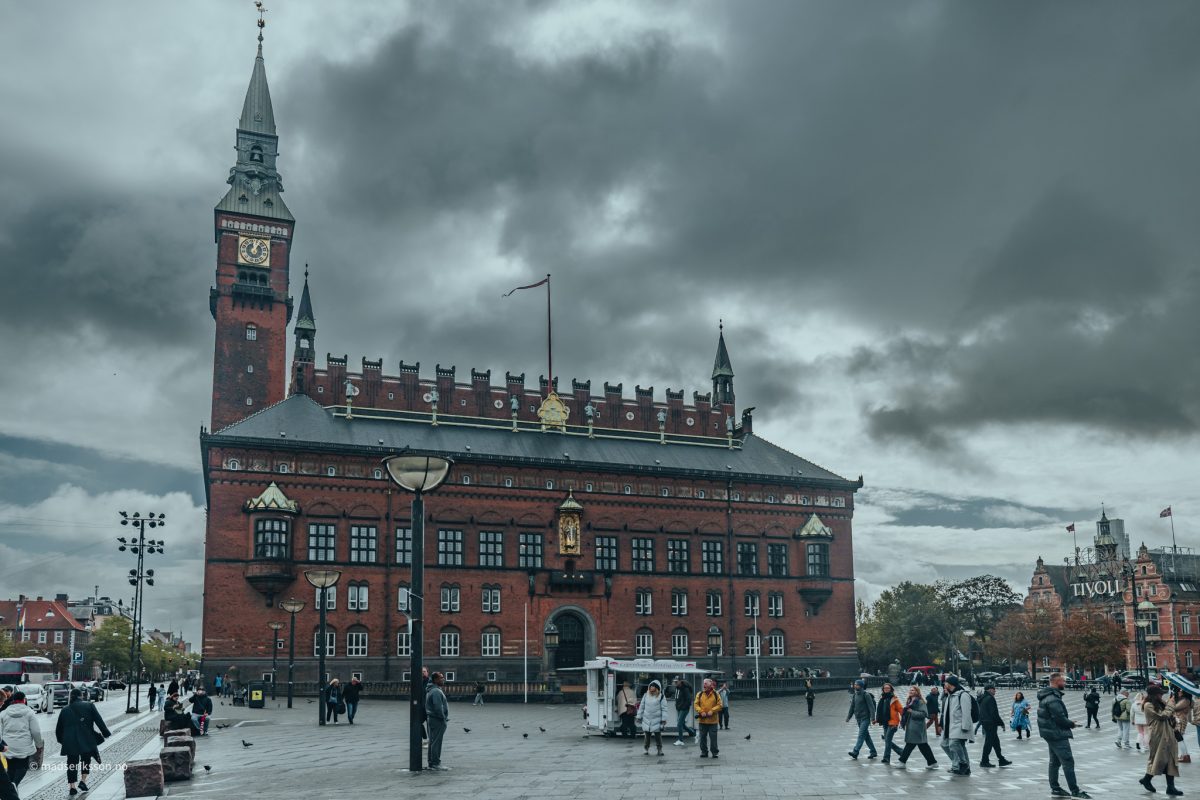
Tivoli opened on 15 August 1843 just outside the city ramparts, and its wooden roller coaster, Rutschebanen, has run since 1914 with a brakeman on every train. Across the square, Martin Nyrop's City Hall was inaugurated in 1905, and its 105.6-metre tower is only slightly lower than Christiansborg's. After dark, thousands of coloured lamps light the gardens and the lake.
The City Hall in Copenhagen.
3D model © 2026 madseriksson.no · Photographs © madseriksson.no. Buildings and heights: © OpenStreetMap contributors (ODbL), via OpenMapTiles. Ground imagery: Sentinel-2 cloudless 2023 by EOX IT Services GmbH (contains modified Copernicus Sentinel data 2023; CC BY 4.0). Heights are approximate where OpenStreetMap has no measured value; sun positions are approximate.
The Harbour Front — From Nyhavn to the Little Mermaid
A 17th-century canal of painted houses, a royal square of four palaces, a star-shaped fortress and a very small statue on a rock
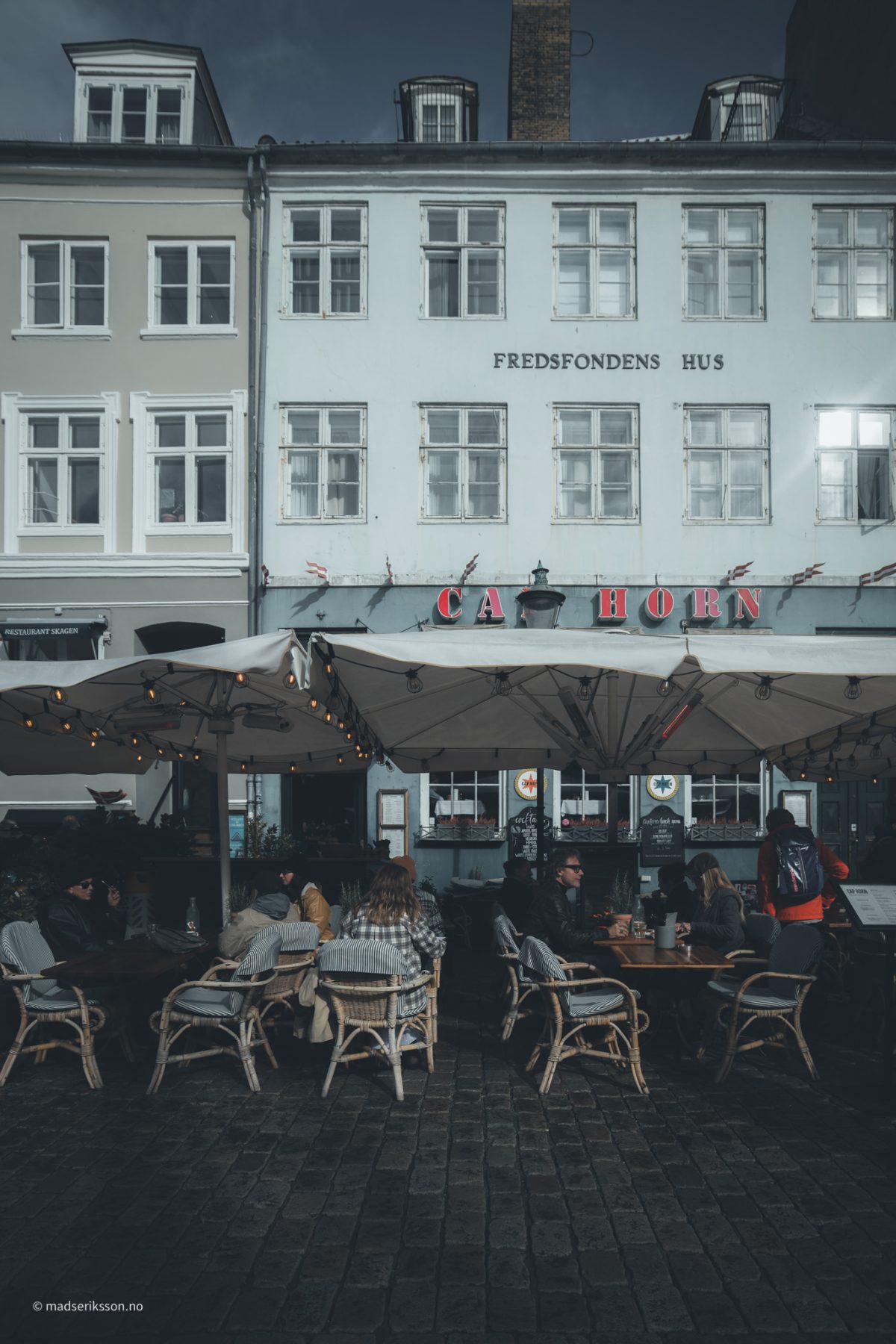
Nyhavn was dug between 1670 and 1675 on the orders of Christian V, by Danish soldiers and Swedish prisoners of war, to give ships a way from the open harbour straight into the square at Kongens Nytorv. For two centuries it was a working port, where cargo was unloaded and fishermen sold their catch, The 450-metre canal is lined on its sunny northern side with narrow townhouses painted in ochre, red and blue; the oldest, number 9, dates from 1681. Hans Christian Andersen lived on the canal twice, at number 67 from 1845 to 1864 and at number 18 from 1871 to 1875. The quay was closed to cars in 1980, and the restaurants that fill it today spread their tables right to the water’s edge.
The southern side is quieter and better for photographs of the colourful row opposite, with the old wooden ships moored in the canal in the foreground. At the inner end stands Charlottenborg, a baroque palace that houses the Royal Danish Academy of Fine Arts, facing the large oval square of Kongens Nytorv. From the outer end of Nyhavn, a short walk north along the harbour leads to Amalienborg, where four near-identical palaces built between 1750 and 1760 face each other around an octagonal square. The royal family still lives there, and every day at noon the Royal Life Guards change the watch in the square after marching through the streets from Rosenborg Castle, setting off at 11:30. On the same axis as the square, the great dome of Frederik’s Church — the Marble Church — closes the view inland, while across the water stands the Opera House.
The Little Mermaid is one of the most famous statues in Europe and one of the most underwhelming to first-time visitors: barely more than a metre tall, sitting on a rock a few metres from the shore. The trick is to see her as a piece of the harbour rather than a monument.
Beyond Amalienborg the promenade continues north to Kastellet, a 17th-century citadel laid out as a pentagon with bastions at each corner. Its ramparts and moats are now a park, with barrack buildings, a church and a windmill from 1847 inside, and the walk along the top of the earthworks is one of the most peaceful in the city. Just below, on the shore at Langelinie, sits the Little Mermaid. The brewer Carl Jacobsen, son of the founder of Carlsberg, commissioned the bronze in 1909, inspired by Andersen’s fairy tale, and the sculptor Edvard Eriksen modelled the body on his wife Eline after the ballerina Ellen Price declined to pose. She was unveiled on 23 August 1913. Her head was sawn off and stolen in 1964 and never found, and it happened again in 1998. Early morning, before the tour coaches arrive, is the time to see her in peace.
Tivoli — A Pleasure Garden That Never Grew Up
How a five-year licence granted to an entrepreneur in 1843 became the park that shaped the city’s seasons, and inspired Walt Disney
Tivoli opened on 15 August 1843, on land just outside the city’s ramparts, under the name Tivoli & Vauxhall — a nod to the pleasure gardens of Paris and London. Its founder, Georg Carstensen, had obtained a five-year charter from King Christian VIII. Carstensen ran the park for only five years before leaving to fight in the First Schleswig War, and he died in 1857 at the age of 44, but the formula he set — gardens, lamps, music, theatre and rides in a walled enclosure in the middle of the city — has hardly changed. The park covers around six hectares. In 2024 it had 4.25 million visitors, the most of any amusement park in Scandinavia.
Many of the buildings are attractions in their own right. The Pantomime Theatre from 1874 is the oldest structure in the park and still stages silent commedia dell’arte performances, as it has since Tivoli’s early years. The Moorish-style Nimb building from 1909 now houses a hotel and restaurants, and the Pagoda, built in 1900 and originally lit with around 2,800 glass lamps, stands over the lake. The Tivoli Guard, a children’s marching band, has paraded through the park since 1844. The wooden roller coaster Rutschebanen, built in 1914, still runs through its artificial mountain with a brakeman on board every train. On 24 June 1944 Danish Nazi sympathisers set off incendiary bombs in the park, destroying the original Concert Hall; its replacement opened in 1956 and was then the largest concert hall in the Nordic countries.
Tivoli is at its best after dark, when thousands of coloured lamps come on in the trees and along the lake. It is less an amusement park than a city garden with rides in it — and many locals come simply to walk, eat and listen to music.
The park is not open all year. The main summer season runs from spring until September, followed by a Halloween season in October and a Christmas season with a market and lights; outside these periods the gates are closed. Entry and rides are paid for separately — an entrance ticket only gets visitors through the gate, while rides need individual tickets or an unlimited ride pass — and prices vary with the date and season, so check the official website before visiting. Tivoli’s main gate on Vesterbrogade is directly opposite Copenhagen Central Station, and the Saturday-night fireworks in summer are among the most popular evenings in the city.
Slotsholmen — Parliament, Palace and the City’s Highest Tower
The island where Copenhagen began, the third palace to stand on it, and two towers that give the best views over the old town
Slotsholmen, the small island ringed by canals in the middle of the old town, is where Copenhagen started. Bishop Absalon built his castle here in 1167, and the site has held a castle or a palace ever since. The present Christiansborg is the third palace of that name: the first burned down in 1794, the second in 1884, and the current neo-baroque building, designed by Thorvald Jørgensen, was built between 1907 and 1928. It is a rare thing — a working palace that is also the seat of government. The Danish Parliament, the Folketing, sits in the southern wing, the Supreme Court and the Prime Minister’s Office in the northern, and the monarch uses the Royal Reception Rooms for state banquets and official ceremonies.
Visitors can see several parts of the complex. The Royal Reception Rooms, when not in official use, are open to the public; the highlight is the Great Hall, hung with Bjørn Nørgaard’s 17 brightly coloured tapestries telling the story of Denmark from the Viking Age onwards, made as a gift for Queen Margrethe II’s 60th birthday. Beneath the palace, the excavated foundations of Absalon’s castle and the later Copenhagen Castle have been open since 1924. The Royal Stables, which once held 270 horses, still house around twenty, and the Royal Kitchen is also open. A combined palace ticket covers the main sights.
The tower of Christiansborg rises 106 metres, a little higher than the tower of City Hall, and since 2014 it has been open to everyone free of charge. It is the best view in Copenhagen, and it does not cost a krone.
From the top the panorama takes in the whole of the old town, its spires and the harbour, and there is a restaurant inside the tower as well. A ten-minute walk north through the old town leads to the other great viewpoint, the Round Tower, built for Christian IV between 1637 and 1642 as an astronomical observatory for the university. Instead of stairs it has a broad spiral ramp, about 210 metres long, that winds up to a platform 34.8 metres above the street — Tsar Peter the Great rode his horse up it in 1716. The tower has served as a public observatory since 1928, and the walk up passes the old university library hall, now used for exhibitions and concerts.
Christiania and the Table — The Freetown and the City’s Food
A former army barracks taken over by squatters in 1971, and a dining scene that runs from open sandwiches to three Michelin stars
Across the harbour from Slotsholmen lies Christianshavn, a 17th-century district of canals, houseboats and merchants’ houses laid out with canals and ramparts on Dutch lines, crowned by the corkscrew spire of Vor Frelsers Kirke, the Church of the Saviour. On its eastern edge is Freetown Christiania. On 26 September 1971 squatters took over the abandoned Bådsmandsstræde army barracks and the old ramparts around them and declared the area a free town with its own rules. Around 850 to 1,000 people live there today, and since 2012 the residents have owned the land collectively through a foundation, after decades of conflict with the state. The result is a district of self-built houses, workshops, gardens, music venues and cafés along the lakes of the former fortifications.
For many years Christiania was best known for Pusher Street and its open cannabis trade, which was tolerated, raided and argued over for half a century. In 2024, after years of gang violence, residents and police worked together to close it down, and the street itself was dug up. Visitors are welcome in the Freetown, but it remains a residential community with its own customs: walk rather than cycle through the narrow lanes, respect the residents’ homes, and ask before photographing people. The quieter paths along the ramparts and the water, with their eccentric houses, are the part of Christiania most worth seeing.
Copenhagen’s food reputation was built at the top end, but the everyday version is just as good: a lunch of smørrebrød, the open rye-bread sandwich, and a kanelsnegl — a cinnamon roll — from a neighbourhood bakery.
The city became a dining destination with the New Nordic movement, led by Noma, which was named the best restaurant in the world five times between 2010 and 2021. Noma ended regular restaurant service at the end of 2024 and now works as a food laboratory with occasional residencies, but the scene it inspired is still thriving: the 2026 Michelin Guide lists 21 starred restaurants in Copenhagen, three of them — Geranium, Kadeau and Jordnær — with three stars. Tables at the top restaurants are booked weeks or months ahead. Most visitors eat better and more cheaply at the city’s food halls, wine bars and bakeries, and at the traditional lunch restaurants where smørrebrød is topped with pickled herring, roast pork, egg and shrimp or liver pâté.
«Copenhagen is a city of short distances and long histories. In a single day it is possible to stand where Bishop Absalon built his castle, ride a roller coaster from 1914, watch the guard change outside a royal palace and eat lunch on the quay of a canal dug in the 1670s. What makes it worth more than a day is the way the old city has learned to live with its water — the swimmers in the harbour, the bicycles on the bridges, the evening light on the painted houses of Nyhavn. Climb the tower at Christiansborg first, to see how it all fits together. Then go down and walk it.»

More in the same area
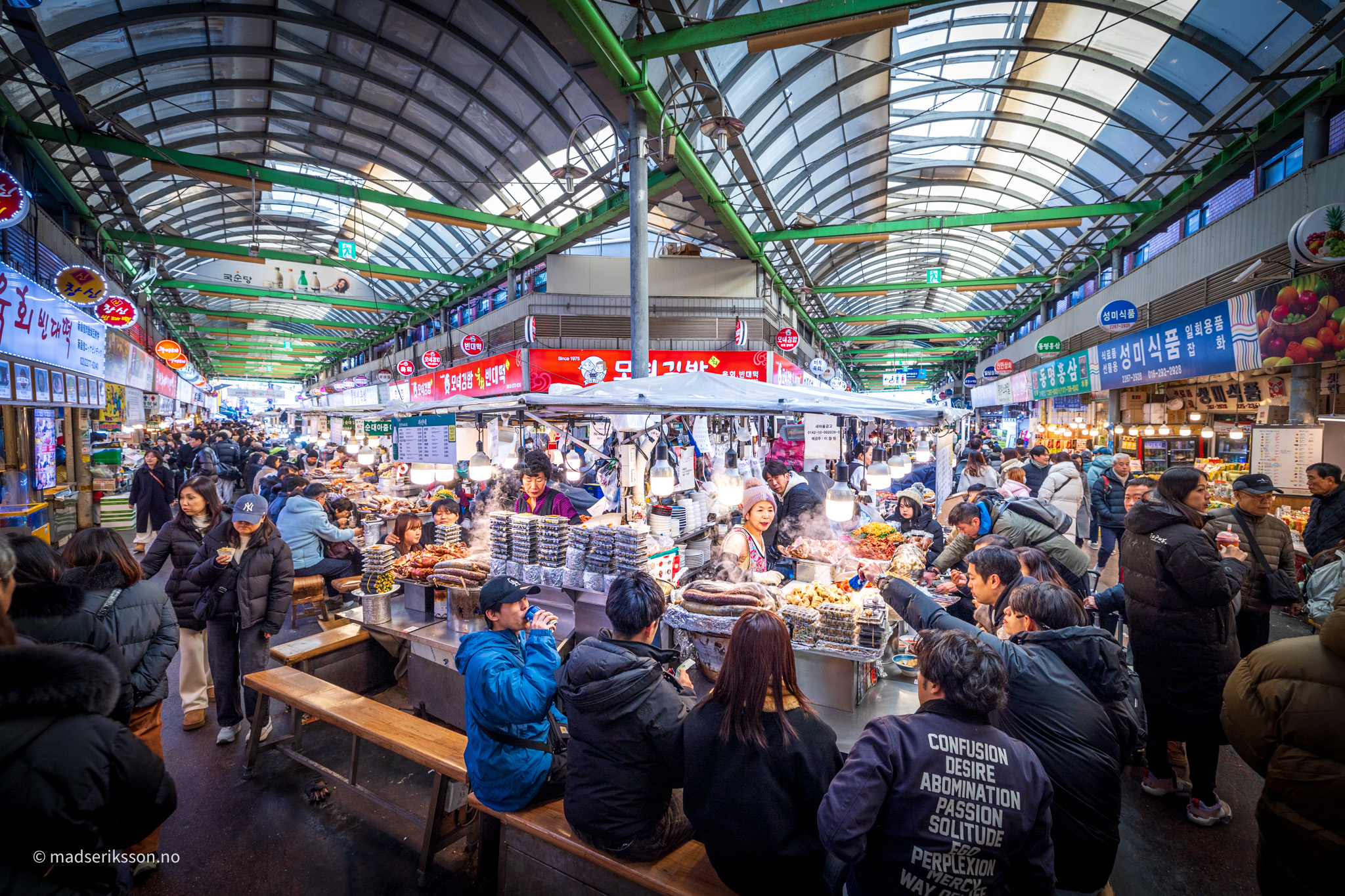 CitiesThe World’s 10 Great Food Markets
 ArchitectureTen Buildings That Changed Their Cities — Modern Architecture Ranked on Impact, Not Image
 CitiesHiroshima and Miyajima: A preserved ruin and a shrine on the tideline
 CitiesSiem Reap — The City at the Gate of the Largest Temple on Earth
 CitiesThe World’s 10 Most Beautiful City Parks
 CitiesBangkok — the World’s most visited City
City Frames · scroll-driven 3D
More cities in three dimensions
54 city guides open with a model built from open map data. Scroll, and the camera moves from landmark to landmark.
Departures · City Frames
Where to next?
| Time | Destination | Country | Status |
|---|
Live · position of the sun
Golden hour, right now
The low, warm light just after sunrise and just before sunset. These are the cities on the site where it is happening at this moment.