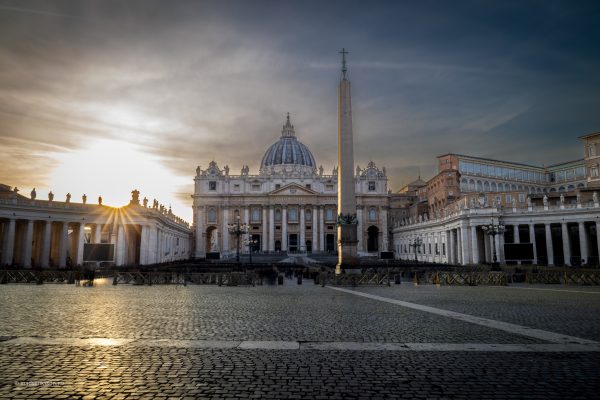
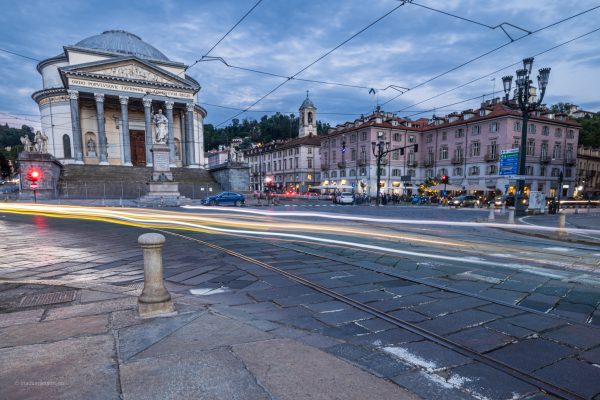
Venice is the most improbable city in the world. Built on 118 small islands in a saltwater lagoon, connected by 400 bridges across 170 canals, and sustained for over a thousand years without a single road — it should not exist, and it knows it. The Republic of Venice governed itself for 1,100 years. It controlled the trade routes between Europe and the East, produced Titian and Vivaldi and Marco Polo, and built a city of such concentrated beauty that Napoleon called its main square the drawing room of Europe. Venice has been sinking and flooding and overcrowded for decades, and it remains one of the most extraordinary places on Earth.

Venice was founded, according to tradition, in 421 CE, when mainland Italians fleeing the Hunnic and later Lombard invasions sought refuge on the islands of the lagoon. What began as a refuge became a republic in 697 CE, when the first Doge was elected, and that republic endured — governing itself without a king, emperor or hereditary ruling class through an elaborate system of councils and counter-councils designed to prevent any single person from acquiring absolute power — for 1,100 years, until Napoleon dissolved it in 1797. In those eleven centuries, Venice controlled the trade routes to the East, accumulated extraordinary wealth, built the finest fleet in the Mediterranean, and produced an artistic tradition — Giovanni Bellini, Titian, Tintoretto, Veronese, Tiepolo, Canaletto — of sustained brilliance that had no parallel in any city of comparable size.
The physical city that resulted from this history is unlike any other in the world. It has no cars, no bicycles and no roads in the mainland sense; movement is by foot or by water, and the transition between the two happens constantly, at the hundreds of bridges that arc over the canals. The Grand Canal — the S-shaped main waterway, 3.8 kilometres long — is the high street of a city whose architecture, accumulated over eight centuries, lines both banks in an unbroken wall of palaces, churches and warehouses that constitutes the greatest continuous sequence of Gothic and Renaissance civil architecture in existence. The challenge for the visitor today is to find, beneath the organised pressure of mass tourism that threatens the city’s character, the quieter Venice that still exists in the early morning, in the outer districts and in the islands of the lagoon.
How to approach Venice
This guide covers four aspects of Venice: Piazza San Marco and the Grand Canal, which are unavoidable and magnificent; the islands of the lagoon — Murano, Burano and Torcello — which give the city its wider context; the extraordinary concentration of art and architecture in the churches, galleries and scuole; and the food and daily life of Venice — the bacaro culture, the cicchetti, and the question of how a city of 50,000 permanent residents manages to absorb 20 million tourists a year and maintain any identity at all. The answer is: by staying in the outer calli after the day-trippers have gone.
Venice in 3D
Venice is built on 118 small islands in a saltwater lagoon, linked by around 400 bridges, and by tradition was founded in 421. This frame covers the historic centre from the railway station in the west to the Riva degli Schiavoni in the east, with the Grand Canal winding 3.8 km through it in a reversed S. The Republic of Venice governed itself for some 1,100 years, until Napoleon ended it in 1797.
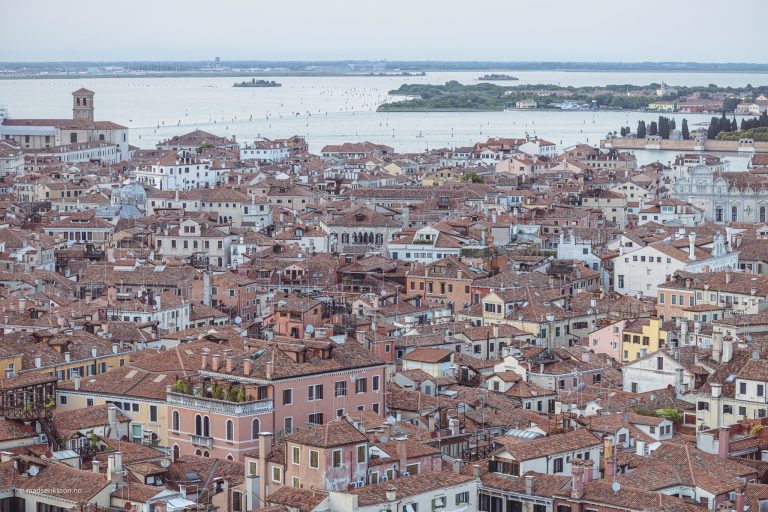
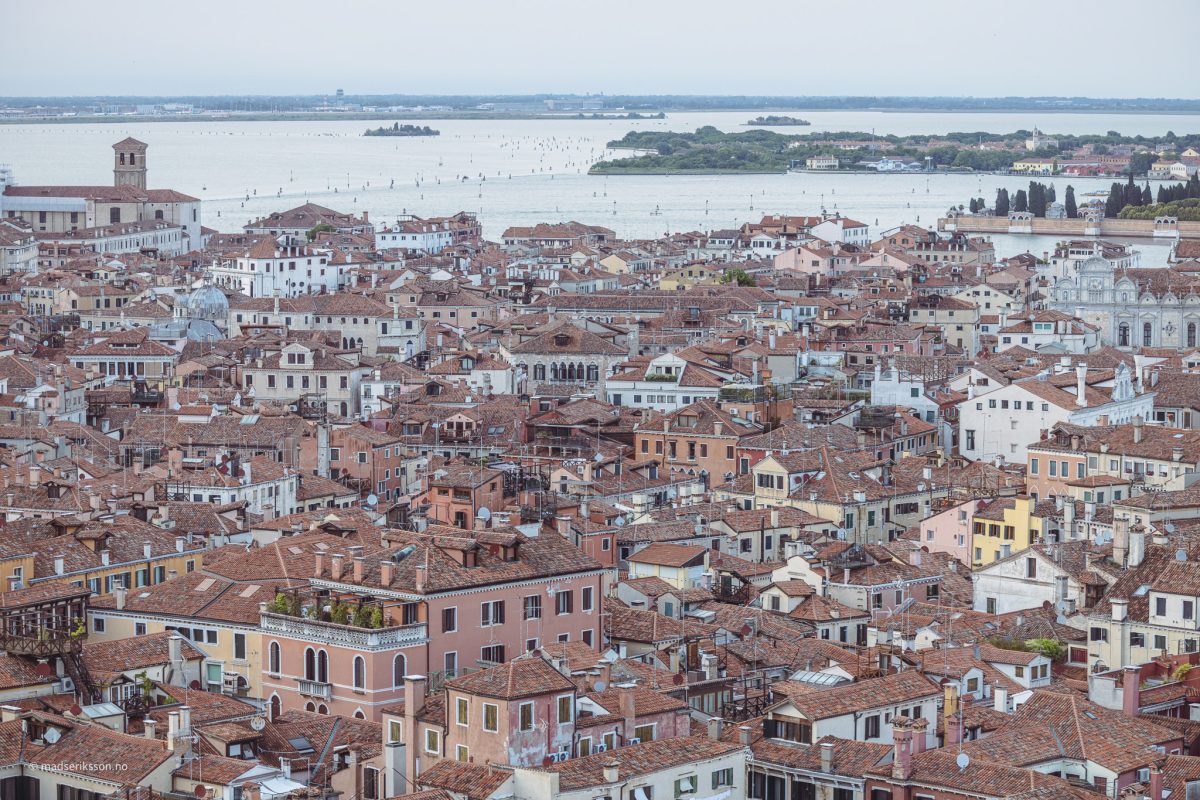
A sea of terracotta rooftops stretching from the centre of Venice to the islands of the lagoon
Piazza San Marco and the Campanile
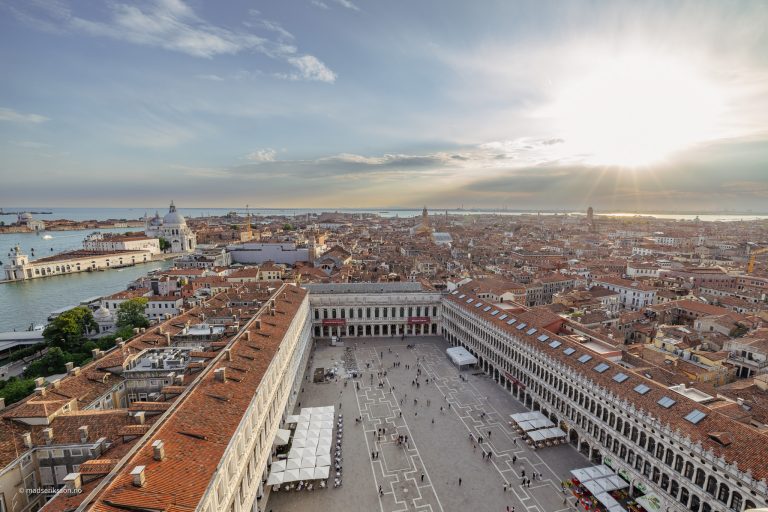
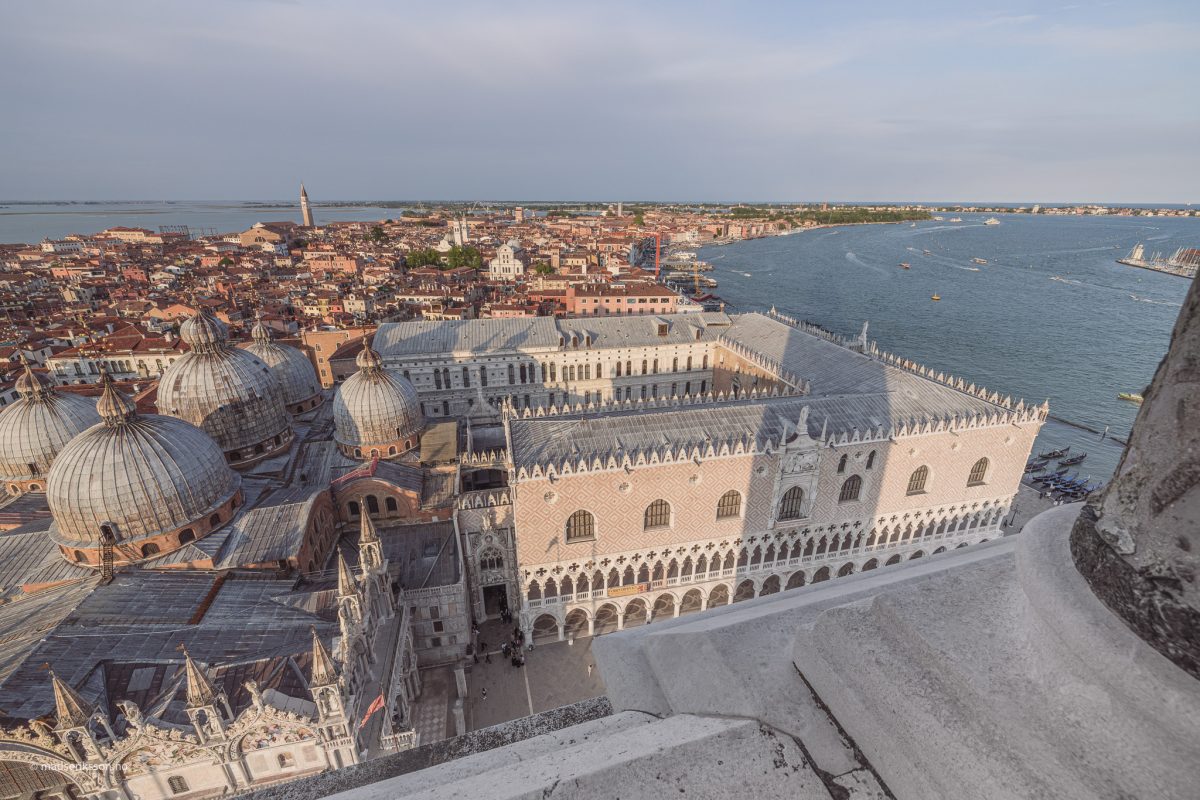
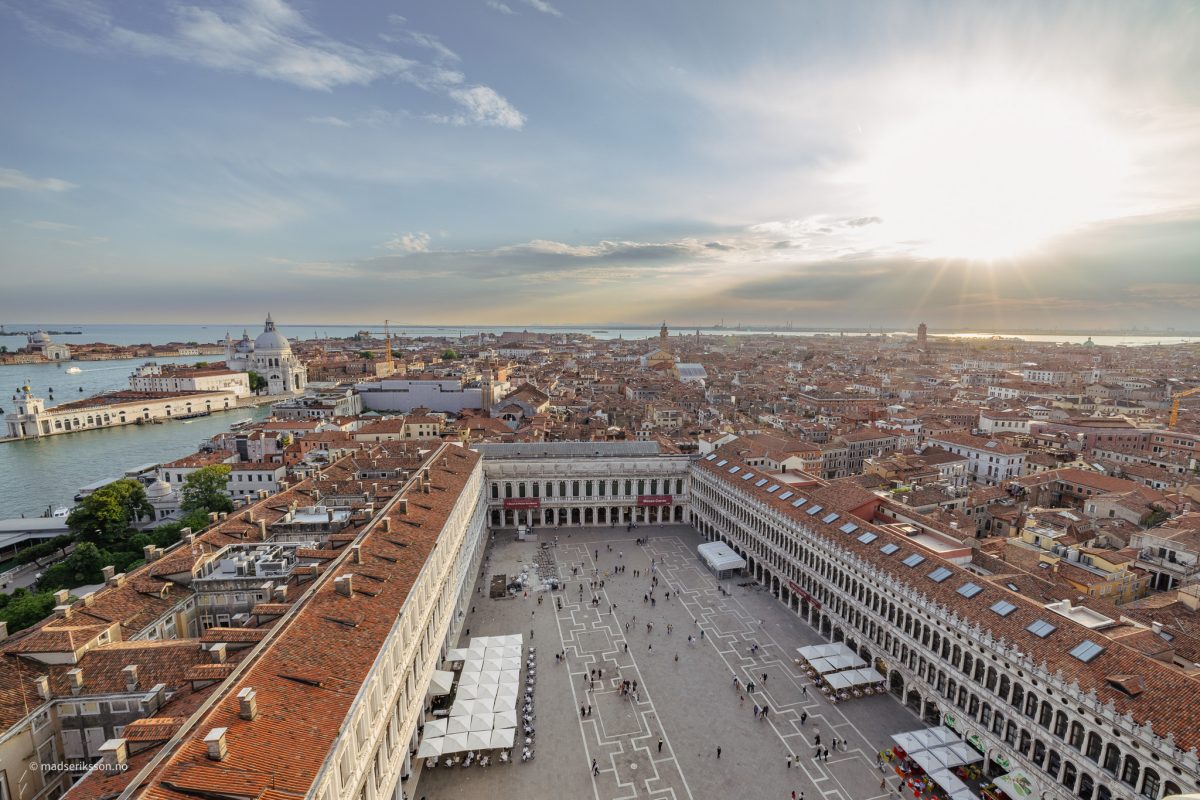
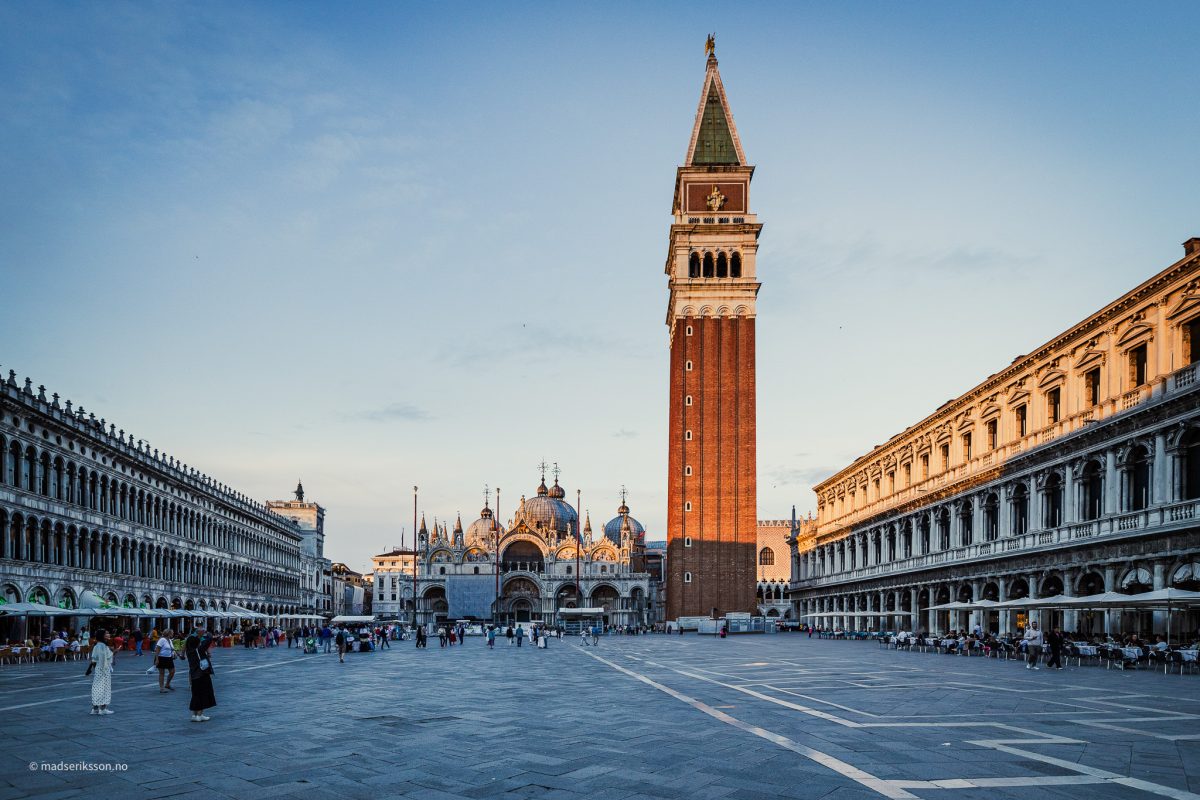
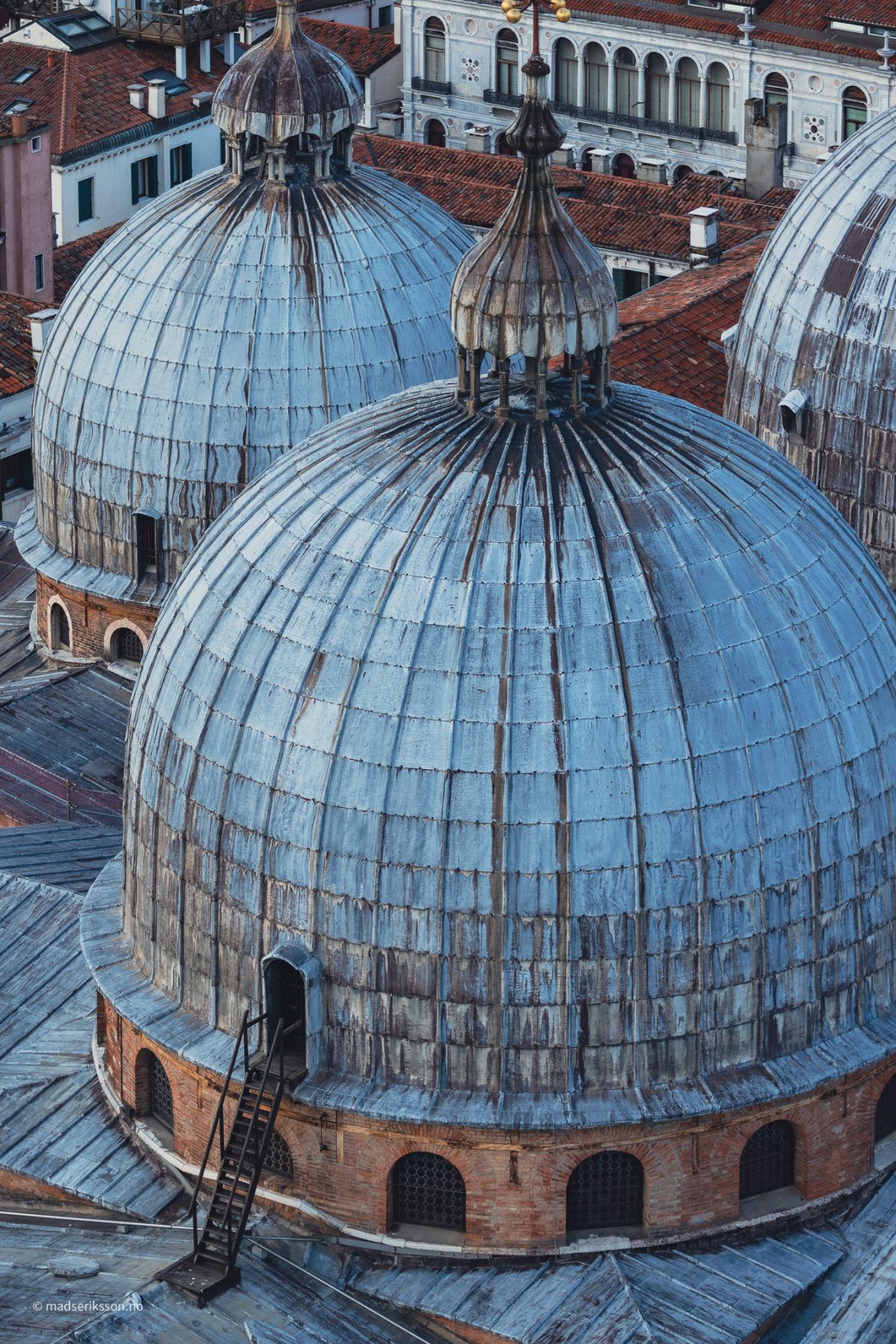
St Mark's Basilica, consecrated in 1094, closes the eastern end of Piazza San Marco, the only square in Venice called a piazza. The Campanile beside it is 98.6 m high; the original tower collapsed on 14 July 1902 and was rebuilt as it had been, reopening on 25 April 1912.
Piazza San Marco seen from the Campanile, with Santa Maria della Salute across the water
The Doge's Palace and the Bridge of Sighs
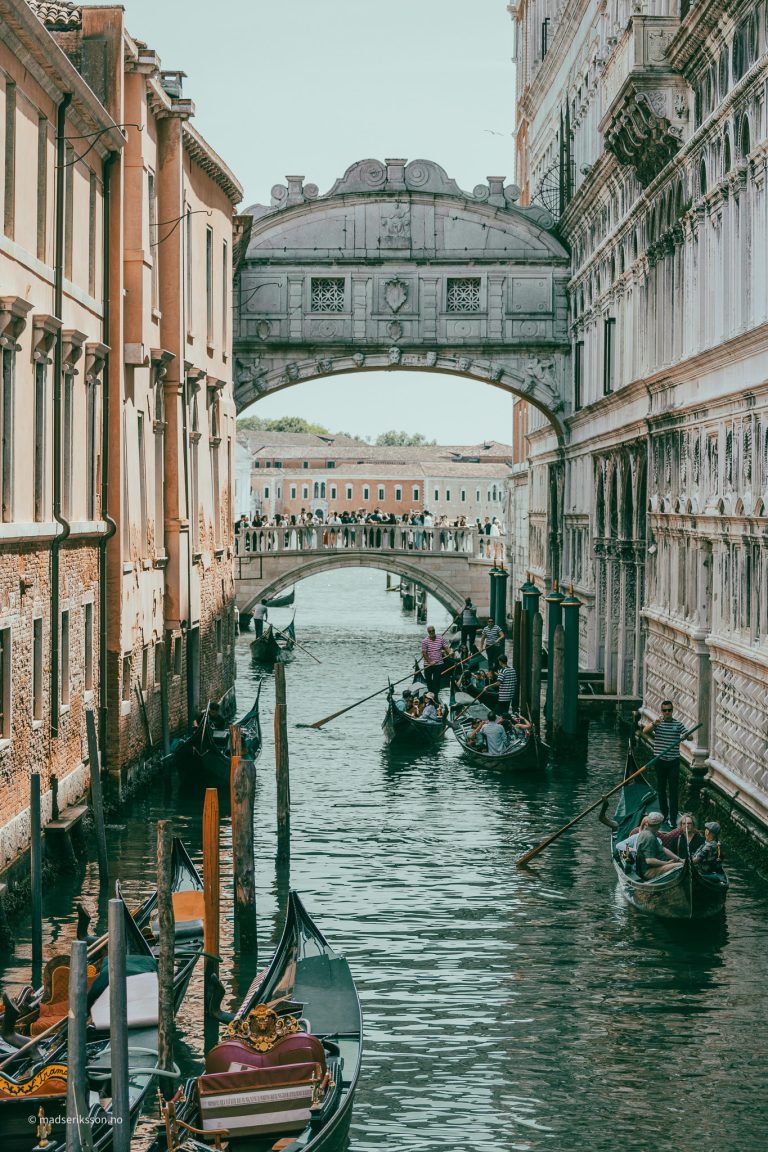
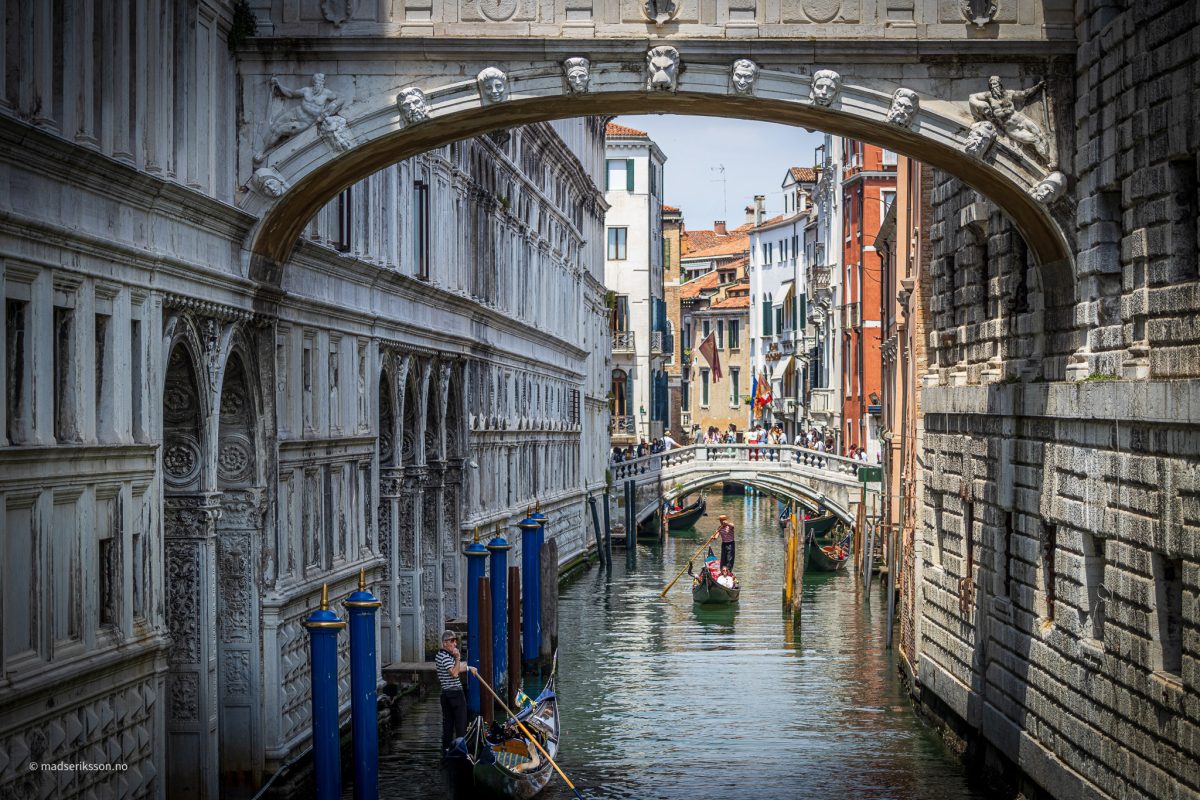
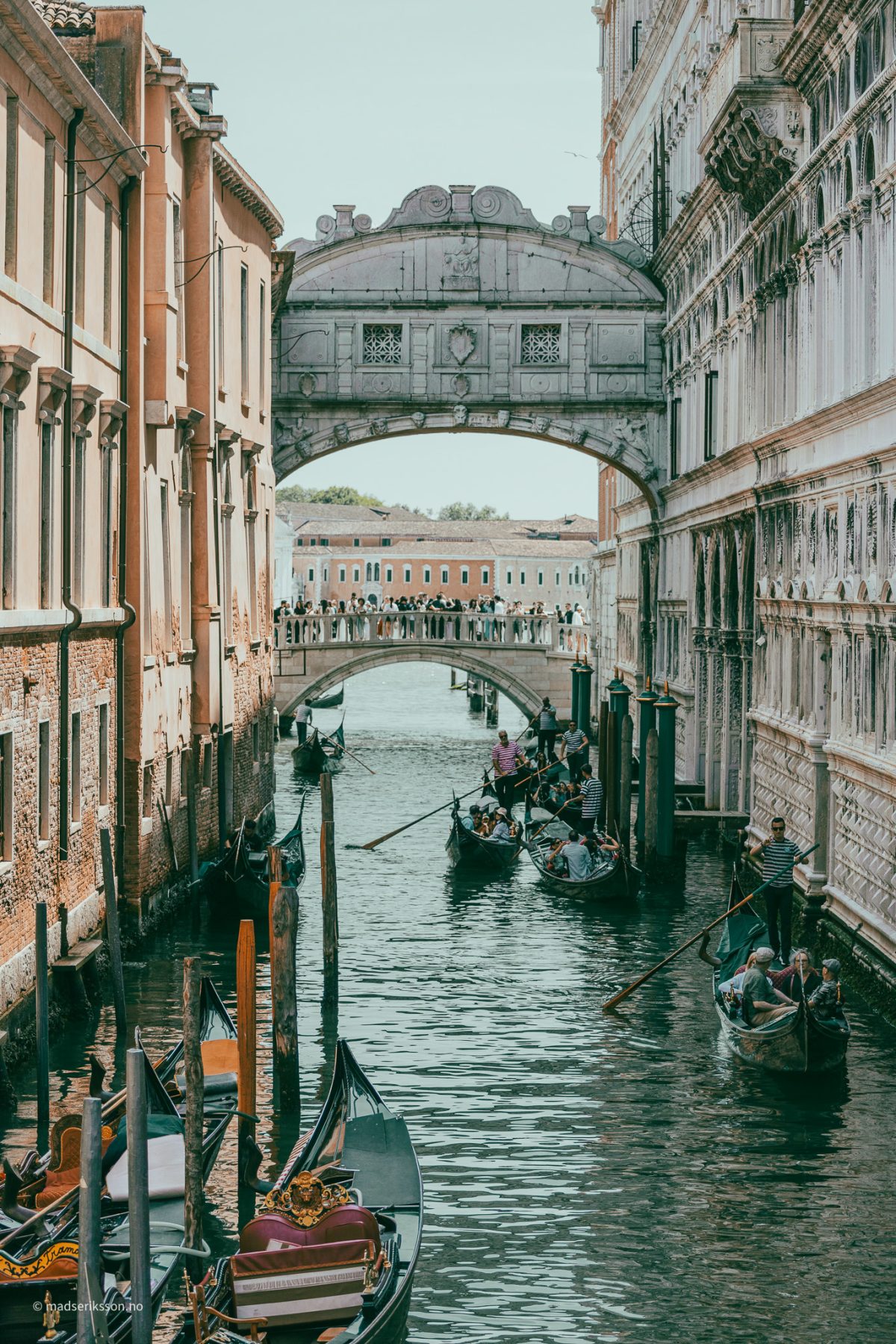
The Doge's Palace was the seat of the doges and the councils of the Republic, and its Gothic facades towards the lagoon and the Piazzetta date largely from the 14th and 15th centuries. Behind it, the enclosed Bridge of Sighs, built between 1600 and 1603 by Antonio Contin, crosses the Rio di Palazzo to the New Prisons.
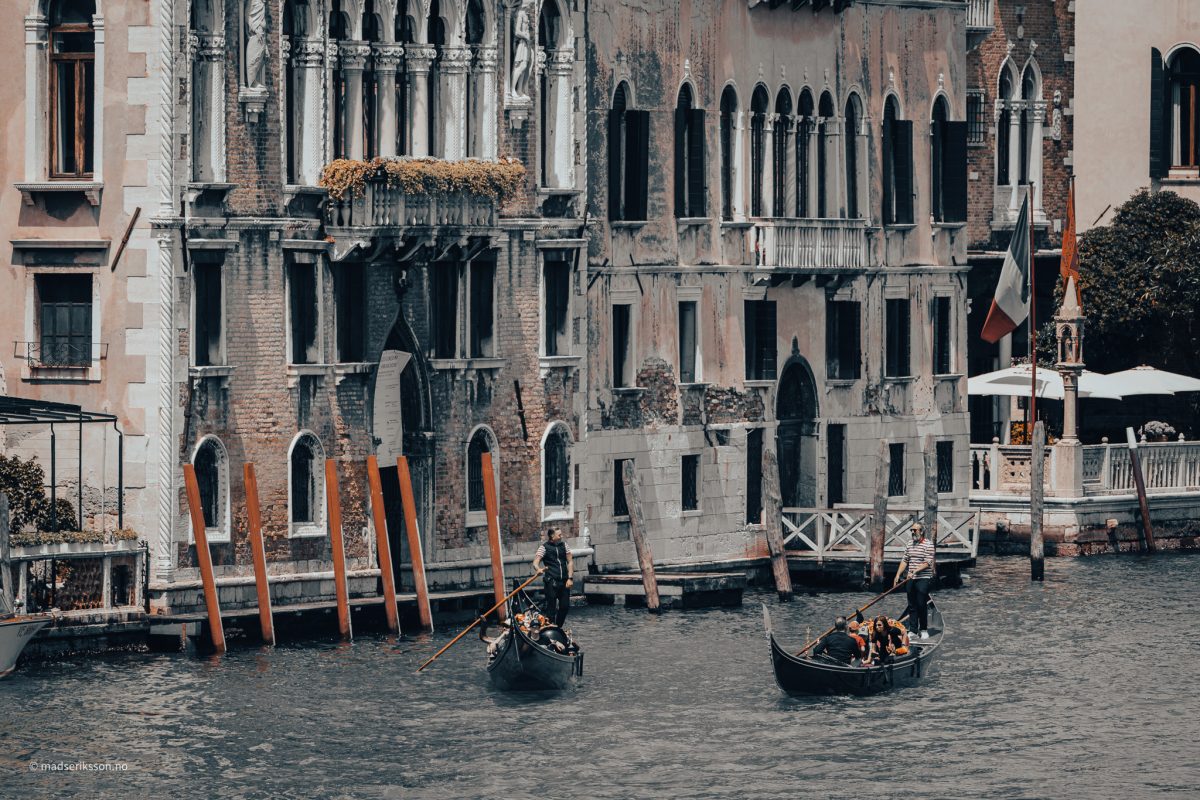
The Bridge of Sighs over the narrow canal beside the Doge's Palace, busy with gondolas
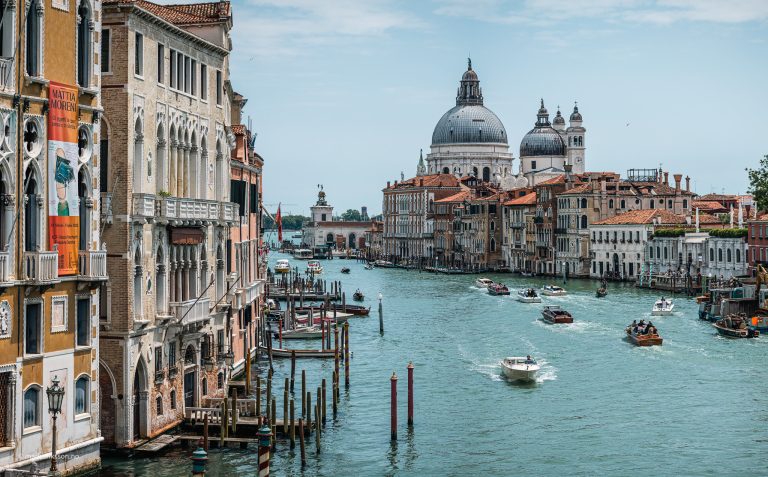
The Accademia Bridge and the Salute
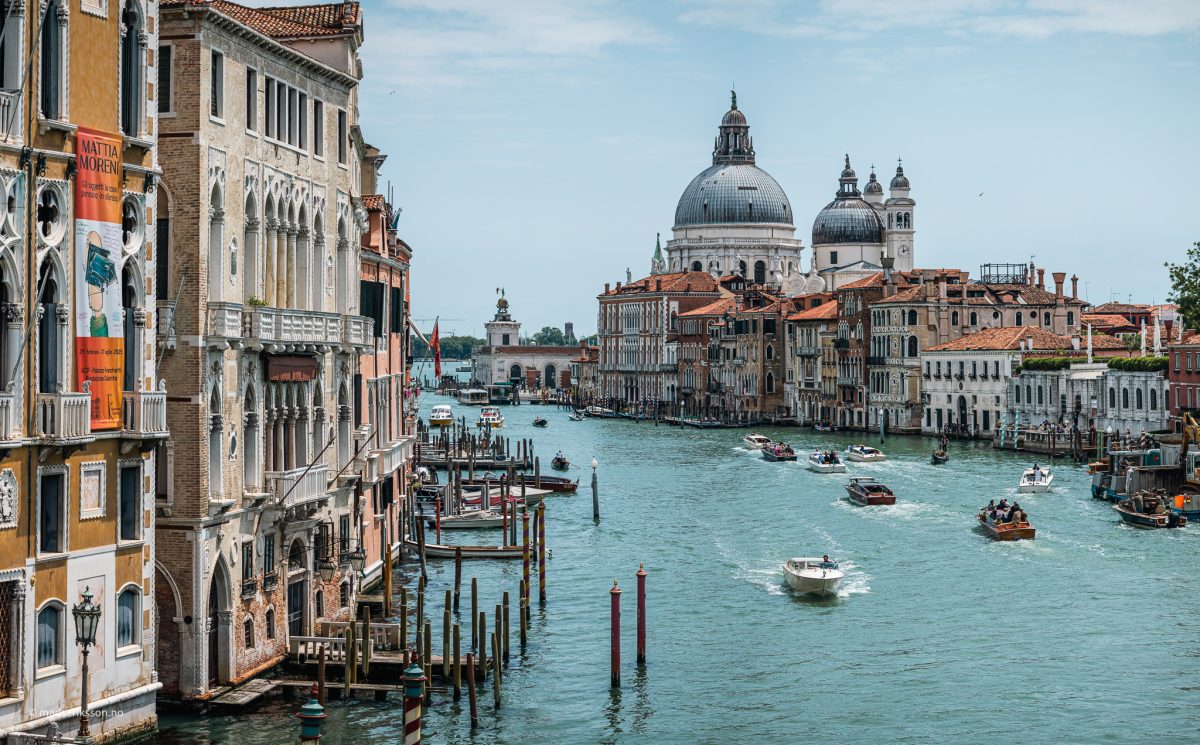
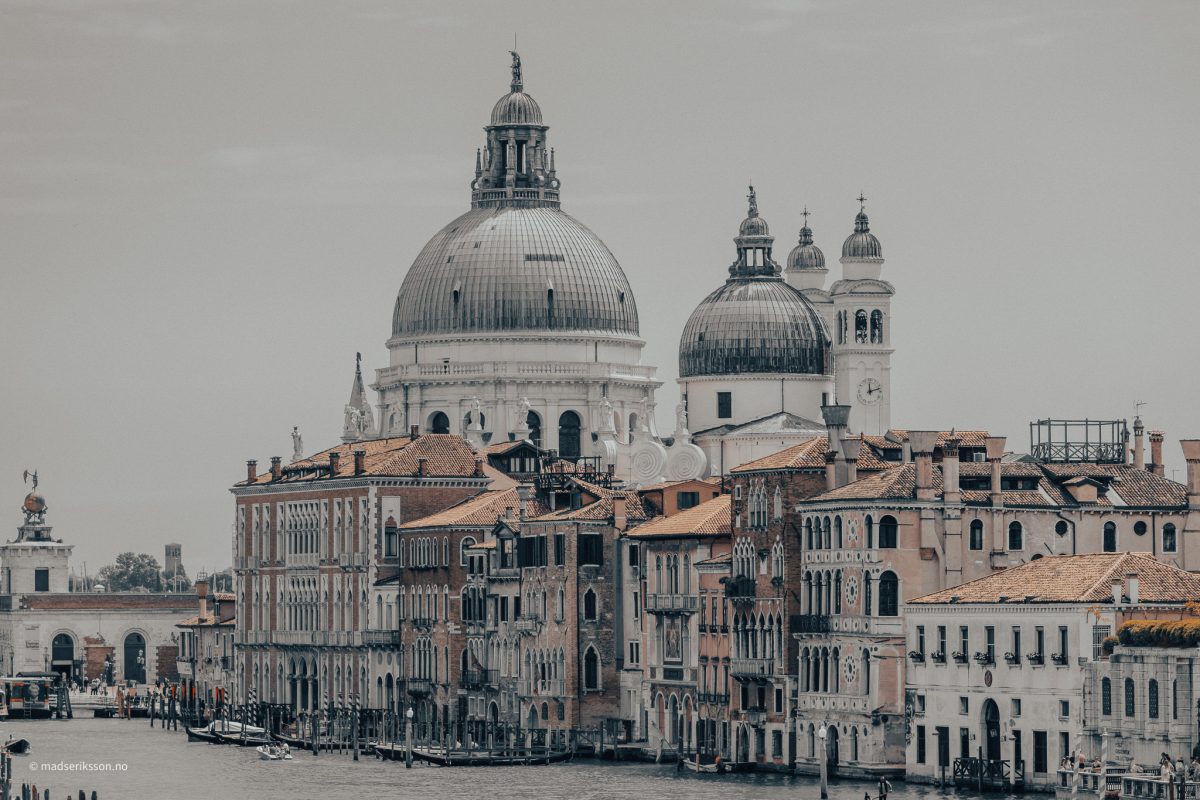
The wooden Accademia Bridge, designed by Eugenio Miozzi and opened in 1933, replaced a steel bridge of 1854 and looks east along the last stretch of the Grand Canal. At the mouth of the canal stands Santa Maria della Salute, begun by Baldassare Longhena in 1631 as a vow after the plague of 1630.
The Grand Canal from the Accademia Bridge, with Santa Maria della Salute at the far end
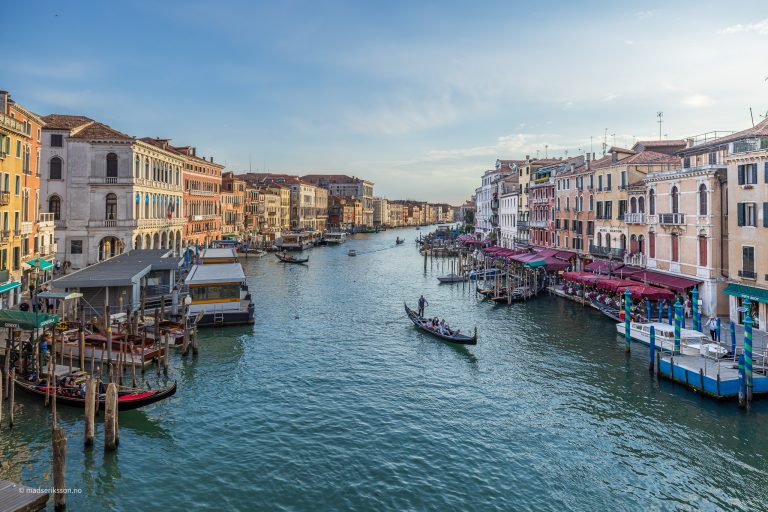
The Rialto Bridge
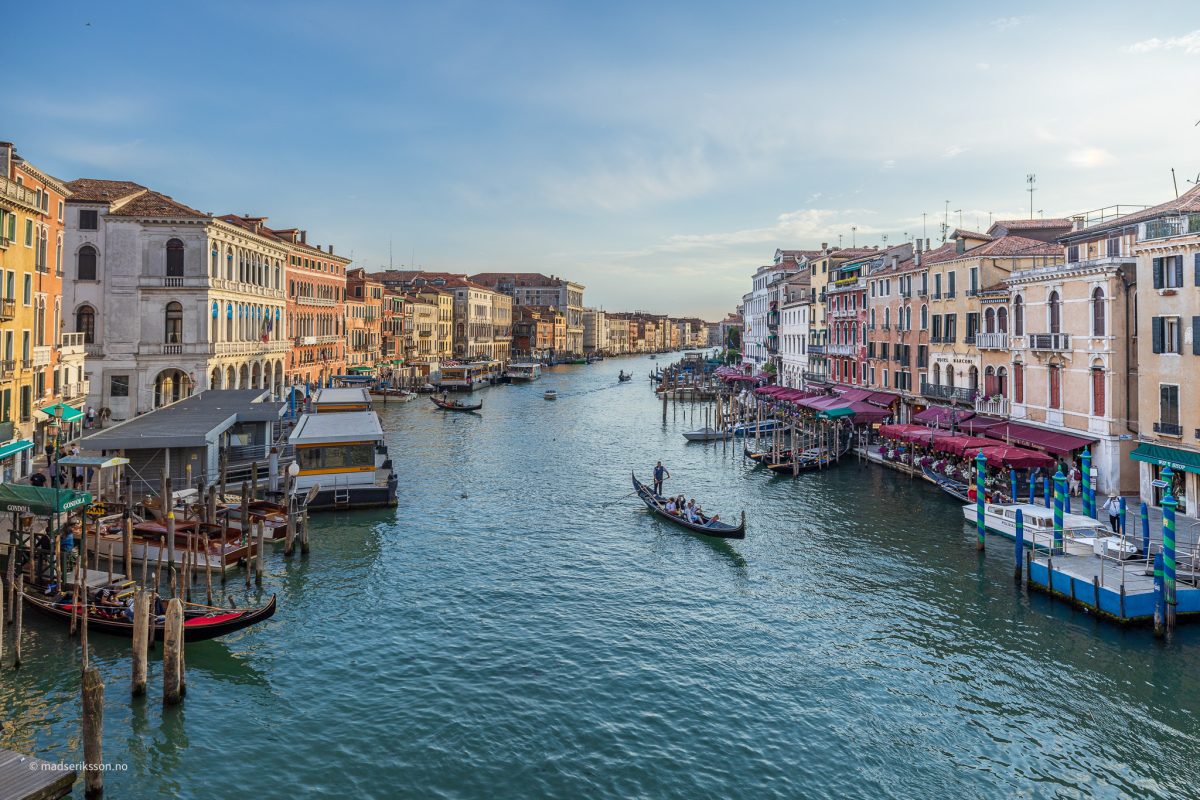
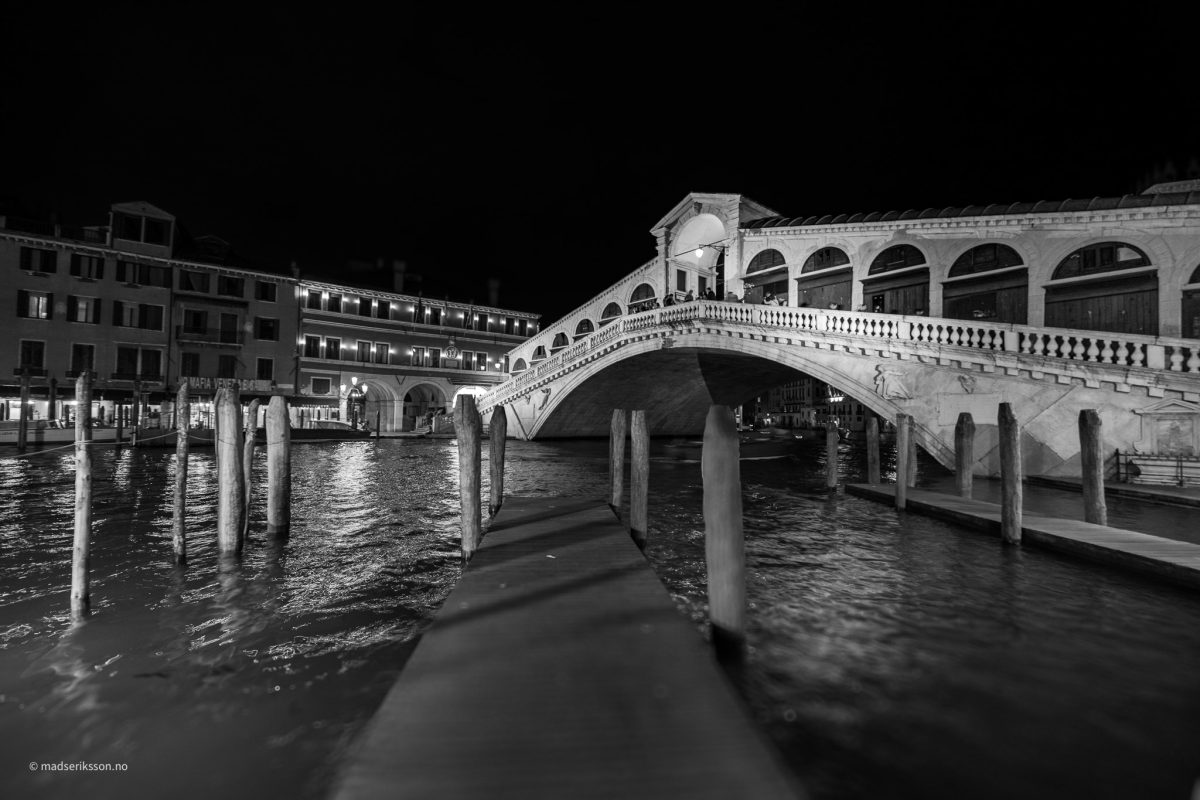
Until 1854 the Rialto was the only crossing of the Grand Canal, first as a pontoon bridge in the 12th century and then as a series of wooden bridges. The present stone bridge, designed by Antonio da Ponte, was built between 1588 and 1591 with a single span of 31.8 m carrying two rows of shops. The Rialto market on the San Polo side has been the commercial heart of the city since the Middle Ages.
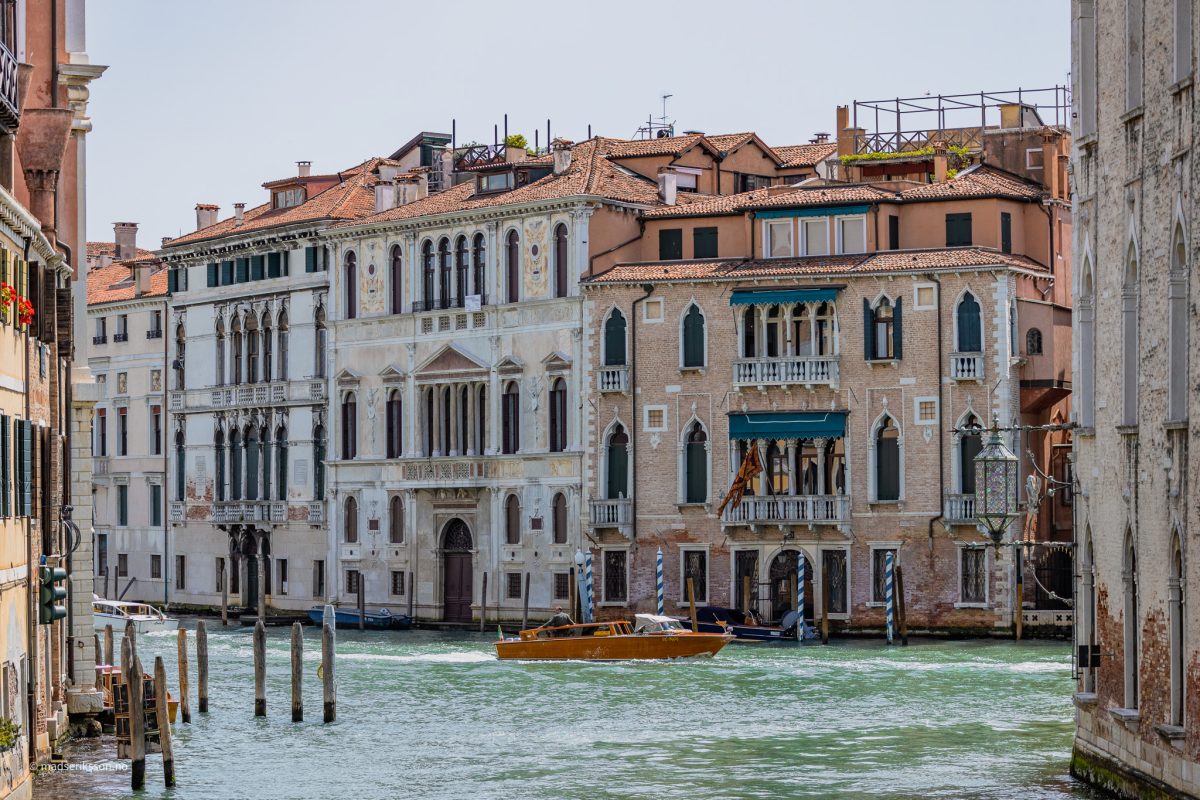
Gondolas and boat stops along the Grand Canal between rows of colourful palazzi in Venice
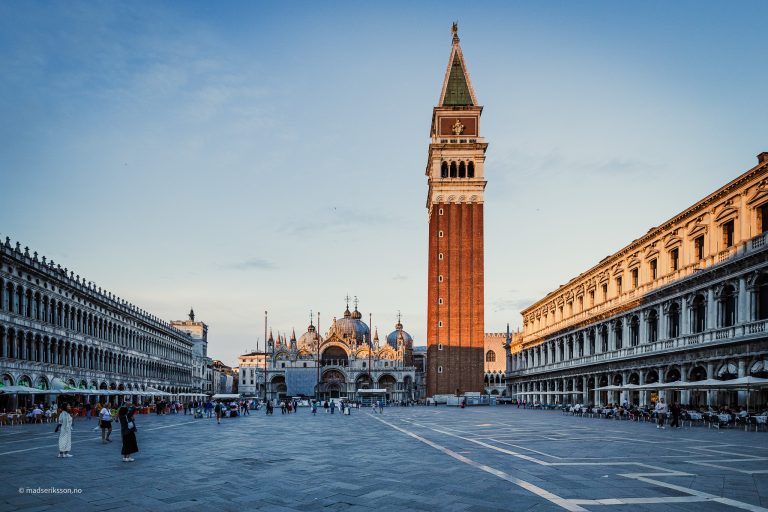
San Giorgio Maggiore
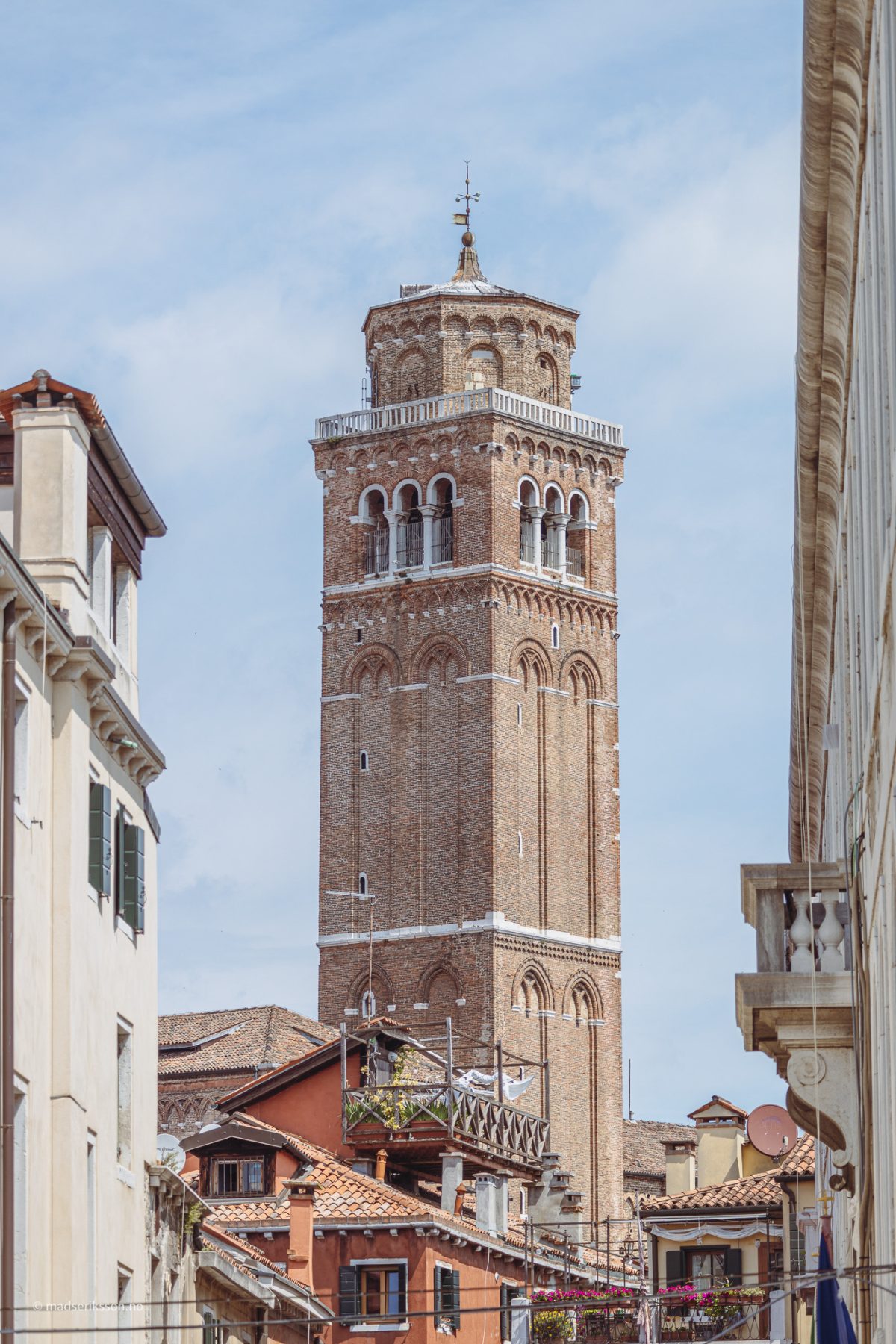
Across the Bacino di San Marco, about 500 m from the Piazzetta, the island of San Giorgio Maggiore holds Andrea Palladio's Benedictine church, begun in 1566, and its brick bell tower. In the evening the low sun falls across the water onto the Doge's Palace, the Campanile and the domes of the Salute.
Piazza San Marco in evening light, with the Campanile and the Basilica di San Marco
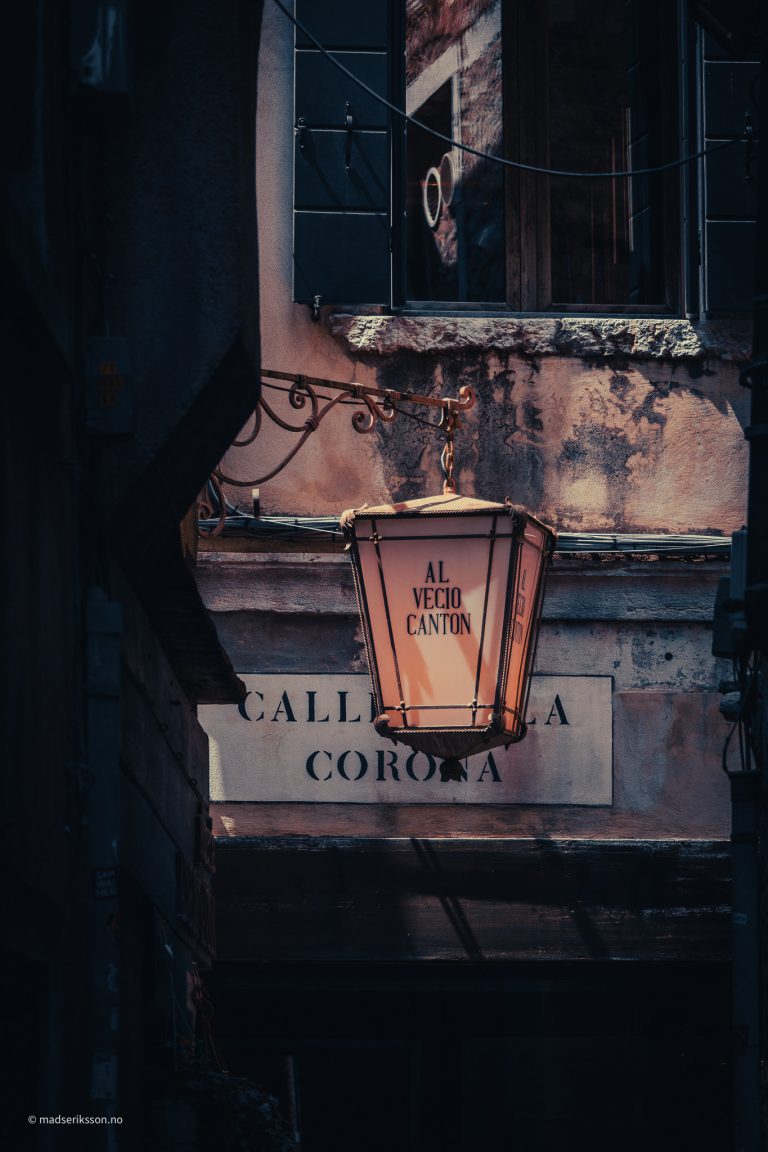
Canals and calli
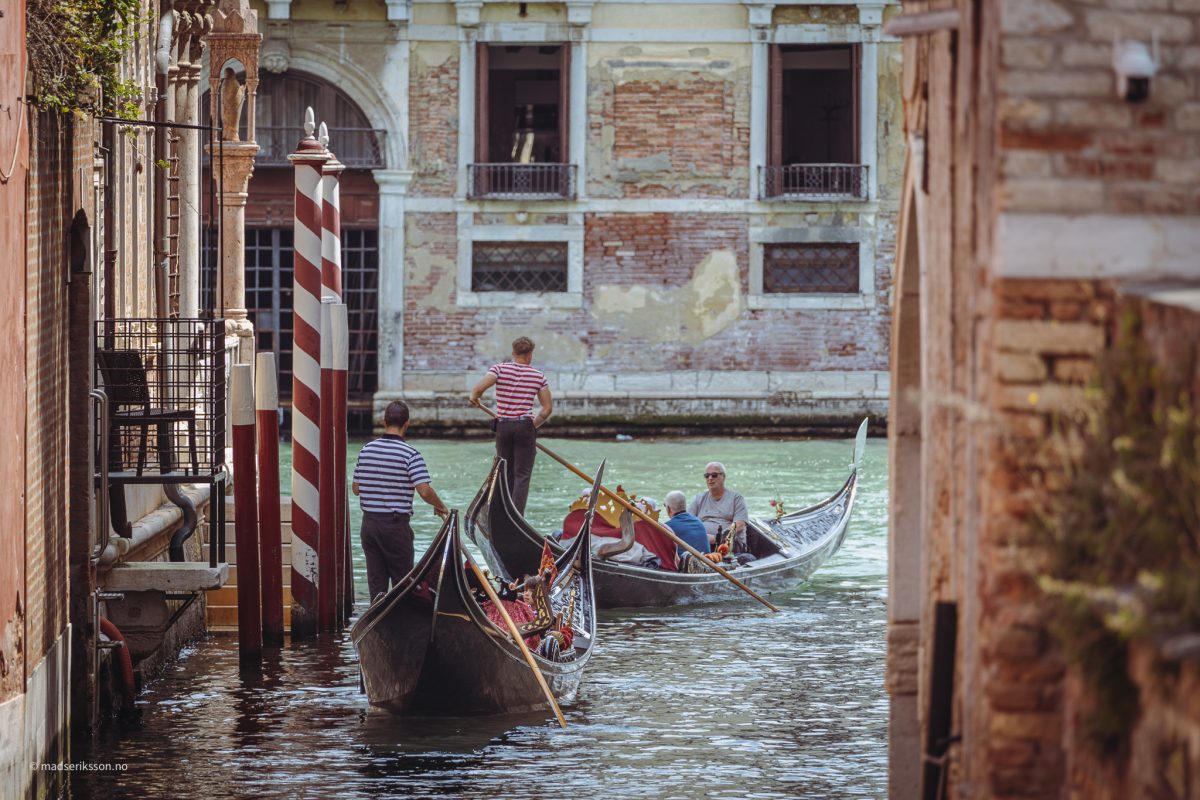
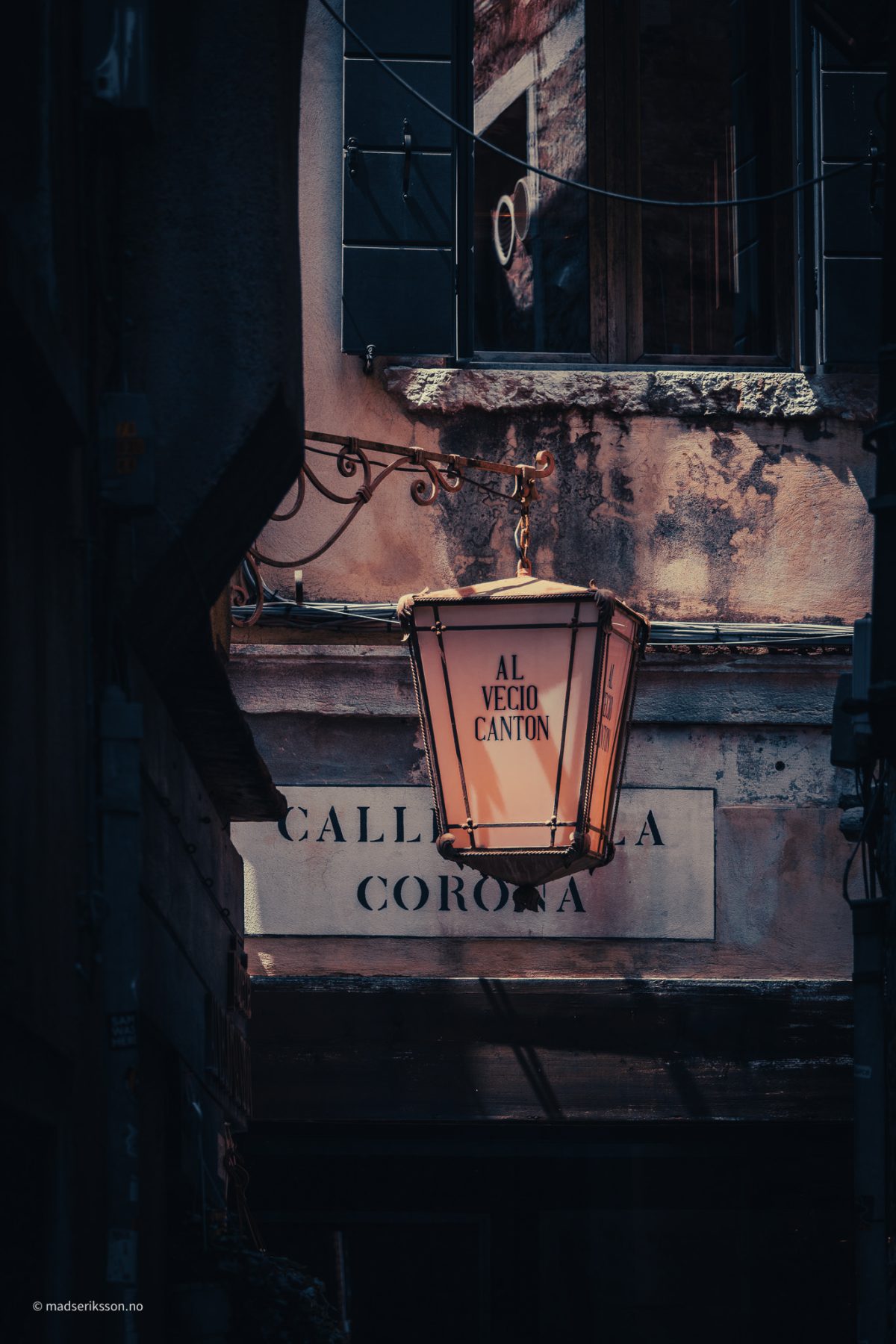
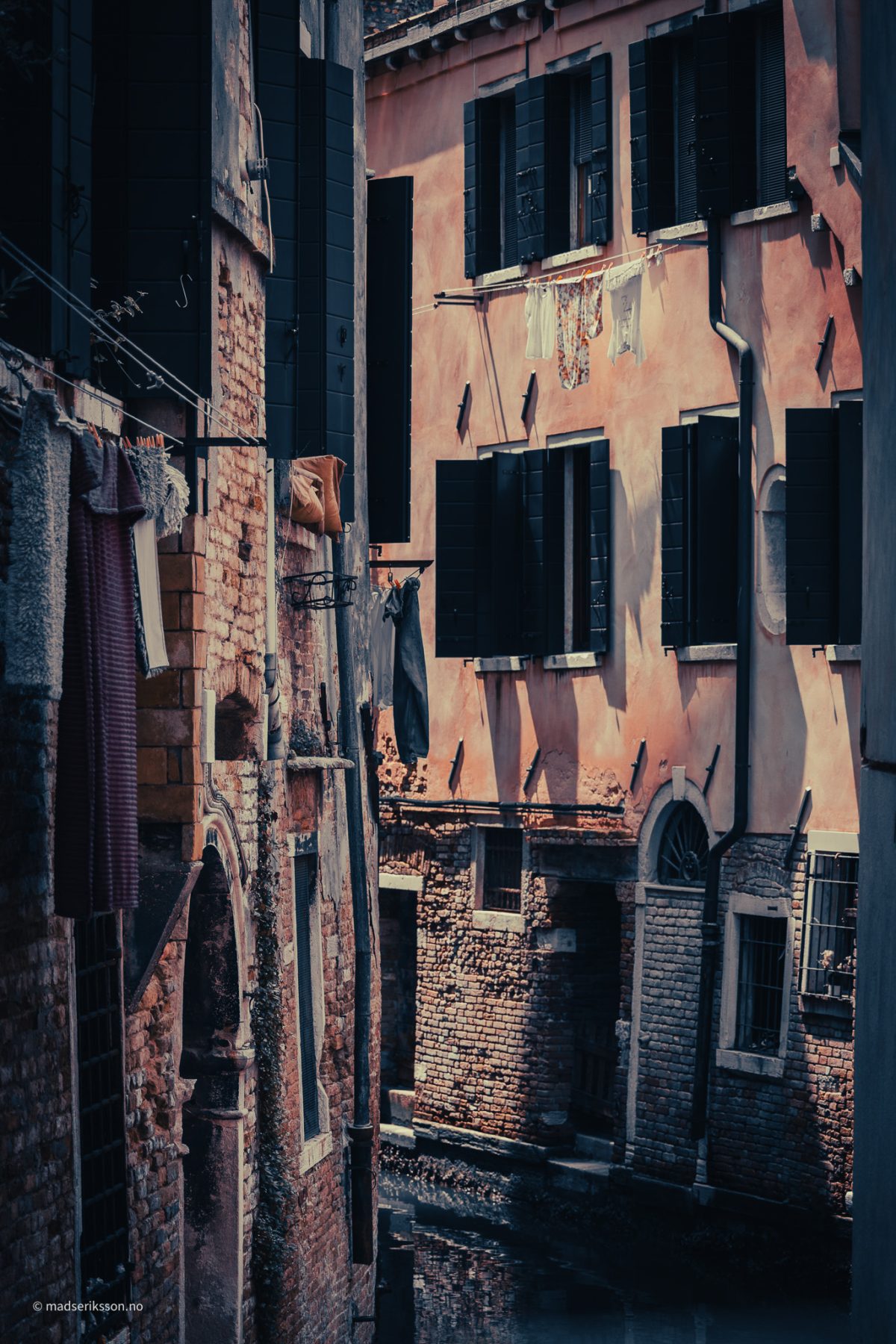
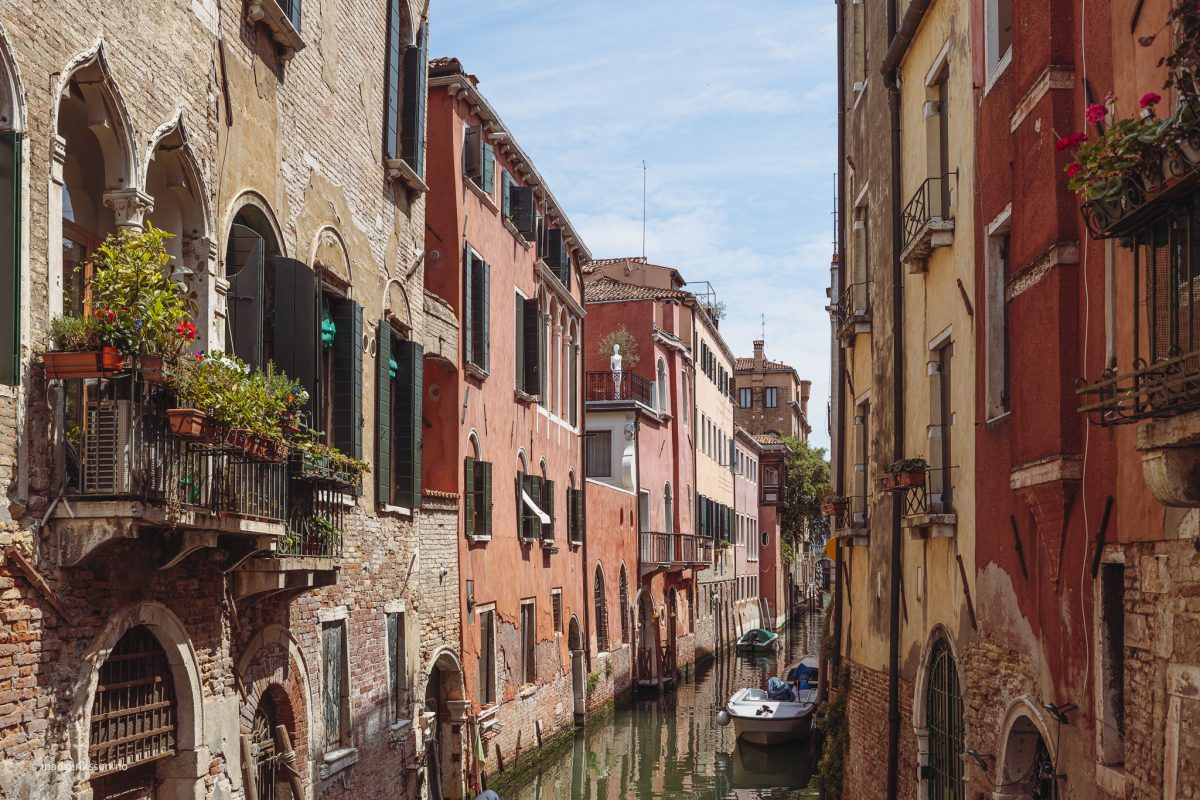
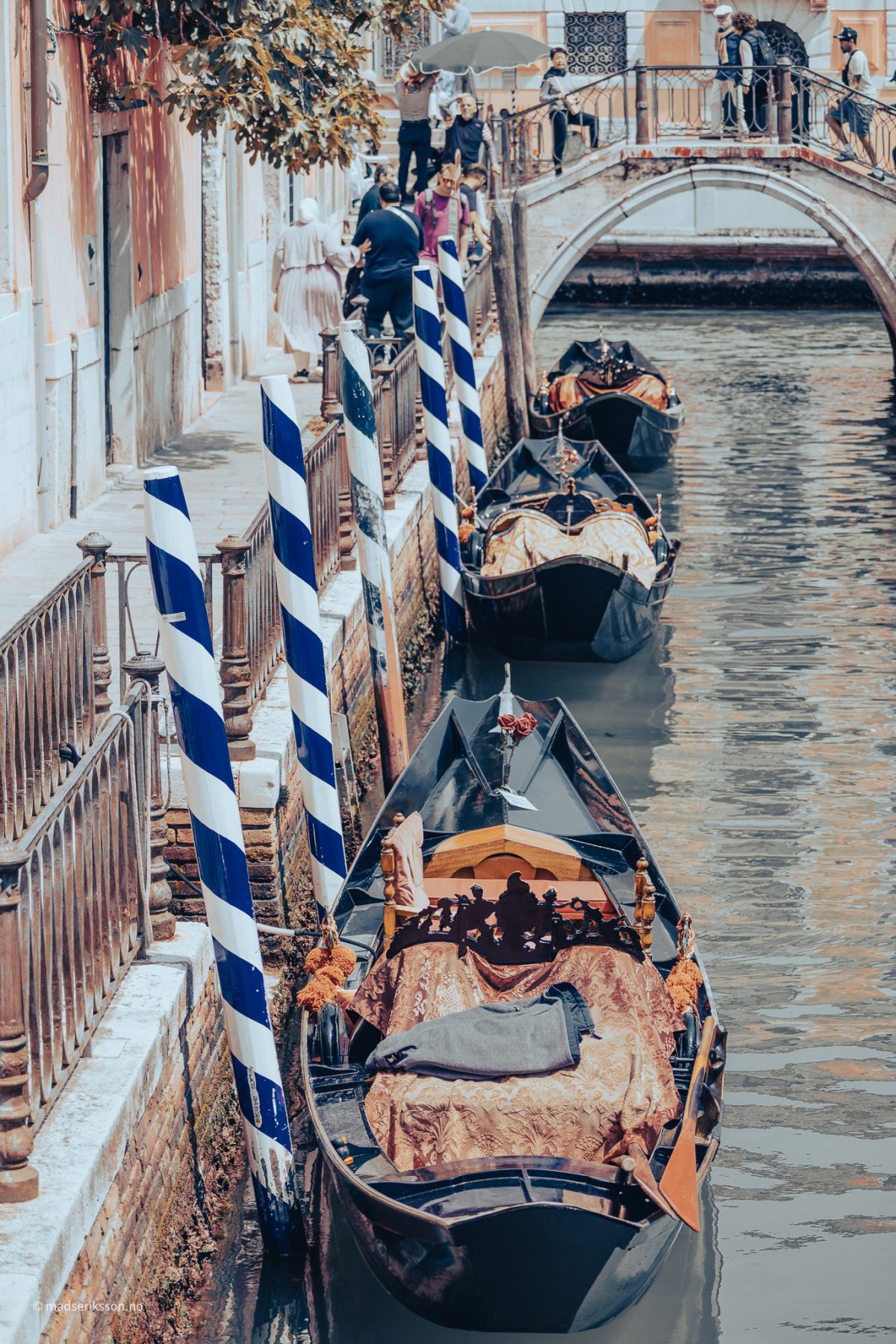
Away from the Grand Canal, Venice is a dense web of narrow canals, the rii, and alleys, the calli, with about 170 canals and around 400 bridges. There are no cars: goods and people move on foot or by boat, and gondolas are tied up at striped mooring poles outside the palazzi.
A lantern reading Al Vecio Canton hangs over the street sign for Calle della Corona in Venice
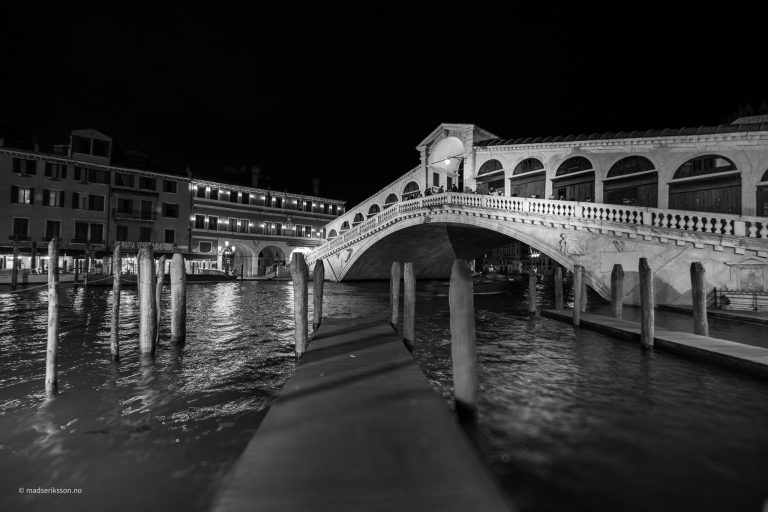
The Grand Canal at night
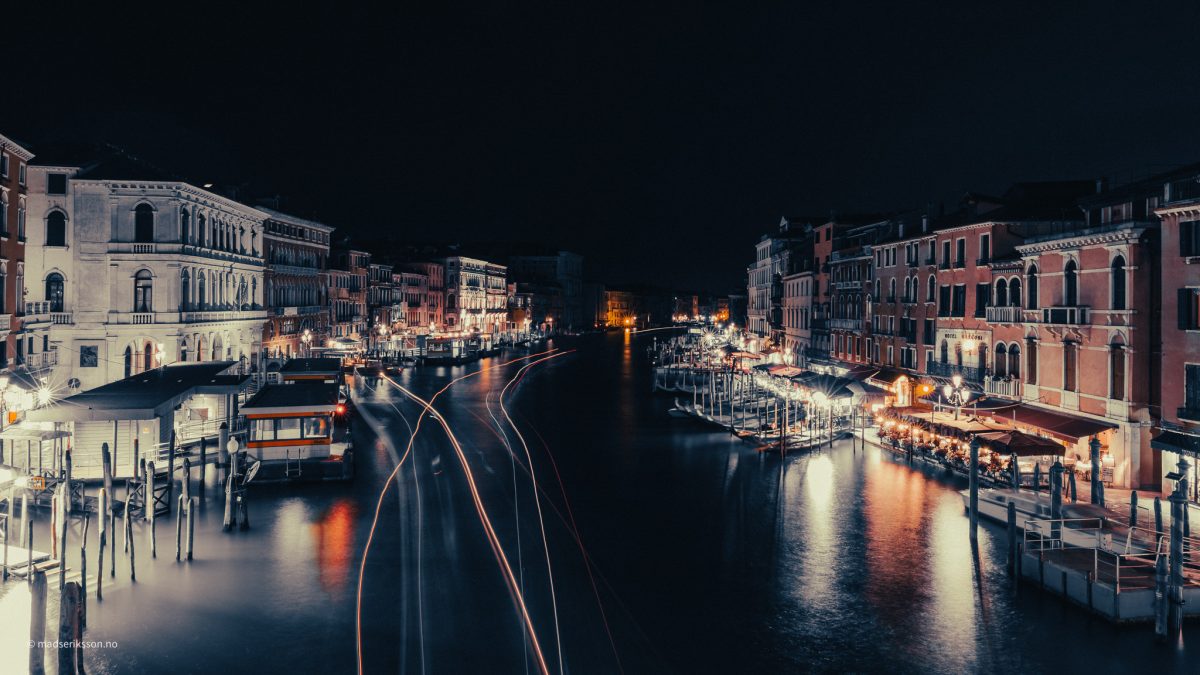
After dark the Grand Canal is still the main street of Venice, used by vaporetti, water taxis and delivery boats along its 3.8 km. Four bridges cross it: the Rialto, the Accademia, the Scalzi by the station and Santiago Calatrava's Constitution Bridge, opened in 2008.
The Rialto Bridge at night, seen in black and white from a jetty on the Grand Canal
3D model © 2026 madseriksson.no · Photographs © madseriksson.no. Buildings and heights: © OpenStreetMap contributors (ODbL), via OpenMapTiles. Ground imagery: Sentinel-2 cloudless 2023 by EOX IT Services GmbH (contains modified Copernicus Sentinel data 2023; CC BY 4.0). Heights are approximate where OpenStreetMap has no measured value; sun positions are approximate.
Piazza San Marco and the Grand Canal — The City’s Heart and its Highway
The only piazza in Venice called a piazza, and the S-shaped waterway that connects every part of the city — both magnificent, both necessary, both crowded
Piazza San Marco — the only open space in Venice to be officially called a piazza, all others being campi or campielli — is the ceremonial heart of the Republic and the city. At its eastern end stands the Basilica di San Marco, begun in 828 CE to house the relics of St Mark the Evangelist, stolen from Alexandria by Venetian merchants in a basket of pork fat to confuse the Muslim customs officials. The current building dates largely from the 11th century and is an extraordinary example of Byzantine architecture translated into Venetian stone: five great domes, four bronze horses on the façade (the originals, brought from Constantinople in 1204, are now inside), and interior surfaces covered in over 8,000 square metres of gold mosaic accumulated across eight centuries. The golden altarpiece — the Pala d’Oro — is a Byzantine masterpiece of enamel and gemstone set in gold, one of the most valuable decorative objects in the world. Entry to the Basilica is free but timed; the separate charge for the museum and Pala d’Oro is small and entirely worth it.
The Doge’s Palace (Palazzo Ducale) on the south side of the piazza was the seat of Venetian government for over a thousand years. The current Gothic building, with its distinctive pink and white marble diamond-pattern lower façade and arcade, dates from the 14th and 15th centuries. Inside, the State Apartments contain ceiling paintings by Veronese and Tintoretto — including Tintoretto’s Paradise in the Great Council Chamber, the largest oil painting in the world at 22 by 7 metres. The Bridge of Sighs, connecting the palace to the adjacent prison across a narrow canal, was named by Byron in 1818 for the sighs of prisoners crossing to their sentences; it is visible from the Ponte della Paglia on the waterfront and is probably the most photographed spot in Venice.
The horses on the façade of St Mark’s Basilica were looted from Constantinople in 1204, taken to Paris by Napoleon in 1797, returned to Venice in 1815, and moved inside for conservation in 1980. The four bronze figures now in the museum have been to Constantinople, Venice, Paris and back in 800 years.
The Grand Canal is 3.8 kilometres long, between 30 and 90 metres wide, and lined on both banks by an unbroken sequence of Gothic, Renaissance and Baroque palaces built by the merchant families of the Republic over five centuries. The Vaporetto line 1 runs the full length of the canal and is, at around 8 euros, the best-value sightseeing experience in Venice: a 45-minute journey that passes Palazzo Ca’ d’Oro, Ca’ Foscari, Palazzo Barbarigo and dozens of other palaces before reaching Piazza San Marco. The Rialto Bridge, built in stone between 1588 and 1591 by Antonio da Ponte after a competition that Michelangelo and Palladio both lost, is the oldest and best-known of the four bridges that cross the Grand Canal. The market area around its eastern end — the Rialto fish and vegetable market, operating six mornings a week — is the best place in Venice to see daily life conducted in the city’s own rhythms rather than the tourist’s.
The Islands — Glass, Lace and a Cathedral Older Than Venice
The Venetian lagoon contains dozens of islands — each with its own distinct character, history and reason to make the journey
Murano, a cluster of five islands connected by bridges approximately 1.5 kilometres north of Venice, has been the centre of Venetian glass-making since 1291, when the Republic ordered all glass furnaces to relocate there — ostensibly for fire safety, but also to control the export of the trade secrets that gave Venetian glass its global dominance for centuries. The island’s glass-blowers developed techniques — filigrana, millefiori, lattimo, avventurina — that remain the foundation of decorative glass-making worldwide. The Museo del Vetro documents the history of the craft from Roman glass to the present. Demonstrations at working furnaces are freely available from several studios and are genuinely extraordinary to watch: the transformation of molten glass into a finished form in the hands of a skilled maestro vetraio takes about three minutes and does not look like work so much as improvisation. Much of what is sold in Venice as Murano glass is not made there; the Murano glass consortium mark is the reliable indication of origin.
Burano, 40 minutes by vaporetto from Venice, is the most photographed of the lagoon islands: a small fishing village of houses painted in intense, saturated colours — cobalt blue, burnt orange, cadmium yellow, crimson — that stack against each other along the narrow canals. The colour tradition is ancient and practical: fishermen returning in fog from the lagoon needed to distinguish their house from the others. The island has been a centre of lacework since the 16th century, when Burano lace was among the most valuable textile products in Europe, prized by courts and churches from Spain to Russia. The Museo del Merletto (Lace Museum) documents the tradition; genuine Burano lace is still made by hand by an older generation of local women, and the difference between it and the machine-made imitations sold throughout Venice is immediately apparent in the quality and the price.
Torcello was the first major settlement in the Venetian lagoon — founded in the 7th century, it had 20,000 inhabitants before Venice overtook it. Today it has fewer than 20 permanent residents and a cathedral built in 639 CE that is still in use.
Torcello, the most historically significant of the islands, is also the least visited — a mostly uninhabited expanse of marshland and fields 45 minutes from Venice by vaporetto, with a cathedral (Santa Maria Assunta) founded in 639 CE that predates the founding of Venice itself. The interior contains some of the finest Byzantine mosaics in the world: the Last Judgement on the western wall and the golden Madonna in the apse, both from the 12th century, in a state of preservation and a quality of light that the crowds of Venice do not permit. Attila’s Chair — a stone throne in the square outside the cathedral, not actually connected to Attila the Hun but associated with the island’s Lombard governors — and the small Museo di Torcello complete a visit that rewards those willing to make the longer trip from Venice.
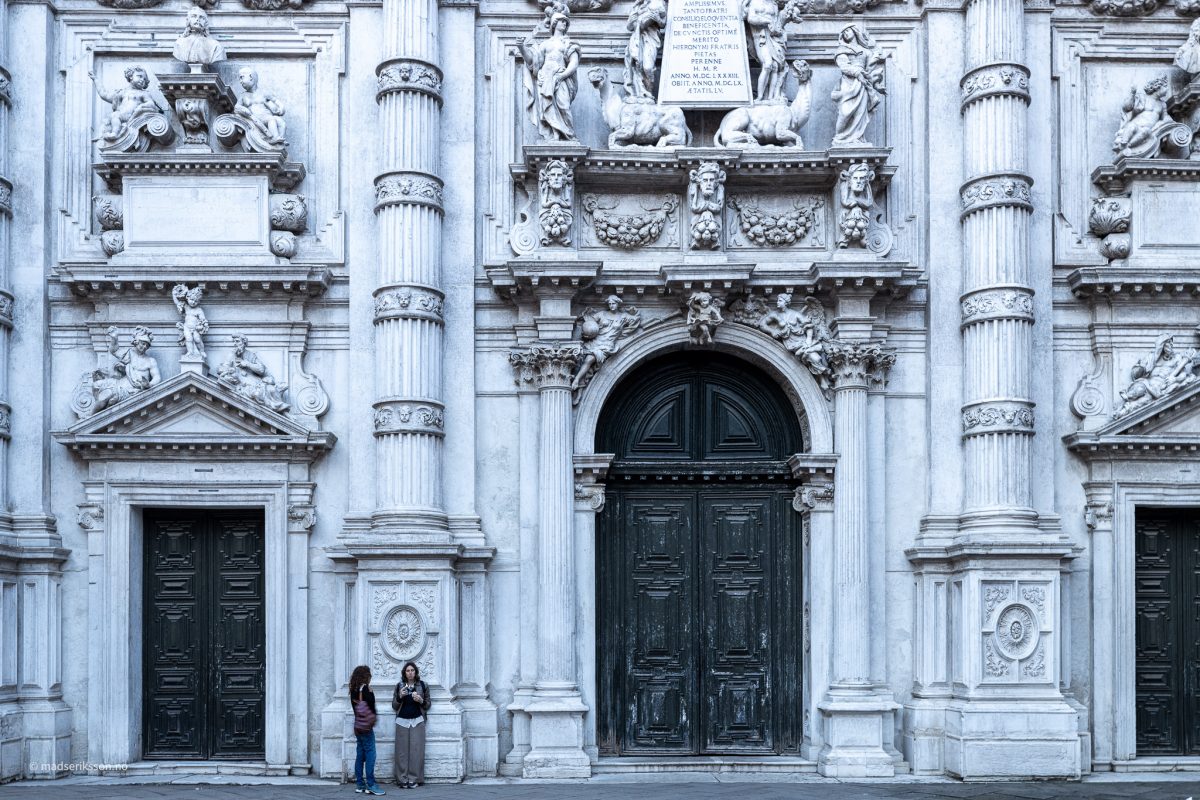
Art in Venice — Titian in the Church, Tintoretto on Every Wall
Venice has more significant art in its churches and scuole than most cities have in their museums — and much of it is still where it was painted
The Gallerie dell’Accademia, housed in a former monastery and scuola on the south side of the Grand Canal, holds the definitive collection of Venetian painting from the 14th to the 18th century. Bellini’s Pietà, Giorgione’s The Tempest, Titian’s Presentation of the Virgin, Veronese’s Feast in the House of Levi (so large it fills an entire wall), Tintoretto, Canaletto, Tiepolo — the full arc of the Venetian tradition in a single building. The collection is exceptional and perpetually undervisited relative to the crowds at San Marco; a morning in the Accademia, moving slowly through the chronological sequence of rooms, gives a fuller understanding of Venetian art than any guidebook can provide.
Santa Maria Gloriosa dei Frari — universally known as the Frari — is a Gothic Franciscan church begun in the 13th century and containing two of the most important paintings in Venice: Titian’s Assumption of the Virgin (1518), over the high altar, and Titian’s Pesaro Madonna (1526), on the left nave. The Assumption — the Virgin rising through a swirl of apostles into a golden heaven, painted in a range of colour that revolutionised Venetian painting — is visible the moment you enter the church. Titian himself is buried here. Adjacent to the Frari, the Scuola Grande di San Rocco contains the most concentrated sequence of Tintoretto’s paintings anywhere in the world. Tintoretto spent 23 years, from 1564 to 1587, filling the three floors of the Scuola with scenes from the Old and New Testament — approximately 60 paintings in total. The upper hall, with its ceiling and wall paintings aligned so that the biblical narratives read in relation to each other across the entire space, is one of the most extraordinary painted interiors in existence.
Tintoretto spent 23 years painting the Scuola di San Rocco. He secured the commission by delivering a finished ceiling painting instead of the preliminary sketch the Brotherhood had requested. He gave it to them as a gift, which they could not refuse.
The Peggy Guggenheim Collection, in the unfinished 18th-century Palazzo Venier dei Leoni on the south bank of the Grand Canal, is the most important collection of modern art in Italy: Picasso, Brancusi, Kandinsky, Léger, Mondrian, Ernst, Dalí, Pollock, de Kooning, Rothko — assembled by Peggy Guggenheim through decades of friendship, patronage and acquisition in Paris, London and New York. Guggenheim lived in the palazzo from 1949 until her death in 1979 and is buried in its garden. The collection is displayed in the palazzo’s rooms and the large garden terrace overlooking the canal, and the combination of the scale of the collection, the intimacy of the setting and the view from the terrace makes it one of the finest museum experiences in Venice.
Venetian Food — Small Plates, Spritz and the Morning Market
Venice has its own distinct food culture — rooted in the lagoon, the Adriatic and trade routes to the East — that is entirely different from the rest of Italy
The bacaro is the quintessential Venetian social institution — a small wine bar, typically with a wooden counter and a glass case displaying cicchetti, where Venetians stop for a ombra (a small glass of wine, the name deriving from the custom of moving wine stalls into the shadow of the Campanile as the sun moved) and a snack at almost any hour of the day. Cicchetti are Venice’s answer to tapas: small portions of food on bread or toast, or in small bowls, ranging from the simple (salted cod on polenta, small mozzarella, slices of soppressa salami) to the elaborate (baccalà mantecato — dried salt cod whipped with olive oil into a white cream — on bread, the finest of Venice’s bar snacks). A lunch of cicchetti and wine in a bacaro in the Cannaregio district, away from the Rialto crowds, costs a fraction of a sit-down restaurant meal and is a considerably more authentic experience.
The Rialto market, on the eastern bank of the Grand Canal, has been operating in this location since the 10th century and is still the best place to understand what Venice actually eats. The fish market (pescheria) and the produce market (erberia) open from Tuesday to Saturday morning and sell whatever the lagoon and the Adriatic have produced that day: mantis shrimp, spider crabs, small octopus, cuttlefish, soft-shell crabs (moeche, available only in spring and autumn), sea bass, bream, sole and the whole range of the Adriatic catch. The produce stalls sell the radicchio of Treviso, the asparagus of Bassano, the artichokes of Sant’Erasmo island — vegetables from the market gardens that have supplied Venice for centuries. Shopping here in the early morning, before 9am, means sharing the space with restaurant buyers rather than tourists.
Sarde in saor — fried sardines marinated in sweet-and-sour onion with pine nuts and raisins, a recipe unchanged since the medieval spice trade — is one of the oldest dishes in Venice and one of the best arguments for Venetian cooking.
Venetian food bears the imprint of the Republic’s trade history. Spices that arrived from the East through Venetian merchants — cinnamon, cloves, nutmeg, saffron — appear in sweet-and-sour combinations that distinguish Venetian cooking from the rest of northern Italy. Sarde in saor (fried sardines marinated in sweet-and-sour onion with pine nuts and raisins) is the most characteristic example: a recipe documented since the 14th century that perfectly reflects the intersection of Adriatic fish and Eastern spice. The Aperol Spritz — Aperol, prosecco and a splash of soda, served over ice with an olive — was invented in the Veneto in the 1950s and remains the appropriate aperitivo at any hour from noon onward. Prosecco, produced in the Conegliano-Valdobbiadene hills north of Venice, is the correct wine at almost any occasion in the region.
«Venice asks something specific of the visitor: to get lost. Not lost in the tourist sense — following a map to the next listed attraction — but genuinely lost, turning into a calle without knowing where it goes, finding a campo you have no name for, arriving at the water’s edge without having planned to. The city is small enough that you will always find your way back, and large enough that the finding can take a while. What happens in the meantime — the light on a canal, a church door open onto something you were not expecting, the sound of the city which has no traffic and is therefore more full of other sounds — is what Venice actually gives you. The Basilica and the palaces and the paintings are real and necessary. The calle where you got lost is why you came back.»
More in the same area
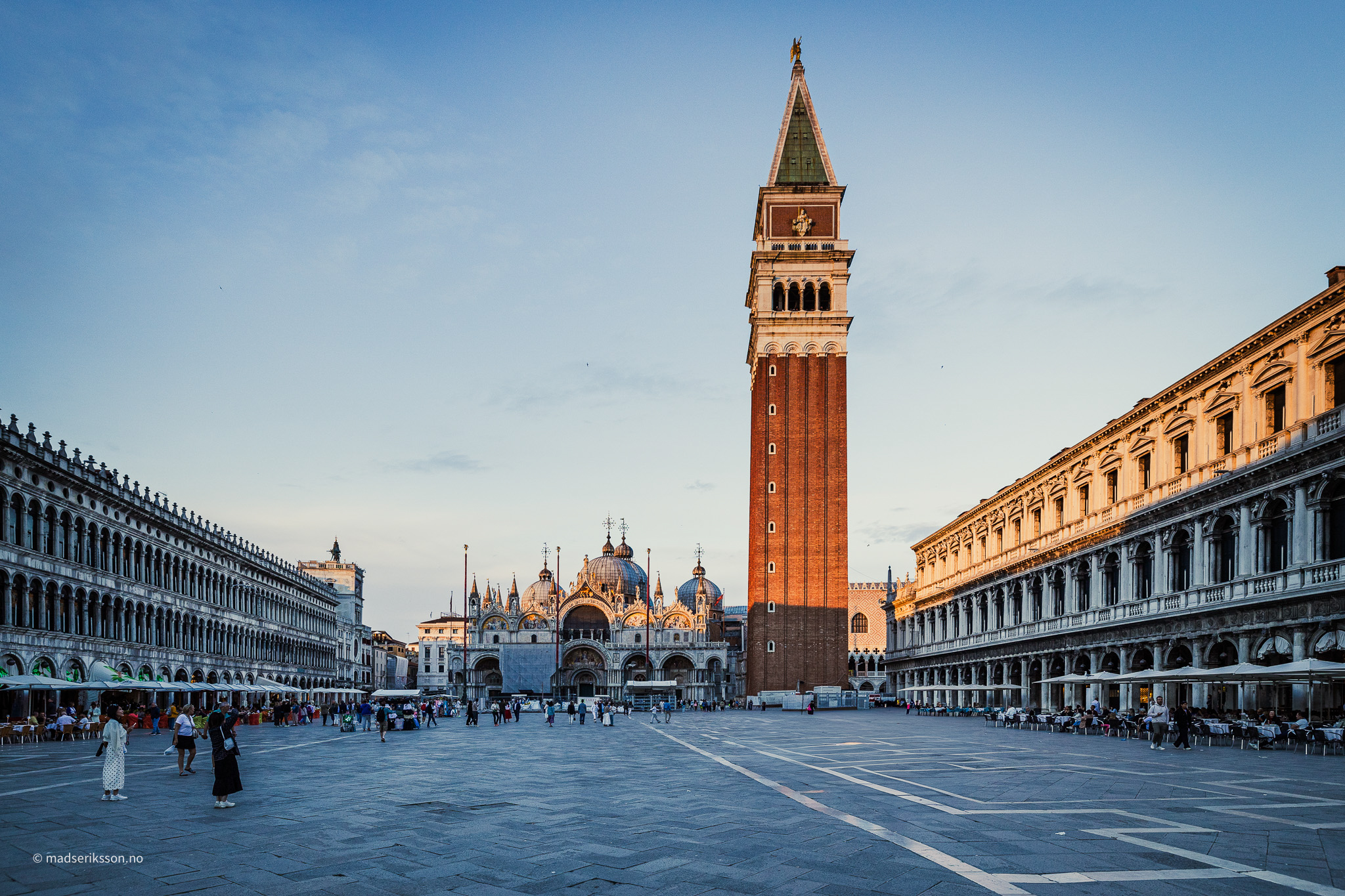 ArchitectureSt Mark’s Campanile: Venice’s Bell Tower That Fell and Was Rebuilt
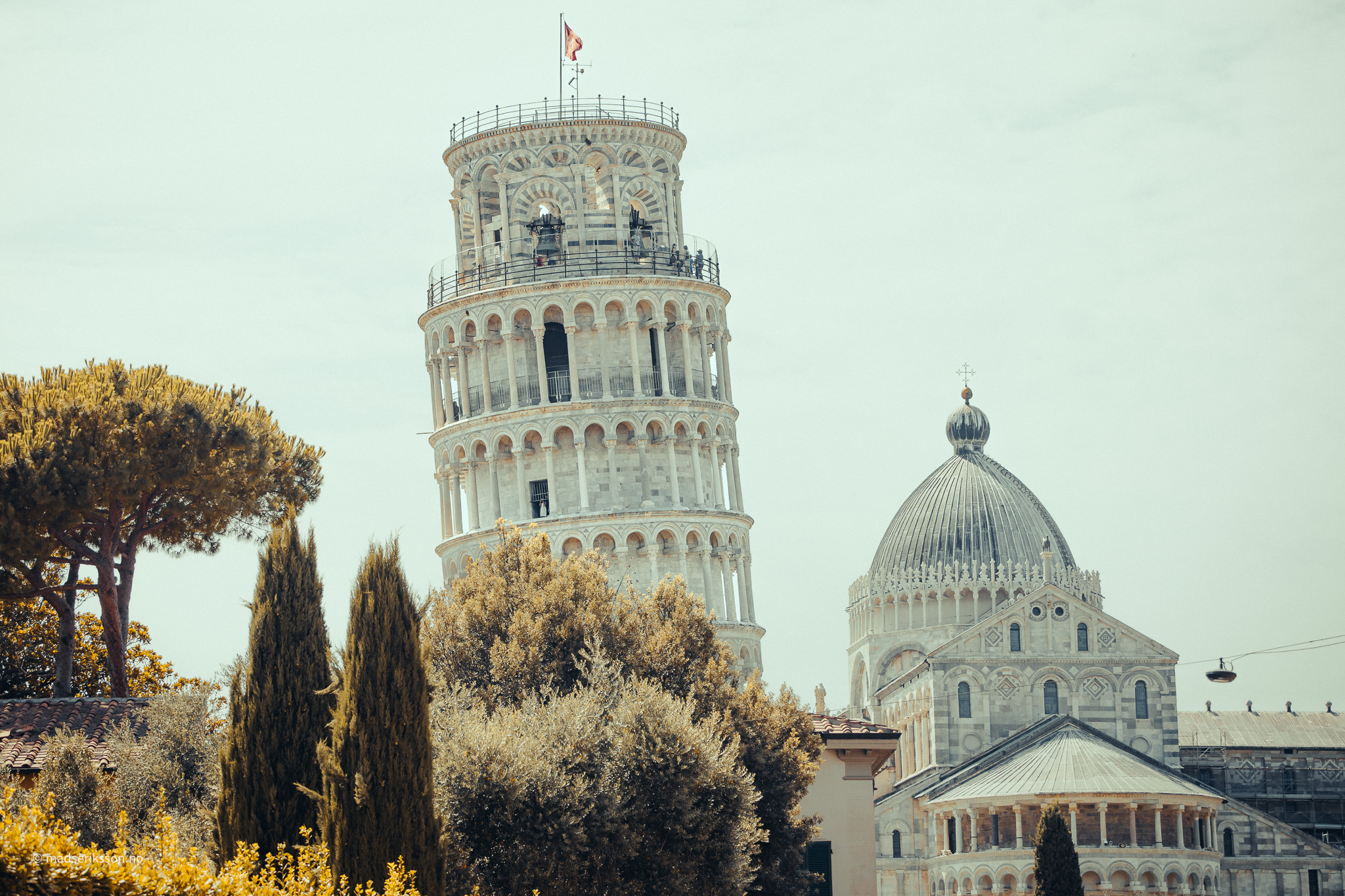 ArchitecturePisa — The Leaning Tower, the Square of Miracles and the City on the Arno
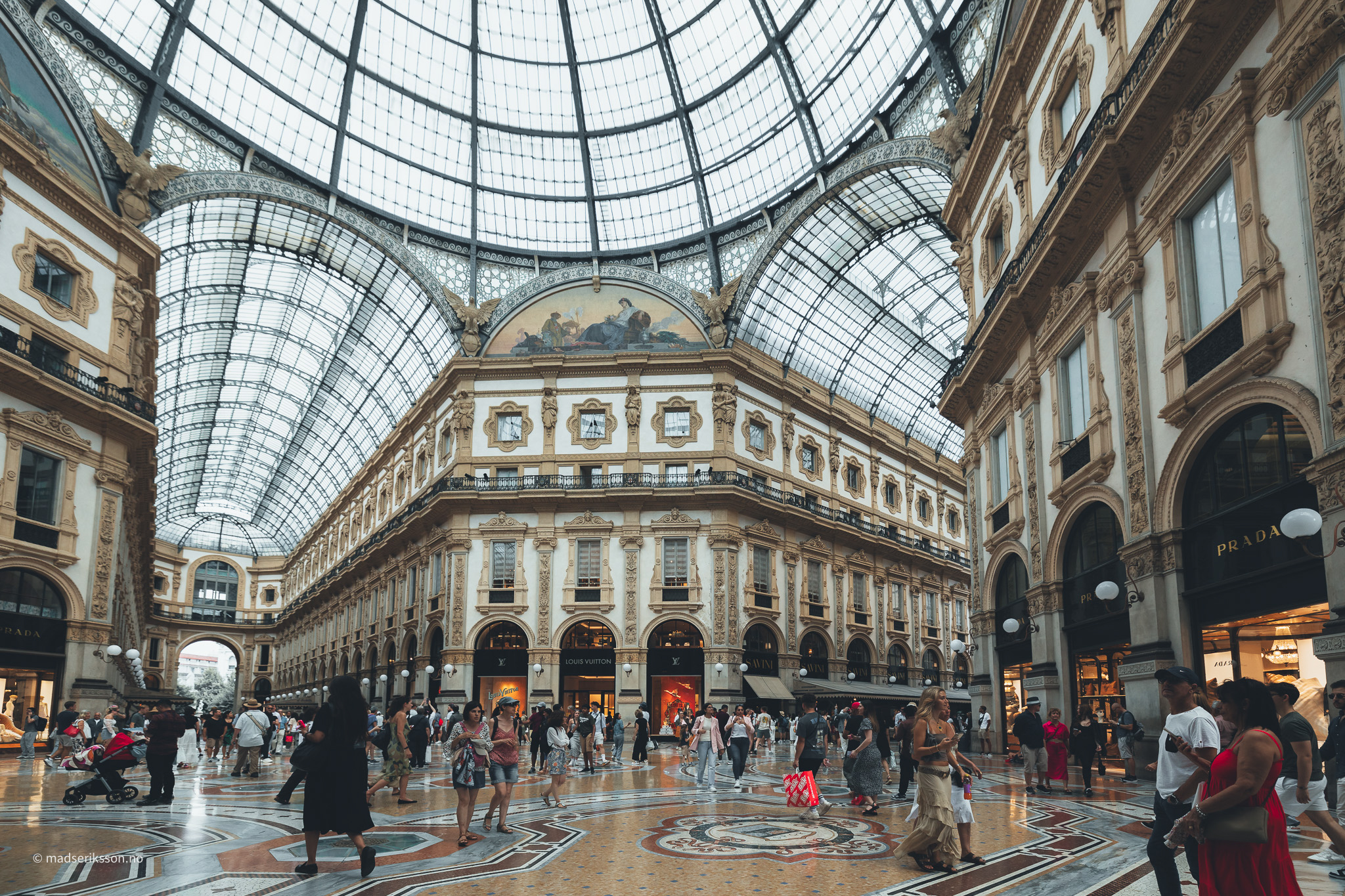 CitiesMilan: A Fashionable and Cultural Hub in Italy
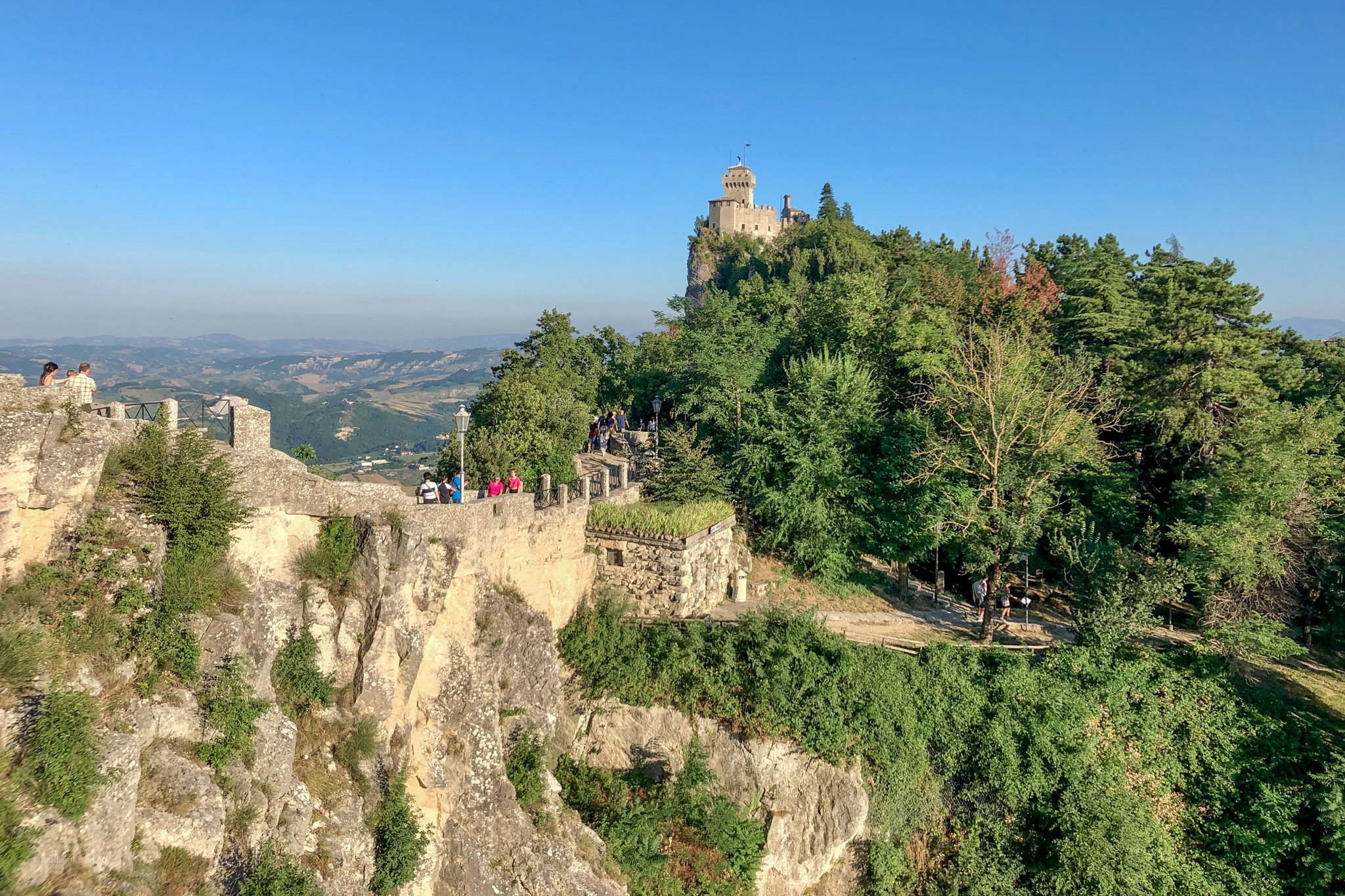 CitiesSan Marino — The Republic on the Rock, Its Towers and Its Captains Regent
 CitiesCorleone: Beyond the Godfather — History, Anti-Mafia and the Ficuzza Forest
 CitiesTurin: A City of Elegance and History
City Frames · scroll-driven 3D
More cities in three dimensions
54 city guides open with a model built from open map data. Scroll, and the camera moves from landmark to landmark.
Departures · City Frames
Where to next?
| Time | Destination | Country | Status |
|---|
Live · position of the sun
Golden hour, right now
The low, warm light just after sunrise and just before sunset. These are the cities on the site where it is happening at this moment.