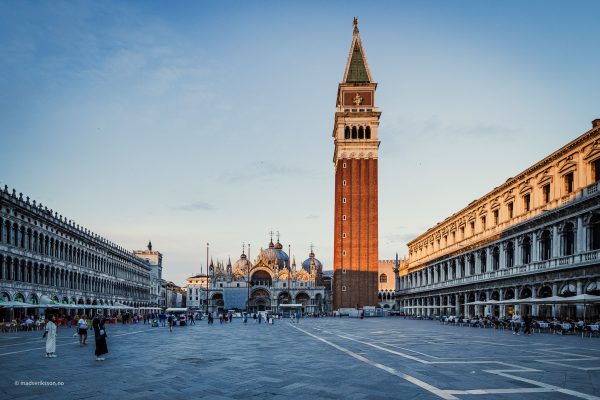
The Leaning Tower of Pisa started to tilt before it was three storeys high. Work began in the 1170s on a bell tower for the cathedral of one of the richest sea powers in the Mediterranean, and the soft clay and sand under the Piazza del Duomo gave way almost at once. The builders stopped, started again a century later, and finished the bell chamber in 1372 with the tower already visibly crooked. By 1990 it was leaning so far that it was closed to the public; eleven years of engineering pulled it back far enough to reopen. Around it stands one of the finest groups of medieval buildings in Europe — and beyond the square, a university city on the Arno that most day-trippers never see.

Pisa owes its great square to the sea. In the 11th century it was one of the maritime republics of Italy, trading and fighting across the Mediterranean alongside Genoa, Venice and Amalfi, and the cathedral begun in 1064 was paid for in part with spoils from a raid on Muslim Palermo. The cathedral, the baptistery, the bell tower and the monumental cemetery that followed were built over three centuries on open ground at the north-west edge of the city, in the same striped white-and-grey marble, as a statement of what Pisa had become. Then the fortunes turned. Genoa destroyed the Pisan fleet at the Battle of Meloria in 1284, the harbour silted up, the coast drifted away to its present distance of nearly ten kilometres, and in the early 15th century the city fell to Florence.
What remained was a provincial city with an outsized monument and a university that has been one of the best in Italy since 1343. Galileo Galilei was born here in 1564, studied and taught here, and is tied by legend to both the cathedral and the tower. Today Pisa has around 99,000 inhabitants and a large student population, and it divides neatly in two for visitors: the Piazza del Duomo, crowded from morning to evening, and the rest of the city along the Arno, which is quieter, more lived-in and only a short walk away.
How to approach Pisa
This guide covers Pisa in three parts: the Leaning Tower itself — why it leans, how it was saved, and what the climb involves; the other monuments of the Piazza del Duomo, from the cathedral and the baptistery to the frescoed cemetery that burned in 1944; and the city beyond the square, from the Piazza dei Cavalieri and the river promenades to a Keith Haring mural and the candle-lit festival every June.
Pisa in 3D
Pisa lies on the Arno nearly 10 km from the sea, which has drifted away from the city since its days as one of the maritime republics of Italy. Its cathedral square sits at the north-west edge of the medieval city, while the rest of Pisa, with around 99,000 inhabitants and a university founded in 1343, follows the river. This frame runs from the Piazza dei Miracoli in the north to the central station in the south.
The Leaning Tower
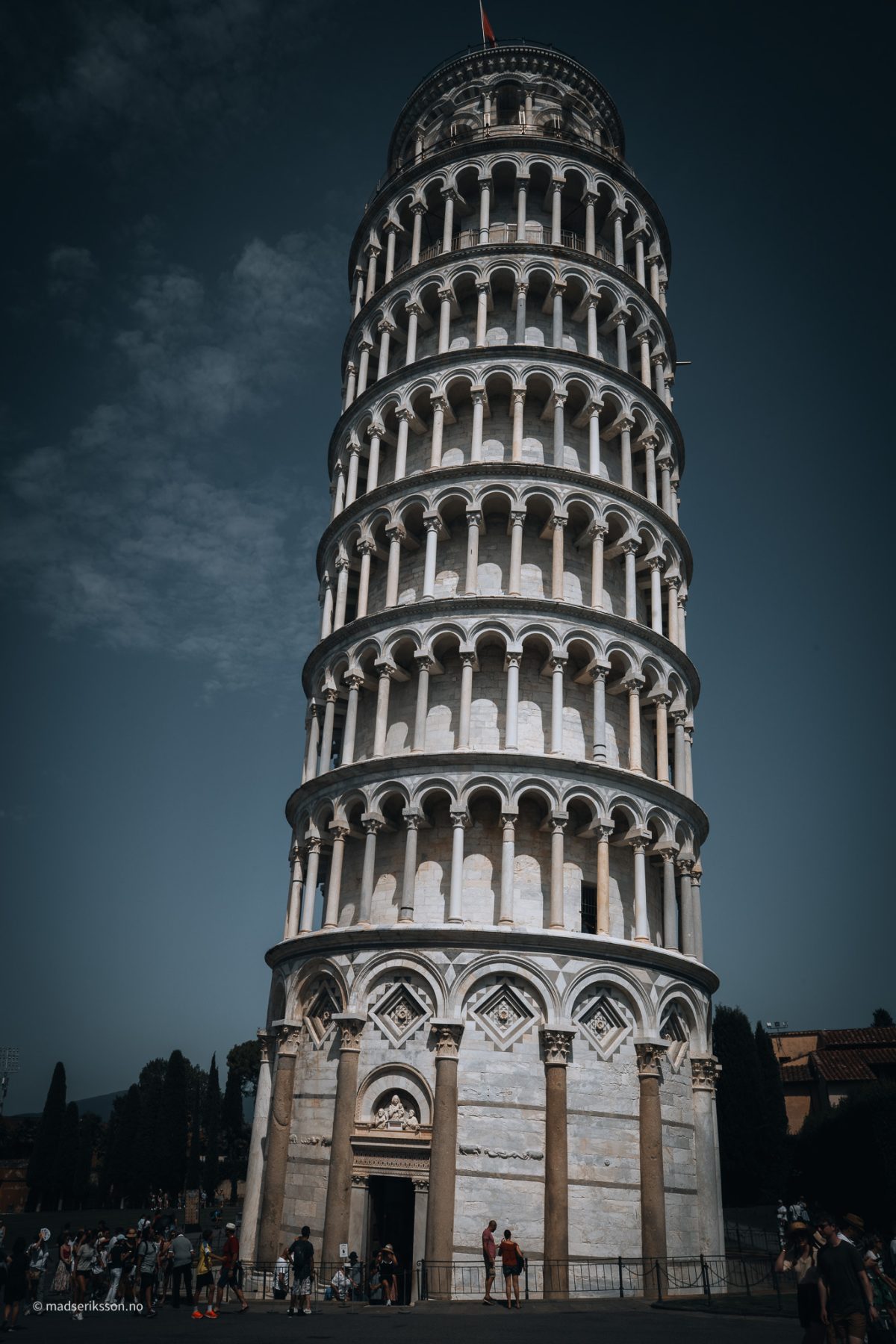
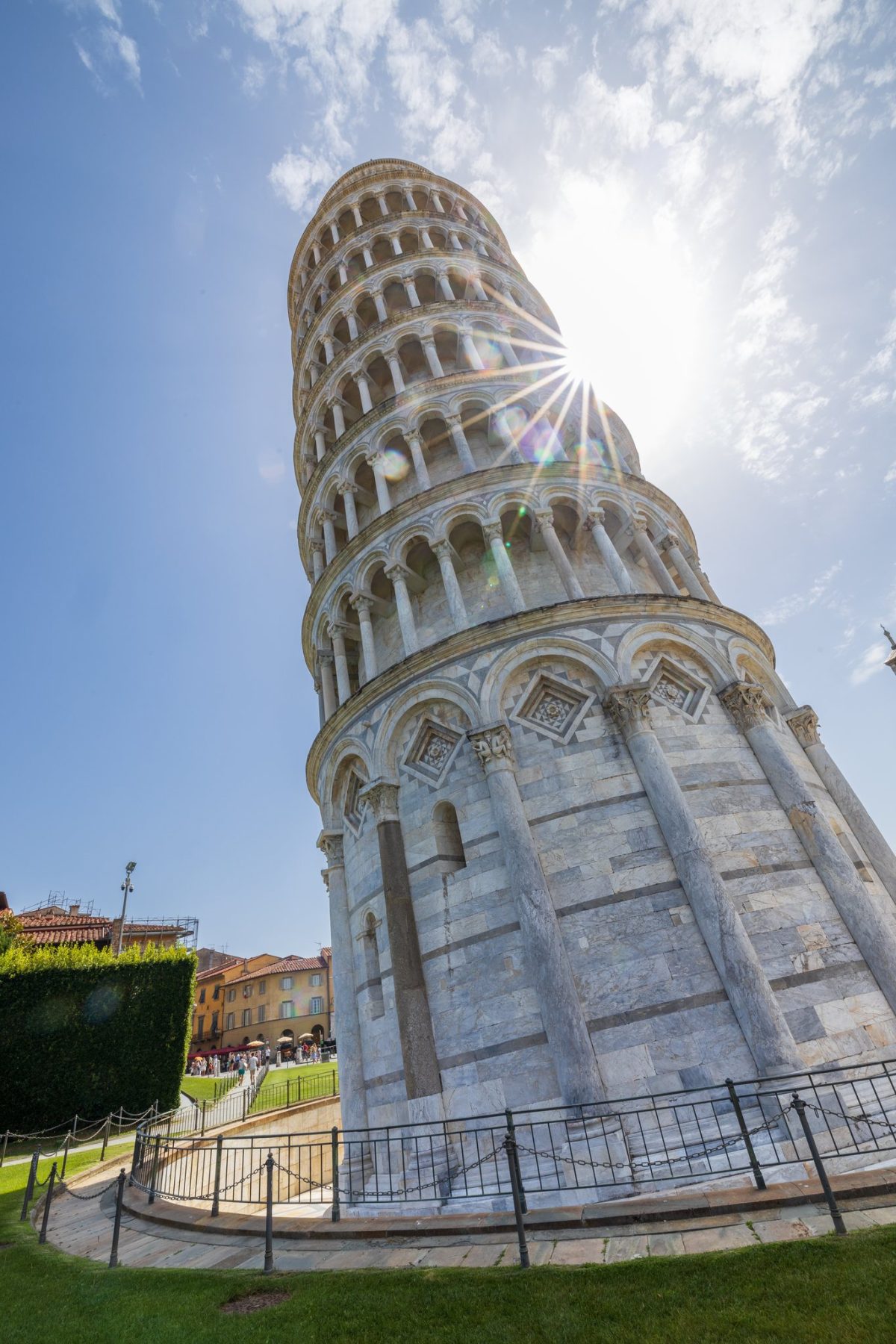
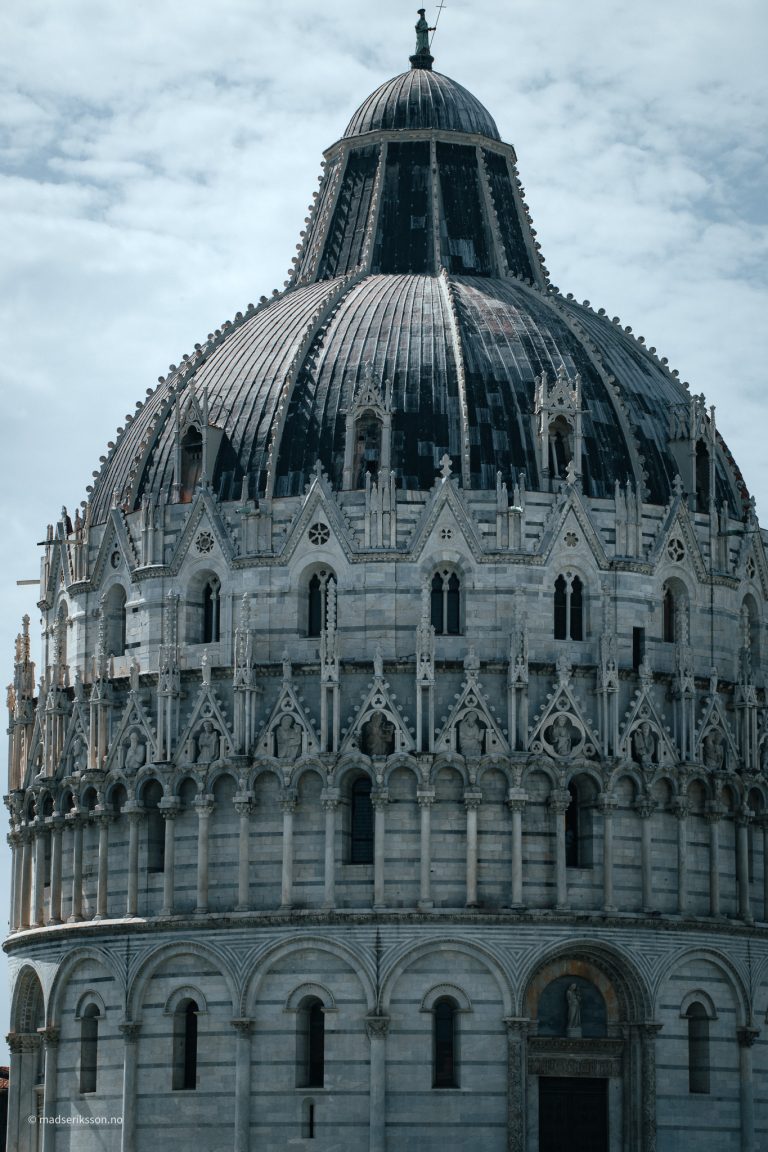
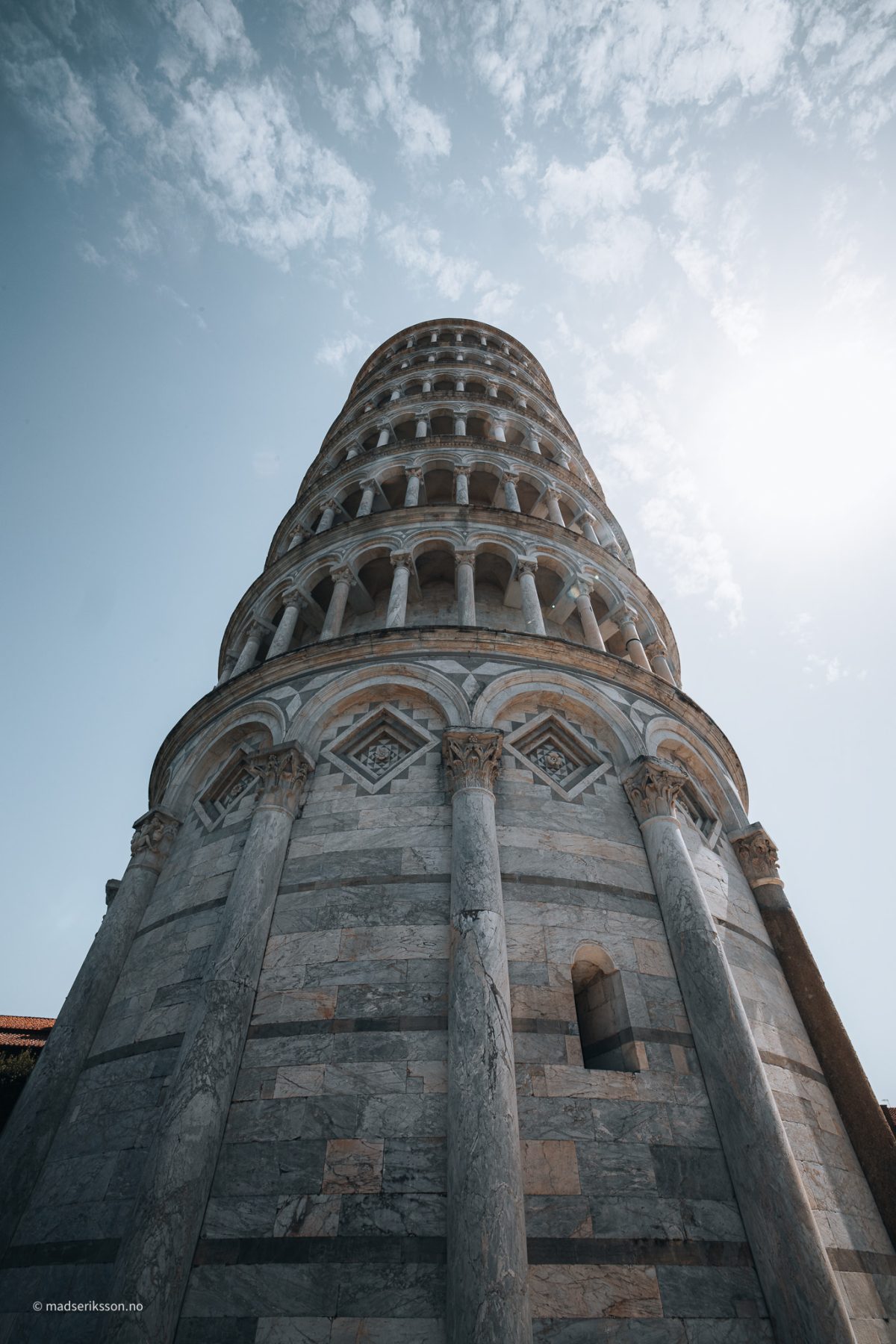
The cathedral's bell tower was begun in 1173 and had started to tilt before its third storey was finished; the bell chamber was only completed in 1372. The tower is about 56 m high, and by 1990 it leaned 5.5 degrees, so it was closed on 7 January that year. Engineers removed about 70 tonnes of soil from beneath the raised north side, and when it reopened on 15 December 2001 the lean was just under 4 degrees.
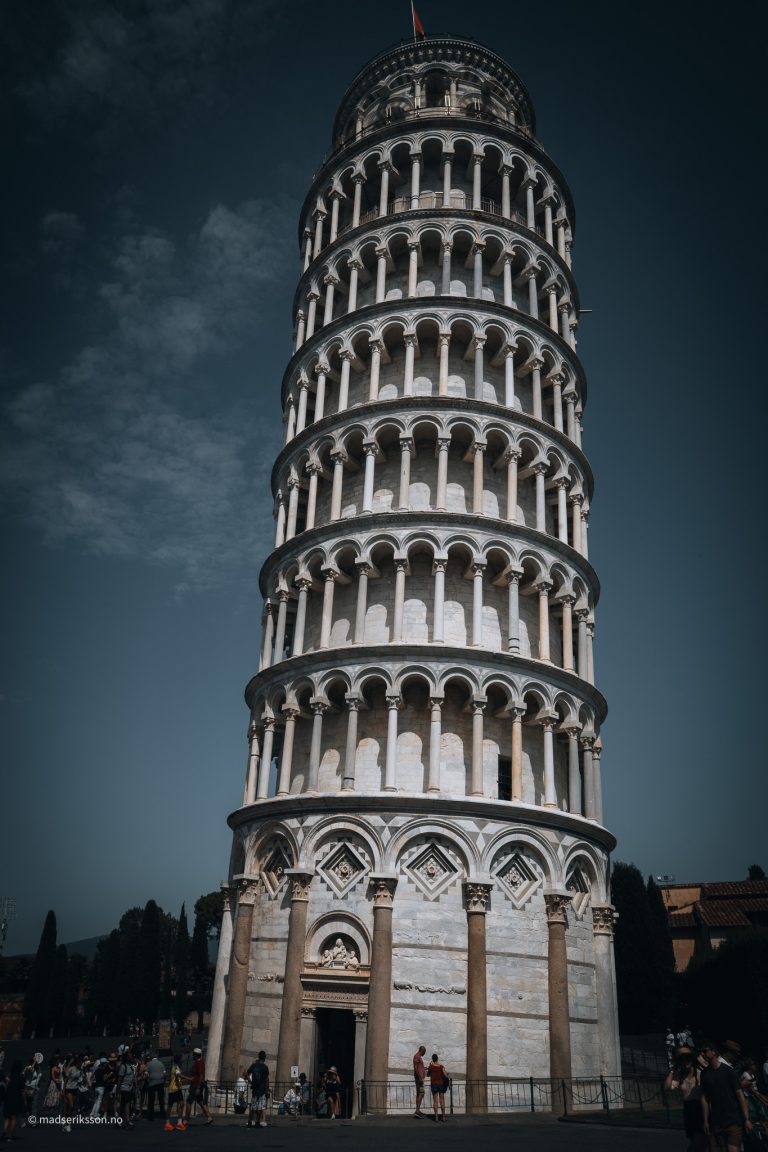
The Leaning Tower of Pisa against a dark sky, with visitors gathered at its base on the Piazza dei Miracoli
The Square of Miracles
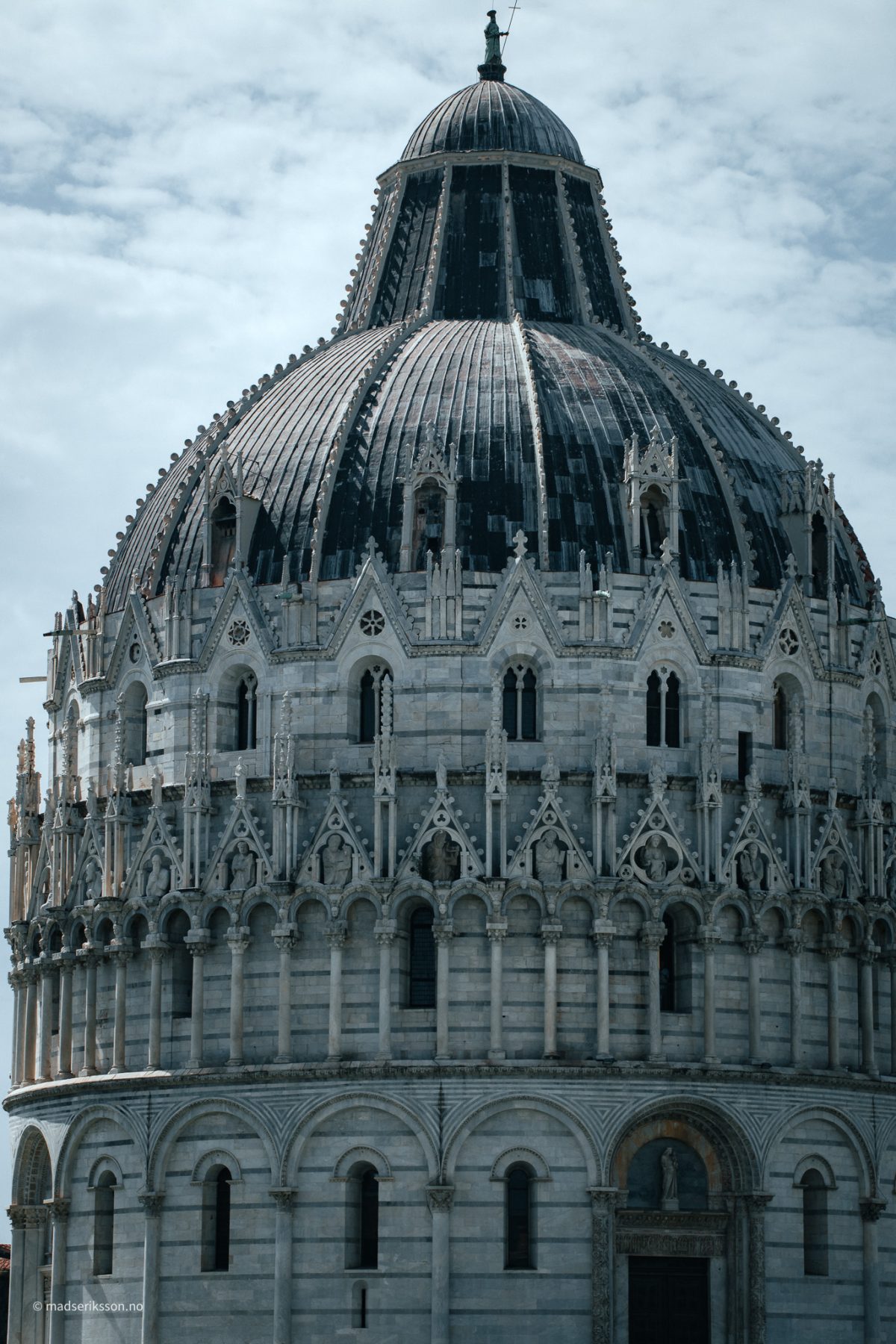
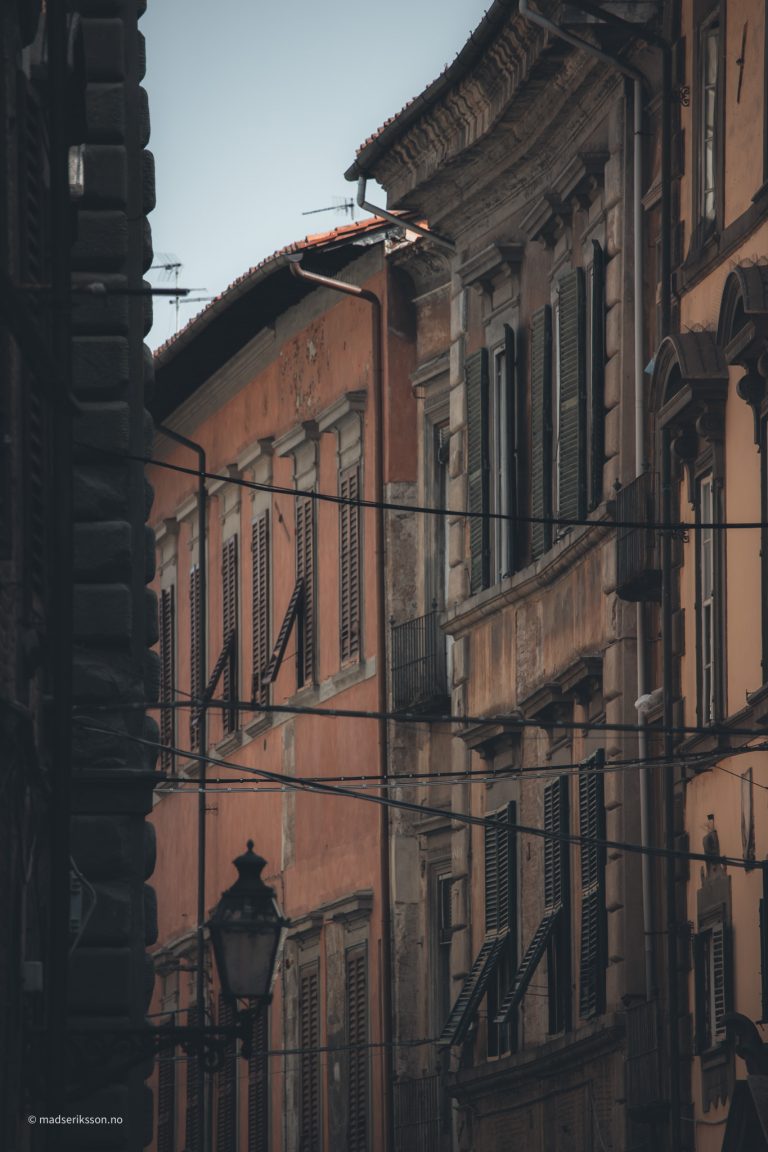
The cathedral was begun in 1064 by the architect Buscheto, paid for in part with spoils from a raid on Palermo, and consecrated in 1118. West of it stands the Baptistery, begun in 1152 by Diotisalvi and finished in 1363; 34 m across and almost 55 m tall, it is the largest baptistery in Italy. Along the north side runs the Camposanto, the monumental cemetery whose roof burned after a fragment of an Allied shell set it alight on 27 July 1944.
The domed Baptistery of San Giovanni on the Square of Miracles in Pisa, its Gothic gables against the clouds
Piazza dei Cavalieri
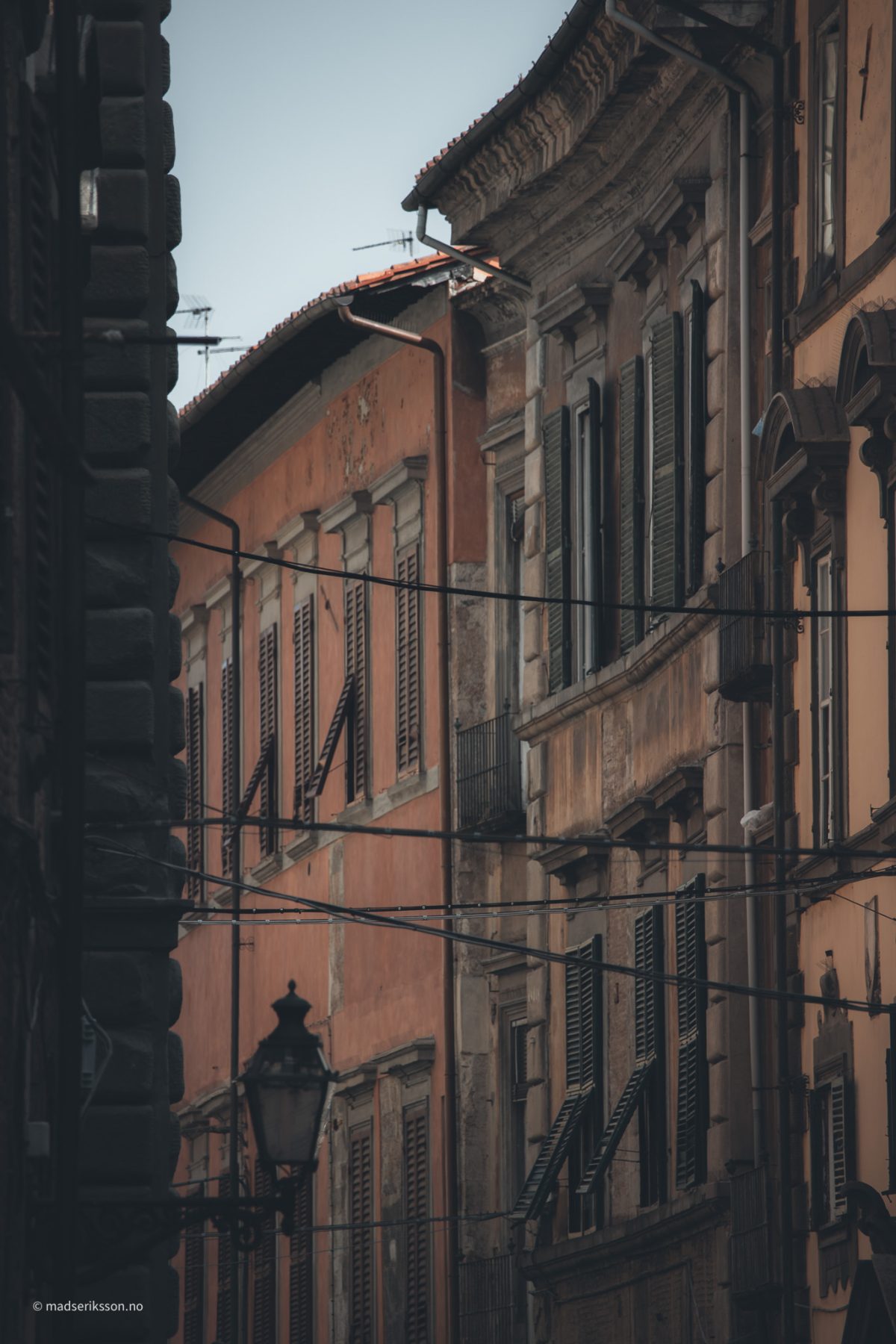
The political centre of medieval Pisa was rebuilt from 1558 by Giorgio Vasari as the headquarters of the Order of St Stephen, a crusading order of knights founded by Cosimo I de' Medici. Its sgraffito-covered Palazzo della Carovana is home to the Scuola Normale Superiore, founded under Napoleon in 1810, and the church of Santo Stefano dei Cavalieri, built in 1565–1569, still holds banners taken at the Battle of Lepanto in 1571.
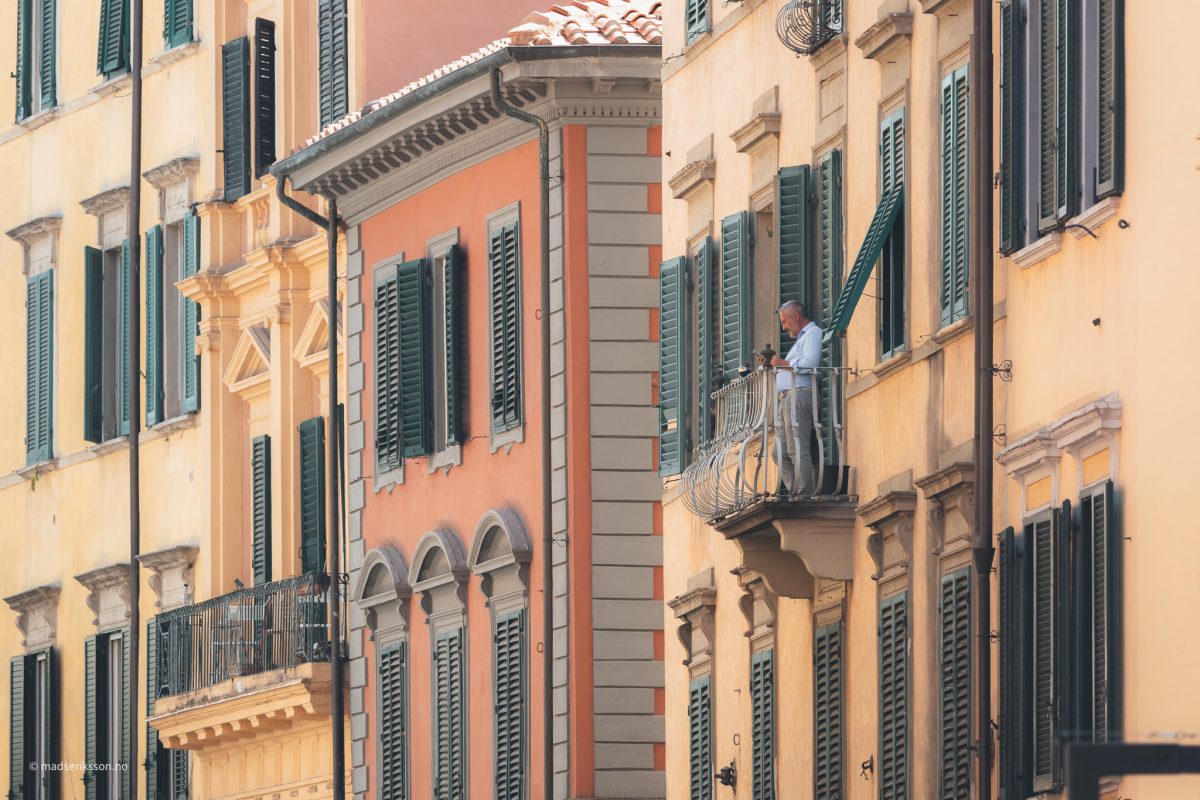
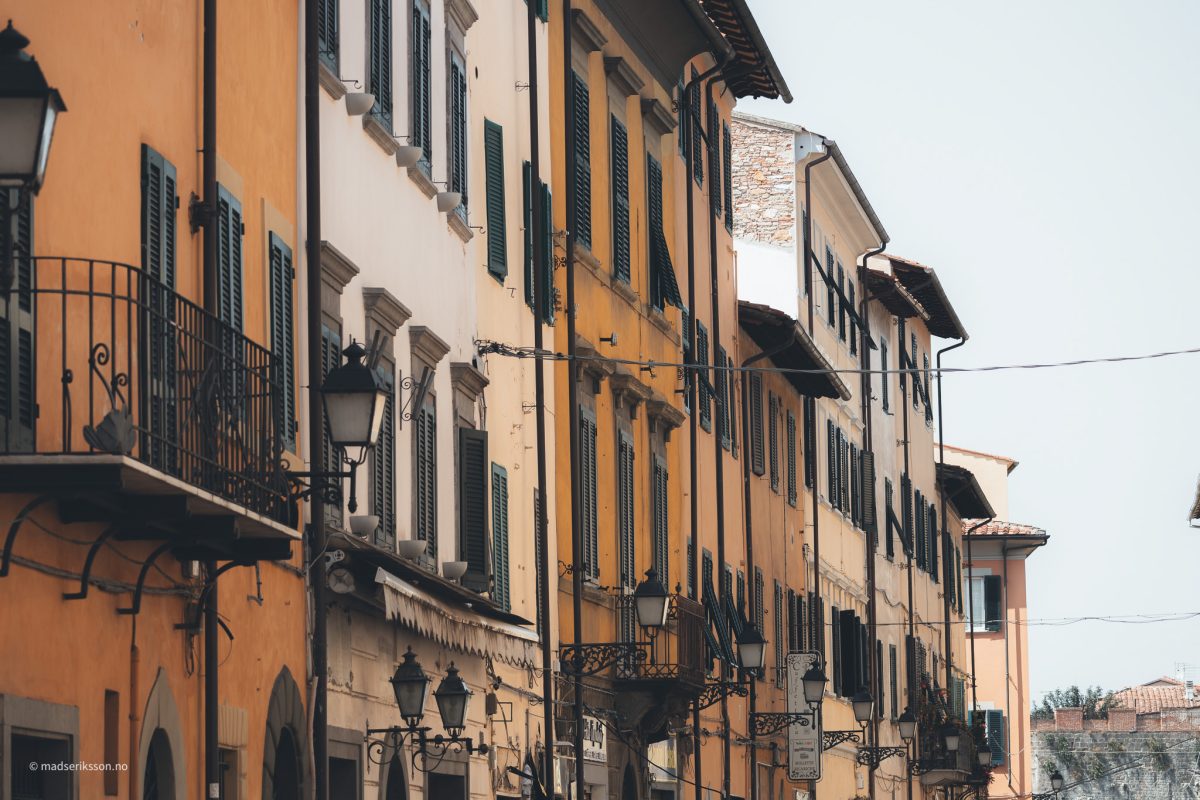
Faded palazzo facades and overhead wires on a narrow street in the old centre of Pisa
Tuttomondo
On the rear wall of the church of Sant'Antonio Abate, a short walk from the central station, Keith Haring painted Tuttomondo in June 1989, eight months before his death. Its 30 interlocking figures cover about 180 m², and it was one of the last public murals he made.
The Lungarni and Santa Maria della Spina
Through the centre, the Arno curves between broad embankments, the Lungarni, lined with the pastel façades of palaces, among them the Palazzo Blu, now an exhibition centre. On the south bank stands Santa Maria della Spina, a small Gothic church of white marble from around 1230, built to house a thorn said to come from Christ's crown; in 1871 it was dismantled and rebuilt about a metre higher to protect it from the river.
Ponte di Mezzo and the Luminara
The Ponte di Mezzo is Pisa's central bridge, linking the arcaded Borgo Stretto, the main shopping street, with the south bank. Every year on the evening of 16 June, the Luminara lines the palaces along the Arno with around 100,000 small candles in honour of San Ranieri, the patron saint, and on the last Saturday of June the bridge hosts the Gioco del Ponte.
The square after dark
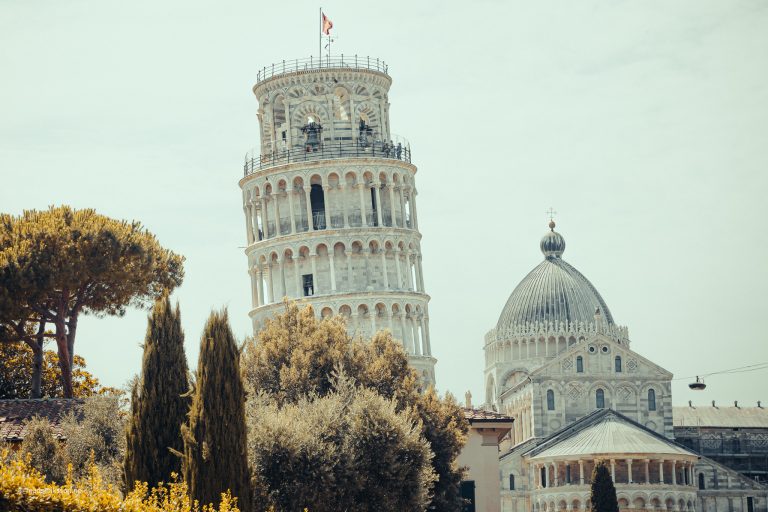
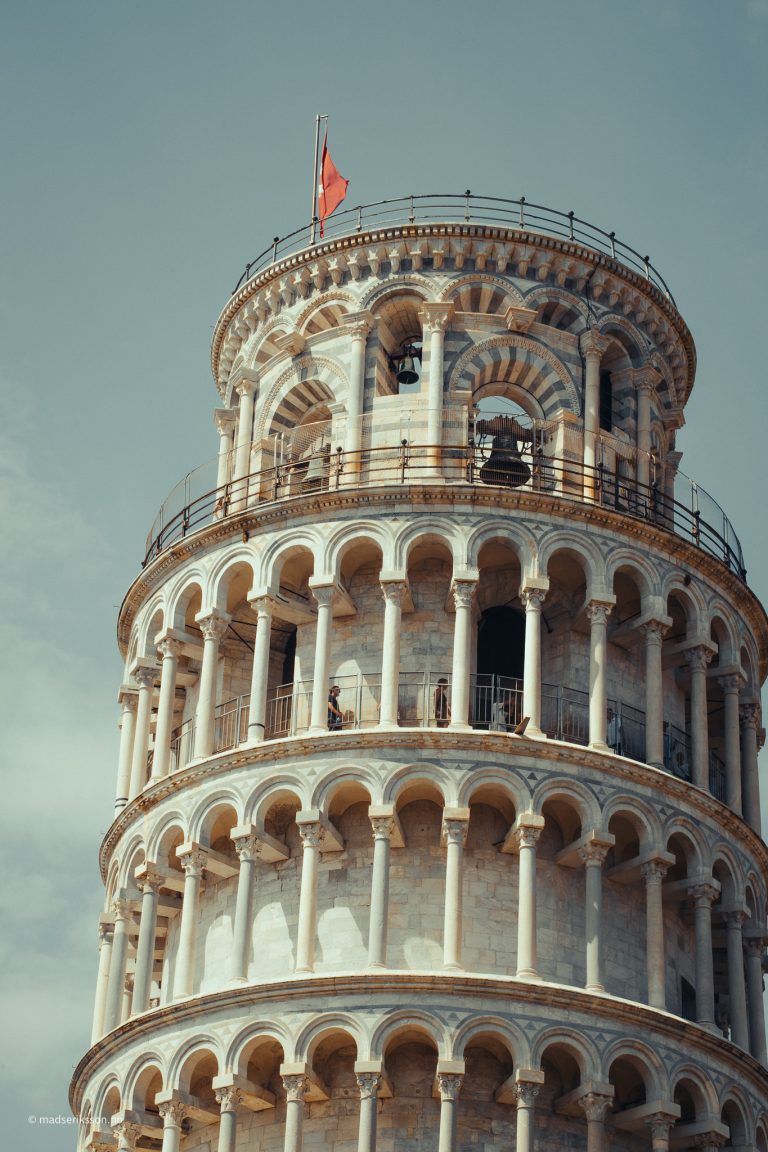
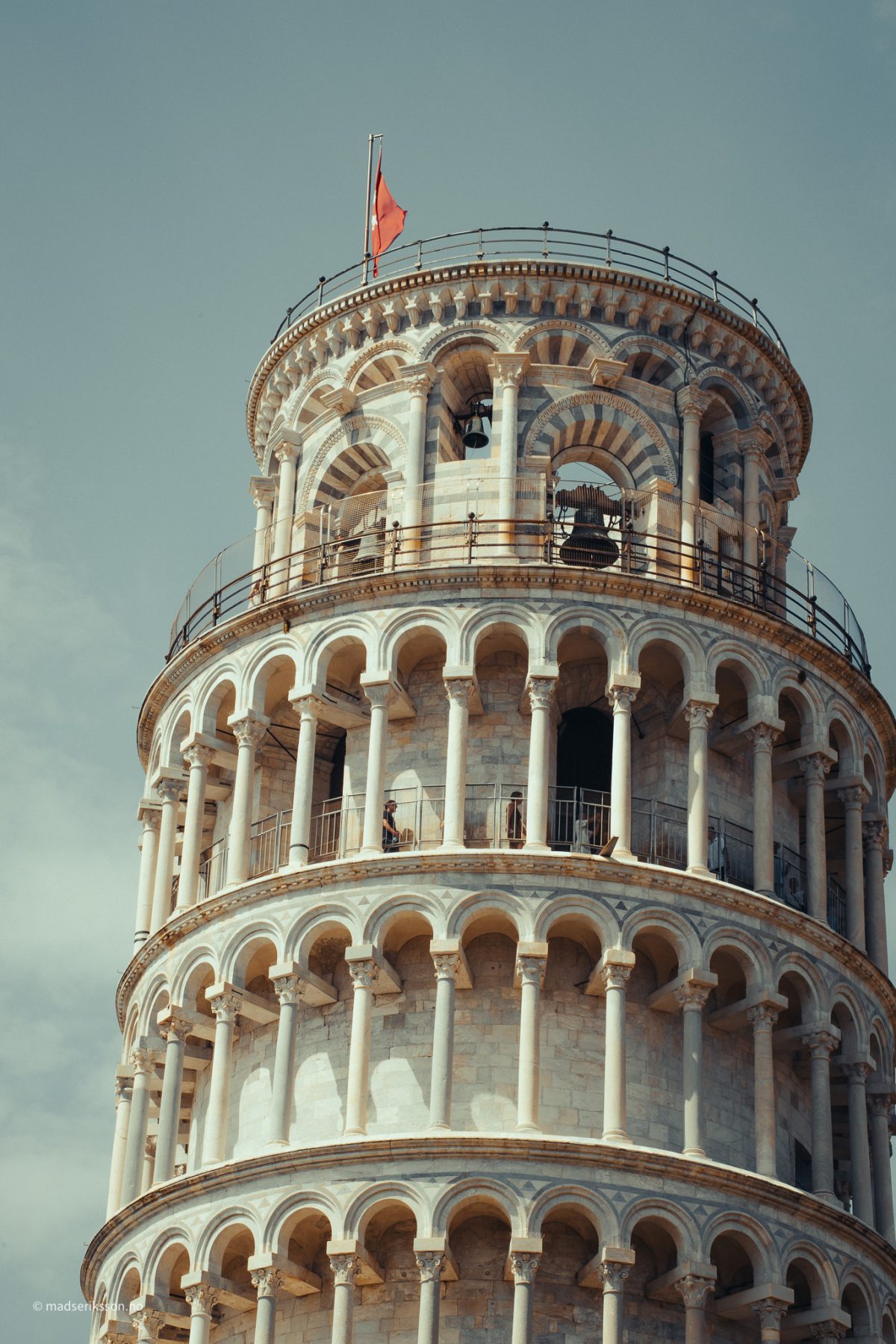
After the last visitors leave, the floodlit marble of the cathedral, the Baptistery and the tower stands out against the dark lawns of the square. The tower's bell chamber holds seven bells, one for each note of the musical scale; the largest, cast in 1655, weighs about 3.5 tonnes.
The bell chamber at the top of the Leaning Tower, with its bells and a flag flying above
3D model © 2026 madseriksson.no · Photographs © madseriksson.no. Buildings and heights: © OpenStreetMap contributors (ODbL), via OpenMapTiles. Ground imagery: Sentinel-2 cloudless 2023 by EOX IT Services GmbH (contains modified Copernicus Sentinel data 2023; CC BY 4.0). Heights are approximate where OpenStreetMap has no measured value; sun positions are approximate.
The Leaning Tower — Two Centuries to Build, Eleven Years to Save
Why a bell tower on a three-metre foundation started to tip in the 12th century, how it was pulled back in the 1990s, and what it is like to climb the spiral inside
The tower was designed as a straightforward Romanesque campanile: a hollow stone cylinder about 15 metres across, ringed with open arcades of columns on six storeys, with a bell chamber on top. The problem was underneath. The foundation was only about three metres deep, set in a layer of soft silt, clay and sand left by the rivers and the sea, and by the time the third storey was built the ground on the south side had already begun to give. Work stopped for almost a century — mostly because Pisa was at war — and the pause probably saved the tower, giving the soil time to settle and harden under the weight. When building resumed, the masons tried to correct the lean by making the upper storeys slightly taller on the low side, which is why the tower is faintly curved, like a banana, rather than straight.
The bell chamber was completed in 1372, and the tower went on leaning for six more centuries. By 1990 it was tilted by about 5.5 degrees, and engineers calculated that it was close to toppling. It was closed to visitors that January, and an international committee spent the next decade working out how to stabilise it without disturbing it. Lead counterweights were stacked on the north side first; the decisive step was slower and more delicate. Using drills angled in from the north, engineers led by the British geotechnical engineer John Burland extracted small amounts of soil from beneath the raised side, around 70 tonnes in all, and let the tower sink back gently into the gap. The lean was reduced by around 40 centimetres at the top, to just under four degrees — roughly where it had stood in the early 19th century.
The engineers did not set out to straighten the tower. A vertical Tower of Pisa would have been an engineering success and a cultural disaster. The aim was to buy it time: by 2008 they reported that it had stopped moving and should be stable for at least two hundred years.
The tower reopened in December 2001, and the climb is now one of the most strictly managed visits in Italy. Groups go up at fixed times with a guide on the door, and the visit lasts around half an hour. The 273 steps wind up inside the outer wall, worn into deep hollows by centuries of feet, and the lean is felt rather than seen: on one side of the spiral the walls press in, on the other they open out, and on the open galleries near the top the slope of the floor is unmistakable. At the summit, beside the seven bells, the view opens over the red roofs of the city to the Apuan Alps in the north and the line of the coast in the west. The story that Galileo dropped weights from the top to show that they fall at the same speed comes from a biography written by his pupil long after the event; it may never have happened, but nobody in Pisa minds.
The Square of Miracles — A Cathedral, a Baptistery and a Burned Cemetery
The three buildings most visitors photograph from the outside, and why each of them repays going in
The cathedral came first. It was begun in 1064 by an architect named Buscheto, consecrated in 1118, and lengthened and given its facade later in the 12th century by his successor Rainaldo. The facade set the template for the whole square — tiers of small open arcades over bands of white and grey marble — and the style it created, Pisan Romanesque, spread along the coast and out to Sardinia and Corsica. Inside, the long nave of granite columns leads to a gilded ceiling installed after a fire in 1595 and to the great pulpit carved by Giovanni Pisano between 1302 and 1310, one of the masterpieces of Italian Gothic sculpture. In the apse, the figure of St John in the mosaic is the last documented work of Cimabue. A bronze lamp hangs in the nave which, legend says, set the young Galileo thinking about the pendulum. Entry to the cathedral is free, but it requires a timed pass from the ticket office; any paid ticket for the square includes one.
Opposite the cathedral’s west front stands the baptistery, begun in 1152 by an architect called Diotisalvi and finished two centuries later with a Gothic crown of gables and pinnacles. It is the largest baptistery in Italy, a drum of marble more than 34 metres across and almost 55 metres high, and its great dome is known for its acoustics, holding and layering a sung note long after it ends. The pulpit inside, carved by Nicola Pisano and signed in 1260, is the work that announced the beginning of a new, more classical sculpture in Italy, and its panels are the model for the cathedral pulpit his son carved half a century later.
On 27 July 1944, a fragment from an Allied artillery shell set the roof of the Camposanto alight. It burned for three days, and the molten lead ran down the walls over some of the finest frescoes of 14th-century Italy. Restoring them took more than seventy years.
The Camposanto, the long marble cloister that closes the north side of the square, is the building most visitors skip and the one that most rewards a visit. It was begun in 1278 around a burial ground said to hold earth from Golgotha, and its walls were covered with frescoes, among them the Triumph of Death, usually attributed to Buffalmacco and painted in the shadow of the Black Death. After the fire of 1944 the surviving paintings were detached from the walls, and beneath them the restorers found the sinopie — the artists’ full-size preparatory drawings in red earth. Those drawings are now displayed in the Museo delle Sinopie on the south side of the square; the restored Triumph of Death went back on the wall in 2018. With the Opera del Duomo Museum, which holds the original sculptures from the buildings, these are the monuments covered by the combined tickets.
Beyond the Tower — A University City on the River
The square of the knights, the marble chapel on the riverbank, the arcaded shopping street and a mural painted a few months before the artist’s death
A short walk south-east of the tower, the Piazza dei Cavalieri was the political centre of medieval Pisa and was remodelled in the 16th century by the Medici as the headquarters of the Order of St Stephen, a crusading order of knights founded to fight piracy in the Mediterranean. Its finest building, the Palazzo della Carovana, has a facade covered in black-and-white sgraffito decoration and was redesigned by Giorgio Vasari. Since 1847 it has housed the Scuola Normale Superiore, the elite college founded by Napoleonic decree in 1810, and the square is full of students rather than tour groups. Across the piazza, a building incorporates the remains of the tower in which Count Ugolino della Gherardesca was starved to death with his sons and grandsons in 1289 — the scene Dante made one of the most terrible episodes of the Inferno.
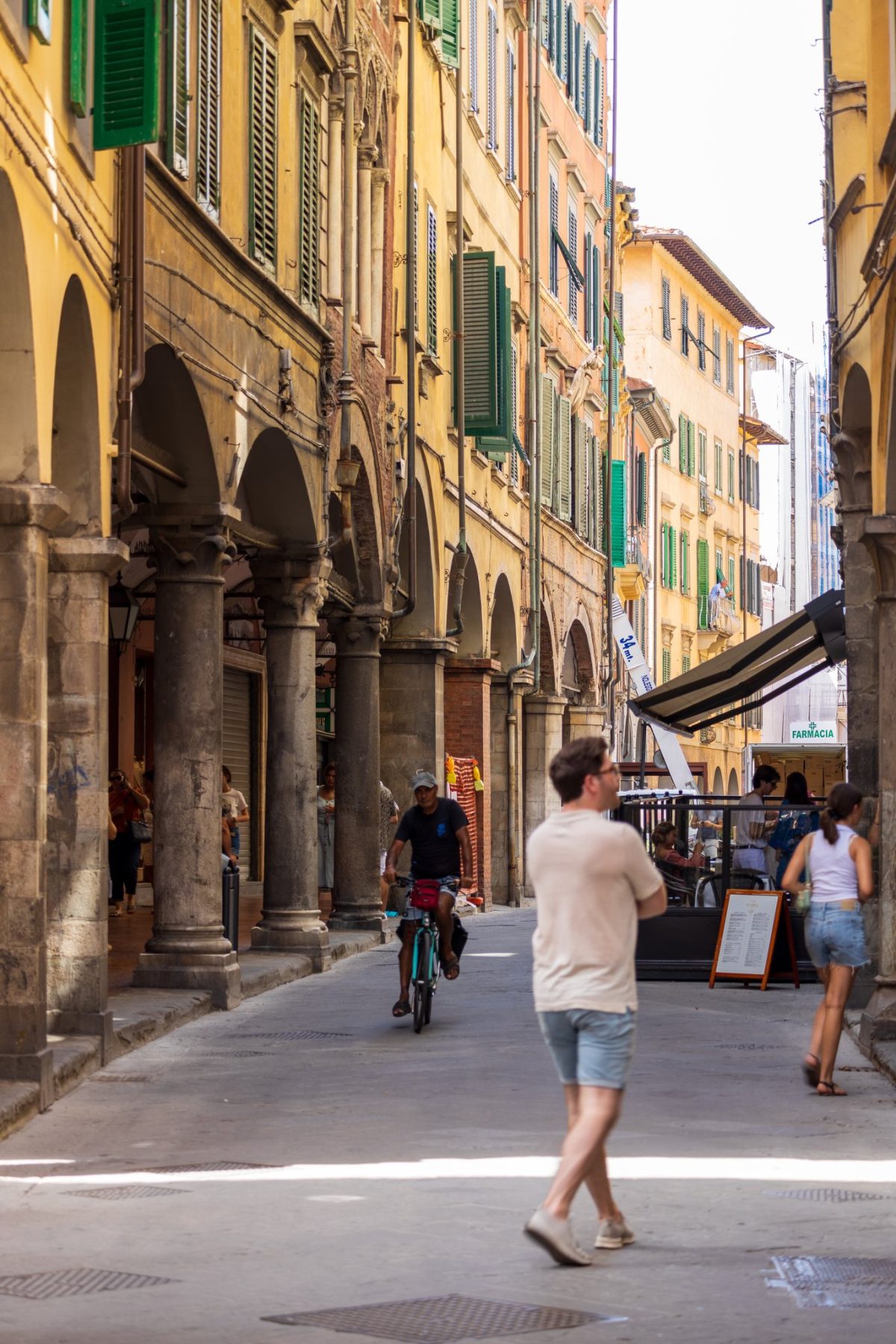
From the square the arcaded Borgo Stretto, the city’s main shopping street, runs down to the Arno and the Ponte di Mezzo, the central bridge. The river is the other half of Pisa. It curves through the centre between broad embankments, the Lungarni, lined with the pastel facades of palaces — among them the Palazzo Blu, the only blue building in the old town and now an exhibition centre. On the south bank, right on the water, stands Santa Maria della Spina, a tiny Gothic church of white marble encrusted with pinnacles and statues, built to house a thorn said to come from Christ’s crown. In 1871 the whole church was dismantled stone by stone and rebuilt a metre higher to save it from the floods.
On the evening of 16 June every year, the electric lights along the Arno are switched off and some 100,000 small candles, set in frames that trace the outlines of the palaces, windows and bridges, light the river for the eve of San Ranieri.
The walk from the river south to the railway station passes Pisa’s most unexpected monument. In June 1989, the American artist Keith Haring painted Tuttomondo on the rear wall of the church of Sant’Antonio Abate: thirty brightly coloured interlocking figures across about 180 square metres, a celebration of peace and harmony made a few months before his death in 1990. It was one of his last public works, and it is free to see from the street. The Luminara in June is the start of a month of festivals, the Giugno Pisano, which also includes a rowing regatta on the river for the patron saint’s day and the Gioco del Ponte, a mock battle between the two halves of the city on the Ponte di Mezzo.
«Pisa is usually given half a day: a train from Florence, a photograph pretending to hold up the tower, and a train back. The tower deserves more than that — it is a genuine piece of medieval engineering and an equally remarkable piece of modern rescue — and so do the buildings around it, above all the cathedral pulpit and the scarred, restored walls of the Camposanto. But the city deserves most of all the time people do not give it. Climb the tower in the morning, walk to the Piazza dei Cavalieri, follow the Arno past the little marble church on the bank, and stay for the evening, when the students take over the squares and the river turns gold.»

More in the same area
 ArchitectureBologna — Porticoes, Towers and the City That Wrote Down Its Recipes
 ArchitectureEurope’s 10 Greatest Cathedrals and Churches
 CitiesExploring the Enchanting City of Venice
 CitiesMilan: A Fashionable and Cultural Hub in Italy
 ArchitectureSt Peter’s Basilica: Michelangelo’s Dome and 120 Years of Building
 ArchitectureThe Pantheon in Rome: A Marvel of Ancient Architecture
City Frames · scroll-driven 3D
More cities in three dimensions
54 city guides open with a model built from open map data. Scroll, and the camera moves from landmark to landmark.
Departures · City Frames
Where to next?
| Time | Destination | Country | Status |
|---|
Live · position of the sun
Golden hour, right now
The low, warm light just after sunrise and just before sunset. These are the cities on the site where it is happening at this moment.