The lift covers four hundred and ninety metres in about a minute, and the doors open onto a glass floor with the city directly underneath it. Lotte World Tower is 555 metres tall, the highest building in the OECD, and the view from the top is the most complete picture of Seoul you can get without a helicopter — a river, four mountain ranges and twenty-five million people, laid out flat.

The tower stands in Jamsil, in Songpa District, on the south side of the Han river — a long way from the palaces and the old city, and deliberately so. It has 123 floors above ground and six below, an architectural height of 555 metres, and a total floor area of 304,081 square metres. It opened to the public on 3 April 2017, and it remains the tallest building in South Korea, the tallest anywhere in the OECD, and the sixth tallest in the world.
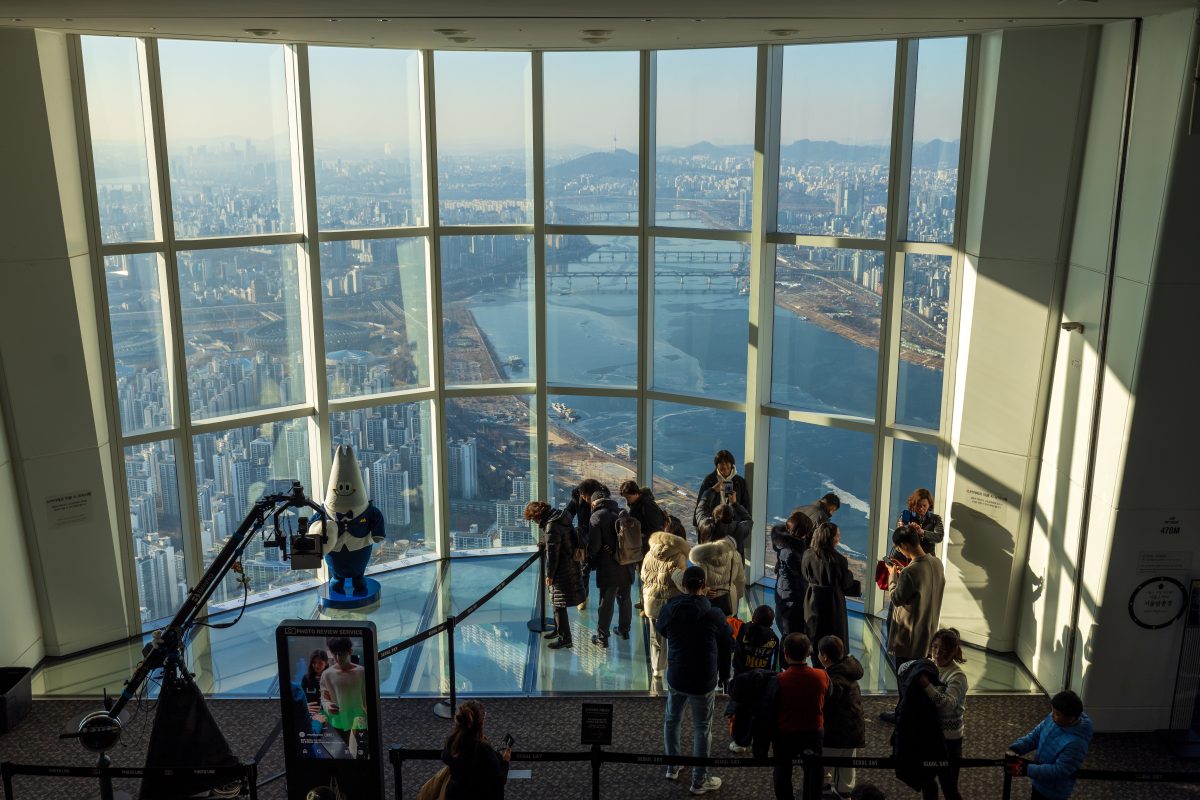
The observatory, Seoul Sky, occupies the top seven levels. You enter on 117 and 118, and the floors run up through cafés and a terrace to a lounge bar on 123 at 499 metres. The signature is the Sky Deck on floor 118 — a glass floor, which when the building was completed was the highest in the world.
Two things worth saying early
First: the view depends entirely on the air. Seoul has genuinely variable visibility, and on a bad day you will pay for a ticket and look at grey. Second: this is not an uncomplicated building. Three construction workers died building it, the retail complex at its base was ordered shut for five months in 2014 over a leaking aquarium, and public confidence took years to recover. The view is superb. The story underneath it is worth knowing before you go up.
The tallest building in the OECD
Lotte World Tower stands in Jamsil, on the south side of the Han river, with 123 floors above ground and six below. It opened to the public on 3 April 2017 and is the tallest building in South Korea, the tallest in the OECD and the sixth tallest in the world.
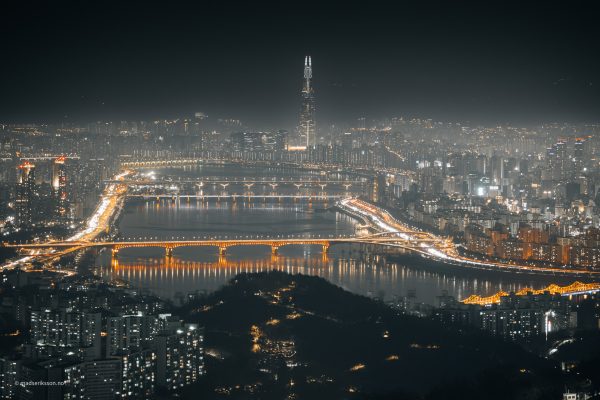
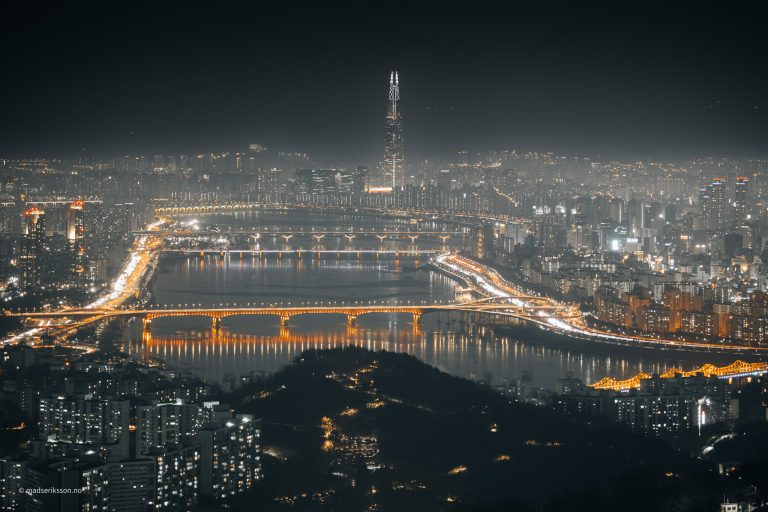
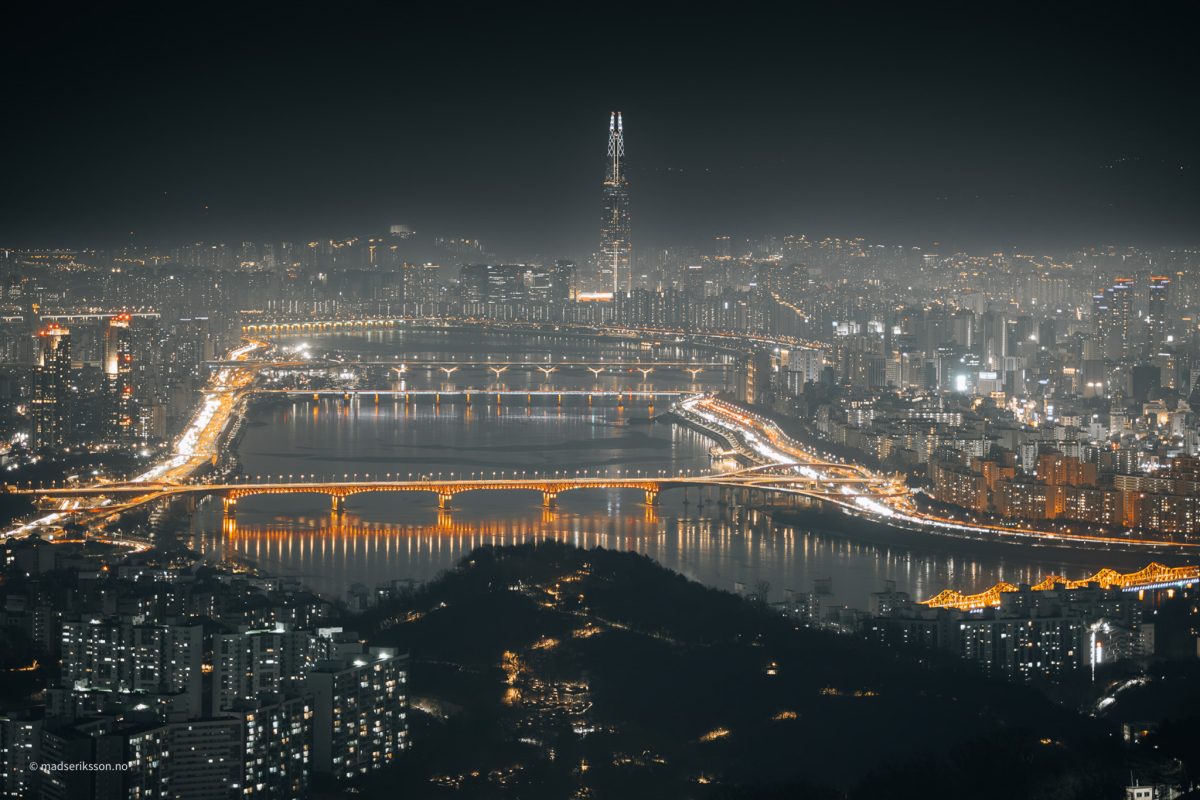
Seoul at night, with Lotte World Tower above the Han River.
A cone drawn from Korean ceramics
Kohn Pedersen Fox designed the tower as a long, slightly convex cone in pale glass with metal filigree, its form and colour drawn from Korean ceramics. The structural engineers were Leslie E. Robertson Associates, the practice behind the original World Trade Center.
A roof of crossing steel
The diagrid roof, completed on 17 March 2016, is 120 metres high and spans floors 107 to 123. It uses about 3,000 tonnes of steel in twelve-metre, twenty-tonne segments, carries its own weight with no internal columns and is engineered for a magnitude-9 earthquake and winds of 80 metres per second.
A minute to the top
The observatory occupies the top seven levels, floors 117 to 123. The Sky Shuttle climbs at ten metres per second and reaches it in about a minute, with a film projected on the walls and ceiling. The tower has 61 lifts in all.
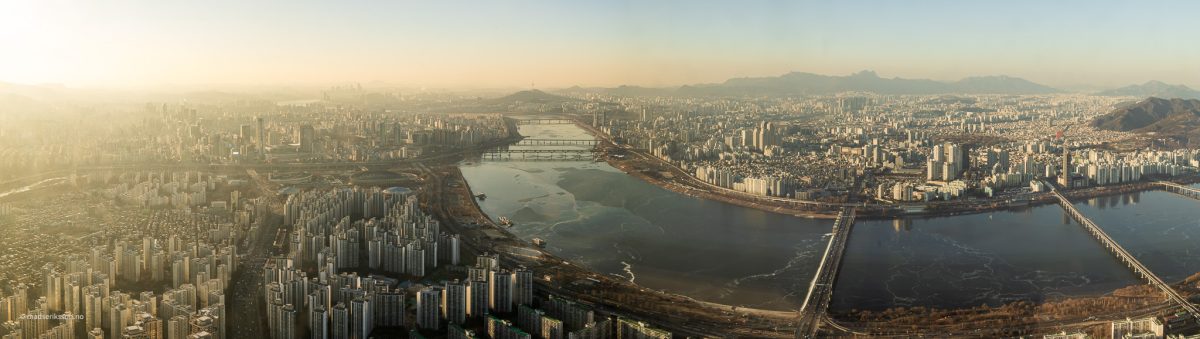
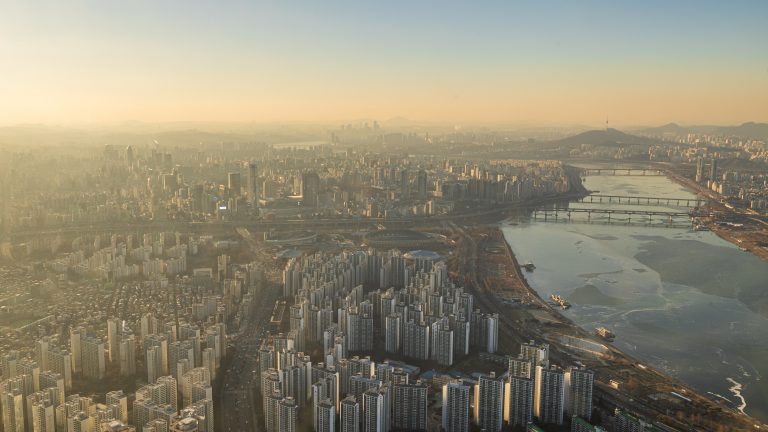
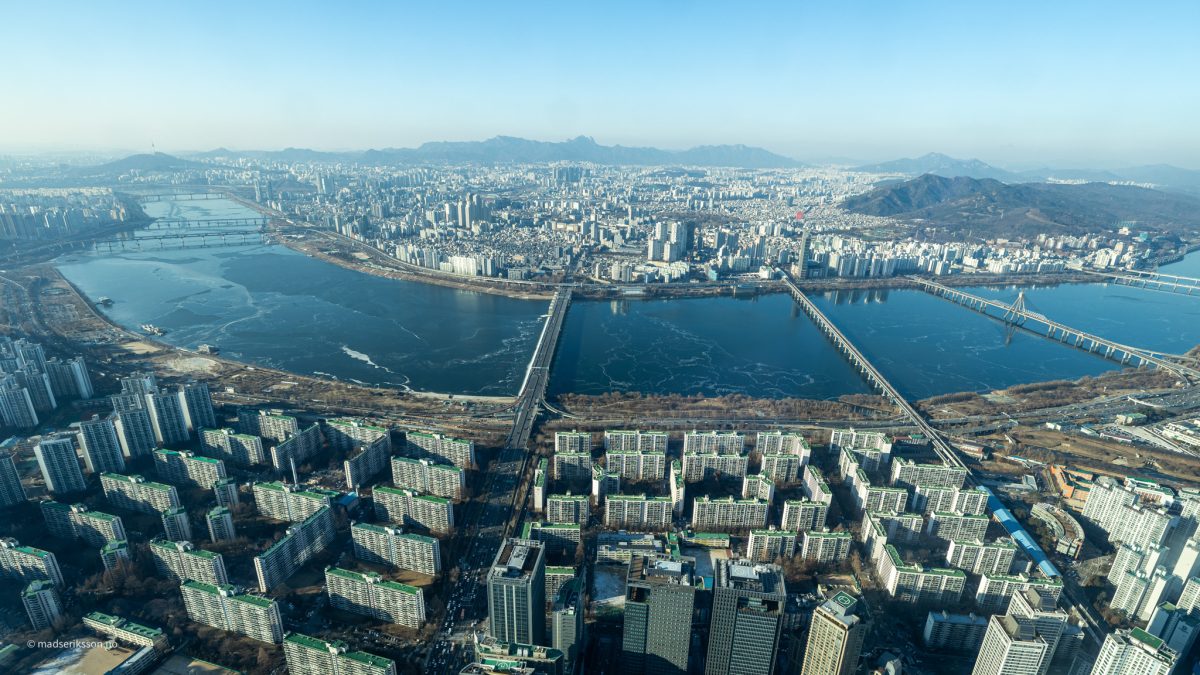
Seoul and the Han river in hazy winter light, seen from the top of Lotte World Tower
A glass floor over the city
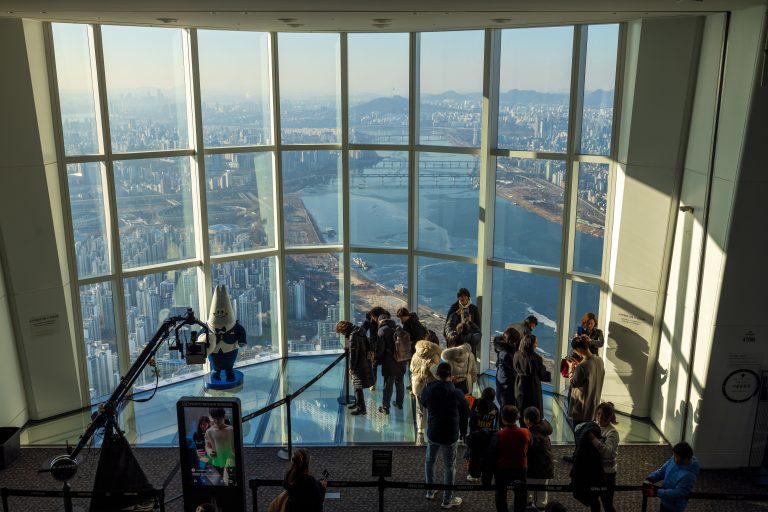
The Sky Deck on floor 118 is a glass floor with the city directly beneath it, the highest of its kind when the tower was completed. Two floors up, the open-air Sky Terrace closes in wind or bad weather, and the 123 Lounge at 499 metres is charged separately.
Visitors on the glass-floored Sky Deck of Lotte World Tower, high above the Han river
A hotel in the sky
Floors 42 to 101 hold the Signiel hotel and residences, the highest hotel in the country, with offices, a duty-free store, an art museum and a medical centre filling most of the rest. Heating and cooling run partly on 720 geothermal probes sunk about 200 metres into the ground.
A public slow to be reassured
Three construction workers died on the site in 2013 and 2014. In December 2014 the city closed the mall and cinema at the base for five months after water leaked from an internal aquarium; independent engineers found little bearing on the structure, and it reopened in 2015.
Visiting the tower
Seokchon Lake wraps around the base of the tower and is at its best during the cherry blossom in late March or early April. Admission is ₩31,000 for adults, and Jamsil station on lines 2 and 8 connects directly to the B2 entrance. Arrive about ninety minutes before sunset; autumn has the clearest air.
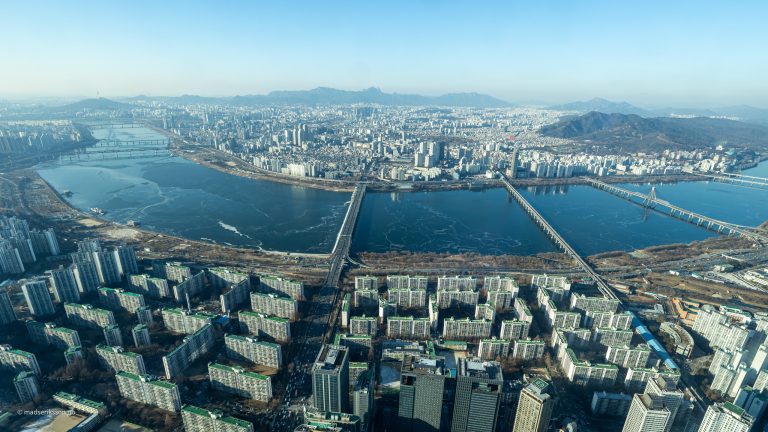
The Han River and its bridges below the apartment blocks of Seoul, seen from the top of Lotte World Tower
3D model © 2026 madseriksson.no · Photographs © madseriksson.no. Tower outline and surroundings: © OpenStreetMap contributors (ODbL). The tower is drawn as a stepped taper from its mapped footprint to the 555-metre height given in the article; the diagrid lantern and surrounding heights are simplified.
A minute up, and then a glass floor
Seven levels of observatory, arranged so that you climb through them rather than stand on one — and the best of them is not the one with the glass
The Sky Shuttle is worth a word of its own. It climbs at ten metres per second and covers most of the building in roughly a minute, with a projected film running across the walls and ceiling of the car the whole way. It is genuinely well done, and it also solves the problem every supertall observatory has, which is that a silent sixty-second ascent in a metal box is an anticlimax before you have seen anything.
The glass floor on 118 is the headline, and it does exactly what it promises: you stand on transparent panels with 478 metres of nothing beneath your shoes, and your legs have opinions about it whatever your brain thinks. Expect a short queue and a member of staff moving people along. It is worth doing once, and once is generally enough.
“The glass floor is the thing everyone comes for. The open-air terrace two floors up is the thing they remember — assuming the wind lets it open.”
What actually makes the visit is the Sky Terrace on 120: an outdoor section, nearly 500 metres up, where you get the city without a pane of glass in front of it. It is weather-dependent and closes readily, which makes it a genuine piece of luck rather than a fixture. If it is open when you arrive, go there first and come back to the glass floor afterwards.
Above that, floor 123 holds a premium lounge bar at 499 metres, charged separately from admission. Whether that is worth it depends on how you feel about paying twice, but it is the highest place in the country you can sit down with a drink, and the view from a seat is a different experience from the view through a crowd.
Eight years, and a country that was not convinced
A lantern of steel on top of a ceramic-inspired tower — and a construction history that Seoul spent years being uneasy about
Kohn Pedersen Fox designed the tower to taper — a long, slightly convex cone in pale glass, detailed with metal filigree, with the form and colour drawn from Korean ceramics. It is a quieter shape than most supertalls, and it works best from a distance, which in Seoul means from across the river or from one of the mountains. Structural engineering came from Leslie E. Robertson Associates, the practice responsible for the original World Trade Center.
The most interesting piece of engineering is the top. The diagrid roof — a lantern of crossing steel — was completed on 17 March 2016. It stands 120 metres high, spans floors 107 to 123, and was assembled from twelve-metre segments weighing twenty tonnes each, roughly three thousand tonnes of steel in total, positioned by GPS. It carries its own weight with no internal columns, and is engineered for a magnitude-9 earthquake and winds of 80 metres per second.
Underneath, the building runs on 720 geothermal probes sunk about two hundred metres into the ground, supplemented with water drawn from the Han River, plus photovoltaics, wind turbines, rainwater harvesting and passive shading. Floors 42 to 101 hold the Signiel hotel and residences — the highest hotel in the country — and the offices, duty free, art museum and medical centre fill most of what is left.
“For most of a decade, the tallest building in Korea was also the one Koreans were least sure they trusted. That is not a footnote to the story; for a while it was the story.”
Which brings up the part the brochures skip. Three construction workers died on the site in 2013 and 2014, and in 2016 an executive at Lotte’s construction arm was given a suspended eight-month prison sentence for neglecting safety measures. In December 2014 the city ordered the mall and cinema at the base of the tower — already open, ahead of the tower itself — closed for five months after water was found leaking from an internal aquarium. Independent engineers found the problems had little bearing on the building’s structural integrity, and it reopened in 2015.
None of that is unusual for a project of this size, and none of it suggests the finished building is unsafe — the assessments since have been consistent on that point. But it explains the atmosphere around the tower for years: sinkholes in the neighbourhood, a leaking aquarium and a fatal safety record made for a public that was slow to be reassured, and the 2014 preview tours were widely read as a public-relations exercise rather than a disclosure. Confidence has largely returned. It took a while, and it was not given for free.
Getting the day right
The single biggest variable is not the ticket or the queue — it is whether you can see anything when you get up there
Admission to Seoul Sky runs ₩31,000 for adults and ₩27,000 for children, with a Fast Pass at ₩62,000 that skips the reservation and the queue. Booking online in advance is cheaper than the ticket hall and worth doing regardless, because at peak times the wait is the worst part of the visit. Opening hours are 10:30 to 22:00 Sunday to Thursday and 10:30 to 23:00 on Fridays, Saturdays and public holidays, with last tickets an hour before closing.
Getting there is straightforward: Jamsil station on lines 2 and 8 connects directly into the complex, and the observatory entrance is on B2. You will not need to go outside at any point, which in a Seoul January is a more attractive feature than it sounds.
Now the part that decides whether the ticket was worth it. Seoul’s visibility varies enormously, and a supertall observatory is unforgiving about it — at 478 metres you are frequently above the haze layer looking at the top of it, which is atmospheric but not a view. Autumn, roughly October and November, is the most reliable season for clear air; late winter and spring are the least, when fine dust and dust blown in from the west are at their worst. Check the air quality forecast the same morning, not the week before, and be prepared to move the visit by a day.
“Book for the evening and you get two visits for one ticket: the city in daylight, then the whole thing switching on underneath you.”
On timing within the day, the answer is roughly ninety minutes before sunset. You arrive in daylight, watch the light go, and stay for the city lit up — three quite different views for one admission. The trade-off is that this is also when everyone else wants to be there, which is the case for booking ahead or paying for the Fast Pass. If you would rather have space than golden hour, a weekday late morning is the quietest slot.
Leave time for what is at the bottom. Seokchon Lake wraps around the base of the tower and is the reason to come here in spring: the cherry blossom festival runs for a few days in late March or early April — the dates move every year with the bloom — and the tower reflected in the lake behind the blossom is one of the best-known images in Seoul. The rest of the year it is simply a good place to walk off the lift ride, with the whole 555 metres standing over you at a distance where you can finally see the shape of it.
“Observation decks are usually the least interesting thing you can do in a city — you pay to look at the place instead of being in it. Seoul is the exception. From 478 metres you finally understand the shape of it: mountains coming down into the middle of the city, the river cutting it in half, high-rises running to the horizon in every direction and stopping abruptly at a ridge. Half an hour up there and the rest of the trip makes more sense.”
More in the same area
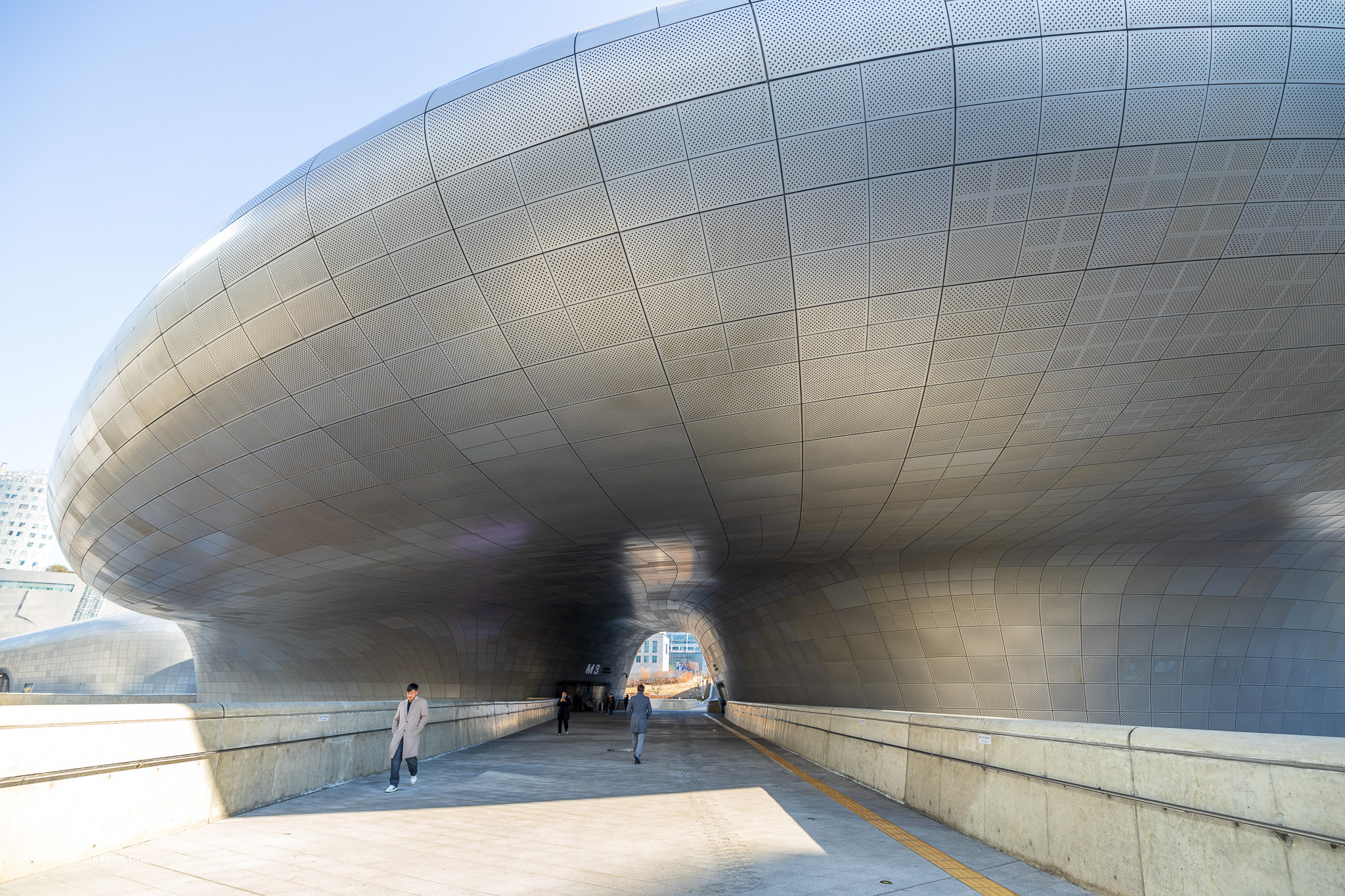 ArchitectureDongdaemun Design Plaza: A Modern Architectural Marvel in Seoul
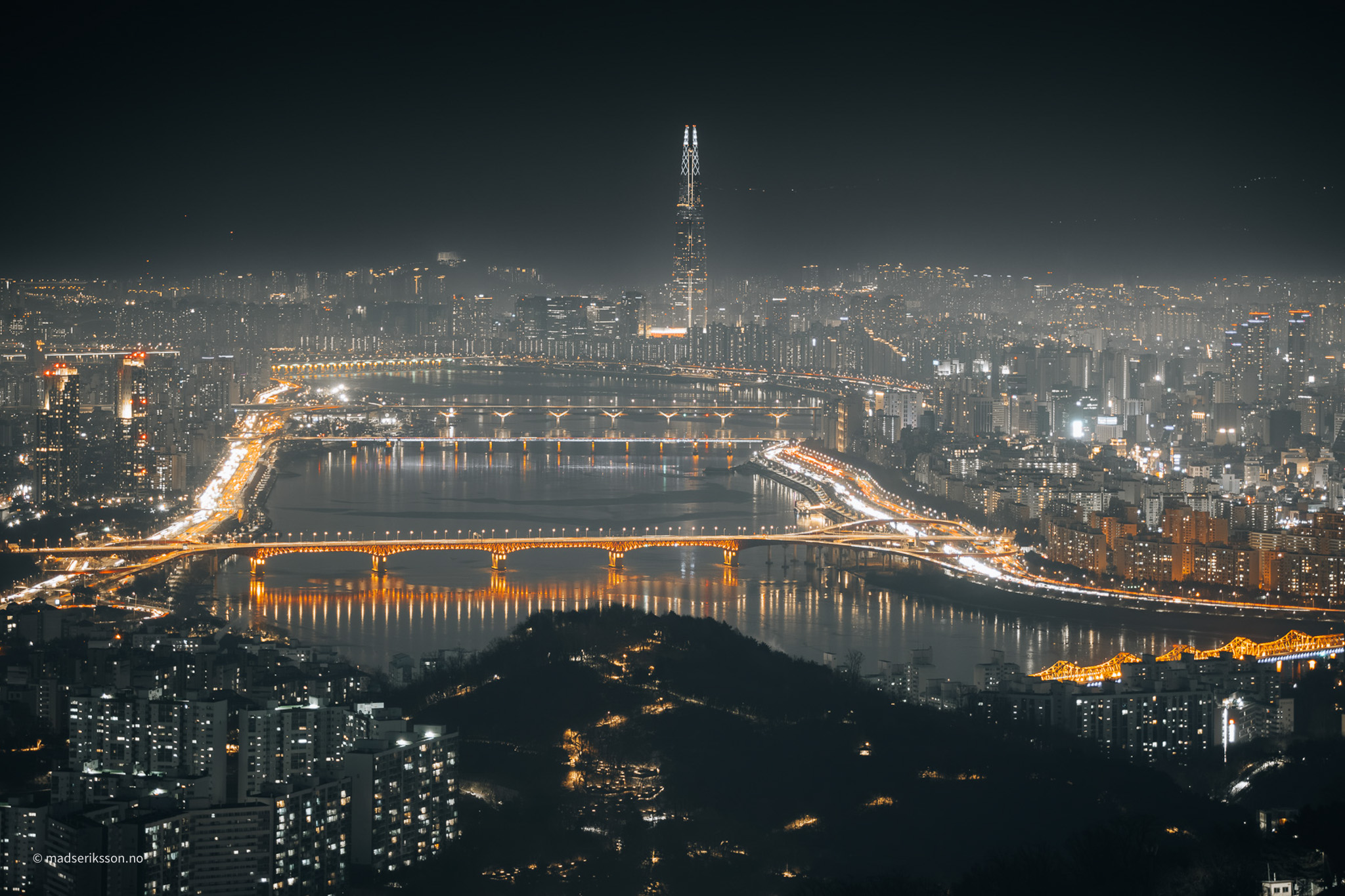 CitiesSeoul: A Thriving Fusion of Tradition and Modernity
 CitiesGangnam, Seoul: Temples, Royal Tombs and the City South of the River
 Food and DrinksExploring Gwangjang Market: A Culinary Paradise in Seoul
 ArchitectureTen Buildings That Changed Their Cities — Modern Architecture Ranked on Impact, Not Image
 Food and DrinksDongmun Market: Jeju City’s Post-War Market and Its Night Market at Gate 8