Gwangjang Market has been feeding Seoul since 1905 — Korea’s first permanent market, and still its most visceral. The smell hits you before you reach the entrance: mung bean batter sizzling on cast iron, sesame oil, the clean cold scent of freshly cut beef. Inside, under the vaulted roof of the food alley, grandmothers who have worked the same stall for decades fry bindaetteok to order while makgeolli pours freely at shared tables. Netflix discovered it. The crowds followed. It is still, overwhelmingly, worth it.

Gwangjang Market opened in 1905 at a time when Korean markets were temporary affairs — gatherings that lasted a few days and moved on. The founding innovation was simple: permanence. The market would be open every day, in the same place, on the same streets between Gwangkyo and Jangkyo bridges in the heart of Jongno. That permanence became the foundation of everything that followed. The name itself reflects the ambition: Gwangjang means “to gather from afar and keep altogether.” Today, with over 5,000 shops and an estimated 65,000 daily visitors, it is the oldest and one of the largest traditional markets in Korea — and the one that has best survived the transition from local institution to international destination without losing its character.
The market built its original reputation on fabric. Silk, upholstery, linen, bedding, and hanbok — Korea’s traditional dress — still fill the main halls, and the second floor remains a destination for hanbok tailors and a vintage clothing arcade that draws a younger generation of Seoulites hunting retro denim and rare fashion accessories. But food is what most visitors come for now. The covered food alley, accessible from the East Gate, North Gate 2, and South Gate 1, is one of the most concentrated and authentic street food experiences in Asia — a long corridor of stalls and shared tables where the cooking happens directly in front of you and the menu has barely changed in a generation. In 2019, Netflix’s Street Food: Asia featured Gwangjang prominently, and the visitor numbers transformed almost overnight.
How to approach Gwangjang Market
This guide covers Gwangjang in four sections. We start with the food alley itself — the atmosphere, the layout, and how to navigate the stalls without getting overwhelmed. We then go dish by dish through the essential things to eat: bindaetteok, mayak gimbap, yukhoe, and the rest. The third section covers the rest of the market — the fabric halls, hanbok, and the vintage floor that most food visitors never reach. The final section is practical: how to get there, what time to go, the cash-only rule, and what has changed since the Netflix effect hit. Arrive hungry. Bring Korean won in small bills.
The Food Alley — Where Seoul’s Market Culture Comes Alive
Shared tables, sizzling griddles, and grandmothers who have worked the same stall for forty years.
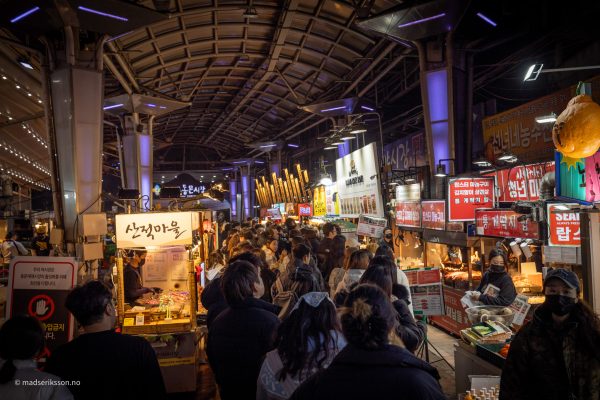
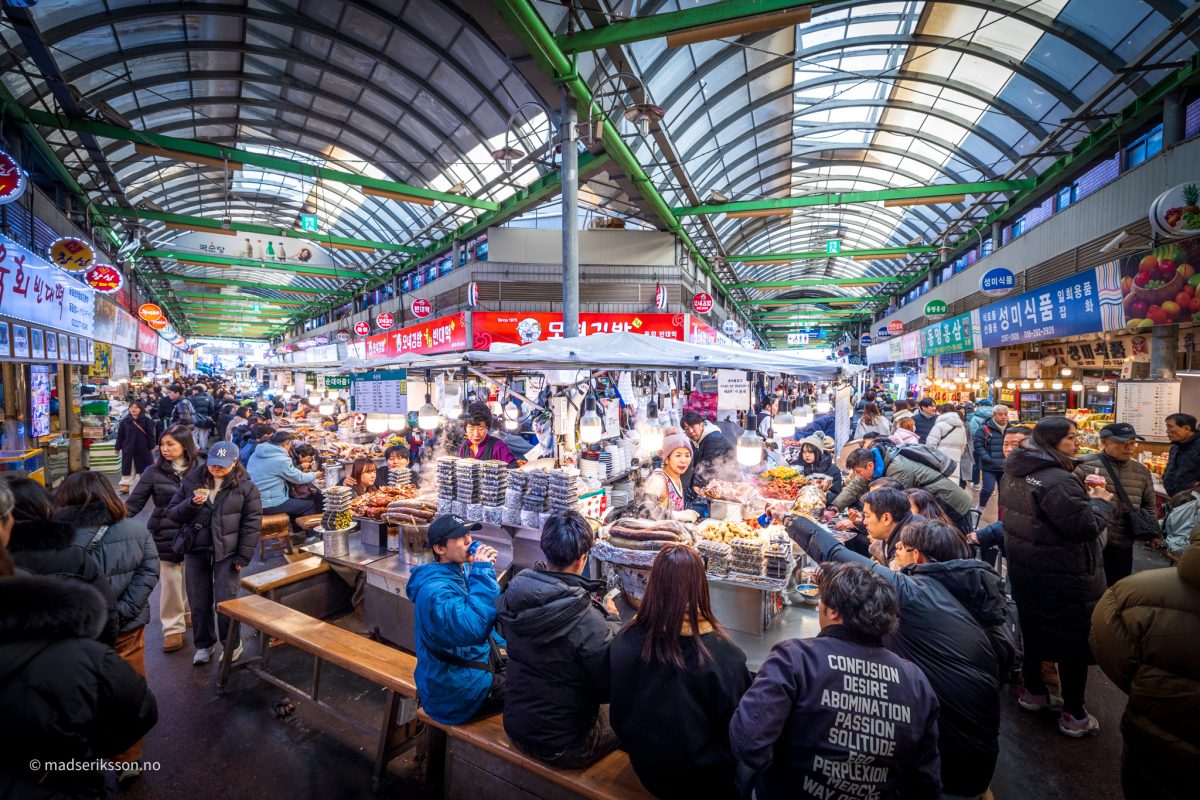
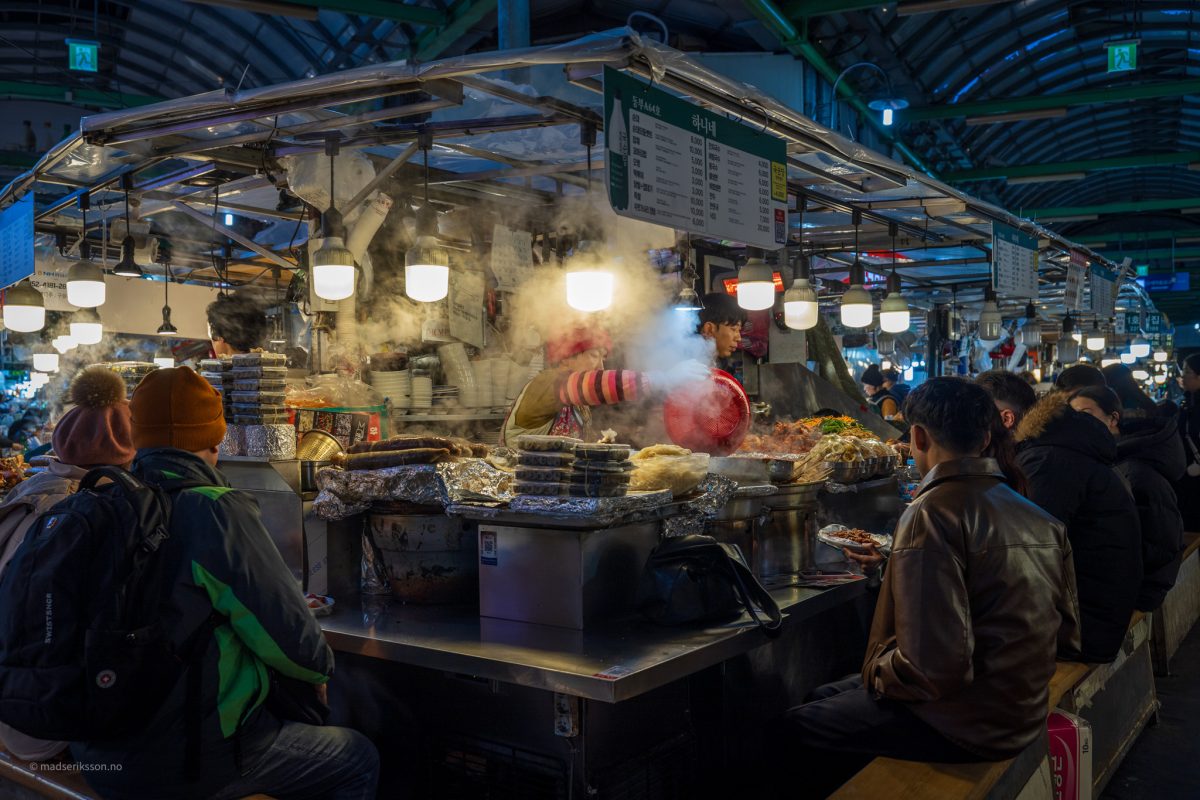
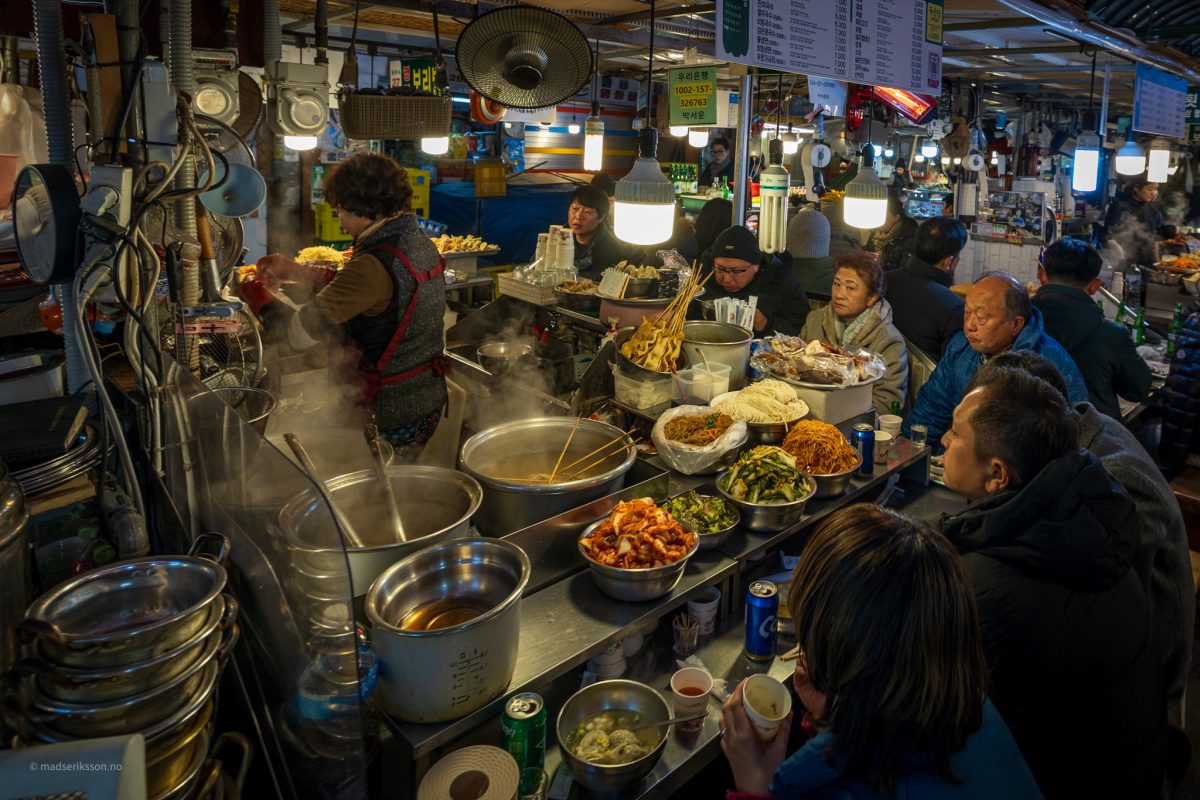
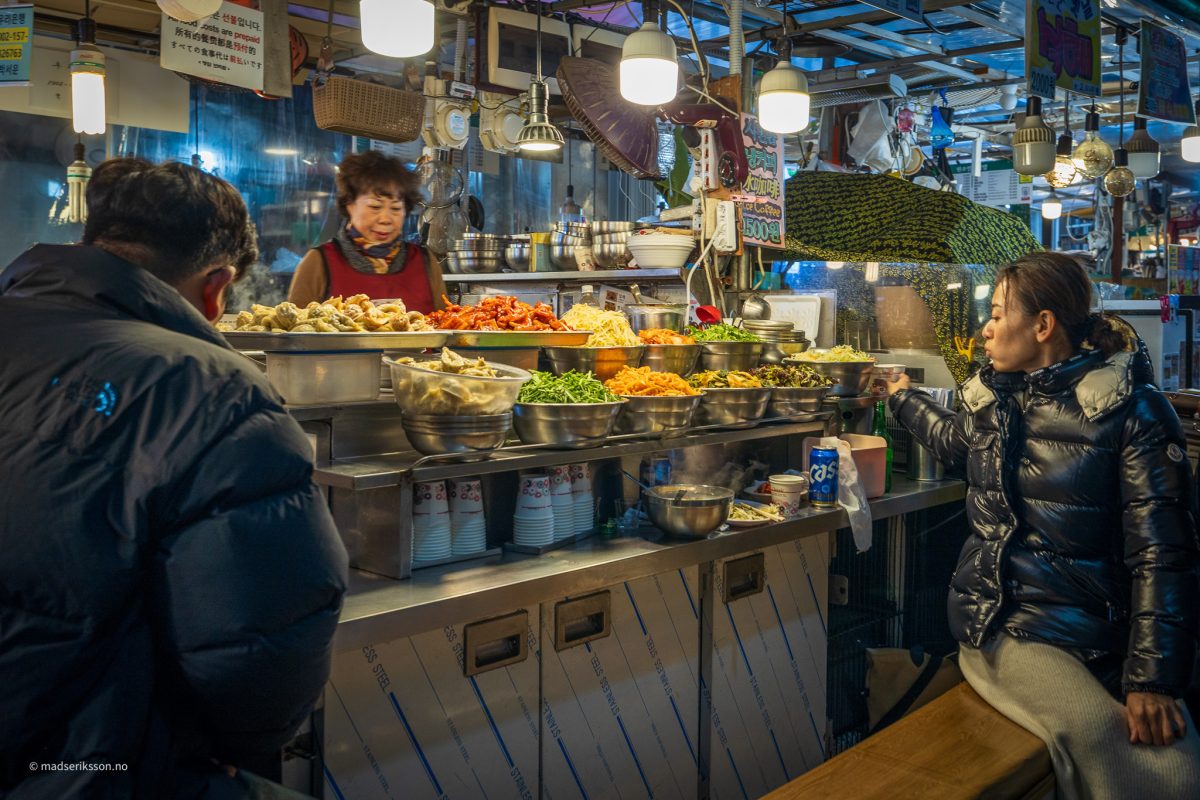
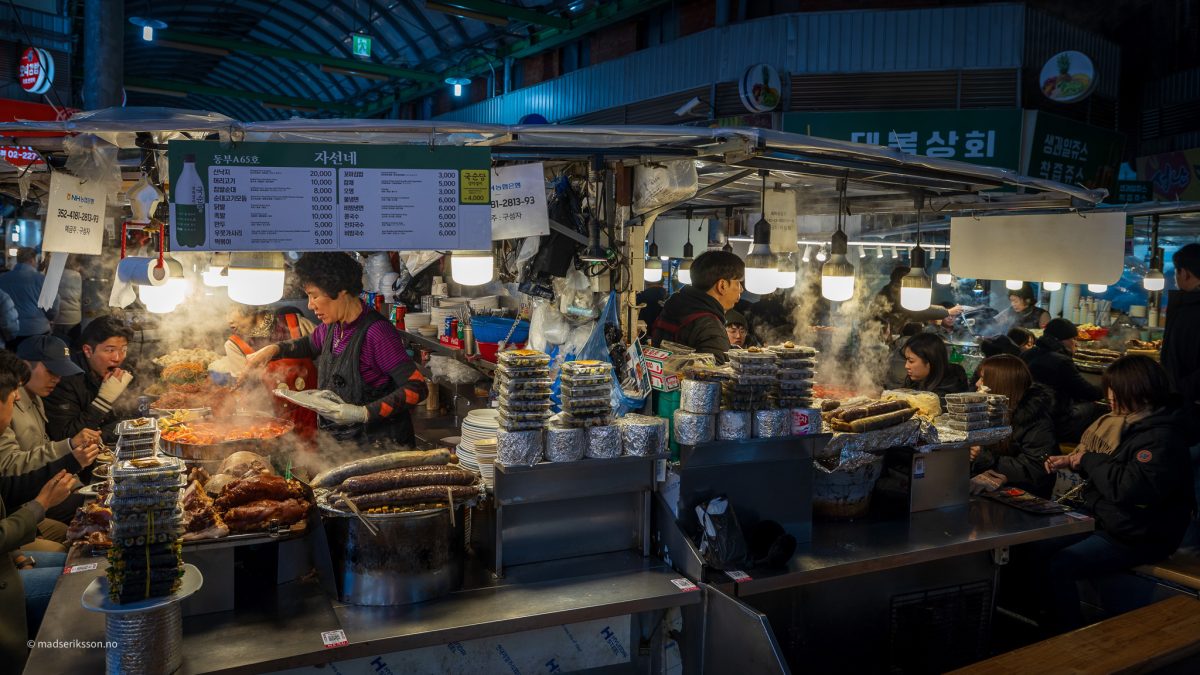
The food alley runs through the heart of Gwangjang under a corrugated metal roof that amplifies every sound — the crack of oil on cast iron, the rhythm of knife on cutting board, the overlapping calls of vendors advertising their stalls. The first thing you notice is the light: a warm yellow haze filtered through the canopy, cutting diagonally across the rows of stalls and their long shared tables. The second thing is the smell: mung bean batter frying, sesame oil, perilla, the mineral scent of fresh beef. It is overwhelming in the best possible way, and it takes a few minutes to slow down and start actually looking at what is being cooked.
The layout is a grid of stalls facing long communal tables and low stools. There is no reservation system, no numbering, and no obvious queue structure at most stalls — you find an empty seat, catch the vendor’s eye, and order by pointing if your Korean doesn’t stretch further. Most stalls specialise in one or two dishes and have been cooking the same things for decades. The vendors are predominantly women, many of them grandmother age, and their speed and efficiency — mixing, frying, plating, and calling to the next customer without apparent pause — is itself worth watching. Makgeolli (milky rice wine) flows freely from kettles at most tables; a kettle costs around ₩5,000 and is the standard accompaniment to bindaetteok.
The food alley at Gwangjang is not a restaurant. It is a room where several dozen family businesses have operated side by side for generations, each cooking the same dish they have always cooked, at the same stall, for the same city.
The busiest hours are 11:00 to 14:00, when local office workers from the Jongno district fill the tables alongside tourists. For a slightly more spacious experience, arrive when the stalls open around 11:00, or come back in the early evening after 17:00 when a different, quieter crowd settles in for dinner and drinks. Most stalls close on Sunday or Monday — mid-week visits offer the widest choice. The market itself opens at 09:00, but the fabric halls are the main attraction in the early morning; the food alley only really wakes up around 11:00.
What to Eat — The Essential Dishes of Gwangjang
From addictive miniature gimbap to raw beef tartare served by a third-generation grandmother.
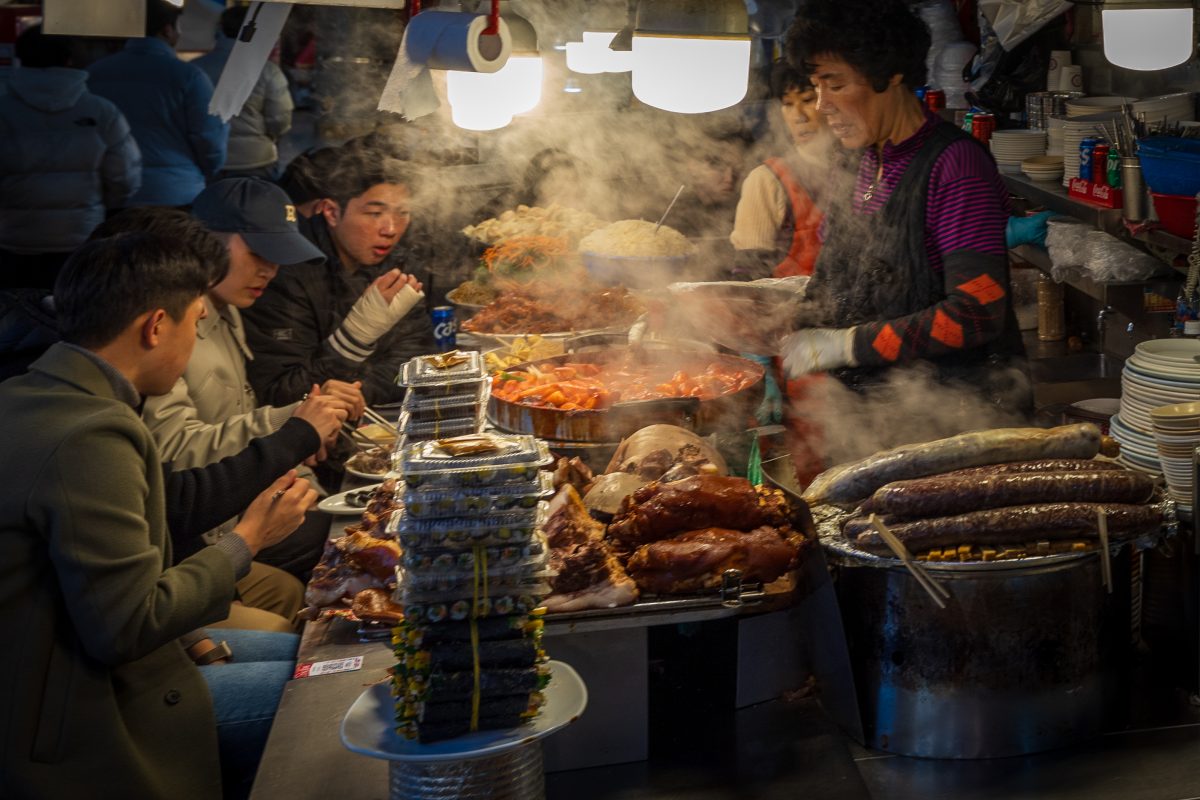
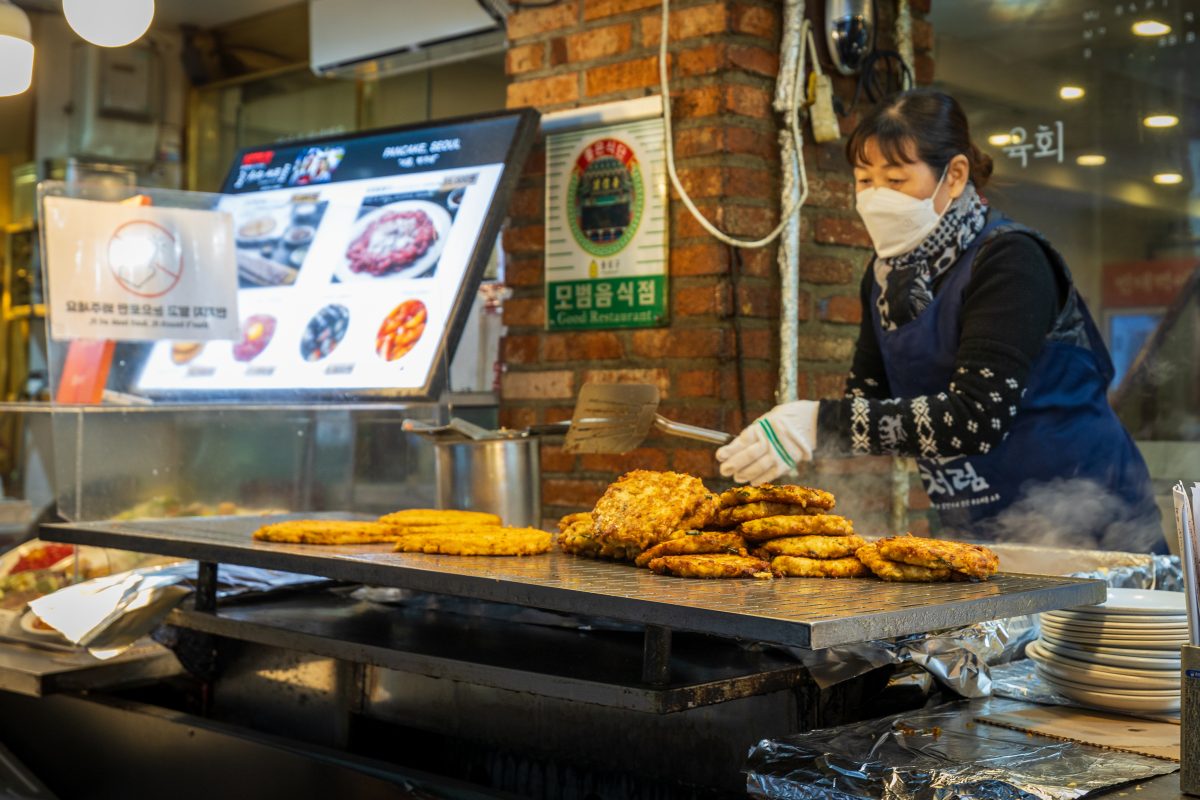
Bindaetteok is the market’s signature dish and the smell that greets you at the entrance. Made from ground nokdu (mung bean) batter mixed with pork, kimchi, and bean sprouts, then fried on cast-iron griddles until golden and crisp on the outside and moist within, these pancakes are ordered fresh and arrive within minutes. One pancake is enough for two people to share alongside other dishes. Dip in soy sauce and eat immediately — they lose their crispness quickly. The bindaetteok stalls near the alley entrance tend to have the most consistent quality; join the longest queue you see. Makgeolli — the lightly fizzy, milky rice wine poured from a communal kettle — is the traditional accompaniment and makes the combination one of the definitive Korean eating experiences.
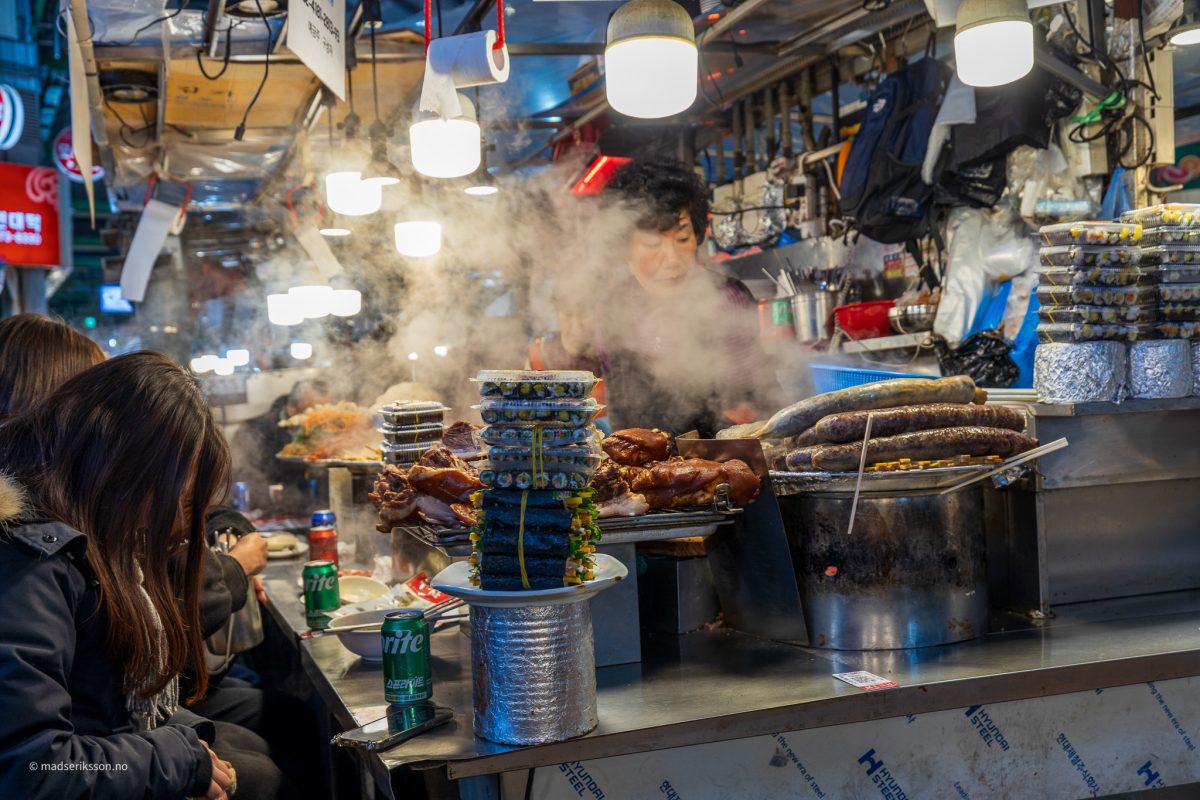
Mayak gimbap translates roughly as “drug gimbap,” named for its addictive quality. These are miniature versions of the standard rice roll — small enough to eat in one bite — packed tightly with sesame seeds and sesame oil and served with a sweet mustard dipping sauce. A roll of around ten pieces costs ₩3,000, and the challenge is stopping at one. Yukhoe — Korean beef tartare — is the market’s most celebrated dish among food-conscious visitors. Freshly hand-cut hanwoo beef is dressed with sesame oil, julienned Asian pear, and raw egg yolk. Buchon Yukhoe, operating since 1965 and now Michelin Bib Gourmand-recognised, is run by the third generation of the same family; the grandmother who presides over the mixing is something of a Seoul institution. Order the yukhoe bibimbap (₩15,000) for a full meal.
Mayak gimbap translates as “drug gimbap.” The name is accurate. Small, dense with sesame oil, gone in one bite — and you will immediately want another roll.
Beyond the headline dishes: sundae at Gwangjang is glutinous rice sausage rather than blood sausage — stuffed with sticky rice, glass noodles, and vegetables for a mild, nutty flavour, often served alongside ox head meat and offal for a full plate. Bibimbap is widely available and reliably good, particularly the hot-stone version in winter. Tteokbokki (spicy rice cakes) and mandu (dumplings) appear at multiple stalls. The rule for navigating the alley is simple: look for the stalls with the most Korean customers, and specifically the stalls where grandmothers are eating, not tourists. The food at those stalls will be better.
Beyond the Food — Fabric, Hanbok & Vintage Seoul
The market built its reputation on cloth. Most food visitors never make it upstairs — and miss something genuinely special.
Gwangjang’s main halls were built on fabric and they still run on it. The ground floor corridors beyond the food alley are lined with wholesale merchants selling silk, linen, bedding, upholstery fabric, lace, and every category of material a Seoul tailor might need. This is a working wholesale market, not a tourist display — the prices are honest, the merchants are busy, and the sheer density of bolts and rolls stacked floor to ceiling gives the space a different texture from the food alley: quieter, more serious, and unexpectedly beautiful in the way that any concentrated abundance of one material can be. If you have any interest in textiles, or in watching a city’s commercial infrastructure function, this part of the market repays an hour.
The second floor is where Gwangjang catches its younger visitors off guard. What might easily be dismissed as a shopping arcade turns out to contain one of the best vintage clothing markets in Seoul — a dense collection of stalls selling 1970s denim, vintage silk scarves, surplus military gear, rare accessories, and old Korean fashion pieces at prices significantly lower than the curated vintage boutiques of Hongdae or Mangwon. Korean youth come here regularly; so do stylists and photographers. The hanbok shops on the same floor offer both ready-to-wear and made-to-measure traditional dress, and several stalls offer hanbok rental for visitors who want to wear one during their Seoul stay — the stream-side paths of Cheonggyecheon, running directly beside the market, are a popular backdrop.
The second floor vintage arcade is one of the best-kept shopping secrets in Seoul — dense, affordable, and largely unknown to the tourists who ate bindaetteok one floor below and left.
Cheonggyecheon Stream runs directly alongside the market’s eastern edge and is worth incorporating into any visit. The stream was famously restored in 2005, its elevated highway cover removed to reveal the waterway beneath — an urban regeneration project that became a model cited internationally. The riverside walkways are pleasant, cooler than the surrounding streets in summer, and connect Gwangjang northward to Dongdaemun and southward toward Myeongdong, making it easy to thread the market into a longer walking day across central Seoul.
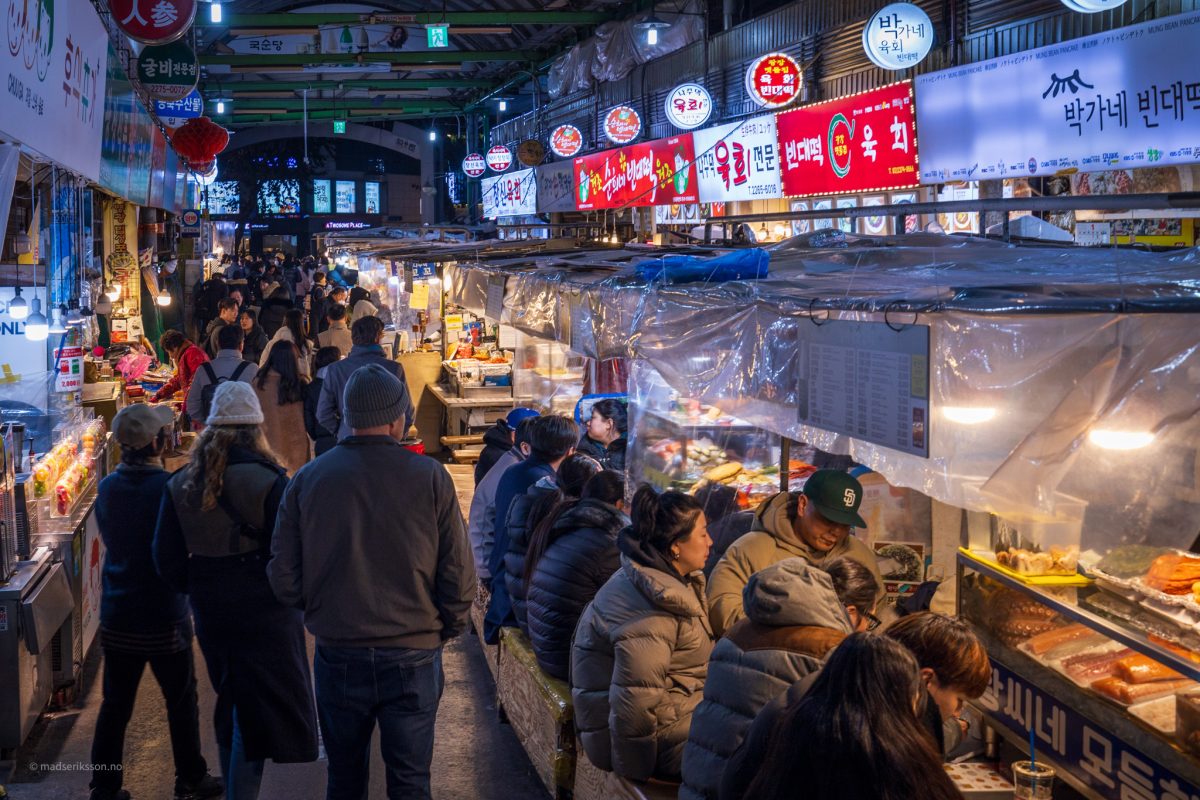
«There is a moment at Gwangjang Market that catches most first-time visitors: you are sitting at a shared table, elbow to elbow with strangers, a cast-iron griddle of bindaetteok arriving in front of you with a kettle of makgeolli, and you realise that the person next to you is a local office worker on their lunch break who comes here every week. That is the thing that distinguishes Gwangjang from the food markets that merely perform tradition for tourists. This one is still doing what it has always done. The grandmothers frying mung bean pancakes learned from their mothers, who learned from their mothers, in a market that has operated continuously since 1905. Netflix found it, the crowds followed, the queues got longer — and the food is still exactly the same. Come with cash, an empty stomach, and no particular plan. Sit down somewhere, point at something, and let Seoul feed you.»
More in the same area
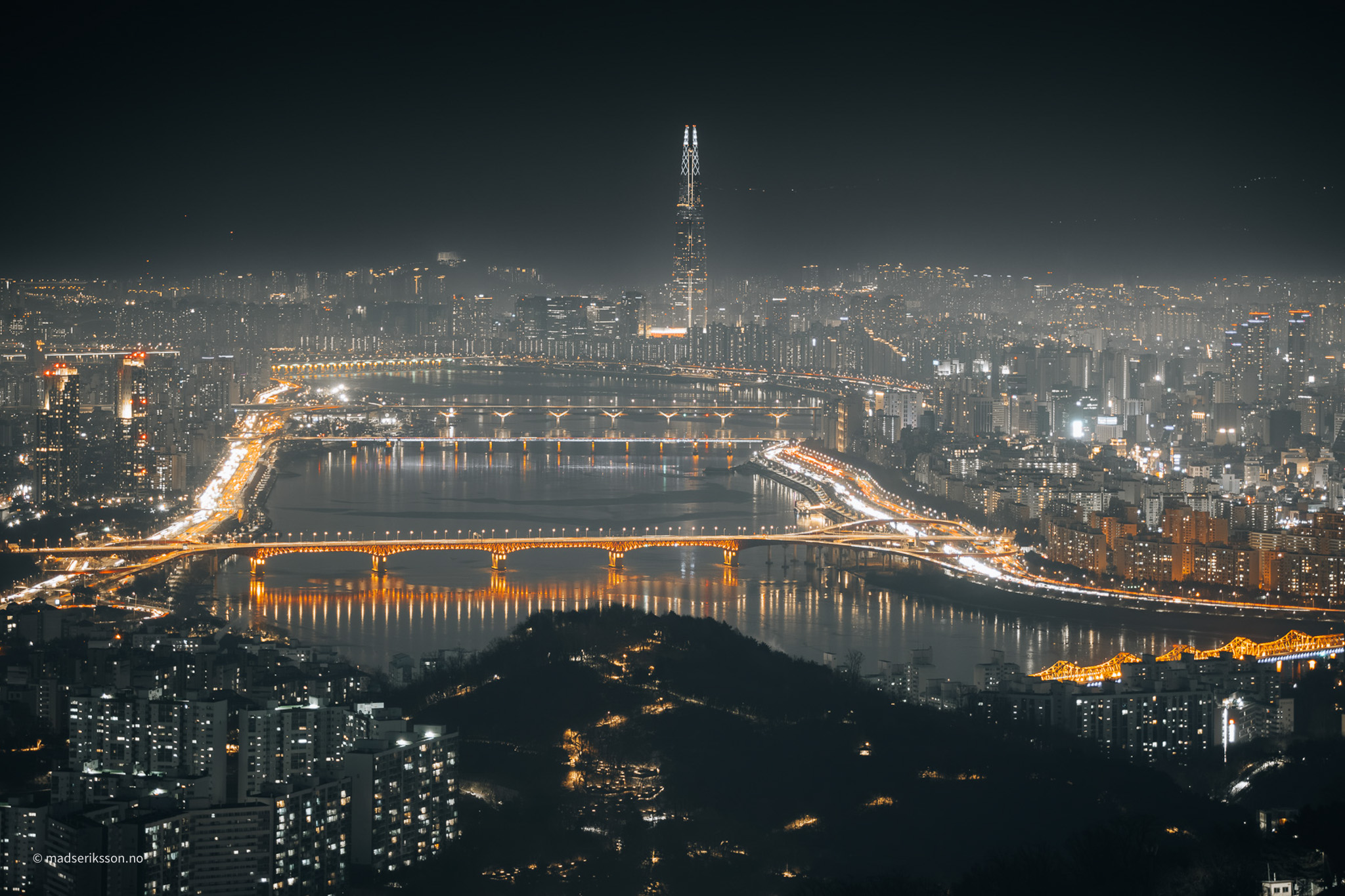 CitiesSeoul: A Thriving Fusion of Tradition and Modernity
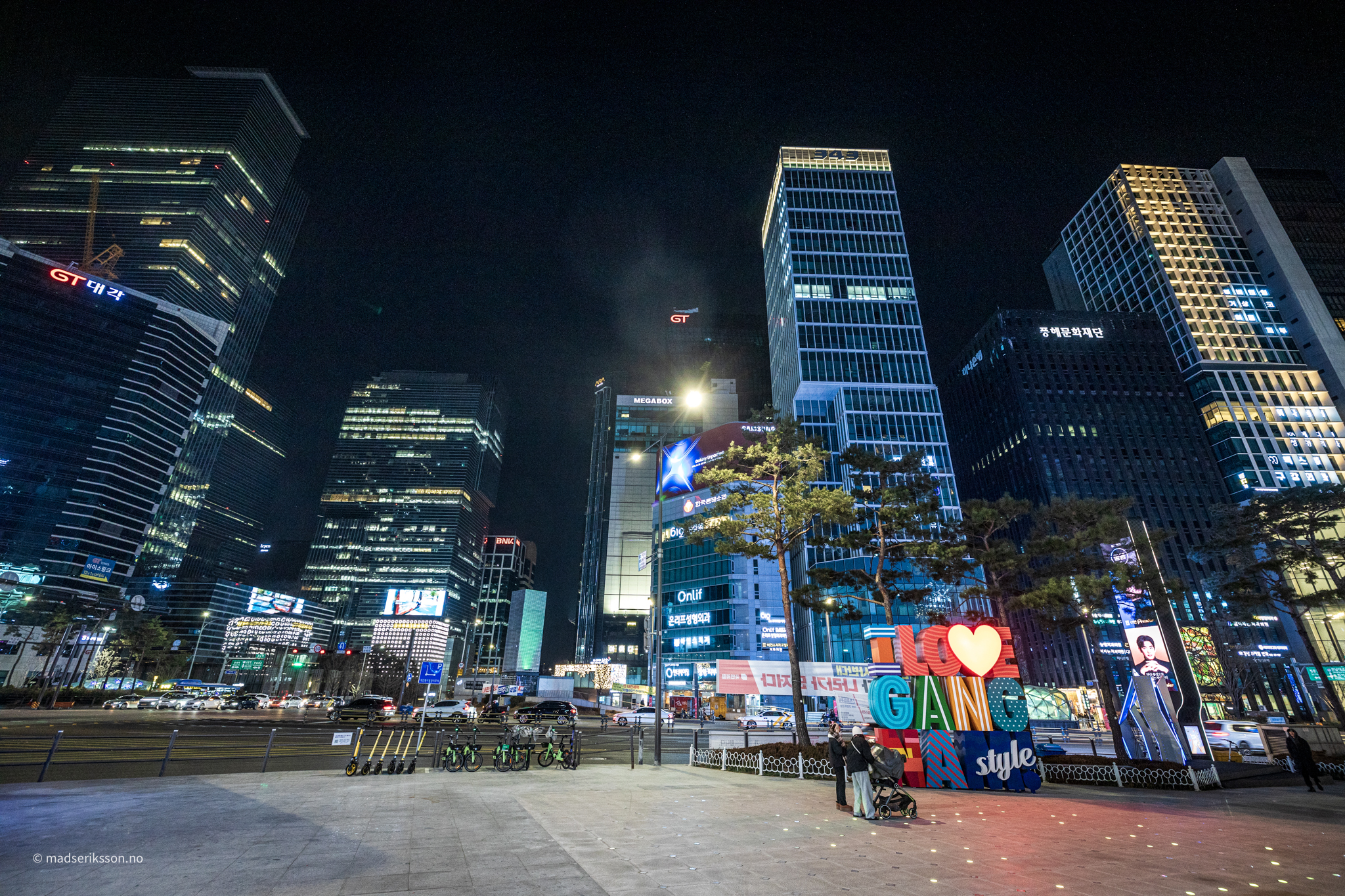 CitiesGangnam, Seoul: Temples, Royal Tombs and the City South of the River
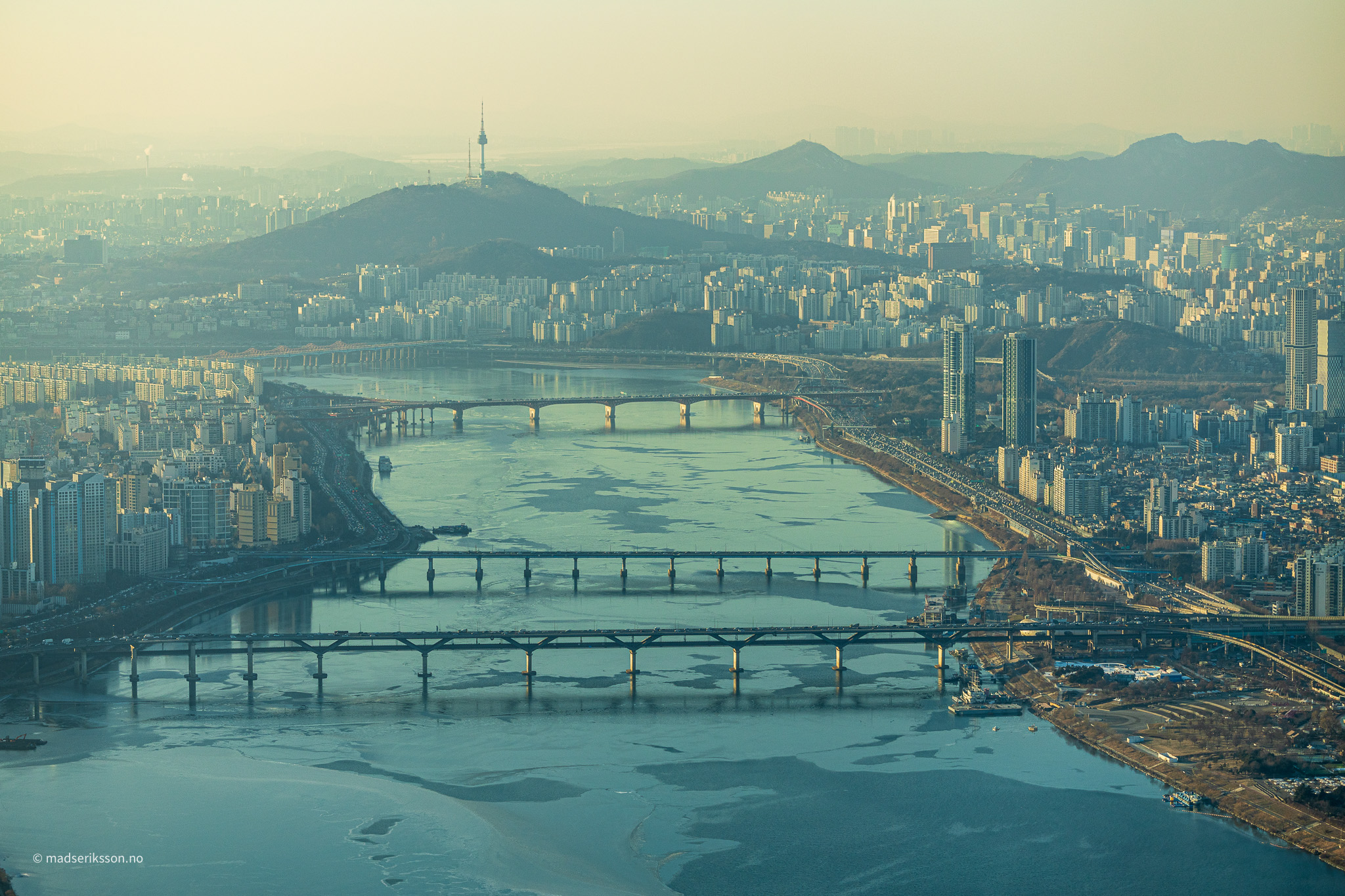 ArchitectureThe Breathtaking View from Lotte World Tower in Seoul
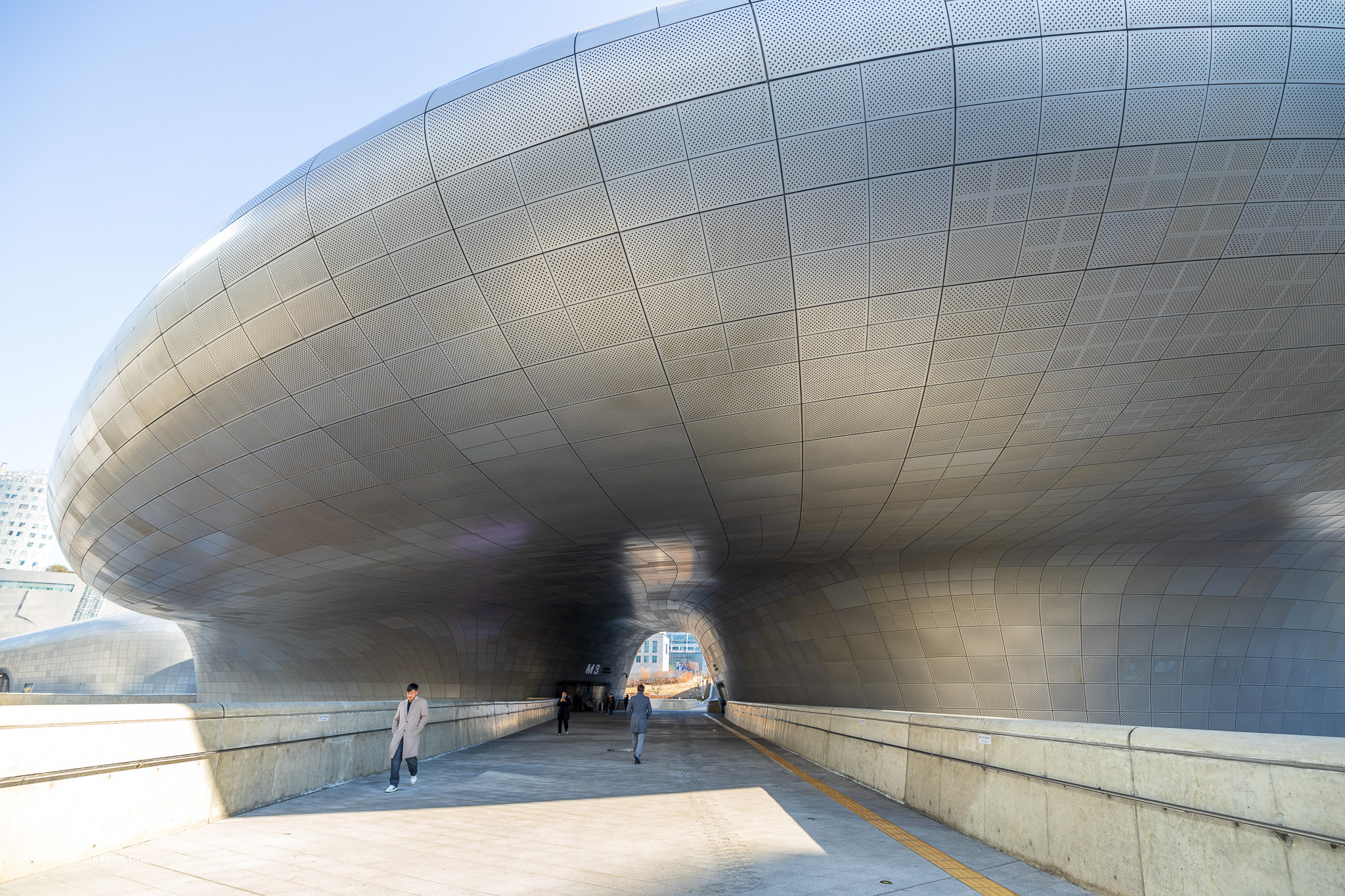 ArchitectureDongdaemun Design Plaza: A Modern Architectural Marvel in Seoul
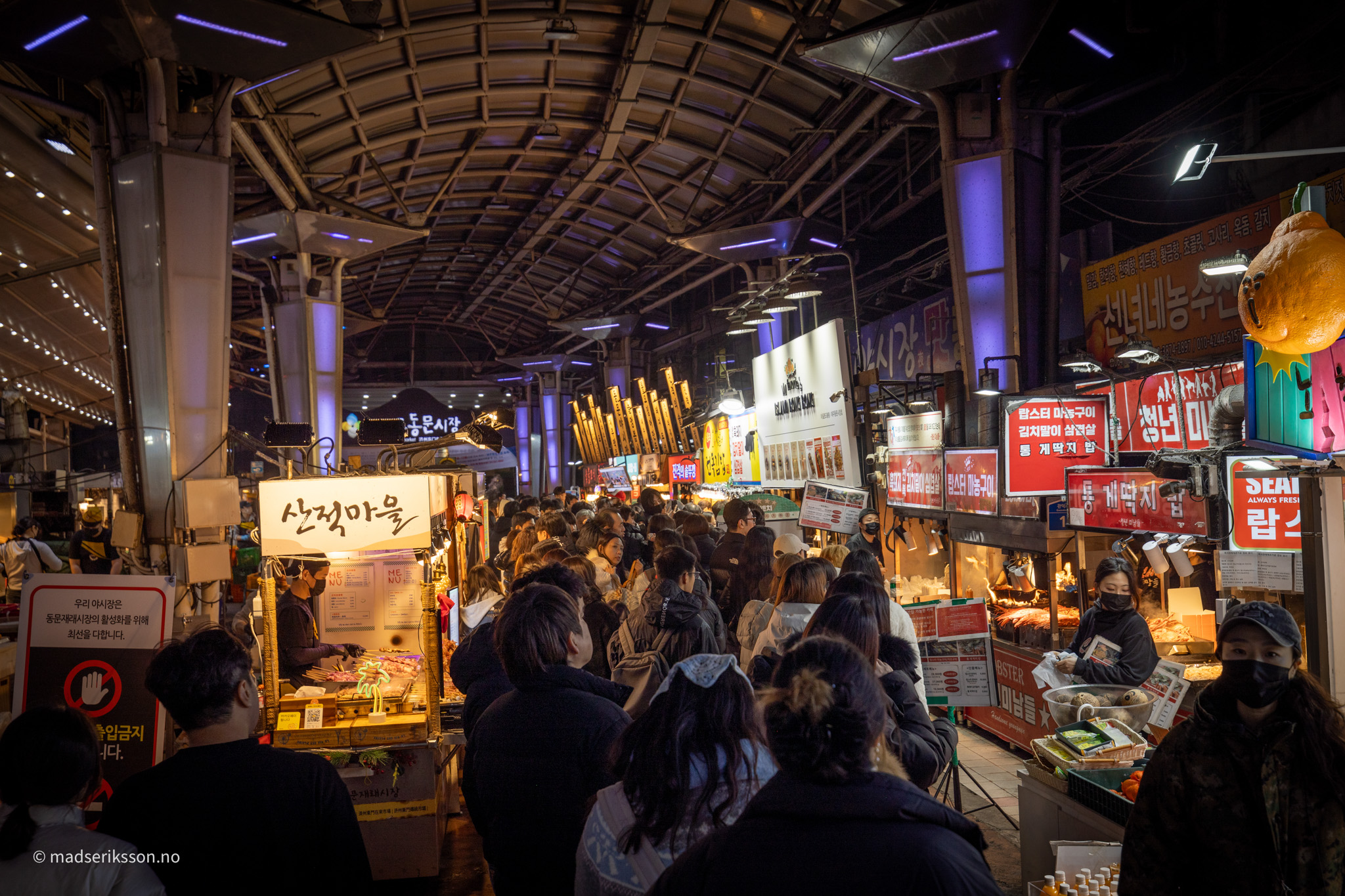 Food and DrinksDongmun Market: Jeju City’s Post-War Market and Its Night Market at Gate 8
 ArchitectureTen Buildings That Changed Their Cities — Modern Architecture Ranked on Impact, Not Image