Dongmun Market opened in the autumn of 1945, a few weeks after the end of Japanese rule, as the only permanent market on Jeju Island. It burned to the ground in 1954 and was rebuilt a short walk away, in the old heart of Jeju City, where it has stayed ever since. Today it is the island’s largest and oldest traditional market: a covered maze of fish counters, tangerine stalls, rice-cake makers and dried-goods shops by day, and since 2018 a crowded night market of open grills and food stalls that runs until midnight.

Jeju is best known for what lies outside its towns: Hallasan, the volcano at the centre of the island, its coastline and its citrus orchards. Jeju City, on the north coast, is where most visitors land and leave, and its old downtown is easy to overlook between the airport and the beaches. Dongmun Market is the best reason to stop. It sits a few blocks inland from the harbour, about fifteen minutes by car from Jeju International Airport, in the district where the island’s old government offices and its oldest building still stand.
The market is not a showpiece. It is where people in Jeju City still buy fish, vegetables, grains, medicinal herbs and clothes, and its alleys change character from one block to the next: wet floors and crushed ice around the fish counters, pyramids of mandarins at the fruit stalls, the steam and sesame smell of rice-cake shops, and narrow lanes of dried seafood and kitchenware. Visitors come for the food that is particular to the island — hallabong and other citrus, Jeju black pork, silver cutlassfish — and, increasingly, for the night market at the back of the building.
How to approach Dongmun Market
This guide covers the market in three parts: how a post-war trading place became the centre of Jeju City’s old downtown; the daytime market and the island produce that fills it, from cutlassfish and abalone to tangerines and black pork; and the night market that has turned the back of the market into one of Jeju’s busiest evening destinations — with practical advice on when to go and what to expect.
A Post-War Market — Jeju City’s Oldest Trading Floor
How a market founded in the months after liberation became the commercial centre of the island, burned down, and came back a few streets away
Korea was liberated from Japanese colonial rule in August 1945, and in October that year a permanent market took shape in the east of Jeju City. Its name means simply “east gate”. In the years that followed it was the only permanent market on the island, and the place where Jeju’s farmers, fishing families and traders met. It was the commercial centre of the island in the post-war years.
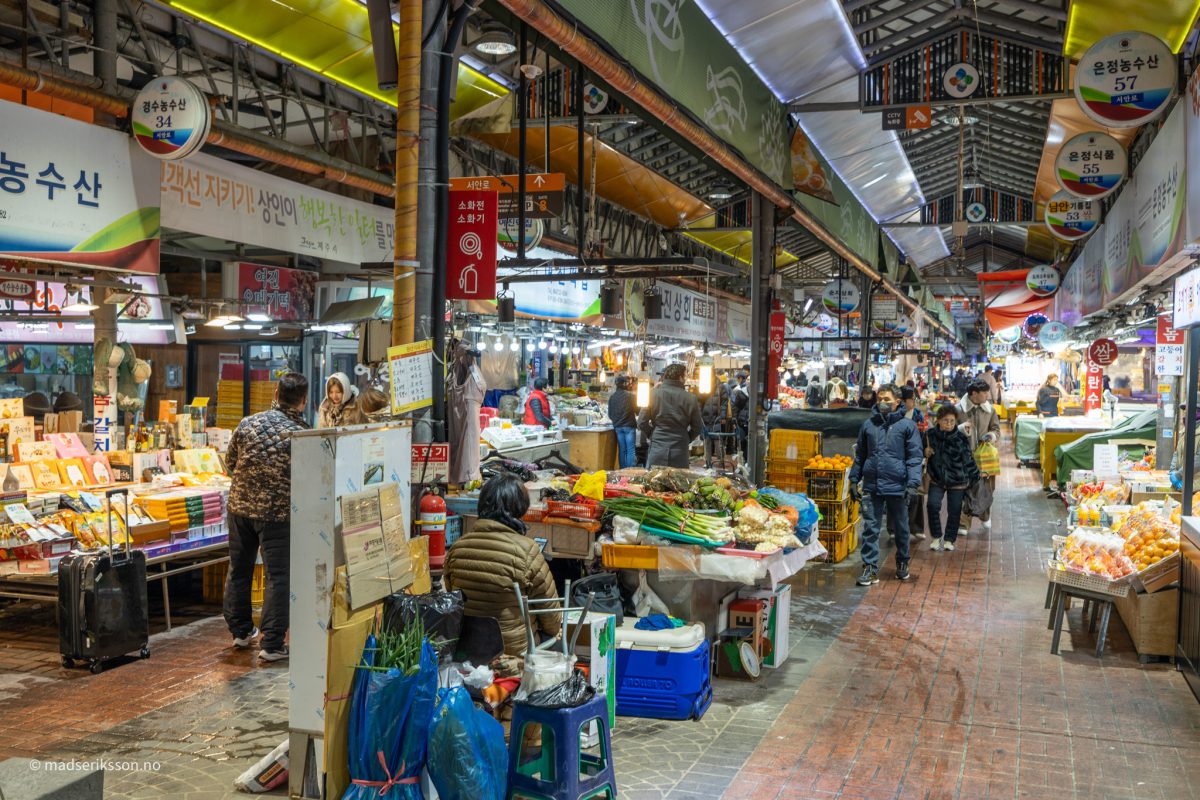
In March 1954 a fire swept through the market and destroyed it completely. Rather than rebuilding on the same ground, the traders moved: by November of the same year the market had reopened on its present site under the same name. It has grown and been modernised since — the main alleys are now roofed over, with numbered gates leading in from the surrounding streets — but its layout of tightly packed stalls and narrow lanes still reflects the way it grew, piece by piece, out of a post-war trading place.
For decades Dongmun was not a market among many but the market of Jeju — the island’s only permanent one, and the centre of its trade. It remains the largest and oldest traditional market on the island.
The streets around it are the oldest part of Jeju City. A few minutes’ walk to the west stands Gwandeokjeong, a pavilion built in 1448 by the island’s governor as a training ground for soldiers, now designated Treasure No. 322 and the oldest building on Jeju. Beside it is Jeju Mokgwana, a complex of Joseon-era government buildings in the middle of downtown, and to the north lies the old harbour district of Tapdong. Jeju City has since spread west and south into newer districts, but the old downtown is compact enough to cover on foot, and the market sits at its centre.
The Daytime Market — An Island’s Larder Under One Roof
Silver cutlassfish on ice, tangerines by the box, black pork and mugwort rice cakes: what Jeju grows and catches, and where to find it in the market
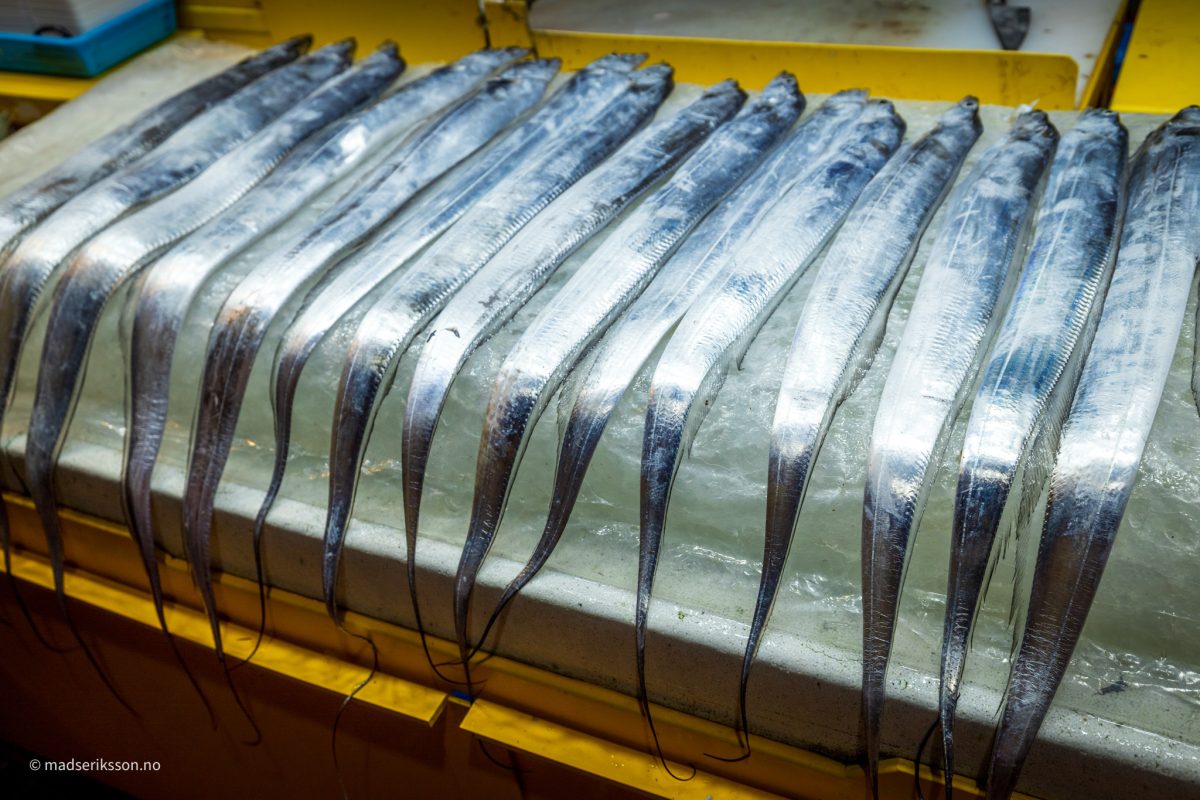
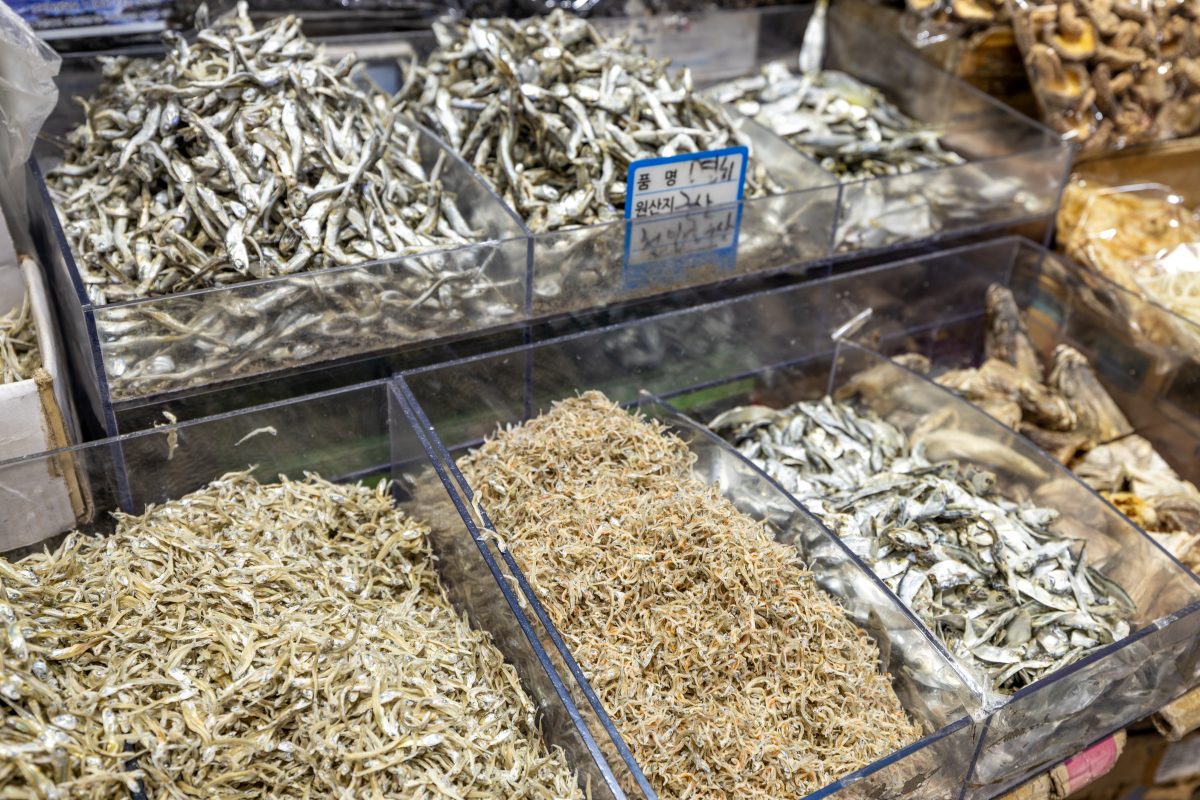
The fish market is the oldest and busiest part of Dongmun, and the reason many people in Jeju City still shop here. The counters are laid with the catch of the surrounding sea: long, silver cutlassfish (galchi); mackerel, squid, octopus and shellfish; and abalone, which also turns up cooked, in rice made with abalone and in braised ribs served with whole abalone. Several counters prepare platters of assorted raw fish to order, and cutlassfish sashimi is sold here at low prices.
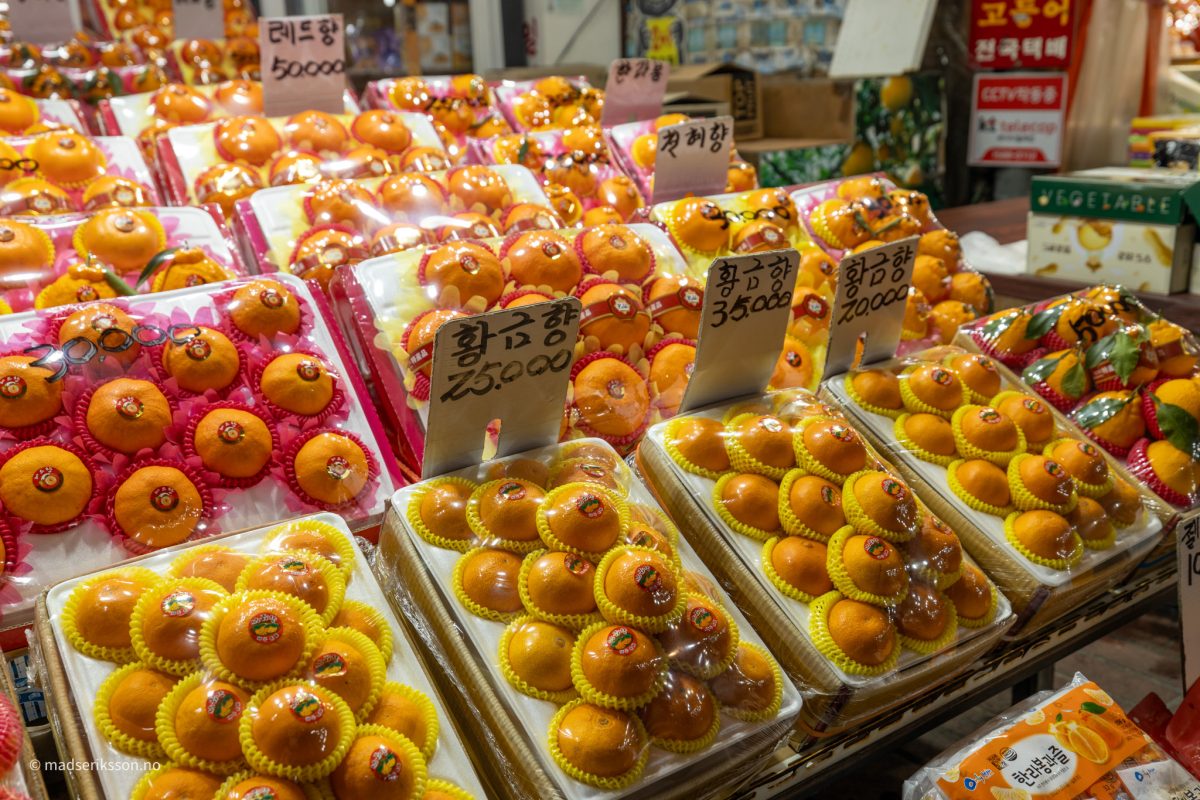
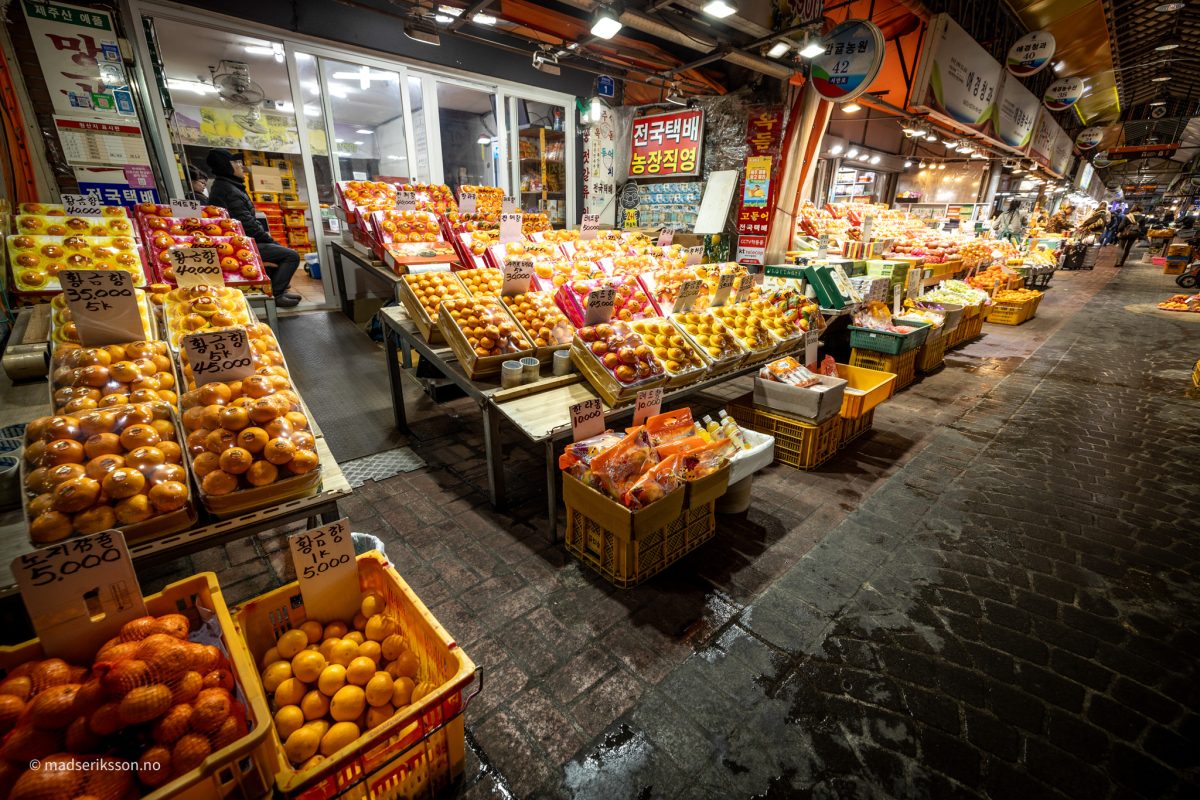
Further in, the fruit alleys are given over almost entirely to citrus. Jeju is Korea’s tangerine island, and the market sells everything from small, thin-skinned mandarins to the large hallabong with its distinctive knob at the stem — a variety bred in Japan in 1972 and introduced to Korea in 1990, named after Hallasan. The harvest runs roughly from December, for greenhouse fruit, to April. Around the fruit sellers are stalls of juice pressed to order, dried tangerine slices dipped in chocolate, and boxes of every kind of citrus-flavoured snack, from chocolates to biscuits and tea.
The Jeju black pig is protected as a Natural Monument, yet it is also the island’s most famous dish. The two are reconciled by a single herd: only the purebred animals at Jeju’s livestock centre carry the designation, and the pork on the grills comes from farmed pigs.
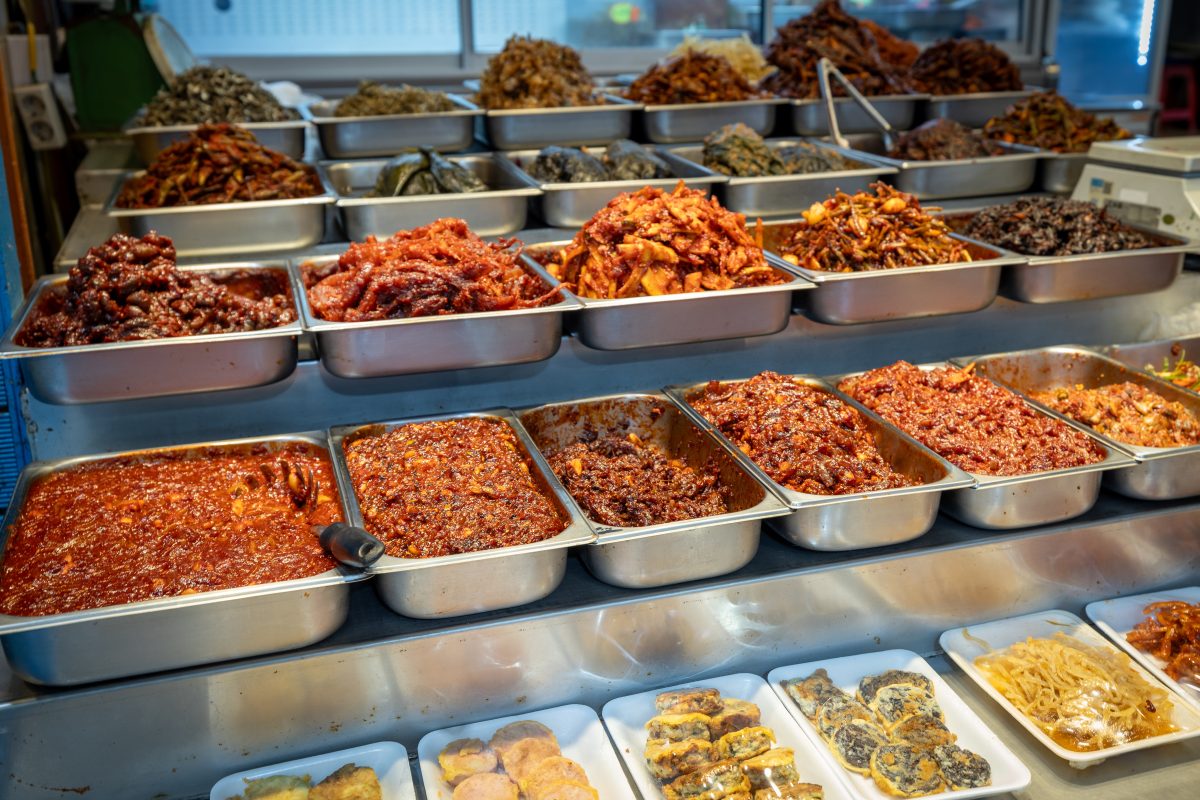
Jeju black pork (heukdwaeji) is the other great island speciality. The breed is small, black-skinned and descended from pigs recorded in Chinese texts as early as the third century; until the late twentieth century many of the island’s pigs were kept in pits beneath outhouses. In the market the pork turns up in many forms, from grilled skewers to rolls and cutlets. Between the fish and fruit alleys are the shops that make the market a good place for an unhurried breakfast or lunch: rice-cake makers selling omegi-tteok, a traditional Jeju rice cake, and small counters serving kimbap, tteokbokki and fried snacks to market workers and shoppers alike.
The Night Market — Grills, Queues and Island Snacks Until Midnight
How a municipal scheme to keep the old town alive after dark became one of the busiest evenings on Jeju
For most of its history Dongmun was a daytime market, and by evening the old downtown around it went quiet. In 2018 the city tried to change that. A trial night market began on 7 March 2018 with 32 mobile food stalls, built with about one billion won of national and local funding and run by vendors chosen by the city, with an official opening at the end of the month. The idea was simple: give visitors — who mostly stayed in the newer districts or along the coast — a reason to come into the old town at night. It worked. The night market is now one of the busiest places on the island after dark.
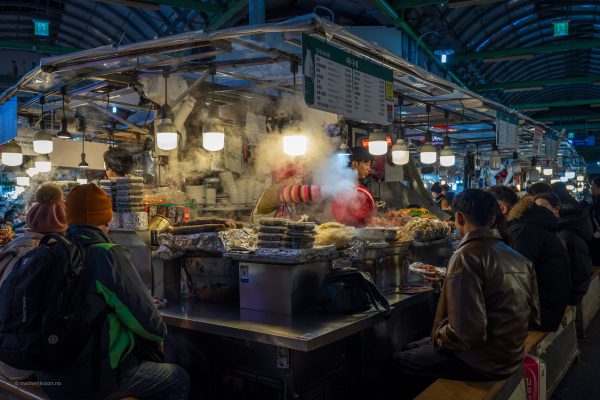
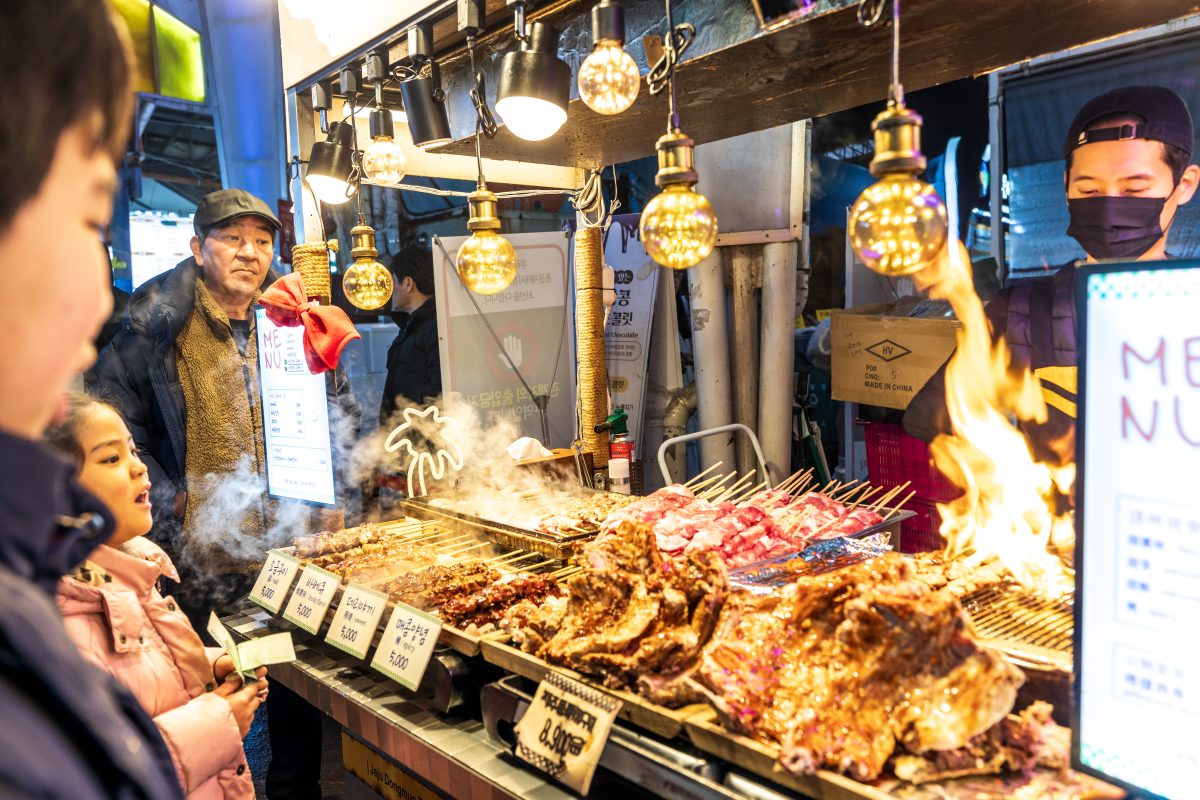
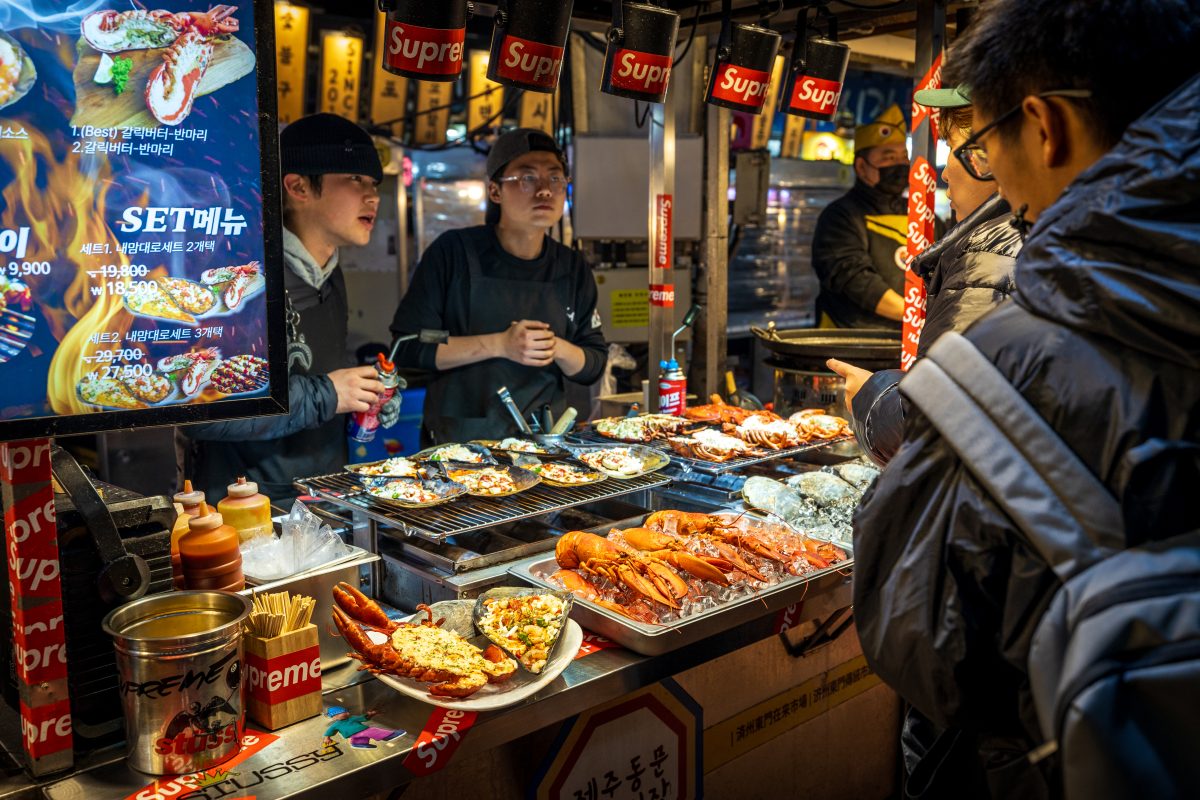
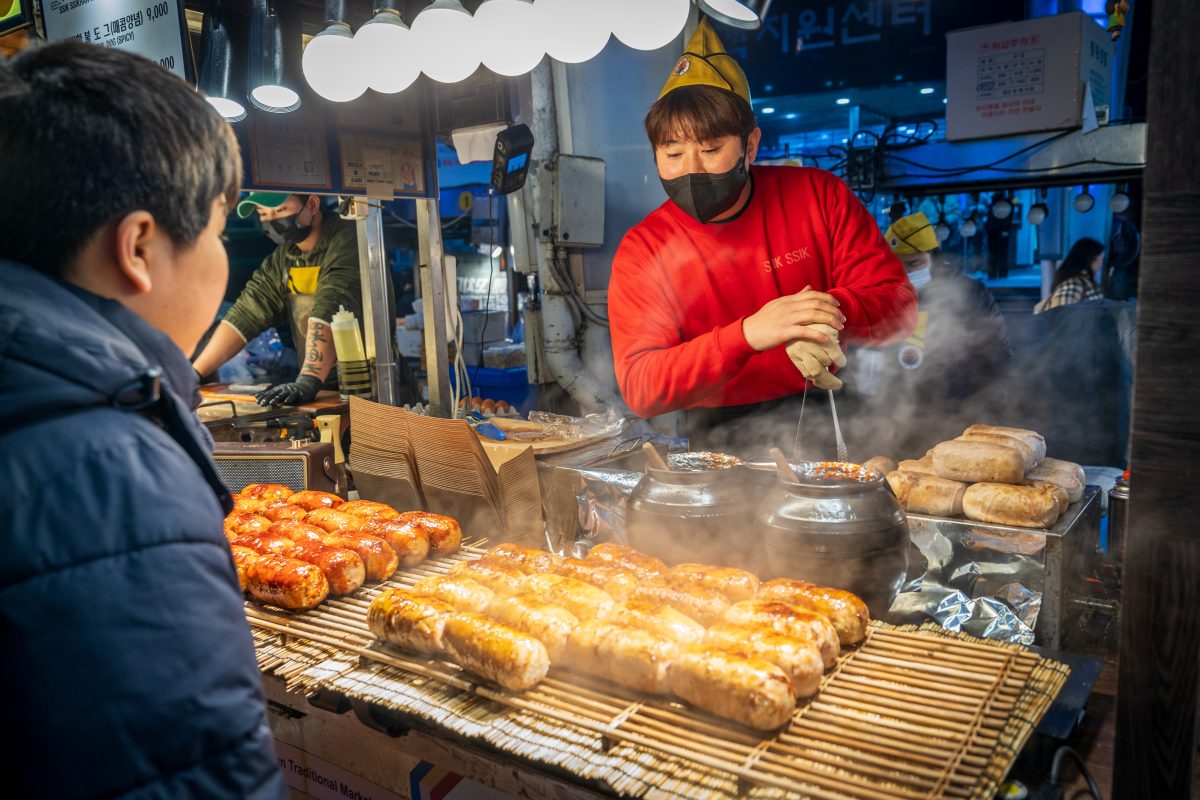
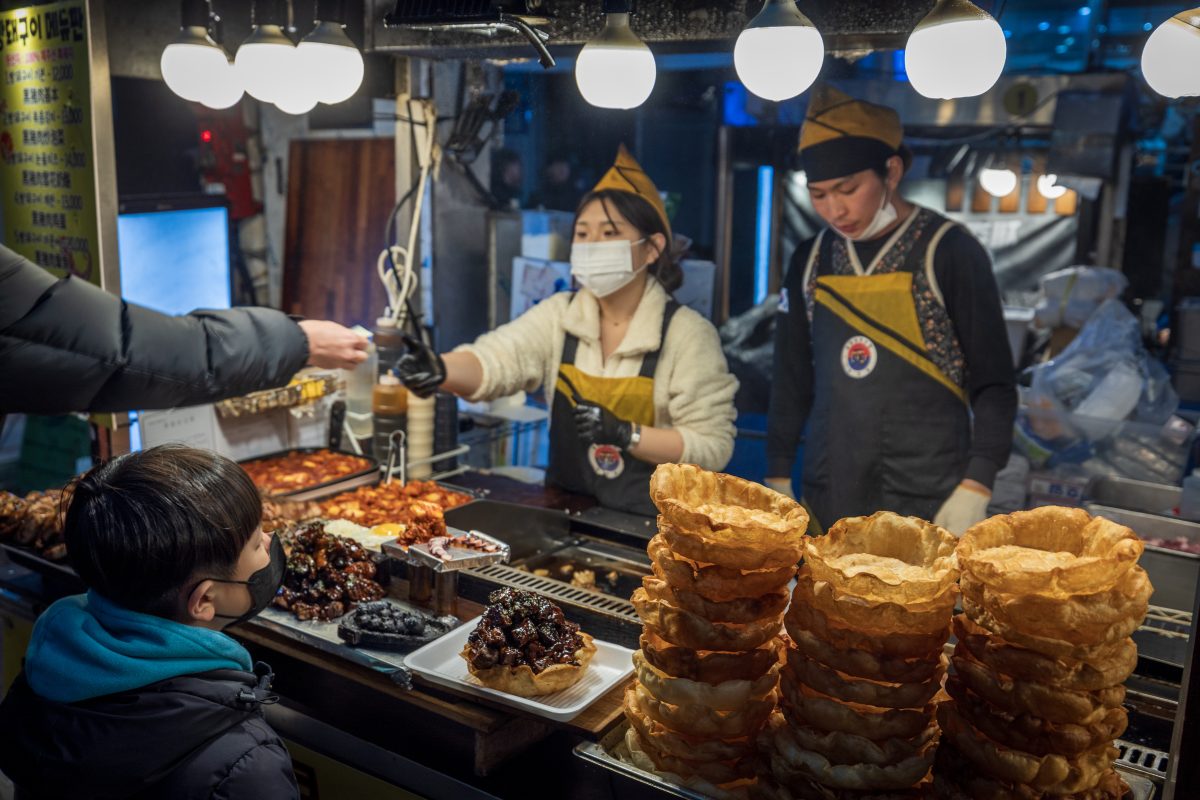
It occupies an alley at the back of the market, reached most easily through Gate 8, and runs every evening from six until midnight. The stalls are lined up in rows under strings of lights, with music playing and cooks working over open flames; some grill lobster and finish it with a blowtorch in front of the queue, which is part of the attraction. The menu is a mix of Jeju ingredients and Korean street food: black pork rolls and skewers, abalone kimbap, tangerine shrimp tempura, sweet-and-sour fried chicken, grilled scallops with butter, peanut-filled hotteok made with peanuts from the small island of Udo, and fruit tanghulu glazed in hard sugar.
The night market began as a municipal experiment with 32 stalls and a modest budget. Within a few years it had become one of the most crowded places on the island after dark.
It is at its most crowded on Friday and Saturday evenings and in the peak holiday months, when the queues at the most popular stalls can be long and the alley becomes difficult to move through. Arriving around six, as the stalls open, or later in the evening on a weekday makes it far more relaxed. Most stalls serve single portions, so the usual approach is to share several dishes. Combining a late-afternoon walk through the daytime market — before the fish and fruit stalls close — with an early evening at the night market makes the most of the visit.
«Dongmun Market was founded in the months after liberation, burned down within a decade and was rebuilt within a year, and it has been the centre of Jeju City’s old downtown ever since. It is not a market built for visitors, which is what makes it worth visiting: the fish is the fish that Jeju eats, the tangerines are sold by the box to local families, and the rice-cake makers have been at it since early morning. Walk the daytime alleys in the late afternoon, buy a hallabong and something from the fish counters, and stay on as the lights come up over the night market at Gate 8.»

More in the same area
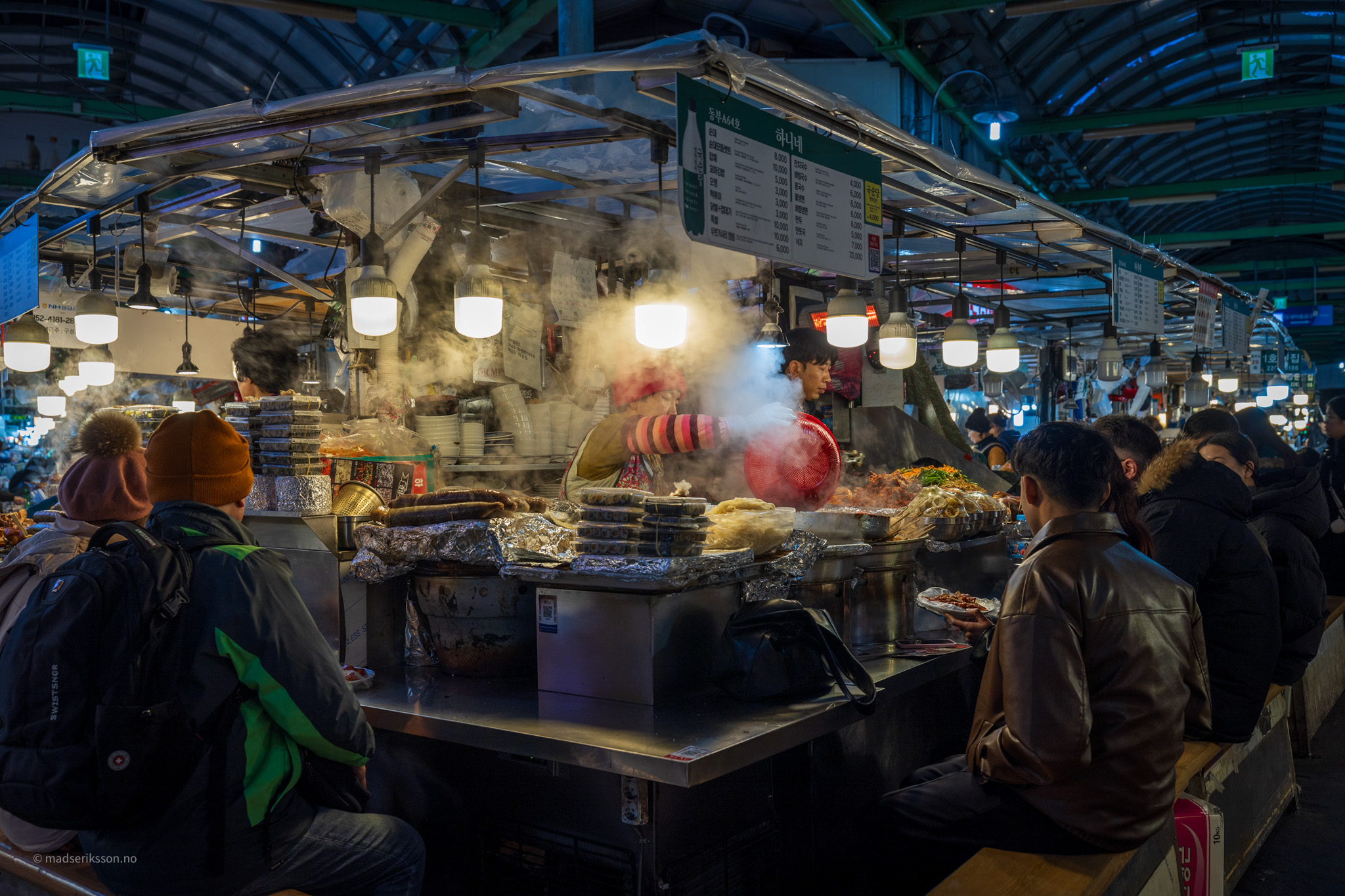 Food and DrinksExploring Gwangjang Market: A Culinary Paradise in Seoul
 CitiesSeoul: A Thriving Fusion of Tradition and Modernity
 CitiesGangnam, Seoul: Temples, Royal Tombs and the City South of the River
 ArchitectureThe Breathtaking View from Lotte World Tower in Seoul
 ArchitectureDongdaemun Design Plaza: A Modern Architectural Marvel in Seoul
 CitiesThe World’s 10 Great Food Markets