A train leaves Tokyo Station every few minutes, arrives 500 kilometres away roughly twelve seconds off schedule, and does it 378 times a day. The Shinkansen is not exciting in the way fast things usually are — it is exciting because it is boring, relentlessly and deliberately, and has been since October 1964. Sixty years and ten billion passengers later, nobody has been killed in a derailment or collision.

The network now runs to 2,951 kilometres of dedicated high-speed line, with services between 260 and 320 km/h. The original stretch — Tokyo to Shin-Ōsaka, opened on 1 October 1964 — was the first high-speed railway anywhere, and it remains one of the busiest railways in the world by any measure you care to use.
The design decision that matters most is also the least visible. Shinkansen lines are built to standard gauge and are almost entirely separated from Japan’s older narrow-gauge network: no level crossings, no slow freight, no sharing track with a local stopper. That separation is what makes the timetable possible. A high-speed train that has to negotiate with slower traffic cannot run seventeen services an hour and cannot be relied on to the second.
What this article covers
This is a practical guide to using it as a traveller rather than a technical history: how the Tōkaidō run actually works, what the tickets cost in 2026 and whether the Japan Rail Pass still adds up — it went up in price in October 2023 and goes up again on 1 October 2026 — and what is being built to replace it. Where the numbers matter I have given the source, because there is a great deal of confidently wrong information about Japanese trains online.
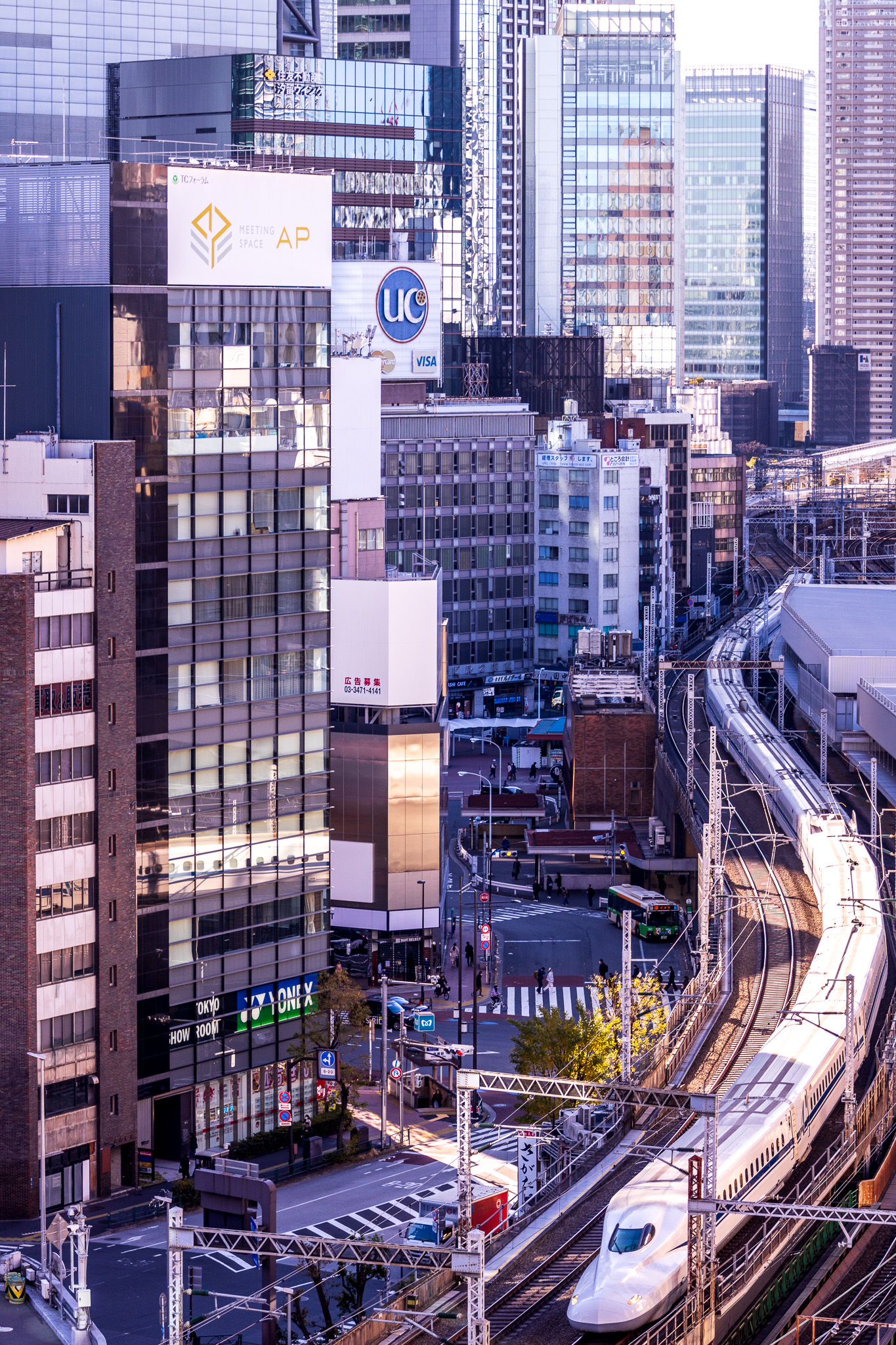
The run that started it all
Three services on the same track at the same top speed — the only difference is how often they stop, and that difference is most of an hour
Times above are typical rather than fixed — the fastest Nozomi does the run in a little over two hours twenty, most take a few minutes longer, and the exact schedule varies by departure. Check the actual timetable rather than this table when you book.
Three services share the line and all of them run at the same top speed. Nozomi stops only at the six stations above and is the default for anyone going somewhere. Hikari adds a handful of stops and takes around three hours. Kodama stops everywhere and takes four — which sounds pointless until you realise it is the reason the intermediate towns exist on the network at all. The choice is never about speed; it is about how many times the train slows down.
“The engineering achievement is not that the train goes fast. It is that seventeen of them an hour go fast, in the same direction, without ever getting in each other’s way.”
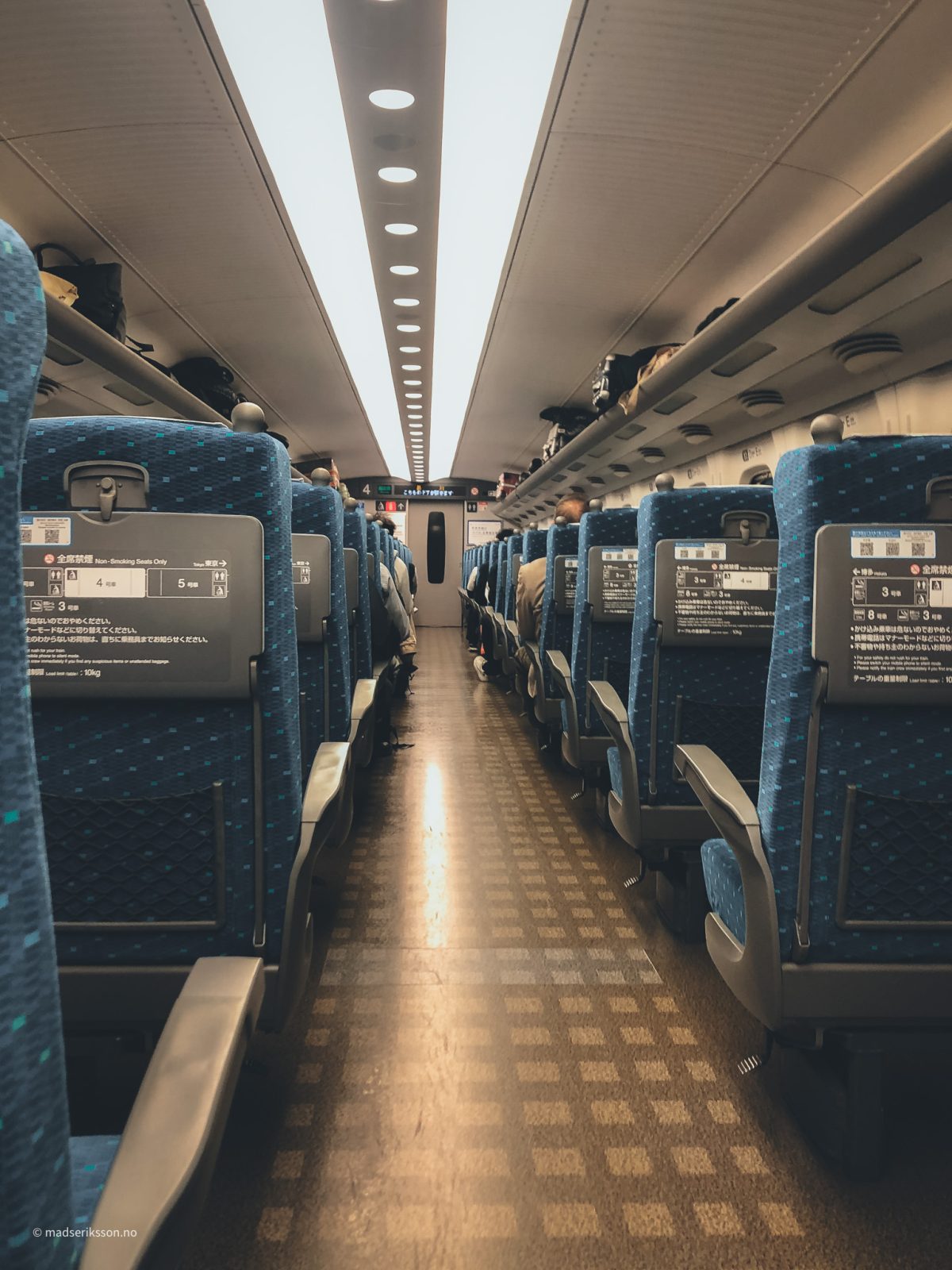
Inside, Ordinary cars are laid out 2+3 with a mix of reserved and unreserved seating; Green Cars are 2+2 and entirely reserved. Since the trolley service was withdrawn at the end of October 2023, there is nothing to buy on board unless you are in the Green Car, which uses QR-code ordering from your seat. Buy an ekiben on the platform before you board. This is not a hardship — station bentō are a genuine part of the experience, and the ones sold at Tokyo Station are better than most restaurant lunches.
One piece of seat advice that is worth following: travelling west from Tokyo, Mount Fuji appears on the right-hand side, in the D and E seats, roughly forty-five minutes out. It is visible for well under a minute and only in clear weather, which in practice means winter mornings far more often than summer afternoons.
Whether the pass is worth it
The Japan Rail Pass has stopped being an automatic yes — and for the trip most people actually take, it is now usually a no
The nationwide Japan Rail Pass currently costs ¥50,000 for seven days, ¥80,000 for fourteen and ¥100,000 for twenty-one in Ordinary class. From 1 October 2026 those become ¥53,000, ¥84,000 and ¥105,000. The Green Car version starts at ¥70,000 for seven days. If you are travelling in the autumn, the difference between buying on 30 September and 1 October is real money.
The arithmetic changed sharply with the October 2023 increase, and it has not changed back. A pass has to be beaten by the fares you would otherwise pay, and the fares that matter are large but not unlimited: Tokyo to Kyoto on the Nozomi is somewhere in the region of ¥14,000 one way. Two of those is ¥28,000 — a long way short of ¥50,000.
“For the trip most first-time visitors take — Tokyo, Kyoto, Osaka, back to Tokyo — the pass now loses. It wins when you keep going: Hiroshima, Kyushu, Hokkaido, or several long days in a row.”
Two details make a bigger difference than people expect. First, since October 2023 pass holders can ride the Nozomi, but only by buying a supplementary ticket; without it you are limited to Hikari and Kodama, which on the Tokyo–Osaka run costs you between thirty and ninety minutes each way. Second, regional passes are frequently the better answer — JR East, JR West and the Kansai area passes cover a narrower map at a much lower price, and most itineraries are narrower than their owners think.
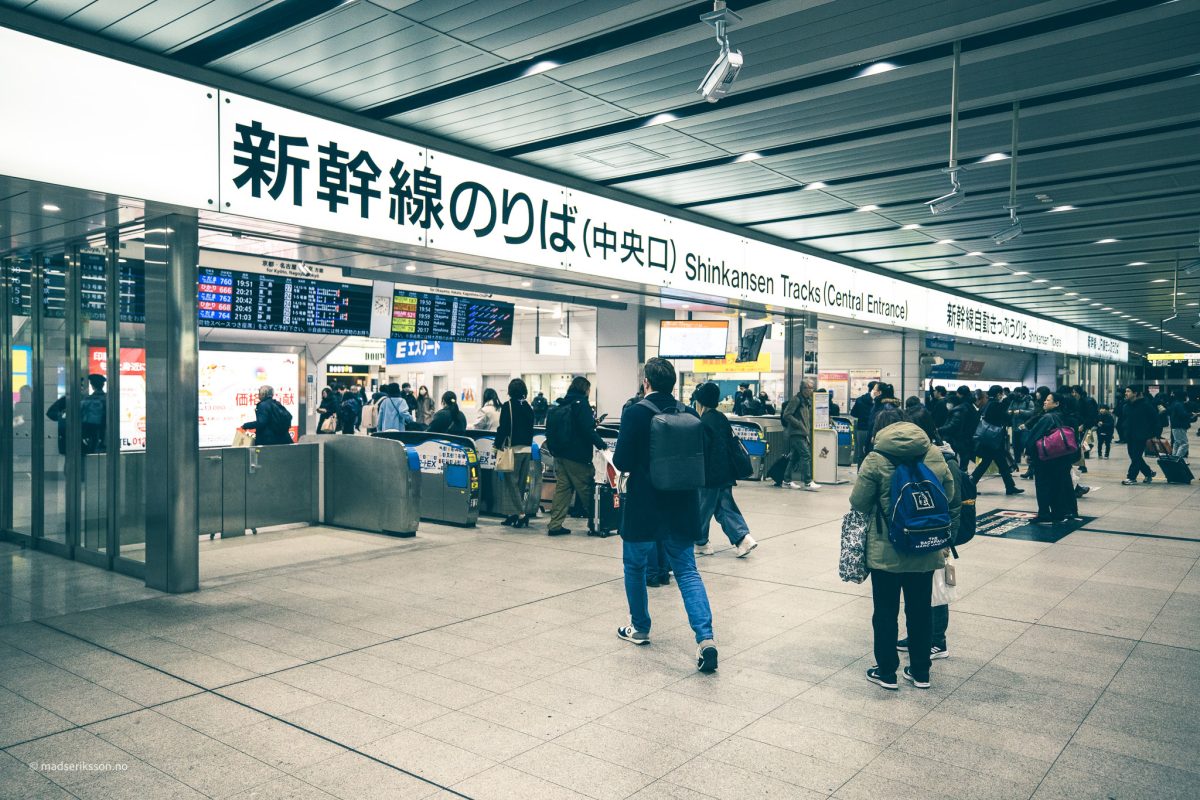
If you are not using a pass, reserved seats are booked online or at any ticket office, and an IC card (Suica, ICOCA and their equivalents) handles local trains, subways, buses and convenience stores. Unreserved cars exist on most services and are genuinely usable outside the New Year, Golden Week and Obon peaks, when they are not.
Finally, the luggage rule, which catches a lot of visitors. On the Tōkaidō, San’yō, Kyushu and Nishi-Kyushu lines, a bag whose combined dimensions come to between 160 and 250 centimetres needs a reservation for a seat with luggage space. The reservation is free. Turning up without one costs ¥1,000 and means stowing the bag wherever the crew decides. A large check-in suitcase is usually over the limit — measure before you travel, or use the luggage forwarding services, which are cheap, ubiquitous and quietly one of the best things about travelling in Japan.
The line meant to replace this one
A magnetic-levitation railway from Tokyo to Nagoya, mostly in tunnel, running two hundred km/h faster than anything on rails today — and years behind schedule over a river
The Chūō Shinkansen is a maglev line under construction between Tokyo and Nagoya, designed for around 505 km/h in commercial service — roughly two hundred faster than the fastest conventional Shinkansen. Most of the route runs in tunnel, under mountains and under the western suburbs of Tokyo, which is both the only practical alignment and the reason it has been so slow to build.
The delay has a specific cause. Shizuoka Prefecture withheld consent for years over the effect of tunnelling on the flow of the Ōi River, and the dispute stopped the project cold. It has finally moved: in January 2026 the prefecture and JR Central signed an agreement on water-flow compensation, and in late March 2026 Shizuoka’s expert committee approved all twenty-eight environmental measures JR Central had put forward. Construction in the prefecture could begin before the end of this year. The line will not carry passengers until the mid-2030s at the earliest.
“A railway held up for the better part of a decade not by engineering or money, but by an argument about how much water a river would lose.”
Meanwhile the conventional network keeps improving in smaller increments. The ALFA-X test train — formally the E956 — has been running since 2019 and has reached 382 km/h in testing, aimed at raising service speeds on the Tōhoku line beyond today’s 320. The N700S, in service on the Tōkaidō since July 2020, was the first full redesign of that fleet in over a decade and can run on battery power to reach safety after losing overhead supply — a direct response to what earthquakes do to electricity networks.
It is worth being clear about what all this is for. Japan’s high-speed network was not built to be impressive; it was built because the Tōkaidō corridor was full by 1955, with demand roughly double the old line’s capacity. Every extension since has answered a similar question. The maglev exists because the Tōkaidō Shinkansen is itself now close to saturated, and because a line that carries 452,000 people a day through an earthquake zone ought to have an alternative. When the Chūō opens, the Tōkaidō will not close — it will finally get some slack.
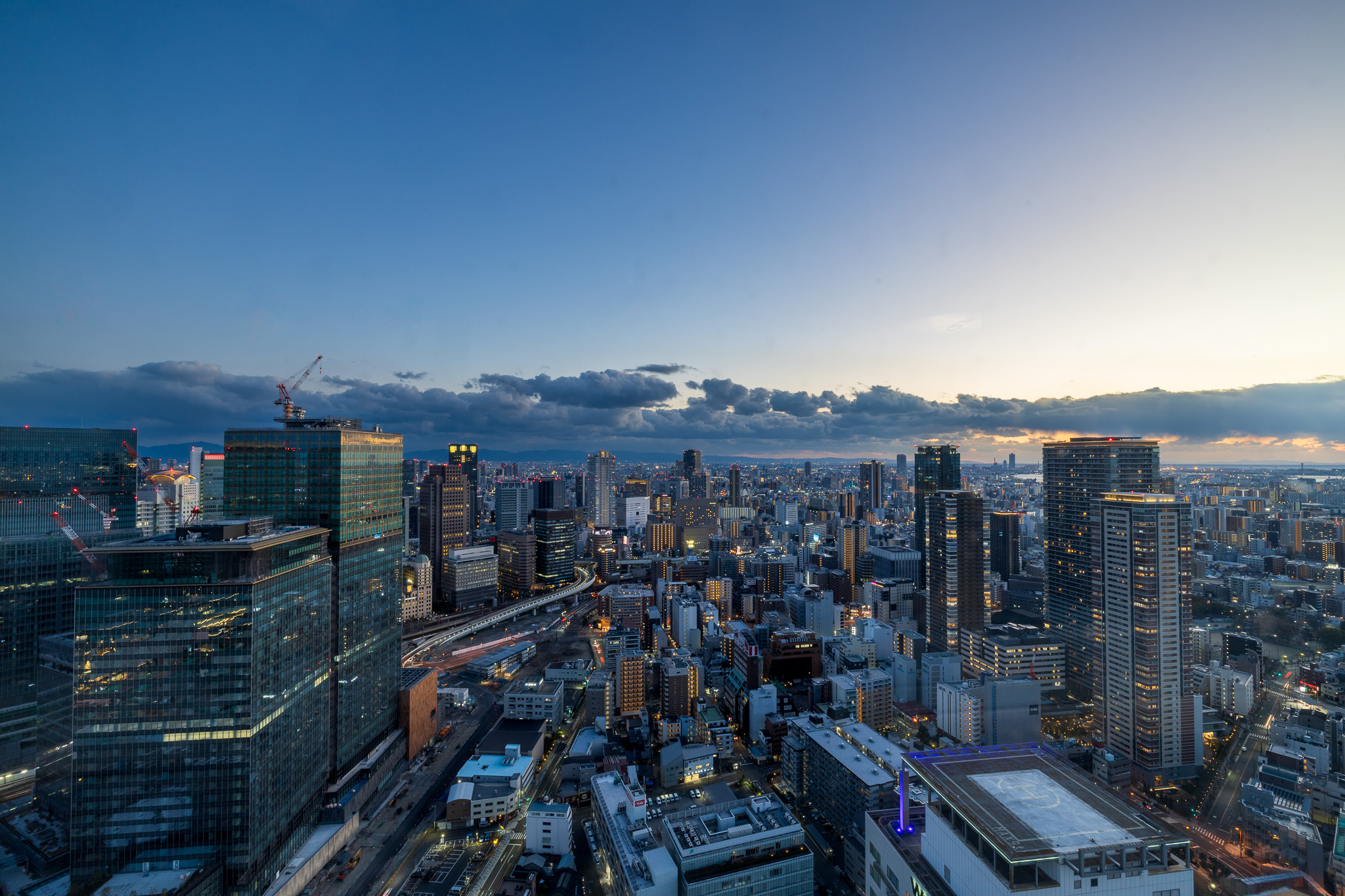
“What stays with me is not the speed. It is the cleaners bowing to the train, the platform markings that put the door exactly where you are standing, the announcement apologising for a delay you had not noticed. The Shinkansen is a machine for making four hundred kilometres feel like an errand — and sixty years of somebody caring, very hard, about twelve seconds.”

More in the same area
 ArchitectureTokyo Skytree: One tower over thirty-seven million
 CitiesHiroshima and Miyajima: A preserved ruin and a shrine on the tideline
 MuseumsteamLab in Tokyo: Planets in Toyosu and Borderless in Azabudai Hills
 CitiesShibuya Crossing: The Heartbeat of Tokyo
 TravelTenryū-ji — Arashiyama’s Zen Temple and Japan’s Oldest Surviving Garden
 Food and DrinksNishiki Market — Kyoto’s Kitchen