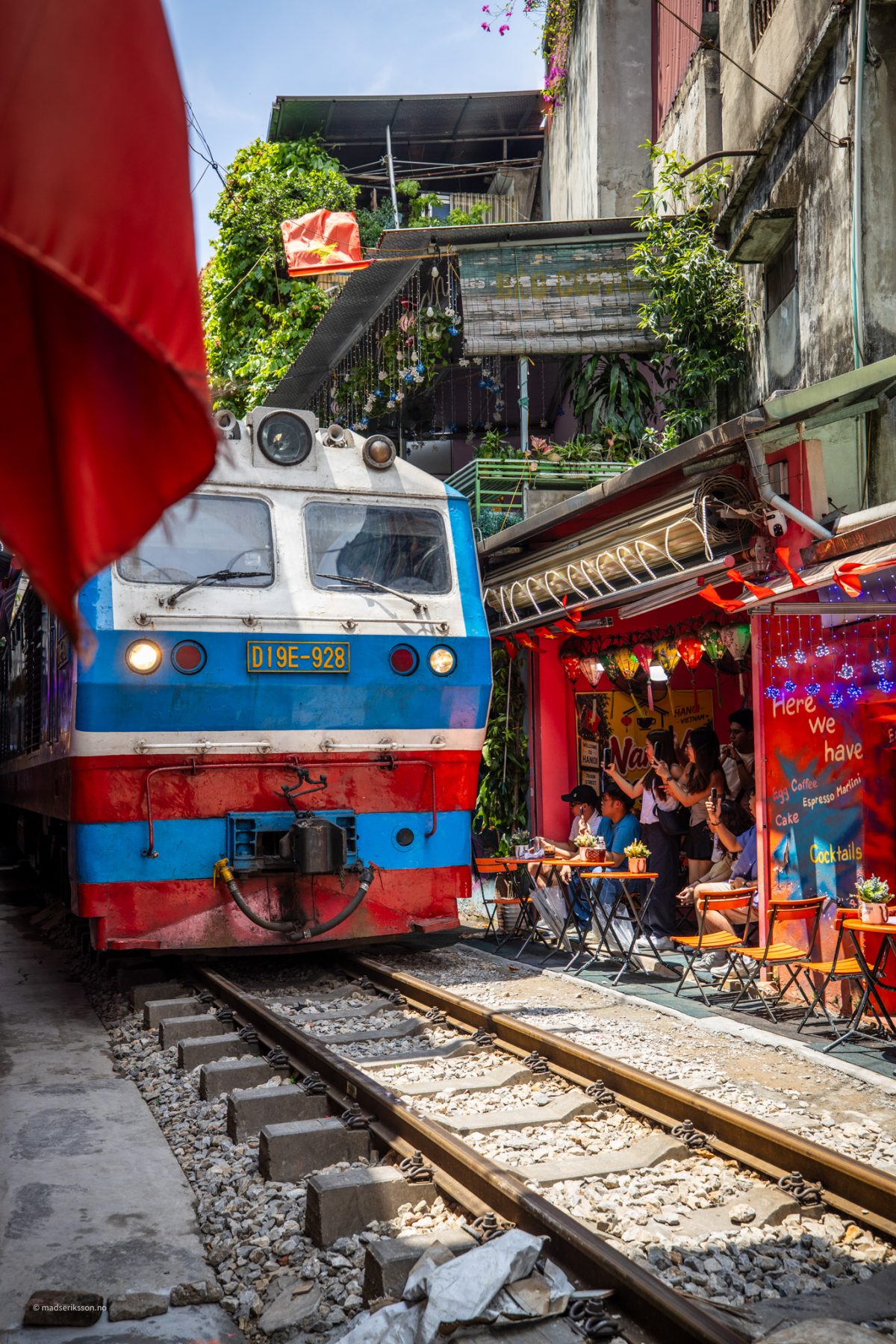
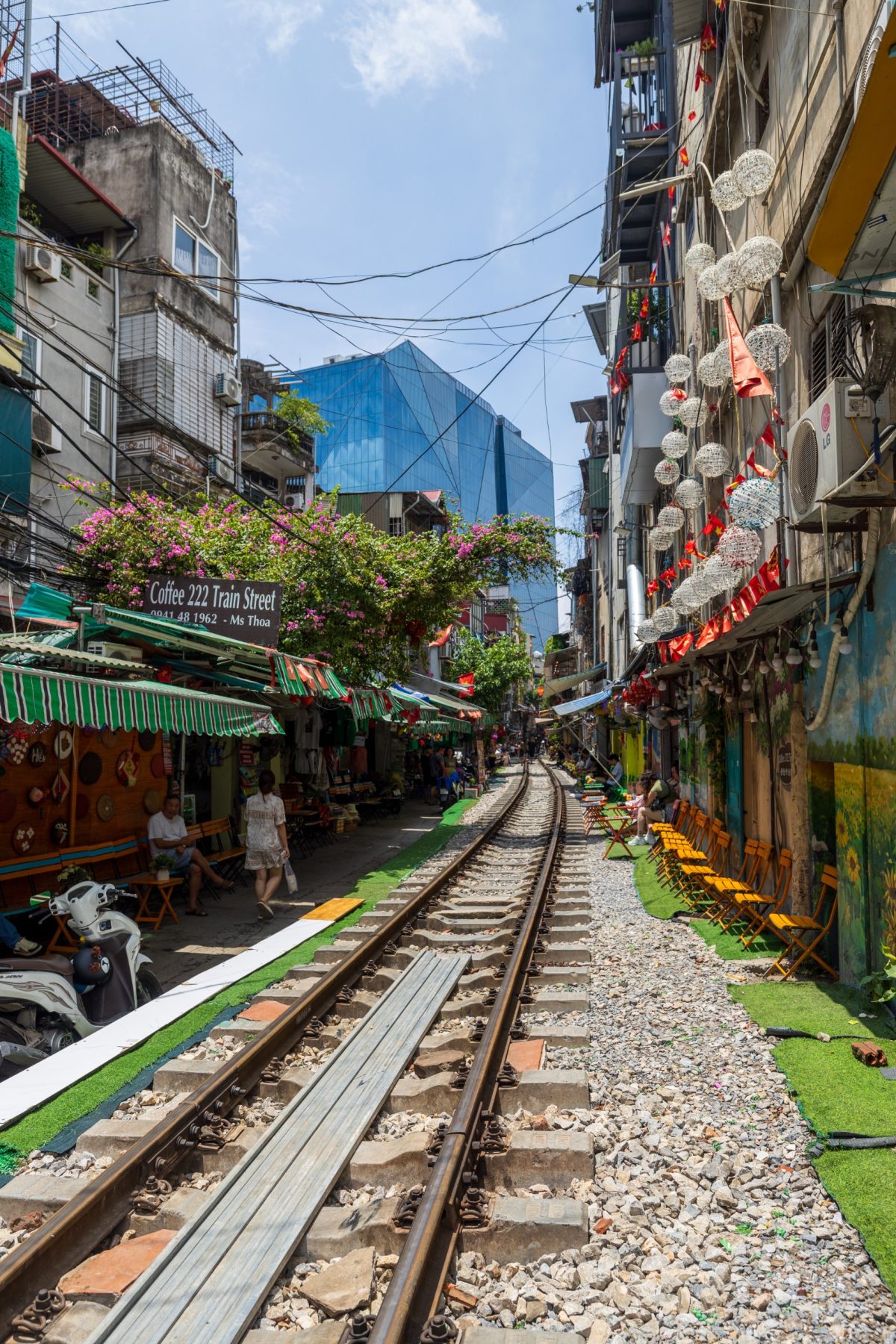
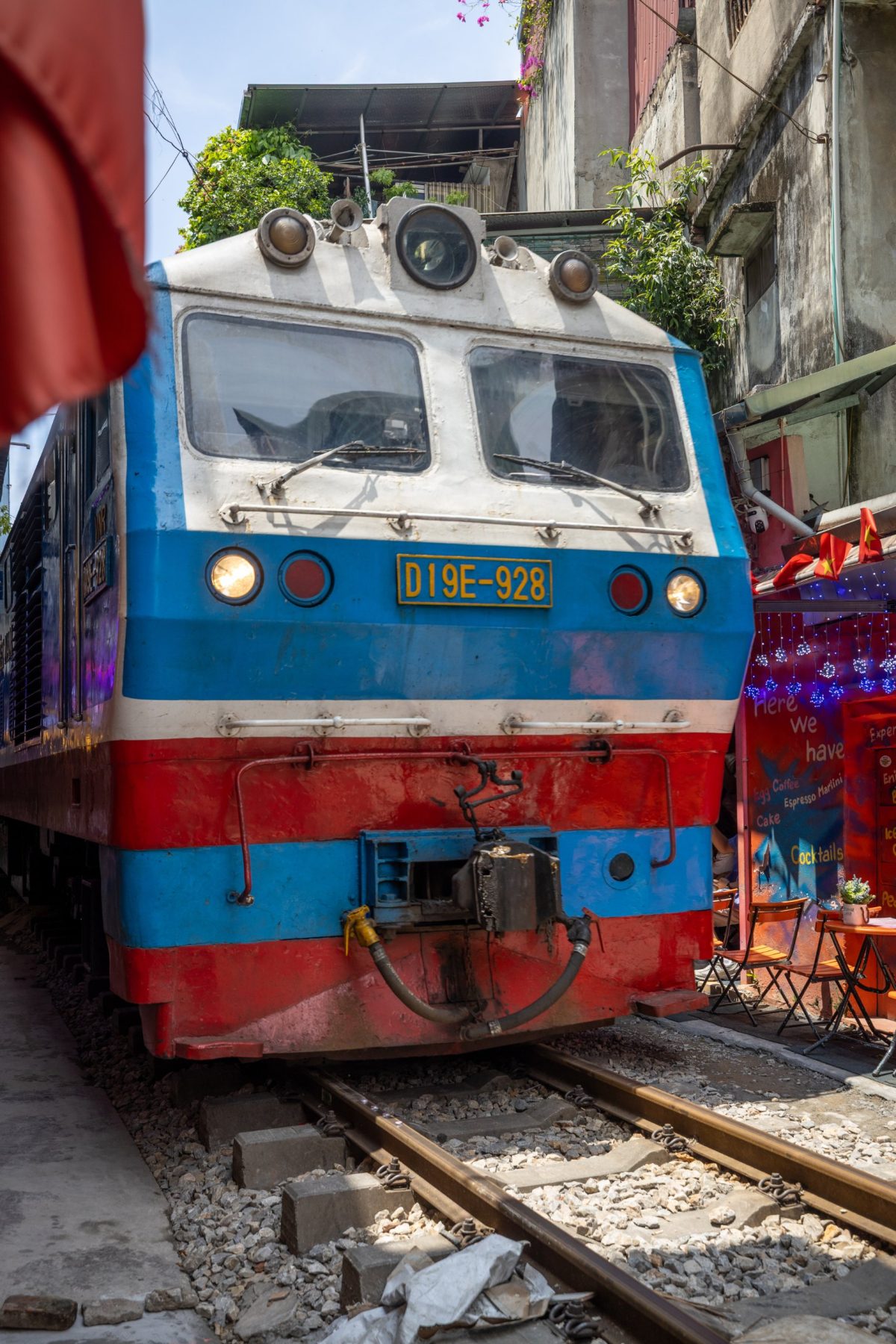
The train fills the alley completely. No platform, no fence, no room to step aside — only a painted yellow line, a wall at your back, and a diesel locomotive somewhere around the corner. Hanoi’s Train Street was never built as an attraction. It is a working railway that a city grew around, and it has spent the past seven years being closed, reopened and fenced off again.

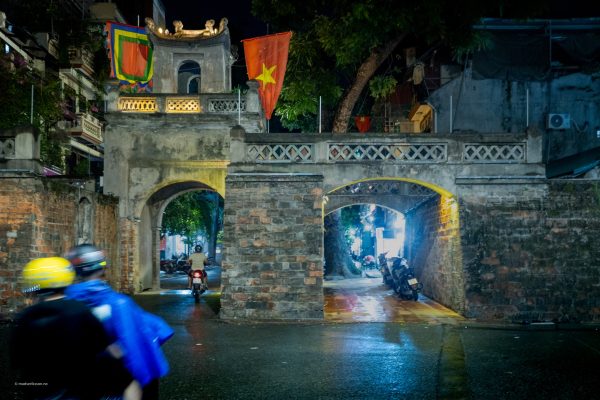
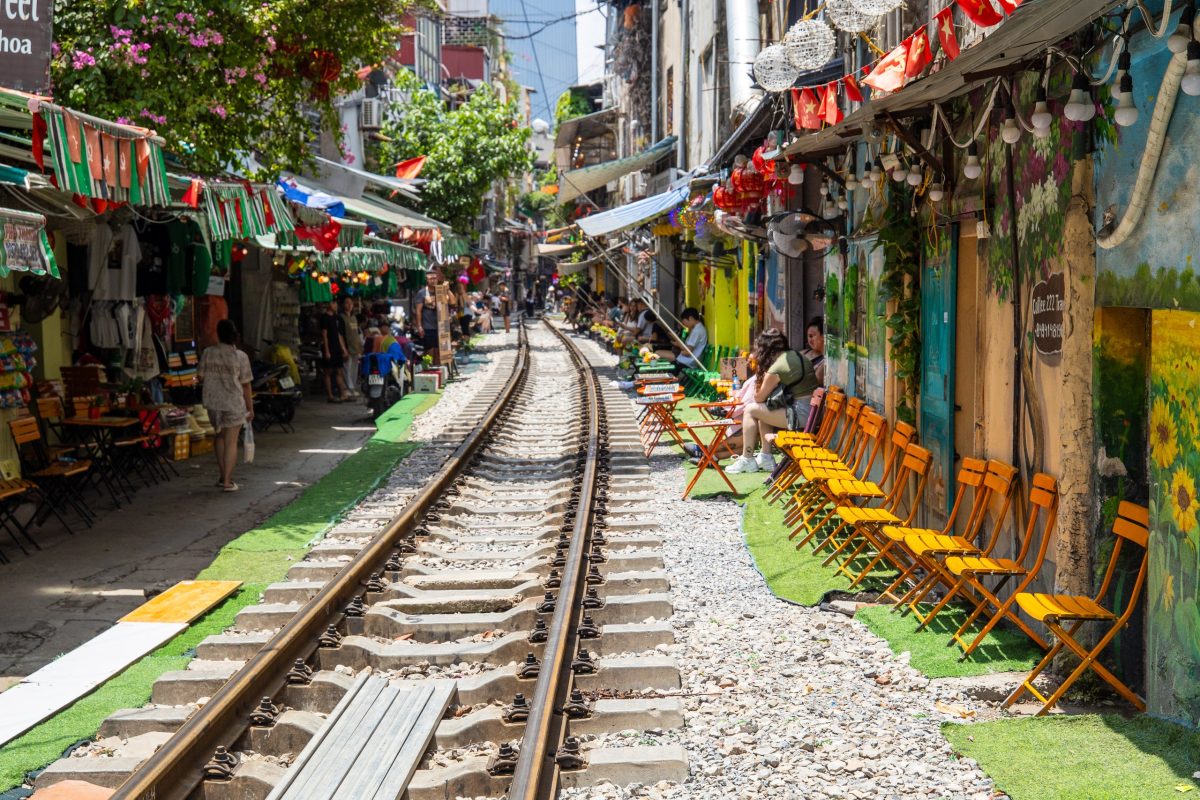
The track was laid by the French colonial administration in 1902, and more than a century later it is still in daily use. In the Old Quarter the line runs for roughly 850 metres between Phùng Hưng and Trần Phú, through a gap so narrow that a passing carriage takes up almost the entire width of the street. There is no fence, no signal box and no crossing barrier — just houses, doorsteps and rails.
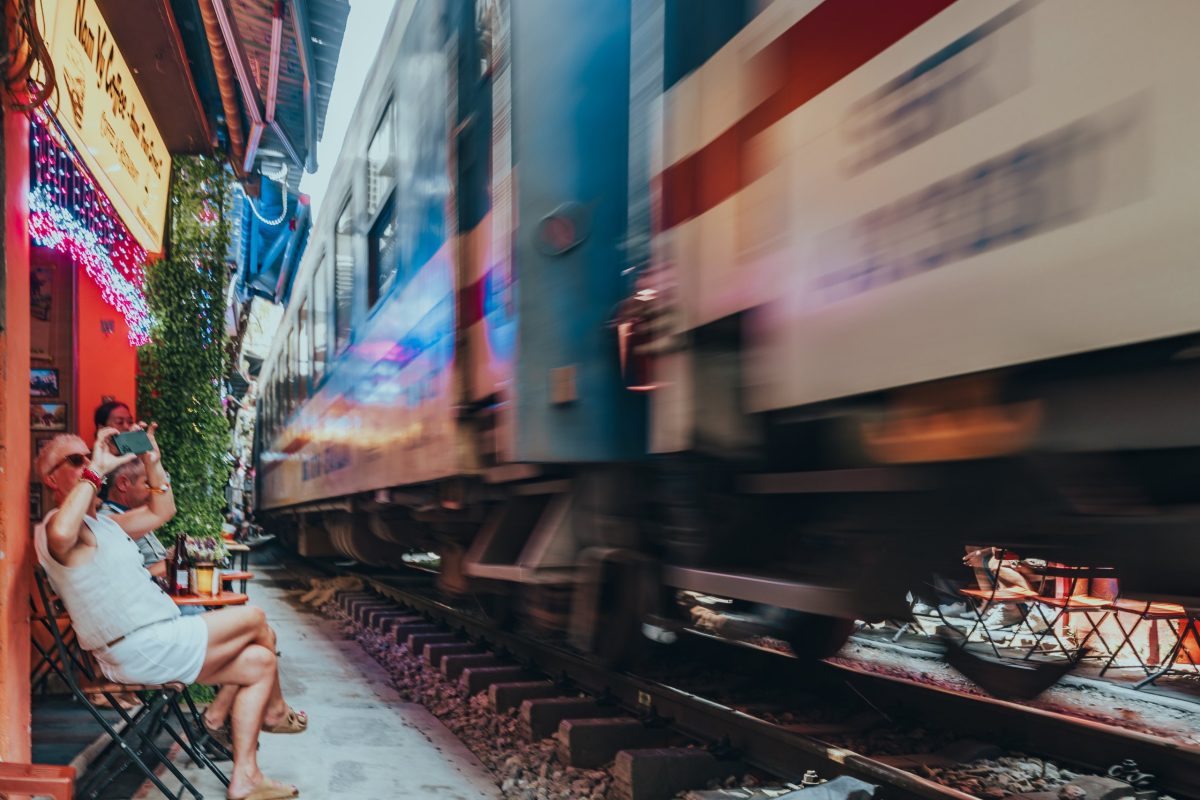
From 1956 the buildings along the track were put up as collective housing for railway workers and their families, and their descendants still live there. That history explains the strangest part of the place: the ballast between the rails is not dead space. It is where people drink tea, hang laundry, park scooters and play board games — right up until the moment someone shouts, everything is carried indoors, and a train goes past close enough to touch.
Two streets, not one
Most of the confusion online comes from treating Train Street as a single place. It is two. South of Hanoi’s main station, an alley called Ngõ 224 Lê Duẩn carries the North–South line towards Saigon; it is unguarded and free to walk into. North of the station, the Old Quarter stretch between Phùng Hưng and Trần Phú carries trains to Hải Phòng and Lào Cai; that one has metal barriers and a police post at each end. Which section you read about determines whether Train Street sounds open or closed — and both descriptions are true at the same time.
The famous stretch, behind a barrier
Closed in 2019, reopened in 2023, and now governed by a permit system that is really just a cup of coffee
Treat those times as a starting point, not a timetable. Departures shift with the rest of the network, and delays of ten to thirty minutes are routine — which is precisely why every café chalks up its own times each morning and why you should confirm with whoever is serving you rather than with a schedule you screenshotted before the trip.
The rules exist for a reason. In October 2019 a train had to be rerouted because the track was too crowded to pass, and within days the authorities had ordered the cafés shut and put barriers across the entrances. The street reopened to visitors in early 2023, organised tours of the trackside cafés were banned again that April, and in 2024 a viral video of a woman stepping onto the rails to pose — plus a tourist who survived being struck — pushed the police presence back up.
“Enforcement arrives in waves. The canopies come down, the owners sign undertakings, and within a week the tables are back out on the ballast.”
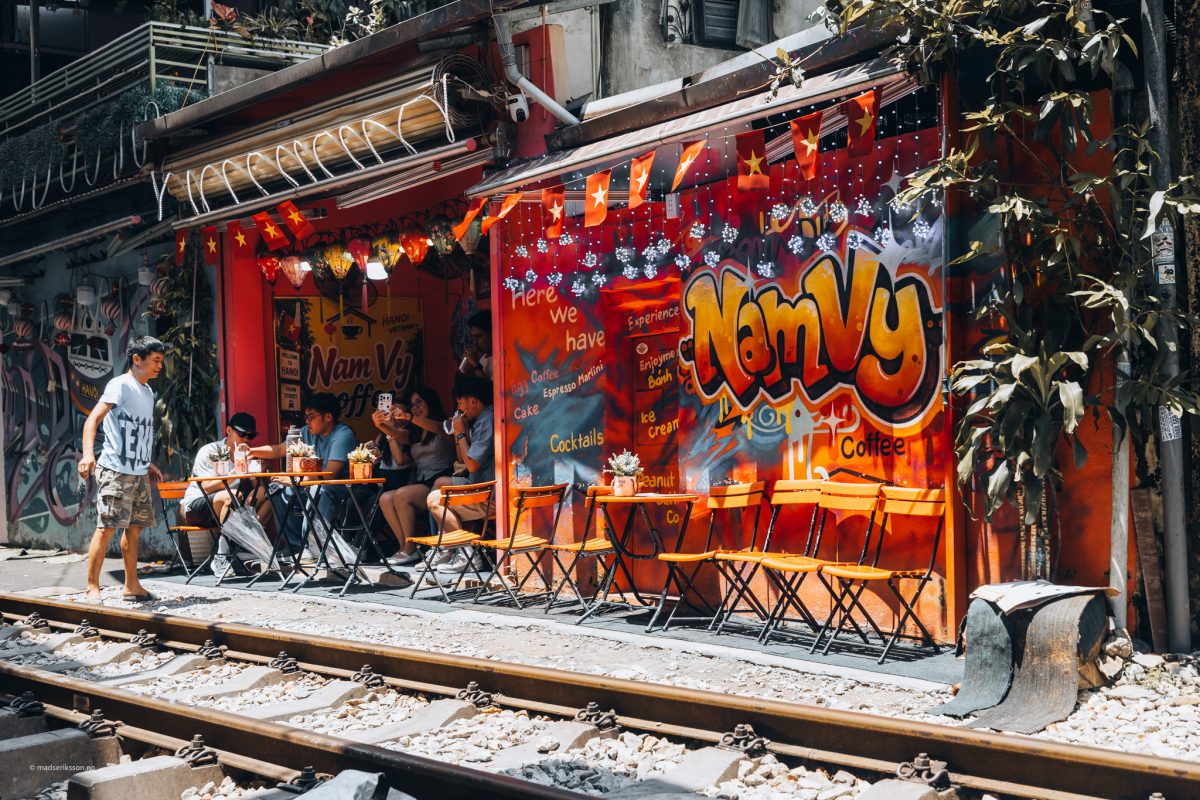
What you meet today at Trần Phú and Phùng Hưng is a metal barrier with two or three officers behind it, staffed through the evening. Independent walking onto the track is not permitted. In practice, café owners wait near the barrier, vouch for people who intend to buy something, and walk them past — a drink runs somewhere between 35,000 and 80,000 đồng, the price of a coffee anywhere else in the city. It works often enough to be the normal way in, but it is not guaranteed, and being turned away is a legitimate outcome rather than a problem to argue your way around.
Once you are seated, the etiquette is simple and worth following exactly: stay behind the painted yellow line, keep your back to the wall when the horn sounds, and do nothing with a camera or a phone that you would not do standing on a live mainline at home. The people running these cafés are the ones who lose their livelihood when something goes wrong.
A line with an end date
Both sections are scheduled to disappear — though Hanoi has been slow about it, and that is the only reason Train Street still exists
Watching a locomotive squeeze past a row of front doors is a remarkable thing to see, and an indefensible way to run a railway for a city of close to ten million people. Vietnam knows this. The long-term plan moves Hanoi’s rail terminal roughly ten kilometres south to Ngọc Hồi, converts the existing alignment into part of the metro network, and eventually upgrades the Lào Cai–Hanoi–Hải Phòng corridor that feeds the Old Quarter stretch.
When that happens, both Train Streets stop being railways. The alley south of the station becomes an alley; the Old Quarter gap becomes a lane between houses, probably a very photogenic one. The cafés will most likely survive in some form — the view is the product, not the coffee — but the thing that makes the view worth having will be gone.
“Like the Maeklong market railway in Thailand, this belongs to a category of place that modernisation is quietly scheduled to remove.”
None of that is imminent. Infrastructure of this size moves in decades, and the trains were still running through both sections in 2026. But it does change how the place reads. Train Street is not a permanent fixture that happens to be inconvenient; it is a survival, kept alive by the gap between what a city plans and what a city gets around to building.
“I went expecting a photograph and came away thinking about the people who live there. The train is over in eight seconds; the rest of the evening belongs to a street that has been arranging itself around a timetable since 1956. Sit down, buy something, stay behind the line, and let the place be somebody’s home first and a viewpoint second.”
More in the same area
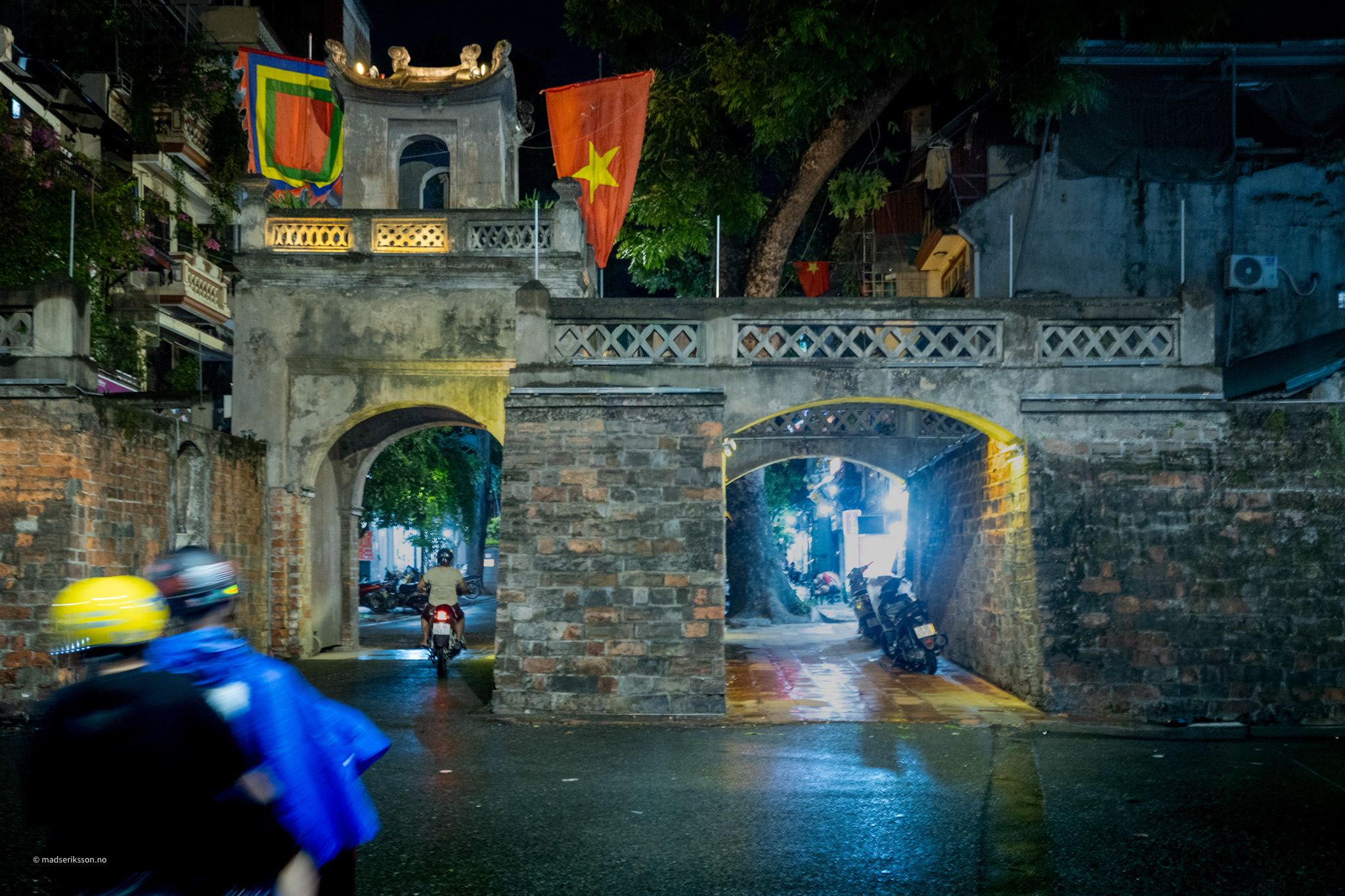 CitiesHanoi — Vietnam’s Capital and Its Thousand-Year Soul
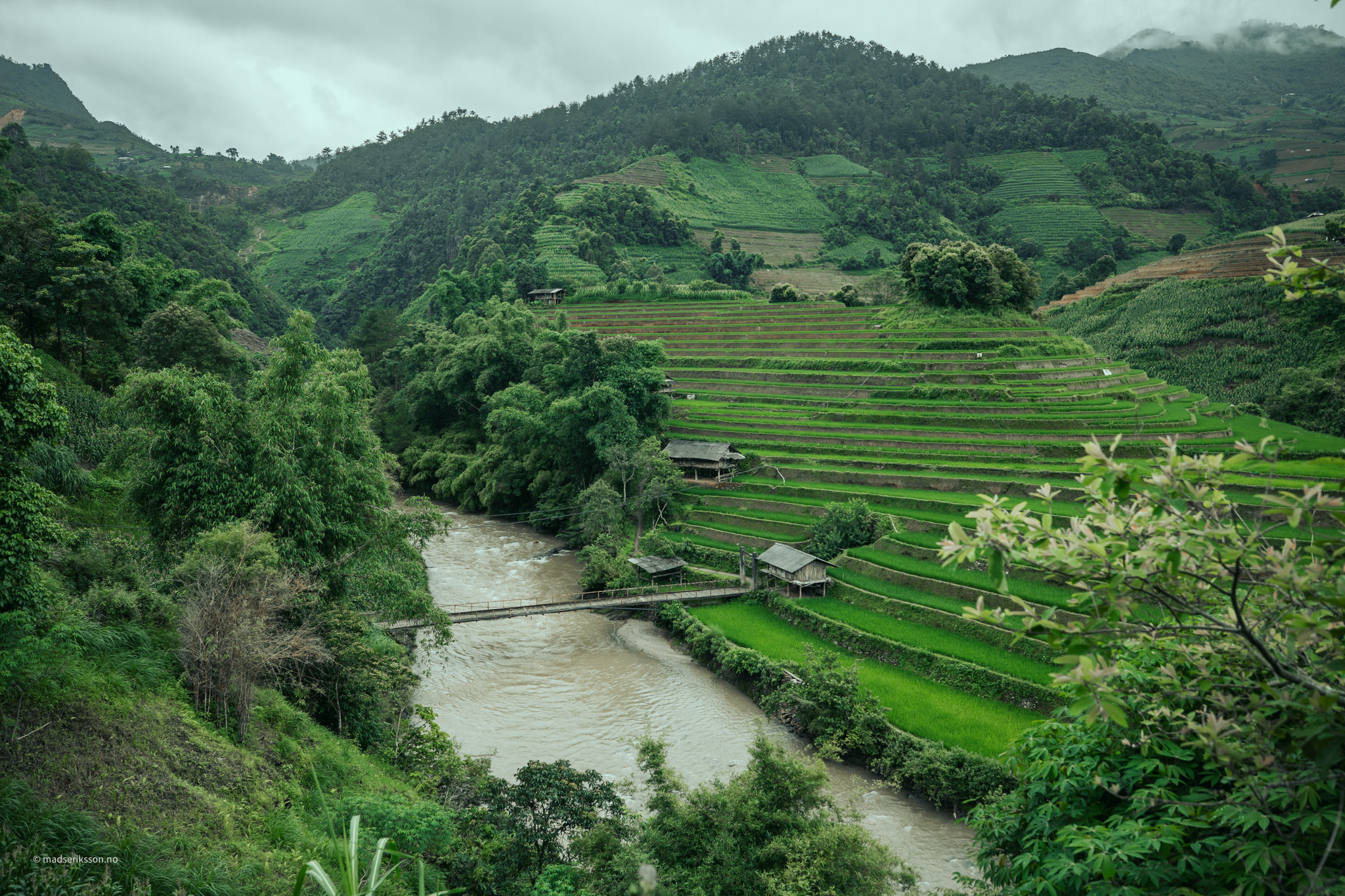 NatureMù Cang Chải — Vietnam’s Most Spectacular Rice Terrace Landscape
 IslandsHạ Long Bay: Sixteen hundred islands, all cut off at the waterline
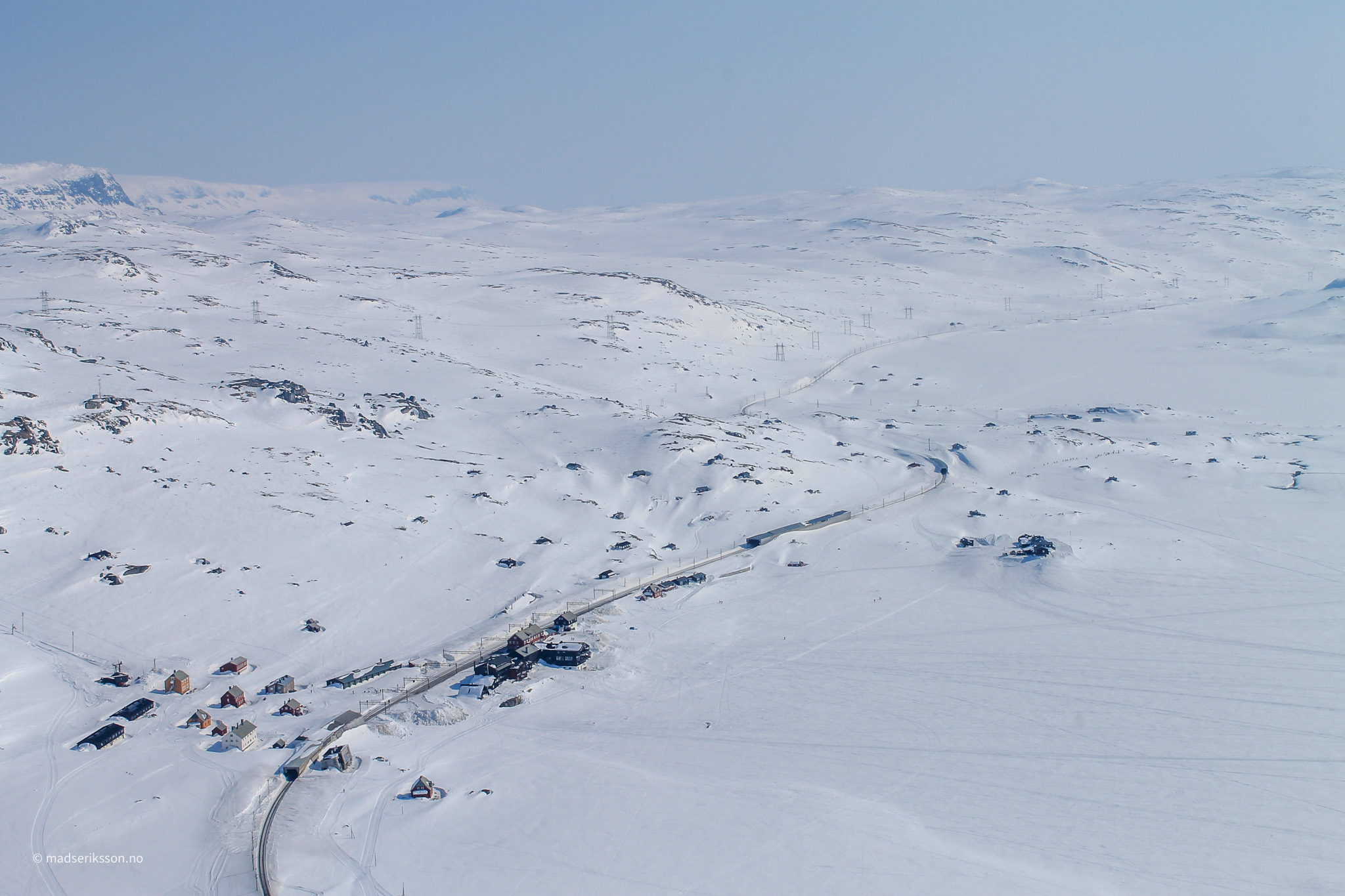 Train travelThe World’s 10 Great Railway Journeys
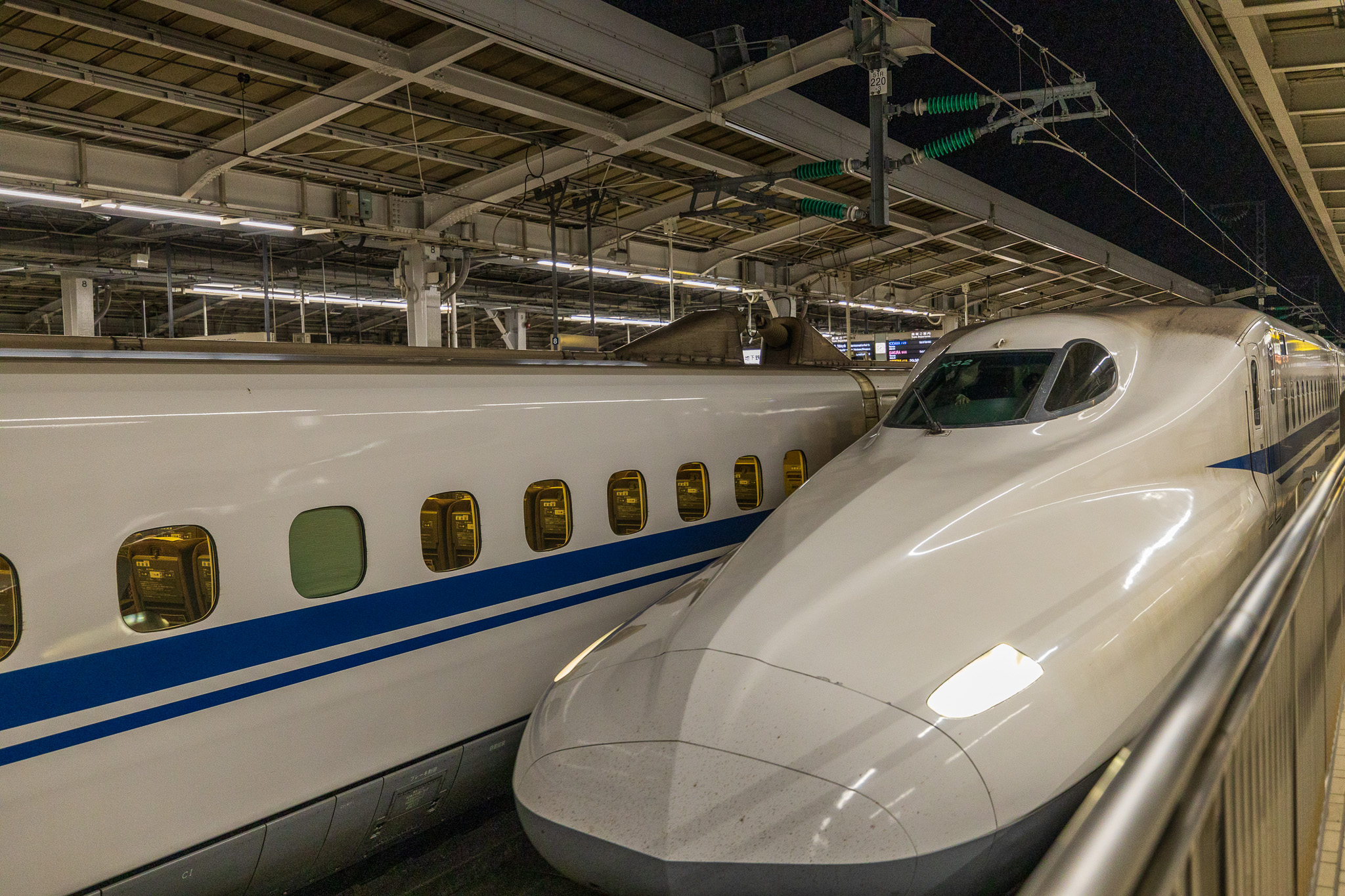 Train travelTwelve seconds: sixty years of the Shinkansen
 CitiesThe World’s 10 Great Food Markets