Hanoi is a city that has been invaded, occupied, bombed and rebuilt so many times that its layers have stopped being history and become texture. The medieval merchant streets of the Old Quarter have been here for a thousand years. The French colonial boulevards, villas and the Opera House were built in forty. The B-52 that crashed into a residential lake in 1972 is still there. Through all of it, the street food vendors set up their low plastic stools on the pavement at dawn and the city eats pho before it does anything else. No other capital in Asia carries this much century within a single walkable afternoon.

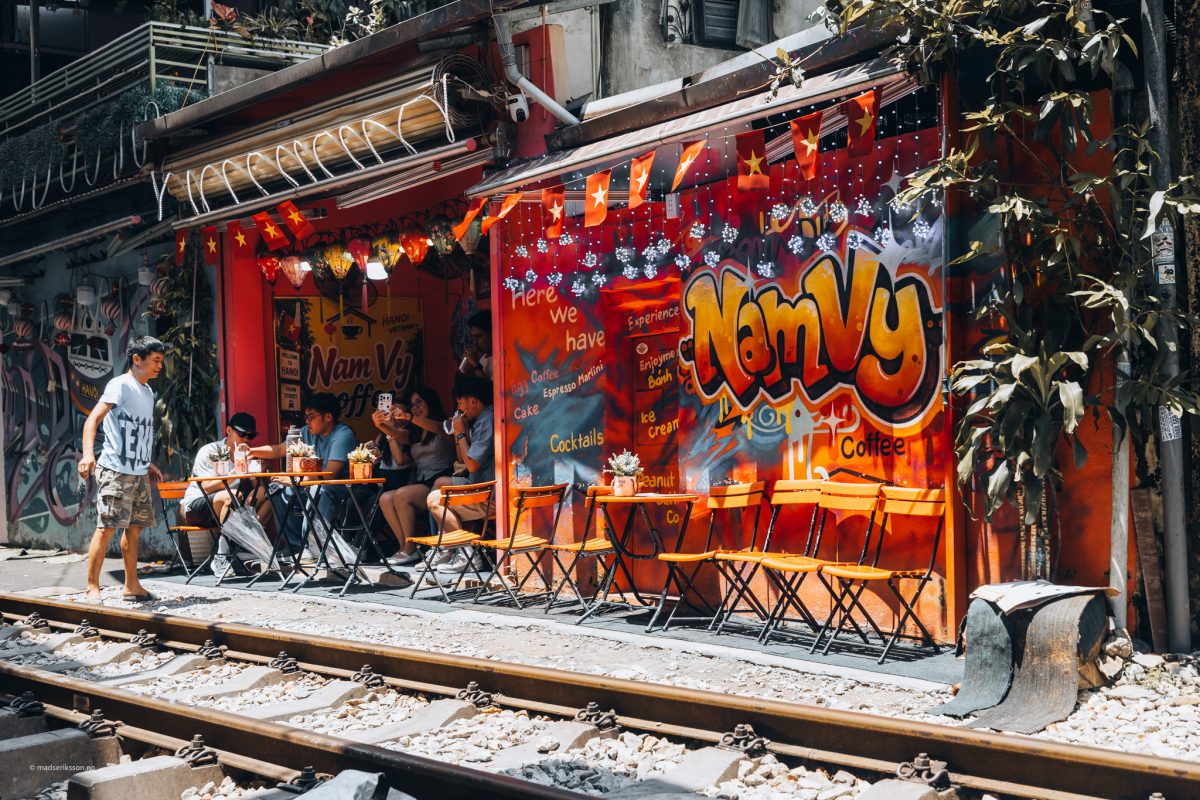
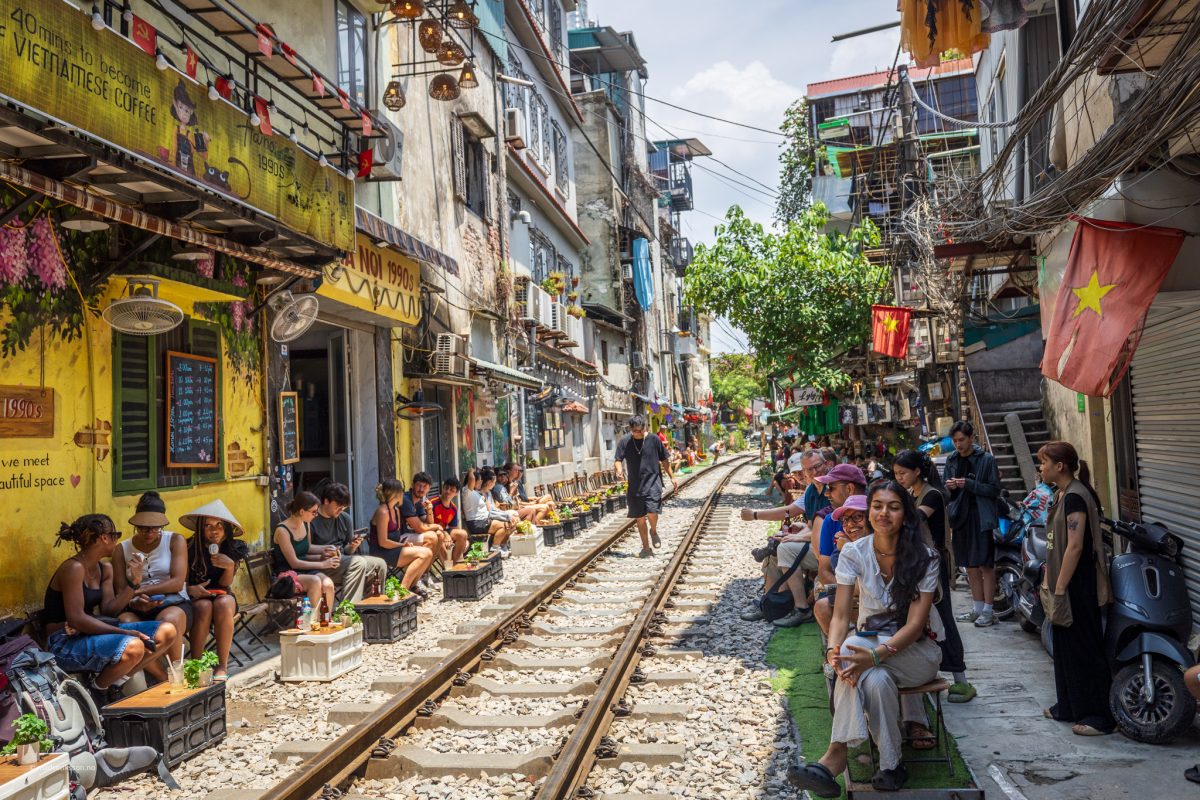
Hanoi — from the Vietnamese Hà Nội, meaning “city inside the rivers” — has been the capital of Vietnam for most of the past thousand years. Emperor Lý Thái Tô moved the capital here in 1010 CE, naming it Thăng Long (“Soaring Dragon”), after claiming to have seen a golden dragon rise from the Red River as his boat approached the site. The choice of location — a peninsula between the Red River and a network of lakes, defensible on multiple sides and fed by the alluvial fertility of the river delta — was excellent governance regardless of the dragon. The city remained the seat of Vietnamese power through multiple dynasties, was taken by the French in 1882, served as the capital of French Indochina from 1902, was occupied by Japan in World War II, served as Ho Chi Minh’s base during the war against France, and was heavily bombed by the United States during the American War of 1964–1973. It became the capital of unified Vietnam in 1976. That sequence of events — compressed into a single city that is, in its oldest parts, still navigable on foot — is what makes Hanoi one of the most historically layered capitals in Asia.
The contemporary city of approximately 8 million people is growing rapidly: the outer districts are a construction site of apartment towers, ring roads and shopping malls indistinguishable from any other developing Asian metropolis. The old city, however — the Old Quarter, Hoan Kiem district and the French quarter between the lake and the railway — has maintained a density and continuity of use that resists the forces dismantling it elsewhere. The streets are still too narrow for the developers, the buildings too close together, the residents too established. The result is a city where the walk from a French-colonial cafe to a 14th-century guild street to a pho broth that has been simmering since before dawn takes less than five minutes.
How to approach Hanoi
This guide covers four aspects of Hanoi: the Old Quarter and Hoan Kiem Lake, the compressed medieval merchant city that is the oldest and most textured part of the capital; French colonial Hanoi — the Opera House, the Metropole Hotel, the Ho Chi Minh Mausoleum and the house on stilts he preferred to the Presidential Palace; Hoa Lo Prison and the American War, which the Vietnamese call the American War and which left a B-52 in a residential lake; and the food — specifically the northern Vietnamese food culture that produced pho, bun cha, egg coffee and cha ca la vong, and that remains the most compelling reason to spend time in the city.
Hanoi in 3D
Emperor Lý Thái Tổ moved his capital to this bend of the Red River in 1010 and named it Thăng Long, 'Soaring Dragon'; the name Hà Nội, 'city inside the rivers', dates from 1831. This frame runs from Ba Đình and the Temple of Literature in the west to the Long Biên Bridge in the east, with Hoàn Kiếm Lake and the Old Quarter at its centre. Hanoi became the capital of French Indochina in 1902 and of reunified Vietnam in 1976.
The Lake of the Restored Sword
Hoàn Kiếm Lake, about 700 m long and 12 ha in area, takes its name from the legend of Lê Lợi, who returned a magic sword to a golden turtle after driving out the Ming in 1428. The red Thê Húc Bridge leads to the 18th-century Ngọc Sơn Temple on its islet at the northern end, while the small Turtle Tower stands in the southern half. The lake's last known giant softshell turtle died in January 2016.
The Thirty-Six Streets
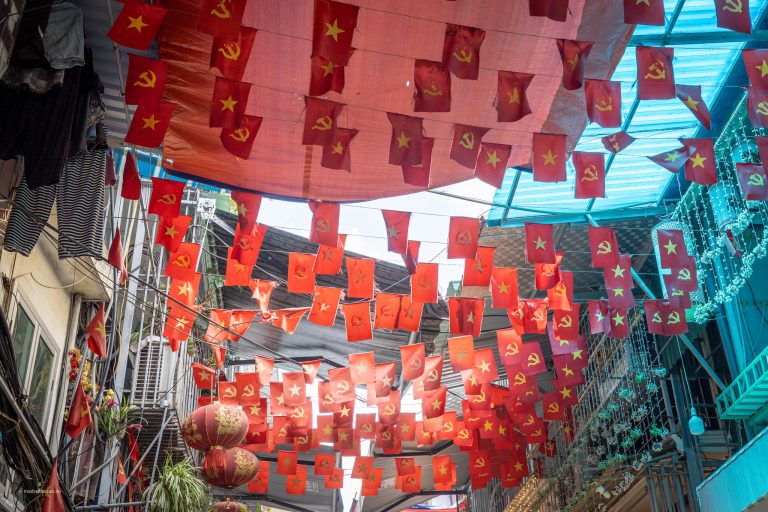
The Old Quarter grew up as a merchant district outside the walls of the citadel, with each street run by a guild, and names such as Hàng Bạc (silver) and Hàng Mã (paper offerings) still record the trades. Its tube houses have facades of only 3–4 m but run up to 80 m deep into the block. Đồng Xuân Market lies on its northern edge, close to the approach to the Long Biên Bridge.
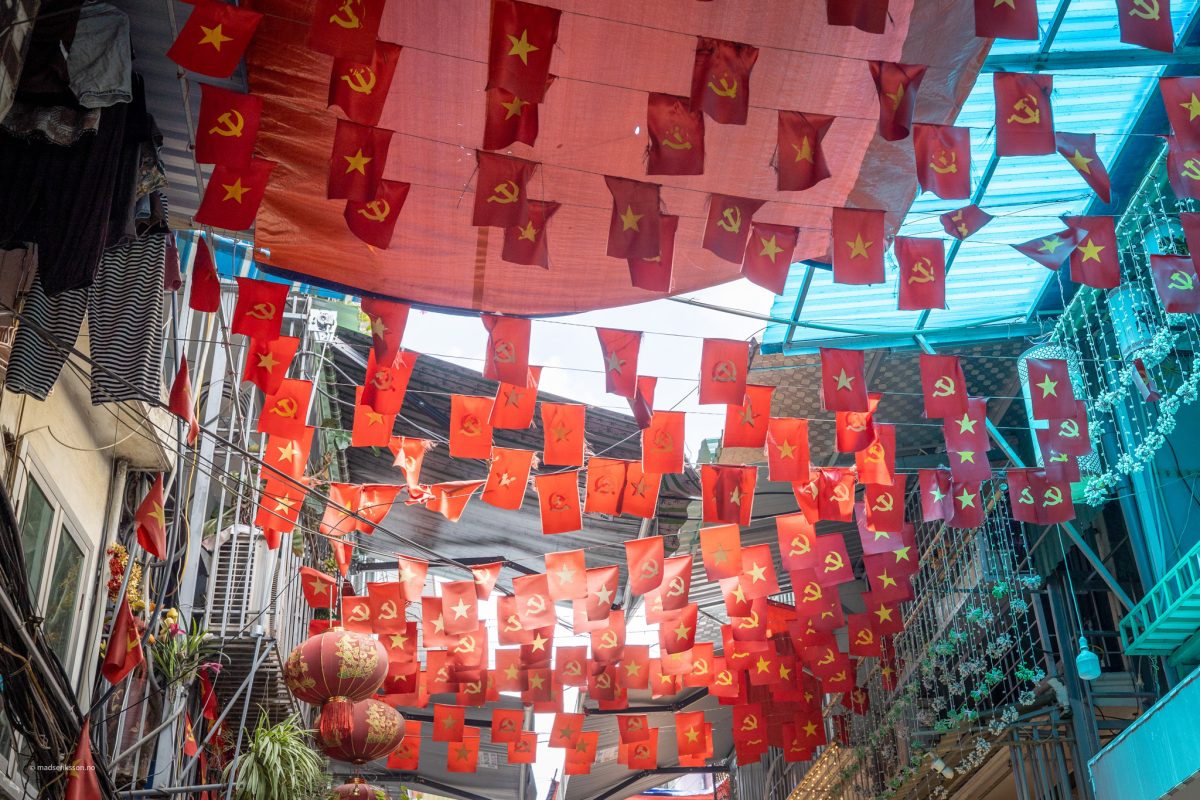
Red flags with the yellow star and hammer and sickle strung above a narrow lane in Hanoi’s Old Quarter
The railway through the houses
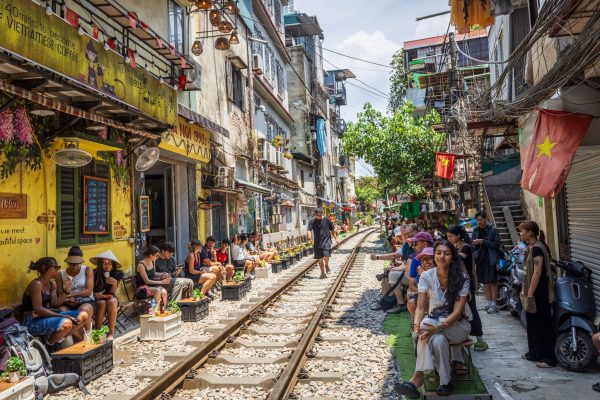
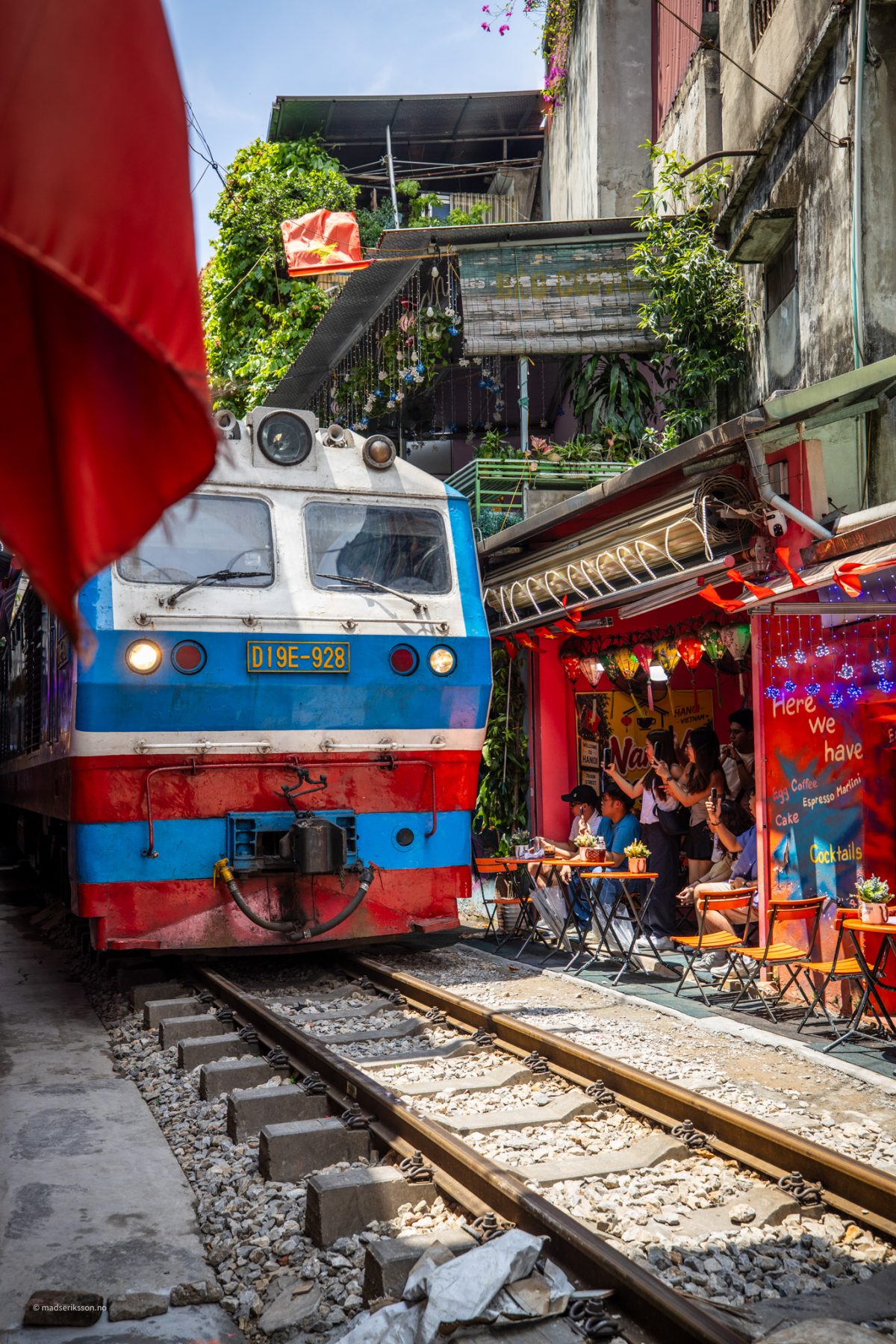
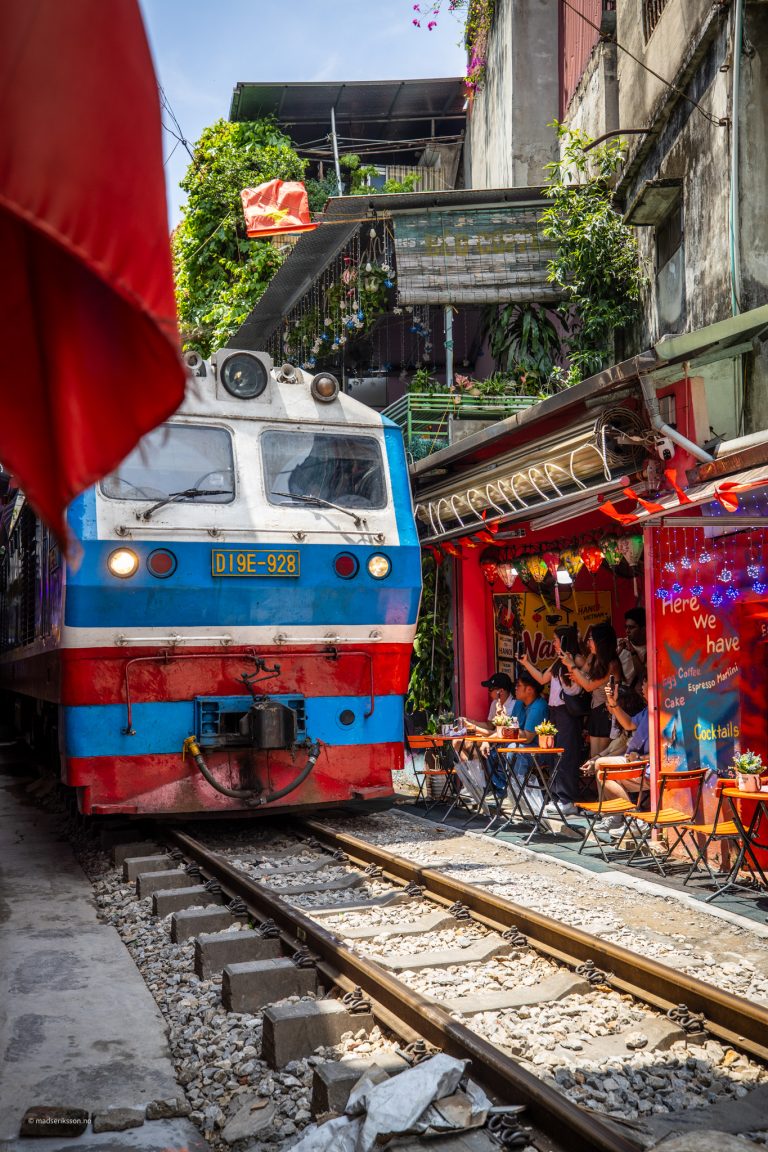
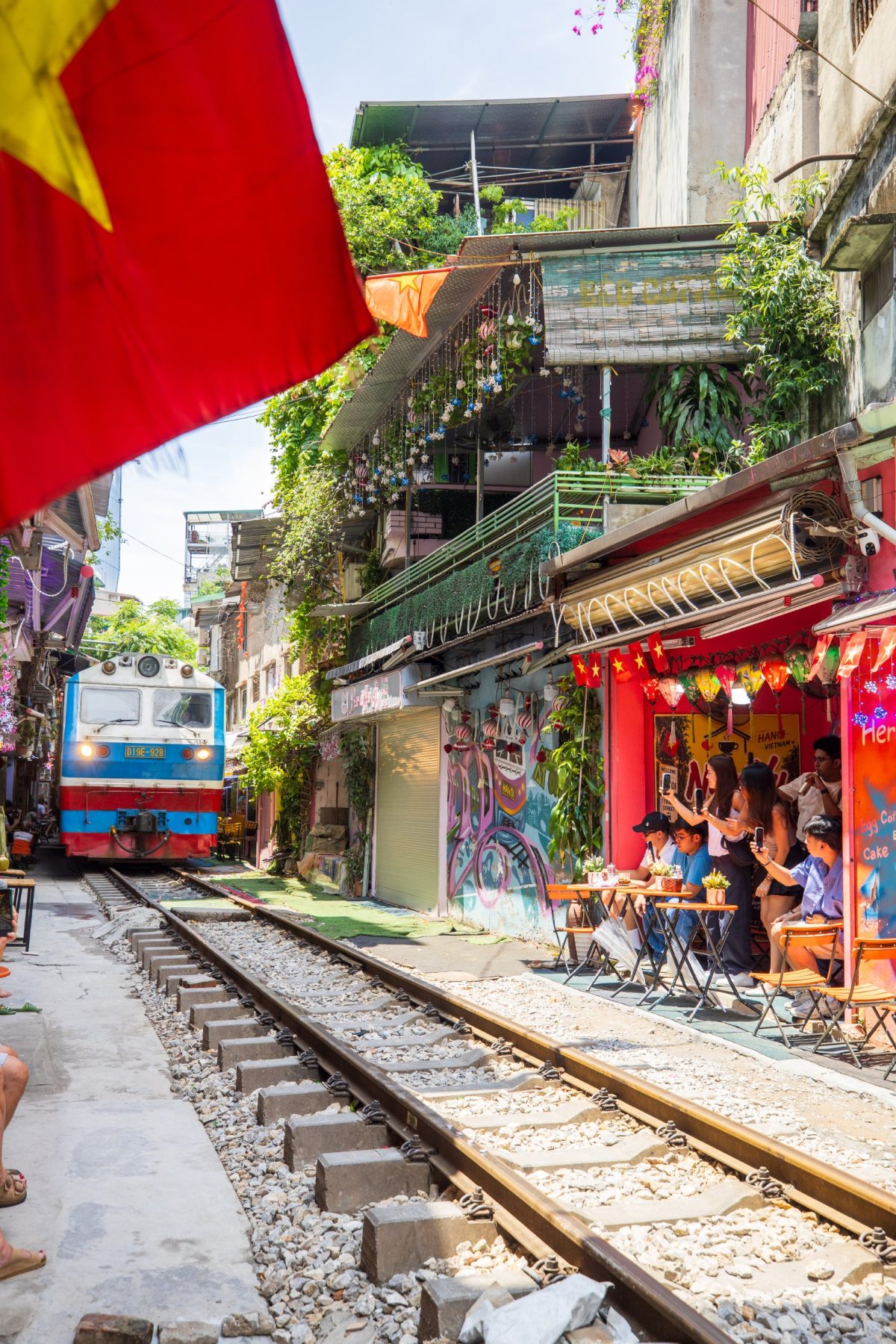
The railway north of Hanoi station was laid by the French colonial administration in 1902, and in the Old Quarter it runs for about 850 m between Trần Phú and Phùng Hưng, barely wider than a train. Cafés set their tables beside the rails and clear them minutes before each train. The stretch was closed to visitors in 2019 and reopened in 2023 behind barriers at each end.
A diesel train squeezing past café tables on Train Street in Hanoi, metres from the doorsteps
Read more: Train Street, Hanoi: the railway that runs through the living room
St Joseph's Cathedral and Hỏa Lò
St Joseph's Cathedral, consecrated in 1886, is a Gothic Revival church whose two square towers rise to 31 m, modelled on Notre-Dame de Paris. A few hundred metres to the south-west, the French built Hỏa Lò Prison from 1896 for Vietnamese political prisoners; American pilots, John McCain among them, later called it the 'Hanoi Hilton'. Most of the prison was demolished in 1993–1994 to make way for the high-rise Hanoi Towers.
Two lakes of the air war
On 26 October 1967 John McCain's A-4 Skyhawk was hit by a missile and he came down in Trúc Bạch Lake, beside West Lake. About 1.5 km to the south-west, the wreckage of a B-52 shot down during Operation Linebacker II in December 1972 still lies in Hữu Tiệp Lake in Ngọc Hà ward. On an islet in West Lake, Trấn Quốc Pagoda traces its origins to the 6th century and has stood on this site since 1615.
The Mausoleum and the Temple of Literature
Ho Chi Minh read the Declaration of Independence on Ba Đình Square on 2 September 1945, and his granite mausoleum, 21.6 m high and inspired by Lenin's in Moscow, was inaugurated there in 1975. To the south stand the 33.4 m Flag Tower of the Nguyễn dynasty and the Imperial Citadel of Thăng Long. The Temple of Literature, founded in 1070, housed Vietnam's first university from 1076, and 82 stone stelae record the names of its doctoral graduates.
The Long Biên Bridge
The Long Biên Bridge was built between 1899 and 1902 to designs by Daydé & Pillé of Paris and opened in 1903, crossing the Red River on 19 steel spans. It was bombed repeatedly in 1967 and 1972 during the American War and patched with mismatched sections. Today it carries the railway, motorbikes and pedestrians, while heavier traffic uses newer bridges.
The Opera House after dark
The Hanoi Opera House was begun in 1901 and opened in 1911, a smaller version of the Palais Garnier in Paris built for the colonial capital. On 19 August 1945 a mass rally on the square in front of it launched the August Revolution in Hanoi. Nearby, the Metropole Hotel has received guests since 1901, among them Graham Greene and Charlie Chaplin.
3D model © 2026 madseriksson.no · Photographs © madseriksson.no. Buildings and heights: © OpenStreetMap contributors (ODbL), via OpenMapTiles. Ground imagery: Sentinel-2 cloudless 2023 by EOX IT Services GmbH (contains modified Copernicus Sentinel data 2023; CC BY 4.0). Heights are approximate where OpenStreetMap has no measured value; sun positions are approximate.
The Old Quarter — A Thousand Years of Commerce in Thirty-Six Streets
The medieval merchant city that grew around the Imperial Citadel, still organised by the trades of the guilds that built it, compressed into streets so narrow that the awnings touch overhead — and anchored to the south by the lake where a turtle returned a king’s sword
The Old Quarter of Hanoi — the thirty-six streets known in Vietnamese as Phố Cổ — was the commercial district that grew outside the walls of the Imperial Citadel from the 11th century onward. It was organised on guild principles: each street was controlled by a craft or merchant guild that sold a specific product, and the street names have preserved this history in plain sight. Hàng Bạc (silver street) still sells jewellery. Hàng Mã (votive paper goods) still sells paper offerings burned at ancestral altars. Hàng Chiêu still sells mats. The buildings on these streets follow the “tube house” typology that is specific to Vietnamese merchant cities: extraordinarily narrow facades of 3–4 metres (minimising street-front tax) extending 50–80 metres deep into the block, with internal courtyards for light and air, and multiple generations of a family living in ascending floors. Walking the Old Quarter is not primarily a sightseeing exercise but a sensory immersion — the smell of pho broth, incense from household shrines, fresh herbs from street vendors, motorbike exhaust, grilling meat — that makes the theoretical history immediate and physical.
Hoan Kiem Lake — “Lake of the Restored Sword” — occupies the southern boundary of the Old Quarter and functions as the city’s living room: circled by a pedestrian promenade that fills at dawn with elderly Vietnamese doing tai chi and badminton, and fills again at dusk with families and street food vendors. At the northern end of the lake, the Ngoc Son Temple sits on a small island connected to the shore by the red-painted The Huc Bridge; the temple, founded in the 19th century and dedicated to the scholar Nguyen Van Sieu and the military hero Tran Hung Dao, contains the preserved body of one of the last giant softshell turtles (Cu Rua) that inhabited the lake — a species so rare that only three or four individuals are known to survive worldwide. The legend of the sword — in which Emperor Le Loi returned a magical weapon to a golden turtle in the lake after using it to expel the Chinese Ming dynasty in 1428 — gives the lake its name and its historical weight.
The tube houses of the Old Quarter were built narrow and deep to minimise the street frontage on which taxes were assessed. A facade of three metres might conceal a building eighty metres long. The family lived in the back; the guild sold from the front. The tax authority never saw the whole picture.
The Temple of Literature (Văn Miếu), a fifteen-minute walk southwest of Hoan Kiem, is Vietnam’s oldest university, founded in 1070 CE during the Lý dynasty and dedicated to Confucius. Its five courtyards, ponds, pavilions and 82 stone stelae — each carved with the names of graduates of the royal examinations — represent the most complete surviving complex of traditional Vietnamese civic architecture. The university operated for over 700 years; it is now the most visited historical site in Hanoi after Hoan Kiem Lake, and one of the more serene spaces in a city that rarely pauses for breath.
French Colonial Hanoi — The Opera House, the Metropole and the Man Who Refused the Palace
Seventy years of French colonial rule left tree-lined boulevards, a replica of the Paris Opera, a legendary hotel on whose roof guests sheltered from American bombing — and a revolutionary leader who chose a wooden house on stilts over the grandeur his successors built for him
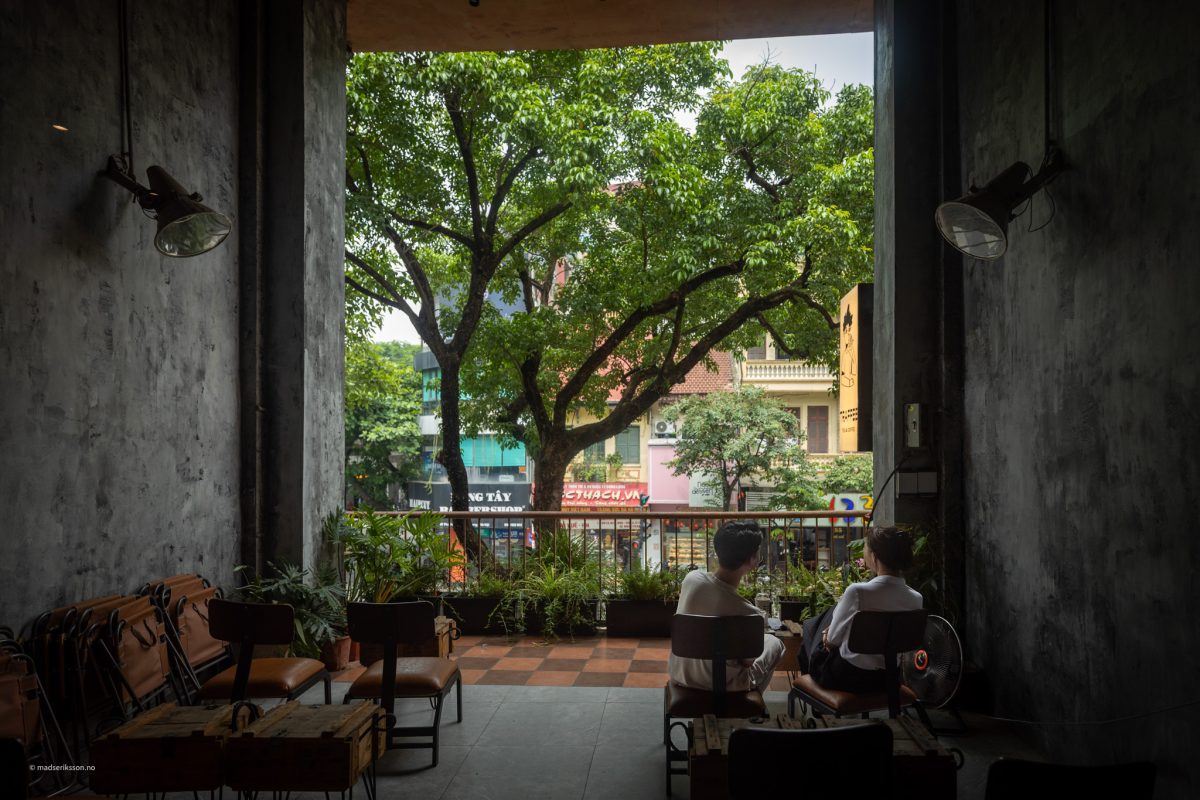
The French took Hanoi by force in 1882 and made it the capital of French Indochina in 1902, proceeding to build the administrative and cultural infrastructure of a colonial capital on a grid of boulevards overlaid on the existing Vietnamese city. The results are still visible in the French Quarter south of Hoan Kiem Lake: in the Hanoi Opera House (1911), a scaled-down replica of the Paris Paláis Garnier with its wedding-cake façade; in the pale-yellow colonial villas on tree-lined streets like Tran Hung Dao and Phan Dinh Phung; and in the Metropole Hotel (officially the Sofitel Legend Metropole Hanoi), opened in 1901 and still one of the finest hotels in Southeast Asia. The Metropole’s guest history includes Charlie Chaplin, Graham Greene (who wrote parts of The Quiet American here), Somerset Maugham, and Jane Fonda and Joan Baez, who sheltered in the hotel’s underground bunker — rediscovered during renovation in 2011 and now open to guests — during US air raids in 1972. The Long Bien Bridge, designed by Gustave Eiffel’s engineering company and completed in 1903, crossed the Red River on 19 spans of latticed steel and was, at the time, one of the longest bridges in Asia. Partially destroyed by US bombing in 1967 and 1972 and repaired with mismatched spans, it carries a specific kind of structural honesty that unrestored war damage always produces.
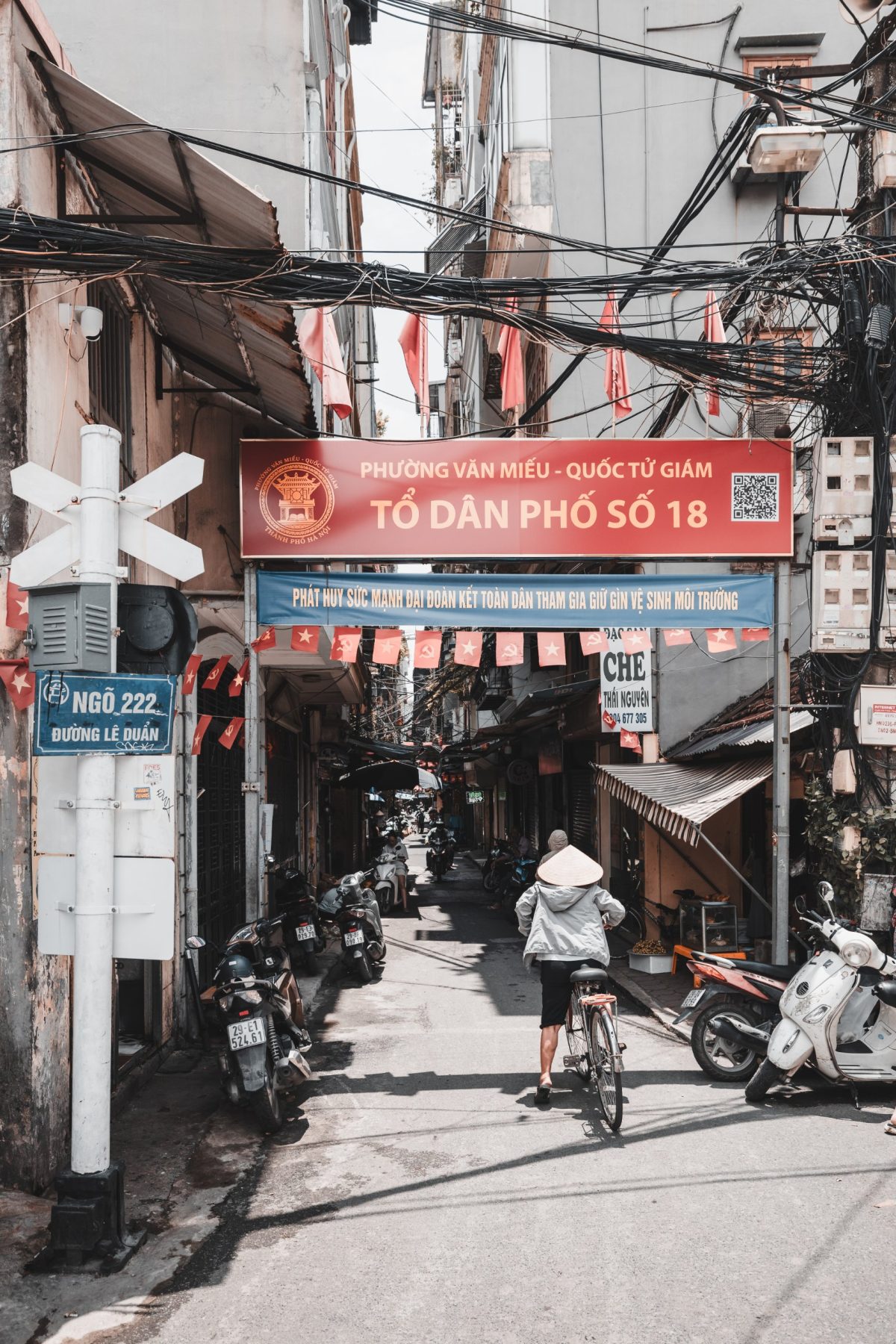
Ba Dinh Square, in the western part of the city, is where Ho Chi Minh read Vietnam’s Declaration of Independence on 2 September 1945 — quoting, deliberately, the opening of the American Declaration of Independence — before a crowd of hundreds of thousands. The Ho Chi Minh Mausoleum, a severe granite structure built in 1975 on the model of Lenin’s tomb in Moscow, holds his embalmed body in a dimly lit chamber visited in strict silence by long queues of Vietnamese pilgrims and international tourists. Ho Chi Minh had asked, in his will, to be cremated and his ashes scattered; his request was not honoured. The compound around the mausoleum contains the Presidential Palace — the French-built governor-general’s residence that Ho Chi Minh declined to occupy — and the simple wooden house on stilts where he actually lived from 1958 until his death in 1969: one room, one bed, a study with a plain desk, a pond in the garden for fish. The contrast between the building his government built for him and the one he chose for himself is the most direct available statement of his political character.
The Metropole Hotel’s underground bunker was built in 1946, forgotten, and rediscovered during a renovation in 2011. Inside they found bottles of wine, a case of champagne and a collection of board games. Joan Baez had sheltered there in 1972 during Christmas Bombings. She wrote about it in letters home.
Hoa Lo Prison and the American War — Two Stories in One Building
The French built it to hold Vietnamese revolutionaries. The Vietnamese held American pilots there in turn. And in a residential lake fifteen minutes away, the wreckage of a B-52 bombed in 1972 is still exactly where it landed.
Hoa Lo Prison was built by the French colonial administration in 1896 on the site of a traditional pottery village — hỏa lò means “fiery furnace” or “stove”, a reference to the kilns that preceded it — and expanded over the following decades to become the largest prison in Indochina, holding political prisoners, independence activists and members of the Vietnamese Communist Party under conditions that the prison’s own museum, with commendable candour, documents in significant detail. The guillotine used for executions is still on display. The prison was taken over by the Democratic Republic of Vietnam after 1954 and used to hold American pilots shot down over North Vietnam from 1964 onward. The Americans who were held there — up to 600 at the peak of the air war — called it the “Hanoi Hilton”, a name that combined black humour with the specific suffering of long captivity. John McCain, the future US senator and presidential candidate, was shot down on 26 October 1967 when his A-4 Skyhawk was hit by a surface-to-air missile over Truc Bach Lake, a few kilometres north of the prison. He ejected, broke both arms and his right knee, was pulled from the lake by a crowd that beat him, and was held at Hoa Lo for five and a half years. He refused early release — which the Vietnamese offered as a propaganda gesture, knowing his father was commander of US forces in the Pacific — on the grounds that other prisoners who had been captured earlier must be released first. The room in which he was held is identified; his flight suit is in a display case.
The Hoa Lo museum presents both the French colonial history and the American War period, with an evident asymmetry: the French section is unflinching in its documentation of torture and execution; the American section emphasises the relative comfort of the POWs’ conditions and their access to medical care, in a framing that most American accounts of captivity there sharply contradict. The gap between the two narratives is itself a significant document. Most of the original prison was demolished in the 1990s to make way for the Hanoi Tower complex; what remains is approximately a third of the original structure, but the retained sections — the cells, the death-row corridor, the guillotine room — are among the most significant of what survives. On Huu Tiep Lake in the Bách Khoa neighbourhood — about fifteen minutes south of the Old Quarter — the wreckage of a B-52 Stratofortress shot down during the Linebacker II “Christmas Bombings” of December 1972 is still visible in the shallows, surrounded by household washing and neighbourhood life. It has been there for more than 50 years. Nobody has removed it.
John McCain was offered early release from Hoa Lo in 1968 because his father had just been appointed commander of all US forces in the Pacific. He refused, on the grounds that the Code of Conduct required prisoners to be released in the order they were captured. He served five and a half years. He never discussed the details of what happened there.
Hanoi Food — The Broth That Has Been Simmering Since Before Dawn
The birthplace of pho, the city where Obama ate bun cha for $6, the inventor of egg coffee and the home of cha ca la vong — northern Vietnamese food culture is more restrained than the south’s and more difficult to leave behind
Northern Vietnamese food — specifically Hanoian food — is characterised by restraint and clarity. Where the cuisine of Ho Chi Minh City is sweet, herb-forward and abundant in garnishes, Hanoi’s cooking uses fewer ingredients and stronger technique: the broth is the point, not the additions. Pho B — the northern-style beef noodle soup — is made with a clear, clean broth simmered for hours from beef bones with charred ginger and onion, star anise, cinnamon and clove, poured over flat rice noodles and thin-sliced raw beef that finishes cooking in the bowl. It is garnished with spring onion and a small amount of herb; the table has vinegar, chilli and fish sauce for adjustment. It is eaten at breakfast, and the best versions are in small streetside restaurants where the broth has been on the fire since 3am and the noodles are cut to order. Pho Bat Dan on Bat Dan street, which opens at 6am and closes when it sells out — typically by 10am — represents the Hanoi pho tradition in its most uncompromising form: no menu, no choices, a single price, and a queue that moves fast.
Bun cha — grilled pork patties and pork belly served with rice vermicelli, fresh herbs and a dipping broth of fish sauce, sugar, lime, garlic and chilli — is the lunch dish that became internationally famous when Barack Obama and Anthony Bourdain ate it at Bun Cha Hương Liên in the Dong Da district in May 2016, filmed for Bourdain’s CNN series Parts Unknown. The meal cost approximately $6 per person. The table they sat at is now marked; the restaurant has increased its prices modestly. Cha ca La Vong, on the street in the Old Quarter that has been renamed Cha Ca Street in its honour, serves a single dish: turmeric-marinated catfish fried tableside in a pan of hot oil with dill and spring onion, served with rice vermicelli, peanuts, shrimp paste and fresh herbs. The restaurant has been serving this dish, and only this dish, since 1871. Egg coffee — cà phê trưƣng — is a Hanoian invention of 1946: strong Vietnamese drip coffee topped with a whipped foam of egg yolk, condensed milk and sugar that sits on the surface like a thick cream. It is served warm in winter (drunk like a soup) and iced in summer. Cà Phê Giảng on Nguyen Huu Huan street, run by the son of the inventor, is the original address.
Cha Ca La Vong has served one dish since 1871. The recipe has not changed. The fish is the same (lăng — a Vietnamese catfish); the turmeric and dill are the same; the pan of hot oil on the table is the same. The street it sits on was renamed after the dish. It is the only restaurant in Hanoi that needed no other identity than what it has always done.
The street food geography of Hanoi operates on a logic of specialisation: individual stalls and small restaurants do one or two things, do them every day, and are judged entirely on those things. Banh mi in Hanoi uses a slightly different bread than in the south — crustier, less sweet — and the fillings are more restrained. Bun rieu (crab and tomato noodle soup) and bun moc (pork and mushroom broth) are the other canonical morning soups less known internationally than pho but equally worth the early start. The beer culture is specific too: bia hoi — fresh, unpasteurised draught beer brewed daily and served at corner stalls for approximately 5,000 dong (20 cents) per glass — is a Hanoi institution. The intersection of Dinh Liet and Ta Hien streets in the Old Quarter, known as Beer Corner, is the most concentrated bia hoi zone in the city, though the beer is better at the smaller neighbourhood stalls further from the tourist centre.
«Hanoi does not try to be comprehensible. The Old Quarter is too compressed, the traffic too motorbike-dense, the history too layered, the food too specific for the city to present itself as a simple proposition. What it offers instead is a kind of insistent reality: the broth has been simmering since before you woke up; the tube house has stood on that street since the 14th century; the B-52 is still in the lake. The French built their opera house and their prison and their bridge over the Red River and left, and the Vietnamese are still here, eating pho at six in the morning on plastic stools on a pavement that has been used for commerce for a thousand years. There are cities you visit and cities that visit you. Hanoi is the second kind.»
More in the same area
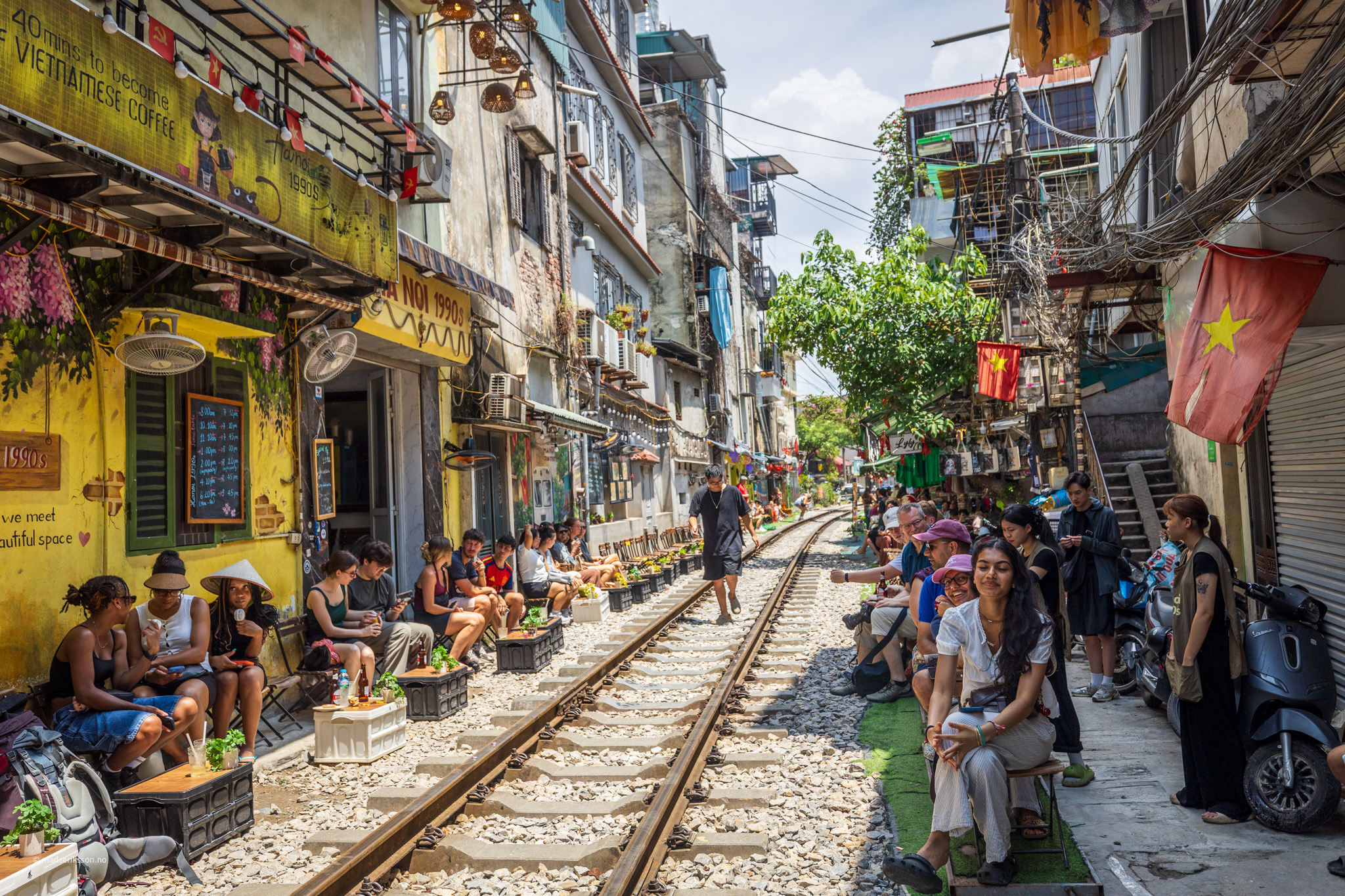 Train travelTrain Street, Hanoi: the railway that runs through the living room
 NatureMù Cang Chải — Vietnam’s Most Spectacular Rice Terrace Landscape
 IslandsHạ Long Bay: Sixteen hundred islands, all cut off at the waterline
 CitiesThe World’s 10 Great Food Markets
 ArchitectureTen Buildings That Changed Their Cities — Modern Architecture Ranked on Impact, Not Image
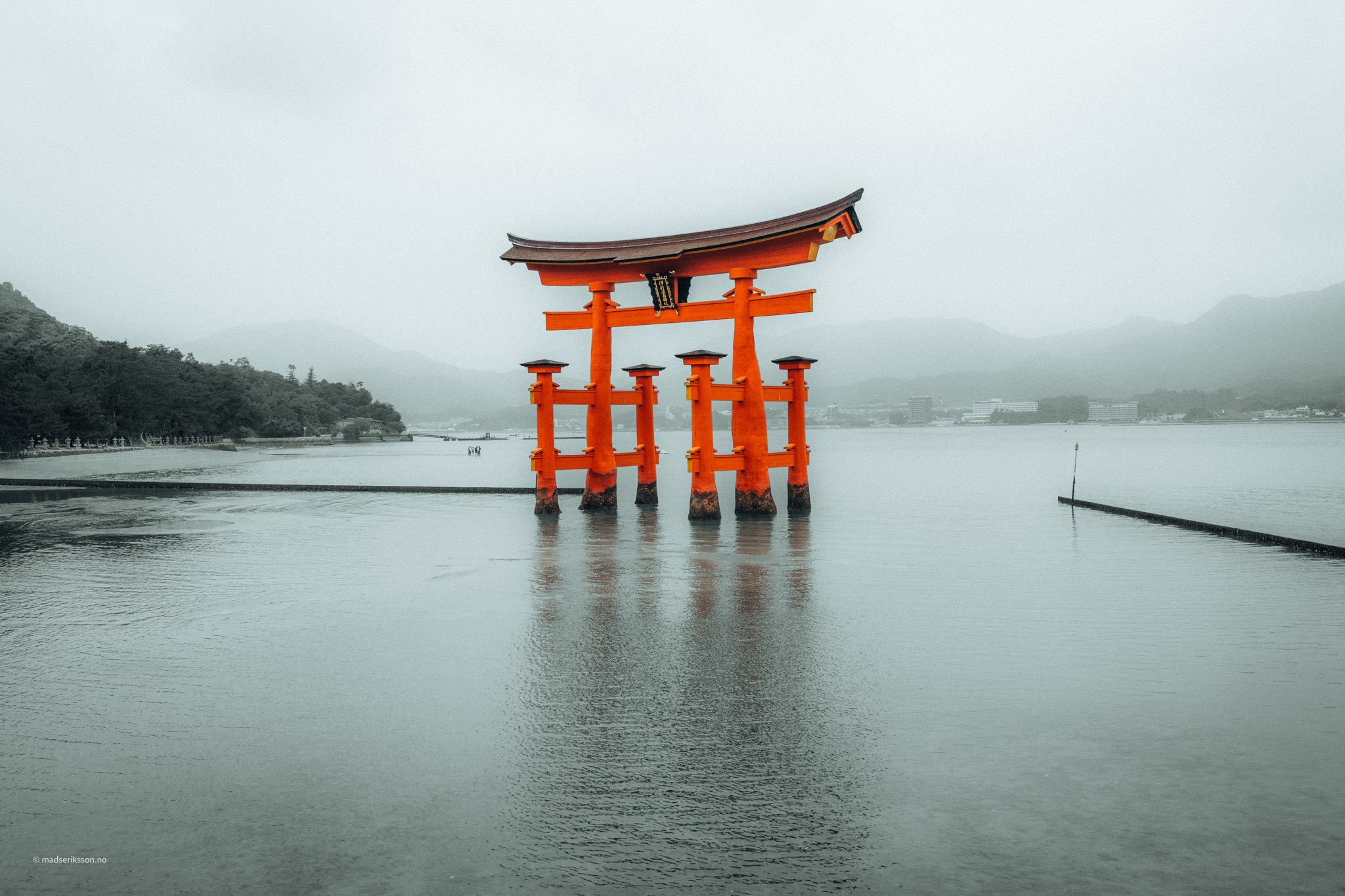 CitiesHiroshima and Miyajima: A preserved ruin and a shrine on the tideline
City Frames · scroll-driven 3D
More cities in three dimensions
54 city guides open with a model built from open map data. Scroll, and the camera moves from landmark to landmark.
Departures · City Frames
Where to next?
| Time | Destination | Country | Status |
|---|
Live · position of the sun
Golden hour, right now
The low, warm light just after sunrise and just before sunset. These are the cities on the site where it is happening at this moment.