Budapest is a young name for an old place. Until 1873 there were three towns on this stretch of the Danube — royal Buda on its hill, the old Roman settlement of Óbuda to the north, and flat, commercial Pest on the opposite bank — and only a permanent bridge and a political decision turned them into one capital. The city that grew out of that merger was built at speed and in a mood of national confidence: a parliament 268 metres long, the first underground railway on the European continent, grand boulevards and domed bathhouses fed by around 125 hot springs. Today about 1.7 million people live here, and the river that once divided the three towns is the reason the city looks the way it does.

The two halves of the city still feel different. Buda, on the west bank, is hilly, green and quieter, with the old royal palace, the Castle District and the wooded slopes of Gellért Hill rising straight out of the water. Pest, on the east bank, is flat and dense: the parliament, the basilica, the long boulevards, the market halls, the cafés and most of the nightlife. Between them runs the Danube, crossed in the centre by a series of bridges that each belong to a different chapter of the city’s history. The view along the river — with the parliament on one bank and the castle on the other — is protected as part of a UNESCO World Heritage Site that also covers the Buda Castle Quarter and Andrássy Avenue.
Much of what visitors see dates from a single, short period. Between the unification of 1873 and the First World War, Budapest grew at great speed, and it built itself a capital to match its ambitions within the Austro-Hungarian monarchy. The thousandth anniversary of the Magyar conquest, celebrated in 1896, gave the building boom a deadline: the Millennium Underground, Heroes’ Square and the first sessions in the new parliament were all timed for it. The twentieth century was much harder on the city — the siege of 1944–45, the uprising of 1956, four decades of communism — and the memorials to those years are as much a part of a visit as the grand façades.
How to approach Budapest
This guide covers the city in four parts: Castle Hill in Buda, with the Fisherman’s Bastion and the views across the river; the Pest riverbank, with the parliament, the Chain Bridge and the memorial on the embankment; the thermal baths that make Budapest unlike any other European capital; and the boulevards, market halls, ruin bars and green islands of everyday Pest — with practical advice on getting in from the airport and what to book ahead.
Budapest in 3D
Budapest has existed under that name only since 17 November 1873, when Buda, Óbuda and Pest were merged into one capital. Hilly Buda rises on the west bank of the Danube and flat Pest spreads out on the east, and around 125 thermal springs rise beneath them. About 1.7 million people live in the city, and the riverbank between the parliament and the castle is a UNESCO World Heritage Site.
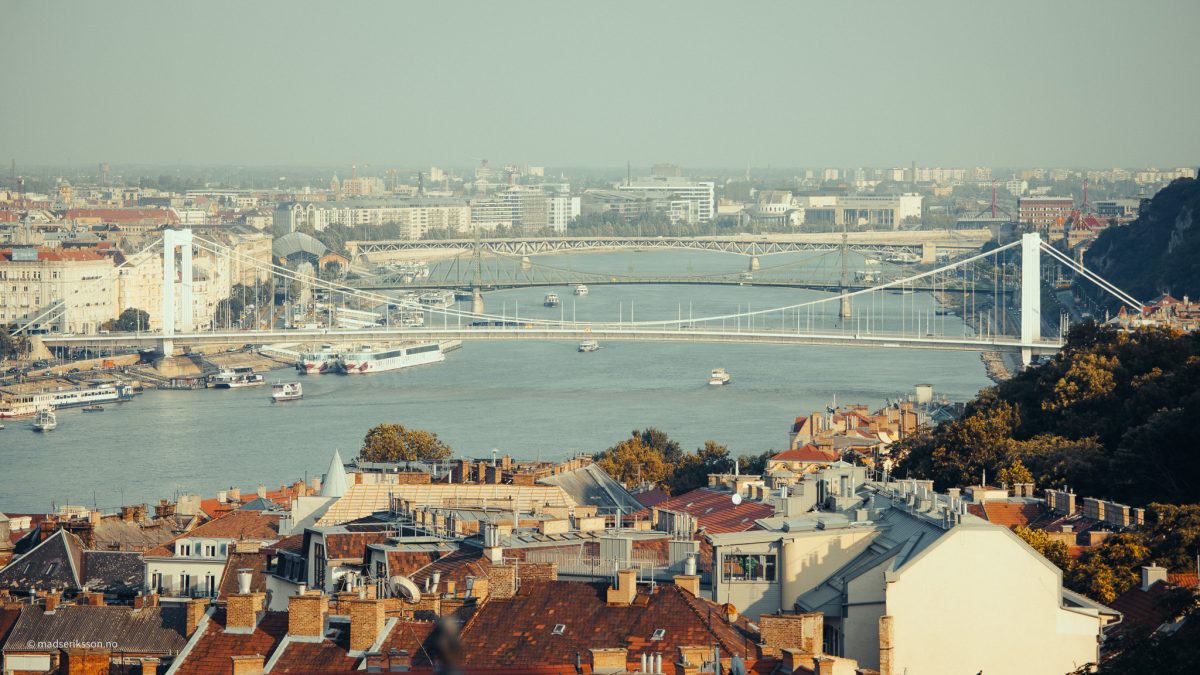
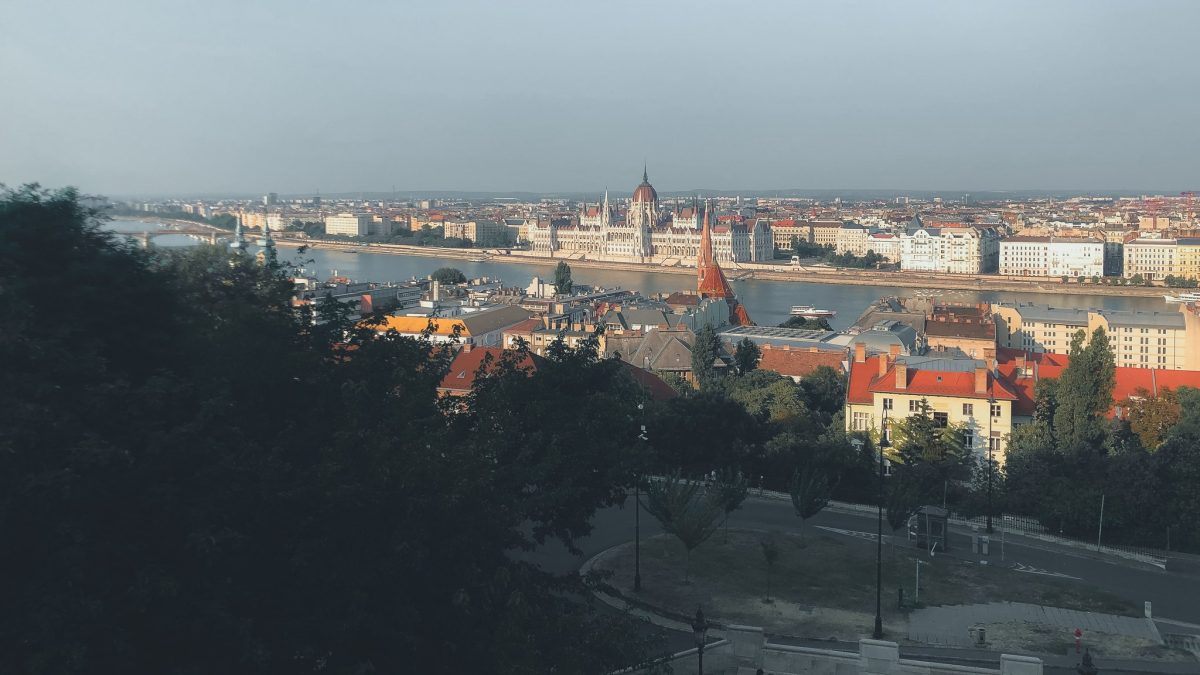
The Danube from Castle Hill, with the white Elisabeth Bridge and Pest beyond
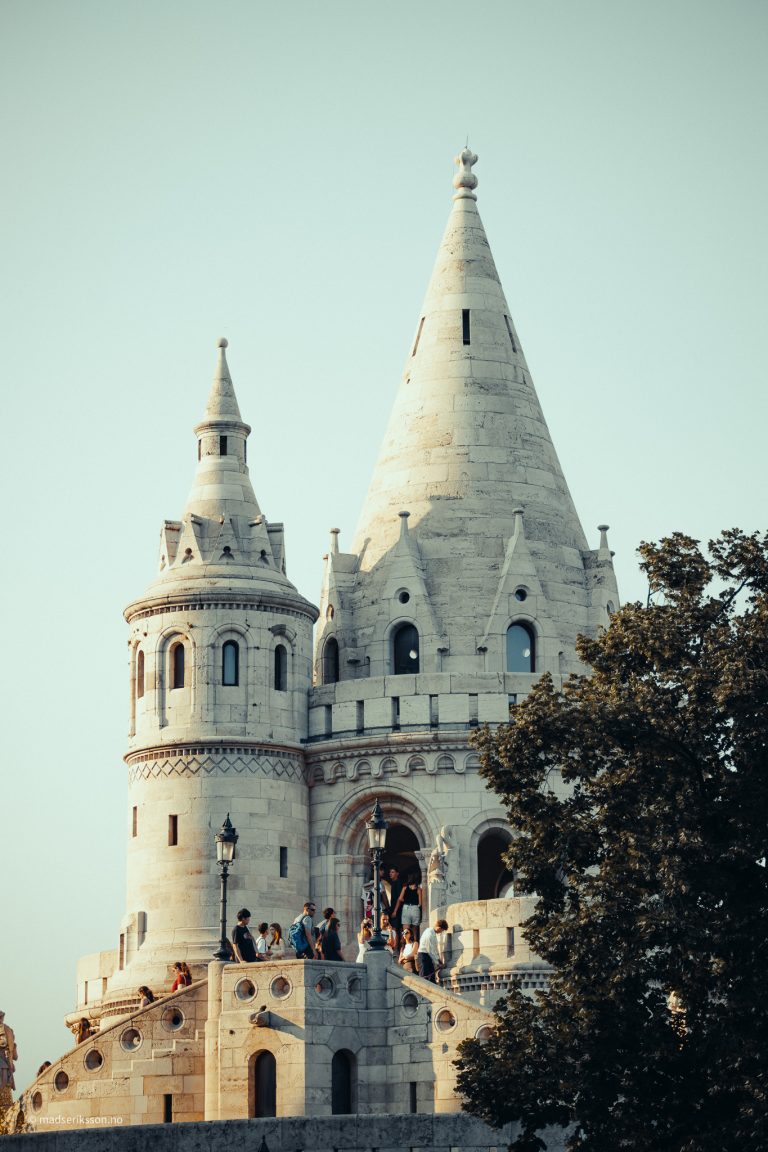
Fisherman's Bastion and Matthias Church
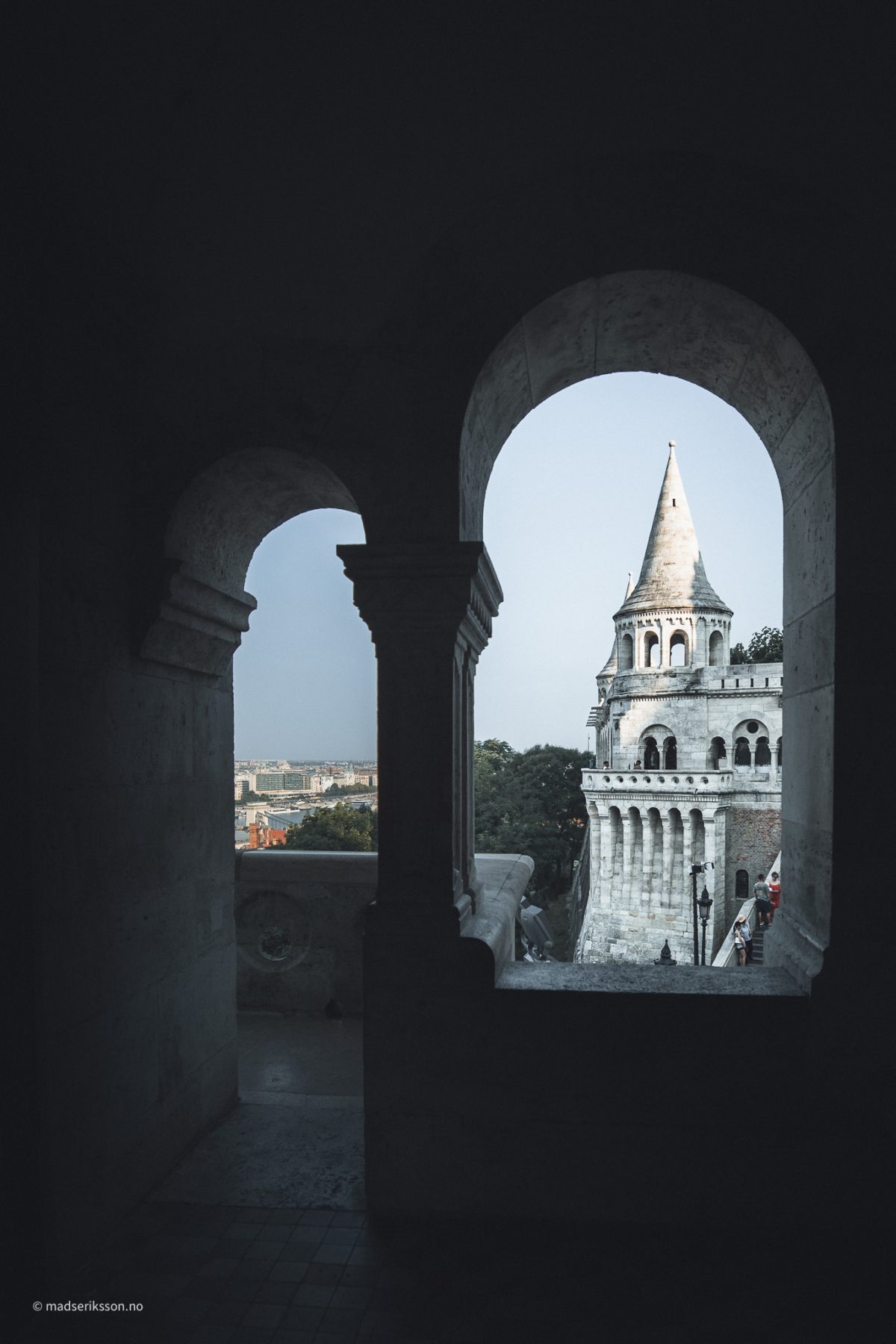
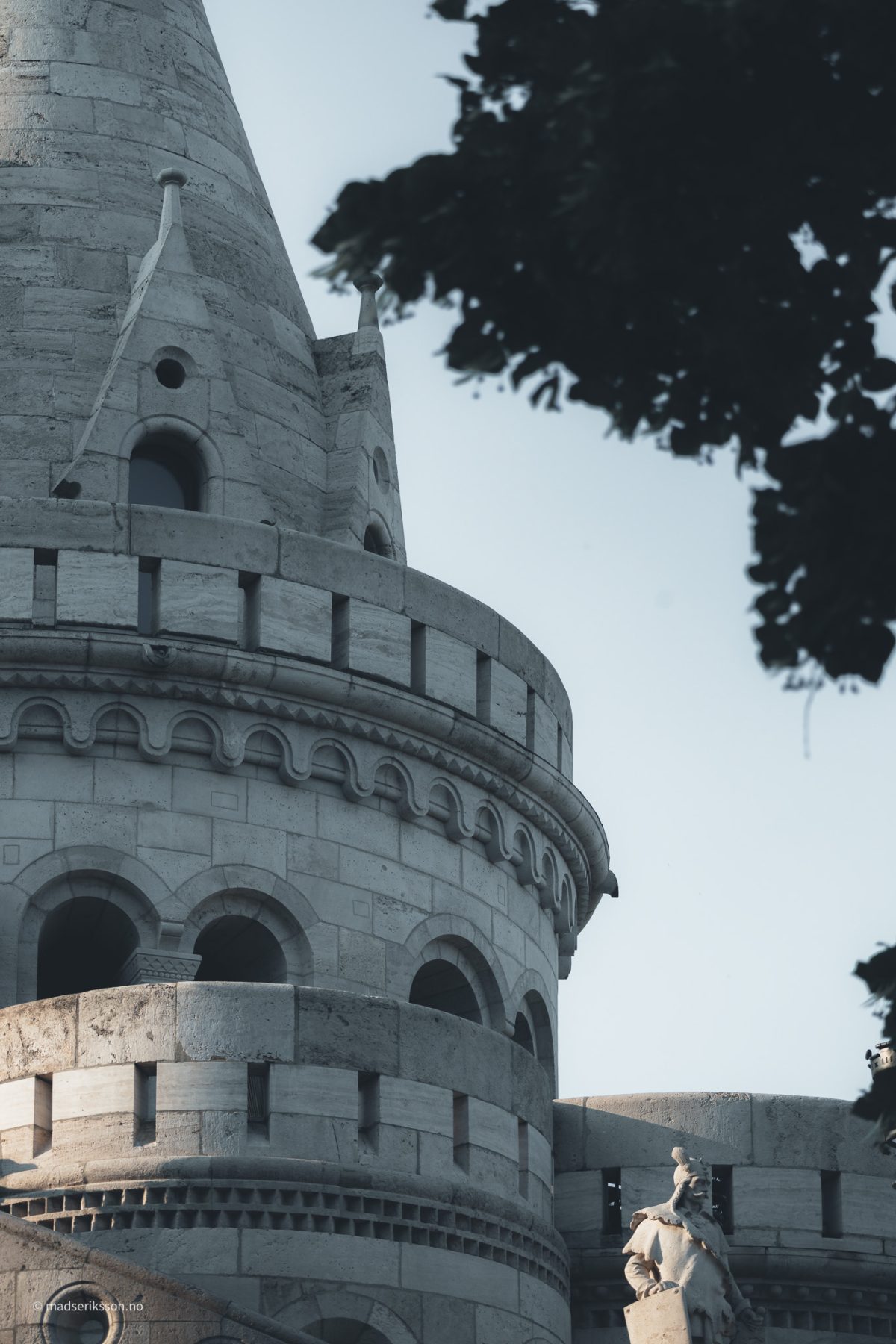
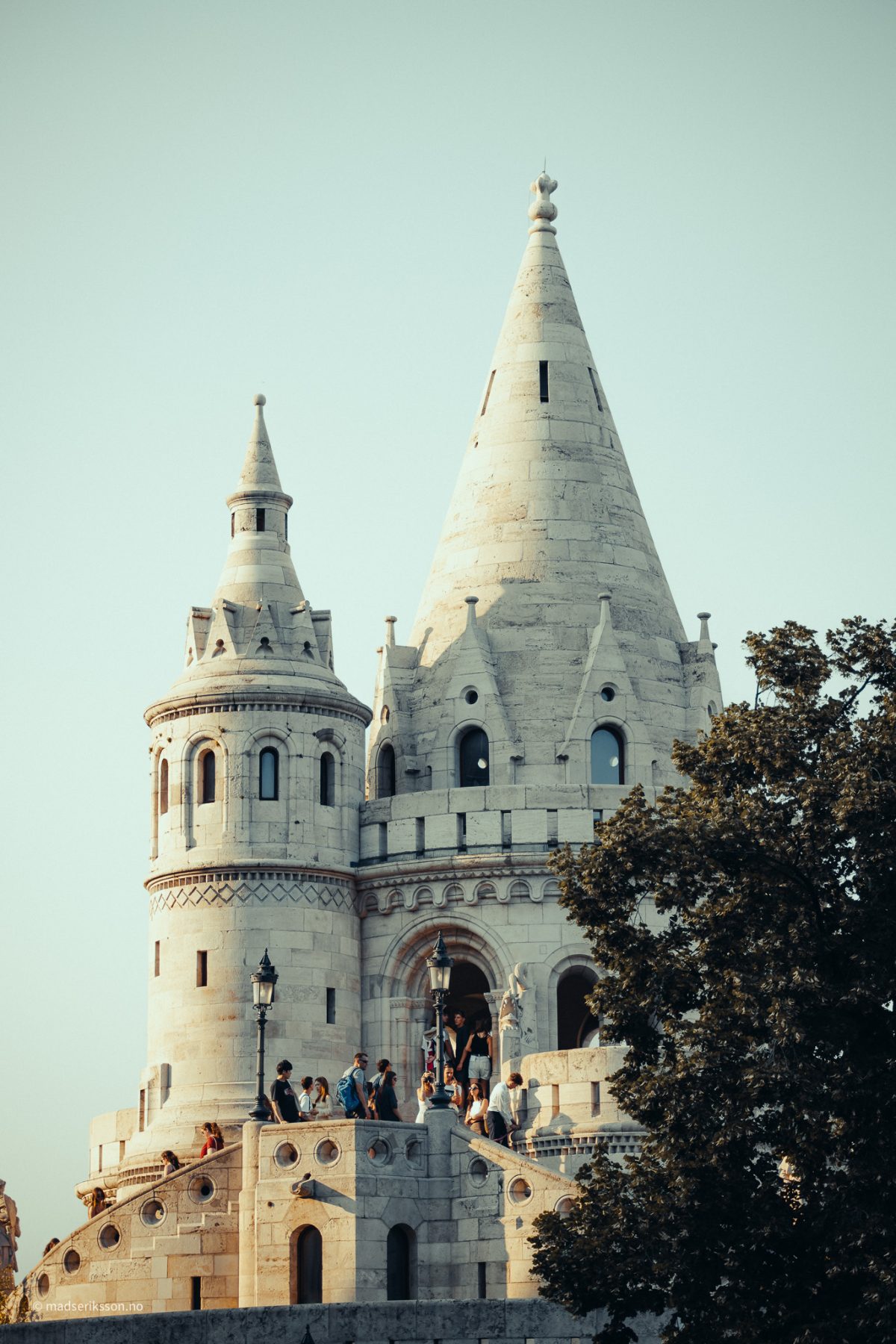
The Fisherman's Bastion was built in 1895–1902 to designs by Frigyes Schulek as a viewing terrace for the millennium, and its seven towers stand for the seven Magyar chieftains. Behind it, Matthias Church, restored by Schulek in 1874–96, saw the coronations of Franz Joseph in 1867 and Charles IV in 1916.
The white turrets of the Fisherman’s Bastion on Castle Hill, crowded with visitors
Buda Castle and the Chain Bridge
The former royal palace fills the southern end of Castle Hill and now houses the Hungarian National Gallery and the Budapest History Museum. Below it, the Széchenyi Chain Bridge of 1849 was the first permanent crossing between Buda and Pest; it is 375 m long, with a main span of 202 m. Blown up in January 1945, it reopened in 1949.
Gellért Hill and the Citadella
Gellért Hill rises to 235 m above sea level directly over the Elisabeth Bridge. The Citadella on its summit was built by the Habsburgs in 1851–54 to keep the city under its guns, and reopened in spring 2026. Beside it stands the Liberty Statue of 1947 by Zsigmond Kisfaludi Strobl, a 14 m bronze on a 26 m pedestal.
St Stephen's Basilica
St Stephen's Basilica shares the parliament's height of 96 m, a reference to the Magyar conquest of 896, and keeps the right hand of St Stephen as its relic. Its dome terrace, reached by lift or 364 steps, gives the best panorama on the Pest side. Andrássy Avenue starts close by, with the State Opera and the M1 underground of 1896 beneath it.
Heroes' Square and Széchenyi Bath
Heroes' Square, inaugurated in 1906 at the end of Andrássy Avenue, sets the seven mounted Magyar chieftains below a column topped by the archangel Gabriel. In City Park behind it, the Neo-Baroque Széchenyi Thermal Bath opened in 1913 and has 18 pools, the outdoor ones kept at 27 to 38 °C all year.
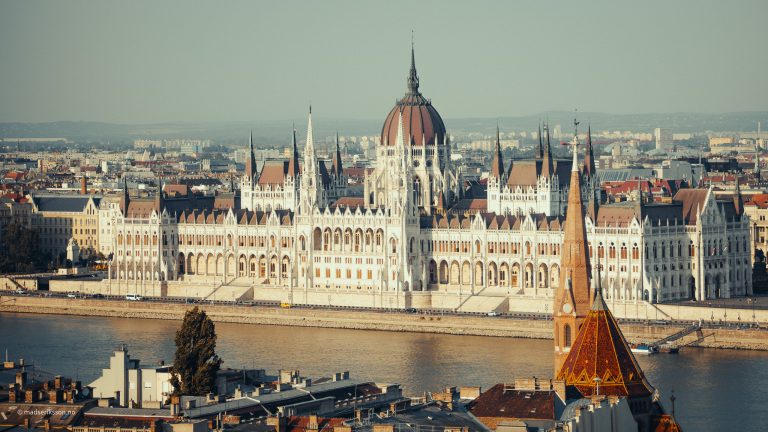
The Hungarian Parliament
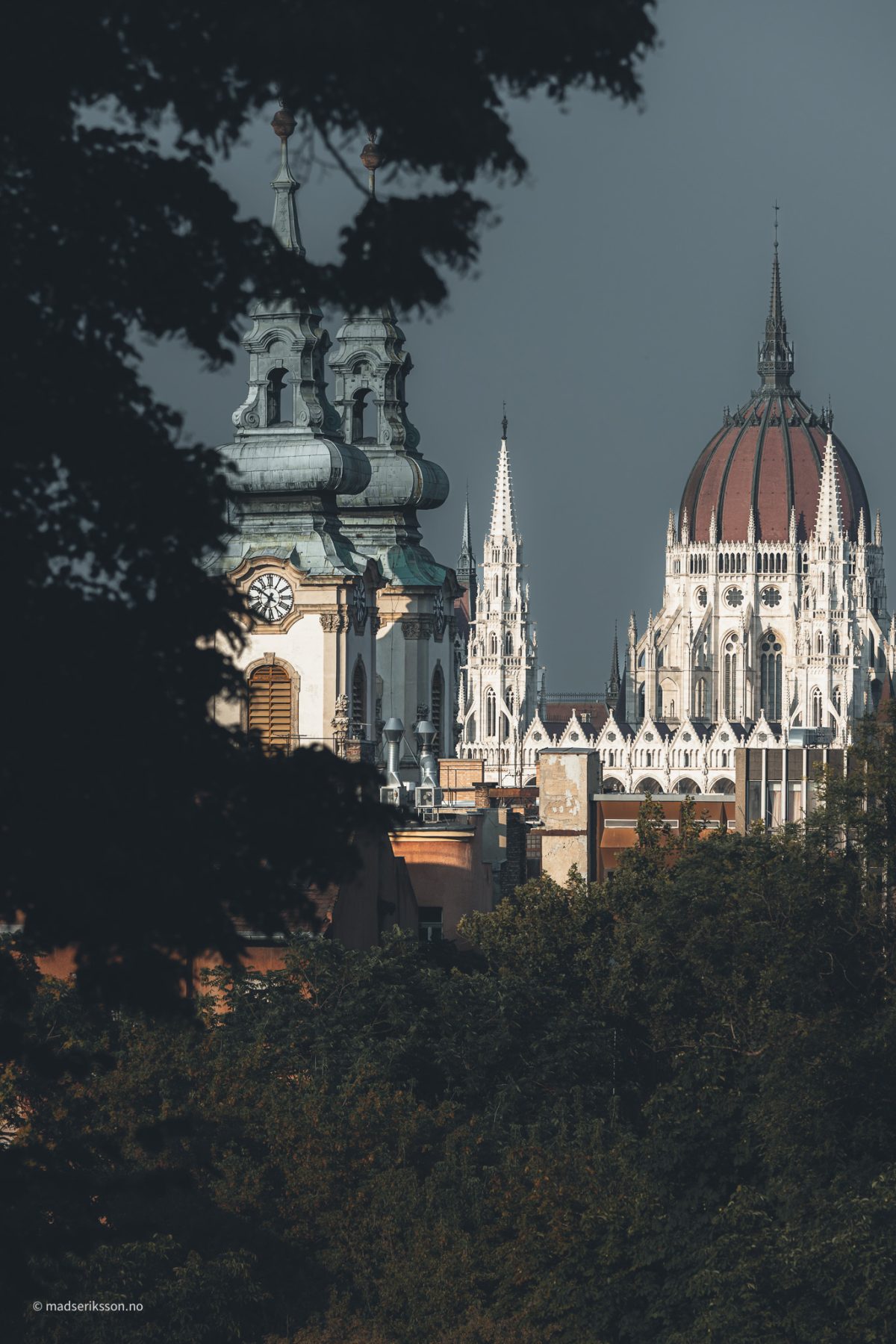
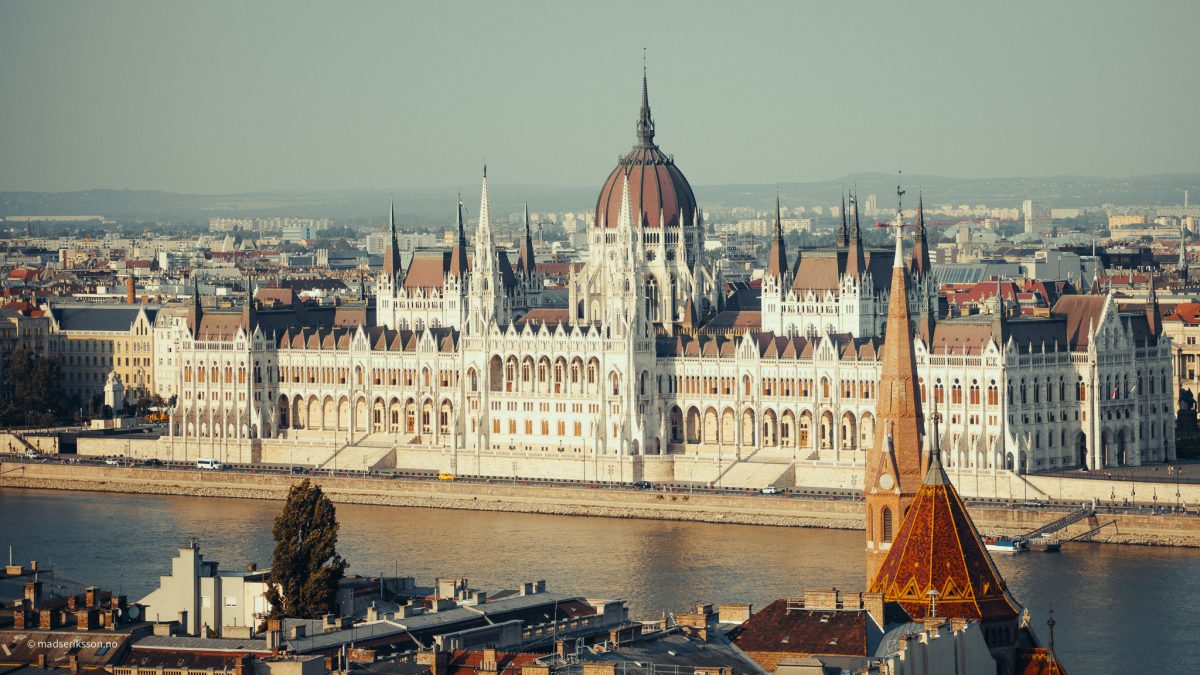
Imre Steindl's neo-Gothic parliament was built in 1885–1904 and inaugurated for the millennium in 1896. Its river façade runs for 268 m, its dome rises to 96 m and it has 691 rooms. About 300 m south, sixty pairs of cast-iron shoes, unveiled in 2005, mark where Arrow Cross militiamen shot victims into the Danube in 1944–45.
The Hungarian Parliament Building on the Danube embankment in Budapest in warm evening light
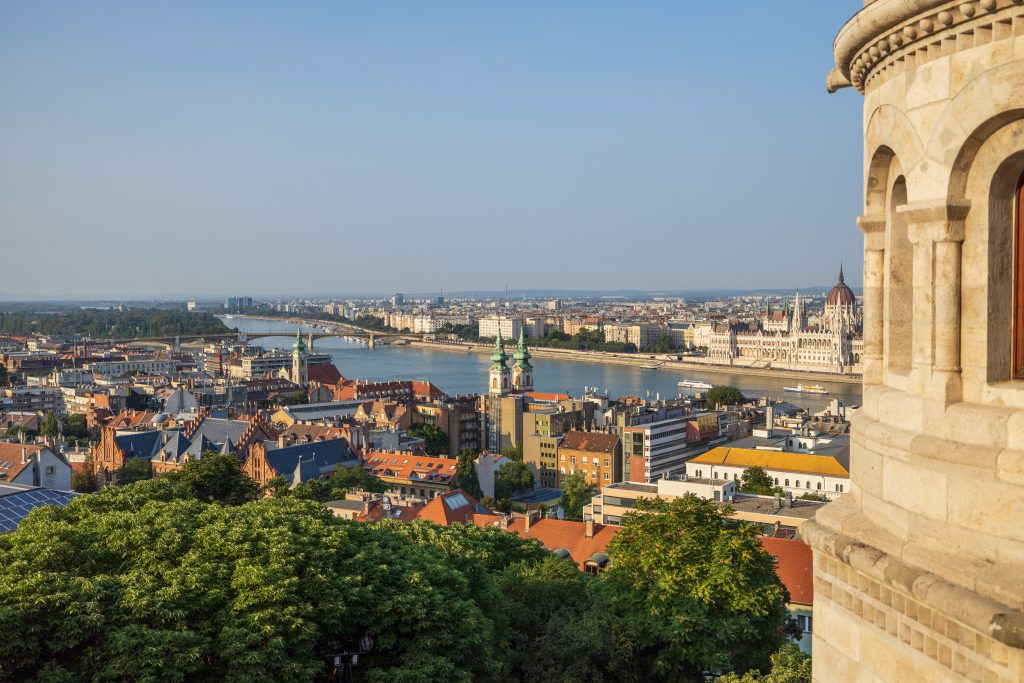
The river at blue hour
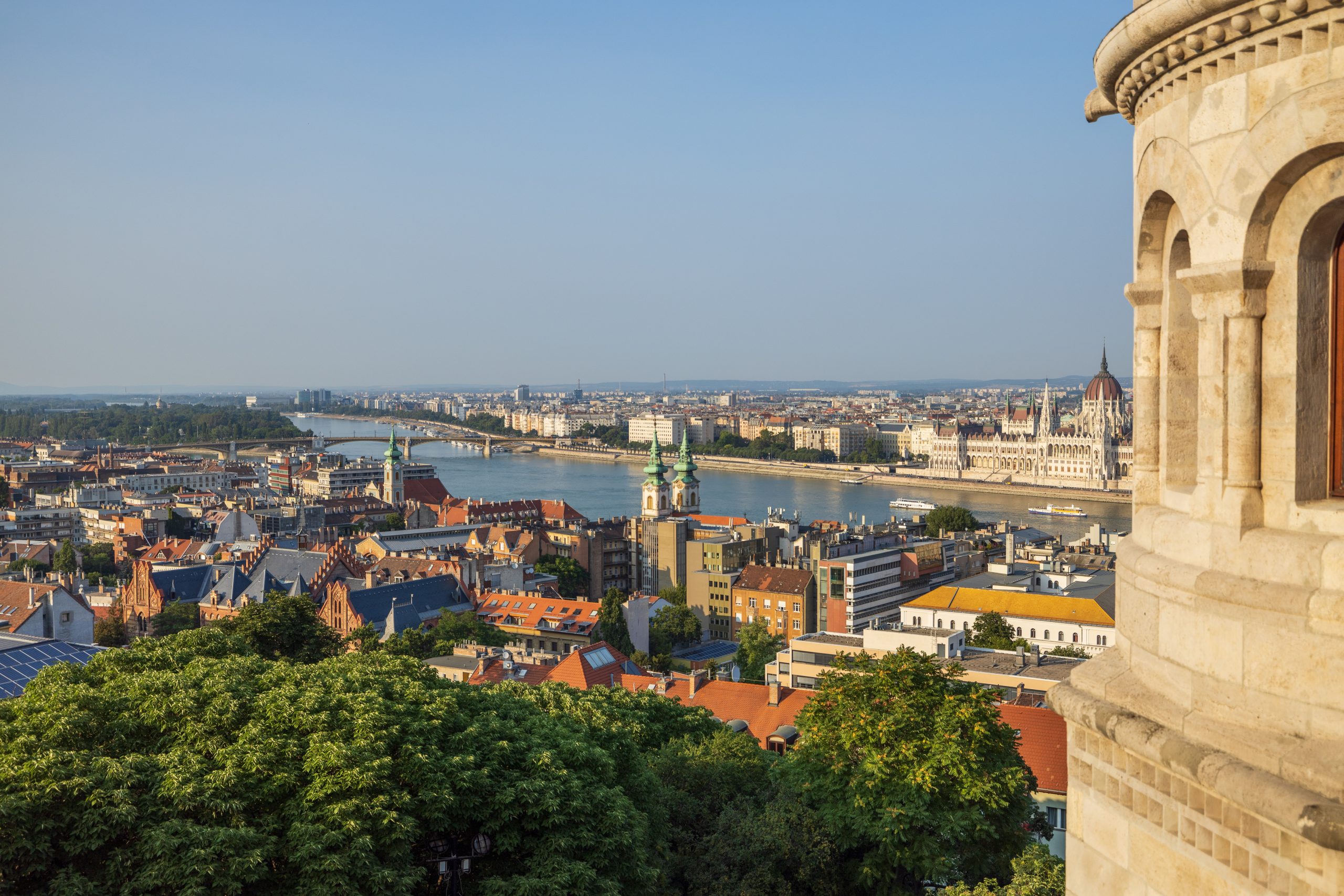
Seen from the Fisherman's Bastion, the Danube runs past the parliament towards Margaret Island, a 2.5 km island between the Margaret and Árpád bridges with a 5.35 km running track around its edge. The Chain Bridge, restored in 2021–23, is now closed to private cars.
The Danube and the rooftops of Buda from a tower of Fisherman’s Bastion, with the Parliament upriver
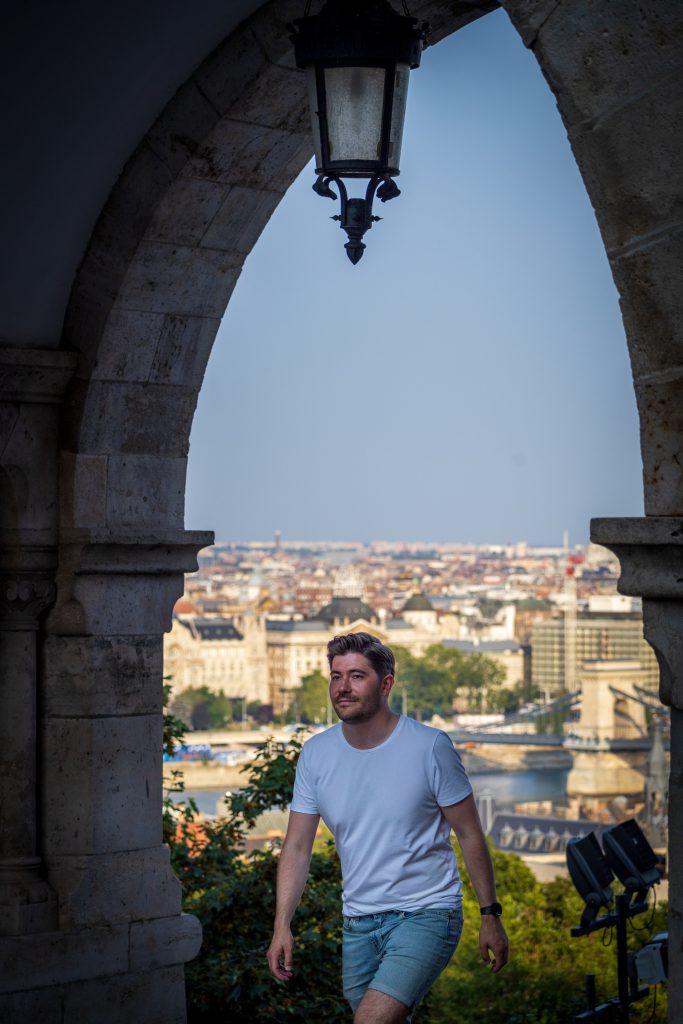
Budapest after dark
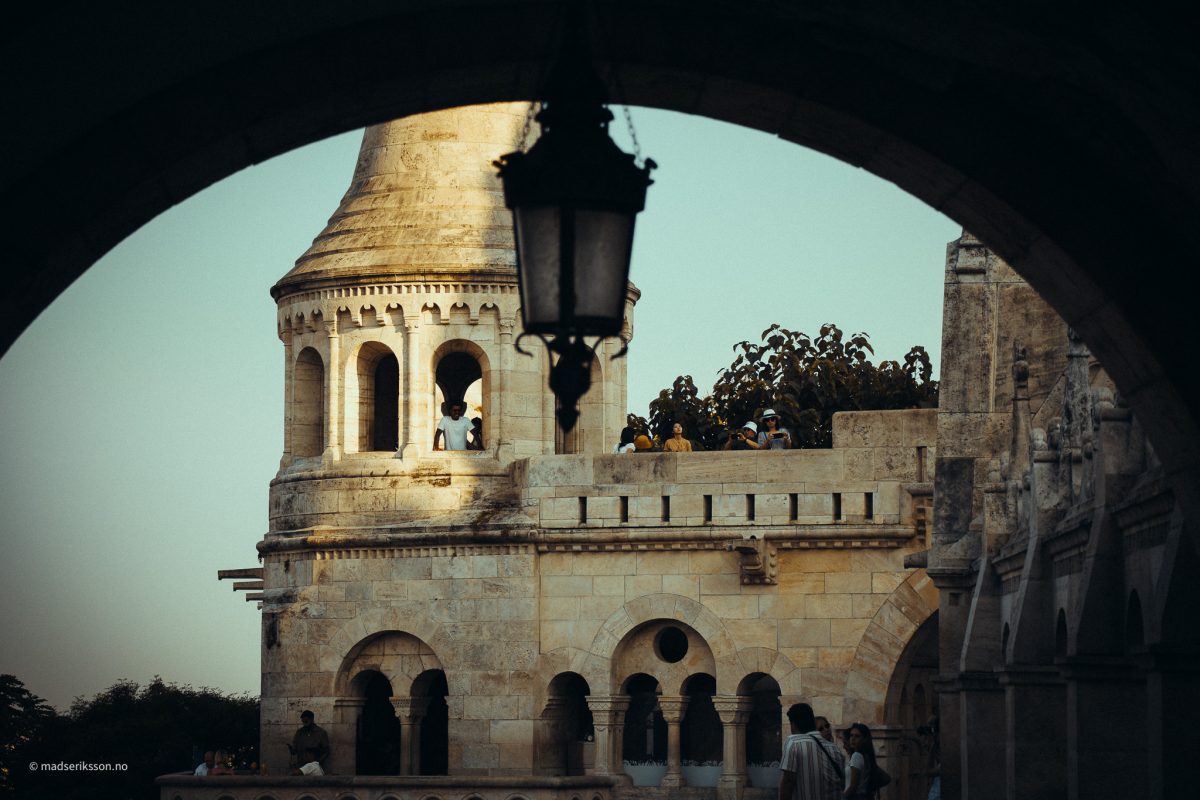
After dark the whole parliament façade is floodlit and reflected in the river, with Castle Hill lit on the opposite bank. The upper towers of the Fisherman's Bastion charge a fee by day but are free in the late evening, when they frame the view across the Danube.
A visitor walking through an arch of Fisherman’s Bastion, with the rooftops of Pest beyond
3D model © 2026 madseriksson.no · Photographs © madseriksson.no. Buildings and heights: © OpenStreetMap contributors (ODbL), via OpenMapTiles. Ground imagery: Sentinel-2 cloudless 2023 by EOX IT Services GmbH (contains modified Copernicus Sentinel data 2023; CC BY 4.0). Heights are approximate where OpenStreetMap has no measured value; sun positions are approximate.
Castle Hill — The Royal Town Above the River
A plateau of medieval lanes, a fairy-tale bastion that was never meant for defence, and a fortress on the next hill built to keep the city under its guns
Buda grew up on a long limestone plateau above the west bank, and the Castle District still occupies the whole of it: a walled town of cobbled lanes, Baroque houses and courtyards at one end, and the vast former royal palace at the other. The palace, rebuilt several times and badly damaged in the Second World War, now houses the Hungarian National Gallery and the Budapest History Museum. Between the two stands Matthias Church, with its patterned roof of glazed tiles and its slender Gothic tower — where King Matthias Corvinus married both of his wives and where the last two kings of Hungary, Franz Joseph in 1867 and Charles IV in 1916, were crowned. The quickest way up from the Chain Bridge is the Sikló, the funicular that has climbed the hill since 1870; the free alternative is a ten-minute walk up the paths and steps beside it.
The Fisherman’s Bastion, on the river side of Matthias Church, looks medieval but is not. It was built between 1895 and 1902 to the designs of Frigyes Schulek, the architect who restored the church, as a viewing terrace for the millennium celebrations. Its seven white towers stand for the seven Magyar chieftains who led their people into the Carpathian Basin in the ninth century, and its arcades and staircases frame the best-known view in Budapest: the parliament directly across the Danube, with Pest spread out behind it. A bronze equestrian statue of St Stephen, the first king of Hungary, by Alajos Stróbl, stands between the bastion and the church.
The lower terraces and arcades of the Fisherman’s Bastion are free to walk at any hour. Only the upper towers charge a small fee during the day — and they are free in the early morning and late evening, which are also the best times for the light on the parliament.
The other great viewpoint on the Buda side is Gellért Hill, a steep, wooded rock rising 235 metres above sea level directly over the Elisabeth Bridge. At its summit stands the Citadella, a fortress built by the Habsburgs in 1851–54, after the failed revolution of 1848–49, with its guns trained on the city rather than on any outside enemy. Beside it rises the Liberty Statue, visible from almost everywhere along the river. The Citadella reopened in spring 2026 after more than a decade of closure and reconstruction, with a new park, an exhibition on Hungary’s struggles for freedom, and terraces that are free to visit. The climb on foot from the Danube is steep but short, on paths through the woods.
The Pest Riverbank — A Parliament, a Bridge and Sixty Pairs of Shoes
The building that defines the skyline, the bridge that made the city possible, and the quiet memorial between them
The Hungarian Parliament Building is the one that gives Budapest its skyline. It was designed by Imre Steindl, whose neo-Gothic scheme won an international competition, and built between 1885 and 1904; it was inaugurated for the millennium in 1896. Its river façade runs for 268 metres, its central dome rises to 96 metres — a reference to the year 896 — and inside are 691 rooms and around 40 kilograms of gold leaf. Steindl went blind and died before the building was finished. Since 2000 the Holy Crown of Hungary has been displayed in the central hall beneath the dome.
The interior can be visited only on guided tours of about 45 minutes, which take in the main staircase, the dome hall with the crown and one of the two identical debating chambers. Tours are run in several languages from the visitor centre on the north side of Kossuth Square, and they sell out early in summer: book online in advance, and bring a passport or ID card, since EU and EEA citizens pay a reduced price. The best views of the building itself, though, are free — from the Fisherman’s Bastion or Batthyány Square across the river, and after dark, when the whole façade is floodlit and reflected in the water.
About 300 metres south of the parliament, sixty pairs of cast-iron shoes stand at the edge of the embankment. They mark the place where Arrow Cross militiamen shot Jews and other victims into the Danube in the winter of 1944–45, after ordering them to take their shoes off.
The Shoes on the Danube Bank were conceived by the film director Can Togay and made by the sculptor Gyula Pauer, and unveiled in 2005. A short walk south along the river is the Széchenyi Chain Bridge, the first permanent crossing between Buda and Pest. Designed by the English engineer William Tierney Clark, built under the Scottish engineer Adam Clark and opened in 1849, it is 375 metres long, with a main span of 202 metres. Retreating German troops blew it up in January 1945; it was rebuilt and reopened in 1949, restored again between 2021 and 2023, and is now closed to private cars, which makes it one of the best walks in the city. Ten minutes inland stands St Stephen’s Basilica, which shares the parliament’s height of 96 metres and keeps the mummified right hand of St Stephen as its most precious relic. Its dome terrace, reached by lift or by 364 steps, gives the best panorama on the Pest side.
The Baths — A Capital Built on Hot Water
Steaming outdoor pools in a Neo-Baroque palace, a domed Ottoman bath from the sixteenth century, and the most beautiful bathhouse in the city closed for restoration
Budapest sits on a geological fault where the limestone of the Buda Hills meets the plain, and around 125 thermal springs rise along it. The Romans bathed here, but bathing culture in its recognisable form arrived with the Ottomans, who held Buda for almost a century and a half from 1541 and built domed bathhouses over the springs. The nineteenth and early twentieth centuries added the grand spa palaces. Bathing in Budapest is not a tourist novelty: the baths are public institutions used by people of every age, many of them daily, and the medicinal pools are taken seriously.
The Széchenyi Thermal Bath in City Park is the best known. It opened in 1913 in a yellow Neo-Baroque building designed by Győző Czigler, and after an expansion in 1927 it has three outdoor and fifteen indoor pools. The water comes from two deep wells at 74 and 77 °C and is cooled for bathing; the outdoor pools range from 27 to 38 °C, which means they are open all year and at their most memorable in winter, when steam rises off the water and chess players sit chest-deep at their boards. In 2026 a day ticket with a locker costs 13,200 forints from Monday to Thursday and 14,800 forints on Fridays and at weekends. It opens at 7:00 on weekdays and 8:00 at weekends; the early morning is much quieter than the afternoon.
The Gellért Bath, with its Art Nouveau halls, mosaics and columned indoor pool, closed on 1 October 2025 for a full restoration. It is not expected to reopen before 2028, so for now its interiors can only be seen in photographs.
For the older layer of the city’s bathing culture, the place to go is the Rudas Bath at the Buda end of the Elisabeth Bridge. Founded in the 1570s, under Ottoman rule, it still has its octagonal pool beneath the original Ottoman dome — the clearest survival in the city of the bathhouses the Turks built over the springs. Bathing etiquette is simple: bring a swimsuit, flip-flops and a towel (or rent them), shower before entering the pools, and keep to the posted time limits in the hottest and most mineral-rich ones. Anyone with a heart condition or high blood pressure should take advice before spending long in the thermal water.
Everyday Pest — Boulevards, Ruin Bars and an Island in the River
The avenue built for the millennium, the museum in the building where two dictatorships held their prisoners, and the city’s kitchens, courtyards and park
Andrássy Avenue runs from the inner city to City Park, lined with mansions, the State Opera House and, beneath it, the Millennium Underground — the M1, opened in 1896 as the first underground railway on the European continent and still running in its tiled, low-ceilinged stations. At the far end is Heroes’ Square, begun for the millennium and inaugurated in 1906: a column topped by the archangel Gabriel holding the Holy Crown, with the seven mounted Magyar chieftains at its foot, framed by the Museum of Fine Arts on one side and the Hall of Art on the other. Halfway along, at Andrássy út 60, the House of Terror occupies the building used as headquarters first by the fascist Arrow Cross and then by the communist secret police. Opened as a museum in 2002, it tells the story of both regimes, ending in the basement cells.
Behind the boulevards of District VII lies the old Jewish Quarter, home to the Dohány Street Synagogue, the largest in Europe, and to the ruin bars that have become a byword for Budapest nightlife. They began in the early 2000s, when friends took over condemned tenement blocks and courtyards that were awaiting demolition and filled them with mismatched furniture, salvaged objects and cheap drinks. Szimpla Kert, the best known, opened in 2002 and moved in 2004 to a condemned building on Kazinczy utca, where it still is. On the other side of the inner city, at the end of Váci utca by the Liberty Bridge, the Great Market Hall of 1897 is a vast iron-and-glass hall under a roof of glazed Zsolnay tiles, with paprika, salami, pickles and Tokaji wine on the ground floor and food stalls on the gallery above.
Hungarian goulash — gulyás — is a soup, not a stew. The thick paprika stew most of the world calls goulash is pörkölt, and both are worth ordering. For street food, lángos is deep-fried dough with sour cream, cheese and garlic; for something sweet, kürtőskalács is a chimney cake baked on a spit over coals.
When the city gets too hot or too crowded, the green escape is Margaret Island, a 2.5-kilometre-long island in the middle of the Danube between the Margaret and Árpád bridges. Traffic is restricted to a bus line and service vehicles, which leaves the island to walkers, cyclists and runners on the rubberised 5.35-kilometre track around its edge. Near the southern tip, a musical fountain plays to classical music, with light shows on summer evenings. The island is not, despite a common mistake, the home of the Sziget Festival: that music festival takes place each August on Óbuda Island, further north, and fills the city with visitors from all over Europe.
«Budapest is best understood from the water’s edge. Stand on the Pest embankment and the whole story is in front of you: the royal hill of Buda, the bridge that first tied the two towns together, the parliament built for a millennium, and the iron shoes that remember the worst winter in the city’s history. Then cross over, climb to the Fisherman’s Bastion early in the morning, and look back. Spend the afternoon in a steaming pool in City Park, the evening in a courtyard bar in the old Jewish Quarter, and walk home across the Chain Bridge while the parliament is still lit.»

More in the same area
 CitiesFisherman’s Bastion, Budapest: Seven Turrets and the Best View of Pest
 CitiesThe World’s 10 Great Food Markets
 ArchitectureTen Buildings That Changed Their Cities — Modern Architecture Ranked on Impact, Not Image
 CitiesHiroshima and Miyajima: A preserved ruin and a shrine on the tideline
 CitiesThe World’s 10 Most Beautiful City Parks
 CitiesBangkok — the World’s most visited City
City Frames · scroll-driven 3D
More cities in three dimensions
54 city guides open with a model built from open map data. Scroll, and the camera moves from landmark to landmark.
Departures · City Frames
Where to next?
| Time | Destination | Country | Status |
|---|
Live · position of the sun
Golden hour, right now
The low, warm light just after sunrise and just before sunset. These are the cities on the site where it is happening at this moment.