Brussels is officially bilingual, actually trilingual, and in practice the most linguistically promiscuous capital in Europe — a city where French, Dutch and English compete on every menu and where the permanent population of diplomats, eurocrats and international civil servants has given the city a cosmopolitan density that its modest size does not suggest. It is also, beneath the bureaucratic surface, a city of extraordinary cultural seriousness: the birthplace of Art Nouveau, the home of Magritte and Tintin, one of the great chocolate and beer capitals of the world, and the possessor of a central square that Victor Hugo called the most beautiful in Europe.

Brussels has been a crossroads since at least the 10th century, when a settlement developed at a ford on the Senne river and Charles, Duke of Lower Lorraine, established a residence on an island in the marshes around 979 CE. The city grew under the Duchy of Brabant, became the capital of the Habsburg Netherlands and subsequently of the Spanish and Austrian Netherlands, was absorbed into revolutionary France in 1795, incorporated into the Kingdom of the Netherlands in 1815, and finally became the capital of an independent Belgium in 1830, following the revolution of that year. This layered political history — Brussels has been governed by more powers than most European cities — has left the city fluent in multiple identities. It is a Belgian city, a Flemish city, a Francophone city, and for the past seven decades the de facto capital of the European project: home to the European Commission, the European Council and the permanent representatives of 27 member states.
The cultural history of Brussels is less bureaucratic and considerably more interesting. Victor Horta designed the Hôtel Tassel in 1893 and in doing so invented the architectural style that would spread across Europe as Art Nouveau; his house, now the Horta Museum, is a UNESCO World Heritage Site. René Magritte lived in the city for most of his life and painted the bowler-hatted, pipe-smoking, apple-obscured images that defined Surrealism for the 20th century’s popular imagination. The cartoonist Hergé — born Georges Remi in Etterbeek, a municipality of Brussels — created Tintin in 1929, and the Belgian comic strip tradition he helped establish has produced some of the defining graphic narratives of the 20th century. In the Grand Place, the guildhalls rebuilt after the French bombardment of 1695 constitute what is genuinely one of the finest urban ensembles in Europe. And the chocolate, the beer and the frites — all Belgian inventions or Belgian peaks of an art — give the city a gastronomic seriousness it rarely receives credit for.
How to approach Brussels
This guide covers four aspects of Brussels: the Grand Place and the medieval and Baroque city centre; the Art Nouveau heritage and the great museums; the city’s role as the capital of Europe and the modernist monuments that accompany it; and the food culture — chocolate, beer, waffles, frites and the specific pleasures of the Belgian table. Brussels is compact, very walkable in the centre, and well connected by metro and tram to its outlying museums and neighbourhoods. The Euroquarter is best avoided on weekdays when it is full of people with lanyards moving quickly between meetings.
Brussels in 3D
Brussels grew from a settlement at a ford on the Senne, where a ducal residence was founded around 979, and became capital of an independent Belgium in 1830. This frame runs from the Palace of Justice in the south to the Atomium at Heysel in the north, with the medieval centre in the west and the European Quarter and the Cinquantenaire in the east. The city hosts the European Commission, the European Council and the Council of the EU.
The Grand-Place
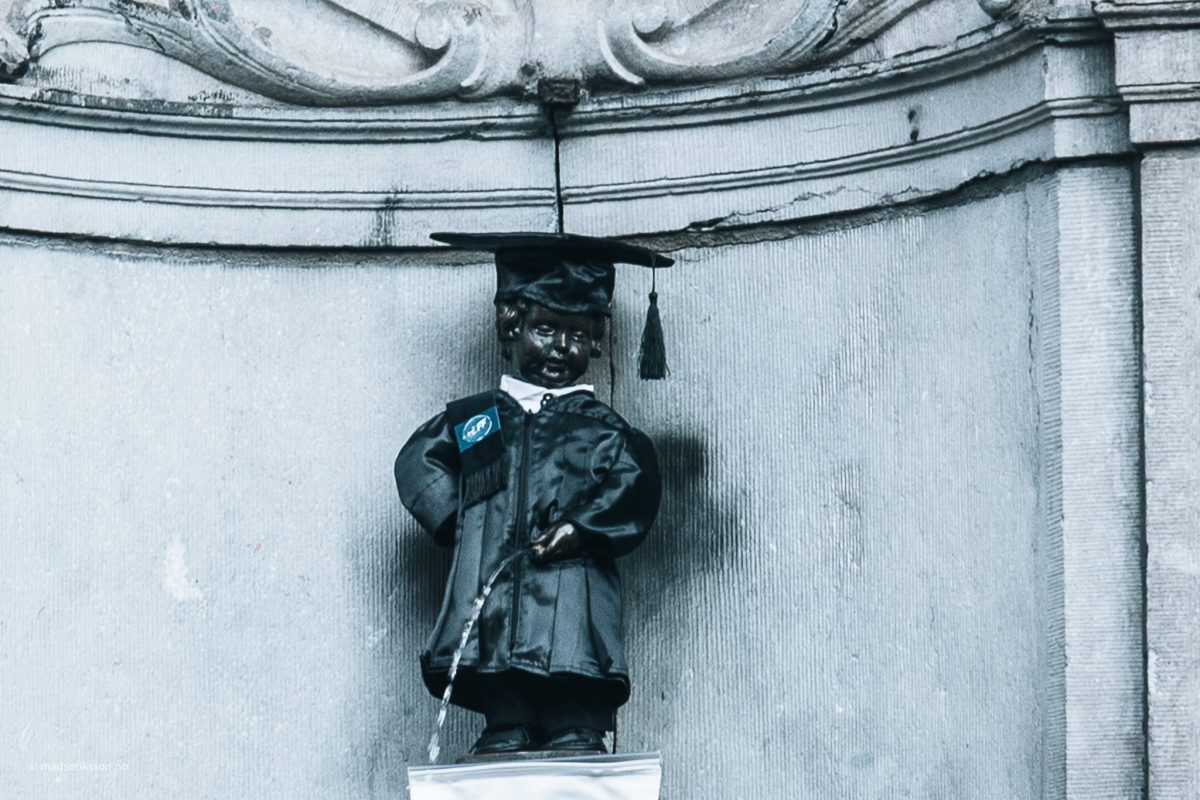
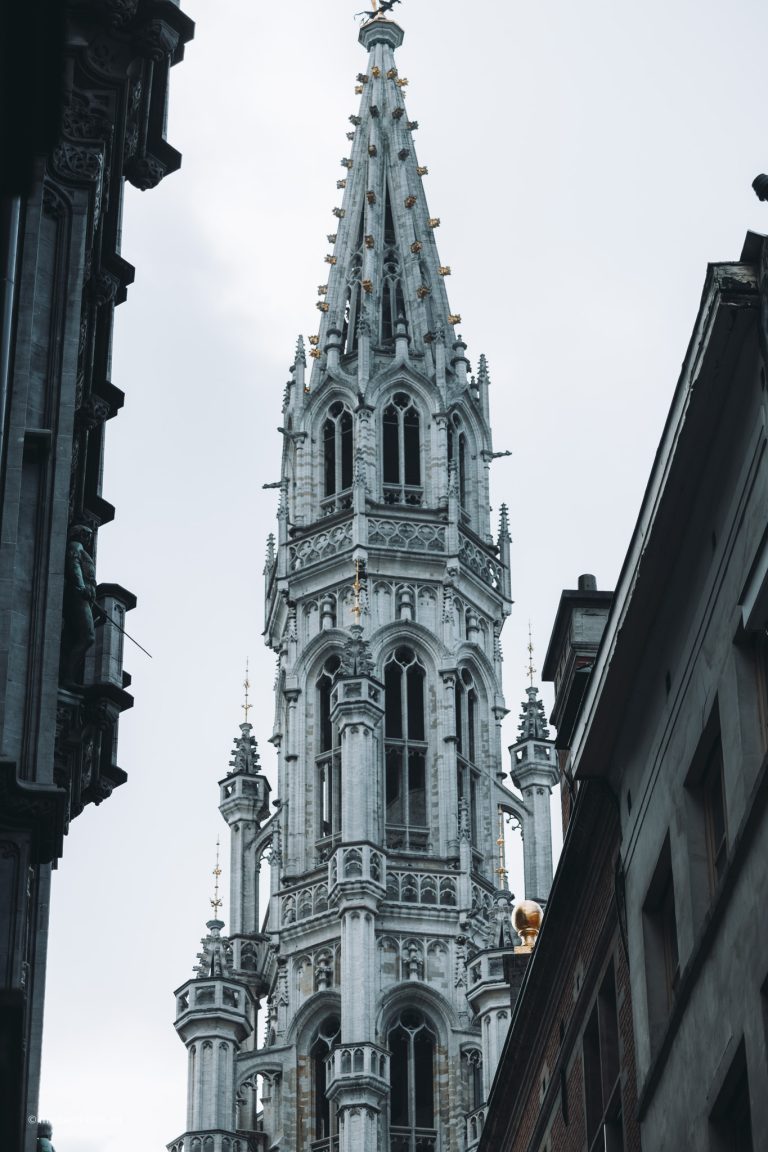
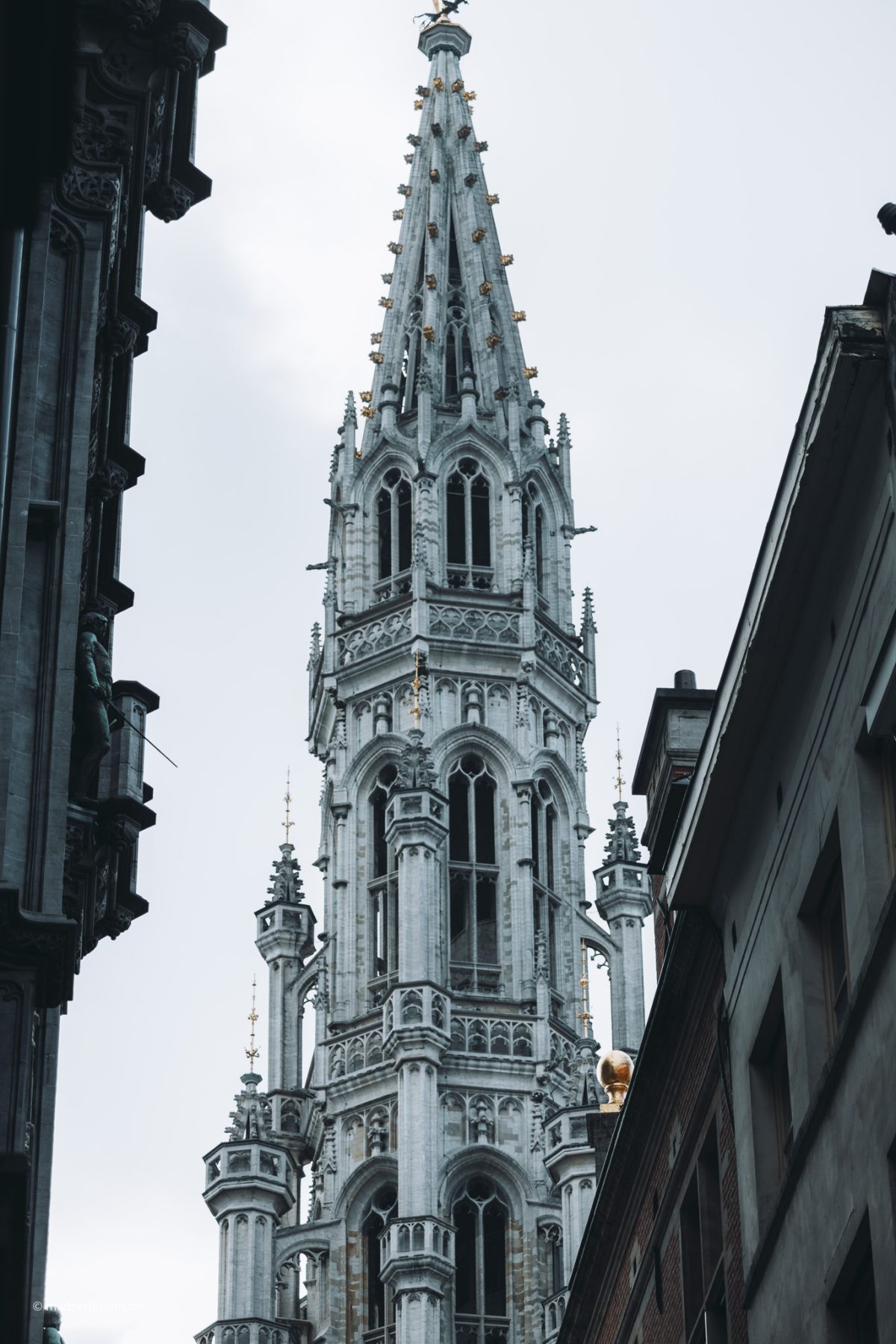
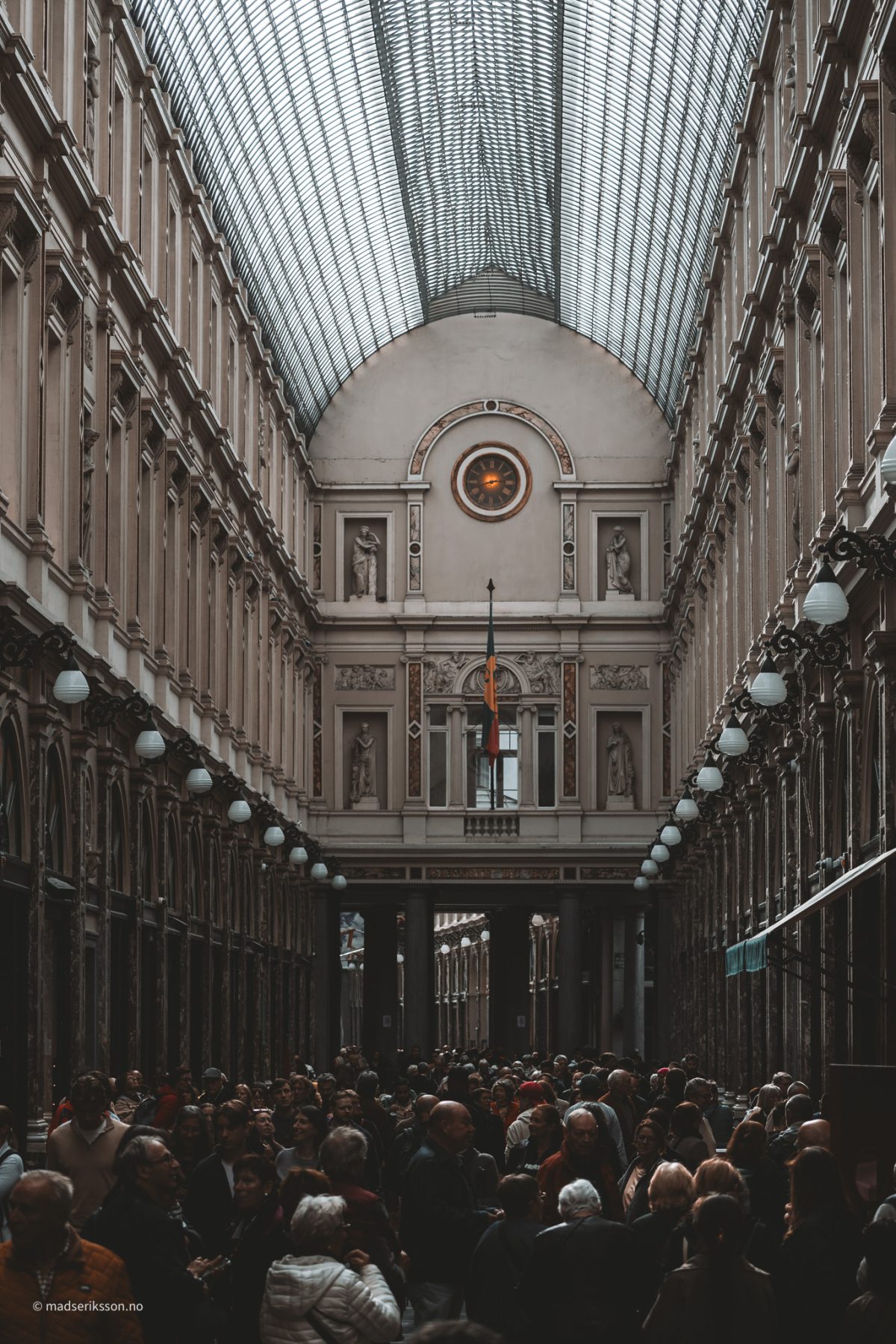
French artillery under Louis XIV destroyed most of the Grand-Place in August 1695, and the guilds rebuilt their houses in Baroque style between 1695 and 1699. The Gothic Town Hall, built between 1401 and 1455 with a 96 m tower, was the only major building to survive; the square became a World Heritage Site in 1998. Nearby are the Galeries Royales Saint-Hubert of 1847 and the 61 cm Manneken Pis, cast in bronze in 1619.
The Gothic tower of Brussels Town Hall rising above the rooftops around the Grand Place
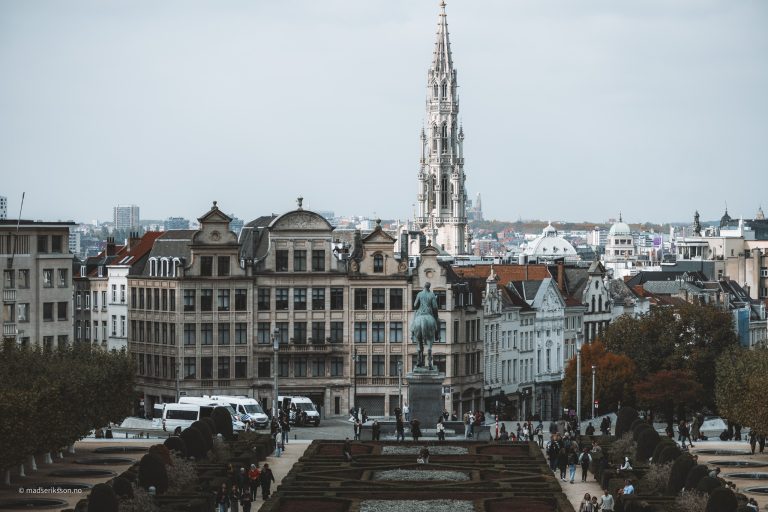
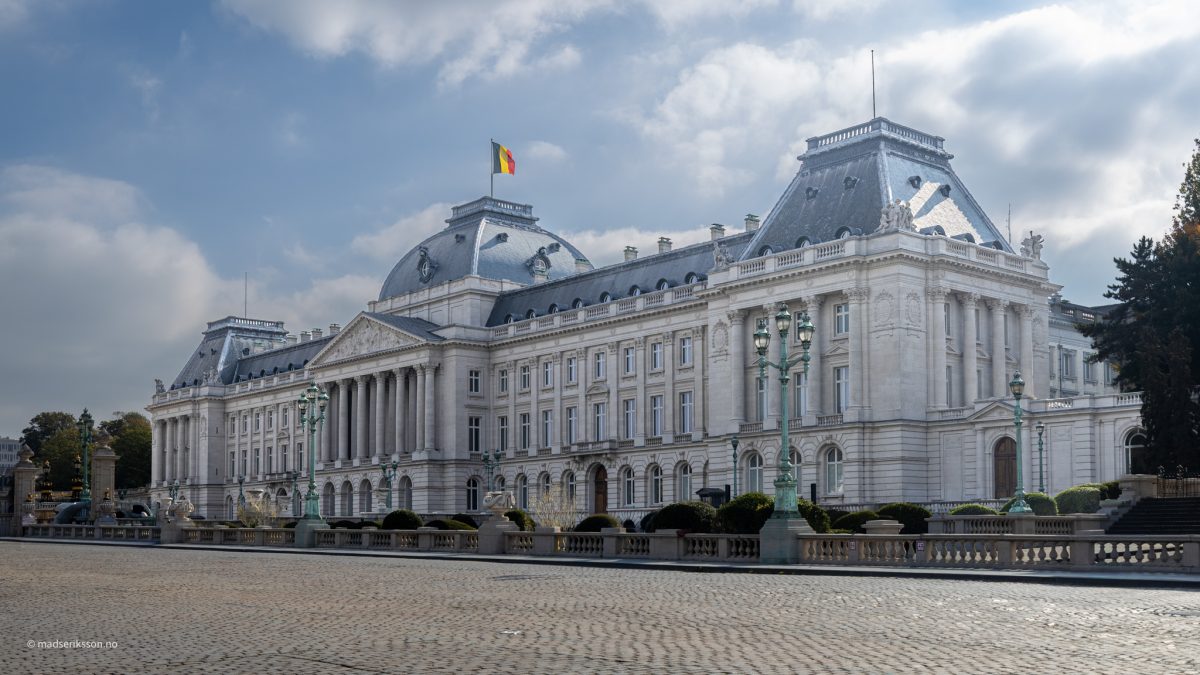
Mont des Arts and the Royal Palace
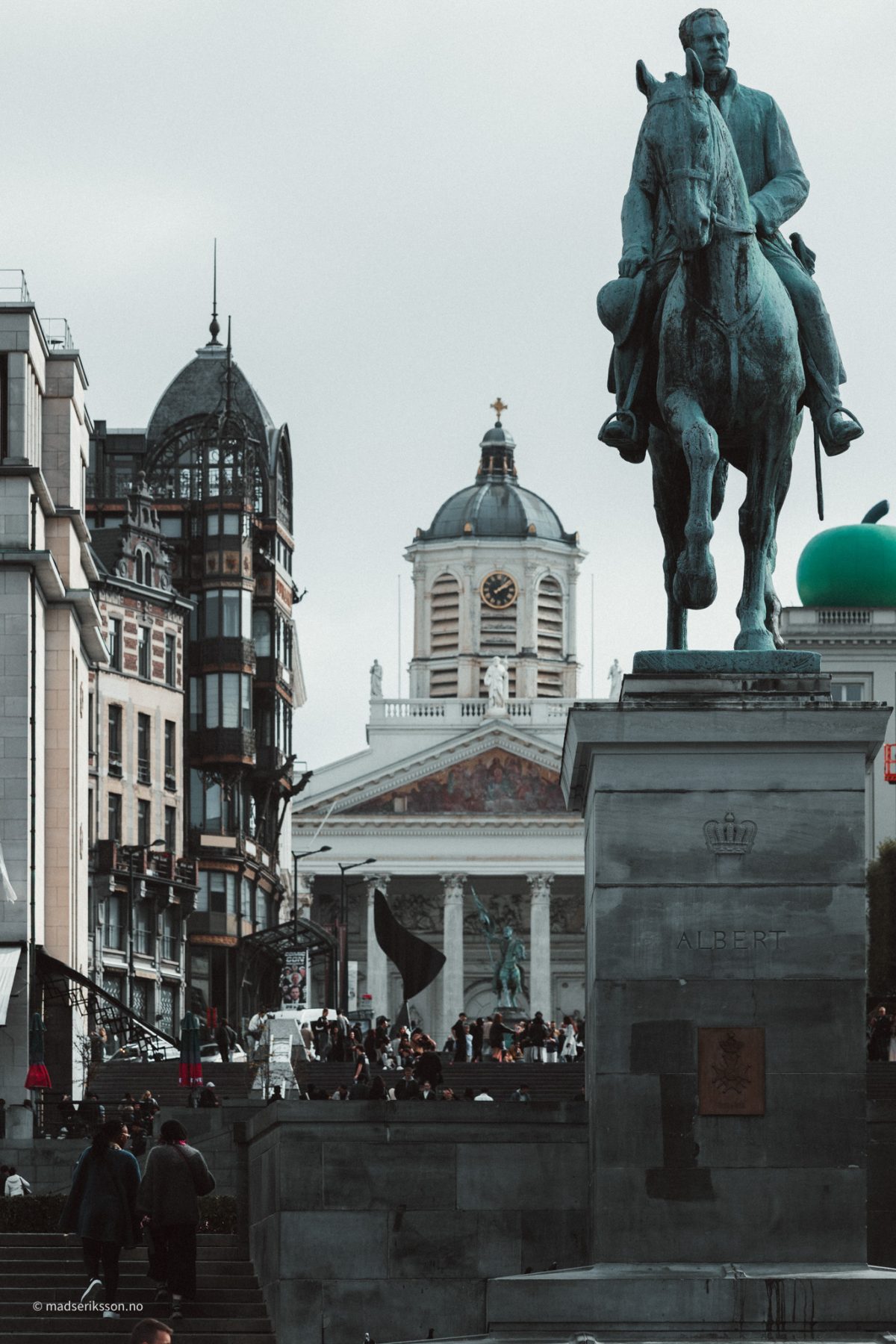
The upper town above the Mont des Arts gardens holds the Royal Palace on the Place des Palais and the Royal Museums of Fine Arts, with the world's largest collection of works by Pieter Bruegel the Elder and a Magritte Museum of more than 200 works. Just south lies the Sablon, the antique dealers' quarter around the Gothic church of Notre-Dame du Sablon.
The Town Hall spire on Grand-Place rising above the Mont des Arts gardens in Brussels
The Palace of Justice
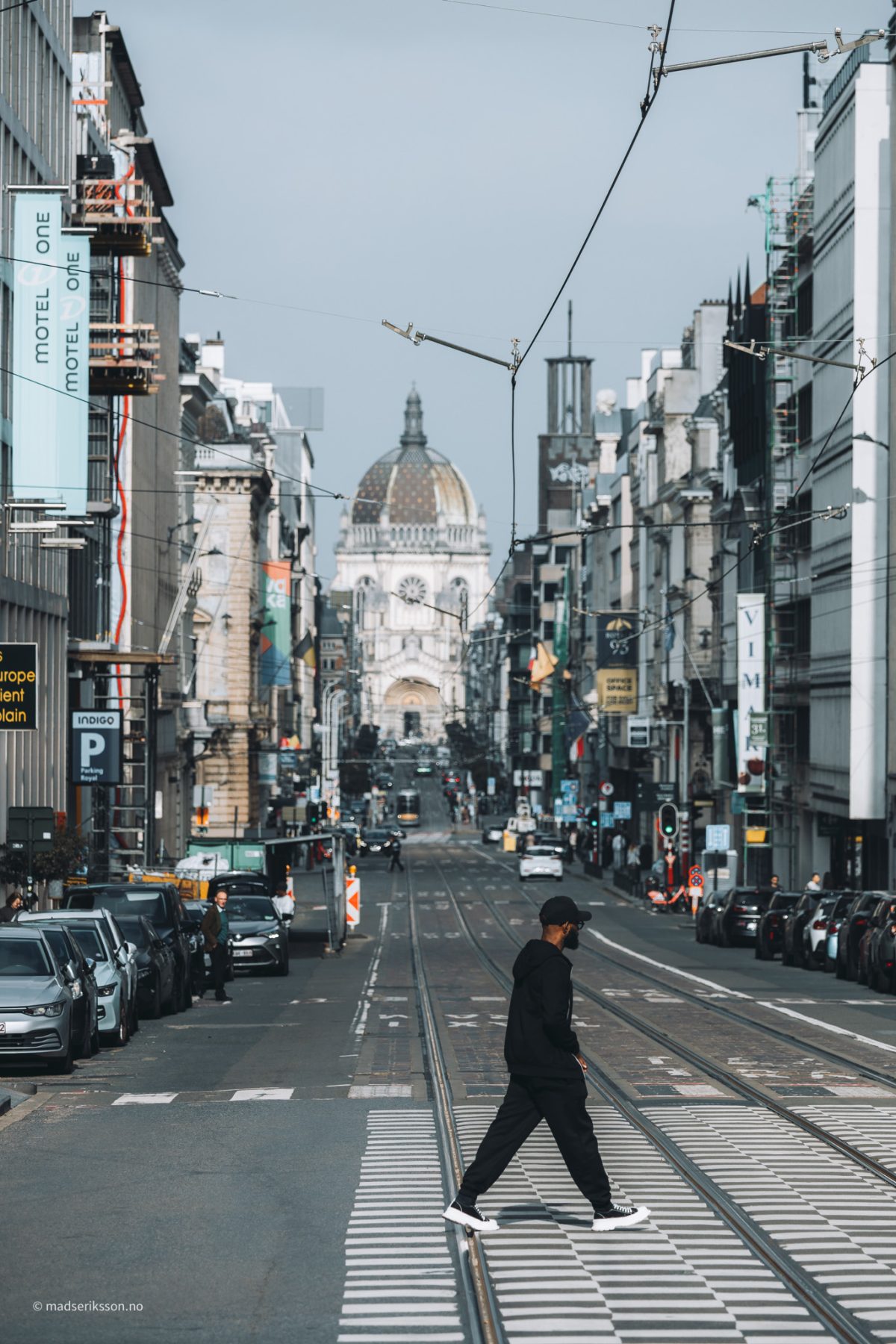
The Palace of Justice, designed by Joseph Poelaert and completed in 1883, was among the largest buildings erected in the 19th century. Its dome stands on the edge of the upper town and looks down over the old working-class Marolles district, while the Sablon antique quarter lies a few minutes to the north-east.
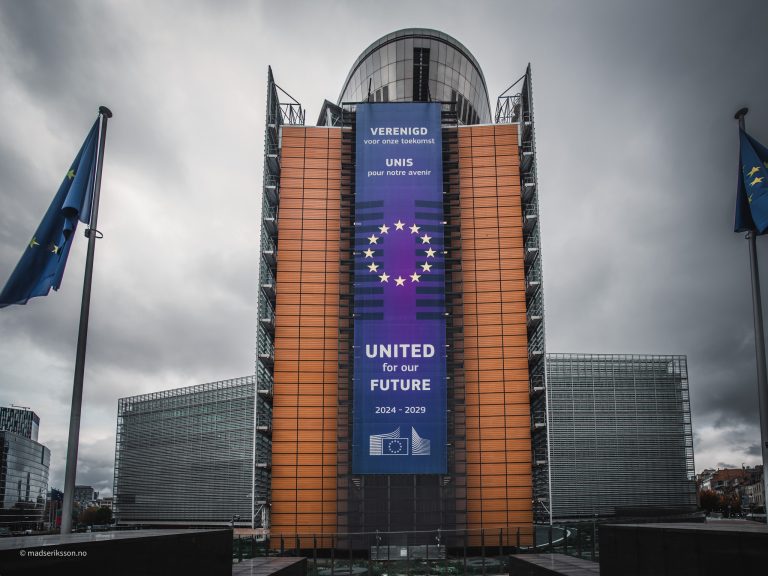
The European Quarter
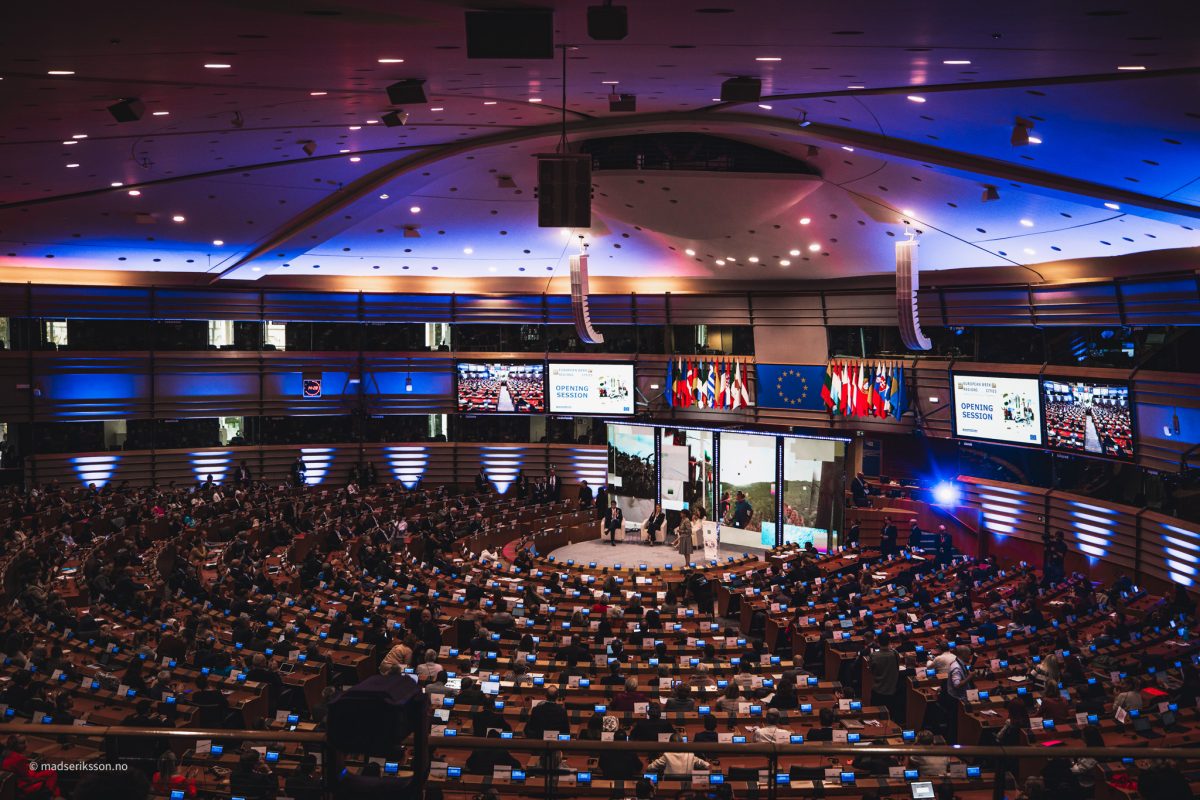
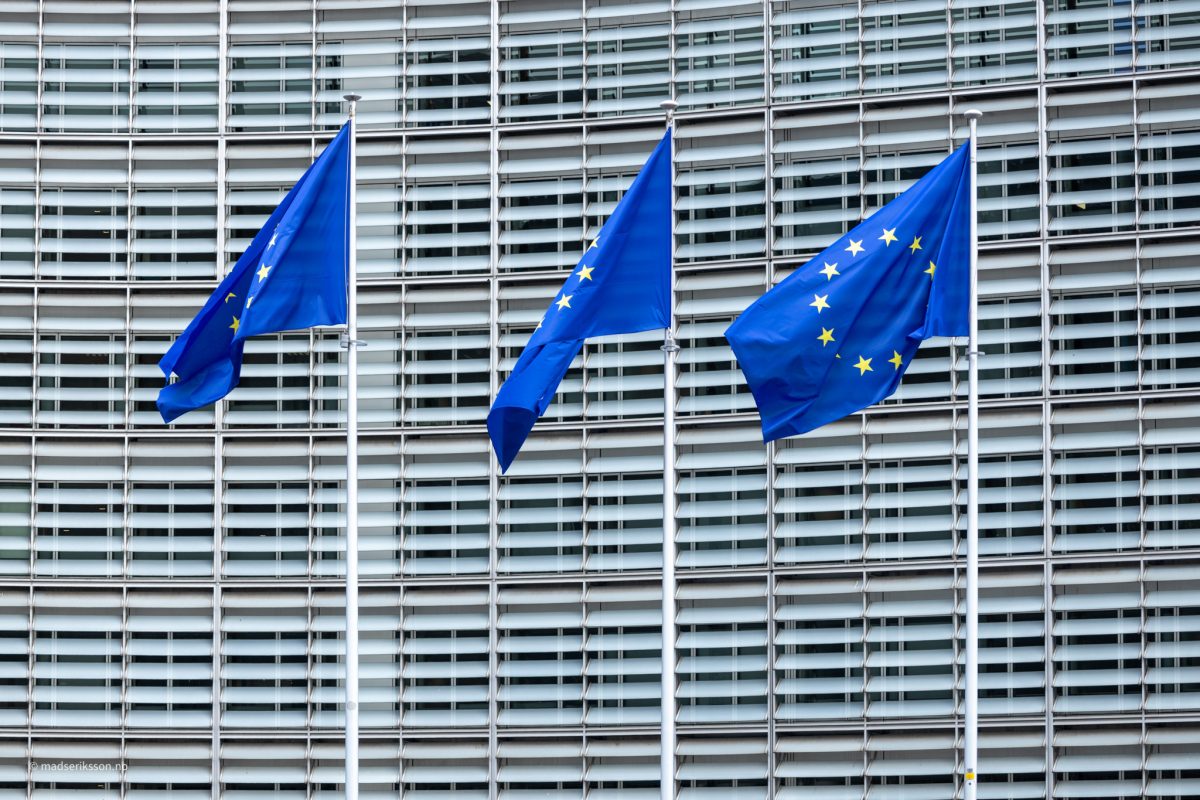
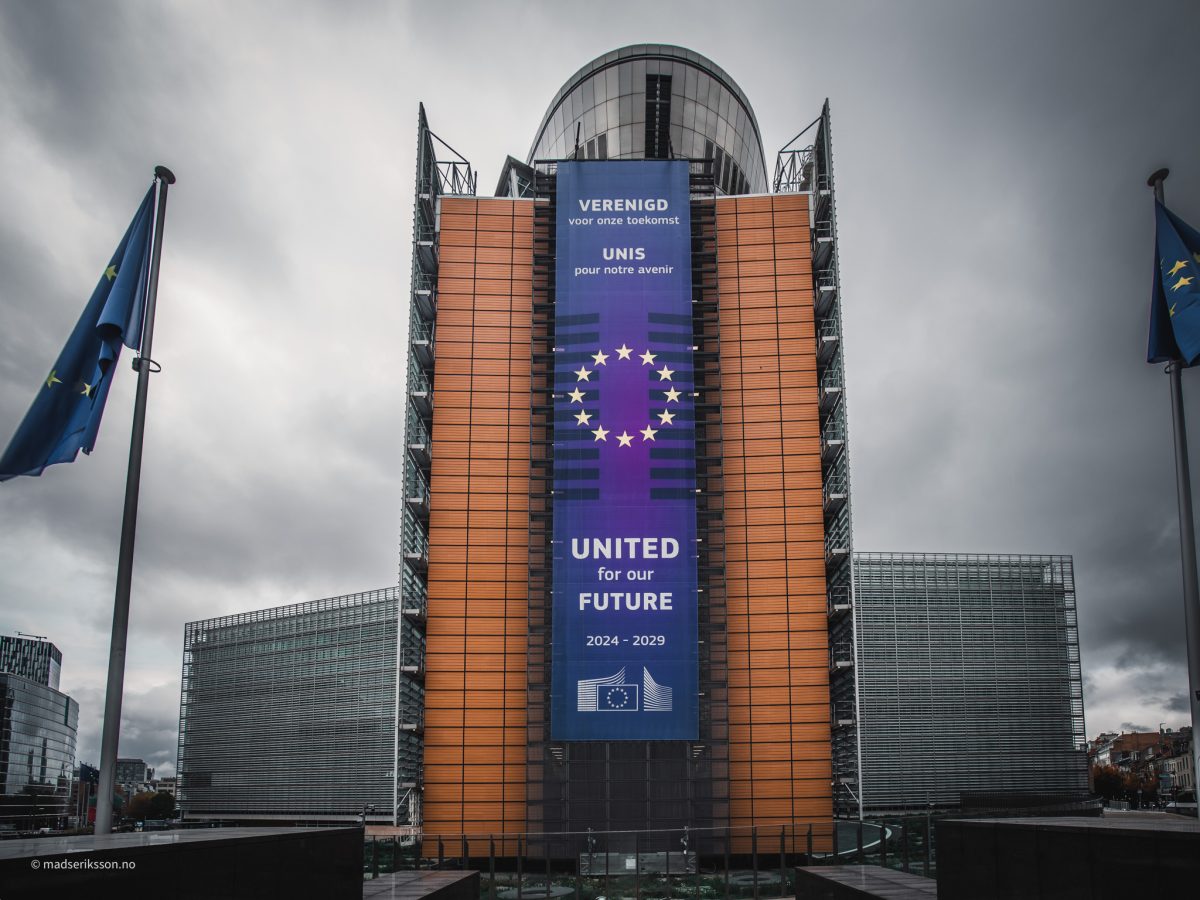
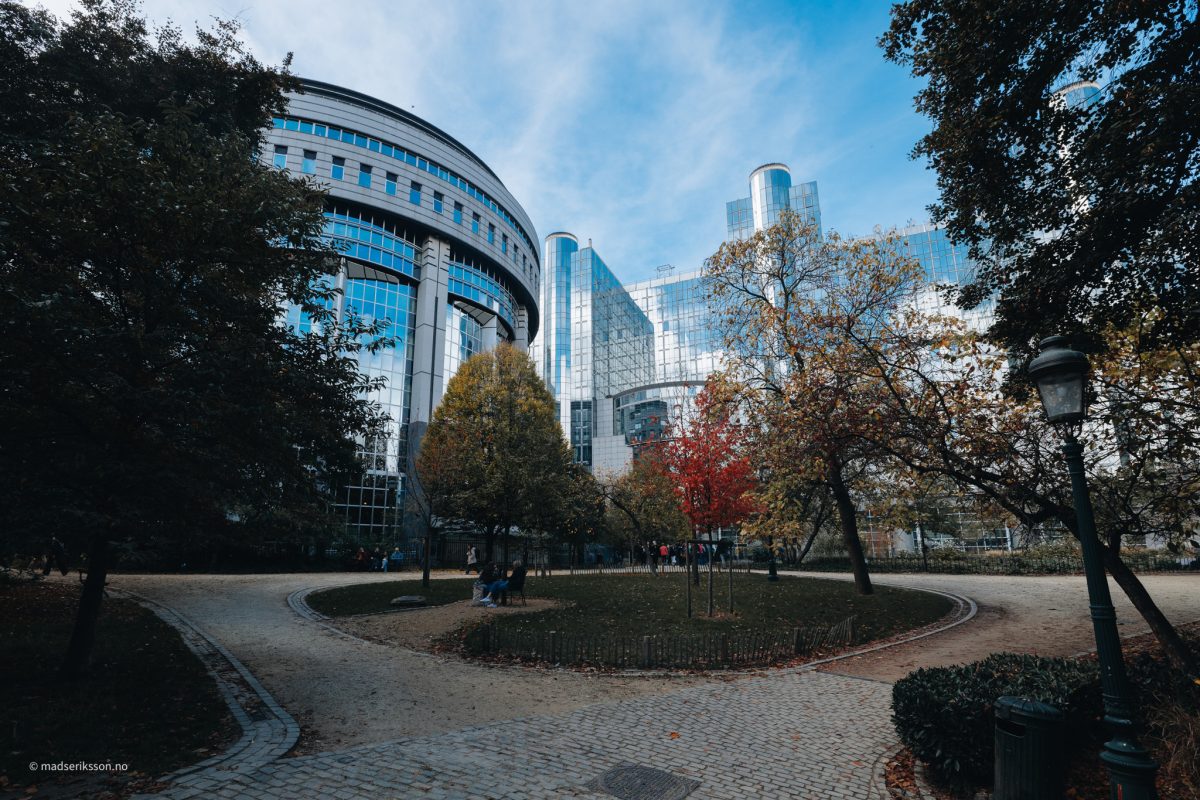
The European Quarter around the Schuman roundabout holds the Berlaymont, the cross-shaped headquarters of the European Commission, built between 1963 and 1969 and renovated from 1991 to 2004. To the south-west, the curved glass buildings of the European Parliament stand beside Parc Léopold.
The Berlaymont, seat of the European Commission, with a large EU campaign banner hung down its façade
The Cinquantenaire
The Cinquantenaire park was laid out to mark 50 years of Belgian independence in 1880, though its triumphal triple arch was only completed in 1905. The wings beside the arch hold the Art & History Museum, Autoworld and the Royal Museum of the Armed Forces and Military History.
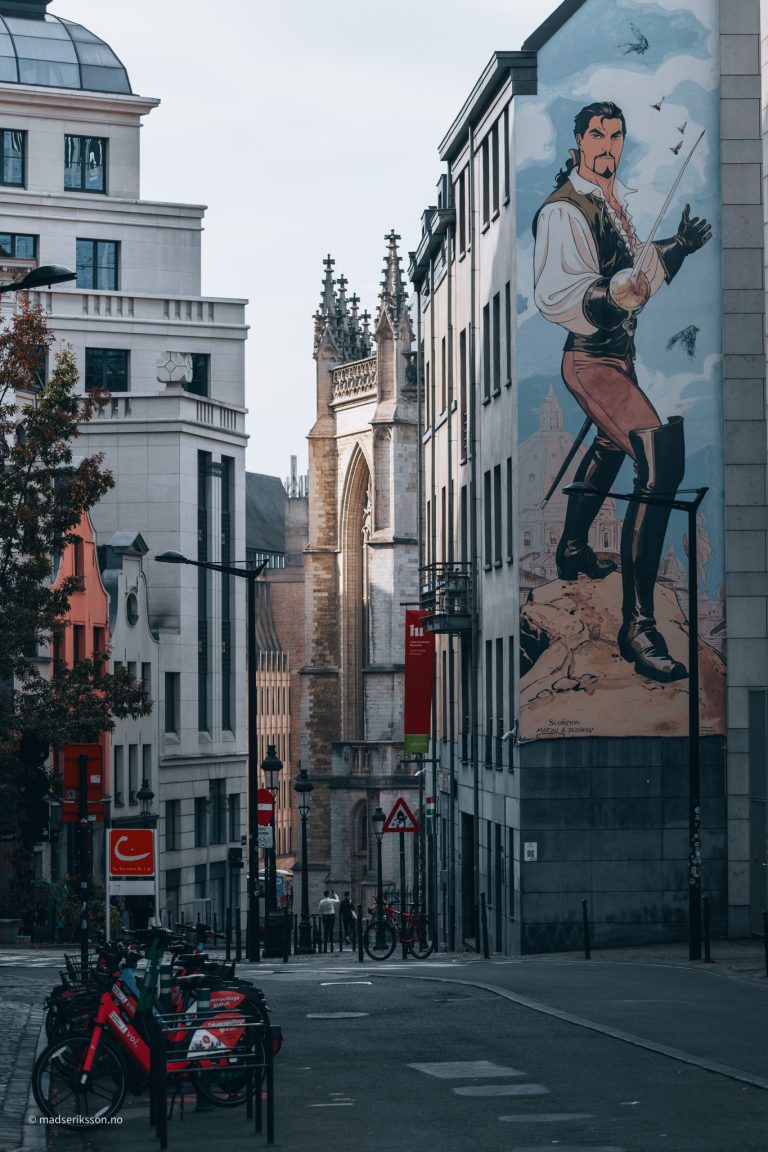
St Michael and St Gudula
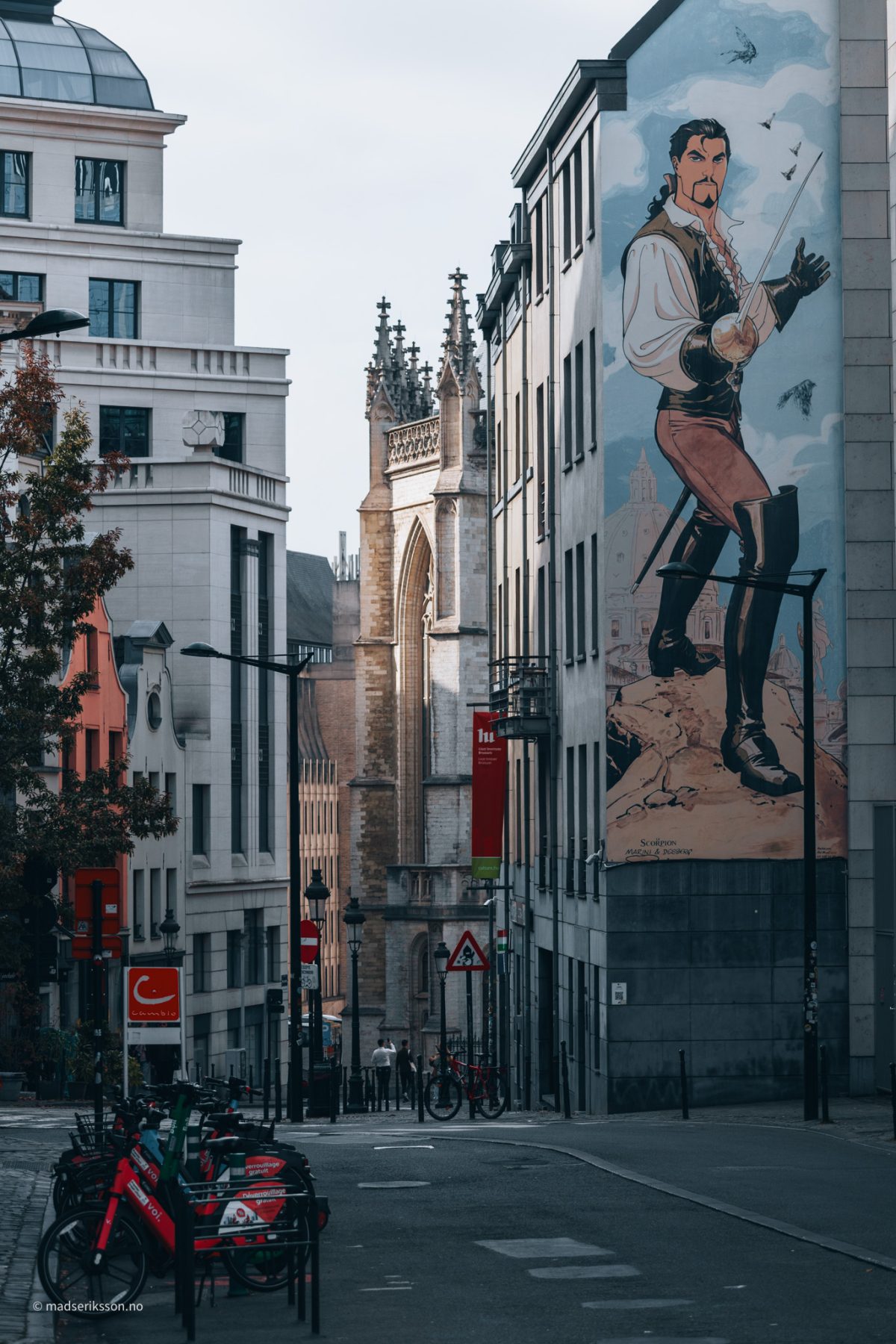
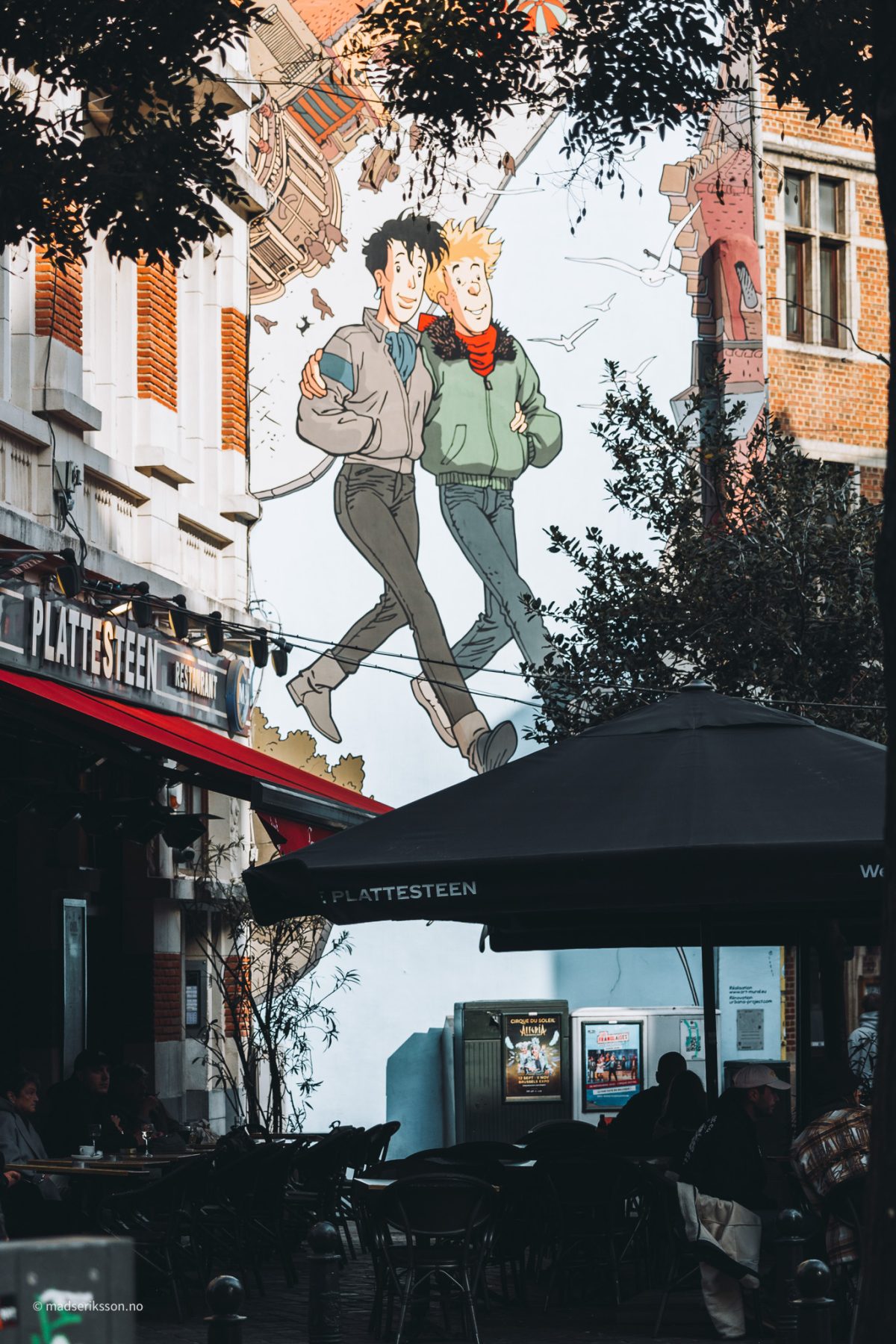
The Cathedral of St Michael and St Gudula stands on the slope between the lower and upper town. Its Brabantine Gothic choir was begun in 1226 and the two western towers were built between 1470 and 1485. The streets around it carry many of the city's comic-strip murals, part of the tradition that produced Tintin in 1929.
A comic-strip mural of a swashbuckling hero on a gable wall in central Brussels, with a Gothic church behind
The Atomium
The Atomium was built for the 1958 World's Fair, Expo 58, as an iron crystal magnified 165 billion times. Its nine steel spheres, each 18 m across, are linked by tubes with escalators and reach 102 m. Designed by engineer André Waterkeyn as a temporary structure, it was kept, restored in 2006 and has become the symbol of Brussels.
3D model © 2026 madseriksson.no · Photographs © madseriksson.no. Buildings and heights: © OpenStreetMap contributors (ODbL), via OpenMapTiles. Ground imagery: Sentinel-2 cloudless 2023 by EOX IT Services GmbH (contains modified Copernicus Sentinel data 2023; CC BY 4.0). Heights are approximate where OpenStreetMap has no measured value; sun positions are approximate.
The Grand Place and the City Centre — One of Europe’s Great Urban Spaces
The guildhalls rebuilt after 1695 make the Grand Place one of the finest examples of Baroque civic architecture anywhere — and two minutes away, a 61-centimetre bronze boy has been urinating since 1619
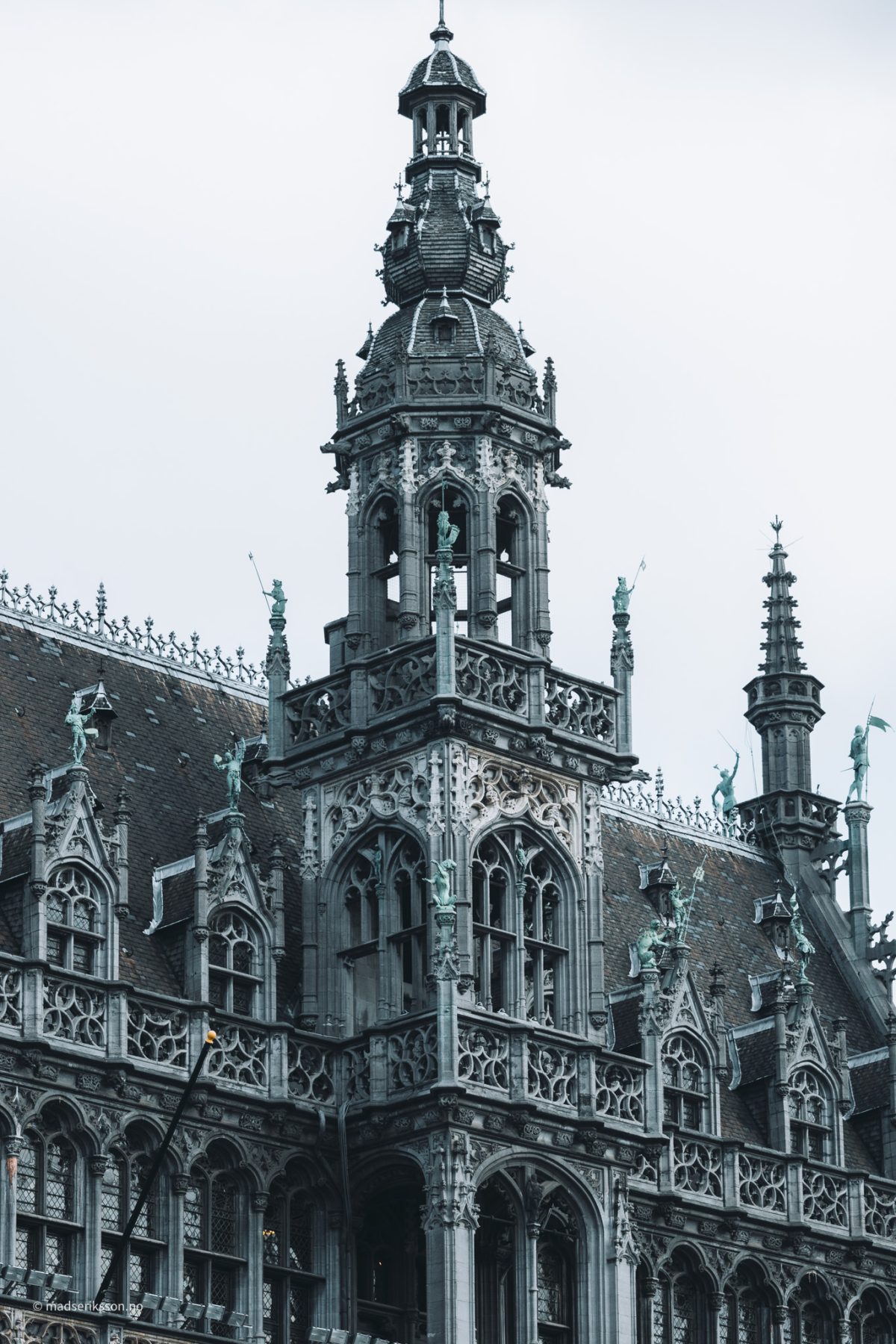
The Grand Place — Grote Markt in Dutch — is the central square of Brussels and one of the finest urban spaces in Europe. Its present form dates almost entirely from the four years between 1695 and 1699, when the city’s guilds rebuilt their headquarters in an explosion of Baroque competitive display following the French artillery bombardment ordered by Louis XIV, which destroyed most of the medieval city around it in three days of August 1695. The Hôtel de Ville — the Gothic city hall, built between 1402 and 1455, its 96-metre tower topped with a gilded figure of St. Michael — survived the bombardment and remains the only medieval structure on the square. Everything else is guild architecture from the 1690s: the Maison du Roi (rebuilt in neo-Gothic style in the 19th century) on the east side, and the ring of guild houses on the north, south and west — each identified by its golden symbol, from the Fox to the Swan to the King of Spain — that constitutes the most concentrated example of Flemish Baroque in existence. The square was inscribed as a UNESCO World Heritage Site in 1998. It is best seen at dawn, when the light falls at a low angle across the gilded facades, or late at night when the lights are on and the crowds have thinned.
Manneken Pis, two minutes southwest of the Grand Place on the corner of Rue de l’Étuve and Rue du Chêne, is Brussels’ most famous monument and its most deadpan: a bronze statue of a small boy urinating into a fountain basin, cast in 1619 by Jerôme Duquesnoy to replace an earlier stone version, standing 61 centimetres tall. The statue has been stolen, broken and replaced multiple times; the original is in the GardeRobe Museum. In the three centuries since its installation, various organisations, cities and countries have donated costumes for the statue to wear on special occasions — the wardrobe now exceeds 1,000 outfits — and the ritual of dressing and undressing him has become a minor civic ceremony. Why Manneken Pis became the symbol of a major European capital is a question that Brussels’ citizens regard as too obvious to answer.
Voltaire, Hugo, Rodin and Marx all passed through Brussels. Hugo called the Grand Place the most beautiful square in the world. Marx wrote the Communist Manifesto in the nearby Cygne tavern in 1847, in the year that the Galeries Saint-Hubert opened just around the corner.
The Galeries Saint-Hubert, opened in 1847, is the oldest covered shopping arcade in continental Europe — a glass-vaulted passage of 213 metres running between the Grand Place and the Rue de la Montagne, lined with chocolate shops, bookshops, the Théâtre Royal des Galeries and the cafés where Marx, Hugo and Baudelaire drank when they were in Brussels. The arcade is still functioning exactly as intended and is the correct place to buy Neuhaus pralines from the shop where the praline was invented in 1912. The Sablon — the antique dealers’ quarter a few minutes south — is the most refined part of the old city: the Place du Grand Sablon lined with chocolate shops and antique galleries, the weekend antique market under the Gothic walls of Notre-Dame du Sablon, and the Petit Sablon garden with its 48 bronze statues representing the medieval guilds.
Art Nouveau and the Museums — The City That Invented a Style
Victor Horta designed the first Art Nouveau building in the world in Brussels in 1893. The city he did it in also produced Magritte, Tintin and the finest collection of Bruegel in existence
Victor Horta (1861–1947) designed the Hôtel Tassel on Rue Paul-Émile Janson in 1893 and in doing so created what is widely considered the first fully realised Art Nouveau building in the world — one in which exposed iron structure, organic curvilinear ornament and the integration of every element (floor, wall, ceiling, staircase, furniture, light fittings) into a coherent artistic whole constituted an entirely new approach to architecture. The four Brussels buildings he designed that together form a UNESCO World Heritage Site — Hôtel Tassel, Hôtel Solvay, Hôtel van Eetvelde and the Horta Museum — can all be visited in a half-day walk through the Ixelles and Saint-Gilles neighbourhoods. The Horta Museum, in his own house and studio on Rue Américaine, is the most accessible: every original fixture, fitting, piece of furniture and surface has been preserved, and the staircase hall with its mirrored walls, painted ceiling and sinuous iron balustrade is one of the finest interior spaces in early 20th-century architecture.
The Royal Museums of Fine Arts of Belgium, in the Royal Quarter above the Sablon, hold the most important collection of Flemish and Belgian painting in the world. The Old Masters Museum contains the world’s largest collection of works by Pieter Bruegel the Elder — including The Census at Bethlehem, The Fall of Icarus and The Wedding Dance — alongside major works by Rubens, Van Dyck, Memling and Rogier van der Weyden. The Magritte Museum, in an adjacent 18th-century neoclassical building, holds over 200 works by René Magritte and provides the most thorough available account of his development from his early commercial illustration work to the mature Surrealist paintings that made him famous. The collection includes Le Thérapeute, Hegel’s Holiday and multiple versions of the iconic motifs — the bowler hat, the pipe, the green apple, the curtained eye — that became the visual grammar of Surrealism’s popular reception.
Horta’s staircase hall in the house on Rue Américaine has no straight lines. The iron curves, the walls curve, the mosaic floor curves. He was designing not a room but an organism — a building that grew rather than was built.
The Musical Instruments Museum (MIM), in the extraordinary Art Nouveau Old England building on Place Royale — a glass-and-iron department store designed by Paul Saintenoy in 1899, itself one of the finest Art Nouveau commercial buildings in Brussels — holds a collection of 8,000 instruments spanning every musical culture and period, from ancient Egyptian flutes to contemporary synthesisers. The audio guides play recordings of each instrument as you approach, which produces a peculiar and pleasing effect of the collection performing itself. The Belgian Comic Strip Centre (Centre Belge de la Bande Dessinée), in a glass-roofed Victor Horta–designed former department store near the Grand Place, is the best single resource for understanding why Belgium produced Tintin, the Smurfs, Lucky Luke, Spirou and a dozen other defining graphic characters of the 20th century.
Modern Brussels — The Expo, the European Project and the Battle
A 102-metre iron crystal built in 1958, the triumphal arch of a 50-year-old kingdom, the commission buildings of a 27-nation union, and the field where Napoleon ended his career 20 kilometres south
The Atomium was built as the centrepiece of the 1958 Brussels World’s Fair (Expo 58) — the first major World’s Fair after the Second World War, with the theme “A World View — A New Humanism”, held at a moment when atomic energy was still a symbol of hope rather than dread. Designed by engineer André Waterkeyn and architects André and Jean Polak, it consists of nine steel spheres each 18 metres in diameter, arranged in the shape of an iron crystal unit cell and connected by tubes containing escalators and walkways. At 102 metres, it was intended as a temporary structure for the Expo; it was kept, restored in 2006, and has become the defining modern landmark of Brussels. The spheres contain exhibition spaces, a restaurant and (in the top sphere) a panoramic view over the city and the forested hills of Brabant beyond. Mini-Europe, the miniature park adjacent to the Atomium, contains 350 scale models of European monuments and is best understood as a place for children or for adults in a specific mood.
The Cinquantenaire — Jubelpark in Dutch — is the neoclassical triumphal park built to celebrate the 50th anniversary of Belgian independence in 1880, though the iconic triple arch was only completed in 1905. The arch and its flanking wings house three museums: the Art & History Museum (with an outstanding ancient civilisations collection including significant Egyptian and Greek holdings and the finest medieval Flemish tapestries in existence), the Autoworld vintage car museum, and the Royal Museum of the Armed Forces and Military History. The surrounding park is one of the most pleasant in Brussels. The European Quarter — centred on the Schuman roundabout east of the old city — houses the Berlaymont building (European Commission), the Justus Lipsius and Europa buildings (European Council and Council of the EU), and the modernist grid of office buildings, hotels and restaurants that has grown up to serve them. It is architecturally undistinguished but represents, in its concentration of institutions, the most serious attempt at a pan-European governing structure in the history of the continent.
The Battle of Waterloo on 18 June 1815 ended 23 years of Napoleonic warfare and redrew the map of Europe. The battlefield is 20 kilometres from Brussels. The Lions’ Mound — 226 steps, 28 metres — looks across the fields where 50,000 men died in a single day.
Waterloo, 20 kilometres south of Brussels, is one of the most significant battlefields in European history: the site where the Duke of Wellington and Field Marshal Blücher’s Prussian forces defeated Napoleon Bonaparte on 18 June 1815, ending his Hundred Days and concluding the Napoleonic Wars. The battle cost approximately 50,000 casualties on both sides in a single day of fighting. The Mémorial de Waterloo visitor centre, opened in 2015 for the bicentennial, provides an immersive account of the campaign; the Lions’ Mound — a 28-metre earthwork erected on the spot where the Prince of Orange was wounded, with 226 steps to the summit and a panoramic view over the battlefield — gives the topographic context that makes the tactical decisions comprehensible. Victor Hugo, who visited the battlefield two years after the battle, used it as the basis for some of the most celebrated pages in Les Misérables.
«Brussels is the city that Europe keeps underestimating. It is not Paris, not Amsterdam, not a city that announces itself. But it is the place where Victor Horta invented a new architecture, where the praline was imagined in a pharmacy, where Magritte painted bowler hats and apples in a bourgeois house in Jette, and where the guildhalls of a Baroque city were rebuilt in four years after the French burned them down. It is also, quietly, one of the great beer and chocolate cities in the world, and the home of the frietkot — which is, for all the grandeur of what surrounds it, the institution that Brussels is most likely to be remembered for by the people who visit it once and come back.»
More in the same area
 CitiesBruges: The Canals That Made a Medieval Port — and Kept It
 CitiesThe World’s 10 Great Food Markets
 ArchitectureTen Buildings That Changed Their Cities — Modern Architecture Ranked on Impact, Not Image
 CitiesHiroshima and Miyajima: A preserved ruin and a shrine on the tideline
 CitiesSiem Reap — The City at the Gate of the Largest Temple on Earth
 CitiesThe World’s 10 Most Beautiful City Parks
City Frames · scroll-driven 3D
More cities in three dimensions
54 city guides open with a model built from open map data. Scroll, and the camera moves from landmark to landmark.
Departures · City Frames
Where to next?
| Time | Destination | Country | Status |
|---|
Live · position of the sun
Golden hour, right now
The low, warm light just after sunrise and just before sunset. These are the cities on the site where it is happening at this moment.