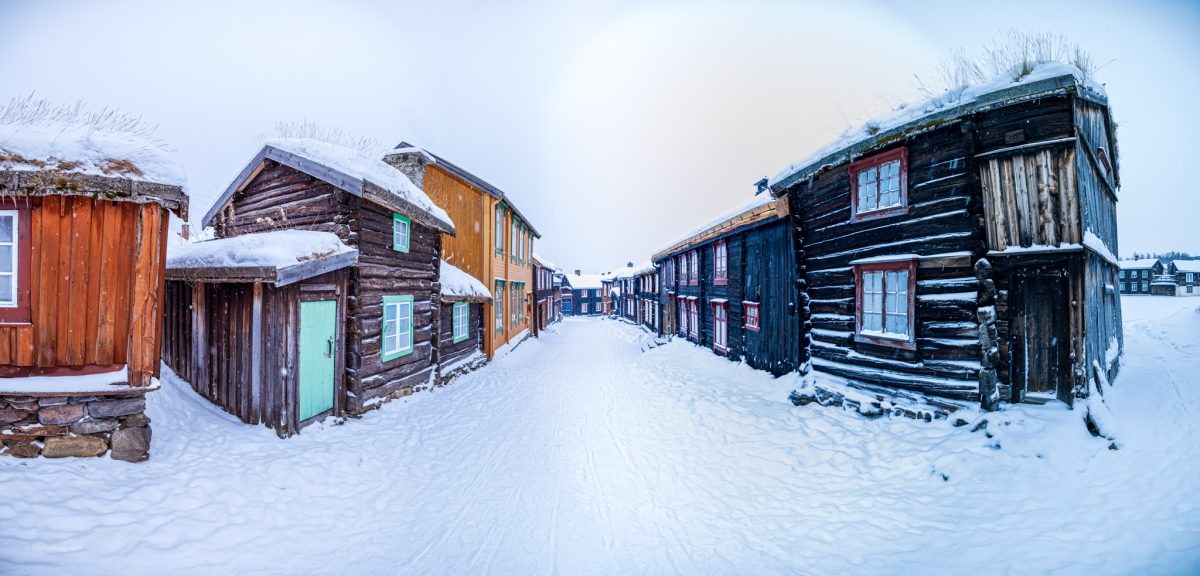
Røros is a copper town on a cold, open mountain plateau, more than 600 metres above sea level, where the thermometer once fell to −50.3 °C. For 333 years, from the 1640s until 1977, its mines produced some 118,000 tonnes of copper, and the miners, smelters and carters who worked them built a town entirely of wood — about 2,000 one- and two-storey houses along a handful of streets that run up the hillside towards a white stone church. Burned by Swedish troops in 1679 and rebuilt, the town has kept its shape ever since. In 1980 it became one of the first places in the world to be inscribed on the UNESCO World Heritage List, and in 2010 the listing was extended to the whole landscape that once fed the copper works.

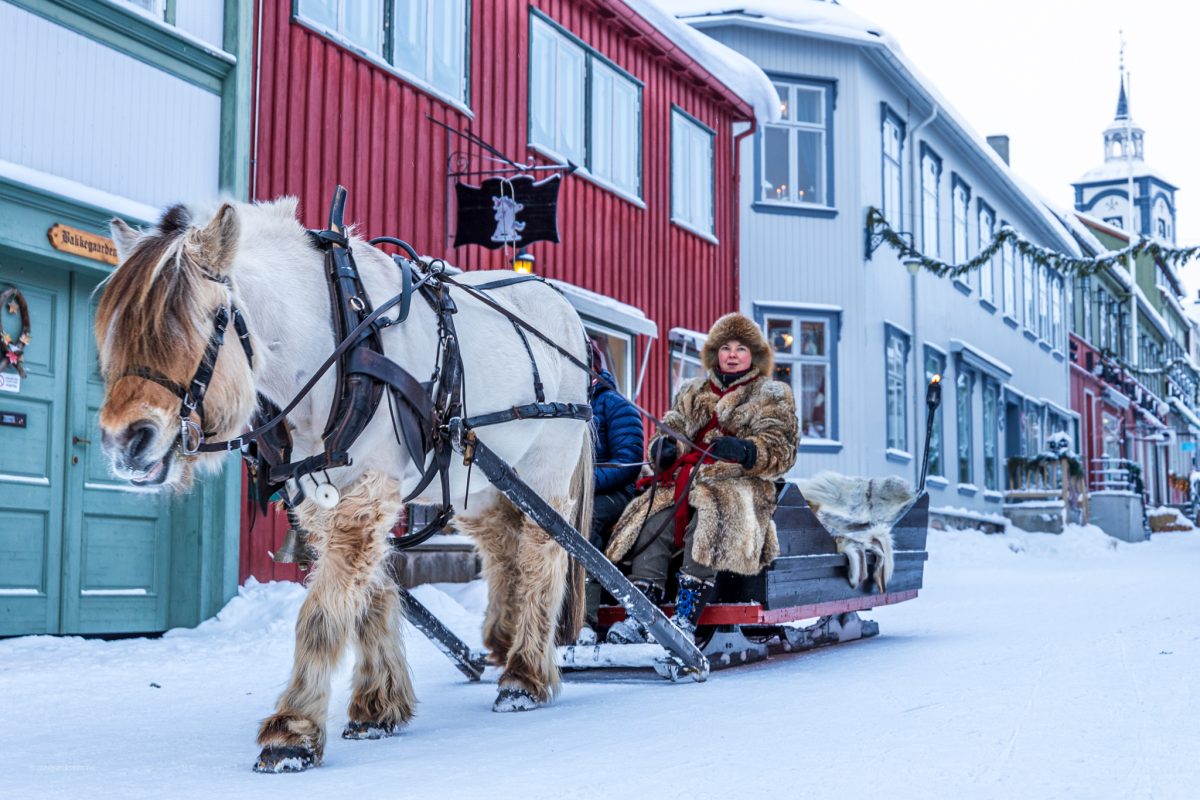
The story begins in 1644, when Lorentz Lossius, a mining official, took out rights to a copper deposit in the mountains here and began trial mining. A local farmer and reindeer herder, Hans Aasen, pointed him towards a richer deposit at Storvola, and in 1645 Lossius founded the works that became the Røros Copper Works. The following year the Danish-Norwegian Crown granted the company sweeping privileges: within a wide circle around the town — the Circumference — the forests, rivers and farmers’ labour were bound to serve the copper works. Charcoal for the smelters, timber for the mines and transport for the ore and copper all came from this hinterland, and in winter, when the bogs and lakes froze, heavy loads were hauled on sledges along a route of frozen lakes and rivers between November and May.
That whole system is what UNESCO now protects. The World Heritage Site, renamed Røros Mining Town and the Circumference when it was extended in 2010, includes the town itself, the mining landscapes around it, the smelter site of Femundshytta, the winter transport route and the Circumference as a buffer zone. The town is not a museum, though. Around 3,900 people live in Røros, the old houses are homes, shops and workshops, and the streets are as busy with local life in February as in July.
How to approach Røros
This guide covers Røros in three parts: the copper works and the mines, from the smelting house and the slag heaps in town to the mines out on the plateau; the wooden town and its church, the streets that make up one of the most complete historic townscapes in Scandinavia; and Røros through the seasons, from the great winter market of Rørosmartnan to the cold, the light and the writer who put the miners’ lives into Norwegian literature.
Røros in 3D
Røros stands at about 630 m on an open plateau in Trøndelag, close to the Swedish border, and grew up around a copper works founded in 1644. Mining continued for 333 years until 1977 and produced about 118,000 tonnes of copper. The wooden town, burned by Swedish troops in 1678 and 1679 and rebuilt on the same plan, was inscribed on the UNESCO World Heritage List in 1980; the listing was extended to the surrounding landscape in 2010.
The UNESCO town, Røros in Norway.
Smelthytta
The smelting house stands at the top of the town beside the river Hyttelva, whose water powered the bellows and hammers of the copper works. Copper was smelted here until the smelter burned in 1953, after which the ore concentrate was sent to Sweden. The present Smelthytta, rebuilt in 1988, is the main building of the Røros Museum.
The slag heaps
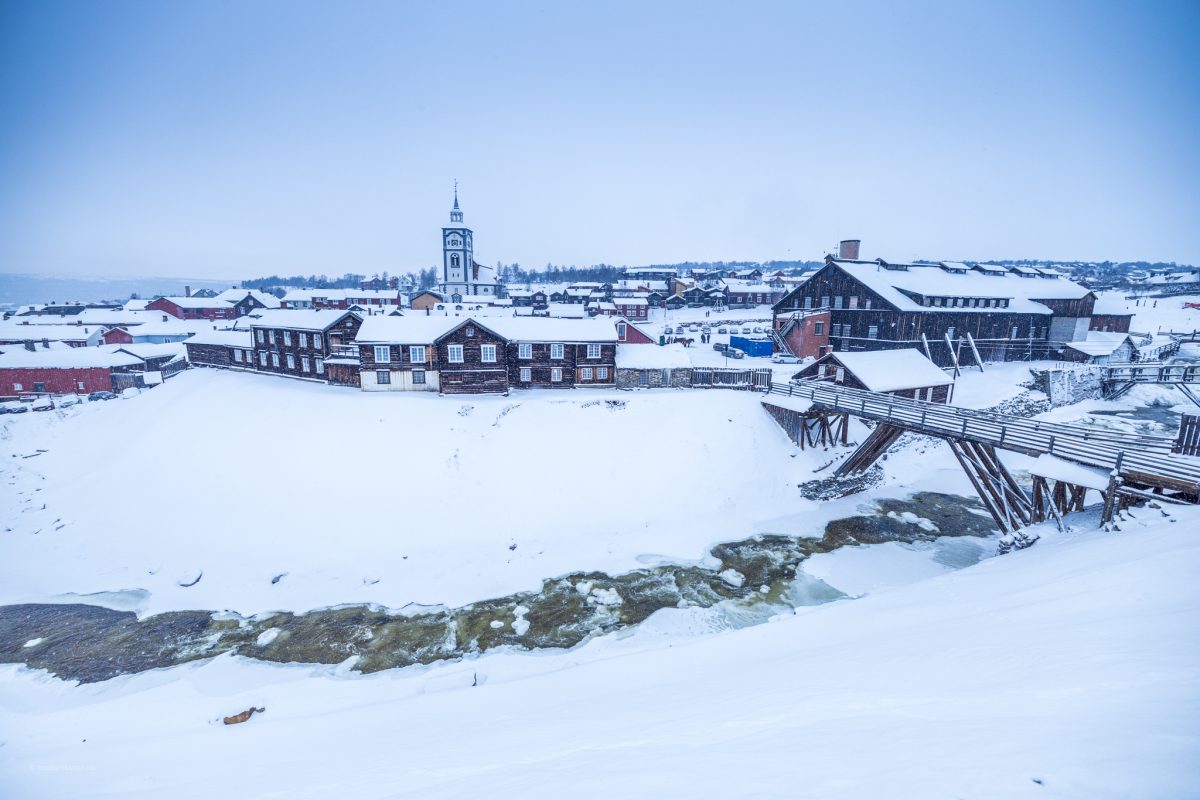
Behind the smelting house rise Slegghaugan, the heaps of black and grey slag left by more than three centuries of smelting. They are part of the World Heritage Site, and the low miners' cottages along Sleggveien still stand at their foot. From the top there is a view back over the timber roofs to the church tower.
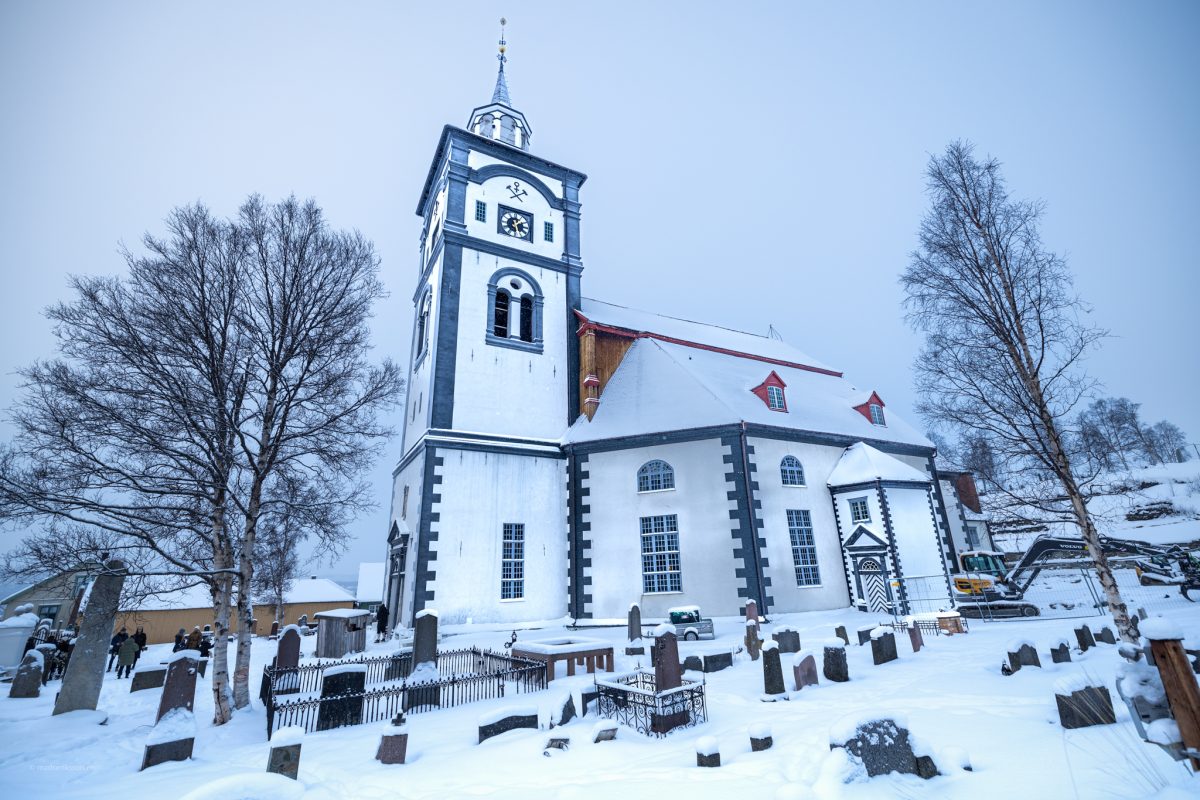
Røros Church
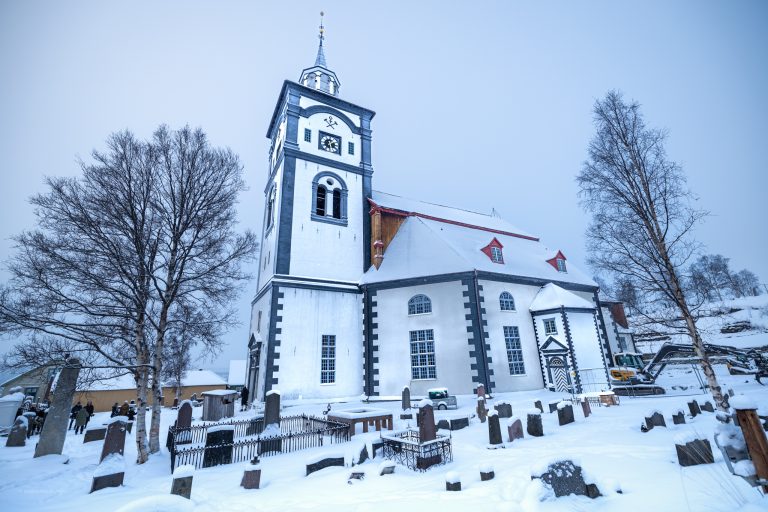
Røros Church, built of whitewashed stone between 1779 and 1784 to plans by Peter Leonard Neumann of Trondheim, replaced a smaller church from 1651. Paid for by the copper works, it seats about 1,600, far more than the town's population, and is the fifth-largest church building in Norway. The inscription over the door dedicates it to the glory of God and the adornment of the mining town, Bergstadens Ziir.
The Røros Church in Norway.
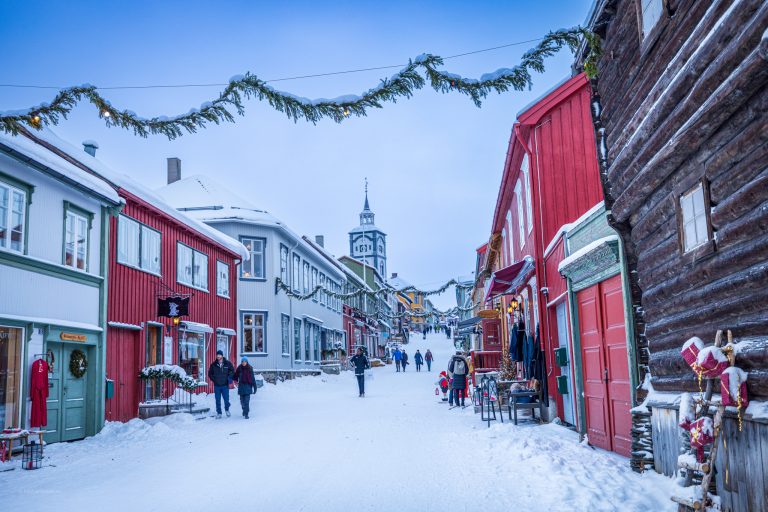
The wooden streets
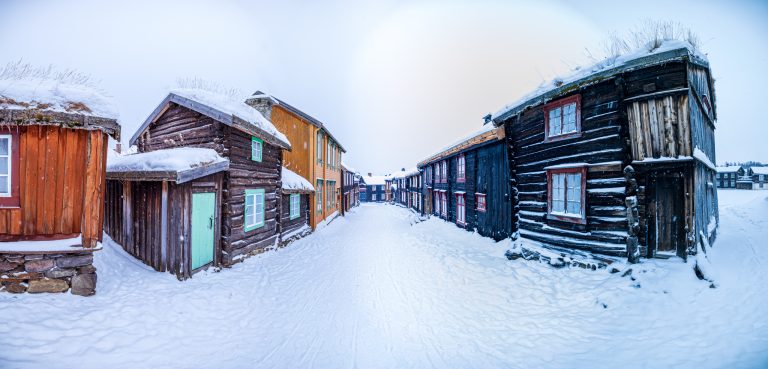
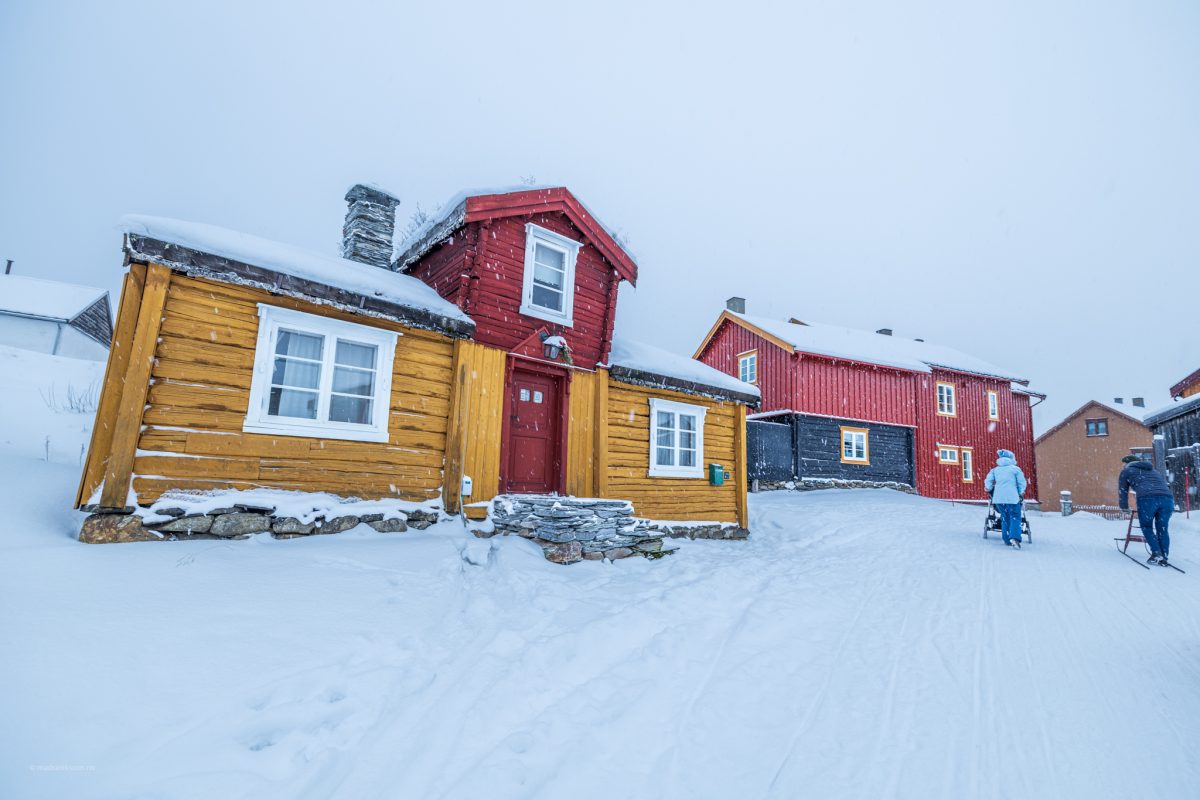
Two main streets, Bergmannsgata and Kjerkgata, run down the slope from the smelting house and the church, with the larger houses of officials and merchants along them and the miners' smaller dwellings in the lanes between. Many of the roughly 2,000 timber buildings are built around courtyards with barns and stables, as mining families also kept animals and farmed on a small scale.
Røros in Norway
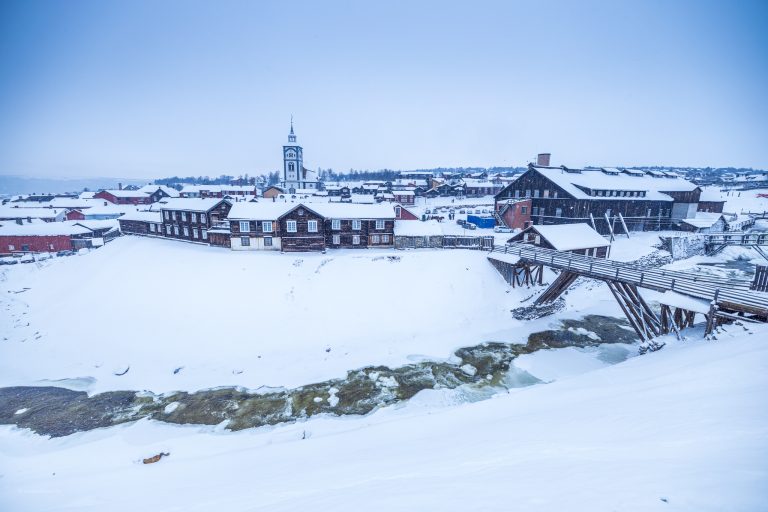
Along the river
The Hyttelva runs through the upper part of the town past the smelting house, separating the slag heaps from the streets of dark log and painted houses. Røros is one of the coldest towns in Norway, with a record low of −50.3 °C in January 1914, and its winter market, Rørosmartnan, has been held every February since 1854.
The town Røros, Norway
The station and Falkberget
The railway reached Røros when the Røros Line between Hamar and Trondheim was completed in 1877, and the station stands at the foot of the old town. A statue beside it commemorates Johan Falkberget (1879–1967), who worked in the mines until 1906 and wrote the novels of mining life that made Røros known across Norway.
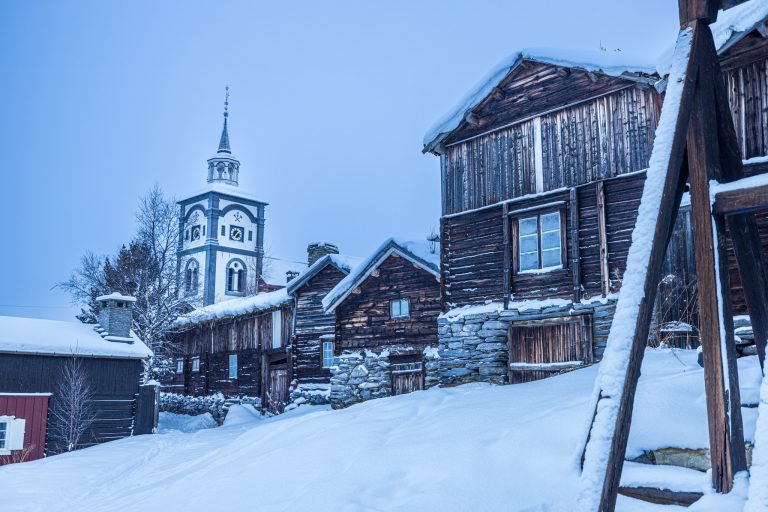
The mining town at night
The town is still laid out as the bergstad, the mining town, of the 17th century, from the station at its foot to the church and the smelting house at its top. Around 3,900 people live in the protected wooden houses, which remain homes, shops and workshops rather than a museum.
Røros in Norway
3D model © 2026 madseriksson.no · Photographs © madseriksson.no. Buildings and heights: © OpenStreetMap contributors (ODbL), via OpenMapTiles. Ground imagery: Sentinel-2 cloudless 2023 by EOX IT Services GmbH (contains modified Copernicus Sentinel data 2023; CC BY 4.0). Heights are approximate where OpenStreetMap has no measured value; sun positions are approximate.
The Copper Works — 333 Years of Mining on the Mountain
The smelting house at the top of the town, the black slag heaps beside it and the mines out on the plateau where the ore came from
The ore did not lie under the town but out on the mountains to the north-east, where a succession of mines was opened over three centuries. The Storwartz field, worked from 1645, was the heart of the operation: its richest mine, Nye Storwartz, discovered in 1708, produced around 40,000 tonnes of copper on its own, and the field as a whole about 65,000 tonnes. Later finds such as Christianus Sextus, discovered in 1723, and Kongens gruve, in operation from 1736, kept the works going as older mines were exhausted. Ore was hauled from the mines to the smelters in town, much of it by sledge in winter along the frozen transport routes. By the 20th century the works could no longer compete, and in 1977 mining at Røros came to an end after 333 years.
The industrial heart of the town sits at its top end, around Malmplassen, the ore yard. Here stands Smelthytta, the smelting house, now the main building of the Røros Museum, with exhibitions on how ore became copper and how the copper works shaped the lives of everyone in the district. Around it rise the slag heaps, Slegghaugan — great black and grey mounds of waste from centuries of smelting that give the upper end of Røros its strange, almost volcanic landscape. They can be walked over, and from the top there is a view back over the rooftops to the church tower.
The slag heaps are as much a part of the World Heritage as the painted houses: three centuries of industrial waste, piled up beside the smelting house, that tell the story of Røros more bluntly than any museum display.
To see where the ore was actually won, the place to go is Olavsgruva, a mine out on the plateau east of the Storwartz field, which has been open to visitors on guided tours since 1979. The tour goes underground into the old workings, and it is cold in the mine in every season, so warm clothing and sturdy shoes are sensible even on a summer day. Tours run on set days, and booking in advance is recommended. The Røros Museum, which runs both Smelthytta and Olavsgruva, is open almost all year round and also offers guided walks through the town.
The Wooden Town — Streets Built by Miners and Merchants
How a company town of timber houses survived fire, war and modernisation, and the stone church that towers over it
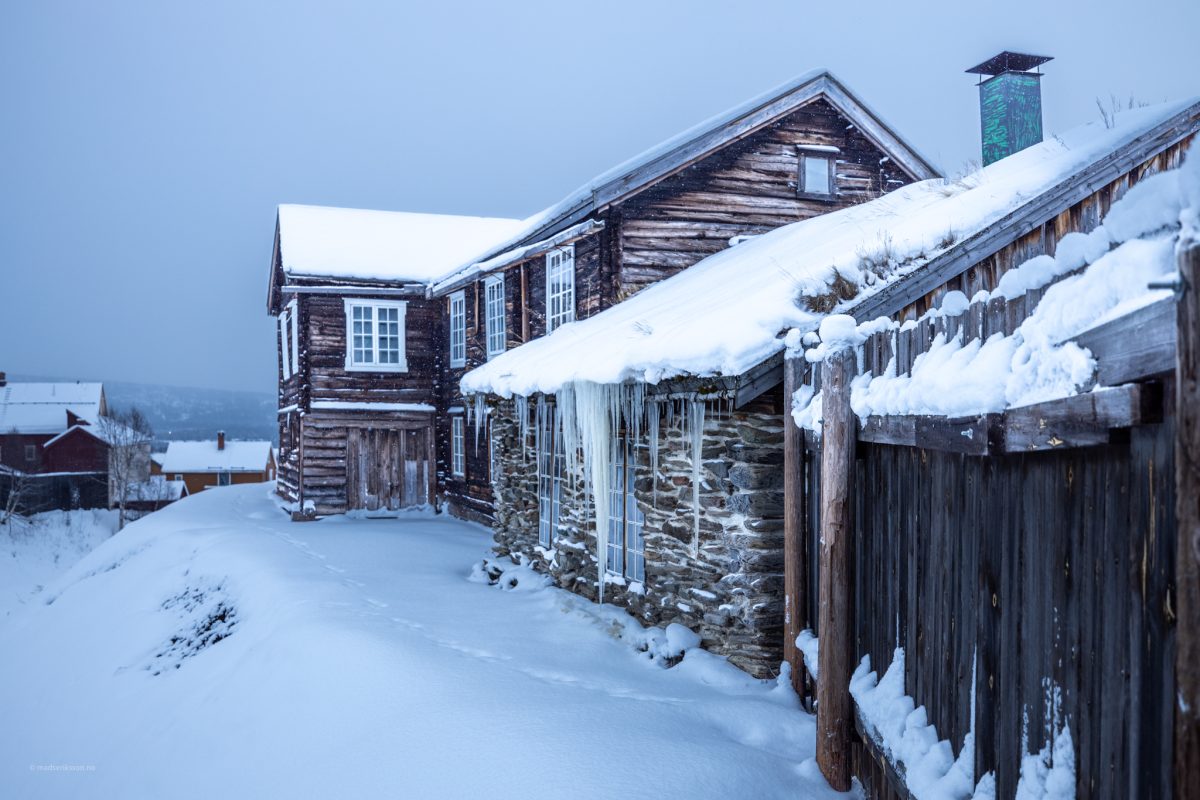
Røros was laid out as a bergstad, a mining town, with two main streets running down from the smelting house and a grid of lanes between them. In 1679, during the Scanian War, Swedish troops burned the town, and it was rebuilt on the same plan. Swedish soldiers came again in 1718–19, during the campaign that ended in the disastrous retreat across the mountains known as the Carolean death march, an episode the town now retells in the outdoor theatre production Elden. What survived all this is a townscape of about 2,000 low timber buildings, many of their façades left untreated or tarred and weathered to a deep brown-black, which give the streets an older, almost medieval look than their 18th- and 19th-century dates would suggest.
The two main streets, Bergmannsgata and Kjerkgata, hold the larger houses of officials and merchants, while the smaller streets on the slopes were where the miners lived. But much of Røros lies behind the street fronts, in courtyards ringed by outbuildings, because the mining families also farmed on a small scale to get by in a harsh climate. The buildings are protected, many of them listed, yet they remain in everyday use as homes, shops and workshops. Walking the side lanes is the best way to understand how people lived here.
Over the door of Røros Church is the inscription “Til Guds Ære og Bergstadens Ziir” — to the glory of God and the adornment of the mining town. The copper works paid for it, and its emblem is carved on all four sides of the tower.
The church stands at the top of Kjerkgata, a whitewashed stone building that rises high above the timber roofs and can be seen from every approach to the town. Work began in 1779 to plans by Peter Leonard Neumann of Trondheim, and it was consecrated on 15 August 1784, replacing a smaller church from 1651. Inside, the baroque interior has room for about 1,600 people — far more than the population of the town, because miners and farmers came from the whole district. It is the fifth-largest church in the Church of Norway. Its tower, raised by the master builder Svend Aspaas and crowned with a lantern, became the symbol of the mining town.
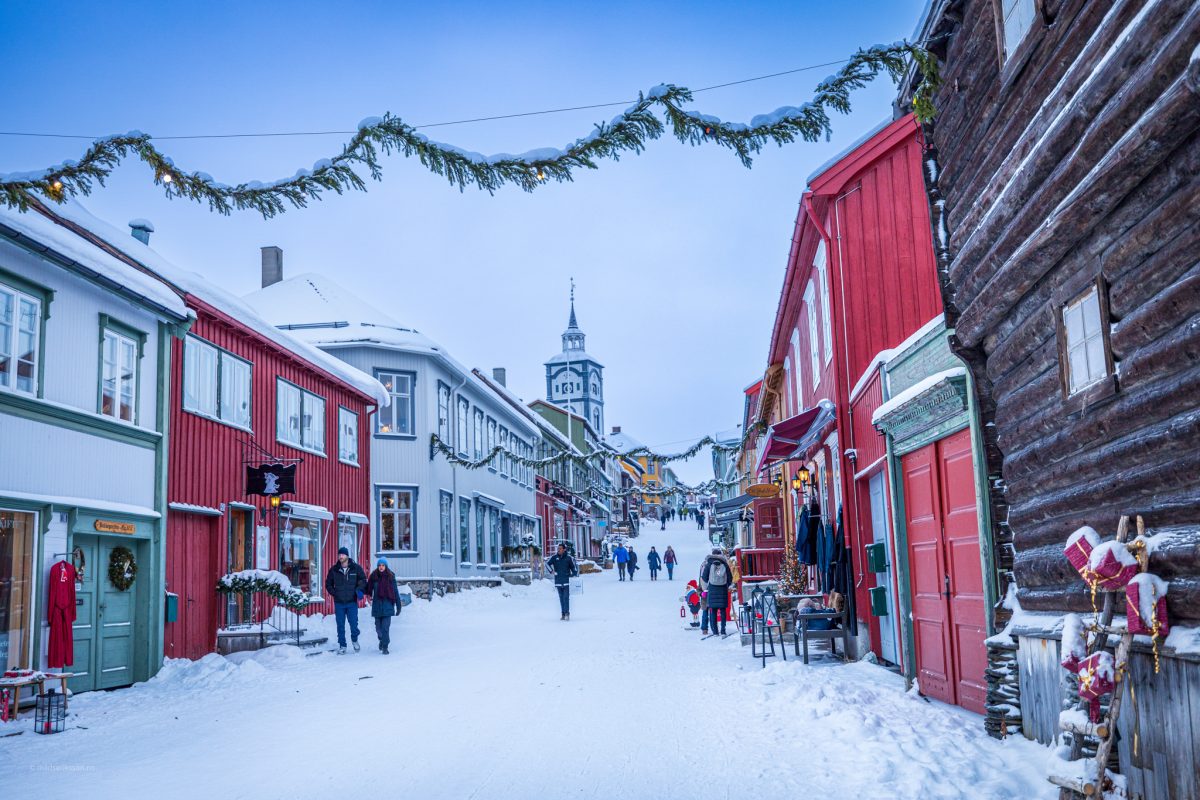
Røros Through the Seasons — Frost, Markets and Miners’ Stories
Why the coldest town in southern Norway is at its liveliest in February, and the author who gave its miners a voice
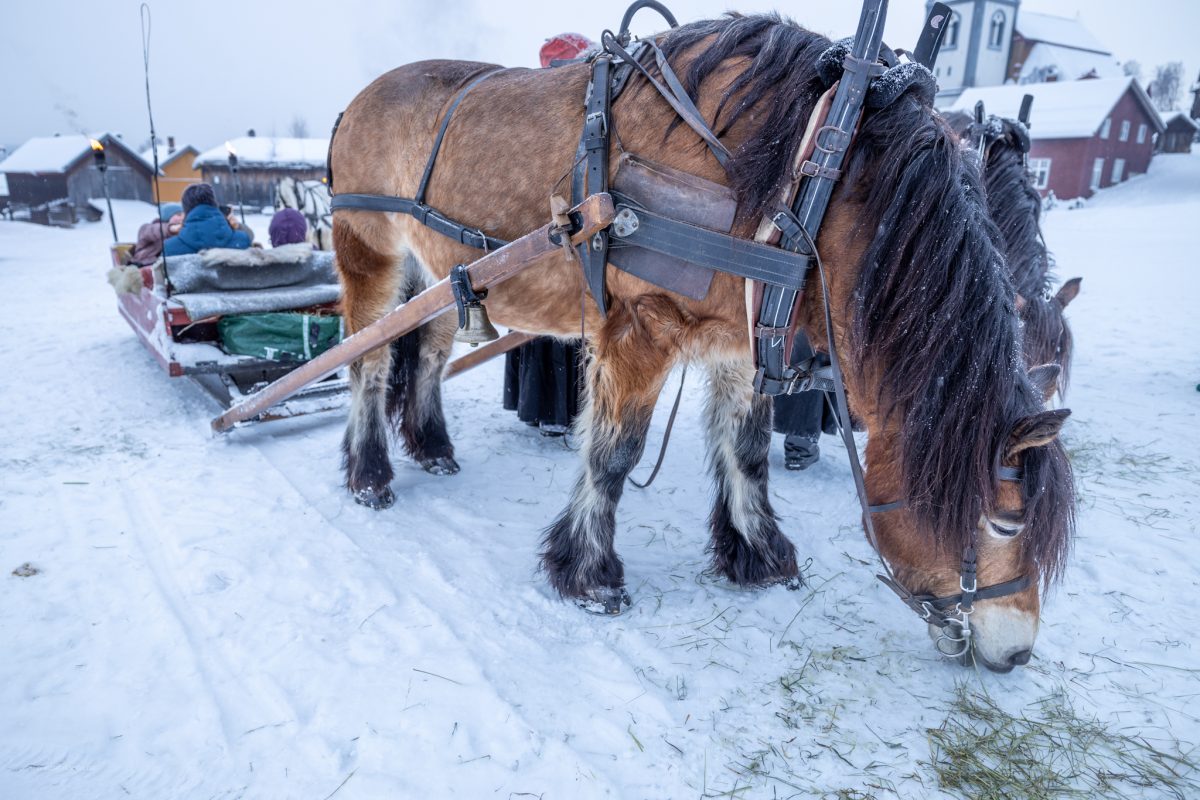
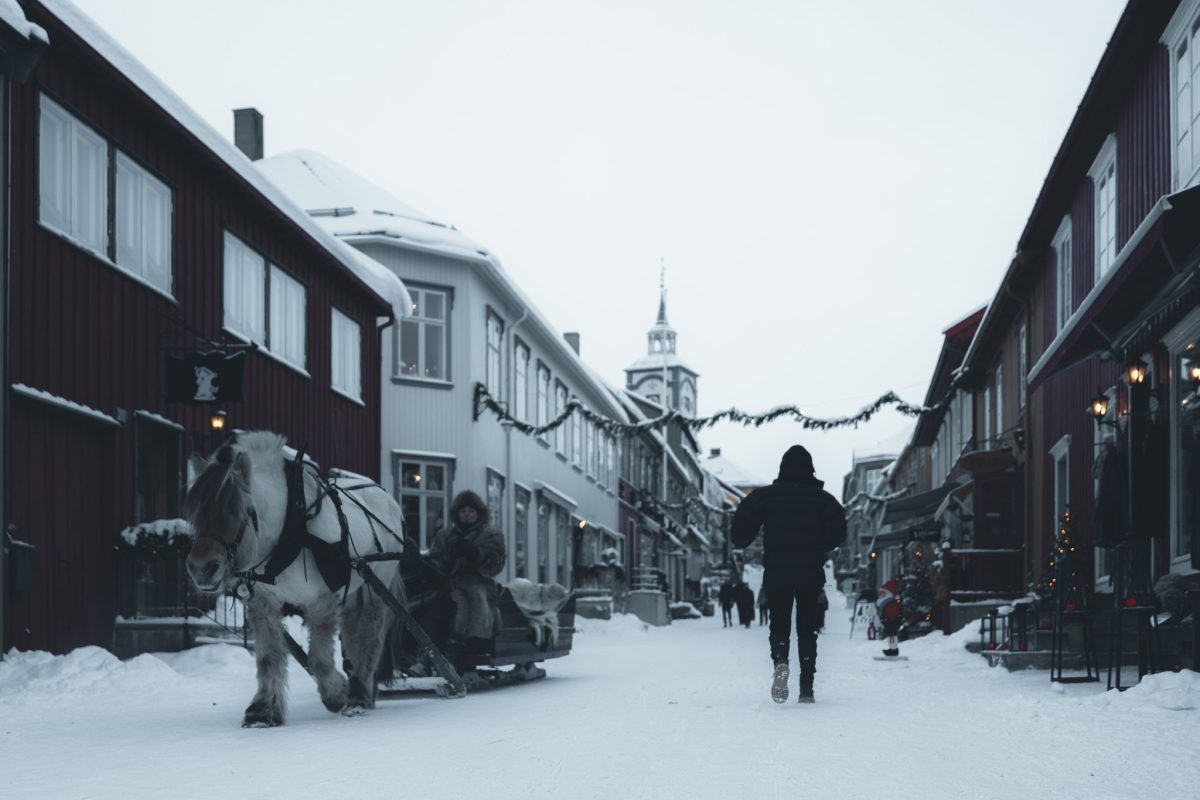
Røros lies at around 630 metres on an open plateau close to the Swedish border, and it is one of the coldest towns in Norway. Winter temperatures regularly fall to −20 °C, and in January 1914 the thermometer recorded −50.3 °C, still the lowest temperature ever measured in the southern half of the country. That is also when the town is at its most atmospheric, with snow on the roofs and smoke rising from the chimneys. The great event of the year is Rørosmartnan, a winter market first held in 1854 under a royal resolution of the previous year. It opens on a Tuesday in late February and runs until the Saturday, and for those five days some 70,000 to 80,000 people crowd into the town for stalls, music and food — accommodation is booked out long in advance.
The second winter highlight is the Christmas market in December, which has made Røros one of the most popular Christmas destinations in Norway. In summer the town is greener and quieter, and the plateau around it opens up for walking; this is also the season for local food tours. Røros has built a name for its food: the organic dairy in the town makes tjukkmjølk, a thick fermented milk, and small farm dairies in the surrounding valleys produce award-winning cheeses. Many of the old buildings in the centre now house cafés, shops and craft workshops.
Johan Falkberget worked in the mines until he was 27, then spent the rest of his life writing about them. His novels did for Røros what no guidebook can: they turned the miners and carters into people.
Johan Falkberget was born in 1879 at a farm in Rugldalen, just outside the town, grew up in the mining community and worked as a miner until 1906. His breakthrough came in 1923 with Den fjerde nattevakt (The Fourth Night Watch), a historical novel set around the mines in the early 19th century, and his trilogy Christianus Sextus, named after the mine and set in the 1720s, is a monument to the lives of the workers at the bottom of the copper works’ hierarchy. He was nominated for the Nobel Prize in Literature and died in 1967. His home at Ratvolden, a short distance from Røros, where he lived from 1922, is now a museum — a good complement to Smelthytta and Olavsgruva for anyone who wants the human side of the copper town’s story.
«Røros is what remains when an industry leaves but the town it built stays put. The mines are closed, the smelter is a museum, and the slag heaps are grassed over, yet the wooden streets are still lived in, the church still fills for Christmas, and the winter market still brings tens of thousands of people to a cold plateau in February. Come in winter if possible, when the snow lies on the roofs and the air is so cold it crackles. Walk up Kjerkgata to the church, out to the slag heaps behind Smelthytta, and look back over the town that copper built.»

More in the same area
 CitiesBergen: The Gateway to the Fjords
 Train travelThe World’s 10 Great Railway Journeys
 NatureThe World’s 15 Most Spectacular Waterfalls
 FjordsGeirangerfjord: Waterfalls, Ledge Farms and the Roads Above
 GlaciersEurope’s 10 Greatest Glaciers — And How to Experience Them
 FjordsRimstigen: the old cattle path up the walls of the Nærøyfjord
City Frames · scroll-driven 3D
More cities in three dimensions
54 city guides open with a model built from open map data. Scroll, and the camera moves from landmark to landmark.
Departures · City Frames
Where to next?
| Time | Destination | Country | Status |
|---|
Live · position of the sun
Golden hour, right now
The low, warm light just after sunrise and just before sunset. These are the cities on the site where it is happening at this moment.