Kinosaki Onsen is a hot-spring town built around a single idea: that bathing is something done in public, on foot, from one bathhouse to the next. Seven public baths line a willow-fringed river and the lanes around it, and guests walk between them in cotton yukata and wooden sandals, often well after dark. Legend dates the springs to the year 720, when a Buddhist monk is said to have prayed them into existence after a thousand days of chanting. The town that stands today was largely rebuilt after an earthquake and fire in 1925, and its water has been piped from a single central system since 1972.

Kinosaki lies on the Sea of Japan side of Hyōgo Prefecture, in the north of the Kansai region, two and a half to three hours by train from Kyoto, Osaka and Kobe. Since 2005 it has formally been part of the city of Toyooka, but it remains a small, self-contained place: a narrow valley where the Otani River runs down to the larger Maruyama River, with the station at one end and a ropeway up the wooded mountain at the other. Around eighty inns and hotels are packed into that strip, and in 2018 the town received around 630,000 visitors.
What sets Kinosaki apart from most Japanese hot-spring resorts is that its baths are not hidden inside hotels. The public bathhouses, known as sotoyu, are spread through the town, between 100 and 400 metres apart, and the local custom is to make a round of them — sotoyu meguri — dressed in the yukata and geta sandals that the inns provide. Many guests barely use the bath in their own ryokan. The writer Shiga Naoya stayed here for three weeks in 1913, and his short story about the visit made the town part of modern Japanese literature.
How to approach Kinosaki Onsen
This guide covers Kinosaki in three parts: the town and its history, from the legend of its founding monk to the rebuilding after the earthquake of 1925; the seven public baths and the etiquette of moving between them; and the rest of a stay — the ropeway and temple on Mount Daishi, the ryokan, and the winter crab that brings many visitors to the coast.
Kinosaki Onsen in 3D
Kinosaki Onsen lies in a narrow valley on the Sea of Japan side of Hyōgo Prefecture, where the Otani River runs down to the broader Maruyama River. The station stands at the eastern end of the town and the ropeway up Mount Daishi at the western end, with seven public bathhouses strung along the valley between them. A former town, Kinosaki has been part of the city of Toyooka since 2005.
Arriving at Kinosaki
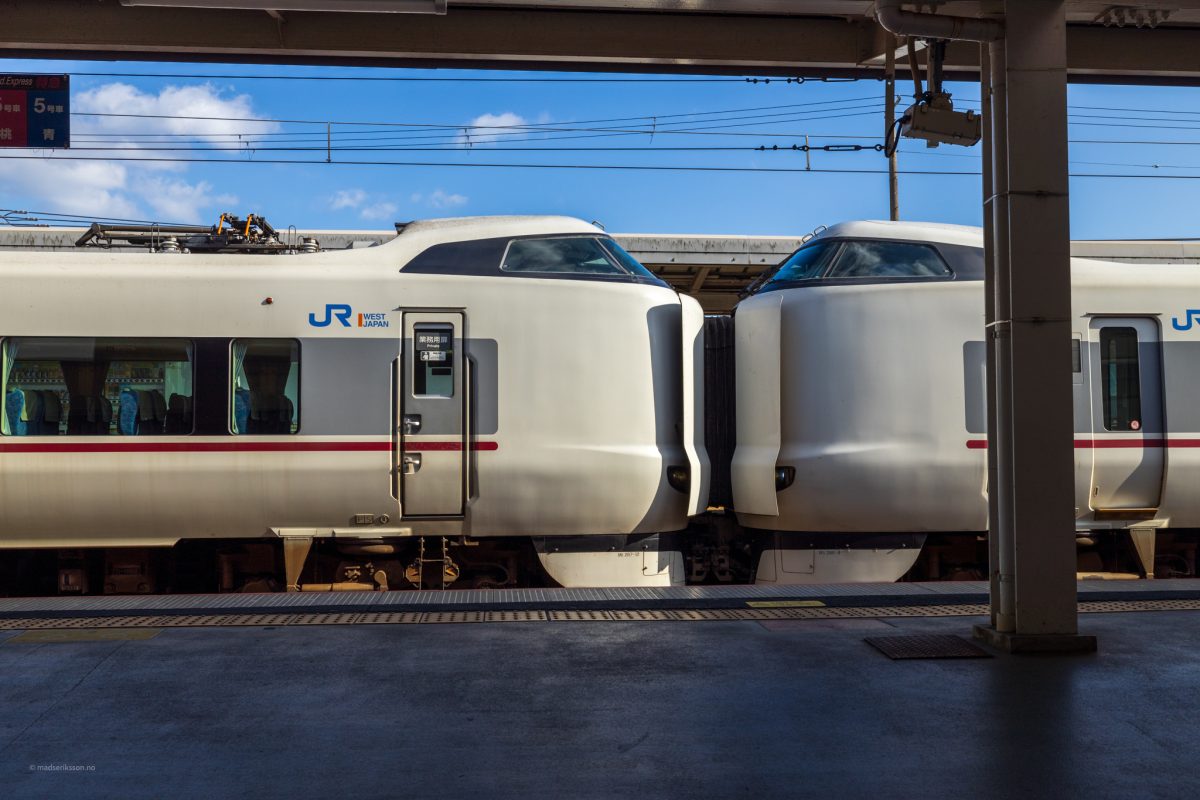
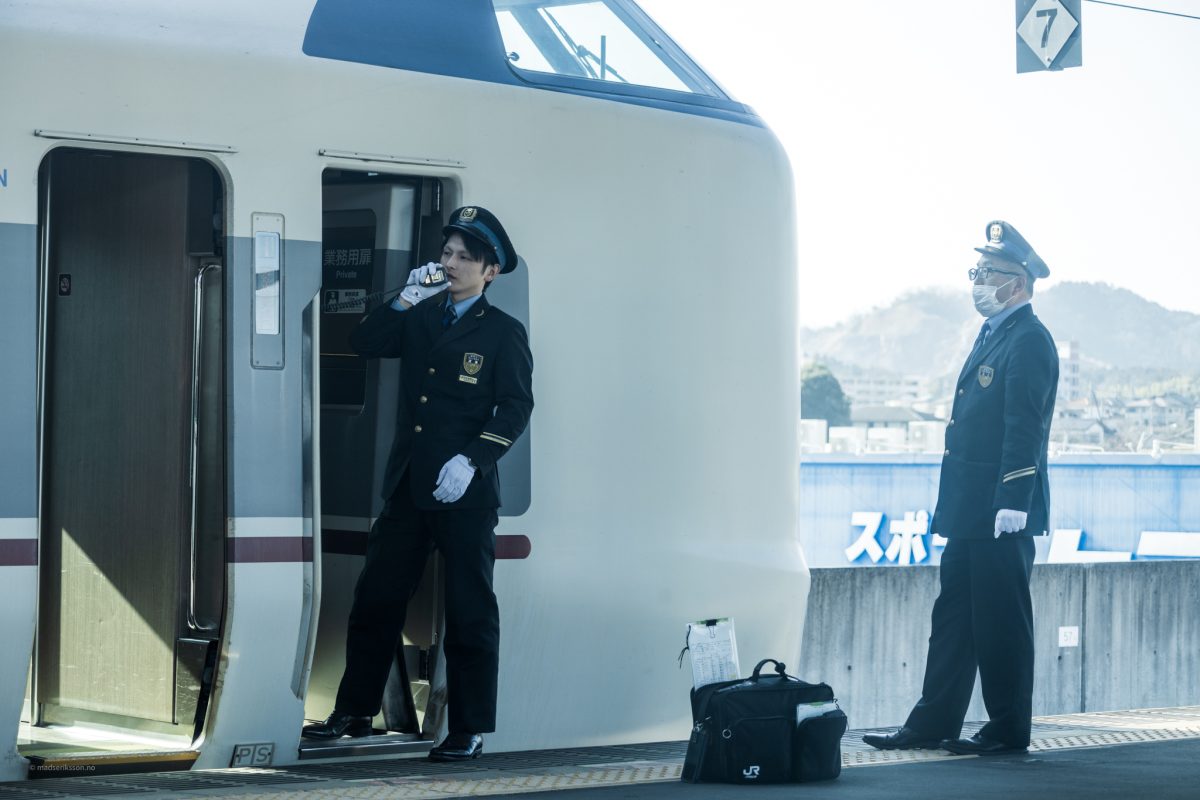
Kinosaki Onsen Station is on the JR San'in Main Line, served by limited express trains from Kyoto, Shin-Osaka and Osaka in two and a half to three hours. Sato no yu, the first of the seven public baths, stands beside it, and from here to Kōno-yu at the far end of the town is a walk of 15 to 25 minutes.
Read more: Kyoto: A Timeless Journey Through Japan's Cultural Heart
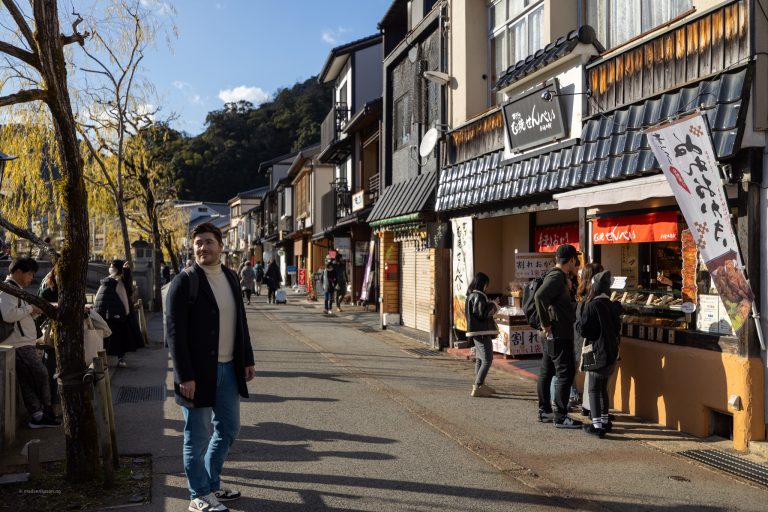
The willow-lined river
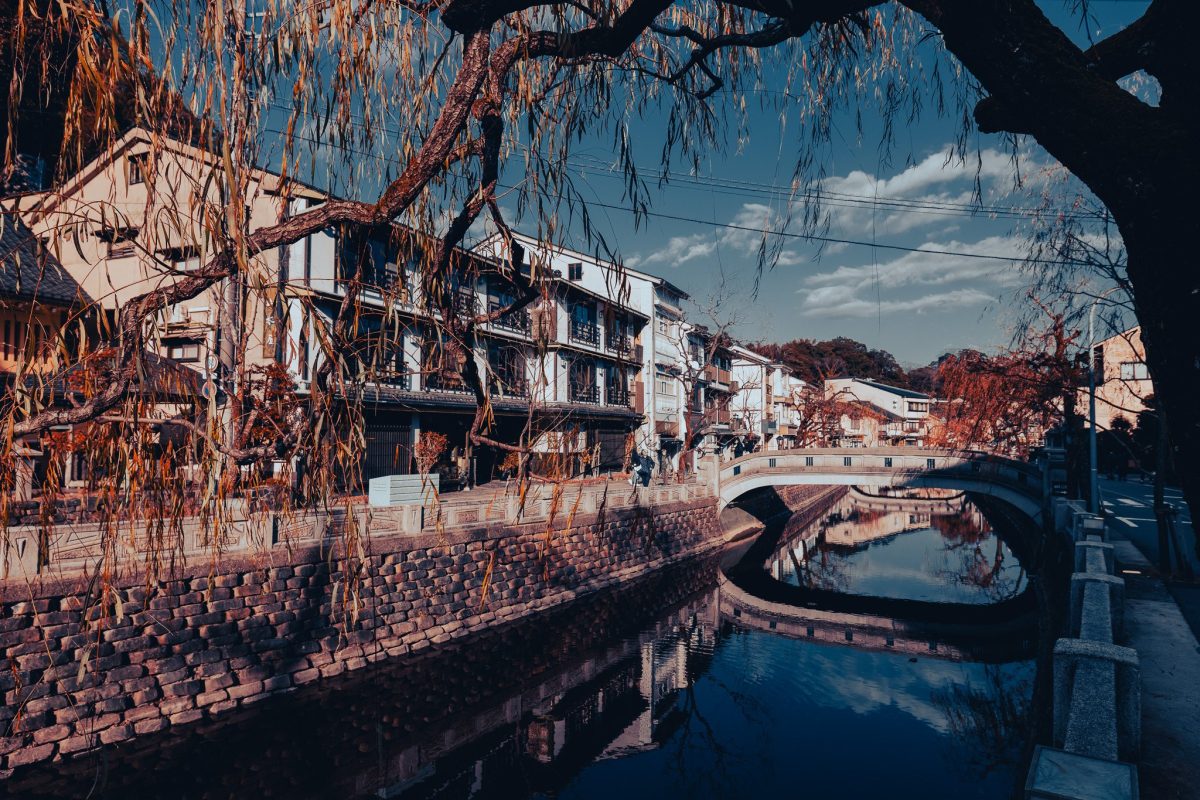
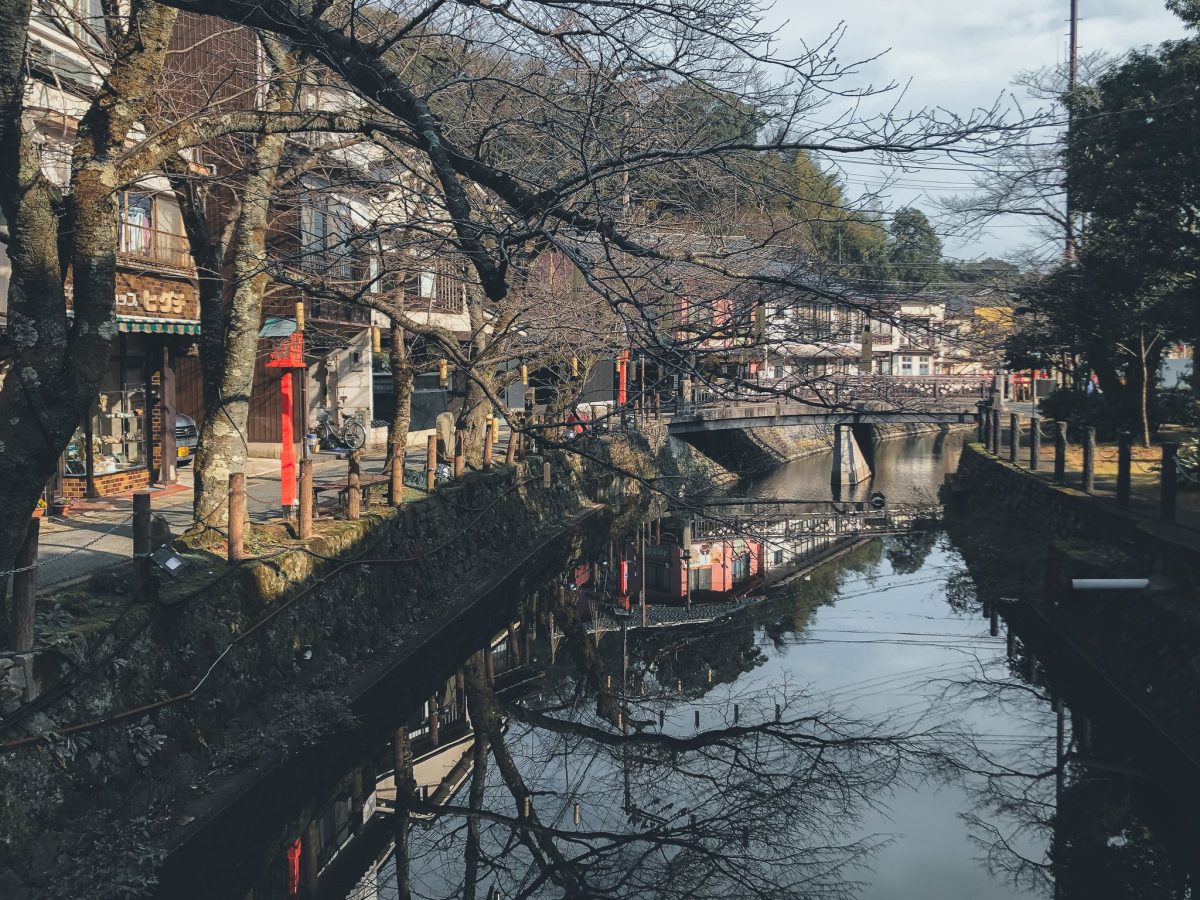
The Kita-Tajima earthquake of 23 May 1925 and the fires that followed destroyed most of Kinosaki, and the town was rebuilt around the Otani River, lined with willows and crossed by stone bridges. Many of the wooden three-storey inns along it date from that rebuilding. In 2018 the town, with around 80 inns and hotels, received some 630,000 visitors.
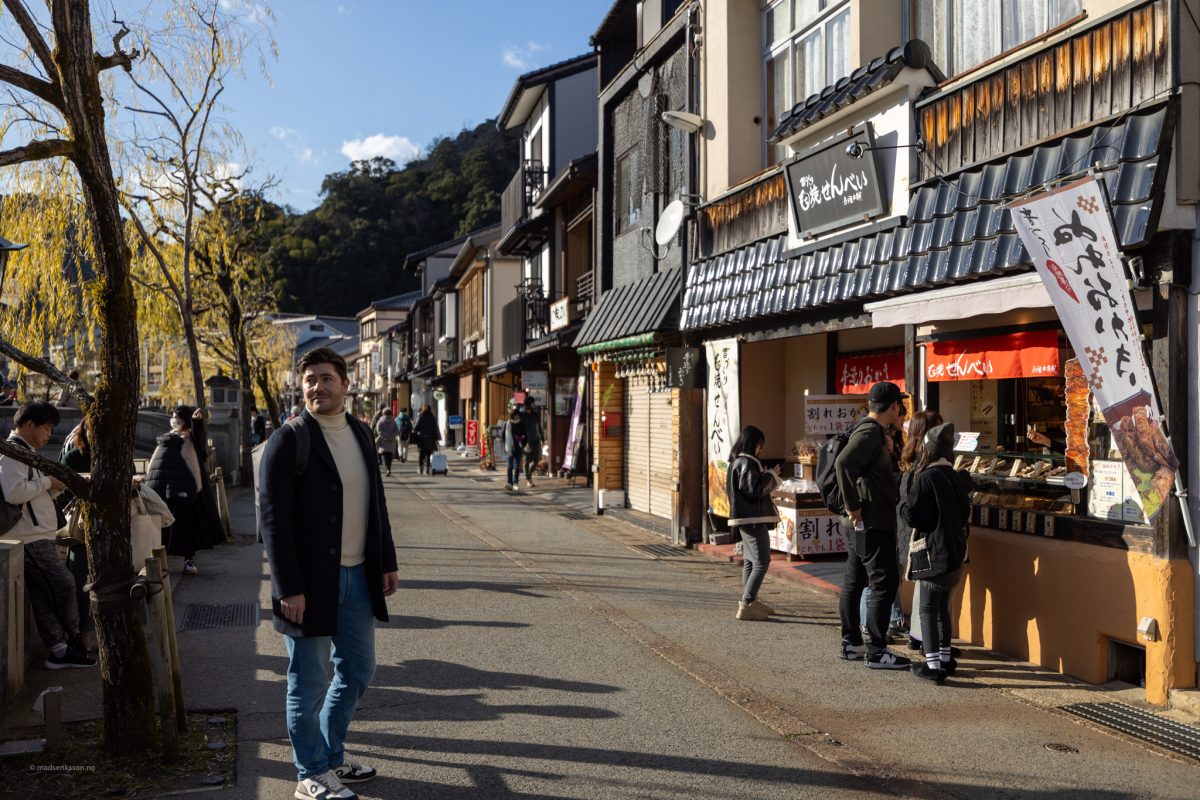
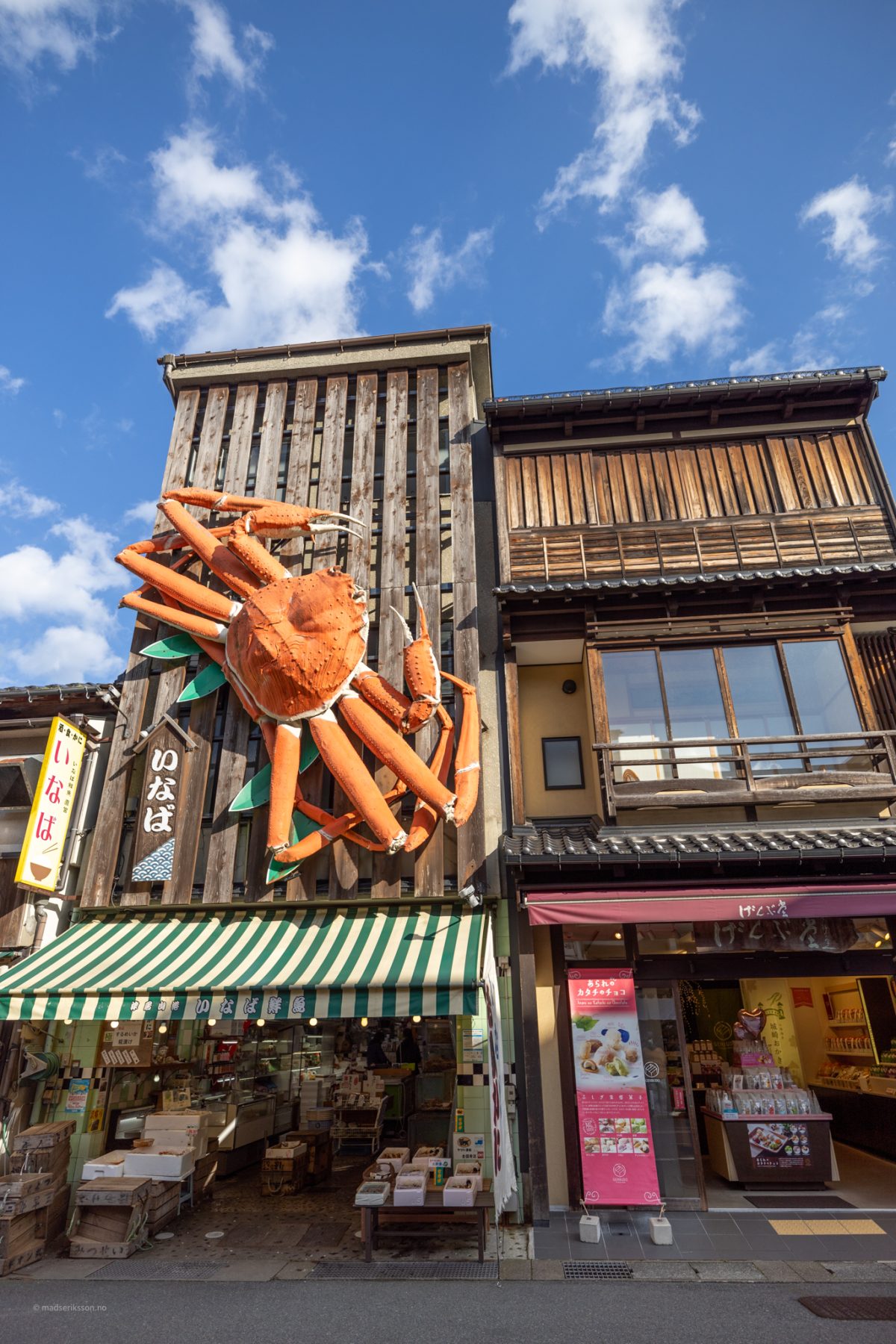
A visitor on the main street of Kinosaki Onsen, lined with souvenir shops and willows in winter sun
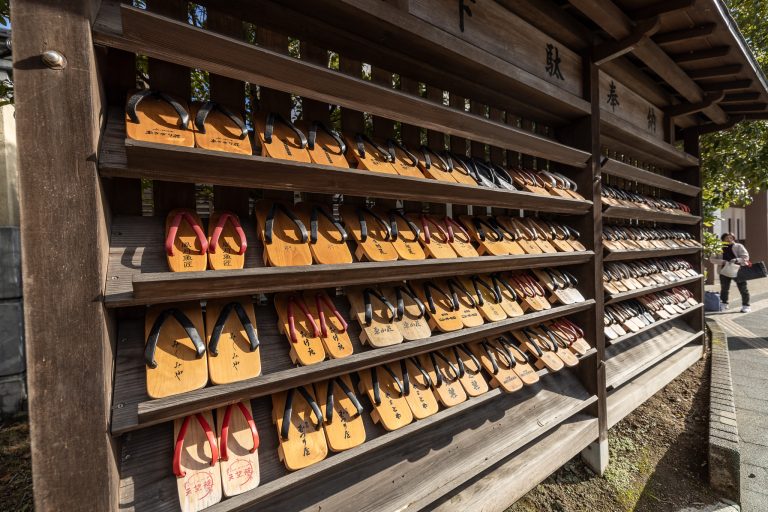
Walking the baths
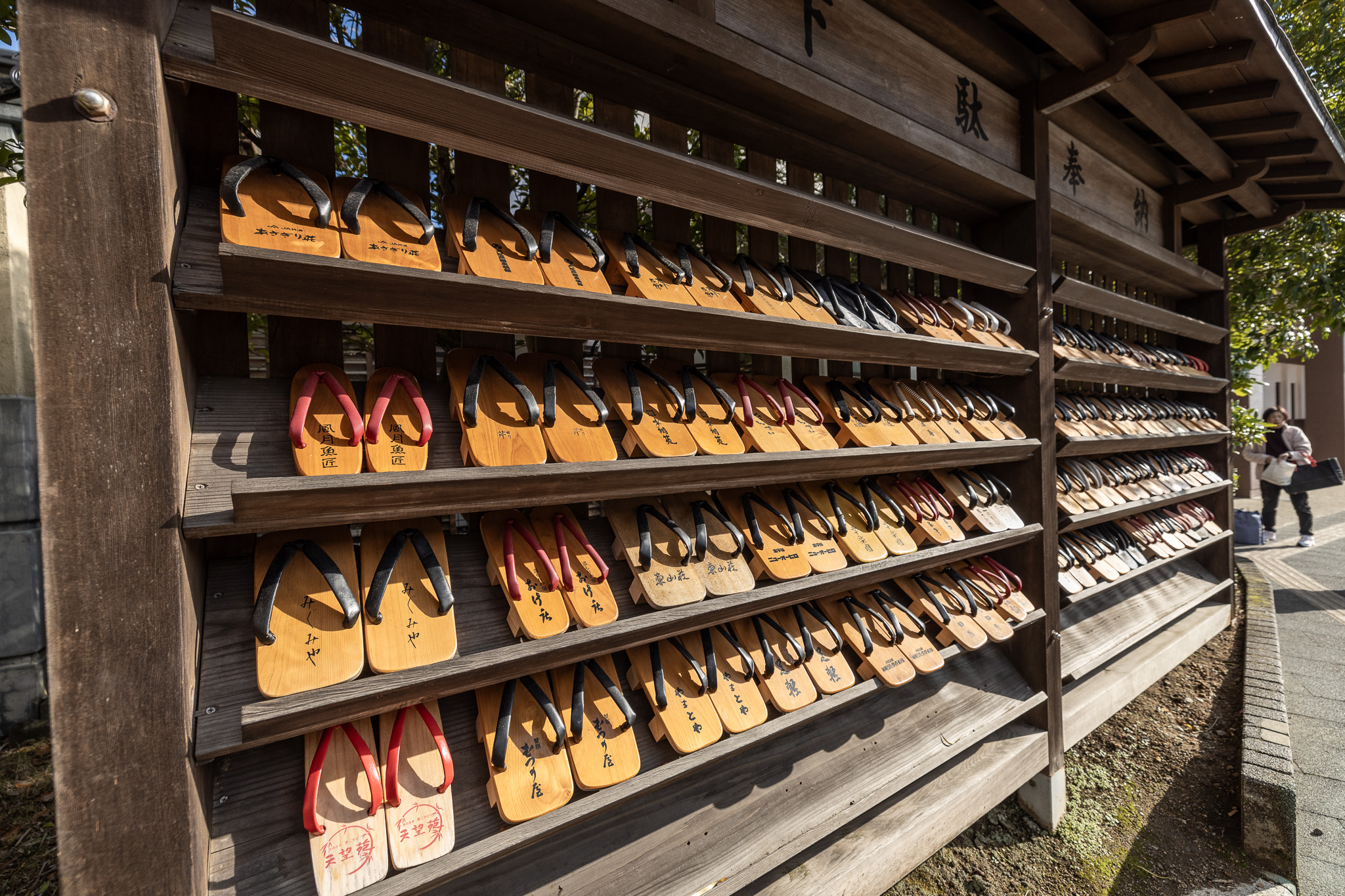
Kinosaki's public baths, or sotoyu, are separate buildings a few hundred metres apart, and guests walk between them in the cotton yukata and wooden geta provided by the inns. Since 1972 all the springs have been gathered into a single central system that mixes the water to an average of about 57 °C before piping it to the baths and inns. The writer Shiga Naoya stayed here for three weeks in 1913, and his story At Kinosaki made the town part of modern Japanese literature.
Racks of wooden geta sandals left ready for bathers making the round of Kinosaki’s public baths
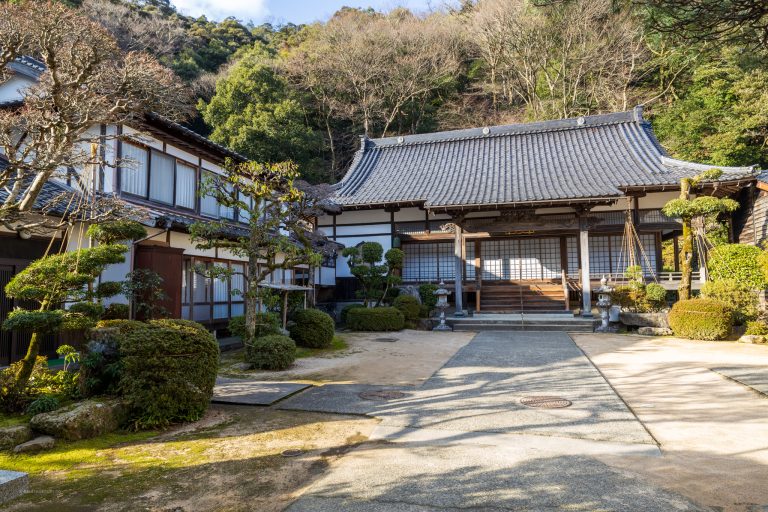
Kōno-yu and the source
Kōno-yu, beside the lower station of the ropeway, is the bath of the stork legend, in which a stork was seen healing its wounds in warm water in the marshes. A second legend tells that the monk Dōchi Shōnin chanted a sutra for a thousand days until hot water rose in 720, the date from which the town counts its history. Moto-yu, the original source spring, lies close by, below Onsen-ji's Yakushi-dō.
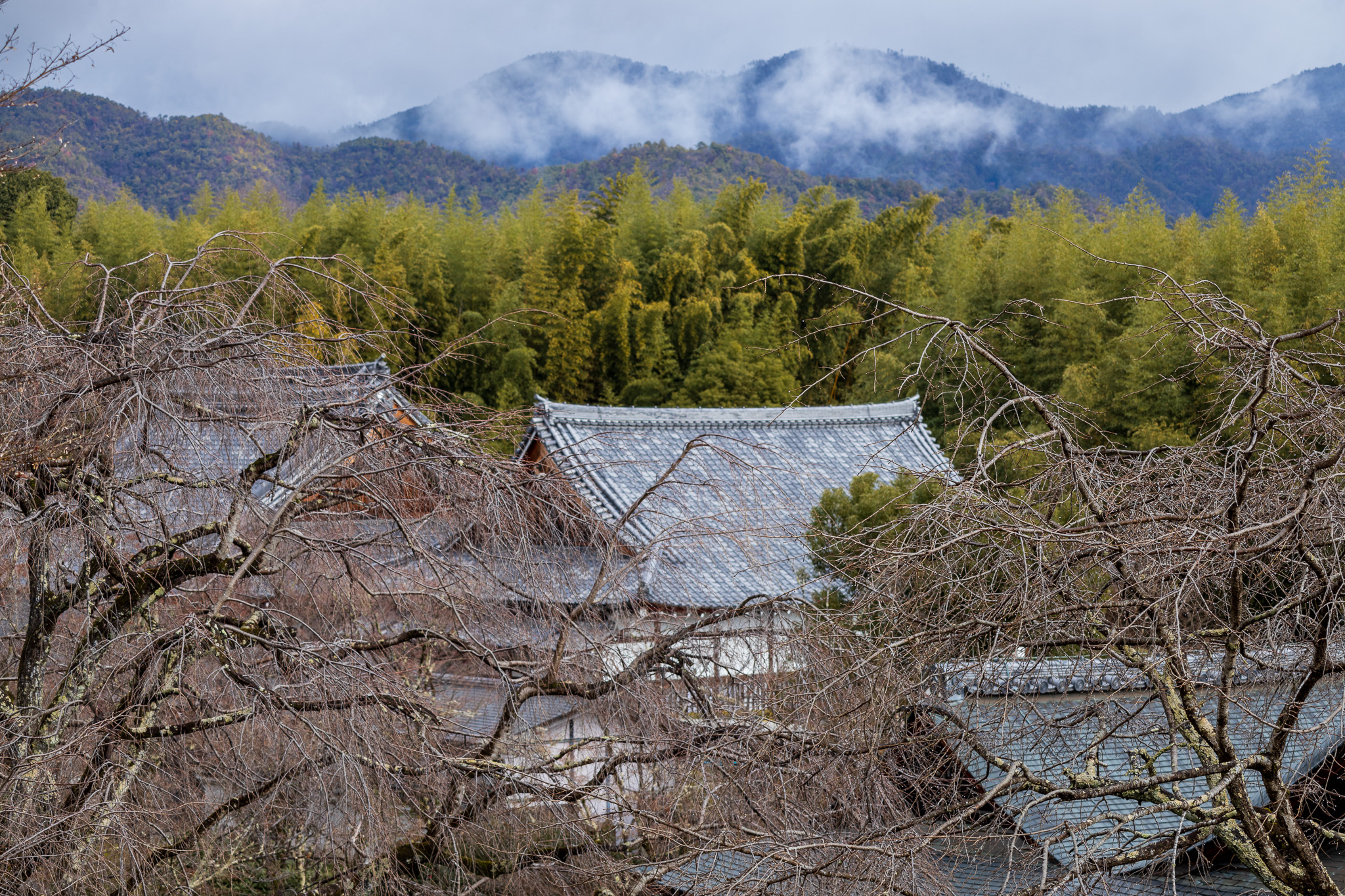
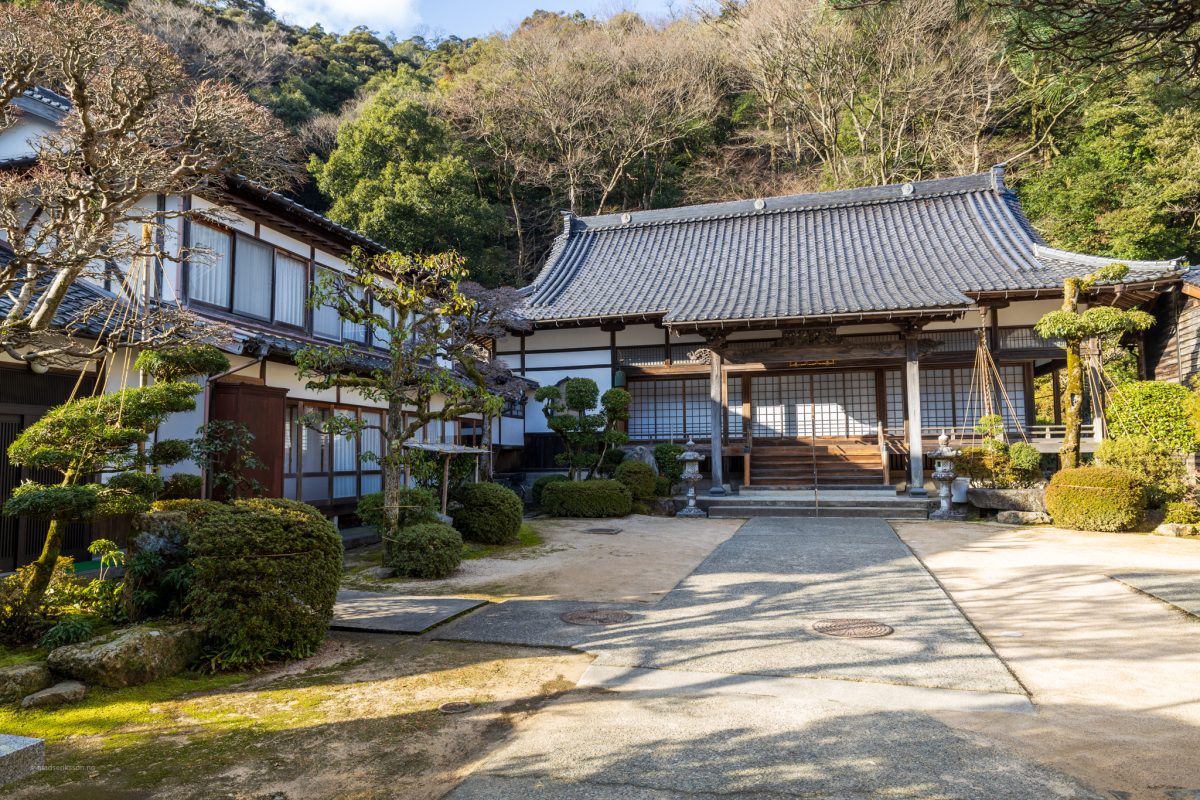
A Buddhist temple with tiled roofs and clipped pines at the foot of the wooded hills in Kinosaki Onsen
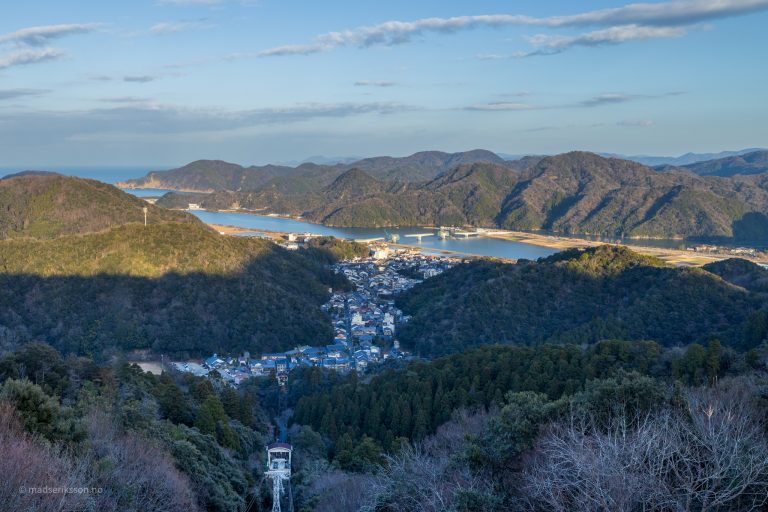
Onsen-ji and Mount Daishi
The ropeway, running since 1963, climbs Mount Daishi in about seven minutes and stops halfway at Onsen-ji, the guardian temple of the springs, founded according to temple tradition by Dōchi Shōnin in 738. Its main hall, built around 1387, is a national Important Cultural Property and houses an eleven-faced Kannon; the inner sanctuary, the Okunoin, stands near the summit.
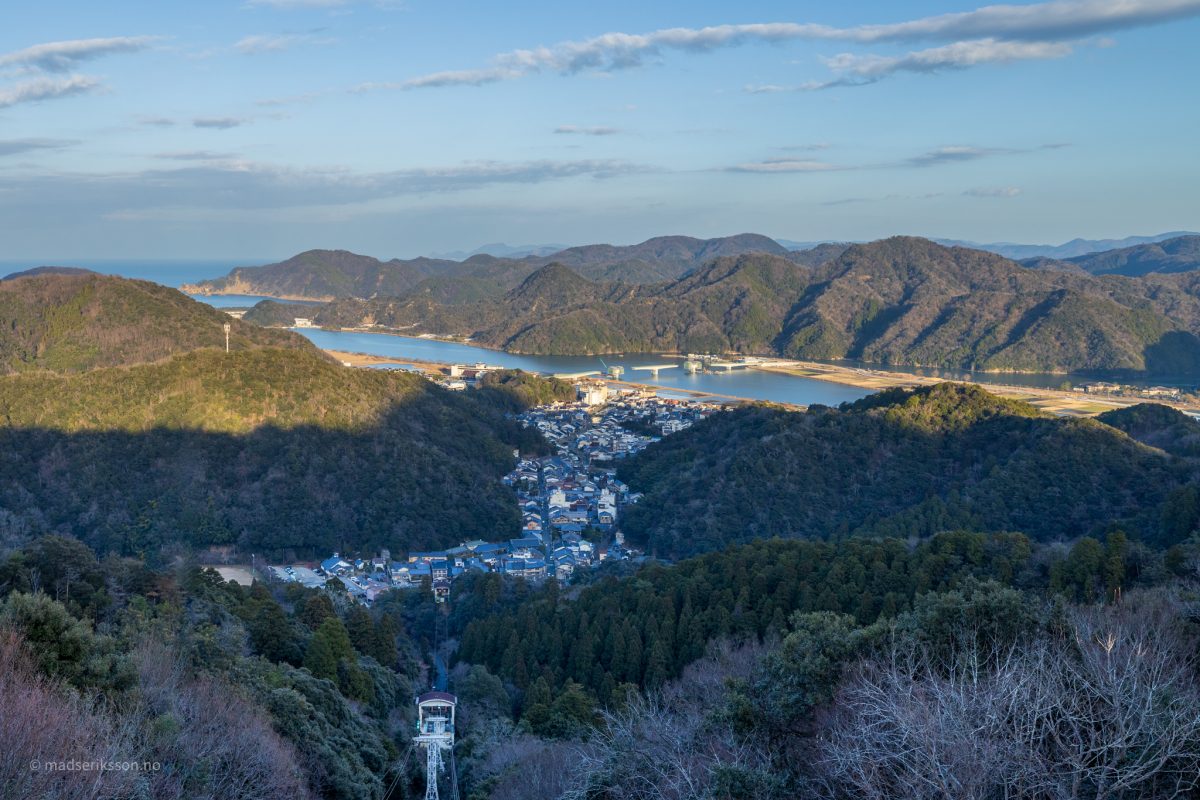
View from Mount Daishi over Kinosaki Onsen.
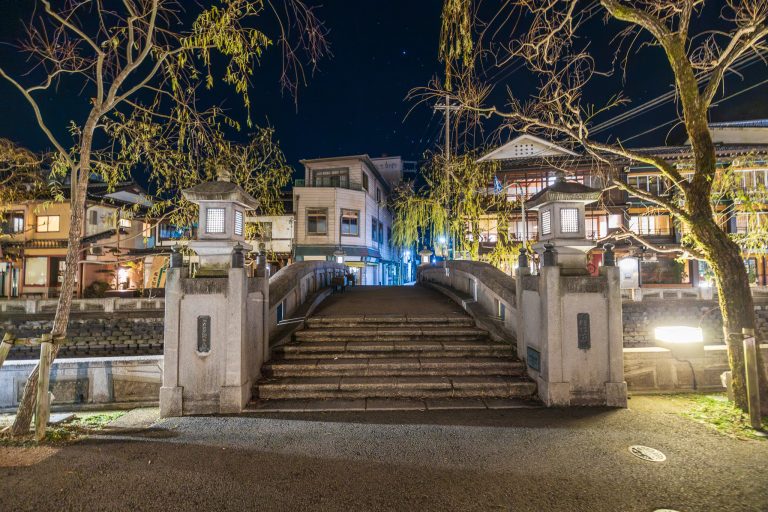
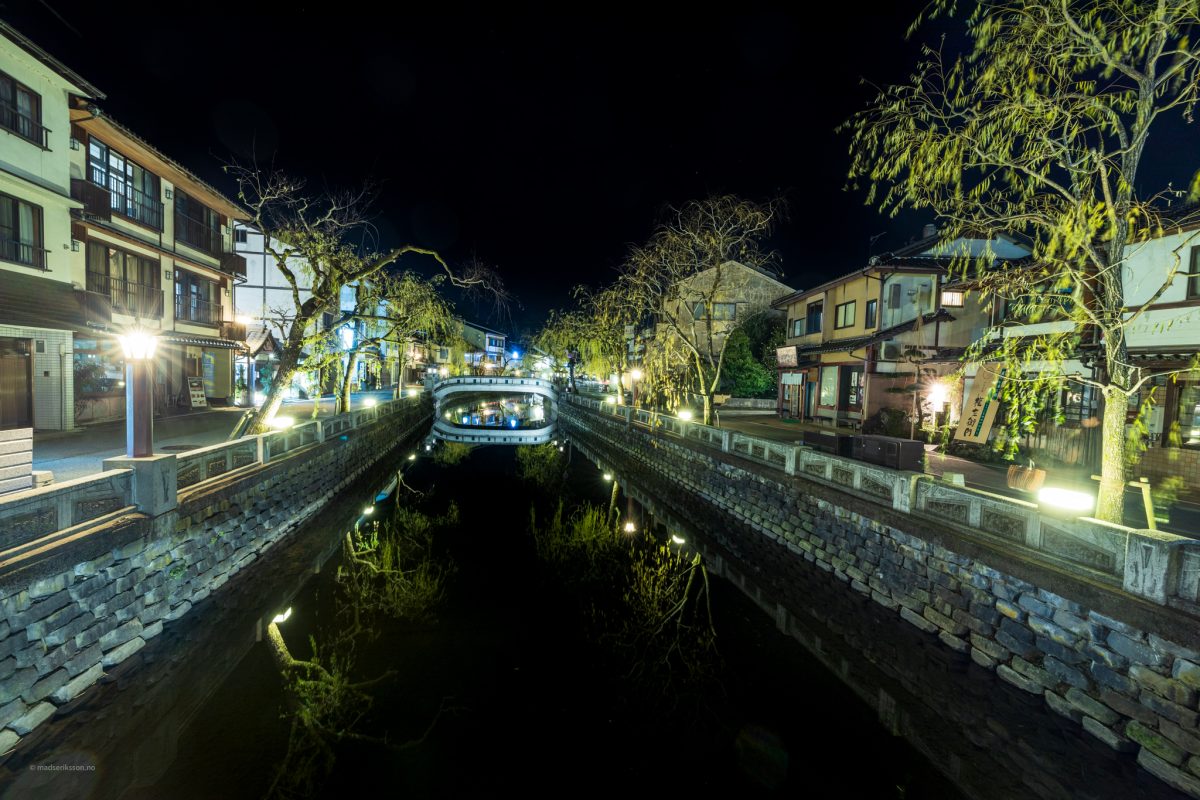
Lanterns on the river
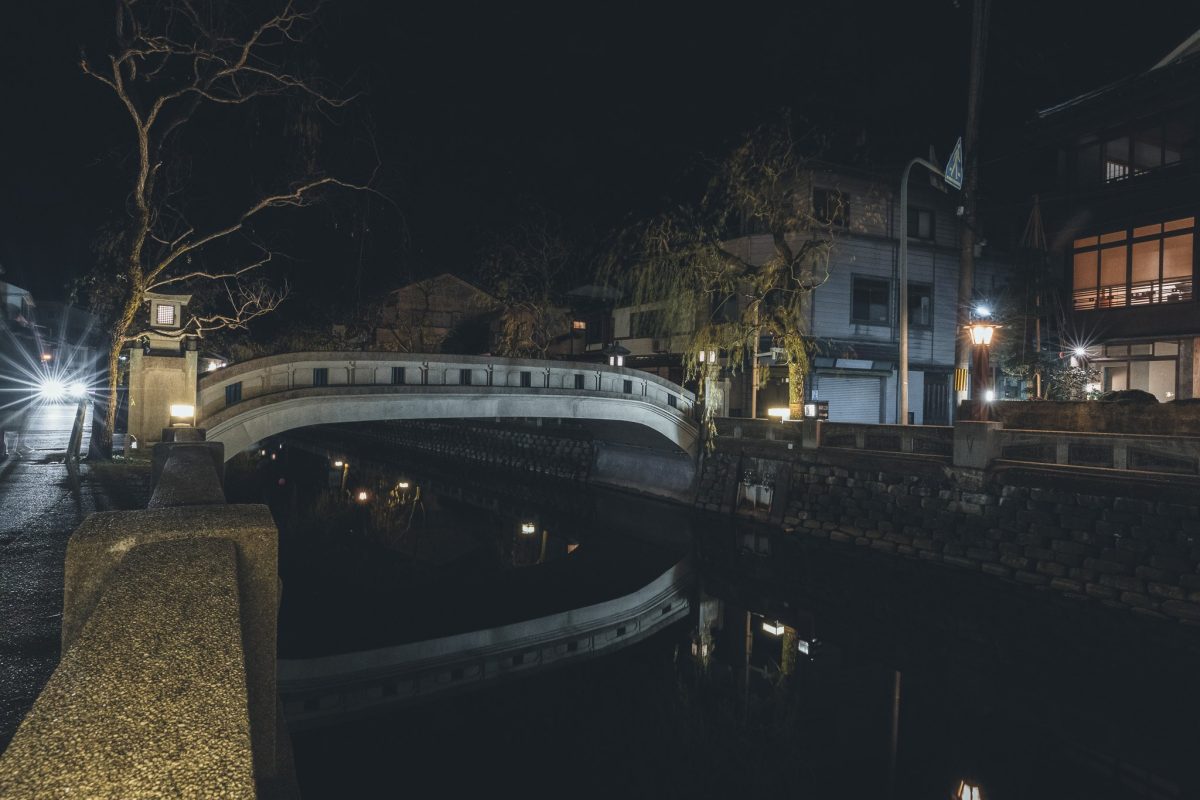
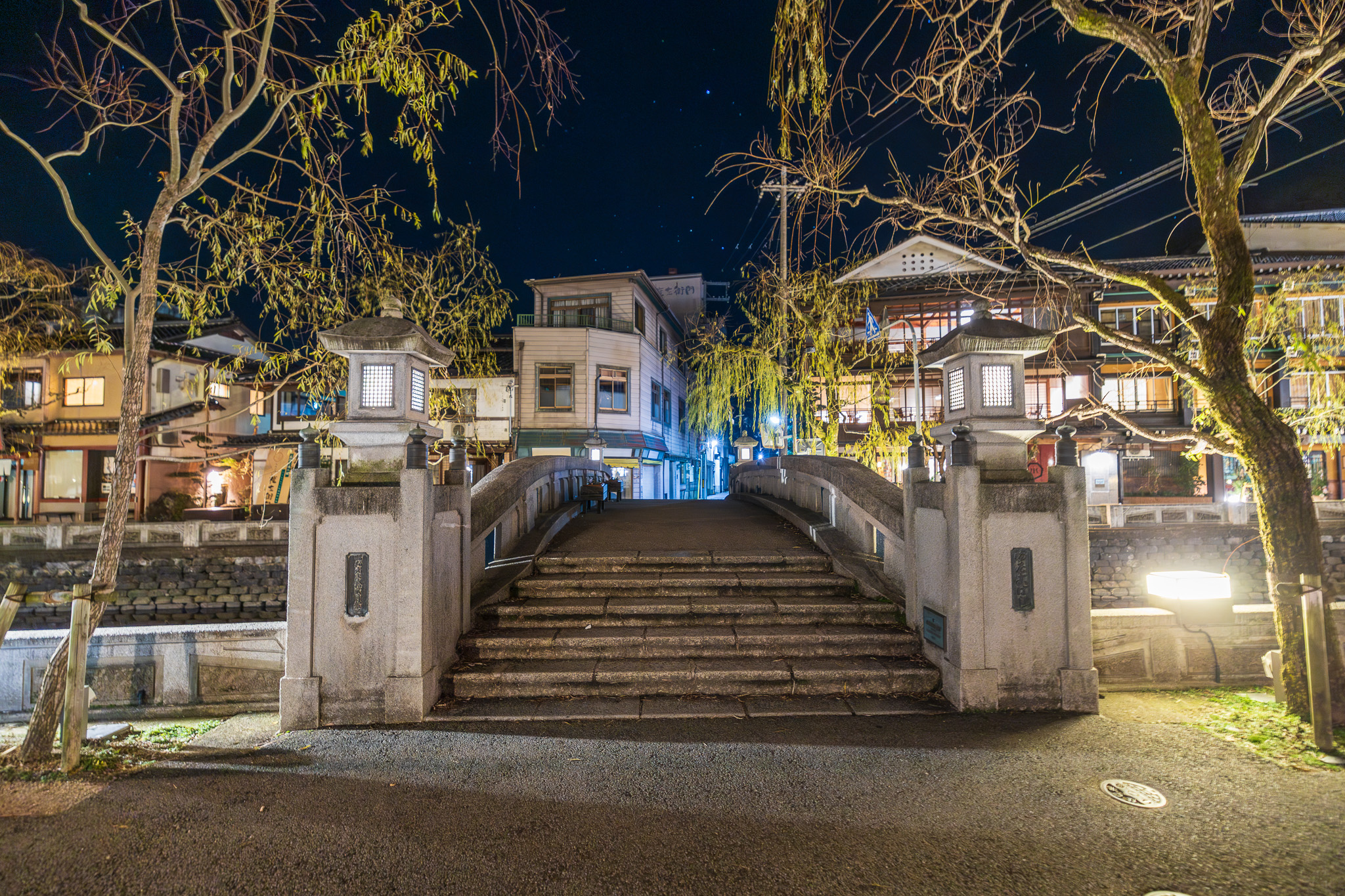
As evening falls, lanterns light the stone bridges over the Otani River and the street fills with bathers in yukata moving between the baths. Most of the public baths stay open until 23:00.
A stone bridge with lanterns over the Otani River at night in Kinosaki Onsen, framed by willows
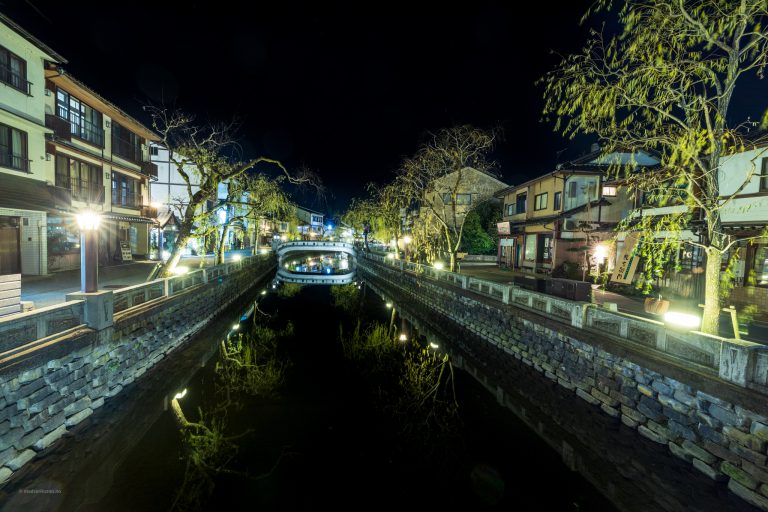
Kinosaki at night
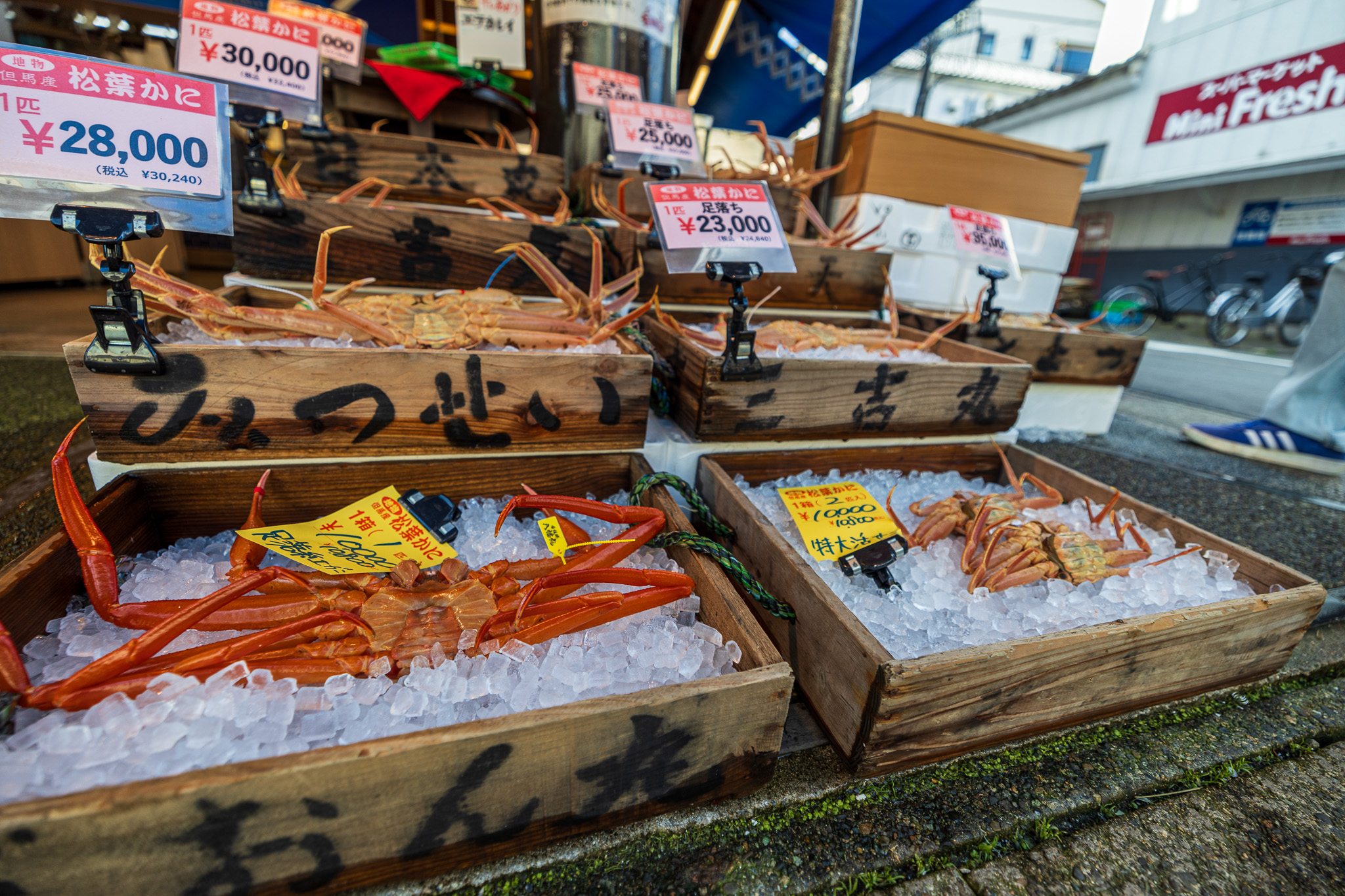
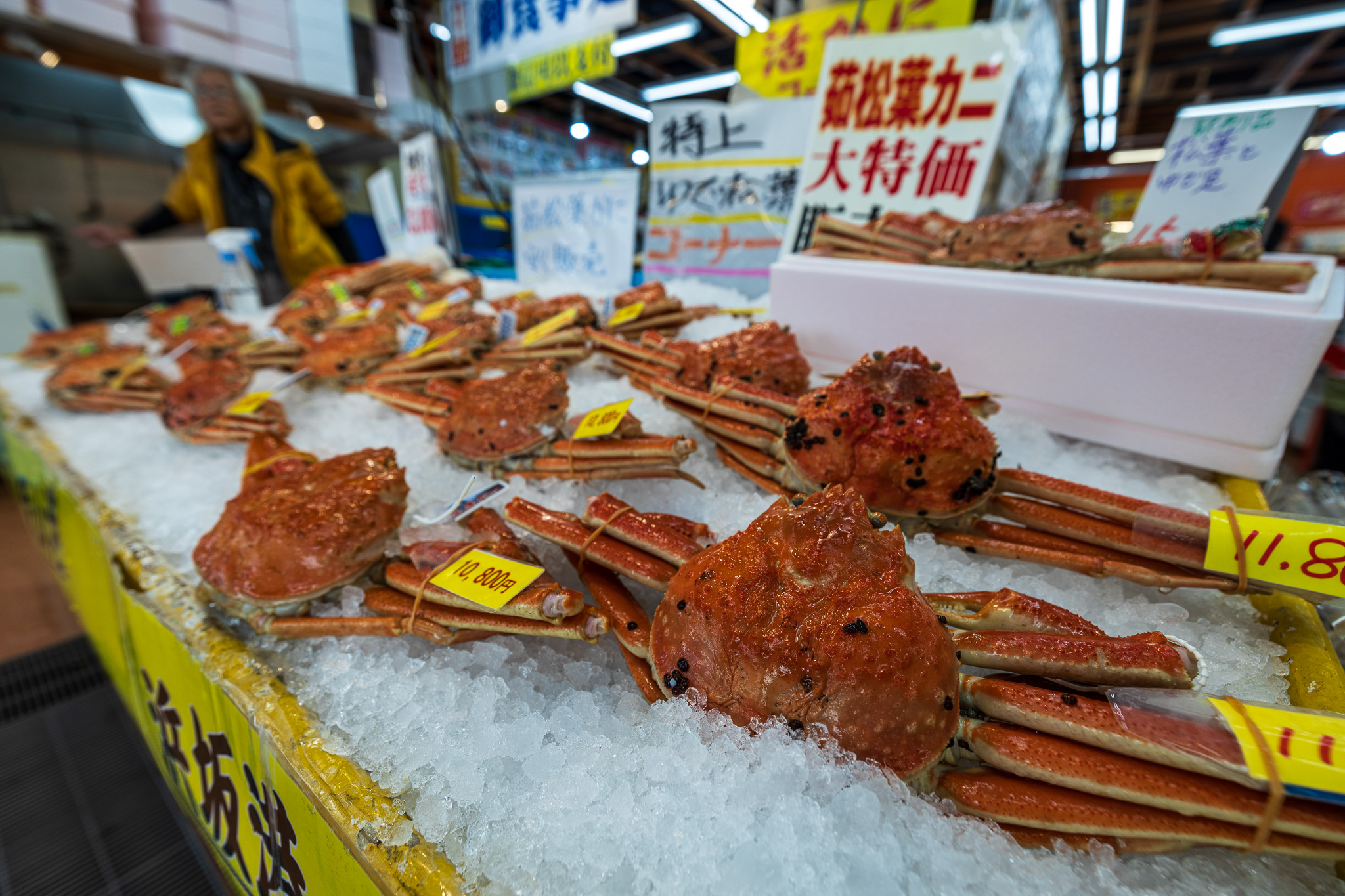
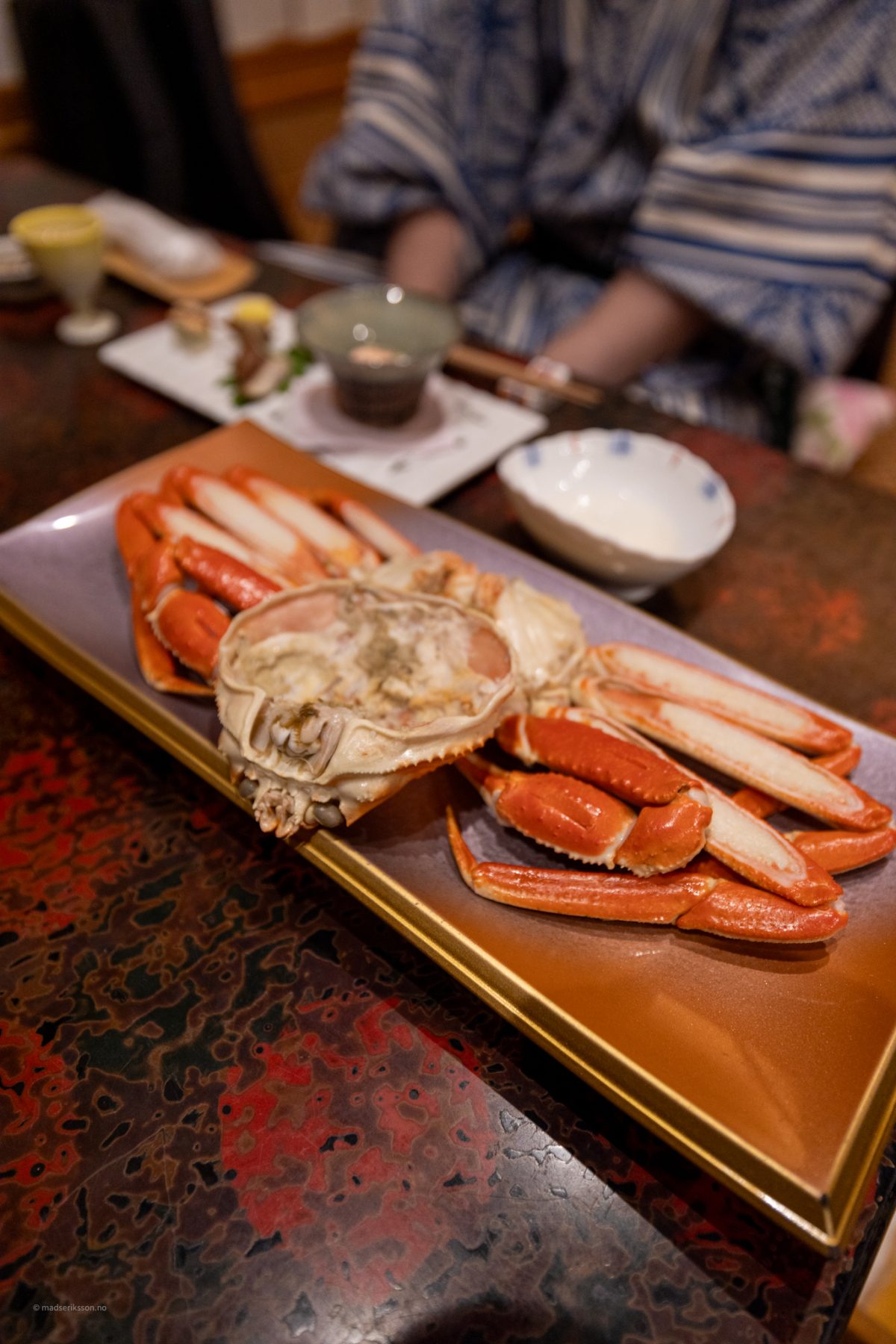
From November to March the Sea of Japan brings snow crab, known locally as Matsuba crab, to the inns of Kinosaki, and winter is the busiest season to stay. The town's Onsen Festival, in memory of Dōchi Shōnin, is held each year on 23 and 24 April.
The willow-lined Otani River running through Kinosaki Onsen at night, with a lit stone bridge at the far end
3D model © 2026 madseriksson.no · Photographs © madseriksson.no. Buildings and heights: © OpenStreetMap contributors (ODbL), via OpenMapTiles. Ground imagery: Sentinel-2 cloudless 2023 by EOX IT Services GmbH (contains modified Copernicus Sentinel data 2023; CC BY 4.0). Heights are approximate where OpenStreetMap has no measured value; sun positions are approximate.
A Town of Bathhouses — Thirteen Centuries, Rebuilt After 1925
How a spring said to have been called up by prayer became the centre of a town, burned in an earthquake, and was rebuilt in wood along a willow-lined river
Kinosaki tells two stories about its own beginning. In the older one, from the seventh century, a stork was seen healing its wounds in warm water in the marshes, and so the spring was found. In the second, the Buddhist monk Dōchi Shōnin arrived in 717 and began chanting a sutra for the healing of the sick; after a thousand days, in 720, hot water rose from the ground. The town counts its history from that date, and both legends are written into its baths: Mandara-yu stands on the site of the monk’s first spring, and Kōno-yu — “stork bath” — where the bird is said to have bathed.
The custom of the public bath is old, but the town that frames it is younger than it looks. On 23 May 1925 the Kita-Tajima earthquake struck the area, and the fires that followed destroyed most of Kinosaki; the bathers staying in the town at the time were evacuated by train. The rebuilding, led by the town itself, created much of what visitors see now: the Otani River running through the middle of the town, lined with willow trees, and the wooden three-storey inns along it.
In Kinosaki, the hot water is shared by the whole town. Since 1972 every source has been gathered into a single system, mixed to an average of about 57 degrees, and piped from there to the seven public baths and the inns.
The inns and the public baths draw on the same water, and the town is often described as one large ryokan spread along a valley. In 1913 the writer Shiga Naoya came to recover from an injury, and his short story Kinosaki ni te (At Kinosaki), published in 1917, made the town a literary destination as well; the Kinosaki Literary Museum, opened in 1996, tells its story.
The Seven Baths — Walking the Town in a Yukata
From the station to the foot of the ropeway, seven public bathhouses a few hundred metres apart, and the simple rules for moving between them
The seven baths are spread through the valley between the station, at the eastern end of town, and the ropeway at the western end: Sato no yu, Jizō-yu, Yanagi-yu — its name means “willow” — Ichi no yu, Gosho no yu, Mandara-yu and Kōno-yu. Gosho no yu has an open-air rock bath on two tiers, the upper pool around 43 °C and the lower around 41 °C. Kōno-yu, beside the ropeway, was the town’s first bathhouse and is the one tied to the stork legend; it has been rebuilt many times. From the station to Kōno-yu is a walk of fifteen to twenty-five minutes.
Each bath has its own character, size and opening hours. In 2026 most open from 07:00 to 23:00, while Sato no yu opens in the afternoon and closes earlier, and Yanagi-yu and Mandara-yu open only from 15:00. Each bath has its own regular closing day, and the days differ between them, so on most days at least one is shut. A single entry costs ¥800 for adults (¥900 at Sato no yu), and the Yumepa day pass, sold at every bath, gives unlimited entry to all seven on the day of purchase for ¥1,500 (¥750 for children). Guests at the town’s inns usually receive a free pass for the length of their stay, valid from check-in to check-out.
The seven baths are separate buildings, a few minutes’ walk apart, and the point is to walk between them — in the yukata and wooden sandals the inns provide, through a town where nobody looks twice.
The etiquette is the same as in any Japanese public bath. Bathing is naked and, in the main baths, separated by sex; visitors wash and rinse thoroughly at the taps before entering the water, keep towels out of the pools, and tie long hair up. Unlike many hot-spring resorts in Japan, Kinosaki welcomes visitors with tattoos in all seven public baths. The baths are busiest in the evening, when the street fills with people in yukata clattering between them on geta; the early-morning baths, from 07:00, are far quieter. Jizō-yu and Ichi no yu also have private family baths that can be hired for forty-minute sessions.
Beyond the Baths — Temple, Ropeway, Ryokan and Crab
The mountain behind the town, the temple founded by the monk of the legend, a night in a ryokan, and the snow crab season that fills the inns from November
At the western end of town, beside Kōno-yu, a ropeway that has run since 1963 climbs Mount Daishi in about seven minutes, stopping halfway at Onsen-ji. Temple tradition holds that it was founded in 738 by Dōchi Shōnin, and it remains the guardian temple of the springs; in earlier times visitors prayed here before they bathed. Its main hall, built around 1387, is one of the oldest wooden buildings in the region and a national Important Cultural Property, and its principal image is an eleven-faced Kannon. From the summit there are views over the town and the coast, and a footpath leads back down past the temple to the town. In 2026 the ropeway runs from 09:10, with the last ascent around 16:30, and closes on the second and fourth Thursday of the month.
Most visitors stay at least one night, and the ryokan is half the experience. The town has around eighty inns and hotels, from large modern hotels to small family-run ryokan in the wooden buildings along the river. Most inns provide a yukata and geta for the walk to the baths, and many include dinner and breakfast along with a pass that covers all seven. Luggage can be dropped at the information centre in front of the station and delivered to the inn for ¥200 per item. Day visitors can see the town and use the baths with the Yumepa pass, but the evening walk between bathhouses is the reason to stay.
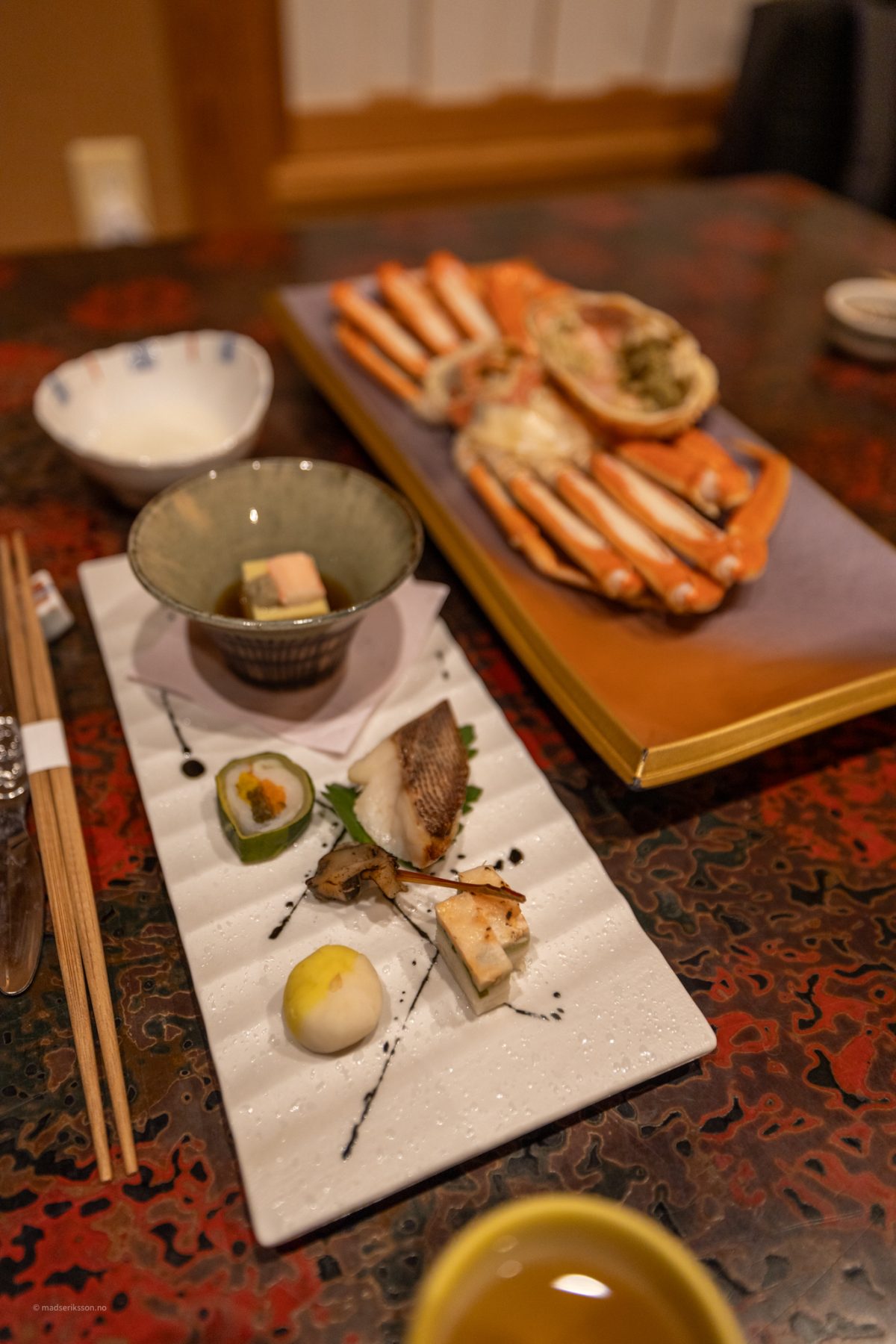
From November to March the Sea of Japan brings snow crab to Kinosaki’s tables, and many visitors plan their winter stay around a crab dinner at a ryokan by the river.
Kinosaki’s food is shaped by the nearby coast. The great seasonal draw is snow crab, known locally as Matsuba crab, available from November to March and served at the inns through the winter, which is the busiest season to stay. Between baths, the main streets have shops and bars selling local sake — the Sakamotoya liquor store dates from 1728 — and eggs boiled in the hot-spring water are a town speciality. Beyond Kinosaki, the coast belongs to the San’in Kaigan UNESCO Global Geopark, and the neighbouring town of Kami is known for its crab harbours and boat tours.
«Kinosaki is not a town with hot springs but a hot spring with a town around it. Its legend begins with a monk and a stork, its streets were rebuilt in wood after the fire of 1925, and its water has been shared by every bath and inn since 1972. What brings people back is the simplest part: the walk. Check in, put on the yukata, take the pass from the front desk and set off along the willows in wooden sandals — one bath before dinner, two or three after it, and the first one again at seven the next morning.»

More in the same area
 CitiesHiroshima and Miyajima: A preserved ruin and a shrine on the tideline
 CitiesShibuya Crossing: The Heartbeat of Tokyo
 CitiesHiking Mount Inari — Fushimi Inari’s Full Loop
 CitiesTokyo — Enormous, Efficient, Beautiful and Entirely Unlike Anywhere Else
 ArchitectureTokyo Skytree: One tower over thirty-seven million
 CitiesJapan’s Kitchen, Osaka
City Frames · scroll-driven 3D
More cities in three dimensions
54 city guides open with a model built from open map data. Scroll, and the camera moves from landmark to landmark.
Departures · City Frames
Where to next?
| Time | Destination | Country | Status |
|---|
Live · position of the sun
Golden hour, right now
The low, warm light just after sunrise and just before sunset. These are the cities on the site where it is happening at this moment.