Milan is a city that builds in sequence rather than in layers. The Duomo took from 1386 to 1965 to finish and is still the point everything turns around: the equestrian king in front of it, the shoppers under its spires, the iron and glass of the Galleria beside it. A short walk away the Castello Sforzesco is a different Milan, red brick and dry moat, with the Filarete Tower rising over the courtyard and Napoleon’s arch closing the park beyond. Then there is the Milan of the twentieth century, which is just as confident: the marble halls of Centrale, the stock exchange with a marble finger raised in front of it, and the orange trams of 1928 that still run through the streets at night. These frames move between those three cities under a summer sky, from the long exposure that empties Piazza del Duomo to the quiet of a residential street at first light.

The Cathedral and Its Square
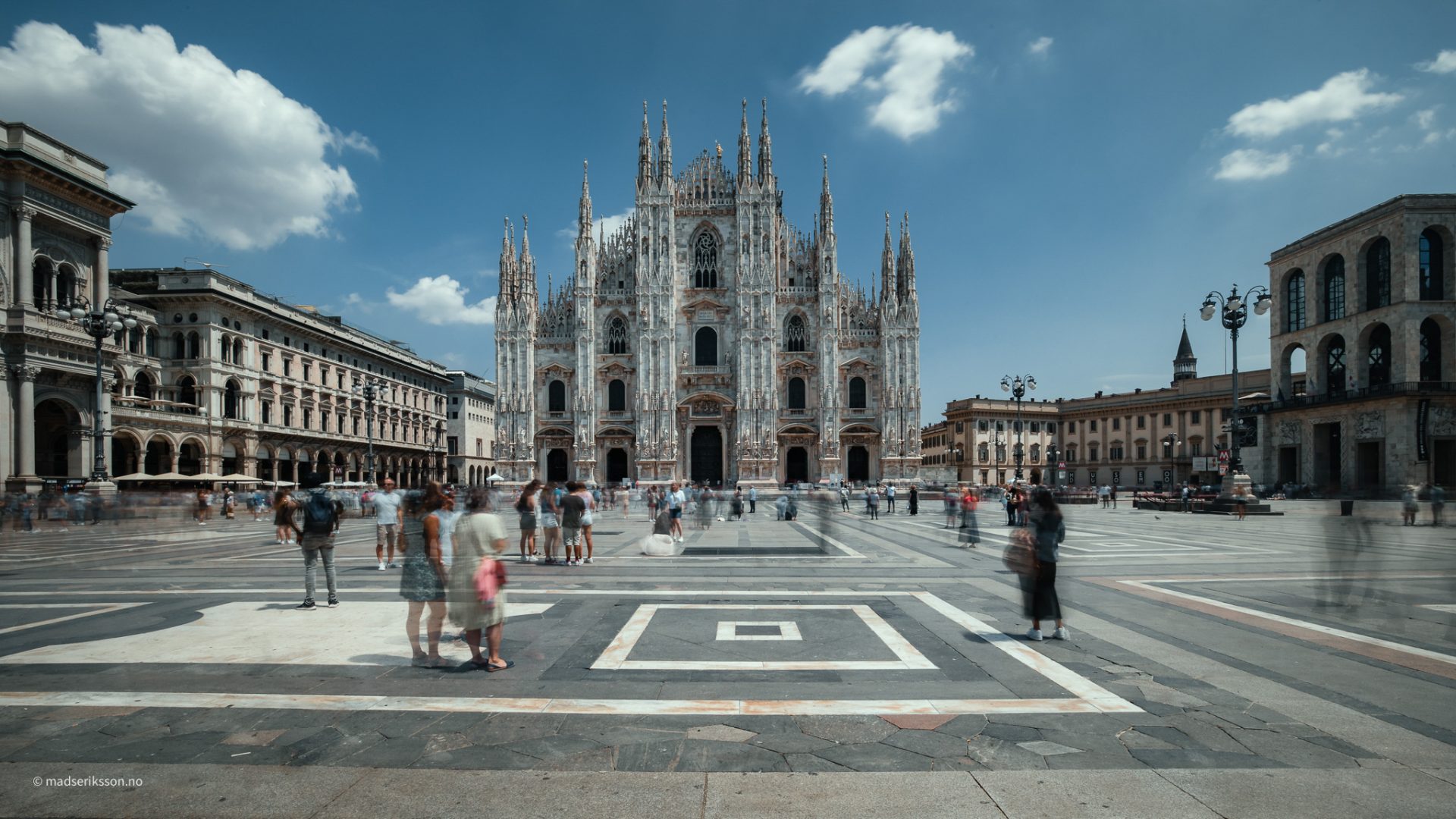
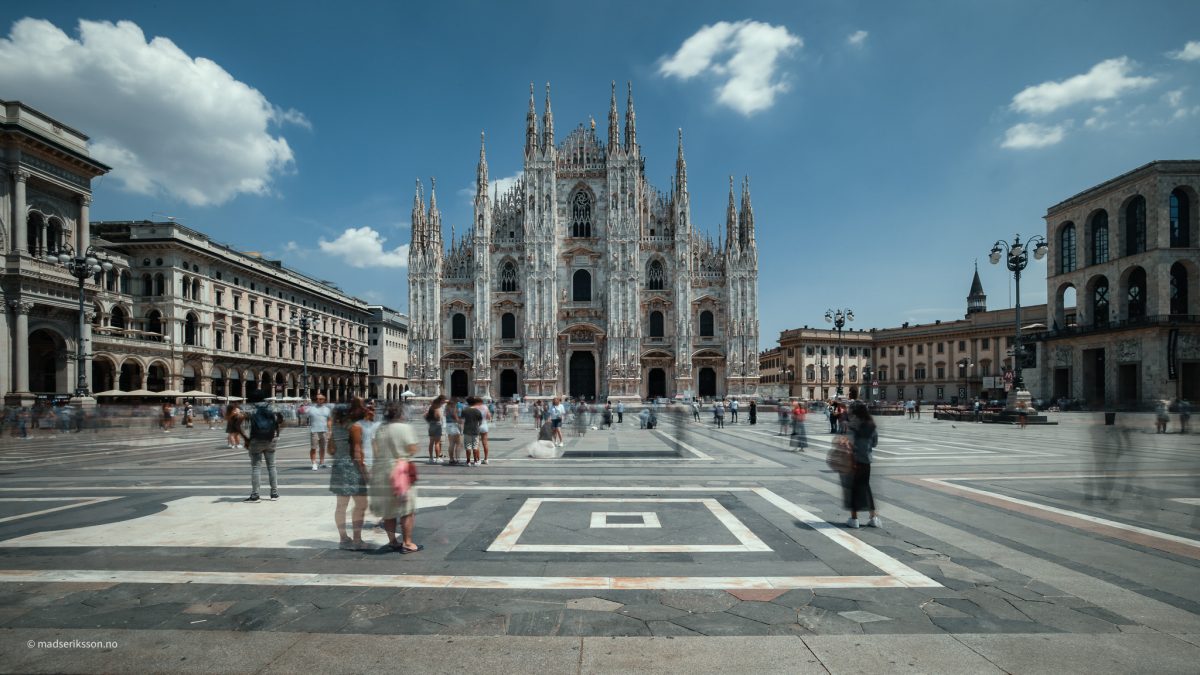
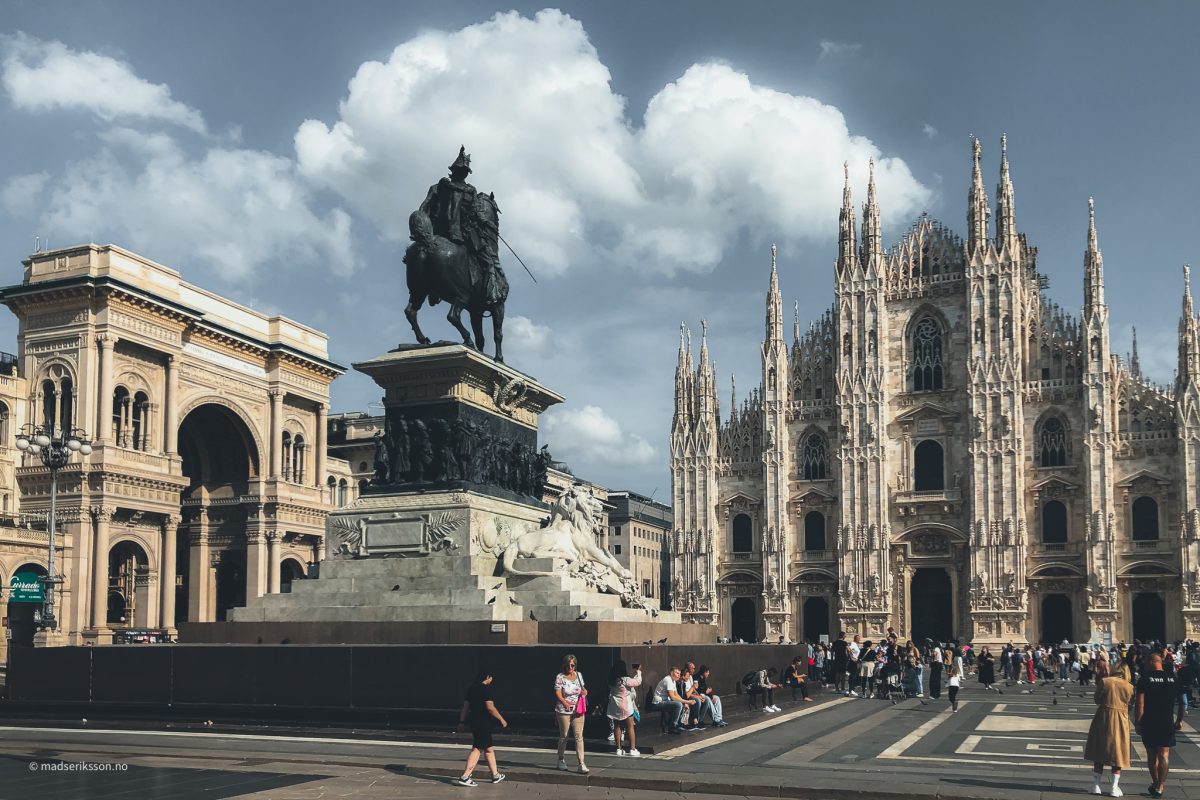
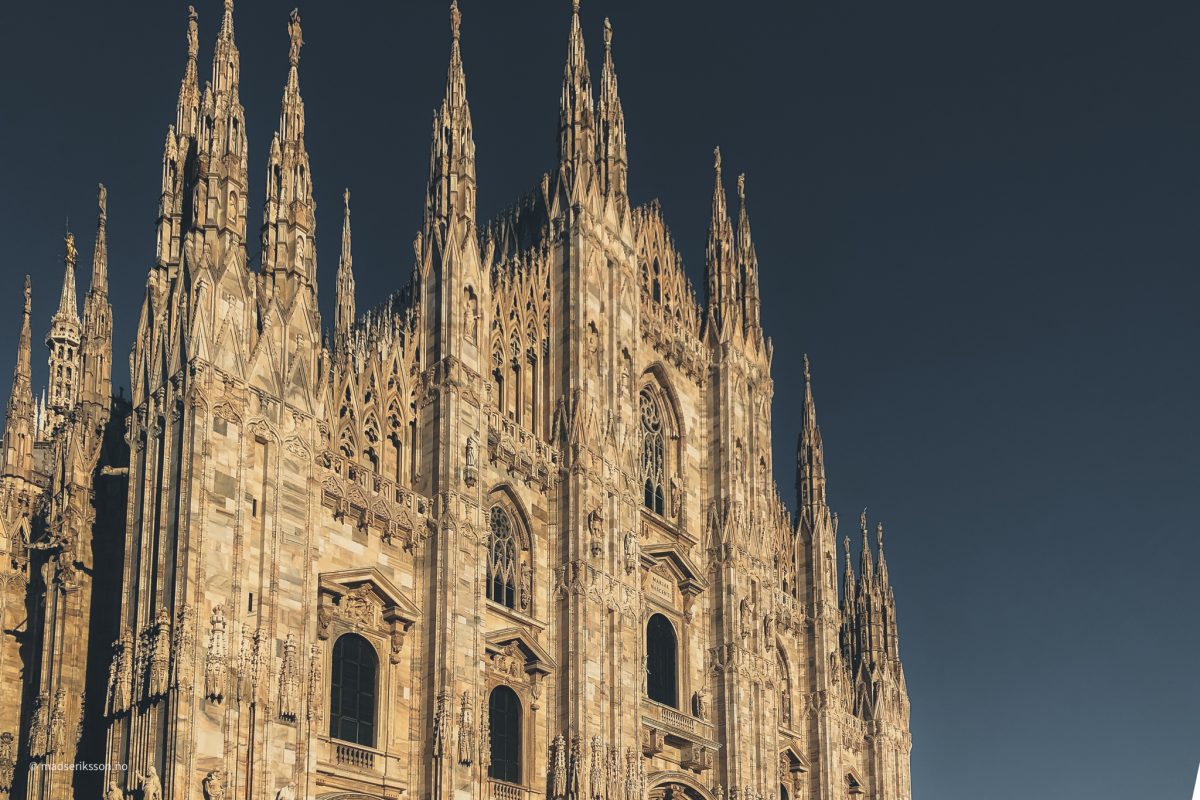
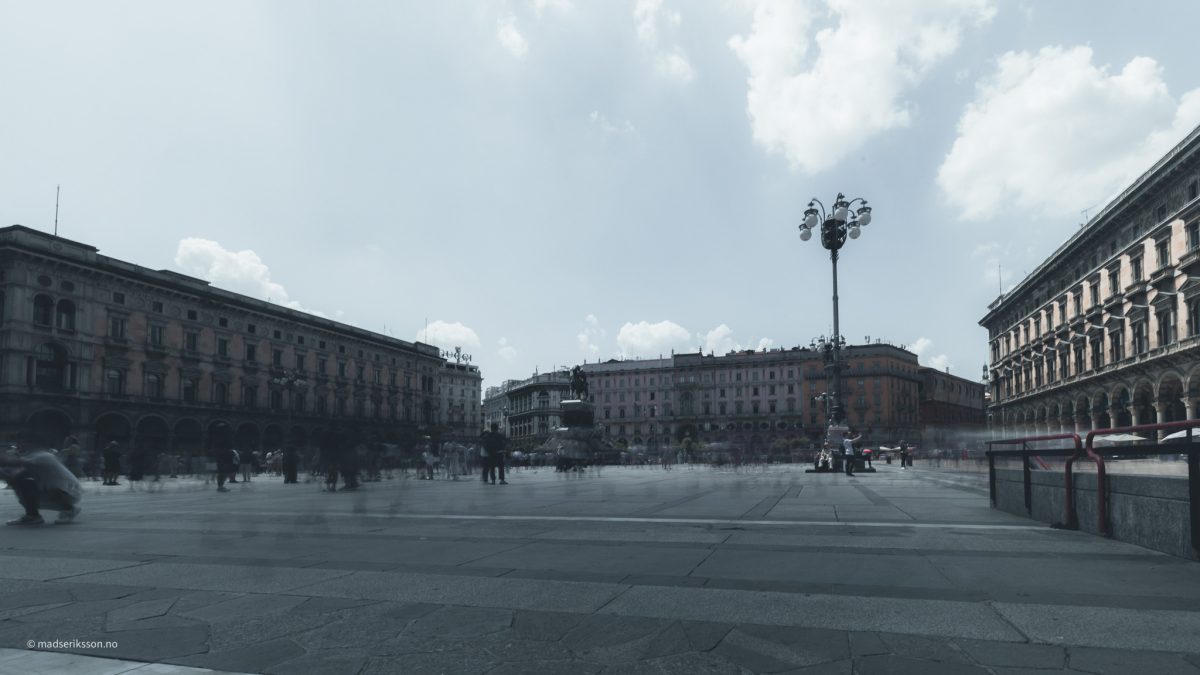
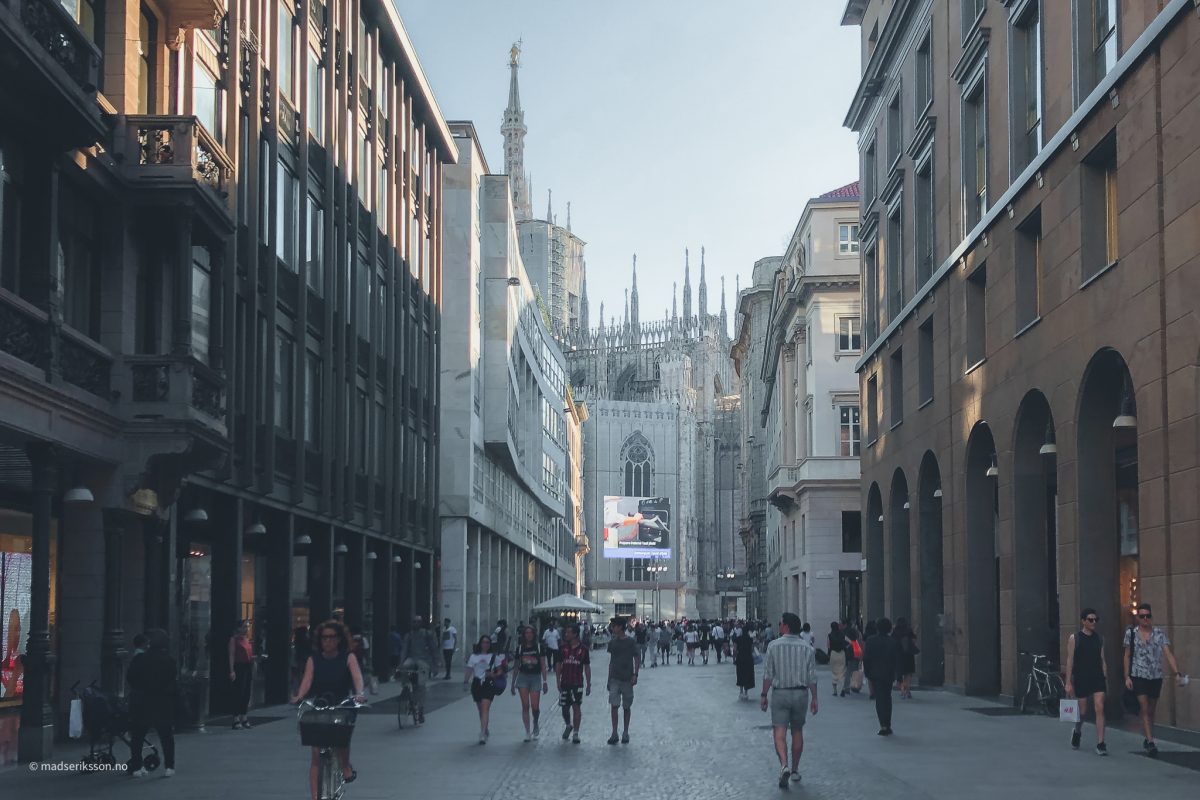
Five frames of the Duomo, from the full façade to the forest of spires and the street that leads to it
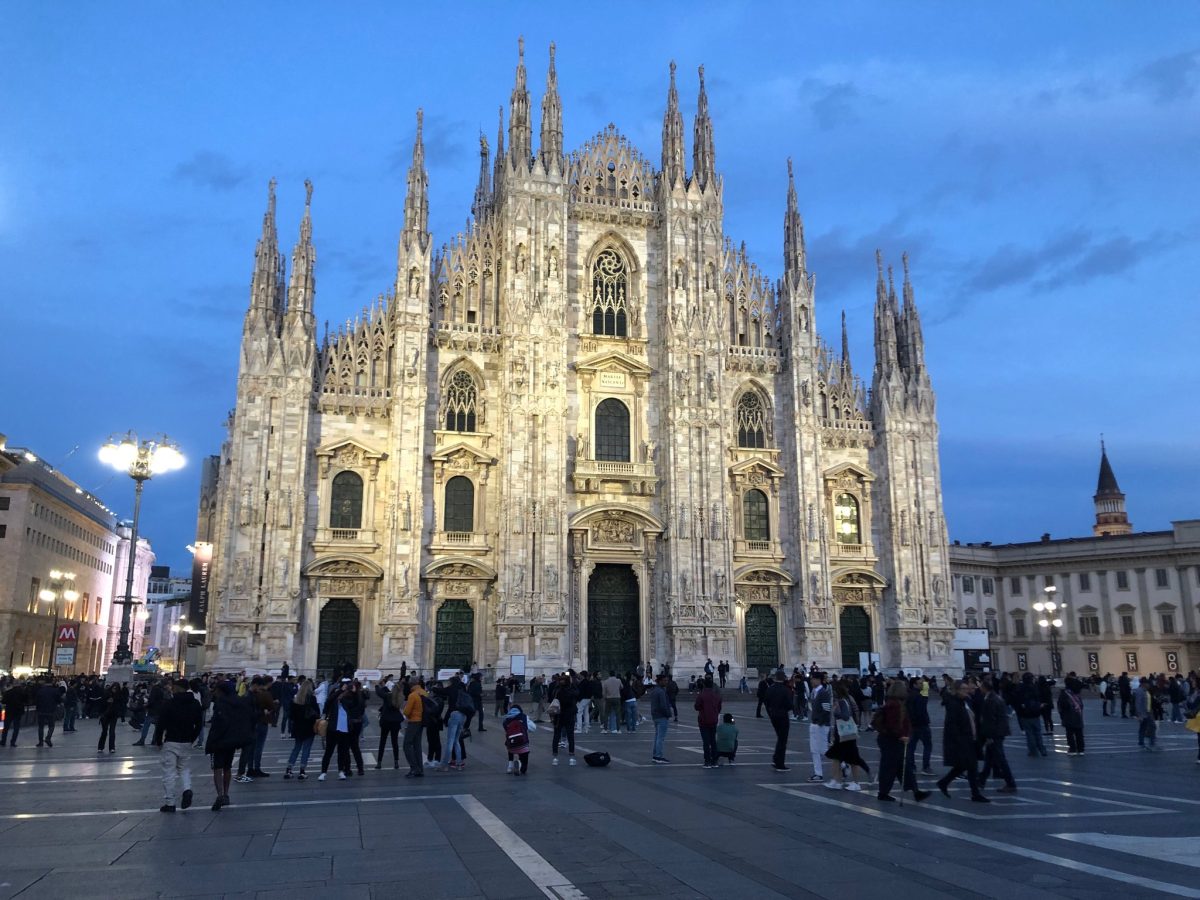
The Duomo di Milano is the largest church in Italy and one of the slowest ever built: begun in 1386 under Gian Galeazzo Visconti, roofed in the seventeenth century, given its façade under Napoleon and finished only in 1965. The pink-white marble came by canal from Candoglia on Lake Maggiore, and the 135 spires and thousands of statues on the roof are what make the building look like something grown rather than built. In low sun the spires turn gold against a dark sky.
The square in front was laid out in the 1860s, with the bronze equestrian monument to Victor Emmanuel II of 1896 at its centre and the arcades of the Palazzo Settentrionale and the Galleria entrance on the north side. Long exposures turn the midday crowd to a blur while the architecture stays sharp. The last frame looks along the pedestrian street towards the apse, where the spires appear above the shops.
The Iron and Glass Dome
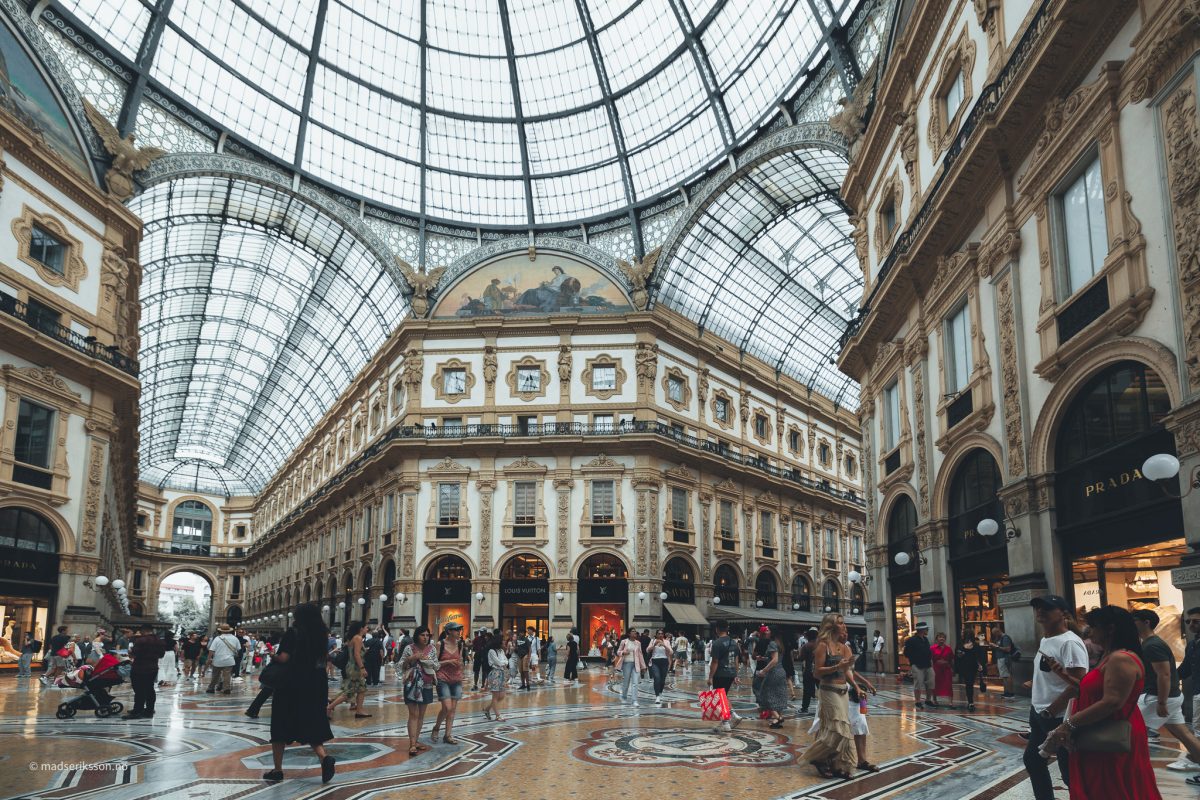
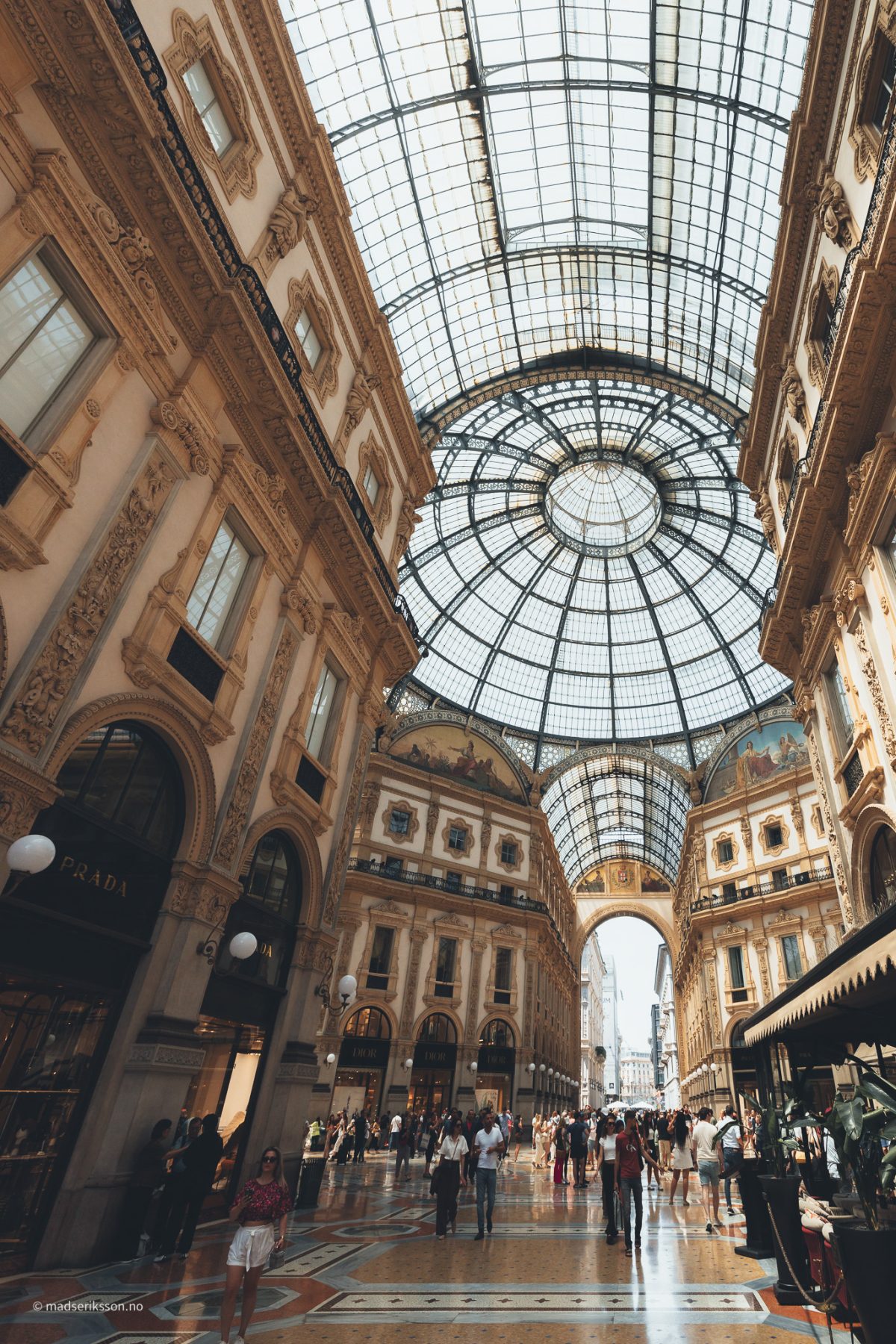
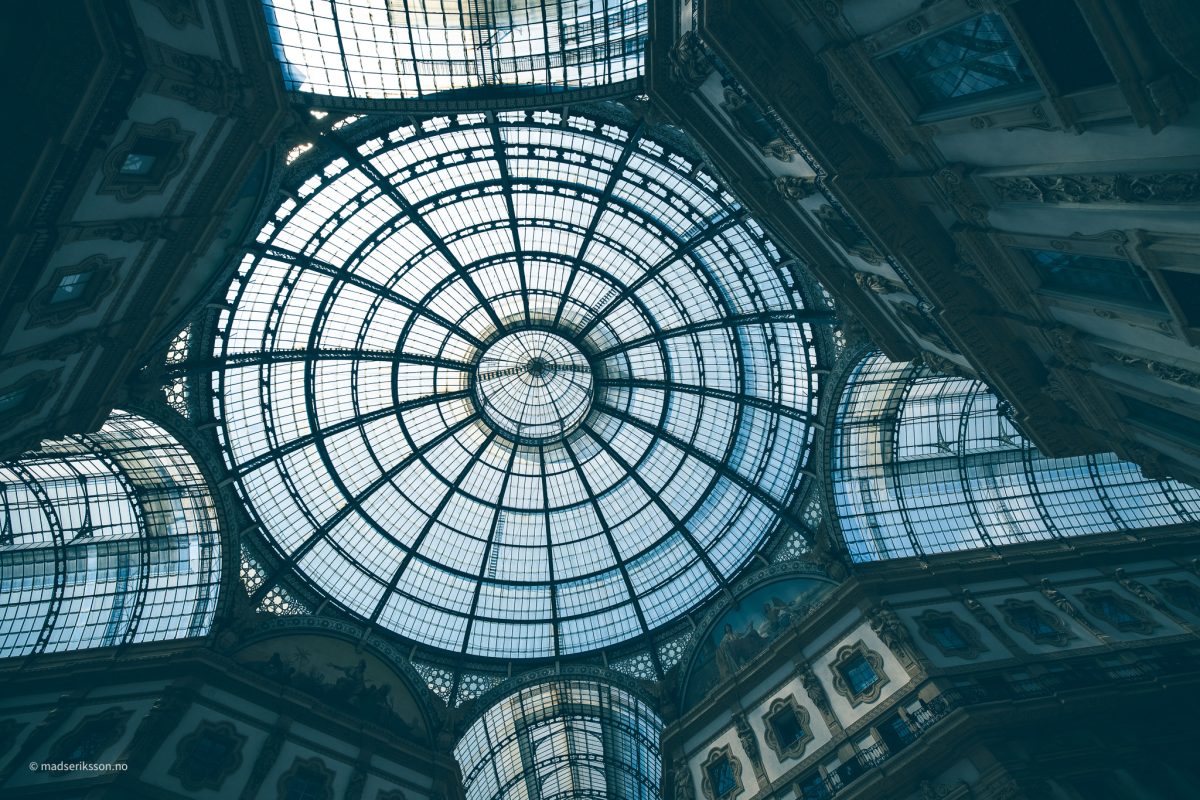
Mengoni’s arcade seen from the octagon and straight up into the dome
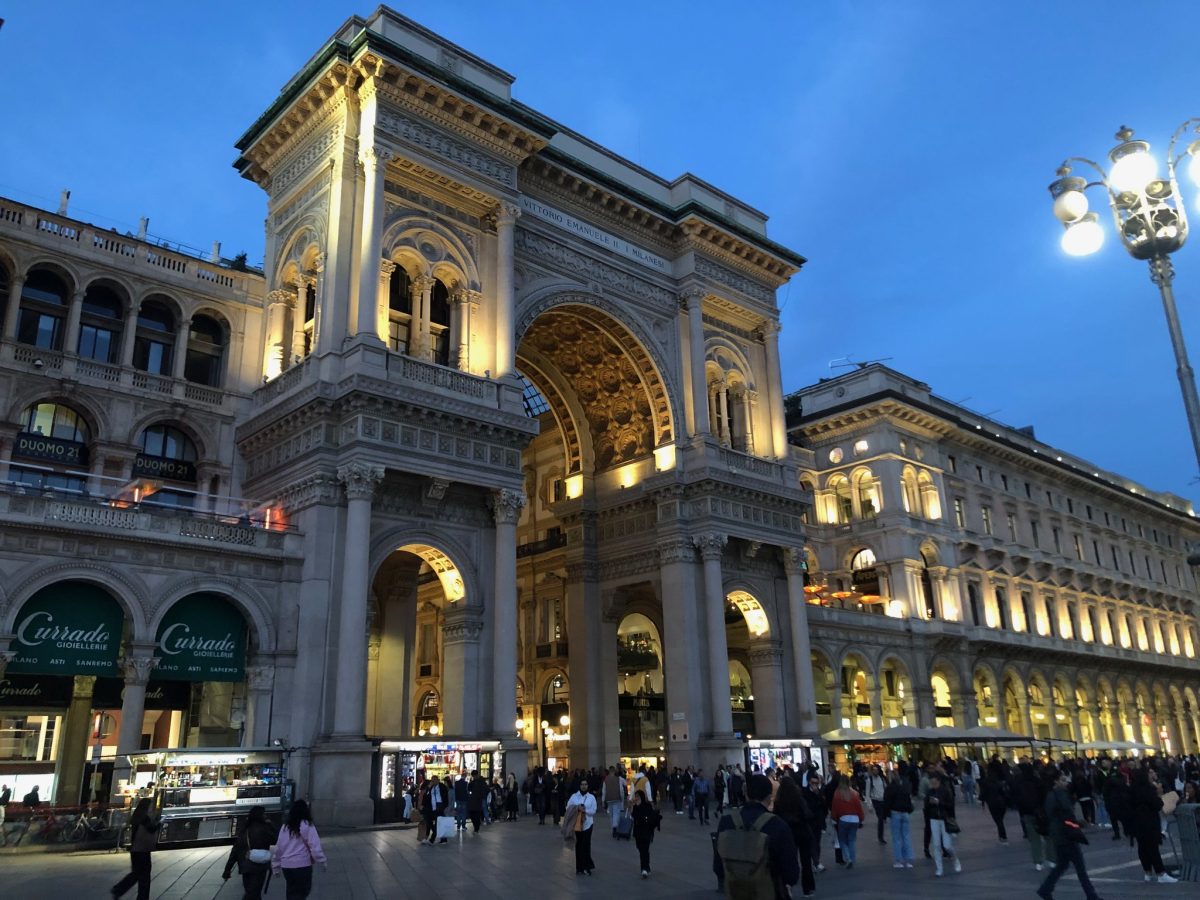
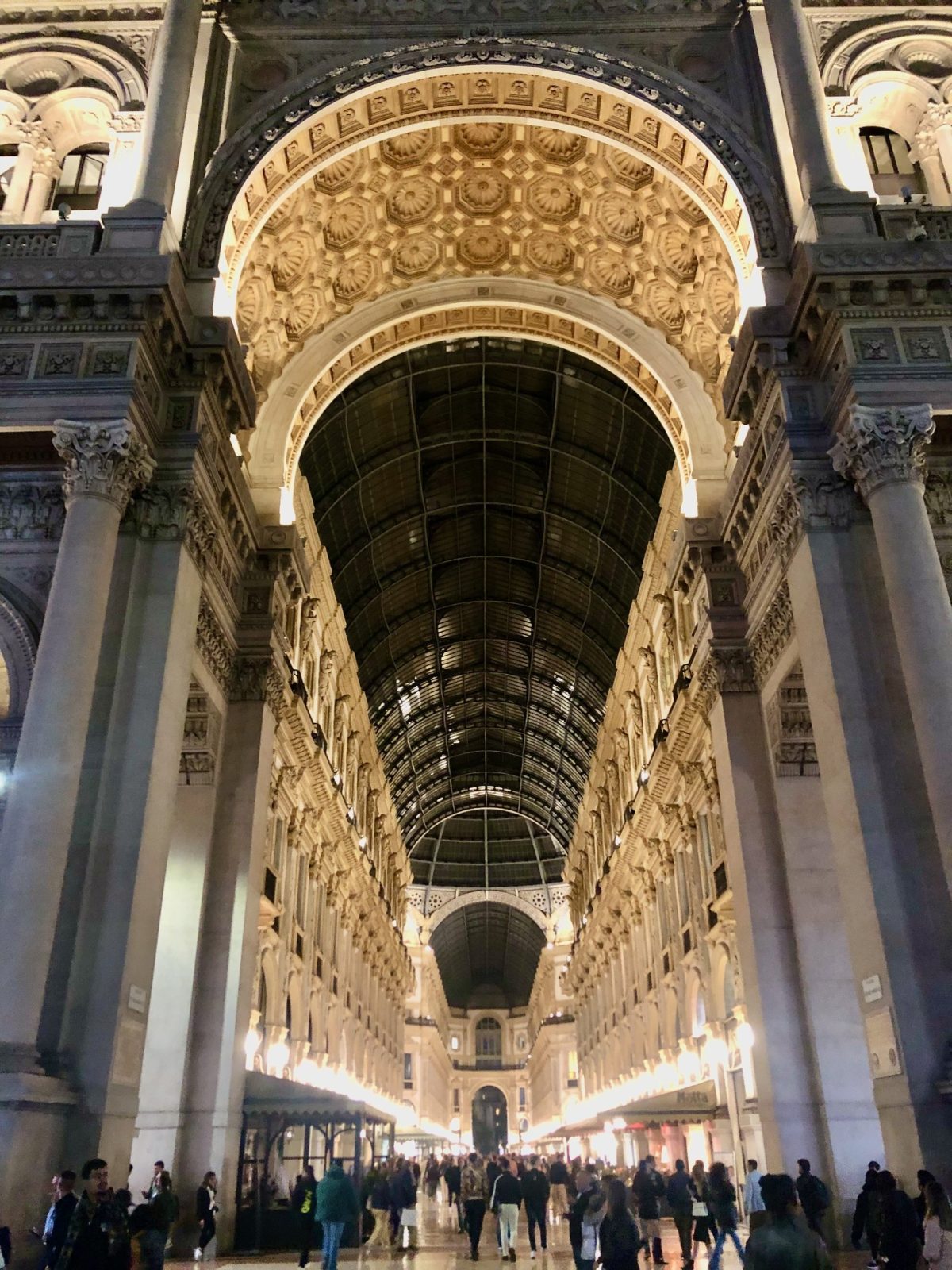
The Galleria Vittorio Emanuele II was built between 1865 and 1877 to Giuseppe Mengoni’s design, linking the cathedral square to La Scala under a roof of iron and glass. Where the two arms cross, an octagon opens up under a glass dome 37.5 m across and 17 m high, with mosaic lunettes of the four continents above the cornice and the arms of Milan, Turin, Florence and Rome set into the mosaic floor.
The dome is best read from directly underneath, where the ribs converge on the lantern like the spokes of a wheel, and then from the floor, where the four barrel vaults, each 14.5 m wide, run off between the ochre façades of the shops. Mengoni fell from the scaffolding and died the day before the arcade’s completion ceremony in 1877; the building has been Milan’s drawing room ever since.
Brick Walls and a Triumphal Arch
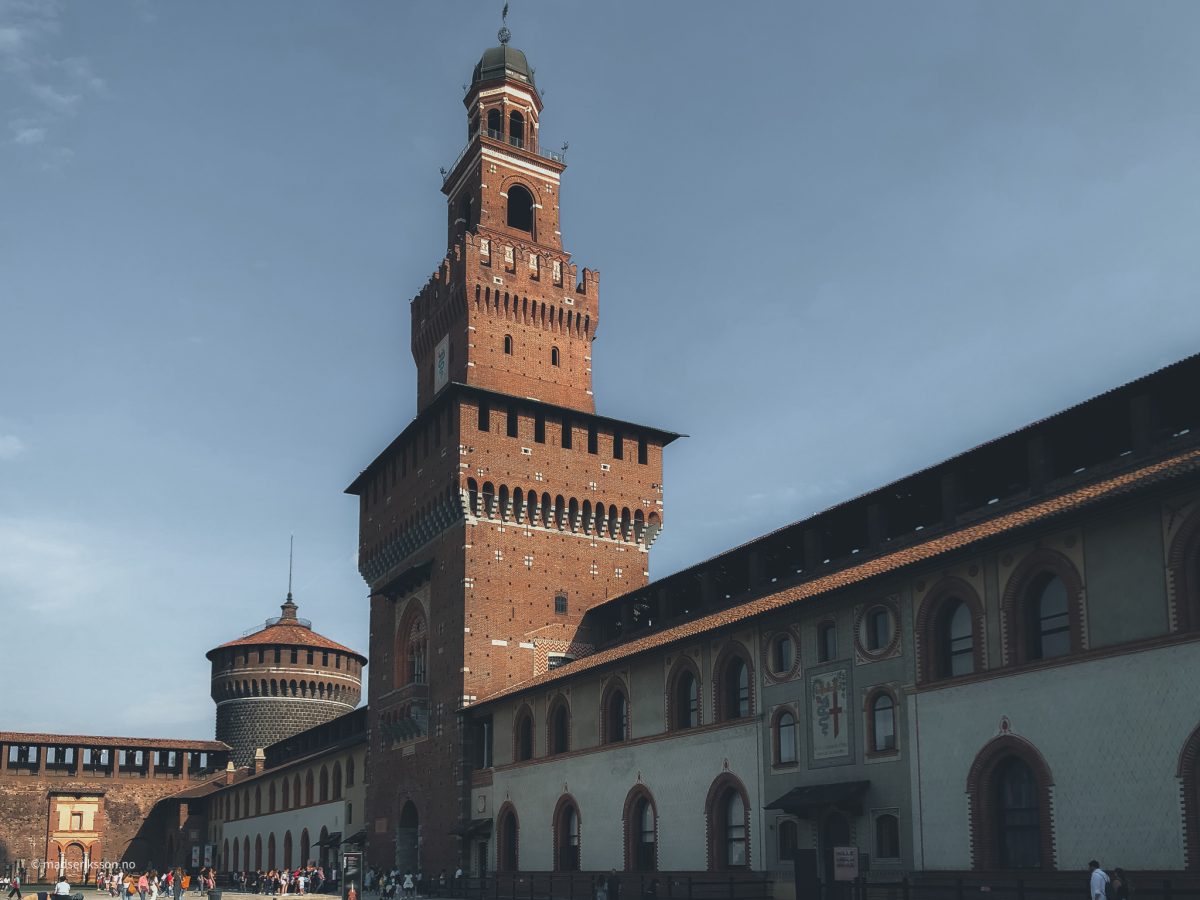
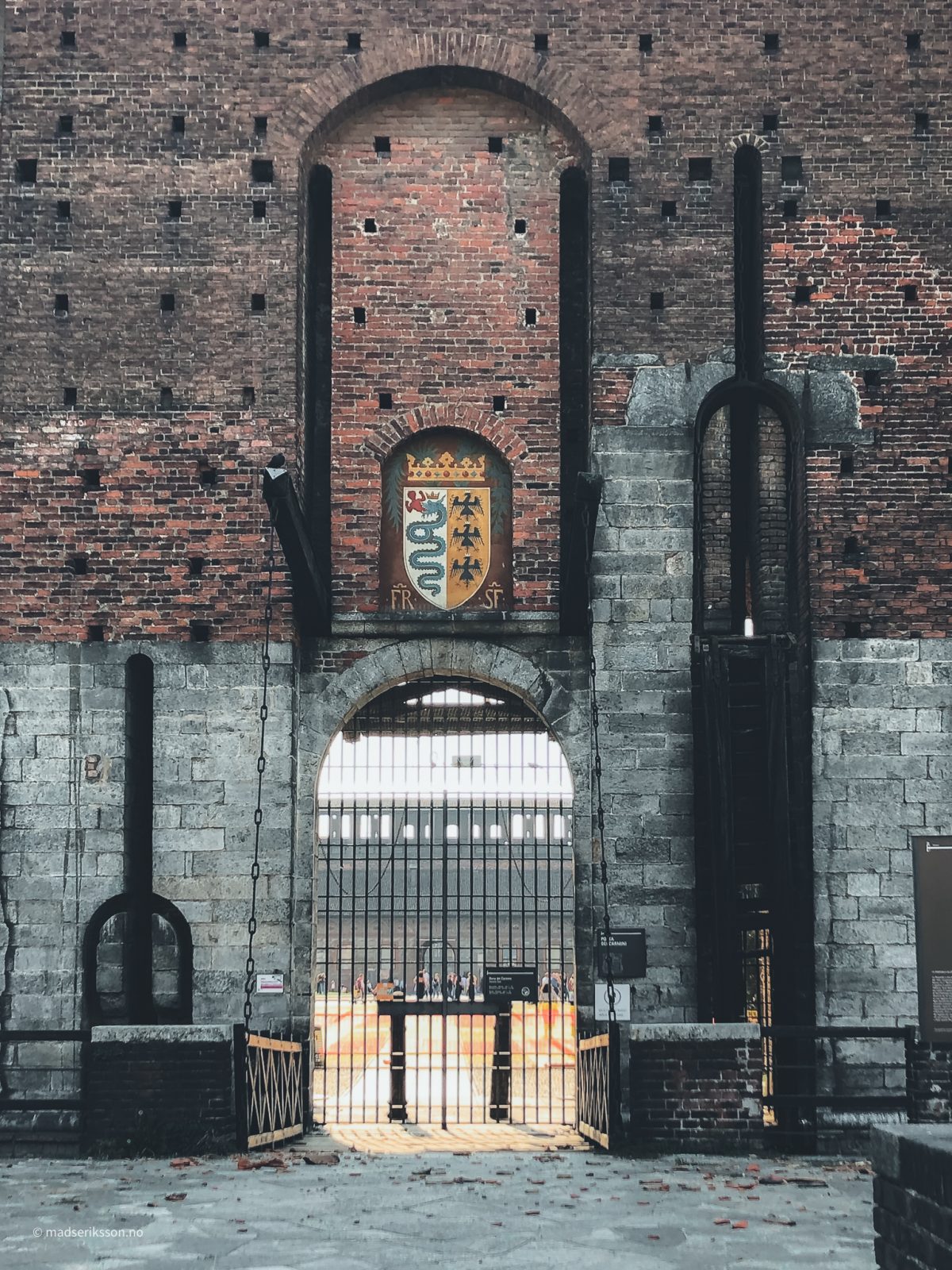
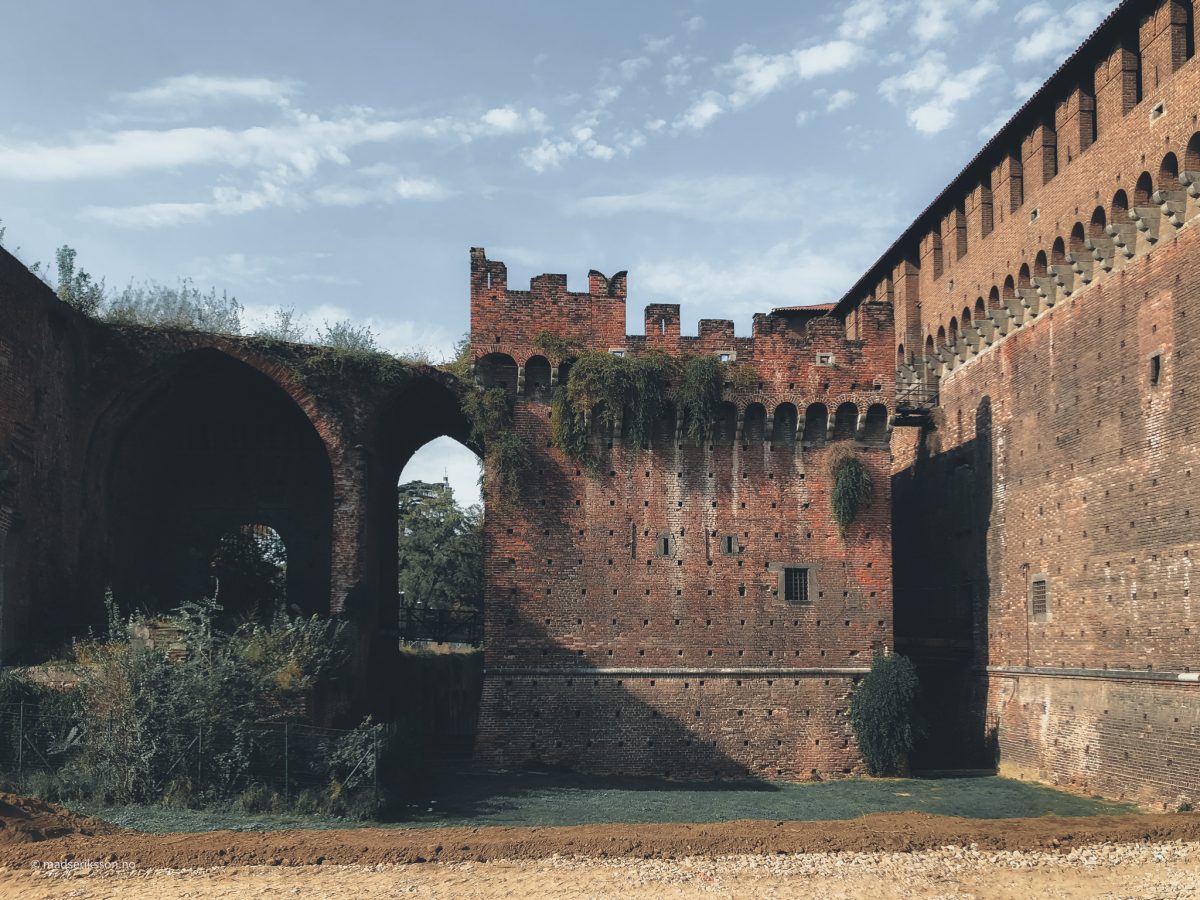
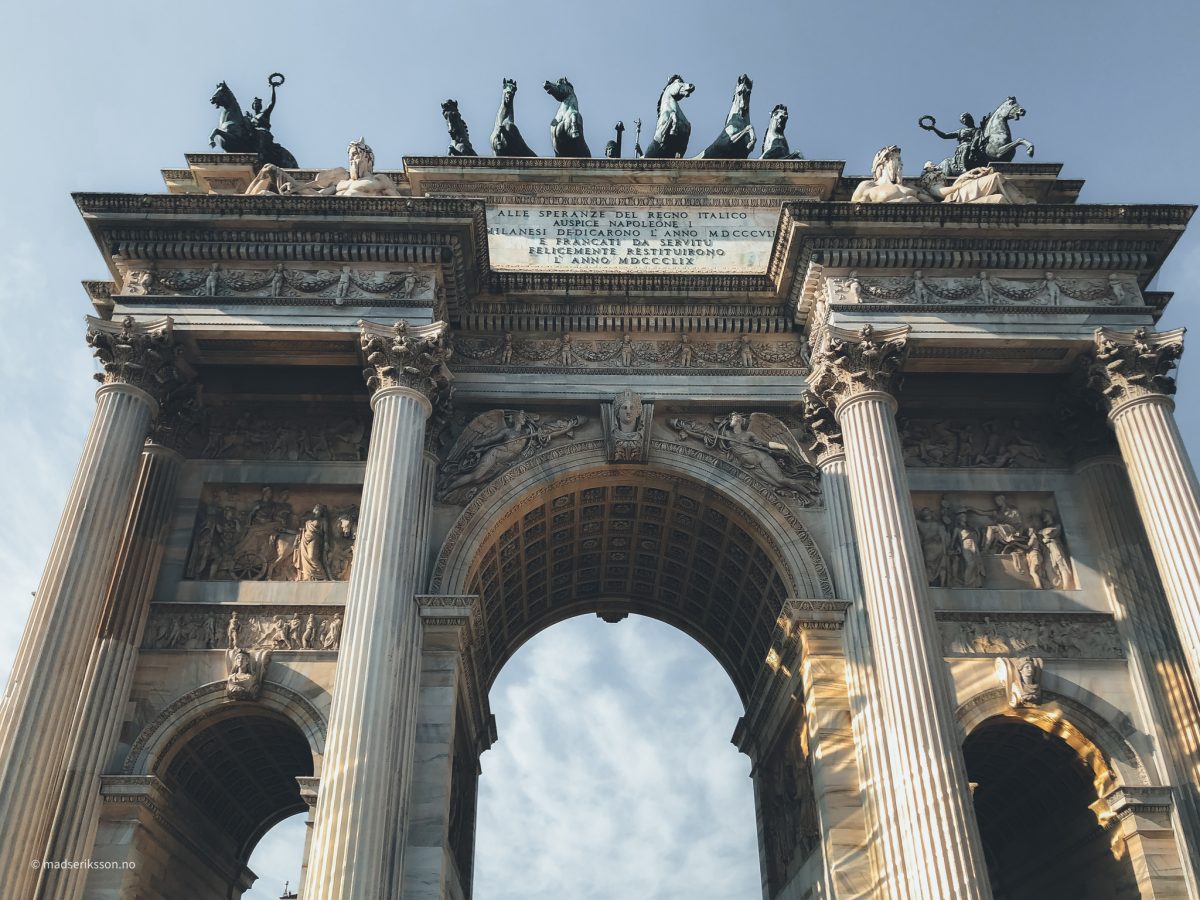
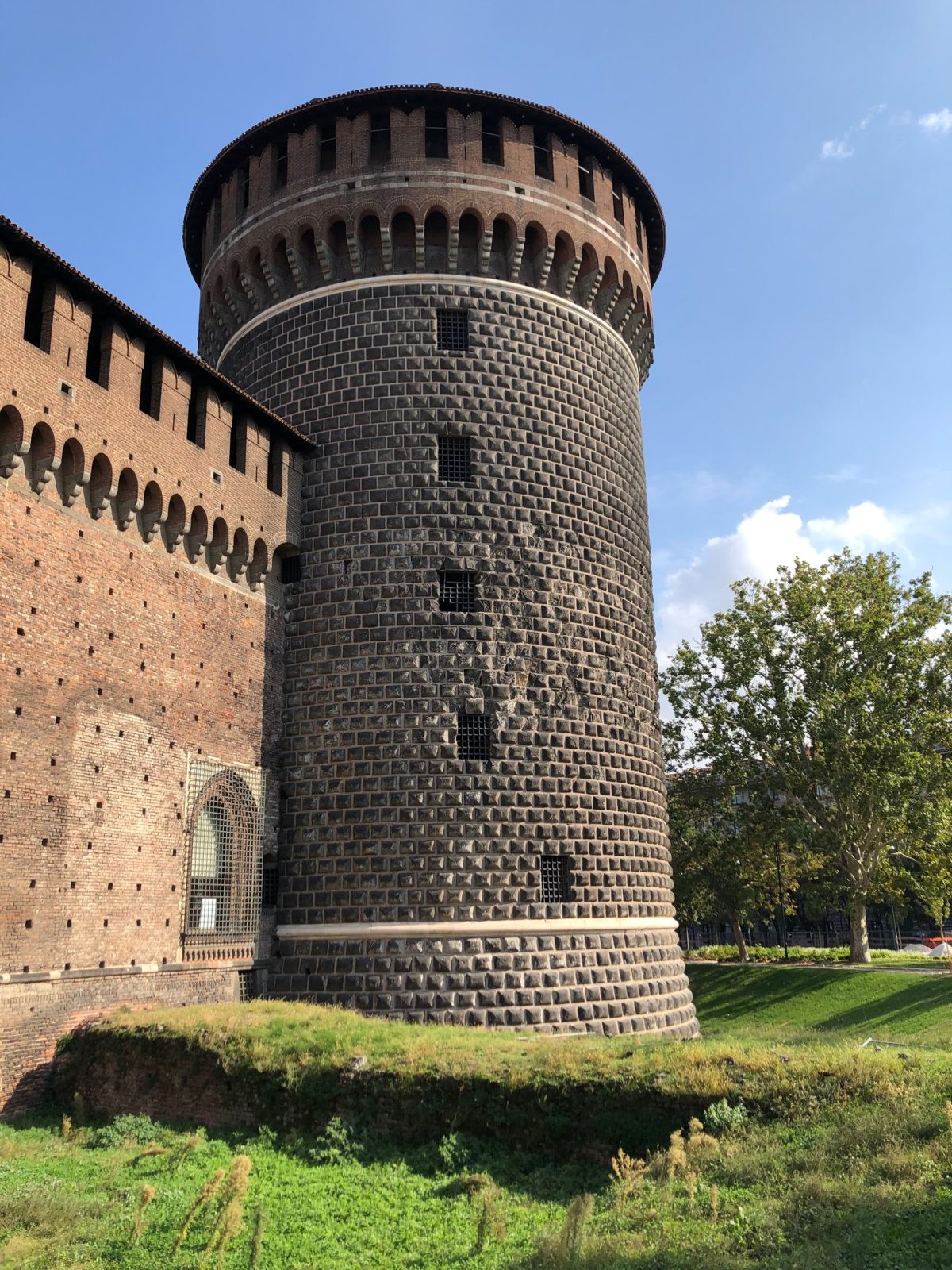
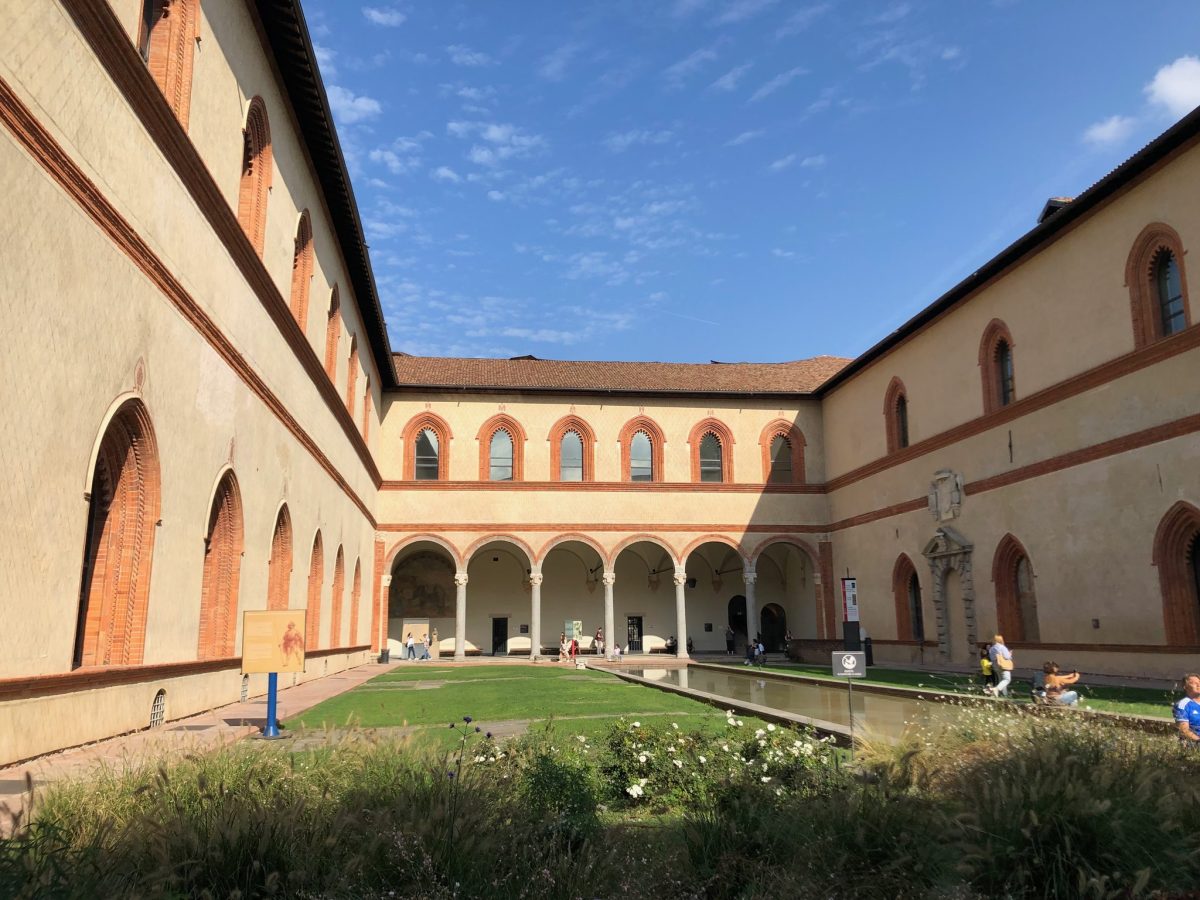
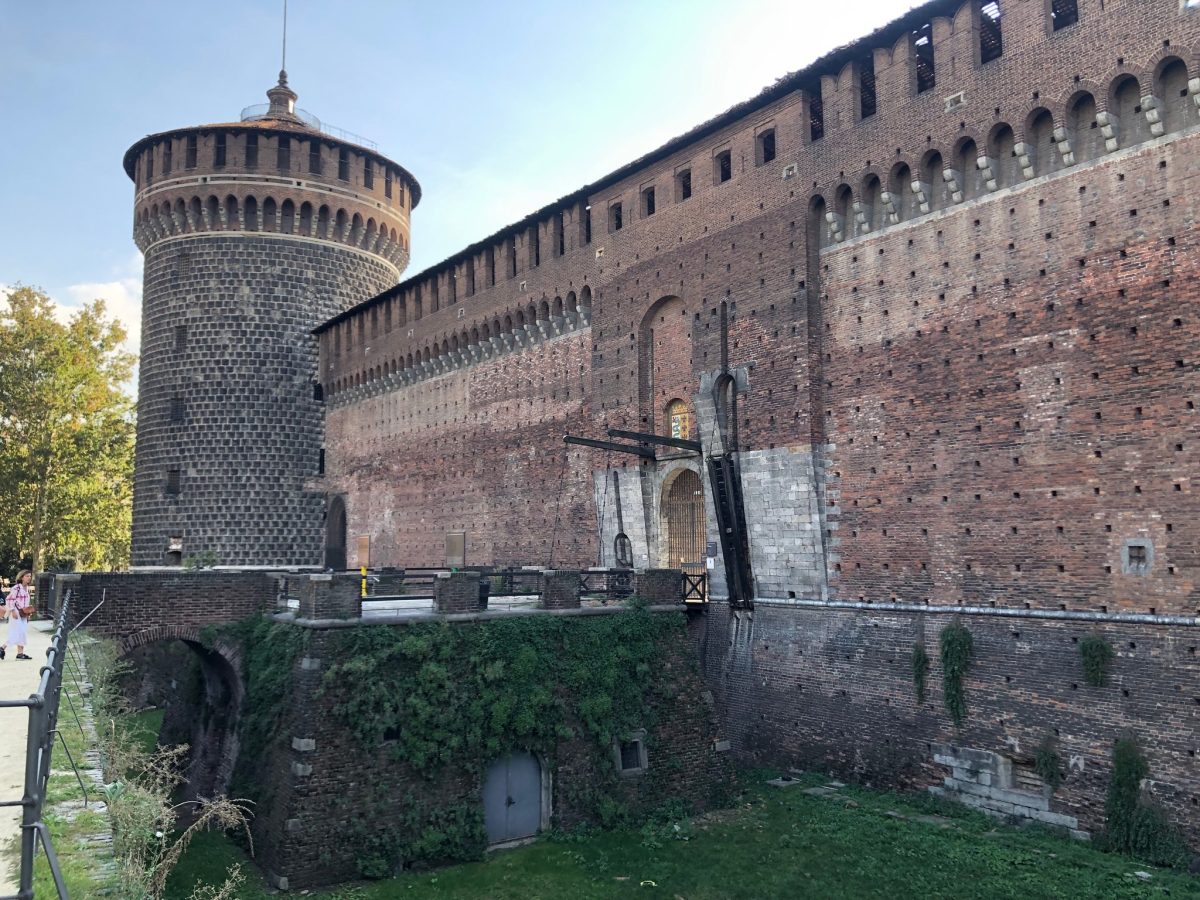
The Sforza castle from the moat and the courtyard, and Napoleon’s arch at the far end of the park
The Castello Sforzesco stands on the site of the Visconti castle of the 1360s, rebuilt from 1450 by Francesco Sforza as both fortress and ducal residence. Its walls are red brick with battlements, its round corner towers were designed to stand up to artillery, and the dry moat still runs around it. The Filarete Tower over the main gate, 70 m high, is a reconstruction of 1900–1905 based on sixteenth-century drawings; the original had blown up in 1521 when it was being used as a powder store. The gateway in the courtyard wall carries the Sforza arms, a crowned serpent swallowing a child.
Beyond the castle, across the Parco Sempione, the Arco della Pace closes the axis. Luigi Cagnola began it in 1807 as a triumphal arch for Napoleon; the Austrians finished it in 1838 and dedicated it to peace, crowning it with a bronze chariot drawn by six horses. It is 25 m high and 24 m wide, and seen from below the horses stand against the summer sky.
The Twentieth-Century City
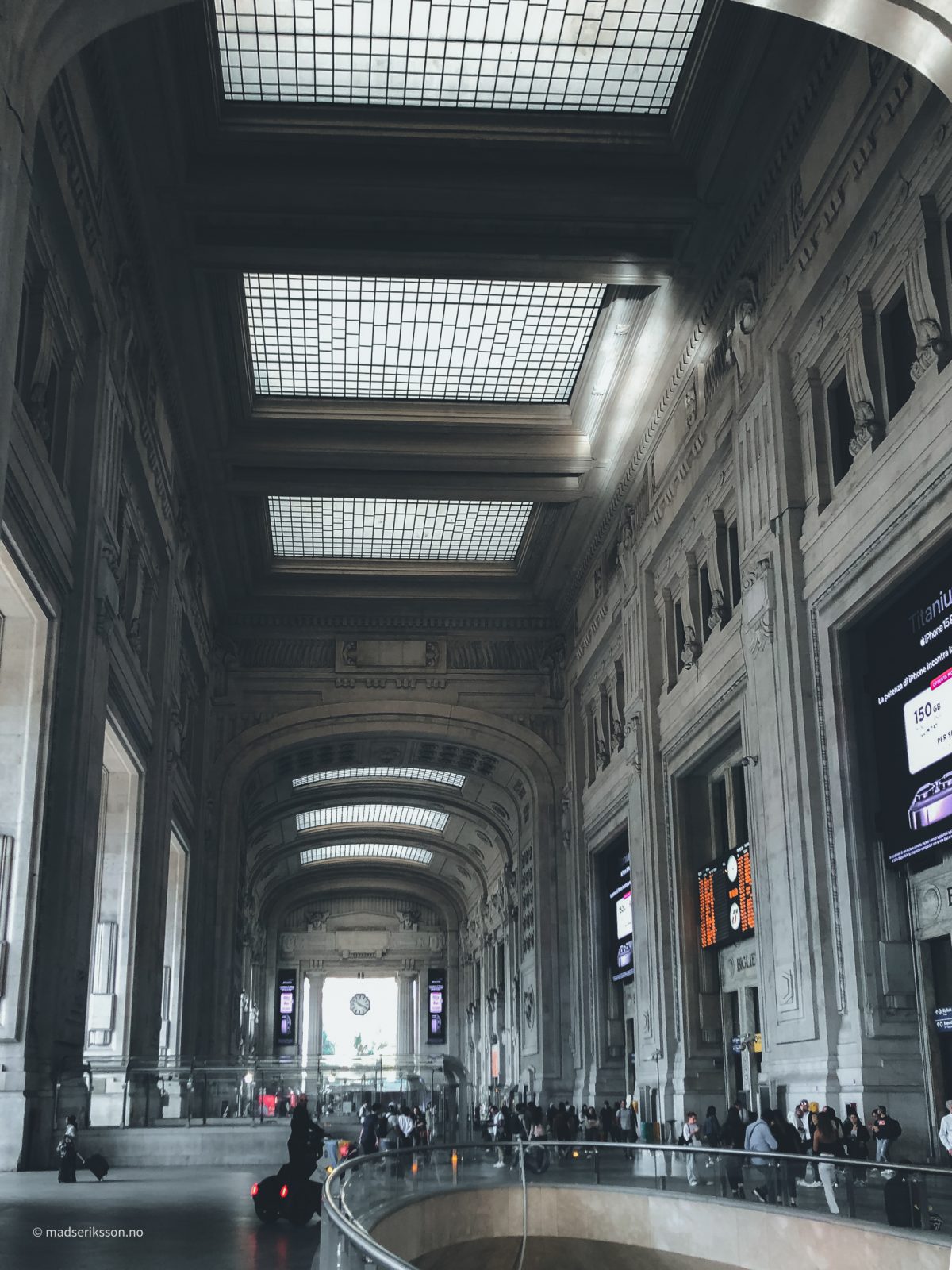
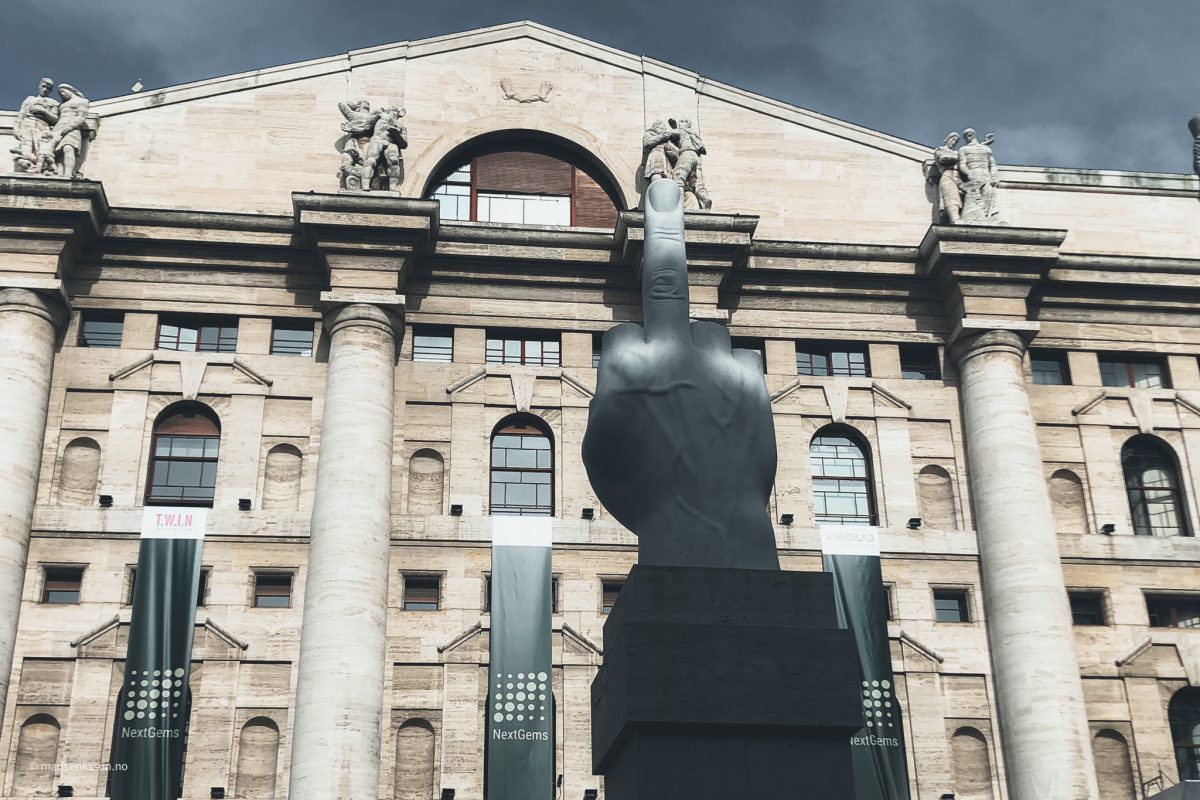
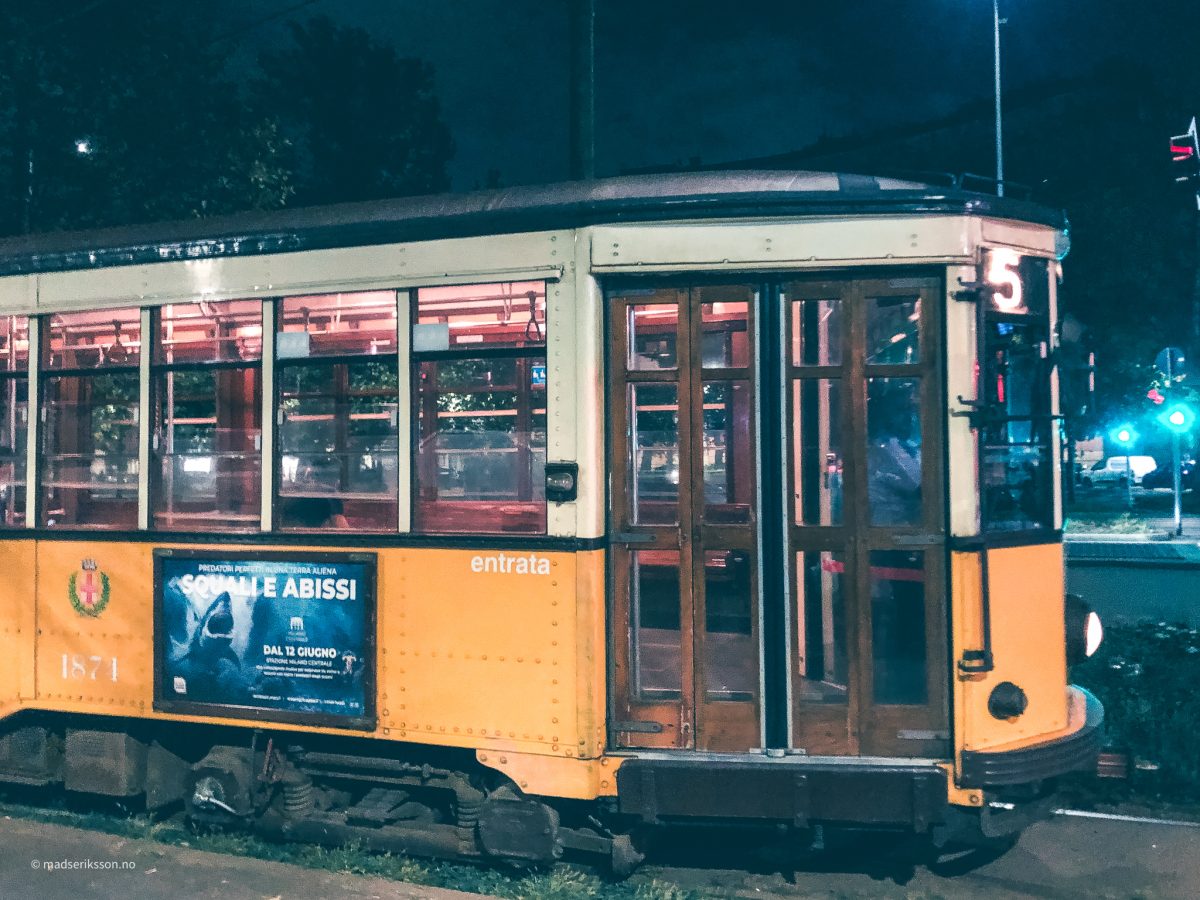
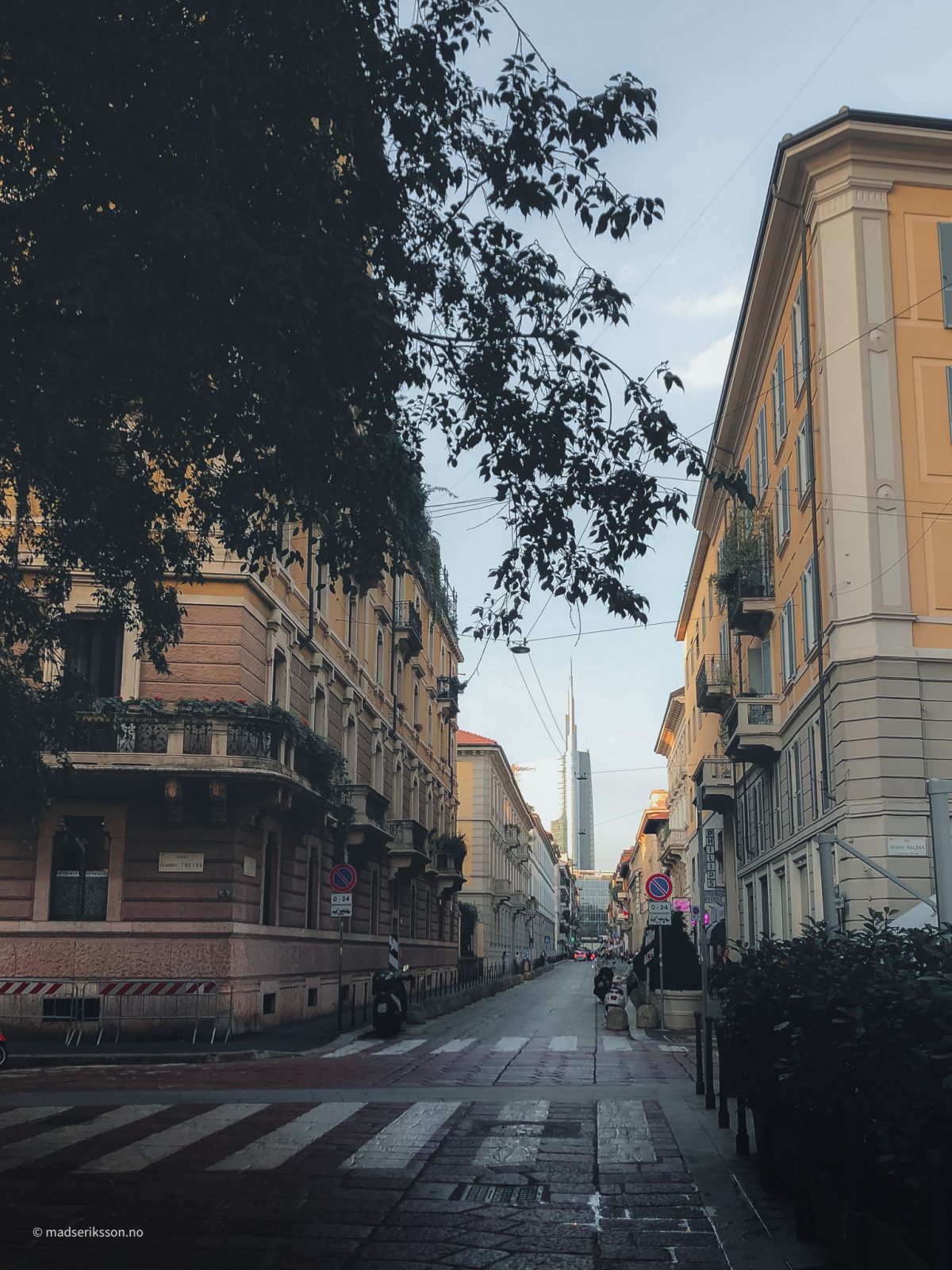
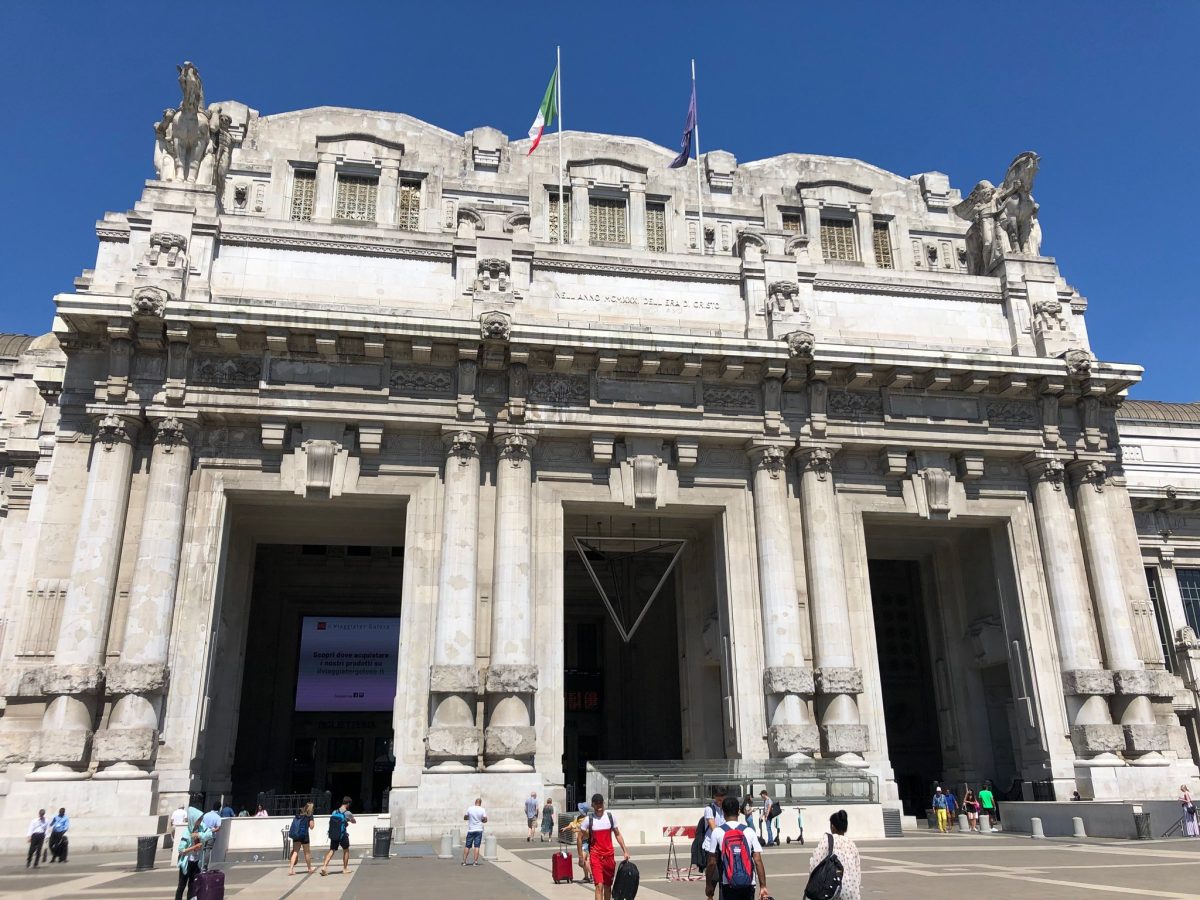
A monumental station, a marble gesture at the stock exchange, an old tram and an empty morning street
Milano Centrale, opened in 1931 to Ulisse Stacchini’s design, is a station built to impress: a 200 m façade, a 72 m main vault and a marble hall where the light falls through glass skylights on to the passengers below. Its mixture of Art Nouveau, Art Deco and imperial bombast is the architecture of the Fascist years, finished with far more money than the original 1912 competition had foreseen.
Across the centre, in front of the stock exchange of 1932 on Piazza degli Affari, Maurizio Cattelan’s L.O.V.E. of 2010 raises an 11 m Carrara-marble hand with every finger but the middle one cut off; the title stands for Libertà, Odio, Vendetta, Eternità. The orange Series 1500 trams, modelled on the American Peter Witt cars and in service since 1927, still work the network at night. The last frame is a residential street in the early morning, its ochre façades and plane trees closing on the spire of a modern tower at the far end.
«Milan rewards looking up. The spires of the Duomo, the ribs of the Galleria dome, the battlements of the castle, the horses on the Arco della Pace and the skylights of Centrale are all above eye level, and the city at street level is often plain by comparison. That is the trade Milan has always made: it keeps its finest work overhead and gets on with business underneath.»
More in the same area
 CitiesMilan: A Fashionable and Cultural Hub in Italy
 ArchitecturePisa — The Leaning Tower, the Square of Miracles and the City on the Arno
 CitiesTimeless Beauty and Cultural Marvels in Florence
 CitiesRome: A Timeless Journey Through History and Culture
 CitiesExploring the Enchanting City of Venice
 ArchitectureSt Peter’s Basilica: Michelangelo’s Dome and 120 Years of Building