The Bibliothèque nationale de France began as a king’s private collection of manuscripts in a tower of the Louvre in 1368. Since 1537 it has had the right to a copy of every book printed in France, and today it holds more than sixteen million books and printed items, 380,000 manuscripts and millions of maps, prints, photographs, coins and recordings. It lives in two very different buildings: the historic Richelieu site near the Palais-Royal, with its domed reading rooms and new museum, and the four glass towers of the François-Mitterrand site beside the Seine in the 13th arrondissement — one of the boldest and most argued-over buildings of late 20th-century Paris.

For almost three centuries the national library was a single place: a sprawl of mansions, galleries and reading rooms on the Rue de Richelieu, a short walk from the Louvre. By the 1980s it was overflowing. On 14 July 1988 President François Mitterrand announced a new national library on former railway land in the east of Paris. The architect Dominique Perrault won the competition the following year, and the new library was inaugurated in December 1996, some months after the death of the president whose name it now carries.
The library is above all a working institution for readers and researchers, but both of its main sites reward the ordinary visitor. At Richelieu, a twelve-year renovation has opened the magnificent Salle Ovale to everyone free of charge and created a museum of the library’s treasures. At François-Mitterrand, the vast wooden esplanade, the sunken forest garden and the two great globes made for Louis XIV can all be seen without a ticket. Few places in Paris tell the story of French writing, learning and printing so completely.
How to approach the Bibliothèque nationale de France
This guide covers the library in three parts: six centuries of history, from Charles V’s tower in the Louvre to the law that still sends every French publication to its shelves; the François-Mitterrand site, its four towers shaped like open books and its hidden garden; and the Richelieu site, where the reading rooms of the 19th century and the new museum show the library at its most beautiful.
A new national library
On 14 July 1988 President Mitterrand announced a new national library on former railway land in the east of Paris. Dominique Perrault won the competition the following year, and the library was inaugurated in December 1996. It holds 16.2 million books and printed items.
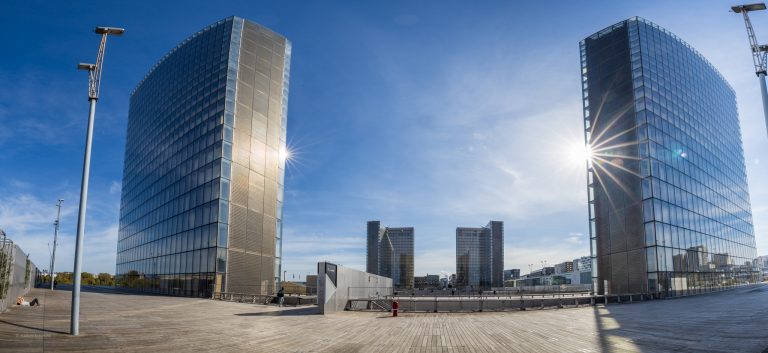
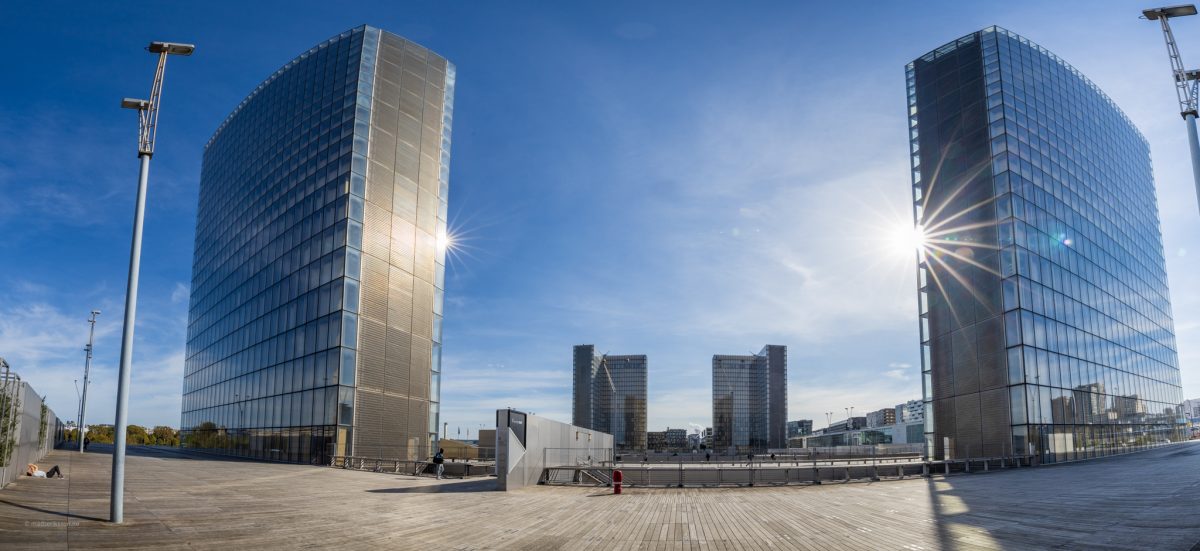
Panorama of the wooden esplanade at the François-Mitterrand site, framed by two of its book-shaped towers
Four open books on a table
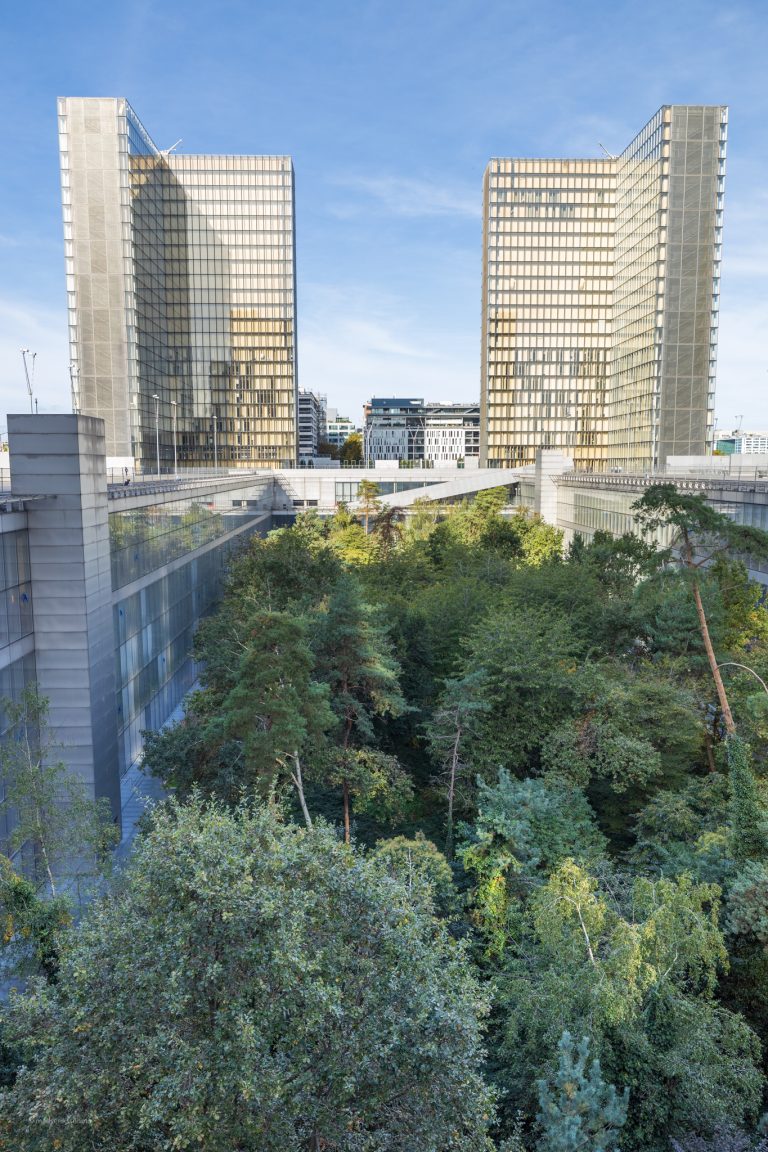
Four L-shaped glass towers, each around 80 metres tall, stand at the corners of a huge rectangular plaza like four books standing half-open. They are named the Towers of Time, Laws, Numbers and Letters.
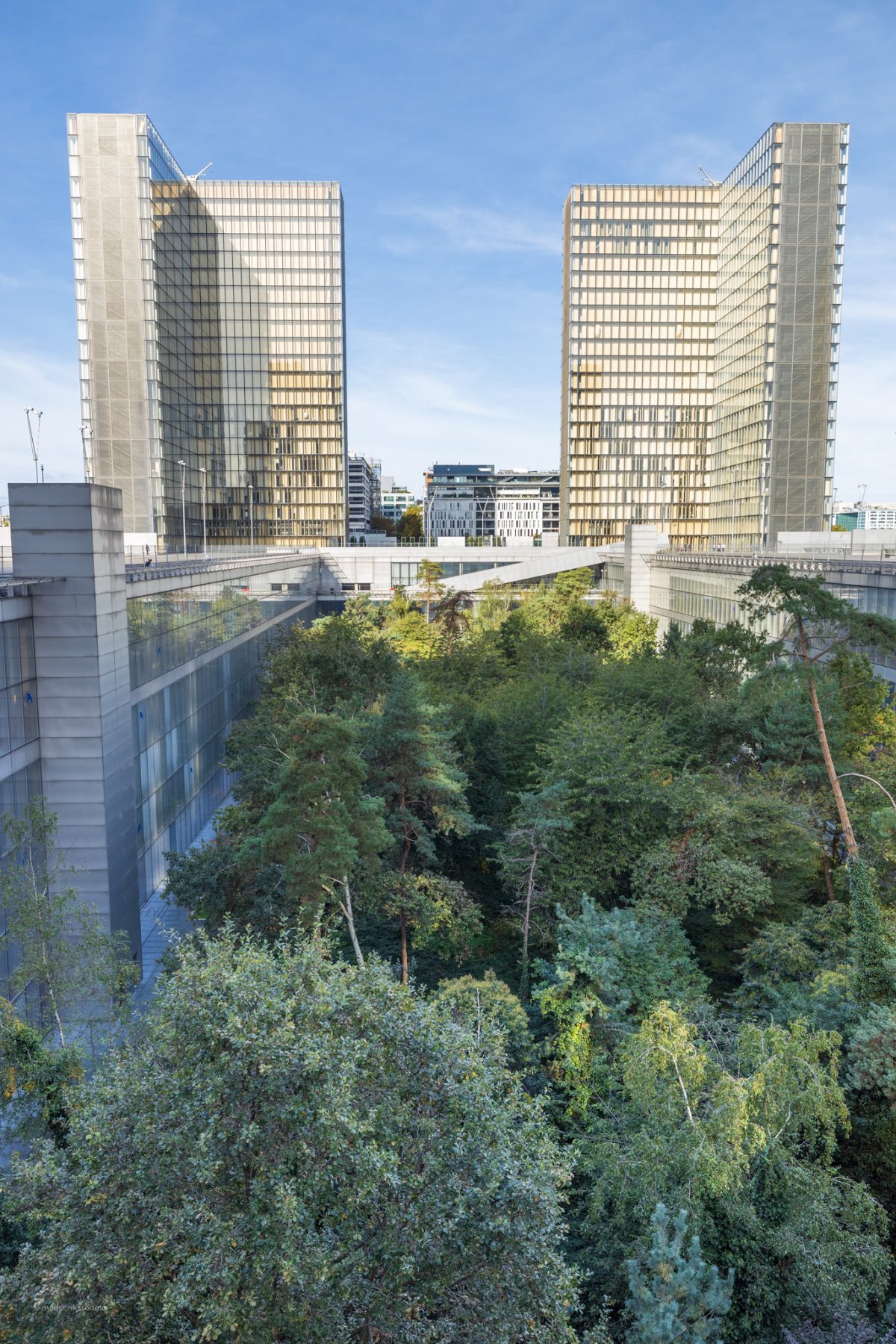
Two of the four glass towers of the François-Mitterrand site rising above its sunken forest garden
Books in glass towers
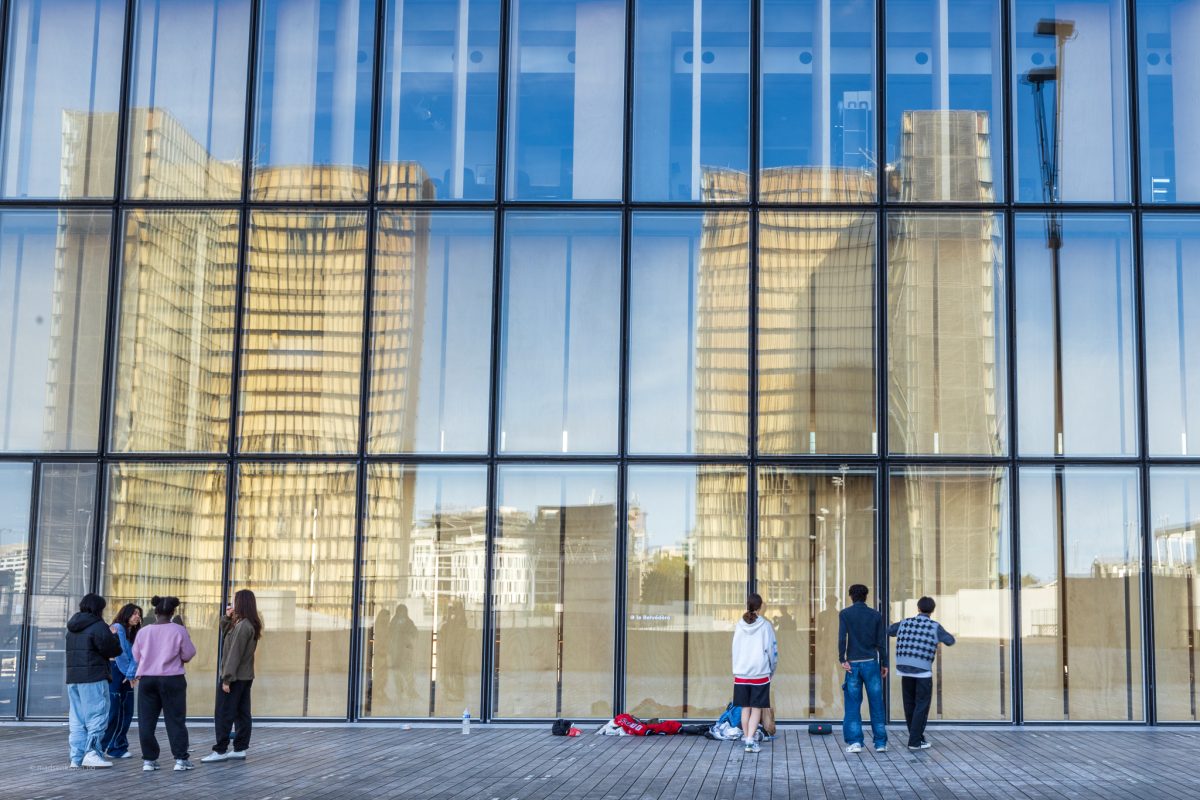
Mobile wooden shutters line the glass. The upper floors of each tower hold offices and the lower ones the stacks, about 400 kilometres of shelving linked to the reading rooms by eight kilometres of automated carts. Critics pointed out that books were being stored in glass in the sun.
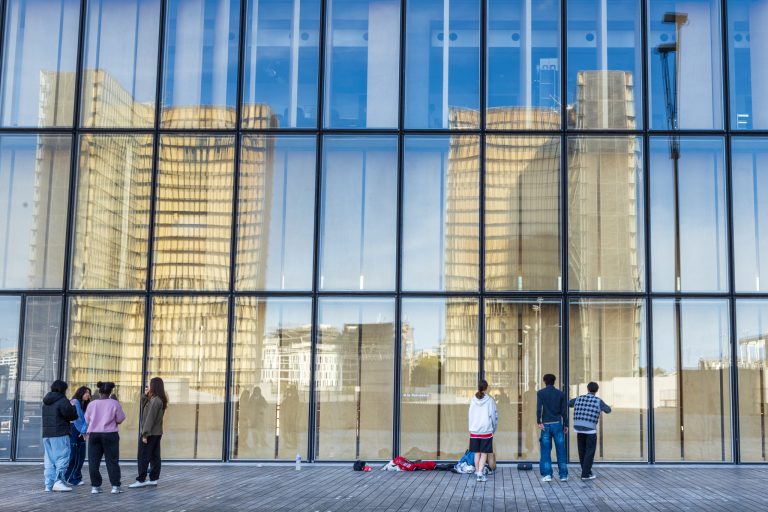
Visitors at the glass wall of the Bibliothèque nationale de France.
A forest sunk into the plaza
Sunk into the middle is a garden of about a hectare, planted with around 126 Scots pines from the Forêt de Bord in Normandy. It is closed to the public and seen only through the glass of the reading rooms around it, the Haut-de-jardin above and the research library below.
Two of the four glass towers of the François-Mitterrand site rising above its sunken forest garden
A wooden plaza above the Seine
The plaza between the towers covers around 60,000 square metres of Brazilian ipé, reached by broad wooden steps from the quay. It is free to walk on, with views along the Seine to the Simone-de-Beauvoir footbridge and the Bercy park.
Panorama of the wooden esplanade at the François-Mitterrand site, framed by two of its book-shaped towers
The Globes of Louis XIV
The west hall, also free, holds the two Globes of Louis XIV by Vincenzo Coronelli, about four metres in diameter. The Haut-de-jardin library is open to anyone aged 14 and over with a day pass; the Rez-de-jardin is reserved for accredited readers.
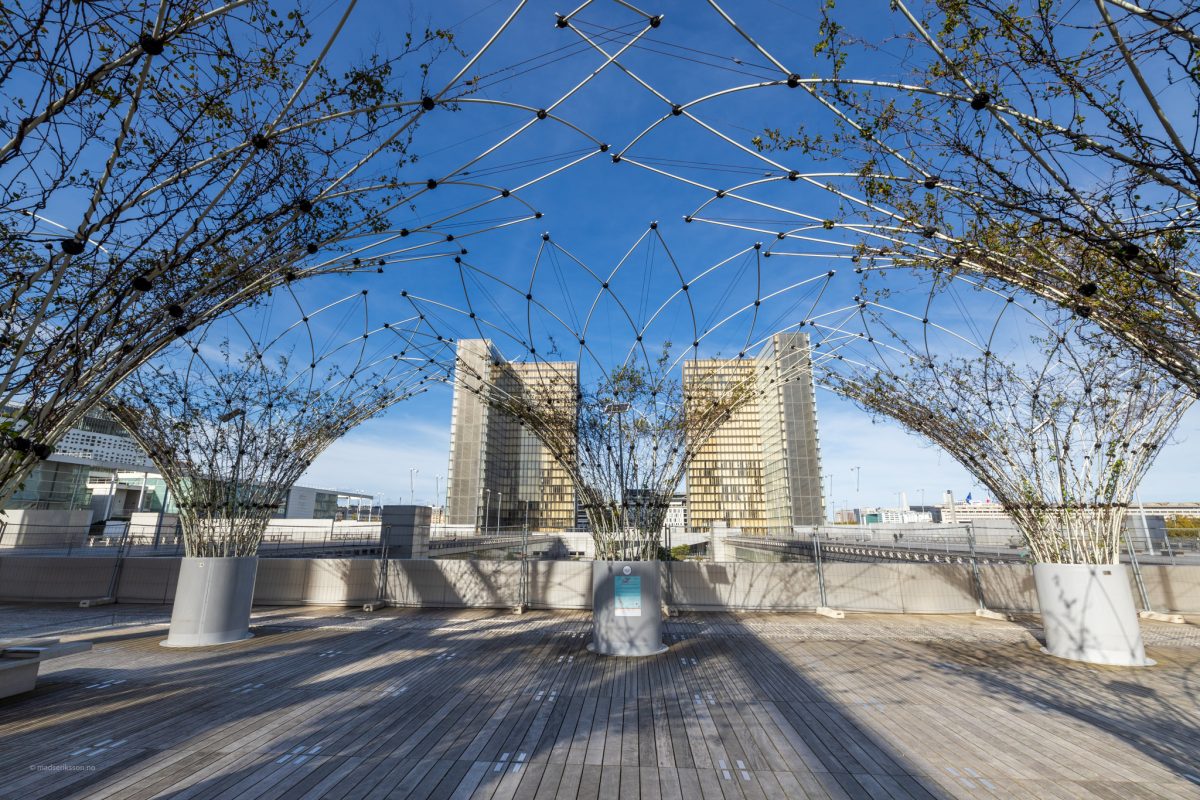
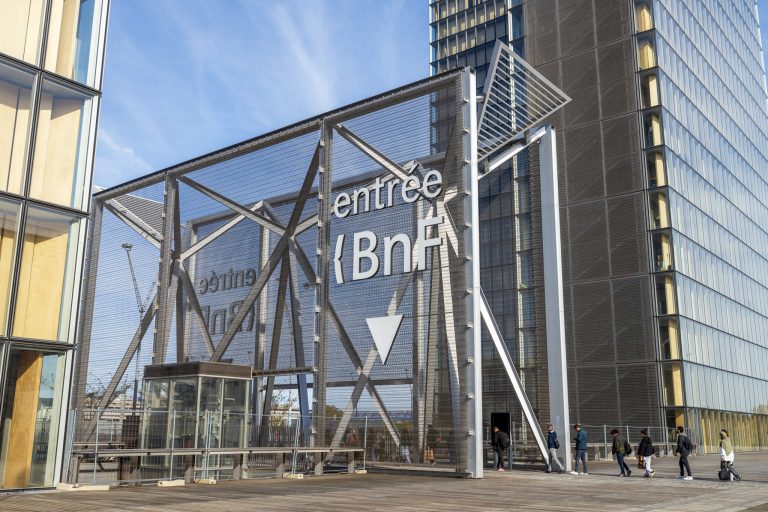
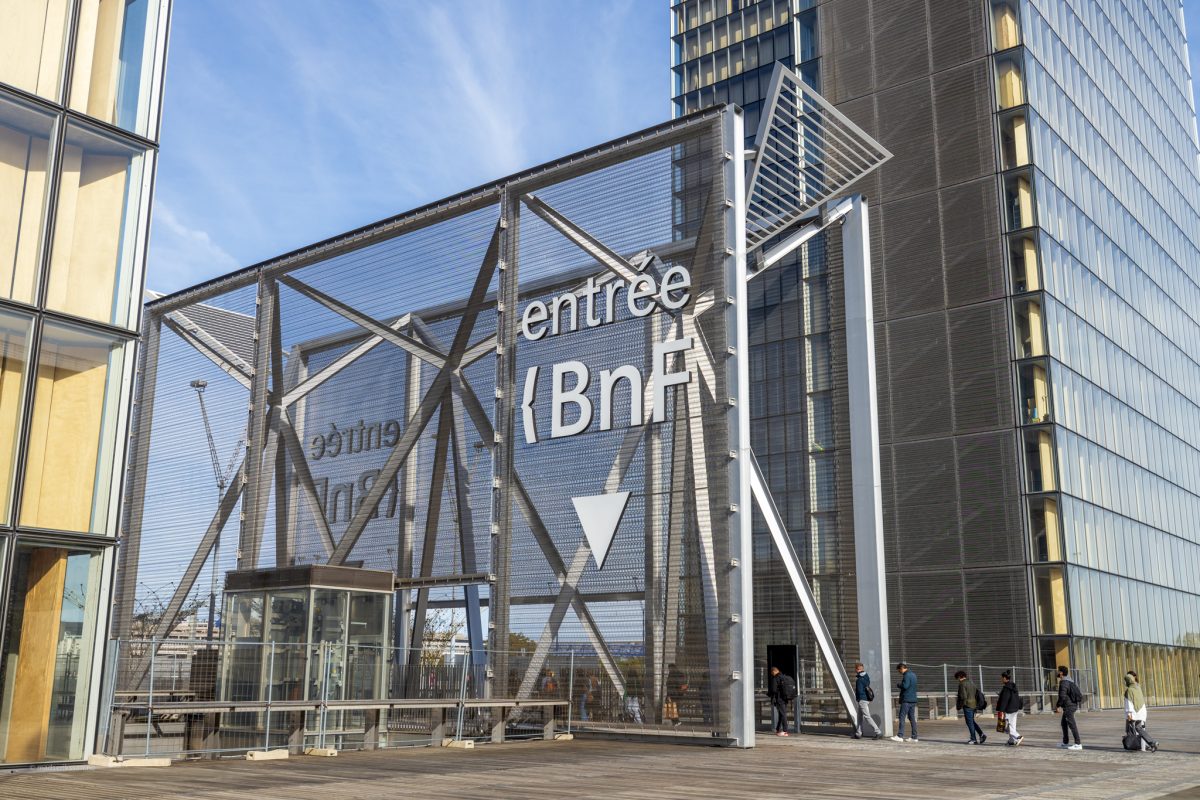
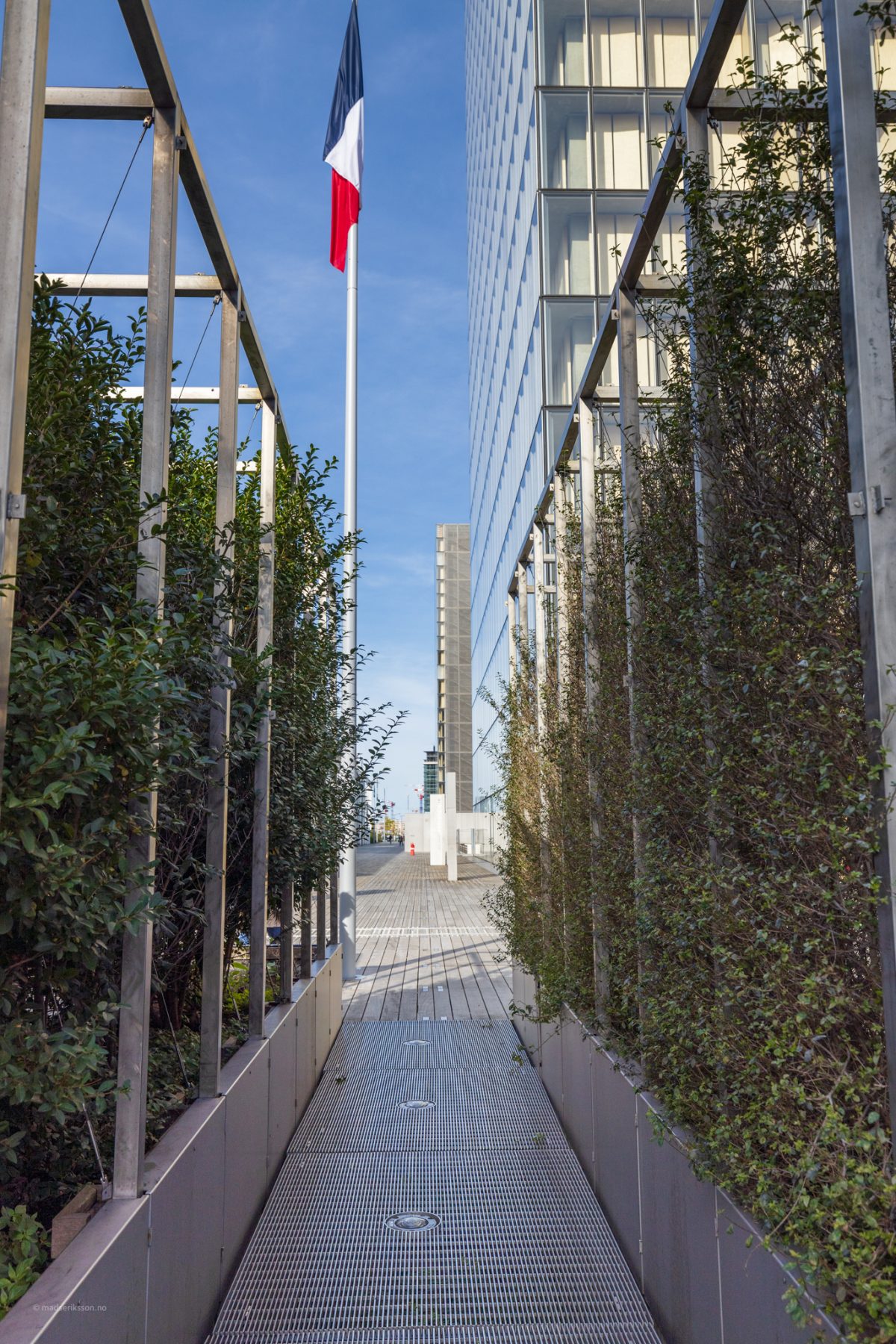
The steel-mesh entrance canopy marked Entrée BnF at the François-Mitterrand site in Paris
3D model © 2026 madseriksson.no · Photographs © madseriksson.no. Buildings and surroundings: © OpenStreetMap contributors (ODbL). The towers use their mapped 79 m height; the plinth around the garden is drawn at a simplified height.
Six Centuries — From a King’s Tower to a Nation’s Memory
How a royal collection of manuscripts became the library that receives a copy of everything published in France
The library traces its origins to 1368, when Charles V installed his collection of manuscripts in the Tour de la Fauconnerie, one of the towers of the medieval Louvre. The collection passed to Louis XI in 1461, the year usually given for the founding of the continuous institution. Kings carried their books with them: Francis I moved the collection to his château at Fontainebleau in 1534 and merged it with his own library. In 1666 it was installed on the Rue Vivienne, and in 1692 it opened its doors to scholars from outside the court for the first time.
The decisive moment for the collection came in 1537. By the Ordinance of Montpellier, Francis I required printers and booksellers to deposit a copy of every book they printed with the royal library. This legal deposit, extended over the centuries to engravings, maps, music, photographs, recordings, films, software and finally websites, is why the library’s holdings are so complete: it is the memory of French publishing, and it still receives copies of what is published in France today. In 1720–1721 the librarian Abbé Bignon moved the collections into the Hôtel de Nevers on the Rue de Richelieu, the site that would be the library’s home for 275 years.
Since 1537, French law has required that a copy of every book printed in the kingdom — and later the republic — be deposited with the national library. Few other rules have done more to preserve a country’s written memory.
With the Revolution the royal library became national. In the 19th century the architect Henri Labrouste rebuilt much of the Richelieu site, including the great reading room with its slender iron columns and domed roof, and after his death Jean-Louis Pascal added the oval reading room. By the late 20th century the old site could no longer cope with the growth of the collections or the number of readers, and the decision was taken to build anew. Since 1994 the institution has carried its present name, Bibliothèque nationale de France. Its digital library, Gallica, launched in 1997, passed ten million documents in March 2023.
François-Mitterrand — Four Open Books Around a Forest
Glass towers at the corners of a wooden plaza, a pine wood sunk into the middle, and two globes made for the Sun King in the hall
Dominique Perrault’s design is easy to read from a distance. Four L-shaped glass towers, each around 80 metres tall, stand at the corners of a huge rectangular plaza, like four books standing half-open on a table. They are named the Towers of Time, Laws, Numbers and Letters. Behind the glass, mobile wooden shutters line the walls; the upper floors of each tower hold offices and the lower ones the book stacks, around 400 kilometres of shelving in all, linked to the reading rooms by an eight-kilometre network of automated carts. The plaza between the towers covers around 60,000 square metres and is decked entirely in Brazilian ipé wood, reached by broad wooden steps from the quay along the Seine.
The heart of the building is invisible from the street. Sunk into the middle of the plaza is a rectangular garden of about a hectare, planted as a fragment of forest. Around 126 mature Scots pines were brought from the Forêt de Bord in Normandy and lowered into place, with smaller trees below them; the garden is modelled on the woods of Fontainebleau and is closed to the public, seen only through the glass walls of the reading rooms that surround it on two levels. The upper level, the Haut-de-jardin, is the library open to everyone aged 14 and over with a day pass; the lower level, the Rez-de-jardin, is the research library, reserved for accredited readers.
The building divided opinion from the day it opened. Its critics pointed out that books were being stored in glass towers in the sun, and the wooden shutters behind the glass became the building’s answer. Its admirers saw a library turned into a landscape.
The building is best explored from the esplanade, which is free and open to anyone, with views along the Seine and across to the Simone-de-Beauvoir footbridge and the Bercy park on the far bank. Inside the west hall, also free, stand the Globes of Louis XIV: two enormous globes, about four metres in diameter, made by the Venetian cosmographer Vincenzo Coronelli and presented to the Sun King — one showing the Earth as it was known in the late 17th century, the other the sky. The site also stages major exhibitions drawn from the collections. Around it, the old railway yards of the 13th arrondissement have been rebuilt as the Paris Rive Gauche district, with university buildings, cinemas and new housing.
Richelieu — The Historic Library, Reopened to Everyone
A domed reading room under iron and glass, an oval hall open free of charge, and a museum of treasures in a 17th-century gallery
The Richelieu site is where the library spent most of its history, and it is the one that looks like a great library ought to. Henri Labrouste’s reading room, built between 1862 and 1868, is one of the landmarks of 19th-century iron architecture, its slender iron columns and arches carrying a roof of domes that let daylight fall over the long rows of desks. Since 2016 it has been the reading room of the library of the National Institute of Art History (INHA). After Labrouste’s death in 1875, Jean-Louis Pascal designed the Salle Ovale, a vast oval reading room begun in 1897, completed in 1932 and inaugurated in 1936.
When the printed books and most readers moved to the François-Mitterrand site, Richelieu kept the specialised departments — manuscripts, prints and photographs, maps, coins and medals, music and the performing arts. A long renovation, led by the architects Bruno Gaudin and Virginie Brégal, restored the buildings and opened them up to the city. The Salle Ovale, with books on open shelves for anyone to read, is now open to all visitors free of charge, entered from 5 Rue Vivienne. A new garden on the Rue Vivienne side, the Hortus papyrifer, is planted with species used through history to make writing materials, from papyrus onwards.
The Salle Ovale has become one of the quietest free rooms in central Paris: an oval reading hall built over four decades, open to anyone of any age, with books on open shelves and no ticket required.
The library’s permanent museum, opened with the completion of the renovation, is laid out around the Galerie Mazarin. It shows a rotating selection of the library’s treasures — manuscripts, rare printed books, prints, coins and medals — and is one of the few places where these collections can be seen by anyone without a research pass. In 2026 a museum ticket costs €15, and €18 with one of the temporary exhibitions. Richelieu is a short walk from the Palais-Royal gardens and the Galerie Vivienne, and it fits naturally into a visit to the Louvre, which stands a few streets to the south.
«The Bibliothèque nationale de France is not a sight in the usual sense — it is a working library, used every day by thousands of readers — but it is one of the most rewarding places in Paris to visit for free. Climb the wooden steps to the esplanade at François-Mitterrand, look down into the pine forest between the four glass books, and stand under Coronelli’s globes in the west hall. Then take line 14 across the city to Richelieu, walk into the Salle Ovale, and sit for a while under the glass roof among the open shelves. Six centuries of French writing are kept between these two buildings, and both are open to anyone who walks in.»

More in the same area
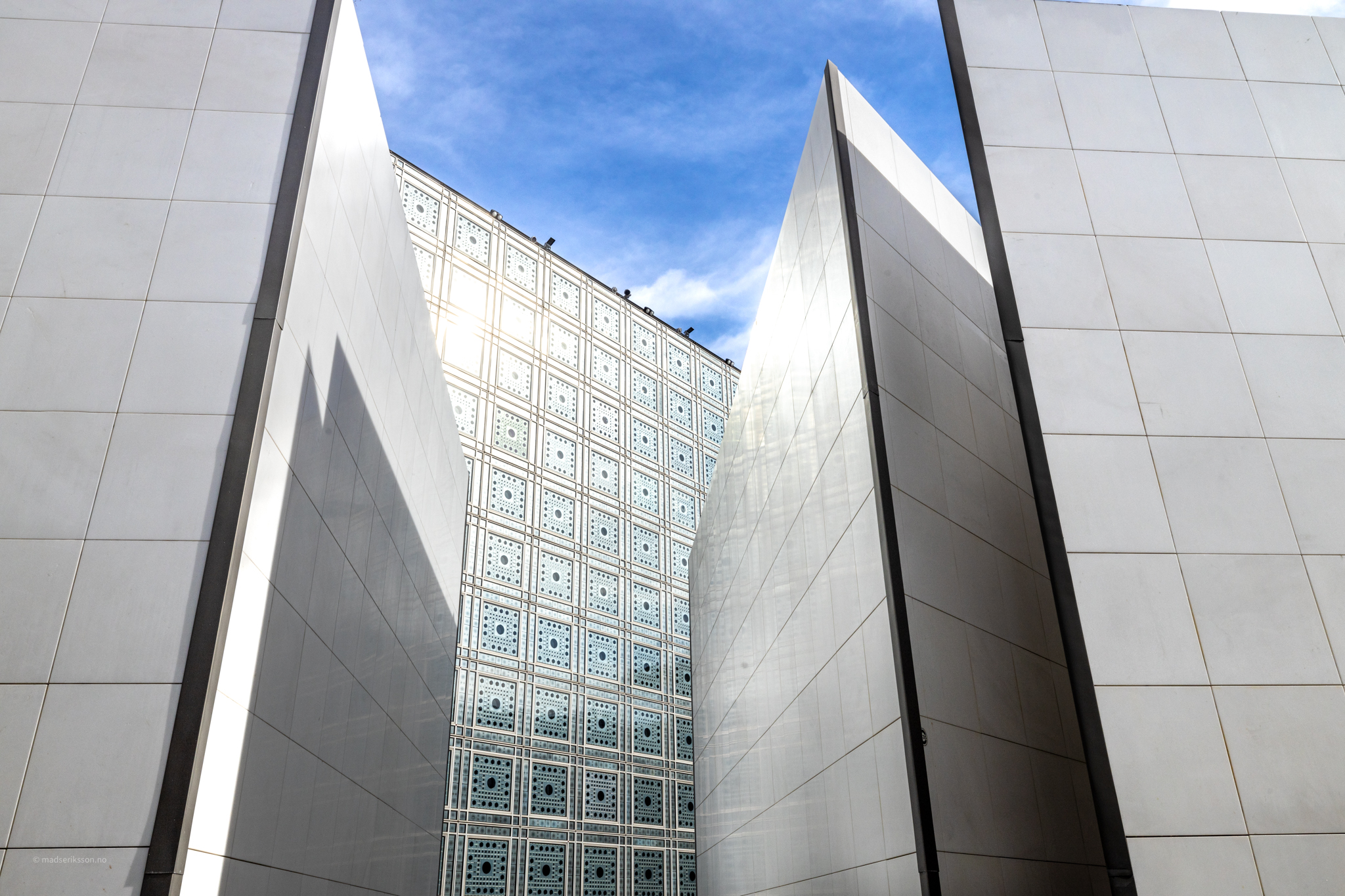 ArchitectureInstitut du Monde Arabe, Paris: Jean Nouvel’s Light-Sensitive Landmark on the Seine
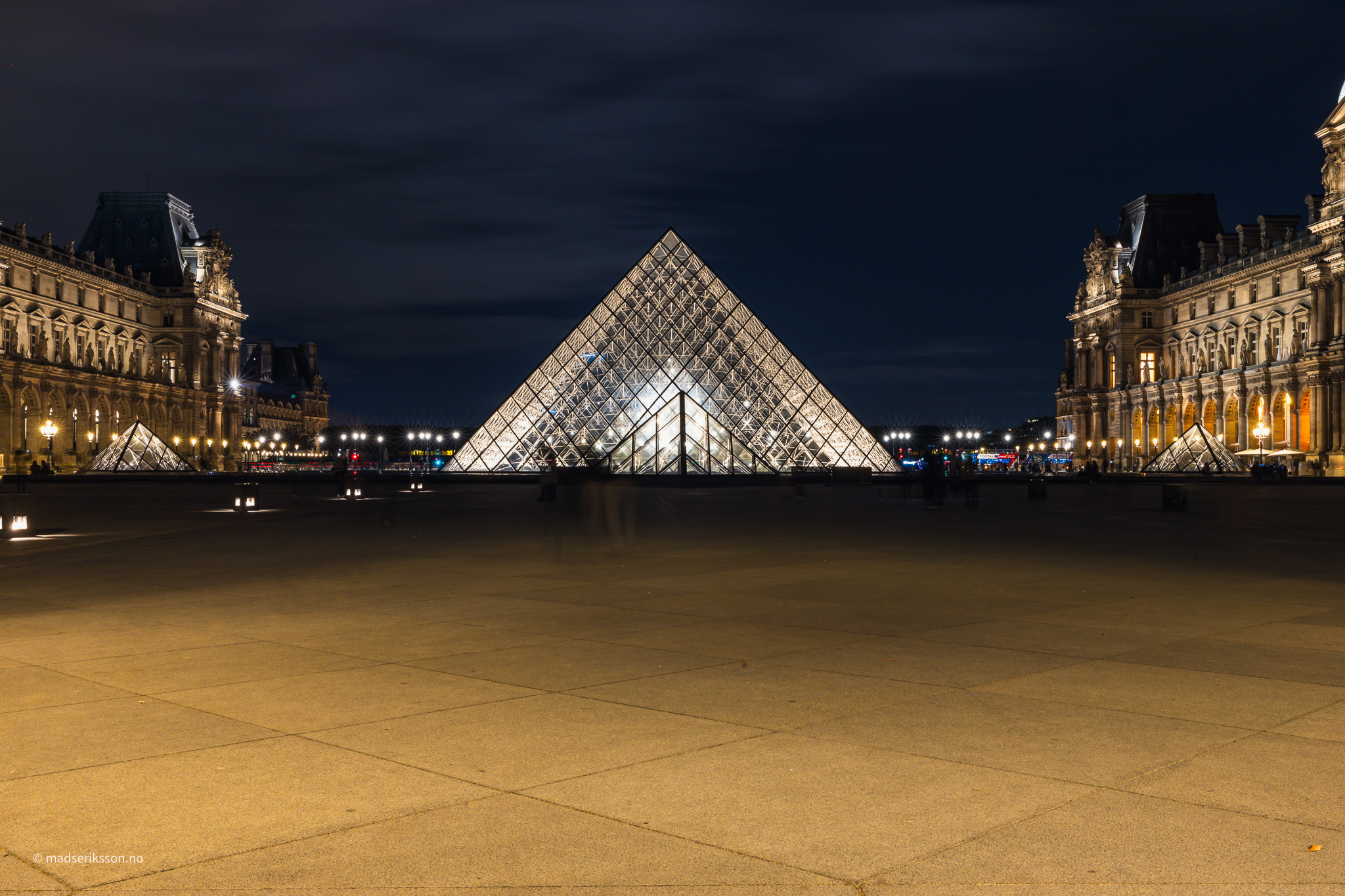 CitiesParis: The City of Lights
 ArchitectureThe Eiffel Tower: Built for a Fair, Saved by the Radio
 ArchitectureLe Monde Headquarters, Paris: Snøhetta’s Glass Bridge Over the Austerlitz Tracks
 ArchitectureArc de Triomphe: Napoleon’s Arch, the Unknown Soldier and the View Down Twelve Avenues
 ArchitectureLouvre Museum, Paris: From Medieval Fortress to the World’s Most Visited Museum