The Louvre began as a fortress on the edge of Paris, built to keep out an English army that never came. Over eight centuries it became a royal palace, was abandoned by Louis XIV for Versailles, and in August 1793 — in the middle of the Revolution — opened its doors as a public museum. Today it holds around half a million objects, shows some 35,000 of them across more than 72,000 square metres of galleries, and welcomed about nine million visitors in 2025, more than any other museum in the world. It is too large to see in a day, and the visit is far better for accepting that from the start.

The building and the collection grew together. Charles V turned the medieval castle into a residence in the 14th century; Francis I began replacing it with a Renaissance palace in 1546; and successive kings extended it westwards along the Seine. When Louis XIV moved the court to Versailles in 1682, the Louvre was left to artists, academies and the royal collections. The Revolution turned those collections into national property, and the museum that opened in 1793 was conceived as a statement that art belonged to the people rather than to the crown.
The modern museum is the product of one more transformation. In 1981 President François Mitterrand launched the Grand Louvre project, which moved the Ministry of Finance out of the palace, dug a vast reception hall under the Cour Napoléon and crowned it with I. M. Pei’s glass pyramid. It also gave the museum the layout it has today: three wings — Denon, Sully and Richelieu — arranged around the pyramid, and eight curatorial departments ranging from Egyptian and Near Eastern antiquities to Islamic art, sculpture, decorative arts, paintings, and prints and drawings.
How to approach the Louvre
This guide covers the Louvre in four parts: the medieval fortress whose foundations still lie beneath the museum; the palace that became a public museum during the Revolution; the glass pyramid and the Grand Louvre project that reshaped it in the 1980s; and the collections themselves — where the most famous works hang, and how to plan a visit that does not end in exhaustion in front of the Mona Lisa.
From fortress to museum
The Louvre began as a fortress, became a royal palace and opened as a public museum on 10 August 1793. Today three wings, Denon, Sully and Richelieu, are arranged around I. M. Pei's pyramid. Scroll on and the roof lifts off, one floor at a time.
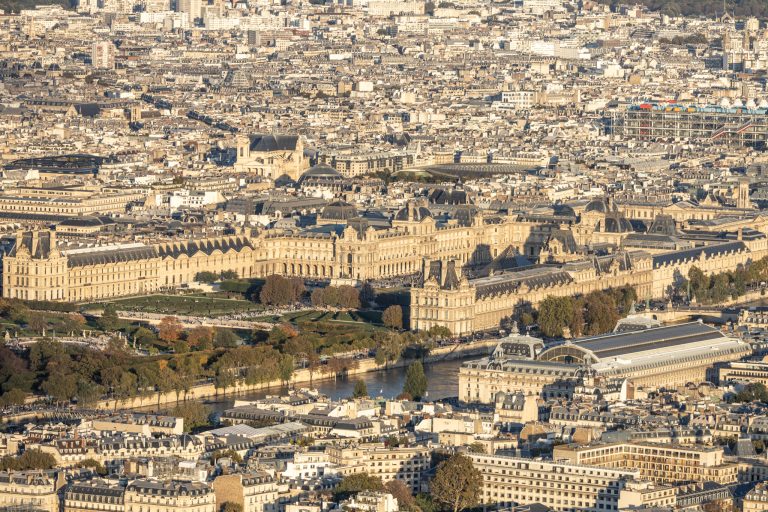
The Louvre and the Tuileries Garden beside the Seine, seen from the top of the Eiffel Tower
The medieval Louvre
Philip II's fortress was almost square, about 78 by 72 metres, with a round keep 30 metres tall. Its foundations survive beneath the Cour Carrée, where visitors walk along the base of the keep and the moat walls; the vaulted Salle Saint-Louis survives from the medieval residence.
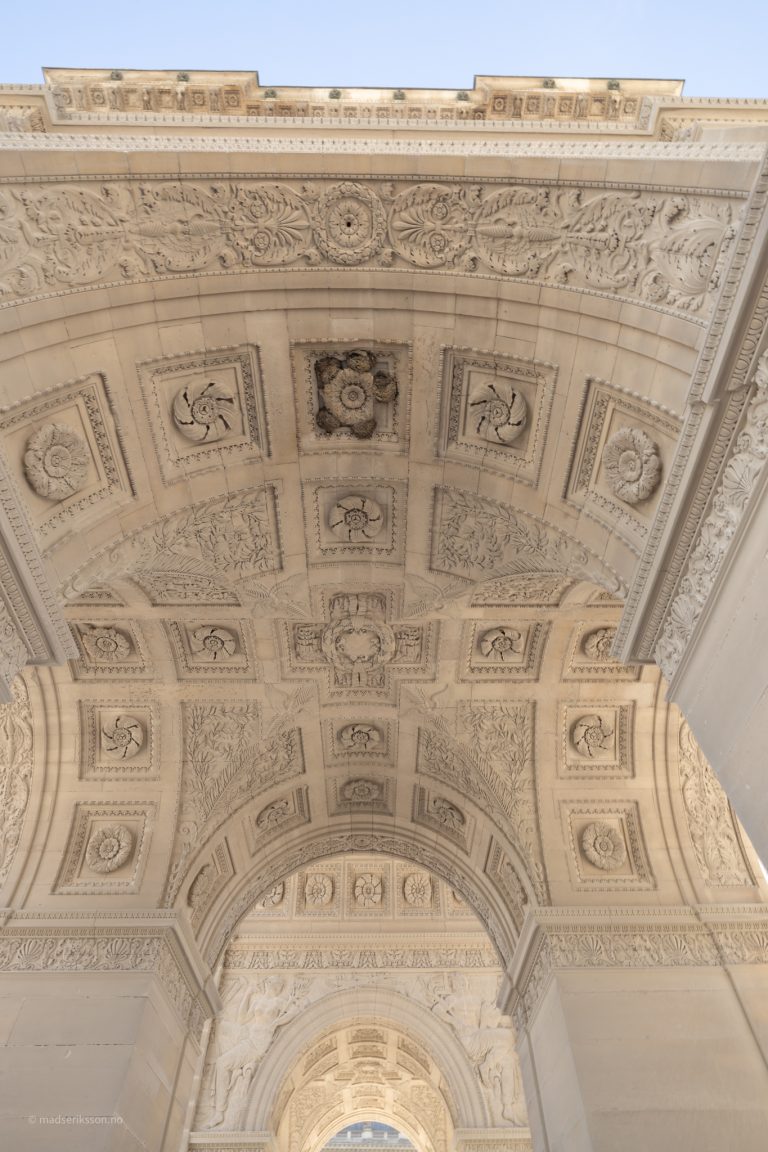
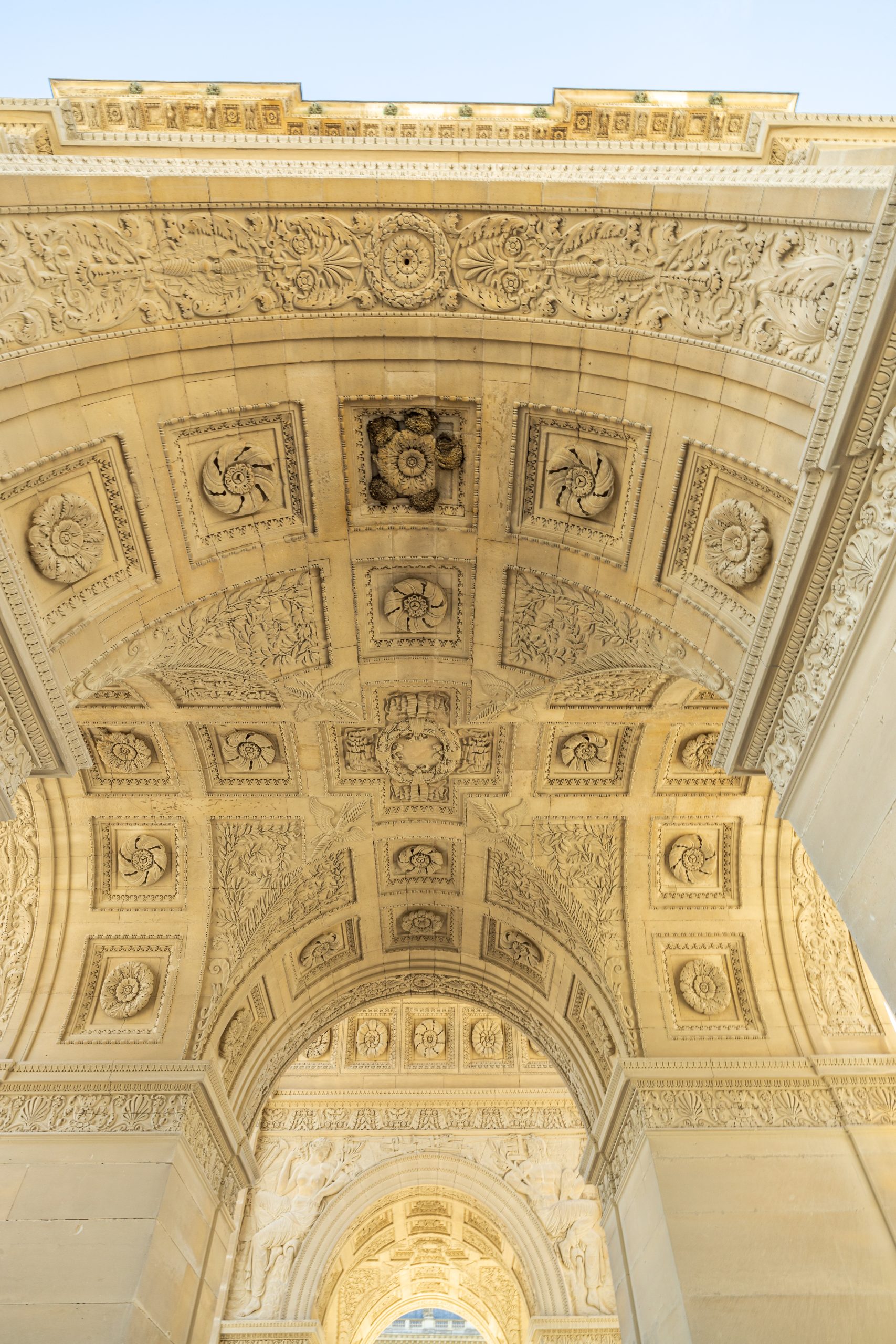
A richly coffered stone vault with carved rosettes over a passage at the Louvre in Paris
Egypt and the Venus de Milo
The Sully wing around the Cour Carrée holds much of the Egyptian collection and the Greek antiquities, including the Venus de Milo on the ground floor, carved around 130–100 BC.
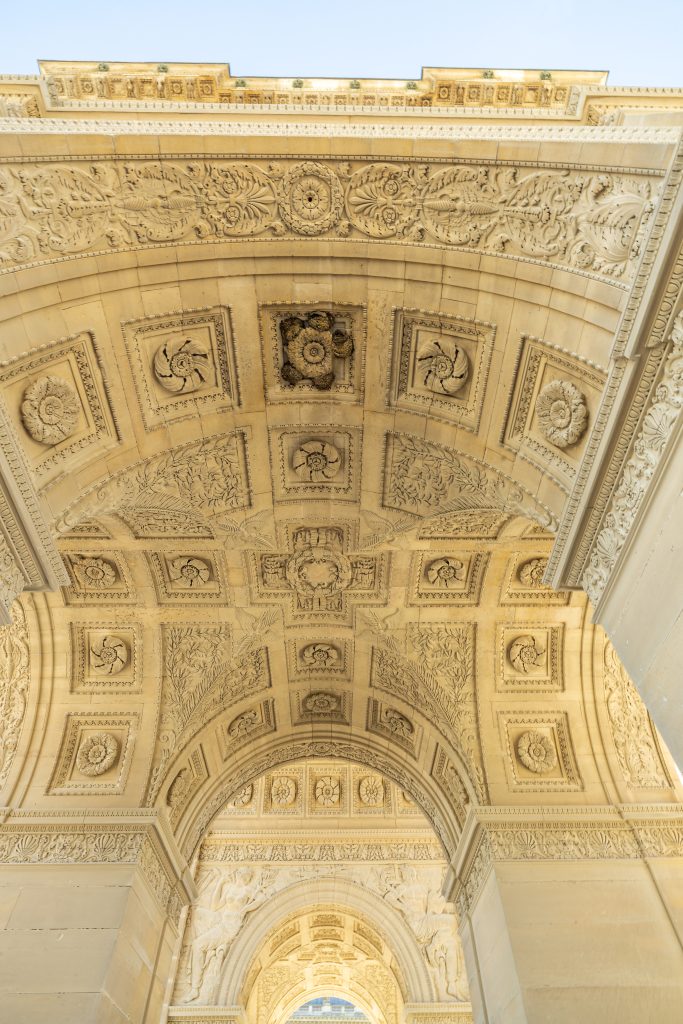
Carved coffers and sculpted reliefs on a vaulted stone ceiling in the palace wings of the Louvre
Near Eastern antiquities
The Richelieu wing on the north side is the quietest of the three. It houses the Near Eastern antiquities, with the basalt stele of the Code of Hammurabi from around 1750 BC.
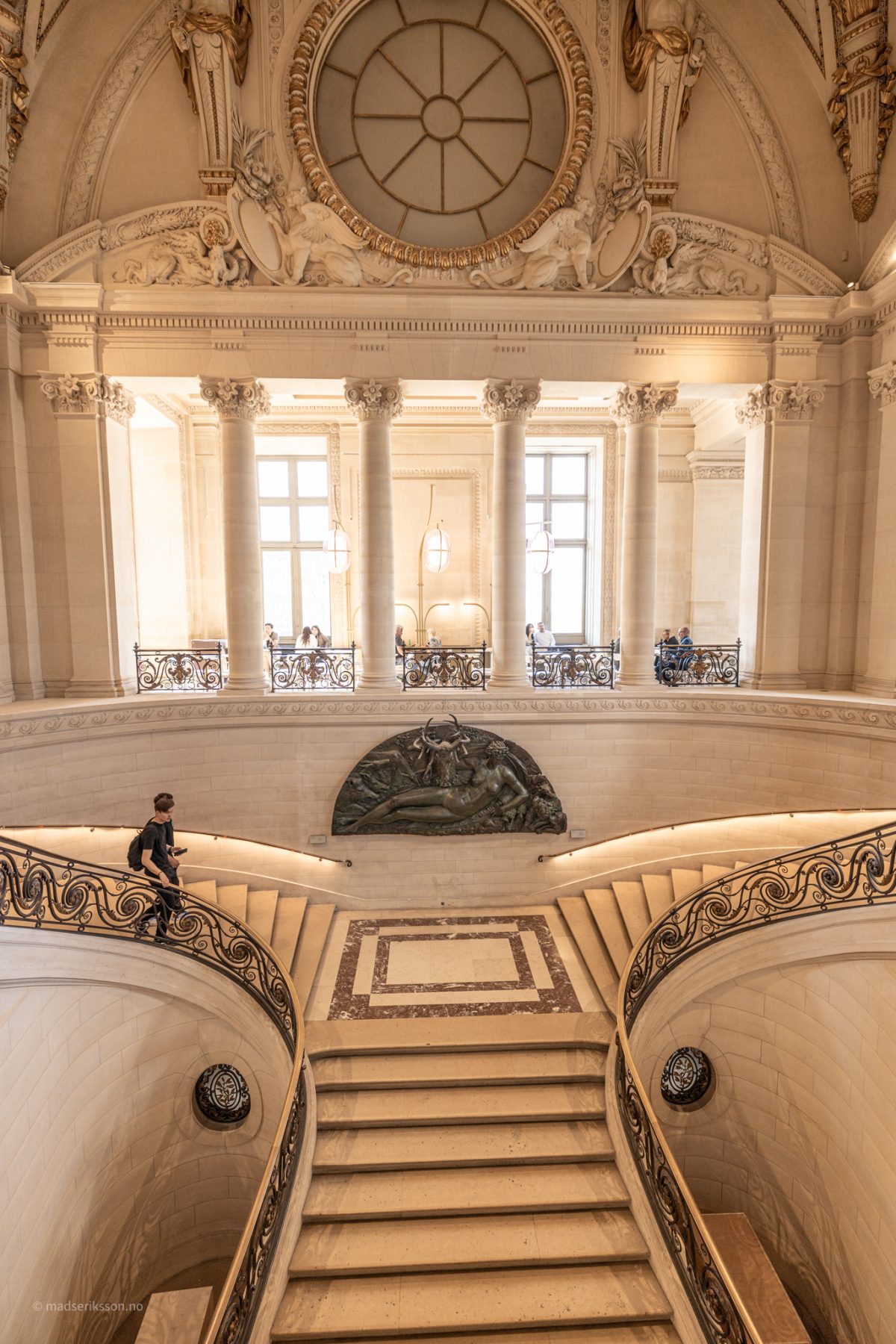
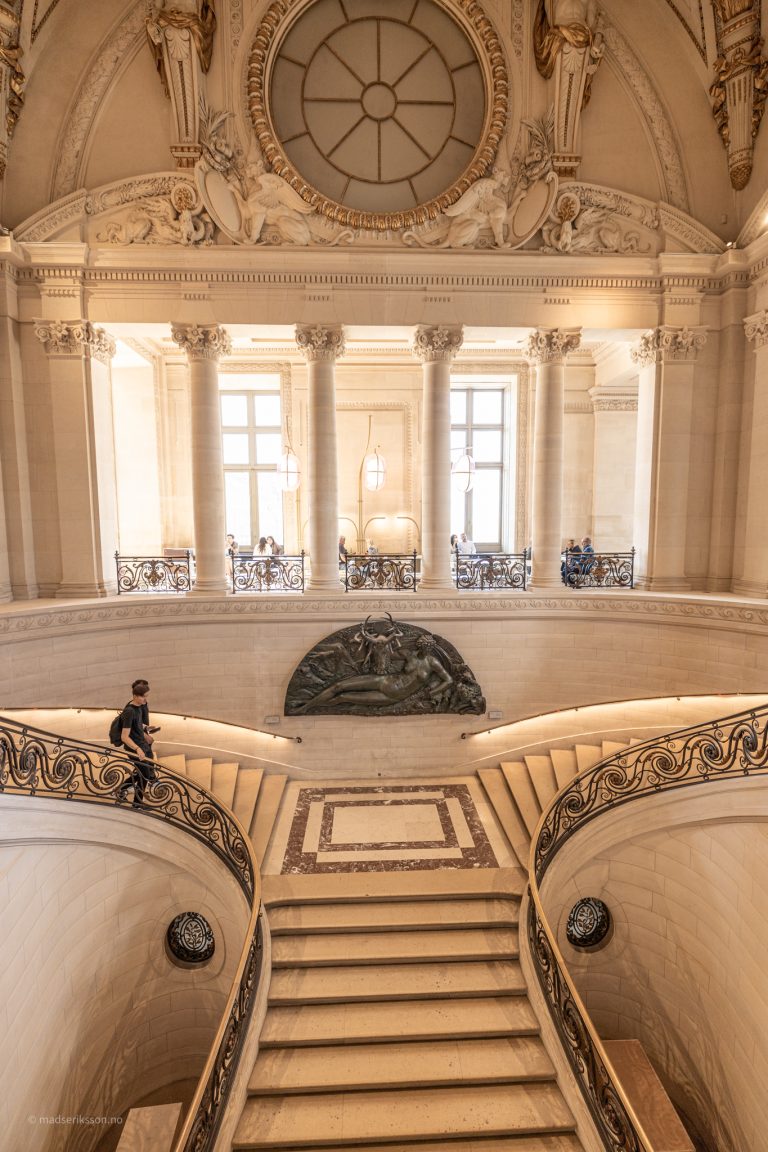
A grand twin stone staircase with a bronze relief, inside one of the Louvre’s palace wings
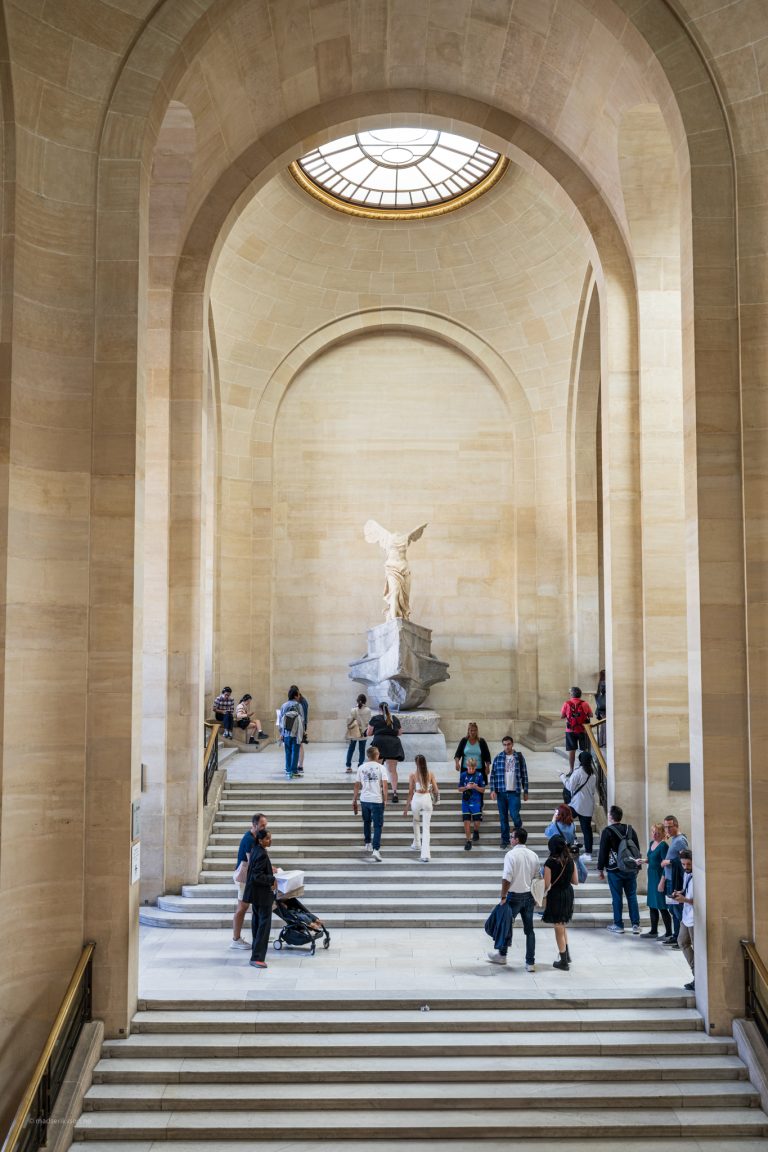
The Winged Victory
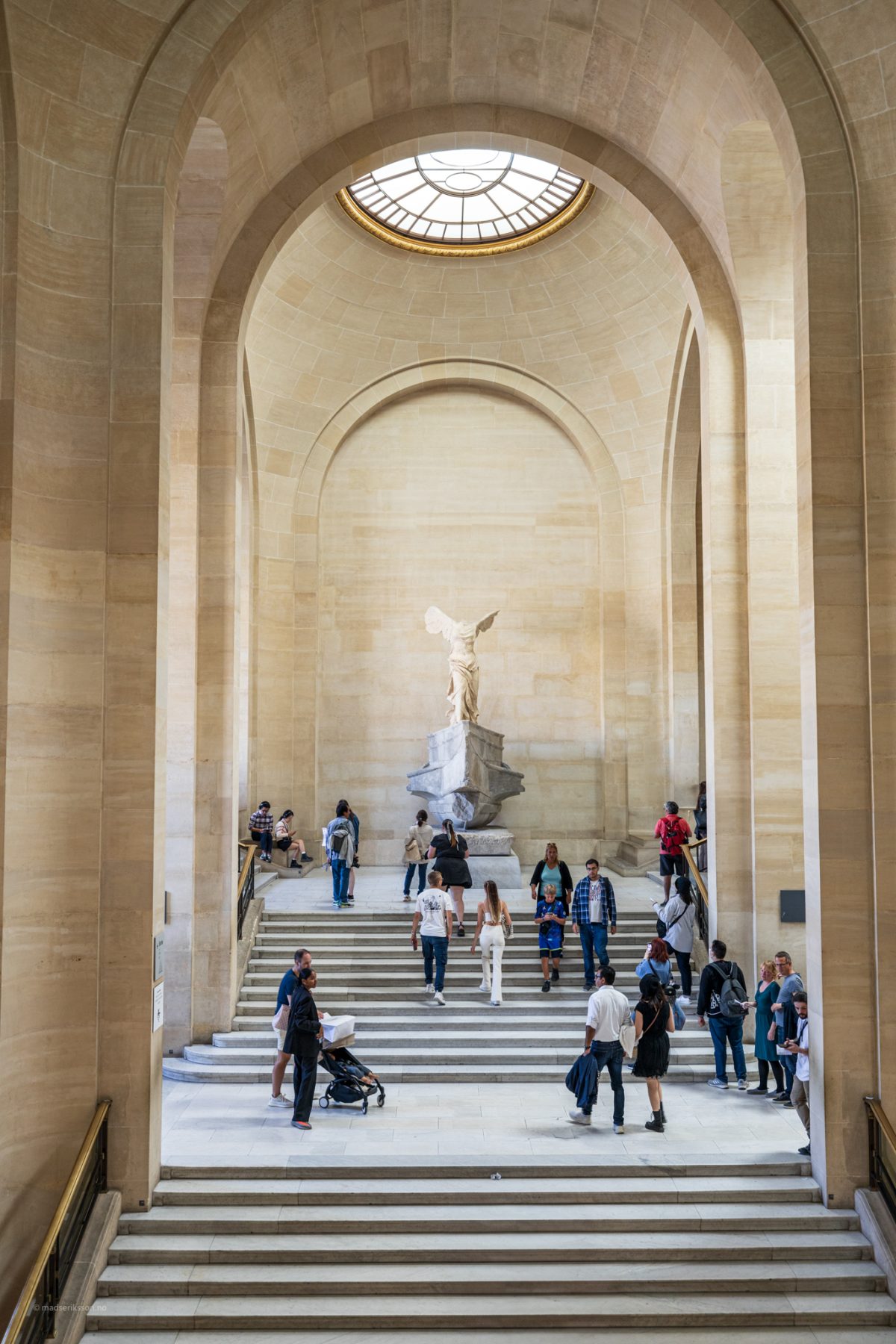
At the top of the Daru staircase stands the Winged Victory of Samothrace, a Hellenistic marble found on the Aegean island in 1863 and displayed here since 1883.
The Winged Victory of Samothrace at the top of the Daru staircase in the Louvre
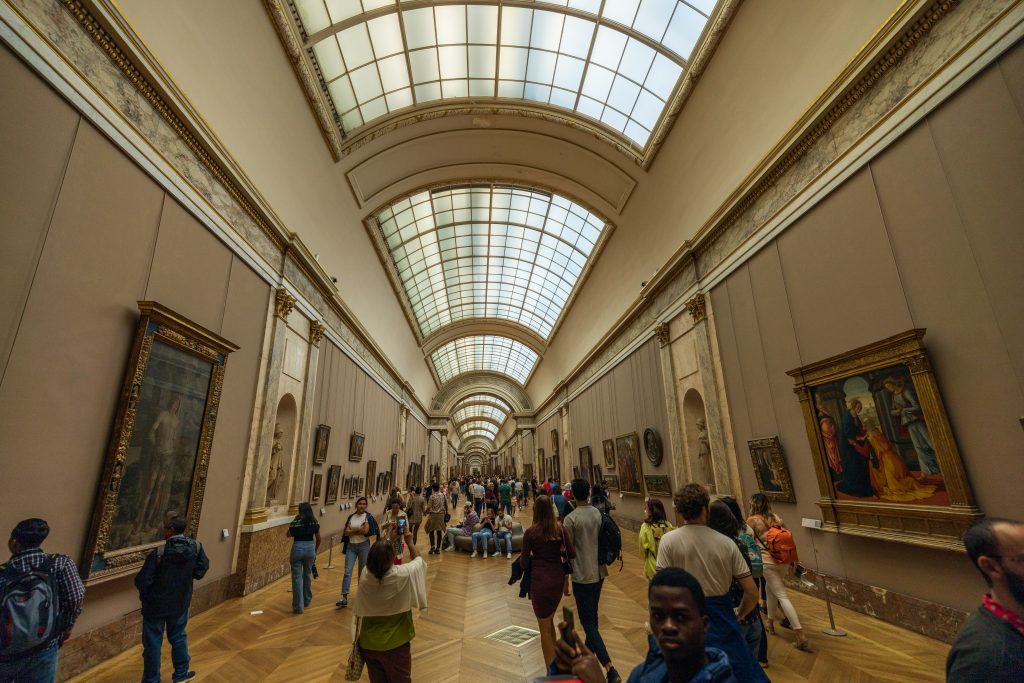
The Grande Galerie and the Mona Lisa
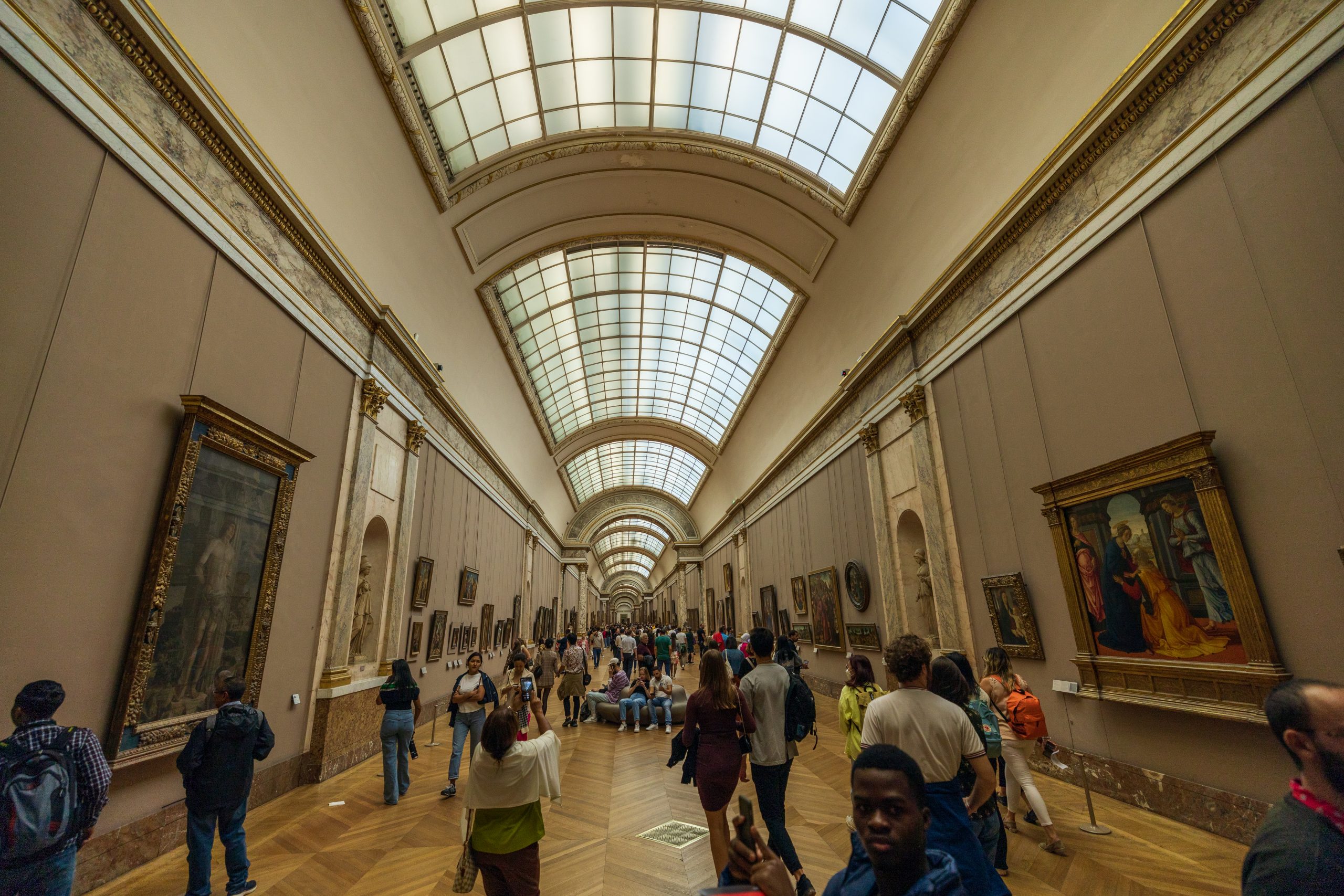
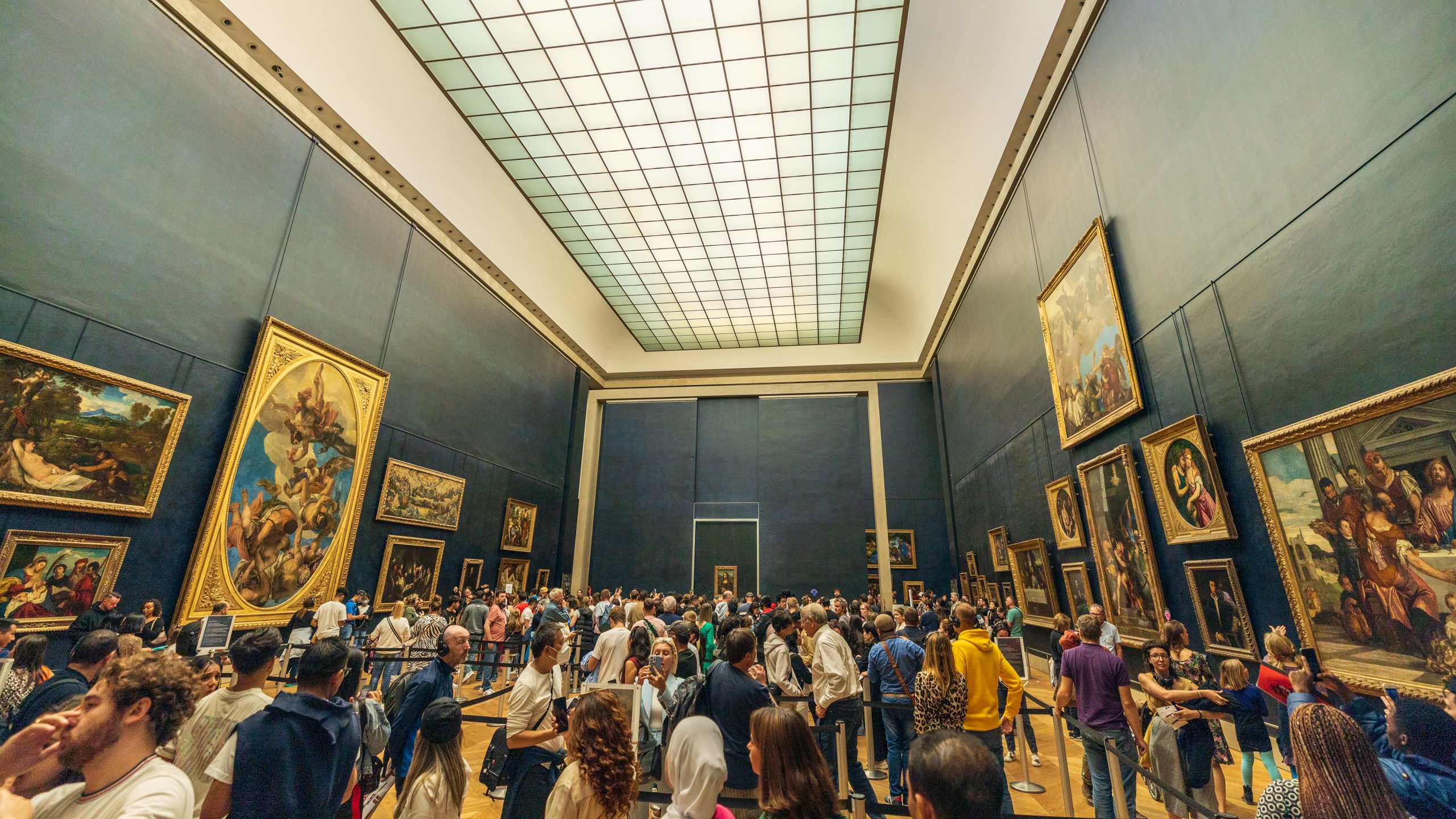
Beyond the Victory, the long Grande Galerie of Italian paintings leads to the Salle des États, room 711, where the Mona Lisa hangs behind glass opposite Veronese's Wedding Feast at Cana. Go there first, at opening, and the rest of the day is free for slower rooms.
Visitors walking the long, skylit Grande Galerie of Italian paintings in the Louvre
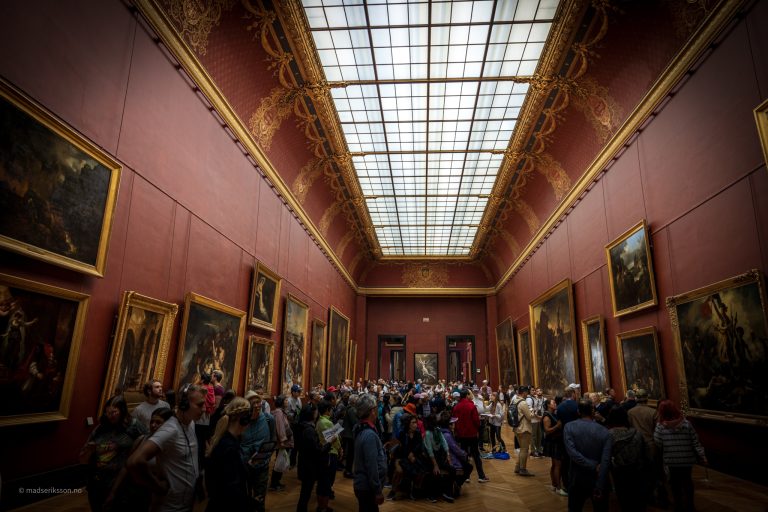
French painting on a grand scale
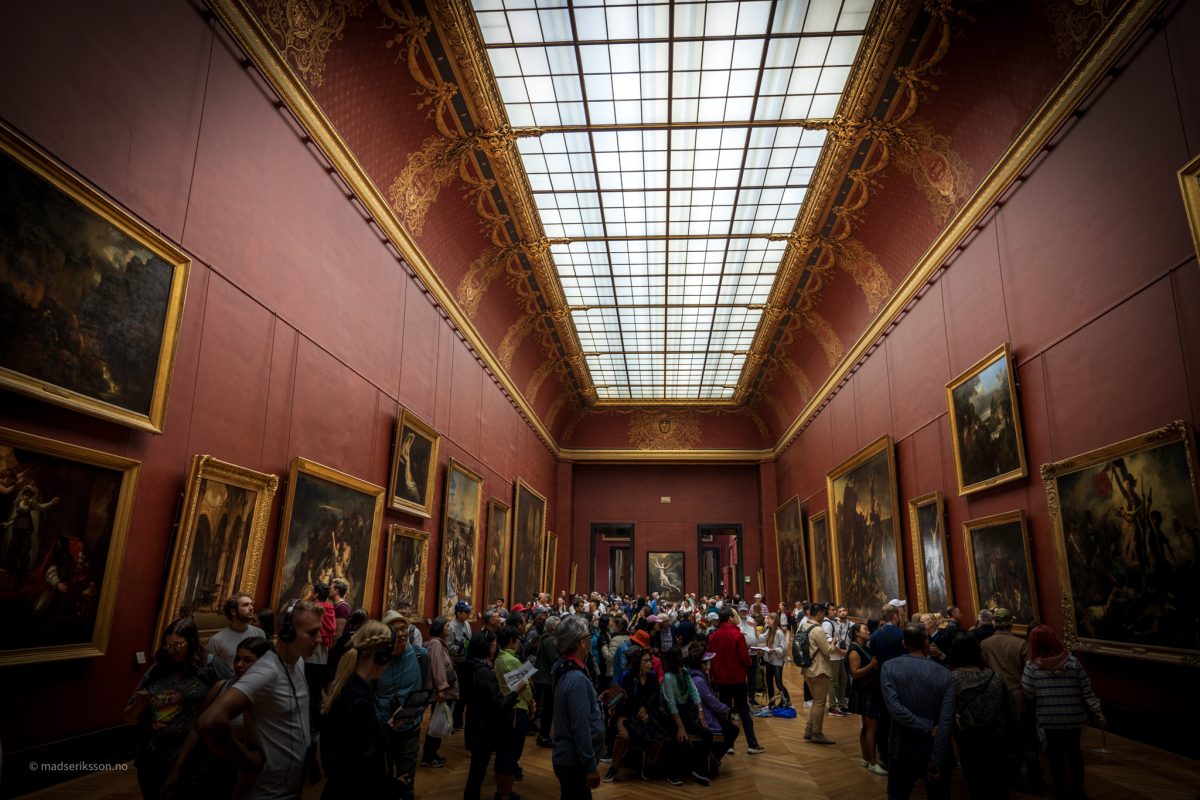
The neighbouring rooms hold the great French paintings of the 19th century: Géricault's Raft of the Medusa in room 700, David's Coronation of Napoleon in room 702, and Delacroix's Liberty Leading the People.
Crowds in a skylit red gallery of large-format French paintings in the Louvre’s Denon wing
The gallery of the crown jewels
On 19 October 2025 thieves broke into the Galerie d'Apollon and stole eight pieces of the French crown jewels. The gallery, with Delacroix's ceiling painting of Apollo slaying the serpent Python, reopened in July 2026 without them.
Rubens and the north
The upper floor of the Richelieu wing holds Northern European painting, among them Rubens' Medici gallery.
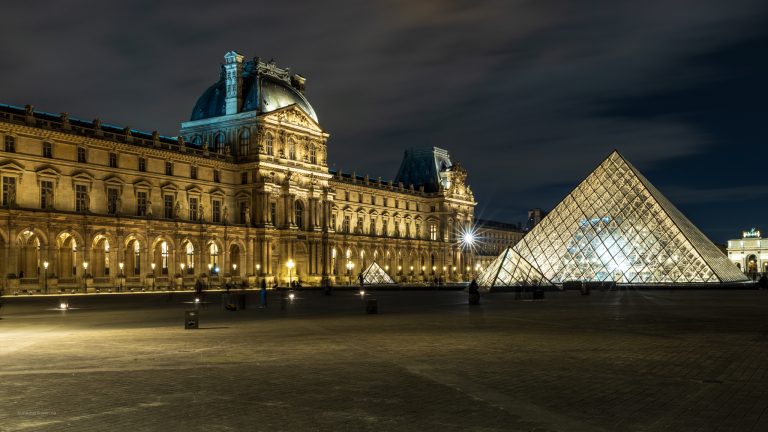
Back out to the pyramid
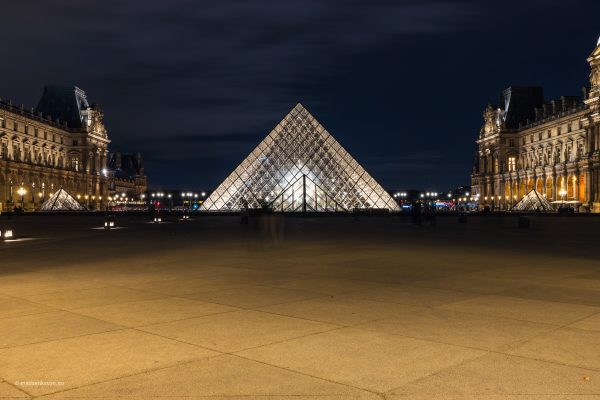
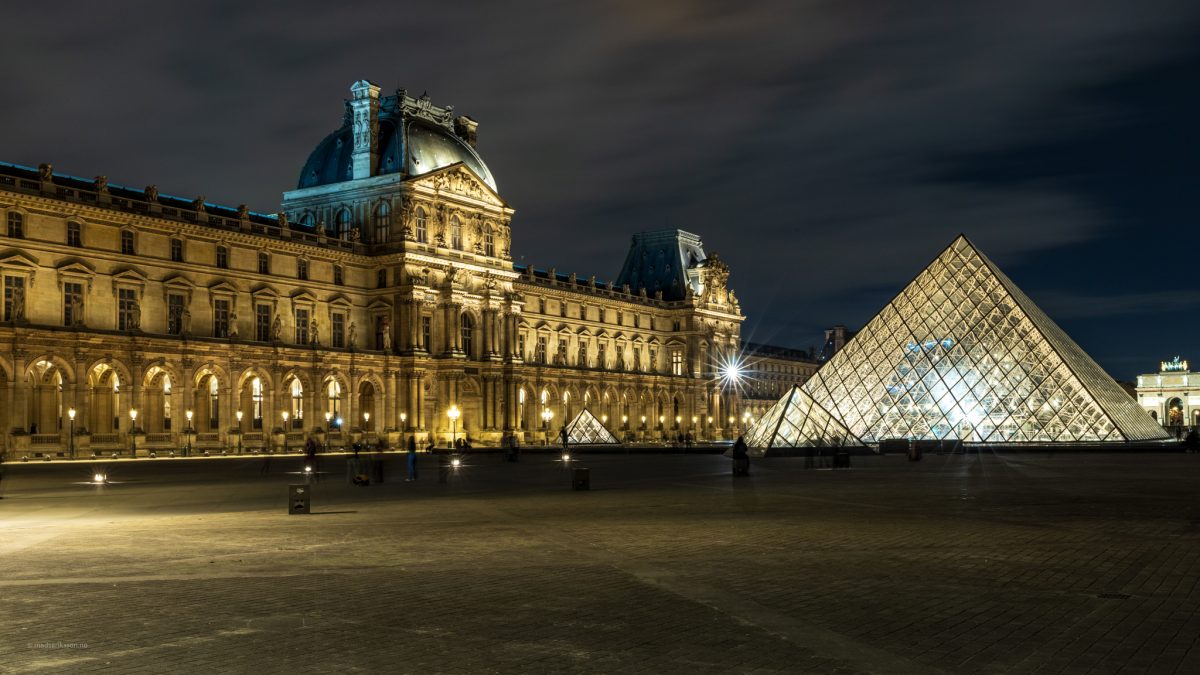
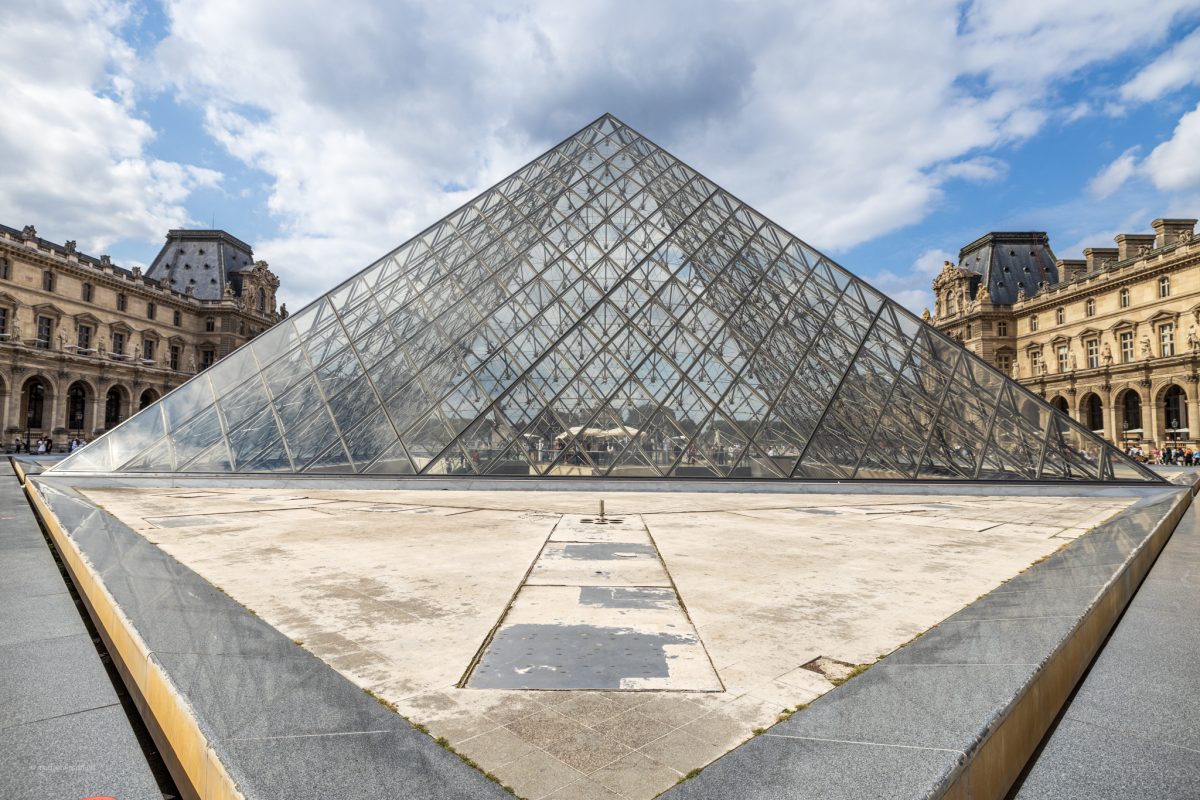
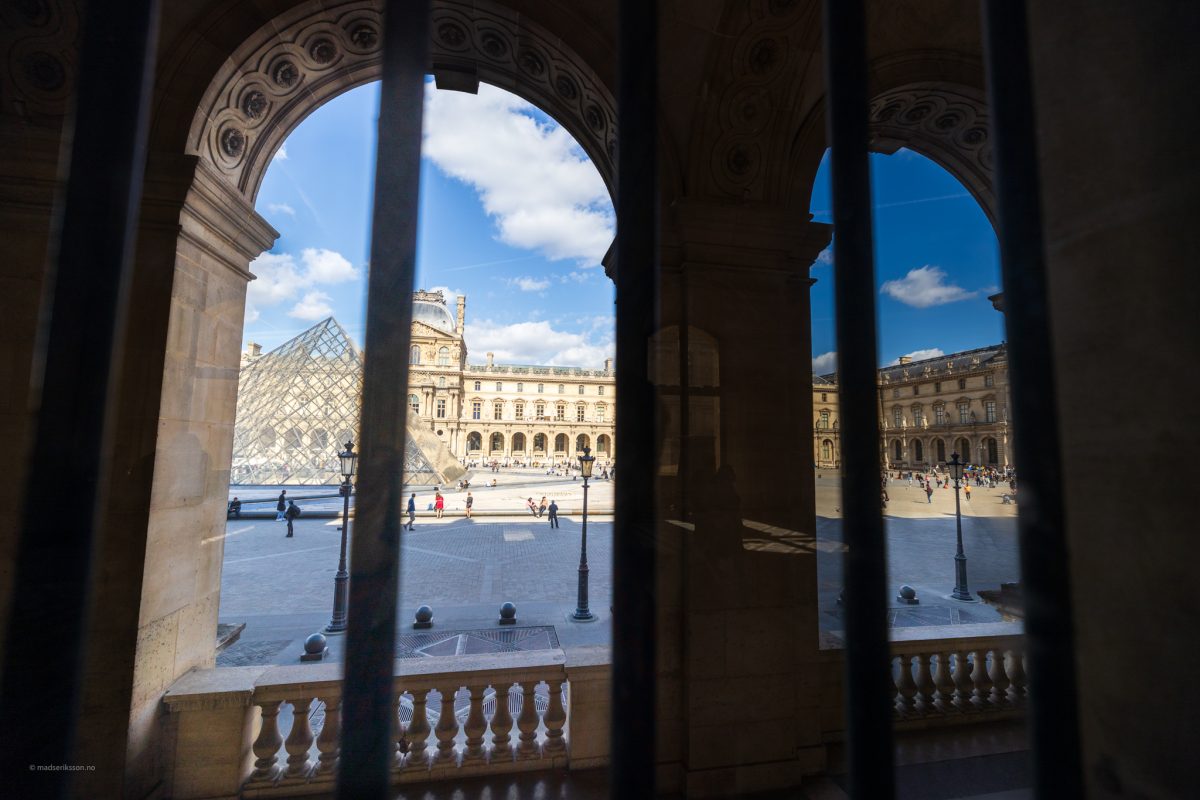
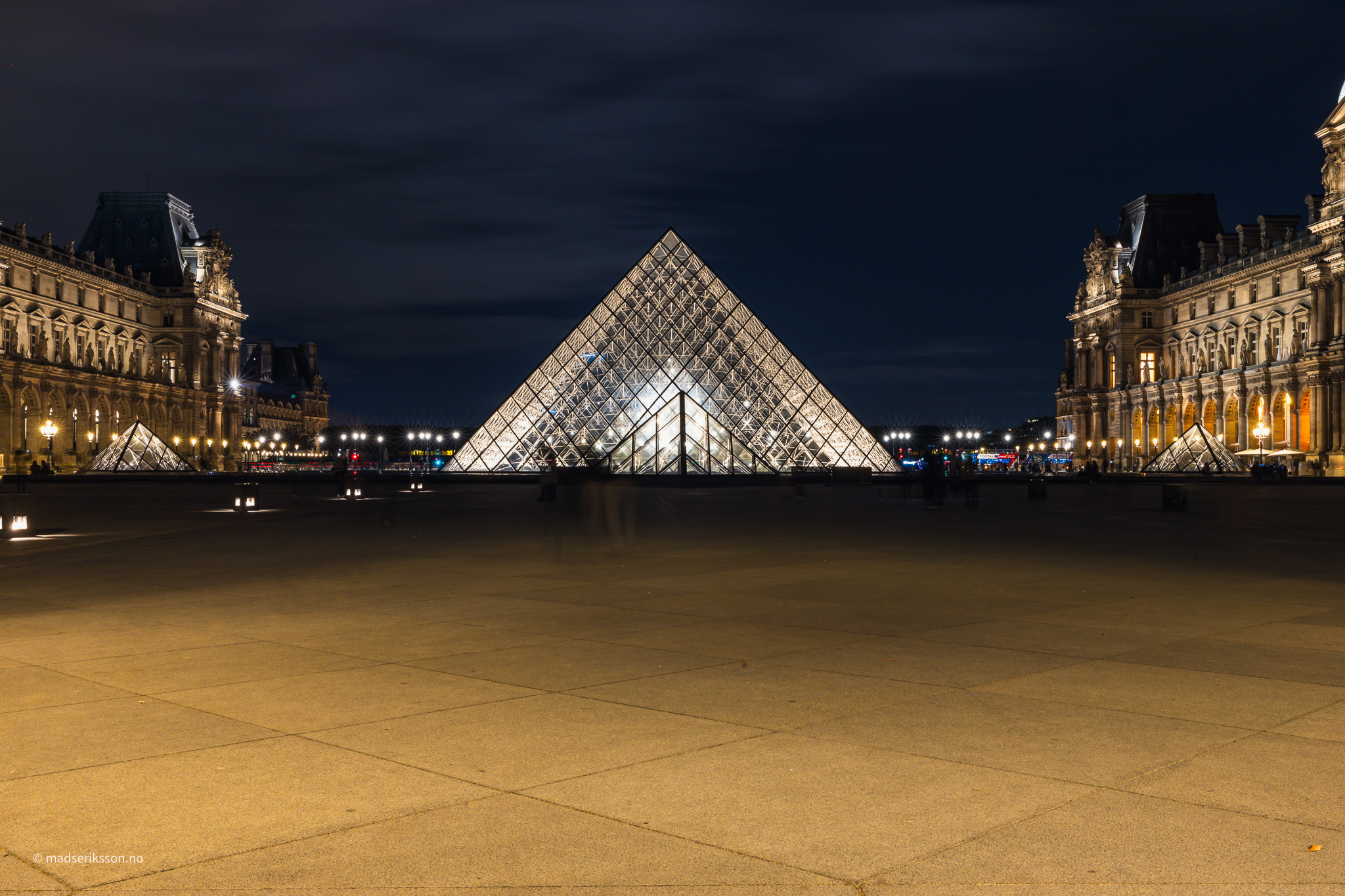
The pyramid is 21.6 metres tall on a base 34 metres square, glazed with 673 panes. It is the main entrance; the Carrousel entrance under the Rue de Rivoli is often quicker. The museum is closed on Tuesdays and open until 21:00 on Wednesdays and Fridays. Book a timed slot online.
The Louvre Pyramid and the illuminated palace facades around the Cour Napoléon at night
3D model © 2026 madseriksson.no · Photographs © madseriksson.no. Rooms, floors and surrounding buildings: © OpenStreetMap contributors (ODbL). Walls are drawn without roofs at a simplified height, one floor at a time; the palace volume is built from the mapped rooms and its height is approximate.
The Fortress — A Castle Built to Guard Paris From the West
How a moated stronghold on the city wall became a royal residence, a library and finally the foundation stone of a palace
The first Louvre was a military building. In 1190, before he left on the Third Crusade, King Philip II ordered a new wall around Paris and, at the point where it met the Seine on the western side, a fortress to guard it. The threat was real: English-held Normandy lay less than 100 kilometres away, and the river was the obvious route for an invading army. The castle was almost square, about 78 by 72 metres, enclosed by a water-filled moat and guarded by towers at its corners and along its walls. Its remains lie beneath the Cour Carrée.
At its centre rose the Grosse Tour, the great round keep, built around 1200. It was 15.6 metres in diameter and about 30 metres tall, with walls 4.25 metres thick at the base — round rather than square because a curved wall was harder for attackers to undermine. By the 14th century the city had grown beyond the wall, the fortress had lost its military purpose, and Charles V turned it into a comfortable residence, with decorated rooms, gardens and a famous royal library installed in one of its towers in 1368 — the collection from which today’s Bibliothèque nationale de France descends.
The fortress was never entirely lost. Its foundations survived beneath the Cour Carrée, and when the courtyard was excavated during the Grand Louvre works in the 1980s, the base of the keep and the moat walls came back to light.
In 1528 Francis I had the keep demolished to make way for an Italian-style palace, and over the next century and a half the rest of the medieval castle disappeared above ground. What lay below was rediscovered during the excavations that preceded the pyramid. The base of the keep, the lower courses of the walls and the moat are now part of the museum, on the lower level of the Sully wing, where visitors walk along the foot of the medieval masonry. Nearby, the vaulted Salle Saint-Louis survives from the medieval residence, and display cases show objects found during the dig — games, jugs, flasks and other everyday things from the life of the castle. It is one of the least crowded parts of the Louvre and the best place to begin a visit.
The Palace — From Royal Residence to a Museum for the Nation
Three centuries of building, a court that left for Versailles, and a Revolution that turned the king’s collections into public property
The palace that replaced the fortress was begun under Francis I in 1546, in the new French Renaissance style, and was still unfinished three centuries later. Each reign added something. The western wing of the Cour Carrée, with its carved façades, belongs to the 16th century; the Grande Galerie runs for about 460 metres along the Seine towards the site of the Tuileries Palace further west; and under Louis XIV work began in 1667 on the eastern Colonnade, the palace’s formal face towards the city.
In 1682 Louis XIV made Versailles the seat of the court, and the Louvre lost its purpose as a royal home. Construction slowed and parts of the palace stood unfinished for decades. Into the empty rooms moved the academies of painting, sculpture and architecture, and artists were given lodgings in the galleries; the Academy’s regular exhibitions, held in the Salon Carré, became known simply as the Salon. Through the 18th century there were repeated calls to show the royal paintings to the public, and the Grande Galerie was being studied as a museum space well before the monarchy fell.
On 10 August 1793, exactly a year after the fall of the monarchy, the Muséum central des Arts de la République opened in the Louvre with 537 paintings and 184 objects of art. The king’s collection had become the nation’s.
The museum grew quickly. Excavations and acquisitions through the 19th century built up the departments of antiquities. Napoleon III finally united the Louvre and the Tuileries in a single complex, and between 1852 and 1870 the museum added some 20,000 objects, including 11,835 works from the Campana collection bought in 1861. His lavish state apartments survive in the Richelieu wing and are among the most spectacular rooms in the building. When the Tuileries Palace was set on fire during the Paris Commune in May 1871 and its ruins demolished in 1883, the Louvre was left as the open-ended U-shape that frames the Cour Napoléon today.
The Pyramid — Glass, Steel and the Grand Louvre
Why a modernist pyramid in a Renaissance courtyard caused an uproar, and why it solved a problem nobody else had been able to
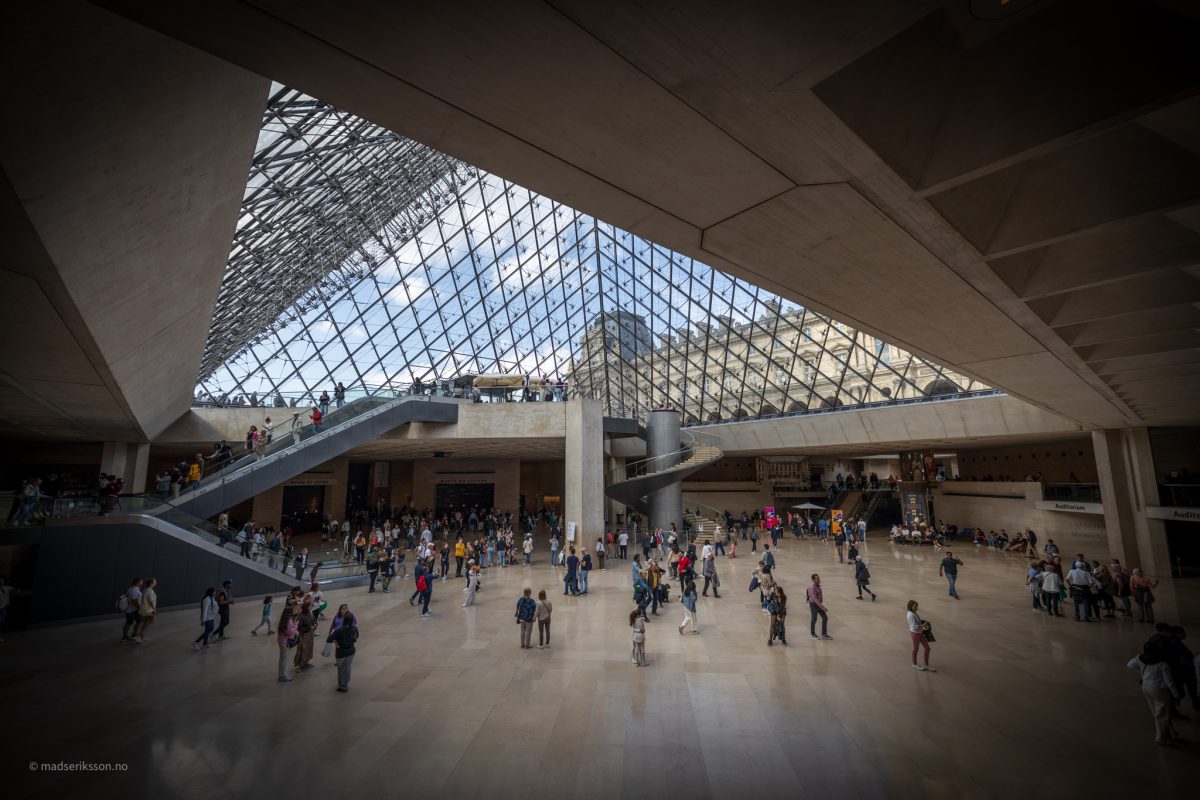
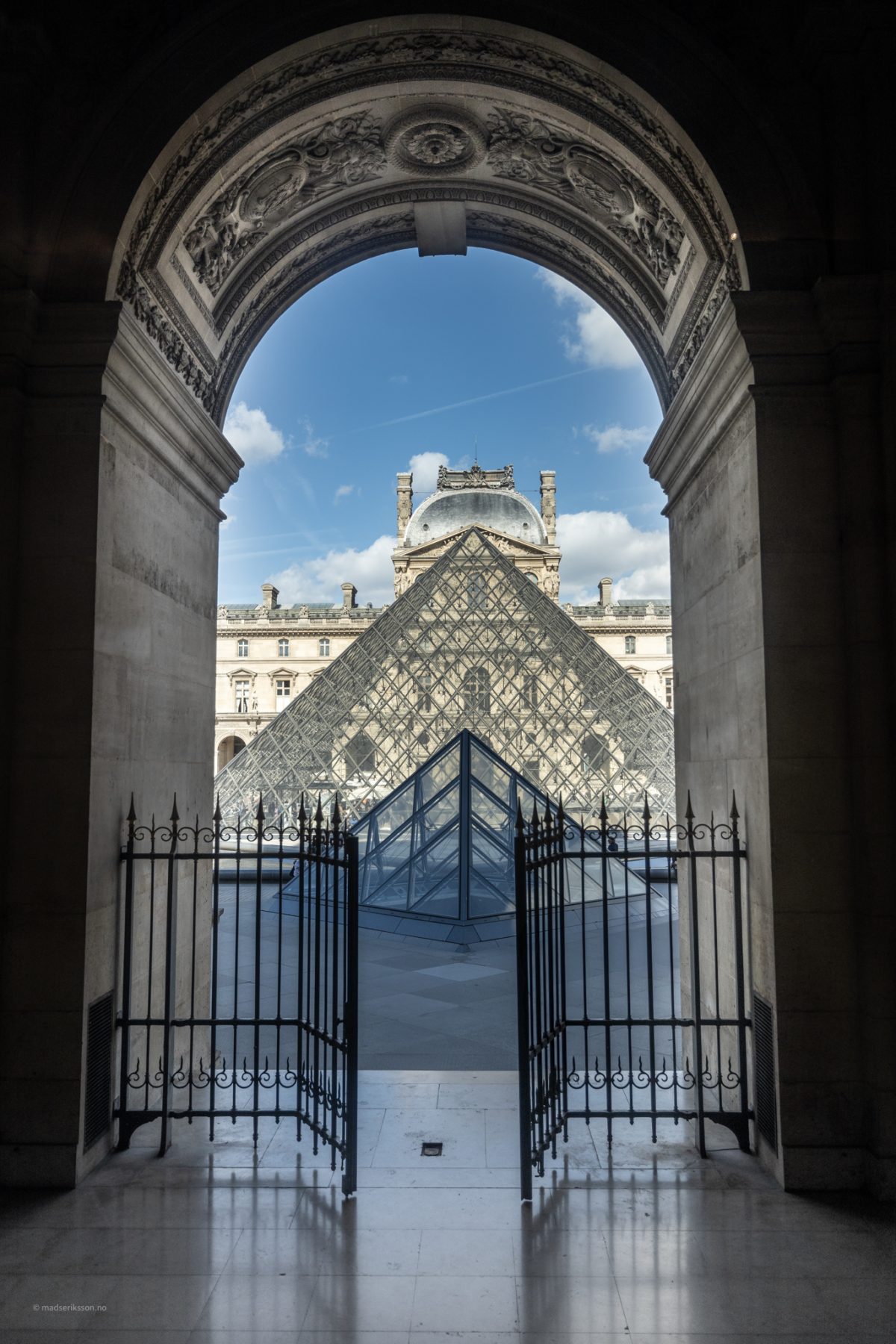
By the late 1970s the Louvre was struggling with its own success. The museum shared the palace with the Ministry of Finance, the entrances were scattered and cramped, and there was almost no space for ticketing, cloakrooms, shops or the services a modern museum needs. In 1981 President Mitterrand announced the Grand Louvre: the ministry would move out, the whole palace would become a museum, and a new entrance would be built at its centre. The Chinese-American architect I. M. Pei was awarded the project, and his master plan, presented in 1984, put the reception hall underground beneath the Cour Napoléon and lit it through a single pyramid of glass.
The reaction was fierce. Critics argued that a modernist structure had no place in front of the Renaissance and Second Empire façades, that a pyramid was a funerary symbol from ancient Egypt, and that the whole project was a presidential vanity; it was nicknamed the pyramid of “Pharaoh François”. Pei’s defenders pointed out that clear glass would let the old palace be seen through the new entrance rather than hidden behind it. The finished pyramid is 21.6 metres tall on a base 34 metres square, glazed with 673 panes — 603 rhombuses and 70 triangles — and flanked by three smaller pyramids that light the hall below. The open spaces around it were inaugurated in October 1988 and the underground hall opened in March 1989.
A persistent story claims the pyramid has exactly 666 panes. It does not: the museum’s count is 673, and Pei’s office has said that no number was ever specified. The myth is now almost as famous as the building.
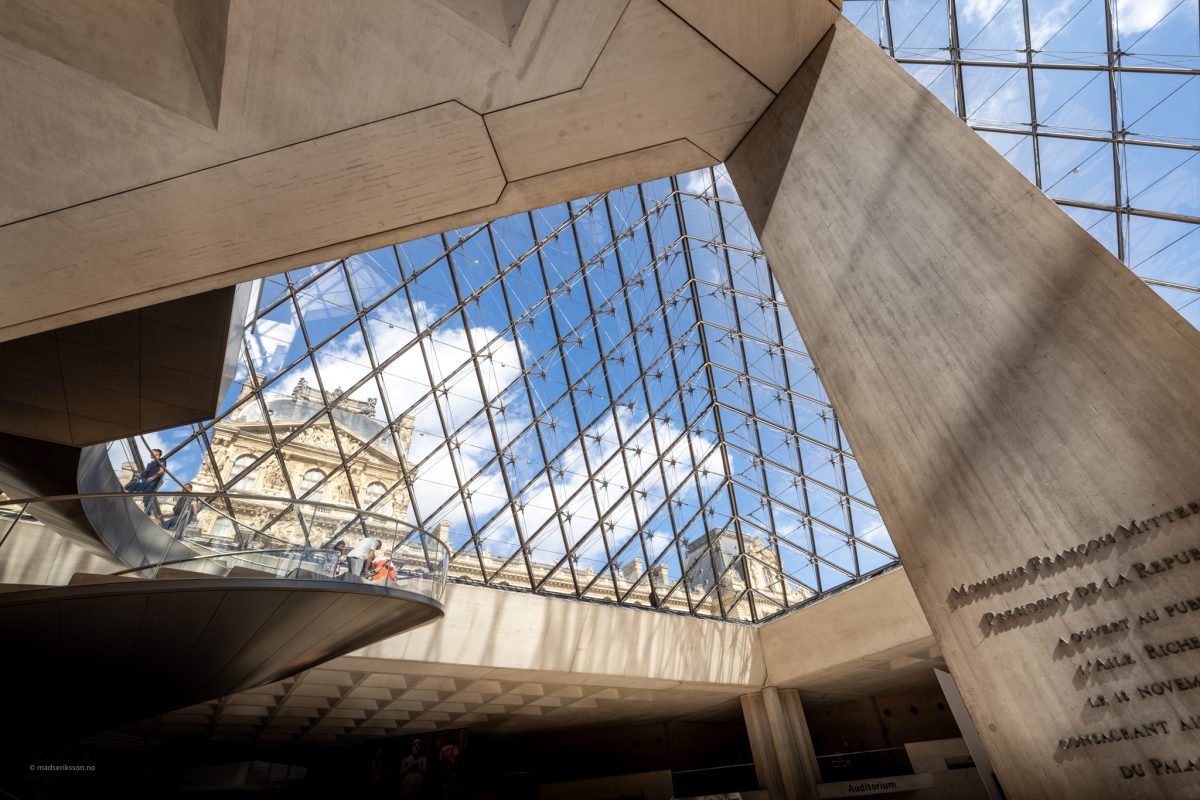
The Hall Napoléon beneath the pyramid works as the hub of the museum, with escalators leading off to the Denon, Sully and Richelieu wings. To the west, the underground Carrousel du Louvre shopping arcade is lit by the Inverted Pyramid, a smaller glass point hanging down from the ceiling. Nearly four decades on, the entrance is itself under pressure from the numbers it now has to handle. In May 2026 the architects Studios Architecture Paris and Selldorf Architects were chosen for the “Louvre New Renaissance”, a plan estimated at €1.1 billion that includes a second main entrance by the eastern Colonnade and a dedicated room of around 3,000 square metres for the Mona Lisa.
The Collections — Planning a Route Through 35,000 Works
Where the famous pieces are, which wing to start in, and why the quieter rooms often turn out to be the best part of the visit
Most visitors head first for the Denon wing, and with reason. On its first floor, the Winged Victory of Samothrace — a Hellenistic marble of around 200–190 BC, found on the Aegean island in 1863 — stands at the top of the Daru staircase, where it has been displayed since 1883. Beyond it, the long Grande Galerie of Italian paintings leads to the Salle des États, room 711, where the Mona Lisa hangs behind glass opposite Veronese’s enormous Wedding Feast at Cana. The neighbouring rooms hold the great French paintings of the 19th century: Géricault’s Raft of the Medusa in room 700, David’s Coronation of Napoleon in room 702, and Delacroix’s Liberty Leading the People.
The Sully wing, around the Cour Carrée, holds the medieval foundations, much of the Egyptian collection and the Greek antiquities, including the Venus de Milo on the ground floor in room 345, carved around 130–100 BC. The Richelieu wing, on the north side, is the quietest of the three: it houses the Near Eastern antiquities, with the basalt stele of the Code of Hammurabi from around 1750 BC, the sculpture courts under their glass roofs, Northern European painting and the Napoleon III apartments. The Galerie d’Apollon, with Delacroix’s ceiling painting of Apollo slaying the serpent Python, reopened in July 2026 after the theft of eight pieces of the French crown jewels in October 2025; the remaining jewels are no longer shown there.
The crowd in front of the Mona Lisa can be twenty deep. Fifty metres away, there are rooms of Italian and Spanish painting where visitors are scarce. The best Louvre visit is often the one that treats the famous works as a detour rather than the destination.
The practical rule is to choose two or three areas and accept that the rest will wait for another visit. Arriving at opening time and going straight to the Mona Lisa, before the crowds build, frees the rest of the day for slower rooms. The Wednesday and Friday late openings, until 21:00, are usually calmer than weekend mornings, and the Richelieu wing and the Islamic art galleries under their undulating glass roof in the Cour Visconti are rarely crowded. A ticket also includes entry to the small Musée Delacroix in Saint-Germain-des-Prés on the same day or the next — the painter’s last apartment and studio, and a quiet counterpoint to the scale of the Louvre.
«The Louvre is not one museum but several stacked inside one another: a medieval castle in the basement, a royal palace on every floor, a revolutionary idea in its founding and a 20th-century glass pyramid at its centre. Trying to see all of it in a day is the surest way to see very little. Pick a wing, walk the foundations of Philip II’s keep, stand under the Winged Victory at the top of the Daru staircase, and leave the rest for the next visit. Then step out into the Cour Napoléon in the evening, when the pyramid is lit from within, and look at how well the newest part of the palace holds its own against the oldest.»

More in the same area
 ArchitectureThe Eiffel Tower: Built for a Fair, Saved by the Radio
 ArchitectureArc de Triomphe: Napoleon’s Arch, the Unknown Soldier and the View Down Twelve Avenues
 ArchitectureInstitut du Monde Arabe, Paris: Jean Nouvel’s Light-Sensitive Landmark on the Seine
 ArchitectureLe Monde Headquarters, Paris: Snøhetta’s Glass Bridge Over the Austerlitz Tracks
 CitiesParis: The City of Lights
 LibrariesBibliothèque nationale de France: Six Centuries of Books, Two Sites in Paris