A city reveals its shape from three places: from a high deck, from across the water, and from a street after dark. Taken from above, Manhattan becomes a grid of glass with the Empire State Building at its centre and Paris a sea of zinc roofs cut by the Seine. Seen across water, the Tower of London, the Barcode towers of Oslo and the West Bay of Doha line up as skylines with their reflections underneath. At night, Tokyo and Seoul turn into fields of light, with a lattice tower or a river bridge as the one landmark that gives the view a scale. The twenty-eight frames here come from thirteen cities on three continents, from the oldest skylines in Europe, where a cathedral dome is still the highest point, to the newest towers in Asia and America, and they are grouped by what they show rather than by when they were taken.

The Grid in Glass and Cloud
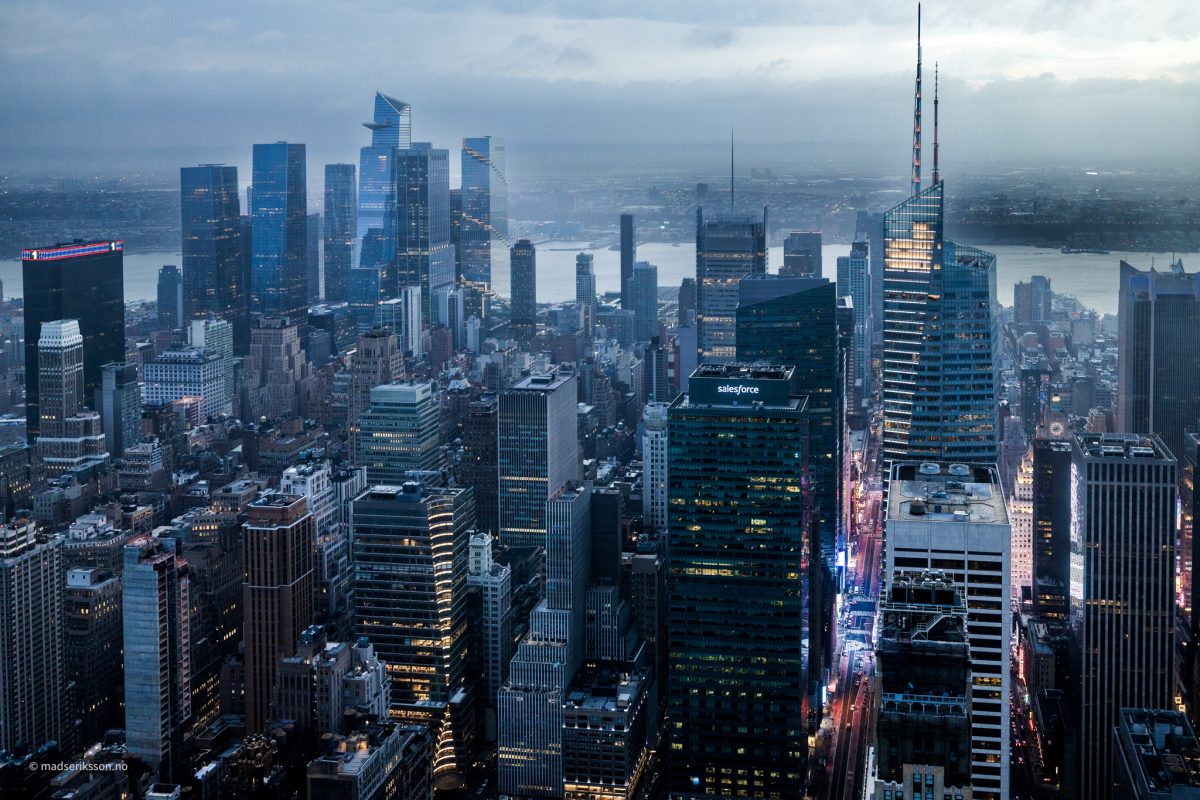
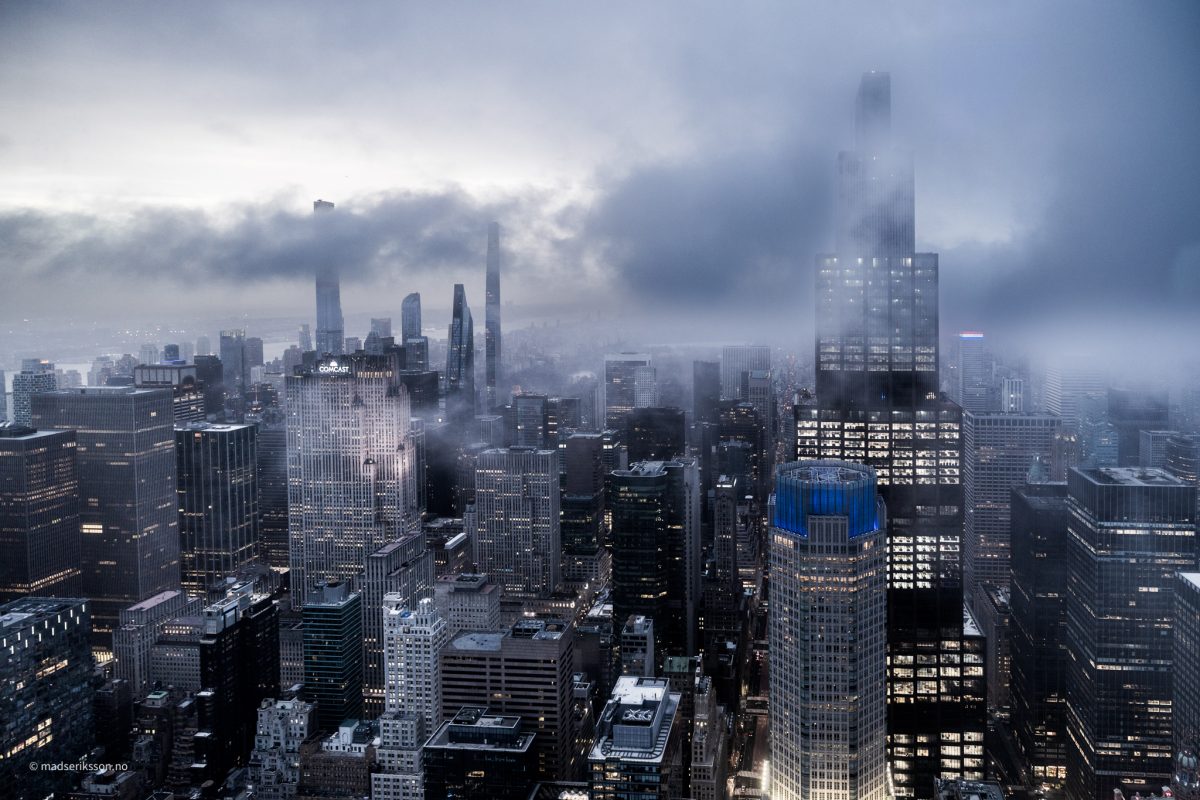
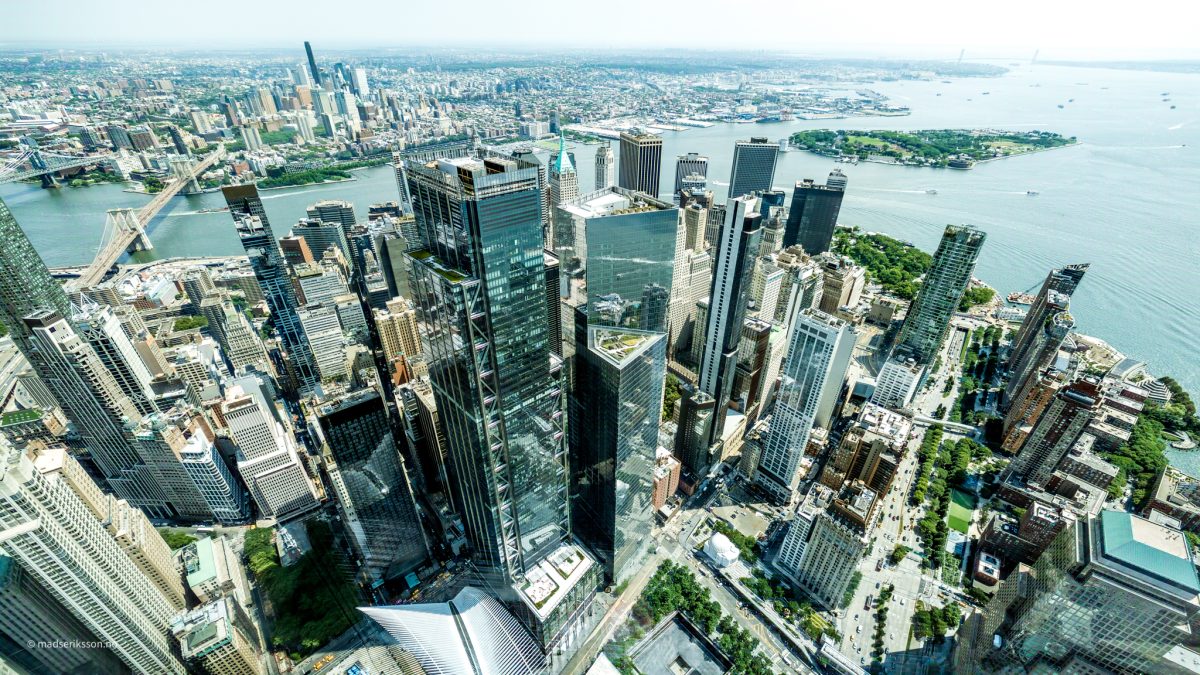
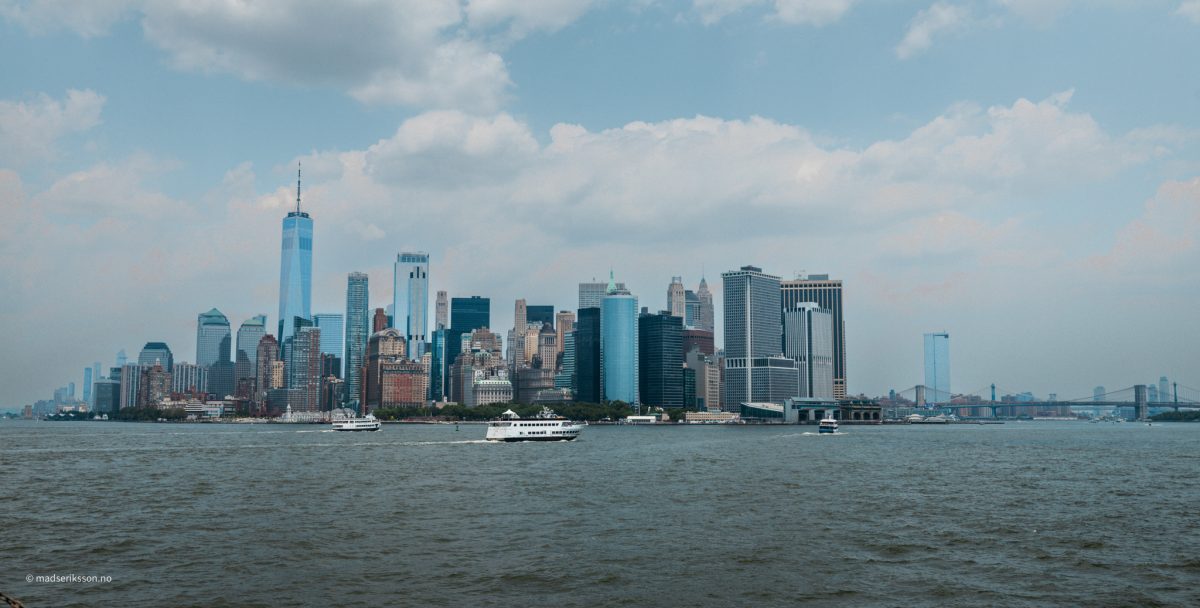
Six views of Manhattan: from the decks, from the harbour and from inside a passing cloud.
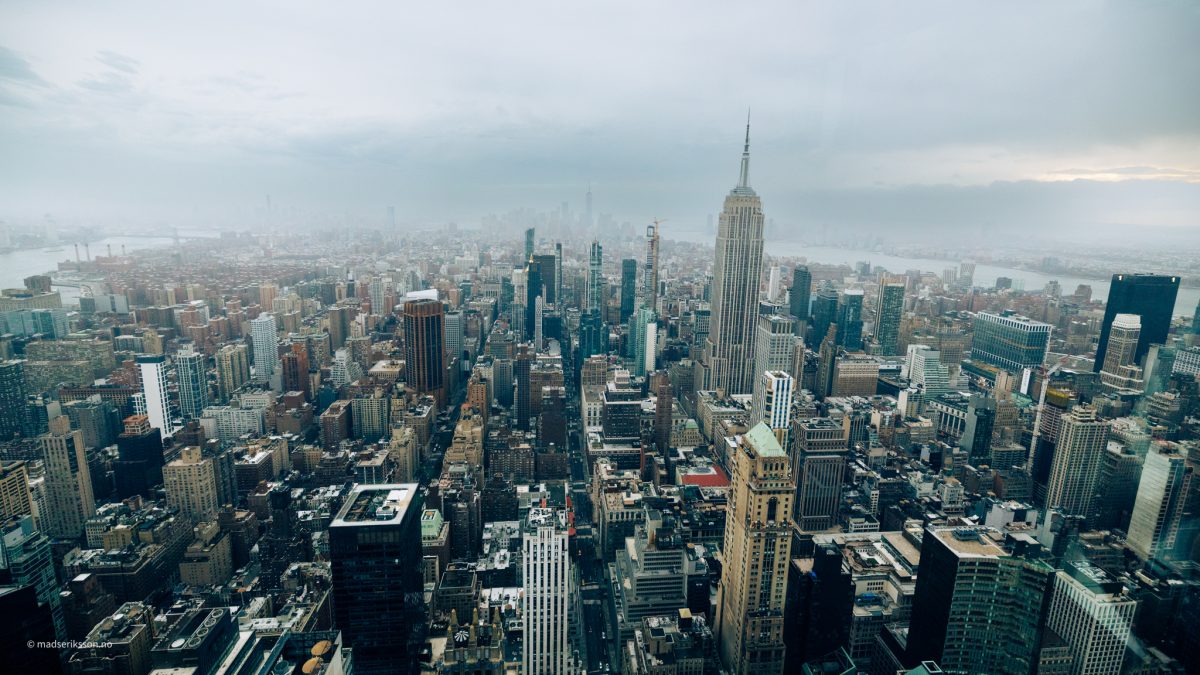
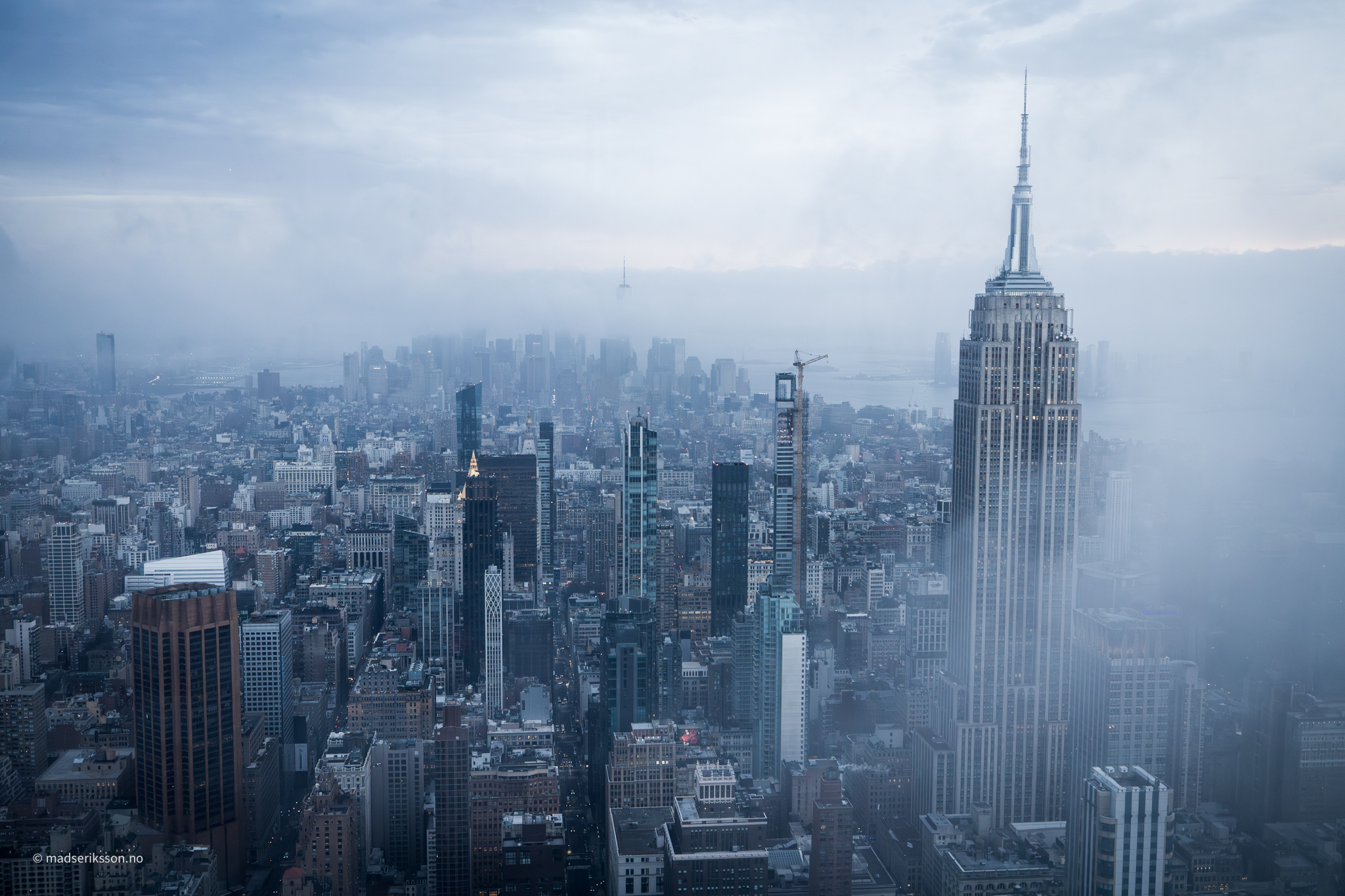
From a high deck Midtown is a model of itself: a hazy grid of towers with the Empire State Building, 381 m and finished in 1931, standing exactly in the middle of the frame and Central Park a green smudge beyond. In the blue light of evening the same towers become a dense wall of lit windows, and on a day of low cloud the tops of the skyscrapers simply disappear, the glass turning the same grey as the sky.
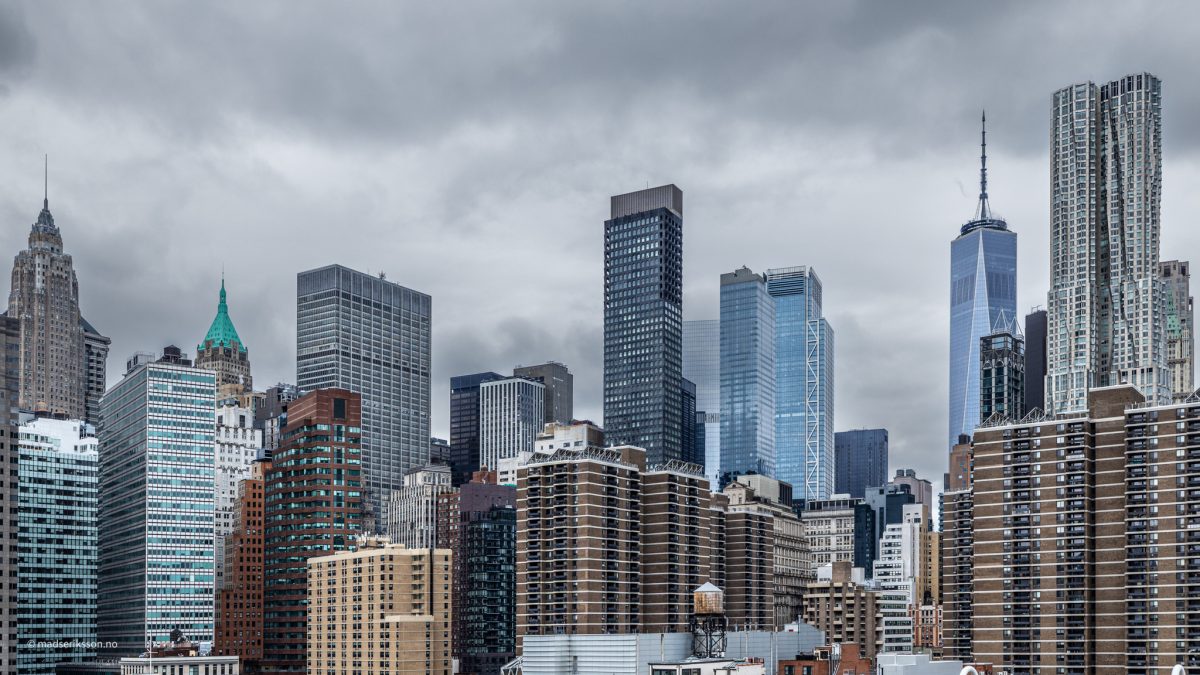
Lower Manhattan is the other skyline. Seen from above, its new glass towers cluster around One World Trade Center with Governors Island, the East River bridges and the harbour laid out behind them; seen from the water, with ferries crossing in front, the 541 m tower is the single vertical that the rest of the skyline leans towards. Under a stormy sky from the street, the older brick and limestone towers hold their own against the glass.
Fields of Light, Lines of Steel
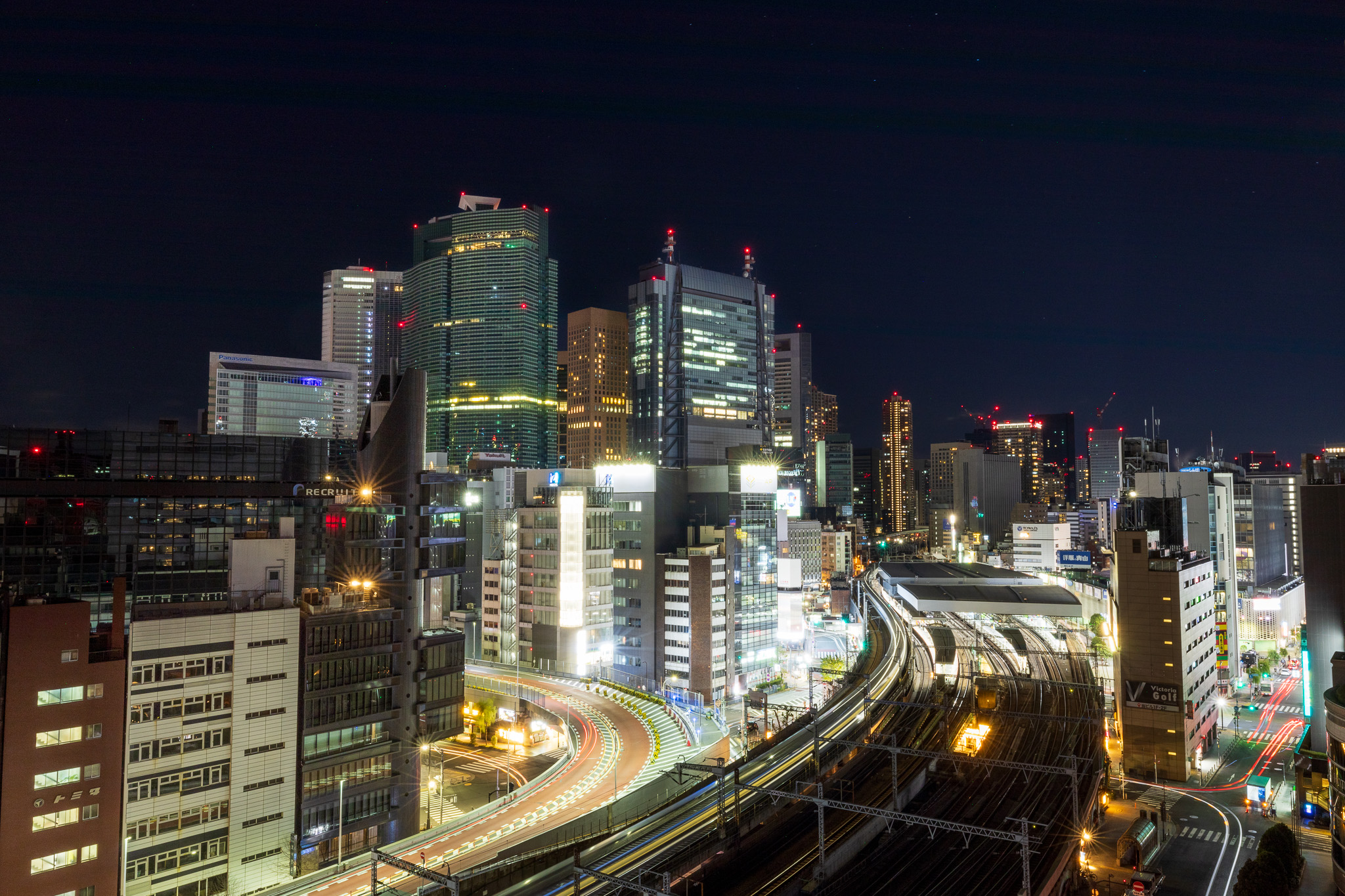
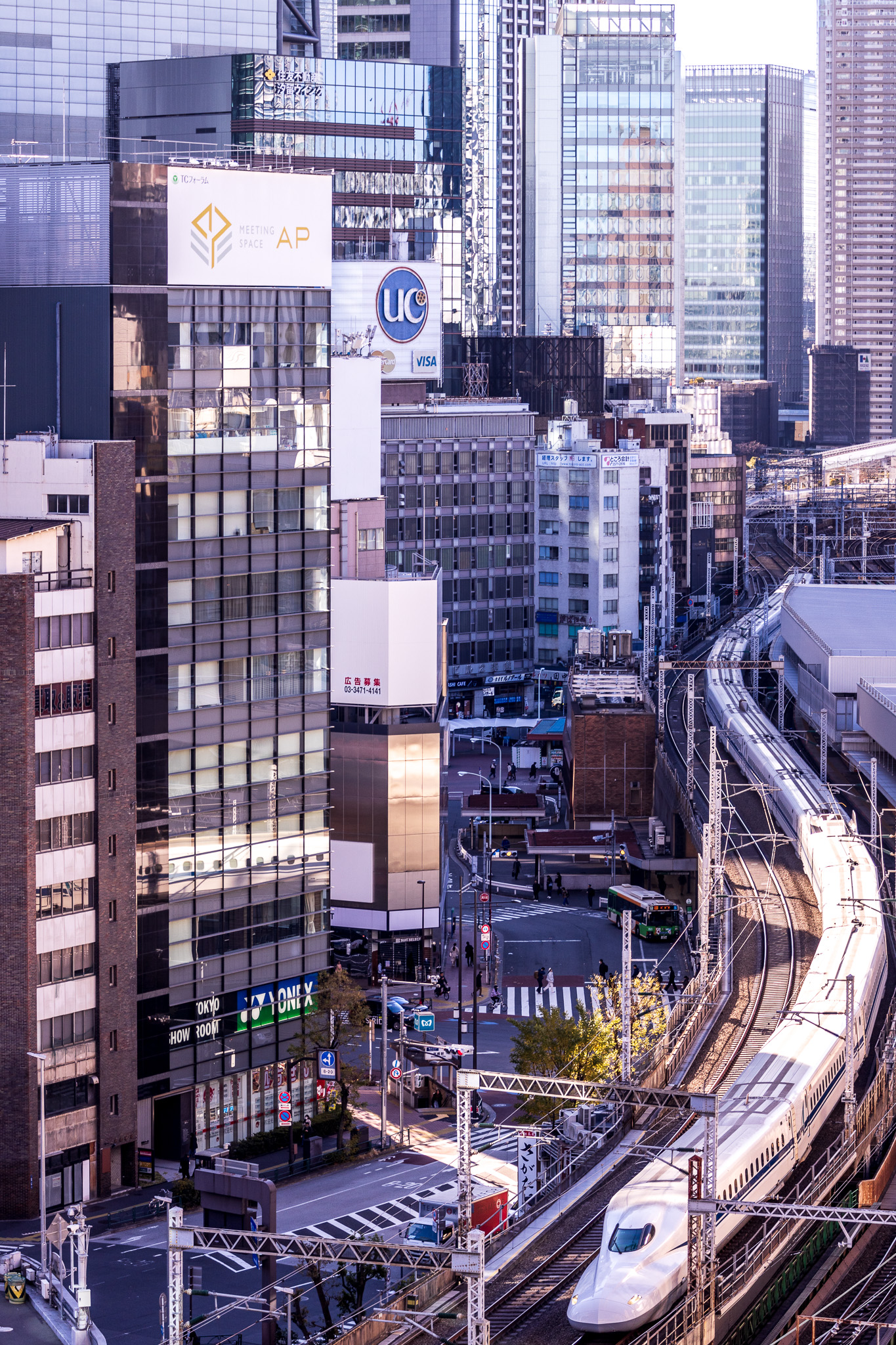
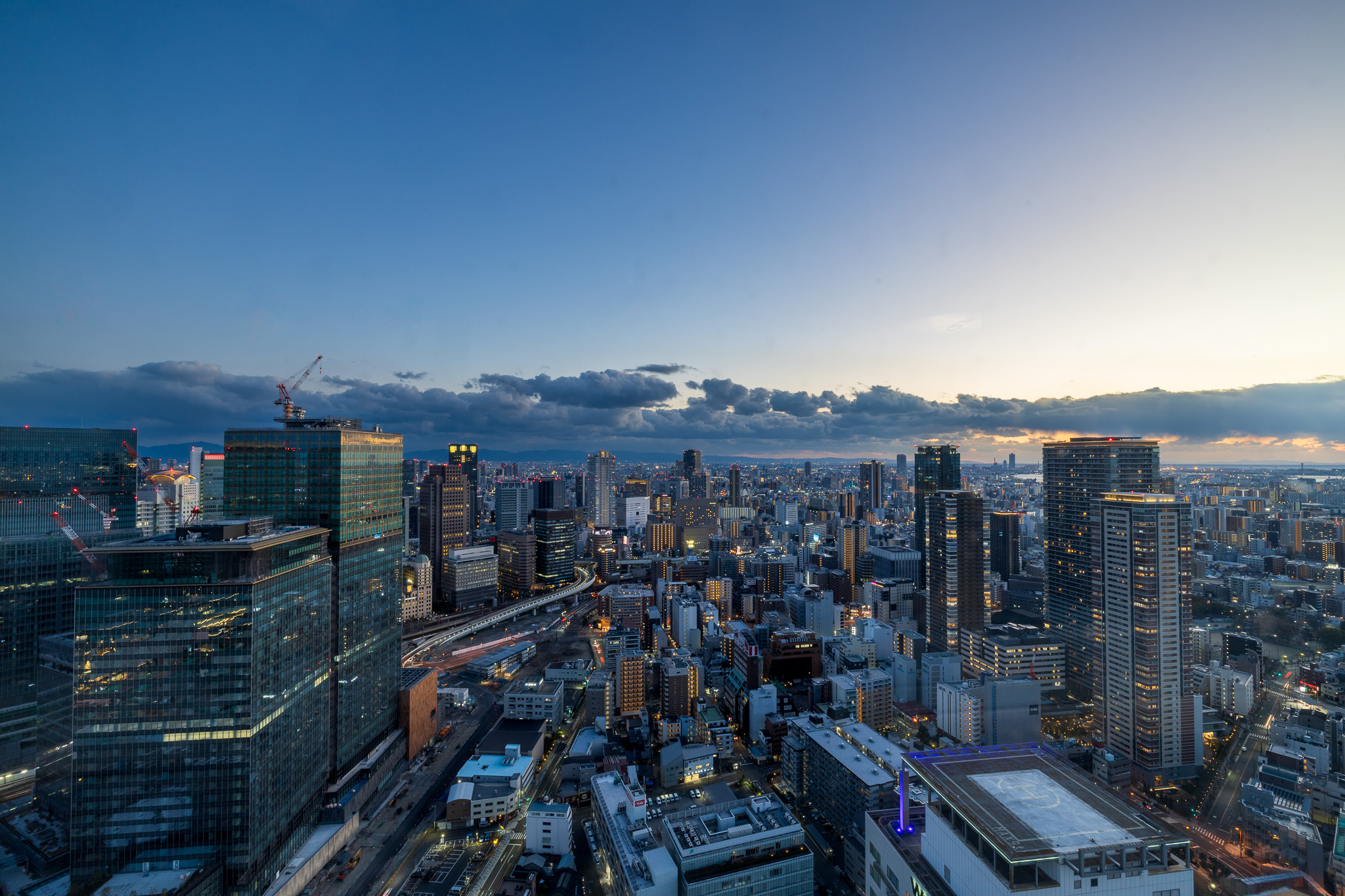
Two Japanese cities seen from the decks, with the Shinkansen threading between the towers.
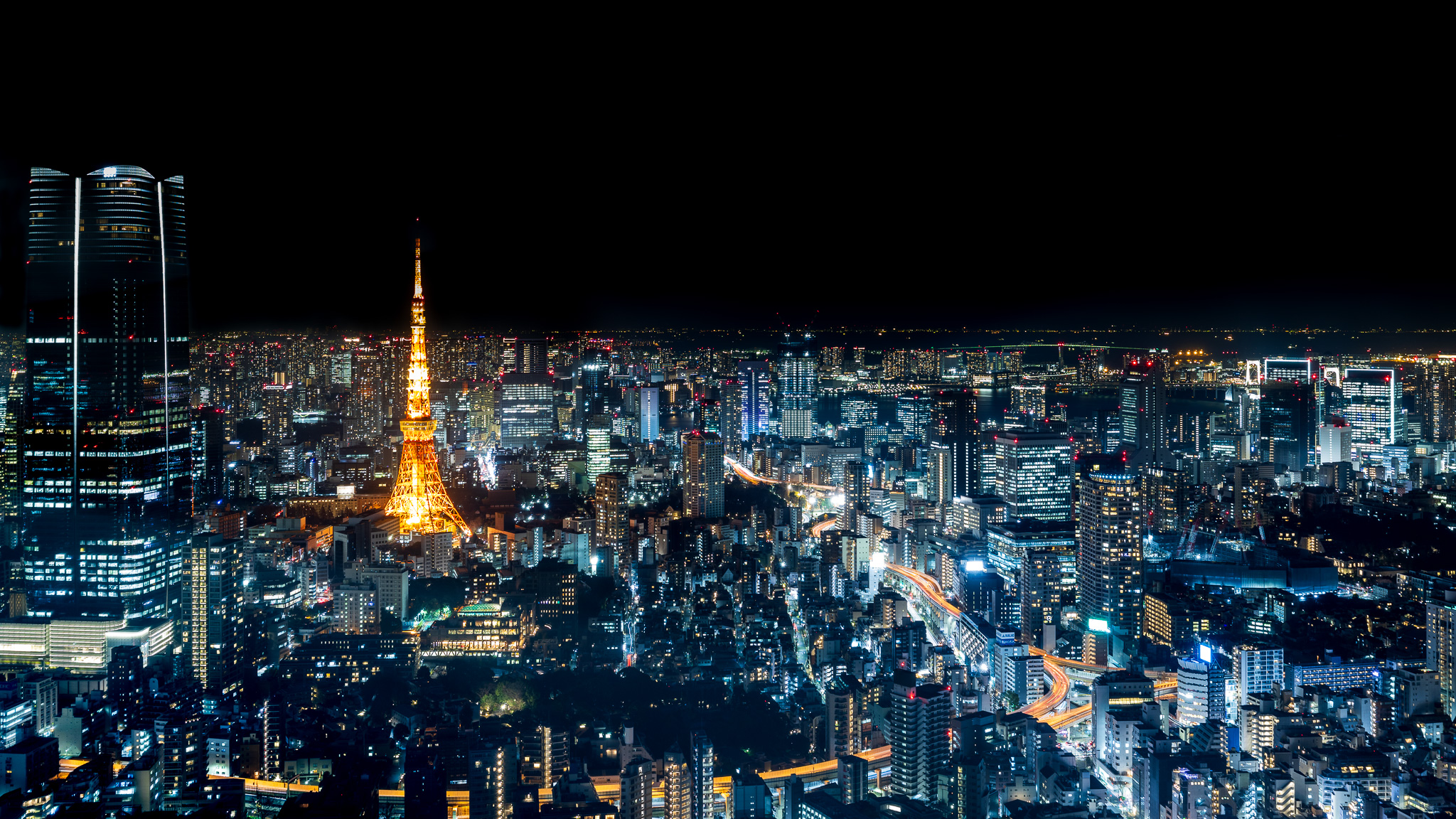
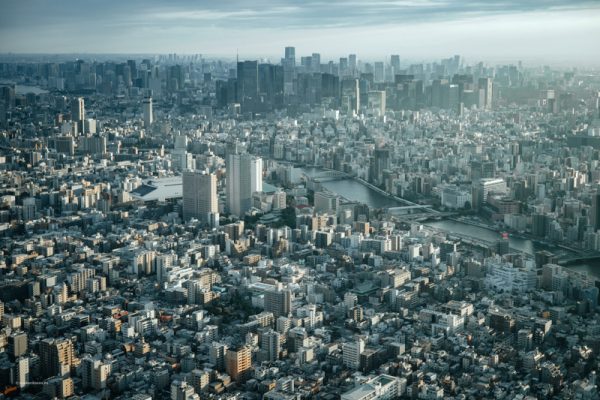
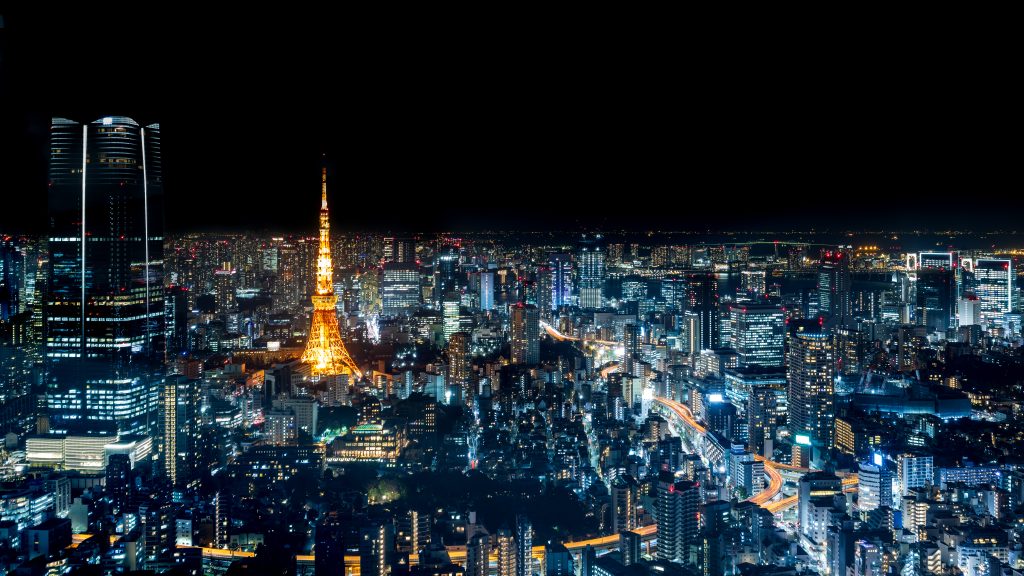
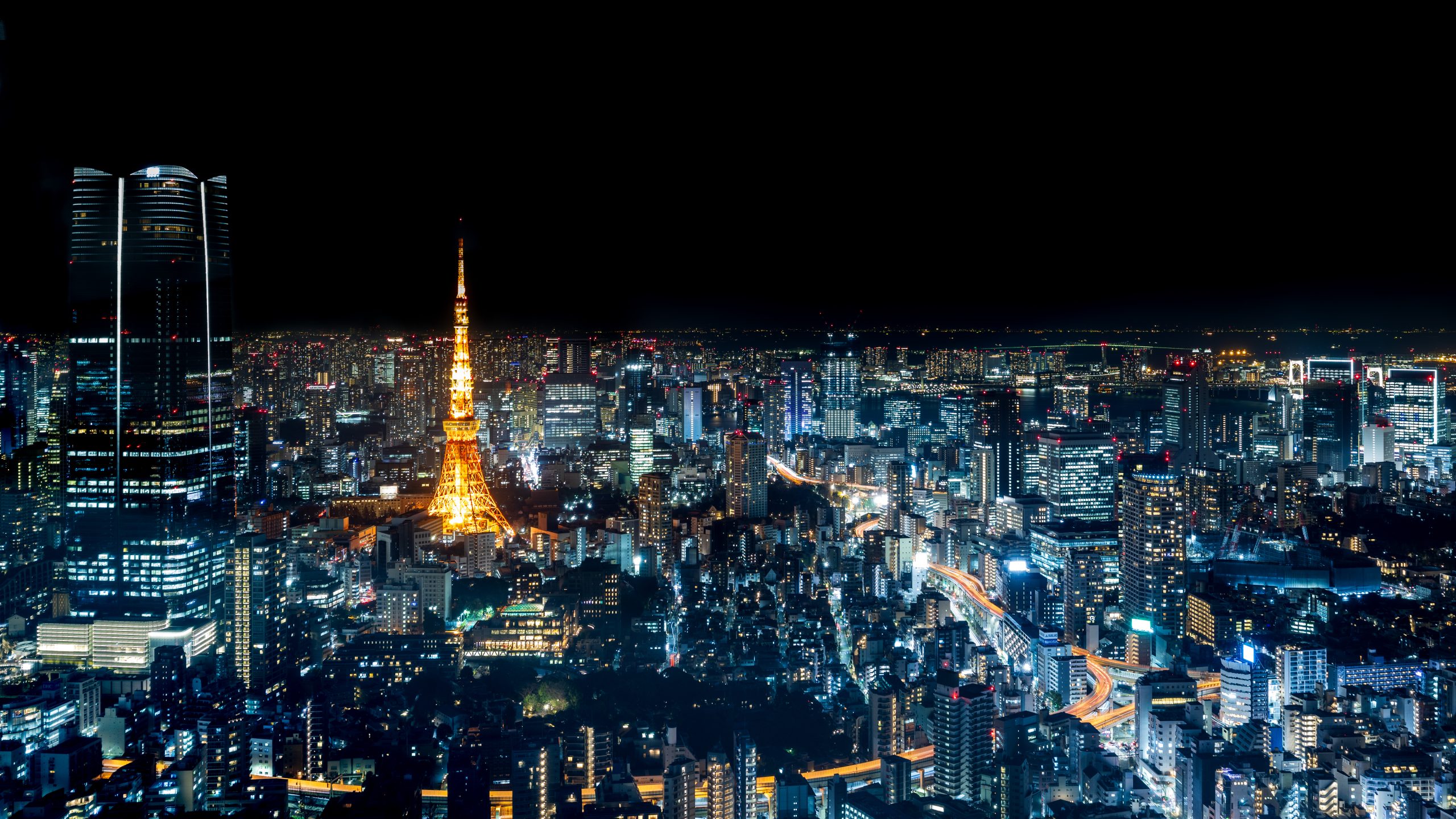
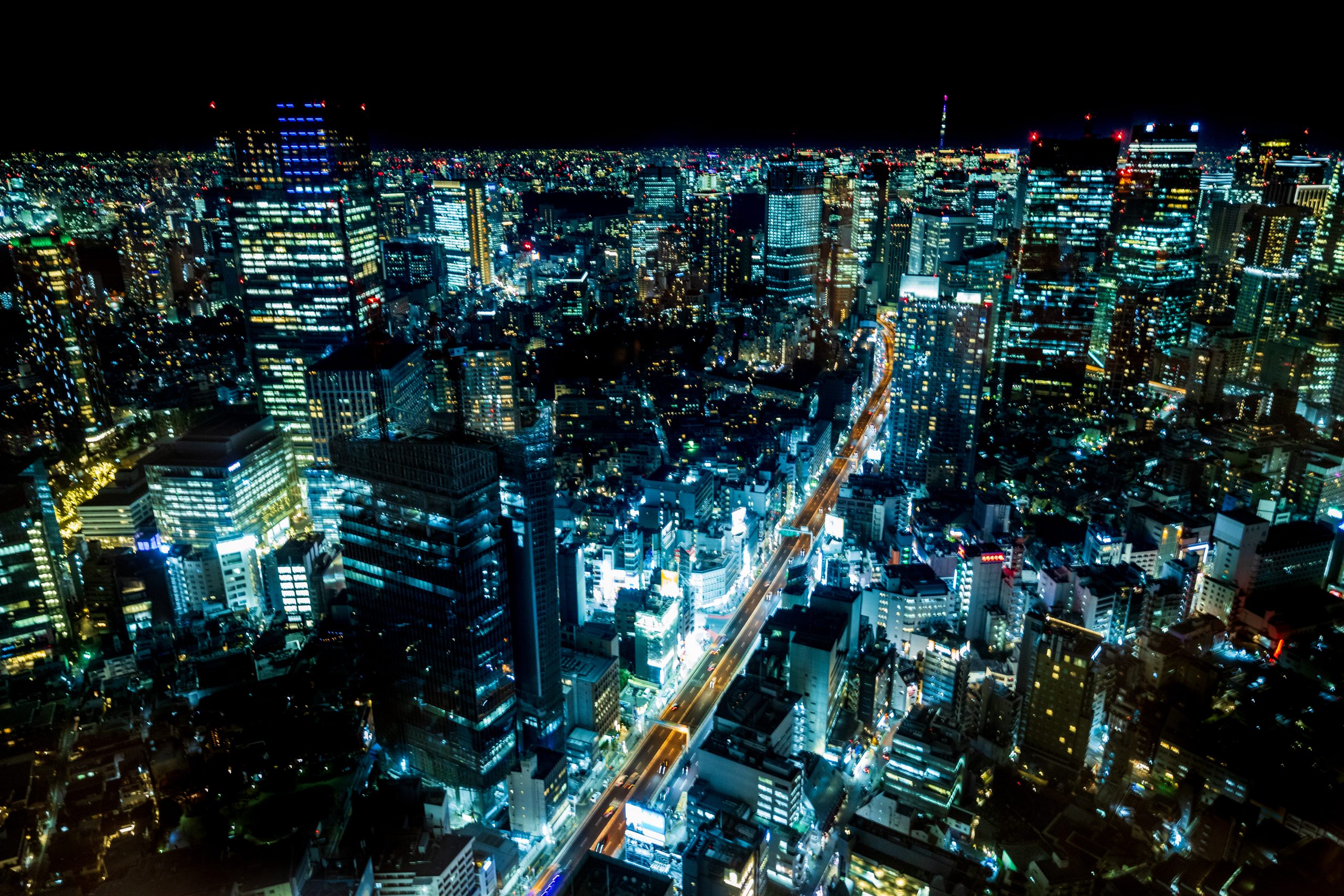
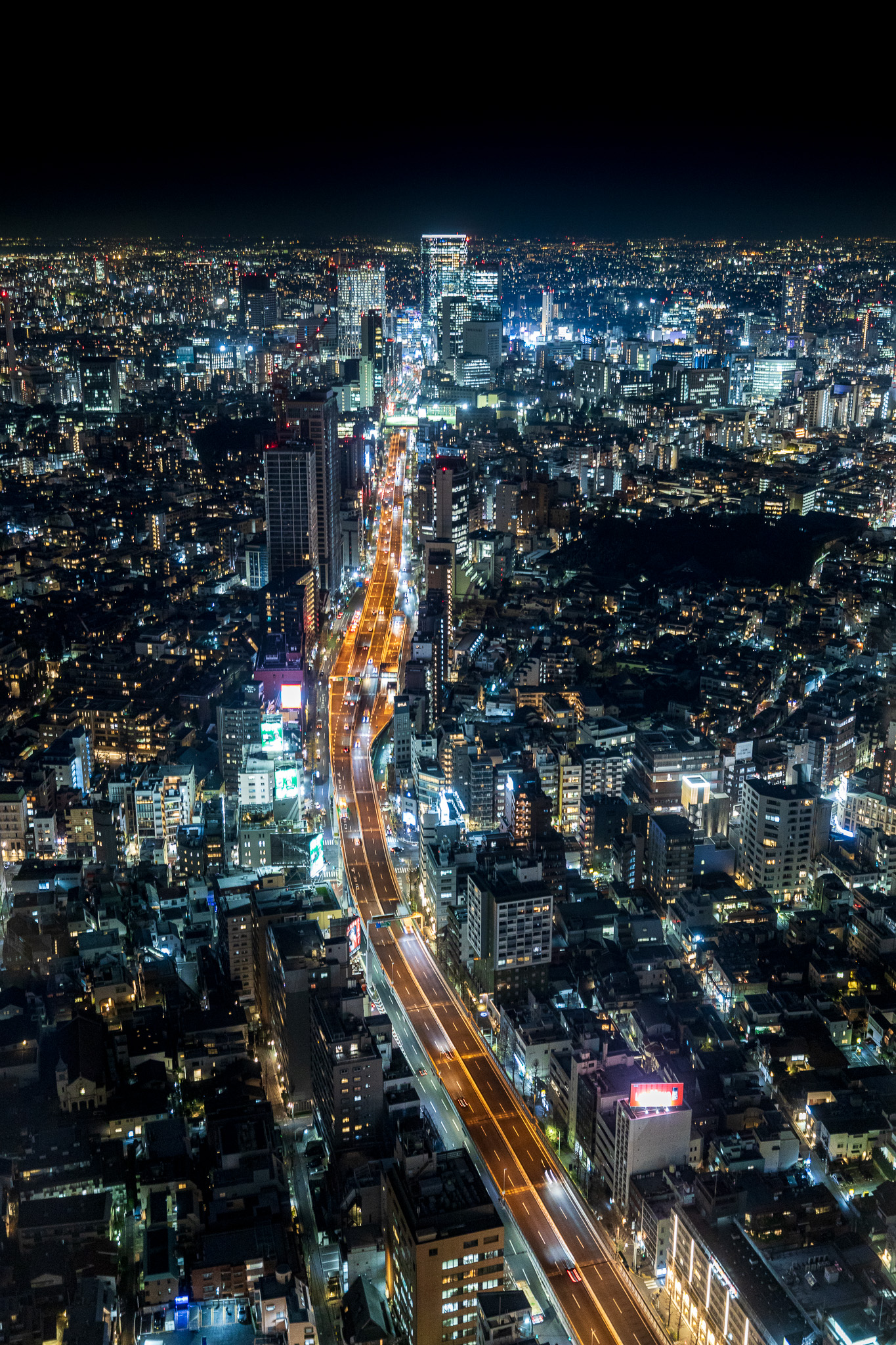
Tokyo from above at night is a texture rather than a skyline: an unbroken carpet of lit windows and streetlights that runs to the edge of the frame in every direction, with Tokyo Tower, 333 m and orange since 1958, as the one point that fixes the scale. A second frame looks down an avenue of light cutting straight through the city towards the horizon, and a third, from ground level, follows railway lines and the light trails of traffic curving between the office towers.
The Tōkaidō Shinkansen ties the two cities together. One frame catches a white train on the elevated tracks between the tall buildings of central Tokyo; the last looks out at dusk over the high-rise districts of Osaka, the line’s western terminus, where the towers stretch to the horizon under a clear blue evening sky. The frames were taken over three days in January, when the air is at its clearest over both cities.
A Capital Seen From Its Hills and Its Harbour
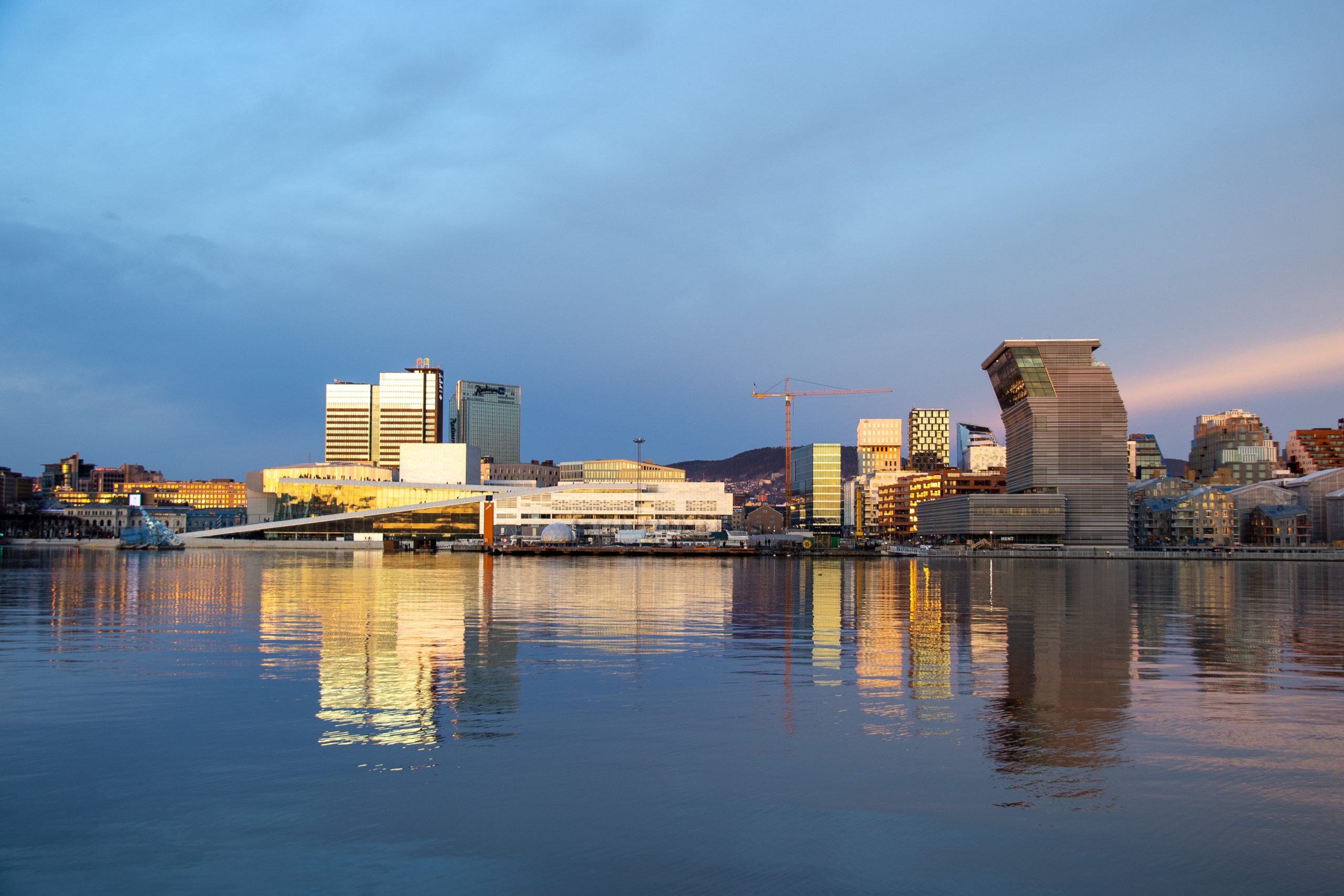
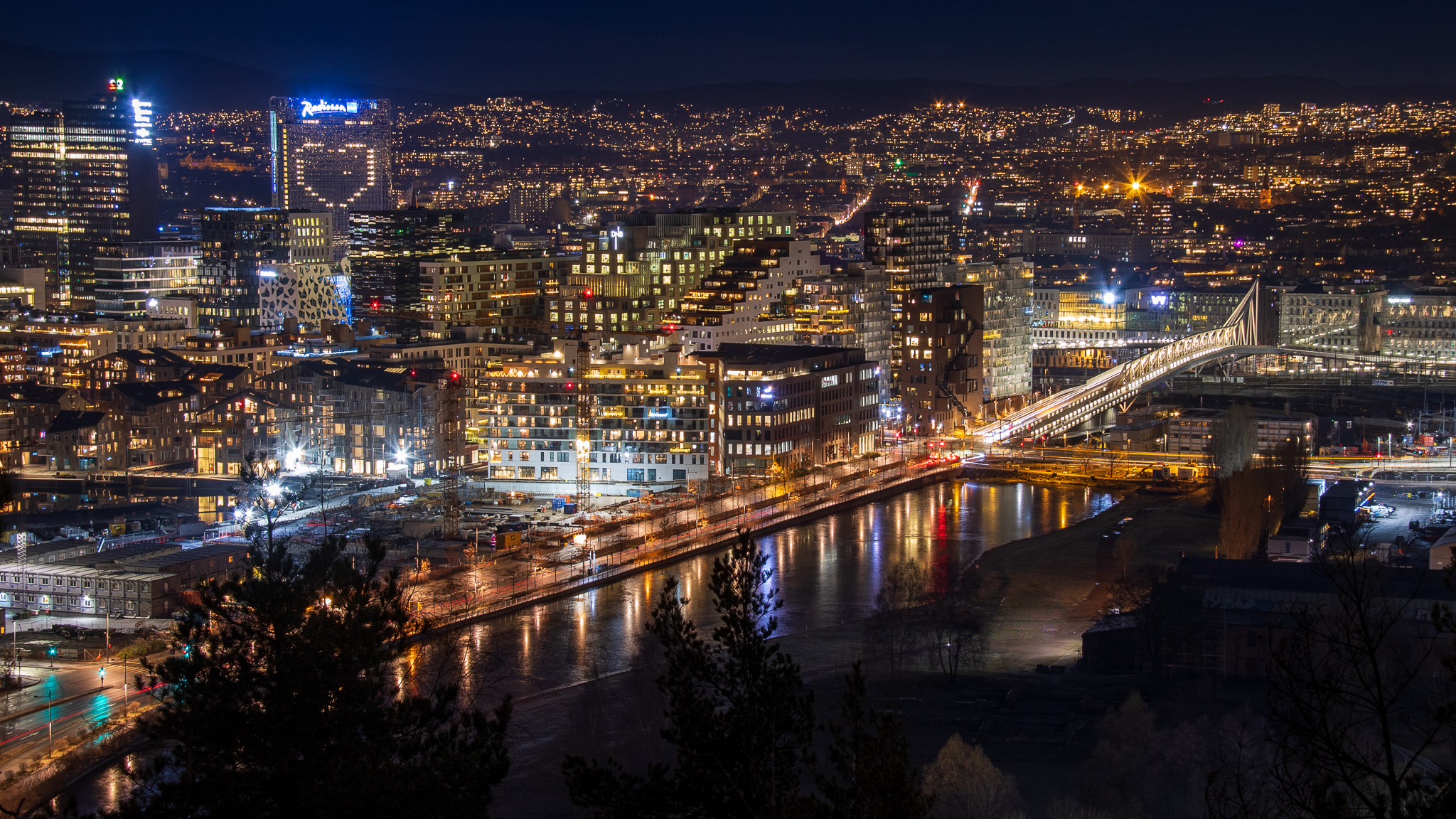
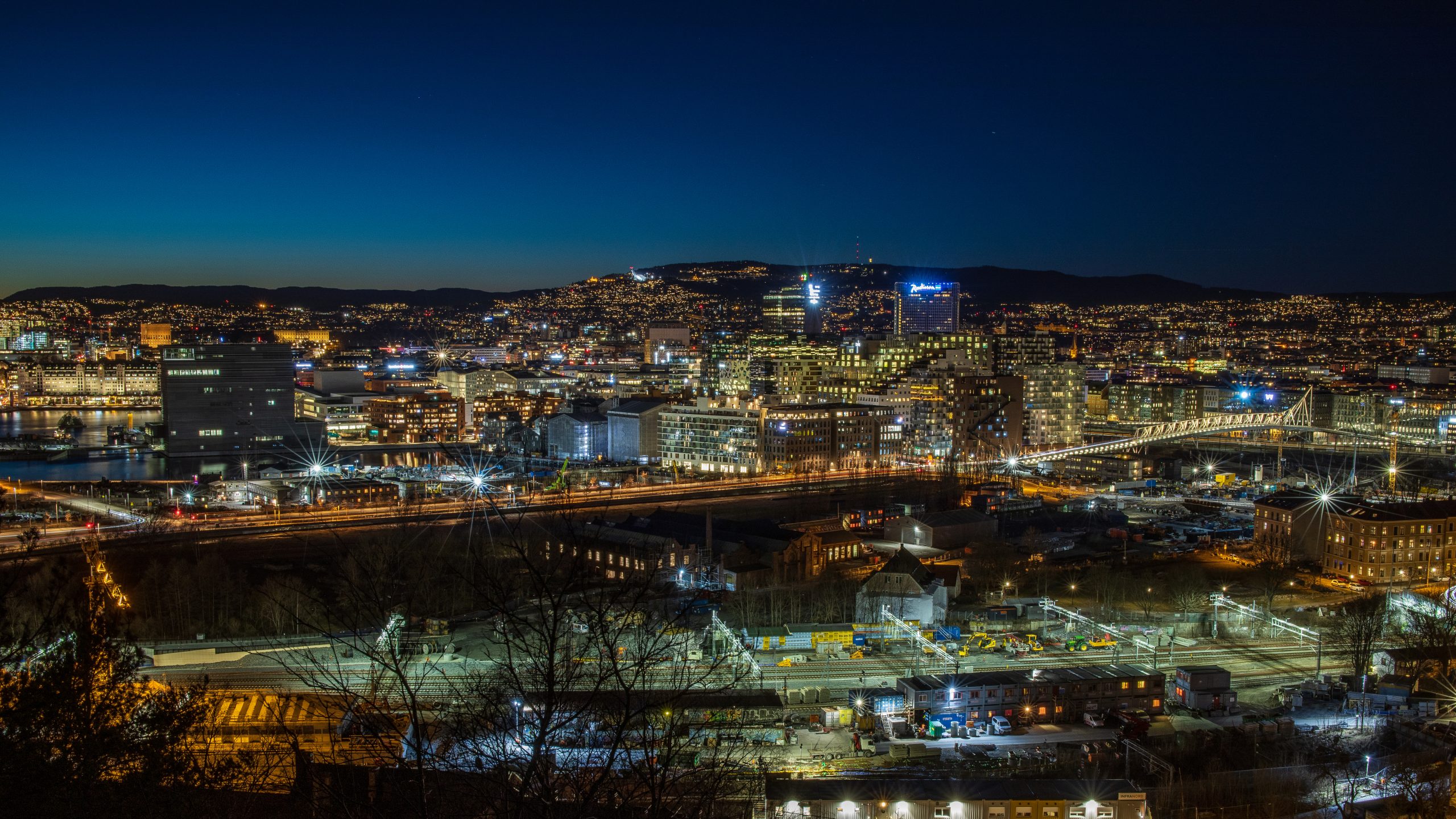
Oslo’s new waterfront by day, and the whole city lit along the water by night.
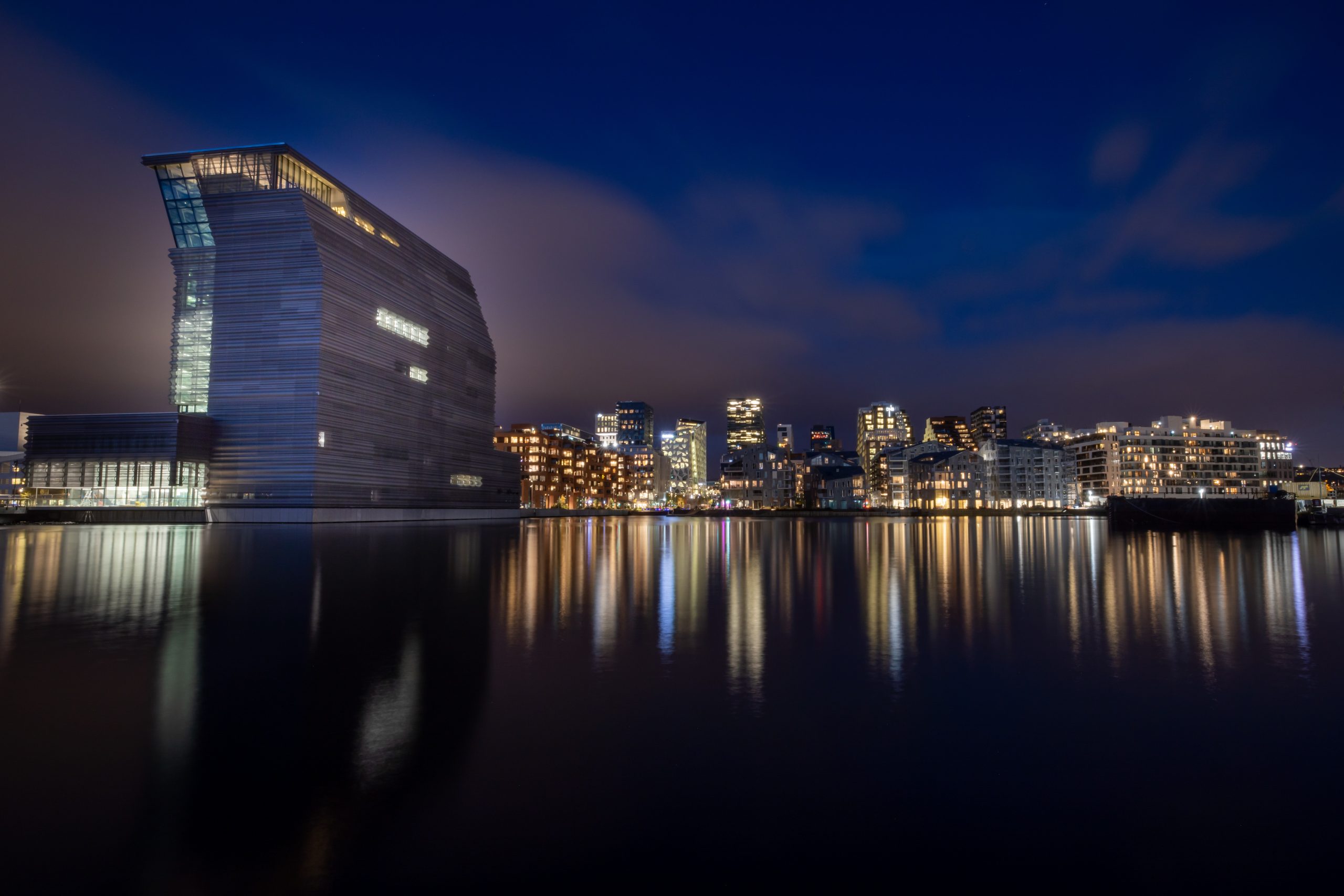
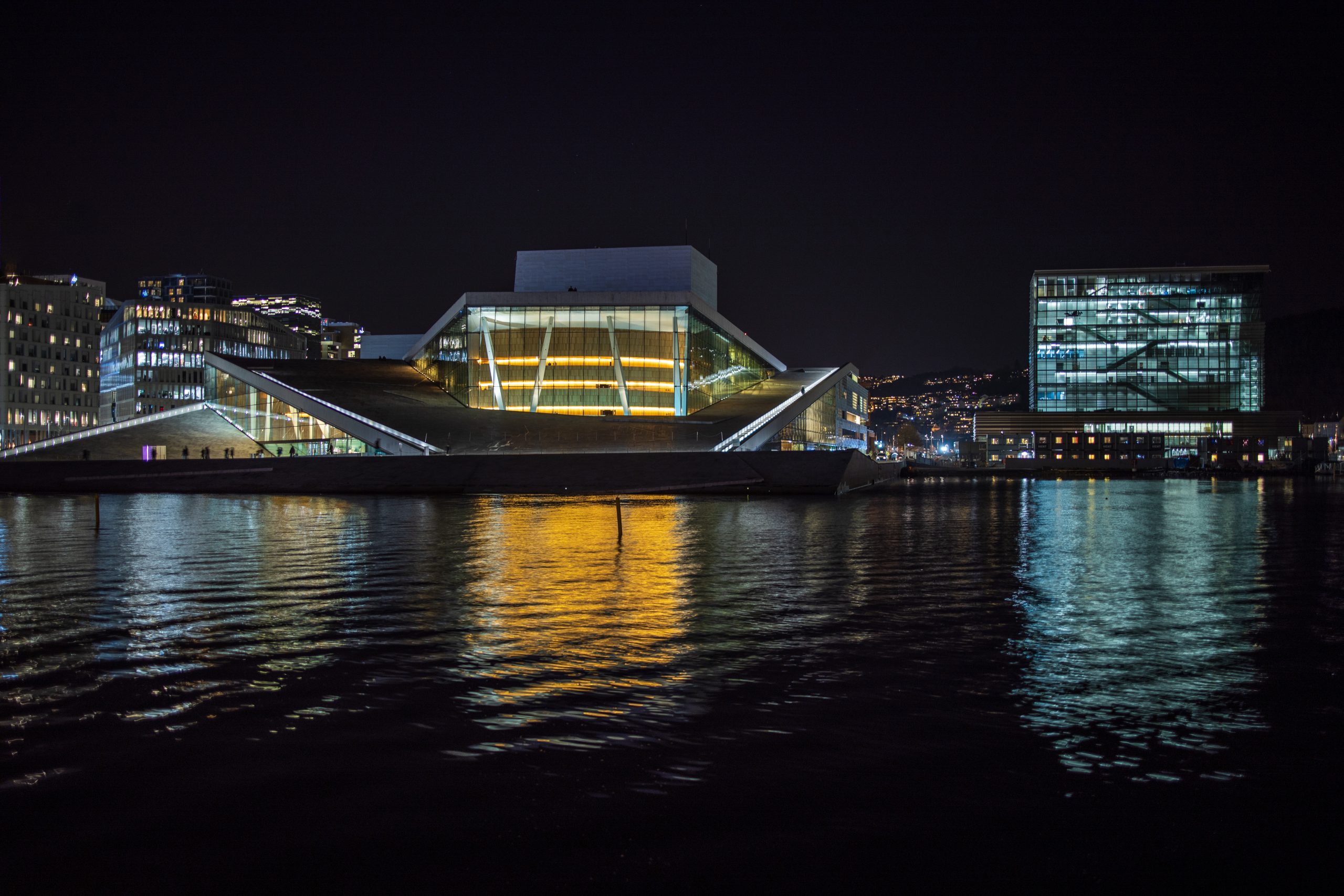
Oslo is a small capital in a bowl of forested hills, and the two night frames use that geography: from a height on a clear March evening the city lights spread out below the ridge line, and in December the lit roads and bridges of Bjørvika lead the eye along the water to the centre. Down at the quay in January the new waterfront, with the stepped Barcode towers and the pale block of the Munch Museum, stands mirrored in the still fjord at dusk.
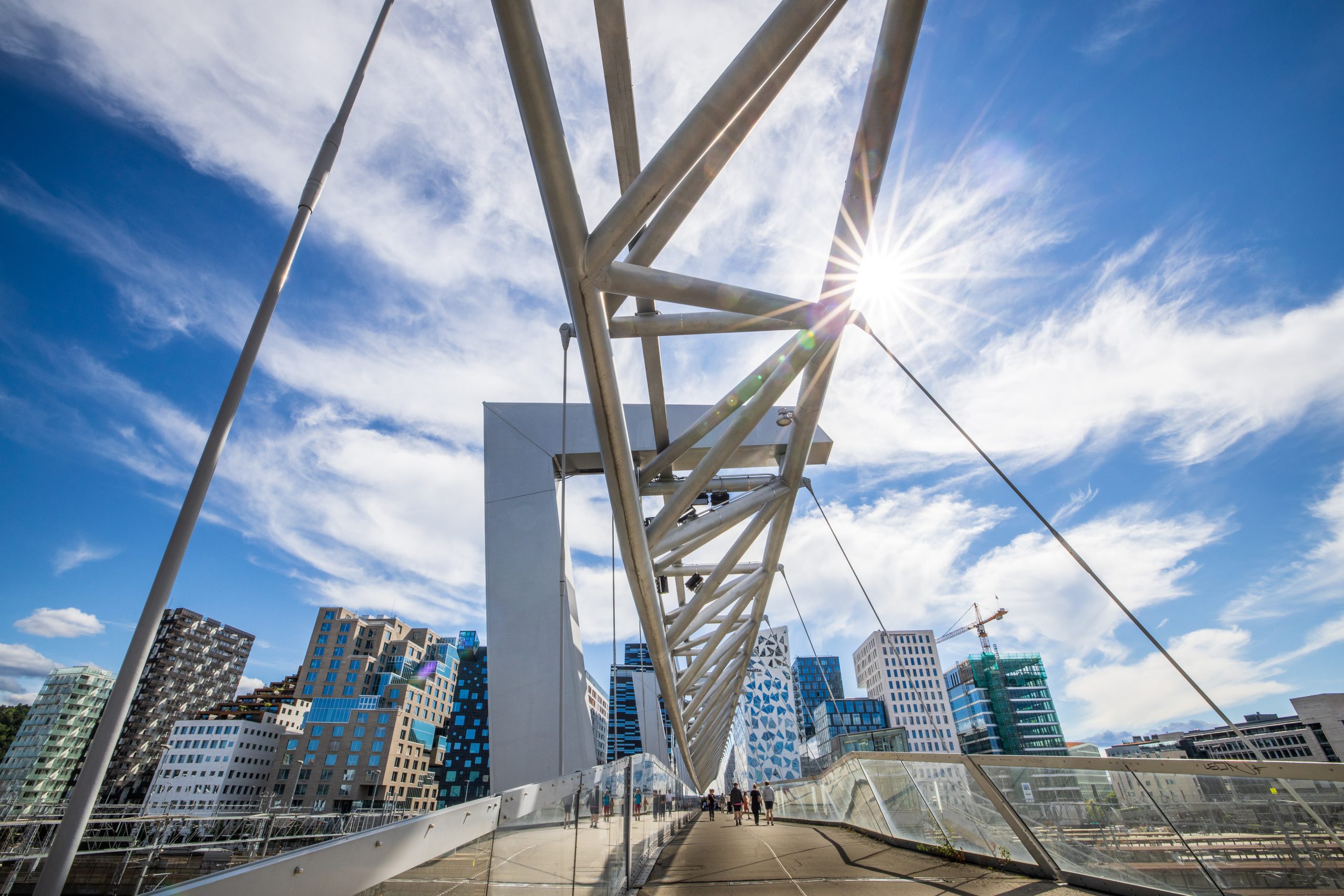
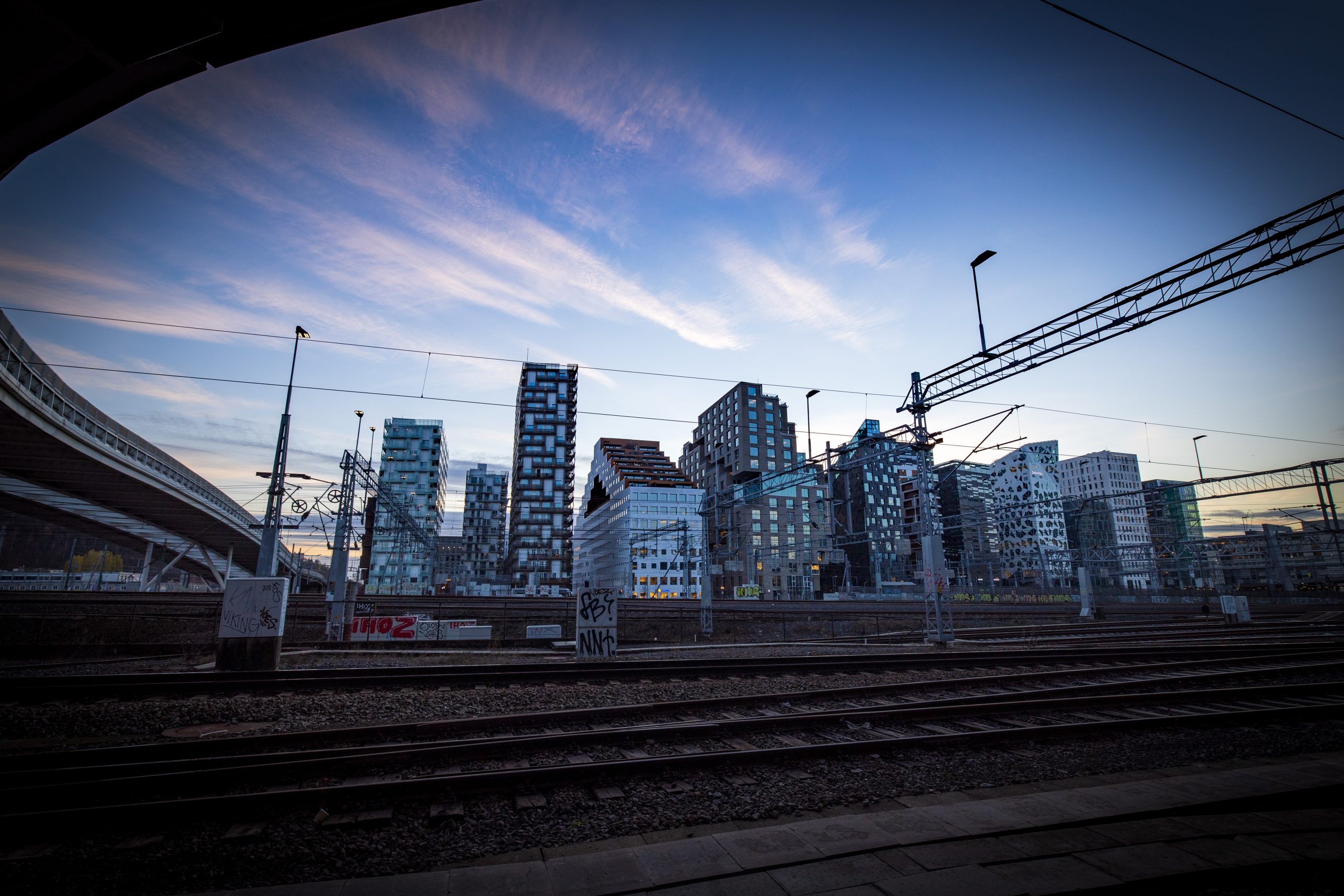
The fourth frame is taken on Akrobaten, the steel footbridge over the railway tracks at the central station, looking up through its skewed white truss into a summer sky with the Barcode towers in the gaps. It is the view most people get of the new Oslo: on foot, between the station and the fjord, with the towers rising on both sides.
The Zinc Roofs and the River
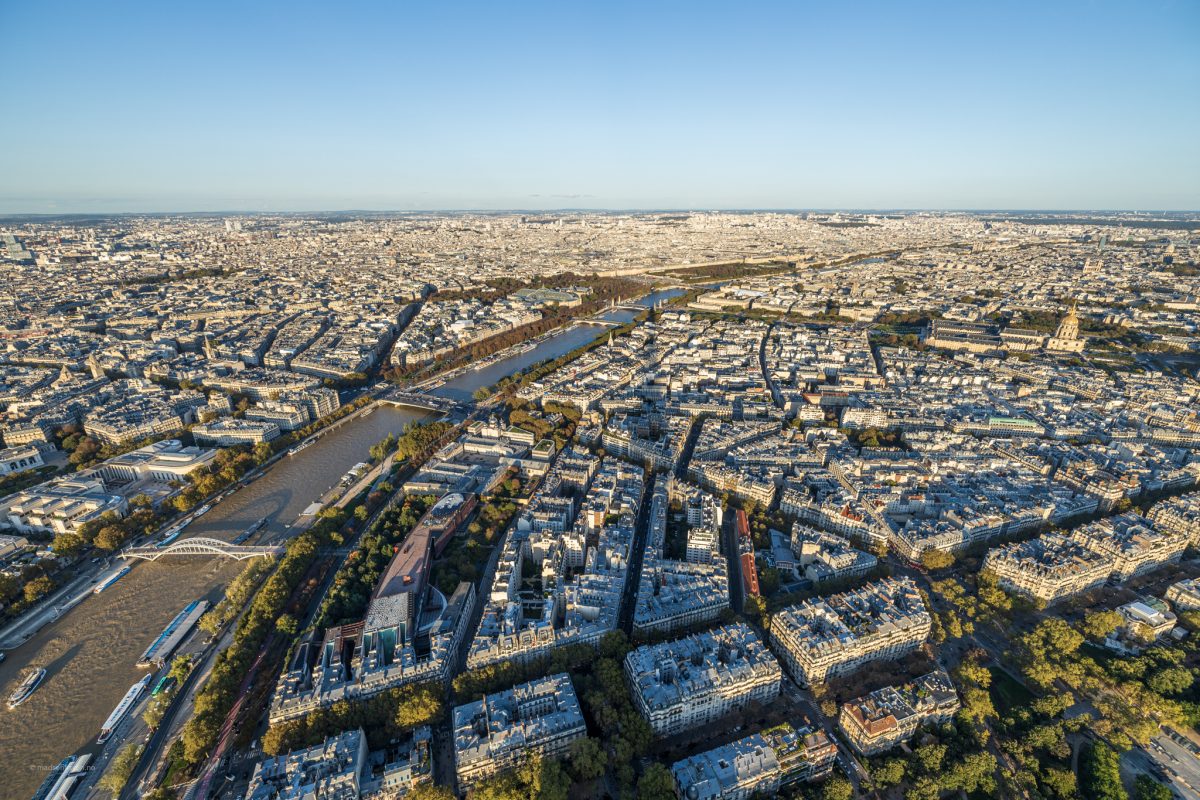
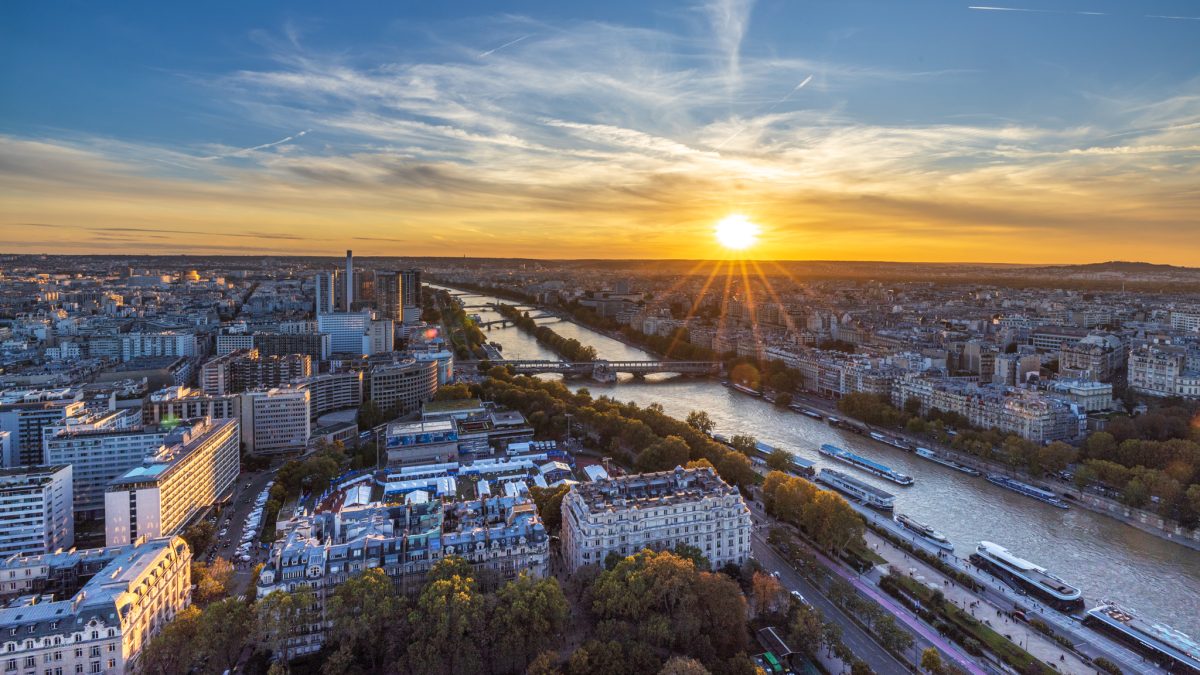
Two frames from the upper levels of the tower, an hour apart, as the sun goes down over western Paris.
From the upper levels of the Eiffel Tower, at 276 m, Paris looks exactly as its nineteenth-century planners intended: a uniform sea of pale stone and zinc roofs, six or seven storeys high, with the Seine curving through it and almost nothing taller than a dome. The first frame, in the late afternoon, takes in the whole western half of the city, the river bending away towards the suburbs and the Bois de Boulogne at the edge.
The second, from the same spot an hour later, catches the sun as it sets over the Seine. The moored boats along the quay, the bridges and the apartment blocks of the 16th arrondissement fall into shadow while the river turns gold, and the long straight avenues of the Haussmann plan show up as dark lines through the glow.
Where the Dome Is Still the Highest Point
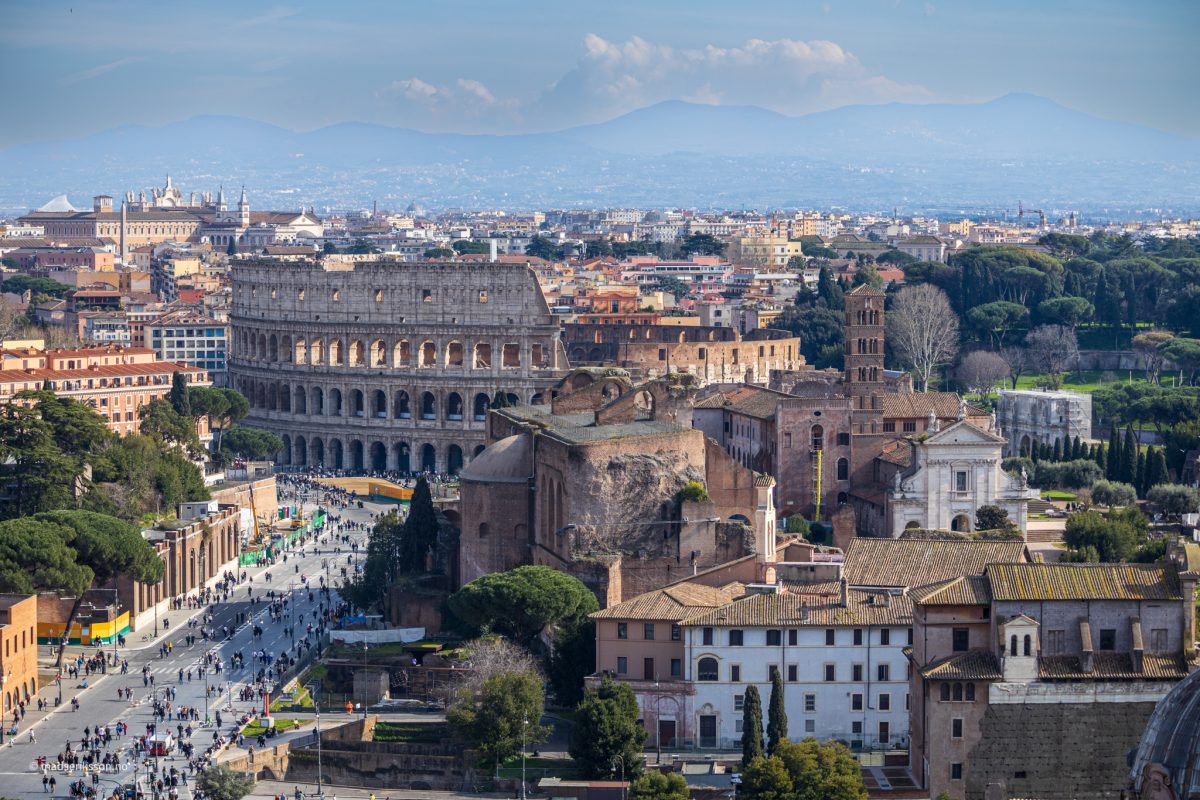
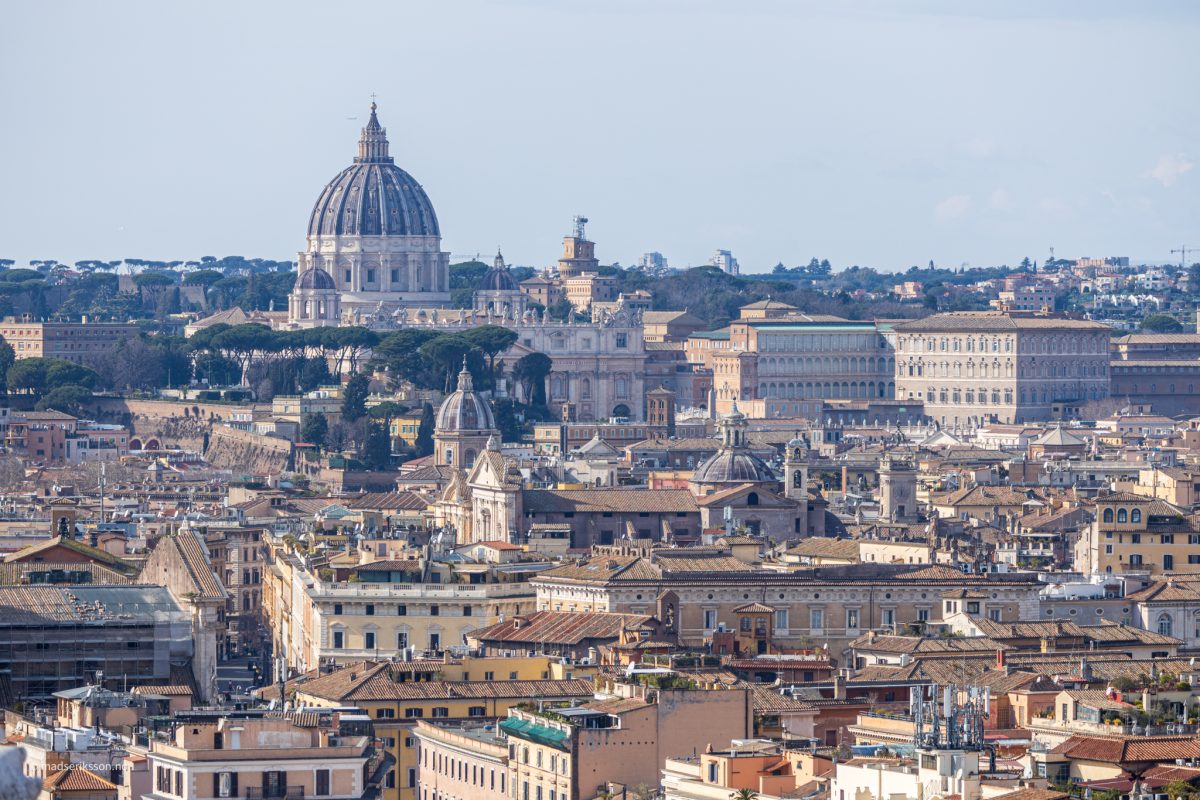
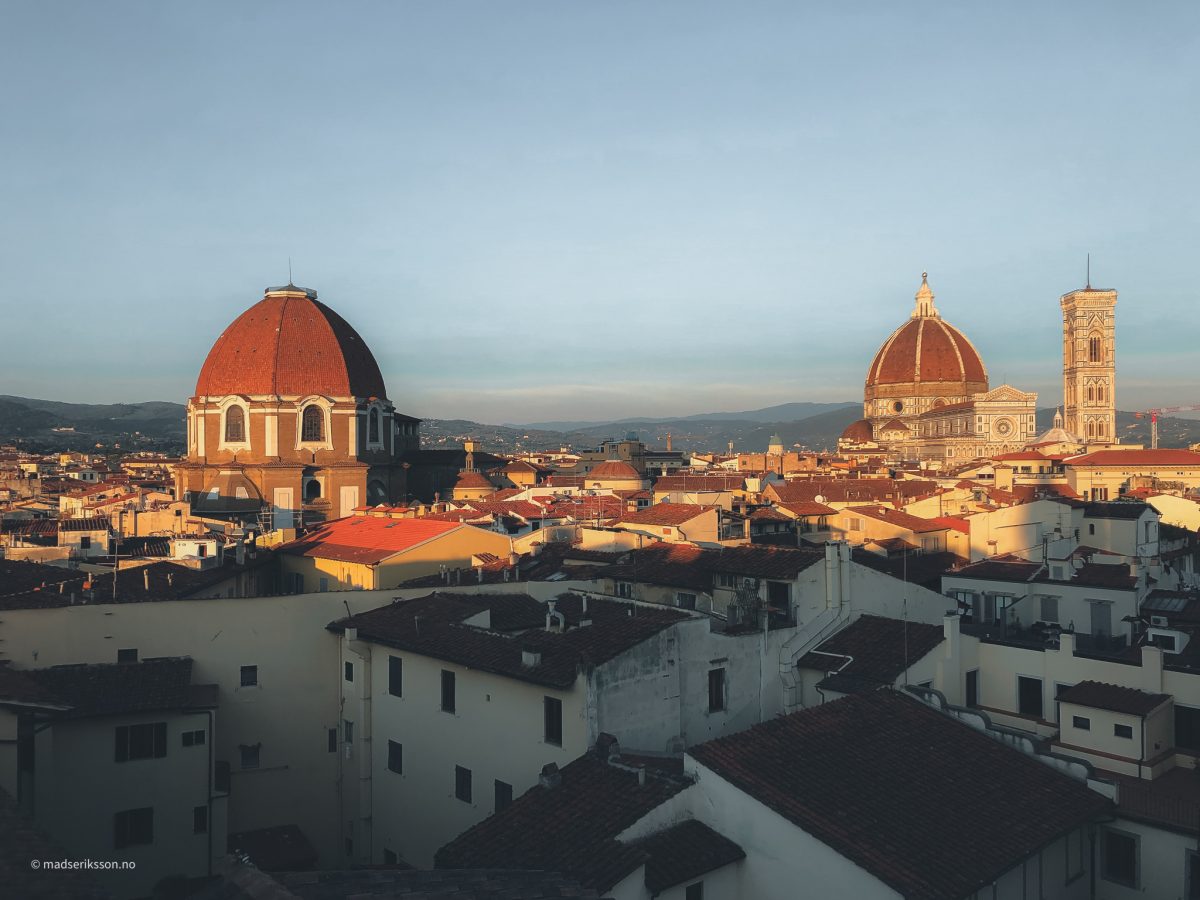
Old European cities in which the skyline belongs to a cathedral, a castle or a single tower.
In Rome the skyline is horizontal: terracotta roofs, pines and church domes, with the Colosseum sitting in a hollow among them and the grey dome of St Peter’s, 136 m to the cross, rising above everything to the west. Florence is the same idea in a single frame at sunset, Brunelleschi’s red cathedral dome and Giotto’s bell tower to the right and the dome of the Medici Chapels to the left, both above a tight pattern of tiled roofs.
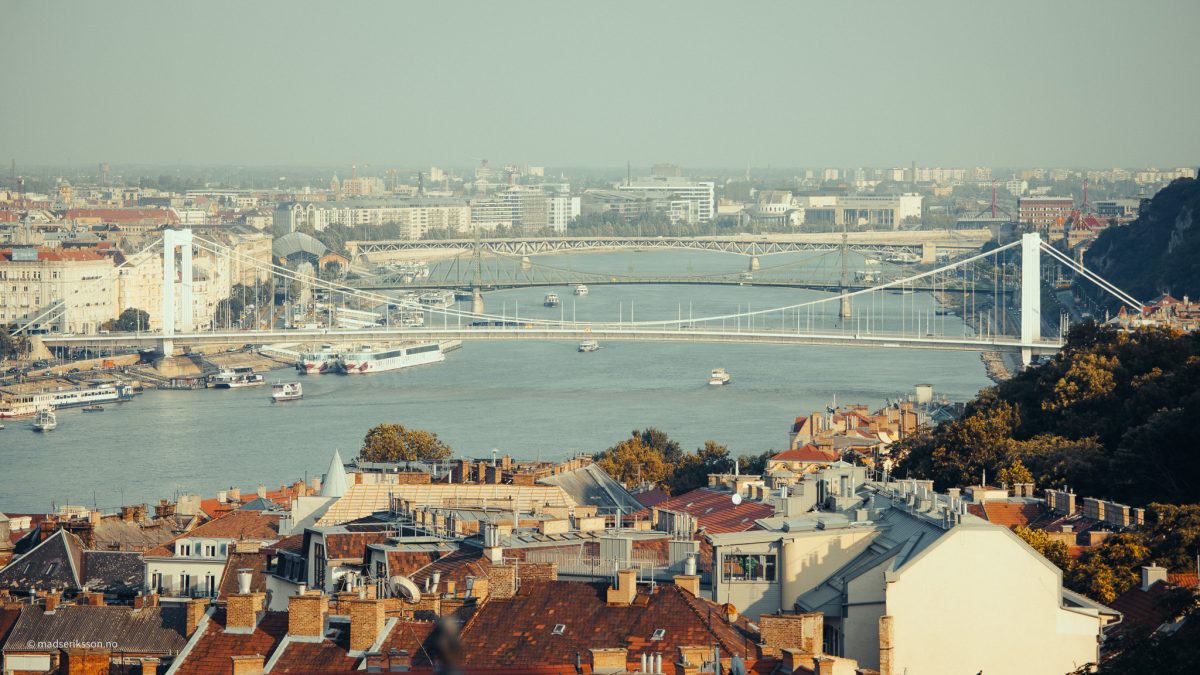
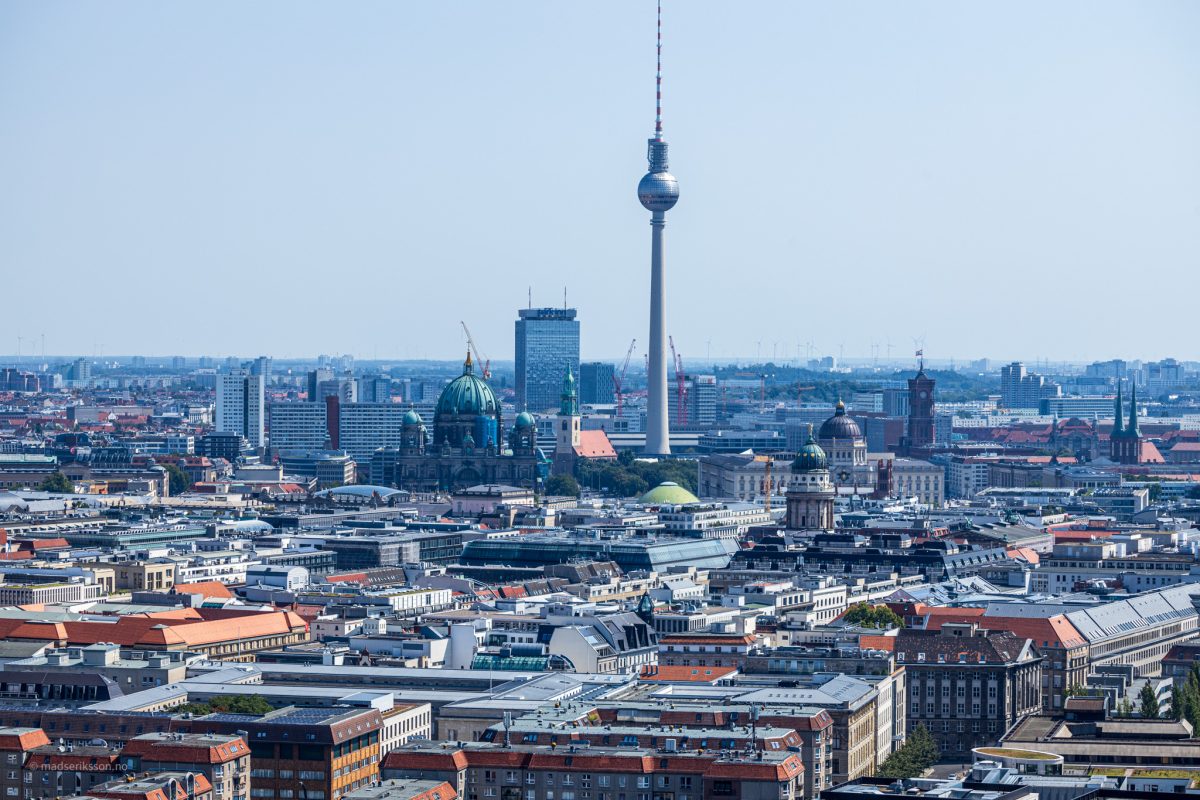
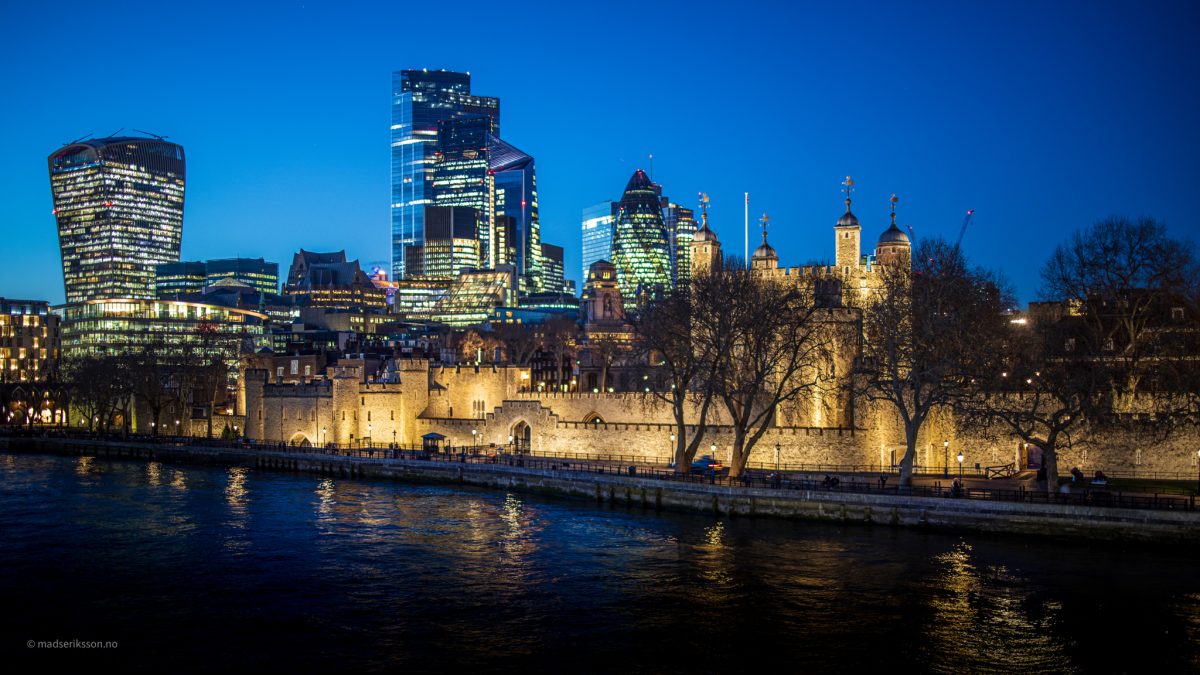
The northern capitals add a river or a single modern tower. From Castle Hill in Buda the red roofs fall away to the Danube, the white cables of Elisabeth Bridge and the flat spread of Pest beyond. In Berlin the Fernsehturm, 368 m and built in 1969, rises above the green domes of the cathedral and a jumble of post-war blocks. And in London the floodlit walls of the Tower, begun in 1078, stand in front of the glass towers of the City at dusk, nine centuries of building in one view across the Thames.
Three Skylines, Three Kinds of Light
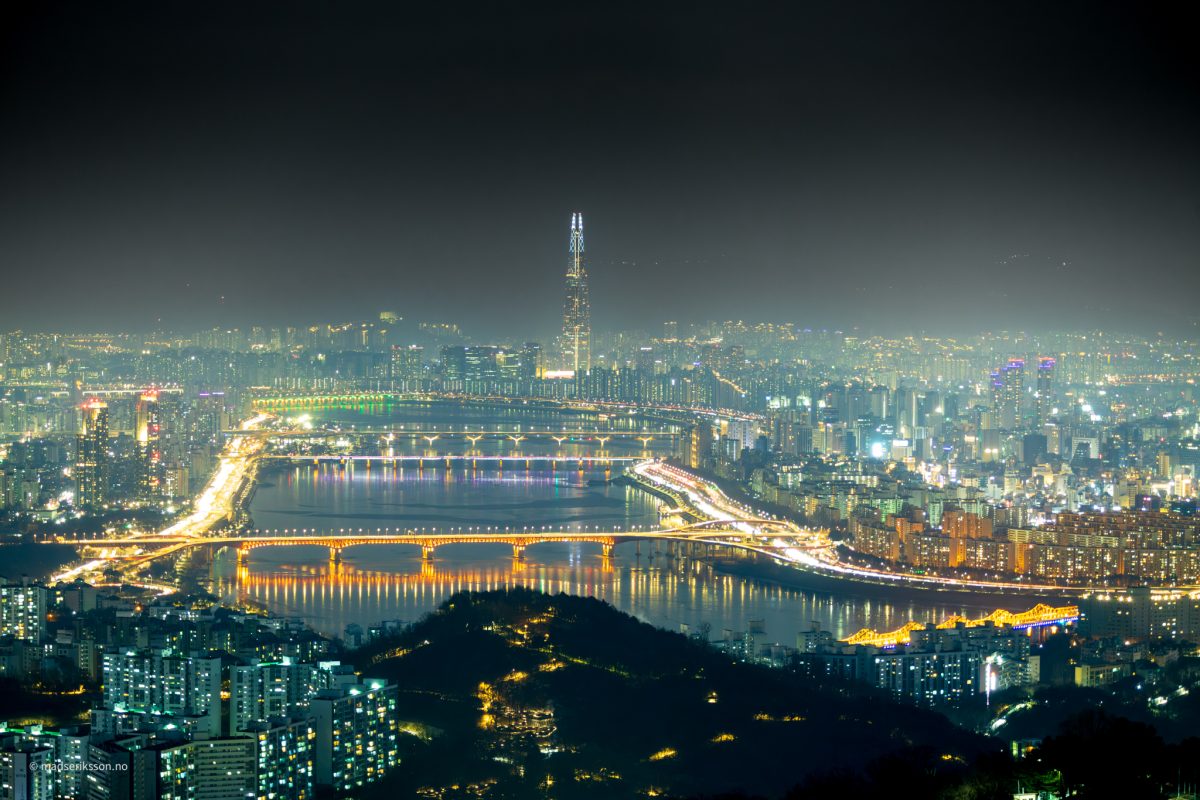
Seoul and Mexico City after dark, and the towers of Doha in the haze of a Gulf afternoon.
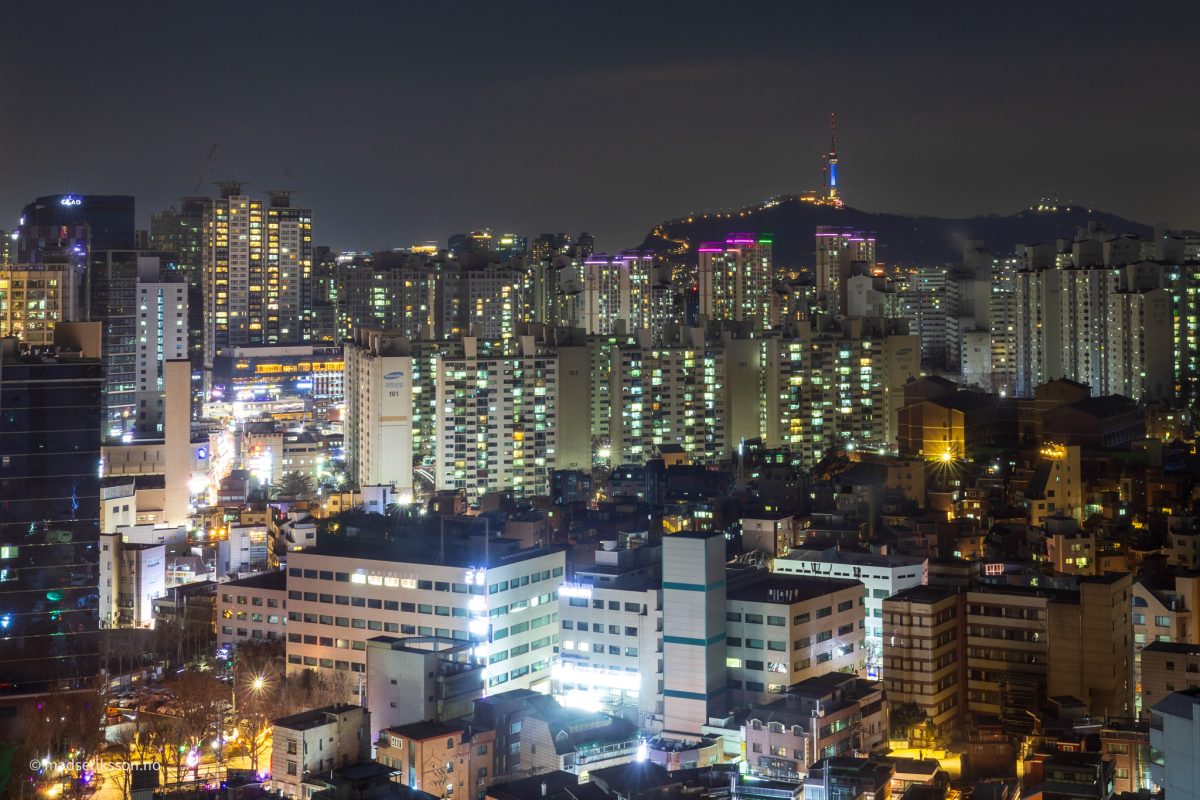
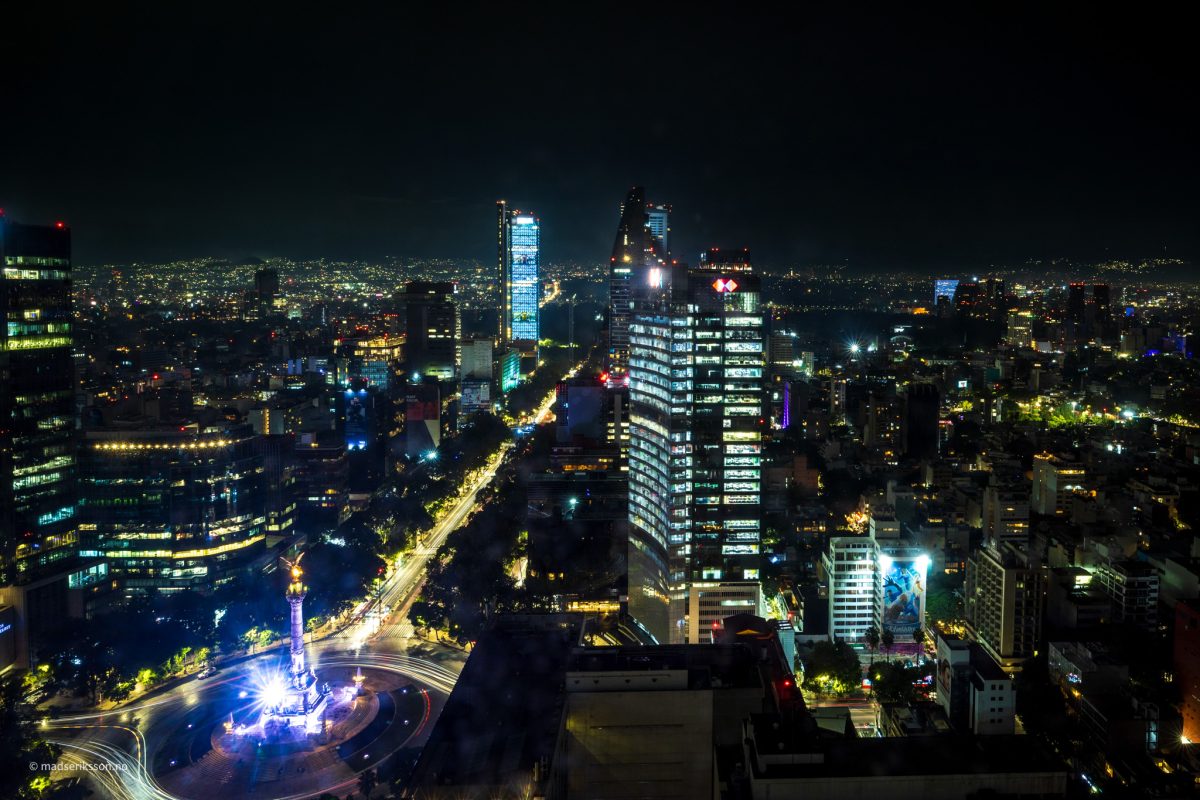
Seoul at night is a city of apartment blocks, thousands of lit windows in identical slabs, with two towers to orient by: N Seoul Tower on the wooded hill of Namsan, and the 555 m Lotte World Tower, opened in 2017, which from across the Han River stands alone on the skyline above a line of lit bridges. Mexico City from a high floor shows a different pattern, the floodlit Angel of Independence of 1910 on its roundabout in the middle of Paseo de la Reforma, with traffic circling it and office towers on either side of the avenue.
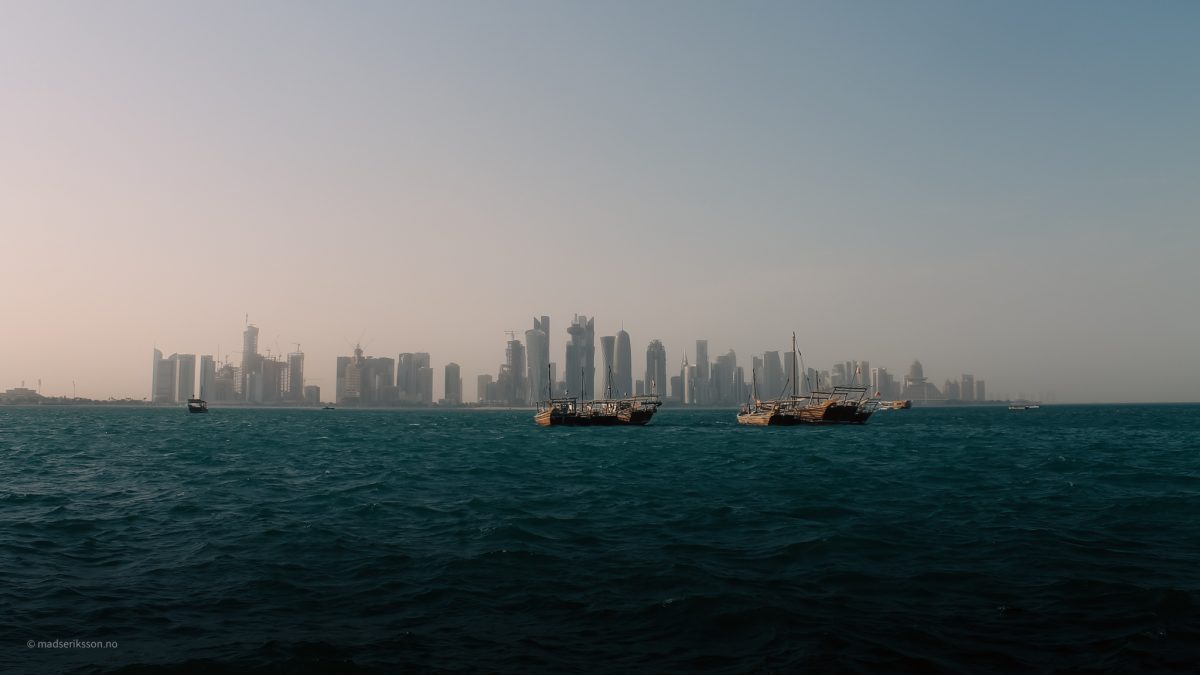
The oldest frame, from 2012, is Doha seen from the water: the towers of West Bay in a line along the far shore, pale in the afternoon haze, with wooden dhows anchored in the foreground. The skyline was only a decade old at the time and has kept growing since.
«Every city in these frames was built for the people on its streets, yet it is only from a height, or from across the water, that the pattern shows: the grid of Manhattan, the uniform roofs of Paris, the domes of Rome, the endless carpet of Tokyo. The towers come and go, and the Lotte and One World Trade Center of the newest frames will be overtaken in turn. The rivers, hills and harbours that shaped each skyline will not.»
More in the same area
 ArchitectureTen Buildings That Changed Their Cities — Modern Architecture Ranked on Impact, Not Image
 ArchitectureBarcode and Bjørvika: Oslo’s New Waterfront Skyline
 CitiesDiscovering New York: The City That Never Sleeps
 CitiesParis: The City of Lights
 CitiesThe Vibrant Heart of Norway, Oslo
 CitiesShibuya Crossing: The Heartbeat of Tokyo