Tokyo is the largest metropolitan area in the world, with around 37 million people living in the capital and the prefectures around it, and almost everything about it is built to move that many people at once. The six frames here were taken over three January days and come at the city from that angle: the long white noses of Shinkansen trains at the platform and curving on their viaduct between office towers; the crowds waiting at Shibuya Crossing, the busiest pedestrian crossing in the world, under the screens and the new high-rises around the station; and, after dark, the city seen from far above, where the grid dissolves into fields of light with Tokyo Tower standing orange among them. In winter the air is dry and clear and the nights come early, which makes the light trails sharp and the tower bright by seven in the evening.

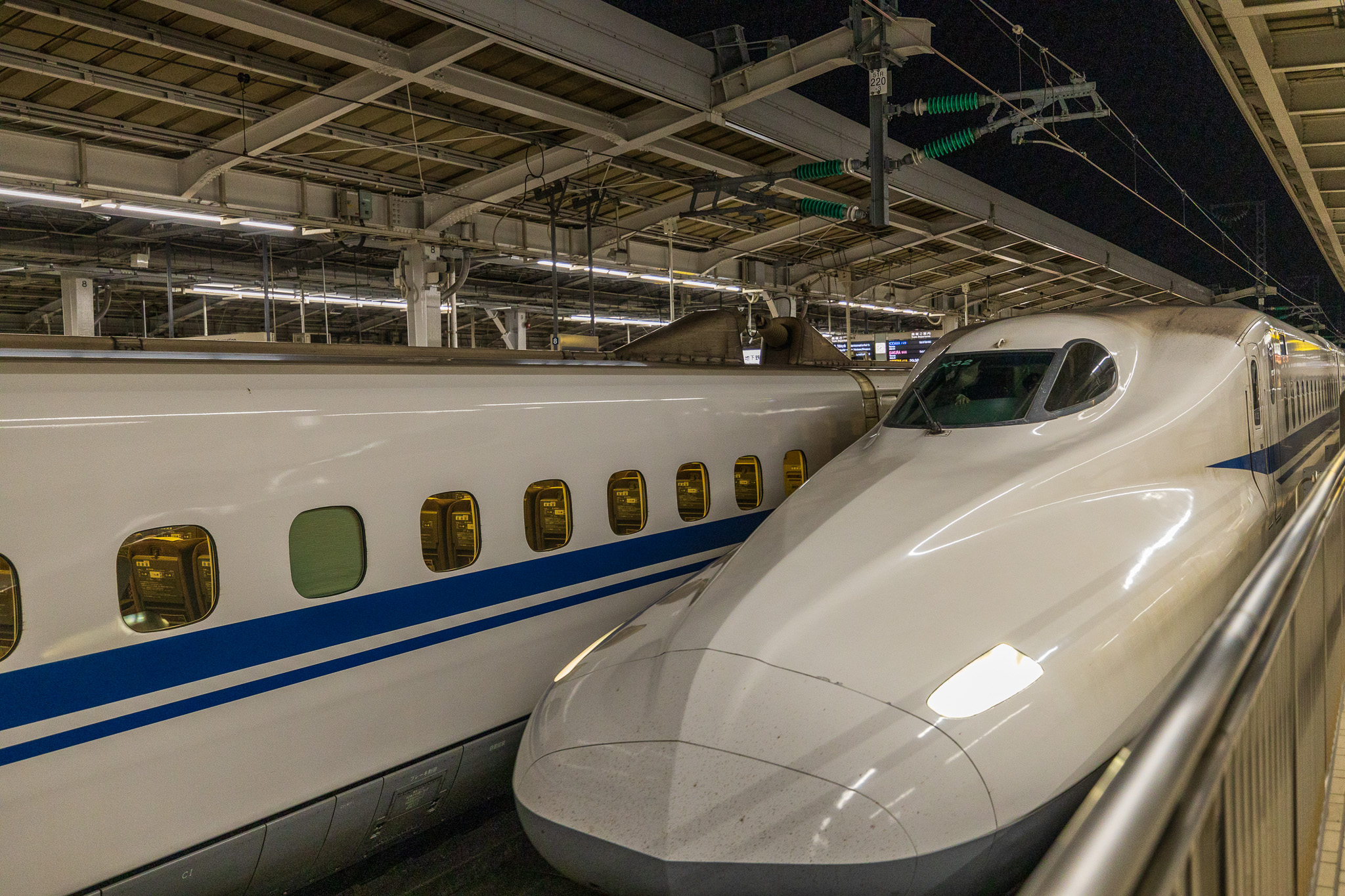
The White Nose
Bullet trains at the platform and threading the office towers on their elevated line.
The Tōkaidō Shinkansen has run between Tokyo and Osaka since 1 October 1964, and its trains still leave Tokyo Station from the same elevated platforms, now at up to 285 km/h and carrying some 158 million passengers a year. The first frame is taken on the platform at night: two trains stand nose to nose under the station roof, their long white snouts and blue stripes lit by the platform lamps. The shape is pure aerodynamics, designed to stop the pressure wave that a blunt train pushes into a tunnel.
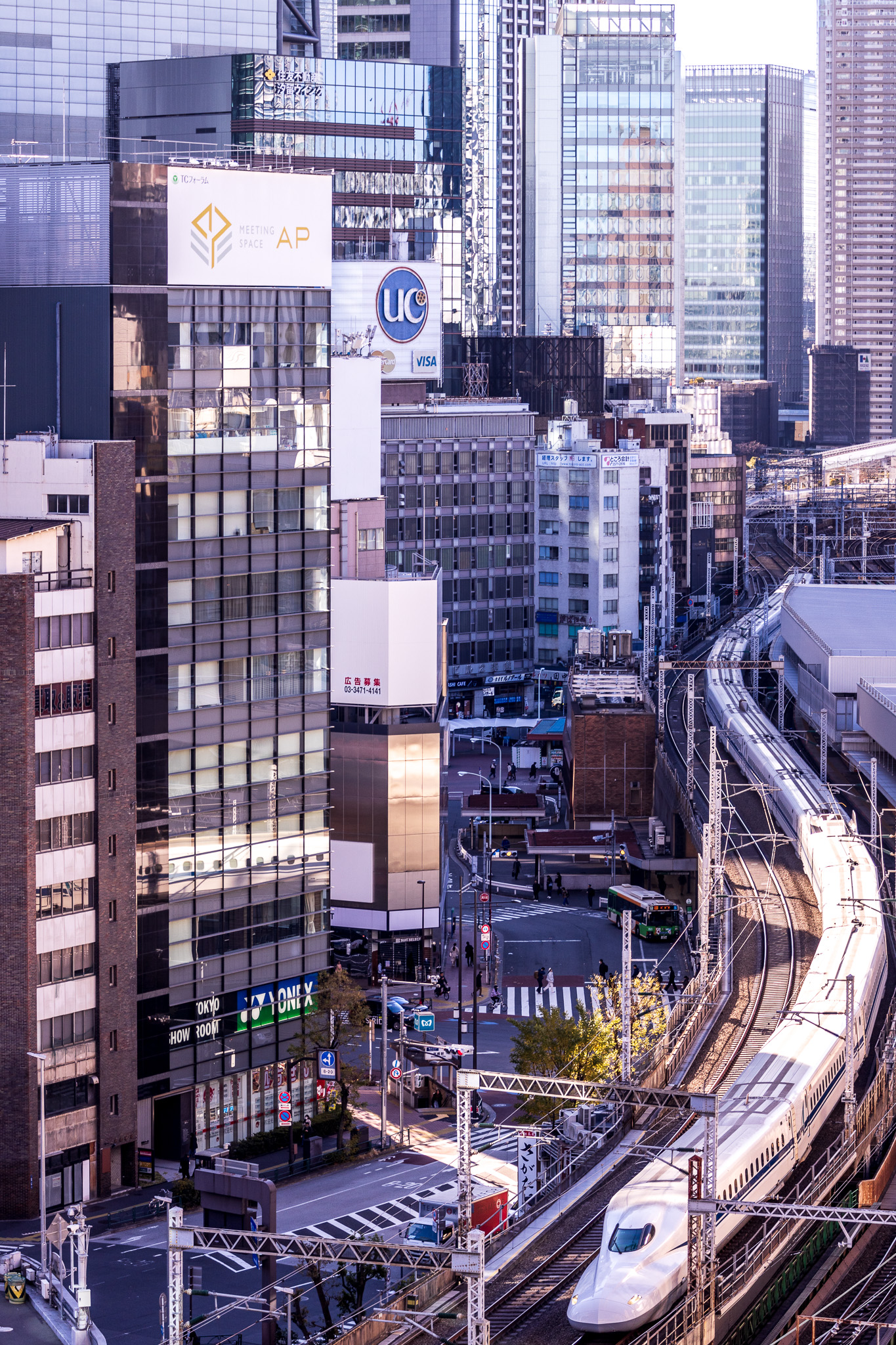
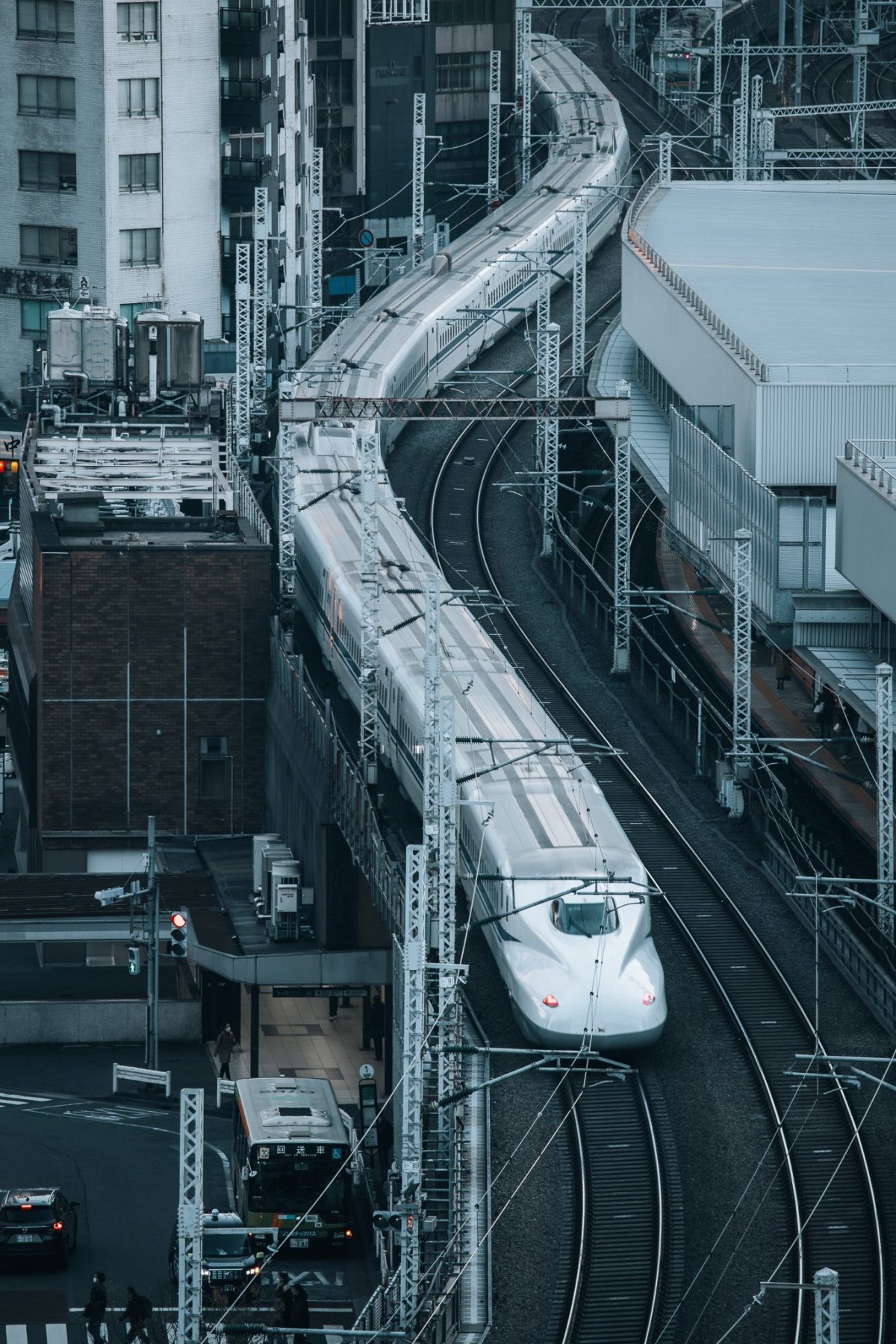
The second frame is from above during the day. A train in the same white-and-blue livery leans into the curve of the viaduct that carries the line south out of the station, hemmed in on both sides by glass office towers. The railway was there first; the towers filled in around it. From this height the train looks like a thread pulled through the city, which is close to what it is: a line that connects the capital to Nagoya, Kyoto and Osaka in a couple of hours.
Waiting for the Green
Two nights at the busiest pedestrian crossing in the world, under the screens and the new towers.
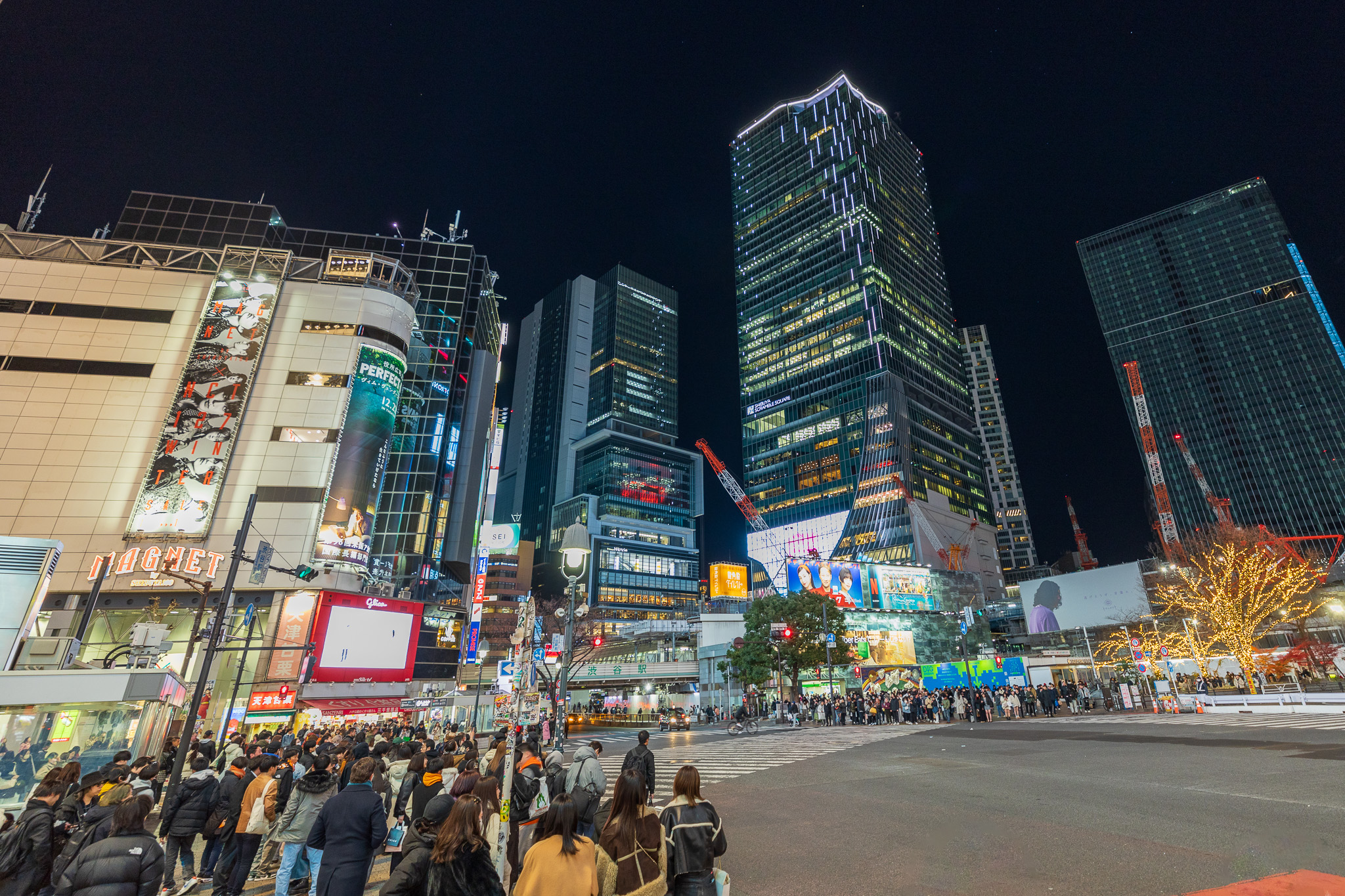
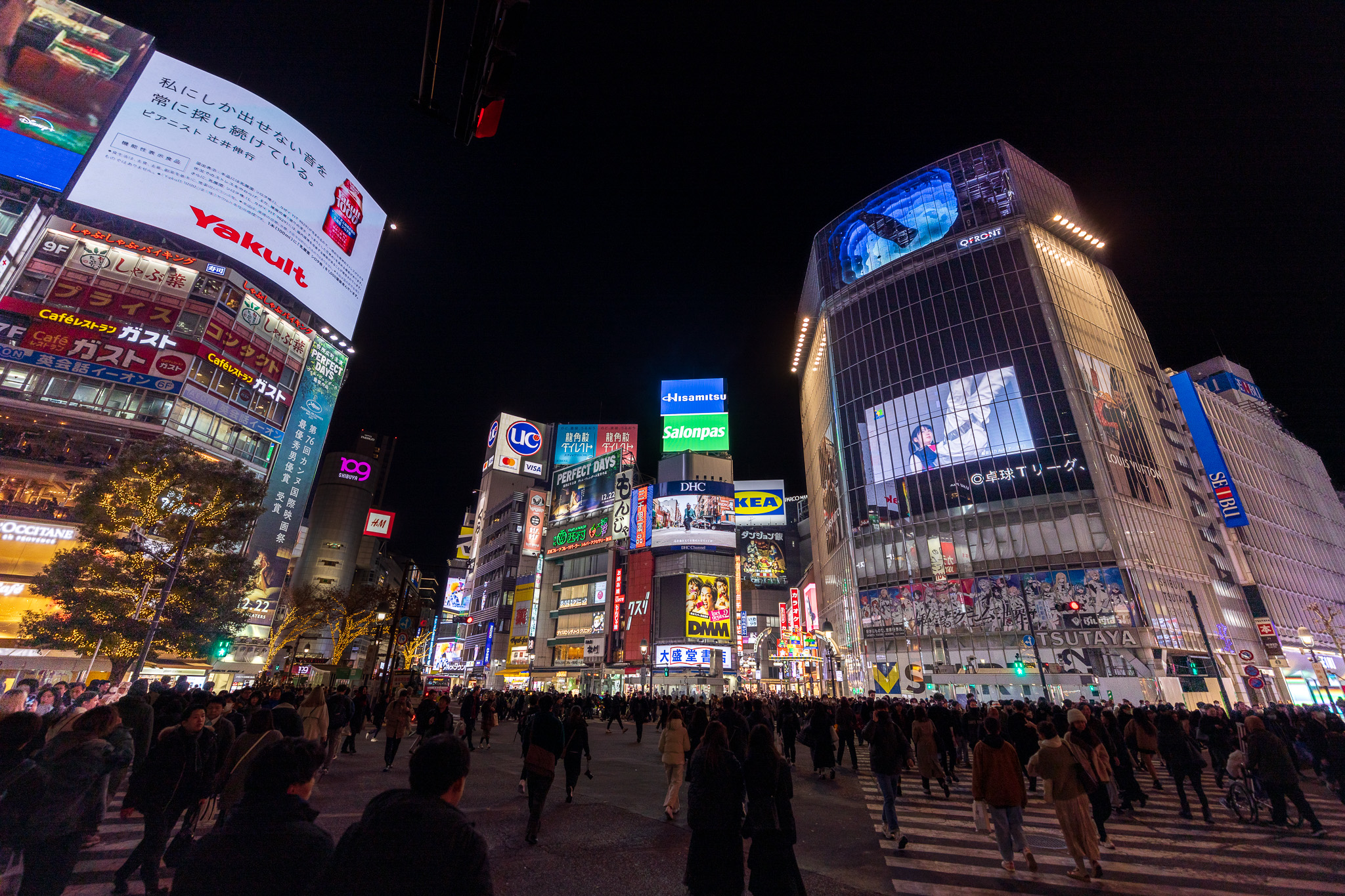
Shibuya Crossing lies just outside the Hachikō exit of Shibuya Station, where five roads meet and all the lights go red at once so that pedestrians can cross in every direction, including diagonally. On a busy evening up to 3,000 people step off the kerbs on a single green, and surveys have counted between 260,000 and 390,000 crossings a day. Around it the district has been rebuilt over the last decade, with a cluster of high-rises around the station replacing the low buildings of the old Shibuya.
Both frames were taken after dark on successive evenings in January, from the pavement at the edge of the crossing. In the first, the crowd is held at the kerb while cars pass, with the illuminated towers around the station rising behind the older blocks. In the second, the screens on the QFRONT building and its neighbours are the brightest things in the picture, and the stripes of the crossing are empty for a moment before the light changes and the square fills.
Fields of Light
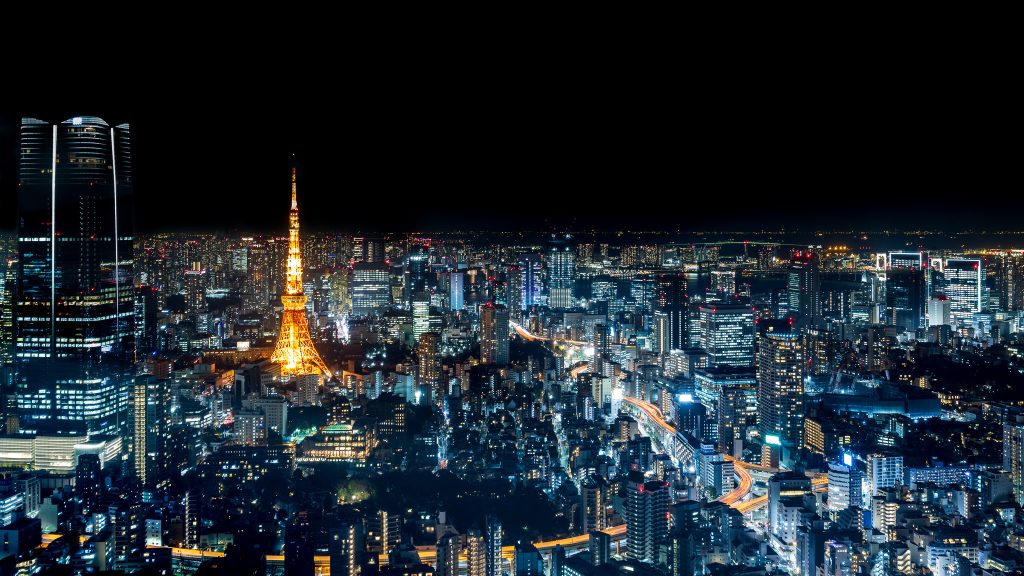
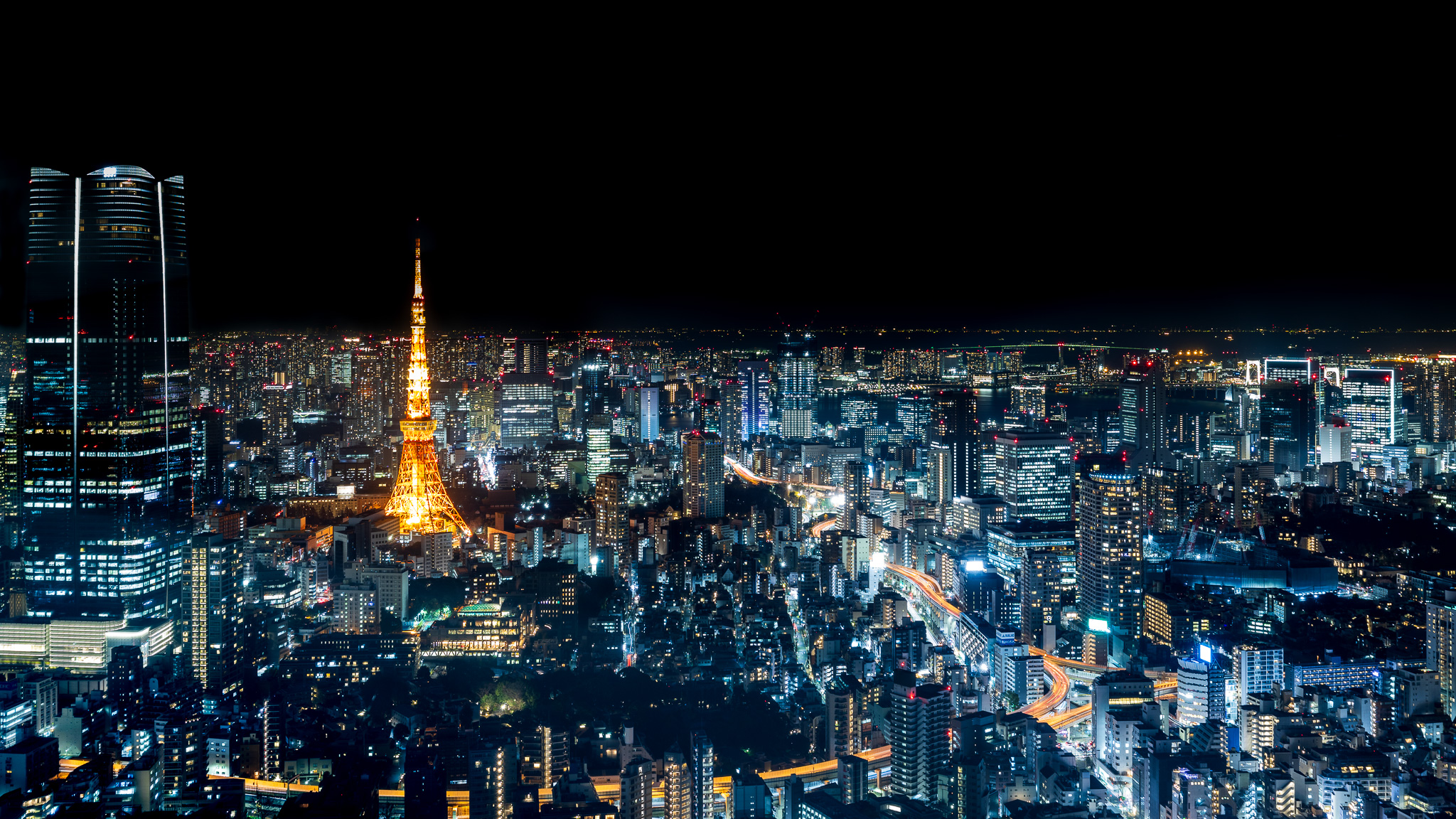
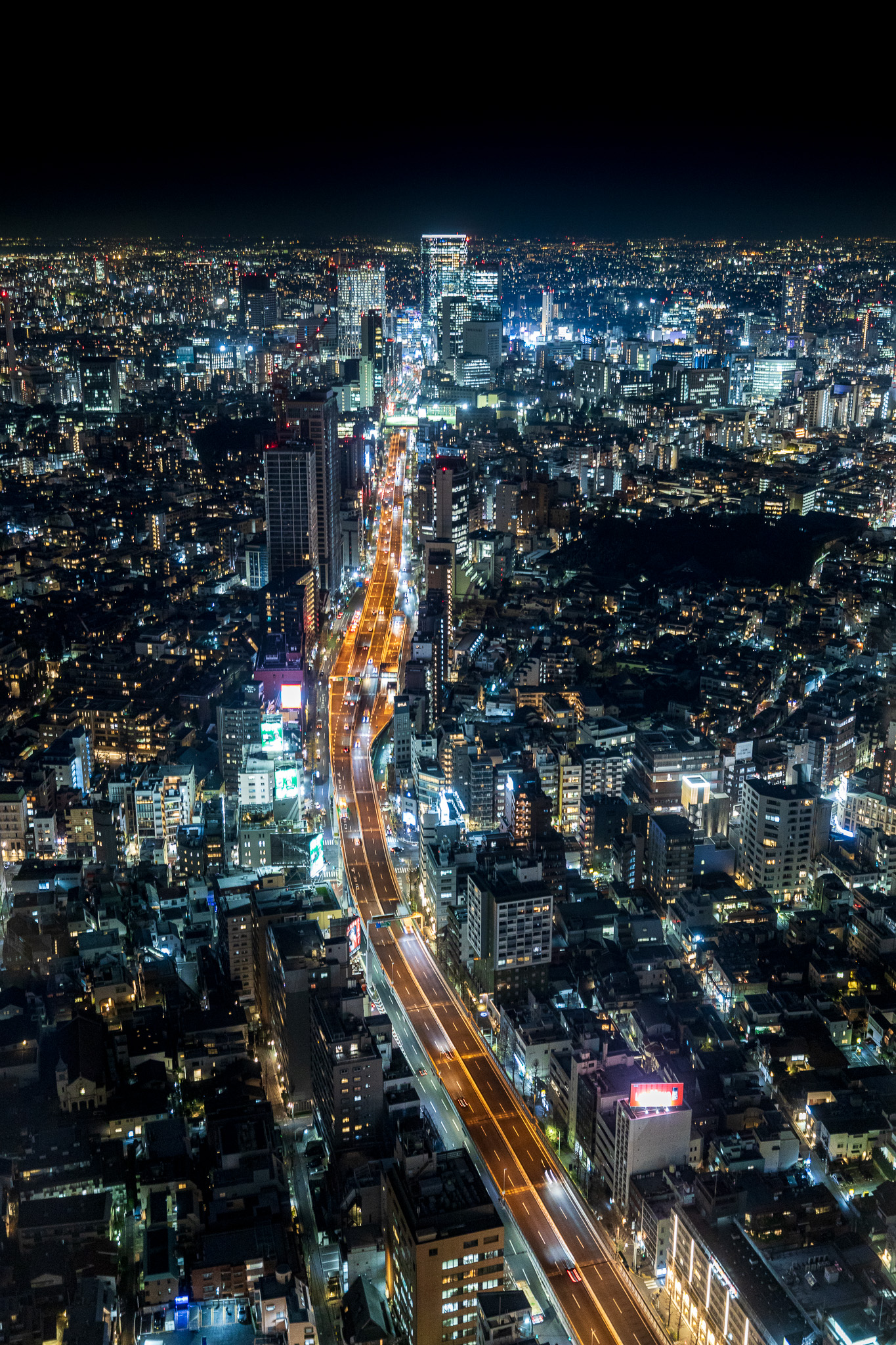
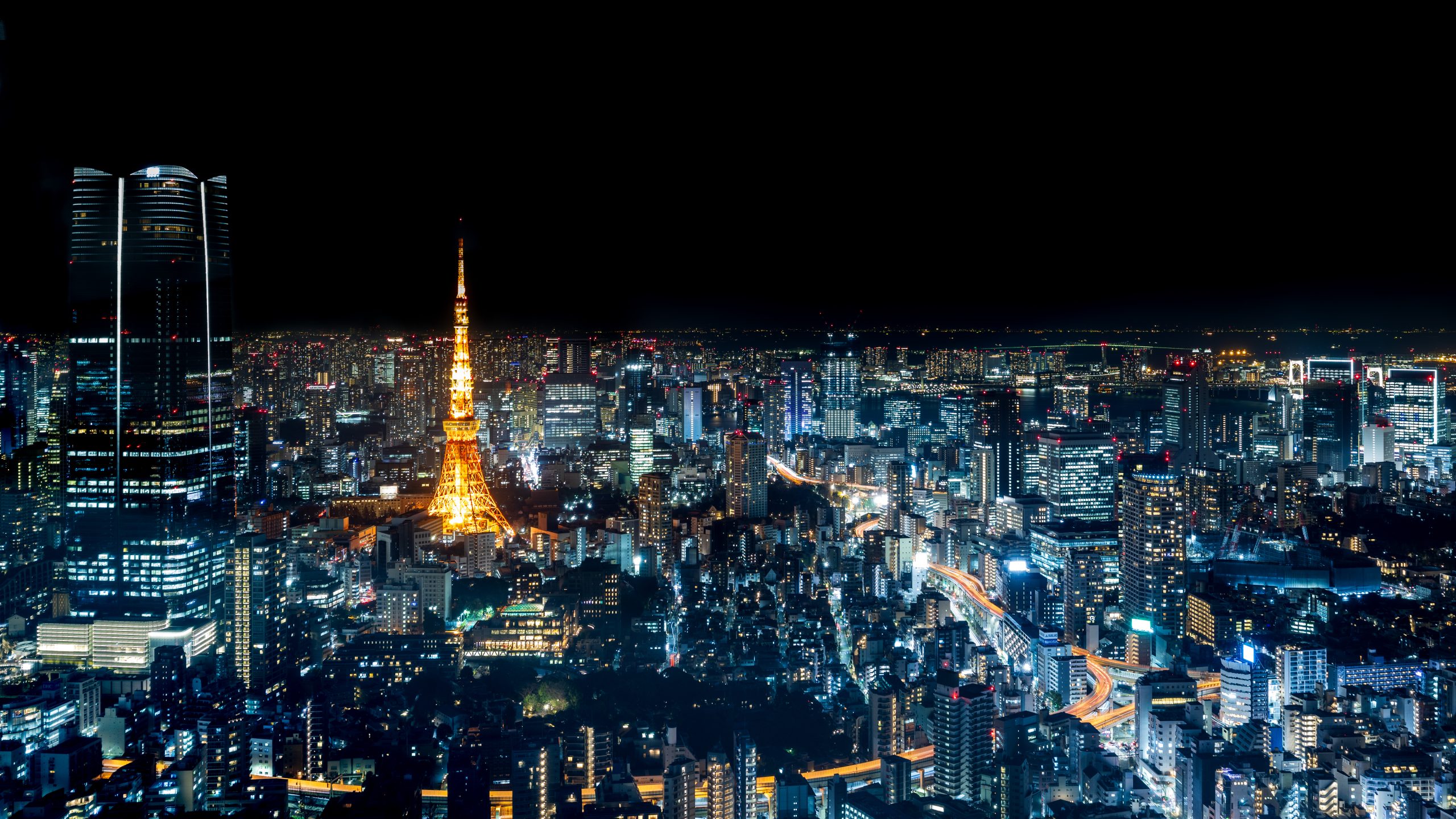
From high above, the city becomes a plain of lights with Tokyo Tower standing orange at the centre.
From an observation deck the scale of Tokyo becomes visible in a way it never is at street level. There is no edge to the city; lights run to the horizon in every direction, broken only by the dark rectangles of parks and the occasional tower that stands above the rest. In the first frame Tokyo Tower is the landmark, 333 m high and lit in the orange it wears from October to early July. Completed in 1958 as a broadcast mast, it was the tallest structure in Japan for more than fifty years and remains the most recognisable shape in the skyline, even next to the newer, taller buildings that now stand around it.
The second frame looks down on a single avenue: an elevated expressway and the road beneath it cut a straight channel through the dense blocks, and the headlights and tail lights along it blur into one continuous ribbon of white and red. Both pictures were taken within ten minutes of each other just after 19:00, when the sky had already gone fully dark.
«Tokyo is hard to hold in a single picture, so these six do not try. A train at rest and a train in motion, a crowd waiting and a crowd released, and twice the city from above, where the streets become rivers of light and one orange tower marks the middle of it all. In January the nights are clear and come early, and the city shows its true size only once the sun has gone.»
More in the same area
CitiesShibuya Crossing: The Heartbeat of Tokyo
 CitiesTokyo — Enormous, Efficient, Beautiful and Entirely Unlike Anywhere Else
 ArchitectureTokyo Skytree: One tower over thirty-seven million
 MuseumsteamLab in Tokyo: Planets in Toyosu and Borderless in Azabudai Hills
 CitiesHiroshima and Miyajima: A preserved ruin and a shrine on the tideline
 CitiesHiking Mount Inari — Fushimi Inari’s Full Loop