For most of the 14th century the head of the Latin Church lived not in Rome but on a limestone outcrop above the Rhône. Seven popes ruled from Avignon between 1309 and 1377, bought the town outright in 1348, and left behind the largest Gothic palace in Europe, a ring of walls more than four kilometres long and a bridge that stops in the middle of the river. Avignon has been living off that century ever since, and living well: every July the palace courtyard becomes a theatre and the whole walled town turns into a stage. Around it lie the Pont du Gard, the vineyards of Châteauneuf-du-Pape, the hill villages of the Luberon and the Roman monuments of Arles, all within an hour.

Avignon sits on the left bank of the Rhône, the capital of the Vaucluse department and a city of about 92,000 people, of whom only around 16,000 live inside the medieval walls. The walled town can be crossed on foot in twenty minutes, and almost everything that brings visitors here lies within it or within sight of it: the Palais des Papes on its rock, the cathedral of Notre-Dame des Doms, the garden of the Rocher des Doms above the river and the four surviving arches of Pont Saint-Bénézet. Across the water, in what was for centuries the Kingdom of France, Villeneuve-lès-Avignon watches from its own hill.
The reason for all this stone is a political accident. In 1309 the French pope Clement V, unable to settle in a Rome torn apart by feuding noble families, moved the papal court to Avignon, beside the papal territory of the Comtat Venaissin. What was meant as a temporary arrangement lasted almost seventy years, and the court drew cardinals, bankers, artists and petitioners from all over Europe. Even after the popes returned to Rome, Avignon remained papal property until it was annexed by revolutionary France in 1791, which is why it still looks slightly different from its neighbours: more Italian in its palaces, and more crowded with churches than its size would suggest.
How to approach Avignon
Two full days are enough for the town itself: one for the palace, the cathedral, the Petit Palais and the bridge, and one for the walls, the backstreets, the market and the walk over the river to Villeneuve-lès-Avignon. A third and fourth day open up the region. Avignon is one of the best-connected bases in Provence, with high-speed trains to Paris in about two hours and forty-five minutes, and the Pont du Gard, Châteauneuf-du-Pape, the Luberon villages and Arles all within an hour.
Avignon in 3D
Seven popes ruled from Avignon between 1309 and 1377, and the town remained papal property until revolutionary France annexed it in 1791. Of about 92,000 inhabitants, only around 16,000 live inside the medieval walls, which can be crossed on foot in twenty minutes. Across the Rhône, Villeneuve-lès-Avignon watches from its own hill in what was for centuries the Kingdom of France.
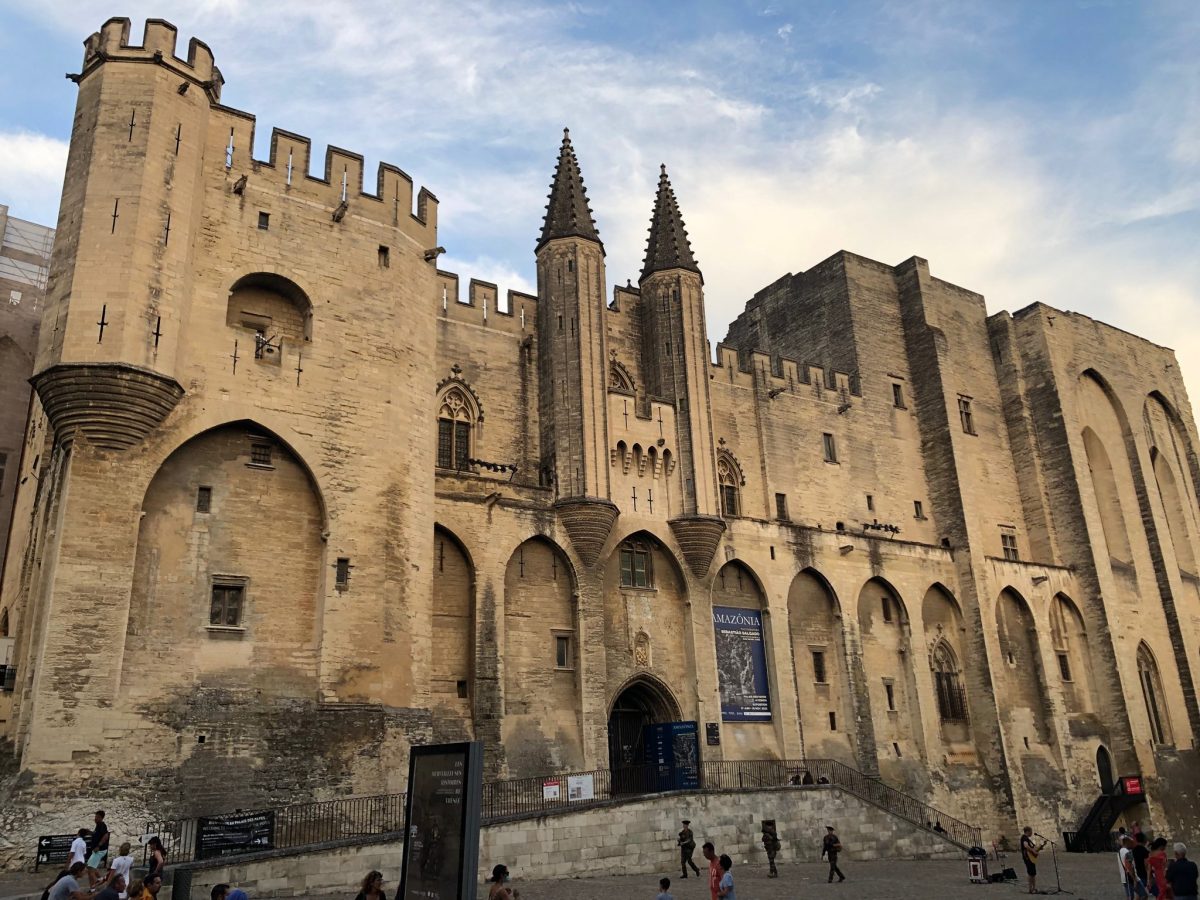
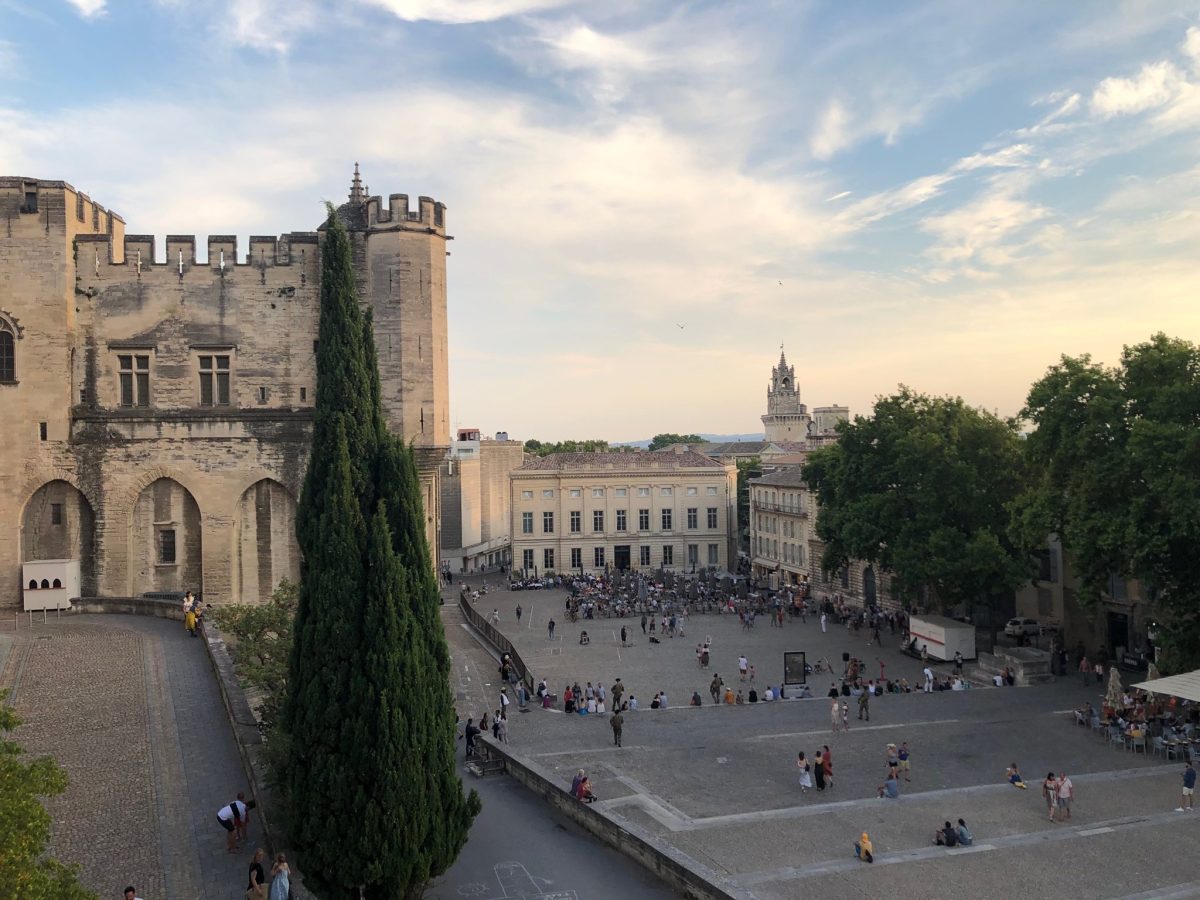
The Palais des Papes seen from the Place du Palais on a summer evening, with people crossing the square below the entrance stairs
The cathedral and the Rocher des Doms
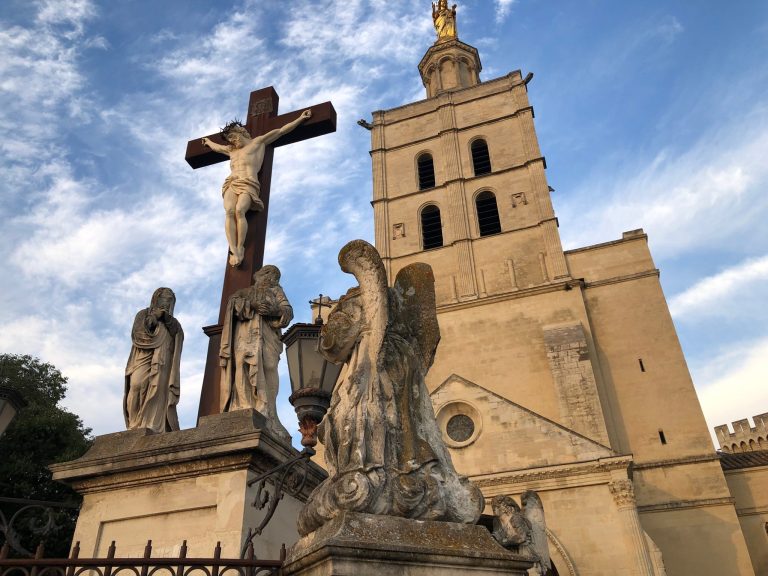
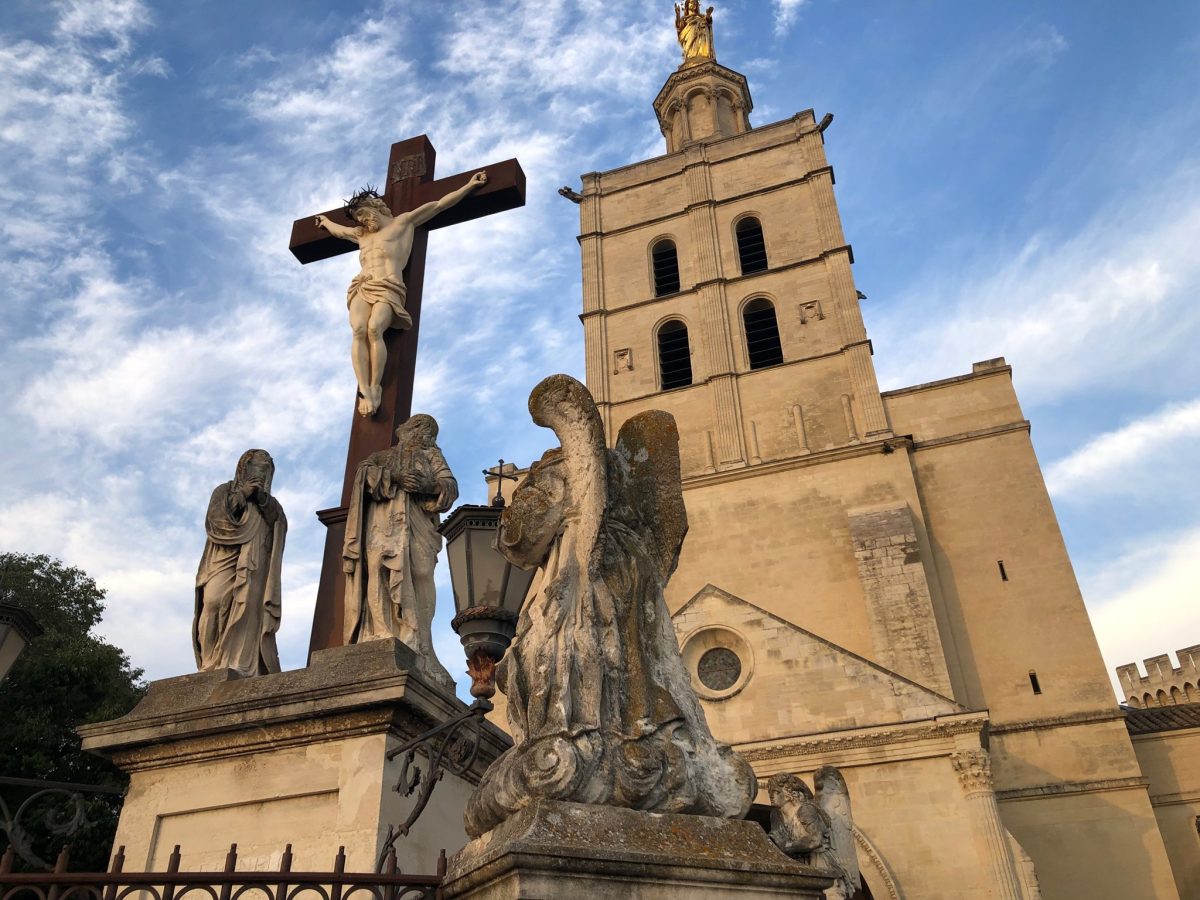
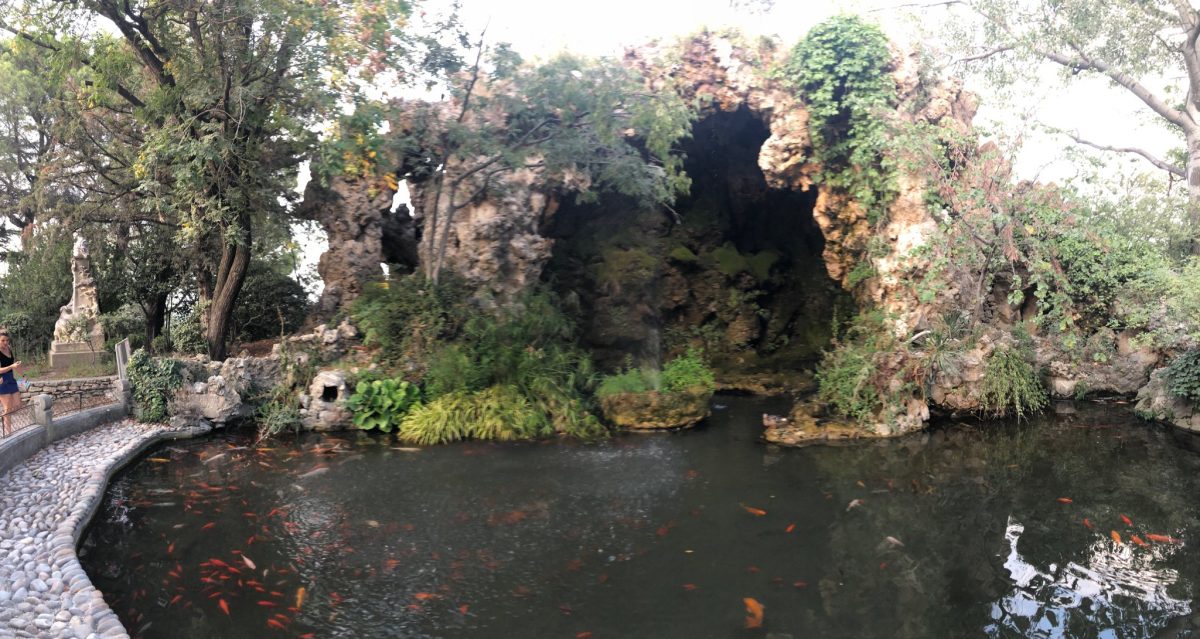
Notre-Dame des Doms beside the palace is a Romanesque church of the 12th century, with the tomb of John XXII inside and a gilded Virgin raised on its tower in 1859. Behind it, the limestone outcrop of the Rocher des Doms, some 35 m above the Rhône, is where Avignon began and is now a 19th-century garden with ponds and an artificial grotto. Its terraces look up the Rhône to the island of Barthelasse.
The calvary in front of Notre-Dame des Doms in Avignon, below the cathedral bell tower and its gilded statue of the Virgin
Place de l'Horloge
The Place de l'Horloge, a few minutes south of the palace, is the civic heart of the town, with plane trees, café terraces and a Belle Époque carousel. The Hôtel de Ville was built between 1845 and 1851 but kept the Gothic Tour du Jacquemart of the older town hall, whose figures strike the hours; the opera house stands beside it.
The walled town
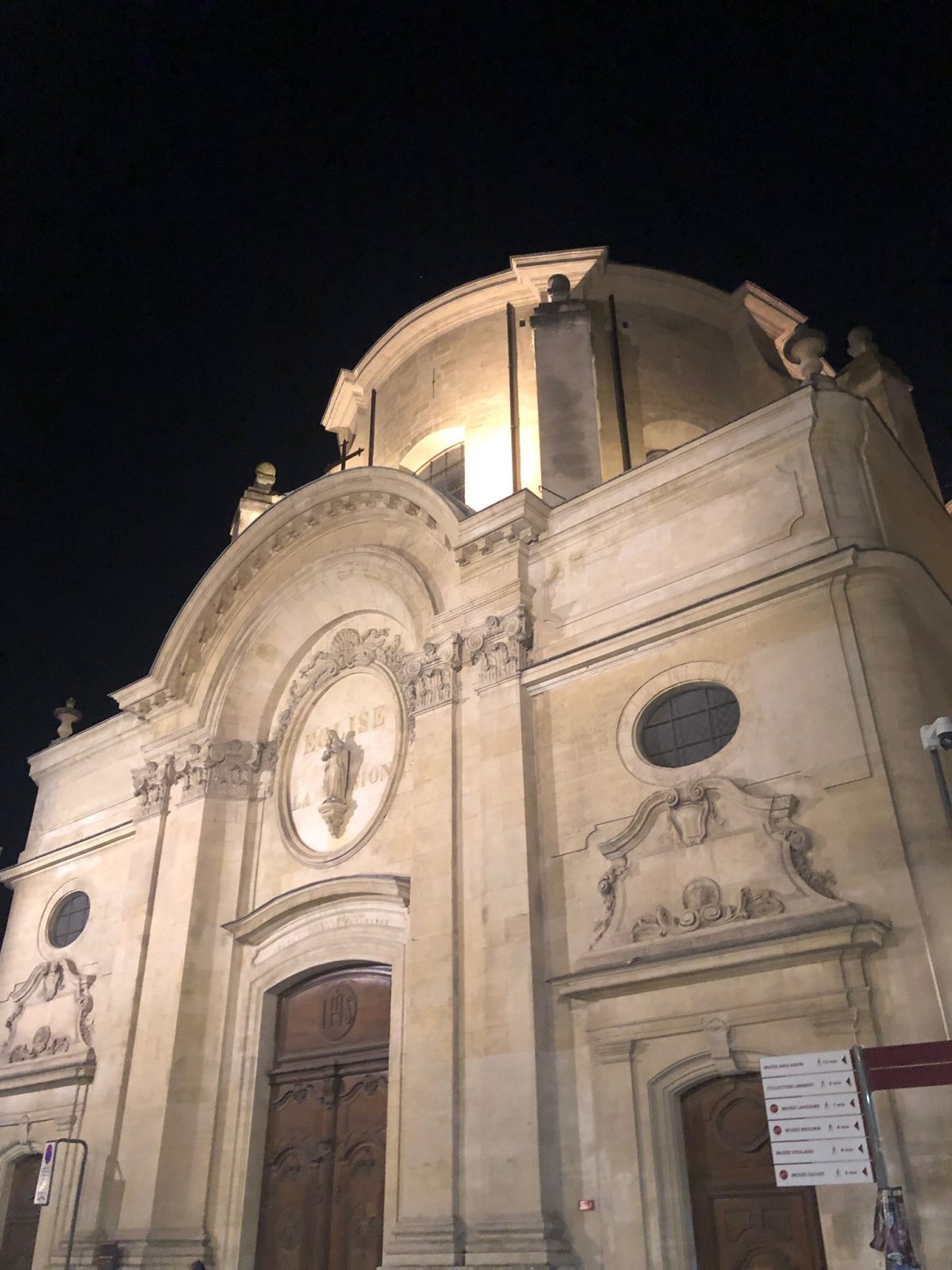
The walls were begun in 1355 under Innocent VI and completed around 1370 under Urban V, and run for about 4.3 km with more than thirty large towers; several gates were rebuilt by Viollet-le-Duc in the 1860s. Inside them, rue Joseph Vernet passes the domed Baroque Chapelle de l'Oratoire of 1713–1750, and Les Halles on the Place Pie hides some forty traders behind a living wall by Patrick Blanc.
The King's side of the river
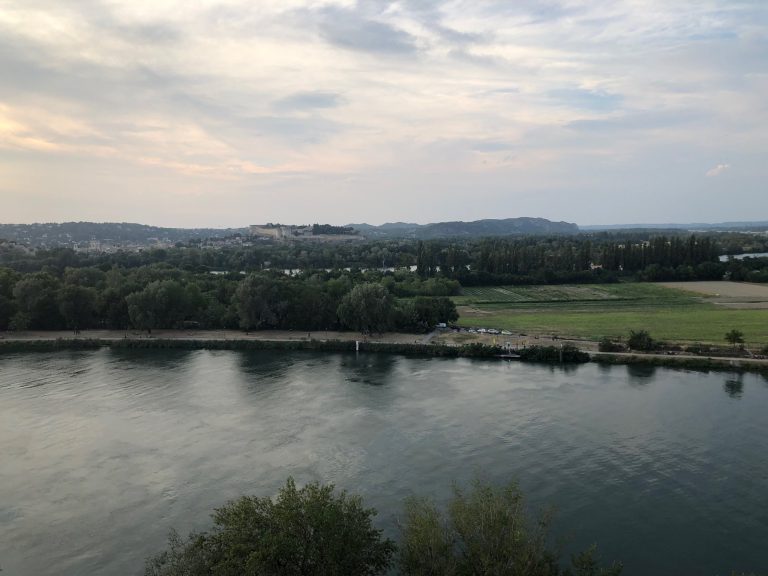
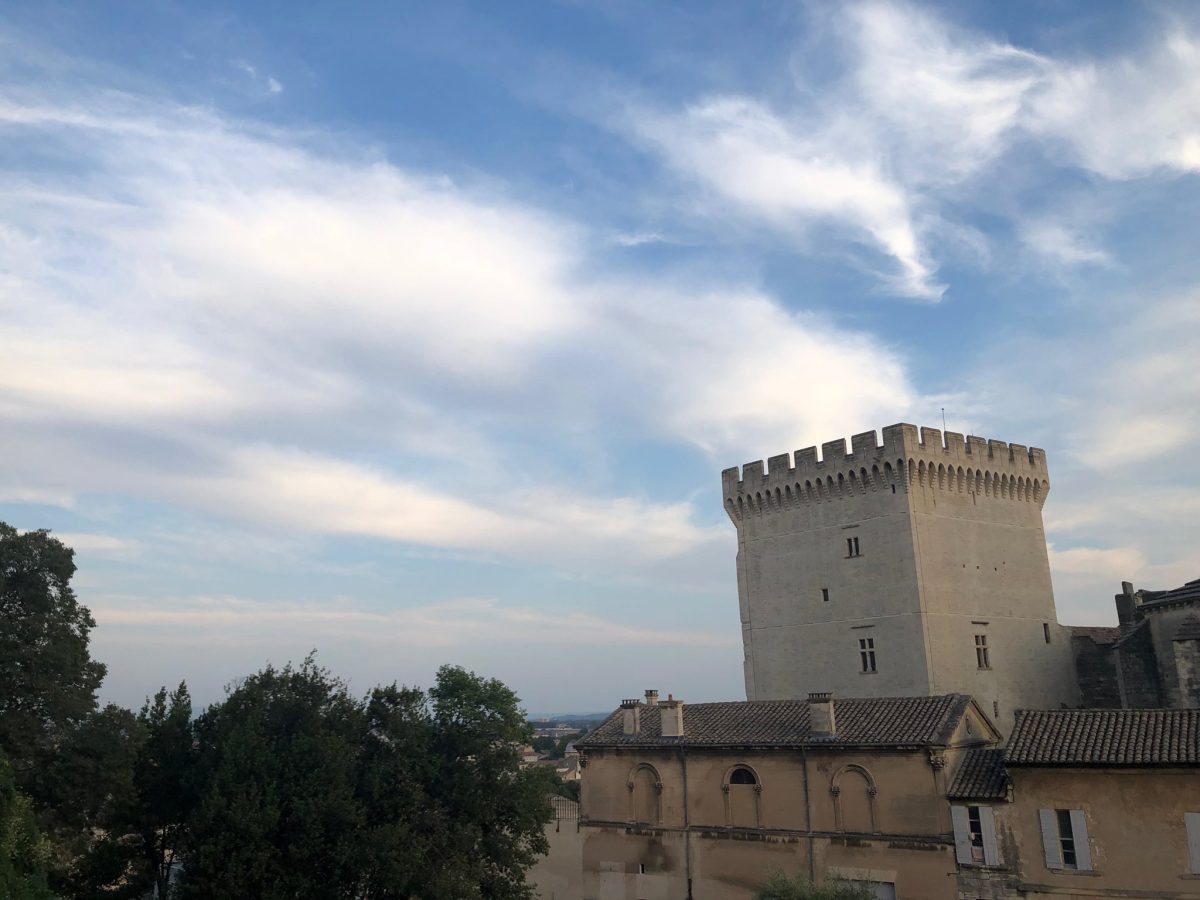
In 1292 Philip the Fair founded Villeneuve to hold the frontier and built the Tour Philippe-le-Bel at the end of the bridge; on the hill, Fort Saint-André was completed in the 1360s under John the Good. In the 1350s Innocent VI turned his residence into the Chartreuse du Val de Bénédiction, where his Gothic tomb still stands.
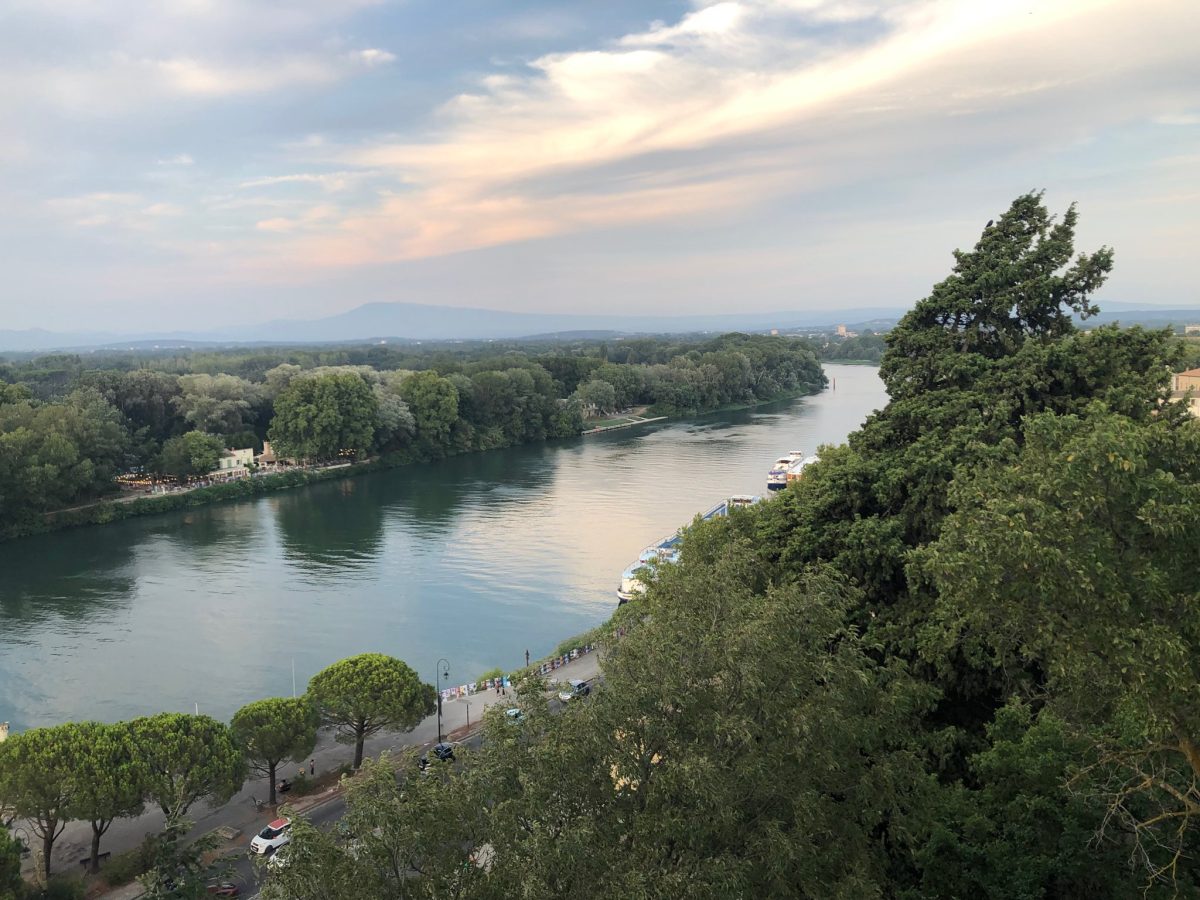
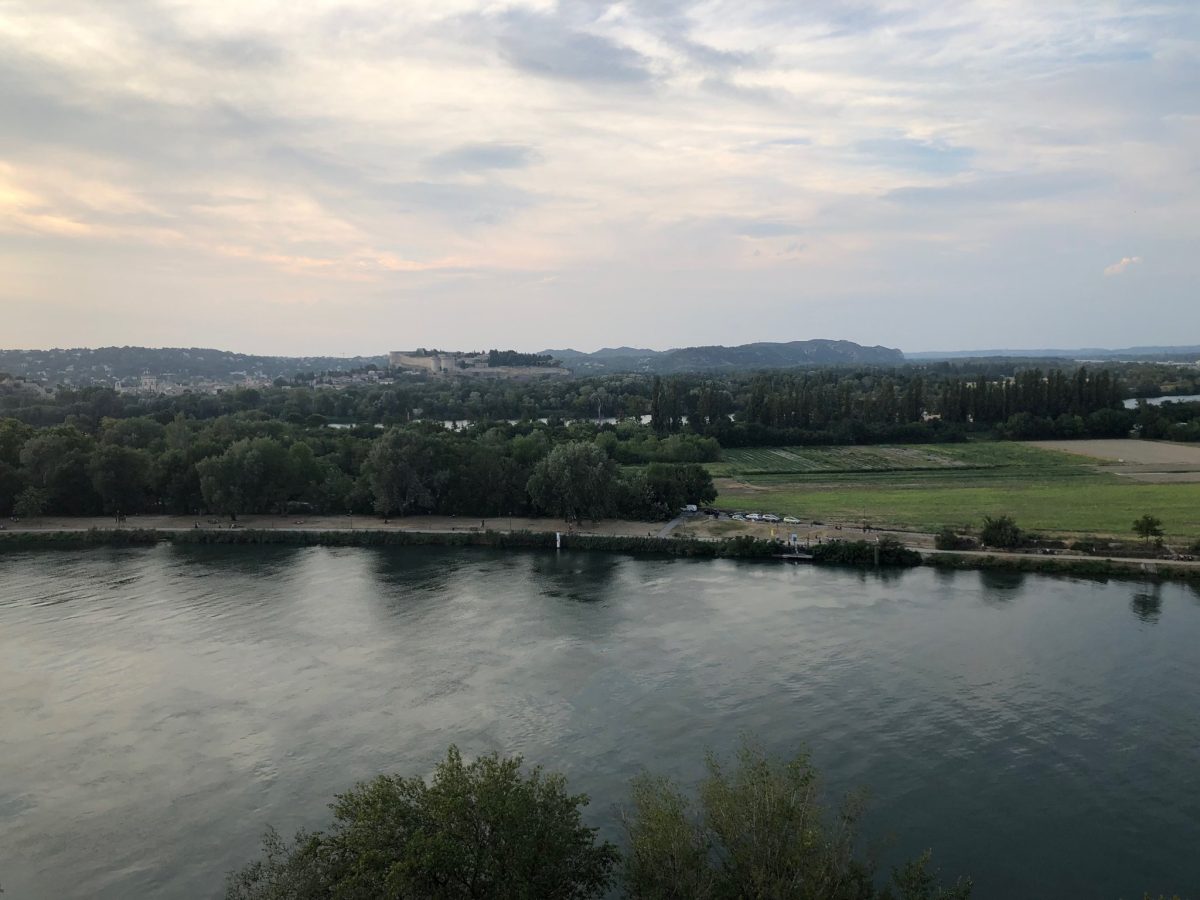
View west from the Rocher des Doms across the Rhône and the Île de la Barthelasse to Fort Saint-André on its hill above Villeneuve-lès-Avignon
The Palace of the Popes
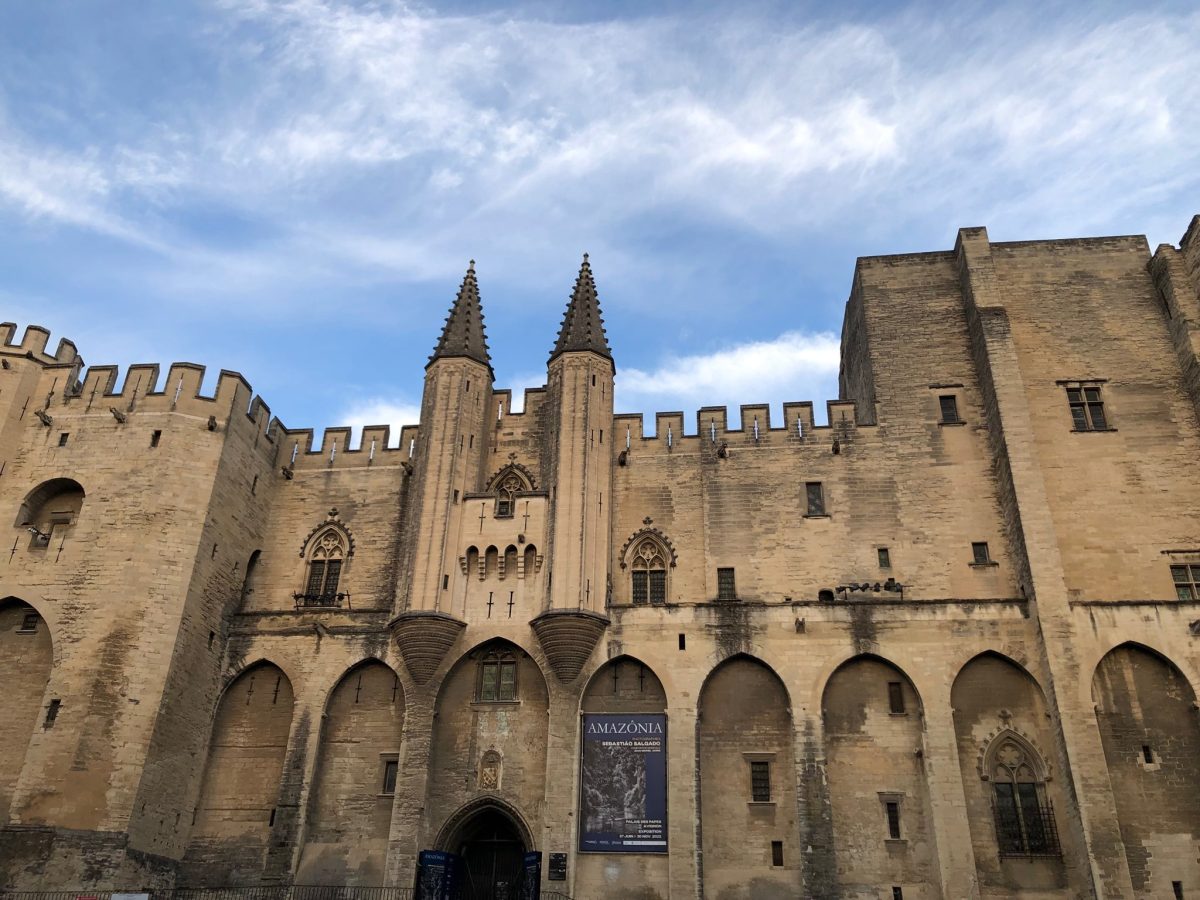
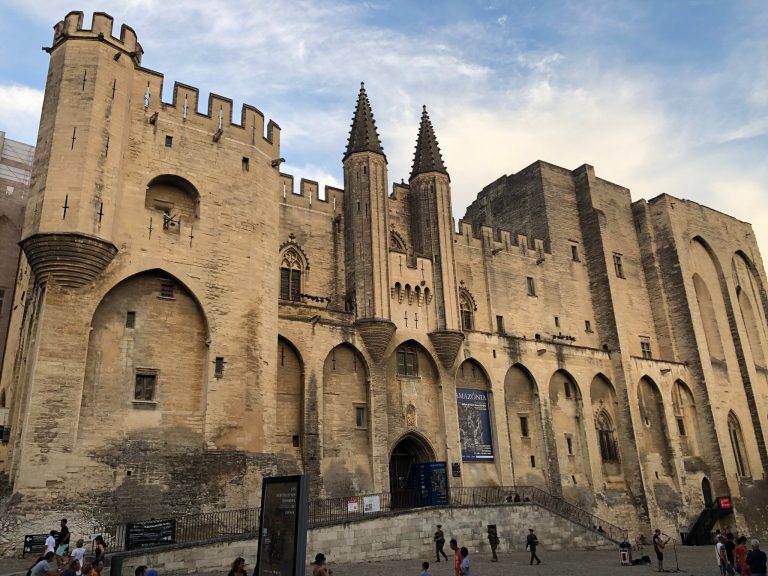
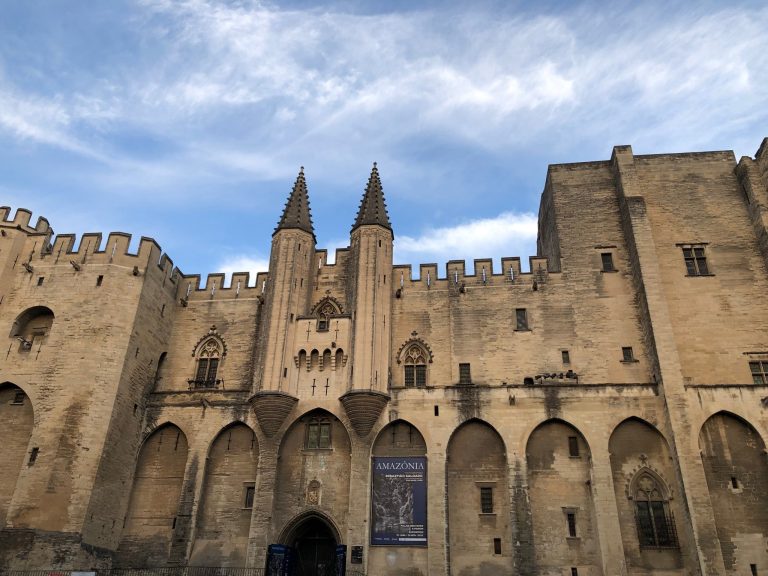
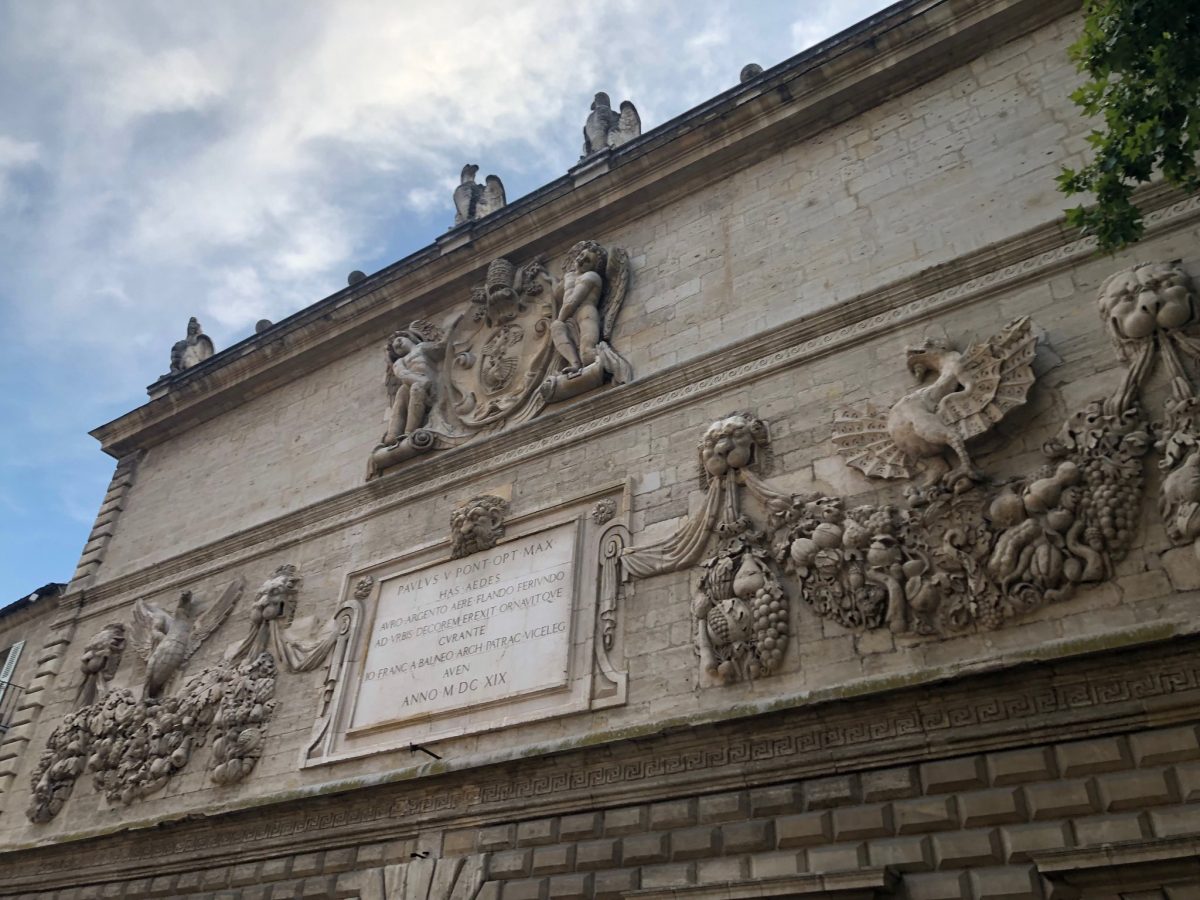
Benedict XII began the Palais Vieux in 1335, and Clement VI added the Palais Neuf with the Great Audience Hall and the monumental entrance facing the square; the whole complex, with some 15,000 m² of floor space, was essentially complete by 1352. The deep blind arches of the facade supported a wall-walk high above the square. Opposite, the Hôtel des Monnaies, the papal mint, carries the date 1619.
The Gothic façade of the Palais des Papes in Avignon, with twin pointed turrets above the main gate and tall blind arches along the front
The bridge that stops halfway
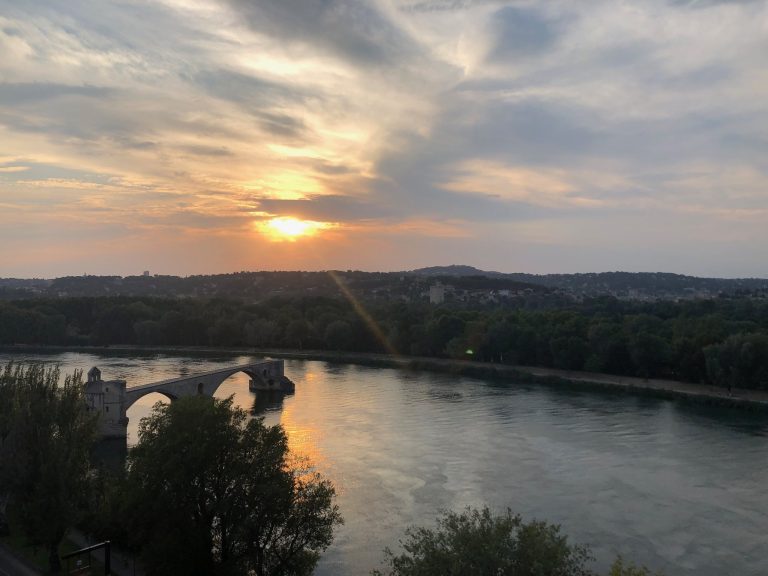
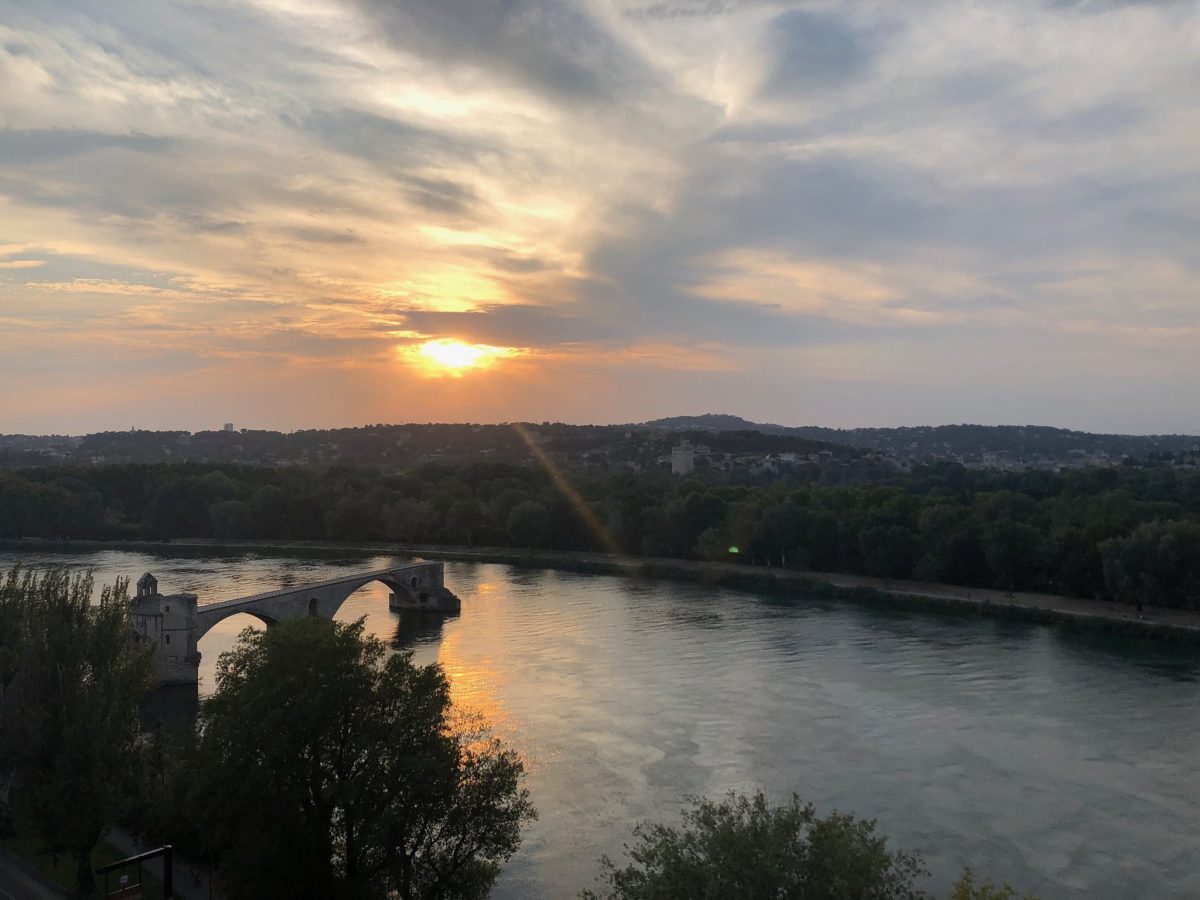
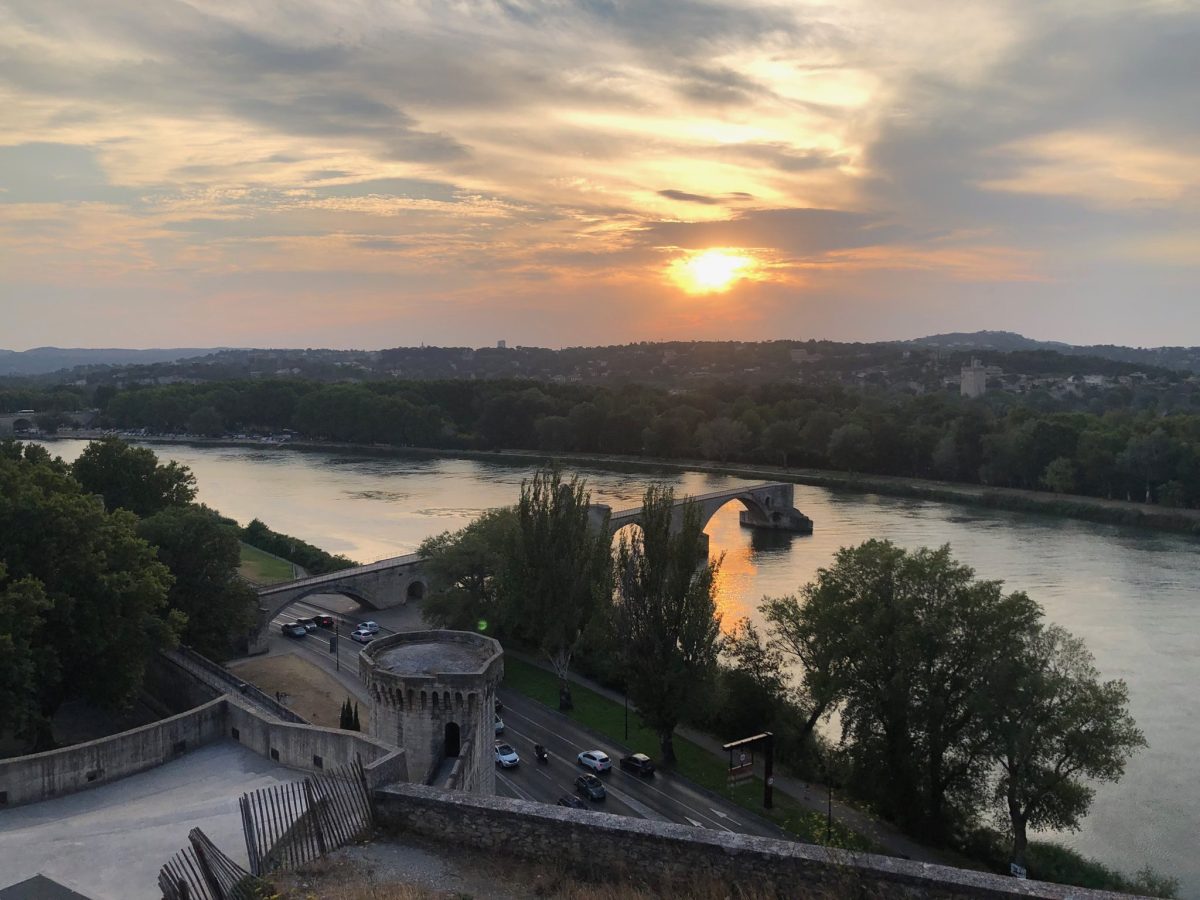
Rebuilt in stone from 1234 on 22 arches, Pont Saint-Bénézet ran for about 900 m across both arms of the Rhône and the island of Barthelasse. Floods kept carrying arches away, a great flood in 1669 swept away more, and the bridge was abandoned; four arches and the two-storey Chapelle Saint-Nicolas remain. It is best seen from the Rocher des Doms at sunset.
Pont Saint-Bénézet, the broken bridge of Avignon, reaching into the Rhône at sunset, seen from the Rocher des Doms
The view from the rock
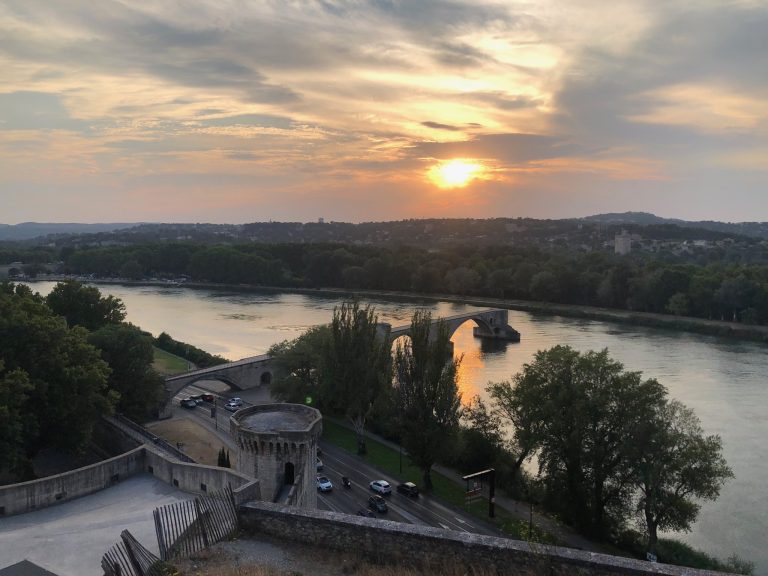
From the terraces of the Rocher des Doms the whole story of Avignon lies in one view: the papal walls below, the broken bridge in the river and, on the far bank, the tower and fortress built by the Kings of France. In the evening the town comes here to watch the sun set.
Sunset over the Rhône from the Rocher des Doms, with a round tower of the city walls, the riverside road and the arches of Pont Saint-Bénézet
The town as a stage
In September 1947 Jean Vilar staged a week of art in the main courtyard of the Palais des Papes, and the festival that grew from it now fills the town every July. The 80th edition ran from 4 to 25 July 2026, and the independent Festival Off staged 1,812 productions in 141 theatres.
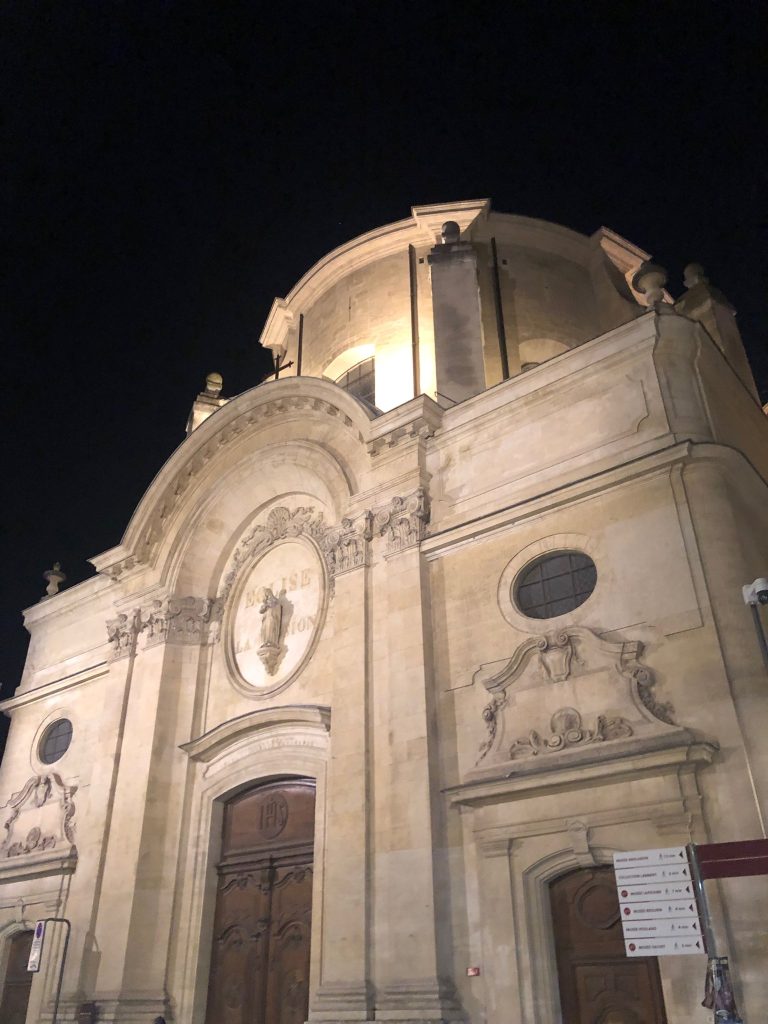
The floodlit Baroque façade and dome of the Chapelle de l'Oratoire on rue Joseph Vernet in Avignon at night
3D model © 2026 madseriksson.no · Photographs © madseriksson.no. Buildings and heights: © OpenStreetMap contributors (ODbL), via OpenMapTiles. Ground imagery: Sentinel-2 cloudless 2023 by EOX IT Services GmbH (contains modified Copernicus Sentinel data 2023; CC BY 4.0). Heights are approximate where OpenStreetMap has no measured value; sun positions are approximate.
The Palace of the Popes — Seventy Years That Built a Fortress
How a temporary refuge became the seat of Western Christendom, why the palace looks more like a castle than a church, and what is left inside the largest Gothic palace in Europe
Clement V, a Gascon and former archbishop of Bordeaux, never intended to found a papal city. In March 1309 the curia settled at Avignon, where he lodged as a guest of the Dominicans. His successor John XXII, a former bishop of Avignon, moved into the old episcopal palace beside the cathedral. It was the third Avignon pope, the stern Cistercian Benedict XII, who decided in 1335 that the papacy needed a building of its own, and his architect Pierre Poisson raised the austere Palais Vieux around a cloister. Clement VI, a lover of luxury who declared that his predecessors had not known how to be pope, added the Palais Neuf to the south, with the Great Audience Hall, the Clementine Chapel and the monumental entrance facing the square. The whole complex was essentially complete by 1352, built in less than twenty years by a workforce averaging some six hundred men.
The result looks like a fortress, and it was meant to. Bands of discharged mercenaries roamed the Rhône valley during lulls in the Hundred Years’ War, and the pope was a prince with treasure to protect: the walls rise sheer from the rock, the towers carry machicolations, and the deep blind arches of the facade supported a wall-walk high above the square. The interior is now largely empty. The furnishings left with the popes or were dispersed, and after the Revolution the palace served as a barracks and prison until the early 20th century. What survives is the architecture and fragments of the frescoes of Matteo Giovannetti and his workshop, above all in the Chapel of Saint-Martial and in the Chambre du Cerf, Clement VI’s study, painted with hunting and fishing scenes in a forest. The visit takes one to two hours, and the roof terrace gives the best view over the town.
Clement VI bought Avignon in 1348 for 80,000 florins from Queen Joanna of Naples, who needed the money and papal goodwill. For the next four and a half centuries the town belonged to the Church, and the far bank of the Rhône, at Villeneuve, belonged to France.
Gregory XI finally left Avignon in September 1376 and entered Rome in January 1377. His death the following year produced the Great Schism, and the rival popes Clement VII and Benedict XIII ruled half of Europe from the palace until Benedict, besieged since 1398, slipped away in 1403. The cathedral of Notre-Dame des Doms beside the palace is older than all of it: a Romanesque church of the 12th century with the Gothic tomb of John XXII inside and the gilded Virgin of 1859 on its tower. At the north end of the square the Petit Palais, begun in 1317 and for centuries the palace of the bishops and archbishops, has been a museum since 1976; its Campana collection of more than three hundred Italian paintings, deposited by the Louvre, includes a Madonna and Child by Botticelli, and the permanent collection is free. Opposite the palace, the Hôtel des Monnaies, the papal mint, carries the eagles and dragons of Cardinal Scipione Borghese and the date 1619.
Pont Saint-Bénézet — The Bridge That Stops Halfway
A shepherd boy’s vision, a river that would not be tamed, and a nursery song that has travelled further than any bridge
Legend has it that a young shepherd named Bénézet came down to Avignon in 1177, told by an angel to build a bridge over the Rhône, and when the townspeople laughed he carried an enormous block of stone to the river to lay the first foundation. A bridge was built between 1177 and 1185, the only fixed crossing of the lower Rhône between Lyon and the sea. Partly destroyed in 1226 during the siege of the town by Louis VIII, it was rebuilt in stone from 1234 on 22 arches, about 900 metres long and less than five metres wide, crossing both arms of the river and the island of Barthelasse. On the far side it ended at the Tour Philippe-le-Bel, built by the King of France to watch the frontier.
The Rhône never accepted it. Floods carried away arches again and again, by 1644 several were missing, a great flood in 1669 swept away more, and the bridge was abandoned. What remains is a gatehouse, four arches and the two-storey Chapelle Saint-Nicolas on the second pier, dedicated to the patron saint of boatmen. The bridge is best seen from above, from the Rocher des Doms, at sunset, when the arches stand in silhouette against the water. Walking out to the end costs about €6, or about €19.50 combined with the palace.
The tune of “Sur le pont d’Avignon” was already in print in 1503. The words that every French child sings date from 1853. The bridge they celebrate had been out of use for almost two hundred years by then.
Then there is the song. “Sur le pont d’Avignon, l’on y danse” is probably the best-known French children’s song in the world. The melody was printed by the Venetian publisher Ottaviano Petrucci in 1503–04 and used by Pierre Certon in the 16th century for a mass; the modern version comes from Adolphe Adam, composer of Giselle, in his comic opera Le Sourd ou l’Auberge pleine, first performed in Paris in 1853. A popular explanation holds that the original words were “sous le pont”, because people danced on the island beneath the narrow bridge. Like the legend of Bénézet, it is impossible to prove.
The Walls, the Rock and the Square — Walking the Town of the Popes
Four kilometres of papal ramparts, a garden on the rock where Avignon began, and the plane-tree square where the town comes to sit down
The walls were begun in 1355 under Innocent VI and completed around 1370 under Urban V, when roaming companies of soldiers made a fortified papal city a necessity. They run for about 4.3 kilometres, with more than thirty large towers and a series of gates, several of them rebuilt by Eugène Viollet-le-Duc in the 1860s. Unlike Carcassonne, they are a working boundary, with the ring road outside and the town inside, and most of the circuit is best seen from the street; a short section of wall-walk leads from the bridge entrance up to the Rocher des Doms.
The Rocher des Doms is where Avignon began: a limestone outcrop some 35 metres above the Rhône, settled since prehistoric times and now a 19th-century public garden behind the cathedral, with ponds, an artificial grotto, shaded paths and a café. Its northern and western terraces give the best views in the city: up the Rhône, across to the island of Barthelasse and Fort Saint-André, and straight down onto Pont Saint-Bénézet. In the evening the town comes here to watch the sun set.
From the terraces of the Rocher des Doms the whole story of Avignon is laid out in one view: the papal walls below, the broken bridge in the river, and on the far bank the tower and fortress built by the Kings of France to keep watch on the popes.
The civic heart of the town is the Place de l’Horloge, a few minutes south of the palace, where plane trees shade café terraces and a Belle Époque carousel turns. The Hôtel de Ville was built between 1845 and 1851, but kept the Gothic Tour du Jacquemart of the older town hall, whose figures strike the hours; the opera house stands beside it. Beyond the square the town is best explored without a plan: rue des Teinturiers follows the little Sorgue canal past old paddle wheels, rue Joseph Vernet is lined with 17th- and 18th-century town houses and the domed Baroque Chapelle de l’Oratoire of 1713–1750, and the Musée Calvet and the Collection Lambert are a few streets away. For other French cities that wear their history this visibly, the ducal capital of Dijon and Lyon, further up the Rhône, make natural companions.
Festival d’Avignon — When the Whole Town Becomes a Stage
An actor’s week of art in a papal courtyard became one of the largest theatre festivals in the world, with an unofficial twin that is larger still
In September 1947 the actor and director Jean Vilar staged a short “week of art” in Avignon, with Shakespeare’s Richard II in the main courtyard of the Palais des Papes. The idea was radical for its time: serious theatre taken out of Paris and played in the open air to a large and mixed audience at affordable prices. The week became a festival, the festival moved to July, and the Cour d’honneur, with its stage against the great Gothic wall and some two thousand seats, became the most prestigious open-air theatre in France. Vilar ran the festival until his death in 1971.
The 80th edition ran from 4 to 25 July 2026, with 47 productions, four in ten of them world premieres, in more than thirty venues, from the Cour d’honneur to the Chartreuse at Villeneuve. Alongside it runs the Festival Off, founded in 1966 by theatre-makers who were not invited to the official programme and simply hired their own halls. In 2026 it staged 1,812 productions in 141 theatres and sold some 1.4 million tickets. For three weeks the town is covered with posters, actors hand out flyers in every street, and accommodation is booked out months in advance. For anyone not coming for the theatre, July is the most crowded and expensive month of the year.
The Festival Off has no selection committee. Any company that can rent a room can play. In 2026 that meant more than eighteen hundred productions in a walled town of about sixteen thousand inhabitants, for three weeks in July.
Villeneuve-lès-Avignon — The King’s Side of the River
A French royal frontier town that became the cardinals’ retreat, with a fortress, a charterhouse and the best view back to the palace
For centuries the Rhône at Avignon was a border: the town belonged to the counts of Provence and then the popes, the right bank to the Kingdom of France. In 1292 Philip the Fair reached an agreement with the abbey of Saint-André on Mont Andaon and founded a new town to hold the frontier. At the end of the bridge he built the Tour Philippe-le-Bel, finished in its first stage by 1303, and on the hill his successors enclosed the abbey within Fort Saint-André, completed in the 1360s under John the Good. Its twin-towered gateway is one of the finest pieces of 14th-century military architecture in France, and its ramparts look straight across to the Palais des Papes. Entry costs about €7.
The papal court soon spilled across the water. Cardinals built their country residences, the livrées, on the quieter bank, and in the 1350s Innocent VI turned his own residence into the Chartreuse du Val de Bénédiction, one of the largest Carthusian monasteries in France, where his Gothic tomb still stands. Since 1973 it has been a cultural centre for writing for the stage, and its cloisters and cells can be visited all year. The Musée Pierre-de-Luxembourg holds Enguerrand Quarton’s Coronation of the Virgin, a masterpiece of 15th-century French painting. Villeneuve is about half an hour’s walk over the Pont Édouard Daladier, quieter and cheaper than Avignon, and a good base during the festival.
Day Trips — A Roman Aqueduct, the Pope’s Vineyard, the Hill Villages and Van Gogh’s Town
Four classic excursions from Avignon, each of which could fill a day on its own
Pont du Gard. About 25 kilometres west, the Roman aqueduct bridge over the Gardon carried a water channel some 50 kilometres from springs near Uzès to Nîmes. It was built in the middle of the 1st century AD on three tiers of arches, almost 49 metres high, and has been a World Heritage Site since 1985. The bridge itself is free to walk across; the charge is for parking, about €9 per car, with the museum about €8 extra. The best light is early or late in the day.
Châteauneuf-du-Pape. Some 18 kilometres north, the village grew up around the summer castle of John XXII, whose ruined keep still stands above the vines. Its growers drew up rules for their wine in 1923, the first of their kind in France, and these became law in 1936. The vineyards, a little over 3,200 hectares, are famous for the large rounded stones, the galets roulés, that store the heat of the day; almost all the wine is red, usually dominated by Grenache. Many cellars offer tastings, so a designated driver or a tour is advisable.
The Luberon. To the east lie the hill villages that define the image of Provence: Gordes, stacked on its rock about 40 kilometres from Avignon; Roussillon, built on red and yellow ochre, with a trail through the old quarries; and Bonnieux, Ménerbes and Lourmarin along the ridge. North of Gordes the Cistercian abbey of Sénanque, founded in 1148, sits behind fields of lavender that flower from late June to mid-July. Public transport is limited, and a car is close to essential.
Van Gogh arrived in Arles on 20 February 1888 expecting the sun of Japan and found snow. He stayed a little over fourteen months, painted many of the works that made him famous, and left for the asylum at Saint-Rémy in May 1889.
Arles. About 35 kilometres south, or less than twenty minutes by train, Arles was a major city of Roman Gaul, and its Roman and Romanesque monuments have been a World Heritage Site since 1981: the amphitheatre, the theatre, the Baths of Constantine, the Alyscamps and the church of Saint-Trophime with its sculpted portal and cloister. Vincent van Gogh lived here from February 1888 to May 1889, shared the Yellow House with Paul Gauguin for two months, and painted the café terrace, the starry Rhône and the sunflowers. Frank Gehry’s twisted steel tower at LUMA Arles, opened in 2021, adds a modern landmark. Further afield in France, the wine city of Bordeaux, the Corsican fortress town of Bonifacio and Marseille, ranked among Europe’s 25 greatest cities, complete the picture of the south.
Food, Wine and When to Go — Eating in the Shadow of the Palace
A covered market with a living wall, a pink chocolate named after the popes, the wines of the southern Rhône, and a wind that can clear the sky in an hour
The best introduction to the food of Avignon is Les Halles on the Place Pie, the covered market behind a living wall of plants by the botanist Patrick Blanc. Around forty traders sell vegetables, goat’s cheeses, olives, charcuterie and fish, and several counters serve coffee, oysters and wine; it opens in the mornings from Tuesday to Sunday. The cooking is that of Provence, built on olive oil, garlic, tomatoes and herbs: the slow-cooked stew known as daube, vegetable tians, ratatouille, and in season melons from Cavaillon and cherries from the slopes of Mont Ventoux. The local sweet is the papaline d’Avignon, a small spiky pink chocolate filled with Origan du Comtat, a herbal liqueur distilled from plants gathered on the foothills of the Ventoux.
Avignon sits at the centre of the southern Rhône wine region. Beyond Châteauneuf-du-Pape, the everyday wine is Côtes du Rhône and Côtes du Rhône Villages, generous Grenache-based reds of excellent value, along with Gigondas and Vacqueyras, and Tavel across the river, which makes only rosé. Prices rise sharply in July, and reservations are wise all summer. For another French city where wine, food and two cultures meet on the plate, see Strasbourg.
The mistral blows down the Rhône valley on more than a hundred days a year, sometimes in gusts above 110 km/h. It is cold, dry and relentless, and it is the reason the Provençal sky is so often perfectly clear.
The climate is Mediterranean. July averages highs of about 31 °C, with heatwaves well above that; January averages about 11 °C, with cold, clear days when the mistral blows. The best months are May and June, when the countryside is green, and September and early October, when the festival crowds have gone, the harvest is under way and the light is soft. July is the festival month, August is hot and busy, and from November to March the town is quiet, many restaurants close for a break and the monuments keep shorter hours, but the palace, the museums and the market stay open.
«Avignon was the capital of Western Christendom for less than seventy years, and it has never quite recovered from the experience. The popes left, the schism ended, the legates went home in 1791, and still the town is dominated by a palace far too large for it, ringed by walls built against armies that no longer exist, and watched from across the river by a French fortress guarding a frontier that disappeared two centuries ago. The bridge goes halfway and stops. And every July the stone fills with actors, and the courtyard where seven popes received ambassadors becomes a theatre for two thousand people under the stars. Few towns have made such good use of an accident.»