Istanbul is the only city that sits on two continents, and almost every frame here has water in it or the memory of it: the Golden Horn, the Bosphorus, the Sea of Marmara. For more than fifteen centuries it was a capital, first of the Roman and Byzantine empires as Constantinople and then of the Ottomans, and the skyline of the old city is still the one the sultans left, a line of hills each crowned by a dome and a set of minarets. The frames move through that city in autumn light that shifts from storm-grey to pale gold: the great dome of Hagia Sophia and the courtyard of the Blue Mosque, the twin towers of the gate into Topkapı Palace, the Spice Bazaar and the anglers on the Galata Bridge at Eminönü, and finally Galata and Beyoğlu across the Golden Horn, where the red tram runs along İstiklal and the rooftops fall away towards the strait and the ships crossing it.

Two Domes Facing Each Other
The sixth-century church turned mosque and the Ottoman mosque built to answer it across the square.
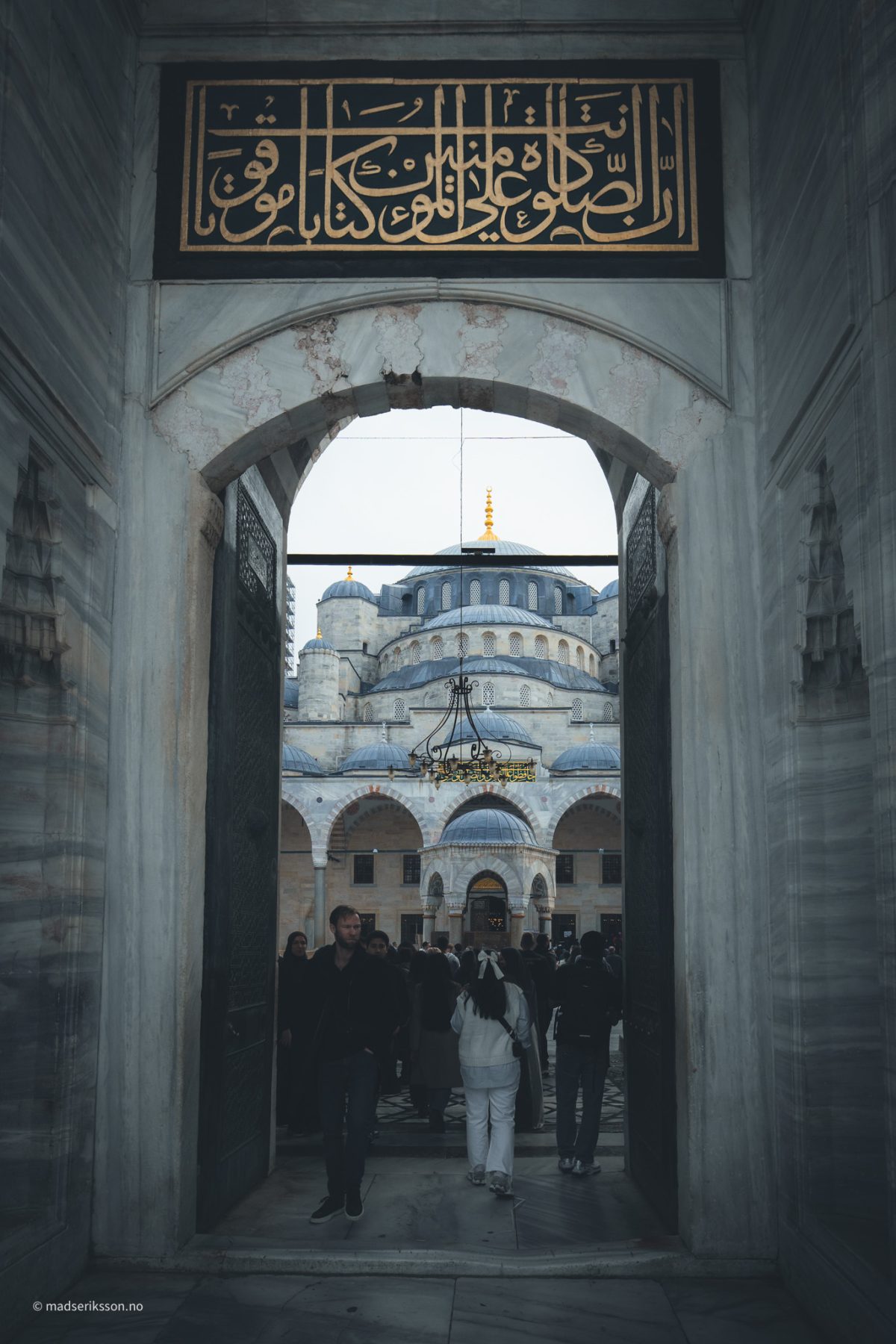
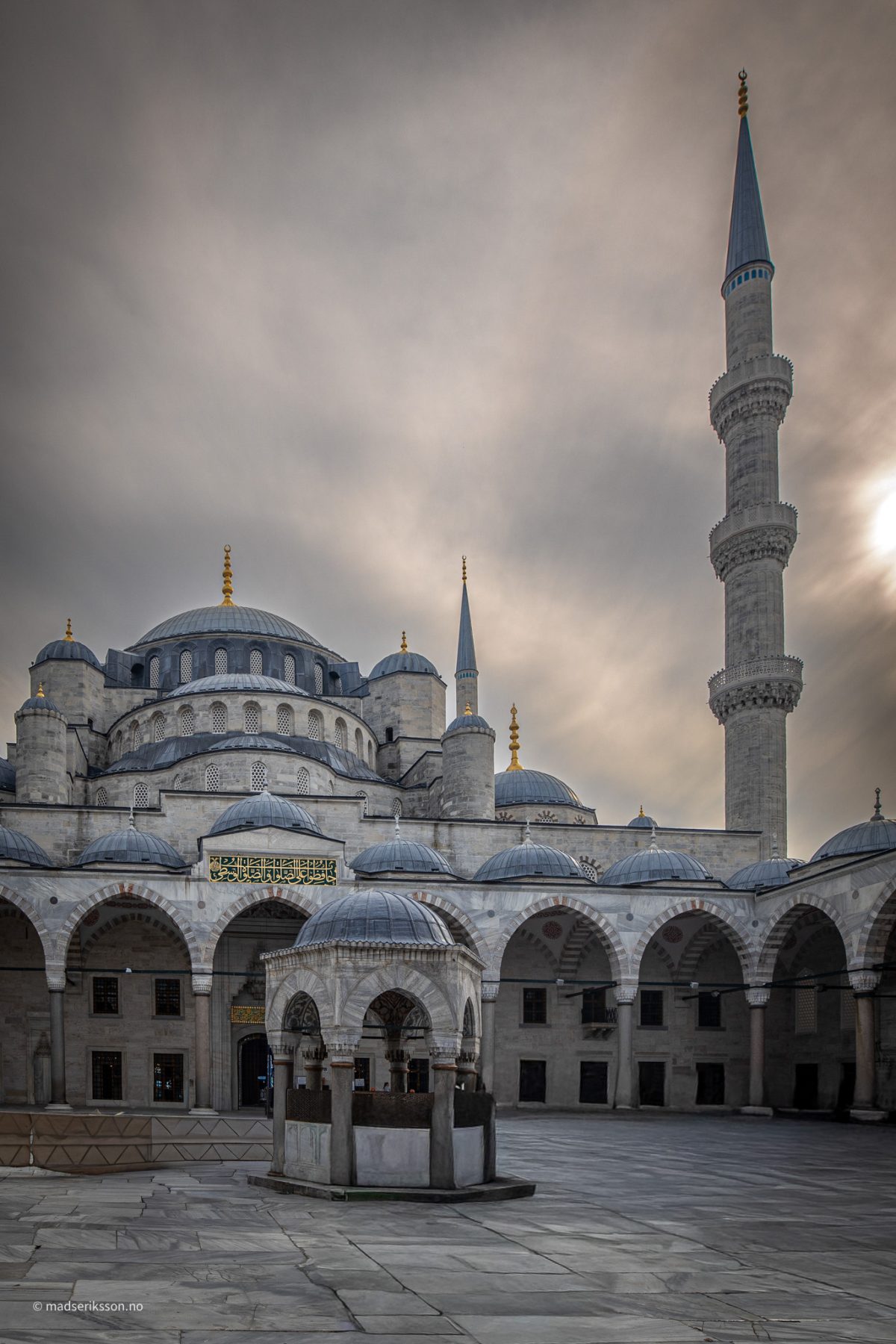
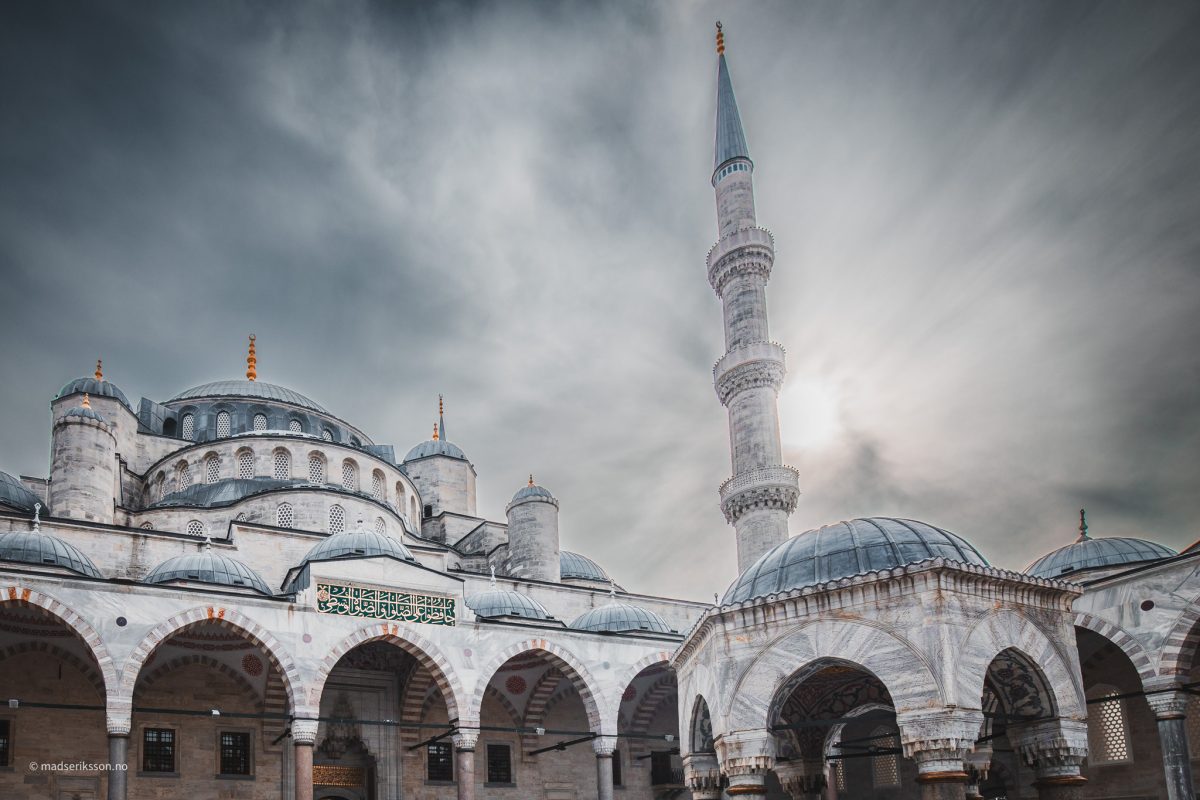
Hagia Sophia and the Blue Mosque stand a few hundred metres apart at the top of the old city, and their relationship is deliberate. Hagia Sophia was completed in 537 as the cathedral of Constantinople, its dome 55.6 m high and about 33 m across, and became a mosque after the Ottoman conquest of 1453. It was a museum from 1935 and has been a mosque again since July 2020. Sultan Ahmed I built his own mosque directly opposite between 1609 and 1616, with six minarets and a cascade of domes and half-domes that answers the older building point for point.
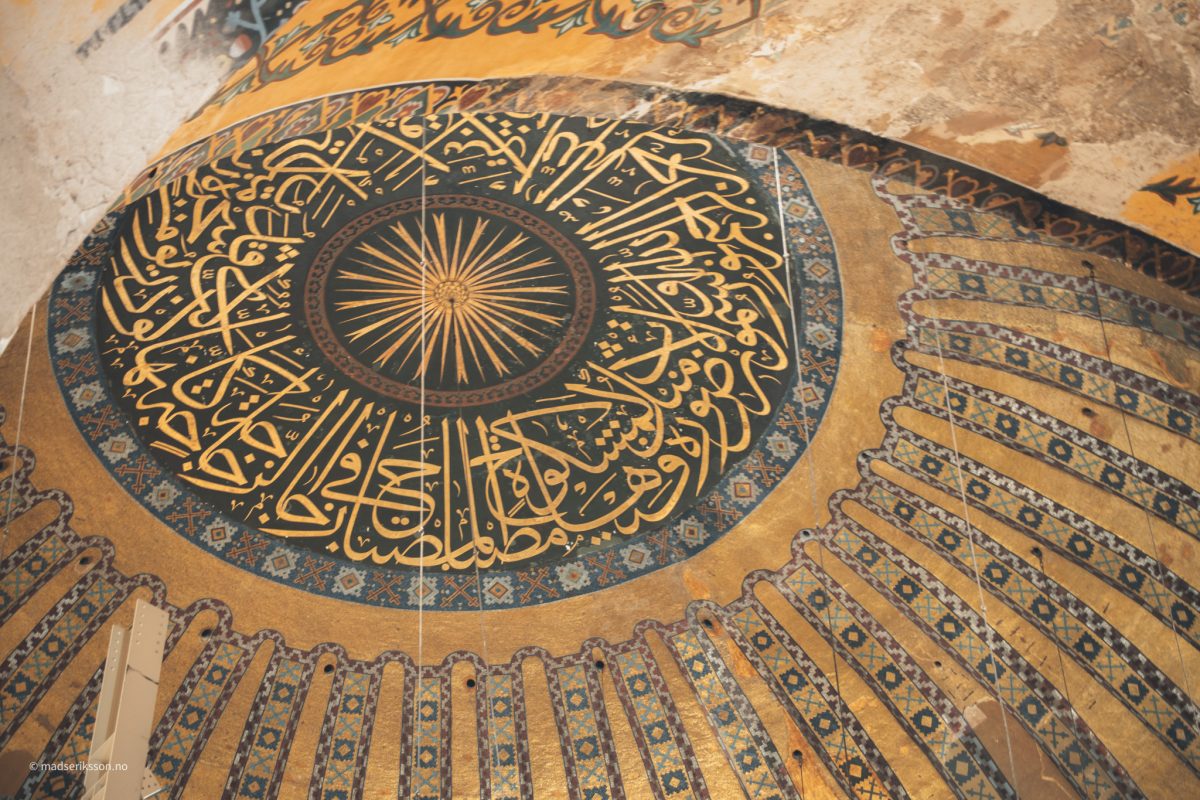
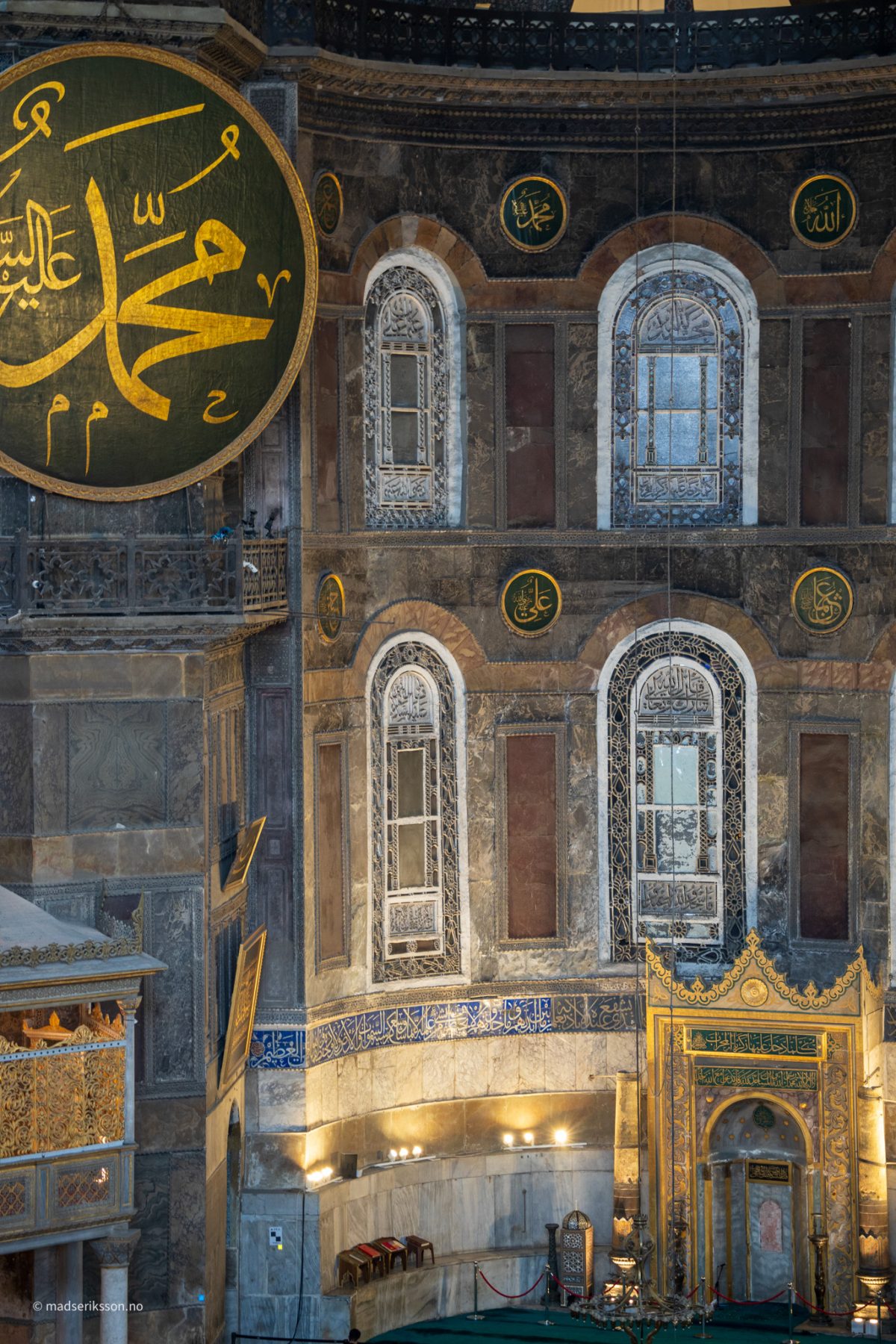
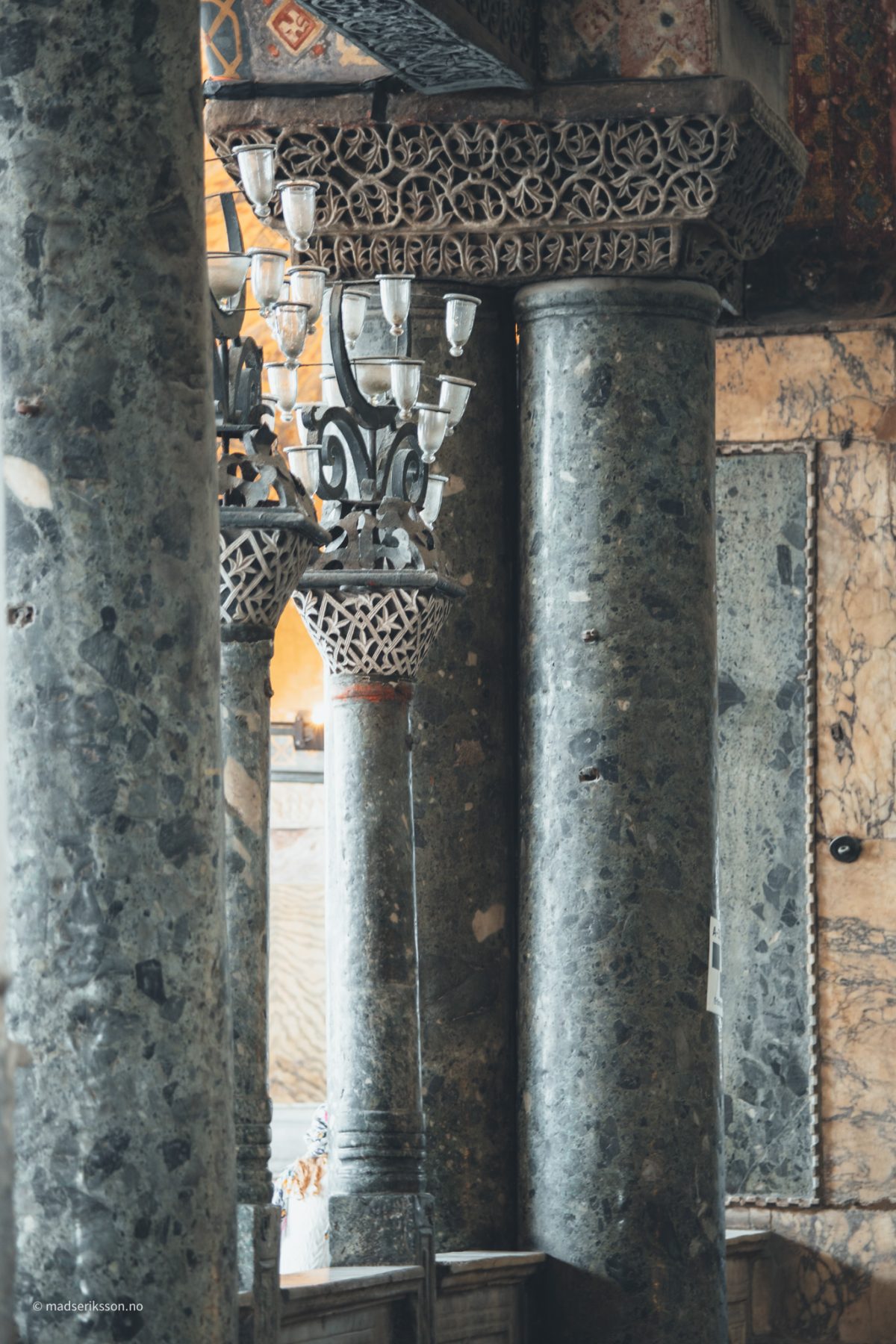
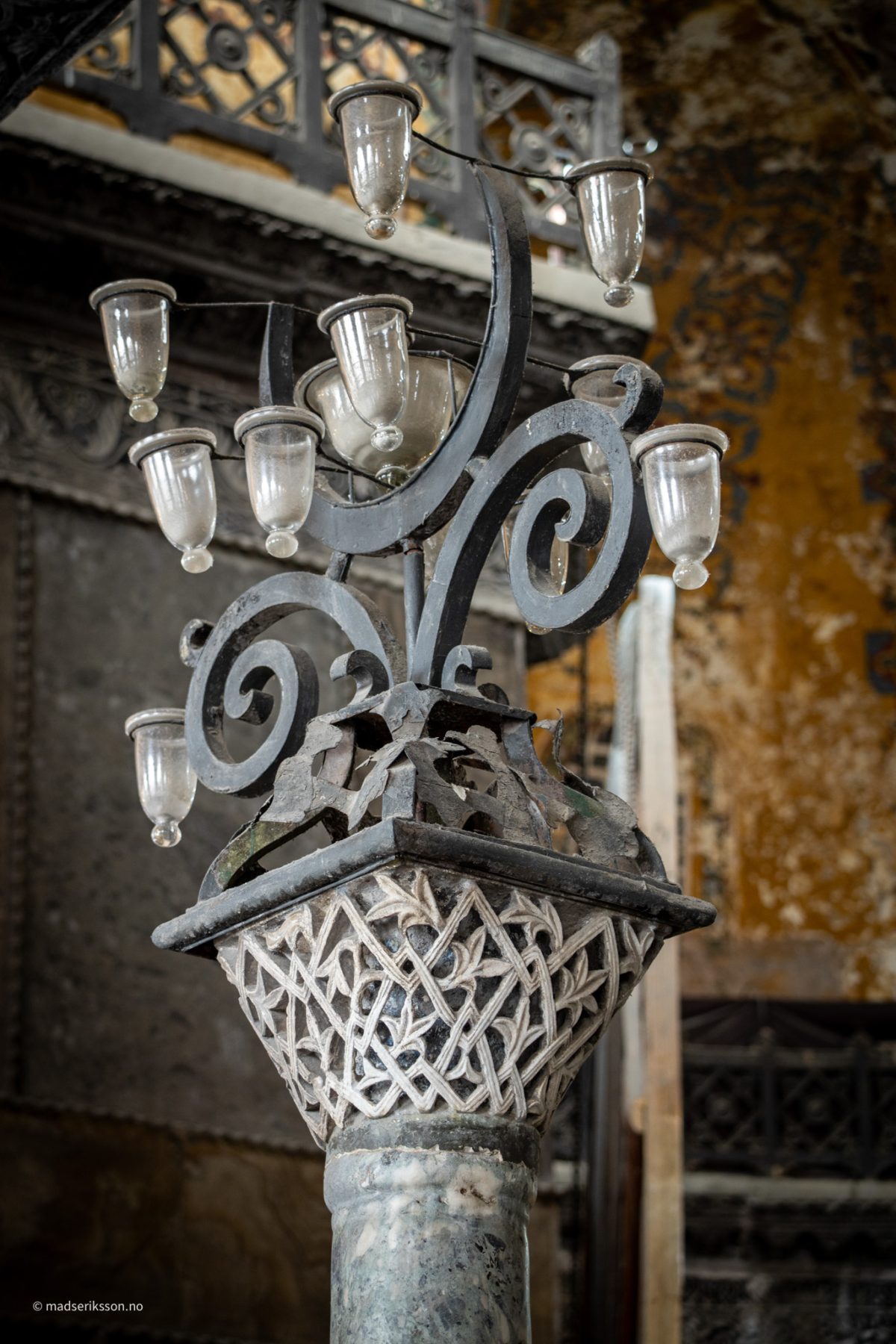
The frames inside Hagia Sophia pick out details rather than the whole: the gold calligraphy radiating from the centre of the great dome, the vast green roundels bearing the names of Muhammad and the caliphs beside the arched windows, the veined marble columns and carved capitals of the galleries, and a wrought-iron lamp stand with its glass oil cups. The Blue Mosque is seen from outside under a stormy sky, through the arcades of its courtyard with the ablution fountain at the centre, and framed in the arch of a gateway with the inscription above.
The Hills and the Strait
The sultans’ palace gate, Sinan’s masterpiece on its hill, and the Asian shore seen across the water.
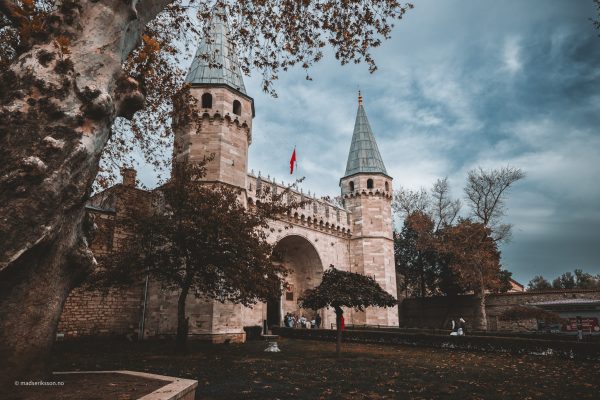
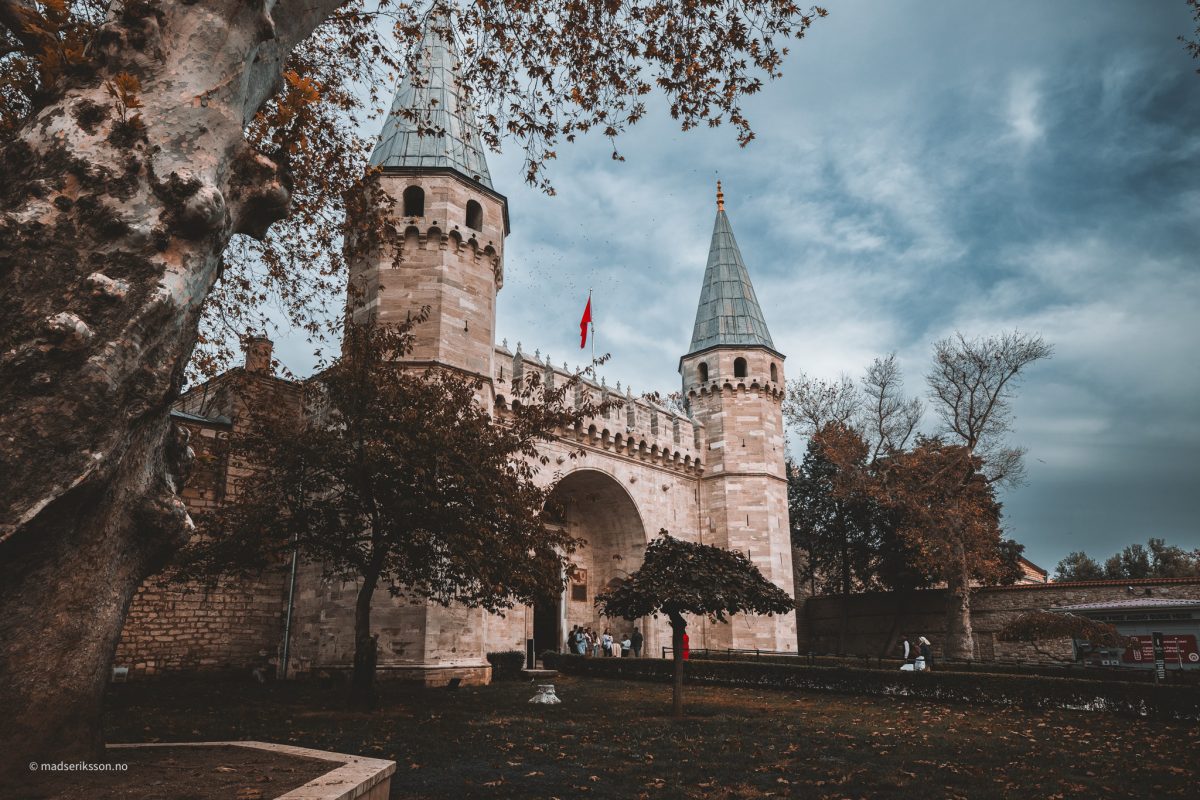
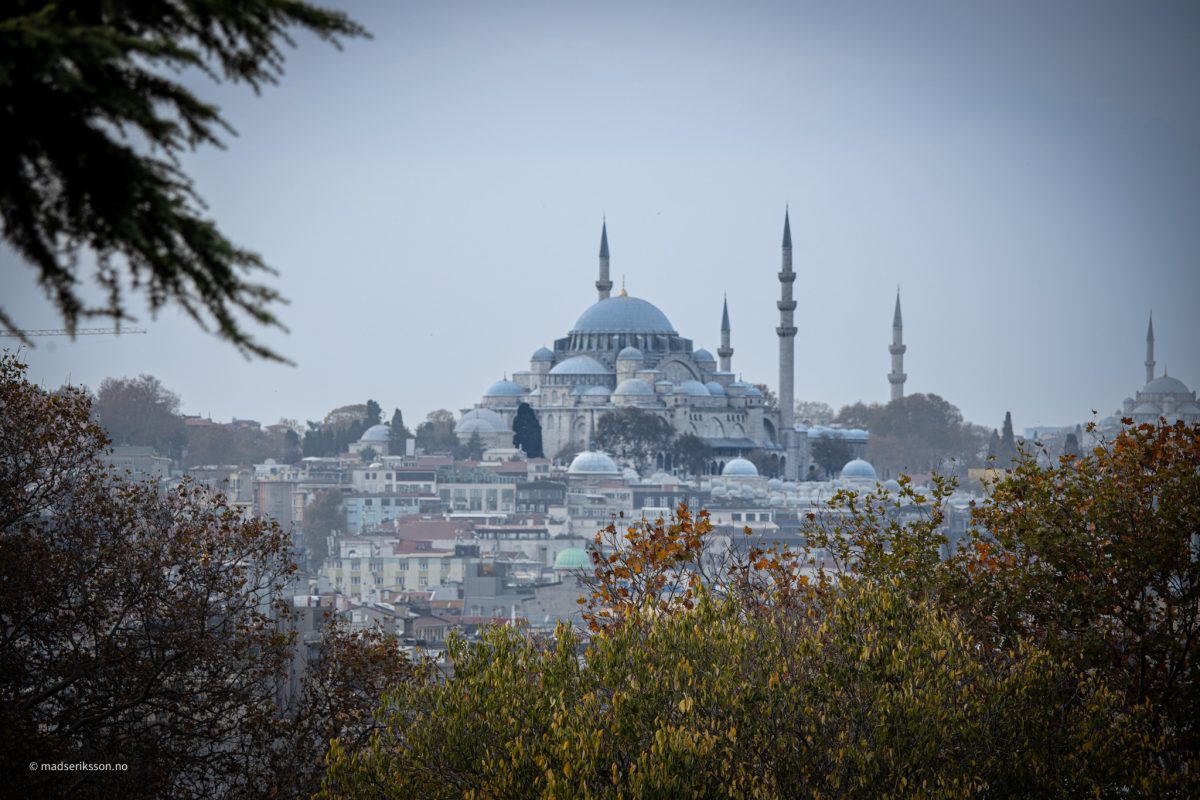
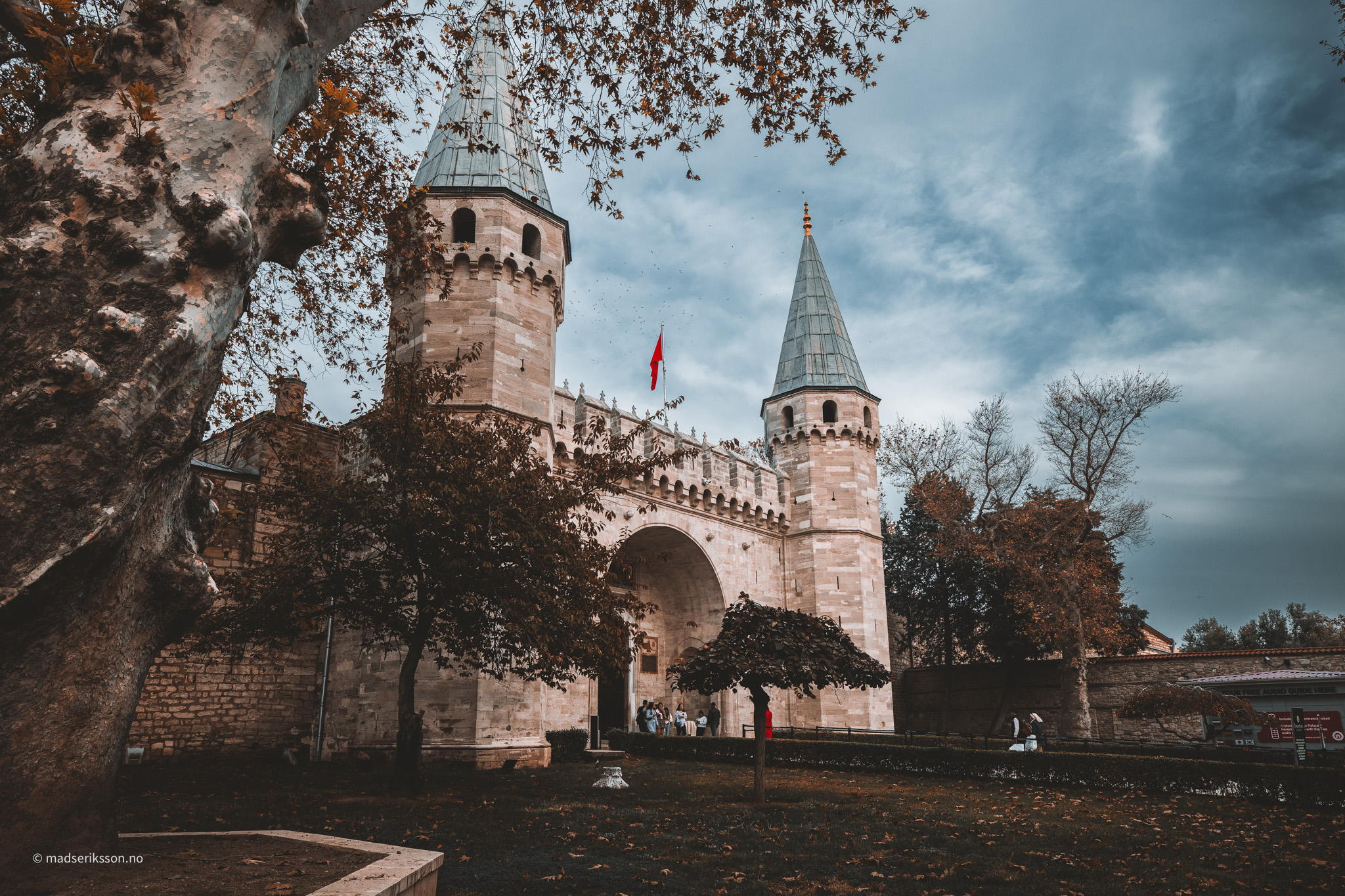
Topkapı Palace occupies the point where the Golden Horn meets the Sea of Marmara, and the Ottoman sultans ruled from it for almost four centuries after Mehmed II began it in 1459. The twin-towered Gate of Salutation, seen here under plane trees in autumn colour and a grey sky, leads into the Second Court, which was as far as most visitors ever got. The palace has been a museum since 1924 and is part of the World Heritage listing of 1985. Further west along the ridge stands the Süleymaniye, built by the architect Sinan for Süleyman the Magnificent between 1550 and 1557, its dome and four minarets crowning the third hill above the Golden Horn.
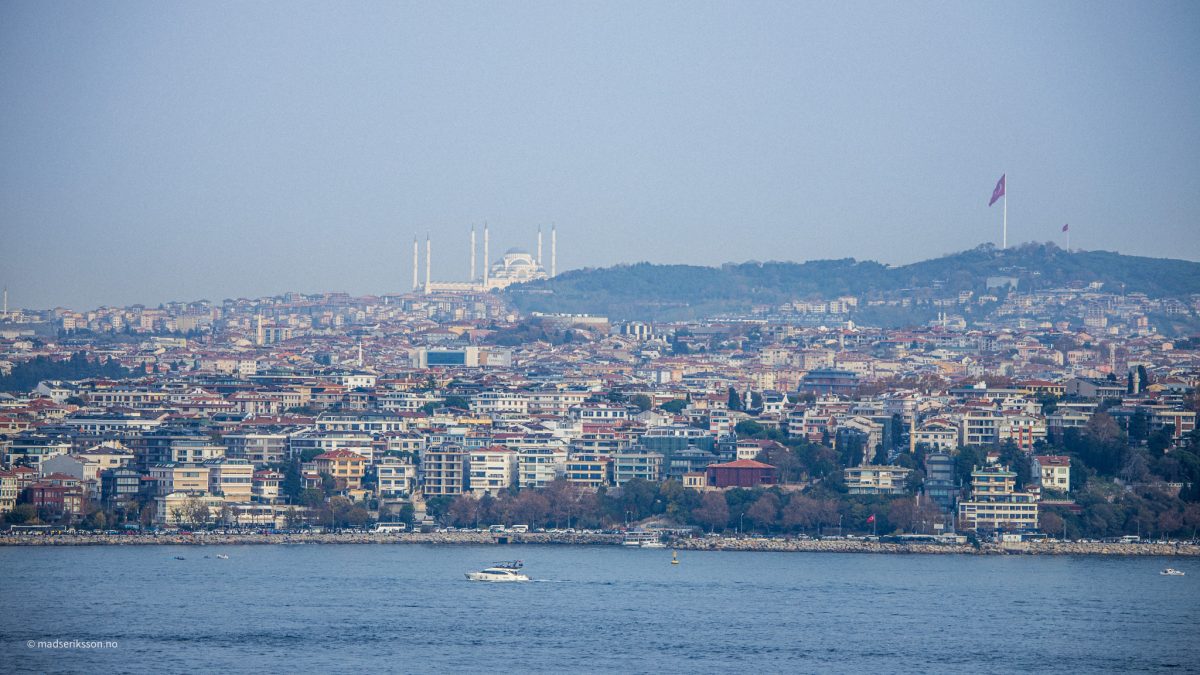
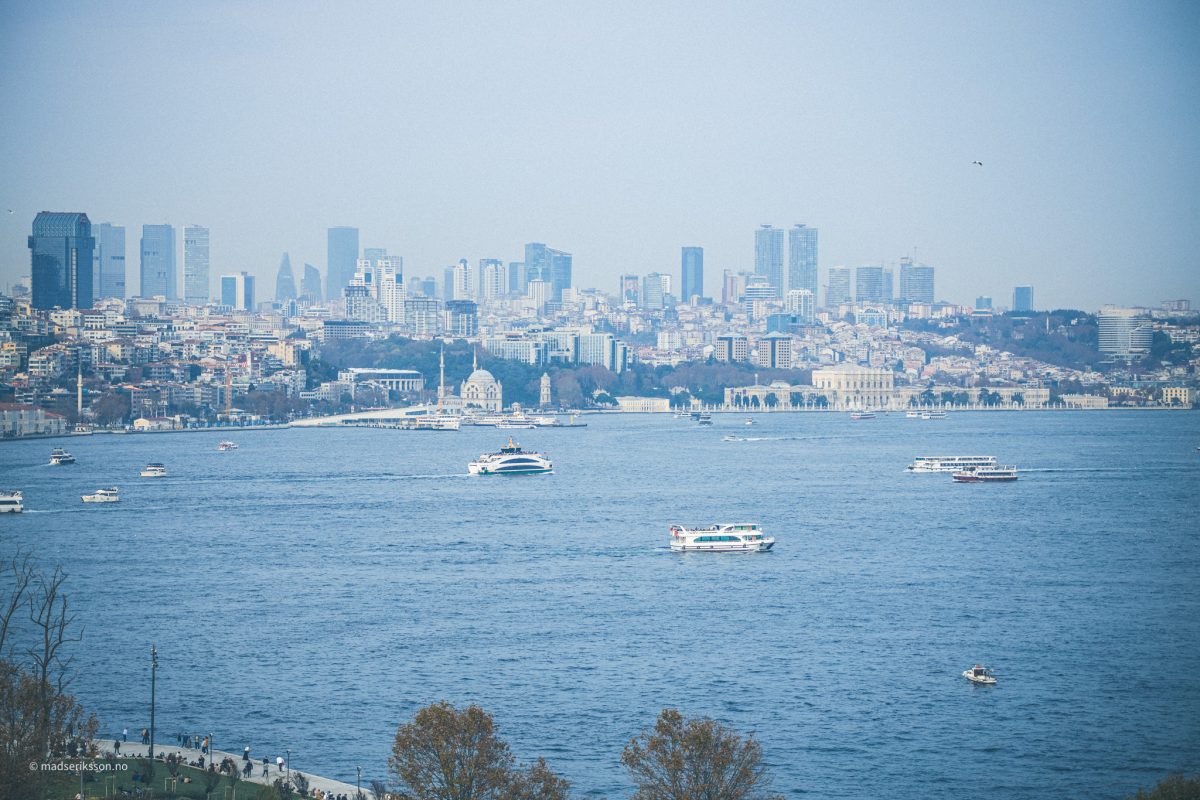
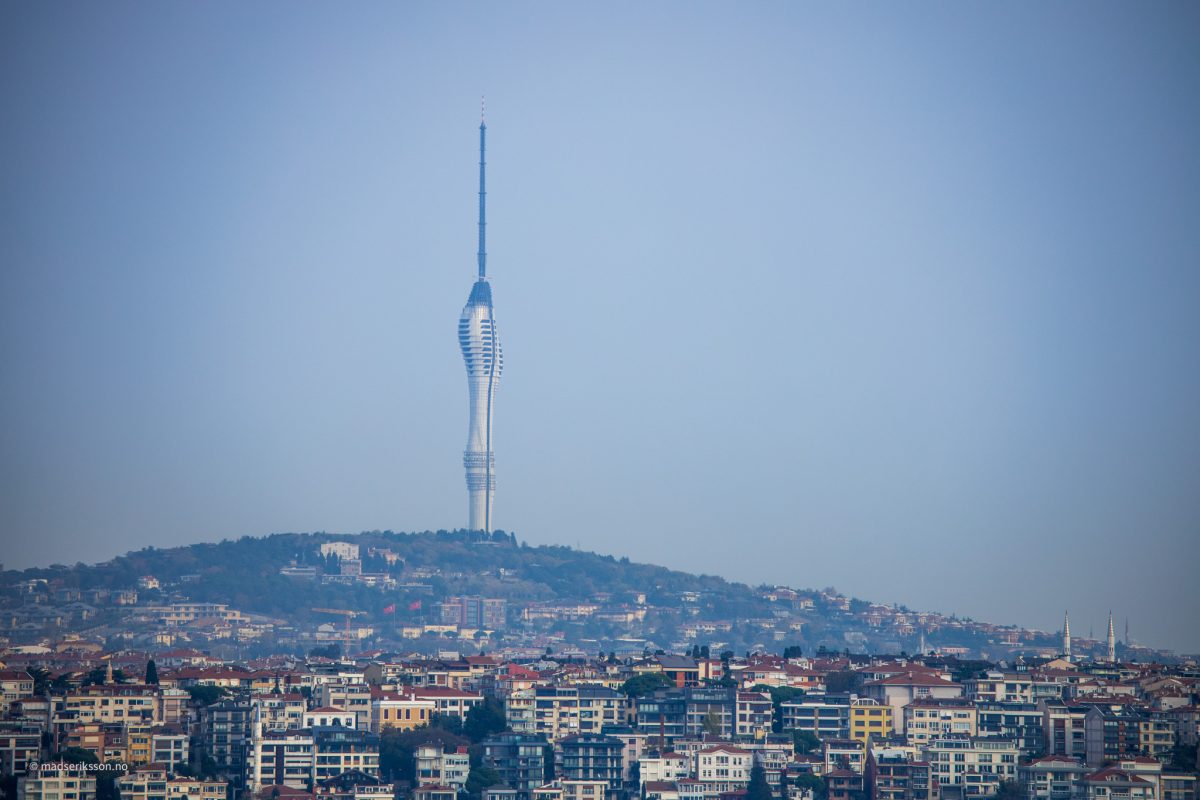
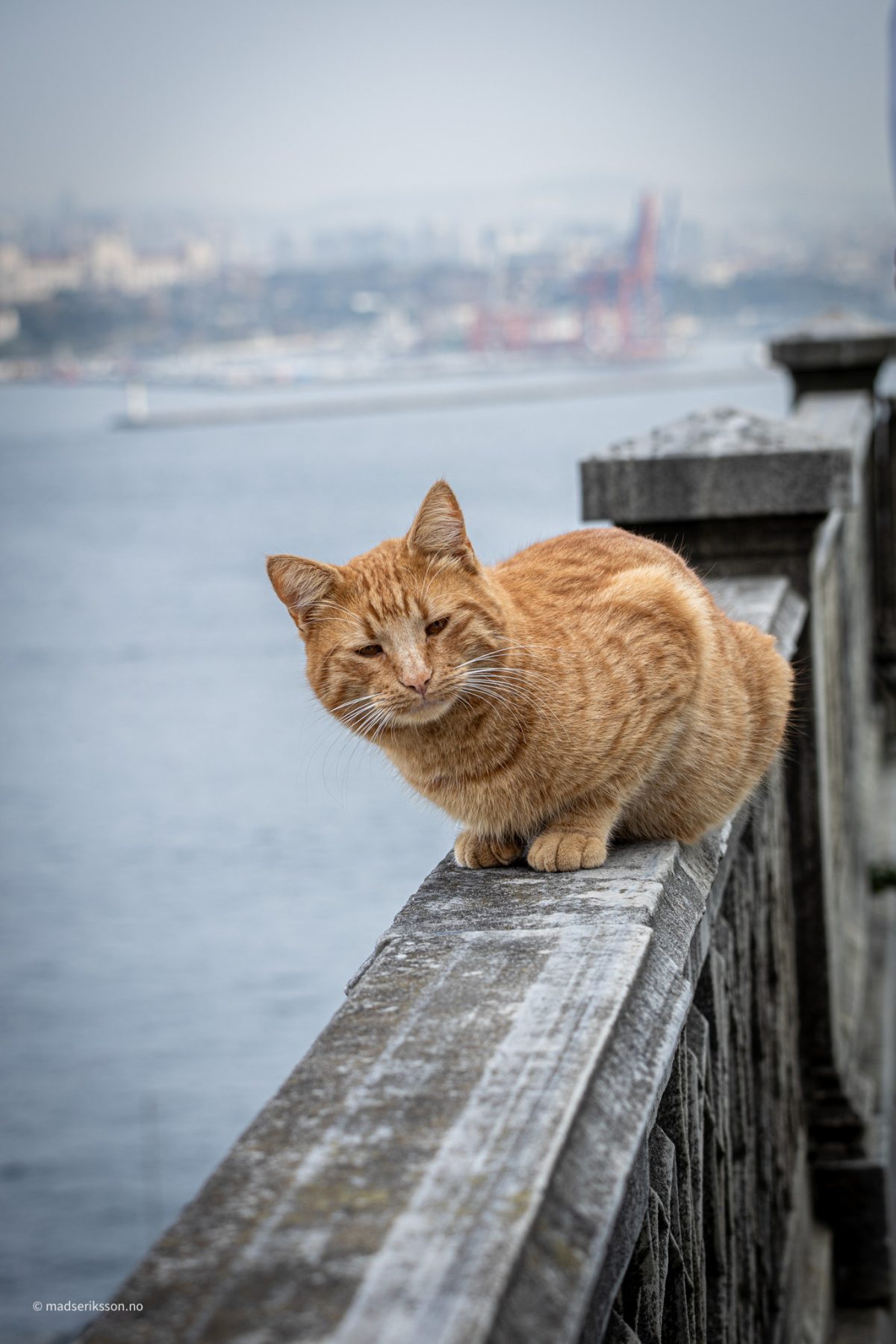
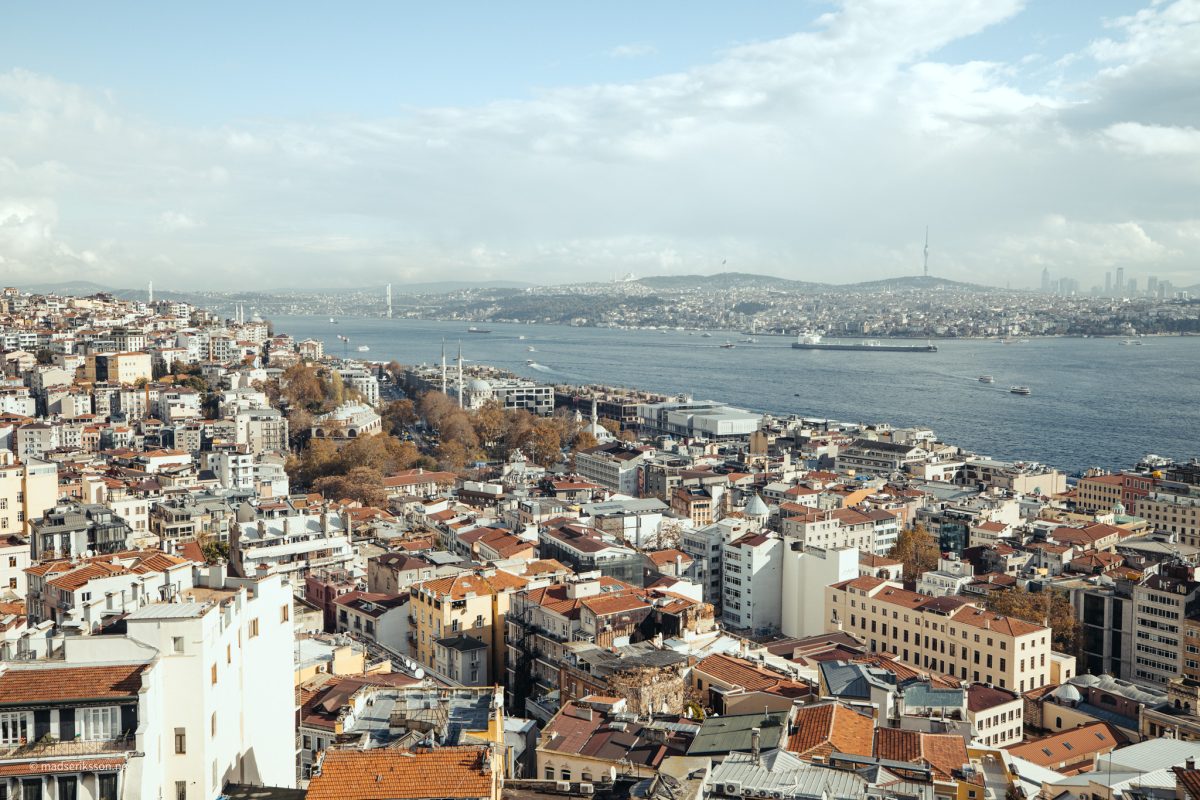
From the terraces on the European shore the view opens across the Bosphorus. The frames look over the strait to the houses and mosques of the Asian side, to the glass towers of the business district further up the European shore, and to Çamlıca Tower on its hill in Üsküdar, at 369 m the highest structure in the city since it opened in 2021. A ginger street cat, one of the thousands the city feeds, sits on a stone balustrade above the water with the far shore behind it.
The Waterfront Market
The New Mosque, the bazaar built to pay for it, and the anglers who line the bridge beside them.
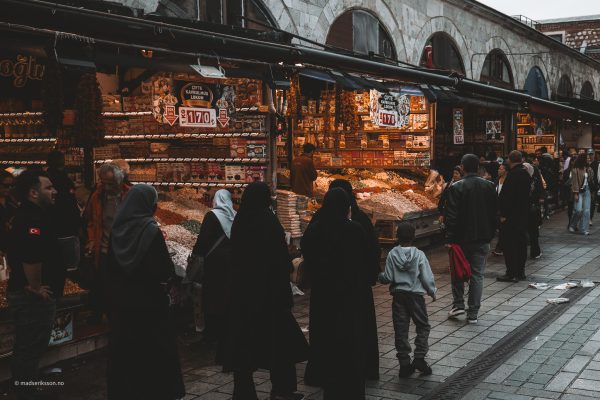
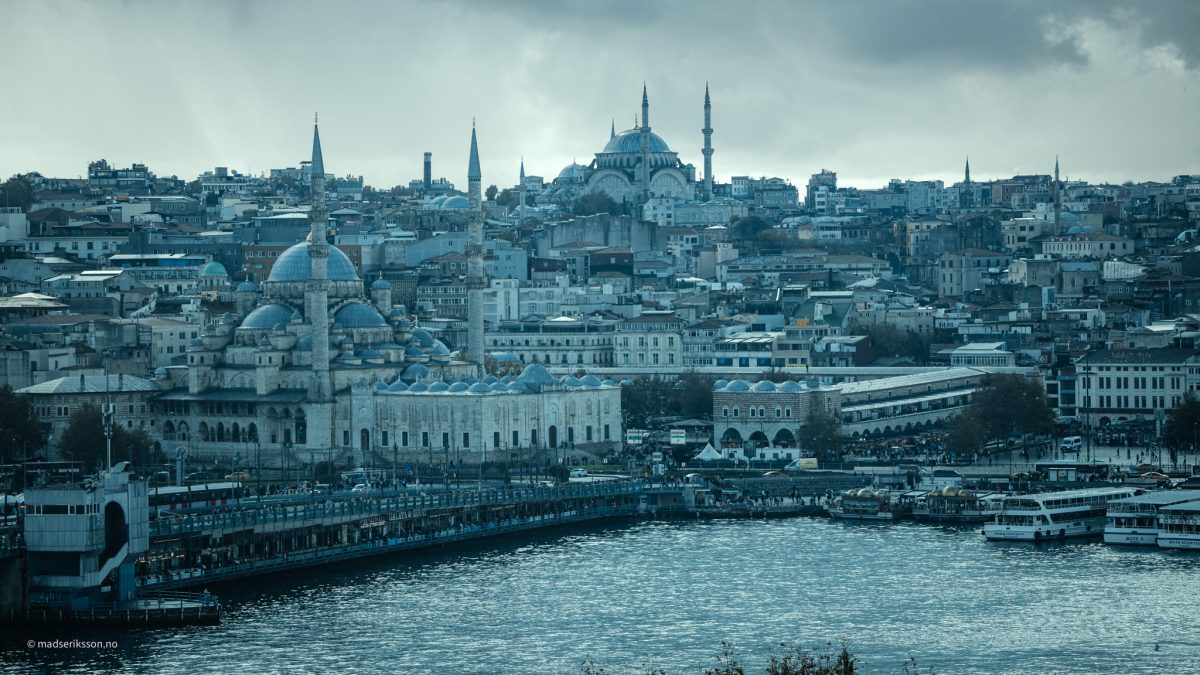
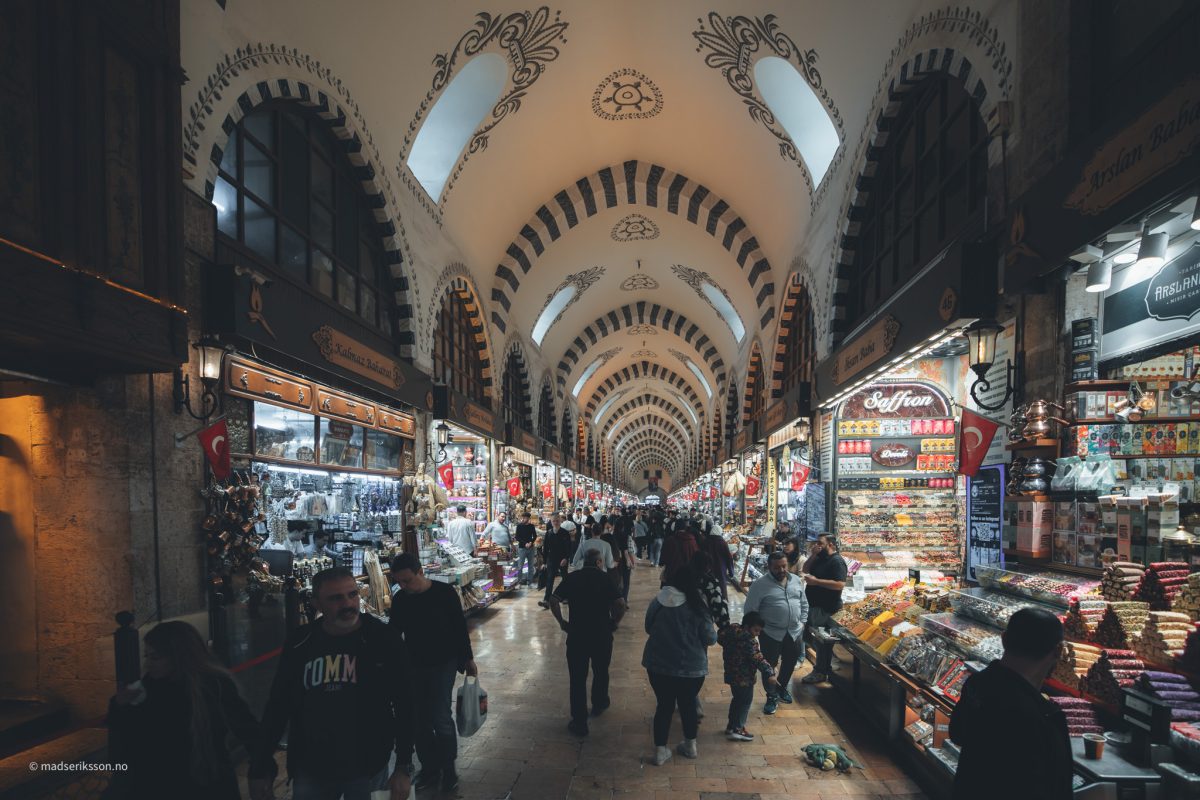
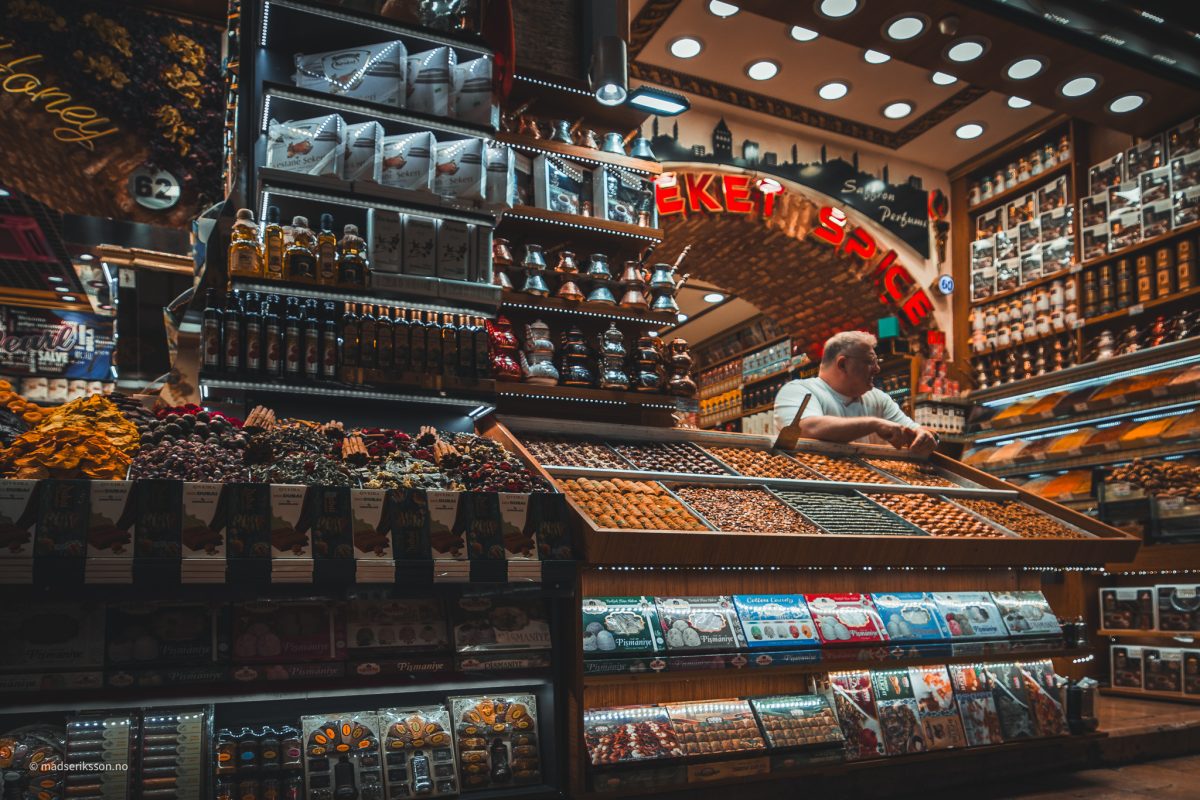
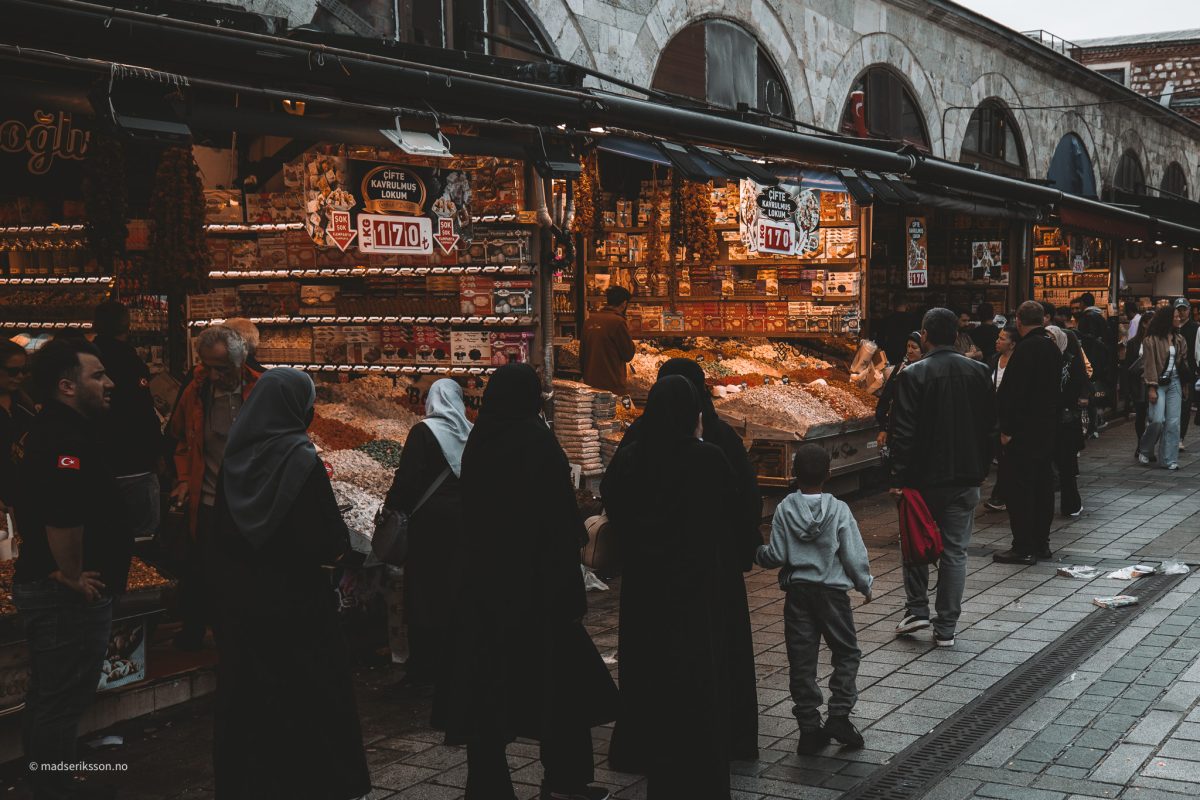
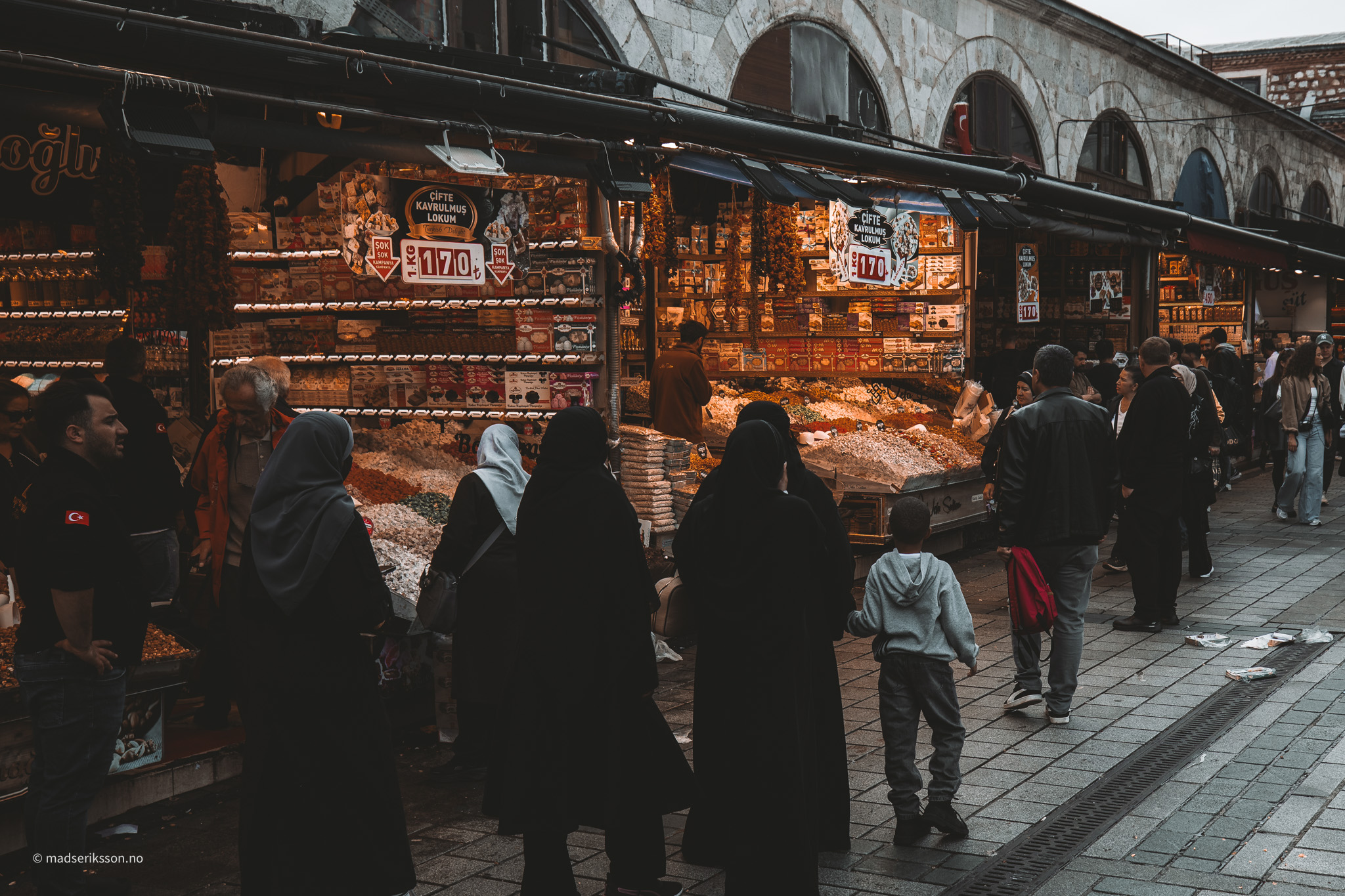
Eminönü is where the old city meets the Golden Horn, and the New Mosque stands right at the water’s edge, its domes rising behind the ferry piers with the Süleymaniye on the hill above. The mosque took from 1597 to 1665 to complete, and the Spice Bazaar next to it was finished in 1664 as part of the same foundation; the rents from its shops were meant to support the mosque. Inside, the L-shaped hall runs under vaulted arches striped in red and cream, lined on both sides with shops that still sell what the name promises: spices in heaps, teas, nuts, dried fruit and trays of Turkish delight in every colour, with a merchant waiting behind each counter.
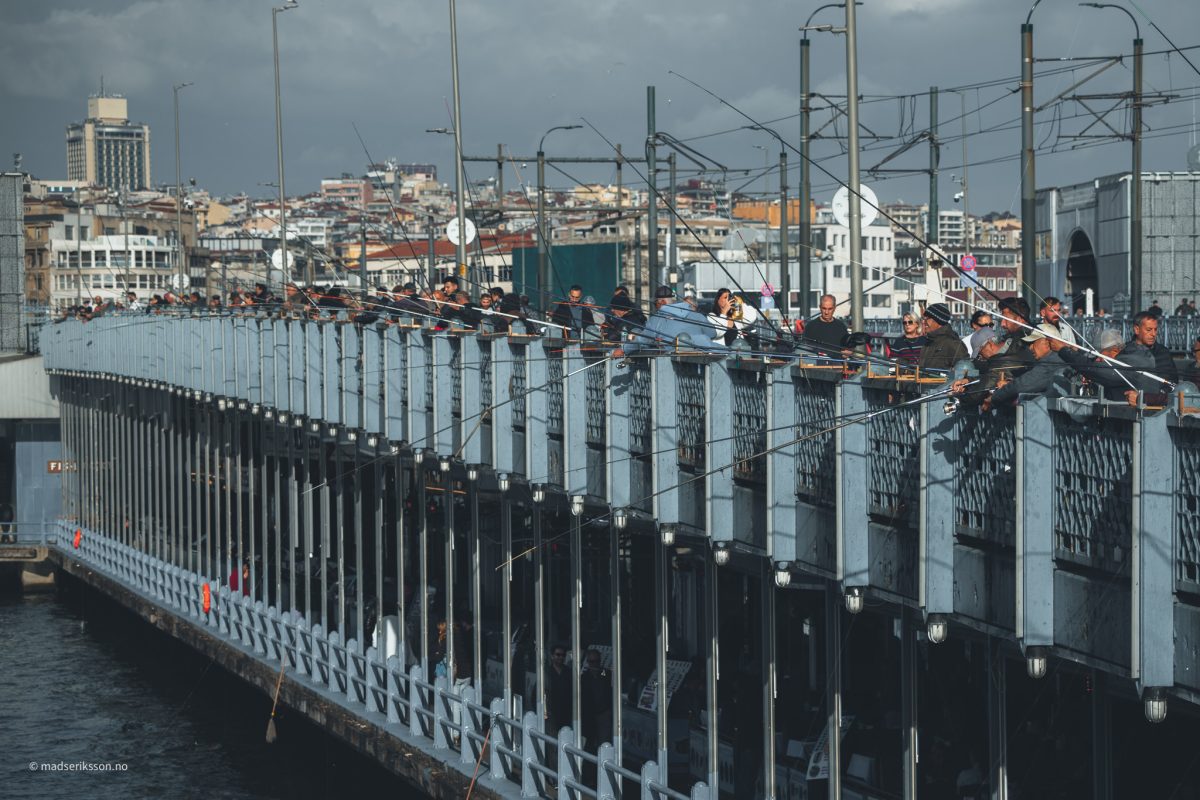
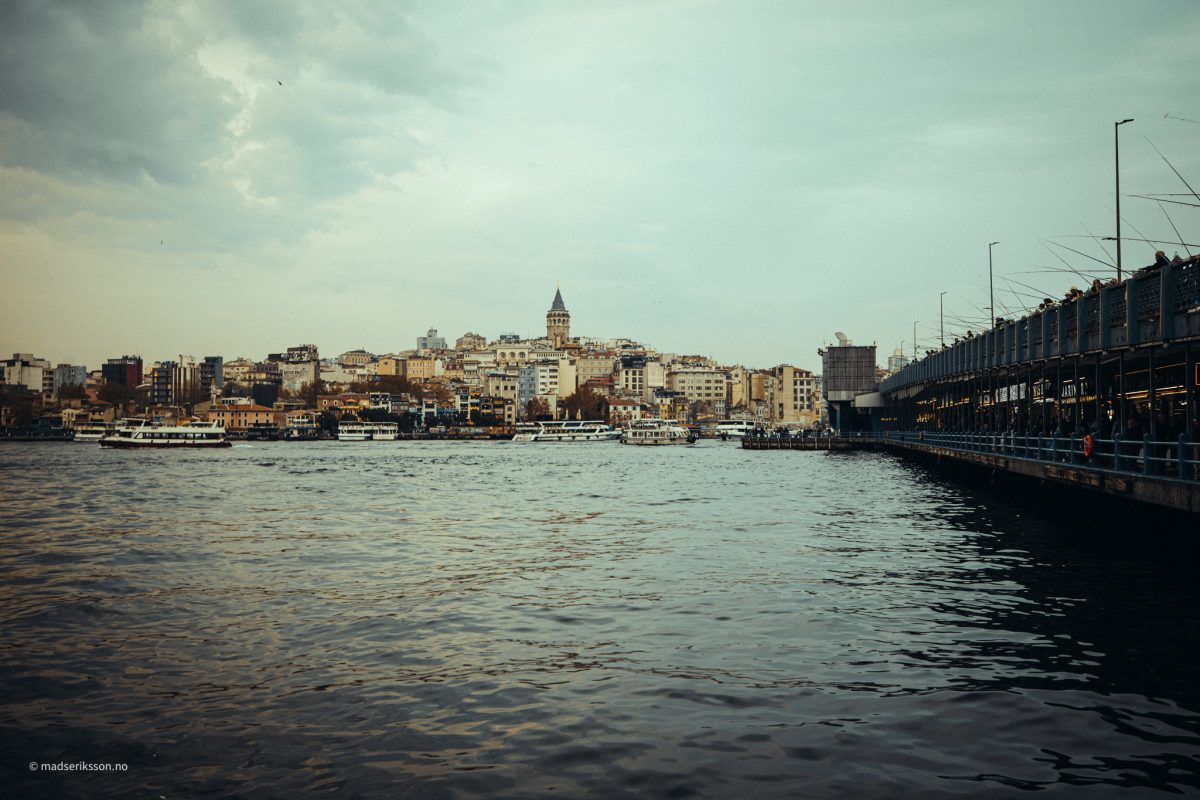
Outside, stalls along the walls carry the same goods into the street under the lamps. A few steps away the Galata Bridge crosses the Golden Horn to Karaköy, its upper deck lined from end to end with anglers, rods out over the rail and buckets at their feet, under a sky threatening rain. The last frame looks back along the bridge at dusk, with Karaköy and the Galata Tower across the water.
Across the Golden Horn
The Genoese tower, the red tram on İstiklal and the roofs stepping down to the Bosphorus.
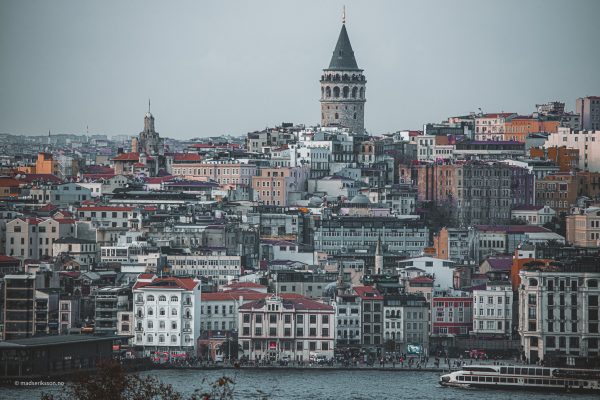
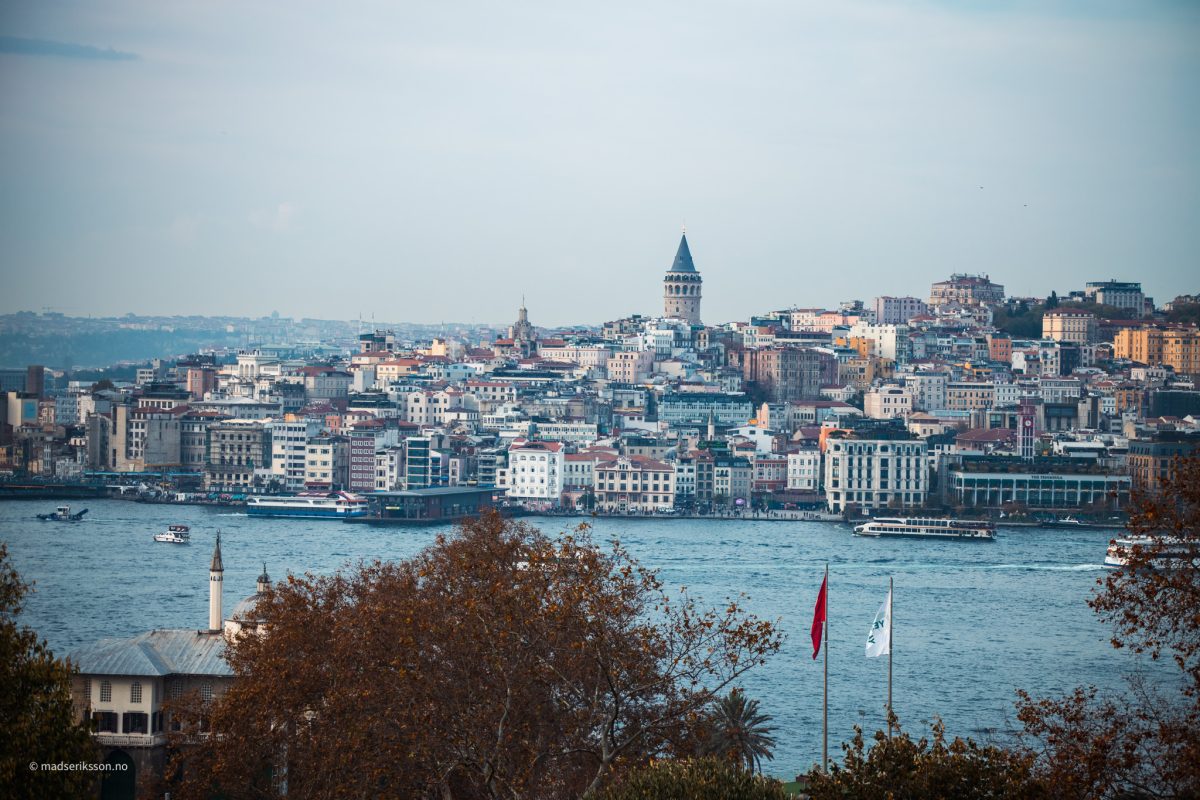
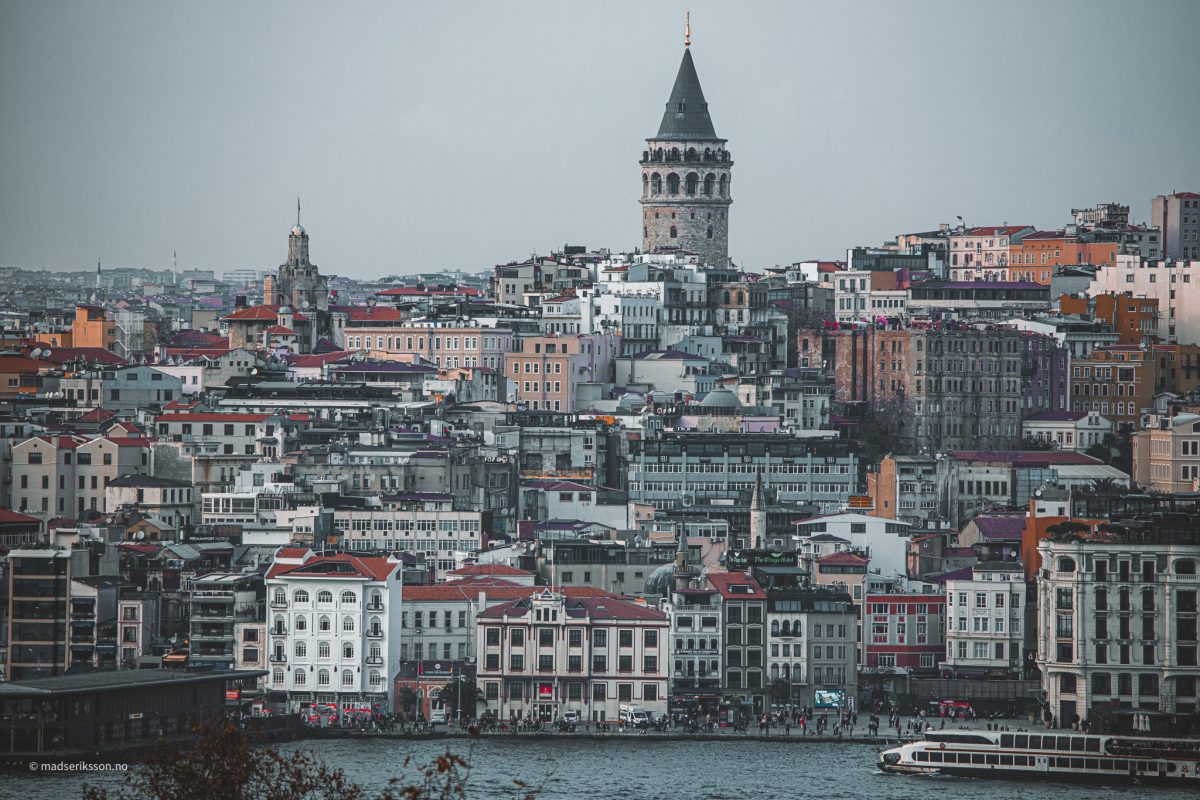
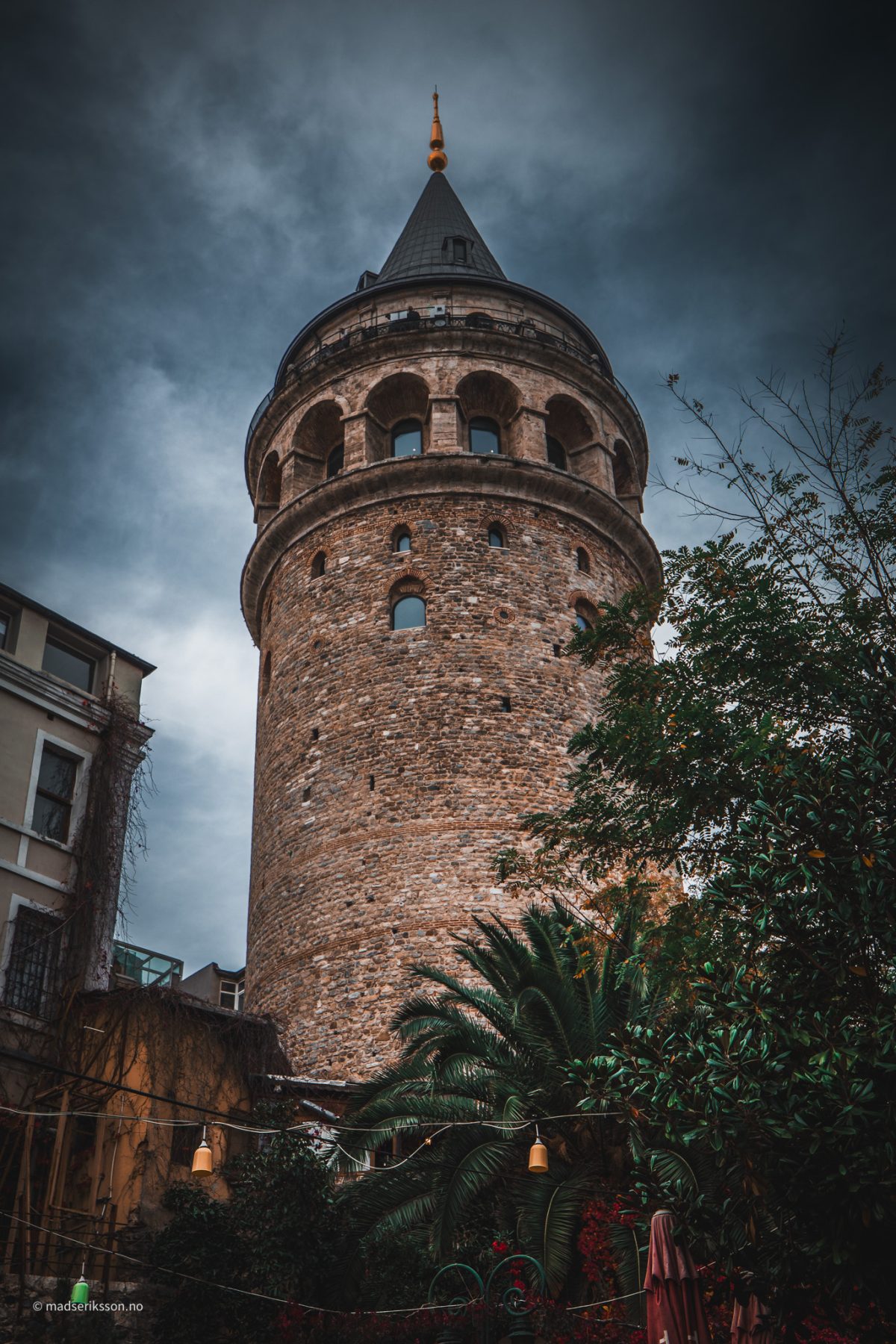
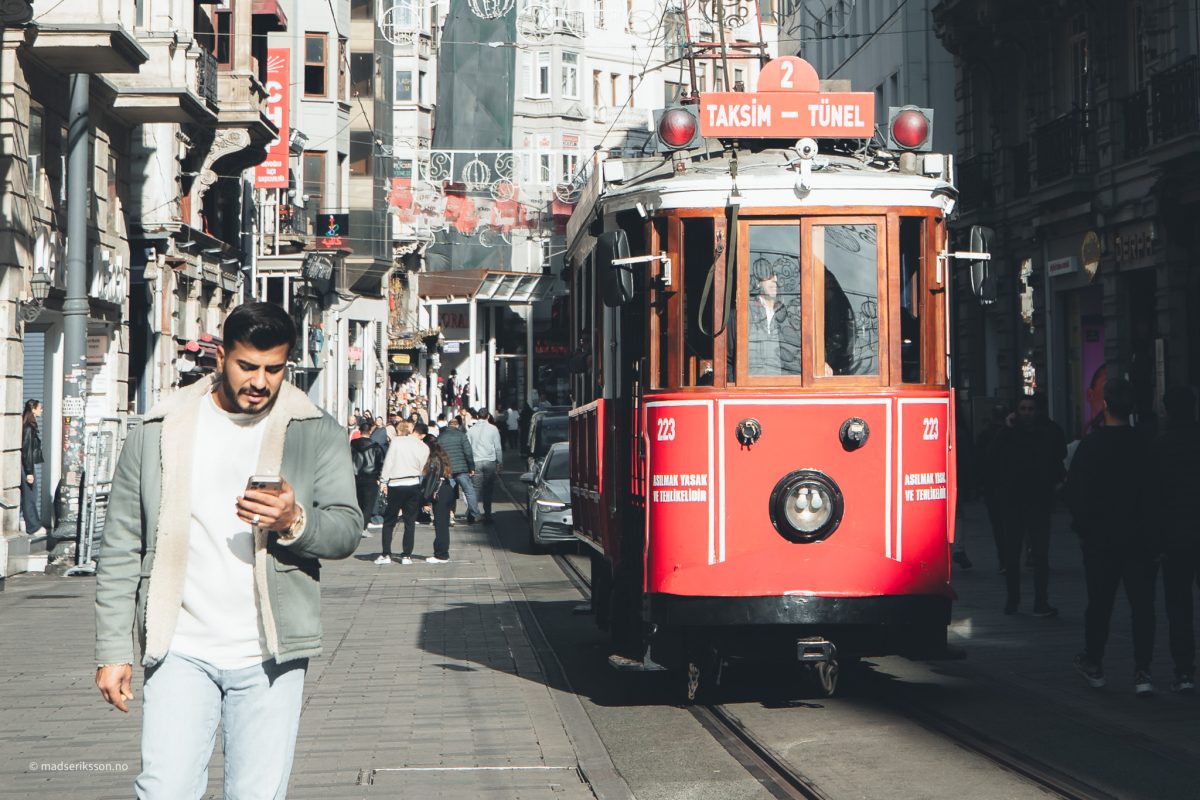
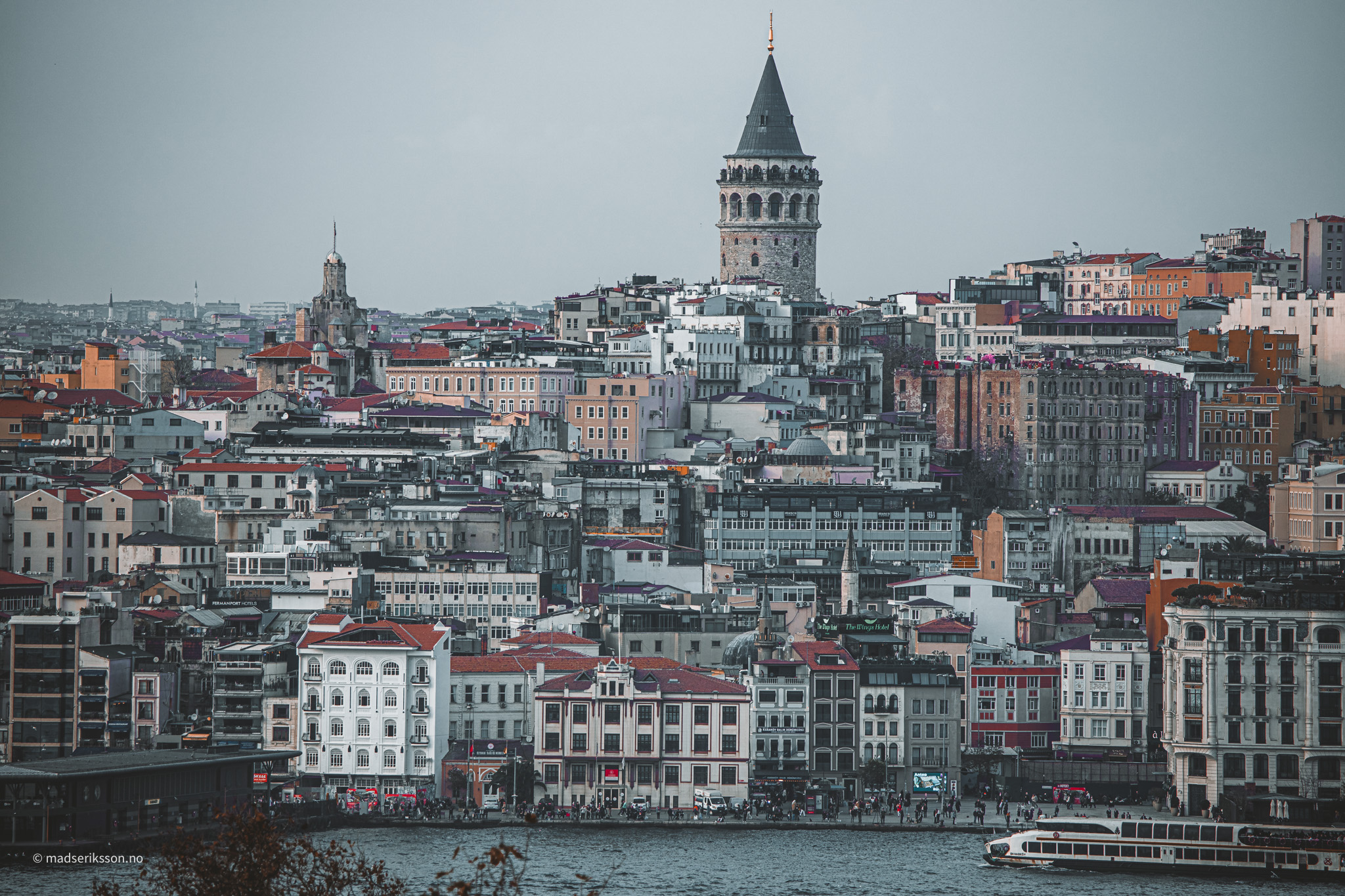
North of the Golden Horn the city changes character. Galata was a Genoese trading colony in the Middle Ages, and the Galata Tower, built in 1348 at the highest point of its walls, still dominates the hillside; at 62.6 m it was for centuries the tallest thing on this shore. Two frames show it from across the Golden Horn, rising above the stacked houses of Karaköy and the Beyoğlu hillside, and a third looks straight up at its stone cylinder and conical cap against a dark sky. Above it, İstiklal Avenue runs from the Tünel funicular to Taksim Square, and the red nostalgic tram that has worked the 1.6 km line since 1990 is seen trundling through the crowds.
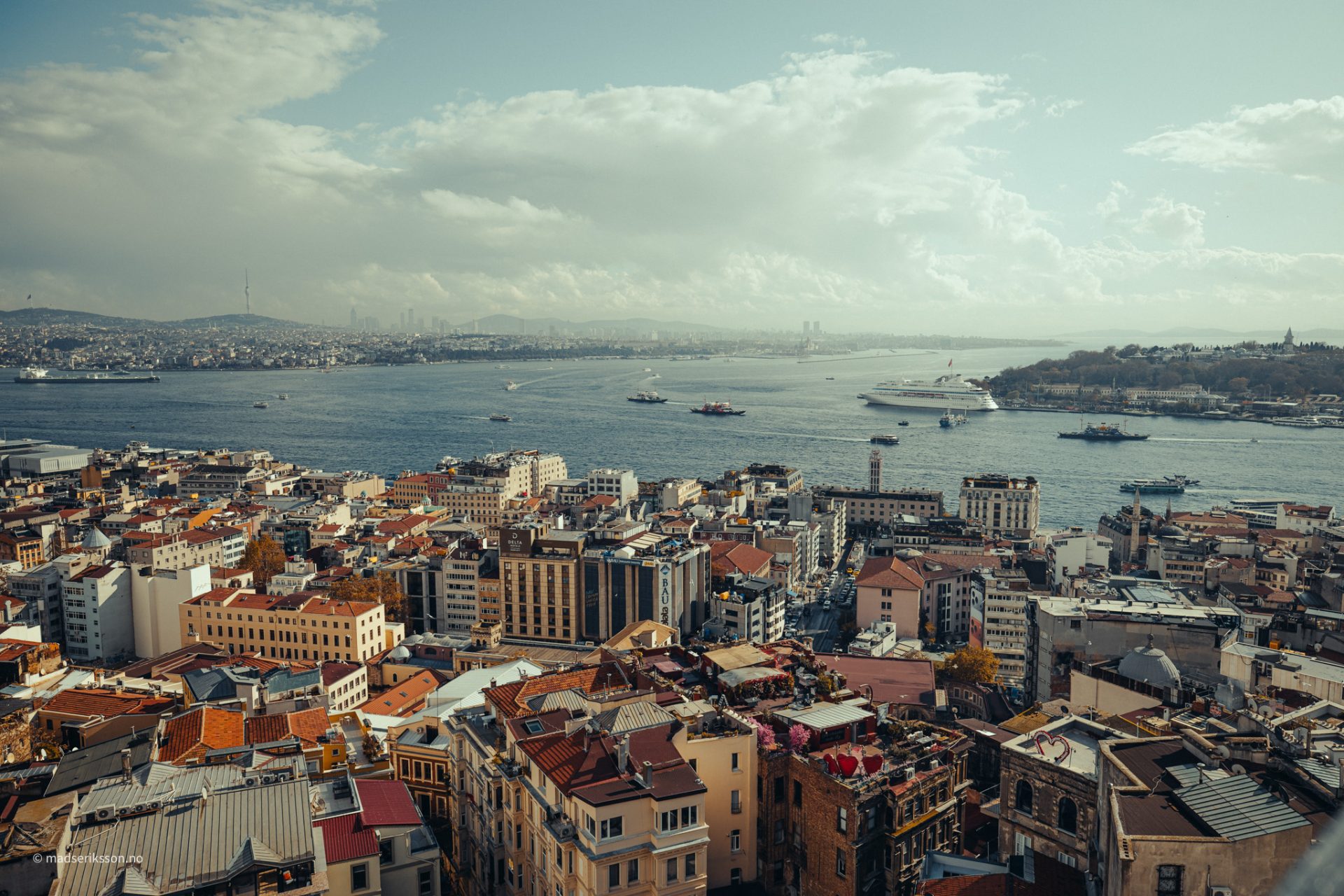
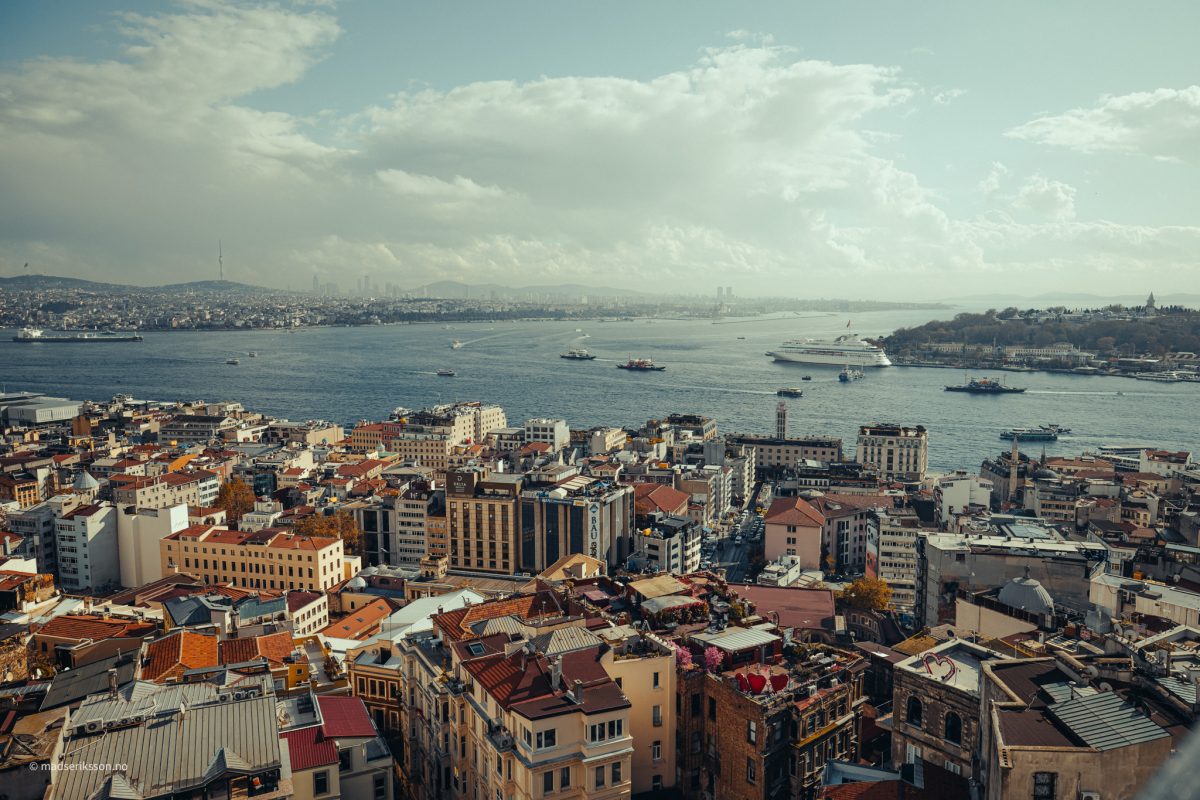
The last two frames are taken from high above the roofs. Istanbul’s old houses and apartment blocks step down the slope in every shade of ochre and terracotta, broken by the odd dome and minaret, until they reach the Bosphorus; beyond the water, ships are crossing between Europe and Asia and the far shore lies in haze. It is the view that explains the city better than any map.
«Istanbul does not sit still for a photograph. The light changes from storm to gold in an hour, ferries cut across every view, the cats move and the anglers on the bridge never look up. What stays fixed is the skyline the sultans built: dome after dome along the ridges, and below them the water that made the city worth fighting over for two thousand years. Twenty-five frames, two continents, one autumn.»
More in the same area
 ArchitectureTopkapı Palace, Istanbul: Four Courts, the Harem and the Treasury of the Sultans
 CitiesExploring the Wonders of Istanbul
 Food and DrinksIstanbul’s Spice Bazaar: The Market Built to Pay for the New Mosque
 CitiesGhana’s Coast — Accra, Kokrobite, Kakum and the Castles of Cape Coast and Elmina
 ArchitectureBarcode and Bjørvika: Oslo’s New Waterfront Skyline