Fisherman’s Bastion looks like a fortress from a fairy tale, and that is roughly what it is. It was never built to defend anything. Frigyes Schulek designed it between 1895 and 1902 as a viewing terrace and a stage set for the restored Matthias Church, on the line of the old castle walls of Buda, to mark a thousand years of the Hungarian state. Its seven white turrets stand for the seven Magyar tribes that settled the Carpathian Basin in 895, its 140-metre arcade looks straight across the Danube to the Parliament, and its lower terraces are free and open day and night. Few places in Budapest show the city better — or are more crowded at sunset.

The bastion belongs to the great building boom of the 1890s, when Budapest prepared to celebrate the millennium of the Magyar conquest in 1896 and gave itself a Parliament, a metro line, a Heroes’ Square and a string of new monuments. On Castle Hill, Frigyes Schulek had spent two decades rebuilding the medieval Church of Our Lady — the Matthias Church — and the bastion was his way of giving the church a setting worthy of it: a white stone screen of stairs, cloisters and conical towers along the eastern edge of the hill, built on the remains of the medieval walls and facing the river. It was completed in 1902 and handed over to the city in 1905.
Today it is one of the most photographed buildings in Hungary, and it can feel like it. The terraces fill with tour groups from mid-morning, and at sunset every arch has someone posing in it. But the bastion is also simple to enjoy on its own terms. The lower terraces cost nothing and never close, the view from them is almost as good as from the paid upper turrets, and very early in the morning or late in the evening the whole structure is close to empty, with the Parliament lit up across the water.
How to approach Fisherman’s Bastion
This guide covers the bastion in three parts: how and why it was built, and where the name comes from; the Matthias Church next door and the Castle District around it; and the view, with what is free and what is paid, when to go and the best ways up the hill from the river.
A fortress for the view
Fisherman’s Bastion runs along the eastern edge of Castle Hill in Buda, beside the Matthias Church, facing straight across the Danube to Pest. Frigyes Schulek designed it between 1895 and 1902 as a viewing terrace and a stage set for the restored church, on the line of the old castle walls, to mark a thousand years of the Hungarian state. It was never built to defend anything.
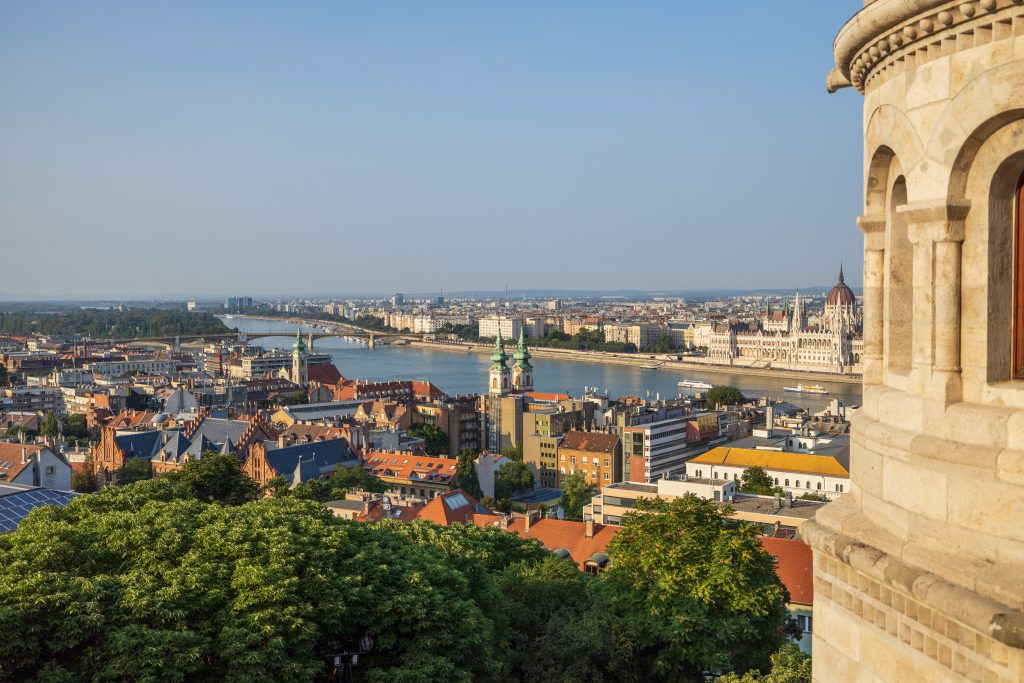
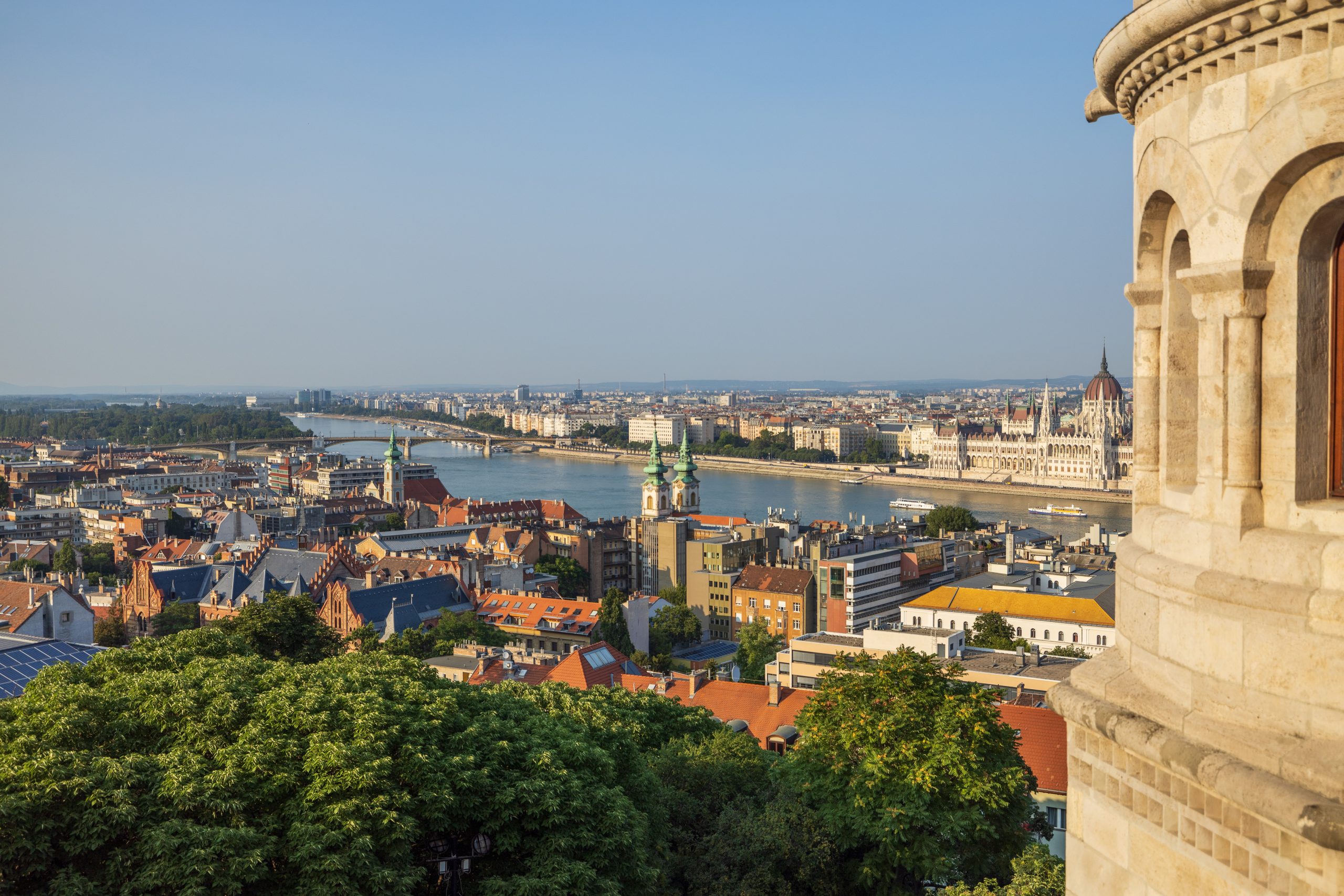
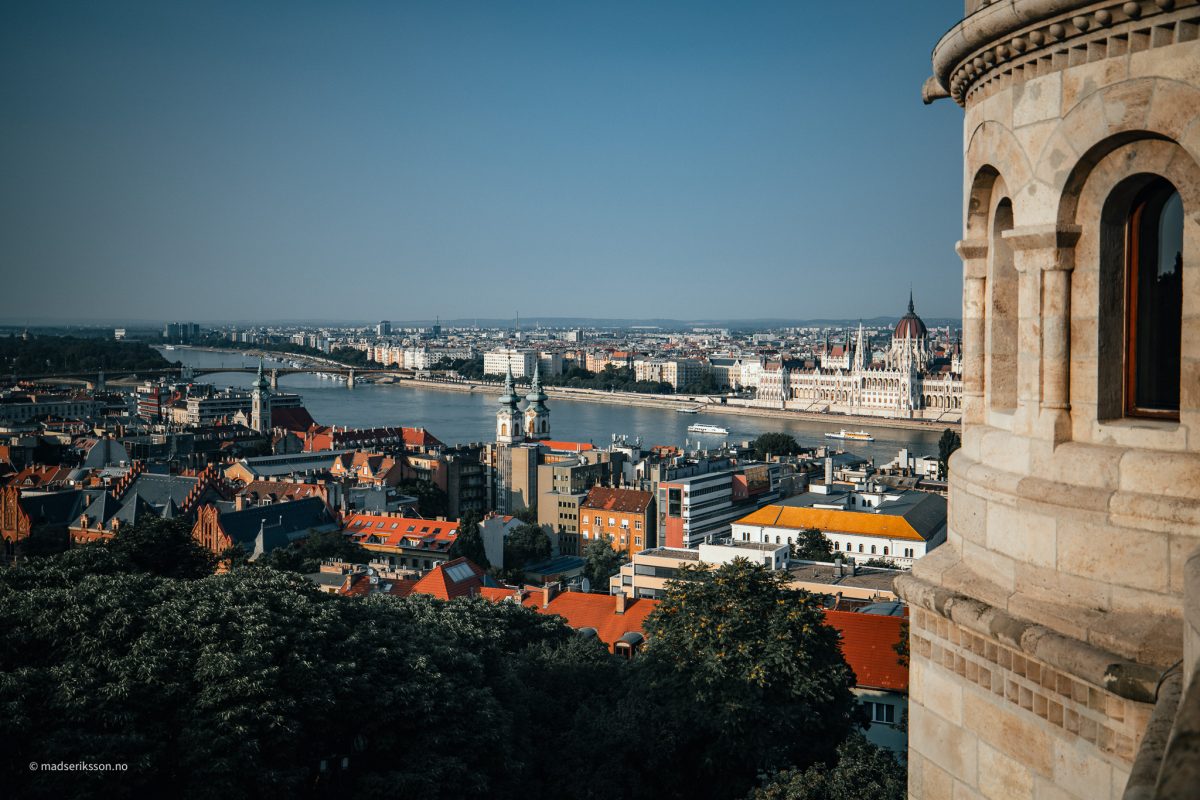
The Danube and the rooftops of Buda from a tower of Fisherman’s Bastion, with the Parliament upriver
Seven tribes in white stone
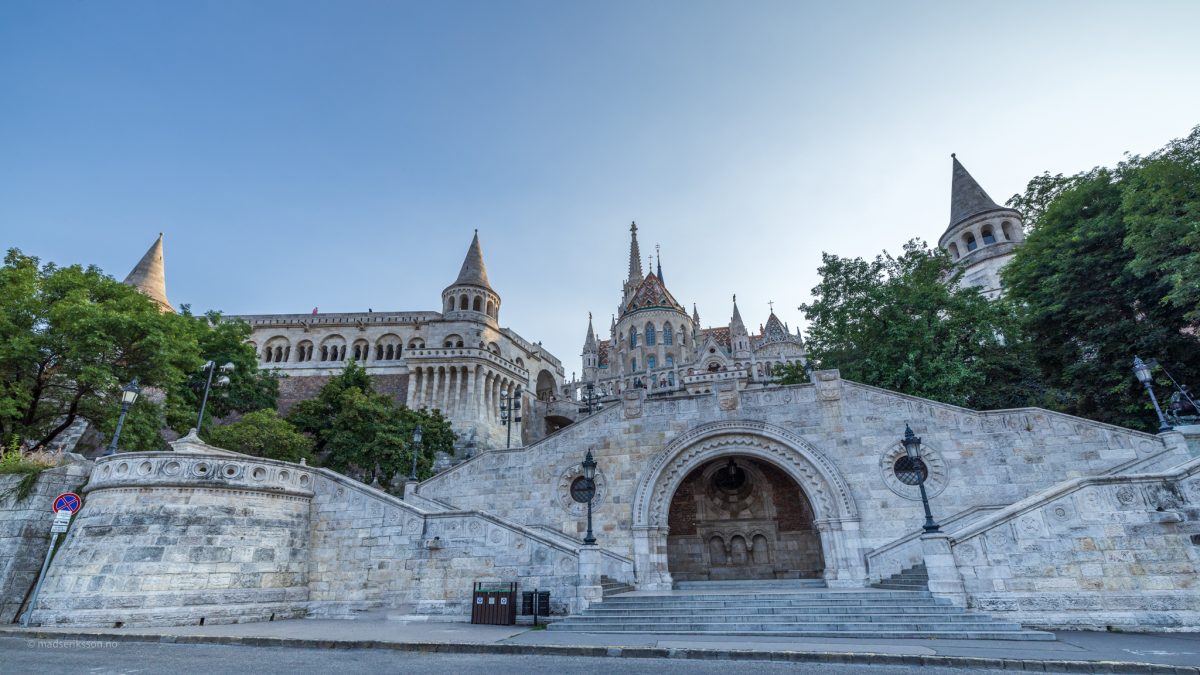
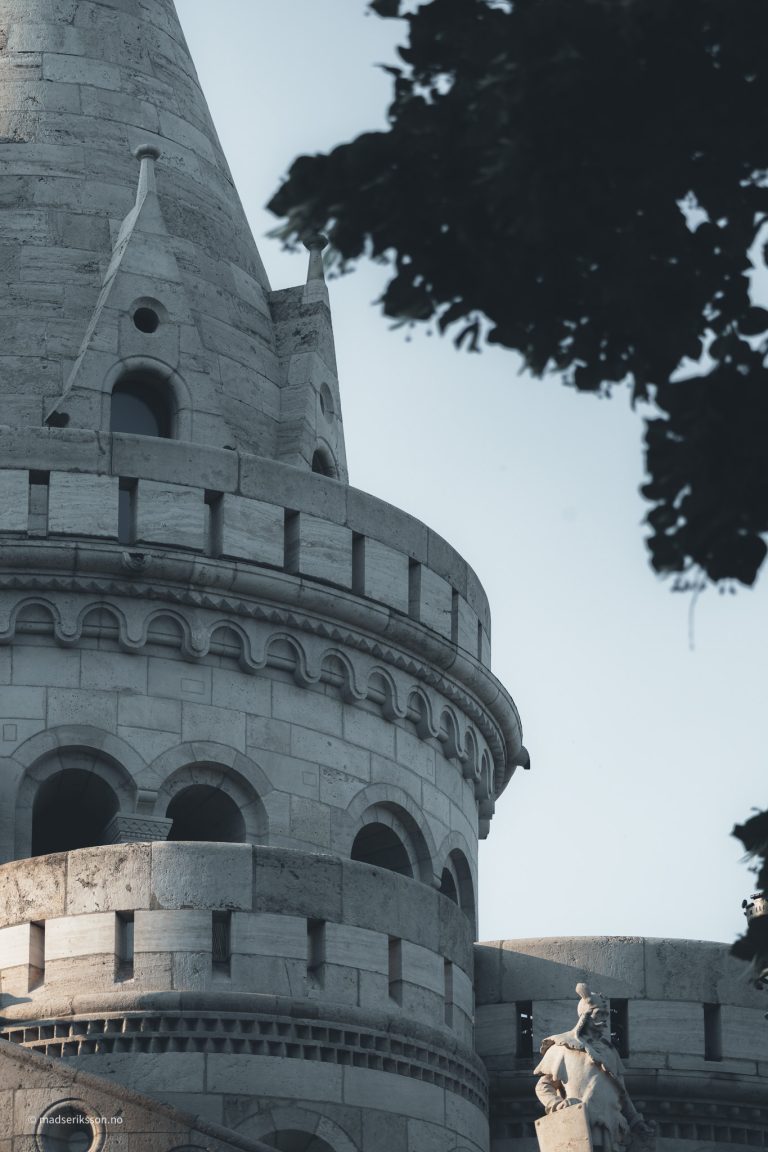
Built on the foundations of the medieval wall, the bastion is neo-Romanesque with touches of Gothic: round arches, stocky columns, carved capitals and tall conical roofs. Its seven turrets stand for the seven Magyar tribes that settled the Carpathian Basin in 895, and its main façade runs for about 140 metres parallel to the Danube. Broad staircases climb from the lower walkways to a long arcade along the top.
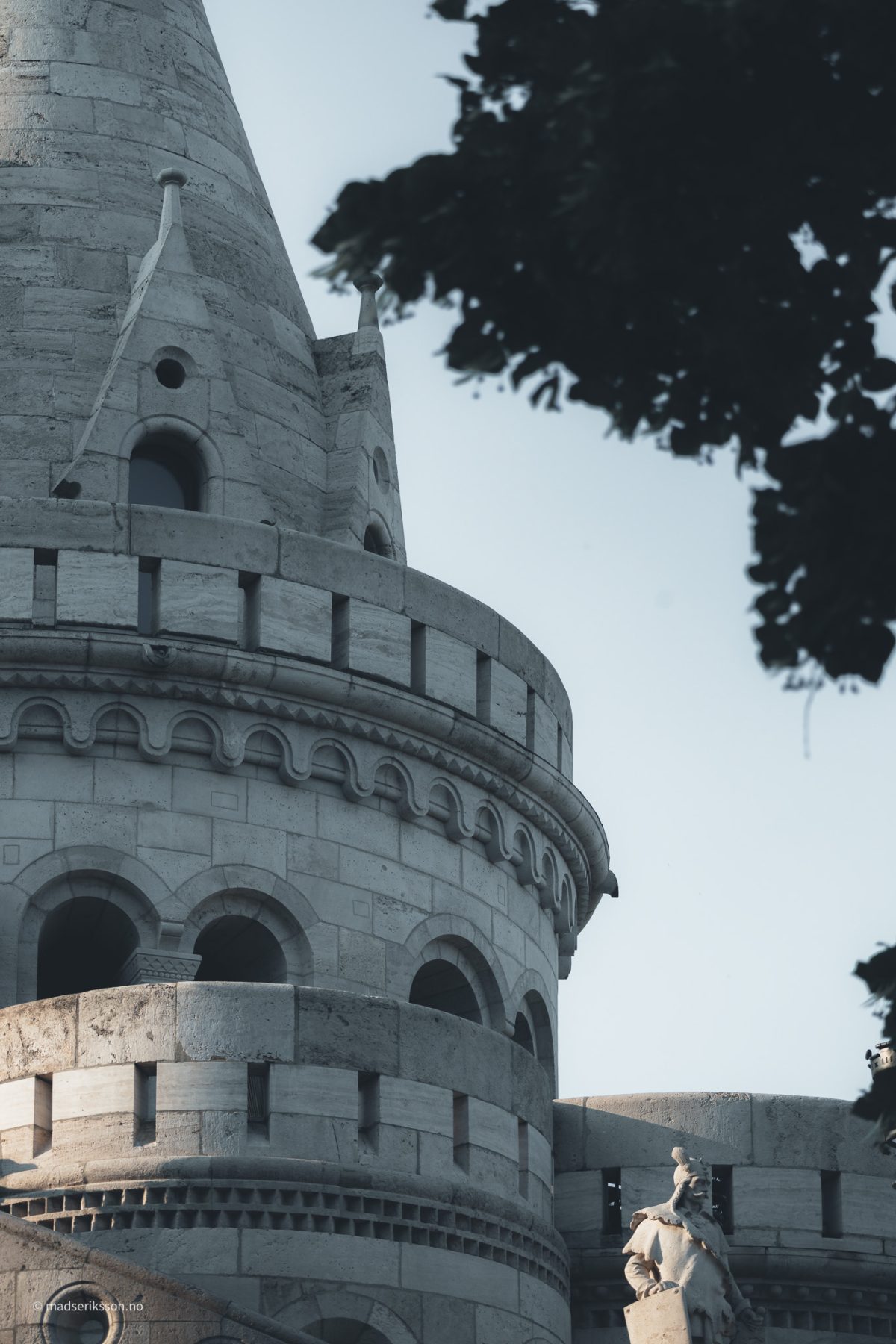
A conical turret of Fisherman’s Bastion on Castle Hill in Budapest, framed by leaves
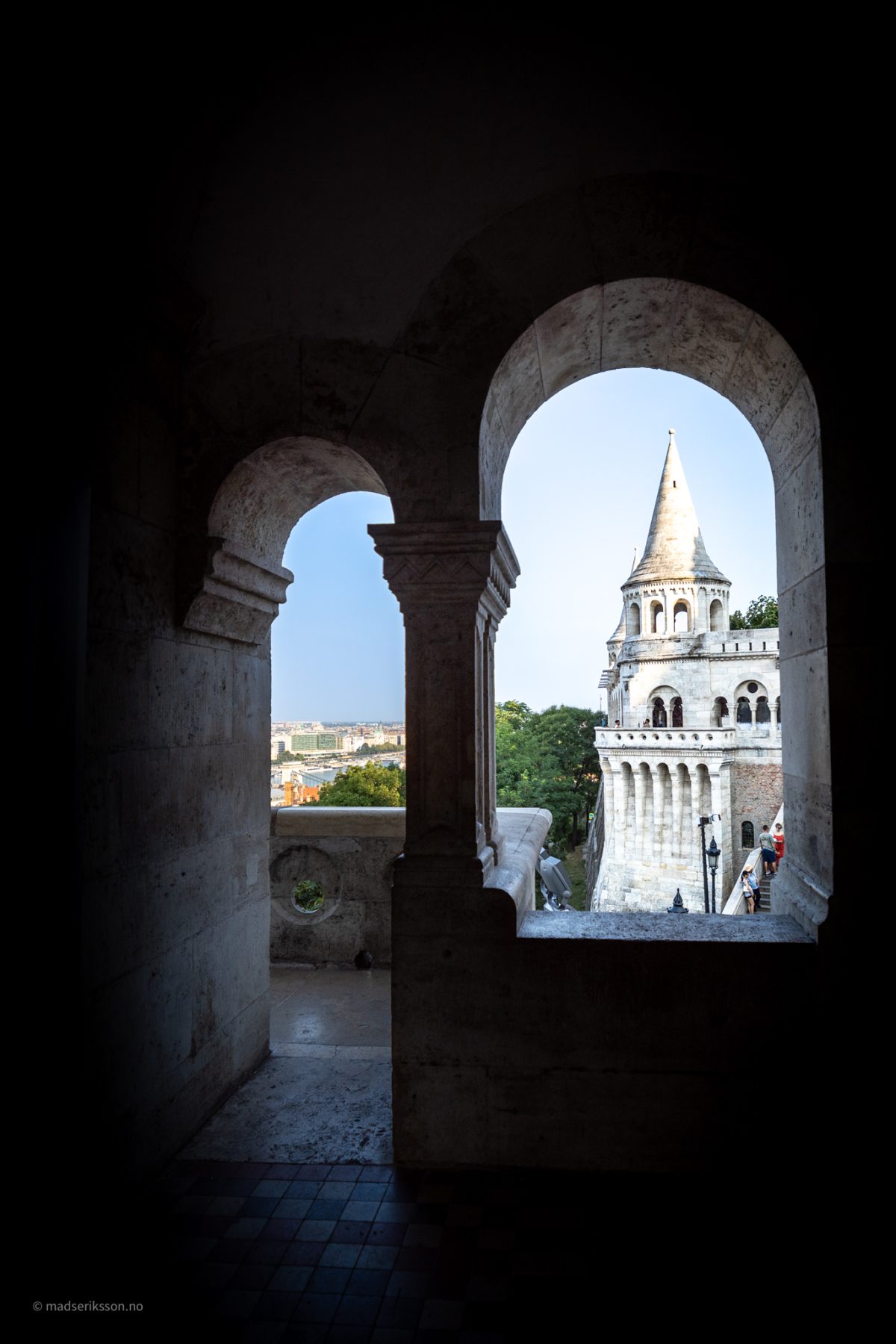
Every arch a window
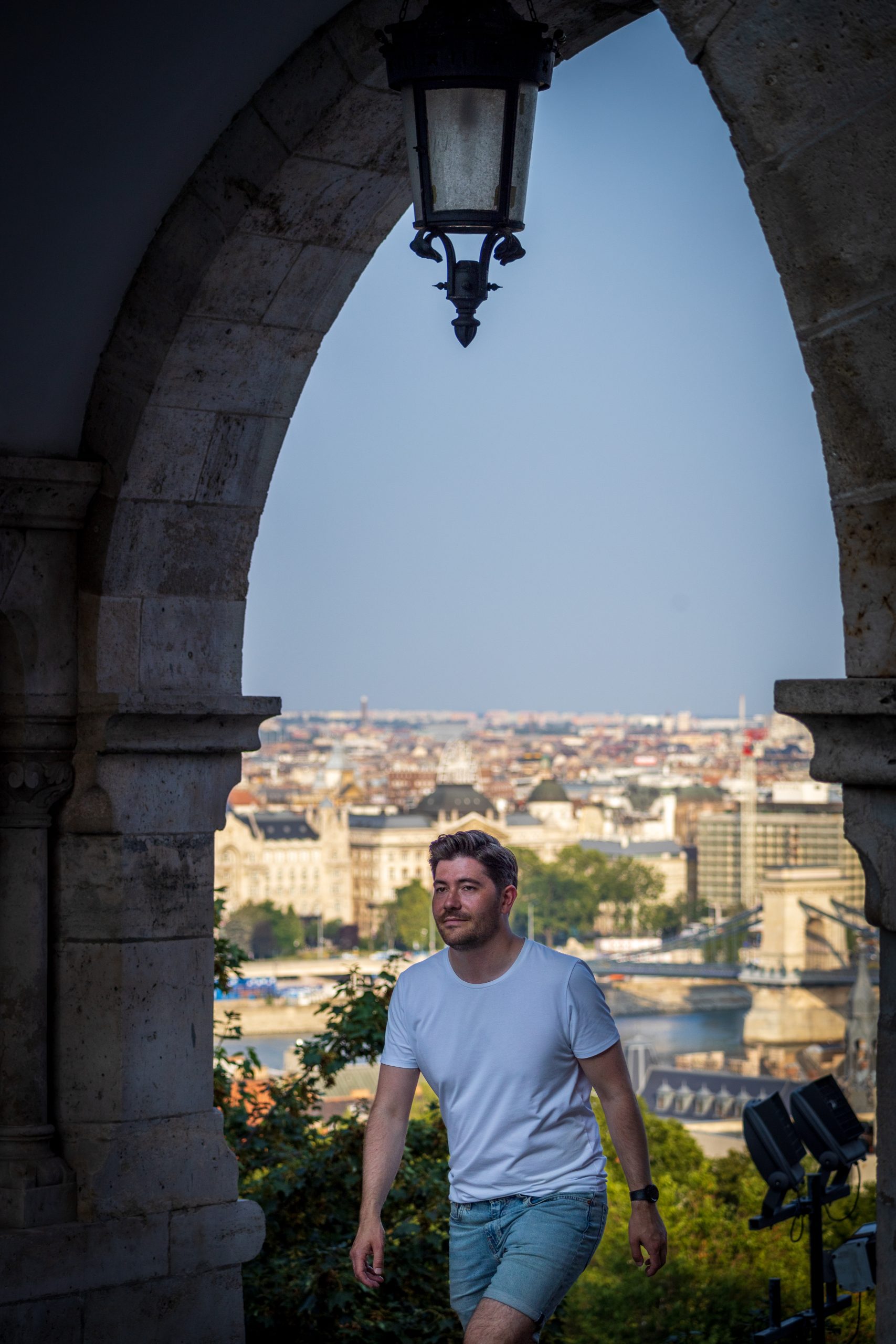
The bastion is a promenade more than a building: there is nothing inside to visit, and the point is the route along the top. The lower terraces, the staircases and the area around the St Stephen statue are free at all hours. The upper turrets and top walkway charge a fee during the day, HUF 1,700 in 2026 and card only; outside those hours the whole bastion is free.
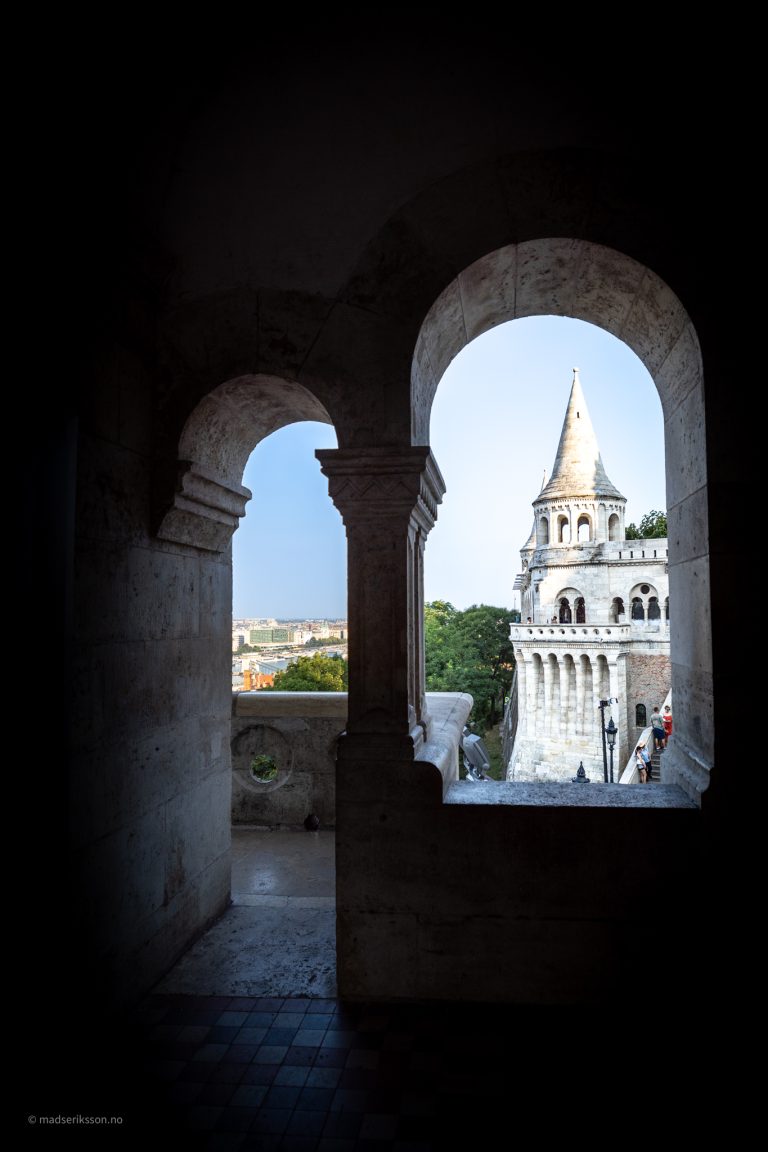
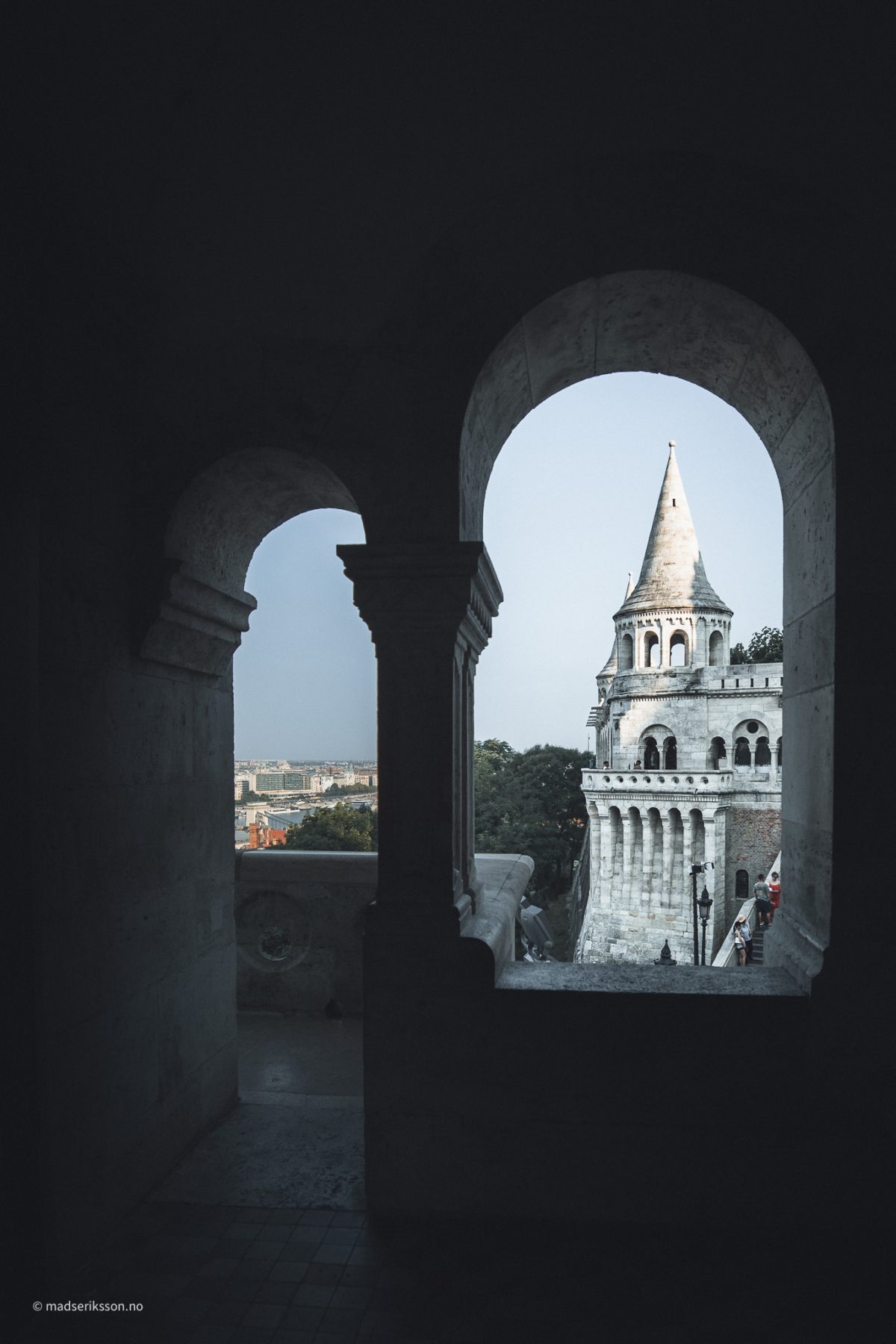
A white turret of Fisherman’s Bastion framed by the arched windows of one of its own arcades
The building the bastion was made for
Officially the Church of the Assumption, the Matthias Church was Buda’s main mosque from 1541 to 1686. Schulek rebuilt it between 1874 and 1896, with its patterned glazed-tile roof and slender main tower, which can be climbed by 197 steps. Franz Joseph was crowned King of Hungary here in 1867. Between church and bastion stands Alajos Stróbl’s equestrian statue of St Stephen, unveiled in 1906.
The building that does not fit
Around the church lies the Castle District, the old walled town of Buda, with cobbled streets running north from Holy Trinity Square and its Baroque plague column towards the Vienna Gate. Right behind the bastion stands the modern Hilton hotel, whose glass façade reflects bastion and church and has been criticised ever since it was built. Ten minutes’ walk to the south is the Royal Palace of Buda Castle.
Pest laid out across the Danube
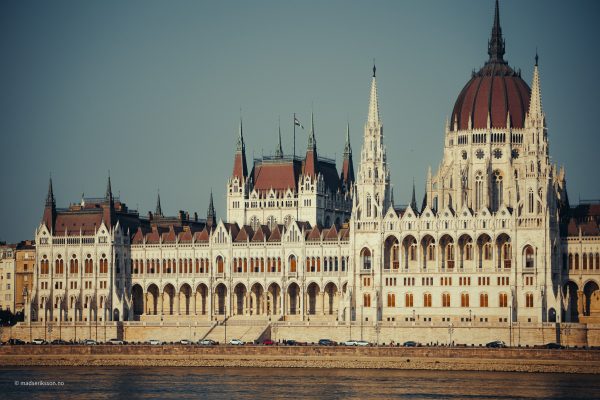
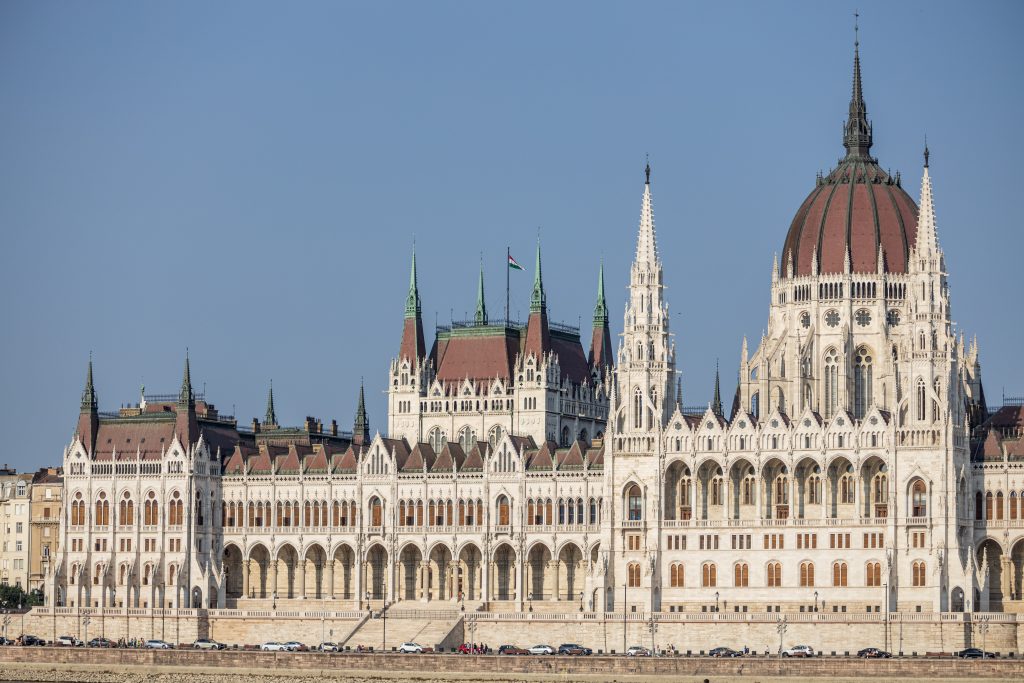
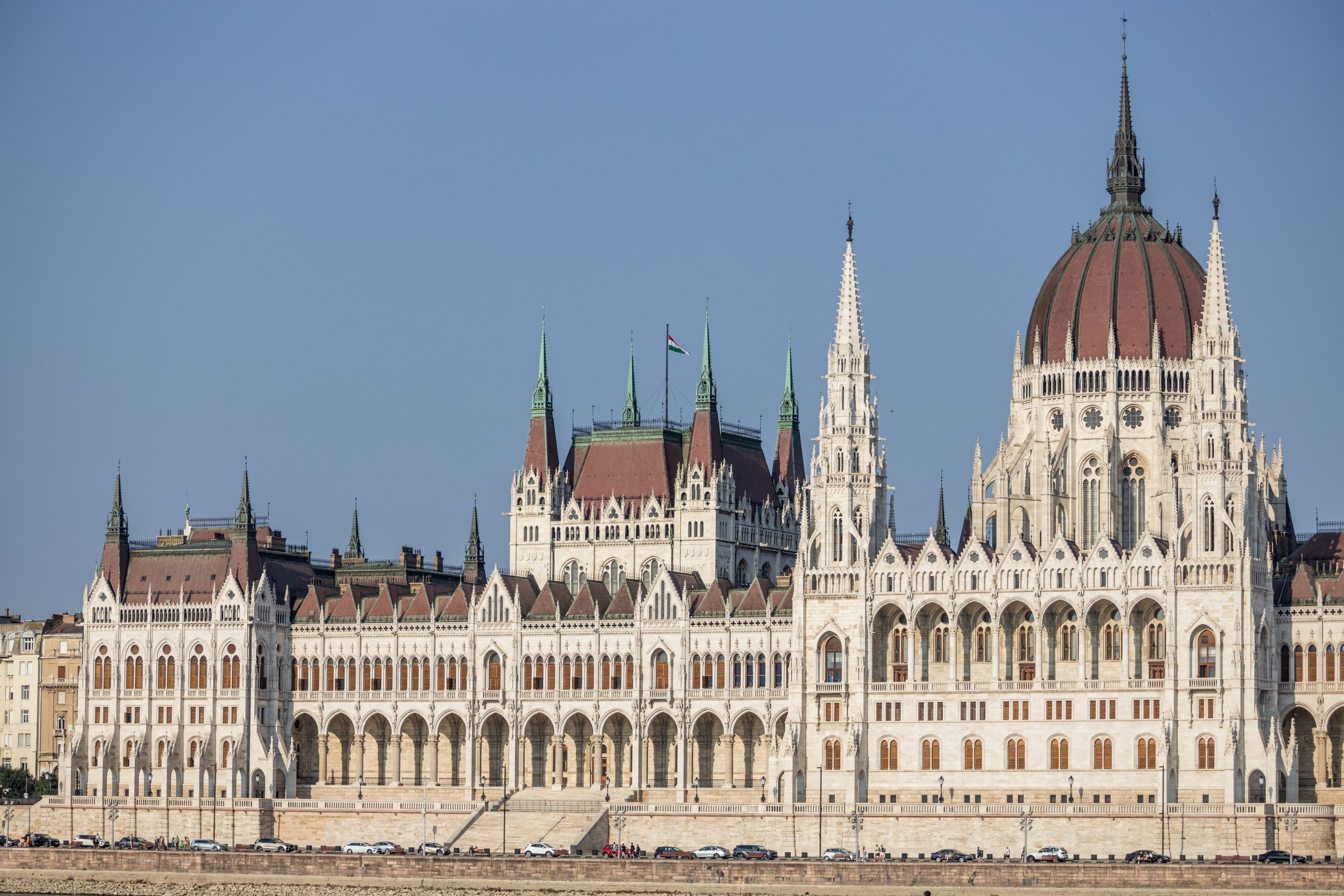
The bastion faces east, and the Parliament, 268 metres long and 96 metres high under its dome, sits directly opposite across the river, just beyond this frame. To the right the Széchenyi Chain Bridge, opened in 1849, crosses below the castle; to the left the river bends north past Margaret Island. Because the sun sets behind the bastion, the evening light falls on Pest rather than in the viewer’s eyes.
The Hungarian Parliament on the bank of the Danube, seen across the river from Buda
Climb from the river
The most rewarding way up is on foot from Batthyány tér on the riverbank, through Víziváros, the old fishermen’s town that probably gave the bastion its name, in around fifteen minutes. The Budavári Sikló, a funicular of 1870, climbs from Clark Ádám tér at the Buda end of the Chain Bridge to the palace, about ten minutes’ walk south of the bastion.
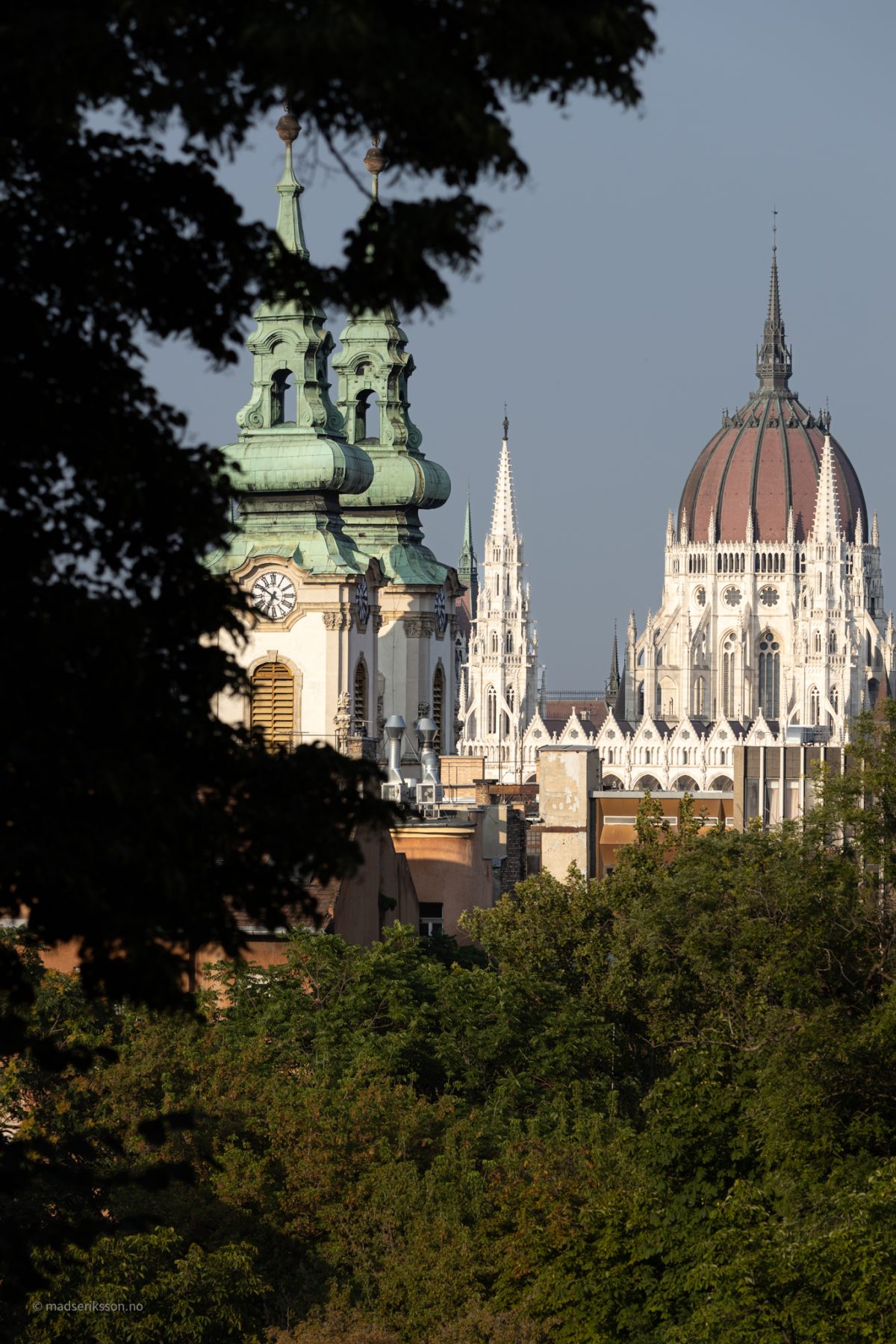
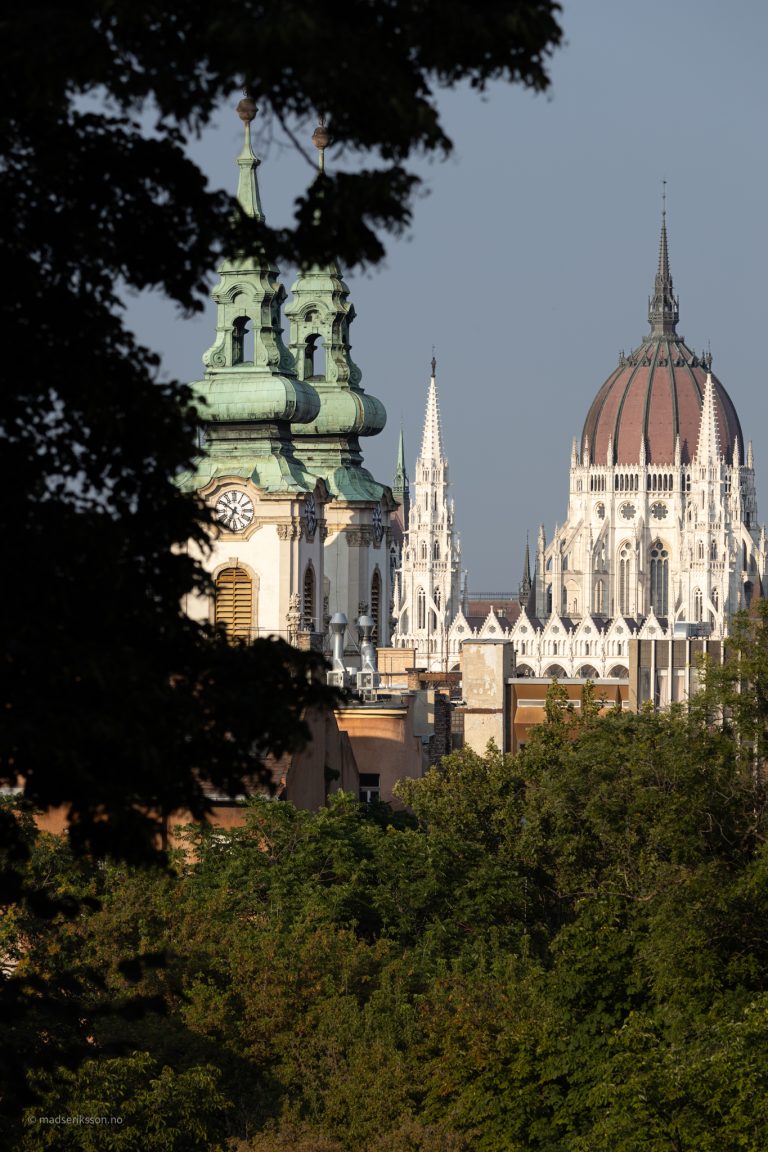
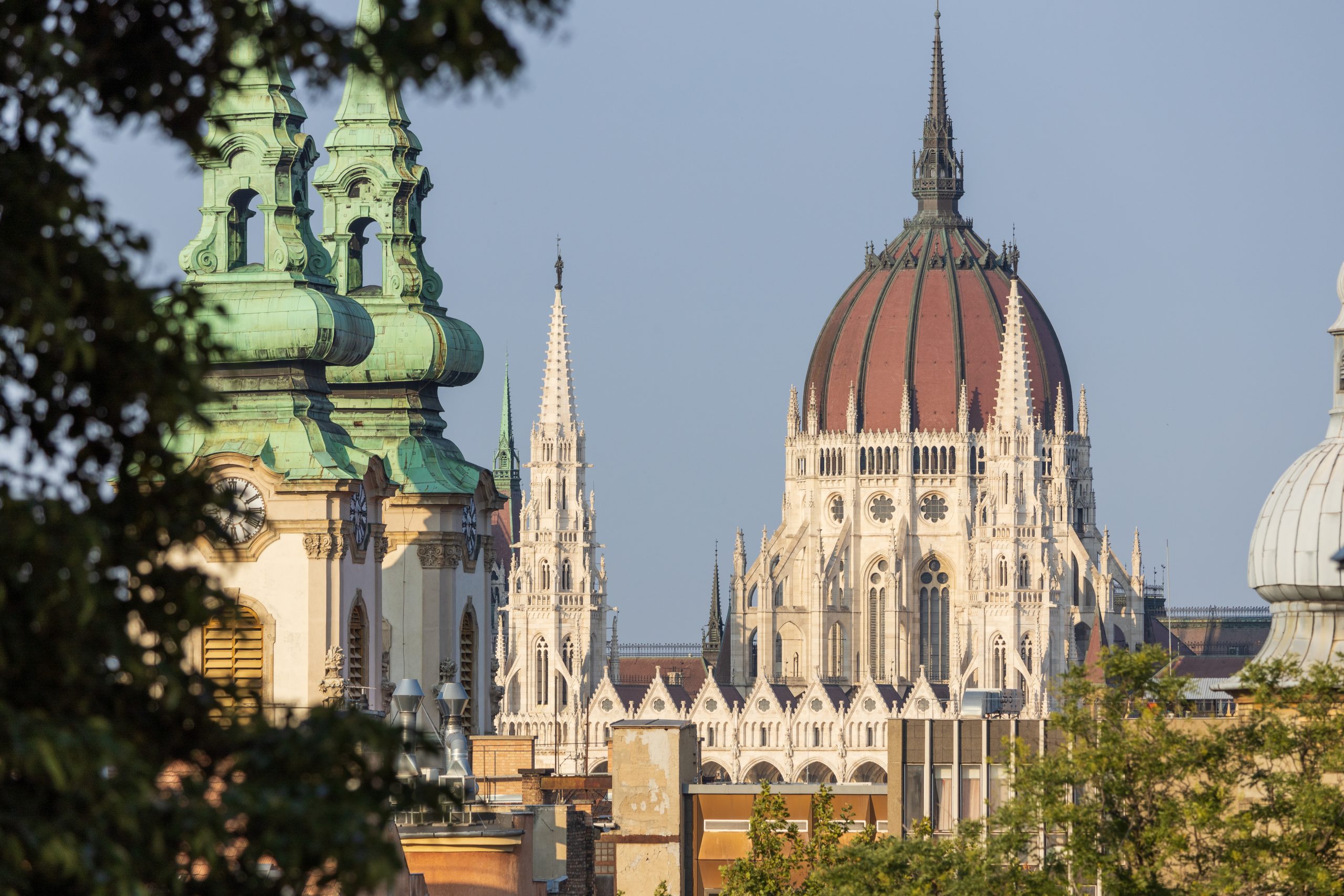
The dome of the Hungarian Parliament and green church towers seen through the trees below Fisherman’s Bastion
3D model © 2026 madseriksson.no · Photographs © madseriksson.no. Buildings, walls and paths: © OpenStreetMap contributors (ODbL). Heights of the turrets, the church tower and the houses are simplified and approximate, and Castle Hill is shown flat. Sun positions are approximate.
Building the Bastion — A Fortress for the View
How a romantic stone terrace rose on the medieval walls of Buda for a national jubilee, and why a building that never saw a siege is named after fishermen
In the 1890s the eastern edge of Castle Hill behind the church was still lined with remnants of the old fortifications. Schulek, who had been restoring the Matthias Church since 1874, wanted to frame the church with something that matched its new splendour and to open the hilltop towards the Danube. Work began in 1895, on the foundations of the medieval wall, and went on until 1902. The style he chose was neo-Romanesque, with touches of Gothic: round arches, stocky columns, carved capitals and tall conical roofs, all in white stone that glows in low sun. The original idea of honouring the seven Magyar chieftains with statues here was eventually realised elsewhere, on Heroes’ Square in Pest; on the hill the seven tribes are remembered instead in the seven turrets.
The bastion is a promenade more than a building. Broad staircases climb from the lower walkways to a long cloister-like arcade along the top, and from there to the turrets. There is nothing inside to visit; the point is the route along the top, with the river and the city framed in every arch. In front of the bastion, between it and the church, stands the bronze equestrian statue of St Stephen, the first king of Hungary, by the sculptor Alajos Stróbl, unveiled in 1906 on a richly carved pedestal designed by Schulek himself. The bastion also has a statue of John Hunyadi, the fifteenth-century general who held back the Ottomans.
The name is older than the building. This section of the walls was traditionally linked with the fishermen of the town below the hill, and the popular story says their guild defended it in wartime — a legend that has never been proven, but that gave a nineteenth-century viewing terrace its medieval-sounding name.
The fishermen’s town, Halászváros, lay along the Danube at the foot of the hill, in the area now known as Víziváros, or Watertown, and a fish market is said to have stood nearby. Whatever the truth of the guild story, the name stuck, and the bastion was handed over to the city of Budapest in 1905. It was badly damaged in the siege of Budapest in the winter of 1944–45, when Castle Hill was the last stronghold of the German and Hungarian forces, and was restored after the war. In 1987 it became part of the UNESCO World Heritage Site that covers the banks of the Danube and the Buda Castle Quarter, extended in 2002 to include Andrássy Avenue.
The Matthias Church — The Building the Bastion Was Made For
A medieval church that became a mosque, a coronation church and a showpiece of nineteenth-century restoration, at the heart of Buda’s old castle town
The bastion only makes sense together with the church behind it. Its official name is the Church of the Assumption of Buda Castle, and it has been called the Matthias Church since the nineteenth century, after the fifteenth-century King Matthias Corvinus. Tradition says a church stood here as early as the reign of St Stephen in 1015, though there is no firm evidence for it; the present building is largely Gothic in origin. After the Ottoman conquest of Buda in 1541 it became the city’s main mosque, and it stayed one until the Habsburg armies retook Buda in 1686.
What visitors see today is largely Schulek’s work. Between 1874 and 1896 he rebuilt the church in a richly coloured neo-Gothic manner, restoring what he could of the medieval structure and inventing much of the rest: the patterned glazed-tile roof, the slender main tower and an interior painted from floor to vault with geometric and floral designs in deep reds, greens and golds. Even before the restoration the church was the setting for coronations: Franz Joseph was crowned King of Hungary here in 1867, sealing the compromise that created Austria-Hungary, and in December 1916 the last Habsburg king, Charles IV, was crowned here with Queen Zita. Visits are paid, and the church may close for services: in 2026 a ticket costs HUF 3,400, and the tower, reached by 197 steps with no lift, costs HUF 4,000 and is visited in timed slots.
From the bastion the church is seen at its most theatrical: the coloured roof tiles, the white stone of the arcades and the bronze king on horseback, all composed by the same architect as a single picture.
Around the church lies the Castle District, the old walled town of Buda, with cobbled streets of Baroque and earlier houses running north from the Holy Trinity Square — named after the ornate Baroque plague column at its centre — towards the Vienna Gate. Right behind the bastion is the one building that does not fit: the modern Hilton hotel, whose glass façade reflects the bastion and the church and has been criticised ever since it was built for intruding on Schulek’s ensemble. Ten minutes’ walk to the south is the Royal Palace of Buda Castle, home to the Hungarian National Gallery, and the whole hill is easily combined with the rest of Budapest across the river.
The View — Pest Laid Out Across the Danube
What can be seen from the terraces, which parts are free and which are paid, and how to reach the top of the hill without the crowds
The view is the reason the bastion exists. It faces east, straight across the Danube to Pest, and the Hungarian Parliament — 268 metres long and 96 metres high under its dome — sits directly opposite, close enough to read the detail of its Gothic Revival spires. To the right the Széchenyi Chain Bridge, opened in 1849, crosses the river below the castle; to the left the river bends north past Margaret Island; behind the Parliament the domes and towers of Pest, among them St Stephen’s Basilica, spread out to the flat horizon. To the south, Gellért Hill rises above the bridges. Because the bastion faces east, the sun sets behind it: in the evening the light falls on Pest rather than in the viewer’s eyes, and the Parliament turns gold before its floodlights come on.
Much of the bastion is free. The lower terraces, the staircases and the area around the St Stephen statue are open to everyone at all hours, and the views from them are excellent. The upper turrets and the top walkway charge a fee during the day: in 2026 a ticket costs HUF 1,700, paid by card only, with half price for students, children aged 6 to 14 and EU pensioners. The paid section is open from 09:00 to 19:00, extended to 21:00 from June to September; outside those hours, and all day on the national holidays of 15 March, 20 August and 23 October and from 24 to 31 December, the whole bastion is free. A café-restaurant occupies part of the upper level.
The bastion is at its best when the crowds are elsewhere. At sunrise the light comes up behind the Parliament and the terraces are almost deserted; late at night the whole of Pest is lit up across the river, and the turrets are free to wander.
There are several ways up the hill. The Budavári Sikló, a funicular dating from 1870, climbs from Clark Ádám tér at the Buda end of the Chain Bridge to the palace in about a minute and a half; in 2026 it runs from 08:00 to 22:00 and costs HUF 4,500 one way, with closures for maintenance on some Mondays and for a week or two in spring and autumn. From the funicular the bastion is a walk of about ten minutes north. Buses 16, 16A and 116 are cheaper and run to the top from Deák Ferenc tér and Széll Kálmán tér on ordinary public-transport tickets. The most rewarding way, though, is on foot: from Batthyány tér on the riverbank, steps and paths climb directly up through Víziváros — the old fishermen’s town — to the foot of the bastion in around fifteen minutes.
«Fisherman’s Bastion is a piece of nineteenth-century theatre: a fortress that never fought, named after fishermen who may never have defended it, built to frame a church and a view. That is exactly why it works. Every arch is a window on the Danube, every turret a different angle on the Parliament, and the whole structure turns a walk along the edge of Castle Hill into a procession. Skip the busiest hours, walk up from the river through the old fishermen’s town, and arrive as the light comes up over Pest or as the city lights come on.»

More in the same area
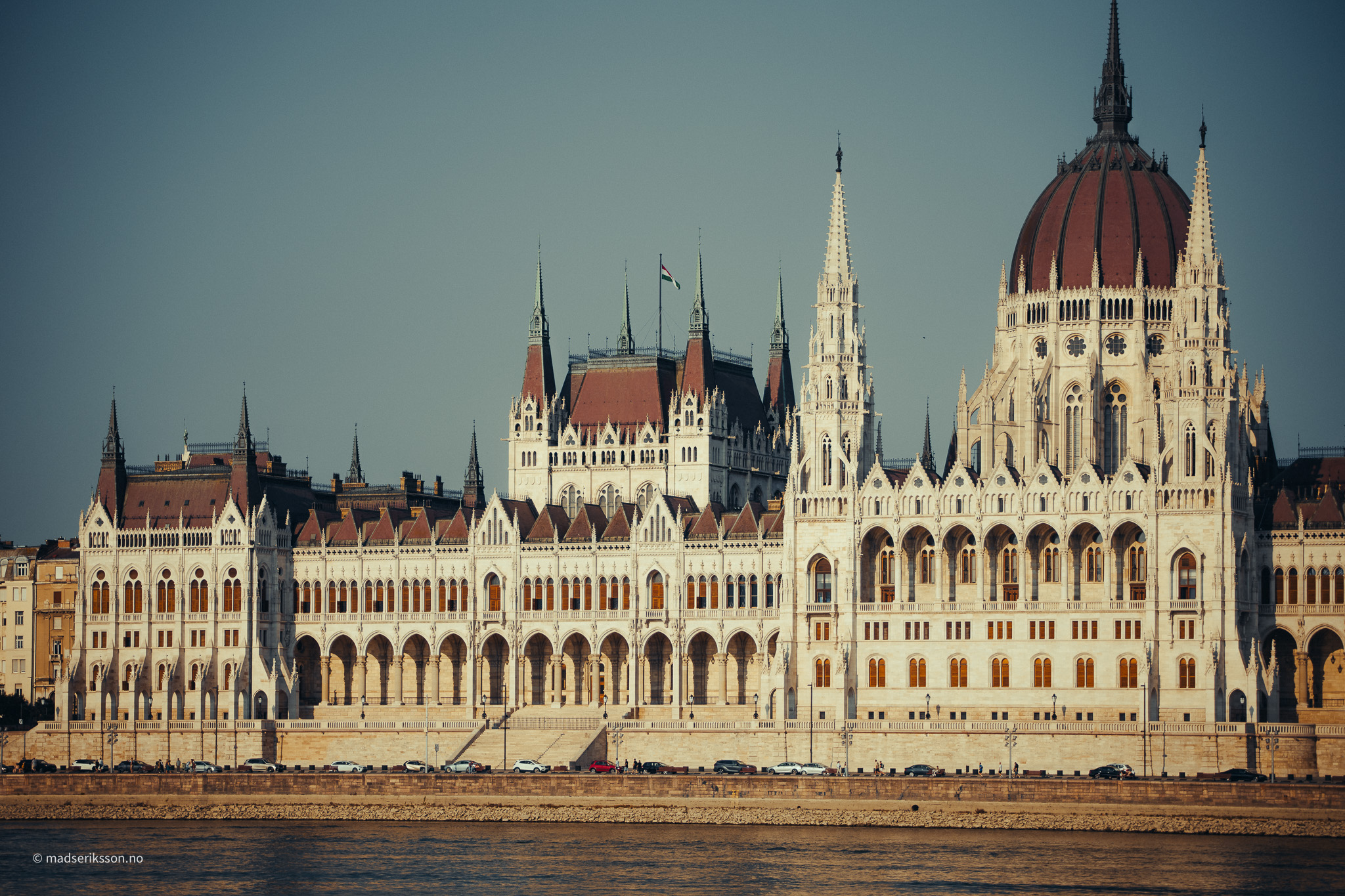 CitiesBudapest: Two Cities, One River and 125 Hot Springs
 CitiesThe World’s 10 Great Food Markets
 ArchitectureTen Buildings That Changed Their Cities — Modern Architecture Ranked on Impact, Not Image
 CitiesHiroshima and Miyajima: A preserved ruin and a shrine on the tideline
 CitiesThe World’s 10 Most Beautiful City Parks
 CitiesBangkok — the World’s most visited City