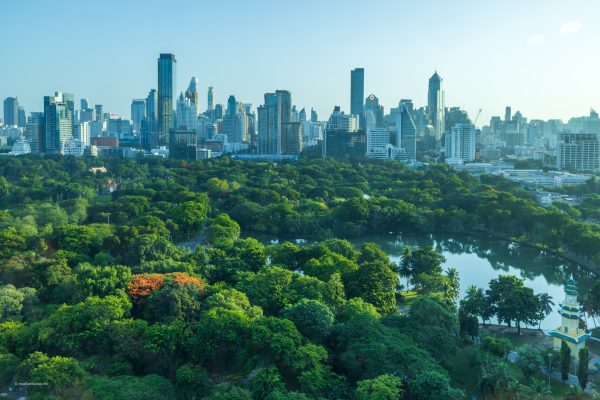
There are cities, and then there are metropolises on a scale that strains comprehension. Tokyo has more people than the entire population of Canada. Delhi is growing by nearly a million residents per year. The Greater Tokyo Area alone generates an economic output comparable to the entire GDP of France. These are not just large cities — they are civilisations unto themselves, operating at a density and complexity that the human brain did not evolve to process. This is a guide to the ten largest metropolitan areas on Earth: where they are, why they grew, what they contain, and what it means to live in one.

The concept of the megacity — a metropolitan area with more than 10 million inhabitants — is a recent invention. In 1950, only New York and Tokyo exceeded that threshold. By 2025, there were more than 35 megacities in the world, and the number is growing. The largest of them are concentrated in Asia, which holds seven of the top ten, a reflection of the extraordinary speed of urban growth in India, China and Bangladesh over the past half-century. The forces that drive this concentration are not accidental: cities offer access to labour markets, healthcare, education and economic networks that rural areas cannot match, and once a city reaches a certain scale, these advantages compound. People come because others came before them. The largest cities are large partly because they are large.
Ranking the world’s largest cities is more complicated than it appears, because the answer depends on definition. A city proper — the area within the administrative boundaries of the named city — gives very different numbers from a metropolitan area (the city and its commuter hinterland) or an urban agglomeration (the continuously built-up physical extent of settlement). By city proper, Chongqing would be the largest city in the world; by urban agglomeration, as used by the United Nations and most demographic authorities, Tokyo is first by a considerable margin. The rankings in this article use the UN definition of urban agglomeration — the most meaningful measure for understanding how many people actually function within a single urban economic and social system — with data from the UN World Urbanization Prospects 2025 report.
How to read this ranking
This guide covers the ten largest metropolitan areas in the world in three sections: the top three (Tokyo, Delhi and Shanghai), which are in a size category of their own; the middle three (Dhaka, São Paulo and Cairo), which represent the fastest-growing megacity regions on Earth; and the third group (Mexico City, Beijing, Mumbai and Osaka), which includes two of Asia’s most historically significant cities and the largest metropolises of Latin America and Africa. A final section connects this global context to the cities covered in depth on madseriksson.no — including Tokyo, Mexico City, Osaka and Seoul.
#1 Tokyo — The City That Proved It Was Possible
37 million people, the world’s most punctual rail network, more Michelin stars than any other city, and the quietest streets of any metropolis at this scale
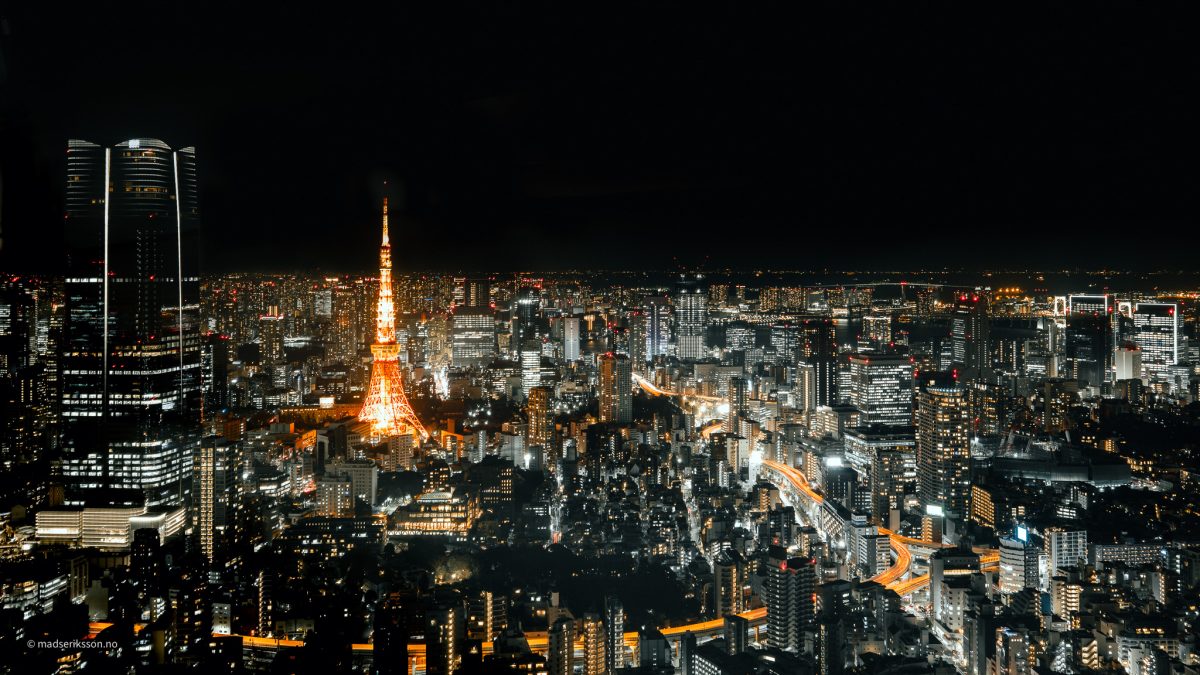
The Greater Tokyo Area — encompassing Tokyo prefecture and the surrounding prefectures of Kanagawa, Saitama and Chiba — has been the largest metropolitan area in the world since the 1960s and holds that position by a margin of more than 3 million people over its nearest rival. Its approximately 37 million inhabitants represent about 30% of Japan’s entire national population concentrated in a single metropolitan region. Tokyo works at a scale that should not function as smoothly as it does: the rail network moves more than 40 million passengers per day with a punctuality measured in seconds; the food supply is coordinated through dozens of specialist wholesale markets; and the cultural output — in architecture, cinema, manga, fashion, cuisine — has shaped global culture for half a century. It is the proof of concept for the proposition that a very large city can work.
What makes Tokyo remarkable is not its size but its texture. It is a city of overlapping neighbourhood characters — the hypermodern commercial density of Shinjuku and Shibuya, the traditional wooden temples of Yanaka, the nightlife of Shimokitazawa, the fish market culture of the Toyosu market — each operating at a human scale within the larger whole. Crime is among the lowest in the world for a city of any size; the streets are clean; public transport is reliable to the minute. None of this happened by accident: it is the product of decades of investment, institutional culture and a citizenry that treats the shared city as a common project. Tokyo is also, uniquely, a megacity that is beginning to shrink: Japan’s declining birth rate means Tokyo’s population has slowly declined from its peak, and the city is navigating questions about contraction that no megacity has previously had to answer.
Tokyo’s Yamanote Line — the circular railway linking the city’s major hubs — runs a train every 2–3 minutes. If a service is more than 1 minute late, the driver apologises over the intercom. If it is more than 5 minutes late, JR East issues a formal letter of apology to passengers who need it for their employers.
The metropolitan economy generates an estimated GDP of approximately $2 trillion USD — comparable to the entire economic output of countries like Italy or South Korea. Tokyo has more Michelin-starred restaurants than any other city in the world, a distinction it has held for over a decade. The city hosted the Olympic Games in 1964 and 2021. Day trips from Tokyo to Nikko, Kamakura, Hakone and Mount Fuji extend the experience of the metropolitan area into some of the finest natural and historical landscapes in Japan. Full Tokyo guide on madseriksson.no →
#2 Delhi — The Seven Cities and the One That Is Still Growing
34 million people, growing by one million per year, built on the ruins of seven successive cities — and projected to become the world’s largest metropolis before 2030
Delhi — the National Capital Territory of Delhi and the wider National Capital Region surrounding it — has approximately 34 million people and is growing at close to one million per year. At current rates it will overtake Tokyo as the world’s largest metropolitan area before 2030. The site has been inhabited continuously for over three millennia, and the ruins of seven successive cities are visible across what is now the southern part of the metropolitan area: Lal Kot, Siri, Tughlaqabad, Jahanpanah, Ferozabad, Shergarh and finally Shahjahanabad — the walled Mughal city built by Emperor Shah Jahan in the 1630s, now known as Old Delhi. Adjacent to it stands the British imperial capital of New Delhi, designed by Edwin Lutyens and Herbert Baker and built between 1911 and 1931: the Rajpath (now Kartavya Path), Rashtrapati Bhavan and the Secretariat buildings represent the most complete surviving example of British imperial civic architecture.
The challenge Delhi faces is the challenge of absorbing one million new residents every year with adequate infrastructure, housing, air quality and public services. The city’s air pollution — among the worst of any major city in the world, particularly in winter when temperature inversions trap particulate matter from vehicles, industry and agricultural burning — is one of the most serious public health crises in any megacity. The Delhi Metro, opened in 2002 and now running nine lines across 390 kilometres, is one of the most significant infrastructure achievements in modern Indian history and has demonstrably reduced road congestion; the system continues to expand. The contrast between the Mughal monuments of Old Delhi, the colonial grandeur of New Delhi, and the chaotic modernity of the satellite cities stretching toward Noida, Gurugram and Faridabad captures the full range of what a city of this age, scale and ambition contains.
Delhi has been capital of the subcontinent more times than any other city. Seven cities have risen and fallen on this site. The eighth — the current one — is growing faster than any of them did, and will be the largest city on Earth within this decade.
#3 Shanghai — The Skyline Built in 25 Years
30 million people, China’s financial capital, and a Pudong skyline that rose from agricultural land to global landmark between 1990 and 2015
Shanghai, China’s largest city and its financial capital, has approximately 30 million people and a skyline that has become one of the defining visual documents of China’s economic rise. Pudong — the financial and commercial district on the east bank of the Huangpu River, across from the historic Bund waterfront — was largely agricultural land in 1990. The Oriental Pearl Tower (1994), the Jin Mao Tower (1999), the Shanghai World Financial Center (2008) and the Shanghai Tower (2015, 632 metres) rose within 25 years on a site where there had been paddy fields three decades before. The speed of this transformation has no precedent in urban architectural history. Shanghai also operates the world’s busiest container port, handles approximately 45 million TEUs of cargo per year, and has a metro system with over 500 stations across 20 lines — the longest metro network in the world by route length.
Beneath the modernist surface, Shanghai retains substantial traces of its earlier history. The Bund — the 1.5-kilometre waterfront promenade on the west bank of the Huangpu, lined with neoclassical and Art Deco buildings constructed by the British, French and American commercial interests of the International Settlement — is one of the finest colonial-era streetscapes in Asia. The French Concession neighbourhood, with its tree-lined streets, Art Deco apartments and surviving shikumen longtang (stone-gate lane) courtyards, gives the most coherent sense of the cosmopolitan Shanghai of the 1920s and 1930s that has largely disappeared elsewhere. The Yuyuan Garden and the surrounding old city bazaar preserve fragments of the pre-colonial city. Shanghai is the most internationally oriented of China’s major cities and the most accessible for international visitors; its food scene encompasses both the delicate traditions of Shanghainese cuisine (xiaolongbao, hongshao rou, drunken crab) and the full range of international dining.
In 1990, the site of Pudong — now home to the world’s second-tallest building, the world’s busiest port and the headquarters of China’s major financial institutions — was largely paddy fields. The transformation took 25 years.
#4 Dhaka — The Fastest-Growing Megacity on Earth
24 million people in one of the world’s most densely packed cities — a metropolis that grew 60-fold in 75 years, driven by industry, migration and the slow encroachment of the sea
Dhaka, the capital of Bangladesh, is one of the most extraordinary urban phenomena of the modern era: a city that grew from approximately 400,000 people in 1950 to nearly 24 million today — a 60-fold increase in 75 years — on an area of land barely larger than London within its administrative boundaries. The density is extreme: approximately 44,000 people per square kilometre in the city proper, making it one of the most densely inhabited places on Earth. Two forces drive this growth above all others. The first is the garment industry: Bangladesh is the world’s second-largest exporter of ready-made garments after China, and the factories that produce them are concentrated in and around Dhaka. The industry employs approximately 4 million workers, the majority of them women who have migrated from rural areas. The second is displacement: as sea levels rise and cyclone frequency increases in the Ganges–Brahmaputra delta, millions of people are leaving low-lying coastal areas and river islands and moving to the city.
Dhaka is in this respect a city whose future is inseparable from the global climate trajectory. It sits in one of the most climate-vulnerable river deltas on Earth; significant parts of Bangladesh are projected to be regularly inundated by 2050 if current warming trends continue, which would make the urban migration pressures of the past 75 years look modest by comparison. The city’s infrastructure — its roads, its drainage, its power supply — was not designed for the population it now contains and is under continuous strain. And yet Dhaka functions: it feeds and clothes and educates its 24 million people, operates a garment industry that supplies much of the world’s fast fashion, and produces a cultural and political life of considerable complexity. It is the most important test case for the proposition that very rapidly growing cities in climate-vulnerable locations can be made liveable.
Dhaka grew 60-fold in 75 years. No city in the history of human settlement has absorbed that rate of growth into an infrastructure not designed for it. The people who live there, largely, made it work anyway. The next 25 years will be harder.
#5 São Paulo — The Largest City in the Southern Hemisphere
23 million people, the financial engine of Latin America, the city with the world’s largest Japanese diaspora outside Japan — and the helicopter capital of the world
São Paulo, with approximately 23 million people in its metropolitan area, is the largest city in the Southern Hemisphere, the largest in the Americas south of Mexico City, and the financial and cultural capital of Brazil. Founded by Jesuit missionaries in 1554, it remained a modest colonial town until the coffee economy of the 19th century and the industrial transformation of the 20th century turned it into one of the most economically significant cities in the developing world. It generates approximately 10% of Brazil’s GDP. The city’s diversity is one of its defining characteristics: São Paulo has the largest Japanese diaspora outside Japan — approximately 1.5 million people of Japanese descent, a legacy of the immigration programmes of the early 20th century — alongside significant Lebanese, Italian, Korean, German and Bolivian communities. The neighbourhood of Liberdãde is the largest Japanese community outside Japan in a single urban area; the neighbourhood of Bom Retiro has historically been the centre of Jewish and then Korean commercial culture.
São Paulo is also the helicopter capital of the world by any measure: it has more registered private helicopters than any other city, a consequence of extreme traffic congestion and the security concerns of the wealthy, who use helicopters to travel between rooftop helipads in a city where road journeys can take hours for distances of a few kilometres. The contrast between the helicopter-borne business class and the 20 million others navigating the sprawling periphery is São Paulo’s most visceral expression of Brazilian inequality. The city’s cultural life — its art museums, its restaurant scene, its music venues, its street art — is the richest in Latin America. The Pinacoteca do Estado, the MASP (Museu de Arte de São Paulo) and the Vila Madalena neighbourhood are the anchors of a cultural geography that rewards serious attention.
São Paulo has more registered private helicopters than any other city in the world. The wealthy use them because the traffic is so extreme that road journeys of 10 kilometres can take 90 minutes. The helicopters fly over 20 million people who do not have that option.
#6 Cairo — The Largest City in Africa and the Arab World
23 million people at the point where the Nile valley opens into the delta, where ancient Egypt built its first capitals and where the Arab world built its most important medieval city
Cairo, the capital of Egypt, is the largest city in Africa and the largest in the Arab world, with approximately 23 million people in its metropolitan area. The site has been at the centre of Egyptian civilisation for more than 5,000 years: the ancient capital of Memphis was founded just south of what is now Cairo around 3100 BCE; the Arab conquerors founded the garrison town of Fustat on the Nile bank in 641 CE; and the Fatimid dynasty founded the city of al-Qāhira — “the victorious”, from which the name Cairo derives — in 969 CE. The medieval Islamic city that developed from the Fatimid foundation was inscribed as a UNESCO World Heritage Site in 1979: its concentration of mosques, madrasas, mausoleums and khan (merchant buildings) from the Fatimid, Mamluk and Ottoman periods represents the most complete surviving ensemble of medieval Islamic urban architecture in the world. The Khan el-Khalili bazaar, established in the 14th century, is still operating and still selling the same categories of goods — spices, textiles, metalwork, perfume — in essentially the same physical spaces.
The Giza pyramid complex — home to the Great Pyramid of Khufu, the only surviving ancient Wonder of the World, along with the pyramids of Khafre and Menkaure and the Great Sphinx — is 20 kilometres southwest of central Cairo, now effectively within the metropolitan area as the city has expanded across the desert plateau. The Egyptian Museum on Tahrir Square holds the world’s most important collection of ancient Egyptian artefacts, including the complete treasures of Tutankhamun; the new Grand Egyptian Museum at Giza, opened in phases from 2022, is the largest archaeological museum in the world by floor area. Cairo is also the city where the Arab Spring of 2011 found its most dramatic expression: the occupation of Tahrir Square by millions of Egyptians that led to the resignation of President Hosni Mubarak after 30 years of rule remains one of the most significant political events in the recent history of the Arab world.
The Great Pyramid of Giza was the tallest structure in the world for 3,800 years — from its completion around 2560 BCE until the Lincoln Cathedral spire was built in 1311 CE. It stands 20 kilometres from the centre of a city of 23 million people.
#7 Mexico City — The Aztec Capital That Never Stopped
23 million people, 2,240 metres above sea level, built on the ruins of Tenochtitlan and still sinking slowly into the lake bed from which the Aztecs reclaimed it
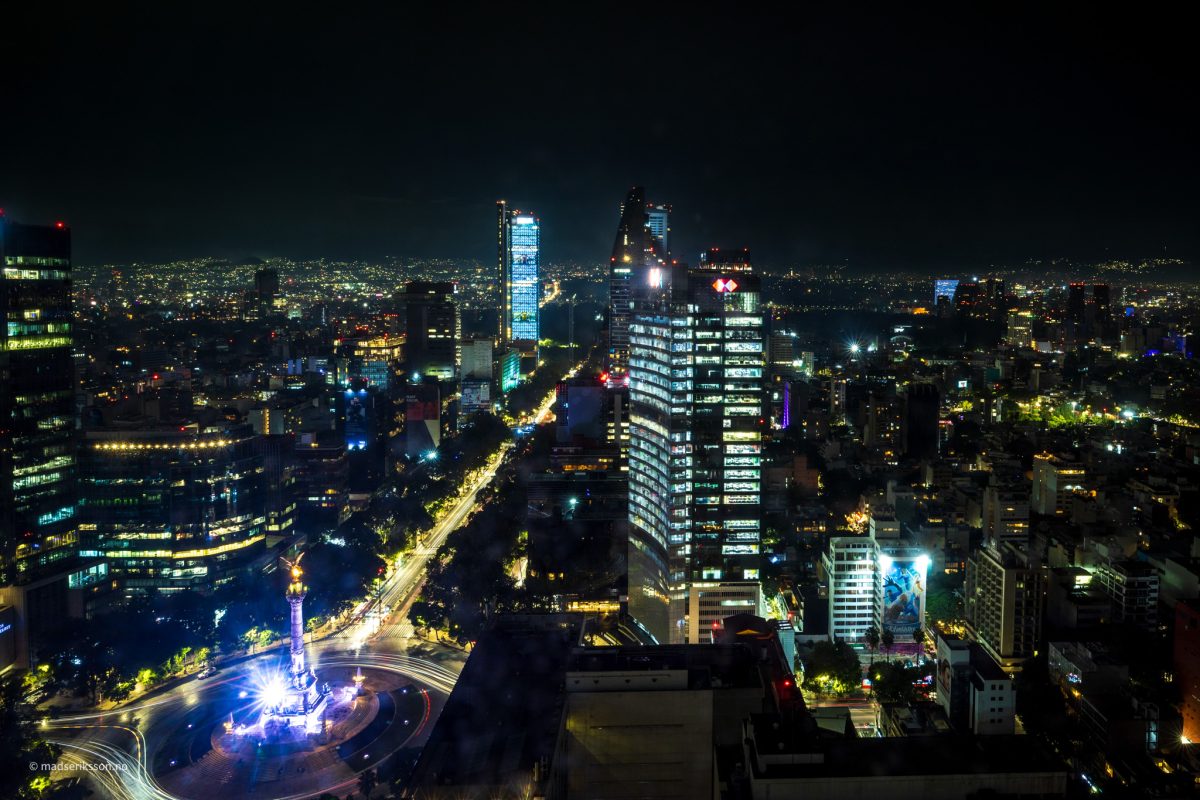
Mexico City — Ciudad de México, CDMX — sits at 2,240 metres above sea level in a mountain basin surrounded by volcanoes, and has approximately 23 million people in its metropolitan area. It is one of the oldest continuously inhabited urban sites in the Americas, founded in 1325 as Tenochtitlan by the Mexica people on an island in Lake Texcoco. By the time Hernán Cortés arrived in 1519, it was one of the largest cities in the world. Cortés conquered and demolished it in 1521 and built the Spanish colonial capital of New Spain directly on the rubble — on the same streets, on the same foundations, in some cases using the same stones. The Metropolitan Cathedral stands on the foundations of the Aztec ceremonial precinct. The Templo Mayor — the main pyramid of Tenochtitlan — was rediscovered in 1978 when electricity workers struck a massive carved stone disc beneath the streets of the historic centre, and is still being excavated. The historic centre was inscribed as a UNESCO World Heritage Site in 1987.
The city has been slowly sinking into the drained lake bed on which it was built ever since the colonial period — at rates of up to 10 centimetres per year in some areas, as groundwater is extracted from the aquifer below. Some parts of the historic centre have subsided by more than 9 metres since the Spanish colonial period. The uneven subsidence has tilted the Cathedral and many other historic buildings visibly off vertical. Mexico City is also, beside these extraordinary physical and historical challenges, one of the great food cities of the world: the birthplace of mole, the taco, the tamale and a culinary tradition that UNESCO inscribed as Intangible Cultural Heritage in 2010. The neighbourhood restaurants of Roma and Condesa, the Gwangjang-equivalent street food of Tlatelolco, and the extraordinary Museo Nacional de Antropología — which holds the finest pre-Columbian collection in existence — make Mexico City one of the most culturally dense destinations in the Americas. Full Mexico City guide on madseriksson.no →
Mexico City is sinking at up to 10 centimetres per year. The Metropolitan Cathedral has sunk more than 2 metres since it was completed in 1813. The Aztecs built on a lake; the Spanish built on the Aztecs; and the lake is slowly reasserting itself.
#8 Beijing — The Imperial Capital at the Centre of the World
22 million people arranged around the Forbidden City, a palace complex built in 1420 that still occupies the exact geographical centre of a city of extraordinary historical and political weight
Beijing, the capital of China and home to approximately 22 million people, has been the political centre of the Chinese state for most of the past eight centuries. The Forbidden City — the palace complex built for the Ming Emperor Yongle between 1406 and 1420 and home to 24 successive emperors of the Ming and Qing dynasties — sits at the exact geographical and symbolic centre of the city, with Tiananmen Square (the largest public square in the world at 440,000 square metres) immediately to its south and the full apparatus of the Chinese state arranged around it in concentric rings of political significance. The city has seven UNESCO World Heritage Sites: the Forbidden City, the Temple of Heaven, the Summer Palace, the Ming Tombs, the Great Wall sections near the city, the Zhoukoudian archaeological site, and the Grand Canal. No other city in China, and few in the world, have this concentration of historically significant monuments.
The contemporary city that has grown around these historical layers is a product of extraordinary speed: Beijing’s subway system, which had only two lines in 2000, now has over 27 lines and 700 stations — the longest metro network by number of stations in the world. The 2008 Olympic Games produced the Bird’s Nest stadium (Herzog & de Meuron) and the Water Cube aquatics centre, both of which remain in use and represent the most architecturally significant Olympic venues built in the 21st century. Beijing hosted the Winter Olympics in 2022, becoming the first city to host both Summer and Winter Games. The hutong — the traditional alley neighbourhoods of the old city within the Second Ring Road — are under continuous threat from redevelopment but retain, in the areas around Nanluoguxiang and Shichahai, some of the most atmospheric urban fabric in Asia: narrow lanes, courtyard houses, tea shops and the particular quality of a city where ancient and modern coexist at centimetre distance.
The Forbidden City was built in 15 years with a workforce estimated at one million people. It contains 980 buildings, approximately 9,000 rooms, and sits at the geographical centre of a city of 22 million. It has been there, uninterrupted, since 1420.
#9 Mumbai — India’s Financial Engine on Seven Islands
22 million people on a narrow peninsula that was seven separate islands until the 18th century — the city that drives Indian finance, cinema and fashion while containing Asia’s largest informal settlement
Mumbai, the capital of Maharashtra state and India’s financial capital, has approximately 22 million people and generates around 6% of India’s total GDP with only 2% of its population — a concentration of economic activity without parallel in the country. The city grew from a cluster of seven low-lying islands in the Arabian Sea, gradually connected by land reclamation projects completed in the late 18th and early 19th centuries under British administration. The Bombay Stock Exchange, established in 1875, is the oldest in Asia. The Bombay — later Mumbai — High Court, Victoria Terminus (now Chhatrapati Shivaji Maharaj Terminus, a UNESCO World Heritage Site), and the Gateway of India represent the architectural ambitions of the British colonial project at its most self-confident. The city was renamed Mumbai in 1995 by the Maharashtra government, asserting the Marathi name used by the local Koli fishing community over the Portuguese-derived Bombay.
Mumbai is simultaneously India’s richest city and one of its most unequal. Antilia — the 27-floor private residence of industrialist Mukesh Ambani, estimated to be the world’s most expensive private home — stands in Altamount Road with a view toward Dharavi, Asia’s largest informal settlement, which houses an estimated one million people in an area of approximately 2.4 square kilometres and generates an estimated $600 million per year in economic activity through its informal economy of recycling, manufacturing and small commerce. Mumbai is also the home of Bollywood — the Hindi-language film industry that produces more films than Hollywood and reaches a global audience of approximately 3 billion people — which operates from studios in the northern suburbs of the city and employs hundreds of thousands of people directly and indirectly. The monsoon, which arrives annually in June and brings 2,400 millimetres of rain over four months, is the defining climatic event of the Mumbai year: the city floods, the transport system struggles, and Mumbaikars carry on.
Dharavi — 2.4 square kilometres, one million people — generates an estimated $600 million per year in economic activity through recycling, garment manufacturing and food production. It is Asia’s largest informal settlement and one of its most productive neighbourhoods per square metre.
#10 Osaka — Japan’s Commercial Soul and the City That Is Learning to Shrink
19 million people across the Kansai region, the city of merchants and food culture, and the first major metropolis in the top 10 to be in active demographic decline
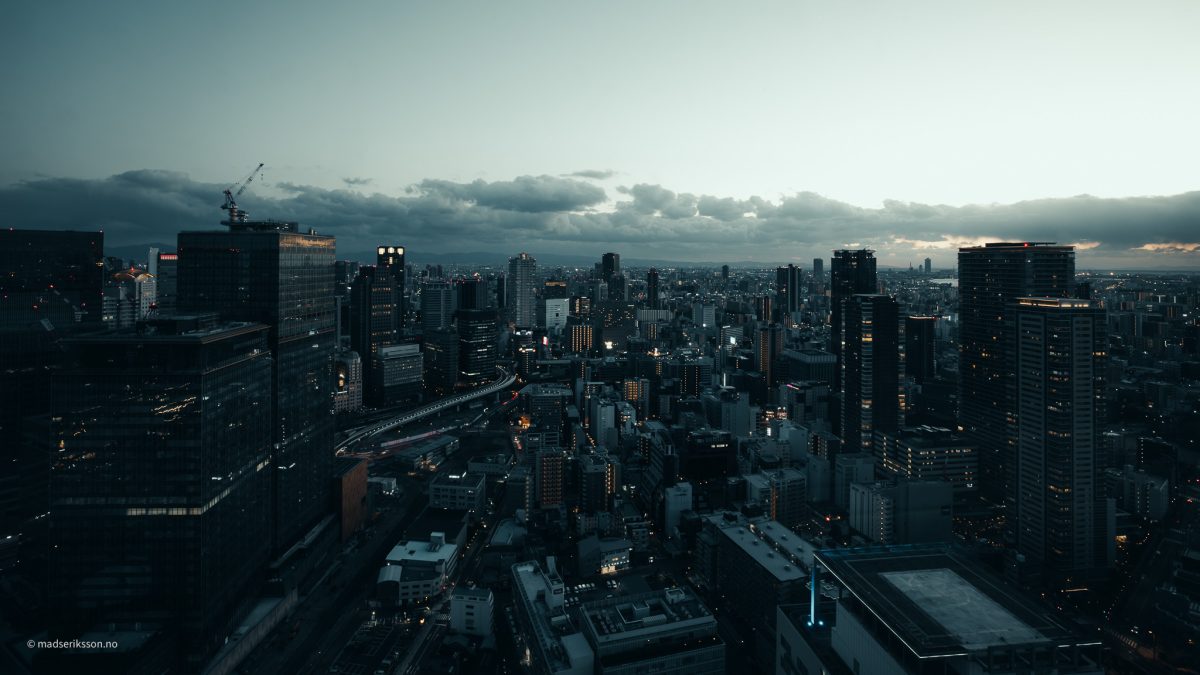
Osaka — or more precisely the Keihanshin Metropolitan Area, encompassing the cities of Osaka, Kobe and Kyoto across the Kansai region — has approximately 19 million people and is the second metropolitan area of Japan, and the number-10 metropolis in the world. Where Tokyo is Japan’s political, cultural and media capital, Osaka is its commercial soul: the city of merchants (its identity as a trading city predates the Edo period), of the Dotonbori entertainment district with its neon-lit bridges and street food stalls, of takoyaki (octopus balls) and kushikatsu (skewered, breaded and fried everything) and the izakayas of Shinsekai. Osakans are famously direct, warm and food-obsessed in a way that they contrast — with evident satisfaction — with what they perceive as Tokyo reserve. The Kansai region also contains Kyoto, the former imperial capital with its extraordinary concentration of Buddhist temples, Shinto shrines and traditional machiya townhouses; Nara, with its freely roaming deer and the great bronze Buddha of Tōdai-ji; and Kobe, the port city that was rebuilt after the devastating earthquake of 1995.
Osaka is, uniquely among the world’s ten largest metropolitan areas, actively shrinking. Japan’s birth rate — approximately 1.2 children per woman, among the lowest in the developed world — and its very limited immigration mean that the Kansai region has been losing population since its mid-20th century peak. The challenges this creates — empty buildings, shrinking tax bases, ageing infrastructure, declining school rolls — are challenges that many developed-world cities will face in the coming decades, and Osaka is navigating them first. The World Expo 2025, hosted by Osaka and the Kansai region on the artificial island of Yumeshima in Osaka Bay, represents both an investment in regeneration and a statement of confidence in the city’s future on its own terms. A shrinking city is not a failing city. Osaka remains one of the finest places to eat, drink and live in Asia. Full Osaka guide on madseriksson.no →
Osaka is the first city in the world’s top 10 that is shrinking by choice — or rather, by consequence of a social model that prioritises quality of life over population growth. It will not be the last. The question Osaka is already answering is the question the rest of the developed world will face within a generation.
«The ten cities in this ranking are not simply large. They are the places where the human experiment with dense collective living is being conducted at its most extreme scale — where the question of whether it is possible to organise a society of 20, 30 or 37 million people into something that functions, that feeds and moves and houses and educates itself, is being answered in real time and with real consequences for the people who live there. Tokyo has so far given the most reassuring answer. Dhaka is living the question at its most urgent. Delhi is about to become the world’s largest city with a trajectory that no previous metropolis has had to navigate. The answers these cities find to the problems of density, infrastructure, climate and governance will shape how the rest of the world’s cities handle the same challenges. The megacity is not an anomaly. It is the future of most of humanity.»
More in the same area
 CitiesThe World’s 10 Great Food Markets
 ArchitectureTen Buildings That Changed Their Cities — Modern Architecture Ranked on Impact, Not Image
 CitiesThe World’s 10 Most Beautiful City Parks
 CitiesFrom Istanbul to Marseille — Europe’s 25 Greatest Cities
 HikingNorway’s 15 Greatest Day Hikes
 GlaciersEurope’s 10 Greatest Glaciers — And How to Experience Them