Teotihuacán was the largest city in the ancient Americas — a planned metropolis of up to 150,000 people built at 2,300 metres above sea level in the high valley northeast of modern Mexico City, its skyline dominated by two colossal pyramids that still rank among the largest structures ever raised by human hands. We do not know who built it. We do not know what language they spoke. We do not know what they called themselves. The Aztecs, arriving centuries after the city’s mysterious collapse, named it Teotihuacán — the Place Where the Gods Were Created — because they could not imagine that mere mortals had raised such monuments.

Founded around 100 BCE in the Basin of Mexico, Teotihuacán grew into a city without parallel in the western hemisphere. At its height between 200 and 600 CE, it covered more than 20 square kilometres and housed a population archaeologists estimate at between 100,000 and 200,000 — one of the five or six largest cities in the world at the time, comparable to Rome or Constantinople. It was the first geometrically planned city in the Americas, laid out on a precise grid oriented 15.5 degrees east of true north — an alignment that places the Pyramid of the Sun in direct relation to the setting sun at both equinoxes. Then, around 550–650 CE, the city burned. The civic and religious buildings along the Avenue of the Dead were torched, and the population dispersed. The city was so completely forgotten that when the Aztecs discovered the ruins centuries later, they had no idea who had built them.
What the Aztecs found — and what you find today — is a site of staggering physical scale and near-total historical mystery. No writing system has been identified. No royal tombs have been positively attributed. The people who engineered the third-largest pyramid in the world left behind extraordinary murals, obsidian tools, and the remains of sacrificial rituals — but not their names. UNESCO inscribed the site as a World Heritage Site in 1987, and it now draws over two million visitors a year, making it one of the most-visited archaeological sites in the Americas. The archaeological zone open to visitors covers 652 acres, and the main circuit involves four to five kilometres of walking in full sun at altitude.
How to approach Teotihuacán
This guide covers the four essential elements of a Teotihuacán visit. We start with the Pyramid of the Sun — the site’s centrepiece and the structure most visitors climb first. We then move north along the Avenue of the Dead to the Pyramid of the Moon, before turning to the Temple of the Feathered Serpent and the site’s remarkable mural programme. The final section covers practical logistics: getting there from Mexico City, tickets, timing, what to bring, and where to eat. The site is 50 kilometres northeast of the capital and most comfortably done as a half-day trip, though a full day rewards those who want to explore beyond the main avenue.
A planned city
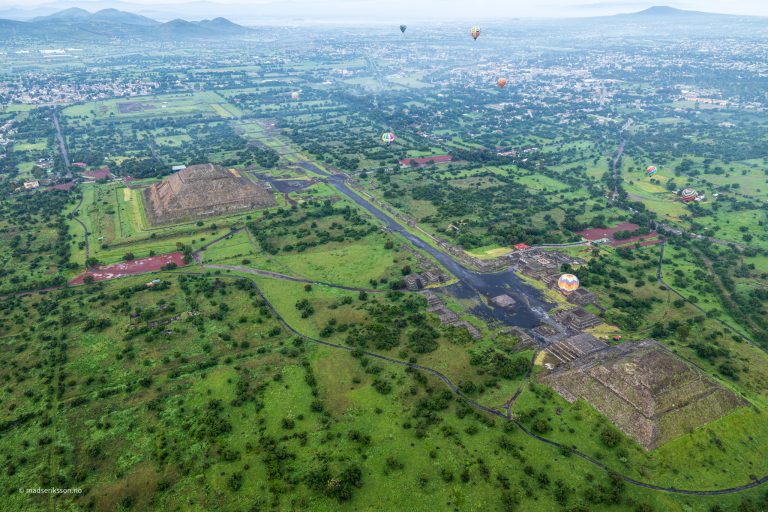
Teotihuacán was the largest city in the ancient Americas, home to up to 150,000 people at 2,300 metres above sea level. It was laid out on a precise grid oriented 15.5 degrees east of true north, and the Avenue of the Dead runs through it from the Citadel to the Pyramid of the Moon.
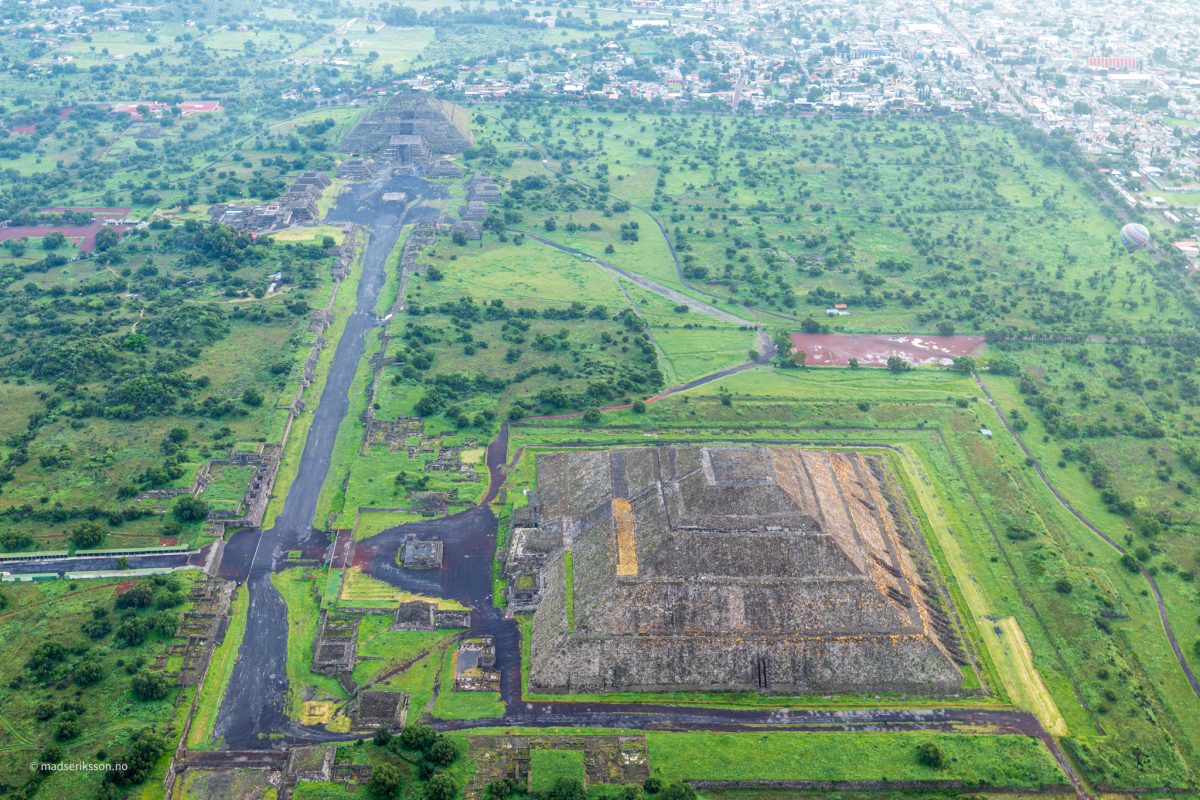
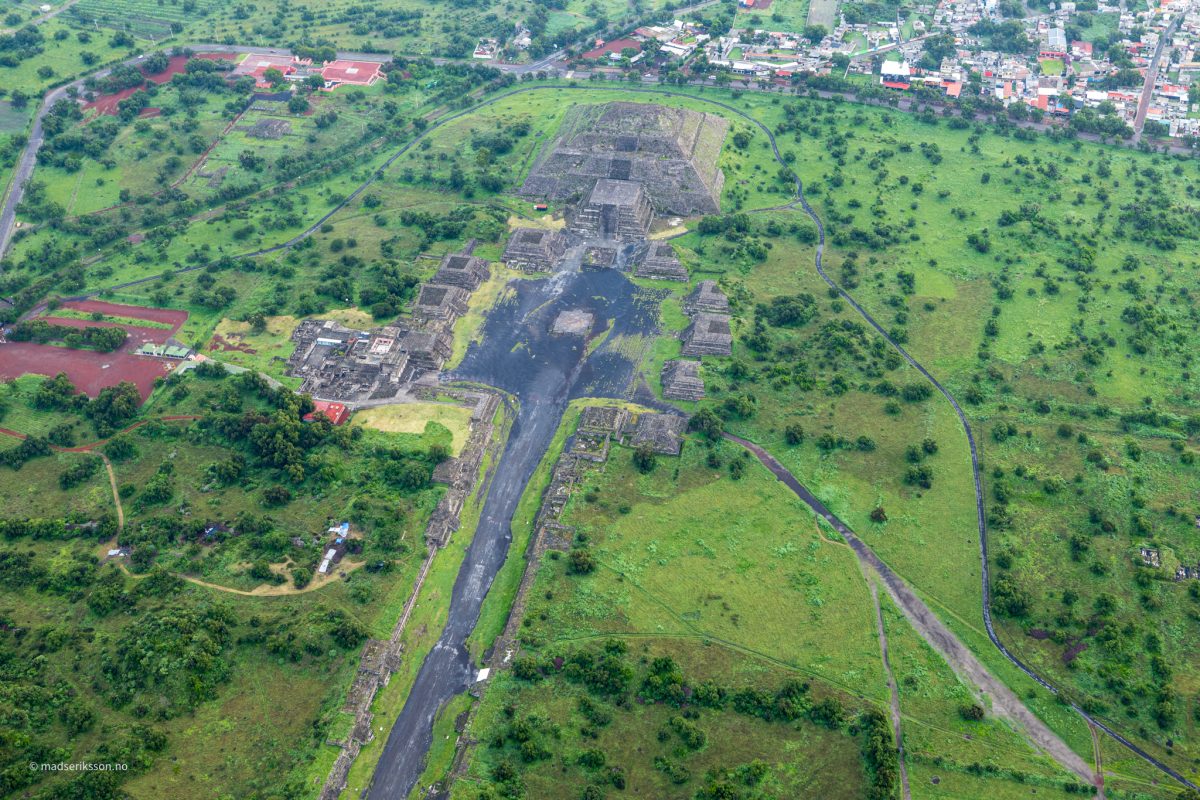
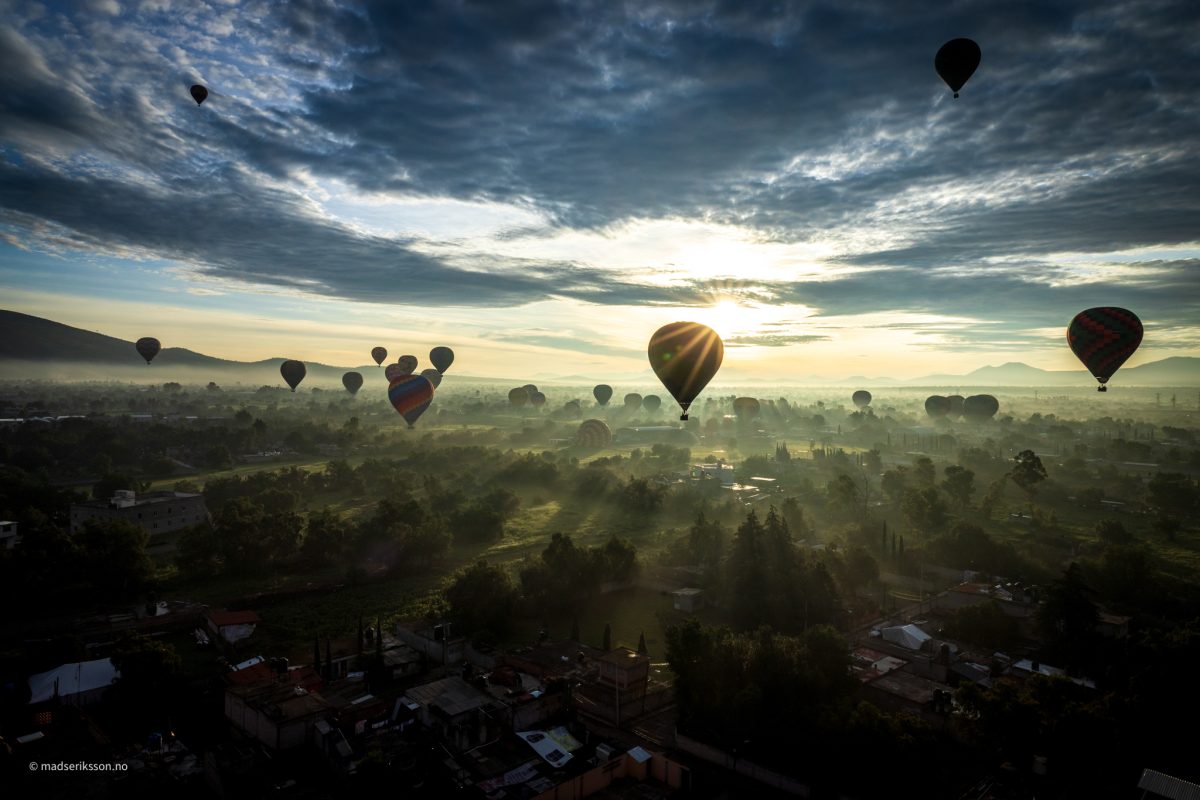
The whole ceremonial centre of Teotihuacán from the air, with the Avenue of the Dead running between the pyramids
Third largest in the world
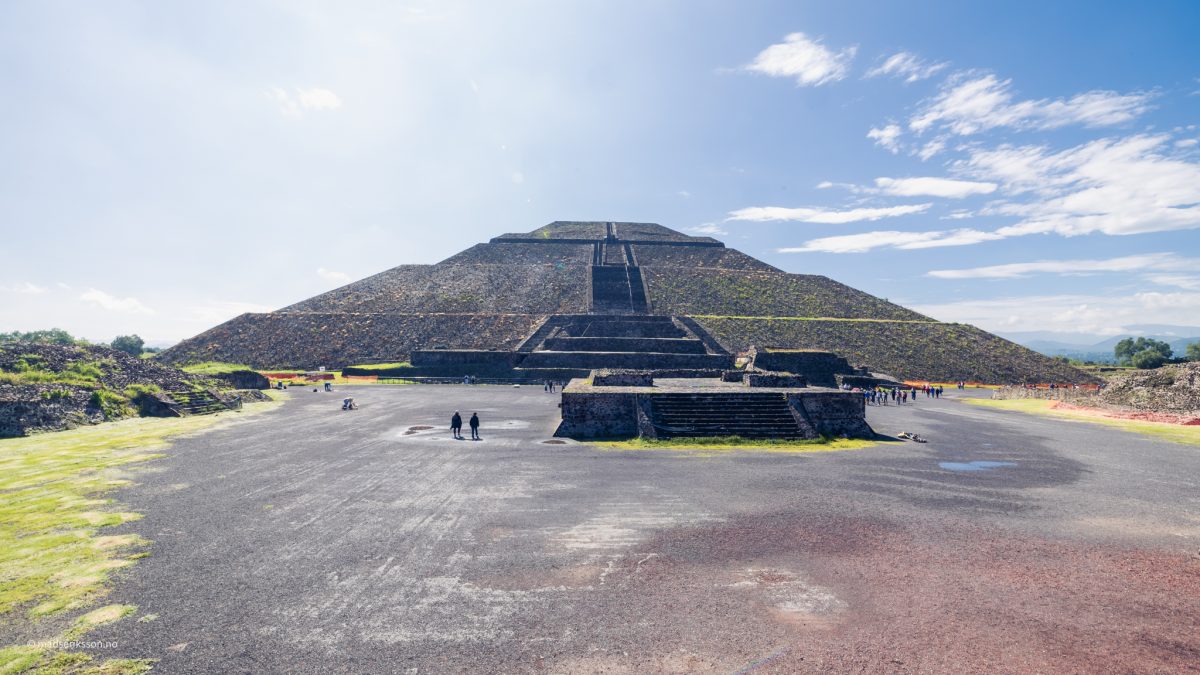
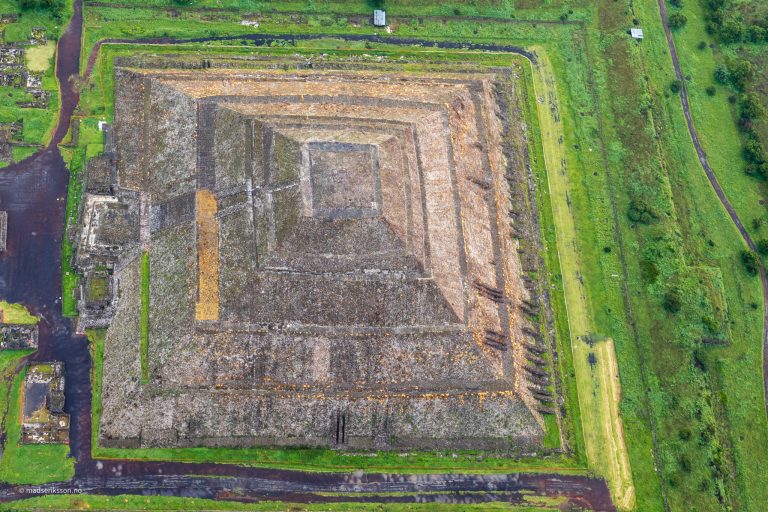
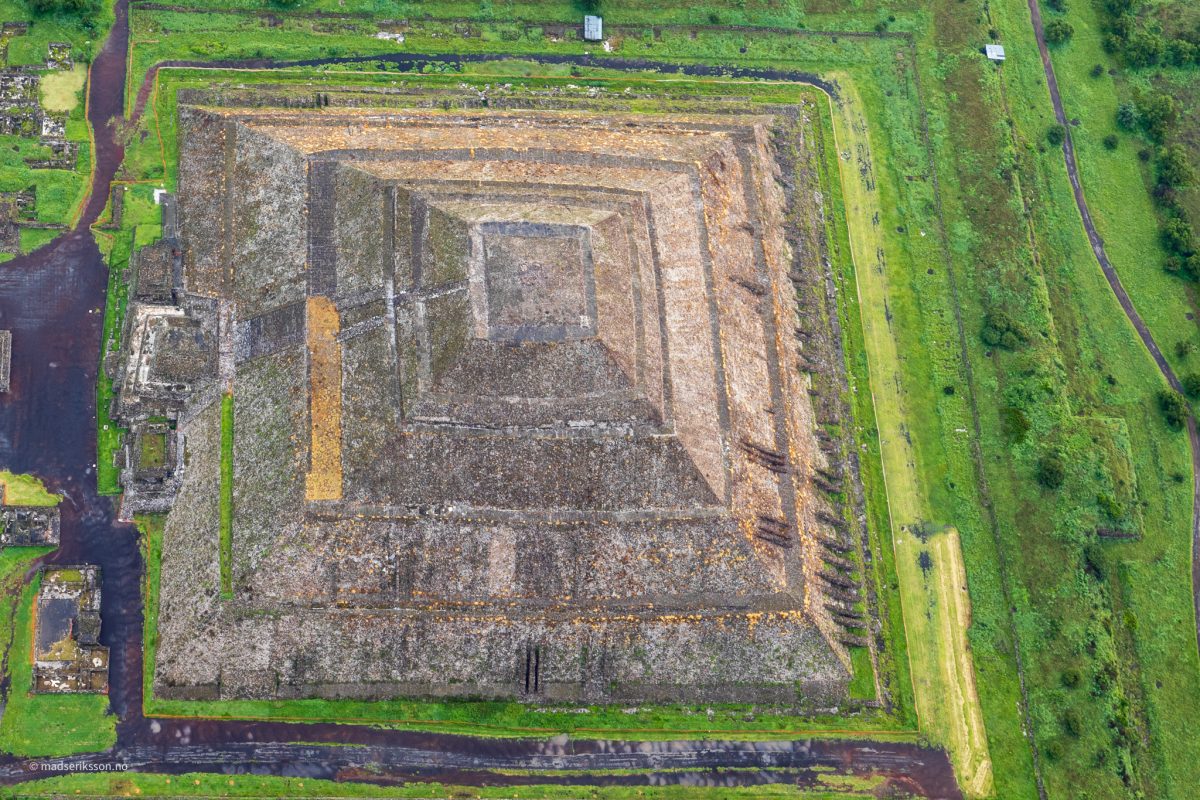
The Pyramid of the Sun stands 65 metres tall on a base of 220 by 230 metres, the third-largest pyramid in the world by volume. It was built around 100 CE from an estimated 1.2 million cubic metres of fill, in five stepped tiers faced in stone.
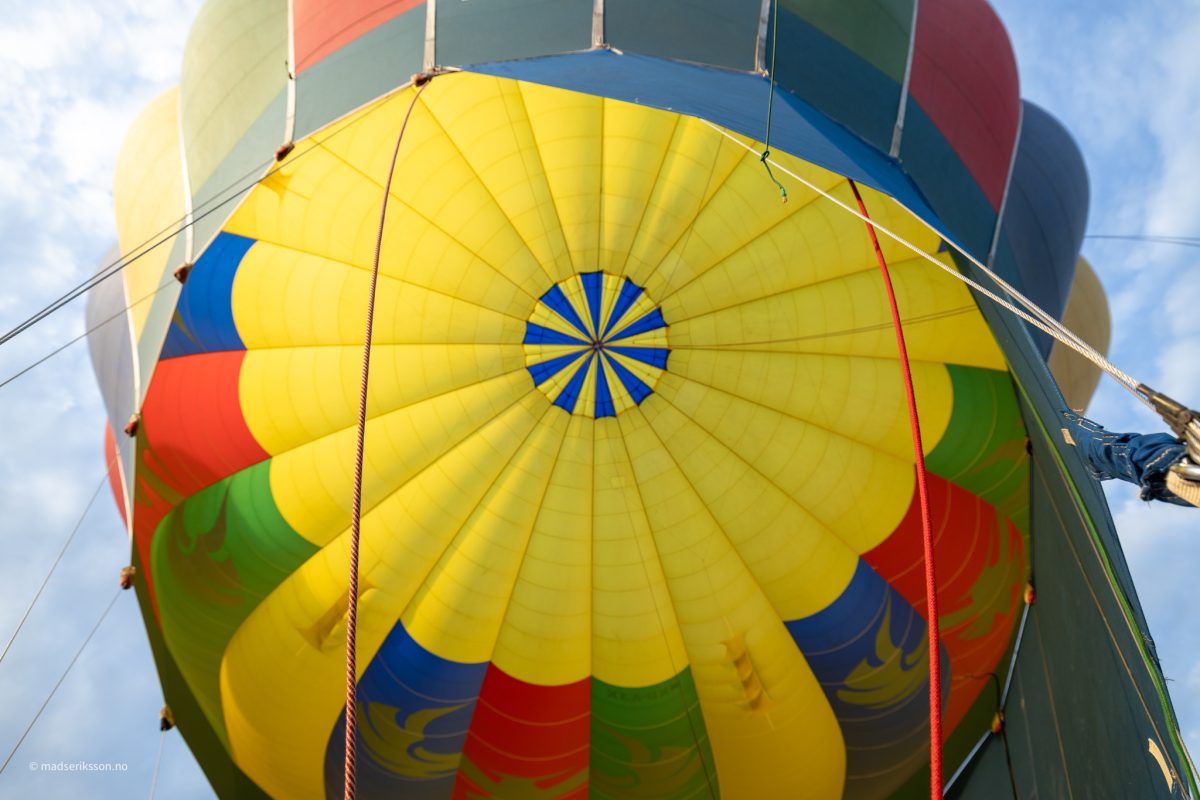
Looking straight down on the stepped terraces of the Pyramid of the Sun from a balloon at Teotihuacán
248 steps on the western face
The 248 steps climb the western face, and the altitude makes the ascent harder than it looks. Beneath the pyramid runs a natural four-chambered lava tube, found in 1971, which the Teotihuacanos considered the birthplace of the sun and moon.
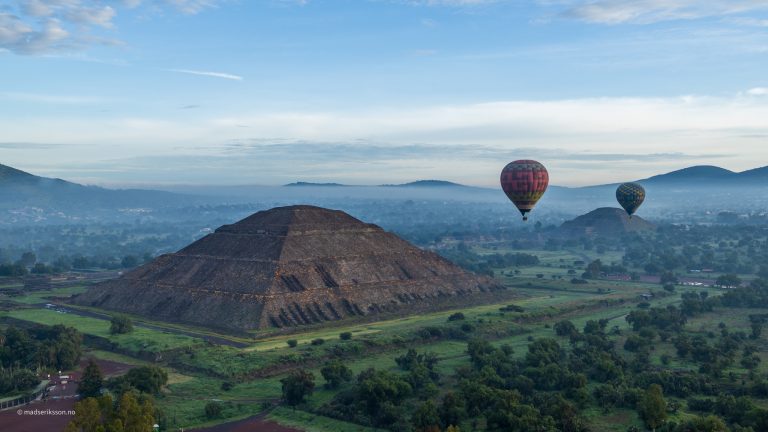
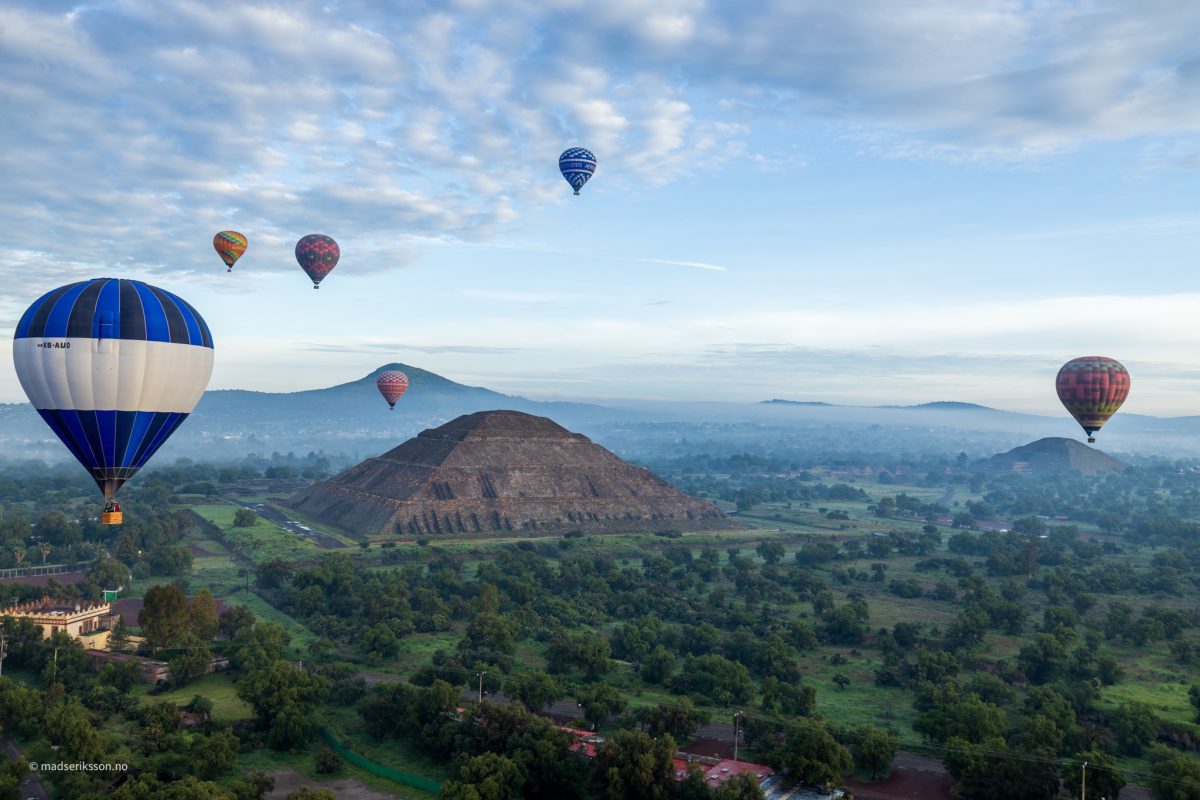
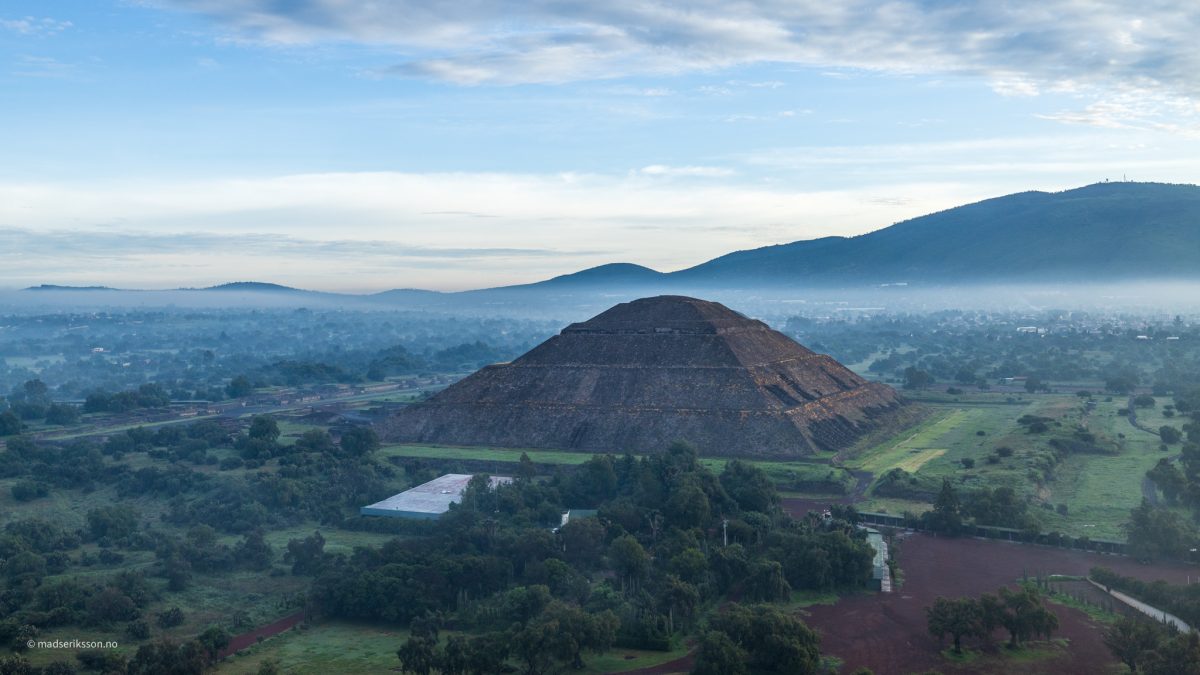
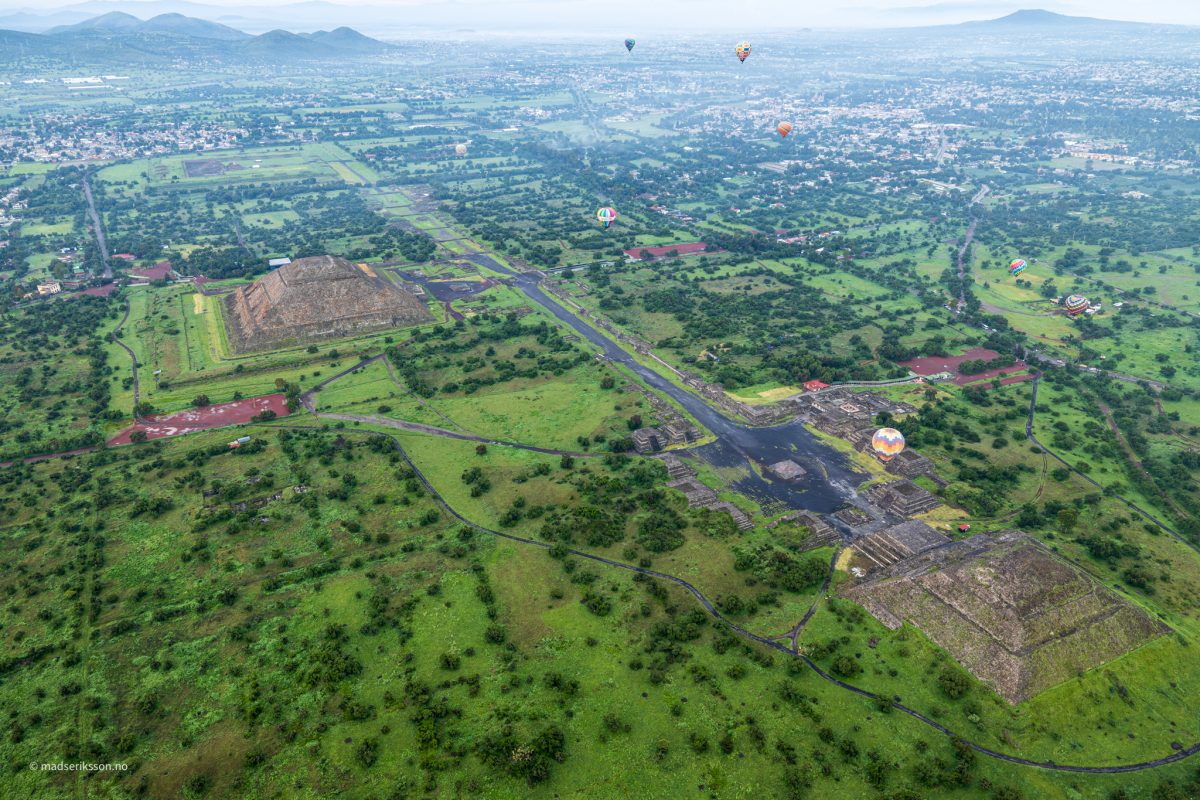
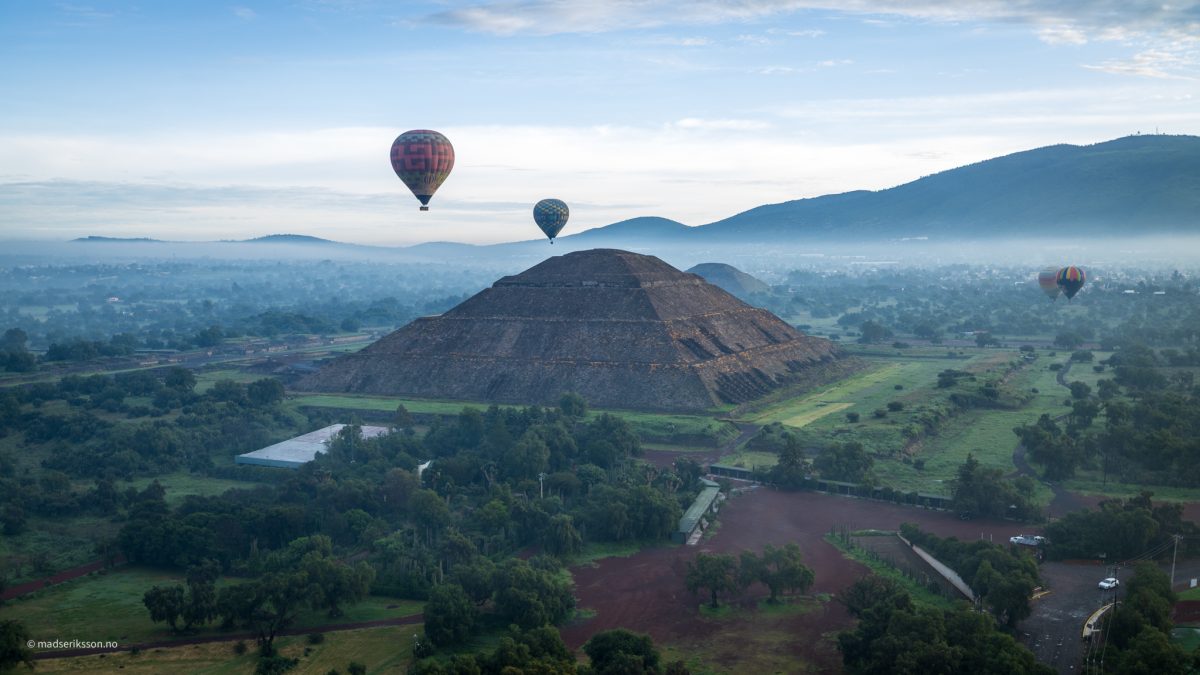
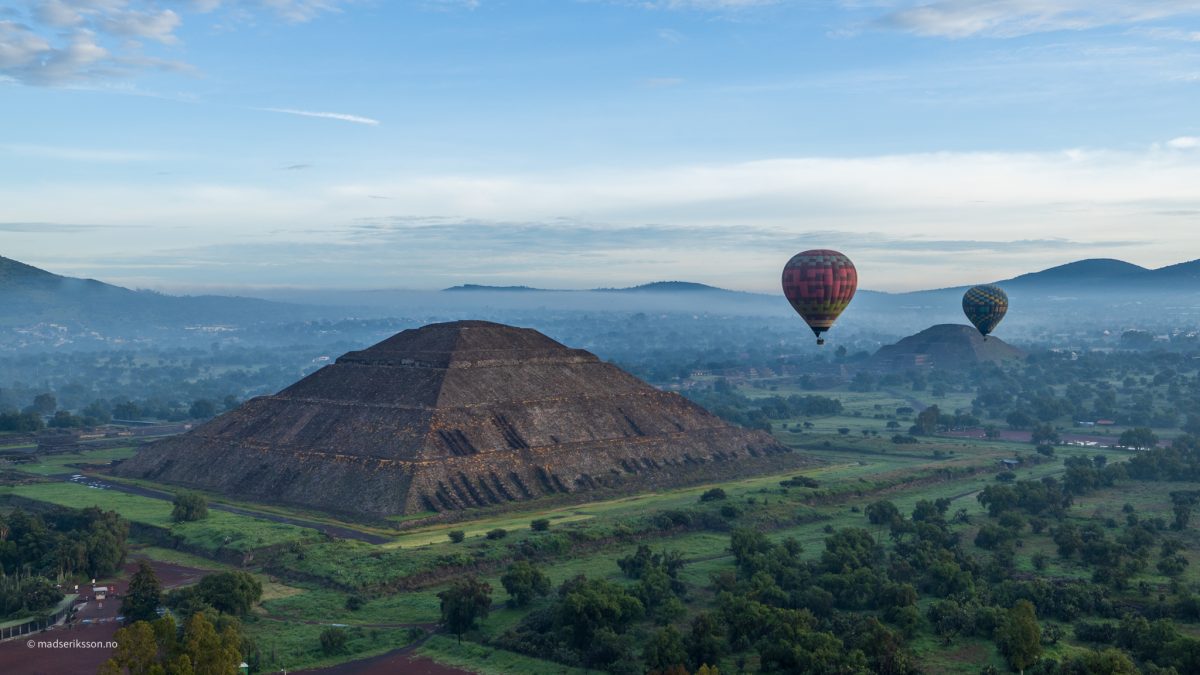
The Pyramid of the Sun at Teotihuacán, with hot-air balloons above.
Lined up with the setting sun
The 15.5-degree grid places the Pyramid of the Sun in direct relation to the setting sun at both equinoxes. Move the sun towards evening to follow the light across the western face.
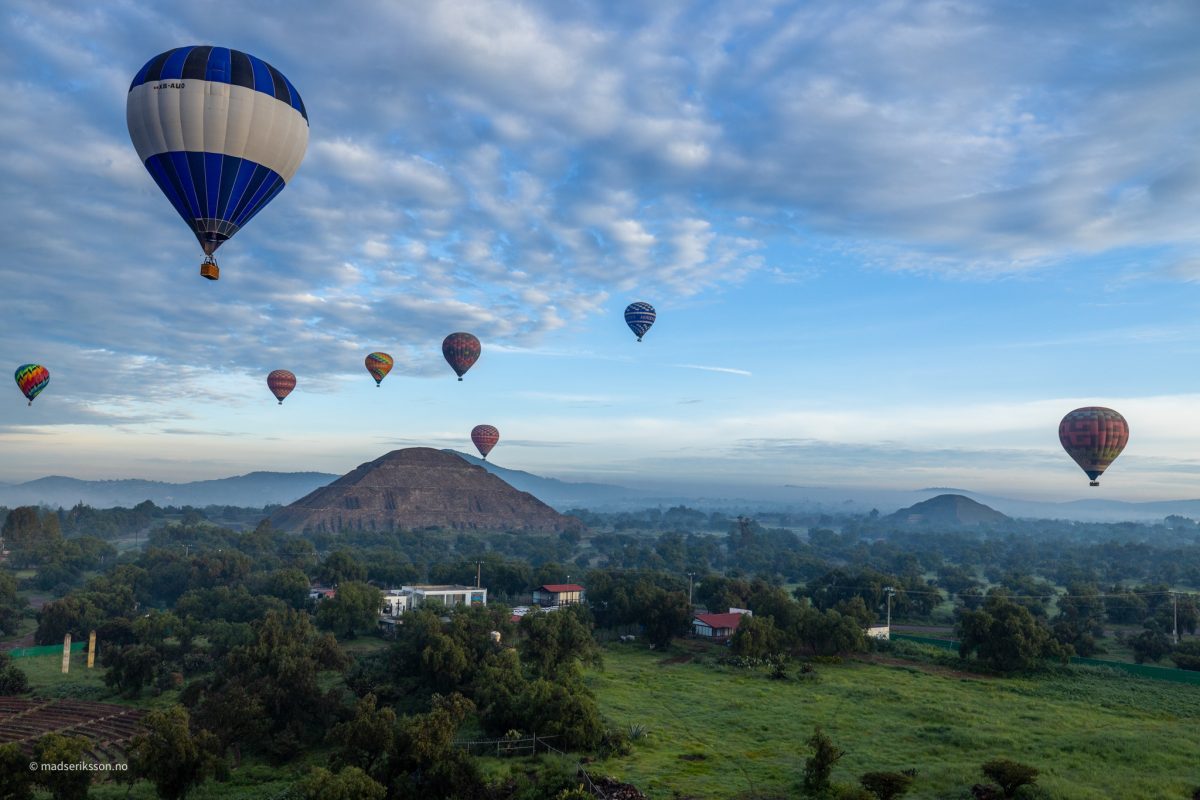
Two hot-air balloons floating past the Pyramid of the Sun in the early morning haze at Teotihuacán
The ceremonial spine
The Avenue of the Dead runs 2.4 kilometres at 40 metres wide, lined with platforms, smaller temples and residential compounds. Walking its full length, watching the pyramids shift against the mountains, is the best way to grasp the scale of the city.
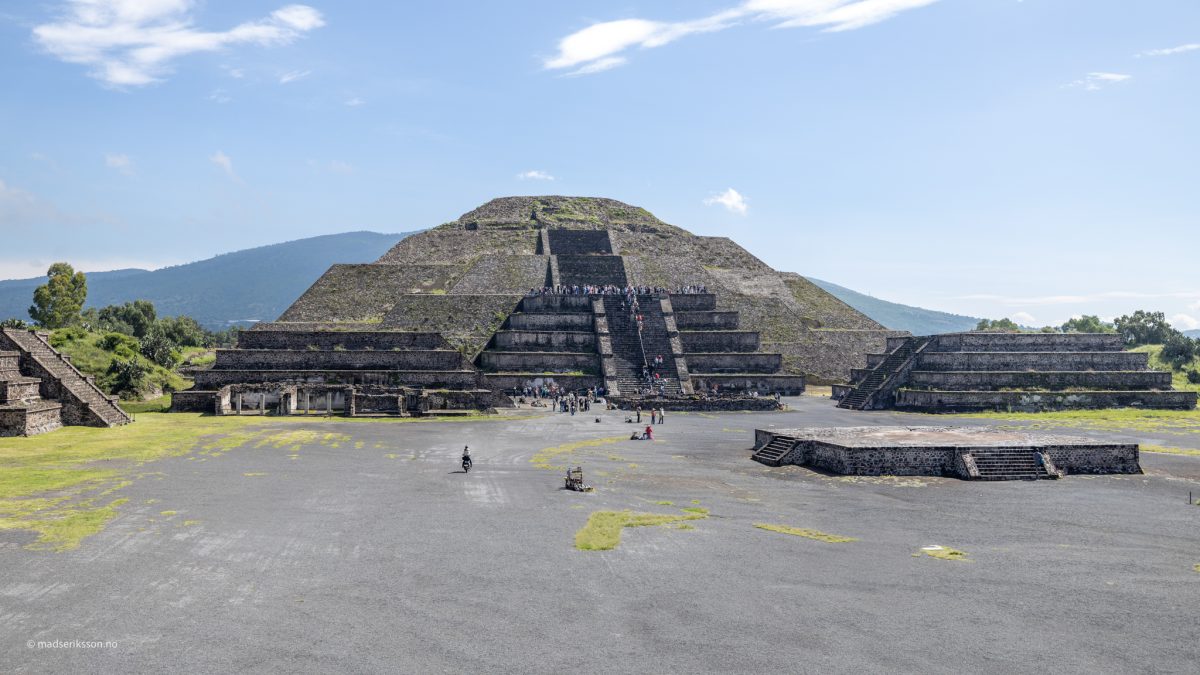
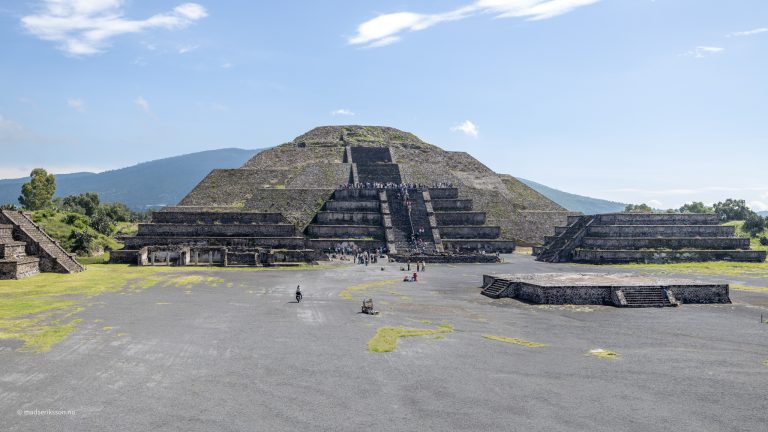
The Pyramid of the Moon at the northern end of the Avenue of the Dead in Teotihuacán
Mountain made in stone
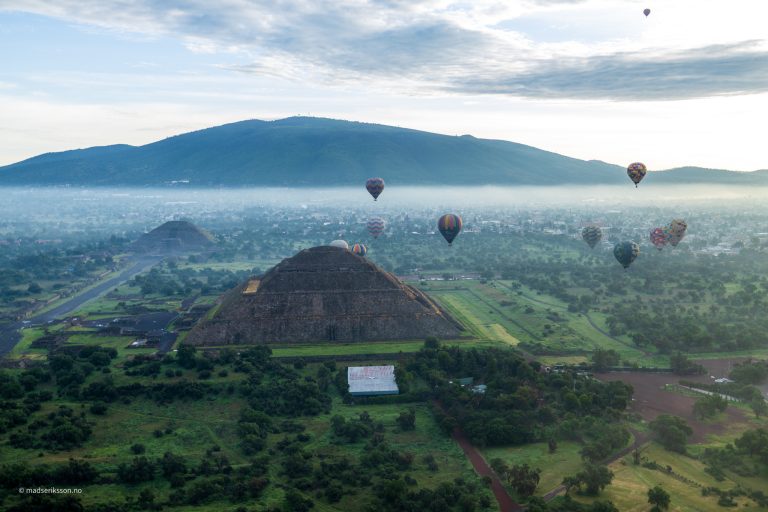
At 46 metres the Pyramid of the Moon is lower than the Sun, but it stands on higher ground and appears the same height from the front. Its silhouette lines up with Cerro Gordo, the extinct volcano behind it. Built in stages over roughly 350 years, it reopened for climbing to the first level in May 2025.
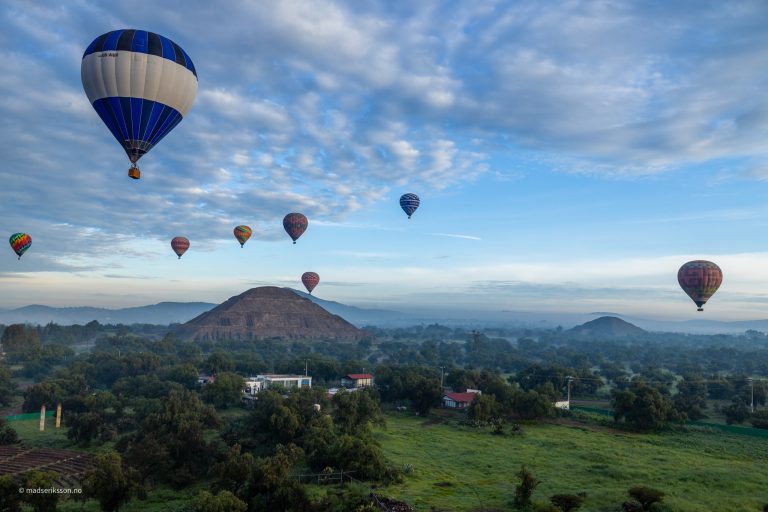
Hot-air balloons above the Pyramid of the Moon at Teotihuacán.
The Temple of the Feathered Serpent
At the southern end, inside the great square plaza of the Citadel, stands the Temple of the Feathered Serpent, the best-preserved major structure on the site. The Adosada platform in front can be climbed. Excavations beneath the temple found more than 200 sacrificial burials.
Arrive at opening
The site is 50 kilometres northeast of Mexico City and open daily 08:00–17:00. Entry costs 90 pesos, cash only. There is almost no shade, so arrive at opening; November to February is the best season. Allow three to four hours.
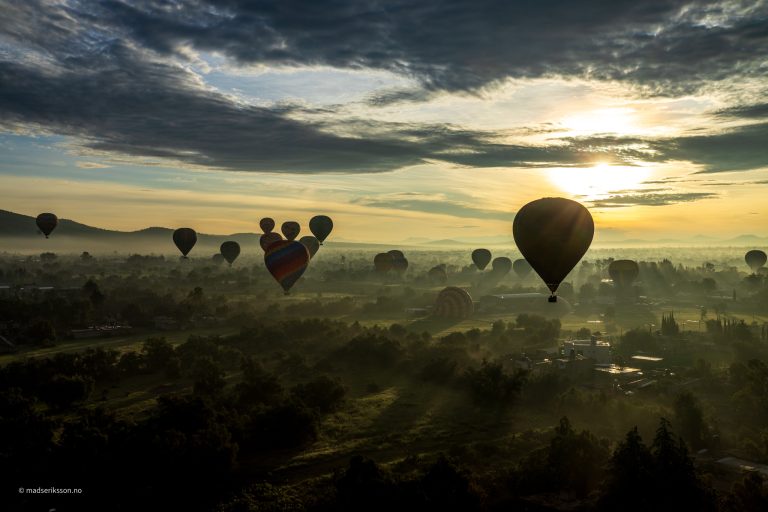
Hot-air balloons rising over Teotihuacán at sunrise.
3D model © 2026 madseriksson.no · Photographs © madseriksson.no. Site plan, ruins and paths: © OpenStreetMap contributors (ODbL). The Pyramids of the Sun and Moon are drawn at 65 and 46 m in stepped tiers from their mapped footprints; other platforms, the Temple of the Feathered Serpent and Cerro Gordo are simplified and approximate. Sun positions are approximate.
The Pyramid of the Sun — Third Largest in the World
248 steps, a hidden cave, and a summit view across the entire ancient city.
The Pyramid of the Sun is the first thing you see and the thing you cannot stop looking at. At 65 metres tall with a base of 220 by 230 metres, it is the largest structure at Teotihuacán and the third-largest pyramid in the world by volume — after the Great Pyramid of Cholula, 140 kilometres away in Puebla, and the Great Pyramid of Giza. The numbers don’t quite prepare you. Standing at the base and looking up at five stepped tiers of red volcanic rock rising into the Mexican sky, the mind makes a small, involuntary recalibration of scale.
Built around 100 CE from an estimated 1.2 million cubic metres of fill and faced in stone, the pyramid was originally covered in polychrome murals — long since weathered away. What makes it architecturally remarkable, beyond its size, is what lies beneath it: a natural four-chambered lava tube running directly under the structure, discovered by archaeologists in 1971. The Teotihuacanos considered this cave the birthplace of the sun and moon and an entrance to the underworld; it is almost certainly why this particular spot was chosen as the city’s most sacred monument. You cannot enter the cave today, but knowing it is there changes how the pyramid feels.
A natural cave runs beneath the pyramid — four chambers of lava tube that the ancient builders considered the birthplace of the sun and moon and an entrance to the underworld itself.
You can still climb the Pyramid of the Sun, and you should. The 248 steps on the western face are steep and uneven, and the site sits at 2,300 metres above sea level — the altitude and dry Mexican sun make the ascent more demanding than it looks from the ground. Bring water, wear a hat, and take your time. From the summit plateau the geometry of the entire ancient city reveals itself: the Avenue of the Dead running north to the Pyramid of the Moon, the Citadel complex to the south, and the ring of mountains that enclosed and defined the Teotihuacán valley. On clear days in the dry season, the view extends more than 30 kilometres in every direction.
The Pyramid of the Moon — Mountain Made in Stone
Smaller than the Sun, but positioned to appear equal — and aligned with a volcano.
The Pyramid of the Moon stands at the northern end of the Avenue of the Dead, smaller than its counterpart at 46 metres — yet positioned so that from the front it appears the same height as the Sun pyramid. The builders achieved this by constructing it on higher ground, and by aligning its silhouette with the profile of Cerro Gordo, the extinct volcano rising directly behind it. The effect is unmistakably deliberate: pyramid and mountain read as a single form, suggesting the Teotihuacanos conceived of the monument not as something imposed on the landscape, but as an extension of it.
The Moon pyramid was built in stages over roughly 350 years, each phase encasing the previous structure. Excavations between the layers have found ritual deposits: sacrificed humans and animals — jaguars, pumas, eagles, rattlesnakes — buried with obsidian blades and greenstone figurines. The Plaza de la Luna at its base served for astronomical observations and public ceremony and is one of the best-preserved open spaces on the site. As of May 2025, limited climbing has been reinstated after a five-year conservation closure — the first level only, with controlled numbers. Check current INAH guidance before your visit, as conditions may change.
The Pyramid of the Moon was built so that its silhouette merges with Cerro Gordo behind it — monument and mountain intended to read as a single form rising from the valley floor.
The Avenue of the Dead connects the two pyramids across 2.4 kilometres and 40 metres of width, lined with platforms, smaller temples, and the ruins of residential compounds. Walking its full length is the most important thing you can do at Teotihuacán — more revealing than any single structure. The scale of the city’s ambition only becomes legible when you are moving through it at human pace, watching the pyramids shift in perspective against the surrounding mountains. Most visitors underestimate the time this takes. Allow at least three to four hours for a full visit, and arrive at the 08:00 opening to secure the cooler morning hours and the best photographic light before the crowds arrive.
The Feathered Serpent — Carvings, Sacrifice & the Murals
The best-preserved facade on the site — and the most disturbing excavation finds.
At the southern end of the site, enclosed within a massive square ceremonial plaza called the Citadel, stands the Temple of the Feathered Serpent — also known as the Temple of Quetzalcóatl, though the direct identification with the later Aztec deity is contested. This is the best-preserved major structure at Teotihuacán, its facade still bearing alternating carved heads of the feathered serpent and what may be the rain god Tláloc — stone faces projecting from the wall in a rhythm that is simultaneously ceremonial and unsettling. The Adosada platform built in front of the temple can be climbed by visitors, giving close access to the surviving carvings: the scales of the serpent, the feathers in relief, the empty sockets where obsidian eyes once sat.
Beneath the pyramid, excavations in the 1980s and 1990s found more than 200 sacrificial burials. Many were warriors with their hands bound behind their backs, suggesting mass killings performed at the moment of the temple’s dedication. The finds are documented in the Museum of Teotihuacán Culture on site, which also holds ceramics, figurines and obsidian objects from across the city. Adjacent to the museum is the Beatriz de la Fuente Museum of Teotihuacán Murals, containing the finest surviving examples of the city’s painted programme: the repeated Tláloc imagery; the famous Paradise of Tláloc from the Tepantitla compound, showing figures swimming among flowers in what appears to be a vision of the afterlife; hunting jaguars and stylised owls in mineral pigments of terracotta, jade green, and deep blue that have held their colour across 1,500 years.
Beneath the Temple of the Feathered Serpent, more than 200 sacrificial burials were found — warriors with their hands bound, killed at the precise moment of the temple’s dedication.
The apartment compounds of Tetitla and Atetelco, near Gate 3, contain further murals in situ and are almost always quiet even when the Avenue of the Dead is crowded. The murals here show processions of priests, pumas and owls, and flowing water — a visual vocabulary so widely understood across Mesoamerica that closely related imagery has been found as far away as the Maya lowlands of Guatemala. They are worth the twenty-minute walk from the main axis. The bookshop at Gate 5 stocks well-illustrated volumes on the murals for those who want to go deeper.
More in the same area
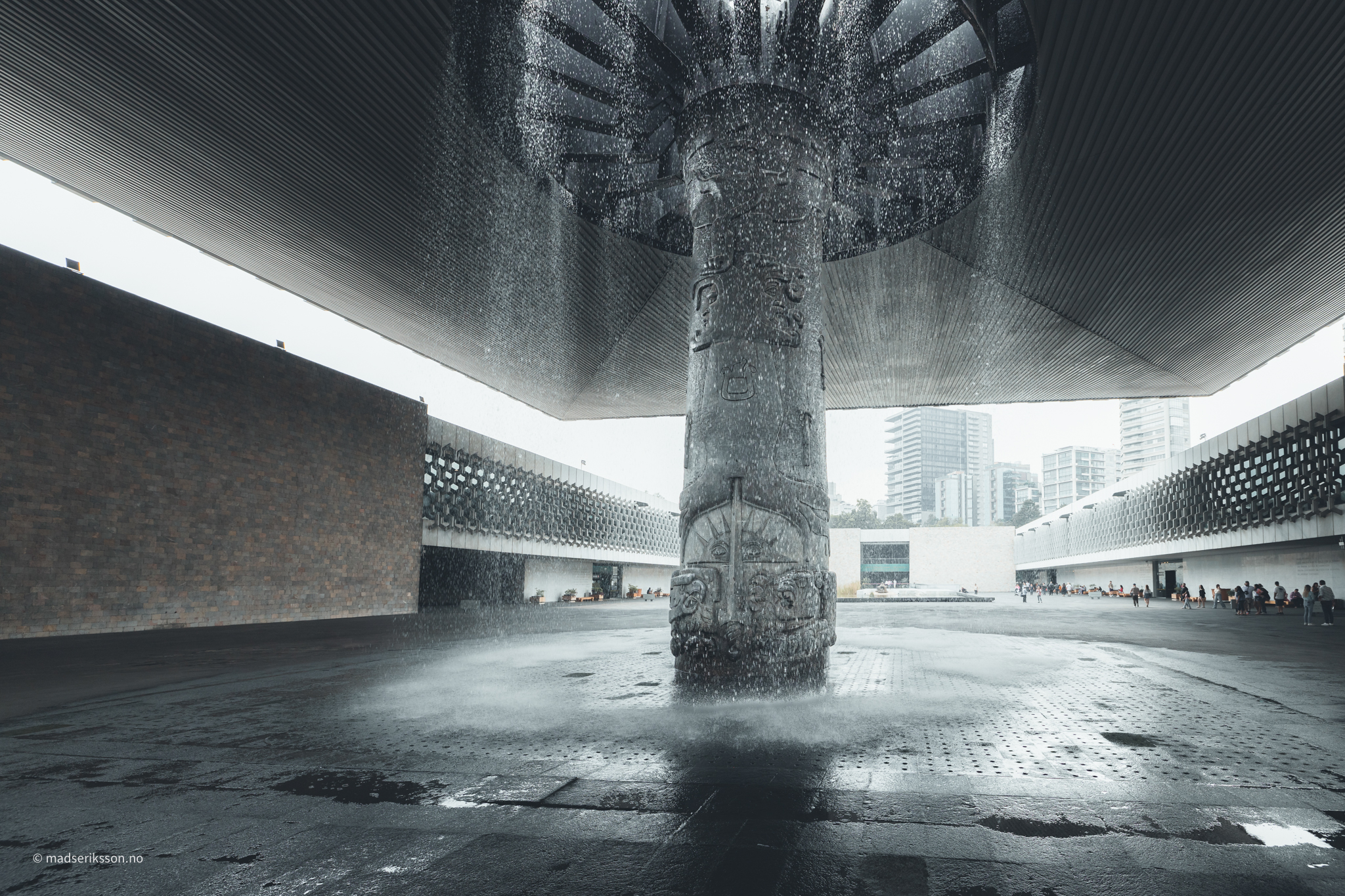 ArchaeologyMuseo Nacional de Antropología: A Cultural Treasure in Mexico City
 CitiesExploring the Wonders of Mexico City
 ArchaeologyTa Prohm — The Temple the Jungle Is Winning
 ArchaeologyForum Romanum — The Centre of the Ancient World
 ArchaeologyThe 10 Most Significant Archaeological Sites in the World
 ArchaeologyExploring the Ancient Ruins of Pompeii