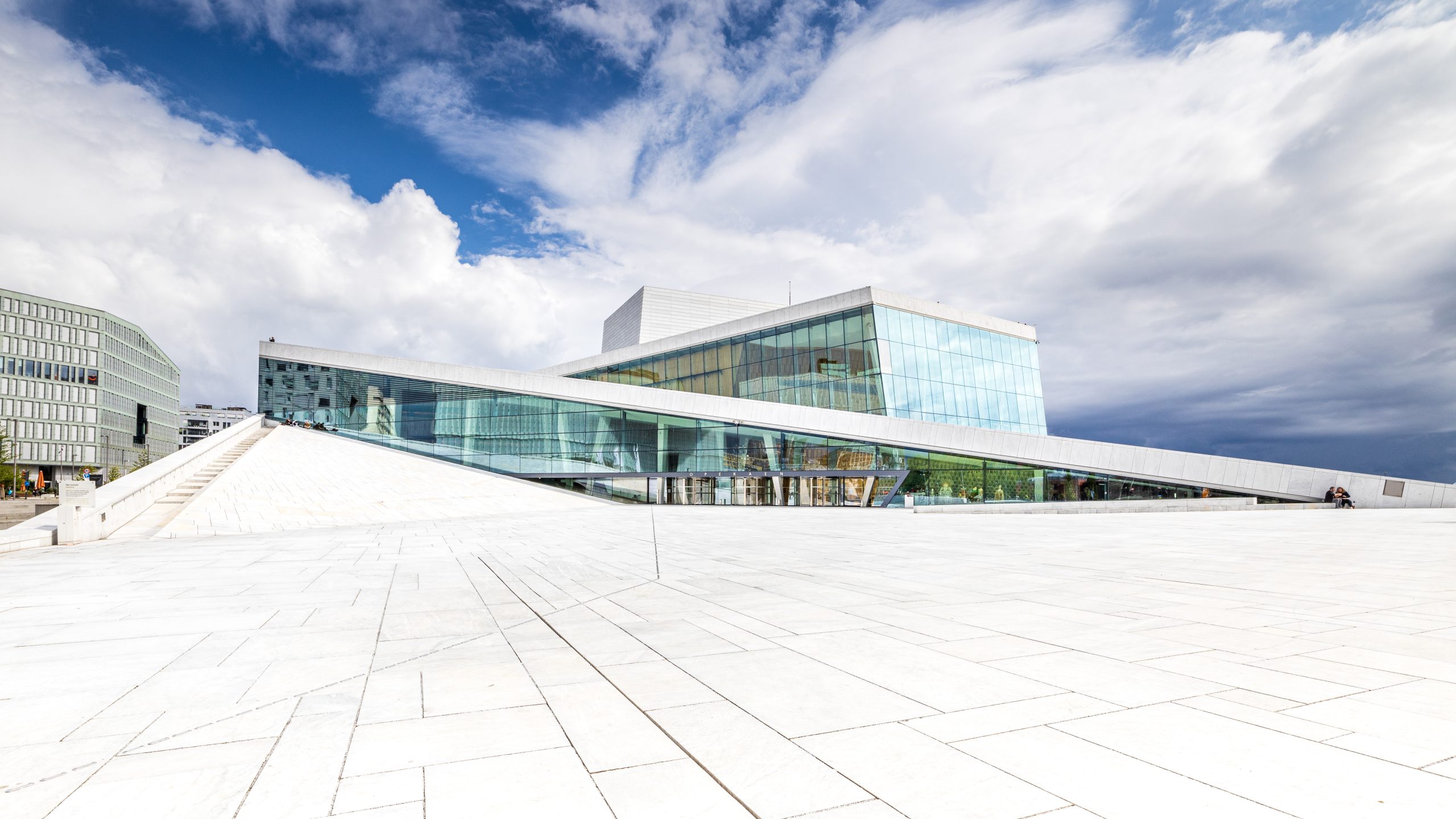
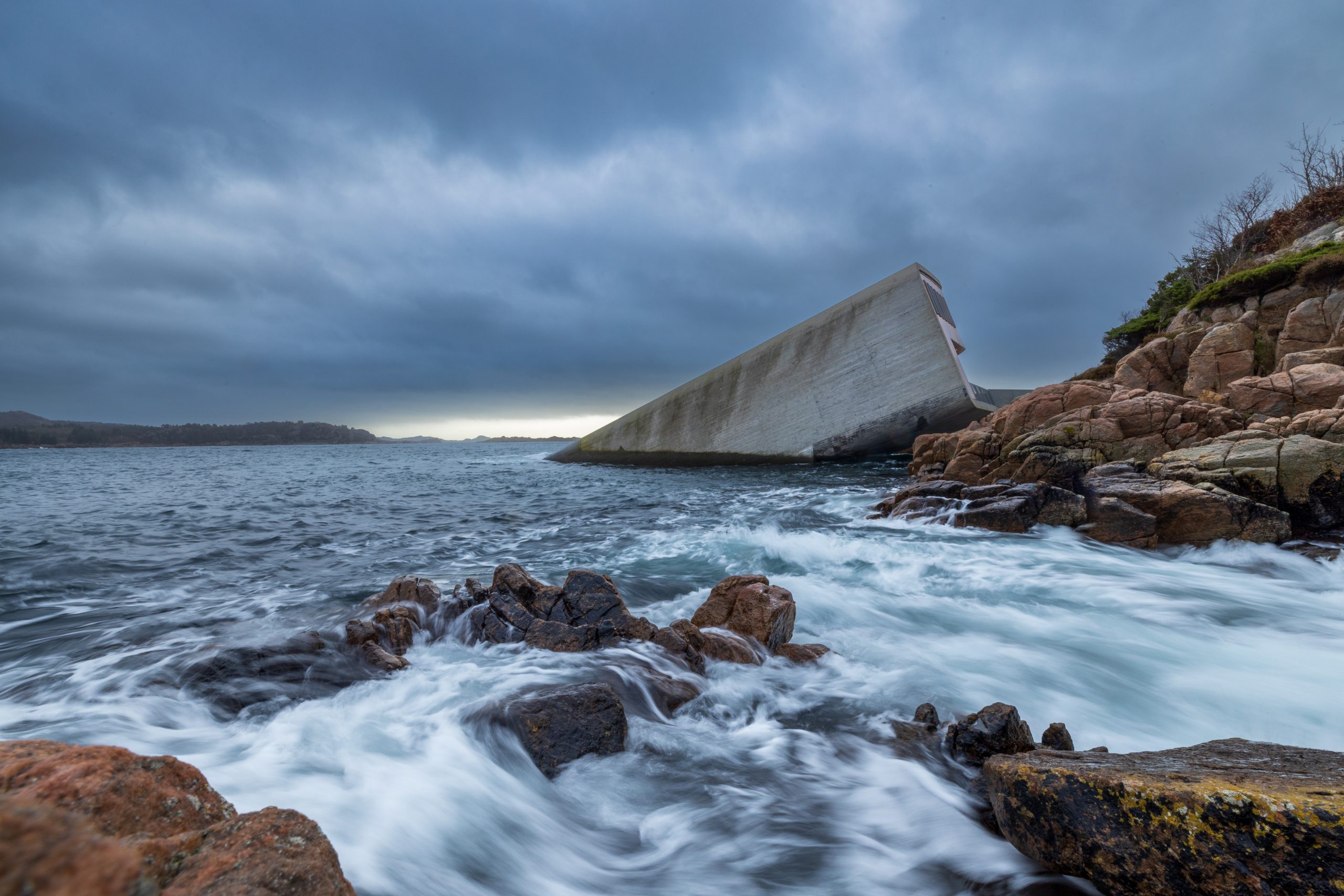
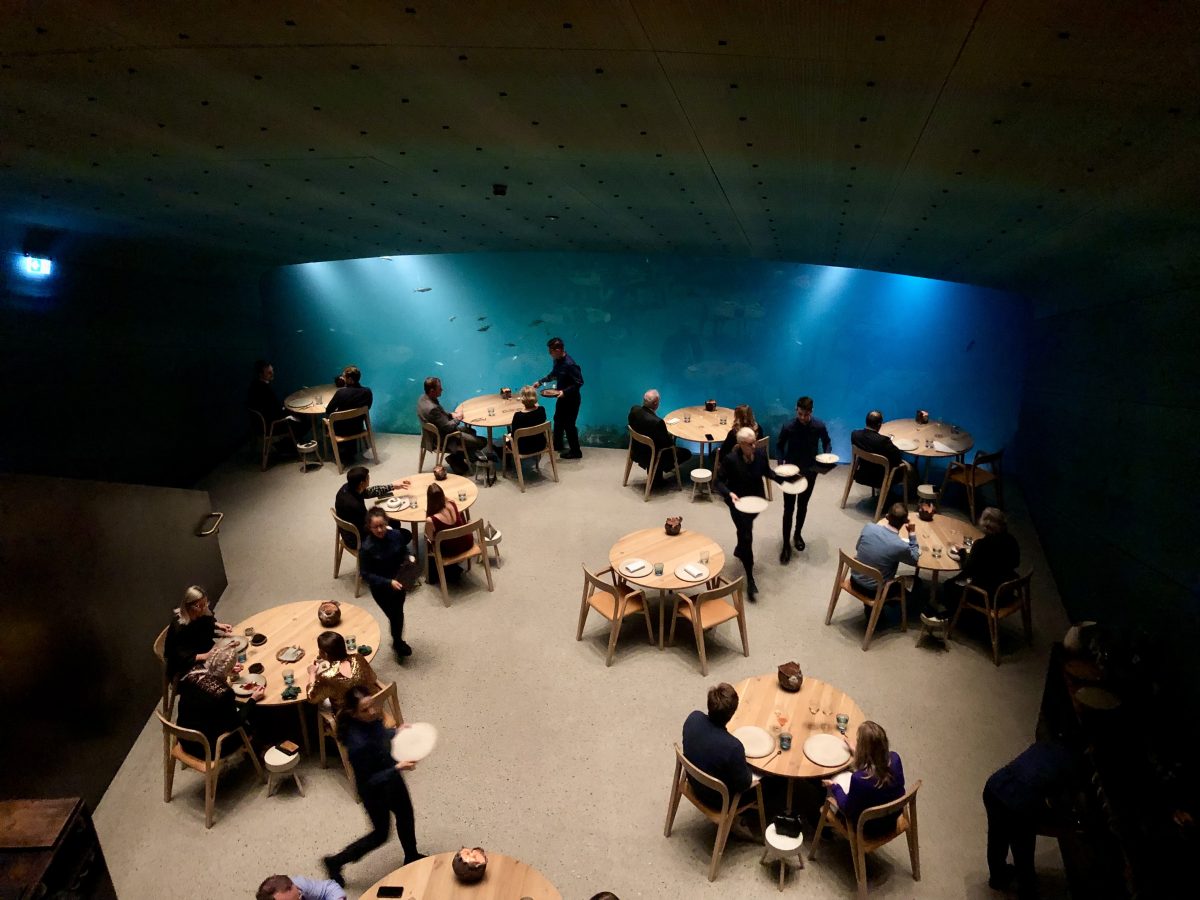
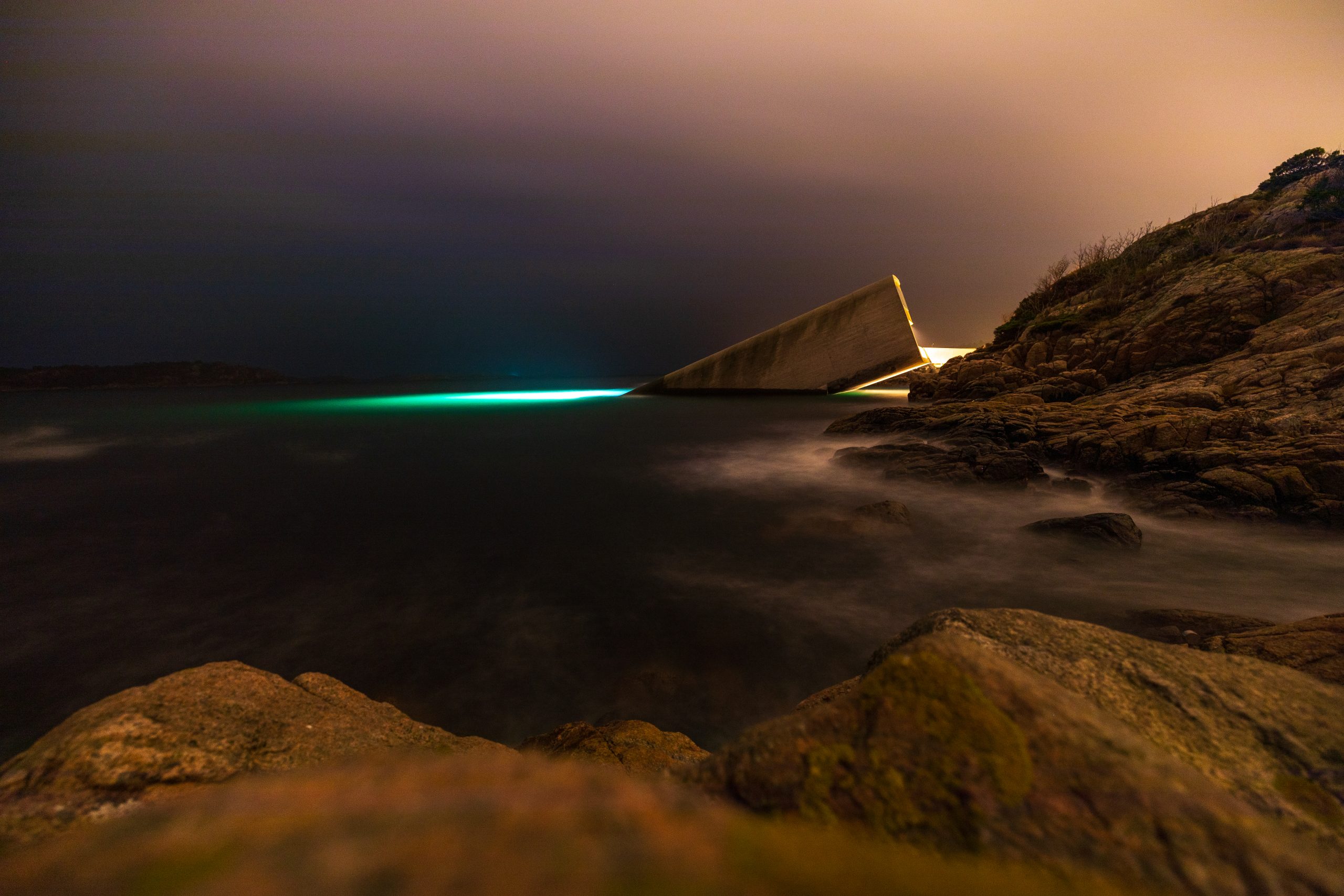
At the southern tip of Norway, where the North Sea meets the Skagerrak, a 34-metre concrete tube slopes off the rocks and into the water. Its lower end rests on the seabed, and inside it, behind a window eleven metres wide, up to forty guests sit down to a long tasting menu while fish, kelp and the changing light of the sea move past the glass. Under opened on 20 March 2019, was designed by Snøhetta — the practice behind the Oslo Opera House — and holds a Michelin star. It is one of very few underwater restaurants in the world and the only one in Europe.

The idea came from two brothers, Stig and Gaute Ubostad, who wanted to build something that would bring people to one of the most exposed corners of the Norwegian coast. The project became official in the autumn of 2016, Snøhetta was brought in to design it, and the building cost around 70 million kroner. By the time it opened in March 2019, 7,500 people had already booked a table. The name is a play on words: in Norwegian, under means both ‘below’ and ‘wonder’.
Dinner at Under is not a quick meal. The evening runs to about three and a half to four hours, the menu is a seasonal sequence of ten to twelve courses built mainly around Norwegian seafood, and the view through the window changes with the weather and the time of year. The setting attracts most of the attention, but the cooking has earned its own recognition: the restaurant won a Michelin star within its first year and holds one star in the 2026 Michelin Guide. Tables can only be booked in advance, through the restaurant’s own website.
How to approach Under
This guide covers Under in three parts: the building itself, and how a concrete tube was designed to survive the North Sea and become part of the seabed; the meal, from the descent into the dining room to the menu and the kitchen; and the coast around it at Lindesnes, from the lighthouse at the southern tip of Norway to the practicalities of getting there.
The Building — A Sunken Periscope on the Seabed
A concrete tube built to take the full force of the North Sea, and slowly to turn into a reef
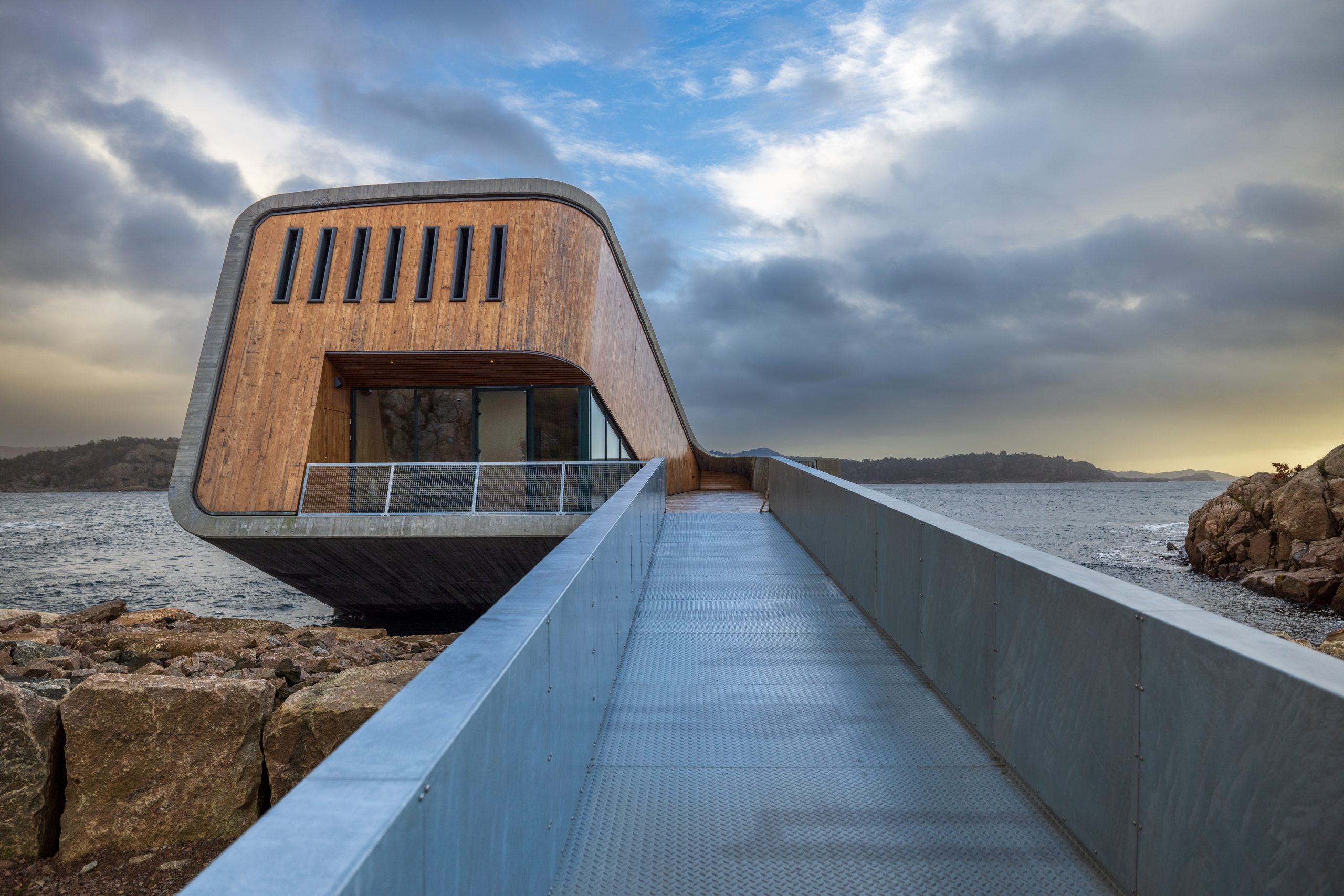
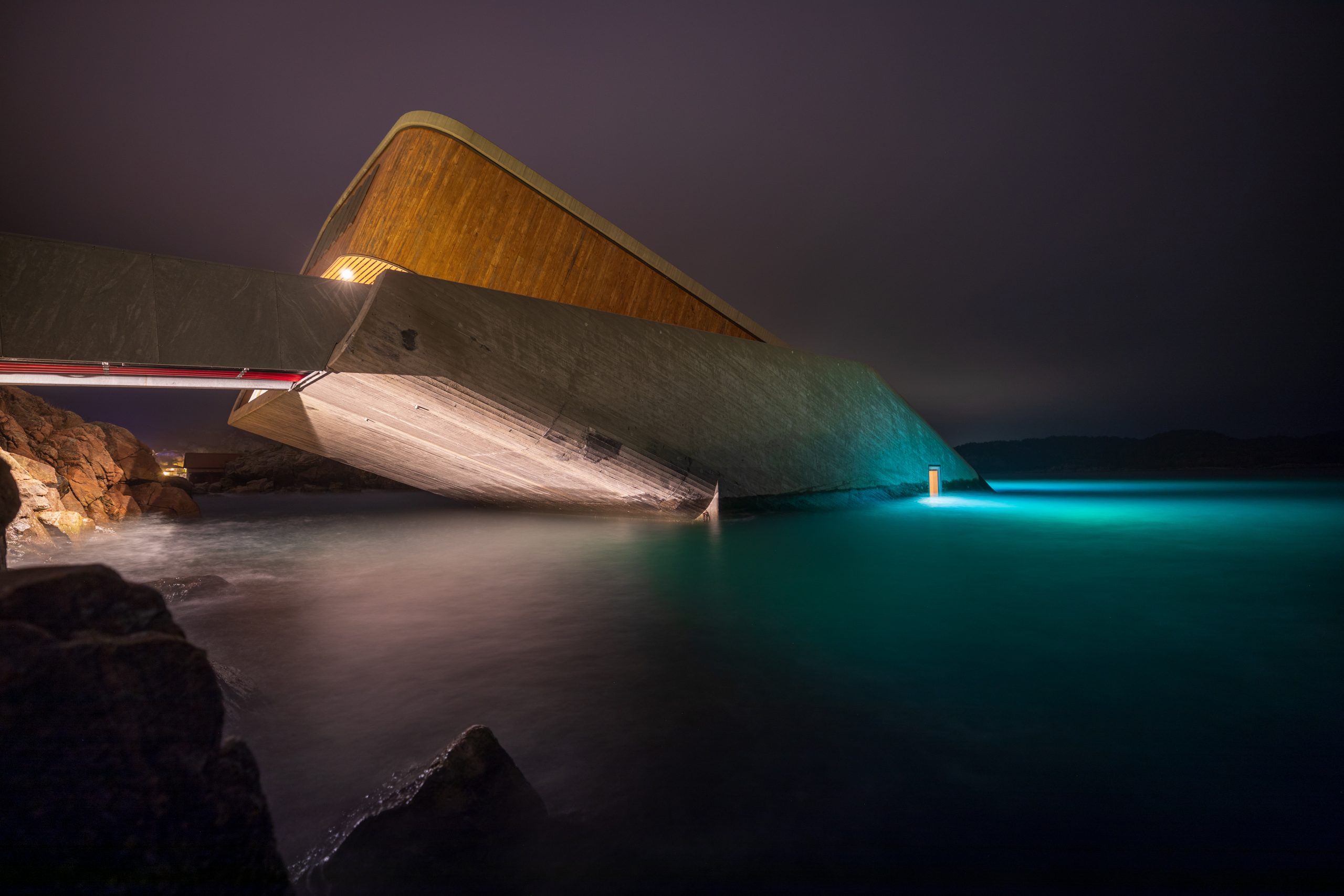
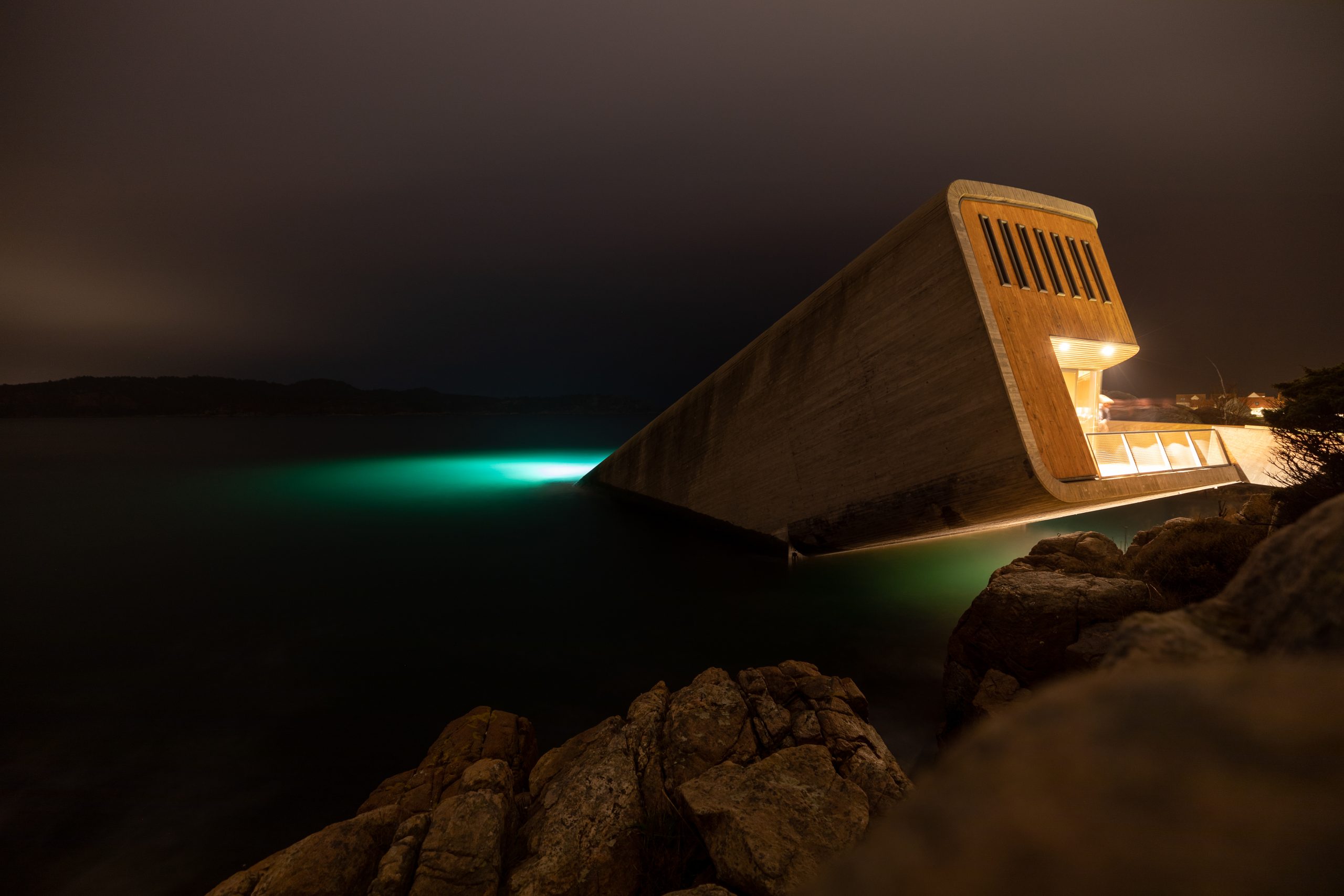
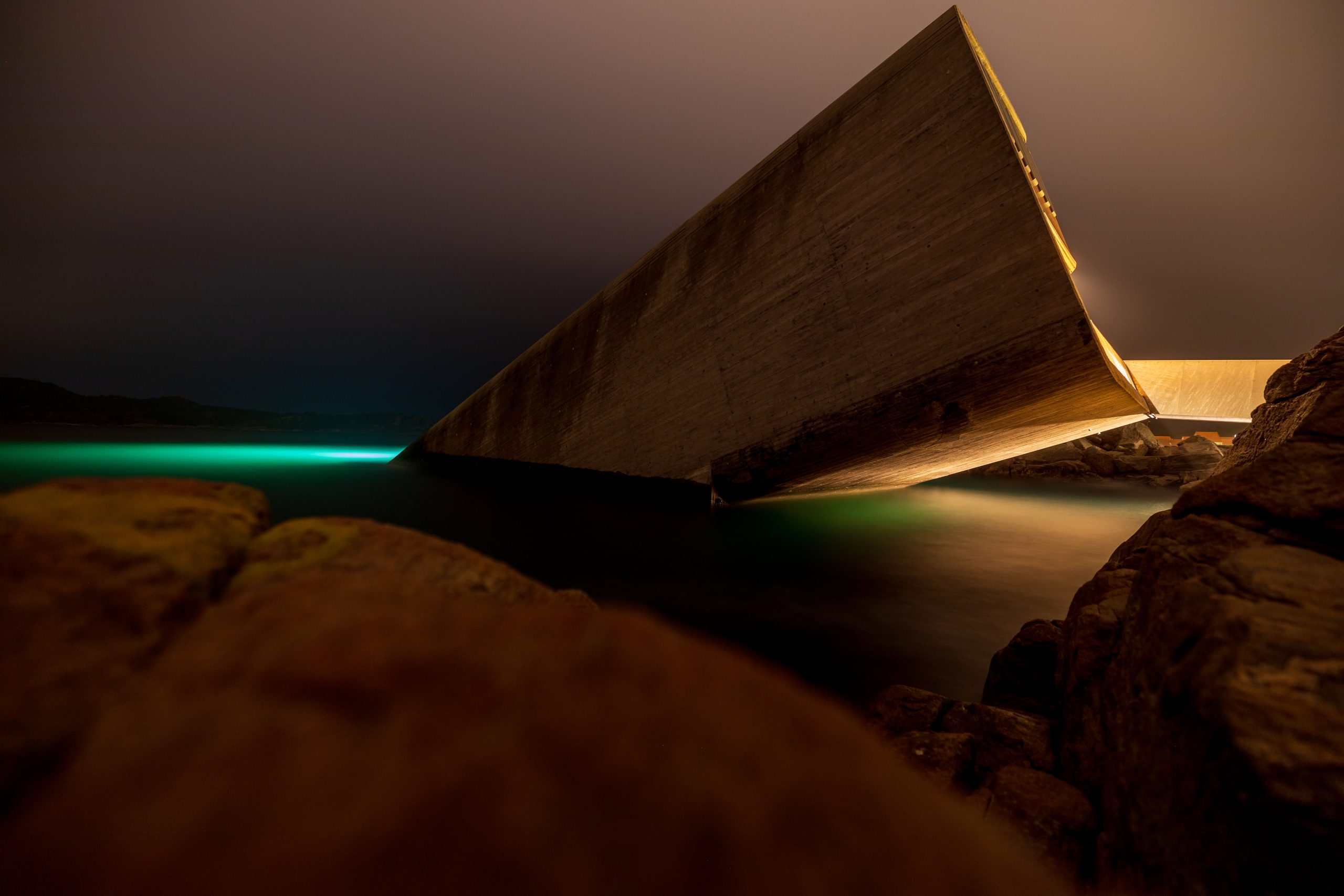
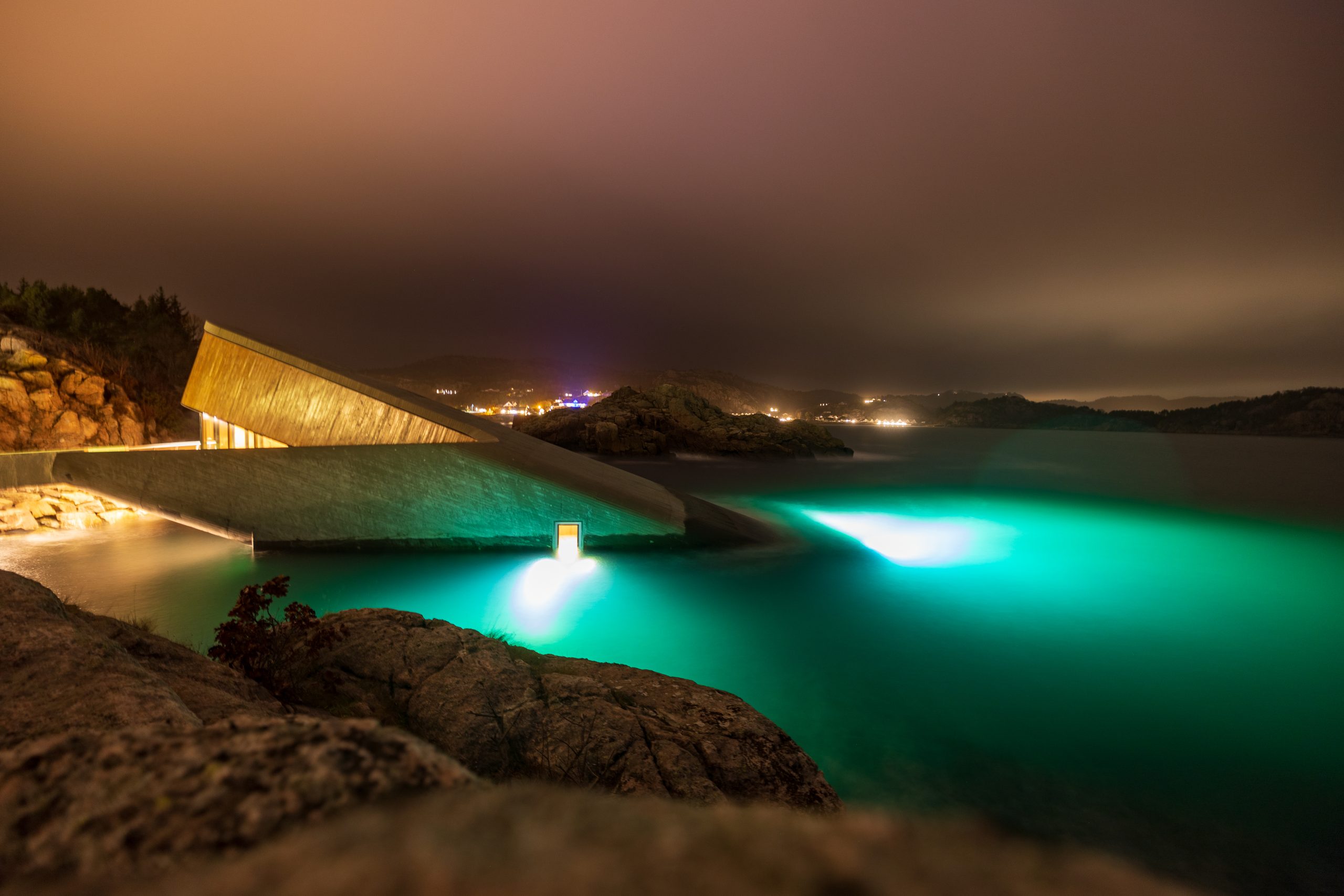
From the shore, Under looks less like a building than a piece of coastal infrastructure: a long, rough concrete box that leaves the rocks at an angle and disappears into the sea. Snøhetta describe it as a sunken periscope. The 34-metre monolithic form breaks the surface of the water and rests on the seabed at its lower end, about five metres down, and at that end a single panoramic window looks out across the bottom of the sea. The site is one of the most exposed on the Norwegian coast, and the building was designed for it: the dining room is enclosed by concrete walls half a metre thick, made to withstand the pressure of the water and the shock of waves breaking against the structure in storms.
The outside was left deliberately rough. Over time the concrete shell is meant to become an artificial reef, a surface for limpets and kelp to settle on, so that the building gradually becomes part of the seabed rather than an object placed on it. Cameras and measuring equipment on and around the facade allow researchers to study marine life and fish behaviour, and the building doubles as a marine-biology laboratory. The architects’ aim, in the words of Snøhetta co-founder Kjetil Trædal Thorsen, was to put visitors ‘under water, over the seabed, between land and sea’.
The rough concrete shell is meant to become a reef. In time, the building that brought diners under the sea will be colonised by the life they came to see.
Inside, the materials soften the concrete. Guests enter through a hushed foyer clad in oak, made by the Norwegian joinery firm Hamran, and descend a staircase lined with ceiling panels covered in a textile developed with the Danish company Kvadrat, its colours shifting like a sunset sinking into the sea. There are 137 of these acoustic panels in all, absorbing sound so that the dining room stays quiet. The dining floor covers 495 square metres, and the building has won both the Betongtavlen, the Norwegian award for concrete architecture, in 2019 and the DOGA Award for Design and Architecture.
The Meal — Four Hours at the Bottom of the Sea
A seasonal menu built from the coast around the restaurant, served in front of a window onto the seabed
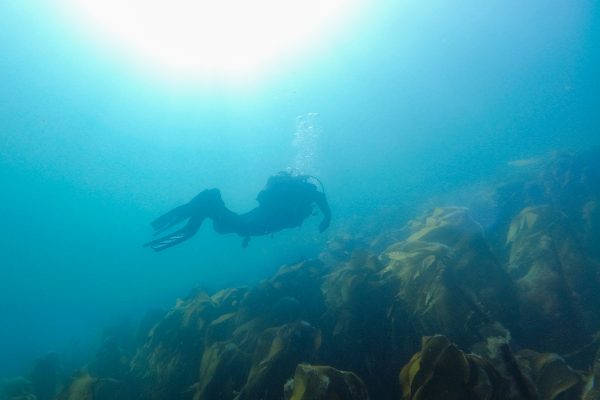
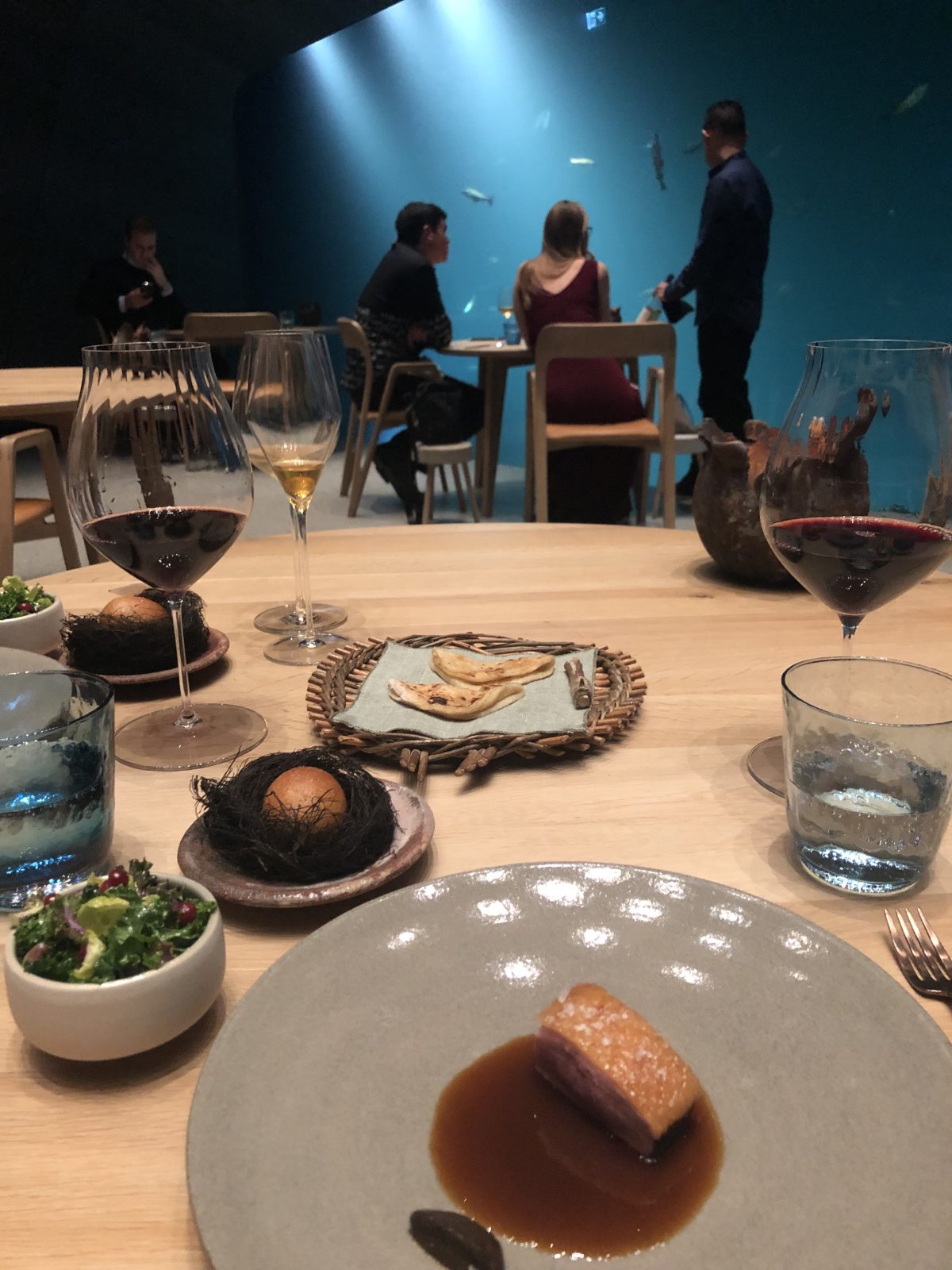
An evening at Under is planned as a journey from land to sea. Guests arrive in the oak-clad entrance at the top of the building and walk down the staircase towards the dining room at the bottom, with the light changing as they descend. Seating times run between six and half past eight in the evening, and the meal itself lasts three and a half to four hours. What is visible through the window depends on the season, the weather and the clarity of the water: on some evenings the view is clear blue-green and full of fish and swaying kelp; on others, after storms, it is darker and murkier. The restaurant is open about the fact that the sea decides.
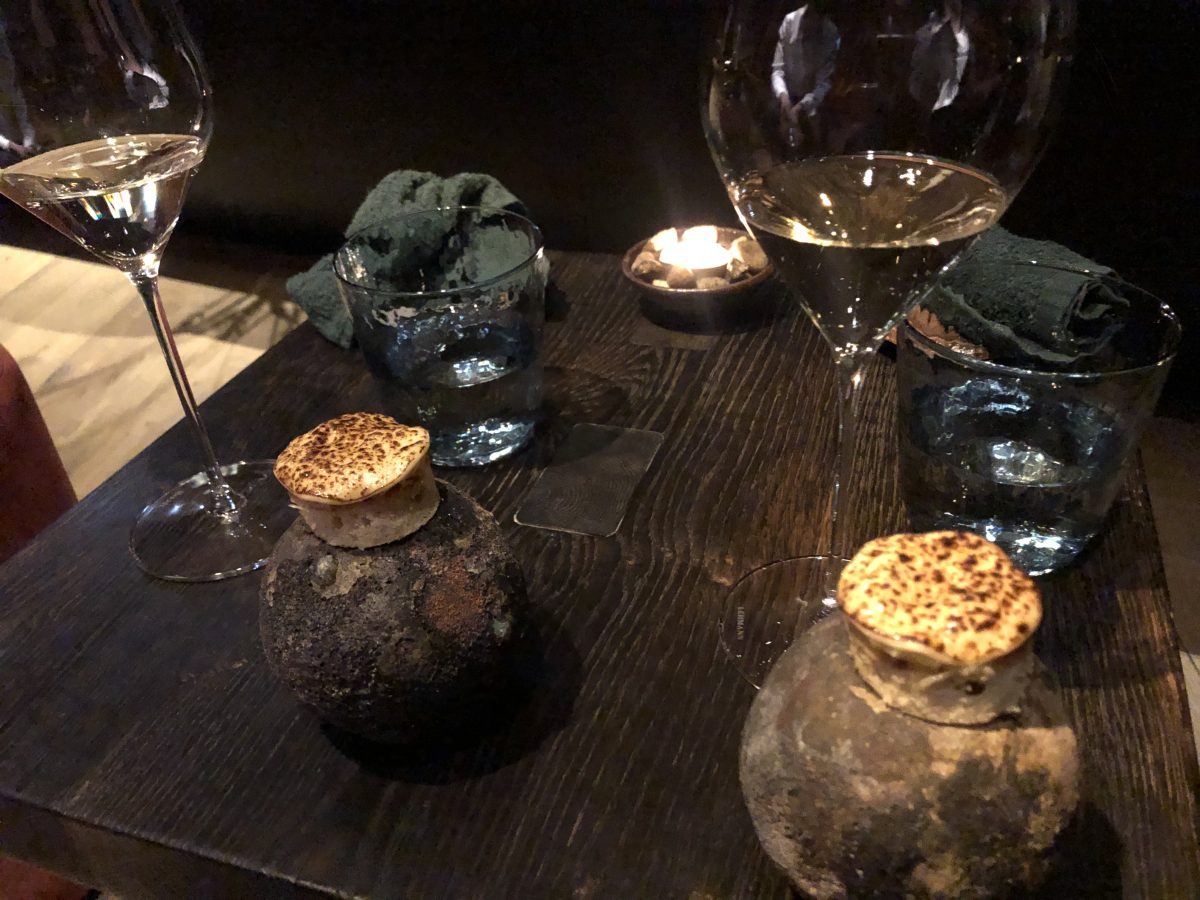
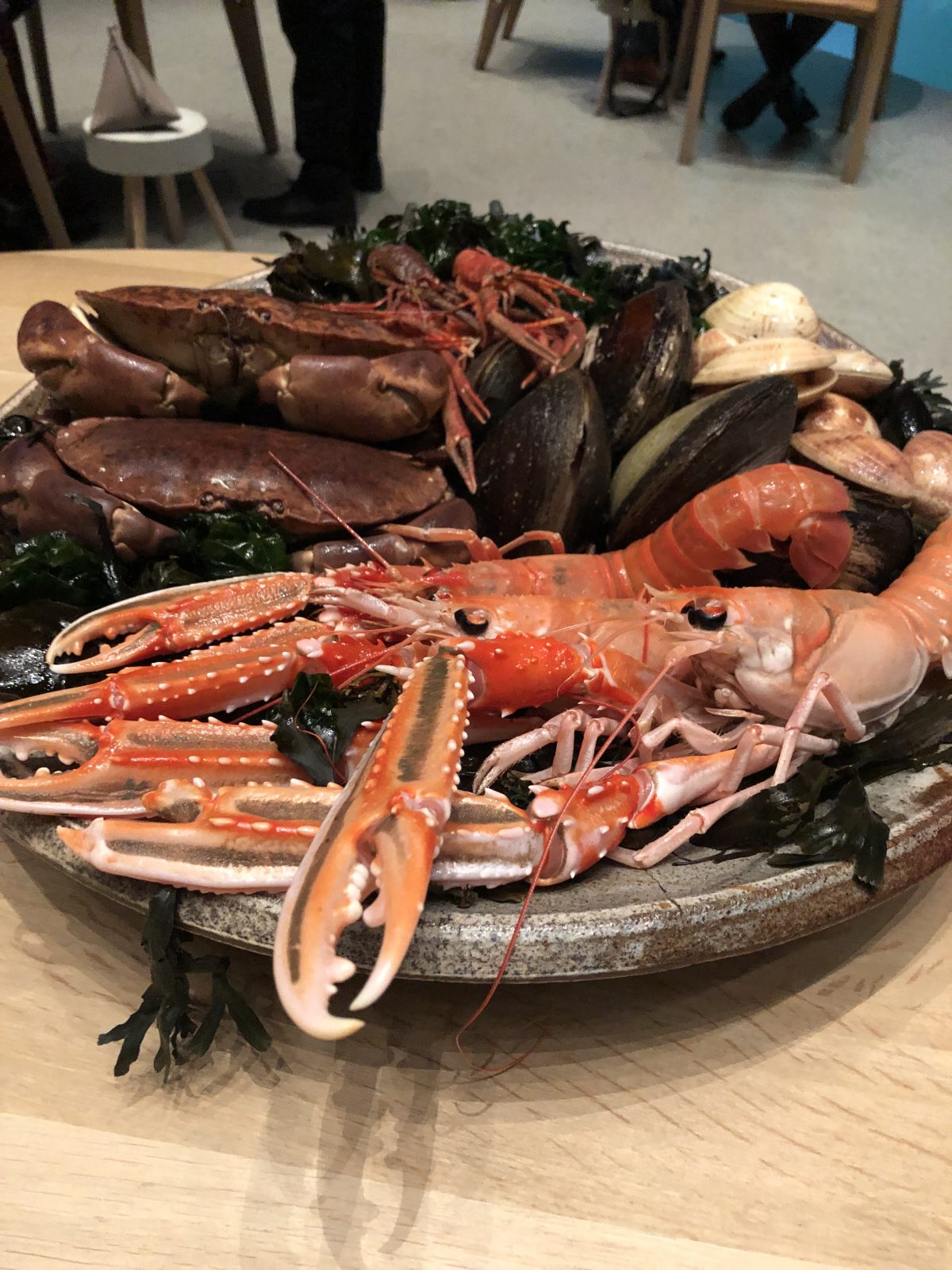
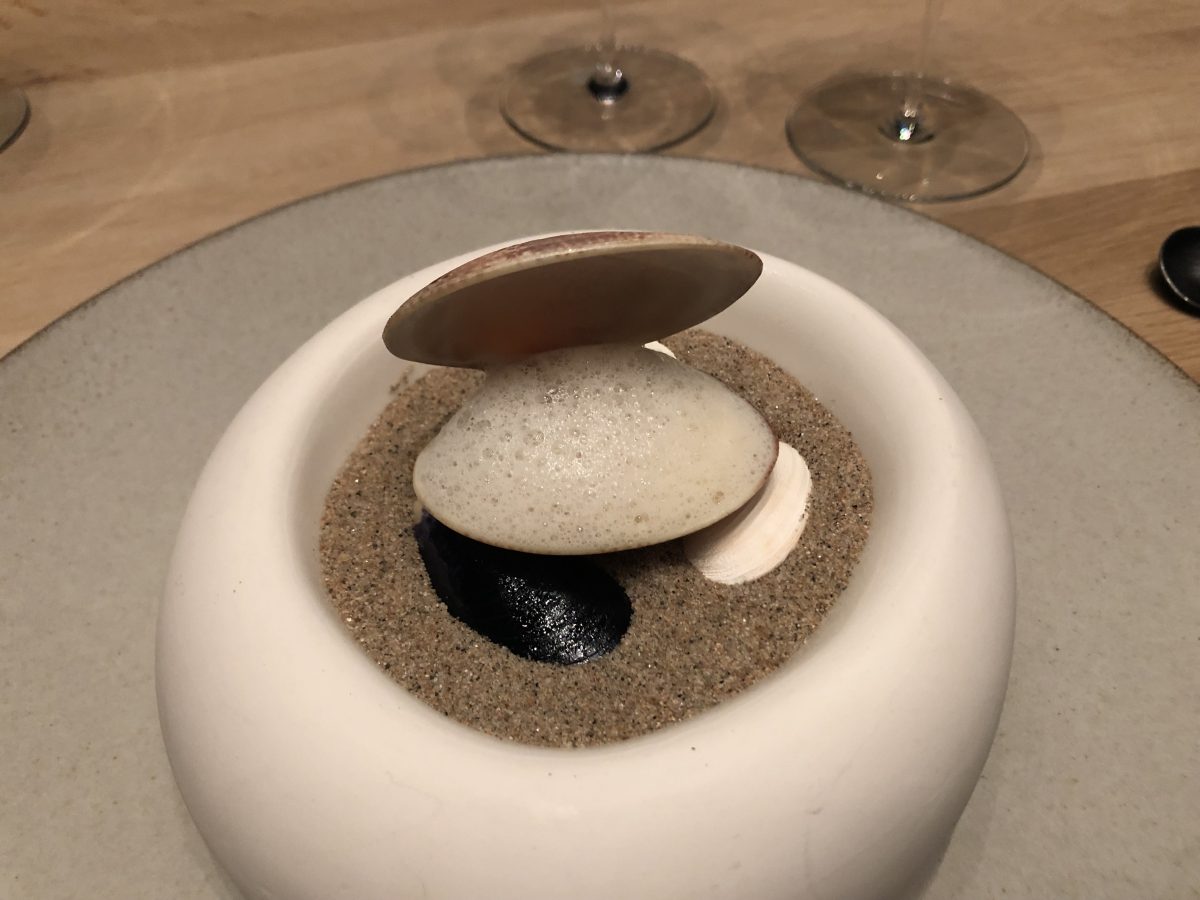
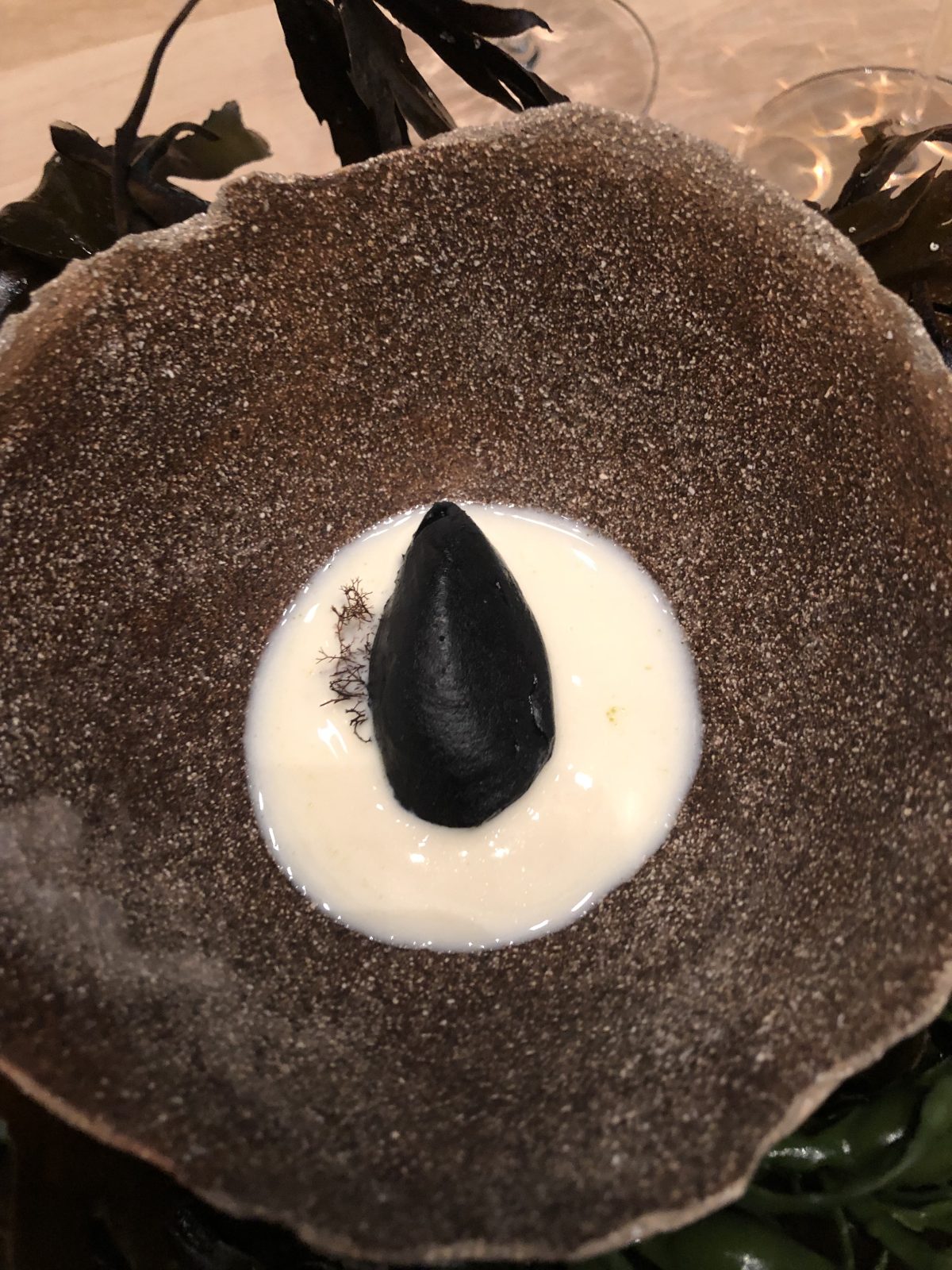
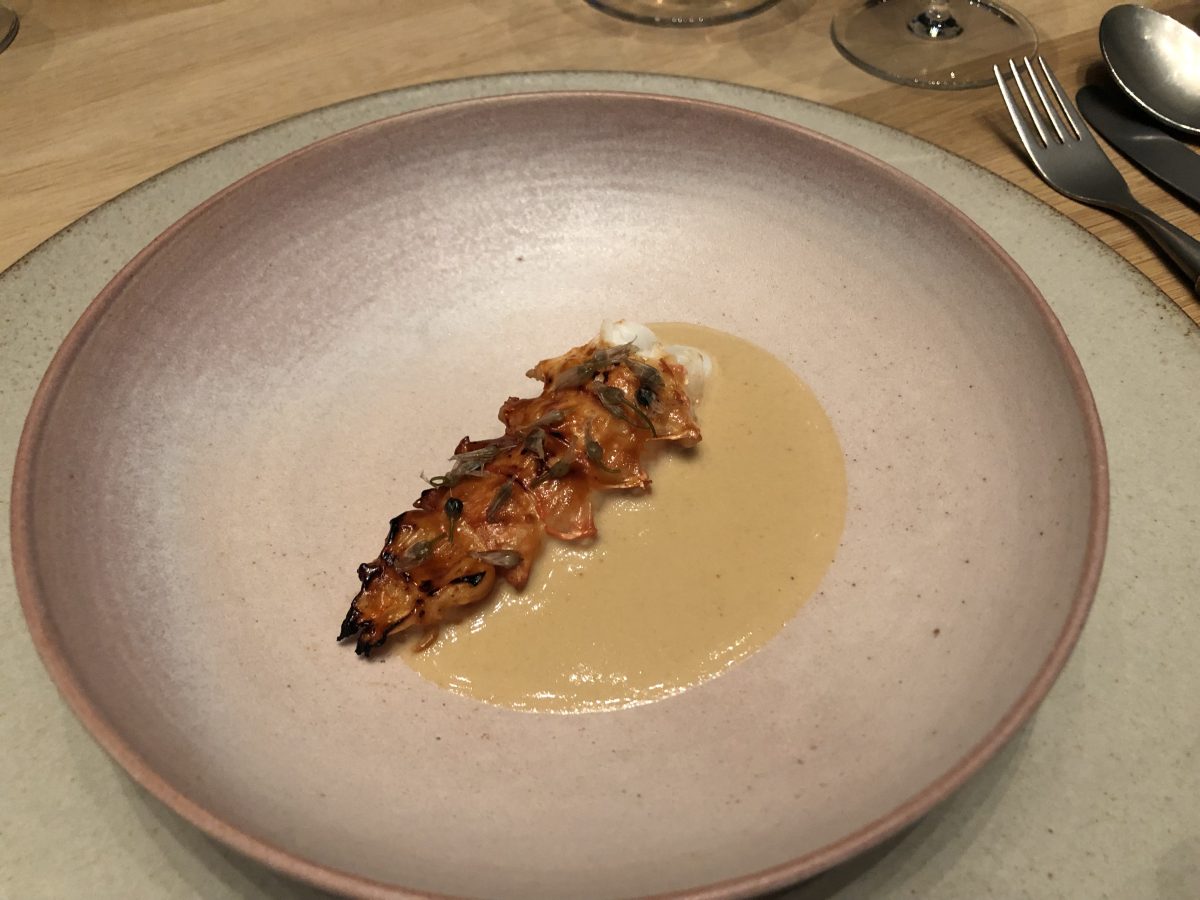
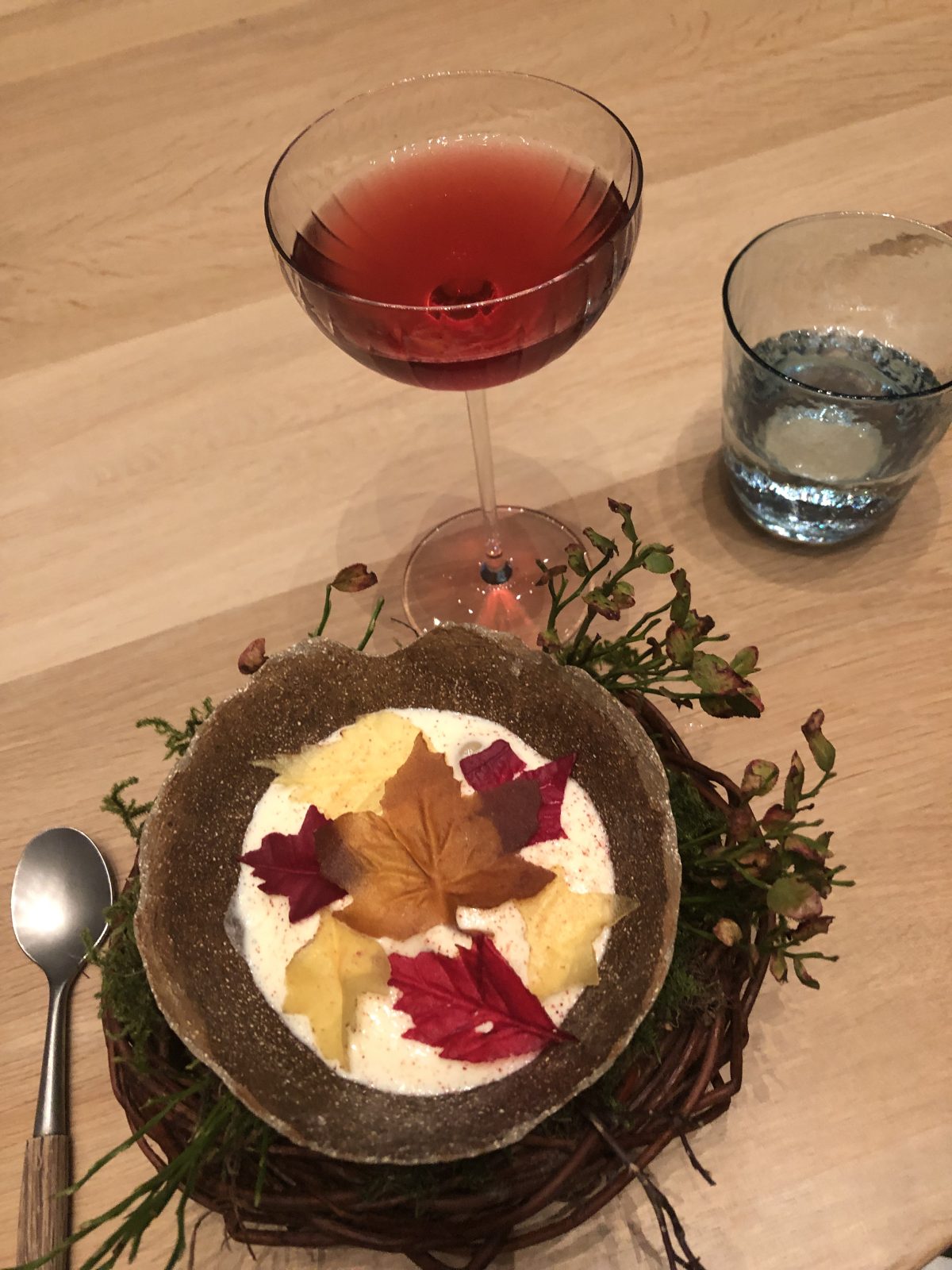
The food follows the same idea. The kitchen calls its approach ‘periscopic’: a focus on what is close at hand, drawn from the sea, the forests and the fields of the southern Norwegian coast, with local food traditions as a starting point. The dinner menu runs to ten to twelve courses, mostly seafood with some meat and vegetable dishes, and changes with the seasons; the Michelin Guide singles out dishes such as langoustine, cooked with a light touch. The first head chef, the Dane Nicolai Ellitsgaard, won the restaurant its Michelin star within its first year. The kitchen is now led by Bernt Sætre, and Under holds one star in the 2026 Michelin Guide Norway.
The view from the table is never the same twice. On a calm evening the window fills with blue-green light and passing fish; after a storm the sea is dark and restless. The menu is fixed in advance, but the sea is not.
In 2026 the dinner menu costs NOK 2,750 per person. From April to September there is also a shorter lunch of five to six courses for NOK 1,650. Drinks are extra: the ‘Abyss’ wine pairing costs NOK 2,250 and the non-alcoholic ‘Meadow’ pairing, made with juices from local ingredients, NOK 1,250. A full vegetarian menu is available, but not a vegan one, and the menu cannot be adapted for some allergies, including milk, eggs, apple and vinegar — allergies must be notified at least fourteen days ahead. Children under ten are not admitted, the dress code is smart casual, and the dining room is wheelchair accessible.
Lindesnes — The Southern Tip of Norway
An exposed coast where two seas meet, a lighthouse first lit in 1656, and a hotel two hundred metres from the restaurant
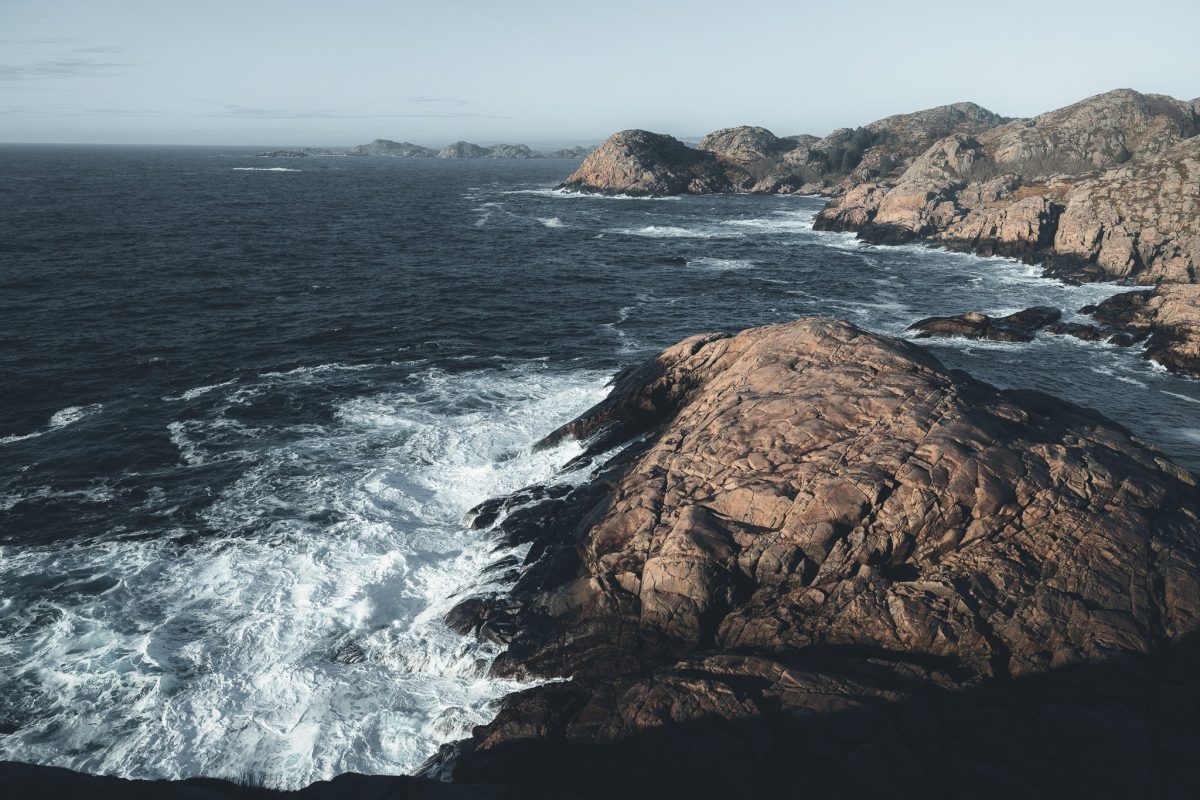
Under stands at Båly, on the coast of Lindesnes municipality near the southern tip of mainland Norway. This is where the North Sea meets the Skagerrak, and the two bodies of water give the coast its character: open to the south and west, scoured by storms in winter. The nearest village is Spangereid, just inland, and the nearest town is Mandal, further east along the coast. The restaurant is built on the shore directly below Lindesnes Havhotell, which opened in July 2010 and stands about two hundred metres away.
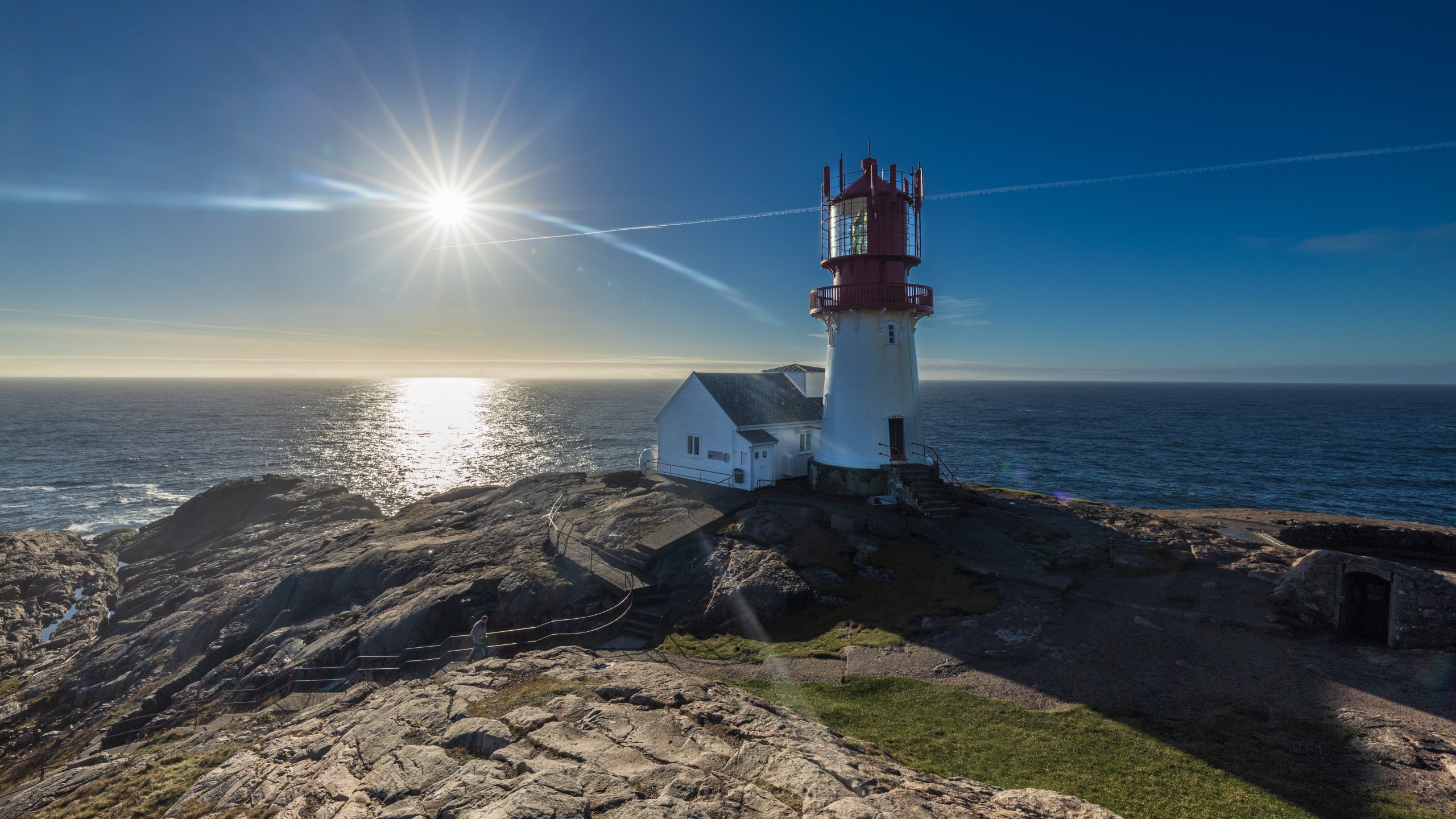
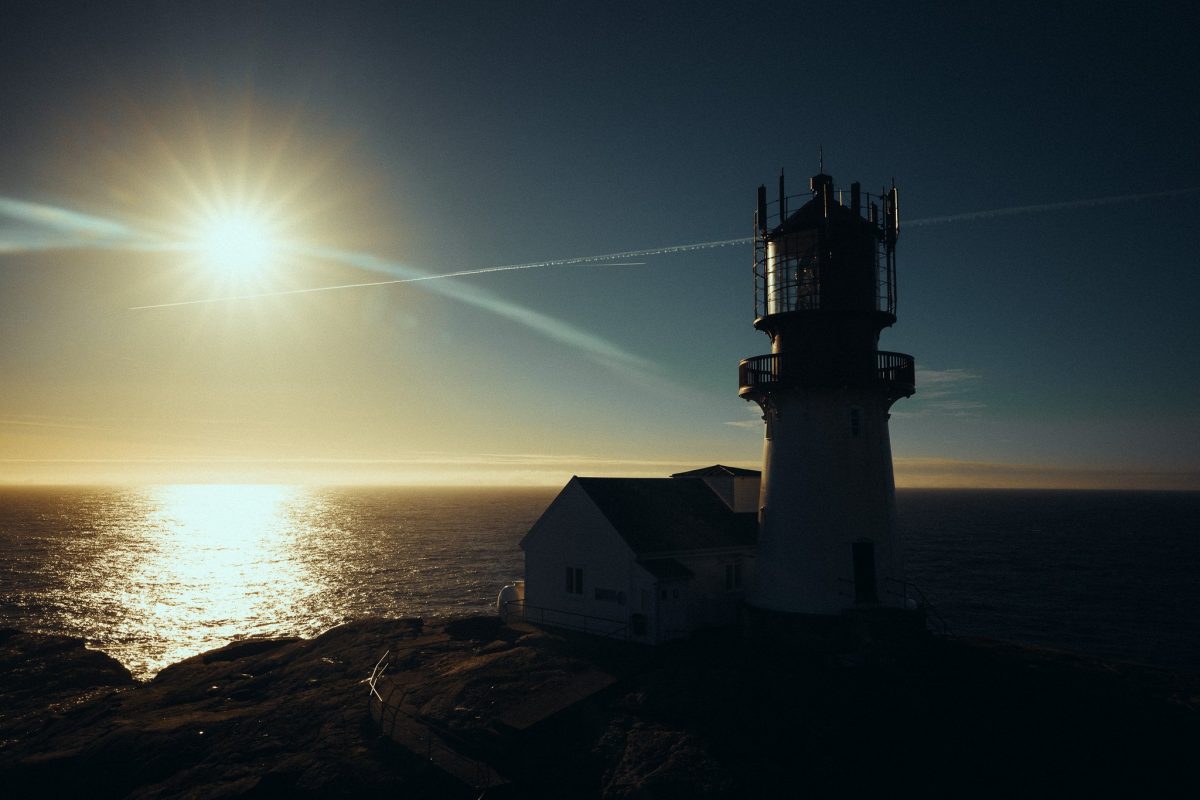
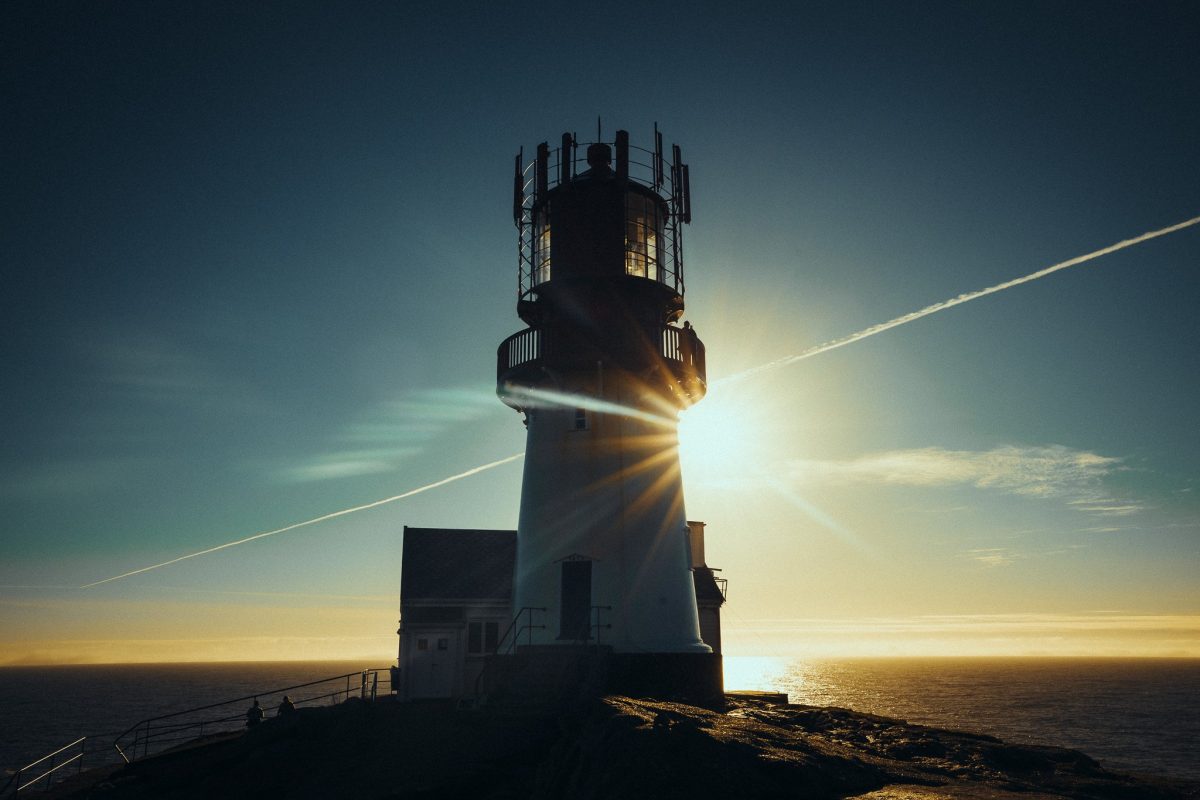
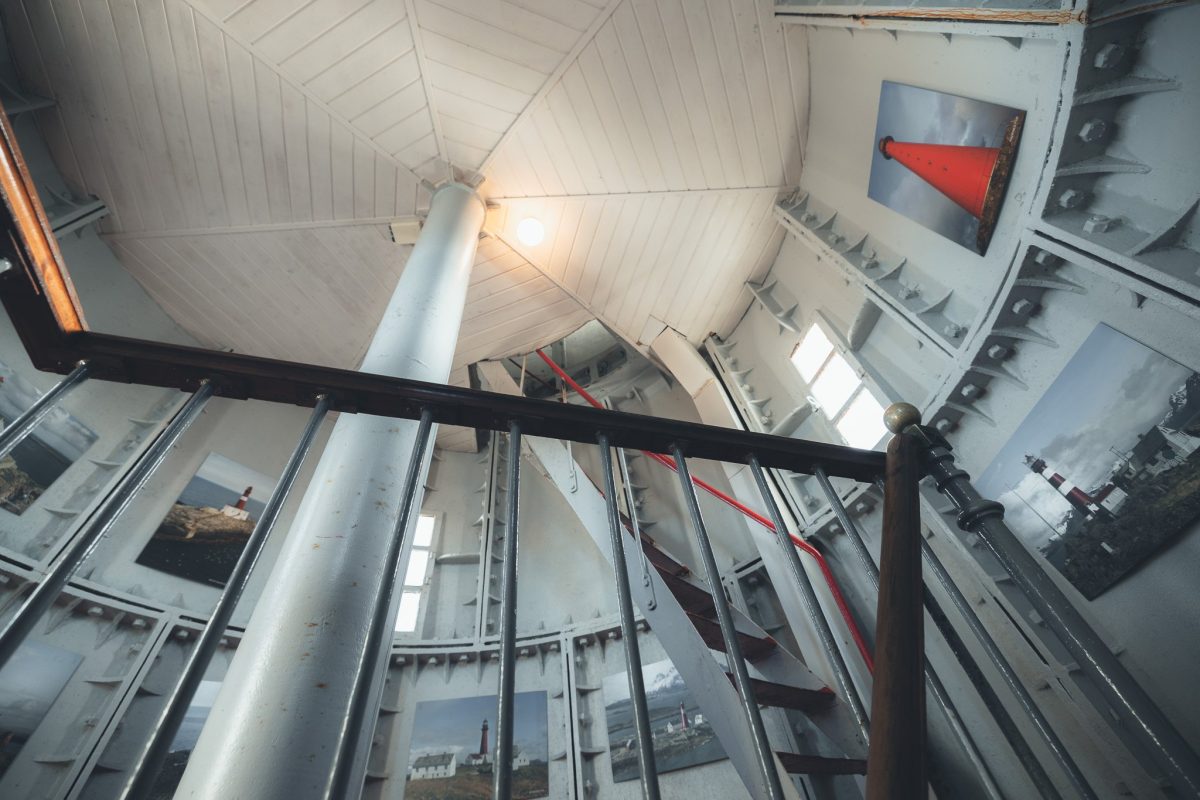
A short drive to the south-west is Lindesnes fyr, the lighthouse that marks the entrance from the North Sea to the Skagerrak and on to the Baltic. A light was first lit here in 1656, and the present cast-iron tower on its granite foundation dates from 1915. It is 16.1 metres tall, and its light stands around fifty metres above the sea. The station is now a museum, part of the network of Norway’s coastal heritage museums, with exhibitions, a cinema hall and a café built into the rock beneath the old keepers’ houses.
Lindesnes has marked the turn of the Norwegian coast for ships since 1656. The restaurant on its shore is the newest way of looking at the same sea.
The combination of the lighthouse and the restaurant makes a natural day on this coast: the lighthouse and its museum in the afternoon, a walk on the rocks, and dinner at Under in the evening. After a four-hour dinner, the hotel next door is the obvious place to stay, and in winter the weather can make this corner of the coast feel remote — which is very much part of the appeal.
«Under is easy to dismiss as a gimmick until the moment the staircase reaches the bottom and the window opens onto the seabed. What makes it remarkable is how seriously both halves have been taken: a building engineered to sit in one of the roughest stretches of water in Norway and to turn slowly into a reef, and a kitchen that cooks from the same coast it looks out on. Book months ahead, come for the whole evening, and walk out to Lindesnes lighthouse the day after to see the same sea from above.»