London is at its best in the hour after sunset, when the sky over the Thames turns a deep blue and the city switches itself on. On the river the two oldest structures in these frames, the White Tower of 1078 and Tower Bridge of 1894, are floodlit in warm gold, while behind them the glass of the City stacks up in cool white: the Walkie-Talkie, the Gherkin and the new bulk of 22 Bishopsgate. Across the water on the South Bank the Shard rises 310 m above the curved glass of the former City Hall and the lit offices of More London. Further upstream the London Eye turns in pink and purple beside County Hall. Away from the river, Piccadilly Circus runs its single curved screen over the crowd and the Underground roundel glows red and blue at the top of the subway steps. Ten frames, all taken in early March, follow that sequence from the Tower to the West End.

The Bridge That Opens
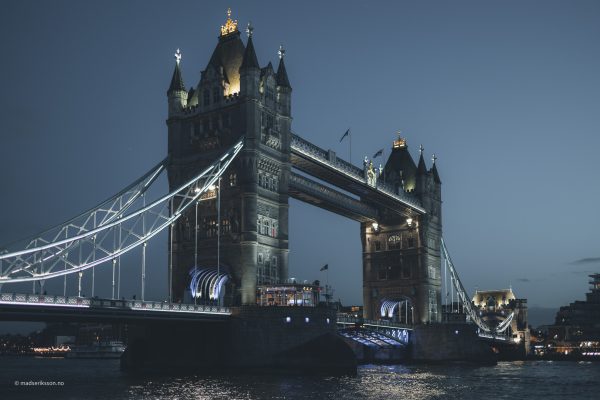
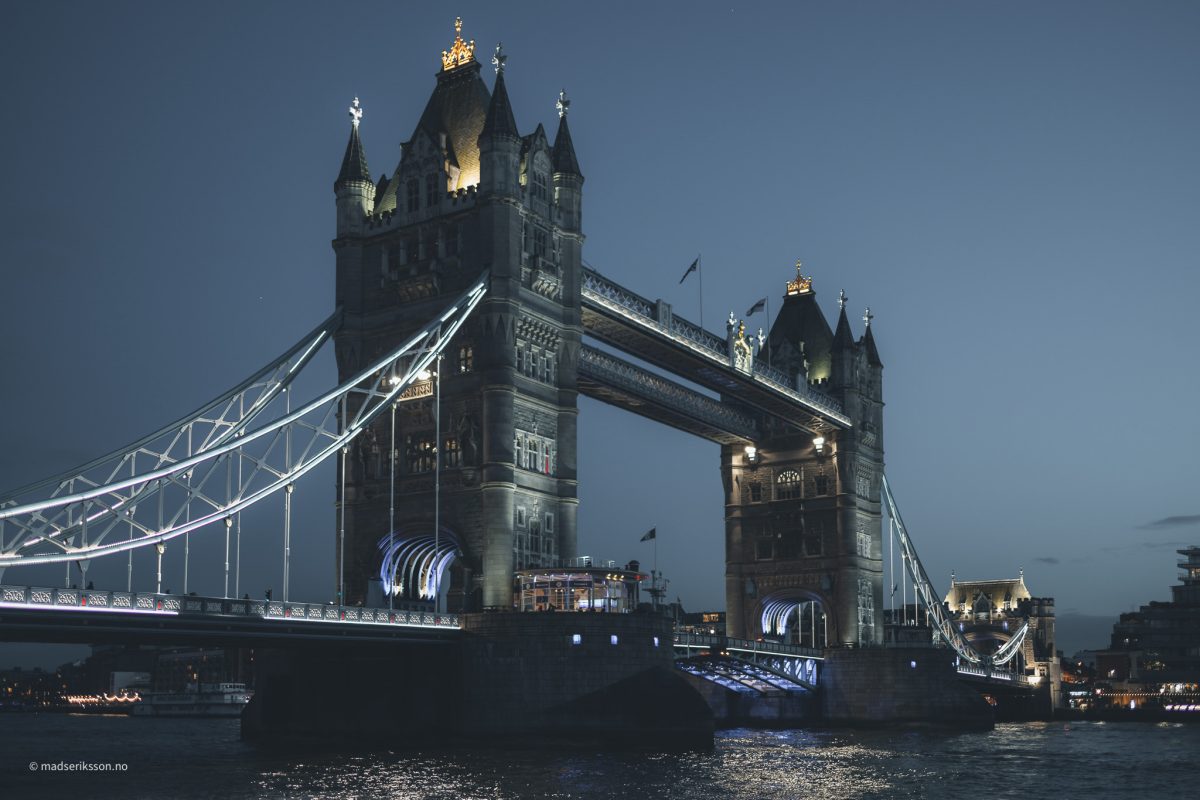
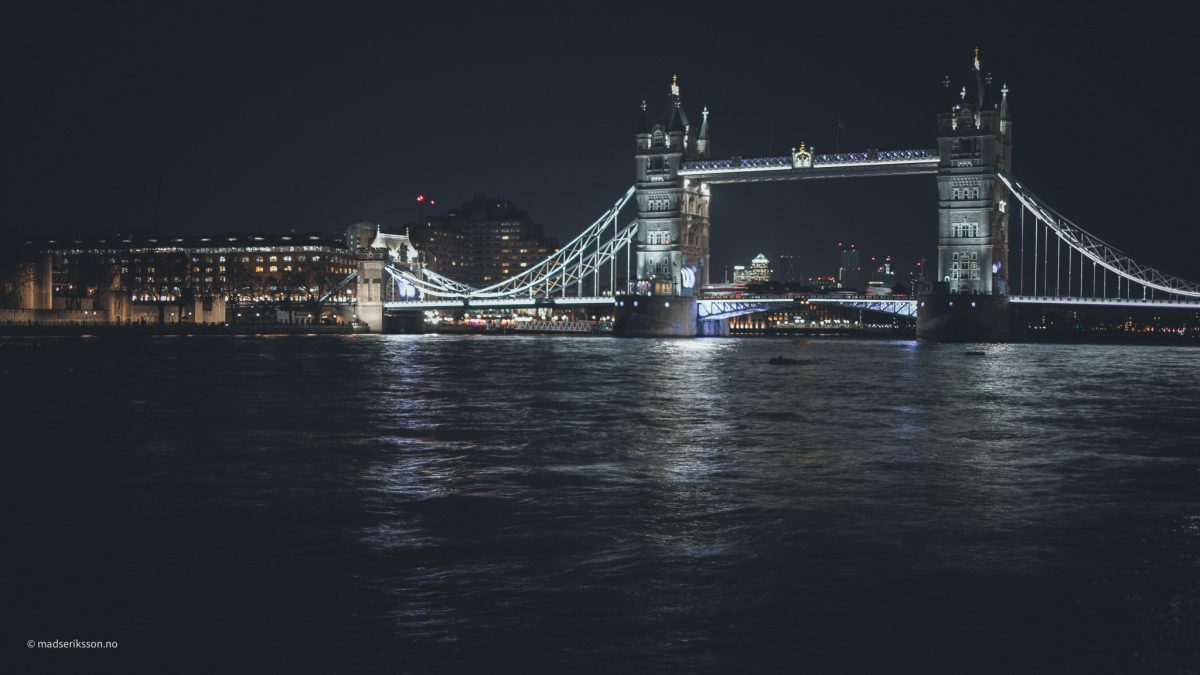
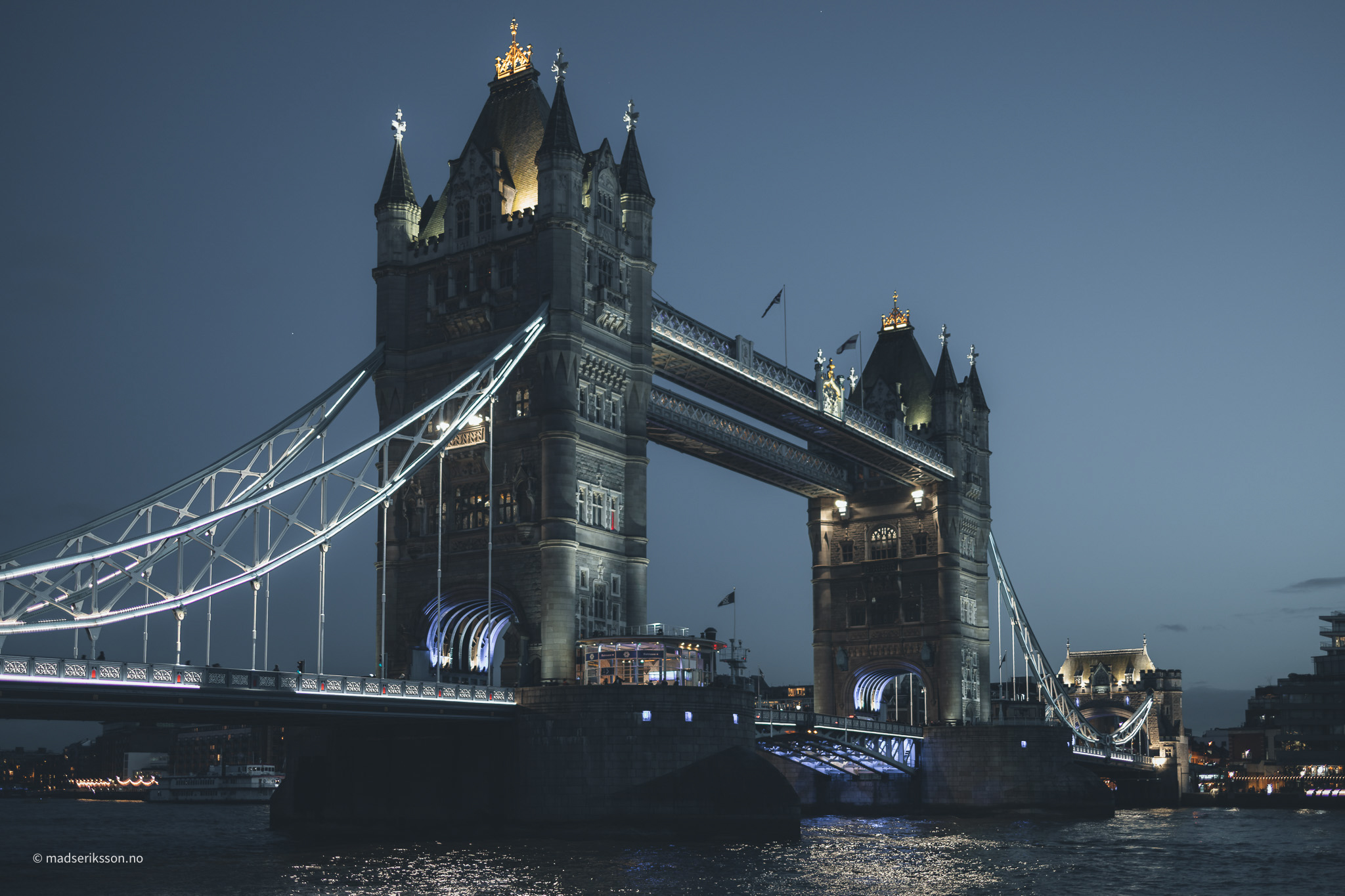
Two frames of Tower Bridge, from the south bank at dusk and from the river at night
Tower Bridge was built between 1886 and 1894 to Horace Jones’s design, finished after his death by the engineer John Wolfe Barry, and opened on 30 June 1894. Its two Gothic towers, 65 m high, are steel frames clad in Cornish granite and Portland stone, and the 61 m central span is a pair of bascules that still lift about a thousand times a year for shipping. At dusk the stonework is lit gold, the suspension chains and the high-level walkways are picked out in white, and the blue of the bascule lighting shows under the roadway.
From the water at night the bridge becomes a line of light across the dark river, with the towers of the City behind it and the lit windows of the north bank running off to the left. The long exposure smooths the Thames to a sheet of reflections.
The Old Fortress and the New Towers
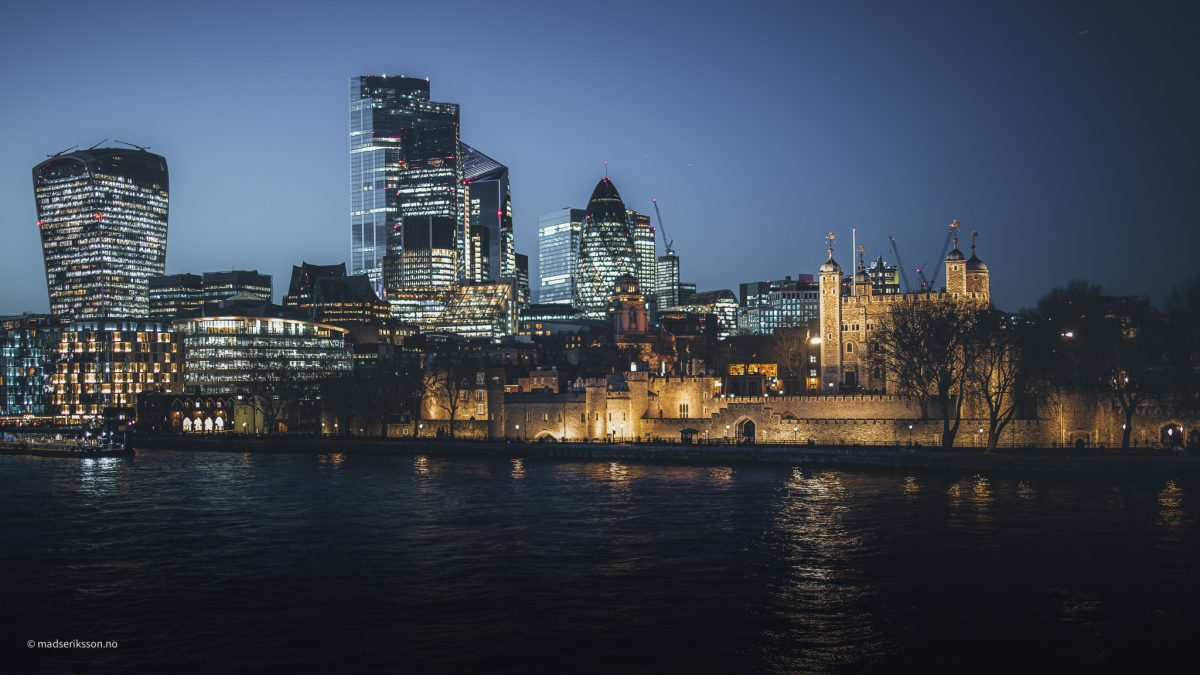
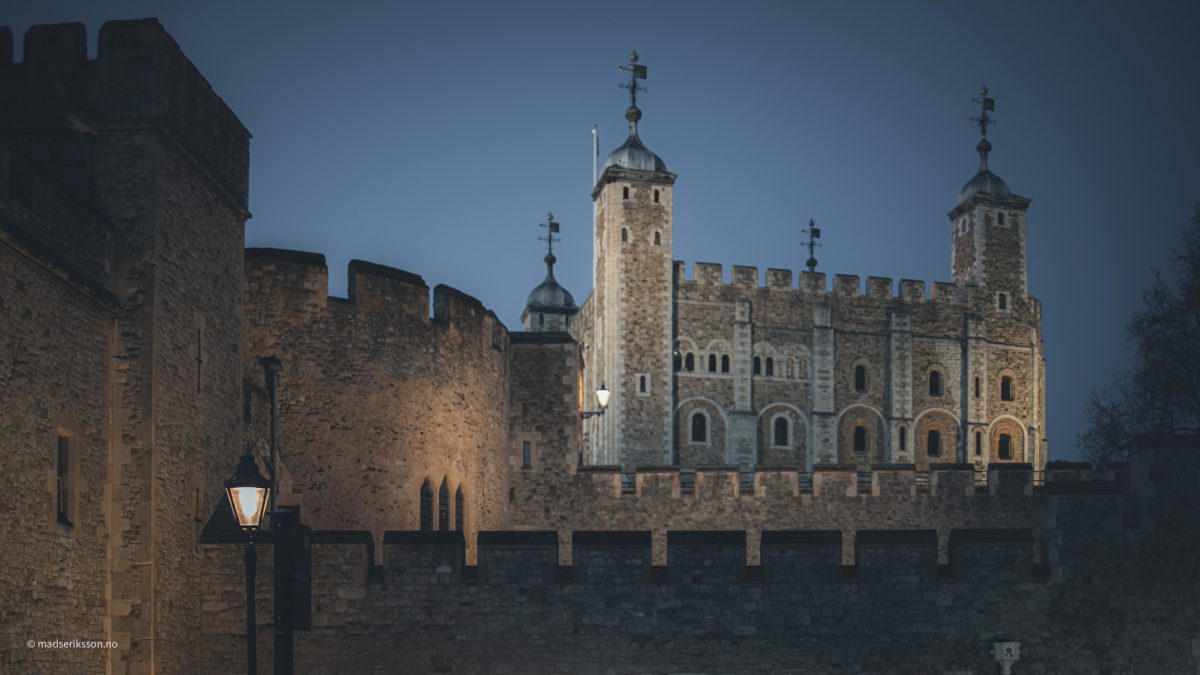
The White Tower, the curtain walls and the glass of the City behind them
The Tower of London is the oldest thing on the river and still the most solid. The White Tower at its centre was begun around 1078 for William the Conqueror, 27 m of Kentish ragstone and Caen limestone under four corner turrets, and the concentric curtain walls were added by Henry III and Edward I in the thirteenth century. Floodlit at dusk, with a Victorian lamp standard in the foreground, the walls look much as they have for seven hundred years.
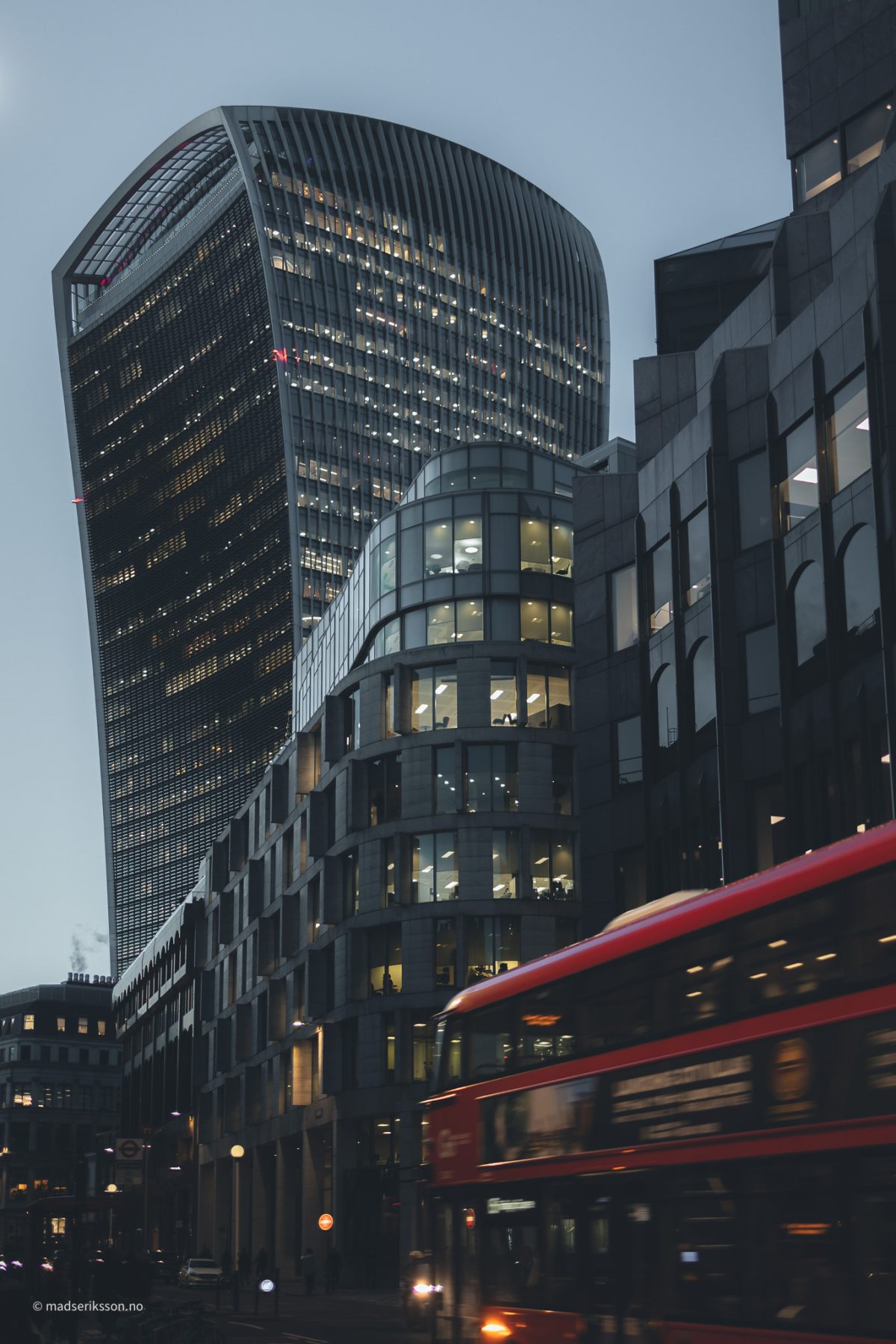
Seen from across the river the contrast is the point. Behind the fortress the City of London has built upwards since the early 2000s: the Walkie-Talkie at 20 Fenchurch Street, 160 m and widening towards the top, the Gherkin at 30 St Mary Axe, and the broad new tower of 22 Bishopsgate, completed in 2020. The third frame looks up at the Walkie-Talkie from street level, past the curved glass of a newer block, as a red double-decker passes below.
Glass on the South Bank
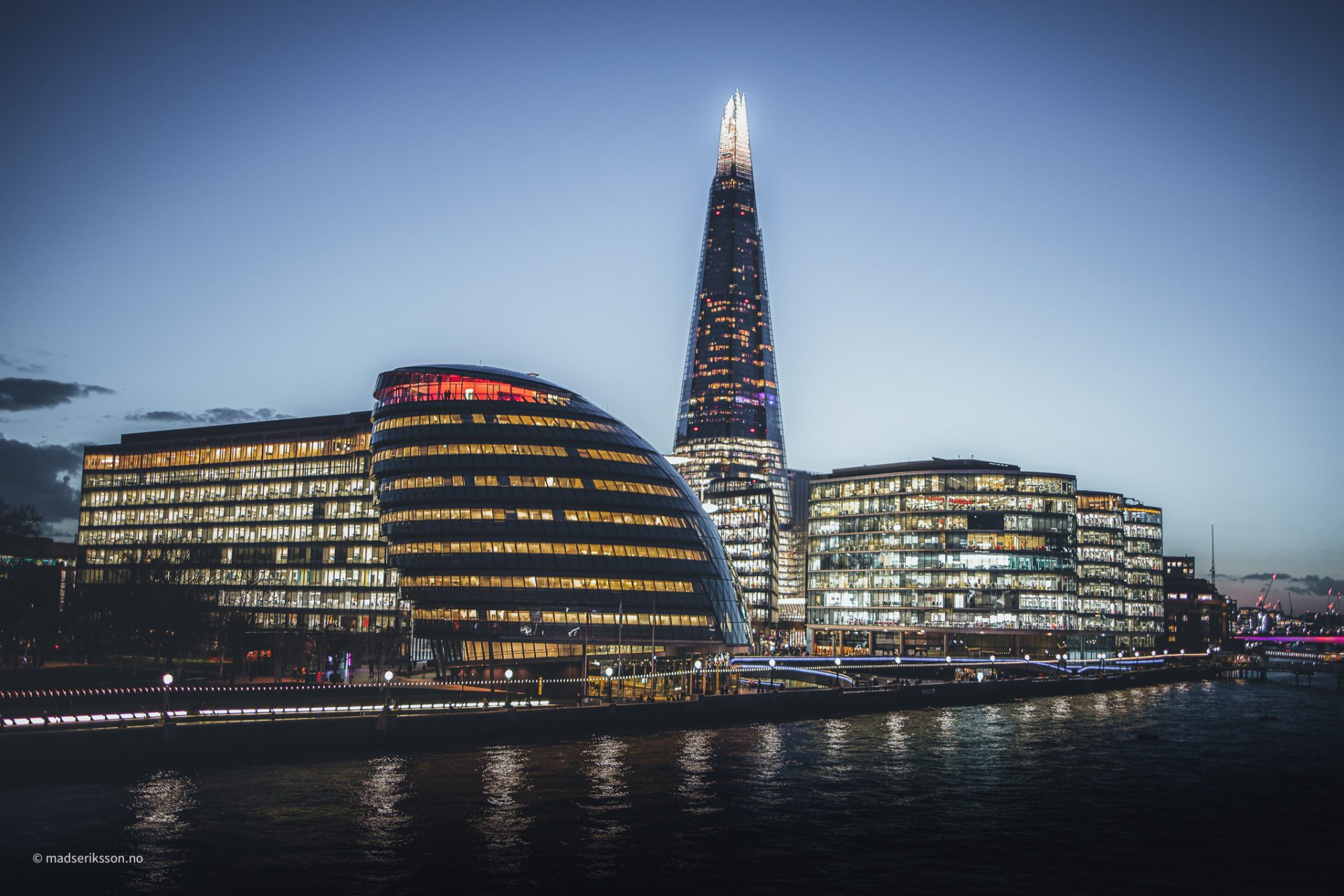
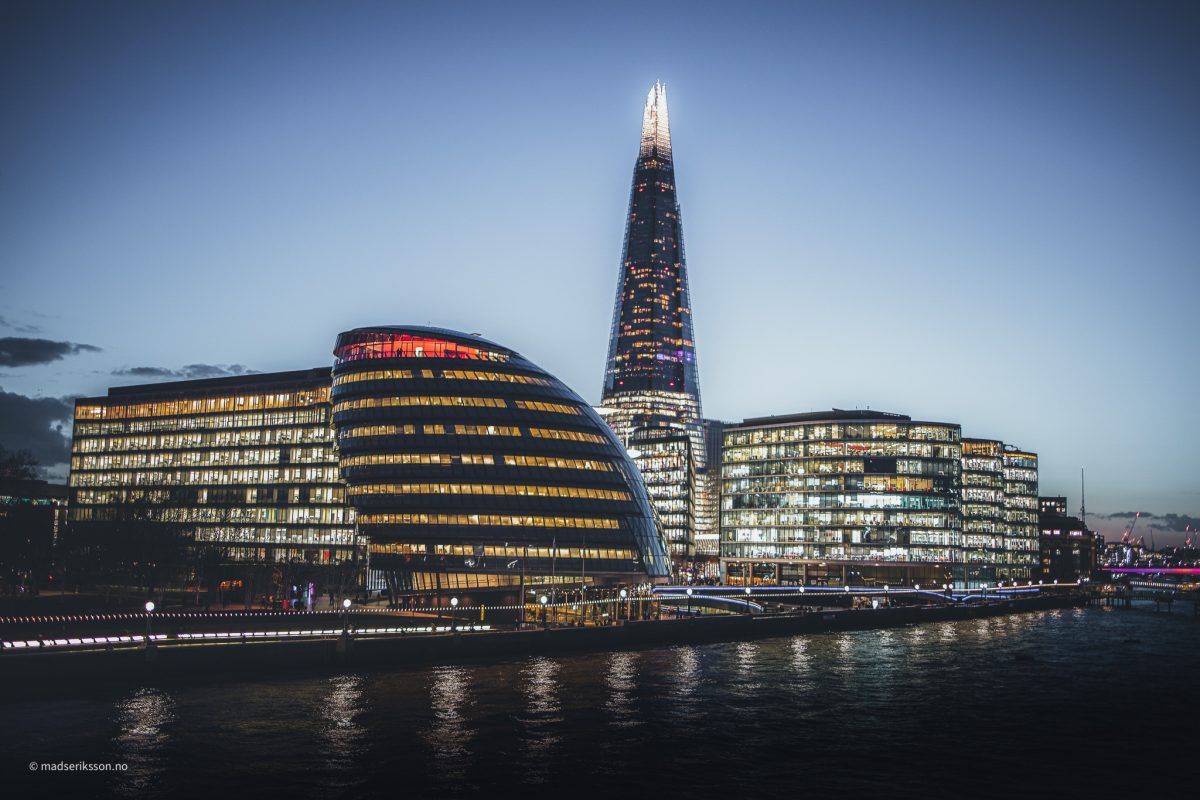
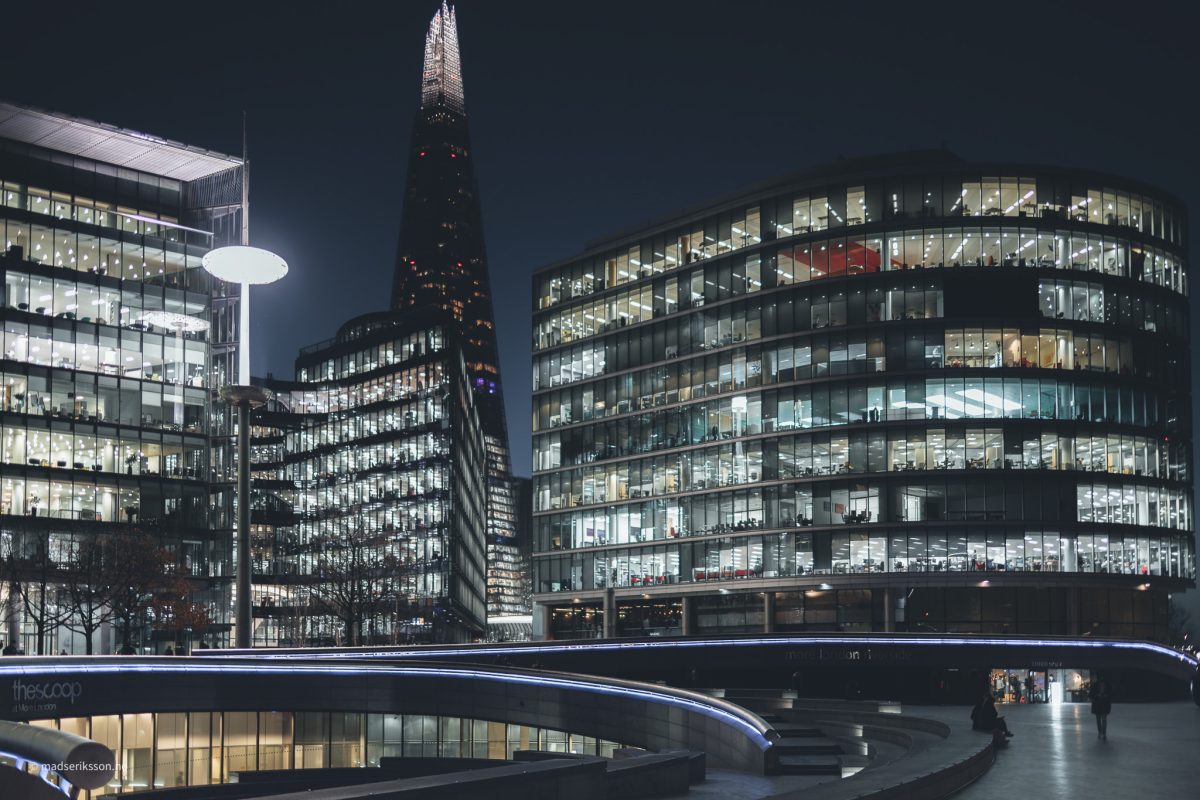
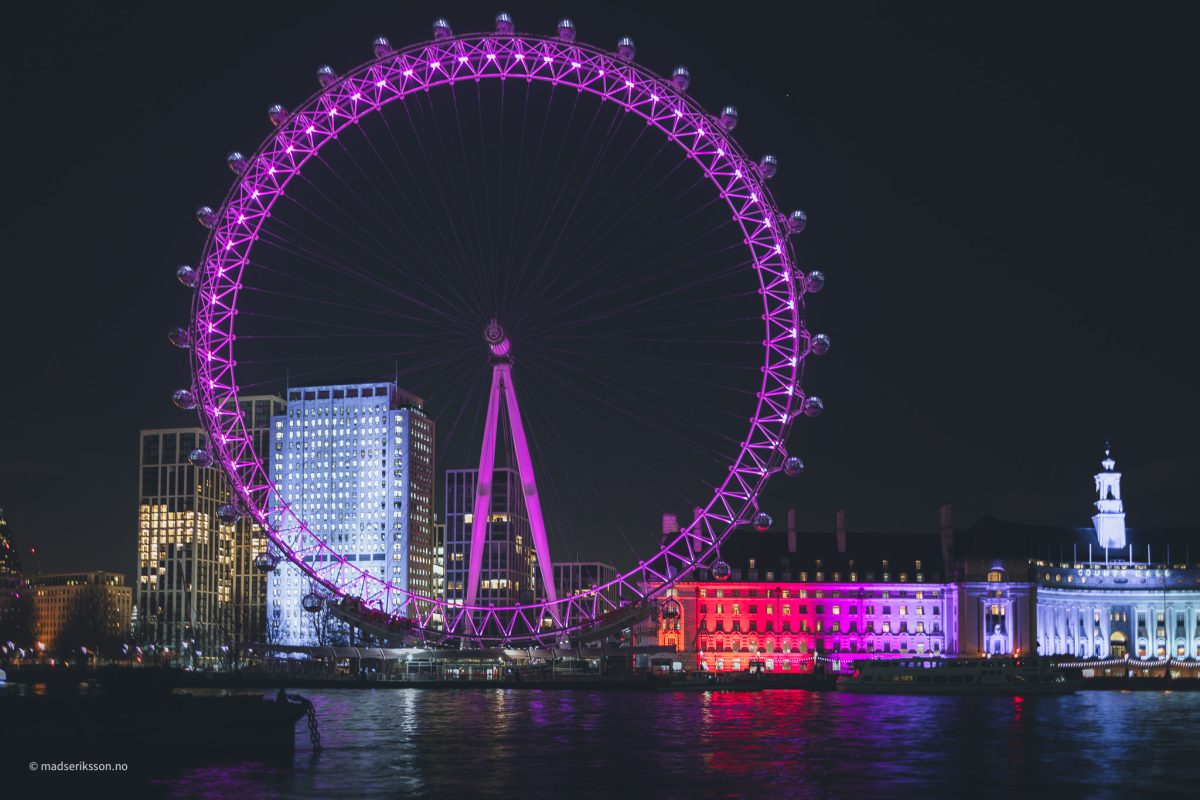
The Shard above the former City Hall, the offices of More London and the London Eye in colour
The South Bank opposite the Tower was rebuilt from the late 1990s as More London, a run of glass office blocks around the riverside walk, with Norman Foster’s lopsided glass egg of a City Hall opened in 2002 at the river end. The Greater London Authority left it in January 2022, but the shape remains one of the odder outlines on the Thames. The Scoop, a sunken open-air amphitheatre, sits among the offices. Above all of it the Shard rises 309.6 m from London Bridge station, inaugurated in July 2012 to Renzo Piano’s design and still the tallest building in the country, its glass facets ending in an open spire that is lit white at night.
Upstream at Westminster Bridge the London Eye, 135 m high and 120 m across, turns once every half hour with 32 capsules, and after dark its rim is lit in whatever colour the evening calls for, here pink and purple against the floodlit Edwardian front of County Hall.
The Lights of the Circus
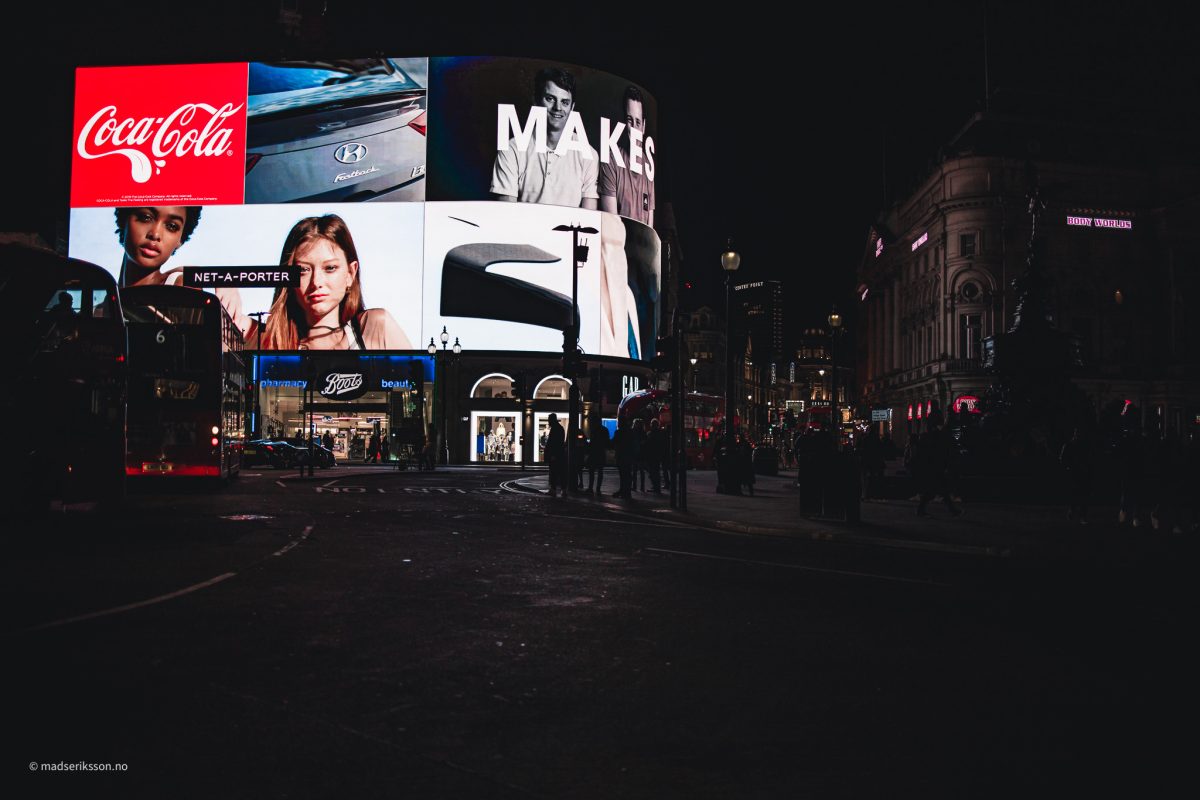
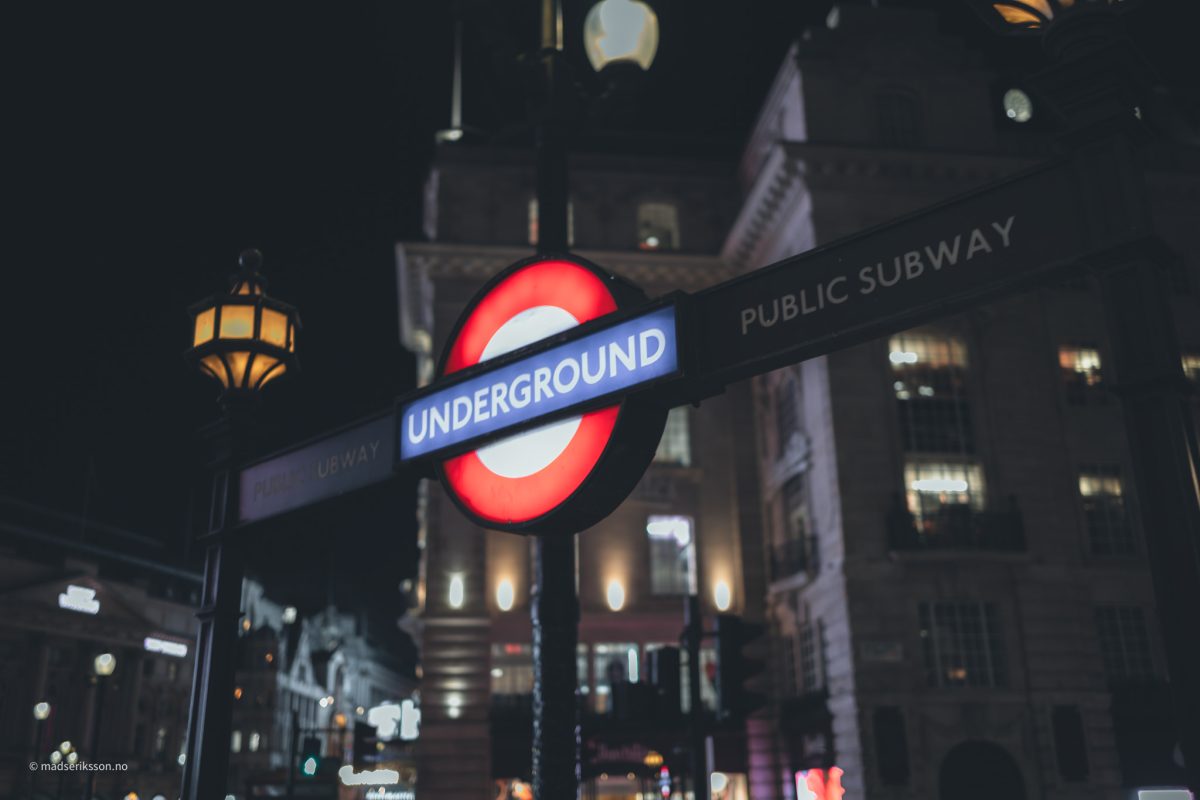
The curved screen over the junction, and the Underground roundel at the top of the steps
Piccadilly Circus was laid out in 1819 where Regent Street met Piccadilly, and it has been lit by advertising since the first electric signs went up in 1908. The hoardings have changed with the technology, from bulbs to neon to LED, and in October 2017 the six separate screens on the north-west corner were replaced by a single curved display, the largest of its kind in Europe, which now runs its loop of brands above the junction while buses and the crowd pass beneath it in the dark.
At the edge of the pavement the Underground roundel, the red ring and blue bar first used in 1908, marks the steps down to the station of 1906. Together with the old-fashioned lamp beside it and the Public Subway sign, it is as much a London emblem as anything on the river.
«London after dark sorts itself by colour. The old city is lit warm: the ragstone of the Tower, the granite of Tower Bridge, the brass lamps on the embankment. The new city is lit cold: the office floors of the City and More London, the white spire of the Shard. Only the London Eye and the screens of Piccadilly Circus refuse to choose, and that is probably why they draw the crowds.»
More in the same area
 CitiesLondon: A Timeless Capital of History, Culture, and Innovation
 ArchitectureTen Buildings That Changed Their Cities — Modern Architecture Ranked on Impact, Not Image
 CitiesGhana’s Coast — Accra, Kokrobite, Kakum and the Castles of Cape Coast and Elmina
 ArchitectureBarcode and Bjørvika: Oslo’s New Waterfront Skyline
 CitiesThe World’s 10 Great Food Markets