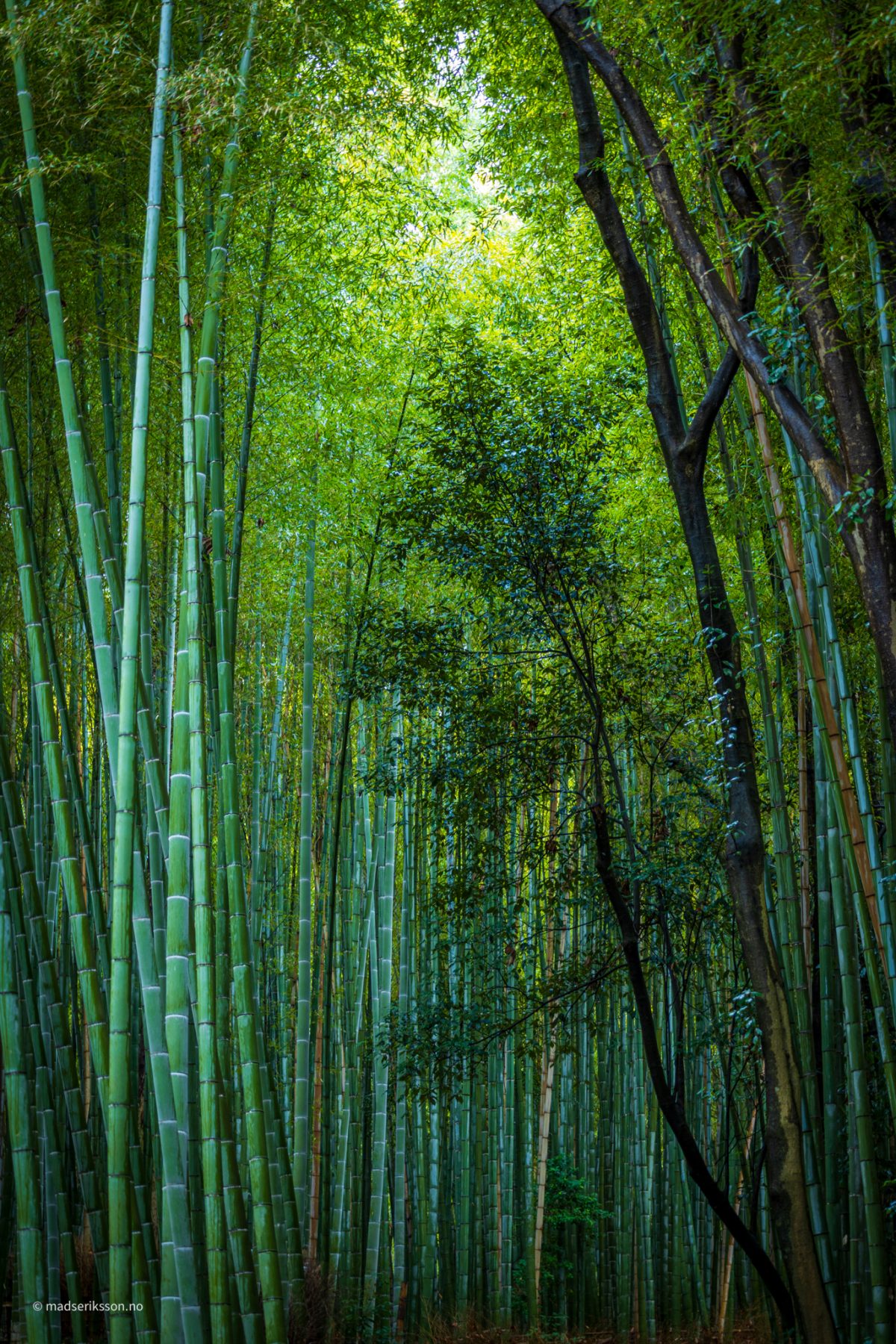
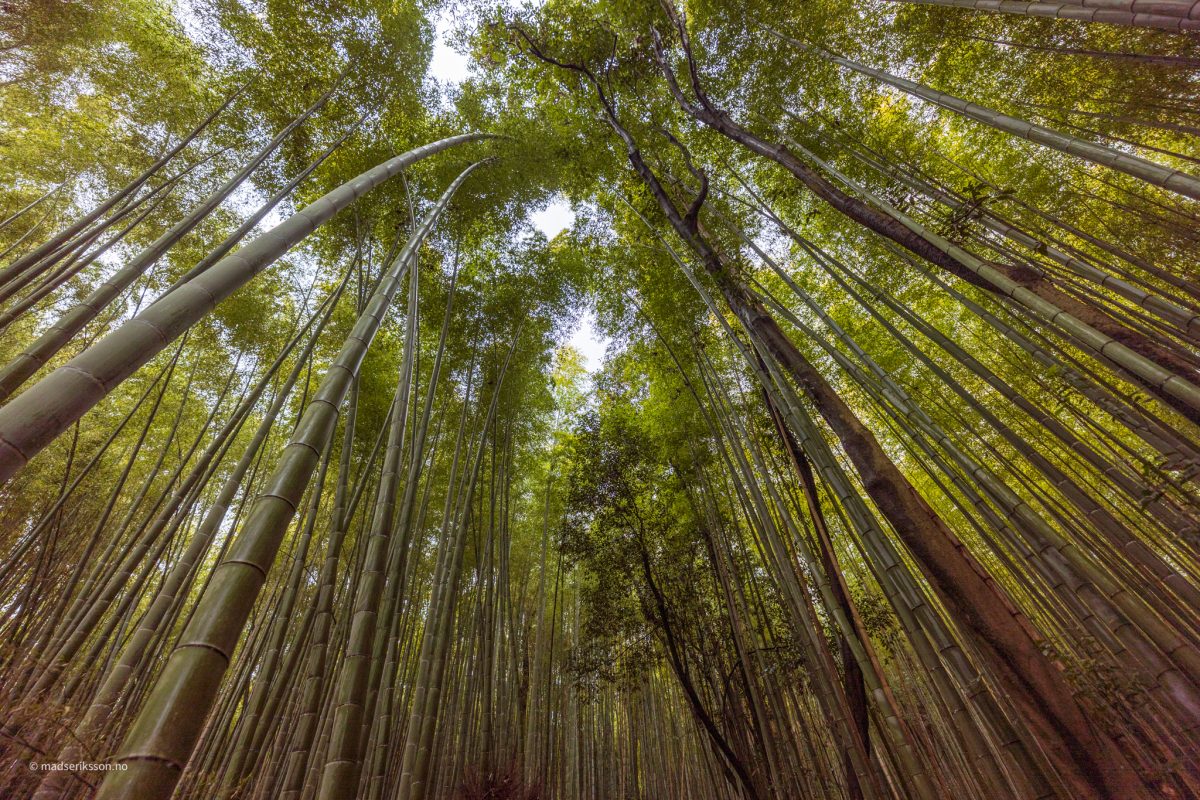
Four hundred metres of path, a canopy twenty-five metres up, and a sound the Japanese government formally decided was worth protecting. Arashiyama’s bamboo grove is one of the most photographed places in Japan and one of the most misunderstood — it is free, it is ungated, it takes twenty minutes to walk, and whether it is magical or miserable depends almost entirely on what time you arrive.

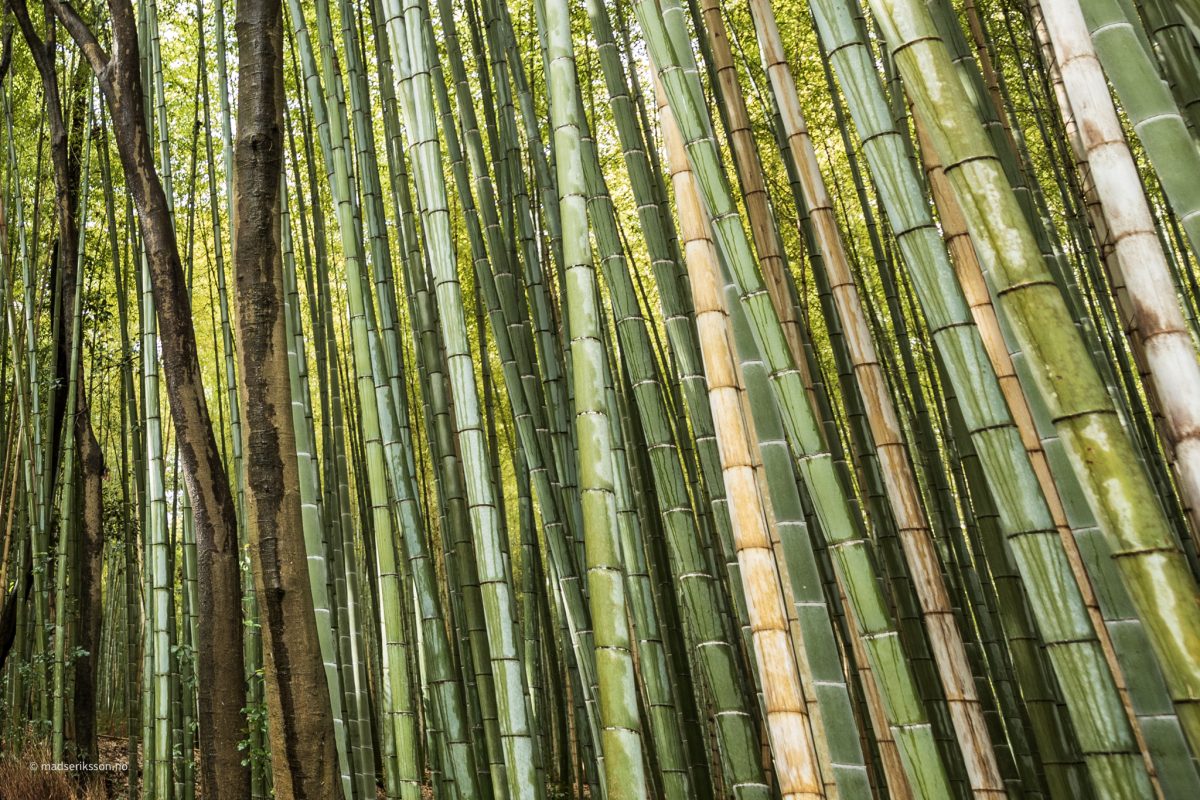
The grove sits in Ukyō-ku, on the western edge of Kyoto, in the district of Arashiyama — the name means storm mountain — and is also known by the older name for the area, Sagano. The pedestrian path runs roughly 400 metres through mōsō bamboo, Phyllostachys edulis, whose culms close overhead at around twenty-five metres. That is the whole of it. People are routinely surprised by how short it is.
What makes it worth the trip is not the length but the quality of the space. Bamboo does not behave like timber. The culms are close-set and almost uniform, the light comes through green rather than gold, and in wind the whole grove moves and knocks together in a way no other forest does. In 1996 Japan’s Ministry of the Environment included that sound in its 100 Soundscapes of Japan — a list which treats acoustic environments as heritage in the same way as buildings and ecosystems.
One thing to clear up first
A number of 2026 travel guides state that the grove now operates on timed entry and that you must book a slot in advance. This is not the case for the main path. There are no gates, no ticket booths and no closing time; entry is free and has been since 2015, when the previous charge was dropped. Timed entry and admission fees do apply to the neighbouring properties — Tenryū-ji and Ōkōchi Sansō — which is very likely where the confusion started. If you have read otherwise, you have read wrong.
Twenty minutes, and half a day around it
The grove itself is over quickly — the reason to come is what you string onto either end of it
Distances above are approximate — this is a dense residential district and there are several ways through it. What the table is really saying is that the bamboo is one stop on a short circuit, and that treating it as the destination is the single most common way to be disappointed by Arashiyama.
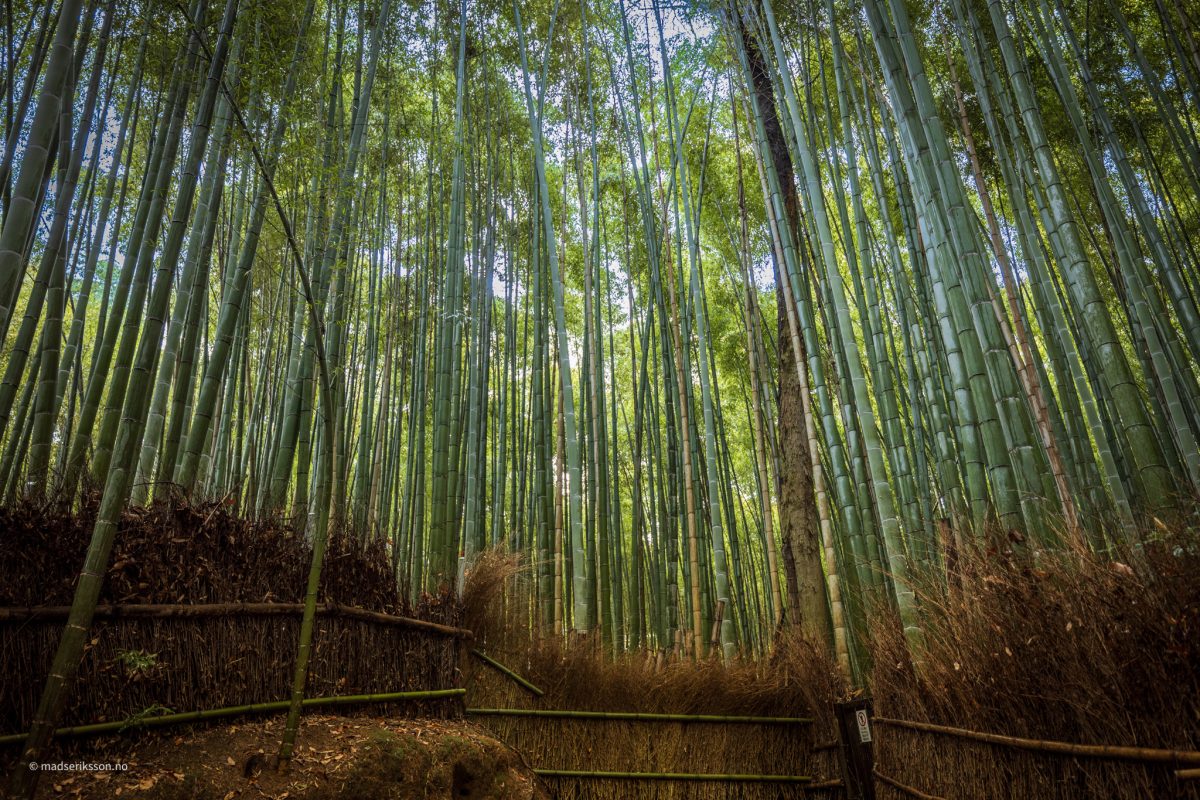
The practical advice is simple and almost nobody follows it. Take the first train. Saga-Arashiyama is about fifteen minutes from Kyoto Station on the JR Sagano line, and being on the path at half past seven rather than half past ten is the difference between a bamboo grove and a queue. By 09:30 it is busy; between 11:00 and 15:00 the walk becomes a shuffle. Rain thins the crowd dramatically and does the grove no harm at all — wet bamboo is darker, greener, and the sound is better.
“Walk it once for the photograph and once more without the camera. The second pass is when you notice the sound, and the sound is the part that was actually listed as heritage.”
One small thing worth knowing: the light does not do what people expect. The canopy is dense enough that the shafts-of-golden-sun images you have seen are largely the product of a specific hour, a specific season and often a good deal of editing. What you will more likely get is an even, cool, underwater green. It is better in person than it photographs, which is an unusual complaint to have about a famous view.
The reason to stay past nine o’clock
A Zen garden laid out in the fourteenth century, an actor’s private villa, a river gorge and a mountain full of monkeys — all within a kilometre of the bamboo
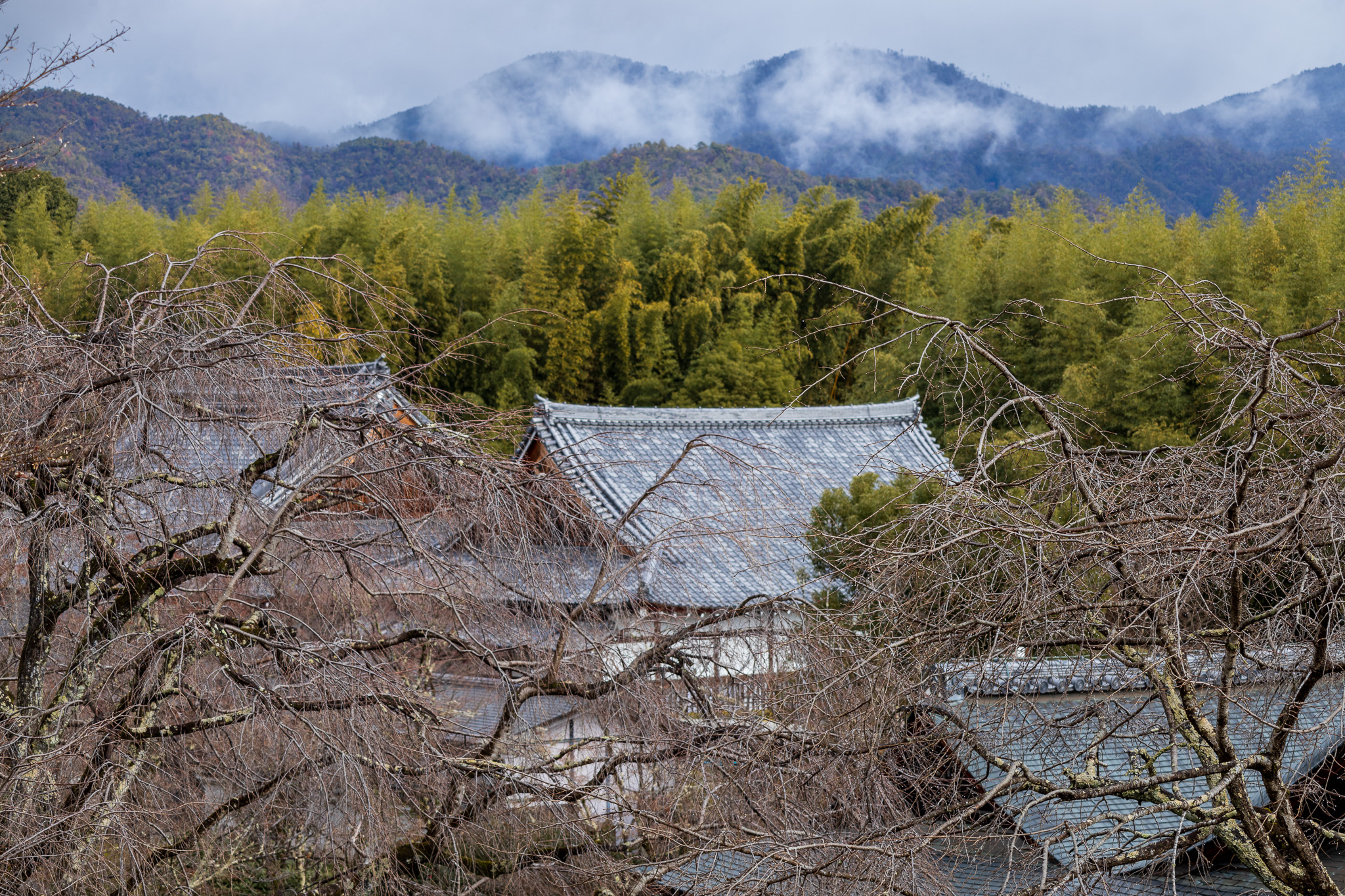
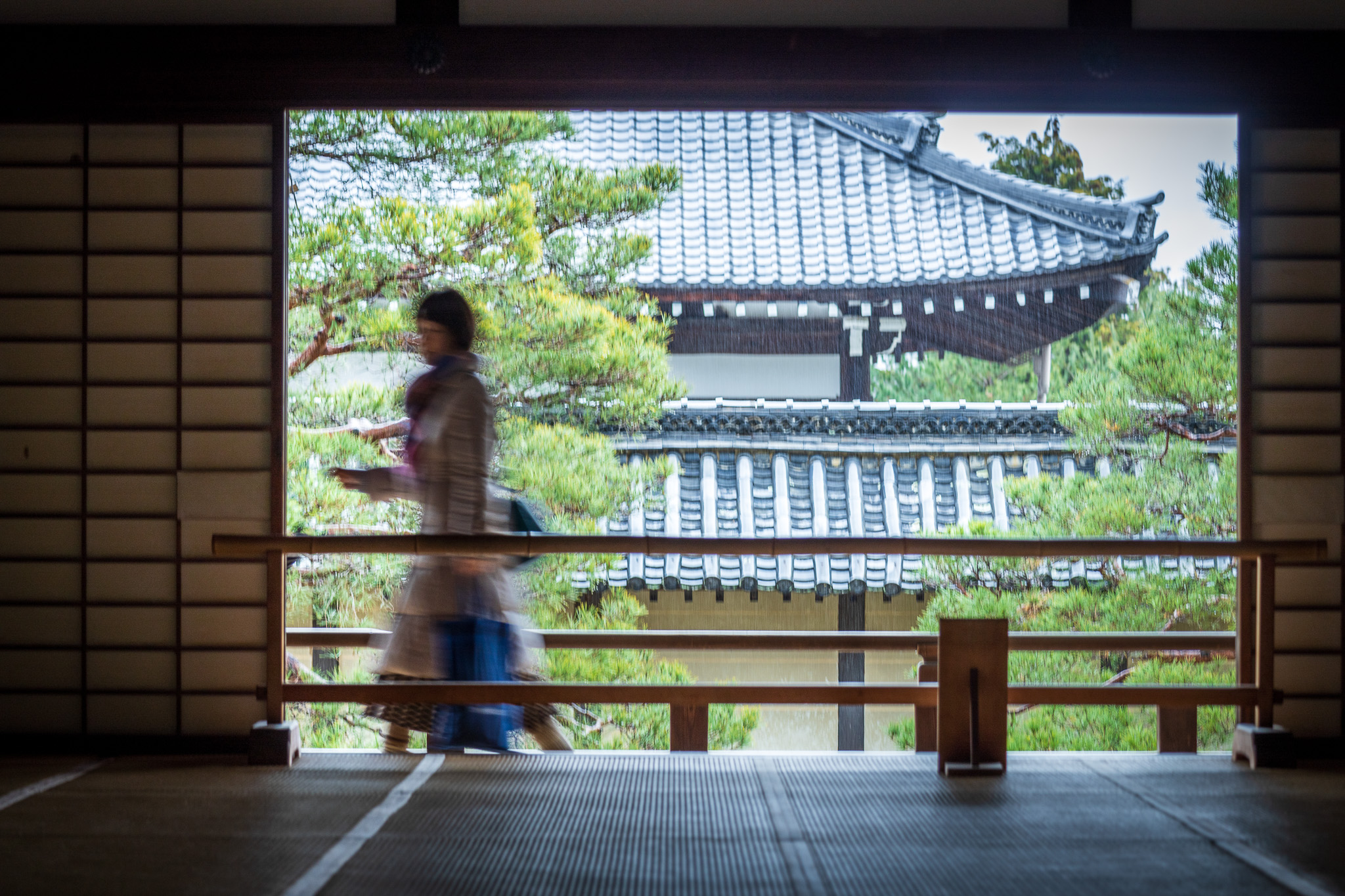
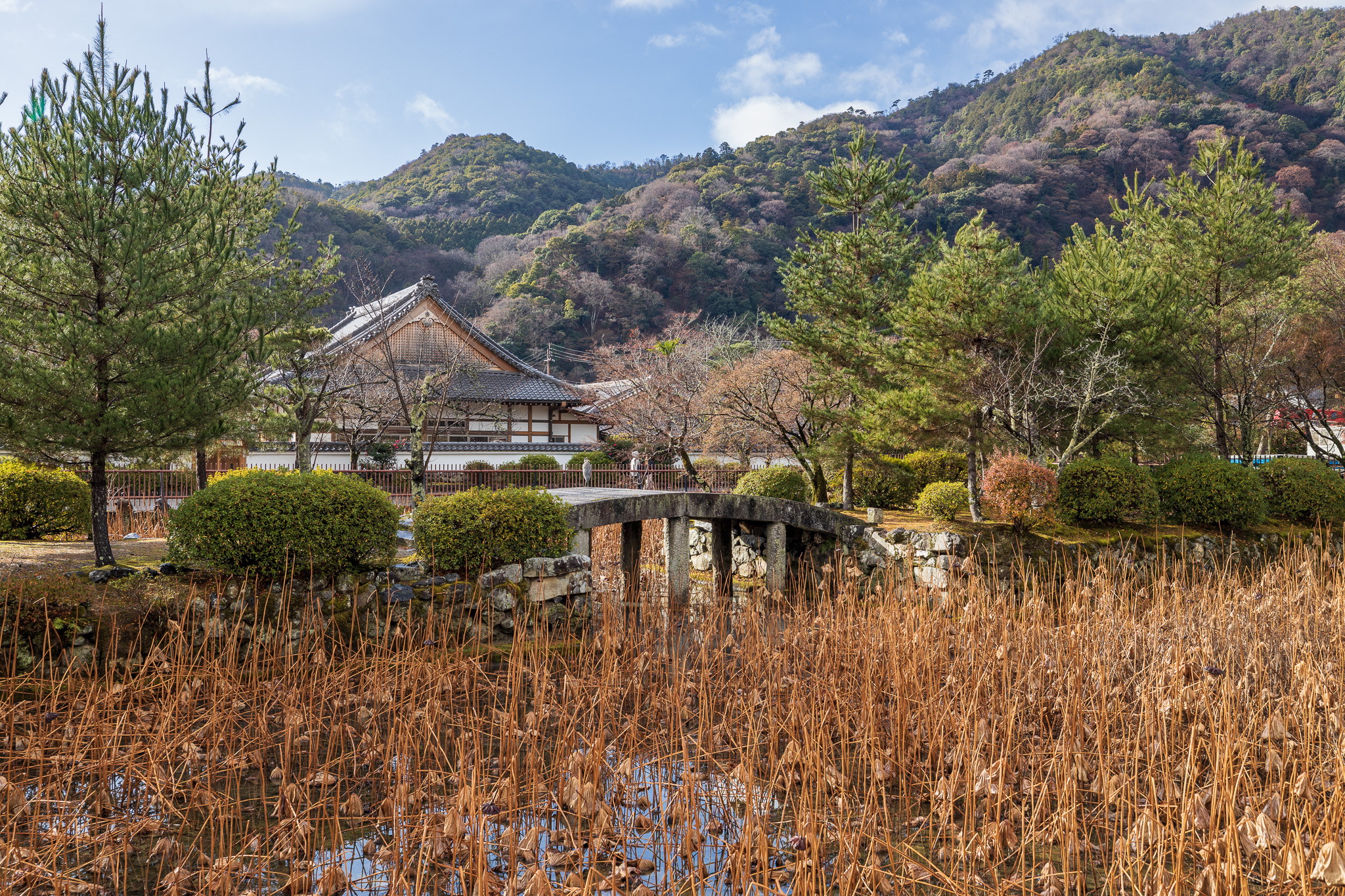
Tenryū-ji is the head temple of the Rinzai school of Zen and a UNESCO World Heritage site, and its Sōgenchi garden is the single best thing in Arashiyama. It has survived the buildings around it repeatedly: the halls have burned and been rebuilt many times, but the pond garden is essentially the fourteenth-century design, laid out to borrow the mountains behind it as part of the composition. Grounds and hall are ticketed separately — pay for both. The view of the garden from inside the hall is what the garden was designed for.
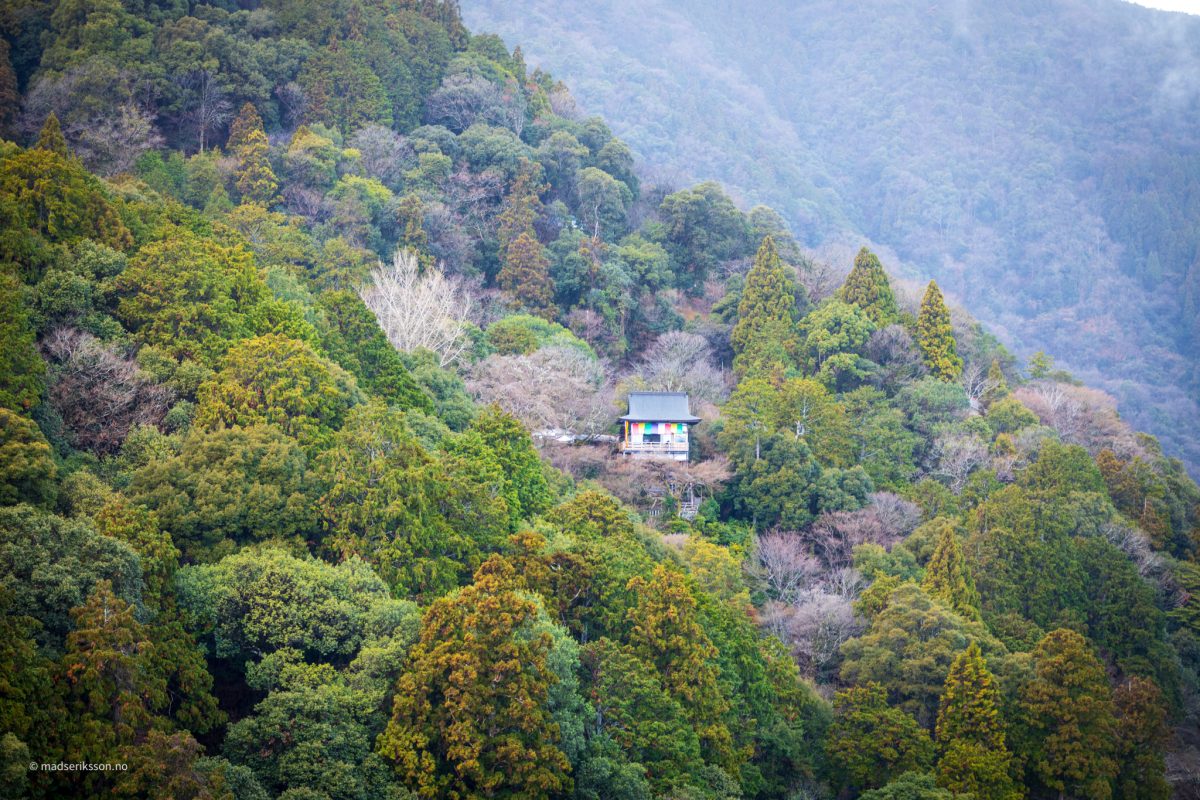
Just past the top end of the bamboo path, Ōkōchi Sansō is the former home of the silent-film actor Ōkōchi Denjirō, who spent decades building a garden across a hillside with views back over Kyoto. It is not cheap and it is worth it, partly because the ticket includes matcha and a sweet, and mostly because almost nobody who came for the bamboo bothers to walk the extra two hundred metres. It is routinely the quietest place in Arashiyama on a busy day.
“Everything here is within a kilometre of everything else, which is exactly why so many people see only the four hundred metres they came for.”
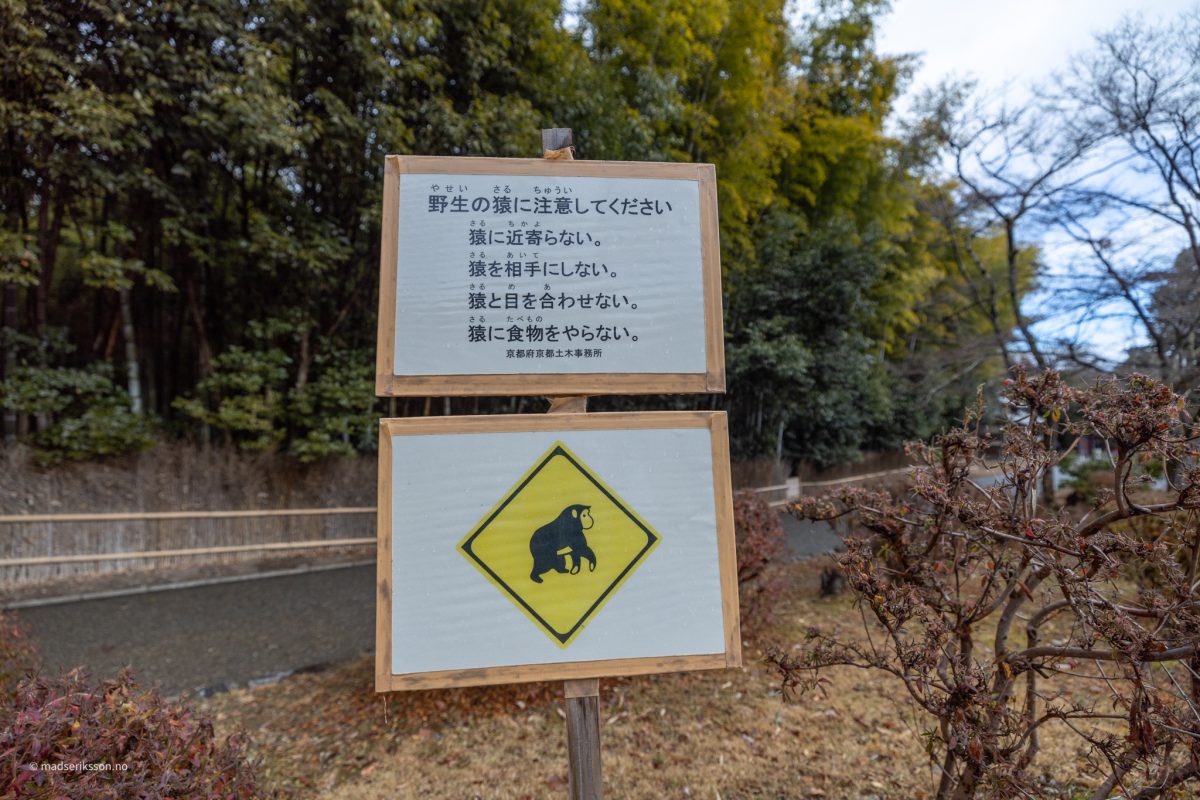
Down at the river, the Togetsukyō bridge is the postcard view of the district — Arashiyama itself rising behind the Katsura, spectacular in autumn and genuinely good in any season. From the far bank a path climbs to the Iwatayama Monkey Park, where a resident troop of Japanese macaques lives on the hillside and the view over Kyoto is one of the best in the city. It is a real uphill walk and a real wild animal encounter; the rules about not staring at the monkeys are not decoration.
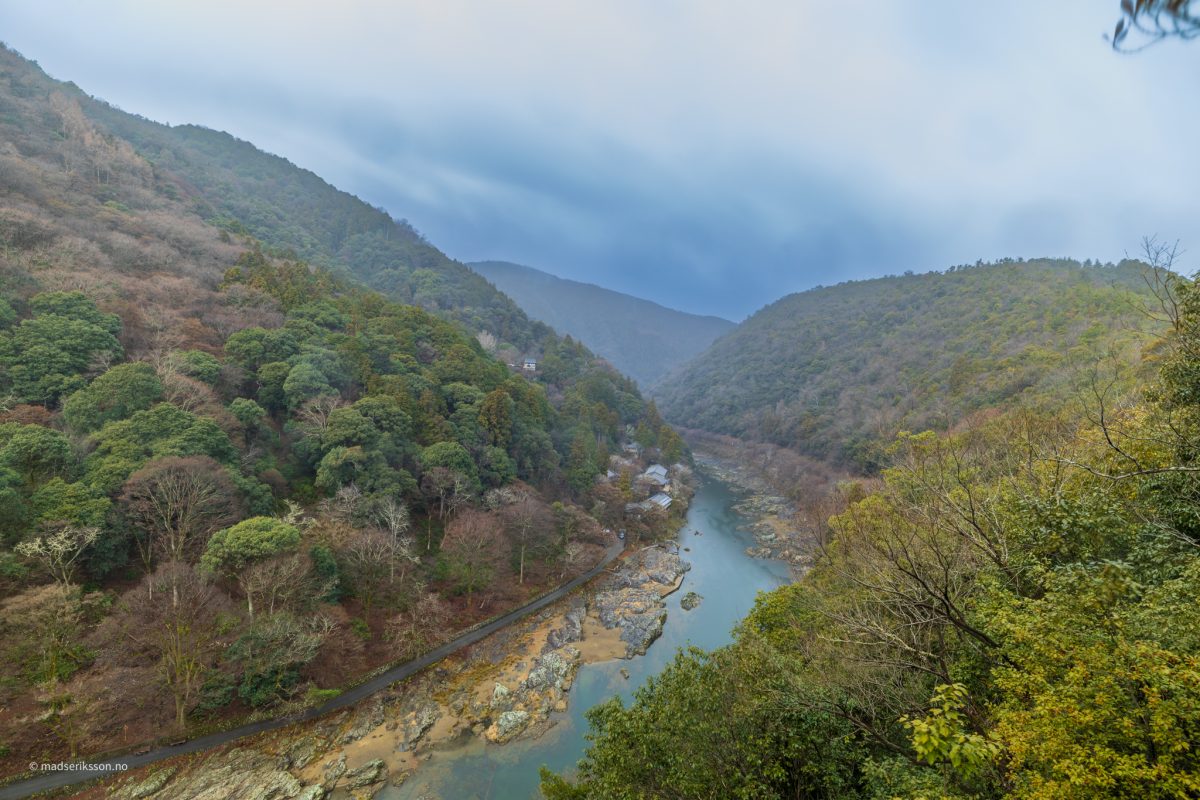
Two rides are worth building a day around. The Sagano Romantic Train runs along the Hozugawa gorge on an old railway alignment, and the Hozugawa river boat comes back down the same gorge by water — traditionally done as a pair, train up and boat down. Both are seasonal and both book out; check before you plan around them. If you have half a day rather than a whole one, skip these and give the time to Tenryū-ji instead.
Getting here, you have three choices and they arrive in different places. JR to Saga-Arashiyama puts you closest to the bamboo. The Randen tram to Arashiyama station drops you by the shops and the Kimono Forest — a set of illuminated fabric-print pillars on the platform, which is either charming or a great deal, depending on your tolerance. Hankyū arrives south of the river, a short walk over the bridge. All three are cheap. None of them are quick at four in the afternoon.
“I understand why people call it disappointing. Four hundred metres is not long, the photographs promise light that is mostly not there, and by mid-morning you are queuing. But go at half past seven, in the rain if you can manage it, and stand still for a minute with the camera in your pocket. The bamboo knocks and creaks somewhere above your head, and you understand why a government department once sat down and decided that a sound was worth putting on a list.”
More in the same area
 CitiesKyoto: A Timeless Journey Through Japan’s Cultural Heart
TravelTenryū-ji — Arashiyama’s Zen Temple and Japan’s Oldest Surviving Garden
 Food and DrinksNishiki Market — Kyoto’s Kitchen
 CitiesHiking Mount Inari — Fushimi Inari’s Full Loop
 ArchitectureTokyo Skytree: One tower over thirty-seven million
 Scuba DivingScuba diving Okinawa: Minna, Sesoko and the reefs off Motobu