Rome keeps its history in plain view. From the roof terrace of the Vittoriano the whole centre is laid out at once: the Forum sinking between its churches, the Colosseum at the end of Via dei Fori Imperiali, the dome of St Peter’s riding above the roofs to the west, and the snow-dusted Apennines on the horizon. Down at street level the scale changes but the layering stays the same. The Pantheon’s concrete dome has stood open to the sky since the second century; the Colosseum’s arches are lit gold after dark while traffic streams past on the road Mussolini cut through the ruins; Hadrian’s mausoleum on the Tiber has become a castle with an angel on top. Winter suits the city. The light is low and clear, the crowds are thinner, and the pines and cypresses stay green against the ochre walls. These frames follow the monuments from the viewpoint down to the pavement, by day and by night.

The Centre from the Terrace
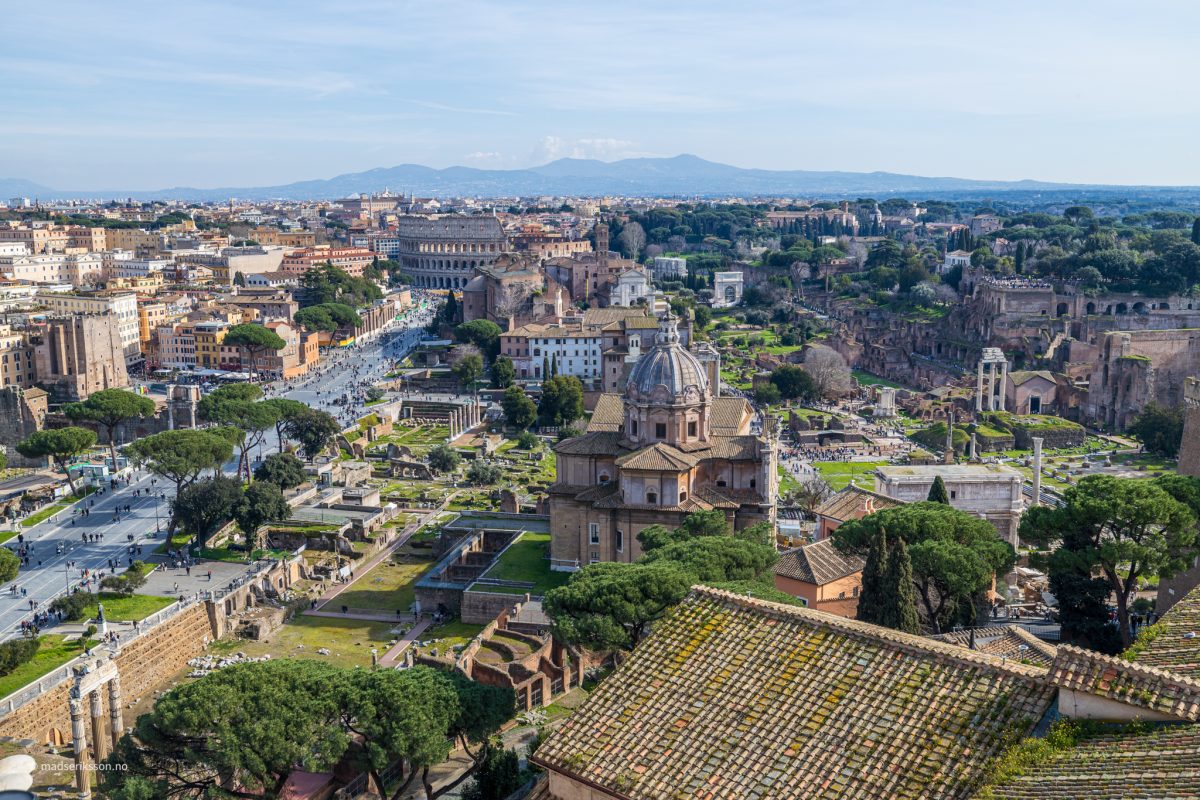
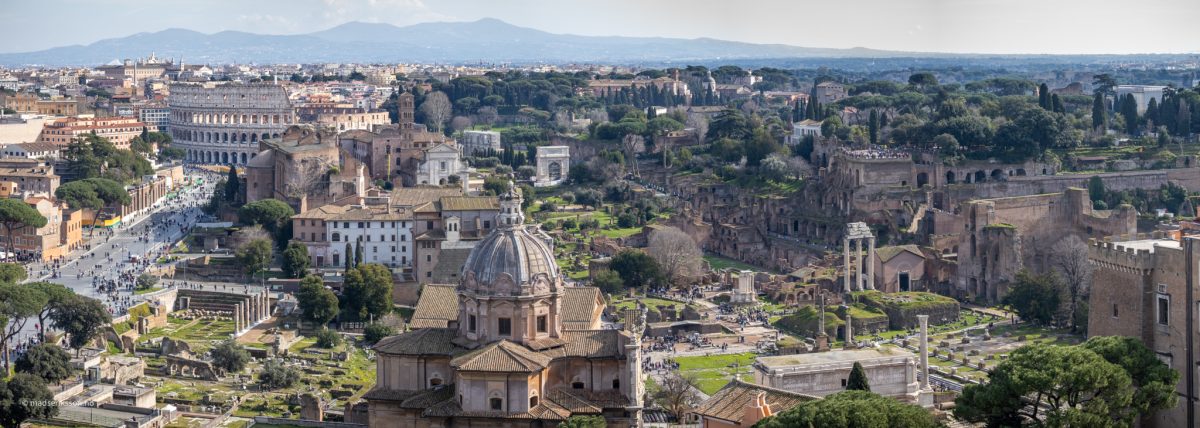
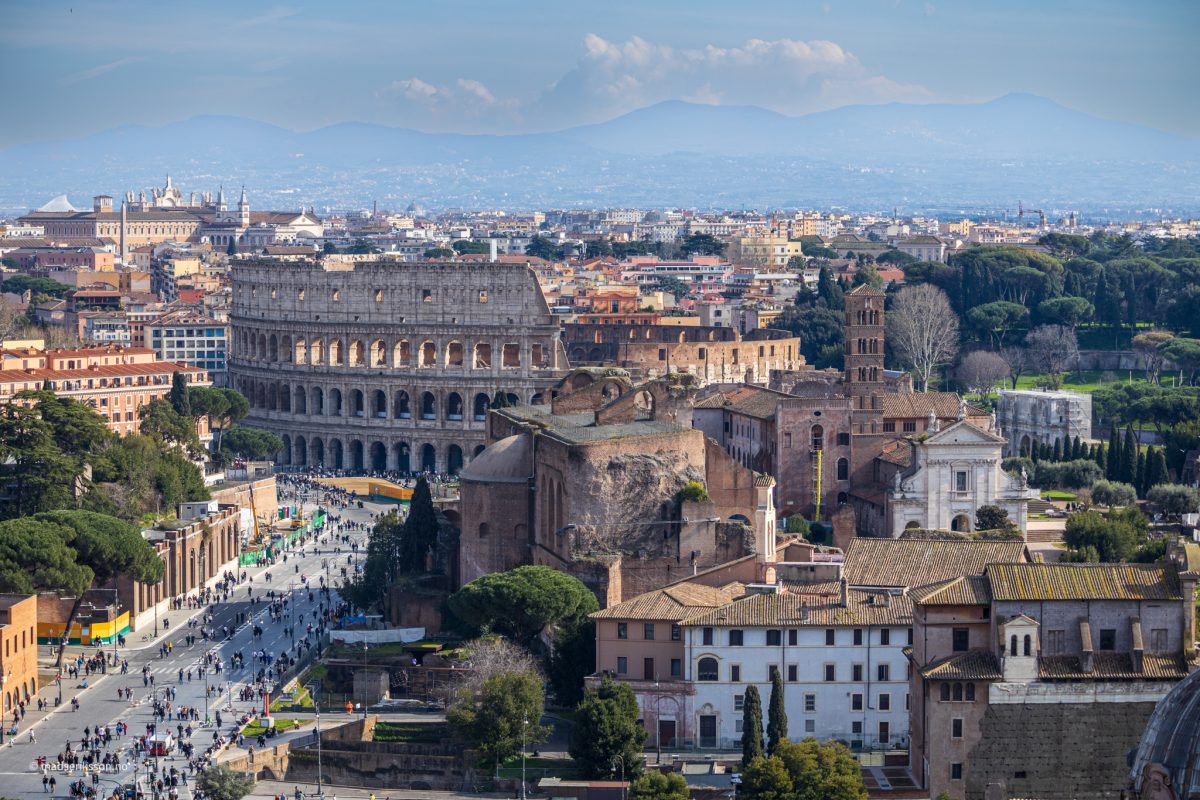
Four frames from the top of the Vittoriano, looking west to St Peter’s and east to the Colosseum
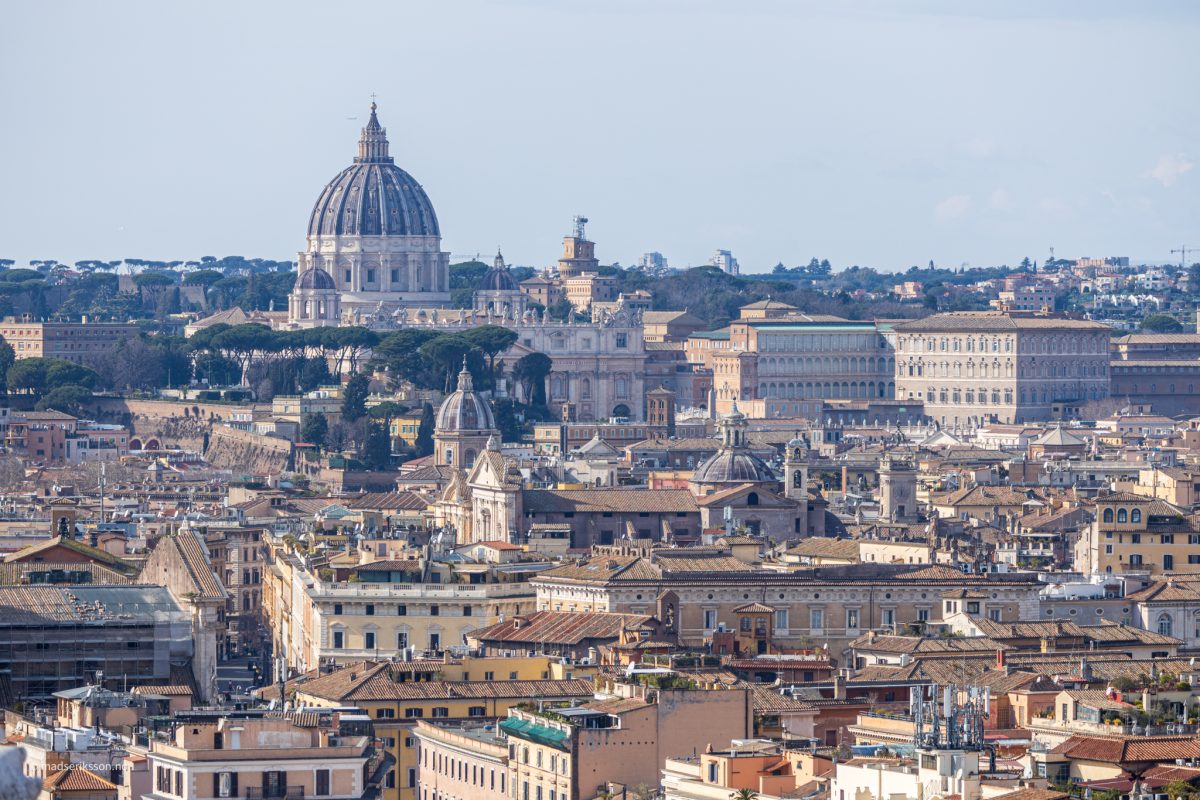
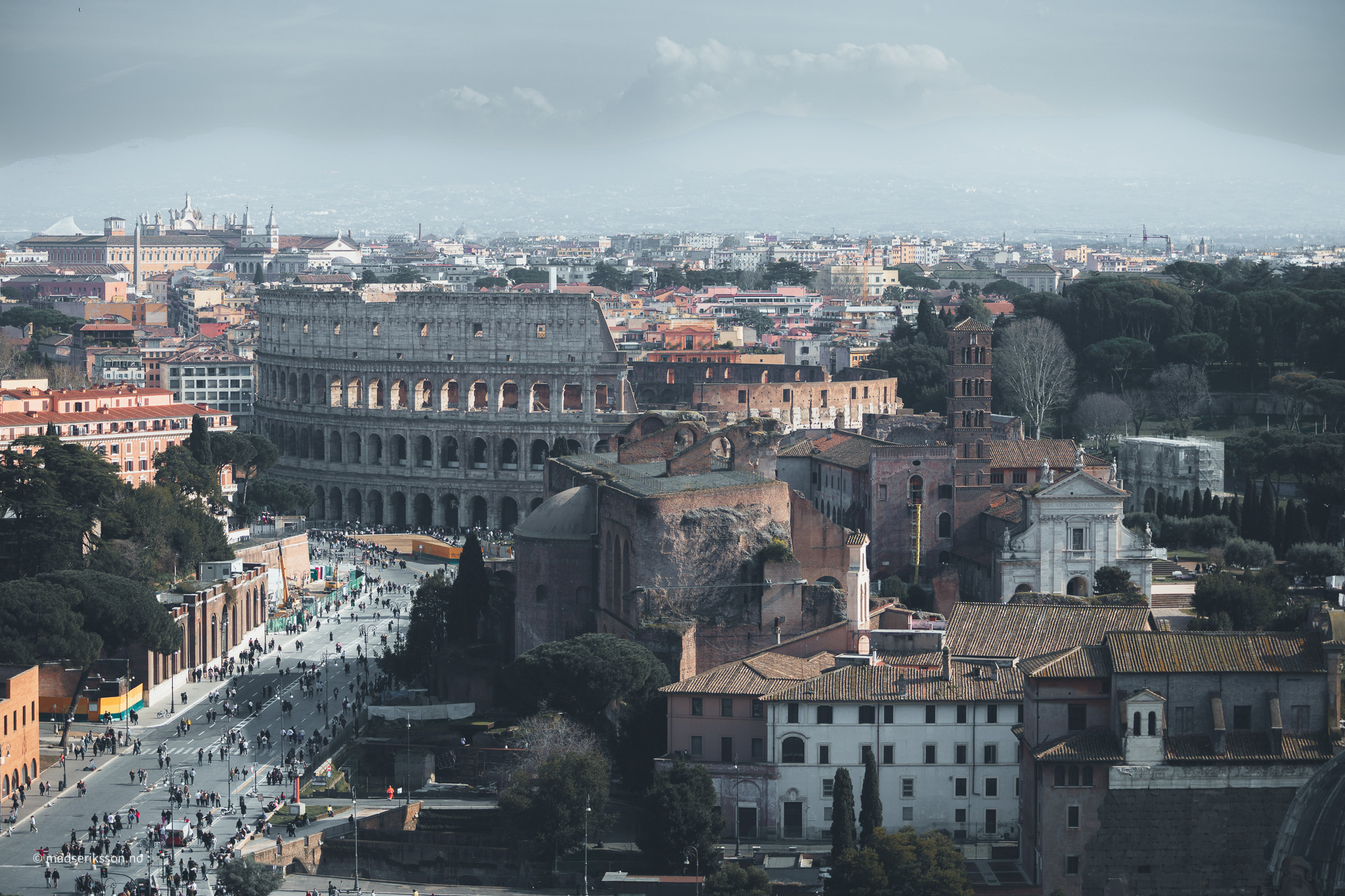
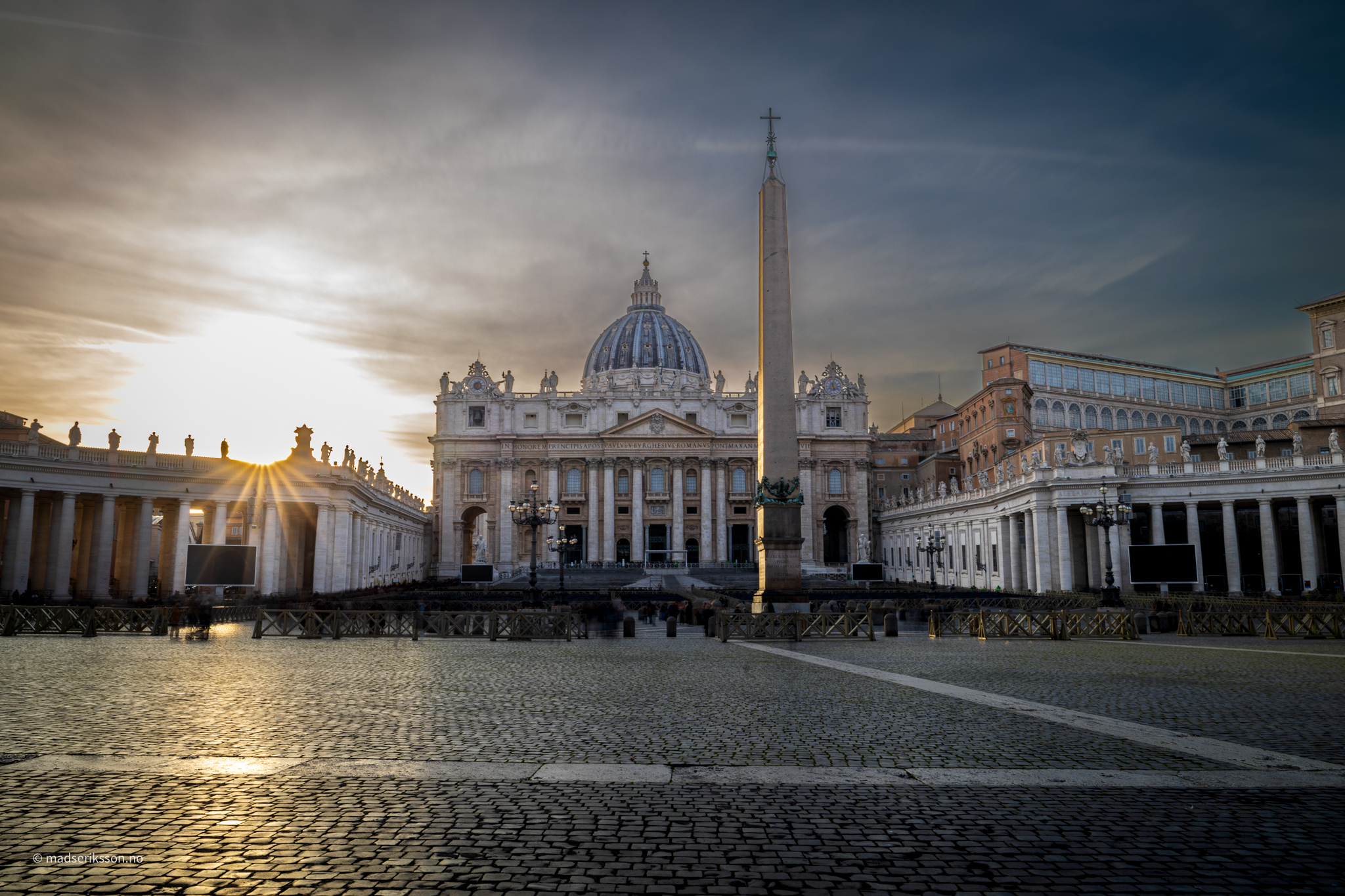
The roof of the Victor Emmanuel II Monument is the best place in Rome to understand how the city fits together. To the west the dome of St Peter’s stands clear above the roofs and the lesser domes of the centre, with the Janiculum behind it. To the east the Forum lies in its hollow below the Capitoline, the church of Santi Luca e Martina in the foreground, and Via dei Fori Imperiali runs straight to the Colosseum between the Imperial Fora and the ruins.
Beyond the Colosseum the Alban Hills and the Apennines carry a dusting of snow, which places these frames firmly in winter. The panoramic crop pulls the whole sweep together, from the Palatine on the right to the basilica of Santa Francesca Romana with its Romanesque bell tower beside the Colosseum.
The Old Centre of the World
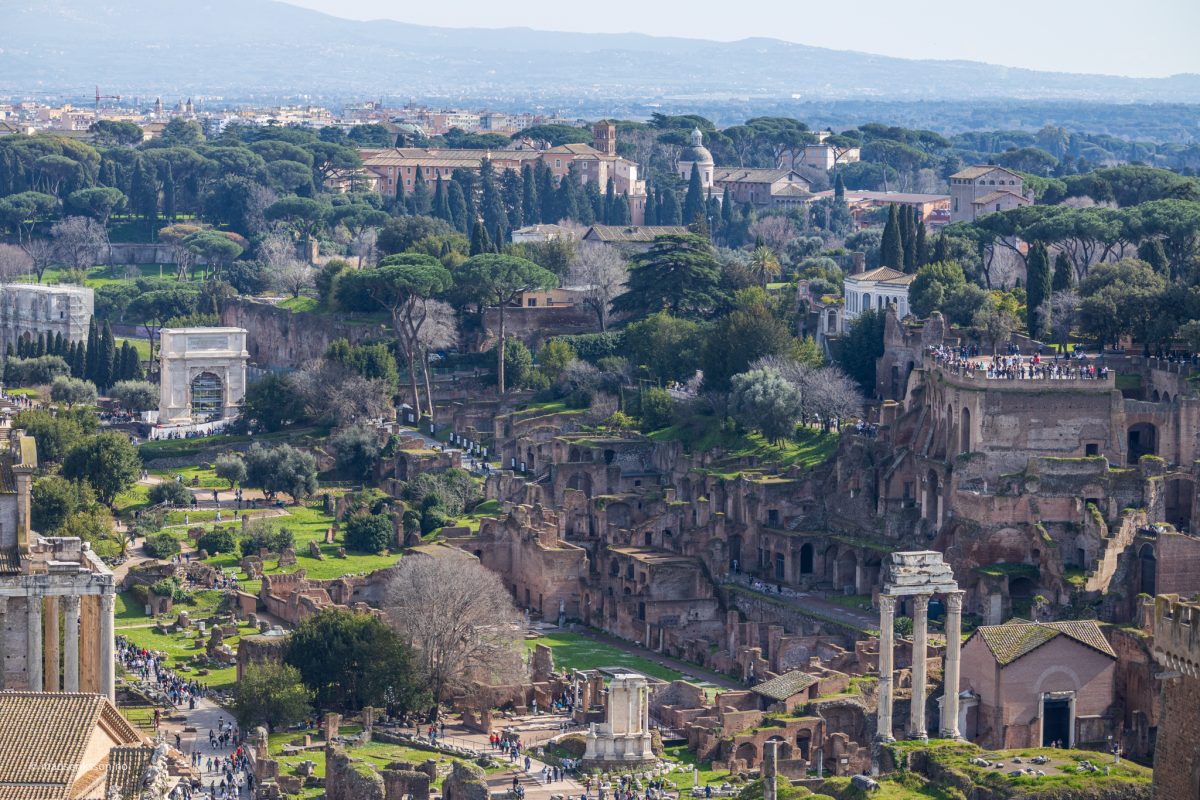
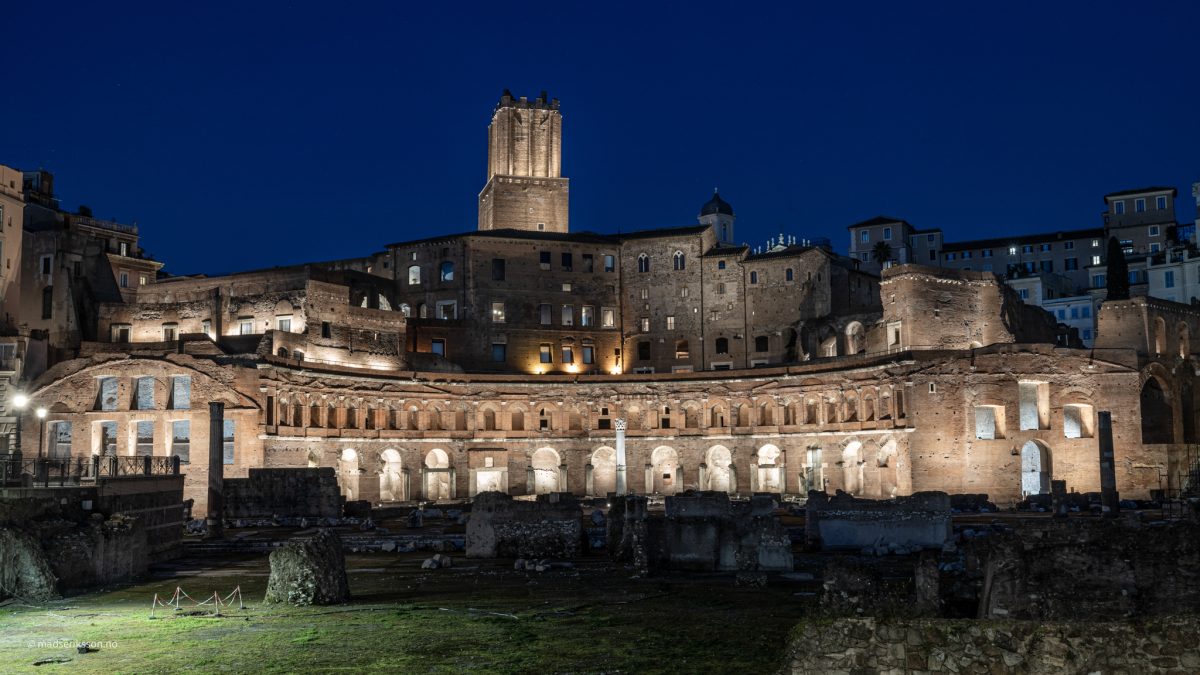
The Forum below the Palatine by day, and Trajan’s Markets lit after dark
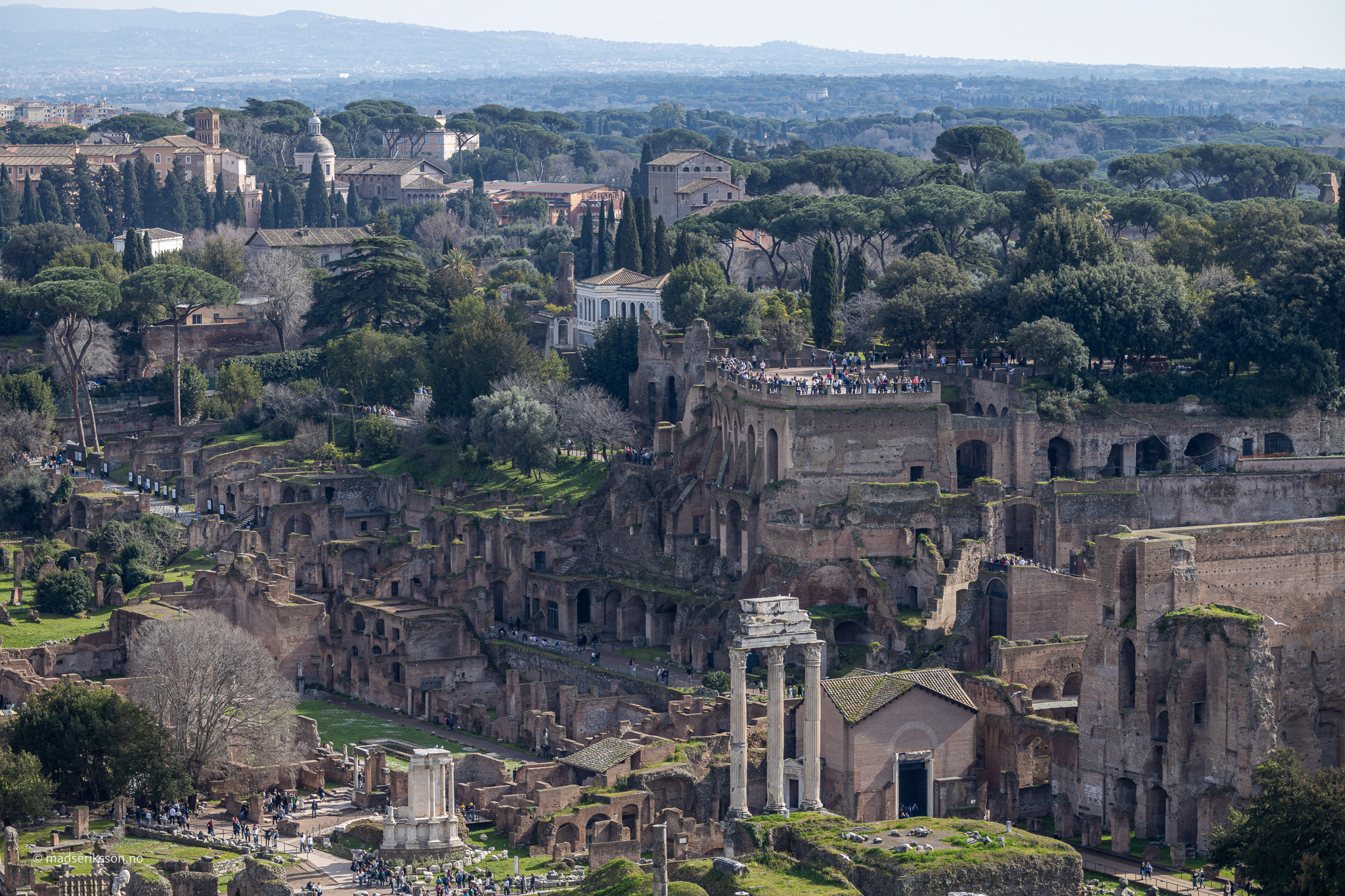
Seen from above, the Forum Romanum reads as a long trench of brick and marble between the Capitoline and the Palatine. The three surviving columns of the Temple of Castor and Pollux stand at the near end, the Arch of Titus closes the Via Sacra at the far end, and the terraces of the imperial palaces climb the Palatine on the right with visitors lined along the edge. Pines and cypresses grow between the ruins, which is how the Forum has looked since the excavations of the nineteenth century.
Across the road, Trajan’s Markets of about AD 100–110 are a different kind of ruin: a curved, multi-storey complex of shops and offices by Apollodorus of Damascus, cut into the slope of the Quirinal. At night the floodlights pick out every arch, and the medieval Torre delle Milizie of 1300 rises behind the top terrace.
The Amphitheatre in Four Lights
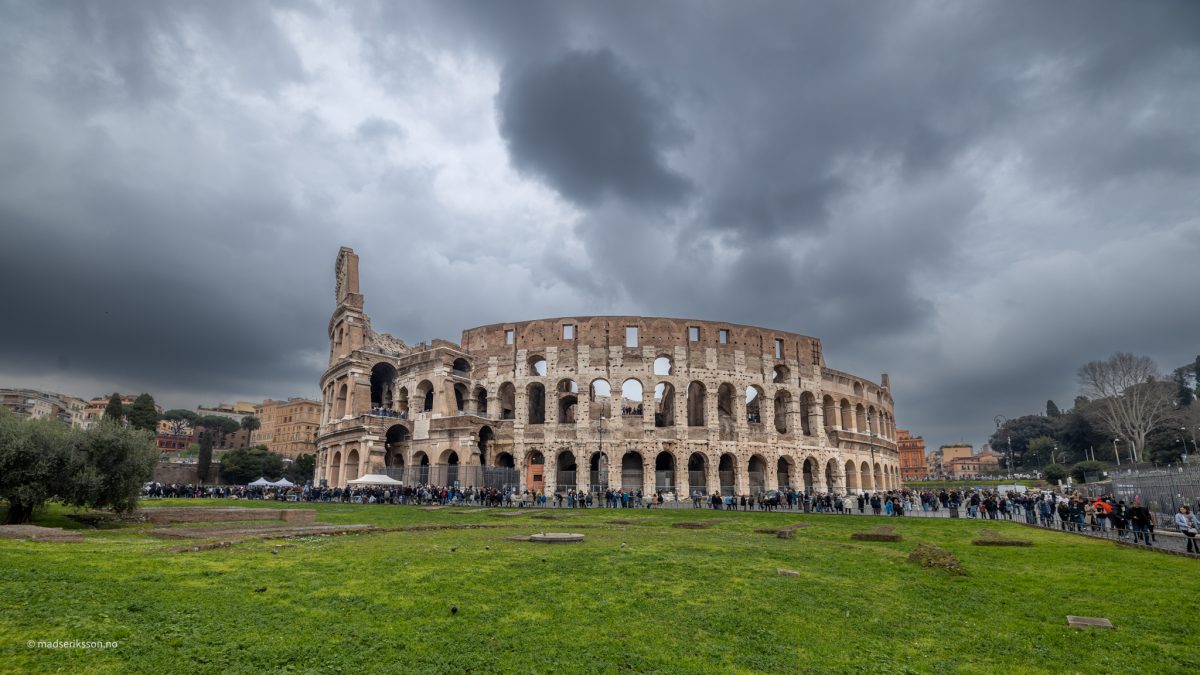
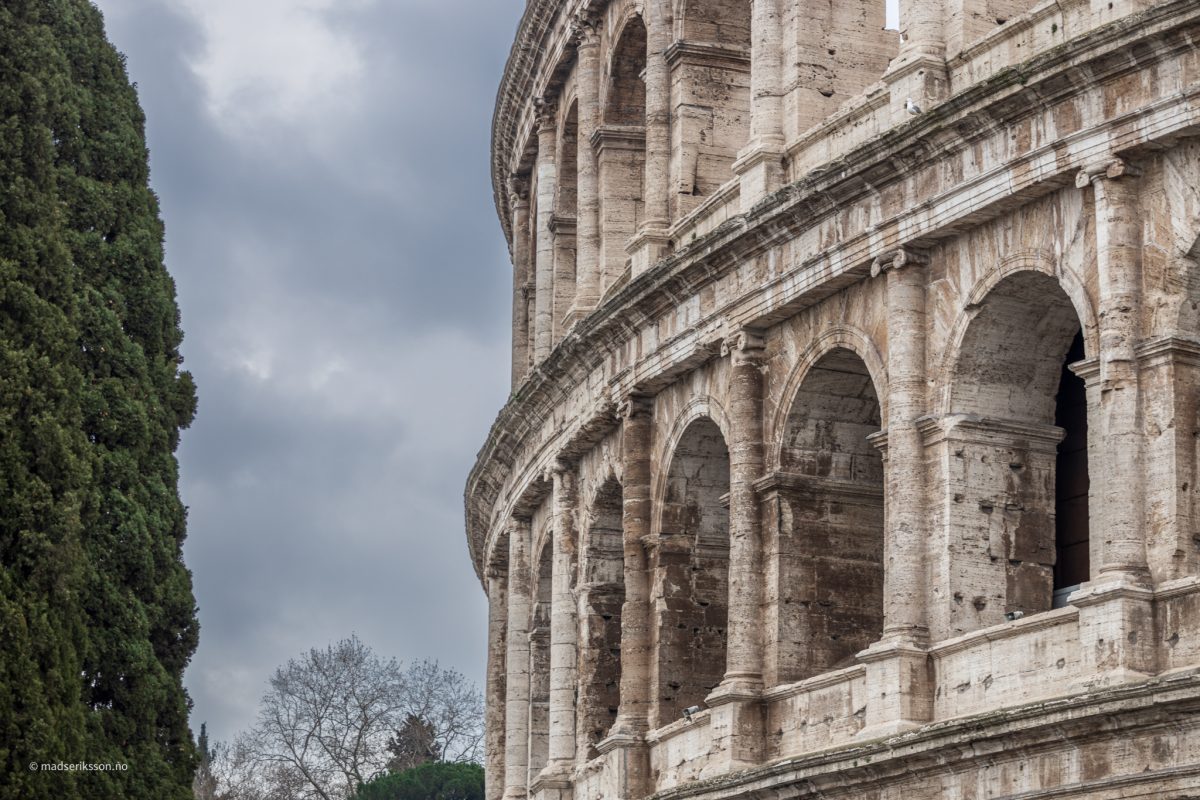
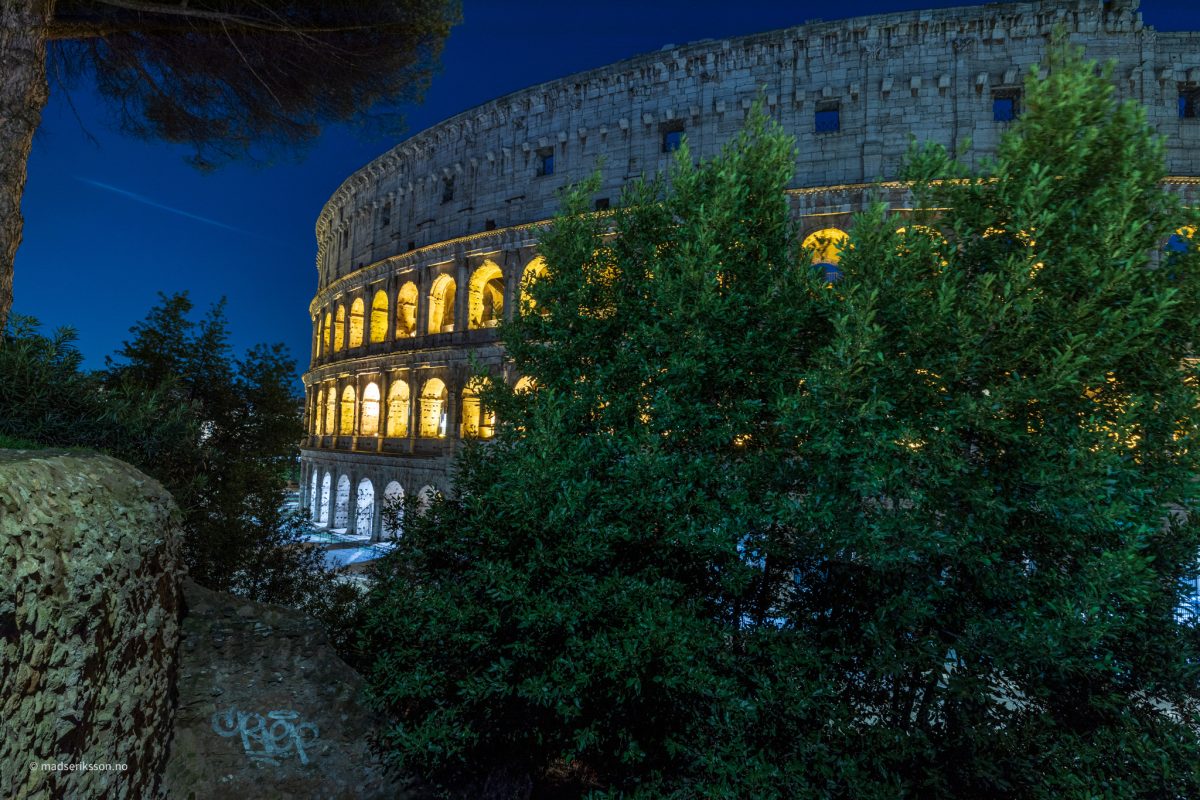
Storm cloud at midday, a detail of the arcades, and the arches lit at dusk and at night
The Colosseum was begun under Vespasian around AD 70 and finished by his son Titus in AD 80. It is 189 m long, 156 m wide and 48 m high on the surviving outer wall, and it held somewhere between 50,000 and 80,000 people, who came in through 80 numbered entrances. Under a black winter sky the travertine turns pale grey and the queue along the fence looks very small against it.
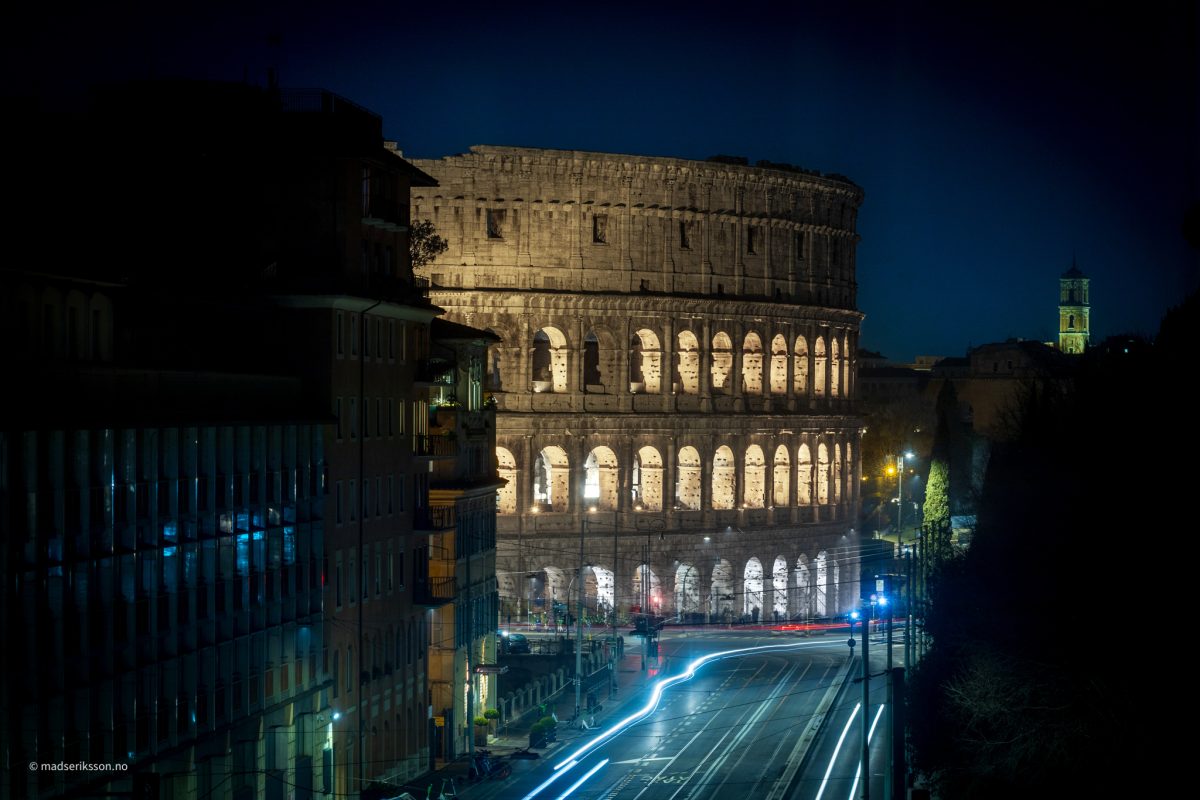
Close up, the three tiers of arcades show the Tuscan, Ionic and Corinthian orders stacked one above the other, with a cypress for scale. After dark the inner arches are lit from within and the building becomes a lantern, first seen through the evergreen oaks of the Colle Oppio, then from above Via dei Fori Imperiali with the headlights of the traffic drawn into lines and the bell tower of Santa Francesca Romana on the right.
The Open Dome
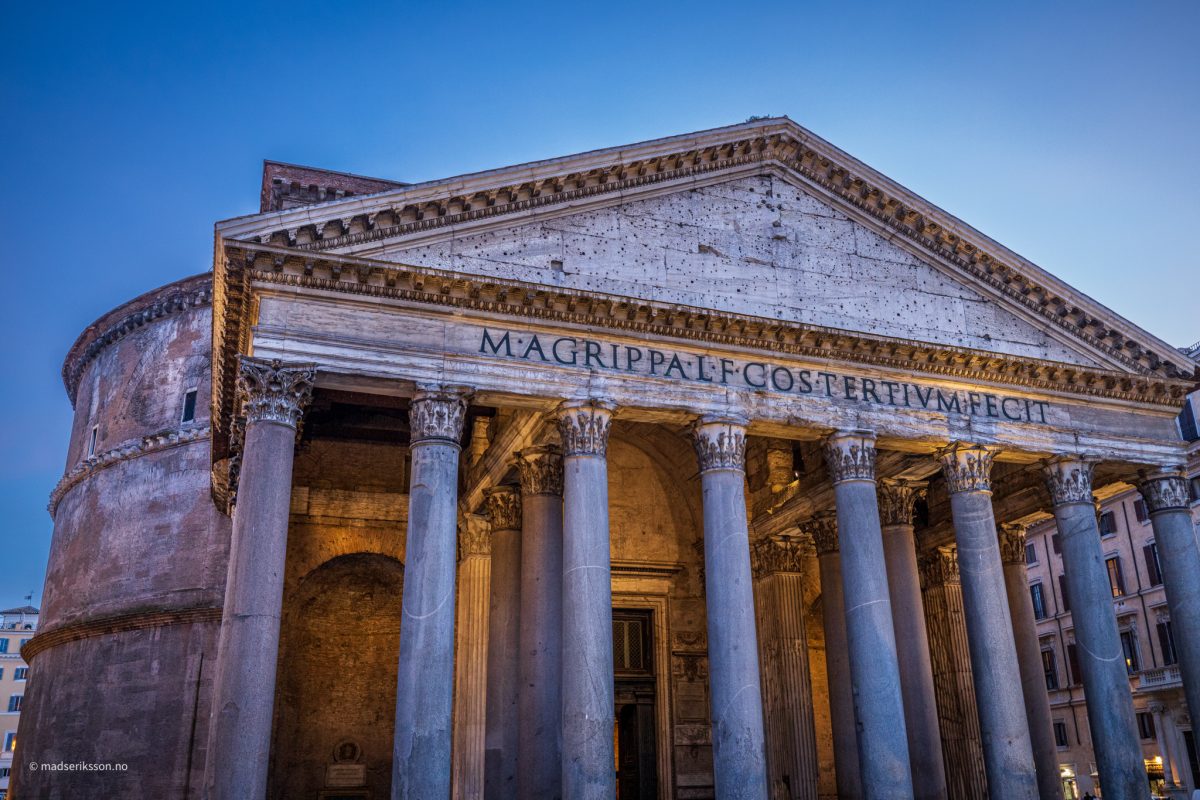
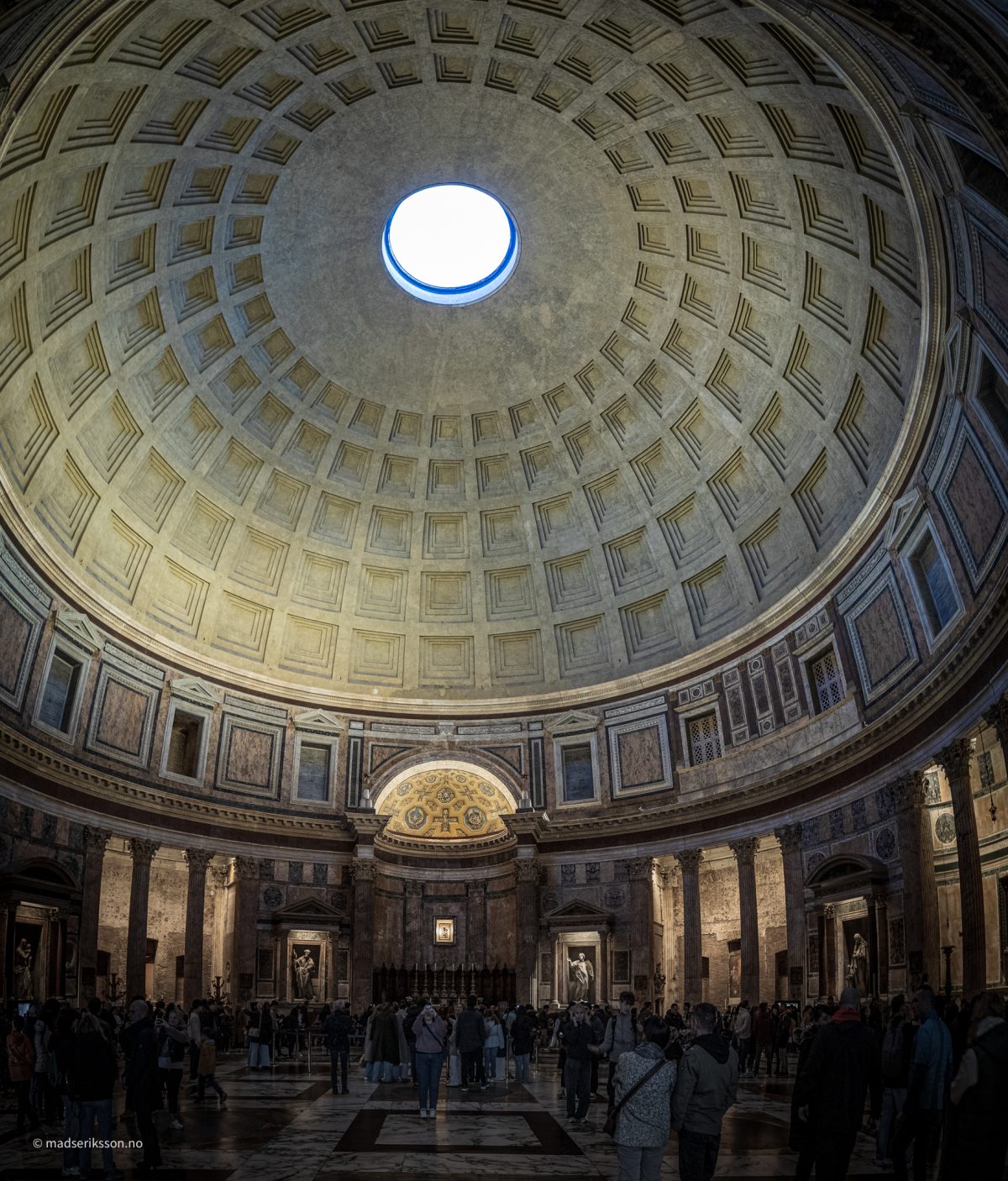
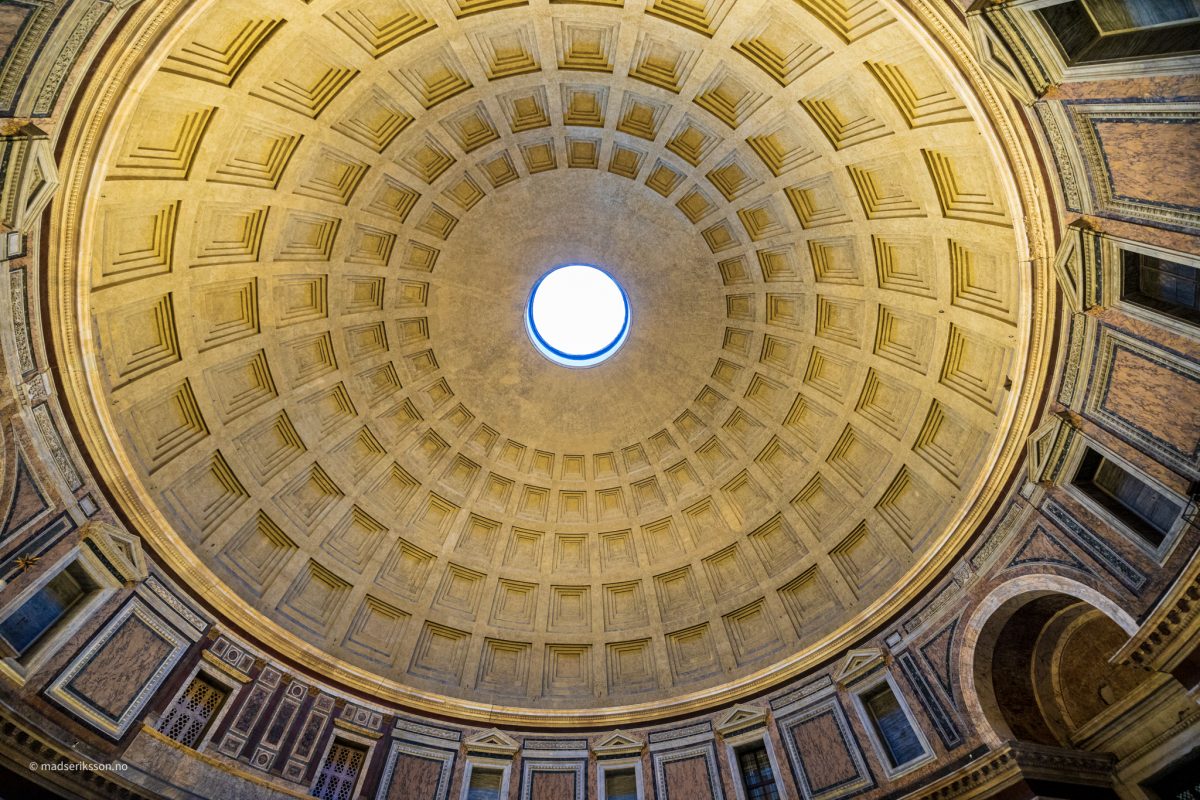
Agrippa’s inscription at dusk, and the coffered concrete dome from the floor
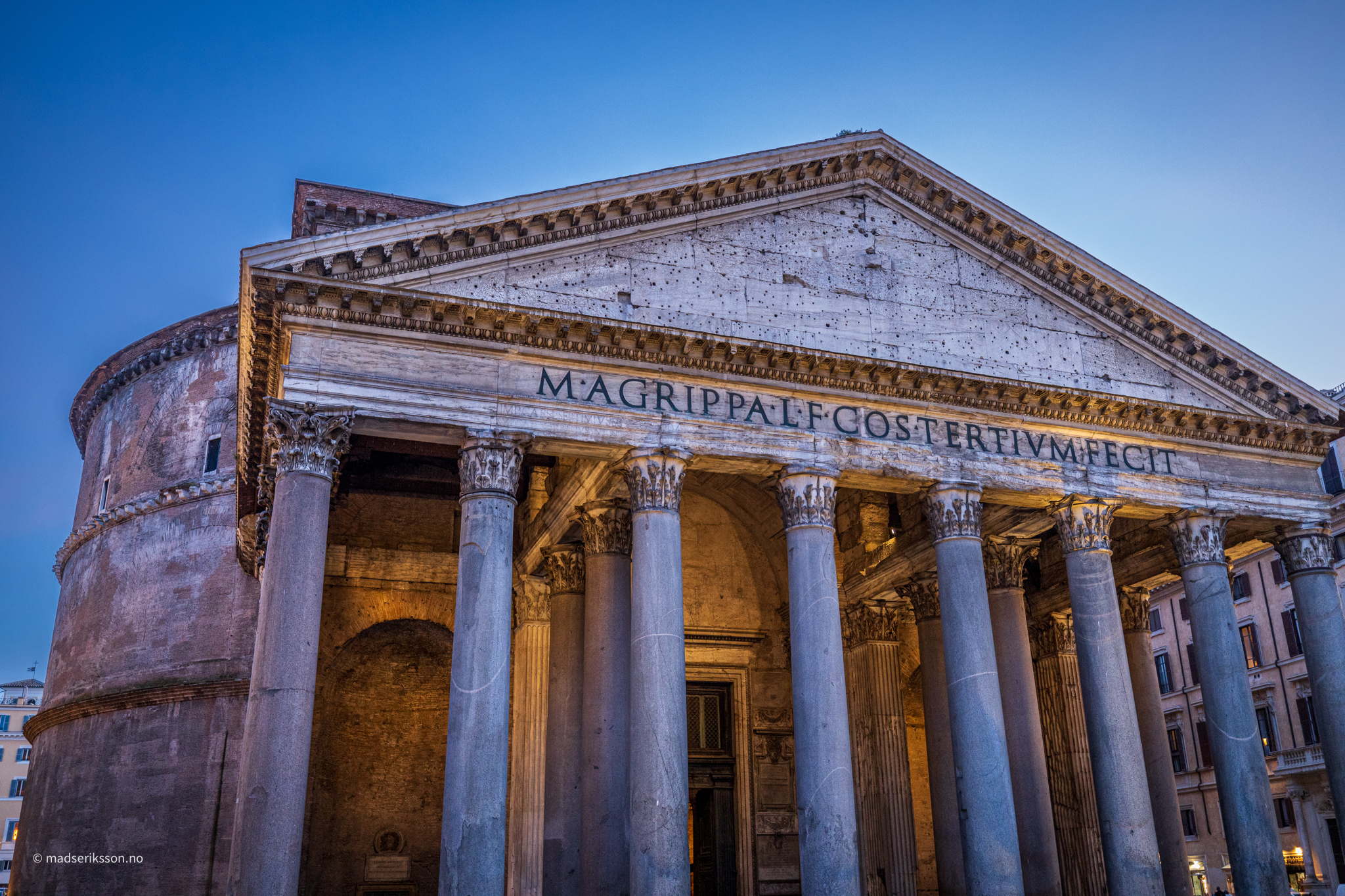
The Pantheon is the best-preserved building of ancient Rome, and the inscription across the portico still credits Marcus Agrippa, consul for the third time, although the building behind it is Hadrian’s rebuilding of about AD 126. Sixteen granite columns carry the pediment, and at dusk the floodlights make the bronze letters stand out against the stone.
Inside, the dome is 43 m in diameter and 43 m high, a perfect sphere that would just touch the floor, poured in Roman concrete that gets lighter towards the top. Five rings of coffers draw the eye up to the 9.1 m oculus, the only source of light, which throws a moving disc of sun across the marble through the day and lets the rain fall on the floor. The building has been a church since 609, which is why it survived.
The River and the Castle
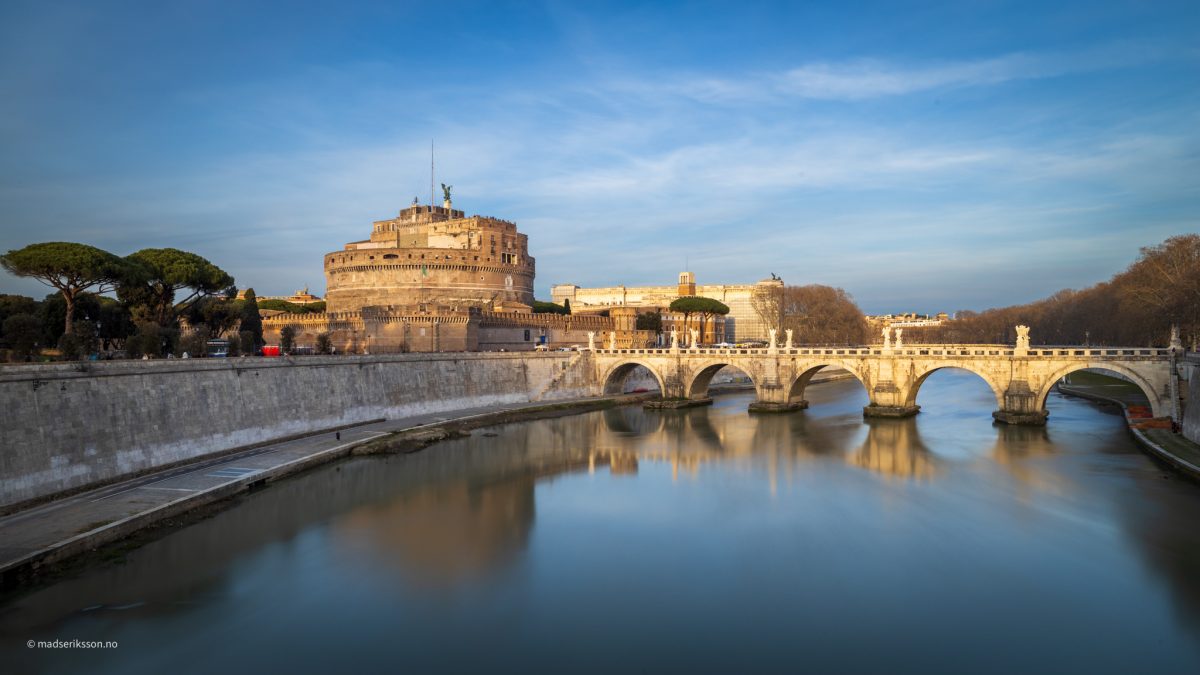
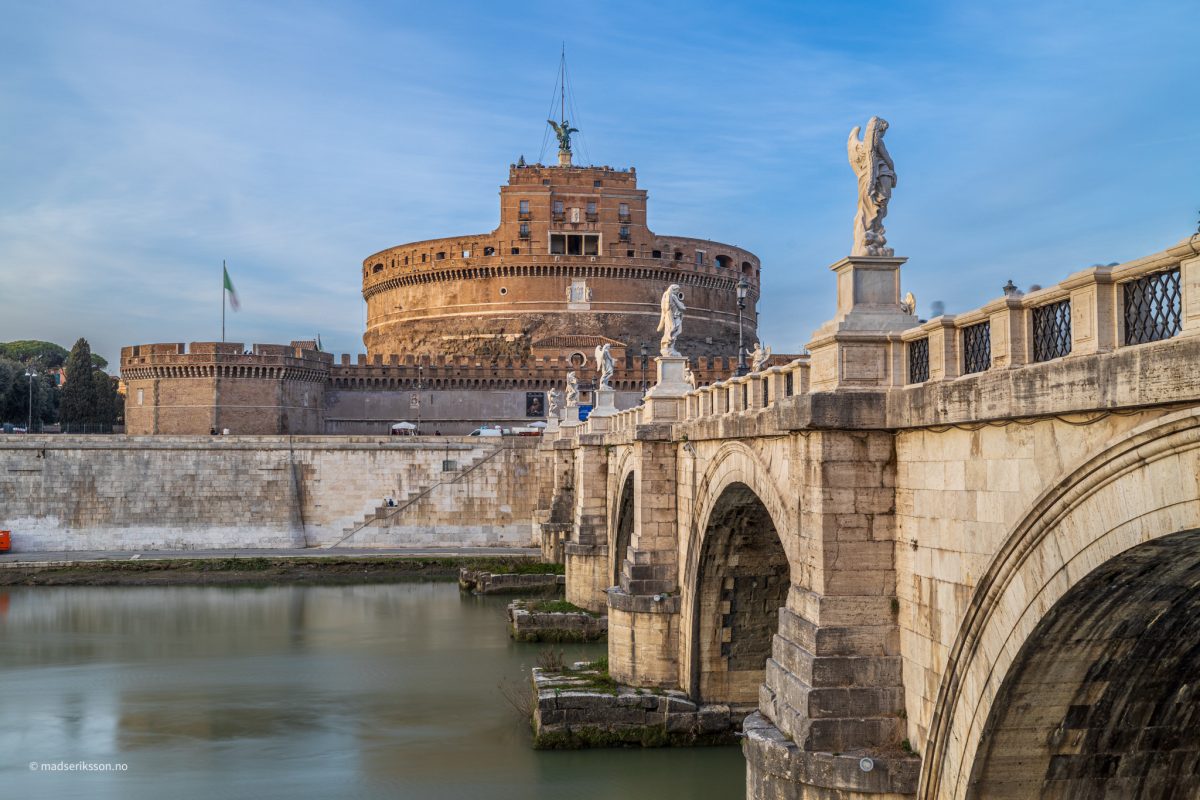
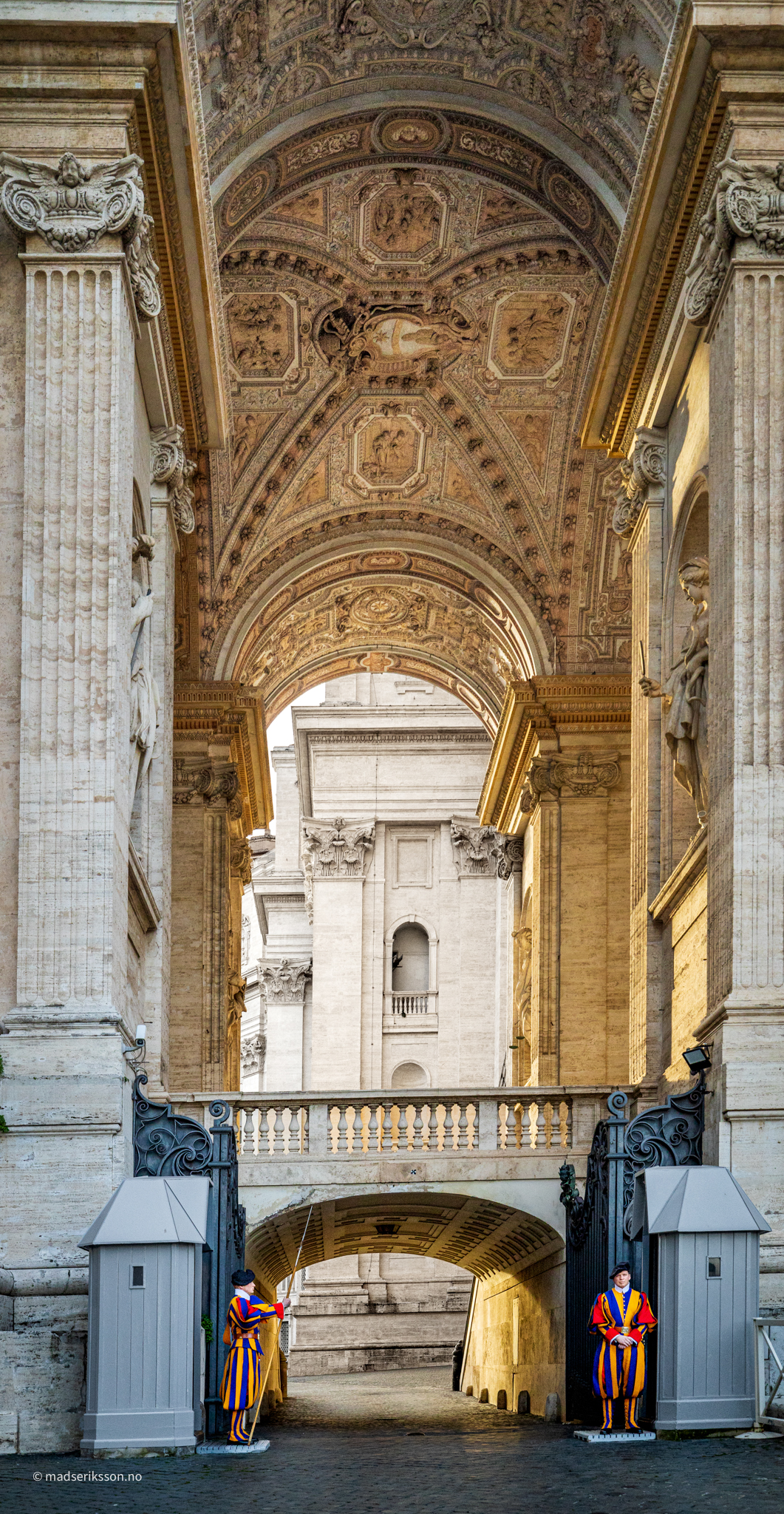
Hadrian’s mausoleum from both banks, and the Swiss Guard at the gate of the Vatican
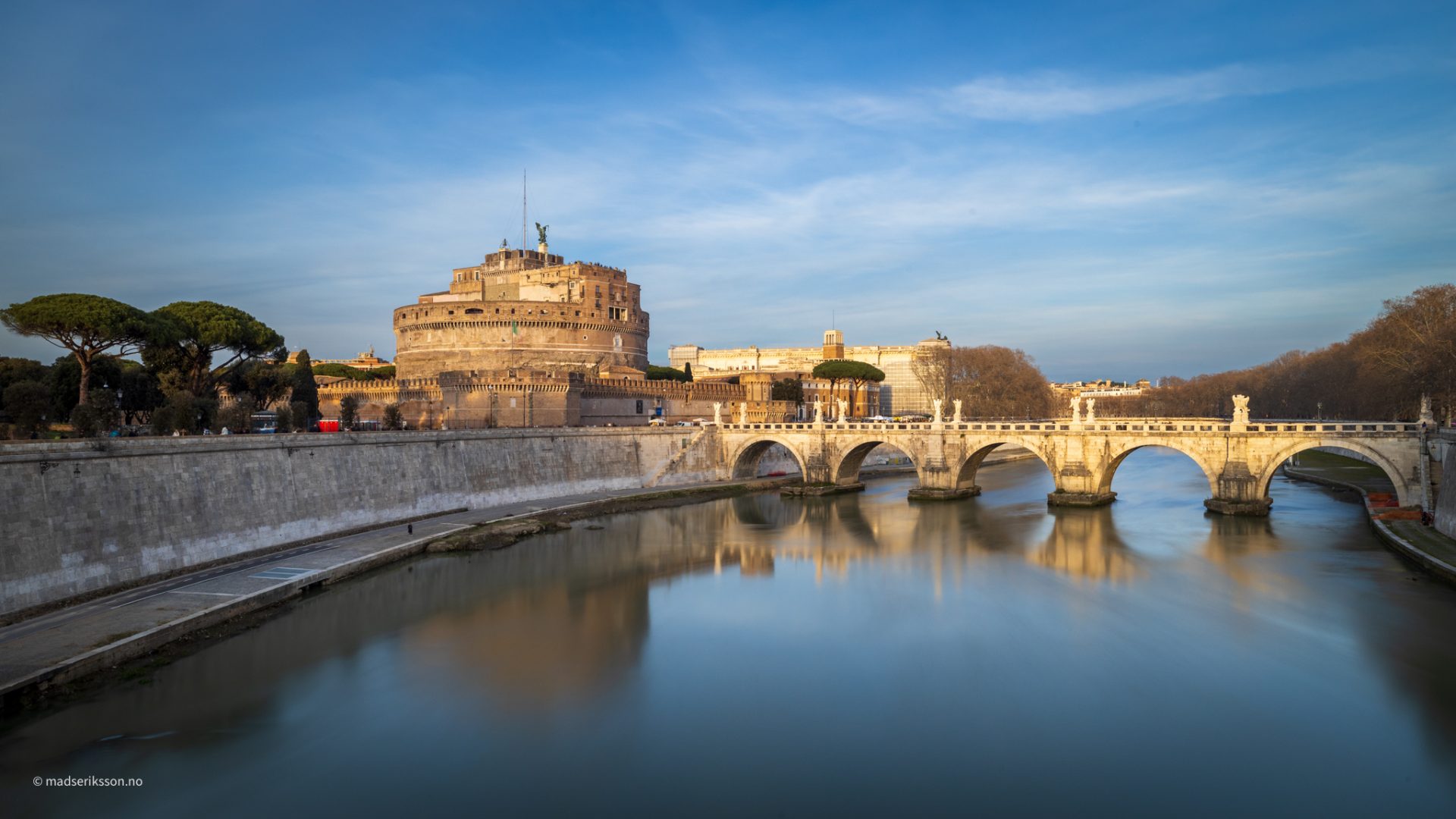
Castel Sant’Angelo began as the mausoleum of Hadrian, built between 123 and 139 on the right bank of the Tiber, and was turned into a papal fortress in the Middle Ages. The bronze archangel on the top, cast in 1753, commemorates a vision of Michael sheathing his sword that ended a plague. The Ponte Sant’Angelo in front of it is Hadrian’s bridge of 134, lined since 1669 with Bernini’s ten angels carrying the instruments of the Passion. In the evening light the travertine goes gold and the long exposure flattens the river to glass.
A few hundred metres further on, two Swiss Guards in their striped Renaissance uniforms stand beneath a gilded, coffered archway at one of the entrances to the Vatican. The Pontifical Swiss Guard has protected the pope since 1506, and its recruits are still unmarried Swiss Catholic men who have completed Swiss military training.
Baroque Rome and the Shopping Street
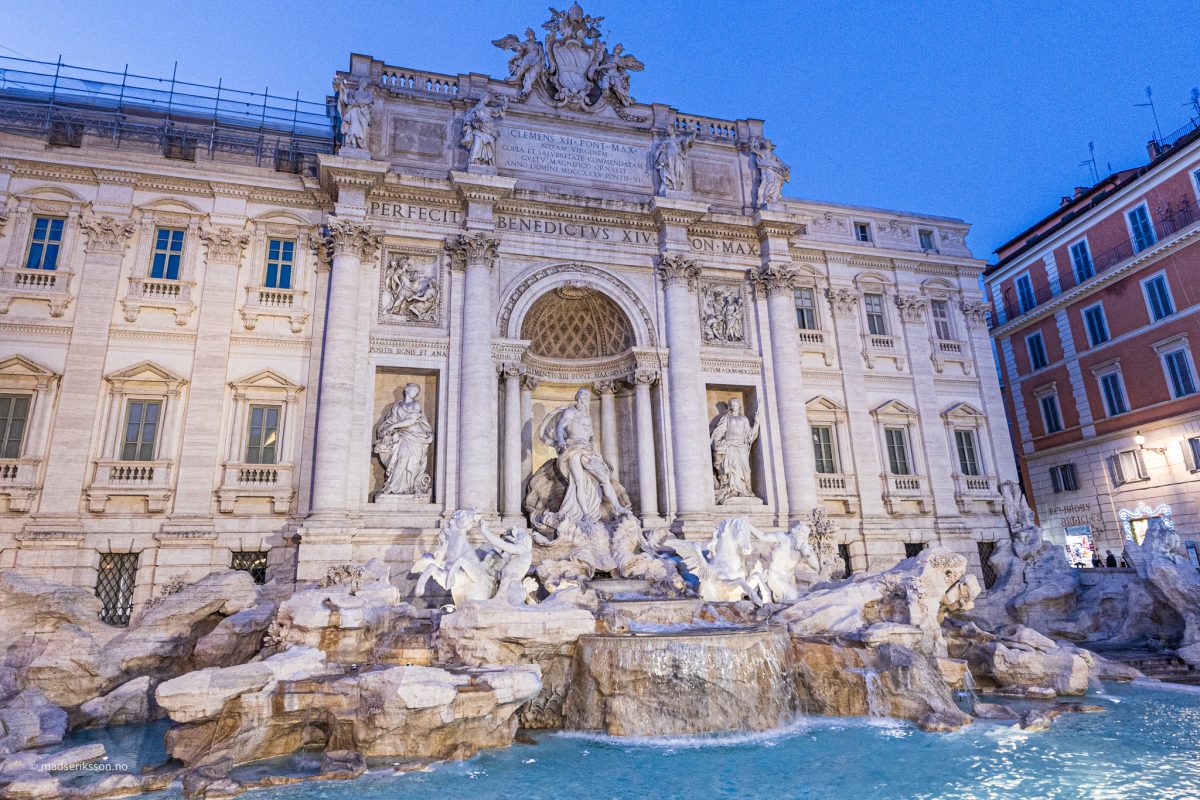
The Trevi Fountain at blue hour, and Via dei Condotti from the top of the Spanish Steps
The Trevi Fountain fills the whole end of its small square. Nicola Salvi began it in 1732 and Giuseppe Pannini finished it in 1762 against the façade of the Palazzo Poli; it is 26.3 m high and 49 m wide. Oceanus, often called Neptune, stands in the central niche above a chariot drawn by sea horses and tritons, and at dusk the floodlights turn the travertine white against the deepening blue. Roughly 3,000 euros in coins go into the basin every day.
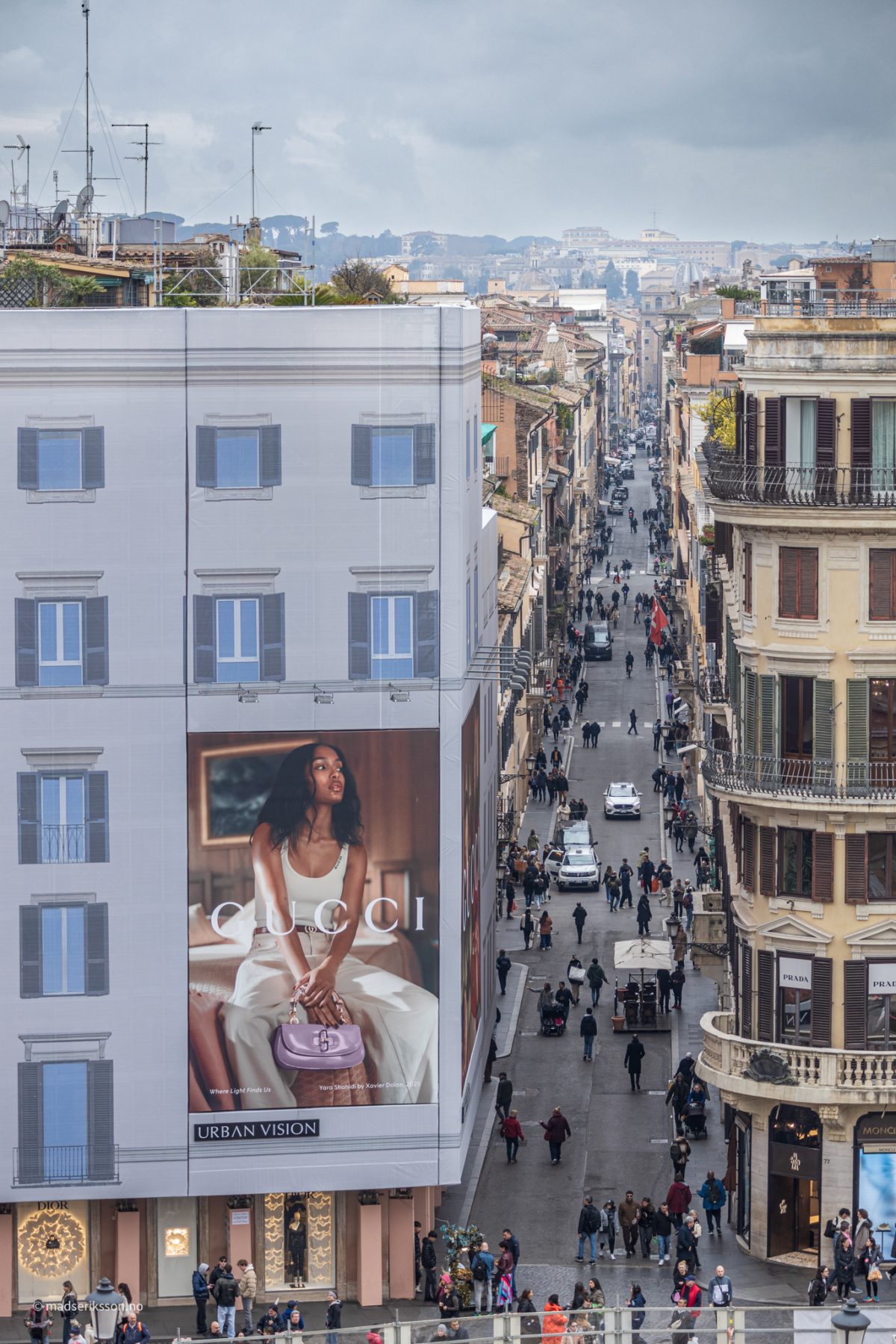
The last frame looks down Via dei Condotti from the top of the Spanish Steps, the long straight street of fashion houses that runs from the Piazza di Spagna towards the Corso. A fashion hoarding covers one façade, the crowd moves in both directions, and the street ends in the haze of the centre.
«Rome is a city of domes and holes in the ground. From the Vittoriano the domes win; at the Pantheon the hole in the roof is the whole point; and at the Forum the ground itself has been dug away to show what the city stood on. Winter light, long exposures and floodlit stone bring the layers together in a single frame, which is as close as a photograph can get to the way the city actually feels.»
More in the same area
 CitiesRome: A Timeless Journey Through History and Culture
 ArchitectureSt Peter’s Basilica: Michelangelo’s Dome and 120 Years of Building
 ArchaeologyForum Romanum — The Centre of the Ancient World
 ArchitectureThe Pantheon in Rome: A Marvel of Ancient Architecture
 ArchitecturePisa — The Leaning Tower, the Square of Miracles and the City on the Arno
 CitiesTimeless Beauty and Cultural Marvels in Florence