Mexico City sits at 2,240 metres above sea level in a mountain basin where an Aztec island capital once stood. The city of 22 million was built on the ruins of Tenochtitlan, drained from the lake that surrounded it, and has been sinking slowly into that former lake bed ever since. It is the oldest continuously inhabited capital in the Americas, one of the largest cities in the Western hemisphere, and the place where indigenous civilisation, Spanish colonialism and contemporary Latin American culture overlap with an intensity that is entirely its own.

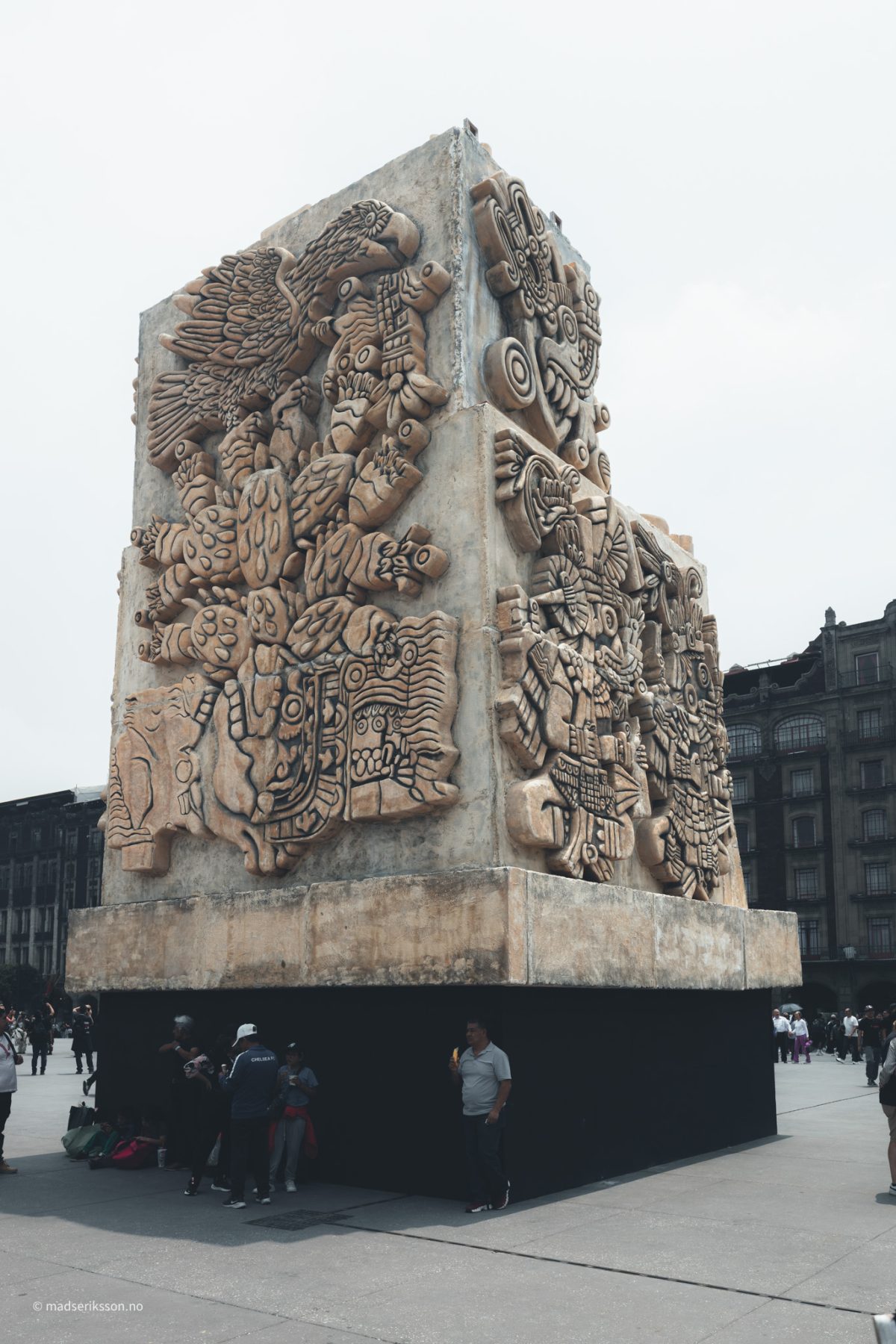
Tenochtitlan was founded in 1325 by the Mexica people on a small island in Lake Texcoco, guided according to tradition by the sight of an eagle perched on a cactus devouring a serpent — the image that still appears on the Mexican flag. Over the following two centuries the city grew into one of the largest in the world, connected to the mainland by causeways, fed by a sophisticated network of chinampas (floating agricultural gardens), and ruled from a ceremonial centre of pyramids and temples whose scale astonished the Spanish soldiers who first saw it in 1519. Hernán Cortés and his forces conquered Tenochtitlan in 1521 after a brutal three-month siege, demolished its temples and palaces, and built the Spanish colonial capital of New Spain directly on top. The Metropolitan Cathedral and the National Palace stand today on the foundations of the Aztec ceremonial precinct.
The resulting city is a place of extraordinary layering: pre-Columbian ruins visible in the foundations of colonial buildings, colonial buildings converted into galleries and government offices, and contemporary neighbourhoods of extraordinary culinary and architectural vitality spread across a basin ringed by volcanoes. Mexico City is not an easy place — the altitude is noticeable on arrival, the traffic is relentless, and its scale can be disorienting — but it offers a depth of cultural experience that few cities in the world can match. The food alone — UNESCO-listed as an Intangible Cultural Heritage of Humanity in 2010 — is reason enough to come.
How to approach Mexico City
This guide covers four aspects of Mexico City: the historic centre and the Aztec legacy; the ancient city of Teotihuacán, reachable as a day trip; the great museums and parks; and the food culture and contemporary neighbourhoods of Roma, Condesa and Coyoacán. Mexico City rewards those who walk slowly and eat constantly. The best experiences here are rarely the most famous ones, and the city consistently rewards the visitor who turns off the main avenue and follows the smell of something being cooked.
Mexico City in 3D
Mexico City lies at 2,240 m in a mountain basin, built on the ruins of the Aztec island capital Tenochtitlan, founded in 1325 on Lake Texcoco and conquered by Hernán Cortés in 1521. This frame follows the Paseo de la Reforma from the historic centre and the Zócalo in the east to Chapultepec in the west. The pyramids of Teotihuacán lie about 50 km to the north-east, outside the frame.
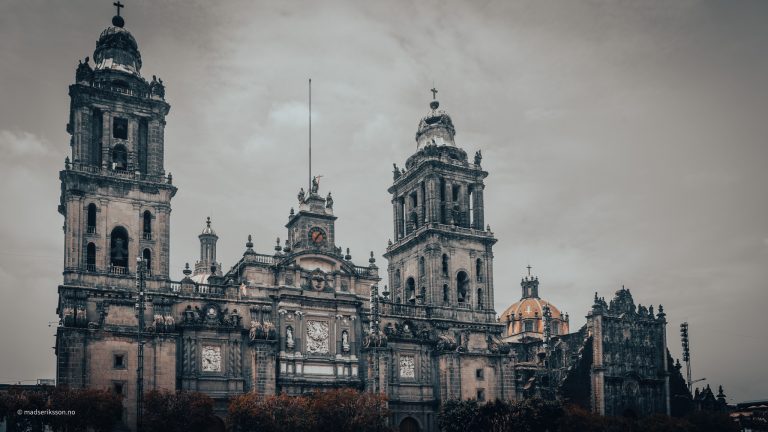
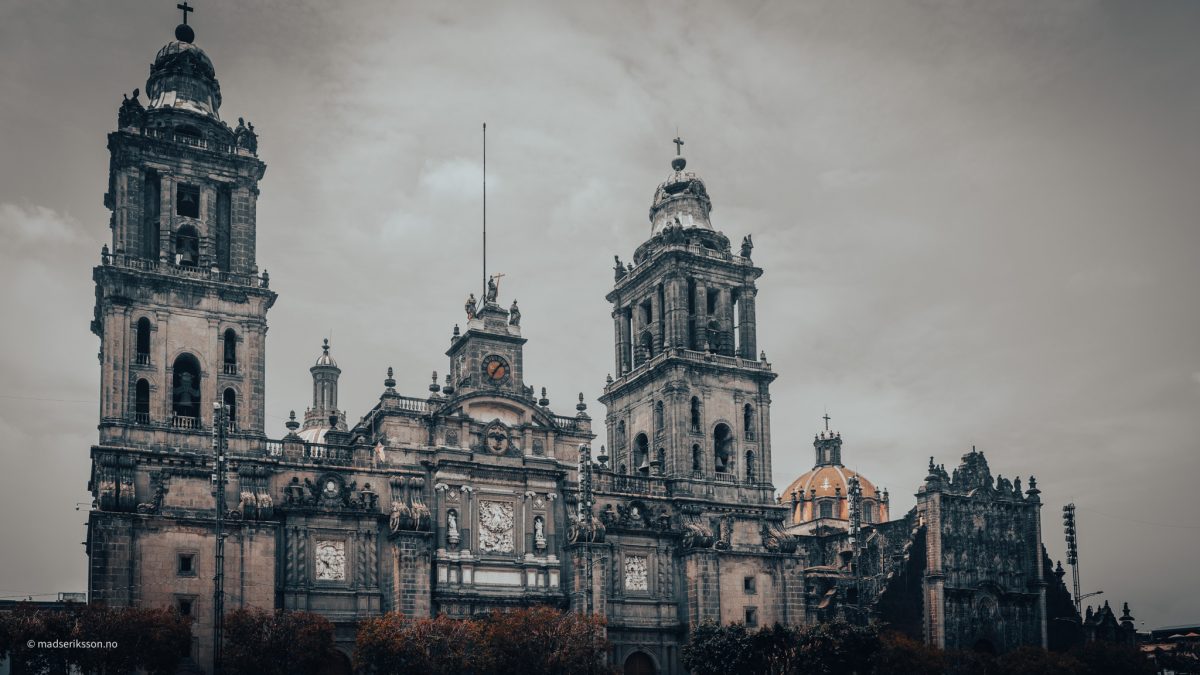
The Zócalo and the Metropolitan Cathedral
The Zócalo, formally the Plaza de la Constitución, occupies the ground where the ceremonial heart of Tenochtitlan once stood. The Metropolitan Cathedral on its north side took 240 years to build, from 1573 to 1813, partly with stones from demolished Aztec temples, and it visibly leans on the soft lake bed. The National Palace fills the east side, with about 450 m² of murals painted by Diego Rivera between 1929 and 1951.
The Metropolitan Cathedral of Mexico City, built on the foundations of the Aztec ceremonial precinct
The Templo Mayor
The main pyramid of Tenochtitlan was rebuilt and enlarged seven times between 1325 and 1521, each new version encasing the last. It lay beneath colonial streets until 1978, when electricity workers struck the great carved stone of the moon goddess Coyolxauhqui just north-east of the cathedral. The historic centre has been a UNESCO World Heritage Site since 1987.
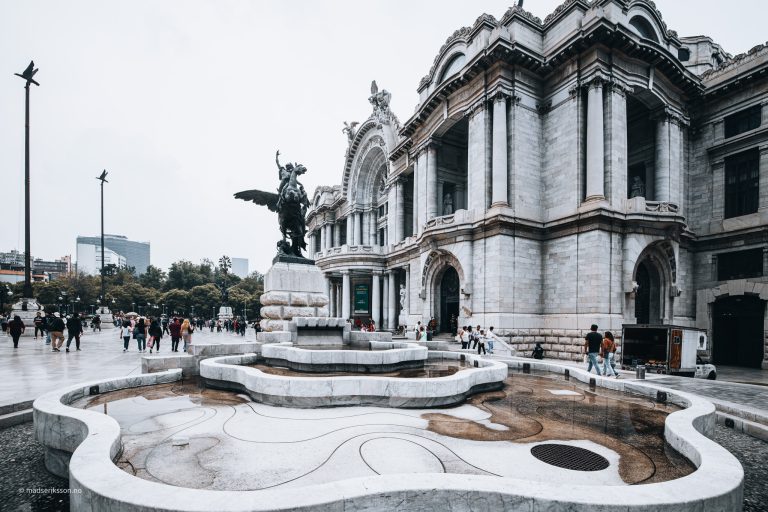
Bellas Artes and the Torre Latinoamericana
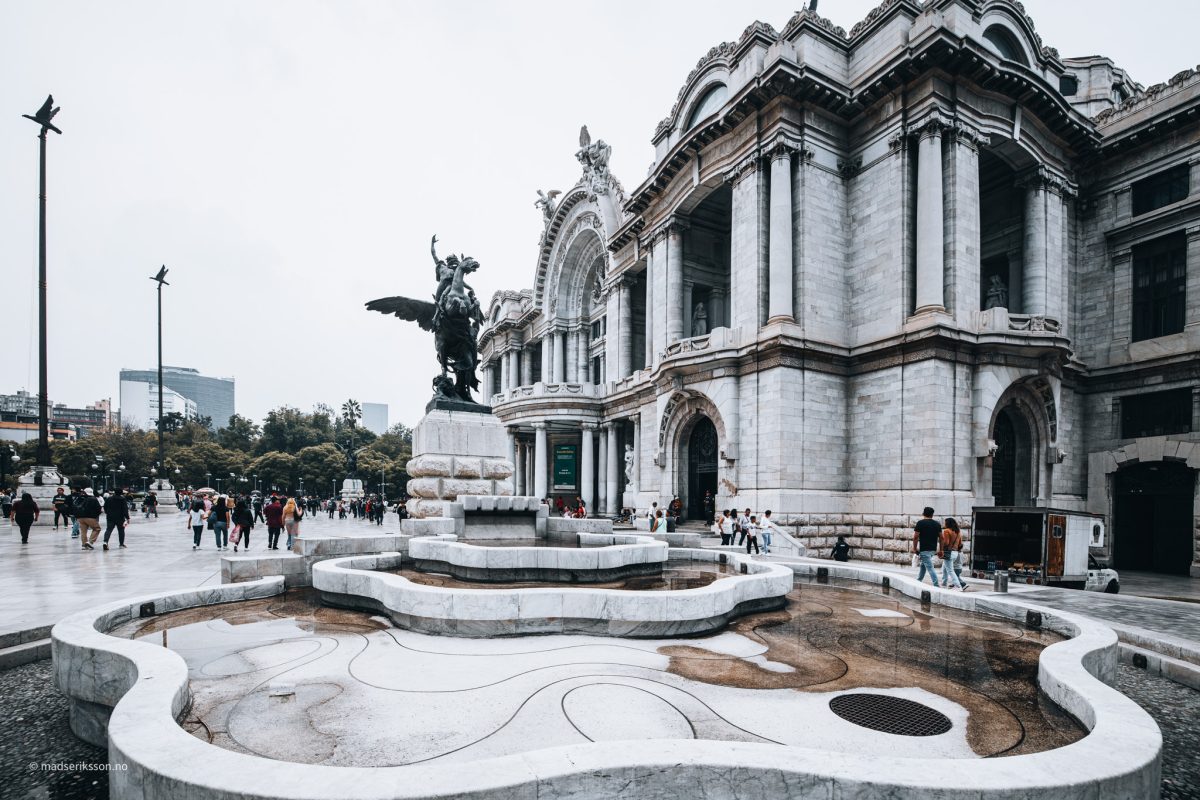
The marble Palacio de Bellas Artes was begun in 1904 to designs by Adamo Boari and only inaugurated on 29 November 1934; the heavy building has sunk several metres into the subsoil. Across the street, the 44-storey Torre Latinoamericana of 1956 reaches 182 m to its tip and came through the earthquakes of 1957 and 1985 without significant damage. The Alameda Central park stretches west from both.
The marble Palacio de Bellas Artes in Mexico City, with a winged Pegasus statue and fountain in front
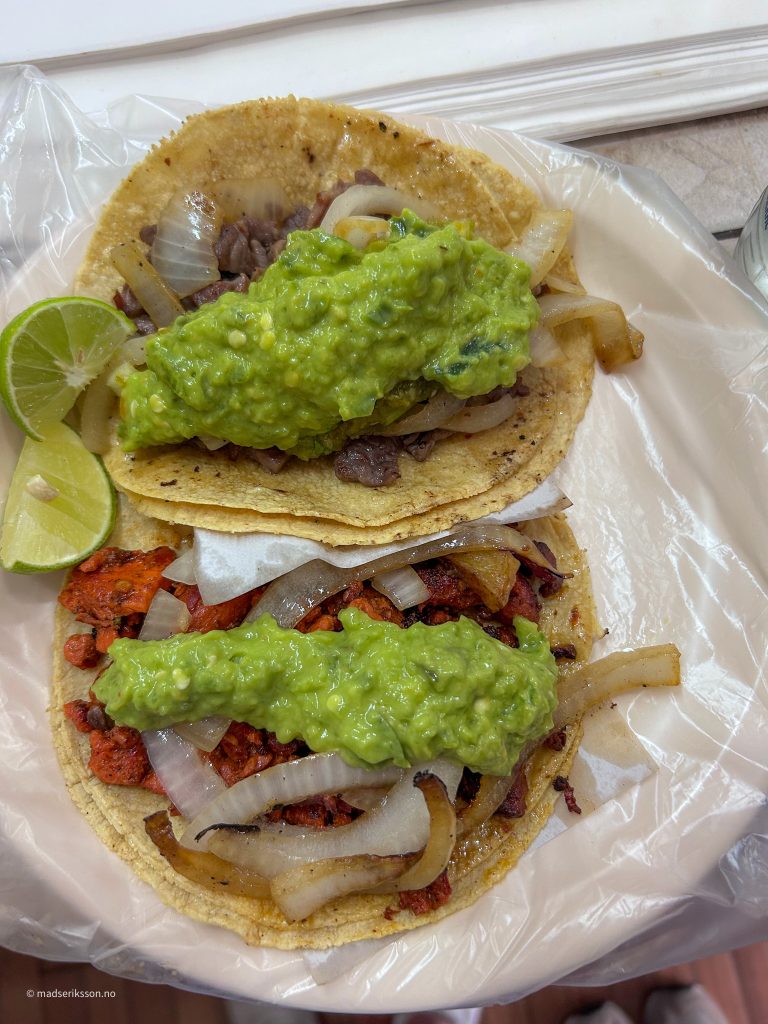
Roma and Condesa
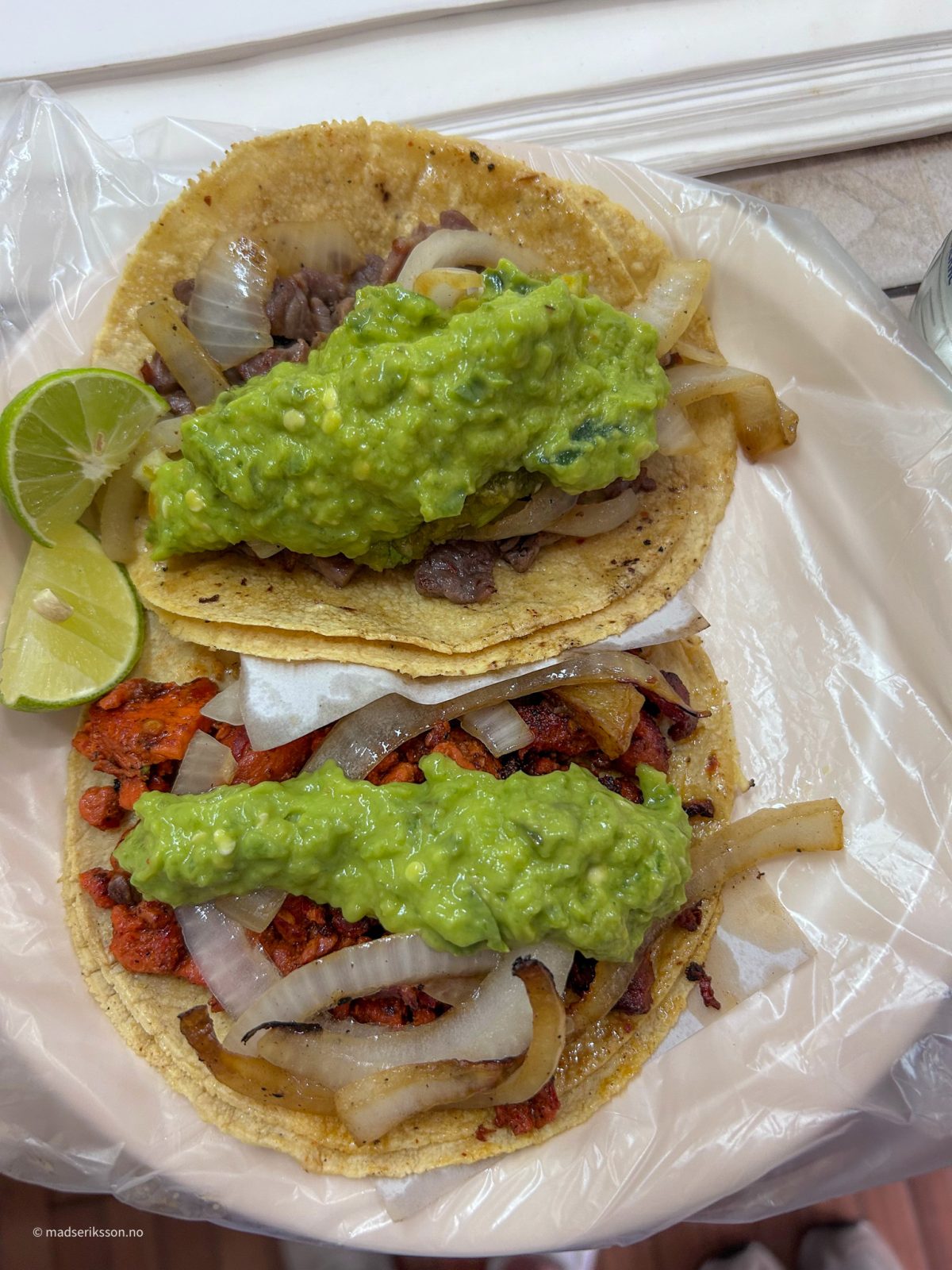
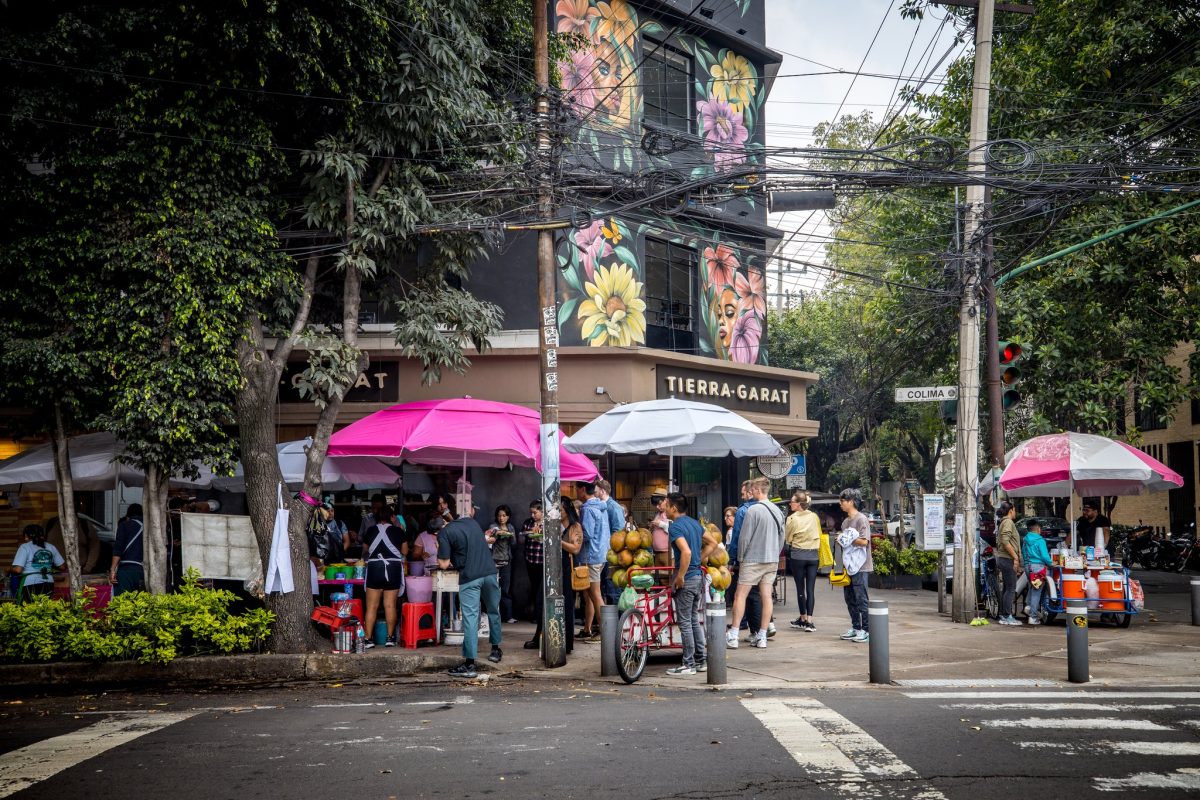
Colonia Roma and Colonia Condesa, built in the early 20th century in styles from Porfirian Baroque to Art Deco, were badly damaged in the 1985 earthquake and are now the city's centre of contemporary dining, bars and coffee. Mexican cuisine was inscribed on UNESCO's intangible heritage list in 2010, and the taco al pastor, pork shaved from a vertical spit introduced by Lebanese immigrants, is the city's signature dish.
Two tacos topped with grilled onion, salsa and guacamole, served on a paper plate in Mexico City
Museo Nacional de Antropología
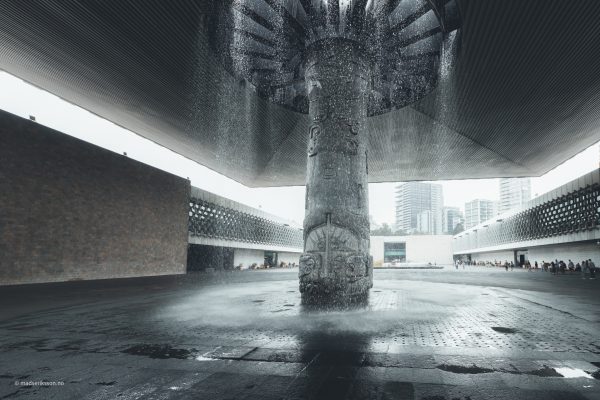
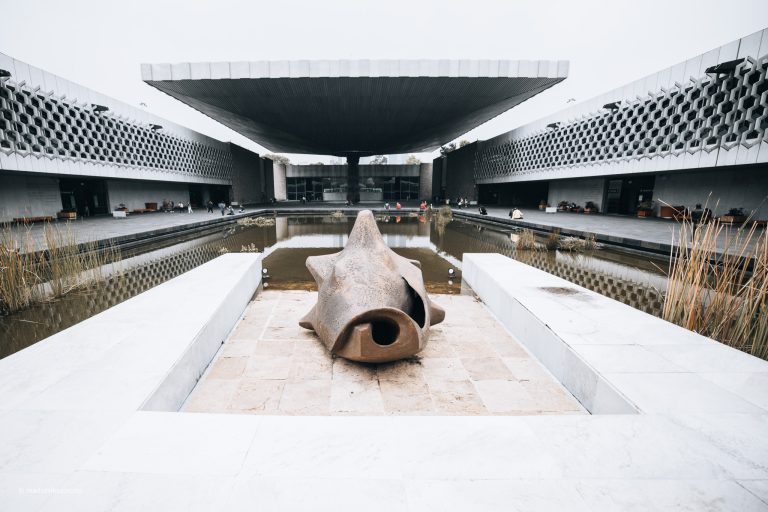
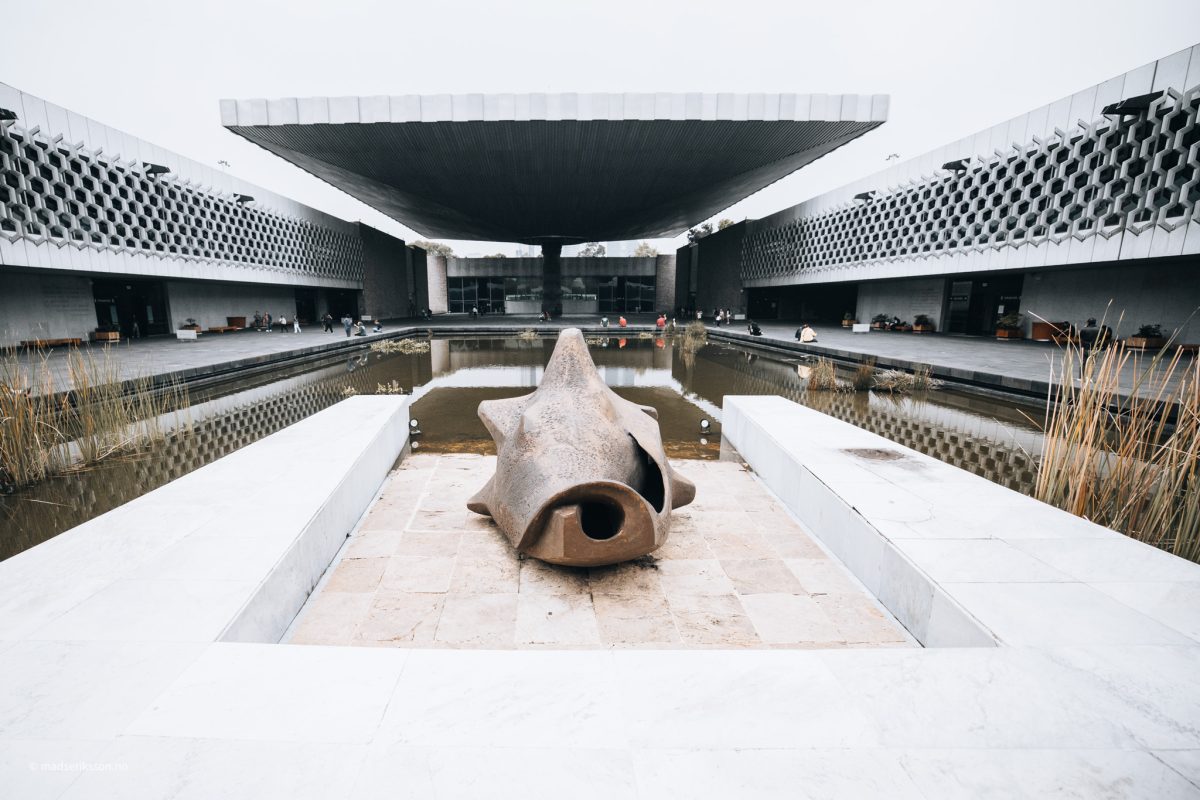
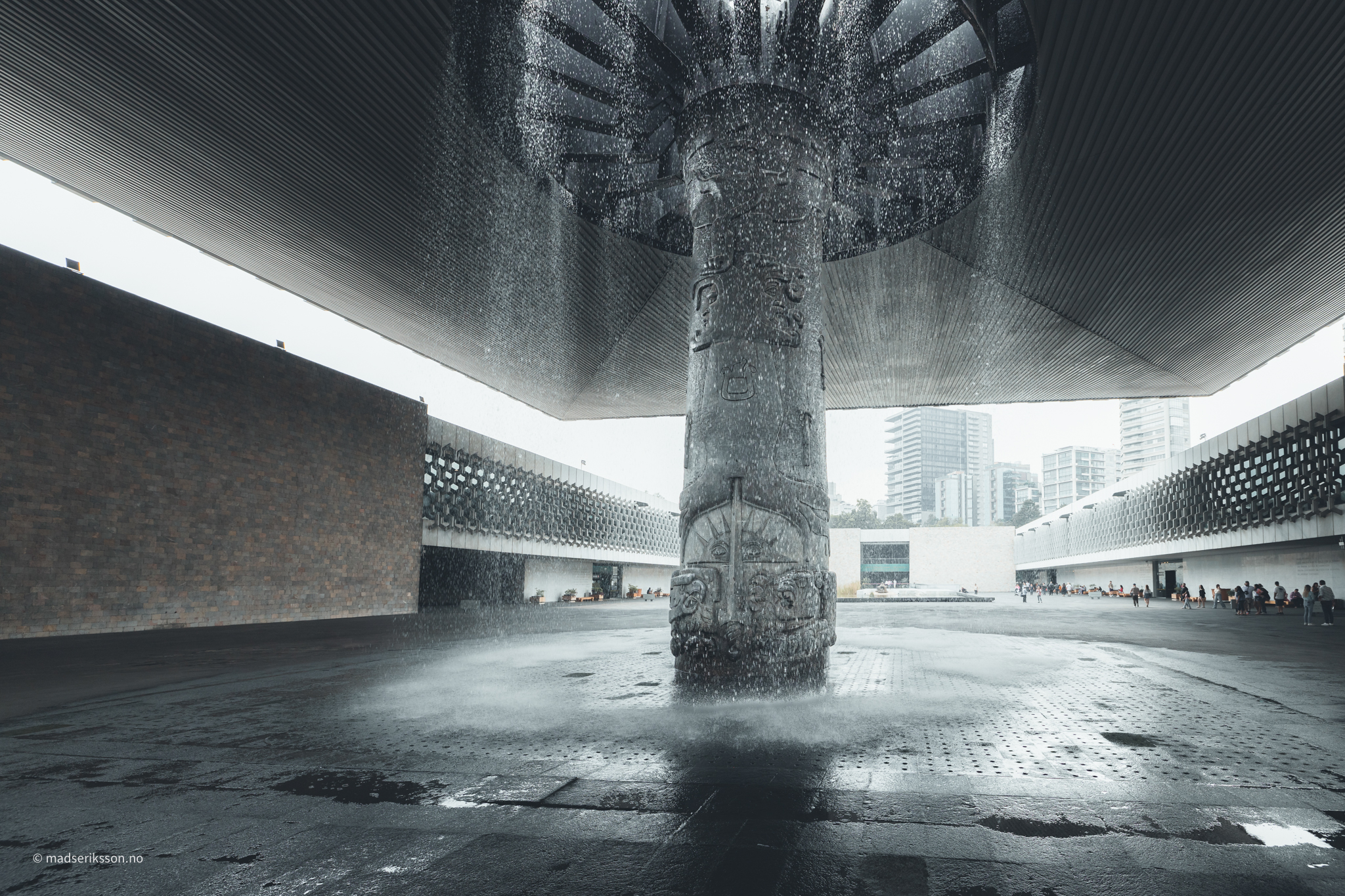
Pedro Ramírez Vázquez's Museo Nacional de Antropología opened in 1964 with 23 halls around a courtyard covered by El Paraguas, a vast canopy on a single column from which water falls like rain. Its Mexica hall holds the Aztec Sun Stone, a basalt disc 3.6 m across and weighing 24 tonnes.
The central courtyard of the Museo Nacional de Antropología, with its vast umbrella roof over a shallow pool
Read more: Museo Nacional de Antropología: A Cultural Treasure in Mexico City
Chapultepec Castle
Chapultepec Castle on its rocky hill was the imperial palace of Maximilian I between 1864 and 1867, and its apartments are preserved much as he and Charlotte decorated them. Below it, the 686-hectare Bosque de Chapultepec is the city's largest green space, and on Sunday mornings it fills with cyclists, runners and families.
Reforma and Torre Reforma
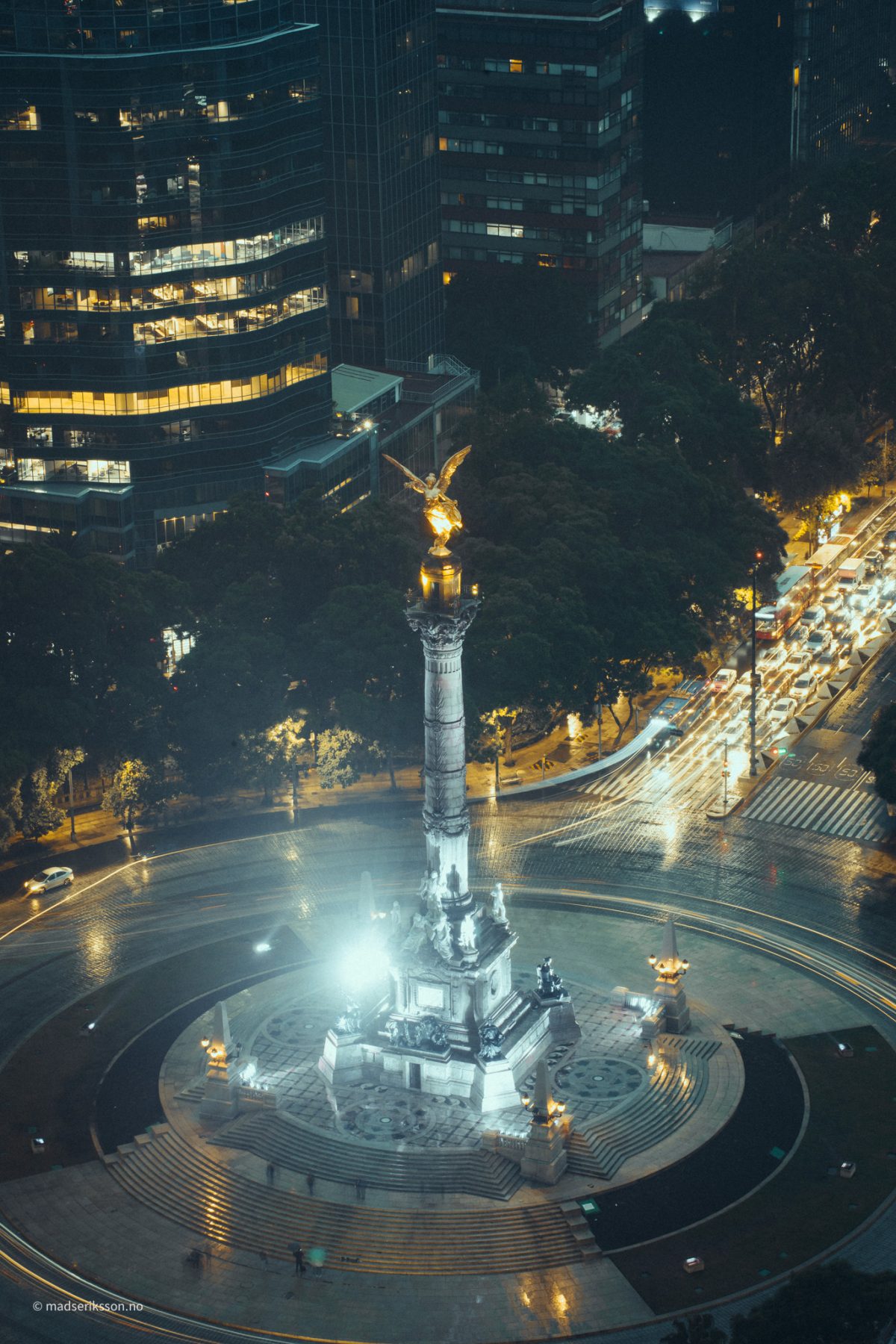
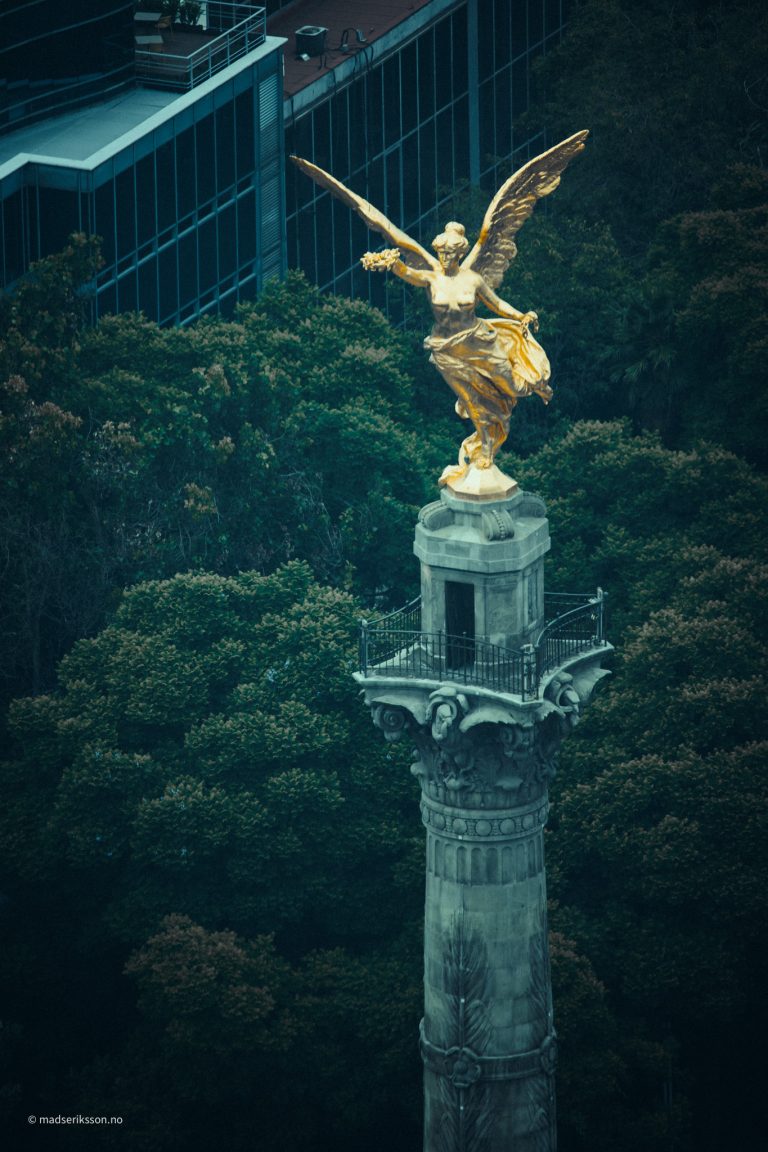
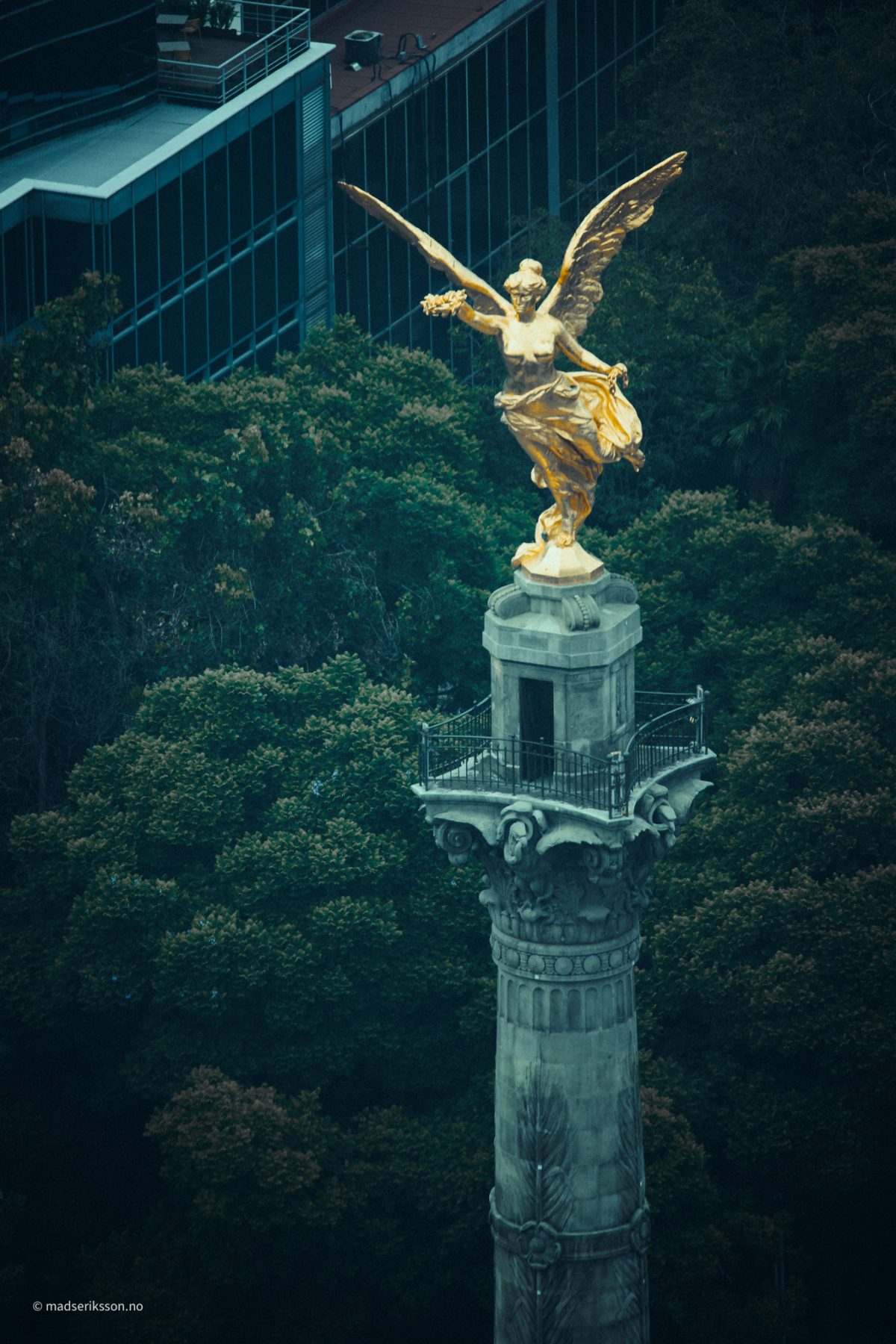
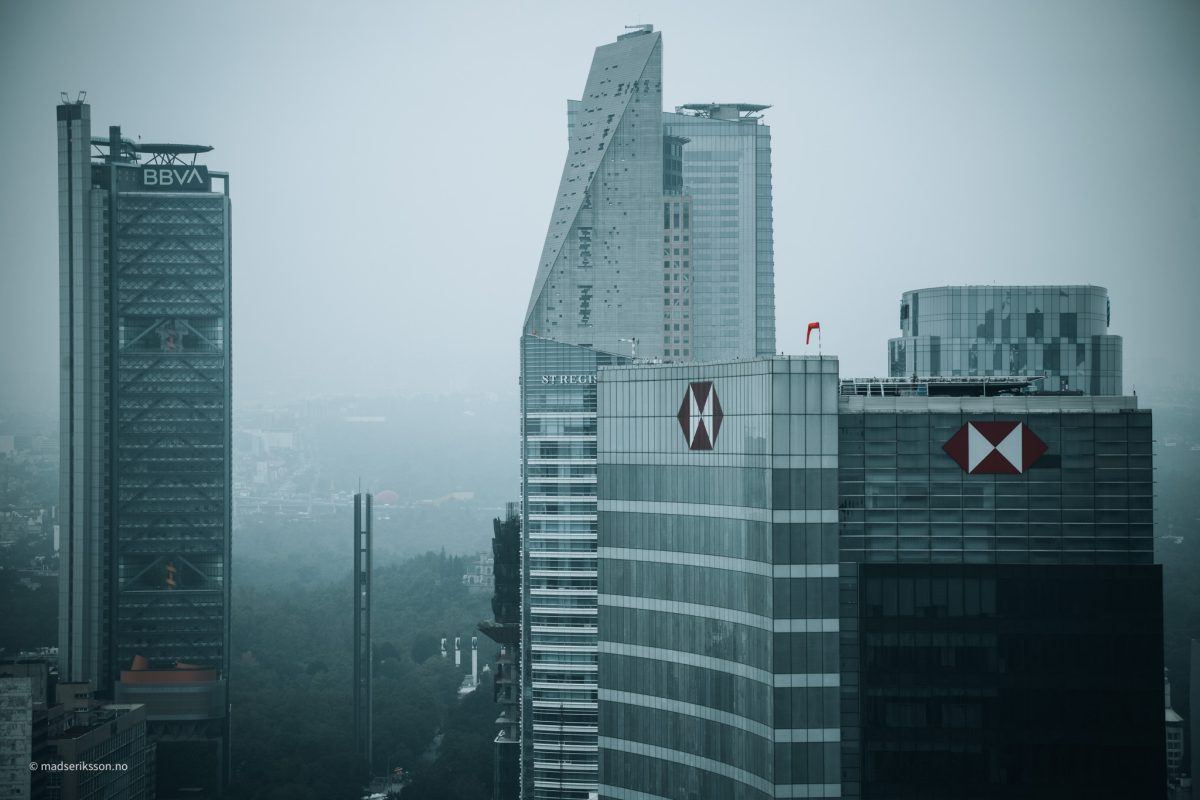
The Paseo de la Reforma runs diagonally from Chapultepec towards the historic centre, lined with the city's tallest towers. Torre Reforma, completed in 2016, reaches 246 m over 57 floors. The Angel of Independence, a 36 m column crowned by a 6.7 m gilded Winged Victory, has stood on its roundabout since 16 September 1910, the centenary of independence.
The gilded Winged Victory on top of the Angel of Independence column above the trees of Mexico City
The Angel at night
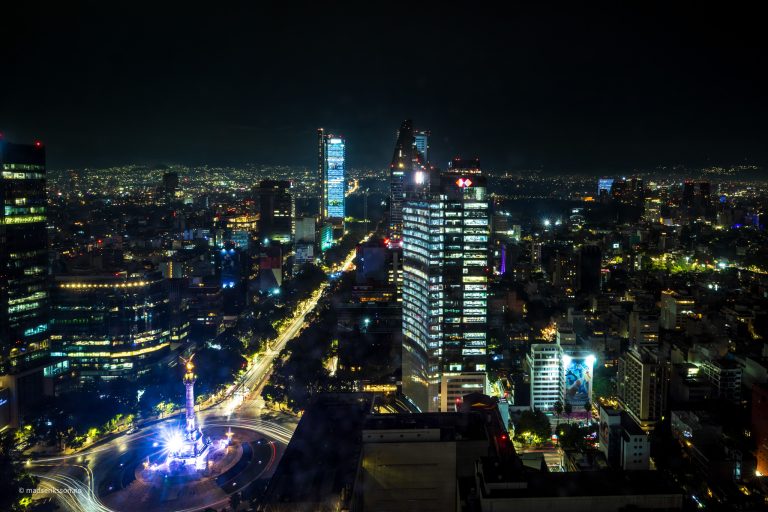
After dark the Angel of Independence is floodlit on its roundabout, ringed by traffic and the lit windows of the towers along Reforma. To the north-east, the dome of the Monumento a la Revolución closes the view towards the old centre.
The Angel of Independence on Paseo de la Reforma lit up at night in Mexico City
3D model © 2026 madseriksson.no · Photographs © madseriksson.no. Buildings and heights: © OpenStreetMap contributors (ODbL), via OpenMapTiles. Ground imagery: Sentinel-2 cloudless 2023 by EOX IT Services GmbH (contains modified Copernicus Sentinel data 2023; CC BY 4.0). Heights are approximate where OpenStreetMap has no measured value; sun positions are approximate.
The Historic Centre — Tenochtitlan Beneath the Cathedral
The Spanish built their capital on the ruins of the Aztec city — and the ruins are still emerging from beneath it
The Zócalo — formally the Plaza de la Constitución — is one of the largest public squares in the world, occupying the ground where the ceremonial heart of Tenochtitlan once stood. To the north, the Metropolitan Cathedral rises in a blend of Gothic, Baroque and Neoclassical styles accumulated over the 240 years of its construction (1573–1813), built in part with stones quarried from demolished Aztec temples. The cathedral visibly leans: the soft lake-bed soil has caused uneven subsidence, and the building has been stabilised through engineering interventions since the 1990s. Inside, the Altar of Forgiveness and the richly gilded chapel interiors give some sense of the colonial ambition that drove the project.
The National Palace (Palacio Nacional) occupies the entire eastern side of the Zócalo and stands on the foundations of Moctezuma II’s palace, which Cortés appropriated after the conquest. Its most important contents are the murals Diego Rivera painted on the main staircase and surrounding galleries between 1929 and 1951 — approximately 450 square metres of fresco depicting the full arc of Mexican history from the Aztec world to the Revolution. Rivera’s murals are among the great public artworks of the 20th century; the scale of them, the density of historical narrative and the colour are extraordinary in person in a way photographs do not convey. Entry to the National Palace is free.
The Templo Mayor — the main pyramid of Tenochtitlan — lay beneath the streets of the historic centre for 450 years. It was rediscovered by accident in 1978 and has been excavated to reveal seven successive phases of construction.
The Templo Mayor, immediately northeast of the Cathedral, is the excavated main temple of Tenochtitlan — a pyramid that was rebuilt and enlarged seven times between 1325 and 1521, each new version encasing the previous one. Its rediscovery in 1978, when electricity workers struck a massive circular stone carved with the dismembered body of the moon goddess Coyolxauhqui, triggered an excavation that is still ongoing. The adjacent museum holds the Coyolxauhqui stone, thousands of offerings deposited in the temple’s construction phases — coral, shells, obsidian knives, ceramic figures, animal skeletons — and a reconstruction of the temple at various stages. It is one of the most affecting archaeology museums in the Americas. The historic centre as a whole was designated a UNESCO World Heritage Site in 1987.
Teotihuacán — The City Where the Gods Were Made
Fifty kilometres from Mexico City, the largest pre-Columbian city in the Americas — and the civilisation that built it remains largely unknown
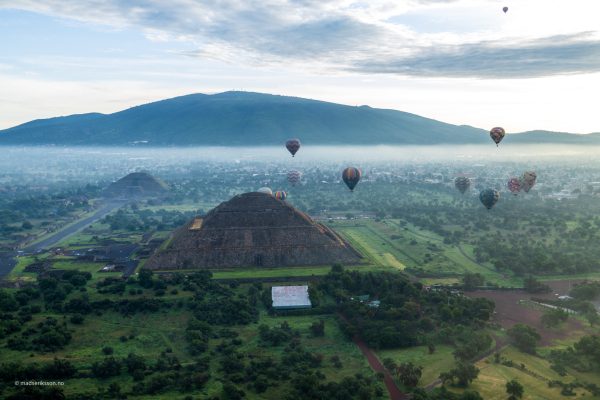
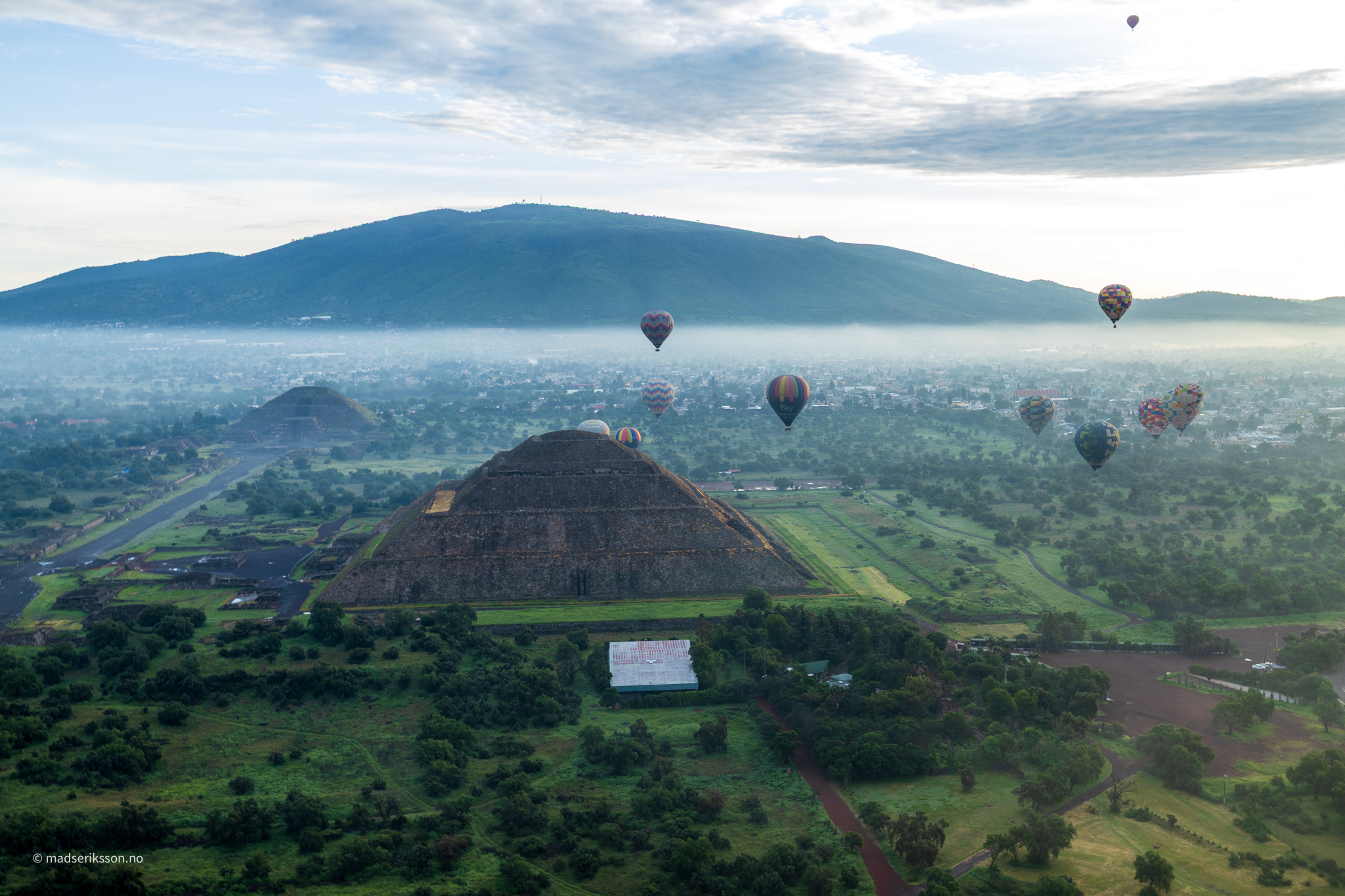
Teotihuacán was the largest city in the pre-Columbian Americas at its height, between the 1st and 7th centuries CE, with a population estimated at 125,000 and an urban plan of extraordinary regularity. The civilisation that built it remains unidentified — no writing system has been deciphered, no royal dynasty established, no ethnicity confirmed. The Aztecs arrived at the abandoned city centuries after its collapse around 550 CE and named it Teotihuacán, meaning “the place where the gods were made” — believing it to be where the gods had gathered to create the sun and moon. The name of the people who actually built it is unknown. The site covers approximately 83 square kilometres and is a one-hour bus ride from the Mexico City Terminal del Norte.
The Pyramid of the Sun is the third-largest pyramid in the world by volume — 225 metres wide at the base and 65 metres tall — built over a natural cave that the site’s builders considered sacred. The climb to the summit, up steep stepped faces with basic rope handrails, takes 15–20 minutes and gives a panoramic view over the whole site and the surrounding valley. The Pyramid of the Moon at the northern end of the Calzada de los Muertos (the Avenue of the Dead, the main ceremonial axis running 4 kilometres through the city) is smaller but positioned on higher ground, giving an equally commanding view. The human sacrifices discovered in the foundations of both pyramids — people buried alive at each construction phase, hands bound, sometimes accompanied by animals — indicate that the site served a ceremonial function consistent with later Mesoamerican traditions.
The builders of Teotihuacán are unknown. No writing has been deciphered, no dynasty established, no ethnicity confirmed. They built the third-largest pyramid in the world, planned a city of 125,000 people, and disappeared around 550 CE.
Teotihuacán is best visited early: the site opens at 9am and the light on the pyramids is best in the morning before the heat builds. Arriving at opening gives an hour or two before the day-tripper crowds from Mexico City become significant. A full visit requires 3–4 hours; the on-site restaurant at the base of the Pyramid of the Sun is reasonable. Direct buses run from the Terminal del Norte in Mexico City throughout the day and take approximately 60 minutes. The site was designated a UNESCO World Heritage Site in 1987.
The Museums — Anthropology, Frida Kahlo and the Castle on the Hill
Mexico City has more museums than any other city in the world — led by one of the greatest archaeology museums on Earth
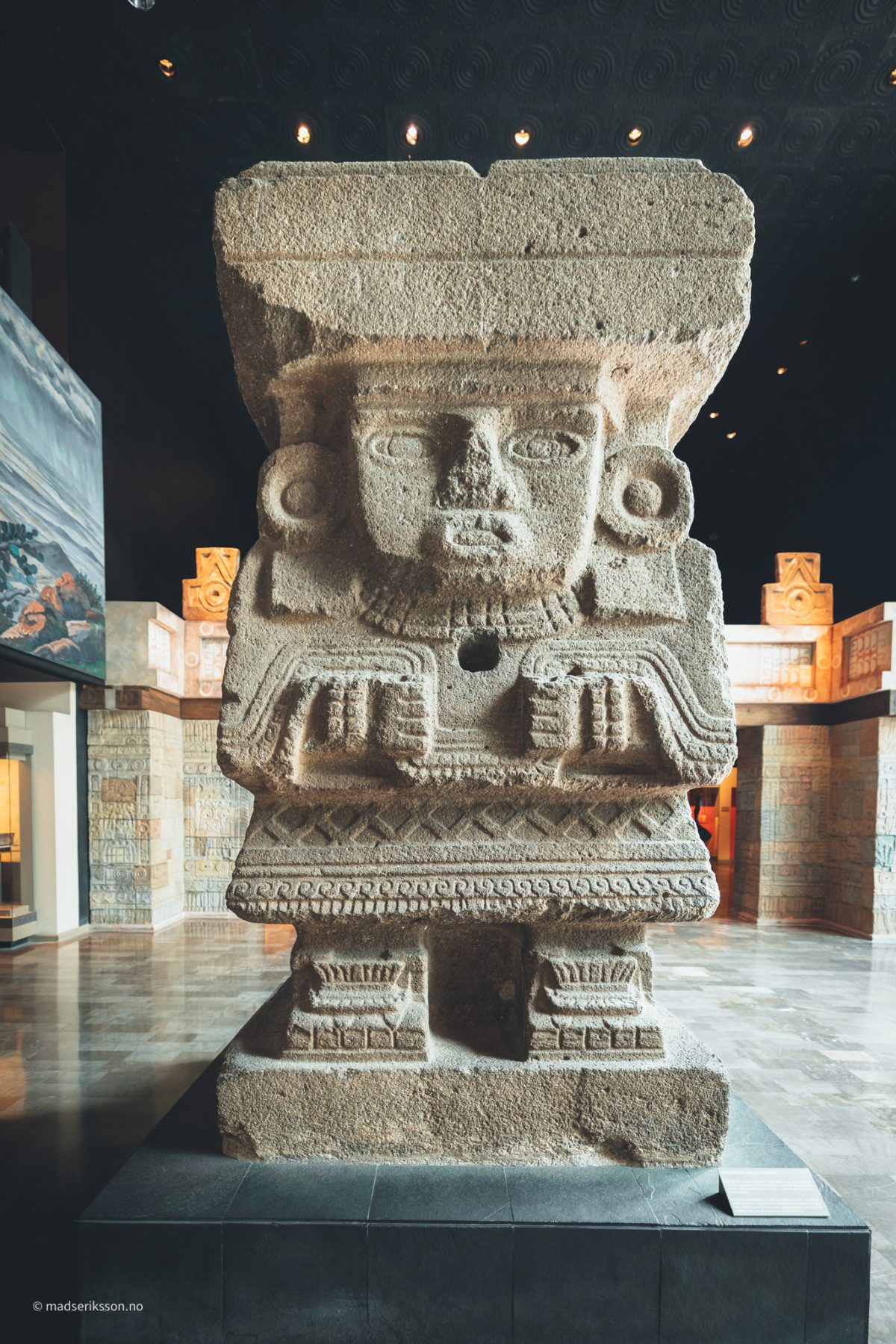
The Museo Nacional de Antropología, in the Bosque de Chapultepec, is one of the greatest museums in the world — an institution that holds the most important collection of pre-Columbian art and artefacts in existence. The building itself, designed by Pedro Ramírez Vázquez and opened in 1964, is a masterpiece of modern architecture: 23 exhibition halls arranged around a central courtyard with a monumental concrete pillar from which a steel roof canopy cascades, fed by water that falls from it continuously as a curtain of rain. The Aztec Sun Stone in the Mexica hall — a basalt disc 3.6 metres in diameter and weighing 24 tonnes, carved with calendrical and cosmological imagery — is the most photographed object in Mexican archaeology, though the rest of the Mexica collection, the Olmec hall with its giant stone heads, and the Maya rooms are equally extraordinary.
Chapultepec Castle, on a rocky hill at the edge of the Bosque de Chapultepec, was Mexico’s imperial palace during the reign of Emperor Maximilian I (1864–1867), the Austrian archduke installed by Napoleon III and subsequently executed by Mexican republicans under Benito Juárez. The castle’s interior preserves the imperial apartments largely as Maximilian and his wife Charlotte decorated them, and the view from the hilltop over the city is extensive — though smog and haze reduce its clarity on most days. The Bosque de Chapultepec itself, 686 hectares of parkland and lakes in the western part of the city, is the primary green space for 22 million people and on Sunday mornings fills with cyclists, joggers, families and food vendors.
Frida Kahlo lived in the Blue House in Coyoacán from birth to death — with interruptions for her stormy marriage to Diego Rivera and her medical treatments in the United States. The house is exactly as she left it.
In Coyoacán, a neighbourhood of cobblestone streets and colonial plazas in the south of the city, the Museo Frida Kahlo occupies the house where Frida Kahlo was born in 1907 and died in 1954. Known as La Casa Azul — the Blue House, for the intense cobalt blue of its exterior walls — it was her home with Diego Rivera and preserves her studio, her clothes, her wheelchair, her traditional Tehuana costumes and her jewellery largely as she left them. The house and its garden are small and the visitor flow is managed by timed-entry; booking in advance is essential, as it sells out weeks ahead. Coyoacán itself deserves an afternoon: the Mercado de Coyoacán, the Jardín Centenario, the numerous cafés and restaurants in the lanes around the central plaza make it one of the most pleasant neighbourhoods in the city for slow walking.
Mexico City Food — The Taco, the Mole and the Mezcal
Mexican cuisine is UNESCO-listed — and Mexico City is where all its regional traditions converge, at every price level and every hour
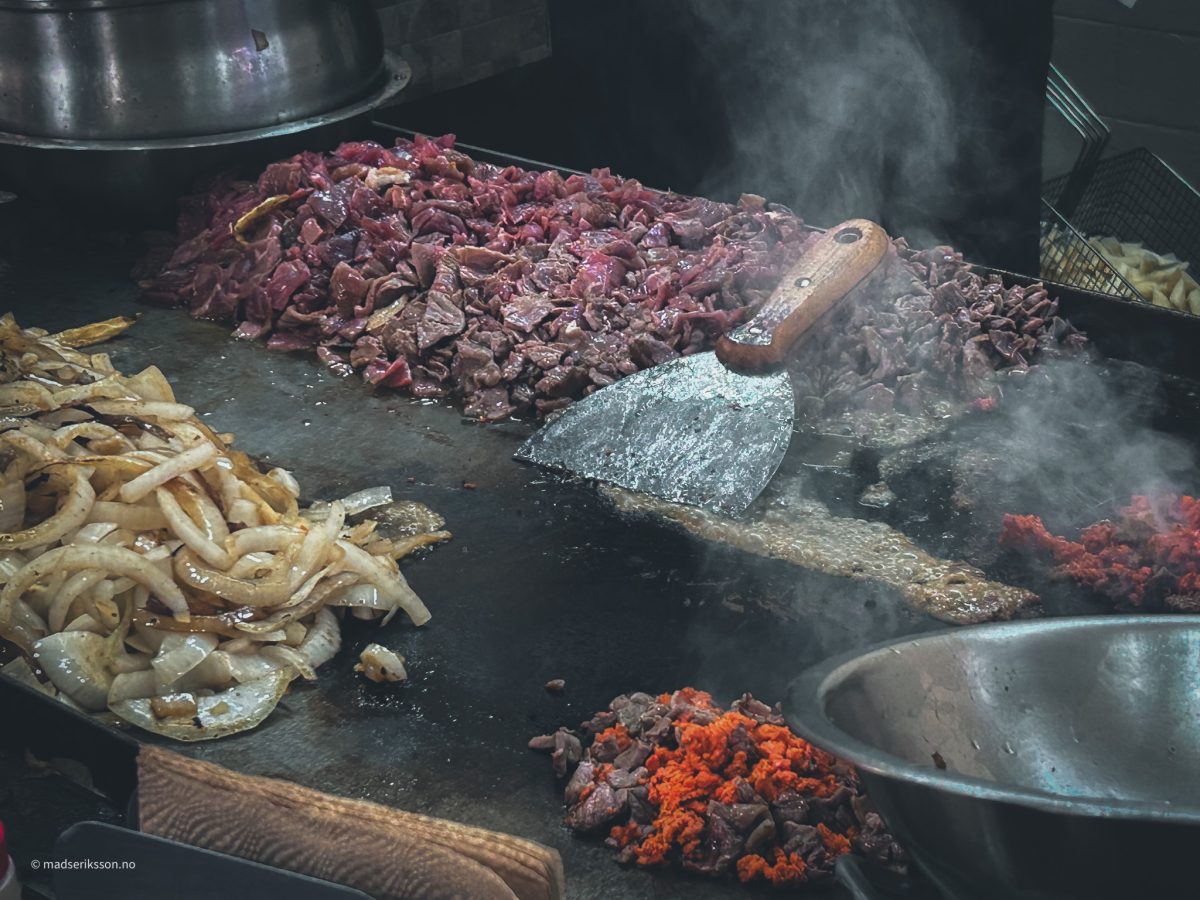
The taco al pastor — thin slices of achiote-marinated pork cooked on a vertical spit (trompo), shaved with a long knife directly onto a small corn tortilla and served with pineapple, cilantro, onion and salsa — is one of Mexico City’s defining dishes and one of the great street foods of the world. Its origins are hybrid: Lebanese immigrants who came to Mexico in the early 20th century brought the technique of the vertical spit (the shawarma), which was adapted to Mexican pork and spices. The best tacos al pastor are available from dedicated taqueros who have been operating the same trompo in the same location for decades; the quality of the pork, the seasoning and the skill of shaving determine everything. Mexico City also has an entire taxonomy of other taco traditions: barbacoa (slow-cooked lamb, available only on weekend mornings), tacos de canasta (steamed and sold from bicycles in the early morning), carnitas (confit pork), birria (beef or goat stew), and many more.
The neighbourhoods of Colonia Roma and Colonia Condesa, west of the historic centre, are Mexico City’s most concentrated areas for contemporary dining, bars and coffee culture. Built in the early 20th century in styles ranging from Porfirian Baroque to Art Deco, the neighbourhoods were badly damaged in the 1985 earthquake and rebuilt with an architectural creativity that is now the foundation of their identity. Roma Norte in particular has become one of the most discussed restaurant destinations in Latin America: a combination of serious Mexican regional cooking, inventive cocktail bars, third-wave coffee shops and mezcalerías (mezcal bars) concentrated in the streets around Álvaro Obregón.
Mezcal is made from the heart of the agave plant, roasted in underground pits, and can be produced from over 40 agave species. A good mezcal tastes of smoke, earth and time. It should be drunk slowly, with orange slices and sal de gusano.
Mezcal — the smoked agave spirit of which tequila is a specific industrial subcategory — has experienced a global revival, but Mexico City’s mezcalerías were serious before the trend arrived. The best serve artisanal mezcals from small producers in Oaxaca, Guerrero and Durango: single-village spirits made from wild-harvested agave, roasted in earthen pits and distilled in clay pots, with flavours of smoke, earth, tropical fruit and mineral that change radically between producers and agave species. They are not cheap, they are not mixed into cocktails, and they are best approached as a slow evening’s exploration with informed guidance from the bar’s staff. The Mercado de La Merced and the Mercado de Jamaica (the city’s great flower market) represent the older market culture beneath the neighbourhood restaurants — chaotic, vast and entirely indispensable to the daily food supply of 22 million people.
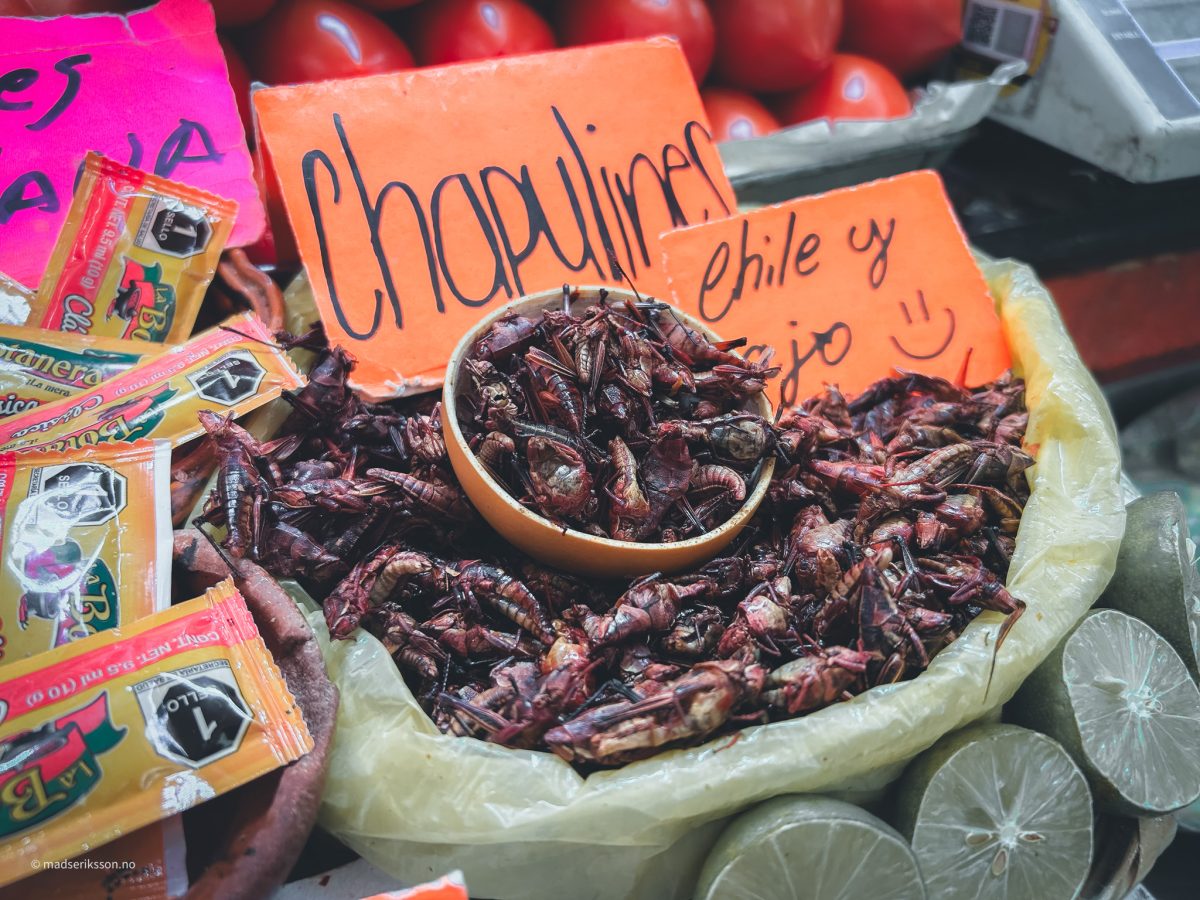
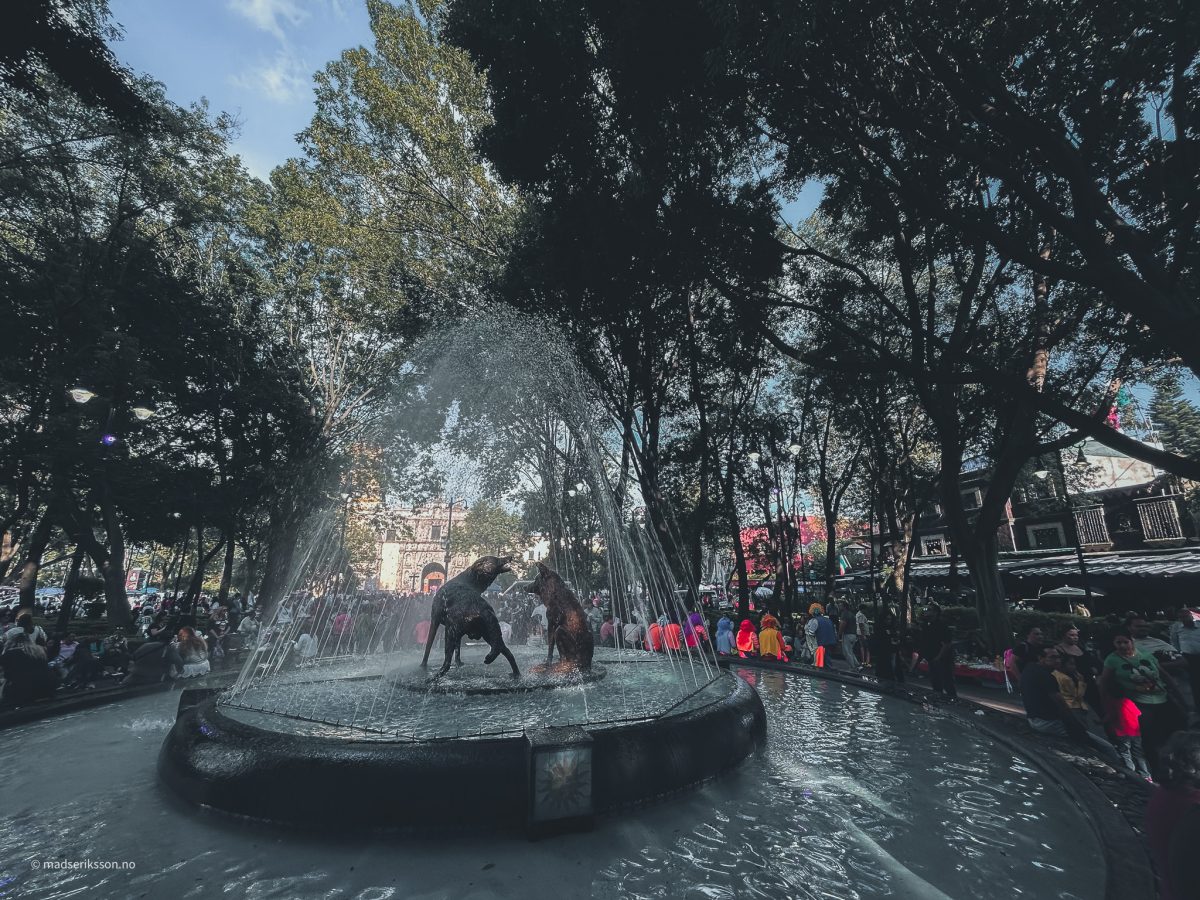
«Mexico City is a city you arrive in slightly underprepared and leave wanting more time. The altitude takes a day. The scale takes longer. The food keeps surprising you. The Templo Mayor and the Anthropology Museum do something to your sense of historical proportion that no European city can quite replicate — they present a civilisation of equal complexity and ambition to anything in the Old World, built in isolation, destroyed in three months of 1521, and still being excavated from beneath the streets of the city that replaced it. Mexico City carries all of that, along with 22 million people’s worth of daily life, tacos al pastor at midnight, and the particular quality of high-altitude light in the early morning before the smog builds. It stays with you.»
More in the same area
 ArchaeologyMuseo Nacional de Antropología: A Cultural Treasure in Mexico City
 ArchaeologyThe Pyramids of Teotihuacán: An Ancient Wonder
 CitiesThe World’s 10 Great Food Markets
 ArchitectureTen Buildings That Changed Their Cities — Modern Architecture Ranked on Impact, Not Image
 CitiesHiroshima and Miyajima: A preserved ruin and a shrine on the tideline
 CitiesSiem Reap — The City at the Gate of the Largest Temple on Earth
City Frames · scroll-driven 3D
More cities in three dimensions
54 city guides open with a model built from open map data. Scroll, and the camera moves from landmark to landmark.
Departures · City Frames
Where to next?
| Time | Destination | Country | Status |
|---|
Live · position of the sun
Golden hour, right now
The low, warm light just after sunrise and just before sunset. These are the cities on the site where it is happening at this moment.