Madrid was not supposed to be what it is. In 1561, Philip II of Spain chose a minor Castilian market town on the flat plateau at 667 metres above sea level as the capital of his empire — not because it was strategically positioned, historically significant or architecturally impressive, but because it was geographically central on the Iberian Peninsula. The decision was administrative convenience, not destiny. What followed was four centuries of accretion: the Habsburg kings built a palace and a plaza; the Bourbons rebuilt the palace when the first one burned; the Prado was opened with the greatest collection of Old Master paintings ever assembled; Picasso’s Guernica sat in New York’s Museum of Modern Art for 43 years until the condition Picasso had set — that it return to Spain only when democracy was restored — was finally met in 1981; the nightclubs open at midnight and close at dawn; and the city that Philip II chose by calculation became, by accumulation, one of the great capitals of Europe. It is the highest capital in the European Union. The light at this altitude, in the middle of the Castilian plain, is specific to Madrid and to nowhere else.

Madrid has a population of approximately 3.4 million in the city and 6.5 million in the metropolitan area, making it the third largest city in the European Union after Berlin and Paris. It is also, at 667 metres above sea level on the Castilian Meseta, the highest capital city in the EU — a fact that accounts for one of Madrid’s most distinctive characteristics: the light. The altitude and the flat plain around the city produce a clarity of light and a quality of sky that painters have been remarking on since the 17th century. Velázquez painted his court portraits and his landscapes in this light. Goya painted his Black Paintings in the house he built outside the city in this same light, brighter and harsher than the Atlantic light of the coast or the softer Mediterranean light of Valencia and Barcelona. The Prado, which houses both Velázquez and Goya, receives its works in the same light that was present when they were painted. This is not a coincidence. It is the most important fact about Madrid’s art collection.
The city was nothing before Philip II chose it. The archaeological record shows a small Moorish fortification (Mayrit or Magerit) on the Manzanares River from the 9th century; the Reconquista brought it into Castilian hands in 1083; it remained a minor market town of no particular distinction until 1561, when Philip II moved his court here from Toledo. He chose it for one reason: the geographic centre of Iberia. From Madrid, equidistant to all borders, a king could theoretically govern his empire without any part of it being obviously closer than another. The calculation was correct and entirely cold-blooded. Madrid became the most powerful city in the world for a century without having earned it by any other means. The question of whether a city chosen for administrative reasons rather than evolved from historical necessity can develop a genuine character is answered, in Madrid’s case, by four centuries of evidence that it can.
How to approach Madrid
Madrid rewards slow visiting more than most European capitals. The Prado alone, done properly, requires a full day; the Reina Sofía another half. The neighbourhoods — La Latina for Sunday morning and the Rastro, Malasaña for the evening, the Retiro for the afternoon — are best experienced at the pace the city itself moves at, which is unhurried. Madrid does not produce the sensation of needing to rush. Three to four days is the correct minimum. The city operates on Spanish time, which means dinner starts at 9pm, bars fill at midnight and the Sunday Rastro market is best from 10am to 2pm.
Madrid in 3D
Philip II moved the royal court from Toledo to Madrid in 1561, choosing a small town on the Castilian plateau at about 667 m above sea level, which makes it the highest capital in the European Union. This frame runs from the Royal Palace and the Temple of Debod in the west to the Retiro in the east, and from Plaza de España south to Atocha. The Puerta del Sol near its centre holds Kilómetro Cero, the point from which Spain's national roads are measured.
The Royal Palace and the Almudena
The Royal Palace stands on the site of the Alcázar, which burned down on Christmas Eve 1734; the new palace was built between 1738 and 1755 to designs by Filippo Juvarra and Giovanni Battista Sacchetti, and Charles III was the first king to live in it, from 1764. With more than 135,000 m² of floor space and 3,418 rooms, it is the largest royal palace in Western Europe. Facing it across the Plaza de la Armería, the Almudena Cathedral was begun in 1883 and consecrated by Pope John Paul II in 1993.
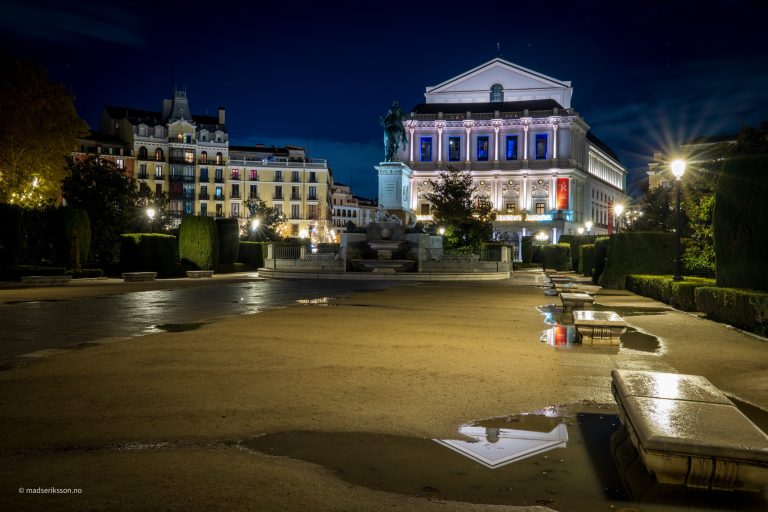
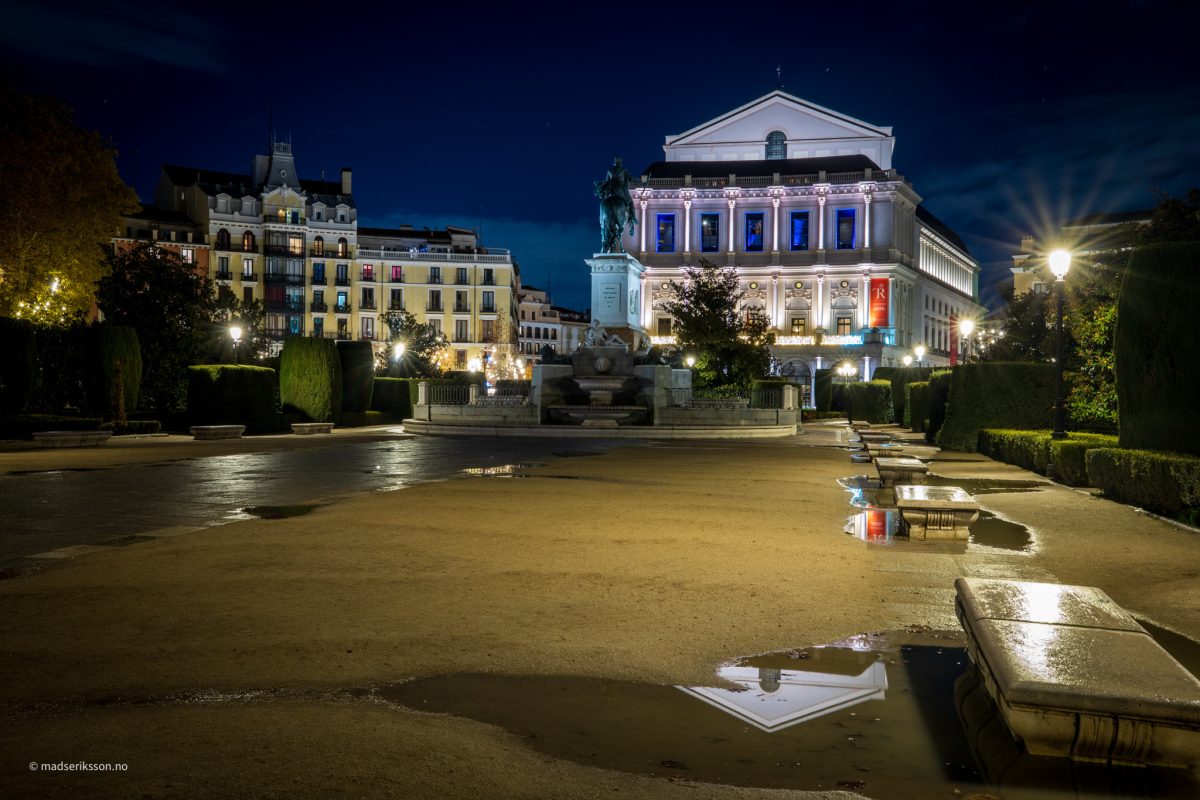
Teatro Real and the equestrian statue of Philip IV on Plaza de Oriente after rain, Madrid
Plaza Mayor
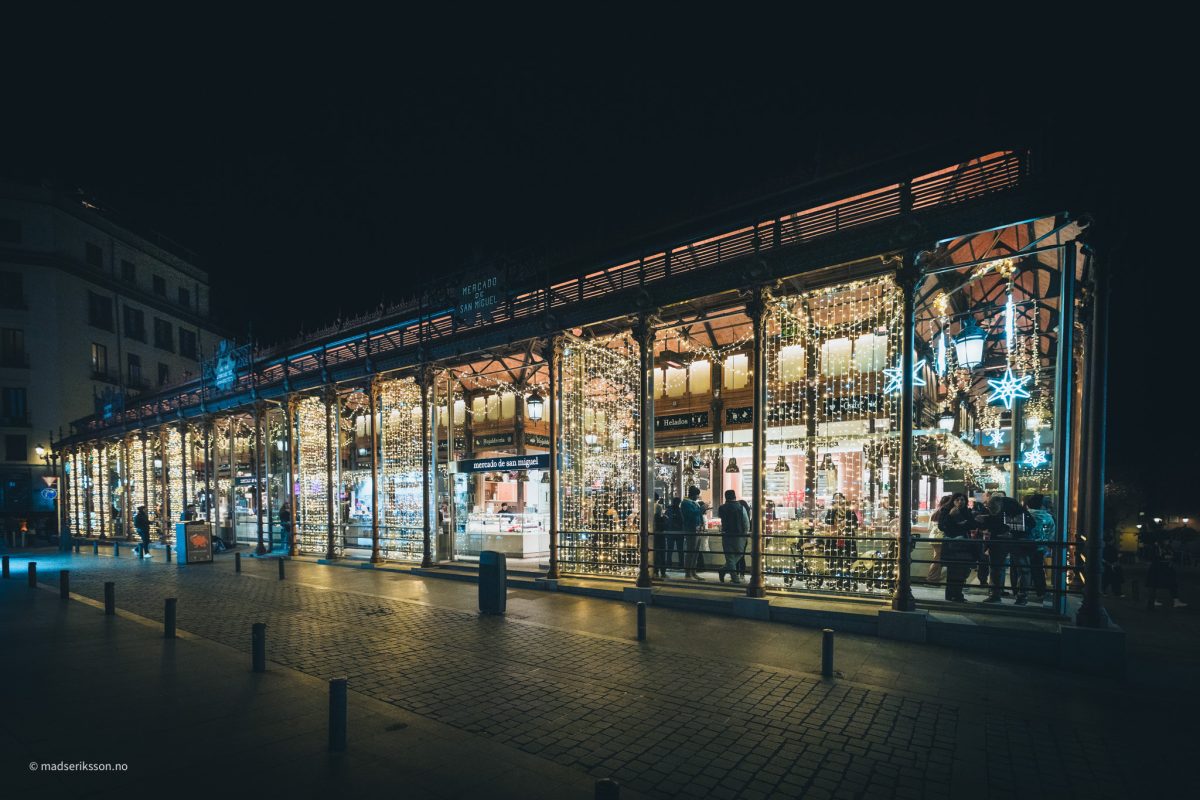
Plaza Mayor was built between 1617 and 1619 under Philip III and measures 129 by 94 m, with 237 balconies looking onto the square. After fires in 1631, 1670 and 1790, Juan de Villanueva rebuilt it in its present closed form, and the equestrian statue of Philip III, cast in 1616, was moved to the centre in 1848. Just to the west, the iron-and-glass Mercado de San Miguel opened in 1916.
The Golden Triangle of Art
The Museo del Prado opened in 1819 with the royal collections of the Habsburg and Bourbon kings, including Velázquez's Las Meninas of 1656. The Museo Thyssen-Bornemisza, whose collection the Spanish state bought in 1993, stands at the northern end of the boulevard, and the Museo Reina Sofía near Atocha has held Picasso's Guernica, 3.49 by 7.76 m, since 1992. In 2021 the Paseo del Prado and the Retiro were inscribed together on the UNESCO World Heritage List.
The Retiro, Cibeles and the Puerta de Alcalá
The Retiro began as the gardens of Philip IV's Buen Retiro Palace in the 1630s and was opened to the public in 1868; the iron-and-glass Palacio de Cristal was added in 1887. Francesco Sabatini's Puerta de Alcalá, commissioned by Charles III, was inaugurated in 1778 at the north-west corner of the park. At Plaza de Cibeles, Antonio Palacios and Joaquín Otamendi's Palacio de Comunicaciones, built between 1907 and 1919 as the main post office, has housed Madrid's city hall since 2007.
The Temple of Debod at sunset
The Temple of Debod was built in Nubia, about 15 km south of Aswan, in the early 2nd century BCE. Egypt gave it to Spain in 1968 in return for help in saving the temples of Abu Simbel, and it was rebuilt in the Parque del Oeste and opened in 1972. Nearby, the Torre de Madrid of 1957 (142 m) and the 117 m Edificio España frame Plaza de España at the western end of Gran Vía.
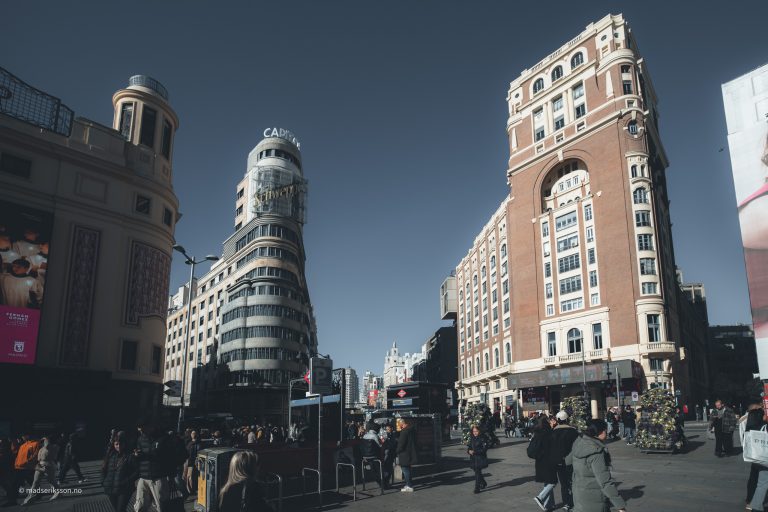
Gran Vía at blue hour
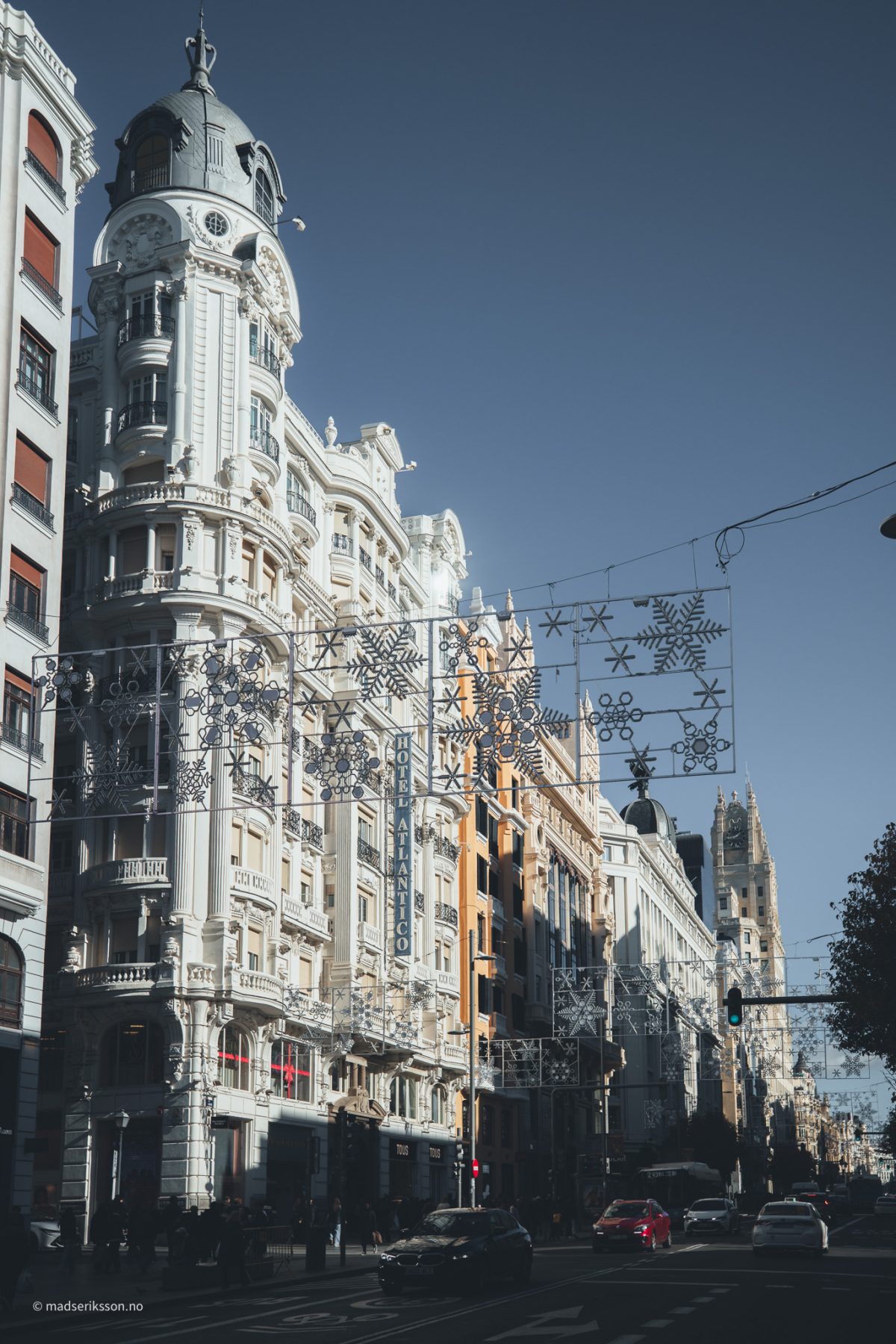
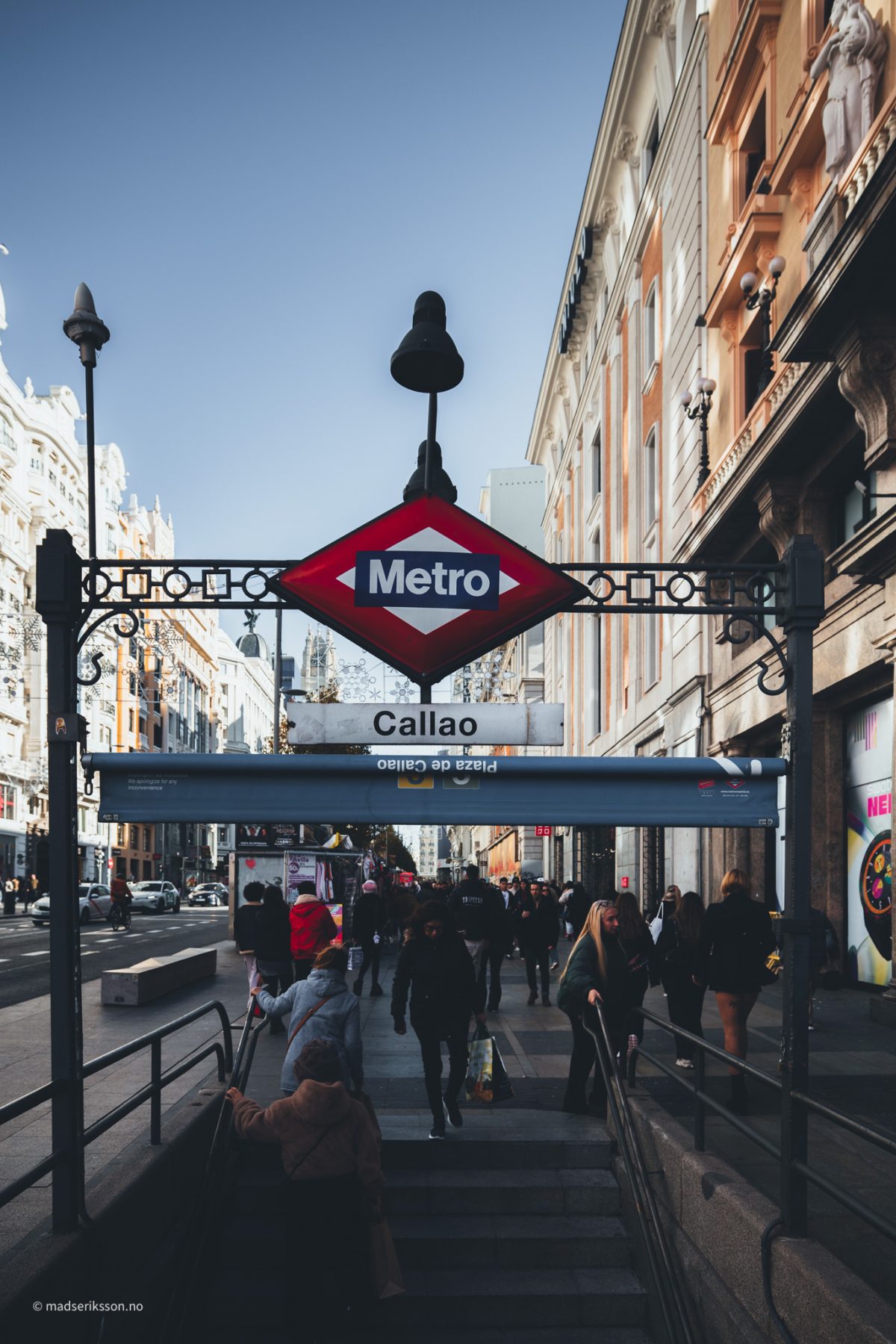
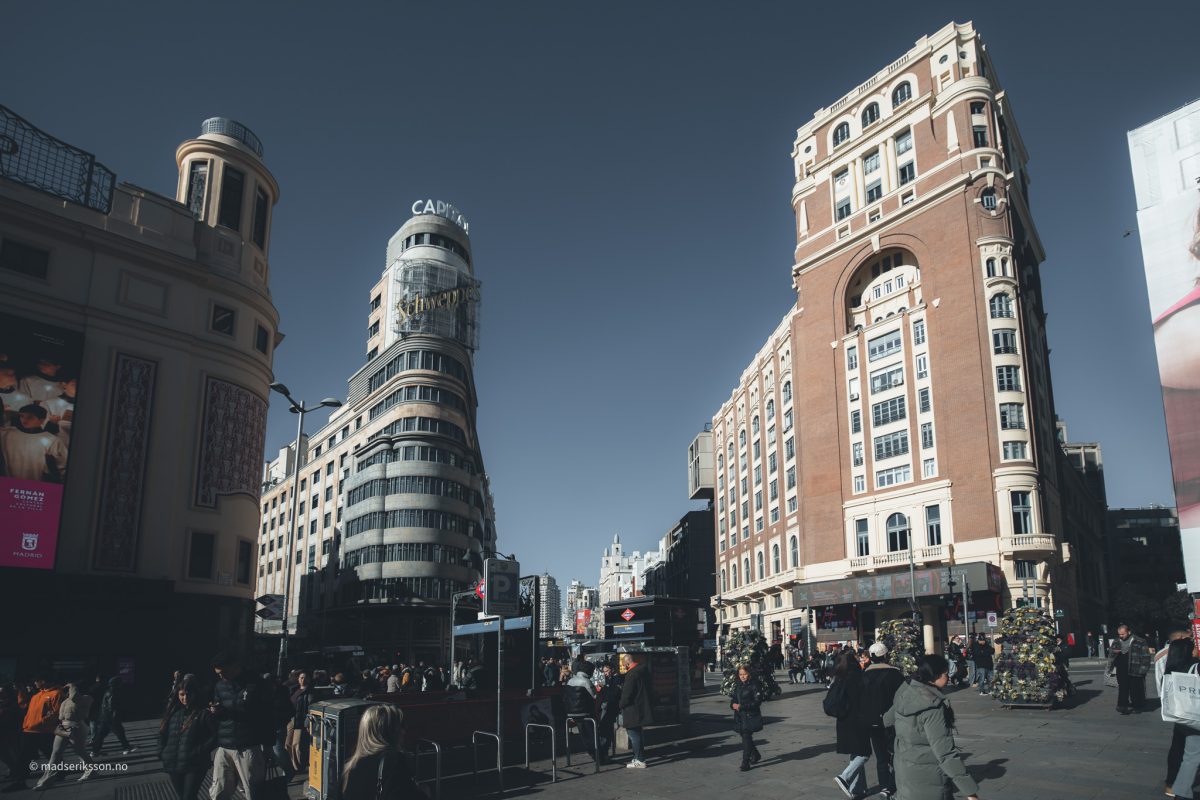
Gran Vía was cut through the old city between 1910 and 1929 and runs for 1.3 km from Plaza de España to the Metrópolis building of 1907–1911 at the junction with Calle de Alcalá. The 88 m Telefónica Building, completed in 1929, was one of the first skyscrapers in Europe. Plaza del Callao, halfway along, is the heart of Madrid's cinema district, framed by the Art Deco Capitol building and the Palacio de la Prensa.
The Capitol building and Palacio de la Prensa framing Plaza del Callao on Gran Vía, Madrid
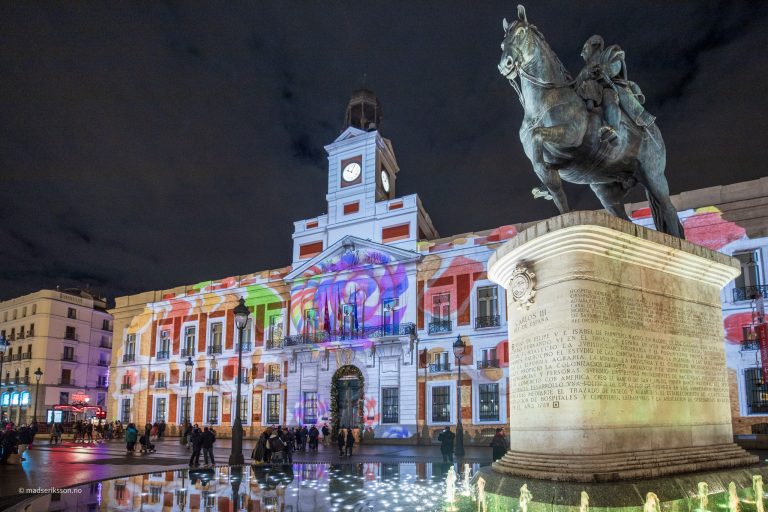
Sol and the old centre at night
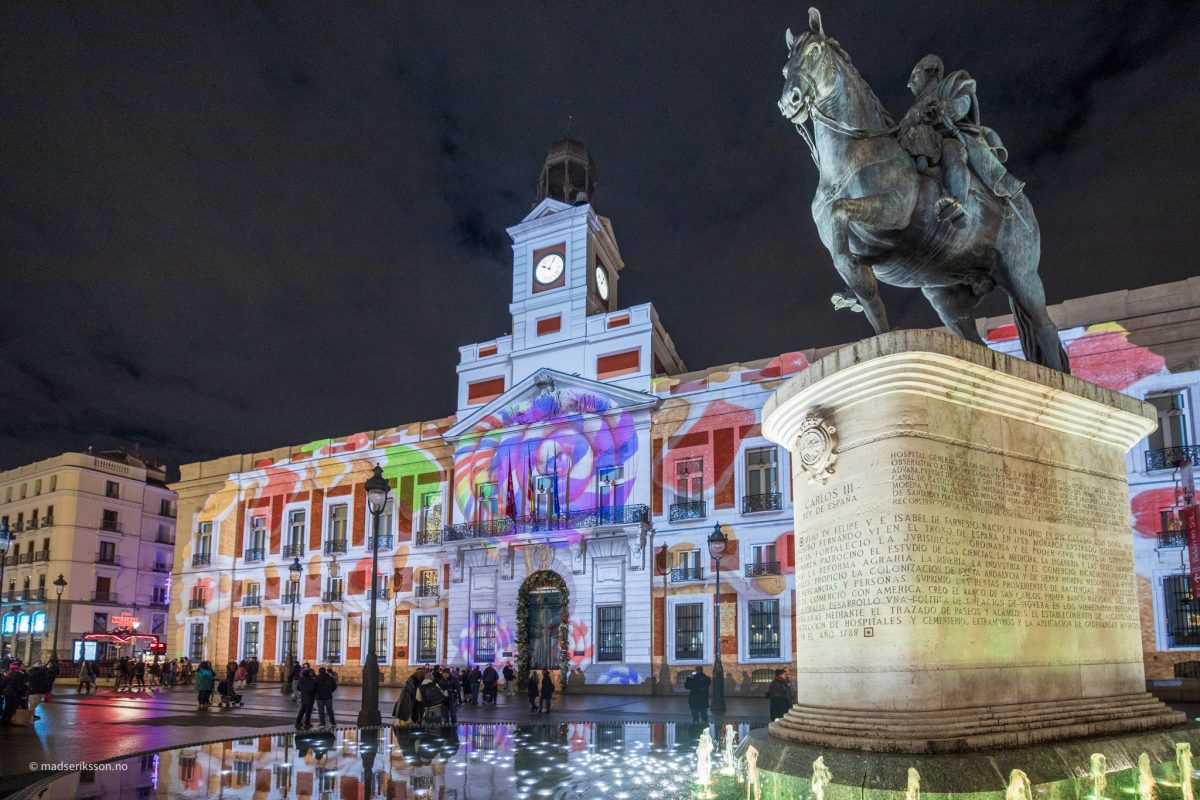
The Real Casa de Correos on the Puerta del Sol was built between 1766 and 1768 by Jacques Marquet as the royal post office, and the clock on its roof has marked the New Year on national television since 1962, when Spaniards eat twelve grapes on the twelve chimes. The Kilómetro Cero plaque in the pavement in front of it dates from 1857. After dark, the arcades of Plaza Mayor and the glass walls of the Mercado de San Miguel are lit a few minutes' walk to the west.
Light projections on the Real Casa de Correos behind the statue of Carlos III, Puerta del Sol
3D model © 2026 madseriksson.no · Photographs © madseriksson.no. Buildings and heights: © OpenStreetMap contributors (ODbL), via OpenMapTiles. Ground imagery: Sentinel-2 cloudless 2023 by EOX IT Services GmbH (contains modified Copernicus Sentinel data 2023; CC BY 4.0). Heights are approximate where OpenStreetMap has no measured value; sun positions are approximate.
The Prado — The Greatest Collection of Old Masters in the World and How to Survive It
Velázquez’s Las Meninas in room 12, Goya’s Black Paintings transferred from the walls of his house, Bosch’s Garden of Earthly Delights, the complete Titian cycle for Charles V, El Greco, Rubens — well over a thousand works on display from a collection of more than 20,000, in a building where the correct strategy is to choose six rooms and spend the day in them
The Prado was opened in 1819 by Ferdinand VII with a collection assembled from the royal palaces of Spain — the accumulated acquisitions of the Habsburg and Bourbon monarchies over three centuries, concentrated in one building on the Paseo del Prado. The Habsburg kings had particular tastes: Titian (they owned 40 of his works, the complete cycle of mythological paintings made for Philip II, the multiple portraits of Charles V and his family), Velázquez (court painter to Philip IV for 37 years, whose entire body of royal portraits is in the collection), and Hieronymus Bosch (Philip II owned seven of his works, including The Garden of Earthly Delights). The result of three centuries of royal collecting in one building is the largest and most significant collection of Flemish and Spanish Old Masters in the world, with nothing to compare it to: the Louvre has Flemish work but not the Spanish; the Uffizi has Italian work but not the Flemish or Spanish; the National Gallery in London has breadth but not the depth of single-artist representation that the Prado achieves in Velázquez, Goya and Titian. The Prado is not the largest art museum in the world; it is the one with the highest concentration of irreplaceable work in specific categories.
The correct approach to the Prado is to choose six rooms and spend four hours in them, rather than attempting to cover the building in a day. The Velázquez rooms (10–16), the Goya rooms (64–67 on the first floor, and the ground floor Black Paintings), and the Bosch room (56A) constitute the minimum. Las Meninas (room 12) requires time: the painting’s spatial logic — the mirror at the back reflecting the king and queen who stand where the viewer stands, the painter Velázquez visible with his canvas, the dwarf and dog at the edge of the frame — only reveals itself through extended looking. Goya’s Black Paintings, transferred from the walls of his house to the ground floor of the Prado, are the works that demand the most from a visitor: Saturn Devouring His Son, The Pilgrimage of San Isidro, Witches’ Sabbath — fourteen works painted by a deaf, elderly, politically persecuted man on the walls of his own home, never intended for public view, in a language that has no precedent in European art before them. They are the Prado at its most specific and most demanding. They are also, in the stillness of the room that houses them, exactly what a museum exists to make accessible.
The Prado is free on Monday to Saturday from 6pm to 8pm and on Sunday from 5pm to 7pm. This information is the most practically useful thing in this article. At 6pm on a Monday, the museum is significantly less crowded than at 11am; the light through the skylights is different; the Velázquez rooms are navigable without the density of bodies that obscures Las Meninas during peak hours. The painting is the same size at any hour. The experience of standing in front of it is not.
Guernica and the Golden Triangle — Three World-Class Museums Within 500 Metres
Guernica at the Reina Sofía: the painting Picasso kept in New York until democracy was restored, 3.49 by 7.76 metres of political witness, back in Spain since 1981 — flanked by the Thyssen’s encyclopaedic collection filling the gap between the Prado and the Reina Sofía, all three museums within a 10-minute walk of each other along the Paseo del Prado
Picasso painted Guernica in 1937 in response to the bombing of the Basque town of Guernica by Nazi Germany and Fascist Italy in support of Franco’s Nationalist forces during the Spanish Civil War — the first deliberate mass aerial bombing of a civilian population in European history. The painting, 3.49 metres tall and 7.76 metres wide, was exhibited at the Paris World’s Fair in 1937 and subsequently toured internationally to raise funds for the Spanish Republic. When the Republic fell in 1939, Picasso transferred it to MoMA in New York, with a specific condition: it was not to return to Spain until democracy was restored. He died in 1973, two years before Franco, without seeing it returned. In 1981, six years after Franco’s death and four years after Spain’s first democratic elections since the Civil War, Guernica arrived in Madrid. It has been at the Museo Reina Sofía since the museum opened in 1992, in its own room (room 206), protected by bulletproof glass, surrounded by Picasso’s preparatory studies for the painting on the adjacent walls. The studies are in many respects more immediately accessible than the finished work — they show the development of the iconography, the bull, the screaming horse, the grieving mother, the shattered body — and the room as a whole is the most charged political space in any museum in Spain.
The Museo Thyssen-Bornemisza, 300 metres north of the Reina Sofía in the Palacio de Villahermosa, fills the gap that the Prado and the Reina Sofía leave between them: the Thyssen’s collection covers Dutch Golden Age, German Expressionism, Impressionism, Post-Impressionism and American Realism — periods and movements not represented in depth by either of its neighbours. The collection was assembled by the Thyssen-Bornemisza family over four generations and purchased by the Spanish state in 1993 for $338 million, one of the largest private art acquisitions by a government in history. The combination of the three museums on the Paseo del Prado — Old Masters at the Prado, 20th-century Spanish and international art at the Reina Sofía, the connecting bridge of the Thyssen — gives Madrid the most complete survey of European art history of any city in the world within a single walkable stretch of boulevard, available on a combined ticket (the Paseo del Arte card) that saves money on individual entries.
Standing in front of Guernica is a specific experience: the scale means you cannot take it in from one point, as you can a conventional easel painting. You must move along it, from the bull on the left to the screaming woman with the dead child, the dismembered soldier, the horse, the fallen figure at the bottom right, the lamp held through the window at the top. The painting does not resolve into a composed scene; it is fragments, deliberately. The fragmentation is the point. Picasso was representing what a bombed civilian town looks like from the inside. You do not stand in front of Guernica. You stand inside it.
The Streets — Plaza Mayor’s Four Centuries, La Latina’s Sunday Vermut and the Night That Never Ends
Plaza Mayor was the site of autos-da-fé and bullfights before it became a café terrace. La Latina is where Madrid eats tapas on Sunday morning with a glass of vermut. Malasaña is where La Movida happened after Franco — the cultural explosion that gave Spain its contemporary identity. The nightclubs fill at midnight and close at dawn
Plaza Mayor was completed in 1619 under Philip III and immediately became the primary stage for the public life of the Spanish capital: bullfights, royal proclamations, theatrical performances, markets — and autos-da-fé, the public ceremonies of the Spanish Inquisition at which heretics were condemned and, in the most severe cases, executed. The last auto-da-fé in Madrid was held in 1680. The arcaded square that housed these events is the same square where visitors now sit on café terraces drinking cañas and eating patatas bravas; the Philip III equestrian statue in the centre is the same statue that presided over the ceremonies. The arcaded facades, the numbered balconies on the upper floors (rented as viewing boxes for the spectacles below), the complete enclosure from the streets that surround it — all unchanged in 400 years. What has changed is the use, which is precisely the argument that public space makes about civic continuity: the same stones serving the same function of public gathering, the content having evolved from execution to tapas, which may represent the most specific improvement in European cultural history since the Renaissance.
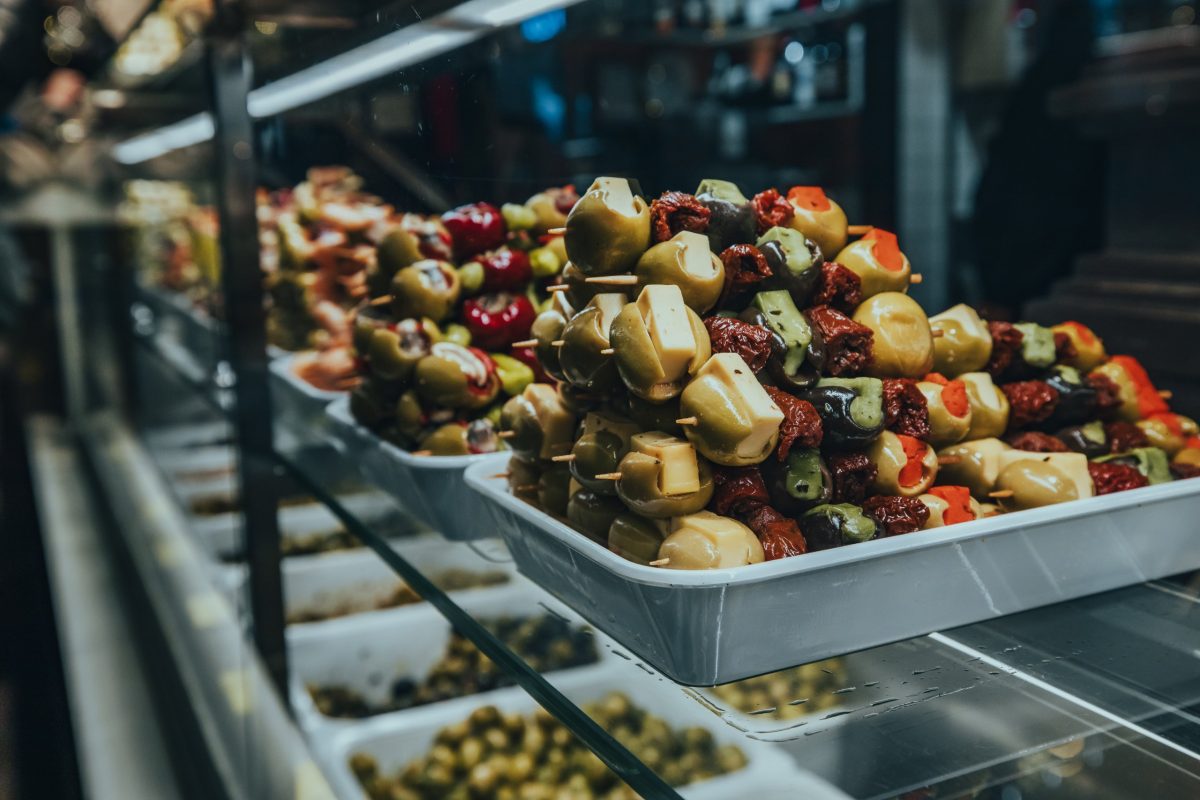
La Latina, the neighbourhood immediately south of Plaza Mayor, is where Madrid’s tapas culture is most concentrated and where the Sunday morning ritual of the cañas-and-vermut proceeds at its most characteristic pace: the bars open from 11am; the Calle de la Cava Baja and Calle de la Cava Alta fill with people eating patatas bravas, croquetas, boquerones en vinagre (anchovies in vinegar) and tortilla española standing at bar counters; the Rastro flea market in the streets south of La Latina adds a further dimension from 9am to 3pm every Sunday — antiques, second-hand clothing, vinyl, tools, curiosities. Malasaña, northeast of the historic centre, is the neighbourhood of La Movida Madrileña — the cultural explosion that followed Franco’s death in 1975 and the legalisation of political parties, free press and adult entertainment in the years that followed. The bars and clubs of Malasaña were the physical location of the movement; the neighbourhood has remained Madrid’s most creatively associated district, now housing a mix of independent shops, bars, restaurants and the studios and apartments of the city’s creative industries. Madrid’s nightlife remains the latest in Europe by most reasonable assessments: dinner at 9pm, bars from midnight, clubs from 2am, closing between 5am and 7am. This is not a guidebook exaggeration; it is the operating schedule.
La Movida produced Pedro Almodóvar. It also produced the musicians Alaska, Nacha Pop and Radio Futura, the fashion of Agatha Ruiz de la Prada, the graphic design of the Peret studio and a generation of film directors, photographers, comic artists and performers who collectively gave Spain a contemporary cultural identity after 40 years of Francoist censorship. The Movida was not a single scene or event but a collective decision, spread across the bars and streets of Malasaña and Chueca, to be as free as the new democratic constitution now permitted. The freedom was considerable. The results are visible in every Almodóvar film ever made.
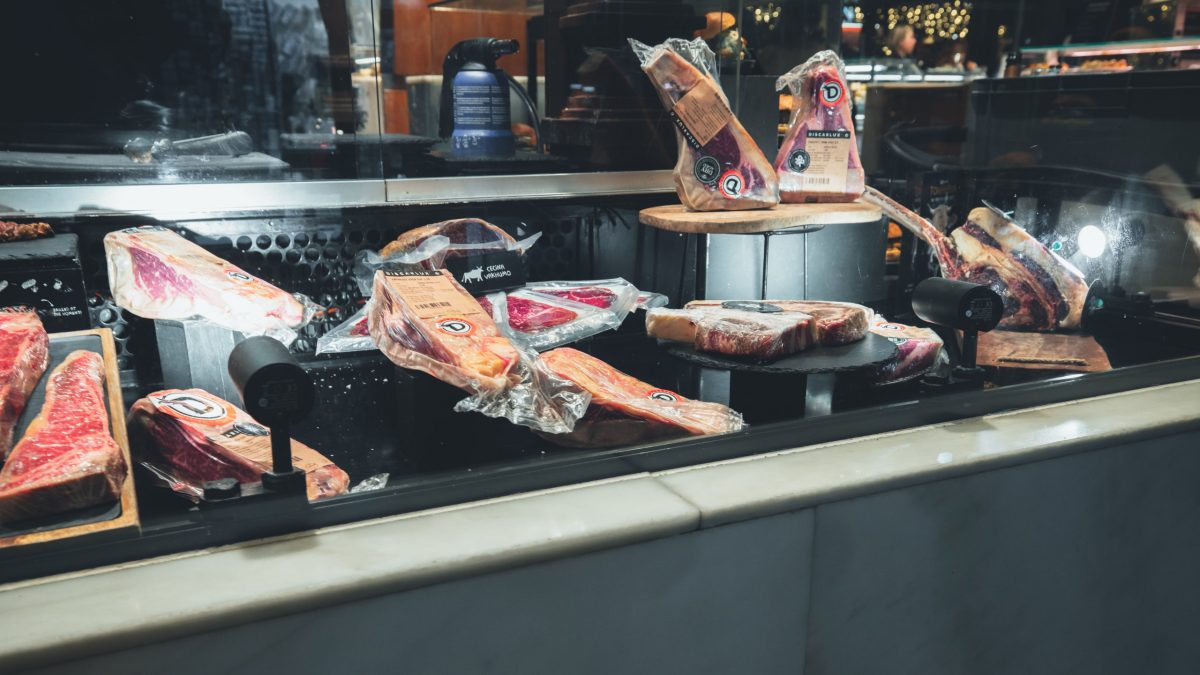
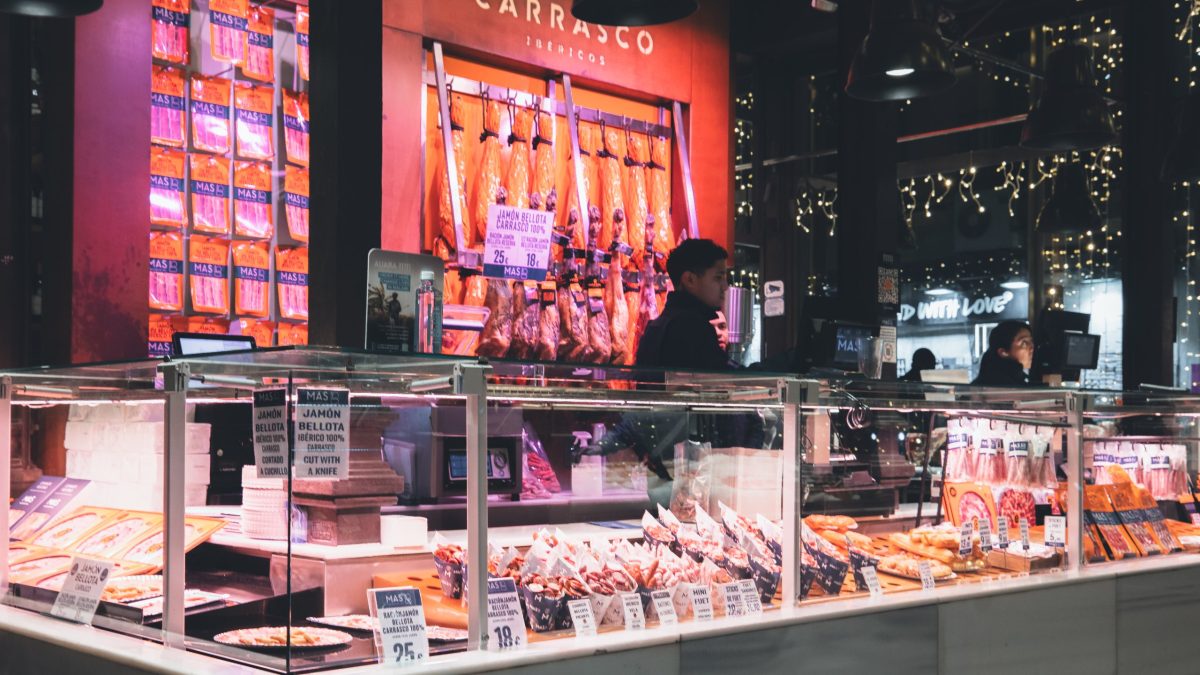
El Retiro and the City at 667 Metres — The Specific Light That Velázquez and Goya Both Painted In
125 hectares of former royal garden with a Fallen Angel statue at exactly 666 metres above sea level, a Crystal Palace housing temporary exhibitions, a rowing lake where Madrileños have been renting boats since the 17th century — and the light of the Castilian plateau at altitude that the painters of the Prado had access to every day and that gives their work its specific luminosity
El Retiro — the Parque del Buen Retiro, originally the pleasure gardens of the Buen Retiro Palace built for Philip IV in the 1630s and opened to the general public in 1868 — is 125 hectares of the most used urban park in Spain: the rowing lake (Estanque del Retiro) at its centre, where boats have been available for hire since the 17th century; the Palacio de Cristal, the iron-and-glass greenhouse of 1887 now used by the Reina Sofía for temporary exhibitions; the Rosáleda with its 4,000 roses; and the Ángel Caído — the Fallen Angel, a bronze of Lucifer installed in 1885 at, apparently deliberately, exactly 666 metres above sea level. The park is the primary outdoor space of a city that has no significant river and no sea, and its function as social equaliser — the rowing lake is the same price for everyone; the grass is the same temperature for everyone; the chess players under the portico behind the lake charge the same for a game against anyone — is precisely what Olmsted was attempting to achieve in Central Park in the same century. The park was inscribed as part of the UNESCO “Paisaje de la Luz” in 2021, together with the Prado and the Thyssen on the Paseo del Prado that borders its western edge.
The light of Madrid at 667 metres above the Castilian plain is the environmental condition that shaped the work in the Prado and is available to anyone in the city simply by going outside. The altitude reduces the atmospheric thickness that softens light at sea level; the flat plain around the city eliminates the filtering effect of surrounding topography; the result is a quality of light that is simultaneously bright and clear without the harshness of direct Mediterranean sun. Velázquez worked in this light every day of his 37 years in Madrid; his portraits of Philip IV catch it in the warm tones and sharp shadows of the court apartments of the Alcázar. Goya, in his house outside the city that would become the Quinta del Sordo, worked in the same light on the Black Paintings and found in it something darker: the clarity that allows you to see things you might prefer not to. The Manzanares River, for its part, runs west of the city in the Madrid Río park that replaced the ring road on its banks in 2011 — a transformation that turned 10 kilometres of urban motorway into a linear park and gave the city its most useful new public space in decades. The river itself remains, in Quevedo’s phrase, an apprentice. The park is not.
The chess players at the Retiro — the dozen or so permanent regulars who set up under the portico behind the rowing lake every morning with their boards and their clocks — play for money at a set rate per game with any challenger, including tourists who believe they are better than they are. The money changes hands efficiently. The chess is serious. The setting — a 17th-century arcaded portico, in a former royal garden, above a lake with rowing boats, in the highest capital in the European Union, 200 metres from the Prado — is not incidental to the experience. It is Madrid in full.
«Madrid was chosen as the capital of Spain by calculation — geographic centrality on the Iberian Peninsula, nothing more — and has spent four centuries becoming what a capital chosen by calculation can become: everything that accumulated here because this was where the court was, where the money was, where the royal collections were, where the painters came to paint the court portraits that are now in the Prado. The Prado is the most direct consequence of the decision Philip II made in 1561. The Garden of Earthly Delights and Las Meninas and the Black Paintings and the third-of-May dead in the ditch are in Madrid because Spain’s kings were in Madrid. Guernica is in Madrid because Picasso stipulated that it return to Spain only when democracy was restored, and democracy was restored, and the painting came home. The chess players in the Retiro are there because the light at 667 metres on the Castilian plain is excellent for outdoor chess. None of this was planned. All of it is Madrid.»
More in the same area
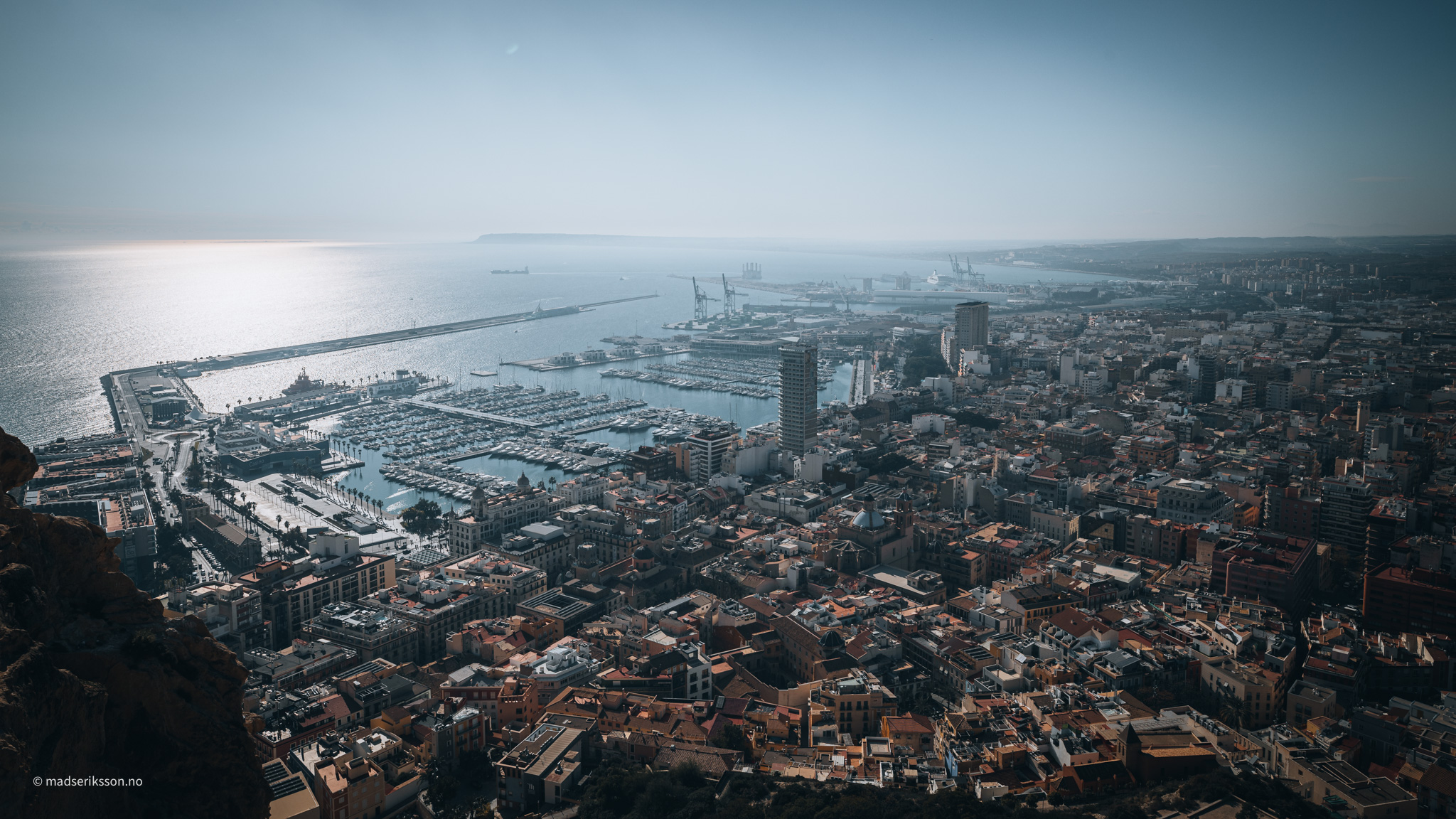 CitiesAlicante — Castillo, Explanada and the Festival That Burns at Midnight
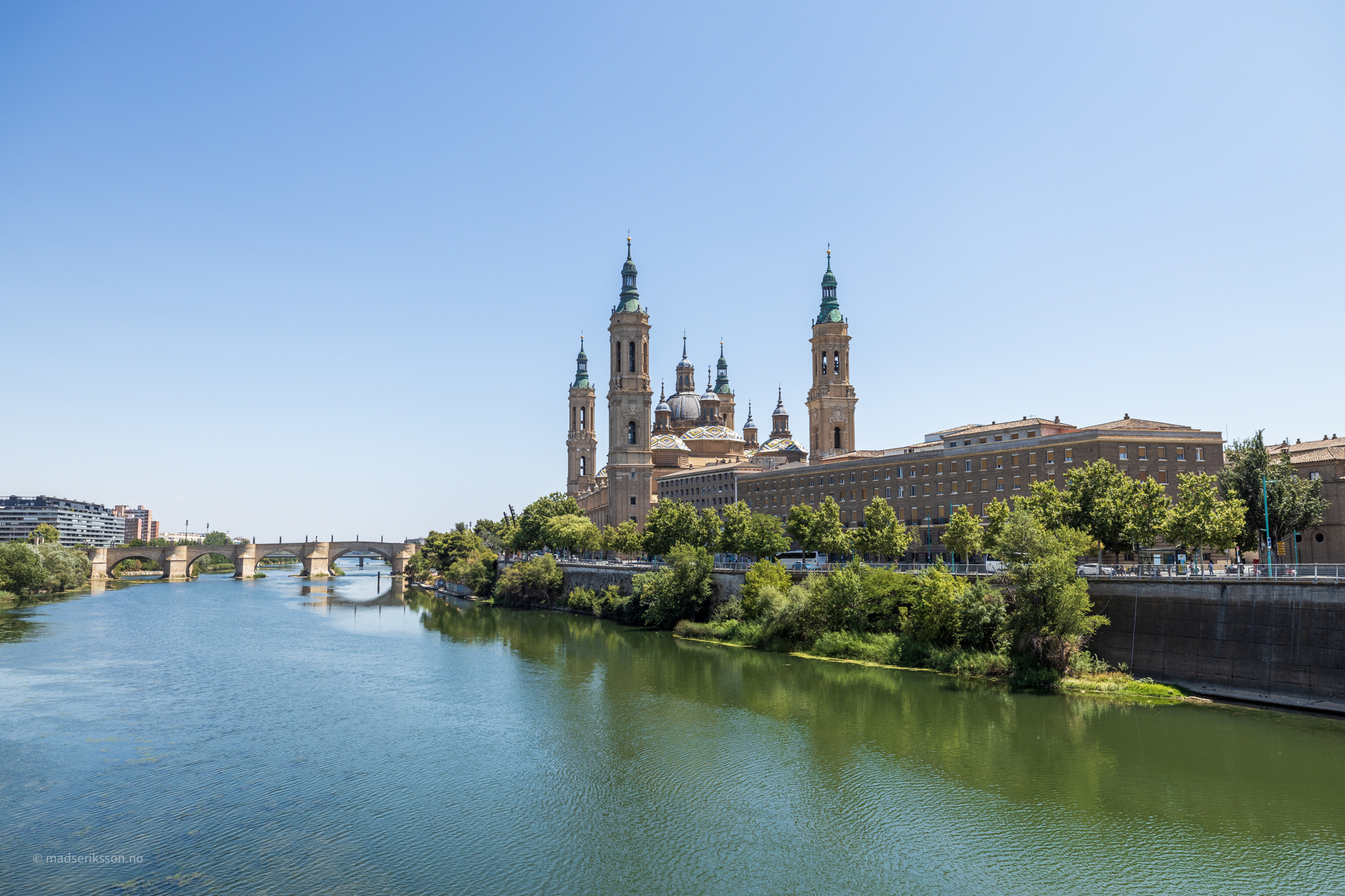 CitiesZaragoza: Roman Colony, Islamic Palace and the Basilica of the Pillar
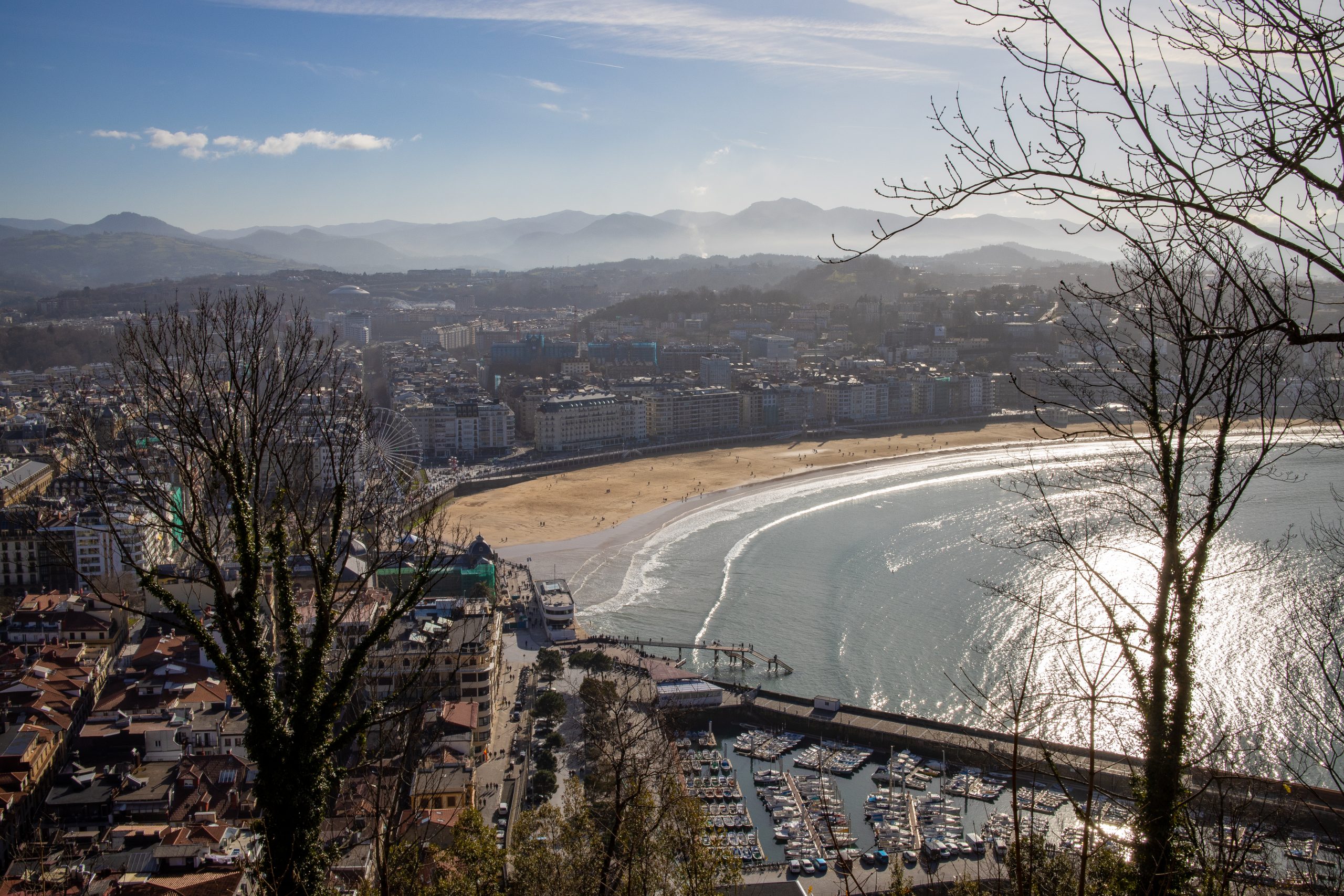 CitiesSan Sebastián — More Michelin Stars Per Person Than Anywhere on Earth
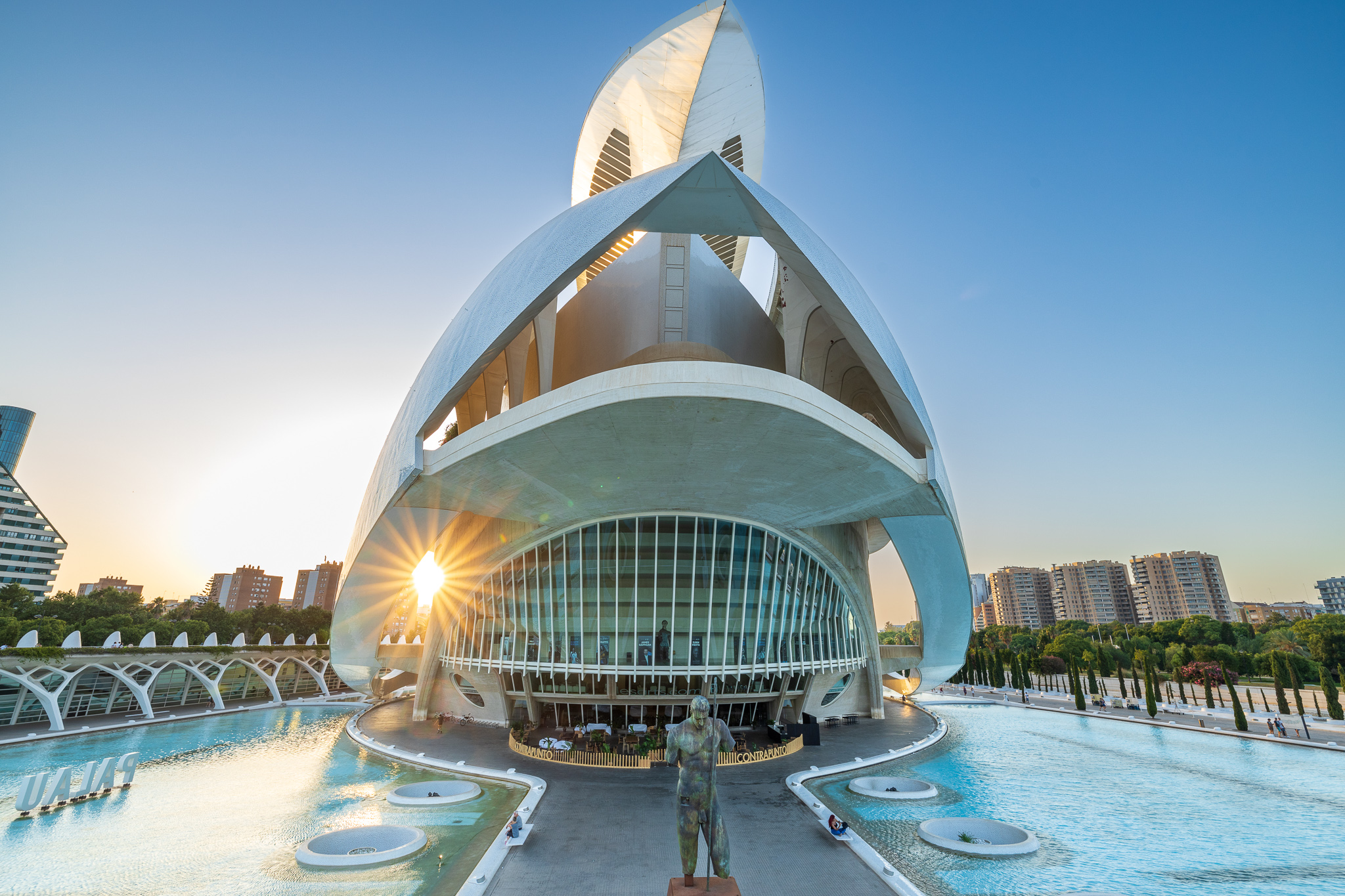 ArchitectureValencia’s City of Arts and Sciences — The Eye, the Skeleton and the €400 Million Opera House
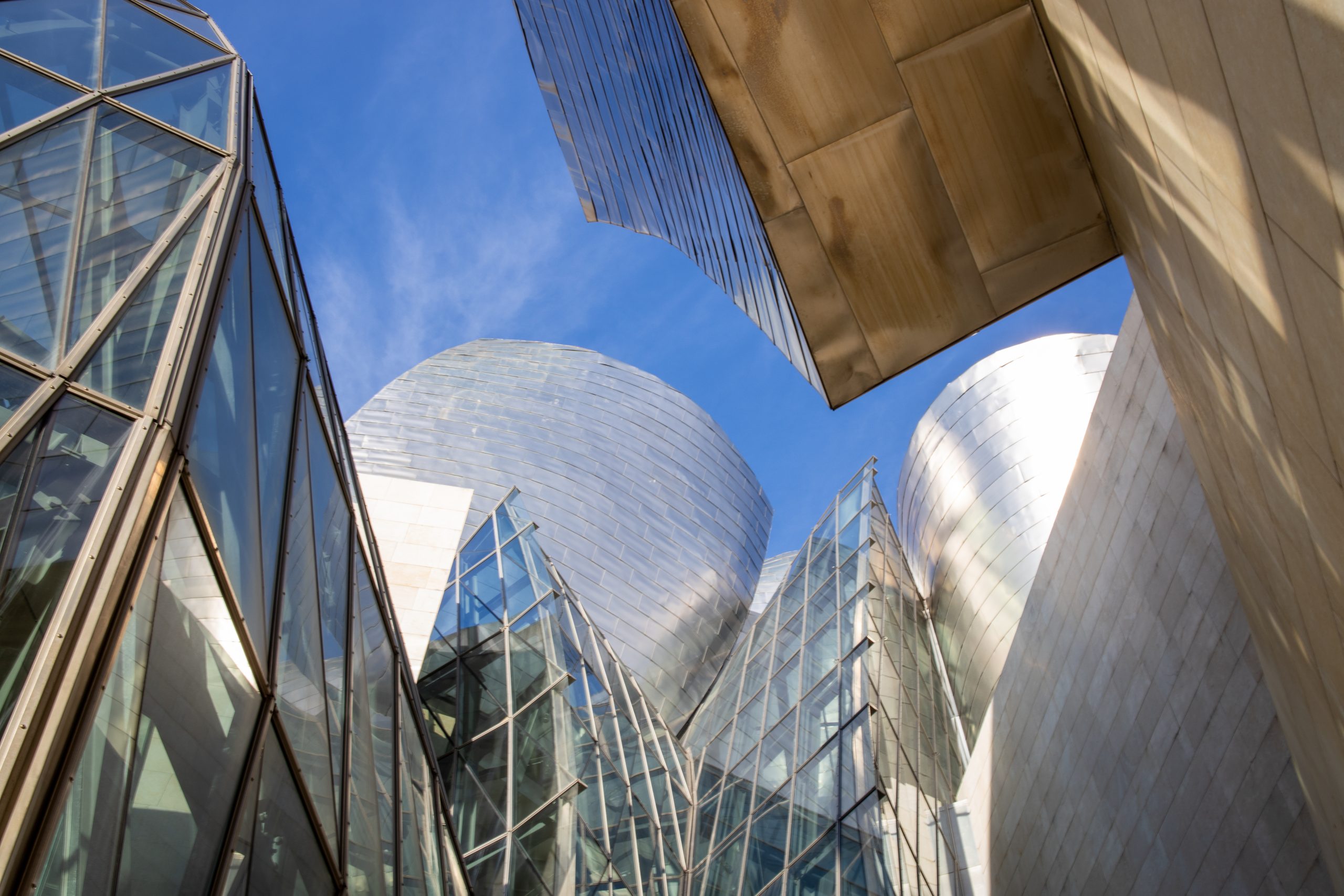 ArchitectureGuggenheim Museum, Bilbao
 CitiesThe World’s 10 Great Food Markets
City Frames · scroll-driven 3D
More cities in three dimensions
54 city guides open with a model built from open map data. Scroll, and the camera moves from landmark to landmark.
Departures · City Frames
Where to next?
| Time | Destination | Country | Status |
|---|
Live · position of the sun
Golden hour, right now
The low, warm light just after sunrise and just before sunset. These are the cities on the site where it is happening at this moment.