The old city of Troyes is shaped like a champagne cork. This is not a metaphor: seen from above, the historic centre of the former capital of the County of Champagne forms an unmistakable bouchon, its medieval street plan preserved essentially intact within a ring of tree-lined promenades built on the old ramparts. Inside this cork are some 400 half-timbered houses from the 15th to 17th centuries, one of the finest collections of medieval stained glass in Europe, a cathedral whose windows span seven centuries of the art, a basilica commissioned by a pope on the exact site of his father’s cobbler’s workshop, and the city that gave its name to the troy ounce — the unit of weight still used by every pharmacist, jeweller and gold trader in the world, inherited from the international trade fairs that once made Troyes the commercial centre of medieval Europe. It is 1 hour 30 minutes from Paris. Most people have never heard of it.

Troyes is the capital of the Aube department in the Grand Est region of northeastern France, 150 kilometres southeast of Paris, with a population of approximately 60,000. It sits on the Seine, upstream from Paris, in the Champagne plain — the same agricultural landscape that produces the wine, though Troyes itself is not in a wine-producing area. The city’s historical importance derives from its role as the capital of the medieval County of Champagne: one of the most powerful feudal territories in France, whose counts hosted the Foires de Champagne, the great international trade fairs of the 12th and 13th centuries that connected the wool producers of England and Flanders with the silk merchants of Italy and the spice traders of the Levant. Troyes was, for approximately 150 years, the financial and commercial centre of European long-distance trade. The wealth generated by those fairs paid for the buildings that are still standing today.
What Troyes has preserved from that period is exceptional. The medieval street plan, contained within the champagne-cork outline of the old city, is one of the most legible in France: the winding lanes of the Saint-Jean and Saint-Nicolas quarters, packed with half-timbered houses (colombages) from the 15th to 17th centuries, give Troyes a visual density of historical architecture comparable to Rouen, Colmar or Strasbourg but with a fraction of the visitors. The city’s churches — seven significant Gothic churches within the old city boundary, many with original stained glass — constitute the finest urban glass collection in France after Chartres. The Cathedral of Saint-Pierre-et-Saint-Paul alone holds over 1,800 square metres of stained glass spanning the 13th to the 20th century. These are not minor churches in a provincial town; they are masterworks of medieval art preserved in a city that the main tourist circuits have somehow missed.
How to approach Troyes
Troyes is a city for walking. The old centre is compact — the entire champagne-cork shape can be crossed on foot in 20 minutes — and the interest is at street level: the colombage façades, the courtyards (cours), the overhanging upper storeys of houses whose ground floors once served as shops. Two days is comfortable; one day is feasible for the main sights. The cathedral and the Basilica of Saint-Urbain are the architectural anchors; the Rue des Chats and the surrounding medieval lanes are the ambient pleasure between them.
Troyes in 3D
Troyes, on the Seine about 150 km south-east of Paris, was the capital of the medieval County of Champagne and host of two of the great Champagne fairs of the 12th and 13th centuries. Seen from above, the old city inside its ring of tree-lined promenades has the outline of a champagne cork, about 1 km across. It holds some 400 half-timbered houses from the 15th to 17th centuries and seven significant Gothic churches.
The Ruelle des Chats
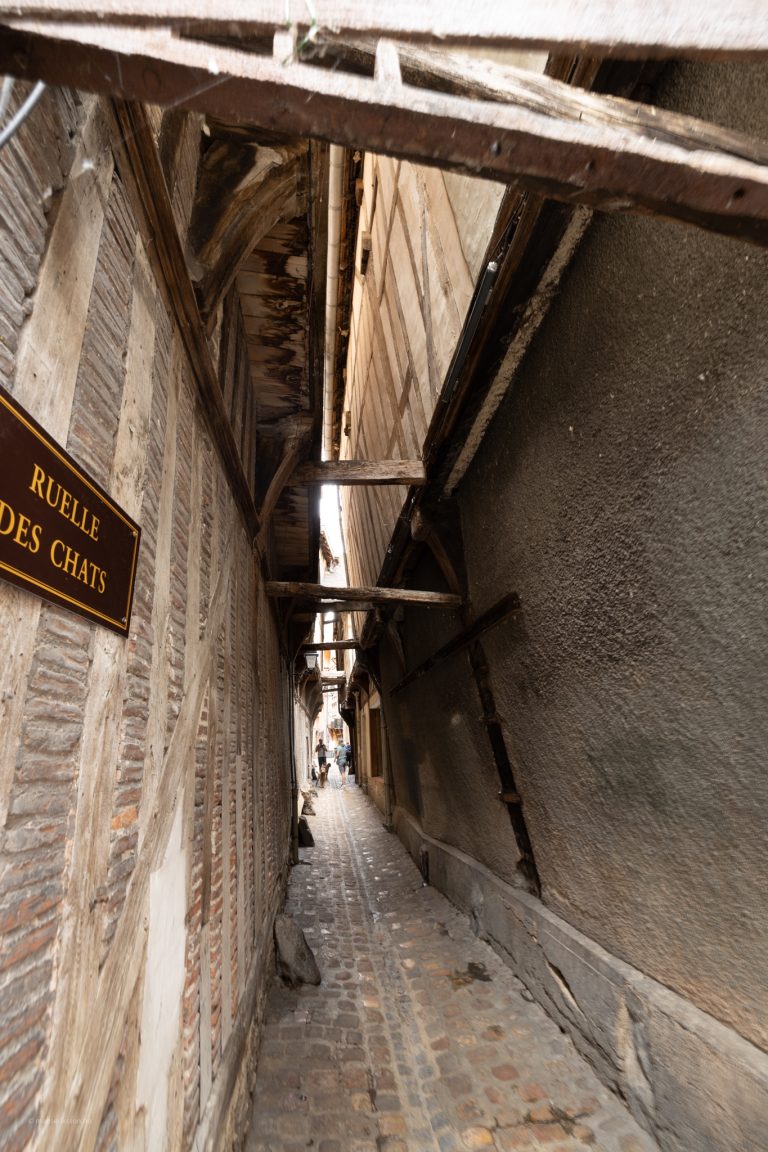
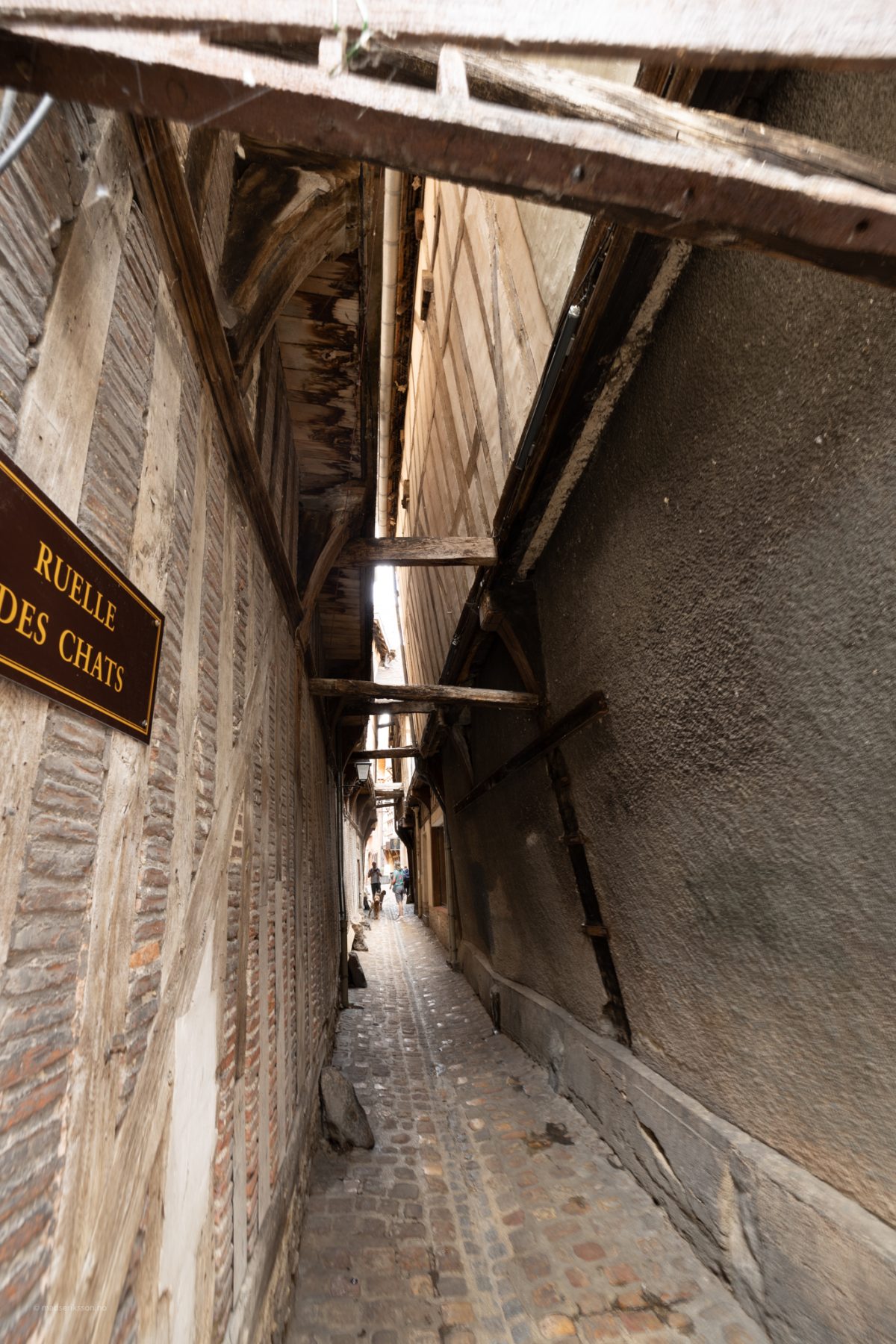
The upper storeys of the Ruelle des Chats lean so close across the lane that, it is said, a cat could jump from one side to the other. Medieval custom limited the width of the ground floor but let owners build outwards above it, and the overhanging timber frames of the Saint-Jean and Saint-Nicolas quarters show the result. The Cour du Mortier d'Or nearby is one of several courtyards hidden behind the street fronts.
The Ruelle des Chats, the narrow medieval alley where the houses almost touch overhead
Sainte-Madeleine and Saint-Pantaléon
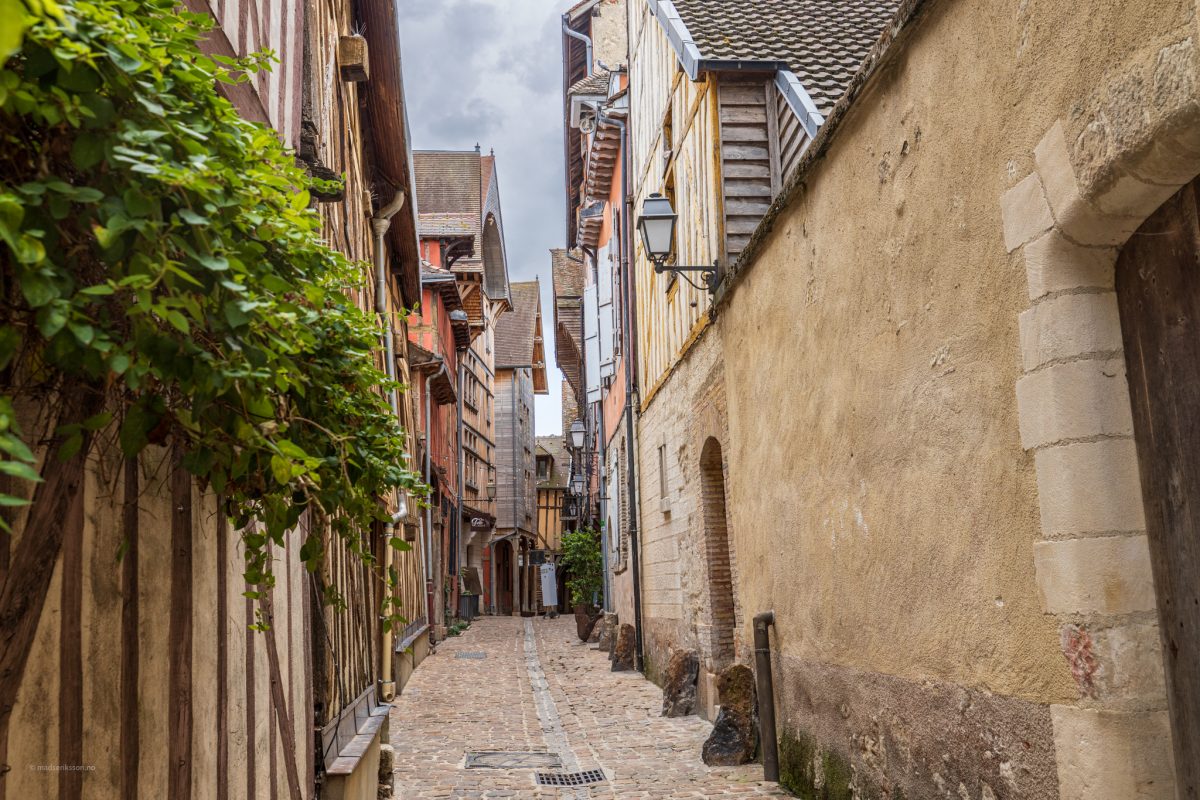
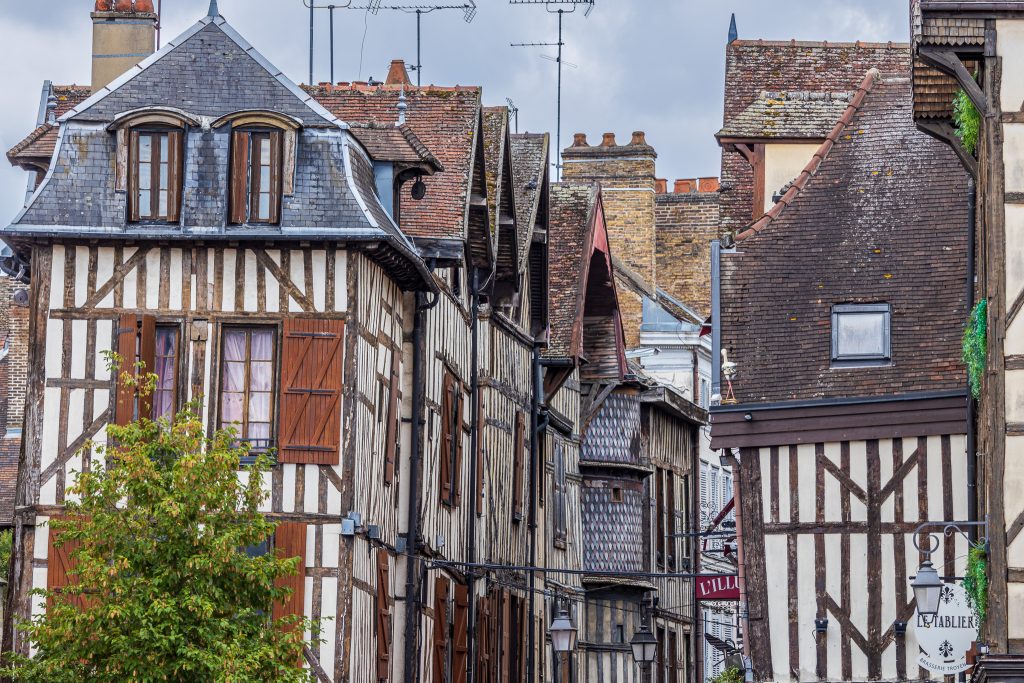
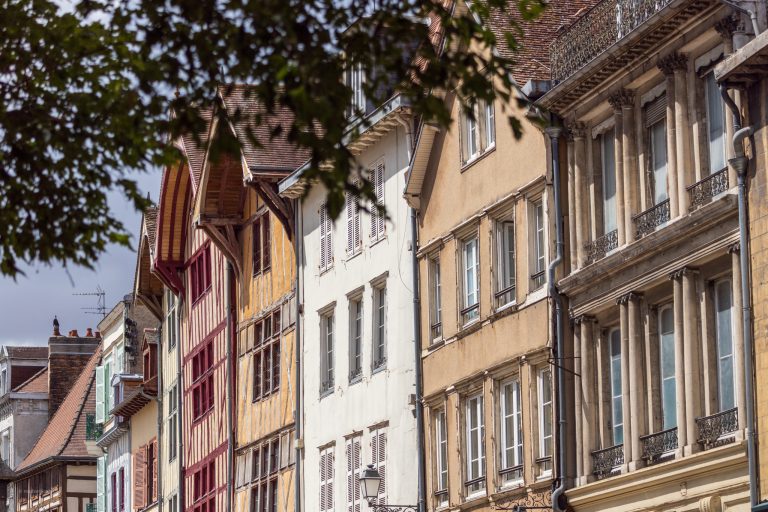
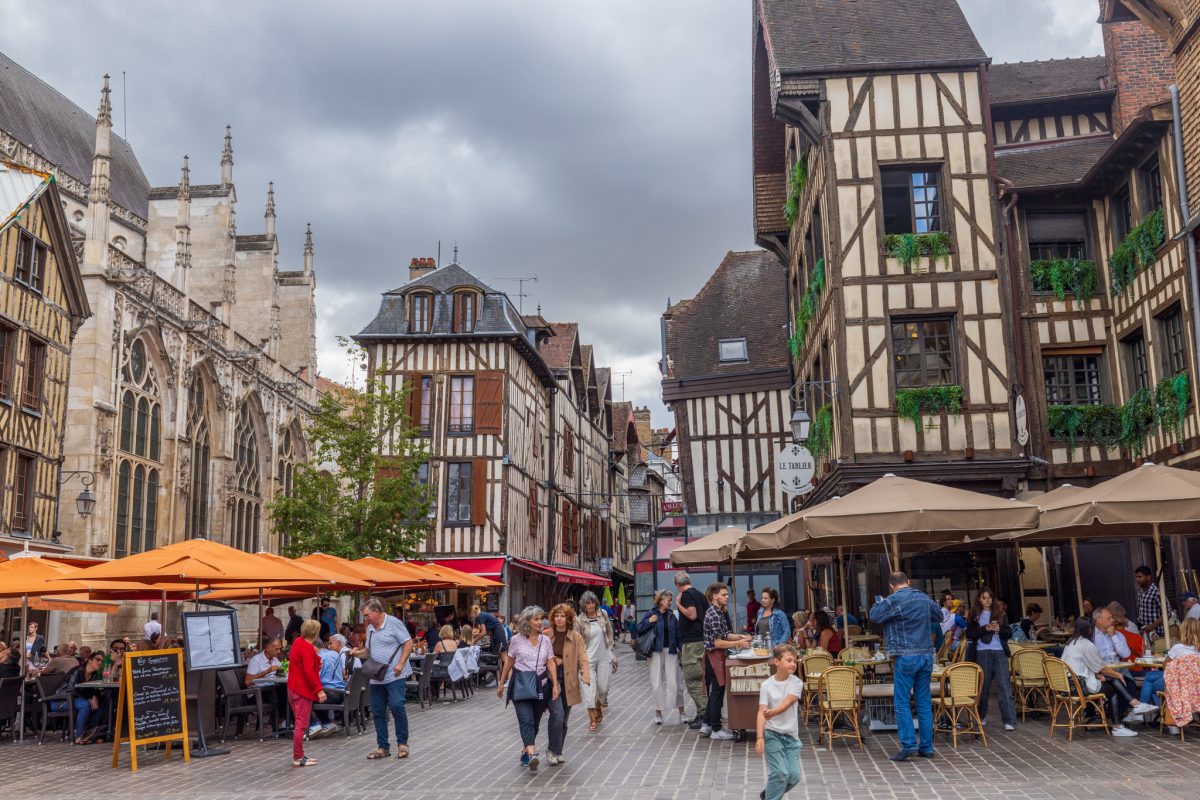
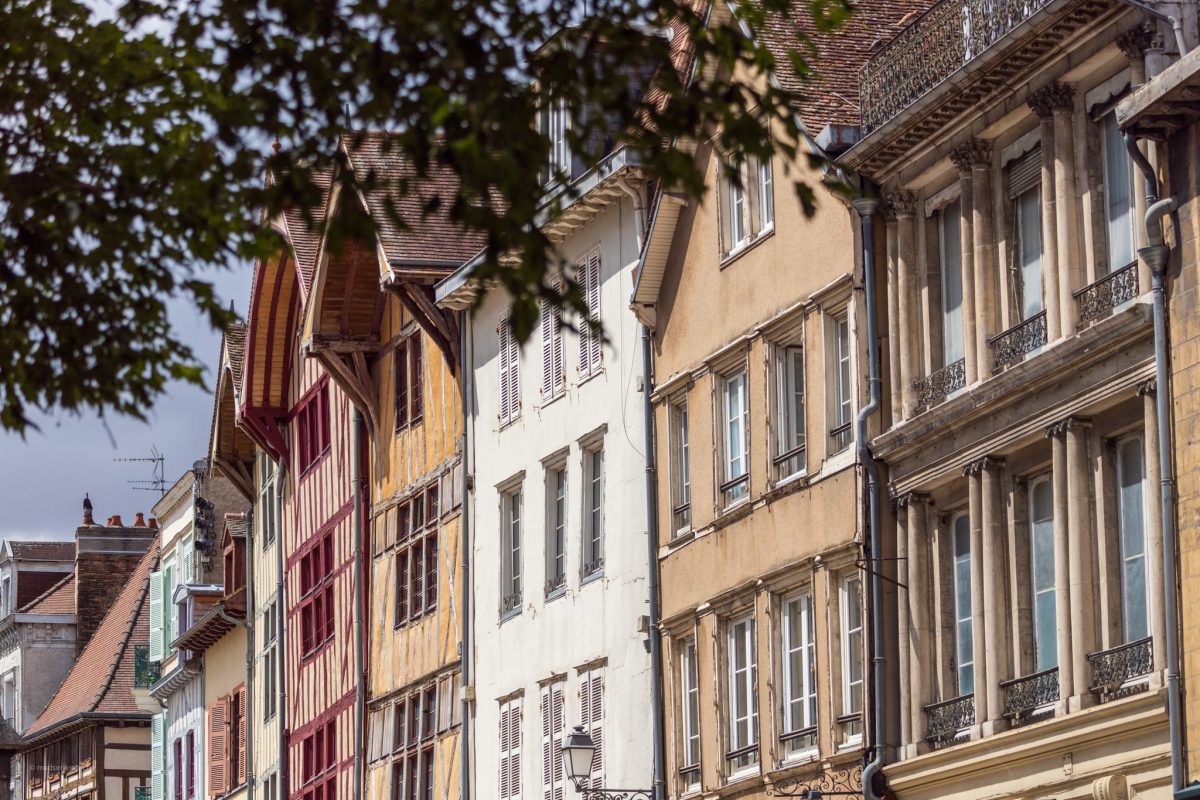
West of the market, the churches of Sainte-Madeleine and Saint-Pantaléon each hold important glass and sculpture, and the Renaissance Hôtel de Vauluisant now houses a museum. The streets between them are lined with colombages, timber frames filled with wattle and daub or brick, many with shutters and overhanging upper floors.
A row of colourful half-timbered and stone townhouses along a street in Troyes
Saint-Jean and the Hôtel de Ville
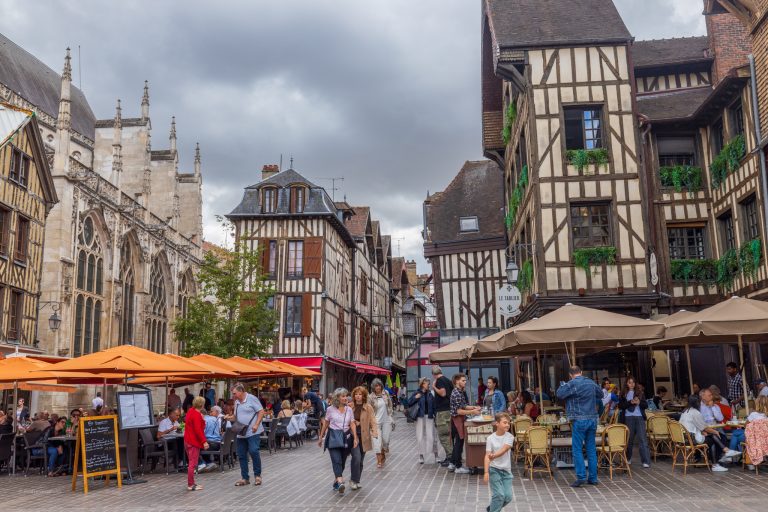
The Treaty of Troyes was signed on 21 May 1420 in the Church of Saint-Jean, recognising Henry V of England as heir to the French throne; he married Catherine of Valois in the same church. Place Foch, in front of the Hôtel de Ville, is the main square of the old city, and the 19th-century market hall stands just north of it. The spire of Saint-Rémy, 62 m tall, was given a twist in the 14th century to resist the wind.
Café terraces on a square in Troyes, between half-timbered houses and a Gothic church
The Basilica of Saint-Urbain
Pope Urban IV, born in Troyes as the son of a cobbler, began the basilica in 1262 on the site of his father's workshop. Its walls are reduced almost entirely to glass between thin piers, but work stopped after his death and the church was only completed in the 19th century. The Cité du Vitrail in the former Hôtel-Dieu-le-Comte explains the stained glass of the city's churches.
The Cathedral of Saint-Pierre-et-Saint-Paul
Work on the Gothic cathedral began in 1208 and continued until the 17th century, which is why its glass spans the 13th to the 20th century. The vault rises 29.5 m, the single west tower 62 m, and the building is 114 m long. The Musée d'Art Moderne occupies the former bishop's palace beside it.
The champagne cork
From above, the rounded top of the cork holds the Saint-Jean and Saint-Nicolas quarters, where the fairs were held, while the narrower end holds the cathedral quarter. The promenades on the line of the old ramparts mark the boundary of the medieval street plan, which can be crossed on foot in about 20 minutes.
Troyes at night
After dark the west tower of the cathedral and the spire of Saint-Rémy rise above the lit windows of the old city. Troyes is about 1 hour 30 minutes by train from Paris Gare de l'Est.
3D model © 2026 madseriksson.no · Photographs © madseriksson.no. Buildings and heights: © OpenStreetMap contributors (ODbL), via OpenMapTiles. Ground imagery: Sentinel-2 cloudless 2023 by EOX IT Services GmbH (contains modified Copernicus Sentinel data 2023; CC BY 4.0). Heights are approximate where OpenStreetMap has no measured value; sun positions are approximate.
The Medieval City — A Champagne Cork of Half-Timbered Houses
The historic centre of Troyes preserves one of France’s most complete medieval street plans within a champagne-cork outline, packed with approximately 400 colombage houses from the 15th to 17th centuries, narrow lanes and overhanging upper storeys close enough to give the Rue des Chats its name
The historic centre of Troyes — the Vieux Troyes — is contained within what were once the city’s medieval ramparts, now replaced by the tree-lined Promenades that ring the old city. Seen from above, the shape of the old city is unmistakably that of a champagne cork: a broader rounded top (the Saint-Jean and Saint-Nicolas quarters, where the trade fairs were held) tapering to a narrower base (the Saint-Denis quarter, where the cathedral stands). The street plan inside this outline is medieval in origin and largely medieval in character: the lanes of the old city follow the logic of gradual organic growth rather than any imposed grid, winding between building plots that were established in the 12th and 13th centuries at the height of Troyes’s commercial importance. The Promenades mark the boundary; within them, the city that Chrétien de Troyes grew up in, that the Champagne Fair merchants walked through, and that Henry V married Catherine of Valois in, is still spatially present.
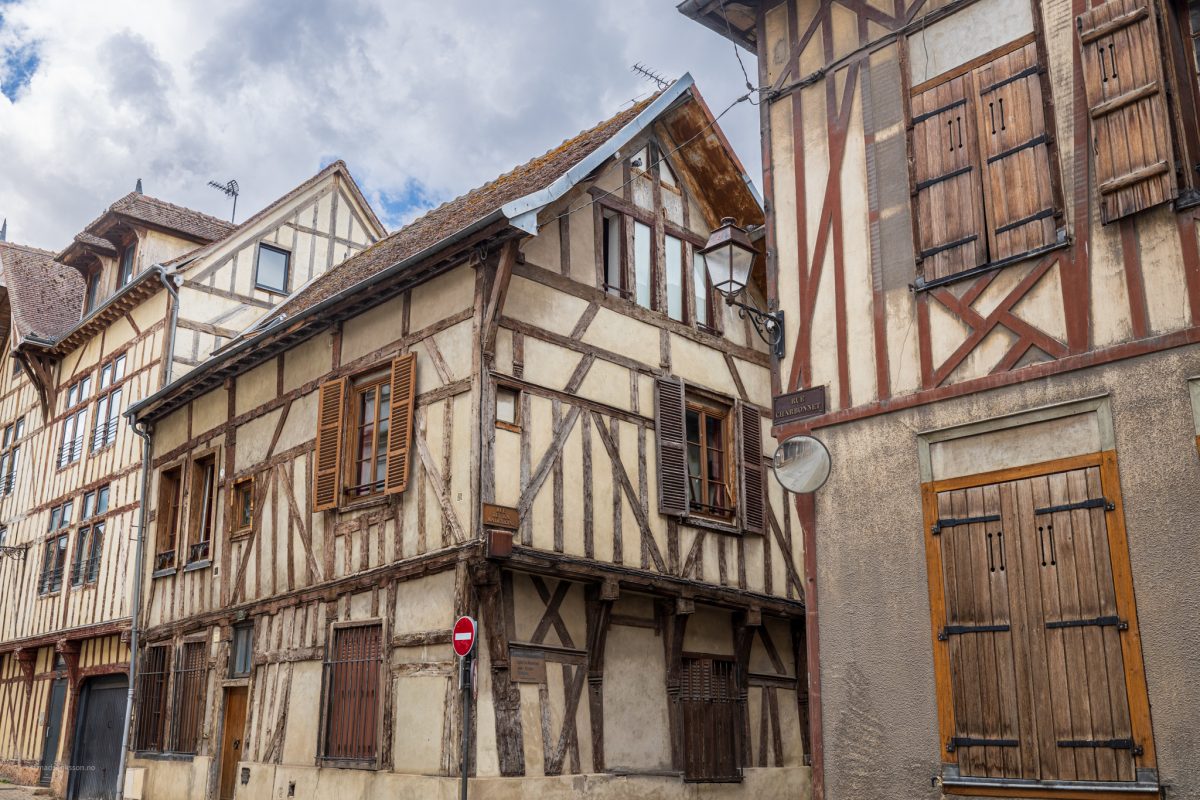
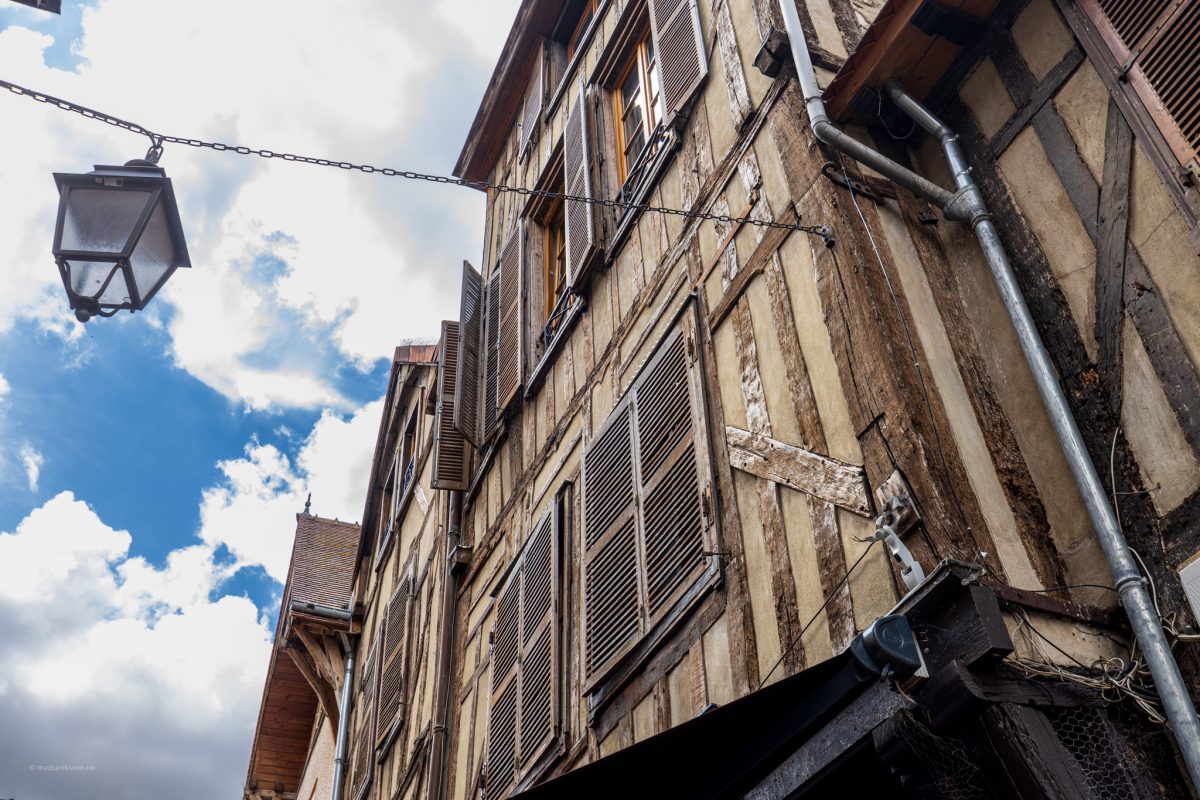
The colombages — half-timbered houses, with timber-frame structures exposed on the exterior and the panels between them filled with wattle and daub or brick — were the standard domestic building type of late-medieval northern France, and Troyes has preserved approximately 400 examples from the 15th to 17th centuries, a number comparable to Rouen and considerably more than most French cities of similar size. The houses cluster most densely in the Saint-Jean and Saint-Nicolas quarters; the Rue Champeaux, the Ruelle des Chats and the surrounding lanes form the highest concentration. The Rue des Chats — whose upper storeys lean so close to each other across the street that a cat, supposedly, could cross from one side to the other without descending — is the most extreme example of the overhanging timber-frame upper floors that medieval building custom permitted: ground floor width was regulated, but owners were allowed to expand upward and outward, producing the characteristic visual compression of the old city’s narrower lanes. The Cour du Mortier d’Or — a courtyard accessible through a gateway off the main street, with an elaborate well and colombage facades on all sides — is the finest of several internal courts that open unexpectedly from the lanes and give a sense of the domestic organisation behind the street fronts.
Troyes has approximately 400 half-timbered houses from the 15th to 17th centuries, one of the highest concentrations in France. Rouen has more visitors in a weekend than Troyes has in a season. The colombages of Troyes are lived in, unheavily restored and largely undiscovered by international tourism. They are, for this reason, more immediately present as historical fabric than the equivalent in any city where they have become primarily a backdrop for tourist photography.
The Stained Glass — Seven Centuries of Light in Seven Churches
The Cathedral of Saint-Pierre-et-Saint-Paul holds over 1,800 square metres of stained glass spanning the 13th to the 20th century. Six further Gothic churches in the old city add panels spanning the same period. Together they constitute the finest urban stained glass collection in France after Chartres — in a city most visitors have never considered visiting for this reason
The Cathedral of Saint-Pierre-et-Saint-Paul is one of the finest Gothic cathedrals in France and the least known of them. Construction began in 1208 on the site of an earlier Romanesque church, and proceeded in phases over four centuries, which is why the cathedral’s stained glass spans such an extraordinary chronological range: the earliest windows in the choir date from the 13th century; the rose windows of the transepts are 14th century; the nave windows were added in the 15th and 16th centuries; 20th-century glass by Léon Zack fills panels damaged in the Second World War. The total area of surviving glass — over 1,800 square metres — is among the largest in France. The most celebrated individual window is the Mystical Wine Press (La Pressoir Mystique), a 16th-century panel depicting Christ being pressed in a wine press by God the Father, producing the wine of the Eucharist — an iconographic programme specific to the vine-growing culture of the Champagne region and one of the more theologically direct images in French Gothic glass. The north rose window (14th century) and the great south rose (15th century) are among the finest rose windows in the country outside Paris and Chartres.
The Basilica of Saint-Urbain — begun in 1262 on the orders of Pope Urban IV, who was born in Troyes as the son of a cobbler and commissioned the basilica on the exact site of his father’s workshop — is a different architectural experience from the cathedral: smaller, more intensely Gothic, conceived as a reliquary-building rather than an episcopal church, with walls reduced almost entirely to glass. The structural logic of Saint-Urbain pushes Gothic engineering to one of its most extreme expressions: the stone is reduced to thin piers and flying buttresses, and the spaces between them are filled entirely with glass, giving the interior an airiness that seems to defy the weight of stone construction. The 13th-century glass in the choir — grisaille panels of extraordinary delicacy alongside narrative windows in deep blues and reds — is among the finest of its period in France. Construction stopped after Urban’s death (the displaced local property owners appealed to the new pope, who was less interested in the project) and was not completed until the 19th century; the building bears the marks of this interrupted history in its varying states of finish, which is part of its character. The Cité du Vitrail — a museum of stained glass history and technique installed in the Hôtel-Dieu (the former hospital) — provides context for the glass in the churches and is worth visiting before, not after, the cathedral.
Pope Urban IV was born in Troyes as the son of a cobbler. When he became pope, he bought the property that included his father’s workshop site and commissioned one of the finest Gothic buildings in France to be built on it. The local residents whose homes were demolished to make room objected and appealed to his successor. Construction stopped and did not resume for centuries. The basilica was finally completed in the 19th century. The cobbler’s son is buried in Perugia. His building is still standing on his father’s plot in Troyes, which is perhaps what he intended.
The Fairs, the Weight and the Treaty — When Troyes Was the Centre of the World
For approximately 150 years in the 12th and 13th centuries, the Champagne Fairs made Troyes the commercial centre of European long-distance trade. The troy ounce is their legacy. The Treaty of 1420 that nearly made an Englishman King of France was signed here. And the Arthurian romance tradition was drafted in the city by a poet who took its name as his own
The Foires de Champagne — the great medieval trade fairs of the County of Champagne — were the central institution of European long-distance commerce for approximately 150 years, from roughly 1150 to 1300. Six fairs were held annually across the county at different towns (Bar-sur-Aube, Lagny, Provins and Troyes), with Troyes hosting two: the Foire Chaude (Warm Fair) in summer and the Foire de Saint-Remi in autumn. The Champagne counts — who maintained a deliberate policy of safe-conduct guarantees, standardised weights and measures, and legal protection for foreign merchants — created the conditions that allowed these fairs to function as international exchanges rather than merely regional markets. English and Flemish wool merchants came south; Italian silk and finance merchants came north; spice traders from the Levant came west. At the peak of the fairs, Troyes was one of the most cosmopolitan cities in northern Europe, its streets and warehouses full of merchants who spoke Italian, Flemish, Catalan, German and Arabic alongside French. The financial instruments developed to handle the credit transactions between merchants who needed to settle accounts across long distances — bills of exchange, letters of credit, proto-banking instruments — were among the first such mechanisms in European economic history.
The troy system of weights established at the Troyes fairs has survived intact to the present day. The troy ounce — 31.1035 grams, distinct from the avoirdupois ounce of 28.35 grams used for everyday goods — remains the universal standard for the pricing of precious metals (gold, silver, platinum, palladium), pharmaceutical compounds and gemstones. Every gold price quoted on the London Bullion Market, the New York COMEX or any other commodity exchange in the world is quoted in troy ounces, a unit named after a medieval French city and standardised at fairs that ended 700 years ago. The medieval period in Troyes also produced Chrétien de Troyes, the 12th-century poet who worked at the court of Marie de Champagne (daughter of Eleanor of Aquitaine and Louis VII of France) and wrote the first Arthurian romances: the stories of Lancelot and Guinevere, Perceval and the Holy Grail, Yvain and the Lion, and the Charrete that established the conventions of courtly love literature. The Arthurian tradition that shaped European literature for 800 years was drafted at a court in this city by a man who took its name as his own.
The Treaty of Troyes was signed on 21 May 1420 in the Church of Saint-Jean. Under its terms, Henry V of England was recognised as heir to the French throne and regent of France; he then married Catherine of Valois, daughter of the French king, in the same church. Had Henry not died in 1422 at the age of 35, and had Joan of Arc not reversed the military situation in 1429, France might have become an English possession. The church where this nearly happened is still standing, in the Saint-Jean quarter, a few minutes’ walk from the colombages.
Troyes Today — Andouillette, Outlet Shopping and the Surprise of Arriving
One hour thirty minutes from Paris by train, almost entirely absent from international tourist circuits, with a medieval city of genuine depth, a cathedral of extraordinary quality and a sausage of considerable personality
Troyes is 150 kilometres southeast of Paris, 1 hour 30 minutes by direct train from Gare de l’Est. It is one of the most accessible significant medieval cities from the French capital and one of the least visited by international tourists, a combination that produces the pleasant surprise of arriving at a city of genuine historical depth to find it largely to yourself. The old city is compact enough to be covered on foot in a single day at a relaxed pace: cathedral and Basilica of Saint-Urbain in the morning, the colombage lanes and Rue des Chats at midday, the Cité du Vitrail (stained glass museum in the former Hôtel-Dieu) in the afternoon, the Church of Saint-Jean (where Henry V married Catherine of Valois) in the early evening. Two days allows the secondary churches — Saint-Pantaléon, Sainte-Madeleine and Saint-Nicolas each have significant glass and sculpture — and more time for the kind of undirected walking through the medieval lanes that reveals courtyards, doorways and facades not listed in any guide.
The andouillette de Troyes — a chitterling sausage made from pork colon, with a powerfully specific smell that divides opinion sharply — is the city’s defining culinary product and should be attempted in one of the brasseries in the old city. The AAAAA certification (Association Amicale des Amateurs d’Andouillette Authentique, founded by French journalists in 1970) guarantees that the sausage is made from genuine pork intestine rather than the minced-and-reformed product sold under the same name in supermarkets. The five A’s are said by those familiar with the sausage to describe its smell more accurately than its taste. Mustard is the canonical accompaniment. Troyes also has a functioning daily market at the Halles de l’Aube, a 19th-century market hall in the centre of the old city, where the produce of the Aube and surrounding departments is available from local vendors in the morning. The outlet shopping centres on the city’s outskirts — a legacy of the hosiery industry that dominated Troyes’s economy for three centuries — attract French shoppers from across the region; they are irrelevant to any visit focused on the historical city but worth knowing about if luggage space allows.
Troyes is 1 hour 30 minutes from Paris by direct train, has one of the finest collections of medieval stained glass in France, approximately 400 half-timbered houses, a Gothic basilica commissioned by a pope on his father’s cobbler’s workshop, a church where Henry V of England married Catherine of Valois, and a sausage of considerable notoriety. It is almost entirely absent from international tourist itineraries. This is the most useful fact about it.
«Troyes is the city that named the troy ounce, that gave Arthurian romance its poet, that nearly transferred the French throne to England, and that preserved one of the finest collections of medieval stained glass in Europe inside a champagne cork of half-timbered houses. It is 1 hour 30 minutes from Paris. It is not on the international tourist map in any meaningful way. This is not a paradox that requires explanation; it is simply the way that fame distributes itself, which is erratically and without much reference to quality. Troyes is what happens when a medieval city of genuine importance survives in excellent condition and the tourist industry fails to notice. It will be noticed eventually. The appropriate response in the meantime is to go before it is.»
More in the same area
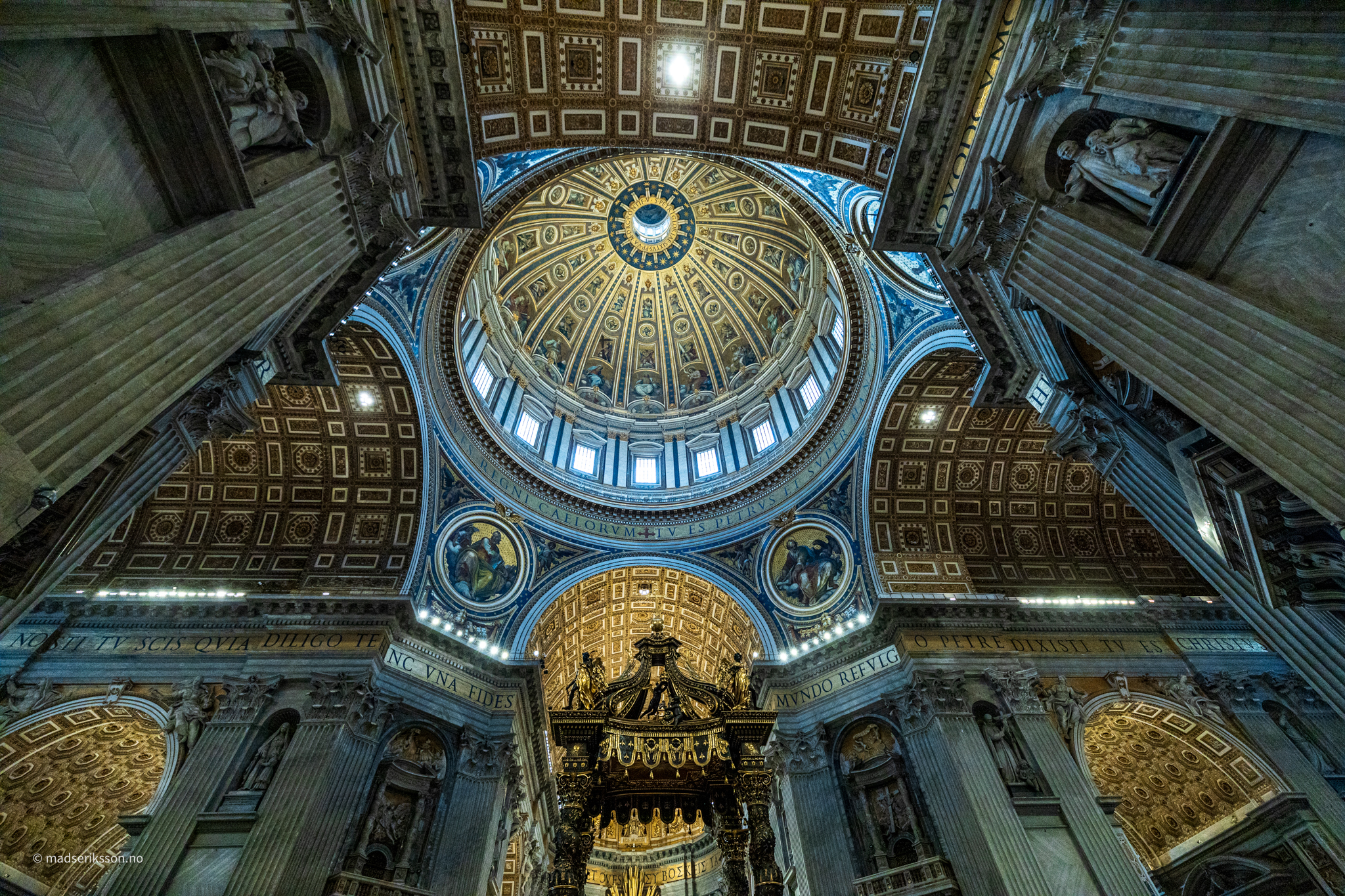 ArchitectureEurope’s 10 Greatest Cathedrals and Churches
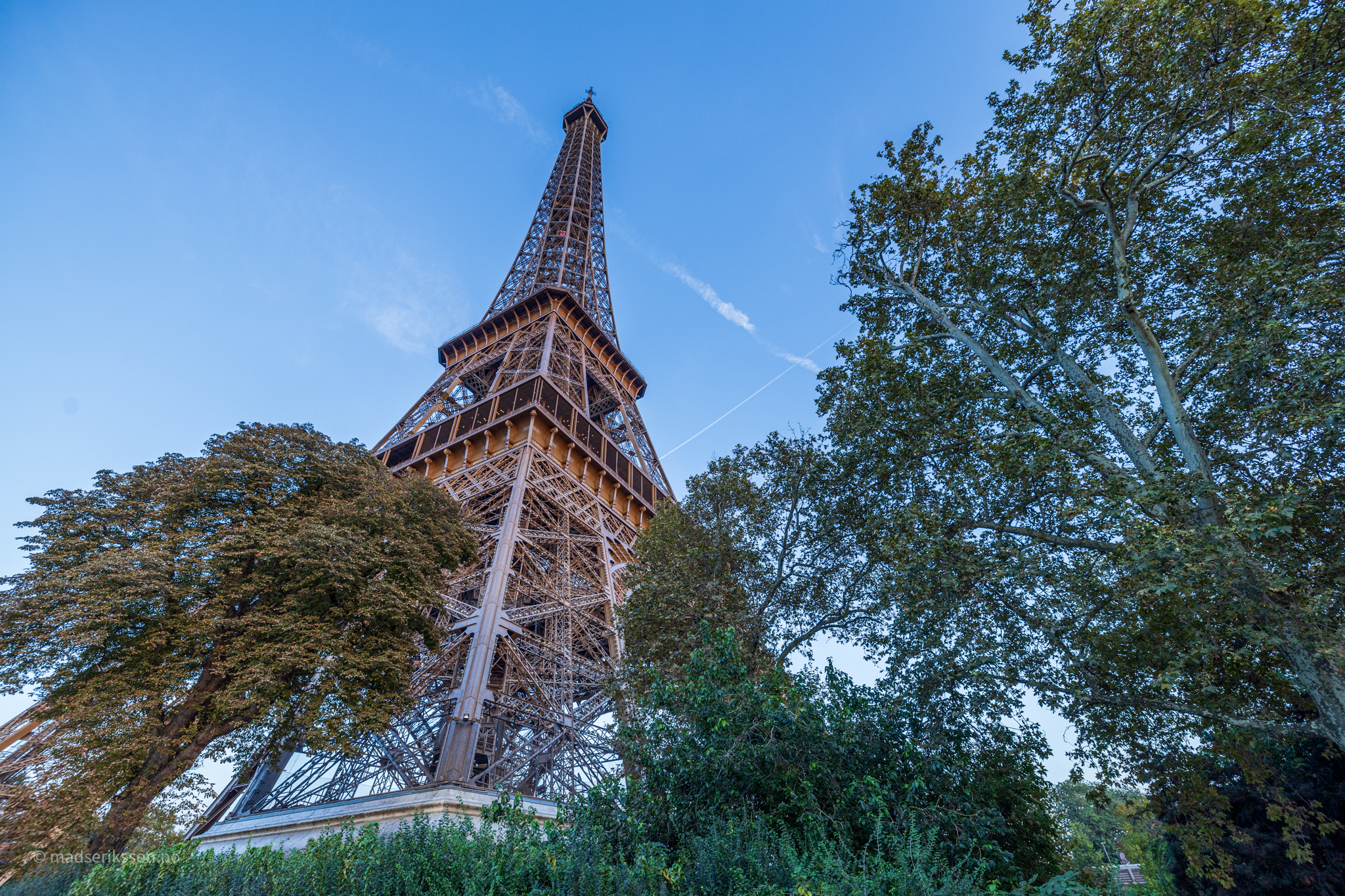 ArchitectureThe Eiffel Tower: Built for a Fair, Saved by the Radio
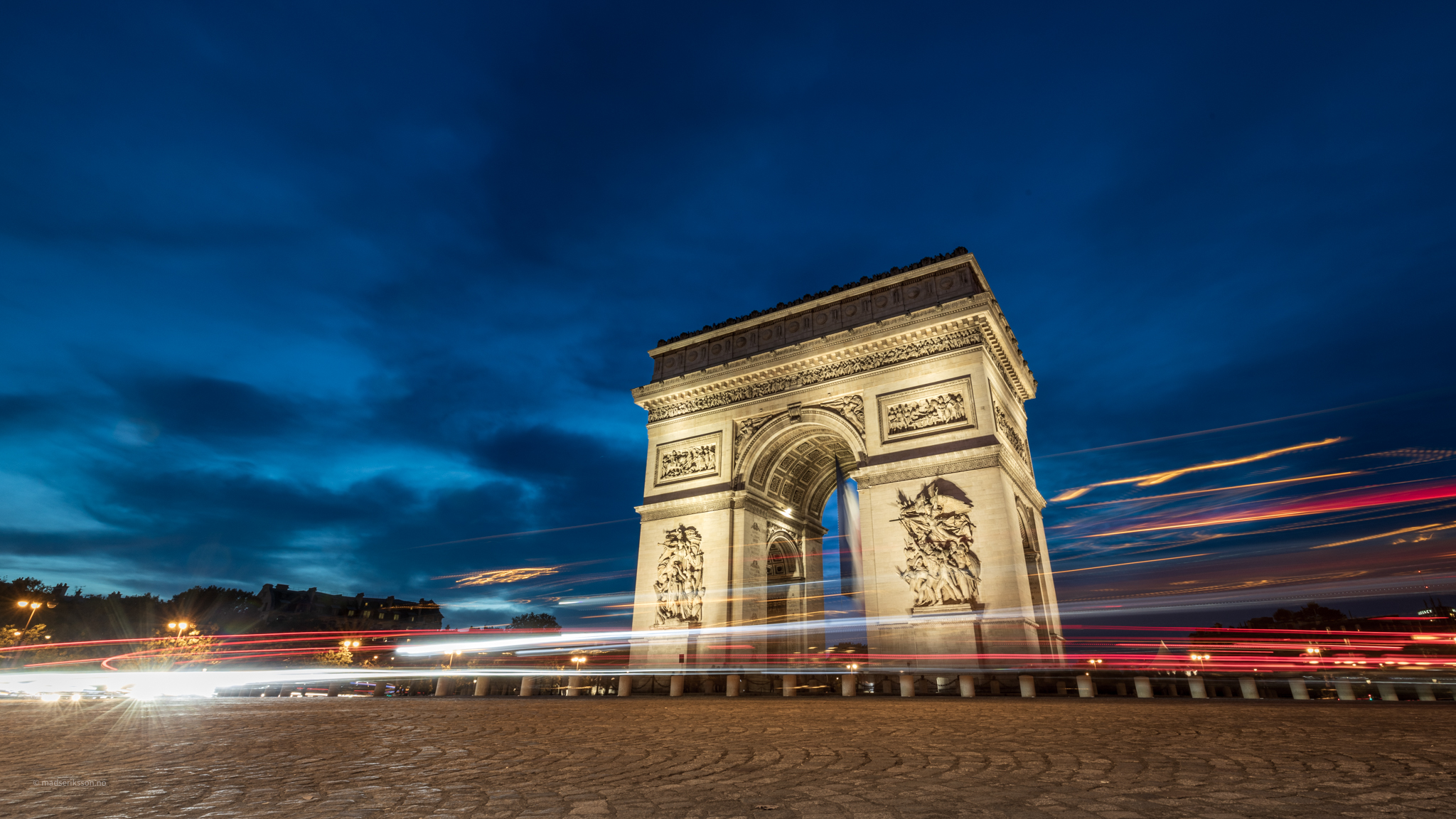 ArchitectureArc de Triomphe: Napoleon’s Arch, the Unknown Soldier and the View Down Twelve Avenues
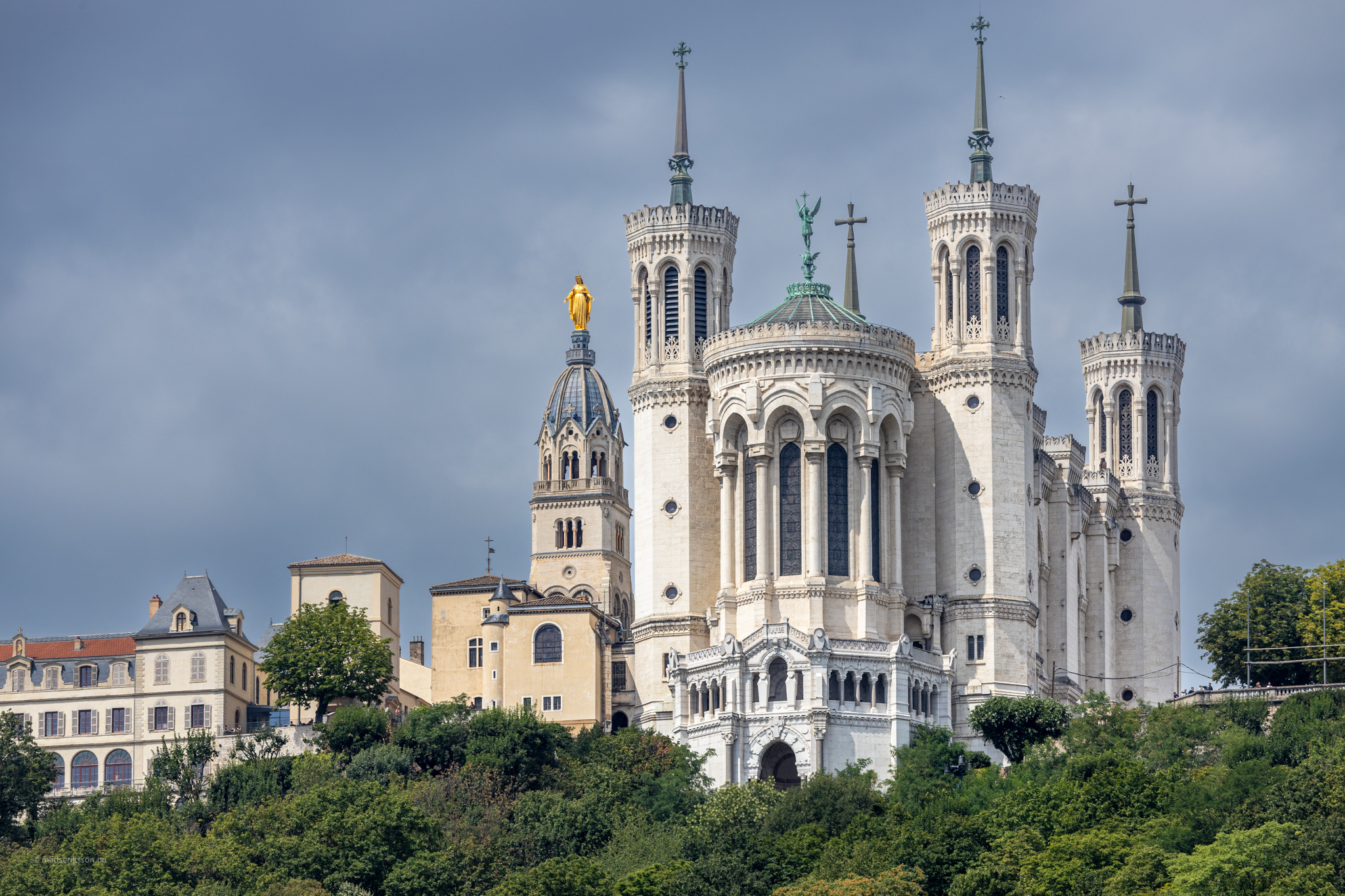 CitiesLyon: Two Rivers, Two Hills and Two Thousand Years of History
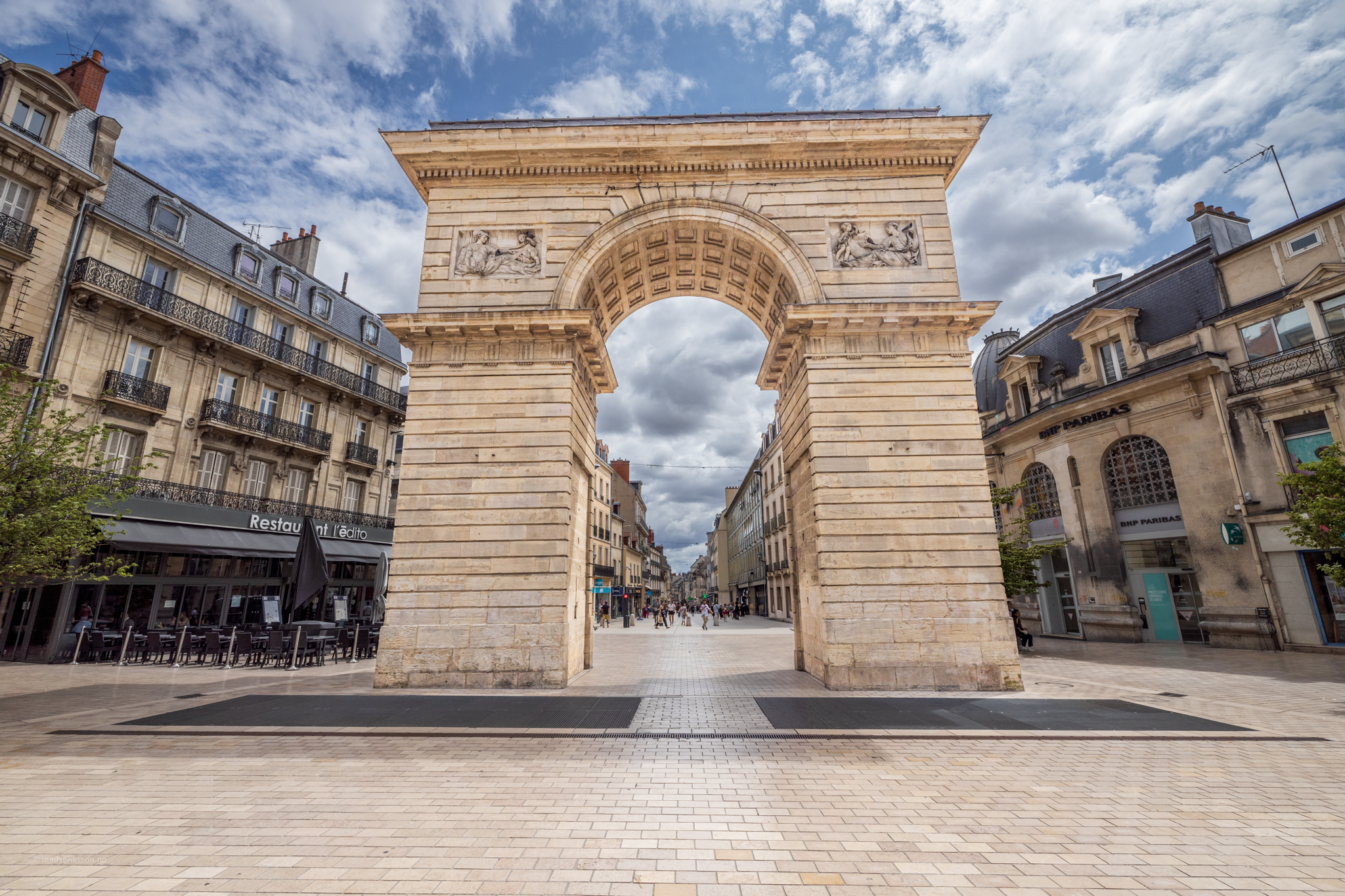 CitiesDijon: The Dukes’ Capital, Its Owl and Its Mustard
 CitiesBonifacio: The Genoese Fortress on Corsica’s White Cliffs
City Frames · scroll-driven 3D
More cities in three dimensions
54 city guides open with a model built from open map data. Scroll, and the camera moves from landmark to landmark.
Departures · City Frames
Where to next?
| Time | Destination | Country | Status |
|---|
Live · position of the sun
Golden hour, right now
The low, warm light just after sunrise and just before sunset. These are the cities on the site where it is happening at this moment.