Istanbul is the only city in the world that stands on two continents. The Bosphorus strait divides it — Europe to the west, Asia to the east — and the city divides time with similar audacity. Hagia Sophia was built in 537 CE and still dominates the skyline. The Grand Bazaar has been trading without interruption for five and a half centuries. The call to prayer sounds from four hundred minarets over a city of fifteen million people, and the ferries crossing the strait run on the same waterway that has connected civilisations since antiquity. Nowhere do empires overlap with such density — or with such grace.

Istanbul has been a capital city three times over. As Byzantium, it was a prosperous Greek colonial port from around 657 BCE. As Constantinople, founded by the Emperor Constantine in 330 CE, it was the capital of the Eastern Roman Empire for over a thousand years — the most important city in the Christian world through the entire medieval period. And as Istanbul, following the Ottoman conquest in 1453, it became the centre of an empire that at its height stretched from Hungary to the Persian Gulf, from Algeria to the Caspian Sea. Each of these cities left its mark — in the walls, the churches, the mosques, the palaces, and the bazaars that still operate on the same stone-paved streets where they were first established.
The result is a city of extraordinary historical density, and one that remains fully alive rather than preserved. The Hagia Sophia is an active mosque. The Grand Bazaar is a functioning market. The ferries that cross the Bosphorus carry commuters between two continents every few minutes of the day. The food markets of Karaköy open before dawn. Istanbul’s past is not behind glass — it is underfoot and overhead and in the water, and the city’s fifteen million inhabitants move through it without particular ceremony.
How to approach Istanbul
This guide covers four areas of Istanbul: the historic peninsula of Sultanahmet, where the greatest Byzantine and Ottoman monuments stand within walking distance of each other; the Bosphorus and the districts of Beyoğlu and Galata on the European shore; the great bazaars and their surrounding streets; and the food culture that runs from a Turkish breakfast through the mezze table of a meyhane to the street food of the waterfront. Istanbul is large, loud, layered and occasionally overwhelming — and entirely worth it.
Istanbul in 3D
Istanbul is the only great city that spans two continents, divided by the Bosphorus, a strait 31 km long that links the Black Sea with the Sea of Marmara. This frame covers the historic peninsula between the Golden Horn and the Marmara shore, Galata and Beyoğlu to the north and Üsküdar on the Asian side. The city was Greek Byzantium, then Constantinople from 330 CE, and the Ottoman capital from 1453 until the founding of the Republic in 1923.
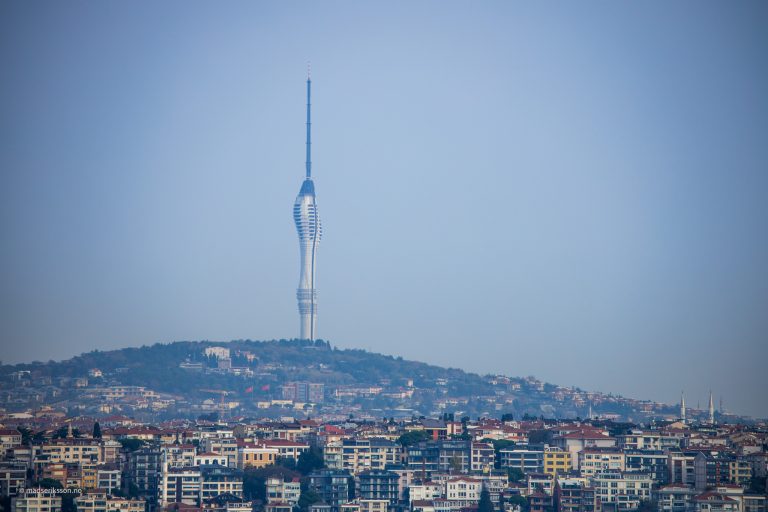
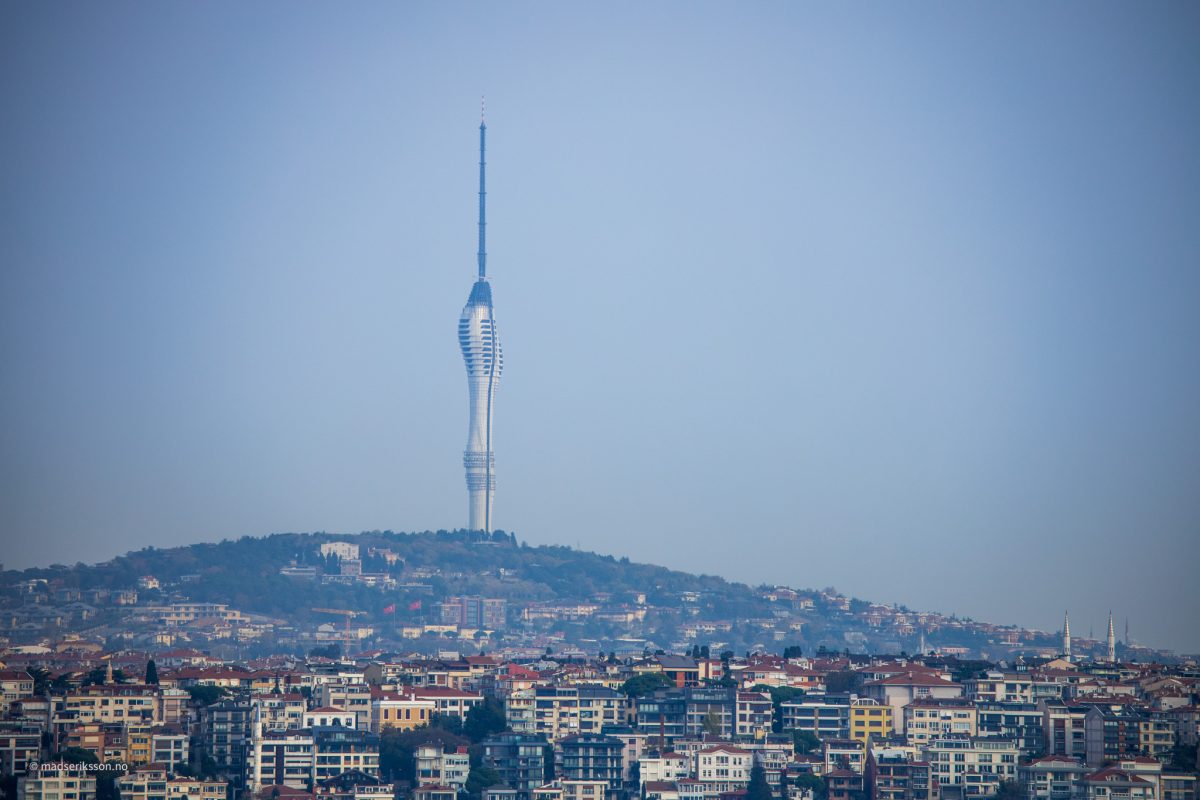
The Çamlıca TV tower on its hill above the Asian side of Istanbul
Hagia Sophia and the Blue Mosque
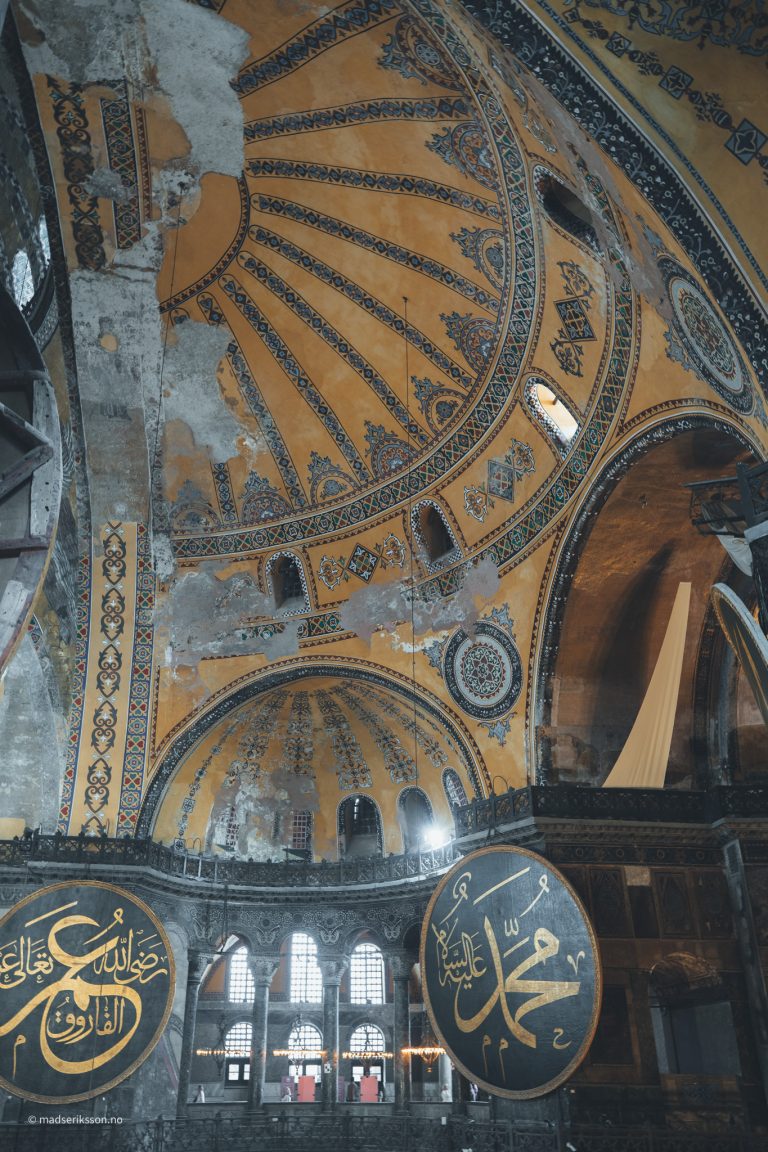
Hagia Sophia was built under Justinian I between 532 and 537, and its dome rises about 55 m above the floor. It became a mosque after the Ottoman conquest in 1453, a museum under the Republic and a mosque again in 2020. Across the former Hippodrome, the Sultan Ahmed Mosque of 1609–1617 owes its popular name to more than 20,000 Iznik tiles inside and is the only mosque in the city with six minarets.
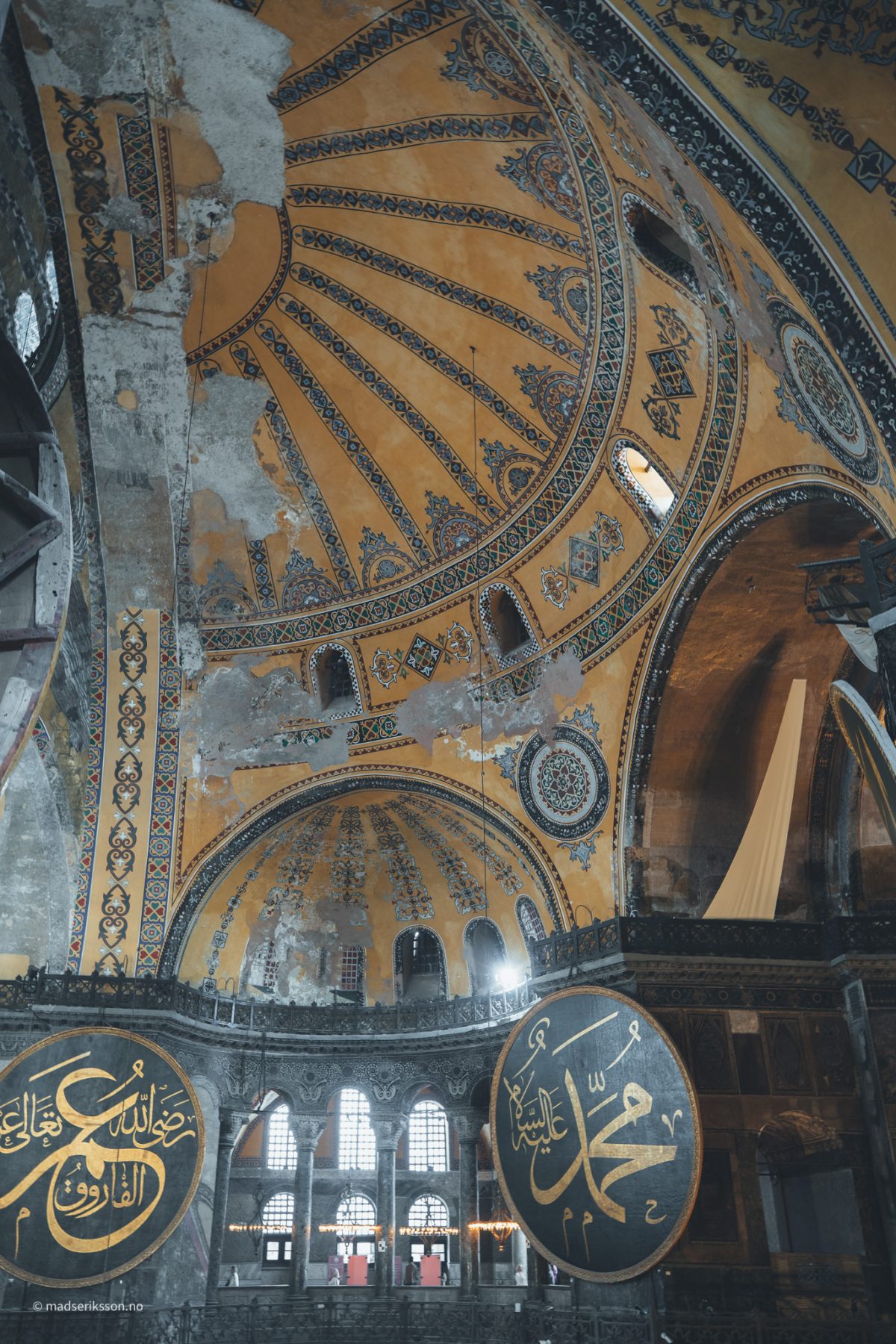
Semi-domes, arched windows and giant calligraphy roundels beneath the dome of Hagia Sophia
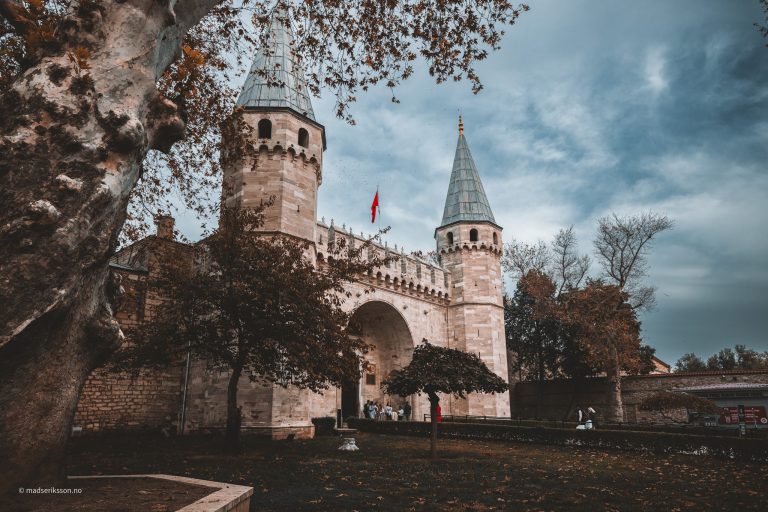
Topkapı Palace
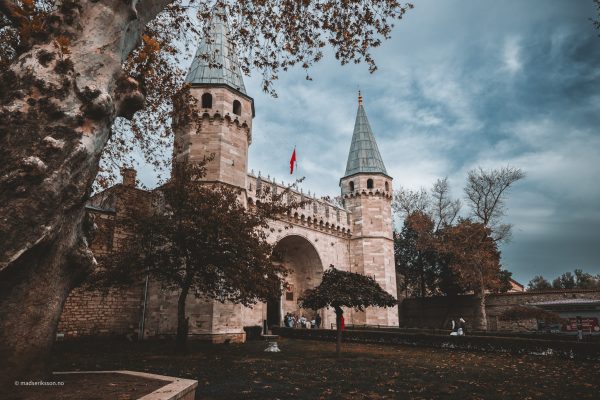
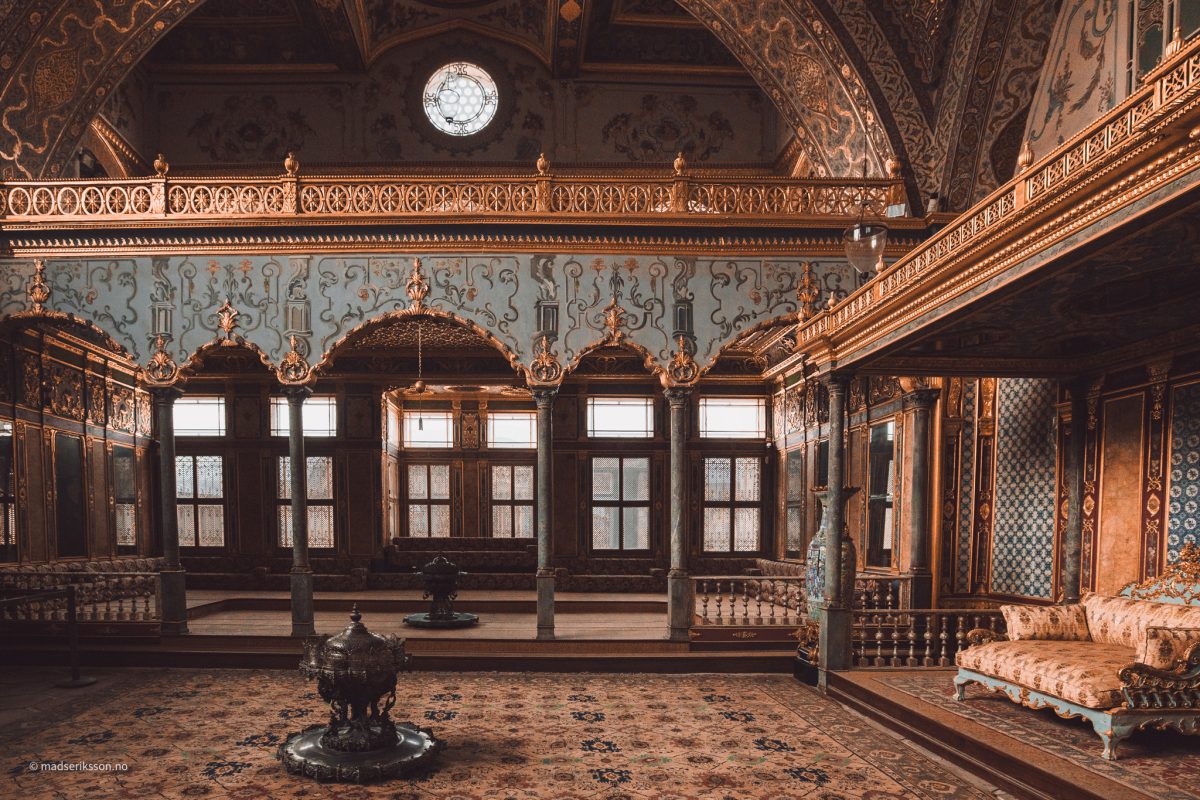
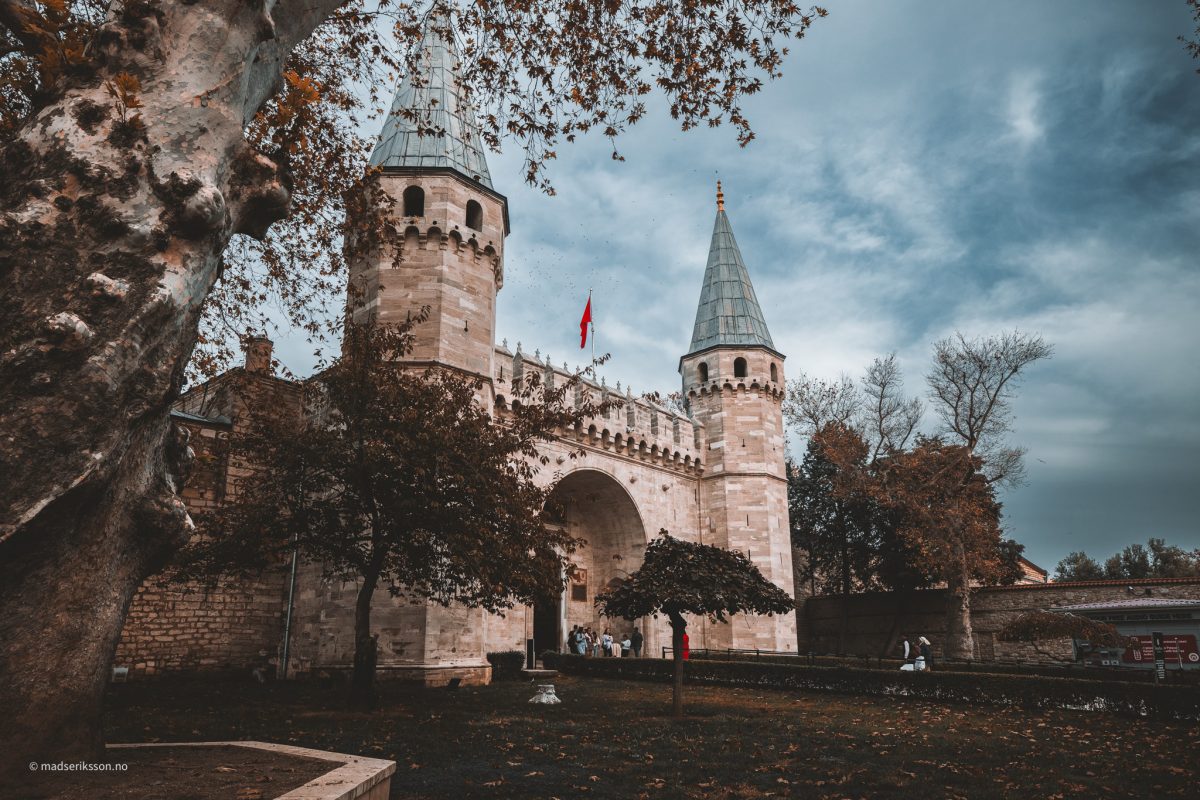
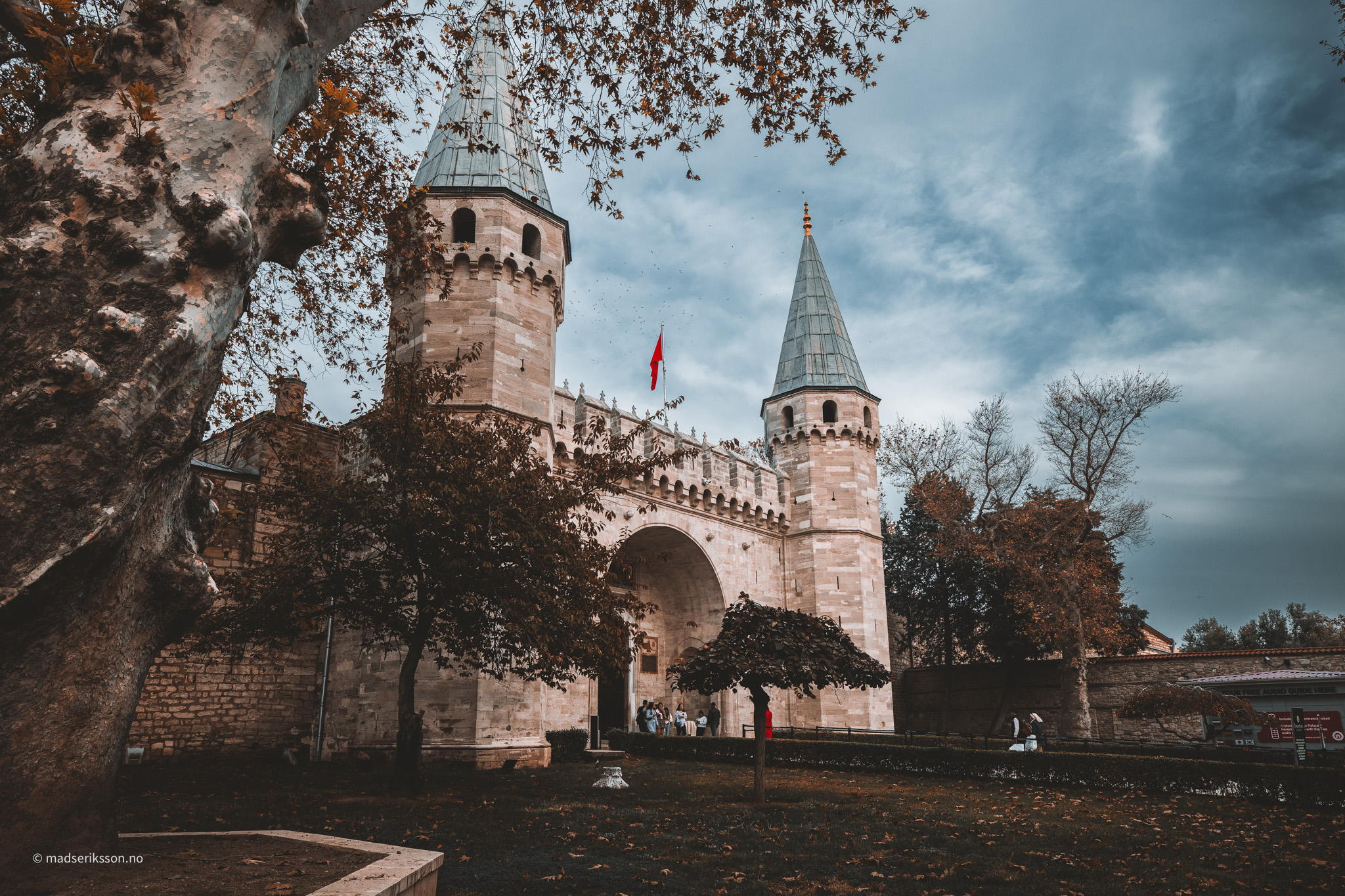
Mehmed II began Topkapı Palace in 1459 on the promontory where the Golden Horn meets the Bosphorus, and it remained the main residence of the sultans until the court moved to Dolmabahçe in 1856. The twin-towered Gate of Salutation leads into the Second Courtyard, while in the Harem the domed Imperial Hall served as the sultan's reception room. The palace has been a museum since 1924.
The twin-towered Gate of Salutation of Topkapı Palace in Istanbul, under autumn trees and a grey sky
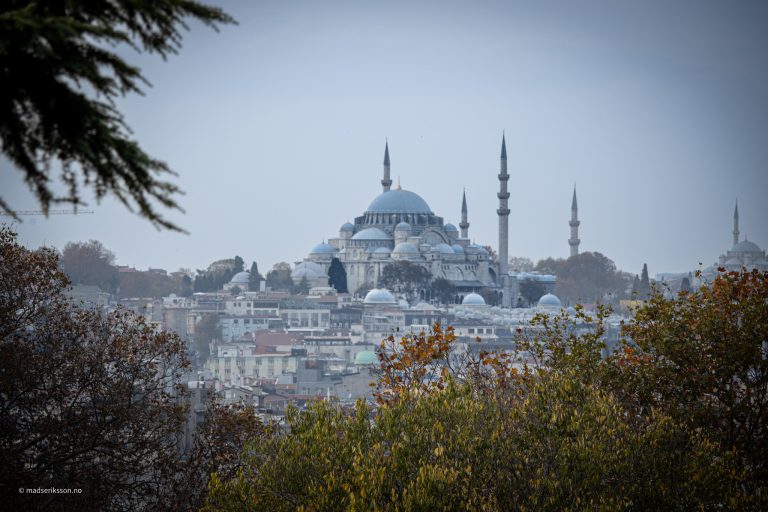
The Grand Bazaar and the Süleymaniye
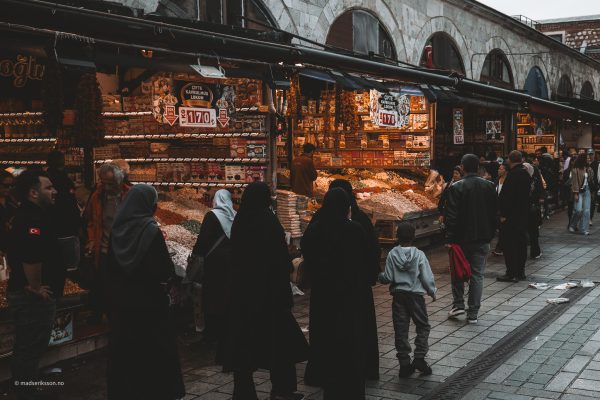
The Grand Bazaar grew from a domed bedesten completed in 1461 into a covered market of 61 streets and more than 4,000 shops. On the hill to the north, Mimar Sinan built the Süleymaniye Mosque for Suleiman the Magnificent between 1550 and 1557; its dome rises about 53 m and its two tallest minarets reach 76 m.
The Süleymaniye Mosque and its minarets crowning a hill above Istanbul, framed by autumn trees
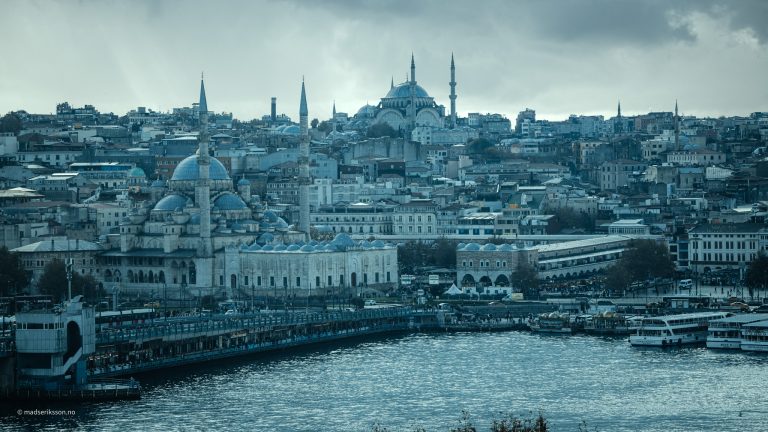
The Spice Bazaar and the Galata Bridge
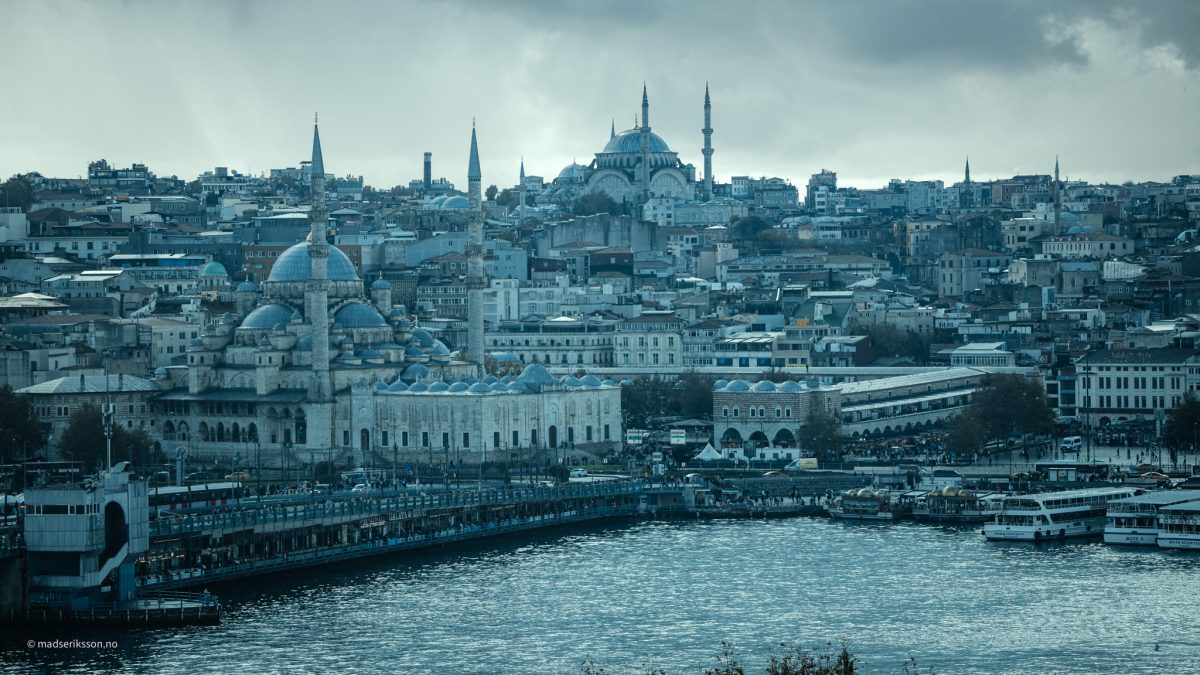
The New Mosque at the southern end of the Galata Bridge was begun in 1597 and inaugurated in 1665 under Turhan Sultan, mother of Mehmed IV. Rents from the 85 shops of the adjoining Spice Bazaar, built from 1660, paid for the mosque's upkeep. The present Galata Bridge, opened in 1994, is 490 m long and the fifth on the site since 1845.
The New Mosque at Eminönü on the Golden Horn, with the Süleymaniye Mosque on the hill behind
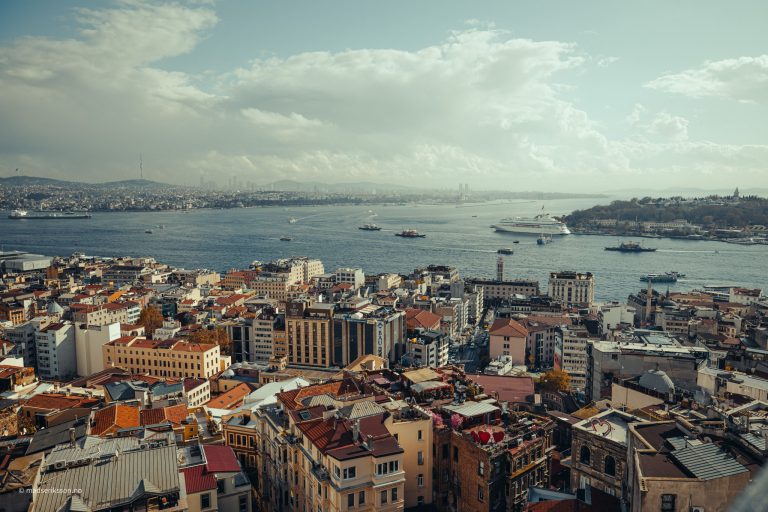
The Galata Tower and İstiklal Avenue
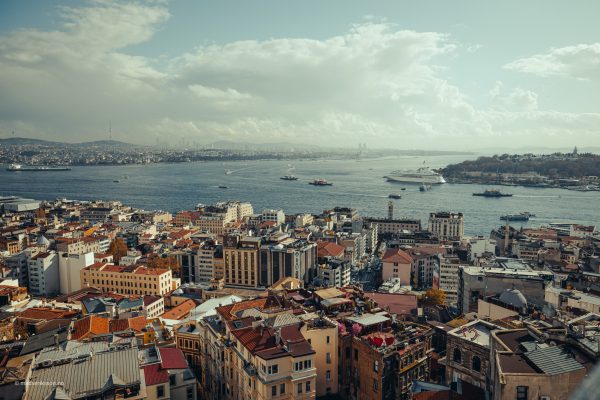
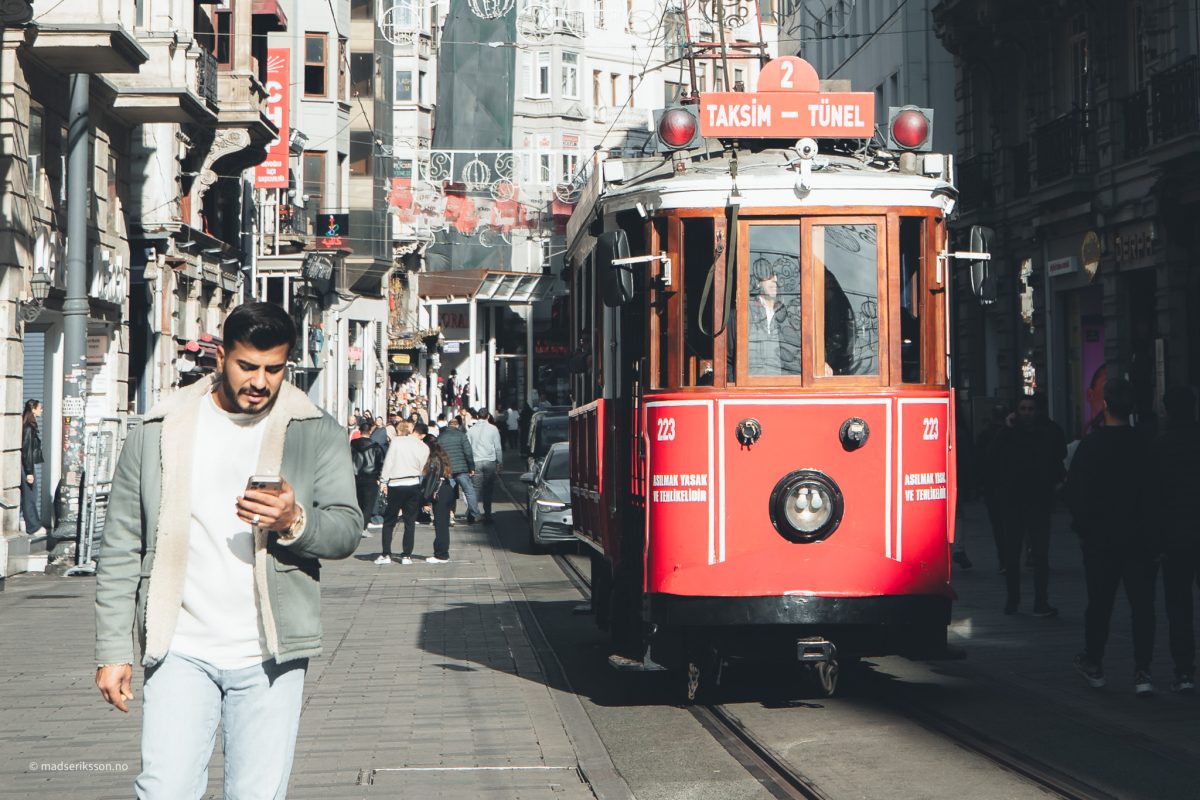
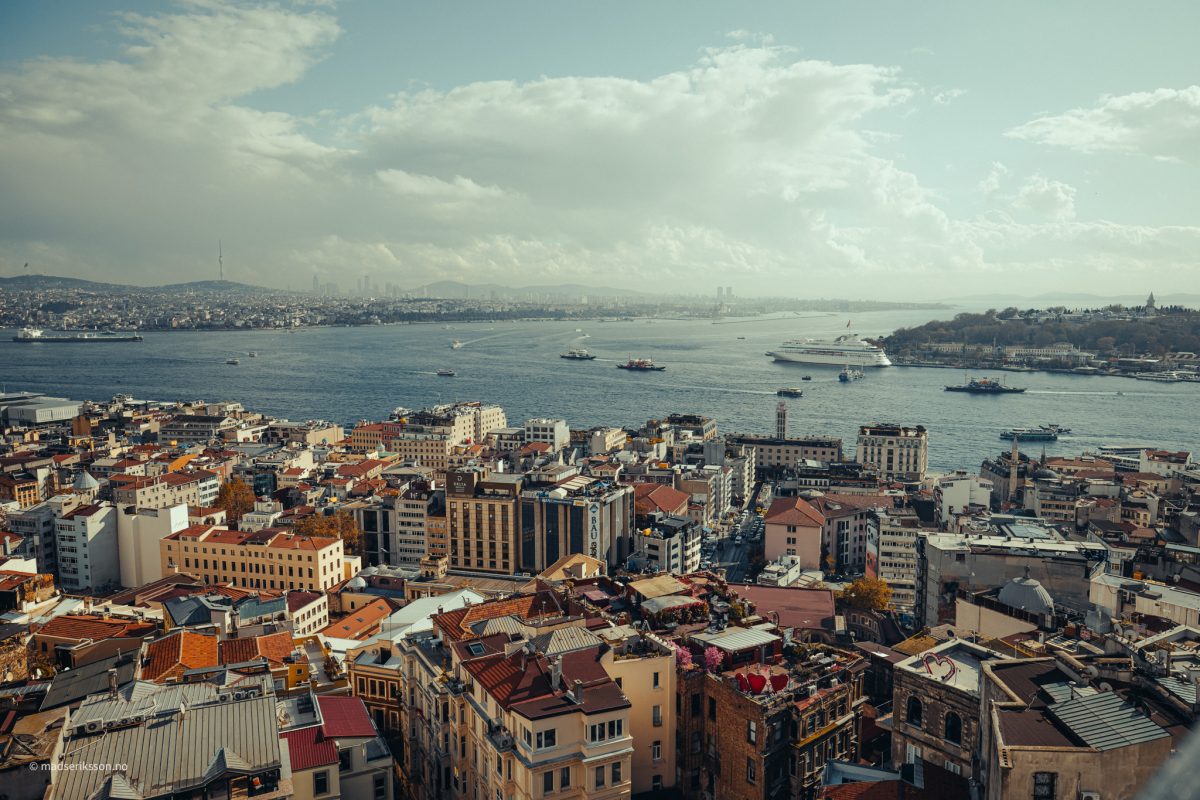
The Genoese completed the Galata Tower in 1348, and at 62.59 m to the top of its masonry it still rules the hill above the Golden Horn, with a viewing gallery at 51.65 m. From Tünel, just above the tower, İstiklal Avenue runs 1.4 km to Taksim Square, served by a nostalgic tram reinstated in 1990.
Istanbul’s rooftops falling away to the Bosphorus, with ships crossing between Europe and Asia
Dolmabahçe and the Maiden's Tower
Dolmabahçe Palace, designed by Garabet Balyan and his son Nigoğayos, was completed in the 1850s with 285 rooms and a crystal chandelier of 4.5 tonnes in its Ceremonial Hall; Atatürk died there on 10 November 1938. Across the strait, the Maiden's Tower stands on an islet about 200 m off Üsküdar. The present stone tower dates from 1763 and reopened in 2023 after restoration.
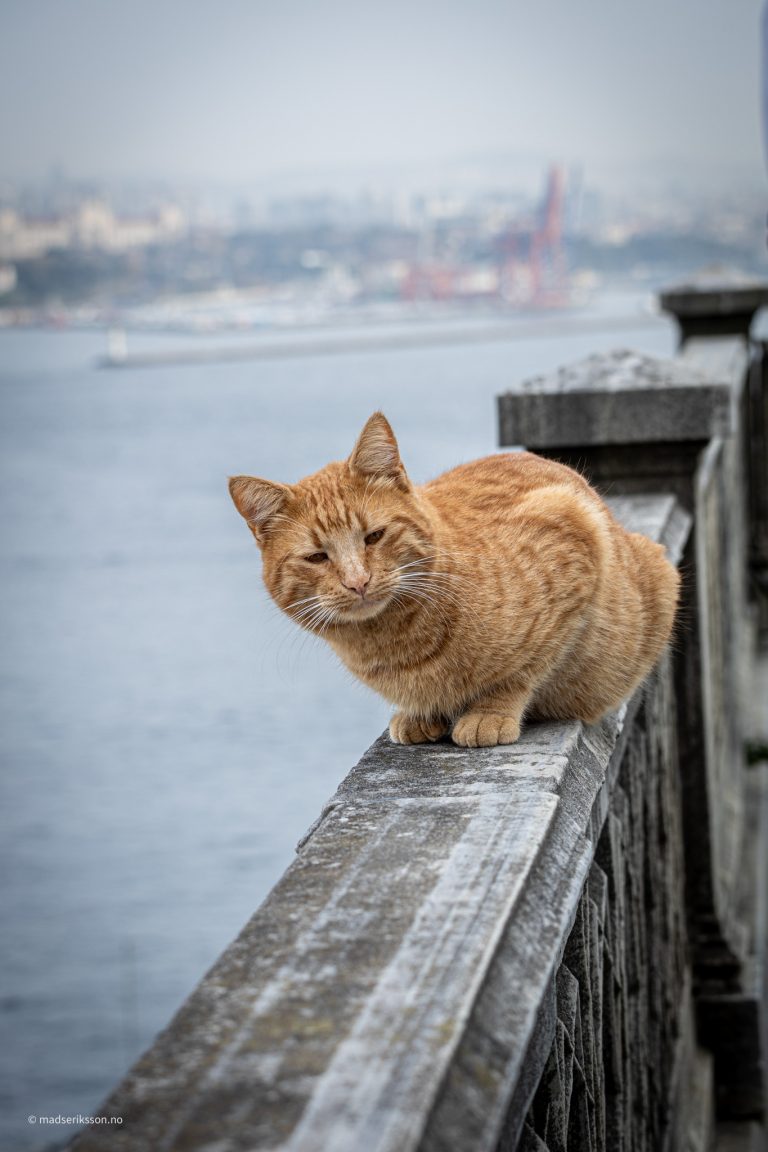
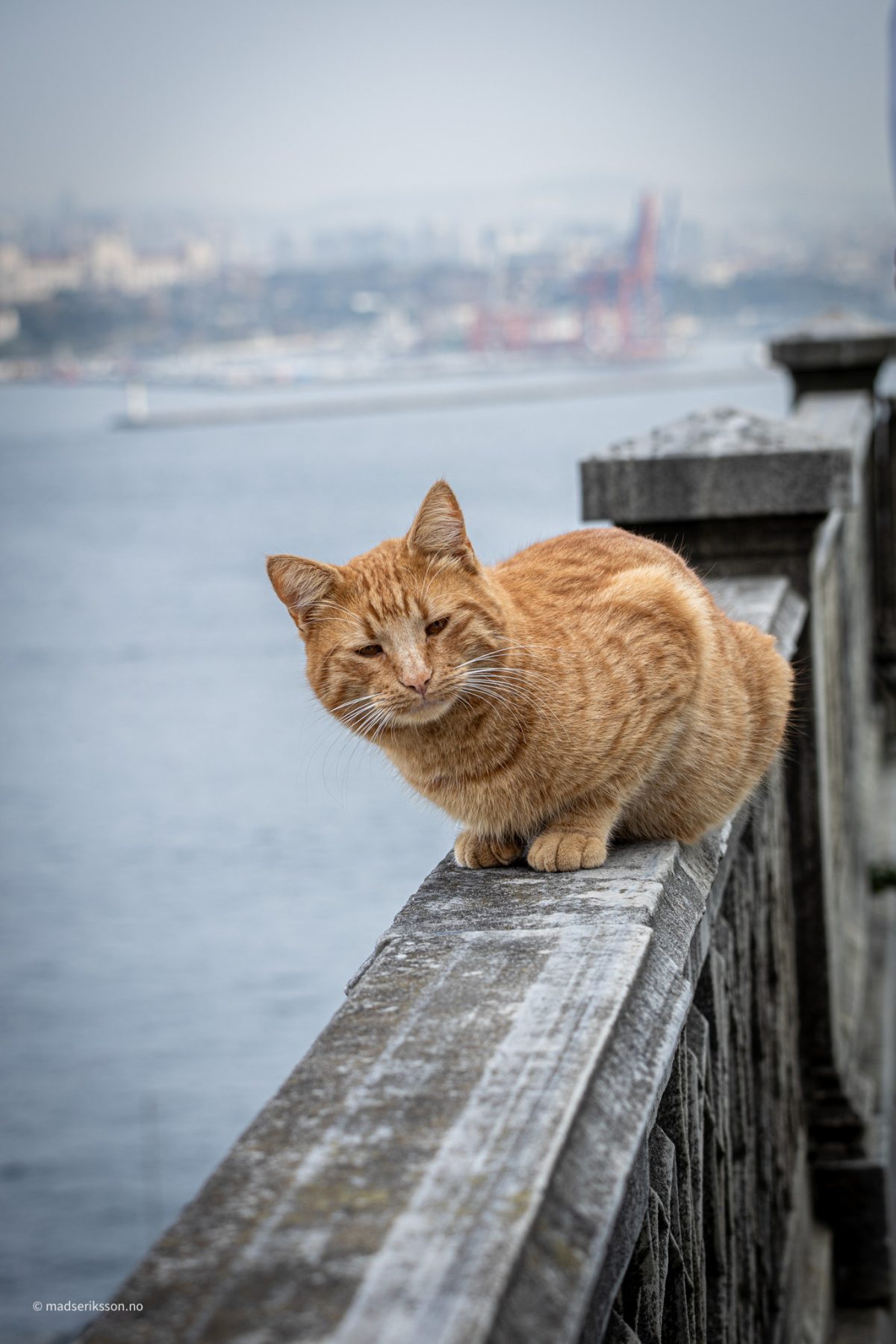
A ginger street cat resting on a stone balustrade above the water in Istanbul
Domes after dark
Seen from Galata, the skyline of the historic peninsula runs from the Süleymaniye on its hill to the New Mosque on the waterfront, and on to Hagia Sophia and the Blue Mosque near the tip. The Historic Areas of Istanbul were inscribed on the UNESCO World Heritage List in 1985 in four zones: the Sultanahmet archaeological park, the Süleymaniye quarter, Zeyrek and the land walls.
3D model © 2026 madseriksson.no · Photographs © madseriksson.no. Buildings and heights: © OpenStreetMap contributors (ODbL), via OpenMapTiles. Ground imagery: Sentinel-2 cloudless 2023 by EOX IT Services GmbH (contains modified Copernicus Sentinel data 2023; CC BY 4.0). Heights are approximate where OpenStreetMap has no measured value; sun positions are approximate.
The Historic Peninsula — Three Empires in One Square Kilometre
Sultanahmet contains a greater density of significant monuments than almost any other place on Earth
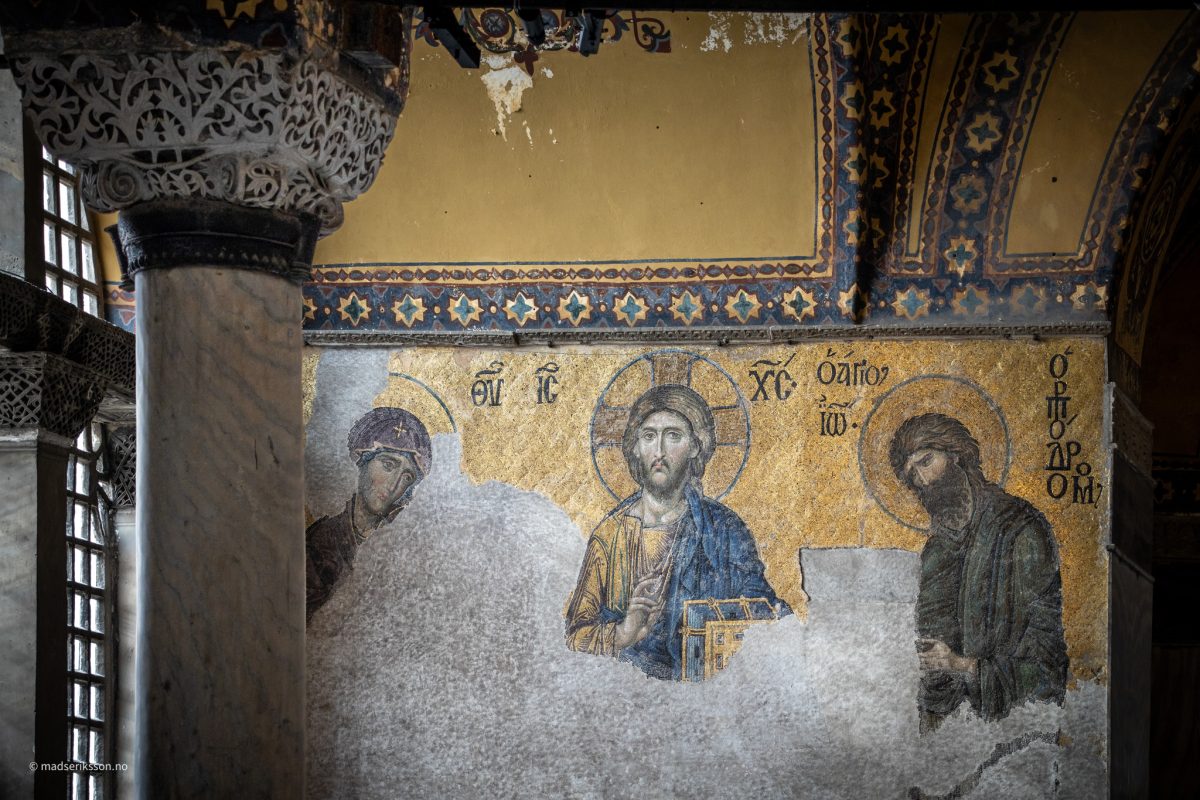
Hagia Sophia — Aya Sofya in Turkish — is one of the greatest buildings ever constructed. Built by the Emperor Justinian I between 532 and 537 CE, it was for nearly a thousand years the largest cathedral in the world. The engineering achievement it represents is staggering: a dome 31 metres in diameter and 55 metres above the floor, supported by a system of half-domes and arches that distributes its weight so effectively that the walls appear to float. After the Ottoman conquest in 1453, Sultan Mehmed II immediately converted it to a mosque, adding minarets and covering many of the Byzantine mosaics. It became a museum in 1934 under Atatürk, and was reconverted to a functioning mosque in 2020. Visitors may enter outside prayer times, with appropriate dress. The interior — the vast golden space, the ancient mosaics visible between the calligraphy medallions, the filtered light — requires time and silence to take in.
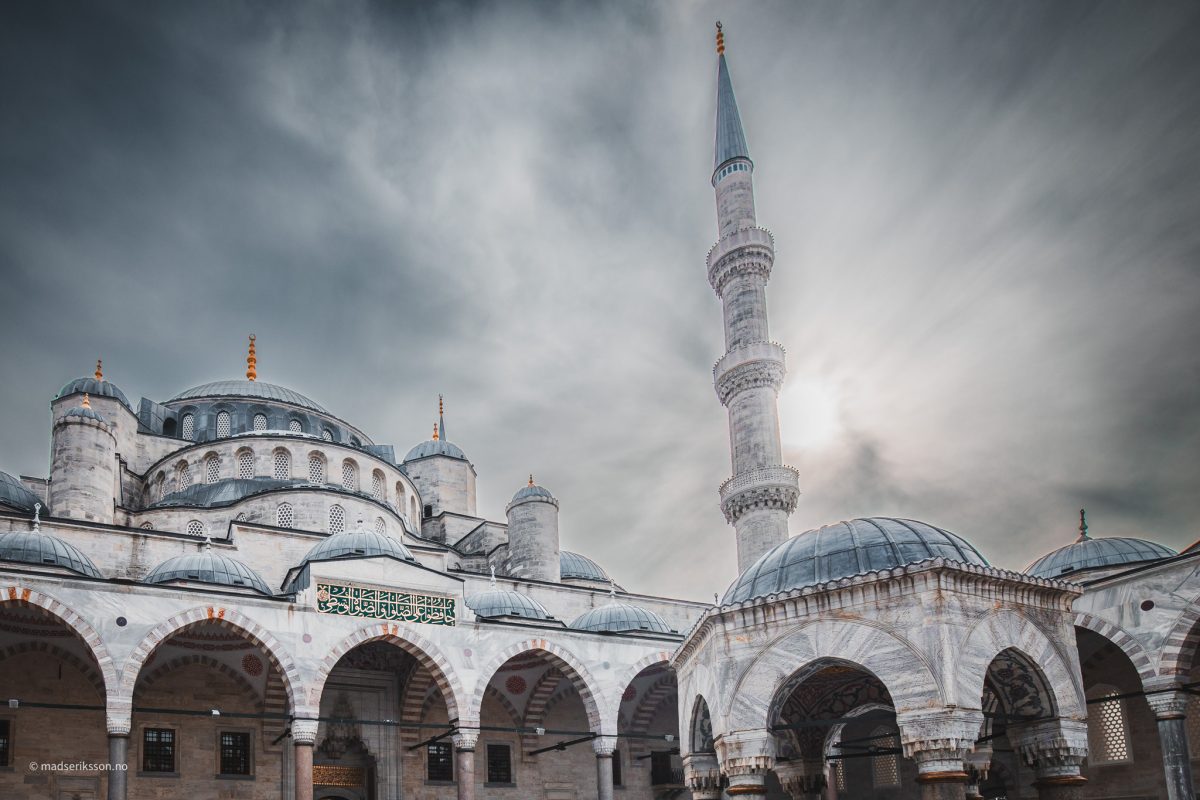
Directly opposite, across the Hippodrome of Constantinople (now Sultanahmet Square), stands the Sultan Ahmed Mosque — known as the Blue Mosque for the 20,000 Iznik tiles that line its interior. Built between 1609 and 1616 during the reign of Sultan Ahmed I, it is the last great Imperial mosque of the classical Ottoman period and the only mosque in Istanbul with six minarets. The six-minaret design was considered so presumptuous — previously only the mosque in Mecca had that number — that a seventh was reportedly added to Mecca to restore its primacy. The Blue Mosque remains in active use and is closed to visitors during prayer times.
Standing between Hagia Sophia and the Blue Mosque, you are standing between a thousand years of the Byzantine Empire and four centuries of the Ottoman Empire — separated by less than 200 metres.
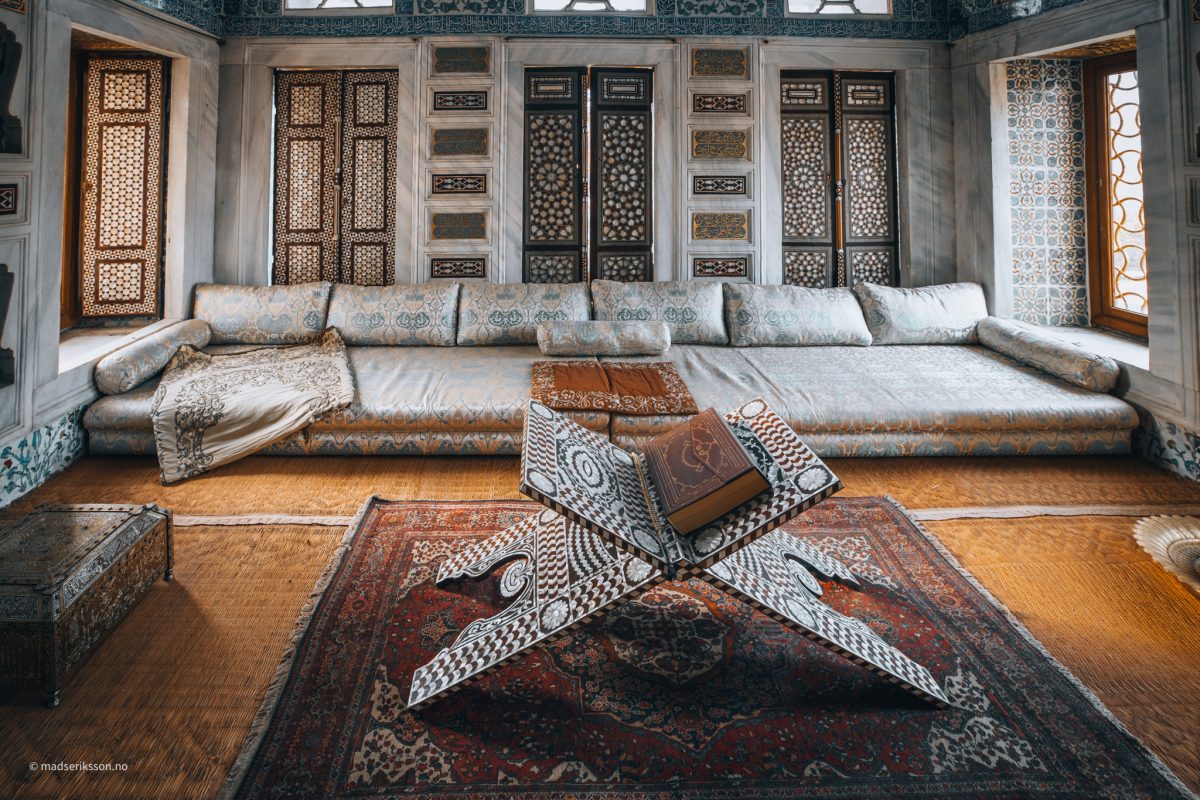
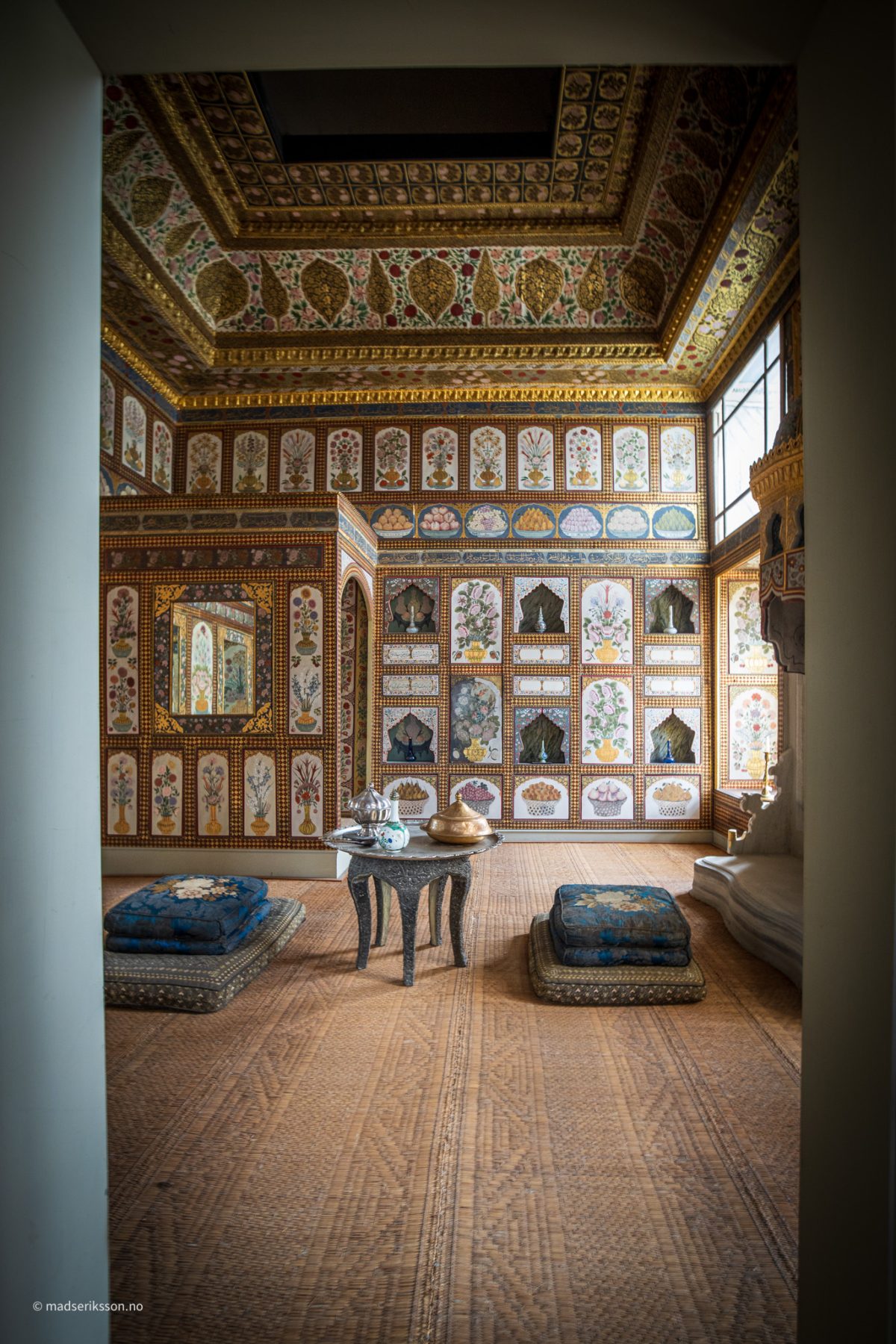
Topkapı Palace, built from 1459 on the promontory above the Bosphorus, was the administrative heart of the Ottoman Empire for nearly four centuries. Its courtyards, pavilions and treasury contain objects of extraordinary historical significance: the Sword of the Prophet Mohammed, the mantle of the Prophet, the Topkapı Dagger, and collections of Chinese porcelain, jewellery and imperial robes. The harem — the private residential quarters of the sultan, his family and household — is a labyrinth of tiled rooms, fountains and corridors that occupies a quarter of the palace complex. Beneath the Sultanahmet district, the Basilica Cistern (Yerebatan Sarayı) — a vast underground reservoir built in 532 CE to supply the imperial palaces — is one of the strangest and most atmospheric spaces in Istanbul: 336 columns in 12 rows, standing in shallow water, with two Medusa-head column bases in the northwest corner whose origin remains uncertain.
The Bosphorus — Where Two Worlds Meet on Water
The strait that divides Istanbul is also what defines it — and crossing it is one of the world’s great short journeys
The Bosphorus is 31 kilometres long and no more than 3.7 kilometres wide at its broadest point. Every day, more than 40,000 vessels navigate this strait, making it one of the busiest waterways in the world. The ferries that cross between the European and Asian shores — running every 15 to 20 minutes from Eminönü and Karaköy to Kadıköy and Üsküdar — cost less than two lira and are used by commuters, shoppers, students and visitors alike. A Bosphorus crossing by ferry is among the most satisfying things you can do in Istanbul: the view of the old city from the water, with the minarets and domes of Sultanahmet rising above the Golden Horn, is the panorama that has defined Istanbul in every era of its history.
Across the Golden Horn from Sultanahmet, the Galata Tower rises from the crest of the hill that was once the Genoese trading colony of Galata. Built in 1348, the tower stands 67 metres tall and was for centuries the highest point in the city. The neighbourhood below — now called Karaköy — is one of Istanbul’s most interesting areas: a working waterfront of fish restaurants, ferry terminals, chandlers and coffee shops, with a growing concentration of design studios, wine bars and galleries in the streets climbing toward Galata. Further up the hill, the broad pedestrian thoroughfare of Istiklal Caddesi runs 1.4 kilometres through the 19th-century European-style district of Beyoğlu, lined with consulates, churches, bookshops, music venues, restaurants and the famous red vintage tram that still runs its single route through the crowd.
The view of Istanbul from a Bosphorus ferry — the domes and minarets of Sultanahmet rising above the Golden Horn, the hills of Asia to the east — has changed less than almost any famous view in the world.
For a longer encounter with the Bosphorus, the public ferry that runs from Eminönü to Anadolu Kavağı on the Asian shore passes under both suspension bridges, alongside the Dolmabahçe and Bey1erbeyi palaces, and through the narrowest sections of the strait where the current runs fastest. The round trip takes approximately six hours and costs very little. On the Asian side, the villages of Bebek, Arnavutköy and Ortaköy offer a quieter, more residential Istanbul than the tourist districts — seafood restaurants, tea gardens on the waterfront, and the extraordinary view back across the water to the European shore.
The Bazaars — Five Centuries of Trade Under One Roof
The Grand Bazaar is not a tourist attraction with a historical backstory. It is a functioning commercial centre that has operated continuously since 1461
The Grand Bazaar — Kapalıçarşı, the Covered Market — was established by Sultan Mehmed II shortly after the Ottoman conquest, as part of a deliberate effort to rebuild Istanbul as a commercial capital. The original core of two bedestens (vaulted market halls for valuable goods) was built in 1461; the surrounding streets were added over the following century and a half until the market reached roughly its current form. Today it covers approximately 30,000 square metres, contains over 4,000 shops organised largely by trade — gold jewellers in one section, leather goods in another, carpets and kilims in a third — and receives an estimated 400,000 visitors on busy days. It is not quiet, and it is not cheap for uninformed buyers. But it is genuine: the gold in the jewellery quarter is weighed and traded at world market prices, the carpet merchants know their provenance, and the tea-sellers who circulate with trays of small glasses are not performing a service for tourists.
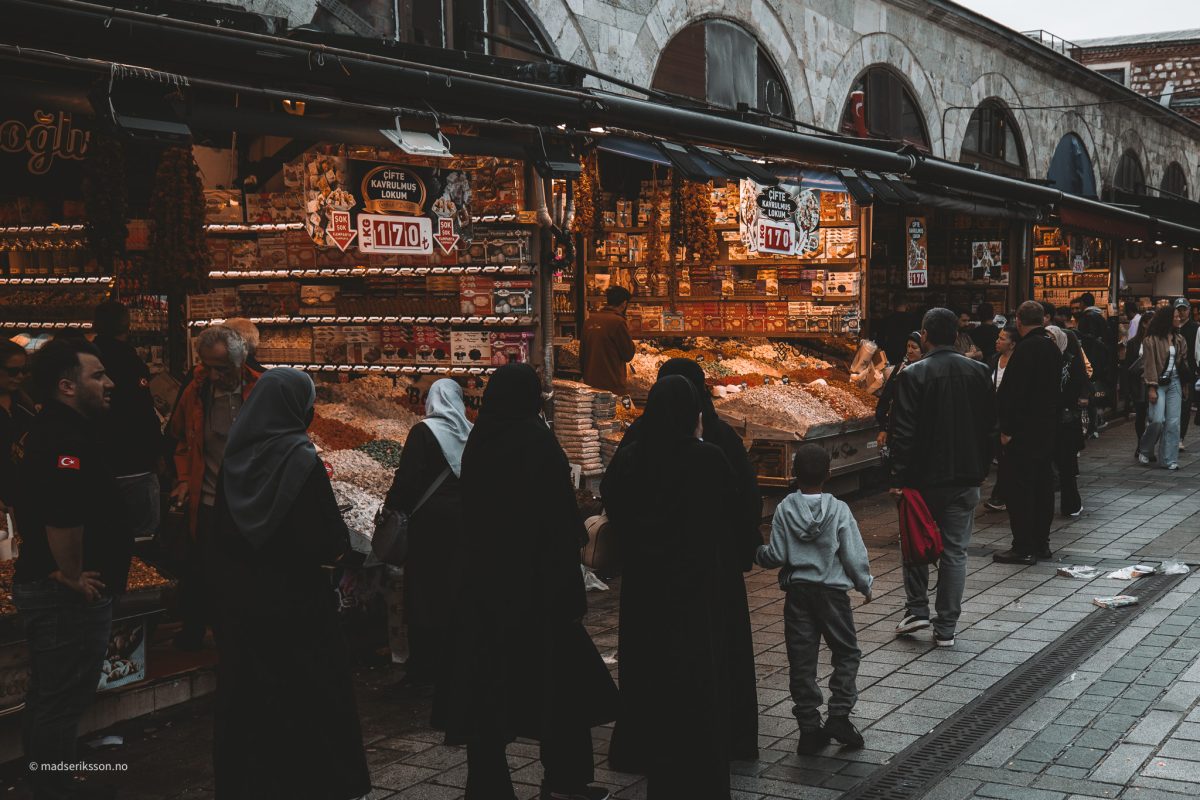
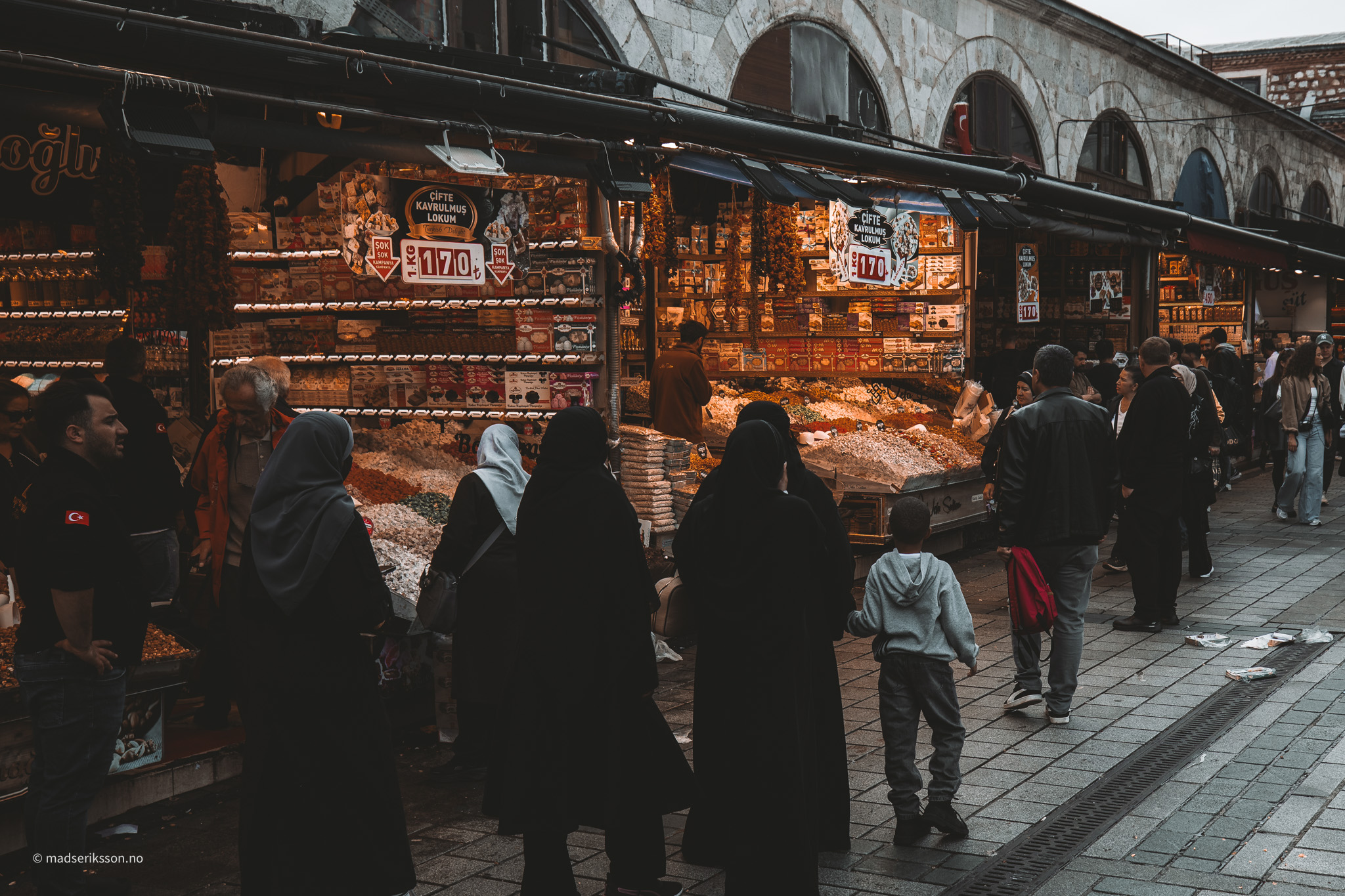
Southwest of the Grand Bazaar, down the hill toward the Golden Horn, the Spice Bazaar (Mısır Çarşısı — the Egyptian Market, so called because it was originally financed by revenues from Egypt) dates to 1664. It is smaller than the Grand Bazaar but arguably more sensory: the entrance is marked by a wall of smells from the spice sellers inside — saffron, sumac, dried chillies, rose petals, herbal teas, lokum (Turkish delight) and blocks of compressed tea. The stalls outside the market sell fresh fruit, vegetables, cheeses, pickles and an assortment of dried nuts and fruits that make it one of the best food shopping destinations in the city.
The Grand Bazaar has been operating on the same streets since 1461. The gold is real, the carpets are genuine, and the tea arrives without being asked for.
Between the two bazaars, the streets of the old city reward wandering without a destination. The hans — the caravanserais, or merchants’ lodging houses — that once serviced the trade routes are now workshops and small factories. The Nuruosmaniye Mosque, completed in 1755, marks one of the principal entrances to the Grand Bazaar and is worth entering: its circular courtyard is one of the most unusual mosque designs in the city. The waterfront at Eminönü below, where the ferries depart and the fish sandwich stalls do relentless business, is the point where the bazaar economy meets the Bosphorus, and it is always crowded, always noisy, and always worth standing in for a few minutes.
The Turkish Table — From Breakfast to the Meyhane
Turkish food is not one cuisine but many — Ottoman palace cooking, Anatolian village food, and the street food of a city of fifteen million
The Turkish breakfast — kahvaltı — is one of the world’s most generous meal traditions, and Istanbul takes it seriously. A full spread includes white cheese (beyaz peynir) and aged kasar cheese, black and green olives, sliced tomatoes and cucumbers, soft-boiled eggs or menemen (scrambled eggs with tomatoes and peppers), honey and clotted cream (kaymak), several varieties of jam, fresh bread, and sesame-crusted simit rings — all accompanied by an apparently inexhaustible supply of black tea in small tulip-shaped glasses. The meal is not eaten quickly. On weekends, a good breakfast in Istanbul can last two hours, and the second pot of tea is always refilled without asking.
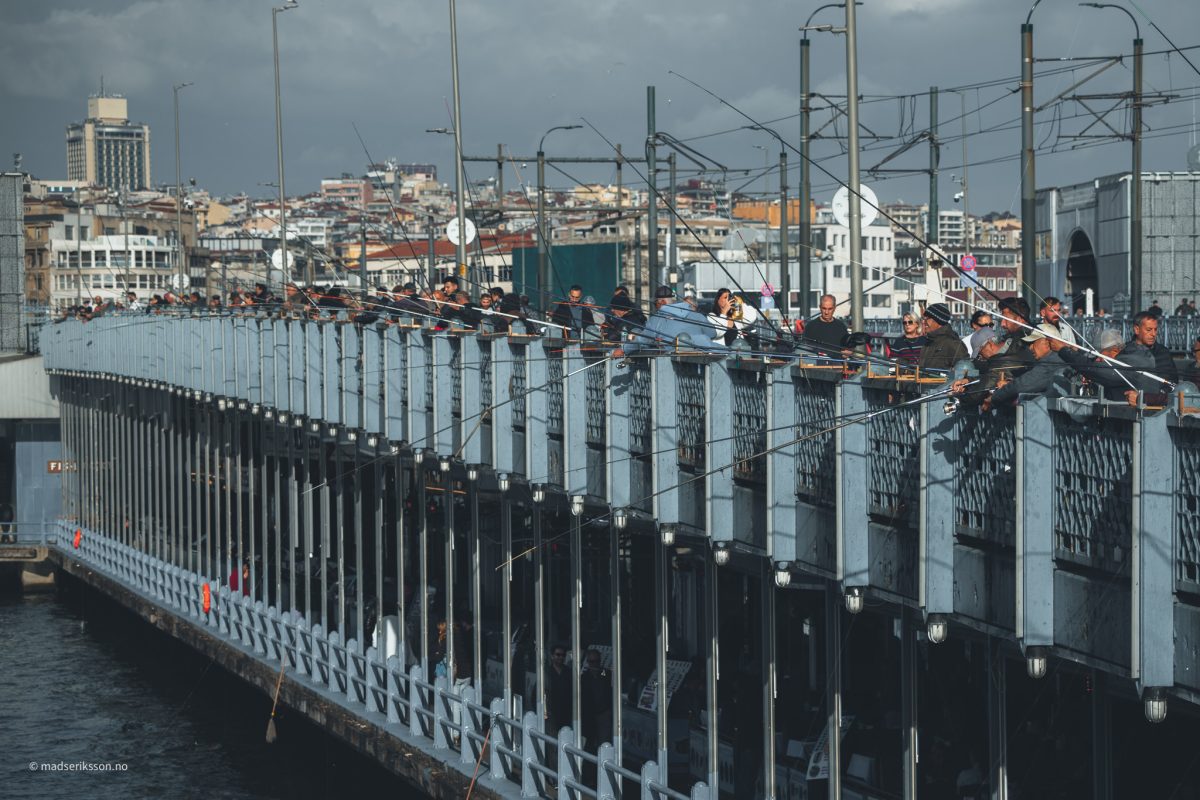
At the waterfront of Eminönü, beneath the Galata Bridge, the balık ekmek — fish sandwich — is one of Istanbul’s defining street foods: a grilled fillet of mackerel or sea bass, with onion, lettuce and a squeeze of lemon, folded into half a white baguette and handed over the side of a rocking wooden boat. It costs almost nothing and tastes specifically of Istanbul. Nearby, the fish restaurants built into the underside of the Galata Bridge are an institution — noisy, cheap, and with the ferries and fishing lines as a backdrop. In the evening, the meyhane tradition shifts the register entirely: the meyhane is a tavern, typically with a spread of cold meze (hummus, ezme, patlıcan salatası, stuffed vine leaves, white cheese in olive oil) followed by grilled fish or meat, with rakı — the anise-flavoured spirit that turns milky white when mixed with water — as the drink throughout. Beyoğlu and Galata have the greatest concentration of good meyhane.
Rakı is mixed with cold water and served with ice alongside the meze. It turns white on contact with the water — which is why the Turks call it lion’s milk.
For pastry and sweet things, Istanbul is without equal. The baklava of Karaköy Güllüoğlu — a shop that has been operating near the Galata Bridge since 1949 — is the reference point: crisp, butter-soaked filo layered with pistachios or walnuts, cut into diamond shapes and served with a glass of tea. Turkish lokum (the original Turkish delight, which bears little resemblance to the export product) comes in dozens of varieties and is sold by weight from shops throughout the bazaar districts. Coffee — Türk kahvesi, prepared in a small copper cezve and served with the grounds in the cup — is strong, short and taken without milk, usually accompanied by a small sweet.
«Istanbul is a city that refuses to let you simplify it. Every view contains a contradiction: a Byzantine mosaic inside an Ottoman mosque, a Greek church beside a Roman cistern, a call to prayer echoing over a street where the fish sandwich sellers have been doing business since before Columbus sailed. The city absorbs all of it without apparent strain. What stays with you — after the Hagia Sophia, after the bazaar, after the evening ferry across the Bosphorus — is not any single monument but the weight of everything together: the accumulation of three empires, two continents, and three thousand years, still fully alive.»
More in the same area
 ArchitectureTopkapı Palace, Istanbul: Four Courts, the Harem and the Treasury of the Sultans
 Food and DrinksIstanbul’s Spice Bazaar: The Market Built to Pay for the New Mosque
 CitiesThe World’s 10 Great Food Markets
 ArchitectureTen Buildings That Changed Their Cities — Modern Architecture Ranked on Impact, Not Image
 CitiesHiroshima and Miyajima: A preserved ruin and a shrine on the tideline
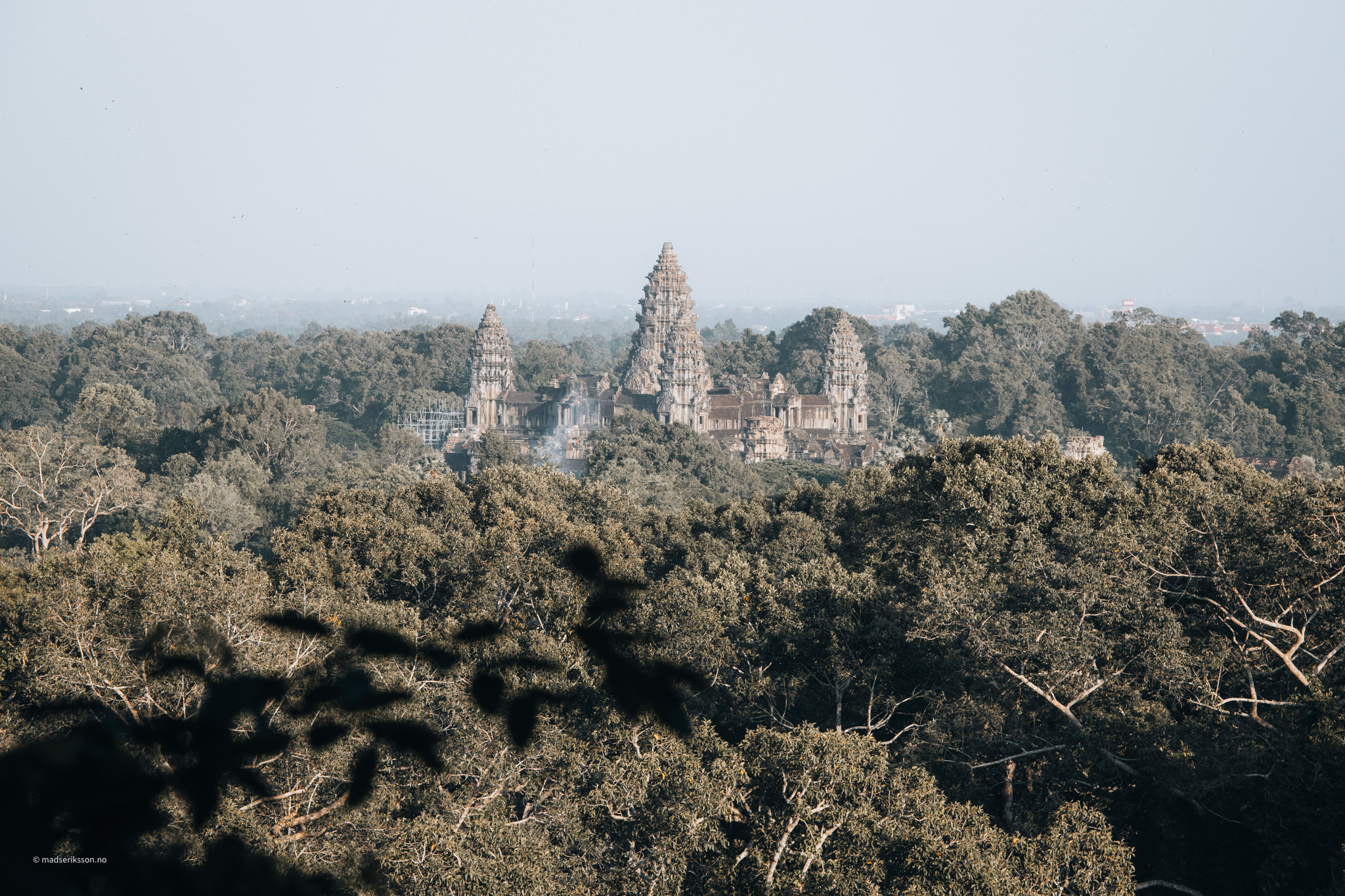 CitiesSiem Reap — The City at the Gate of the Largest Temple on Earth
City Frames · scroll-driven 3D
More cities in three dimensions
54 city guides open with a model built from open map data. Scroll, and the camera moves from landmark to landmark.
Departures · City Frames
Where to next?
| Time | Destination | Country | Status |
|---|
Live · position of the sun
Golden hour, right now
The low, warm light just after sunrise and just before sunset. These are the cities on the site where it is happening at this moment.