A great museum is an argument about what deserves to survive. Every object in it was chosen, bought, taken, excavated, donated or rescued by somebody who decided that this thing — a basalt stele, a Flemish altarpiece, a jade cabbage, a twenty-four-tonne disc of carved stone — should outlast the people who made it. The ten museums in this guide are the places where that argument has been made at the largest scale and with the most consequence. In Paris, a medieval fortress became a royal palace and then, in the middle of a revolution, the first great public museum of the modern age. In London, a physician’s cabinet of 71,000 curiosities grew into a collection of some eight million objects that is still free to enter. In Giza, a museum that took more than twenty years to build opened on 1 November 2025 within sight of the pyramids, and put the entire tomb treasure of Tutankhamun on display together for the first time. These are not simply buildings full of old things. They are the institutions that decided what the world’s cultural memory looks like.

Every serious list of the world’s great museums begins with the same handful of names, and for good reason. The Louvre, the British Museum and the Metropolitan Museum of Art are the three universal survey museums that attempt, each in its own way, to tell the whole story of human making under a single roof. The Vatican Museums hold the densest concentration of Renaissance masterpieces anywhere, and finish in the Sistine Chapel. The Prado, the Hermitage and the Uffizi are royal and princely collections that became public property and now define how the world sees Spanish, Russian-imperial and Florentine art. And three museums outside Europe and North America — the Museo Nacional de Antropología in Mexico City, the National Palace Museum in Taipei and the new Grand Egyptian Museum at Giza — exist to hold the inheritance of a single civilisation with a completeness no foreign museum can match. Two of the ten have their own full guides on madseriksson.no: the Louvre and the Museo Nacional de Antropología.
The ranking weighs four things. First and most heavily, the depth and importance of the collection: not merely its size, but how many of the objects in it are indispensable to the history of art and civilisation. Second, the building itself, because a museum housed in the Winter Palace or the Vatican is a different experience from one housed in a warehouse. Third, scale — the sheer quantity of what can be seen, and how much of human history it covers. Fourth, the visitor experience as it stands in late 2026: crowding, booking, opening hours, and whether a visit is realistically possible at all. That last criterion matters more than it once did. The State Hermitage in St Petersburg holds one of the three or four greatest collections on earth, but both the UK Foreign Office and the Norwegian Ministry of Foreign Affairs currently advise against all travel to Russia, and the ranking takes that into account.
How to read this ranking
The ranking is defended and subjective, as any ranking of museums must be. Specialist museums were excluded on principle: the ten here are institutions of national or civilisational scope, not single-artist or single-period collections. That rules out some of the most rewarding museums on the site — the Guggenheim Bilbao, whose titanium hull changed what a museum building could be; the Guggenheim in New York, Frank Lloyd Wright’s spiral on Fifth Avenue; the MUNCH museum in Oslo, which holds the largest body of Edvard Munch’s work anywhere; and teamLab in Tokyo, which is less a museum than an immersive art environment. The Rijksmuseum in Amsterdam was the closest omission: its Cuypers building and its Rembrandts and Vermeers are world-class, but its collection is essentially national, and on the combined criteria it falls just short of the National Palace Museum in Taipei, whose holdings span some eight thousand years of Chinese culture.
A note on numbers. Collection sizes are not counted the same way from one museum to the next: the British Museum’s eight million objects include coins, prints, drawings and archaeological fragments counted individually, the Hermitage’s three million include a numismatic collection that accounts for about a third of the total, and the Prado counts its holdings by paintings, drawings and prints separately. Visitor figures vary in the same way — some museums count calendar years, others financial years, and some include branch sites. The figures in this guide are the most recent each institution or its government has published, mostly for 2025, and where sources disagree the more conservative figure is used. None of the numbers decided the ranking on its own. A museum with fewer objects and more masterpieces will always outrank a larger one with fewer things that matter.
A note on visiting in 2026. Almost every museum on this list now works on timed entry, and for five of them — the Louvre, the Vatican Museums, the Uffizi, the Prado and the Grand Egyptian Museum — booking in advance is effectively the only way to avoid queuing for an hour or more in high season. Several have also changed their pricing: the Louvre introduced a higher tariff for visitors from outside the European Economic Area in January 2026, and the Grand Egyptian Museum has raised its prices for foreign visitors more than once since opening. The British Museum remains free, and the Met still allows New York State residents to pay what they wish. The practical advice is the same everywhere: go at opening time, choose a part of the museum rather than attempting all of it, and accept that the most famous room will be the most crowded one.
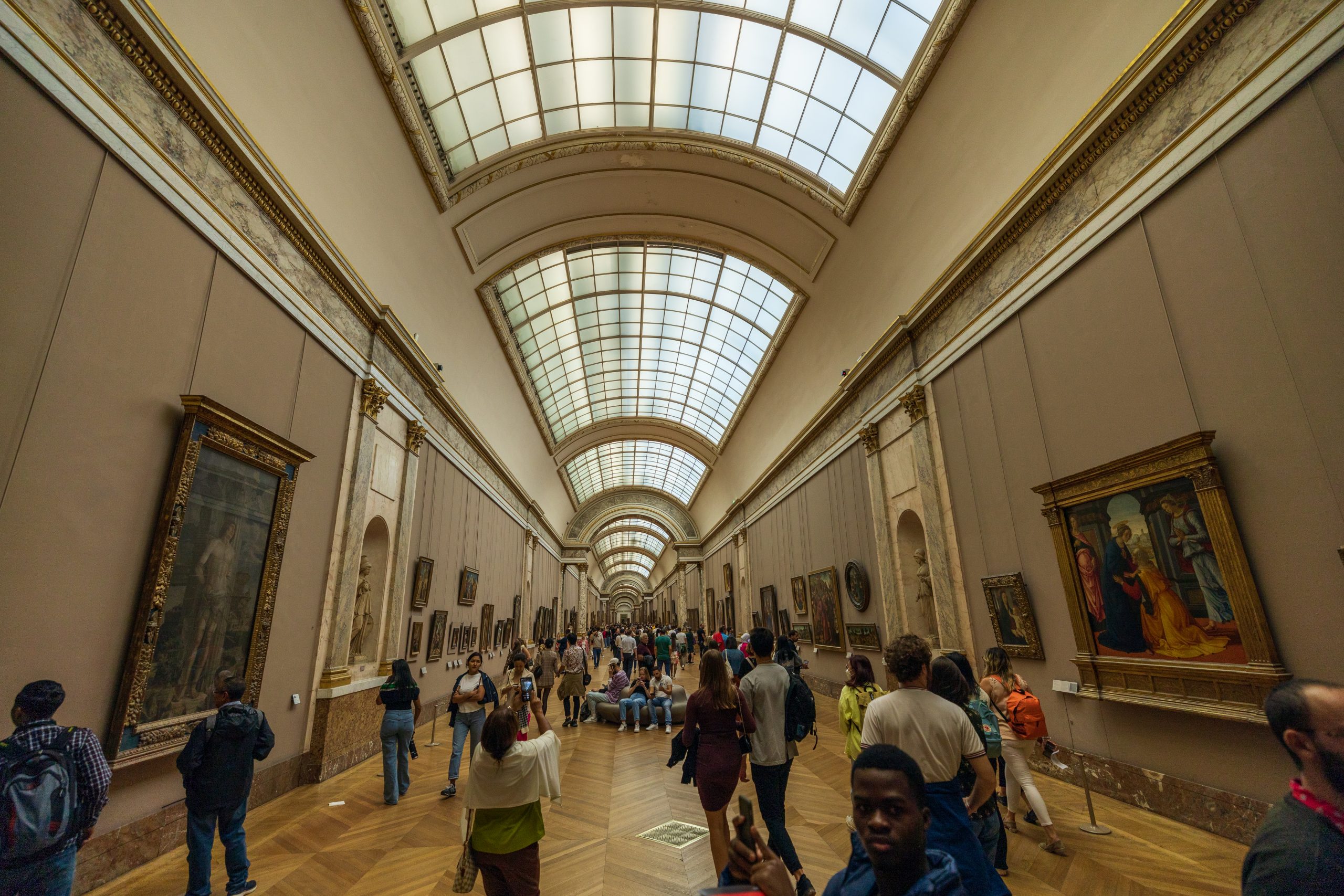
#1 The Louvre — The Palace That Became the Model for Every Museum
A medieval fortress, a royal palace abandoned for Versailles, a revolutionary statement that art belongs to the people, and a glass pyramid that once scandalised Paris — eight centuries of building wrapped around the widest and deepest collection of art and antiquities on earth, and still the most visited museum in the world
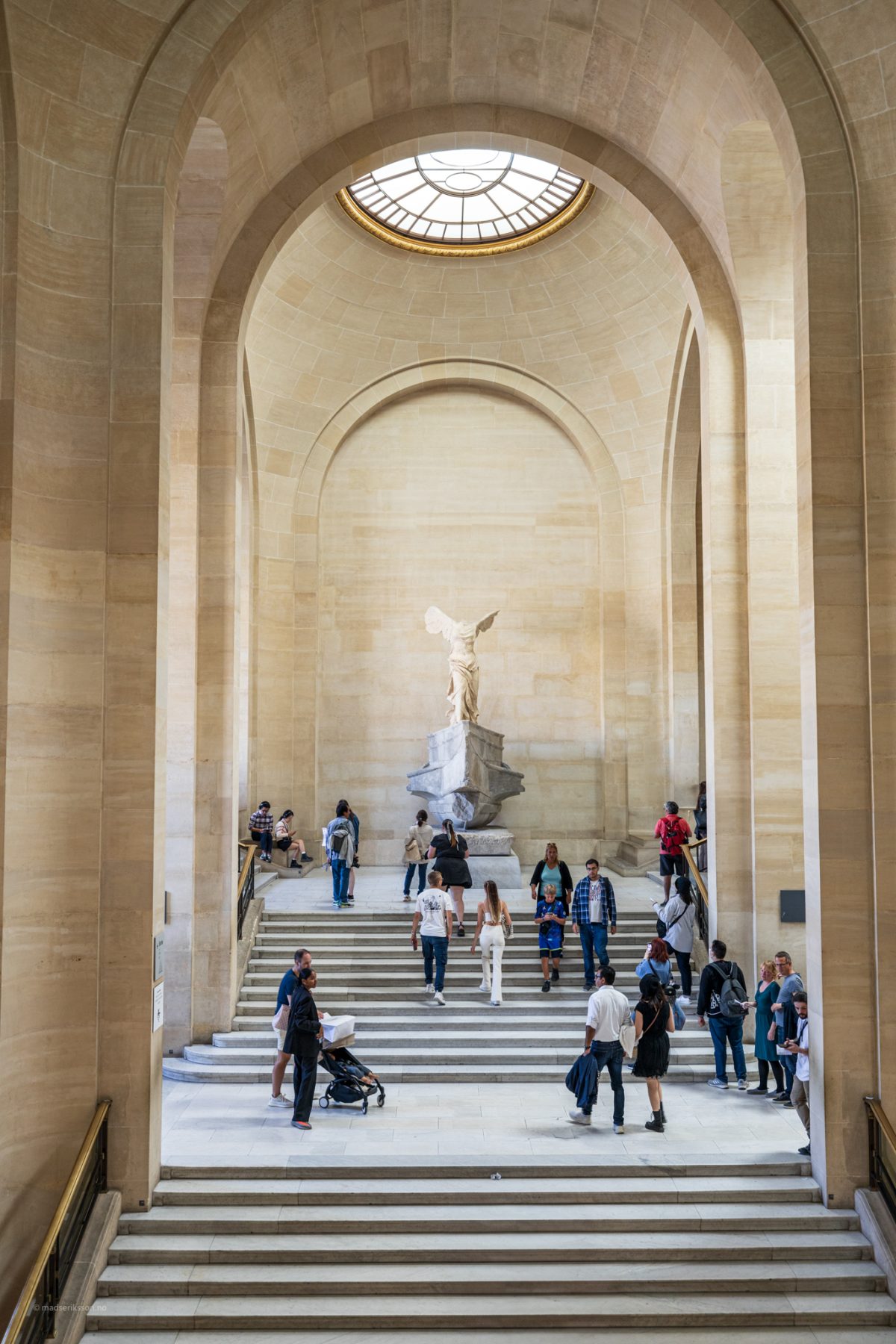
The Louvre ranks first because no other museum combines all four criteria at the same height. Its collection is genuinely universal — eight curatorial departments running from Egyptian and Near Eastern antiquities through Greek, Etruscan and Roman art, Islamic art, sculpture, decorative arts, prints and drawings to European painting up to the mid-nineteenth century — and within almost every one of those departments it holds objects that are the reference point for their field. The Code of Hammurabi, the basalt stele from around 1750 BC on which one of the earliest written law codes was carved, is in the Richelieu wing. The Venus de Milo and the Winged Victory of Samothrace, the latter placed at the head of the Daru staircase so that she appears to be landing on the prow of her ship as visitors climb towards her, are the two most famous Greek sculptures in the world. The Grande Galerie of Italian painting leads to the Salle des États and the Mona Lisa, but on the way it passes Raphael, Titian, Leonardo’s Virgin of the Rocks and his Virgin and Child with Saint Anne. The French paintings — David’s Coronation of Napoleon, Géricault’s Raft of the Medusa, Delacroix’s Liberty Leading the People — hang in rooms built to hold canvases of that size. Around half a million objects are in the collection; about 35,000 are on display at any time, across more than 72,000 square metres of galleries.
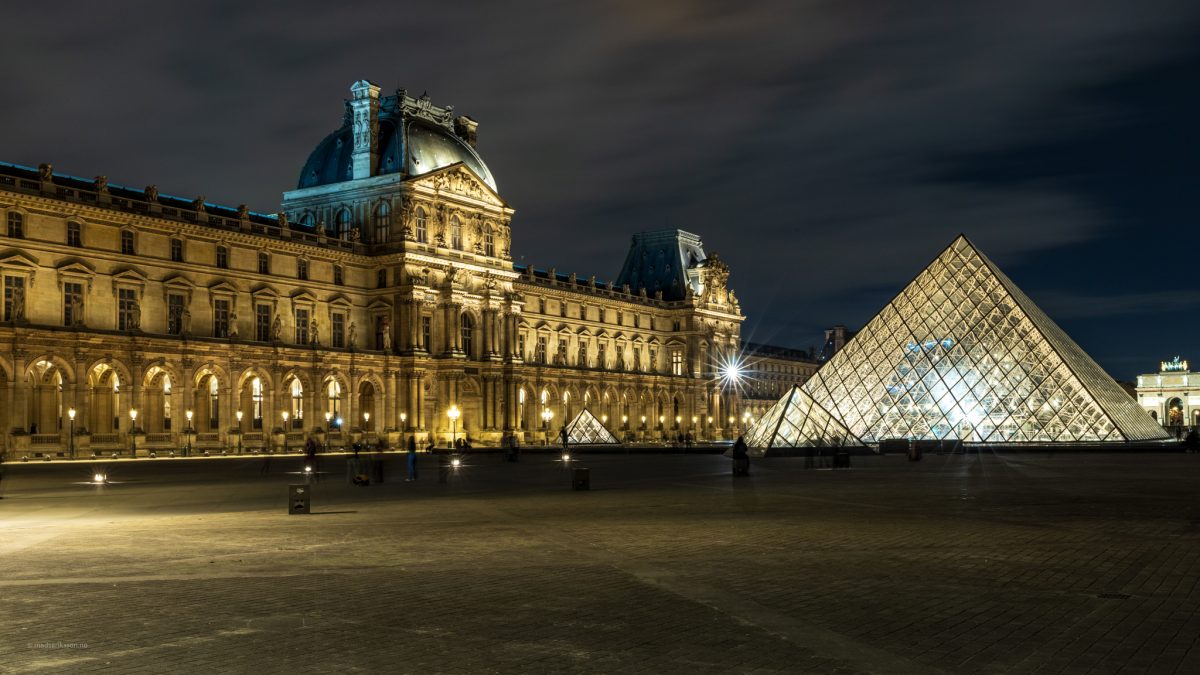
The building is the second reason, and it is inseparable from the first. Philip II began a fortress here around 1190, its round keep thirty metres high; the base of that keep and the moat walls are still visible beneath the Cour Carrée. Charles V made the castle a residence, Francis I began replacing it with a Renaissance palace in 1546, and successive kings pushed the building west along the Seine until it formed one of the longest palace facades in Europe. When Louis XIV left for Versailles in 1682, the Louvre became a home for academies, artists and the royal collections, and on 10 August 1793 the Revolution opened it as a public museum, conceived as proof that art belonged to the nation rather than the crown. Napoleon then filled it with the spoils of his campaigns, many of which had to be returned after 1815. The last great transformation came in the 1980s, when François Mitterrand’s Grand Louvre project moved the Ministry of Finance out of the Richelieu wing, dug a vast reception hall under the Cour Napoléon and crowned it with I. M. Pei’s glass pyramid — 673 panes, not the 666 of popular legend. The pyramid was attacked as a desecration when it was unveiled. It is now the most recognisable museum entrance in the world, and the hall beneath it, with its spiral stair and its view up through the glass to the palace facades, is one of the great public spaces of late-twentieth-century architecture. The building is also, unlike most of its rivals, a museum of itself: the excavated medieval foundations, the Renaissance Cour Carrée by Pierre Lescot and Jean Goujon, the ceilings of the Galerie d’Apollon painted for Louis XIV and the gilded apartments of Napoleon III are exhibits in their own right.
The visitor experience is the one criterion on which the Louvre is vulnerable, and the past year has tested it hard. On 19 October 2025 thieves used a furniture lift to reach a window of the Galerie d’Apollon in daylight and stole eight pieces of the French crown jewels; none had been recovered when the museum’s director, Laurence des Cars, resigned in February 2026. Her successor, Christophe Leribault, previously president of the Palace of Versailles, was appointed to deliver security and the “Louvre Nouvelle Renaissance” plan announced by President Macron in January 2025. In May 2026 a team led by Studios Architecture Paris with Selldorf Architects won the competition for its central element: a second main entrance at the eastern Colonnade, new reception spaces underground, and a dedicated route to the Mona Lisa designed to relieve the most crowded room in the building. The Galerie d’Apollon reopened on 22 July 2026, its cases empty. Since January 2026, visitors from outside the European Economic Area pay €32 instead of €22. None of this changes what is inside. The Louvre remains too large to see in a day, and the visit works best when that is accepted at the outset: choose one wing, or one department, and leave the rest for another time.
The Louvre is the museum that every other museum on this list measures itself against, sometimes in admiration and sometimes in reaction. It defined the idea that a nation’s greatest art should belong to everyone, and it did so in a palace built by the kings whose collections it nationalised. Eight centuries of French history are in the walls; five thousand years of human history are in the rooms. Nothing else does both at this scale.
Full Louvre guide on madseriksson.no → · Paris city guide →
#2 The British Museum — Two Million Years of Human History, Free, Under One Glass Roof
The first national public museum in the world, grown from one physician’s cabinet of curiosities into a collection of some eight million objects — the Rosetta Stone, the Parthenon sculptures, the Assyrian lions, Sutton Hoo — and still free to anyone who walks through the portico in Bloomsbury
The British Museum was the first national museum in the world to be owned by the public and open to it. When Sir Hans Sloane died in 1753, he left his collection of some 71,000 objects — books, manuscripts, natural specimens, coins, antiquities — to the nation in return for a payment to his heirs, and Parliament passed the British Museum Act on 7 June that year to buy it, along with two great libraries. The museum opened in Montagu House, a seventeenth-century mansion in Bloomsbury, on 15 January 1759, admitting “all studious and curious persons” without charge. What followed over two and a half centuries was the most ambitious act of collecting in history, driven by scholarship, wealth, empire and opportunity in proportions that are still argued about. The Rosetta Stone arrived in 1802, surrendered by the French army in Egypt under the terms of its capitulation; it is the object that allowed Jean-François Champollion to decipher hieroglyphs. The Parthenon sculptures, removed from Athens by the Earl of Elgin, were bought by Parliament in 1816. The Assyrian palace reliefs and human-headed winged bulls from Nimrud and Nineveh, the ship burial from Sutton Hoo, the Lewis Chessmen, the Mold gold cape, Hoa Hakananai’a from Rapa Nui and the Benin Bronzes followed. The collection now numbers about eight million objects, of which only around one per cent can be shown at once.
It ranks second rather than first because its building, while magnificent, is less a work of art in itself than the Louvre’s palace, and because its strength in painting is negligible: Britain’s national pictures went to the National Gallery and the Tate. What it offers instead is the most complete survey of material culture anywhere, from Olduvai stone tools nearly two million years old to the present. Robert Smirke’s Greek Revival building went up in stages between 1823 and the late 1840s, its south front a colonnade of Ionic columns that announced the museum as a temple of learning; the round Reading Room, where Karl Marx wrote much of Das Kapital, opened in 1857 in the courtyard. For a century and a half that courtyard was lost to the library’s bookstacks. When the British Library moved to St Pancras, Foster + Partners cleared it and roofed it with a lattice of 1,656 individually shaped glass panes, and the Great Court opened in December 2000 as the largest covered square in Europe. It is one of the finest public interiors in London, and it is free to enter. The British Museum is also, more than any other museum on this list, a place where civilisations can be compared directly: the Egyptian, Assyrian, Greek and Persian galleries open off one another on the ground floor, so that a visitor can move from the Rosetta Stone to the lion hunt reliefs of Ashurbanipal to the Parthenon frieze in ten minutes, and see in that walk how the art of the ancient Mediterranean world was made in conversation across borders.
The museum has had a difficult decade. In 2023 it emerged that some 2,000 items, many of them small gems and jewellery that had never been properly catalogued, had been stolen from storerooms over a long period; a staff member was dismissed and the director resigned. The debates over the Parthenon sculptures and the Benin Bronzes continue, and the building itself needs repair: leaking roofs and outdated services have closed galleries. The response is a masterplan whose first phase, the redevelopment of the Western Range — the galleries of ancient Egypt, Greece, Rome and the Middle East west of the Great Court — was awarded to the Lebanese-French architect Lina Ghotmeh in February 2025, with the museum to remain open while galleries close in sequence. None of that has dented its popularity: 6.44 million people visited in 2025, second only to the Natural History Museum among British attractions. The Egyptian sculpture gallery and the Rosetta Stone are crowded from opening; the upper-floor galleries of Mesopotamia, the Islamic world and early Britain are often half-empty and every bit as remarkable.
Admission to the British Museum has been free, with only brief interruptions, since 1759. The Rosetta Stone, the Parthenon frieze and a two-million-year-old hand axe can be seen by anyone who has a spare hour in Bloomsbury and no money at all. The questions about how much of this collection should be here are real and unresolved. The principle that it belongs to whoever walks in is the museum’s best answer to them.
Full London guide on madseriksson.no →
#3 The Metropolitan Museum of Art — Five Thousand Years of Art on the Edge of Central Park
The great encyclopaedic museum of the Americas, built in a single century by private money and civic ambition — an Egyptian temple, a Ming garden court, the arms of medieval Europe, the American Wing and one of the finest collections of European painting outside Europe, in more than two million square feet on Fifth Avenue
The Metropolitan Museum of Art is the youngest of the three universal museums and in some respects the most remarkable, because it had no royal collection to inherit. It was founded in 1870 by a group of New York businessmen, financiers and artists who believed that an American city should have a museum to rival those of Europe, and it opened at a temporary address in 1872 with a collection of 174 European paintings. In 1880 it moved to its present site on the eastern edge of Central Park, into a Gothic Revival building by Calvert Vaux and Jacob Wrey Mould that is now almost entirely buried inside later additions. The Beaux-Arts facade on Fifth Avenue, with its paired columns and its uncarved blocks of stone still waiting above the cornice for sculptures that were never made, was designed by Richard Morris Hunt and completed by his son in the early twentieth century. Over the following hundred years the Met grew by wing after wing into one of the largest art museums in the world, with more than two million square feet of floor space and a collection the museum counts at well over a million works — assembled almost entirely through gifts, bequests and purchases funded by private wealth.
What the Met does better than any museum on this list is breadth with quality. Its seventeen curatorial departments cover the full span from the ancient Near East to contemporary art, and few of them are weak. The Egyptian collection, built partly through the museum’s own excavations, culminates in the Temple of Dendur, a sandstone temple of the Roman period rebuilt in a glass hall in 1978. The European paintings include Vermeer, Rembrandt, Caravaggio, El Greco’s View of Toledo and Bruegel’s The Harvesters. The Arms and Armor galleries hold mounted knights in full plate. The American Wing has Emanuel Leutze’s Washington Crossing the Delaware and complete period rooms, including one by Frank Lloyd Wright. The Astor Court is a Ming-style scholar’s garden built by craftsmen from Suzhou. The Costume Institute stages the exhibitions that the Met Gala opens each May. In May 2025 the Michael C. Rockefeller Wing, home to the art of Africa, Oceania and the ancient Americas, reopened after a renovation of more than three years, and its first public day drew 33,700 people, the museum’s busiest day since 2017. A further transformation, the Tang Wing for modern and contemporary art designed by the Mexican architect Frida Escobedo, is under way.
The Met ranks third, below the British Museum, because its antiquities, for all their quality, cannot match London’s or Paris’s in the number of objects that are foundational to their fields, and because its building, though grand, is an agglomeration rather than a single work of architecture. On visitor experience it is excellent. In the fiscal year ending June 2025 it welcomed more than 5.7 million visitors at its Fifth Avenue building and the Met Cloisters, its medieval branch in Fort Tryon Park, and its galleries absorb crowds better than the Louvre’s. Residents of New York State may still pay what they wish; other visitors pay a fixed adult price. The museum stands on the Museum Mile, within walking distance of the Guggenheim, and backs directly onto Central Park, which turns a long day in the galleries into something more like a day in the city.
The Met was built without a king, an empire or a revolution. It was built by a city that decided, in 1870, that it deserved a museum as great as any in Europe, and then spent a century and a half paying for one. The Temple of Dendur, the Astor Court and the Washington Crossing the Delaware are all, in different ways, monuments to that decision — and to the peculiarly American conviction that private wealth owes something to the public.
Full New York guide on madseriksson.no →
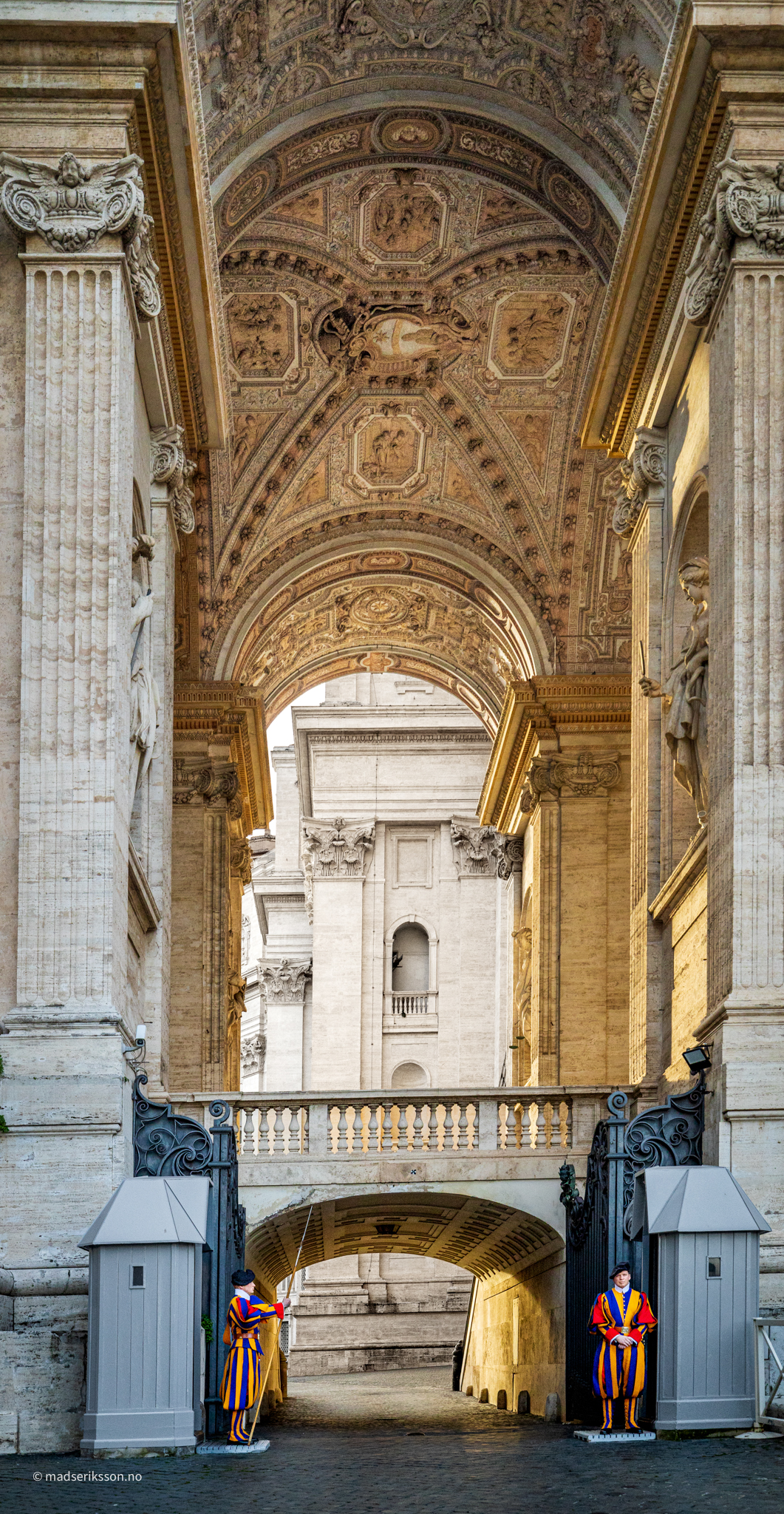
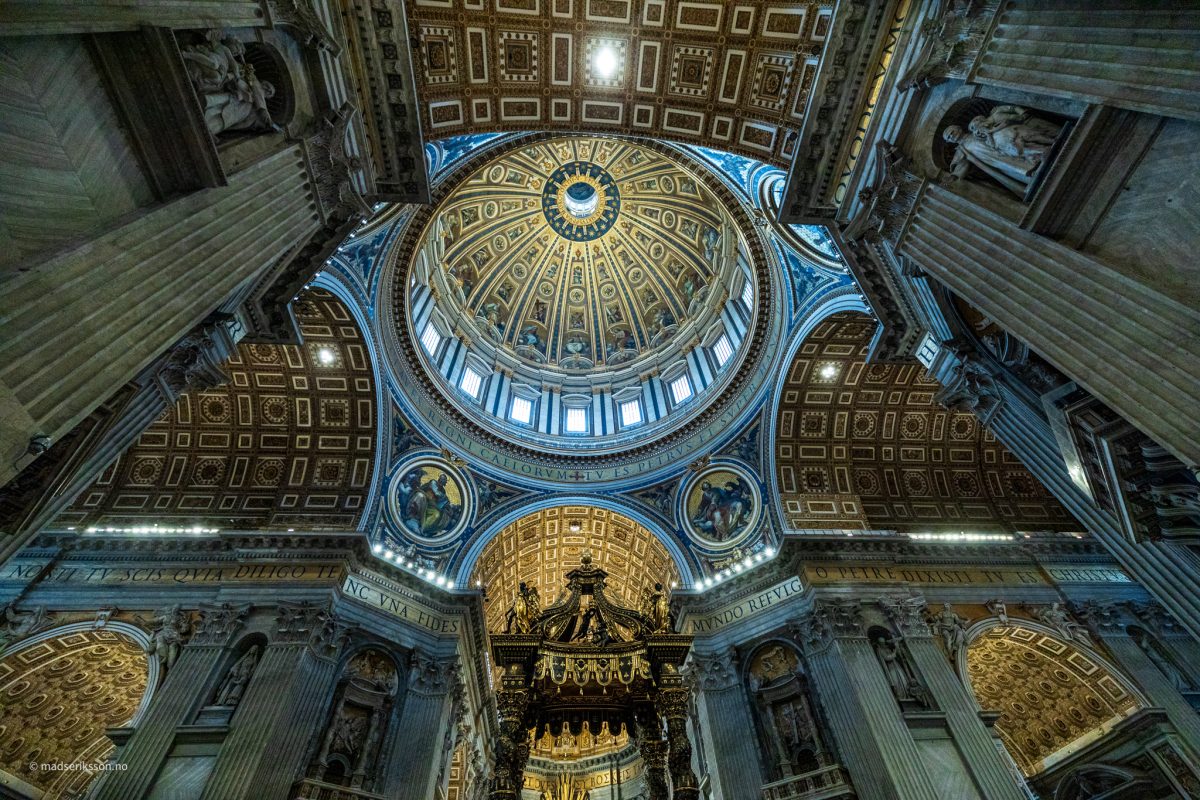
#4 The Vatican Museums — Five Centuries of Papal Collecting, Ending in the Sistine Chapel
The oldest museum complex on this list, founded around a single statue dug out of a Roman vineyard in 1506, and grown into a route of courtyards, corridors and frescoed rooms through the palaces of the popes — the Laocoön, the Apollo Belvedere, the Raphael Rooms, the Gallery of Maps and, at the end, Michelangelo’s ceiling
The Vatican Museums trace their origin to a precise day. On 14 January 1506, workmen digging in a vineyard on the Esquiline Hill, near Santa Maria Maggiore, uncovered a marble group of a Trojan priest and his two sons being crushed by sea serpents. Michelangelo was among those sent to look at it, and the sculpture was identified almost at once as the Laocoön described by Pliny the Elder. Pope Julius II bought it and set it in the sculpture courtyard of the Belvedere, beside the Apollo Belvedere he already owned, and from that act of display the papal collections grew into a public institution. The Museo Pio-Clementino, created in the late eighteenth century by Clement XIV and Pius VI to hold classical sculpture, remains the heart of the antiquities: the Belvedere Torso that Michelangelo studied, the Apollo, the round hall with its porphyry basin. Around it, successive popes added Egyptian and Etruscan museums, the Pinacoteca — given its own building in 1932, with Raphael’s Transfiguration and Caravaggio’s Entombment — collections of ethnography and modern religious art, and the double-helix ramp by Giuseppe Momo, built the same year, by which most visitors now leave. Unlike the other great universal museums, the Vatican did not acquire its classical sculpture abroad: almost all of it was excavated from the soil of Rome itself, from the villas, baths and gardens of the city that the popes ruled, which gives the antiquities galleries a coherence that collections assembled from across an empire do not have.
The collection is not as broad as those ranked above it, and it is heavily weighted towards classical sculpture and the art of the Renaissance papacy, which is why it ranks fourth. But nowhere is the density of masterpieces higher, and no other museum’s building is itself the greatest object in the collection. The route through the papal palaces runs some seven kilometres by the museums’ usual estimate, and it passes through rooms that were painted to be lived in. The Gallery of Maps, about 120 metres long, is lined with forty frescoed maps of the regions of Italy designed by the Dominican cosmographer Ignazio Danti in the early 1580s. The Raphael Rooms, the papal apartments of Julius II, contain the School of Athens, painted between 1509 and 1511, in which Plato and Aristotle walk together beneath an imagined classical vault. And the route ends in the Sistine Chapel, built under Sixtus IV in the 1470s and 1480s, its walls painted by Botticelli, Perugino and Ghirlandaio, its ceiling painted by Michelangelo between 1508 and 1512, and its altar wall filled with his Last Judgment of 1536–1541. It is still a working chapel: in May 2025 the cardinals were locked inside it for the conclave that elected Pope Leo XIV.
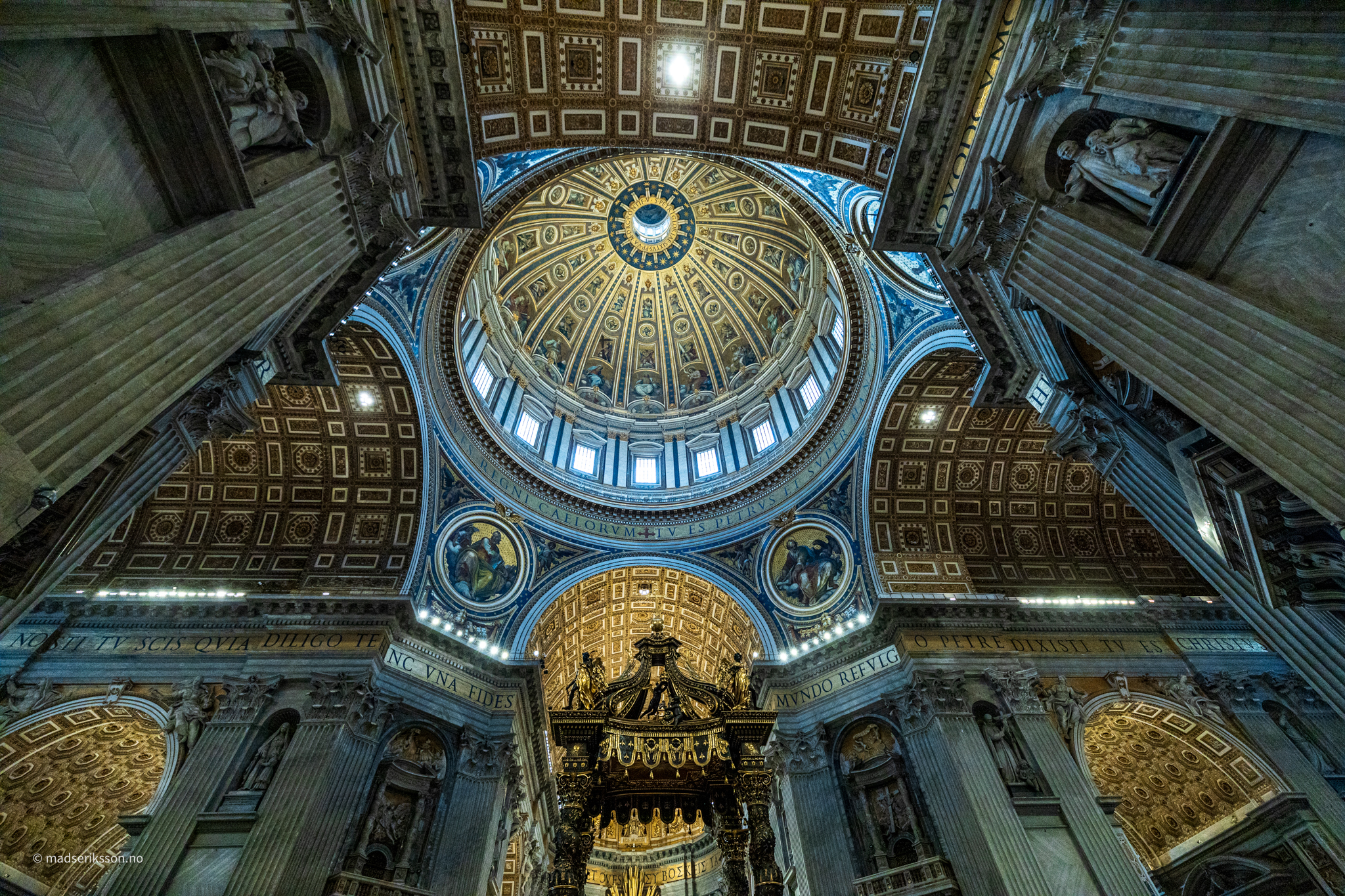
The Vatican Museums received about 6.9 million visitors in 2025, a Jubilee year in which Rome drew an estimated 33 million pilgrims and visitors, and the experience reflects it. The Sistine Chapel at midday in high season holds hundreds of people at once, guards call for silence that is never quite achieved, and photography is forbidden. Booking a timed ticket in advance is effectively essential, and the first slot of the morning or the seasonal evening openings are the only realistic way to see the ceiling with any space around it. The reward is worth the planning: a sequence of rooms that moves from the Laocoön to the Last Judgment, from the sculpture that the Renaissance learned from to the painting that the Renaissance ended with. The visit combines naturally with St Peter’s Basilica, a short walk around the Vatican walls, where Michelangelo’s dome rises over Bernini’s baldachin.
Most museums ask visitors to imagine where their objects came from. The Vatican Museums do not need to: the frescoes are still on the walls they were painted for, the Laocoön still stands in the courtyard where Julius II put it, and the Sistine Chapel still does the job it was built for. Few other places allow a visitor to walk through the Renaissance in the rooms in which it actually happened.
Full Rome guide on madseriksson.no → · St Peter’s Basilica →
#5 The Prado — The Greatest Collection of Paintings Ever Assembled by a Royal House
Three centuries of Habsburg and Bourbon taste, hung in a Neoclassical building originally designed for natural history — Velázquez’s Las Meninas, Goya’s Black Paintings, Bosch’s Garden of Earthly Delights, Titian, Rubens and El Greco in a depth that no other museum can match for these painters
The Prado is not a universal museum, and it does not try to be one. It is the collection of the Spanish crown, assembled over three centuries by monarchs who happened to rule over Flanders, Naples and much of the Americas and who had the money and the taste to buy the best painters of their time. Charles V and Philip II collected Titian as no one else did. Philip II bought Hieronymus Bosch, including the Garden of Earthly Delights. Philip IV employed Diego Velázquez as court painter for more than thirty years and acquired Rubens on a scale that gives the Prado the largest holding of his work anywhere. The Bourbons who followed added Goya, their own court painter. The building on the Paseo del Prado was designed by Juan de Villanueva in 1785 for Charles III as a cabinet of natural history; it was damaged during the Napoleonic occupation, then completed as a royal museum of paintings and sculpture and opened on 19 November 1819. Today the collection includes about 7,600 paintings, together with drawings, prints and sculpture, and the Jerónimos extension by Rafael Moneo, opened in 2007, wraps a reconstructed sixteenth-century cloister into the museum’s rear.
The argument for ranking the Prado fifth — above the Hermitage and the Uffizi, and above museums with far larger collections — is the concentration of supreme masterpieces in the galleries that matter. Las Meninas, painted in 1656, is the most discussed painting in the history of Western art: the infanta Margarita and her attendants, the painter himself at his canvas, the king and queen reflected in a mirror at the back of the room, and the viewer placed exactly where the royal couple must be standing. In the rooms below hang Goya’s Black Paintings, the fourteen murals he painted on the walls of his own house outside Madrid in his seventies, later transferred to canvas and given to the state in 1881; nothing in European art before them looks remotely like Saturn Devouring His Son. Add The Third of May 1808, Bosch’s triptych, Rogier van der Weyden’s Descent from the Cross, Titian’s portrait of Charles V on horseback, Dürer’s self-portrait of 1498 and the El Grecos, and the Prado holds a sequence of paintings that the Louvre, for all its size, cannot equal in these schools. As the Madrid guide on this site puts it, the Louvre has the Flemish but not the Spanish, the Uffizi has the Italian but neither of the others.
The Prado received a record 3,513,402 visitors in 2025, and its director, Miguel Falomir, announced in January 2026 that the museum would set a cap on numbers to protect both the visitors and the paintings. The building is compact by the standards of this list, the visit manageable in a day, and the Paseo del Prado outside — inscribed with the Buen Retiro park as a UNESCO World Heritage Site in 2021 — puts the Thyssen-Bornemisza and the Reina Sofía, home of Picasso’s Guernica, within a ten-minute walk. Foster + Partners and Rubio Arquitectura are restoring the Salón de Reinos, the surviving hall of Philip IV’s Buen Retiro palace, as a further extension. The visit is best organised around the Villanueva building’s central axis: the long central gallery of Spanish and Italian painting on the main floor leads to the rotunda of Velázquez, with Las Meninas in its own room, and the Goya galleries lie at either end and on the floor below. The Prado loses ground to the museums above it on breadth and on scale. It concedes nothing on quality.
The Prado is the clearest argument on this list that size is not the measure of a museum. A visitor can walk from Las Meninas to the Black Paintings in five minutes. Between them, they contain most of what European painting learned about light, about looking and about despair in the two centuries that separate them. No museum anywhere has a shorter walk between two such rooms.
Full Madrid guide on madseriksson.no →
#6 The State Hermitage — The Tsars’ Palace and One of the Great Collections of the World, Behind a Closed Border
Catherine the Great’s private gallery, grown into a complex of palaces on the Neva with more than three million items — Rembrandt, Leonardo, Matisse, Scythian gold and the Peacock Clock — ranked on its collection and its building, and held at sixth because most Western governments currently advise against travel to Russia at all
On collection and building alone, the Hermitage would rank higher than sixth. It was founded in 1764, when Catherine the Great bought a group of paintings that the Berlin merchant Johann Ernst Gotzkowsky had assembled for Frederick the Great and that Frederick, impoverished by the Seven Years’ War, could no longer afford. Catherine went on to buy entire collections across Europe — the Crozat collection from Paris, the Walpole pictures from Houghton Hall in England — and her successors kept buying. The result, after the Revolution added the confiscated collections of the Russian aristocracy and of the Moscow merchants Sergei Shchukin and Ivan Morozov, is a museum of more than three million items. Its Rembrandts include The Return of the Prodigal Son; it holds two of the very few paintings generally accepted as Leonardo’s, the Benois Madonna and the Litta Madonna; its French modern paintings, now shown in the General Staff Building across Palace Square, include Matisse’s Dance and Music. The Scythian and Siberian gold, the antiquities and the numismatic collection, which alone accounts for about a third of the total, would each be the pride of a lesser museum.
The building is the other half of the case. The Hermitage occupies a chain of palaces along the Neva: the Winter Palace, built by Bartolomeo Rastrelli between 1754 and 1762 as the principal residence of the tsars, with its white-and-gold Jordan Staircase; the Small and Old Hermitages that Catherine added to house her collections; the New Hermitage, designed by Leo von Klenze and opened to the public in 1852, its portico carried by granite Atlantes; and the Hermitage Theatre. In the Pavilion Hall of the Small Hermitage stands the Peacock Clock, an eighteenth-century automaton by the London jeweller James Cox in which a gilded peacock still spreads its tail. The Winter Palace was stormed in October 1917; during the siege of Leningrad more than a million objects were evacuated east by train while the empty palace was used as a shelter. Few museum buildings anywhere have been so directly the stage of their country’s history. Seen from the Neva or from Palace Square, with Rastrelli’s green-and-white facades and the Alexander Column in front of them, the Hermitage is also simply one of the most beautiful museum complexes on earth, and the historic centre of St Petersburg around it is a UNESCO World Heritage Site.
The ranking is held down by the visitor-experience criterion, and that is a deliberate judgement. The Hermitage remained open throughout and received about 3.8 million visitors in 2025, overwhelmingly from within Russia. But as of autumn 2026 the UK Foreign, Commonwealth & Development Office advises against all travel to Russia, citing the war in Ukraine, drone attacks and air-defence activity, the risk of arbitrary detention and the lack of flights home, and the Norwegian Ministry of Foreign Affairs has advised against all travel there since February 2022. Many other European governments give the same advice. Visa and Mastercard cards issued abroad do not work in Russia, direct flights from most of Europe have ceased, and many travel insurance policies exclude travel undertaken against official advice. For most readers of this site, the Hermitage is a museum to know about rather than one to plan for, and its international partnerships have largely been severed: the Amsterdam branch cut its ties in 2022 and has since been renamed. Its place on this list reflects what it holds. Its position on the list reflects the fact that, for now, almost no one from outside Russia can reasonably go and see it.
The Hermitage is the one museum on this list whose ranking is limited by the world rather than by itself. Its Rembrandts, its Leonardos and its palace have not changed. What has changed is the question that every visitor to a museum must eventually answer — whether they can get there safely — and for now, according to the governments whose citizens read this site, the answer is no.
#7 The Grand Egyptian Museum — Tutankhamun’s Whole Tomb, Within Sight of the Pyramids
Twenty years in the building and finally open in full since 1 November 2025: the largest museum in the world devoted to a single civilisation, with Ramesses II in the atrium, a six-storey staircase of pharaohs, Khufu’s cedar boat and, for the first time, the complete burial treasure of Tutankhamun shown together
The Grand Egyptian Museum is the newest institution on this list by more than half a century, and the one whose inclusion needed the most careful checking. It was announced in 1992; an international architecture competition was won in 2002 by the Irish practice Heneghan Peng; construction began in 2005; and the opening date was postponed so many times that it became a running joke in Cairo. Parts of the museum admitted visitors on a trial basis from October 2024. The museum then closed for most of the second half of October 2025, was formally inaugurated on 1 November 2025 in the presence of heads of state and royalty from around the world, and opened in full to the public on 4 November 2025. As of autumn 2026 it is fully open, and according to the Egyptian Ministry of Tourism and Antiquities it received about four million visitors between its official opening and the end of August 2026. The old Egyptian Museum on Tahrir Square, which once held almost all of what is now at Giza, remains open as a separate museum, and the royal mummies, moved in a televised procession in 2021, are now shown at the National Museum of Egyptian Civilisation in Fustat. Taken together, the three museums give Cairo a concentration of Egyptian antiquities that no city outside Egypt can approach.
The building is a long, angled wedge of translucent alabaster-like stone and glass on the edge of the desert plateau, about two kilometres from the pyramids, with its geometry aligned on sightlines towards them. Visitors enter a vast atrium dominated by the colossal granite statue of Ramesses II, 11 metres tall and 83 tonnes, which stood in Ramses Square in central Cairo until 2006. From there the Grand Staircase climbs six storeys past more than sixty statues, sarcophagi and architectural fragments, arranged by theme, to a terrace with a framed view of the pyramids. The twelve main galleries cover Egyptian history from prehistory to the Roman period. The two Tutankhamun halls hold around 5,400 objects from the boy king’s tomb, discovered by Howard Carter in 1922 — the gold mask, the nested shrines, the chariots, the beds, the jewellery, the sandals and much that had never been displayed — brought together in one place for the first time. A separate pavilion shows the first solar boat of Khufu, 4,600 years old, moved from beside the Great Pyramid in 2021, and since December 2025 conservators have been reassembling its twin, from some 1,650 wooden pieces, in full view of visitors, in work expected to take about four years.
It ranks seventh rather than higher because its collection, however extraordinary, is devoted to one civilisation, and because it is still young: the Louvre, the British Museum and the Met each hold Egyptian collections whose individual masterpieces rival Giza’s own, and a museum’s reputation is also built on scholarship, loans and decades of curatorial work that the GEM is only beginning. It ranks above the museums below it because the Tutankhamun galleries are, by any measure, among the most important museum displays opened anywhere this century, and because the setting is unrepeatable: a museum of ancient Egypt at the foot of the last surviving wonder of the ancient world. The museum is busy, particularly in the winter season from October to April, and timed tickets bought online in advance are strongly advised. Foreign visitors pay a substantially higher admission price than Egyptians, and prices have been raised more than once since opening, so the current tariff should be checked before a visit.
For a century after Howard Carter opened the tomb, the treasure of Tutankhamun was shown in fragments: the mask in one room of a crowded nineteenth-century museum on Tahrir Square, the rest scattered through cases, stores and touring exhibitions. At Giza it is finally shown as what it was — the complete burial of one king — a few kilometres from the pyramids of the kings who came a thousand years before him.
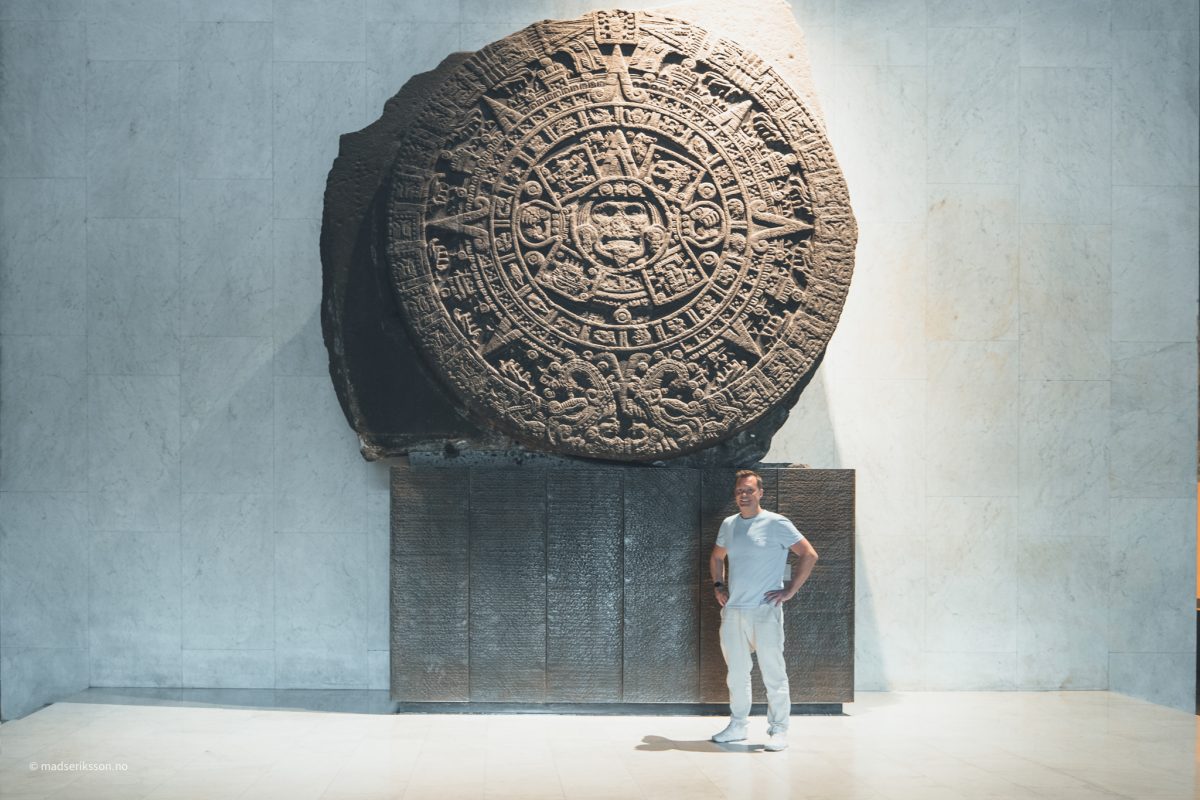
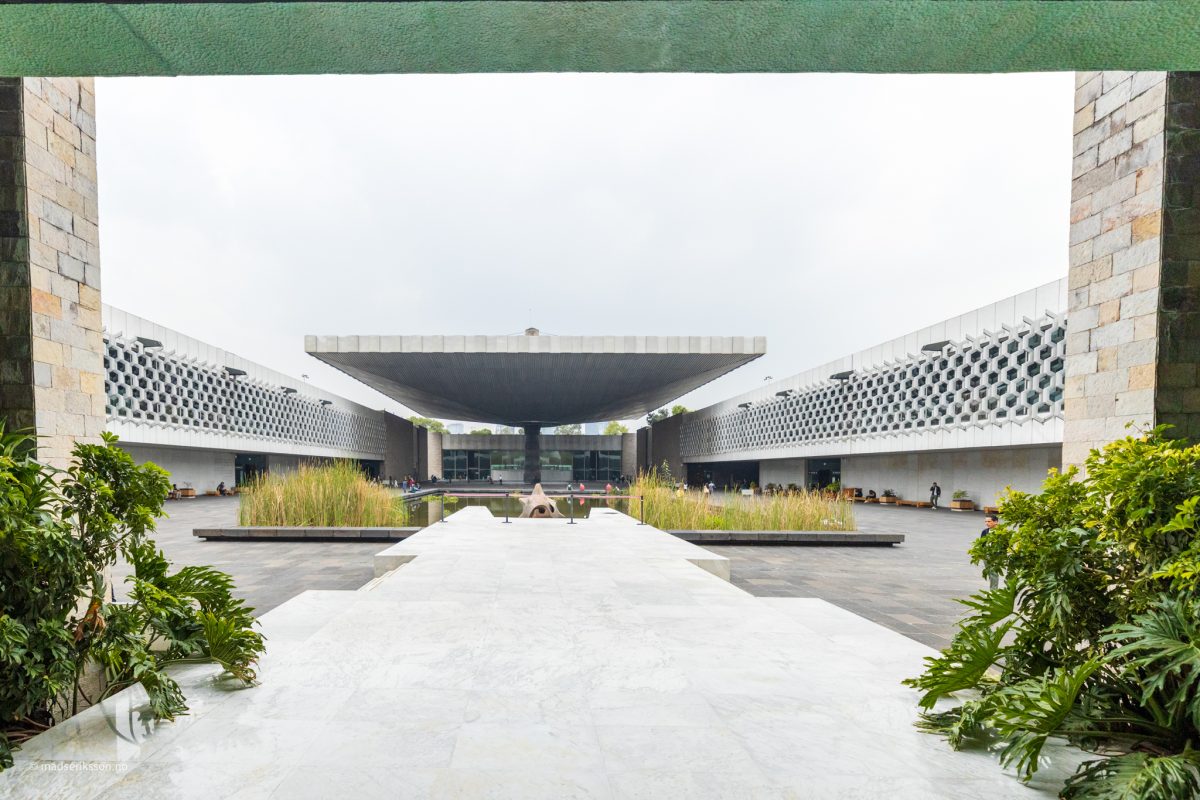
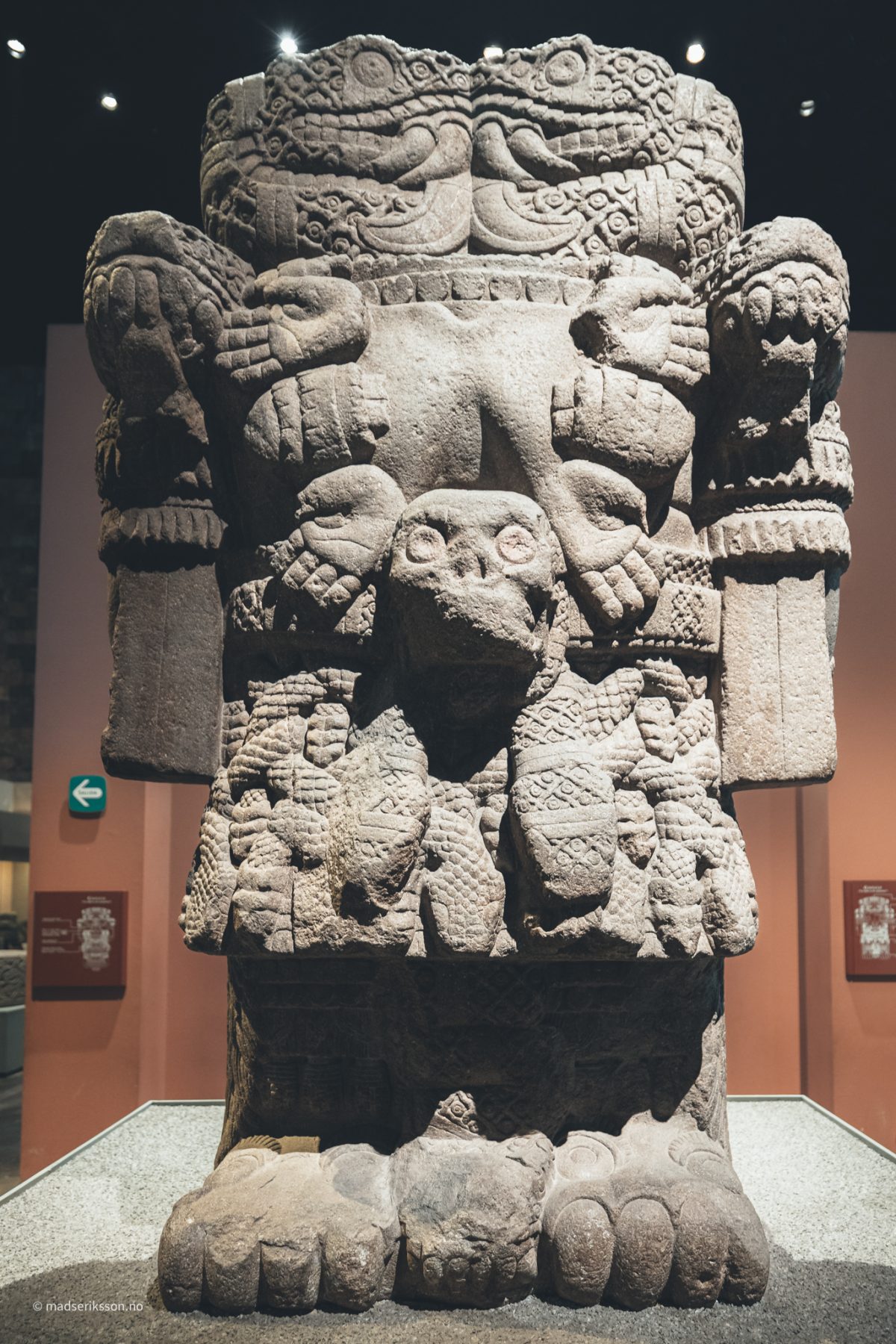
#8 Museo Nacional de Antropología — Three Thousand Years of Mesoamerica Around a Single Column
The greatest museum of pre-Columbian civilisation anywhere, built in nineteen months as a statement of national identity — the Aztec Sun Stone, Coatlicue, the Olmec colossal heads and the tomb of Pakal — in one of the finest modernist museum buildings of the twentieth century
The Museo Nacional de Antropología is sometimes called the Louvre of Latin America, a comparison that undersells what makes it distinctive. The Louvre gathers the world; this museum gathers one world — the civilisations that rose and fell in what is now Mexico over the three thousand years before the Spanish arrived — and it does so in the country those civilisations built, as an argument about who Mexicans are. It was born of a conviction that took hold in Mexico between the 1940s and the 1960s: that the pre-Columbian past was not a prologue to the nation’s history but its central chapter. President Adolfo López Mateos commissioned the architect Pedro Ramírez Vázquez to build a museum worthy of that idea, and the building was completed in nineteen months, opening on 17 September 1964 in the Bosque de Chapultepec. The twenty-two archaeological halls on the ground floor run from the peopling of the Americas through the Preclassic, Teotihuacán, the Toltecs, the Mexica (Aztecs), Oaxaca, the Gulf Coast, the Maya and the cultures of the north and west; the upper floor shows how the descendants of those peoples live today.
The objects are the reason it belongs on this list. In the Mexica hall, the Piedra del Sol — the Aztec Sun Stone, a basalt disc 3.6 metres across and weighing about 24 tonnes, unearthed beneath the Zócalo in 1790 — is set against the end wall like an altar, and nearby stands the colossal statue of Coatlicue, the earth goddess with a skirt of serpents and a necklace of hands and hearts, so disturbing to the colonial authorities that it was reburied after its discovery. The Teotihuacán hall reconstructs a section of the Temple of the Feathered Serpent at full scale, its painted serpent heads projecting from the facade — the same temple described in the site’s guide to the pyramids of Teotihuacán. The Gulf Coast hall holds Olmec colossal heads, the oldest monumental sculpture of the Americas. The Maya hall descends into a full-size replica of the tomb of Pakal, king of Palenque, who died in 683 CE, with his jade death mask. Few museums anywhere hold so many objects that are the single defining image of an entire civilisation. The ethnographic rooms upstairs, often skipped, complete the argument: they show the costume, ritual and daily life of the indigenous peoples of present-day Mexico — the Nahua, Maya, Zapotec, Mixtec, Huichol and many others — and make the point that these civilisations did not end in 1521.
The building is the third reason, and it is one of the best museum designs of its century. Ramírez Vázquez wrapped the halls around a courtyard some 180 metres long, each hall opening onto it through glass, so that visitors return to daylight and the garden between civilisations. At the courtyard’s head stands El Paraguas, the Umbrella: a concrete canopy of 4,200 square metres resting on a single eleven-metre bronze-clad column, with water falling in a continuous curtain from its rim. The museum set a record of more than five million visitors in 2025 and received the Princess of Asturias Award for Concord the same year. It ranks eighth, below the Grand Egyptian Museum, because its single-civilisation focus is matched at Giza by a setting and a treasure of comparable consequence, and above the Uffizi and the National Palace Museum because its scale and its building exceed theirs. It is closed on Mondays; a minimum of three hours is needed, and a full day is not excessive.
The Sun Stone was dug up in 1790 beneath the main square of a city that the Spanish had built on top of Tenochtitlan. For decades it was set into the wall of the cathedral tower, an Aztec monument displayed by the people who had destroyed the Aztecs. In the museum it stands at the end of a hall that is designed like a temple, at the centre of a building designed to tell Mexico that its history began long before 1521. Few objects in any museum carry that much argument.
Full guide to the Museo Nacional de Antropología → · Mexico City guide →
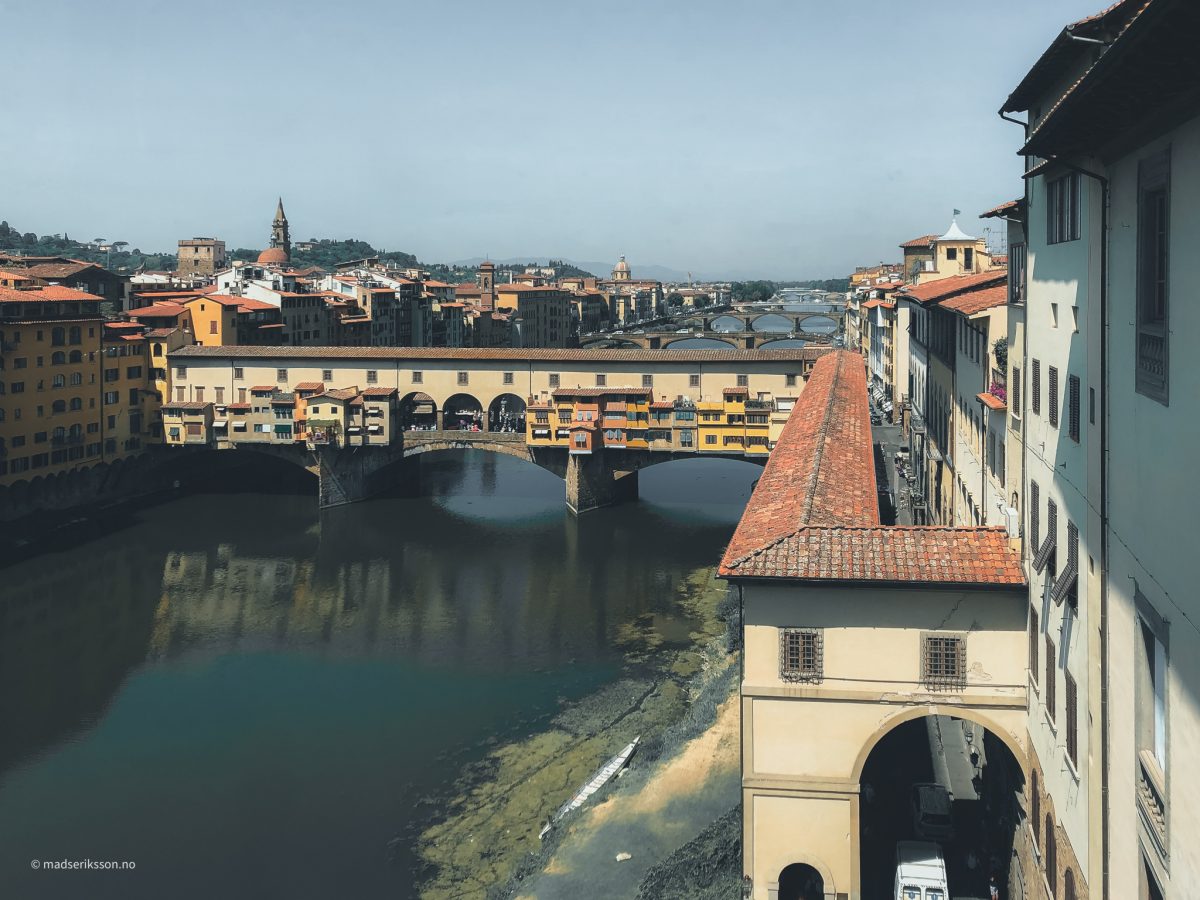
#9 The Uffizi — The Medici Offices Where the Renaissance Is Kept
Giorgio Vasari’s office building for the Medici bureaucracy, turned by the family into a gallery for its collections and left to Florence for ever by the last of the line — Botticelli’s Birth of Venus and Primavera, Leonardo, Michelangelo’s only finished panel painting, Titian’s Venus of Urbino and Caravaggio
The Uffizi was not built as a museum. Its name means “offices”: in 1560 Cosimo I de’ Medici commissioned Giorgio Vasari to build a single administrative block for the magistracies and guilds of his new Tuscan state, two long wings joined by a short arcade on the Arno, completed in 1581. His son Francesco I turned the top floor into a gallery for the family’s statues and paintings, and in 1584 Bernardo Buontalenti finished the Tribuna, an octagonal room with a mother-of-pearl dome designed to hold the most precious objects of the collection. Over the next century and a half the Medici kept adding to it. When the dynasty died out, its last heir, Anna Maria Luisa de’ Medici, made the decision that defines the museum: under the Family Pact of 1737 she left the collections to the incoming house of Lorraine on condition that they remain in Florence for the public benefit and never leave the city. The gallery was officially opened to the public in 1769. Vasari also built the elevated corridor that runs from the Uffizi over the Ponte Vecchio to the Palazzo Pitti, so that the grand duke could cross the city without meeting his subjects; after years of closure and restoration it reopened to visitors in December 2024.
The collection is the most important single gathering of Italian Renaissance painting in the world, and room for room it holds as many indispensable pictures as any museum on this list. The Botticelli rooms contain both the Birth of Venus and the Primavera. Leonardo’s Annunciation and his unfinished Adoration of the Magi are here, as is Michelangelo’s Doni Tondo, the only finished panel painting generally accepted as his. The sequence runs from Cimabue and Giotto’s altarpieces of the Maestà through Piero della Francesca’s portraits of the Duke and Duchess of Urbino, Raphael, Titian’s Venus of Urbino and Caravaggio’s Medusa and Bacchus to Artemisia Gentileschi’s Judith Slaying Holofernes. The building carries its own scars: on 27 May 1993 a Mafia car bomb exploded in Via dei Georgofili beside the gallery, killing five people, destroying several paintings and damaging dozens more.
The Uffizi ranks ninth because it is, in the end, a specialist museum of extraordinary quality rather than a museum of the widest scope, and because it is one of the most crowded on the list relative to its size. The Uffizi Gallery alone received about 2.7 million visitors in 2024, in a city of some 370,000 residents that receives many millions of tourists a year. As the site’s Florence guide notes, the gallery, the Accademia and the cathedral climb require booking well in advance in high season and are often visited under conditions that bear little resemblance to the contemplation the art invites. The way to see it properly is to book the first entry of the day or a winter afternoon, and to walk past the crowd at the Birth of Venus to the less visited rooms, where the Piero portraits and the Leonardo Annunciation can often be seen in near silence. From the windows of the corridor at the river end, the Ponte Vecchio and the Vasari Corridor stretch across the Arno below.
Anna Maria Luisa de’ Medici could have let the collections go with the dynasty, as most ruling families did. Instead she bound them to the city by contract. Almost three centuries later, the Birth of Venus still hangs a few hundred metres from the workshop in which it was painted, because one woman, the last of her family, wrote a clause in 1737 that no one has since dared to break.
Full Florence guide on madseriksson.no →
#10 The National Palace Museum — The Emperors’ Collection That Crossed the Strait
Nearly 700,000 objects from the imperial collections of the Song, Yuan, Ming and Qing dynasties, carried across wartime China for sixteen years and shipped to Taiwan in 3,824 crates in 1949 — jade, bronze, porcelain, calligraphy and painting of a quality no other museum outside Beijing can approach
The National Palace Museum holds the core of the art collections of the Chinese emperors, and the story of how they reached a hillside in northern Taipei is one of the great odysseys in the history of museums. The Palace Museum was founded in the Forbidden City in Beijing on 10 October 1925, after the last emperor, Puyi, was expelled. In 1933, as Japanese forces advanced into northern China, its curators packed the finest objects into crates and sent them south. For sixteen years the collection moved by train, truck, boat and on the backs of porters between Shanghai, Nanjing and remote towns in the southwest, through the Sino-Japanese War and then the civil war, with remarkably few losses. In the winter of 1948–49, as the Nationalist government collapsed, a selection of the very best was shipped across the Taiwan Strait in three consignments — 3,824 crates from the Palace Museum and other national institutions, arriving in February 1949 — and stored for years in a sugar warehouse and then in tunnels near Taichung. The museum building in Taipei’s Shilin district, a palace-style structure by the architect Huang Baoyu, opened on 12 November 1965. In 2025 the institution marked a century since its founding.
The collection, counted at 699,119 objects in December 2025, is the finest of Chinese imperial art anywhere, and in calligraphy, painting and early bronzes it is unrivalled. The Mao Gong Ding, a late Western Zhou bronze cauldron of the ninth century BC, carries the longest known inscription on any Chinese bronze, almost five hundred characters. The Song dynasty landscape paintings include Fan Kuan’s Travellers among Mountains and Streams, one of the founding works of Chinese landscape painting, shown only rarely to protect it from light. The Ru ware ceramics of the Northern Song, of which fewer than a hundred pieces are known worldwide, are represented here in greater numbers than anywhere else. The most famous objects, though, are two small carvings from the Qing court: the Jadeite Cabbage, a piece of green-and-white jadeite carved into a cabbage with two insects hidden in its leaves, and the Meat-shaped Stone, a piece of banded jasper carved and stained to resemble a cube of braised pork belly, skin and fat and all. Both draw queues of their own.
The National Palace Museum ranks tenth because its scale on display is modest by the standards of this list — only a small fraction of the collection can be shown at once, in rotating exhibitions — and because its building, though handsome, is not in itself a major work of architecture. It holds its place over the Rijksmuseum and other close contenders because of the depth and importance of what it holds: for anyone who wants to understand Chinese civilisation through its finest objects, there are only two places in the world to go, and this is the one with the greater share of the imperial painting and calligraphy. The Taipei branch received about 2.4 million visitors in 2025; a Southern Branch, opened in Chiayi County in December 2015, shows Asian art more broadly. Tour groups crowd the Jadeite Cabbage room from mid-morning; the first hour after opening is the calmest time, and the museum’s small gardens on the hillside offer a pause between galleries.
The crates were packed in 1933 to save the emperors’ treasures from an invading army. Most of them were not unpacked in a permanent home for more than thirty years, and many of the objects they protected had spent centuries in the Forbidden City before that. The fact that a ninth-century BC bronze and a thousand-year-old Song landscape now hang in good light in Taipei is the result of one of the longest and most improbable acts of curatorial care in history.
«Every museum on this list exists because someone decided that certain things should not be lost. Julius II decided it about a marble group dug out of a vineyard. Catherine the Great decided it about a consignment of paintings a Prussian king could not afford. Anna Maria Luisa de’ Medici decided it about her family’s entire collection, and wrote it into a contract. The curators of the Palace Museum decided it in 1933 and spent sixteen years carrying crates across a country at war. Mexico decided it about its own deep past, and built a museum in nineteen months to say so. Egypt decided it about Tutankhamun, and took more than twenty years to give him a home within sight of the pyramids. The great museums are the sum of those decisions, and of the arguments that still surround some of them. They are also, at their best, the most generous institutions any society has invented: places where a basalt law code from Babylon, a painting by Velázquez or a jade cabbage from the Qing court can be stood in front of by anyone who walks in. The ten here do that at a scale, and with a quality, that no others match.»
More in the same area
 ArchitectureEurope’s 10 Greatest Cathedrals and Churches
 ArchitectureTen Buildings That Changed Their Cities — Modern Architecture Ranked on Impact, Not Image
 ArchitectureThe World’s 25 Finest Observation Decks — Ranked on the View, Not the Height
 CitiesThe World’s 10 Great Food Markets
 Train travelThe World’s 10 Great Railway Journeys
 NatureThe World’s 15 Most Spectacular Waterfalls