A great railway journey is an argument conducted in iron and stone: that a mountain range, a desert, a frozen plateau or a continent can be crossed on a fixed line, at a fixed gradient, to a timetable, and that the people who built the line were right to try. The ten journeys in this ranking were chosen because each of them wins that argument in a way that is still visible from the window. On the Bernina line, a narrow red train climbs to 2,253 metres without a single tooth of rack and then spirals down a stone viaduct into the palms of Italy. On the Bergen Line, a mainline railway runs across the largest mountain plateau in Europe to stations that have never had a road. On the Darjeeling Himalayan Railway, a two-foot-gauge steam locomotive built in Glasgow pushes its carriages through a bazaar, close enough to the stalls to touch the fruit. In Japan, a train leaves Tokyo every few minutes and arrives in Osaka within seconds of the timetable, as it has done since 1964. These are not rides. They are the most complete expression of what a railway can do.

Every list of the world’s great railway journeys is in part a list of the world’s great obstacles. The Alps, which the Swiss crossed with spirals, rack rails and viaducts so finely judged that UNESCO now protects two of the lines as a landscape. The Hardangervidda plateau, where Norwegian navvies built their own road before they could build a railway, and where snow still closes the line some winters. The Himalayan foothills, which a railway agent proposed to climb in 1879 with a gauge of two feet. Siberia, which the Russian Empire set out to cross in 1891 and did not finish crossing on its own soil until 1916. The Andes above Cusco, the Rockies at Kicking Horse Pass, the moor of Rannoch, the Hải Vân Pass between Huế and Đà Nẵng. Each of the journeys below is, at bottom, the story of how one of those obstacles was overcome, and of what it now looks like through glass. The railways that endure as great journeys are rarely the fastest or the most luxurious; they are the ones on which the original problem is still legible, so that a passenger can watch the line negotiate a mountain and understand, without a guidebook, why it goes the way it does.
The ranking weighs four things. Scenery: how much of the journey is spent looking at something extraordinary, and how varied it is. Engineering: the difficulty of the terrain and the elegance of the solution — spirals, loops, zig-zags, viaducts, tunnels, snow defences. History: what the line meant when it was built and what it still means to the country it crosses. Experience: what it is actually like to ride today, including whether it can be ridden at all in 2026. That last criterion matters. One of the ten, the Trans-Siberian, would rank near the top on history and engineering alone, but it sits lower here because governments including the United Kingdom’s and Norway’s currently advise against all travel to Russia; the entry explains why it is included at all. Three journeys have their own articles on madseriksson.no — the Bergen Line (#3), the Shinkansen (#8) and Hanoi’s Train Street, which serves as the way into the Reunification Express (#10).
How to read this ranking
The list mixes scheduled public trains, luxury tourist services and a high-speed line, because that is how the great journeys actually exist: the Bernina Express and the Bergen Line are ordinary tickets on ordinary railways, the Rocky Mountaineer is a premium tour train that runs only in daylight, and the Shinkansen is the busiest high-speed corridor in the world. The Shinkansen is the judgement call. On scenery it cannot compete with anything else here — Mount Fuji passes the window for well under a minute — but on engineering and history it is arguably the most important railway built since the Second World War, and leaving it out would turn the list into a ranking of views. The Ghan, nearly 3,000 kilometres across the centre of Australia from Adelaide to Darwin, and the Flåm Railway in Norway were the closest omissions; the Flåm Railway is folded into the Bergen Line entry, from which it branches at Myrdal. What the ranking ultimately measures is completeness: how much of what a railway can be — feat, story, landscape and journey — each of these lines delivers at once.
#1 Bernina Express — From Glacier to Palm Tree Without a Single Tooth of Rack
Four hours from Chur over the Albula and Bernina lines to Tirano in Italy: the Landwasser Viaduct, the spirals above Bergün, the glaciers of the Bernina massif at 2,253 metres and the circular viaduct at Brusio — two railways that UNESCO protects not as monuments but as a landscape
The Bernina Express is not a separate railway but a through train over two of the Rhaetian Railway’s metre-gauge lines, and the reason it ranks first is that those two lines, taken together, contain almost every idea that mountain railway engineering ever had. The first is the Albula line, built between 1898 and 1904 to connect Chur and the Engadine with the rest of Switzerland. Out of Thusis it runs into the gorge of the Albula and then onto the Landwasser Viaduct, the signature structure of the whole network: a curving limestone bridge 136 metres long and 65 metres high whose last pier stands against a vertical rock face, so that the train leaves the viaduct directly into a tunnel. The three main piers were built in 1901 and 1902 without scaffolding, using only cranes. Beyond Filisur and Bergün comes the most compressed piece of alignment in the Alps. Between Bergün and Preda the valley rises far more steeply than any adhesion railway can follow, so the engineers wound the line back on itself through spiral tunnels, loops and viaducts, gaining some four hundred metres of height in a few kilometres of valley. From the window the effect is disorienting: the same church tower appears on the left, then on the right, then below, as the train corkscrews up the hillside. The Albula is not a showpiece built for visitors; it was the Engadine’s link to the outside world, built by a small regional company with limited money, and its solutions are those of engineers who could not afford to waste a metre of tunnel. That economy is part of its beauty. Every loop has a reason, and the reason is visible from the window.
The second line is the Bernina, built between 1908 and 1910 from St. Moritz over the Bernina Pass to Tirano, and it is the reason this journey ranks above its more famous neighbour. It was conceived as a tourist railway from the start, electrified from opening day, and it reaches 2,253 metres at Ospizio Bernina beside the milky water of Lago Bianco — the highest railway crossing of the Alps — without any rack or cable assistance at all. Gradients reach 70 per mille, 7 per cent, which is close to the limit at which steel wheels can grip steel rails. Coming south from Pontresina the train runs beneath the Morteratsch Glacier and the ice of Piz Bernina and Piz Palü, then over the pass and down to Alp Grüm, a station at 2,091 metres with nothing around it except the view down into the Valposchiavo and across to the Palü Glacier. From the pass the line drops more than 1,800 metres to Tirano in the Valtellina, through Italian-speaking villages, chestnut woods and vineyards, and at Brusio it performs its most celebrated trick: a circular stone viaduct on which the train runs a full 360-degree loop, passing beneath its own track to lose height in a valley too narrow for anything else. The last few hundred metres into Tirano are run down the middle of the street, past the basilica of the Madonna di Tirano, among palm trees. Glacier to palm tree in a single morning is the cliché, and like the best clichés it is simply accurate.
In 2008 UNESCO inscribed the Albula and Bernina lines together as the Rhaetian Railway in the Albula/Bernina Landscapes, from Thusis to Tirano, and the wording matters: the World Heritage Site is not just the track but the relationship between the railway and the mountains it crosses. That is the best way to understand why the Bernina Express sits at the top of this ranking. Its scenery is as good as anything in the Alps; its engineering is more ingenious than that of any other line here; its history — a small, regional, metre-gauge railway that solved the Alps with no help but craft — is one of the great stories of European engineering; and the experience is entirely accessible. In 2026 the panoramic Bernina Express ran twice daily in each direction between Chur and Tirano from 2 May to 25 October and once daily in winter, and the line itself is served year-round by hourly regional trains on which the same views cost an ordinary fare. A connecting Bernina Express bus continues from Tirano along Lake Como to Lugano. Glacier Express passengers ride the Albula line too; Bernina Express passengers get the Albula, the Bernina and the descent to Italy, which is why, on the evidence of the window, the shorter journey is the greater one.
The Brusio circular viaduct is only a few hundred metres of stone, and it would be unremarkable anywhere else. What makes it extraordinary is that it exists at all: a mountain railway that could not tunnel and would not use a rack chose instead to turn a full circle in the open air, in the middle of a village, among vineyards. It is the most honest piece of engineering in the Alps. Nothing is hidden. The train simply goes round, and passes under itself, and carries on to Italy.
#2 Glacier Express — Eight Hours, 291 Bridges and the Slowest Express in the World
A single seat from the foot of the Matterhorn to the lakes of the Engadine, over the Oberalp Pass at 2,033 metres, through the Rhine Gorge and across the Landwasser Viaduct — a day-long traverse of the Swiss Alps on two metre-gauge railways, running since 1930 and year-round since the Furka Base Tunnel opened in 1982
The Glacier Express is the archetype of the Alpine rail journey, and in most published rankings it stands first. It ranks second here not because it is lesser as an experience but because almost everything that makes it great is shared with, or exceeded by, the Bernina Express: its finest structures, the Landwasser Viaduct and the Albula spirals, are on the same Albula line, and its highest point, the Oberalp Pass at 2,033 metres, is two hundred metres lower than Ospizio Bernina. What the Glacier Express has instead is scale. It is a full day’s traverse of the Swiss Alps from west to east — 291 kilometres, 291 bridges and 91 tunnels in around eight hours — on a single train with a single seat, from Zermatt, the car-free village at the foot of the Matterhorn, to St. Moritz in the Upper Engadine. The first through train ran in June 1930 and took nearly eleven hours. Today’s average speed still works out at under 40 km/h, and the train’s own marketing has long embraced the joke: it is the slowest express in the world, and it is meant to be. The panoramic carriages, with windows that curve up into the roof, were designed for exactly this: a journey in which the point is to look up, at the peaks above the valley walls, rather than out at the next village. Few trains anywhere make so little pretence of being transport, and few are so honest about what they offer instead.
The route is a cross-section of Switzerland’s geography and its languages. From Zermatt the Matterhorn Gotthard Bahn descends the Mattertal on rack sections to Visp and runs up the Rhône valley past Brig, into the German-speaking upper Valais of Goms. The Furka Base Tunnel, opened in June 1982, carries the line beneath the pass that once closed it every winter — before 1982 the Glacier Express was a summer-only train — and brings it out at Realp and Andermatt, the old garrison village at the crossroads of the Gotthard routes. From Andermatt the train climbs on rack in a series of hairpins to the Oberalp Pass, the roof of the journey, with a small lake and, improbably, a lighthouse marking the source of the Rhine nearby, before descending into the Romansh-speaking Surselva. The next great set piece is the Rhine Gorge, the Ruinaulta, where the Vorderrhein has cut a white limestone canyon through the debris of a prehistoric landslide and the railway follows the river along its floor. Chur, at 585 metres, is the lowest point of the trip; from there the train joins the Albula line to Filisur, the Landwasser Viaduct, the spirals of Bergün and finally the Engadine.
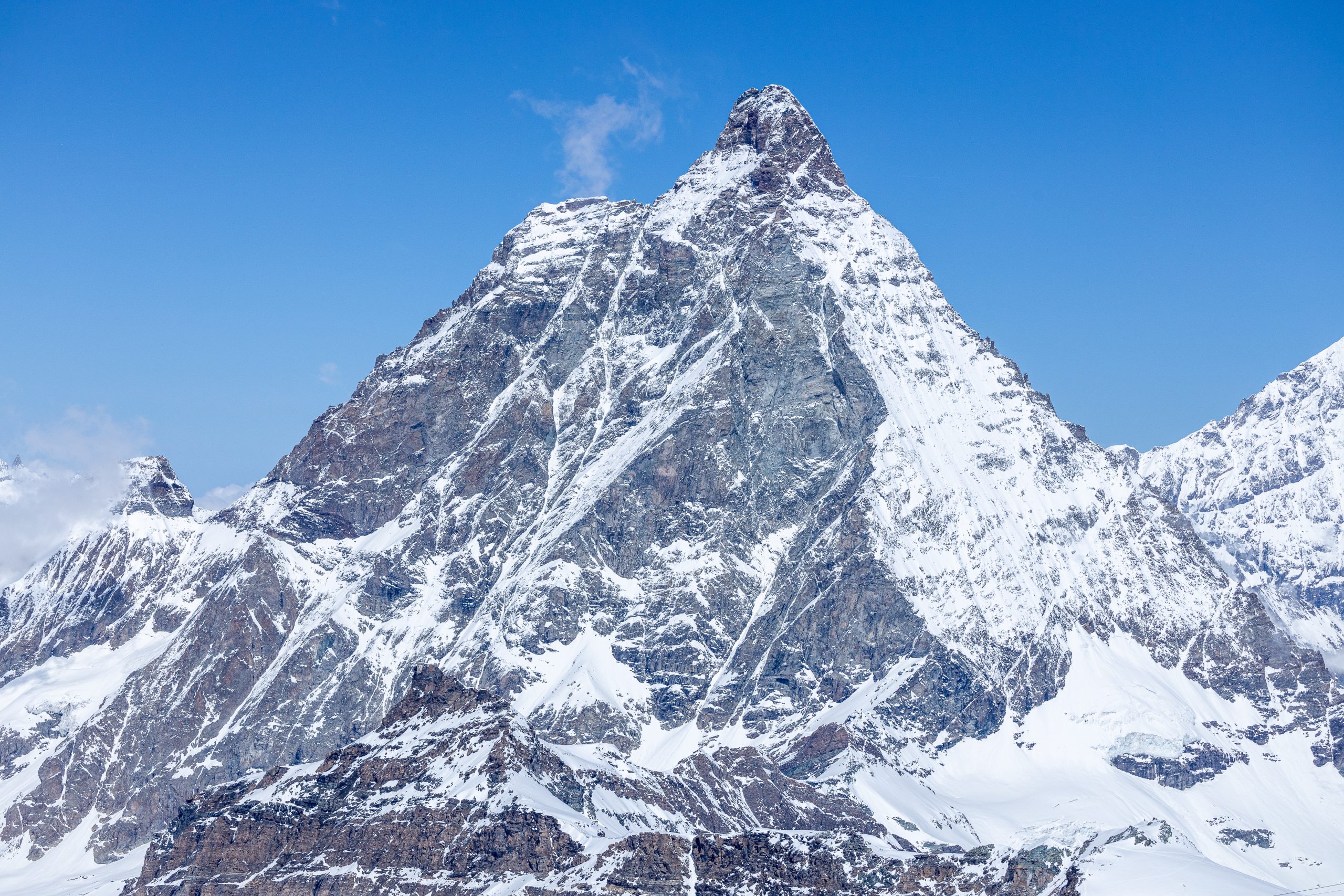
The Matterhorn itself is best understood as the journey’s prologue rather than its subject. Zermatt is the gateway to a high-mountain world — the Gornergrat rack railway, the glaciers of Monte Rosa, and the lifts that carry climbers towards the Breithorn and Pollux — and the Glacier Express is the slow way out of it. The same tradition of mountain railways reaches across the frontier to Chamonix, where the Montenvers rack railway, opened in stages in 1908 and 1909, climbs 5.1 kilometres to the Mer de Glace at 1,913 metres and is used by the skiers who come down the Vallée Blanche from the Aiguille du Midi. In practical terms, the Glacier Express is a reserved-seat panoramic train, with an Excellence Class for those who want a fixed table and a multi-course meal. It does not run all year: in 2026 the train paused from 11 October to 4 December, with the winter timetable beginning on 5 December, and a construction closure of the Rhine Gorge section is announced for 17 April to 2 May 2027, when buses will replace trains between Chur and Disentis. The ordinary regional trains on the same lines carry on through the gaps and cover the whole route in a series of connections.
The Glacier Express is sold as a train ride, but it is really a lesson in how Switzerland fits together. In eight hours it passes from the Mattertal to the upper Rhône, from Uri to the Romansh villages of the Surselva, and into the Engadine; from the Rhône to the source of the Rhine to the Inn. The slowness is not a flaw. It is the only speed at which a country this folded can be read from a window.
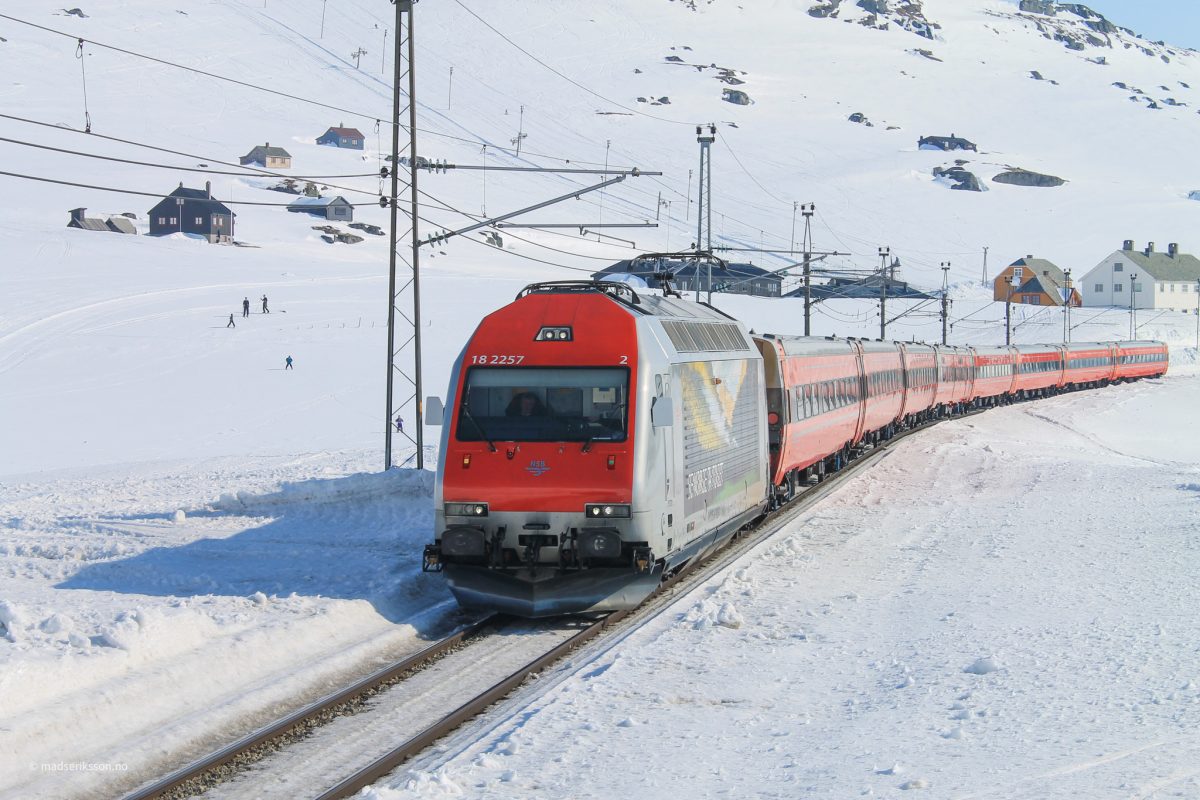
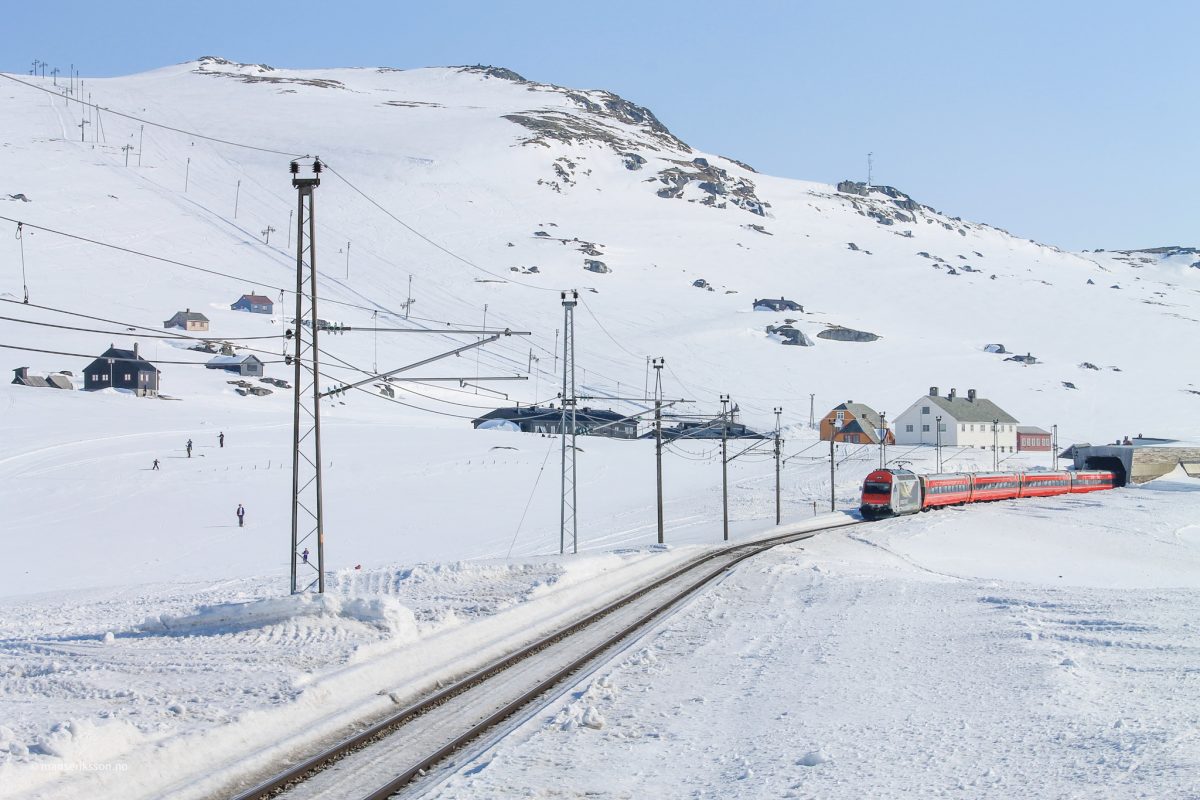
#3 Bergensbanen — A Mainline Railway Across the Roof of Norway
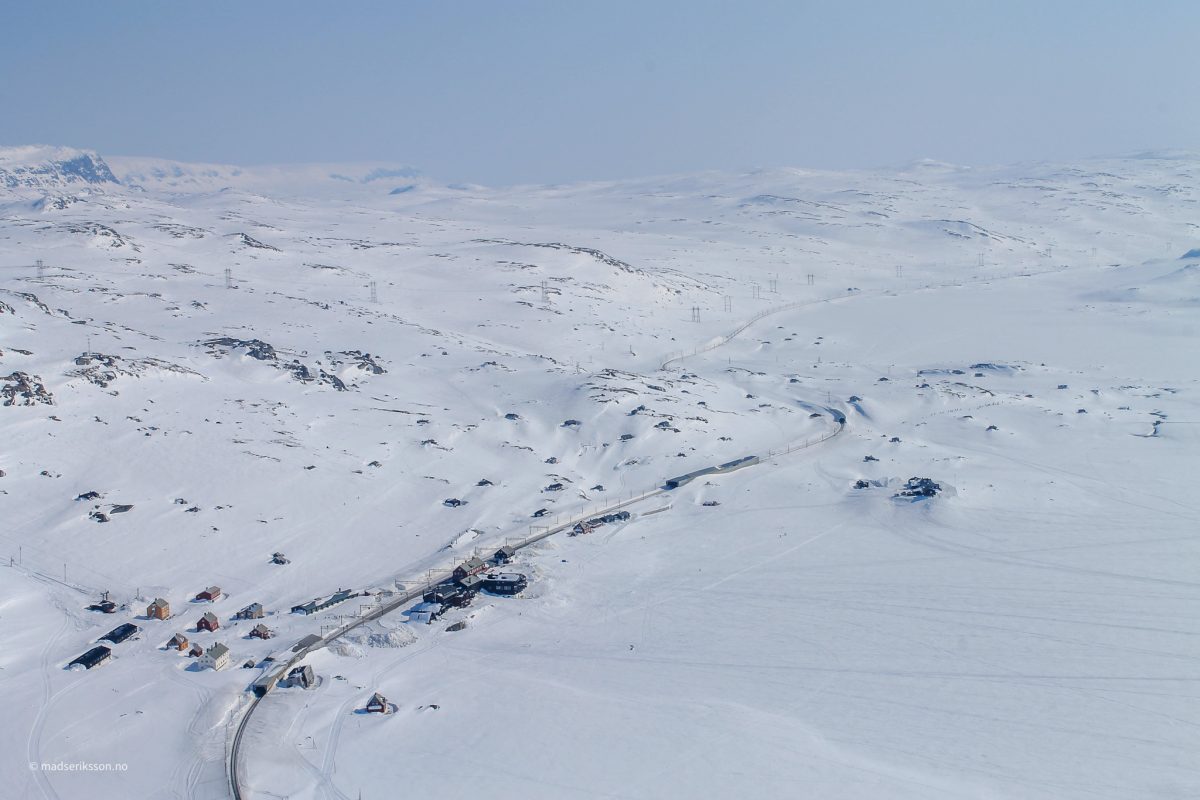
The Oslo–Bergen railway, opened by King Haakon VII in 1909, climbs out of the eastern forests onto the treeless Hardangervidda, stops at stations that have never had a road, passes beneath the Hardangerjøkulen glacier at Finse and drops to the fjords — with the Flåm Railway falling 865 metres from Myrdal to the Aurlandsfjord
The Bergen Line is the only journey in the top half of this ranking that is, in every respect, an ordinary train. It is Norway’s principal east–west mainline, run by Vy with several daytime departures and a night train in each direction, carrying commuters, students, skiers and freight; nobody built it for the view. That is precisely what makes it remarkable. When the line was first proposed in 1871, many considered it impossible: the route had to cross a high mountain plateau where snow lies for most of the year and storms can bury a track in hours. The western end, a narrow-gauge line from Bergen to Voss, opened in 1883, and in 1894 the Storting voted to continue it over the mountains. The work was done by the rallare, the itinerant navvies of Scandinavian railway building, who first had to build their own construction road across the plateau — the road that survives today as the Rallarvegen cycle route. On 27 November 1909 King Haakon VII opened the line, and Norway’s two largest cities were joined by rail for the first time. From Oslo the full journey is about 493 kilometres; the Bergen Line proper runs 371 kilometres from Hønefoss, through 182 tunnels with a combined length of some 73 kilometres. The full guide to Bergensbanen on madseriksson.no covers its construction, the mountain stretch and the practicalities in detail.
The reason for the high ranking is the hundred kilometres between Geilo and Myrdal. Beyond Ustaoset the forest thins, and at Haugastøl the train emerges onto the open edge of Hardangervidda, the largest mountain plateau in Europe — some 6,500 square kilometres of lakes, bogs and rounded hills, home to one of the largest herds of wild reindeer in the world, and on clear winter nights one of the darkest skies in southern Norway, as Hardangervidda after dark describes. Finse, at 1,222 metres the highest station on the Norwegian network, is a station, a hotel, a mountain lodge and a scattering of cabins beside a lake, with the white dome of Hardangerjøkulen rising to 1,863 metres directly to the south and no road to anywhere. Robert Falcon Scott’s men trained here for Antarctica; the crew of The Empire Strikes Back filmed the ice planet Hoth here. West of Finse the 10.3-kilometre Finse Tunnel, opened in 1993, carries the line beneath the most exposed section of the original route, which once climbed to 1,301 metres at Taugevatn; the line’s highest point, 1,237 metres, now lies inside the mountain. The train emerges at Hallingskeid, another station without road access, and descends through snow sheds to Myrdal, at 867 metres, perched above the head of Flåmsdalen. From Upsete the line falls through Raundalen to Voss and the fjords. Forest, valley, plateau, glacier, fjord: the whole of southern Norway, in order, in a working day.
At Myrdal the Flåm Railway branches off, and it would merit a place in any list of the world’s steepest standard-gauge adhesion railways on its own. In roughly 20 kilometres it drops about 865 metres to Flåm on the Aurlandsfjord, on gradients of up to 55 per mille and through some twenty tunnels that account for more than a quarter of its length, with a stop at the Kjosfossen waterfall. It opened in 1940, went electric in 1944, and in 2024 carried nearly 960,000 passengers. Combined with the boat from Flåm to Gudvangen through the Nærøyfjord — a UNESCO-listed fjord whose walls carry old cattle paths such as Rimstigen — and the bus back to Voss, it forms the round trip often sold as Norway in a Nutshell; the same branch line is also the gateway to the Aurlandsdalen valley hike. The Bergen Line ranks third, above railways with more famous names, because it combines a genuine high-mountain crossing, a century of engineering against snow and an experience available to anyone with an ordinary ticket and a window seat. The best advice remains the simplest: take a morning train, so that the mountain stretch falls in daylight, and keep watching after Geilo. In winter, when the plateau is deep in snow and the light lasts only a few hours, the mountain stretch is at its most dramatic and its most fragile: storms can still close the line for a time, and the snow sheds, ploughs and the Finse Tunnel are reminders that this railway has been fighting the same weather for more than a century.
Finse, Hallingskeid and Myrdal have never had a road. For much of the year the train is the only motorised way in or out, which means that a mainline railway carrying commuters between Norway’s two largest cities is also, for an hour of its route, the only link between a handful of mountain stations and the rest of the world. Few railways anywhere are this essential and this beautiful at the same time.
#4 West Highland Line — Across Rannoch Moor and Over the Concrete Arches of Glenfinnan
Britain’s greatest railway journey runs 164 miles from Glasgow past Loch Lomond, floats across the bog of Rannoch Moor, climbs to Corrour and then follows the Road to the Isles over the Glenfinnan Viaduct to Mallaig — with the Jacobite steam train on its last 42 miles each summer
In 2009 the readers of the travel magazine Wanderlust voted the West Highland Line the greatest railway journey in the world, ahead of the Trans-Siberian and the line from Cusco to Machu Picchu. It is easy to be sceptical of such polls, and easy to stop being sceptical somewhere north of Crianlarich. The line leaves Glasgow Queen Street, follows the Clyde and then the western shore of Loch Lomond, and climbs Glen Falloch into the mountains. Above Tyndrum it swings round the head of a glen on the Horseshoe Curve, a great loop around the flanks of Beinn Dorain that the engineers chose rather than build a viaduct, and then it reaches Rannoch Moor. This is the line’s defining achievement. The moor is a vast, wet, nearly roadless plateau of peat bog, lochans and heather, and there was no solid ground to build on; the contractors floated the track across it on a mattress of tree roots, brushwood, turf and ash, and the trains have run across that mattress since 1894. Corrour, near the summit of the line at around 410 metres, has no public road and is one of the most isolated stations in Britain. The section from Craigendoran to Fort William opened on 11 August 1894, and for the first time the western Highlands had a railway that Victorian Glasgow could reach in a day.
The Mallaig extension, opened on 1 April 1901, is the section most people mean when they talk about the line, and the reason is a single bridge. The Glenfinnan Viaduct, at the head of Loch Shiel, carries the line in a curve of 21 semicircular arches, about 380 metres long and 30 metres high, and it is built of mass concrete without any steel reinforcement — a pioneering use of the material in its day, by the contractor Robert McAlpine, who earned the nickname “Concrete Bob”. Beneath it stands the Glenfinnan Monument to the Jacobite rising of 1745, which began here when Prince Charles Edward Stuart raised his standard. Beyond Glenfinnan the line runs along Loch Eilt and the coast, through Arisaig, the westernmost station on the British mainland network, past the white sands of Morar, to Mallaig, where ferries leave for Skye and the Small Isles. For two generations the viaduct has also carried a second identity. Four Harry Potter films used it for the Hogwarts Express, and the result is that the hillside above it now draws visitors in their hundreds of thousands, many of whom time their walk to meet the steam train. The fame is a mixed blessing — the hillside path is crowded on summer mornings, and the police have had to warn visitors off the track — but it has also given a remote Highland railway a constituency it would otherwise never have had, and the line’s future has rarely looked so secure.
That steam train is the Jacobite, operated by West Coast Railways between Fort William and Mallaig, an 84-mile return trip with time in Mallaig before the journey back. Its future was uncertain for several years because of a long dispute with the rail regulator over the hinged, slam-door coaches it used, which lacked modern central door locking; for 2026 the train returned with Mk2 heritage coaches that resolve the issue, and the season ran daily until 23 October, with a second afternoon departure in high summer. The Jacobite is the romantic version of the journey, but it is not the only one: ScotRail’s ordinary trains run the entire line from Glasgow to Mallaig all year, including across Rannoch Moor, which the steam train never sees. The West Highland Line ranks fourth because its scenery is as good as anything in Europe, its engineering on Rannoch Moor is genuinely singular, and its history — a railway that opened up the western Highlands, and a viaduct that became a national icon twice over — is as rich as that of any line here. It ranks below the Swiss lines and the Bergen Line only because its mountains are lower and its climb less dramatic.
The railway across Rannoch Moor does not rest on rock. It rests on a raft of brushwood, turf and ash laid across a bog by Victorian contractors who had no better option, and it has carried trains for more than 130 years. Most of the world’s great railways are celebrated for what they bored through or bridged. This one is remarkable for what it simply lies on top of.
#5 Rocky Mountaineer — Two Days of Daylight on the Railway That Made Canada
The Canadian Pacific route from the Pacific to the Rockies, ridden only in daylight with a night in Kamloops: up the Fraser Canyon past Hell’s Gate, past the place where the last spike was driven in 1885, through Rogers Pass and the corkscrew Spiral Tunnels of Kicking Horse Pass to Lake Louise and Banff
The Canadian Pacific Railway was not merely a railway; it was the condition on which British Columbia joined the Canadian confederation, and the instrument by which a country stretching from the Atlantic to the Pacific was made to exist in practice. Its last spike was driven at Craigellachie in the Eagle Pass on 7 November 1885, and the route it opened through the Selkirks and the Rockies is the one the Rocky Mountaineer follows today. The train is unlike anything else on this list. It is a privately operated luxury tour service, not a scheduled public train, and its defining rule is that it travels only in daylight: the First Passage to the West route leaves Vancouver in the morning, runs to Kamloops by early evening, puts its passengers into hotels for the night and sets off again at dawn for Lake Louise and Banff. The total distance is more than 590 miles, roughly 950 kilometres, and none of it is passed in the dark. The company was founded in 1990, the year VIA Rail ended regular passenger service on this southern route, and in a sense it exists because the journey was too good to lose.
The first day is the river day. East of the Fraser Valley the line enters the Fraser Canyon, where the whole volume of the Fraser River is forced through a gap only a few dozen metres wide at Hell’s Gate, and then follows the Thompson River into the dry, sagebrush country around Kamloops — a landscape that surprises most first-time visitors, who expect forest. The second day is the mountain day. Past the Shuswap lakes and Craigellachie, the line climbs into the Selkirks at Rogers Pass, where the avalanche danger was so severe that the railway eventually went underground: the Connaught Tunnel in 1916, and in 1988 the Mount Macdonald Tunnel, more than 14 kilometres long. Then come the Kicking Horse River, the town of Field, and the most celebrated piece of engineering on the route. When the line was first built, trains descended from Kicking Horse Pass on the Big Hill, a gradient of 4.5 per cent that was supposed to be temporary and proved lethal. In 1909 the railway replaced it with the Spiral Tunnels, inspired by Swiss practice: two looping tunnels, 991 and 891 metres long, bored through Cathedral Mountain and Mount Ogden, which bring the gradient down to 2.2 per cent. The crews boring from each end missed their meeting point by about five centimetres. From the viewpoint on the highway, a long freight train can be seen emerging from the mountain above its own tail.
The ranking reflects a balance. On scenery the Rocky Mountaineer is in the first rank — the Rockies around Lake Louise, Castle Mountain and the Bow Valley are as fine as any mountains seen from a train — and on history it carries a national story heavier than that of any line above it. It ranks fifth because the experience is a luxury product rather than a railway journey available to everyone, and because the most dramatic stretches are interspersed with long hours in river valleys. The 2026 season ran from 13 April to 11 October, with the eastbound train leaving Vancouver at 8:00 and reaching Banff in the evening of the second day. Those who want the same mountains on a scheduled train can take VIA Rail’s Canadian between Vancouver and Jasper, on the northern route through Yellowhead Pass — another great journey, though without Kicking Horse. The Rocky Mountaineer’s daylight rule is, in the end, its most persuasive argument: it means that no part of one of the great mountain crossings of North America is wasted in the dark, and that every passenger arrives in the Rockies having seen the whole of the route that made Canada possible.
The Spiral Tunnels were built because the Big Hill killed people. Runaway trains on a 4.5 per cent descent were an accepted hazard of the early Canadian Pacific until the engineers borrowed an idea from the Alps and wound the line into the mountain. A century later, the spirals have become a tourist sight in their own right: people stop their cars on the highway to watch a freight train cross over itself. Few safety improvements have ever been so beautiful to look at.
#6 Darjeeling Himalayan Railway — Two Feet of Track, 2,258 Metres of Climb and a View of Kangchenjunga
The toy train of Darjeeling, opened in 1881, climbs from the plains of Bengal to the tea gardens and hill stations of the Himalayan foothills on loops and zig-zag reverses, through bazaars and along the main road, with Victorian steam locomotives from Glasgow still at work — the second railway ever made a World Heritage Site
In the 1870s Darjeeling was the summer capital of British Bengal, a hill station perched on a ridge at more than 2,000 metres, and the only way up from the plains was a long journey by cart road. In 1879 Franklin Prestage, an agent of the Eastern Bengal Railway, proposed a steam tramway from Siliguri, and the government accepted. The line he built is a lesson in doing much with little. Its gauge is 610 millimetres — two feet — which allowed curves so tight that the track could follow the contours of the hillside rather than cut through them. It reached Kurseong in August 1880 and Darjeeling on 4 July 1881. Where the slope was too steep even for that, the builders used loops, on which the line spirals over itself, and zig-zags, on which the train runs forward into a dead-end siding and then reverses up the next leg. Six zig-zags and three loops survive, the most famous being the Batasia Loop below Ghum, built in 1919, where the line circles a garden and a war memorial with Kangchenjunga, the third-highest mountain on earth, filling the horizon on a clear day. Ghum, at 2,258 metres, is the highest station on the line.
The engineering is ingenious, but what makes the railway unique is its intimacy. For much of its length the track runs beside, and repeatedly crosses, the Hill Cart Road, and through towns such as Kurseong and Sonada it shares the street with traffic and runs along the front of shops, close enough for a passenger to reach out and touch the produce on the stalls. The locomotives that work the heritage services include the B class, small 0-4-0 saddle-tank engines built by Sharp, Stewart and Company of Glasgow and later the North British Locomotive Company between 1889 and 1925; their crews still ride on the front buffer beam, sanding the rails by hand on the wettest sections. In December 1999 UNESCO inscribed the line as a World Heritage Site, the second railway ever to be listed, after the Semmering in Austria, and the designation was later extended to India’s other great hill railways, the Nilgiri and the Kalka–Shimla, as the Mountain Railways of India. The ranking at sixth reflects the fact that, on history and engineering ingenuity, the Darjeeling railway yields nothing to the lines above it; its scenery, outside the clear months, is often hidden in cloud.
The experience in 2026 is best described as seasonal and fragile. The full run from New Jalpaiguri to Darjeeling, around seven hours on a scheduled train when it operates, is routinely suspended in the monsoon, when landslides and cave-ins cut the line: in 2024 it stopped in July and did not resume until 17 November. The short heritage joy rides from Darjeeling to Ghum and back, around the Batasia Loop, run through most of the year and are the way most visitors experience the line, and demand is strong — the railway reported record monthly revenues in May and June 2026, and added a Red Panda steam service between Kurseong and Mahanadi for October 2026. Anyone planning the full ascent should treat the dry months from October to May as the realistic window and confirm services with Indian Railways shortly before travel. The fragility is part of the railway’s nature rather than a flaw in its management: a line built to the scale of a mountain road, on slopes that move every monsoon, has survived for more than 140 years by being repaired, season after season, by people who regard it as theirs.
A two-foot-gauge locomotive built in Glasgow in the reign of Queen Victoria, crewed by a man on the front buffer throwing sand onto the rails, pushing three blue carriages through a market street in the Himalayan foothills, with Kangchenjunga above the tea gardens: the Darjeeling Himalayan Railway sounds like a museum piece and works like a village bus. That combination — heritage and daily life on the same track — is what UNESCO recognised, and it is rarer than any viaduct.
#7 Trans-Siberian — The Longest Railway on Earth, and Why It Cannot Be Recommended in 2026
The greatest feat of railway building in history — 9,289 kilometres from Moscow to the Pacific across eight time zones, Lake Baikal and the Amur — ranked here on its merits as a railway, and placed seventh because the governments of the United Kingdom, Norway and others advise against all travel to Russia
No railway journey on earth matches the Trans-Siberian in scale or ambition. Construction began in 1891, driven by an empire that wanted to bind its Pacific coast to Moscow and to project power into Manchuria and the Far East, and it was built from both ends at once by convicts, soldiers and tens of thousands of labourers across permafrost, taiga and some of the largest rivers in the world. The original through route depended on Chinese territory and, at first, on icebreaking train ferries across Lake Baikal; the Circum-Baikal railway, blasted along the lake’s cliffs, replaced the ferries in 1904, and the all-Russian route north of the Chinese border was completed with the Amur line in 1916. The full line from Moscow to Vladivostok runs about 9,289 kilometres — the marker post at Vladivostok station reads 9,288 — and spans eight time zones. Electrification of the entire route was finished only in 2002. On history and engineering, the Trans-Siberian has a claim to the first place in this ranking that no other line can match.
As a journey, it is a different kind of thing from everything above it. The scenery is rarely dramatic and often monotonous: birch forest, steppe, villages of wooden houses with carved window frames, rivers like the Ob, the Yenisei and the Amur crossed on long bridges, and the Urals passed with so little ceremony that most passengers miss the obelisk marking the boundary between Europe and Asia. The exception is Lake Baikal, the deepest and oldest freshwater lake in the world, along whose southern shore the line runs for hours. The experience is the train itself: the samovar of hot water at the end of every carriage, the four-berth compartments, the platform markets at long stops, the slow collapse of time as the clocks move forward a zone almost every day, and the community of strangers that forms in a carriage over the course of a week. The daily Rossiya and other Moscow–Vladivostok trains continue to run, taking around a week; the through Moscow–Beijing trains via Mongolia and Manchuria, which made the route an icon for Western travellers, have been suspended since February 2020, although services between Irkutsk and Ulaanbaatar and between Ulaanbaatar and Beijing have resumed. For Western travellers, the Trans-Siberian was always as much a cultural crossing as a geographical one — from Europe into Asia, from the familiar into the unfamiliar — and it was that crossing, more than any view, that made it the most mythologised railway journey in the world.
The reason the Trans-Siberian sits seventh is that the fourth criterion of this ranking — whether the journey can reasonably be made today — cannot be set aside. Since Russia’s full-scale invasion of Ukraine in February 2022, Norway’s Ministry of Foreign Affairs has advised against all travel to Russia, and in its advice updated in September 2026 the United Kingdom’s Foreign, Commonwealth and Development Office likewise advises against all travel, citing drone attacks, the risk of terrorism, the limited ability of consular staff to help, and an increased risk of foreign nationals being detained. Western payment cards do not work in Russia, the official Russian Railways website is unavailable from many countries, and there are no direct flights from most of Europe. The railway has not changed; the world around it has. It remains on this list because a ranking of the world’s great railway journeys that omitted the longest and most consequential of them would be dishonest, and it remains in seventh place because a ranking that recommended it in 2026 would be irresponsible.
The Trans-Siberian has always been as much a state of mind as a railway: a week in which the clocks move on every day and the window shows the same birch trees for a thousand kilometres at a time. That state of mind is not available in 2026 in the way it was for the generations of travellers who made the journey famous. The rails are still there, and so is Baikal. The journey will be worth making again when it is safe to make it.
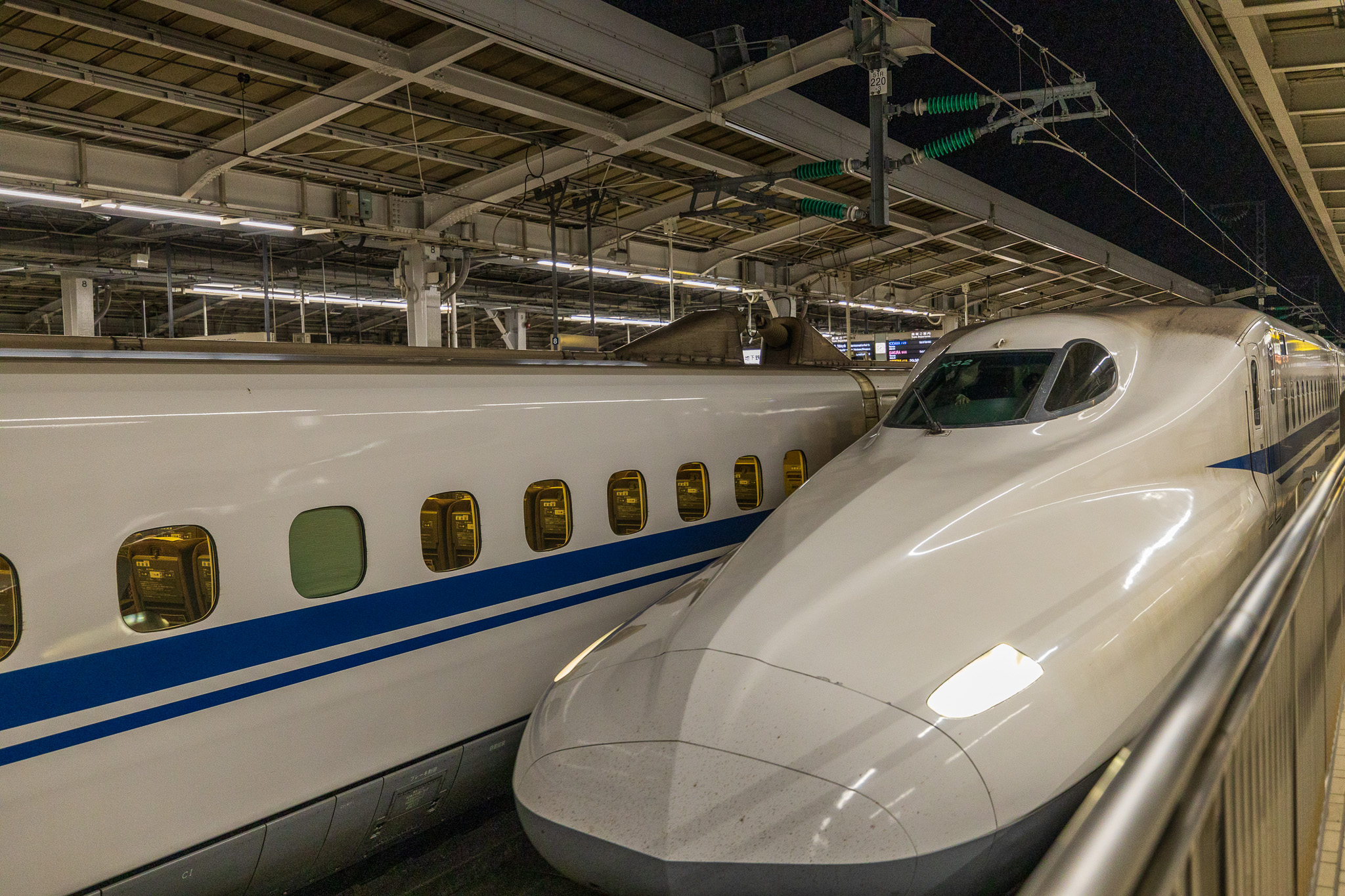
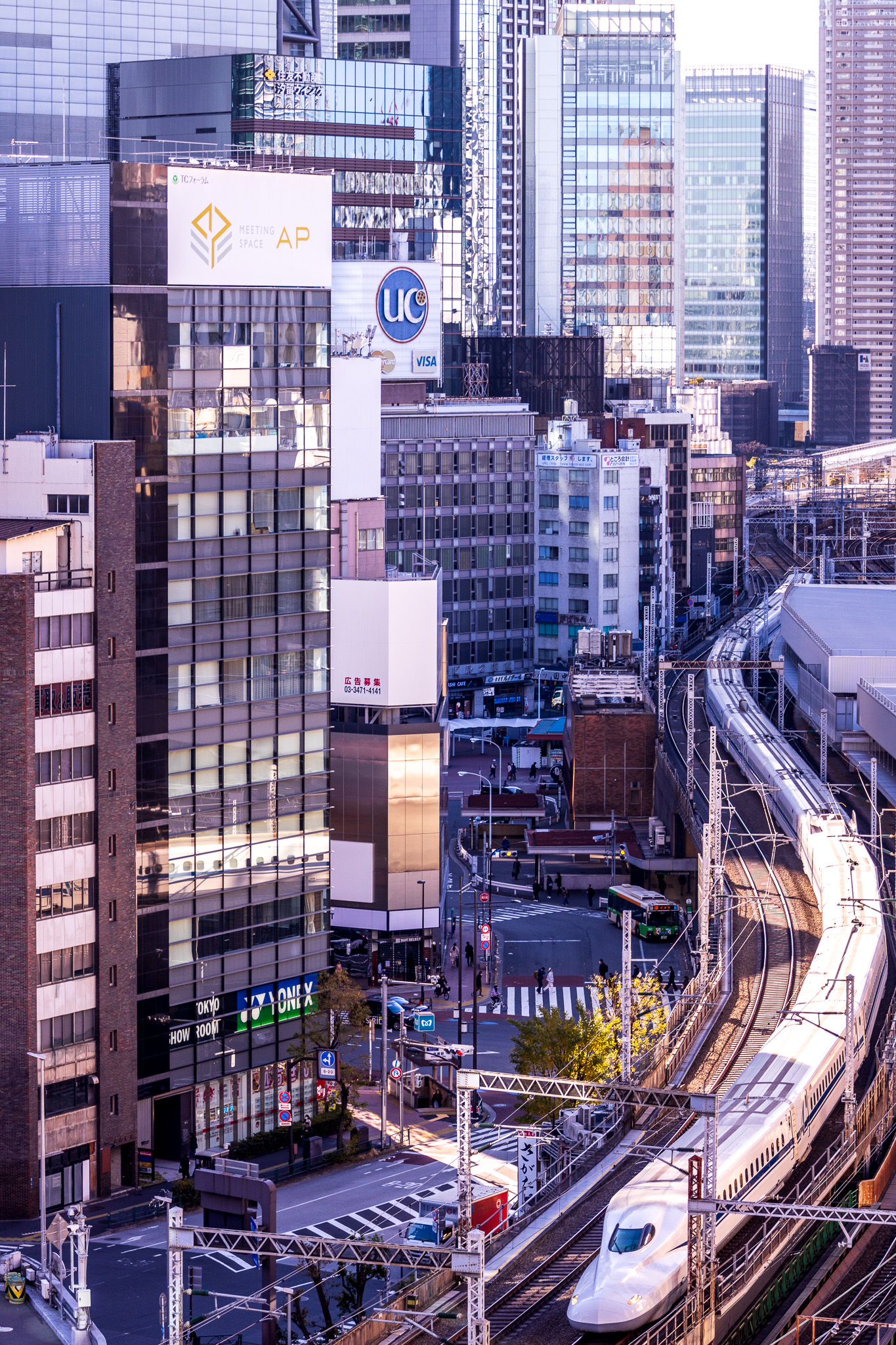
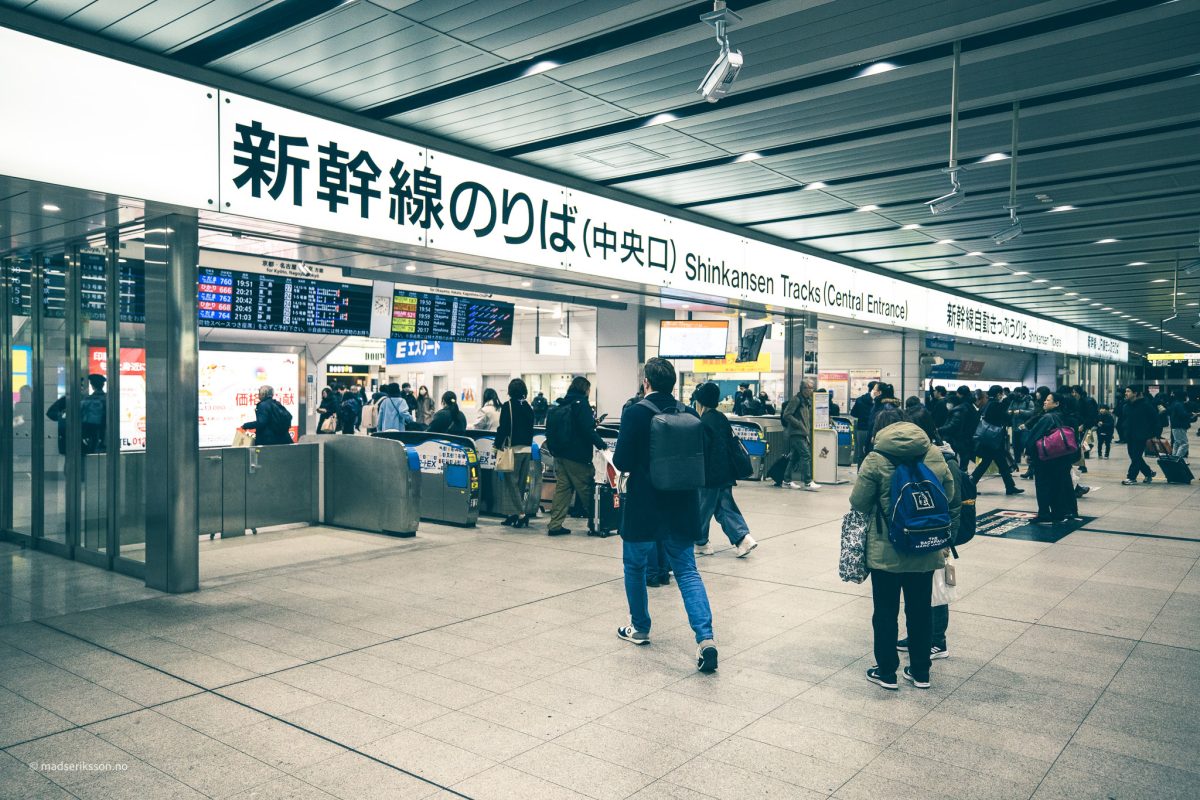
#8 Shinkansen — The Railway That Is Thrilling Because It Is Boring
The world’s first high-speed railway, opened nine days before the 1964 Tokyo Olympics, runs up to seventeen trains an hour each way between Tokyo and Osaka at 285 km/h, with an average delay measured in seconds and no passenger fatalities from derailment or collision in sixty years — and Mount Fuji outside the window for under a minute
The Shinkansen is the entry on this list that a pure ranking of views would leave out, and it is here because a ranking of the world’s great railway journeys that ignored the most influential railway built since the war would miss what railways are for. The Tōkaidō Shinkansen opened between Tokyo and Shin-Ōsaka on 1 October 1964, nine days before the Tokyo Olympics, as the first high-speed railway anywhere. It was financed in part by a World Bank loan of 80 million dollars — about 15 per cent of the cost, explicitly not to be spent on “experimental technology” — and its cost overruns forced the resignations of both the president of Japanese National Railways and the chief engineer before it opened. The decision that made it work was the least glamorous one: the line was built to standard gauge, entirely separate from Japan’s narrow-gauge network, with no level crossings, no freight and no slow trains to negotiate with. In 1964 the fastest service took four hours from Tokyo to Osaka. Today a Nozomi does it in a little over two hours and twenty minutes, and most of the gain came from braking and signalling rather than raw top speed, which on the Tōkaidō is 285 km/h.
The engineering achievement, as the madseriksson.no history of the Shinkansen puts it, is not that the train goes fast but that so many go fast together. At peak, up to seventeen trains an hour leave in each direction — Nozomi, Hikari and Kodama sharing the same track at the same top speed, differing only in how often they stop — and in 2019 JR Central reported an average delay per train of twelve seconds, including delays caused by earthquakes and typhoons. In sixty years and more than ten billion passengers there has been no passenger fatality from a derailment or collision. The network has since grown to 2,951 kilometres, with services of up to 320 km/h on the Tōhoku line, and its influence can be read in every high-speed railway from France to China. As for the journey, it is short and beautiful in a specific, urban way: the long viaducts through the endless built-up plain of Kantō and the Tōkaidō corridor, the tea fields of Shizuoka, and, for roughly forty seconds on the right-hand side heading west, the cone of Mount Fuji.
The ranking at eighth is the compromise between those two facts. On engineering and history the Shinkansen has a case for the top three; on scenery it ranks last; on experience it is superb but brief, a journey that connects Tokyo, Kyoto and Osaka in an afternoon rather than one that is itself the destination. The practical details have changed in recent years — the onboard trolley on the Tōkaidō was withdrawn at the end of October 2023, so the ekiben, the boxed meal bought on the platform, is now the only food for most passengers, and large suitcases require a free reservation for the oversized-luggage space — and the Japan Rail Pass rose in price in October 2023 and again on 1 October 2026. None of that touches the essential experience, which is that of a machine working perfectly at scale. For travellers who want scenery from a Japanese train, the answer lies elsewhere, on the slower limited expresses into the Japanese Alps or along the coasts; the Shinkansen is the thing that makes those journeys possible in a single day.
Every great railway on this list is famous for overcoming something — a pass, a plateau, a bog, a continent. The Shinkansen overcame something less visible: the idea that speed and reliability are in conflict. A train that leaves Tokyo every few minutes and arrives in Osaka within seconds of its schedule, day after day for sixty years, is as much a feat as any viaduct in the Alps. It is simply harder to photograph.
#9 Cusco to Machu Picchu — Down the Urubamba Gorge to the Lost City of the Incas
A three-foot-gauge railway from the Inca capital through the Sacred Valley and down the gorge of the Urubamba into cloud forest, ending in a town with no road — the only practical way for most of the world to reach Machu Picchu, and in its Hiram Bingham and Vistadome versions one of the best-staged railway journeys anywhere
The railway from Cusco to Machu Picchu was never meant to serve Machu Picchu. It was authorised in 1907 as the Ferrocarril de Cuzco a Santa Ana, a narrow-gauge line intended to carry the produce of the tropical valleys of La Convención up to the highland capital, and it was built down the gorge of the Urubamba in stages, reaching Aguas Calientes, at the foot of the ruins, in 1928 — seventeen years after the Yale historian Hiram Bingham brought Machu Picchu to the attention of the outside world. Its gauge is three feet, 914 millimetres, narrow enough to follow the river through a canyon where the Andes fall away into the Amazon basin. Landslides have defined its later history: the line beyond Hidroeléctrica was abandoned after the floods of 1998, and the tourist traffic that once supplemented the freight became its entire reason for existing. Today Aguas Calientes, officially Machu Picchu Pueblo, has no road connection to the rest of Peru. For almost every visitor who does not walk the Inca Trail, the train is the way in.
The journey is short but extraordinary in its transitions. From Poroy, on the rim of the valley above Cusco, or from Ollantaytambo in the Sacred Valley, the train follows the Urubamba as the valley narrows from broad, terraced farmland under snow peaks into a deep granite gorge. The vegetation changes as the line descends: dry highland scrub gives way to orchids, bromeliads and cloud forest, and the air grows warm and damp. At kilometre 104 some trains stop to let off walkers on the short Inca Trail, and in the final stretch the line runs below the mountain on which Machu Picchu stands, invisible from the valley floor. The trains themselves are part of the appeal. PeruRail’s Vistadome cars have glass in the roof to show the mountains above the gorge, Inca Rail runs its own panoramic service, and the Belmond Hiram Bingham, a 1920s-style Pullman train with a dining car and an observation bar, runs daily except on the last Sunday of each month. On engineering the line is modest compared with others on this list; on scenery and on the sense of arrival it has few equals, which is why it ranks ninth rather than lower. It also benefits from a rare sense of narrative. Most railway journeys end at a station; this one ends at the foot of a mountain on which stands one of the most famous archaeological sites on earth, and the whole descent feels like a slow approach to it.
In 2026 the trains ran on their usual pattern, with frequent departures from Ollantaytambo taking about an hour and a half and a smaller number from Poroy taking around three and a half hours. Two cautions apply. From January to April, the rainy season, PeruRail runs its Cusco services as bus-and-train combinations, with passengers taken by road to a station further down the line. And the railway, as the only link to the most visited site in South America, is a natural target for protest: in September 2025 services were suspended for around 72 hours because of blockades on the track, as they have been several times before. Visitors should book train and site tickets together, keep a buffer day, and treat the timetable as a promise that the Andes are entitled to break.
Most great railway journeys are the destination. This one is the approach: an hour and a half in which the Andes close in around a river, the farmland gives way to cloud forest, and the mountain that hides Machu Picchu rises above the carriage roof. It is a railway built for coffee and sugar that became a stage set for the most famous ruin in the Americas, and it plays the part remarkably well.
#10 Reunification Express — From Hanoi’s Train Street to Saigon, Over the Pass of Ocean Clouds
The single-track metre-gauge railway that runs the length of Vietnam, completed by the French in 1936, cut by war and reopened on the last day of 1976 as a symbol of a reunited country — leaving Hanoi through alleys where people live beside the rails and climbing the Hải Vân Pass above the South China Sea
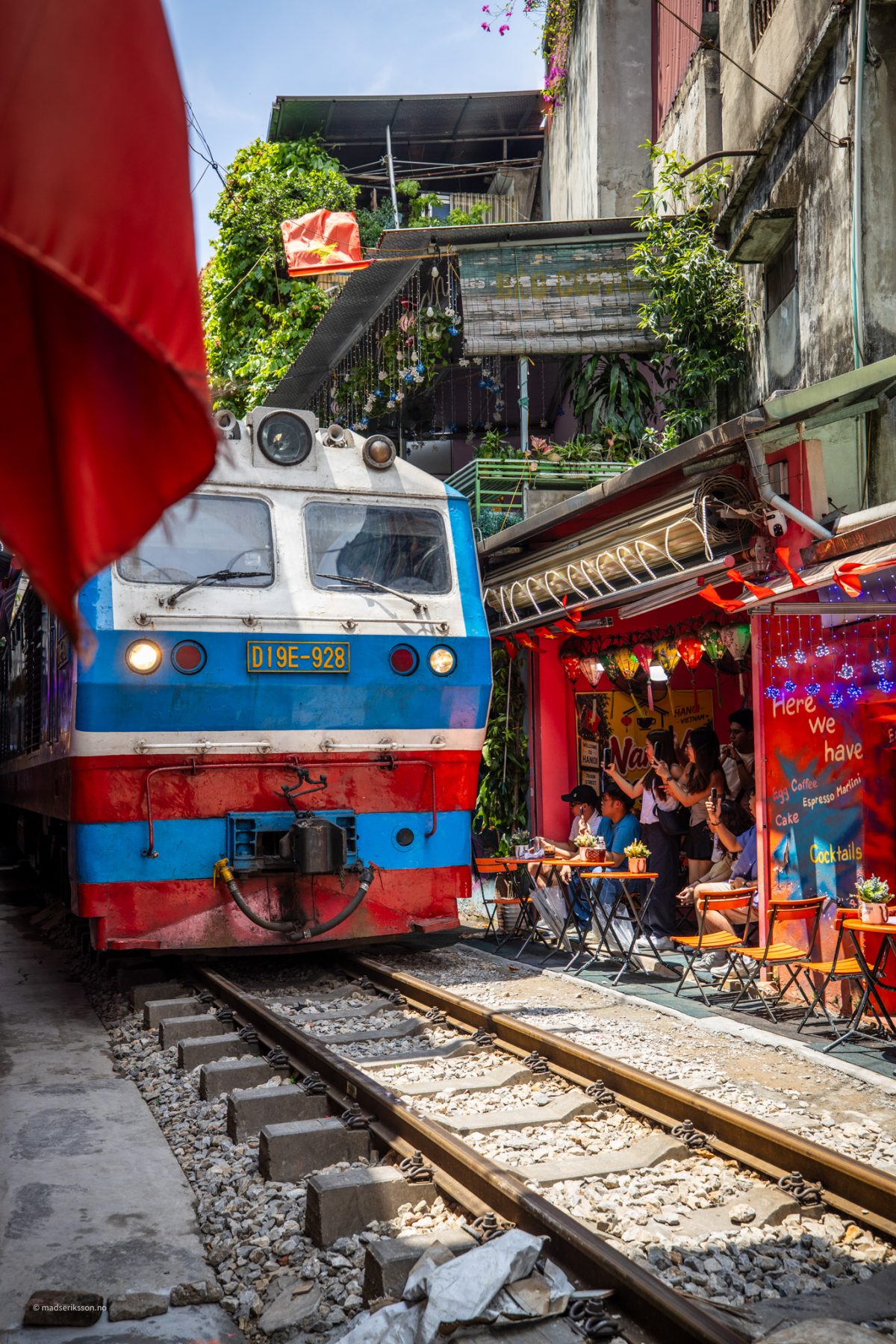
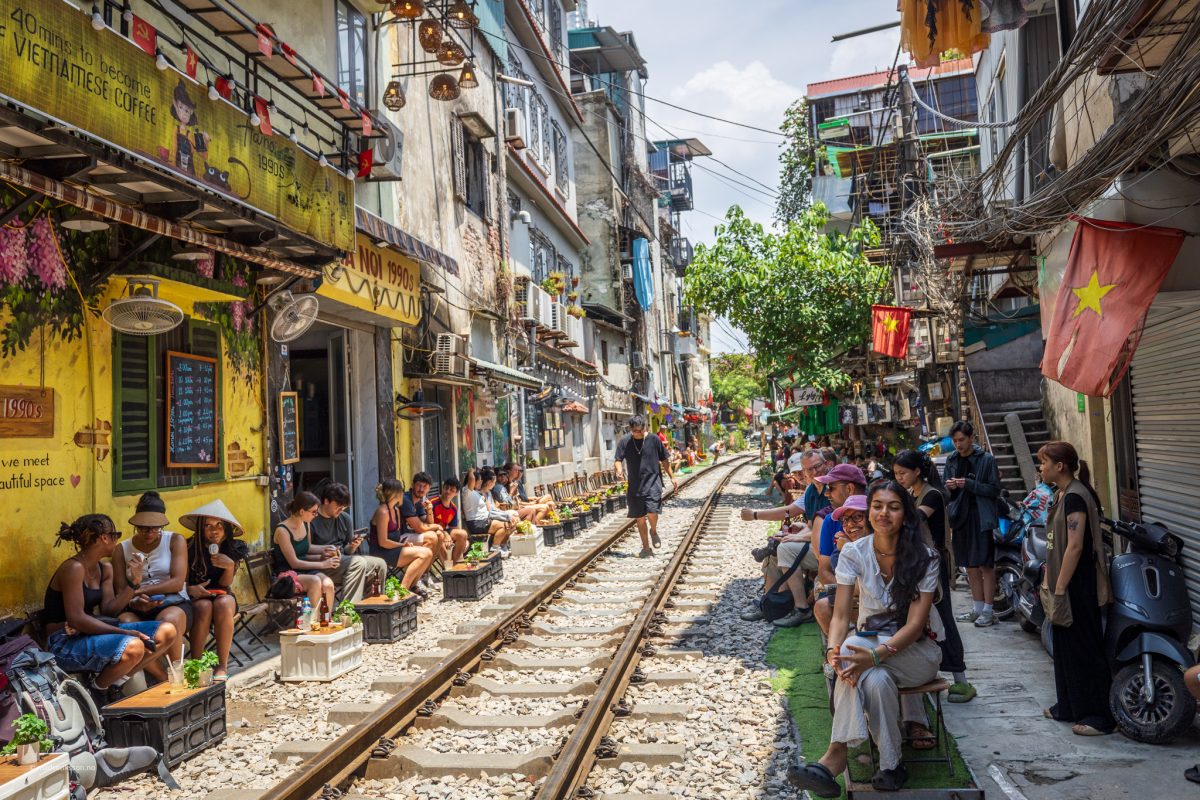
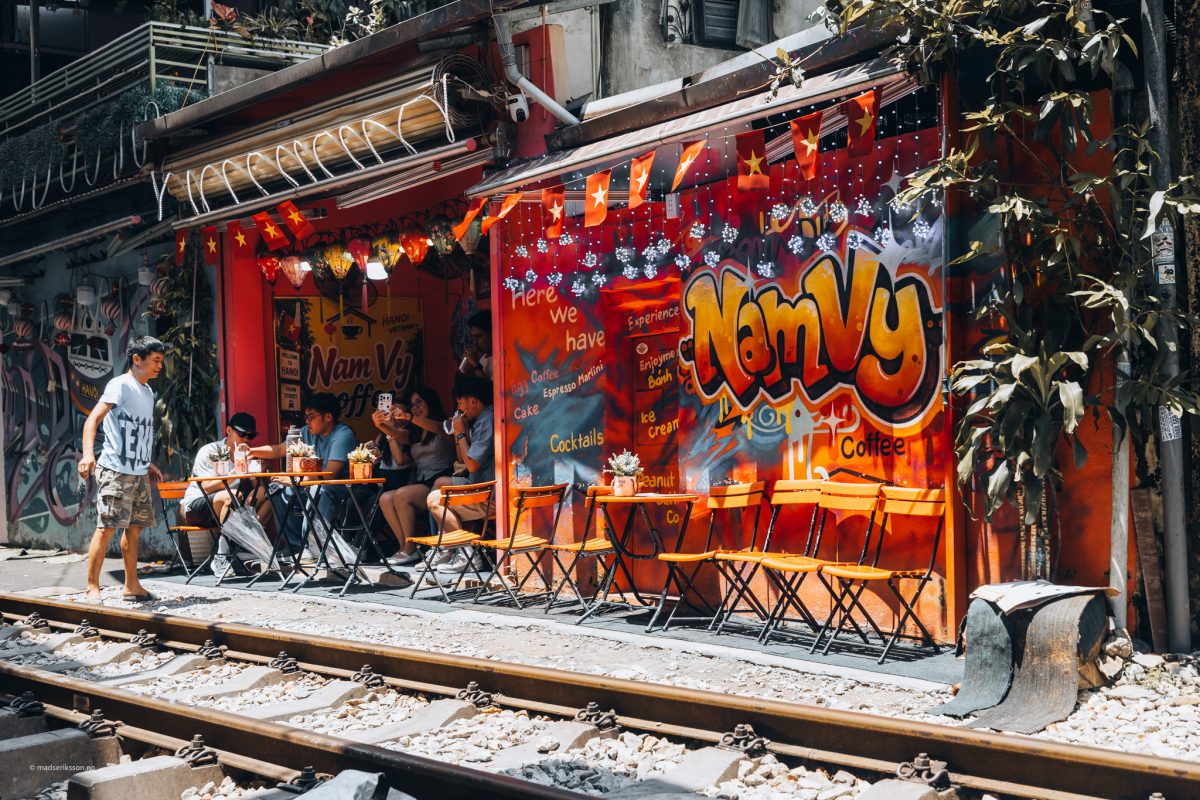
The best introduction to Vietnam’s railways is not a station but a street. In Hanoi’s Old Quarter, a line laid by the French colonial administration in 1902 runs for some 850 metres between houses so close that a passing train fills the alley from wall to wall, and the families who live there — descendants of the railway workers housed beside the track from 1956 — drink tea, hang washing and play board games on the ballast until someone shouts and everything is carried indoors. Train Street, as it has become known, is now one of the most photographed places in Hanoi, fenced off since 2019 and, since reopening, reachable mainly as a guest of the trackside cafés. The famous Old Quarter stretch carries trains north and east towards Lào Cai and Hải Phòng. The Reunification Express leaves in the other direction: south from Hanoi station along a second, quieter alley, Ngõ 224 Lê Duẩn, where the North–South line passes the same kind of doorsteps without barriers or crowds. It is a fitting start for a journey whose whole character is that it runs through the lives of the country it crosses.
The North–South Railway was built by the French in sections and completed in 1936, linking Hanoi and Saigon over 1,726 kilometres of single metre-gauge track. Through services ended with the partition of the country in 1954, and the line was bombed, mined and broken repeatedly during the wars that followed. Its reopening on 31 December 1976, some twenty months after the fall of Saigon, was a deliberate act of national symbolism, and the name Reunification Express has stuck to its trains ever since. Today the fastest service, the SE1, takes around 33 hours from Hanoi to Ho Chi Minh City, with seven departures a day in each direction. Most of the journey is pleasant rather than spectacular — rice paddies, water buffalo, villages, fishing harbours and the long coastline of central Vietnam — but between Huế and Đà Nẵng the line climbs over the Hải Vân Pass, the “pass of ocean clouds”, where the Trường Sơn mountains meet the South China Sea. The railway clings to the cliffs above the beaches, passes through tunnels and curves around headlands with nothing but sea on one side. Since March 2024 a dedicated heritage train, the Central Heritage Connection, has run this stretch between Huế and Đà Nẵng in about three hours for travellers who want only the best of the line. For everyone else, the Hải Vân section is the reward for a night in a sleeper berth: on the departures that cross it in daylight, passengers drift to the windows on the seaward side as the line begins to climb above the bay of Đà Nẵng.
The Reunification Express ranks tenth because its scenery is intermittent and its engineering, a single metre-gauge track along a coastal plain, is ordinary by the standards of this list; it earns its place on history and on experience. No other journey here offers such an immersive cross-section of a country: the soft sleeper compartments shared with Vietnamese families, the food sellers at every stop, the gradual shift from the cool north to the tropical south, and the cities strung along the line — Hanoi, Huế, Đà Nẵng, Nha Trang, Saigon. It may also be among the last generations of journeys of its kind. Vietnam has approved a 1,541-kilometre high-speed railway between Hanoi and Ho Chi Minh City, designed for 350 km/h, with the government requiring construction to begin by the end of 2026 and basic operation targeted by 2035. When it opens, the 33-hour journey will shrink to a few hours, and the old metre-gauge line, like the Old Quarter’s Train Street, will become something travellers seek out rather than simply use.
The Reunification Express was not reopened in 1976 because Vietnam needed a faster way from Hanoi to Saigon. It was reopened because a country that had been divided for two decades needed to see itself joined together, and nothing does that more visibly than a train leaving one end and arriving at the other. Fifty years later it is still doing that job, slowly, through people’s front yards and over a pass in the clouds.
«The ten railways in this ranking were built for reasons that had little to do with the people who now ride them for pleasure. The Albula and Bernina lines were built to bring the Engadine within reach of the rest of Switzerland; the Bergen Line to join Norway’s two largest cities across a mountain plateau; the Canadian Pacific to hold a country together; the Trans-Siberian to bind an empire to its Pacific coast; the Darjeeling line to carry officials and tea; the Cusco line to carry coffee and sugar; the Shinkansen to move Japan’s economy between its two great cities; the Reunification Express to show a country that it was one. That is why they are great journeys rather than attractions. The spirals above Bergün, the floating track across Rannoch Moor, the zig-zags below Ghum and the stations without roads on Hardangervidda are not scenery staged for a window. They are the visible record of people solving a problem that the landscape set them, and the solution happens to be beautiful. The best railway journeys let a passenger watch that record unfold, at the speed at which it was written. Some of these journeys are seasonal, some are fragile, and one is, for now, out of reach. All of them are worth the effort of fitting a life around a timetable for a day, or a week.»
More in the same area
 NatureThe World’s 15 Most Spectacular Waterfalls
 GlaciersEurope’s 10 Greatest Glaciers — And How to Experience Them
 ArchitectureEurope’s 10 Greatest Cathedrals and Churches
 CitiesBergen: The Gateway to the Fjords
 CitiesRøros: Norway’s Copper Town and World Heritage Site
 FjordsGeirangerfjord: Waterfalls, Ledge Farms and the Roads Above