The Eiffel Tower was built to stand for twenty years. It went up in two years, two months and five days for the World’s Fair of 1889, assembled from 18,038 iron parts and 2.5 million rivets, against a public protest signed by some of the most famous artists in France. It was meant to come down in 1909. It stayed because it turned out to be useful — as a radio mast before it became a symbol — and today it is the most recognisable structure in the world: 330 metres of wrought iron on the Champ de Mars, visited by 6.75 million people in 2025 alone.

The tower began as a sketch by two engineers in Gustave Eiffel’s company, Maurice Koechlin and Émile Nouguier, in June 1884: a tall pylon of four lattice girders meeting at the top. The architect Stephen Sauvestre gave it the arches at the base, the glazed rooms on the first level and the curved silhouette that makes it look like a single object rather than a piece of industrial scaffolding. Eiffel bought the patent from his engineers, put his name and his money behind it, and won the competition for the centrepiece of the 1889 Exposition Universelle — the fair marking the centenary of the French Revolution — from a field of 107 proposals. Around two million people went up it during the fair itself.
What was once the most controversial building in Paris is now its default image. Around ten million people a year walk onto the free forecourt beneath the legs, and the tower sells out its lift tickets weeks ahead in summer. It rewards a little planning more than most monuments: the views from the second floor are generally better than from the summit, the stairs are cheaper and quicker than the queue for the lifts, and some of the best ways to see the tower involve not going up it at all.
How to approach the Eiffel Tower
This guide covers the tower in four parts: how it came to be built and why it survived; the engineering that makes 7,300 tonnes of iron stand on four feet; the three visitor levels and how to choose between them; and the places around the Champ de Mars and the Seine from which the tower is at its best — including the hourly sparkle after dark.
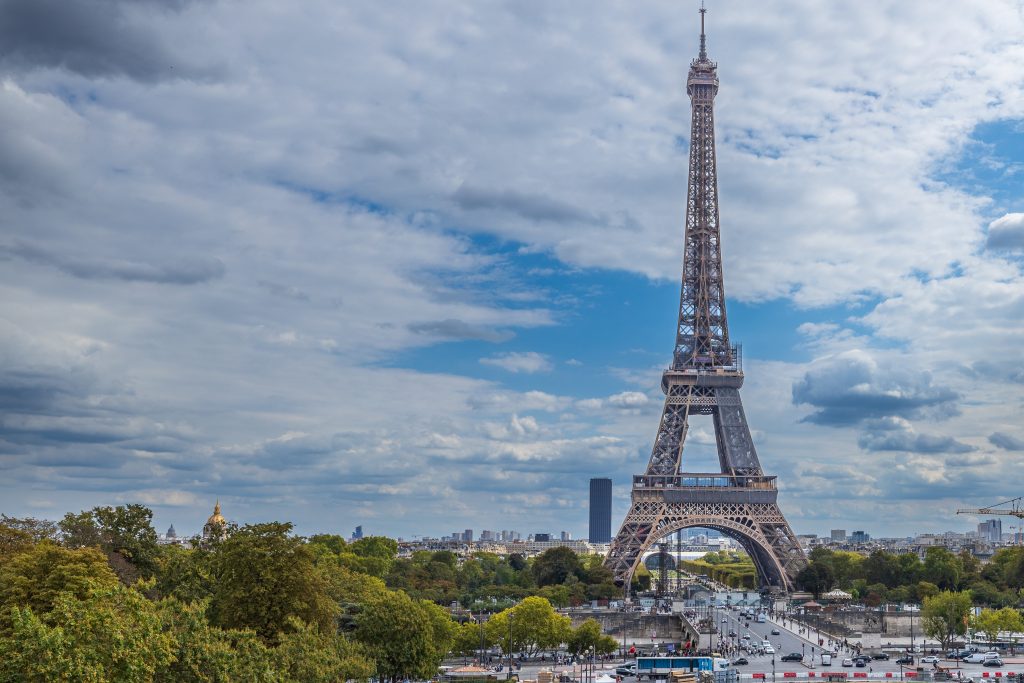
A tower built for a fair
The Eiffel Tower went up in two years, two months and five days for the World's Fair of 1889, assembled from 18,038 iron parts and 2.5 million rivets. It was granted a twenty-year concession and was due to come down in 1909.
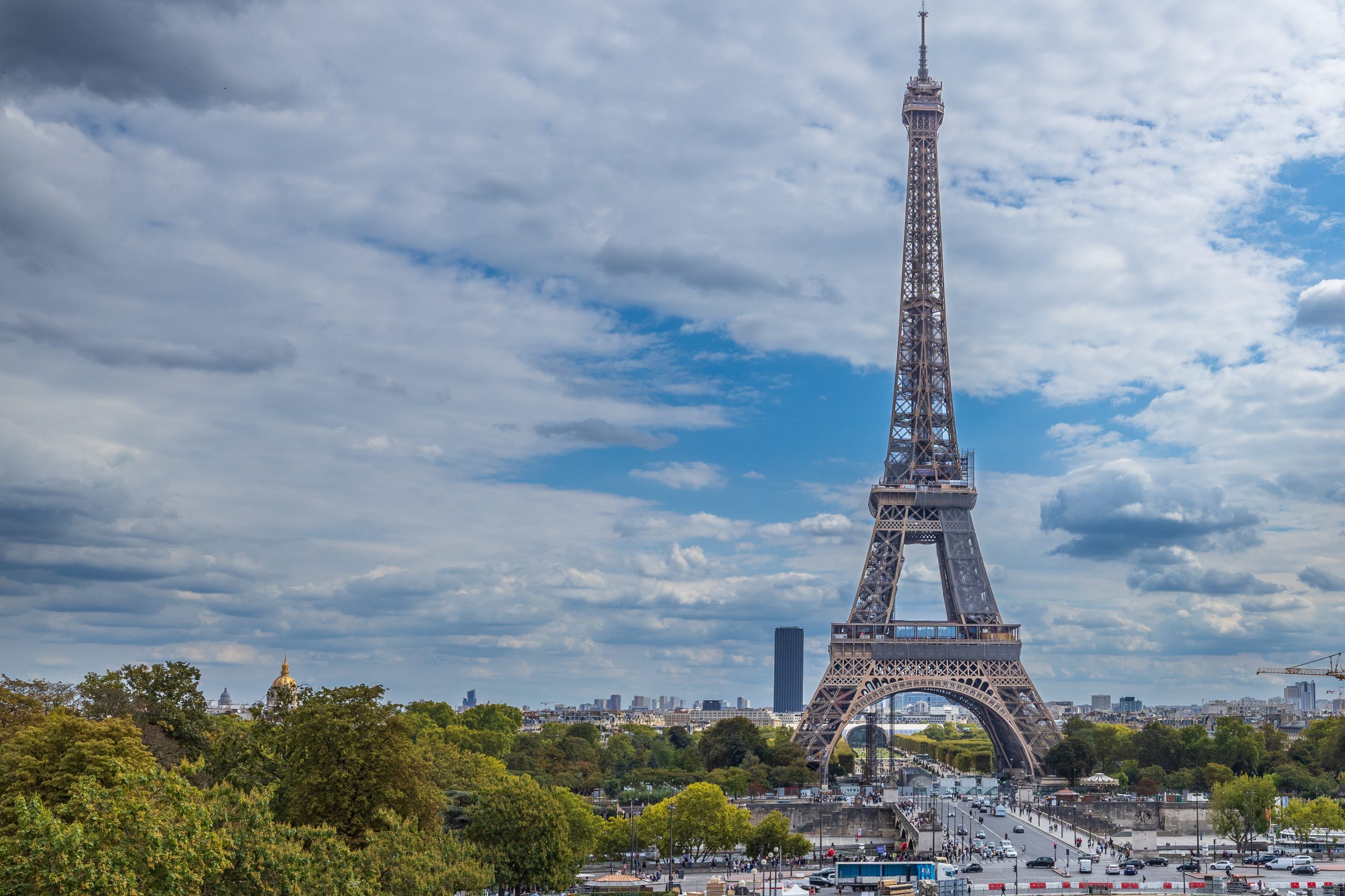
The Eiffel Tower rising above the trees and rooftops of the 7th arrondissement on a day of passing cloud
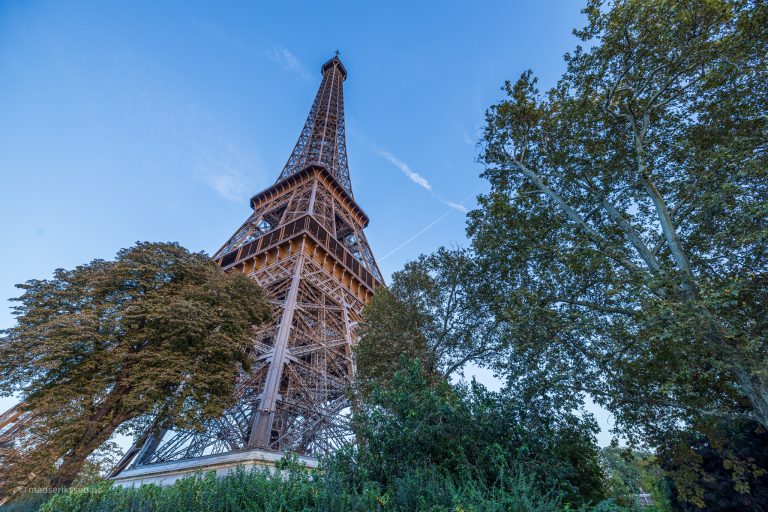
From a sketch to a symbol
Maurice Koechlin and Émile Nouguier sketched a pylon of four lattice girders in June 1884; Stephen Sauvestre added the arches, the glazed first-level rooms and the curved silhouette. Eiffel's design won from 107 proposals, against a protest by Garnier, Gounod and Maupassant.
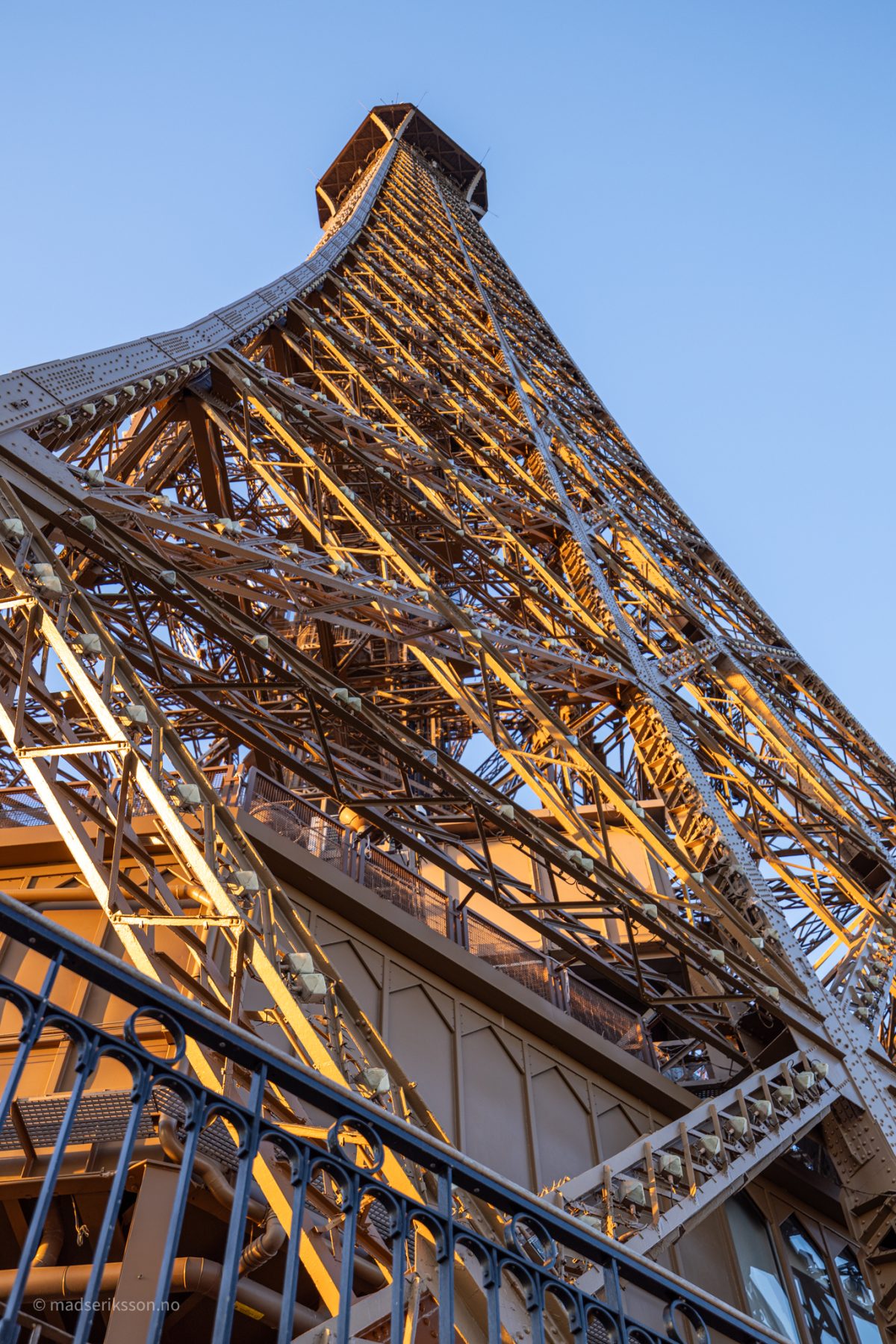
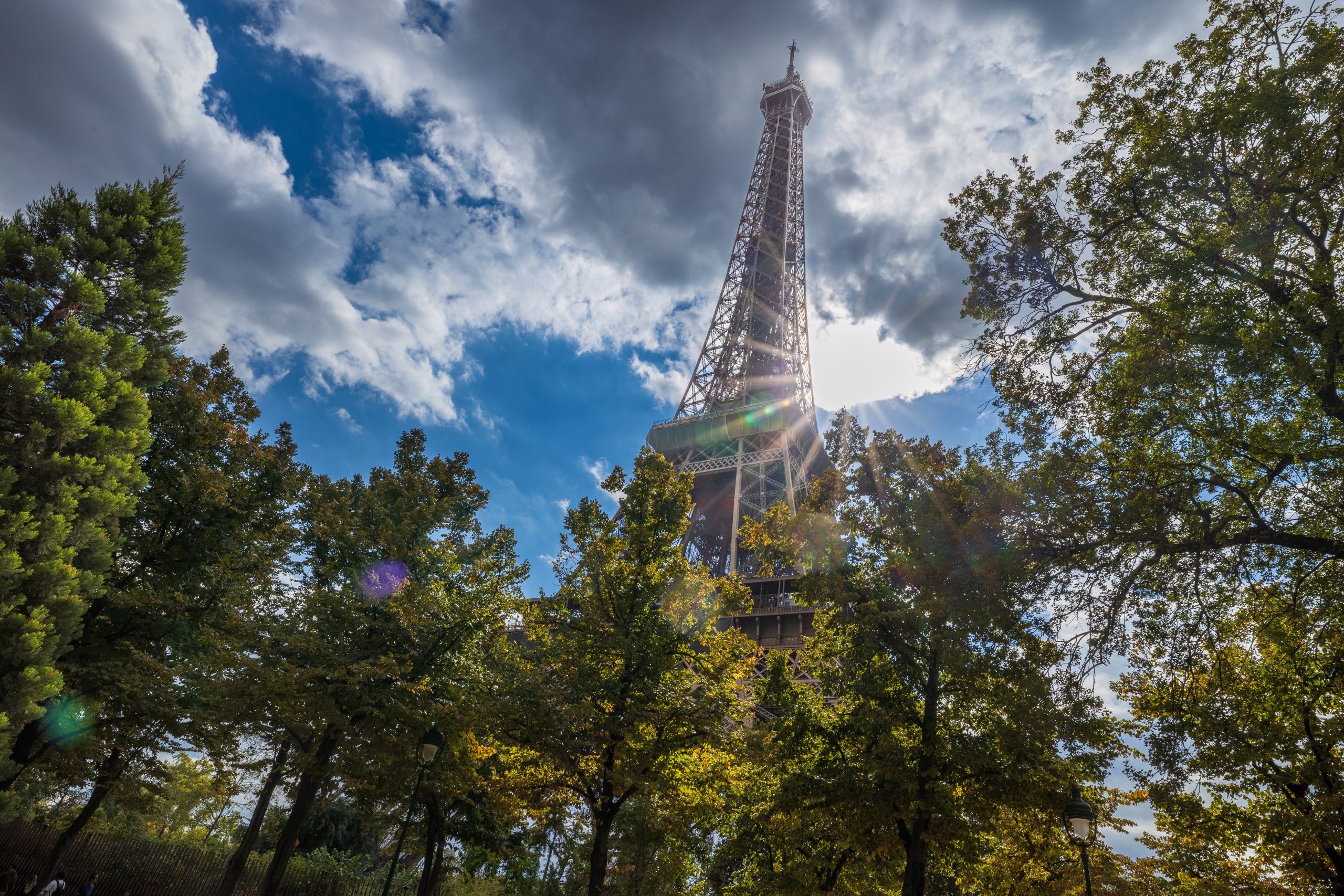
The Eiffel Tower seen from below, between the trees of the Champ de Mars.
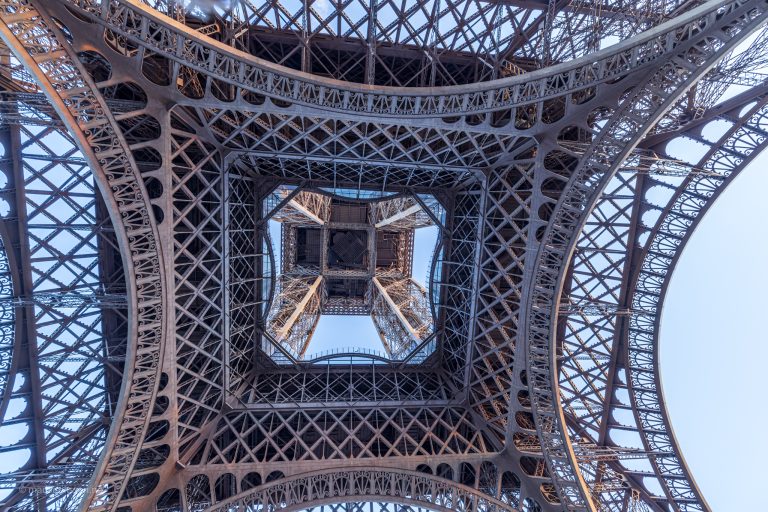
An iron lattice shaped by the wind
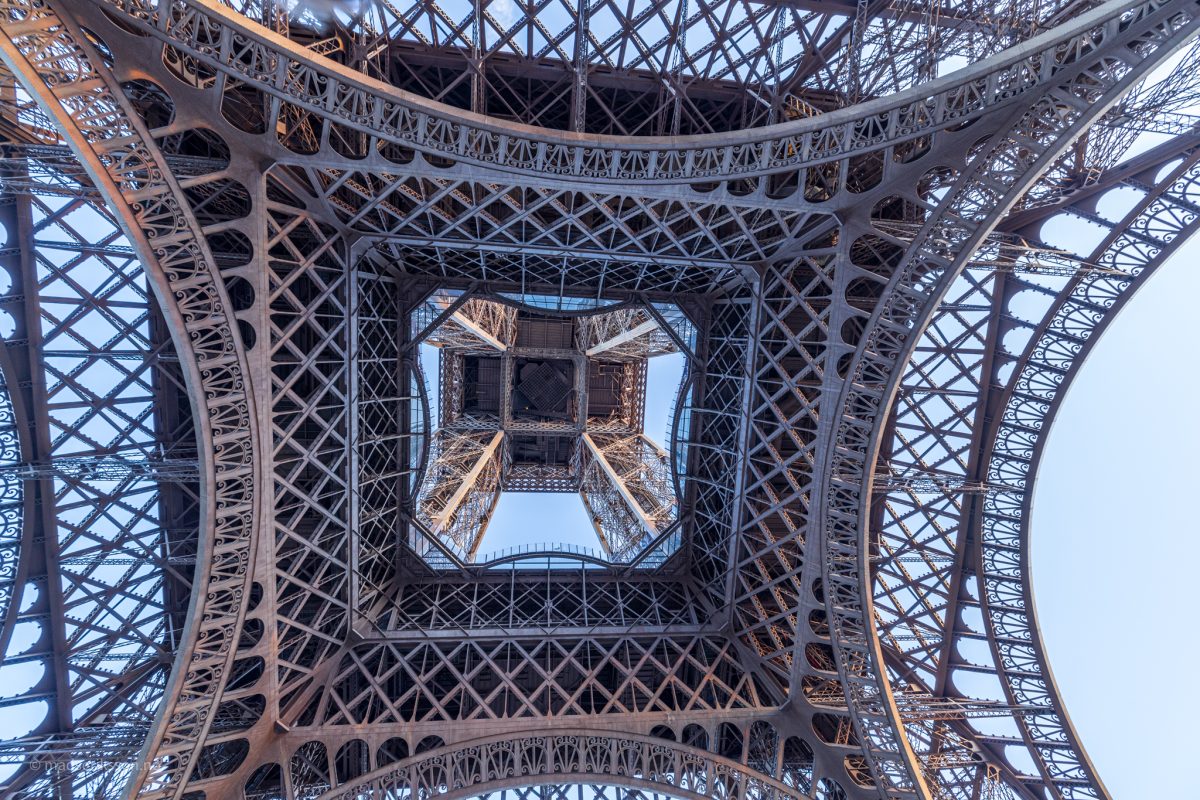
The legs stand on a 125-metre square, and their curve follows the line of the wind loads. Almost all of the 7,300 tonnes of puddle iron is open lattice, so the whole structure, about 10,100 tonnes, presses on the ground with only three to four kilograms per square centimetre.
Looking straight up through the four iron legs of the Eiffel Tower to its upper platforms
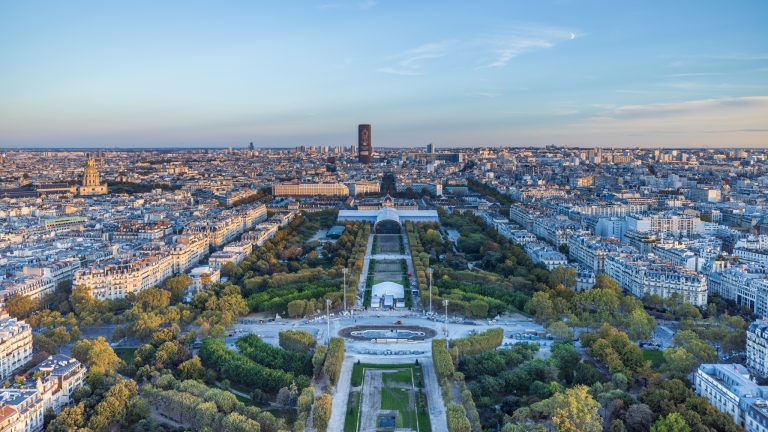
The largest platform
The first floor, 57 metres up, is the largest of the three platforms, with a glass floor looking straight down and the frieze bearing the names of 72 French scientists and engineers. It was finished on 1 April 1888.
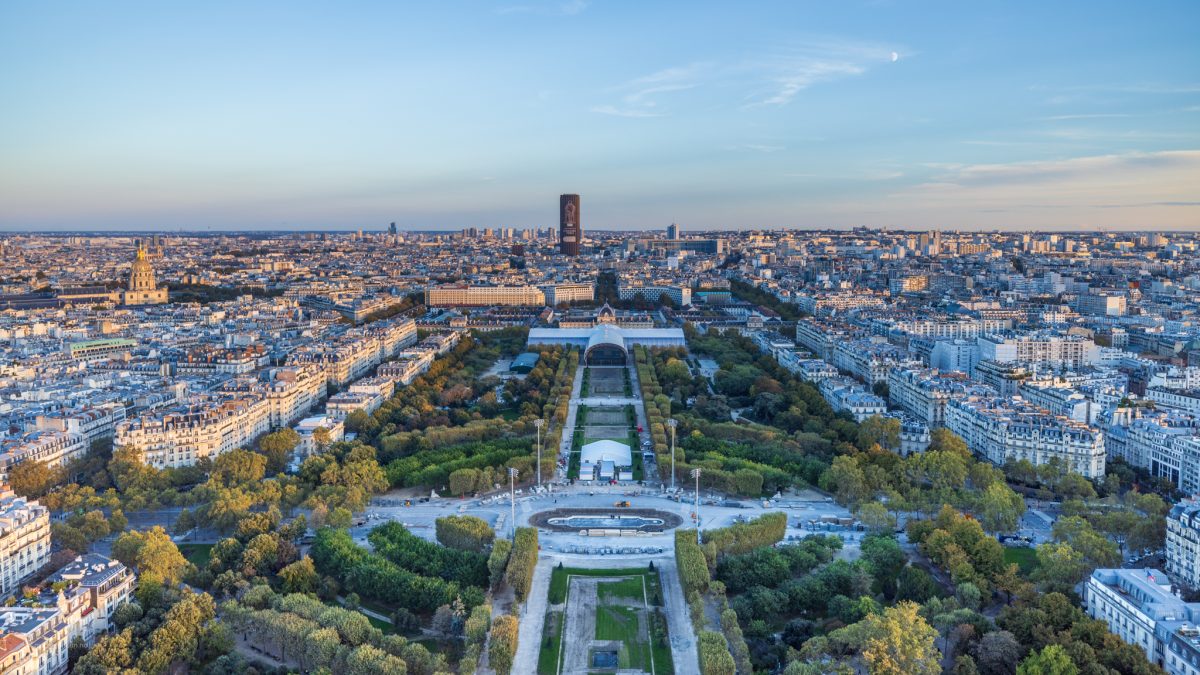
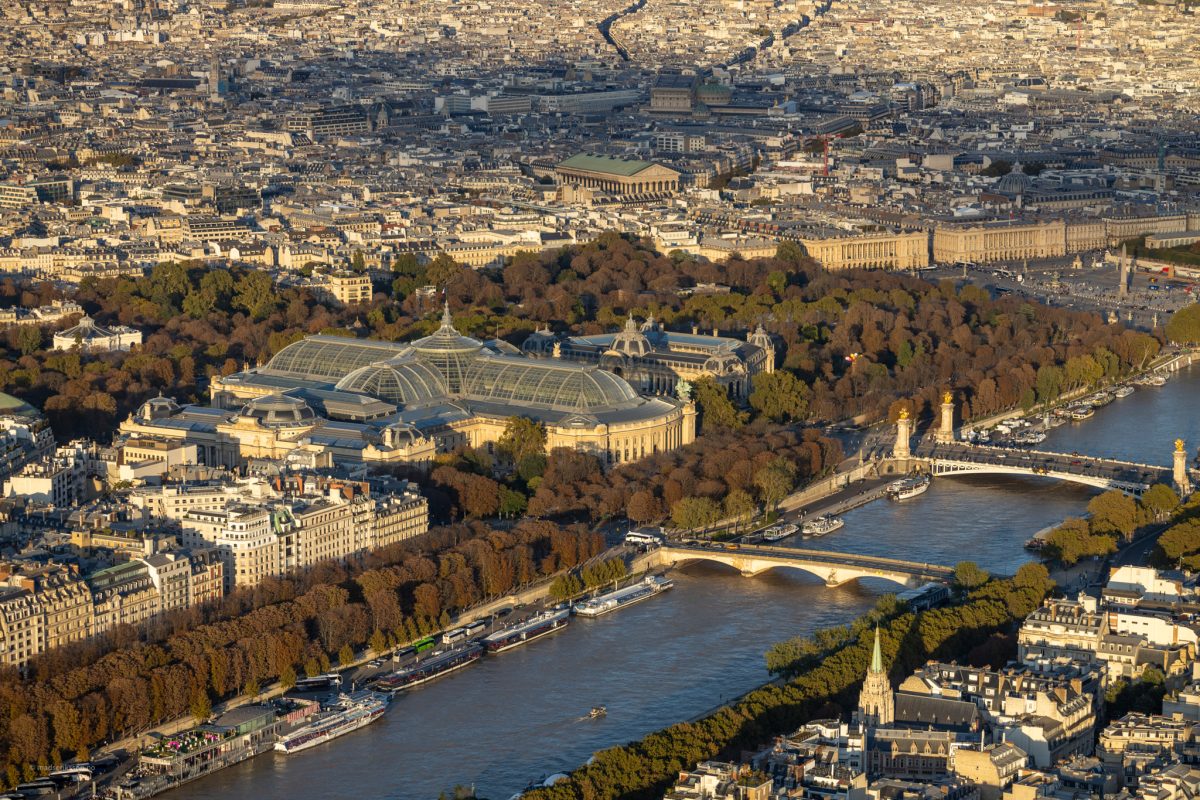
The Champ de Mars and Paris, seen from the Eiffel Tower.
The view worth lingering over
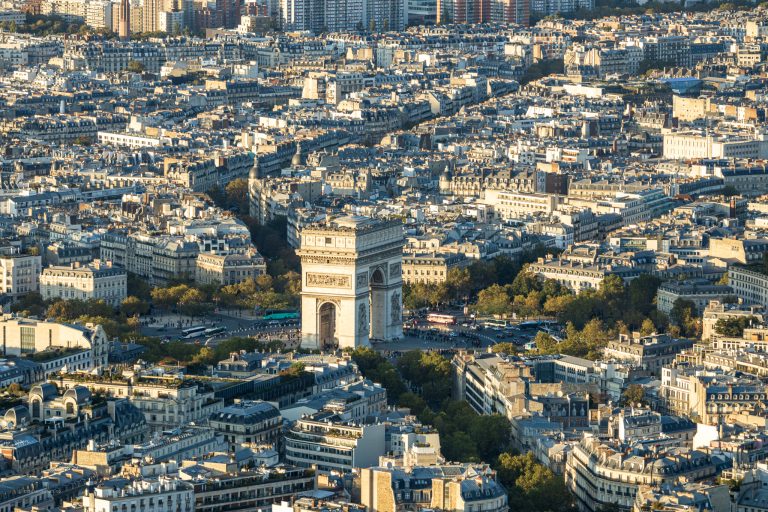
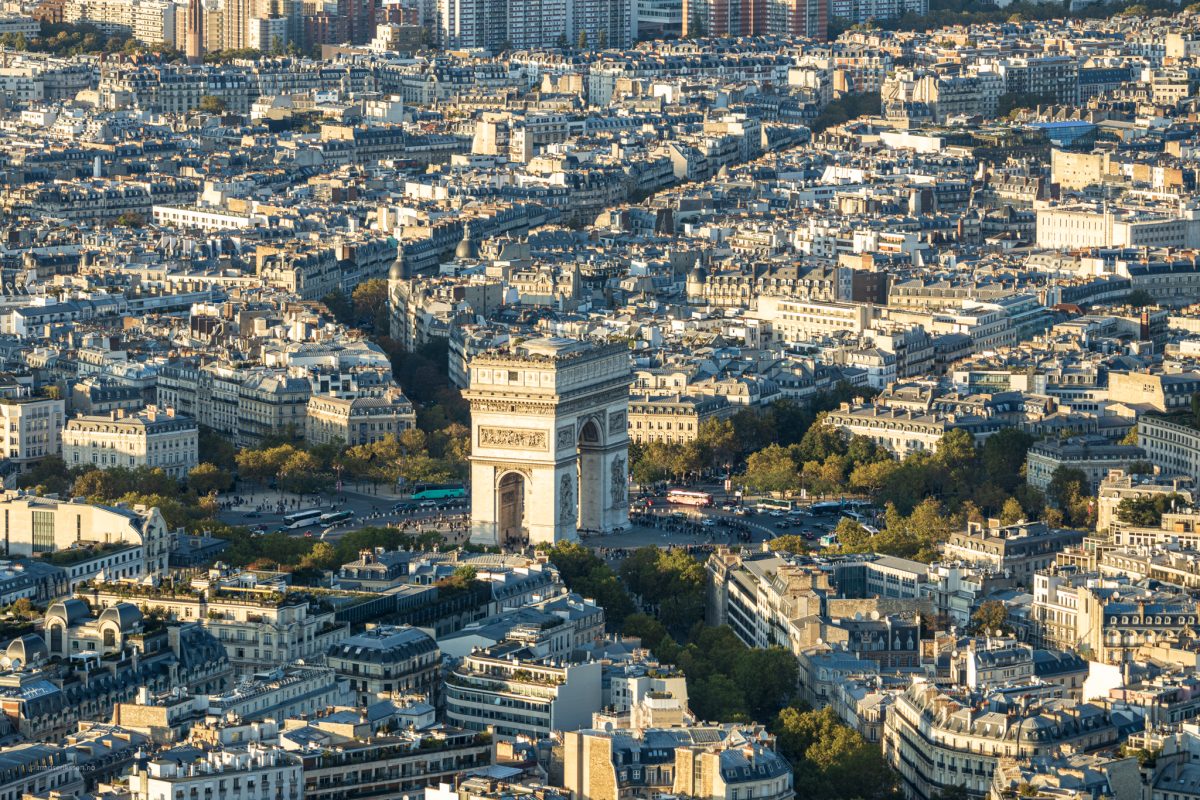
At 116 metres the second floor shows central Paris along the Seine: the Trocadéro, the Arc de Triomphe, Les Invalides, Notre-Dame and Sacré-Cœur. It can be reached by lift or by 674 steps up through the south leg.
The Arc de Triomphe at the centre of Place Charles de Gaulle, looking down from the Eiffel Tower
Eiffel's apartment at the top
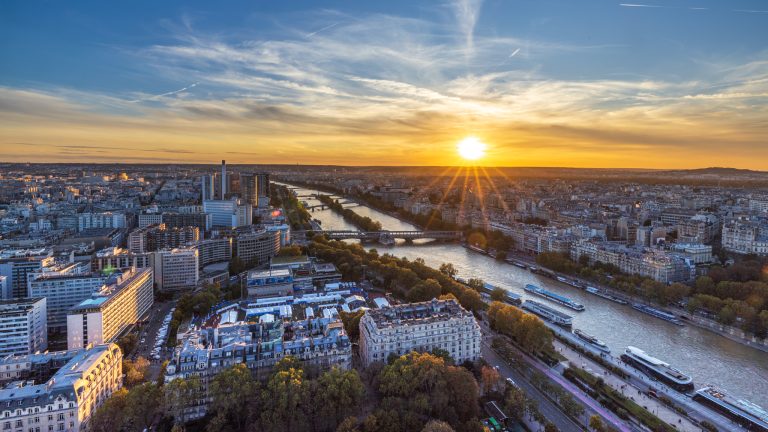
The summit platform, at 276 metres, is reached only by the vertical lifts from the second floor. Gustave Eiffel kept a small apartment there where he received visitors, Thomas Edison among them. From here the city flattens into a map.
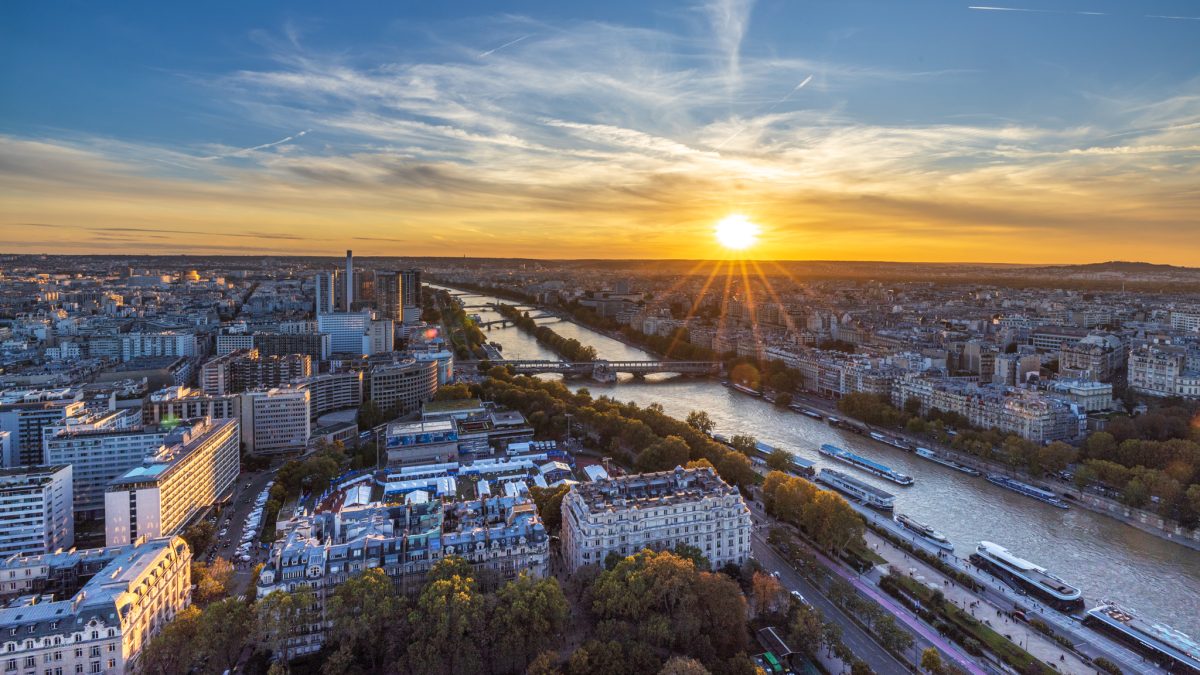
Sunset over the Seine and western Paris, seen from the upper levels of the Eiffel Tower
Saved by the radio
When the concession ran out in 1909, the tower's value as a radio-telegraph mast saved it, and from 1910 it sent international time signals. It was the tallest structure in the world until 1930, and with the antenna added in 2022 it stands 330 metres tall.
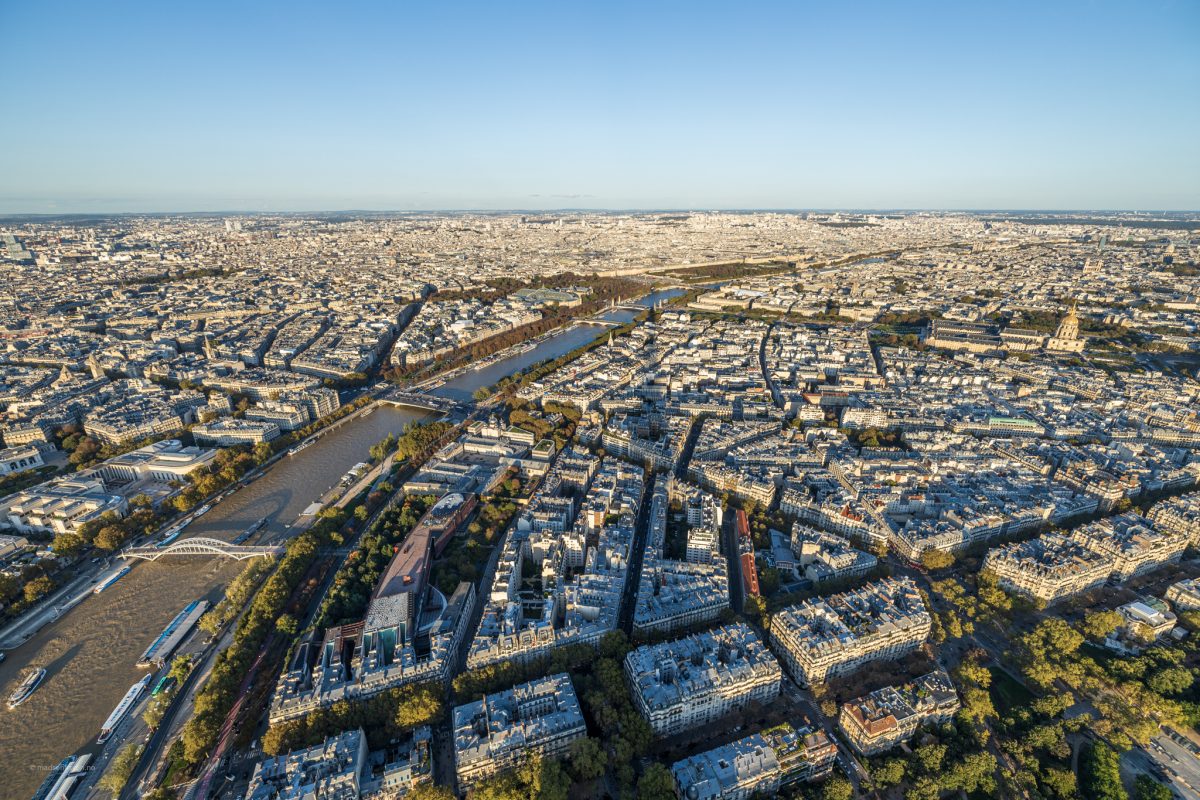
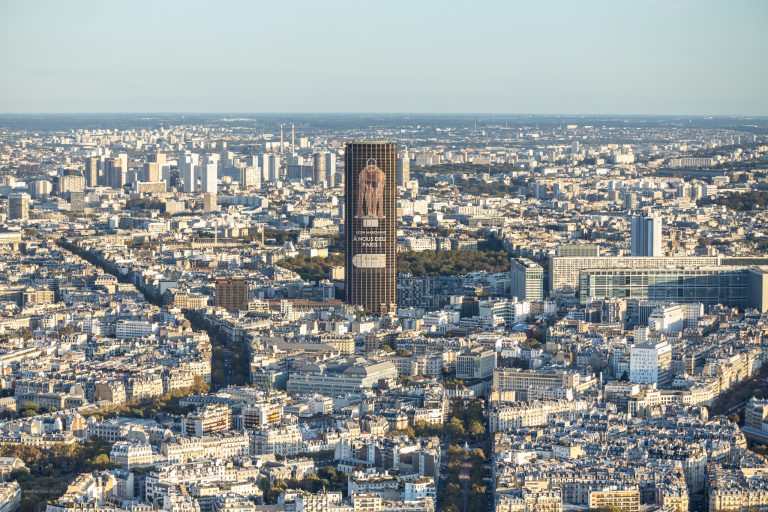
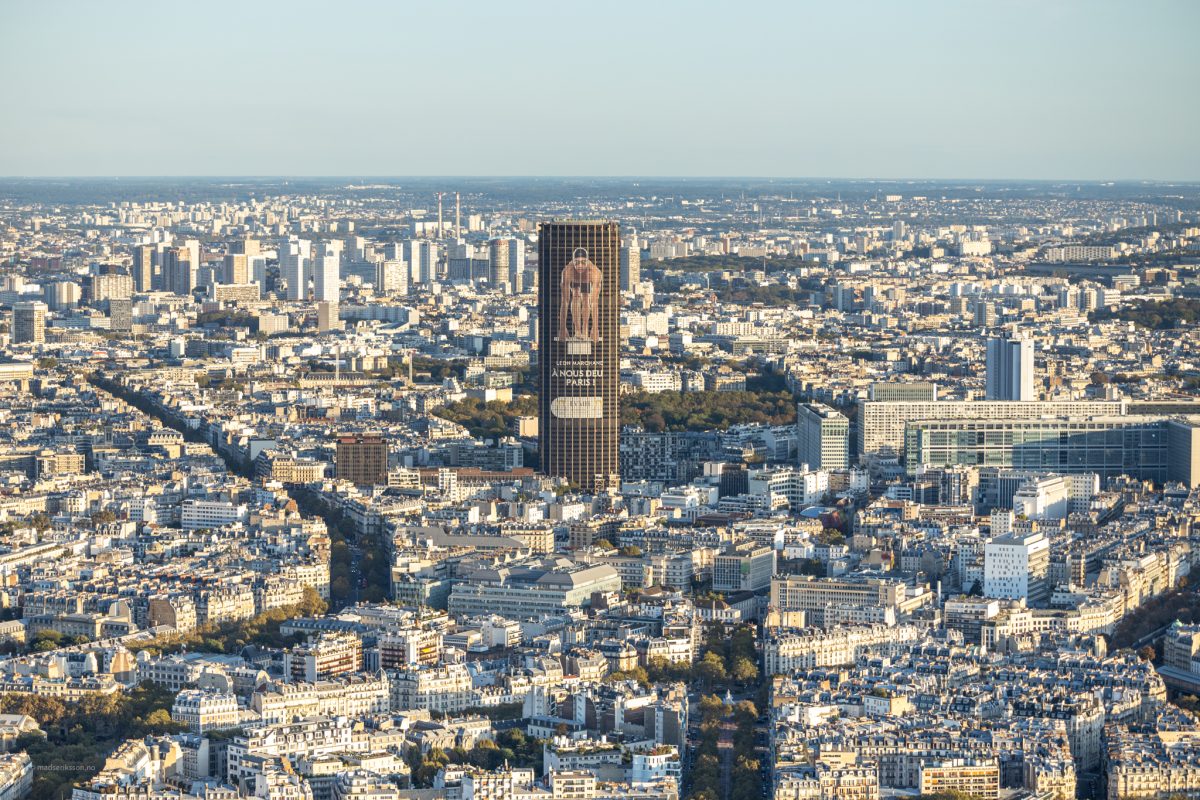
Paris spread out below the Eiffel Tower, with Tour Montparnasse rising above the rooftops
The best views are from the ground
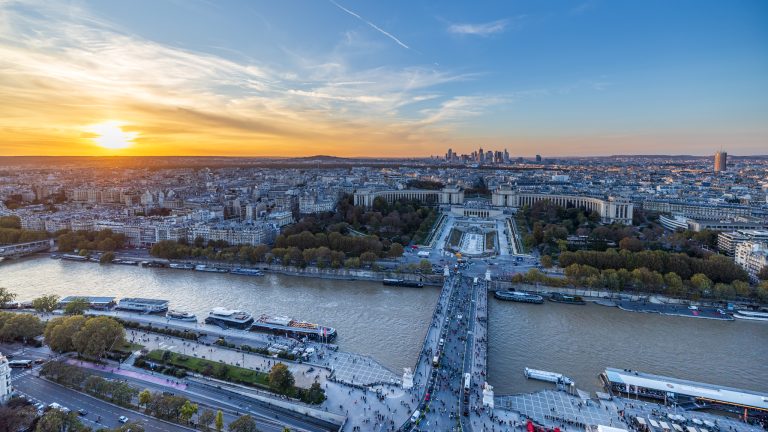
The classic view is from the Trocadéro across the Pont d'Iéna; the Champ de Mars gives the opposite view from the École Militaire. After dark the tower is floodlit in gold and sparkles for five minutes every hour with 20,000 bulbs.
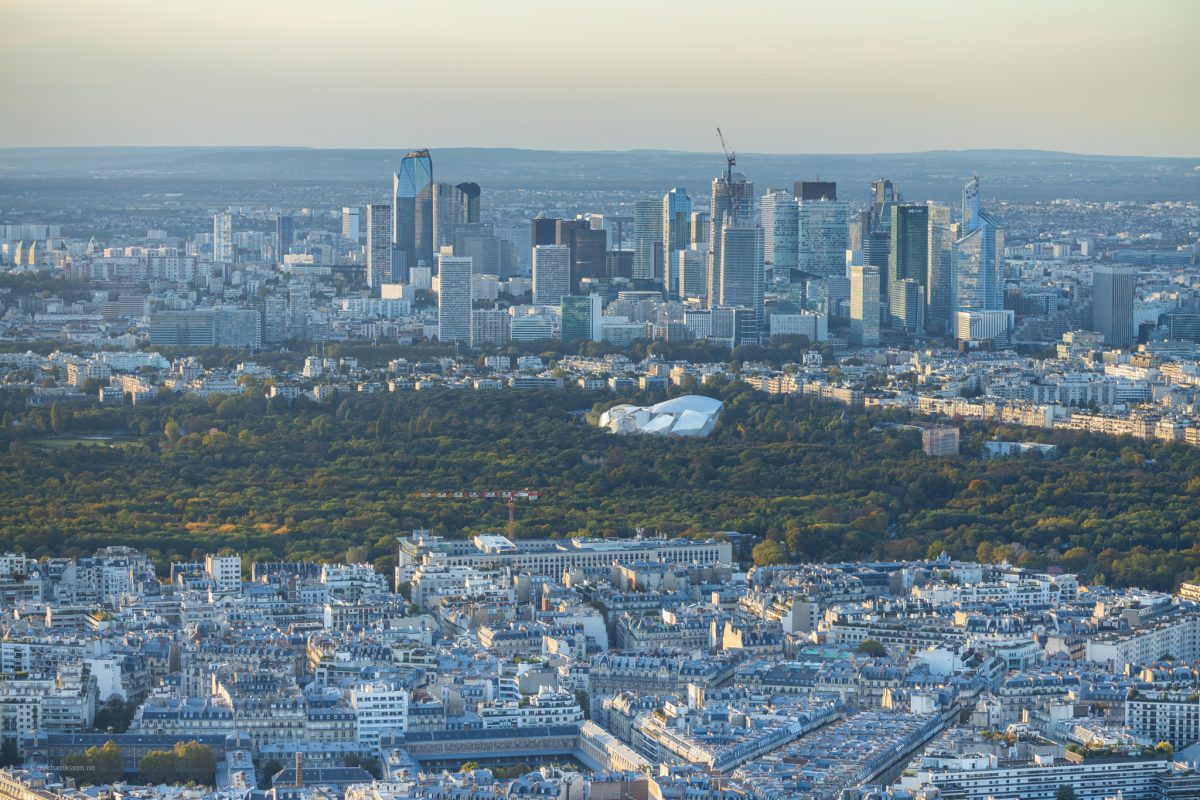
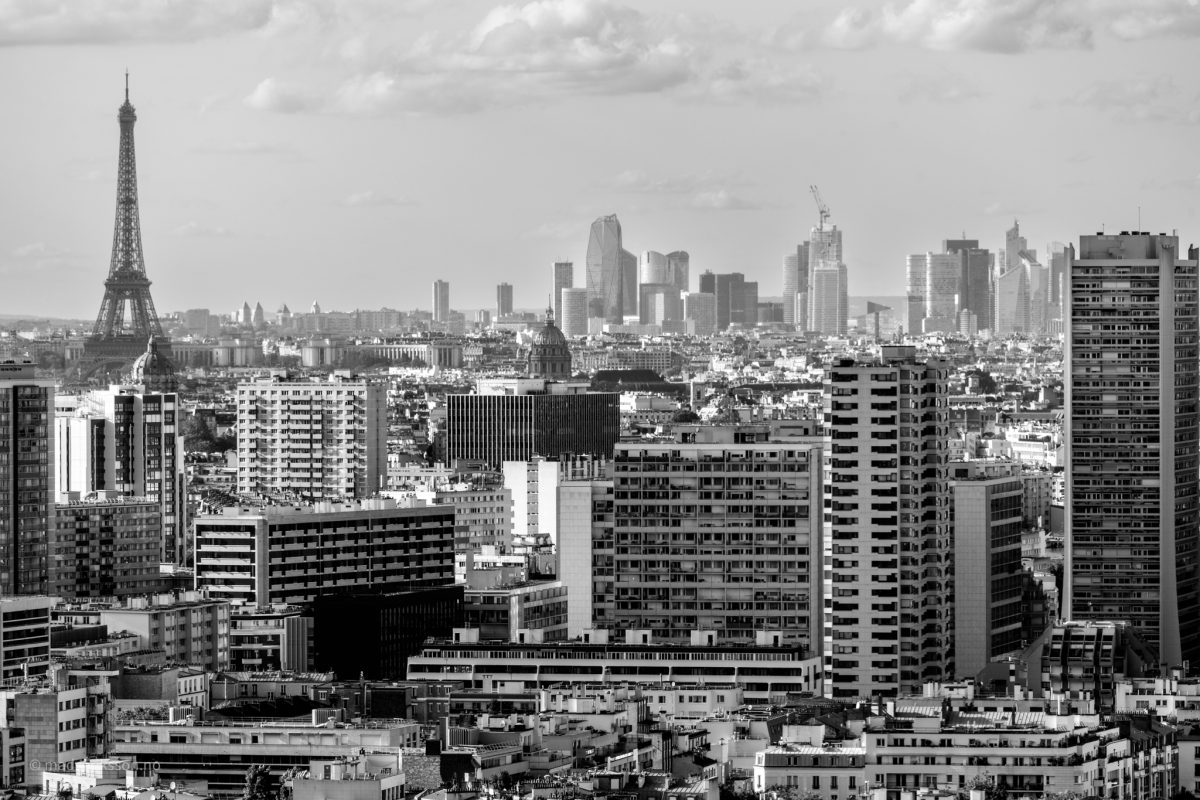
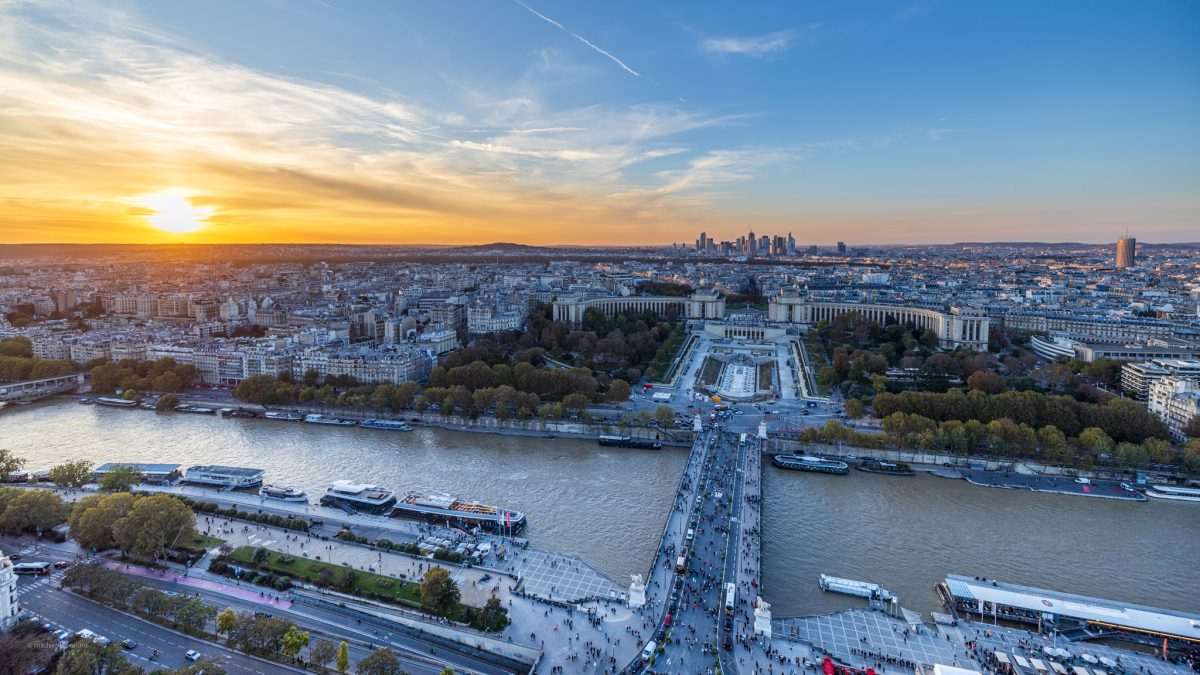
Sunset over the Pont d’Iéna and the Trocadéro, with La Défense on the horizon, from the Eiffel Tower
3D model © 2026 madseriksson.no · Photographs © madseriksson.no. Tower parts and surroundings: © OpenStreetMap contributors (ODbL). The iron lattice is simplified to stacked solid sections between the 57 m, 116 m and 276 m platforms and the 330 m top.
A Temporary Tower — Built for a Fair, Saved by the Radio
How a centenary showpiece that half of artistic Paris wanted stopped became the one building in the city nobody would now think of removing
Digging for the foundations began on 26 January 1887, and the speed of what followed was the point. The 18,038 parts were drawn in 5,300 workshop drawings, prefabricated to a tenth of a millimetre at Eiffel’s works in Levallois-Perret and brought to the Champ de Mars ready to bolt together. The foundations took around five months; the ironwork rose for the next twenty-one, with never more than about 300 men on site. The first floor was finished on 1 April 1888, the second that August, and the flag went up at the top on 31 March 1889 — in time for the fair, and at the symbolic height of 300 metres, roughly a thousand feet.
It was built in the face of fierce opposition. On 14 February 1887, just weeks after work had started, the newspaper Le Temps published a protest by artists and writers against the “useless and monstrous” tower, addressed to the fair’s director of works. The signatories included the architect of the Paris Opera, Charles Garnier, the composer Charles Gounod and the writer Guy de Maupassant, who compared it to a Tower of Babel. Eiffel answered that engineering had its own beauty, and that the curves of the legs were dictated by the forces of the wind. The public settled the argument: around two million people went up the tower during the fair.
The tower was granted a twenty-year concession. When it ran out in 1909, ownership passed to the City of Paris and demolition was a real possibility. What saved it was an antenna: the tower had become too valuable as a radio-telegraph mast to take down.
Eiffel had seen this coming and spent years promoting scientific uses for his tower — meteorological measurements, aerodynamic experiments, and above all radio. By the time the concession expired, military radio-telegraphy from the summit had made the tower strategically useful, and from 1910 it formed part of the International Time Service. It was a radio mast before it was a postcard. In August 1944, as the Allies approached Paris, Hitler ordered the military governor, General Dietrich von Choltitz, to destroy the city’s landmarks; von Choltitz did not carry out the order, and the tower survived the war intact.
The Engineering — An Iron Lattice Shaped by the Wind
Why the tower is so light for its size, why its legs curve the way they do, and why it is never quite finished being painted
The tower is made of puddle iron, a form of wrought iron, and almost all of its 7,300 tonnes of ironwork is open lattice. That is what makes it so light for its height: with lifts, shops and antennas the whole structure weighs about 10,100 tonnes, and the pressure it exerts on the ground through its foundations is only three to four kilograms per square centimetre — comparable to a person sitting on a chair. The shape is not decorative. Eiffel’s engineers calculated the curve of the four legs so that they follow the line of the wind loads on the structure, which is why the tower narrows in the profile it does and why it moves so little in a storm.
The curved legs created one of the hardest problems of the project: the lifts. A conventional vertical lift cannot run up a leg whose angle changes from about 54 to about 78 degrees on the way to the second floor, and the original machinery had to be designed for a path that bends as it climbs. The lifts that run in the legs today still follow that curve, while a separate pair of double-deck cabins runs vertically from the second floor to the summit. The tower also breathes with the temperature: on a sunny day the side facing the sun expands and the top can lean away from it by as much as 18 centimetres.
The tower has always been painted by hand. It takes around 60 tonnes of paint to cover it, and the work comes round roughly every seven years — the protection against rust that has kept an iron structure from 1889 standing in a wet city for well over a century.
The colour has changed over time. The tower began reddish-brown, was standardised in 1968 as a bronze known as “Eiffel Tower Brown”, and has since been repainted in a warmer yellow-brown. It is always applied in three graduated shades, darkest near the ground and lightest at the top, so that the tower looks the same colour from end to end against the sky. Around the frieze of the first floor, in gold letters, are the names of 72 French scientists, engineers and mathematicians whom Eiffel chose to honour — Lavoisier, Ampère, Laplace and Fourier among them.
Going Up — Three Levels, and Why the Second Is the Best
The glass floor, the classic view over the Seine, and the summit where Eiffel kept a small apartment for guests
The first floor, 57 metres up, is the largest of the three platforms and the one most visitors pass through quickly. It has a section of glass floor that looks straight down to the ground beneath the tower, displays on the history of the structure, and the frieze with the 72 names. It is also the level from which the scale of the ironwork is easiest to grasp: the girders and cross-bracing are close enough to touch, and the view out is still at street-and-rooftop height rather than map height.
The second floor, at 116 metres, is where the tower is at its best as a viewpoint. It is high enough to see the whole of central Paris laid out along the Seine — the Trocadéro directly across the river, the Arc de Triomphe and the Champs-Élysées, Les Invalides, Notre-Dame, Montmartre and Sacré-Cœur on its hill — and still low enough that the buildings read as buildings. From the summit the city flattens into a map. The second floor can be reached either by lift or by climbing 674 steps from the ground; the stairs are cheaper, usually have a shorter queue, and are an experience in themselves, threading up through the ironwork of the south leg.
At the top of the tower, Gustave Eiffel kept a small apartment where he received visitors. Thomas Edison was among them. The rooms are now visible to visitors, furnished as they were, with figures of Eiffel and his visitors.
The summit platform, at 276 metres, is reached only by the pair of vertical lifts from the second floor. It is the reason many people come, but it is small, often windy, and can close at short notice in bad weather or at peak times. The practical choice is between the second floor (by stairs or lift) and the full ascent to the summit; for most visitors on a clear day, the summit is worth adding once, and the second floor is the view worth lingering over. Lift tickets sell out weeks ahead in the summer months, and from late September 2026 stair tickets also need to be reserved in advance.
Seeing the Tower — The Best Views Are From the Ground
The terrace across the river, the long lawn behind it, the bridge with the Metro on top, and the five minutes every hour when the whole tower flickers
The tower is best appreciated from a distance, and the classic place to stand is the Trocadéro: the raised terrace between the two curved wings of the Palais de Chaillot, directly across the Seine. From there the tower is framed head-on, across the gardens and the Pont d’Iéna, with nothing in the way. It is busiest at sunset and after dark; early in the morning it is almost empty. The gardens below the terrace lead down to the river and across the bridge to the foot of the tower, which makes the walk from the Trocadéro the natural way to arrive.
On the other side, the Champ de Mars runs south-east from the tower to the École Militaire in a long rectangle of lawns and gravel paths. It gives the opposite view — the tower rising at the end of a formal avenue, with the Trocadéro behind it across the river — and on warm evenings it fills with people picnicking under the tower. The forecourt directly beneath the four legs is free to enter after a security check, and standing in the centre and looking straight up into the ironwork is one of the more remarkable experiences the tower offers. A little downstream, the two-level Pont de Bir-Hakeim, with the elevated Metro running across its top deck, gives a side-on view of the tower through the iron columns of the bridge.
After dark the tower is floodlit in gold, and for five minutes at the start of every hour it sparkles with 20,000 flashing lights. Seen from the Trocadéro or from a boat on the Seine, it is the moment most people come back for.
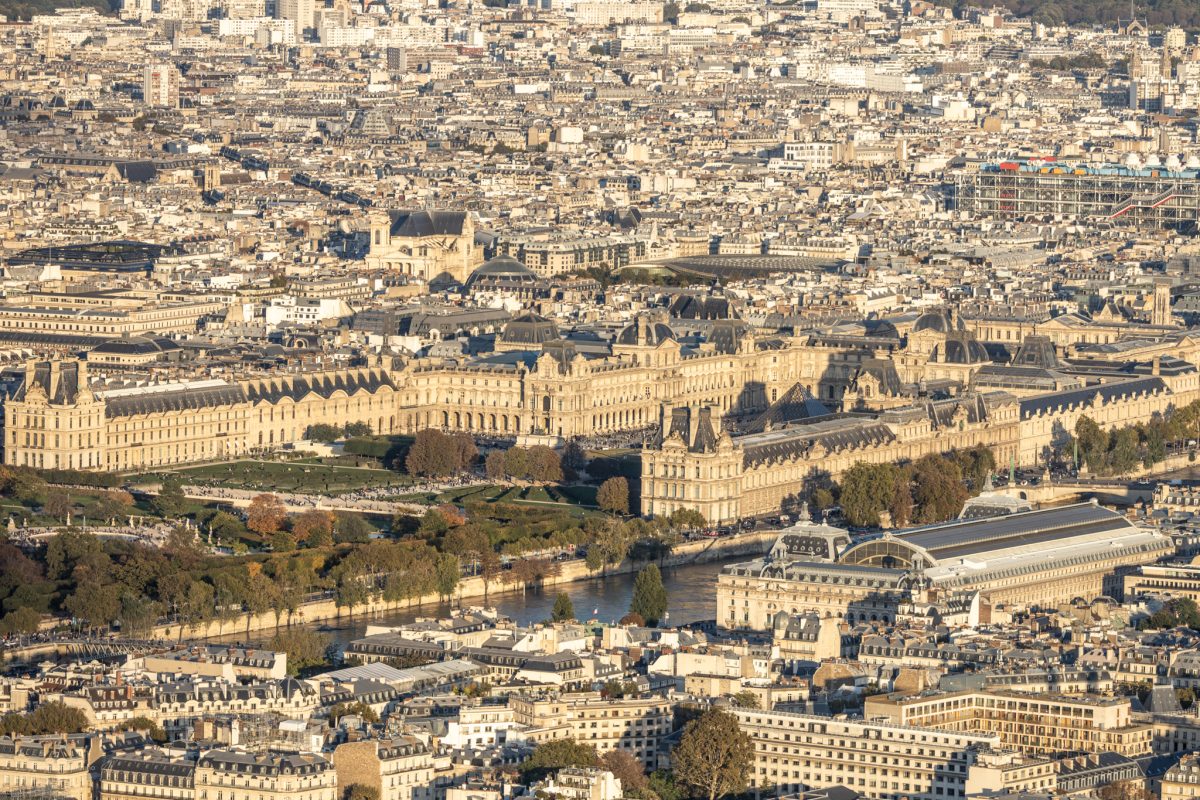
The river is the other great vantage point. Boat cruises on the Seine leave from the quays at the foot of the tower and run past the Louvre and Notre-Dame and back, passing under the bridges with the tower visible over the water for much of the way. An evening cruise timed to pass the tower on the hour combines the two best ways of seeing it — from below and from the river — with the sparkle. From further away, the tower appears unexpectedly at the end of streets all over the west of Paris, and from the hill of Montmartre it stands up clearly above the rooftops on the far side of the city.
«The Eiffel Tower was meant to prove that iron and arithmetic could build something taller than anything that had stood before, and to come down again after twenty years. It did the first in just over two years and never did the second. What makes it worth the queue is not only the view from the second floor or the summit, but the structure itself — the way the four legs bend to meet the wind, the lattice that lets the sky through, the rivets you can reach out and touch. Go up it once, on a clear day. Then cross the river to the Trocadéro, wait for the hour, and watch it sparkle.»

More in the same area
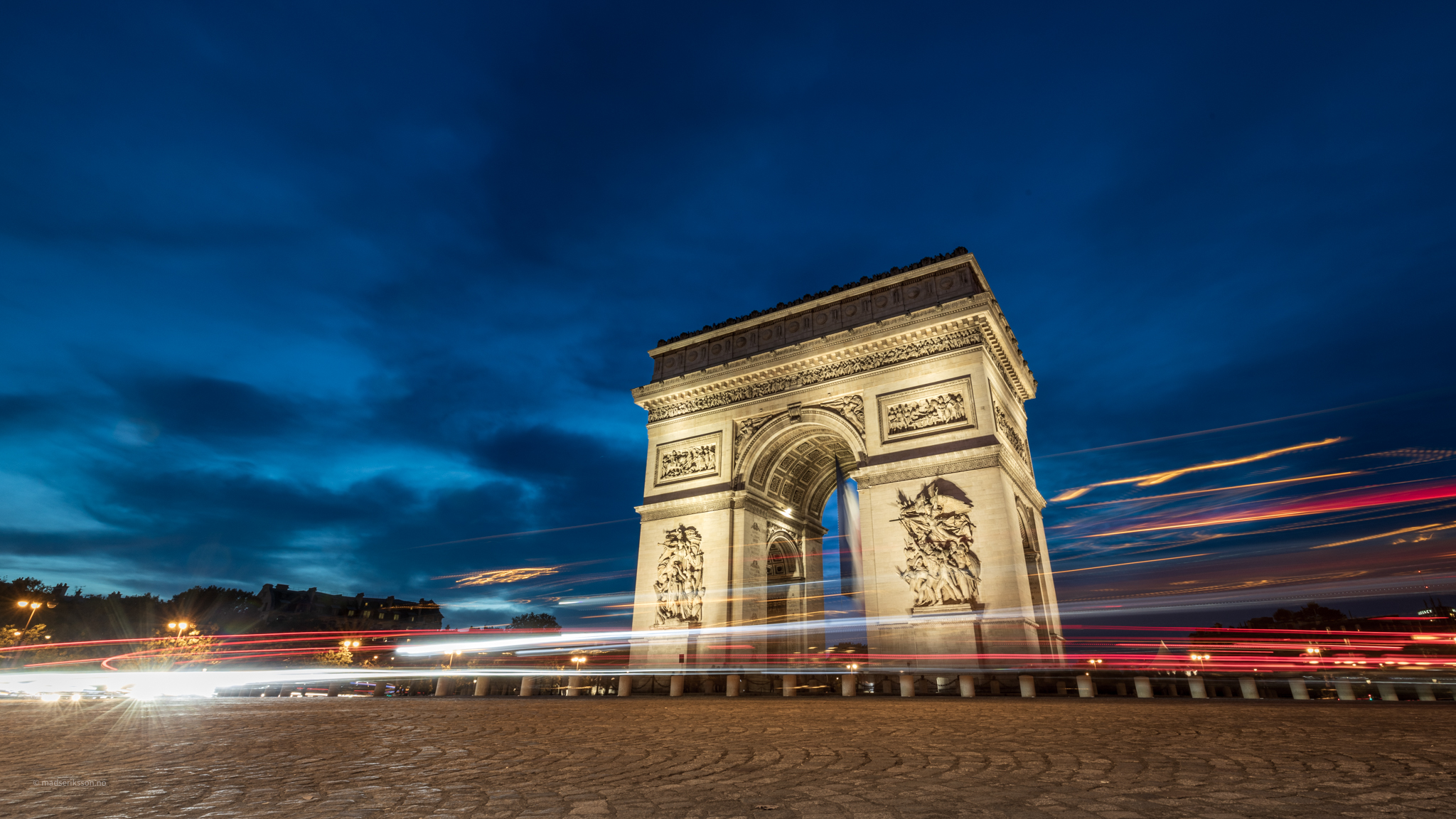 ArchitectureArc de Triomphe: Napoleon’s Arch, the Unknown Soldier and the View Down Twelve Avenues
 ArchitectureLouvre Museum, Paris: From Medieval Fortress to the World’s Most Visited Museum
 ArchitectureInstitut du Monde Arabe, Paris: Jean Nouvel’s Light-Sensitive Landmark on the Seine
 ArchitectureLe Monde Headquarters, Paris: Snøhetta’s Glass Bridge Over the Austerlitz Tracks
 CitiesParis: The City of Lights
 LibrariesBibliothèque nationale de France: Six Centuries of Books, Two Sites in Paris