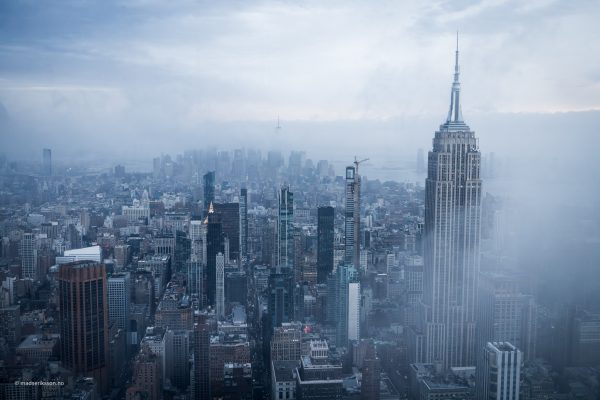
The Empire State Building went up faster than any skyscraper of its size before or since. Steel began to rise on Fifth Avenue in the spring of 1930, and on 1 May 1931 — just 410 days after construction started — the building opened: 102 storeys of steel and Indiana limestone, 381 metres to the top floor and the tallest building in the world for the next four decades. It was finished in the depths of the Great Depression, stood half empty for years, and survived a bomber flying into it in 1945. Today it is still the defining silhouette of Midtown Manhattan, and its open-air deck on the 86th floor draws around four million visitors a year.

The building was conceived at the height of the 1920s boom by a group of investors led by John J. Raskob, a former executive of General Motors, and Pierre S. du Pont, with Al Smith, the former governor of New York, as the public face of the company. They bought the site of the original Waldorf-Astoria Hotel at Fifth Avenue and 34th Street, had the hotel demolished, and commissioned the architects Shreve, Lamb & Harmon to design the tallest office building in the world. William F. Lamb drew the scheme in a matter of weeks. By the time the steel went up, the stock market had crashed, and the race to be tallest — against the Chrysler Building and 40 Wall Street — was as much about prestige as profit.
It took years for the offices to fill, and New Yorkers nicknamed it the “Empty State Building”. What kept it going was the view. The observation deck on the 86th floor was a success from the start, and it remains one of the most visited attractions in the city: open every day of the year, from morning until late at night, with views on a clear day across Manhattan and the rivers to New Jersey and well beyond. The building is still a working office tower, and the visitor route is a separate world inside it, with its own entrance on 34th Street, a museum on the second floor and three levels of observatory above.
How to approach the Empire State Building
This guide covers the building in three parts: how it was financed and built at record speed during the Depression; the Art Deco design, the mast on top and the lights that change colour through the year — along with the day in 1945 when a bomber struck the 79th floor; and the visit itself, from the museum to the 86th and 102nd floors, with advice on tickets, timing and the best places to see the building from outside.
Built in 410 Days — A Boom-Time Tower Finished in the Depression
How a project planned in the last months of the 1920s boom became a symbol of New York’s nerve in the years after the crash
Excavation began on 22 January 1930, and work on the building itself started on 17 March. The project was organised like a production line. The steel frame was fabricated in Pittsburgh, delivered to the site to a precise schedule and riveted together by gangs who worked at the open edge of the floors hundreds of metres above the street. Materials were moved around the site on a temporary railway, and at times the frame rose by more than four storeys a week. The structure topped out in September 1930, twelve days ahead of schedule, and the limestone, aluminium and glass cladding followed close behind.
The speed was partly a matter of economics — an unfinished skyscraper earns no rent — and partly a matter of rivalry. In 1929 and 1930 two other Manhattan towers, the Chrysler Building and 40 Wall Street, were competing for the title of tallest building in the world, and the Chrysler Building had won by secretly assembling its spire inside the tower and raising it into place. The Empire State Building was designed to beat it decisively, and the mast added to the top of the design took it to 381 metres at the roof, far above any rival.
On 1 May 1931 President Herbert Hoover pressed a button in Washington that switched on the building’s lights. It had cost just under $41 million — well under budget, because the Depression had brought down the price of labour and materials.
The timing was against it all the same. With the economy in free fall, the offices stood largely unlet through the 1930s, and the building ran at a loss for years while the observation deck earned much of its income. It became profitable only in the 1950s. By then it had become the image of New York itself, and it kept the title of tallest building in the world for almost forty years, until the North Tower of the World Trade Center rose above it in 1970. After the towers fell in 2001 it was briefly the tallest building in the city again, until One World Trade Center overtook it in 2012.
The Building — Art Deco Setbacks, a Mast for Airships and the Lights on Top
Why the tower steps back as it rises, what the mast was really meant for, and how a wartime accident tested the steel frame
The shape of the building owes as much to New York’s zoning rules as to style. Under the city’s 1916 zoning law, tall buildings had to step back from the street as they rose so that light could reach the pavement, and Lamb turned the requirement into the design: a broad five-storey base that fills the block, a series of setbacks above it, and then a slender shaft that rises unbroken to the 86th floor. The facade is clad in pale Indiana limestone and granite, with vertical bands of windows set between strips of aluminium and stainless steel that catch the light. Inside, the long Fifth Avenue lobby is a showpiece of Art Deco, finished in marble and metal, with an aluminium relief of the building itself on the wall opposite the entrance.
Above the 86th floor rises the mast. It was presented, with great publicity, as a mooring post for airships: passengers were to step off on a gangway high above the street and take the lift down to Fifth Avenue. The winds at that height made the idea unworkable, and it was quietly abandoned. The mast found its real purpose as a broadcasting tower — the antenna on top still carries television and radio signals — and as a lightning conductor, struck about 25 times a year. Since 2012 the top of the building has been lit by LED fixtures that can display more than sixteen million colours, used to mark holidays, events and causes in light schemes that change through the year.
On the foggy morning of 28 July 1945 an Army B-25 bomber struck the north face of the building between the 78th and 80th floors. Fourteen people died. A lift operator, Betty Lou Oliver, survived a fall of around 75 storeys when her lift cables were cut — still the longest survived lift fall on record.
The steel frame held, and many floors were back in business less than two days later. The crash had lasting effects beyond the building: it was one of the cases that led Congress to pass the Federal Tort Claims Act in 1946, which for the first time allowed Americans to sue the federal government for damages. The Empire State Building was designated a National Historic Landmark in 1986, and in the decades since it has been extensively modernised behind its historic facade, with new lifts, a new energy system and a new visitor route through the observatories.
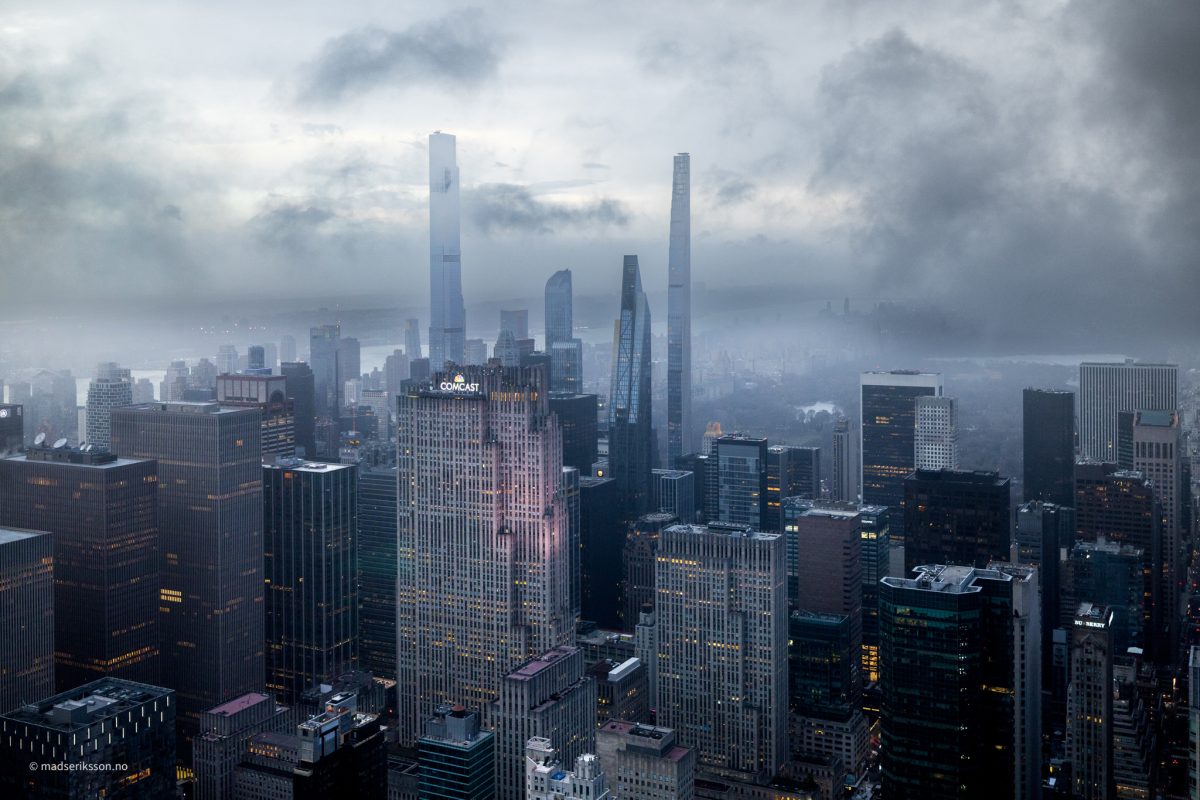
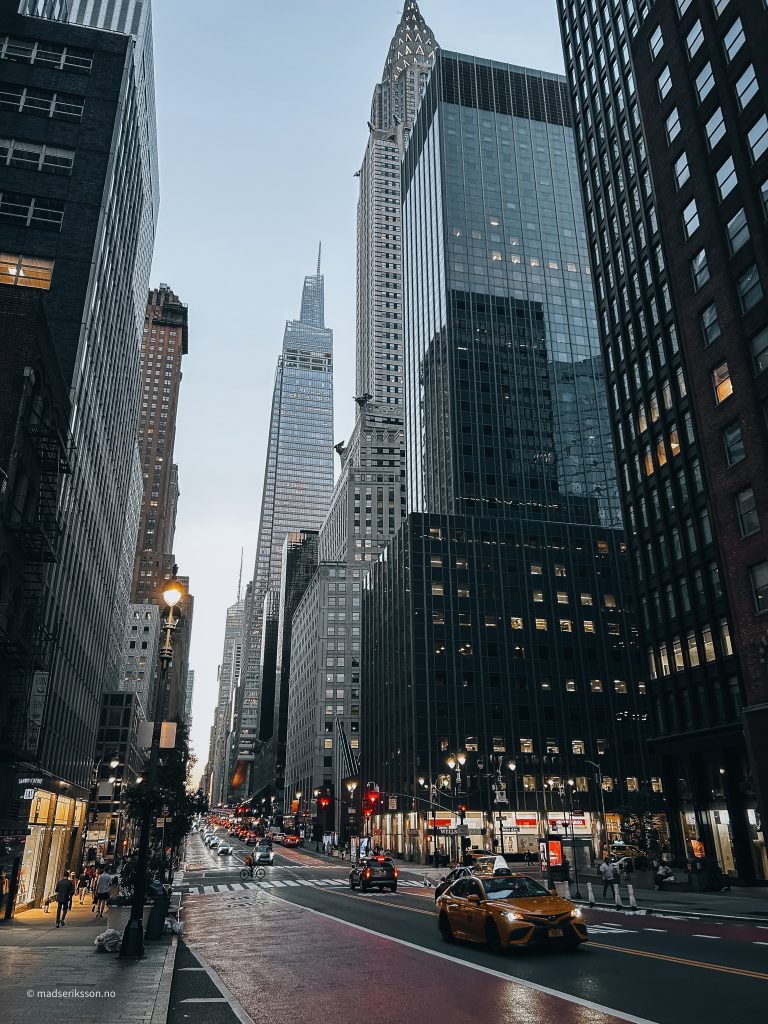
At the foot of the Empire State
The building stands at Fifth Avenue and 34th Street, on the site of the original Waldorf-Astoria. It opened on 1 May 1931, just 410 days after construction started: 102 storeys of steel and Indiana limestone, 381 metres to the top floor and 443 metres to the tip of the mast. Scroll to ride up.
Evening traffic and yellow cabs on a Midtown avenue, with the Empire State Building at the end of the street
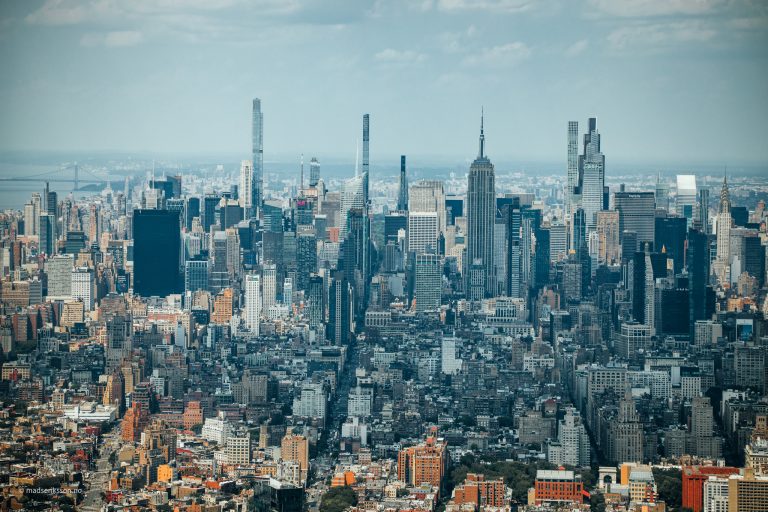
The open-air deck, looking downtown
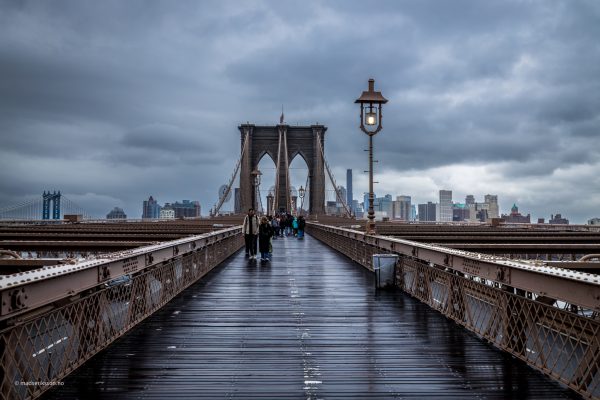
The observation deck on the 86th floor, 320 metres up, has been a success since the building opened and still draws around four million visitors a year. To the south the grid runs down to the Financial District, One World Trade Center and the harbour, with the Brooklyn Bridge on the East River.
Midtown Manhattan and the Empire State Building seen from high above the tip of the island
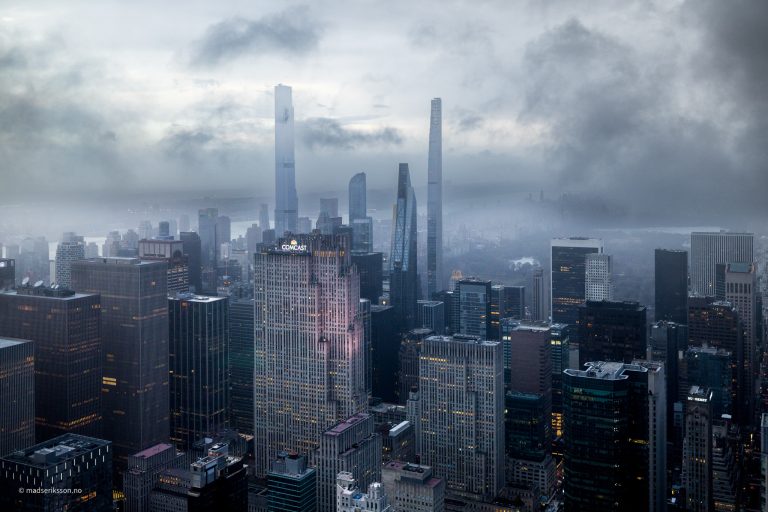
Midtown and Central Park
Turned north, the same deck looks straight up the avenues past Times Square and Rockefeller Center to the long green rectangle of Central Park and the new supertall towers along its southern edge.
Storm clouds over the skyscrapers of Midtown and the supertall towers by Central Park
The top floor
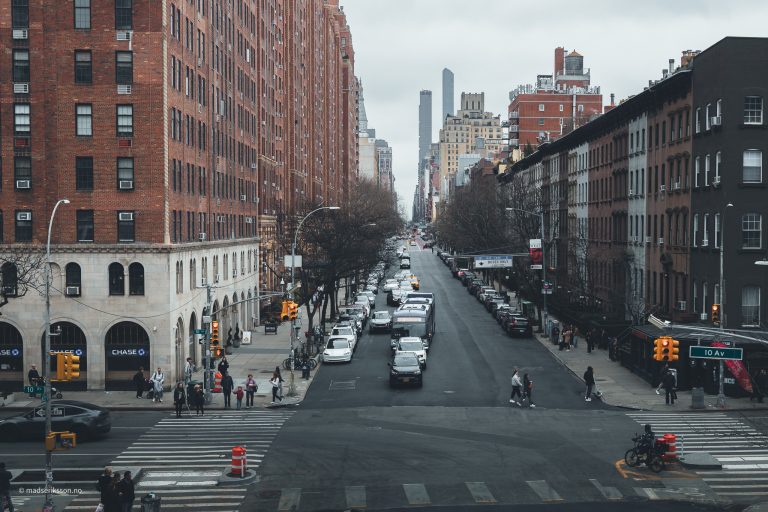
A second lift continues to the enclosed 102nd floor at 381 metres. To the west the High Line threads through Chelsea towards Hudson Yards and the Hudson River. There are 1,860 steps from the street to this floor; visitors take the lifts, of which the building has 73.
Looking along a Manhattan avenue from the High Line, with brick blocks, traffic and towers in the distance
Midtown after dark
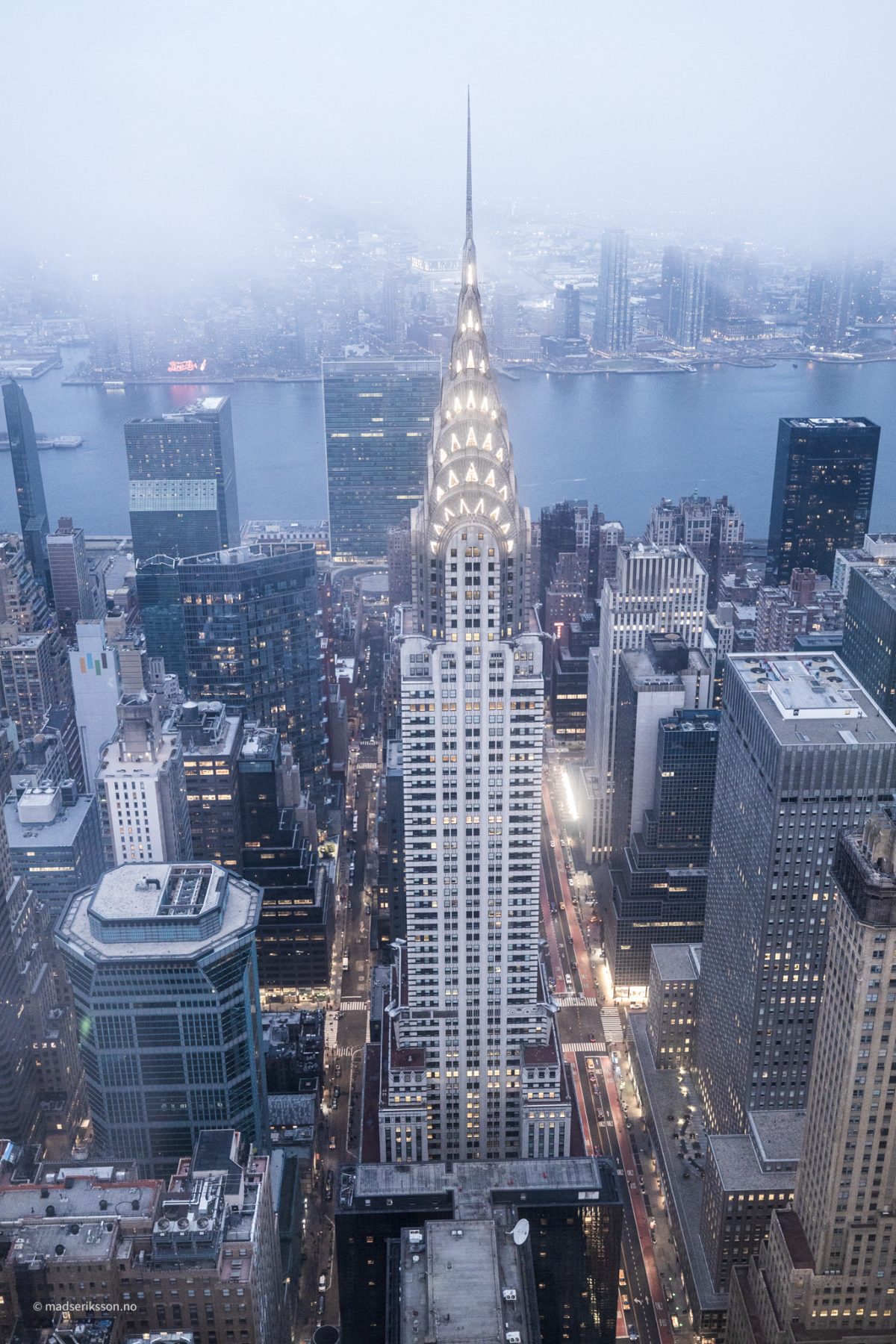
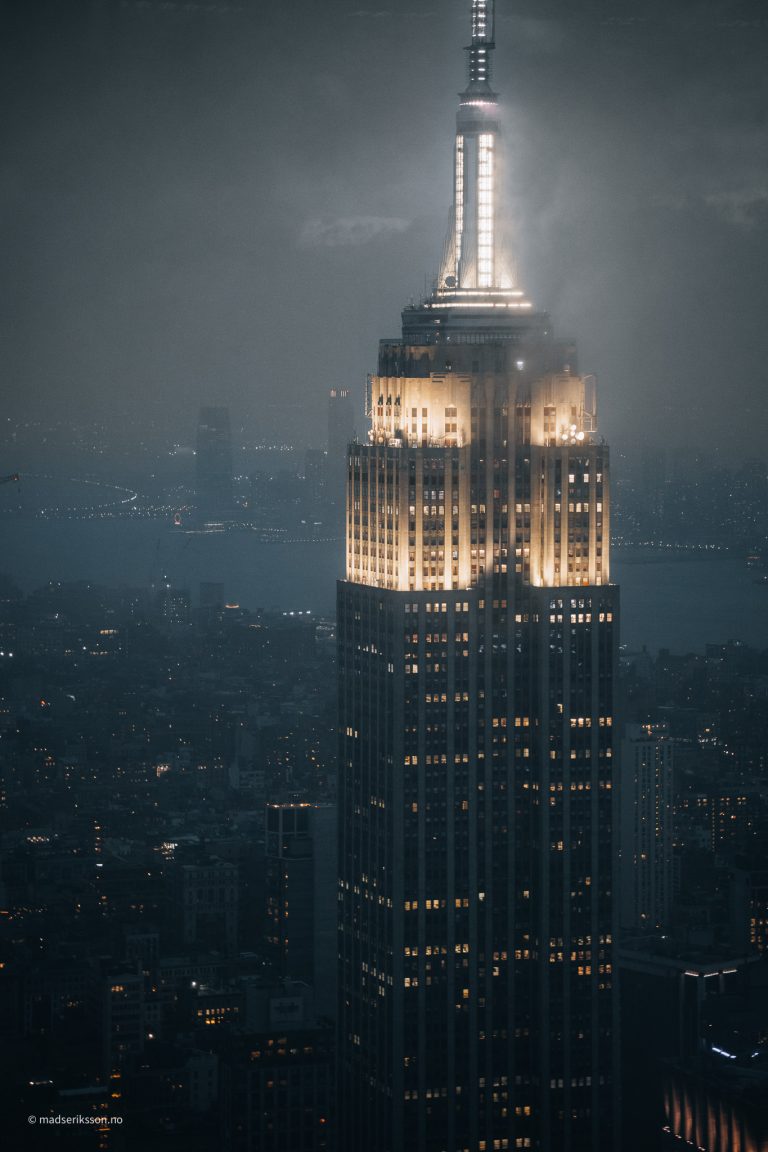
The decks stay open from morning until late at night, every day of the year. After dark the avenues turn into lines of light, and since 2012 the tower’s own top has been lit by LED fixtures that can produce more than 16 million colours.
The illuminated crown and spire of the Empire State Building rising above Midtown Manhattan at night
A mast built for airships
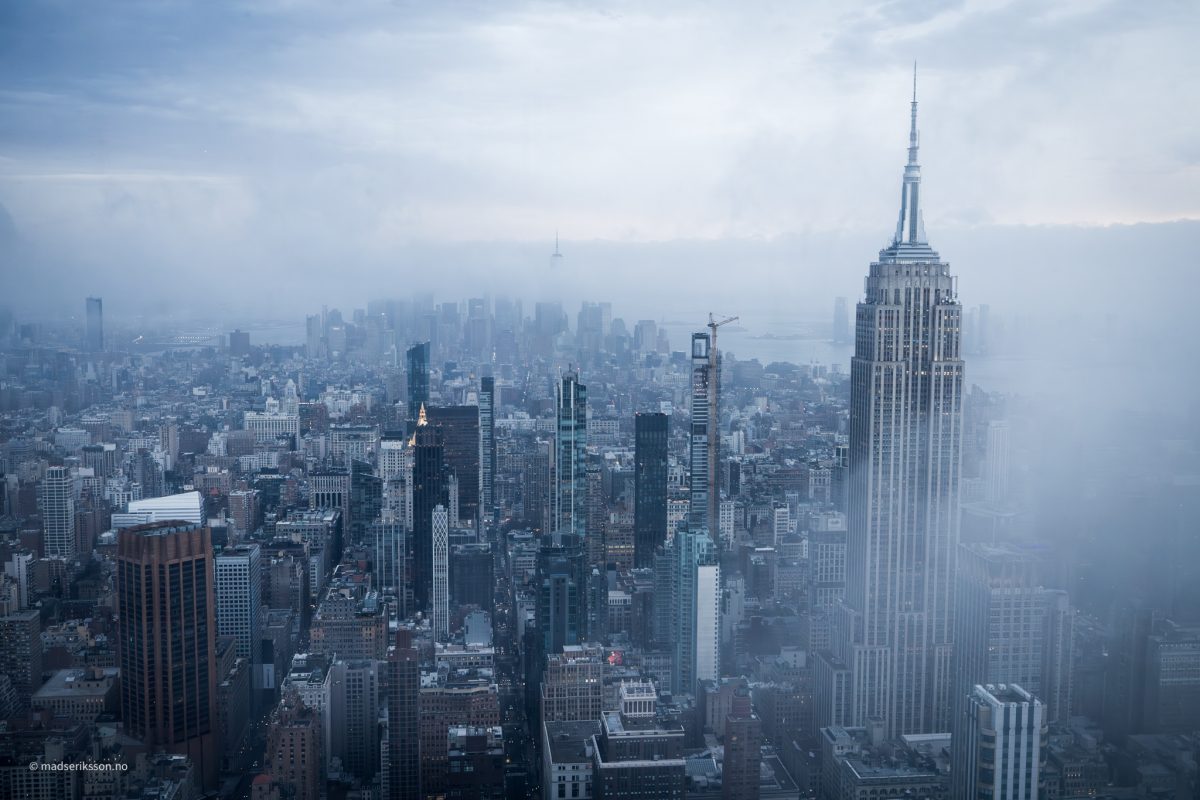
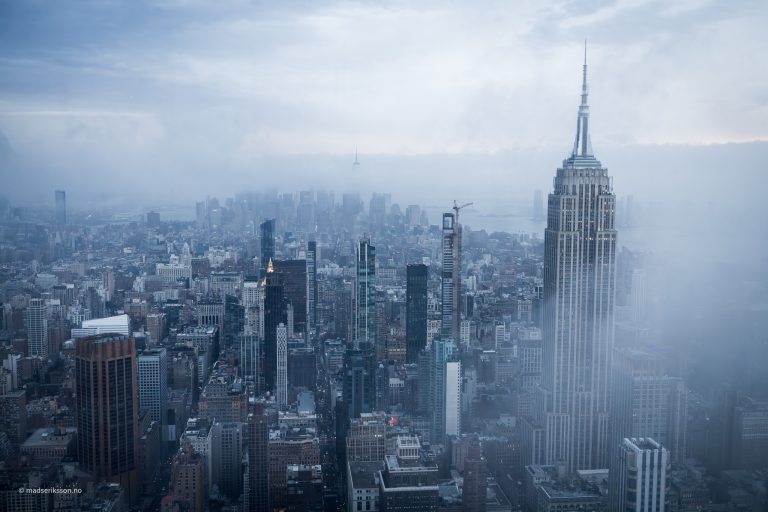
Above the 102nd floor rises the mast, presented in 1931 as a mooring post for airships, with passengers to step off on a gangway high above the street. The winds made the idea unworkable and it was quietly abandoned; the mast became a broadcasting tower instead. On a clear day the view from the top reaches six states.
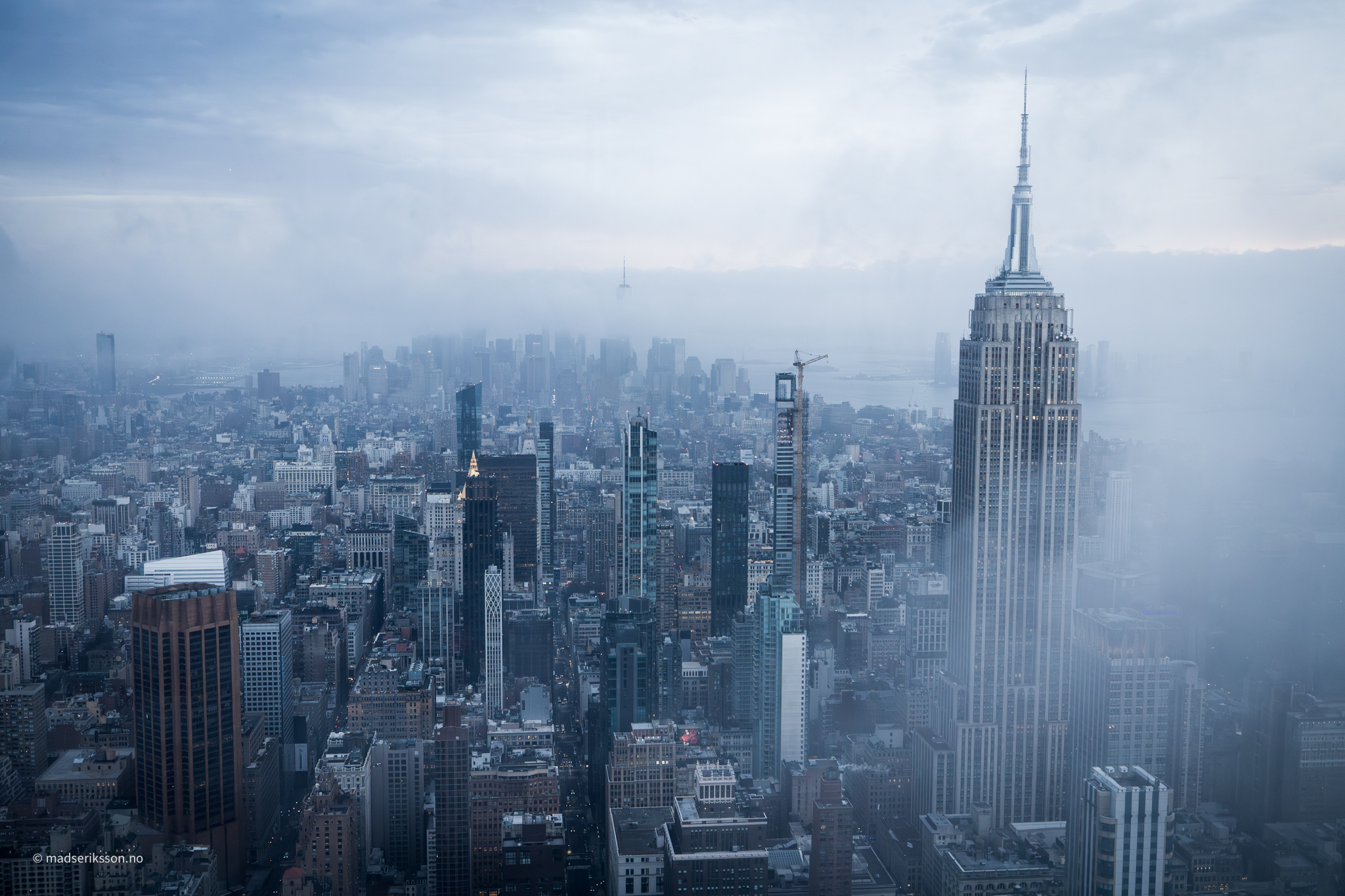
The Empire State Building rising out of low cloud over Midtown Manhattan, seen from a higher observation deck
3D model © 2026 madseriksson.no · Photographs © madseriksson.no. Buildings and heights: © OpenStreetMap contributors (ODbL), via OpenMapTiles. Ground imagery: Sentinel-2 cloudless 2023 by EOX IT Services GmbH (contains modified Copernicus Sentinel data 2023; CC BY 4.0). Heights are approximate where OpenStreetMap has no measured value; sun positions are approximate.
Going Up — The Museum, the Open-Air Deck and the Top Floor
What to expect on the way up, how the 86th and 102nd floors differ, and when to go for the clearest view and the shortest queue
The visit begins at the observatory entrance at 20 West 34th Street, separate from the office lobby. After security, the route leads through a museum on the second floor, opened in 2019 as part of a major overhaul of the observatories. It tells the story of the building through its construction — the steelworkers on the beams, the materials, the speed — and through its place in films, from the original King Kong in 1933, in which the ape climbs the mast, to An Affair to Remember and Sleepless in Seattle, whose lovers meet on the observation deck. A first set of lifts climbs to the 80th floor, where indoor exhibits and windows give a first look out over Midtown, before a second lift continues to the 86th floor.
The 86th floor, about 320 metres above the street, is the heart of the visit: an open-air promenade running all the way round the building, behind a tall safety fence. It is the classic view of New York — north up the grid of Midtown to the Chrysler Building and Central Park, south over the Flatiron District and Greenwich Village to the towers of Lower Manhattan and the harbour, east and west across the rivers. Being outside, with the wind and the sound of the city below, is what sets it apart from the newer glass-walled observatories in Manhattan. The 102nd floor, at 381 metres, is small and fully enclosed, with floor-to-ceiling windows. It is reached by a further lift and requires a ticket that includes it.
Tickets must be reserved in advance online. In 2026 a standard adult ticket to the 86th floor costs from $46, and a combined 86th and 102nd floor ticket from $81; express passes that skip the queues cost more. Sunset slots sell out first.
Opening hours vary through the year, but the observatories open every day, typically from 9 or 10 in the morning until 10 or 11 at night, with the last entry an hour before closing. The first slot of the morning is the quietest; late evening, after the sunset crowds have gone, is a good second choice and gives the city lit up below. Clear days after rain have the longest views. The building itself is best seen from outside: from Madison Square Park to the south, from the corner of Fifth Avenue and 34th Street where it rises sheer above the pavement, and from the observation decks of Rockefeller Center and One Vanderbilt to the north, which look straight across at it.
«The Empire State Building was built to be the tallest in the world, finished in a little over a year, and then left half empty by the Depression. It outlived the boom, the bust and a bomber in the fog, and it has outlasted the title it was built to win. What it still has is the open-air deck on the 86th floor, where New York lies below on every side. Book the first slot of the morning or come back after dark, walk all the way round the terrace, and then go down and find it again from the street — rising at the end of an avenue, lit in whatever colour the night has chosen.»

More in the same area
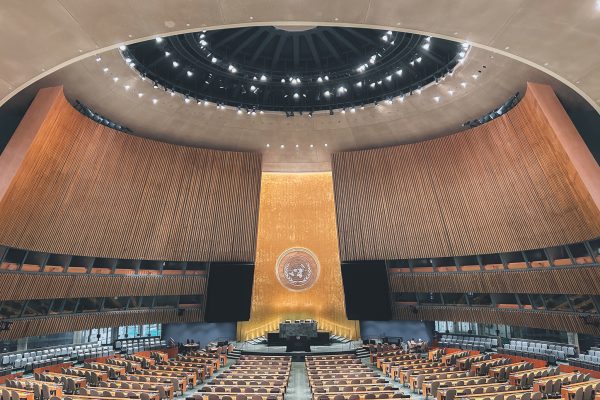
 ArchitectureThe United Nations in New York: A Hub for Global Diplomacy
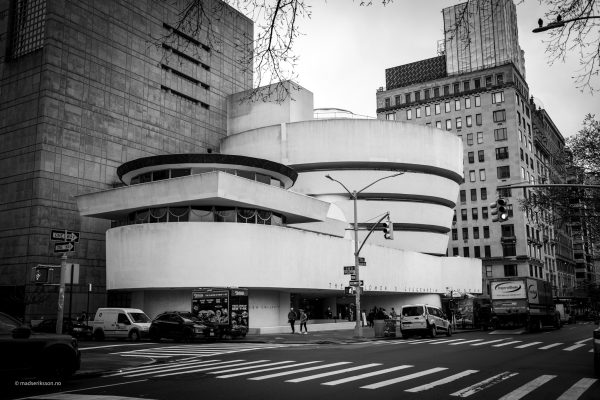
 ArchitectureGuggenheim Museum, New York: Frank Lloyd Wright’s Spiral on Fifth Avenue
 ArchitectureBrooklyn Bridge: Roebling’s Steel-Wire Span and the Walk Across the East River
 CitiesDiscovering New York: The City That Never Sleeps
 ArchitectureTen Buildings That Changed Their Cities — Modern Architecture Ranked on Impact, Not Image
 TravelFlorida Keys and Key West: The Overseas Highway, the Reef and the End of the Road