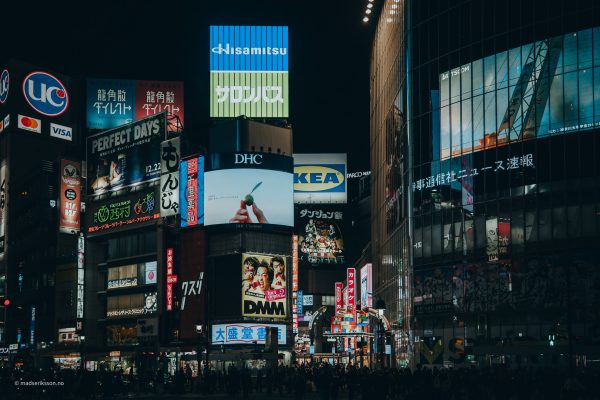
Osaka has a word for itself: kuidaore — eat until you drop. It is not quite a motto and not quite a warning, but it is accurate. Japan’s third-largest city has been known as the nation’s kitchen for four centuries, and the claim is not contested. The canals of Dotonbori fill with the smell of frying octopus and dashi broth from morning to long past midnight, the covered shopping arcades run for kilometres without interruption, and Osaka’s people — louder, funnier and considerably more willing to talk to strangers than the Tokyo stereotype — are never far from an argument about where to eat.

Osaka’s identity as a merchant city goes back to the 5th century, when the area known as Naniwa served briefly as one of Japan’s first imperial capitals. For most of its history, however, Osaka was not a seat of power but a seat of commerce — a port city where rice and goods from across Japan were traded, stored and distributed. The great merchant families who built their warehouses along the canals developed a culture distinct from the court culture of Kyoto to the north and the samurai culture of Edo to the east: practical, gregarious, pleasure-oriented, and obsessed with food. That character has persisted through centuries of transformation and is immediately perceptible to anyone who arrives from Tokyo.
The city is often described as the less formal alternative to Tokyo — faster to talk, more likely to laugh, and less hierarchically arranged in both its social culture and its urban geography. Where Tokyo is grid-like and borough-specific, Osaka is organised around its waterways, its covered arcades and its transport hubs. The neighbourhoods of Namba, Shinsaibashi and Dotonbori blur into one another along the south bank of the Dotonbori canal, and the energy between them is continuous, day and night. Osaka is also the most practical base for visiting Kyoto (30 minutes by train), Nara (45 minutes) and Kobe (20 minutes), making it the natural centre of any Kansai itinerary.
How to approach Osaka
This guide covers four aspects of Osaka: the entertainment district of Dotonbori and Namba, where the city’s famous street food and nightlife concentrate; Osaka Castle and the samurai history that sits behind the merchant character; the markets and food culture that earn Osaka its reputation as Japan’s kitchen; and the old neighbourhood of Shinsekai and the waterfront. Osaka rewards those who eat more than they plan to and stay out later than is strictly sensible. The city is at its best after dark.
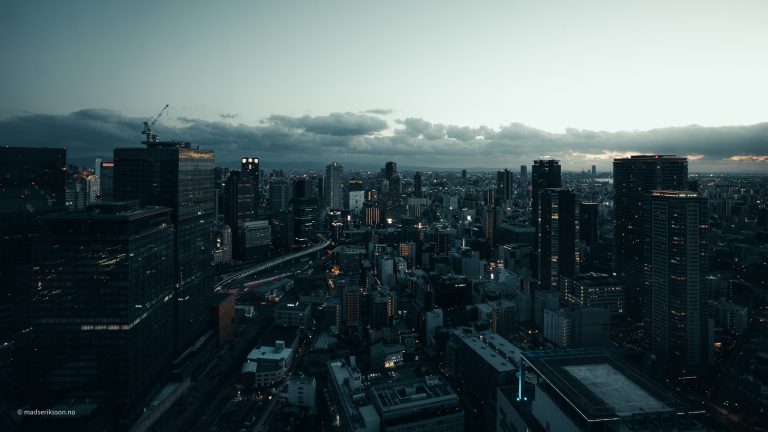
Osaka in 3D
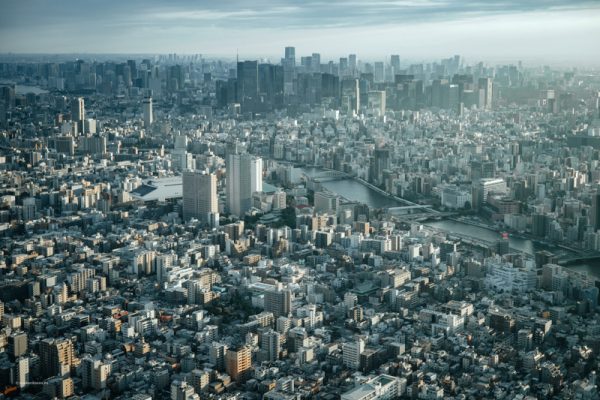
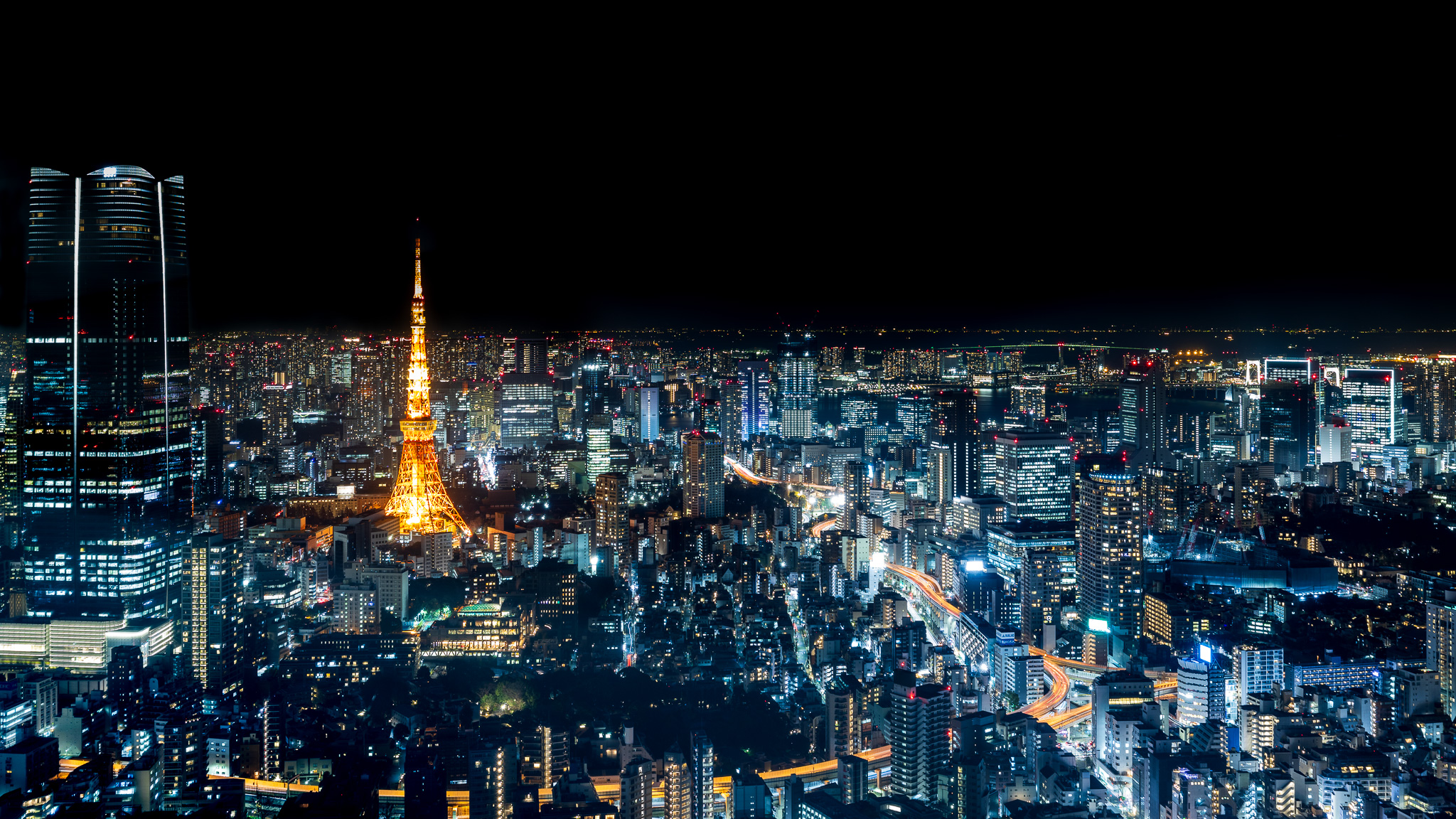
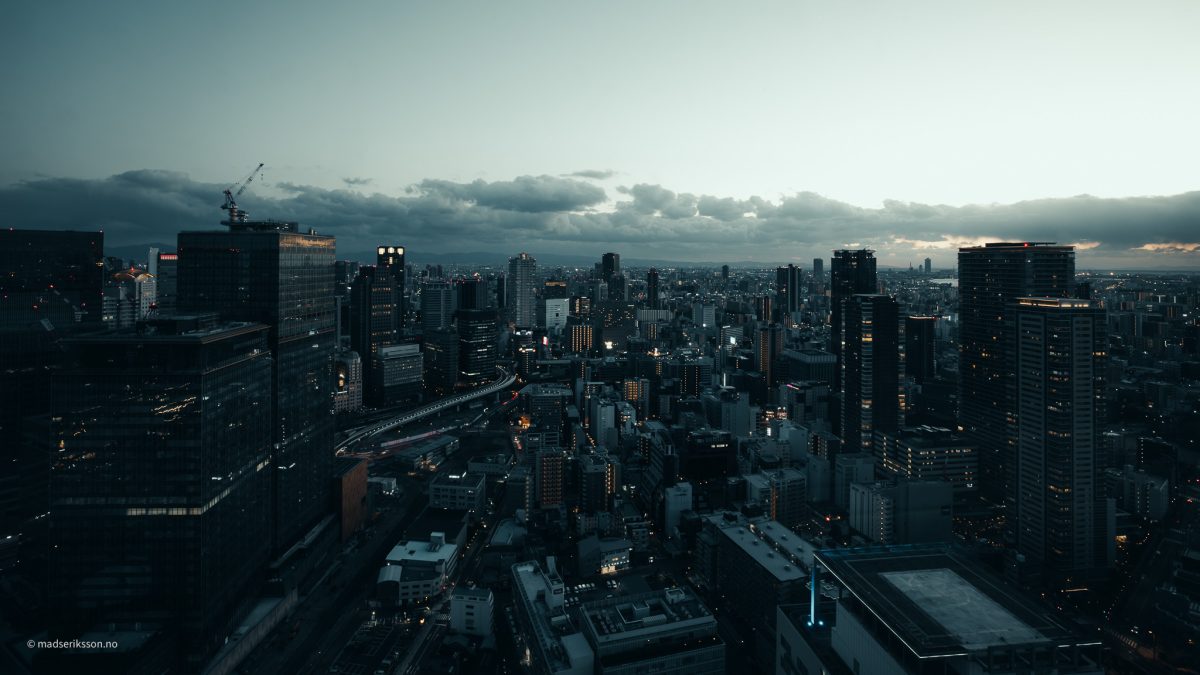
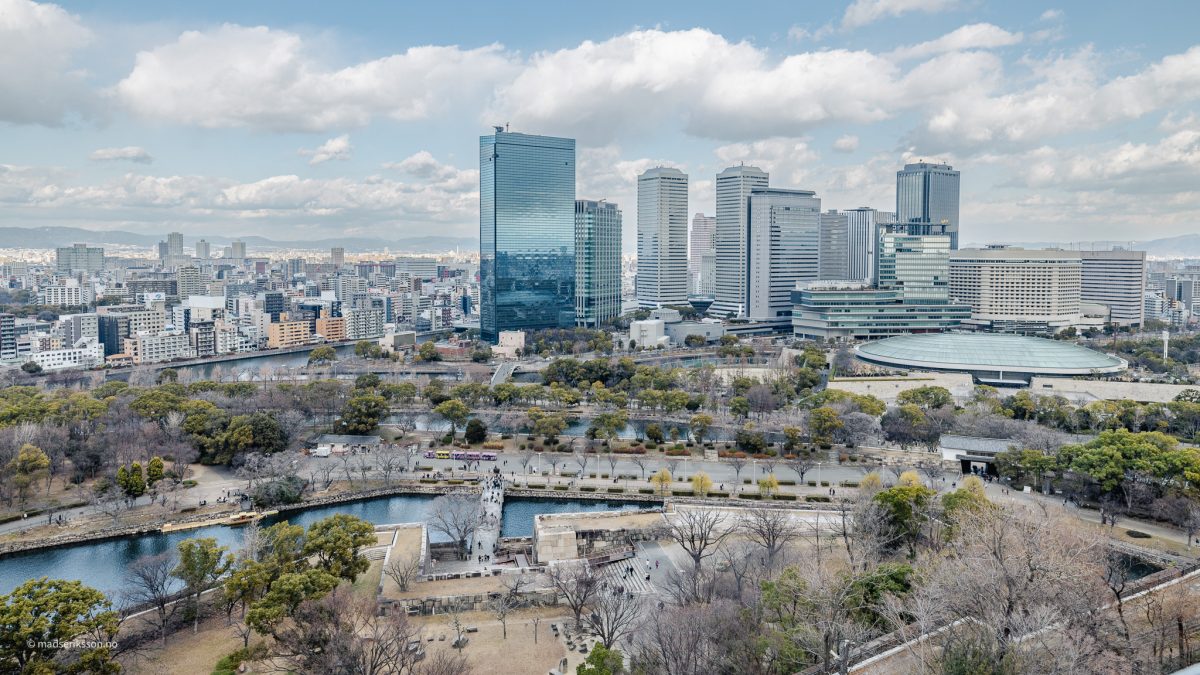
Osaka grew up as Japan's great merchant port at the head of Osaka Bay, and for four centuries it has been called the nation's kitchen. This frame runs about 7 km from the Umeda towers in the north through Shinsaibashi and Dōtonbori to Abeno Harukas in the south, with Osaka Castle to the east. The city itself has about 2.75 million inhabitants.
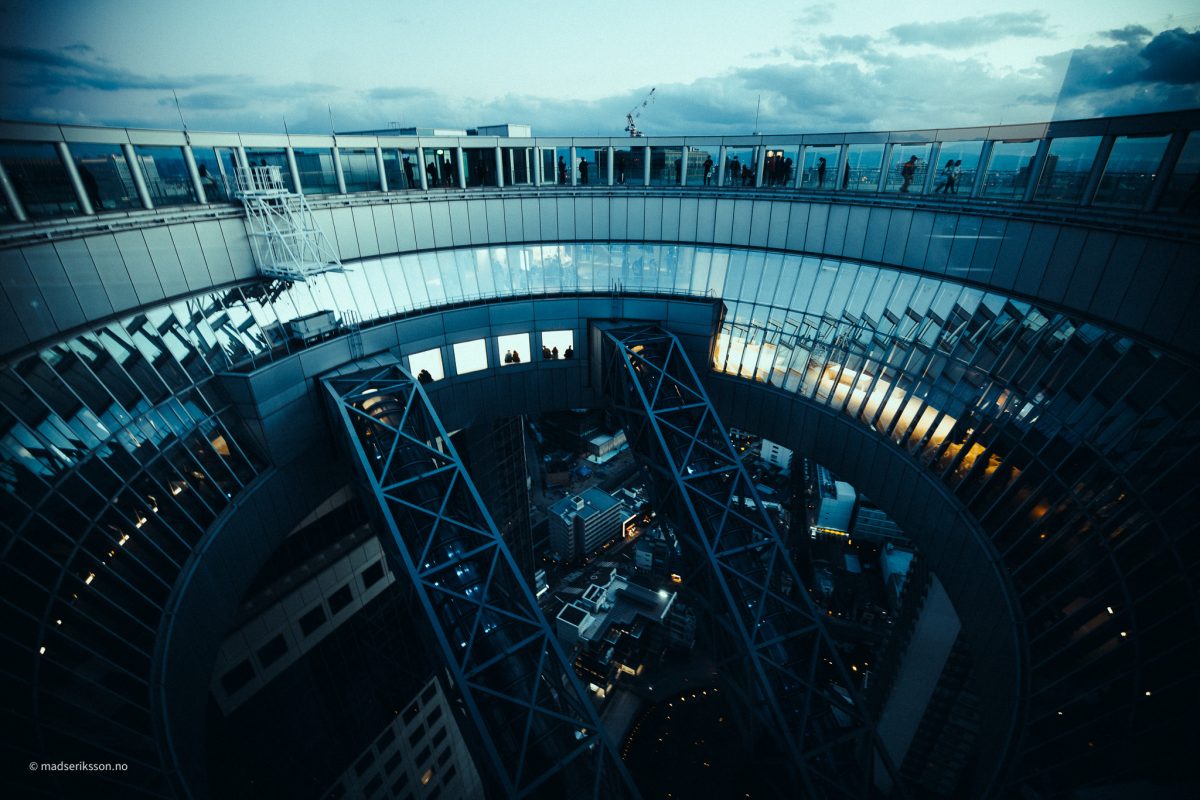
View from Umeda Sky Building in Osaka.
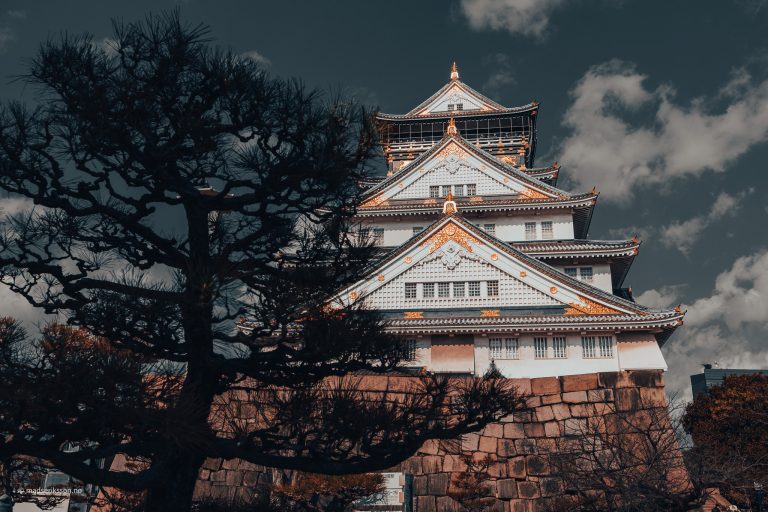
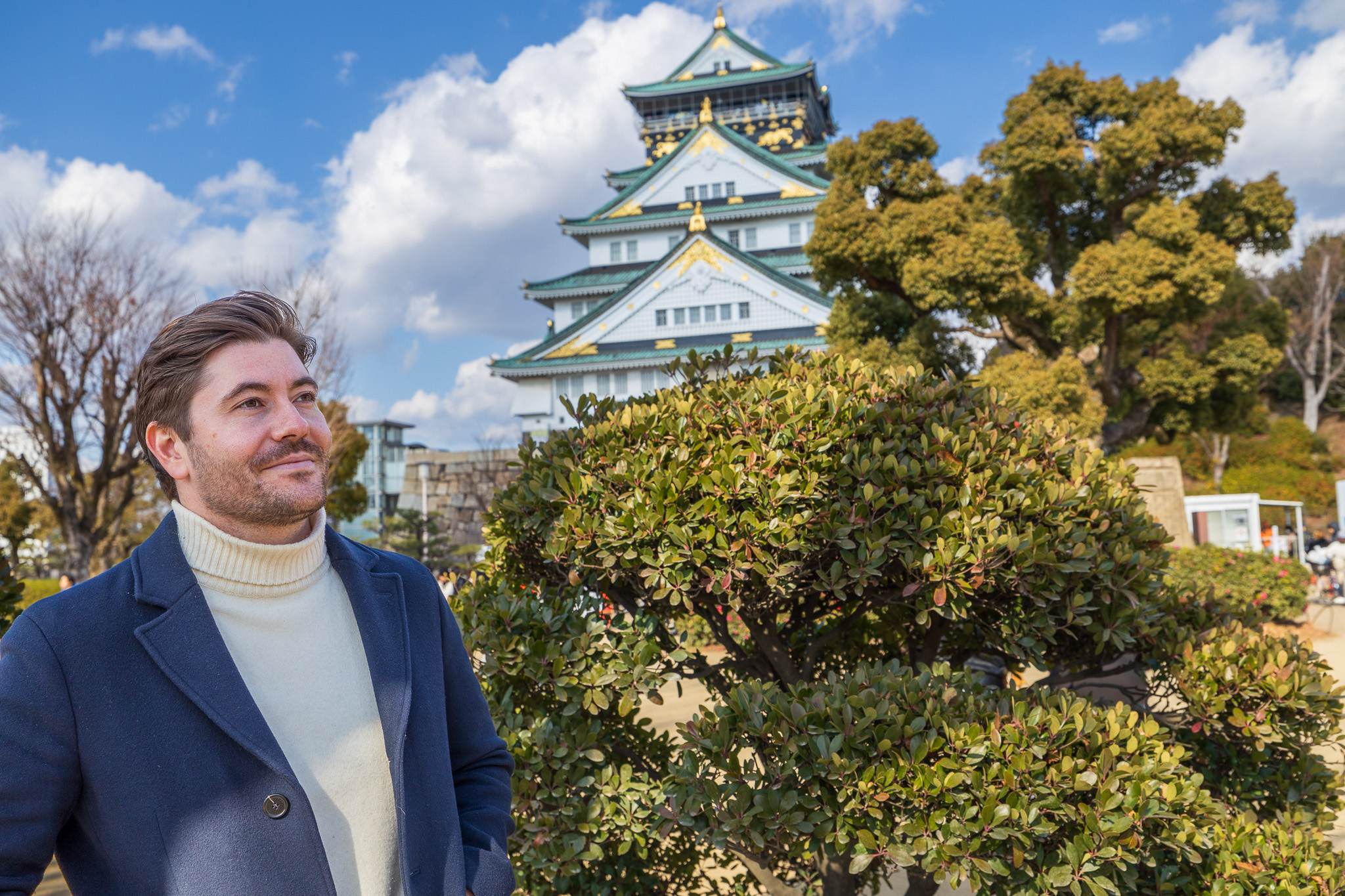
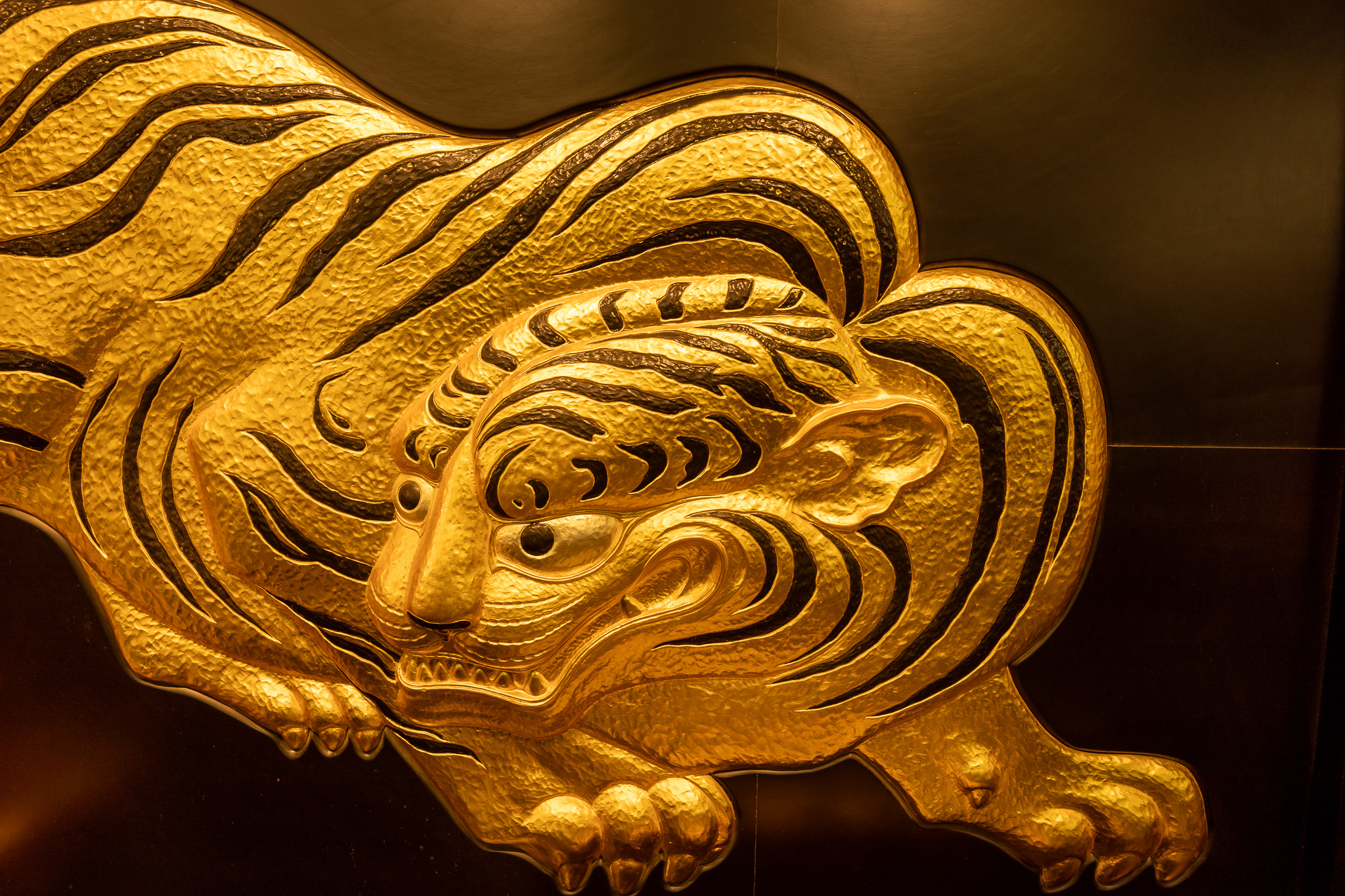
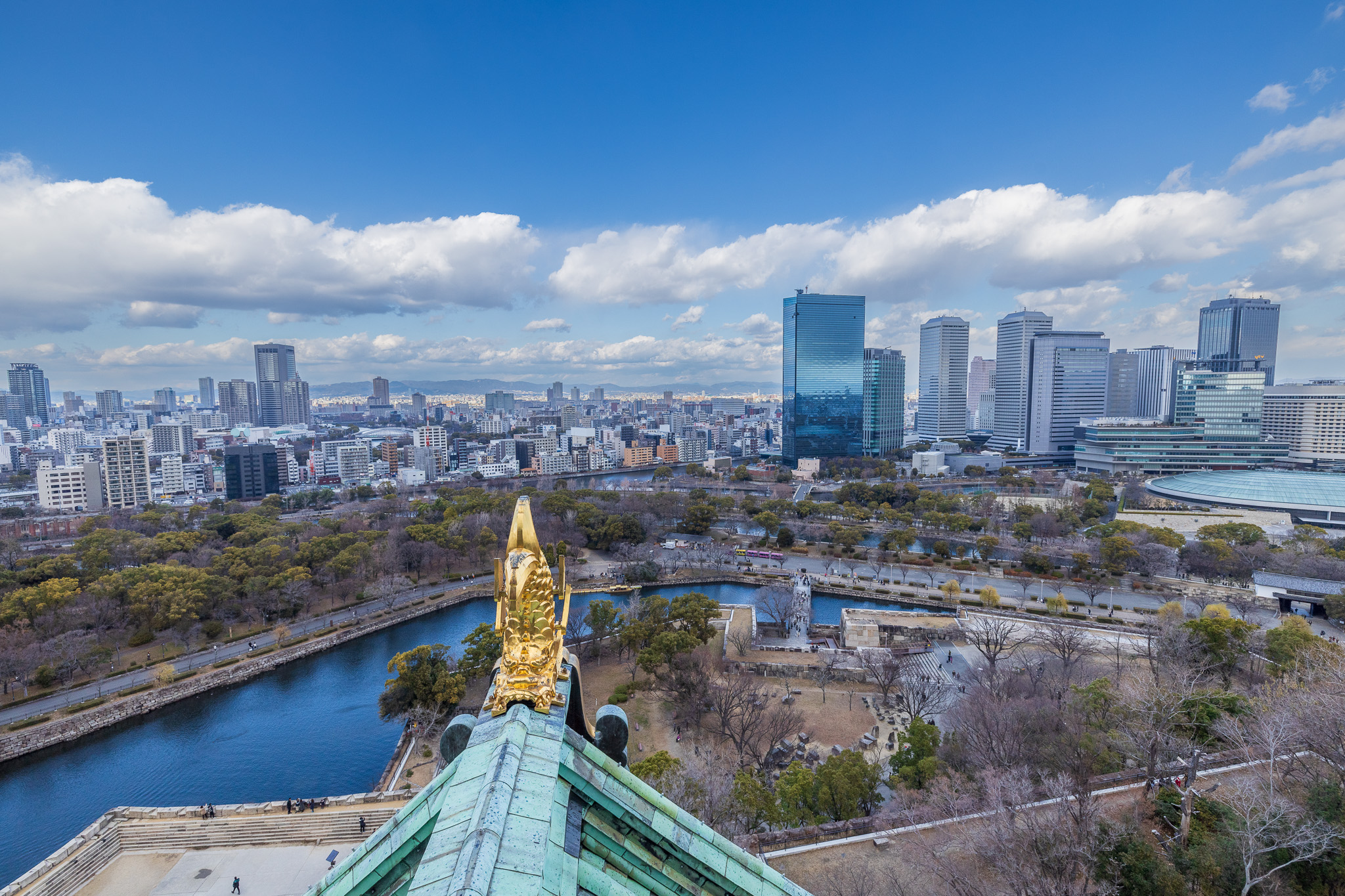
Osaka Castle
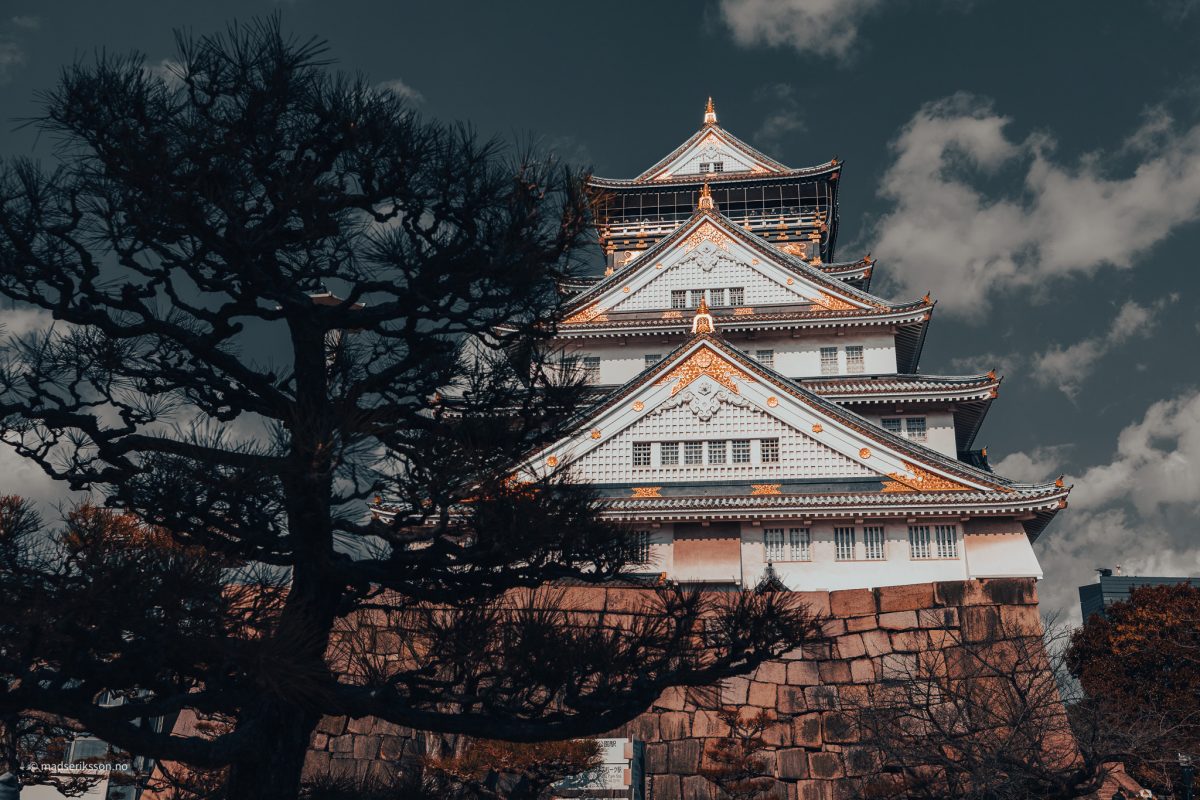
Toyotomi Hideyoshi began Osaka Castle in 1583 on the site of the Ishiyama Hongan-ji temple, and the sieges of 1614 and 1615 ended his line. The keep that stands today was built in reinforced concrete in 1931 and restored in 1997, with five storeys outside and eight floors inside above the huge stone walls. Moats, gates and the Nishinomaru Garden fill the park around it.
Osaka Castle
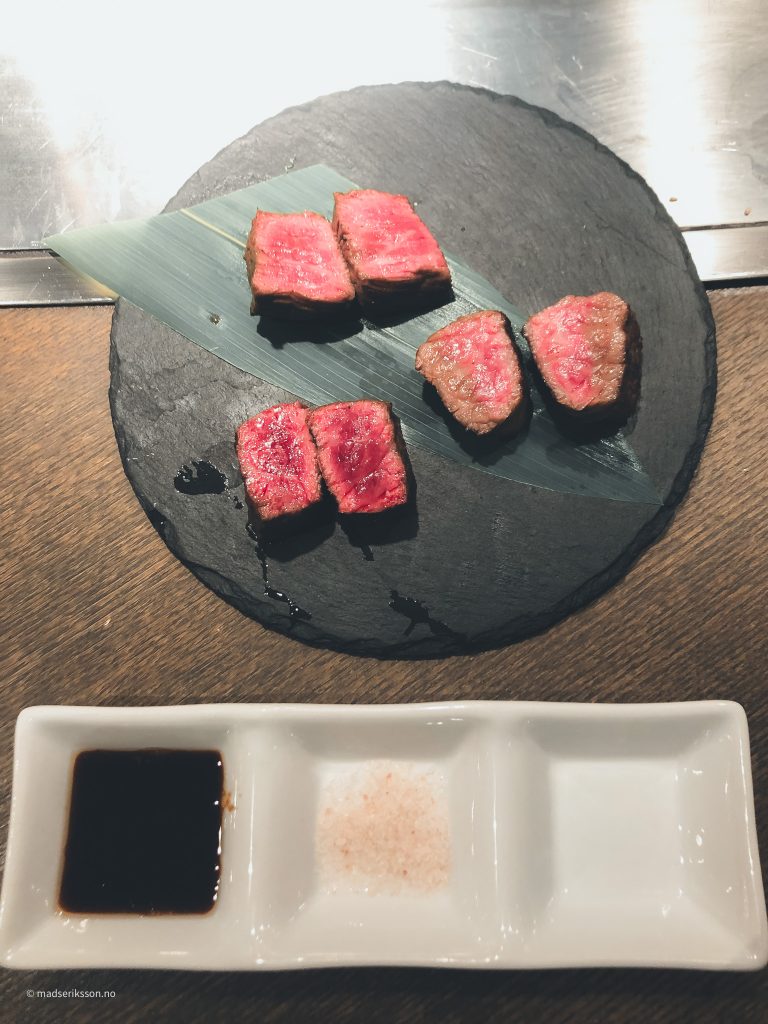
Kuromon Market
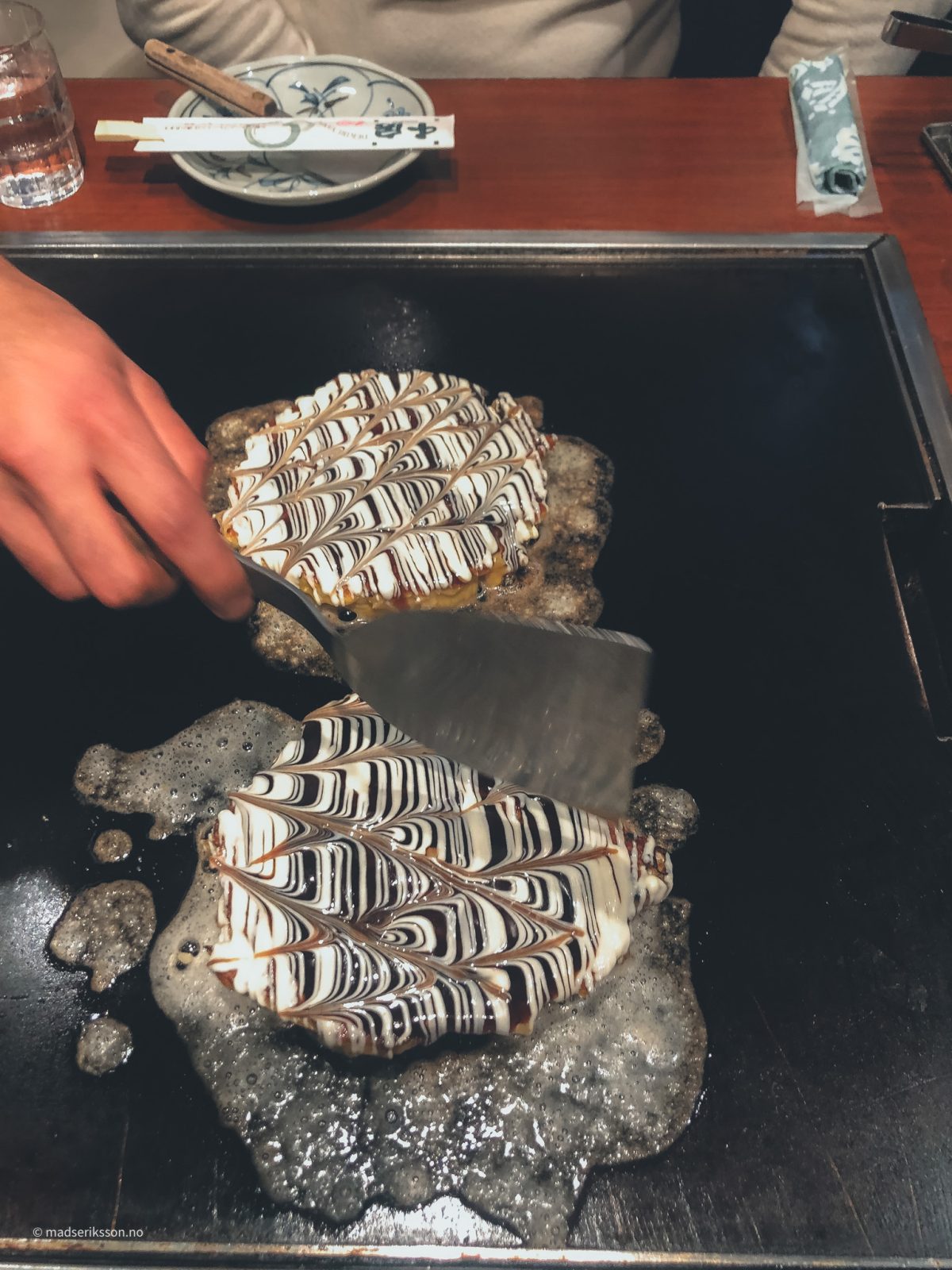
Kuromon Market runs for about 580 m south from Sennichimae, with around 150 shops selling fish, meat, fruit and food to eat on the spot. Fishmongers began gathering here around 1822, and the market takes its name from the black gate of a temple that once stood nearby. Takoyaki, invented in Osaka in 1935, and okonomiyaki are sold in the surrounding streets.
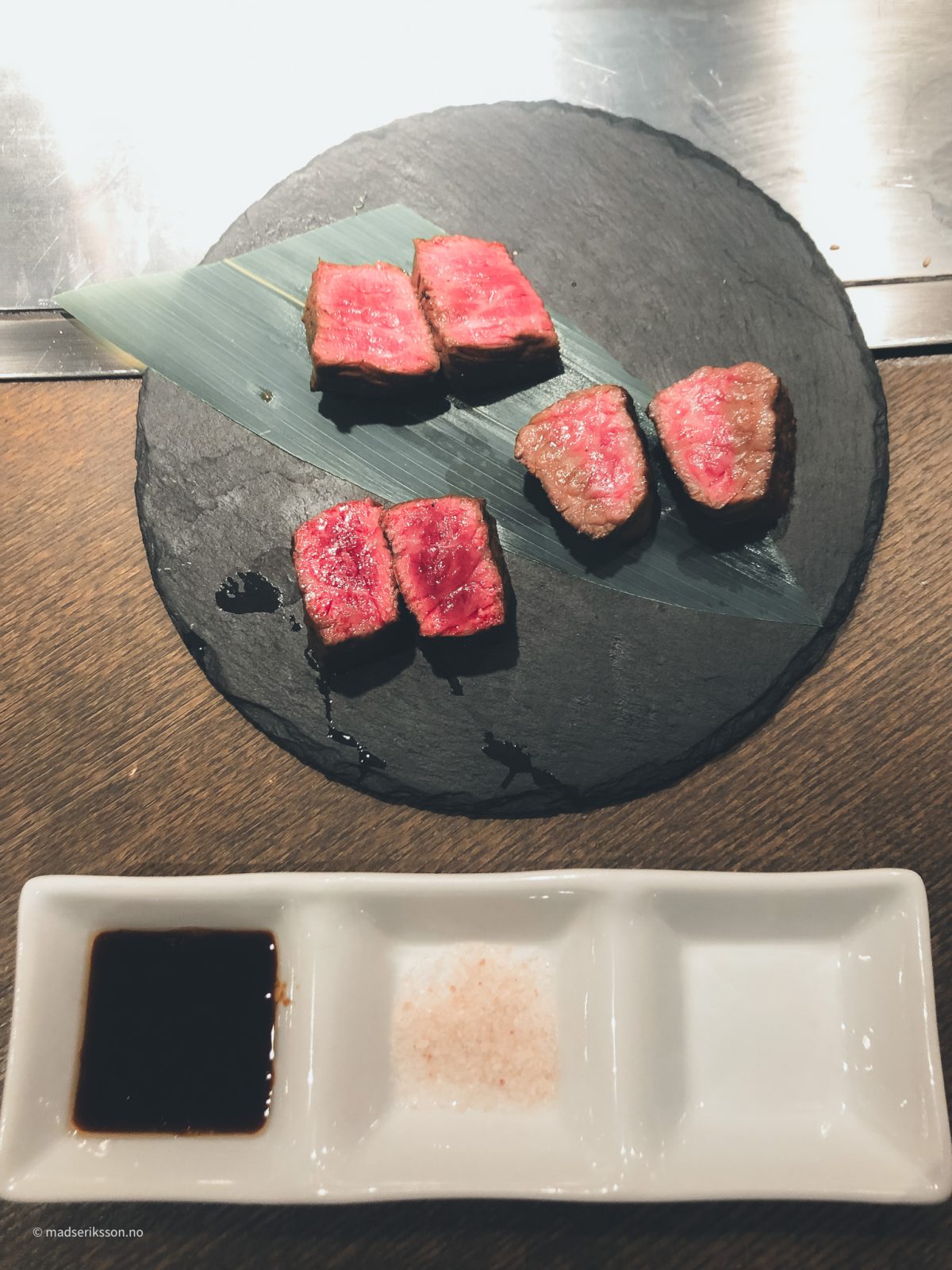
Different kinds of meat, Osaka.
Tsūtenkaku and Abeno Harukas
Shinsekai, the 'New World', opened in 1912 as an entertainment district, and its first Tsūtenkaku stood 64 m tall. The present tower by Tachū Naitō replaced it in 1956 and rises 108 m, with its main deck at 91 m. A short way east, Abeno Harukas opened in 2014 at 300 m and was Japan's tallest building until 2023; its Harukas 300 observatory fills the 58th to 60th floors.
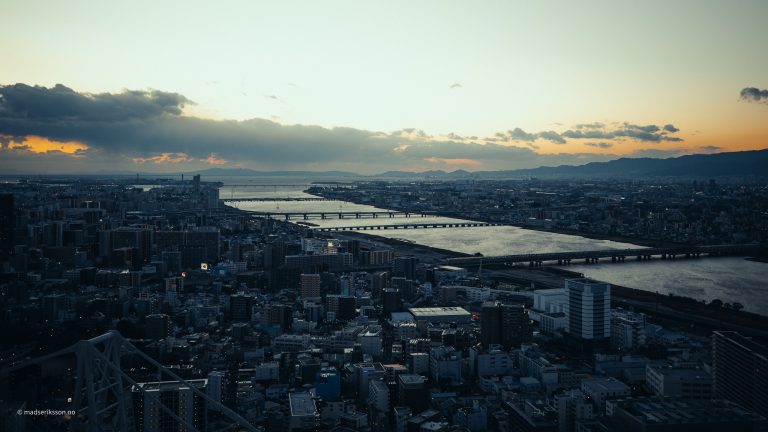
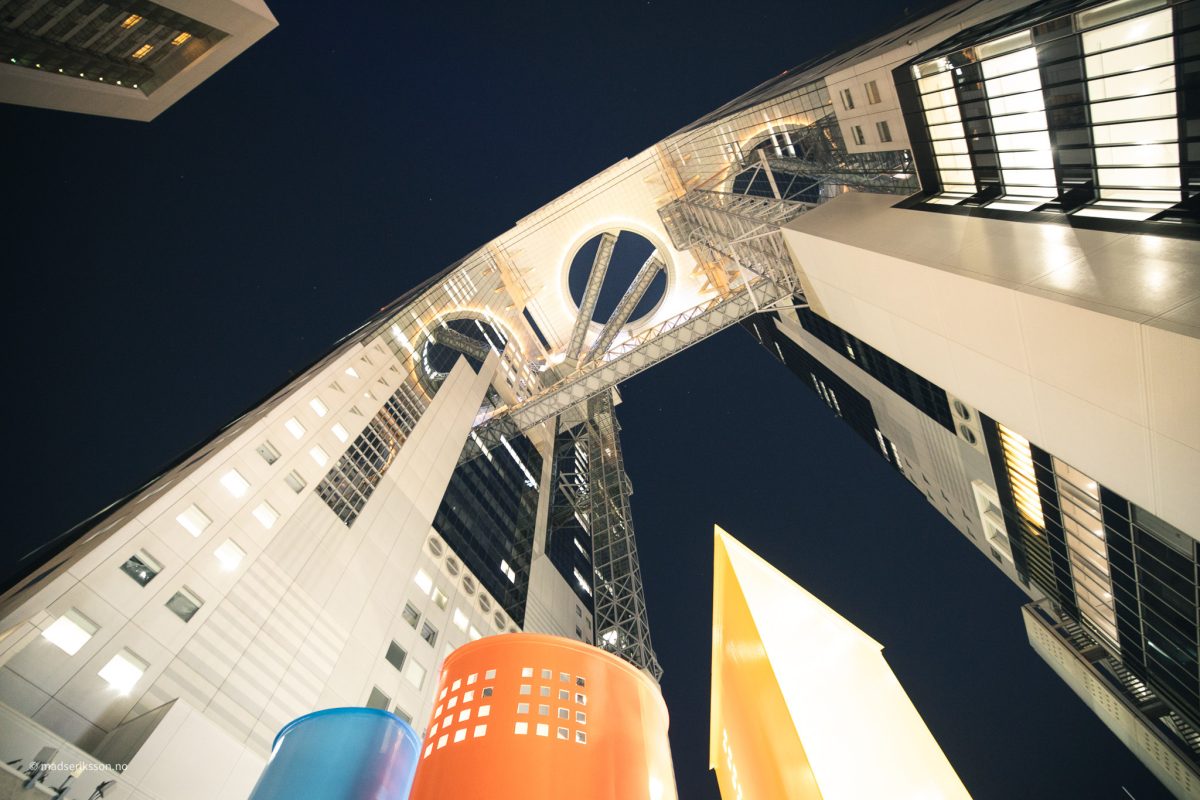
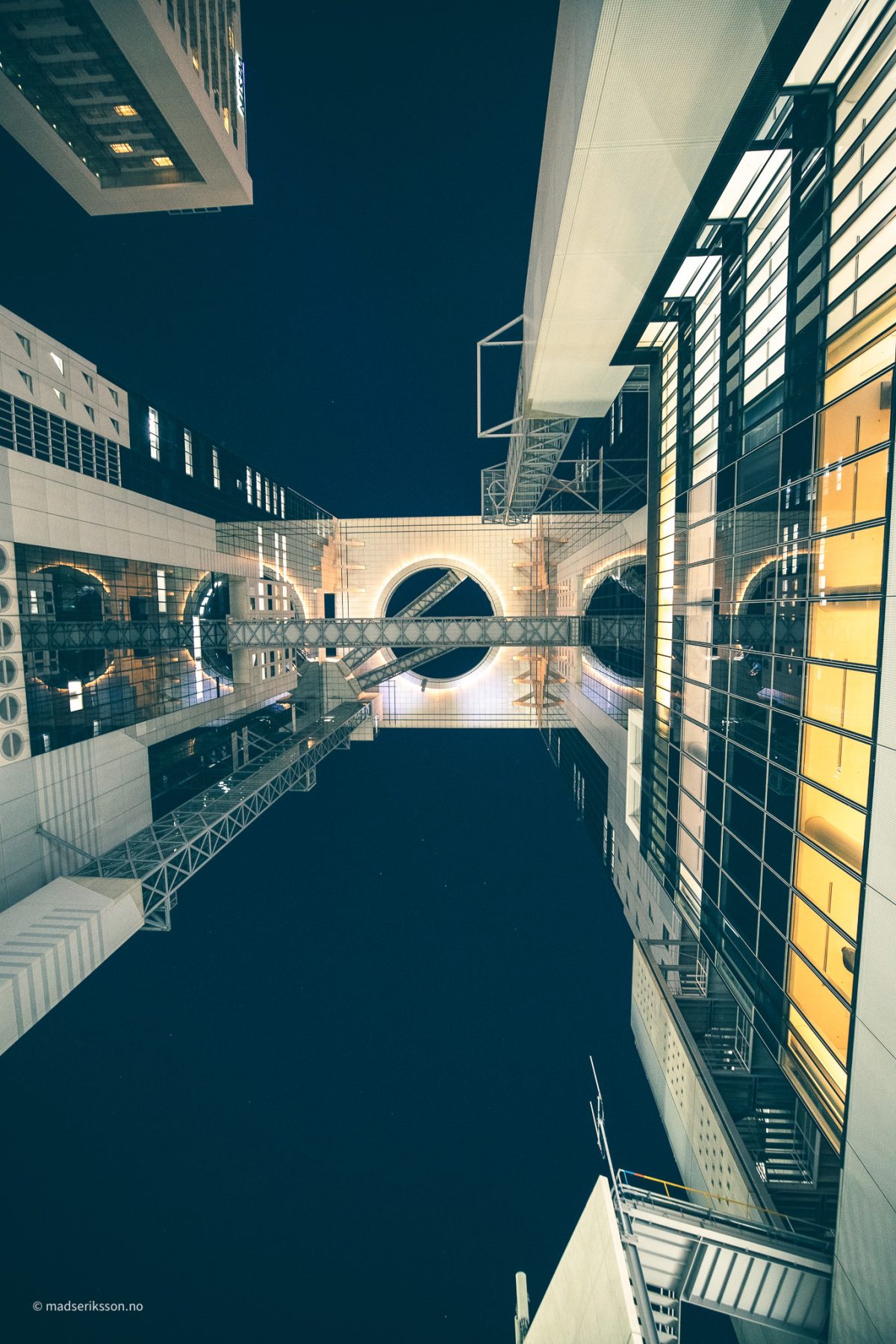
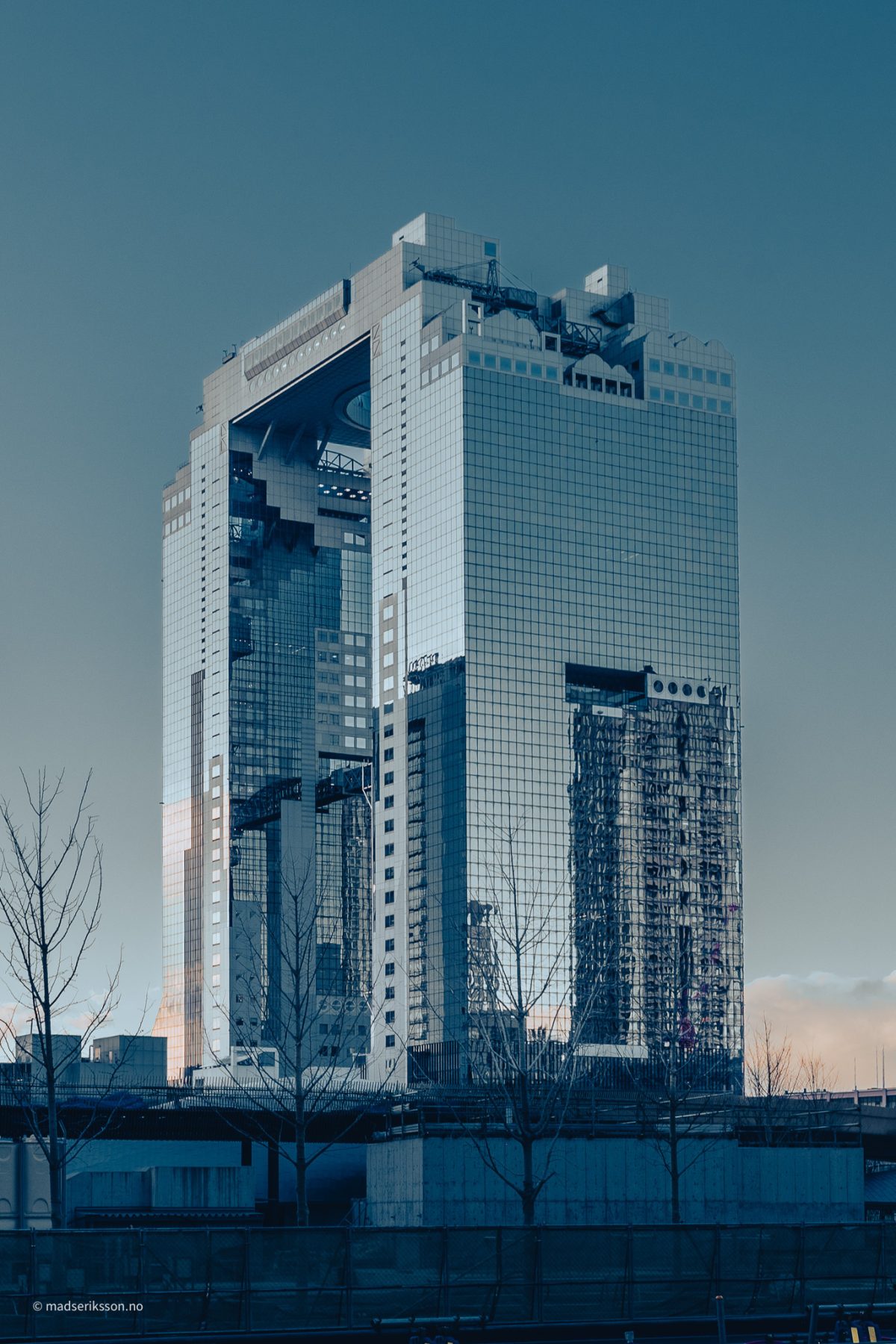
Umeda Sky Building
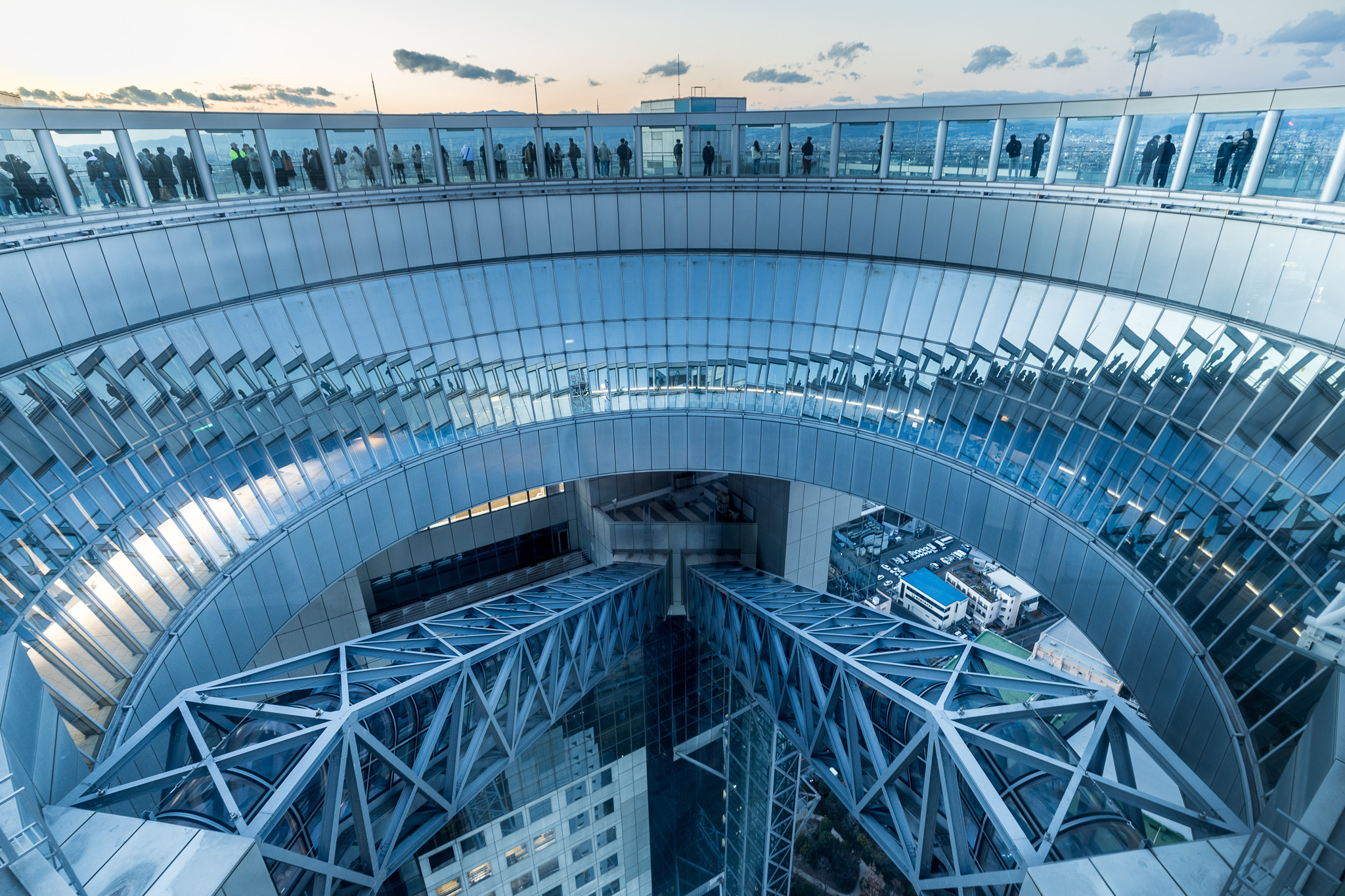
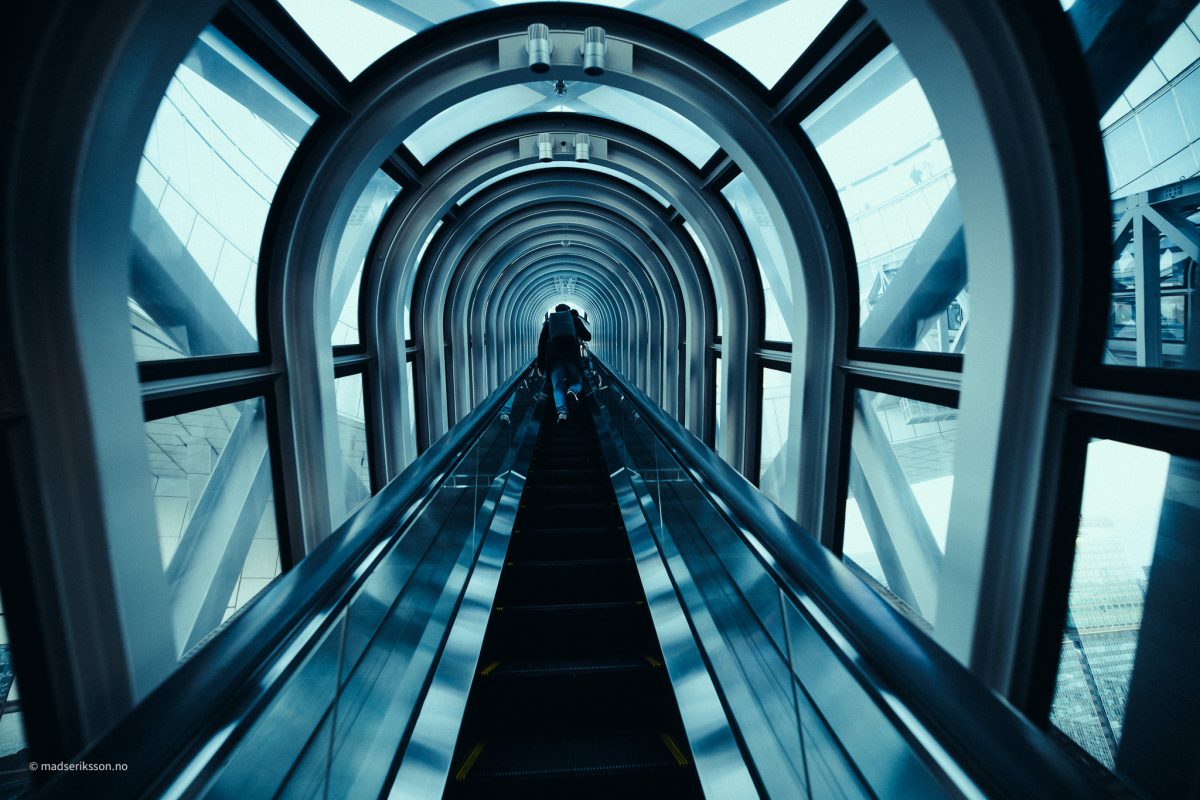
The Umeda Sky Building, designed by Hiroshi Hara and opened in 1993, joins two 40-storey towers with the ring-shaped Floating Garden Observatory on the roof, about 170 m above the street. Escalators in glass tubes cross the open void between the towers. Around it, the Umeda district and Osaka Station form the city's northern business and rail hub.
View from Umeda Sky Building in Osaka.
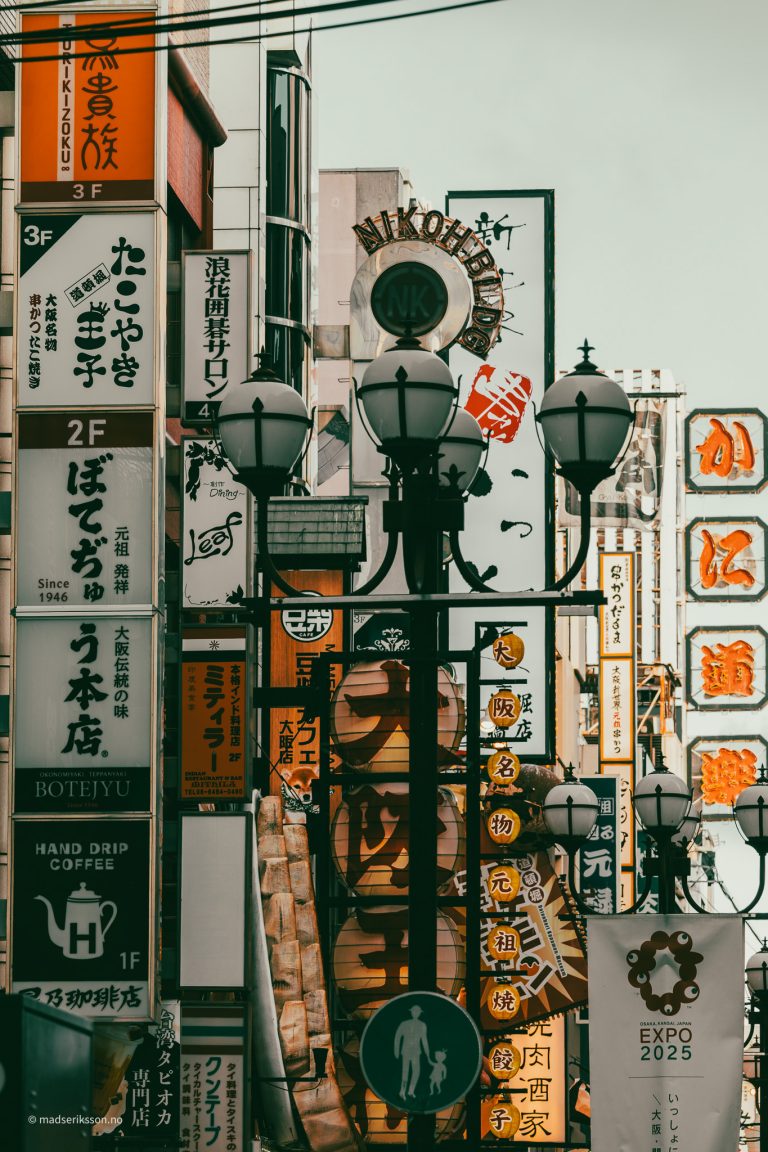
Shinsaibashi-suji
Shinsaibashi-suji, one of the longest covered shopping arcades in Japan, runs north for about 580 m from the Dōtonbori canal at Ebisubashi. West of it, America-mura has been the centre of Osaka's youth fashion and street culture since second-hand American clothing shops arrived in the 1970s.
Osaka, Japan
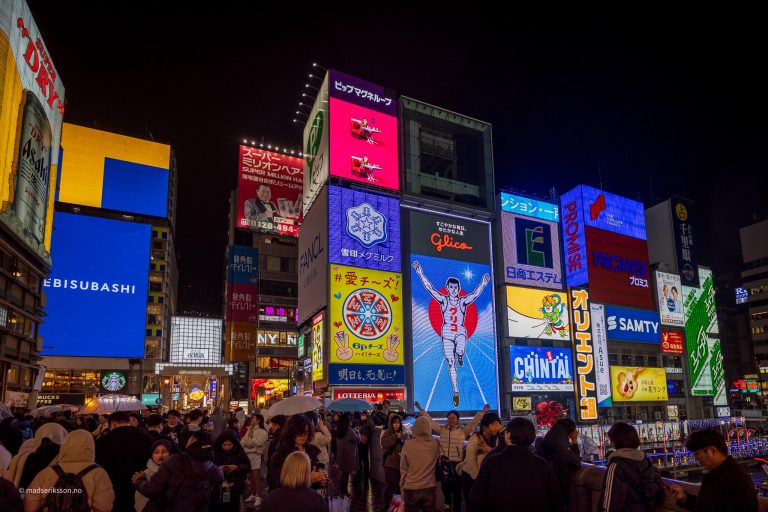
Dōtonbori
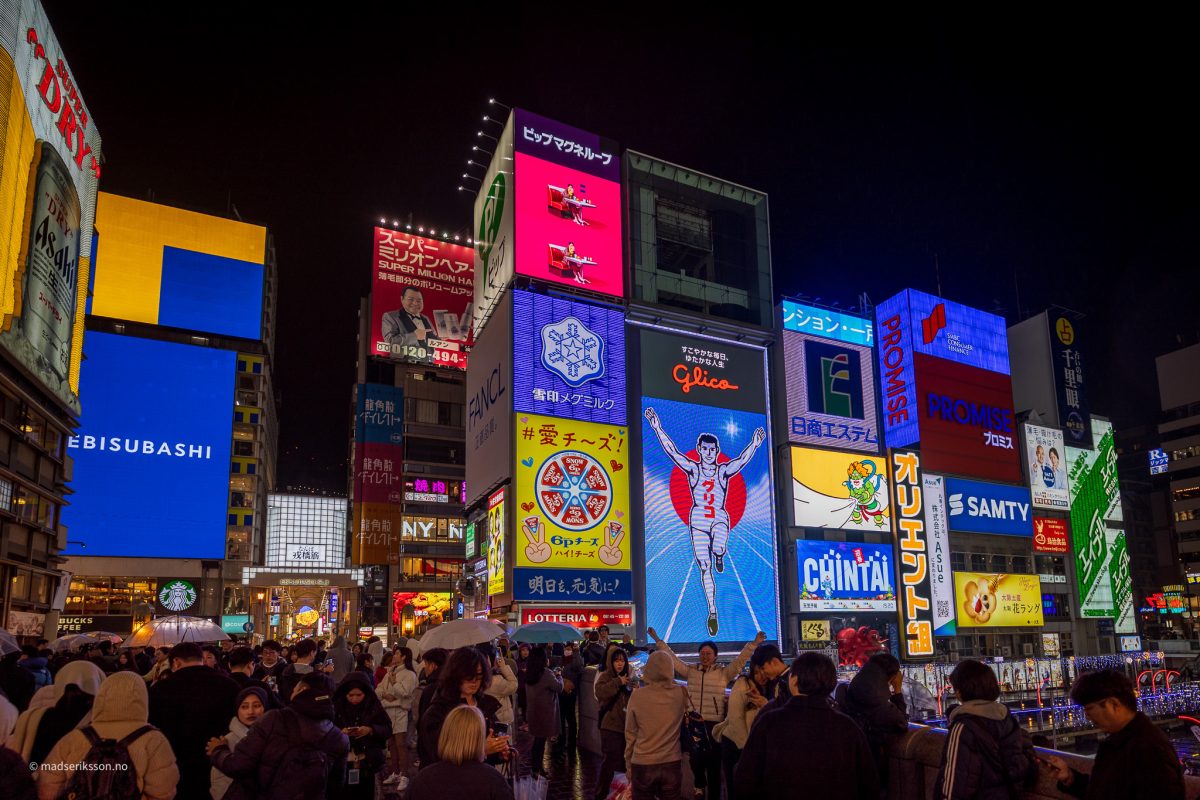
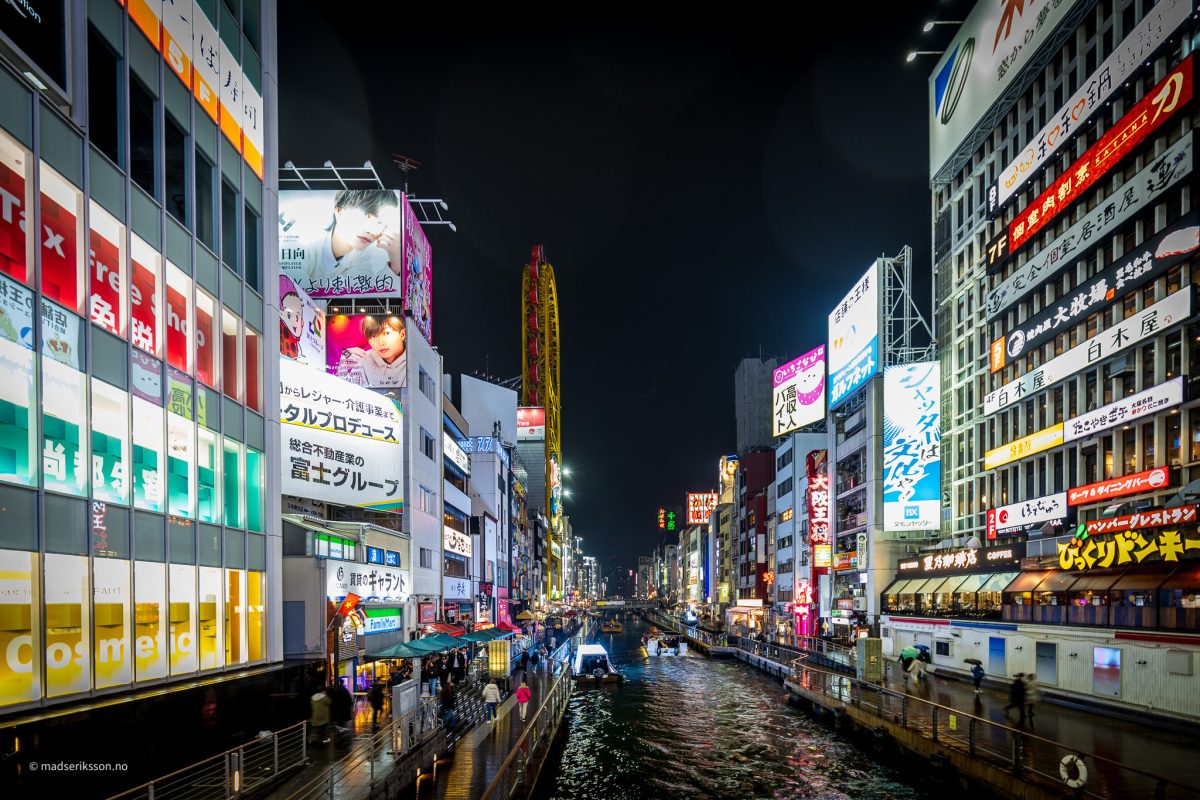
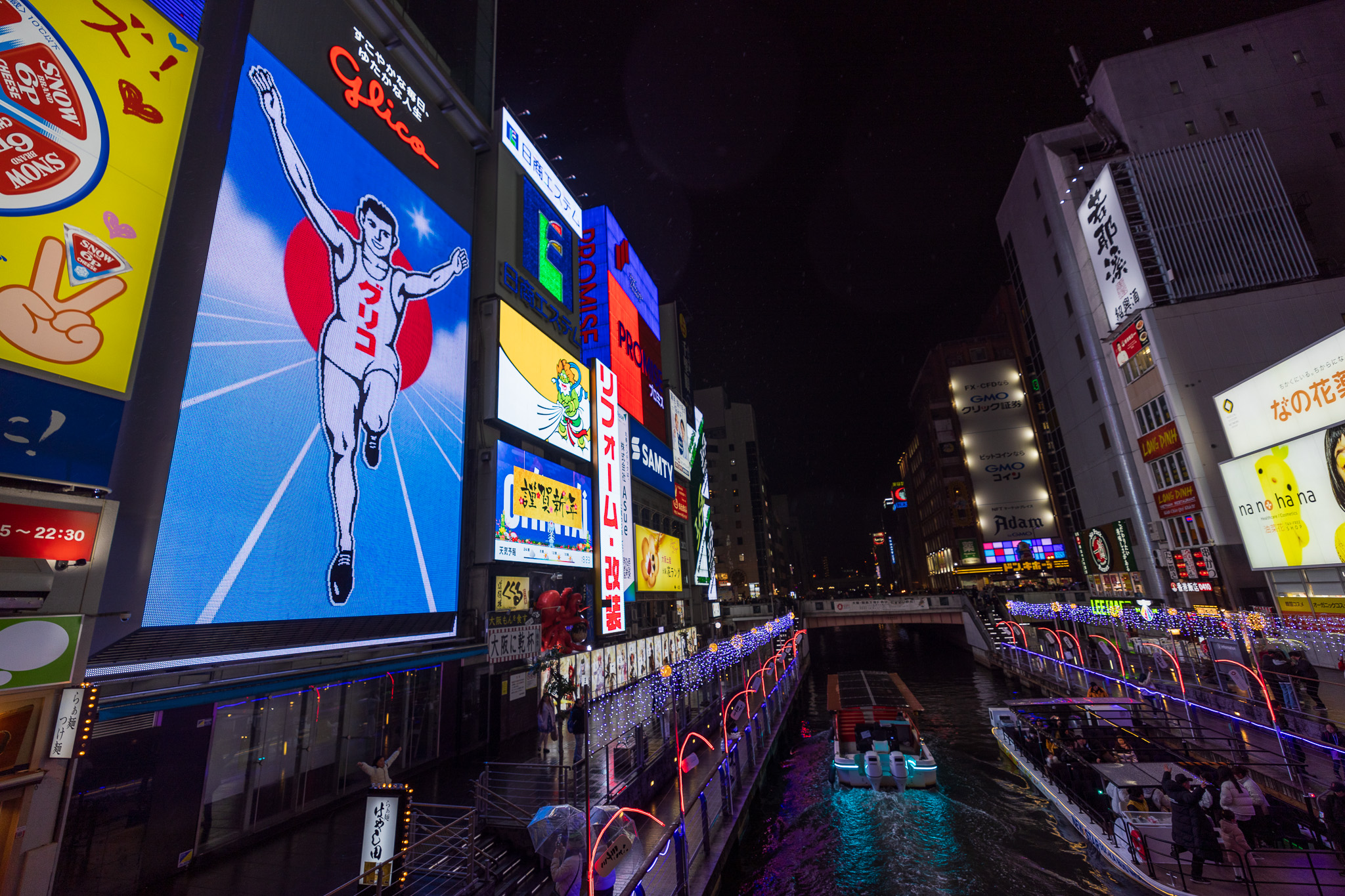
The Dōtonbori canal was completed in 1615, and the theatres that gathered along it made the district Osaka's entertainment quarter. The Glico running man has looked down from beside Ebisubashi since 1935; the present LED sign, installed in 2014, is the sixth version. After dark the giant mechanical crab, the screens and the neon are reflected in the canal below.
Dotonbori, Osaka
3D model © 2026 madseriksson.no · Photographs © madseriksson.no. Buildings and heights: © OpenStreetMap contributors (ODbL), via OpenMapTiles. Ground imagery: Sentinel-2 cloudless 2023 by EOX IT Services GmbH (contains modified Copernicus Sentinel data 2023; CC BY 4.0). Heights are approximate where OpenStreetMap has no measured value; sun positions are approximate.
Dotonbori — The Neon Canal at the Heart of Everything
Dotonbori is where Osaka performs itself for anyone who cares to watch — and the performance runs continuously, from early morning to well past midnight
Dotonbori is the canal that gives the district its name and the stretch of south-bank walkway that is the most vivid single block in Japan. At night, the neon advertisements — giant mechanised crabs, blowfish, ramen bowls and the iconic Glico running man — reflect off the water in a way that is genuinely spectacular. The Glico sign, showing an athlete crossing a finish line with arms raised, has stood at the Ebisu Bridge end of Dotonbori since 1935 in various iterations; the current illuminated version runs through a loop of colours and has been photographed by virtually every visitor to Osaka. Standing on Ebisu Bridge looking west at dusk, with the canal below and the signs above, is the quintessential Osaka experience.
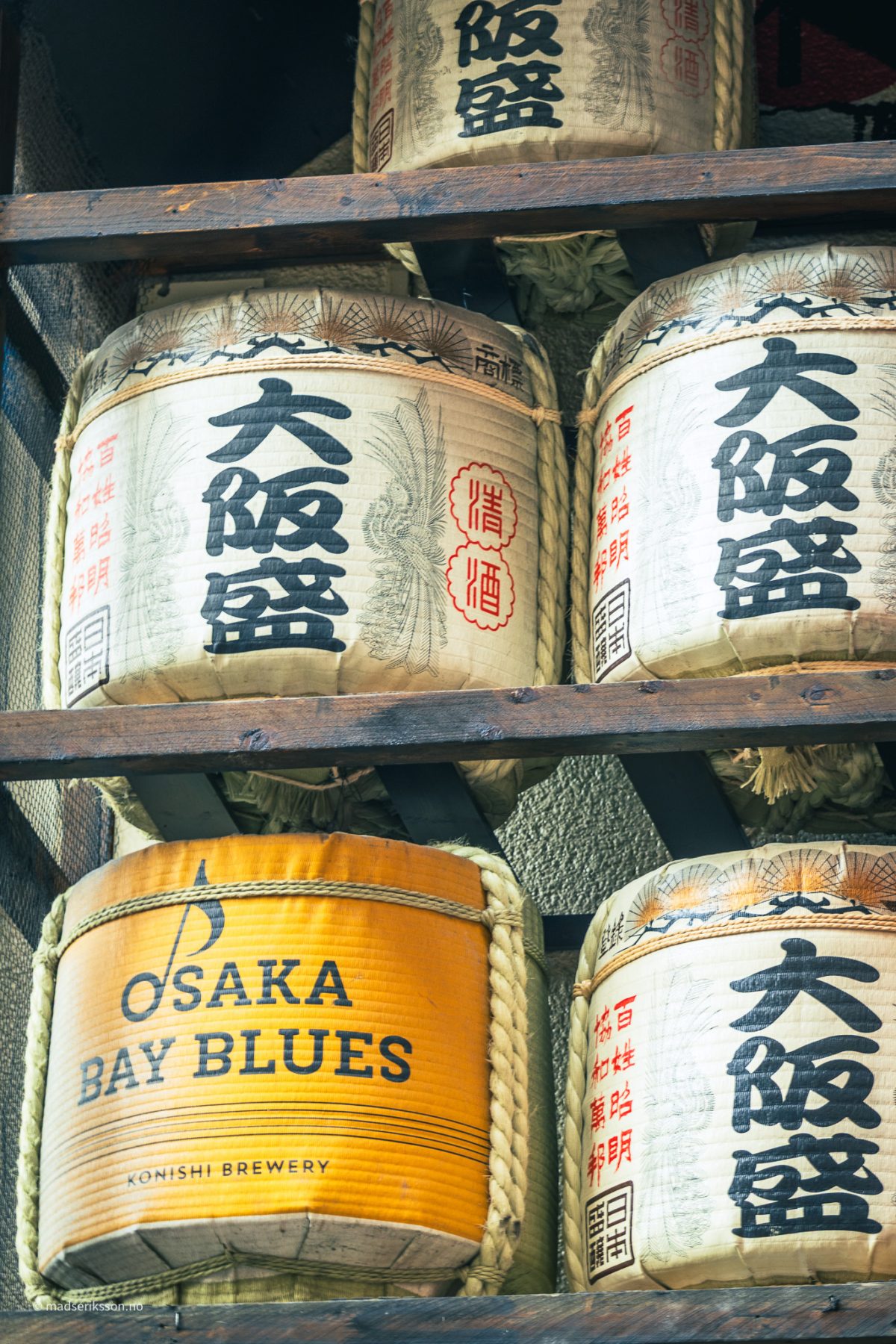
The streets running south from Dotonbori into Namba are among the most densely packed with restaurants, street food stalls, pachinko parlours and shops in Japan. Takoyaki — octopus balls cooked in a special iron mould, served on a paper tray with bonito flakes that flutter in the steam — are available at dozens of competing stalls, and the argument over whose is best is a permanent Osaka conversation. Kushikatsu — battered and deep-fried skewers of meat, seafood and vegetables, dipped in a communal brown sauce — is another Osaka staple, served at counters across the city. The rule is absolute: never double-dip.
Standing on Ebisu Bridge at dusk, with the canal below and the neon of Dotonbori reflected in the water, is one of the few tourist experiences in Japan that exceeds its photographs.
Shinsaibashi, north of Namba, is a 580-metre covered shopping arcade — one of the longest in Japan — running from the canal through a dense concentration of fashion shops, cosmetic chains, cafés and gift stores. West of Shinsaibashi, the area known as America-mura (“America Village”) has been a centre of youth fashion and street culture since the 1970s, when second-hand American clothing stores established the neighbourhood’s identity. The small plaza at its centre, Triangle Park, is a gathering point for Osaka’s more elaborately dressed younger population on weekend afternoons.
Osaka Castle — The Monument to a Warlord’s Ambition
Built in 1583 to be the largest and most powerful castle in Japan, destroyed, rebuilt and destroyed again — the current castle is the third version
Osaka Castle was built by Toyotomi Hideyoshi between 1583 and 1597, on the site of the Ishiyama Hongan-ji temple that had been the centre of a decade-long armed conflict with the forces of Oda Nobunaga. Hideyoshi chose the location deliberately: it occupied the highest ground in the Osaka plain and controlled the waterways that connected the interior of Japan to the sea. He intended it to be the largest and most impressive castle ever built in Japan, and by contemporary accounts, it was. After Hideyoshi’s death, Osaka Castle became the stronghold of his young heir Toyotomi Hideyori, and the great sieges of Osaka in 1614 and 1615 — in which Tokugawa Ieyasu finally eliminated the Toyotomi line — destroyed the castle and ended an era of Japanese history.
The Tokugawa rebuilt the castle, and it stood until a lightning strike destroyed the main tower in 1665. For over two centuries it remained without its tower, used as a military headquarters but stripped of its symbolic presence. The current tower was built in concrete in 1931, deliberately modelled on the second Toyotomi-era castle. It houses a museum across eight floors, and the view from the top floor over the surrounding park and the Osaka skyline to the north is one of the best elevated perspectives in the city.
Hideyoshi spent 100,000 workers three years building Osaka Castle. Tokugawa Ieyasu spent three months destroying it. The concrete tower you see today is the third version.
The castle grounds — 106 hectares of park, moat and formal garden — are one of Osaka’s principal cherry blossom destinations in late March and early April. Nishinomaru Garden, to the west of the main tower, contains around 600 cherry trees and is particularly celebrated; entry requires a separate fee during blossom season. The Osaka Museum of History, in a modern tower adjacent to the castle park, gives an excellent account of the city’s history from its ancient origins through the merchant era to the present, with full-scale reconstructions of Edo-period market scenes and a panoramic view of the castle grounds from the upper floors.
Japan’s Kitchen — The Food That Made Osaka Famous
Osaka has been Japan’s primary food city for four hundred years — a reputation built on merchants, markets and the principle that food should be exceptional at every price level
Kuromon Ichiba — the Black Gate Market, named for the gate of a nearby temple — has been operating in the same location since the early 19th century. Its 170-odd stalls sell fresh fish, shellfish, meat, vegetables, pickles and prepared foods in a covered arcade running approximately 600 metres through the Namba district. The market opens early and is busiest from mid-morning; the combination of fresh produce, prepared food that can be eaten on the spot and the concentrated energy of specialist vendors who have been in the same trade for generations makes it one of the most rewarding market experiences in Japan. The vendors are notably willing to let visitors try before they buy, and remarkably tolerant of the cameras.
Takoyaki — eight balls of wheat-flour batter, each containing a piece of octopus, cooked in a cast-iron mould over high heat and turned continuously with a metal pick until they form perfect spheres with a crisp exterior and a liquid interior — was invented in Osaka in 1935 and has never really left. Every neighbourhood in the city has its takoyaki specialist, and the quality difference between a serious takoyaki shop and a tourist-area stall is substantial: the batter ratio, the quality of the dashi stock and the temperature of the iron determine everything. Okonomiyaki — “cooked as you like it” — is a thick cabbage-based pancake mixed with whatever combination of pork, seafood, cheese or mochi the eater prefers, griddled on a hot plate at the table and dressed with okonomiyaki sauce, Japanese mayonnaise, aonori seaweed flakes and dancing katsuobushi.
Takoyaki was invented in Osaka in 1935. Ninety years later, every neighbourhood in the city has a specialist, and the quality argument has never been resolved.
Kushikatsu — battered and deep-fried skewers of meat, vegetables, seafood and cheese — originated in Shinsekai and remains most closely associated with that neighbourhood, where counters line the street and the sauce pot sits between every two stools. The rule against double-dipping is treated with absolute seriousness. Fugu — the blowfish whose certain organs contain a lethal toxin and which must be prepared only by specially licensed chefs — is a prestige Osaka dish; the city has more fugu restaurants than anywhere else in Japan, and the season runs from autumn through spring. The flesh is mild and silky, the preparation meticulous, and the experience of eating it involves a very faint tingling on the lips that is either the trace compounds from the skin or the knowledge of what the fish could theoretically do to you.
Shinsekai and the Waterfront — Old Osaka and the Open Sea
The retro neighbourhood built to resemble Paris in 1912, and the aquarium that holds a Pacific ocean’s worth of water
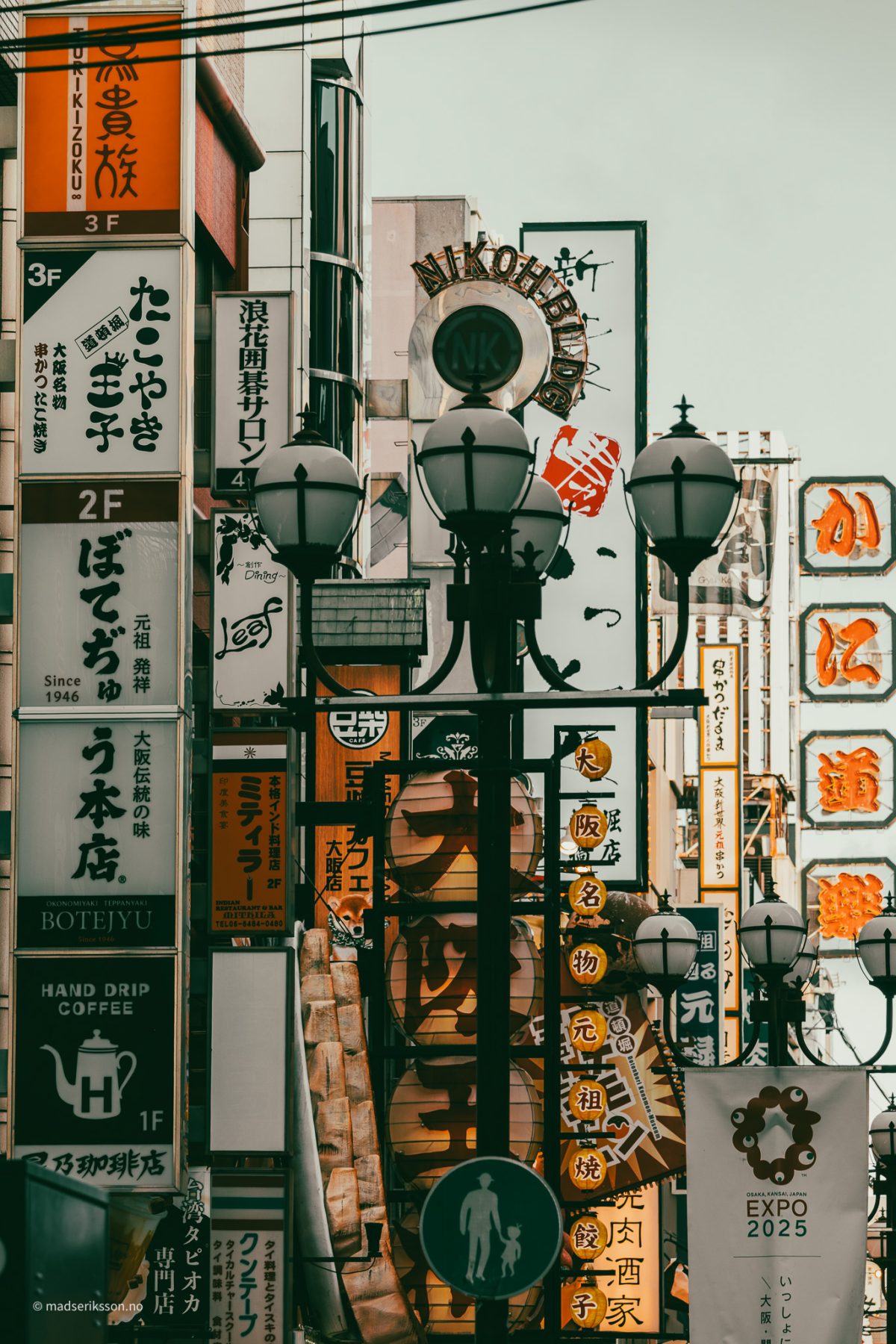
Shinsekai — meaning “New World” — was built in 1912 as a purpose-built entertainment district, with the northern half modelled on Paris and the southern half on Coney Island in New York. The northern section’s centrepiece was to have been a replica of the Eiffel Tower; the structure eventually built was the Tsutenkaku (Tower Reaching Heaven), a 64-metre steel tower designed by the same engineer who worked on the original. It was demolished for scrap metal during the Second World War, and the current 108-metre replacement dates to 1956. Today Shinsekai is one of Osaka’s most atmospheric neighbourhoods: retro signage, cheap kushikatsu counters, billiards halls and a visitor population that mixes elderly Osaka locals with curious tourists in roughly equal proportions.
The Tsutenkaku Tower is surrounded at its base by the restaurants and arcades that have been Shinsekai’s commercial life since the 1950s. The observation deck at 91 metres gives a panoramic view over the southern part of the city and the Abeno Harukas tower — at 300 metres, Japan’s tallest building — looming to the immediate north. The contrast between Shinsekai’s vintage commercial streetscape and the Harukas skyscraper directly above it is one of the more visually compressed juxtapositions in Japanese urban design.
The Kaiyukan’s central tank holds 5,400 tonnes of Pacific ocean water and contains whale sharks, manta rays, sunfish and a rotating cast of species that makes it one of the most extraordinary single exhibits in any aquarium in the world.
On the waterfront at Tempozan, west of the city centre, the Osaka Aquarium Kaiyukan opened in 1990 and remains one of the most impressive aquariums in the world. The building is designed as a descent through ocean depth, with tanks representing environments from the Japanese forest coast to the open Pacific, arranged around a central tank of 5,400 tonnes containing whale sharks, manta rays, ocean sunfish and thousands of smaller species. The whale sharks — the largest fish in the ocean, growing to 12 metres and filtering the water for plankton — circle the central tank in slow ellipses, visible from every floor of the descending spiral. The Tempozan Ferris wheel adjacent to the aquarium offers views across Osaka Bay on clear days, and the waterfront area has a calm, open character very different from the dense energy of the central city.
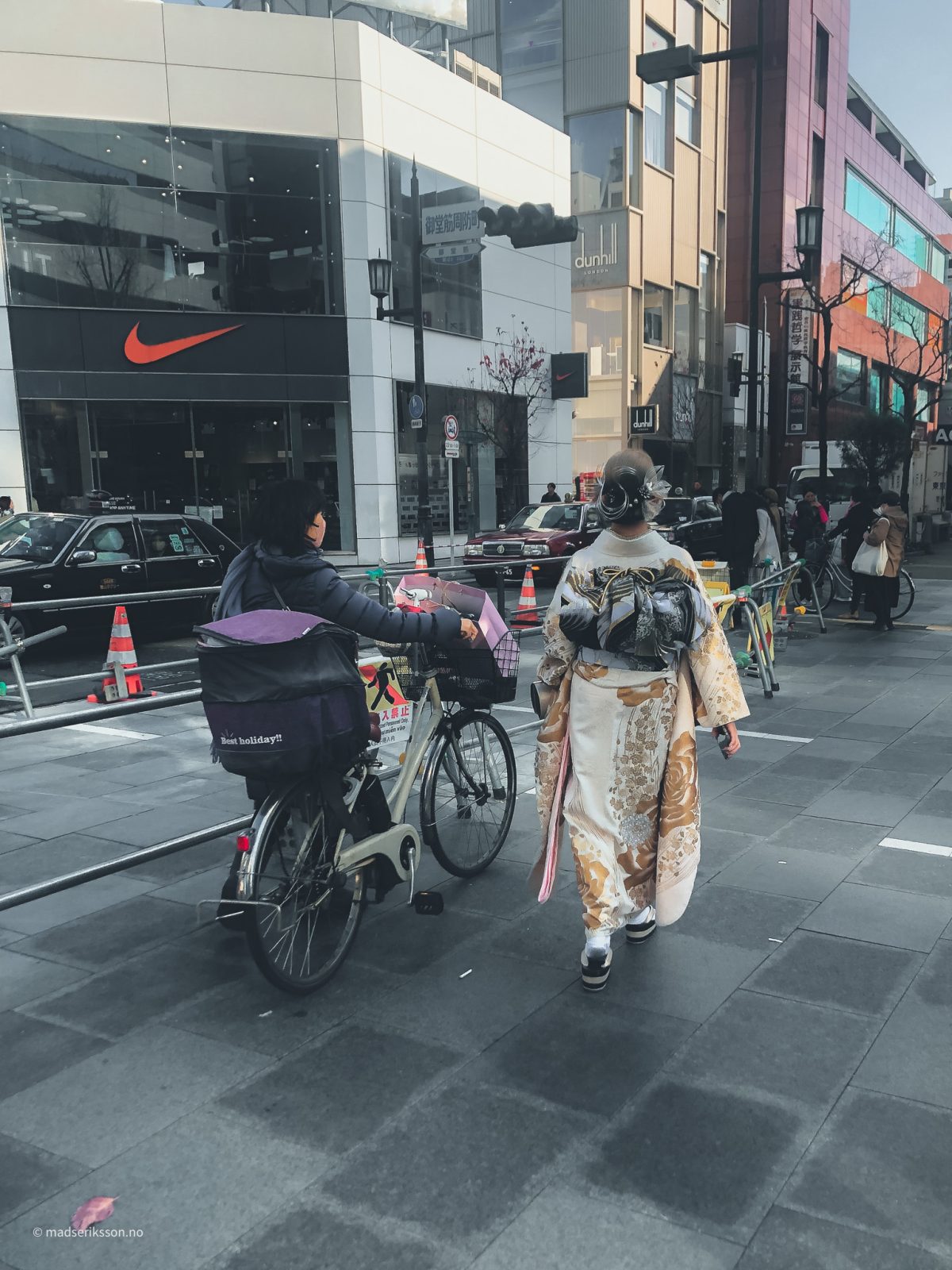
«Osaka is the city that most consistently surprises visitors who come expecting a scaled-down Tokyo. It is not that at all. It is something with its own specific character: louder, funnier, less formal, more interested in feeding you than impressing you. The Dotonbori neon at night, the takoyaki handed over a counter that has been there for sixty years, the castle park in cherry blossom season, the strange retro calm of Shinsekai — these are not approximations of anything else. They are Osaka, which has been doing things its own way since long before anyone was writing about it.»
More in the same area
 CitiesHiroshima and Miyajima: A preserved ruin and a shrine on the tideline
 CitiesKyoto: A Timeless Journey Through Japan’s Cultural Heart
 CitiesShibuya Crossing: The Heartbeat of Tokyo
 CitiesHiking Mount Inari — Fushimi Inari’s Full Loop
 CitiesKinosaki Onsen: Seven Public Baths Along a Willow-Lined River
 CitiesTokyo — Enormous, Efficient, Beautiful and Entirely Unlike Anywhere Else
City Frames · scroll-driven 3D
More cities in three dimensions
54 city guides open with a model built from open map data. Scroll, and the camera moves from landmark to landmark.
Departures · City Frames
Where to next?
| Time | Destination | Country | Status |
|---|
Live · position of the sun
Golden hour, right now
The low, warm light just after sunrise and just before sunset. These are the cities on the site where it is happening at this moment.