The Spice Bazaar was built to pay for a mosque. When the Queen Mother Turhan Hatice Sultan revived the half-finished New Mosque at Eminönü after the great fire of 1660, she added a long covered market beside it, and the rents from its shops were set aside to keep the mosque and its charities running. Istanbul came to call it Mısır Çarşısı, the Egyptian Bazaar, after the revenues from Ottoman Egypt that funded it. More than three and a half centuries later it is still an L-shaped hall of vaulted shops with six gates, selling spices, tea, Turkish delight, dried fruit and nuts to a crowd that can reach 50,000 or more people on a busy day.

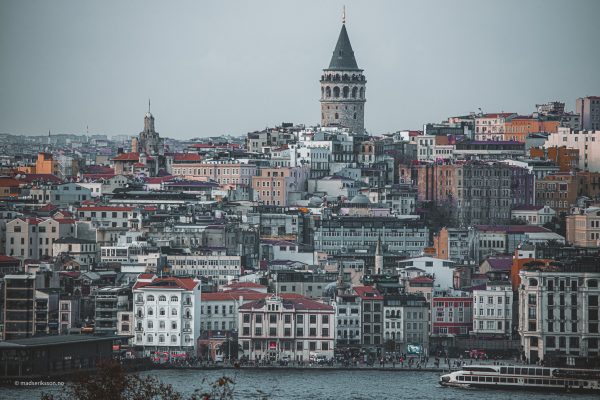
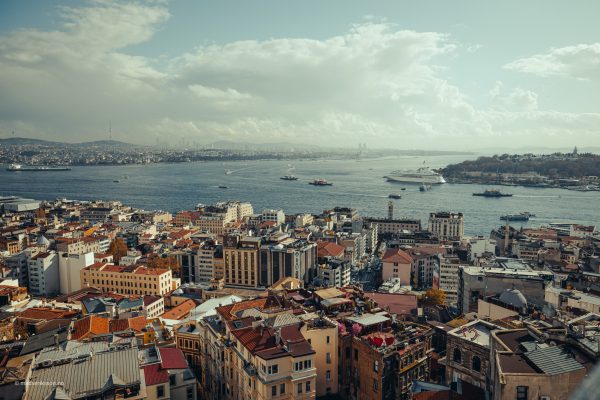
The bazaar stands at Eminönü, in the Fatih district on the southern shore of the Golden Horn, where the Galata Bridge lands on the old city. For centuries this was the busiest waterfront in Istanbul: ferries, customs houses, warehouses and wholesale streets crowded together at the point where goods arrived by sea. The market was planned as part of a külliye — an Ottoman mosque complex with its own school, fountain, tomb and royal pavilion — and the bazaar was its commercial wing. It is the second most famous covered market in the city after the Grand Bazaar, smaller and far easier to understand, and for centuries it was the centre of Istanbul’s spice trade.
It is still a working market, though no longer only a spice market. Alongside the sacks of red pepper flakes and sumac there are now counters of Turkish delight, pyramids of dried apricots and figs, tea blends, nuts, honeycomb, soaps and souvenirs, and a growing share of the shops sell to visitors rather than to Istanbul cooks. Entry is free, the bazaar opens every day, and the best of it lies partly outside its walls — in the wholesale lanes behind it, in the courtyard of the New Mosque, and in a small tiled mosque raised above the shops of the next street.
How to approach the Spice Bazaar
This guide covers the bazaar in three parts: how a market came to be built to fund a mosque, and why it carries the name of Egypt; the hall itself, its gates and shops, and how to buy well inside it; and the streets around it — the New Mosque, the Rüstem Pasha Mosque, the market lanes of Tahtakale and the waterfront at Eminönü — which turn an hour of shopping into a half-day in one of the oldest commercial quarters of the city.
A Market Built to Pay for a Mosque — and Named After Egypt
How an abandoned royal project on the Golden Horn was revived after a great fire, and why its shopping arcade outlived its purpose
The story begins with a mosque that nearly never happened. In 1597 Safiye Sultan, mother of Sultan Mehmed III, ordered a great imperial mosque on the waterfront at Eminönü. Her first architect, Davut Ağa, a pupil of the great Sinan, died in 1599 and was replaced by Dalgıç Ahmed Çavuş, but the site was difficult, close to the water and in a crowded commercial district, and when Mehmed III died in 1603 Safiye lost her influence and the work stopped. For more than fifty years the unfinished walls stood by the harbour. The original plan had included a madrasa, a theological school; when the project was finally taken up again, that part was replaced by something more practical — a market.
The trigger was a disaster. On 24 July 1660 a fire broke out in the city and burned for about 49 hours, destroying much of the old town along the Golden Horn. In the rebuilding that followed, Turhan Hatice Sultan, the Queen Mother of the young Mehmed IV, took over the abandoned site on the advice of the imperial architect Mustafa Ağa. Construction resumed in the last months of 1660; the mosque was finished in 1663 and inaugurated in 1665, with a royal pavilion, a tomb, a school and a fountain. The bazaar, designed by Koca Kasım Ağa, was begun at the same time. Early records call it simply the New Bazaar. The name that stuck, Mısır Çarşısı, refers to the revenues of the Ottoman province of Egypt that financed it.
The bazaar was an endowment in brick and stone. Its shop rents were assigned to the upkeep of the mosque and its charities — the school, the bath and the hospital — so that trading in pepper and cinnamon paid for prayer and for the poor.
The market has burned more than once. Fires in 1688 and 1691 damaged it, and a major fire in 1940 effectively put it out of use. The restoration of 1940–43 changed its interior more than any event since it was built: the walls that divided the front of each shop from its back rooms were taken down, the raised platforms where traders once sat were joined to the shops behind, and many back spaces became shops of their own. It was at this time that the shops were given painted symbols above their fronts so customers could identify them. A further restoration was completed in 2018, and the New Mosque itself reopened in January 2023 after seven years of conservation work on its domes, tiles and façades.
Inside the Bazaar — Two Arms of Vaulted Shops
What the hall looks like, what is sold under its domes, and how to shop in a market where half the customers are tourists and half are locals
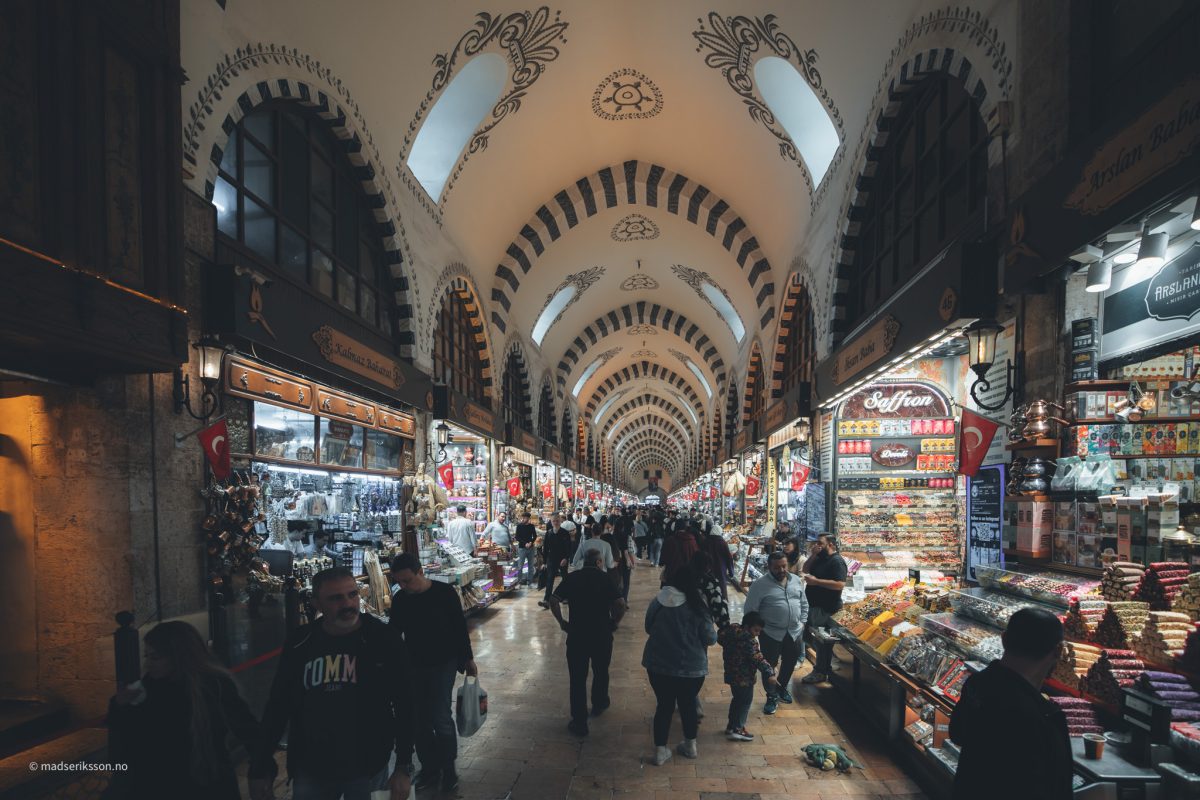
The bazaar is built as two long arcades meeting at a right angle, each a corridor of vaulted bays with shops on both sides, lit from above. The main entrance faces the waterfront and the Galata Bridge, beside the New Mosque; other gates open towards the mosque courtyard and into the market streets of Tahtakale on the inland side. Around the Haseki gate the building rises to two storeys, and the upper floor once housed a commercial court where judges settled quarrels between shopkeepers and customers — a reminder that this was a regulated market rather than a free-for-all. The hall is not large: walking both arms end to end takes only a few minutes, which makes it a far easier introduction to Istanbul’s bazaars than the maze of the Grand Bazaar up the hill.
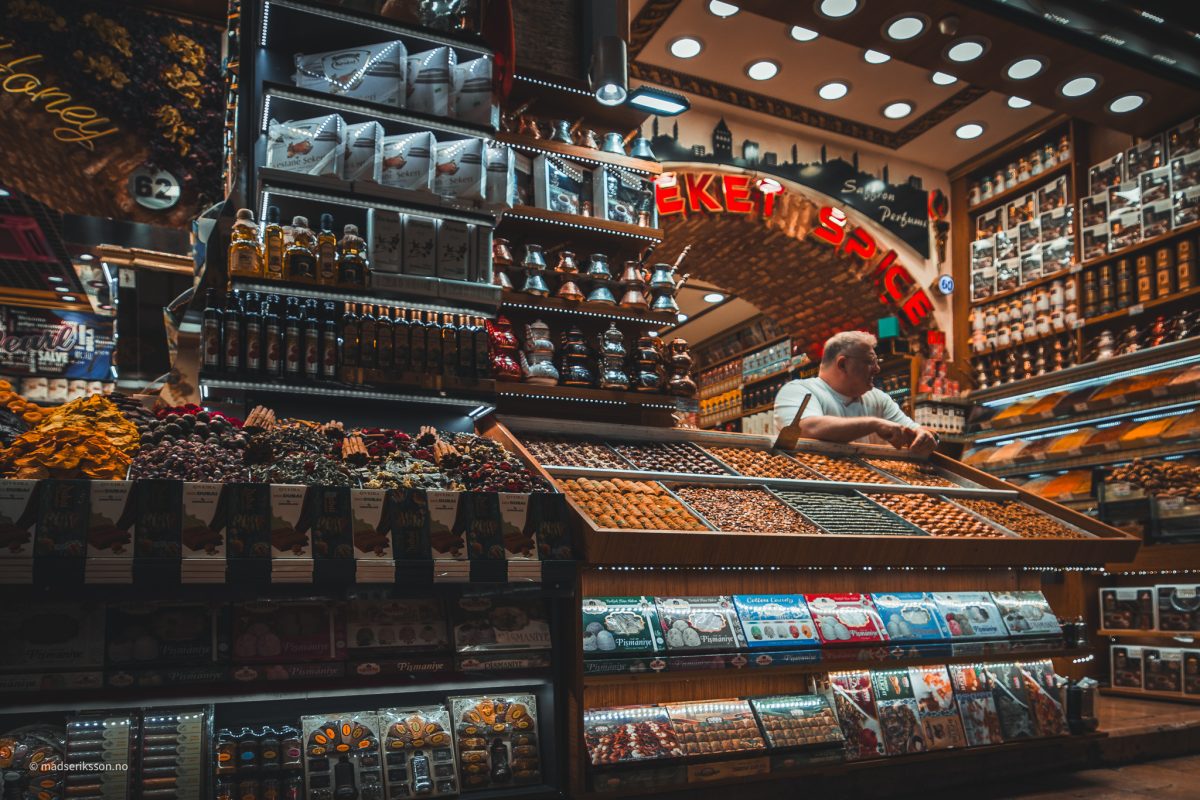
The shopfronts are a wall of colour. Spices are heaped in open trays and sacks: deep red pul biber and the darker, smoky isot from south-eastern Türkiye, purple sumac for salads and grilled meat, cumin, coriander, cinnamon bark, dried mint and mixed blends for köfte or pilaf. Saffron is sold in small boxes and glass jars. Then come the sweets — lokum, Turkish delight, cut in cubes and flavoured with rose, pomegranate, mastic or citrus, often rolled in coconut or packed with pistachios — alongside dried apricots, figs and mulberries, walnuts, hazelnuts and the pistachios of Antep and Siirt. Tea shops sell black Turkish tea and fruit or herb blends, and a number of counters specialise in honey, olive oil soaps or caviar.
The best buys are the everyday ingredients of Turkish kitchens — red pepper flakes, sumac, dried mint, a bag of good pistachios — rather than the gift boxes. Ask to taste before buying; most shops expect it.
Prices are usually displayed by weight, and buying is straightforward. Many traders offer tastings of lokum or dried fruit, and it is reasonable to compare two or three shops before choosing. Haggling over a few hundred grams of spice is not expected in the established shops, but over larger mixed purchases a modest discount is often offered without asking. Vacuum packing for the journey home is widely available. Saffron deserves the most caution: real saffron is expensive, and cheap “saffron” is often safflower, so buy it from a shop that sells it in sealed, labelled packs. The bazaar is open every day from early morning to early evening, and closes on the first days of the religious holidays. It is quietest just after opening; by late morning, especially when cruise ships are in port, the arcades fill shoulder to shoulder.
Around the Bazaar — Tiles, Coffee and the Waterfront
The mosque the market was built to support, a tiled jewel above a row of shops, the wholesale lanes behind, and the busiest quay in the old city
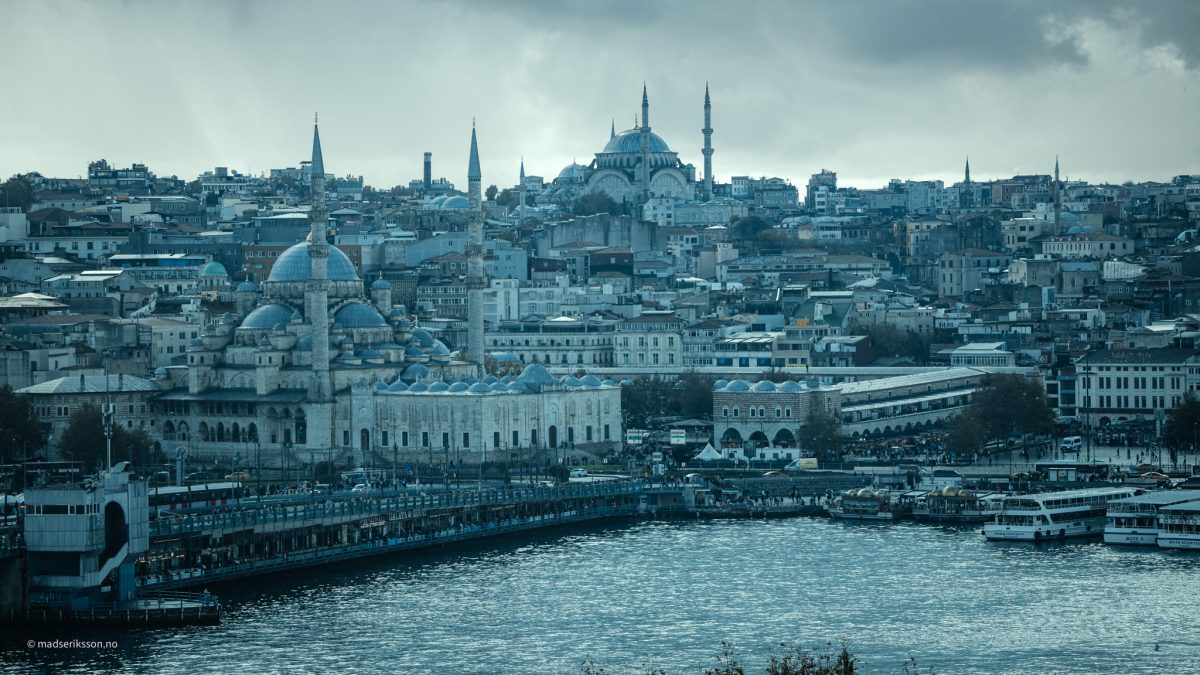
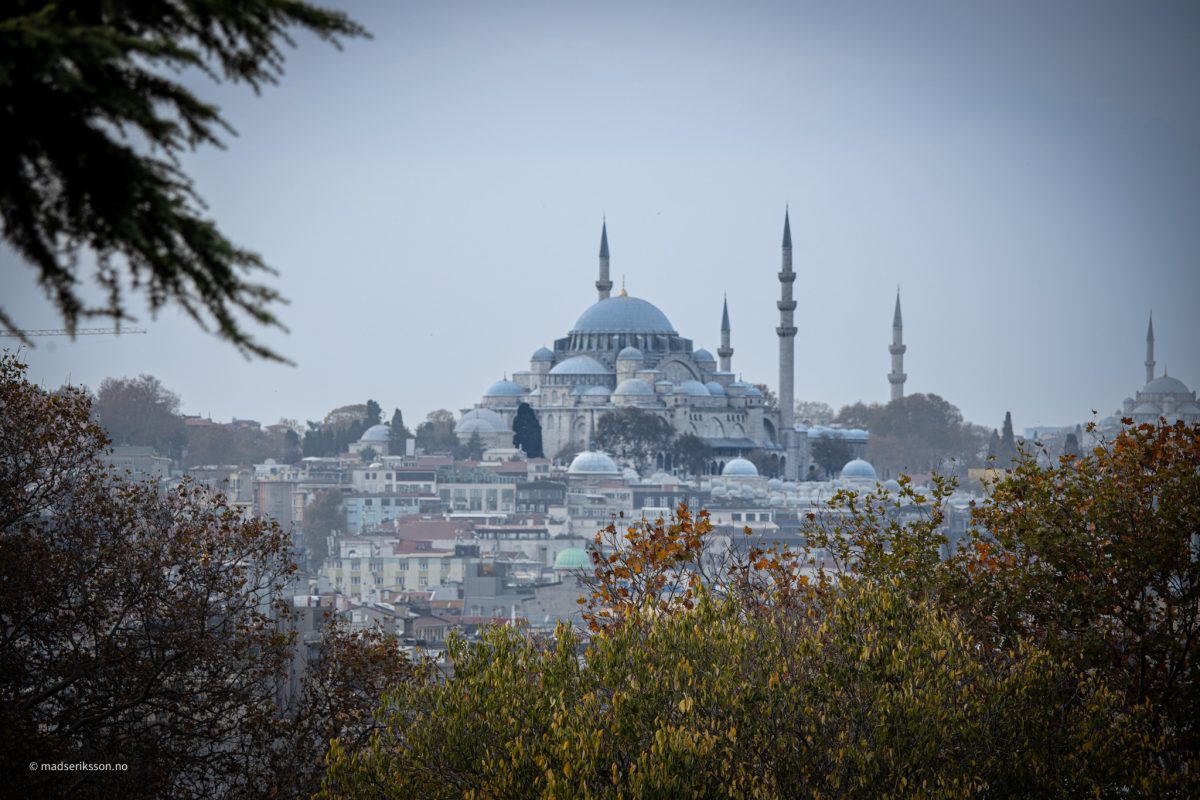
The New Mosque — Yeni Cami — is the obvious first stop, since the bazaar exists because of it. Its cascade of domes and half-domes, rising to a central dome about 36 metres high and flanked by two minarets, is one of the defining sights of the Eminönü waterfront, and the wide courtyard and steps in front of it are where Istanbul sits down to feed the pigeons, wait for a ferry or eat a simit. Inside, the walls are lined with blue, green and white İznik tiles, and a gilded screen in the gallery once hid the royal family during prayers; a raised passage connected their loge to the royal pavilion at the corner of the complex. The mosque is open to visitors outside prayer times, with the usual dress code: shoulders and knees covered, and a headscarf for women.
Behind the bazaar, the streets of Tahtakale and Hasırcılar Çarşısı carry on the trade at wholesale level and at local prices: coffee, nuts, cheese, olives, cured meats, kitchenware, plastic tubs and tin trays, with far fewer visitors than inside the hall. On the corner outside the bazaar, the coffee roaster Kurukahveci Mehmet Efendi has been grinding Turkish coffee since 1871, and the queue at its counter is a good sign of which way the locals shop. Above the main gate of the bazaar, the restaurant Pandeli, open since 1901, serves Ottoman dishes in rooms lined with turquoise tiles.
The Rüstem Pasha Mosque is easy to miss: a staircase from the street of shops leads up to a terrace, and from there into a small prayer hall covered almost entirely in İznik tiles — tulips, carnations and vines in red, blue and green.
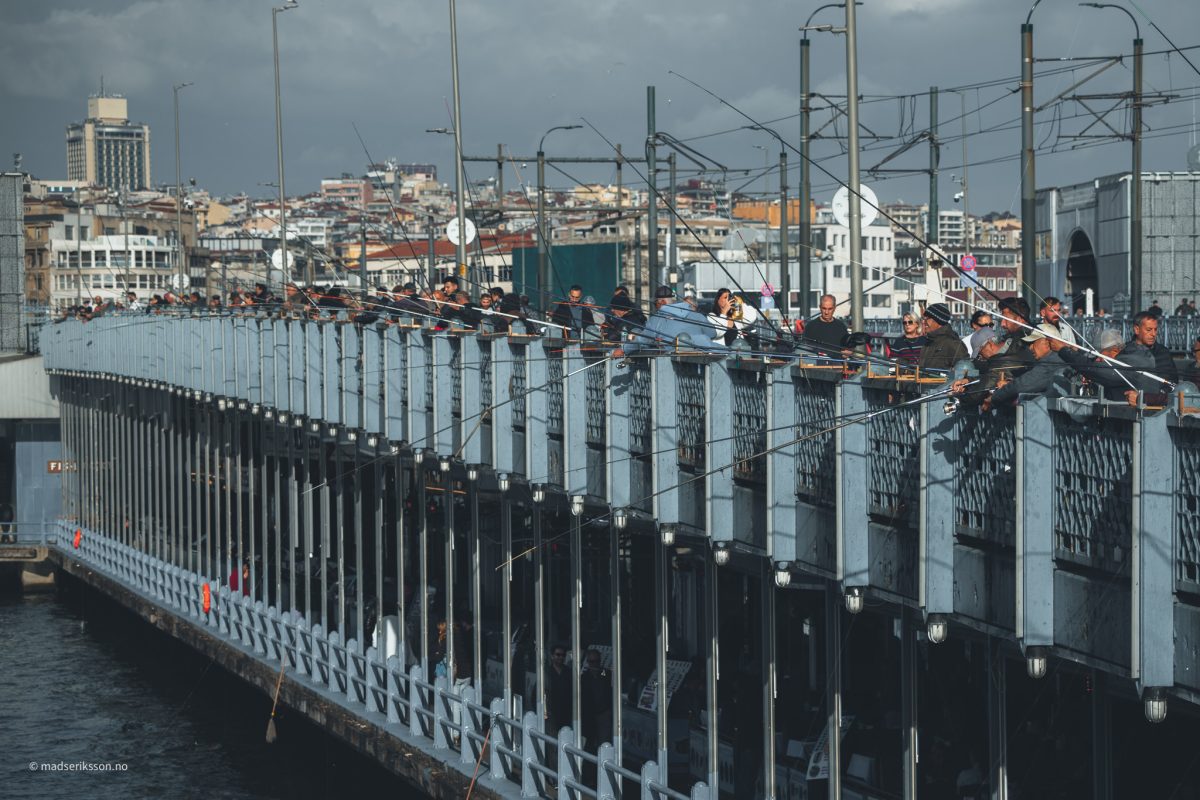
The mosque was designed by Mimar Sinan for the Grand Vizier Rüstem Pasha and completed in 1563. Like the Spice Bazaar, it was paid for by commerce: it stands on a high terrace above a block of vaulted shops whose rents supported it, which also lifted it above the crowded street onto the skyline. Its roughly 2,300 tiles, in some 80 different patterns, cover the porch, the walls, the mihrab and the minbar — no other mosque by Sinan uses them so lavishly. From the bazaar, the waterfront is only a minute’s walk: the Galata Bridge crosses the Golden Horn towards Karaköy and the Galata Tower, fishermen line its railings, and ferries leave the Eminönü piers for Üsküdar, Kadıköy and the Bosphorus.
«The Spice Bazaar was never meant to be a sight. It was a rent roll for a mosque — a row of shops on a busy quay, built after a fire to pay for prayer, schooling and the care of the sick — and it still works the way it was designed to. That is what makes it worth an hour: under the vaults, the trade is real, the smells are real, and the old commercial city of the Golden Horn is all around. Go early, taste before buying, take home a bag of red pepper and sumac rather than a gift box, and then climb the stairs to the Rüstem Pasha Mosque for the tiles.»

More in the same area
 ArchitectureTopkapı Palace, Istanbul: Four Courts, the Harem and the Treasury of the Sultans
 CitiesExploring the Wonders of Istanbul
 CitiesThe World’s 10 Great Food Markets
 CitiesBordeaux: The Port of the Moon and the Capital of Wine
 Food and DrinksDongmun Market: Jeju City’s Post-War Market and Its Night Market at Gate 8
 Food and DrinksExploring Gwangjang Market: A Culinary Paradise in Seoul