Palermo was, in the 12th century, one of the largest and most sophisticated cities in the Western world — a place where Arab emirs, Norman kings and Byzantine mosaicists worked in the same buildings, spoke different languages and produced an architecture that has no parallel anywhere in Europe. The city that resulted from that collision of civilisations still carries it in its stones: in the golden chapel inside the Norman palace, in the markets that have been selling the same things since the Arabs laid them out a thousand years ago, in the street food that descends directly from the medieval Sicilian kitchen. Palermo is not particularly arranged for tourism. It does not need to be.

Palermo was founded by Phoenician traders around 734 BCE on a fertile coastal plain between two rivers, and has been continuously inhabited — and almost continuously contested — ever since. Greeks, Carthaginians, Romans, Vandals, Ostrogoths and Byzantines each held the city before the Arabs arrived in 831 CE and transformed it entirely. Under Arab rule, Palermo became one of the three or four largest cities in Europe: a cosmopolitan capital of mosques, libraries, gardens and markets, with a population estimated at 300,000 at its height. When the Normans under Roger I captured the city in 1072, they had the political intelligence not to erase what they found. Instead, Roger and his successors — particularly Roger II, crowned King of Sicily in 1130, and the Emperor Frederick II in the 13th century — built a state in which Arabs, Normans, Greeks and Jews administered together, wrote documents in Arabic, Greek and Latin simultaneously, and produced art and architecture that fused all three traditions into something entirely new. The term for this synthesis is Arab-Norman, and in 2015 UNESCO inscribed its surviving monuments as a World Heritage Site.
The Palermo that greets visitors today is not an easy city. The historic centre still carries the bomb damage of 1943 alongside the reconstruction and the decay and the street life, in a layering that is sometimes spectacular and sometimes simply overwhelming. The markets — Ballarò, the Vucciria, the Capo — operate on medieval footprints with medieval noise levels. The street food is among the finest and most specific in Italy. The mosaics in the Palatine Chapel and at Monreale, 8 kilometres to the south, belong to a different order of achievement from almost anything else the medieval world produced. Palermo rewards those who are willing to be confused before they are enlightened, and who understand that a city with this much history in it is not going to resolve itself into a neat itinerary.
How to approach Palermo
This guide covers four aspects of Palermo: the Arab-Norman monuments at its centre, including the Palatine Chapel and the Palazzo dei Normanni; the Palermo Cathedral and the extraordinary Monreale Cathedral south of the city; the markets, the Quattro Canti, the Teatro Massimo and the Capuchin Catacombs; and the Sicilian food culture that is inseparable from the city’s identity. Palermo is best explored on foot in the historic centre, with a short drive or bus for Monreale. Arrive hungry.
Palermo in 3D
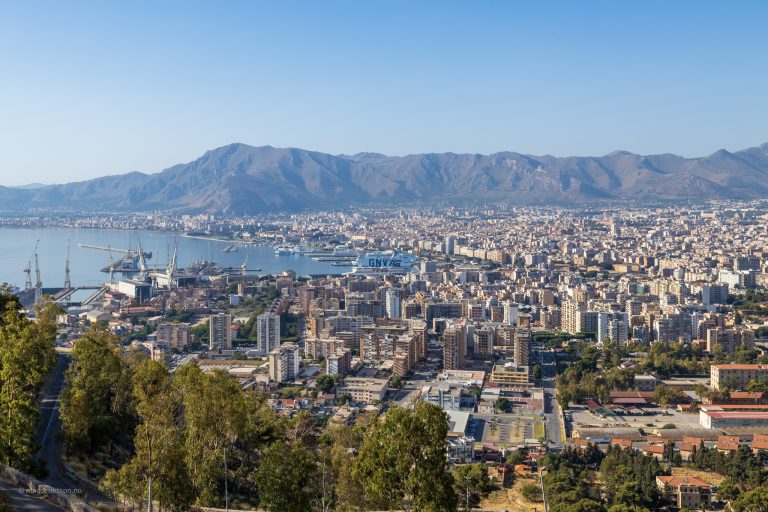
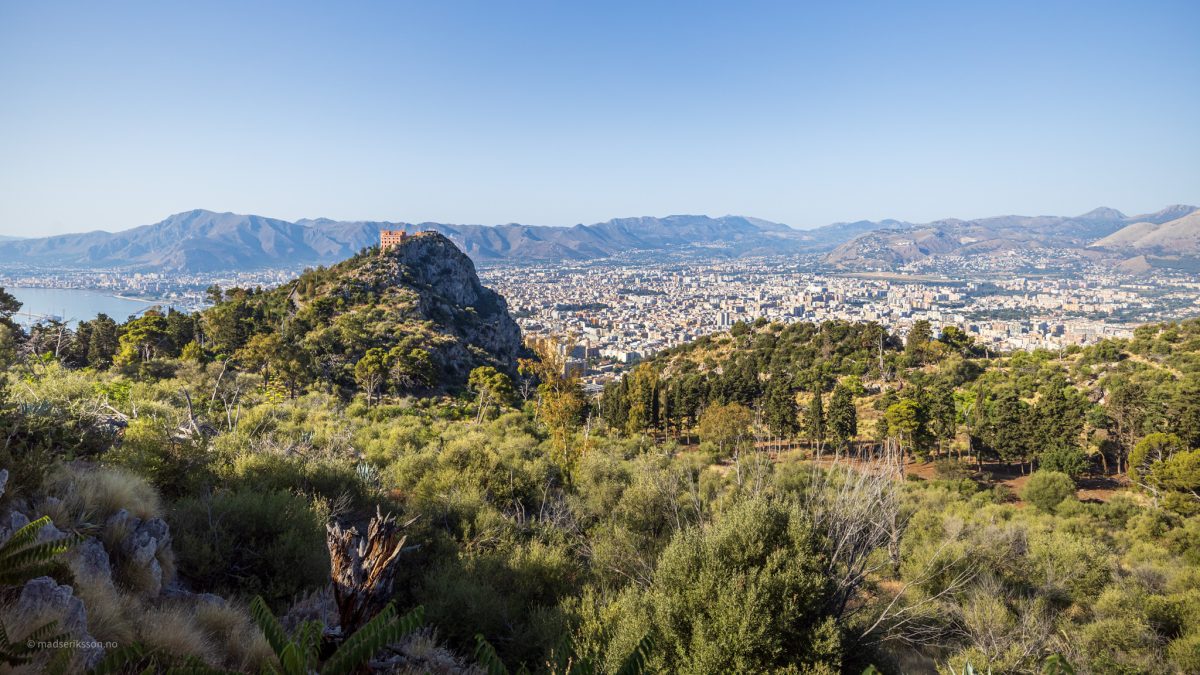
Palermo spreads across the Conca d'Oro, a coastal plain ringed by mountains, with Monte Pellegrino closing the bay to the north. Founded by Phoenician traders in the 8th century BCE, it was ruled by Arab emirs from 831 and by the Normans from 1072, and it is now the capital of Sicily with around 650,000 inhabitants. This frame covers the old city between the Palazzo dei Normanni and the old harbour, La Cala, with the Zisa and the Capuchin Catacombs to the west.
Palermo spread out between its harbour and the mountains, seen from the hills above the city
The Norman Palace and the Palatine Chapel
The Palazzo dei Normanni grew out of an Arab fortress at the western edge of the old city and became the palace of the Norman kings; since 1946 it has housed the Sicilian Regional Assembly. Inside, the Cappella Palatina, built for Roger II from 1130, is covered with Byzantine gold mosaics under a carved wooden ceiling made by Arab craftsmen. Together with the red domes of nearby San Giovanni degli Eremiti, it belongs to the Arab-Norman ensemble inscribed by UNESCO in 2015.
Palermo Cathedral
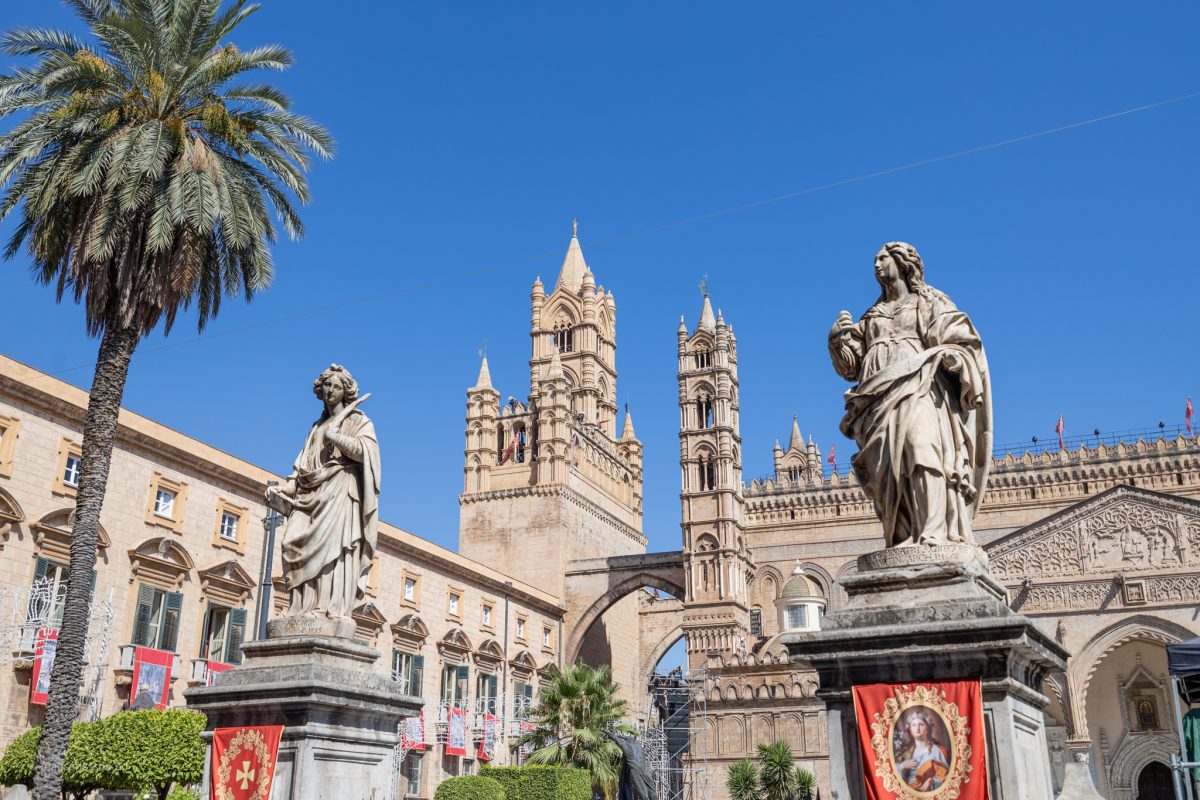
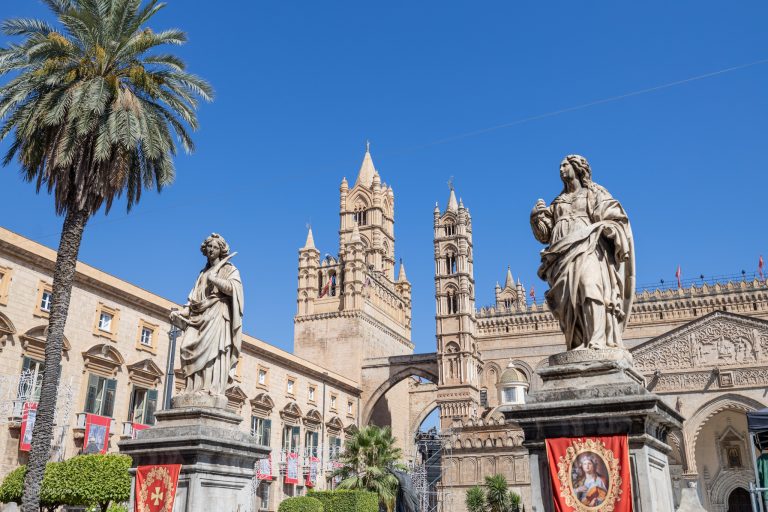
The cathedral was founded in 1185 by Walter Ophamil, the Norman archbishop of Palermo, on the site of an earlier Byzantine basilica. Its exterior mixes Norman towers with later Gothic and Catalan work, while the large dome and the neoclassical interior date from a remodelling of 1781–1801. The Emperor Frederick II, who ruled from Palermo, lies in a porphyry sarcophagus near his father, Henry VI.
Saints’ statues and palms in front of the Norman towers and Gothic facade of Palermo Cathedral
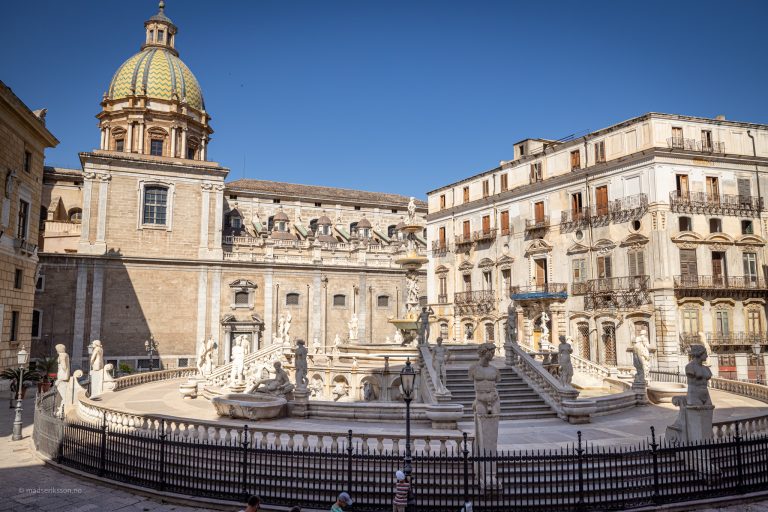
Quattro Canti and Piazza Pretoria
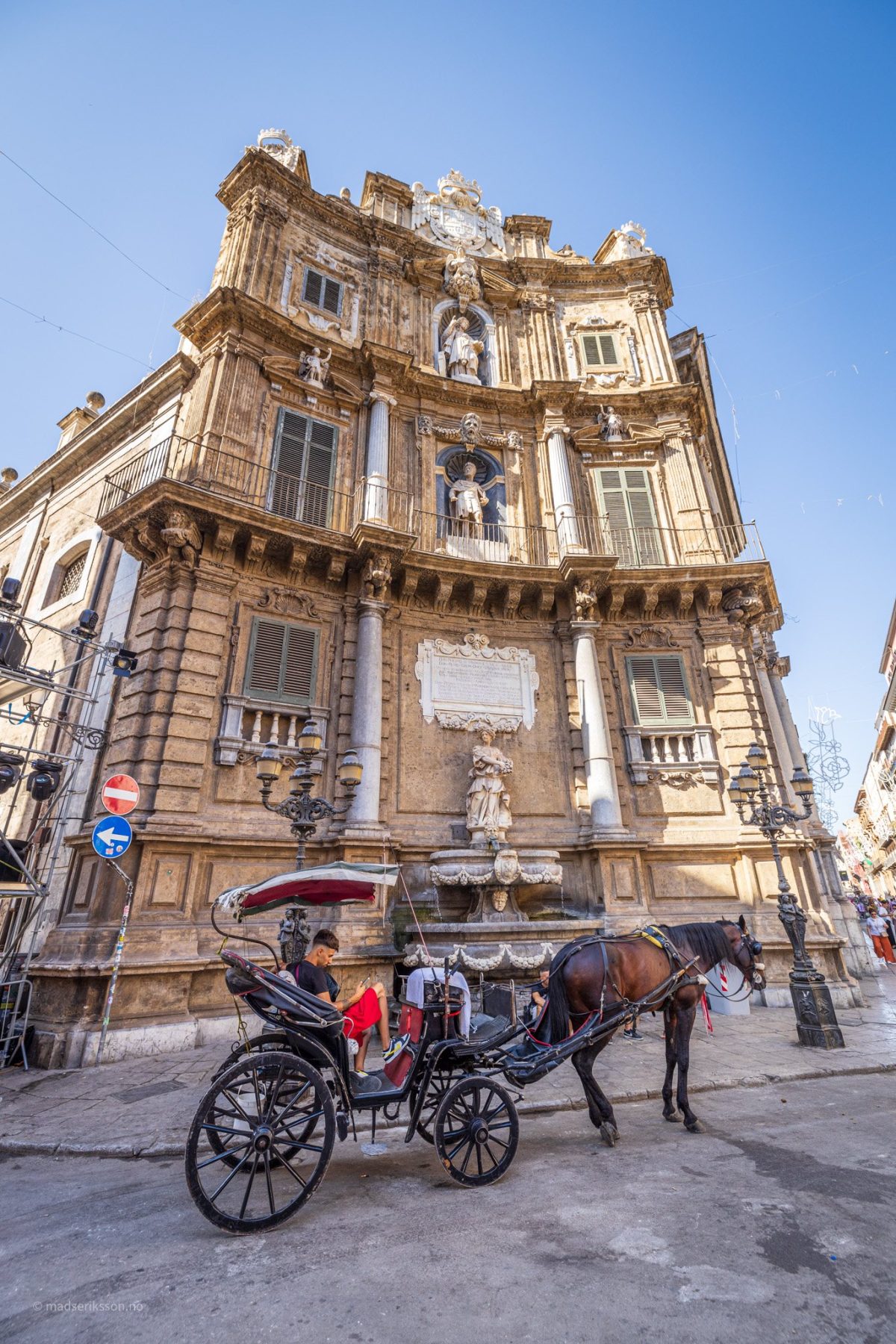
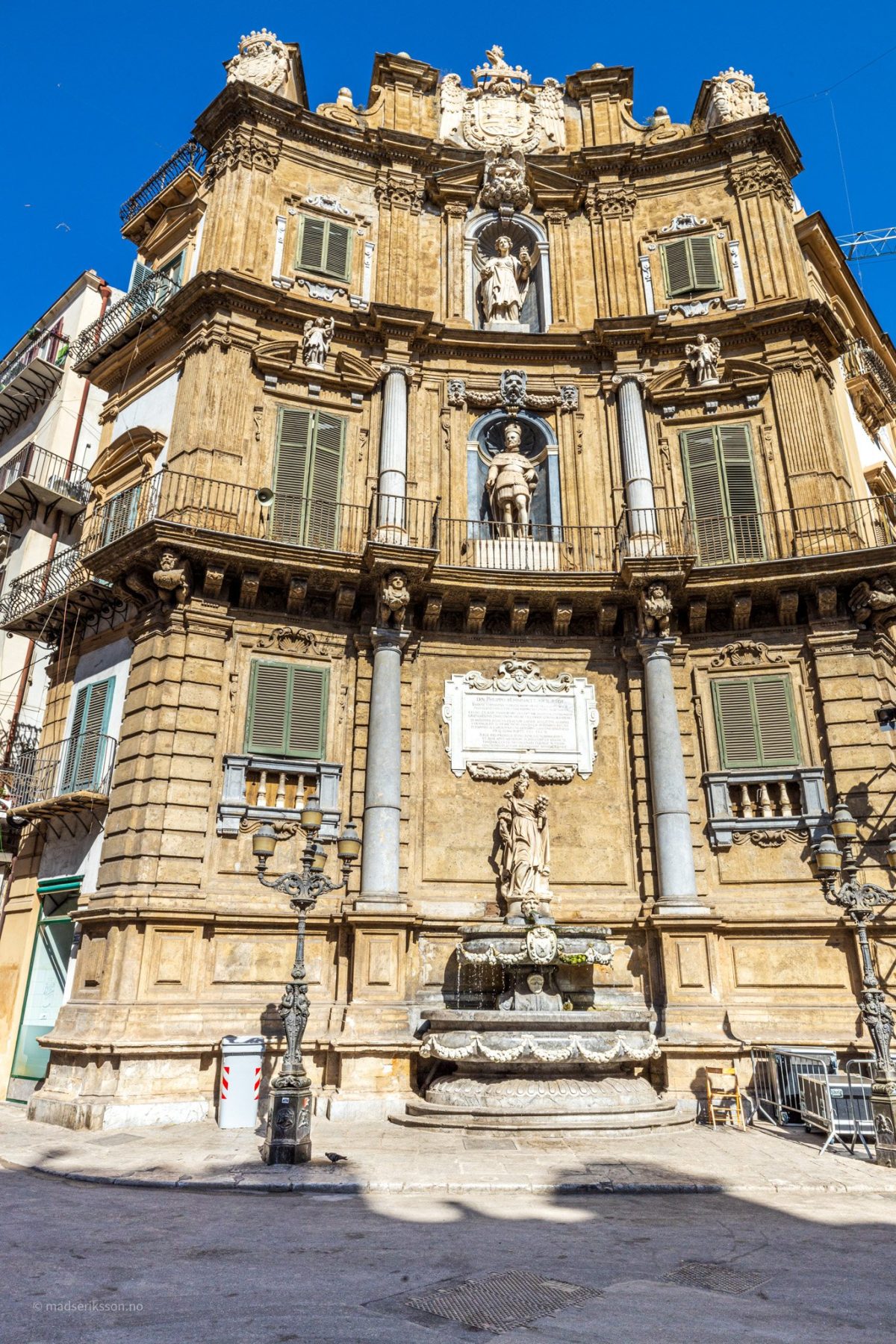
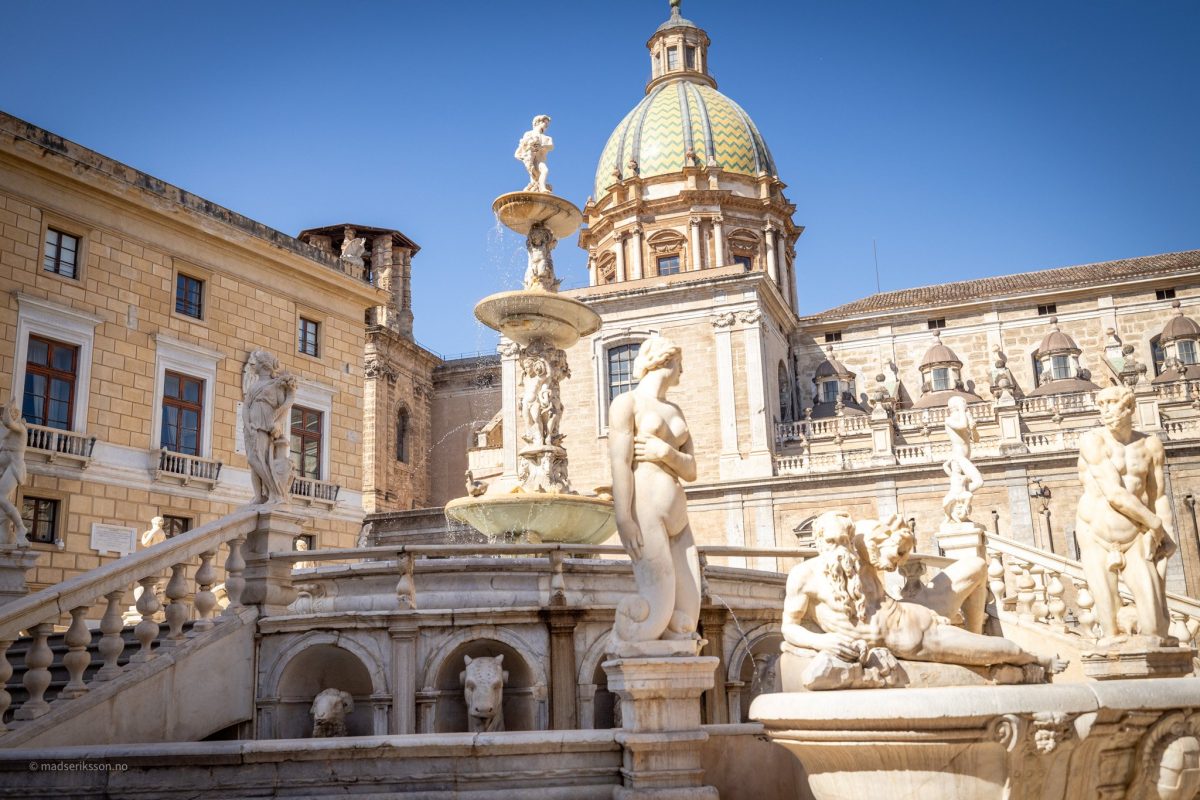
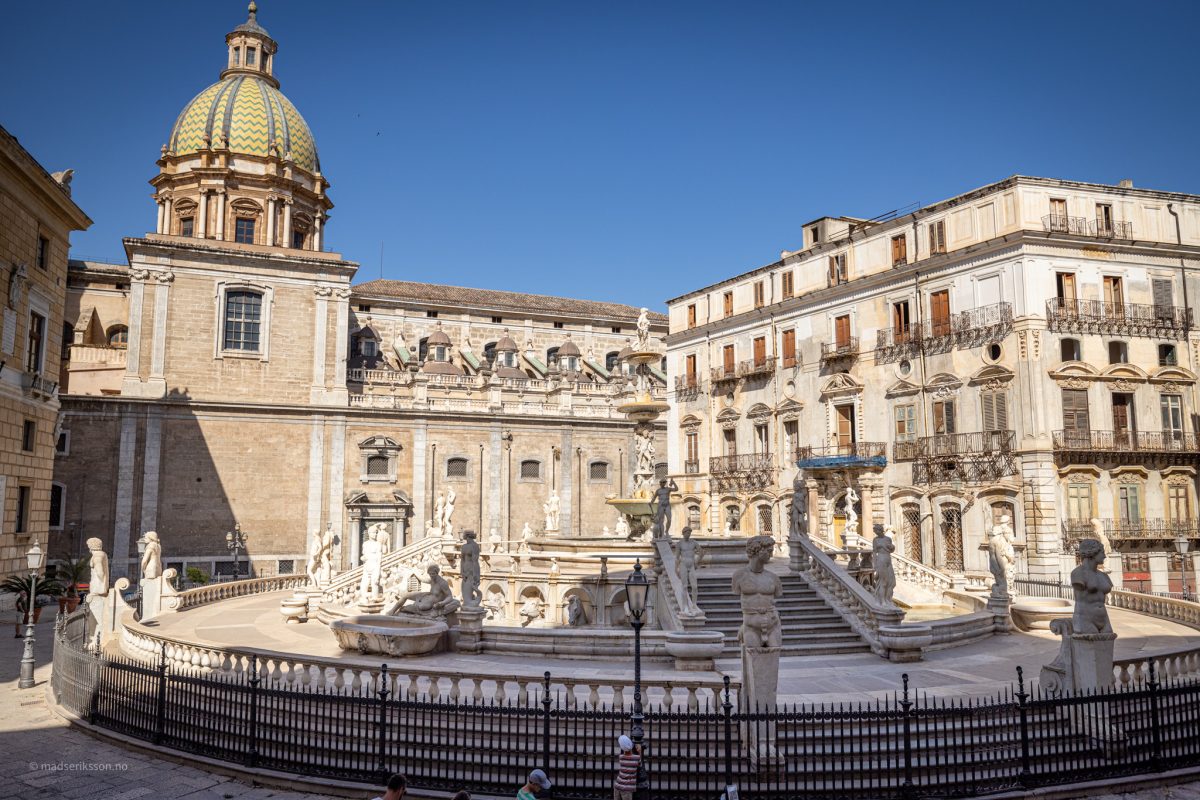
The Quattro Canti, laid out in 1608–1620, marks the crossing of Via Maqueda and the Cassaro with four curved Baroque façades showing the seasons, four Spanish kings and the city's four female patron saints. Just beside it, the Fontana Pretoria was carved in Florence from 1554 and shipped to Palermo in 1574; its nude statues earned the square the name Piazza della Vergogna, the Square of Shame. Beyond it stands La Martorana, built in 1143 for George of Antioch, admiral of Roger II.
Fontana Pretoria, ringed by marble statues, below the tiled dome of Santa Caterina in Palermo
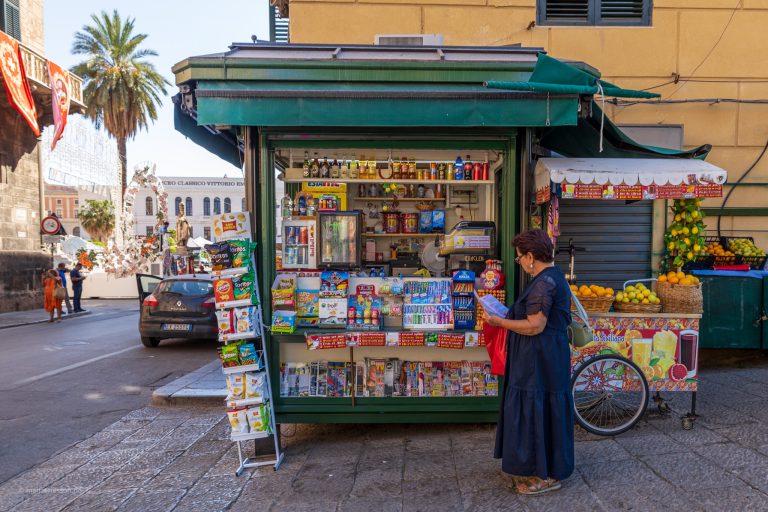
Ballarò market
Ballarò, in the Albergheria quarter between the Norman palace and the central station, is the oldest of Palermo's street markets and traces its origins to the Arab period. Every morning it fills the lanes with fish, produce and street food such as arancine, as does the Capo market north of the cathedral.
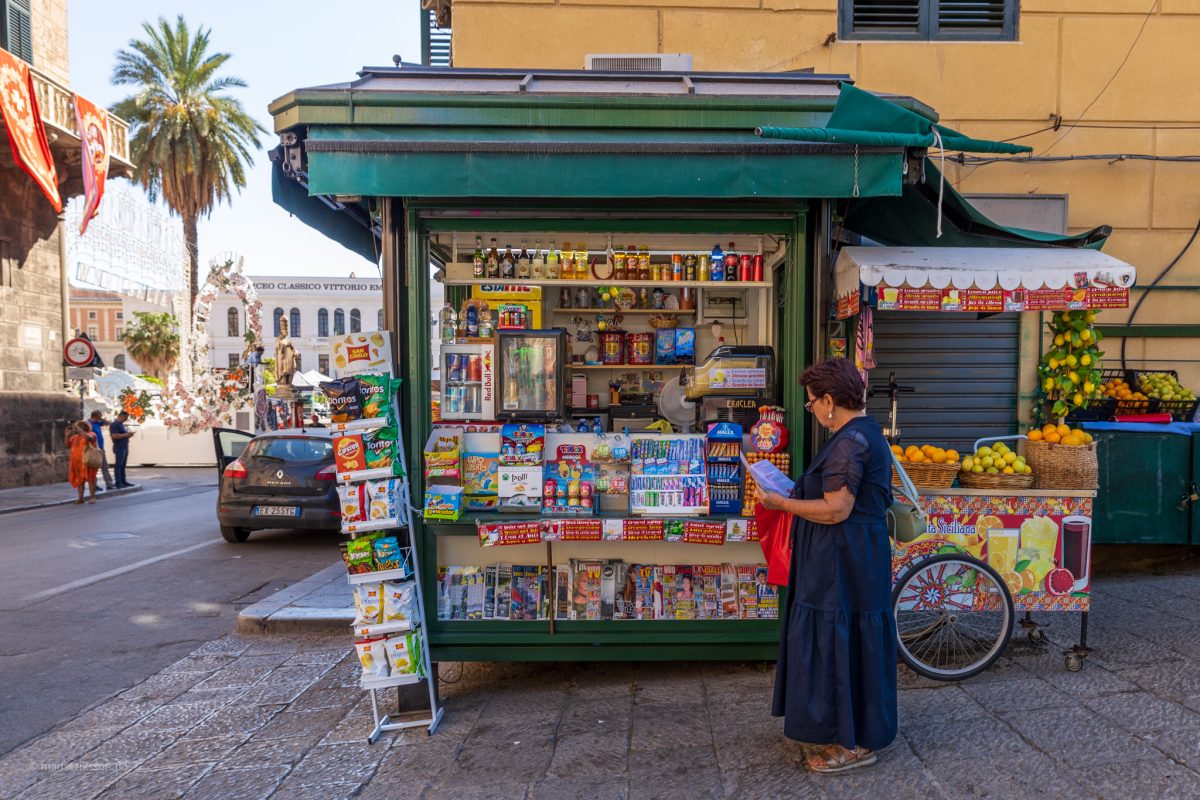
A green newspaper kiosk and a fruit cart on a sunny street corner in central Palermo
The Zisa and the Capuchin Catacombs
West of the old city, the Zisa was begun around 1165 under William I and completed under William II as a summer palace for the Norman kings, in a royal park of gardens and pavilions. Close by, the Capuchin Catacombs hold around 8,000 mummified bodies laid out in corridors by sex and profession, with burials continuing until 1920.
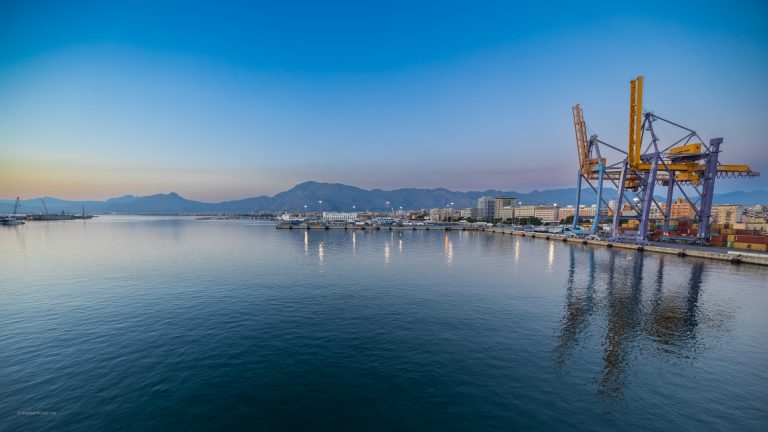
La Cala and the waterfront
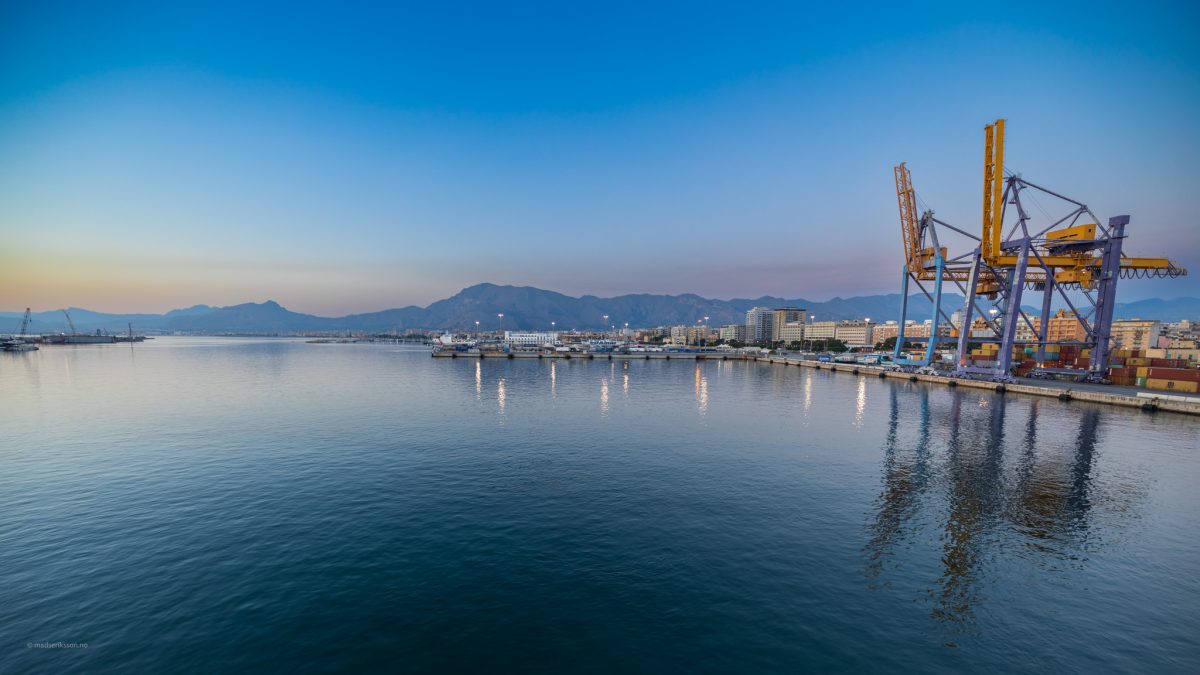
La Cala, the small horseshoe-shaped harbour at the seaward end of the Cassaro, is all that remains of the ancient port, which once reached far into the city before it silted up. Beside it stands the 14th-century Palazzo Chiaramonte-Steri, later the seat of the Inquisition, and to the north the cranes and ferry quays of the modern port line the bay.
The harbor of Palermo, Sicily.
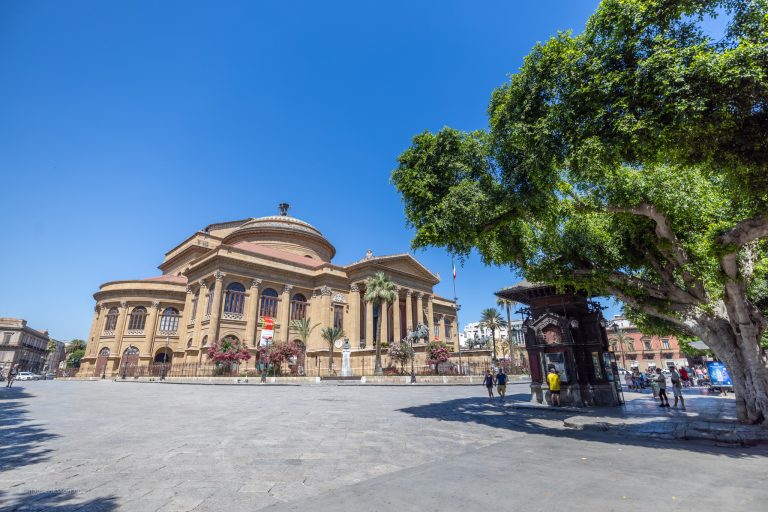
Teatro Massimo
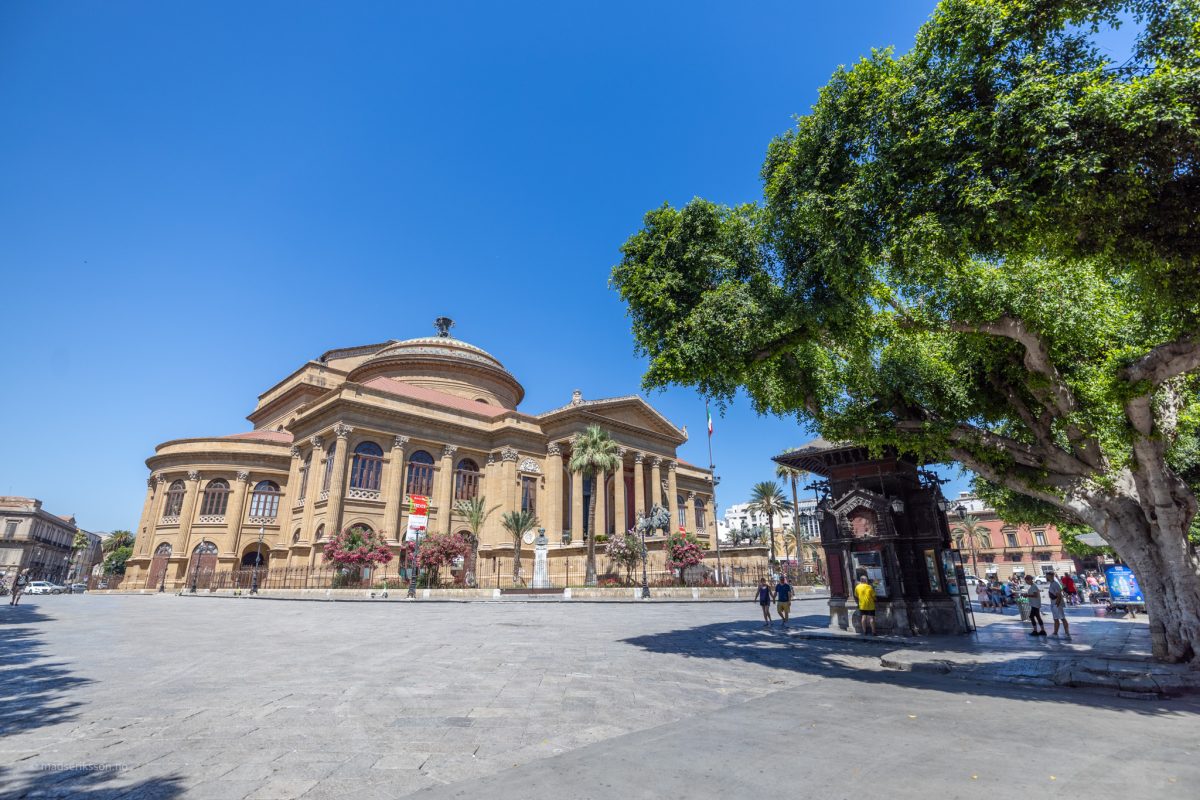
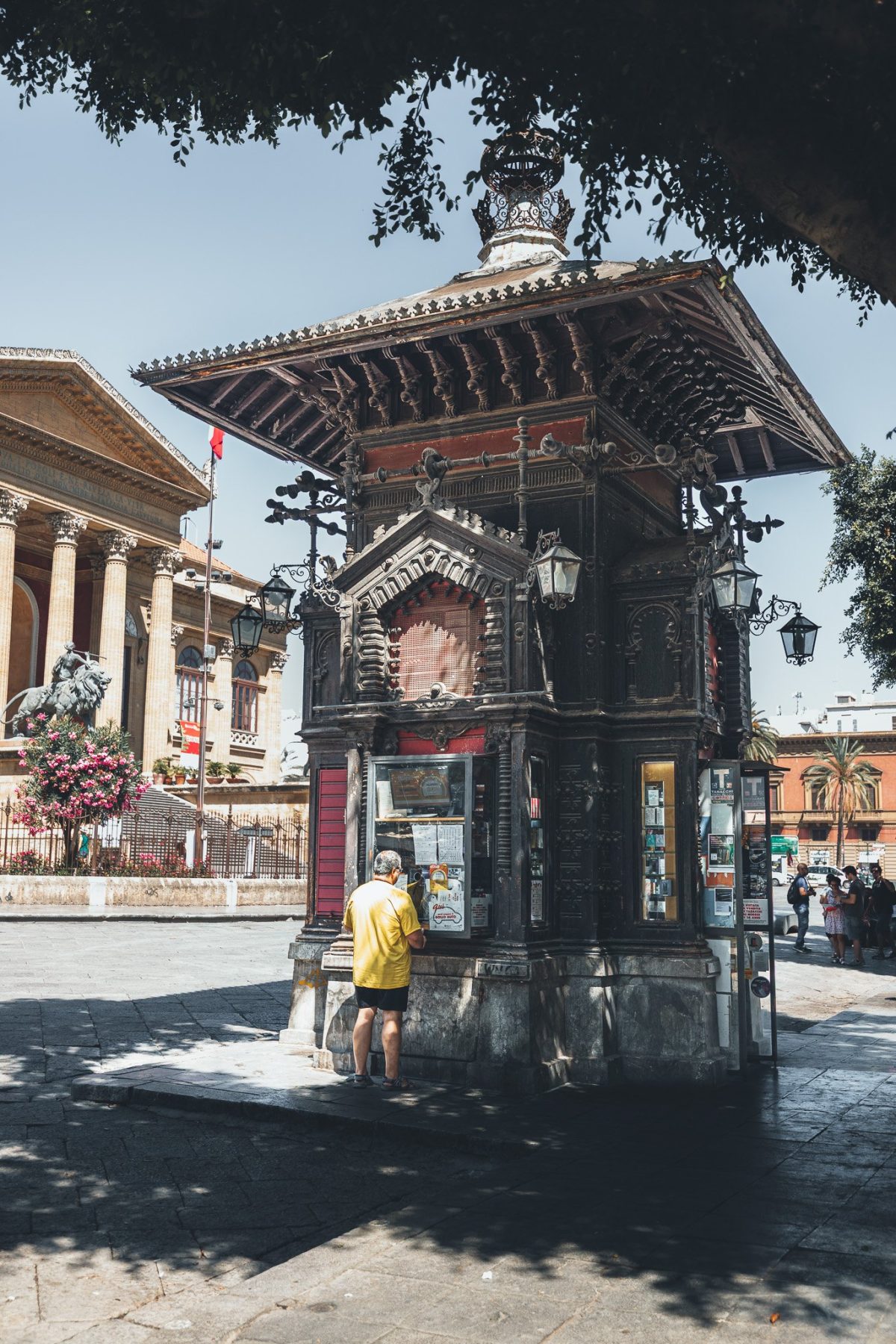
The Teatro Massimo, designed by Giovan Battista Filippo Basile and completed by his son Ernesto, opened on 16 May 1897 with Verdi's Falstaff. Covering 7,730 m², it is the largest opera house in Italy, and when it opened it was the third-largest in Europe after Paris and Vienna. The final scene of The Godfather Part III was filmed on its steps.
The Teatro Massimo, Italy’s largest opera house, on Piazza Verdi in Palermo
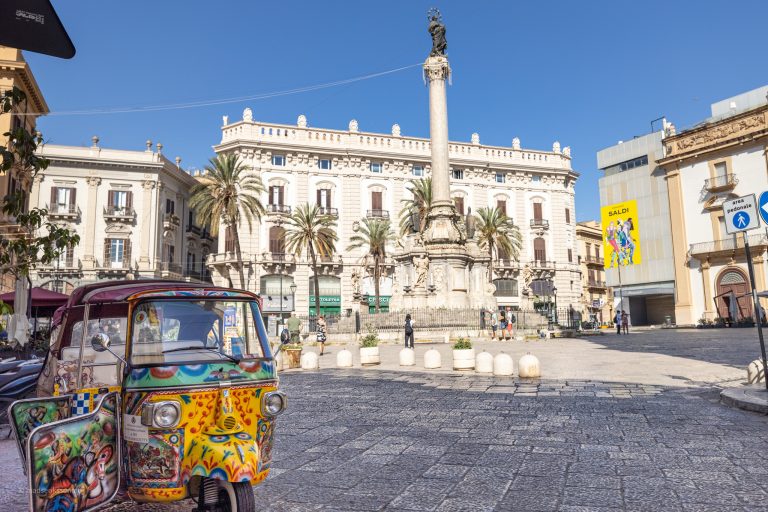
San Domenico and the Vucciria
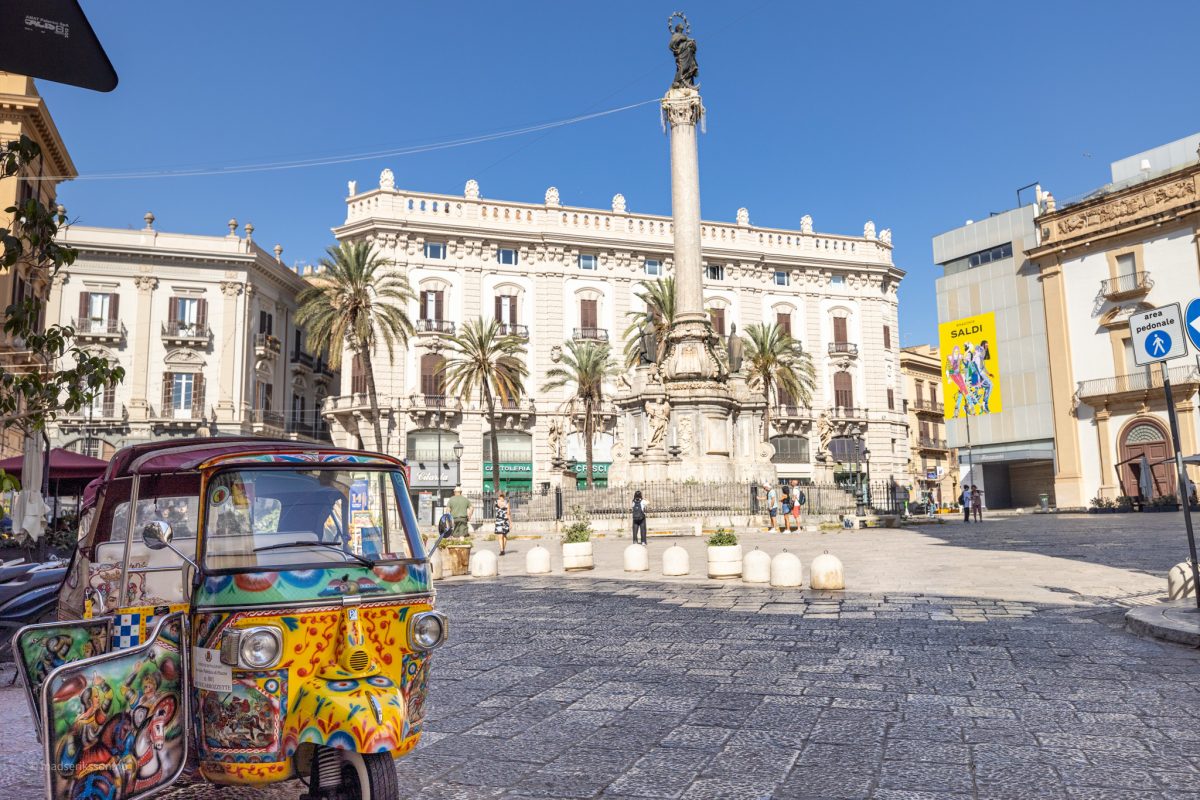
North of the Cassaro, the Baroque church of San Domenico serves as the burial place of many notable Sicilians, and the Column of the Immaculate rises from the square in front of it. Below it, the lanes of the Vucciria, once Palermo's most famous market, now fill with bars and street food after dark.
A painted Ape tuk-tuk parked on Piazza San Domenico in Palermo, with the Column of the Immaculate behind
3D model © 2026 madseriksson.no · Photographs © madseriksson.no. Buildings and heights: © OpenStreetMap contributors (ODbL), via OpenMapTiles. Ground imagery: Sentinel-2 cloudless 2023 by EOX IT Services GmbH (contains modified Copernicus Sentinel data 2023; CC BY 4.0). Heights are approximate where OpenStreetMap has no measured value; sun positions are approximate.
Arab-Norman Palermo — The Kingdom Where Three Worlds Met
In the 12th century, Palermo’s Norman kings built churches with Arab pointed arches, Byzantine gold mosaics and Norman stone vaults — all in the same room
The Palazzo dei Normanni — the Norman Palace — on the western edge of the historic centre is the oldest royal palace in continuous use in Europe. Its origins are Arab: the emirs who ruled Palermo built a fortified complex here, which the Normans expanded and transformed after 1072 into the seat of one of the most remarkable courts in medieval Europe. Inside, on the second floor, the Palatine Chapel — Cappella Palatina — is the supreme expression of the Arab-Norman synthesis. Built by Roger II between 1132 and 1143 as his private chapel, it is covered in 6,340 square metres of gold Byzantine mosaics: the ceiling is Arabic muqarnas (honeycomb vaulting) of carved and painted wood, with inscriptions in Arabic; the walls carry scenes from the lives of saints in the Byzantine manner; the floor is inlaid marble in geometric patterns derived from Islamic tilework. The result is an interior that belongs to no single tradition and transcends all of them. The afternoon light through the narrow windows falls on the gold in a way that changes as the sun moves; arriving in the early morning and again at midday gives two entirely different encounters with the same space.
La Martorana — properly Santa Maria dell’Ammiraglio — was built in 1143 by George of Antioch, admiral of Roger II’s fleet, as a Byzantine church with a Greek Orthodox liturgy. Its mosaics, contemporary with those of the Palatine Chapel and also executed by Byzantine craftsmen, include an extraordinary image of Roger II being crowned directly by Christ — a political statement of the first order, presenting the Norman king as divinely ordained in the Byzantine manner rather than through papal authority. The church was later given to a Benedictine convent and altered in the Baroque period, but the original mosaic programme in the dome and apse survives in exceptional condition.
The mosaic in La Martorana showing Christ crowning Roger II was a deliberate political act: it claimed for the Norman king the same divine legitimacy as the Byzantine emperors, without requiring the Pope’s involvement. Roger II understood propaganda in multiple languages.
San Giovanni degli Eremiti — St. John of the Hermits — built by Roger II in 1143, is the most visually distinctive of the Arab-Norman monuments: a small church topped with five red domes that derive directly from Islamic architecture, set in a garden of orange trees and the remains of a medieval cloister. It was built on the site of a mosque, and the combination of the Norman stonework, the Arab domes and the Byzantine plan makes it a single building that encapsulates the entire synthesis. Together with the Palatine Chapel, La Martorana and the churches of San Cataldo (three smaller Arab-style red domes in the Piazza Bellini), these buildings form the core of the UNESCO designation and represent the most concentrated and coherent surviving ensemble of Arab-Norman architecture anywhere in the world.
The Cathedral and Monreale — The Kings in the Stone and the Gold on the Walls
Palermo Cathedral holds the tombs of two of the most remarkable rulers of the medieval world. Monreale, 8 kilometres away, contains the most complete cycle of medieval mosaics that survives anywhere
Palermo Cathedral was begun in 1185 by the Archbishop Gualtiero Offamilio on the site of an earlier church that had itself been built on the site of a mosque (a pattern that repeats across Palermo’s sacred geography). Its exterior, added to and altered across seven centuries, is an architectural anthology: Norman towers, Gothic portals, Catalan-Gothic detailing and a Baroque dome added in the 18th century by Ferdinando Fuga, which the Sicilian architectural historian Gioacchino Di Marzo described as “the worst thing that happened to Palermo.” Inside, the tombs in the right transept are worth the entire visit: six porphyry sarcophagi holding, among others, Roger II, King William I, Emperor Henry VI and his wife Constance, and — in the most magnificent tomb — the Holy Roman Emperor Frederick II. The porphyry is imperial Roman material, deliberately reused to assert continuity with ancient Rome. Frederick II, who spoke six languages and ruled the largest empire in 13th-century Europe from Palermo, lies here in a stone that was quarried before the birth of Christ.
Monreale — reached by bus or car from central Palermo in 30 minutes — contains the most complete and most extensive cycle of medieval mosaic decoration in the world. The cathedral was built by William II between 1174 and 1189, and its interior is covered in 6,500 square metres of gold-ground mosaic executed by Byzantine craftsmen brought from Constantinople. The programme is encyclopaedic: beginning with the Creation in the nave and proceeding through the Old Testament, the life of Christ and the lives of the apostles Peter and Paul, with a vast Christ Pantocrator — 13 metres tall — dominating the apse. The scale is extraordinary: the building is 102 metres long, and every surface of the interior above the marble cladding is gold. The effect in morning light, when the sun enters from the east and illuminates the apse mosaics, is overwhelming. The adjacent Benedictine cloister — 228 twin columns with individually carved capitals, enclosing a garden with a central fountain — is among the finest examples of Norman-Sicilian decorative sculpture in existence.
Monreale was built in 15 years. The 6,500 square metres of mosaic inside it represent probably the largest single artistic commission of the medieval period. The craftsmen were brought from Constantinople. The king who ordered it died at 36.
The relationship between the two cathedrals — Palermo and Monreale — is not merely geographical. William II built Monreale partly in competition with the Archbishop of Palermo, whose cathedral was under construction at the same time on royal commission. The king gave his cathedral to the Benedictines and endowed it more lavishly; the Archbishop of Palermo, who had expected to benefit from the royal patronage, received what remained. The result of this ecclesiastical rivalry was two of the most significant buildings of the medieval world, built simultaneously, 8 kilometres apart, by the same Sicilian court. Palermo rewards those who make the trip to Monreale on the same day as visiting the Palatine Chapel — the comparison between the two mosaic programmes, one intimate and concentrated, the other vast and encyclopaedic, is one of the great aesthetic experiences available in Italy.
Markets, Baroque and the 8,000 — Palermo’s Street Life
The markets laid out by Arab merchants a thousand years ago, the Baroque theatre of the Quattro Canti, the opera house where The Godfather ended, and the Capuchin monks’ extraordinary collection
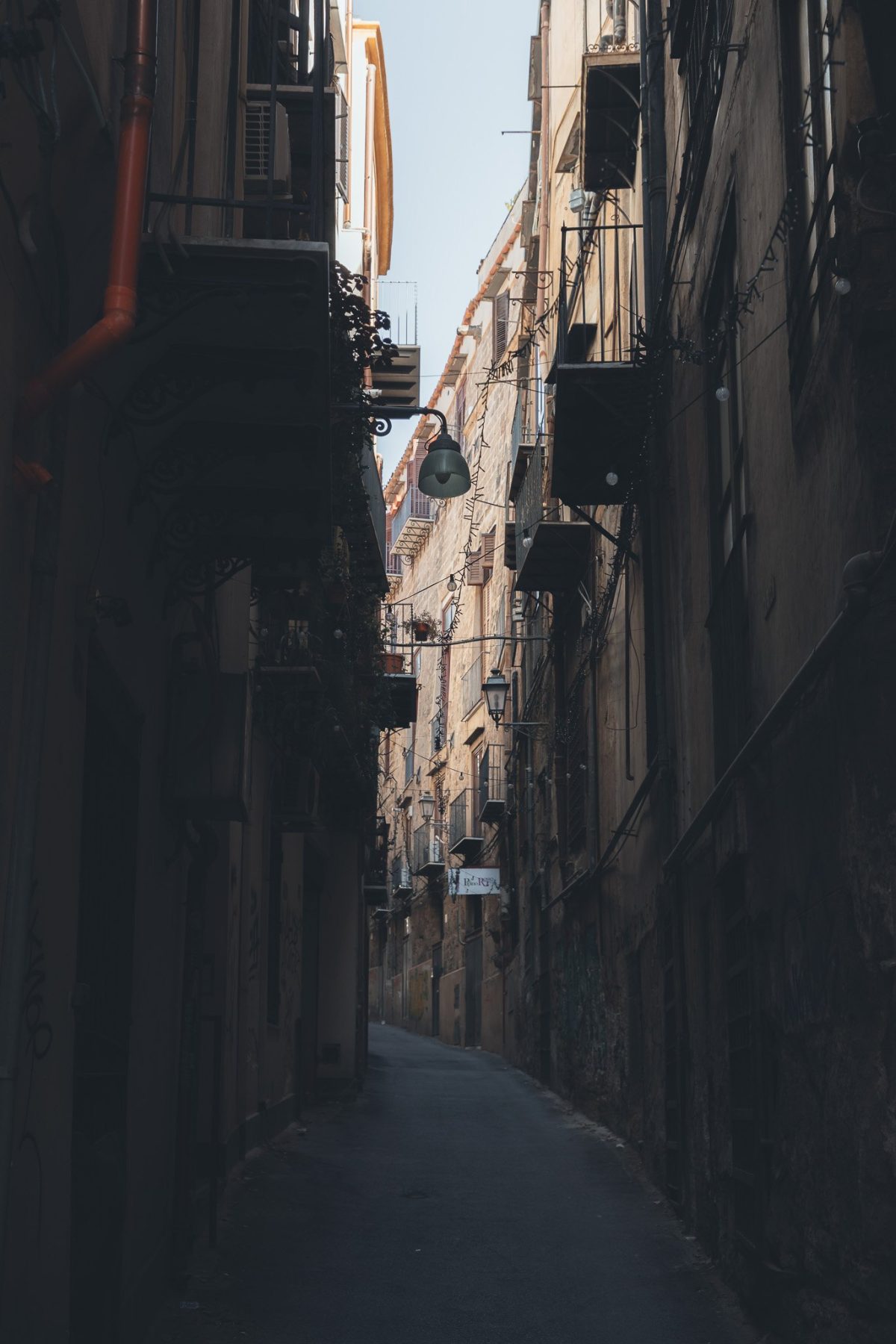
The Ballarò market — named, by one account, for the Arab traders of Bal-har who established it — operates every morning in the streets of the Albergheria quarter southwest of the Palazzo dei Normanni. It is the oldest continuously operating market in Palermo and one of the oldest in Europe. The produce is seasonal and local: artichokes, blood oranges, fennel, cactus pears, the small and intensely flavoured Sicilian tomatoes; the fish stalls extend down towards the seafront. The accompanying street food — arancine from the friggitorie, panino con la milza from the cart vendors, sfincione (Sicilian pizza with onion, tomato and caciocavallo cheese) from the bakeries — makes the market simultaneously a shopping destination and a breakfast venue. The Vucciria, once Palermo’s most famous market, has largely given way to a nightlife and bar district but retains the physical character of its medieval layout; the Capo market, north of the Cathedral, is the most authentic of the three for food shopping.
The Quattro Canti — officially the Piazza Vigliena — is the Baroque intersection at the exact centre of historic Palermo, where the two main streets (the Cassaro and Via Maqueda) cross. Each of the four concave corner buildings carries, in three tiers, a fountain, the statue of a season and the statue of one of Palermo’s patron saints. Built between 1608 and 1620 under Spanish viceregal administration, it represents the imposition of Counter-Reformation Baroque order on the medieval street plan below it. The Teatro Massimo, five minutes north on Via Maqueda, opened in 1897 after 22 years of construction — the longest-running construction project in Italian opera house history — and is the largest opera house in Italy, seating 3,200. Its neoclassical façade, with its wide steps and bronze lions, was used for the assassination scene at the end of The Godfather Part III; the theatre acknowledges this with an equanimity that suggests they have been asked about it many times.
The Capuchin monks began mummifying their dead in 1599 as a display of spiritual conquest over mortality. By the time the practice ended in 1920, approximately 8,000 bodies were arranged in the corridors below their convent. The youngest is a two-year-old girl, interred in 1920, who appears to be sleeping.
The Catacombe dei Cappuccini, on the western outskirts of the historic centre, are unlike anything else in Italy and unlike almost anything else in the world. The Capuchin monks began preserving their dead in underground galleries in 1599, and the practice expanded over the following three centuries to include lay members of Palermo’s upper and middle classes, who paid for the privilege of being displayed in their finest clothing after death. Approximately 8,000 bodies are arranged in alcoves, on shelves and in corridors, organised by profession — priests, monks, married women, unmarried women, children, professionals, virgins — and dressed as they were in life. The mummification process dried and preserved them in varying degrees; the range from complete skeletal remains to near-intact facial features is part of what makes the catacombs so disorienting. The visit is sombre, extraordinary and not appropriate for all visitors, but for those who can approach it with equanimity, it is one of the most singular experiences in southern Italy.
Sicilian Food — The Arab Kitchen That Never Left
Sicilian cuisine is the most complex and historically layered in Italy — a direct inheritance from the Arab, Norman, Greek and Spanish kitchens that succeeded each other on the island over two millennia
Sicilian cooking is the most historically layered cuisine in Italy, carrying direct traces of every civilisation that held the island: the Greeks brought the olive and the vine; the Arabs introduced sugar cane, citrus, almonds, saffron, pine nuts, raisins, rice and the technique of combining sweet and savoury; the Spanish brought chocolate, tomatoes and peppers from the New World; and the Norman and Bourbon courts added their own preferences on top of all of it. The result is a cuisine that is simultaneously more North African and more Spanish than it is mainland Italian, and that is most fully expressed in Palermo, where the street food culture has maintained these traditions with the conservative fidelity that comes from poverty and pride in equal measure. The combination of ingredients in Palermo’s most characteristic dishes — saffron, pine nuts, currants, wild fennel, sardines — maps directly onto the Arab kitchen of a thousand years ago.
Arancine (or arancinò, in eastern Sicily, where the debate is treated as an identity question) are deep-fried rice balls, formed around a filling of ragù with peas and mozzarella, coated in breadcrumbs and fried to a deep golden crust. The rice itself is flavoured with saffron — the Arab spice again — and the result is a complete, hot, handheld meal available from friggitorie and bars throughout the city from early morning. Pane ca’ meusa — the spleen sandwich — is Palermo’s most confrontational street food: sliced veal spleen and lung, boiled and then fried in lard, served in a soft roll (vastedda) either schietto (plain, with lemon) or maritato (married, with caciocavallo cheese and ricotta). The tradition is Jewish in origin — it developed in the Jewish quarter of medieval Palermo, where butchers who were not permitted to sell certain meats found buyers among the poor for the organ cuts — and has been absorbed so completely into Palermitan street food culture that its origins are rarely discussed at the cart.
Pasta con le sarde — pasta with fresh sardines, wild fennel, pine nuts, raisins and saffron — is the dish that most completely encodes the Arab-Sicilian kitchen. Every element except the pasta was on the island before the Normans arrived.
Pasta con le sarde is the most Sicilian of pastas: bucatini or spaghetti with fresh sardines, wild fennel (gathered from the fields), pine nuts, raisins, saffron and breadcrumbs toasted in olive oil (which Sicilians call muddica atturrata and use as a substitute for grated cheese — a practice that dates from the years when cheese was too expensive for the poor). The dish requires fresh sardines and fresh wild fennel; neither is negotiable. Cannoli — the fried pastry shells filled with sweetened ricotta, often with candied citron or chocolate chips — are the most internationally recognised Sicilian pastry, and the gap between a freshly made Palermitan cannolo and its international imitators is not a matter of degree but of category. The shell must be fried that morning; the ricotta must be sheep’s milk; the filling must be added at the last possible moment to prevent the shell absorbing moisture. Granita — a half-frozen fruit ice served with a soft brioche for dipping — is Palermo’s preferred breakfast, particularly in summer: mulberry, almond, coffee, jasmine, pistachio, all served at the bar in tall glasses at 8am.
«Palermo is a city that has been absorbing civilisations for three thousand years and has given up trying to resolve them into a single identity. The Arab ceiling and the Byzantine mosaics in the same Norman chapel are not a compromise or an eccentricity; they are the product of a court that understood that the greatest things are made when traditions borrow from each other without hierarchy. The arancina fried in the same market where Arab merchants traded, the spleen sandwich descended from the medieval Jewish quarter, the granita eaten at 8am with a brioche for dipping — all of it connects, if you know where to look, to a particular moment in the 12th century when Palermo was the most sophisticated city in the Western world and its kings spoke six languages. The gold in the Palatine Chapel still reflects it.»
More in the same area
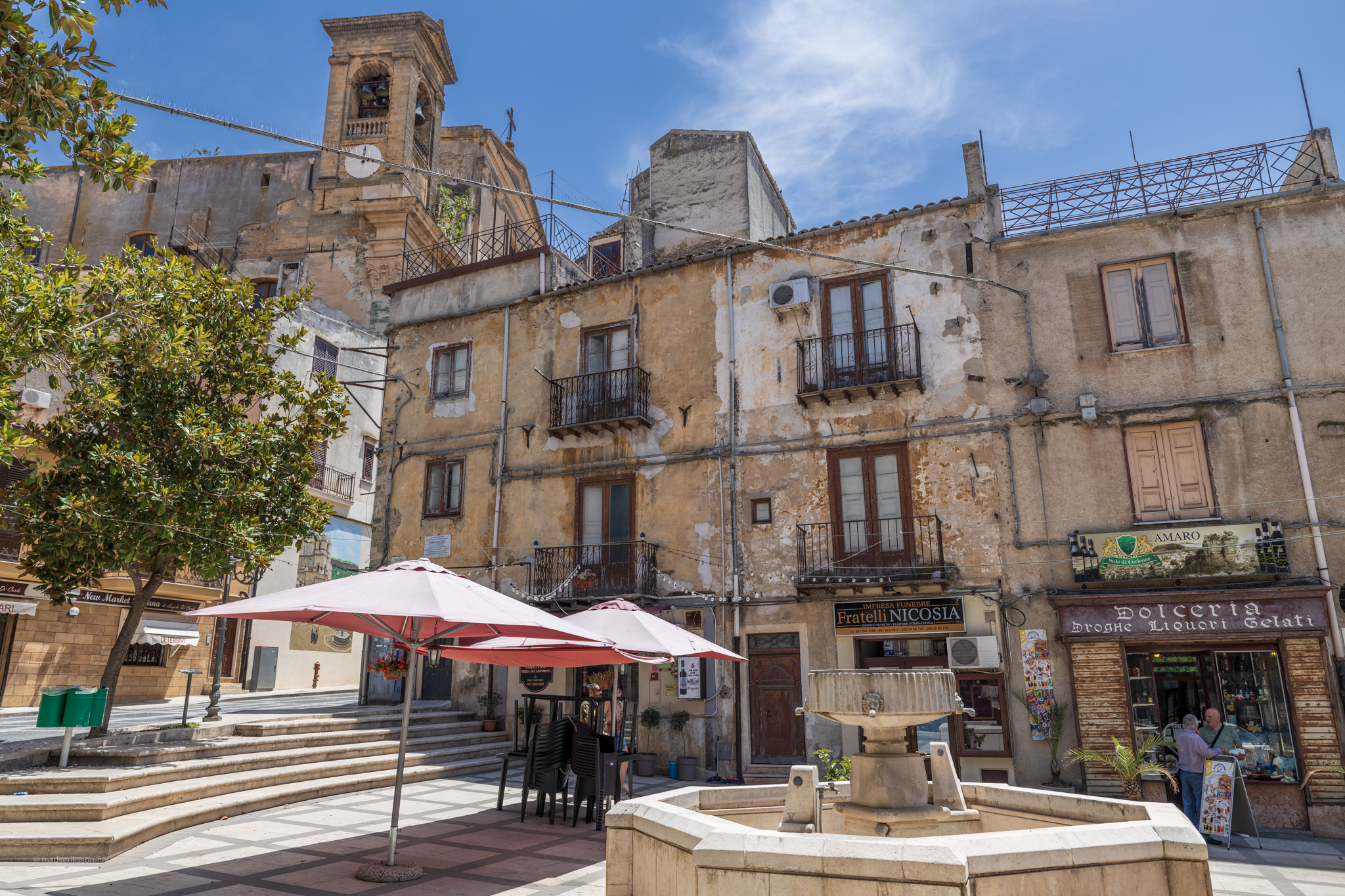 CitiesCorleone: Beyond the Godfather — History, Anti-Mafia and the Ficuzza Forest
 CitiesRagusa: The Baroque Town That Was Rebuilt Twice
 ArchitecturePisa — The Leaning Tower, the Square of Miracles and the City on the Arno
 CitiesExploring the Enchanting City of Venice
 CitiesMilan: A Fashionable and Cultural Hub in Italy
 CitiesSan Marino — The Republic on the Rock, Its Towers and Its Captains Regent
City Frames · scroll-driven 3D
More cities in three dimensions
54 city guides open with a model built from open map data. Scroll, and the camera moves from landmark to landmark.
Departures · City Frames
Where to next?
| Time | Destination | Country | Status |
|---|
Live · position of the sun
Golden hour, right now
The low, warm light just after sunrise and just before sunset. These are the cities on the site where it is happening at this moment.