On the night of 11 January 1693 an earthquake levelled south-eastern Sicily. In Ragusa it killed around 5,000 people — half the town. What happened next is why Ragusa is worth the journey: the survivors could not agree where to rebuild, so they built twice. The aristocracy stayed on the old ridge and raised Ragusa Ibla on its medieval street plan; the merchants laid out a new grid town on the plateau above. Two Baroque cities grew up within sight of each other, joined by a stairway of more than 300 steps, and in 2002 both became part of the UNESCO World Heritage Site of the Late Baroque Towns of the Val di Noto.

Ragusa lies in the far south-east of Sicily, on the limestone uplands of the Monti Iblei, at the heart of a province of stone walls, carob trees and dairy farms. With some 74,000 inhabitants it is a provincial capital and one of the larger towns of the island, yet it feels like two separate places. Ragusa Superiore, the upper town, is a planned 18th-century city of straight streets, palaces and a cathedral built on a broad square. Ragusa Ibla, the lower town, curls around a narrow ridge to the east, a tangle of lanes, staircases and courtyards dominated by the dome of San Giorgio. A deep ravine, the Valle dei Ponti, crossed by three bridges, separates the upper town from the newer districts beyond.
For most visitors, Ibla is the destination. It holds the finest of the town’s churches and palaces, the public garden at the tip of the ridge, and the restaurants and cafés that fill its squares on summer evenings. But the walk between the two towns — down the long stairway from Santa Maria delle Scale, past palaces with carved balconies, into Ibla — is the best introduction to how Ragusa was rebuilt, and why. The town is also known well beyond Sicily as one of the main filming locations for the television series Inspector Montalbano, which has brought a steady stream of visitors to its streets.
How to approach Ragusa
This guide covers Ragusa in three parts: the earthquake of 1693 and the upper town that rose after it, from the cathedral of San Giovanni Battista to the stairway down to Ibla; Ragusa Ibla itself, with the Duomo di San Giorgio, its squares and palaces and the Giardino Ibleo; and the wider province around the town, from the Ragusano cheese and the bridges of the Valle dei Ponti to the castle of Donnafugata and the coast.
Ragusa in 3D
Ragusa stands on the limestone uplands of the Monti Iblei in south-eastern Sicily and has some 74,000 inhabitants. After the earthquake of 11 January 1693 it was rebuilt twice: as a new grid town on the plateau, Ragusa Superiore, and on the medieval ridge to the east, Ragusa Ibla. Both belong to the UNESCO World Heritage Site of the Late Baroque Towns of the Val di Noto, inscribed in 2002.
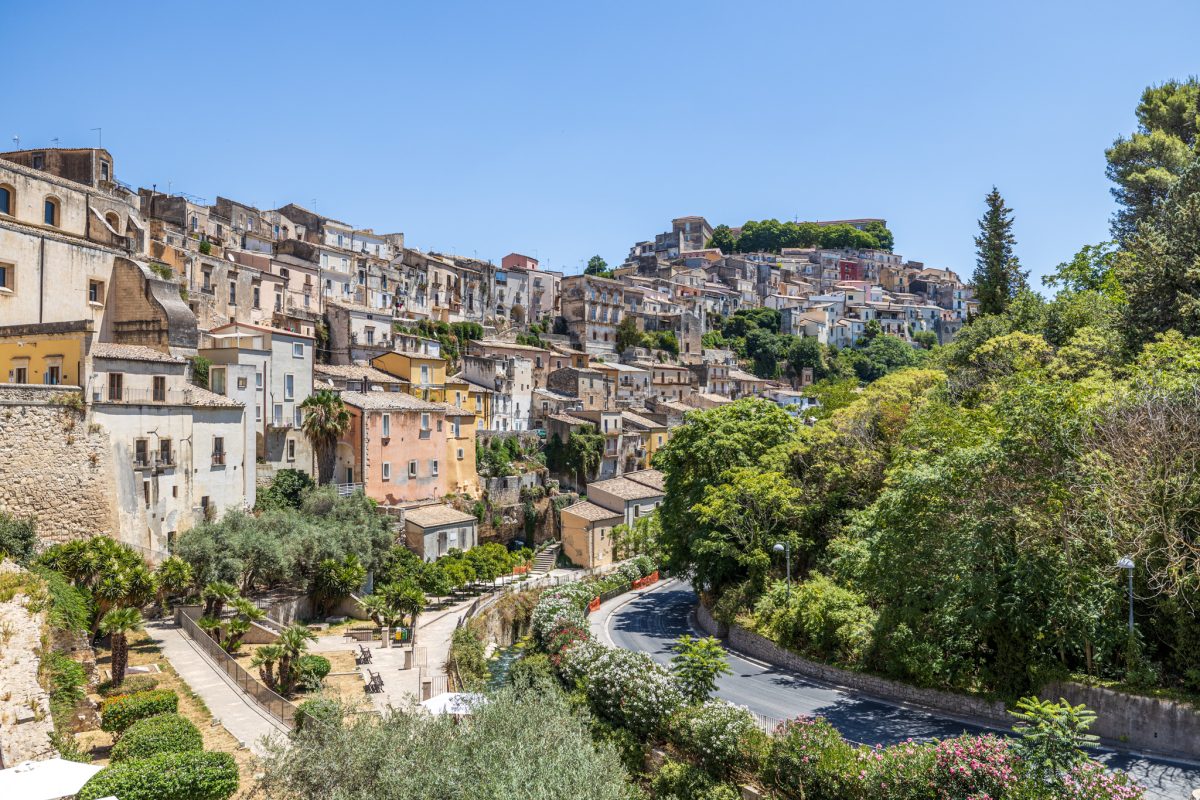
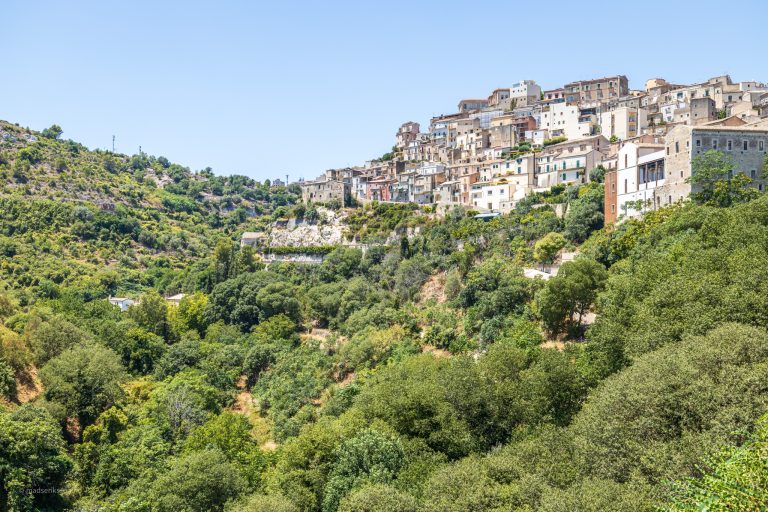
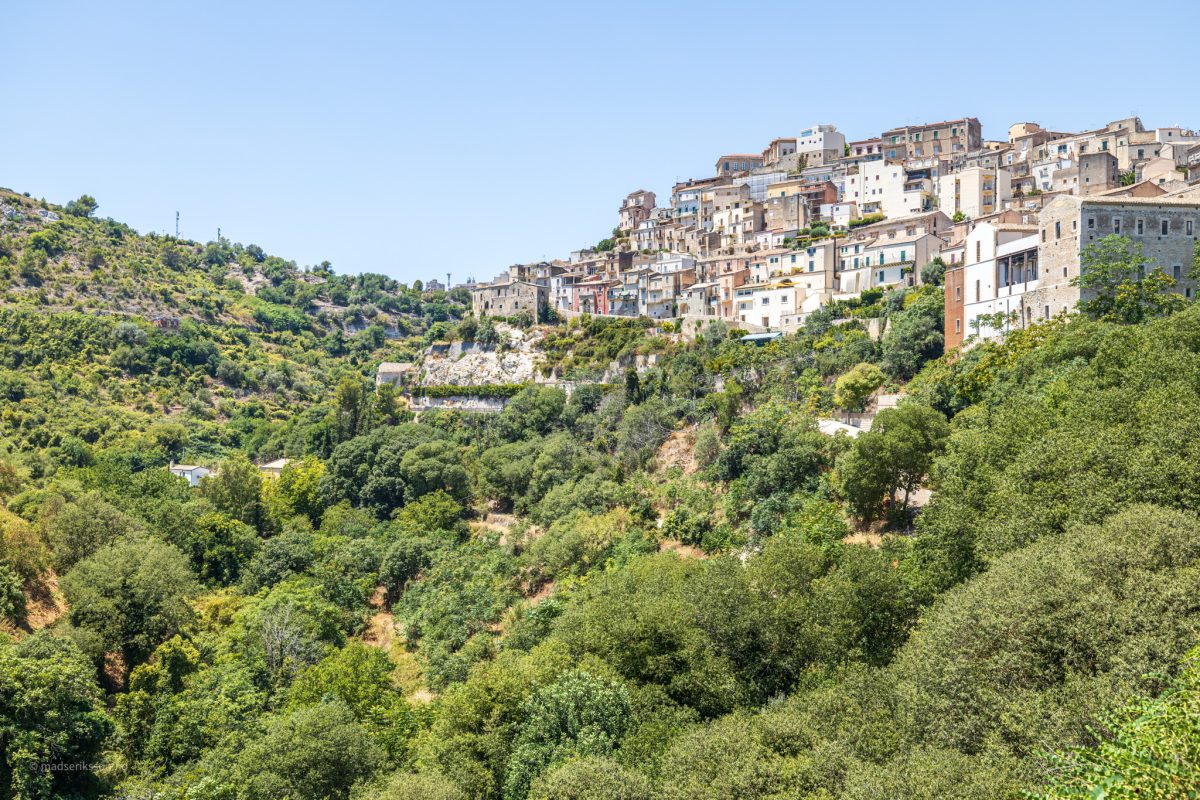
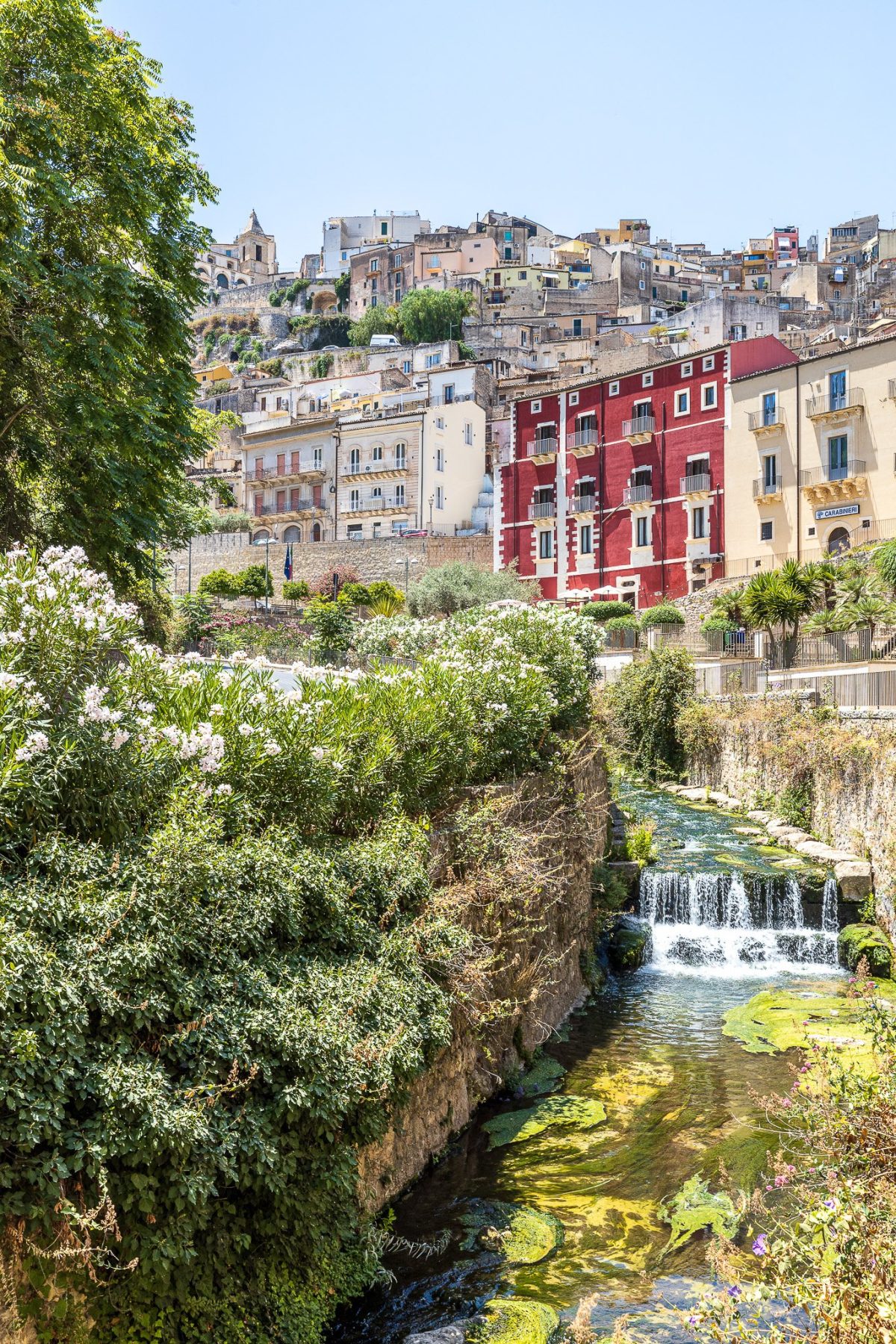
Ragusa’s old houses crowning a ridge above a deep wooded ravine
The upper town and its cathedral
The new town was laid out on a regular grid after 1693 around the church of San Giovanni Battista, whose present building was begun in 1718 under two master builders from Acireale; its dome followed in 1783. It became the cathedral of the new diocese of Ragusa in 1950. The two towns were separate municipalities from 1866 to 1926 and were reunited when Ragusa became a provincial capital in 1927.
The Valle dei Ponti
South of the upper town, a deep ravine is crossed by three bridges: the Ponte dei Cappuccini of 1843, the Ponte Nuovo of 1937 and the Ponte Papa Giovanni XXIII of 1964. The town also grew rich from its rock: an asphalt deposit found in 1838 was mined by British and French companies into the 20th century.
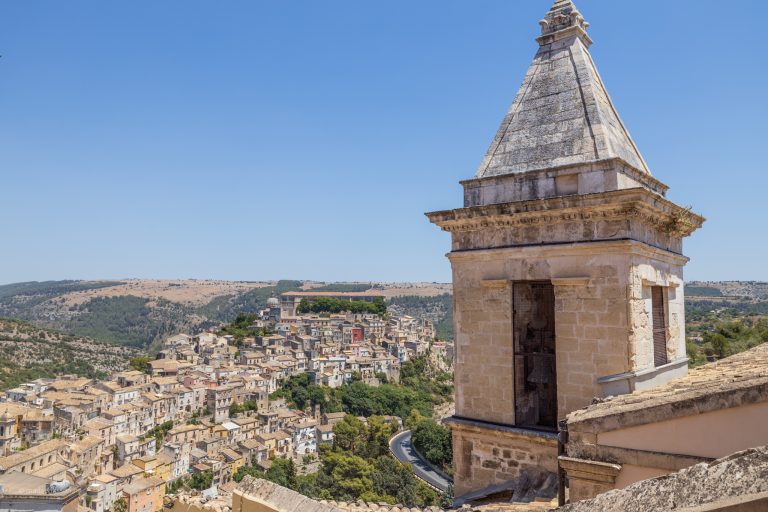
Santa Maria delle Scale and the stairway
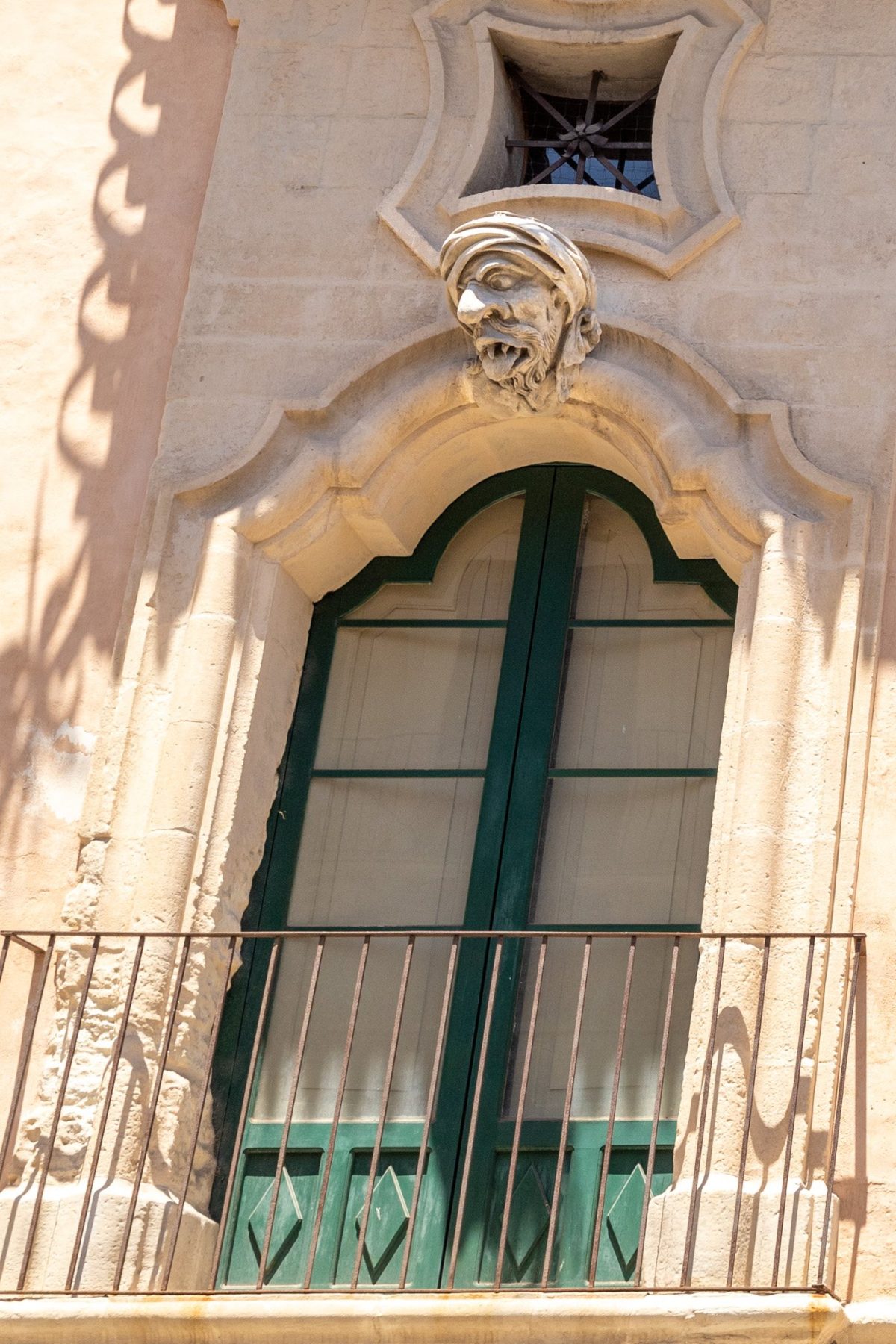
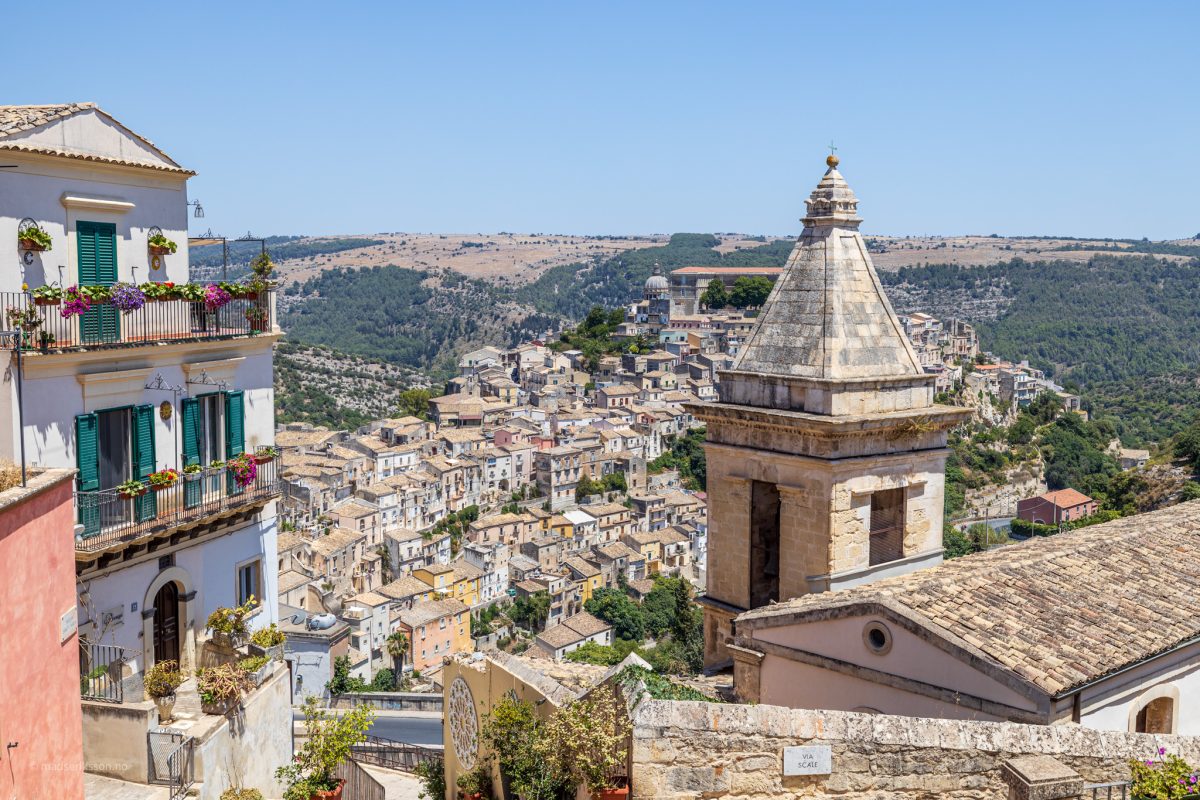
From Santa Maria delle Scale at the eastern edge of the upper town, a stairway of more than 300 steps drops towards Ibla, with the dome of San Giorgio on the ridge below. On the way down, the 18th-century Palazzo Cosentini rests its balconies on carved stone corbels of grotesque faces, musicians and tavern scenes, and the stairs come out at the church of the Purgatorio, at the entrance to Ibla.
Duomo di San Giorgio
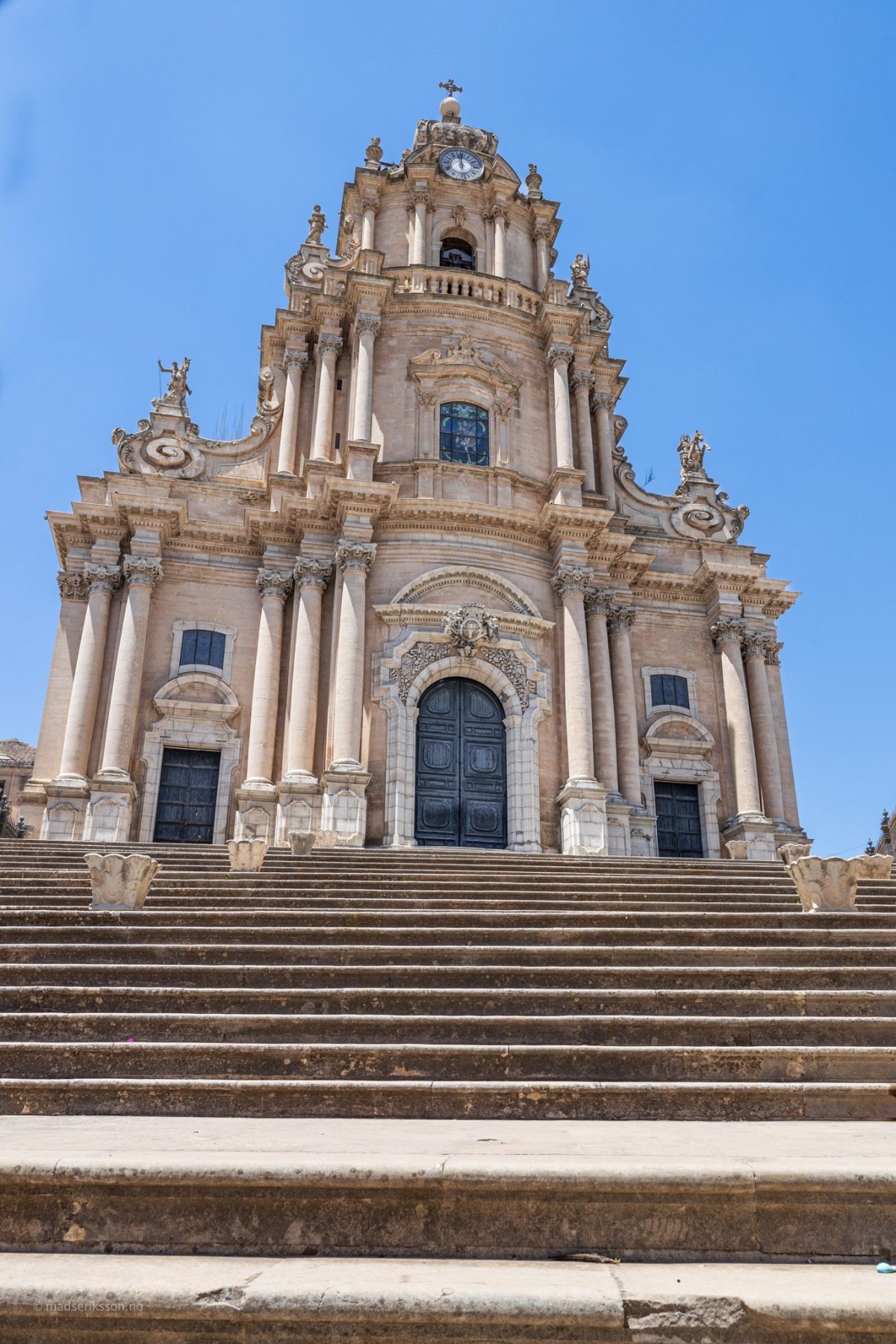
Rosario Gagliardi of Noto designed San Giorgio, whose first stone was laid in 1739 and whose tower-like façade was completed in 1775. He set the church at an angle to the long, sloping square below, so that it is seen obliquely on the climb, and the neoclassical dome added in 1820 rises just over 40 m above the street.
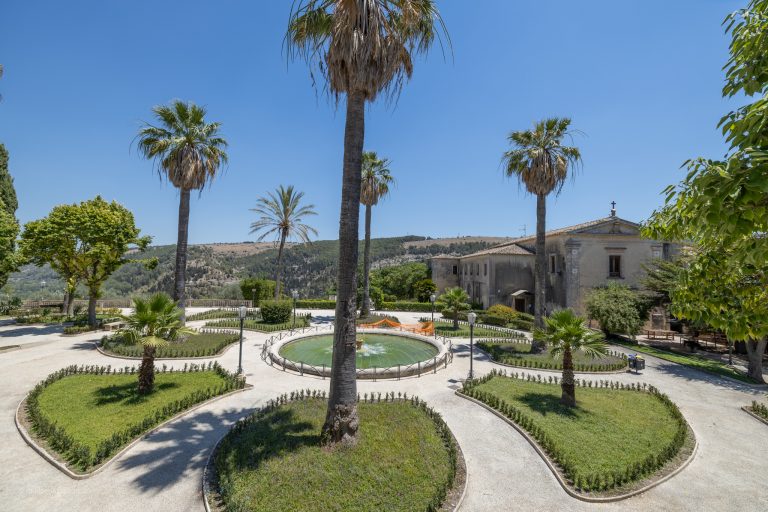
Giardino Ibleo
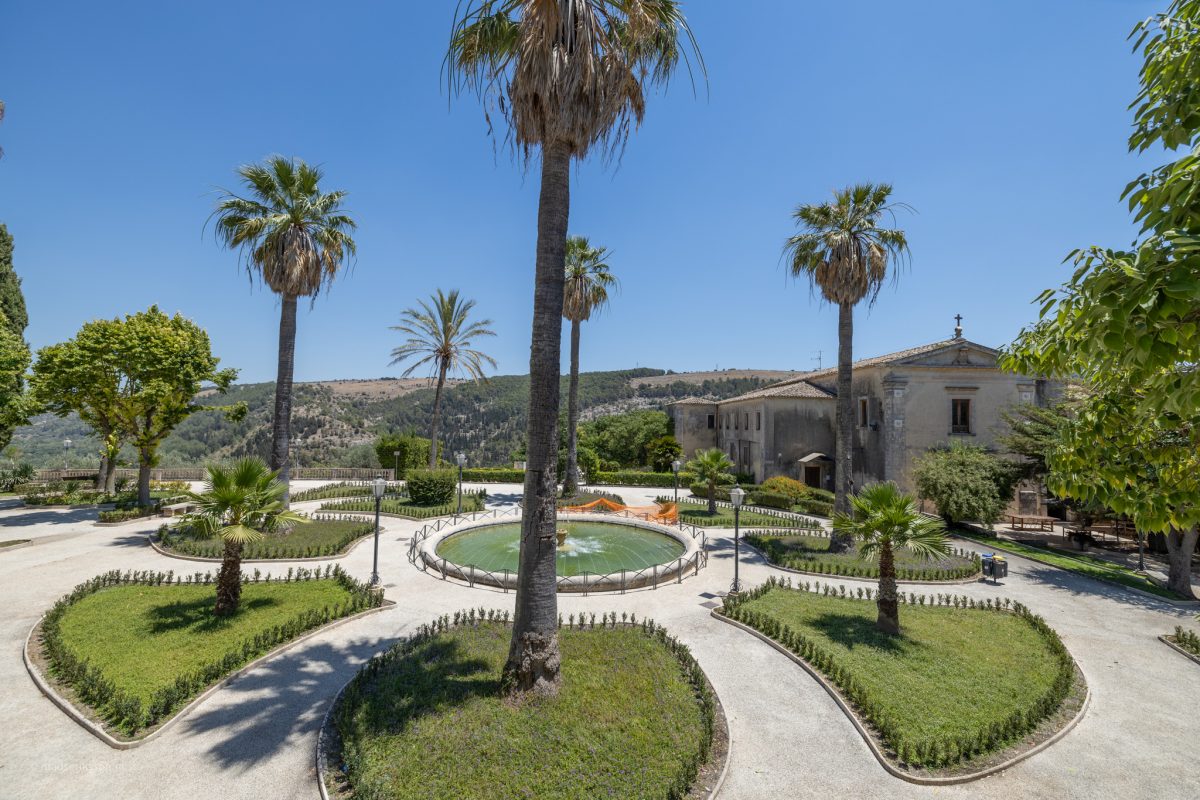
The public garden at the eastern tip of the ridge was laid out in 1858, about 385 m above sea level, and looks out over the valley of the Irminio. Three churches stand within it, and just outside the gate the Gothic Portale di San Giorgio is all that survived of the medieval church of San Giorgio after the earthquake of 1693.
Palms and flower beds around a fountain in the Giardino Ibleo, Ragusa Ibla
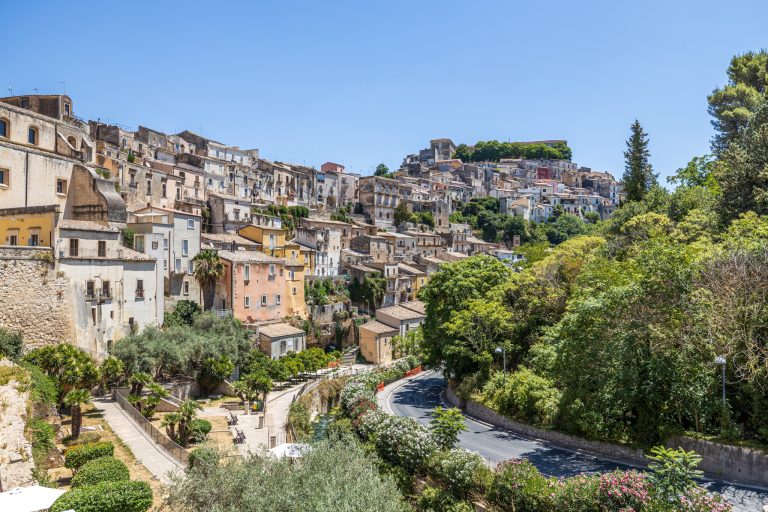
The old town on the ridge
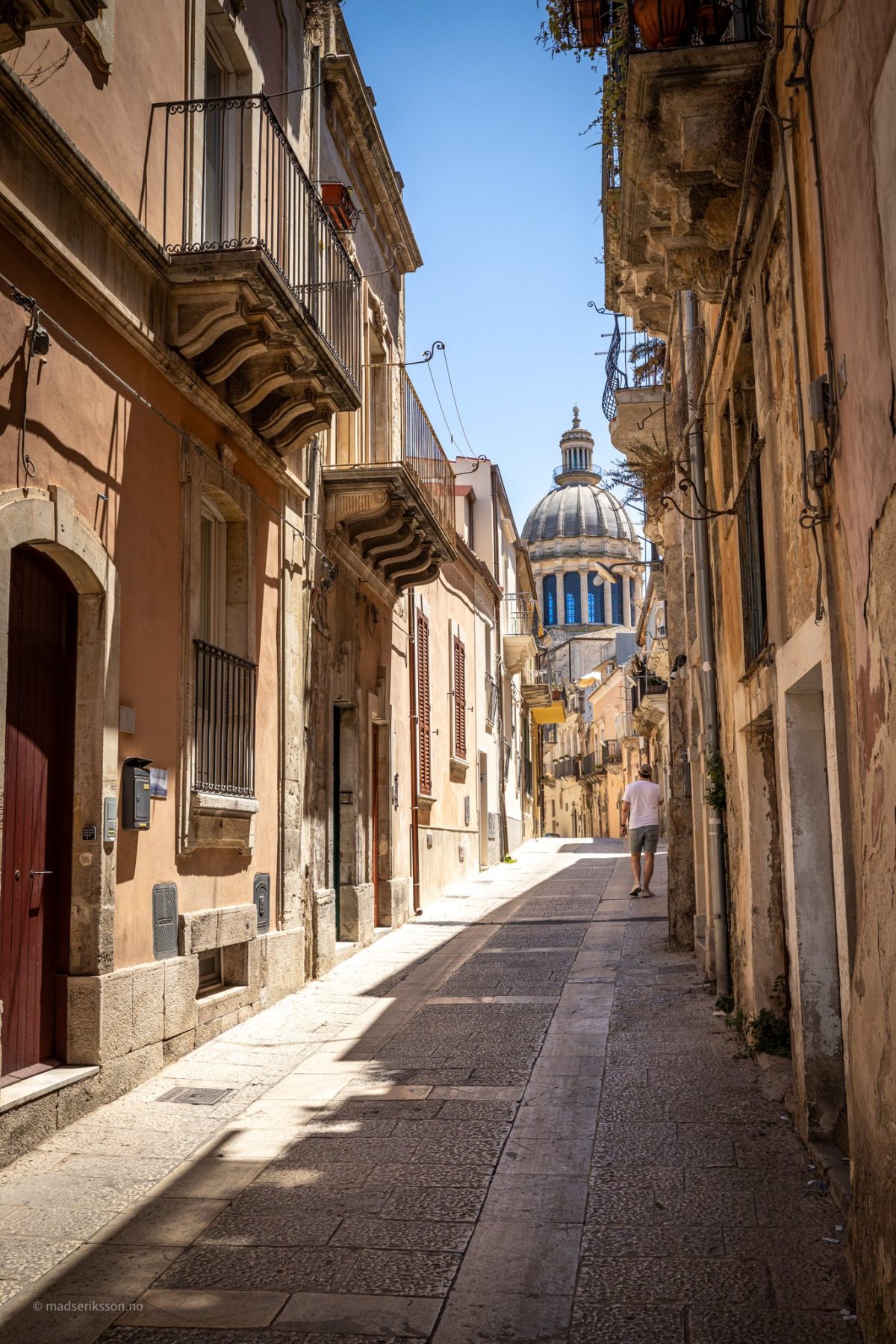
Ibla was rebuilt on its medieval street plan by the nobility, who chose to stay on the old ridge rather than move to the new town on the plateau. More than fifty churches and a line of palaces follow its main route from Piazza della Repubblica past San Giorgio to the garden, and its streets were one of the main filming locations of the television series Inspector Montalbano.
Houses of Ragusa climbing the hillside above a winding road and gardens
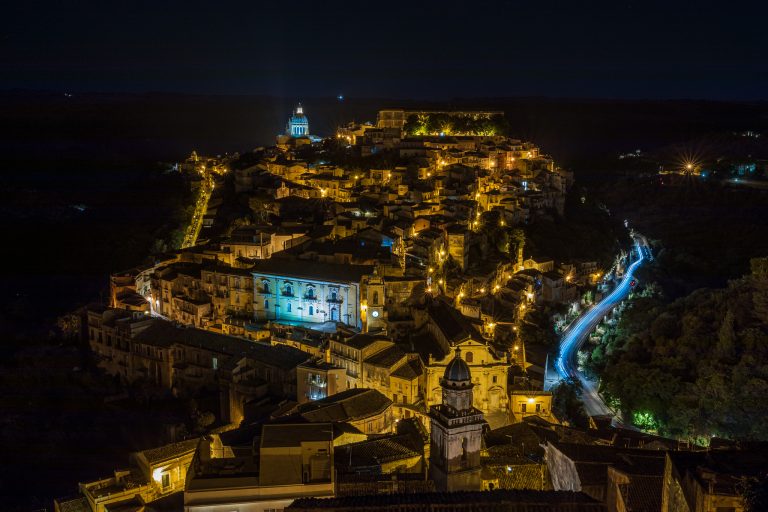
Ibla at night
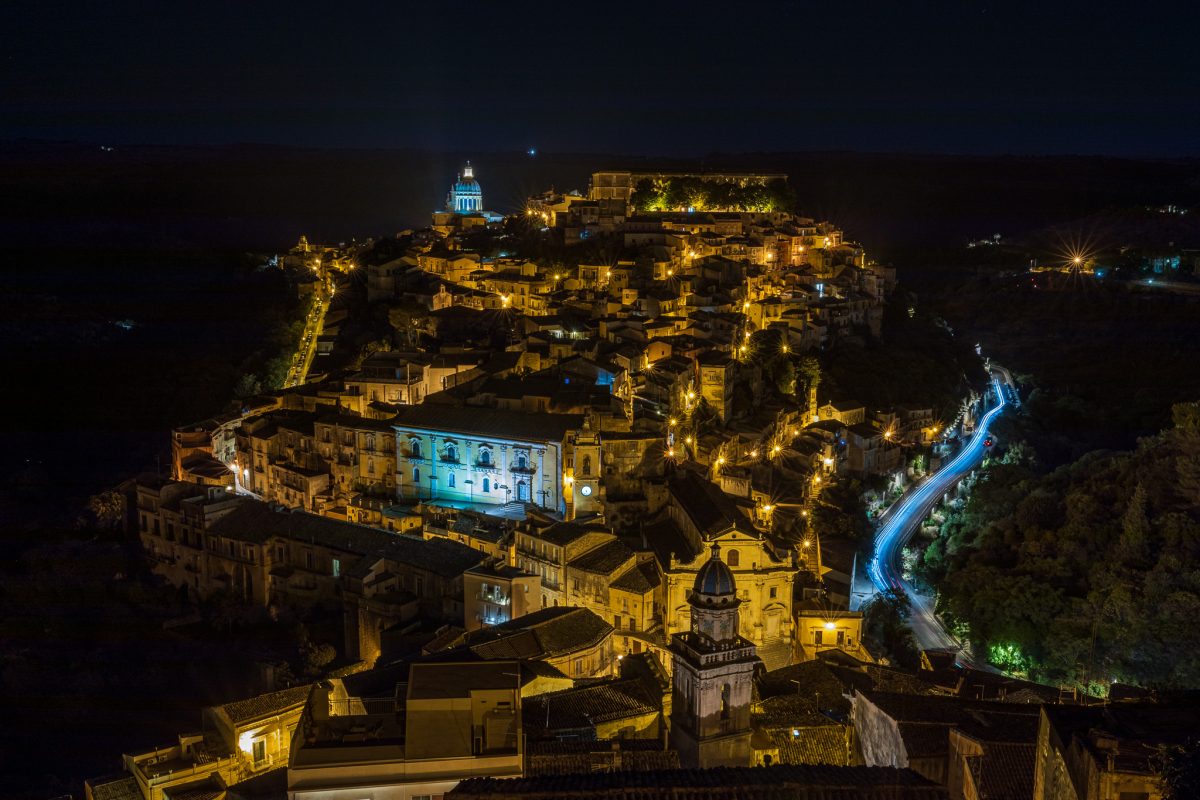
After dark, floodlights pick out San Giorgio and the stone façades of Ibla on its ridge, best seen from the terraces and the stairway of the upper town. The rivalry between the two halves of the town lives on in their feasts: San Giorgio in Ibla in the last week of May, and San Giovanni in the upper town on 29 August.
Ragusa Ibla lit up at night, with the dome of San Giorgio on the ridge
3D model © 2026 madseriksson.no · Photographs © madseriksson.no. Buildings and heights: © OpenStreetMap contributors (ODbL), via OpenMapTiles. Ground imagery: Sentinel-2 cloudless 2023 by EOX IT Services GmbH (contains modified Copernicus Sentinel data 2023; CC BY 4.0). Heights are approximate where OpenStreetMap has no measured value; sun positions are approximate.
Rebuilt Twice — The Earthquake and the New Town on the Hill
How a disaster split one town in two, and how to walk from the planned streets of the upper town down the stairway into Ibla
A damaging foreshock struck on 9 January 1693; the main shock came two days later, at around nine in the evening, and destroyed dozens of towns across the south-east of Sicily. In Ragusa about half the population died. The reconstruction exposed an old division. The nobility wanted to rebuild on the ridge where the medieval town had stood, around the ruins of the church of San Giorgio; the rising merchant and professional families preferred to start again on the open plateau to the west, around the church of San Giovanni Battista. Both did. The old town was rebuilt on its medieval street plan as Ibla, and a new town was laid out on a regular grid above it. Rivalry between the two, and between the devotees of their two patron saints, lasted for centuries: they were formally separate municipalities from 1866 to 1926, and only reunited when Ragusa was made a provincial capital in 1927.
The heart of Ragusa Superiore is the Cattedrale di San Giovanni Battista. A first church on the new site was finished in 1694, a year after the earthquake, but was soon too small; the present building was begun in 1718 under two master builders from Acireale, and its dome was added in 1783. It stands on a raised terrace above a wide square, with a monumental Baroque portal and a long, calm façade, and became the cathedral of the new diocese of Ragusa in 1950. The feast of San Giovanni on 29 August is the upper town’s great day. Around it, the streets of the upper town are lined with 18th- and 19th-century palaces and shops, and the archaeological museum, by the Ponte Nuovo, gathers finds from across the province, from Sicel settlements to the Greek colony of Kamarina.
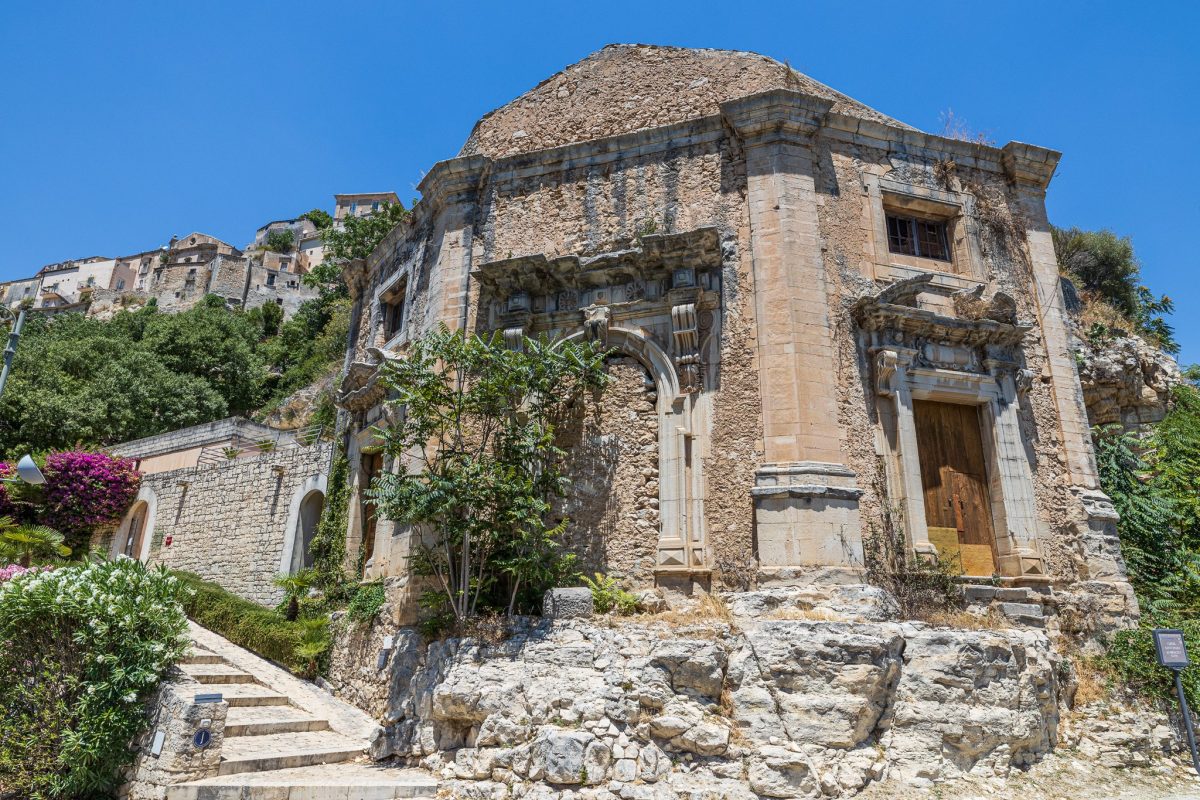
The best way into Ibla is on foot. From Santa Maria delle Scale, at the eastern edge of the upper town, a stairway of more than 300 steps drops steeply towards the old town, with Ibla and the dome of San Giorgio spread out on the ridge below.
Santa Maria delle Scale is itself a piece of both towns’ history: a Gothic church built by Cistercian monks in the 13th century, partly damaged in 1693 and rebuilt in Baroque style in the 18th century, so that Gothic and Baroque elements survive side by side. Below it, the stairs and lanes pass the Palazzo Nicastro, the old chancery of 1760, and the church of Santa Maria dell’Itria on the Salita Commendatore. At the meeting of the Salita Commendatore and the Strada di San Rocco stands the Palazzo Cosentini, an 18th-century palace whose balconies rest on carved stone corbels: grotesque faces, musicians, tavern scenes and figures some believe to be caricatures of the family that built it. The stairs come out at the church of the Purgatorio and the Piazza della Repubblica, at the entrance to Ibla.
Ragusa Ibla — Gagliardi’s Masterpiece and the Old Ridge
The tower-front church that gives the old town its skyline, the squares and palaces around it, and the garden at the end of the ridge
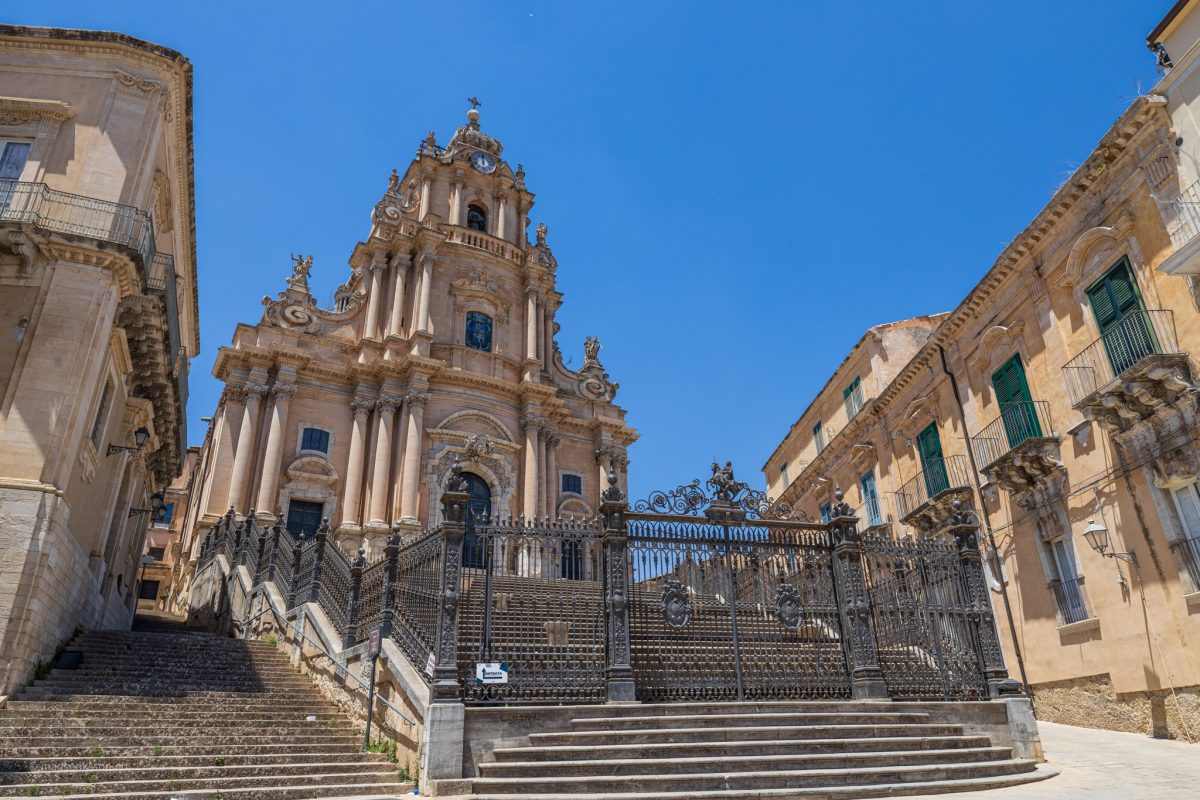
The Duomo di San Giorgio is one of the great buildings of the Sicilian Baroque. Rosario Gagliardi, the architect from Noto who shaped much of the rebuilding of the Val di Noto, was commissioned in 1738; the first stone was laid in June 1739, work began in earnest in 1744, and the façade was completed in October 1775, when the bells were hoisted. Gagliardi designed a tower façade, with the bell tower built into the front and crowned by an onion-shaped cusp, its centre curving gently outward between free-standing columns. He also turned the church at a slight angle to the long sloping square below it, so that it is seen obliquely as one climbs towards it, and so that the dome would show behind the façade. The church stands at the top of a high flight of steps, behind a wrought-iron railing added in 1890.
The neoclassical dome, double-shelled and raised on two rows of columns, was added in 1820. It is traditionally credited to the local master builder Carmelo Cultraro, though recent archival research points to the architect Stefano Ittar. Inside, a cycle of stained-glass windows tells the last days of St George, and the main doors carry six carved panels of his martyrdom, made in 1793. The feast of San Giorgio, in the last week of May, is Ibla’s great festival.
Ibla is built along a narrow ridge, and its more than fifty churches and its palaces line a single route that runs from the Piazza della Repubblica past San Giorgio to the garden at its eastern tip.
The Piazza Duomo below San Giorgio is the centre of Ibla’s life, lined with cafés and with palaces such as the Palazzo La Rocca, built between 1760 and 1780 with seven balconies on carved Baroque corbels. Beyond it, the street continues past the church of San Giuseppe, with a façade sometimes attributed to Gagliardi, and the Palazzo Zacco, to the Giardino Ibleo. The public garden was laid out in 1858 on a spur of rock at the end of the ridge, around 385 metres above sea level, and looks out over the valley of the Irminio. Within it stand three churches — San Vincenzo Ferreri, San Giacomo and the Cappuccini — and at its entrance is the Portale di San Giorgio, the 15th-century Catalan Gothic doorway that is the only surviving part of the old church of San Giorgio destroyed in 1693. It is the most direct reminder in the town of what Ibla looked like before the earthquake.
Around Ragusa — Bridges, Cheese and a Castle in the Countryside
The ravine that divides the modern city, the stone-walled farmland that produces Ragusano, and the villa, towns and coast within a short drive
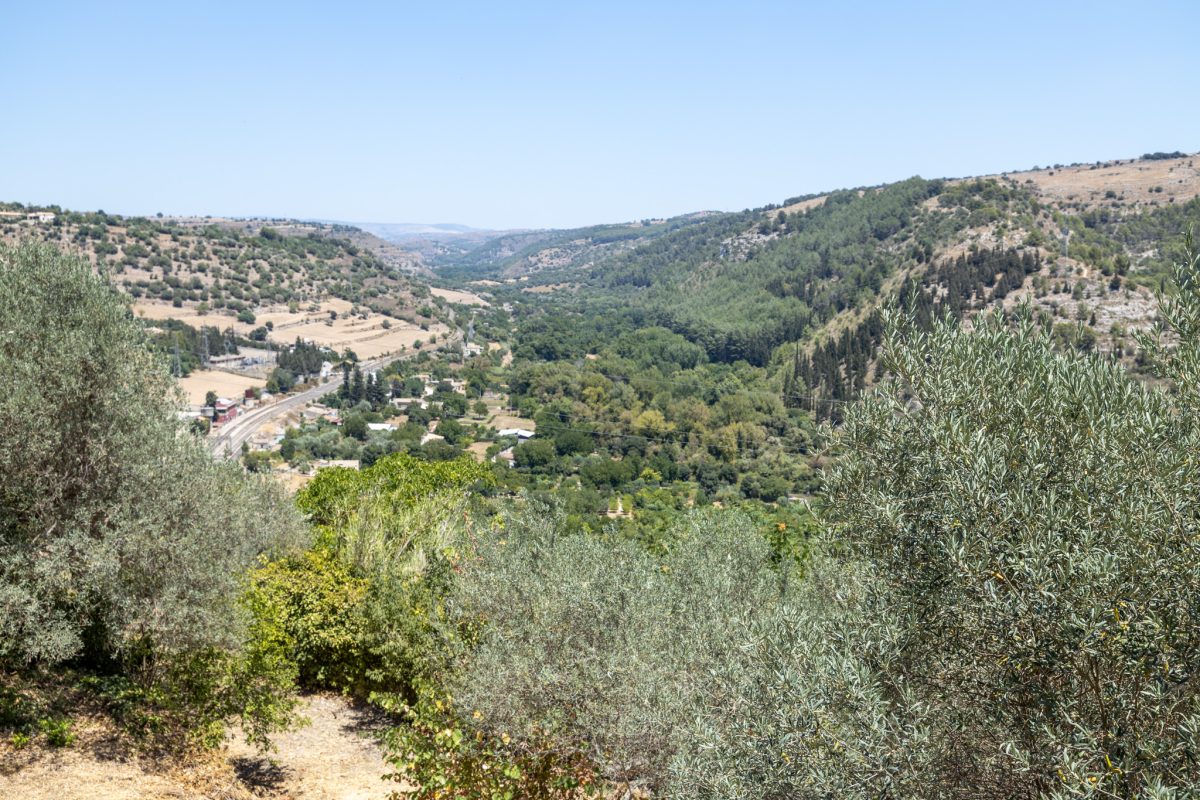
The upper town is cut off from the newer districts to the south by the Valle dei Ponti, a deep ravine that gave Ragusa the nickname of the city of bridges. Three cross it: the Ponte dei Cappuccini or Ponte Vecchio of 1843, the Ponte Nuovo of 1937 and the Ponte Papa Giovanni XXIII of 1964. Standing on the Ponte Nuovo, with the gorge below and the houses of the upper town stacked along its edge, is one of the best ways to understand how the town clings to its limestone. Ragusa’s wealth came partly from that rock: an asphalt deposit was discovered in 1838, and in the late 19th and early 20th centuries British and French companies mined rock asphalt on the town’s southern edge.
The surrounding countryside is a patchwork of dry-stone walls, pasture and carob trees, and it produces Sicily’s most prized cheese. Ragusano is a stretched-curd cheese made from the raw milk of Modicana cows, a rare local breed, shaped into large rectangular blocks of 10 to 16 kilograms and hung in pairs to mature for at least 90 days. It was protected as a designation of origin in Italy in 1955 and by the EU in 1995. It is the cheese of the Iblei uplands, and the best place to try it is in the town where it takes its name.
Around 15 kilometres south-west of the town, the Castello di Donnafugata is a 19th-century country villa built over a much older fortified house, with Neoclassical and Neo-Gothic façades and a large park, open to visitors.
Ragusa is also a natural base for the rest of the Val di Noto. Modica, less than ten kilometres to the south, and Scicli, further towards the coast, are two of the other UNESCO Baroque towns, each with its own great church on a staircase; Noto lies further east. The sea is about 20 kilometres away, at Marina di Ragusa, the town’s own seaside district on the south coast. In winter the Castello di Donnafugata opens from 09:00 to 13:00 and 14:00 to 16:00 and closes on Mondays; summer hours are longer. Fans of Inspector Montalbano will recognise many of the streets, squares and villas of the province, which have stood in for the fictional town of Vigàta for decades.
«Ragusa is two cities that grew out of a single catastrophe and a single argument — whether to rebuild on the ruins or start again on clean ground. Both sides won, and the result is a town where the history of the rebuilding can be read on foot: the straight streets of the new town, the long stairway down from Santa Maria delle Scale, the carved masks of the Palazzo Cosentini, and then Gagliardi’s San Giorgio rising at the head of its square. Go down to Ibla late in the afternoon, walk out to the Giardino Ibleo as the light falls on the valley, and come back up to the Piazza Duomo when the façade is lit.»

More in the same area
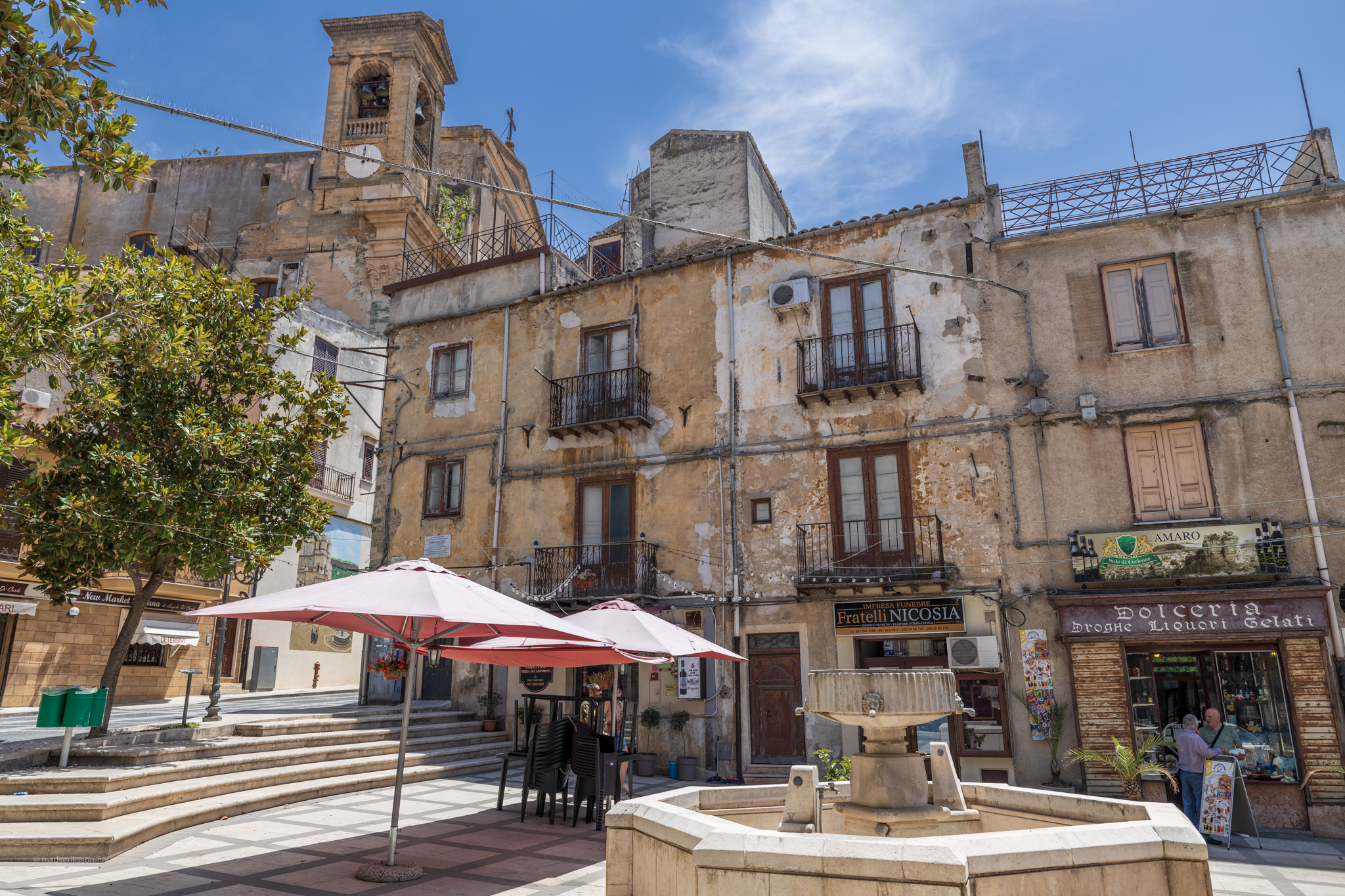 CitiesCorleone: Beyond the Godfather — History, Anti-Mafia and the Ficuzza Forest
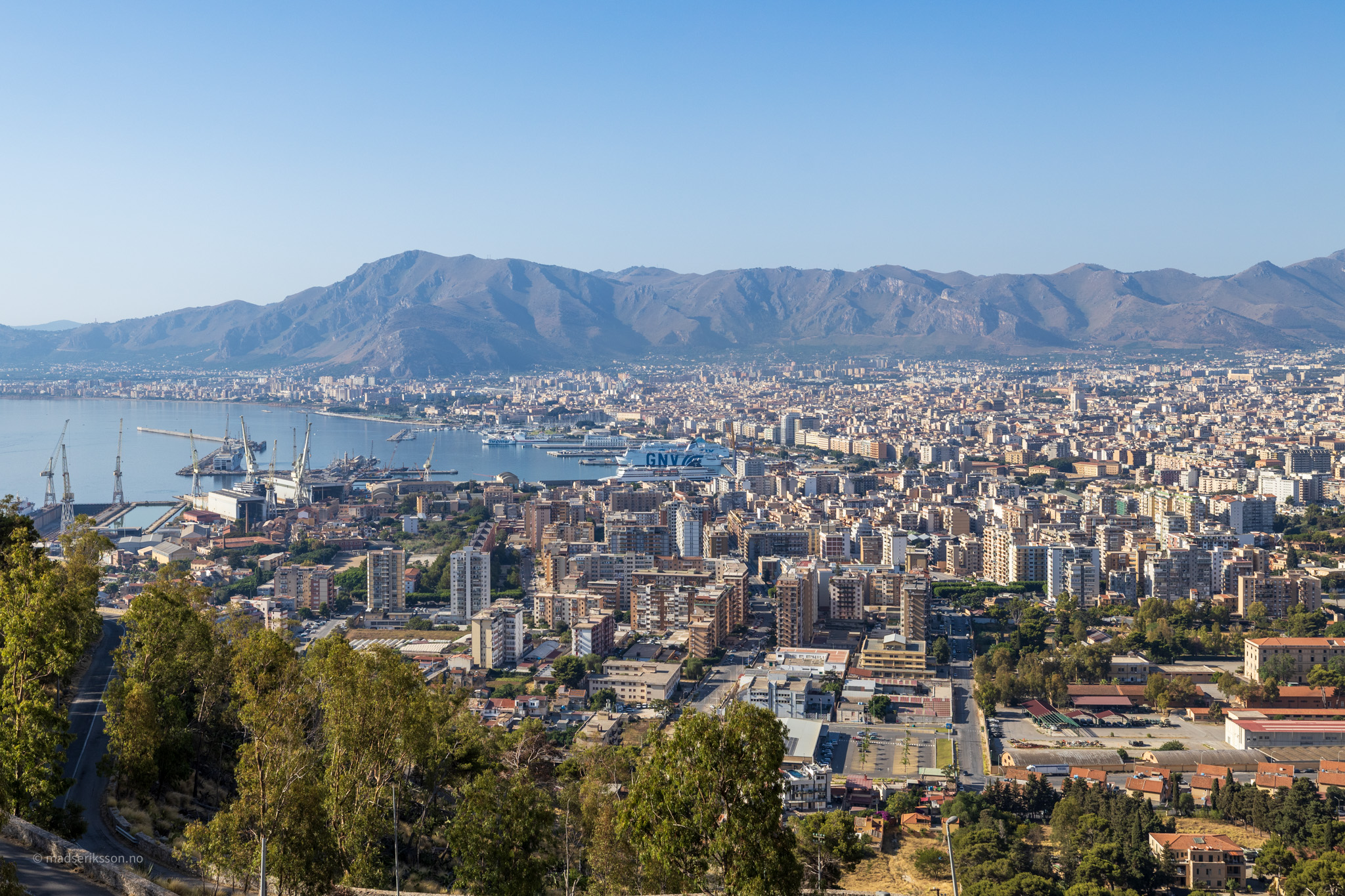 CitiesPalermo, exploring the Capital City of Sicily
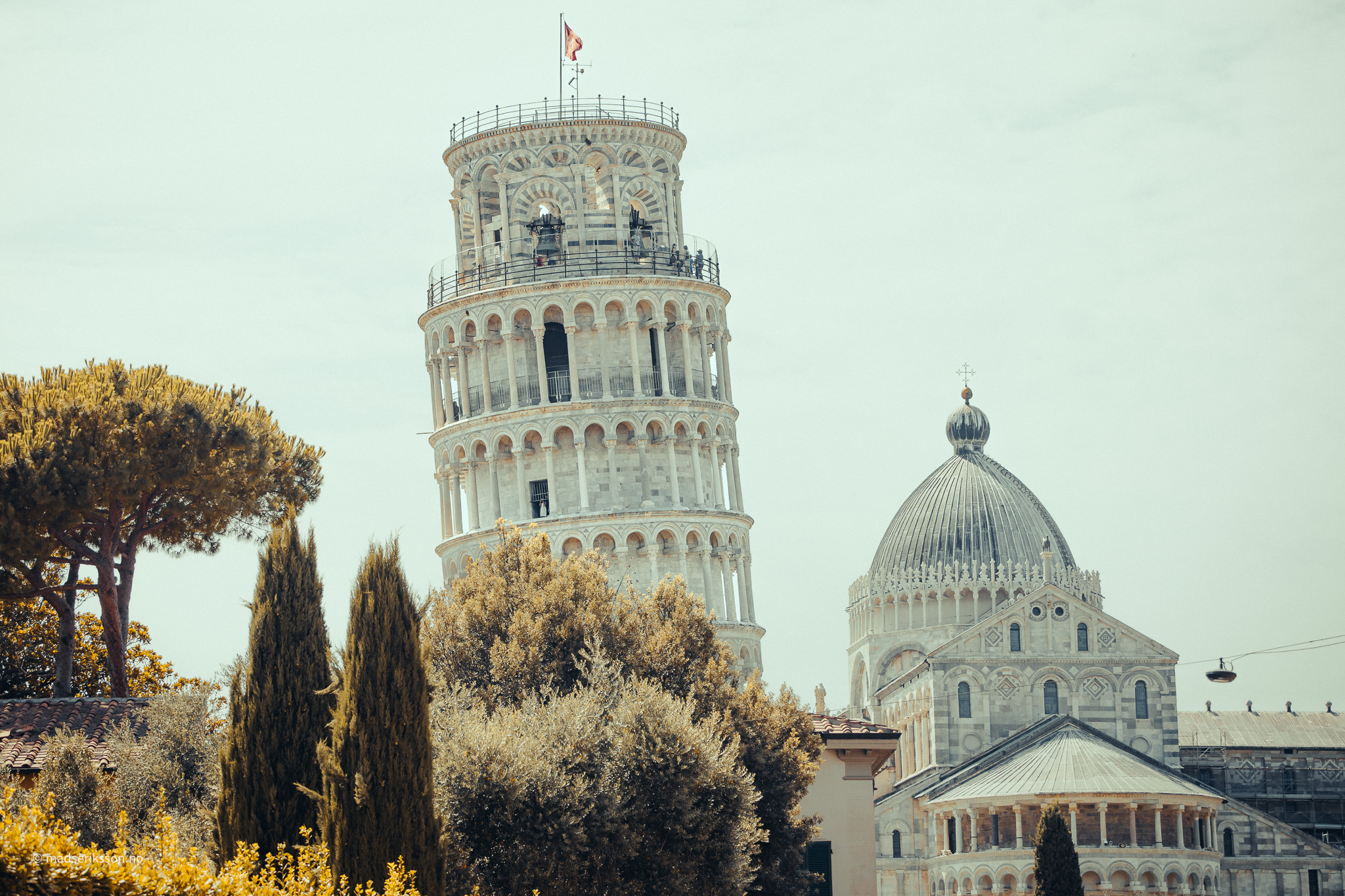 ArchitecturePisa — The Leaning Tower, the Square of Miracles and the City on the Arno
 CitiesExploring the Enchanting City of Venice
 CitiesMilan: A Fashionable and Cultural Hub in Italy
 CitiesSan Marino — The Republic on the Rock, Its Towers and Its Captains Regent
City Frames · scroll-driven 3D
More cities in three dimensions
54 city guides open with a model built from open map data. Scroll, and the camera moves from landmark to landmark.
Departures · City Frames
Where to next?
| Time | Destination | Country | Status |
|---|
Live · position of the sun
Golden hour, right now
The low, warm light just after sunrise and just before sunset. These are the cities on the site where it is happening at this moment.