Milan is the city Italy uses when it wants to be efficient. Where Rome walks through its past and Venice floats above it, Milan gets things done — it is the financial capital, the fashion capital, the design capital, and the city where Leonardo da Vinci painted the most studied work in the history of art on the wall of a refectory in a Dominican convent. The Duomo took nearly six hundred years to complete. Campari was invented here. The aperitivo was born here. The panettone was invented here. Milan has been underestimated by travellers for decades, largely because it has been very busy producing things the rest of the world consumes.

Milan was founded by the Celtic Insubres around 600 BCE and captured by the Romans in 222 BCE as Mediolanum — meaning roughly “in the middle of the plain”, a name that reflects its position in the fertile Po Valley. Under the late Roman Empire it was, briefly, one of the most important cities in the West: from 286 to 402 CE it served as the capital of the Western Roman Empire, a period during which the Emperor Theodosius issued the Edict of Milan in 313 CE, establishing religious tolerance and effectively making Christianity the dominant religion of the empire. The medieval period brought the Visconti and Sforza dynasties, who built the castle and commissioned some of the most significant art of the 15th century — including Leonardo da Vinci, who worked for Ludovico Sforza for nearly 20 years and painted The Last Supper in a Dominican refectory off the Corso Magenta.
The Milan of today is the economic engine of Italy — home to the Italian Stock Exchange, to the headquarters of the major Italian banks, to the publishing industry and to the fashion and design companies that have made “Made in Italy” a global quality mark. The city is also, for those who approach it with appropriate attention, one of the most culturally rich in Italy: the Pinacoteca di Brera holds one of the finest collections of Italian painting in the country; La Scala remains the most prestigious opera house in the world; and the Quadrilatero della Moda contains flagship architecture and retail by the greatest names in contemporary Italian and international design. Milan is not a city of monuments to the past — it is a city in full operation, producing the future.
How to approach Milan
This guide covers four aspects of Milan: the Duomo and the city centre; Leonardo da Vinci’s Last Supper and the great art collections; the fashion and design districts that make Milan unique among Italian cities; and the food culture — from risotto alla Milanese to the aperitivo along the Navigli canals. Milan rewards those who look beyond the cathedral, and punishes those who try to rush. Book The Last Supper months in advance. Wear something presentable to dinner.
Milan in 3D
Milan stands in the middle of the Po plain, and its Roman name, Mediolanum, is usually read as 'in the middle of the plain'. From 286 to 402 it was a capital of the Western Roman Empire, and today it is Italy's financial centre and home of the Italian stock exchange. This frame covers the centre from CityLife in the west to Porta Nuova and Milano Centrale in the north-east, and south to the Navigli.
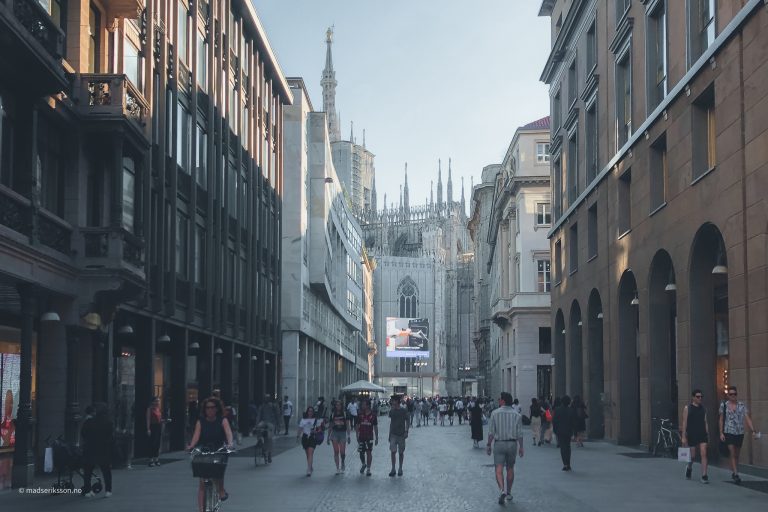
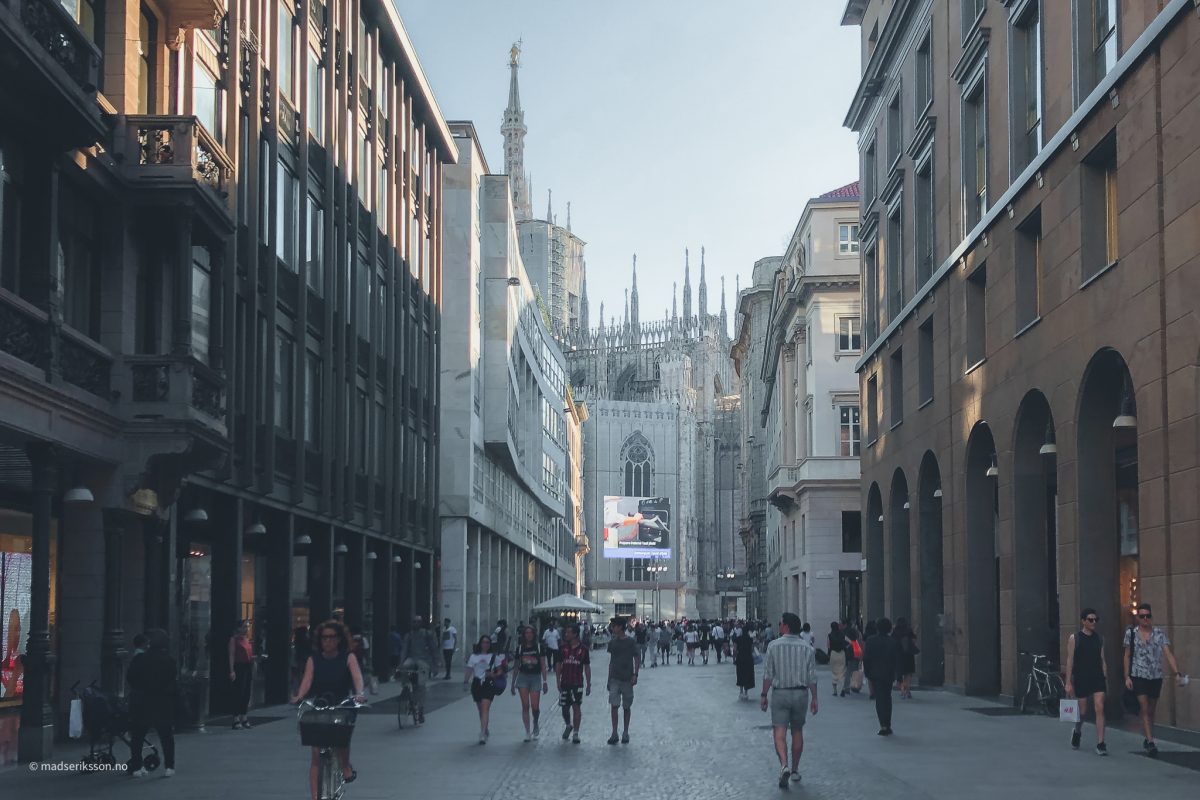
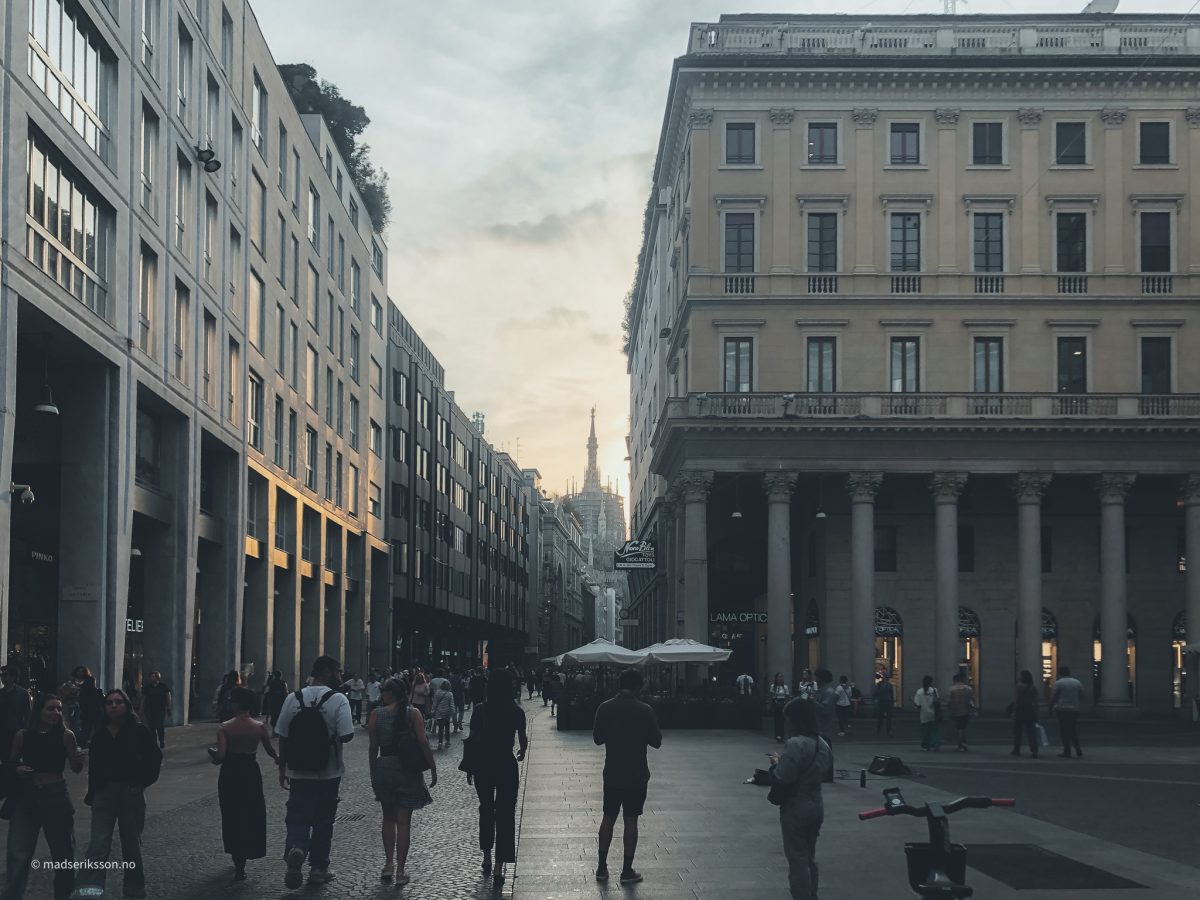
Shoppers on a pedestrian street leading towards the spires of the Duomo in central Milan
Porta Nuova and the towers
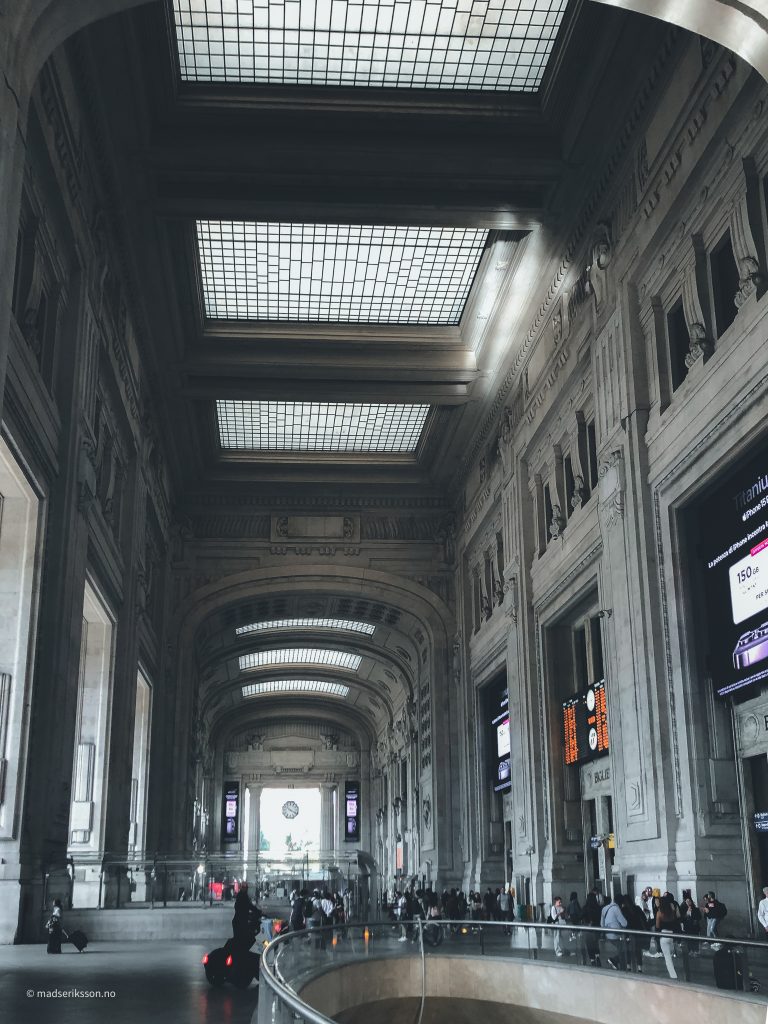
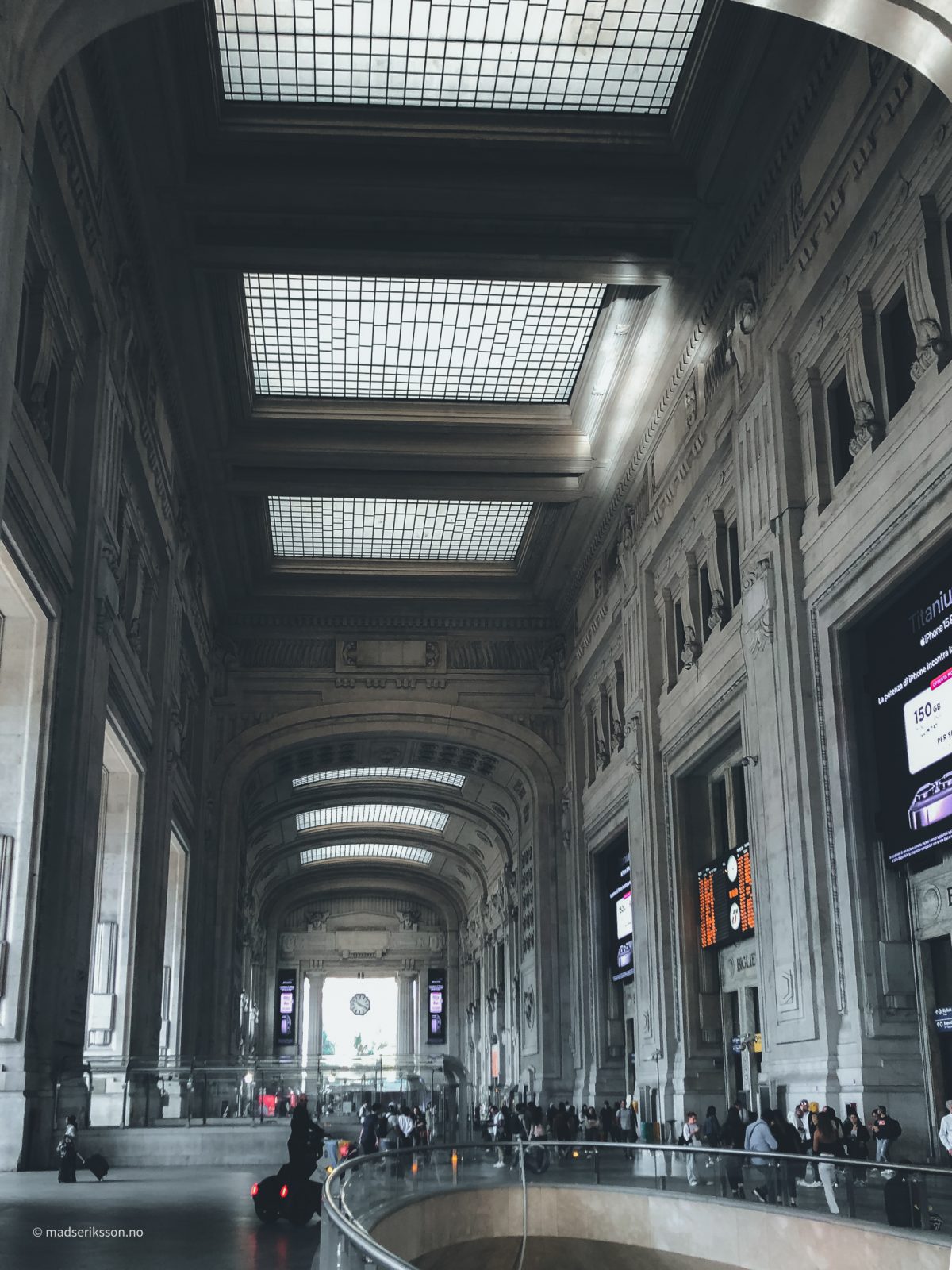
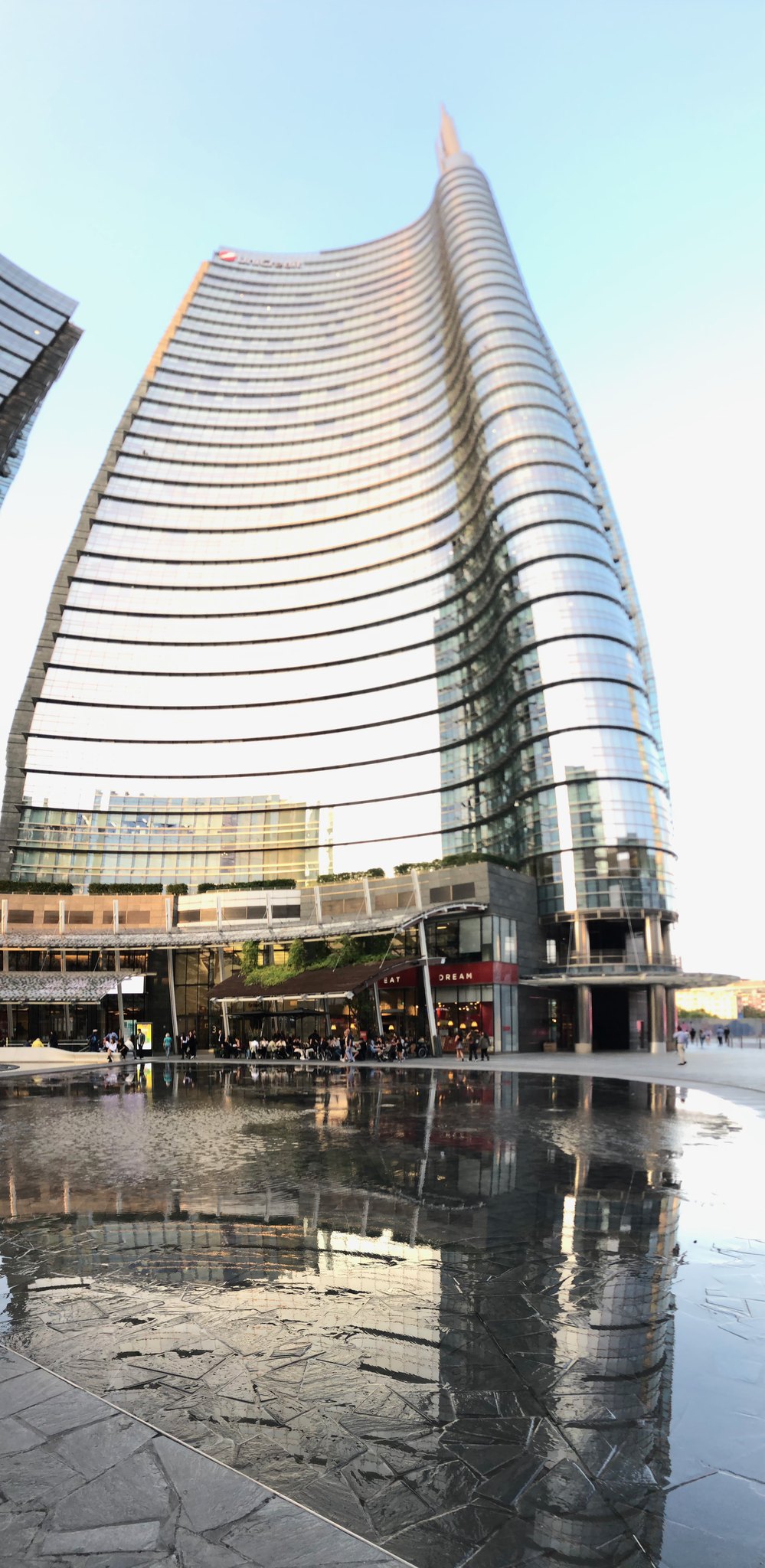
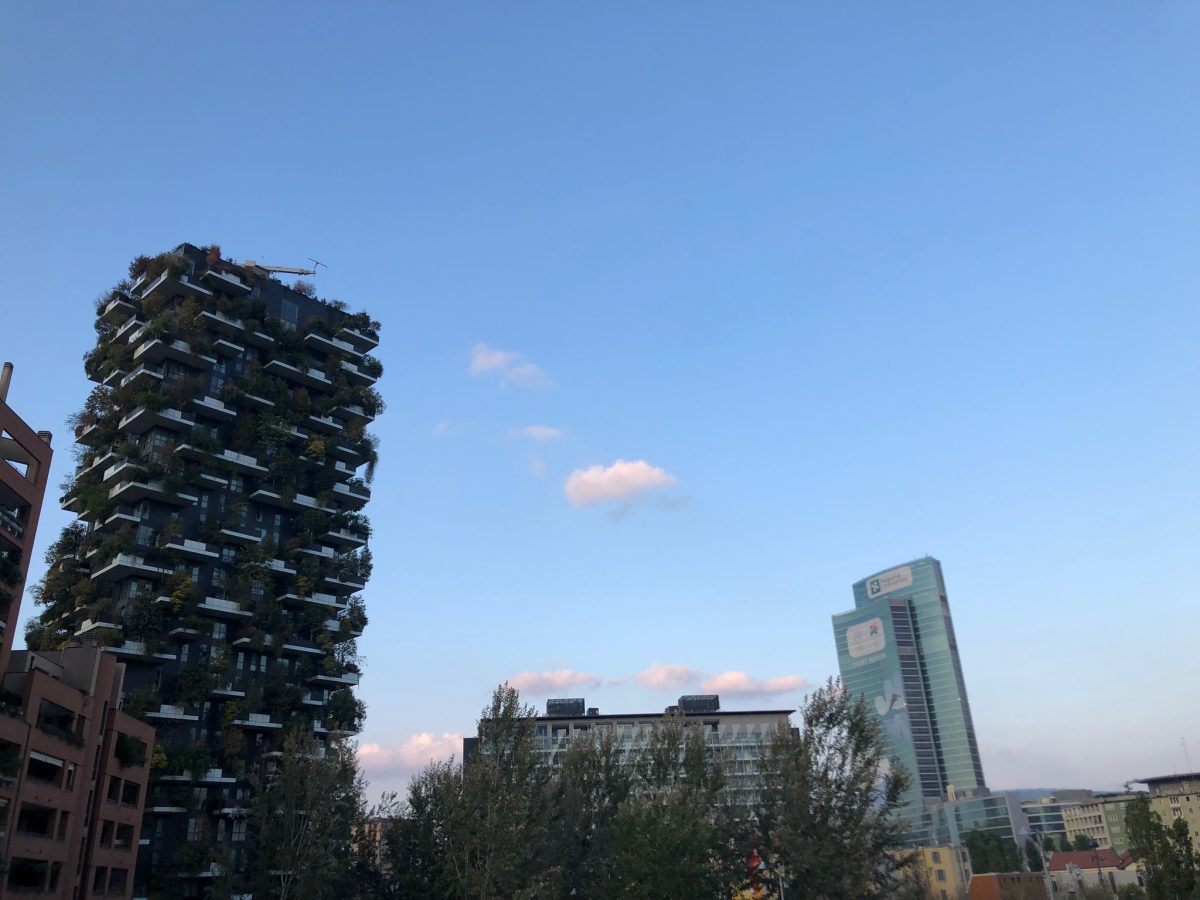
César Pelli's UniCredit Tower, completed in 2011, is the tallest building in Italy at 231 m including its spire. Beside it, Stefano Boeri's Bosco Verticale, two residential towers of about 110 m and 76 m planted with hundreds of trees, was finished in 2014. To the east rise Gio Ponti's 127 m Pirelli Tower of 1958 and the monumental Milano Centrale station, opened in 1931.
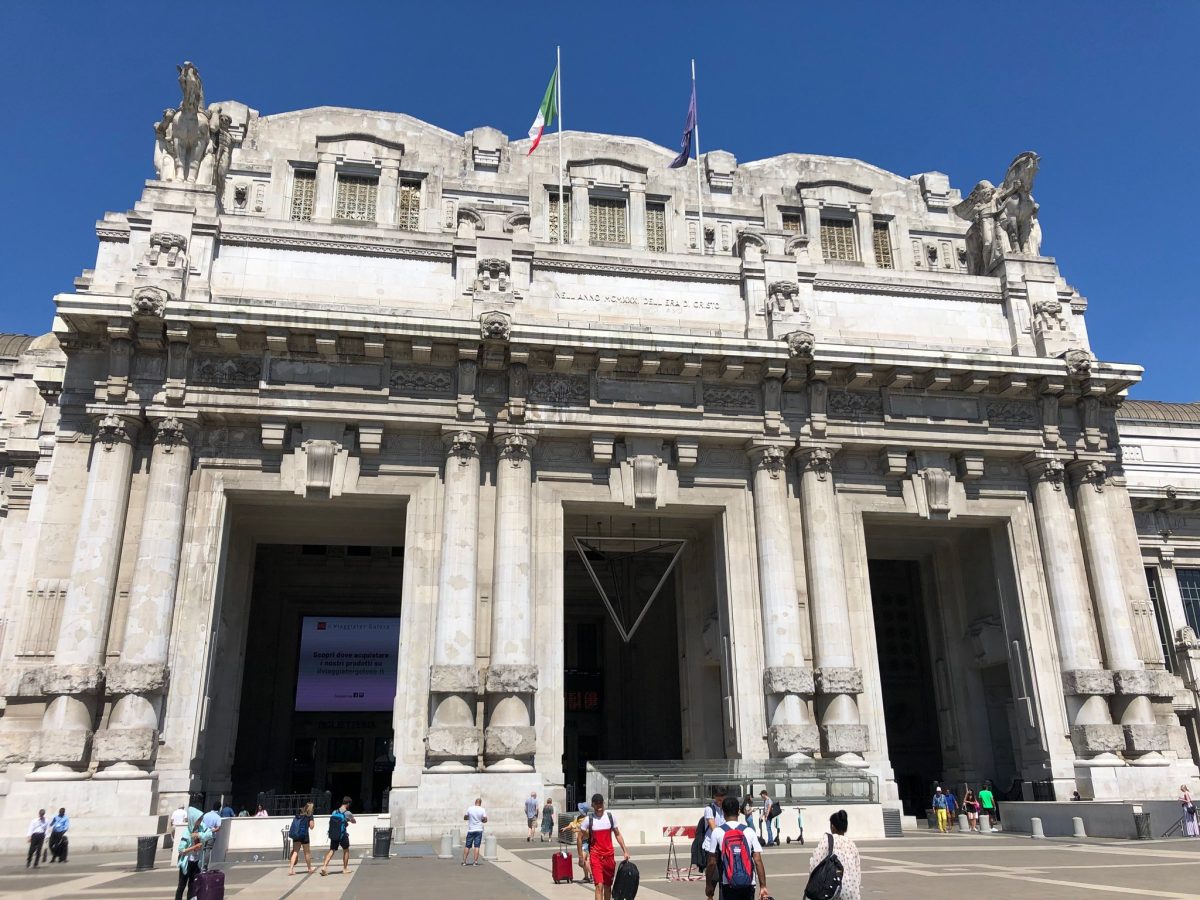
The vast marble hall of Milano Centrale, the city's monumental railway station
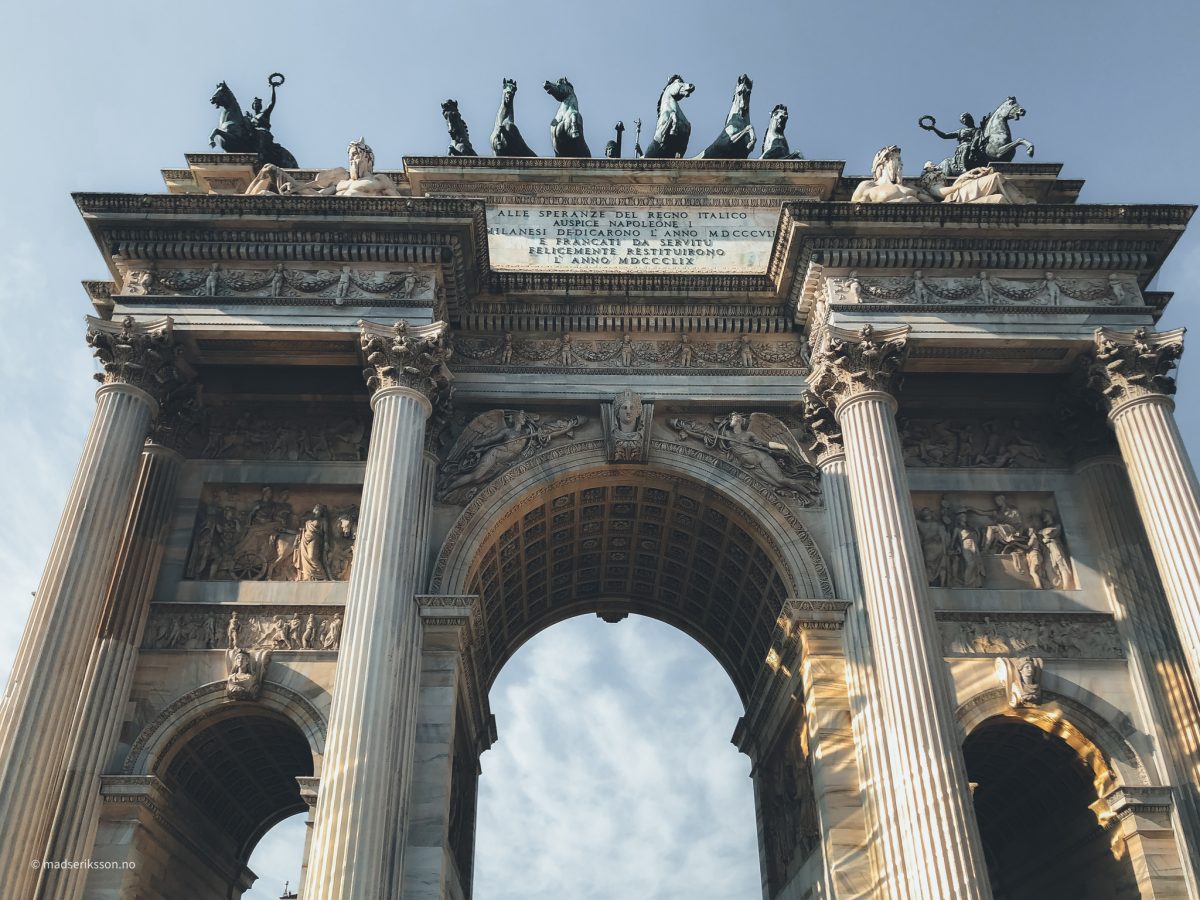
Castello Sforzesco and the Arco della Pace
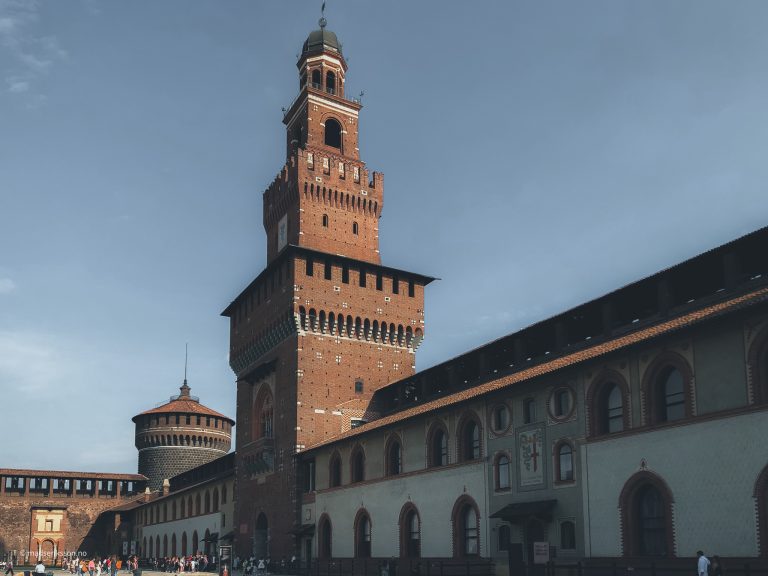
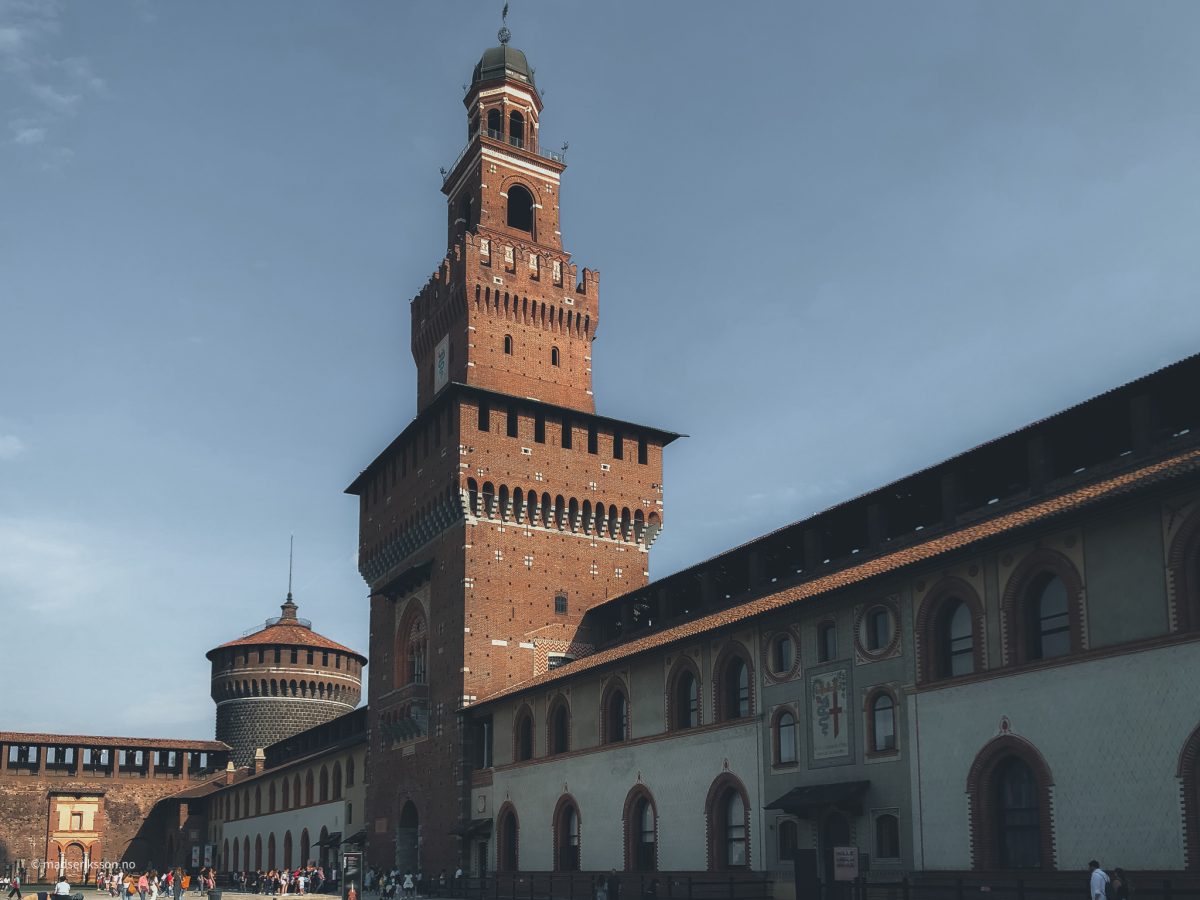
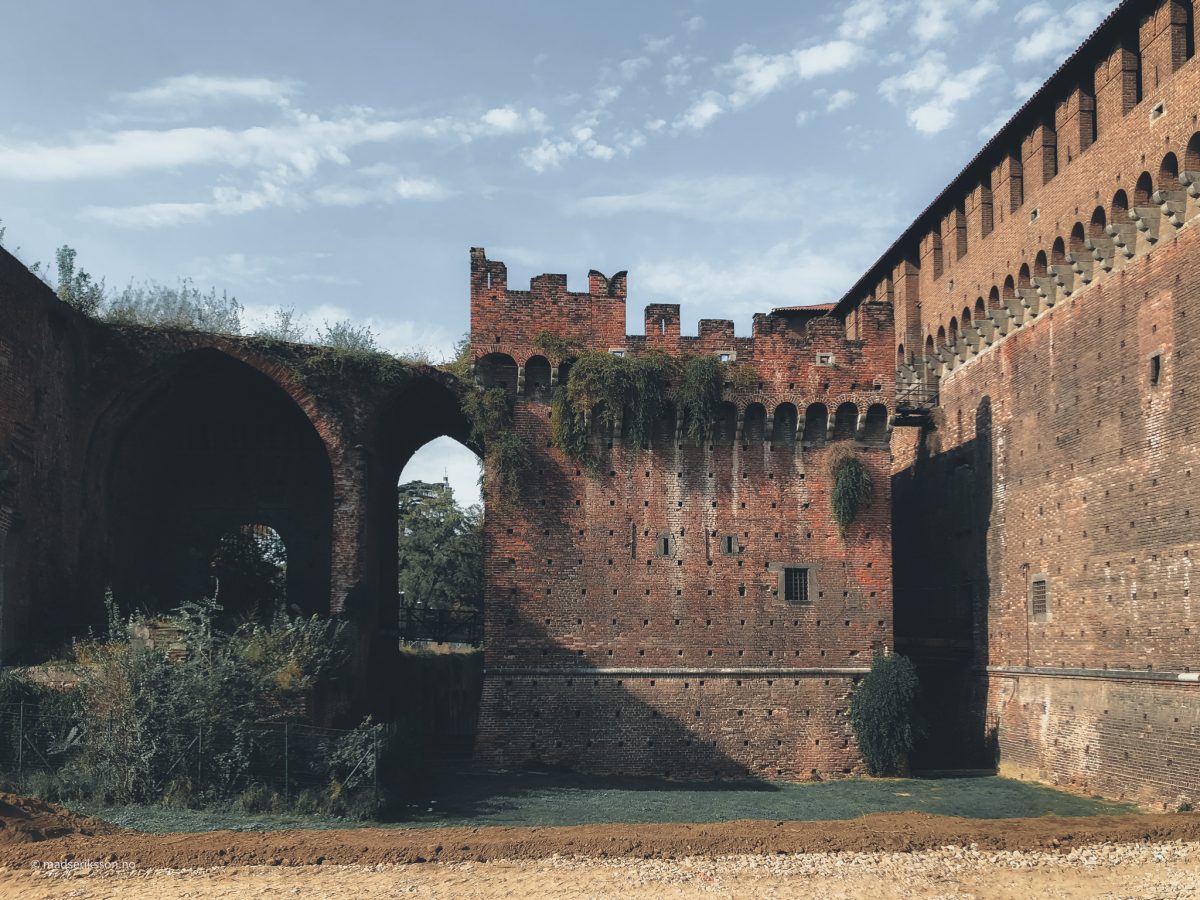
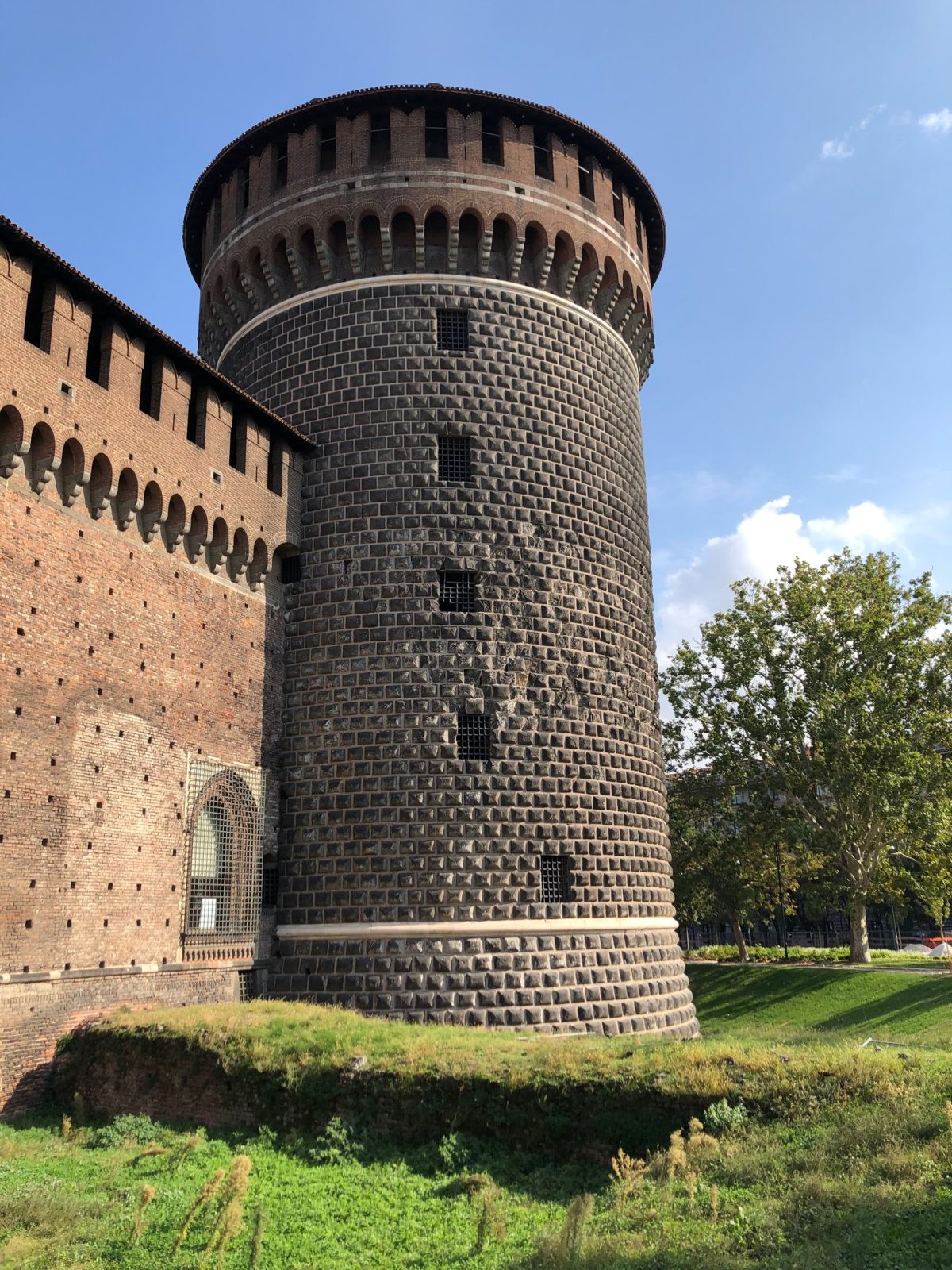
Francesco Sforza began rebuilding the castle in 1450 as his princely residence and engaged Filarete to design its central gate tower in 1452. The tower was rebuilt by Luca Beltrami between 1900 and 1905, during the restoration that turned the castle into a museum complex. Beyond it, Parco Sempione runs to the Arco della Pace, a Neoclassical arch begun in 1807 and completed in 1838, crowned by a bronze chariot drawn by six horses.
The courtyard of the Castello Sforzesco, with the Filarete Tower and a round corner bastion
CityLife and the Last Supper
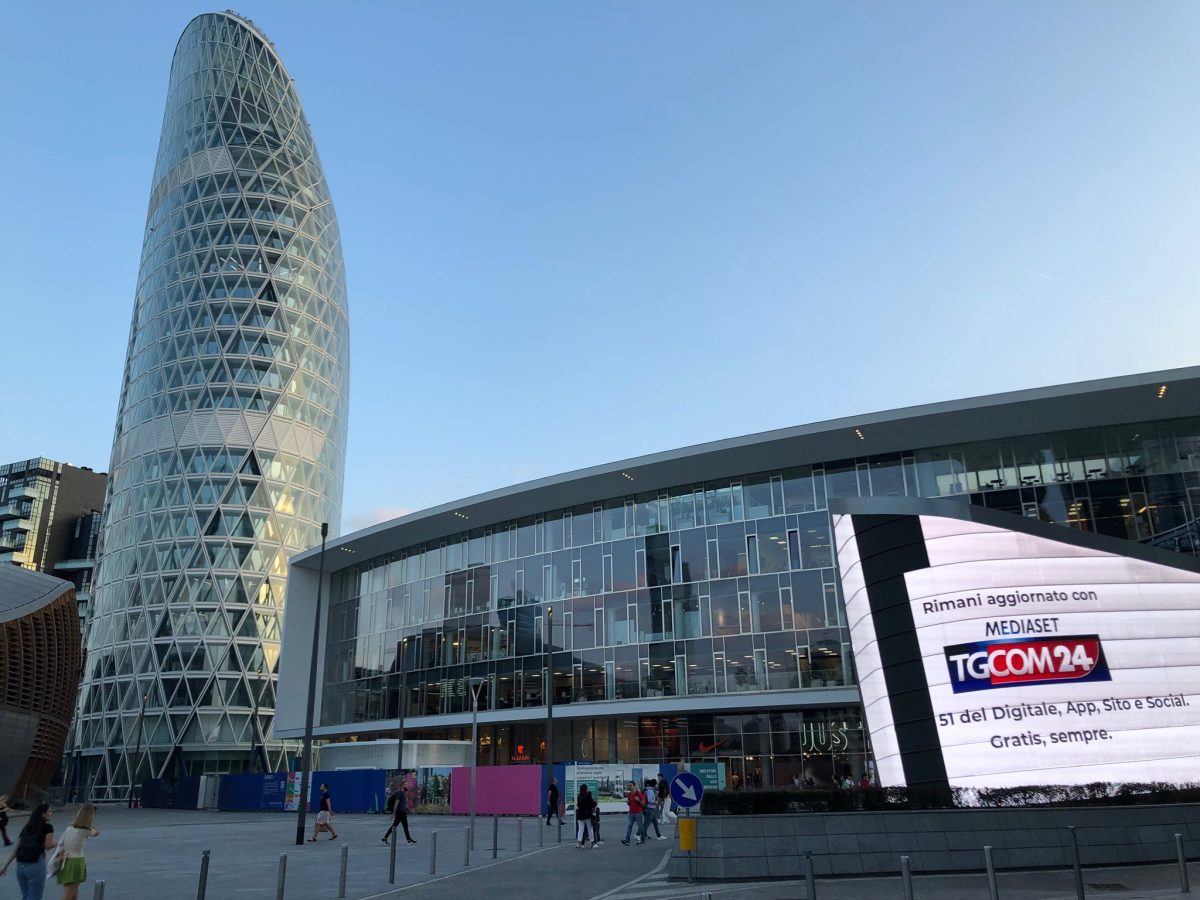
CityLife was built on the site of Milan's old trade fair, and its three towers by Arata Isozaki, Zaha Hadid and Daniel Libeskind were completed between 2015 and 2020; the tallest, the Allianz Tower, is 209 m. Closer to the centre, the refectory of Santa Maria delle Grazie holds Leonardo da Vinci's Last Supper, painted between about 1495 and 1498, and the basilica of Sant'Ambrogio goes back to the 4th century.
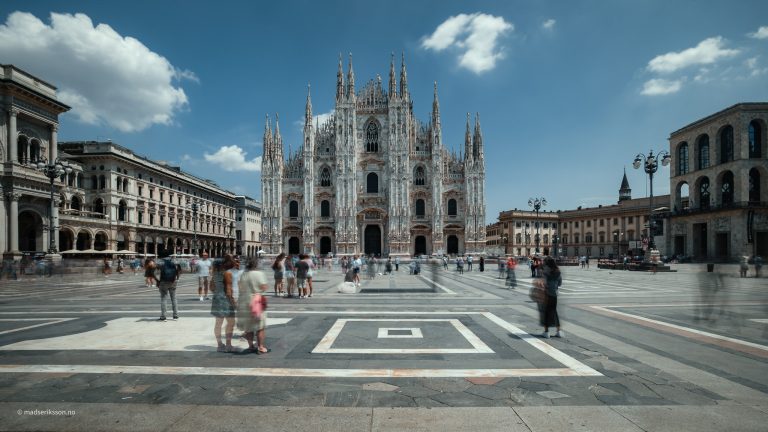
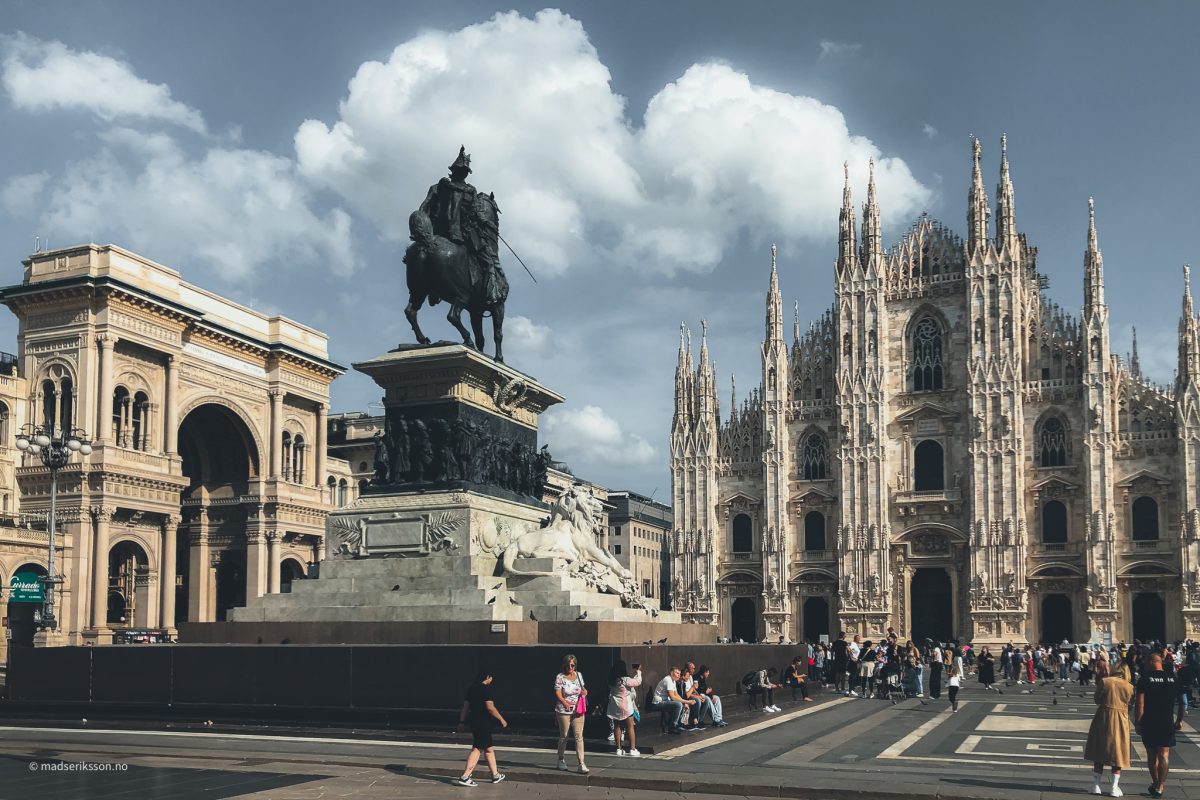
Milan Cathedral
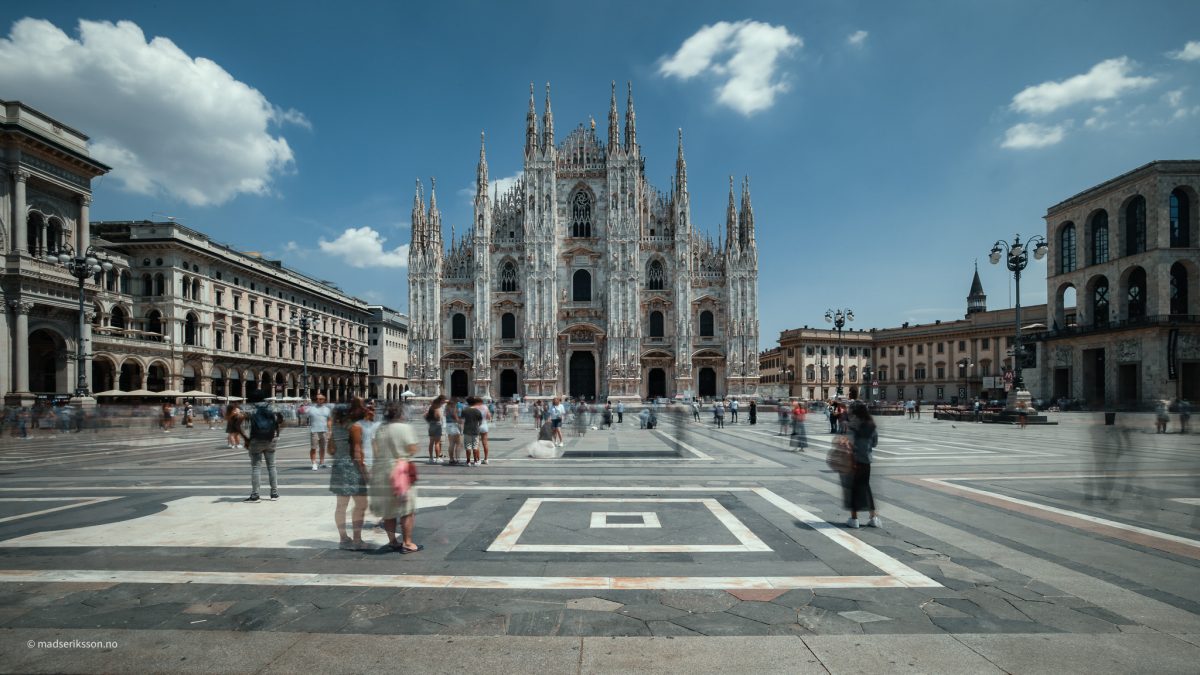
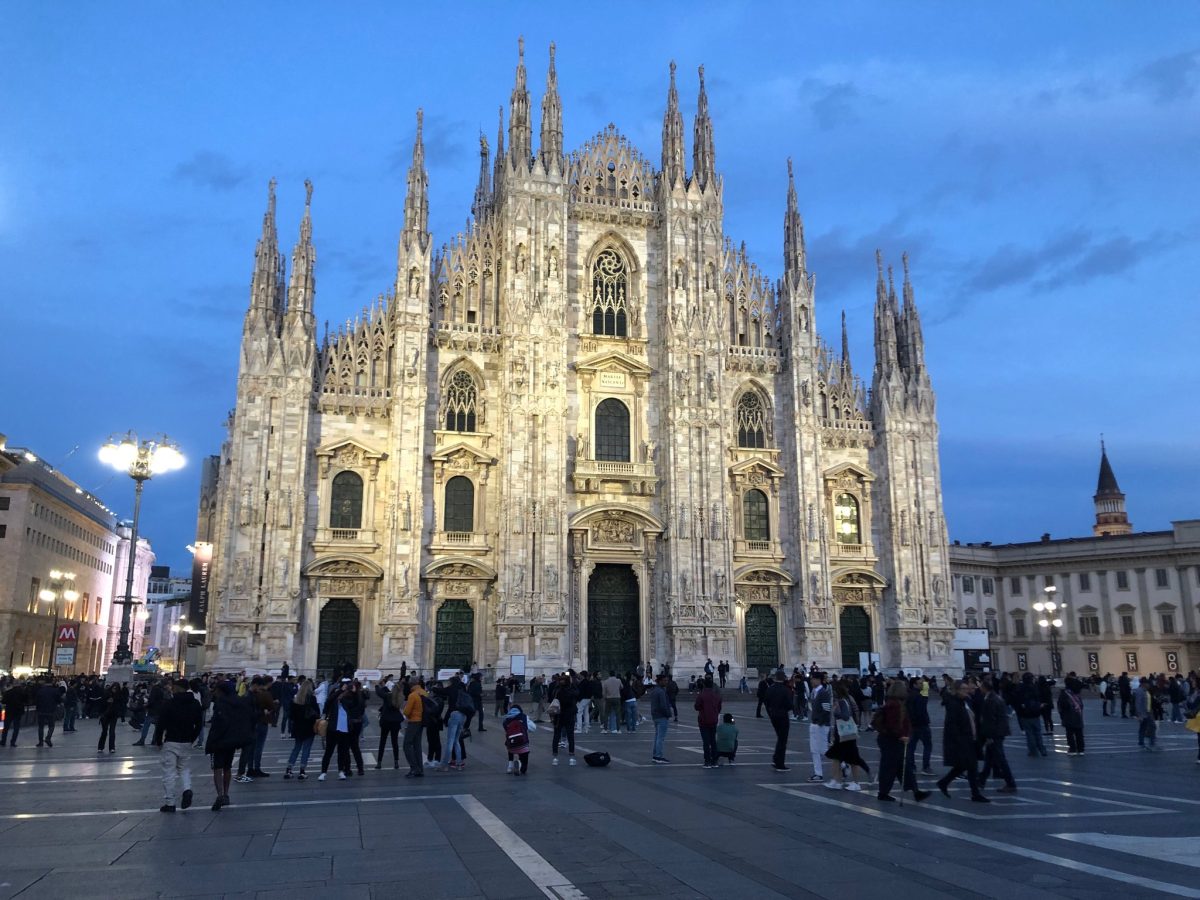
Milan Cathedral was begun in 1386 and only declared complete in 1965, when its last bronze door was inaugurated. It is 158.6 m long and faced with pink-white Candoglia marble, and the main spire, raised in 1762, carries the gilded Madonnina about 108.5 m above the square.
The Gothic facade of the Duomo di Milano rising over Piazza del Duomo on a summer day
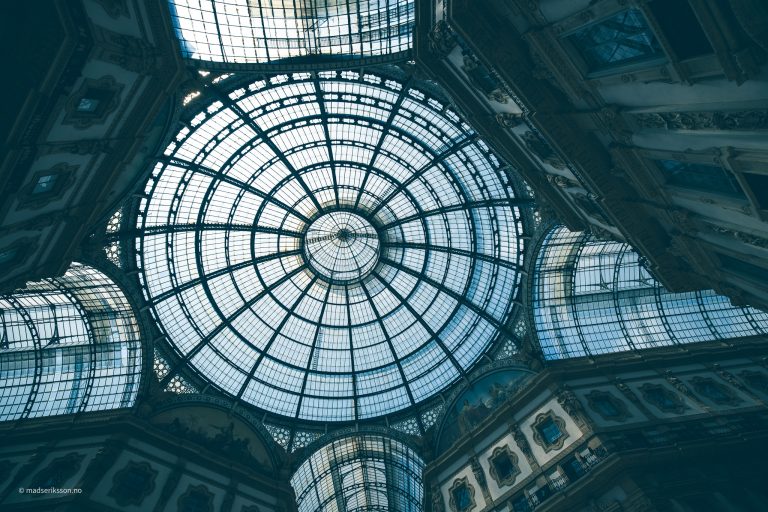
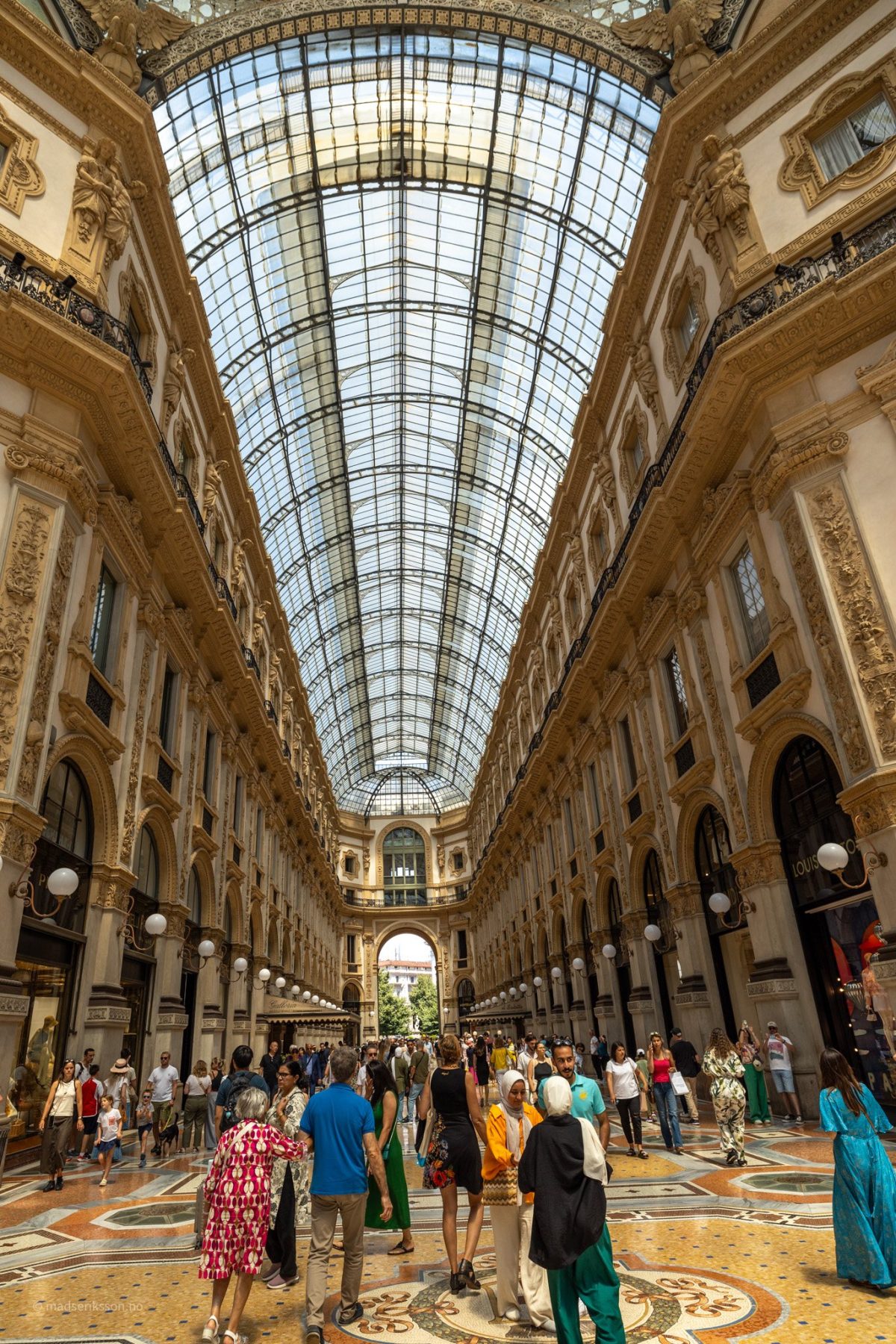
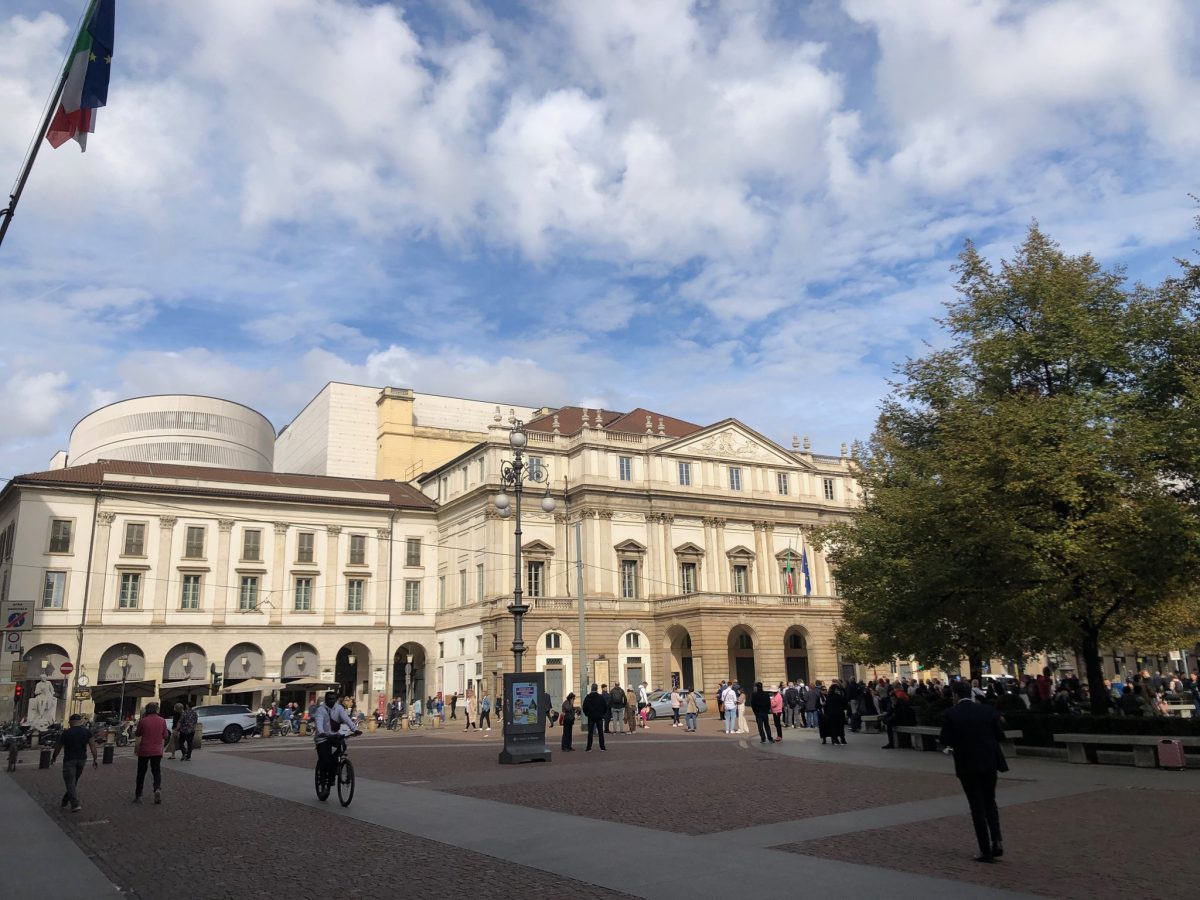
The Galleria and La Scala
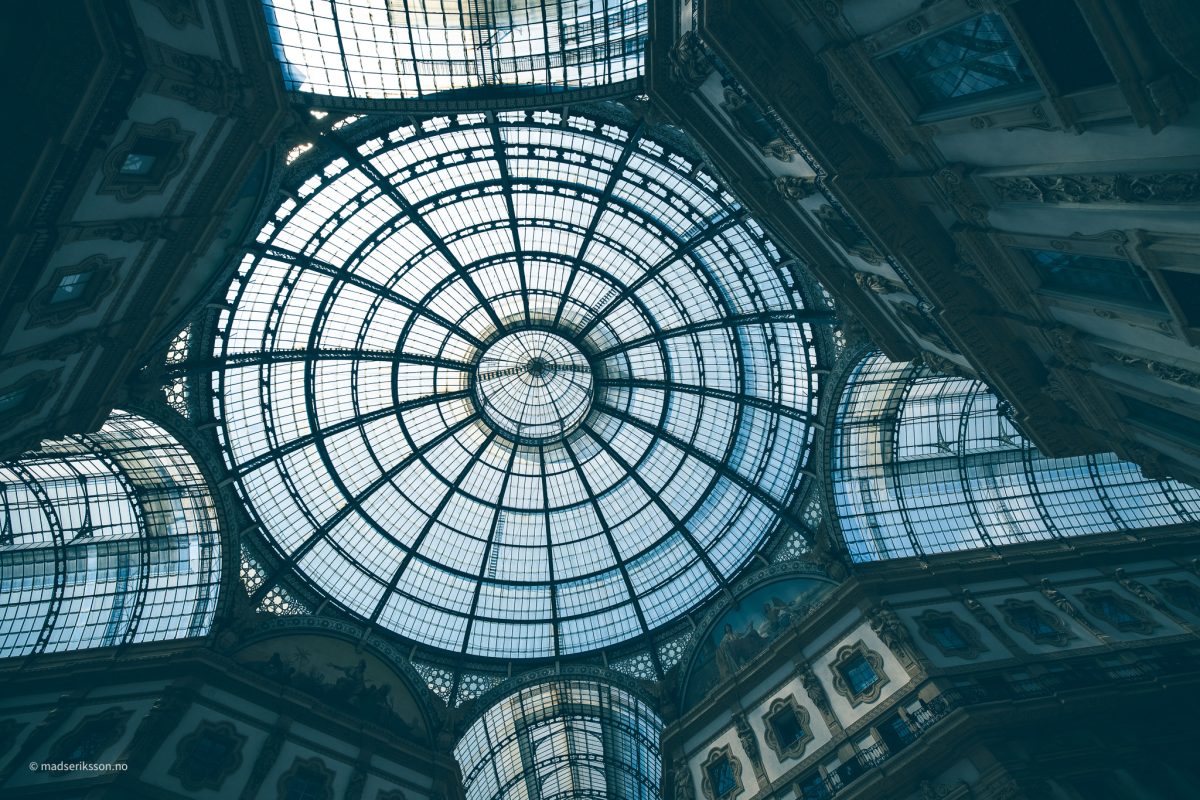
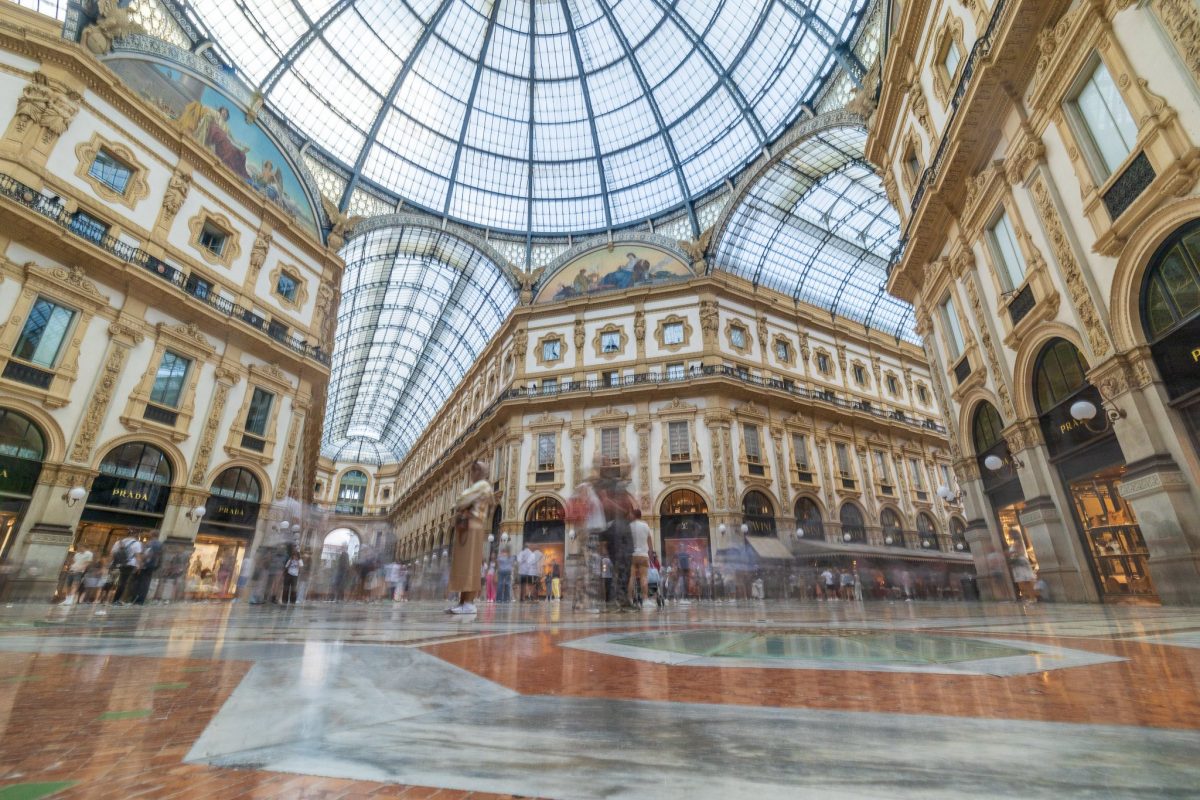
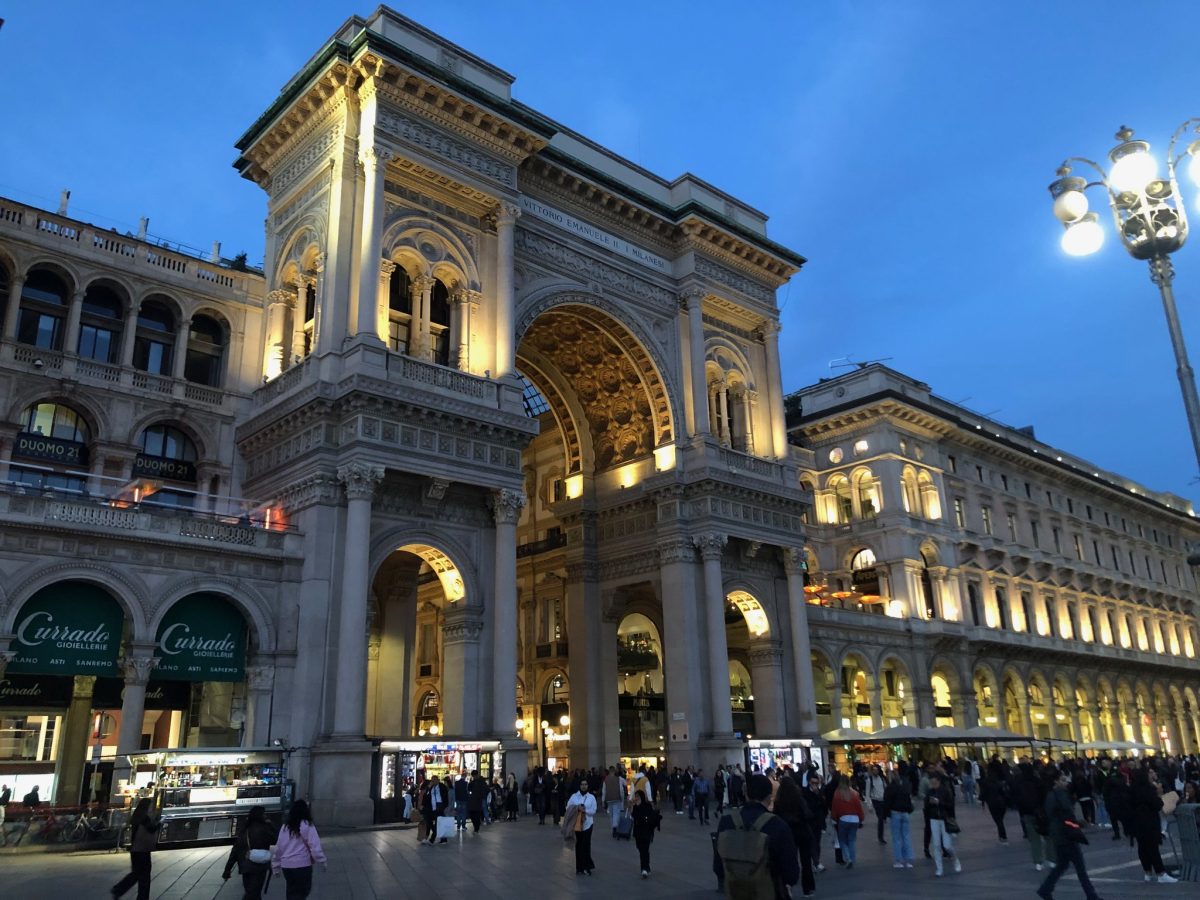
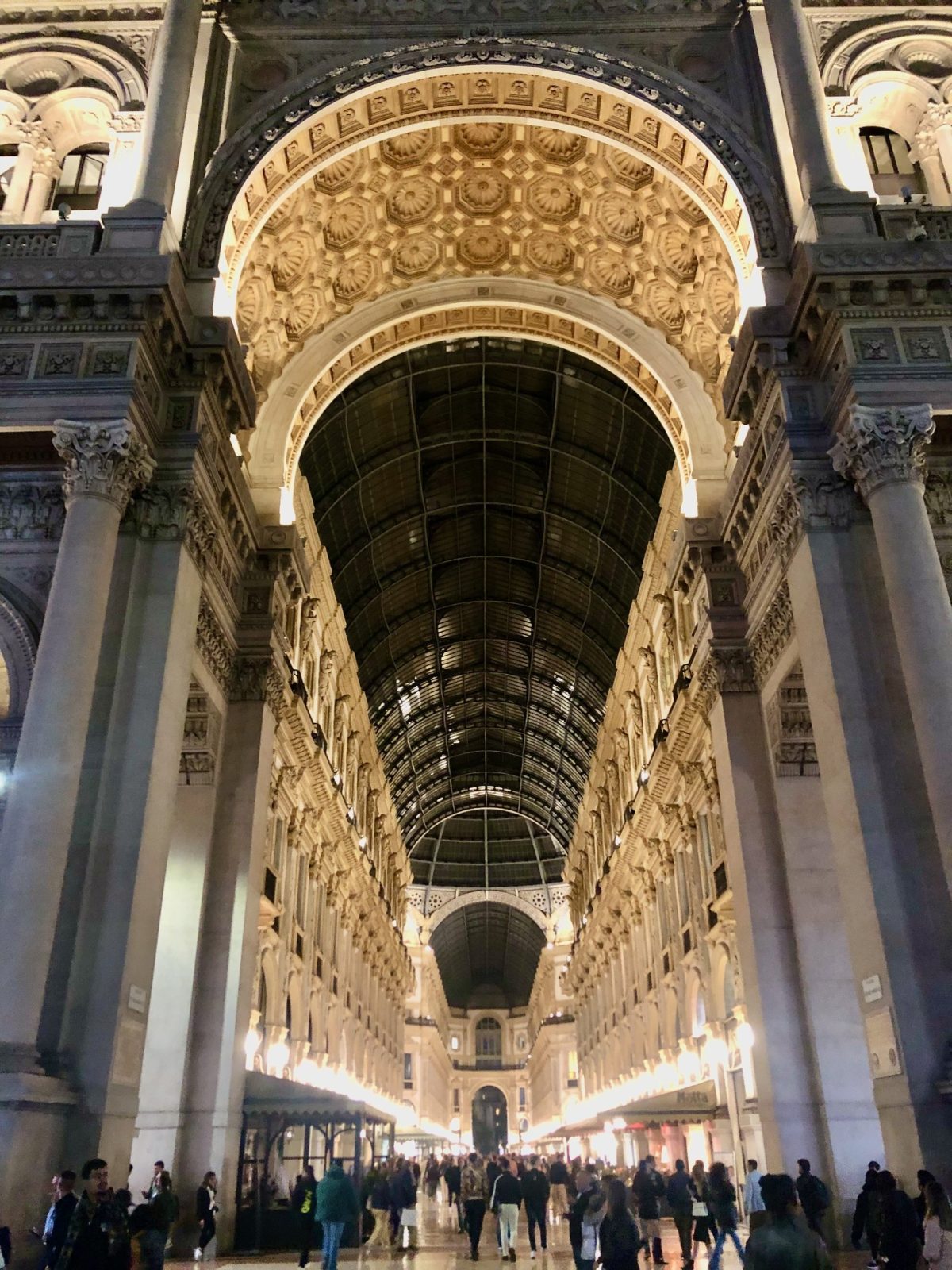
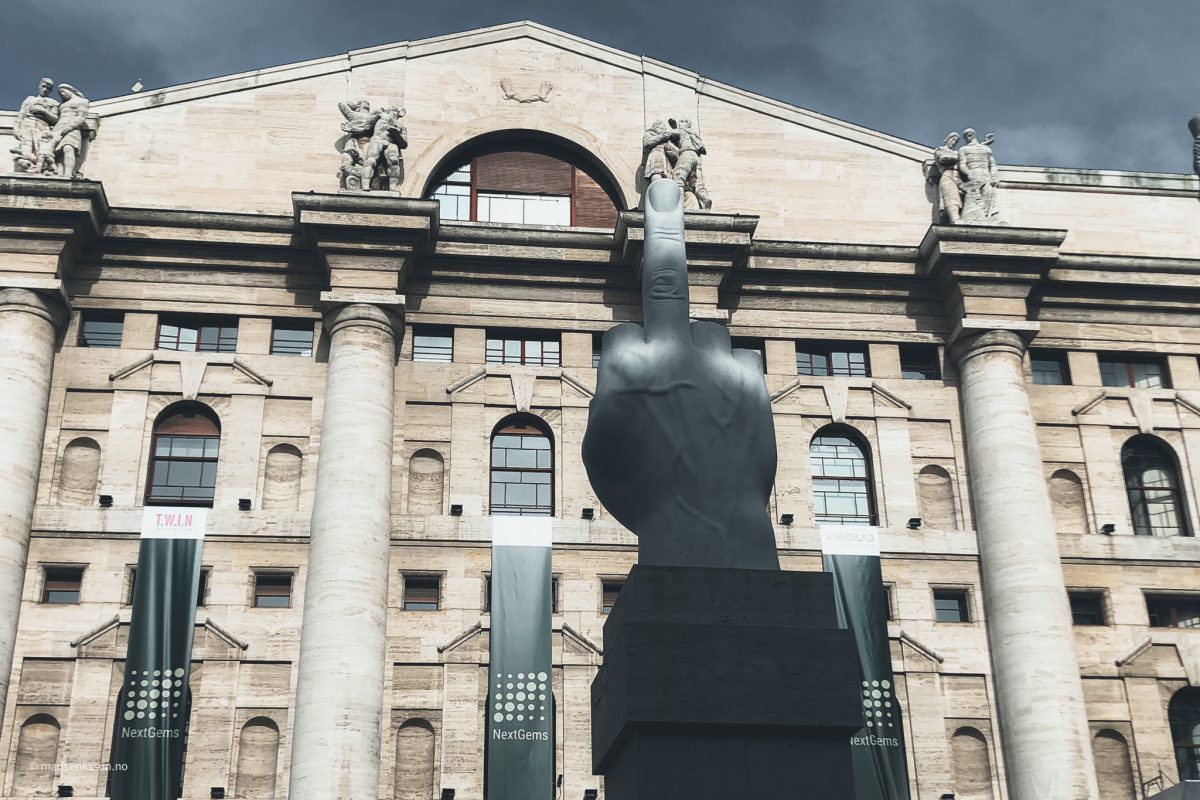
The Galleria Vittorio Emanuele II, designed by Giuseppe Mengoni and built between 1865 and 1877, links Piazza del Duomo with Piazza della Scala under a vault of glass and iron. At its northern end stands the Teatro alla Scala, opened in 1778. A few streets west, Maurizio Cattelan's marble hand L.O.V.E. has faced the stock exchange in Piazza Affari since 2010.
Looking up into the glass and iron dome of the Galleria Vittorio Emanuele II in Milan
The Navigli
The Navigli are what remains of a network of canals that once linked Milan with Lake Maggiore and the rivers Ticino and Adda. The Naviglio Grande, begun in the 12th century, brought the marble for the cathedral into the city, and it meets the Naviglio Pavese at the Darsena, the old harbour basin restored in 2015. In the evening the canal banks fill up for aperitivo.
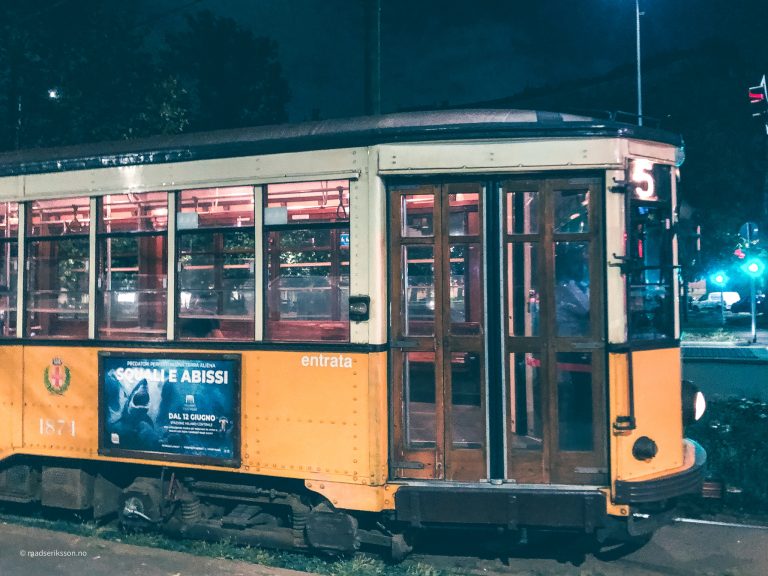
Milan after dark
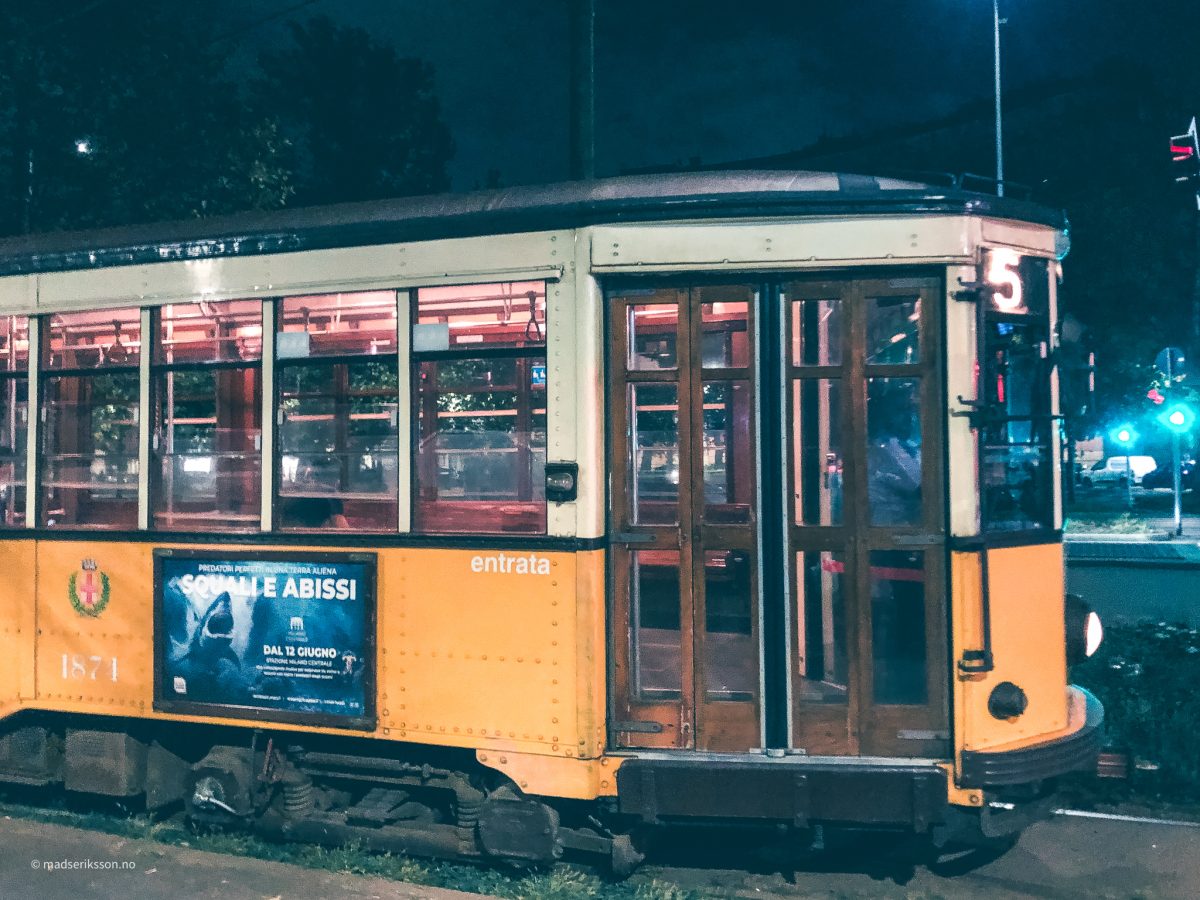
At night the floodlit marble of the Duomo and the lit glass of the Galleria mark the centre, while the towers of Porta Nuova and CityLife stand out on the skyline to the north and west. Some of the trams still running through the centre are the orange Ventotto type, first introduced in 1928.
One of Milan's vintage orange trams, still running on the city network, at night
3D model © 2026 madseriksson.no · Photographs © madseriksson.no. Buildings and heights: © OpenStreetMap contributors (ODbL), via OpenMapTiles. Ground imagery: Sentinel-2 cloudless 2023 by EOX IT Services GmbH (contains modified Copernicus Sentinel data 2023; CC BY 4.0). Heights are approximate where OpenStreetMap has no measured value; sun positions are approximate.
The City Centre — Six Centuries of Cathedral and a 19th-Century Shopping Arcade
The Duomo di Milano is the most elaborate Gothic building in the world — and the Galleria next to it is a monument to the confidence of unified Italy
The Duomo di Milano is the fifth-largest cathedral in the world and the most elaborately decorated Gothic exterior ever built: 3,400 statues, 135 gargoyles, 96 spires and a facade of white Candoglia marble that accumulates detail from ground level to the gilded Madonnina at 108.5 metres. Construction began in 1386 under Gian Galeazzo Visconti and continued, under the direction of successive Archbishops and the Fabbrica del Duomo (the building committee established in 1387 and still in existence), for 579 years — through the Renaissance, the Counter-Reformation, the Enlightenment, the Napoleonic occupation and two World Wars — before the final bronze doors were completed in 1965. The interior, 135 metres long and 96 wide, is dim and extraordinary: the stained glass windows are among the largest in the world, and the forest of pillars supports a space whose scale is disorienting in the best way. The rooftop terrace, accessible by lift or stair, gives a close-up view of the spires and statues and a panorama over the city that includes, on clear days, the Alps to the north.
The Galleria Vittorio Emanuele II, connecting the Piazza del Duomo to the Piazza della Scala, was built between 1865 and 1877 by Giuseppe Mengoni as a covered shopping arcade of cross-plan form with a central octagonal dome 48 metres above the floor. It is among the oldest shopping malls in the world and remains one of the finest: four floors of arcaded shopfronts beneath a glass-and-iron vault, housing a mixture of the luxury brands of the Quadrilatero and the historic establishments that have been here since the 19th century — including the Savini restaurant, where Verdi famously celebrated premieres at La Scala with the cast, and Camparino, the bar where Campari has been served since Gaspare Campari himself was at the counter. The floor mosaic includes a bull — the symbol of Turin — whose groin visitors grind their heel on for good luck, wearing it to a depression in the marble.
The Galleria Vittorio Emanuele II has had a café serving Campari at the same address since Gaspare Campari invented the drink in 1860. The recipe has not changed. The price has.
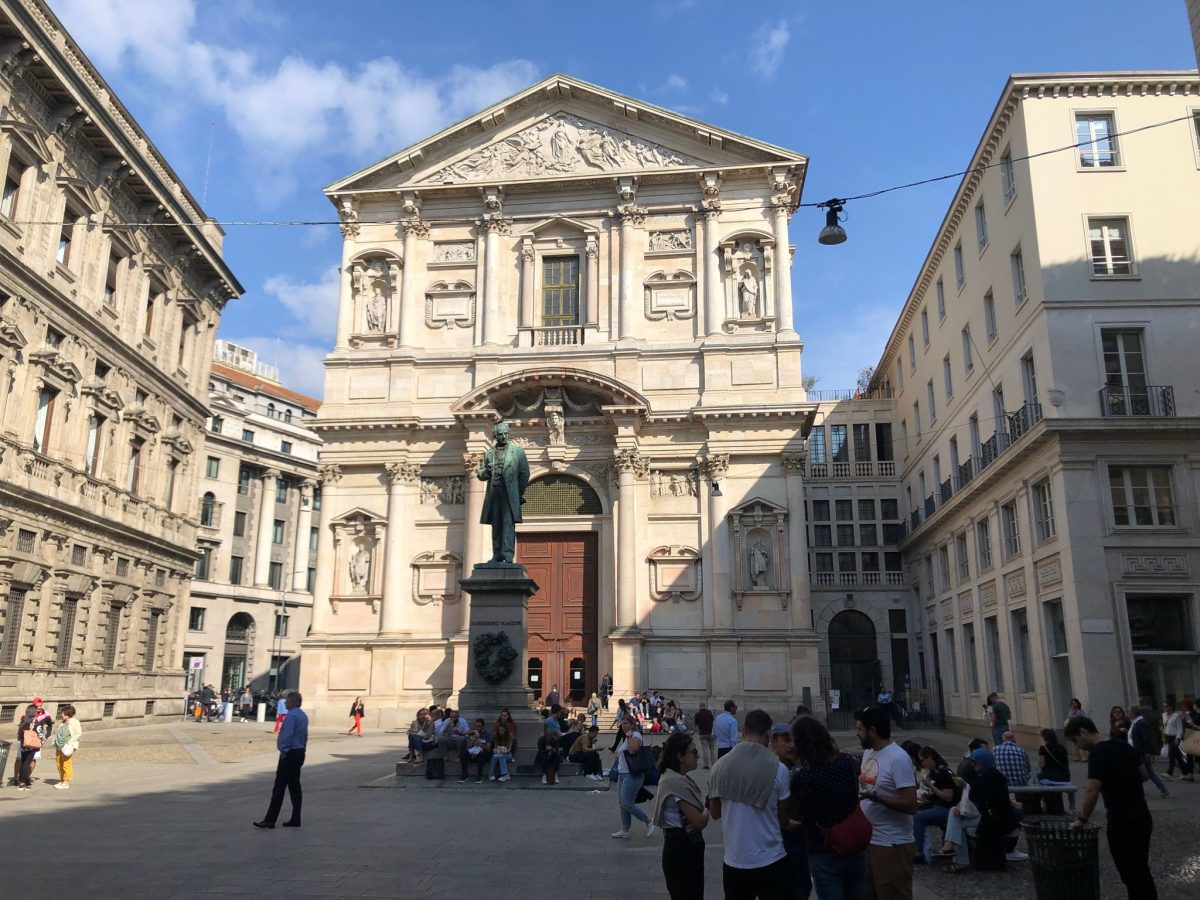
Teatro alla Scala, a two-minute walk through the Galleria, opened on 3 August 1778 with a performance of Antonio Salieri’s Europa riconosciuta and has been the world’s most prestigious opera house ever since. The roll of premieres — Verdi’s Otello, Falstaff and Nabucco, Puccini’s Madama Butterfly and Turandot, Bellini’s Norma and La Sonnambula — represents the defining repertoire of Italian opera. The house seats approximately 2,000 and has six tiers of boxes; the atmosphere of an opening night is unlike anything available in any other cultural venue in the world. The Castello Sforzesco, a 14th-century fortress rebuilt by the Sforza dukes in the 15th century, now houses nine civic museums including the collection where Michelangelo’s unfinished Rondanini Pietà — his last work, still being carved six days before his death in 1564 — is displayed in a room of its own.
Leonardo and Milan’s Art — The Most Studied Painting in History
Leonardo da Vinci worked in Milan for nearly 20 years under Ludovico Sforza, producing the most famous painting in the world — in a refectory you can visit for exactly 15 minutes
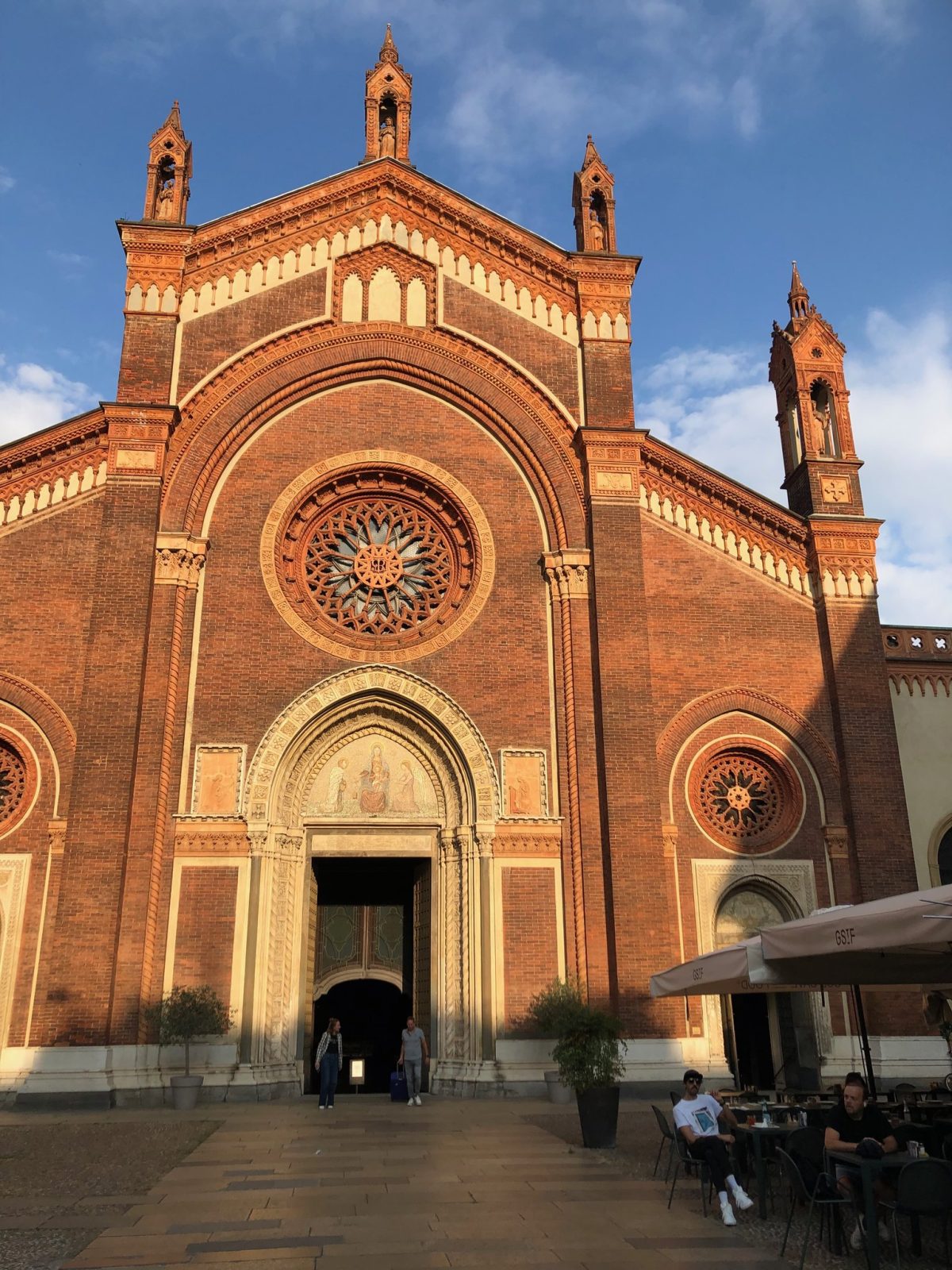
Leonardo da Vinci arrived in Milan around 1482, carrying a letter to Ludovico Sforza in which he described himself primarily as a military engineer and only lastly as a painter. He stayed for nearly 20 years, working on the equestrian monument to Francesco Sforza (never cast; the clay model was destroyed when French soldiers used it for target practice in 1499), designing irrigation canals, anatomical studies and flying machines, and painting. The Last Supper — Il Cenacolo Vinciano — was painted between 1495 and 1498 on the north wall of the refectory of Santa Maria delle Grazie, the Dominican convent off Corso Magenta. It depicts the moment immediately after Christ says “one of you will betray me” and captures the different reactions of each of the twelve apostles with a psychological specificity and compositional mastery that was entirely new in Western painting. Leonardo chose to apply the painting in tempera on a dry plaster wall rather than as true fresco — a technique that allowed him to work slowly and make revisions but meant that deterioration began within decades of completion. What survives, after five centuries of damage, restoration attempts and a 20th-century restoration effort, is fragmentary but still overwhelming.
The visiting system at Santa Maria delle Grazie reflects the painting’s fragility: groups of 30 enter through a series of climate-controlled airlocks and have exactly 15 minutes in the refectory before the next group enters. Tickets sell out months in advance and cannot be bought at the door. The brevity of the visit is both frustrating and appropriate — 15 minutes of concentrated attention on a single painting is more than most great works in museums receive. The refectory also contains the opposite wall’s fresco of the Crucifixion by Giovanni Donato Montorfano (1495), which Leonardo left untouched and which survives in better condition than the Cenacolo.
The Last Supper began deteriorating within decades of Leonardo finishing it. Soldiers billeted in the refectory by Napoleon’s forces used it as a stable. A 1943 Allied bomb destroyed the refectory roof. The painting survived under sandbags.
The Pinacoteca di Brera, in the 17th-century Palazzo di Brera in the neighbourhood of the same name, holds one of the most important collections of Italian painting in the country: Mantegna’s Dead Christ — a foreshortened perspective study of extraordinary technical mastery and emotional power — Raphael’s Betrothal of the Virgin, Caravaggio’s Supper at Emmaus, and extensive collections of Venetian, Lombard and Central Italian painting from the 14th to the 18th century across 38 rooms. The Pinacoteca Ambrosiana, founded in 1618 by Cardinal Federico Borromeo, holds Leonardo’s Portrait of a Musician — the only portrait by Leonardo remaining in Italy — and the original cartoon for Raphael’s School of Athens.
Fashion and Design — The Capital of Both
Milan is simultaneously the fashion capital and the design capital of the world — and the concentration of both in a single city, within walking distance of a Leonardo, is unique
The Quadrilatero della Moda — the Fashion Quadrilateral, bounded by Via Montenapoleone, Via della Spiga, Via Manzoni and Corso Venezia — is the most concentrated luxury fashion district in the world. Via Montenapoleone, the principal axis, is consistently ranked among the most expensive retail streets on Earth: Prada, Gucci, Louis Vuitton, Hermès, Dior, Bulgari, Valentino and the rest of the global luxury hierarchy are present in flagship stores that function as architecture and brand statement as much as retail space. The district is not exclusively for buyers — it is as much a gallery of contemporary commercial architecture and display design as anywhere in the city, and walking it costs nothing. The stores on Via della Spiga tend to be smaller, quieter and more specifically Italian than the international flagships on Montenapoleone; the Armani complex off Via Manzoni — fashion, furniture, flowers, books and restaurant in adjacent floors of a single building — is the most complete single-brand statement in Milan.
Milan Fashion Week takes place twice yearly — in February or March for menswear, in September for womenswear — and transforms the city into a temporary capital of the global fashion industry. The shows are by invitation; the streets around the showrooms and the Quadrilatero are not. The Salone del Mobile, held each April at the Fiera Milano exhibition centre in the northern suburbs, is the world’s largest furniture and design fair: over 2,000 exhibitors across 200,000 square metres, attended by designers, architects and buyers from across the world. During Salone week — known as Fuorisalone, “outside the Salone” — the entire city participates: showrooms, galleries, courtyards, factories and public spaces across every district host events, installations and exhibitions that collectively constitute the most intensive week of design activity in the world.
During Salone week, every courtyard in the Brera district becomes an exhibition space. Design studios that are closed the other 51 weeks of the year open their doors. The city becomes a design fair without walls.
The Brera district, centred on the Pinacoteca and the Via Brera, is the neighbourhood that best combines Milan’s cultural and design identities: art galleries, independent bookshops, design studios, restaurants and cafés in a dense network of streets that retains the character of a working creative neighbourhood despite considerable gentrification. The more recently developed area of Porta Nuova — centred on Piazza Gae Aulenti and the vertical forest towers of the Bosco Verticale, designed by Stefano Boeri with trees and shrubs growing on every floor — represents contemporary Milan’s architectural ambition: a city that continues to invest in defining what Italian design looks like in the 21st century.
Milanese Food — Saffron, Butter and the Invention of Aperitivo
Milanese cooking is northern Italian — butter and cream rather than olive oil, risotto rather than pasta — and the city also invented the aperitivo ritual that the rest of the world has since adopted
Risotto alla Milanese is the defining dish of the city: Carnaroli or Vialone Nano rice cooked in white wine and hot broth, finished with saffron — which gives the dish its characteristic deep gold colour — and mantecato with cold butter and Parmigiano Reggiano until it reaches the correct consistency, which Milanese cooks describe as all’onda: fluid enough to flow like a slow wave when the pan is shaken. The tradition of saffron in Milanese cooking dates to the 16th century, when a Flemish glazier working on the windows of the Duomo used saffron as a yellow dye and, according to the story, added it to the wedding rice of his employer’s daughter as a joke. The dish that resulted became the most important in the Lombard kitchen. Risotto alla Milanese is often served alongside ossobuco — braised veal shank — and this combination (the gremolata-garnished ossobuco, the golden risotto beside it) is the canonical Milanese main course.
The cotoletta alla Milanese — a bone-in veal loin chop, pounded flat, dipped in egg and breadcrumbs and fried in clarified butter — is the Milanese answer to the question of what to do with a veal cutlet. It is similar to but distinct from the Wiener Schnitzel: the Milanese version retains the bone, tends to be larger, and is fried in butter rather than lard. The dispute over which came first has been conducted between Vienna and Milan for two centuries without resolution. The Milanese do not consider it a question worth answering in Vienna’s favour. Eaten in a proper trattoria, with a simple green salad and a carafe of the house Barbera, it is one of the most satisfying meals in northern Italy.
Aperitivo in Milan is not a drink with a bowl of olives. It is a social institution: you pay for the drink and the food — bruschette, risotto balls, pasta, cheeses — is included, unlimited, from 6pm to 9pm. The Navigli canal district is the correct place for it.
The Navigli district — the network of canals in the southwestern part of the city, the remnants of a much larger canal system that Leonardo da Vinci helped design — is the centre of Milan’s evening culture. From approximately 6pm to 9pm, the restaurants, bars and osterie along the Naviglio Grande and the Naviglio Pavese institute the aperitivo: for the price of a Campari soda, Aperol Spritz or Negroni, the bar’s buffet is available, and the buffet in a serious Navigli bar extends well beyond olives and peanuts into bruschette, pasta, rice dishes, cheeses, cured meats and vegetables. The canal itself is lined with people standing on the bank in the summer evenings; it is one of the more civilised ways to spend a Tuesday night in any city in Europe.
«Milan does not try to be loved the way Rome or Venice does. It is too busy for that, and too confident of its own value. But the visitors who give it time — who stand in front of The Last Supper for their 15 allocated minutes with full attention, who walk the Navigli at aperitivo hour, who eat a proper cotoletta in a proper trattoria rather than the tourist menus around the Duomo — find a city that rewards seriousness in the same way it rewards ambition: generously, and on its own terms. Milan invented things the rest of the world now takes for granted: the fashion system, the design fair, the aperitivo, the Negroni. It is still inventing.»
More in the same area
 ArchitecturePisa — The Leaning Tower, the Square of Miracles and the City on the Arno
 CitiesExploring the Enchanting City of Venice
 CitiesSan Marino — The Republic on the Rock, Its Towers and Its Captains Regent
 CitiesCorleone: Beyond the Godfather — History, Anti-Mafia and the Ficuzza Forest
 CitiesTurin: A City of Elegance and History
 ArchitectureBologna — Porticoes, Towers and the City That Wrote Down Its Recipes
City Frames · scroll-driven 3D
More cities in three dimensions
54 city guides open with a model built from open map data. Scroll, and the camera moves from landmark to landmark.
Departures · City Frames
Where to next?
| Time | Destination | Country | Status |
|---|
Live · position of the sun
Golden hour, right now
The low, warm light just after sunrise and just before sunset. These are the cities on the site where it is happening at this moment.