Paris has been the subject of more writing, more painting, more cinema and more aspiration than almost any city in the world — and it still manages to exceed the expectation. The boulevards are as wide and the light as particular as advertised. The boulangeries produce bread by law as well as by habit. The museums hold things you have been looking at in reproduction your entire life, and they are different in the original. Paris is not immune to disappointment, but it delivers with unusual frequency on a promise that most cities could not make without irony.

Paris was founded around 250 BCE by a Celtic tribe called the Parisii, who settled on an island in the Seine — the Île de la Cité, still the geographical heart of the city. The Romans called it Lutetia, built a forum and baths on the Left Bank, and the settlement grew into a regional centre. By the medieval period it was the capital of France and the largest city in Europe, and its position at the intellectual and cultural centre of the Western world has remained largely unchallenged for eight centuries. The French Revolution, the Napoleonic Empire, two world wars, the Commune, the student uprising of 1968 — Paris has been the stage for a disproportionate share of the events that shaped the modern world, and the city carries that weight with something between pride and weariness.
The Paris most visitors encounter is largely the creation of Baron Haussmann, who between 1853 and 1870, acting under Napoleon III, demolished enormous sections of the medieval city and replaced them with the broad boulevards, uniform stone apartment blocks and public parks that define the capital’s visual identity. The transformation was controversial — it displaced hundreds of thousands of working-class residents and erased irreplaceable medieval fabric — but the result is one of the most coherent and consistently beautiful urban environments in the world. The stone is warm and pale, the rooflines uniform at seven storeys, and the proportions of street to building to sky are calculated with a confidence that later planners have rarely matched.
How to approach Paris
This guide covers four aspects of Paris: the Eiffel Tower and the grands boulevards of the Right Bank; the Louvre and the great museums and historic districts; the Left Bank and Montmartre; and the food culture that gave the world the restaurant, the tasting menu and the baguette. Paris is best approached slowly and on foot. The monuments are real, the museums are extraordinary, and the street life — the cafés, the markets, the bakeries at seven in the morning — is worth as much as any of them.
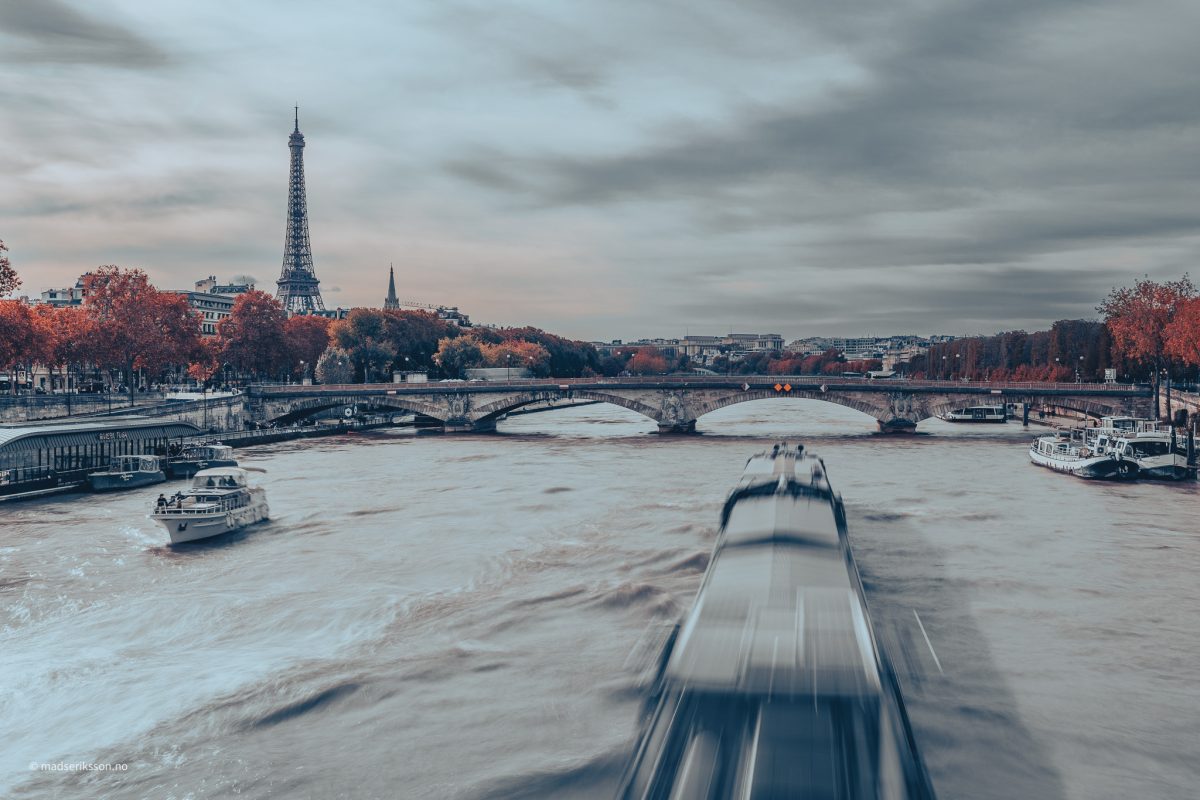
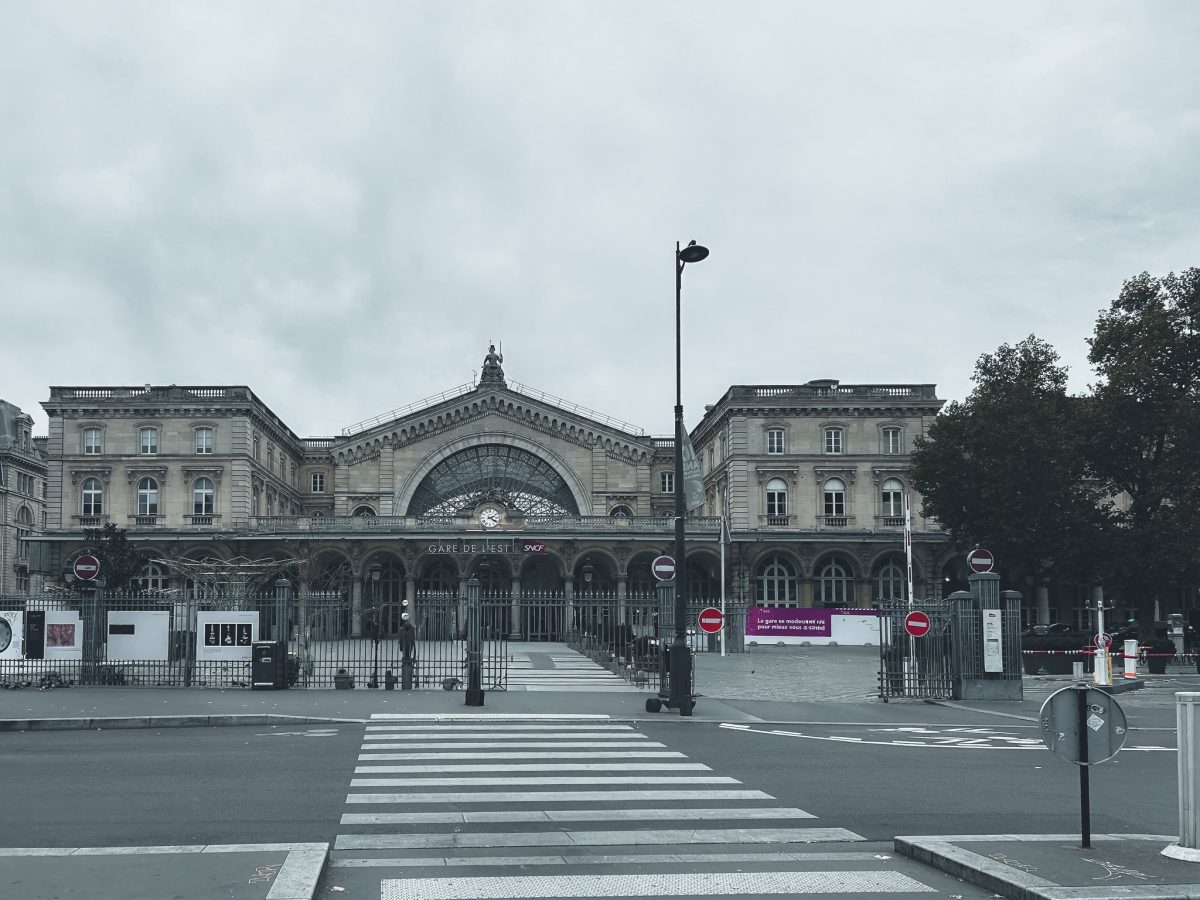
Paris in 3D
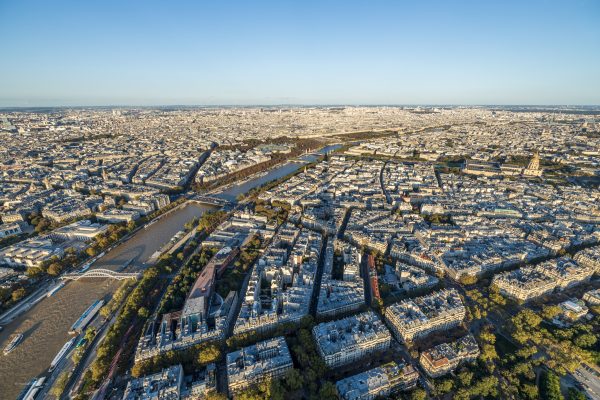
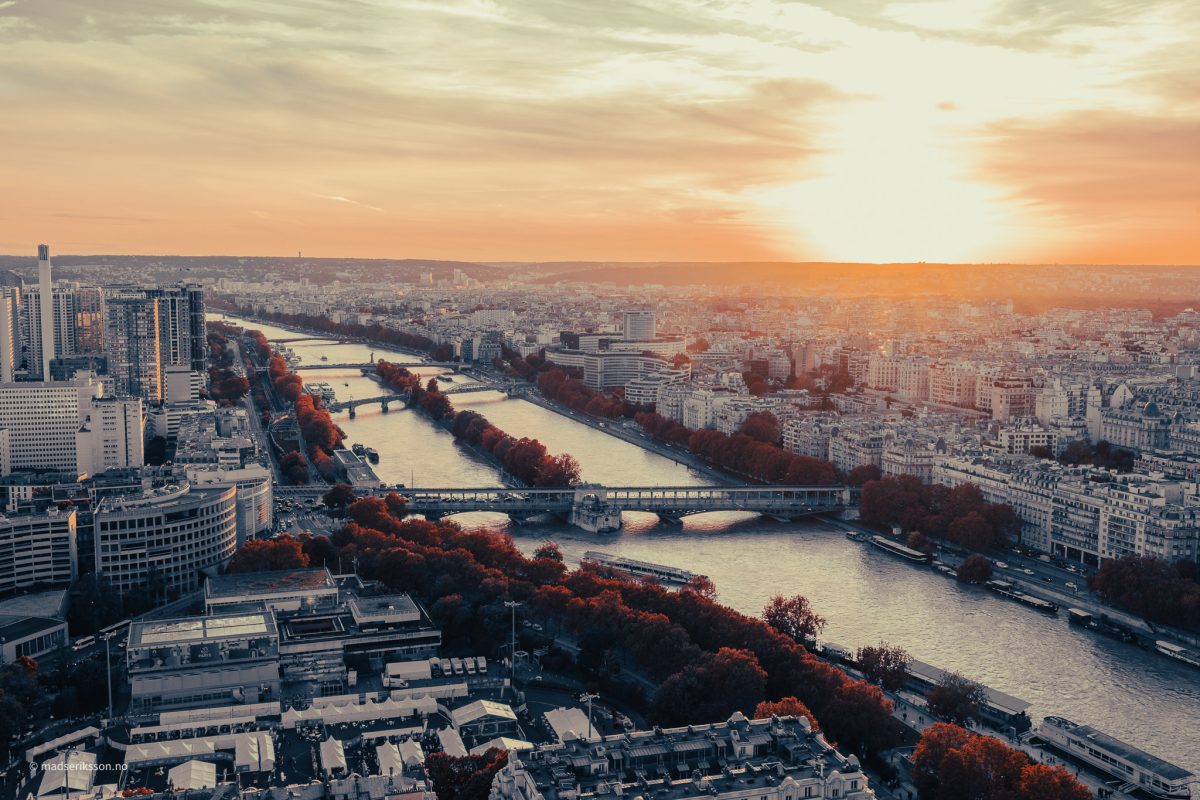
Paris grew from the Île de la Cité, where the Celtic Parisii settled around 250 BCE and the Romans later built Lutetia. This frame runs from the Eiffel Tower and the Arc de Triomphe in the west to the Bibliothèque nationale de France in the east, and from the hill of Montmartre south to Tour Montparnasse. The banks of the Seine between the Pont de Sully and the Pont d'Iéna have been a UNESCO World Heritage Site since 1991.
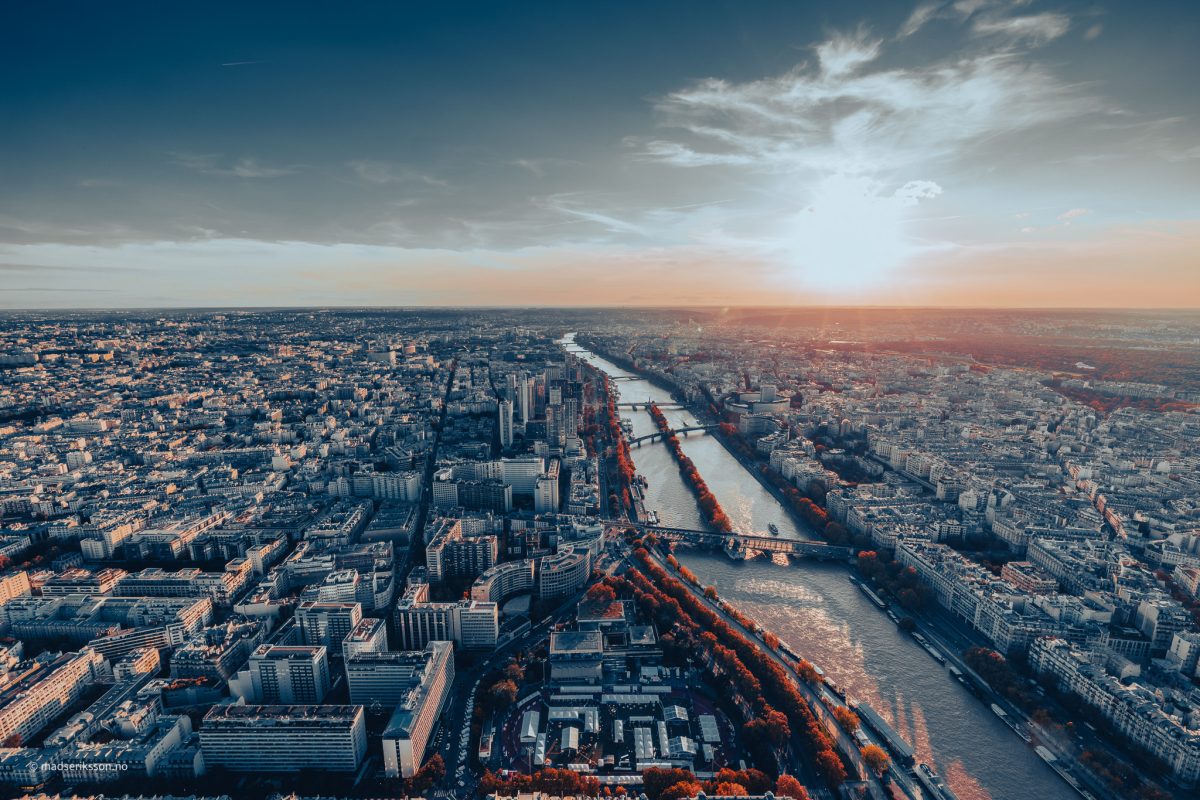
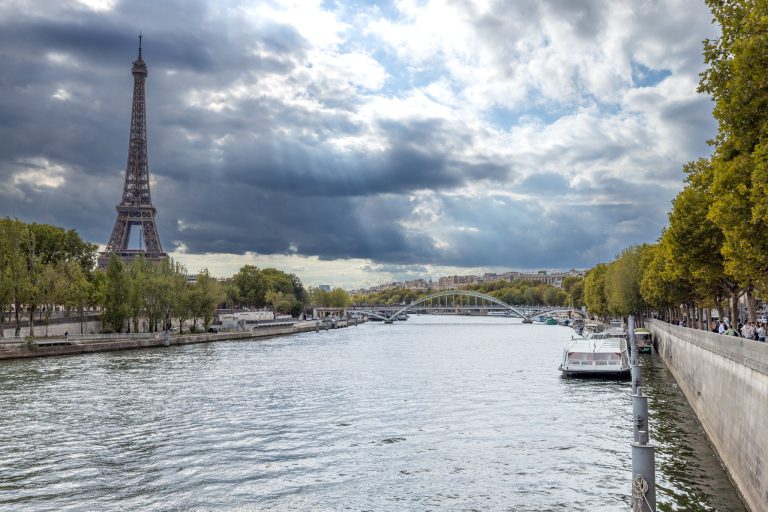
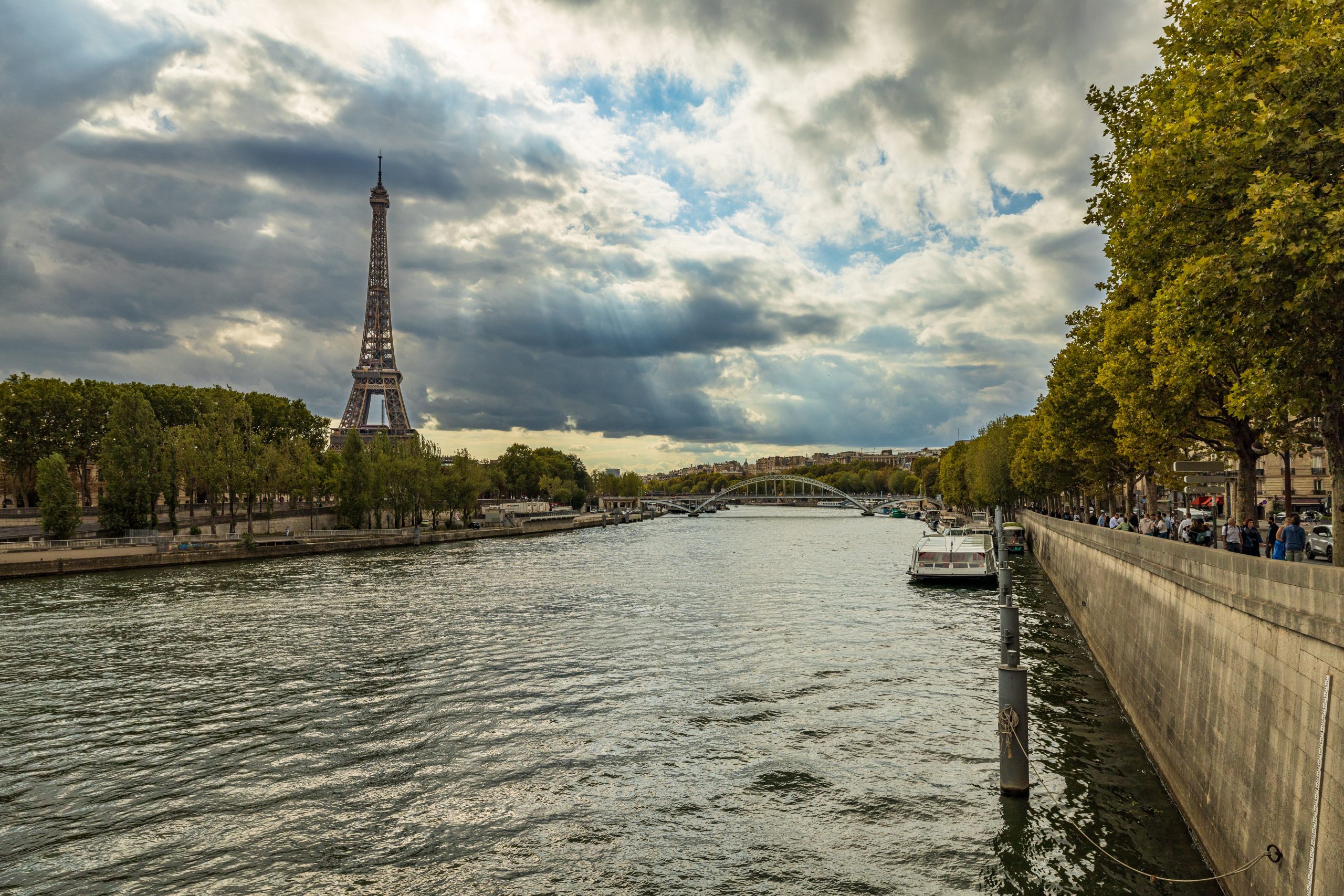
The Seine flowing towards the Eiffel Tower, with tree-lined quays and a river boat moored on the right
Notre-Dame and the Sainte-Chapelle
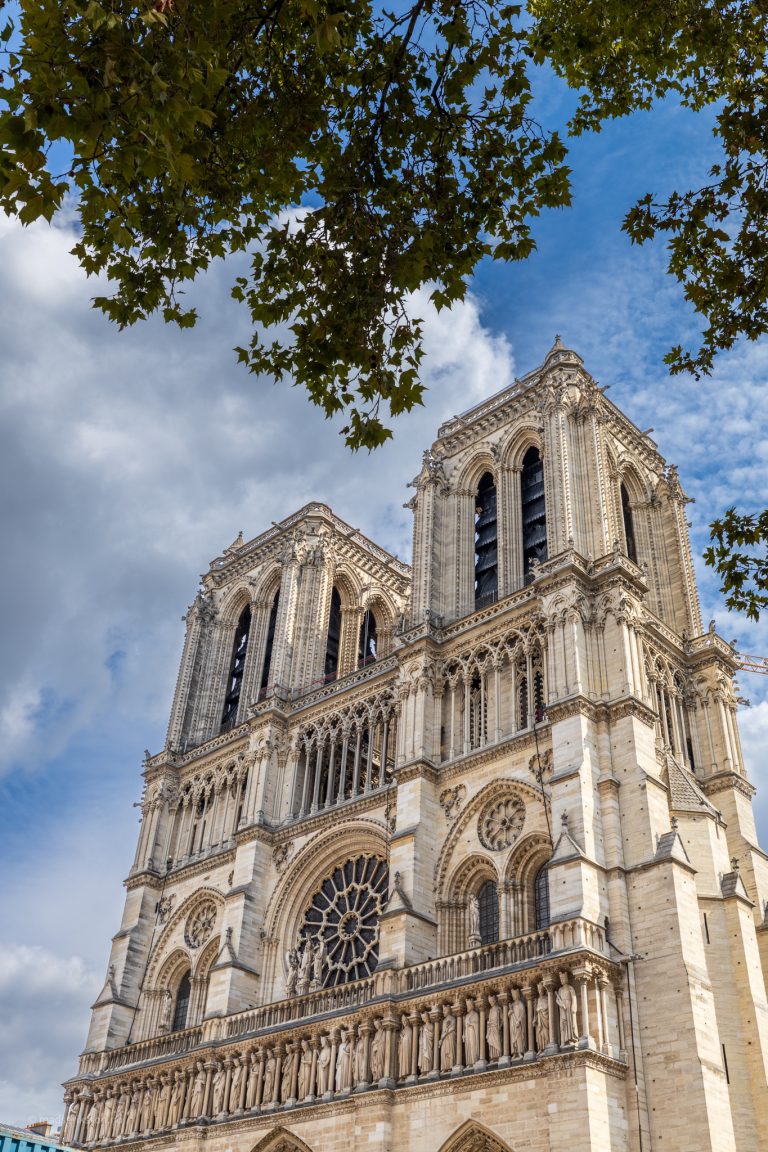
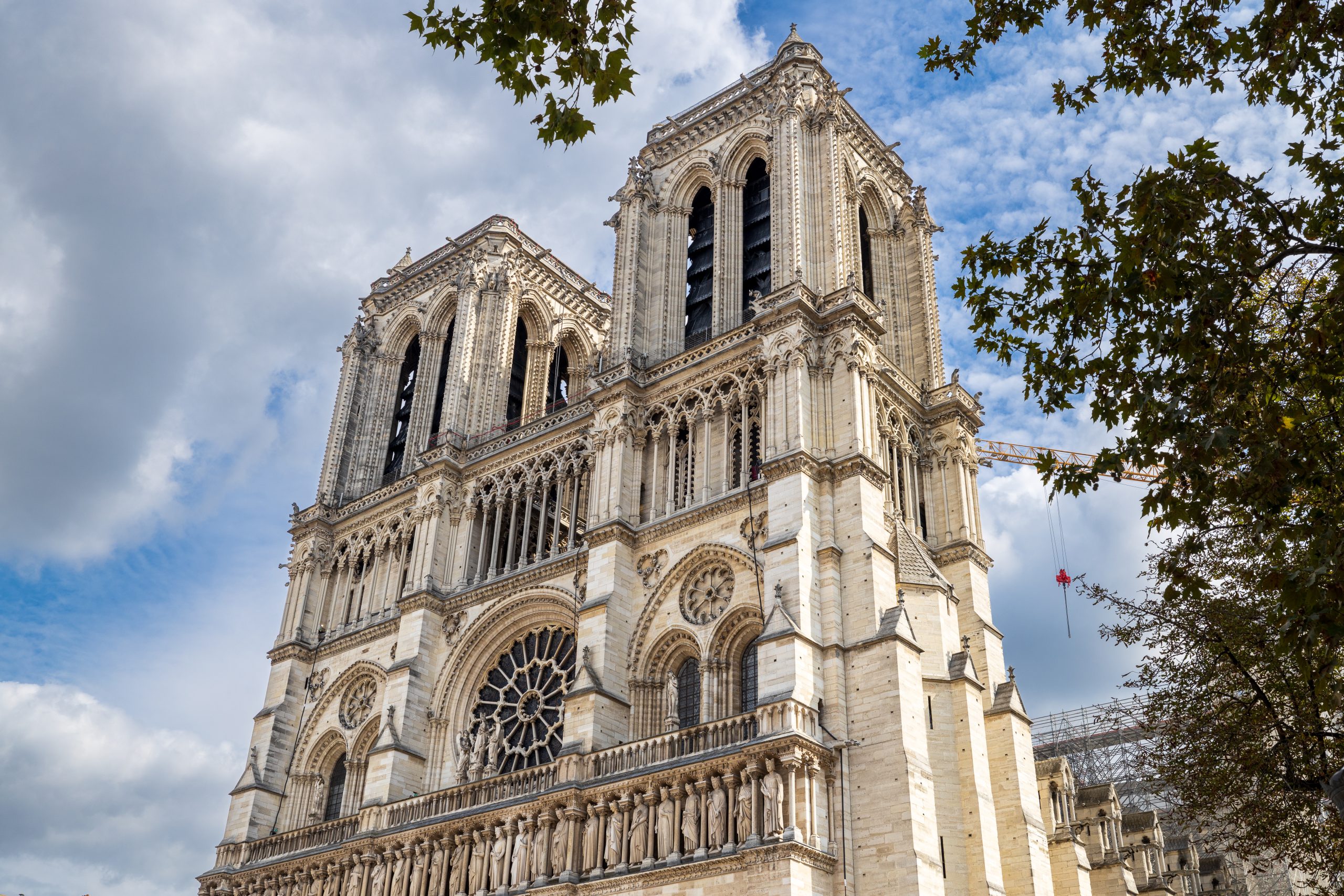
Notre-Dame de Paris was begun in 1163 under Bishop Maurice de Sully, and its twin west towers rise 69 m above the parvis. After the fire of 15 April 2019 destroyed the roof and spire, a new spire was put in place in December 2023 and the cathedral reopened on 7 December 2024. A few hundred metres west, the Sainte-Chapelle was built for Louis IX and consecrated in 1248 to house the Crown of Thorns.
The west front of Notre-Dame de Paris, with its twin towers and rose window, framed by leaves
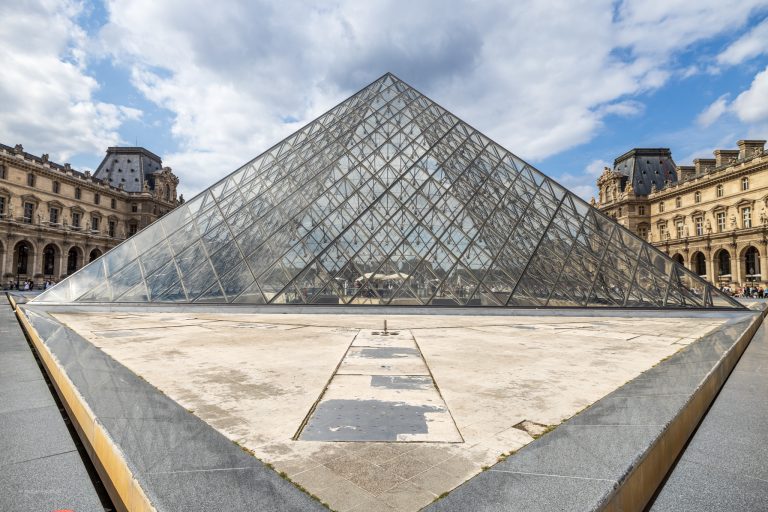
The Louvre and the Musée d'Orsay
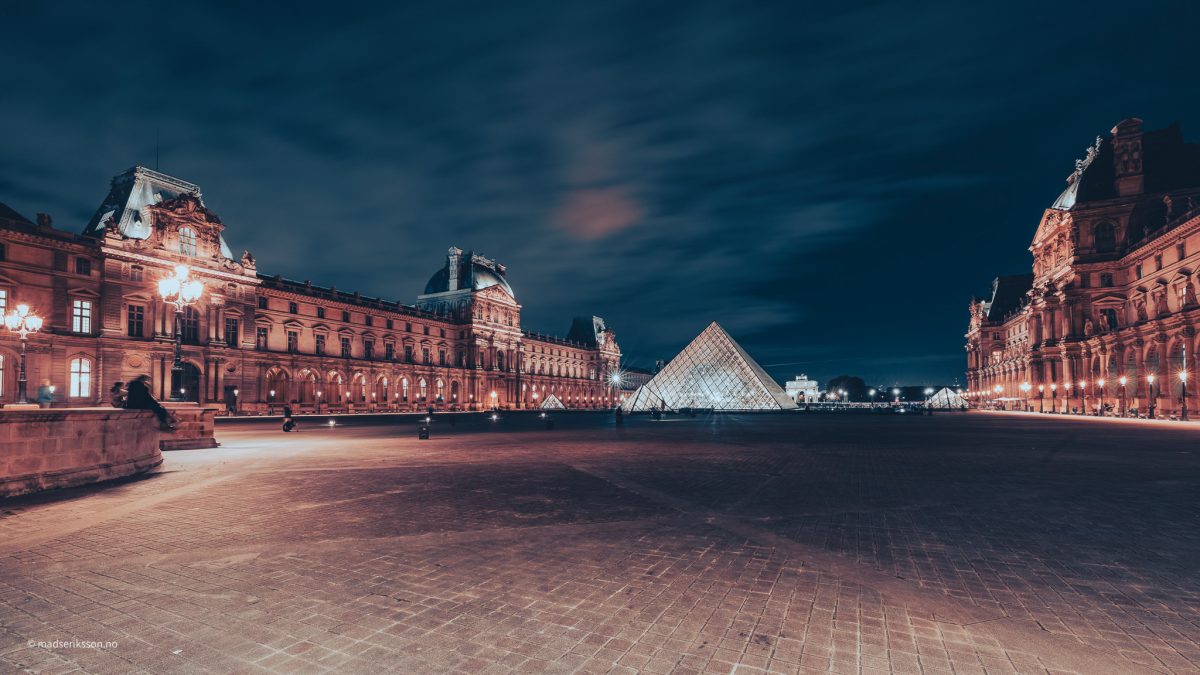
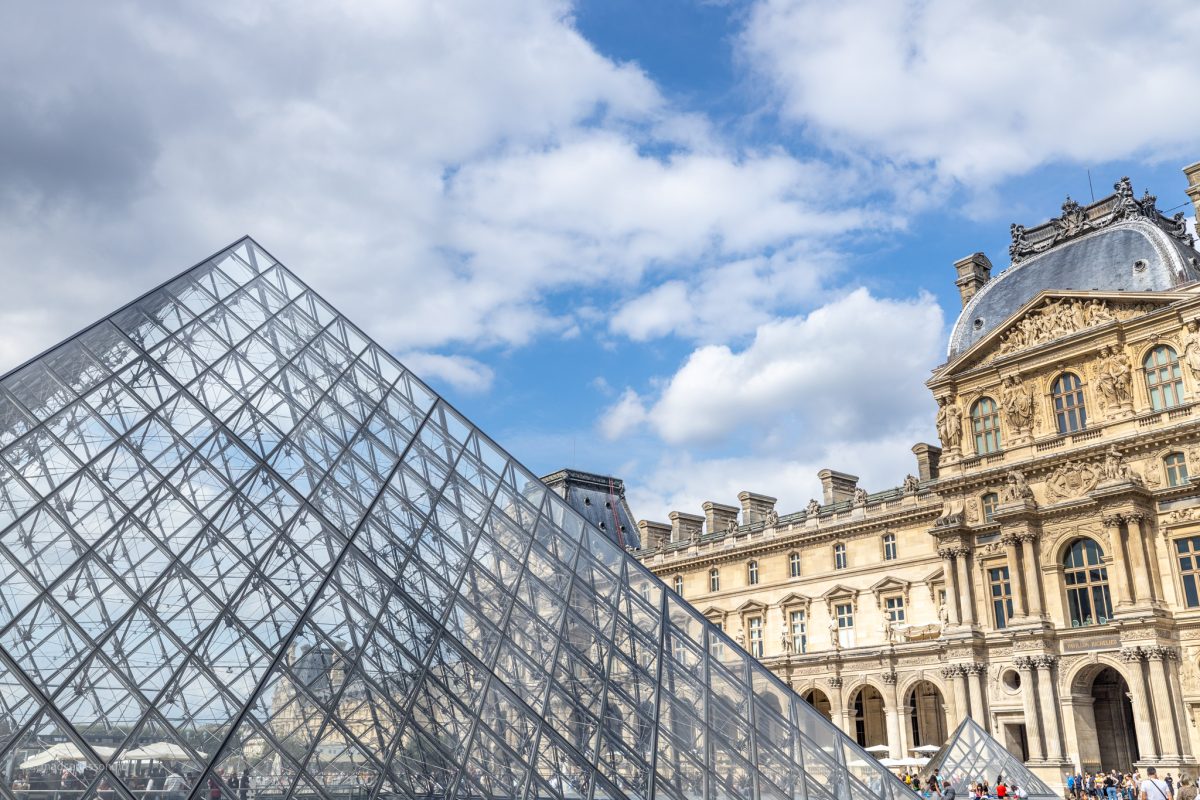
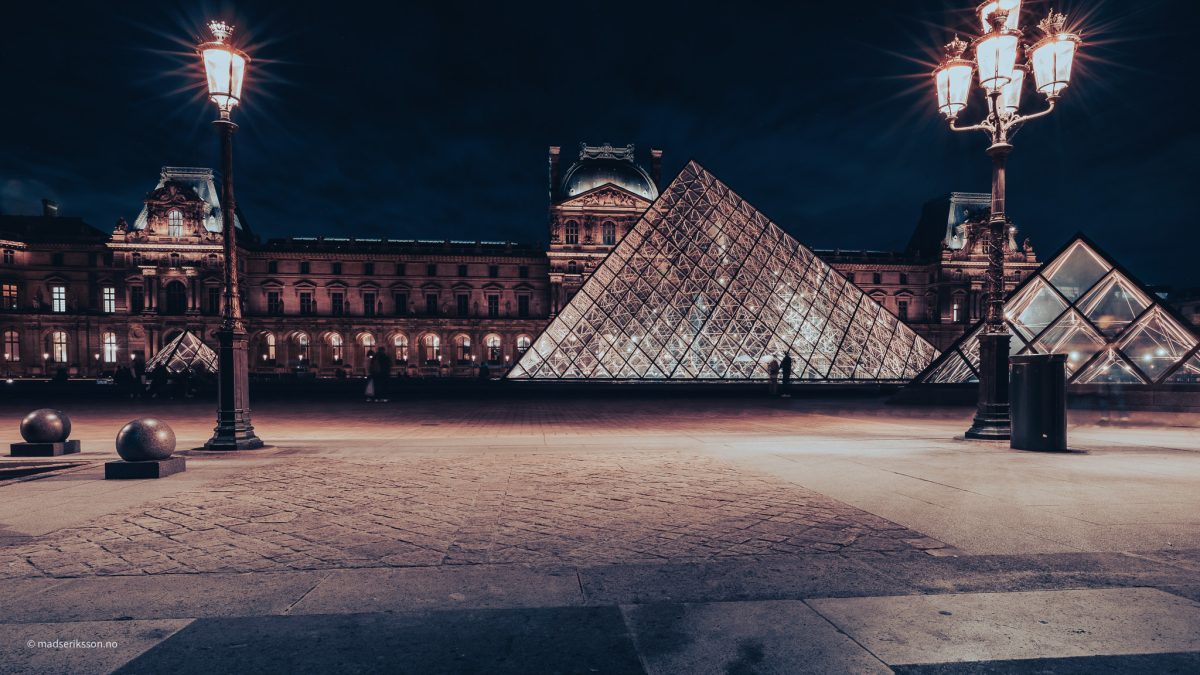
The Louvre began as a fortress in the late 12th century, became a royal palace and opened as a public museum in 1793. I. M. Pei's glass pyramid of 1989, 21.6 m high on a 34 m square base, serves as the main entrance in the Cour Napoléon. Across the Seine, the Musée d'Orsay occupies the former Gare d'Orsay, a railway station built for the Exposition Universelle of 1900 and opened as a museum in 1986.
The Louvre Pyramid seen from the edge of an empty pool in the Cour Napoléon
Read more: Louvre Museum, Paris: From Medieval Fortress to the World’s Most Visited Museum
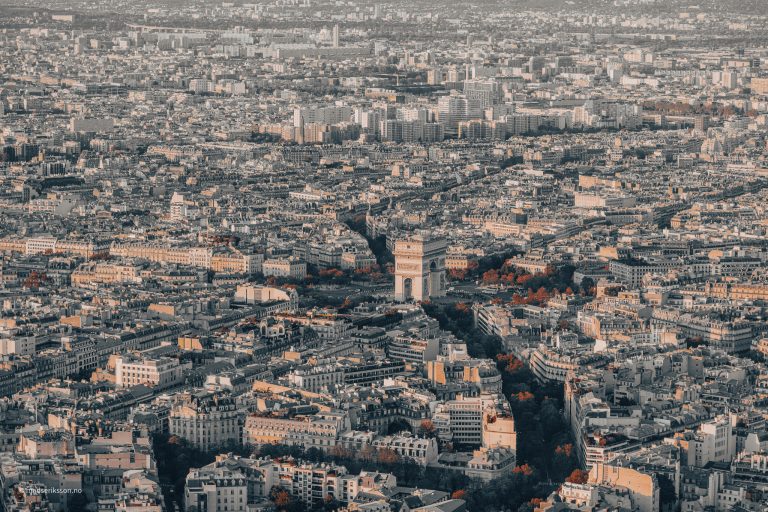
From the Concorde to the Arc de Triomphe
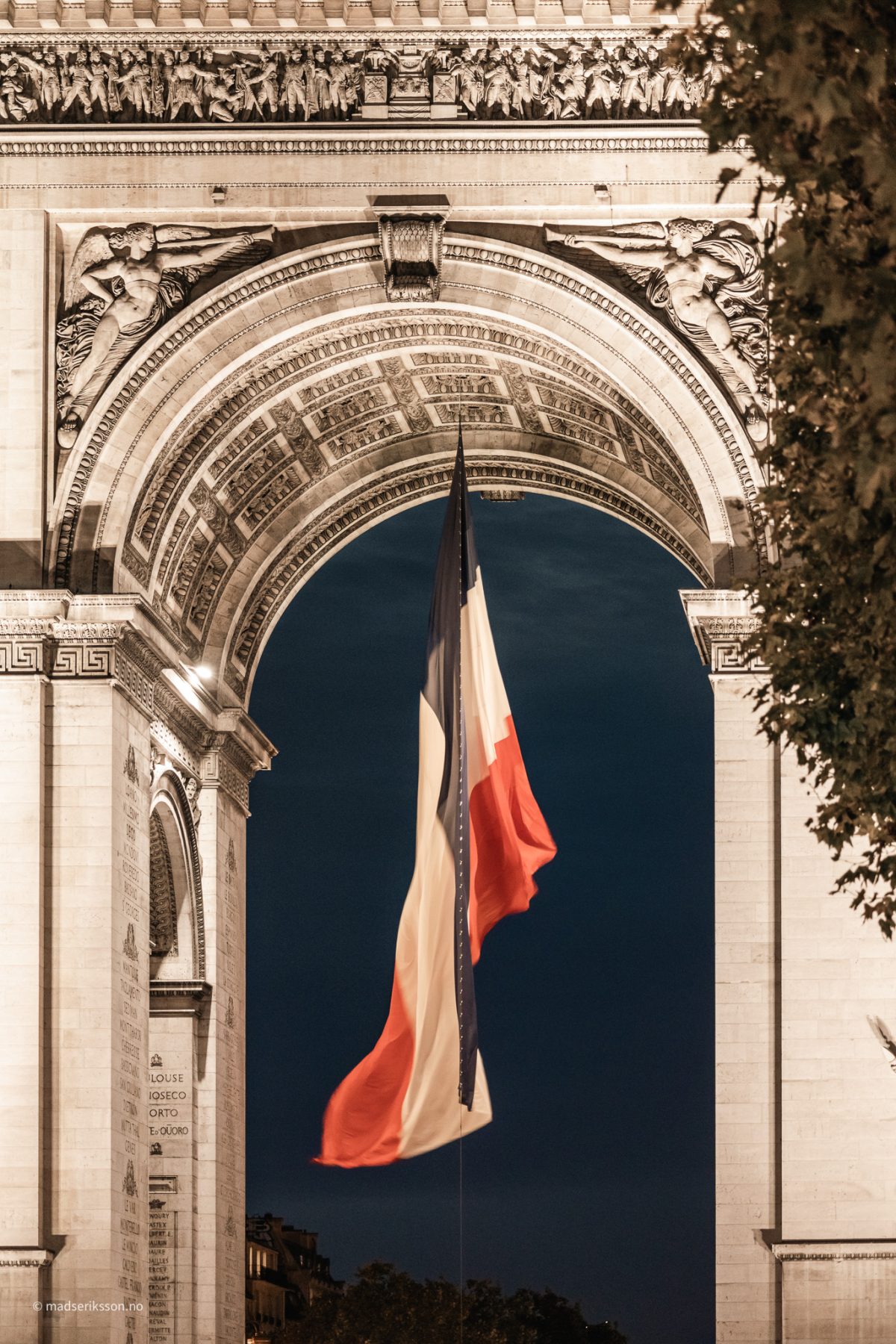
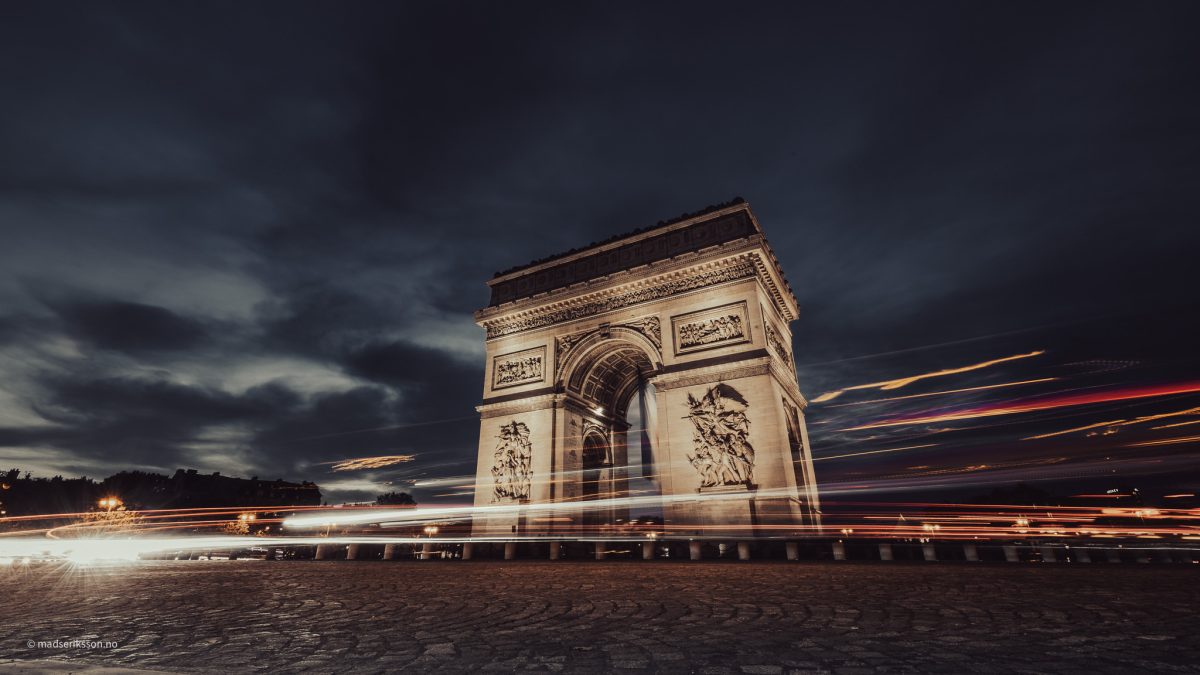
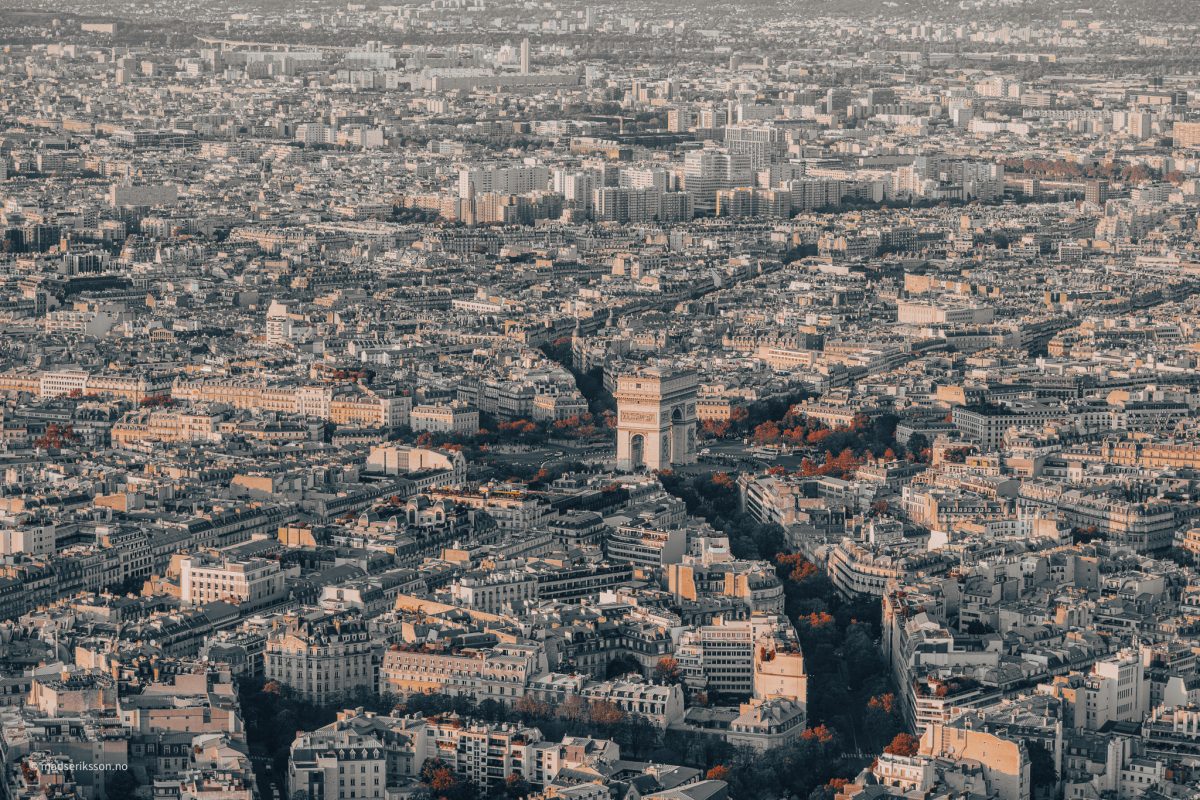
The Champs-Élysées runs 1.9 km from the Place de la Concorde, with its 23 m Luxor Obelisk raised in 1836, to the Place Charles de Gaulle, where twelve avenues meet. The Arc de Triomphe at its head was commissioned by Napoleon after Austerlitz, begun in 1806 and inaugurated in 1836; it stands 50 m high and 45 m wide above the Tomb of the Unknown Soldier of 1921. The Grand Palais, built for the Exposition Universelle of 1900, reopened in June 2025 after a four-year restoration.
The Arc de Triomphe at the centre of its radiating avenues, seen from high above Paris
Read more: The Arc de Triomphe: A Monument to History and Valor
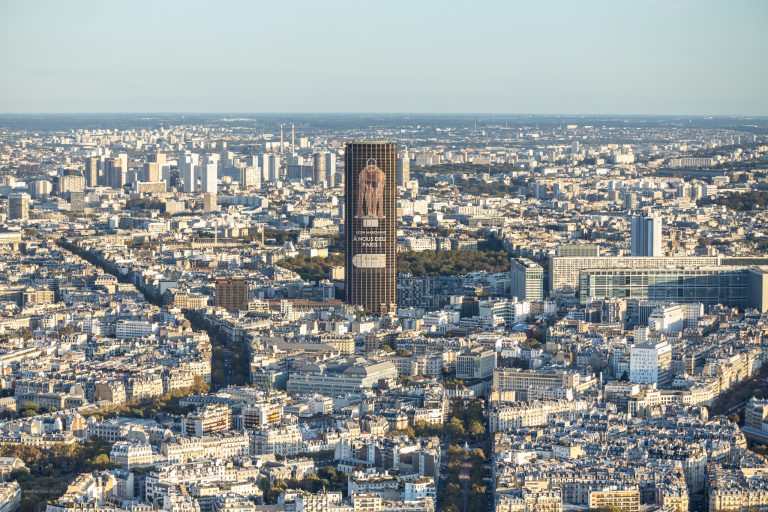
Les Invalides, Montparnasse and the Panthéon
Louis XIV founded the Hôtel des Invalides for wounded soldiers in 1670, and Jules Hardouin-Mansart's gilded dome, completed in 1706 and 107 m high, has held Napoleon's tomb since his remains returned in 1840. Tour Montparnasse, completed in 1973, is 210 m high and still the tallest building inside the city limits. To the east, Soufflot's Panthéon of 1758–1790 rises 83 m above the Latin Quarter, beside the 23 ha Jardin du Luxembourg.
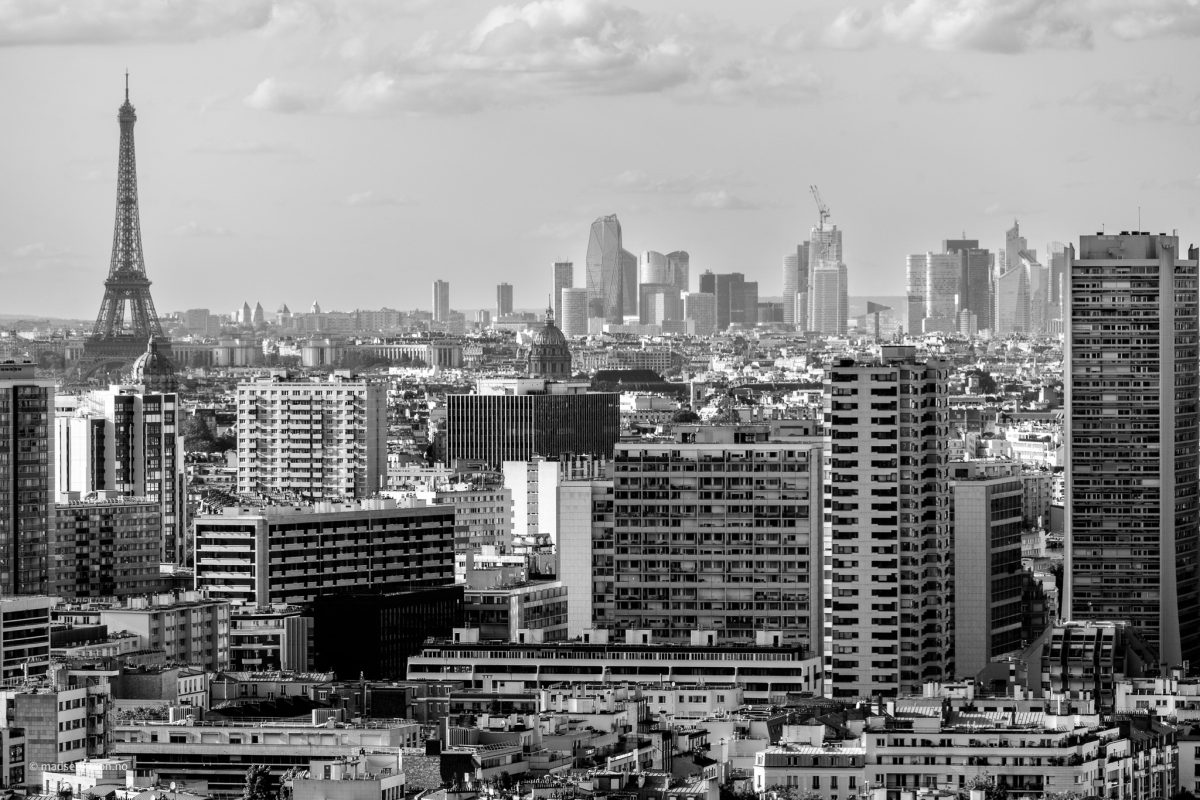
Paris spread out below the Eiffel Tower, with Tour Montparnasse rising above the rooftops
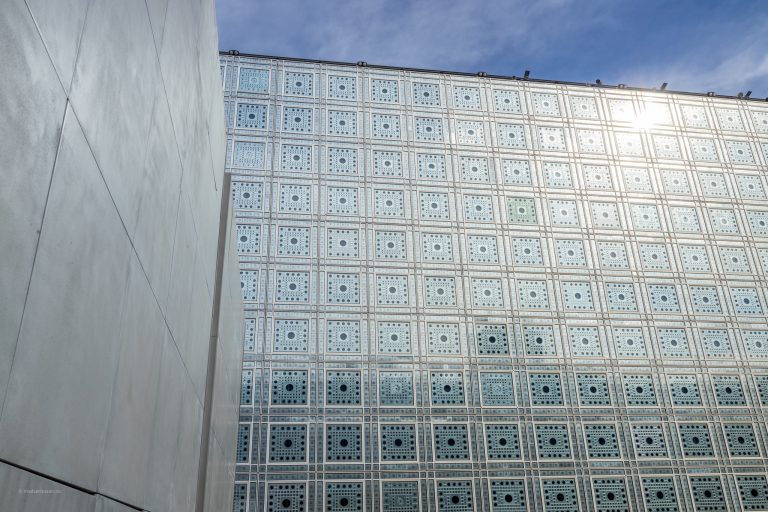
Institut du Monde Arabe, Le Monde and the BnF
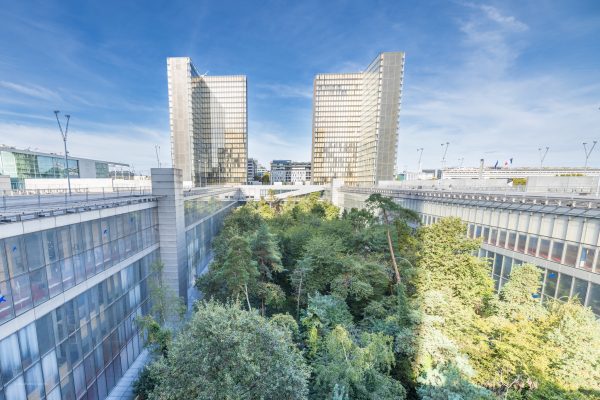
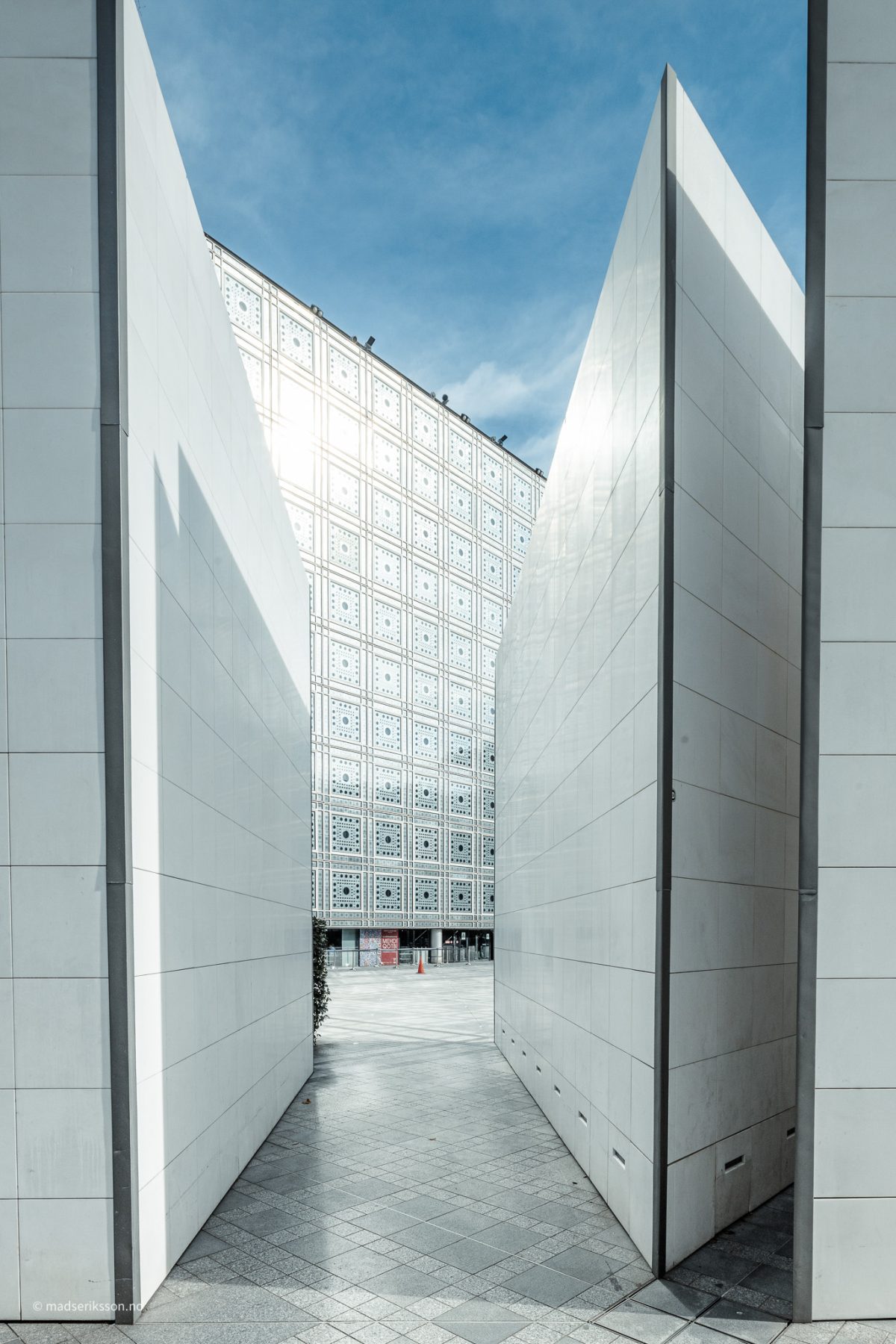
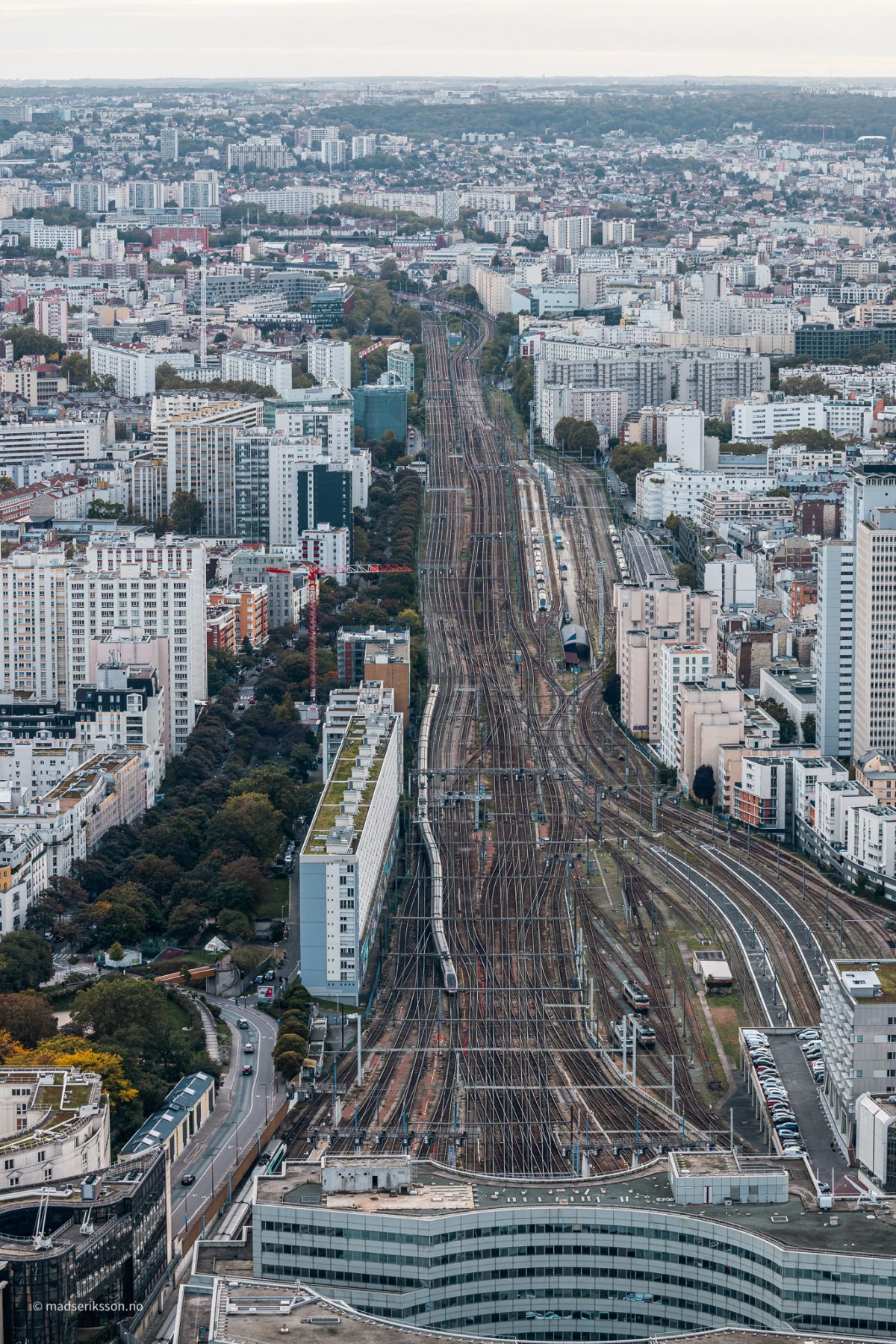
Jean Nouvel and Architecture-Studio's Institut du Monde Arabe opened in 1987, its south-west façade fitted with 240 light-sensitive metal apertures. Upstream, Snøhetta's Le Monde Group headquarters, completed in 2020, spans 80 m across the railway approach to the Gare d'Austerlitz. Further east, Dominique Perrault's Bibliothèque nationale de France opened in 1996 with four 79 m L-shaped glass towers designed to resemble open books.
The south façade of the Institut du Monde Arabe in Paris, its metal light-sensitive apertures catching the sun
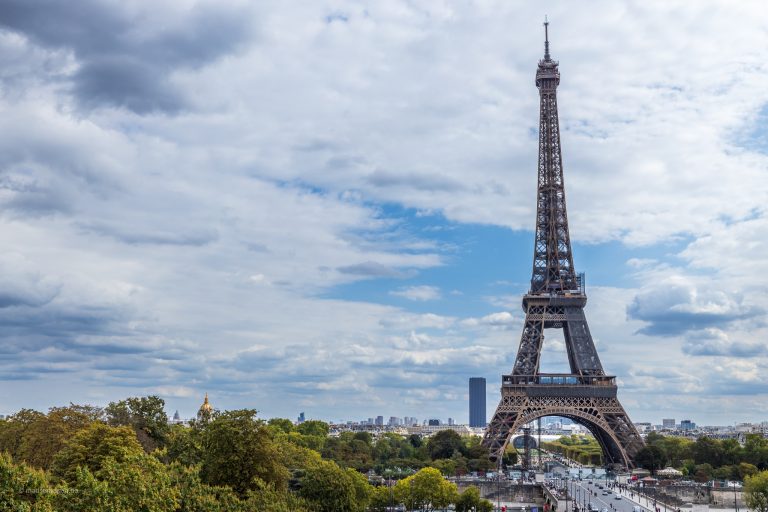
The Eiffel Tower
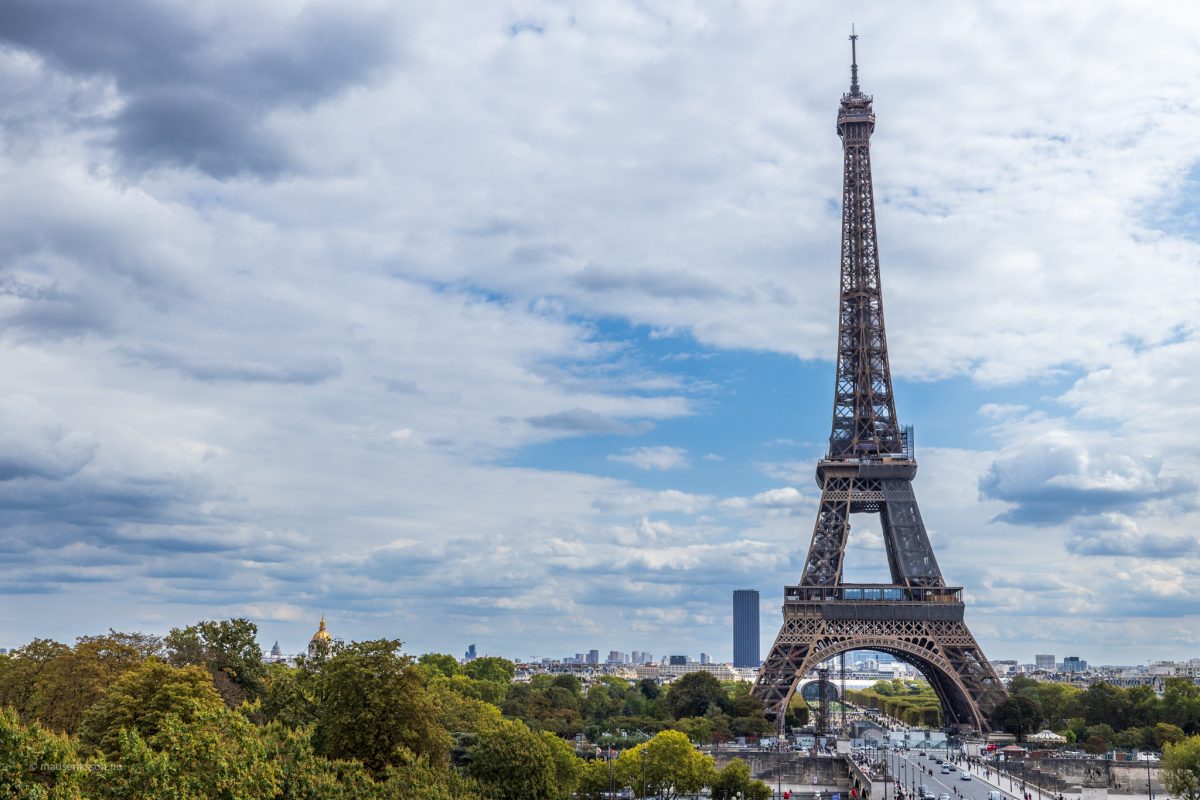
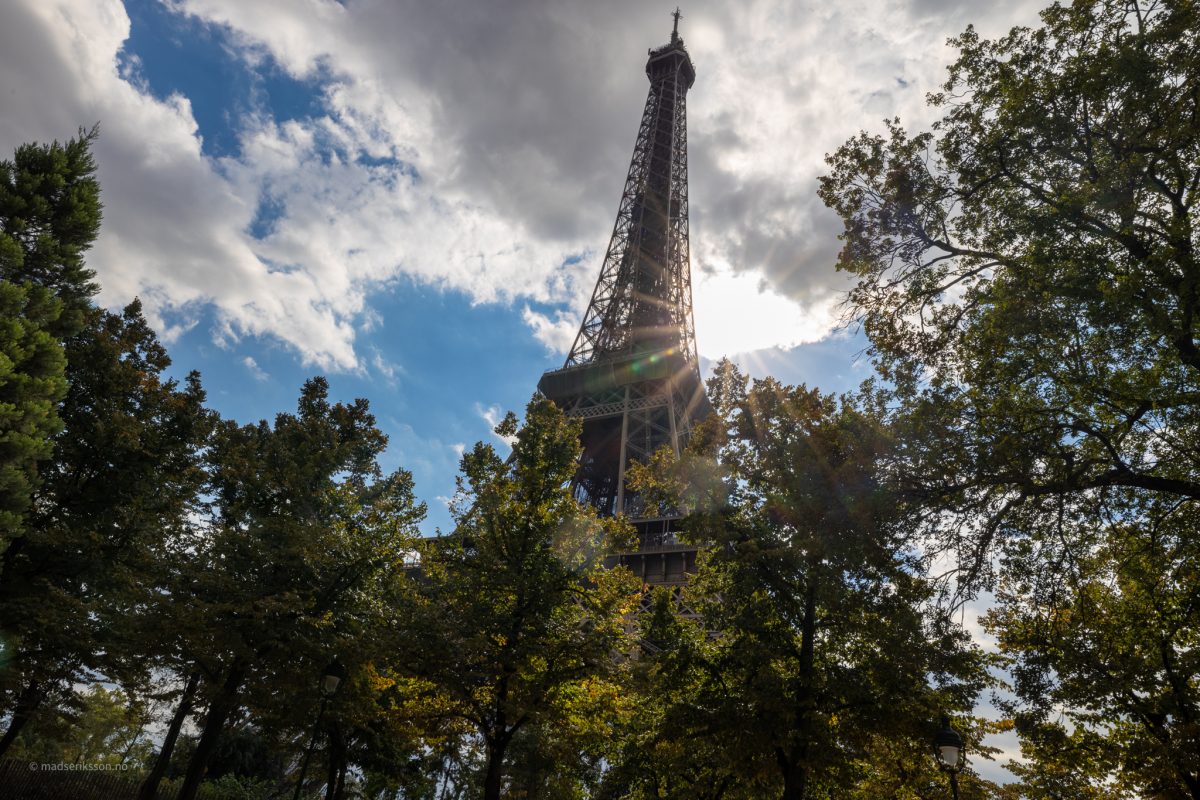
Gustave Eiffel's company built the tower between January 1887 and March 1889 for the Exposition Universelle, on a square base 125 m across. Its platforms stand at 57 m and 116 m, the top level at 276 m, and a digital radio antenna added in 2022 brought the total height to 330 m. The esplanade of the Palais de Chaillot at the Trocadéro, across the Pont d'Iéna, gives the classic full view of the tower.
The Eiffel Tower rising above the trees of the Trocadéro gardens under a sky of broken cloud
Read more: The Eiffel Tower: Built for a Fair, Saved by the Radio
Sacré-Cœur at blue hour
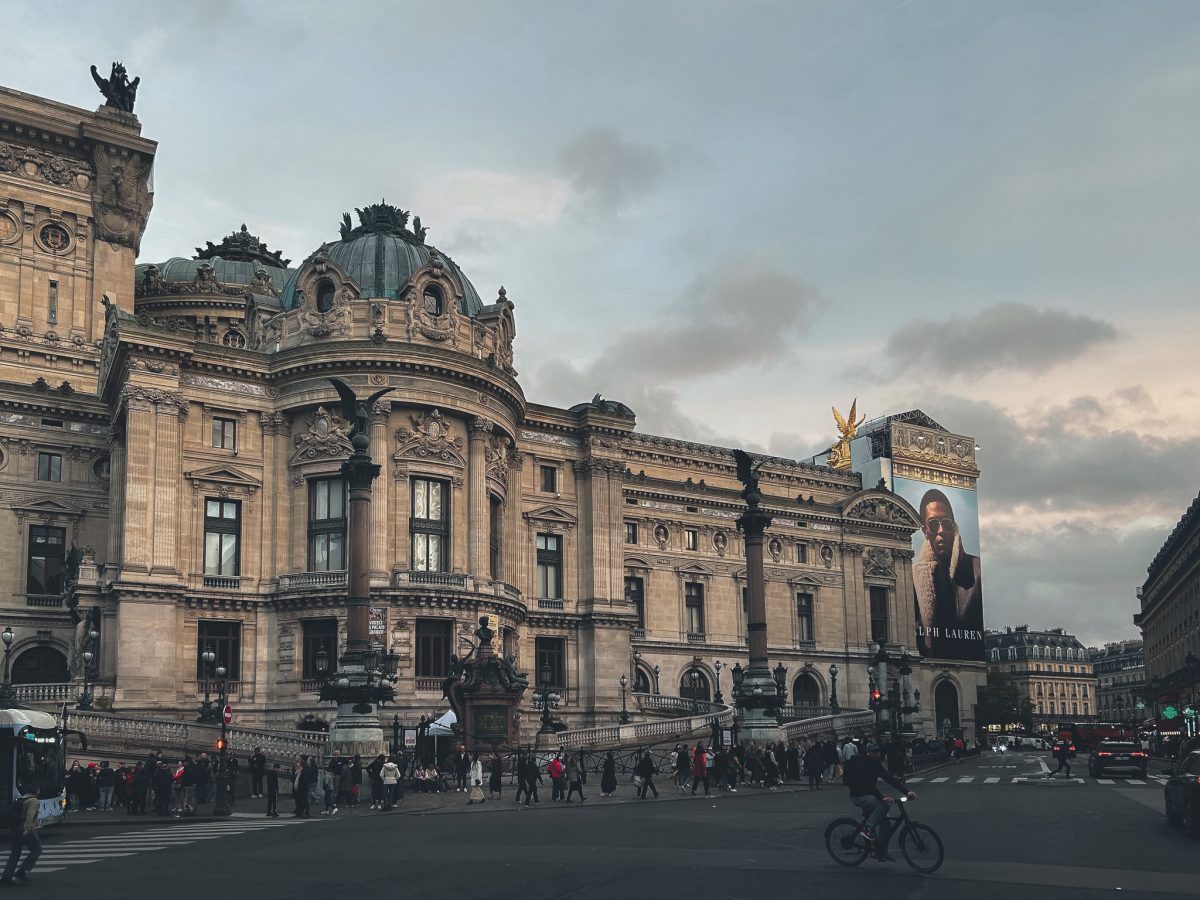
The Basilica of Sacré-Cœur stands on the hill of Montmartre, about 130 m above sea level and the highest point in Paris. Paul Abadie's design was chosen from 77 entries; work began in 1875, the basilica was completed in 1914 and consecrated in 1919, and its dome rises about 83 m. Below the hill to the south lies the Palais Garnier, the opera house opened in 1875.
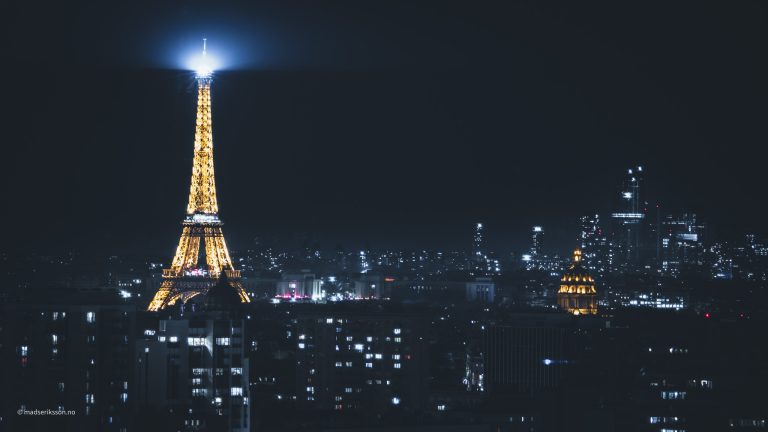
The Eiffel Tower at night
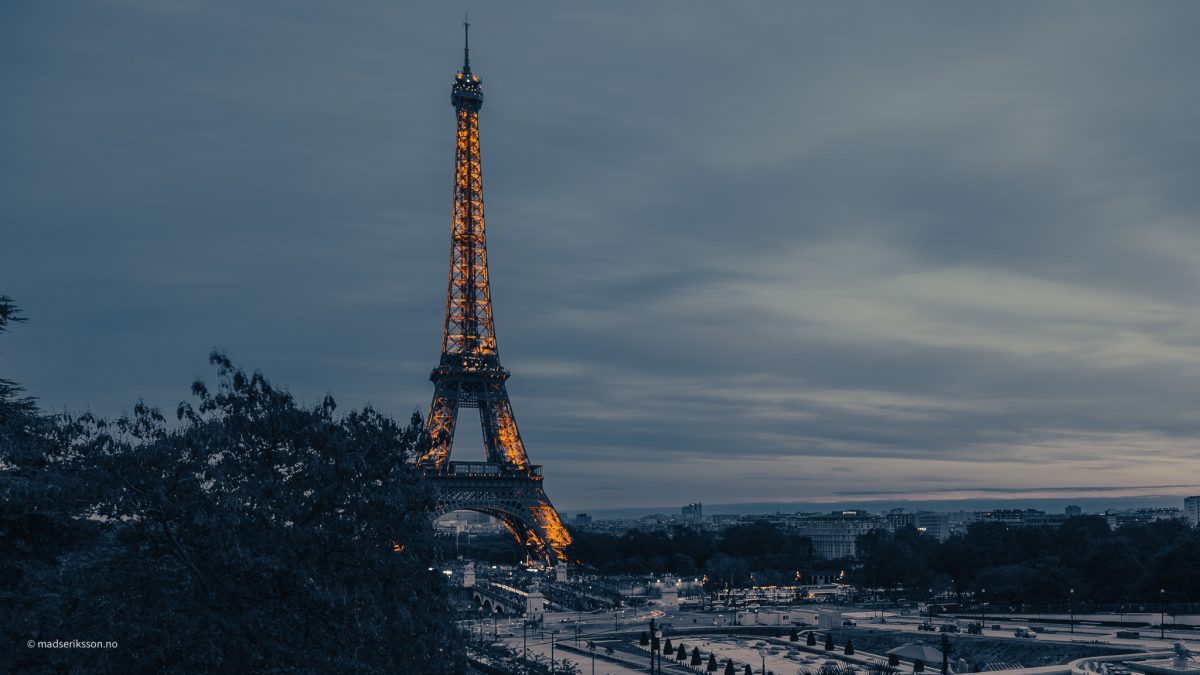
After dark the Eiffel Tower is floodlit in gold, and for five minutes at the start of every hour about 20,000 flashing bulbs make it sparkle, a display first used for the millennium celebrations and in place again since 2003. The gilded dome of Les Invalides and the boulevards of the 7th arrondissement are lit beside it, seen here from the direction of Tour Montparnasse.
Cityscape of Paris
3D model © 2026 madseriksson.no · Photographs © madseriksson.no. Buildings and heights: © OpenStreetMap contributors (ODbL), via OpenMapTiles. Ground imagery: Sentinel-2 cloudless 2023 by EOX IT Services GmbH (contains modified Copernicus Sentinel data 2023; CC BY 4.0). Heights are approximate where OpenStreetMap has no measured value; sun positions are approximate.
The Iron Tower and the Great Boulevard
Paris’s most iconic structures were both built to be temporary — and both became permanent by becoming irreplaceable
The Eiffel Tower was built in two years and two months, between January 1887 and March 1889, for the Exposition Universelle celebrating the centenary of the French Revolution. Gustave Eiffel’s iron lattice structure was the tallest man-made structure in the world at the time — 300 metres, later extended to 330 metres with the addition of a broadcasting antenna. It was supposed to be dismantled after 20 years; it was kept because it proved invaluable as a radio transmitter. Today it is the most visited paid monument in the world, receiving approximately 7 million visitors per year. The best view of the tower is not from below but from the Trocadéro esplanade across the Seine to the north, where the full proportions are visible and the Champ de Mars stretches behind it toward the École Militaire.
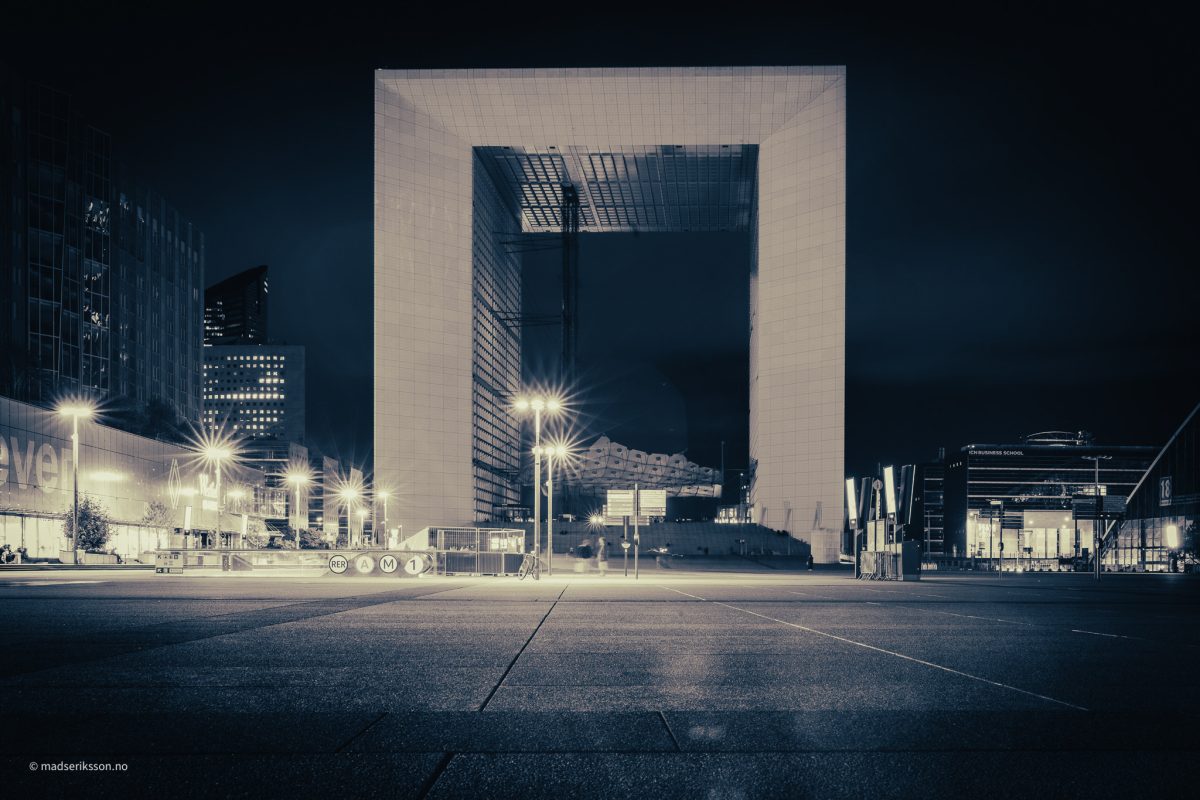
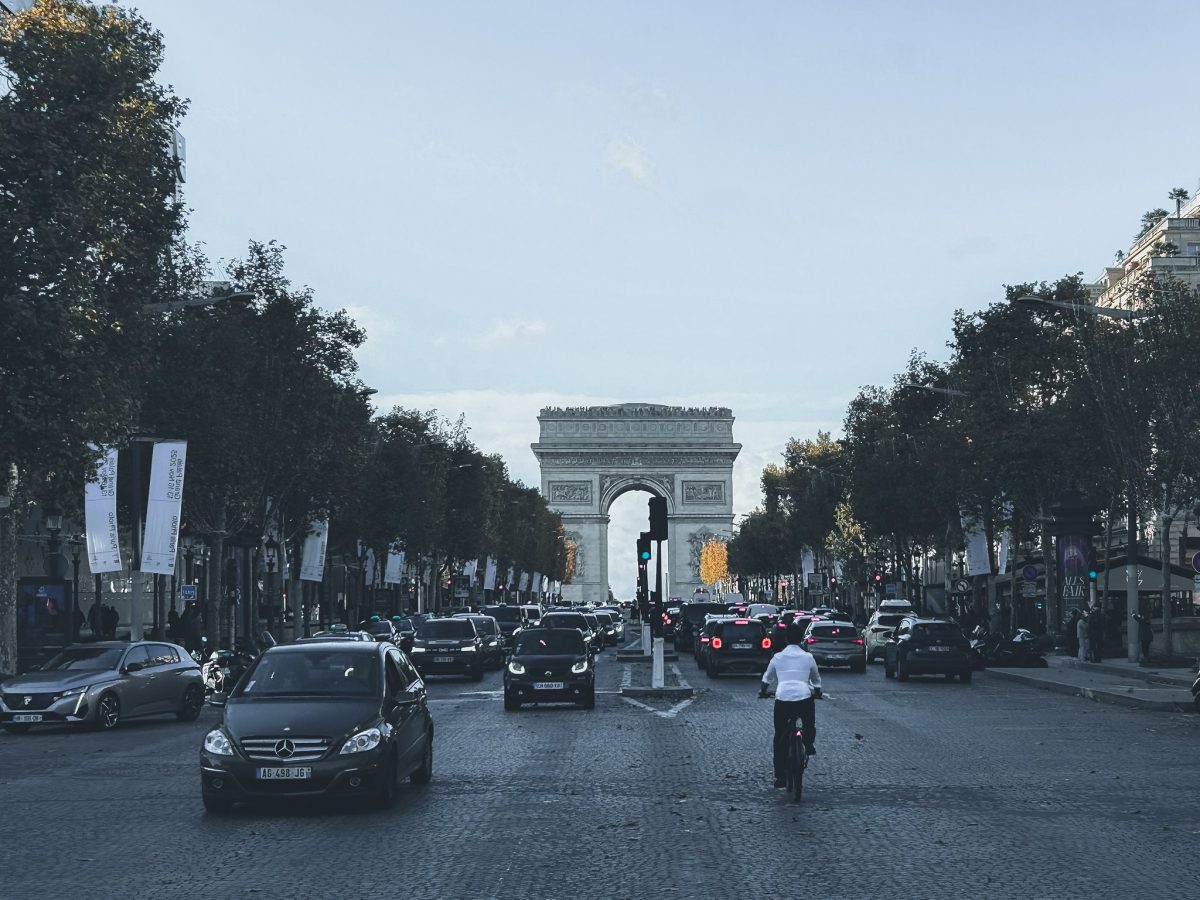
The Champs-Élysées runs 1.9 kilometres from the Place de la Concorde to the Place Charles de Gaulle, where the Arc de Triomphe stands at the apex of twelve converging avenues. Napoleon commissioned the Arc in 1806, after the victory at Austerlitz, and it was completed in 1836 — 15 years after his death. It stands 50 metres tall and 45 metres wide, and beneath it burns the Flame of the Unknown Soldier, lit in 1920 and never extinguished. The view from the top, looking down the twelve avenues that radiate from the place like the spokes of a wheel, is one of the great urban perspectives in Europe — and at the centre of the western axis, 8 kilometres away, the Grande Arche de la Défense frames the view on the horizon.
When Gustave Eiffel’s tower was completed in 1889, a petition signed by 300 artists and writers described it as a “monstrous blot” on Paris. Within a decade it had become the symbol of the city.
The Champs-Élysées itself is a street of two registers. The lower half, approaching the Concorde, contains the Grand Palais and the Petit Palais — both built for the 1900 World’s Fair, both recently restored, both housing exceptional permanent and temporary exhibitions. The upper half, approaching the Arc, has been given over largely to flagship retail, cinemas and restaurants. On 14 July — Bastille Day — the avenue hosts the largest military parade in Europe, with aircraft trailing the colours of the tricolore overhead. The Place de la Concorde at its eastern end, where Louis XVI was guillotined in 1793, is one of the largest public squares in Europe and anchors the great east-west axis of Paris from the Louvre to La Défense.
The Louvre and the Right Bank — Empires of Art and History
The most visited museum in the world, the oldest planned square in Paris, and the neighbourhood that survived Haussmann intact
The Louvre began as a medieval fortress in the 12th century, became a royal palace, and opened as a public museum in 1793 during the Revolution. Today it covers 72,735 square metres of exhibition space across three wings — Richelieu, Sully and Denon — and holds a permanent collection of approximately 380,000 objects, of which around 35,000 are on display. The scale is genuinely difficult to comprehend: a visitor spending 30 seconds in front of every displayed work would need more than two weeks. The famous pieces — the Mona Lisa, the Venus de Milo, Winged Victory of Samothrace — are worth seeing, but the Louvre rewards most those who wander beyond the obligatory rooms into the Egyptian antiquities, the Mesopotamian collections, or the vast halls of French painting from the 17th and 18th centuries.
Le Marais, east of the Centre Pompidou, is the neighbourhood that Haussmann’s demolitions largely spared — preserving a dense network of medieval lanes, Renaissance hôtels particuliers (private mansions) and the Place des Vosges, the oldest planned square in Paris. Built by Henry IV and completed in 1612, the Place des Vosges is a perfect square of 36 symmetrical pavilions in red brick with stone quoins, arcaded at ground level, enclosing a formal garden with a central fountain. Victor Hugo lived at number 6 for 16 years; the apartment is now a museum. The Marais is also the historic centre of Paris’s Jewish community, concentrated in the streets around the Rue des Rosiers, and the heart of the city’s LGBTQ+ community.
The Louvre holds 380,000 objects. If you spent 30 seconds in front of every displayed work, the visit would take over two weeks. Most people walk past the Mona Lisa and leave.
The Centre Pompidou, opened in 1977 and designed by Renzo Piano and Richard Rogers, placed all its infrastructure — escalators, ducts, pipes, electrical conduits — on the exterior, colour-coded by function. It remains one of the most radical building designs in Europe and holds Europe’s largest collection of modern and contemporary art. The escalators rising diagonally across the façade give a progressive panoramic view over the rooftops of Paris. On the Île de la Cité, the Sainte-Chapelle — a royal chapel built between 1242 and 1248 for Louis IX to house a relic of the Crown of Thorns — contains 15 extraordinary stained glass windows covering 600 square metres, which on a clear day fill the upper chapel with coloured light of almost hallucinatory intensity.
The Left Bank and Montmartre — Intellect, Art and the View from the Hill
The cafés where existentialism was argued out in the 1940s, the Gothic cathedral reopened after five years of restoration, and the hilltop basilica above the rooftops
Notre-Dame de Paris — the Cathedral of Our Lady — was begun in 1163 under Bishop Maurice de Sully and largely completed by 1345, though modifications continued for centuries. It stands on the Île de la Cité in the Seine and is one of the finest examples of French Gothic architecture in existence: the flying buttresses that ring the apse, the three rose windows (each approximately 13 metres in diameter), and the twin towers that define the western façade have influenced cathedral architecture across Europe. On 15 April 2019, a fire broke out in the cathedral during renovation work; the spire collapsed within the hour, and the lead-sheathed oak roof was almost entirely destroyed. The cathedral reopened in December 2024 after a restoration effort involving specialists from across France and the world. It is newly worth visiting: the interior, cleaned and restored, shows medieval Gothic space with a clarity and luminosity it has not had for decades.
The Left Bank — the Rive Gauche, south of the Seine — has been the intellectual quarter of Paris since the medieval university of the Sorbonne established itself in the Latin Quarter in the 13th century. The cafés of Saint-Germain-des-Prés — Les Deux Magots, Café de Flore, the Brasserie Lipp — are where Jean-Paul Sartre, Simone de Beauvoir and Albert Camus wrote and argued in the 1940s and 1950s, and where Picasso, Hemingway and Fitzgerald had preceded them in the 1920s. The cafés are expensive and tourist-heavy, but the quality is maintained and the setting is genuine. The Jardin du Luxembourg, 23 hectares of formal French garden in the 6th arrondissement, is one of the finest public spaces in Paris: gravel paths, chestnut trees, the Medici Fountain, and Parisians reading in metal chairs around the central octagonal basin.
Notre-Dame de Paris reopened in December 2024. The restoration took five years, involved hundreds of specialist craftspeople, and produced an interior of extraordinary clarity — perhaps the most beautiful the cathedral has been in a century.
Montmartre rises 130 metres above the city in the 18th arrondissement, topped by the white Byzantine basilica of Sacré-Cœur, completed in 1914 after 38 years of construction. The steps and esplanade below the basilica give the broadest panoramic view over Paris available without paying for an observation deck. The neighbourhood that surrounds it — the village of Montmartre that Toulouse-Lautrec, Picasso, Modigliani and Utrillo worked in from the 1880s through the 1920s — still has cobbled lanes, a vineyard, artist studios and the Place du Tertre where portrait painters have worked continuously for over a century. The tourist density is high but the neighbourhood has retained its physical character, and the streets around the Rue Lepic early on a Sunday morning have the quiet of a provincial village.
The French Table — Bread, Butter and the Long Lunch
Paris invented the restaurant, the tasting menu and the Michelin Guide — and still does the baguette better than anywhere else
The French baguette is protected by a 1993 decree specifying that a traditional baguette de tradition may contain only flour, water, salt and yeast — no additives, no improvers, no frozen dough. In Paris, approximately 1,200 boulangeries compete to produce it, and the best among them enter the Grand Prix de la Baguette de la Ville de Paris, an annual competition whose winner earns the right to supply the Élysée Palace for a year. The difference between a good baguette and a great one is perceptible: the crust shatters, the crumb is open and slightly chewy, and the flavour is faintly acidic from the slow fermentation. The best is eaten within two hours of baking, standing outside the bakery, unadorned. Paris also added the traditional baguette to UNESCO’s Intangible Cultural Heritage list in 2022 — the first bread to receive such recognition.
The Paris bistro — small, neighbourhood-specific, with a handwritten menu on a chalkboard, a basket of bread on the table, and a short wine list organised by region — is one of the most durable institutions in French culinary life. The format is specific: you arrive, you are given bread and a carafe of water without asking, you order a starter and main (the two-course formule is typically excellent value at lunch), and you spend considerably longer at the table than you planned. The cooking is not ambitious but it is consistent: steak with butter and shallots, roast chicken, a salade aux lardons, a tart au citron from a supplier who has been providing it for a decade. The bill is always slightly lower than you expected.
The best baguette in Paris is eaten standing outside the boulangerie, within two hours of baking, unadorned. The annual competition to determine which bakery produces the finest sends the winner to supply the Élysée Palace.
Paris’s street markets operate daily across the city, and the best — the Marché d’Aligre in the 12th, the Marché Bastille on Boulevard Richard-Lenoir (Thursday and Sunday mornings), the Marché des Enfants Rouges in the Marais (the oldest covered market in Paris, dating to 1615) — are among the most concentrated expressions of French food culture available to a visitor. The cheese counters alone justify the visit: France produces over 1,000 varieties, and a good Paris fromager will offer 60 to 100 in peak condition at any given time. The correct approach to a Parisian fromagerie is to ask what is best this week, to accept the recommendation, and not to open the parcel until you are at the table.
«Paris is a city that has been admired for so long, and so enthusiastically, that it is easy to arrive slightly on guard against it — ready to find the cliché, the disappointment, the gap between reputation and reality. That gap is rarely where you expect it to be. The Eiffel Tower at night is more beautiful than photographs suggest. The bread is genuinely as good as people say. Notre-Dame, restored and reopened, is extraordinary. And at some point in the visit — crossing a bridge over the Seine at dusk, or sitting with a coffee in a Luxembourg Garden chair, or finding a room in the Louvre that the crowds have somehow missed — the city simply delivers, as it has been doing for eight hundred years.»
More in the same area
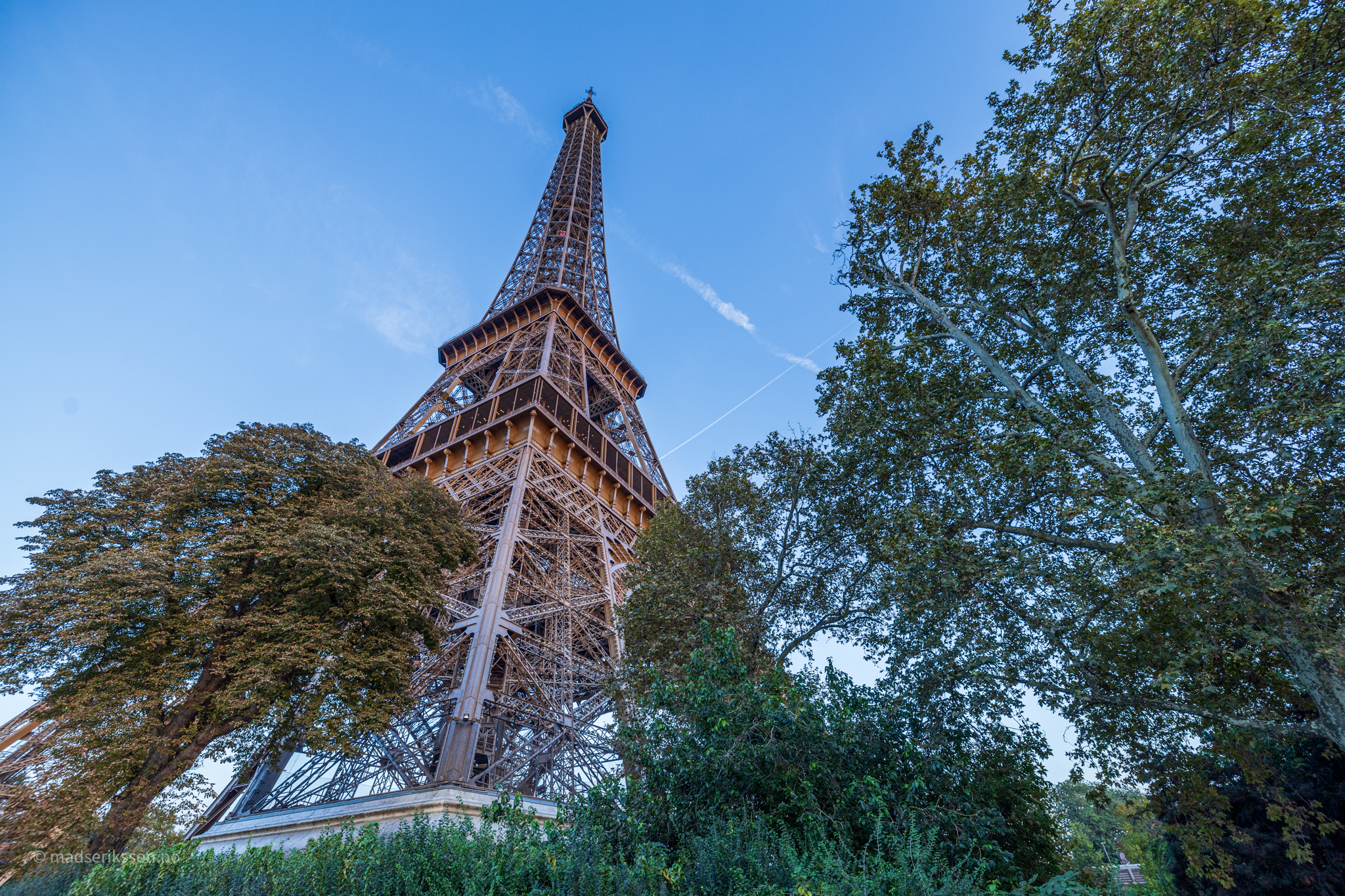 ArchitectureThe Eiffel Tower: Built for a Fair, Saved by the Radio
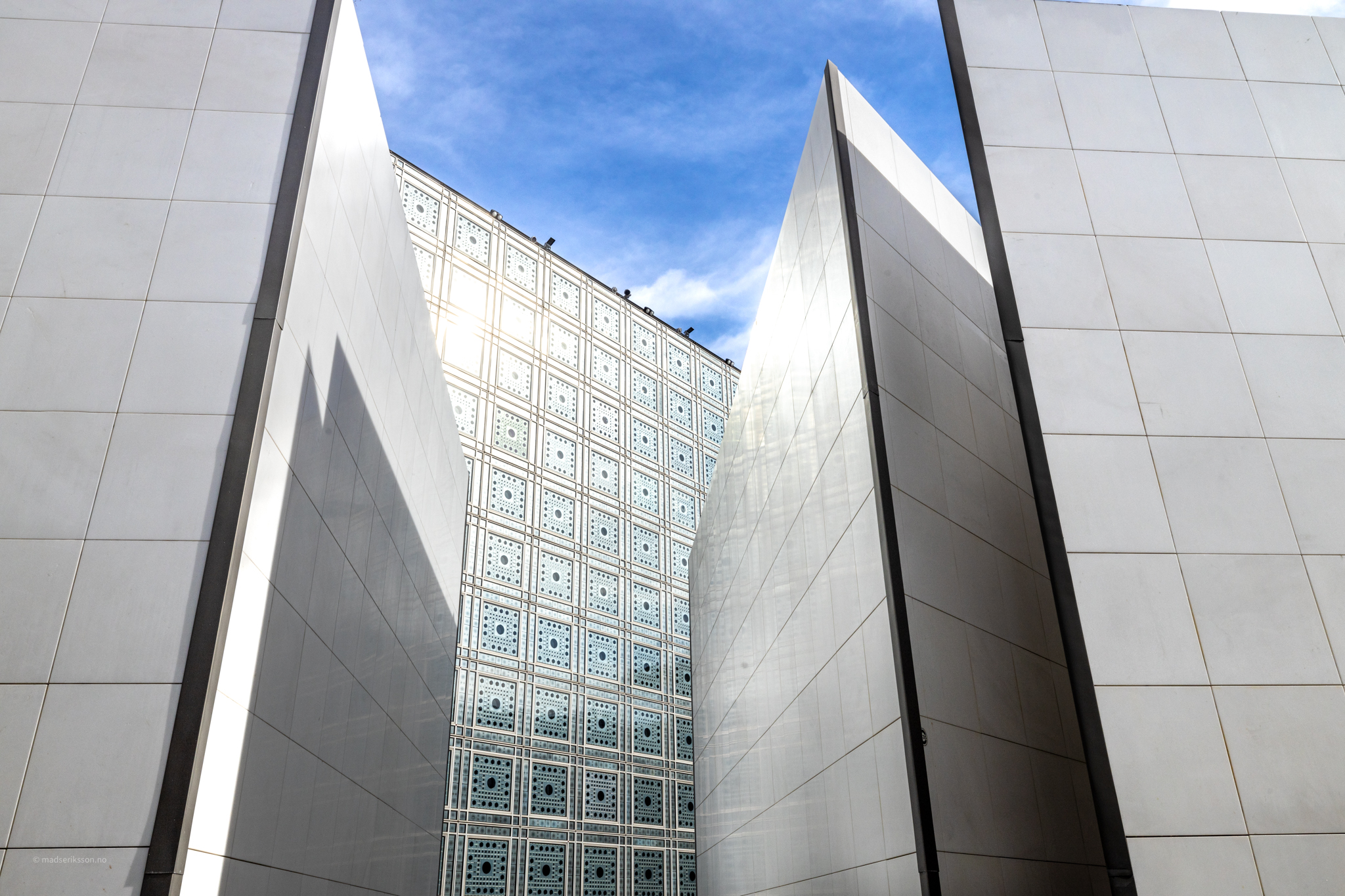 ArchitectureInstitut du Monde Arabe, Paris: Jean Nouvel’s Light-Sensitive Landmark on the Seine
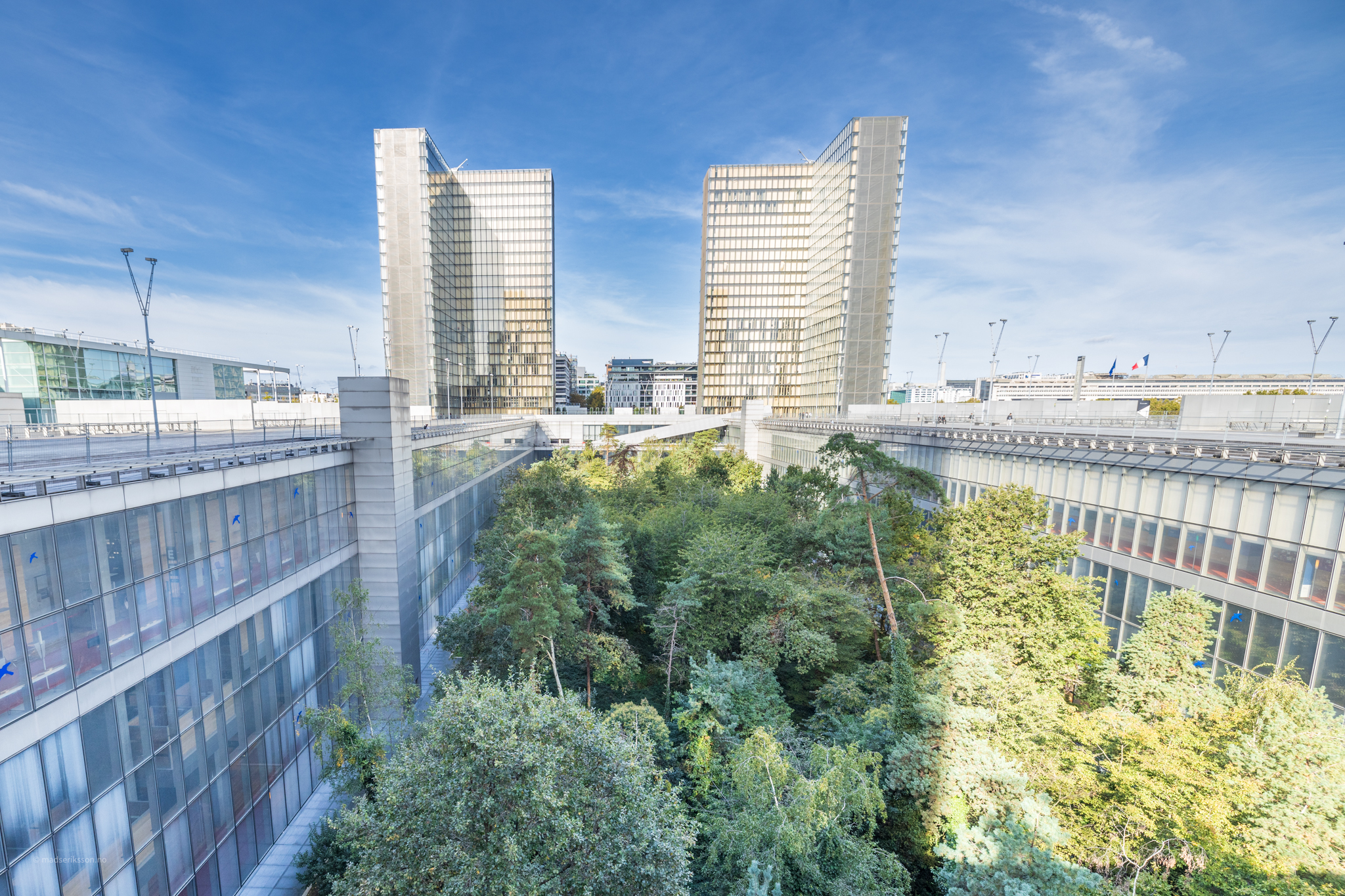 LibrariesBibliothèque nationale de France: Six Centuries of Books, Two Sites in Paris
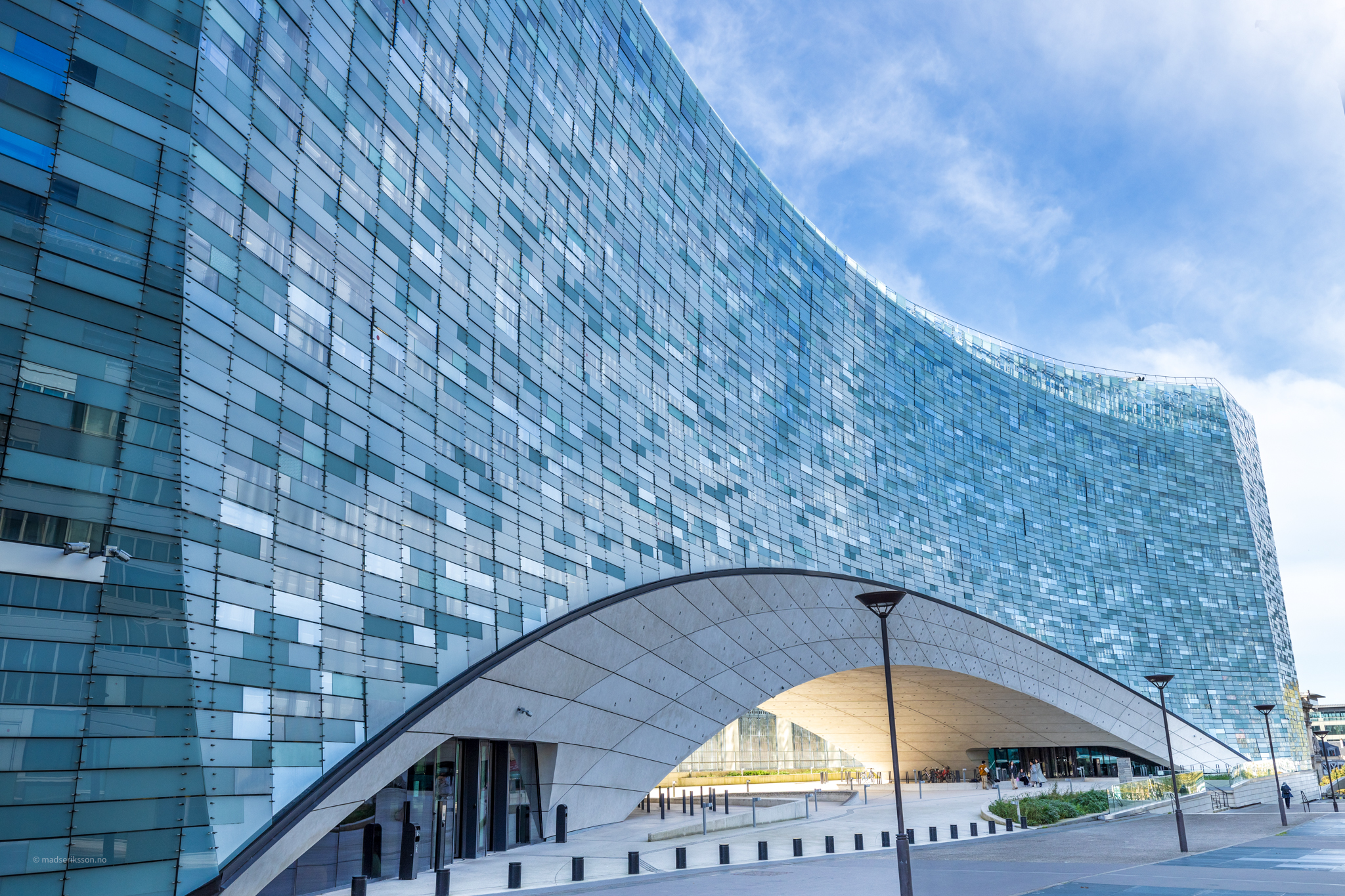 ArchitectureLe Monde Headquarters, Paris: Snøhetta’s Glass Bridge Over the Austerlitz Tracks
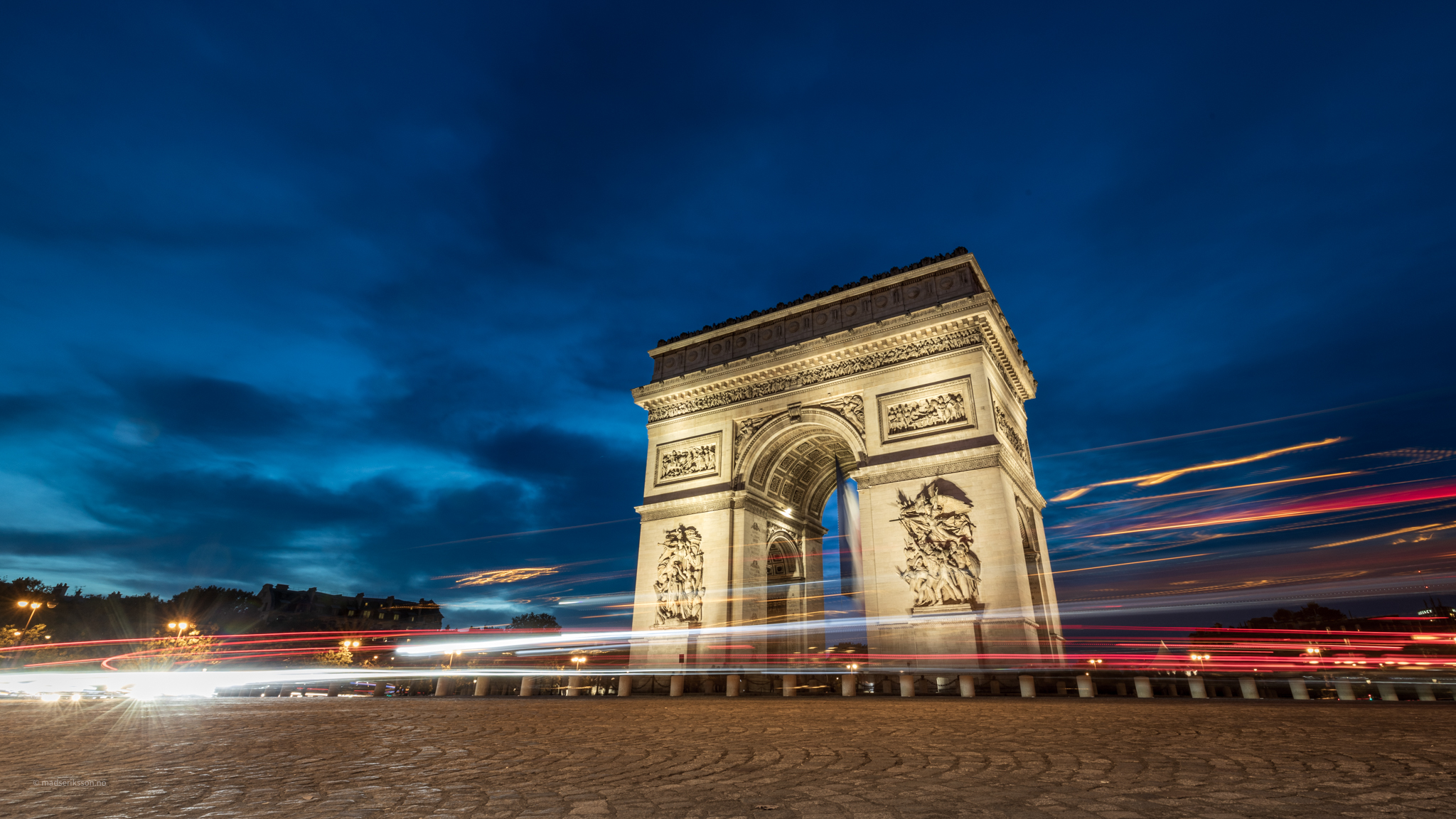 ArchitectureArc de Triomphe: Napoleon’s Arch, the Unknown Soldier and the View Down Twelve Avenues
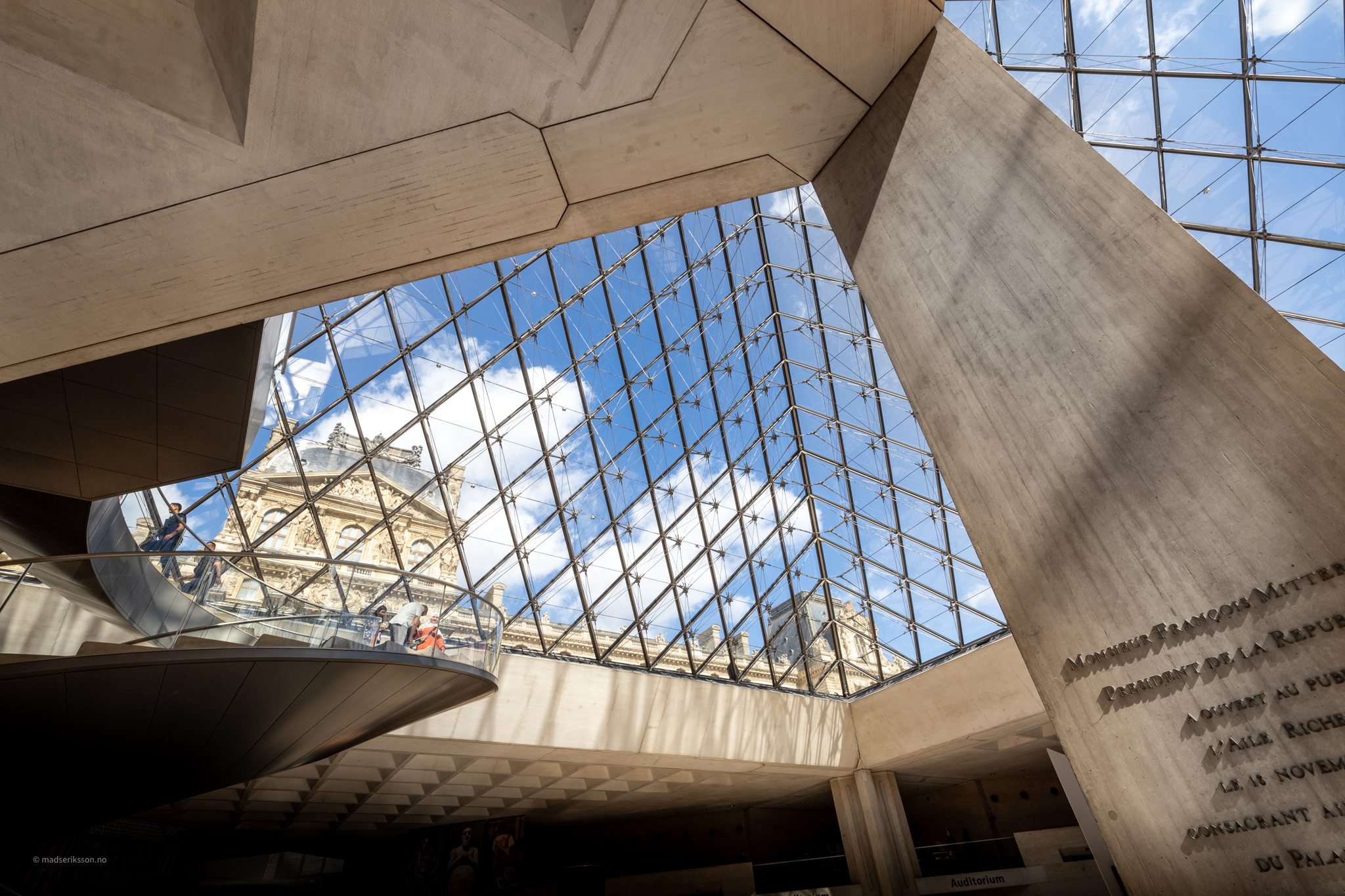 ArchitectureLouvre Museum, Paris: From Medieval Fortress to the World’s Most Visited Museum
City Frames · scroll-driven 3D
More cities in three dimensions
54 city guides open with a model built from open map data. Scroll, and the camera moves from landmark to landmark.
Departures · City Frames
Where to next?
| Time | Destination | Country | Status |
|---|
Live · position of the sun
Golden hour, right now
The low, warm light just after sunrise and just before sunset. These are the cities on the site where it is happening at this moment.