Bologna has three nicknames and earns all of them. It is la dotta, the learned, home to a university that has been teaching since around 1088. It is la grassa, the fat, the city of tortellini in broth, tagliatelle with ragù and mortadella. And it is la rossa, the red — for the brick and terracotta of its streets as much as for its politics. What ties them together is the portico: more than 38 kilometres of covered arcades in the historic centre alone, inscribed by UNESCO in 2021, under which a city of nearly 400,000 people walks, eats, studies and argues in any weather.

Bologna began as Felsina, an Etruscan city, and became the Roman colony of Bononia on the Via Aemilia, the road that still runs dead straight across the plain of the Po from Rimini to Piacenza. Its golden age came in the Middle Ages. The law school that grew up here in the 11th century drew students from all over Europe — Dante, Petrarch, Copernicus and Erasmus all passed through — and the city’s leading families built themselves stone tower-houses as fortresses and status symbols, as many as 180 of them in the 12th and 13th centuries. A crowded university town needed housing, and the solution was to build out over the street: upper floors projecting on wooden beams, then on columns, until the arcade became the defining form of the city.
Bologna is a working city rather than a museum. It is a major rail junction and an industrial centre, and its historic core is lived in by students and families rather than given over to visitors. That makes it one of the most rewarding cities in Italy to spend time in, and one of the easiest to underestimate: most people pass through on the way between Florence, Venice and Milan. Two or three days are enough to see the main sights and eat well; the porticoes, the markets and the long evenings in the university quarter are what make people come back.
How to approach Bologna
This guide covers the city in four parts: the towers and porticoes that define its skyline and its streets; Piazza Maggiore and the churches around it, from the unfinished Basilica of San Petronio to the cluster of seven churches at Santo Stefano; the university and the city’s art, from the anatomical theatre of the Archiginnasio to Raphael in the Pinacoteca; and the food — what to eat, where it comes from, and why there is no spaghetti bolognese.
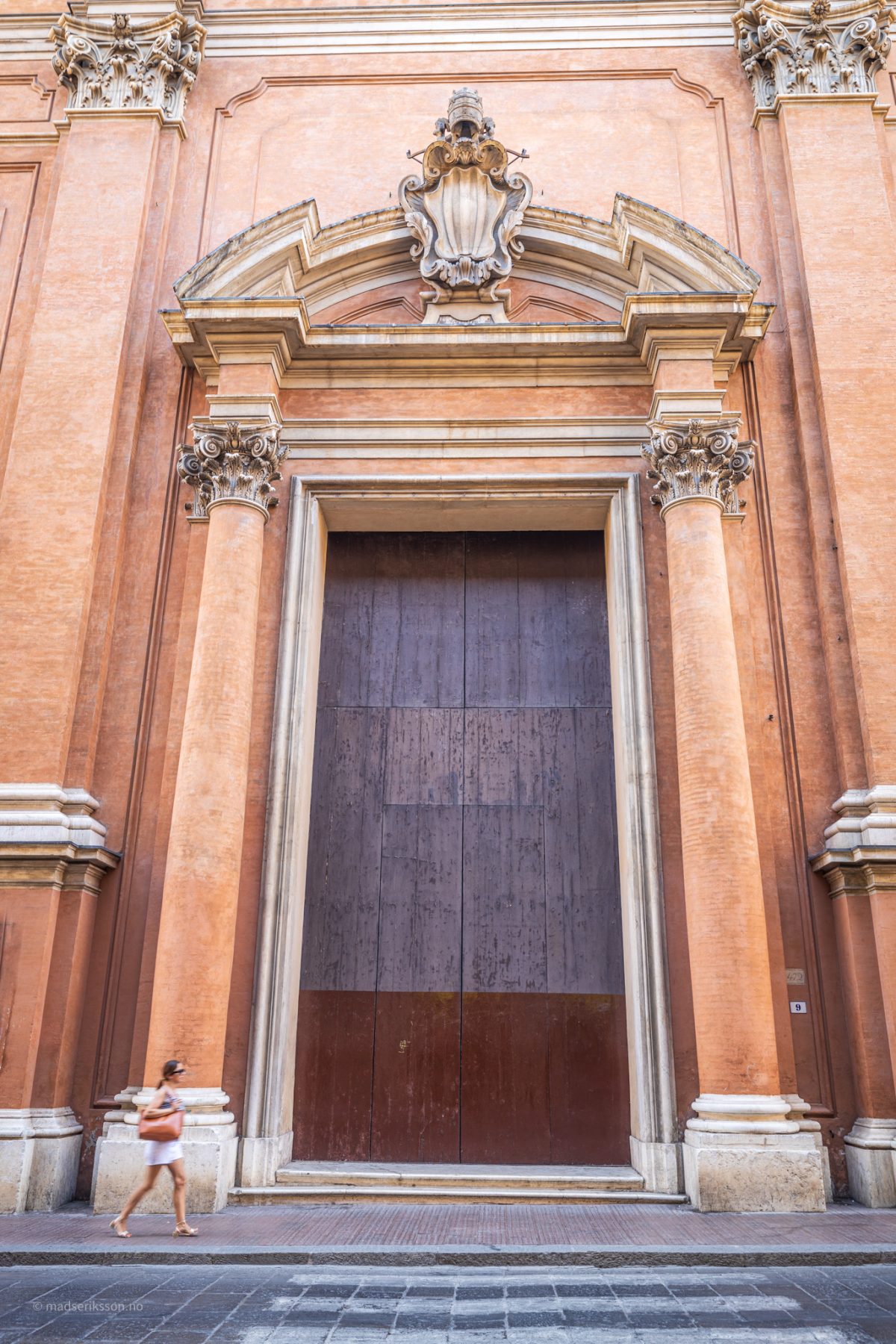
Bologna in 3D
Bologna lies at the foot of the Apennines on the Via Aemilia, the Roman road that runs straight across the plain of the Po from Rimini to Piacenza. Founded by the Etruscans as Felsina and refounded by Rome as Bononia, it has nearly 400,000 inhabitants and a university dating from around 1088. This frame covers the medieval centre inside the ring of avenues, from the central station in the north to San Domenico in the south.
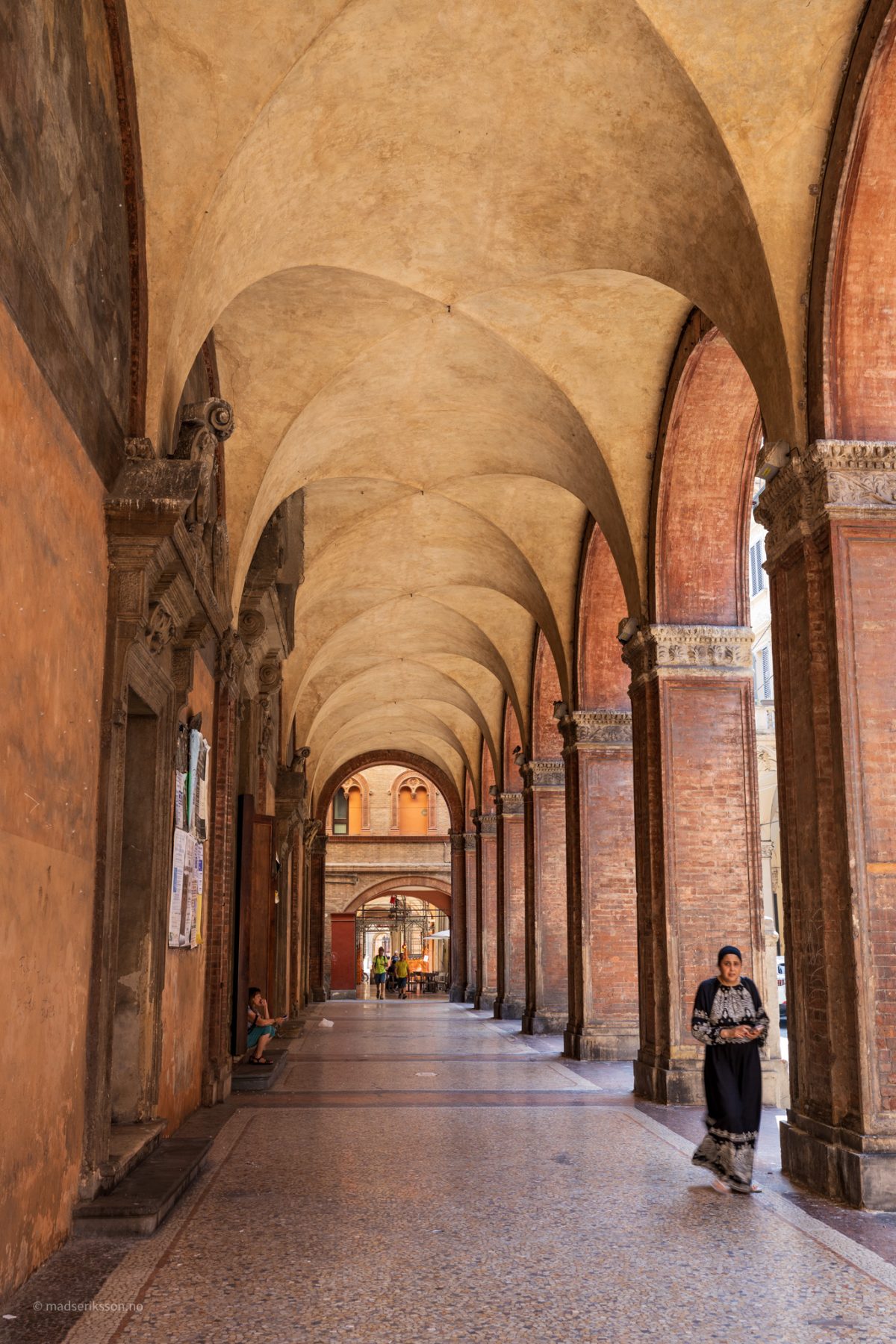
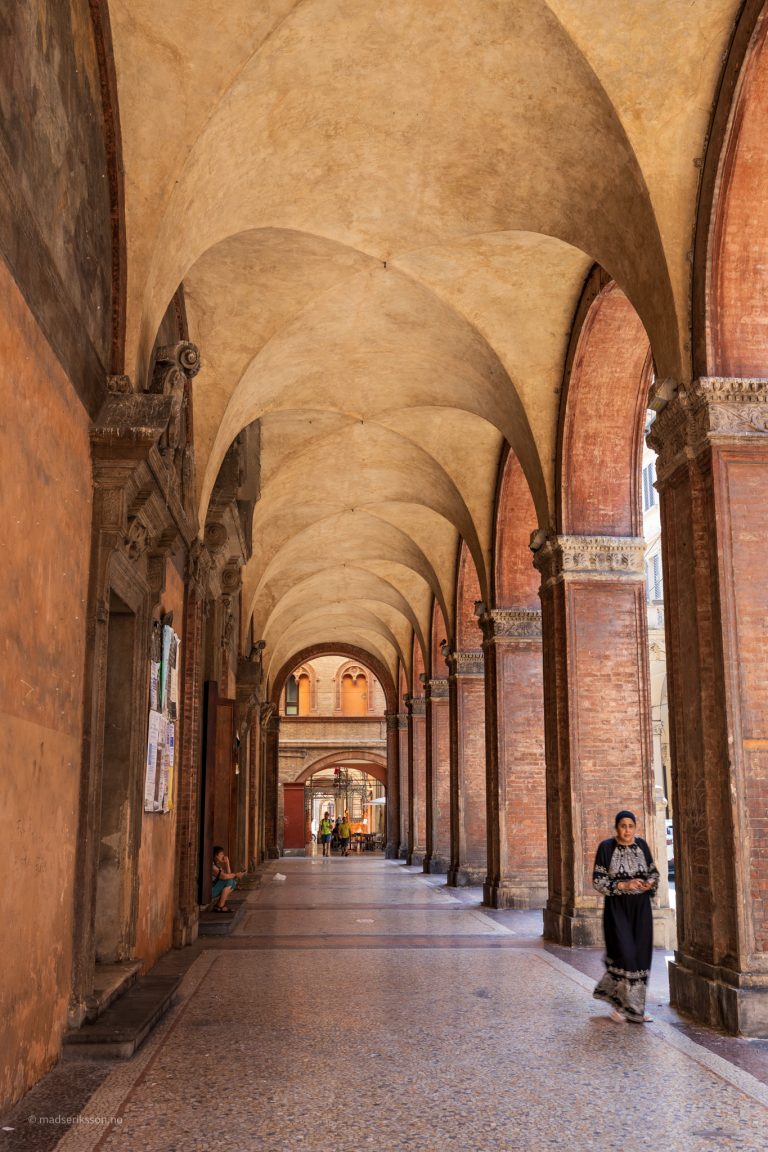
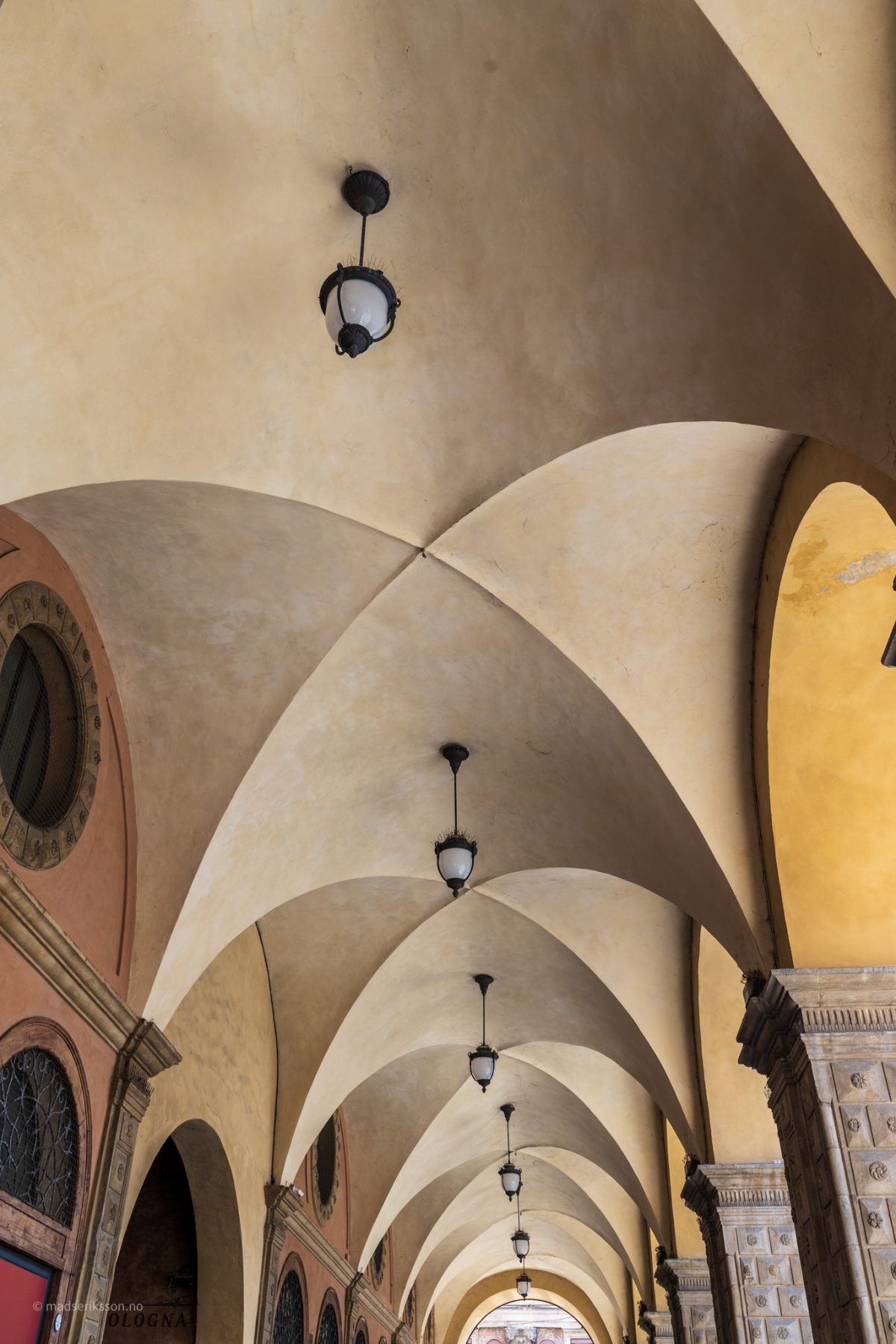
A vaulted brick portico in the historic centre of Bologna, part of the city’s UNESCO-listed arcades
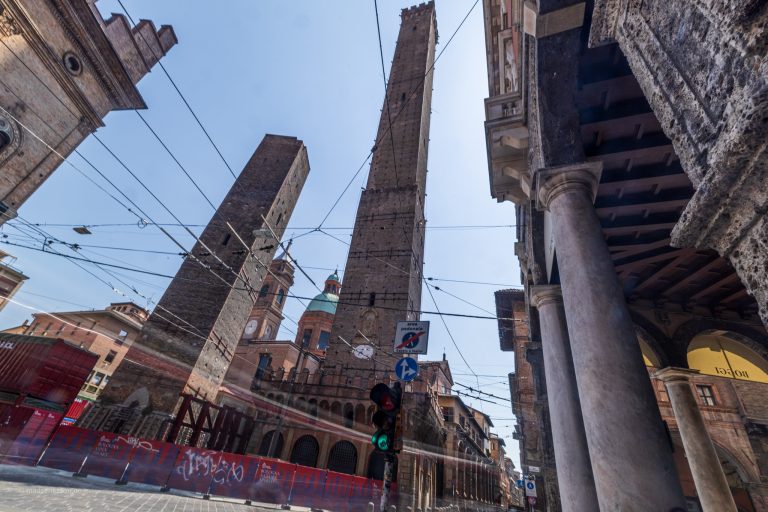
The Two Towers
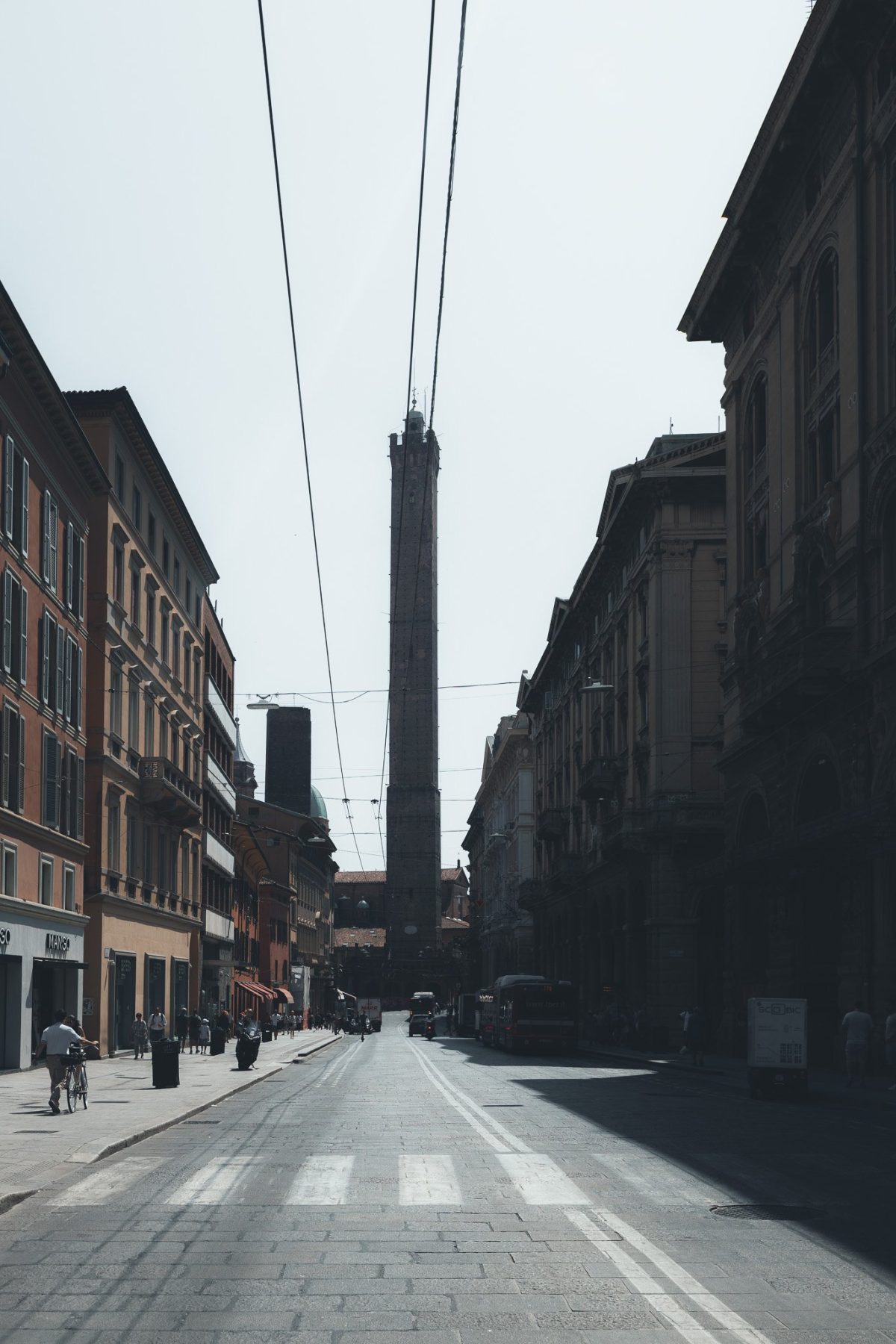
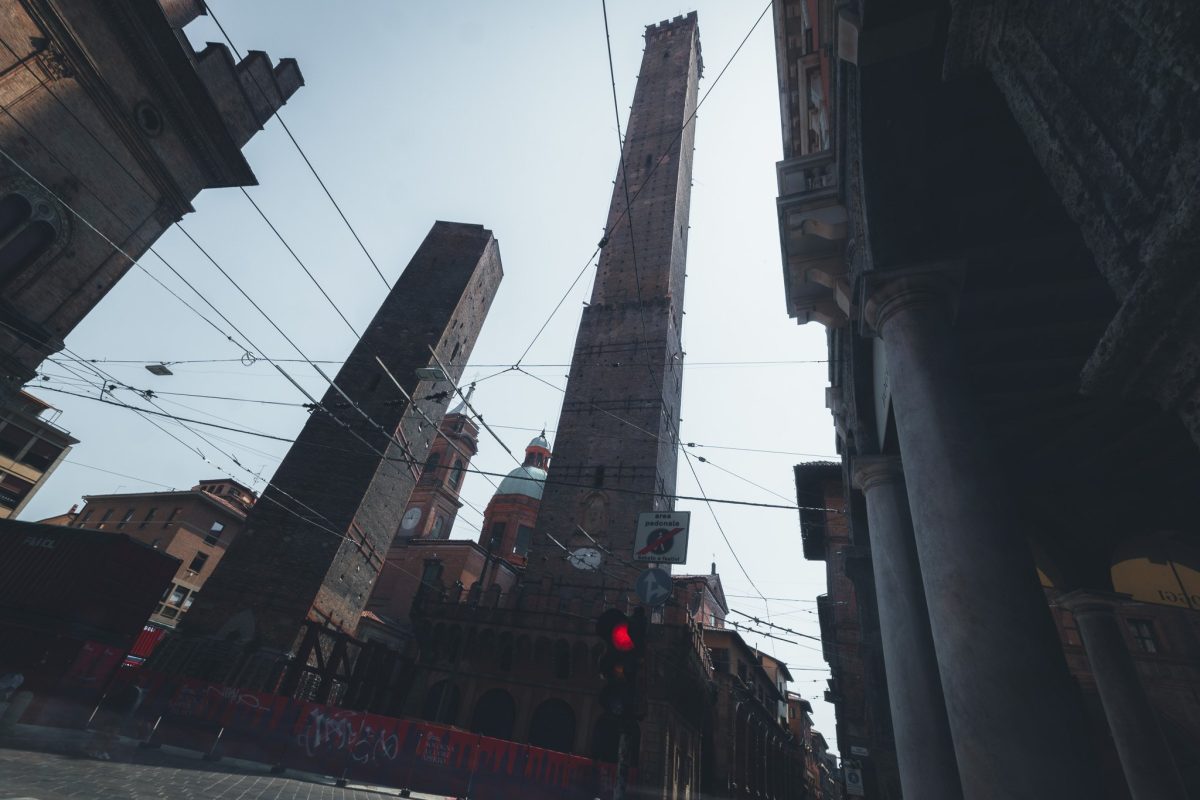
The Asinelli and Garisenda towers, traditionally dated to 1109–1119, are the best known of the tower-houses that Bologna's leading families built in the 12th and 13th centuries, when there may have been as many as 180. The Asinelli rises 97.2 m; the Garisenda was cut down to about 48 m in the 14th century and leans by 3.2 m. Both have been fenced off since October 2023 while the Garisenda is stabilised, work expected to take at least ten years.
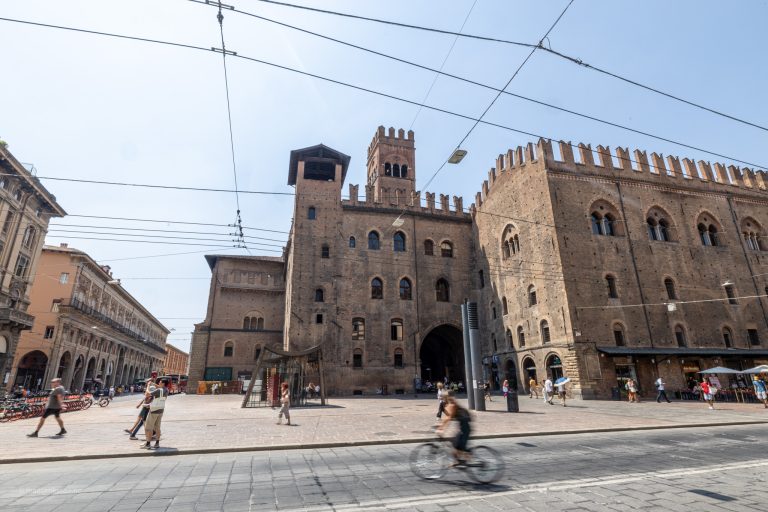
Piazza Maggiore and San Petronio
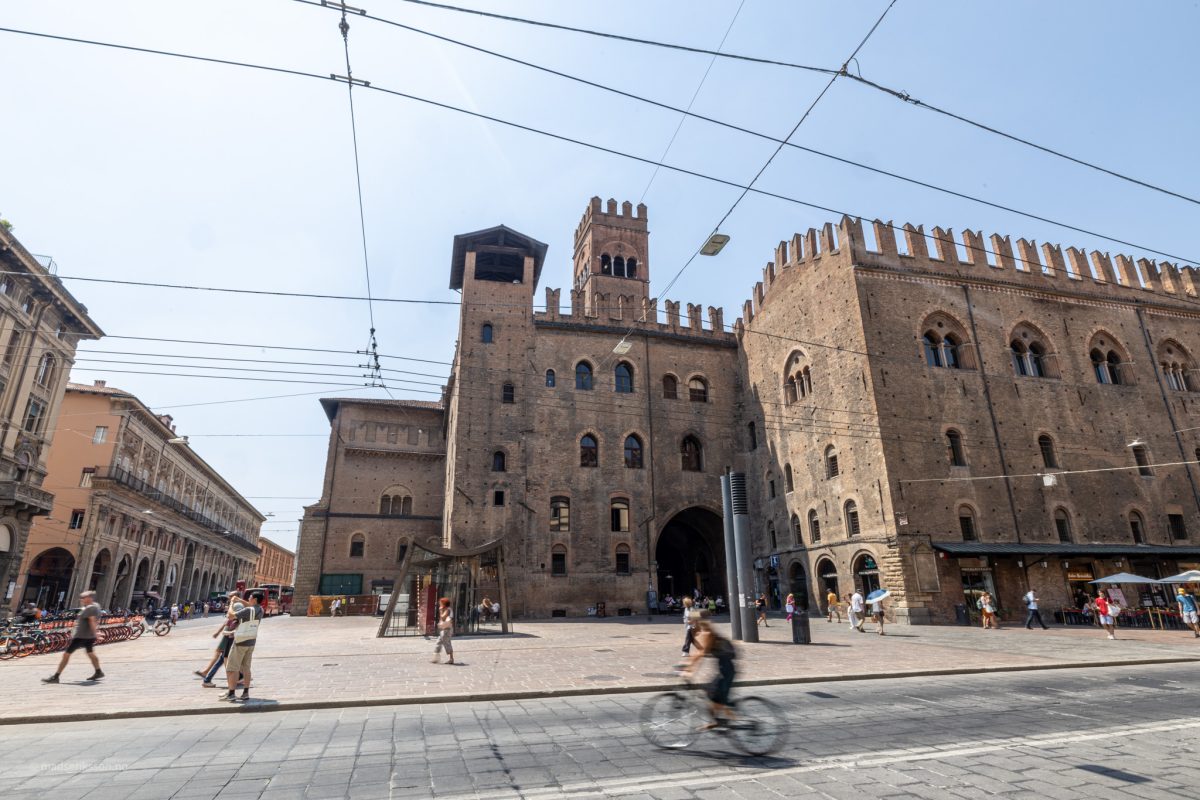
San Petronio was begun on 7 June 1390; it is 132 m long and 66 m wide, and its brick façade has never been finished above the marble base. Inside, Giovanni Domenico Cassini laid a meridian line 66.8 m long into the floor in 1655. Across the square stand Palazzo d'Accursio, the town hall, and Palazzo Re Enzo, where King Enzo of Sardinia was held prisoner from 1249 until his death in 1272.
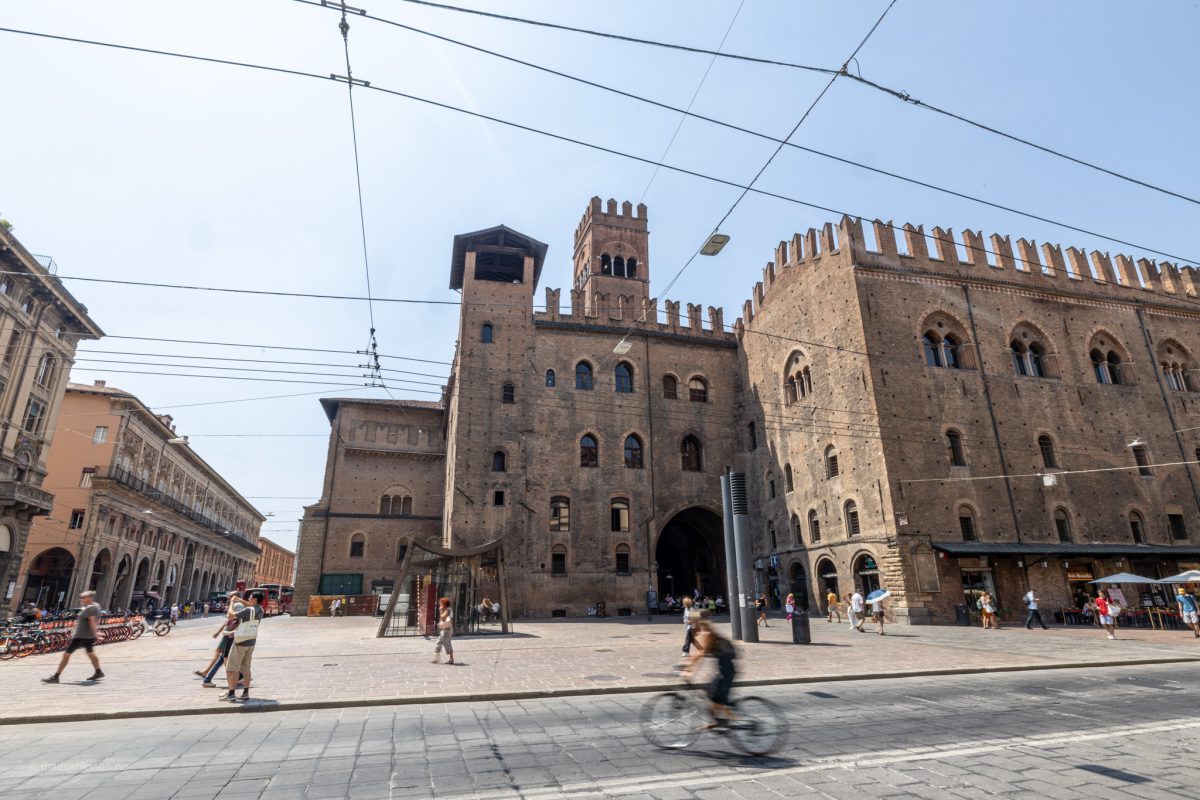
Crenellated medieval palaces and a brick tower facing the square at the heart of Bologna
Porticoes and the Quadrilatero
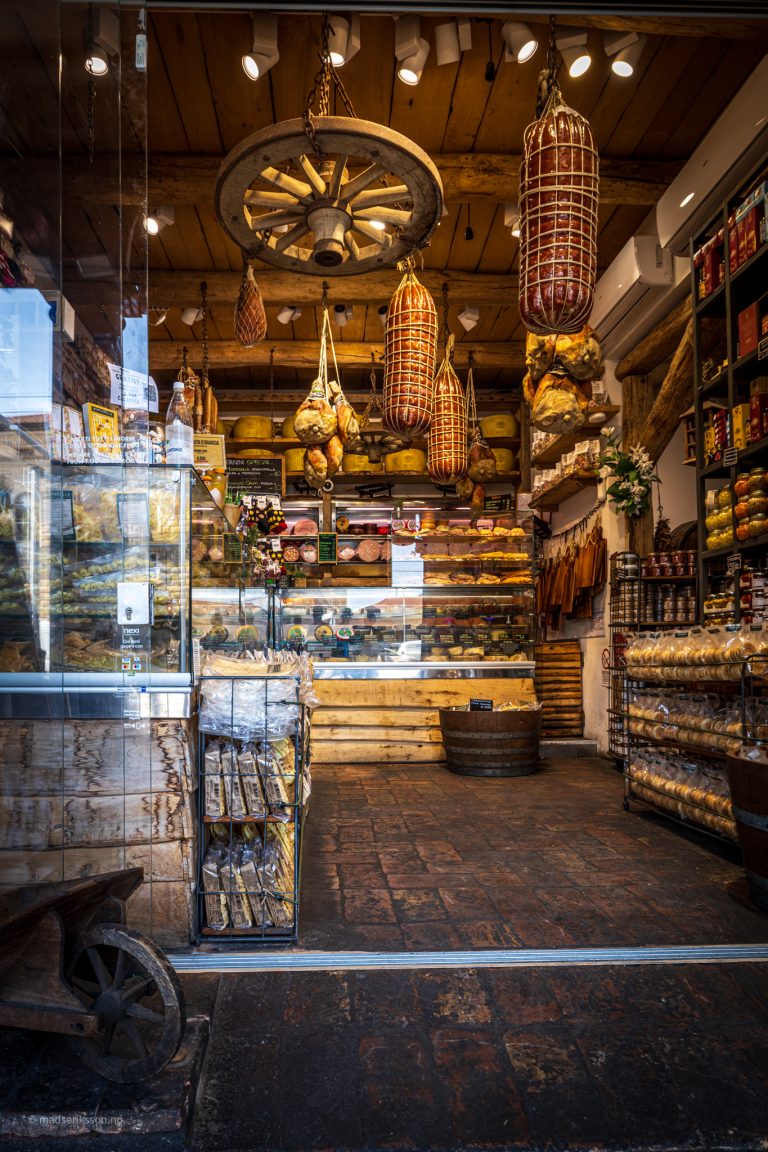
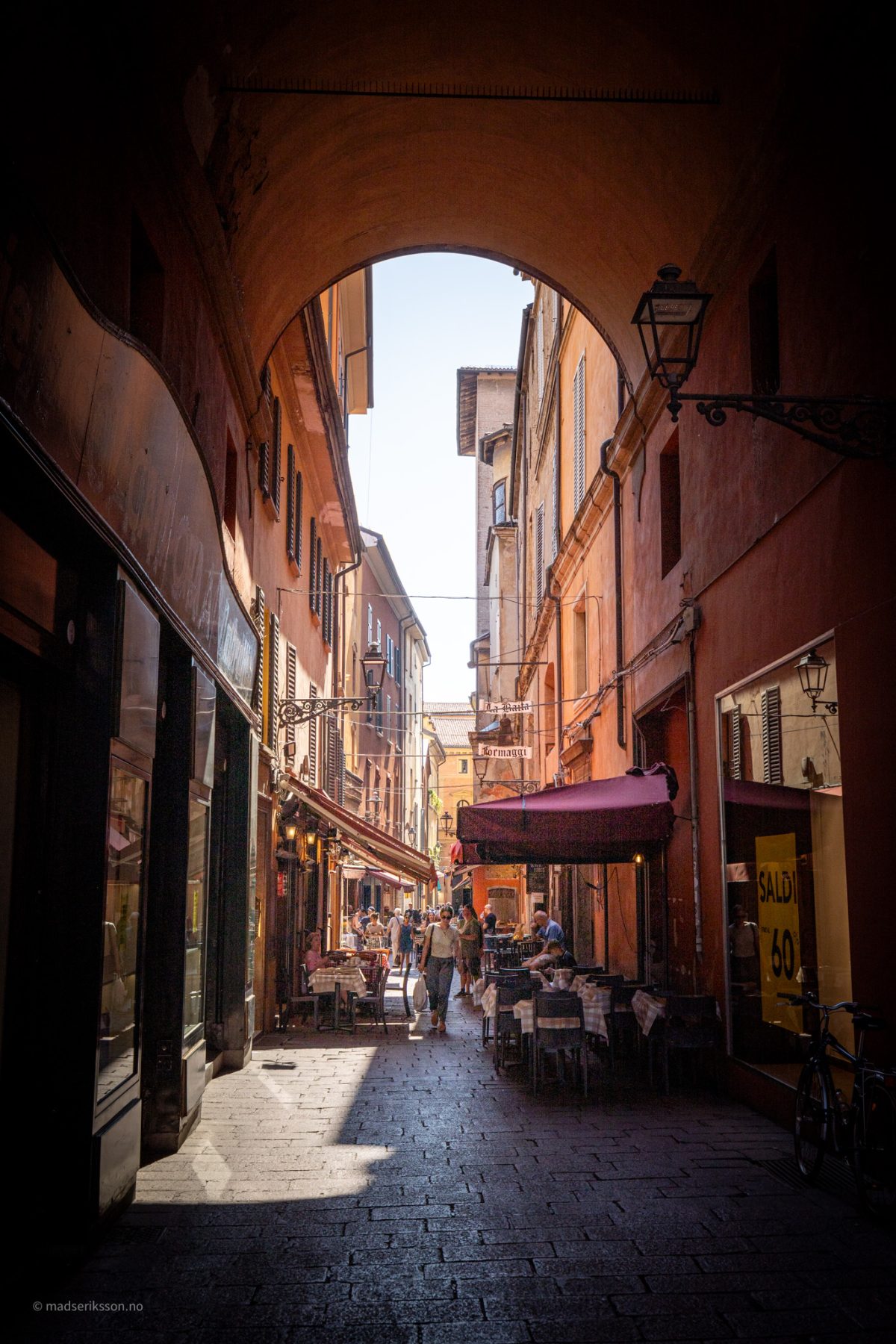
Bologna has more than 38 km of porticoes in the historic centre alone; a city ordinance of 1288 made them compulsory for new houses, and in 2021 they were inscribed as a UNESCO World Heritage Site. Behind Piazza Maggiore, the narrow streets of the Quadrilatero have been the city's food market since the Middle Ages. The Archiginnasio, built in 1562–1563 for the university, is covered with about 6,000 painted coats of arms and holds an anatomical theatre of 1636.
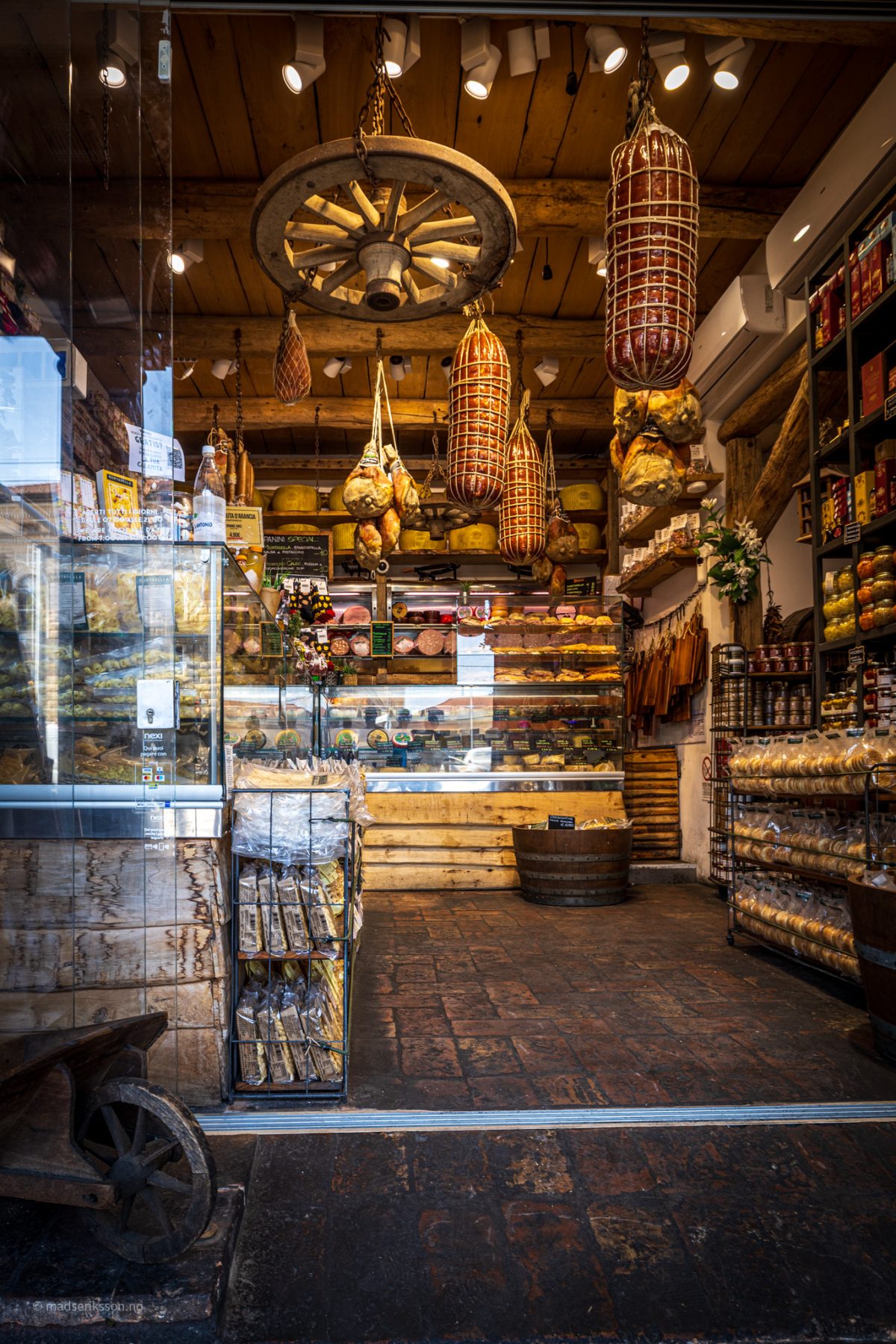
Mortadella, hams and cheeses hanging in a traditional delicatessen in the old food quarter of Bologna
Santo Stefano
Piazza Santo Stefano, a funnel-shaped square framed by porticoes, leads to the basilica complex known as the Sette Chiese, the Seven Churches. Its oldest part, the church of Saints Vitale and Agricola, goes back to the 4th century and was rebuilt in the 12th, and the round church of the Holy Sepulchre is traditionally attributed to Bishop Petronius in the 5th century.
The university quarter
The University of Bologna, founded around 1088, is regarded as the oldest university in continuous operation in the world, and Dante, Petrarch and Copernicus all spent time here. Along Via Zamboni, Palazzo Poggi, built in 1549–1560, now holds the rectorate and the university's museums, among them Ulisse Aldrovandi's natural history collection and the anatomical wax models. Laura Bassi took a doctorate here in 1732 and went on to teach natural philosophy.
San Domenico
The Basilica of San Domenico holds the tomb of St Dominic, founder of the Dominican order, who died in Bologna on 6 August 1221. His marble shrine, the Arca di San Domenico, was designed by Nicola Pisano and carved by his workshop in 1264–1267, and the young Michelangelo added statuettes of St Petronius and St Proculus and a kneeling angel in 1494.
The Fountain of Neptune
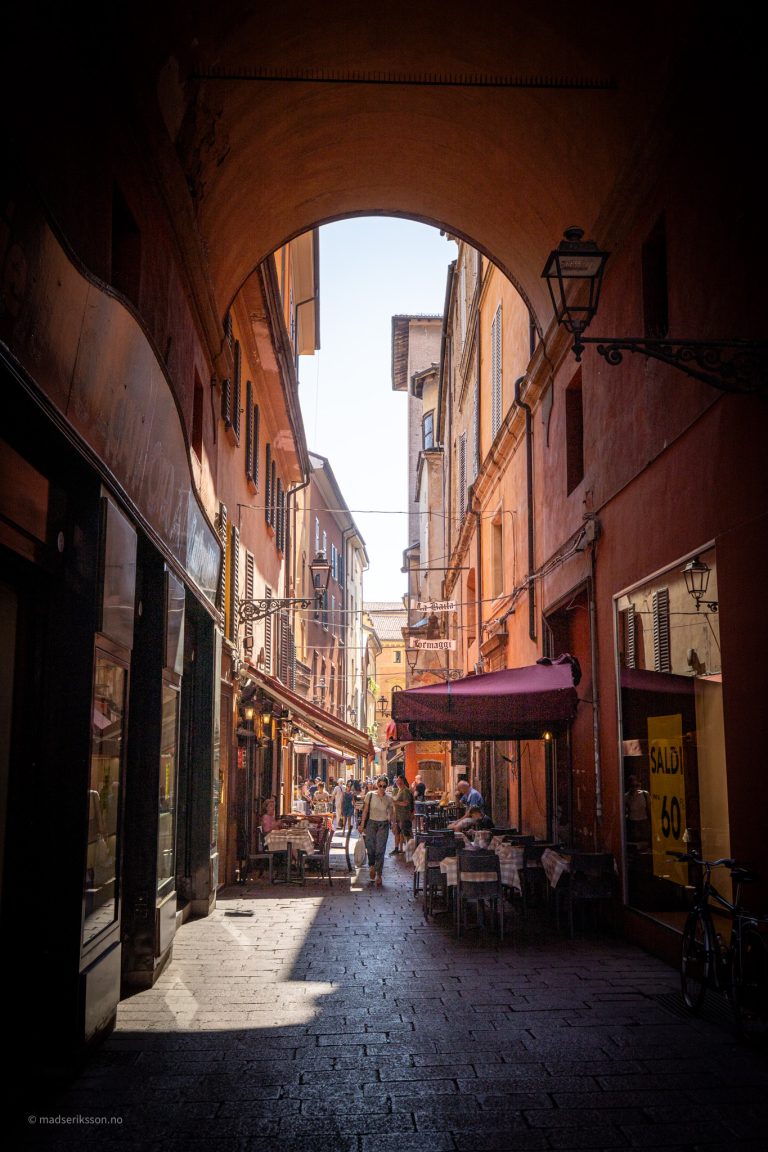
Giambologna's bronze Neptune has stood at the corner of Piazza Maggiore since the 1560s, on a fountain designed and assembled by Tommaso Laureti from 1563. Behind it rise Palazzo Re Enzo and the Palazzo del Podestà, and under the crossing vault of the Voltone del Podestà, words whispered into one corner can be heard clearly in the opposite one.
A narrow lane in central Bologna opening beyond a dark archway, with café tables under red awnings
Towers after dark
At its medieval peak Bologna may have had as many as 180 towers; around twenty survive, among them the Prendiparte and the Azzoguidi, each about 60 m tall, a short walk north-west of the Two Towers. After dark, the lit porticoes trace the main streets out from the centre, from Via Rizzoli and Strada Maggiore to Via dell'Indipendenza and the station.
3D model © 2026 madseriksson.no · Photographs © madseriksson.no. Buildings and heights: © OpenStreetMap contributors (ODbL), via OpenMapTiles. Ground imagery: Sentinel-2 cloudless 2023 by EOX IT Services GmbH (contains modified Copernicus Sentinel data 2023; CC BY 4.0). Heights are approximate where OpenStreetMap has no measured value; sun positions are approximate.
Towers and Porticoes — A Medieval Skyline and 38 Kilometres of Shelter
The two leaning towers at the centre of the city, the covered streets that grew out of a housing shortage, and the longest portico in the world
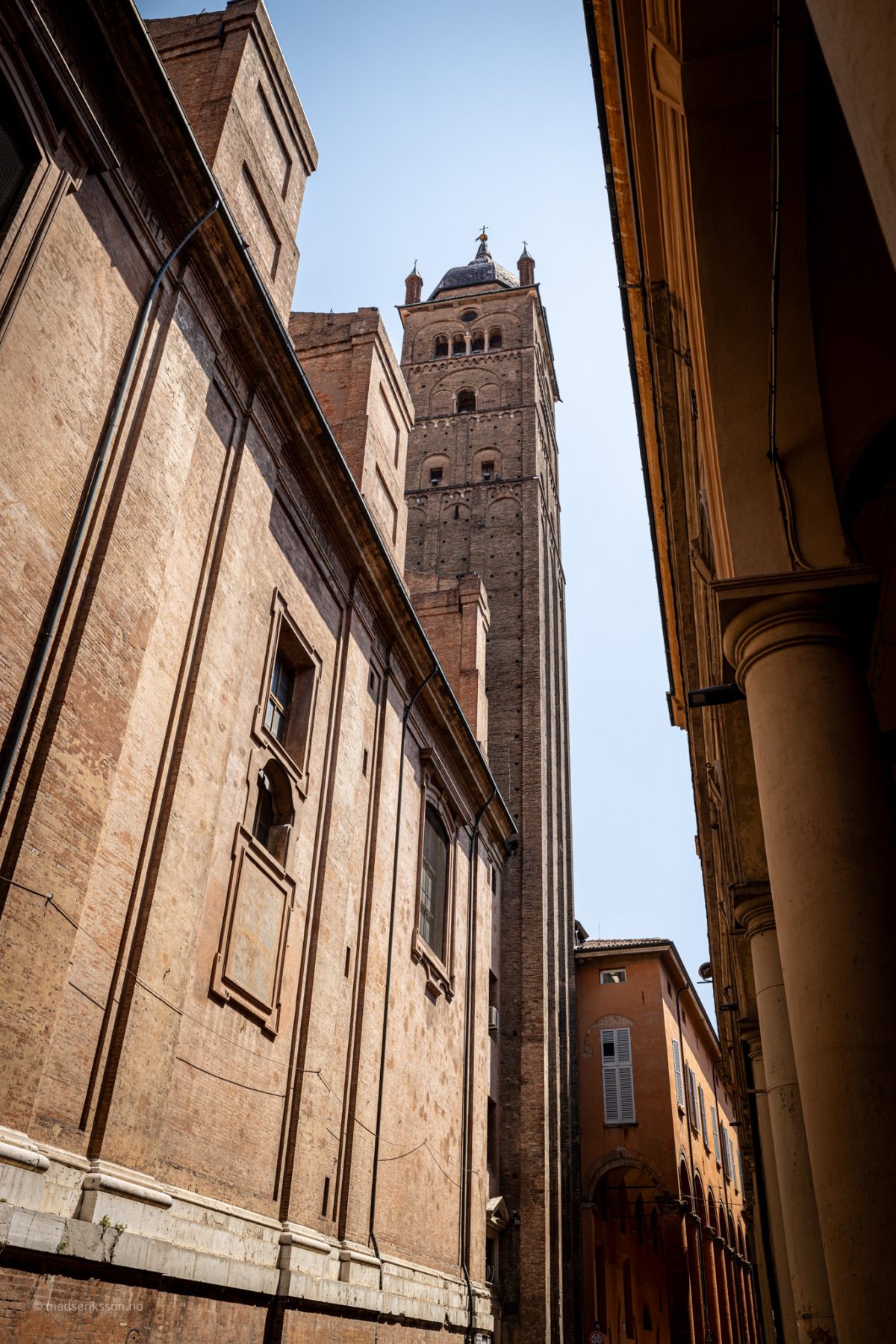
In the 12th and 13th centuries, Bologna bristled with towers. Every powerful family wanted one — for defence in the endless feuds between factions, and as a statement of wealth — and at the peak there may have been as many as 180. Most were later demolished, shortened or absorbed into other buildings; around twenty survive. The two that remain at the heart of the city, at the meeting of the old roads in from the east, are its symbol. The Asinelli, traditionally dated to 1109–1119, rises 97 metres, the tallest of them all. Beside it, the Garisenda is half its height and leans hard: it was cut down to about 48 metres in the 14th century because it was already unsafe, and its top overhangs the base by more than three metres.
In October 2023 the city sealed off the square around the two towers after monitoring showed worrying movement in the Garisenda, and later that year warned that it was at risk of collapse. A barrier was built to contain falling debris, and a stabilisation programme expected to take a decade is under way. The Asinelli, which used to be climbed by a long internal staircase to the best view in the city, has been closed since the same month. The towers can still be seen from the surrounding streets, and in a city with so many surviving towers, there are other ways up: the fenced-off square is a reminder that a medieval skyline is not a given.
The first porticoes were wooden extensions of upper floors over the street, a cheap way to add rooms in a city packed with students. In 1288 the commune made them compulsory. Seven centuries later they were inscribed together as a World Heritage Site.
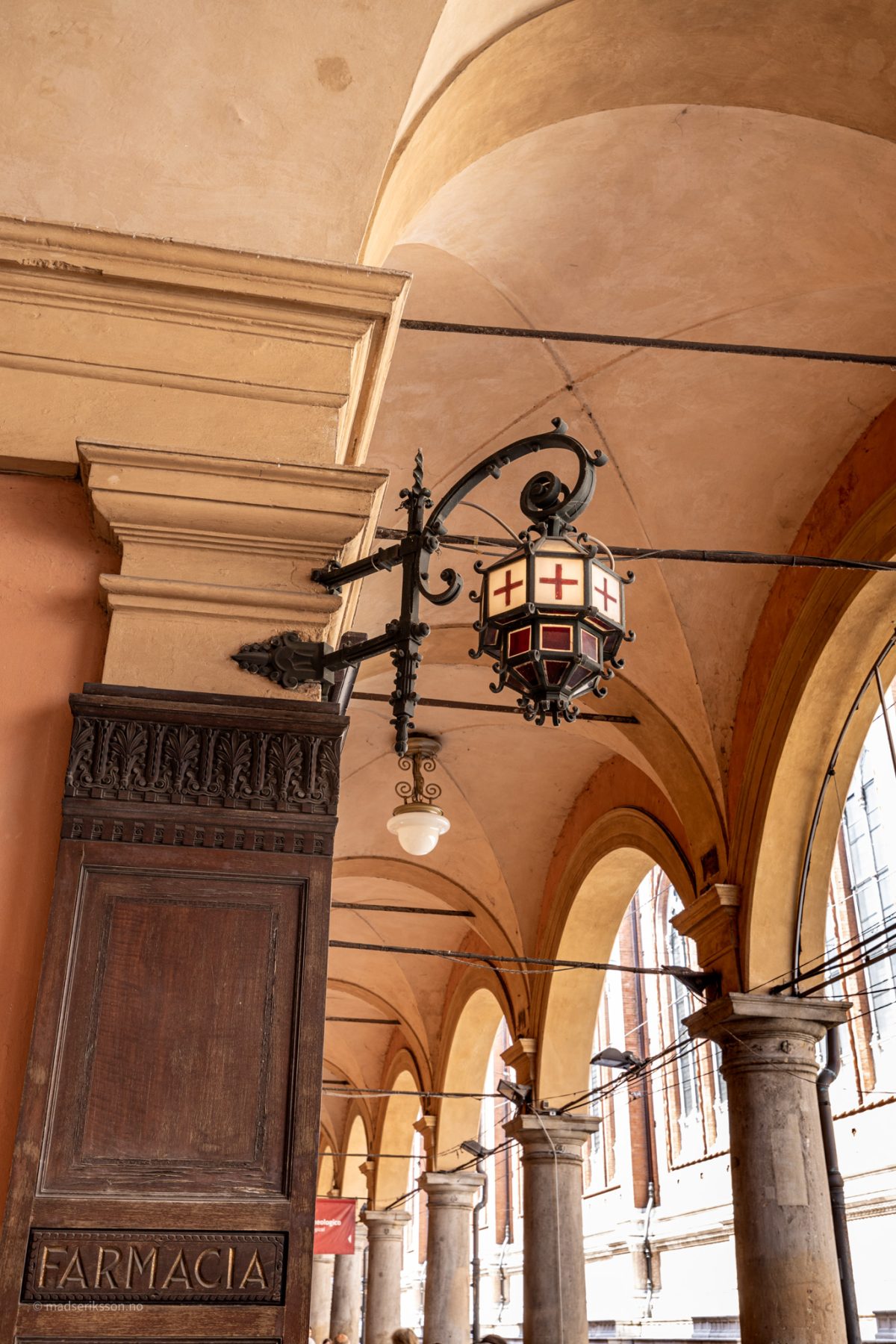
The porticoes are Bologna’s other great structure, and the one visitors actually use. They line most of the streets of the historic centre, built of wood, brick, stone and later concrete, in every style from the 13th century to the 20th; some of the oldest wooden ones survive in Via Marsala and in the Corte Isolani off Strada Maggiore. The most extraordinary of them leaves the city altogether. From the Porta Saragozza, a continuous arcade of 666 arches climbs almost 3.8 kilometres up the Colle della Guardia to the Sanctuary of the Madonna di San Luca, built between 1674 and 1793 so that pilgrims carrying the sanctuary’s revered icon of the Virgin could make the procession under cover. The walk is steep in its final section, and the view from the top over the city and the plain is worth every step; a small tourist train, the San Luca Express, runs up for those who prefer not to walk.
Piazza Maggiore — An Unfinished Basilica and a Church of Seven Churches
The main square, the brick Gothic giant that was meant to outdo St Peter’s, Giambologna’s bronze Neptune and the oldest religious complex in the city
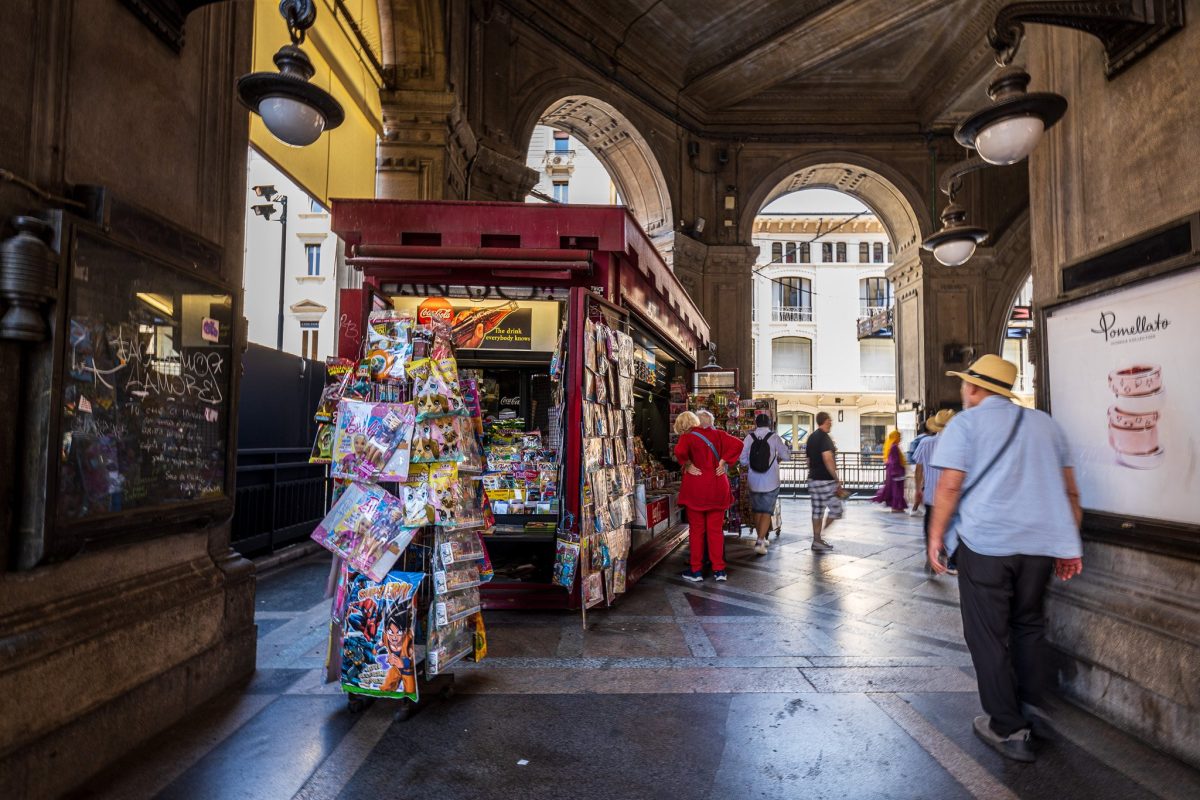
Piazza Maggiore is the living room of the city: a broad, slightly sloping square framed by the Palazzo d’Accursio, the old seat of government, the Palazzo del Podestà and the long flank of the Basilica of San Petronio. People sit on the steps of the basilica in the evening, and the square is the stage for the city’s concerts and gatherings. Next door, in the Piazza del Nettuno, stands the Fountain of Neptune, completed in the 1560s to designs by the Palermitan architect Tommaso Laureti, with a powerful bronze Neptune by Giambologna — a sculptor who had lost the competition for Florence’s Neptune fountain a few years earlier, and made the most of his second chance.
San Petronio is the city’s great civic church, built not by the bishop but by the commune, in honour of Bologna’s 5th-century patron saint. The first stone was laid in 1390, and the plan was enormous; the story long told is that it was intended to be larger than St Peter’s in Rome, and that the papacy diverted funds to stop it. Whatever the truth, it was never finished. The nave and aisles were completed by the 17th century, but the facade is still marble only on its lower part, with bare brick above. Even unfinished, the basilica is 132 metres long and 47 metres high, the largest brick Gothic church anywhere. Here in 1530 Pope Clement VII crowned Charles V as Holy Roman Emperor, and here in 1655 Giovanni Domenico Cassini laid out a meridian line across the floor of the left aisle, on which a beam of sunlight through a hole in the roof marks the solar noon and the passage of the year.
A short walk east, under the porticoes of Via Santo Stefano, a small cobbled piazza opens in front of a cluster of interlocking churches. Bolognese call it simply the Sette Chiese, the seven churches.
Santo Stefano is the oldest and most atmospheric religious site in Bologna. Tradition holds that it was founded by St Petronius on the site of a temple to Isis, as a re-creation of the holy places of Jerusalem, and what survives is a sequence of connected buildings from many centuries: the Church of the Crucifix, the round Church of the Holy Sepulchre with its twelve columns, the austere Romanesque church of Saints Vitale and Agricola, and the Cortile di Pilato, a courtyard named after the place where Christ was condemned, with an 8th-century Lombard basin at its centre. It is quietest early in the morning, when the brick interiors are lit only by the windows.
The Learned City — Europe’s Oldest University and the Art It Paid For
A palace of 6,000 coats of arms, a wooden dissection theatre rebuilt from the rubble of 1944, and Raphael and Giotto in a former Jesuit college
The University of Bologna dates its foundation to around 1088, which makes it the oldest university in continuous operation in the world. It began not as an institution but as an association of students, mostly of law, who hired their own teachers; by the 12th century it was famous across Europe, and its graduates staffed the courts and chanceries of half the continent. For centuries the lectures were scattered around the city in rented rooms. Only in 1562–63 did the papal authorities give the university a single building, the Archiginnasio, a long palace on a portico just off Piazza Maggiore designed by Antonio Morandi, known as il Terribilia. Its courtyard, staircases and lecture halls are covered with around 6,000 painted coats of arms and memorials of students and teachers, and it now houses the city’s largest library.
The highlight of the Archiginnasio is the Teatro Anatomico, built in 1636: a room panelled entirely in wood, with tiered seats rising around a marble table where students watched public dissections. Above the lecturer’s chair, two carved figures of flayed men, the Spellati, hold up the canopy. On 29 January 1944 an Allied bombing raid destroyed most of it; after the war it was rebuilt, piece by piece, with the carvings recovered from the rubble. Today the university is centred on the streets north-east of the two towers, especially Via Zamboni, where the arcades are lined with bookshops and cafes and the squares fill with students in the evening.
Bologna’s university was run by its students in the beginning. The students formed the association, hired the teachers and paid them, long before the city or the Church gave the university a building of its own.
At the end of Via Zamboni, in a former Jesuit novitiate on Via delle Belle Arti, is the Pinacoteca Nazionale, one of the most important art galleries in northern Italy and one of the least crowded. Its collection grew out of the paintings taken from suppressed churches and convents under Napoleon, and it is especially strong on the art of Bologna itself. The room most people come for holds Raphael’s Ecstasy of St Cecilia, painted around 1518 for a Bolognese church; nearby are a polyptych by Giotto, and large altarpieces by the Carracci family and Guido Reni, the Bolognese painters who shaped Italian painting around 1600. For contemporary art, MAMbo, the city’s modern art museum, occupies a former industrial bakery in the old port district on the north-west edge of the centre.
La Grassa — The City That Wrote Down Its Recipes
Ragù registered with the Chamber of Commerce, a gold pasta ribbon, tortellini in broth, and the market streets behind Piazza Maggiore
Bologna takes its food seriously enough to have put it on record. In 1982 the Italian Academy of Cuisine deposited its recipe for the classic Bolognese ragù with the city’s Chamber of Commerce, and updated it in 2023: a slow-cooked sauce of beef and a little pork with onion, carrot and celery, white wine, milk and only a small amount of tomato. Its proper partner is fresh egg tagliatelle, never spaghetti — spaghetti bolognese is a dish of the rest of the world, not of Bologna. The Chamber of Commerce also keeps a solid gold tagliatella in a glass case, showing the correct width of the ribbon: eight millimetres when cooked.
The other great dish of the city is tortellini in brodo: tiny rings of fresh pasta folded around a filling of pork loin, prosciutto, mortadella, Parmigiano-Reggiano, egg and nutmeg, served in a clear capon broth. Bologna and Modena both claim to have invented them, and the town of Castelfranco Emilia, halfway between the two, tells the story that an innkeeper modelled them on the navel of Venus. Larger tortelloni, filled with ricotta and herbs and served with butter and sage, are the lighter alternative. Lasagne verdi, made with spinach pasta, ragù and béchamel, and mortadella — the broad, pale, pistachio-studded sausage that gave the world baloney — complete the canon.
Bologna sits at the centre of one of the richest food regions in Europe. Parmigiano-Reggiano, prosciutto di Parma and the balsamic vinegar of Modena all come from the same region.
The best place to see what the city eats is the Quadrilatero, the grid of narrow medieval streets just east of Piazza Maggiore. Its delicatessens and stalls are piled with cured meats, cheeses and fresh pasta, and many now serve plates of salumi and glasses of wine at tables in the street. North of the centre, the covered Mercato delle Erbe is where the Bolognese do their own shopping, with food stalls inside. The traditional place to eat is the osteria or trattoria; Lambrusco and Sangiovese are the wines most often on the table.
«Bologna does not have a single sight to rival the great monuments of Florence or Venice, and it does not need one. Its pleasures are cumulative: the walk under the arcades from one piazza to the next, the brick and terracotta turning gold in the late afternoon, the seven churches of Santo Stefano in the morning quiet, a plate of tortellini in broth at lunch and a long dinner in the evening. It is a city to spend time in rather than to tick off. Walk up the portico to San Luca once, for the view back over the red roofs and the towers. Then come down, find a table in the Quadrilatero, and let the city feed you.»

More in the same area
 ArchitecturePisa — The Leaning Tower, the Square of Miracles and the City on the Arno
 ArchitectureEurope’s 10 Greatest Cathedrals and Churches
 CitiesExploring the Enchanting City of Venice
 CitiesMilan: A Fashionable and Cultural Hub in Italy
 ArchitectureSt Peter’s Basilica: Michelangelo’s Dome and 120 Years of Building
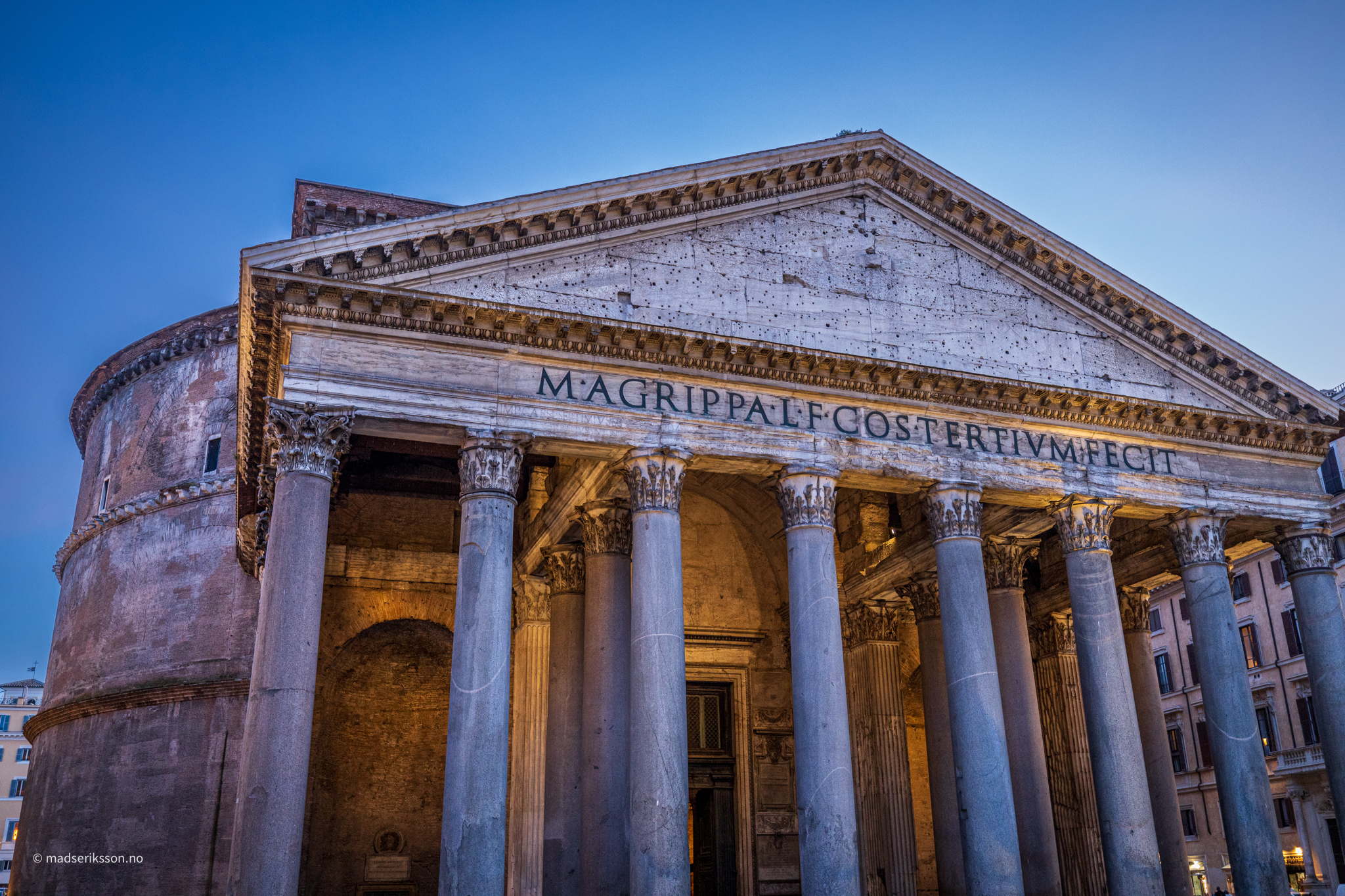 ArchitectureThe Pantheon in Rome: A Marvel of Ancient Architecture
City Frames · scroll-driven 3D
More cities in three dimensions
54 city guides open with a model built from open map data. Scroll, and the camera moves from landmark to landmark.
Departures · City Frames
Where to next?
| Time | Destination | Country | Status |
|---|
Live · position of the sun
Golden hour, right now
The low, warm light just after sunrise and just before sunset. These are the cities on the site where it is happening at this moment.