Bordeaux is the city that wine built — and then rebuilt in stone. Its golden age came in the 18th century, when the port on the curve of the Garonne shipped wine and colonial goods across Europe and the merchants spent the profits on a waterfront of classical façades more than a kilometre long. For much of the 20th century those façades were black with soot and the quays were lined with warehouses. Since the 1990s the city has been cleaned, pedestrianised and reconnected to its river, and in 2007 UNESCO inscribed “Bordeaux, Port of the Moon” on the World Heritage List — one of the largest urban World Heritage Sites anywhere, at 1,731 hectares.

The city’s nickname, the Port of the Moon, comes from the crescent-shaped bend of the Garonne on which it stands. The Romans called it Burdigala, and it was already a trading port in their day. Its long English chapter began in 1152, when Eleanor of Aquitaine married Henry Plantagenet, the future Henry II of England, and lasted three centuries — three centuries in which the wine trade with England made the city rich — until the French victory at Castillon in 1453. The 18th century gave Bordeaux its look: the Place de la Bourse, the Grand Théâtre and the long ranges of pale limestone that UNESCO describes as an outstanding urban ensemble of the Enlightenment.
Today Bordeaux is a city of about 268,000 people at the centre of a metropolitan area of 1.4 million, and one of the most liveable in France. Trams glide through the old streets, the quays are a continuous riverside promenade, and two hours by high-speed train connect it to Paris. It is also the capital of the most famous wine region in the world, with the vineyards of the Médoc, Graves, Saint-Émilion and Pomerol within an hour’s drive. A visit works best by combining both: two days in the city, and at least one day out among the châteaux.
How to approach Bordeaux
This guide covers Bordeaux in four parts: the 18th-century river front, from the Place de la Bourse and the Water Mirror to the Grand Théâtre; the medieval city behind it, with the cathedral, the Grosse Cloche and the spire of Saint-Michel; the wine world, from the Cité du Vin to the Médoc and Saint-Émilion; and the city at table and outdoors, from canelés and the Capucins market to the bridges and the cycle paths along the Garonne.
Bordeaux in 3D
Bordeaux lies on a crescent-shaped bend of the Garonne, the curve that gave it the name Port of the Moon. This frame runs from the Saint-Michel quarter and the Pont de pierre in the south to the Cité du Vin and the Pont Jacques Chaban-Delmas in the north. In 2007 UNESCO inscribed 1,731 hectares of the historic city as a World Heritage Site, one of the largest urban listings anywhere.
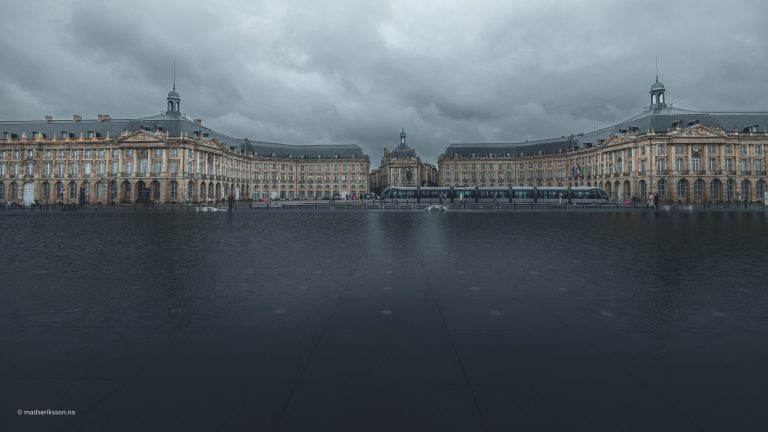
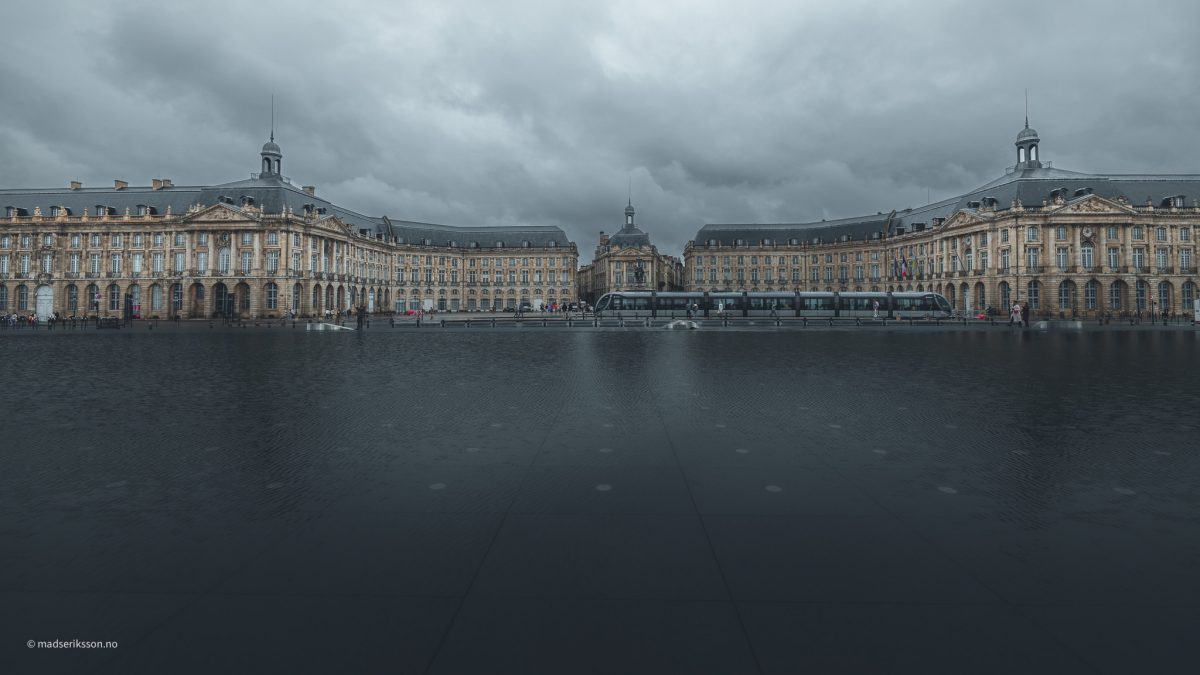
Place de la Bourse and the Water Mirror
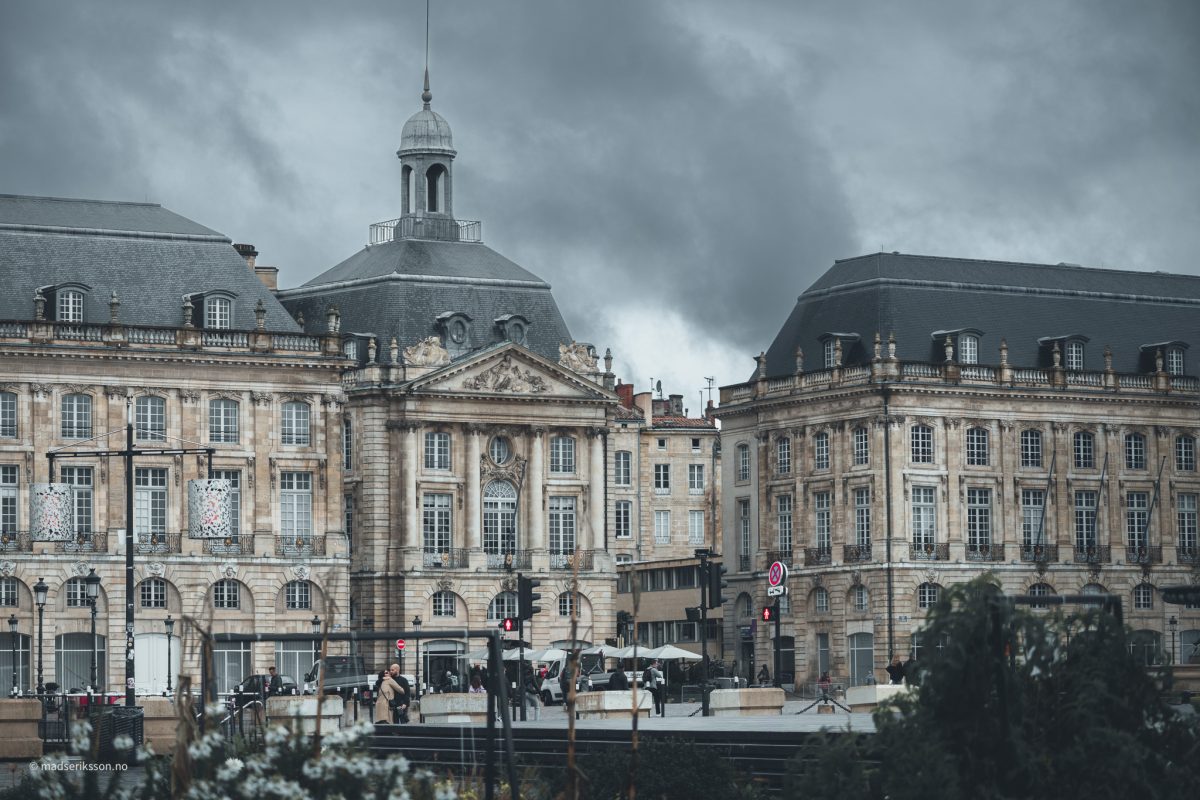
The Place de la Bourse was built between 1730 and 1775 to designs by Jacques Gabriel and his son Ange-Jacques Gabriel, opening the walled city to the river for the first time. In front of it, the Miroir d'eau by Michel Corajoud, opened in 2006, covers 3,450 m² of granite with about 2 cm of water, and every quarter of an hour it disappears in artificial mist. The Esplanade des Quinconces and the Monument aux Girondins lie just to the north.
The Place de la Bourse reflected in the Miroir d'eau on a grey day, with a tram crossing the Bordeaux quay
The Grand Théâtre
The Grand Théâtre by Victor Louis was inaugurated on 17 April 1780 on the site of the Roman forum. Its portico has twelve Corinthian columns topped by statues of the nine Muses and Juno, Venus and Minerva, and it is home to the Opéra National de Bordeaux. From here the pedestrian Rue Sainte-Catherine follows the line of the Roman main street south.
Cathédrale Saint-André and the Pey-Berland tower
Cathédrale Saint-André was consecrated by Pope Urban II in 1096, and on 25 July 1137 the thirteen-year-old Eleanor of Aquitaine married the future Louis VII of France here. Its free-standing bell tower, the Tour Pey-Berland, was begun in 1440 and rises 66 m to the gilded statue of Notre-Dame d'Aquitaine. The Musée des Beaux-Arts, founded in 1801, stands just west of the cathedral.
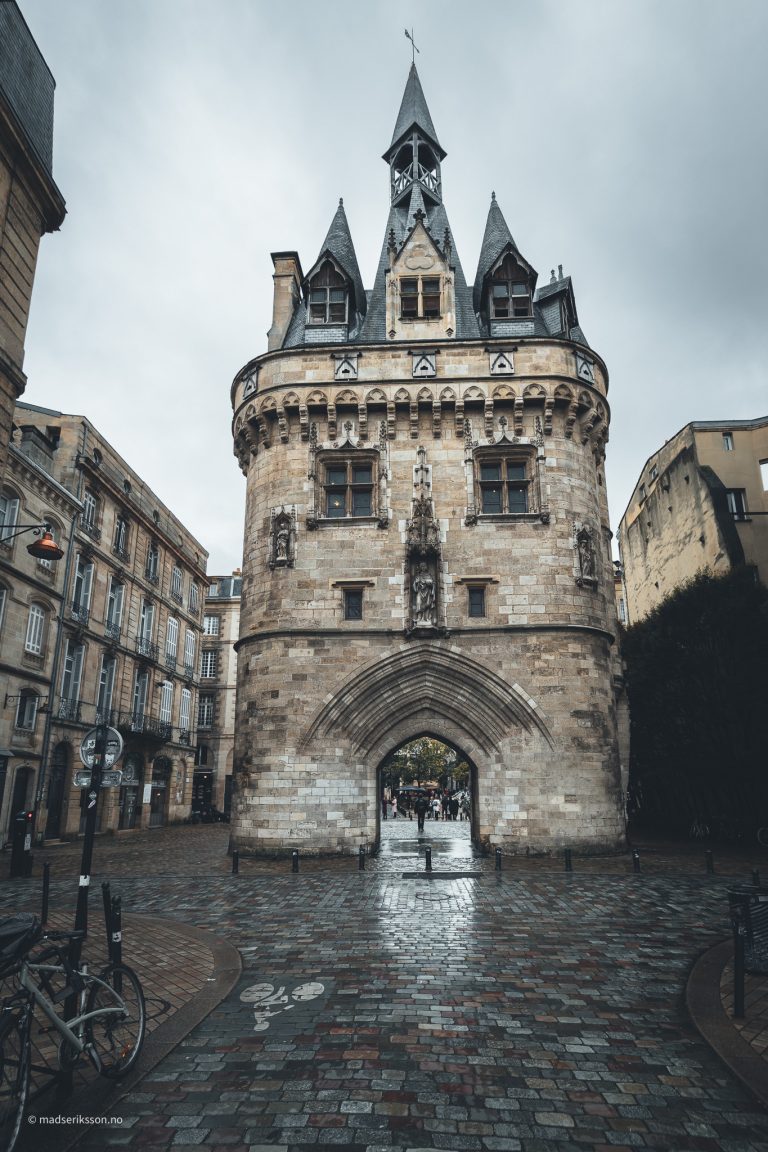
Grosse Cloche and Porte Cailhau
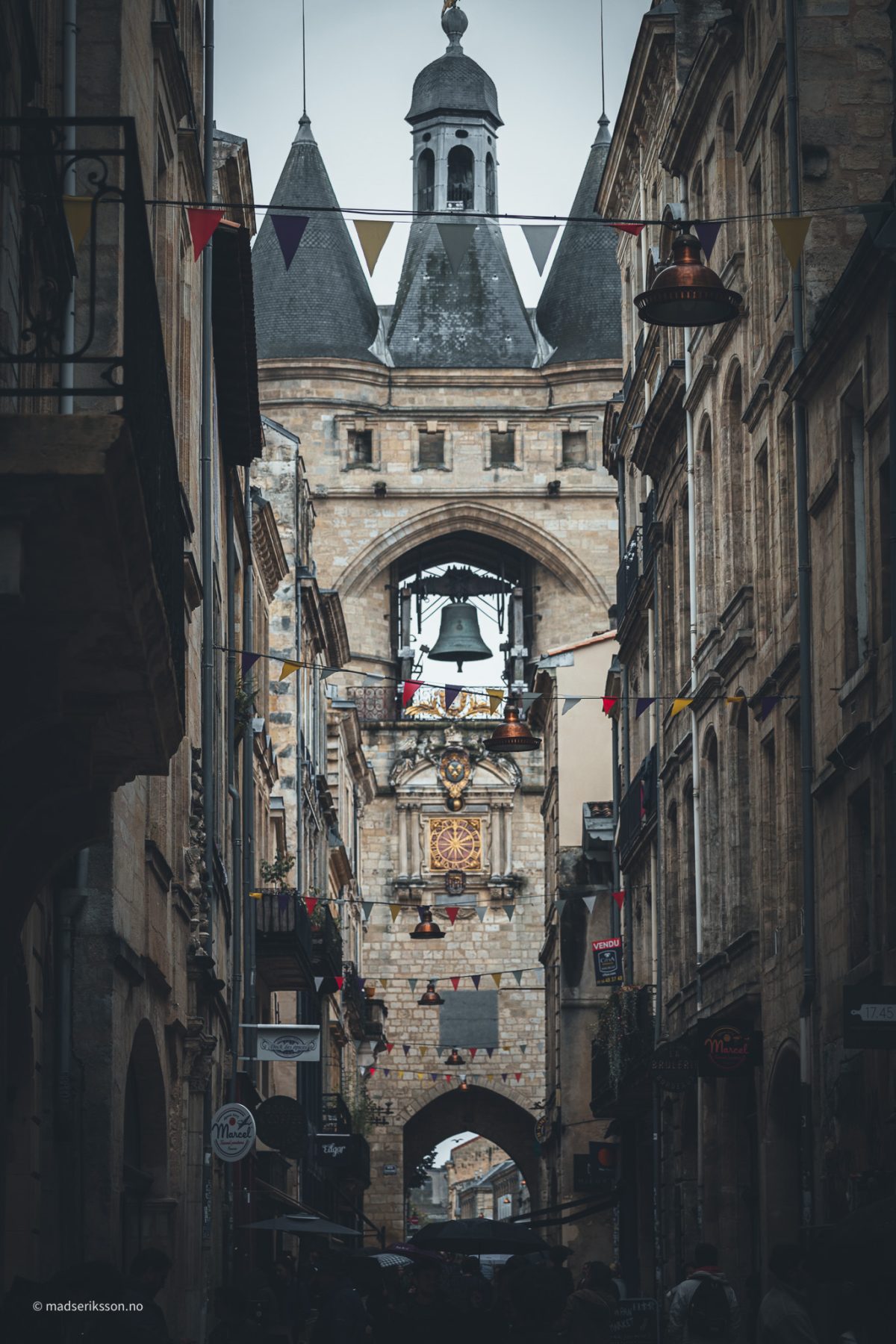
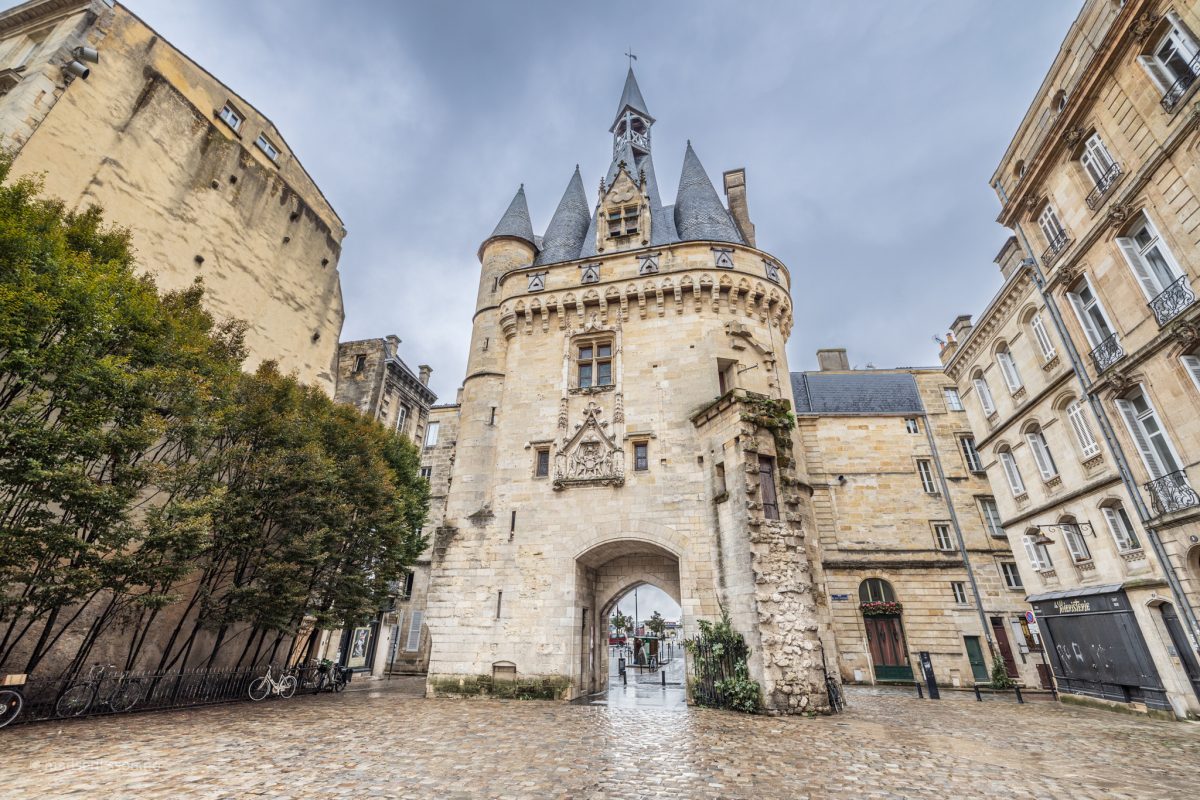
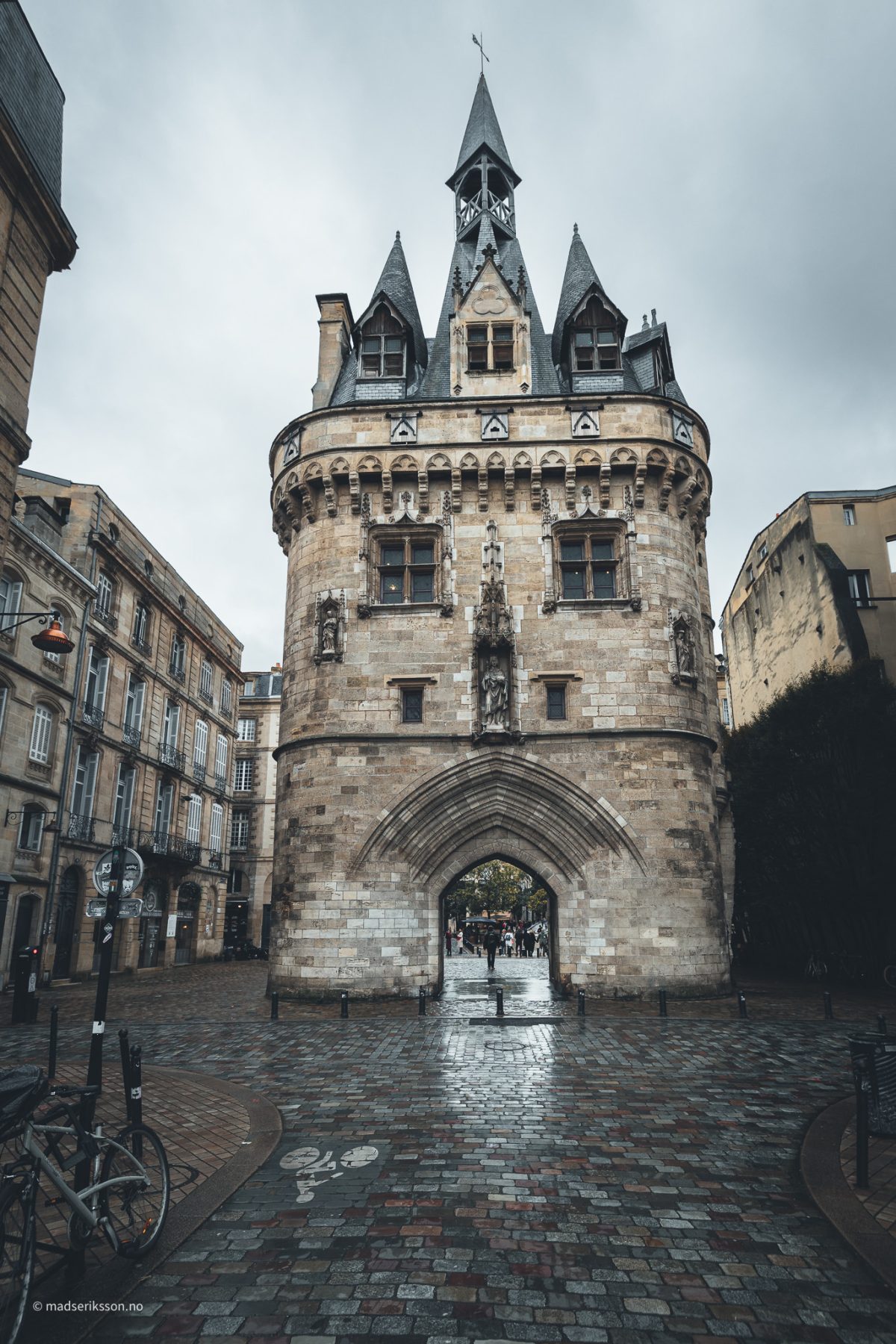
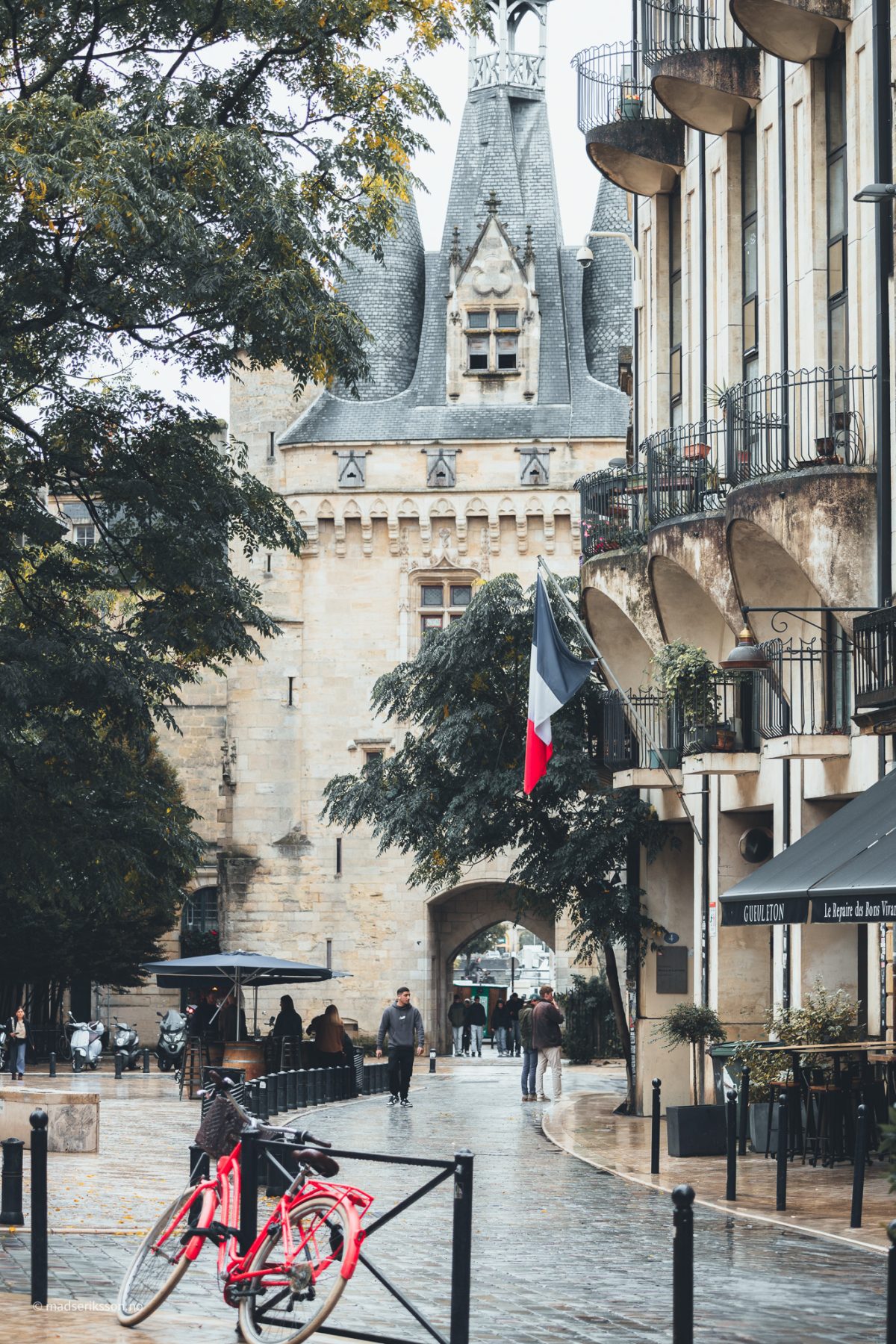
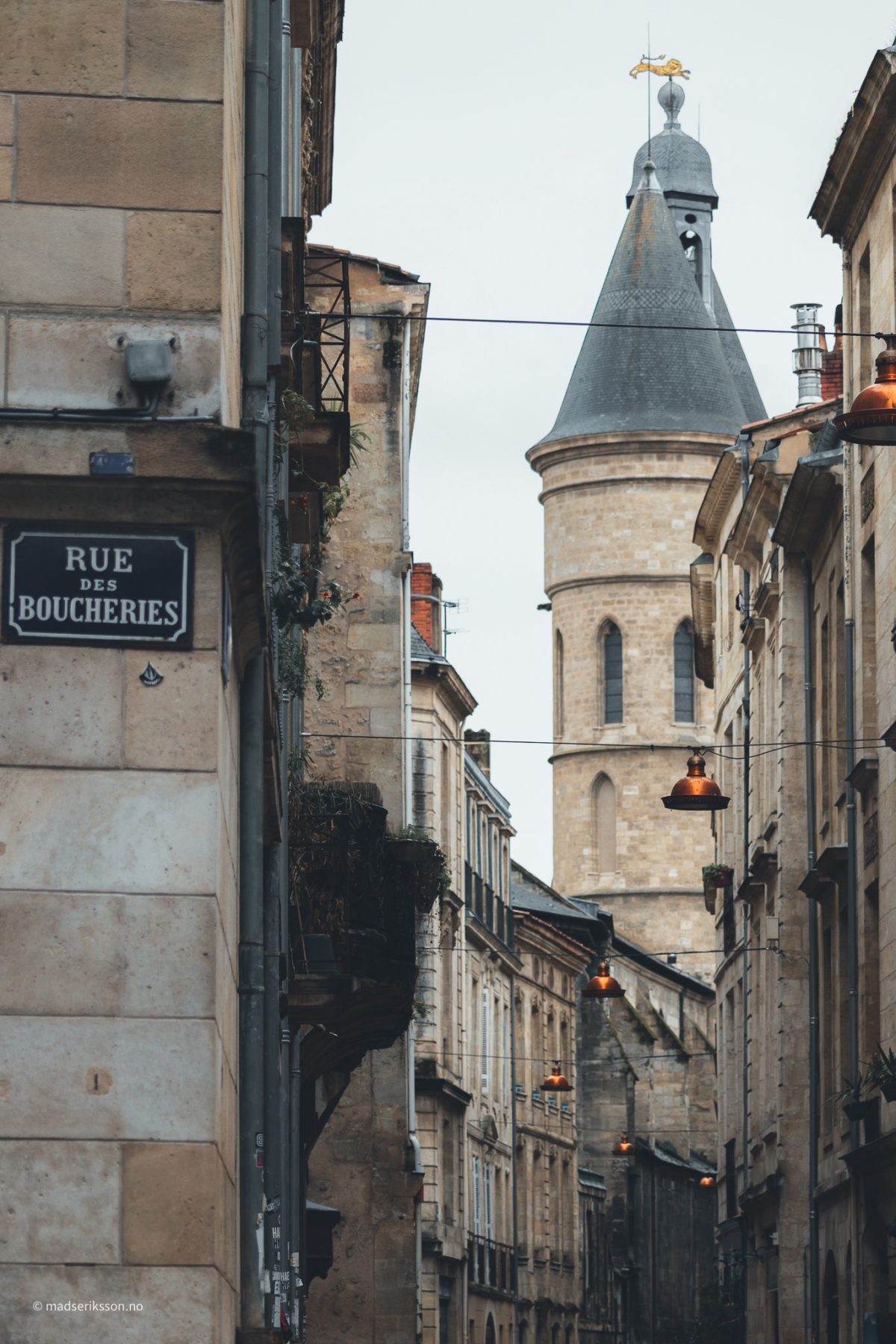
Two gates survive from Bordeaux's medieval walls. The Grosse Cloche is a 15th-century belfry gate between two round towers 40 m high, with a bell weighing 7,800 kg and a clock from 1759. Closer to the river, the turreted Porte Cailhau of the late 15th century once opened the old town to the quays.
The turreted Gothic gate of the Porte Cailhau rising over wet cobbles in the old city of Bordeaux
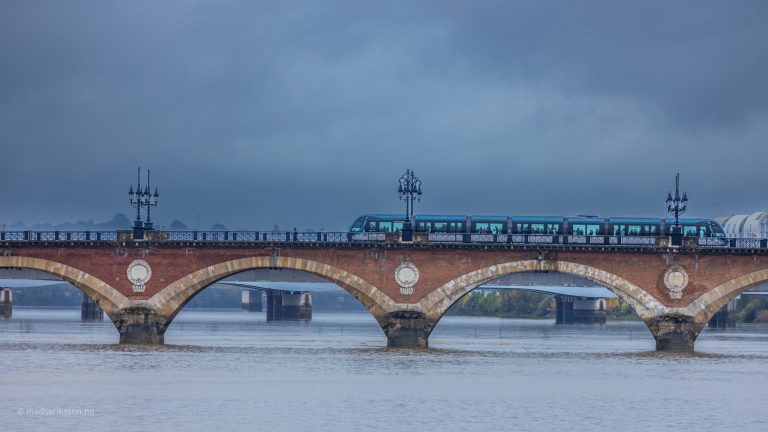
The spire of Saint-Michel and the Pont de pierre
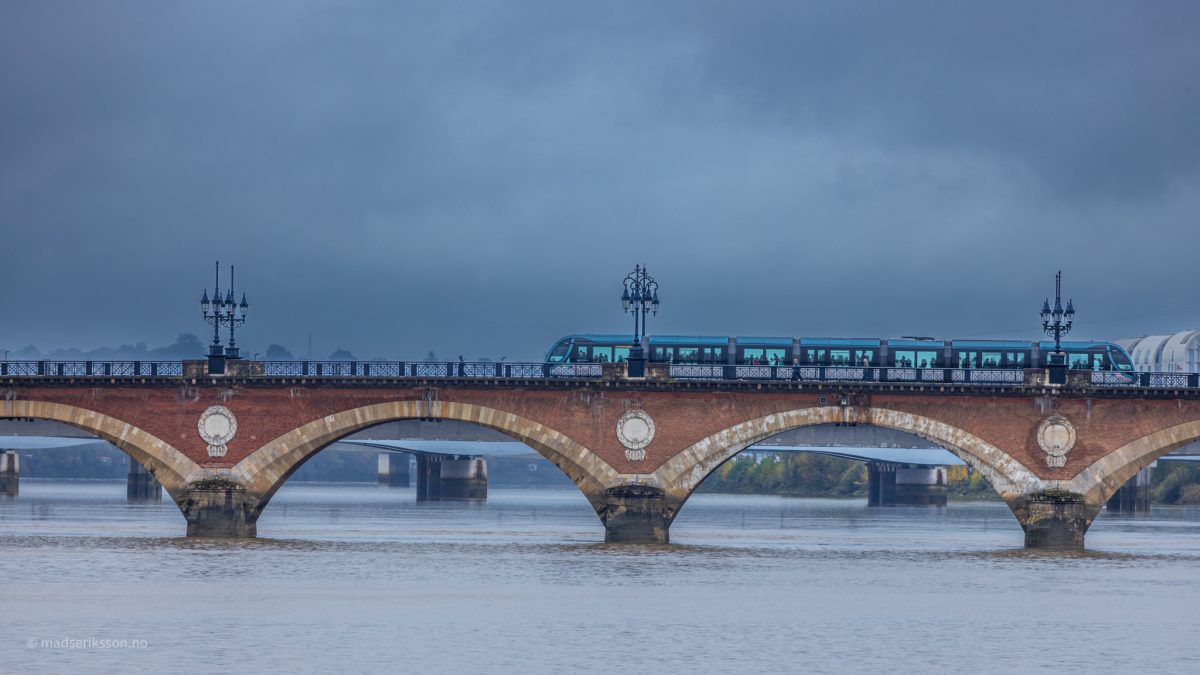
The detached bell tower of the Basilica of Saint-Michel rises 114 m, the tallest structure in the old city, and is listed by UNESCO as part of the pilgrim routes to Santiago de Compostela. Just downstream, the Pont de pierre of 1819–1822 was the first bridge over the Garonne; its 17 arches carry trams, bikes and pedestrians and have been closed to private cars since 2016. The Marché des Capucins, the city's great covered market, lies a few streets south.
A tram crossing the Garonne on the Pont de pierre, Bordeaux's first bridge over the river, under storm clouds
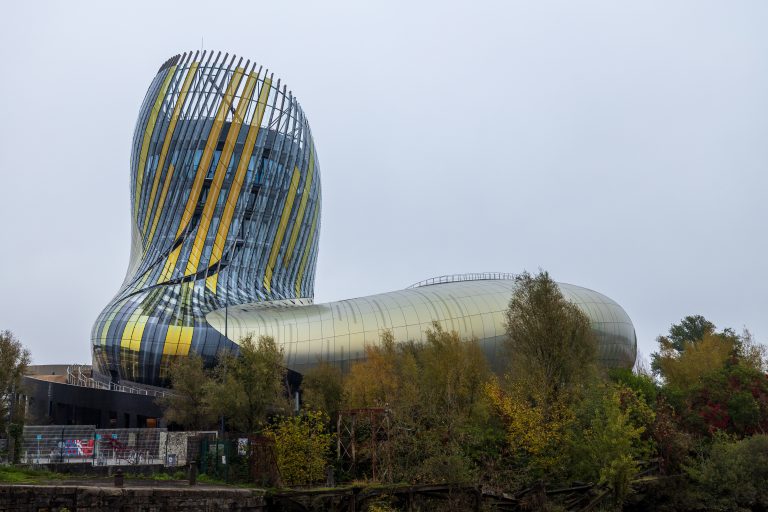
La Cité du Vin and the Chaban-Delmas bridge
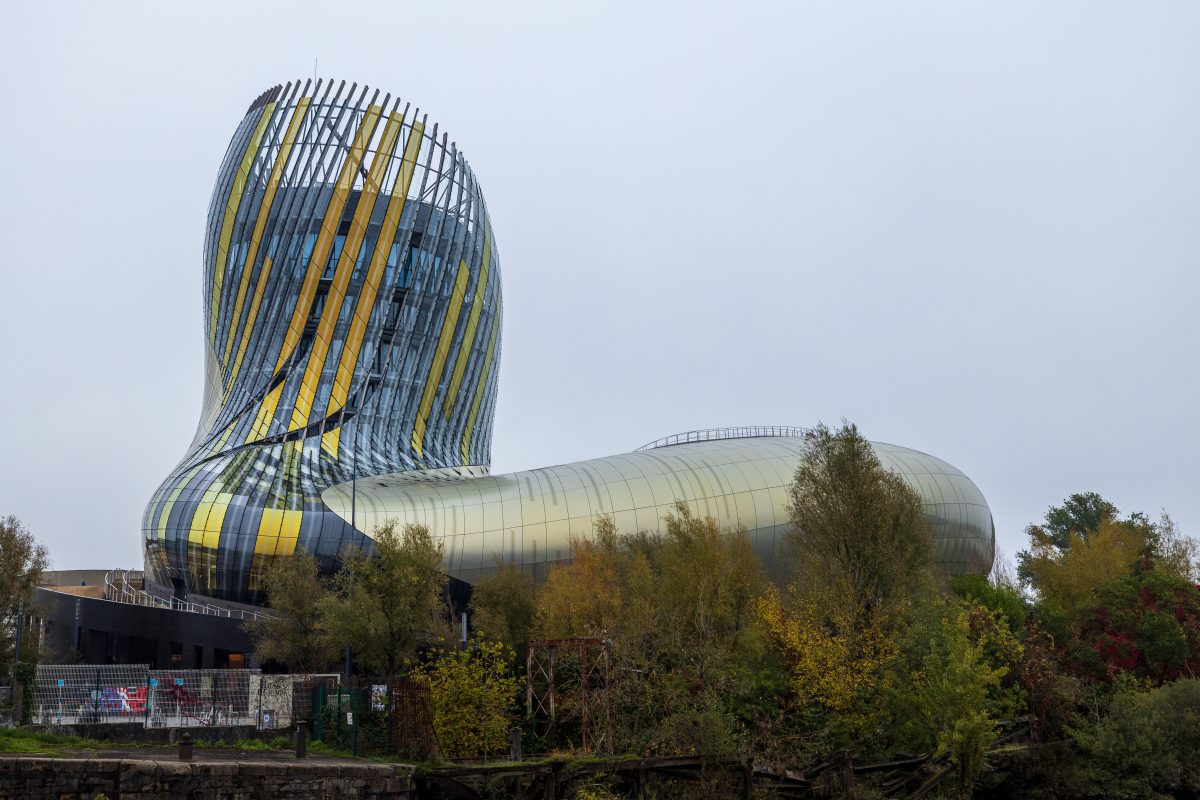
La Cité du Vin, designed by Anouk Legendre and Nicolas Desmazières of XTU, opened in June 2016 on the river at the northern edge of the city; its 55 m tower is meant to evoke wine swirling in a glass. Beside it, the Pont Jacques Chaban-Delmas of 2013 is a vertical-lift bridge whose central deck rises up to 53 m to let tall ships into the city. The Chartrons quarter between the two was the district of the wine merchants and shippers.
The Cité du Vin, Bordeaux's wine museum, with its curving gold and glass tower on the bank of the Garonne
The river front at night
After dark the floodlit façades of the Place de la Bourse are doubled in the Water Mirror, the most photographed view in Bordeaux. Across the Garonne, the former industrial district of La Bastide and the Darwin regeneration project in the old Niel barracks look back at the classical river front, which follows the curve of the river for more than a kilometre.
3D model © 2026 madseriksson.no · Photographs © madseriksson.no. Buildings and heights: © OpenStreetMap contributors (ODbL), via OpenMapTiles. Ground imagery: Sentinel-2 cloudless 2023 by EOX IT Services GmbH (contains modified Copernicus Sentinel data 2023; CC BY 4.0). Heights are approximate where OpenStreetMap has no measured value; sun positions are approximate.
The Port of the Moon — An Enlightenment City on the Garonne
The royal square that opened the city to the river, the shallow pool that doubles it, and the theatre that set the standard for French opera houses
Before the 18th century, Bordeaux turned its back on the Garonne behind medieval walls. The Place de la Bourse changed that. Designed by Jacques Gabriel, the king’s first architect, and completed by his son Ange-Jacques Gabriel, the royal square was built between 1730 and 1775 as an opening in the walls towards the river: a horseshoe of two grand pavilions, the Palais de la Bourse to the north, now the chamber of commerce, and the Hôtel des Fermes to the south, now home to the national customs museum. Since 1869 the square has been centred on the fountain of the Three Graces. The square set the pattern for the whole river front, a single sweep of uniform classical façades that follows the curve of the Garonne.
For most of the 20th century the façades were black and the quays given over to cargo sheds and parked cars. The transformation came under Alain Juppé, mayor from 1995: the stone was cleaned, the sheds were cleared, and the quays became a continuous garden and promenade, while a new tram network, opened in December 2003, replaced much of the traffic in the centre. The centrepiece of the riverside is the Miroir d’eau, designed by the landscape architect Michel Corajoud and opened in 2006: 3,450 square metres of granite covered by about two centimetres of water, which reflects the Bourse as perfectly as a mirror.
Every fifteen minutes the Water Mirror empties, then fills with a cloud of artificial mist that rolls across the quay. On summer evenings children run through it, and at dusk the reflection of the floodlit Bourse is the most photographed view in the city.
A few streets inland, the Grand Théâtre stands on the Place de la Comédie, on the site of the Roman forum. Designed by Victor Louis and inaugurated on 17 April 1780, it is one of the finest Neoclassical theatres in Europe: a portico of twelve colossal Corinthian columns topped by twelve statues of the nine Muses and three goddesses, Juno, Venus and Minerva, It is the home of the Opéra National de Bordeaux and the Ballet National de Bordeaux. From the theatre, the Cours de l’Intendance and the long pedestrian Rue Sainte-Catherine, which follows the line of the Roman main street, lead into the shopping heart of the city. The Pont de pierre, the first bridge across the Garonne, completed in 1822, has been closed to private cars since 2016 and is the best place to see the whole crescent of the river front.
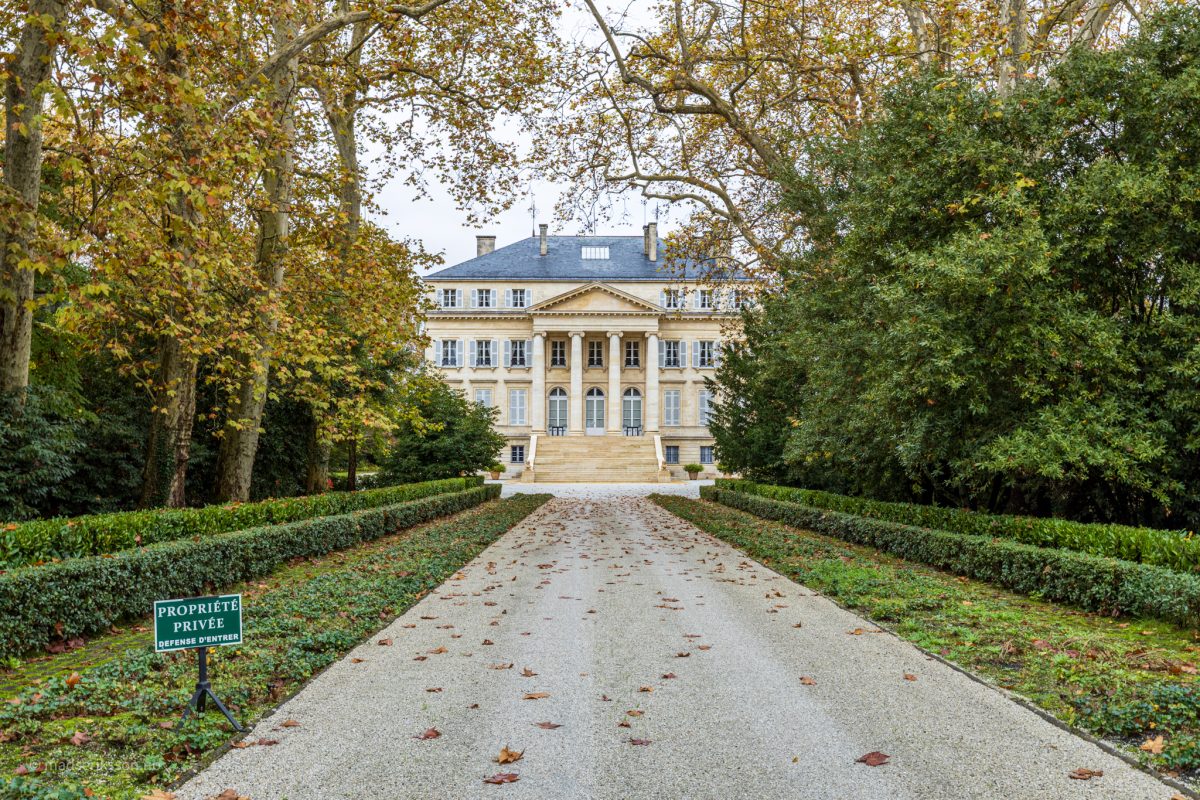
Before the Golden Age — Cathedral, Bell Towers and the English Centuries
The cathedral where Eleanor of Aquitaine married a king of France, two free-standing towers, and the old gate that still rings the hours
Behind the 18th-century facades lies an older city of narrow streets and Gothic churches, built in the three centuries when Bordeaux belonged to the kings of England. Its centre is the Cathédrale Saint-André, consecrated by Pope Urban II in 1096 and rebuilt in Gothic style over the following centuries; the Royal Door on its north side dates from the early 13th century. Here, on 25 July 1137, the thirteen-year-old Eleanor of Aquitaine married the future Louis VII of France. Their marriage was annulled fifteen years later, and in 1152 she married Henry Plantagenet — taking Aquitaine, and Bordeaux with it, to the English crown. The city prospered on the English demand for its “claret”, and in the 14th century Edward the Black Prince ruled an independent state of Aquitaine from here. The English era ended only with the French victory at Castillon in 1453.
Beside the cathedral, set apart from it on its own square, stands the Tour Pey-Berland, a Flamboyant Gothic bell tower begun in 1440 by Archbishop Pey Berland and finished around 1500. It stands about twenty metres from the cathedral’s east end, on a base eight metres square, and rises to just over 60 metres. Across the old town, the Grosse Cloche is one of the last remains of the medieval walls: a 15th-century belfry gate between two round towers 40 metres high, with a bell weighing 7,800 kilograms and a clock from 1759.
The Basilica of Saint-Michel, in the old riverside quarter of the same name, has the most striking silhouette in the old town: a 114-metre detached spire that is part of the UNESCO listing for the pilgrim routes to Santiago de Compostela.
Back by the cathedral, a dependency of the Palais Rohan houses the Musée des Beaux-Arts, founded in 1801 by the painter Pierre Lacour. Its collection is strongest in French, Flemish and Dutch painting, and its best-known work is Delacroix’s Greece on the Ruins of Missolonghi. The museum, the cathedral, the Pey-Berland tower and the Grosse Cloche are all within a fifteen-minute walk of each other, and together give the old city a different character from the grand river front.
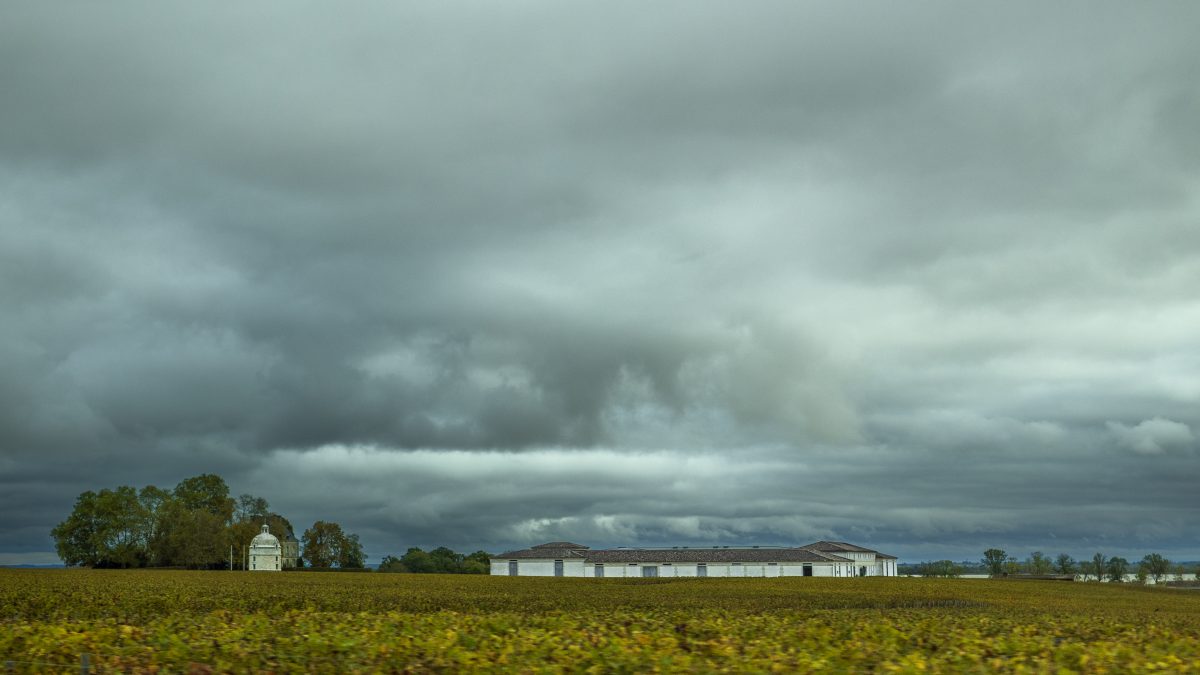
The Capital of Wine — From the Cité du Vin to the Châteaux
A museum shaped like wine swirling in a glass, the two banks that divide Bordeaux wine, and the medieval hill town at the heart of the Right Bank
The Cité du Vin, opened in June 2016 on the river at the northern end of the city, is the most visible symbol of Bordeaux’s identity. Designed by the architects Anouk Legendre and Nicolas Desmazières of XTU, its curving tower of glass and iridescent panels is meant to evoke wine swirling in a glass and the eddies of the Garonne. Inside, it is less a museum of Bordeaux than of wine itself: an interactive permanent tour through wine cultures, history and senses from around the world. The standard ticket includes a glass of wine in the Belvedere at the top of the building, with a view over the river, the port and the rooftops. It is served by tram line B.
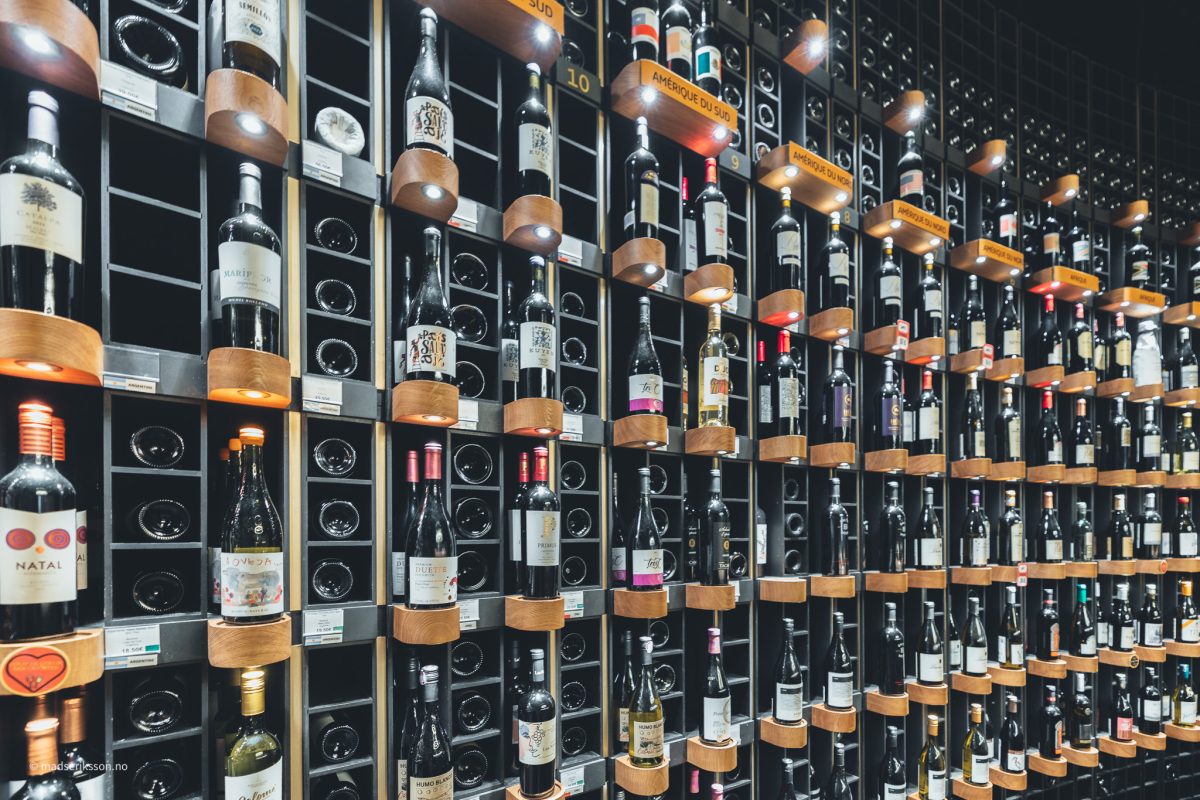
The Bordeaux wine region spreads over around 110,000 hectares of vineyards in the Gironde, with more than 5,600 producers and an average output of over 700 million bottles a year. It is divided by its rivers. On the Left Bank of the Garonne and the Gironde estuary, the gravelly soils of the Médoc and Graves produce red wines dominated by Cabernet Sauvignon; on the Right Bank of the Dordogne, around Libourne, Saint-Émilion and Pomerol, the clay and limestone favour Merlot, which is the most planted red grape in the region overall. The whites are made mainly from Sémillon and Sauvignon blanc, from dry Graves to the sweet wines of Sauternes.
The famous classification of 1855, drawn up for the Exposition Universelle in Paris at the request of Napoleon III, still ranks the great red wines of the Médoc and the sweet wines of Sauternes and Barsac. It has been changed only once for the reds: Château Mouton Rothschild was promoted to first growth in 1973.
The easiest wine excursion from the city is to Saint-Émilion, about 35 kilometres east, a medieval town of honey-coloured limestone on a hillside above the Dordogne valley. Its whole jurisdiction — the town and some 7,800 hectares of vineyards in eight communes — was inscribed by UNESCO in 1999 as a cultural landscape. Beneath the town is one of the largest underground churches in Europe, the monolithic church, carved out of the limestone in the late 11th or early 12th century, 38 metres long. To the north-west, the Médoc peninsula between the Gironde estuary and the Atlantic is home to four of the five red first growths of 1855. Château visits and tastings should be booked in advance.
At Table and Outdoors — Canelés, Markets and the River by Bike
The city’s signature pastry, its great covered market, the old wine merchants’ quarter and the riverbanks that have become its playground
Bordeaux’s signature pastry is the canelé: a small, fluted cake flavoured with rum and vanilla, baked in copper moulds traditionally brushed with beeswax, so that it has a dark, caramelised crust and a soft, custardy centre. Its origins are often traced to the convent of the Annonciades in the city, and in 1985 a brotherhood of local pâtissiers registered the single-“n” spelling as a collective brand. Every bakery sells them, and they are best eaten fresh, the same day.
The Marché des Capucins, south of the old town, is the city’s great covered market, with origins in the 18th century. It is the place to buy regional produce and to eat a simple lunch at one of its counters. North of the centre, the Chartrons quarter, named after a Carthusian convent founded in 1377, was the district of the wine merchants and shippers, whose long cellars ran back from the quay; the tramway and the renovated quays have made it one of the most sought-after parts of the city, with the regenerated docks of the Bassins à flot just beyond.
Bordeaux is one of the most bike-friendly cities in France, with more than 200 kilometres of cycle paths and lanes and a public bike-share scheme of around 2,000 bikes, half of them electric.
The best ride is along the river. The quays on the left bank run for several kilometres from the Pont de pierre past the Water Mirror to the Cité du Vin and the Pont Jacques Chaban-Delmas, the vertical-lift bridge opened in 2013, whose 117-metre central deck rises up to 53 metres to let cruise ships and tall ships into the heart of the city. On the right bank, the old industrial district of La Bastide has been turned into riverside parks and gardens with the best views back across the water to the classical facades; the former Niel barracks there are now home to Darwin, an urban regeneration project. A loop over the Pont de pierre, along the right bank and back across the Chaban-Delmas bridge is the best way to understand the city’s relationship with its river.
«Bordeaux is a city that reinvented itself twice — once in the 18th century, when the wine trade paid for one of the finest classical waterfronts in Europe, and again around the turn of the 21st, when it cleaned that waterfront and gave it back to its people. Walk the quays from the Pont de pierre to the Water Mirror, climb the Pey-Berland tower, eat a canelé still warm from the oven, and end the day with a glass in the Belvedere of the Cité du Vin. Then take a day for the vineyards: Bordeaux makes most sense when the city and the wine are seen together.»
Saint-Émilion — A Classification That Is Never Finished
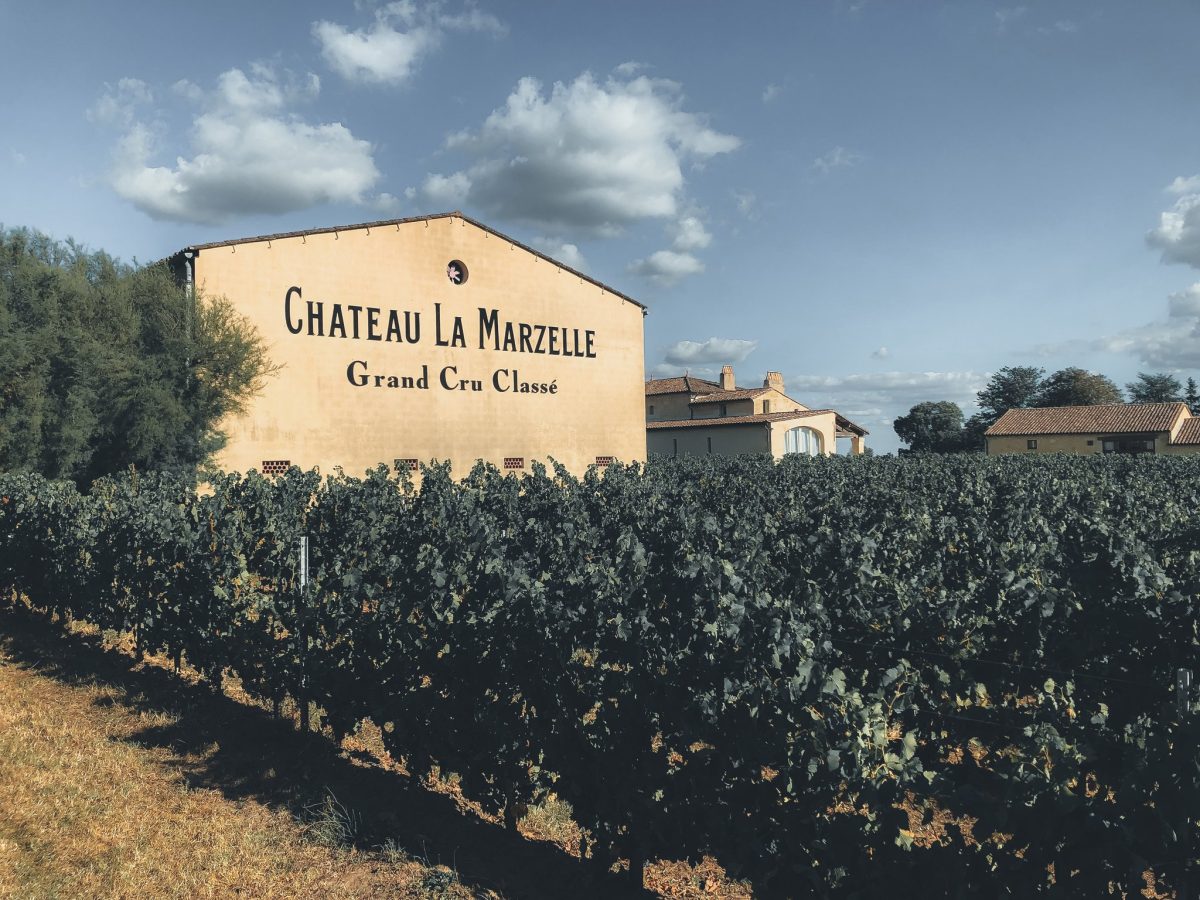
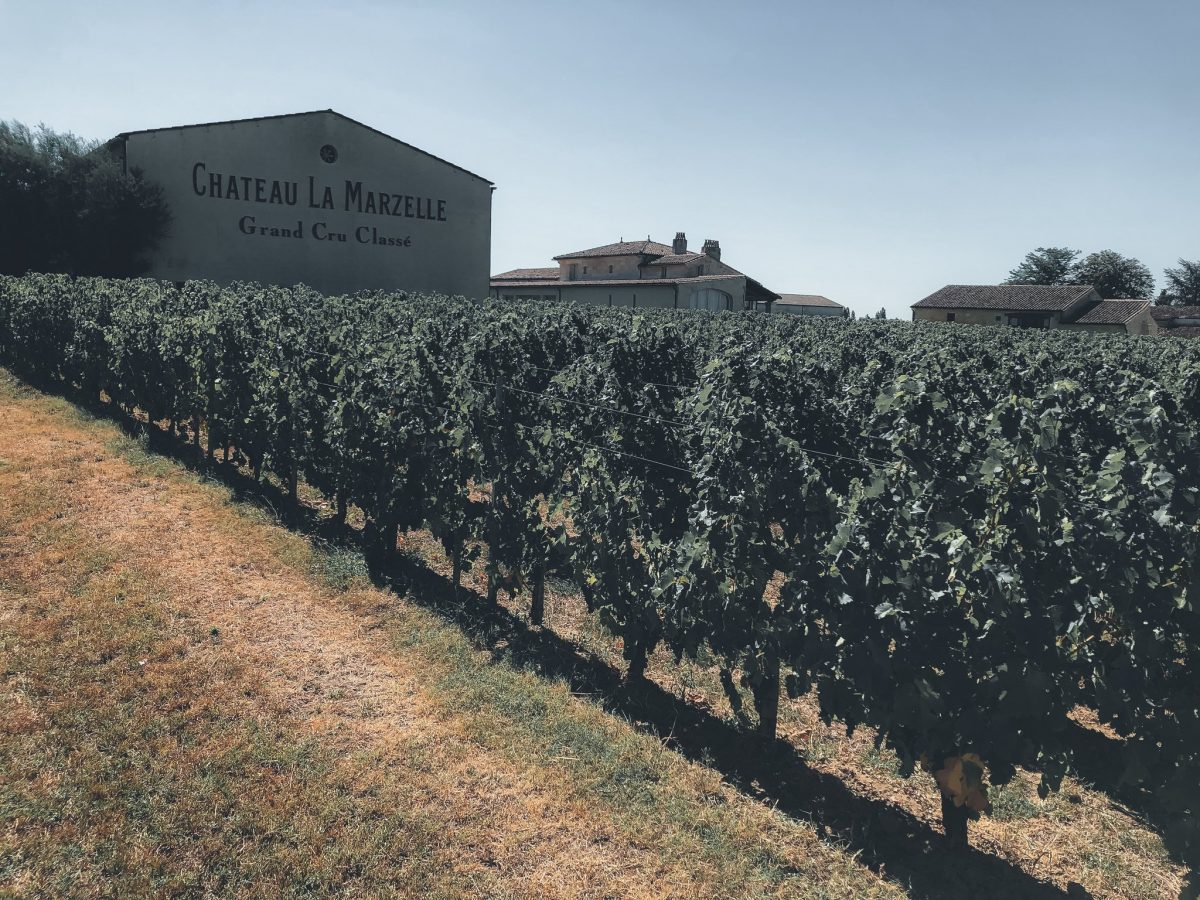
The Right Bank ranking that is redrawn every ten years, and a Grand Cru Classé estate on the plateau towards Libourne
Saint-Émilion has its own ranking of wines, entirely separate from the 1855 classification of the Médoc. First drawn up in 1955, it applies only to the Saint-Émilion Grand Cru appellation and is designed to be revised roughly every ten years, which makes it far more contested than its Left Bank counterpart: the 2006 revision was annulled by the administrative court in Bordeaux in 2008. The current list, approved by the French appellation authority INAO in September 2022, names 85 estates — 14 Premiers Grands Crus Classés, of which only Château Figeac and Château Pavie hold the top ‘A’ rank, and 71 Grands Crus Classés. Three of the best-known names, Ausone, Cheval Blanc and Angélus, chose to withdraw before it was published.
Château La Marzelle is one of those 71 Grands Crus Classés. Its 17 hectares lie in a single block on the upper terrace between the town and Libourne, on sand, gravel and clay laid down by an ancient course of the river Isle, and are planted mainly with Merlot alongside Cabernet Franc and a little Cabernet Sauvignon. Classified in 1955, the estate was left out of the 2006 revision, regained its status in 2012 and was confirmed in 2022; it has belonged to the Belgian Sioen family since 1998. As elsewhere in Saint-Émilion, visits and tastings should be booked in advance.

More in the same area
 CitiesDijon: The Dukes’ Capital, Its Owl and Its Mustard
 CitiesStrasbourg — The City That Changed Country Five Times and Ended Up Hosting Europe
 CitiesParis: The City of Lights
 CitiesLyon: Two Rivers, Two Hills and Two Thousand Years of History
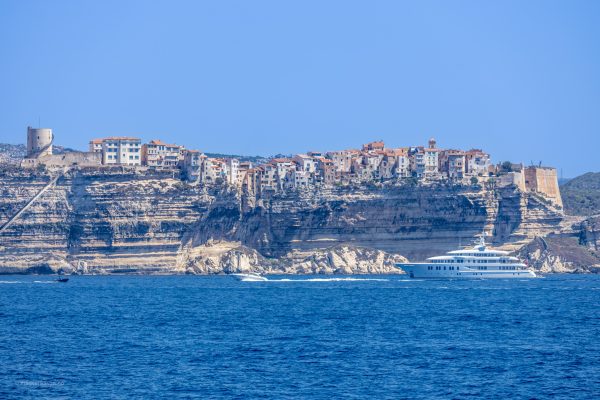
 CitiesBonifacio: The Genoese Fortress on Corsica’s White Cliffs
 ArchitectureTroyes — Medieval Capital of Champagne
City Frames · scroll-driven 3D
More cities in three dimensions
54 city guides open with a model built from open map data. Scroll, and the camera moves from landmark to landmark.
Departures · City Frames
Where to next?
| Time | Destination | Country | Status |
|---|
Live · position of the sun
Golden hour, right now
The low, warm light just after sunrise and just before sunset. These are the cities on the site where it is happening at this moment.