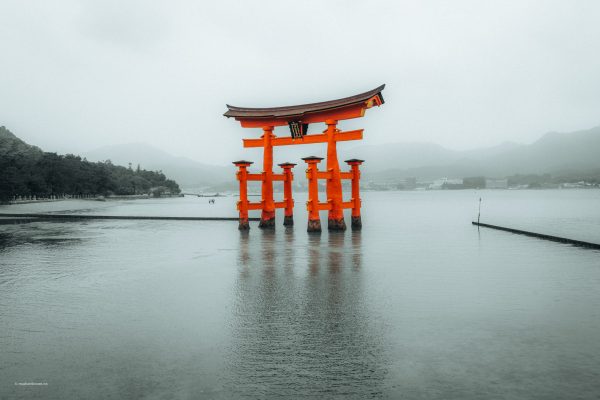
Kyoto was Japan’s imperial capital for over a thousand years, and it still carries that weight. The temples here are not ruins but living places of worship. The geisha districts are not performances but working neighbourhoods. The ten thousand torii gates of Fushimi Inari still lead upward into the forested hills above the city, just as they have for centuries. Nowhere else in Japan is history so thoroughly present in the texture of ordinary life.

Kyoto served as Japan’s imperial capital from 794 to 1868 — when the Emperor moved east to what is now Tokyo — and the city spent those eleven centuries accumulating layer upon layer of temples, shrines, palaces, and craft traditions. The result is a city of extraordinary density: 17 UNESCO World Heritage Sites within its boundaries, more than 1,600 Buddhist temples, over 400 Shinto shrines, and a culinary tradition — kaiseki — that is widely regarded as the most refined in Japan.
Unlike Tokyo, Kyoto is not a city that tries to overwhelm you. It is smaller, quieter, and more inward-facing — a city that rewards patience and unhurried attention. The famous sights are genuinely worth the crowds: the golden pavilion reflected in its pond, the torii gates winding up the mountain, the bamboo grove in Arashiyama. But Kyoto also gives back to those who wander the back streets of Higashiyama on a winter morning, or find themselves alone at a Zen garden the guidebooks somehow missed.
How to read this guide
This article covers four aspects of Kyoto: the great shrines and temples, the traditional districts and living culture of Gion, the natural landscapes of Arashiyama, and the city’s exceptional food scene — from the formal architecture of kaiseki to the vivid chaos of Nishiki Market. Each section is built around places you can actually walk to and experience, not abstractions. Kyoto rewards a slow approach. Three or four days gives you the surface; a week begins to reveal what lies beneath it.
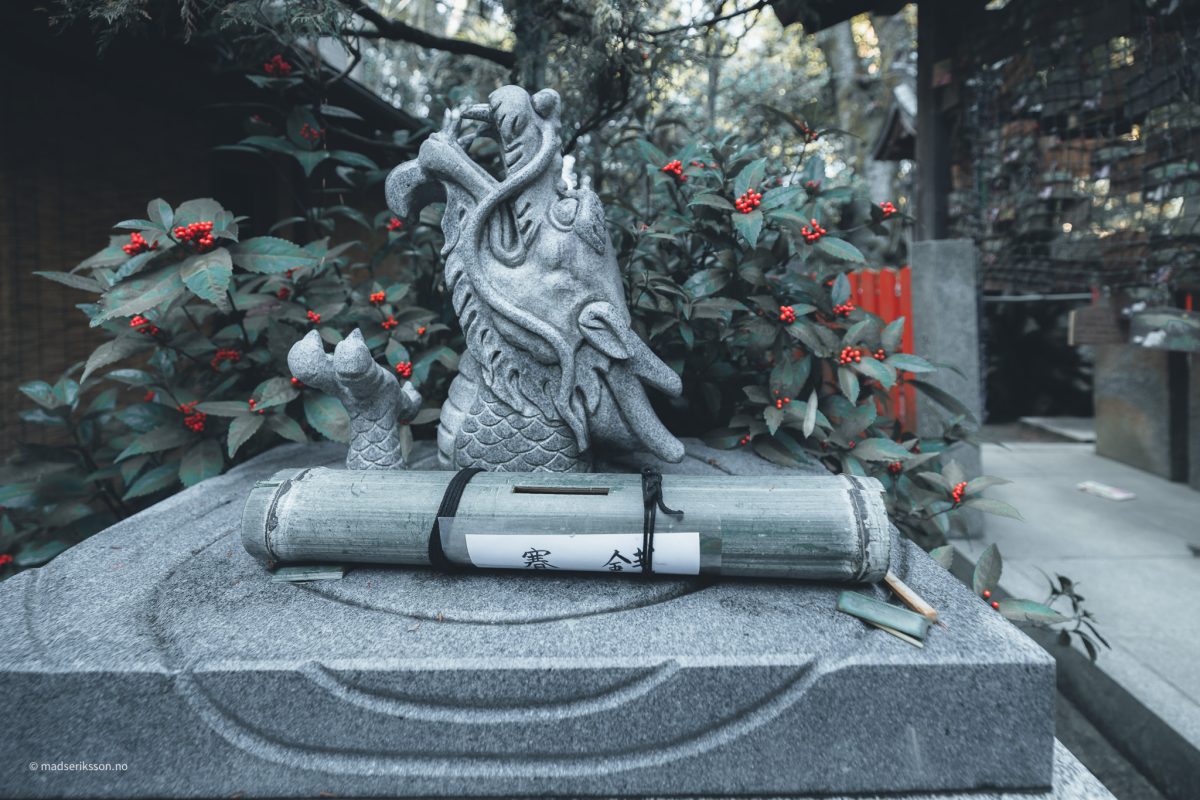
Sacred Kyoto — Temples, Shrines and Gates
The city’s 1,600 Buddhist temples and 400 Shinto shrines are not museum pieces — they are in daily use
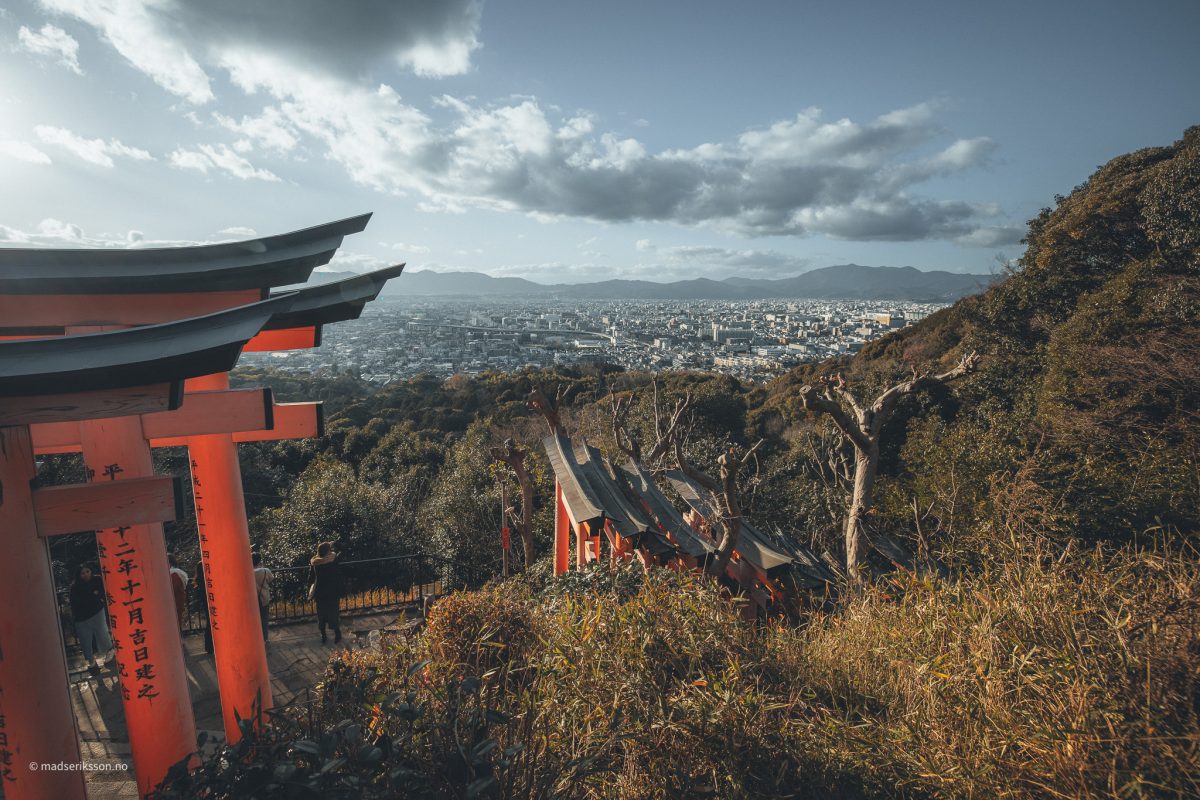
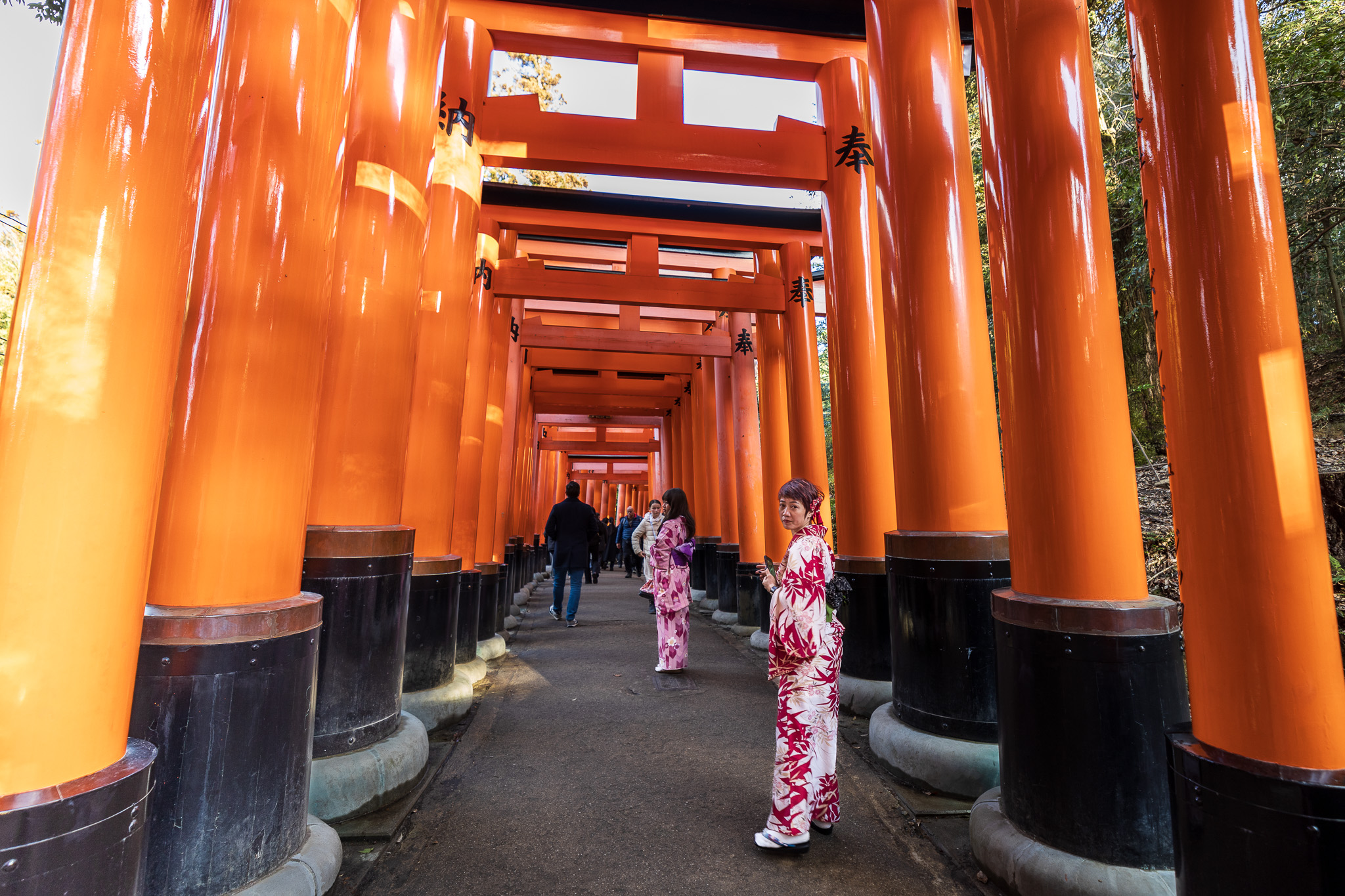
Fushimi Inari Taisha, in the southern hills of Kyoto, is the head shrine of the god Inari — the deity of rice, agriculture and business — and one of the most visited sites in all of Japan. The shrine itself dates to 711 CE, though the tradition of donating torii gates began later, growing over centuries into the extraordinary tunnel of vermillion timber that now winds for four kilometres up the forested slopes of Mount Inari. The effect is unlike anything else: the gates crowd together so densely that the forest disappears into a corridor of deep orange-red, broken only by shafts of light. The path is busiest at the lower levels and surprisingly quiet near the summit, especially in the early morning or evening.
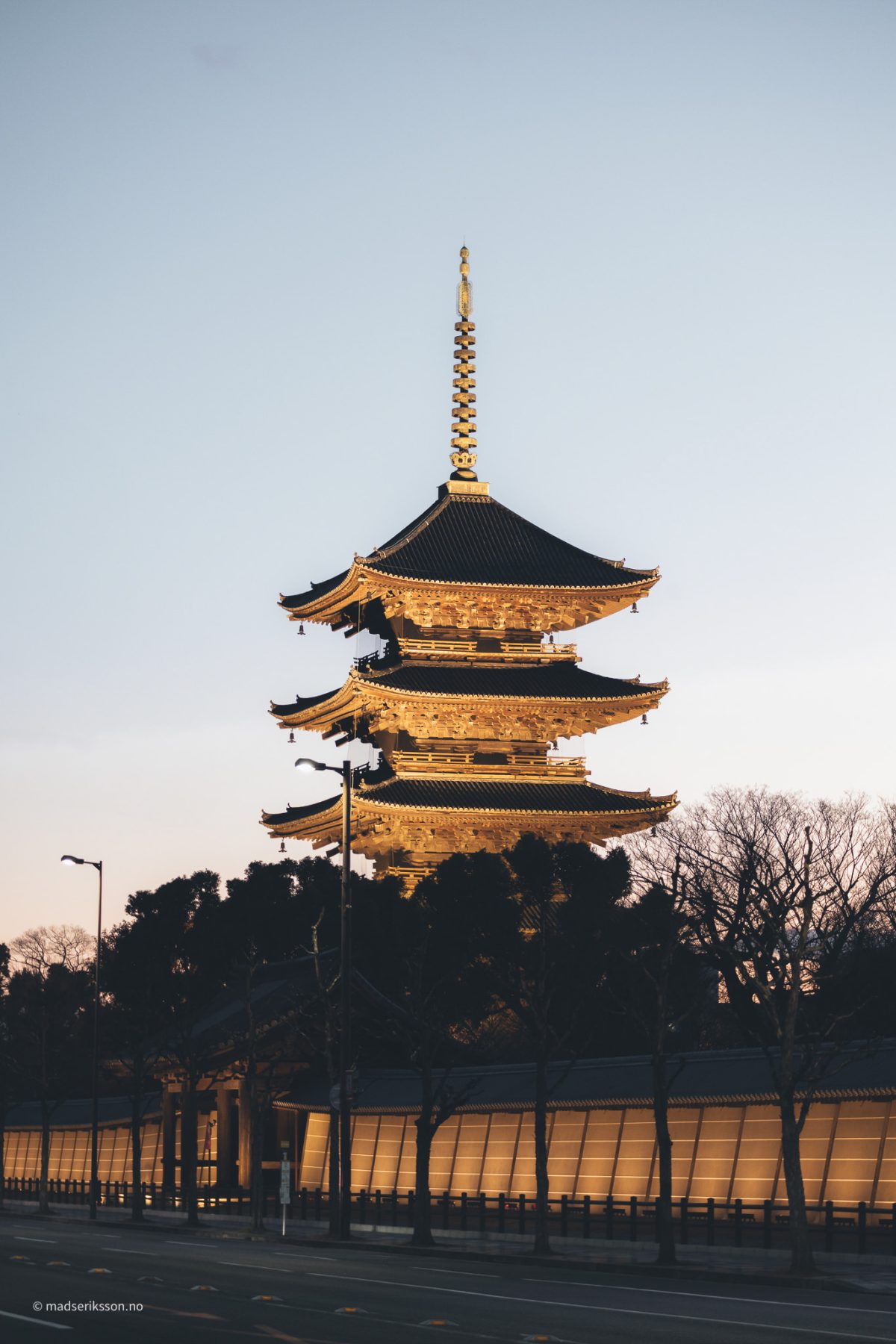
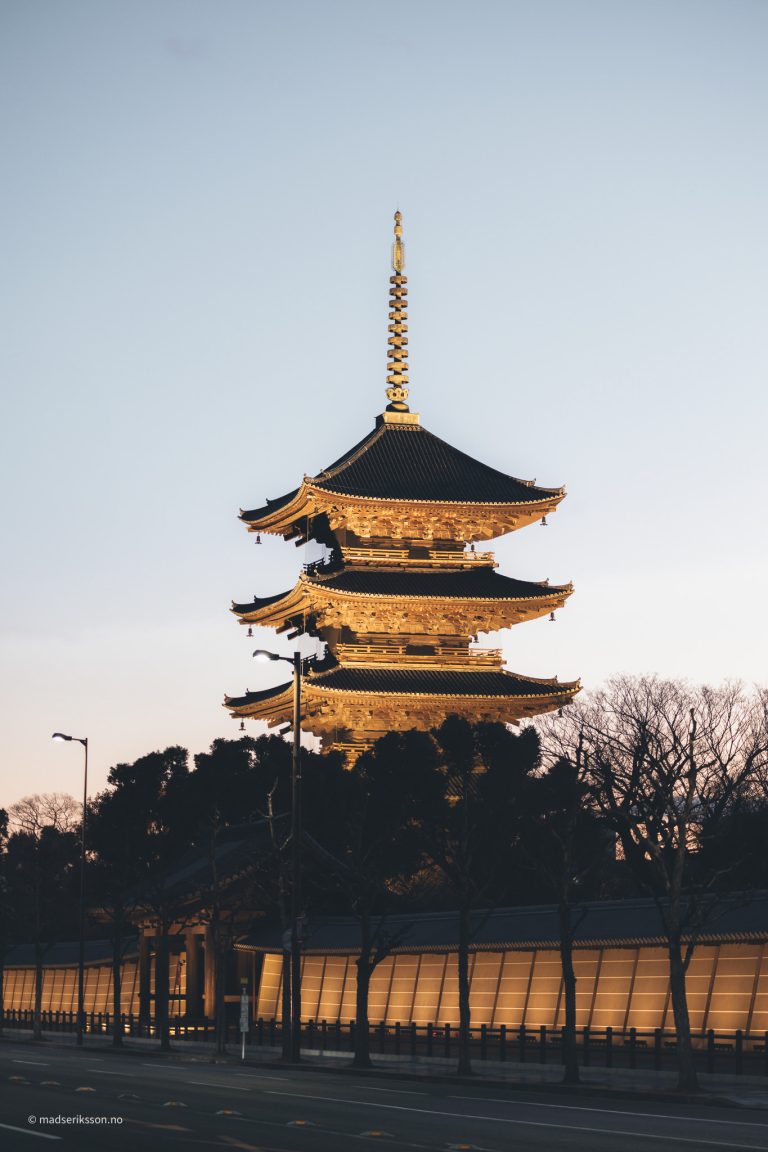
In central Kyoto, the five-story pagoda of Toji rises above its surroundings to a height of 54.8 metres — the tallest existing wooden tower in Japan, built in 826 CE and rebuilt in its current form in 1644 after a fire. Against a clear sky at dusk, with the rest of the city spread below, it is one of the most complete images of classical Japan. The temple grounds host a large flea market on the 21st of each month, drawing vendors of antiques, ceramics, food and textiles from across the region.
The path through the torii gates of Fushimi Inari winds for four kilometres up the forested hillside. The higher you go, the quieter it becomes.
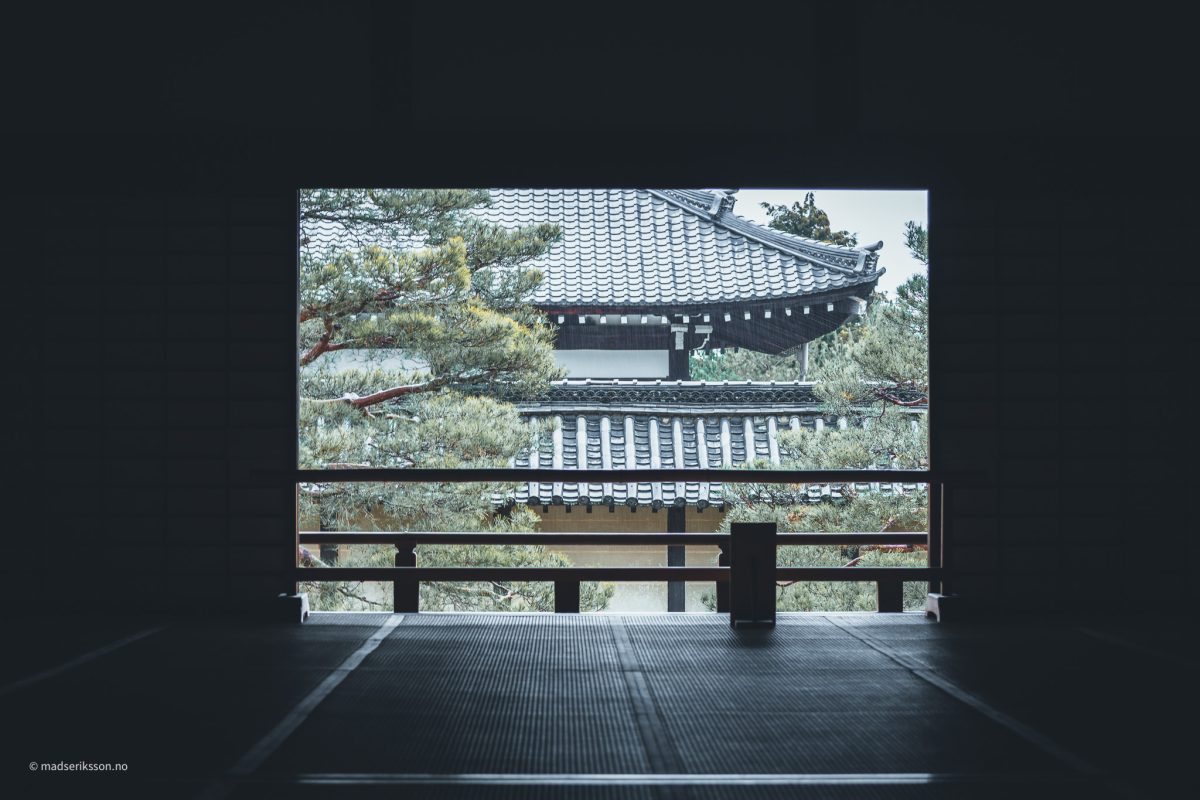
Further east, the temple complex of Tofuku-ji is one of Kyoto’s great Zen establishments, founded in 1236 and famous above all for its autumn foliage — the hojo garden and the gorge below the Tsutenkyo bridge turn vivid orange and red in November, drawing enormous crowds. But in the depths of winter, when the trees are bare and the light low and blue, the temple reveals a different quality: the scale of the main hall, the discipline of the stone gardens, the silence of the long corridors. Tofuku-ji is best visited outside the autumn peak.
Gion — The Living Heritage District
The geisha quarter, the Gion Matsuri, and the machiya townhouses of Higashiyama
Gion is the most famous of Kyoto’s hanamachi — the flower districts where geiko (the Kyoto word for geisha) and maiko (apprentices) train and work. The district centres on Hanamikoji-dori, a street of wooden ochaya (teahouses) where the evenings belong to the culture of ozashiki — private banquets at which geiko entertain with conversation, music and dance. The tourist presence is heavy in the early evening, when visitors gather hoping to photograph geiko walking to appointments; the culture itself is substantially more private and formal than these encounters suggest.
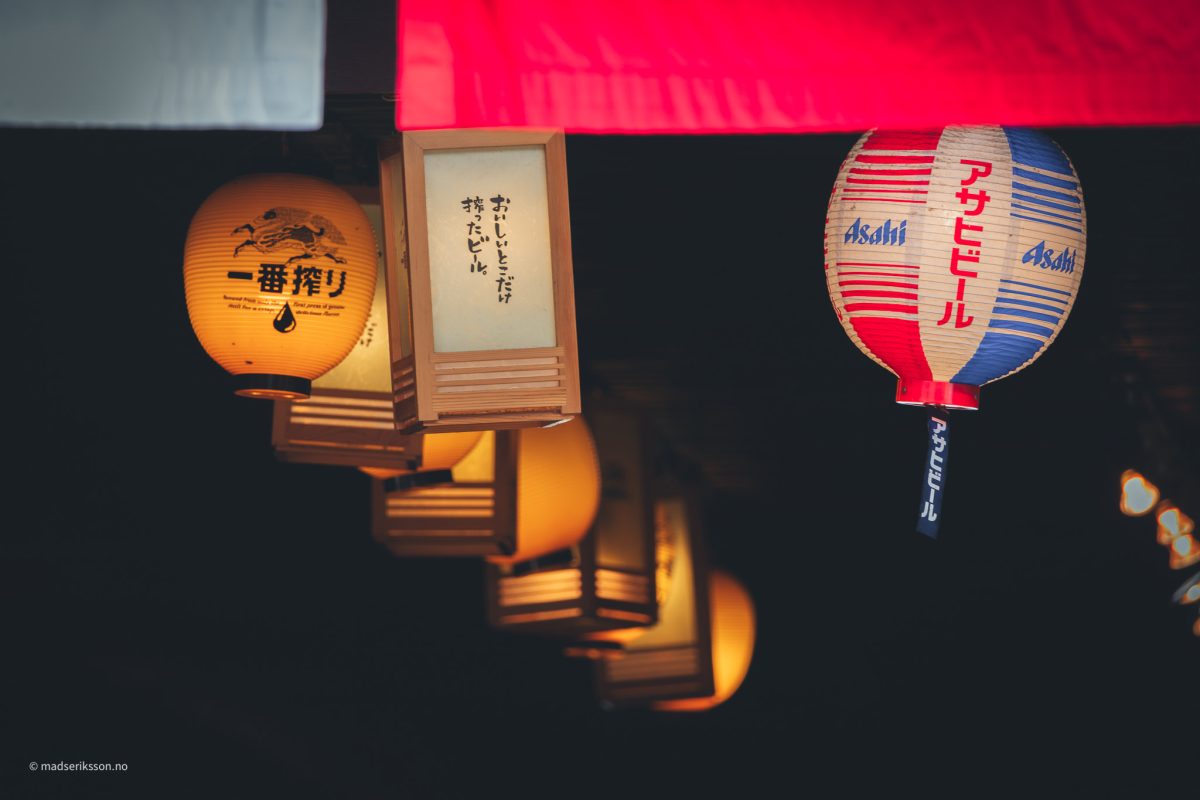
The Gion Matsuri — held across the entire month of July, with the central processions on the 17th and 24th — is one of Japan’s three greatest festivals and has been celebrated in some form since 869 CE, when it was performed as a prayer against pestilence. The procession of yamaboko floats, some standing over 25 metres tall and pulled through the city streets by teams of men in traditional dress, is an extraordinary spectacle that draws hundreds of thousands of visitors. The weeks around the processions fill the city’s lanes with street food stalls, lanterns, and crowds dressed in yukata cotton robes.
The Gion Matsuri has been held since 869 CE. The floats, the lanterns, the street food and the crowds in yukata turn Kyoto’s historic centre into something that feels genuinely continuous with its own past.
Pontocho is a narrow lane running parallel to the Kamo River, lined with small restaurants, bars and teahouses on both sides. In summer, these establishments extend their dining out over the river on wooden platforms called kawayuka — one of Kyoto’s most atmospheric settings. At night, especially out of high season, Pontocho is dark, intimate and very beautiful: lanterns, stone pavements, the glimpsed interior of a restaurant through a half-open door. The lane is best explored without a specific destination in mind.
Nishiki Market and the Kyoto Table
From the street food lanes of Nishiki to the seasonal architecture of a kaiseki meal
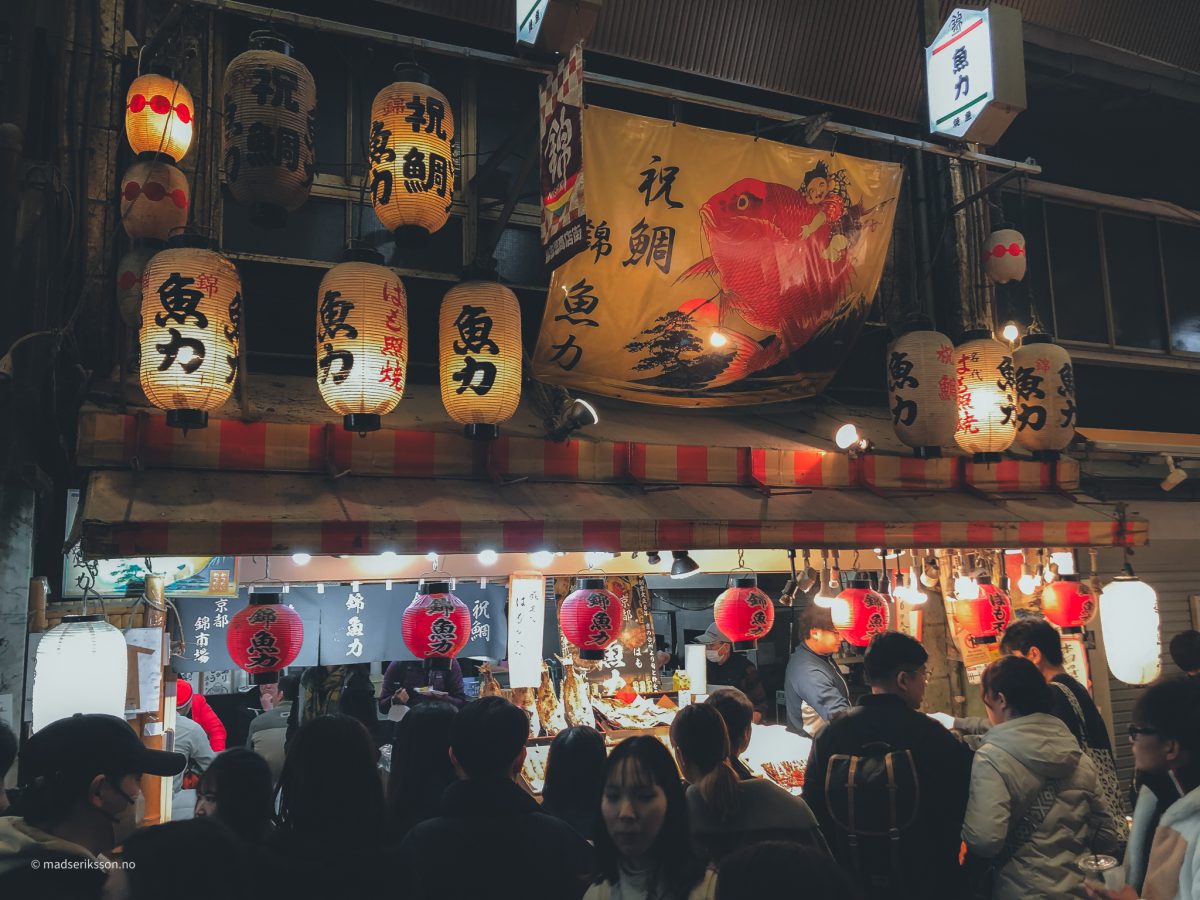
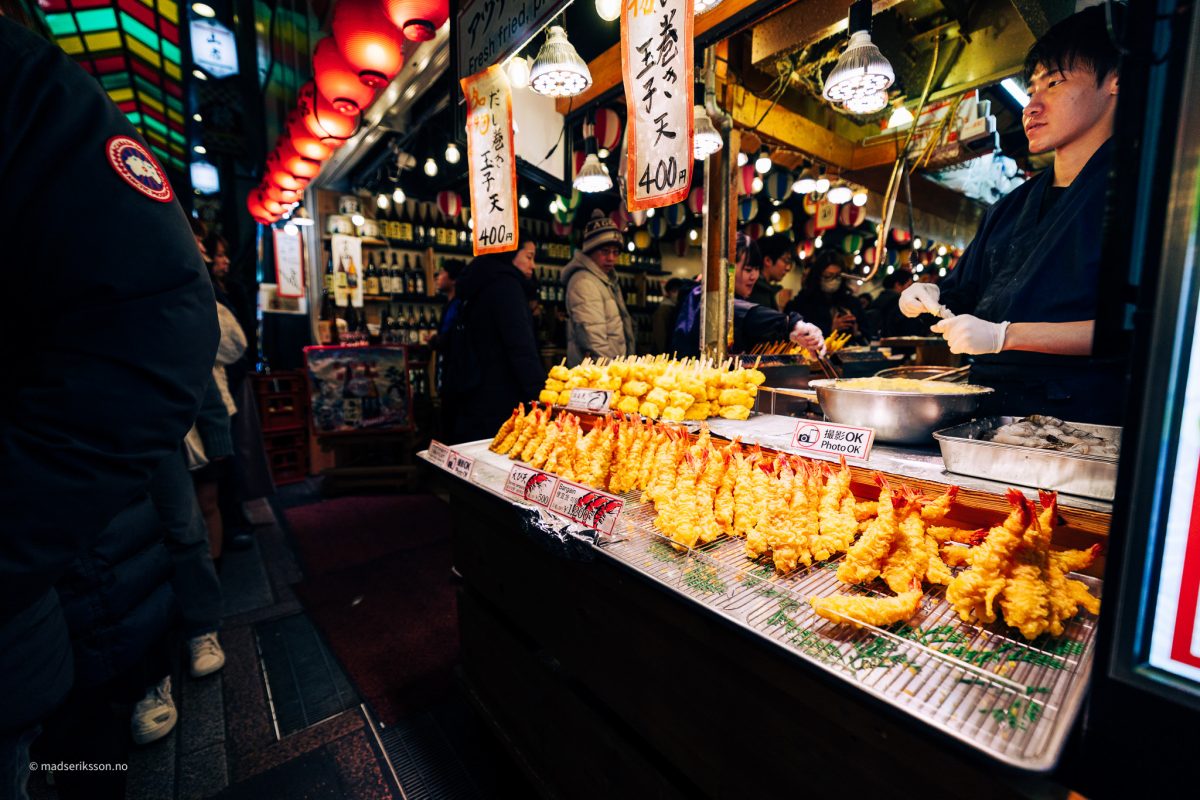
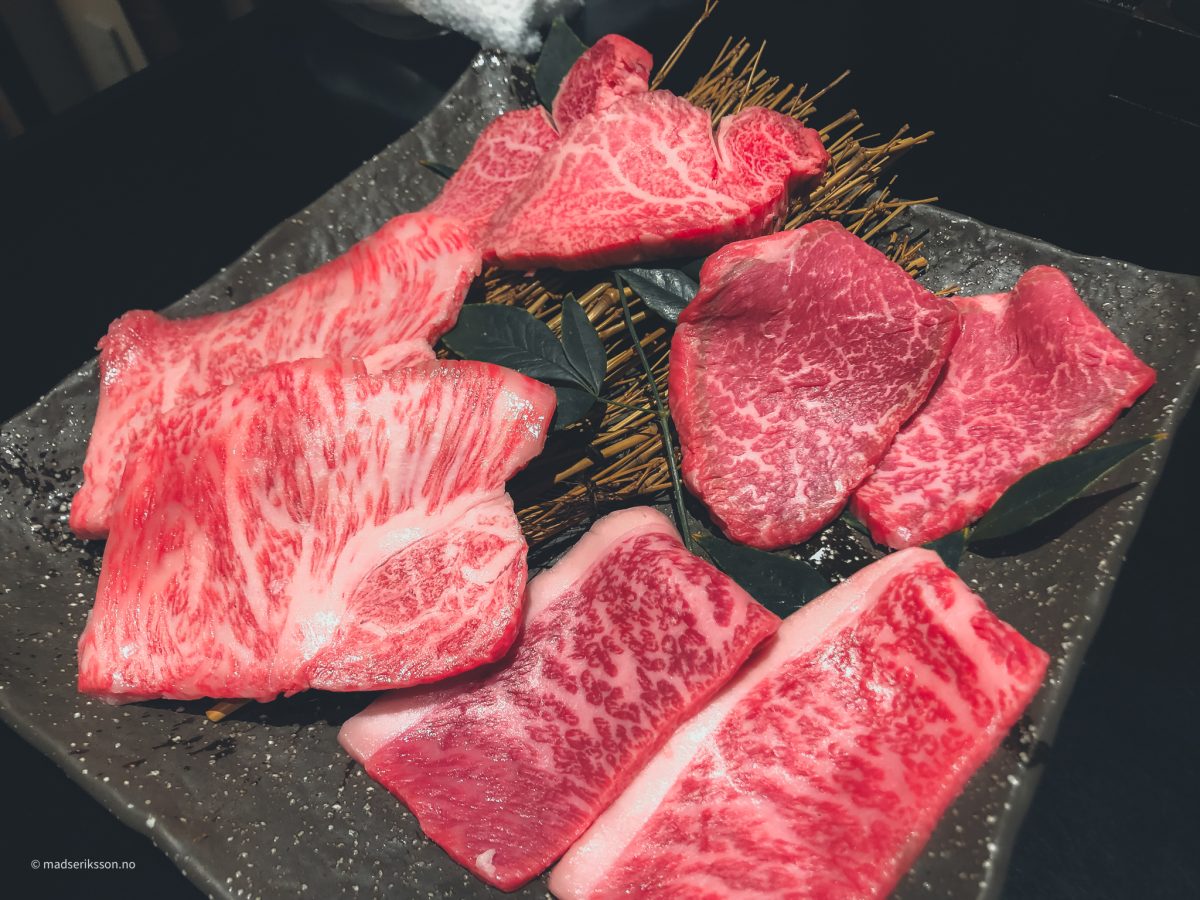
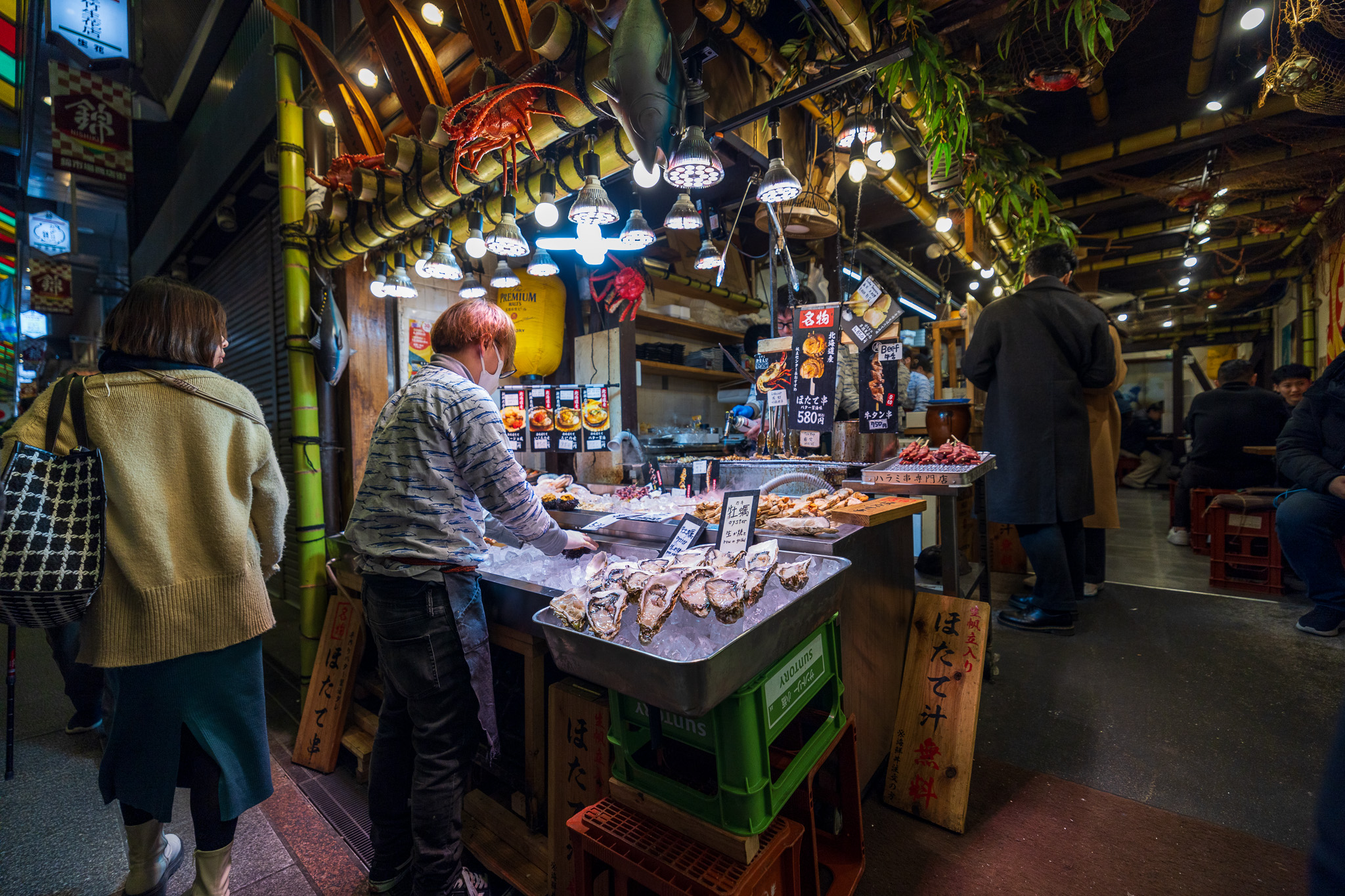
Nishiki Market — known locally as Kyoto’s kitchen — runs for approximately 400 metres through a covered arcade in the centre of the city, lined on both sides with more than 130 shops and stalls. The market has operated here since the 14th century, originally supplying fresh fish and produce to the city’s temples and imperial court. Today it sells pickled vegetables (tsukemono), fresh tofu, grilled seafood, sweet potato and chestnut confections, dried fish, matcha sweets, knives, lacquerware and much else. It is crowded, vivid, and surprisingly easy to eat your way through on a slow walk.
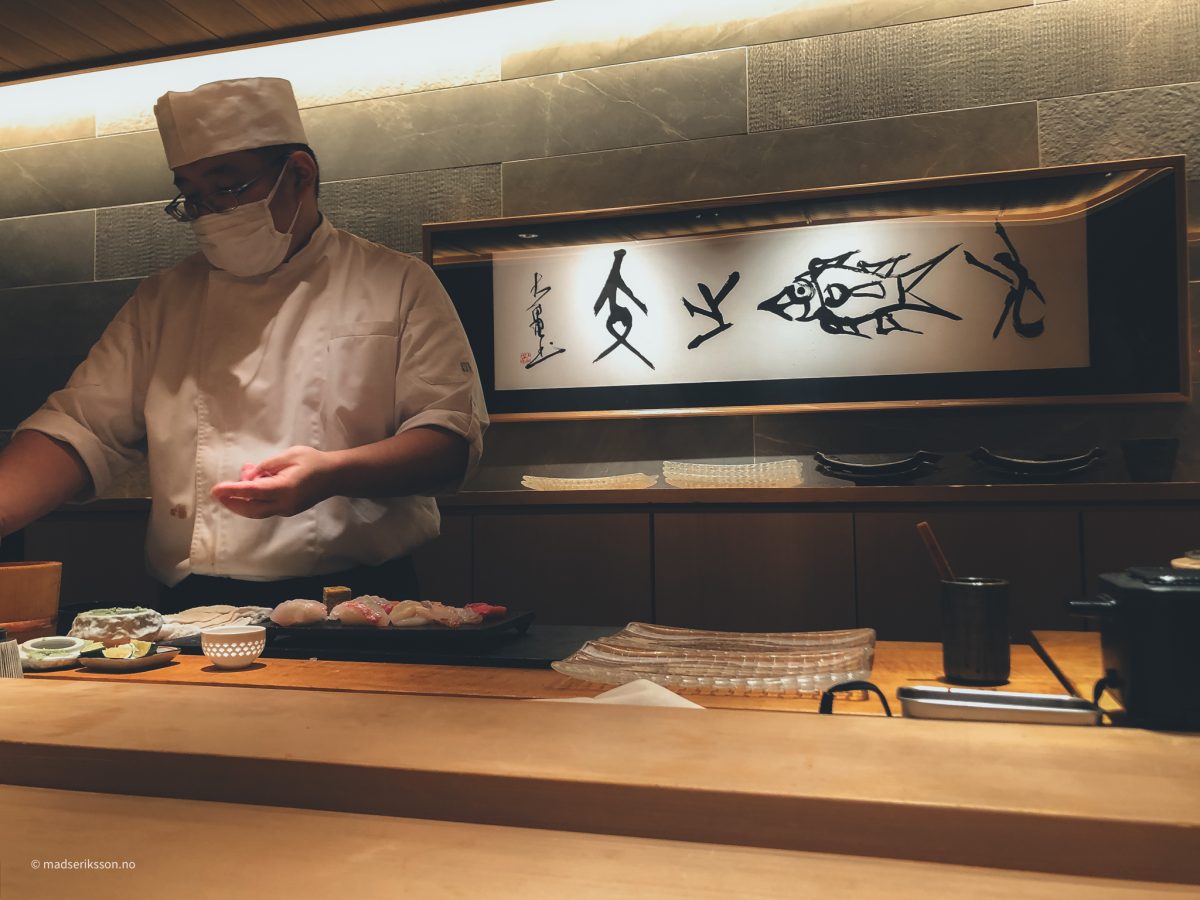
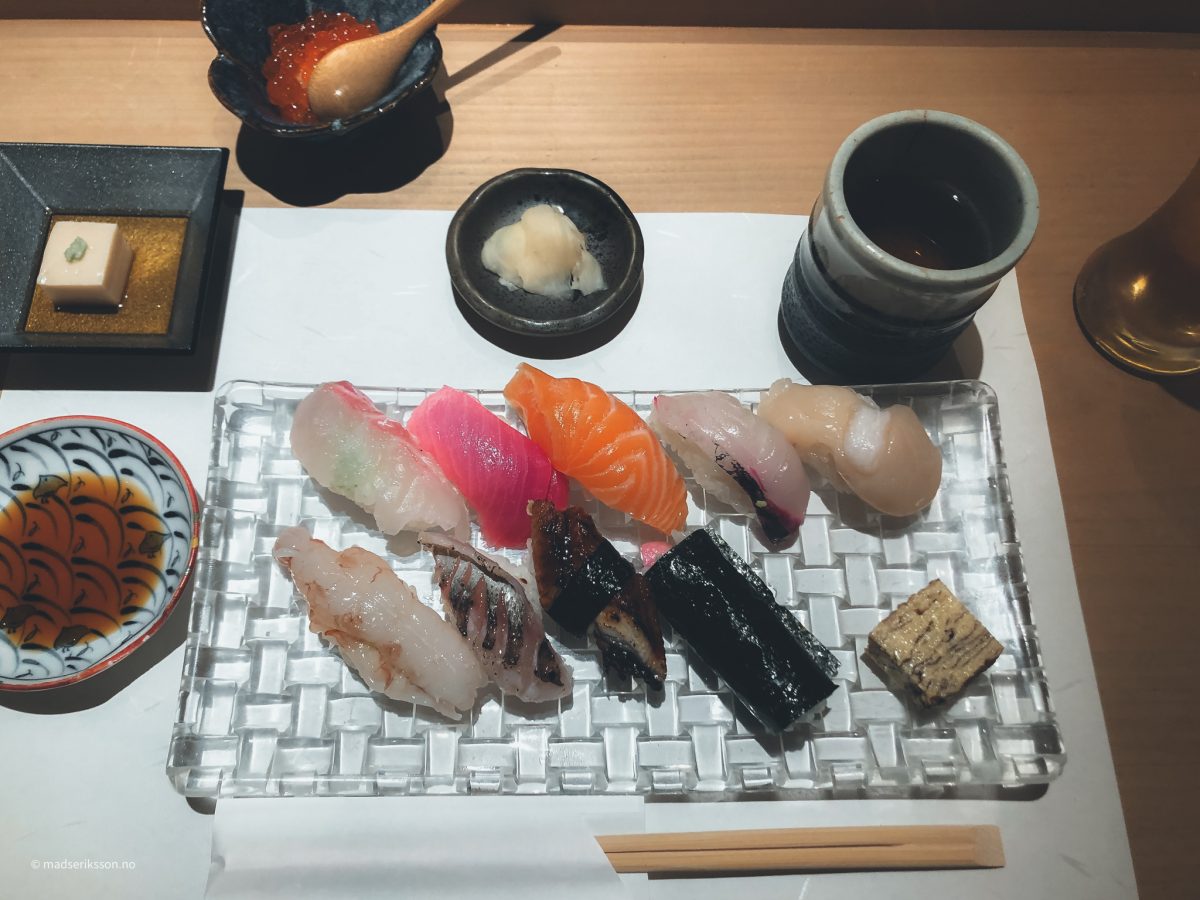
The market’s cooking style reflects a broader principle of Kyoto cuisine: kyo-ryori, or “Kyoto cooking”, places exceptional emphasis on seasonal produce, subtle flavour, and visual presentation. The most formal expression of this tradition is kaiseki, a multi-course meal that evolved from the tea ceremony into an elaborate dining ritual involving 10 to 20 small dishes, each matched to the season and the vessel that holds it. Kyoto has more Michelin-starred restaurants than any other Japanese city of comparable size, and many of the most celebrated are kaiseki establishments.
A kaiseki meal in Kyoto is not simply dinner — it is a statement about what season it currently is, made in lacquered boxes and ceramic bowls, built course by course.
At the other end of the spectrum from kaiseki, yudofu — simmered tofu served in dashi broth — is one of Kyoto’s most traditional and affordable dishes, widely available near the temple districts. The city’s proximity to Uji, south of Kyoto, means that matcha of exceptional quality is everywhere: as tea in formal settings, as ice cream and parfait in casual cafés, as flavouring in wagashi sweets from the city’s many confectionery shops. For the most direct encounter with Kyoto food culture, the Nishiki Market on a weekday morning remains the best single starting point.
«Most cities carry their history in their museums. Kyoto carries it in the streets. The geiko walking to a teahouse, the monk sweeping the temple courtyard at dawn, the sound of the bamboo in the wind at Arashiyama — these are not performances arranged for visitors. They are what the city is, as it has been for over twelve hundred years. The best reason to visit Kyoto is the same as the best reason to visit any truly old city: to spend time in a place that knows what it is.»
Kyoto in 3D
Kyoto was Japan's imperial capital from 794 until 1868, and its historic monuments were inscribed together on the UNESCO World Heritage List in 1994. This frame covers the centre from Kyoto Station and Tō-ji in the south-west to Gion and Kiyomizu-dera below the Higashiyama hills, with Fushimi Inari at its southern edge. The city has more than 1,600 Buddhist temples and over 400 Shinto shrines.
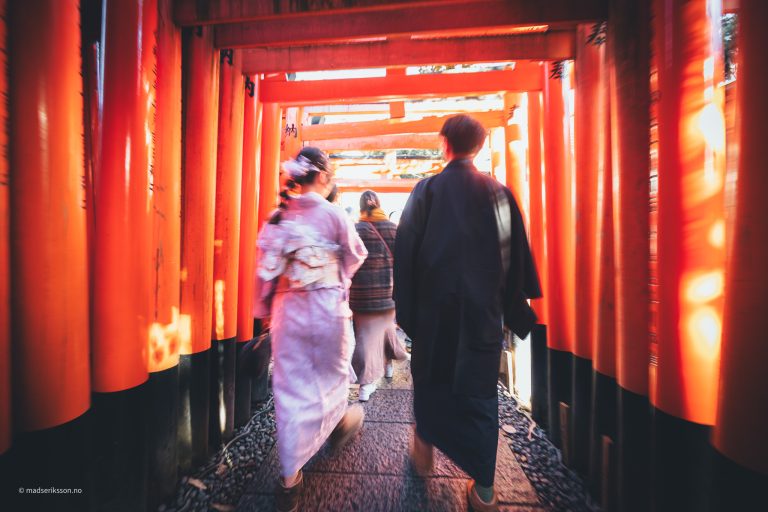
Fushimi Inari Taisha
Fushimi Inari Taisha, the head shrine of Inari, deity of rice and business, was founded in 711 at the foot of Mount Inari. About 10,000 vermilion torii, each donated by a business or a family, line some 4 km of paths up to the 233 m summit. The Senbon Torii, two parallel tunnels of gates just above the main hall, are the densest stretch.
Tōfuku-ji and Sanjūsangen-dō
Tōfuku-ji was founded in 1236 by the imperial chancellor Kujō Michiie, and its two-storey Sanmon is the oldest surviving Zen main gate in Japan. The maple valley below its Tsūten-kyō bridge draws large crowds every November. To the north, the 120 m wooden hall of Sanjūsangen-dō, rebuilt in 1266, holds 1,001 statues of the Thousand-armed Kannon.
Kiyomizu-dera and Higashiyama
Kiyomizu-dera was founded in 778 on the wooded slopes of the Higashiyama hills, and its main hall, rebuilt in 1633 with a donation from the shogun Tokugawa Iemitsu, stands on a wooden stage carried by tall pillars. Below it, the stepped lanes of Sannenzaka and Ninenzaka lead down past the 46 m Yasaka Pagoda, rebuilt in 1440, towards Yasaka Shrine.
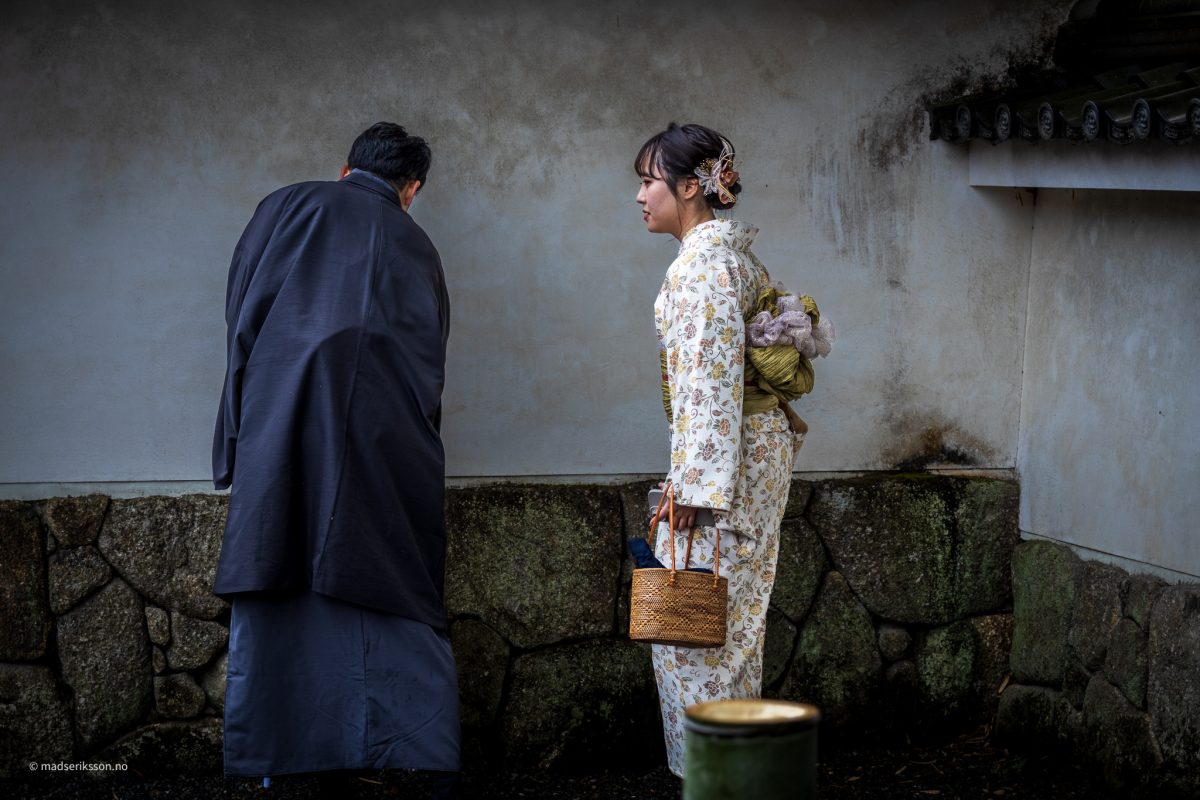
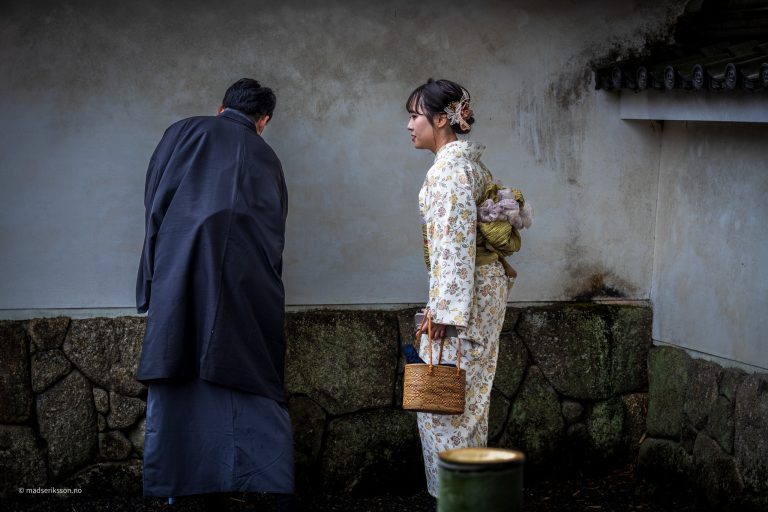
A couple in traditional kimono beside an old plastered wall in Kyoto
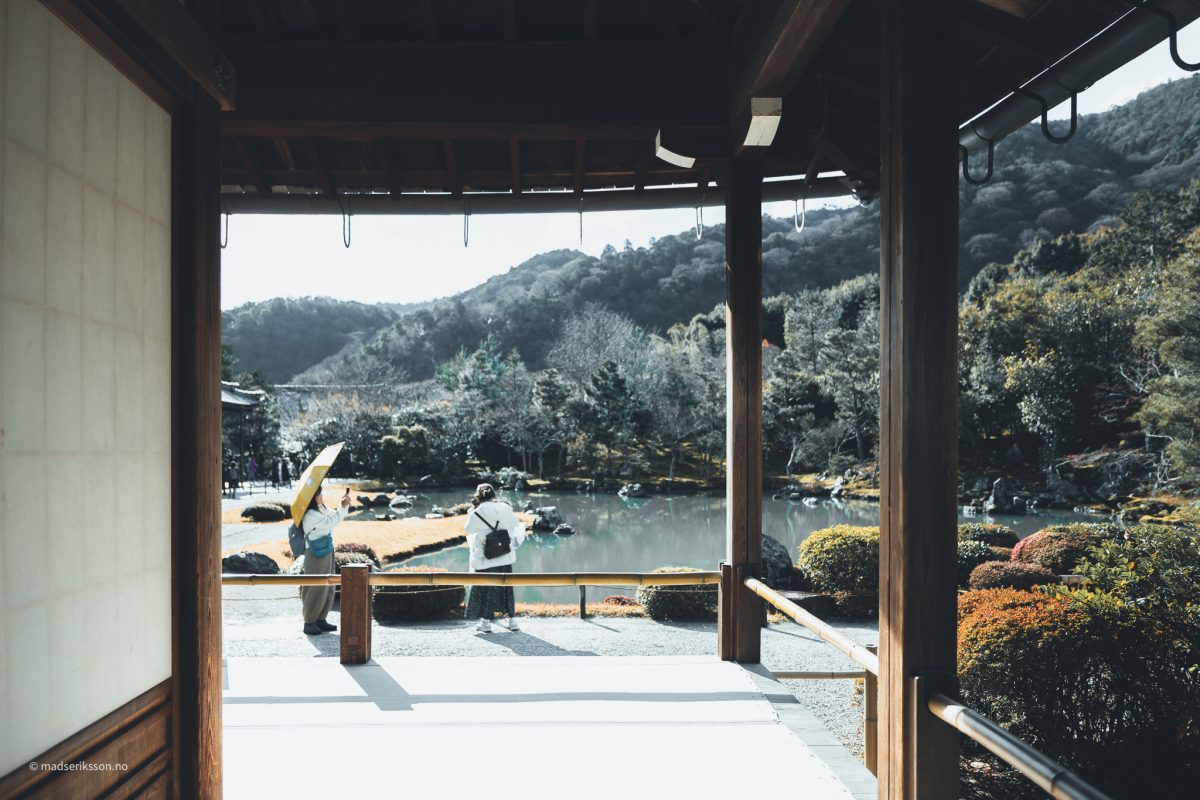
Arashiyama and Tenryū-ji
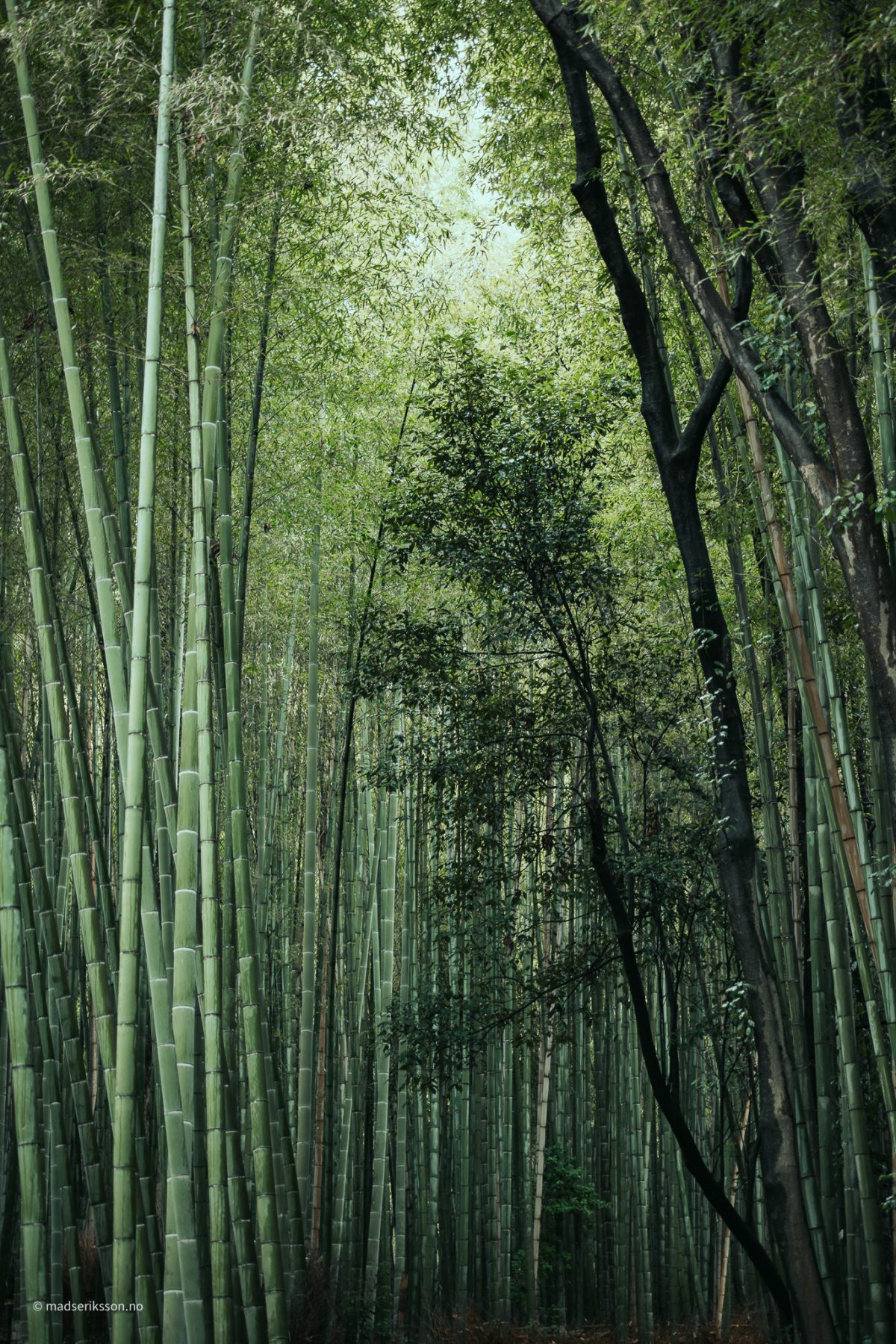
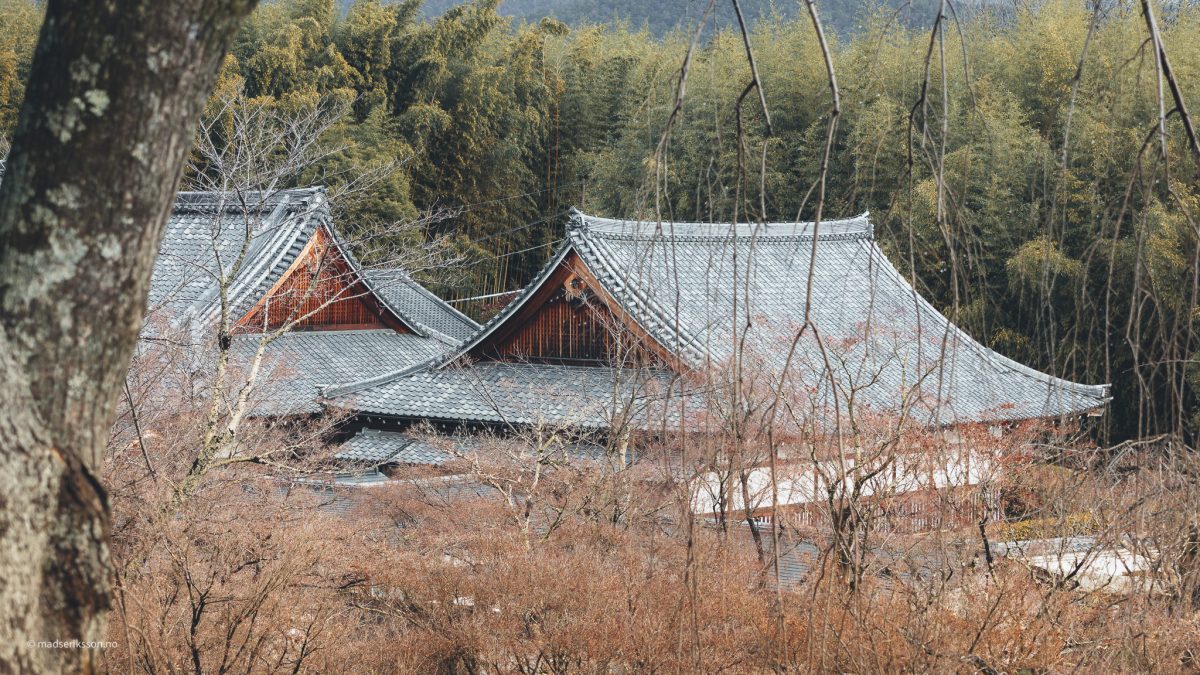
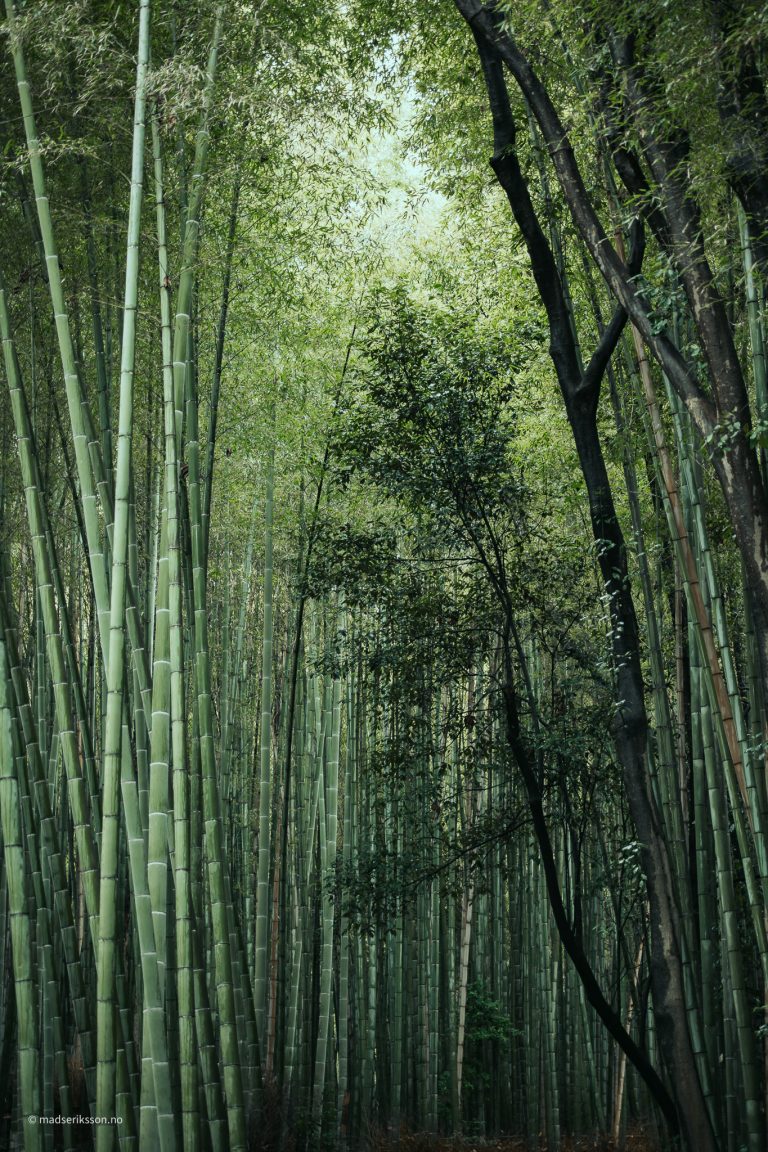
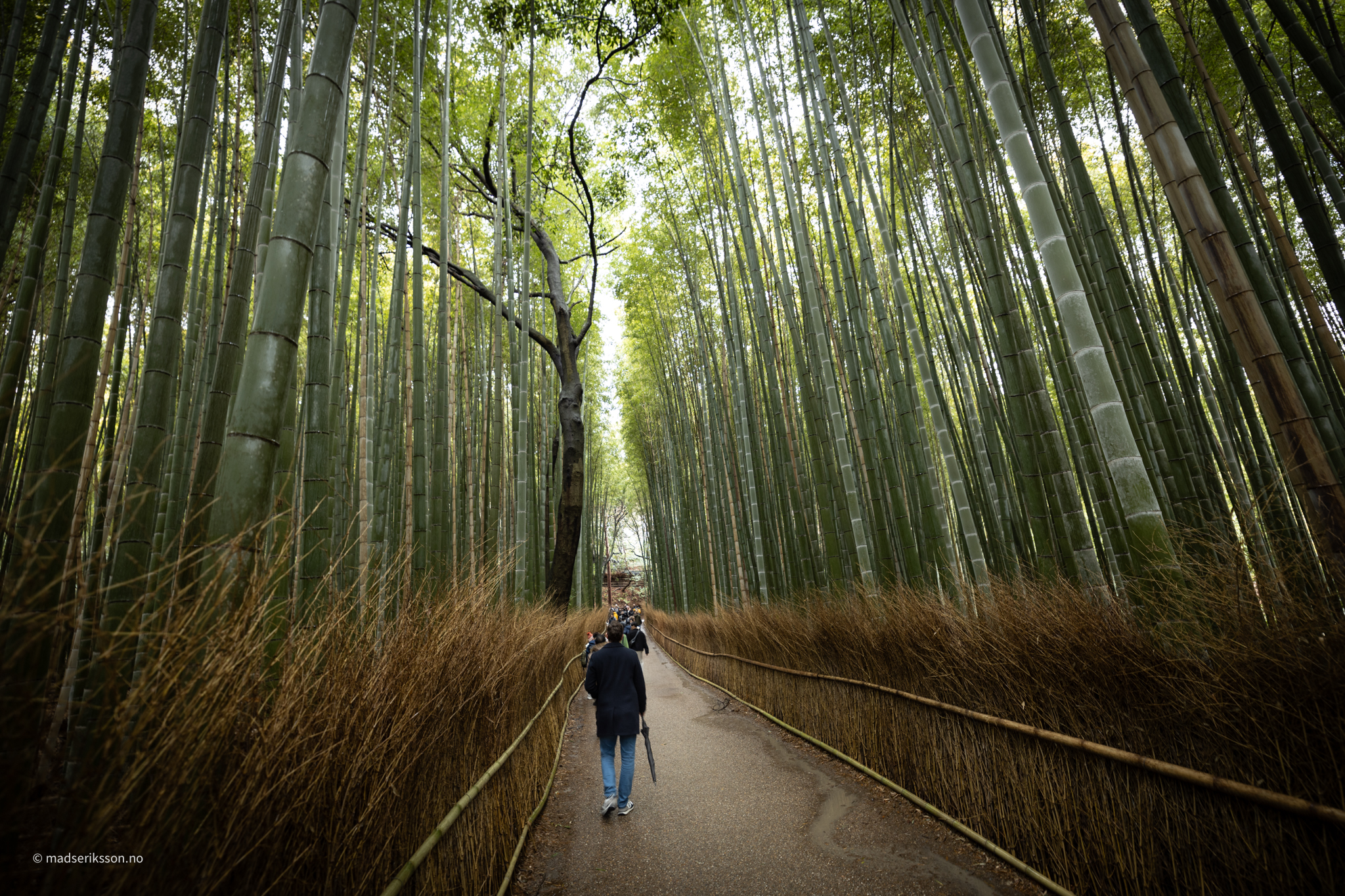
Arashiyama lies about 8 km west-northwest of Kyoto Station, where the river leaves its forested gorge at the foot of the western hills. Tenryū-ji, founded in 1339 by the shogun Ashikaga Takauji, keeps a pond garden laid out by its first abbot, the Zen master Musō Soseki, and the bamboo grove path runs along its northern side. Both temple and garden belong to the World Heritage listing of 1994.
Tall green stems of the Arashiyama bamboo grove reaching towards the light, Kyoto
Read more: Discover the Enchantment of Arashiyama Bamboo Grove
Tō-ji
Tō-ji was founded in 796, two years after the capital moved to Heian-kyō, as one of the two official temples beside the city's southern gate. Its five-storey pagoda, 54.8 m tall, is the tallest wooden tower in Japan; the present structure was rebuilt in 1644 on the orders of Tokugawa Iemitsu. The Kōbō-san market fills the grounds on the 21st of every month.
The five-storey pagoda of Toji glowing at dusk above the temple wall, Kyoto
Kyoto Station and Kyoto Tower
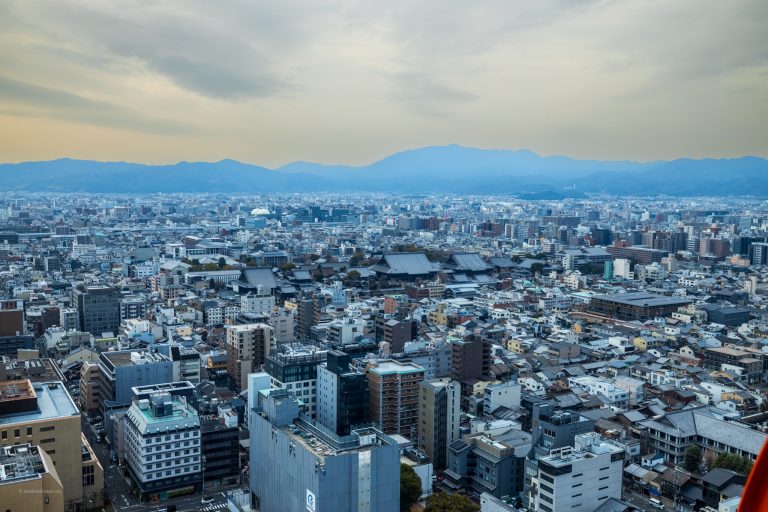
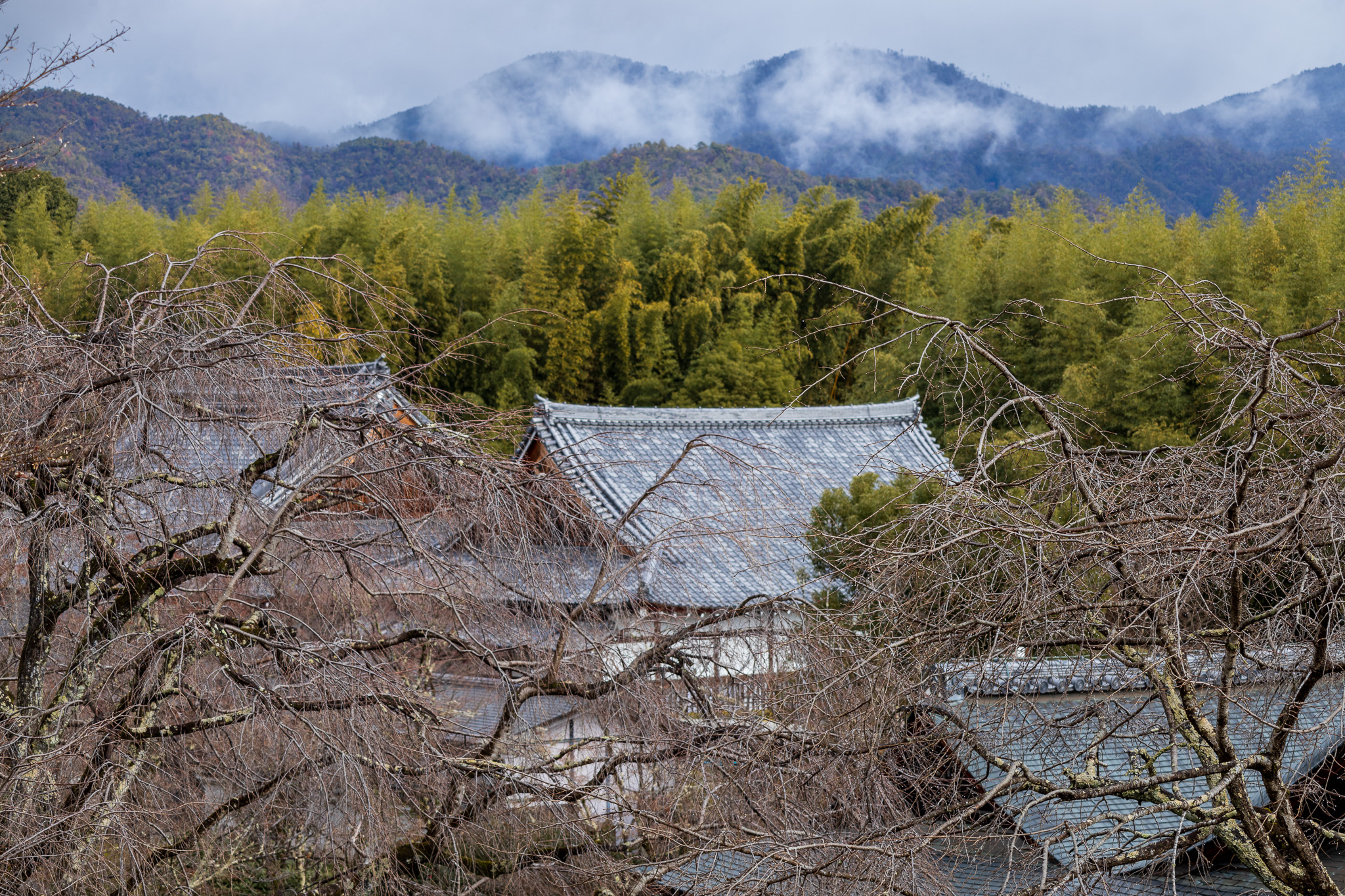
Kyoto Tower opened on 28 December 1964 and rises 131 m, with its observation deck at 100 m. Across the street, Hiroshi Hara's station building opened in 1997 for the city's 1,200th anniversary; it is 470 m long and 70 m high. North of the station, the great wooden halls of Higashi Hongan-ji stand among the city blocks.
Looking out over the rooftops of central Kyoto towards the mountains on a grey evening
Nishiki, Pontochō and Gion
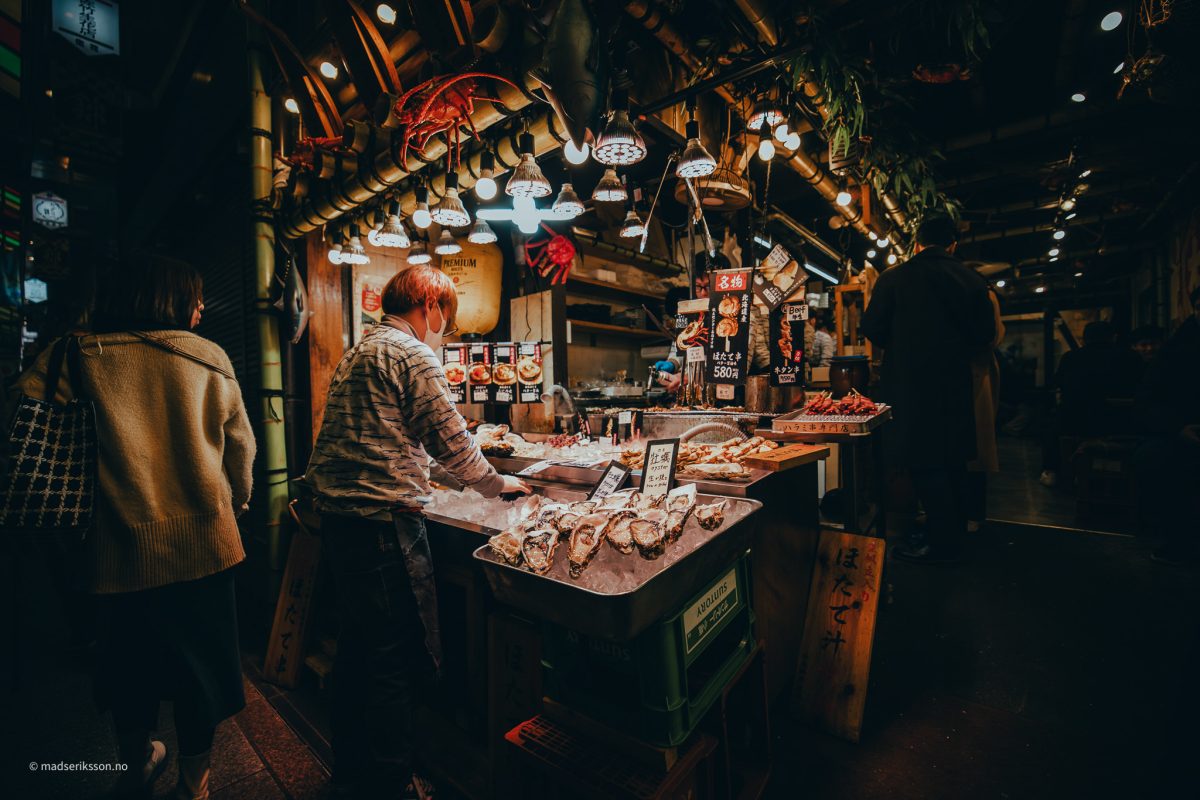
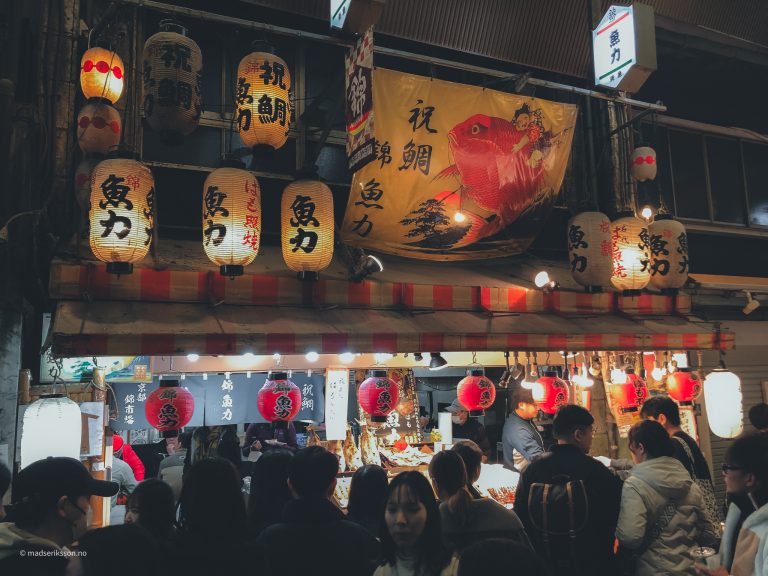
Nishiki Market, known as Kyoto's kitchen, runs for about 400 m through a covered arcade with more than 130 shops and stalls. Pontochō, a narrow lane of restaurants and teahouses, follows the west bank of the Kamo River, and across the water Gion stretches from Hanamikoji to Yasaka Shrine, home of the Gion Matsuri, held since 869.
Paper lanterns and a red sea bream banner above a busy fishmonger’s stall in Nishiki Market, Kyoto
3D model © 2026 madseriksson.no · Photographs © madseriksson.no. Buildings and heights: © OpenStreetMap contributors (ODbL), via OpenMapTiles. Ground imagery: Sentinel-2 cloudless 2023 by EOX IT Services GmbH (contains modified Copernicus Sentinel data 2023; CC BY 4.0). Heights are approximate where OpenStreetMap has no measured value; sun positions are approximate.
More in the same area
 CitiesHiking Mount Inari — Fushimi Inari’s Full Loop
 ForrestsDiscover the Enchantment of Arashiyama Bamboo Grove
 TravelTenryū-ji — Arashiyama’s Zen Temple and Japan’s Oldest Surviving Garden
 Food and DrinksNishiki Market — Kyoto’s Kitchen
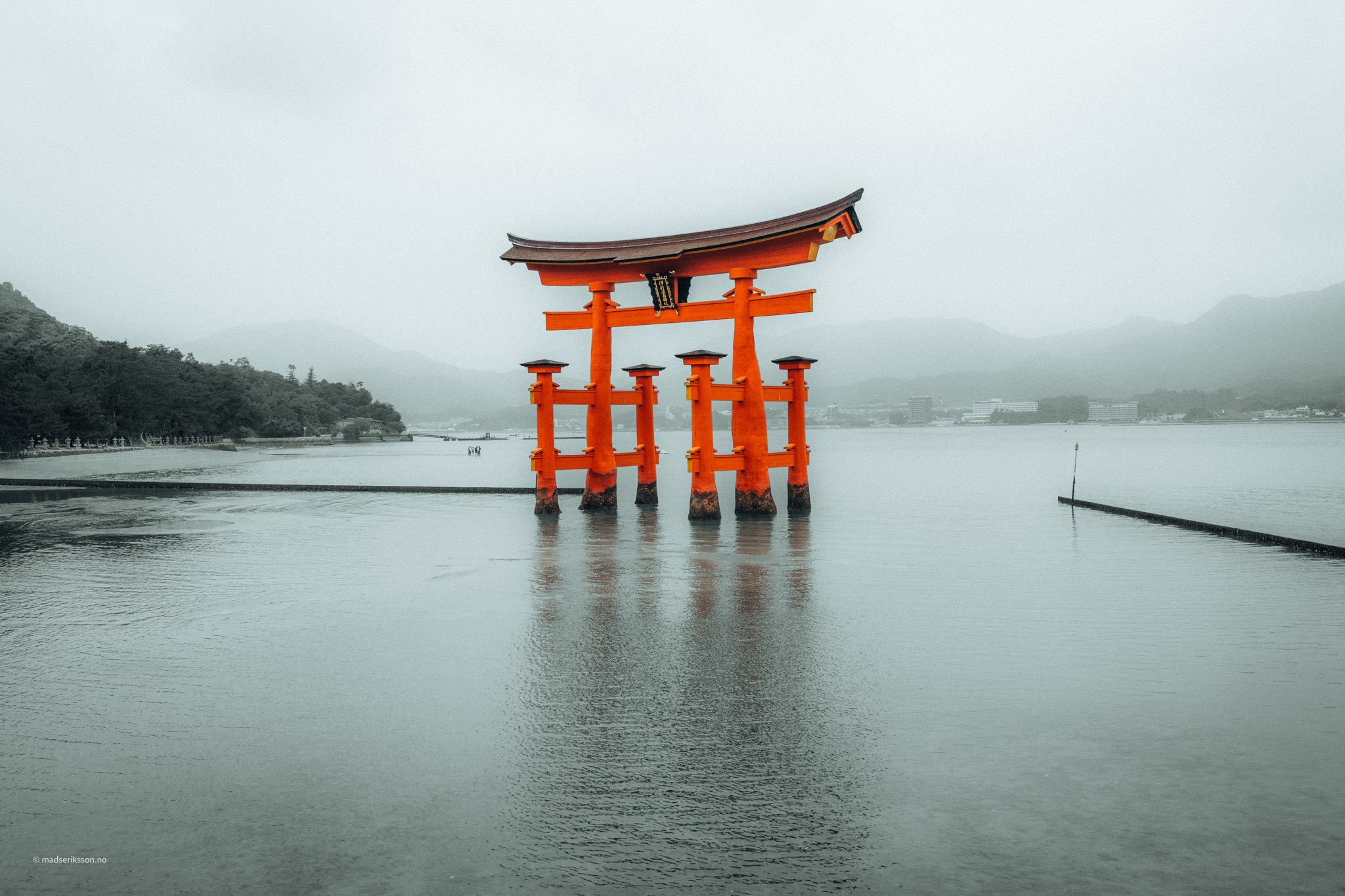 CitiesHiroshima and Miyajima: A preserved ruin and a shrine on the tideline
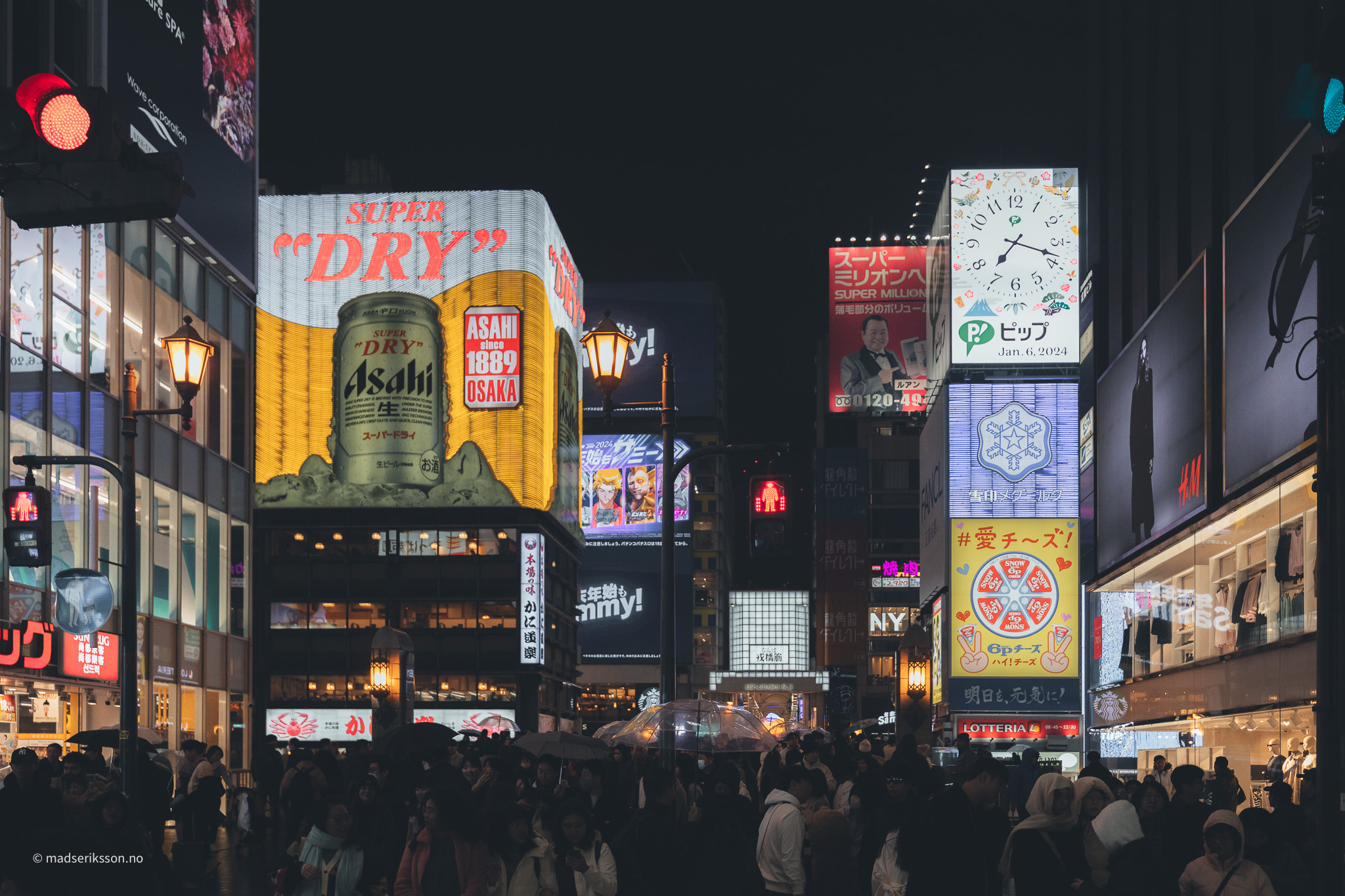 CitiesJapan’s Kitchen, Osaka
City Frames · scroll-driven 3D
More cities in three dimensions
54 city guides open with a model built from open map data. Scroll, and the camera moves from landmark to landmark.
Departures · City Frames
Where to next?
| Time | Destination | Country | Status |
|---|
Live · position of the sun
Golden hour, right now
The low, warm light just after sunrise and just before sunset. These are the cities on the site where it is happening at this moment.